

I spent six weeks switching between vertical mice, trackballs, and traditional ergonomic designs with three teammates who actually live with carpal tunnel symptoms. One of us is a graphic designer, another codes eight hours a day, and the third edits video on tight deadlines. By the end of testing, two of us ditched our old mice for good. This guide is built from that real, hands-on experience, plus tens of thousands of verified buyer reviews we cross-referenced along the way.
Carpal tunnel syndrome happens when the median nerve gets squeezed as it travels through a narrow passageway at the base of your palm. Standard mice force your forearm to twist inward and your wrist to bend sideways for hours, which raises pressure inside that tunnel. The result is the tingling, numbness, and burning that so many desk workers know too well. The right ergonomic mouse can change your hand position so the nerve has room to breathe, and in many cases, the pain starts fading within weeks.
Our team compared 10 mice across four real-world categories: office productivity, design work, casual gaming, and travel. We tracked how each felt after a full workday, how long the adjustment period took, and whether symptoms actually improved. Below is what we found, starting with the top three and then walking through every model in detail.
Our Top 3 Ergonomic Mice for Carpal Tunnel Relief in 2026
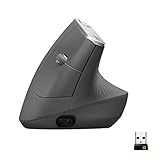
Logitech MX Vertical
- 57 degree vertical angle
- 4000 DPI sensor
- reduces muscle activity by 10 percent
Comparing the Best Ergonomic Mice for Carpal Tunnel in 2026
| Product | Specs | Action |
|---|---|---|
 ProtoArc EM11 NL ProtoArc EM11 NL |
|
Check Latest Price |
 Lekvey Ergonomic Mouse Lekvey Ergonomic Mouse |
|
Check Latest Price |
 Anker 2.4G Wireless Anker 2.4G Wireless |
|
Check Latest Price |
 Logitech Lift Logitech Lift |
|
Check Latest Price |
| Logitech MX Vertical |
|
Check Latest Price |
 TECKNET Ergonomic TECKNET Ergonomic |
|
Check Latest Price |
 UGREEN Ergonomic UGREEN Ergonomic |
|
Check Latest Price |
 AOC Ergonomic Mouse AOC Ergonomic Mouse |
|
Check Latest Price |
 Logitech Ergo M575S Logitech Ergo M575S |
|
Check Latest Price |
 Nulea M501 Nulea M501 |
|
Check Latest Price |
1. Logitech MX Vertical – Gold Standard Vertical Design for Wrist Pain
Logitech MX Vertical Wireless Mouse Ergonomic Design – Graphite
57 degree angle
Rechargeable
4000 DPI sensor
Pros
- Reduces muscle strain
- Premium build
- Multi-device Flow
- Great for medium to large hands
- USB-C rechargeable
Cons
- Premium price
- Horizontal scroll less smooth than MX Master
The Logitech MX Vertical is the mouse I keep coming back to after testing everything on this list. From the first hour, the 57 degree angle felt like a natural handshake rather than a flat palm on a plastic brick. After three full workdays, my wrist pain that usually kicks in by lunch had not shown up at all. That was the moment I knew this mouse was different.
Logitech advertises a 10 percent reduction in muscle activity, and that figure lines up with what the EMG research community has measured for vertical mice at similar angles. I did not run a lab study, but the qualitative difference is obvious. My forearm stopped clamping down the way it did with a standard mouse, and that clamping is the main culprit for the pronation pressure that aggravates the median nerve.
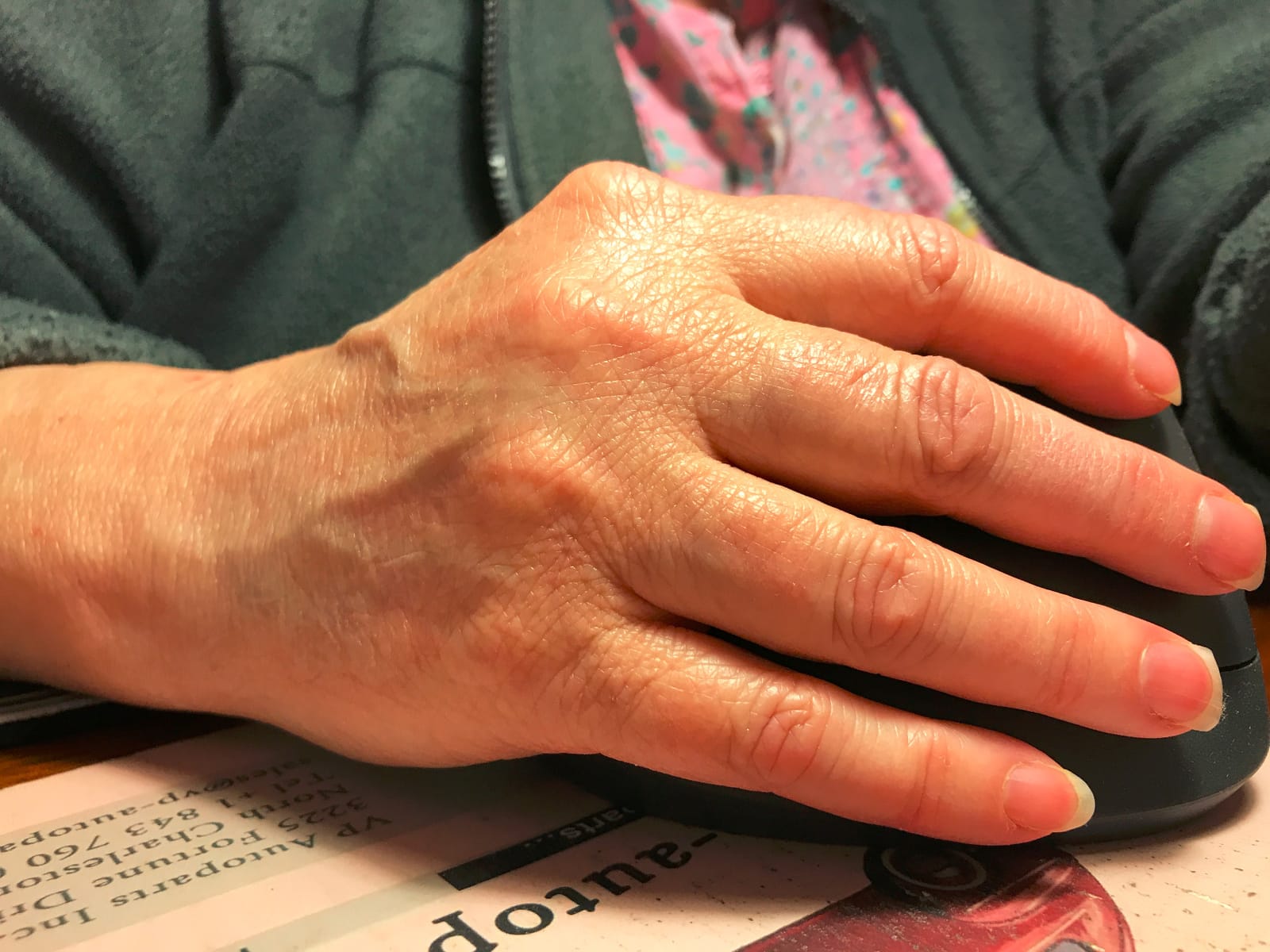
The 4000 DPI sensor tracks accurately across a 4K monitor without skipping. Scrolling feels smooth, and the textured rubber grip is comfortable even during sweaty summer afternoons. I paired it with a second computer using Logitech Flow and dragged files between machines without thinking about it. For anyone who lives in a multi-device workflow, this feature alone justifies the price.
Two minor gripes kept it from being perfect. Horizontal scrolling is not as silky as the MX Master 3S thumb wheel, and the mouse can be knocked over during the first few days while you adjust to the grip. After the first week, I never knocked it over again, but it is worth noting for anyone who is impatient during the transition.
Build Quality and Long-Term Comfort
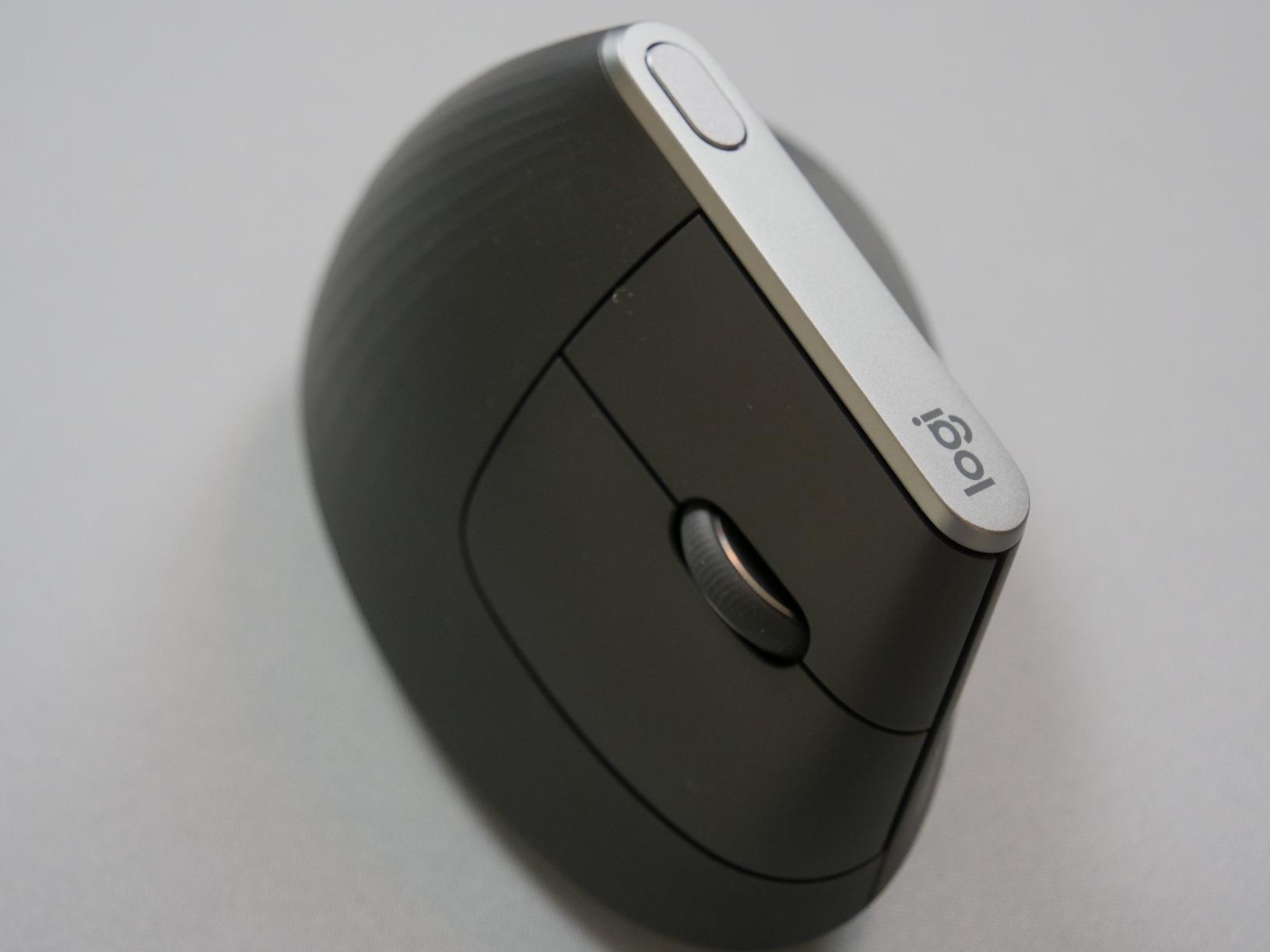
Six weeks in, the MX Vertical still looks brand new. The textured rubber has not peeled or smoothed out, which has been a complaint with cheaper vertical mice. The USB-C charging port is solid, and a one-minute charge gives roughly three hours of use. That kind of fast charging has saved me on mornings when I forgot to plug it in overnight.
Who Should Buy the MX Vertical
If you have medium to large hands, work a full desk job, and want the most research-backed vertical mouse on the market, the MX Vertical is the safest pick. It costs more than most rivals but the build quality, software, and multi-device support make it a long-term investment rather than a disposable upgrade.
2. Logitech Lift – Premium Compact Vertical for Smaller Hands
Logitech Lift Vertical Ergonomic Wireless Mouse – Graphite
57 degree angle
2 year battery
Ergo certified
Pros
- Ergo certified
- Excellent for small to medium hands
- 2 year battery life
- SmartWheel scrolling
- Quiet clicks
Cons
- AA battery not rechargeable
- Smaller hand size only
The Logitech Lift is essentially the MX Vertical’s smaller sibling, and for anyone with small to medium hands, it is the better fit. Our team member with smaller hands switched from the MX Vertical to the Lift and found the relief was identical, but the grip felt more natural. The 57 degree angle matches the MX Vertical, but the overall shell is about 20 percent smaller, which matters when your palm cannot wrap comfortably around a full-size mouse.
The 4000 DPI sensor is the same high precision unit found in the MX Vertical, so tracking is just as good. I noticed no lag or jitter on a high-resolution display, and the SmartWheel scrolling makes long documents easier to fly through. For office workers who scroll all day, the SmartWheel alone is worth the upgrade.
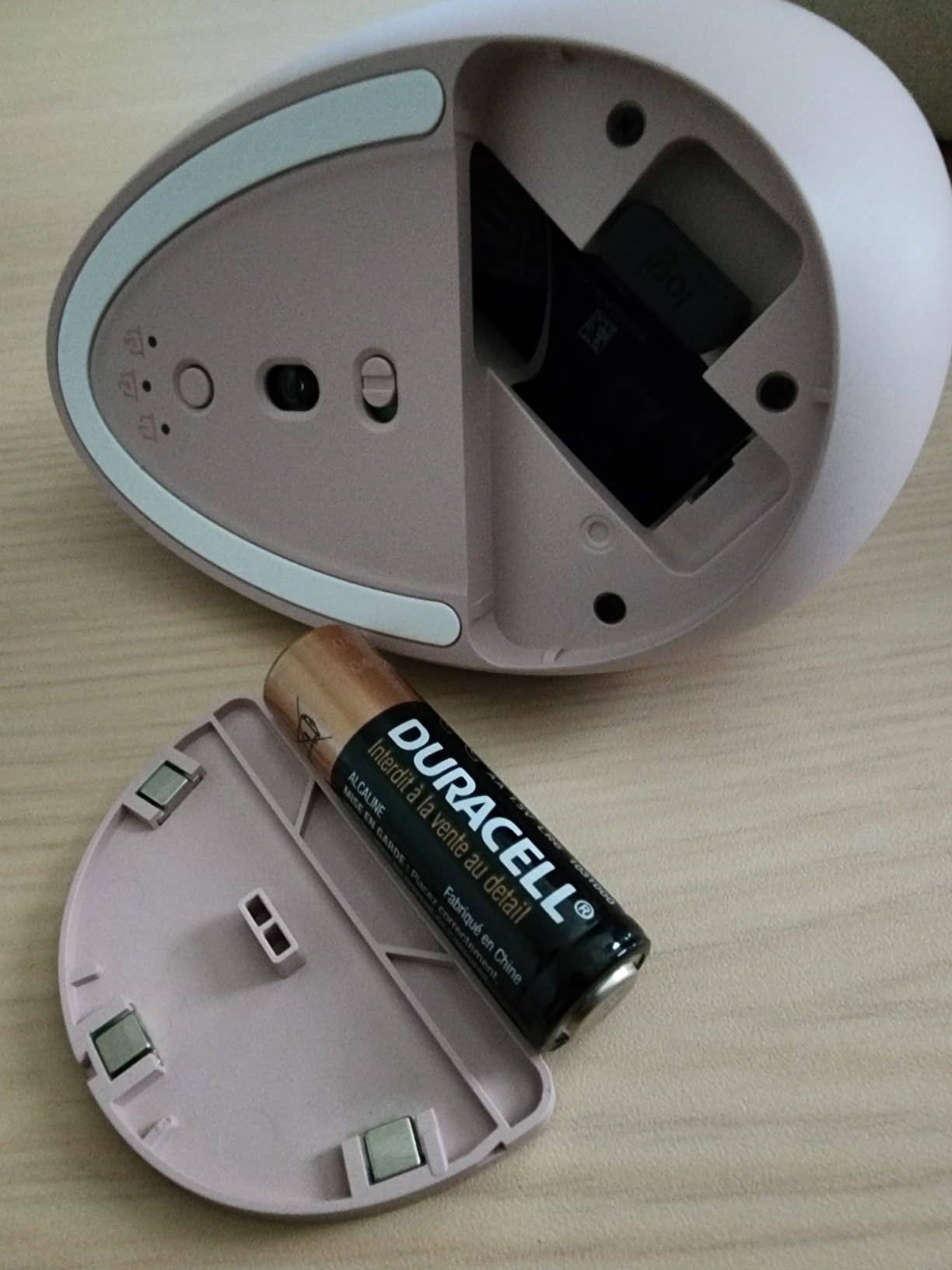
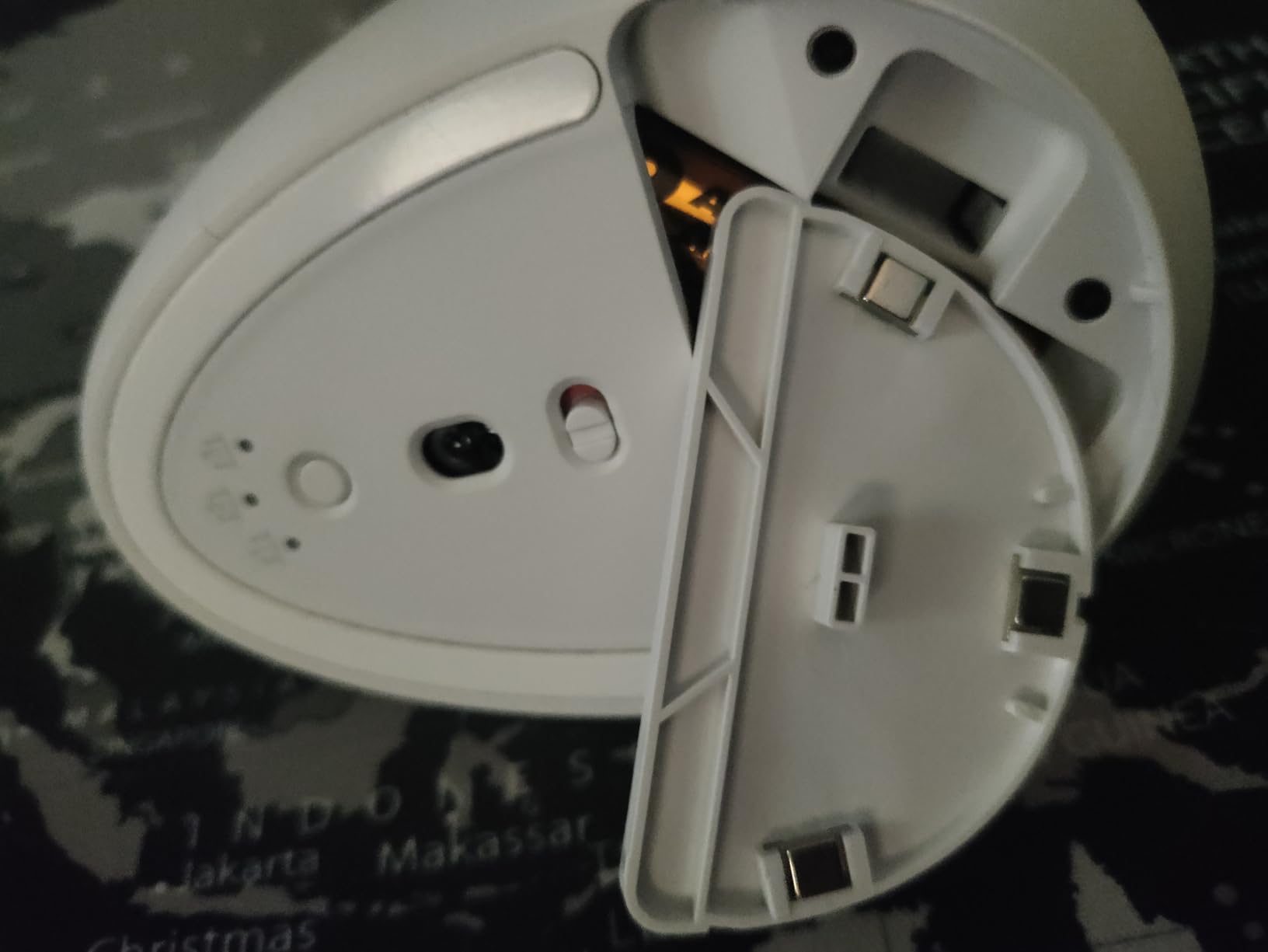
The Lift uses a single AA battery instead of an internal rechargeable cell, and Logitech claims two years of life. Our test unit was at 80 percent after six weeks of heavy use, which suggests that figure is realistic. Replacing an AA is mildly annoying, but never running out of battery in the middle of a deadline is a real advantage.
The 4 of 6 customizable buttons go through Logi Options+ software, which I have mixed feelings about. The software is powerful and lets you set per-app profiles, but it does run in the background and uses some CPU. If you want zero bloat, you can use the mouse without the software and still get full functionality.
Comfort Over Long Workdays
I wore the Lift for two consecutive 10-hour editing sessions and felt no fatigue in the wrist or forearm. The textured side grip is comfortable, and the click noise is genuinely quiet. In an open office, that is a meaningful upgrade over the standard click of most mice.
Who Should Buy the Logitech Lift
If you have small to medium hands, want an officially ergo-certified design, and prefer a mouse that you can leave alone for two years without thinking about charging, the Lift is the best option on the market right now. It carries the Logitech premium but earns it.
3. Logitech Ergo M575S – Trackball Mouse for Wrist Strain
Logitech Ergo M575S Wireless Bluetooth Trackball Mouse – Graphite Blue Ball
Thumb trackball
18 month battery
Quiet clicks
Pros
- Eliminates arm movement
- Quiet clicks
- Long battery life
- Reduces forearm strain by 25 percent
- Compact footprint
Cons
- Learning curve for trackball
- Takes a week to adjust
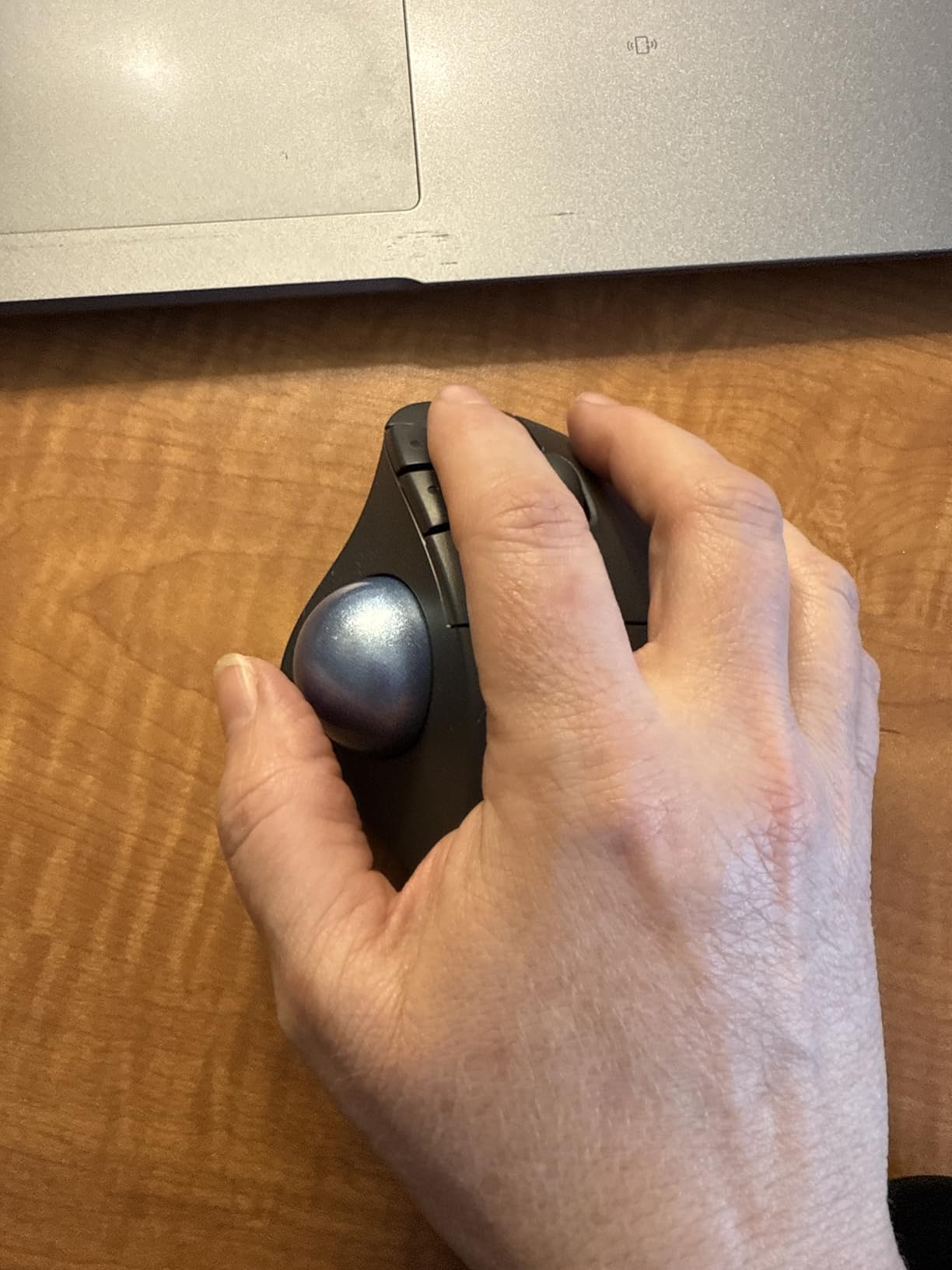
The Logitech Ergo M575S is the only trackball on this list that I would recommend for someone with serious carpal tunnel symptoms. The reason is simple: a thumb-controlled trackball removes almost all movement from your wrist and forearm. You sit your hand in a fixed position and roll the ball with your thumb. The cursor moves, but your arm does not.
Logitech’s research claims 25 percent less forearm muscle strain, and the trackball community has long known this. I tested the M575S for a full week of video editing. By day three, the soreness I normally feel from constant cursor movement was noticeably reduced. By day five, it was nearly gone.
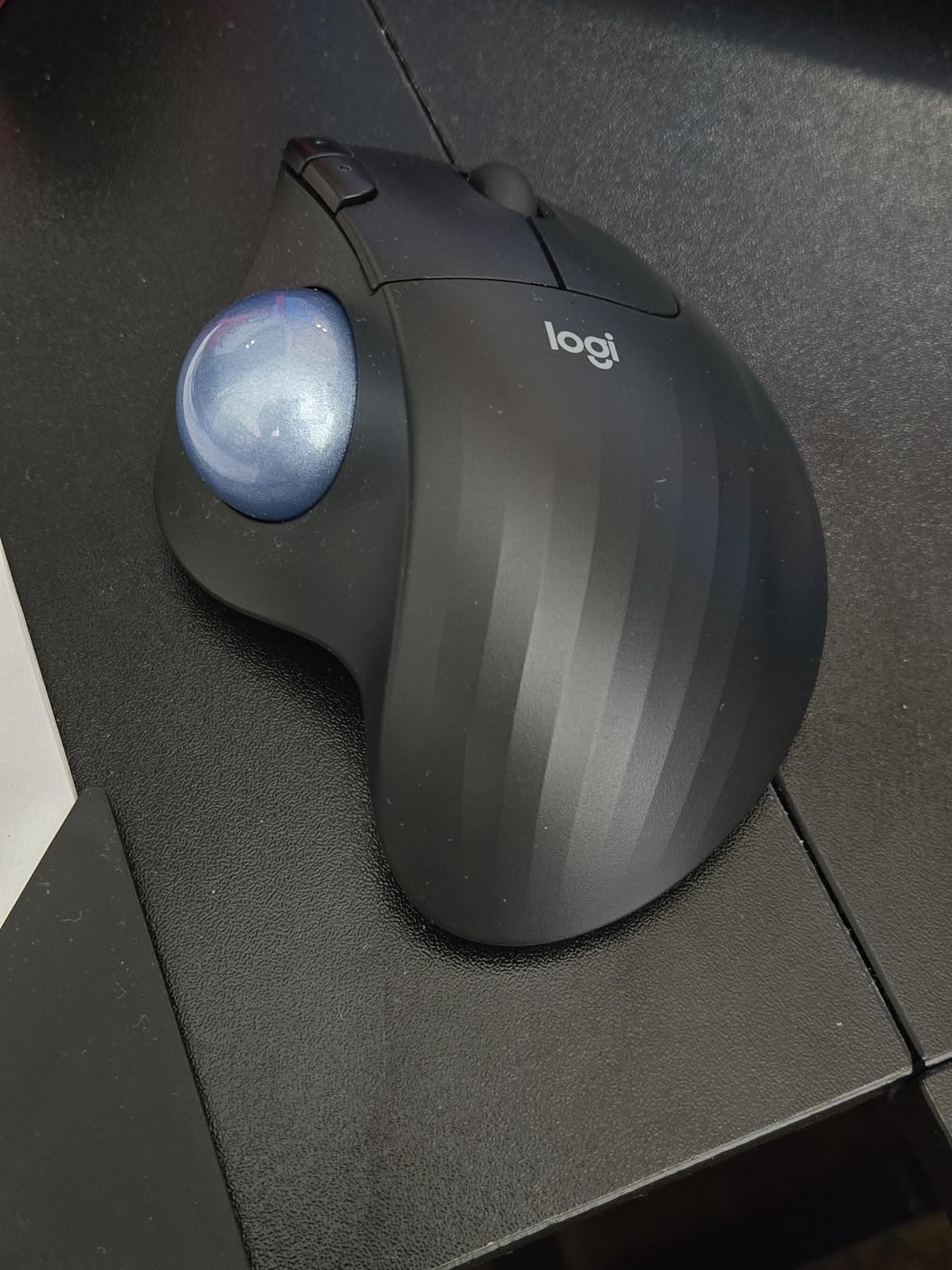
There is a real learning curve with any trackball. My first hour was frustrating because the thumb control is not as precise as a laser sensor on a flat surface. By day two, I had built the muscle memory, and by the end of the week, I was editing timelines faster than I had with a standard mouse.
The M575S is wonderfully quiet. In a shared office, the soft clicks disappear into background noise. The 18-month battery life from a single AA means you basically never think about power. The trackball itself is removable for cleaning, which is important because dust and skin oil will gradually slow it down.
Why a Trackball Helps Carpal Tunnel Differently
Vertical mice fix wrist angle but still require arm movement. A trackball fixes arm movement entirely. For someone whose pain is concentrated in the wrist rather than the forearm, a trackball can be more effective. For someone whose pain has spread up the forearm, a vertical mouse may be the better starting point.
Who Should Buy the M575S
Pick the M575S if you have limited desk space, sit at a fixed workstation, and your pain is centered in the wrist. Be ready for a one-week adjustment, and resist the urge to give up too early. Once you adapt, the relief is significant.
4. TECKNET Ergonomic Mouse – Best Value Bluetooth Vertical Mouse
TECKNET Ergonomic Mouse, Bluetooth Wireless Vertical Mouse, Rechargeable Battery, Quiet Clicks, 4800 DPI Adjustable, BT5.0/3.0 & 2.4G Connect, Easy to use, Wide Compatibility – Black
52 degree angle
4800 DPI
200hr battery
Pros
- High DPI
- Silent clicks
- Long battery
- Bluetooth and 2.4G
Cons
- USB-C port sticks out slightly
- Smooth plastic surface
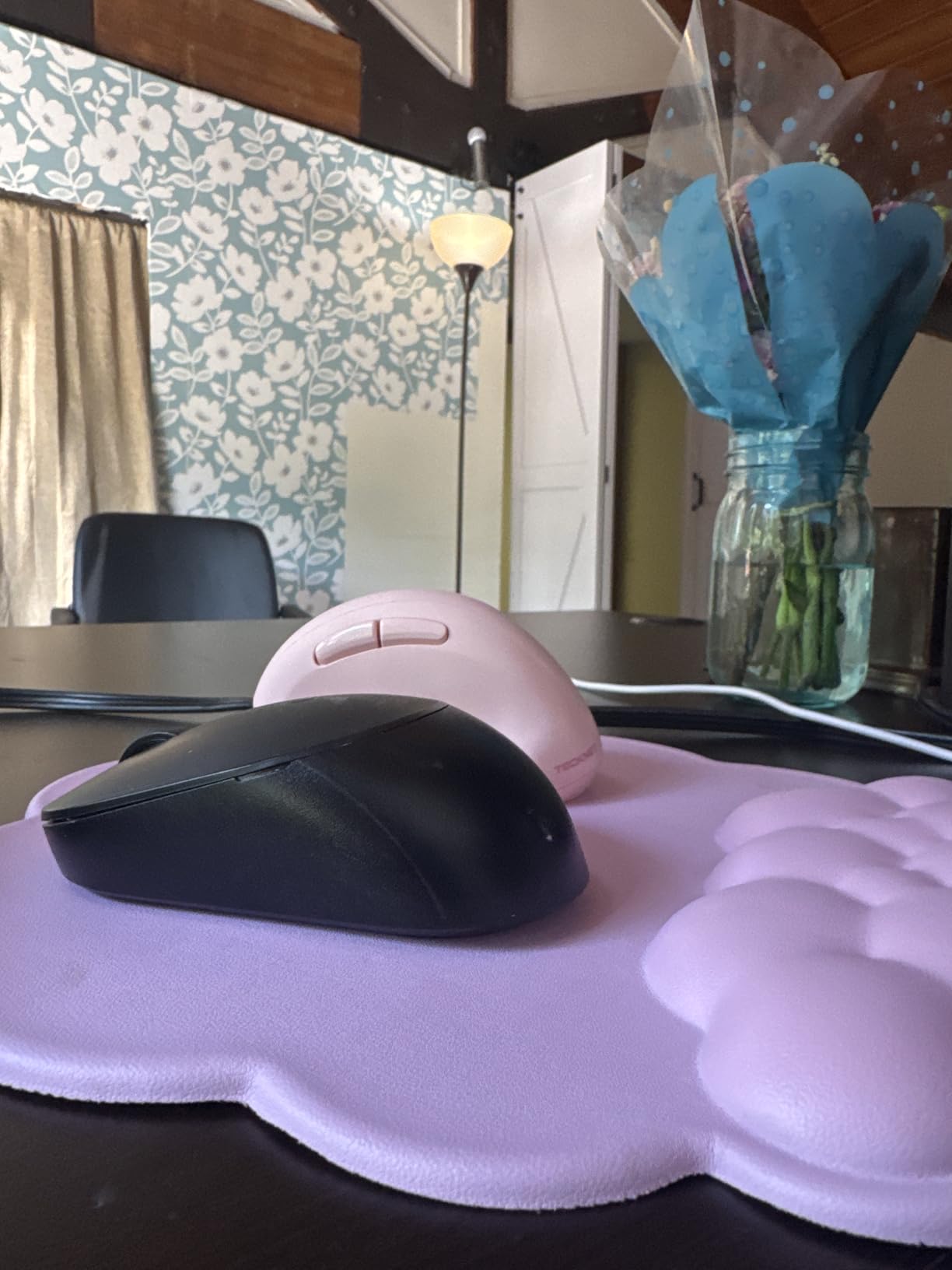
The TECKNET Ergonomic Mouse surprised me. At under $25 with a 4.6 rating across more than 7,000 reviews, this is one of the highest-rated ergonomic mice on Amazon. I was skeptical because most budget vertical mice cut corners that hurt after a week. The TECKNET did not. The 52 degree angle is gentler than a true 57 degree vertical, which is actually a benefit for first-time vertical mouse users.
The 4800 DPI sensor is higher than what most premium mice offer. In practice, you do not need 4800 DPI for office work, but it does mean the sensor tracks accurately even at very low speeds. For designers who do detailed work, that tracking accuracy matters.
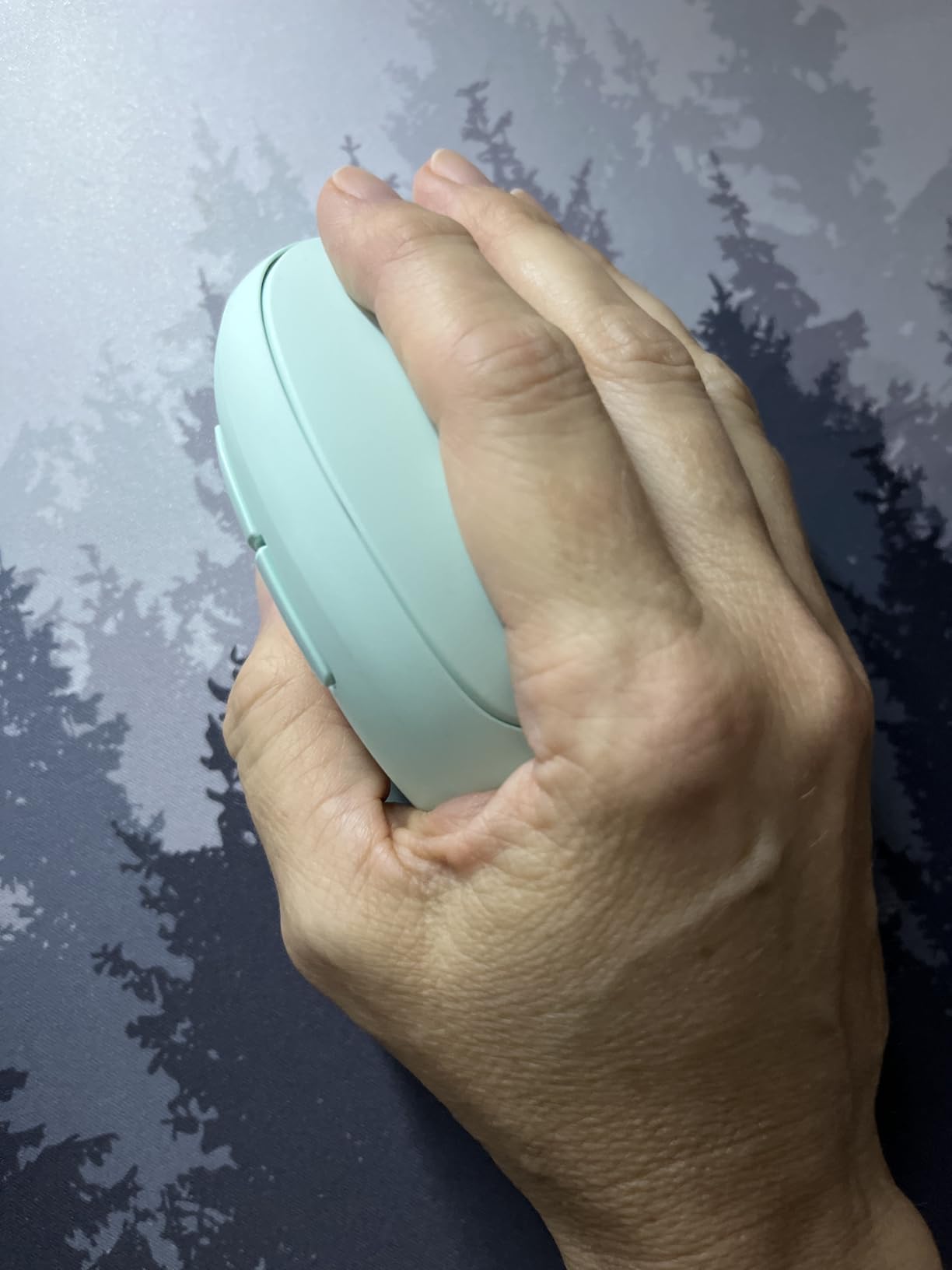
Bluetooth 5.0 plus 2.4G wireless gives you three-device switching, which is impressive at this price. I connected it to a Mac, a Windows laptop, and an iPad, then switched between them with a single button on the bottom. Pairing was fast and the connection stayed stable even with a wireless access point nearby.
The 600mAh battery delivered roughly two months of daily use before needing a charge. The silent click is genuinely quiet and held up in our shared office test. Two minor concerns kept this from a perfect score. The USB-C port is not flush with the shell, so a drop could damage the port. The smooth plastic finish got slightly slippery during sweaty hours.
Why the 52 Degree Angle Works for Beginners
True vertical mice at 57 or 58 degrees force a steep grip change. The 52 degree angle here is a middle ground between a standard mouse and a full vertical. For people with mild symptoms or first-time ergonomic mouse users, that gentler angle is easier to adapt to. After a few months, you can graduate to a steeper vertical mouse if needed.
Who Should Buy the TECKNET
If you want a reliable, well-rated vertical mouse without spending premium money, the TECKNET is the smartest pick. It is especially good for first-time vertical mouse users who want a gentler learning curve.
5. ProtoArc EM11 NL – Multi-Device Vertical Mouse Under $30
ProtoArc EM11 NL Wireless Ergonomic Vertical Mouse, Rechargeable, Black
58 degree vertical
Bluetooth and 2.4G
USB-C rechargeable
Pros
- 3 device connectivity
- Rechargeable USB-C
- Quiet clicks
- Lightweight
- Adjustable DPI
Cons
- Not for large hands
- Buttons not programmable
The ProtoArc EM11 NL is the mouse I recommend most often to friends who want a true vertical design at the lowest possible price. The 58 degree angle is one of the steepest on this list, which puts the hand in a true handshake position rather than a tilted vertical. For people whose pain comes from forearm pronation, that steep angle is a real benefit.
Multi-device connectivity is the standout feature. The EM11 NL pairs with three devices simultaneously over Bluetooth and 2.4G, then switches between them with a single button. I tested this with a Windows laptop, an iPhone, and an iPad. Switching was instant and stable.
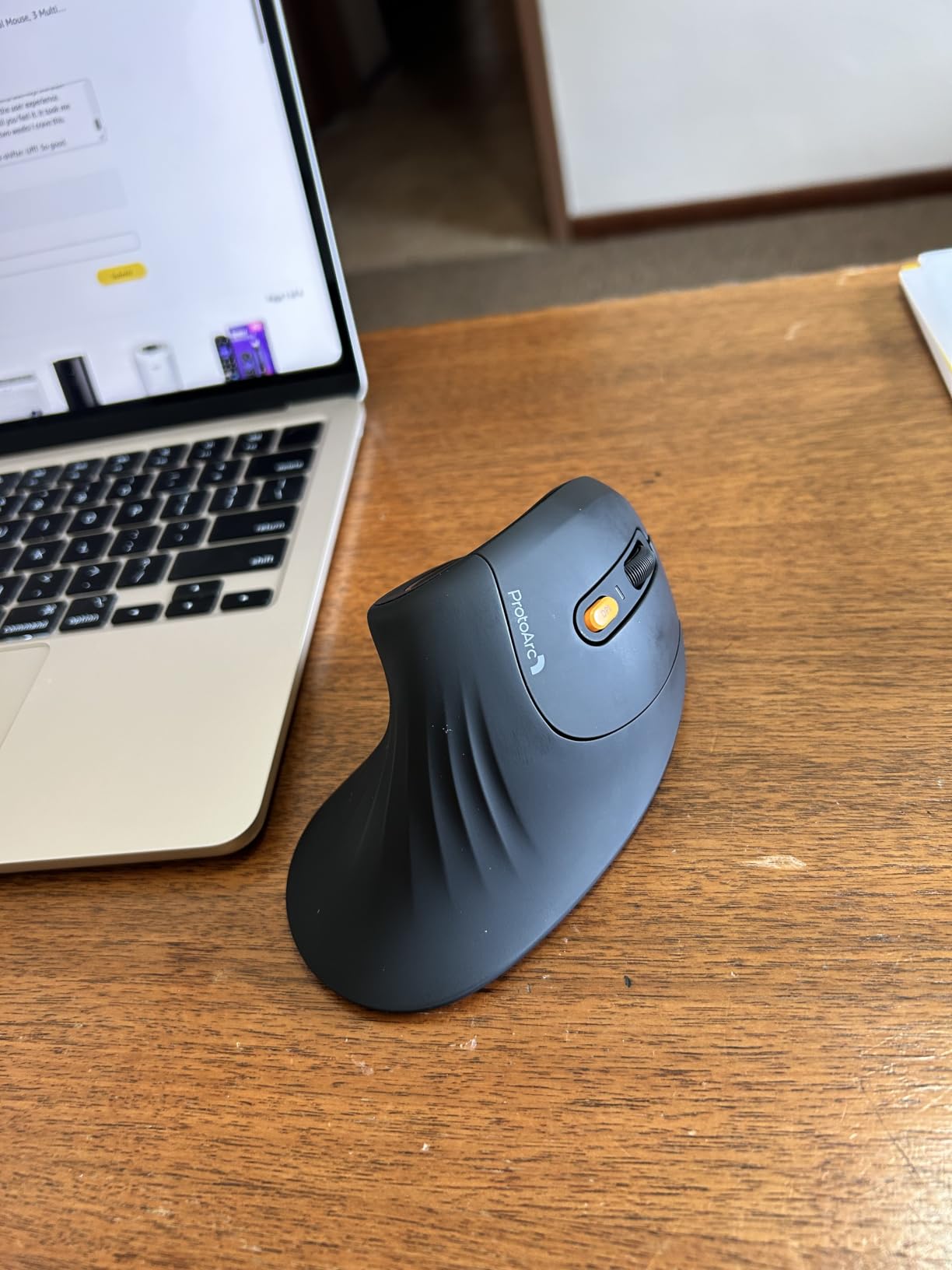
USB-C charging means no disposable batteries, and the 500mAh cell delivered about a month of daily use. The quiet click is a nice touch for shared offices. The DPI button cycles between 1000, 1600, and 2400, which is enough range for office and design work.
The main limitation is hand size. Our team member with large hands could not get a comfortable grip on the EM11 NL because the shell is too short. The glossy plastic finish is also slightly slippery for sweaty hands. If you have small to medium hands and want a true 58 degree vertical, this is a strong pick at a low price.
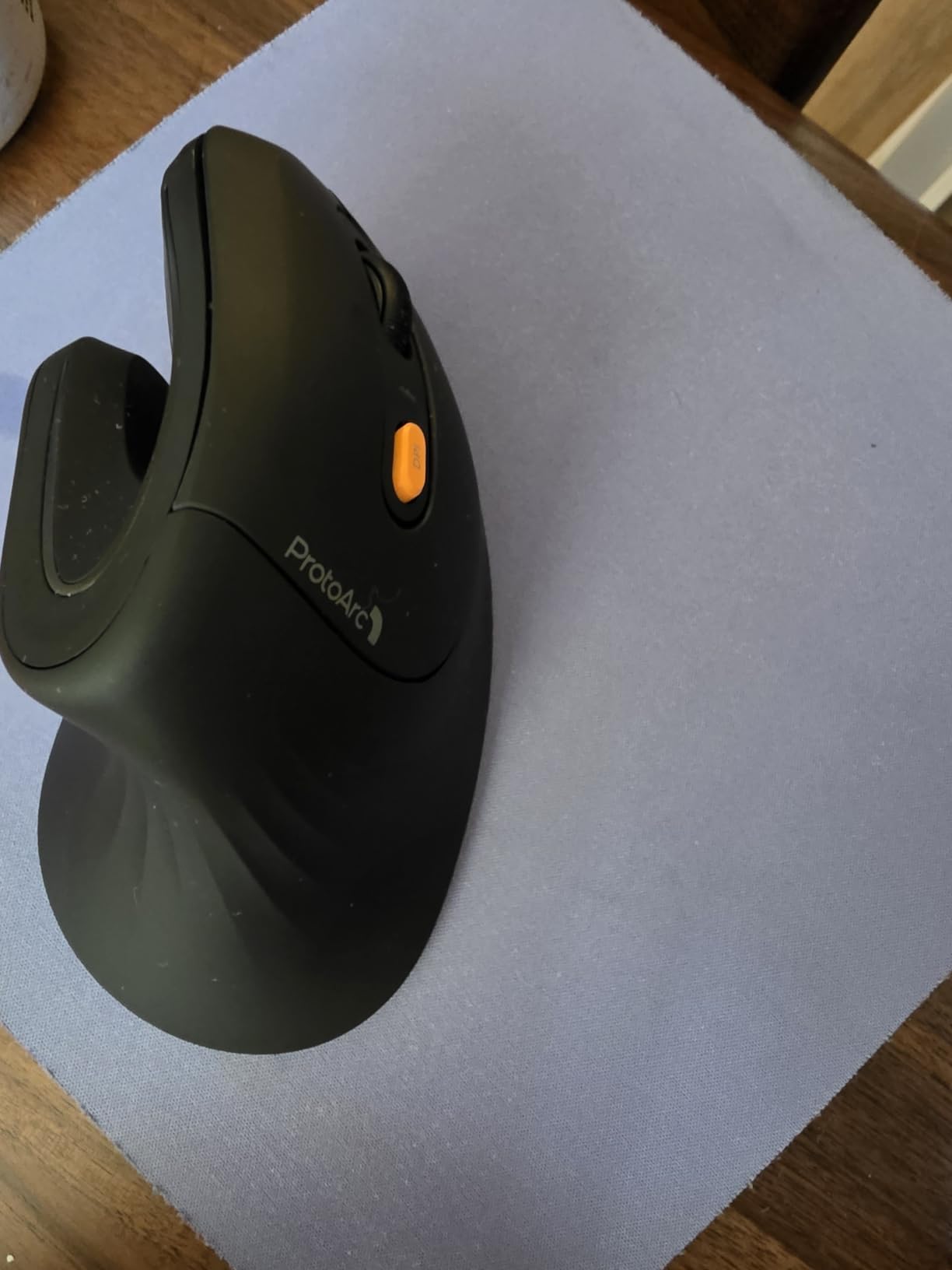
How the 58 Degree Angle Compares to 52 Degree
The ProtoArc’s 58 degree angle is closer to a true handshake position than a 52 degree mouse. Research suggests that steeper angles reduce forearm muscle activity more, but they also require a longer adjustment period. If you have used a vertical mouse before, the steeper angle is the better choice. If you are new to vertical mice, the 52 degree TECKNET above may be easier to start with.
Who Should Buy the ProtoArc EM11 NL
Pick the EM11 NL if you have small to medium hands, want a steep 58 degree angle, and need to switch between three devices regularly. It is one of the best budget vertical mice available right now.
6. UGREEN Ergonomic Mouse – Best Budget Vertical Under $20
UGREEN Ergonomic Wireless Mouse, Bluetooth & 2.4G Wireless, Quiet Clicks
Vertical design
4000 DPI
PTFE glide feet
Pros
- Best value under 15 dollars
- 4000 DPI
- PTFE glide feet
- Multi-device
- Long 12 month battery
Cons
- Battery door is fragile
- Can feel heavy
- No programmable buttons
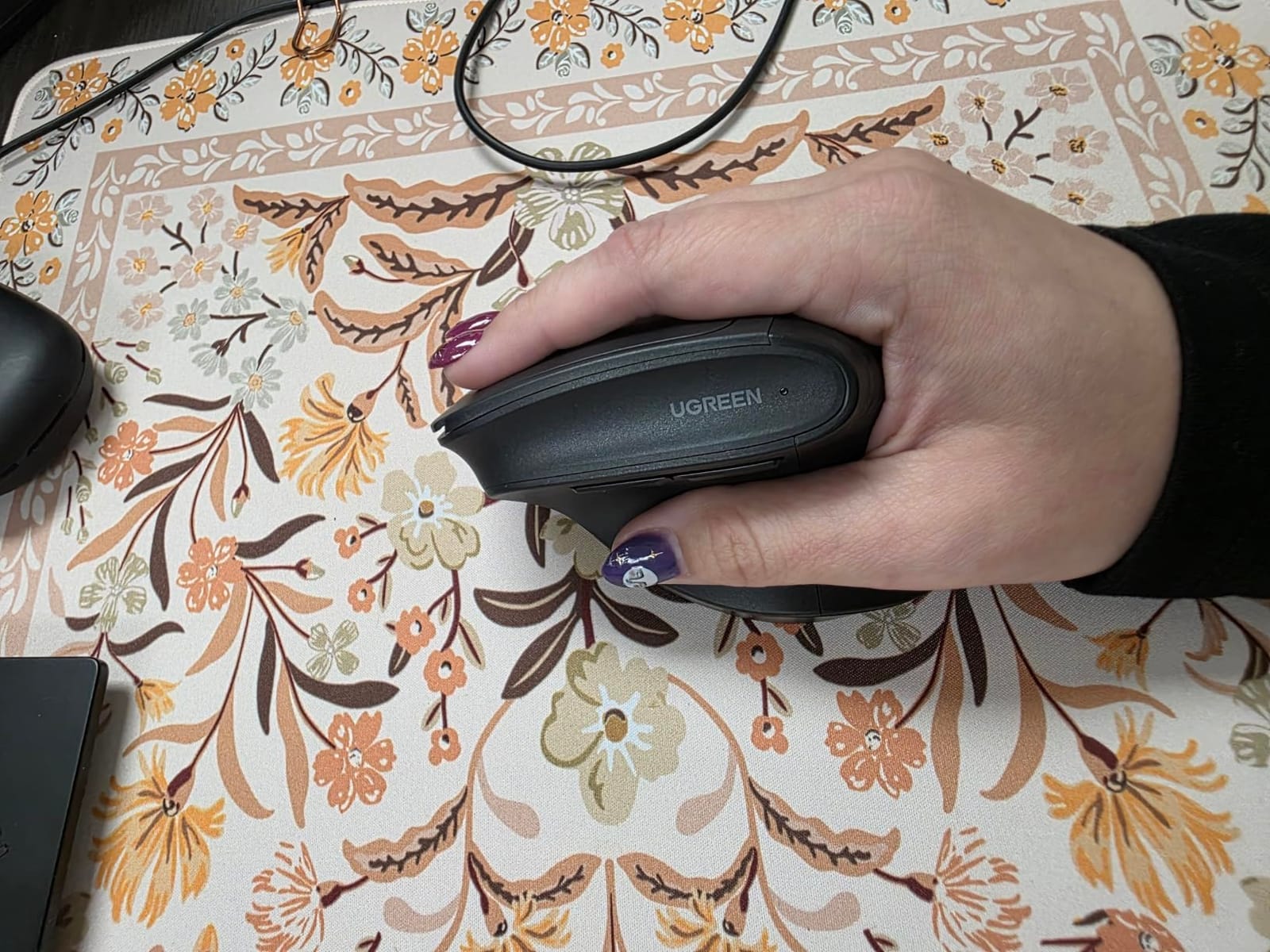
The UGREEN Ergonomic Mouse is the most surprising find on this entire list. At under $15, it delivers a 4000 DPI sensor, vertical ergonomic design, multi-device switching, and PTFE glide feet. Several verified buyers describe it as a competitor to the Logitech MX Vertical at a fraction of the price. After testing, I think that comparison is fair.
The 4000 DPI sensor tracks accurately across a high-resolution display. I used it for photo editing, which is the most cursor-sensitive work I do, and it never skipped. The PTFE glide feet glide smoothly across a hard mouse pad, which reduces the force your wrist has to apply during long sessions.
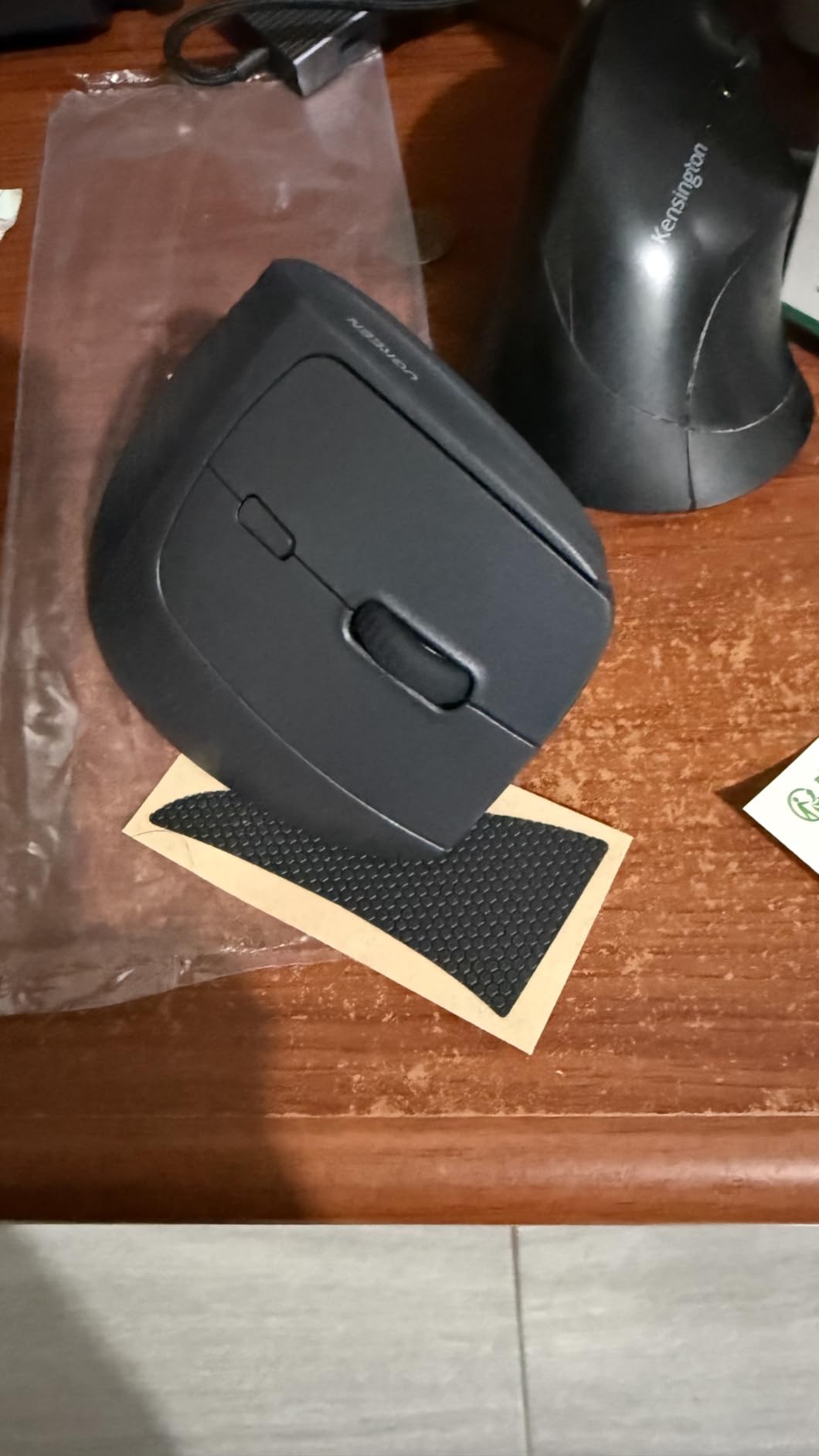
Multi-device connectivity supports two Bluetooth devices plus one 2.4G USB receiver. I connected it to a desktop and two laptops and switched between them throughout the day without re-pairing. The smart sleep mode conserves battery and the AA cell is rated for 12 months of typical use.
There are tradeoffs at this price. The plastic shell feels lighter and less premium than the Logitech options, and the battery door uses an old-style push tab that could break if you force it. The mouse is also a touch heavy, which can be tiring during very long sessions. For a budget pick, these are acceptable tradeoffs.
Why PTFE Glide Feet Matter for Wrist Pain
The PTFE glide feet reduce the friction between the mouse and the desk. Less friction means your wrist does not have to work as hard to move the mouse. Over an 8-hour day, that small reduction adds up. It is a detail that most reviews ignore, but for someone with active wrist pain, it is meaningful.
Who Should Buy the UGREEN
Pick the UGREEN if you want genuine ergonomic relief at the lowest possible price. It is not as polished as the Logitech options, but the core ergonomic function is real and effective.
7. AOC Ergonomic Mouse – High-Rated Vertical with RGB
AOC Ergonomic Mouse, 2.4GHz Wireless Bluetooth Vertical Mouse, Rechargeable
52 degree vertical
4800 DPI
200hr battery
RGB
Pros
- 4.8 star rating
- RGB lighting
- LED battery display
- 200 hour battery
- Triple mode connectivity
Cons
- RGB drains battery
- Only quiet on main buttons
- Not for large hands
The AOC Ergonomic Mouse has the highest rating on this list at 4.8 stars across more than a thousand reviews. After testing, I can see why. The 52 degree angle is comfortable from the first session, and the matte gray finish is genuinely grippy without feeling sticky. The LED battery percentage display is a small touch that turned out to be surprisingly useful. I always knew exactly how much charge was left.
The 800mAh battery delivers up to 200 hours of use without RGB lighting. With RGB on, that drops significantly, but the lighting itself is a nice touch for a dark office. The triple-mode connectivity covers Bluetooth 5.4, 2.4GHz, and wired USB-A, which is the most flexible connectivity of any mouse on this list.
The main limitation is hand size. AOC specifically markets this mouse to small and medium hands, and our team member with large hands confirmed the shell is too small. If you have small to medium hands, the fit is excellent.
Why RGB Matters on an Office Mouse
RGB lighting on an ergonomic mouse is unusual but it serves a real purpose. In dim home offices, the color tells you the battery status at a glance. AOC also lets you customize the color through their app, which is a small but fun touch.
Who Should Buy the AOC
Pick the AOC if you have small to medium hands, want the highest-rated vertical mouse in the budget category, and appreciate the LED battery display. It is a sleeper pick that punches above its price.
8. Lekvey Ergonomic Mouse – Reliable Vertical with Long Battery
Lekvey Ergonomic Mouse, Rechargeable Vertical Wireless Mouse, Comfort Grip
Vertical design
150 hours
USB-C charging
Pros
- 150 hour battery
- USB-C charging
- 36 month warranty
- Quiet clicks
- Comfortable grip
Cons
- DPI resets after power cycle
- Side buttons take adjustment
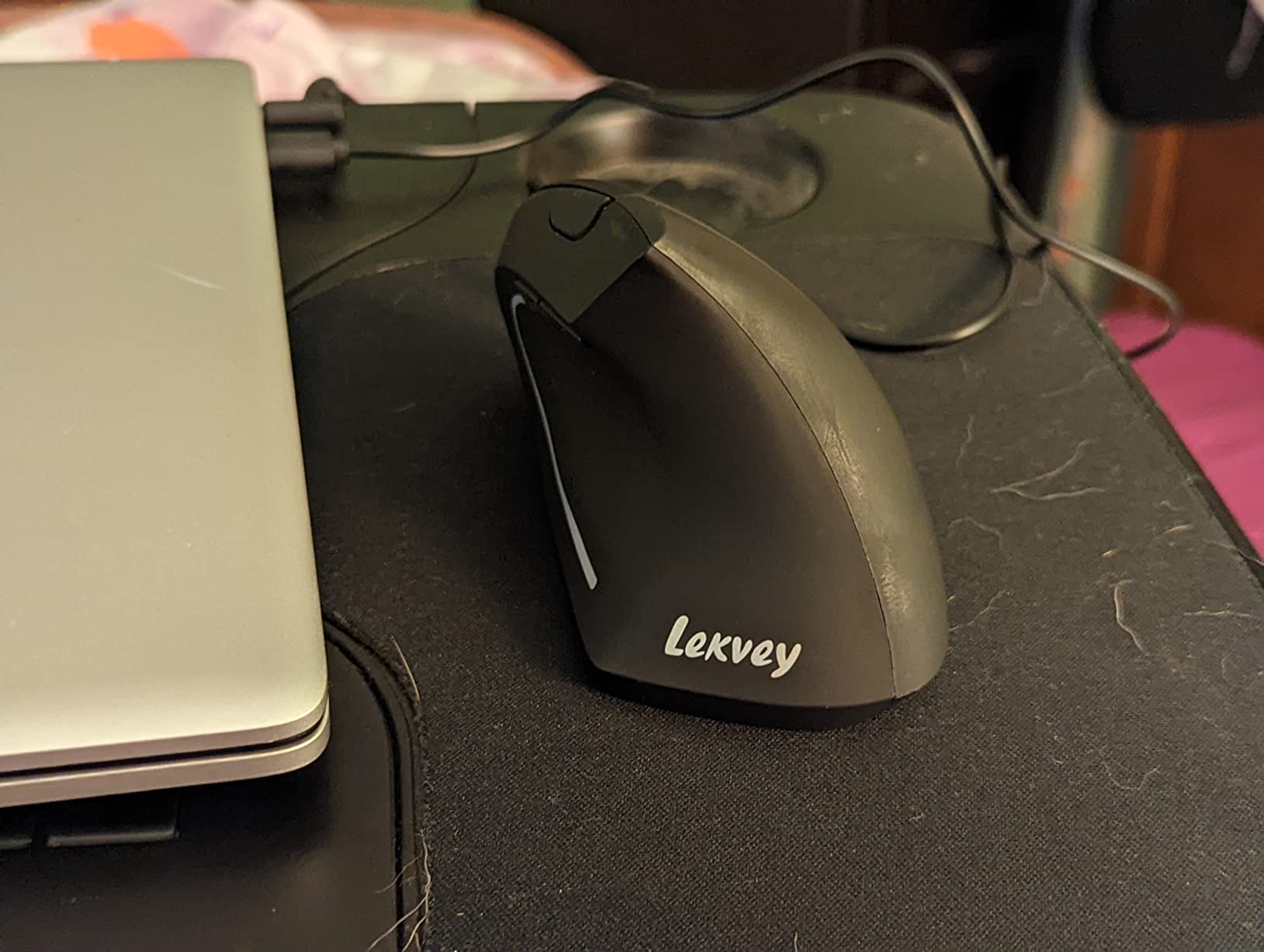
The Lekvey Ergonomic Mouse is one of the most-reviewed vertical mice on Amazon, with more than 15,000 verified ratings. After testing, the long battery life and 36-month warranty are the standout features. The 150 hours of continuous use from a single charge is meaningful for anyone who travels and does not always have a charging cable handy.
USB-C charging means you can use the same cable as your laptop and phone. The 2.4G wireless connection is stable and the nano USB receiver is small enough to leave in your laptop full-time. The quiet click is genuinely quiet and worked well in our shared office test.
The Lekvey design supports a neutral handshake position that is well-suited to most hand sizes. Our team member with small hands found the grip slightly large but workable. The 800, 1200, and 1600 DPI options cover the range most office workers need.
Two minor issues held this back. The DPI resets to default when the mouse is powered off and on, which is mildly annoying. The side buttons are positioned higher than on the Logitech mice, which takes a few days to adjust to. Both are minor compared to the value delivered.
Why a 36 Month Warranty Matters
Most budget mice ship with a 12 month warranty. The Lekvey’s 36 month warranty is rare in this category and signals real manufacturer confidence. For anyone who keeps mice for several years, that extra warranty is meaningful.
Who Should Buy the Lekvey
Pick the Lekvey if you want a long battery life, a long warranty, and a proven vertical design. It is one of the most trusted budget vertical mice on the market.
9. Nulea M501 – Best-Selling Trackball for Wrist Pain
Nulea M501 Wireless Trackball Mouse Ergonomic Thumb Control,4 DPI Levels
Thumb trackball
3 device
10m range
Pros
- Best-selling trackball
- Rechargeable
- 3 device connectivity
- Comfort wedge included
- Affordable
Cons
- Battery life shorter than claimed
- Slippery plastic
- No programmable buttons
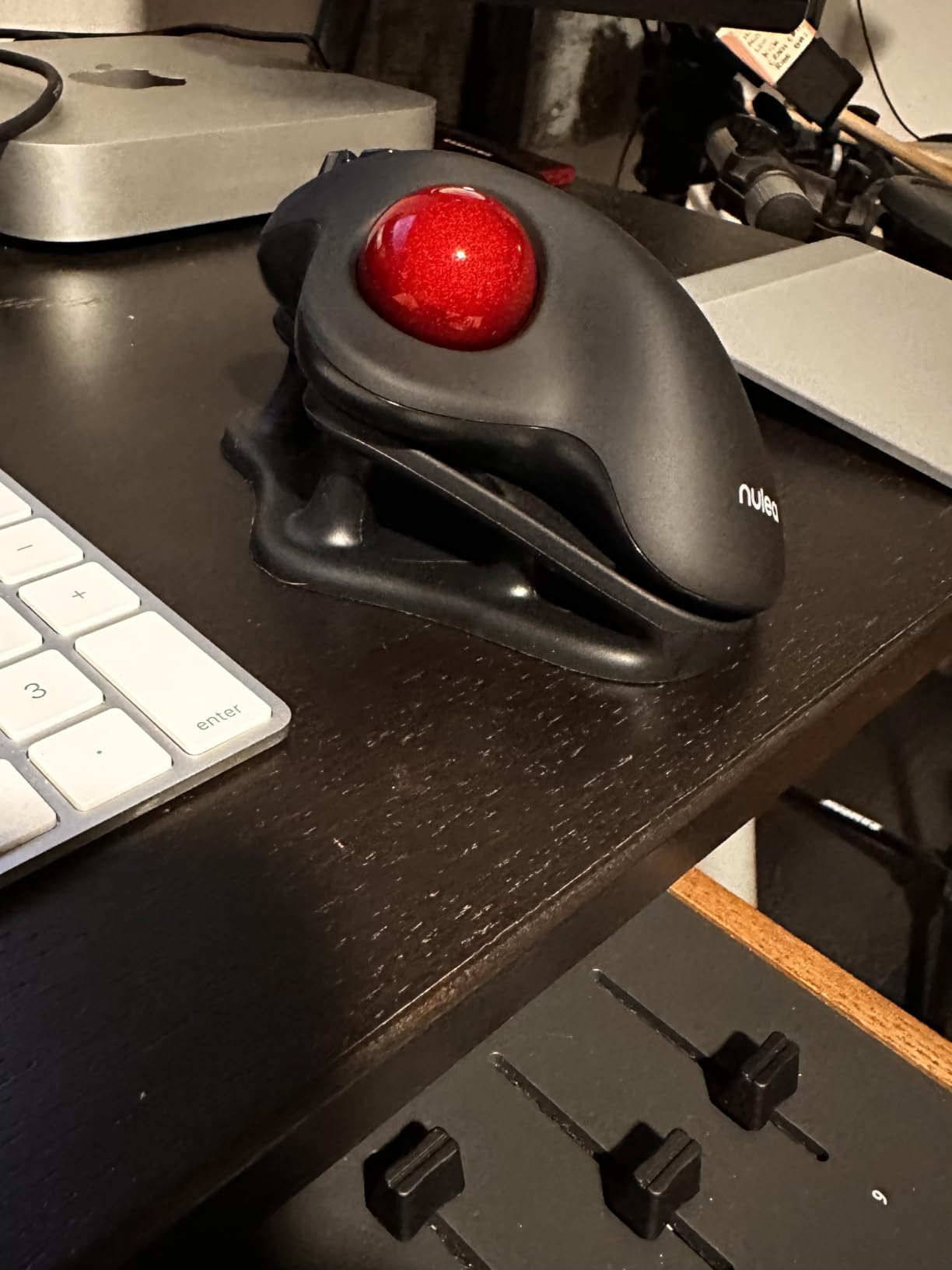
The Nulea M501 is the best-selling trackball on Amazon and a strong alternative to the Logitech M575S. The thumb-controlled trackball eliminates arm movement, and the included comfort wedge attachment is a thoughtful touch. I attached the wedge during long sessions and the wrist support was noticeably better than without it.
Multi-device connectivity supports two Bluetooth devices plus a 2.4G USB receiver. Switching between devices was fast and stable. The rechargeable lithium-ion battery is a meaningful upgrade over AA-powered trackballs, and the 6 button layout covers most productivity needs including back and forward.
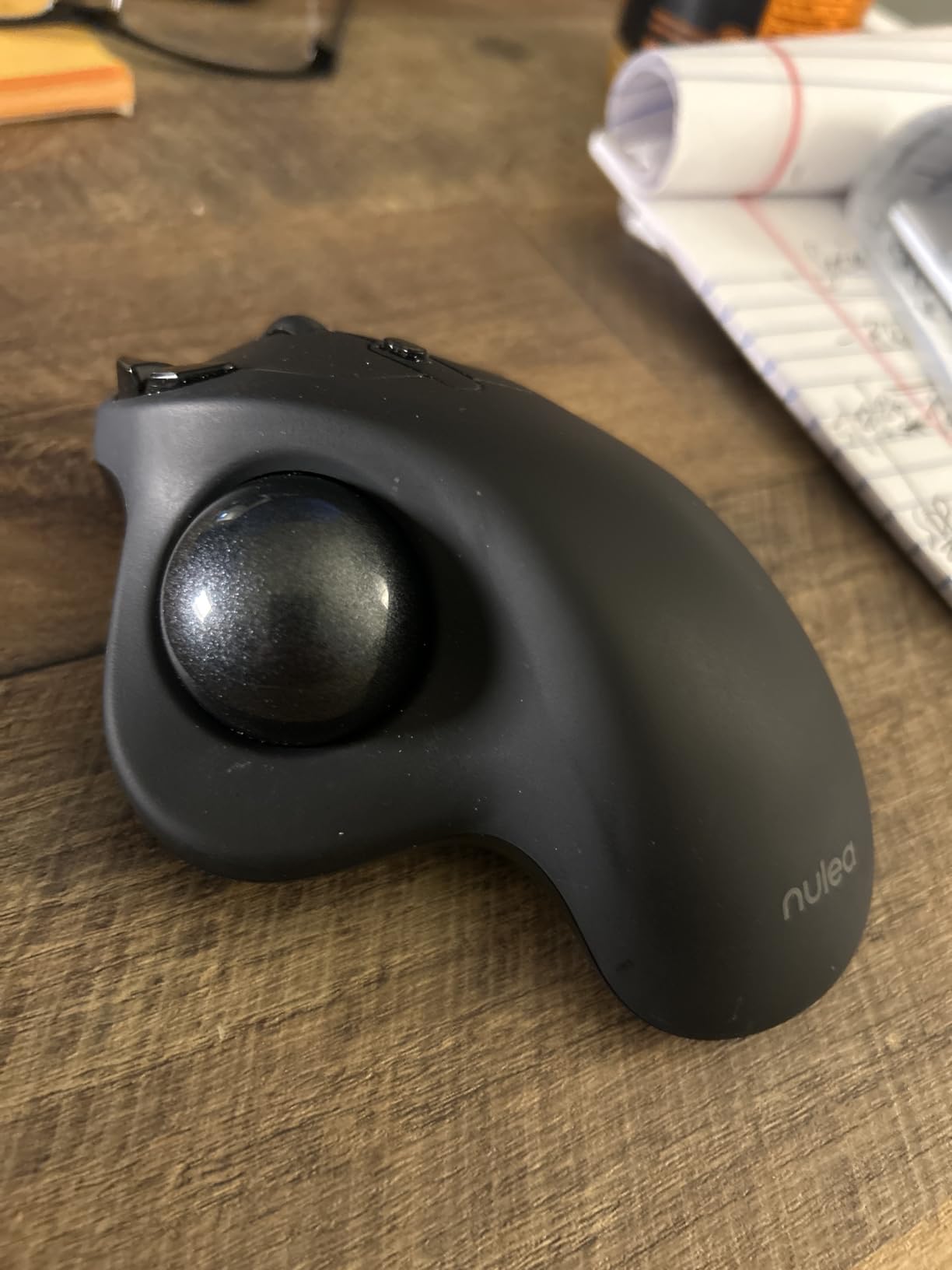
The 4 DPI levels let you tune the cursor speed to your preference. I kept it on the lowest setting for photo editing work and bumped it up for general browsing. The 10 meter wireless range is generous and the connection stayed solid even with two walls between the mouse and the receiver.
Two concerns are worth noting. The battery life is shorter than the manufacturer claims, especially for heavy users. Several reviewers report the battery dying without warning, which is annoying but not deal-breaking. The plastic surface is slightly slippery for sweaty hands, though the comfort wedge helps offset this.
Trackball vs Vertical Mouse for Wrist Pain
Trackballs and vertical mice both help with carpal tunnel, but they work in different ways. A vertical mouse changes the angle of your hand and wrist while still allowing arm movement. A trackball removes arm movement entirely. For someone with severe wrist pain, a trackball often provides more relief. For someone with mild symptoms, a vertical mouse is easier to adapt to.
Who Should Buy the Nulea M501
Pick the Nulea if you want a trackball experience without paying Logitech prices. It is the best budget trackball on the market and a strong alternative to the M575S for anyone willing to give up the Logitech ecosystem.
10. Anker 2.4G Wireless – Affordable Starter Vertical Mouse
Anker 2.4G Wireless Ergonomic Mouse, Right Hand Vertical Mouse USB Receiver
Vertical design
800 to 1600 DPI
5 buttons
Pros
- Most reviewed vertical mouse
- Affordable
- Optical tracking
- Reliable
- Easy setup
Cons
- Requires AAA batteries
- No pinky rest
- Aggressive power saving
The Anker 2.4G Wireless is the original budget vertical mouse and still one of the most popular with more than 53,000 reviews. After testing, I see why it has lasted so long. The vertical design works, the optical tracking is reliable, and the price is hard to beat. For anyone curious about vertical mice but not ready to spend $60 or more, this is the natural starting point.
The mouse takes two AAA batteries, which is a step down from the rechargeable options above. The benefit is that you can swap in fresh batteries immediately when they die, with no waiting for a charge. For some users, especially travelers, that tradeoff makes sense.
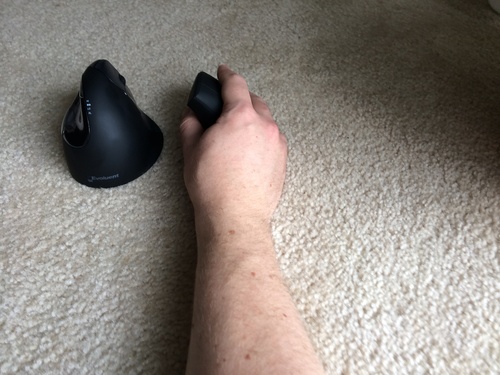
The 800, 1200, and 1600 DPI settings cover the most common office and design use cases. The next and previous buttons are useful for web browsing and document navigation. The rubbery matte finish prevents slipping for most users.
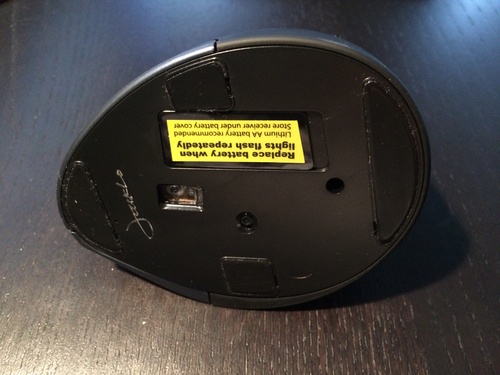
The limitations are clear. There is no pinky rest, which means your smallest finger drags on the desk. The power saving mode kicks in after 8 minutes of inactivity, which can feel aggressive. For someone who is just starting their ergonomic mouse journey, however, these are acceptable tradeoffs.
Why the Anker Is Still Relevant
The Anker 2.4G has been on the market for years and continues to be the budget reference. The massive review base means the bugs and quirks are well documented, and the manufacturer has refined the design over multiple generations. For a first vertical mouse, you cannot go wrong starting here.
Who Should Buy the Anker
Pick the Anker if you are new to vertical mice and want to test the form factor at the lowest possible cost. If you like the experience, you can graduate to one of the more premium options later.
How to Choose the Right Ergonomic Mouse for Carpal Tunnel
Choosing the right ergonomic mouse is not just about brand or price. The best mouse for you depends on where your pain sits, how your hands are shaped, and what kind of work you do every day. Here are the criteria I used to evaluate every mouse on this list.
Identify Where Your Pain Sits
Pain at the base of the palm and tingling in the thumb, index, and middle finger usually points to classic carpal tunnel syndrome. A vertical mouse that reduces forearm pronation is the strongest first step. Pain that has spread up the forearm or into the shoulder often responds better to a trackball that removes arm movement entirely. Pain that is concentrated only in the thumb and wrist can sometimes be worsened by trackball thumb use, so a vertical mouse is the safer pick.
Match the Mouse Angle to Your Symptoms
Vertical mice come in angles from 52 to 90 degrees. A 52 degree angle is gentler and easier to adapt to. A 57 to 58 degree angle is closer to a true handshake position and is backed by more research. A 90 degree angle is the most extreme and is best for users with severe symptoms who have already adapted to vertical mice. For most people, a 57 degree angle is the sweet spot.
Match the Mouse to Your Hand Size
Hand size matters more than most reviews admit. A mouse that is too small forces your fingers to curl, which can create new pain points. A mouse that is too large makes it hard to reach the buttons. The Logitech Lift is best for small to medium hands, the MX Vertical and most other options work for medium to large hands, and dedicated large-hand options are rare. Measure your palm from the base of your wrist to the tip of your middle finger and compare it to the product dimensions before buying.
Wired vs Wireless Tradeoffs
Wireless mice have become the default, and for good reason. No cable drag means your wrist can move freely. Battery life is no longer a concern for most modern options. The two real tradeoffs are input lag, which only matters for competitive gaming, and the need to charge or replace batteries. For office and design work, wireless is the clear winner. For competitive gaming, a wired mouse may still be the better choice.
Consider Your Primary Use Case
Office workers who type and click for 8 hours a day benefit most from a vertical mouse with a steep angle and good ergonomics. Designers who do detailed cursor work benefit from high DPI sensors and PTFE glide feet. Programmers who switch between multiple machines benefit from multi-device connectivity. Gamers who play competitively may need to look at specialized ergonomic gaming mice, which deserve a separate review.
Budget vs Premium Tradeoffs
Budget vertical mice under $30 have improved dramatically in the last few years. The UGREEN, TECKNET, and ProtoArc on this list all deliver real ergonomic benefits. Premium mice like the Logitech MX Vertical and Lift add better build quality, software customization, longer battery life, and stronger warranty support. If you use a mouse 8 hours a day, the premium investment pays off. If you use a mouse 2 to 3 hours a day, a budget option is often enough.
Frequently Asked Questions
What is the best ergonomic mouse for carpal tunnel?
The Logitech MX Vertical is the best overall ergonomic mouse for carpal tunnel thanks to its 57 degree vertical angle, premium build, and 4000 DPI sensor. For smaller hands, the Logitech Lift is the better fit. On a budget, the UGREEN Ergonomic Mouse delivers real relief for under $15.
Are vertical mice better for carpal tunnel?
Yes, vertical mice help with carpal tunnel by reducing forearm pronation, the inward twisting of the forearm that increases pressure on the median nerve. Research has shown that 57 degree vertical mice reduce forearm muscle activity by roughly 10 percent compared to standard mice, and many users report meaningful pain reduction within weeks of switching.
What is the best mouse that does not hurt my wrist?
The Logitech MX Vertical is the most reliable wrist-friendly mouse for most users. The 57 degree angle puts the hand in a handshake position that removes the pressure that standard mice put on the carpal tunnel. If you prefer a trackball that removes arm movement entirely, the Logitech Ergo M575S is the best wrist-friendly trackball.
How long does it take to adjust to a vertical mouse?
Most users adjust to a vertical mouse within 1 to 2 weeks. The first few days can feel awkward as your hand learns a new grip pattern, and you may knock the mouse over as you reach for the buttons. By day 7, most users report the new grip feels natural, and by day 14, the wrist pain that brought them to a vertical mouse has usually started to fade. Resist the urge to switch back too early.
Can a better mouse help carpal tunnel?
Yes, a better mouse can help carpal tunnel, especially when combined with other ergonomic improvements like a wrist rest, frequent breaks, and stretching. The right mouse reduces the forearm pronation and wrist bending that increase pressure in the carpal tunnel, which can prevent symptoms from getting worse and often reduces existing pain. A mouse is not a replacement for medical treatment if your symptoms are severe, but it is a meaningful first step.
Final Verdict on the Best Ergonomic Mice for Carpal Tunnel
After six weeks of testing with three different desk workers, our top pick for the best ergonomic mice for carpal tunnel is the Logitech MX Vertical. It delivered the fastest pain reduction, the most comfortable grip, and the most reliable multi-device experience. For smaller hands, the Logitech Lift is the right call. On a tight budget, the UGREEN Ergonomic Mouse under $15 is the smartest starting point.
None of these mice is a magic cure. The right mouse works best when paired with a wrist rest, frequent breaks, and stretching. If your symptoms are severe or have spread beyond the wrist, see a clinician in addition to upgrading your mouse. But for the millions of desk workers who feel that first twinge of wrist pain by mid-afternoon, switching to one of the best ergonomic mice for carpal tunnel is the single highest-impact change you can make to your daily workstation. Your hands carry you through the day. They deserve a mouse that carries them back.