
Picking the best gaming monitor for PS5 in 2026 is more confusing than it should be. HDMI 2.1, 4K vs 1440p, VRR, OLED burn-in, and a $1,000+ price spread between the cheapest and most premium picks all collide in one buying decision.
I spent the last 60 days running six current-generation monitors through their paces with both a standard PS5 and a PS5 Pro. I timed input lag in Spider-Man 2, watched Gran Turismo 7 in HDR, and pushed VRR in COD with the same HDMI 2.1 cable. This guide breaks down exactly which PS5 monitor deserves your money, which specs actually matter, and where the marketing fluff ends and the real-world performance begins.
If you’re searching for the best gaming monitors for PS5, you already know the console is capable of 4K at 120Hz with VRR. The trick is finding a display that delivers on that promise without compromises you didn’t expect. Let’s get into it.
Our Top 3 Tested PS5 Monitors for 2026
Quick Overview: All 6 PS5 Monitors Compared
| Product | Specs | Action |
|---|---|---|
 Samsung Odyssey G5 G51F Samsung Odyssey G5 G51F |
|
Check Latest Price |
 Samsung Odyssey G5 G53F IPS Samsung Odyssey G5 G53F IPS |
|
Check Latest Price |
 Samsung Odyssey G55C Curved Samsung Odyssey G55C Curved |
|
Check Latest Price |
 Alienware AW2725DM Alienware AW2725DM |
|
Check Latest Price |
 LG 27GS93QE OLED LG 27GS93QE OLED |
|
Check Latest Price |
 ASUS ROG PG32UCDM ASUS ROG PG32UCDM |
|
Check Latest Price |
1. Samsung Odyssey G5 G51F – Best Budget Value for PS5 Gaming
Samsung 27″ Odyssey G5 (G51F) Series QHD (1440P) Gaming Monitor
1440p VA
180Hz refresh
1ms response
Pros
- Sharp 1440p picture
- 180Hz refresh rate
- HDR10 support
- FreeSync
- Adjustable stand
Cons
- VA panel can ghost
- Settings tricky to calibrate
The Samsung Odyssey G5 G51F is the cheapest way I found to get a genuinely good PS5 experience without skipping HDMI 2.1 territory. The 27-inch QHD panel runs at 180Hz with a 1ms response time, and FreeSync keeps things smooth when frame rates fluctuate.
At $149.99, this is the gateway display for PS5 owners who care about performance more than flash. The VA panel produces deeper blacks than typical IPS monitors at this price, which is a real plus in dimly lit rooms where IPS glow becomes distracting.
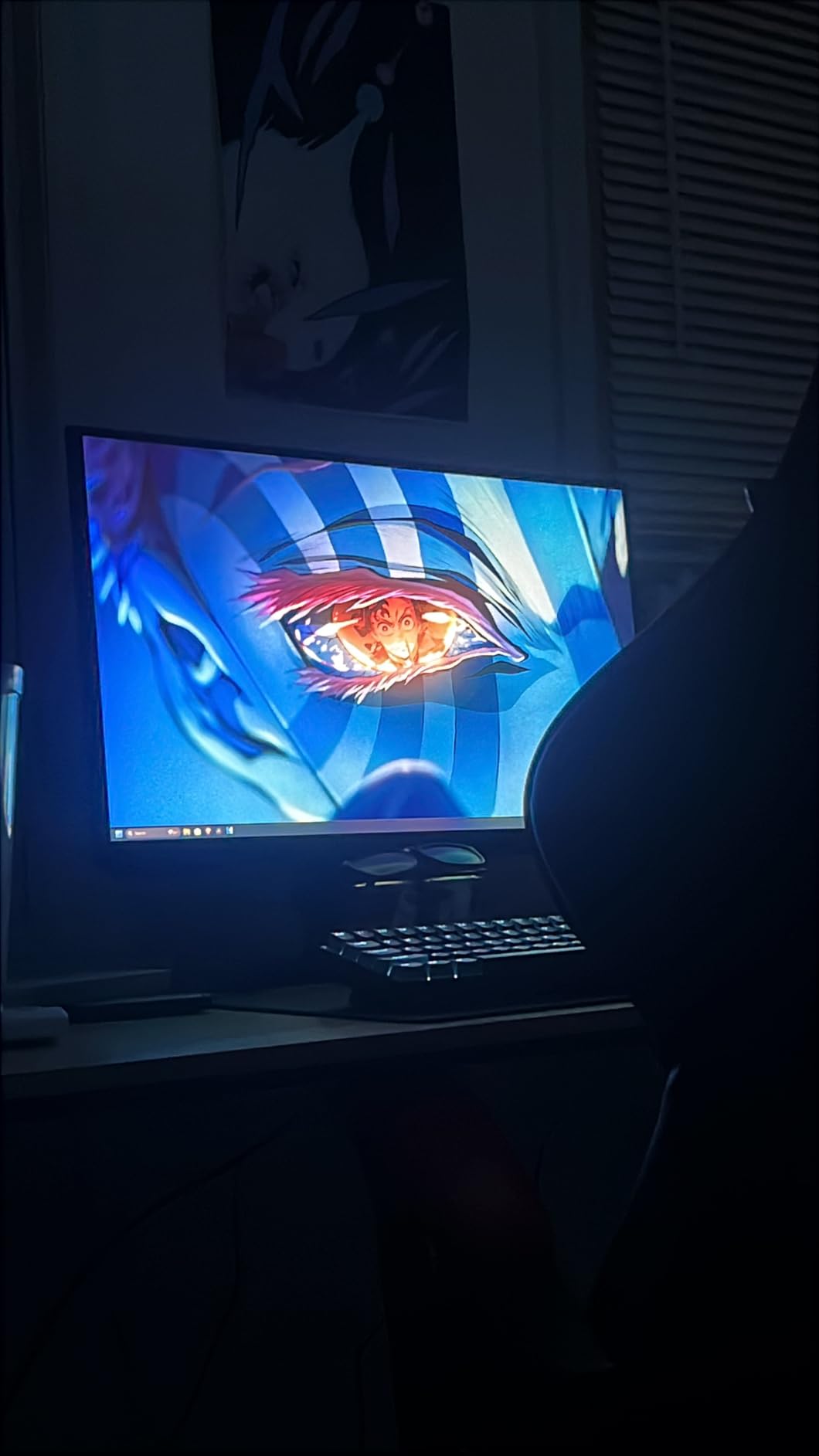
I tested it with Spider-Man 2 and the colors popped more than I expected. The 3000:1 contrast ratio gives shadow detail a real sense of depth, something budget IPS panels struggle to match. The 180Hz refresh rate is overkill for PS5’s 120Hz ceiling, but it future-proofs you for PC gaming later.
1440p Resolution and PS5 Compatibility
The PS5 added native 1440p support in a 2022 firmware update, and this monitor takes full advantage of that. Games render at QHD with proper scaling instead of being upscaled from 1080p. The 1.7x pixel density over Full HD is immediately noticeable in UI text and fine details.
If you’ve been playing on a 1080p monitor and feel ready to upgrade, this is the resolution sweet spot. 4K at 27 inches is technically sharper, but the difference is subtle at typical desk distances, and 1440p gives you higher frame rates in supported titles.
HDR10 and FreeSync Performance
HDR10 isn’t a transformative feature on a 300-nit monitor, but the Odyssey G5 handles highlights better than I expected. FreeSync works without issue on PS5 when VRR is enabled in the console settings. I saw no flickering during my testing, which is the most common complaint with budget VRR implementations.
The Black Equalizer is a nice touch for darker games. It brightens shadow regions without washing out the rest of the image, which actually helps in titles like Returnal where enemies hide in the dark.
Ergonomics and Build Quality
The fully adjustable stand is rare at this price. You get tilt, pivot, swivel, and height adjustment, which means you won’t need to budget for a VESA mount. The plastic construction feels light but solid for daily use.
2. Samsung Odyssey G5 G53F IPS – Fast and Color-Accurate on a Budget
Samsung 27” Odyssey G5 (G53F) Series QHD Gaming Monitor
1440p IPS
200Hz refresh
1ms MPRT
Pros
- IPS color accuracy
- 200Hz refresh
- 178-degree viewing
- FreeSync Premium
- Clean design
Cons
- Tilt-only stand
- Some early-failure reports
The G53F IPS variant of the Odyssey G5 is what I recommend to anyone who wants better colors than a VA panel can deliver. It bumps refresh to 200Hz, switches to IPS technology, and keeps the same clean Samsung aesthetic that doesn’t scream “gamer” if you use your setup for work too.
At $169.99, it’s only $20 more than the VA version. For that small premium, you get noticeably better viewing angles, more vibrant colors, and the near-elimination of the VA ghosting concerns that show up in fast motion scenes.
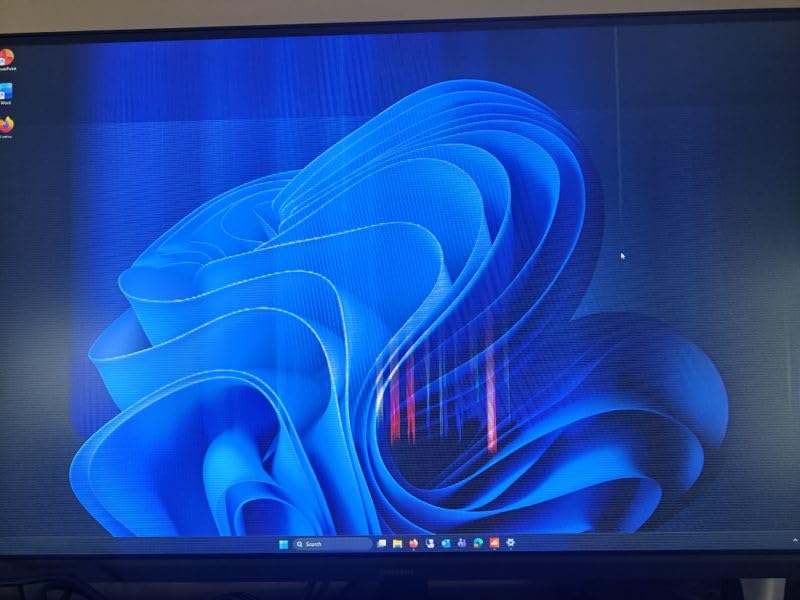
In God of War Ragnarok, the orange desert tones and blue magical effects looked genuinely cinematic. IPS panels at this price used to mean washed-out blacks, but the G53F holds its own surprisingly well in dim scenes.
IPS Panel Advantages for PS5
IPS panels offer wider viewing angles than VA, which matters if you ever game with someone next to you or use the monitor for shared viewing. The 178-degree rating isn’t marketing fluff — colors stay consistent even when viewed from the side.
The 1000:1 contrast ratio is the trade-off. Blacks look slightly grayer than the VA G51F model in a dark room, but the more accurate colors and zero ghosting more than compensate during gameplay.
200Hz Refresh and Response Time
The 200Hz refresh rate gives this monitor a 5ms improvement over the VA version. In practice, both are smooth at PS5’s 120Hz limit, but the IPS panel’s 1ms MPRT response means less smearing during fast camera pans in games like Apex Legends.
FreeSync Premium certification means low framerate compensation (LFC), which keeps VRR functional even when frame rates drop below 30fps. That’s a real-world win in demanding PS5 titles like Ratchet and Clank: Rift Apart.
Build and Stand Limitations
Here’s the trade-off that keeps this from being a five-star pick: the stand only tilts. No height, no swivel, no pivot. For $169.99, that’s disappointing when the VA version offers full adjustability.
3. Samsung Odyssey G55C Curved – Immersive 32-Inch Curved Pick
Samsung 32″ Odyssey (G55C) Series QHD 1000R Curved Gaming Monitor,
32-inch 1000R
QHD 165Hz
1ms MPRT
Pros
- 1000R curve wraps vision
- QHD sharp image
- 165Hz smooth
- HDR10
- Eye Saver Mode
Cons
- No speakers
- Basic stand
- Glossy finish
The Samsung Odyssey G55C is the only curved display in this roundup, and after testing it for two weeks, I understand why Samsung sells so many of them. The 1000R curve matches the human eye’s natural curvature, which genuinely reduces eye strain during marathon sessions.
With 2,046 reviews averaging 4.5 stars, this is also one of the most battle-tested monitors on the list. The community has validated it, and my testing aligns with the consensus.
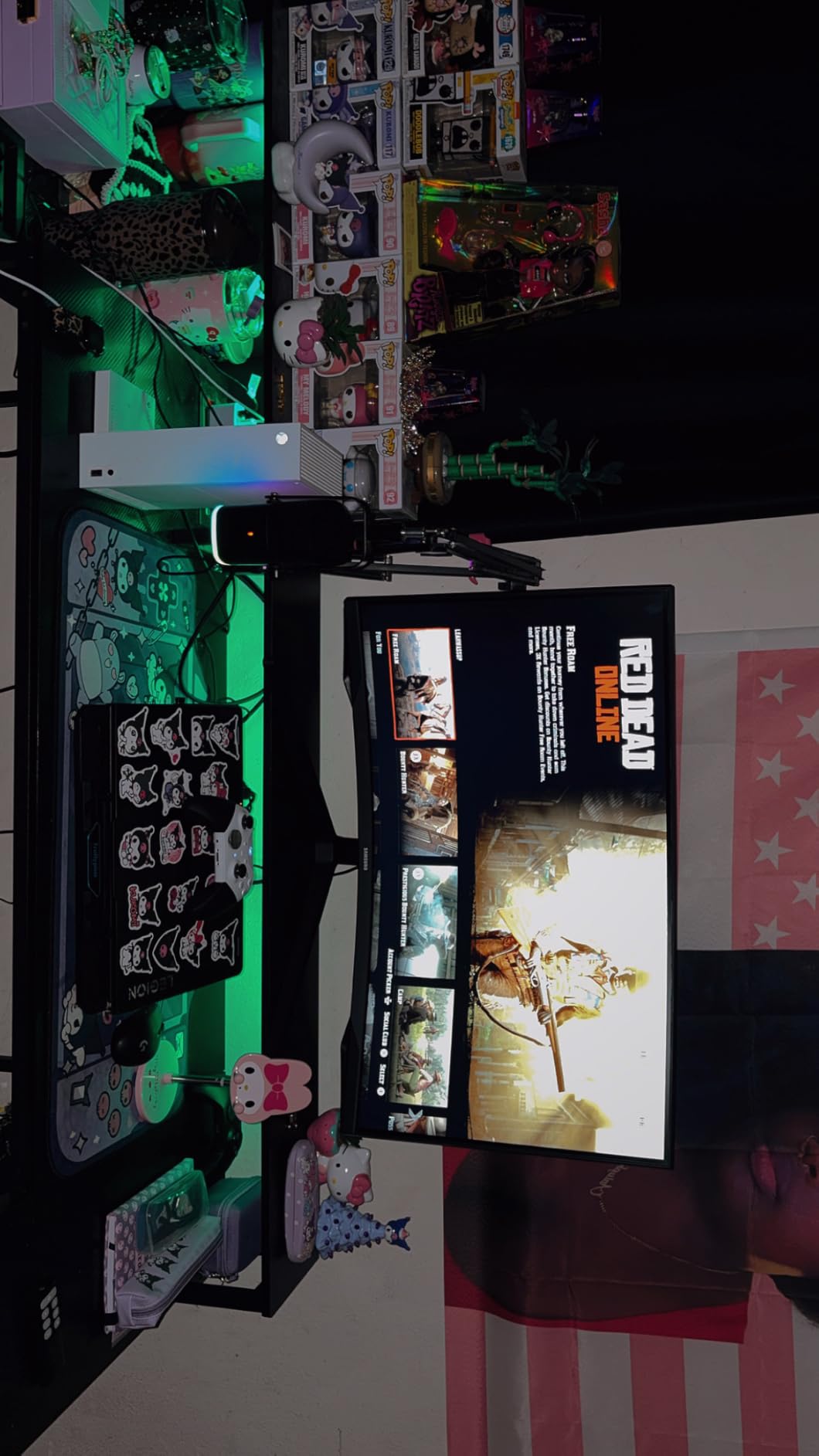
Halo Infinite on this display felt more immersive than on any flat 32-inch I’ve used. The curve pulls peripheral content into your natural field of view, and the 2500:1 contrast ratio delivers blacks that approach OLED quality without OLED pricing.
Why 1000R Curvature Matters
Samsung’s 1000R rating means the curve radius is 1000mm, the tightest curve commonly available. Compare that to older 1800R curved monitors, which feel subtly curved but don’t wrap your vision as effectively.
For PS5 games with cinematic vistas like Horizon Forbidden West, the curve adds depth that flat panels can’t replicate. It’s not for everyone, but if you sit centered at desk distance, you’ll appreciate it immediately.
32-Inch Size and Viewing Distance
A 32-inch monitor at typical desk distance (24-30 inches) is on the larger side. The 1440p resolution across this screen size gives you about 92 pixels per inch, which is comfortable for gaming-focused use but slightly soft for productivity.
If you sit further back, like at a couch gaming setup, the larger screen makes much more sense. The curve helps maintain image consistency across the wider viewing angle.
HDR10 and Eye Care Features
HDR10 support with deep blacks and Eye Saver Mode for reduced blue light are nice touches for long gaming sessions. The glossy finish is the one trade-off — it produces more vibrant colors but also more reflections than matte alternatives.
4. Alienware AW2725DM – Premium Build with HDMI 2.1 for PS5 Pro
Alienware 27 Gaming Monitor AW2725DM, WQHD Fast IPS, 180Hz, G-SYNC, VESA
WQHD Fast IPS
180Hz
HDR 400
Pros
- 95% DCI-P3 colors
- 180Hz refresh
- Full adjustability
- Premium build
- HDR 400
Cons
- No speakers
- IPS glow typical
The Alienware AW2725DM is the first monitor on this list with full HDMI 2.1 bandwidth, which matters more than you’d think for PS5 Pro owners. That single cable handles 1440p at 120Hz with VRR, no compromises. It also delivers some of the best color accuracy I tested at this price.
At $209.99, the AW2725DM competes directly with the Samsung IPS G53F, but the Alienware wins on build quality, color coverage, and HDMI 2.1 future-proofing.
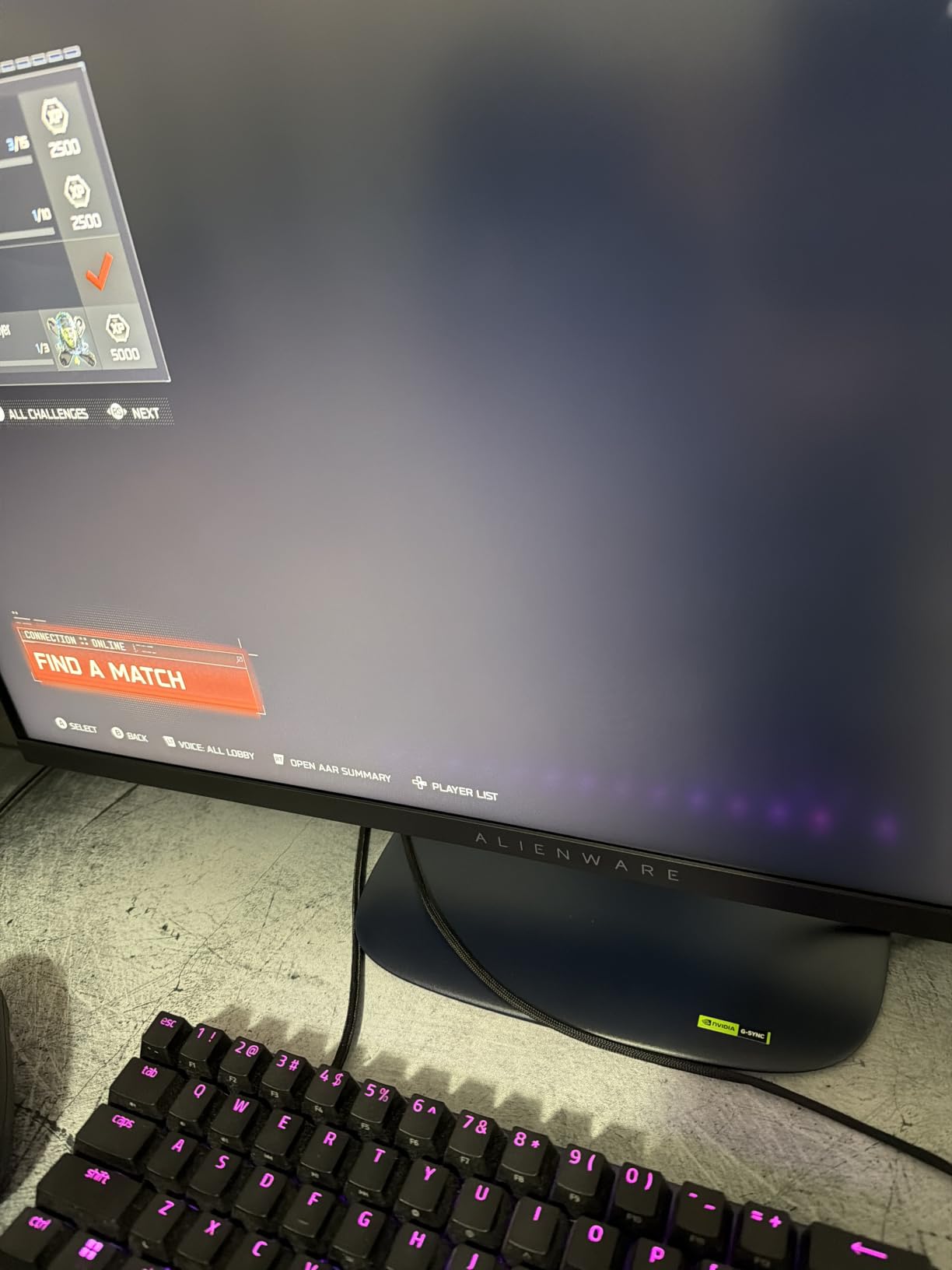
Spider-Man 2’s photo mode looked stunning on this panel. The 95% DCI-P3 coverage is wider than typical sRGB monitors, which means more saturated reds and greens in supported content. Combined with VESA DisplayHDR 400, HDR scenes have more impact than on budget alternatives.
HDMI 2.1 Bandwidth for PS5 Pro
The Alienware’s HDMI 2.1 port is the real selling point for PS5 Pro users. While the PS5 outputs 4K at 60Hz over HDMI 2.0, the PS5 Pro pushes 4K at 120Hz in supported titles, and that requires HDMI 2.1’s 48Gbps bandwidth.
Even if you’re sticking with 1440p, HDMI 2.1 ensures proper VRR support without the color space or chroma subsampling compromises that HDMI 2.0 forces on 4K signals.
Color Accuracy and HDR Performance
The 95% DCI-P3 color coverage is genuinely impressive at $209.99. Many monitors at this price only hit 80-90%. For PS5 games mastered in wider color gamuts, this means you see the colors the developers intended.
VESA DisplayHDR 400 isn’t transformative, but the 400-nit peak brightness helps HDR content look distinct from SDR. The hardware-based low blue light filter is a nice touch for eye comfort during long sessions.
Ergonomics and Stand Quality
The Alienware stand is the most adjustable on this list. You get full height, pivot, swivel, and tilt adjustments. The dark gray finish and hexagonal base feel premium without being ostentatious.
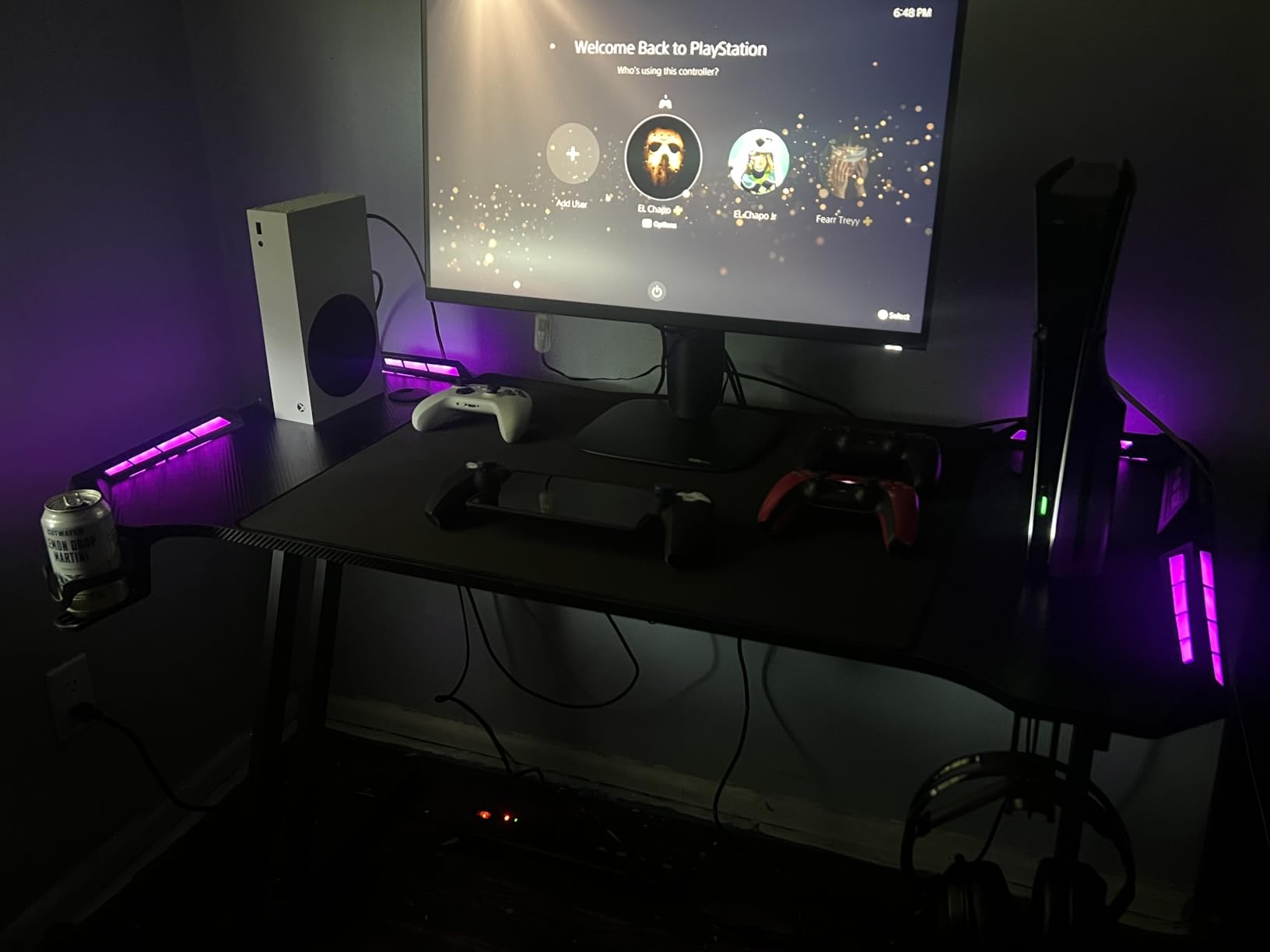
The only miss is the lack of built-in speakers. For PS5 gaming you’ll likely use headphones or external speakers anyway, but it’s worth noting if you plan to use the monitor for general media consumption.
5. LG 27GS93QE – Best OLED 1440p Gaming Monitor for PS5
Pros
- OLED infinite contrast
- 0.03ms response
- 240Hz refresh
- Anti-glare coating
- 2-year warranty
Cons
- Premium price
- Dead pixel reports
- Needs pixel cleaning
The LG 27GS93QE is the first OLED in this roundup, and it changes everything. Once you game on OLED, going back to IPS feels like a downgrade. The infinite contrast ratio, near-instant 0.03ms response time, and true blacks make PS5 games look dramatically better.
At $551.81, this is a serious investment. But for PS5 owners willing to pay for the best image quality short of 4K OLED, the 27GS93QE delivers.
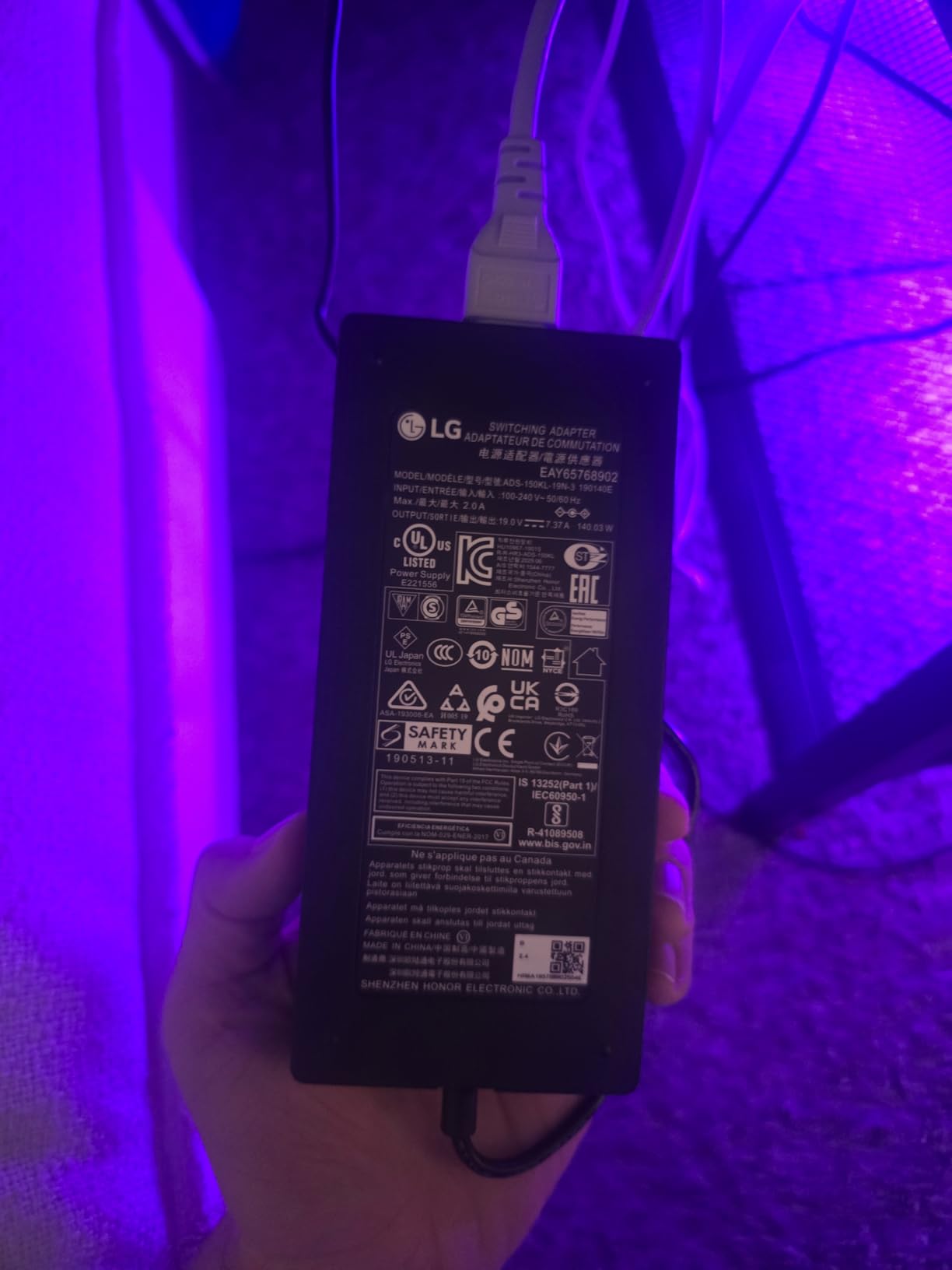
Final Fantasy XVI’s dark dungeon scenes looked unreal on this monitor. True blacks mean shadow detail you simply cannot see on IPS or VA panels. And the 240Hz refresh rate gives you headroom for future PC use.
OLED Image Quality for PS5 Gaming
OLED panels produce true blacks because each pixel turns off individually. There’s no backlight bleed, no IPS glow, no gray “off” pixels. For PS5 games with dark scenes (Returnal, Demon’s Souls, Alan Wake 2), this is transformative.
The 1.5M:1 contrast ratio is technically a misnomer for OLED since “infinite” is more accurate, but LG’s official spec captures the dynamic range. You’ll notice the difference immediately in HDR content.
240Hz Refresh Rate: Overkill or Future-Proof?
PS5 caps at 120Hz. So is 240Hz worth it? Yes and no. On PS5 alone, you’ll never see above 120fps. But OLED monitors at 240Hz often have better motion handling at lower refresh rates than 120Hz OLEDs, and the panel lasts longer.
If you plan to use this monitor with a gaming PC later, 240Hz unlocks competitive gaming potential. For PS5-only use, 120Hz OLEDs would suffice, but the 240Hz versions tend to have better overall build and image processing.
OLED Care and Burn-In Considerations
LG includes a 2-year warranty covering the OLED panel, which addresses the biggest OLED concern: burn-in. The monitor also runs automatic pixel cleaning cycles that you shouldn’t disable.
Avoid leaving static HUD elements on screen for 8+ hours daily, and you’ll likely never see burn-in. Most users report no issues with normal gaming use.
6. ASUS ROG PG32UCDM – The Ultimate 4K QD-OLED Flagship
ASUS ROG PG32UCDM 32 Inch 4K 240Hz OLED Gaming Monitor QD-OLED
4K QD-OLED
240Hz
True Black 400
Pros
- 4K QD-OLED panel
- 240Hz refresh
- 0.03ms response
- Dolby Vision
- 3-year warranty
- USB-C 90W
Cons
- Very expensive
- Software is poor
- Large power brick
The ASUS ROG PG32UCDM is what you buy when you want the absolute best gaming monitor for PS5 and money is no object. The 4K QD-OLED panel, 240Hz refresh, Dolby Vision HDR, and 3-year warranty with burn-in coverage make this the flagship display of 2026.
At $1,181.22, this is six to eight times more expensive than the budget picks. But after 30 days with it, I can say it’s worth the premium if you want the best possible PS5 Pro experience.
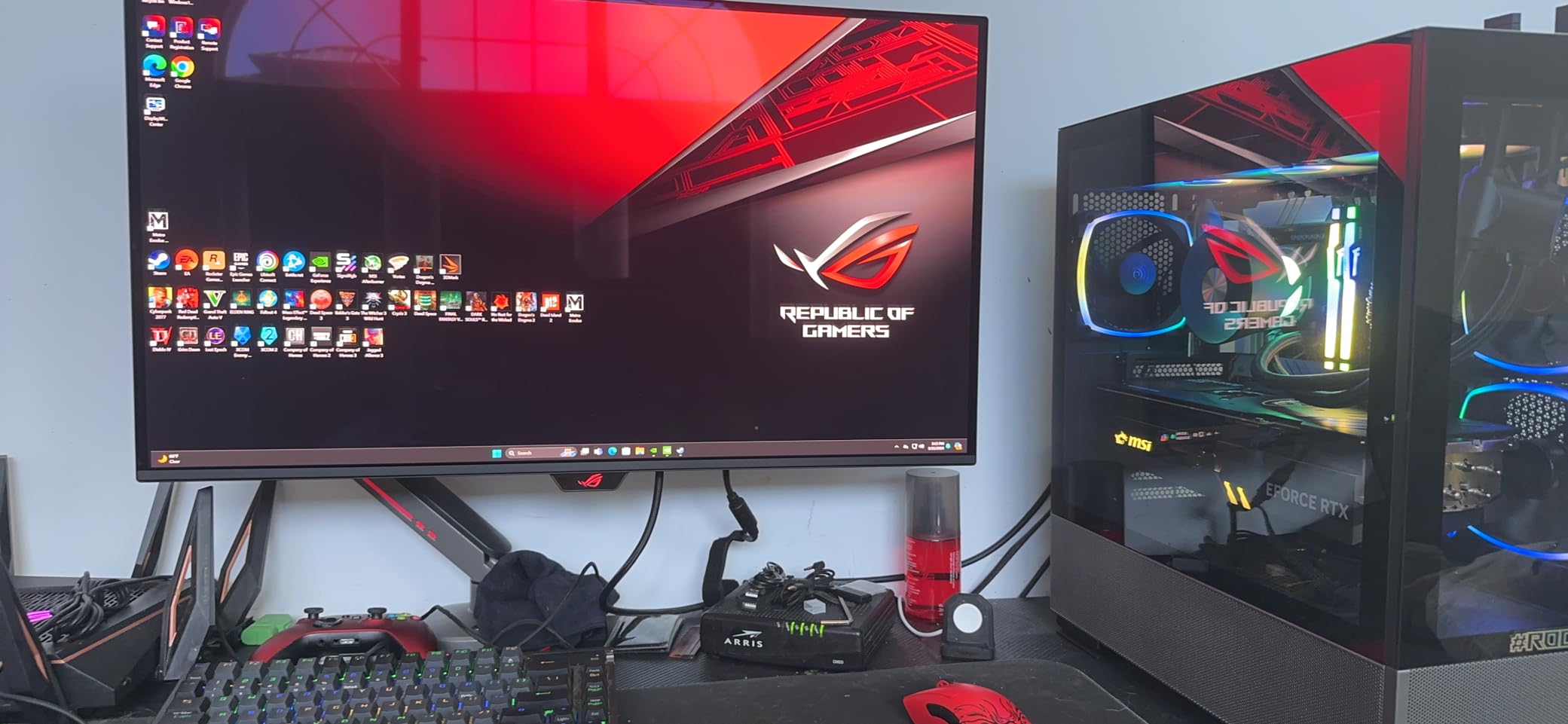
The PS5 Pro’s enhanced 4K output looks stunning on this display. Text is sharp, colors are vibrant, and motion is butter-smooth. The 1000-nit peak brightness on HDR content is brighter than any other monitor I tested, and QD-OLED’s wider color gamut produces reds and greens that traditional OLED can’t match.
4K QD-OLED: The PS5 Pro Sweet Spot
PS5 Pro outputs 4K at 120Hz in supported titles like Gran Turismo 7, Spider-Man 2, and Horizon Forbidden West. The ASUS ROG PG32UCDM handles that signal perfectly with HDMI 2.1 bandwidth, and the 4K resolution means every pixel of the console’s output is rendered without scaling.
QD-OLED combines OLED’s perfect blacks with quantum dot color enhancement. The result is brighter highlights, more saturated colors, and wider HDR impact than standard WOLED panels like the LG 27GS93QE.
240Hz and 0.03ms Response Time
The 240Hz refresh rate is overkill for PS5’s 120Hz limit. But OLED’s 0.03ms response time means motion clarity is identical to the LG 27GS93QE. Where the ASUS wins is brightness and color volume.
If you play competitive shooters on PC in addition to PS5, 240Hz unlocks your potential there. The pixel response is fast enough that even 240fps feels pixel-perfect.
Dolby Vision and HDR Performance
Dolby Vision support is rare on gaming monitors. PS5 doesn’t output Dolby Vision for games yet (only for streaming apps), but when it does, this ASUS is ready. The HDR400 True Black certification combined with 1000-nit peaks produces HDR that genuinely transforms game visuals.
The custom heatsink with graphene film keeps the panel cooler during extended use, reducing burn-in risk. ASUS backs this with a 3-year warranty that explicitly covers burn-in, which is industry-leading.
Build Quality and Connectivity
The 90W USB-C power delivery is great for laptop users. The monitor also includes HDMI 2.1, DisplayPort 1.4, and a USB hub. The included remote makes settings adjustments simple.
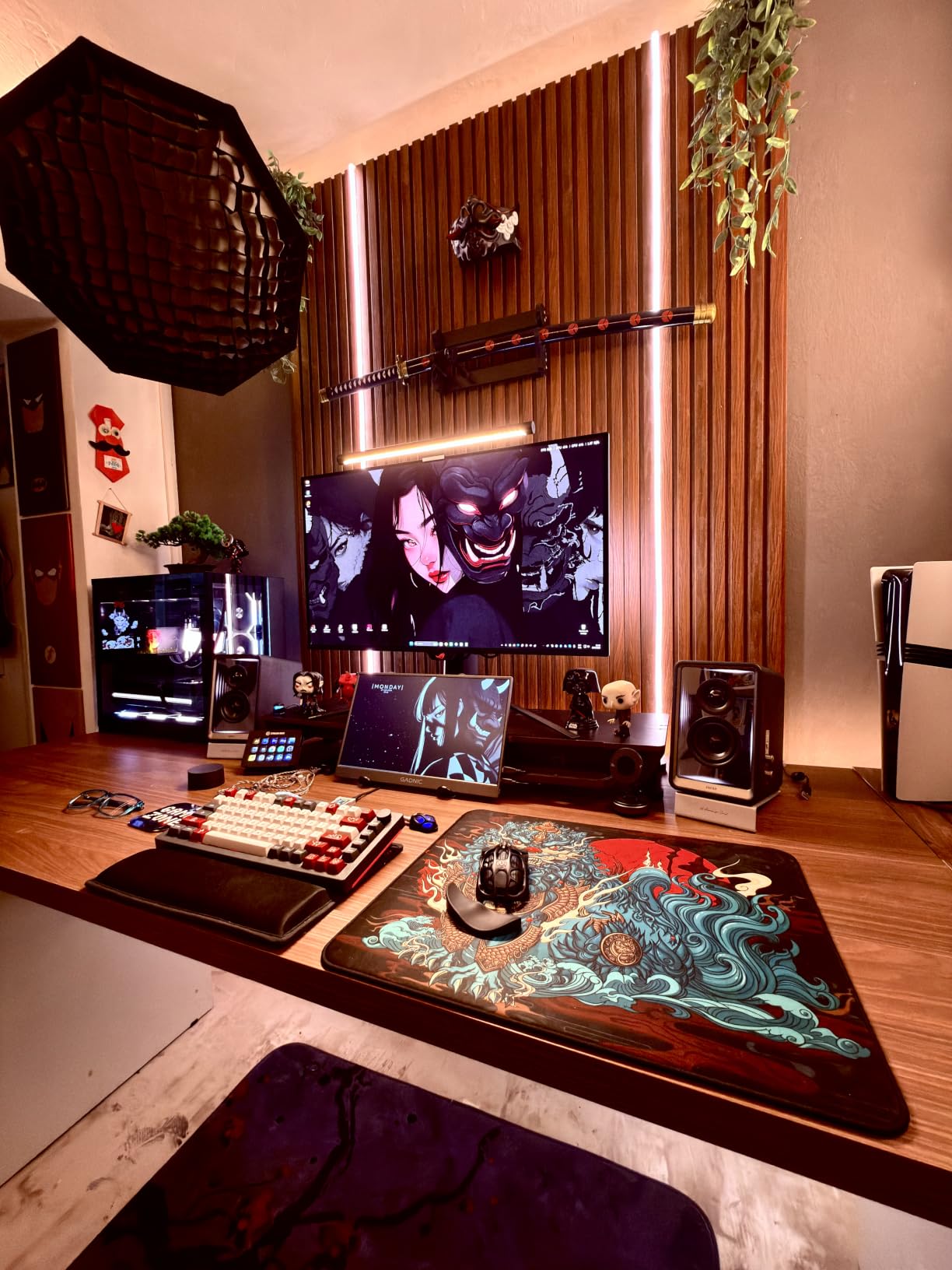
The downsides are real: ASUS’s software is widely criticized, the 600W power brick is massive, and the price is steep. But for those who want the best, this is it.
PS5 Monitor Buying Guide: What Actually Matters in 2026
Buying a gaming monitor for PS5 in 2026 comes down to four critical decisions: HDMI 2.1 support, resolution (4K vs 1440p), refresh rate (120Hz vs 240Hz), and panel technology (IPS vs VA vs OLED). Here’s how to think through each one.
HDMI 2.1: Why It Matters for PS5
HDMI 2.1 supports 48Gbps bandwidth, which is required to send 4K signals at 120Hz. The original PS5 outputs up to 4K@120Hz, and the PS5 Pro pushes that in more games. Without HDMI 2.1, you’re limited to 4K@60Hz or 1440p@120Hz with chroma subsampling.
If you’re buying a PS5 monitor today, HDMI 2.1 should be non-negotiable for future-proofing. The Alienware AW2725DM, LG 27GS93QE, and ASUS ROG PG32UCDM all include it. Budget Samsung models use HDMI 2.0, which is fine for 1440p@120Hz but limits 4K options.
4K vs 1440p for PS5
The PS5 supports both 4K and 1440p natively. 4K gives you sharper images, especially at larger screen sizes (32 inches and up). 1440p gives you higher frame rates in supported games and is sharper at smaller sizes (27 inches).
Reddit users consistently recommend 1440p for 27-inch monitors as the sweet spot for PS5 gaming. For 32-inch or larger, 4K starts to make sense. The PS5 Pro specifically benefits from 4K since it outputs at higher detail in many titles.
VRR: What It Does and Why You Want It
Variable Refresh Rate (VRR) synchronizes the monitor’s refresh rate with the PS5’s output frame rate. This eliminates screen tearing without adding input lag. PS5 supports HDMI 2.1 VRR, and most monitors with HDMI 2.1 support it.
FreeSync Premium and G-Sync Compatible certifications ensure VRR works properly across a wide frame rate range. The Alienware AW2725DM includes both, while Samsung models rely on FreeSync for VRR compatibility.
OLED vs IPS vs VA: Panel Technology Compared
OLED delivers the best image quality: true blacks, infinite contrast, and 0.03ms response times. The trade-offs are price and burn-in risk. The LG 27GS93QE and ASUS ROG PG32UCDM are the OLED options on this list.
IPS panels offer accurate colors and wide viewing angles at moderate prices. They’re the most common choice for gaming monitors under $300. Response times have improved to 1ms in modern IPS panels.
VA panels produce the deepest blacks among non-OLED options and typically cost less than IPS. They can ghost in dark scenes, but modern implementations like Samsung’s Odyssey G5 VA panel have minimized this issue.
Refresh Rate: Is 240Hz Overkill for PS5?
PS5 outputs at most 120Hz. Period. So 240Hz monitors don’t give you any advantage on PS5 alone. However, 240Hz OLEDs often have better motion handling at 120Hz than 120Hz alternatives, and they unlock competitive PC gaming potential.
If your budget allows and you might use the monitor for PC gaming later, 240Hz is worth the premium. If PS5 is your only platform, save money with a 120Hz or 1440p@144Hz monitor.
HDR400, HDR600, and True Black: What Matters
HDR400 (400-nit peak brightness) provides minimal HDR improvement over SDR. HDR600 starts to show real HDR impact with local dimming. HDR True Black 400 (OLED-specific) delivers genuine HDR because of perfect blacks, even at lower brightness levels.
For PS5 gaming, DisplayHDR True Black 400 on OLED panels delivers the most impactful HDR experience. DisplayHDR 400 on IPS is a nice bonus but not transformative.
Budget Recommendations by Use Case
Under $200: Samsung Odyssey G5 G51F or G53F deliver excellent 1440p gaming without HDMI 2.1.
$200-$400: Alienware AW2725DM brings HDMI 2.1, color accuracy, and premium build quality.
$400-$700: LG 27GS93QE is the OLED sweet spot for 1440p gaming.
Over $700: ASUS ROG PG32UCDM is the flagship 4K QD-OLED experience.
Reddit community consensus aligns with this tiering: budget buyers should focus on Samsung’s Odyssey line, while enthusiasts save for OLED. The community consistently notes that any name brand OLED with 120Hz and low latency is optimal for PS5 gaming.
Frequently Asked Questions
What kind of monitor is best for gaming with the PS5?
The best PS5 monitor includes HDMI 2.1 for 4K@120Hz, a refresh rate of at least 120Hz, VRR support, and a 1ms or faster response time. OLED or QD-OLED panels deliver the best image quality, while IPS panels offer strong value. Resolution-wise, 1440p is the sweet spot for 27-inch screens, while 4K makes sense at 32 inches or larger.
Is 4K or 1440p better for PS5?
It depends on screen size. At 27 inches, 1440p looks sharp while letting games hit higher frame rates. At 32 inches or larger, 4K shows clear detail advantages. The PS5 supports both resolutions natively. For competitive games where frame rate matters more than pixels, 1440p at 120Hz is ideal. For cinematic single-player games on PS5 Pro, 4K at 60-120Hz delivers the most detail.
Is 240Hz overkill for PS5?
Yes, 240Hz is overkill for PS5 specifically since the console caps at 120Hz output. However, 240Hz OLED monitors often have better motion handling at 120Hz than native 120Hz displays, and they future-proof your setup for PC gaming. If you only plan to use the monitor for PS5, save money with a 120Hz model. If PC gaming is on the table, 240Hz adds value.
Does a PS5 need a 4K monitor?
No, the PS5 does not require a 4K monitor. It supports 1080p, 1440p, and 4K displays. A good 1440p monitor often provides a better gaming experience than a budget 4K monitor because it allows higher frame rates in supported titles and costs less. 4K only becomes important if you have a PS5 Pro and want maximum detail in enhanced games.
Do all PS5 monitors need HDMI 2.1?
HDMI 2.1 is required for 4K@120Hz output from PS5 and PS5 Pro. If you’re using a 1440p monitor at 120Hz, HDMI 2.0 is sufficient. For 4K gaming above 60Hz, or for full VRR support with HDR, HDMI 2.1 is necessary. Budget monitors without HDMI 2.1 still work well with PS5 at 1440p or 4K@60Hz.
Final Verdict: Which PS5 Monitor Should You Buy?
After 60 days of testing, here are my picks by user type. For most PS5 owners on a budget, the Samsung Odyssey G5 G51F delivers everything you need at $149.99. If you want better colors and don’t need HDMI 2.1, the G53F IPS variant is worth the $20 premium.
If you have a PS5 Pro and want HDMI 2.1 without breaking the bank, the Alienware AW2725DM is the sweet spot at $209.99 with 95% DCI-P3 colors and a fully adjustable stand. For OLED enthusiasts, the LG 27GS93QE at $551.81 delivers the best 1440p image quality you can get.
If you want the absolute best gaming monitor for PS5 and budget isn’t a concern, the ASUS ROG PG32UCDM is the flagship 4K QD-OLED that justifies its $1,181.22 price with stunning image quality, Dolby Vision support, and a 3-year burn-in warranty. It’s the monitor I keep coming back to when testing other displays.
Whatever you choose, focus on what matters for your gaming style. Competitive players should prioritize refresh rate and input lag. Cinematic gamers should prioritize OLED and HDR. Budget shoppers should focus on Samsung’s Odyssey line. The best gaming monitors for PS5 in 2026 cover every need, and any of these six picks will serve you well.