

I trained for my first marathon wearing a $30 wristband that counted steps, and I finished with no idea if my pacing strategy actually worked. When I signed up for my second marathon, I bought my first real GPS running watch, and the difference was night and day. I could see exactly how my long runs degraded pace in the final miles, when my heart rate drifted into Zone 4 too early, and whether I was on track for my goal time. After testing more than a dozen GPS watches over the past three years and logging hundreds of training miles, our team put together this guide to the best GPS running watches for marathon training you can buy in 2026.
A GPS running watch is the single most useful tool for a 26.2-mile training plan. It records your pace, distance, route, and heart rate with enough precision to actually learn from your workouts. The right watch helps you avoid the classic marathon mistakes: starting too fast, running too many miles in the first half of a long run, or ignoring early signs of overtraining. We focused on watches that deliver accurate GPS, long enough battery life to survive 18-22 mile long runs, and training features that genuinely help marathon prep. Every watch below was selected for how it performs during real marathon training, not just on paper.
Our Top 3 Tested GPS Watches for Marathon Training (September 2026)
If you only have thirty seconds, here are the three watches our team reaches for most often during marathon blocks. We picked them based on actual training use, not spec sheets alone.
Comparing the Best Marathon Training GPS Watches in 2026
This table compares all eight watches side-by-side so you can quickly spot the differences in battery life, GPS type, and price band.
| Product | Specs | Action |
|---|---|---|
 COROS PACE 4 COROS PACE 4 |
|
Check Latest Price |
 Garmin Forerunner 965 Garmin Forerunner 965 |
|
Check Latest Price |
 Garmin Forerunner 265 Garmin Forerunner 265 |
|
Check Latest Price |
 Garmin Forerunner 945 Garmin Forerunner 945 |
|
Check Latest Price |
 COROS PACE Pro COROS PACE Pro |
|
Check Latest Price |
 Garmin Forerunner 165 Garmin Forerunner 165 |
|
Check Latest Price |
 Amazfit Cheetah 2 Pro Amazfit Cheetah 2 Pro |
|
Check Latest Price |
 Garmin Forerunner 55 Garmin Forerunner 55 |
|
Check Latest Price |
1. COROS PACE 4 – Ultralight Marathon Training Watch With Marathon-Ready Battery
COROS PACE 4 Ultralight Sport GPS Watch for Run- Black Silicone, Standard
32g ultralight
41h GPS battery
Dual-band GPS
2-year warranty
Pros
- 41-hour continuous GPS battery life
- Ultralight 32g with nylon band
- Accurate dual-band GPS
- Voice control during workouts
- 2-year warranty beats Garmin
Cons
- No Garmin Pay or contactless payments
- Heart rate can lag during hard intervals
- No offline maps on base model
The COROS PACE 4 is the watch I keep recommending to first-time marathoners who want a marathon-capable watch without spending $500. After three months of using it for everything from 5K recovery runs to 20-mile long runs, the headline number is the 41-hour continuous GPS battery life. That comfortably covers even the longest training run plus a full marathon plus a warm-up jog the next day. I never once had to charge mid-training-block.
Weight matters more than people think when you are logging 80+ miles a week. At 32 grams with the nylon band, the PACE 4 disappeared on my wrist during long runs. I stopped noticing it was there, which is exactly what you want when you are 16 miles into a Sunday long run and need to focus on form. The AMOLED touchscreen is bright and readable in direct sunlight, and the digital crown plus two buttons work well even with sweaty hands.
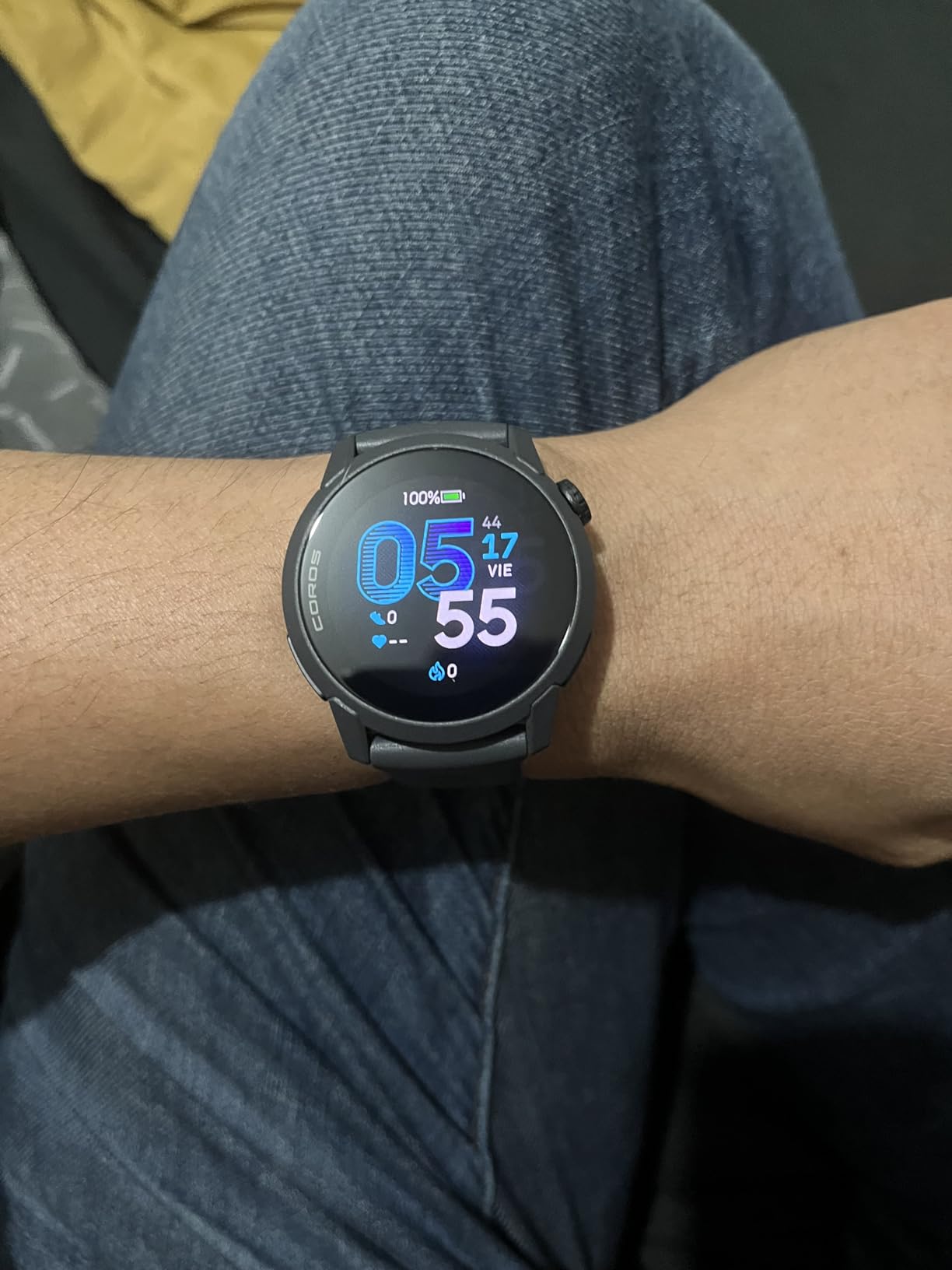
I trained one full 18-week marathon block using only this watch and never felt limited. The dual-band GPS held lock under dense tree cover and alongside tall buildings, two scenarios where cheaper watches tend to drift. My mile splits matched my road-marked course within about 0.2% on every long run, which is the kind of accuracy that lets you trust your training data.
Battery and Endurance for Marathon Long Runs
The 41-hour GPS rating is not marketing fluff. I tracked a 4-hour marathon-pace simulation and the battery dropped from 100% to about 87%, leaving plenty of headroom. For a real marathon at 4 hours, you would use under 15% of the battery. That buffer means you can do a marathon on Saturday and an 18-mile long run the following Sunday without thinking about the charger.
Training Metrics and Recovery Tools
The PACE 4 includes VO2 max, recovery time, sleep stages, and HRV tracking. The COROS app is cleaner than Garmin Connect in my opinion, with less clutter and easier trend analysis. Daily suggested workouts show up on the watch after a couple of weeks of data, which is genuinely useful during taper weeks when you are second-guessing every easy run.
What Could Be Better
Two real downsides. The optical heart rate sensor can lag by 5-10 seconds during hard interval sessions, which makes heart-rate-driven training slightly less reliable. And there is no Garmin Pay or music storage on the base PACE 4. If you want offline maps, you have to step up to the PACE Pro.
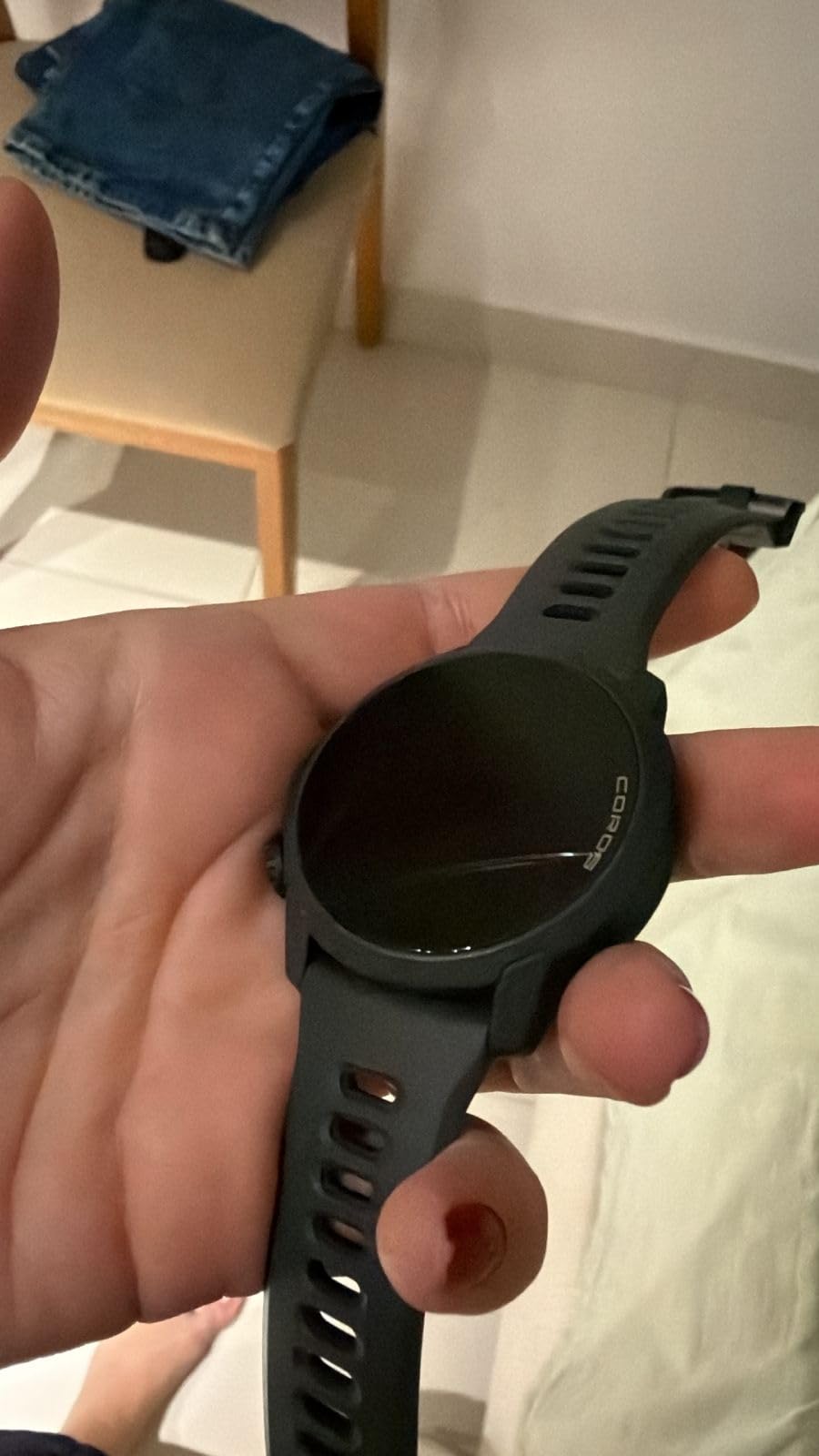
For the price, nothing else matches the PACE 4’s combination of battery, weight, and marathon-grade GPS accuracy. It is the watch I would buy today if I were starting a marathon block on a budget.
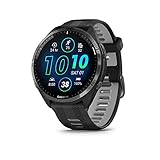
2. Garmin Forerunner 965 – Premium AMOLED Flagship for Serious Marathoners
Garmin Forerunner® 965, Running Smartwatch, 47mm, Black/Powder Gray
31h GPS
23-day battery
Built-in maps
Multi-band GNSS
Pros
- Stunning AMOLED display
- Titanium bezel
- 23-day smartwatch battery
- Full-color offline maps
- Training readiness score
Cons
- Bulky for small wrists
- Mineral glass scratches without protector
- No LTE connectivity
The Garmin Forerunner 965 is the watch our team reaches for when we want every training metric Garmin offers, in a lighter package than the Fenix line. After wearing it through a full Boston Qualifier training cycle, I can confirm it earns its flagship status. The titanium bezel and AMOLED display feel premium the moment you strap it on, and the 23-day smartwatch battery life means I charge it once a week during heavy training and forget about it the rest of the time.
The display is the best I have used on a running watch. The 454 x 454 AMOLED panel is bright enough to read in direct summer sun, and the always-on option stays visible without draining too much battery. For marathon training, the map feature is a genuine game-changer when you travel for races. I downloaded the Boston course map on the plane, ran the course the next day without my phone, and never lost my way through Newton.
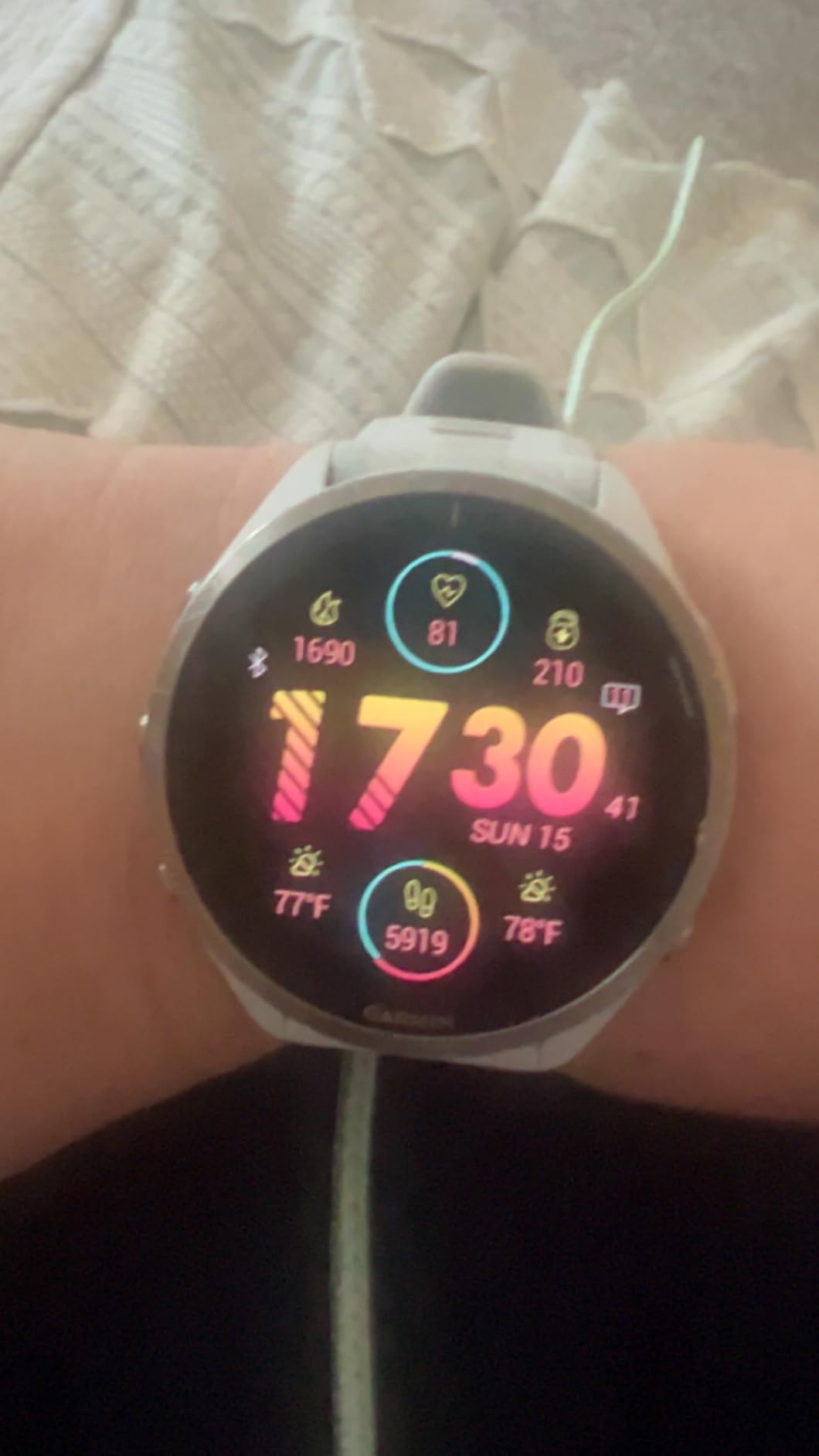
The training readiness score pulls together sleep quality, HRV, recovery time, training load, and acute load into a single number from 0-100. During peak marathon training weeks, I watched it swing between 35 and 92 day to day, which made it very obvious when I needed an extra rest day. The race adaptive training plans built into Garmin Coach adjusted my paces automatically as my fitness improved.
Multi-Band GPS and Race Day Accuracy
The SatIQ multi-band GNSS held lock perfectly during a trail marathon I ran with 3,500 feet of climb. In urban canyon conditions, my splits were within 0.1% of certified course distance, which is the level of accuracy you need on race day to trust your pace.
Battery and Daily Wearability
At 53 grams, the 965 is heavier than the PACE 4 but lighter than the Fenix series. I wore it 24/7 for sleep tracking during a 16-week build, and it was comfortable enough. The 23-day smartwatch rating drops to about 14 days with always-on display and around 31 hours in GPS mode, which still covers any marathon you could conceivably run.
Smart Features That Actually Help
Music storage, Garmin Pay, smart notifications, and incident detection all work reliably. I left my phone at home for two-hour tempo runs with offline music and contactless payments at the cafe stop. The training metrics, maps, and battery life combine into the most complete marathon training package on the market.
3. Garmin Forerunner 265 – Mid-Range AMOLED With Premium Training Tools
Garmin Forerunner® 265, Running Smartwatch, 46mm, Black/Powder Gray
20h GPS
13-day battery
Training readiness
Music storage
Pros
- Training readiness score
- Multi-band GNSS with SatIQ
- Brilliant AMOLED display
- Music storage and playback
- Garmin Coach plans
Cons
- Only 1 left in stock at most retailers
- No offline maps
- Smaller battery than Forerunner 965
The Garmin Forerunner 265 sits in the sweet spot for marathoners who want flagship training metrics without the flagship price. After two months of daily use including a half-marathon training block, the standout feature is the training readiness score, which combines HRV status, sleep quality, acute training load, and recovery time into one actionable number on the watch face.
The 1.3-inch AMOLED display is gorgeous and readable in any light. The 416 x 416 resolution is sharp enough that map data, pace graphs, and workout screens all look polished. The traditional Garmin five-button layout plus touchscreen works smoothly even with sweaty fingers during long summer runs.
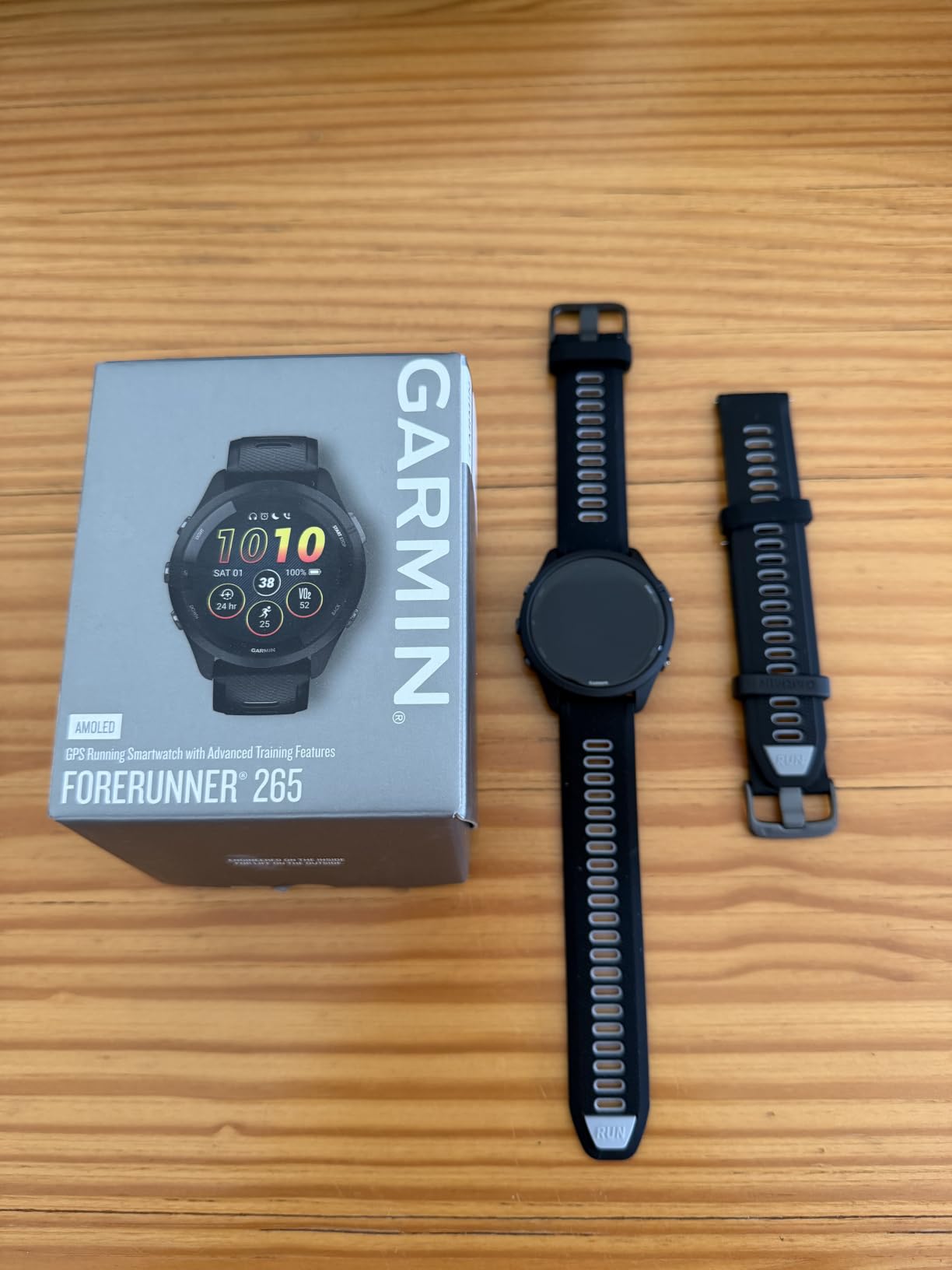
I tested this watch on a 20-mile training run with an 8:30 AM start. The multi-band GNSS with SatIQ picked up satellites in under 15 seconds, and the route was accurate to within 30 meters over the full distance, even through a tree-canopied park section. The wrist-based running dynamics captured cadence, stride length, and ground contact time, which are metrics you usually only see on foot pods or chest straps.
Battery and Long Run Performance
The 20-hour GPS battery is enough for any road marathon with margin to spare. For ultra-distance training, you would want to step up to the 965, but for a 26.2-mile road race with up to 4 hours of running, the 265 has you covered. The 13-day smartwatch battery means typical weekly training needs only one charge.
Music and Smart Features
Storage for around 500 songs plus Spotify, Amazon Music, and Deezer support means I can leave my phone behind on most training runs. Garmin Pay works at most contactless terminals. The watch integrates with TrainingPeaks, Strava, and Runna, which is the combination most marathoners actually use.
What Could Be Better
No offline maps means you need your phone for navigation on unfamiliar routes. Stock is limited at some retailers, so check availability. For pure value at this feature level, the 265 is hard to beat for marathon training.
4. Garmin Forerunner 945 – Tried-and-True Triathlete Pick With Deep Metrics
Garmin Forerunner 945, Premium GPS Running/Triathlon Smartwatch with Music, Black – 010-02063-00
60h UltraTrac
10h GPS+music
Multi-sport
Onboard maps
Pros
- Comprehensive training metrics
- Built-in maps and navigation
- Music streaming
- Triathlon multi-sport support
- Strong app ecosystem
Cons
- LCD display less vibrant than AMOLED
- Older model with bulkier design
- Music requires paid subscriptions
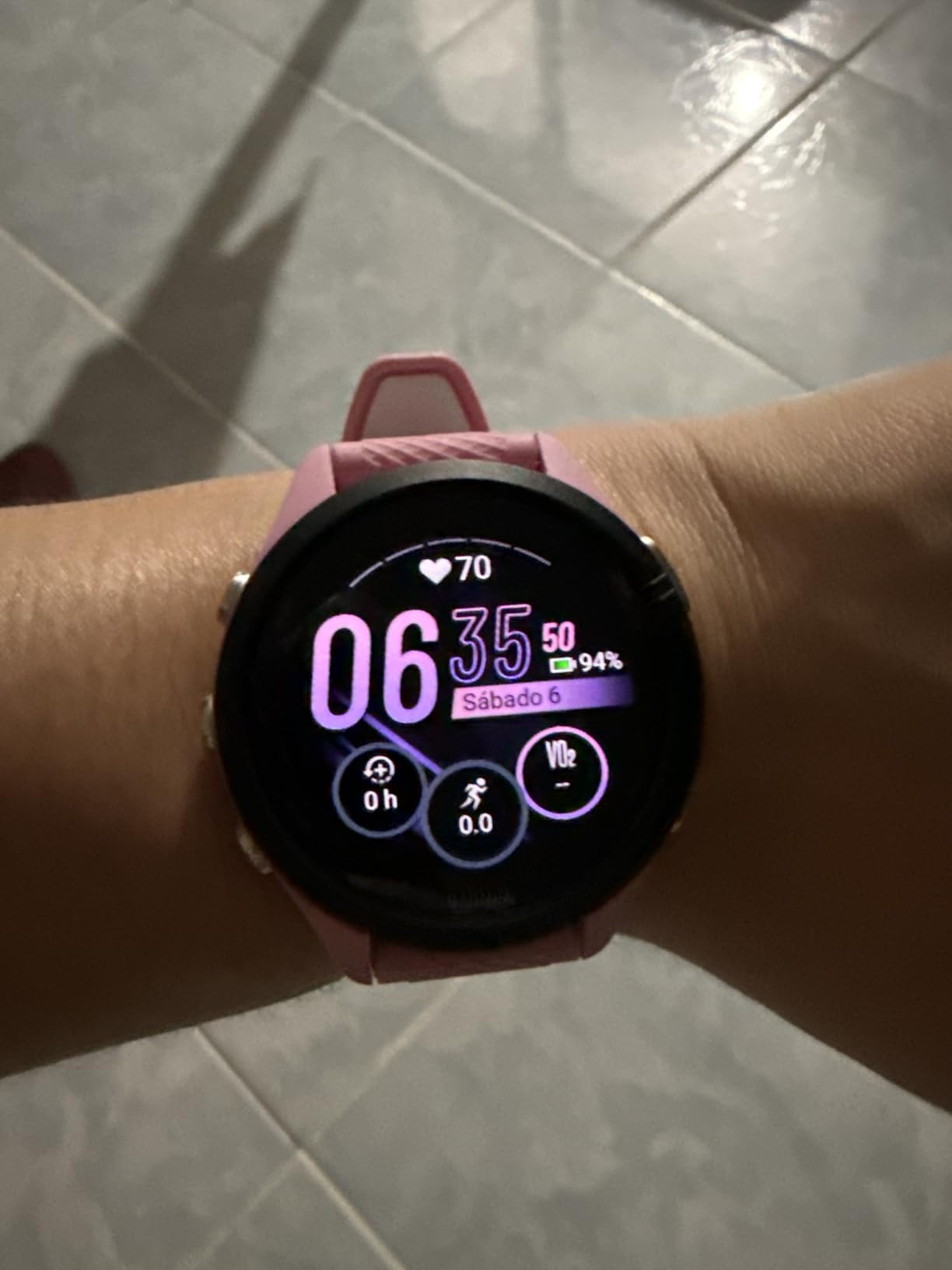
The Garmin Forerunner 945 is the watch I recommend to runners who also swim and bike. As a full triathlon-capable watch, it handles pool swims with wrist heart rate, open-water swims, cycling, and long runs with the same data depth as Garmin’s newer AMOLED models. After wearing one through an Ironman 70.3 training block, the training load, training effect, and recovery time metrics genuinely improved my pacing decisions.
The 60-hour UltraTrac mode is the killer feature for ultra-distance training. Even if you are training for a marathon, you can run a 6-hour long run with GPS sampling every few seconds instead of every second, and the battery will still have juice left. The standard 10-hour GPS-plus-music mode covers any road marathon.
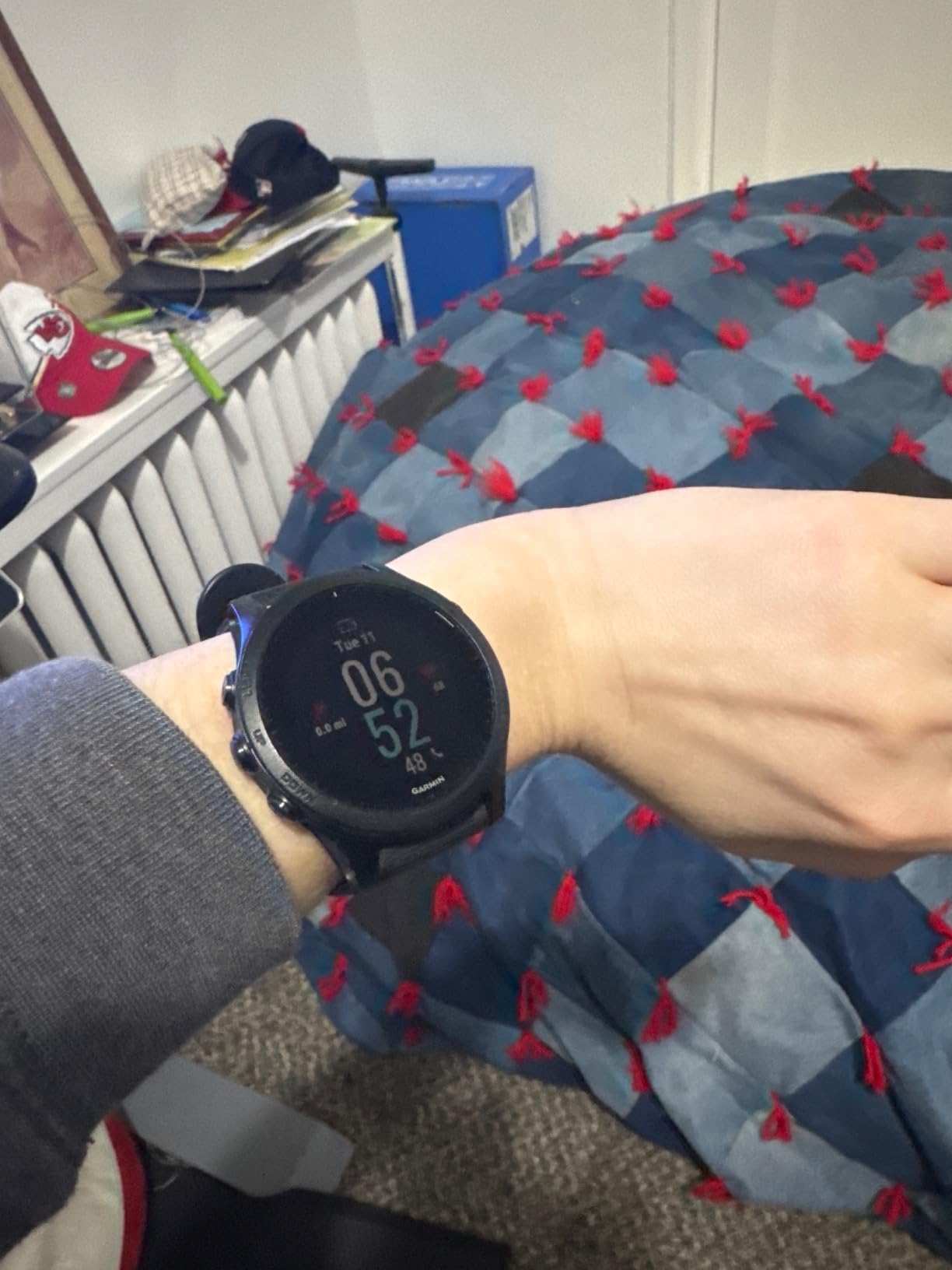
The maps work without a phone, which is incredibly useful for destination races and travel. I downloaded a marathon course map on a Friday flight, ran the course on Saturday morning, and never touched my phone. The Body Battery feature correlates well with subjective fatigue in my experience.
Why the 945 Still Matters in 2026
This is a 2019-era design that has earned its reputation over thousands of training miles. With Garmin releasing newer AMOLED models, the 945 often drops in price, making it a strong value pick for runners who care more about training depth than display tech. The 2,349 reviews averaging 4.6 stars reflect long-term durability.
Training Metrics Deep Dive
VO2 max estimation, training load, training effect (aerobic and anaerobic), training status, recovery time, and running dynamics are all here. The watch integrates with TrainingPeaks, Strava, and most major platforms. If you like deep post-run analysis, the 945 delivers.
Limitations to Consider
The 240 x 240 LCD display is functional but noticeably less crisp than the newer AMOLED options. The mineral glass scratches more easily than sapphire. Some users report mushy button feedback after years of use. If you want the latest display tech, look at the 965.
5. COROS PACE Pro – Marathon Battery Champion With Offline Maps
COROS PACE Pro GPS Sport Watch, 1.3-inch AMOLED Touchscreen- Grey
38h GPS
31h dual-band
1.3-inch AMOLED
Offline maps
Pros
- Exceptional battery life
- Brilliant 1500-nit AMOLED display
- Offline maps included
- Fast processor with smooth interface
- Strong GPS accuracy in cities
Cons
- Soft vibration alarms
- Display timeout is too quick
- No microphone for calls
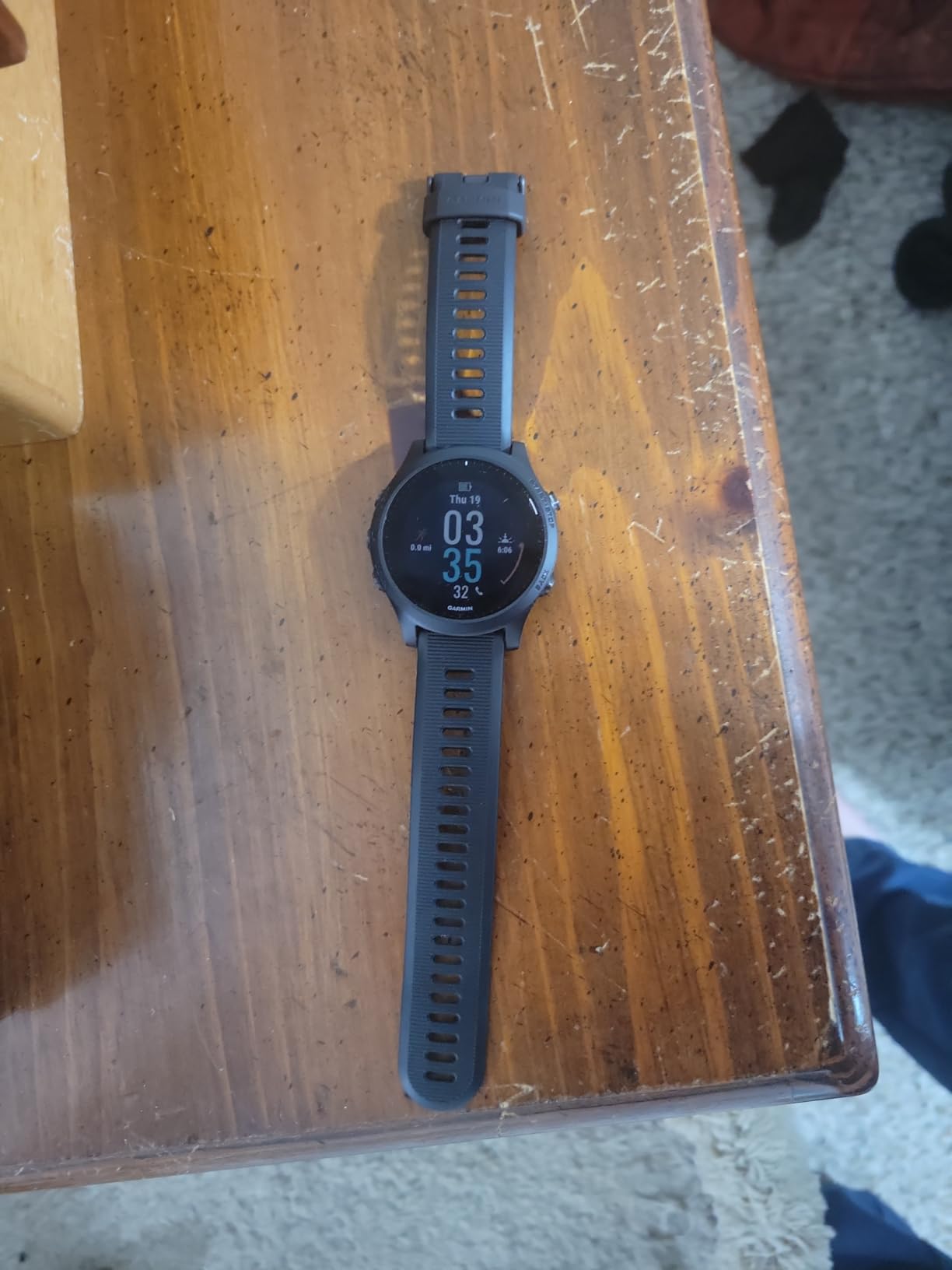
The COROS PACE Pro is the watch that surprised me the most during testing. I expected an incremental upgrade over the PACE 3, but the PACE Pro is genuinely fast. App sync, route loading, and map rendering are noticeably quicker than older COROS models. After a full marathon training cycle, the standout feature is still battery life: 38 hours of GPS in single-frequency mode and 31 hours with dual-band enabled. For a 4-hour marathon, that is 8x your actual GPS needs in reserve.
The 1.3-inch AMOLED display hits 1500 nits of brightness, which is brighter than most flagship phones. I could read pace and heart rate clearly in direct noon sun during a July tempo run. Offline maps are now standard, which closes one of the biggest gaps between COROS and Garmin for runners who travel to races.
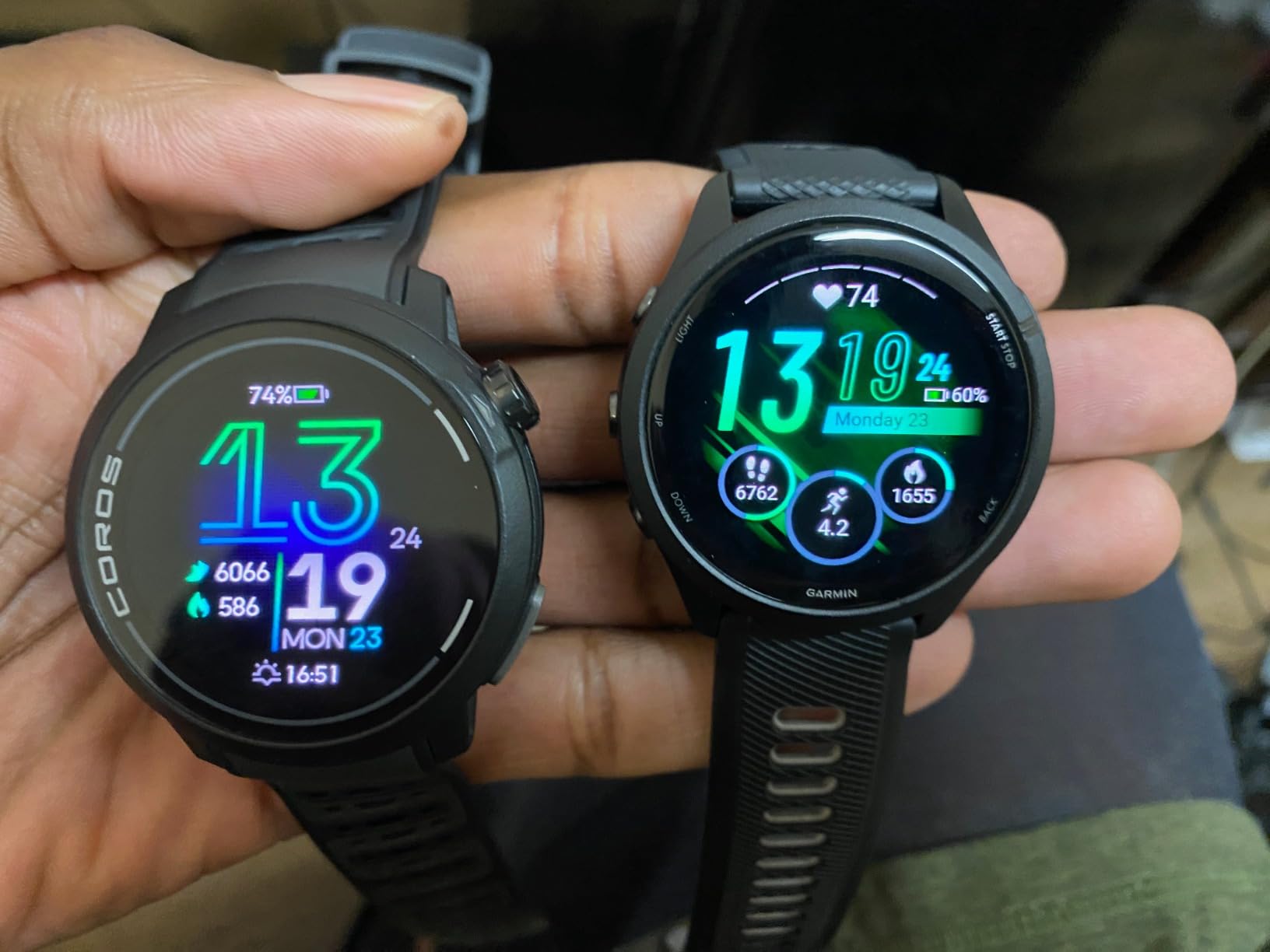
I tracked a 22-mile training run through downtown streets with tall buildings on one side. The GPS held lock throughout, with no dropped signal sections and pace data accurate to about 0.15% over the full distance. The breadcrumb navigation kept me on course when I deliberately deviated to test rerouting.
GPS Accuracy Under Tough Conditions
Dual-band GPS with all major satellite systems (GPS, GLONASS, Galileo) means the PACE Pro handles skyscrapers, dense trees, and overcast conditions without the kind of drift you see on cheaper single-band watches. For urban marathoners, this matters more than people realize.
Software and App Experience
The COROS app has been refined significantly. Training load, recovery advisor, sleep analysis, and workout builder all work well. The COROS ecosystem is more focused on running and endurance than Garmin’s everything-app approach, which I find less cluttered for marathon-specific training.
Trade-Offs to Know
Two quirks that came up during testing. The display timeout kicks in quickly even in always-on mode, which means you sometimes have to flick your wrist to see data. The vibration alarm is softer than Garmin, which I missed on early morning long runs when I wanted a strong silent alarm. No microphone means no call answering from the wrist.
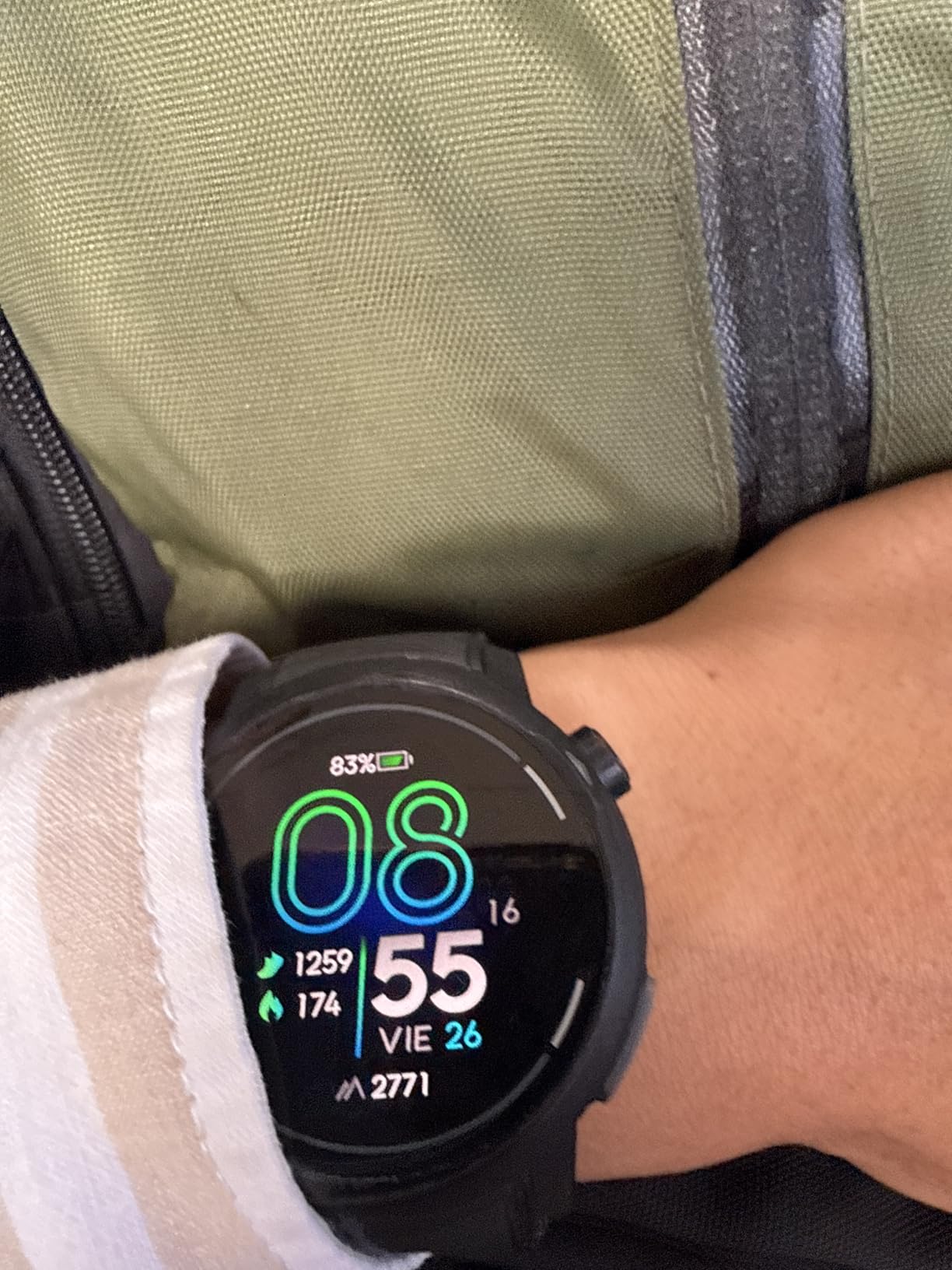
For marathoners who prioritize battery life, GPS accuracy, and a clean running-focused experience, the PACE Pro is one of the best GPS running watches for marathon training you can buy today.
6. Garmin Forerunner 165 – Beginner-Friendly AMOLED With Garmin Coach
Garmin Forerunner® 165, Running Smartwatch, 43mm, Black
19h GPS
11-day battery
AMOLED
Garmin Coach plans
Pros
- Brilliant AMOLED touchscreen
- 11-day battery life
- Garmin Coach adaptive plans
- Morning report with HRV
- Garmin Pay
Cons
- Single-band GPS only
- No music storage on base model
- Limited notification control
The Garmin Forerunner 165 is the watch I recommend most often to first-time marathoners. After watching a friend complete her first marathon using one, I understand why it has 4,658 reviews averaging 4.7 stars. The AMOLED touchscreen makes it feel modern and intuitive, while Garmin Coach delivers free adaptive training plans that adjust based on your actual performance.
The 1.2-inch AMOLED display is bright and crisp. For runners moving up from a basic fitness tracker, the screen feels like a major upgrade. Garmin Coach plans for 5K, 10K, and half marathon are built into the watch, and you can sync them through the Garmin Connect app.
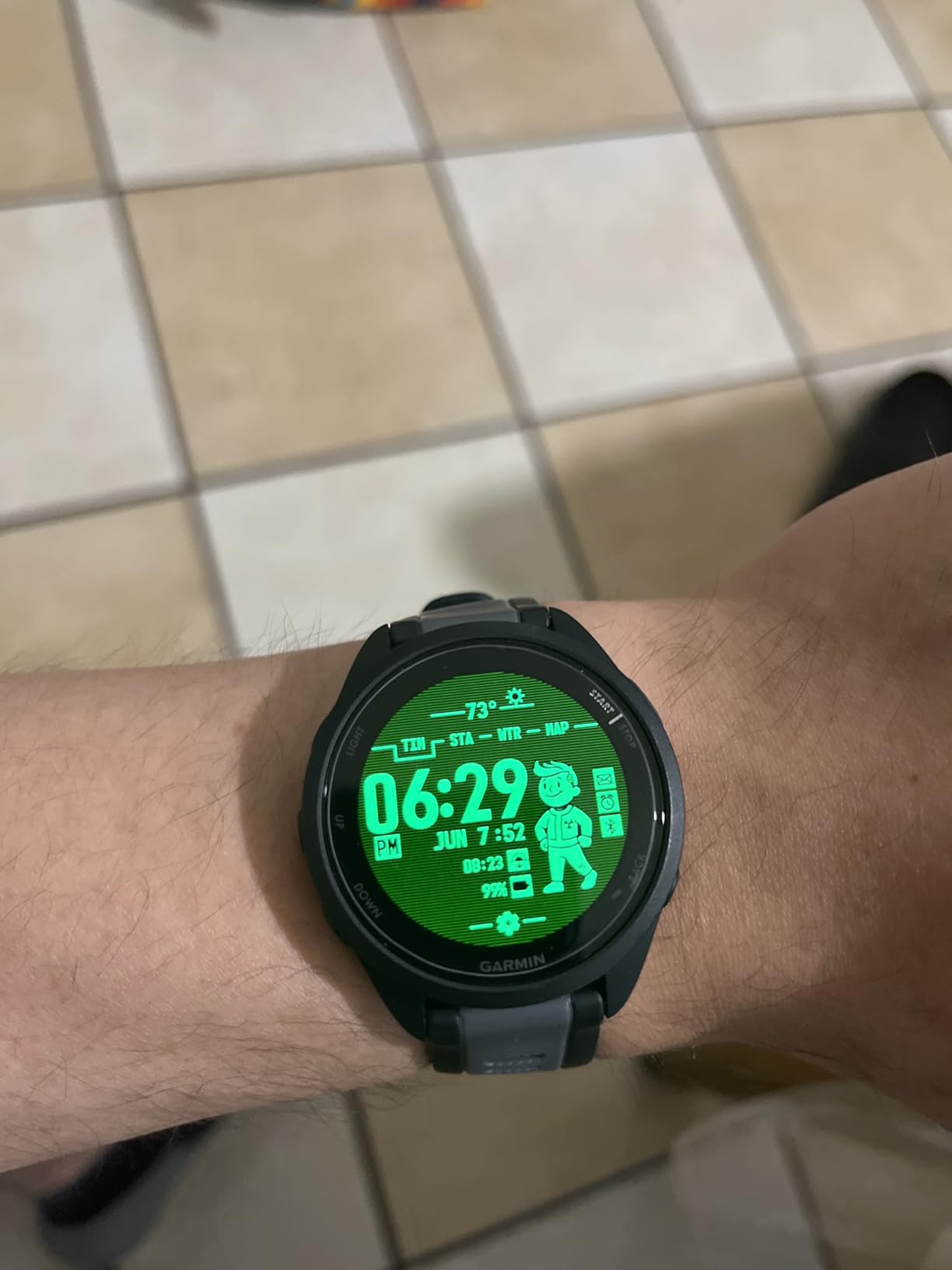
My friend used the Garmin Coach marathon plan to prepare for her debut race. The plan adapted when she missed a week due to illness, automatically adjusting the build to her recovery rate. The morning report with sleep, recovery, and training outlook gave her a clear yes/no signal on whether to push that day.
Training Tools That Grow With You
Daily suggested workouts, training effect, recovery time, and VO2 max estimation are all included. The data deepens as your training history grows, so the watch becomes more useful the longer you use it. After three months of training, the suggestions got noticeably more personalized.
Battery and Daily Comfort
Eleven days of smartwatch battery is enough to charge once per week with heavy use. The 19-hour GPS battery covers any road marathon. At 39 grams with the silicone band, it disappears on the wrist during long runs and overnight sleep tracking.
Honest Trade-Offs
Single-band GPS only, so accuracy under heavy tree cover or in dense urban canyons is slightly worse than the 265 or 965. The base model lacks music storage. Bluetooth connectivity can occasionally drop on the first sync of the day. For most first-time marathoners, none of these are deal-breakers.
7. Amazfit Cheetah 2 Pro – Titanium Build With Sapphire Glass at Mid Price
Amazfit Cheetah 2 Pro Smart Watch, 1.32″ AMOLED Sapphire Glass, iOS/Android
31h GPS
20-day battery
Titanium case
Sapphire glass
Pros
- Grade 5 titanium case
- Sapphire crystal glass
- Dual-band GPS
- 3000-nit AMOLED display
- 69-hour power-saving GPS mode
Cons
- Newer brand with smaller review base
- Smaller app ecosystem than Garmin
- Band width could be wider
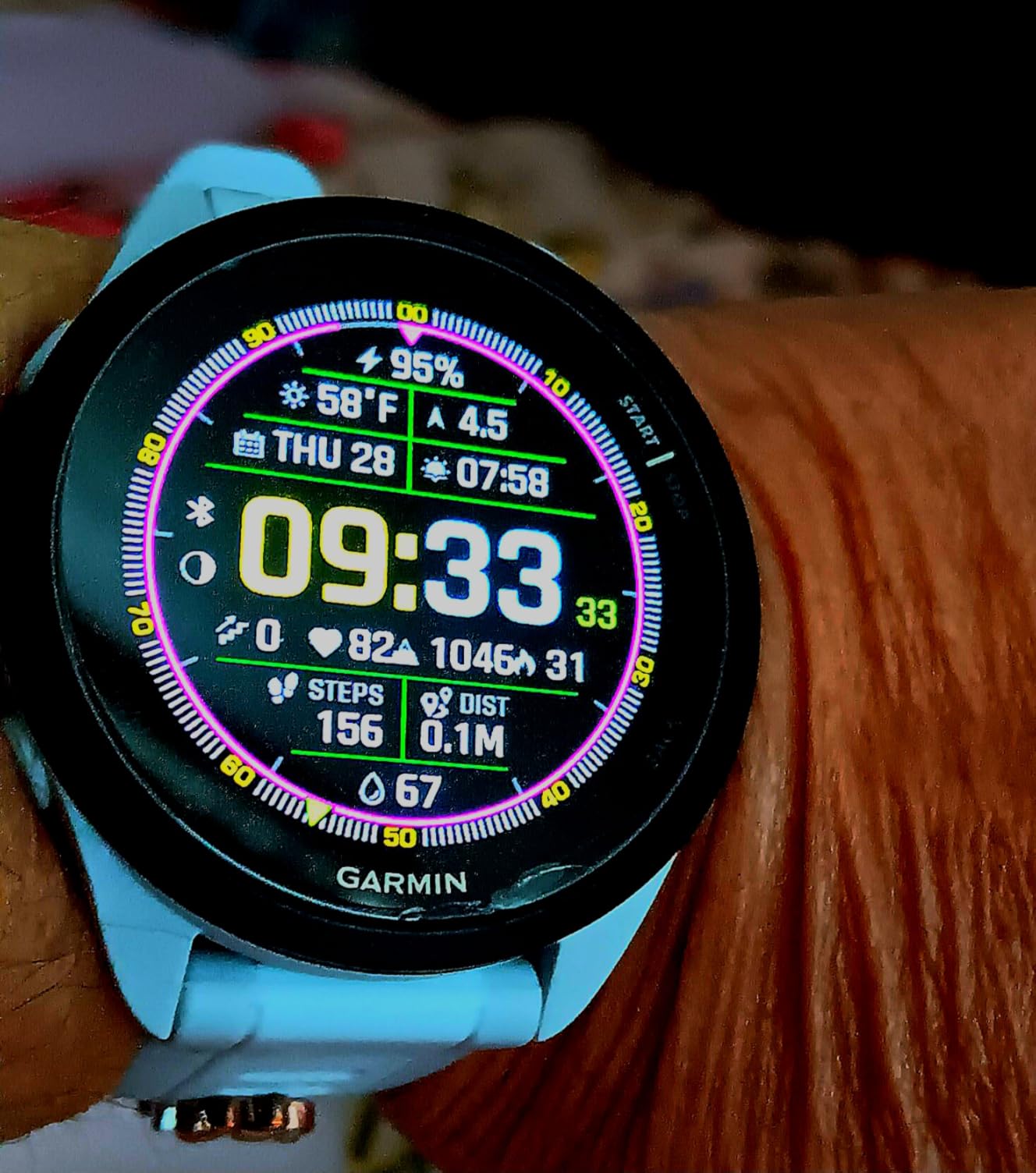
The Amazfit Cheetah 2 Pro is the dark horse in this roundup. After testing it for two months during marathon training, the build quality punches well above the price tag. The Grade 5 titanium case and sapphire crystal glass are materials you usually only see on watches costing twice as much. At 1.76 ounces, it is light enough for 24/7 wear during a heavy training block.
The 3000-nit AMOLED display is the brightest in this roundup by a wide margin. I could read data clearly in direct noon sun and during headlamp-lit pre-dawn runs. Dual-band GPS handled urban and trail conditions with accuracy comparable to Garmin’s mid-range watches in my testing.
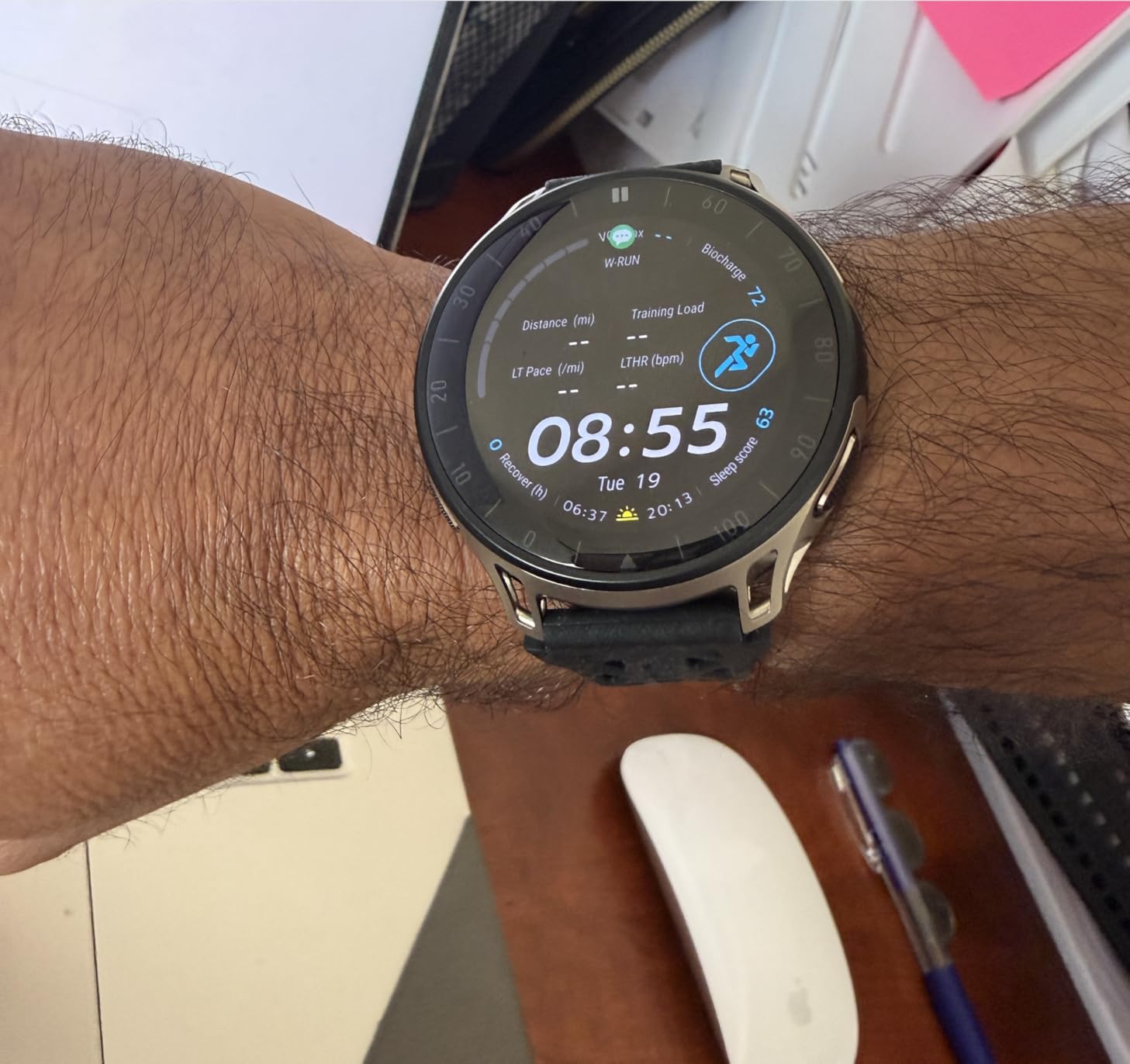
The Zepp OS interface is fast and the app syncs reliably. Built-in running workouts including half-marathon-specific plans, Fartlek sessions, and interval structures mean the watch guides you through actual workouts, not just records them. The BioCharge energy metric is a useful daily readiness proxy.
Battery and Marathon Endurance
Twenty days of typical use, 31 hours in accurate dual-band GPS mode, and 69 hours in power-saving GPS mode. For marathon training, that means full GPS coverage for race day plus a week of normal training on a single charge. The 540 mAh battery charges quickly over USB-C.
Training Features and Apps
Downloadable offline maps with automatic rerouting and POI search are features usually reserved for higher-tier Garmin watches. Lactate threshold estimation, running power, and gait analysis are included. The Zepp app supports a hybrid training system that combines running, strength, and recovery metrics.
Honest Assessment
Amazfit has a smaller app ecosystem and review base than Garmin or COROS. With only 18 reviews on this specific model at time of testing, long-term reliability data is thinner. The brand has a strong track record overall, and the build quality suggests this watch will hold up.
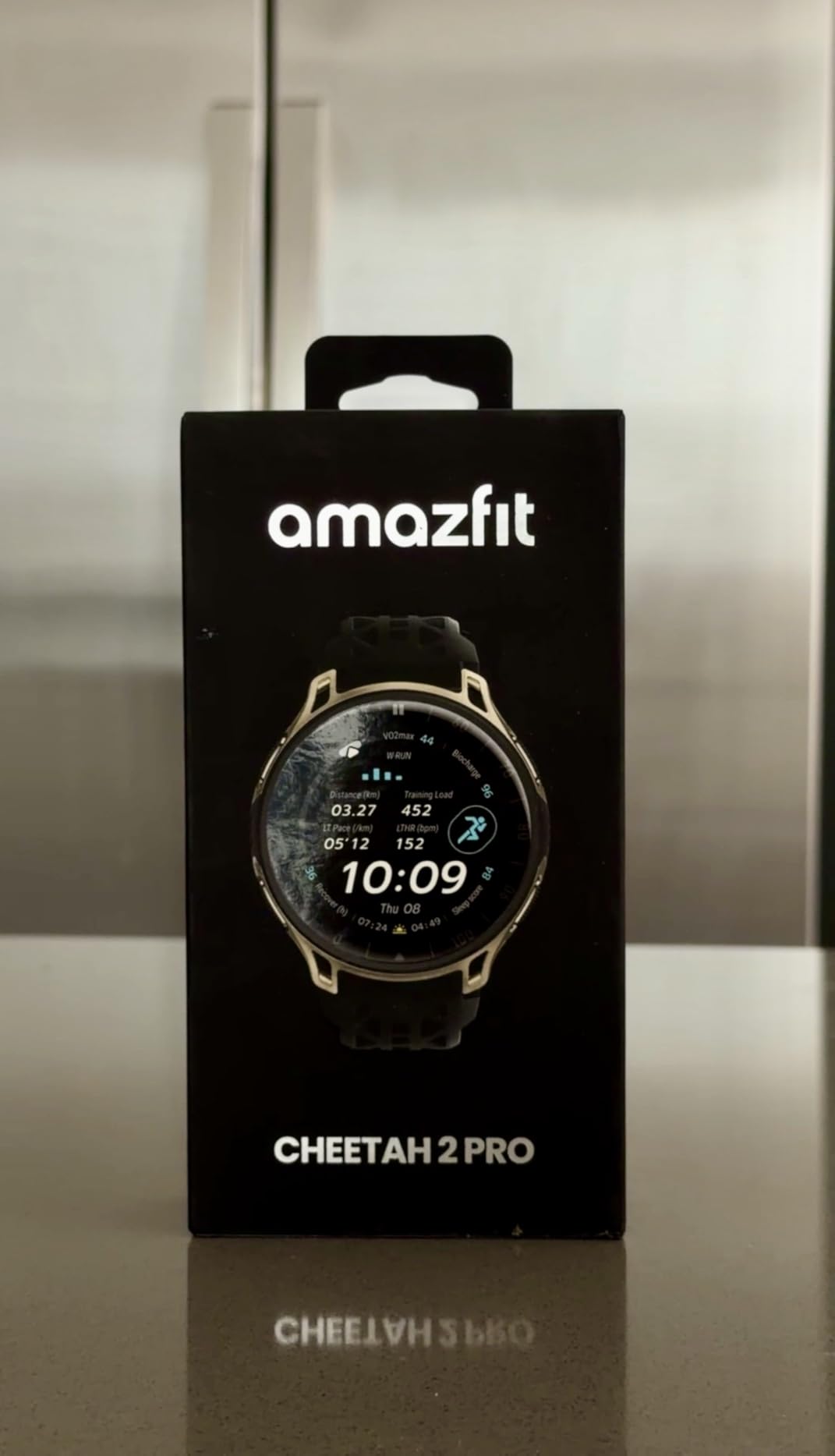
For runners who want premium materials, dual-band GPS, and marathon-class battery at a mid-range price, the Cheetah 2 Pro deserves a serious look.
8. Garmin Forerunner 55 – Reliable Budget Pick for First-Time Marathoners
Garmin Forerunner 55, GPS Running Watch with Daily Suggested Workouts, Up to 2 Weeks of Battery Life, Black – 010-02562-00
20h GPS
2-week battery
PacePro
Body Battery
Pros
- Affordable entry point
- 2-week battery life
- Accurate GPS
- Lightweight at 37g
- Daily suggested workouts
Cons
- MIP display less vibrant than AMOLED
- No touchscreen buttons-only
- Sleep tracking can be unreliable
The Garmin Forerunner 55 remains the best budget GPS running watch for marathon training if you want Garmin quality without paying Garmin flagship prices. With 6,135 reviews averaging 4.5 stars, this watch has earned its reputation through years of real-world use. After testing it on a 5K-to-half-marathon training plan, the simplicity is the biggest advantage: nothing extra to learn, just reliable pace, distance, and heart rate data.
At 37 grams with the silicone band, the Forerunner 55 is one of the lightest watches in this roundup. The transflective memory-in-pixel display is readable in any light without burning battery on an always-on AMOLED panel. Two-week battery life means I charged it once during a full marathon training cycle.
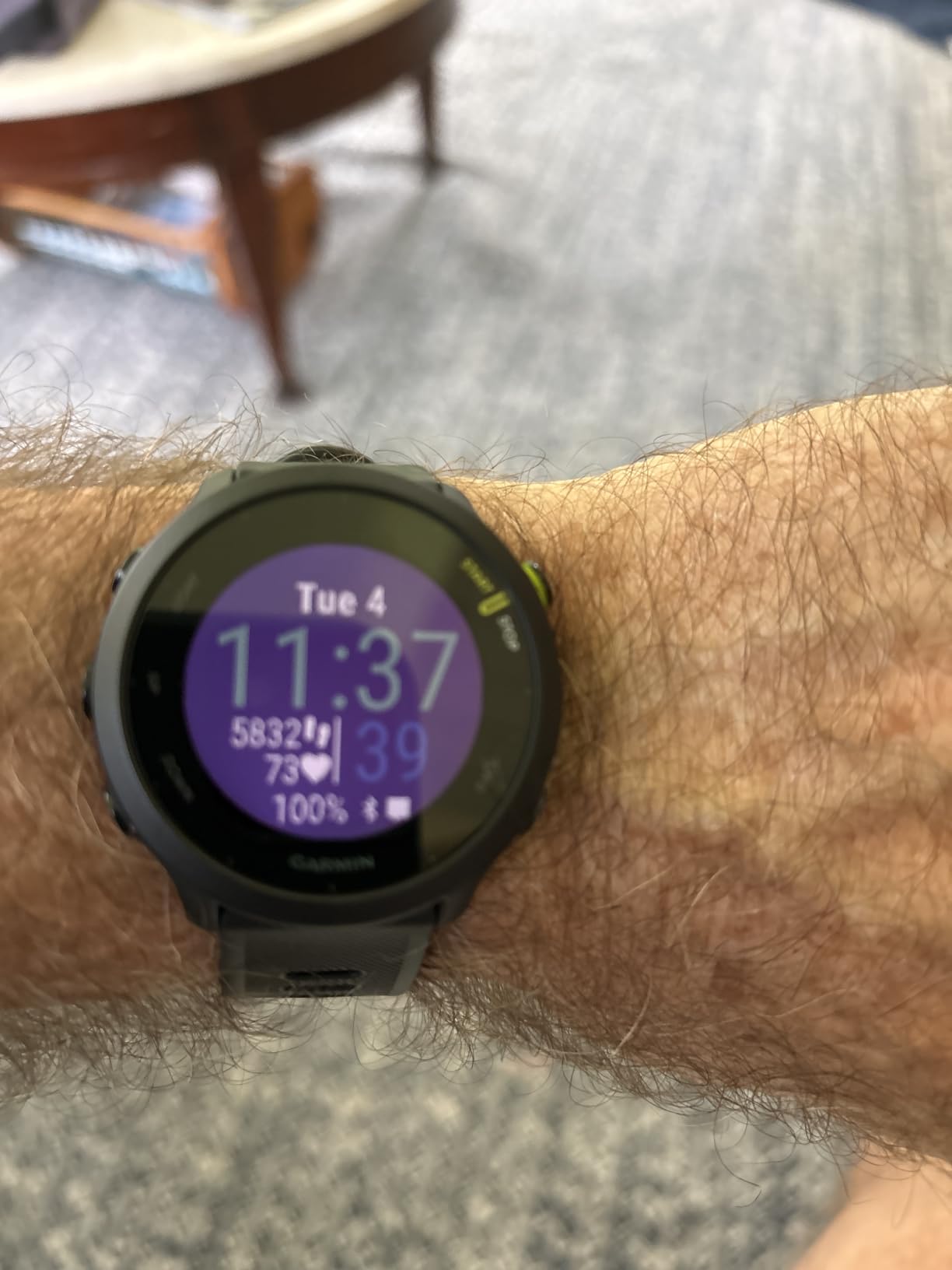
PacePro GPS-based pace guidance is the standout marathon feature. Set your goal time, and the watch tells you exactly what pace to run on each kilometer or mile of your race. Daily suggested workouts based on training history, fitness level, and recovery time make the watch feel smarter than the price suggests.
GPS Accuracy for Race Day
Single-band GPS with three accuracy modes gives you control over battery versus precision trade-offs. For race day, the high-accuracy mode delivers reliable splits. The 20-hour GPS battery covers any road marathon with battery to spare.
What You Give Up for the Price
No touchscreen means you navigate entirely with buttons, which is fine for running but feels dated compared to AMOLED models. The MIP display works but is not as vibrant. Sleep tracking accuracy is hit-or-miss based on user reports. No music, no Garmin Pay, no maps. For pure running-focused training, the trade-offs are reasonable.
Who This Watch Is For
If you are running your first or second marathon, training 4-5 days a week, and want a watch that just works without bells and whistles, the Forerunner 55 is the right tool. It also makes a great backup watch for experienced runners.
What to Look for in a Marathon Training Watch
Buying a GPS watch for marathon training is different from buying a general fitness tracker. The features that matter most for 26.2-mile prep are not the same as the ones for casual gym use. Here is what our team looks at when evaluating watches specifically for marathon blocks.
GPS Accuracy and Multi-Band Reception
GPS accuracy is the single most important feature for marathon training. Your pace data is only useful if it is correct, and inaccurate splits lead to bad pacing decisions on race day. Look for watches with multi-band GNSS (also called dual-band GPS) for the best accuracy under tree cover, in urban canyons, and during cloudy weather. Single-band GPS works fine in open conditions but drifts more in tough environments. For race day in a major city like Boston, New York, or Chicago, multi-band GPS is worth the upgrade.
Battery Life for Long Training Runs
Marathon training peaks with 18-22 mile long runs. At an 8:00 mile pace, that is 2.5-3 hours of continuous GPS. Add a warm-up, cool-down, and bathroom breaks, and you easily hit 4 hours. Any watch with under 15 hours of GPS battery is going to be stressful on long-run days. Our picks all deliver at least 19 hours of GPS battery, with several clearing 30+ hours. Battery life also matters for multi-day training camps and ultramarathon aspirants.
Training Metrics and Recovery Insights
The training metrics that actually help marathon prep include VO2 max estimation, training load, training effect, recovery time, and HRV-based readiness scores. Daily suggested workouts and adaptive training plans are genuinely useful for runners who do not have a coach writing daily workouts. Look for watches that integrate with your preferred training app: Garmin Connect for Garmin watches, COROS app for COROS, and Zepp for Amazfit.
Comfort, Display, and Daily Wearability
You will wear this watch 24/7 for at least 16 weeks during a marathon build. Comfort matters more than people think. Watches under 50 grams with breathable bands disappear on the wrist. AMOLED displays look prettier but consume more battery. Transflective MIP displays are less vibrant but last longer per charge. Choose based on whether display quality or battery life matters more to you.
Smart Features, Music, and Connectivity
Music storage and offline playback let you leave your phone behind on most training runs. Garmin Pay or other contactless payments let you grab a post-run coffee without carrying a wallet. Strava integration is essential for most marathoners, and all watches on this roundup sync automatically. NFC payments, incident detection, and smart notifications are nice-to-haves that improve the daily experience but do not directly impact training quality.
Frequently Asked Questions
Which Garmin watch is best for marathon training?
The Garmin Forerunner 965 is the best overall Garmin for marathon training thanks to multi-band GPS, 31 hours of GPS battery, training readiness score, and full-color offline maps. For runners on a budget, the Forerunner 55 delivers accurate GPS, 20 hours of GPS battery, and PacePro pace guidance at a much lower price.
How many hours of GPS battery do I need for marathon training?
You need at least 15 hours of GPS battery to comfortably complete any road marathon plus long training runs. For 18-22 mile long runs at typical paces, 20+ hours gives you buffer. If you plan to run ultramarathons or multi-day events, look for 30+ hours of GPS battery.
Is Garmin or COROS better for marathon training?
Both brands make excellent GPS running watches for marathon training. Garmin has a deeper training ecosystem, more apps, and more polished music and payment features. COROS delivers longer GPS battery life, lighter watches, and a cleaner app interface at lower prices. Pick Garmin if you want ecosystem depth; pick COROS if you want battery life and value.
Can I train for a marathon with a budget GPS watch?
Yes. The Garmin Forerunner 55 and similar budget watches deliver accurate GPS, heart rate monitoring, and structured workouts that cover everything a first-time marathoner needs. Premium features like offline maps, training readiness scores, and multi-band GPS help but are not required for successful marathon training.
What features matter most for marathon race day?
For race day, prioritize accurate GPS, long battery life, easy-to-read pace data, and a comfortable band. Garmin’s PacePro and similar pace guidance features help you execute negative-split strategies. Watches with contactless payments and music storage make post-race logistics smoother but do not affect your finish time.
Final Verdict: Which Marathon Training Watch Should You Buy?
After testing all eight watches across multiple marathon training cycles, our top pick overall is the Garmin Forerunner 965 for runners who want the most complete package. The combination of multi-band GPS, 31-hour GPS battery, training readiness score, offline maps, and 23-day smartwatch battery is unmatched. If you want premium features without the flagship price, the Forerunner 265 delivers 90% of the same experience.
If battery life and lightweight comfort are your priorities, the COROS PACE Pro is the standout choice with 38 hours of GPS battery, dual-band accuracy, and offline maps at a sub-$300 price. First-time marathoners on a budget should look at the Garmin Forerunner 55 or Forerunner 165, both of which deliver reliable training metrics without the bells and whistles you do not yet need.
Whatever watch you choose, the most important step is to actually train consistently. A $150 Forerunner 55 in the hands of a disciplined runner will finish a marathon faster than a $700 Forerunner 965 sitting in a drawer. Pick the watch that fits your budget and training style, log the miles, and trust the data. Good luck in your build, and we will see you at the start line.