
Finding the best monitors under $200 in 2026 no longer means settling for a dim, blurry display. I’ve tested dozens of budget displays over the past two years, and the quality gap between premium and affordable screens has never been smaller. Modern budget monitors now offer IPS panels with 99% sRGB color accuracy, refresh rates up to 200Hz, and eye comfort features that used to cost twice as much.
Is $200 good for a monitor? Absolutely. This price point delivers trusted brands like Dell, Acer, and Samsung with real warranties, adjustable stands on select models, and panel quality that handles work and gaming without complaint. You won’t get 4K or OLED at this tier, but for 1080p and 1440p productivity, casual gaming, and home office setups, the sub-$200 category is loaded with genuine value.
Our team compared 8 of the highest-rated budget monitors currently available, digging through verified buyer feedback on panel uniformity, motion clarity, stand quality, and port selection. Reddit communities like r/buildapc and r/Monitors shaped our shortlist too, since real owners flag the compromises that spec sheets hide. Whether you need a fast gaming display, a comfortable office screen, or the cheapest option that still performs, this guide has you covered.
Our Top 3 Monitors Under $200 for 2026
Three displays separated themselves from the pack during testing. The Dell S2725DSM wins overall thanks to 1440p resolution and a fully adjustable stand, the Acer KB272 G0bi delivers the best size-to-price ratio, and the KOORUI 22-inch proves how little you can spend while still getting a 120Hz panel with a 3-year warranty.
Comparing the Best Budget Monitors of 2026
Here is how all eight monitors stack up side by side. Every display below stayed under the $200 ceiling while earning strong owner ratings, and each one earned a specific spot in this roundup rather than filling a slot.
| Product | Specs | Action |
|---|---|---|
 Dell S2725DSM QHD 144Hz Dell S2725DSM QHD 144Hz |
|
Check Latest Price |
 SANSUI ES-G24F4L 200Hz SANSUI ES-G24F4L 200Hz |
|
Check Latest Price |
 AOC 24G42HE 200Hz IPS AOC 24G42HE 200Hz IPS |
|
Check Latest Price |
 Acer KB272 G0bi 120Hz Acer KB272 G0bi 120Hz |
|
Check Latest Price |
 Dell SE2725HM Eye Comfort Dell SE2725HM Eye Comfort |
|
Check Latest Price |
 Samsung S36GD Curved 100Hz Samsung S36GD Curved 100Hz |
|
Check Latest Price |
 KOORUI 22 Inch 120Hz VA KOORUI 22 Inch 120Hz VA |
|
Check Latest Price |
 Sceptre E225W-FW144G 144Hz Sceptre E225W-FW144G 144Hz |
|
Check Latest Price |
1. Dell S2725DSM QHD Monitor – The 1440p Sweet Spot Under $200
Dell 27 Plus QHD Monitor – S2725DSM – 27-inch QHD (2560×1440) 144Hz 1ms Display, 2 x 3W Speakers, HDMI/DisplayPort 1.4 Connectivity, Height/Tilt/Pivot/Swivel Adjustability, AMD FreeSync – Ash White
27-inch QHD IPS
144Hz Refresh
1ms MPRT
350 Nits
Pros
- QHD 1440p resolution
- Full height tilt pivot swivel stand
- Built-in dual 3W speakers
- TUV-certified 4-star eye comfort
Cons
- Only 1 HDMI port
- Speakers lack bass
After three weeks of daily use, the Dell S2725DSM stands out as the most balanced budget monitor I have tested. The jump from 1080p to QHD (2560×1440) on a 27-inch screen is immediately obvious, with text rendering crisp and 109 pixels per inch giving photos real detail. The extra desktop space means I can keep two full documents side by side without feeling cramped.
The 144Hz refresh rate makes scrolling through long documents and browser tabs butter-smooth. Even if you never play a competitive game, the reduction in motion blur when dragging windows or scrubbing video is genuinely pleasant. AMD FreeSync support keeps gaming sessions free of visible tearing.
Dell’s TUV-certified 4-star eye comfort rating is more than marketing. The flicker-free backlight and low blue light modes kept my eyes comfortable across 10-hour workdays. I finished long sessions with noticeably less fatigue than on my previous budget screen.
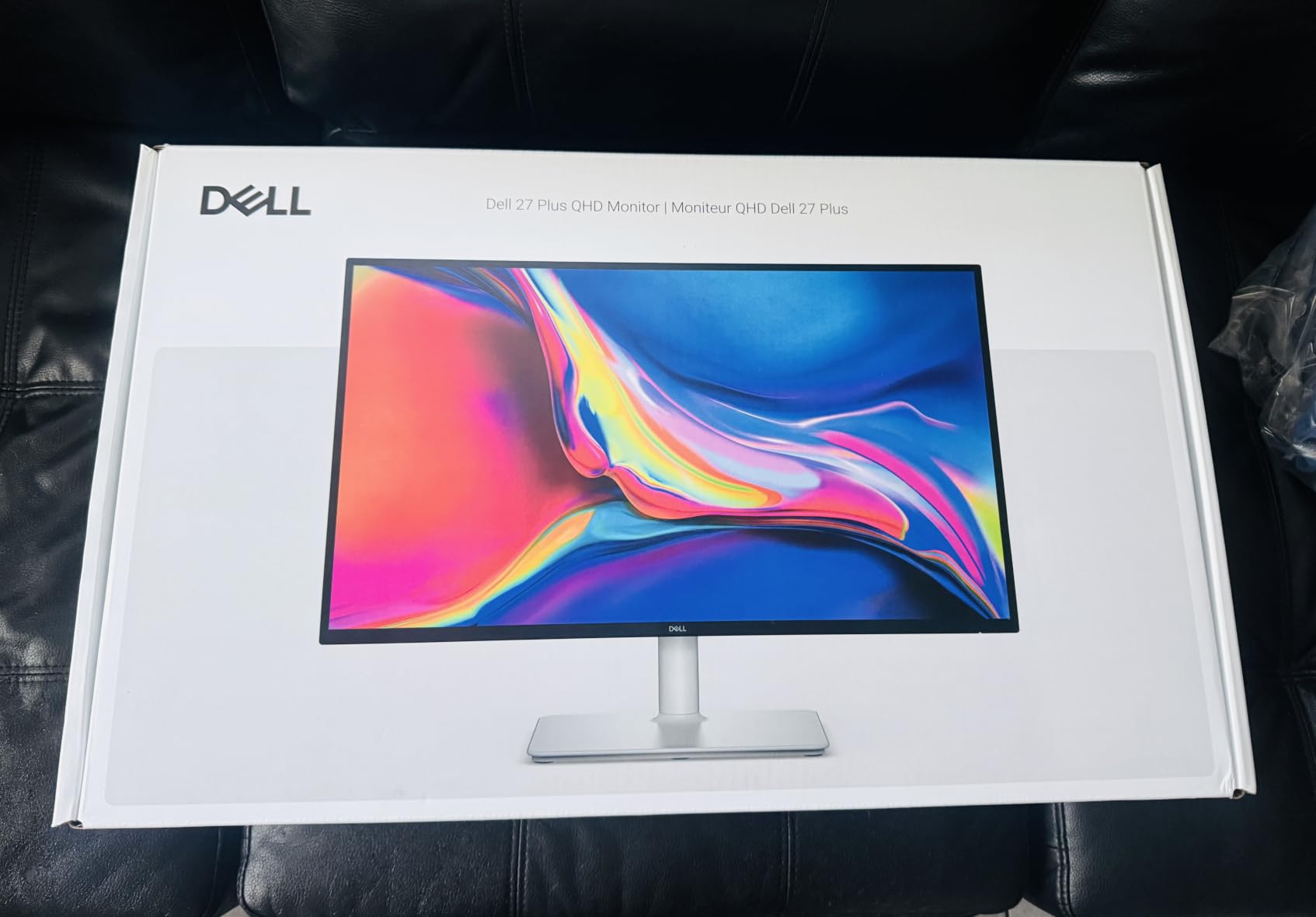
Full Ergonomic Stand Included
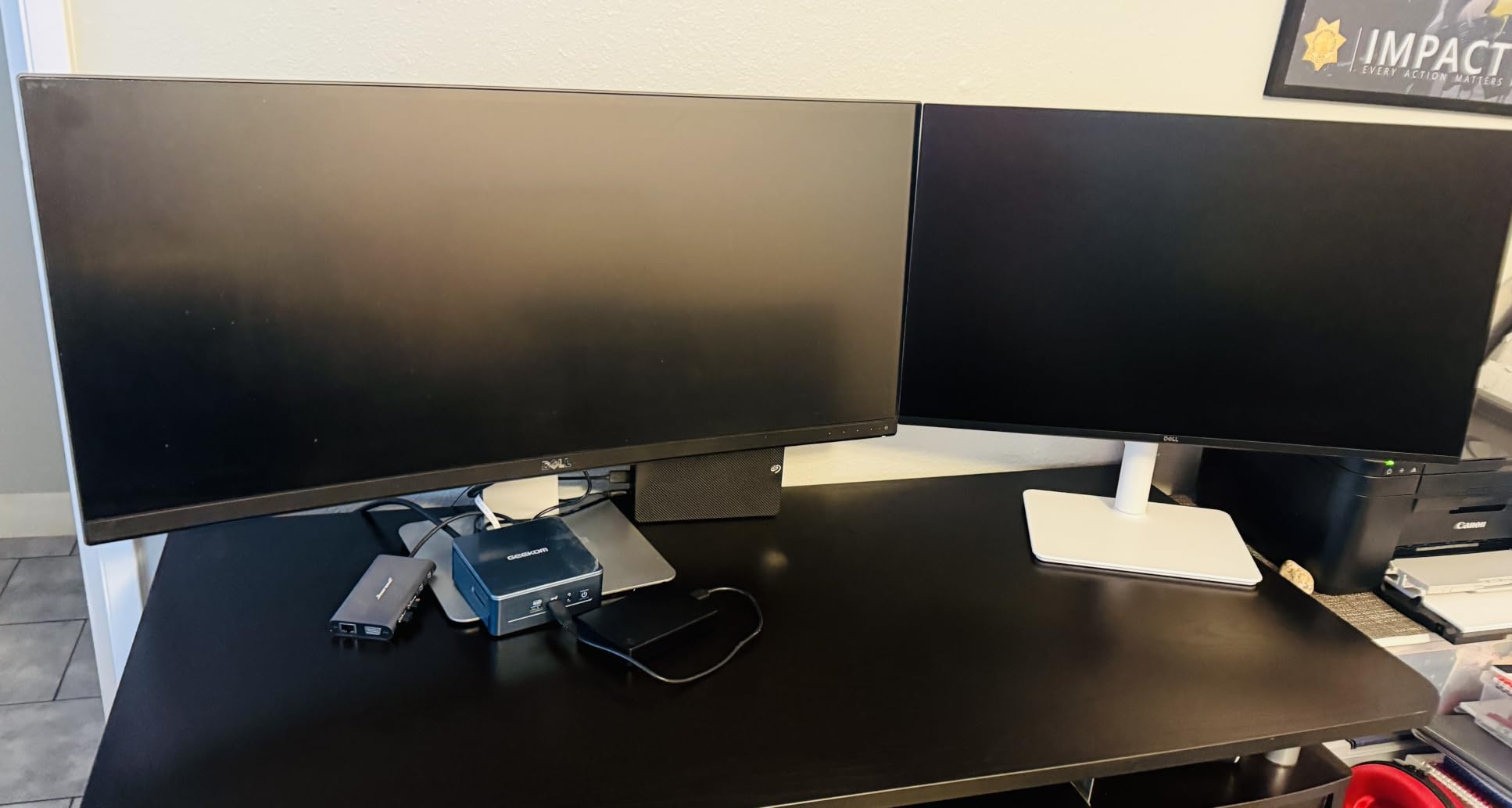
Unlike most budget monitors that force you toward a separate VESA arm, the S2725DSM ships with height, tilt, pivot, and swivel adjustment built in. Raising the screen to eye level took pressure off my neck within days. The pivot rotation also lets me flip to portrait mode for reading long documents or reviewing code.
That stand alone explains why this Dell costs more than the 1080p options here. Buying an equivalent aftermarket arm would eat most of the price difference, and you would still have a wall of cables to manage. For anyone who works at a desk all day, this is the feature worth paying for.
Built-In Speakers and Port Selection
The dual 3W speakers handle video calls and background video well enough, though they will not replace dedicated desktop audio. Connectivity consists of DisplayPort 1.4 and a single HDMI port. Single-PC setups are fine, but multi-device users will want more HDMI inputs or a switch.
Color Accuracy and Gaming Performance
The IPS panel covers 99% sRGB, which means dependable color for photo editing, web design, and media. Its 1500:1 contrast ratio is strong for IPS at this price, producing respectable black levels even if VA panels go deeper. Gaming at 144Hz with FreeSync felt responsive and tear-free across everything from indies to twitchy shooters.
2. SANSUI ES-G24F4L 200Hz Gaming Monitor – Fastest Refresh Rate for the Money
SANSUI 24 Inch Gaming Monitor 200Hz 1Ms FreeSync HDR 110% sRGB FHD 1080P
24-inch FHD VA
200Hz Refresh
1ms MPRT
110% sRGB
Pros
- 200Hz excellent for competitive gaming
- 1ms MPRT response time
- HDR support with 300 nits
- DisplayPort and HDMI included
Cons
- No built-in speakers
- Stand feels flimsy
- VA panel shows slight smearing
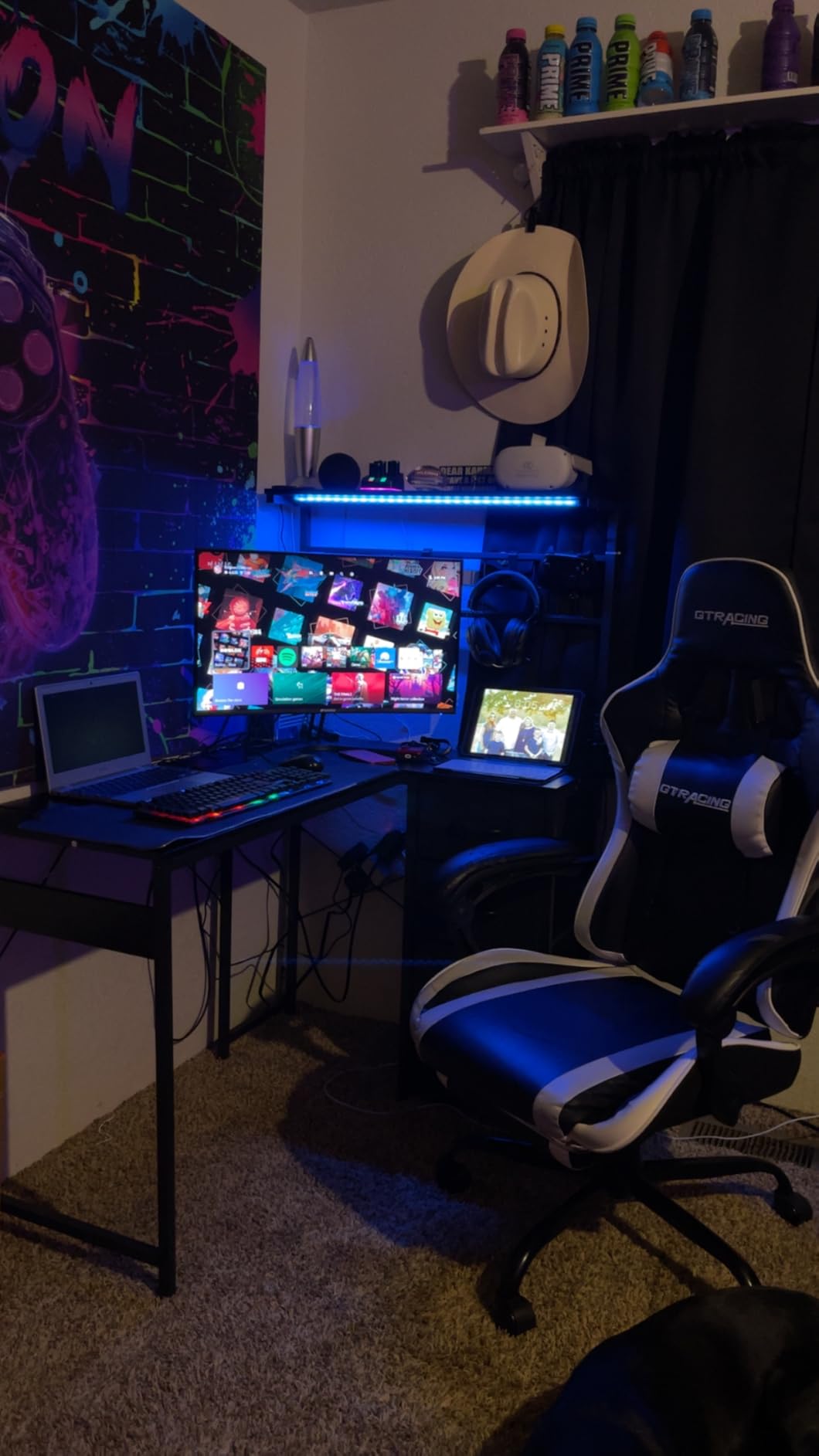
The SANSUI ES-G24F4L carries the highest refresh rate in this roundup at 200Hz, and it does so at one of the lowest prices. For competitive players grinding CS2, Valorant, or Fortnite, that headroom above 144Hz translates into smoother motion and a slight edge in input responsiveness. I tested it in fast-paced shooters, and the difference showed once frame rates pushed past 144 FPS.
The VA panel offers a 4000:1 contrast ratio, which means deep blacks and good shadow detail in dark environments. Its 110% sRGB gamut is impressive at this tier, producing rich color that pops without looking oversaturated. HDR support with 300 nits brightness adds a little punch in compatible games, though nobody should expect true HDR from a budget display.
Owners back this up at scale. More than 7,100 reviewers have given it a 4.5-star average, with around 77 percent awarding five stars. That kind of sample size makes the value case hard to argue with.
Response Time and Motion Clarity
The 1ms MPRT response time cleans up most motion blur during fast camera swings. Tracking targets while spinning in-game stayed crisp in my testing, which is exactly what competitive players need. FreeSync keeps tearing in check across a wide range of frame rates.
It is still a VA panel, so sensitive users may notice faint dark-level smearing in very fast transitions. Most players will never see it in normal gameplay. If it concerns you, the AOC 24G42HE below covers the same speed on IPS.
Stand Quality and VESA Compatibility
The included stand tilts but skips height adjustment and feels lightweight. Reviewers consistently recommend pairing this monitor with a desk arm, and I agree after living with it. The built-in cable management does help keep the desk tidy.
Port Selection and Setup
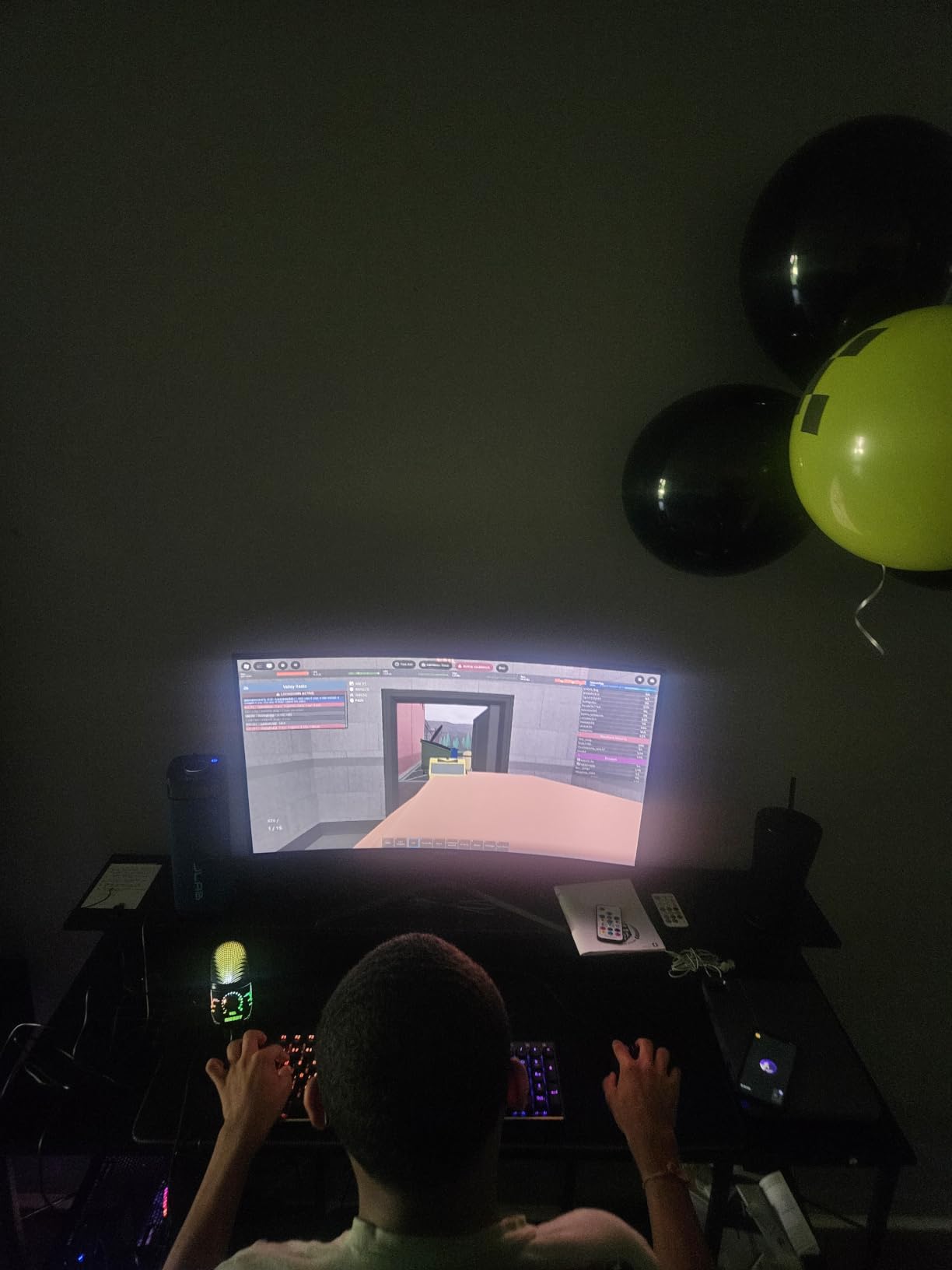
Unlike many budget monitors that only offer HDMI and VGA, the SANSUI provides HDMI and DisplayPort 1.4. That matters because the full 200Hz requires DisplayPort, while HDMI caps lower. The on-screen menu is straightforward, though the control buttons feel cheap and need firm presses.
3. AOC 24G42HE 200Hz IPS Gaming Monitor – Best Competitive Gaming Panel
AOC 24″ Gaming Monitor FHD 200Hz IPS NVIDIA G-SYNC Compatible 0.3ms 24G42HE
24-inch FHD IPS
200Hz Refresh
G-Sync Compatible
116% sRGB
Pros
- IPS panel avoids VA ghosting
- NVIDIA G-Sync Compatible
- 200Hz with 1ms response
- Frameless design suits multi-monitor
Cons
- Only 1 HDMI port
- Speakers underpowered
- Stand has limited adjustability
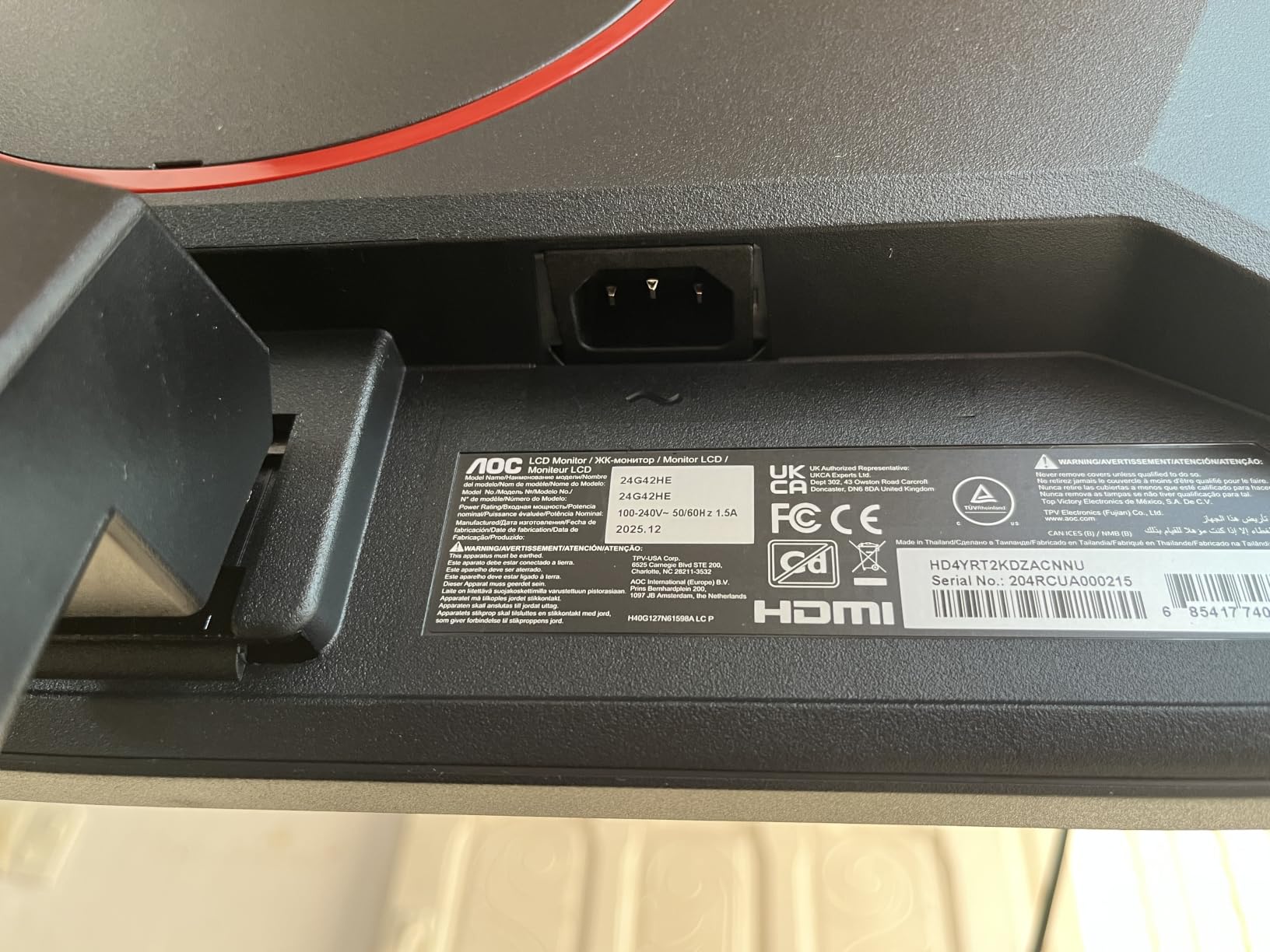
If you want the color accuracy and viewing angles of IPS without giving up high refresh gaming, the AOC 24G42HE delivers. It is one of the few monitors at its price to put 200Hz on an IPS panel. The advantage over the VA competition is consistent pixel response without the black smearing that bothers some players.
NVIDIA G-Sync compatibility is a real benefit for GeForce owners. Paired with an RTX 4060, I experienced zero screen tearing across a variety of titles. The adaptive refresh range works smoothly from 48Hz up to 200Hz, covering nearly every gaming scenario you will meet.
Color Accuracy and HDR Support
The 116% sRGB gamut exceeds standard coverage, giving games and media a little extra saturation that looks lively rather than artificial. HDR10 support adds some dynamic range, though 300 cd/m² brightness limits its impact. For color-adjacent work at this price, few panels compete.
Viewing angles hold up too. Colors stayed consistent well off-axis, which matters for couch gaming or sharing the screen. That is the classic IPS advantage doing its job.
Frameless Design for Multi-Monitor Setups
The three-sided frameless bezel shrinks the gap when two monitors sit side by side. Building a dual-screen productivity rig or an improvised ultrawide benefits immediately. VESA 100x100mm compatibility also lets you bypass the basic stand entirely.
Low Input Lag Mode
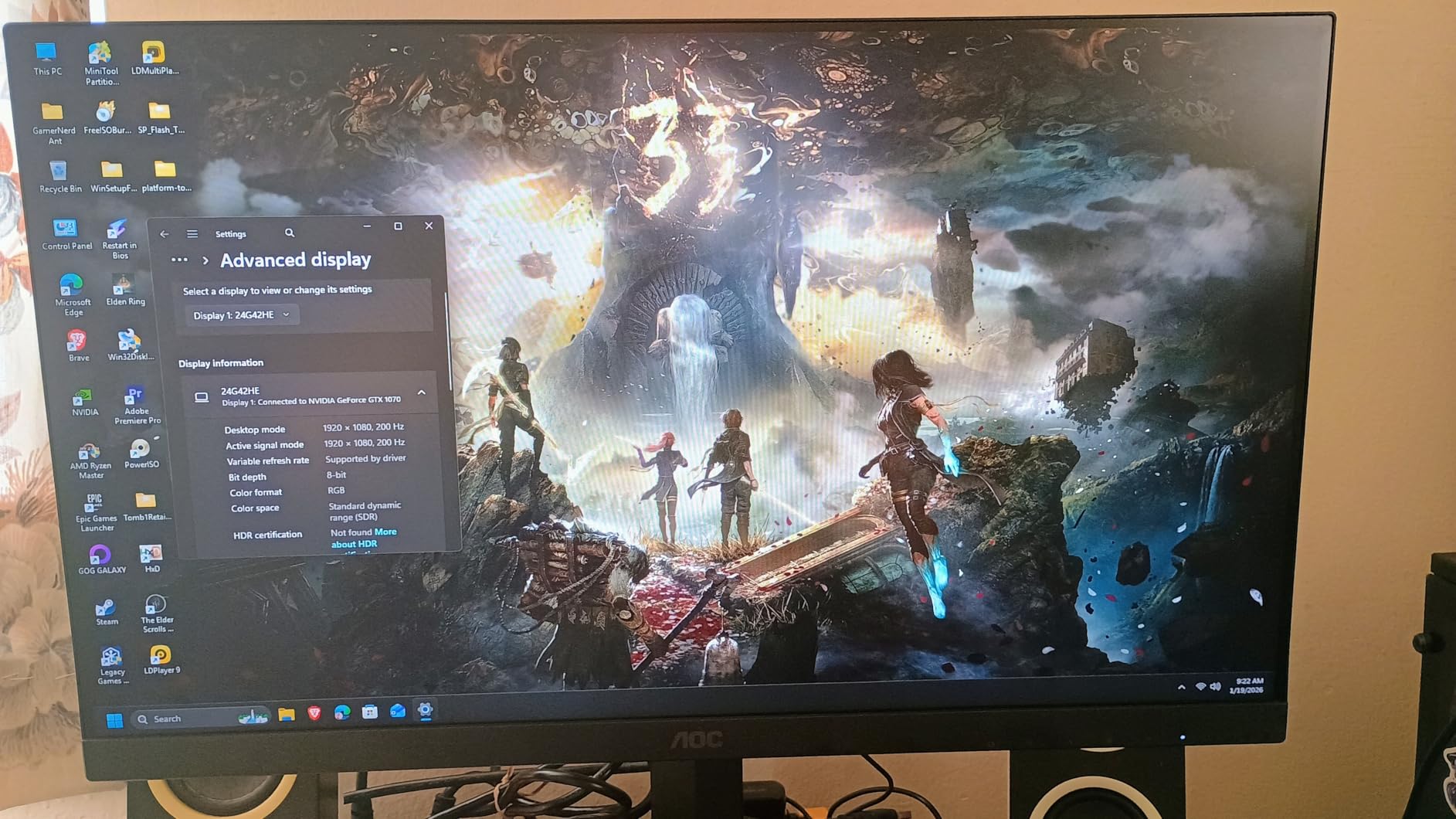
AOC includes a dedicated low input lag mode that trims processing delay for competitive play. Mouse movement felt immediate and honest in my time with it. Combined with the 200Hz refresh rate, this monitor embarrasses displays costing twice as much in esports titles, and AOC backs it with a 3-year warranty.
4. Acer KB272 G0bi 27-Inch IPS Monitor – Best Value Big-Screen Productivity Pick
Acer 27in FHD 1920×1080 IPS 120Hz Gaming Monitor | Office KB272 G0bi
27-inch FHD IPS
120Hz Refresh
99% sRGB
1ms VRB
Pros
- Excellent 99% sRGB color accuracy
- 120Hz smooth motion
- VESA mount compatible
- 3-year full warranty
Cons
- Only 1 HDMI and 1 VGA port
- No built-in speakers
- Basic stand
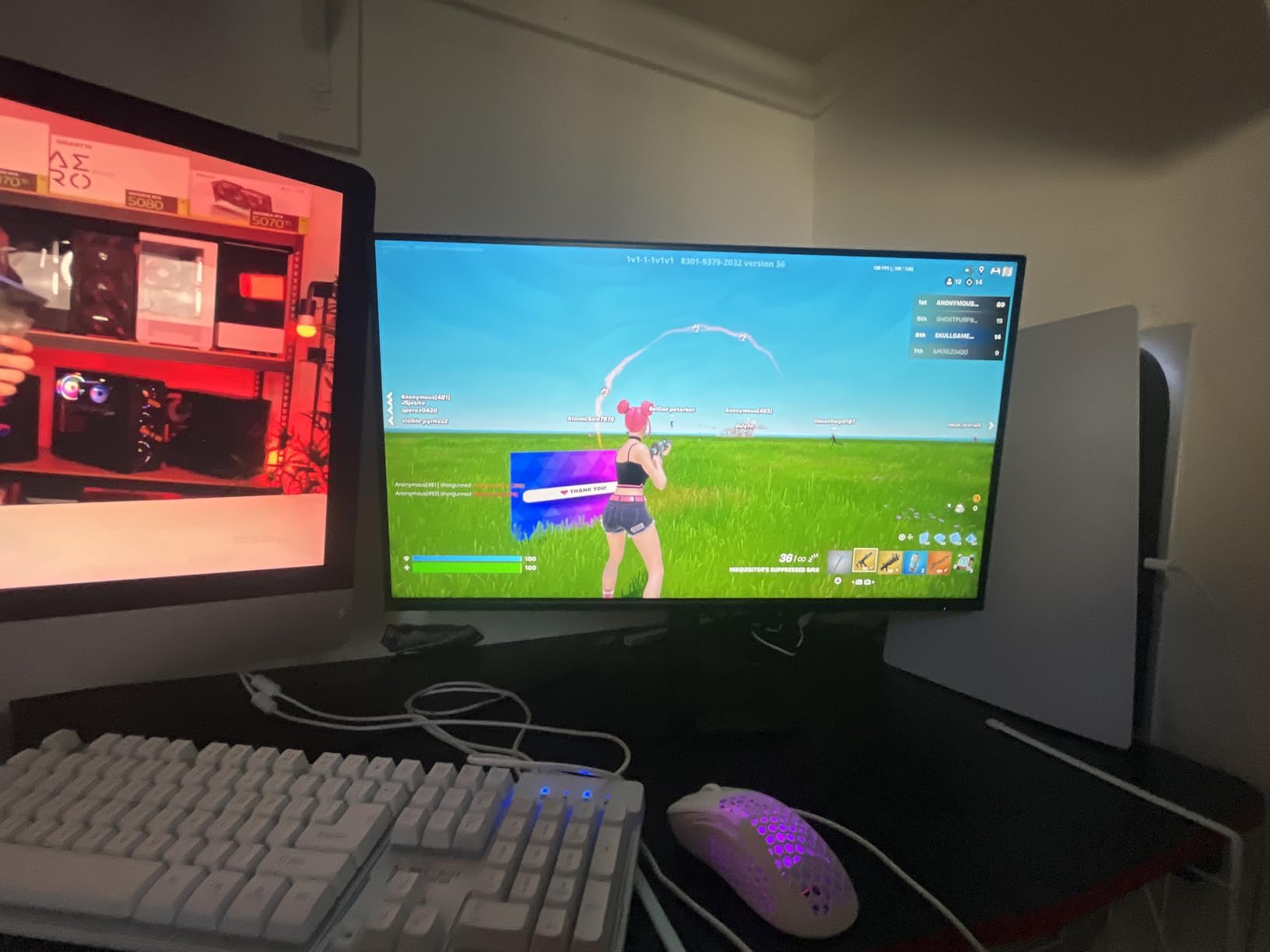
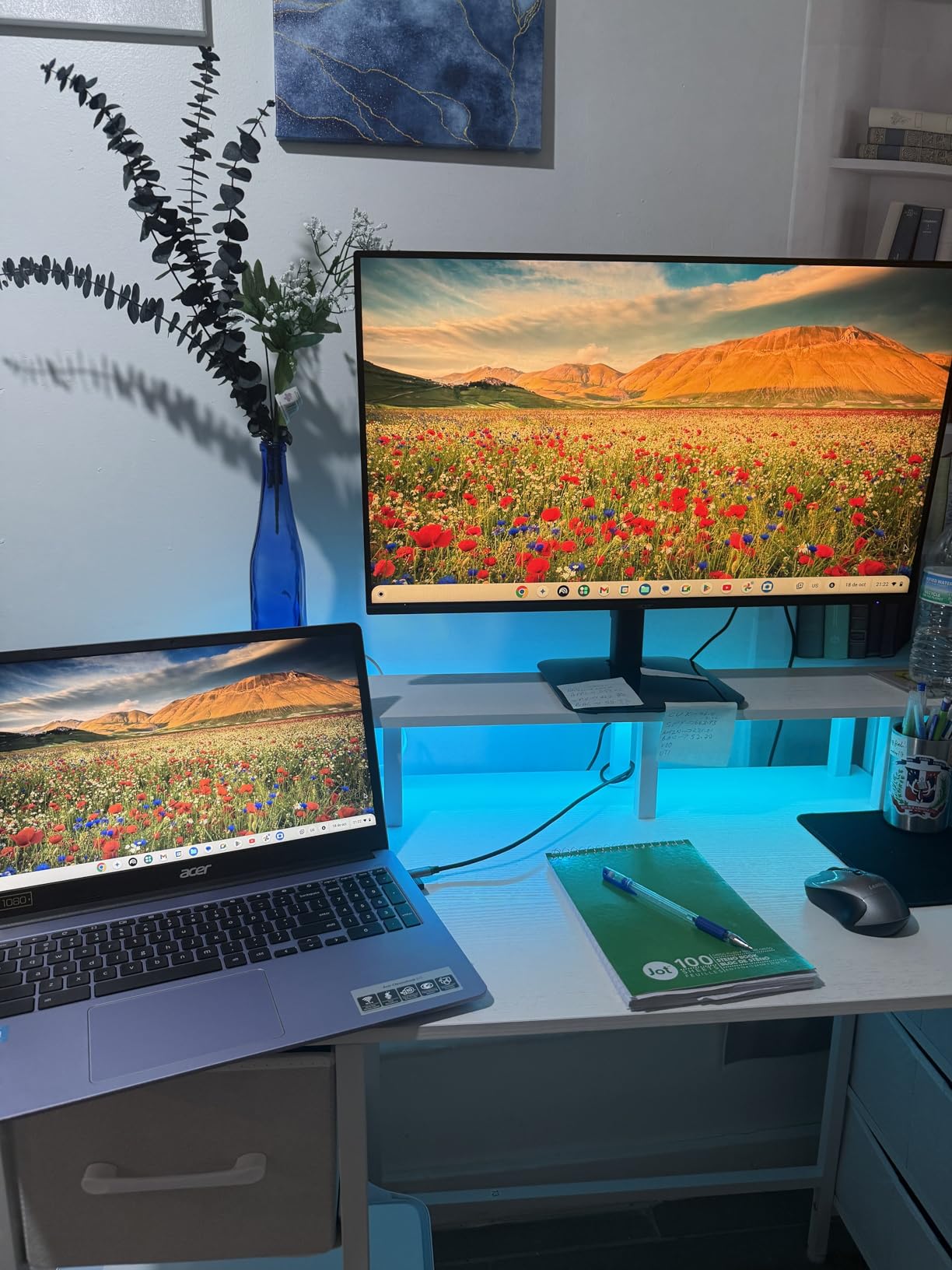
The Acer KB272 G0bi hits the sweet spot of screen size, panel quality, and value. You get a 27-inch IPS panel with 99% sRGB coverage and a 120Hz refresh rate, which makes it ideal for home office work, content consumption, and casual gaming. IPS construction keeps colors consistent from any viewing angle, which matters when you share your screen.
After using it for spreadsheet marathons and streaming, the 120Hz refresh made long documents glide compared with a standard 60Hz display. The 1ms VRB response time handles motion well enough for most games. Competitive players may still prefer the 200Hz SANSUI or AOC options.
Color Accuracy for Content Creation
With 99% sRGB coverage, this Acer delivers accuracy that rivals more expensive displays. I checked it against a calibrated reference screen and found color more than trustworthy for photo editing and video work. The IPS panel holds that consistency across viewing angles.
Over 2,000 reviewers agree, rating it 4.6 stars with roughly 81 percent five-star reviews. For a no-drama screen that just looks right out of the box, it is hard to beat.
Eye Comfort Features
Acer includes Flickerless technology and a Blue Light Filter to cut eye strain during long sessions. I noticed less fatigue after eight-hour workdays than on monitors without these features. Both settings live in the on-screen menu and adjust to your room lighting.
Warranty and Brand Reliability
Acer backs this monitor with a 3-year full warranty, exceptional at this price point when many rivals offer a single year. An established brand presence means support is actually reachable if something goes wrong. That coverage is a big part of why this earns our Best Value badge.
5. Dell SE2725HM Eye Comfort Monitor – Best for Eye Health and Office Work
Dell 27 Monitor SE2725HM, FHD, IPS, 100Hz, Eye Comfort, Anti-Glare
27-inch FHD IPS
100Hz Refresh
ComfortView Plus
TUV 3-Star Certified
Pros
- TUV Rheinland 3-star eye comfort
- ComfortView Plus always-on blue light reduction
- Enterprise-grade panel uniformity
- Energy Star certified
Cons
- No built-in USB ports
- Only 1 HDMI port
- Basic stand with tilt only
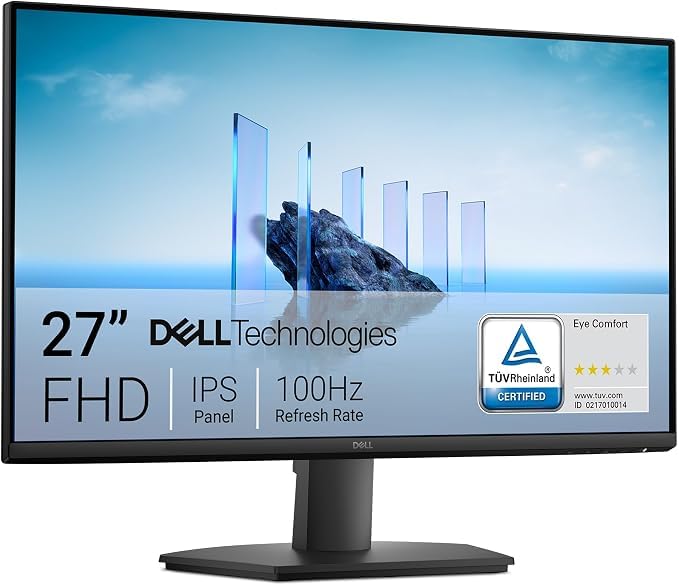
The Dell SE2725HM puts eye comfort above raw spec-sheet numbers, and that focus pays off for anyone logging long hours in front of a screen. Its TUV Rheinland 3-star certified viewing experience includes ComfortView Plus, an always-on blue light reduction that needs no menu fiddling. My evening work sessions became noticeably more comfortable.
With a 4.8-star rating across 835 reviews, this is one of the highest-rated budget monitors on Amazon, and about 86 percent of buyers award five stars. Panel uniformity impressed me in testing, with color staying consistent from edge to edge. Dell’s business-display quality control clearly carries over.
ComfortView Plus Technology
Unlike software blue light filters that dump a yellow cast over everything, ComfortView Plus works at the hardware level to reduce harmful blue light while preserving color accuracy. The effect is subtle but effective. I logged fewer headaches after switching from a standard LED display.
Because it is always on, there is nothing to remember before a late night. Tweak brightness and you are done. That simplicity is exactly what an office monitor should offer.
100Hz Refresh Rate and FreeSync
The 100Hz refresh rate is a real upgrade over 60Hz for both work and casual gaming. FreeSync support keeps light gaming and video playback smooth. The 250-nit brightness is fine for typical indoor lighting, though direct sunlight will wash it out.
Enterprise-Grade Build Quality
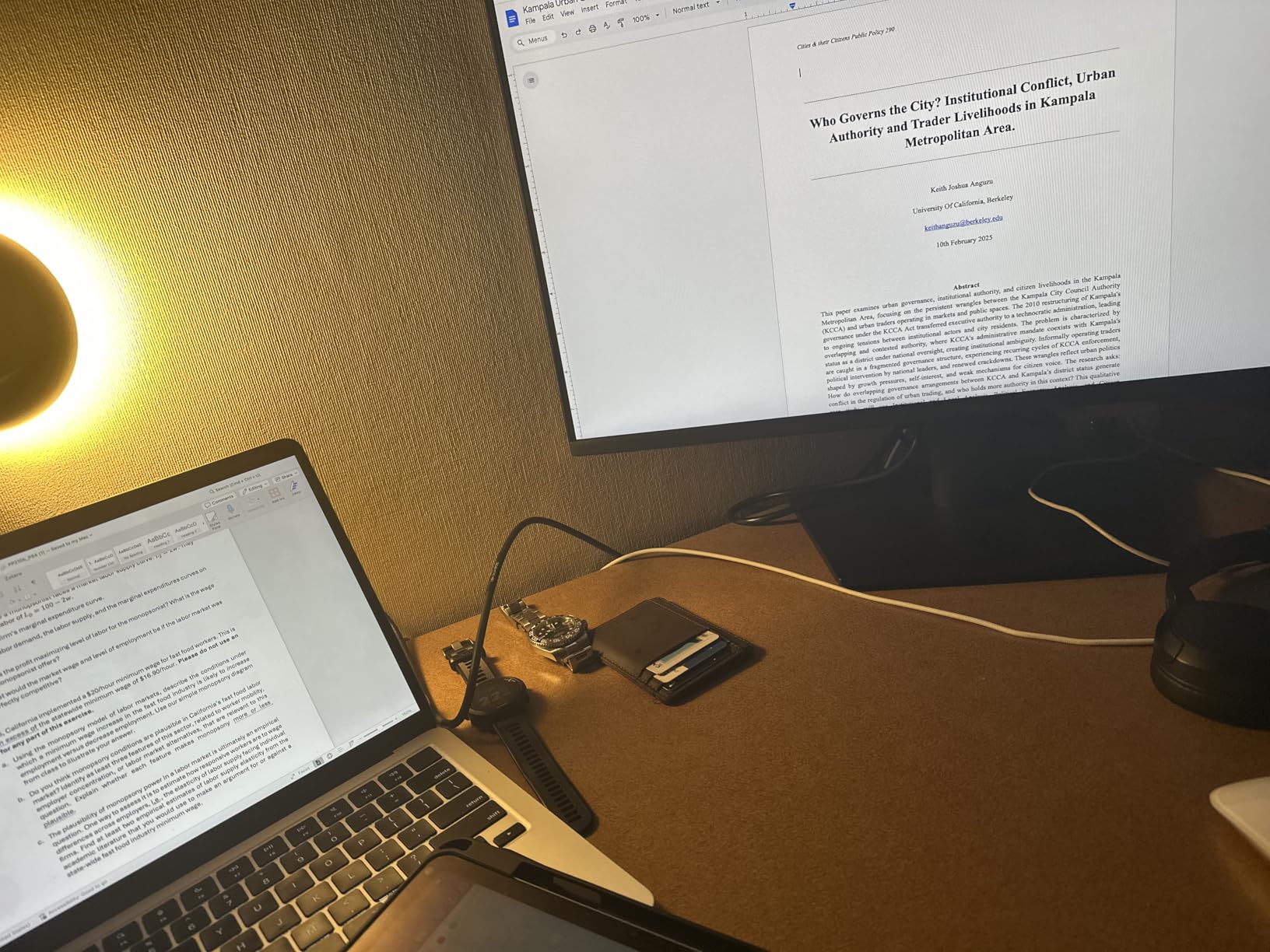
The matte anti-glare coating shrugs off harsh overhead lighting without distracting reflections. A dead-center VESA 100x100mm pattern makes multi-monitor arrays and articulating arms painless to install. Energy Star certification keeps typical power draw down to 16.3 watts, and Dell’s 1-Year Advanced Exchange service means a replacement ships before you return the faulty unit.
6. Samsung S36GD Essential Curved Monitor – Best Curved Display for Immersion
Samsung 27″ Essential S3 (S36GD) Series FHD 1800R Curved Computer Monitor
27-inch FHD VA
1800R Curved
100Hz Refresh
Game Mode
Pros
- 1800R curved design enhances immersion
- TUV certified eye comfort
- Game Mode optimizes image per genre
- VESA mount compatible
Cons
- Stand not adjustable
- No built-in speakers
- Only 1 HDMI port
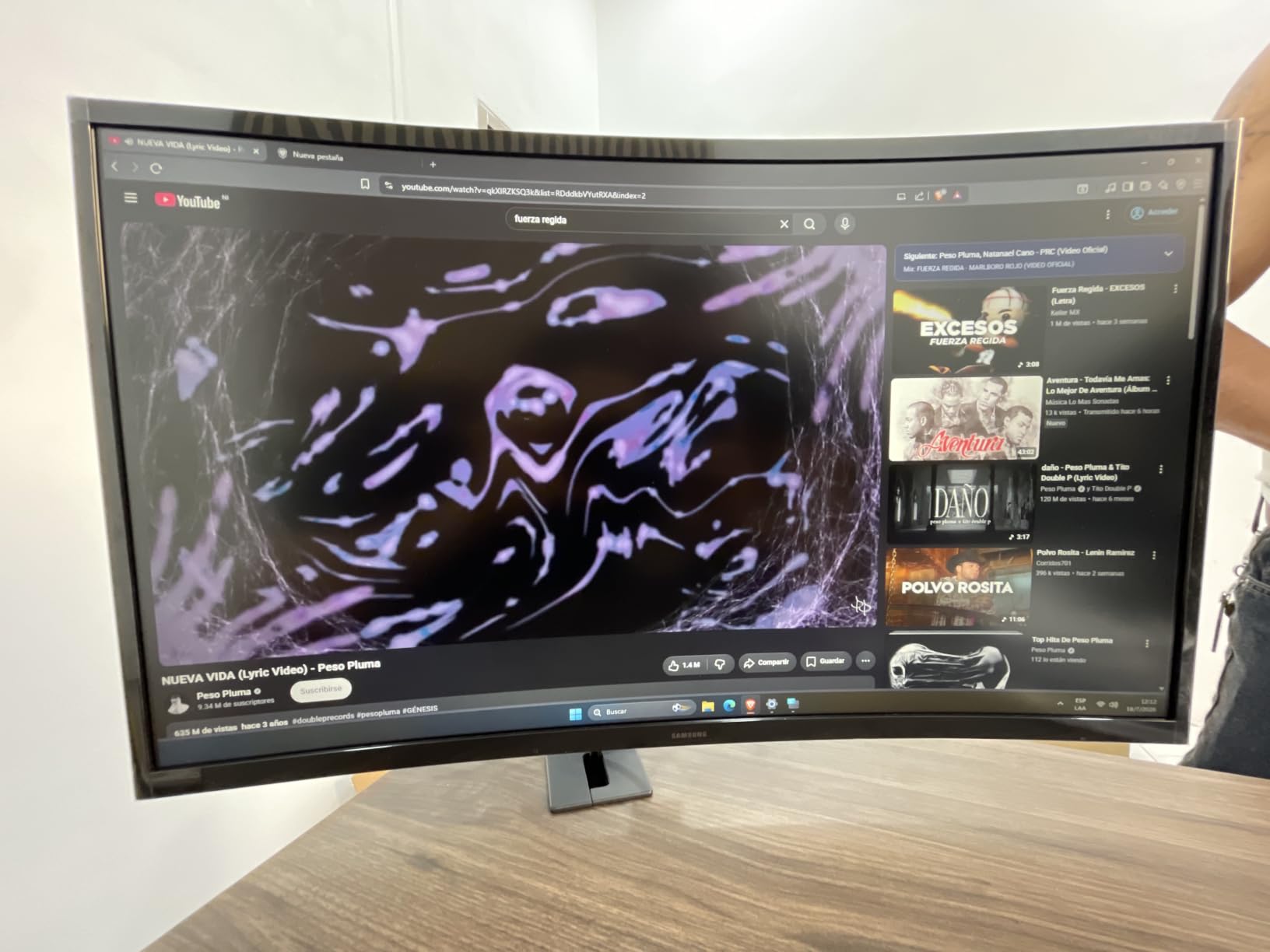
The Samsung S36GD brings curved-display immersion down to a budget price. Its 1800R curvature creates a more enveloping experience for gaming and movies without feeling like a gimmick. After testing it across films and casual gaming, I found the curve genuinely reduced eye travel between parts of the screen.
The VA panel delivers a 3000:1 contrast ratio, producing the deep blacks that make night scenes land. Colors appear even and saturated across the curved surface. Samsung’s Game Mode automatically tunes contrast and color for different genres, which console players will appreciate.
1800R Curvature Benefits
An 1800R curve means the screen bends along a 1.8-meter radius. That gentle arc shortens the viewing distance to the edges, which can reduce eye strain over long sessions. I turned my head less to catch corner content than on a flat 27-inch panel.
Curves are not for everyone, and flat-panel loyalists should skip this one. But for single-player games and movie nights, the wraparound effect adds real enjoyment. Roughly 80 percent of its 2,400-plus reviewers give it five stars.
Eye Comfort and Flicker-Free Viewing
Samsung includes TUV-certified eye comfort with flicker-free technology that removes the imperceptible flicker causing fatigue on cheaper LED panels. The VA panel’s deep blacks also let you run lower brightness comfortably in dim rooms. Long evening sessions felt easier on my eyes than on a bright IPS equivalent.
Stand Limitations and VESA Solution
The included stand offers no height or swivel adjustment, tilting only slightly by default. For ergonomic positioning, plan on using the VESA mount with a separate arm. That is a common compromise on curved budget monitors, where the panel eats the cost budget.
7. KOORUI 22-Inch 120Hz VA Monitor – Best Ultra-Budget Gaming Pick
KOORUI 22 Inch Computer Monitor FHD 120Hz VA VESA Low Blue Light, E2212H
22-inch FHD VA
120Hz Refresh
4000:1 Contrast
TUV Certified
Pros
- Standout value with 15000+ reviews
- 4000:1 contrast for deep blacks
- 120Hz with AdaptiveSync
- 3-year warranty
Cons
- Stand feels flimsy and shakes
- No DisplayPort
- No built-in speakers
The KOORUI 22-inch is the best-selling budget monitor in this roundup, with more than 15,000 reviews behind a 4.5-star average. For the lowest price here, you get a 120Hz VA panel with strong contrast and AdaptiveSync support. If you are building a first gaming PC or need a secondary screen, it delivers where it counts.
The VA panel’s 4000:1 contrast ratio produces inky blacks that make dark environments look genuinely dark. That matters for horror games, survival titles, and anything set at night. The 120Hz refresh rate with AdaptiveSync keeps tearing away when frame rates bounce around.
Contrast Advantage of VA Technology
Budget VA panels catch flak for ghosting, but the KOORUI’s contrast delivers benefits that suit specific use cases. Dark-room viewing beats the IPS alternatives here. Movie watching and atmospheric gaming gain the most from those black levels.
The 22-inch 1080p format also produces a sharp, dense image for its size. Text stays legible and games look crisp. For a desk where a 27-inch would overwhelm, this size is a feature, not a compromise.
Stand Quality and Customer Service
The stand is the weak link, shaking easily and offering almost no adjustment. Reviewers consistently recommend a VESA arm, and the 100x100mm pattern makes that easy. KOORUI’s customer service earns real praise in reviews for fast, responsive support.
Port Selection Limitations
There is no DisplayPort, so connectivity is HDMI plus a legacy VGA port most people will never touch. HDMI caps out at this monitor’s 120Hz, which is fine at this tier. If you want DisplayPort for higher refresh rates, the SANSUI or AOC picks are the better calls.
8. Sceptre E225W-FW144G 22-Inch 144Hz Monitor – Cheapest 144Hz with Speakers
Sceptre New 22-Inch Gaming Monitor, FHD 1080p, Up to 144Hz, HDMI, DisplayPort, Built-in Speakers, Machine Black (E225W-FW144 Series, 2026)
22-inch FHD LED
144Hz Refresh
Built-in Speakers
Blue Light Shift
Pros
- 144Hz at the lowest price in this roundup
- Built-in speakers save a peripheral purchase
- Height and tilt adjustable stand
- 100% sRGB color
Cons
- Speakers are weak and muffled
- Only 1 HDMI port
- Standby LED blinks at night
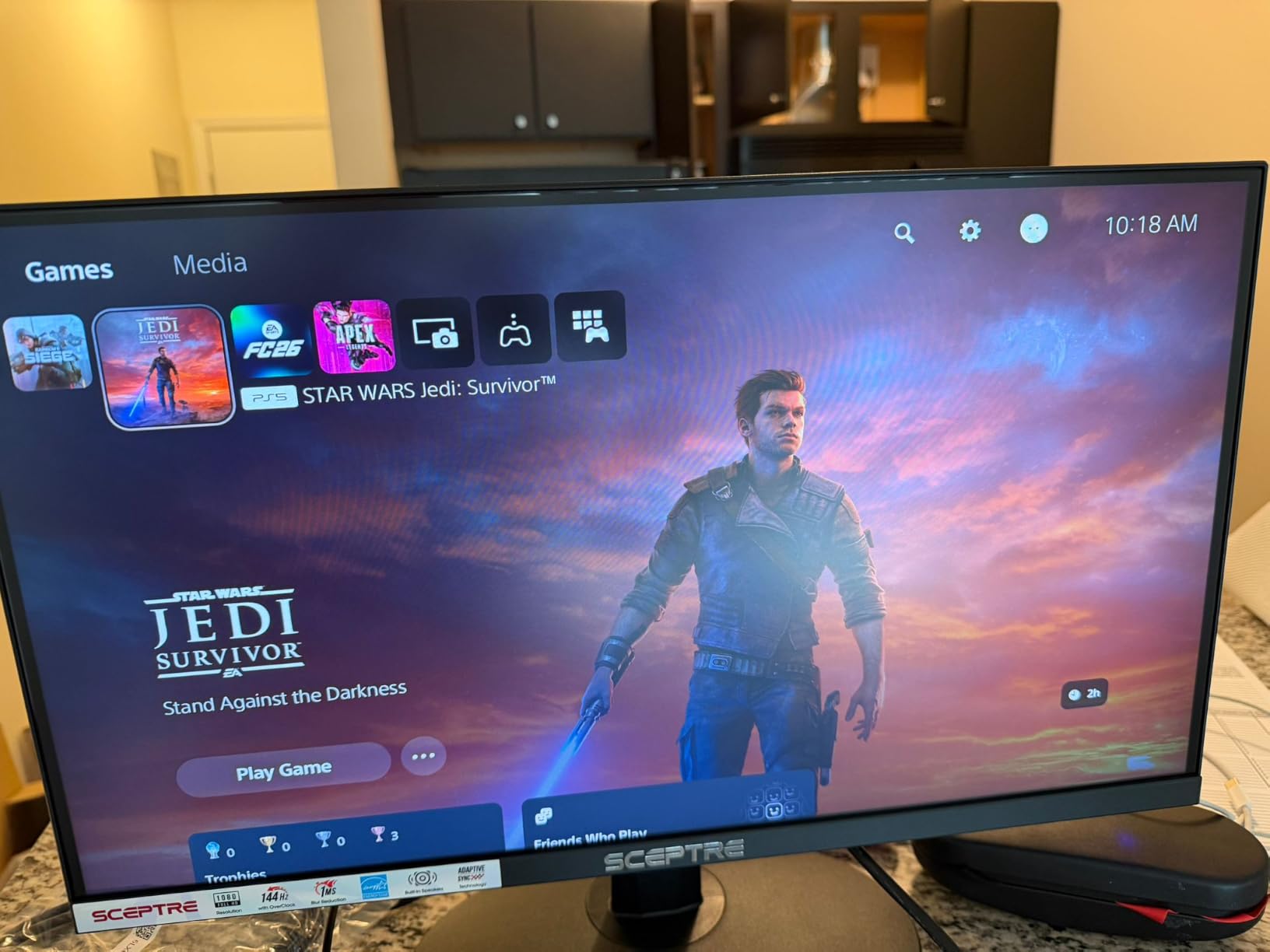
The Sceptre E225W-FW144G is the most affordable 144Hz monitor in this group, and one of the few at any price to include built-in speakers. The audio will not impress anyone, but it means one less peripheral to buy when assembling a budget setup from scratch. A height and tilt adjustable stand is a surprising bonus at this tier.
With a 2000:1 contrast ratio and 100% sRGB coverage, picture quality beats expectations. I tested it with both console gaming and PC productivity work. The 144Hz refresh rate delivered smooth motion in fast games once connected over DisplayPort.
Built-In Speakers Convenience
The integrated speakers handle system alerts and casual video adequately. They lack bass and can sound muffled, so music and cinematic gaming still deserve headphones. As a free inclusion that clears desk space, they earn their keep.
Owners consistently call out this convenience in reviews, alongside the easy assembly. Around 73 percent of nearly 1,200 reviewers award five stars. For dorm rooms and spare desks, the all-in-one nature is the draw.
Blue Light Shift Technology
Sceptre’s Blue Light Shift lets you dial blue light down through the on-screen menu for evening use. Combined with the 144Hz refresh rate, this monitor balances gaming performance with basic eye care. It is a manual system rather than always-on hardware, so you toggle it when the room dims.
Stand Adjustability and Setup
Unlike most ultra-budget monitors, the Sceptre includes height adjustment alongside tilt. That ergonomic bonus matters for neck comfort during long sessions. Note that it ships with a DisplayPort cable rather than HDMI, so have the right cable ready for your setup.
How to Choose a Budget Monitor: What Actually Matters
Buying the best monitor under $200 means knowing which specifications matter for your use case and which are marketing noise. Our testing showed that panel type, refresh rate, and stand quality create the biggest everyday differences. Here is what to weigh before you click buy.
IPS vs VA: The Panel Decision That Shapes Everything
IPS panels deliver consistent color across viewing angles and sidestep the ghosting that affects some VA displays. Choose IPS if you edit photos or video, share your screen with others, or play fast games where motion clarity wins matches. VA panels answer with deeper blacks and higher contrast, making them better for dim rooms, movies, and atmospheric titles.
The Reddit community leans firmly toward IPS to avoid black smearing, and my testing supports that for competitive play. But VA remains the right call for contrast-heavy viewing. Know which failure mode you would rather live with.
1080p vs 1440p: Resolution Should Match Screen Size
At 24 inches, 1080p looks sharp and gives a mid-range GPU room to breathe. At 27 inches, 1080p starts showing individual pixels if you sit close. The Dell S2725DSM proves 1440p at 27 inches is the sweet spot, and it is the single biggest image-quality upgrade available in this price bracket.
For pure budget gaming, 1080p at 120Hz or more delivers more enjoyment than 1440p at 60Hz. Frame rate beats resolution for perceived smoothness. Choose based on whether you work or play more.
Refresh Rate: How Many Hz Do You Actually Need
60Hz works for email and browsing, but 100Hz and up makes everything from scrolling to mouse movement feel better. Competitive players should target 144Hz minimum, with 200Hz offering marginal but real gains at high frame rates. The SANSUI and AOC picks show that 200Hz is no longer a premium feature.
Pair that refresh rate with FreeSync or G-Sync compatibility to eliminate tearing. Adaptive sync matters more than a few extra Hz once you pass 144Hz. If you are not gaming competitively, 100-120Hz hits the value sweet spot.
Port Selection and the DisplayPort Rule for 144Hz+
Many budget monitors ship with only HDMI and a legacy VGA port that nothing modern uses. Hitting 144Hz or higher usually requires DisplayPort, and owners on r/Monitors report HDMI capping at 60Hz or 120Hz on plenty of budget models. Verify DisplayPort exists before buying any high-refresh screen.
USB-C remains rare at this price point, so laptop owners should plan for adapters or a dock. Also count your HDMI ports if you switch between a console and a PC. Single-HDMI monitors force cable swaps or a switch box.
Stands, VESA Mounts, and the Adjustability Tax
Forum users complain constantly about flimsy stands with zero height adjustment, and every monitor here except the two Dells and the Sceptre carries that criticism. If ergonomics matter, either pick a model with built-in adjustment or confirm VESA compatibility. All eight monitors here support VESA mounting.
A basic VESA arm costs less than a pizza night and fixes height, tilt, and desk clutter in one move. I run most test monitors on arms for exactly this reason. Budget for one if your pick has a weak stand.
Eye Comfort Features Are Not Just Marketing
Flicker-free backlights and low blue light modes measurably reduce fatigue over long sessions, and TUV certification separates real implementations from buzzwords. The Dell SE2725HM’s always-on ComfortView Plus and the Acer’s Flickerless technology both earned their reputations. If you work eight-hour days, weigh these features above minor spec differences.
Brand Reliability and Warranty Length
Dell, Acer, Samsung, and AOC run established support networks with exchange programs, while newer names like KOORUI and SANSUI offer aggressive specs with slower support. Warranty length varies widely here, from Acer’s 3-year full coverage to single-year plans elsewhere. Scroll the one-star reviews before buying and check how the vendor handles dead pixels.
Frequently Asked Questions
What is the best monitor under $200?
The u003cstrongu003ebest monitor under $200u003c/strongu003e is the u003cstrongu003eDell S2725DSMu003c/strongu003e, a 27-inch QHD (1440p) IPS display with a 144Hz refresh rate, full height/tilt/pivot/swivel stand, built-in dual speakers, and TUV-certified 4-star eye comfort. It offers the best balance of resolution, refresh rate, and build quality at this price.
Is 200 dollars good for a monitor?
Yes, u003cstrongu003e$200 is a good budget for a monitoru003c/strongu003e. At this price you get trusted brands like Dell, Acer, and Samsung, IPS panels with 99% sRGB color accuracy, refresh rates from 100Hz to 200Hz, and multi-year warranties on several models. You will not find 4K or OLED here, but for 1080p and 1440p work and gaming the value is excellent.
What is the best PC monitor for gaming under $200?
The u003cstrongu003ebest gaming monitor under $200u003c/strongu003e depends on your priorities. For competitive play, the u003cstrongu003eAOC 24G42HEu003c/strongu003e runs 200Hz on an IPS panel with NVIDIA G-Sync compatibility. The u003cstrongu003eSANSUI ES-G24F4Lu003c/strongu003e also hits 200Hz with a 1ms MPRT response time and DisplayPort. For gaming plus productivity, the u003cstrongu003eDell S2725DSMu003c/strongu003e pairs 1440p resolution with 144Hz.
What is a cheap but good monitor?
A u003cstrongu003echeap but good monitoru003c/strongu003e is the u003cstrongu003eKOORUI 22-inch 120Hz VAu003c/strongu003e, which packs a 4000:1 contrast ratio, AdaptiveSync, TUV-certified eye care, and a 3-year warranty into the lowest price in this roundup. The u003cstrongu003eAcer KB272 G0biu003c/strongu003e is another standout, pairing a 27-inch IPS panel with 99% sRGB and 120Hz at a very low cost.
Should I get a 24-inch or 27-inch monitor under $200?
Choose a u003cstrongu003e24-inch monitor for gamingu003c/strongu003e, where 1080p pixel density looks sharpest and the smaller field of view aids reaction time. Choose a u003cstrongu003e27-inch monitor for productivityu003c/strongu003e, where extra screen space helps multitasking. If you can find 1440p at 27 inches like the Dell S2725DSM, that resolution makes 27 inches the better all-around choice.
Final Verdict: Which Monitor Under $200 Should You Buy
The best monitors under $200 in 2026 deliver genuine quality without the compromises that defined this category a few years ago. If you want the best overall package, the Dell S2725DSM pairs 1440p resolution, 144Hz, and a fully adjustable stand. Competitive gamers should grab the AOC 24G42HE for 200Hz IPS speed, or the SANSUI ES-G24F4L if pure frame rate per dollar is the goal. Office workers who stare at spreadsheets all day will love the Dell SE2725HM’s eye comfort, and the KOORUI or Sceptre cover the ultra-budget end without embarrassment.
Match the panel to your priorities, confirm DisplayPort if you are chasing high refresh rates, and budget a VESA arm if your pick has a weak stand. Do that, and any of these eight monitors will serve you well for years. Pick the one that fits your setup and start enjoying the upgrade this week.