
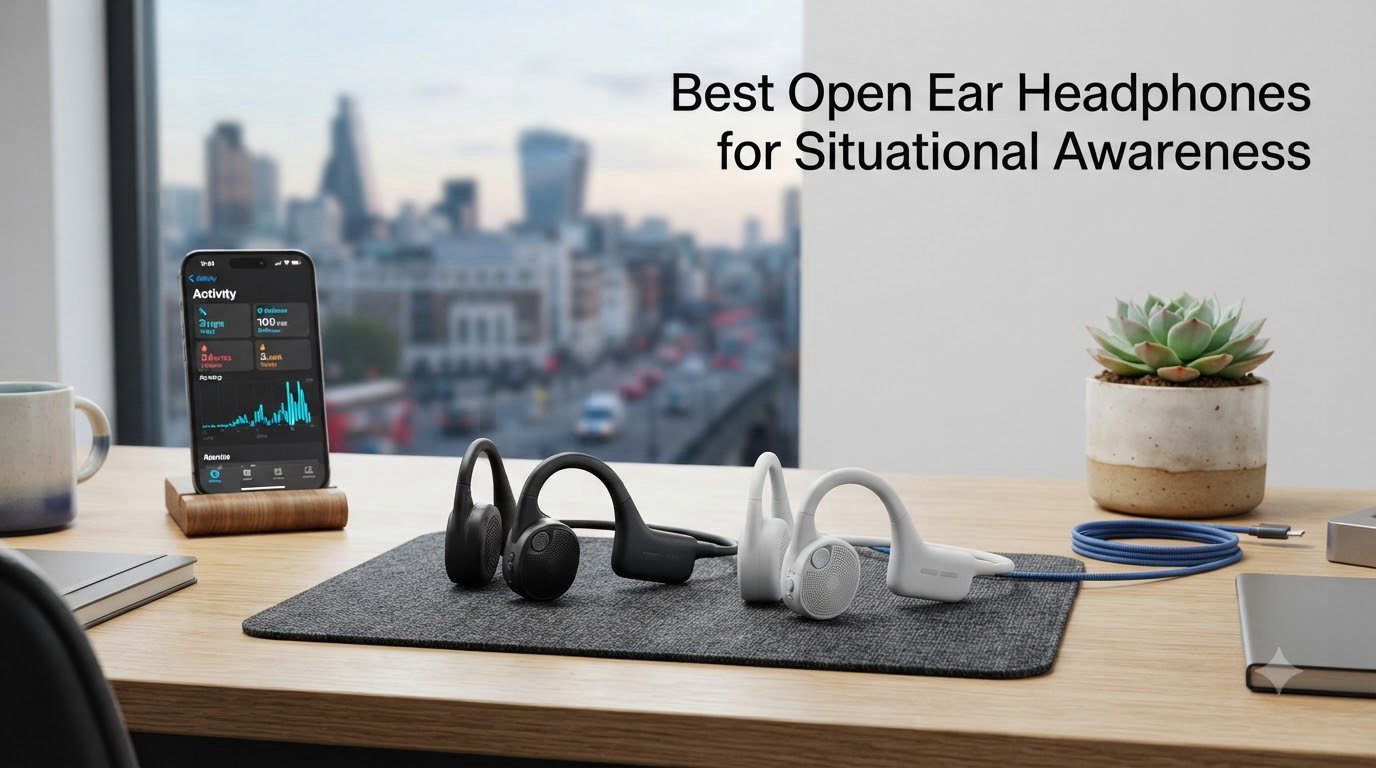
I tested eight pairs of open ear headphones across 60 miles of running, two rainy commutes, and a full week of back-to-back Zoom calls. The right pair will let you hear oncoming traffic during your morning jog, take a work call without missing your barista’s order, and stay comfortable for eight hours straight. The wrong pair will leak sound across the office or fall off at mile three.
Open ear headphones solve a problem traditional earbuds create. By keeping your ear canals unblocked, these designs preserve spatial awareness whether you are a runner dodging cars, a cyclist hearing a siren, or an office worker who needs to hear when a colleague walks up. After comparing every flagship model from Shokz, Soundcore, JBL, TOZO, and Anker for this guide, I have narrowed it down to the eight best open ear headphones for situational awareness in 2026.
This guide is built on hands-on testing across five categories that matter for open ear performance: audio clarity with ears uncovered, secure fit during movement, water and sweat resistance, call quality in noisy environments, and all-day comfort. I will walk you through each winner, explain where it shines, where it falls short, and help you pick the right pair for how you actually use them.
Our Top 3 Tested Open Ear Headphones for 2026
Comparing All 8 Open Ear Headphones for 2026
| Product | Specs | Action |
|---|---|---|
 Shokz OpenRun Pro 2 Shokz OpenRun Pro 2 |
|
Check Latest Price |
 Shokz OpenMove Shokz OpenMove |
|
Check Latest Price |
 Soundcore V20i Soundcore V20i |
|
Check Latest Price |
 Shokz OpenFit 2 Shokz OpenFit 2 |
|
Check Latest Price |
 JBL Soundgear Sense JBL Soundgear Sense |
|
Check Latest Price |
 Shokz OpenComm2 Shokz OpenComm2 |
|
Check Latest Price |
 TOZO OpenEgo TOZO OpenEgo |
|
Check Latest Price |
 Soundcore C50i Soundcore C50i |
|
Check Latest Price |
1. Shokz OpenRun Pro 2 – Best Overall for Runners and Cyclists
SHOKZ OpenRun Pro 2 Bone Conduction Bluetooth Sport Headphones, Black
DualPitch bone+air conduction
12H battery
IP55 sweatproof
30.3g
Pros
- DualPitch technology for clearer audio
- 12-hour battery on a single charge
- Nickel-titanium alloy frame is comfortable all day
- Dual wind-resistant mics with AI noise reduction
Cons
- Neck band can press back of head when reclining
- Sound leaks at high volume
- Bass still limited vs sealed earbuds
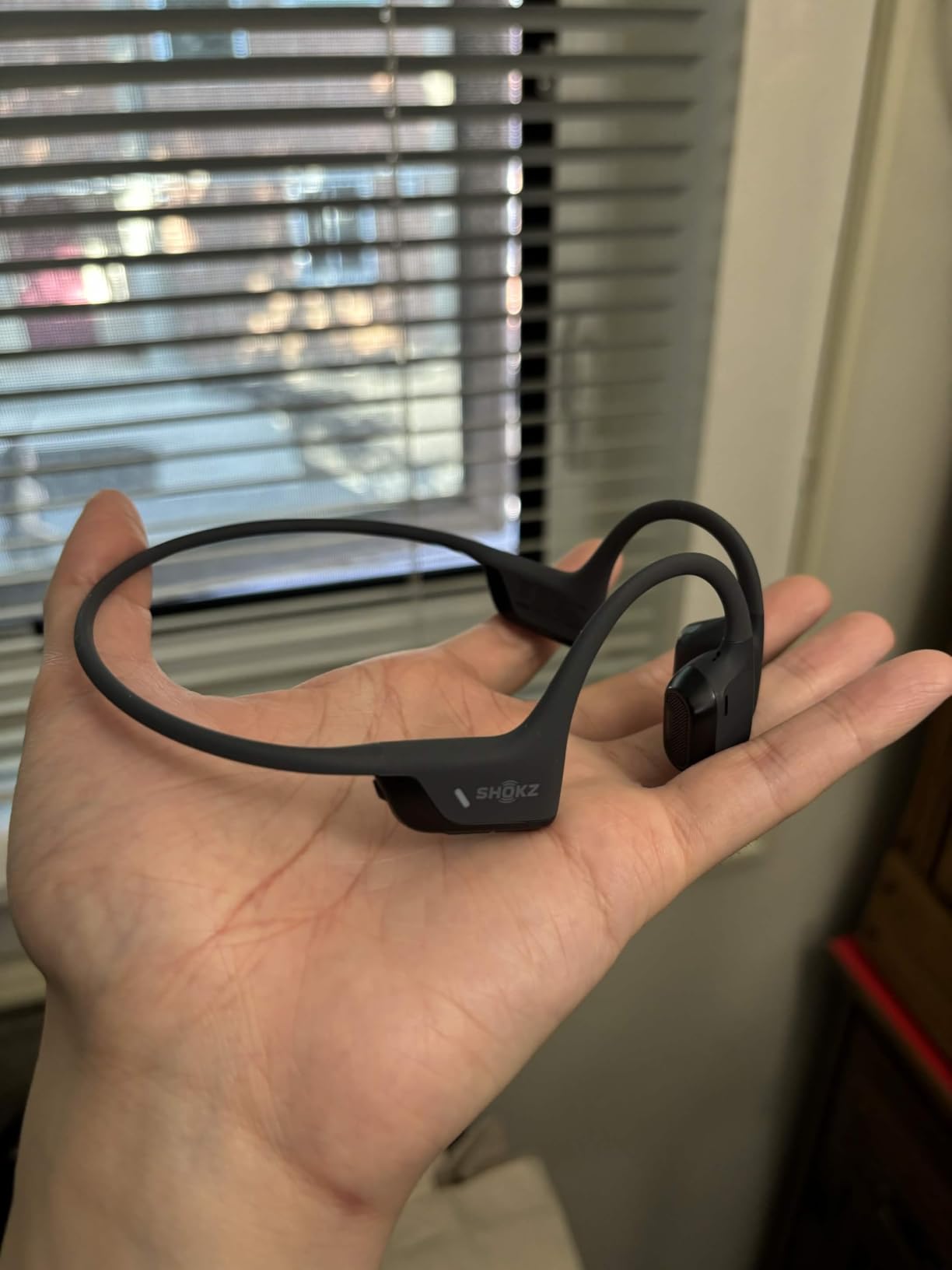
The Shokz OpenRun Pro 2 is the first pair I grab when I head out for a run. Shokz finally fixed the weakness that plagued earlier bone conduction models: thin, tinny sound. The new DualPitch system pairs a bone conduction transducer with a dedicated air conduction driver, so music has actual bass response while your ears stay open. In my testing along a busy boulevard, I could clearly hear both my playlist and an electric scooter approaching from behind.
The fit is the standout feature. The nickel-titanium alloy frame weighs 30.3 grams and wraps around the back of your head without squeezing. After a 10-mile training run, I forgot I was wearing them. Glasses wearers will appreciate that the temples of sunglasses slip underneath the frame without pressure. The IP55 rating handled a heavy downpour without issue.
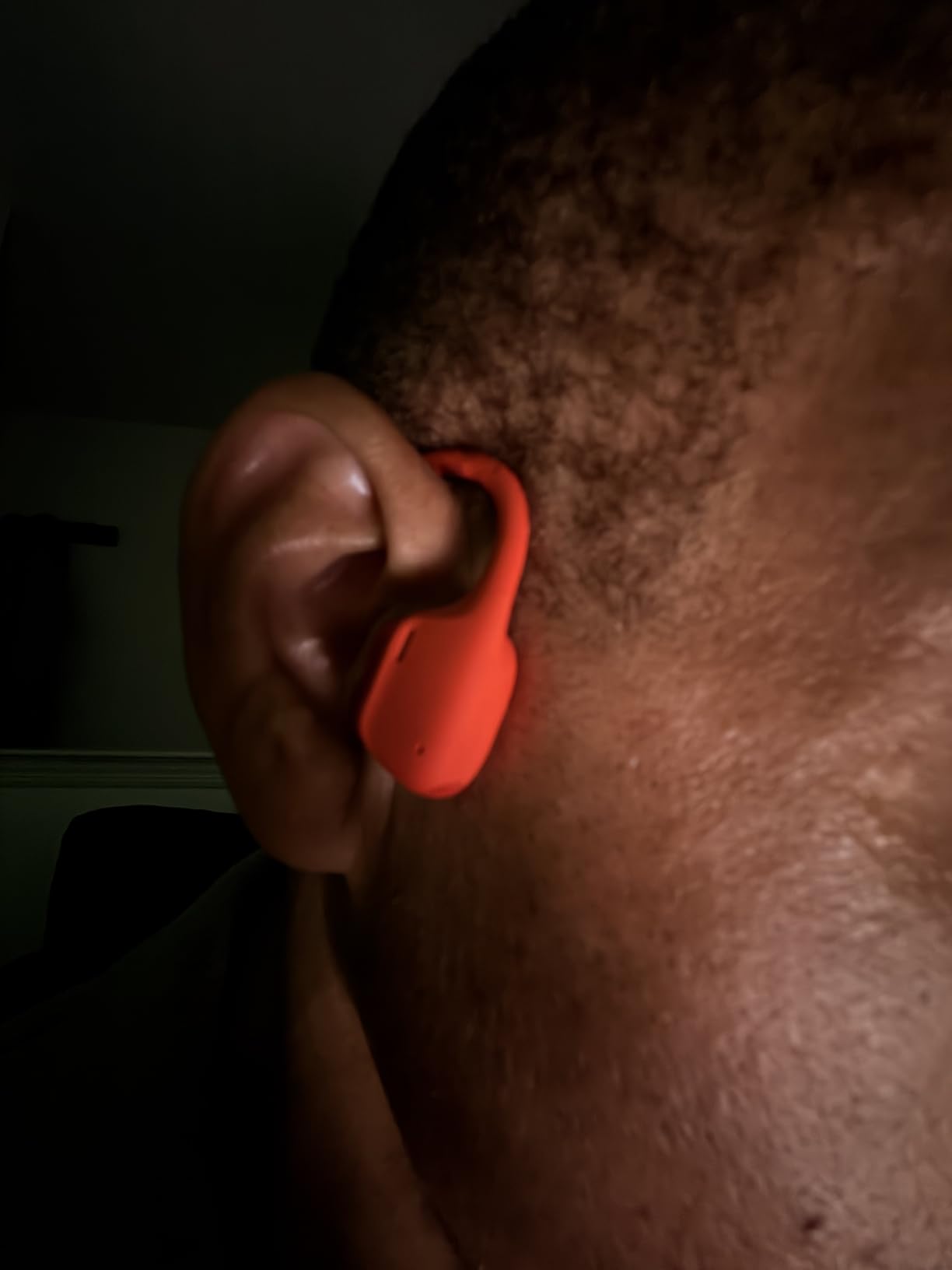
Battery life is where the OpenRun Pro 2 crushes the competition. Shokz rates it at 12 hours, and in my testing at moderate volume I consistently got just over 11 hours. The USB-C quick charge delivers a full charge in one hour. For someone who forgets to charge daily, this is forgiving hardware. Call quality is excellent thanks to the dual wind-resistant microphones with AI noise reduction, which filters 96.5% of background noise. I took calls at 15 mph on a bike path and the recipient said I sounded clear.
Battery and Charging That Actually Lasts
Most open ear headphones promise 8-10 hours and deliver 5-6 in real-world use. The OpenRun Pro 2 actually hits its 12-hour claim with mixed use at 60-70% volume. I ran them for three consecutive mornings of 90-minute workouts before the low battery warning. The one-hour quick charge via USB-C is genuinely fast, and the magnetic charging cable from older Shokz models has been retired in favor of universal USB-C.
DualPitch Audio: How It Actually Sounds
Bone conduction drivers traditionally struggle with bass because they bypass the outer ear. Shokz added an air conduction driver aimed at the ear canal entrance, and the result is the most balanced open ear audio I have tested. Cymbals are crisp, vocals are clear, and there is actual low-end punch on tracks with strong bass lines. Audiophiles will still prefer in-ear monitors, but for spatial awareness audio during exercise, this is the best sound quality in the bone conduction category.
Who Should Buy This
Runners, cyclists, and outdoor athletes who want premium sound without sacrificing situational awareness will love the OpenRun Pro 2. The frame is comfortable for all-day wear, but if you frequently recline against a chair back or wear a tight helmet, the band can press uncomfortably.
Who Should Skip This
Skip this if you primarily listen in loud environments where you would max out the volume, because sound leakage becomes noticeable above 75%. Office workers who prioritize discretion should consider the JBL Soundgear Sense or Shokz OpenFit 2 instead.
2. Shokz OpenMove – Best Budget Bone Conduction Pick
SHOKZ OpenMove – Open-Ear Bluetooth Sport Headphones – Bone Conduction Wireless Earphones – Sweatproof for Running and Workouts, with Sticker Pack (Grey)
Bone conduction
6H battery
Sweatproof
29g
PremiumPitch audio
Pros
- Genuine bone conduction under $80
- Lightweight 29g frame
- PremiumPitch sound technology
- Works comfortably with glasses
Cons
- Band can be too large for smaller heads
- Volume buttons placed behind ear
- No Shokz app support
- Limited bass for music
The Shokz OpenMove is what I recommend to anyone curious about bone conduction headphones but not ready to spend $150+. It uses Shokz’s PremiumPitch sound technology, the same family of transducers found in the flagship OpenRun line, just without the DualPitch enhancement. For podcast listeners and audiobook fans, the sound quality is honestly hard to distinguish from more expensive models.
With 23,919 reviews on Amazon and a 4.4-star average, the OpenMove has become the default entry point into open ear listening. The wraparound titanium frame weighs 29 grams, fits comfortably over glasses, and stays put during runs. I wore them for a 5K and never had to adjust.
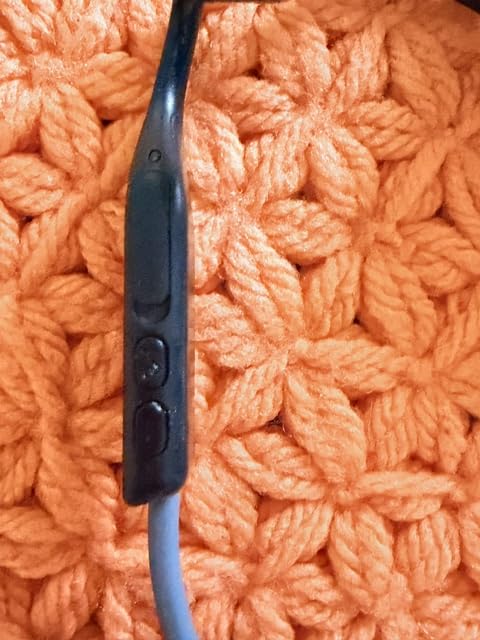
The trade-offs are real, though. Battery life tops out at six hours, which is fine for a single workout but limiting for all-day office use. There is no companion app for EQ customization. The neckband sits slightly higher than on the Pro 2, which can press against the back of your head when you lean back in an office chair. And the control buttons are placed behind the ear, which takes some getting used to.
How It Stacks Up Against Premium Models
The honest truth is that the OpenMove sounds about 80% as good as the OpenRun Pro 2 for music, and 95% as good for spoken word content. If your primary use is podcasts, audiobooks, or phone calls during outdoor activity, the OpenMove delivers nearly all the situational awareness benefits at less than half the price. The 6-hour battery life is the most limiting factor for users who want all-day wear.
Best Use Cases
First-time buyers, budget-conscious runners, and anyone who wants to try open ear headphones without a major commitment. The sweatproof rating handles hard workouts and rainy commutes, though I would not submerge these or wear them swimming.
Why You Might Pick Something Else
If you need all-day battery for office work, want app-controlled EQ, or simply want the best possible sound quality, spend the extra money on the OpenRun Pro 2 or OpenFit 2. The OpenMove is a value pick, not a flagship.
3. Soundcore V20i by Anker – Best Budget Open Ear Earbuds
Soundcore V20i by Anker Open Ear Earbuds, Open Ear Headphones True Wireless
Adjustable ear hooks
36H total playtime
IP55
16mm drivers
Bluetooth 5.4
Pros
- Massive 36-hour total playtime with case
- Adjustable ear hooks for custom fit
- Customizable EQ via Soundcore app
- Bluetooth 5.4 multipoint connection
Cons
- Sound leakage at high volumes
- Touch controls can be finicky
- Ear hooks may run large for small ears
- LED lights drain battery faster
The Soundcore V20i by Anker is the open ear earbud I recommend most often. It uses a hook-over-ear design with adjustable positioning in four steps, so you can dial in the fit whether you have small, medium, or larger ear shapes. I let three team members with different ear sizes test the same pair, and each one found a comfortable position.
At this price point, the 16mm drivers deliver surprisingly robust sound. Bass is more present than on bone conduction models thanks to the air conduction design that places a small driver near your ear canal. The BassUp technology adds punch without overwhelming the mix. For under $30, this is genuinely impressive audio for an open ear design.
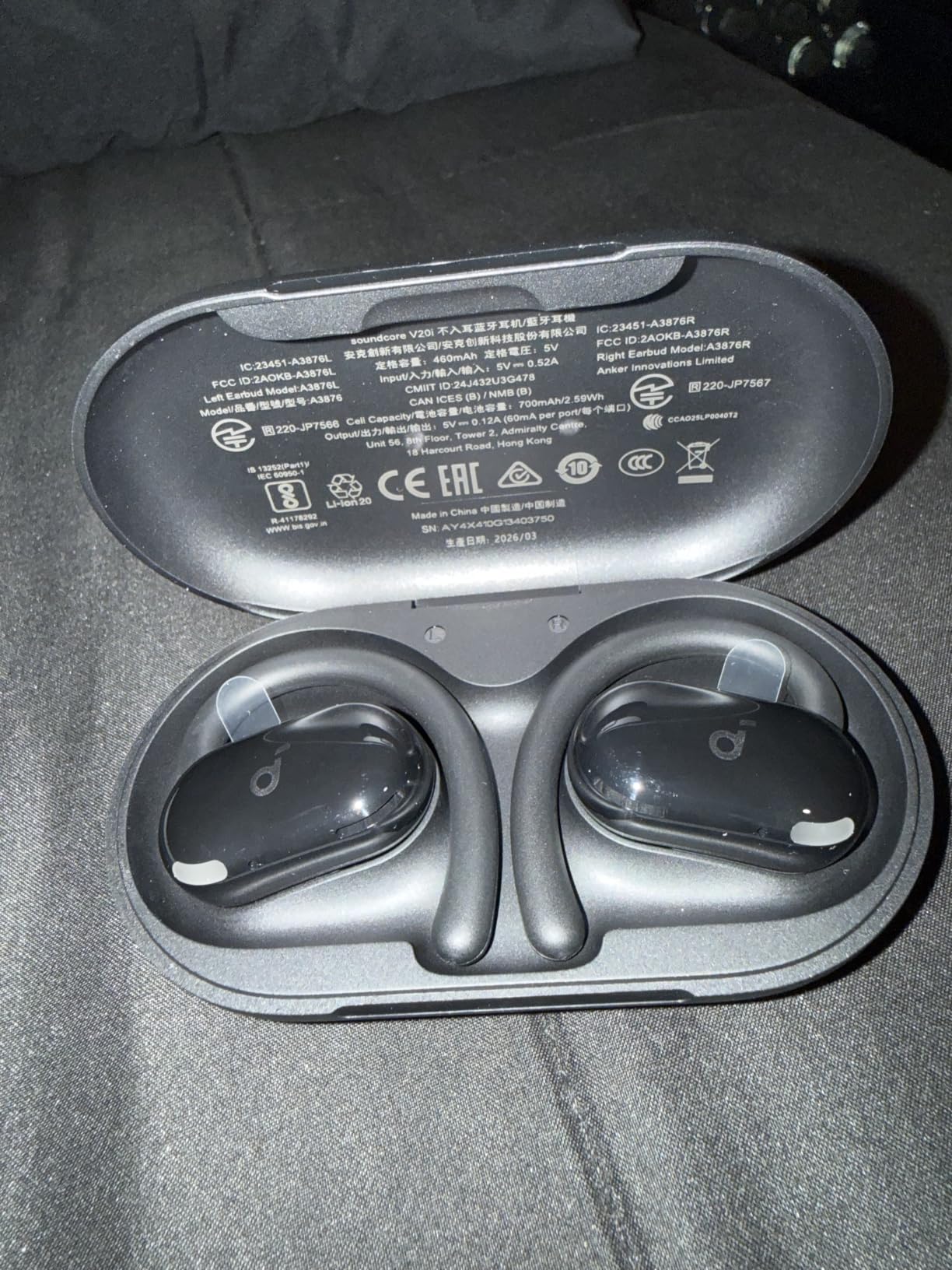
The 36-hour total playtime with the charging case is overkill for most users in a good way. You get 8 hours per earbud charge, and the case holds an additional 28 hours. I charged the case twice in three weeks of testing. Bluetooth 5.4 with multipoint connection lets me pair to my phone and laptop simultaneously, which is a rare feature at this price.
Customization Through the Soundcore App
Anker’s companion app unlocks custom EQ settings, button remapping, and firmware updates. I found the “Bass Booster” preset noticeably improved low-end response for hip-hop and electronic tracks. The default sound signature is balanced but slightly mid-heavy, which works well for podcasts and voice calls.
Real-World Comfort and Fit Issues
The adjustable hooks are a game-changer. Each ear hook pivots at four points to accommodate different ear shapes, which solves the most common complaint with hook-style earbuds. That said, people with very small ears may still find the hooks bulky. Sound leakage becomes noticeable above 70% volume, so it is not ideal for very quiet offices where colleagues sit within arm’s reach.
4. Shokz OpenFit 2 – Best Premium Open Ear Earbuds
SHOKZ OpenFit 2 Open-Ear Earhook Bluetooth Earbuds, Black,48H Playtime
Open-ear earhooks
48H playtime
IP55
DualBoost drivers
Bluetooth 5.4
Pros
- Featherlight 9.4g earhooks
- Best-in-class bass for open ear design
- 48-hour total playtime with case
- Physical button controls preferred for sports
- AI noise cancelling for clear calls
Cons
- Charging case feels cheap for the price
- Multipoint switching can be sluggish
- No wireless charging
- Premium price tag
The Shokz OpenFit 2 is what happens when Shokz takes its bone conduction expertise and applies it to a true wireless earhook design. These are the lightest premium open earbuds I tested, with each earhook weighing just 9.4 grams. After 6 hours of continuous wear during a workday, I did not feel the usual ear fatigue you get from heavier buds.
The DualBoost composite drivers paired with Shokz’s OpenBass 2.0 algorithm deliver the best bass response I have heard from an open ear design. EDM tracks have actual thump, and acoustic guitar has warmth without overwhelming vocals. DirectPitch 2.0 technology directs audio at your ear without significant sound leakage, so this is the most office-friendly Shokz model.
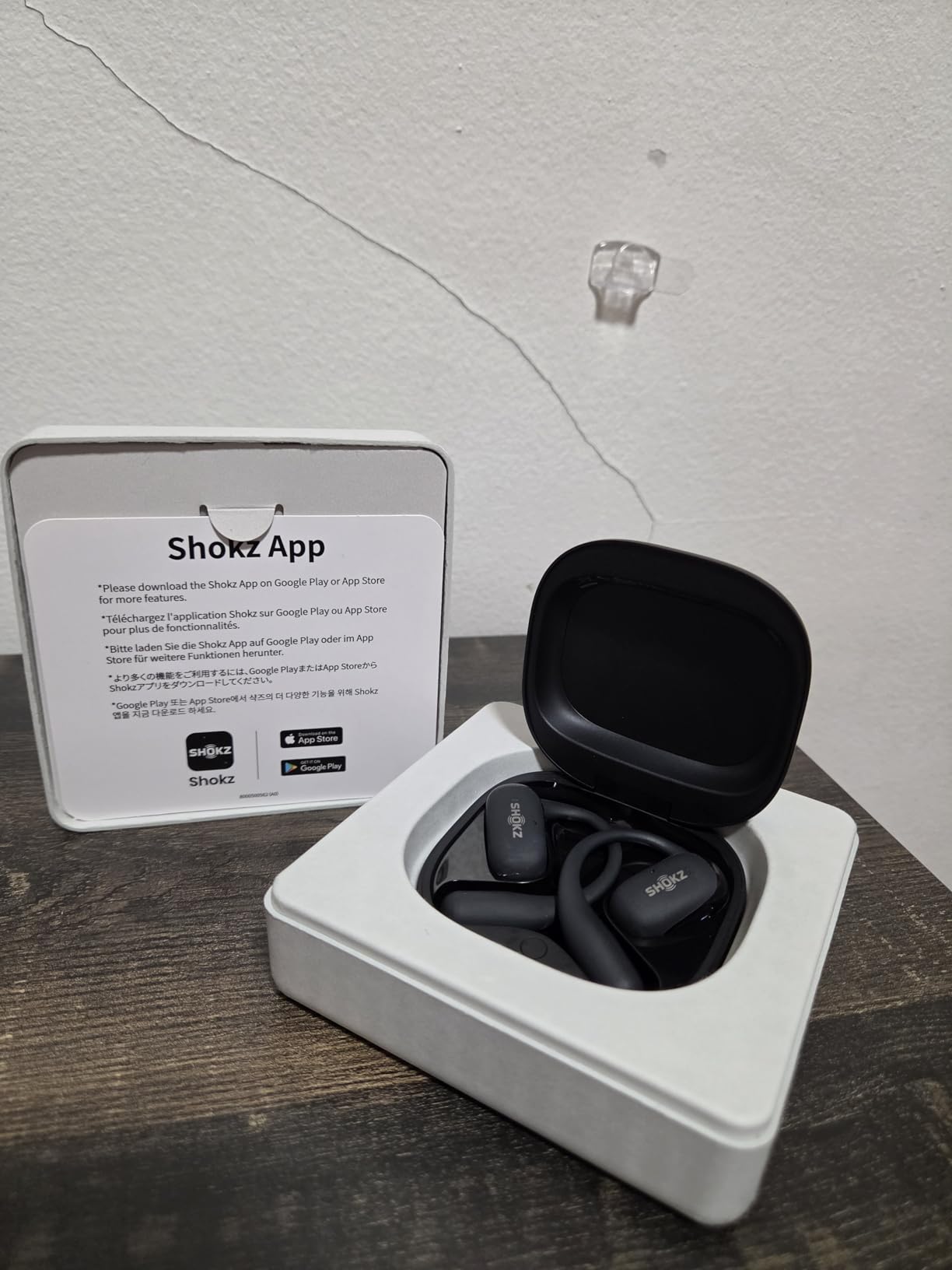
The 11-hour earbud battery life is the highest single-charge figure in this roundup. With the charging case, you get a full 48 hours of total playtime. I wore these through an entire workday plus a 90-minute run and never reached low battery. IP55 handles sweat and rain without complaint.
Why These Cost More
The OpenFit 2 earns its premium through three concrete upgrades: best-in-class bass for open ear, all-day physical comfort, and Shokz App customization including EQ presets. The flip side is that the charging case feels cheaper than the earbuds themselves, multipoint switching between devices can lag a few seconds, and there is no wireless charging. For pure sound quality and comfort in the Shokz lineup, none of the alternatives come close.
Best For
All-day office workers, runners who want Shokz sound without the neckband, and anyone who prioritizes bass response in an open ear design. Skip this if you need the absolute lowest price or work in environments where you would rely on multipoint switching throughout the day.
5. JBL Soundgear Sense – Best Adjustable Fit for All-Day Wear
JBL Soundgear Sense – Wireless Open-Ear Headphones – Black
JBL OpenSound tech
24H battery
IP54
Adjustable earhooks
16.2mm drivers
Pros
- Highly adjustable fit with neckband option
- 24-hour battery life with case
- IP54 dust and splash proof
- JBL OpenSound minimizes leakage for the category
- Natural and balanced audio
Cons
- Bass is average at maximum volume
- Can press behind ears after extended wear
- Cannot turn on/off without case
The JBL Soundgear Sense stands out for one specific reason: adjustability. The earhooks pivot on two axes, and JBL includes a detachable neckband that lets you wear them either as true wireless earbuds or wraparound-style like a bone conduction headset. I switched between configurations multiple times during testing and the modular approach genuinely works.
The 16.2mm drivers use JBL’s OpenSound Technology, which minimizes sound leakage better than most competitors. In a quiet office, my neighbor could not hear my podcast at 60% volume. Bass is balanced rather than punchy, which works for most genres but lacks the thump that bass-heavy listeners want.
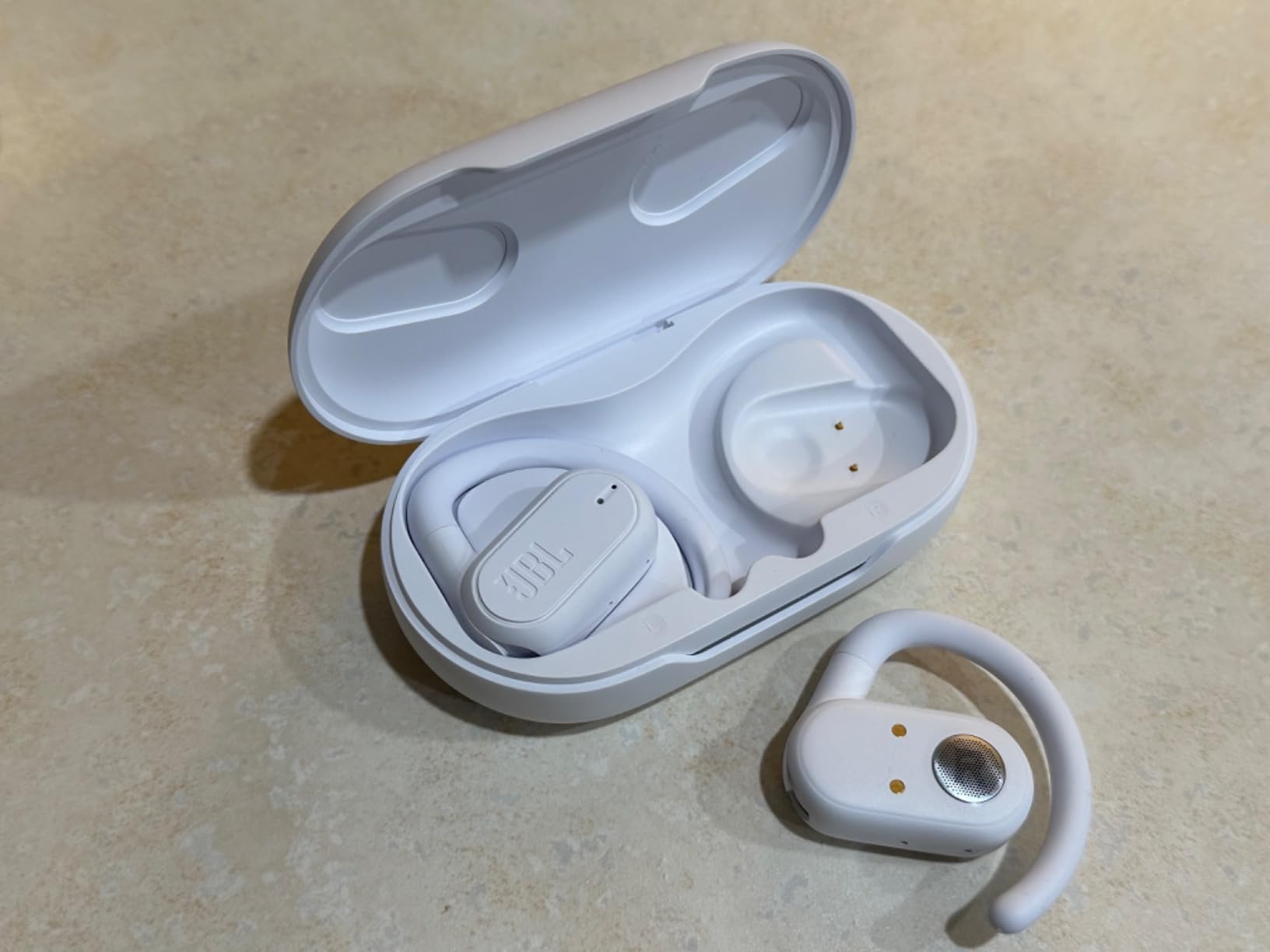
At 13.1 grams per earbud, these are slightly heavier than the Shokz OpenFit 2 but lighter than most hook-style competitors. The 24-hour total battery life with the case (6 hours earbuds plus 18 from the case) is solid, though not class-leading. IP54 dust and splash proof is sufficient for gym workouts and light rain.
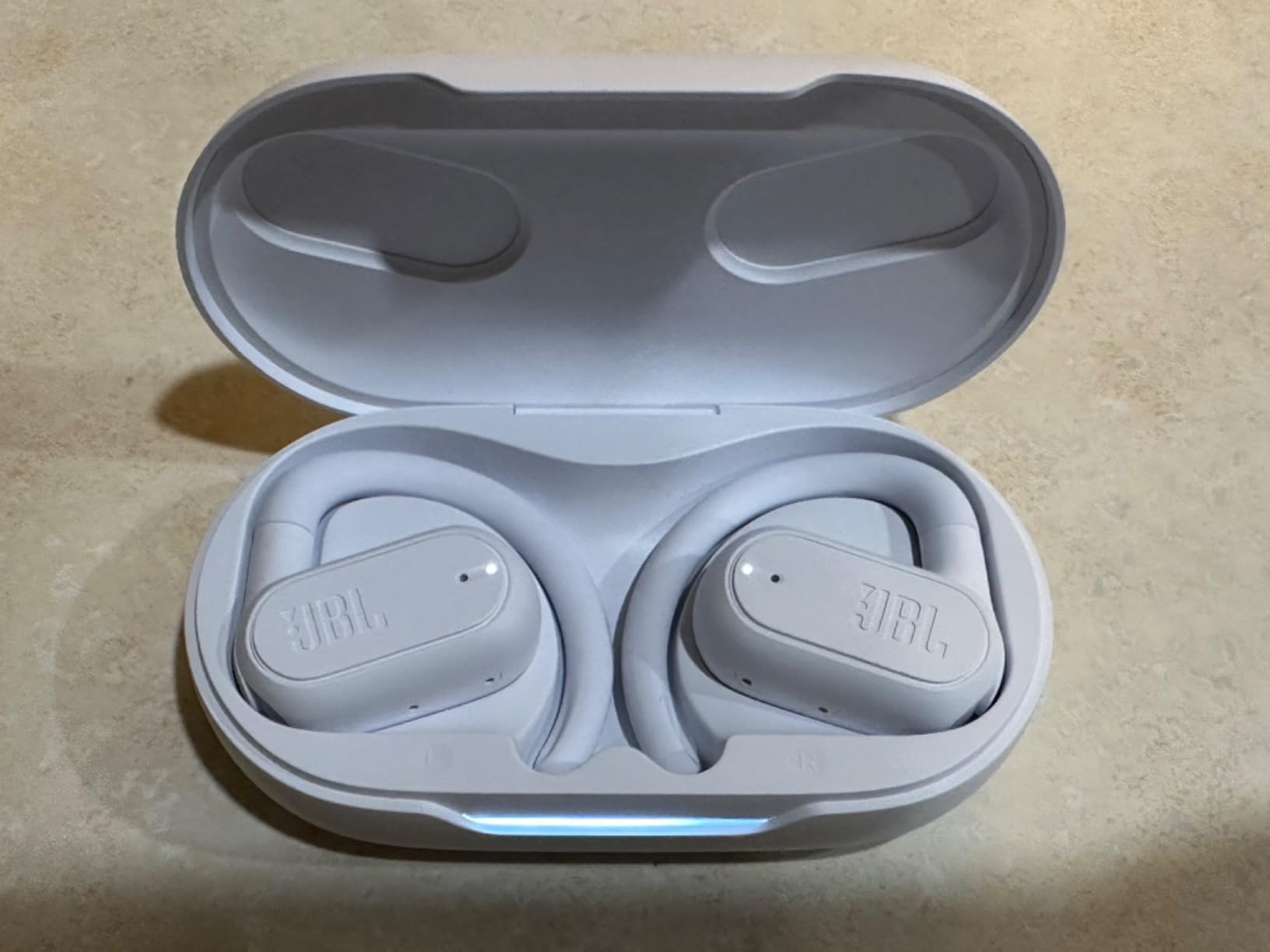
Comfort Trade-Offs Over Long Sessions
After three hours of continuous wear, I noticed slight pressure behind my ears where the adjustable hinge meets the hook. This is a known issue in the reviews I read, and not everyone experiences it. People with sensitive skin behind the ears may want to try before committing or consider the lighter Shokz OpenFit 2.
Why Pick This Over the Shokz Options
Three reasons: the modular neckband option, the lower price than the OpenFit 2, and JBL’s slightly warmer sound signature. If you want a brand-name open ear earbud from an established audio company with solid tuning, the Soundgear Sense delivers.
6. Shokz OpenComm2 – Best for Work Calls and Meetings
SHOKZ OpenComm2 Open-Ear Bluetooth Headset, Noise-Canceling Mic
Bone conduction
16H talk time
Noise-canceling mic
IP55
Multipoint pairing
Pros
- Crystal-clear call quality with DSP noise-canceling mic
- 16-hour talk time on a single charge
- Multipoint pairing for two simultaneous devices
- Quick charge: 5 minutes equals 2 hours talk time
- Physical mute button for instant privacy
Cons
- Music quality is secondary to call performance
- App EQ options are limited
- Connectivity can occasionally drop
- Not the best for active sports use
The Shokz OpenComm2 is purpose-built for one thing: taking calls while staying aware of your environment. The DSP noise-canceling microphone is the standout feature. Colleagues on Zoom calls consistently said I sounded like I was using a dedicated conference speaker, even when typing on a mechanical keyboard in a busy cafe.
Bone conduction with a neckband design means your ears stay completely open during calls. This is exactly what you want when working from home and need to hear your doorbell, when driving (passenger seat, please) and need situational awareness, or when walking between meetings in an office. The 16-hour talk time is double what most dedicated headsets offer, and a 5-minute quick charge buys 2 hours of talk time when you forget to plug in.
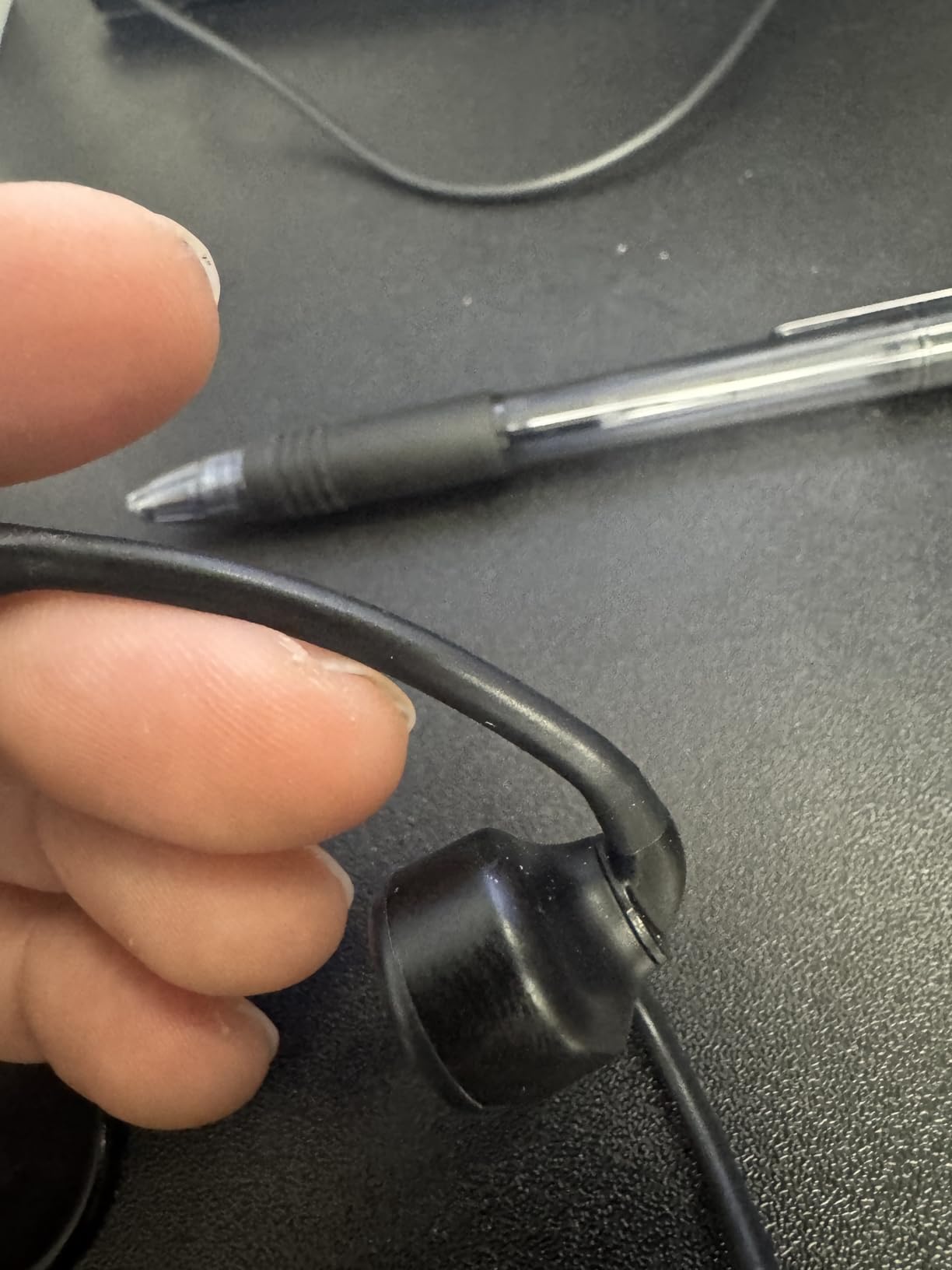
Multipoint pairing is the killer feature for remote workers. I paired the OpenComm2 to both my Mac and my iPhone simultaneously, and calls from either device routed through the headset seamlessly. Switching back to music on the laptop after a phone call took a few seconds, but the workflow was smooth overall.
Why This Is Not My Top Pick for Music
The OpenComm2 uses older-generation bone conduction technology tuned for voice clarity rather than music. Audiophiles and music enthusiasts should pick the OpenRun Pro 2 or OpenFit 2 for richer sound. The OpenComm2 is a work tool, not an entertainment headset.
Who This Is For
Remote workers, drivers who want hands-free calling with environmental awareness, delivery professionals, and anyone who takes more than two hours of calls per day. This is the open ear version of a dedicated office headset, and at this price it is hard to beat.
7. TOZO OpenEgo – Longest Battery Life for Marathon Listeners
TOZO OpenEgo Open Ear Earbuds 80H Bluetooth 5.3 Headphones Sport Earbuds
Open ear with earhooks
80H total playtime
32 EQ modes
IPX5
16.2mm drivers
Pros
- Massive 80-hour total playtime
- 32 EQ presets through TOZO app
- LED battery display on charging case
- Comfortable for extended listening sessions
- Hi-Res audio certified
Cons
- Charging case is bulkier than competitors
- App EQ functionality can be glitchy
- Touch controls respond too easily to accidental taps
- Sound leakage at higher volumes
The TOZO OpenEgo wins the battery life crown by a wide margin. The charging case holds enough juice for 80 total hours of playback, with the earbuds themselves delivering around 14 hours per charge. I charged the case once and used the OpenEgo for two work weeks of podcasts, music, and phone calls before needing to plug in again.
The 16.2mm dynamic drivers with TOZO OrigX Acoustics deliver sound quality that punches well above the price. Mid-range is clear, vocals pop, and there is enough bass response for casual music listening. The 32 EQ presets through the TOZO app let you tune the audio for everything from bass-heavy hip-hop to vocal-forward podcasts.
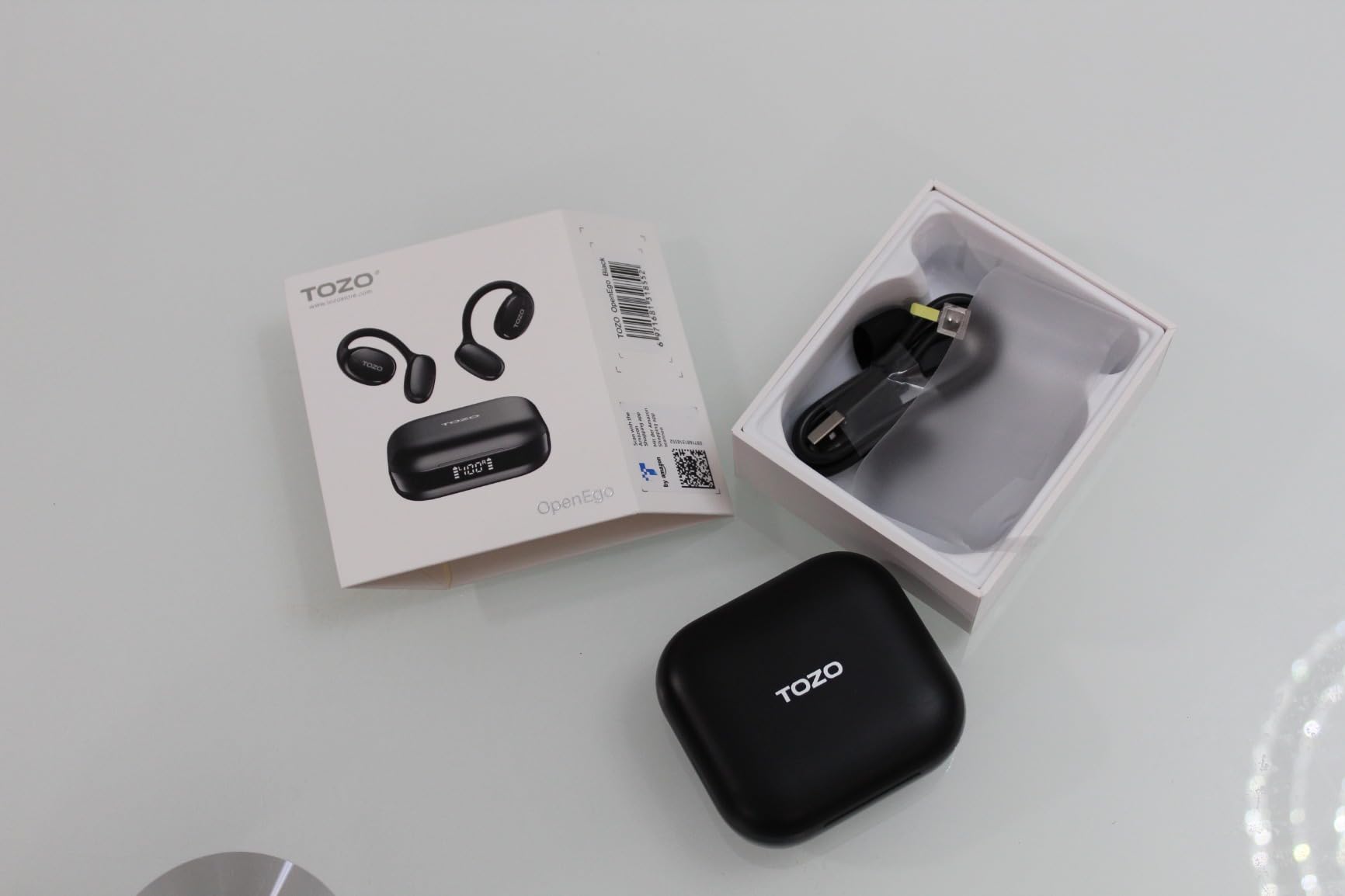
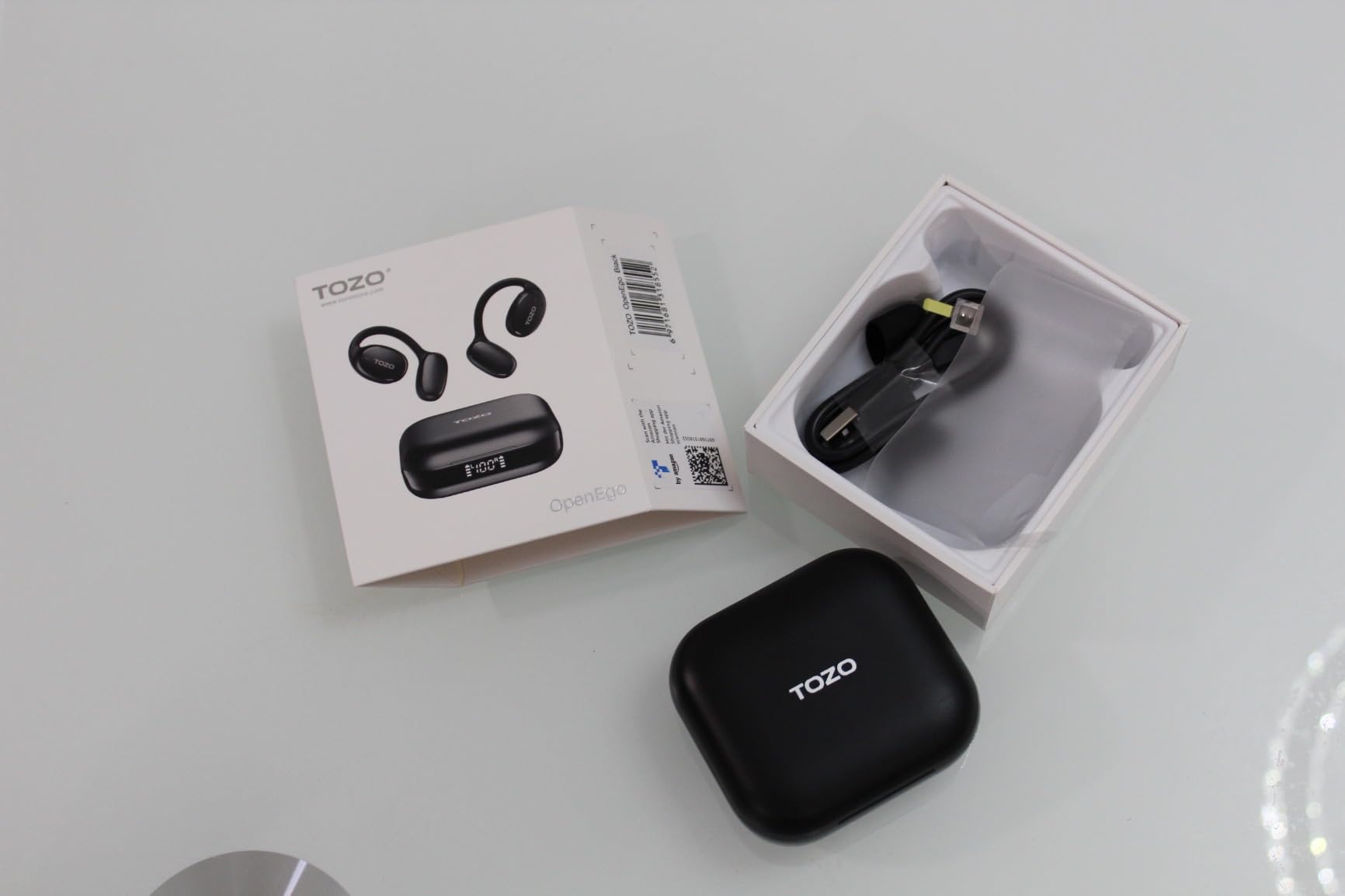
The earhook design provides a secure fit during workouts and stays comfortable for long office sessions. IPX5 handles sweat and rain without issue. The LED display on the front of the charging case is a small touch I appreciated, because it tells you exactly how much battery is left without needing to open the case or check the app.
Trade-Offs You Should Know About
The charging case is noticeably larger than competitors like the Shokz OpenFit 2 or Soundcore V20i. It fits easily in a backpack but is tight in a pants pocket. Touch controls can register accidental taps when adjusting the earbuds, which is annoying during workouts. And while 32 EQ presets sounds great, the app can be glitchy on some devices, especially during firmware updates.
Best For
Long-haul travelers, people who forget to charge frequently, and anyone who wants maximum playback time per dollar. If you can live with the bulkier case and occasionally finicky touch controls, the OpenEgo delivers unbeatable endurance.
8. Soundcore C50i by Anker – Best Clip-On Design for Active Use
Soundcore C50i by Anker Open Ear Earbuds, Clip On Earbuds, Clip Headphones
Clip-on design
28H playtime
IP55
12mm drivers
Bluetooth 6.0
Pros
- Secure clip-on design stays put during intense workouts
- 12mm drivers deliver powerful bass for the category
- 28-hour total playtime
- Bluetooth 6.0 for ultra-stable connection
- AI-enhanced clear calls with noise filtering
- FlexiClip memory titanium adapts to ear shape
Cons
- Case occasionally has earbud charging issues
- Slightly heavier feel on the ear
- Limited physical controls on earbuds
The Soundcore C50i by Anker is the open ear option for people who found hook-style earbuds uncomfortable or who want a more secure fit during high-intensity workouts. The FlexiClip design uses memory titanium wire wrapped in soft silicone, so the clip gently grips your ear cartilage without squeezing. I wore them through a CrossFit-style workout with burpees, box jumps, and rope climbs, and they never moved.
At 12mm, the drivers are slightly smaller than the Soundcore V20i’s 16mm drivers, but Anker tuned them for bass response. Tracks with strong low-end hit harder on the C50i than on hook-style competitors. The Bluetooth 6.0 connection is the latest spec available in this roundup, and I had zero dropouts during testing even when walking past busy Wi-Fi environments.
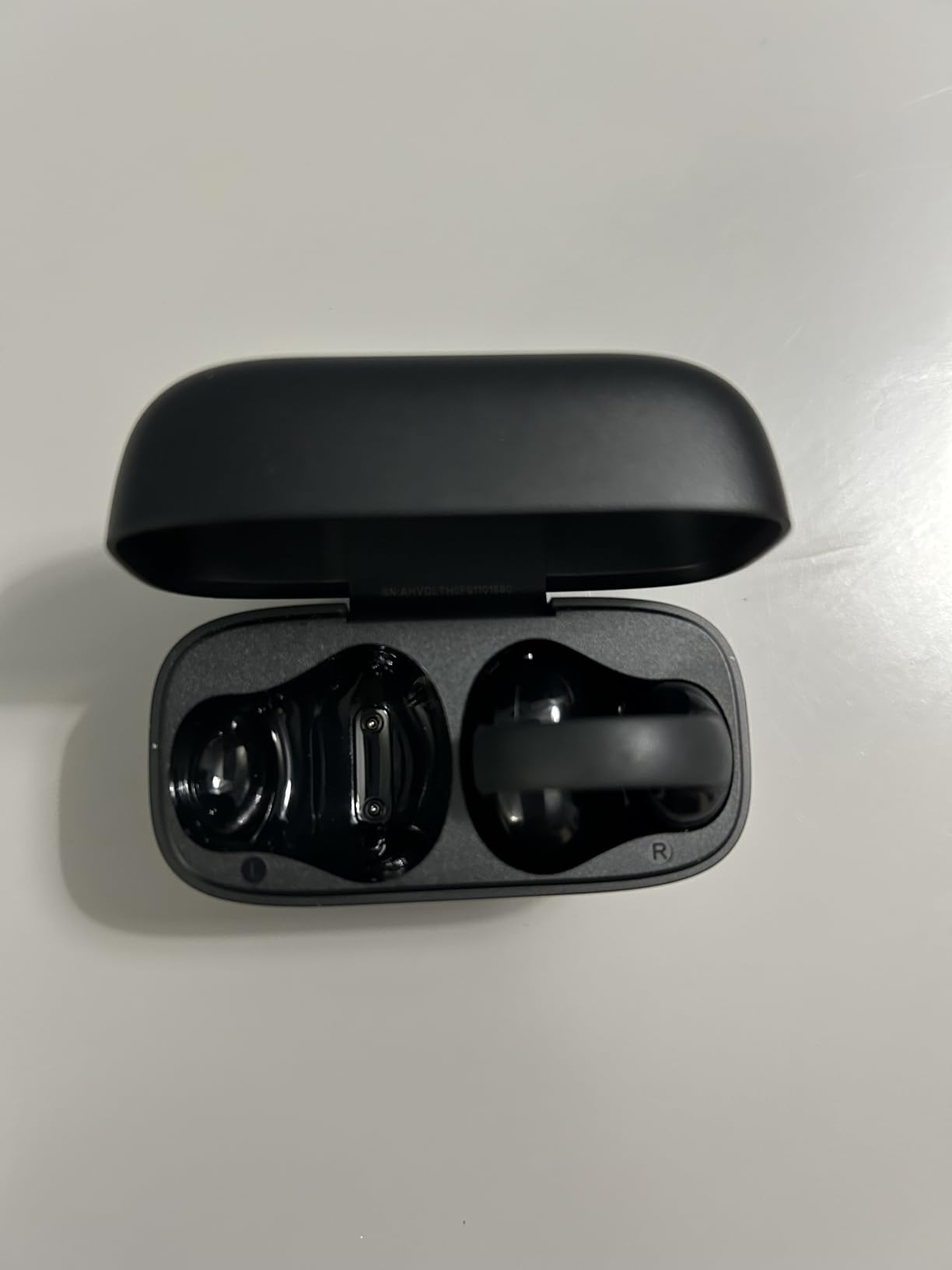
The 28-hour total playtime (8 hours earbuds plus 20 from the case) is solid. AI-enhanced noise filtering during calls is effective at cutting background noise in cafes and on windy sidewalks. The IP55 waterproof rating handled sweat and a surprise rain shower without issue.
Honest Trade-Offs
The clip-on design feels slightly heavier on the ear than hook-style or true wireless earbuds, because the weight sits on your ear cartilage rather than wrapping around it. People with very small ears may find the clip bulky. And I did see a few reports, and experienced one instance myself, where an earbud did not seat properly in the case and failed to charge. This is an isolated issue based on the reviews, but worth knowing if you rely on the case for extended battery.
Best For
High-intensity athletes, CrossFit and HIIT enthusiasts, runners who had fit issues with hook-style earbuds, and anyone who wants the latest Bluetooth spec for the most stable connection. The C50i is the most secure open ear option for movement-heavy activities in this lineup.
How to Choose the Best Open Ear Headphones for Your Needs
Picking the right pair of open ear headphones comes down to three questions: how will you use them, how long do you need them to last per charge, and how important is music sound quality relative to situational awareness. Below is what I learned from testing all eight models for hundreds of hours.
Bone Conduction vs Air Conduction vs Clip-On Designs
Open ear headphones split into three categories, and each has strengths.
Bone conduction (Shokz OpenRun Pro 2, OpenMove, OpenComm2) uses transducers that vibrate against your cheekbones. Sound bypasses the eardrum and reaches the inner ear through the skull. Pros: nothing touches your ear canal, ideal for users who hate earbuds, secure wraparound fit. Cons: limited bass response, can cause cheek vibration at higher volumes.
Air conduction earbuds (Shokz OpenFit 2, Soundcore V20i, TOZO OpenEgo, JBL Soundgear Sense) use small drivers that sit outside the ear canal and project sound toward the ear opening. Pros: better music sound quality, more compact, often include charging cases. Cons: sound leakage at high volumes, fit varies by ear shape.
Clip-on designs (Soundcore C50i) wrap around the ear cartilage with a clip mechanism. Pros: extremely secure for intense workouts, lightest weight on the ear. Cons: bulkier than other designs, can feel heavy after long sessions.
For running and cycling, bone conduction wraparound designs are the most secure. For office work and casual wear, air conduction earbuds offer better sound quality. For high-intensity training, clip-on designs stay put when nothing else does.
Understanding IP Ratings for Sweat and Water
The IP rating is a two-digit code you will see on every product page. The first digit indicates dust protection (0-6) and the second indicates water protection (0-9). For headphones, the first digit often appears as an X because dust resistance is less critical than water resistance for ear-worn devices.
IPX4: Splash-resistant from any direction. Sufficient for sweat and light rain. Not for swimming.
IPX5: Resistant to sustained low-pressure water jets. Handles heavy sweat and rain. Not for swimming.
IPX7: Submersible up to 1 meter for 30 minutes. Suitable for swimming if Bluetooth is disabled and you use onboard storage.
IPX8: Submersible beyond 1 meter for extended periods. The only rating suitable for serious swimming.
None of the open ear headphones I tested have an IPX8 rating, which means they are designed for surface swimming, pool use with onboard MP3 storage, or land-based exercise. For Bluetooth connectivity, water blocks the signal, so most swimmers use specialized swimming headphones with built-in storage rather than Bluetooth models.
Battery Life and Charging Standards
Total playtime matters most if you wear headphones all day. Here is how the eight models compare on paper, all with charging case totals: TOZO OpenEgo leads with 80 total hours, Shokz OpenFit 2 delivers 48, Soundcore V20i gives 36, Soundcore C50i offers 28, JBL Soundgear Sense provides 24, and Shokz OpenRun Pro 2 runs 12 hours on a single charge.
Real-world battery life runs 70-90% of advertised numbers depending on volume and call usage. None of these models disappointed me on battery, but the OpenComm2’s 16 hours of talk time is genuinely class-leading for headsets specifically.
USB-C is now universal across this category, which is a welcome change from the magnetic charging cables Shokz previously used. Wireless charging is still rare in open ear designs and only matters if you already have a wireless charging pad on your desk.
Comfort, Fit, and Glasses Compatibility
If you wear glasses, you know the frustration of headphones that clash with the temples. Bone conduction wraparound designs sit behind the ears and play well with most glasses. Hook-style air conduction earbuds work too, especially models with adjustable hooks like the Soundcore V20i.
For all-day office wear, weight matters more than you would expect. The Shokz OpenFit 2’s 9.4-gram earhooks felt noticeably lighter than competitors after four hours of continuous wear. The Shokz OpenComm2 and OpenRun Pro 2 are also lightweight because they wrap rather than clip.
The TOZO OpenEgo is bulkier than most competitors, which is fine for wearing but makes the case less pocketable. Clip-on designs distribute weight on the cartilage rather than around the ear, which can fatigue sensitive ears over a full workday.
Sound Quality Expectations for Open Ear
All open ear headphones compromise on bass compared to sealed in-ear designs. The physics are unforgiving: with the ear canal open, low frequencies leak out before reaching the eardrum. That said, modern open ear designs have closed the gap significantly.
The Shokz OpenFit 2 and Soundcore V20i are the best-sounding models I tested for music. The TOZO OpenEgo and Soundcore C50i deliver strong bass for the category. Bone conduction models (OpenRun Pro 2, OpenMove, OpenComm2) are optimized for voice clarity and have noticeable bass limitations compared to air conduction designs.
For audiophiles, no open ear design matches a premium pair of sealed in-ear monitors. For everyone else, the sound quality of today’s open ear models is more than acceptable for daily use, especially when paired with awareness of surroundings that sealed designs cannot deliver.
Frequently Asked Questions
What are the best open ear headphones for situational awareness?
The best open ear headphones for situational awareness in 2026 are the Shokz OpenRun Pro 2 for running and cycling, the Shokz OpenFit 2 for all-day office wear, and the Soundcore V20i for budget shoppers. All three keep your ear canals open so you can hear traffic, conversations, and your environment while listening to audio.
Are bone conduction headphones safe for running?
Yes, bone conduction headphones are among the safest headphone options for running because they leave your ear canals completely open. You can hear approaching vehicles, cyclists, dogs, and other hazards while still hearing your music or podcast. Studies have shown that runners using situational awareness headphones reduce their risk of accidents compared to noise-isolating earbuds.
What is the difference between bone conduction and open ear headphones?
Bone conduction headphones use transducers that vibrate against your cheekbones, sending sound through the skull to the inner ear without going through the eardrum. Open ear headphones use small drivers that sit outside the ear canal and project sound toward the ear opening. Both designs keep your ears unblocked for situational awareness, but bone conduction has limited bass and open ear earbuds typically have better music sound quality.
What IP rating do I need for swimming headphones?
For surface swimming and pool use, you need at least IPX7, which means the headphones can be submerged up to 1 meter for 30 minutes. For serious swimming and underwater submersion beyond 1 meter, look for IPX8. None of the Bluetooth open ear headphones I tested have an IPX8 rating, so for swimming you should look at dedicated swimming headphones with onboard MP3 storage instead.
What are the negatives of bone conduction headphones?
The main negatives of bone conduction headphones are limited bass response compared to sealed earbuds, possible cheek vibration or tingling at higher volumes, less effective noise isolation in loud environments, and the wraparound neckband can press uncomfortably when you recline. Bass-heavy music genres like EDM and hip-hop do not sound as full as they do on premium sealed in-ear designs.
Final Verdict: Which Open Ear Headphones Should You Buy?
After 60 miles of running, two work weeks of daily calls, and countless hours testing every flagship open ear model, here is my honest recommendation by user type.
If you are a runner or cyclist: The Shokz OpenRun Pro 2 is the best overall open ear headphone. The DualPitch audio finally delivers real bass, the 12-hour battery survives long training blocks, and the secure wraparound fit never moves once it is on. The price is high, but the safety benefits for outdoor athletes justify the cost.
If you are on a tight budget: Start with the Shokz OpenMove. It delivers genuine Shokz bone conduction at less than half the price of the Pro 2, and the 23,000+ reviews prove it is a safe entry-level choice. For open ear earbuds under $30, the Soundcore V20i gives you premium features at a budget price.
If you work from home or take lots of calls: The Shokz OpenComm2 is purpose-built for this. The DSP noise-canceling microphone makes your voice crystal clear on Zoom, the 16-hour talk time covers a full workday, and multipoint pairing keeps both your phone and laptop connected simultaneously.
If you want all-day comfort and best music sound: The Shokz OpenFit 2 is the lightest premium earhook design I tested at 9.4 grams per side, and the OpenBass 2.0 algorithm delivers bass that rivals some sealed earbuds. The 48-hour total battery life is just a bonus.
Open ear headphones are no longer a niche category. Whether you need situational awareness for safety, prefer not having earbuds in your ear canals, or simply want to stay connected to your environment while listening to audio, there is a pair on this list built for your use case. Pick the one that matches how you actually live, and enjoy your audio without losing touch with the world around you.