
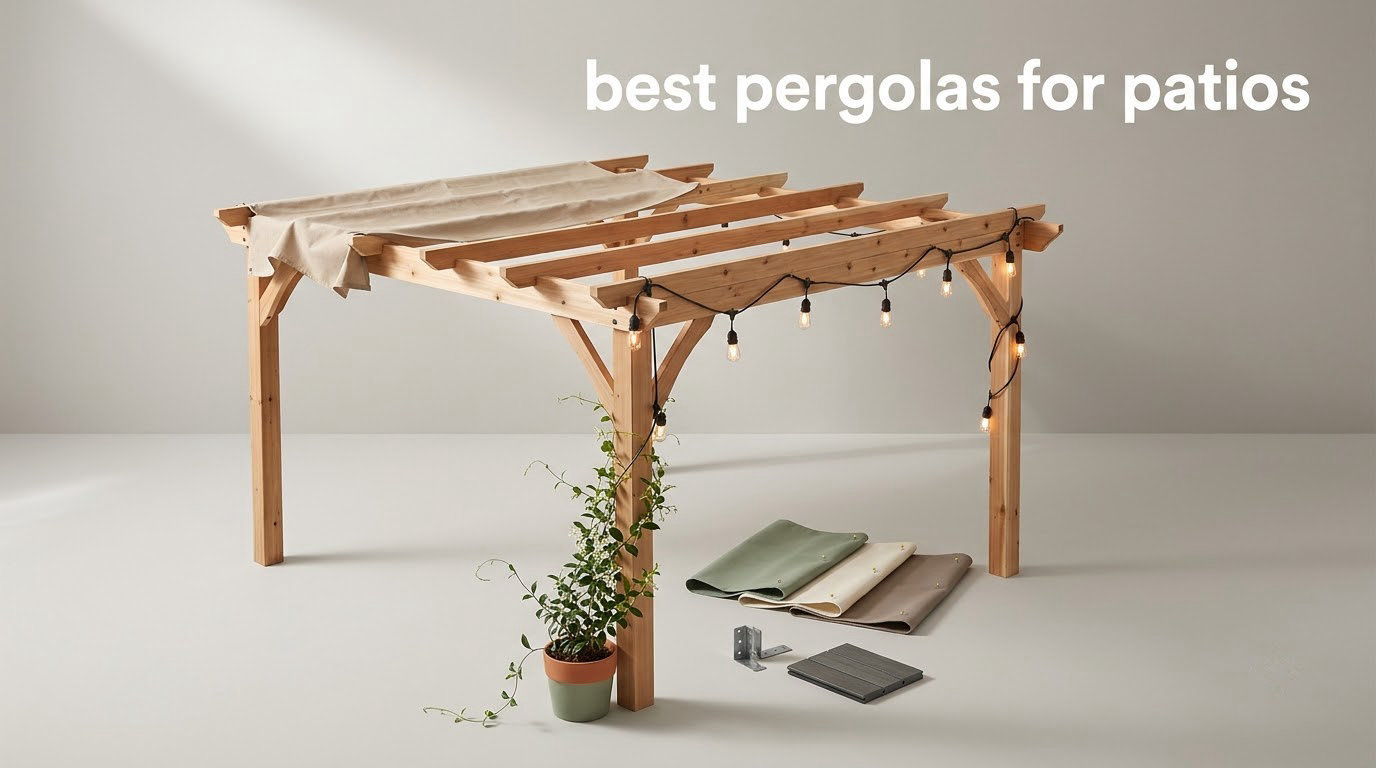
A patio pergola is the fastest way to turn a bare slab of concrete into a room you actually use in July. I spent weeks comparing frame materials, roof mechanisms, published wind numbers and anchoring methods across ten kits, and the difference between a good pergola and a bad one rarely shows up in the product photos. It shows up three summers later, when the canopy sags, the cedar checks, or the whole frame walks across the patio in a storm.
That is why this roundup leads with specifications instead of adjectives. Every pick below carries a published wind rating where the manufacturer offers one, a real floor area, and a straight answer on how many people it takes to raise. We also flag who should skip each one, because a pergola that is wrong for your patio is a very expensive patio ornament.
If you are also planning the electronics side of an outdoor living space, our guide to the best outdoor TVs for patios covers weatherproof displays that pair well with a covered seating area. Below, we get into the structures themselves.
Our Top 3 Patio Pergolas for 2026
These three cover the widest range of real patios: a proven retractable canopy, a cedar structure with a published wind rating, and a louvered roof for all-season use.

PURPLE LEAF 12×16 Retractable Canopy
- Powder-coated aluminum frame
- Yarn-dyed waterproof canopy
- Locking slider positions

Backyard Discovery Beaumont Cedar
- 100 percent cedar
- Pro-Tect 100 mph wind rating
- PowerPort outlets and USB

PURPLE LEAF All-Aluminum Louvered
- Two adjustable louvered roofs
- 0 to 90 degree tilt
- Integrated drainage
Comparing the Ten Best Pergolas for Patios in 2026
Here is the short version before the detail. Key features are drawn from the manufacturers’ own listings, and each pick links through to current pricing.
| Product | Specs | Action |
|---|---|---|
| PURPLE LEAF 12×16 Retractable Canopy |
|
Check Latest Price |
| Backyard Discovery Beaumont Cedar Kit |
|
Check Latest Price |
| PURPLE LEAF 12×14 Louvered Aluminum |
|
Check Latest Price |
 MIRADOR 80S 10×10 Louvered MIRADOR 80S 10×10 Louvered |
|
Check Latest Price |
 ABCCANOPY Arched 10×12 ABCCANOPY Arched 10×12 |
|
Check Latest Price |
 HAPPATIO 10×13 Wood-Grain HAPPATIO 10×13 Wood-Grain |
|
Check Latest Price |
 AirWire 10×12 Louvered AirWire 10×12 Louvered |
|
Check Latest Price |
 Yardenaler 10×12 Cedar Flat Roof Yardenaler 10×12 Cedar Flat Roof |
|
Check Latest Price |
 Domi 12×16 Aluminum Louvered Domi 12×16 Aluminum Louvered |
|
Check Latest Price |
 BPS 13×10 Wall-Mounted Louvered BPS 13×10 Wall-Mounted Louvered |
|
Check Latest Price |
1. PURPLE LEAF 12 x 16 Retractable Canopy Pergola – Best Overall Patio Pergola
PURPLE LEAF Outdoor Pergola 12′ X 16′ Retractable Canopy Aluminum, Gray
Powder-coated aluminum frame
12 x 16 ft footprint
Yarn-dyed waterproof canopy
Locking slider positions
Pros
- Most owner reviews of any kit here
- Powder-coated aluminum resists rust
- Yarn-dyed canopy sheds water outward
- 3D printed hooks for string lights
Cons
- Anchoring hardware design frustrates owners
- Several hours of assembly for two people
- Open canopy puts load on the roller rods
This is the structure I recommend to most people reading this page, and the reason is review depth rather than spec sheet glamour. With well over a thousand owner reviews behind it, the failure modes of this kit are well documented, which means you can buy it knowing exactly what you are getting. The frame is powder-coated aluminum with thick-gauge posts, and the yard-dyed canopy is described as waterproof with UV protection.
At 190.55 inches long by 138.97 inches wide, it is a genuinely large footprint for a residential patio. That matters if your outdoor dining table is a six-footer, because the extra depth gives you room to walk around it rather than squeezing past chair backs.
Weight, handling and the anchoring complaint
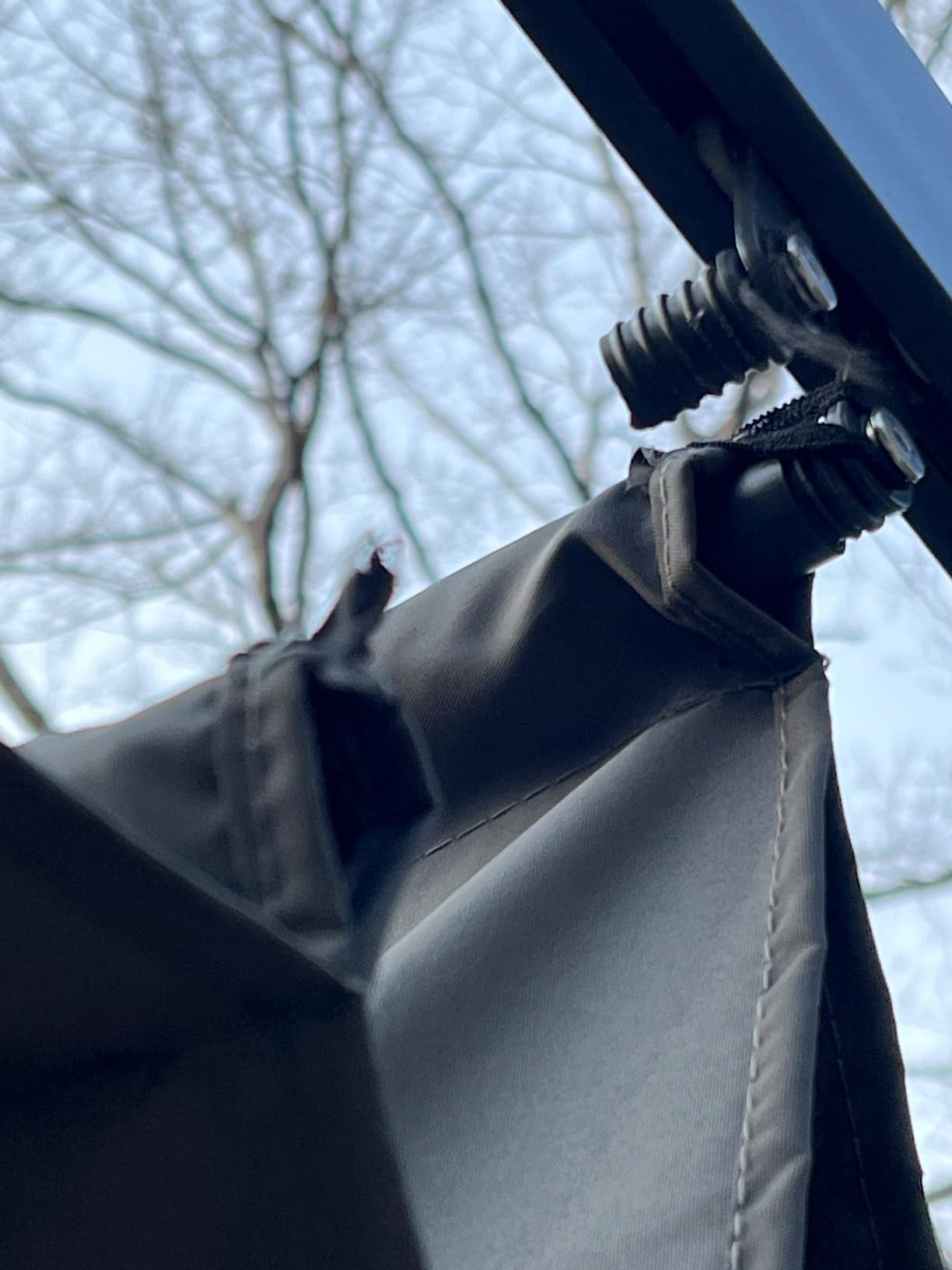
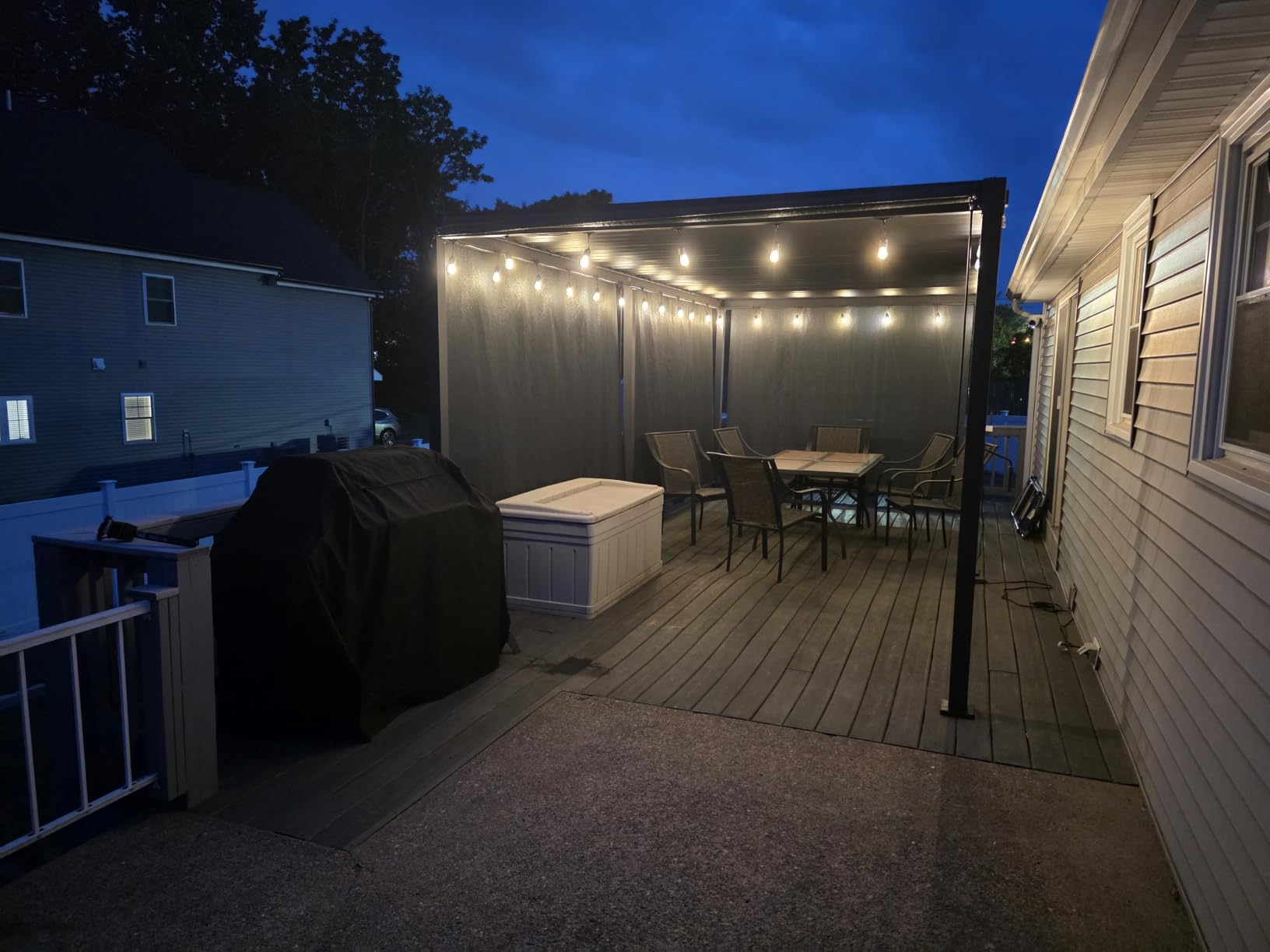
Most owners describe this as straightforward rather than difficult, provided two people are present for the frame work. What they complain about is not the frame itself but the base and post anchoring design, which several reviewers call awkward to set up.
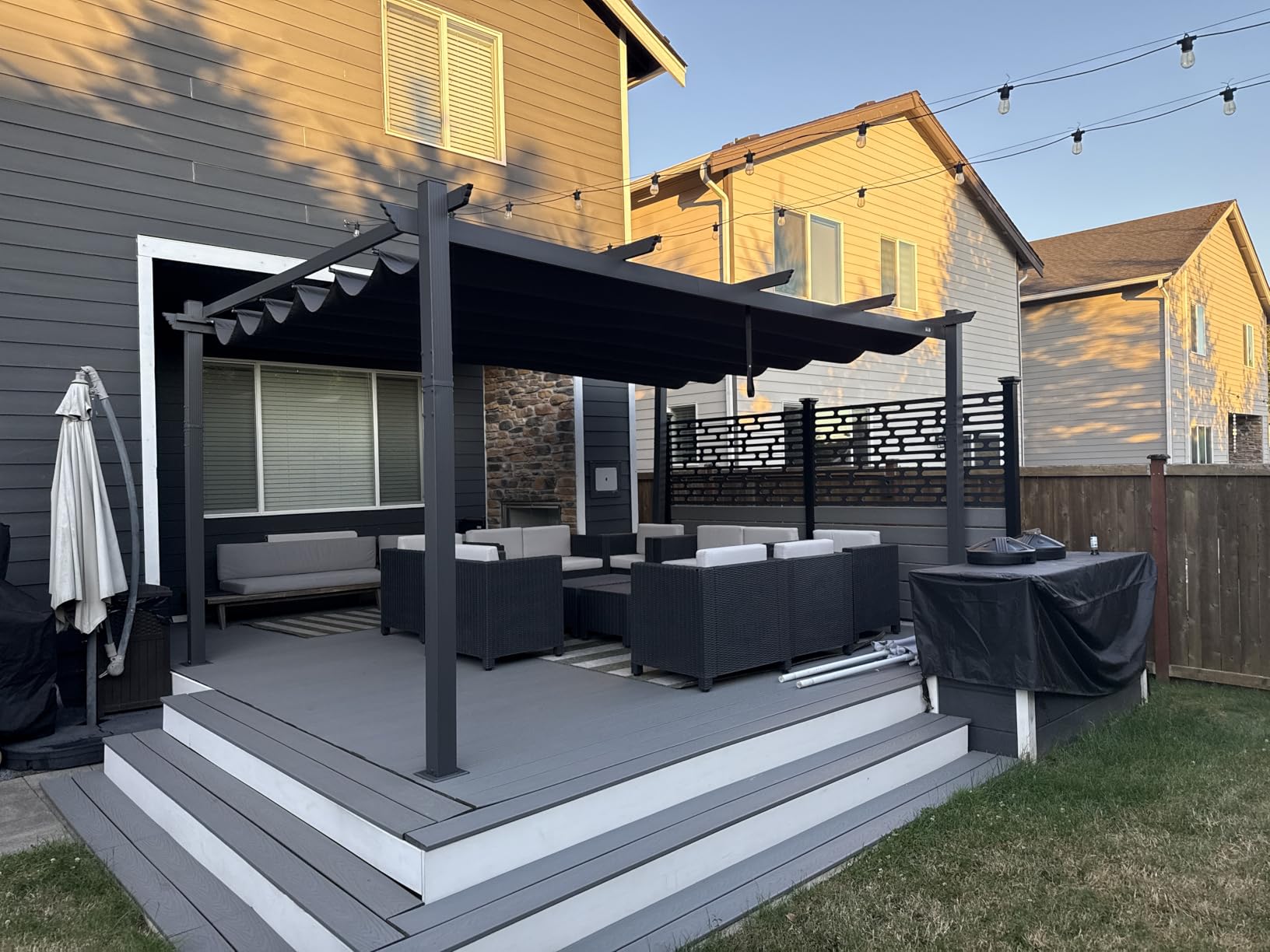
Owner photos show the finished structure looking far more substantial than the flat-lay gallery suggests. If you are working over a paver patio, plan your anchors before the frame goes up, because you cannot easily reach the base plates once the posts are plumb.
How the retractable canopy behaves in wind and rain
The canopy slides along tracks and locks at chosen positions, which lets you dial shade rather than accept it. Owners like that the yarn-dyed fabric slopes outward so rainwater runs off instead of pooling, and that 3D printed hooks let you hang string lights without blocking retraction.
The recurring complaint worth taking seriously is that a fully open canopy collects rainwater, and that standing water stresses the roller rods over time. If you leave the canopy retracted through a wet season, drain it before you close it up.
Who should skip this pergola
Skip it if you need genuine rain shelter through a storm, because a fabric canopy is shade and drip protection rather than a sealed roof. Also skip it if you are a solo builder, since owners consistently describe this as a two-person job with several hours of work.
Shipping defects do appear in reviews, with gashed beams, missing rollers and over-long poles reported. Customer service is repeatedly described as fast and generous with replacement parts, which is worth knowing before you order.
2. Backyard Discovery Beaumont 12 x 10 Cedar Kit – Best Value All-Season Patio Shelter
Backyard Discovery Beaumont 12′ x 10′ Traditional Cedar Wood Pergola Kit with Trellis Roof, All-Season Durability, High-Wind Rating, PowerPort, Shade for Outdoor Patio, Deck, Garden, and Entertaining
100 percent cedar wood
144 x 120 x 95 inch
100 mph Pro-Tect rating
PowerPort power hub
Pros
- Highest published wind rating in this group
- PowerPort adds outlets and USB ports
- Pre-cut and pre-drilled cedar parts
- 5 year warranty on wood for rot and decay
Cons
- Heavy and bulky to move and raise
- Requires proper anchoring to perform as designed
- Stain saturation varies between units
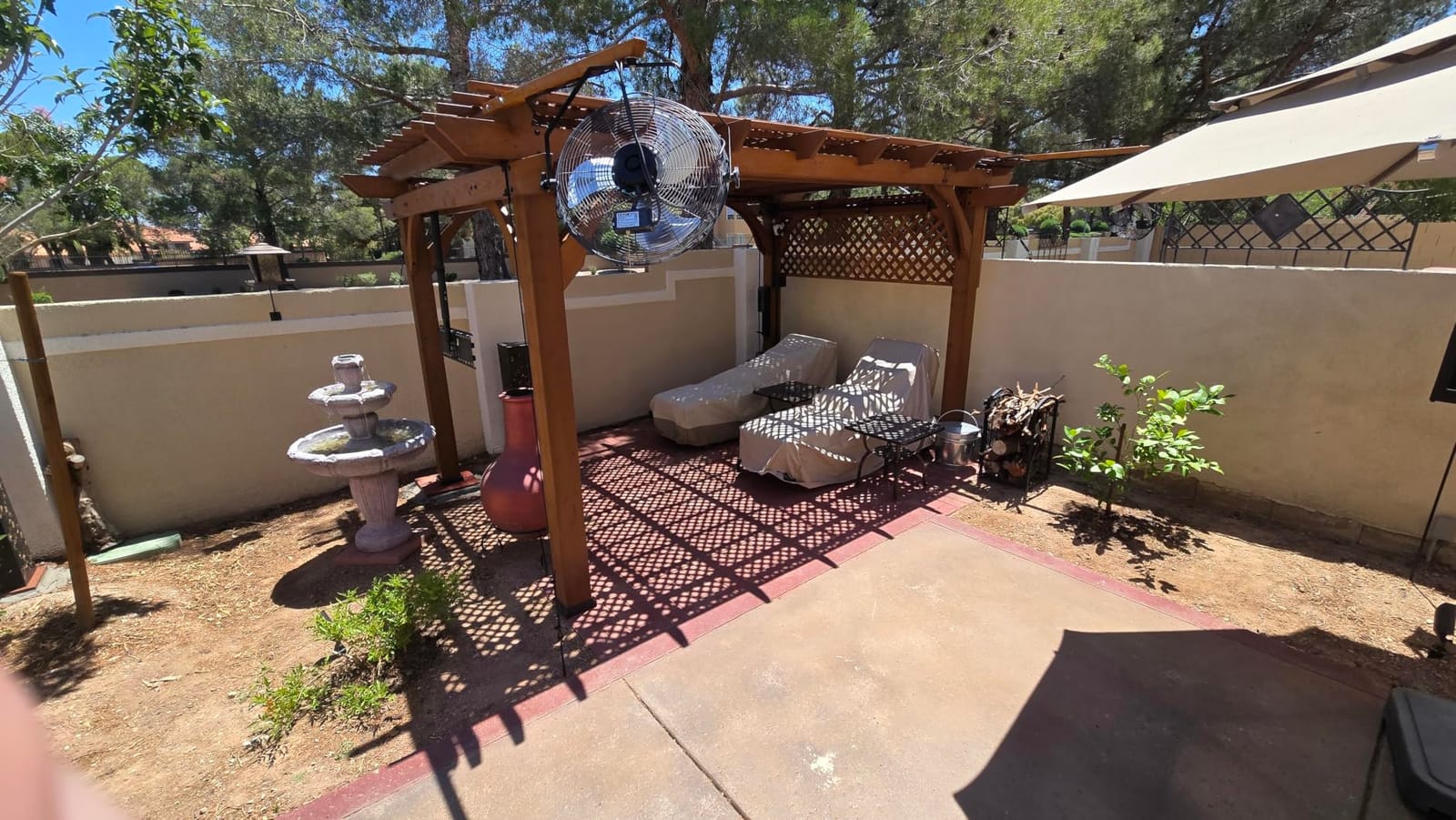
This cedar kit is the one I point at when someone asks about durability over a decade rather than a single season. Roughly three quarters of its reviews sit at five stars, and the structure is 100 percent cedar with a multi-level trellis roof that reads more like a garden room than a shade frame.
It covers 120 square feet, which comfortably seats four to six people at a dining table. The 144 by 120 by 95 inch footprint is a standard patio scale, so measure your clear space before committing.
What a 100 mph wind rating actually requires
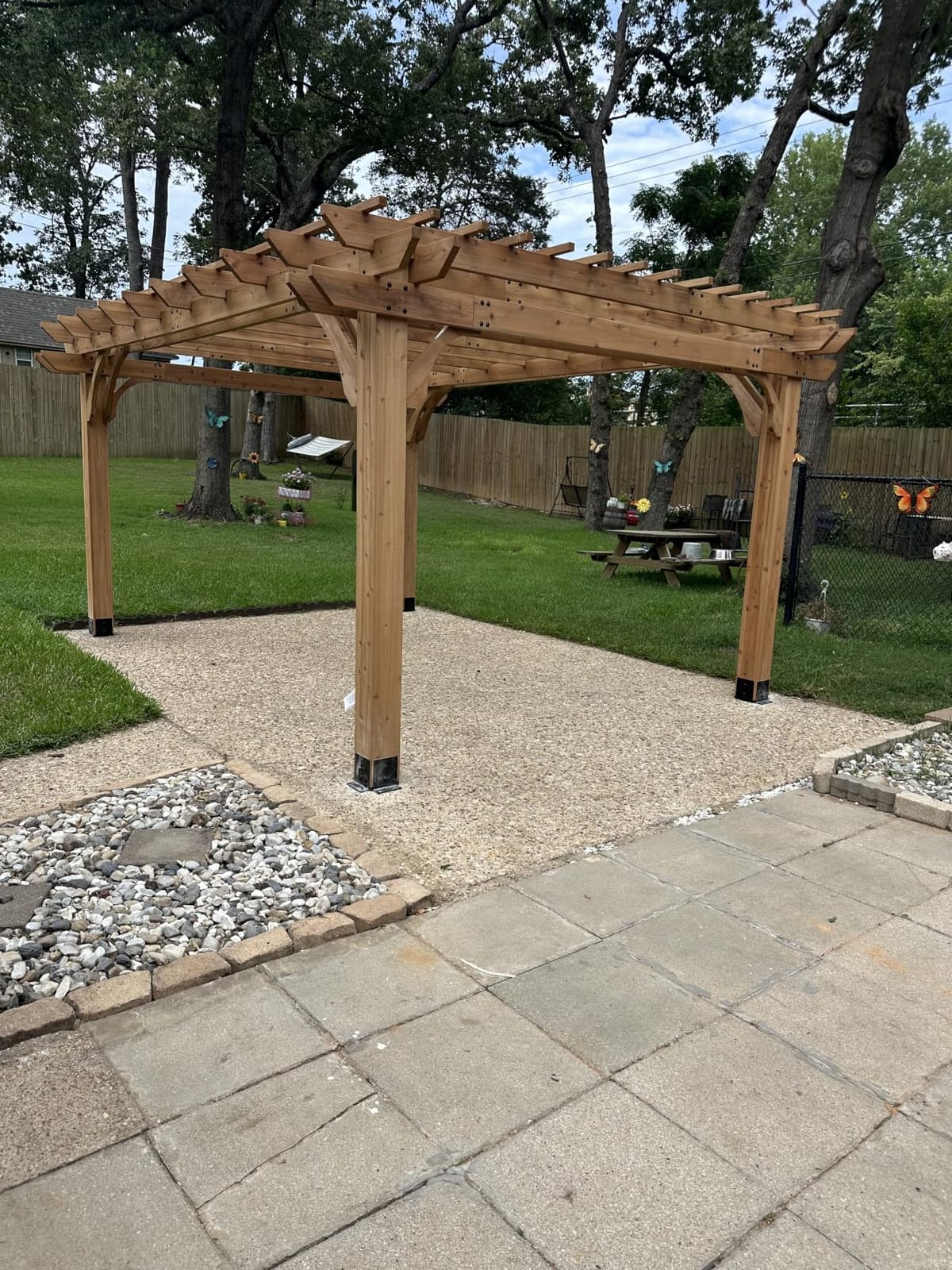
The Pro-Tect system is tested to withstand winds up to 100 mph, and that is the highest published figure in this roundup. It is also the number most often overstated in casual conversation, because a rating only holds when the resin feet and concealed concrete anchors are installed as the manual specifies.
Owners are candid on this point. Several note the structure performs exactly as designed when anchored properly and becomes a liability when it is not, which is why the anchoring step deserves a Saturday of its own.
The PowerPort and your electrical plan
The patented PowerPort adds three electrical outlets and three USB ports in the beam, which removes the need to run a surface conduit along a post. Note that the power source is not included, so you are still wiring from an exterior outlet or running a permitted circuit.
If you plan to run an outdoor kitchen under this structure, check your local electrical requirements before the frame goes up rather than after. A ceiling fan or light loop mounted to cedar beams needs properly lagged fasteners, not screws into end grain.
Who should skip this pergola
Skip it if low maintenance is the priority. Cedar asks for sealing on a schedule, and the natural look that sells the pergola is the same thing that grays unevenly without it.
Also skip it if you have a small crew. At 173 kilograms it is a substantial structure that takes several people and real time to move, raise and anchor, and that effort is not negotiable.
3. PURPLE LEAF 12 x 14 All-Aluminum Louvered Pergola – Best Rated Adjustable Roof
PURPLE LEAF Louvered Pergola 12′ x 14′ 94AS All-Aluminum Rustproof Gray
All-aluminum frame
Two adjustable roofs 0 to 90 degrees
Integrated column drainage
72 mph when anchored
Pros
- Highest average rating among the picks
- Two independent roofs add control
- Powder coat resists scratching and rust
- Free replacement parts shipped quickly
Cons
- Very heavy awkward components need helpers
- Weak instructions and tedious protective film
- Center beam seam can leak in heavy rain
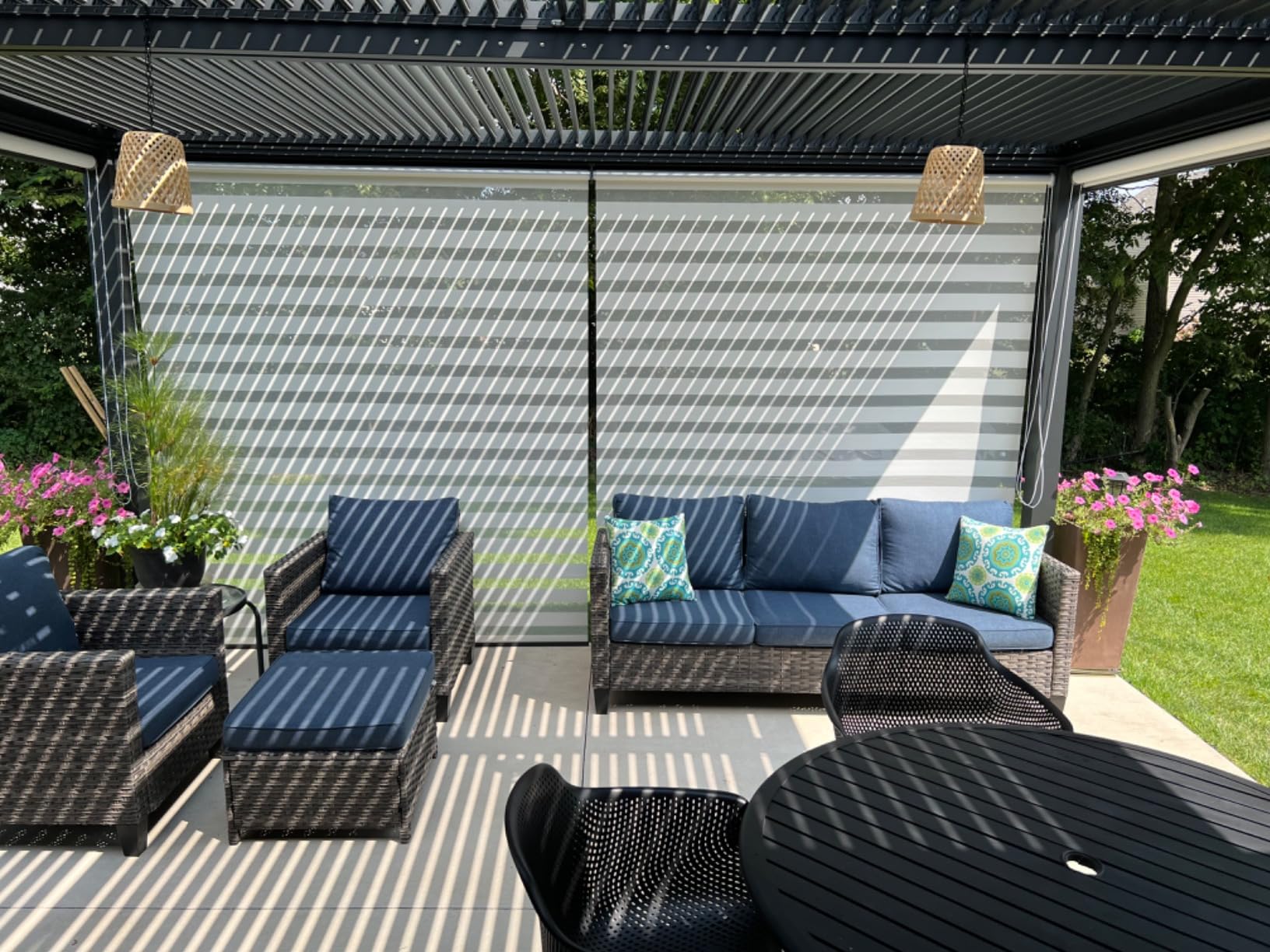
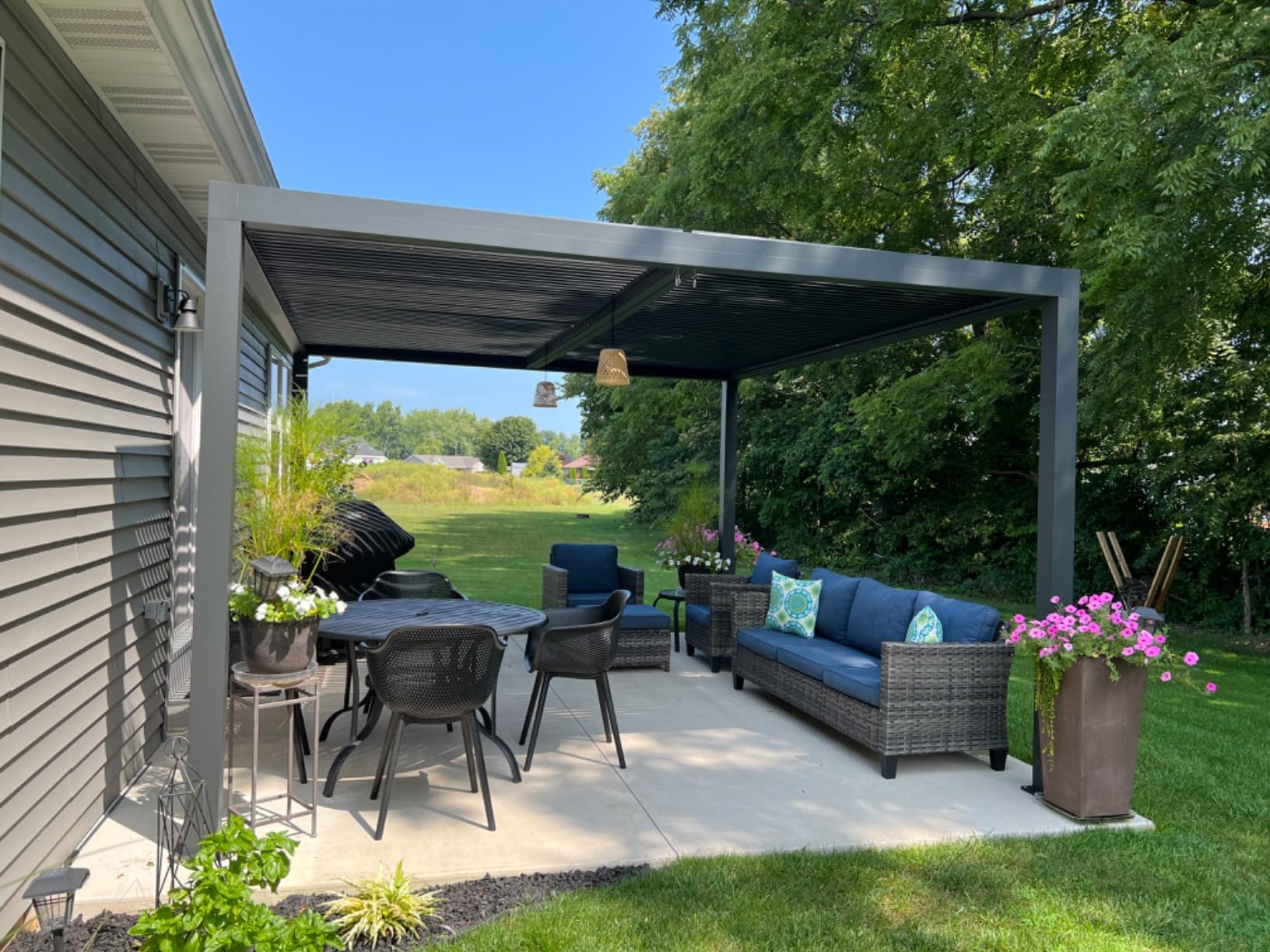
This is the closest thing here to a true all-season outdoor room rather than seasonal shade. The louvers close to block rain and open to admit light and air, and the all-aluminum frame does not need a single season of sealing.
The footprint is 166.63 by 144.62 inches, or roughly 167 square feet of coverage under the roof line. Sizes run from 10 by 14 feet up to 14 by 24 feet if you need to cover a larger deck or poolside zone.
Two independent roofs and what that changes
Rather than one louver bank across the whole span, this model splits into two roofs whose poles move independently from 0 to 90 degrees. That means you can hold full shade over the dining half and leave the other half open for a fire pit or spa.
Owners consistently report that the louvers move smoothly and feel solid in the hand, which is the difference between a mechanism that still works in year five and one that binds. Rain is routed through an integrated system down the four columns, so water leaves at the base rather than dripping at the seams.
The center beam seam problem and how to fix it
The most useful piece of advice in the reviews concerns the two-piece middle beam. In heavy rain it can act as a gutter and leak at the seam unless the owner seals and slopes it, which is a ten-minute job with the right sealant.
Two smaller annoyances come with the build: the protective plastic film on every piece is tedious to remove and can leave sticky residue, and the supplied connection clips are flimsy. Owners also note that curtains and lighting accessories are not sold separately after purchase, so plan those before you assemble.
Who should skip this pergola
Skip it if you are assembling alone. The components are heavy and awkward, several owners mention needing ladders and multiple helpers, and that is the most common complaint in an otherwise well-reviewed kit.
Skip it if you need published longevity data. With a much smaller review base than the leader in this roundup, there is less long-term feedback to draw on, so treat the first year as your inspection period.
4. MIRADOR 80S 10 x 10 Louvered Pergola – Best for Small Patios
MIRADOR 80S Louvered Pergola 10′ x 10′, Modern Style with Adjustable Louvers for Outdoor Roof, Garden, Easy Assembly, Durable, Charcoal
10 x 10 foot footprint
100 square feet covered
Sling-operated louvers to 90 degrees
Galvanized steel frame
Pros
- Clean minimalist lines with hidden fasteners
- Interlocking louvers seal against rain
- Water routed through the legs
- Written instructions plus video tutorials
Cons
- 440 pounds needs multiple people to assemble
- Sling operation takes real physical effort
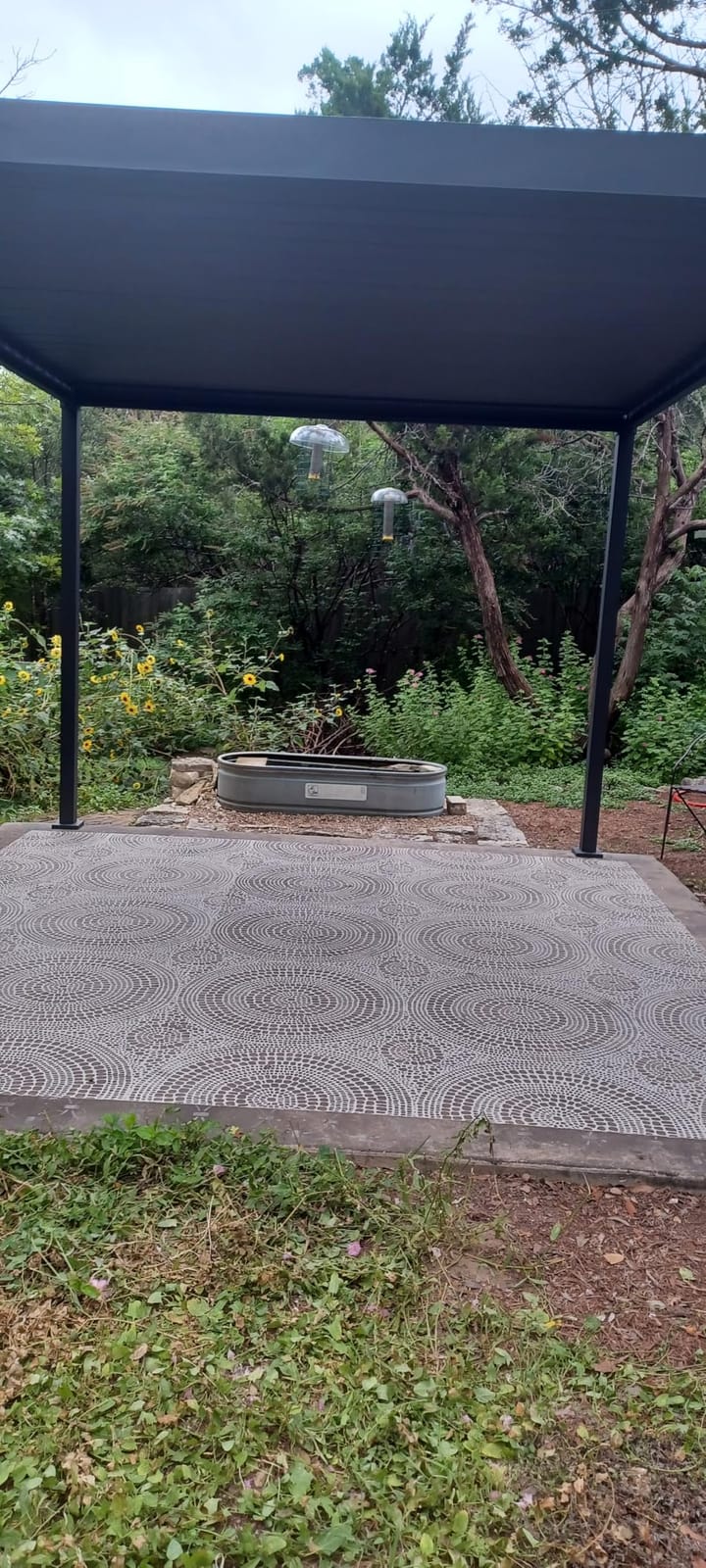
If your patio is compact, this is the one I measure twice and recommend anyway. At 100 square feet it covers a four-to-six person table without swallowing the whole slab, and the square 120 by 120 inch footprint is easy to center on a small deck.
The 98.4 inch height clears most doorways and standard furniture. Reddit users have long treated MIRADOR as a value route to solid louver performance, and this 80S carries that reputation into the price band below the premium aluminum brands.
Sling operation and interlocking louvers
The roof moves on a sling system rather than a crank or motor, going from fully closed to 90 degrees in seconds once you get the rhythm. That speed is the appeal for anyone who wants to change shade between a lunch and an evening dinner without interrupting the meal.
Interlocking louvers create a weather-tight seal when closed, and water is guided down through the legs to prevent splashing and standing water on the roof surface. Owners using this as a true all-weather room report that the rain performance matches the claims.
Weight, ladders and a half-day install
At 440 pounds, this is a multi-person job that should be anchored to the ground on the same day the frame goes up. The silver lining is packaging: components arrive in an organized box with written instructions and video tutorials, and the brand offers installation assistance through a partner.
The slog operation does require physical effort to travel through the full range, and if a household member has limited upper-body strength, budget for a second pair of hands at the crank.
Who should skip this pergola
Skip it if you want motorized or crank convenience, because a sling system needs effort at the handle every time the roof moves. Skip it if you cannot recruit at least two helpers on assembly day, since the weight is not a two-person-by-choice situation.
Also skip it if you need covered sides. This is a roof-only structure with no curtains or netting included, so plan screening separately if privacy matters.
5. ABCCANOPY Arched 10 x 12 Pergola – Best for a Decorative Curve
ABCCANOPY Arched Pergola 10’x12′ with Retractable Sun Shade, Dary Gray
Arched roof in dark gray
144 x 120 x 96 inches
120 square feet covered
Rip-Lock waterproof fabric
Pros
- Arched profile looks softer than a flat canopy
- Lightest frame here at 99 pounds
- Rip-Lock fabric is waterproof and UV protective
- Canopy pulls from both sides
Cons
- Lowest average rating in this group
- Shade only rather than weather protection
- Steel frame flexes more than aluminum or cedar
The arch is the reason to buy this one. Where most patio pergolas read as flat rectangles, this one gives a softer decorative profile that suits a garden or courtyard as much as a deck.
It covers 120 square feet at 144 by 120 by 96 inches, and it weighs 99 pounds, which makes it the only structure in this roundup that one person can genuinely reposition. That portability is not a minor perk if you want shade in June and open sky in September.
Why 99 pounds is the whole story
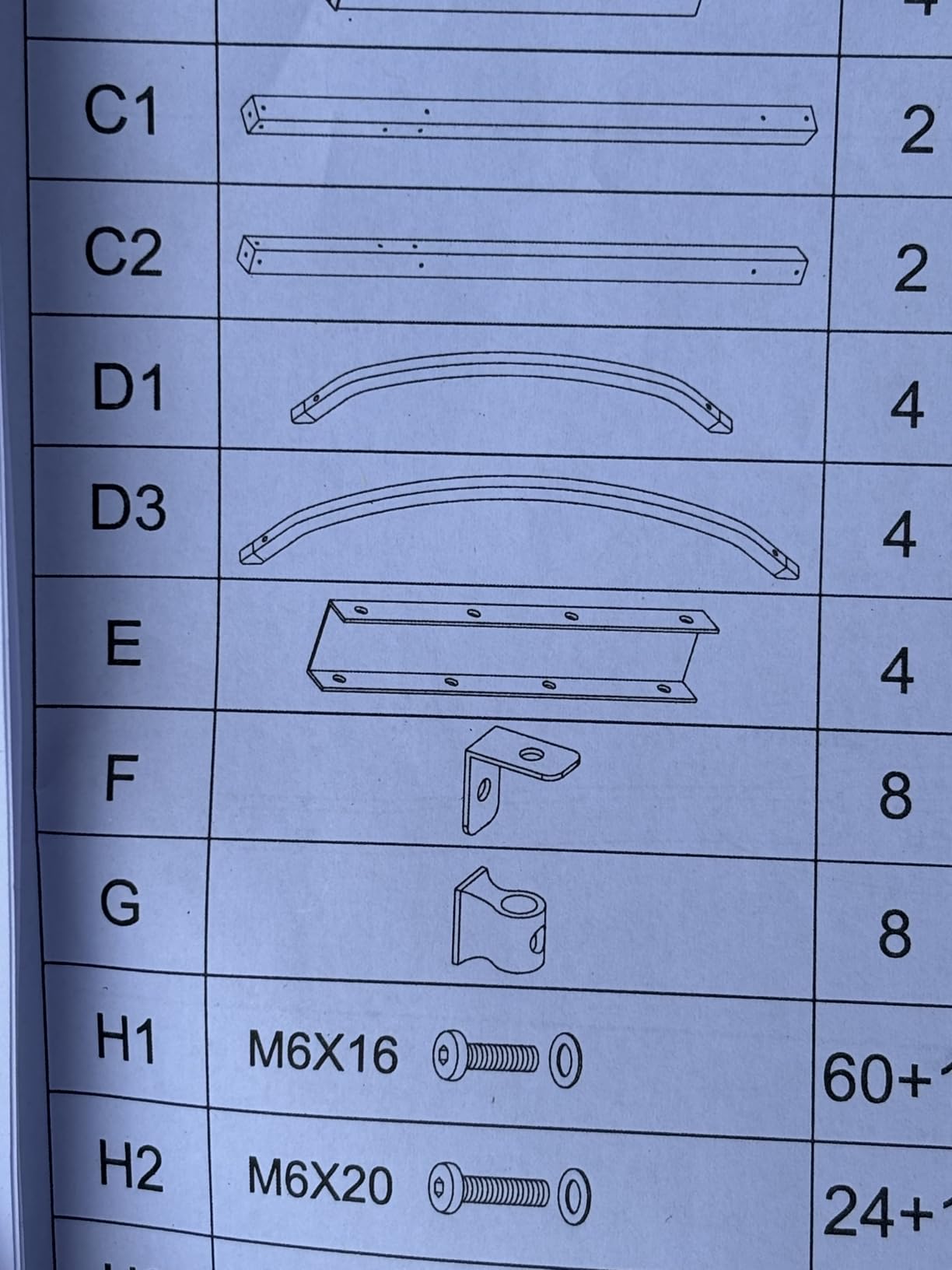
Everything about this kit is a trade against the heavy hardtops. Light weight means easier assembly, easier seasonal removal and simpler anchoring, but it also means less rigidity when wind loads the frame.
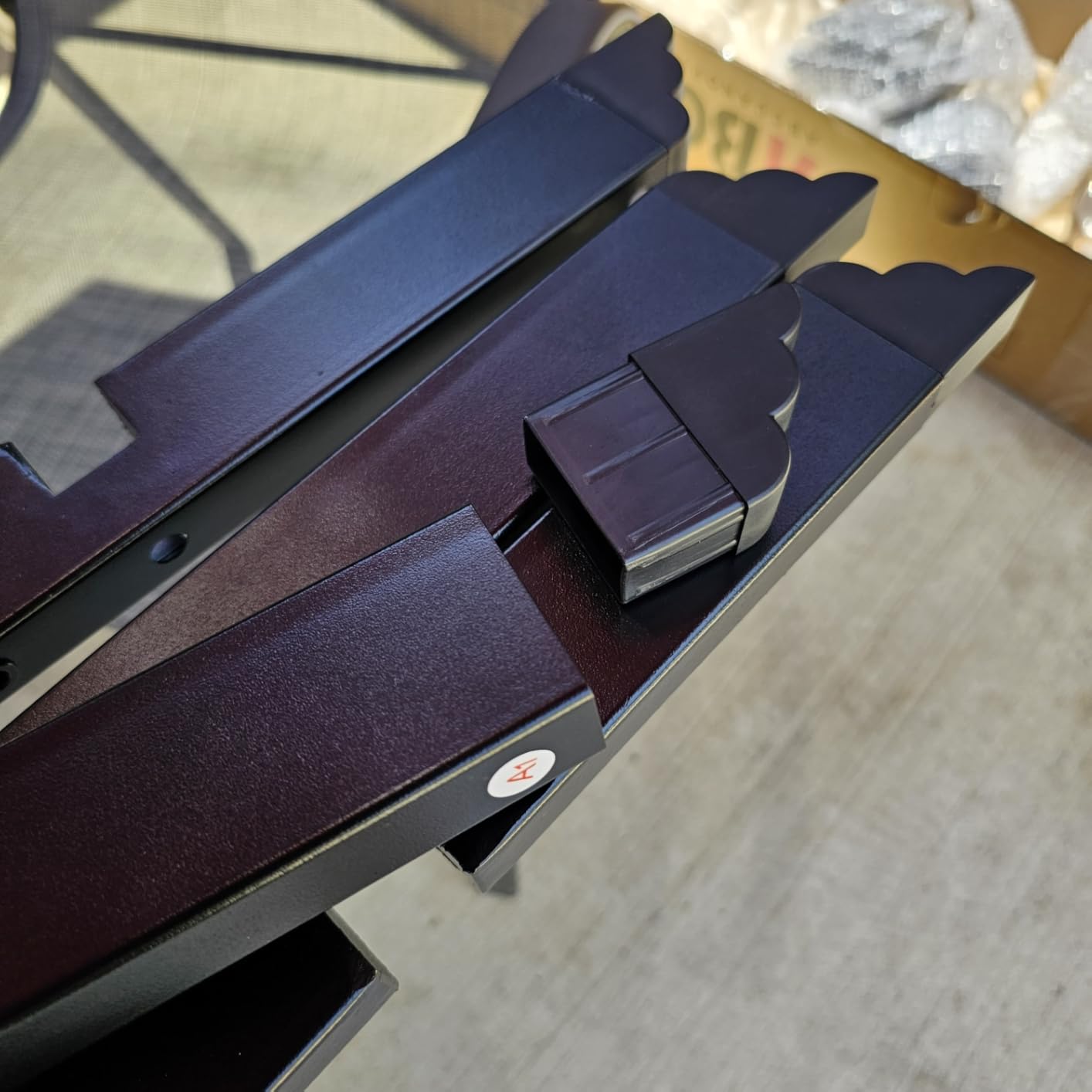
The legs have reinforced thicker lower sections to compensate, and the powder-coated steel resists rusting and chipping. Owners like the finish; buyers who expected a hardtop report being disappointed by how much the frame moves in windier conditions.
Rip-Lock fabric and what the shade actually delivers
The canopy uses Rip-Lock fabric, rated waterproof and UV protective with high tensile strength, and it retracts from either side for flexible shade and partial privacy. That two-sided access is unusually useful when the structure sits against a house wall.
Understand what you are buying here. A retractable fabric canopy over a light steel frame gives you shade and light rain cover, not the sealed dry room that a louvered aluminum model provides. Several color and size variants exist, including 10 by 10, 10 by 12, 10 by 13 and 11 by 11.
Who should skip this pergola
Skip it if you are in an exposed or high-wind location, because a 99 pound frame is the wrong tool for that job. This model carries the lowest average rating of the picks here, with a one-star share of 13 percent.
Skip it if you want an architectural, minimal look. The arch is charming in a garden, but it reads as decorative rather than contemporary if you are matching a modern house.
6. HAPPATIO 10 x 13 Wood-Grain Pergola – Budget Pick for Small Patios
HAPPATIO 10′ X 13′ Wood-Grain Retractable Pergola with Sun Shade Canopy, Patio Aluminum Frame Shelter for Backyards, Gardens, Porch, Includes Ground Studs and Expansion Screws (Beige)
Wood-grain aluminum frame
141.3 x 102 x 87.7 inches
130 square feet covered
Retractable canopy with magnets
Pros
- Wood look without any staining work
- Lightweight 73 pound frame moves easily
- Ground studs and screws included
- Video installation instructions
Cons
- Frame flexes and can bend in strong wind
- Weak magnet retention on the canopy
- Fabric is water repellent not waterproof
This is the kit I suggest when someone wants the look of timber without the maintenance schedule that timber demands. The frame is aluminum finished in a wood-grain beige, so it will never need sealing and will not check or split.
It covers 130 square feet at 141.3 by 102 inches with an 87.7 inch height. That is the lowest profile in this roundup, so check headroom carefully if taller guests will use the space.
Wood-grain aluminum and seasonal storage
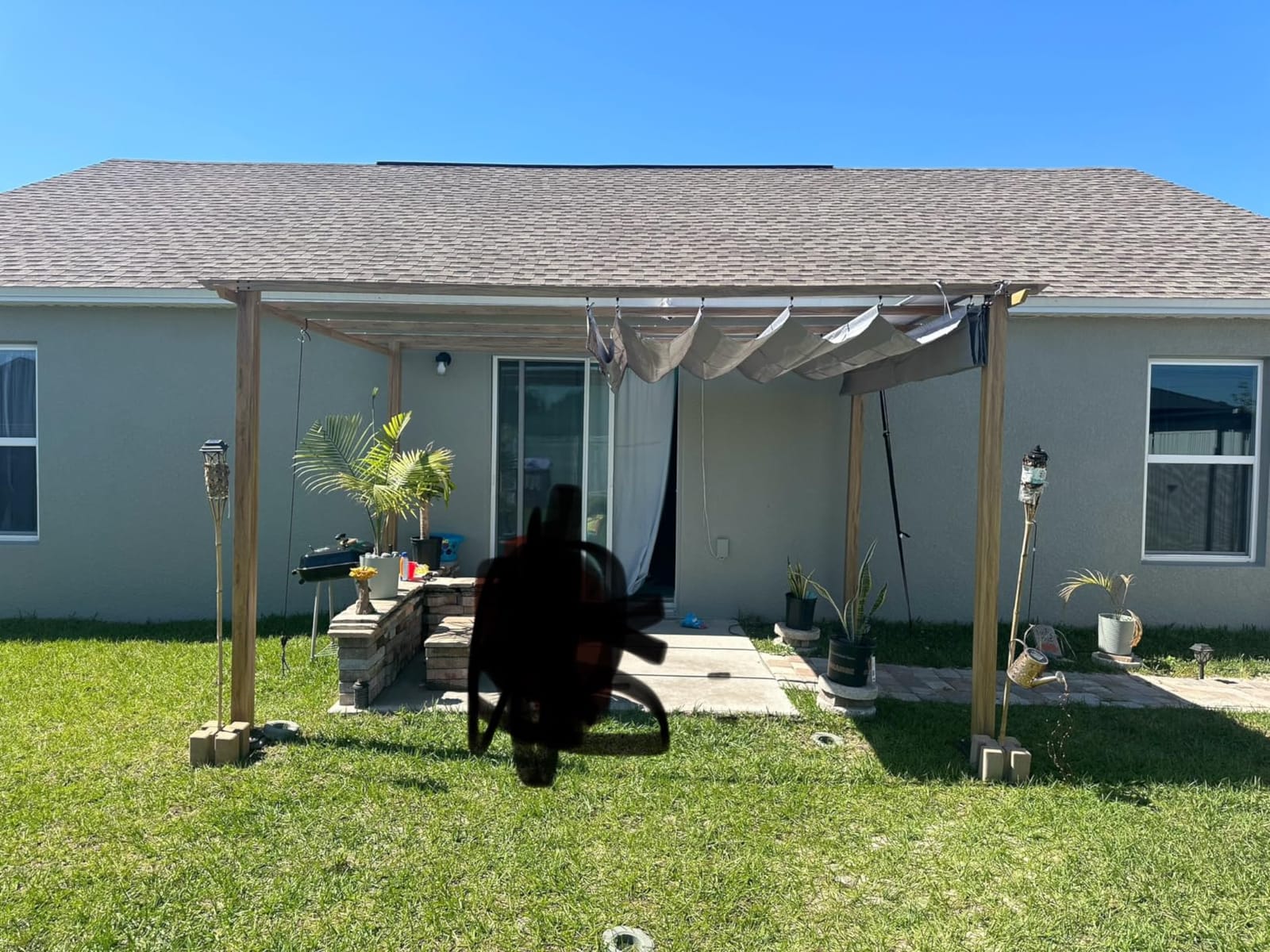
The wood-grain finish is a convincing compromise: it takes the visual warmth of a timber pergola and returns none of the upkeep. Owners consistently praise the value and the appearance, and nobody in the reviews mentions finish degradation the way cedar owners talk about graying.
At 73 pounds, this is the pick for anyone who wants to assemble it in spring and take it down for winter. Ground studs and expansion screws are included, which is more than several competing kits manage, though on a paver patio you will likely be sourcing your own masonry anchors.
Magnet retention and roller hardware
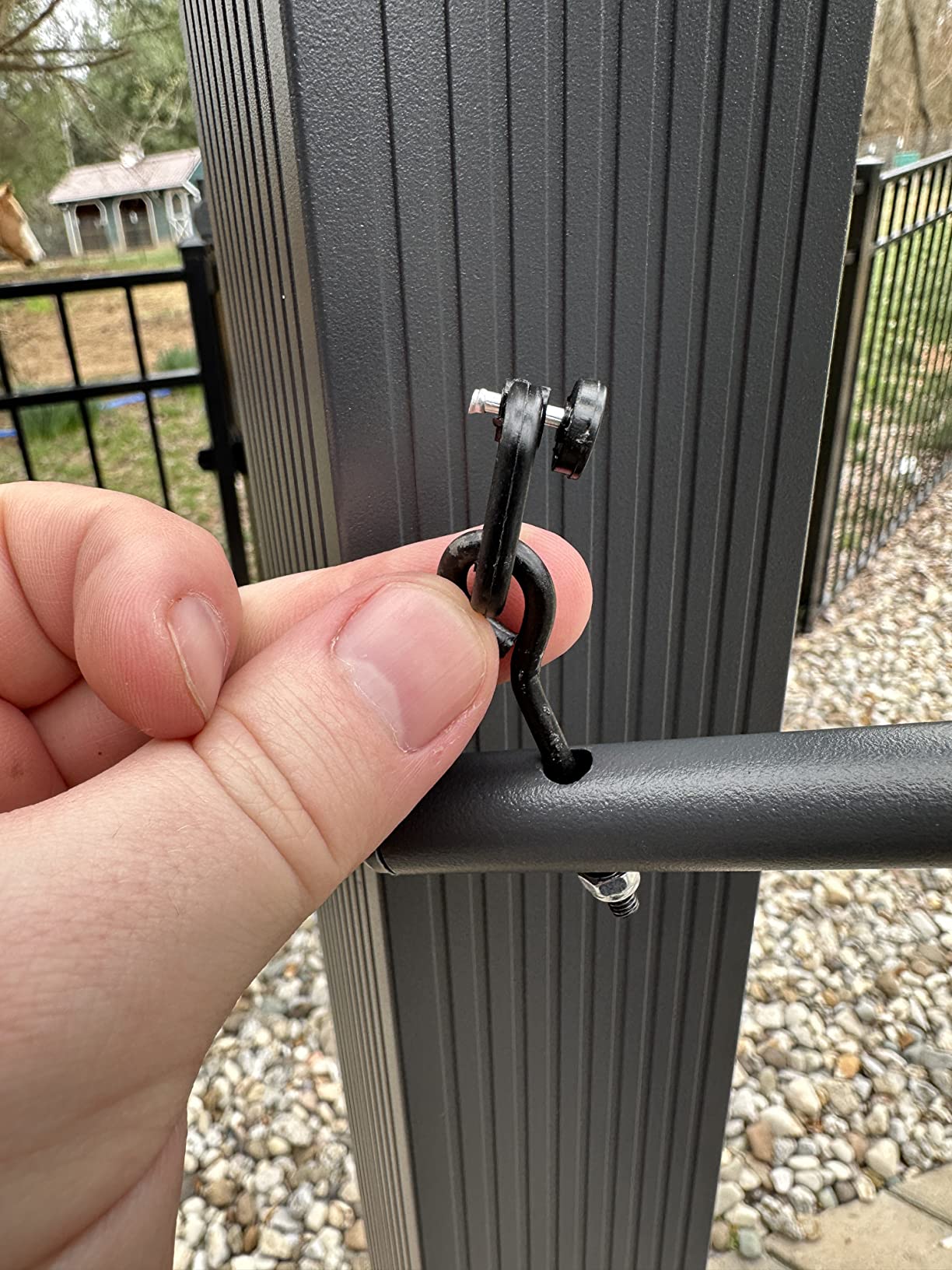
The canopy holds position with a magnet system plus extra straps, and it slides easily when you pull it from either end. The weakness is that magnet retention is weak in a breeze, so owners commonly add bungee cords to stop the canopy snapping open or shut on its own.
The fabric is water repellent rather than waterproof, and reviewers report the top can split open in wind-driven rain. Plastic roller wheels and hooks are the other recurring complaint, breaking down in strong sun. Support is repeatedly commended, with free replacement parts sent quickly after storm damage, and owners report roughly one to three years of service in exposed conditions.
Who should skip this pergola
Skip it if you live somewhere with real wind. A light aluminum frame that flexes and can bend is a poor match for an exposed patio, and that limitation shows up in the reviews more than any other issue.
Skip it if you want a sealed roof in wet weather, since the canopy is repellent fabric rather than interlocking metal blades.
7. AirWire 10 x 12 Louvered Pergola – Best With Curtains and Mosquito Nets Included
Airwire 10×12 FT Louvered Pergola with Curtains & Netting Gray
10 x 12 foot footprint
120 square feet covered
Louvers 0 to 90 degrees
Curtains and mosquito nets included
Pros
- Curtains and nets ship in the box
- Concealed gutters stop roof pooling
- Crank and winding device rated past 100000 turns
- Three to four people and two to three hours
Cons
- 369.5 pounds makes install a half-day job
- UPF 15 rating is modest for full sun
- Closures are hard to reach high up
Most louvered pergolas in this category sell privacy screens as an add-on later, when the price is higher and the fit is a guess. This one includes removable waterproof curtains and mosquito netting in the box, which closes off mosquitoes in summer and blocks wind-driven rain in shoulder seasons.
The frame is 141.9 by 117.3 by 86.6 inches, covering 120 square feet rated for up to eight people. It is a square-ish rectangle, which suits patios that are wide rather than deep.
Concealed gutters and the rain path
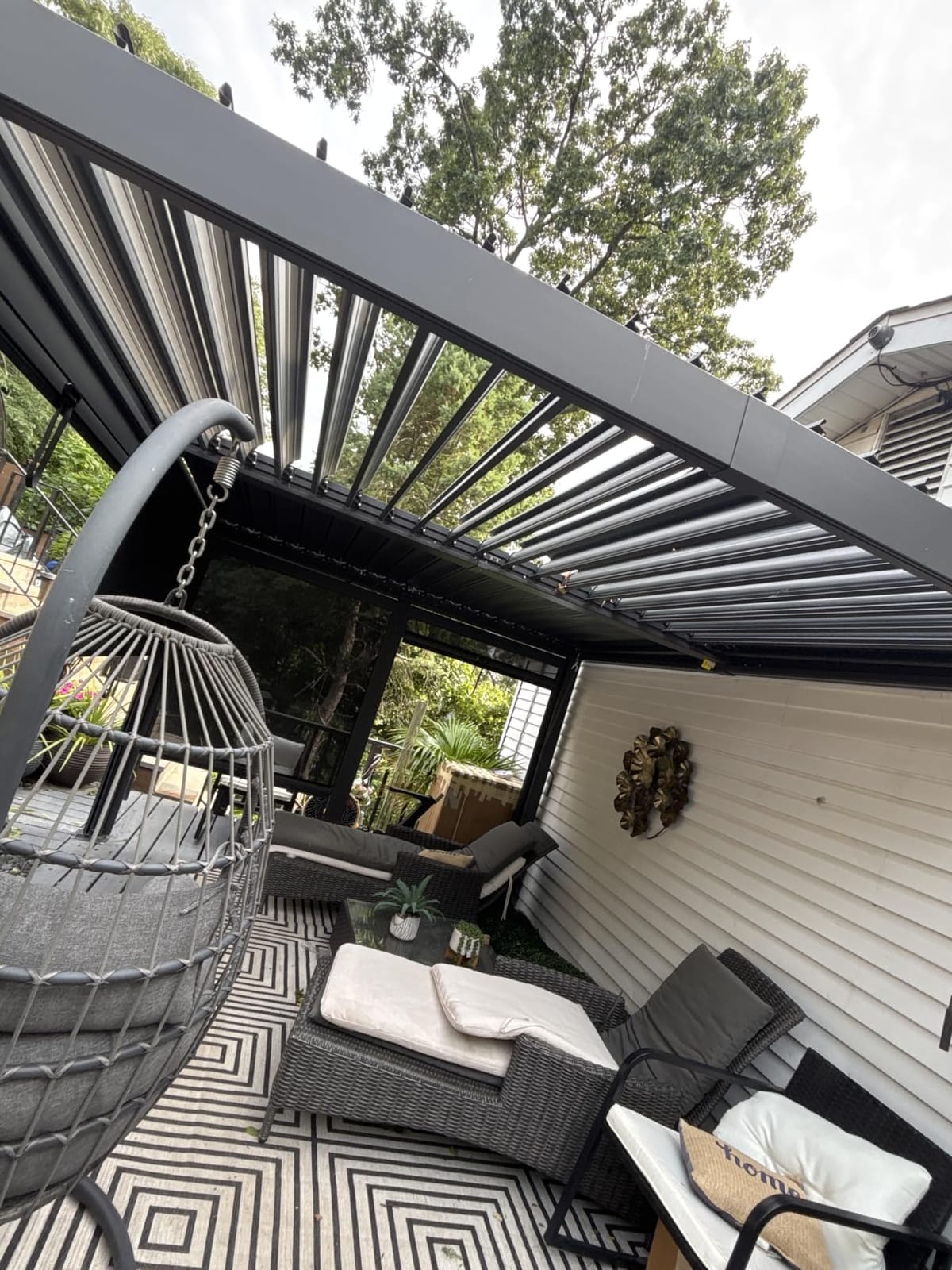
Water management is where hardtop pergolas usually disappoint, and the concealed gutter system here is the most praised feature in reviews. Each panel channels rainwater into built-in gutters that exit through the pillars, which prevents the pooling that damages frames over time.
The louvers travel from 0 to 90 degrees on a powder-coated steel roof, so you can close them down for shade and rain or open them for ventilation and stars. The waterproof construction keeps the space genuinely dry and, with the nets down, bug-free.
A crank rated past 100000 rotations
The crank handle and winding device are rated for more than 100000 rotations, which is a specification worth more than it sounds. Most crank failures happen when the plastic gearing inside the housing cracks, and a published rotation rating at least tells you what the manufacturer claims.
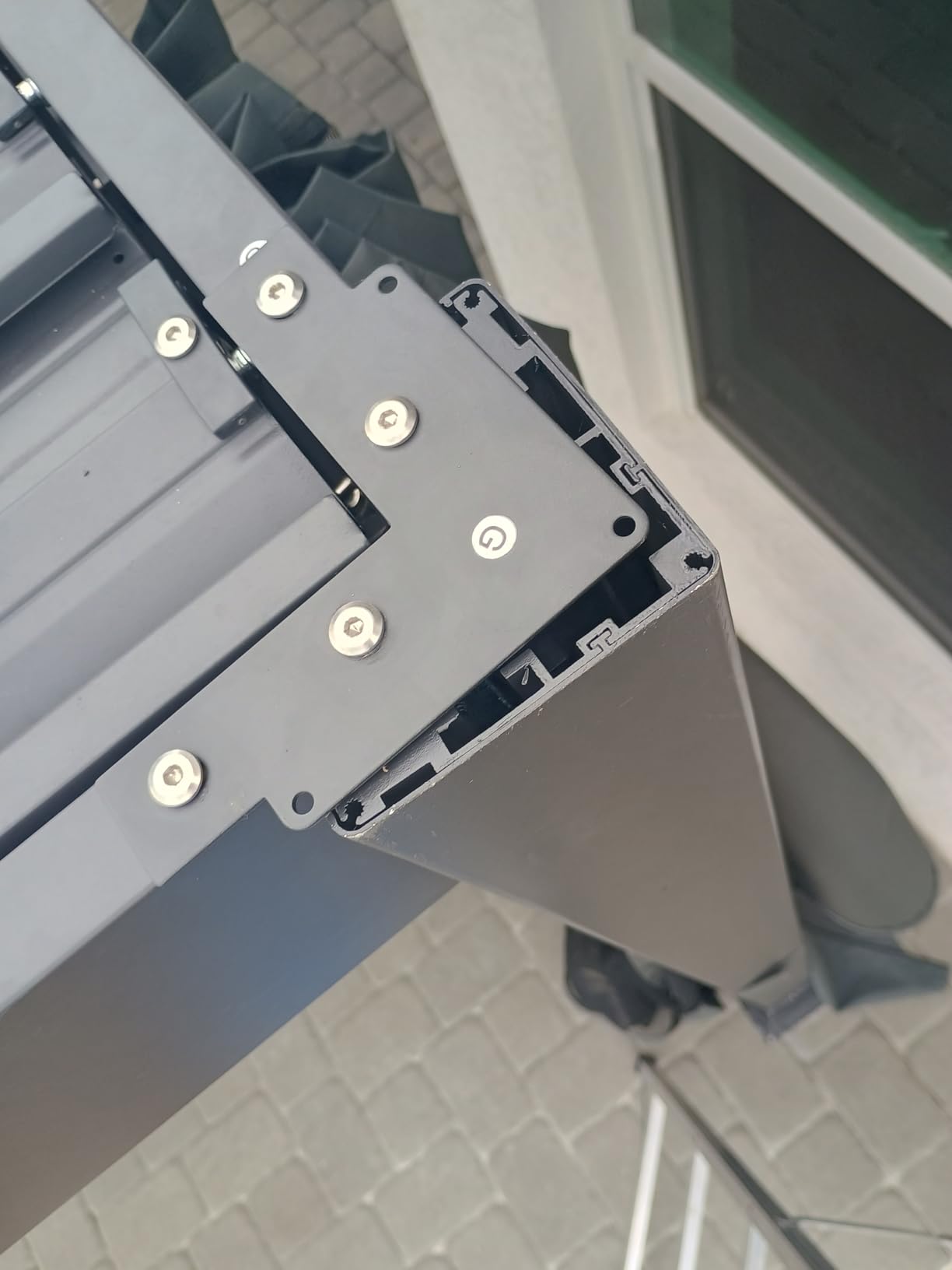
Installation guidance says three to four people and roughly two to three hours, and the box includes an installation guide, video and all hardware, with parts replaced if missing or damaged. The practical trade-off is that the frame weighs 369.5 pounds, so this is a half-day job rather than an evening one.
Who should skip this pergola
Skip it if your patio gets brutal afternoon sun and you need maximum UV attenuation. The UPF 15 rating is more modest than some competing covers, and owners who wanted stronger protection noticed it.
Skip it if short curtains and nets are impractical in your household, since the closures are hard to reach high up and some buyers find them awkward to re-close.
8. Yardenaler 10 x 12 Cedar Flat-Roof Pergola – Best Open Slat Shade
Yardenaler 10×12 FT Wooden Pergola, Cedar Wood Gazebo with Flat Roof, Outdoor Garden Shelter with Stakes Included, Patio, Deck, Backyard, Lawn
Solid cedar wood
144.1 x 120.1 x 92.15 inches
5.5 inch square posts
Stake anchors included
Pros
- Heavy and stable once anchored
- Open slats are ideal for hanging lights
- Stake anchors suit grass deck or concrete
- Stainable or paintable before assembly
Cons
- Flat roof gives shade without rain cover
- Day-long assembly for three or four people
- No spare fasteners included in the box
This is the traditional answer: a flat-roof cedar structure with open slats that cuts high sun while letting light move across the space. Owners call the design elegant and note that the 273 pound frame is heavy and stable rather than flimsy once anchored.
Overall size is 144.1 by 120.1 by 92.15 inches, with an interior of 109.9 by 89.8 by 85.83 inches and posts measuring 5.5 inches square. That 85.83 inch maximum entrance height is the number to check against your patio door swing.
Sealing cedar before and after assembly
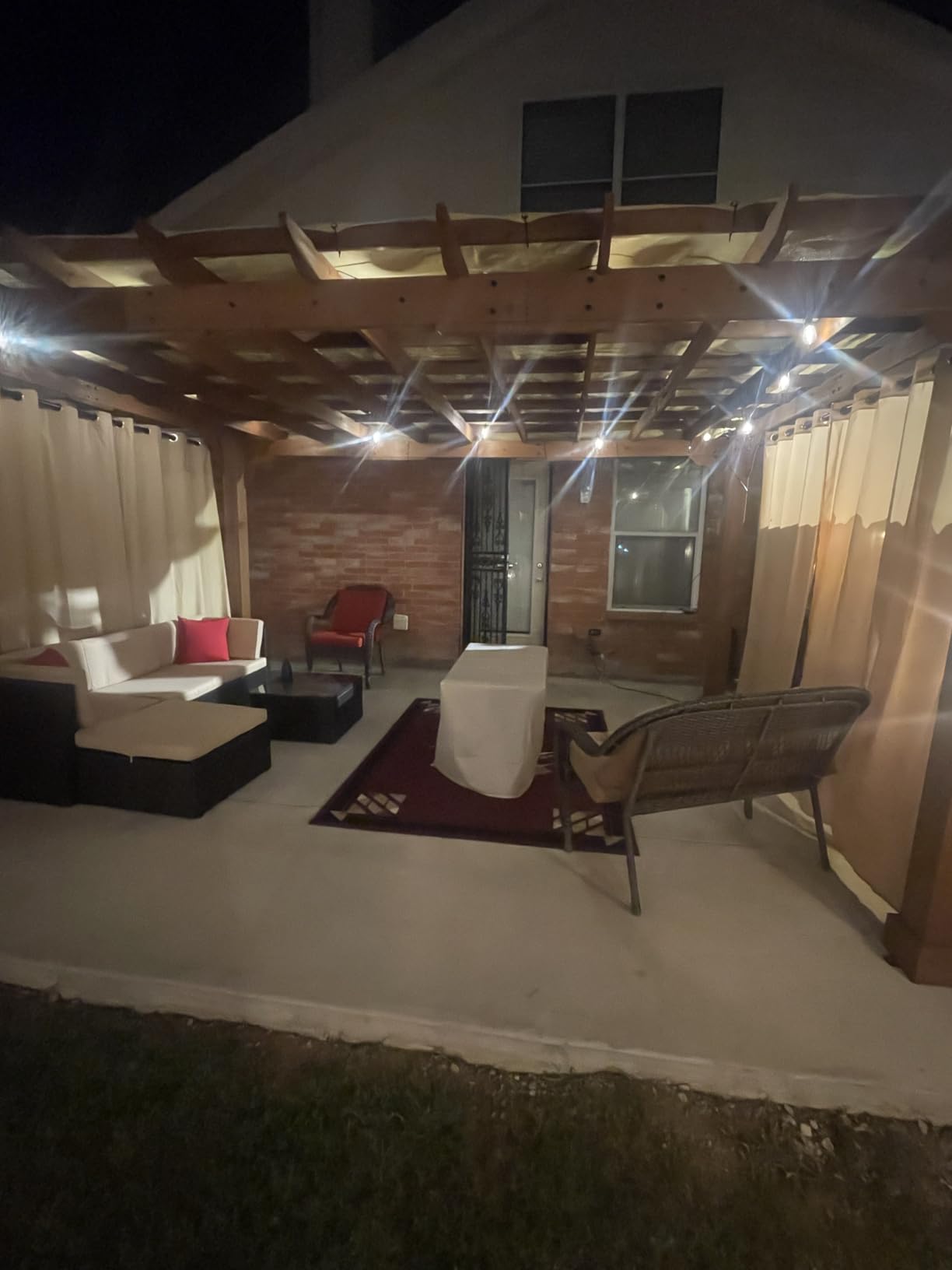
Nearly every experienced owner in the reviews recommends sealing the wood before assembly or immediately after, using the piece markings printed on the boards. That single step is the difference between cedar that weathers silver-gray evenly and cedar that checks, splits and grays in patches.
Because paint or stain can be applied before assembly, a weekend of masking and brushing is a good investment. The open slat roof is also ideal for hanging lightweight lights and decorations, which is where this design really earns its keep in summer.
Footings, stakes and inaccurate drawings
Stakes are included for mounting on grass, wood deck or concrete, with expansion screws available separately. On a paver patio you will be sourcing your own masonry fasteners, and forum discussion across patio groups is consistent on this point: kit stakes are made for lawn and are close to useless on hard surfaces.
Two practical warnings. The layout drawings are not accurate, so leave extra allowance when setting footings, and no extra screws, nuts or bolts are included, which means a missing fastener turns into a hardware store run mid-build.
Who should skip this pergola
Skip it if you need to stay dry under the structure. A flat open-slat roof gives shade and no rain protection, so you are committing to seasonal use unless you add a separate cover.
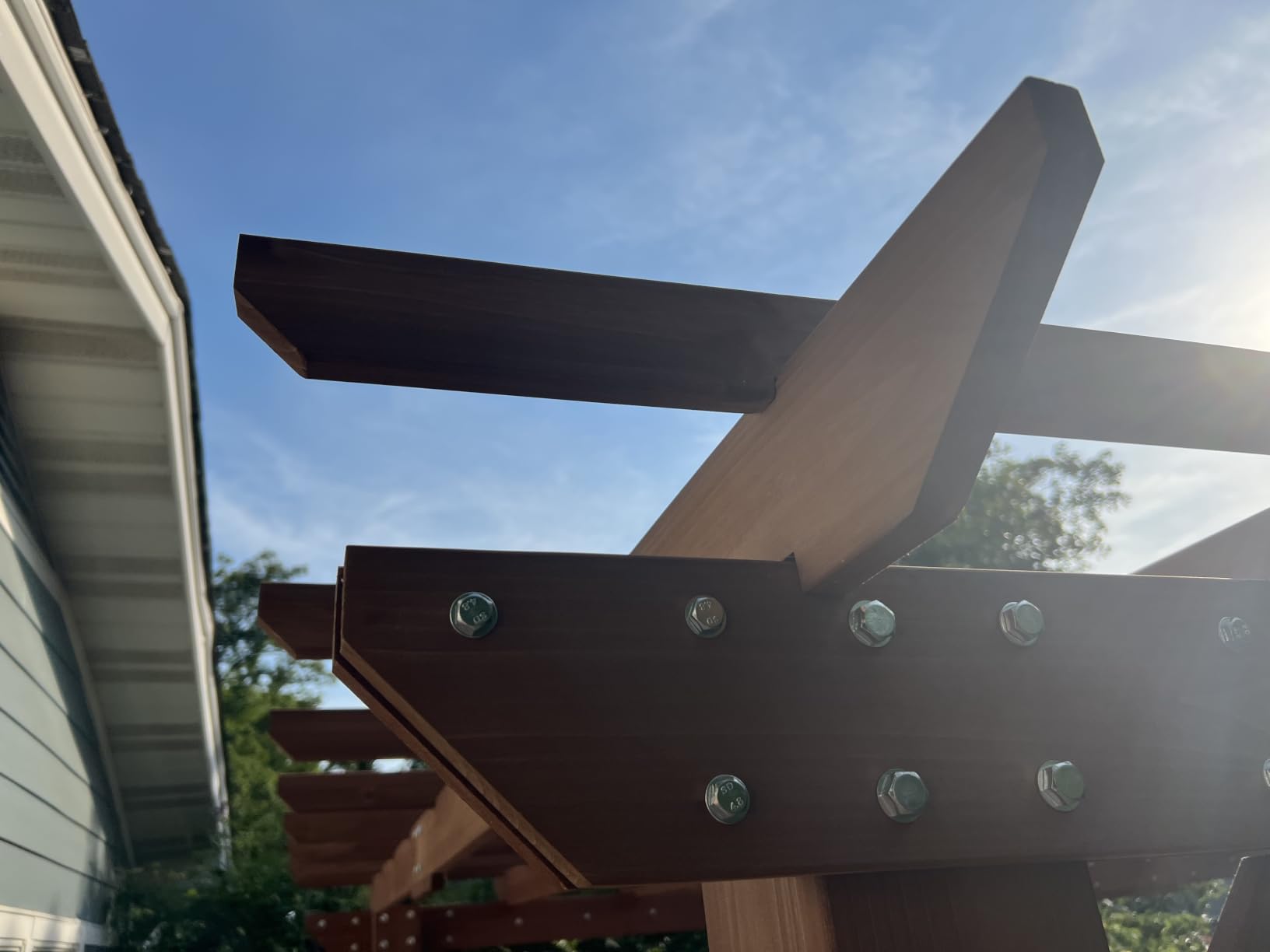
Skip it if you have a small crew or a tight build window. Owners describe a three or four person project taking a day or more, and a small number report bowing at the middle connection pieces within months of assembly. Silver bolts also stand out visually against natural cedar.
9. Domi 12 x 16 Aluminum Louvered Pergola – Best for Large Patios
Domi Outdoor Pergola 12′ × 16′, Aluminium Louvered Pergola with Adjustable Roof, Curtains and Netting, Hardtop Gazebo for Patio, Deck, Garden, Yard, Beach(Gray)
12 x 16 foot footprint
192 square feet of shade
Louvers tilt 0 to 130 degrees
Two year manufacturer warranty
Pros
- Largest covered area among the picks
- Louvers reach 130 degrees past flat
- Curtains and netting included
- All-aluminum build resists corrosion
Cons
- Two louver sets close in opposite directions
- Center beam seam can leak in heavy rain
- Four to five hours of assembly and no anchoring guidance
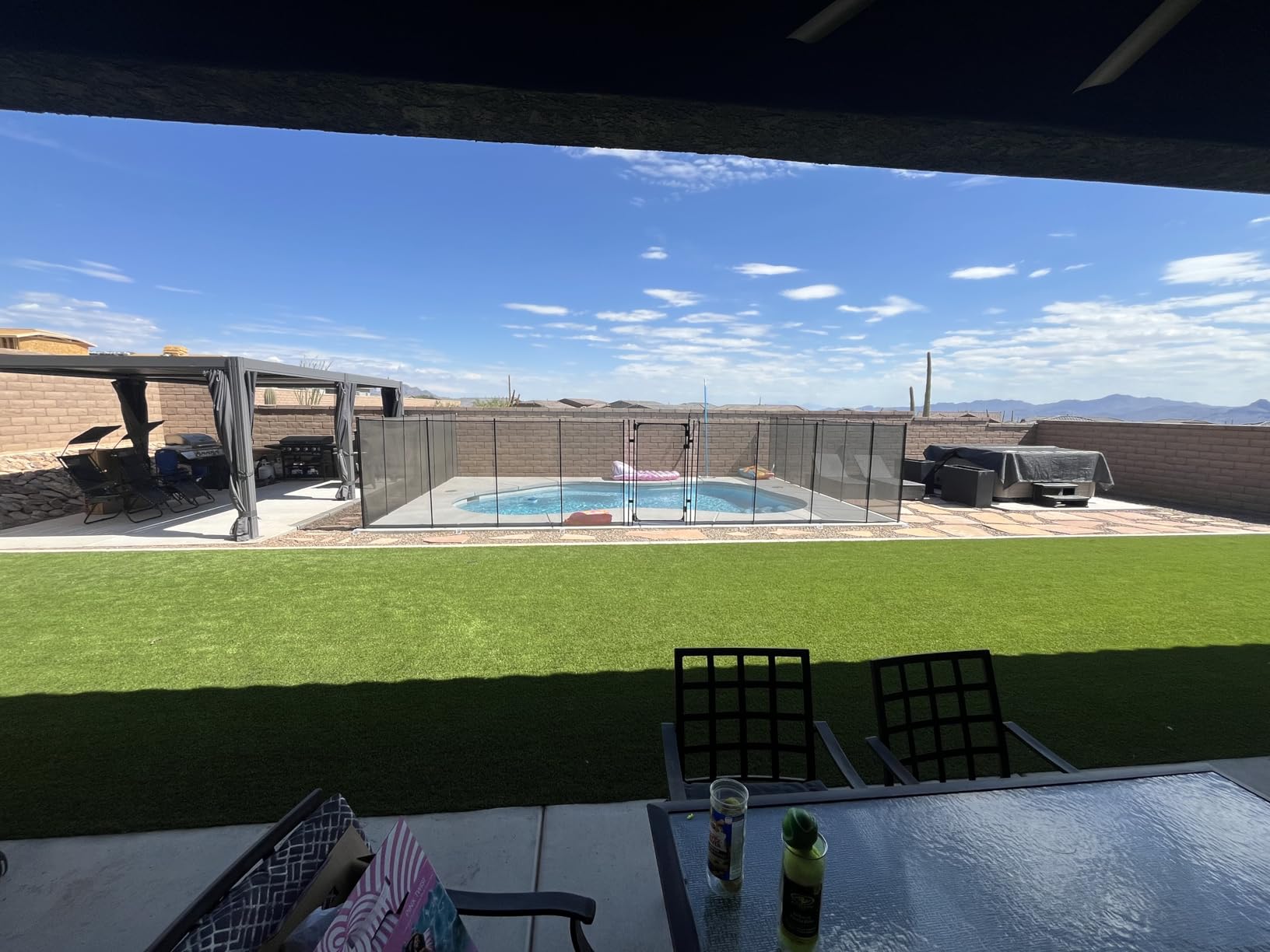
When a patio needs to hold more than a table, this is the footprint to look at. At 192 square feet it is rated for ten to fifteen people, large enough for a spa or an outdoor kitchen rather than just dining.
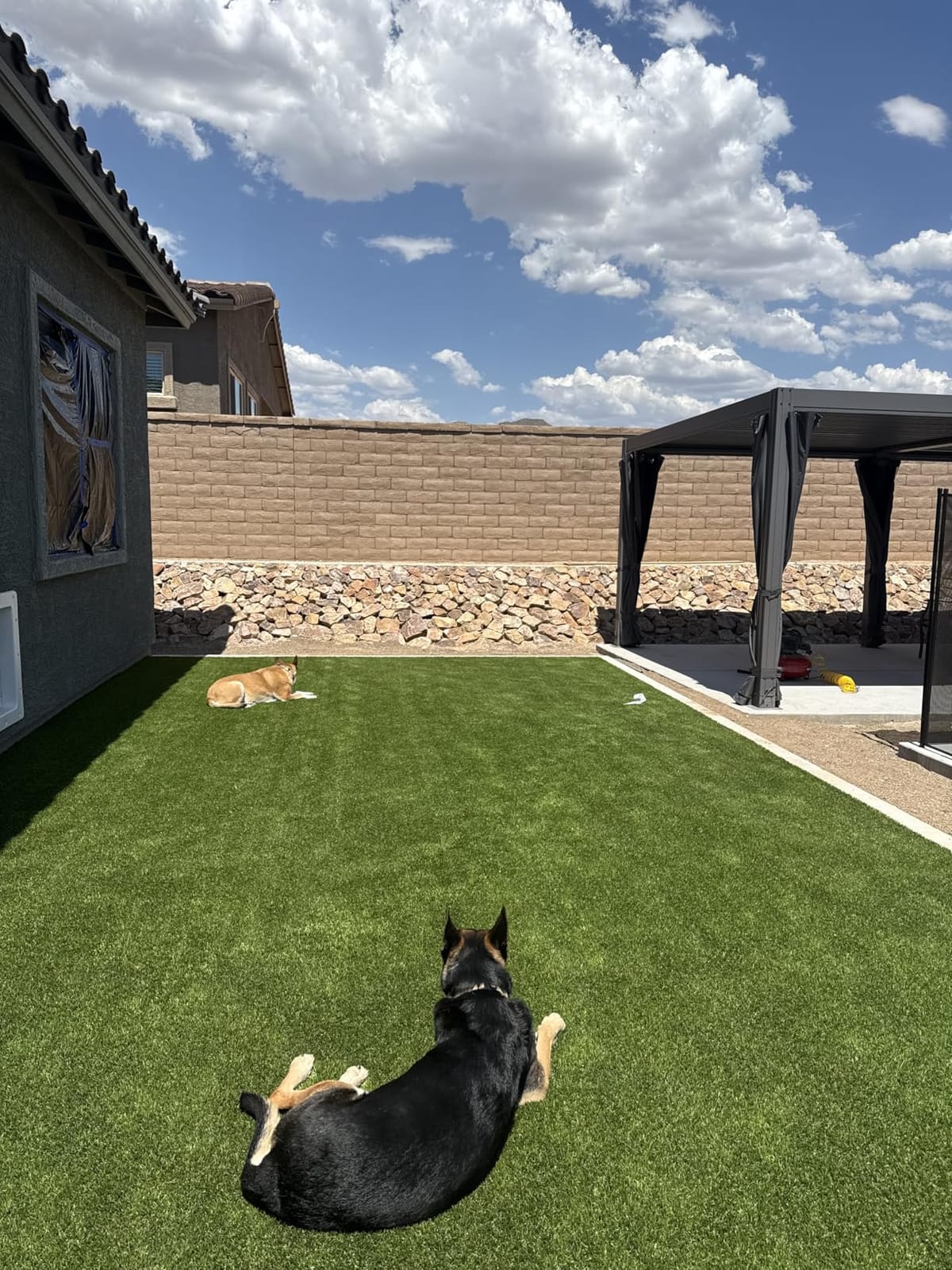
The structure measures 192.02 by 144.02 by 90.62 inches in gray powder-coated aluminum, with a two-year manufacturer warranty. Owners using it with a fire table report keeping the space usable deep into cooler weather.
192 square feet and louvers that reach 130 degrees
Most louvered roofs stop at 90 degrees, fully closed. This one travels to 130 degrees, which means the blades can push past the closed position and shed water and snow more effectively on a flat roof deck.
A built-in gutter system routes rain through integrated gutters and the posts to prevent pooling, and removable privacy curtains and mosquito netting are included rather than sold separately. Sizes run from 10 by 10 feet up to 12 by 20 feet across four color options.
Opposite-direction louvers and the center joint
Two functional gripes recur in reviews. The two sets of louvers do not close in the same direction, which leaves a gap on the non-ratcheting side, and the center beam seam can leak between louvers during heavy rain. Both are owner-fixable, but both need to be known before you close the roof on a wet evening.
Assembly is the bigger caution. Several reviewers budget four to five hours rather than the few hours claimed, and the roof lift genuinely needs three people. There are also no instructions for anchoring to the ground or a deck, the gutters are not sloped so they can hold standing water, and the included caulk may not match the frame color.
Who should skip this pergola
Skip it if you want a single clean drive across the roof, because the opposite-direction louver halves will irritate anyone who closes the roof regularly. Skip it if you need manufacturer anchoring guidance, because that section is simply absent from the documentation.
Skip it if you are assembling with two people and a Saturday afternoon. This is a 441 pound structure with a multi-person roof lift and a longer build than the paperwork suggests.
10. BPS 13 x 10 Wall-Mounted Louvered Pergola – Best for Clearing the Patio Floor
BPS 13 x 10 ft. Outdoor Aluminum Wall Mounted Louvered Pergola, Dark Gray
Wall-mounted aluminum design
153.9 x 114.5 x 92.5 inches
Louvers adjust 0 to 130 degrees
Drainage to ground via side rails
Pros
- Frees the patio floor of posts
- Four-zone bracing from top-center tubes
- Wand holds louvers at any position
- Waterproof top with routed drainage
Cons
- Needs a solid level mounting surface
- Smallest review base in this group
- Only one size and color configuration
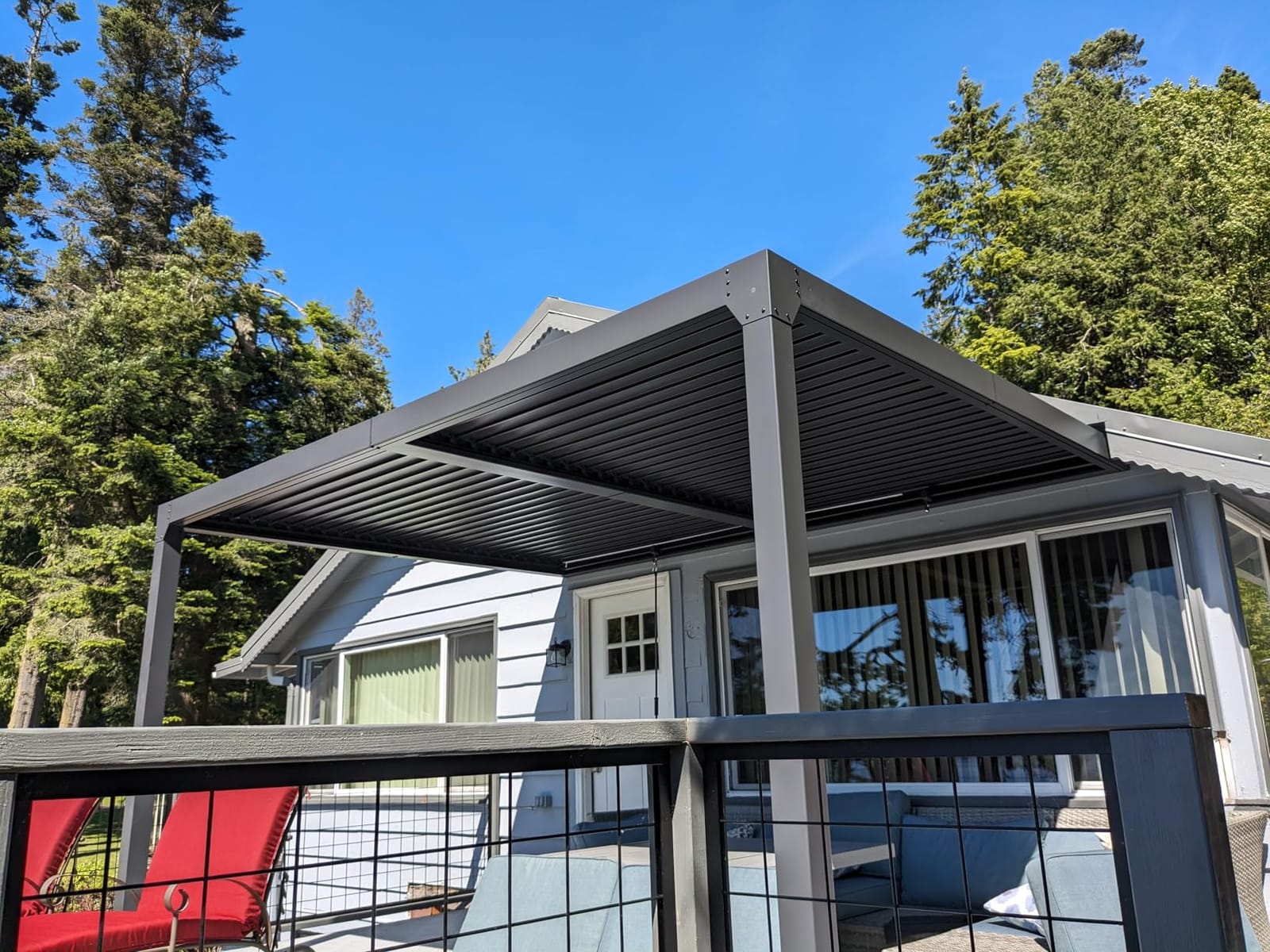
A wall-mounted pergola solves a specific problem: you want coverage over an existing patio without posts eating the floor. This one attaches to the house and spans 153.9 by 114.5 by 92.5 inches in treated dark gray aluminum.
It covers 130 square feet and adds UV and rain protection while keeping the ground clear for furniture, planters and circulation. It also blends the open-roof look people like in a pergola with the practicality of a closed-roof pavilion.
What a wall mount demands from your house
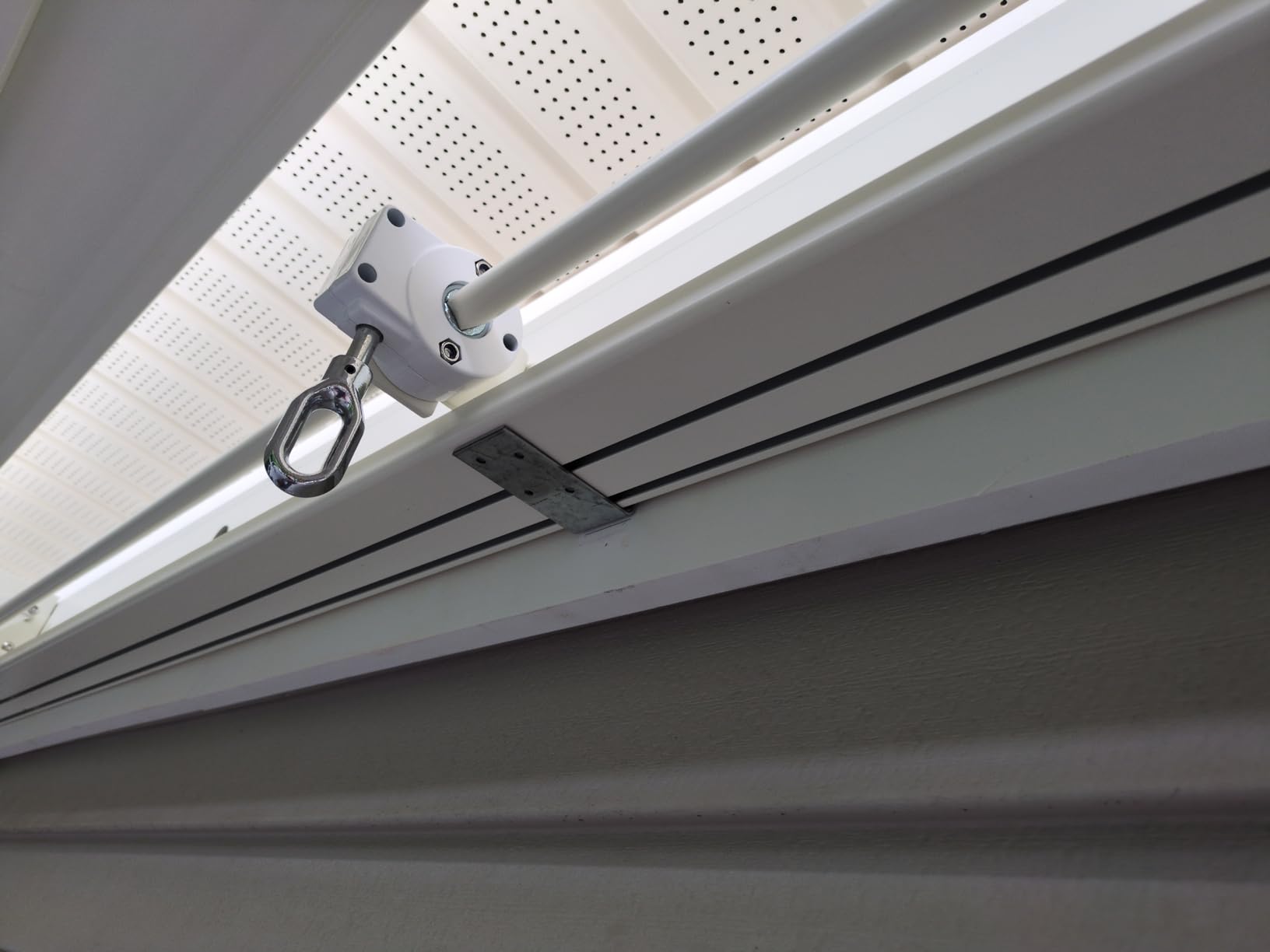
This is the single biggest structural commitment in the roundup. The design requires a solid, level mounting surface to attach to, and the attachment points need to land in framing rather than in decorative siding or drywall.
Before buying, walk the wall with a stud finder and confirm the height clears your windows and door headers. Owner communities are consistent on the rule that any attached structure should be checked against local setback and permit rules before the first hole is drilled, since a wall mount transfers load directly into the house.
Four-zone bracing and wand control
Top-center connecting tubes divide the structure into four zones, which adds real stiffness across a 13 foot span and is the detail that separates this from a simple awning. Treated aluminum resists rust for long-term appearance, and the roof drains through side rails and columns to the ground.
The included wand adjusts the louvers from 0 to 130 degrees and they hold any intermediate position, so you can stop halfway between full shade and full sun. Rain protection is genuine here, with a fully waterproof top that routes water down rather than letting it curtain off the edges.
Who should skip this pergola
Skip it if your patio wall is brick veneer, vinyl or anything you are not comfortable bolting into. A wall mount transfers the whole load into the house, and retrofitting it later is far harder than starting with a freestanding frame.
Skip it if you want choice. Only one size and color configuration is offered, and with the smallest review base among these picks there is limited long-term durability feedback, so budget for inspection rather than assuming decades of service.
How to Choose a Patio Pergola: Roof Type, Material, Anchors and Real Cost
The decision sequence matters more than the brand. Measure first, choose the roof mechanism second, pick the material third, then confirm the wind figure and the anchor surface before you look at anything else.
Measure the footprint and leave drainage room
Tape the footprint on the patio with painter’s tape and live with it for a day. Most disappointment comes from a pergola that technically fits but crowds the furniture, so measure the clear span between house and yard edge rather than the slab.
Leave room around the perimeter for drainage and airflow. Hardtop models route rain down through the columns, and that water needs somewhere to go that is not pooling against your foundation.
Choose the roof type first
Open slats give shade and hanging points for lights with no weather protection and the least maintenance. Retractable fabric canopies add adjustable shade and light rain cover, and they are the easiest structures to move and store seasonally.
Louvered roofs sit at the top of the range because closing the blades creates a sealed roof and an outdoor room you can use well beyond summer. Shade sails and polycarbonate are worth considering for narrow side yards where a full frame will not fit.
Material decides your maintenance calendar
Cedar looks the most natural and asks the most of you. Seal it on a schedule or it will check and gray unevenly, and skip the sealing and you should expect a shorter service life in damp climates.
Aluminum needs no staining and does not rot, which makes it the low-maintenance choice for coastal salt air and full sun. Powder-coated steel is the most rigid frame here, but coatings fail at scratches and welds first, so inspect touch-up points every season.
Anchoring by patio surface
This is the question patio owners ask most and answer least. Kits ship with ground stakes meant for lawn; on pavers or poured concrete those stakes are close to useless and you need expansion or masonry anchors set into the surface.
On a deck, attach through the framing with properly sized lag bolts rather than deck screws into the boards. Weight alone is not anchorage, and a wind rating only holds when the feet are fixed the way the manual specifies.
What a pergola actually costs installed
Sticker price is roughly a third of the bill once you account for the rest. Add concrete pads or footings, masonry anchors, electrical work for outlets and lighting, and assembly labor, and a mid-range structure can land at well over double the advertised figure.
That is why we treat assembly labor as a purchase decision rather than an afterthought. A 400 pound louvered frame that takes a crew of four for half a day is a different product from a 73 pound canopy you raise in an afternoon, even when the finished patio looks identical.
Assembly reality check
Owners across patio forums describe assembly as the hardest part of any pergola purchase, not the buying. The failure mode is consistent: single-person installs warp out of square during assembly and stay crooked for years.
Measure diagonals and square the frame before the roof goes on, because that is the cheapest moment to fix alignment. Owners also recommend checking the box inventory before starting, since several of these kits ship without spare fasteners.
Frequently Asked Questions
What is the average cost of a 20×20 pergola with cover?
A 20×20 structure sits at the top of the residential market, and the total installed figure runs well above the structure price. Budget the structure, concrete footings or pads, masonry anchors, electrical work for any outlets or lighting, and assembly labor. Because labor and footings often double a mid-range purchase, treat the sticker price as roughly a third of the final bill rather than the whole of it.
Which is better, Pergolux or Hanso?
The two occupy the premium louvered segment and are usually compared on roof mechanism rather than brand. Hanso builds span a wider size range, while Pergolux competes closely on louver action and finish quality. Decide on the things you can verify: published wind rating, whether water drains through the columns, how many people the assembly needs, and whether the center beam seam is sealed. Those details decide satisfaction far more than the logo.
Who sells the best pergolas?
Brand matters less than build type. Backyard Discovery, Sunjoy, Yardistry and Purple Leaf cover most of the value and mid-range market with cedar kits and aluminum frames, while MIRADOR, Domi, AirWire and the Purple Leaf louvered line cover the adjustable-roof segment. The best-rated listings usually come from brands with hundreds of owner reviews, so check review counts before trusting a five-star average built on a handful of ratings.
What type of pergola lasts the longest?
A powder-coated aluminum frame with an interlocking louvered roof lasts longest because there is no wood to seal and no fabric to degrade. Cedar lasts nearly as long when sealed on schedule, since the wood itself resists rot, but it needs annual attention to stay straight and evenly colored. Retractable fabric canopies are the shortest-lived option because the roller hardware and fabric wear with daily use.
How do you anchor a pergola to a paver patio?
Do not use the ground stakes that ship with most kits, since they are made for lawn and will not hold in a paver or concrete surface. Set expansion or masonry anchors into the base plates at each post, and on pavers drill into the joint or into the paver with a masonry bit rated for the material. Confirm each anchor lands in solid substrate before the frame is raised, because a wind rating only holds when the feet are fixed as specified.
Do I need a permit to build a pergola?
It depends on your jurisdiction and on the structure. Freestanding kits below certain heights are often exempt, while wall-mounted and cantilevered designs that attach to the house or cross a setback line frequently require a permit and inspection. Check your local building department before drilling, especially for any attached structure, since attaching to the house transfers the load into the framing and may trigger additional requirements.
Which Patio Pergola Fits Your Situation
Match the structure to the job rather than to the biggest spec sheet. If you want proven all-season function with the deepest owner feedback, the PURPLE LEAF 12 x 16 retractable is the pick, and its thousand-plus reviews tell you more about long-term behavior than any marketing line.
If your patio is exposed and you want a published wind figure with built-in power, choose the Backyard Discovery Beaumont cedar kit. If you intend to use the space past summer, the PURPLE LEAF 12 x 14 aluminum louvered model and the Domi 12 x 16 are the two that convert shade into a room, and the Domi wins on covered area at 192 square feet.
For small patios, the MIRADOR 80S covers 100 square feet without crowding the furniture. For appearance, the ABCCANOPY arch or the Yardenaler cedar flat roof give you a look that a louvered hardtop cannot. For keeping the floor clear, the BPS wall-mounted unit is the only true option here, and only if your wall can carry it.
Whichever you choose, anchor it to the surface you actually have, budget the crew and the footings, and square the frame before the roof goes on. Those three steps decide whether 2026‘s best pergolas for patios feel like an investment or an expensive lesson.