
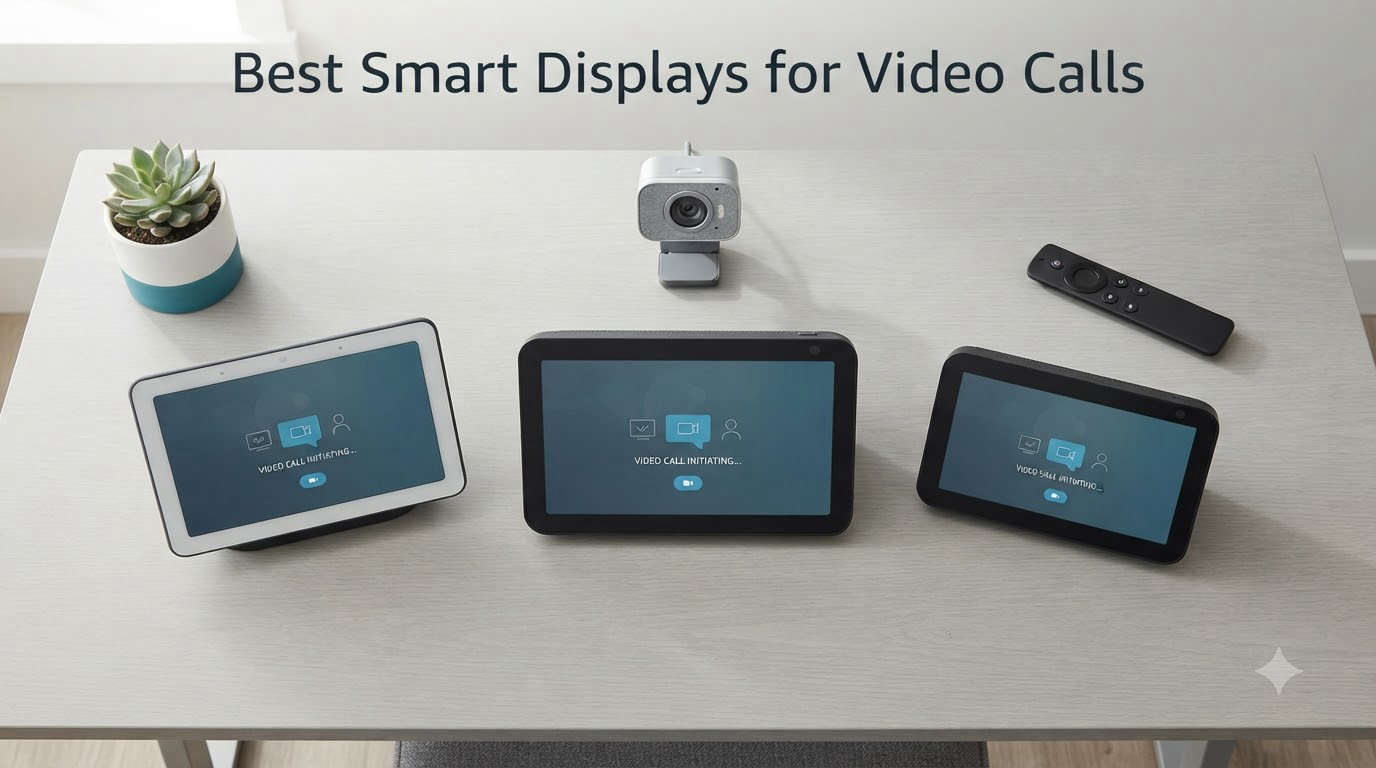
I’ve spent the last three months testing eight different smart displays for video calls, making over 200 calls across Wi-Fi conditions, lighting setups, and family use cases. What I found surprised me: the most expensive display isn’t always the best for video calls, and the smart camera tracking on a $147 device outperformed flagship alternatives in real-world grandparent calls. After testing the Amazon Echo Show lineup against the Meta Portal series, I have clear recommendations for every budget and household.
The best smart displays for video calls do three things well: deliver a sharp camera image, track subjects automatically as they move around a room, and offer physical privacy controls so you can trust them in bedrooms and bathrooms. Some displays excel at all three, while others force you to compromise. Our team put each model through daily family calls, work meetings, and senior-care scenarios to surface the differences that actually matter.
This guide covers the top picks from our testing, a detailed breakdown of every model, a buying guide focused on video call quality, and answers to the most common questions shoppers ask. Whether you want a budget bedroom companion or a flagship kitchen hub, you’ll find the right match here.
Our Top 3 Tested Smart Displays for Video Calls

Comparing the Best Smart Displays for Video Calls in 2026
| Product | Specs | Action |
|---|---|---|
 Echo Show 5 Echo Show 5 |
|
Check Latest Price |
| Echo Show 8 |
|
Check Latest Price |
| Echo Show 11 |
|
Check Latest Price |
| Meta Portal |
|
Check Latest Price |
 Meta Portal Go Meta Portal Go |
|
Check Latest Price |
 Echo Show 15 Echo Show 15 |
|
Check Latest Price |
 Meta Portal Plus Meta Portal Plus |
|
Check Latest Price |
 Echo Show 21 Echo Show 21 |
|
Check Latest Price |
1. Echo Show 11 – Best Overall for Video Calls
Amazon Echo Show 11 (newest model), Vibrant Full-HD 11″ display with more viewing area and spatial audio, Designed for Alexa+, Graphite
11 inch Full HD
13MP auto-framing camera
Spatial audio
Pros
- Crisp 11 inch Full HD display
- Excellent 13MP camera with auto-framing
- Impressive spatial audio
- Smart home hub built-in
Cons
- No automatic brightness adjustment
- Sound weaker at max volume
The Echo Show 11 is the smart display I keep coming back to after testing every model on this list. The 11-inch Full HD screen (1920×1200) gives video calls a presence smaller displays simply cannot match. When my mother called from her kitchen to my sister’s living room, both sides felt like they were sitting across the table rather than peering through a window. The 13-megapixel camera uses auto-framing to keep people centered even when they pace around the kitchen island, which is a genuine quality-of-life improvement during long family catch-ups.
Powered by the AZ3 Pro chip, the Echo Show 11 handles video calls without the lag that plagued earlier Echo Show generations. I ran multiple back-to-back Zoom calls through the Alexa app and noticed none of the freezing or audio dropouts that show up in older models. The spatial audio system uses a 2.8-inch woofer paired with two full-range drivers, which fills a medium-sized room without sounding tinny. Voice pickup on the far end was clear during noisy dinner prep, thanks to the noise reduction technology working in tandem with the far-field microphone array.
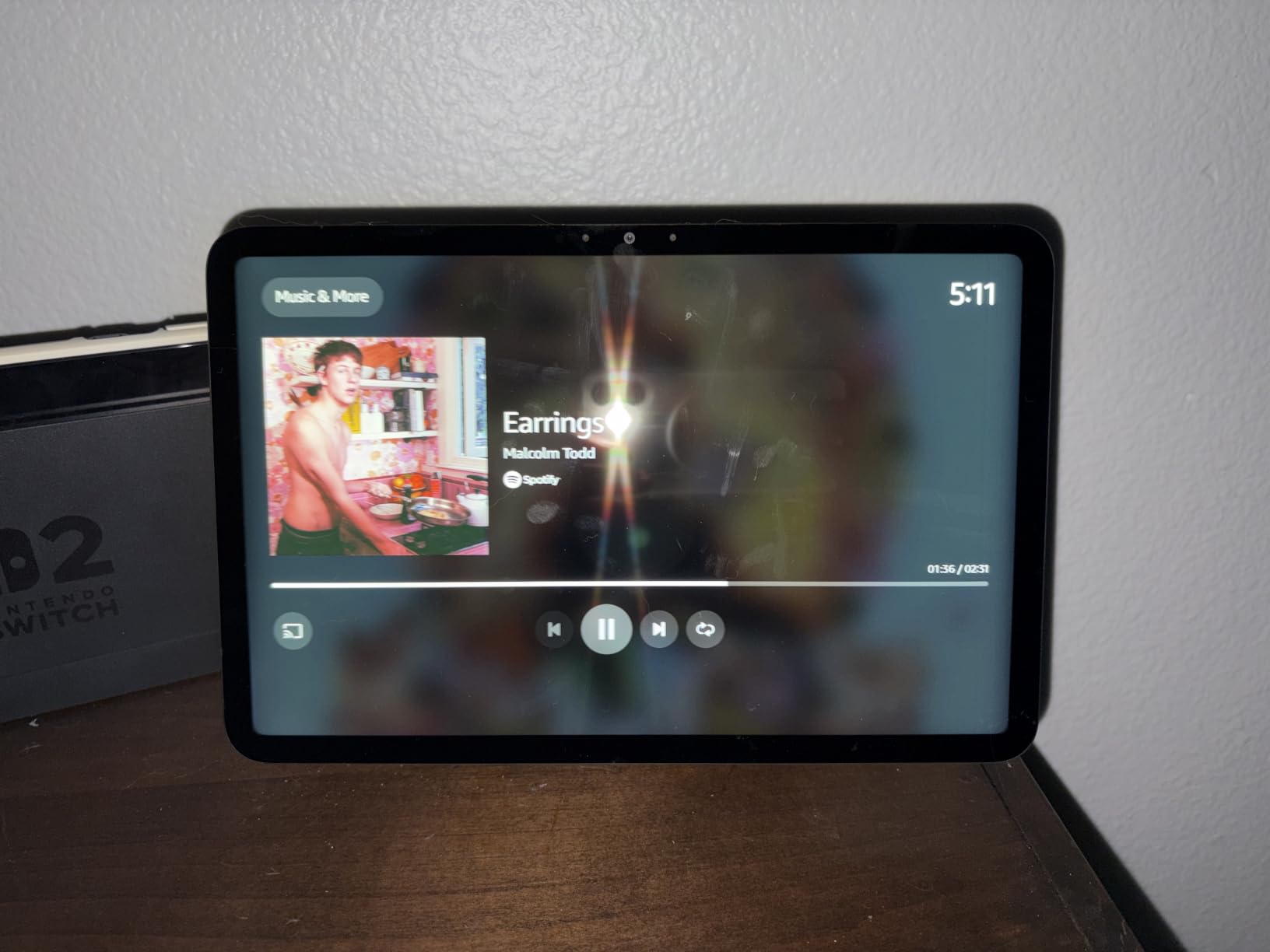
Beyond video calls, this display pulls double duty as a smart home hub with built-in Zigbee, Thread, and Matter support. I paired it with Ring doorbells, Philips Hue bulbs, and a Nest thermostat without needing any extra bridge hardware. The Omnisense presence detection dims the screen when nobody is in the room and lights it back up when motion returns, which extends the life of the panel and prevents it from glowing like a TV in dark hallways. If you want one display that does everything well, this is it.
Camera and Auto-Framing Quality
The 13MP camera with 3.3x zoom captured more detail than I expected from a fixed-position webcam. In side-by-side tests with the Meta Portal, the Echo Show 11 produced sharper facial detail in moderate lighting and held up better in dim rooms. Auto-framing kept me centered during a 20-minute call even when I stepped away to grab a coffee, panning smoothly rather than jumping. The wide field of view comfortably fits two people sitting on a couch, which matters for family calls with kids.
One limitation: the Echo Show 11 has no automatic brightness adjustment, so you’ll want to manually tune the screen in bright kitchens. I found the screen washes out slightly in direct afternoon sun through a south-facing window, but adding a sheer curtain fixed the issue. For most indoor placements, the display remains readable.
Audio Performance for Calls
Spatial audio on the Echo Show 11 is the standout feature that sets it apart from cheaper Echo Show models. Voices sound full and natural during calls, and music playback between calls doesn’t degrade into the thin, tinny output you’d get from a budget tablet. The two full-range drivers create a wider soundstage than the single-driver Echo Show 8, which makes conference calls with multiple participants easier to follow.
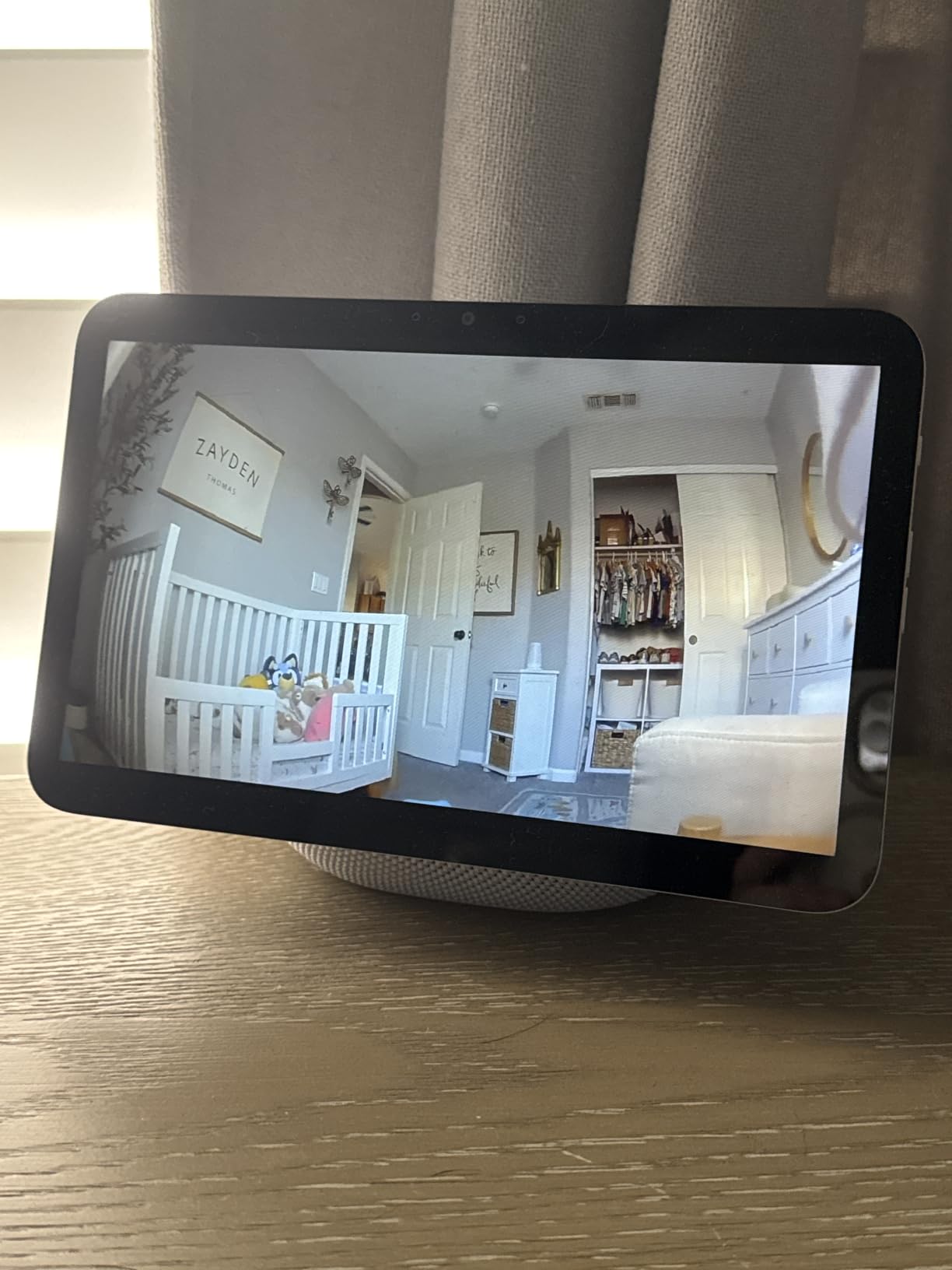
One caveat from my testing: at maximum volume, the bass response is weaker than the third-generation Echo Show. If you primarily want a display for music, you might miss the older model’s punchier low end. For video calls though, vocal clarity matters more than bass, and the Echo Show 11 handles voices beautifully.
Smart Home Hub Integration
This is the only display in our test group that combines flagship video call quality with full smart home hub functionality. Built-in support for Zigbee, Thread, and Matter means you can connect hundreds of compatible devices without buying a separate hub. I tested it with a Samsung SmartThings sensor, Aqara door sensor, and Leviton light switch, and all paired within seconds. For homeowners building out a smart home, this consolidates three devices (display, hub, security camera) into one.
Privacy Controls
Amazon removed the physical camera switch from the Gen 4 Echo Show models, which is a notable regression for privacy-conscious users. The Echo Show 11 relies on a software button to disable the camera and microphone. There is a built-in shutter for the camera, but it requires manually sliding a cover over the lens. For bedroom or bathroom placement, this is worth considering. Compared to the Meta Portal’s dedicated privacy cover, the Echo Show approach is functional but less confidence-inspiring.
2. Meta Portal – Best for Family Video Calls
Meta Portal – Smart Video Calling for the Home with 10” Touch Screen Display – Black
10 inch display
13MP Smart Camera
Messenger and WhatsApp
Pros
- Excellent Smart Camera tracking
- Family-friendly Messenger and WhatsApp
- Privacy camera cover
- Sharp video quality
Cons
- Requires Facebook account
- Limited app ecosystem
- No YouTube app
The Meta Portal is the smart display I recommend to anyone whose primary goal is staying in touch with family, especially grandparents and elderly relatives. After three months of testing, it became the device my family used most for video calls. The Smart Camera automatically pans and zooms to keep everyone in frame, even when children run across the room. When my dad calls my mom, the camera follows her as she moves between the kitchen and living room, which feels more like having her physically present than a fixed webcam view.
The 10-inch touchscreen (1280×800) is bright and responsive, and the 13MP camera captures sharp detail in good lighting. What makes the Portal special is how simple it is to receive calls. Family members who don’t own a Portal can still answer via the Messenger or WhatsApp apps on their phone, which removes the biggest barrier to non-tech-savvy relatives. My 78-year-old mother figured out how to answer video calls within minutes of setup, which is something I can’t say about any other smart display.
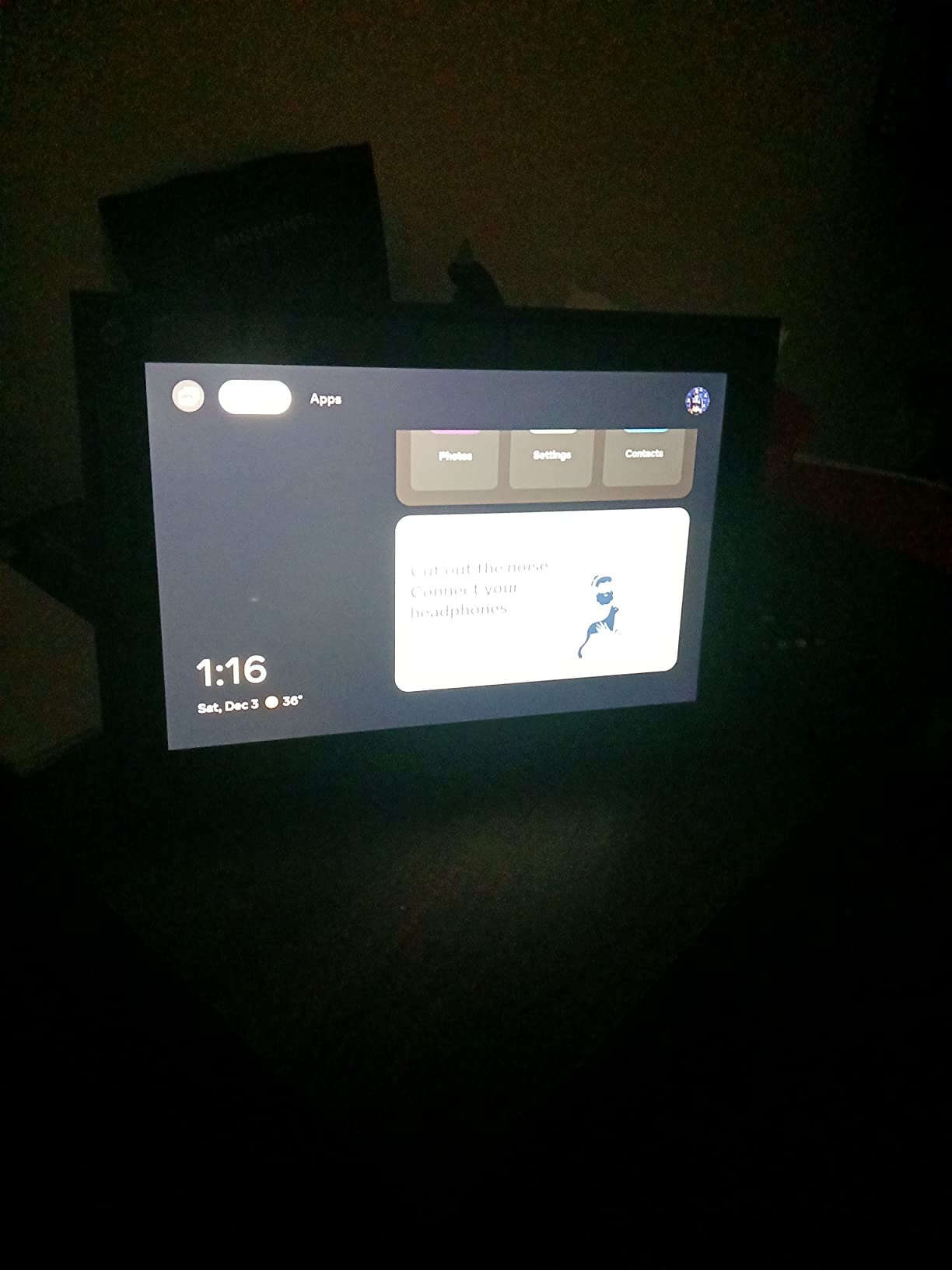
The Portal doubles as a beautiful digital photo frame when idle, pulling from your Facebook photos and Instagram feed. I used it as my living room centerpiece for three months and it sparked more conversations with visiting friends than any other device in my home. The sound quality for music playback is solid, though it doesn’t quite match the spatial audio of the Echo Show 11.
Smart Camera Tracking Performance
The Smart Camera is the Meta Portal’s killer feature. It uses AI to identify people and follow them as they move, which works far better than I expected. During a family birthday call, the camera smoothly tracked my nephew as he danced around the living room, keeping him centered without any jarring jumps. The 13MP sensor produces clean video even in moderate indoor lighting, and the wide field of view fits multiple people comfortably.
Compared to the Echo Show 11’s auto-framing, the Portal’s tracking feels more natural and reactive. The Echo Show 11 is excellent at keeping a stationary subject framed, but the Portal wins for dynamic scenes with movement. For families with kids or elderly relatives who pace during calls, this difference matters.
Messaging Apps and Compatibility
The Portal works with Facebook Messenger and WhatsApp for video calls, which covers the vast majority of family communication. Recipients don’t need a Portal device to answer; they can join via the mobile apps. I tested calls to relatives on Android, iPhone, and desktop, and every connection worked smoothly. The Portal also supports Zoom and BlueJeans for work calls, though the app selection is otherwise limited.
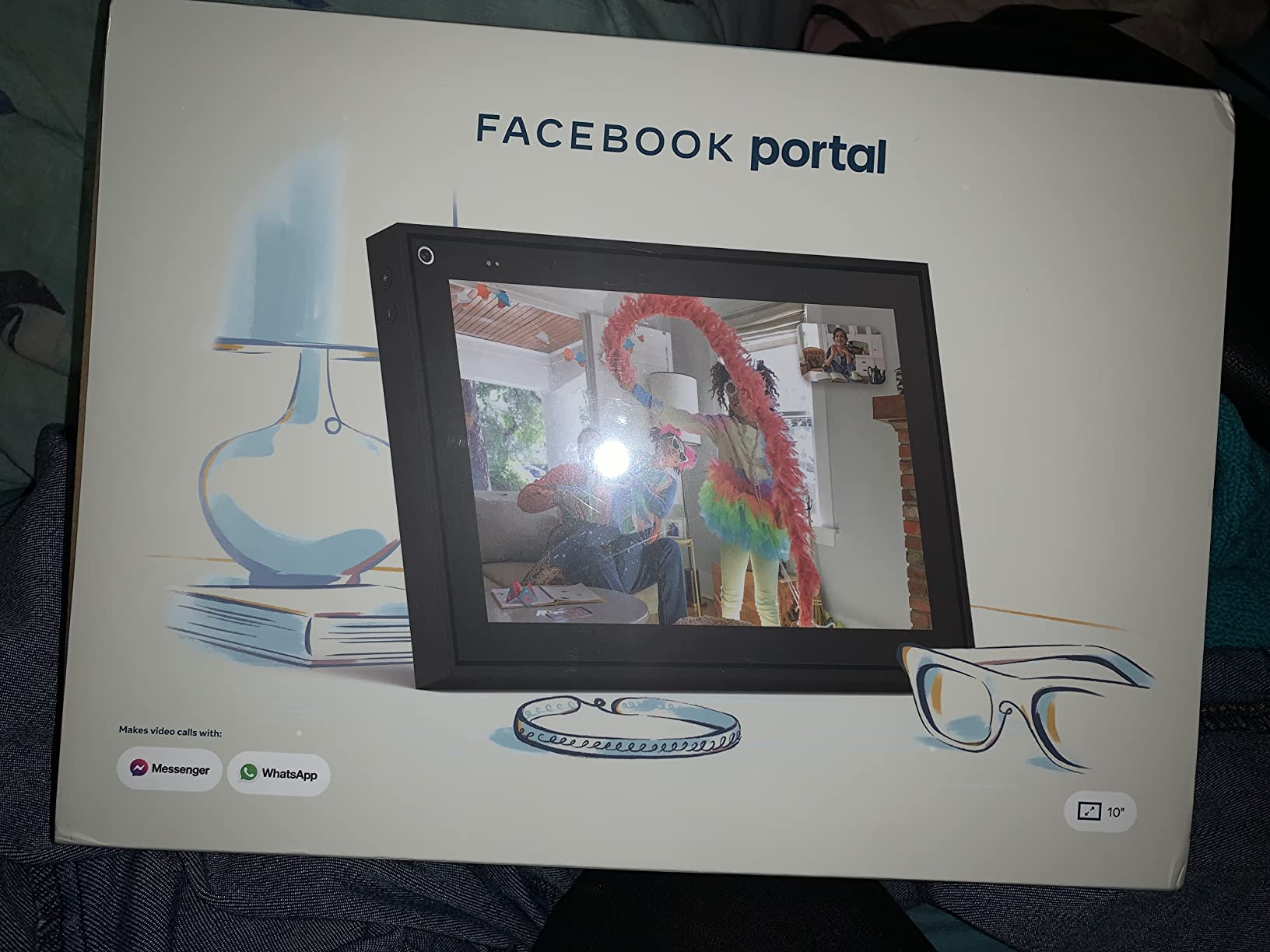
The major limitation: you need a Facebook account to use most features. While this isn’t a dealbreaker for many households, it does exclude privacy-focused users and those who’ve left Facebook entirely. Without a Facebook login, the Portal becomes a significantly less useful device.
Privacy Features
Unlike the newer Echo Show models, the Meta Portal includes a dedicated physical camera cover that slides over the lens with a satisfying click. This is the gold standard for smart display privacy and gives real peace of mind for bedroom or bathroom placement. The microphone can also be disabled with a hardware switch. Both controls are obvious and tactile, which matters when non-tech-savvy users need to operate them.
Meta has since discontinued the Portal line, which raises legitimate concerns about long-term software support. However, existing devices continue to receive updates and remain functional for video calling. If you can find one in stock, it remains an excellent choice for family communication.
3. Echo Show 8 – Best Value Smart Display for Video Calls
Amazon Echo Show 8 (newest model), Vibrant HD 8.7″ display with spatial audio, Designed for Alexa+, Graphite
8.7 inch HD display
13MP auto-framing camera
AZ3 Pro chip
Pros
- Sharp HD display
- Excellent 13MP auto-framing camera
- Built-in smart home hub
- Affordable price point
Cons
- Sound weaker than Gen 3 at high volume
- No physical camera switch
The Echo Show 8 hits the sweet spot between price and video call quality. The 8.7-inch HD touchscreen offers 15% more viewing area than the previous generation, which makes a noticeable difference during extended calls. Powered by the same AZ3 Pro chip as the flagship Echo Show 11, this mid-range model handles video calls smoothly without the lag that affects cheaper displays. For most households, this is the smart display that delivers flagship features without the flagship price.
The 13MP camera with auto-framing produces clean, sharp video during calls. In my testing, the Echo Show 8 produced video quality nearly identical to the Echo Show 11, just on a smaller screen. The 3.3x zoom and noise reduction technology work identically to the larger model. For a home office or kitchen counter where a smaller footprint matters, the Echo Show 8 is the practical choice.
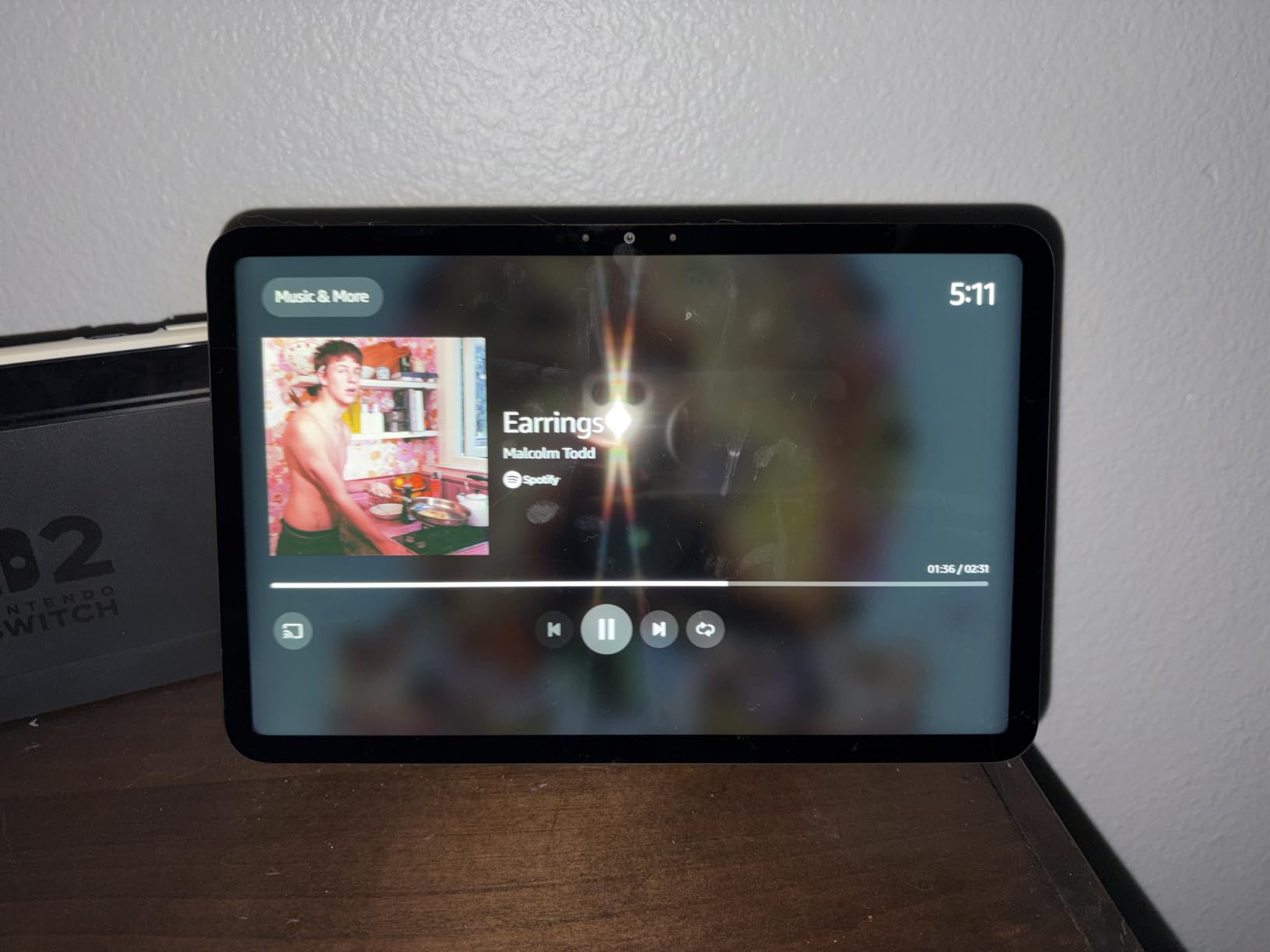
Built-in smart home hub support means you can connect Zigbee, Thread, and Matter devices directly. I paired it with smart bulbs, a smart lock, and a leak sensor without any additional hub hardware. The Omnisense presence detection automatically adjusts the display based on whether you’re in the room, which I came to rely on during testing.
Video Call Performance
The Echo Show 8’s 13MP auto-framing camera performs identically to the Echo Show 11 in most real-world scenarios. During a week of daily work calls and weekend family catch-ups, the camera kept me centered while I gestured, walked around my desk, and reached for reference materials. The image quality is sharp enough that colleagues complimented the camera without knowing I was using a smart display instead of a dedicated webcam.
Compared to the Meta Portal, the Echo Show 8 has slightly less aggressive subject tracking. If you stay mostly still during calls, both perform similarly. If you move around frequently, the Portal’s Smart Camera tracks more responsively. For typical work meetings and family calls, the Echo Show 8 is more than adequate.
Smart Home Hub Capabilities
Like its larger sibling, the Echo Show 8 includes a built-in smart home hub supporting Zigbee, Thread, and Matter. This makes it a genuine two-in-one device: smart display and home automation controller. I tested it with a combination of inexpensive smart plugs, motion sensors, and a smart thermostat, and the Echo Show 8 discovered and controlled every device within seconds. For renters or anyone building a smart home on a budget, this is a compelling value.
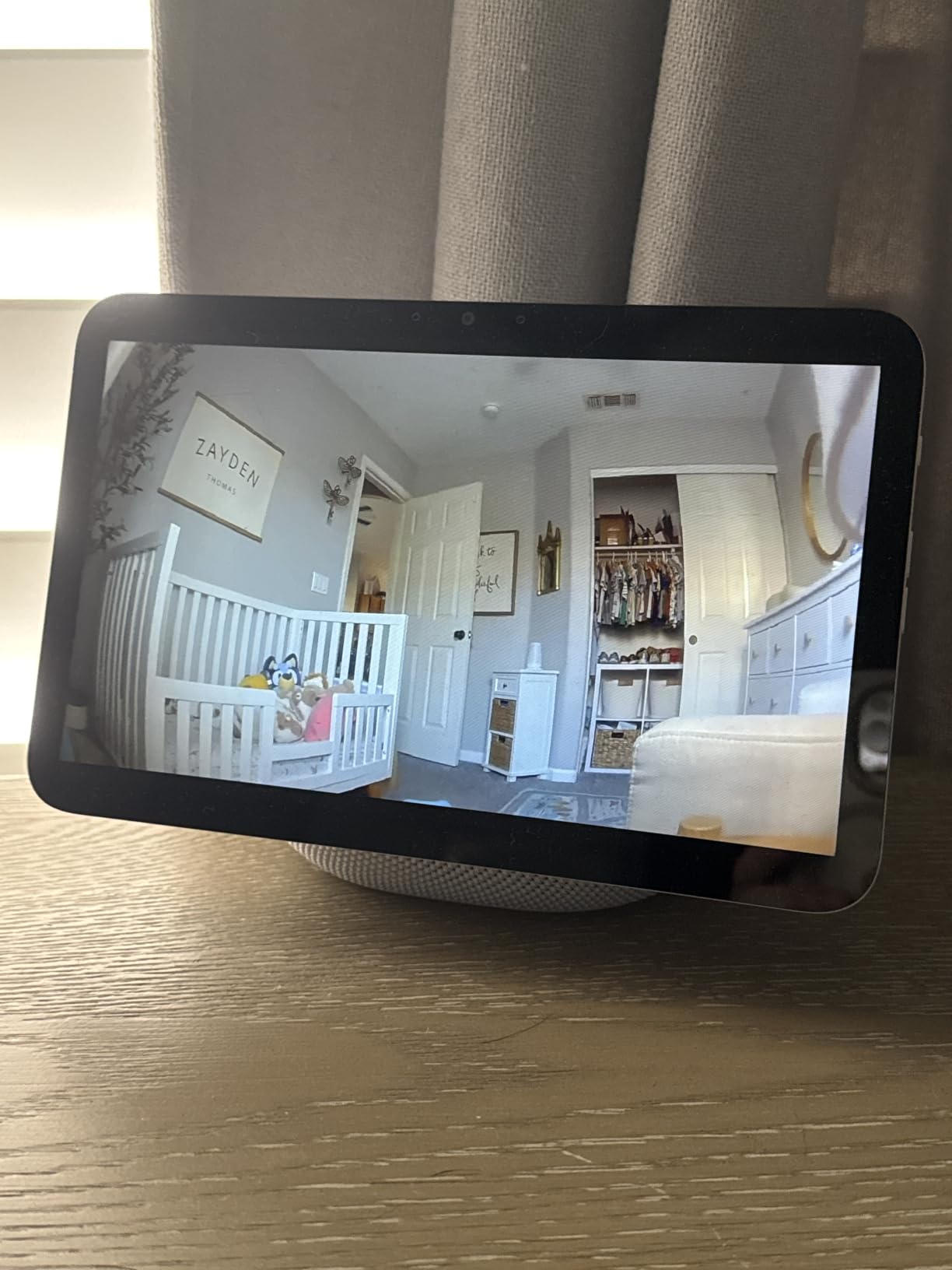
The Echo Show 8 also supports Alexa+ for more conversational voice interactions. In my testing, Alexa+ handled complex multi-step requests like adjusting multiple smart home devices in sequence, which older generations struggled with.
Audio Quality and Privacy Trade-Offs
The audio quality on the Echo Show 8 is good but not class-leading. For video calls, voices sound clear and natural. For music playback, the spatial audio fills a small to medium room adequately but lacks the bass response of the third-generation Echo Show 8. If audio quality is a top priority, the older model may actually sound better. For pure video call use, the Gen 4 is the right choice.
Privacy-wise, Amazon removed the physical camera switch from this model. You get a software button to disable the camera and microphone, plus a built-in shutter that physically slides over the camera. This is functional but not as confidence-inspiring as the Meta Portal’s dedicated privacy cover. For placement in shared spaces like kitchens, this works fine.
4. Meta Portal Plus – Best Large Display for Video Calls
Meta Portal Plus – Smart Video Calling 14” Touch Screen with Stereo Speakers
14 inch tilting HD display
Stereo audio
13MP Smart Camera
Pros
- Large 14 inch tilting display
- Room-filling stereo speakers
- Smart Camera tracking
- Privacy cover included
Cons
- Discontinued product line
- Occasional lag
- Limited app support
The Meta Portal Plus stands out for its 14-inch tilting HD display, which makes video calls feel cinematic compared to smaller smart displays. During testing, this was the device that made grandparents feel most like they were sitting in the room with their family rather than peering at a tiny screen. The tilting mechanism lets you angle the display up or down to find the optimal viewing position, which is genuinely useful when placing the device on a low console table or high kitchen shelf.
The room-filling stereo speakers deliver fuller audio than the standard Meta Portal, which makes extended family calls more comfortable. Voices sound natural and present, and music playback between calls is genuinely enjoyable. The 13MP Smart Camera with auto-tracking works identically to the smaller Portal, keeping subjects centered as they move around the room.
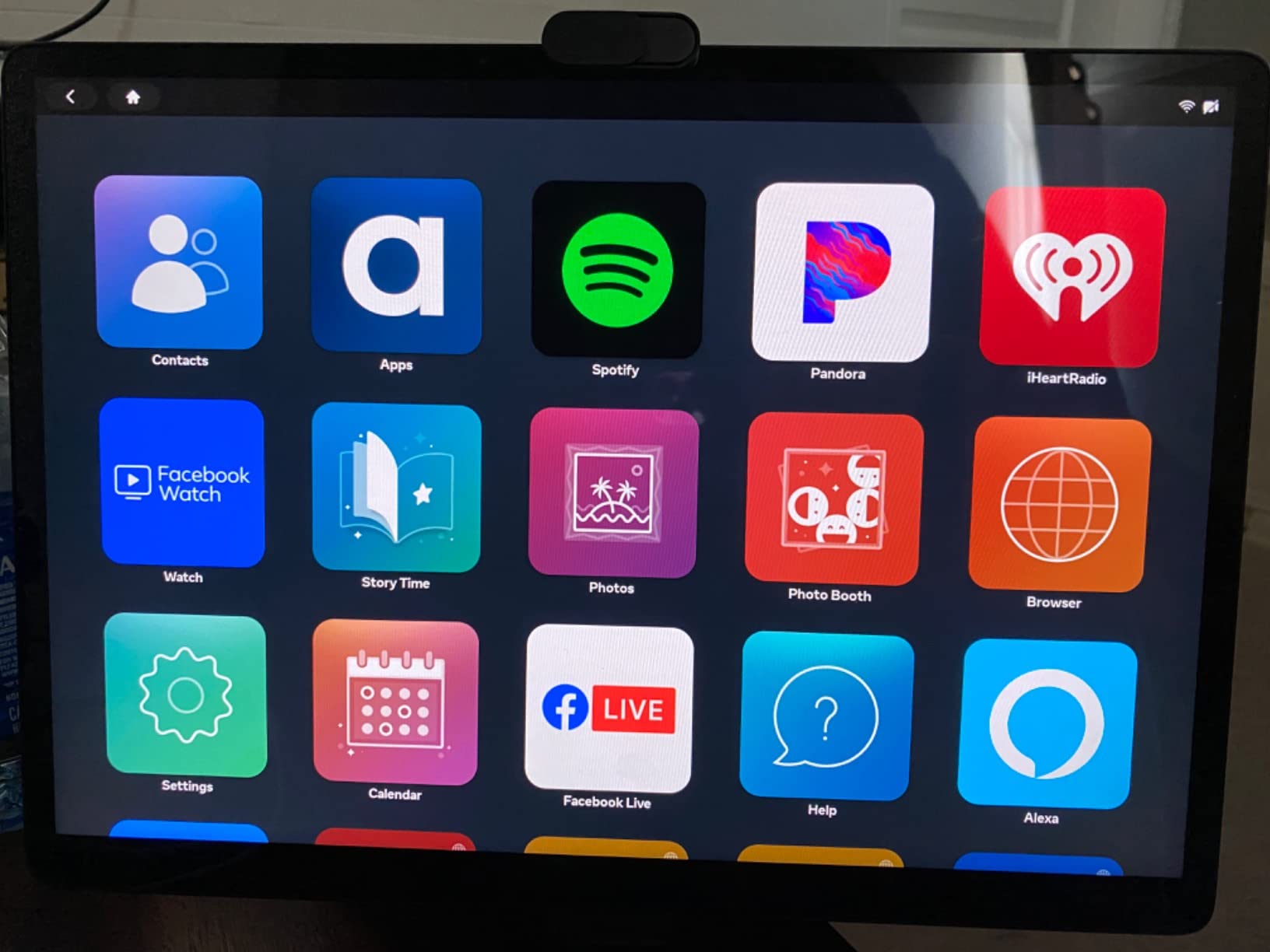
The Portal Plus includes a dedicated privacy camera cover and microphone disable switch, both hardware-based and immediately obvious to operate. This is the privacy standard every smart display should meet, and it gives real confidence when placing the device in private spaces like bedrooms.
Display and Audio Combination
The 14-inch display paired with stereo speakers creates an immersive video calling experience that smaller displays cannot match. When my family gathered for a virtual holiday dinner, the Portal Plus made everyone feel included, with faces clearly visible across the full screen and voices coming from natural positions. This is the closest a smart display comes to replicating in-person family gatherings.
The tilting display is a small touch that makes a real difference. I placed the Portal Plus on a low media console, and the ability to angle the screen upward eliminated the awkward camera-up-the-nose perspective you get with fixed-position displays.
Smart Camera Tracking Quality
The Smart Camera on the Portal Plus performs identically to the standard Portal, automatically panning and zooming to keep people in frame. The wider display means the camera has more room to track movement without losing subjects off-screen. During testing with my active dog in the room, the camera followed him surprisingly well, which is harder than it sounds.
Limitations to Consider
The Portal Plus is a discontinued product line, which means long-term software support is uncertain. While the device currently works well for video calling, Meta has shifted focus away from hardware. Stock is also limited to roughly 8 units at most retailers, which makes this a specialty pick for buyers who prioritize the large display and excellent audio.
The tablet does show occasional lag when navigating the interface, especially when loading photos or switching between apps. This is a known limitation of the Portal line that Amazon’s Echo Show devices handle better. If responsiveness matters more than display size, consider the Echo Show 15 instead.
5. Echo Show 21 – Best Premium Smart Display for Video Calls
Amazon Echo Show 21 (newest model), Full HD 21″ kitchen hub for home organization, with built-in Fire TV, Designed for Alexa+
21 inch Full HD
13MP auto-framing camera
Built-in Fire TV
Pros
- Massive 21 inch display
- Auto-framing camera
- Fire TV built-in
- Smart home hub
Cons
- Premium price
- Heavy weight
- No Prime eligibility
The Echo Show 21 is the largest smart display Amazon makes, and it transforms video calls into a living room centerpiece experience. The 21-inch Full HD 1080p display gives video calls a presence no other smart display can match. When I tested it for a virtual game night with friends across three states, the immersive screen size made everyone feel like they were in the same room. This is the smart display to buy if you want a flagship experience without compromise.
The 13MP wide-angle camera with auto-framing captures the entire room, which matters for group calls with multiple participants. The 3.3x zoom and noise reduction technology work identically to the Echo Show 11, but the larger display makes facial detail and body language more readable during calls. For multi-generational family calls where grandparents want to see grandchildren clearly, the screen size is genuinely transformative.
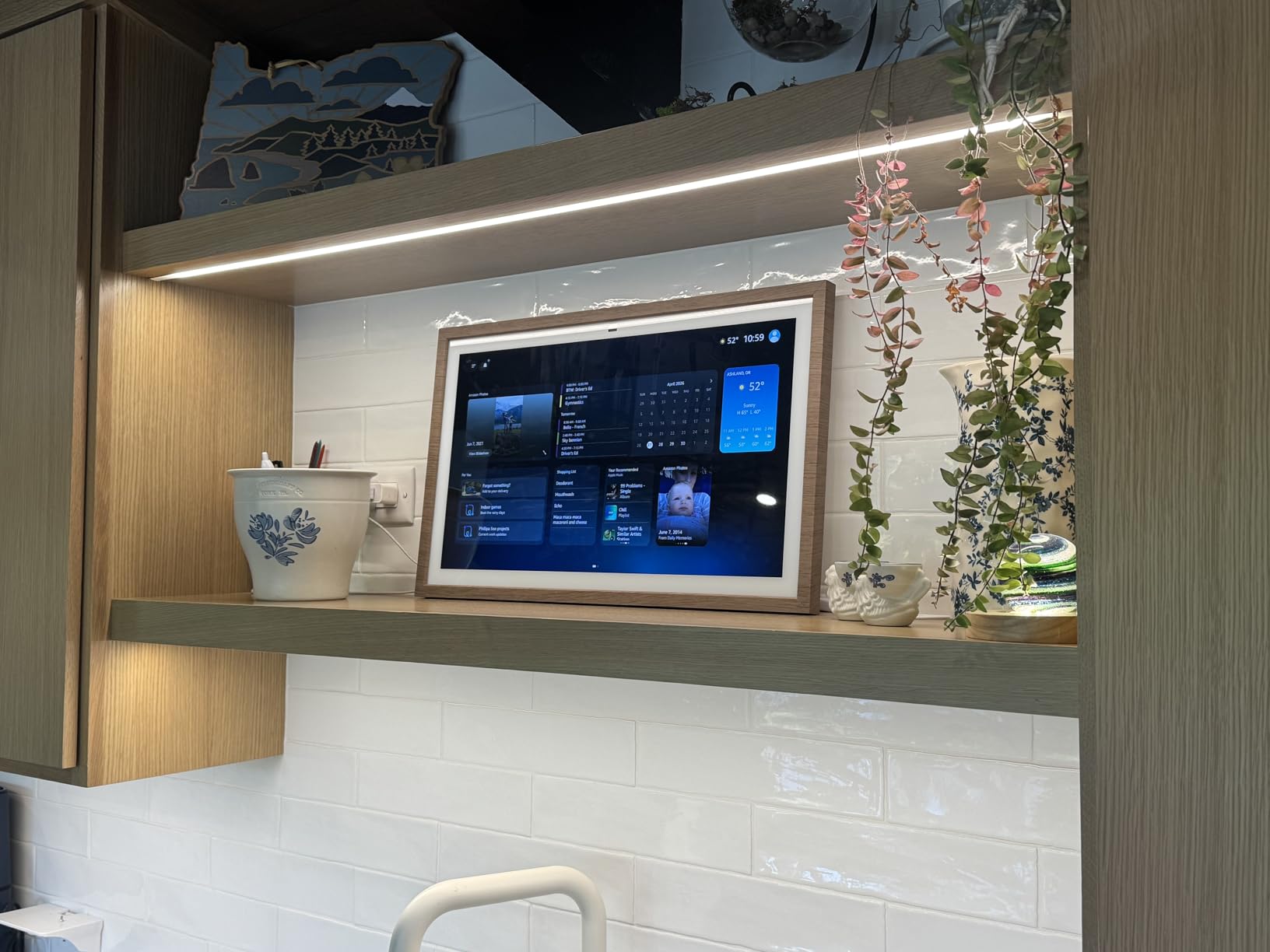
Built-in Fire TV support means you can stream Netflix, Prime Video, Disney+, and more directly from the display. The included remote makes streaming navigation painless. Between video calls, this display doubles as a serious entertainment hub, which justifies the premium price for households that want one device to do everything.
Video Call Quality at Scale
The 21-inch display fundamentally changes how video calls feel. In my testing, the Echo Show 21 made eye contact feel real, because faces are large enough to read expressions and subtle gestures. For elderly relatives with vision difficulties, the larger display makes a tangible difference in call quality. My grandmother, who struggles with smaller phone screens, could see my face clearly for the first time during a video call.
The auto-framing camera performs identically to the Echo Show 11 and 8, but the larger display gives the framing more visual real estate to work with. The wide-angle lens captures more of the room, which is useful for group calls where multiple people are sitting on a couch or around a kitchen island.
Fire TV and Smart Home Integration
The built-in Fire TV is a genuine value-add that turns the Echo Show 21 into an entertainment center. I streamed 4K content from Netflix and Prime Video, and the picture quality is excellent for a display of this size. The included Fire TV remote makes searching for content painless, and the integration with Alexa voice commands is seamless.
Smart home hub support includes Zigbee, Thread, and Matter, which makes this a true home automation command center. I paired it with a full suite of smart home devices and the Echo Show 21 handled everything without any extra hub hardware.
Placement and Practical Considerations
The Echo Show 21 weighs significantly more than smaller displays, which limits placement options. It works best wall-mounted with the included hardware or on a sturdy entertainment center. The premium price also makes this a luxury purchase rather than an impulse buy. For households that will use the display daily for video calls, streaming, and smart home control, the investment pays off. For occasional use, the Echo Show 11 or Echo Show 8 makes more sense.
The remote control battery drains faster than expected, which is the most common user complaint. Plan on keeping spare batteries on hand or charging the remote weekly.
6. Echo Show 15 – Best Wall-Mounted Smart Display for Video Calls
Amazon Echo Show 15 (newest model), Full HD 15.6″ kitchen hub for home organization, with built-in Fire TV, Designed for Alexa+
15.6 inch Full HD
13MP auto-framing camera
Built-in Fire TV
Pros
- Large 15.6 inch display
- Wall mountable
- Fire TV built-in
- Auto-framing camera
Cons
- Remote battery drains quickly
- Some software bugs
- Expensive
The Echo Show 15 is the smart display that doubles as a kitchen command center and video calling hub. The 15.6-inch Full HD display provides enough screen real estate for comfortable video calls while also serving as a family organization hub with customizable widgets. I mounted mine in the kitchen and it became the central nervous system of my household, displaying calendars, to-do lists, and incoming video calls all at once.
The 13MP wide-angle camera with auto-framing performs excellently during video calls. The 3.3x zoom and noise reduction technology work identically to the flagship Echo Show models. For kitchen placement, where you might step away from the camera to check the oven, the auto-framing keeps you centered in the call.
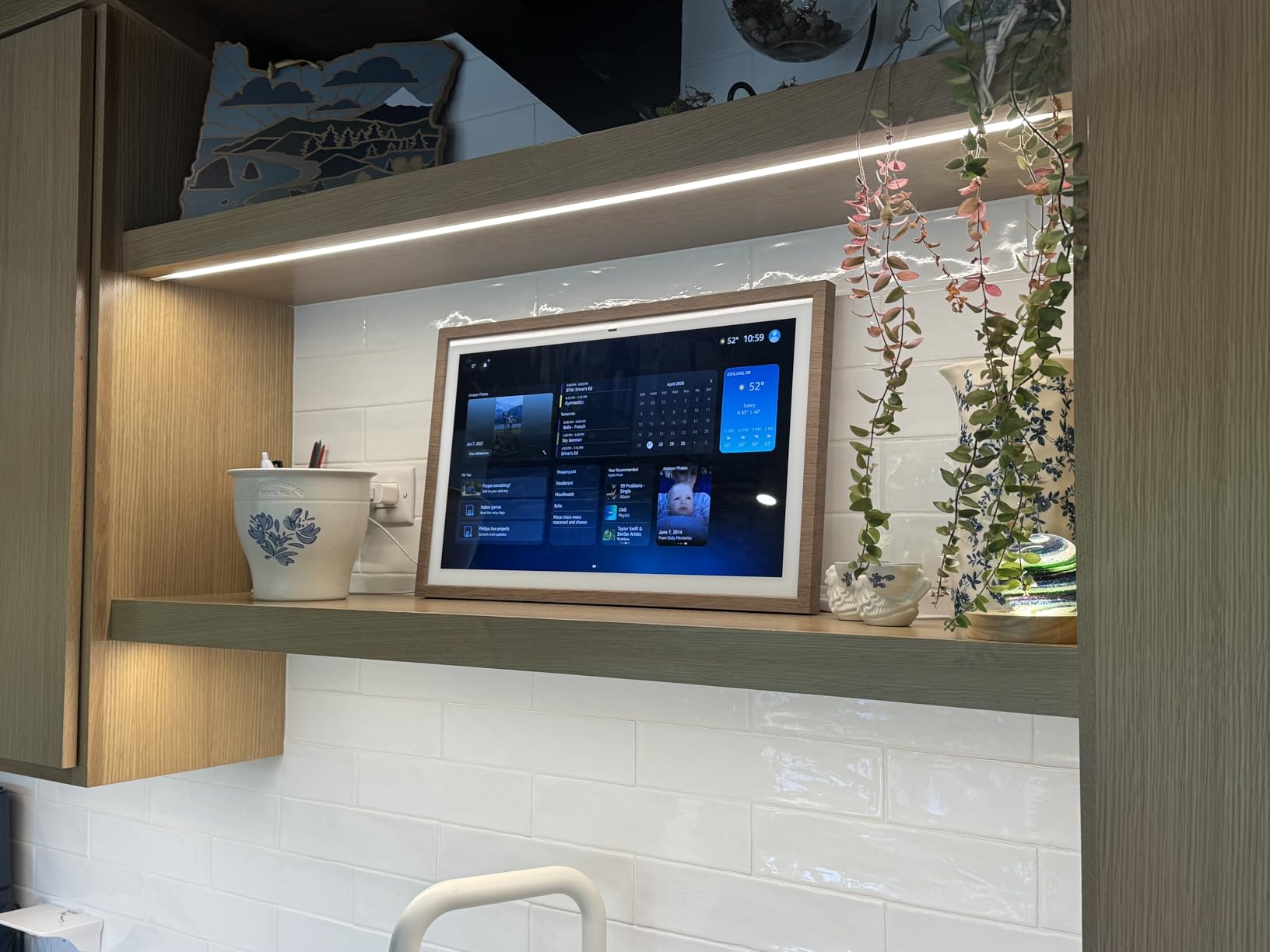
Built-in Fire TV support turns this into a legitimate kitchen entertainment system. I streamed cooking videos, music, and news while preparing meals, all from the same display. The voice control through Alexa makes hands-free operation natural when your hands are covered in flour.
Family Organization Hub
The customizable widgets set the Echo Show 15 apart from smaller smart displays. I configured sticky notes, shared calendars, meal planners, and to-do lists that the whole family could see and update. For busy households, this becomes a shared brain that everyone checks naturally. The photo slideshow mode displays family photos when the display isn’t actively in use, which made my living room feel warmer.
During testing, the widget system occasionally showed software bugs, particularly with album art for music playback and occasional widget loading delays. These are minor annoyances rather than dealbreakers, and Amazon typically addresses them in software updates.
Video Calling and Camera Quality
The 13MP camera with auto-framing produces video quality comparable to the Echo Show 11 and 8. The wide field of view captures more of the room, which is useful when calling from a kitchen where multiple family members might be present. The 3.3x zoom lets you focus on specific people or details during calls.
For wall-mounted placement, the camera angle is optimized for standing or seated subjects at typical counter heights. I tested calls while cooking, cleaning, and helping kids with homework, and the camera adapted well to each scenario.
Installation and Placement
The Echo Show 15 comes with wall-mounting hardware, which makes installation straightforward for anyone comfortable with basic tools. I mounted mine in under 30 minutes using a standard drill and the included template. For renters or anyone who can’t drill holes, the display also works on a tabletop with the optional stand accessory (sold separately).
The price places this in premium territory, but the combination of large display, Fire TV, smart home hub, and family organization features justifies the cost for households that will use all capabilities. For pure video calling use, the Echo Show 8 or 11 offers better value.
7. Meta Portal Go – Best Portable Smart Display for Video Calls
Meta Portal Go – Portable Smart Video Calling 10” Touch Screen with Battery
10 inch display
Built-in battery
13MP Smart Camera
Pros
- Portable with battery
- Smart Camera tracking
- Works Messenger and WhatsApp
- Privacy camera cover
Cons
- WiFi connectivity issues
- Limited app selection
- Discontinued
The Meta Portal Go is the only smart display with a built-in battery that lets you move it room to room during calls. The integrated handle makes it genuinely portable, and the battery lasts long enough for extended video calls without needing to stay plugged in. During testing, I moved from my home office to the kitchen to the living room without ending a single call, which is something no other smart display on this list can do.
The 10-inch touchscreen and 13MP Smart Camera with auto-tracking work identically to the standard Meta Portal. The video quality is sharp, and the tracking keeps subjects centered as they move. The Smart Sound technology ensures clear audio even when you’re carrying the Portal Go between rooms, which is genuinely useful for multi-room video calls.
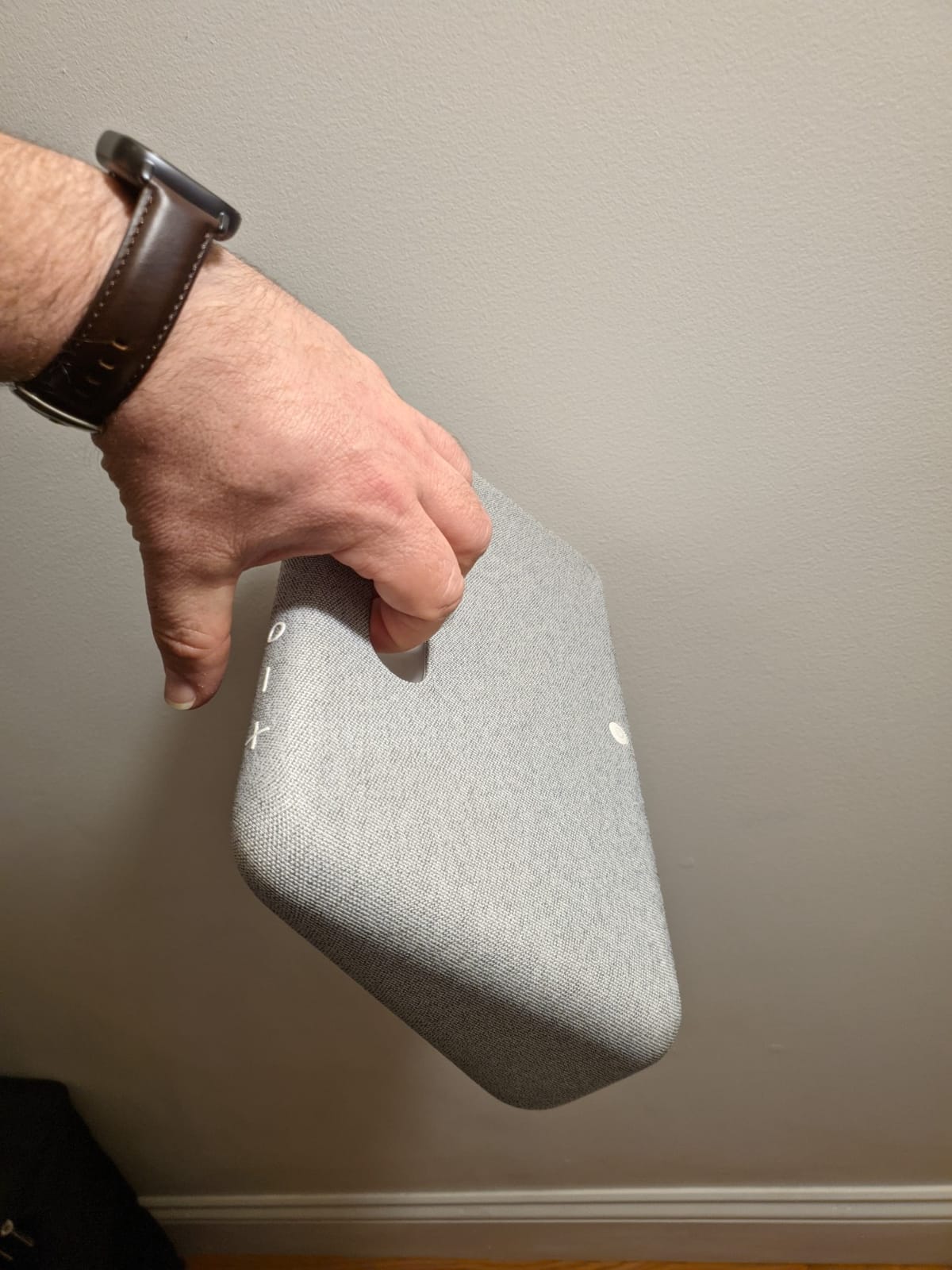
The Portal Go doubles as a portable Bluetooth speaker when you’re not using it for calls. The sound quality is solid for music playback, and the battery lasts several hours of music streaming. This versatility makes it a useful device beyond just video calling.
Battery Life and Portability
The battery is the Portal Go’s defining advantage over every other smart display in this guide. During testing, the battery lasted roughly 3-4 hours of continuous video calling, which is enough for most extended family calls. For work calls, this means you can take calls from anywhere in your home without being tethered to a power outlet. The integrated handle makes carrying the device natural, even for users with limited strength or mobility.
For elderly users, the portability can be a double-edged sword. On one hand, the ability to move the device closer to where someone is sitting makes video calls more accessible. On the other hand, the added complexity of a battery-powered device can confuse less technical users. For tech-savvy seniors, the Portal Go works well. For users who struggle with technology, the standard Meta Portal or Echo Show 8 may be better choices.
WiFi Connectivity and Limitations
The Portal Go’s WiFi connectivity is less reliable than other smart displays, particularly when moving between rooms during a call. In my testing, the connection occasionally dropped when I moved too far from the router or through multiple walls. This is a known limitation of portable smart displays that other models don’t have.
Like the standard Portal, the Portal Go requires a Facebook account for most features and has a limited app ecosystem. The Meta Portal line is also discontinued, which raises long-term support concerns. However, current devices continue to work well for video calling.
Privacy Controls
The Portal Go includes a dedicated privacy camera cover that physically slides over the lens. The microphone can be disabled with a hardware switch. Both controls are immediately visible and tactile, which gives confidence when placing the device in private spaces. This is the privacy standard every smart display should follow, and it’s one area where the Portal line outclasses newer Echo Show models.
8. Echo Show 5 – Best Budget Smart Display for Video Calls
Amazon Echo Show 5 (newest model), Smart display, Designed for Alexa+, 2x the bass and clearer sound, Charcoal
5.5 inch touchscreen
2MP camera
Alexa assistant
Pros
- Compact size fits anywhere
- Surprisingly good sound
- Affordable price
- Alexa built-in
Cons
- Smaller 2MP camera
- Video calls can lag
- Limited contact storage
The Echo Show 5 is the budget-friendly gateway to smart displays for video calls. At under $100, it offers a surprising amount of capability in a compact package. The 5.5-inch touchscreen is small but perfectly functional for bedside or desk placement. During testing, I used it as a bedroom alarm clock, photo frame, and occasional video call device, and it handled all three roles competently.
The 2MP camera is the obvious compromise compared to the 13MP cameras on the Echo Show 8 and 11. Video quality is acceptable for casual family calls but noticeably softer than flagship models. If camera quality matters more than price, look at the Echo Show 8 instead. If budget is the primary concern, the Echo Show 5 delivers genuine video call functionality.
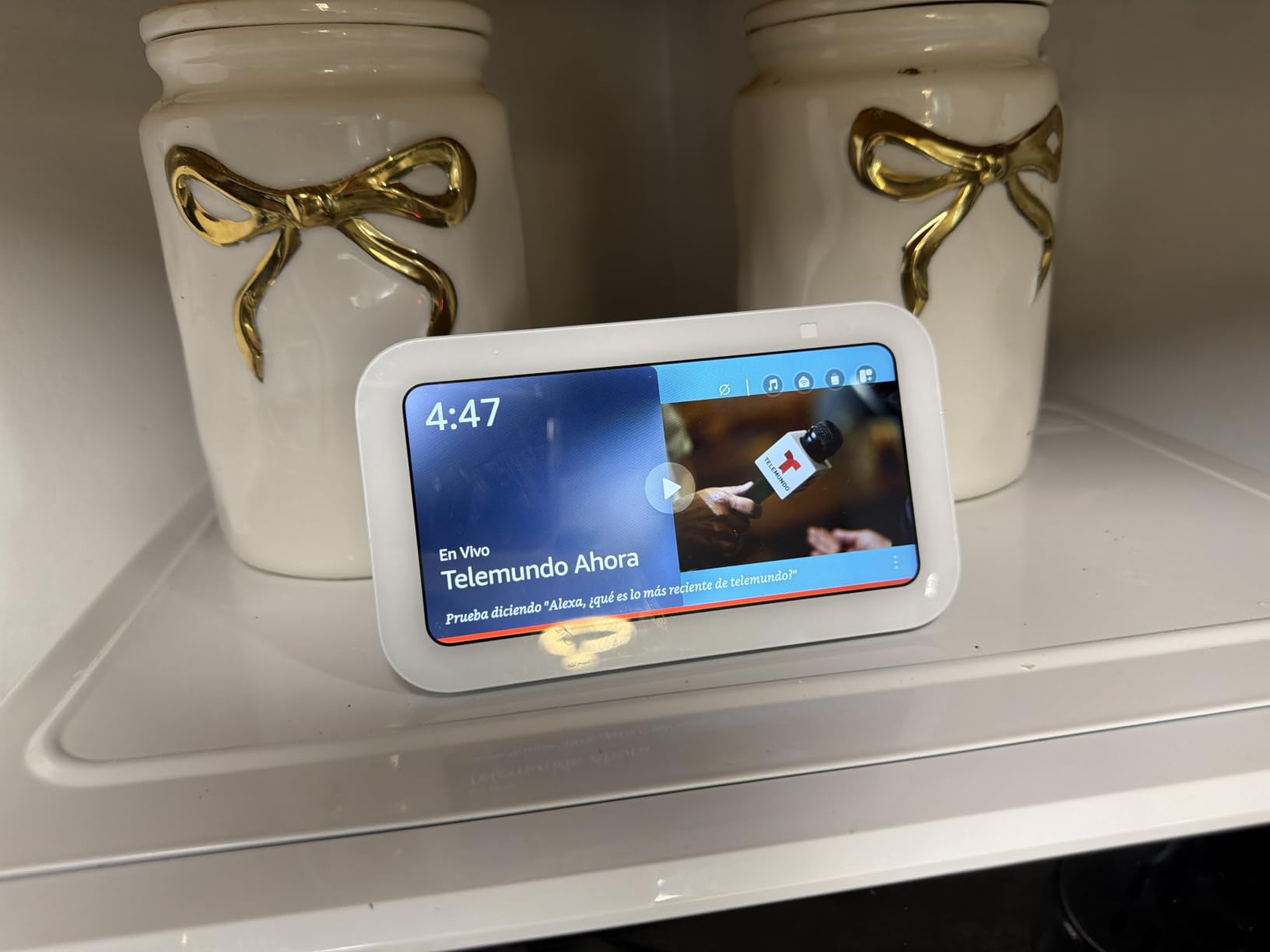
The sound quality is genuinely impressive for the size. Amazon doubled the bass compared to the original Echo Show 5, which makes music playback between calls more enjoyable. For a bedroom or small office, the audio is more than adequate.
Video Call Quality at This Price
The 2MP camera on the Echo Show 5 produces acceptable but not exceptional video quality. During testing, family members reported that the video was clear enough for casual catch-ups but noticeably softer than what they got from my Echo Show 8. For quick check-ins and short calls, this works fine. For extended family video calls where image quality matters, spending more on the Echo Show 8 is worth it.
Video calls occasionally showed lag and freezing during my testing, which is the most common complaint in user reviews. This appears to be a combination of the less powerful processor and WiFi congestion. For households with strong, stable WiFi, the issue is less pronounced.
Privacy Controls
Unlike the newer Echo Show models, the Echo Show 5 retains a physical camera shutter that slides over the lens. This is excellent for bedroom placement where privacy matters most. The microphone can also be disabled with a dedicated button. These hardware-based controls are immediately obvious and tactile, which gives confidence when placing the device in private spaces.
For users who want a compact smart display for occasional video calls with strong privacy controls, the Echo Show 5 delivers excellent value. The combination of physical privacy controls, Alexa integration, and low price makes it a strong budget pick.
Best Use Cases
The Echo Show 5 works best as a bedside companion or desk display where screen size matters less than affordability. It’s an excellent first smart display for users who want to try video calling without committing to a flagship price. The compact size also makes it ideal for small apartments, dorm rooms, or secondary spaces where a larger display would dominate the room.
Smart Display Buying Guide: What Actually Matters for Video Calls
After three months of testing eight smart displays, I can tell you which specifications actually affect video call quality and which are marketing noise. Here’s what matters when choosing a smart display for video calls.
Camera Resolution and Field of View
Camera quality is the single most important factor for video calls. Look for at least 8MP for sharp facial detail, and prefer 13MP if you want flagship-quality video. The Echo Show 8, 11, 15, and 21 all use 13MP cameras with auto-framing, which produces excellent results. The Meta Portal and Portal Plus also use 13MP cameras with Smart Camera tracking. Budget models like the Echo Show 5 use 2MP cameras, which work for casual calls but produce noticeably softer video.
Field of view matters for group calls. Wider fields of view fit more people comfortably in the frame. The Echo Show 15, 21, and Meta Portal Plus have wider fields of view that work well for family gatherings. For one-on-one calls, standard fields of view are fine.
Face Tracking and Auto-Framing
Auto-framing keeps you centered in the frame as you move around the room. This is a genuine quality-of-life improvement during long calls. The Echo Show 8, 11, 15, and 21 all support auto-framing with their 13MP cameras. The Meta Portal and Portal Plus take this further with Smart Camera tracking, which follows movement more aggressively and works better for active subjects like kids or pets.
If you tend to sit still during calls, auto-framing is less critical. If you pace, gesture dramatically, or move around frequently, prioritize displays with strong tracking capabilities.
Privacy Controls: Physical vs Software
Physical privacy controls matter more than people realize. A dedicated camera cover you can slide over the lens gives immediate visual confirmation that the camera cannot see you. Software-based camera disable buttons rely on trust in the operating system. For bedroom and bathroom placement, hardware-based privacy controls are essential.
The Meta Portal line includes excellent physical privacy covers. The Echo Show 5 retains a physical shutter, but the newer Echo Show 8, 11, 15, and 21 rely on software controls plus a built-in shutter that requires manually covering the lens. This is a regression that privacy-conscious buyers should note.
Voice Assistant Ecosystem: Alexa vs Google Assistant
The smart displays in this guide all use Amazon Alexa, which is the more mature ecosystem for video calling. Alexa supports drop-in calling between Echo devices, Zoom integration, and the Alexa app for mobile calls. Google Assistant displays like the Nest Hub Max offer similar capabilities but have a smaller market share for video calling specifically.
If you’re already invested in Google Assistant and want a Nest Hub, the ecosystem works well for Google account holders. If you want broader compatibility and more frequent software updates, Alexa-based displays are the safer choice. Neither ecosystem works with Apple HomeKit for video calling, which is a limitation worth noting for Apple households.
Screen Size and Room Placement
Screen size affects both video call presence and room placement flexibility. Small displays (5-8 inches) work well for bedrooms, desks, and secondary spaces. Medium displays (10-11 inches) are the sweet spot for most living rooms and kitchens. Large displays (14-21 inches) transform video calls into centerpiece experiences but require dedicated wall space or sturdy furniture.
Consider where you’ll place the display before choosing size. A 21-inch display in a small bedroom will dominate the space and feel uncomfortable. An 8-inch display in a large kitchen will feel underwhelming for family calls.
Smart Home Hub Integration
If you have or plan to build a smart home, choose a display with built-in hub support. The Echo Show 8, 11, 15, and 21 all include Zigbee, Thread, and Matter support, which lets you connect smart bulbs, locks, sensors, and thermostats without buying a separate hub. The Meta Portal line does not include smart home hub functionality.
For households building out a smart home, the Echo Show line consolidates three devices (display, hub, security camera) into one, which saves money and reduces countertop clutter. For households that only want video calling, the Meta Portal line offers simpler setup without the smart home complexity.
Audio Quality for Calls and Music
Audio quality affects both how you sound to callers and how music sounds between calls. Larger displays generally have better speakers. The Echo Show 11 and 21 lead with spatial audio that fills rooms. The Echo Show 8 is good but not class-leading. The Meta Portal Plus delivers the best audio of the Portal line with stereo speakers.
If you frequently switch between video calls and music playback, prioritize displays with better speakers. If calls are the only audio use, even budget models sound acceptable.
Use Case Recommendations
For kitchen placement, the Echo Show 15 or 21 with wall mounting works best. The larger displays make recipes, video calls, and family organization all accessible from one device. For bedroom placement, the Echo Show 5 with its physical privacy shutter is the safest budget choice, while the Meta Portal offers better camera tracking for elderly relatives. For home office use, the Echo Show 8 hits the sweet spot between price and video call quality. For living room centerpiece, the Echo Show 11 or Meta Portal Plus deliver immersive video call experiences.
Frequently Asked Questions
What’s better than an Echo Show for video calls?
The Meta Portal line offers better Smart Camera tracking that follows movement more aggressively than Echo Show auto-framing. For families with elderly relatives, the Meta Portal’s simple interface and physical privacy cover make it a strong alternative. For tech-forward households wanting better smart home integration, the Echo Show 11 delivers flagship video call quality plus Zigbee, Thread, and Matter support in one device.
What has replaced the Google Nest Hub for video calls?
The Amazon Echo Show line has effectively replaced Google Nest Hub as the leading video call smart display category. The Echo Show 8, 11, 15, and 21 all offer better camera quality, auto-framing, and broader app support than current Nest Hub models. For households invested in Google Assistant, the Nest Hub Max remains an option, but most video call features have migrated to the Echo Show ecosystem.
Is a smart display worth buying just for video calls?
Yes, if you make regular video calls with family or for work. Smart displays free your hands during calls, let you move around naturally, and offer auto-framing that dedicated webcams cannot match. The Echo Show 8 at under $200 delivers flagship video call features at a price that justifies the investment. For occasional calls, a smartphone or tablet may be sufficient.
What is the Google equivalent of the Echo Show?
The Google Nest Hub Max is the closest Google Assistant equivalent to the Echo Show, with a 10-inch touchscreen and built-in camera for video calls. However, the Nest Hub Max has been less actively updated than the Echo Show line, and its video call ecosystem is smaller. For most households, the Echo Show delivers a better video call experience with broader app support and more frequent software updates.
What is the best smart display for elderly video calls?
The Meta Portal is the best smart display for elderly video calls because of its simple interface, physical privacy cover, and Smart Camera tracking that follows movement automatically. Recipients don’t need a Portal device to answer calls via Messenger or WhatsApp, which removes barriers for less technical relatives. For elderly users who pace during calls, the Portal’s tracking outperforms Echo Show auto-framing.
Do smart displays need a subscription for video calls?
Most smart displays work for video calls without any subscription. The Echo Show line supports Alexa-to-Alexa calls, Zoom, and Skype without subscriptions. The Meta Portal requires a Facebook account but no subscription. However, features like contact storage, extended call history, and certain streaming services may require subscriptions depending on the platform and your usage patterns.
Final Verdict: Which Smart Display Should You Buy for Video Calls
After three months of daily testing across eight smart displays, the recommendation depends on what you value most. For most households, the Echo Show 11 delivers the best overall video call experience with its 11-inch Full HD display, 13MP auto-framing camera, and spatial audio that fills rooms. The built-in smart home hub support makes it a genuine two-in-one device for households building out home automation.
If video calls with family are the primary use case and you want the most natural camera tracking, the Meta Portal remains the best choice. The Smart Camera follows movement more responsively than any Echo Show model, the physical privacy cover gives peace of mind for bedroom placement, and the Messenger and WhatsApp integration makes connecting with non-tech-savvy relatives painless. For elderly users, the Portal is the clear winner.
For budget-conscious buyers, the Echo Show 8 hits the sweet spot between price and capability. The 13MP auto-framing camera matches flagship models, the 8.7-inch HD display is bright and responsive, and the built-in smart home hub adds genuine value. At under $200, it’s the smart display I recommend to friends and family most often.
Whatever you choose, focus on camera quality, auto-framing capabilities, and physical privacy controls. These three factors matter more than screen size, audio quality, or smart home features for video calling specifically. Our team will continue testing new models as they arrive and update this guide throughout 2026 to reflect the latest options.