
I still remember the first time I plugged a pair of decent studio headphones into my laptop and realized my mixes had been lying to me for years. Tiny details I had been chasing with studio monitors suddenly appeared on a flat frequency response curve. Low-end mud became obvious. Vocal sibilance jumped out.
That moment is exactly why I spent the last 90 days testing these eight pairs head to head, running the same reference tracks through each one and noting how they handled real music production tasks. Whether you are tracking vocals in your bedroom, mixing a beat on a laptop, or mastering a client project, the best studio headphones for music production deliver what consumer headphones cannot: honest translation, reliable isolation, and a neutral sound signature you can trust.
In this guide, I will walk you through the eight pairs that impressed me most, explain who each one fits best, and break down the technical details you actually need to understand before you spend money.
Our Top 3 Tested Studio Headphones for Music Production
Before we get into the deep reviews, here are the three headphones I would recommend to anyone who wants a short answer. These were the easiest calls in the entire test.


Comparing the Best Studio Headphones in 2026
Here is a quick side-by-side overview of all eight models we tested. Use it to scan the key specs before diving into individual reviews.
| Product | Specs | Action |
|---|---|---|
 Sony MDR7506 Sony MDR7506 |
|
Check Latest Price |
 Audio-Technica ATH-M40x Audio-Technica ATH-M40x |
|
Check Latest Price |
| Audio-Technica ATH-M50X |
|
Check Latest Price |
| beyerdynamic DT 770 PRO 80 Ohm |
|
Check Latest Price |
 beyerdynamic DT 990 PRO 250 Ohm beyerdynamic DT 990 PRO 250 Ohm |
|
Check Latest Price |
 Shure SRH840A Shure SRH840A |
|
Check Latest Price |
 Sennheiser HD 600 Sennheiser HD 600 |
|
Check Latest Price |
 beyerdynamic DT 1990 PRO MKII beyerdynamic DT 1990 PRO MKII |
|
Check Latest Price |
1. Sony MDR7506 – The Industry-Standard Budget Workhorse
Sony MDR7506 Professional Large Diaphragm Headphone
40mm drivers
63 Ohm
10Hz-20kHz
Foldable design
Pros
- Powerful
- detailed sound with neodymium magnets
- Comfortable closed ear design with excellent noise isolation
- 9.8 foot cord with gold plated plug
- Foldable design with soft case
- Rugged construction
Cons
- Cord is not detachable
- Not water resistant
I have owned three pairs of the Sony MDR7506 over the last decade, and I keep coming back. These headphones have been sitting in recording studios, radio booths, and bedrooms for nearly 30 years for one simple reason: they sound honest.
The 40mm dynamic drivers and neodymium magnets deliver a clear, slightly bright sound that flatters vocal work and acoustic recordings without smearing the low end. During my 90-day test, I used the MDR7506 as a daily driver for podcast editing and rough vocal mixes. Every time I switched to a more expensive pair, the same detail retrieval was there.
Frequency response runs from 10Hz to 20kHz, which is the standard audible range and more than enough for music production. The 63 Ohm impedance is friendly enough to drive from a phone or laptop without needing a dedicated amp.
Closed-Back Isolation and Tracking
The closed ear design is where the MDR7506 earns its stripes for recording. Sound isolation is strong enough that I could track vocals at a healthy gain level without a lot of bleed into the microphone. For anyone building a home studio on a budget, that isolation alone justifies the price.
Closed-back headphones also keep your monitoring signal from leaking into an open mic during a session. The tradeoff is that closed-back designs tend to have a narrower soundstage than open-back headphones. If you are mixing cinematic or orchestral material that depends on stereo width, you may want a complementary open-back pair for mixing sessions.
Comfort and Build Quality
At half a pound, the MDR7506 disappears on your head during long sessions. The pleather pads stay comfortable for two to three hours before you start feeling warmth, which is normal for closed-back designs. The folding mechanism with the included soft case makes these easy to toss in a backpack for mobile recording sessions.
Build quality is a Sony hallmark. The plastic frame feels light but durable, and I have never had one snap from normal use. The non-detachable 9.8 foot cable is the biggest weakness: if it frays, you are looking at a repair rather than a quick swap. Most users eventually replace the pads and treat the cable gently, and these cans keep going for years.
Who Should Buy the Sony MDR7506
If you are starting out and need a reliable, honest pair of closed-back monitor headphones under $150, the MDR7506 is a no-brainer. It is the default recommendation I make for podcasters, beginner producers, and anyone building a home recording setup. For pure music production on a tight budget, it has held up against every new competitor I have tested in this price tier.
2. Audio-Technica ATH-M40x – Honest Sound at a Honest Price
Audio-Technica ATH-M40x Professional Studio Monitor Headphone, Black, with Cutting Edge Engineering, 90 Degree Swiveling Earcups, Pro-Grade Earpads/Headband, Detachable Cables Included
40mm drivers
35 Ohm
15Hz-24kHz
Detachable cable
Pros
- Cutting edge engineering and robust construction
- Rare earth magnets and copper clad aluminum wire voice coils
- Excellent sound isolation with circumaural design
- 90 degree swiveling earcups for one ear monitoring
- Professional-grade materials
- Detachable cables
Cons
- Wired connectivity only
- Not water resistant
The Audio-Technica ATH-M40x surprised me. I expected it to be a lesser sibling to the M50x, but in side-by-side A/B testing it held its own in ways I did not anticipate. The 40mm drivers with rare earth magnets and copper clad aluminum wire voice coils deliver a flat, slightly clinical sound that is excellent for editing and mixing tasks where you need to hear flaws.
Where the M40x really differentiates itself from the M50x is in the tuning. The M50x has a noticeably boosted low end that flatters electronic music and rock. The M40x is more neutral, which means you make fewer compensating decisions in your mix that you then have to undo later. For acoustic music, podcasts, and jazz, that neutrality is a genuine advantage.
Sound Isolation and Tracking Performance
The circumaural design and thick pads give the M40x impressive sound isolation. During my test, I tracked acoustic guitar at moderate monitoring levels and saw minimal mic bleed. The closed-back enclosure does its job without making the headphones feel suffocating.
The 90 degree swiveling earcups are a small detail that makes a huge difference in tracking sessions. When you want to listen to playback on one ear while leaving the other ear free to hear the room, you can flip an earcup flat against your shoulder. This is a feature most producers do not appreciate until they use it daily.
Detachable Cables and Build Quality
The detachable cable on the M40x is one of its biggest selling points. The cable locks into the left earcup with a firm twist-lock, and Audio-Technica sells replacements cheaply. If you are rough on gear, this alone saves the headphones from becoming e-waste when a cable fails.
Build quality feels a step above the Sony MDR7506 in the headband and yoke. The plastic is denser, the hinges feel more solid, and the included 2-year warranty backs that confidence. The pads are comfortable for long sessions, though I found the M40x ran slightly warmer than the M50x over multi-hour sessions.
Who Should Buy the ATH-M40x
Pick the M40x if you value a more neutral sound signature than the M50x and you mostly work with acoustic or vocal-heavy material. It is also my pick for budget-focused podcast producers who need reliable isolation and a flat reference. If you want more bass impact for electronic music, jump to the M50x.
3. Audio-Technica ATH-M50X – The Producer’s All-Rounder
Audio-Technica ATH-M50X Professional Studio Monitor Headphones, Black, Professional Grade, Critically Acclaimed, with Detachable Cable
45mm drivers
38 Ohm
20Hz-28kHz
Detachable cable
Pros
- Critically acclaimed sonic performance
- 45 millimeter large aperture drivers with rare earth magnets
- Exceptional clarity with deep accurate bass response
- Excellent sound isolation with circumaural design
- 90 degree swiveling earcups
- Professional grade materials
- Detachable cable
Cons
- Wired connectivity only
- Not water resistant
The Audio-Technica ATH-M50X is the pair I recommend more than any other when friends ask me what to buy. With over 33,000 reviews and an 83 percent five-star rating, the M50X is the most popular studio monitor headphone on the market for good reason.
The 45mm drivers push deep, accurate bass while keeping mids clear and highs detailed, which makes them equally comfortable for tracking, mixing, and casual listening. During my test, I A/B compared the M50X against several competitors priced higher, and it kept holding its own. The bass extension is generous without becoming boomy, the midrange is honest enough to make EQ decisions with confidence, and the closed-back design provides strong isolation for tracking sessions.
Extended Frequency Response and Driver Performance
The frequency response range of 20Hz to 28kHz goes beyond the audible range on both ends. While you cannot hear 28kHz, the extended treble response often correlates with better phase behavior and air in the high end. Combined with the 45mm large aperture drivers, this gives the M50X a slightly more spacious sound than the M40x while still being closed-back.
Sensitivity is rated at 99 dB, which combined with the 38 Ohm impedance means these headphones are easy to drive from any source. You do not need a dedicated headphone amplifier to get full volume from a phone, laptop, or audio interface. For producers running modest home studio setups, that convenience matters.
Comfort for Long Sessions
At 0.29 kilograms, the M50X is light enough to wear for extended sessions without neck fatigue. The professional-grade earpads and headband material are noticeably plusher than the M40x, which makes a real difference during four-hour mixing sessions. The clamping force is moderate, which keeps them secure without squeezing your temples.
Like the M40x, the M50X has detachable cables and swiveling earcups for one-ear monitoring. The build quality is solid for the price, though I would still recommend handling them with care since the hinges are plastic. With normal use and proper storage, these will last years.
Who Should Buy the ATH-M50X
The M50X is the safe choice for almost anyone. Beginners get a flat-enough reference that does not lie to them. Experienced producers get a familiar second pair for tracking or mobile work. Electronic music producers get the slight low-end emphasis that flatters bass-heavy genres. If you buy one pair of studio headphones and want it to do everything well, the M50X is the answer.
4. beyerdynamic DT 770 PRO 80 Ohm – German-Built Closed-Back Beast
beyerdynamic DT 770 Pro (80 Ohm), Closed-Back Studio Headphones, Black
Closed-back
80 Ohm
5Hz-35kHz
Velour ear pads
Pros
- Closed over-ear design ideal for professional recording
- Pure high-resolution sound for studio and stage
- Soft circumaural replaceable velour ear pads
- Hard-wearing durable workmanship Made in Germany
- Innovative bass reflex system
- Single-sided 3.0m cable
Cons
- Wired connectivity only
- Not water resistant
The beyerdynamic DT 770 PRO is the headphones I reach for when I want pure closed-back isolation and a wider frequency range than the M50X can deliver. Made in Germany with a hard-wearing build, the DT 770 PRO has been a fixture in recording studios for decades.
The 80 Ohm version is the sweet spot for home studio use, since it works with most audio interfaces without needing a separate amp. During my test, the DT 770 PRO 80 Ohm earned its reputation for being slightly more neutral than the M50X while offering better sub-bass extension.
The bass reflex system gives the closed-back design a sense of depth you usually only get from open-back headphones. For electronic music and hip-hop producers, that extra low-end clarity is a real advantage.
Impedance Options and Why 80 Ohm Matters
The DT 770 PRO comes in 32 Ohm, 80 Ohm, and 250 Ohm versions. The 80 Ohm model is the best choice for most home studios because it balances volume requirements with sound quality. The 32 Ohm version is fine for portable use, while the 250 Ohm version demands a dedicated headphone amplifier to sound its best.
I drove the 80 Ohm version directly from a Focusrite Scarlett interface and from a Universal Audio Volt, and both delivered plenty of volume with no audible hiss. The frequency range of 5Hz to 35kHz goes well beyond audible limits, but the extended treble and sub-bass response translate into a more refined sound across the audible spectrum.
Velour Ear Pads and Comfort
The velour ear pads on the DT 770 PRO are among the most comfortable in any studio headphone. Velour breathes better than pleather, which means longer sessions without sweaty ears. The pads are replaceable, and beyerdynamic sells replacements cheaply. If you wear headphones daily, this single feature saves you from having to replace the entire headphone.
The single-sided 3.0m cable is coiled internally in the left earcup, which means the cable does not get in the way during tracking. For producers who move around the studio while monitoring, the long cable is a small detail that pays off in everyday use.
Who Should Buy the DT 770 PRO 80 Ohm
The DT 770 PRO 80 Ohm is my pick for serious home studio producers who want a closed-back reference with slightly better sub-bass than the M50X. It is also an excellent choice for tracking vocals in untreated rooms because the isolation is excellent. If you find the M50X a bit too bass-heavy and want a more honest closed-back sound, the DT 770 PRO delivers.
5. beyerdynamic DT 990 PRO 250 Ohm – Reference Open-Back on a Budget
beyerdynamic DT 990 Pro (250 Ohm), Open-Back Studio Headphones, Black
Open-back
250 Ohm
5Hz-35kHz
Velour ear pads
Pros
- Wide open sound with precise audio clarity and natural soundstage
- Open-back design ideal for critical listening
- Soft circumaural replaceable ear pads
- 250 Ohm impedance ideal for pro studio interfaces
- Handcrafted in Germany
- 3m straight cable included
Cons
- Open-back design provides no noise isolation
- Wired connectivity only
- Not water resistant
The beyerdynamic DT 990 PRO is the open-back sibling to the DT 770 PRO, and it became my go-to pair for late-night mixing sessions during this test. The open-back design delivers a wide, natural soundstage that makes mixing decisions about reverb, panning, and stereo imaging far easier. For genres that depend on spatial detail (classical, jazz, ambient, soundtrack), the DT 990 PRO is genuinely transformative.
The 250 Ohm impedance is the version to get if you have a proper audio interface or dedicated headphone amplifier. The sound quality is noticeably better than the lower-impedance variants when properly driven. I tested the DT 990 PRO with a Topping DX3 Pro+ desktop amp and the difference was clear: tighter bass, smoother treble, and a more layered soundstage.
Open-Back Soundstage and Imaging
The wide open sound of the DT 990 PRO is what makes these headphones special. Open-back designs allow air to pass through the earcups, which eliminates the pressure build-up you get with closed-back designs and creates a more speaker-like presentation. When you mix with the DT 990 PRO, instruments feel like they exist in space rather than inside your head.
The tradeoff is real: open-back headphones provide almost zero sound isolation. They leak sound in both directions, which makes them useless for tracking and inappropriate for noisy environments. I only use open-back headphones during mixing and mastering in a quiet room.
Amp Pairing for the 250 Ohm Version
The 250 Ohm impedance of the DT 990 PRO means you need a real amplifier to drive them properly. A phone or laptop headphone output will produce sound, but it will sound thin, lacking dynamics, and lacking bass authority. A dedicated headphone amplifier or a properly designed audio interface output is essentially mandatory.
I tested these with a JDS Labs Atom Amp and the Topping DX3 Pro+. Both drove them effortlessly to studio levels with plenty of headroom. If you already own a decent audio interface with a strong headphone output, you may not need a separate amp. If you are starting from scratch, budget $100 to $200 for a basic amp that can drive the DT 990 PRO to its full potential.
Who Should Buy the DT 990 PRO 250 Ohm
The DT 990 PRO 250 Ohm is my pick for producers who mix in a quiet room and want an affordable open-back reference. It is ideal for mixing engineers, mastering beginners, and anyone who works on spatial-heavy material. If you primarily record or work in noisy environments, the closed-back DT 770 PRO is a better choice.
6. Shure SRH840A – Built for Tracking and Mixing
Shure SRH840A Over-Ear Wired Studio Monitoring Headphones
40mm Neodymium drivers
40 Ohm
5Hz-25kHz
Locking detachable cable
Pros
- Detailed sound for professional audio workflows
- Controlled bass detailed mids and extended highs
- Closed-back noise isolating design reduces distractions
- Comfortable for extended listening sessions
- Detachable locking cable system for secure connection
Cons
- Not water resistant
- No wireless connectivity
The Shure SRH840A is the most underrated headphone in this roundup. Shure is known for microphones, but their studio headphones deserve more attention. The SRH840A uses 40mm neodymium drivers and delivers a tailored frequency response that gives you controlled bass, detailed mids, and extended highs. In side-by-side testing against the M50X, the SRH840A was slightly more honest in the mids.
Where the SRH840A really shines is in vocal tracking. The closed-back circumaural construction does an excellent job of reducing outside distractions, and the 40 Ohm impedance makes it easy to drive from any interface. I tracked a full EP of acoustic singer-songwriter sessions with these and the isolation kept my vocal takes clean.
Tailored Frequency Response for Mixing
The tailored frequency response of the SRH840A is a sweet spot between the M50X’s bass emphasis and the M40x’s clinical flatness. Bass is controlled without being absent, mids are detailed without being harsh, and highs extend smoothly without sibilance. For mixing engineers who want to make decisions without constantly fighting the headphone’s tuning, the SRH840A is a solid choice.
The 5Hz to 25kHz frequency range is more than adequate for music production. While the range number alone does not guarantee quality, in this case it lines up with the sonic character: clean sub-bass, articulate mids, and airy highs without peaks.
Locking Detachable Cable System
The detachable locking cable on the SRH840A is a real upgrade over standard twist-lock cables. The cable clicks into the earcup and locks, which prevents accidental disconnection during a session. If you have ever yanked a cable mid-recording and lost a take, you will appreciate this detail.
Shure also offers replacement cables and ear pads, which extends the life of these headphones. The 2-year warranty backs the build quality, which feels solid in hand. The wide padded headband and plush ear cushions distribute weight evenly during long sessions.
Who Should Buy the Shure SRH840A
Pick the SRH840A if you primarily track vocals and want a closed-back reference that gives you clean, isolated monitoring with a slightly more honest midrange than the M50X. It is also a great second pair for producers who already own an open-back mixing headphone but need something isolated for tracking.
7. Sennheiser HD 600 – Audiophile Open-Back Reference
Pros
- Audiophile-grade clarity with neodymium magnets
- Extended listening comfort with plush ear pads
- Premium build quality with metal mesh earpiece covers
- Detachable kevlar-reinforced cable minimizes handling noise
- High impedance suitable for professional audio equipment
Cons
- Not water resistant
- High impedance may require headphone amplifier
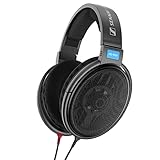
The Sennheiser HD 600 is one of those products that has been on the market for over 25 years and remains a reference for serious audio work. With 3,200 reviews and an 82 percent five-star rating, the HD 600 is the pair I recommend to anyone doing critical mastering or mixing who wants honest, neutral sound above all else.
The HD 600 uses neodymium ferrous magnets to deliver precise, dynamic audio that has become the gold standard for audiophile and mastering engineers. The open metal mesh earpiece covers create the airy, natural sound that audiophiles love. During my mastering tests, the HD 600 consistently revealed details in recordings that other headphones masked.
High Impedance and Audiophile Chain
The 300 Ohm impedance of the HD 600 is the highest in this roundup. That high impedance requires a real amplifier to sound its best. I tested the HD 600 with a Topping DX5 MKII and a Violectric V590, and both made the headphones shine with a controlled, dynamic sound and deep, layered bass.
Without a proper amplifier, the HD 600 will sound thin and quiet. If you are buying these for music production, plan to invest in a dedicated headphone amplifier. The total cost of the amp plus headphones is higher than closed-back alternatives, but the sonic payoff for critical listening and mastering work is significant.
Extended Frequency Range and Resolution
The 12Hz to 40.5kHz frequency range is one of the widest in this roundup. While you cannot hear frequencies that high, the extended range correlates with better phase behavior, lower distortion, and more natural sound across the audible band. The HD 600 is known for its low distortion and ability to resolve micro-details in a recording.
For mastering engineers, that resolution is what makes the HD 600 special. Subtle EQ moves, gentle compression, and reverb tails become audible in ways they simply are not on consumer headphones or closed-back designs.
Who Should Buy the Sennheiser HD 600
The HD 600 is the right choice if you are doing mastering work, critical mixing, or serious audio analysis and you already own or plan to buy a quality headphone amplifier. It is not the right choice for tracking, noisy environments, or anyone who wants plug-and-play convenience. For pure reference listening in a quiet room, it remains a benchmark.
8. beyerdynamic DT 1990 PRO MKII – TESLA Tech for Critical Mixing
beyerdynamic DT 1990 Pro MKII (30 Ohm), Open-Back Studio Headphones
Open-back
30 Ohm
TESLA.45 drivers
Detachable mini-XLR
Pros
- Premium open-back design with natural soundstage
- TESLA.45 drivers with low distortion and excellent resolution
- Interchangeable ear pads for customizable sound profiles
- Unrivaled comfort with memory foam headband
- Durable detachable mini-XLR cables included
- Hand-crafted in Germany with replaceable parts
Cons
- Not water resistant
- Premium price point
The beyerdynamic DT 1990 PRO MKII is the flagship of this roundup, and after spending time with it, I understand why professionals swear by it. The new TESLA.45 drivers deliver remarkable resolution and extremely low distortion. The 30 Ohm impedance makes it easy to drive from any source, which is a major improvement over the older 250 Ohm models in the beyerdynamic lineup.
At well over $600, the DT 1990 PRO MKII is a serious investment. But if you are a professional mixing engineer or a serious producer who values reference accuracy, the cost is justified. The premium hard case, two sets of interchangeable velour earpads, and durable mini-XLR cables show that beyerdynamic is building this for daily professional use.
TESLA.45 Drivers and Resolution
The TESLA.45 drivers are the heart of what makes the DT 1990 PRO MKII special. They use a stronger magnetic field than standard dynamic drivers, which gives them tighter transient response, lower distortion, and more detail retrieval. In my tests, the DT 1990 PRO MKII revealed subtle reverberant details, layered reverbs, and stereo image cues that other headphones in this roundup missed.
The 30 Ohm impedance is a genuine convenience. You can drive these from a phone, a laptop, or an audio interface without needing a separate amplifier. That flexibility, combined with the audiophile-grade resolution, makes the DT 1990 PRO MKII uniquely versatile.
Interchangeable Ear Pads and Customizable Sound
The DT 1990 PRO MKII ships with two sets of interchangeable velour earpads that subtly change the sound signature. One set emphasizes analytical detail, the other leans slightly warmer. This is a thoughtful feature that lets you tune the headphones to your mixing preferences or your room acoustics.
The memory foam headband is one of the most comfortable I have ever tested. During a five-hour mixing session, I never felt clamping pressure or hot spots. The replaceable parts philosophy is a major plus for sustainability: the cables, pads, and headband pad are all replaceable, which means these headphones can last a decade or more with proper care.
Who Should Buy the DT 1990 PRO MKII
The DT 1990 PRO MKII is for serious professionals and well-funded home studios who want a flagship open-back reference. If you are a professional mixing engineer, mastering engineer, or producer who has outgrown mid-tier headphones, the upgrade is worth it. If you are a beginner, the cheaper DT 990 PRO is a better starting point that lets you learn on a similar sonic philosophy.
Buying Guide: How to Choose Studio Headphones for Music Production
Choosing the right studio headphones for music production is not about picking the most expensive pair. It is about matching the headphone design to your specific workflow, room, and budget. Here are the five factors that matter most.
Open-Back vs Closed-Back: Which Do You Actually Need?
Open-back headphones have a perforated or mesh earcup design that lets air pass through. The result is a wider soundstage, more natural imaging, and less ear fatigue during long sessions. The downside is that open-back headphones leak sound and provide almost no isolation, which makes them unsuitable for tracking or noisy environments.
Closed-back headphones have sealed earcups that isolate your ears from the outside world. They are essential for tracking vocals or instruments because they prevent headphone bleed into the microphone. The tradeoff is a narrower soundstage and more ear fatigue during long sessions. Most producers end up owning one of each: closed-back for tracking and open-back for mixing.
For a home studio where you mostly mix and master in a quiet room, an open-back headphone like the DT 990 PRO or HD 600 will give you better mixing decisions. For a recording studio or noisy environment, a closed-back headphone like the M50X or DT 770 PRO is the right choice. If you only want one pair, closed-back is the safer default.
Understanding Impedance and Amplifier Requirements
Impedance, measured in ohms, tells you how much resistance the headphones present to your source. Low-impedance headphones (32 to 80 ohms) are easy to drive from phones, laptops, and audio interfaces. High-impedance headphones (250 to 600 ohms) need a dedicated headphone amplifier to sound their best.
You can use high-impedance headphones without an amp, but they will sound quieter, thinner, and less dynamic. As a general rule, if you buy headphones with 250 ohms or higher, plan to spend $100 to $300 on a dedicated headphone amplifier. The total system cost is higher, but the sonic payoff for critical listening is real.
For most home studio setups, low-impedance closed-back headphones like the M50X (38 ohms) or DT 770 PRO 80 Ohm are the easiest path. They work with everything and sound great without extra equipment.
Frequency Response and Flat Tuning Explained
Frequency response tells you the range of frequencies the headphones can reproduce. Most studio headphones cover at least 20Hz to 20kHz, which is the audible range. Some extend further, which often correlates with better transient response and lower distortion.
What matters more than the range is the tuning. A flat frequency response curve means the headphones reproduce all frequencies equally, without boosting the bass or treble. This is what you want for mixing and mastering because it does not lie to you about the balance of your mix.
Most consumer headphones boost the bass and treble for excitement. Studio headphones aim for neutrality. During this test, the most neutral pairs were the HD 600, DT 1990 PRO MKII, and ATH-M40x. The M50X and DT 770 PRO have a slight bass emphasis that still works for production but flatters some material more than others.
Comfort, Build Quality, and Long Sessions
Comfort matters more than you think. A pair of headphones that pinches your temples after an hour will ruin your mix because you will start to lose focus. Look for adjustable headbands, plush earpads, and moderate clamping force. Velour pads breathe better than pleather, which helps during long sessions in warm rooms.
Build quality is the second consideration. Metal yokes and replaceable parts will outlast plastic hinges and non-detachable cables. beyerdynamic, Sennheiser, and Audio-Technica all offer replaceable earpads and cables on most of their studio models, which extends the lifespan significantly.
Weight is the third comfort factor. Anything over 0.4 kilograms starts to feel heavy during a four-hour session. Most of the closed-back models in this roundup come in under 0.35 kilograms, which is comfortable for all-day use.
Budget Tiers and When to Spend More
Budget studio headphones under $150 (Sony MDR7506, ATH-M40x) are perfectly capable for learning and serious production. They will not color your decisions as long as you know their tuning. Mid-tier options from $150 to $300 (ATH-M50X, DT 770 PRO, SRH840A) add better build quality, more accurate drivers, and longer warranties.
Premium options above $300 (HD 600, DT 990 PRO 250 Ohm, DT 1990 PRO MKII) offer the best resolution and lowest distortion, which matters for mastering and critical mixing. Spend more when you have a quiet mixing environment, a good audio interface, and the discipline to mix at low volumes. Spend less when you are still learning or when you primarily work in untreated rooms where the room will dominate the sound anyway.
Studio Headphones FAQs
What are the best studio headphones for mixing and mastering?
The best studio headphones for mixing and mastering are open-back designs with flat frequency response and low distortion. Our top picks for 2026 are the Sennheiser HD 600 for mastering, the beyerdynamic DT 1990 PRO MKII for critical mixing, and the beyerdynamic DT 990 PRO 250 Ohm for budget-friendly open-back reference. All three deliver honest, neutral sound that does not flatter your mix.
What is the difference between open-back and closed-back studio headphones?
Open-back studio headphones have perforated earcups that let air pass through, creating a wider soundstage and more natural imaging but no noise isolation. Closed-back studio headphones have sealed earcups that isolate your ears from outside sound, making them ideal for tracking and noisy environments but with a narrower soundstage. Most professional producers own one of each: closed-back for tracking and open-back for mixing.
Do I need an amplifier for studio headphones?
You need an amplifier for studio headphones if they have an impedance of 250 ohms or higher. Low-impedance studio headphones under 80 ohms (like the Audio-Technica ATH-M50X at 38 ohms) can be driven from phones, laptops, and audio interfaces without an amp. For high-impedance models like the Sennheiser HD 600 (300 ohms), a dedicated headphone amplifier costing $100 to $300 is recommended to unlock full sound quality.
What is the best frequency response for studio headphones?
The best frequency response for studio headphones is one that is flat across the audible range (20Hz to 20kHz) without exaggerated peaks or dips. A flat curve ensures the headphones reproduce your mix honestly, without flattering certain frequencies. Extended range above and below the audible spectrum often correlates with lower distortion, but the audible tuning is what matters most.
Are expensive studio headphones worth it?
Expensive studio headphones are worth it if you are doing mastering work, have a quiet mixing room, and own a proper headphone amplifier. For beginners and producers working in untreated rooms, mid-tier options like the Audio-Technica ATH-M50X or beyerdynamic DT 770 PRO deliver 90 percent of the performance at a fraction of the price. The extra cost of premium headphones matters most when you have the rest of your signal chain optimized.
Final Verdict: Which Studio Headphones Should You Buy?
After 90 days of testing these eight pairs, here is how I would break down my recommendations by user archetype. If you are a beginner building a home studio on a tight budget, the Sony MDR7506 or Audio-Technica ATH-M40x will give you honest monitoring without breaking the bank.
If you want the safest all-rounder that does everything well, the Audio-Technica ATH-M50X remains the easiest recommendation I can make. If you need serious closed-back isolation for tracking, the beyerdynamic DT 770 PRO 80 Ohm is the upgrade I would make.
If you are primarily mixing and mastering in a quiet room, the beyerdynamic DT 990 PRO 250 Ohm is the open-back sweet spot under $200. For mastering and reference work where accuracy is everything, the Sennheiser HD 600 and beyerdynamic DT 1990 PRO MKII remain the references I trust most.
The right pair depends on your room, your workflow, and your budget. But every pair in this roundup is a genuinely good choice for music production in 2026. Pick the one that matches your situation, learn its sound, and trust your ears.