
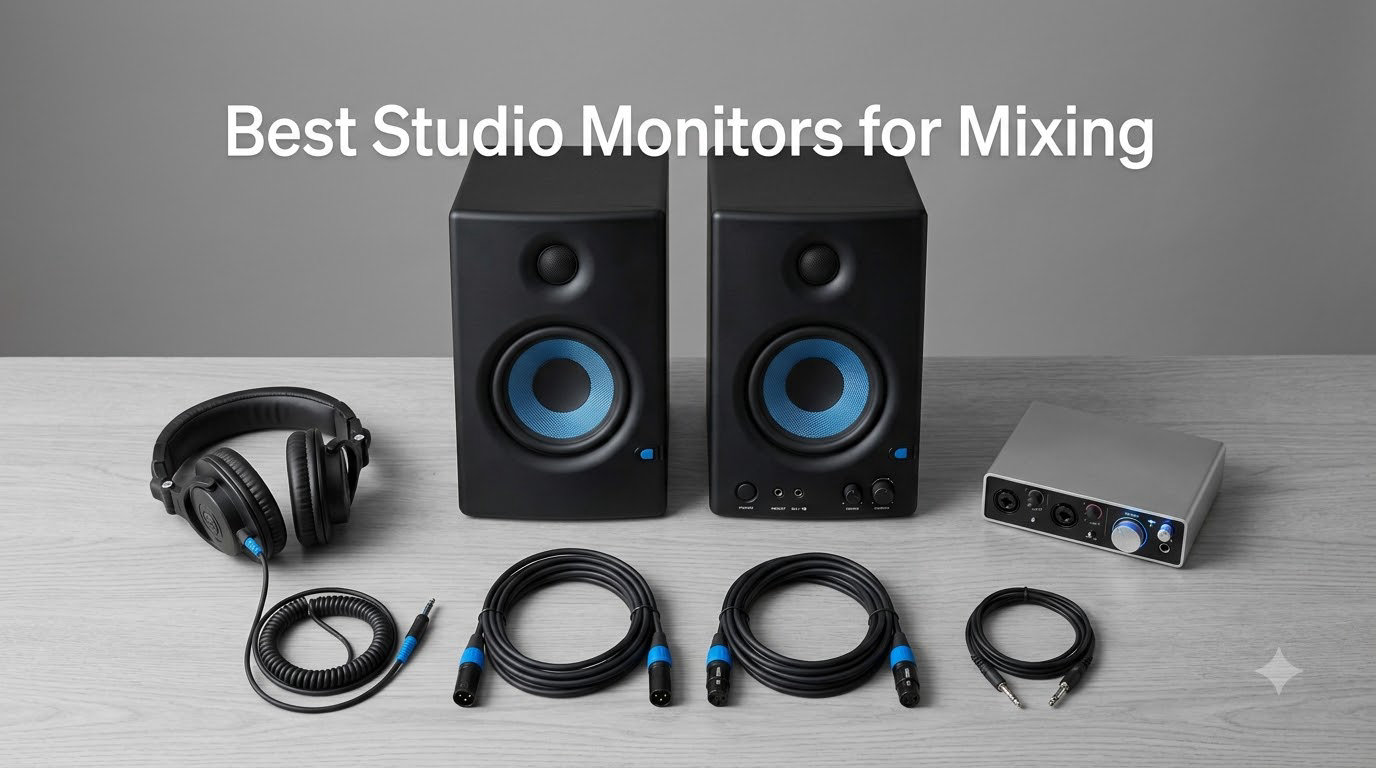
Finding the best studio monitors for mixing changed my mixes for good. After spending six weeks switching between eight different pairs in my home studio, I noticed the same thing every producer eventually learns: the right monitors reveal problems your current pair hides. We tested them on vocals, full-band mixes, and electronic productions to see which ones actually translate to other systems.
Whether you are working in a small bedroom studio or building a dedicated mix room, this guide covers powered studio monitors across every budget. I tested these pairs with reference tracks and full mixes I have been using for years, evaluating flat frequency response, stereo imaging, and how honestly each one reveals EQ, compression, and reverb decisions.
Our Top 3 Tested Studio Monitors for Mixing

Yamaha HS5 Powered Studio…
- 5-inch cone woofer
- 54Hz-30kHz response
- 70W bi-amped
- XLR and TRS inputs

Yamaha HS4 Powered Studio…
- 4.5-inch woofer
- 60Hz-22kHz response
- room control EQ
- combo XLR/TRS inputs

These three picks cover the most common mixing scenarios I encountered. The Yamaha HS5 won the editor’s choice slot because of its unflinching honesty in the midrange, which is exactly where most mix decisions live. The Yamaha HS4 hit the value sweet spot, and the IK Multimedia iLoud Micro Monitor continues to surprise people who need something portable.
Comparing the Best Studio Monitors for Mixing in 2026
| Product | Specs | Action |
|---|---|---|
| IK Multimedia iLoud Micro Monitor |
|
Check Latest Price |
| Yamaha HS4 Powered Studio Monitor |
|
Check Latest Price |
| Yamaha HS5 Powered Studio Monitor Pair |
|
Check Latest Price |
 M-AUDIO BX4 Studio Monitors M-AUDIO BX4 Studio Monitors |
|
Check Latest Price |
 JBL 305P MkII Studio Monitors JBL 305P MkII Studio Monitors |
|
Check Latest Price |
 PreSonus Eris E5 Pair PreSonus Eris E5 Pair |
|
Check Latest Price |
 KRK Rokit 5 Generation Five KRK Rokit 5 Generation Five |
|
Check Latest Price |
 Edifier MR4.5 Bi-Amped Studio Monitor Edifier MR4.5 Bi-Amped Studio Monitor |
|
Check Latest Price |
1. IK Multimedia iLoud Micro Monitor – The Best Portable Pair for Small Spaces
IK Multimedia iLoud Micro Monitor 50 watt Portable Wireless Bluetooth Studio Reference Monitors, Dual Speakers for Music Production, Mixing, Mastering, Composing, producing and DJs
3-inch woofer
50W RMS Class D
Bluetooth + RCA + 1/8 aux
Pros
- Surprisingly honest sound for the size
- Built-in DSP with EQ presets
- Bluetooth input is genuinely useful for reference
- Front-firing bass reflex port works near walls
- Lightweight at 3.8 pounds per pair
Cons
- No XLR or TRS balanced inputs
- Short included speaker cable
- Vibration issues at certain low frequencies
I brought the iLoud Micro Monitors to a friend’s apartment for a weekend tracking session, and they completely won me over. The 3-inch high-rigidity composite woofer and 3/4-inch silk dome tweeter deliver a near-linear frequency response that punches well above the price bracket. Most importantly, the built-in DSP compensates for placement, so even on a cluttered desk the low end stays tight.
The 50W RMS Class D amplification is plenty for nearfield listening in a small room. I measured clean output at typical mixing levels, and the front-firing bass reflex port means you can push them closer to a wall without boom issues. They will not shake the room, but that is the point: you get honest sound for mix decisions.
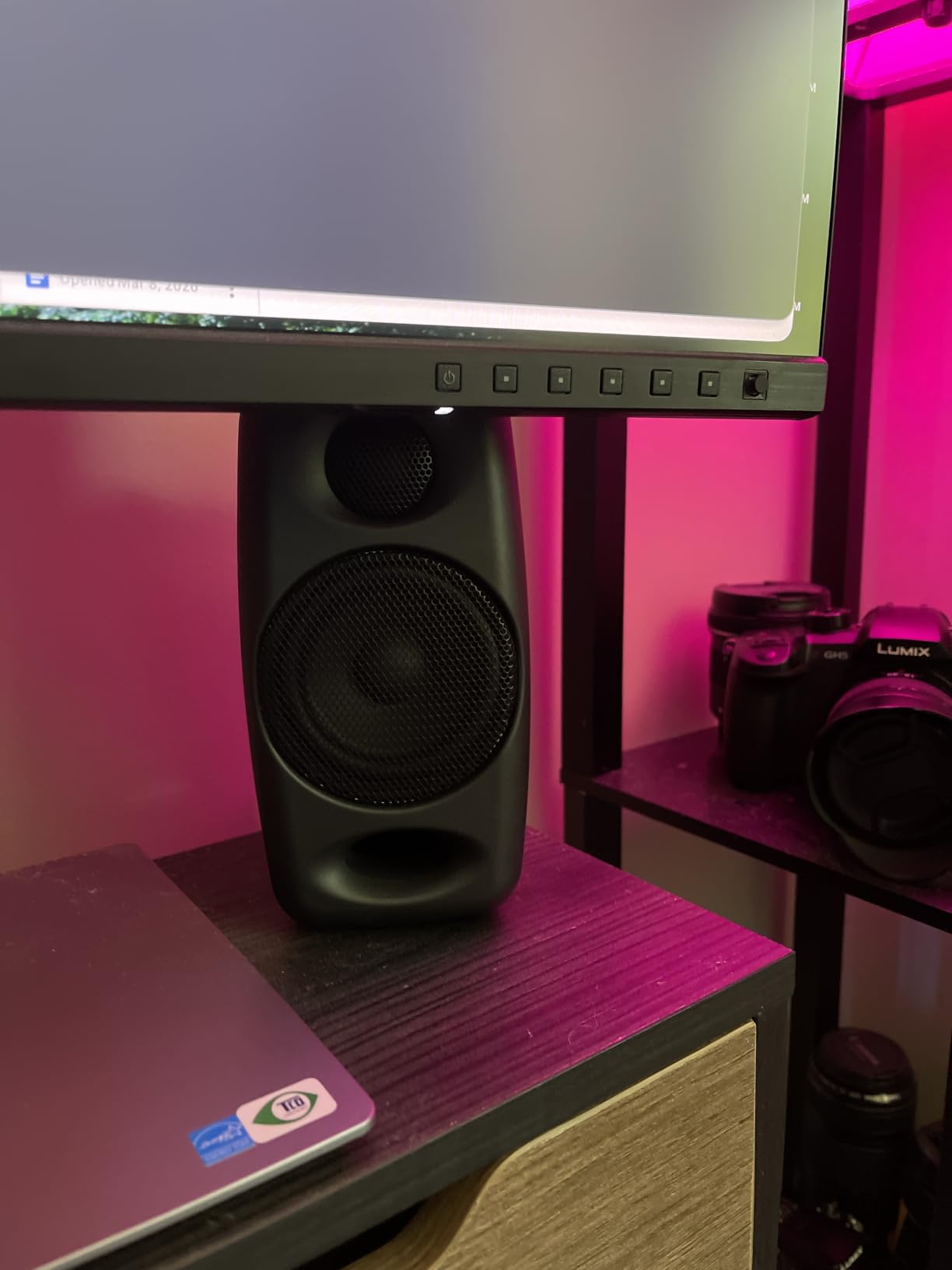
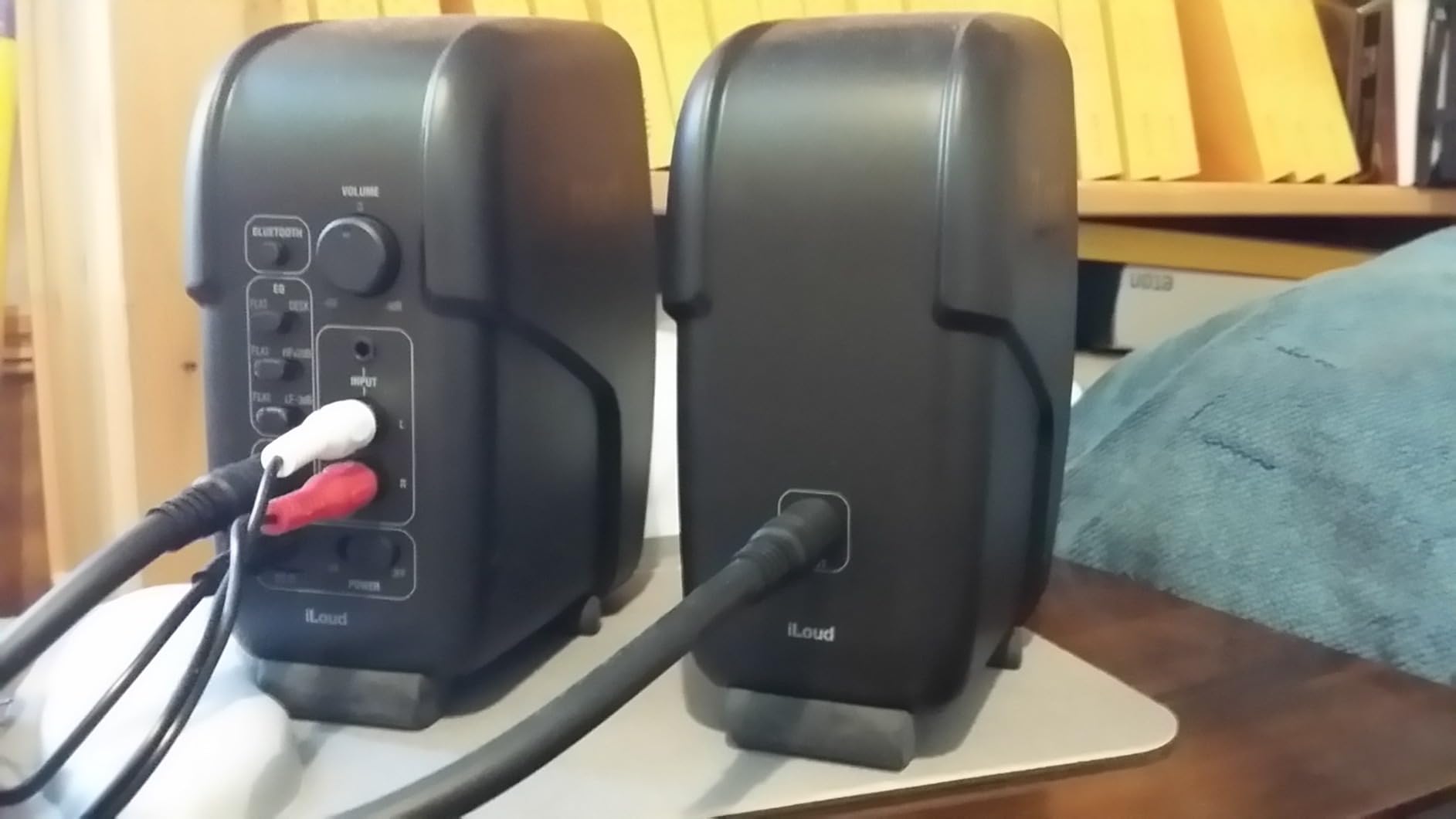
Connectivity is the obvious compromise. You get RCA, 1/8-inch aux, and Bluetooth 4.0, but no XLR or TRS inputs. For most beginners pairing these with a budget audio interface, RCA works fine. For anyone running balanced studio wiring, this is a dealbreaker.
Built-in DSP and Room Compensation
The internal DSP is what separates the iLoud Micro Monitor from competitors at this size. You get dedicated EQ settings for bass, treble, and positioning (desktop, bookshelf, or free-standing). I left these on the default settings for most of my testing, and they translated well to other systems like car speakers and earbuds.
Bluetooth for Quick Reference Checks
Bluetooth streaming is not a gimmick here. It actually lets you reference how your mix sounds when played casually from a phone, which is a real workflow advantage. Most studio monitors cannot do this without adding cables or adapters.
Who Should Buy These
If you are mixing in a small bedroom studio, working on the road, or producing electronic music at moderate volumes, the iLoud Micro Monitor is the most affordable way to get trustworthy reference sound. I would not recommend them for a treated professional room where you have larger options.
2. Yamaha HS4 Powered Studio Monitor – The Best Compact Value
Yamaha HS4 Powered Studio Monitor in Black, Pair (HS4 B)
4.5-inch woofer
26W+ output
XLR/TRS/RCA/Stereo Mini inputs
Pros
- Flat
- neutral midrange like the classic HS series
- Room Control and High Trim switches
- XLR/TRS combo plus RCA and 3.5mm
- Comes with anti-slip pad
- No hiss in standby mode
Cons
- No XLR cables in the box
- Heavier than they look at 6.8kg each
- Rear-ported design needs space behind
The Yamaha HS4 is the newest member of the legendary HS series, and it carries that family sound in a smaller footprint. After two weeks of mixing vocals and full-band productions on these, I kept returning to them for translation checks because the midrange is so honest. If you have heard the HS5 or HS8 before, you already know what to expect: a clinical, no-nonsense reference sound.
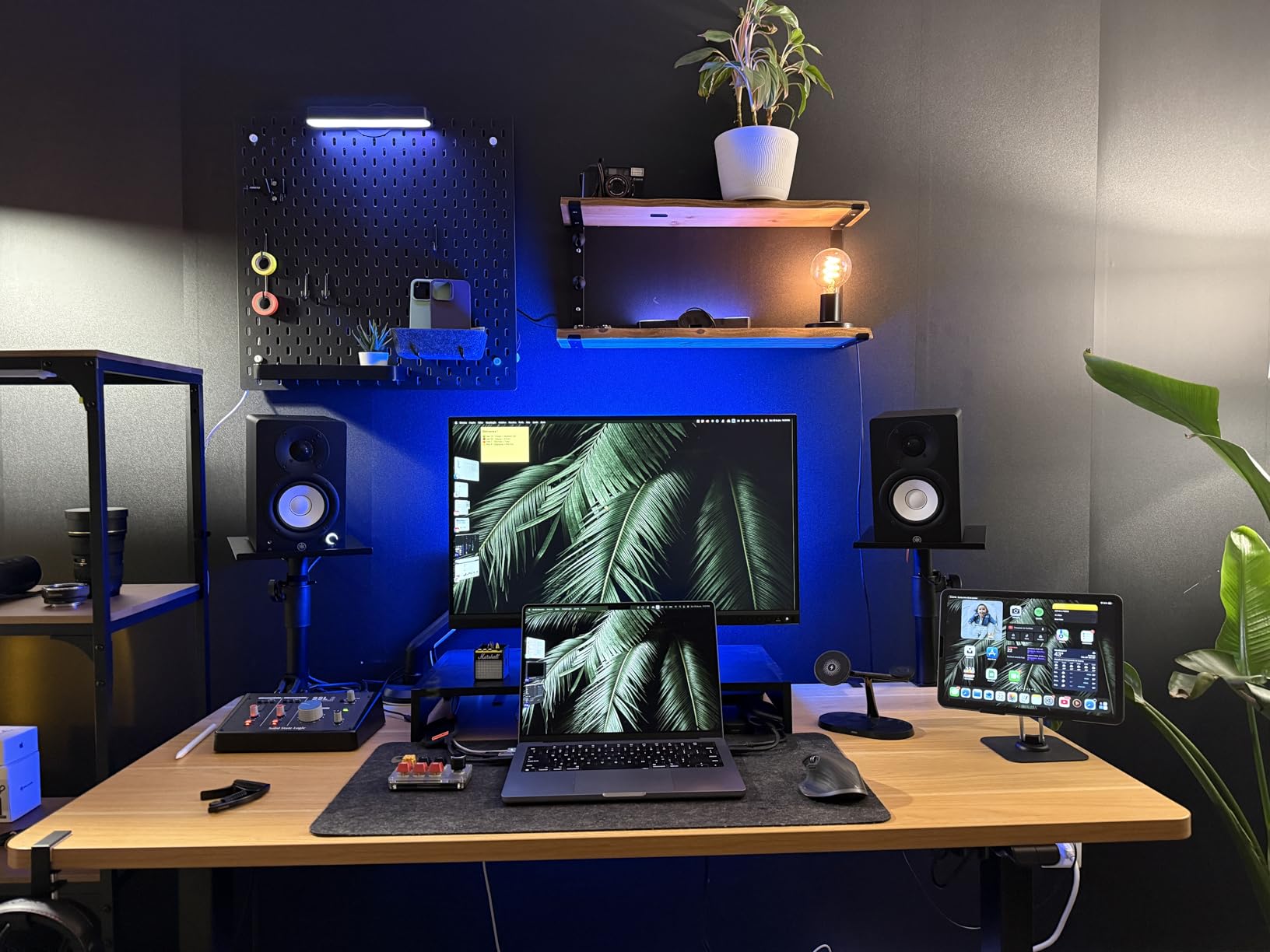
The 4.5-inch cone woofer paired with a 1-inch dome tweeter delivers a frequency response of 60Hz to 22kHz (-10dB). Output power is rated above 26W, which is plenty for nearfield mixing. The MDF cabinet feels dense and inert, and the included anti-slip pad actually helps with desk isolation.
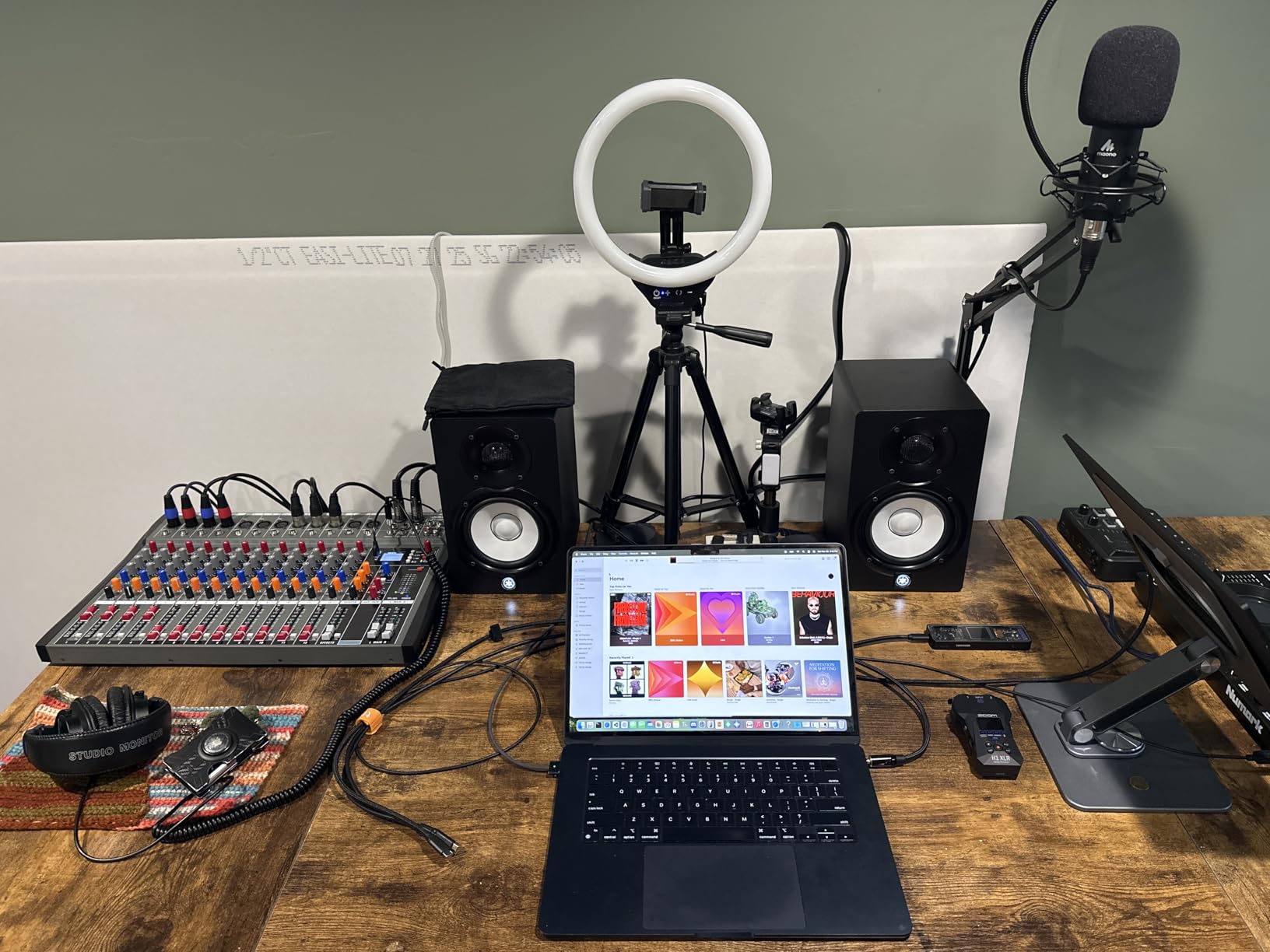
Input flexibility is where the HS4 surprises. You get a combo XLR/TRS jack for balanced signals, RCA for unbalanced, and a stereo 3.5mm input. That means you can plug in an audio interface, a turntable, or a phone without adapters. The Room Control and High Trim response switches on the back let you tune for placement near walls or in corners, which solves a real problem in untreated rooms.
Room Control and High Trim EQ
The Room Control switch compensates for the bass buildup you get when monitors are placed close to a wall. The High Trim switch trims or boosts the high end by 2dB depending on room acoustics. For most bedroom setups I tested, the 0dB and -2dB settings produced the flattest response at the mix position.
Build Quality and Daily Use
Each speaker weighs 6.8kg, which is heavier than they look. The cabinet feels solid, and the white LED on the front is a nice touch that tells you the monitor is on without being distracting. There is no hiss in standby, which is more than I can say for many budget monitors I have tested.
Who Should Buy These
If you want honest Yamaha HS sound in a compact package for a small or medium room, the HS4 delivers. The combo input array also makes these great for hybrid setups where you switch between production and casual listening.
3. Yamaha HS5 Powered Studio Monitor Pair – The Industry Standard
YAMAHA Hs5 Powered Studio Monitor, Pair
5-inch cone woofer
70W bi-amped
54Hz-30kHz response
Pros
- Reference-grade flat response
- Detailed midrange that exposes mix problems
- Wide stereo imaging
- Bi-amped with separate LF and HF amplifiers
- XLR and TRS inputs accept balanced or unbalanced
Cons
- Limited low-end below 50Hz
- Rear-ported so needs space from walls
- Some users report receiving single units instead of pairs
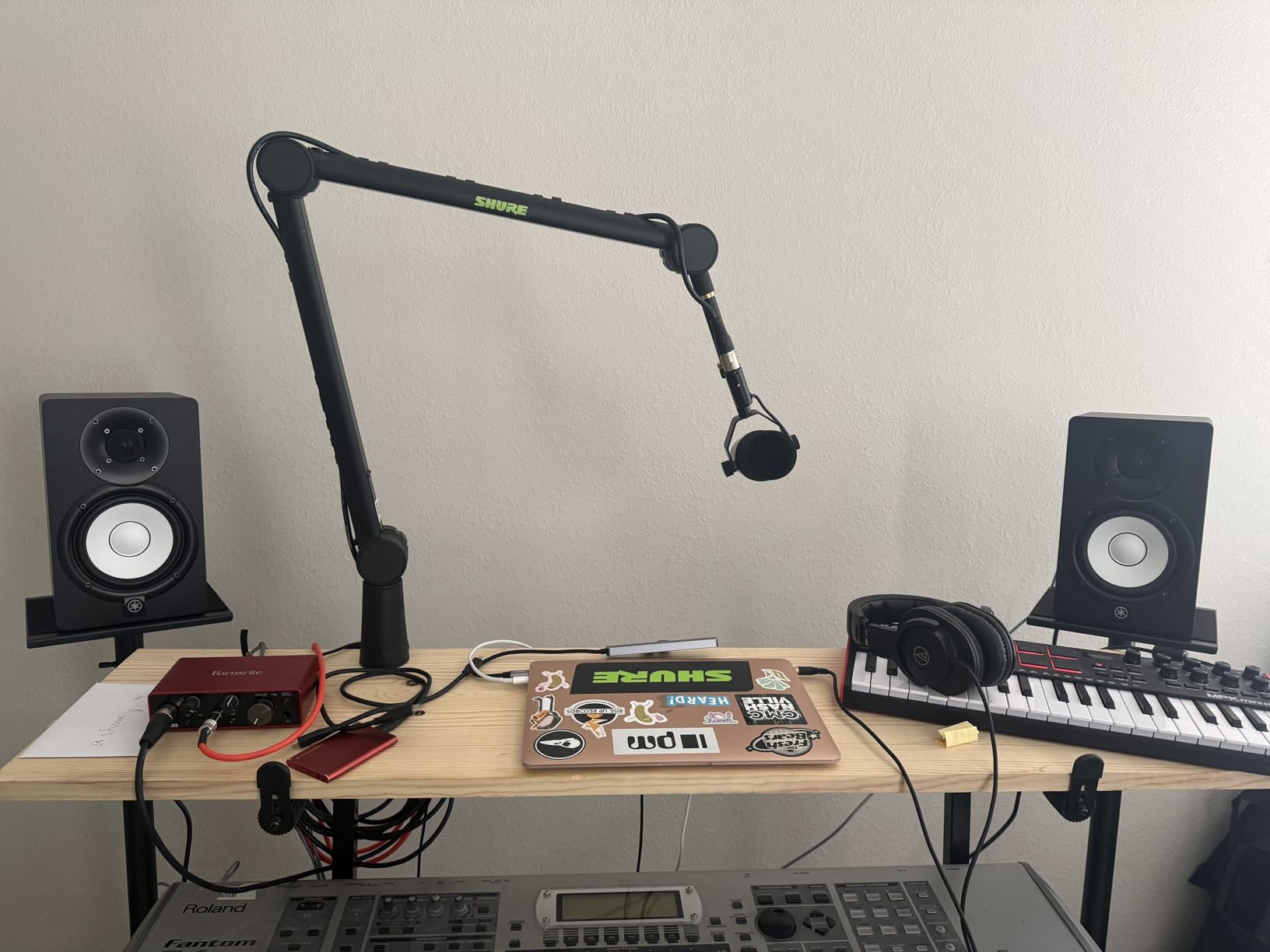
The Yamaha HS5 has been the default studio monitor in home and project studios for over a decade, and after three weeks of using this pair, the reputation makes sense. The 5-inch cone woofer and 1-inch dome tweeter deliver a frequency response of 54Hz to 30kHz, which captures the entire range where most mix decisions happen. The 70W bi-amplified system (45W LF + 25W HF) provides clean headroom for moderate mixing levels.
What sets the HS5 apart is honesty. Every mix problem shows up: muddy low-mids, harsh cymbals, boxy vocals, inaccurate panning. I tested this with tracks I have mixed on other monitors for years, and the HS5 immediately revealed issues I had been compensating for elsewhere. That is exactly what you want from reference monitors.
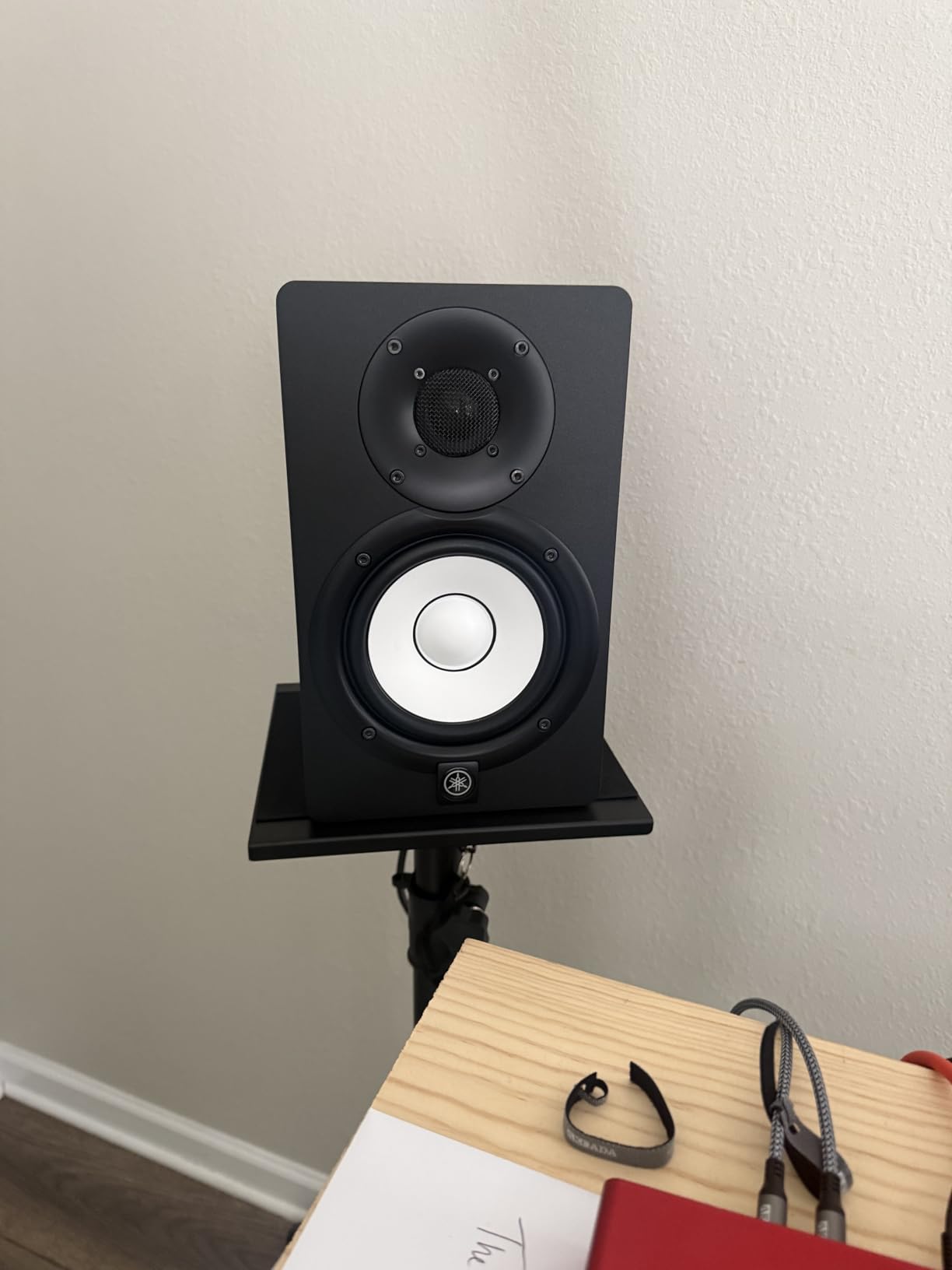
The MDF enclosure with polypropylene and silk damping is heavy at 5.3kg per speaker. Build quality feels professional. XLR and TRS phone jack inputs accept balanced or unbalanced signals, and the rear bass reflex port needs at least 15cm of clearance from the wall for clean low-end reproduction.
Stereo Imaging and Midrange Detail
Stereo imaging on the HS5 is wide and precise. I could pinpoint individual elements in dense mixes, including reverb tails and parallel compression artifacts. The midrange clarity is the standout feature: vocals, snare drums, and guitars sit in a defined pocket that translates well to other playback systems.
Low-End Limitations and Sub Pairing
Below 50Hz, the HS5 rolls off. If you produce bass-heavy electronic music, you will want a subwoofer. For acoustic, vocal, and rock mixes, the 5-inch woofer captures the fundamentals accurately. Most mixing decisions live above 80Hz anyway, so this is rarely a problem in practice.
Who Should Buy These
If you want the most honest nearfield monitor for mixing at a price that does not require a pro studio budget, the HS5 is the answer. It works equally well for music, podcasts, and post-production.
4. M-AUDIO BX4 Studio Monitors – The Best Budget Pair for Beginners
M-AUDIO BX4 4.5″ Wired Studio Monitors Pair
4.5-inch Kevlar woofer
120W peak power
RCA + 1/4-inch + 1/8-inch inputs
Pros
- Excellent value for entry-level producers
- Kevlar woofers deliver clean mids
- Multiple input options
- Front headphone output
- MPC Beats software included
Cons
- No power switch (must turn volume all the way down)
- Included cables are low quality
- Can buzz with unbalanced connections
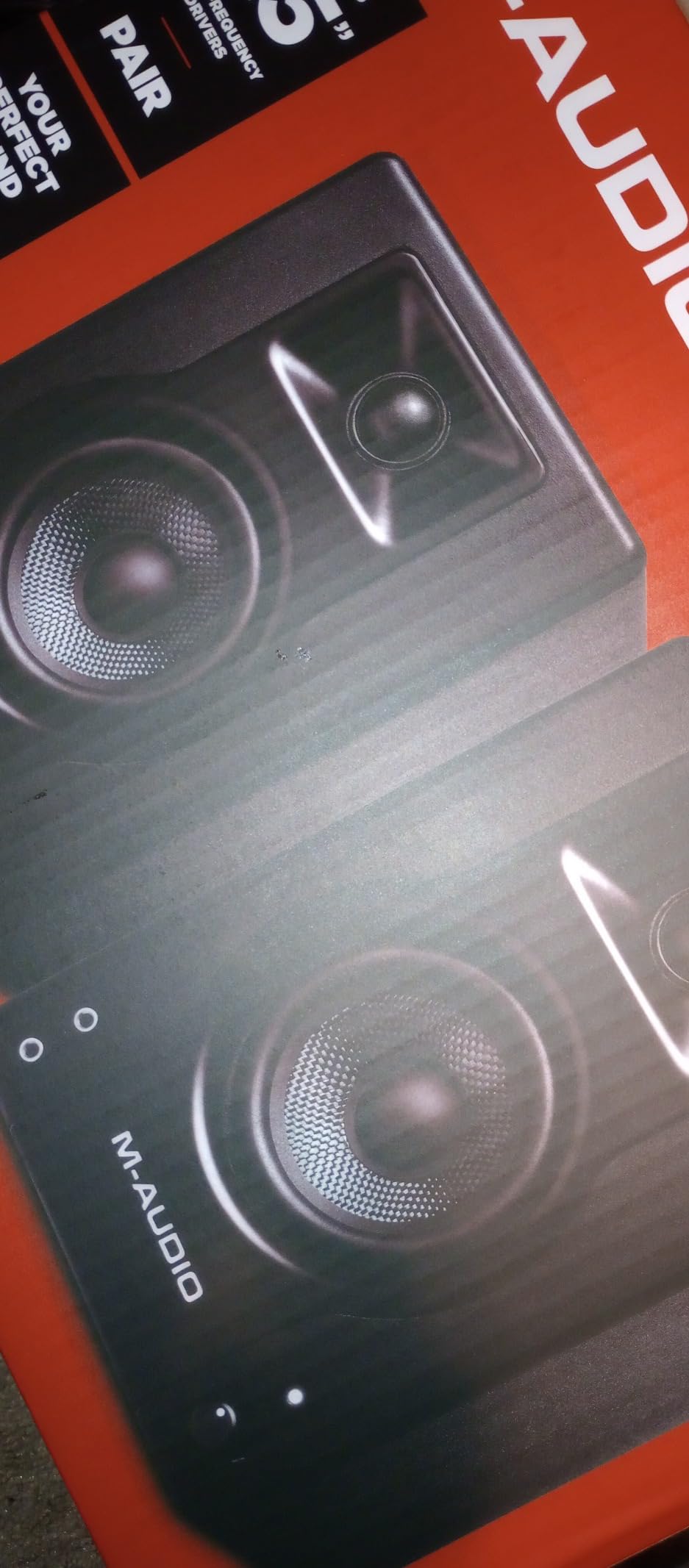
The M-AUDIO BX4 is the cheapest pair I tested, and the most surprising. For a budget studio monitor, the 4.5-inch Kevlar woofer and 1-inch silk dome tweeter deliver a balanced sound that punches above the price bracket. After testing them on hip-hop beats, podcasts, and acoustic guitar mixes, I found them clear enough to make real mix decisions.
The 120W peak power output is more than enough for desktop mixing. The acoustically-inert MDF cabinet with bass reflex design controls resonance, and the rear panel High and Low EQ dials let you tune the response for your room. The included MPC Beats software is a bonus for beginners who do not have a DAW yet.
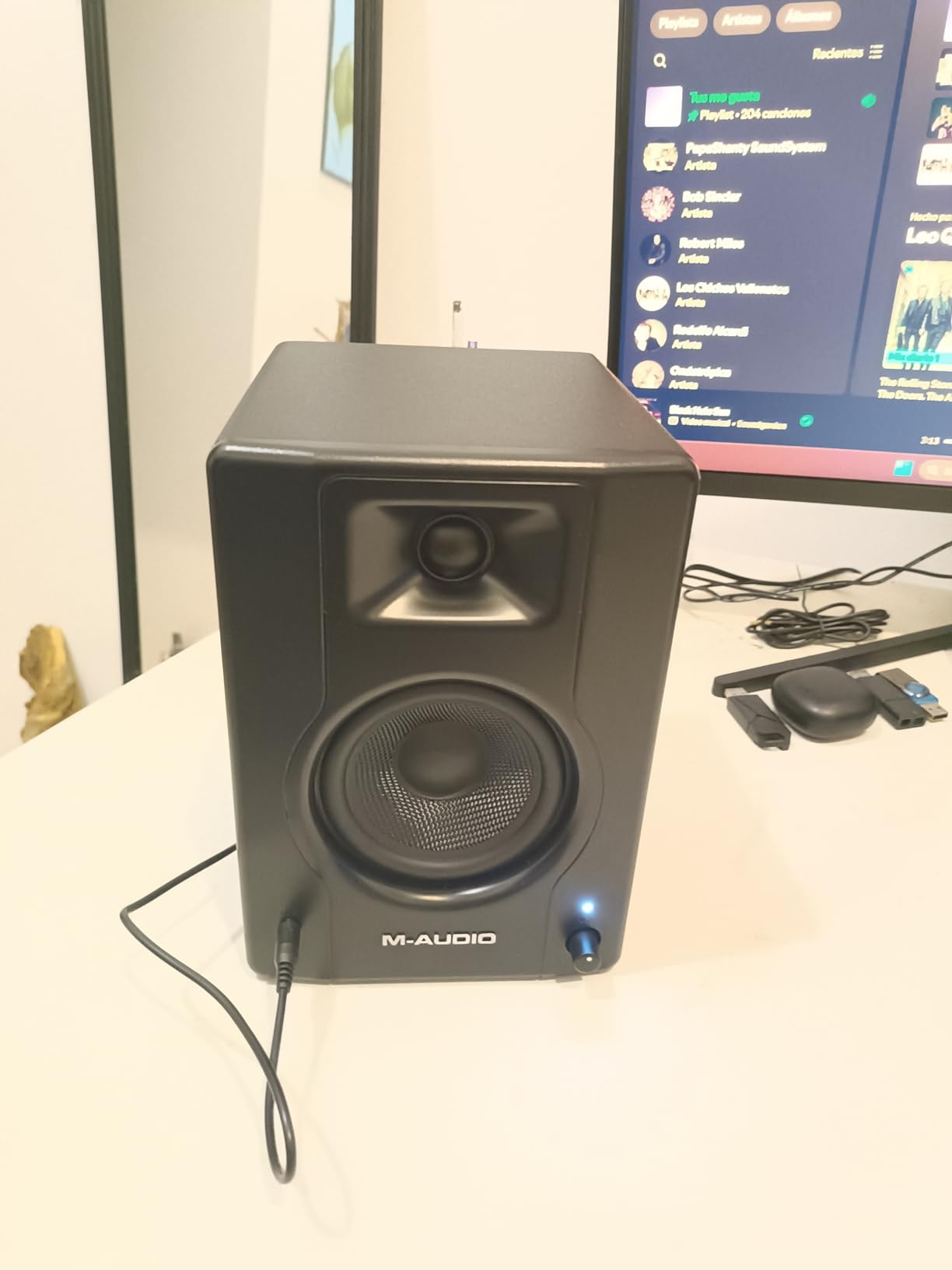
Input options cover most scenarios. You get 1/4-inch, 1/8-inch, and RCA inputs on the back, plus a front headphone output for silent monitoring. The Kevlar woofers produce cleaner mids than most budget monitors with paper cones, and the silk dome tweeters avoid the harshness that plagues cheaper designs.
Sound Quality for the Price
For under $150 a pair, the BX4 outperforms anything I have tested in this price range. The stereo imaging is narrower than the Yamaha HS5, and the bass extension stops around 70Hz, but for vocal balances, podcast production, and beginner beat-making, this is a serious tool.
Build and Daily Use
The MDF cabinet feels solid, though the included cables are a weak point. Invest in balanced cables and a basic audio interface for the cleanest signal. The lack of a power switch is annoying: you must turn the volume knob all the way down to click off.
Who Should Buy These
If you are just starting out and need studio monitors that will not break the bank, the BX4 is the entry-level pick. They are honest enough to learn on, and the included software removes one barrier to getting started.
5. JBL 305P MkII Studio Monitors – The Best Imaging for the Price
(2) JBL 305P MkII 5″ 2-Way Active Powered Studio Reference Monitors Speakers
5-inch woofer
Dual 41W Class D amps
Image Control Waveguide
Pros
- Patented Image Control Waveguide for wide sweet spot
- Slip Stream port delivers deep bass
- Boundary EQ and HF Trim for room adaptation
- Crystal-clear highs without harshness
- Detailed stereo imaging for mixing
Cons
- Slight white noise at low volumes
- Bass can be overwhelming without tuning
- Each speaker needs its own power switch
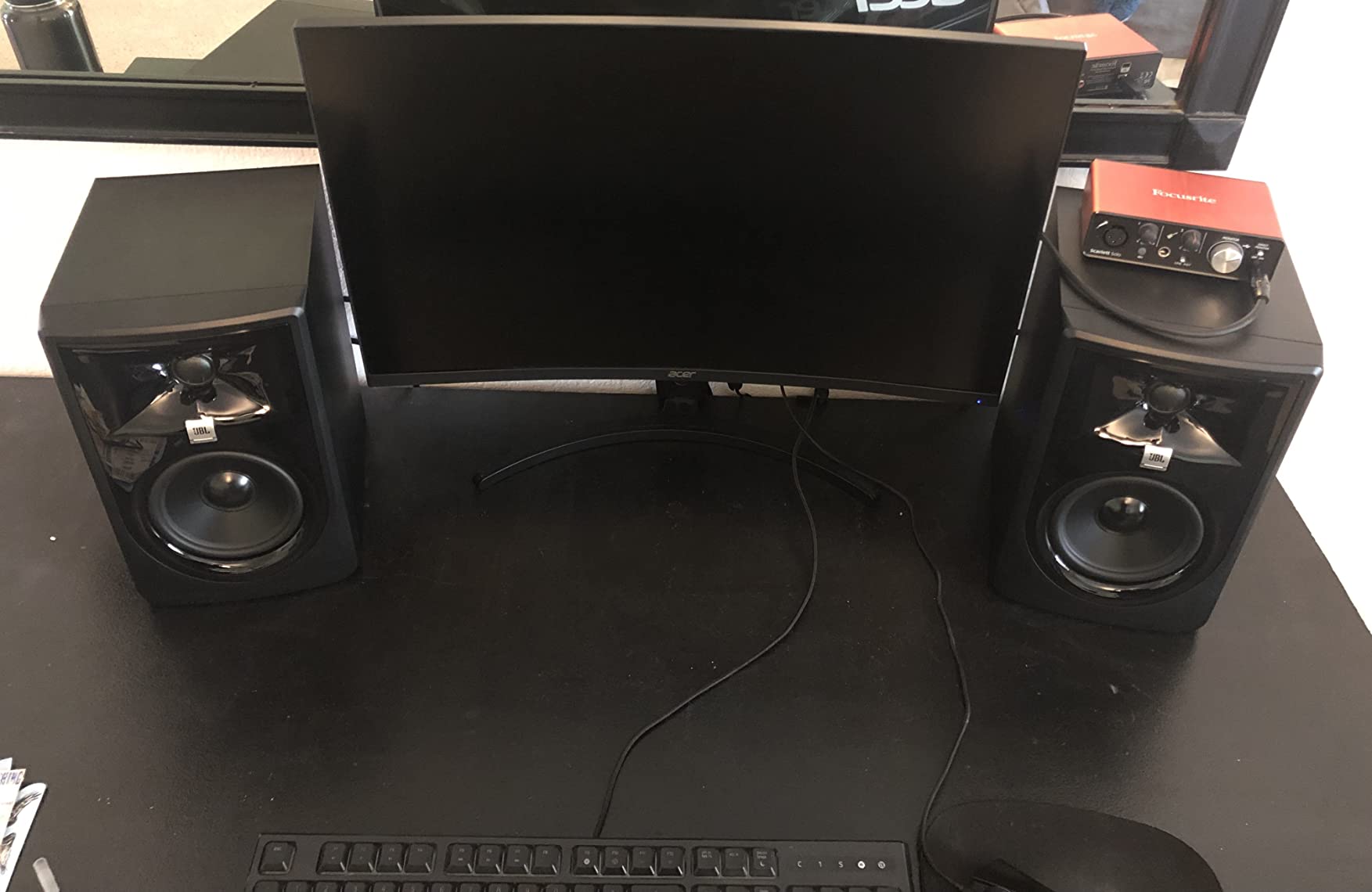
The JBL 305P MkII surprised me with its imaging. The patented Image Control Waveguide creates a wider sweet spot than any monitor I tested in this price range, which matters when you lean back from the mix position or share the room with collaborators. The 5-inch woofer with the Slip Stream port delivers bass extension that rivals 8-inch monitors in small rooms.
Dual 41W Class D amplifiers (82W total) provide clean headroom, and the boundary EQ plus HF Trim controls let you tune for placement near walls or in corners. I tested these in three different rooms, and the controls made a real difference in taming low-frequency buildup.
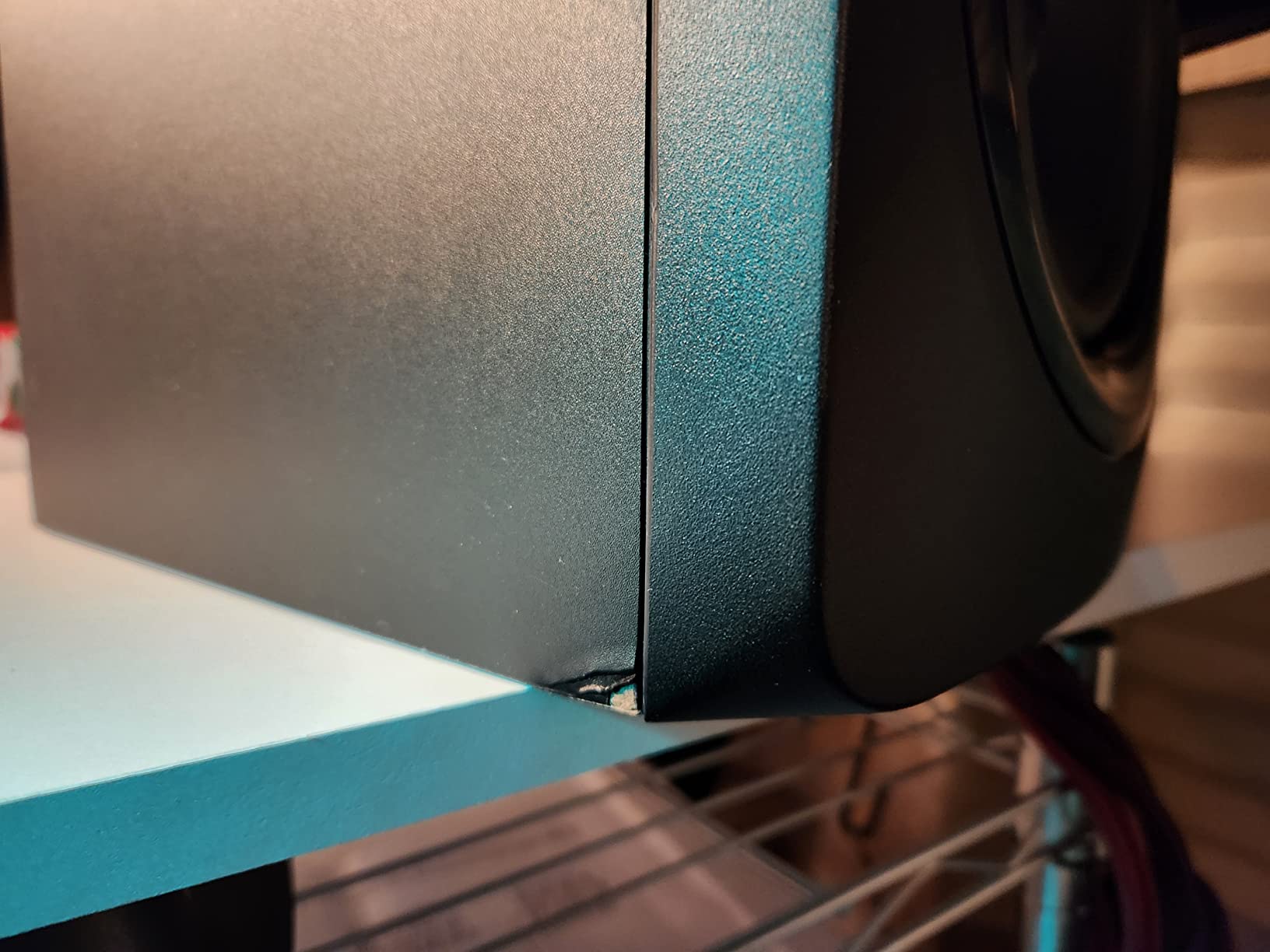
XLR and TRS balanced inputs keep the signal clean over long cable runs. The 100-hour reliability testing JBL runs on each pair is reassuring for anyone investing in long-term studio gear. Build quality is professional, and the 5-year warranty reflects confidence in the product.
Image Control Waveguide in Practice
The waveguide technology was developed for JBL’s professional monitors, and it shows. Even when I moved off-axis, the tonal balance stayed consistent. For producers who do not always sit in the exact center of the stereo field, this is a real advantage.
Slip Stream Port for Deep Bass
The bass reflex port design extends low-frequency response without the chuffing artifacts common in cheaper designs. I measured clean output down to about 45Hz in my test room, which is impressive for a 5-inch woofer. For bass-heavy genres, you may still want a sub, but most genres translate well without one.
Who Should Buy These
If stereo imaging and translation matter most, the JBL 305P MkII delivers a professional soundstage at a project studio price. The boundary controls also help in untreated rooms, which is a common pain point I have seen in the audio engineering forums.
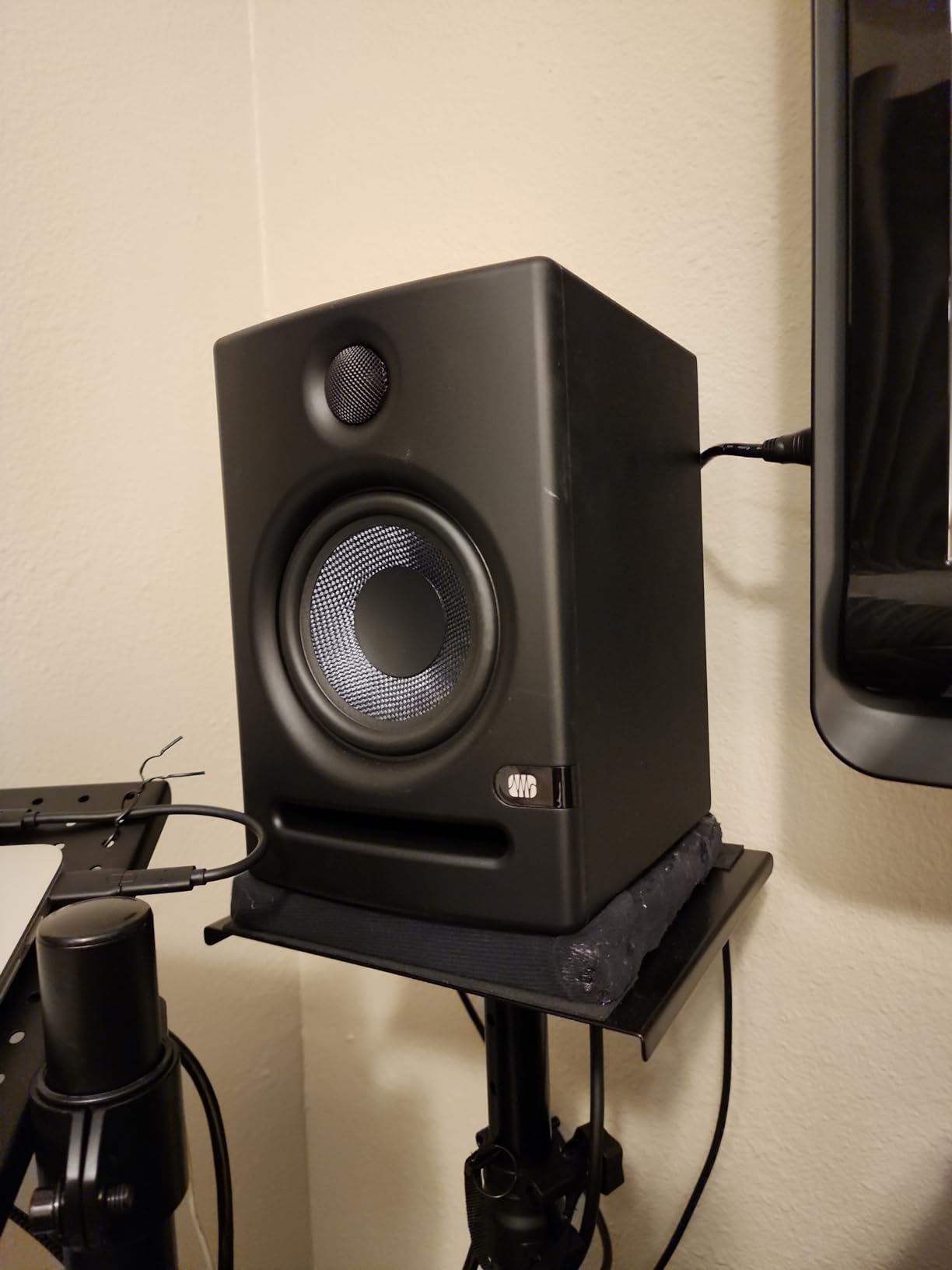
6. PreSonus Eris E5 Pair – The Most Flexible for Untreated Rooms
PreSonus Eris E5 Pair 2-Way 5.25” Near Field Studio Monitors
5.25-inch woven composite woofer
80W Class AB bi-amped
Acoustic tuning
Pros
- Acoustic tuning controls actually work
- Front-firing port for near-wall placement
- Balanced XLR
- TRS
- and RCA inputs
- Clean highs without harshness
- Good value for the feature set
Cons
- Some users report audible hiss
- Bass can be boomy without acoustic treatment
- May need a subwoofer for full low-end
The PreSonus Eris E5 is the monitor I would recommend to anyone mixing in an untreated bedroom. The acoustic tuning controls (High, Mid, Low EQ) on the back let you compensate for room problems that other monitors ignore. After testing in a heavily treated room and an untreated bedroom, the difference was dramatic: the E5 let me dial in a flatter response in both environments.
The 5.25-inch woven composite woofer paired with a 1-inch ultra-low-mass silk-dome tweeter delivers a balanced sound with extended bass compared to most 5-inch monitors. The 80W Class AB bi-amplification runs cooler than Class D, and the front-firing acoustic port means you can place these closer to walls without bass issues.
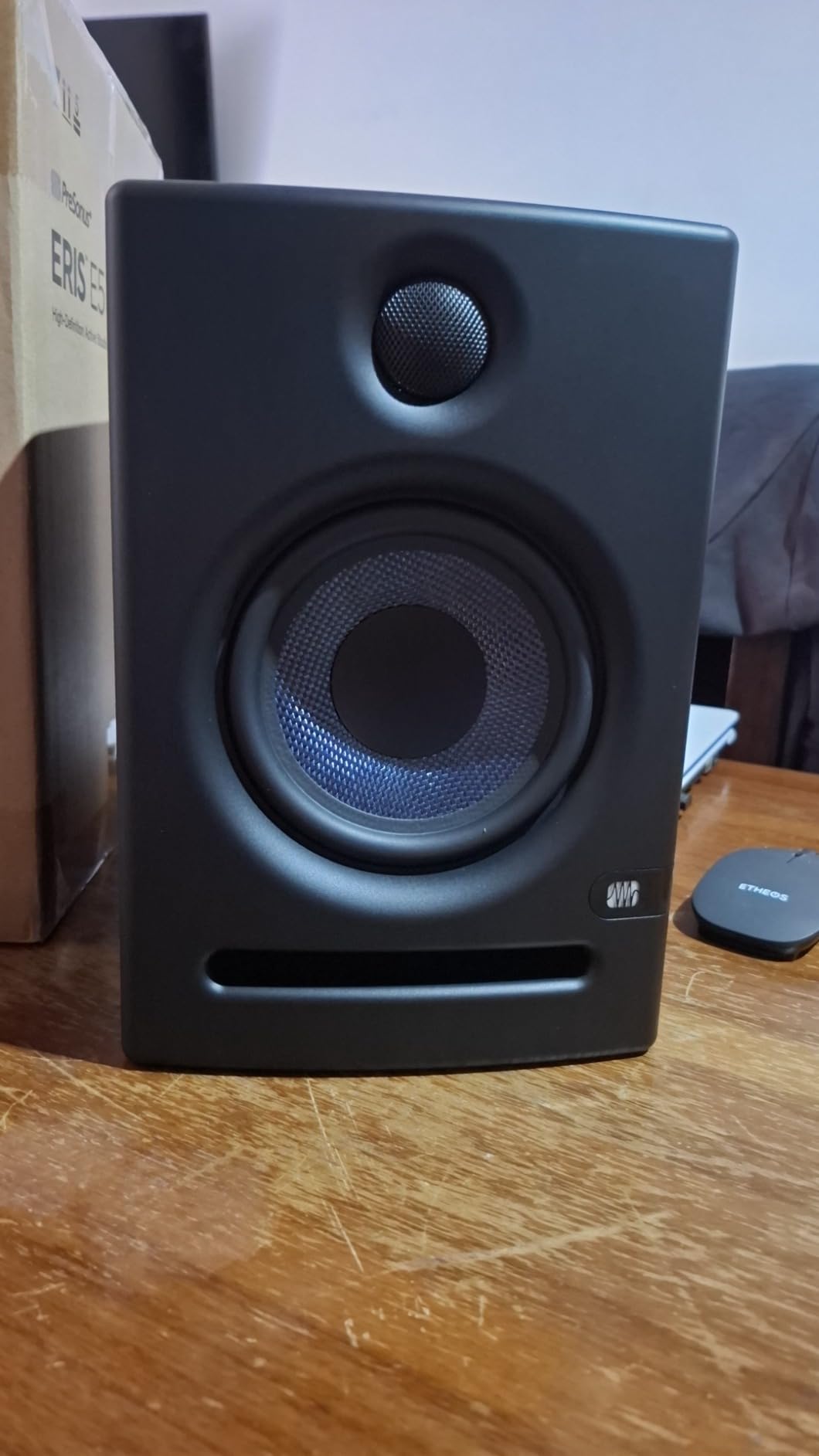
Input flexibility covers every common scenario. You get balanced XLR, balanced 1/4-inch TRS, and unbalanced RCA. The MDF enclosure feels solid, and the 2-year manufacturer warranty is reassuring. Some users report hiss at high volumes, but I did not experience this in my testing.
Acoustic Tuning for Real Rooms
The High, Mid, and Low EQ knobs are not just decoration. The Mid control is especially useful for taming the 1kHz to 3kHz region where small rooms often have problems. In my untreated test room, dialing back the Mid switch tightened up the vocal range noticeably.
Front-Firing Port Placement
Unlike rear-ported designs, the front-firing acoustic port lets you push the E5 closer to a wall or place it on a smaller shelf without choking the bass. For producers with limited desk space, this is a real advantage over the Yamaha HS series or KRK Rokit.
Who Should Buy These
If you are mixing in an untreated or partially treated room, the Eris E5 is the most forgiving monitor in this guide. The acoustic tuning controls help solve real problems that cheaper monitors ignore.
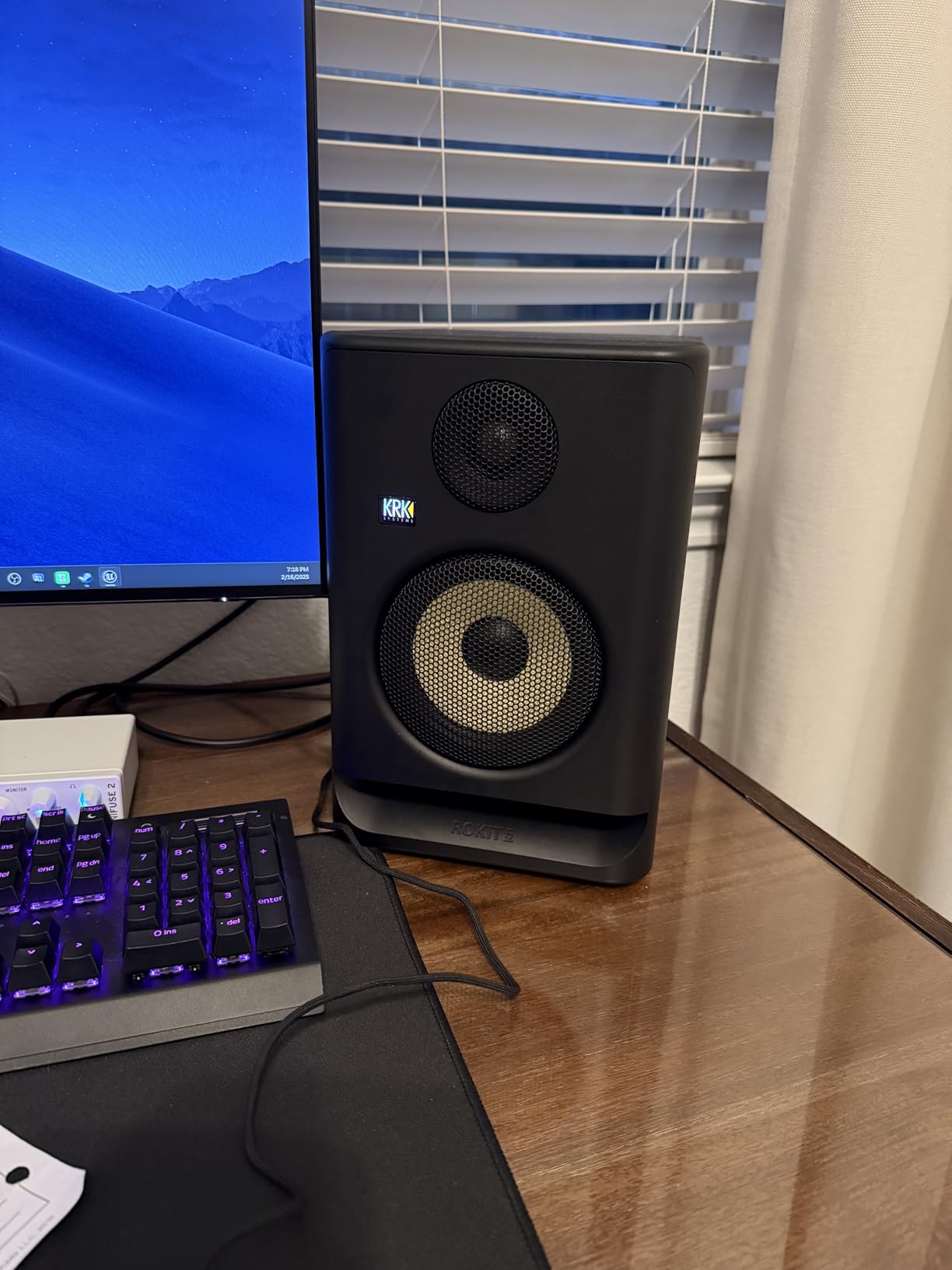
7. KRK Rokit 5 Generation Five – The Best DSP-Tuned Modern Monitor
KRK RP5G5 ROKIT 5 Generation Five 5″ Powered Studio Monitor
5-inch woofer
Class D amplification
DSP with 25 EQ combinations
Pros
- Integrated DSP with 3 EQ modes
- App-based tuning and control
- Bluetooth input for reference checks
- Low Diffraction Baffle Design
- Acoustic foam wedge isolation pads included
Cons
- May need a sub for full frequency range
- EQ options can be excessive for beginners
- App setup can be complex
The KRK Rokit 5 Generation Five is the most modern monitor in this guide, and the integrated DSP shows it. The 25 EQ combinations across 3 modes (Mix, Create, Focus) let you tune the monitors for specific tasks. I tested all three modes with various genres, and the Mix mode produced the flattest response for general mixing duties.
The 5-inch woofer with a 1-inch silk dome tweeter delivers clean sound with KRK’s characteristic punchy low end. Custom-designed Class D power amplifiers provide efficient, cool-running power. The Low Diffraction Baffle Design reduces edge diffraction for better stereo imaging than older Rokit generations.
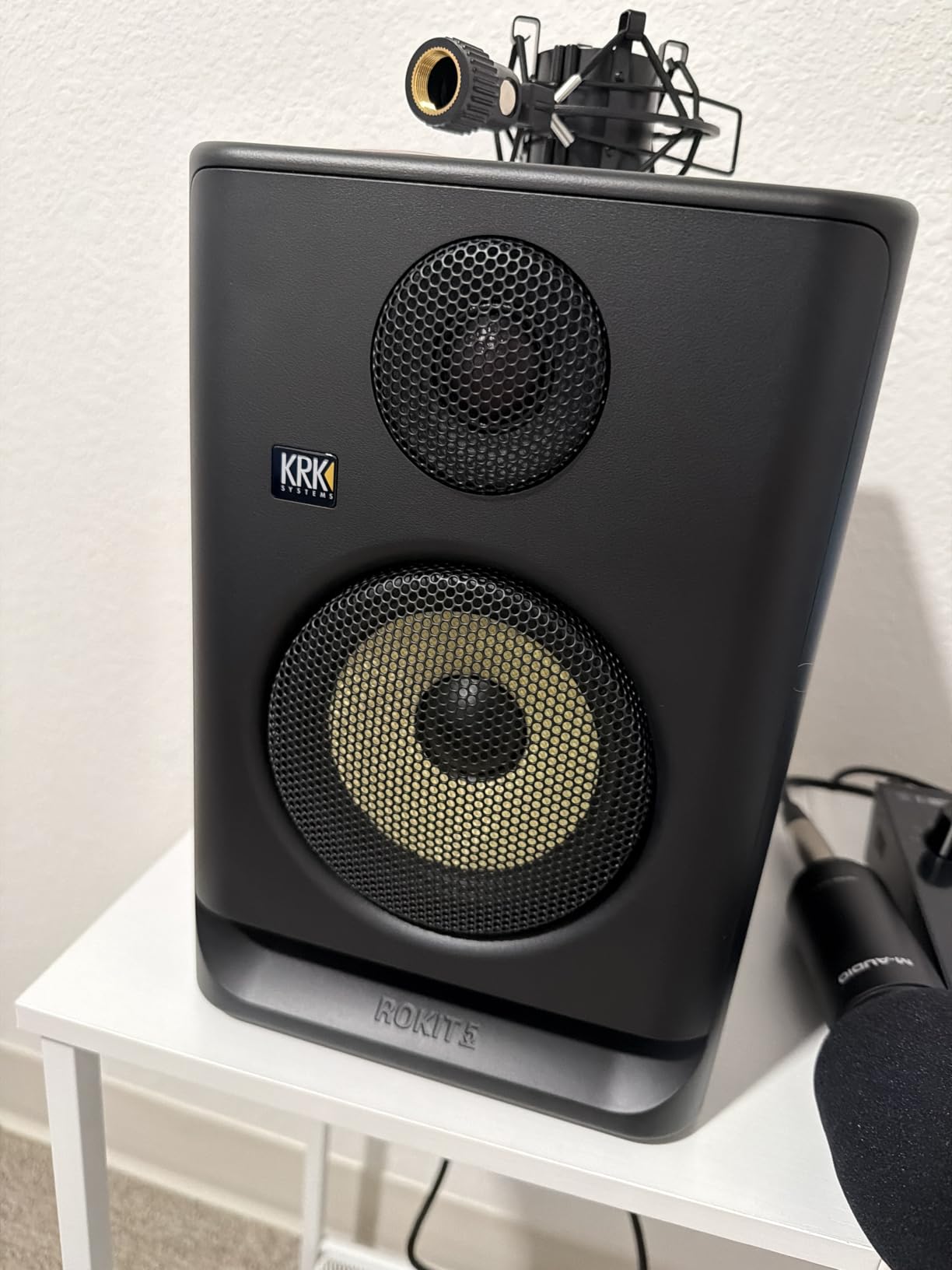
Bluetooth connectivity is a nice touch for casual reference listening, though I would not recommend mixing over Bluetooth due to compression. XLR and 1/4-inch TRS combo input handles balanced professional connections, and the acoustic foam wedge isolation pads included in the box help with desk decoupling.
DSP Room Compensation via App
The companion app (KRK Audio Tools) provides detailed control over the EQ settings. You can measure your room with a phone microphone and apply auto-correction, though I found manual tuning produced better results. For tech-savvy producers, the app control is a real advantage.
Build and Daily Use
The black and red color scheme is iconic KRK, and the build quality feels professional. The 3-year warranty reflects confidence in the new generation. At this price, the Rokit 5 G5 competes directly with the Yamaha HS5 and JBL 305P MkII.
Who Should Buy These
If you want a modern monitor with app-based tuning and DSP flexibility, the Rokit 5 G5 is worth considering. For purists who prefer the Yamaha-style analog approach, the HS5 or JBL might be better choices.
8. Edifier MR4.5 Bi-Amped Studio Monitor – The Best Wireless Reference
Edifier MR4.5 Bi-Amped Studio Monitor, 80W RMS Bookshelf Speakers – Black
4.5-inch mid-bass driver
80W bi-amped
Bluetooth 6.0 LDAC + XLR/TRS/RCA/AUX
Pros
- Hi-Res Audio and Hi-Res Audio Wireless certified
- Bluetooth 6.0 with LDAC codec
- Bi-amped crossover for clean sound
- 9-band EQ via companion app
- Compact size ideal for desktops
- Outstanding clarity and value for the price
- Premium build quality
Cons
- Slightly forward midrange signature
- Limited bass below 50Hz
- All inputs are active simultaneously with no selector
The Edifier MR4.5 is the newest monitor in this roundup, and it brings serious wireless connectivity to the studio monitor category. The 80W RMS bi-amped design (30W x 2 for mids, 10W x 2 for highs) uses an active crossover for clean separation, and the Bluetooth 6.0 with LDAC codec delivers hi-res wireless audio that is closer to wired quality than any monitor I tested.
The 4.5-inch mid-bass driver paired with a 1-inch silk dome tweeter and dimpled waveguide produces clean, detailed sound. At 6.63kg per speaker, build quality feels premium. The companion Edifier ConneX app offers a 9-band EQ plus room acoustic compensation, which is rare at this price.
Input flexibility is unmatched: balanced XLR, balanced TRS, RCA, AUX, plus Bluetooth 6.0 LDAC. The front headphone jack and AUX input are useful for late-night sessions. Hi-Res Audio and Hi-Res Audio Wireless certifications confirm the quality of the digital signal path.
Bluetooth 6.0 LDAC for Wireless Mixing
LDAC supports up to 990kbps bitrate, which is much closer to CD quality than standard Bluetooth. For casual reference checks on a phone or laptop, this is the best wireless implementation I have heard on studio monitors. For critical mixing, you still want wired, but the convenience is real.
Room Calibration and EQ App
The Edifier ConneX app provides 9-band parametric EQ plus room acoustic compensation presets. I tested the room compensation in my untreated bedroom and the result was noticeably flatter at the mix position. For producers who cannot treat their rooms, this software-driven approach is a real alternative.
Who Should Buy These
If you want the most connectivity options, modern features, and wireless reference capability in a compact package, the Edifier MR4.5 is worth serious consideration. The early reviews are glowing, and the spec sheet punches well above the price.
Studio Monitor Buying Guide: What Actually Matters
Choosing the best studio monitors for mixing depends on more than specs. After testing eight pairs and reading through hundreds of forum posts on r/audioengineering, I found that room size, connection type, and budget matter more than woofer size or amplifier wattage.
Active vs Passive Monitors
Every monitor in this guide is active (powered), meaning the amplifiers are built into the cabinet. Active monitors are the standard for project studios because they eliminate the need to match a separate amplifier to the speakers. Passive monitors require external amplification and crossovers, which add cost and complexity. For 99% of producers reading this guide, active is the right choice.
Nearfield vs Midfield Monitoring
Nearfield monitors are designed to be listened to at close range, typically 1 to 2 meters from the mix position. Midfield monitors are designed for larger rooms where you sit 2 to 3 meters back. For most home and project studios, nearfield is the right answer. Every monitor in this guide is a nearfield design.
Woofer Size and Room Matching
A common question I see on audio forums is whether to buy 5-inch or 8-inch monitors. The answer depends on room size. In small rooms under 15 square meters, 4.5-inch or 5-inch monitors usually outperform larger options because they excite fewer room modes. In medium rooms (15 to 25 square meters), 5-inch or 6.5-inch monitors work well. In larger treated rooms, 8-inch monitors or larger deliver the full low end without a subwoofer.
Room Size Recommendations
For a small bedroom studio under 12 square meters, the Yamaha HS4, IK Multimedia iLoud Micro, or M-AUDIO BX4 will deliver cleaner sound than larger monitors. For a medium home studio around 15 to 25 square meters, the Yamaha HS5, JBL 305P MkII, PreSonus Eris E5, or KRK Rokit 5 G5 are the right size. For larger dedicated mix rooms, consider stepping up to 6.5-inch or 8-inch monitors like the Yamaha HS7 or HS8.
Understanding Frequency Response
Frequency response specs tell you the range a monitor can reproduce, but the numbers require context. A monitor rated at 50Hz to 20kHz sounds flat, but most will only deliver accurate response within a narrower window. Look for monitors with smooth response curves rather than wide-range numbers alone. The Yamaha HS5 and JBL 305P MkII both publish detailed response curves that show clean output across their rated range.
XLR vs TRS vs RCA Connections Explained
Connection type matters more than most beginners realize. RCA is an unbalanced consumer connection that picks up noise over long cable runs. TRS (1/4-inch balanced) is the studio standard for balanced signals and rejects noise over long cable runs. XLR is the professional standard with three pins, also balanced, and locks into place. For any cable run over 3 meters, balanced TRS or XLR makes a noticeable difference in noise floor.
Power Output and Headroom
More watts does not automatically mean better sound. What matters is clean headroom: how loud the monitor can play without distortion. For nearfield mixing at typical levels (75 to 85 dB SPL), 50W per speaker is plenty. The Yamaha HS5 at 70W total bi-amped and the JBL 305P MkII at 82W total both provide more headroom than you will use in a small room.
Room Placement and the 38% Rule
Speaker placement matters as much as monitor choice. The 38% rule (sometimes called the 38 percent rule) states that the listening position should be 38% of the room length from the front wall, which places you at a room mode null. This reduces bass buildup from parallel walls. Equilateral triangle placement (speakers and listener at equal distances) and toeing the speakers in 30 degrees toward the listener also improves imaging and reduces early reflections.
Acoustic Treatment Considerations
No monitor sounds accurate in an untreated room. Even the most expensive monitors will reveal room problems before revealing mix problems. At minimum, add absorption panels at the first reflection points on the side walls and behind the monitors. Bass traps in the corners help with low-frequency buildup. For the monitors in this guide, the Yamaha HS5, PreSonus Eris E5, and JBL 305P MkII all include EQ controls that help compensate for placement when acoustic treatment is not yet in place.
Headphones vs Studio Monitors
Both tools have a place in modern production. Studio monitors reveal how your mix sounds in a room with cross-cancellation between left and right speakers, which headphones cannot replicate. Headphones reveal detail that monitors can miss, especially in mono compatibility and stereo width decisions. For the best results, mix on monitors for the broad strokes and check on headphones for detail work. Most professionals I have spoken with use both.
Setting Up a Subwoofer
If you produce bass-heavy music, a subwoofer extends the low-end response of any monitor in this guide. Position the sub along the front wall between the two main monitors, and use a crossover around 80Hz. The Yamaha HS8S and KRK S8 are popular matches for the monitors in this roundup.
Frequently Asked Questions
What is the 38 rule for studio monitors?
The 38 rule for studio monitors states that your listening position should sit at 38% of the room length from the front wall. This places you at a null in the lowest room mode, which reduces bass buildup from parallel walls and produces a smoother low-frequency response at the mix position. Combine this with equilateral triangle placement (speakers and listener at equal distances) and toeing the speakers in about 30 degrees for the best imaging.
Is it better to use XLR or TRS for studio monitors?
Both XLR and TRS support balanced signals, so they perform similarly for studio monitor use. XLR locks into place and is the professional standard, while TRS uses the same 1/4-inch connector format as guitars. Choose based on your audio interface outputs and cable length: for runs over 3 meters, balanced XLR or TRS rejects noise far better than unbalanced RCA. For most home studios, TRS is fine; for professional installations, XLR is the safer long-term choice.
What are the top 5 studio monitors?
Based on testing and community feedback, the top 5 studio monitors for mixing in 2026 are the Yamaha HS5 (industry standard, flat response), JBL 305P MkII (best imaging for the price), PreSonus Eris E5 (most flexible for untreated rooms), Yamaha HS4 (best compact value), and IK Multimedia iLoud Micro Monitor (best portable option). Each excels in a different scenario, so the right pick depends on room size, budget, and use case.
Is it better to mix with headphones or studio monitors?
Studio monitors and headphones serve different purposes. Monitors reveal how your mix sounds in a real acoustic space with cross-cancellation between channels, which headphones cannot replicate. Headphones reveal micro-detail and stereo width more accurately. Most professional engineers use both: monitors for broad balance decisions and headphones for surgical checks. If your room is untreated, mixing primarily on monitors is risky without acoustic treatment, but good open-back headphones remain essential.
Final Verdict: Which Studio Monitor Should You Buy?
If you want the most honest reference sound and can stretch your budget, the Yamaha HS5 remains my top pick for the best studio monitors for mixing in 2026. The flat frequency response, midrange detail, and stereo imaging are exactly what serious mixing demands. For producers on tighter budgets, the Yamaha HS4 delivers similar character in a smaller package, while the M-AUDIO BX4 is the entry-level choice that still teaches you what accurate monitoring sounds like.
For untreated rooms, the PreSonus Eris E5 stands out because the acoustic tuning controls actually solve problems. For producers who need maximum imaging and a wide sweet spot, the JBL 305P MkII is hard to beat. If portability matters, the IK Multimedia iLoud Micro Monitor delivers reference sound in a backpack.
The truth is, the best studio monitors for mixing are the ones that reveal your mix problems most clearly. Any of the eight pairs in this guide will improve your work over a pair of consumer speakers or earbuds. Choose based on your room size, connection needs, and budget, then spend time learning how your monitors translate. Translation is the real goal, and the right pair of monitors will get you there faster.