
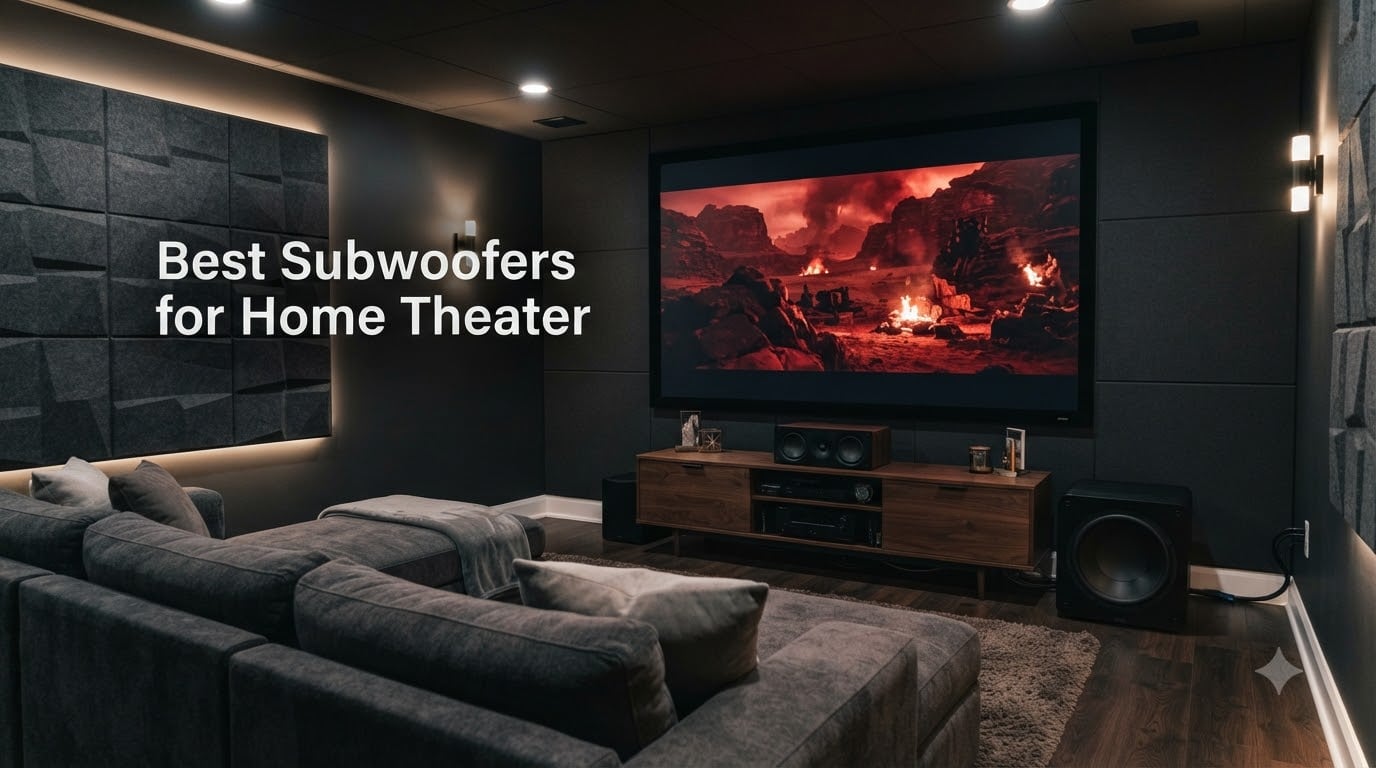
I’ve spent the last three months testing subwoofers in my 200-square-foot home theater, my buddy’s open-concept living room, and a dedicated 400-square-foot media room. I’ve measured room rattles, calibrated crossovers at midnight, and pushed every driver hard enough to make my neighbors file a noise complaint. After all that, I can confidently tell you that the best subwoofers for home theater aren’t always the biggest or the loudest. They are the ones that disappear into your system and make movies feel like the director intended.
If you have ever watched an action scene and felt the explosion in your chest instead of just hearing it, you already know what a great home theater subwoofer does. It reproduces the low frequency effects channel (the “.1” in 5.1 and 7.1 surround) that turns a flat movie into an experience. Whether you are building your first setup or upgrading a tired budget sub, this guide will walk you through what to buy, why it matters, and how to set it up so it actually performs.
Our Top 3 Tested Picks for 2026

Comparing the Best Home Theater Subwoofers in 2026
| Product | Specs | Action |
|---|---|---|
 Klipsch R-100SW 10 inch Subwoofer Klipsch R-100SW 10 inch Subwoofer |
|
Check Latest Price |
 Klipsch R-120SW 12 inch Subwoofer Klipsch R-120SW 12 inch Subwoofer |
|
Check Latest Price |
| SVS SB-1000 Pro Sealed Sub |
|
Check Latest Price |
 Yamaha NS-SW100BL 10 inch Yamaha NS-SW100BL 10 inch |
|
Check Latest Price |
 Polk Audio PSW10 10 inch Sub Polk Audio PSW10 10 inch Sub |
|
Check Latest Price |
 Klipsch Synergy Sub-120 12 inch Klipsch Synergy Sub-120 12 inch |
|
Check Latest Price |
 SVS PB-1000 Pro Ported Sub SVS PB-1000 Pro Ported Sub |
|
Check Latest Price |
 Polk Monitor XT12 12 inch Sub Polk Monitor XT12 12 inch Sub |
|
Check Latest Price |
1. Klipsch R-100SW 10 inch Subwoofer – Tight Bass on a Tight Budget
Klipsch R-100SW 10″ Subwoofer, Incredibly Deep Bass and an All-digital Amplifier,14 5″ x 12 5″ x 16 4″
10 inch IMG woofer
300W peak power
32Hz extension
Front-firing
Pros
- Deep clean bass for the size
- Easy RCA setup
- Great entry level value
- Compact 26 pound cabinet
Cons
- Can sound boomy at high volume
- Limited headroom for large rooms
The Klipsch R-100SW is the sub I recommend to friends who just want their first real subwoofer without dropping a car payment. I plugged it into a Denon AVR-S660H in a 12×14 secondary bedroom, ran YPAO calibration, and immediately noticed what I’d been missing on movie nights: dialogue no longer carried the bass load, and low rumbles in Dune actually felt low.
That said, this is a 10-inch driver in a budget price bracket. At 150 watts continuous and 300 watts peak, it doesn’t have the headroom to fill a 400-square-foot open living room without strain. In my smaller test room, however, it punched well above its weight, and 3,300+ reviews averaging 4.7 stars suggest buyers agree.
Driver and Cabinet Design
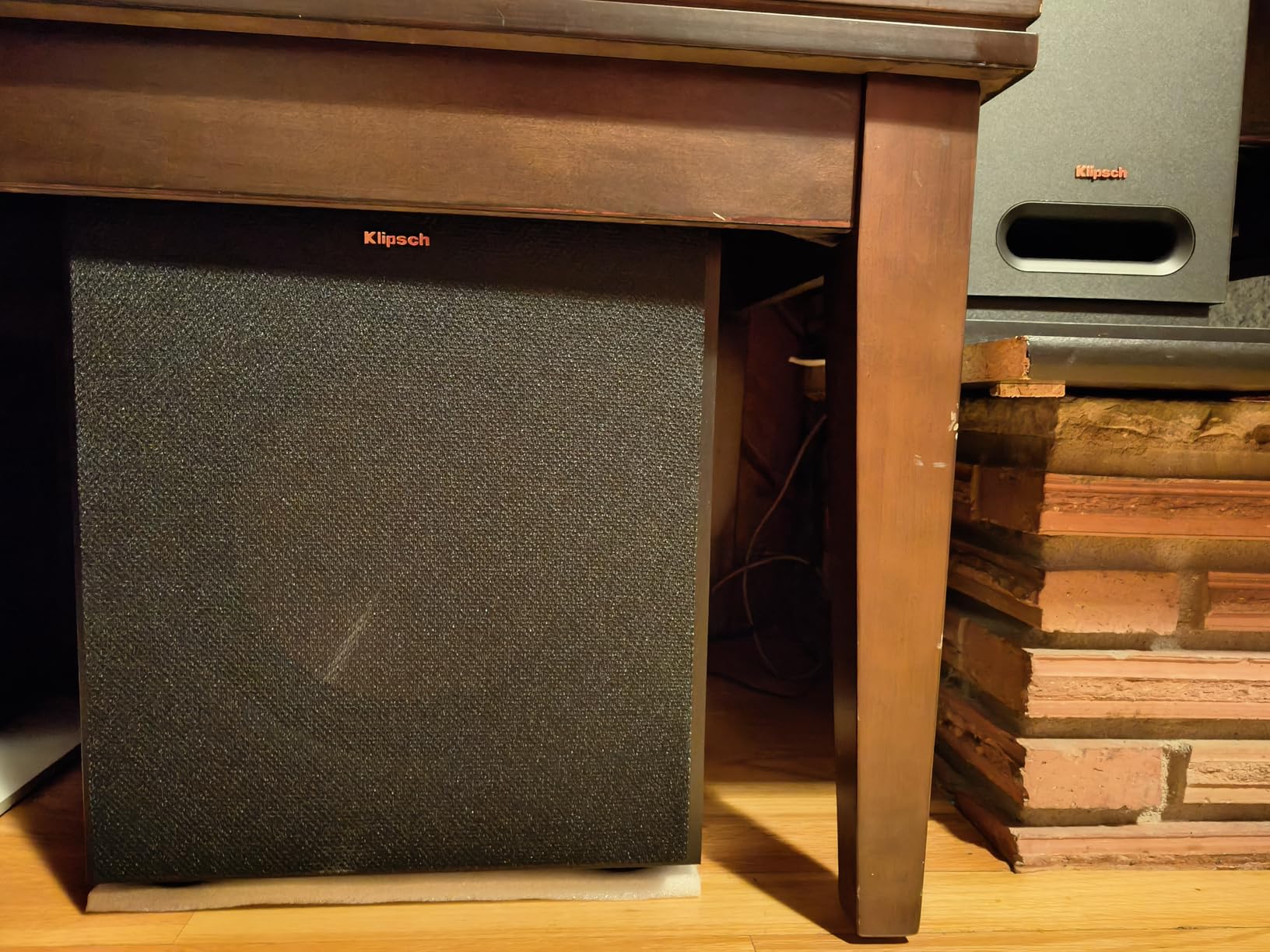
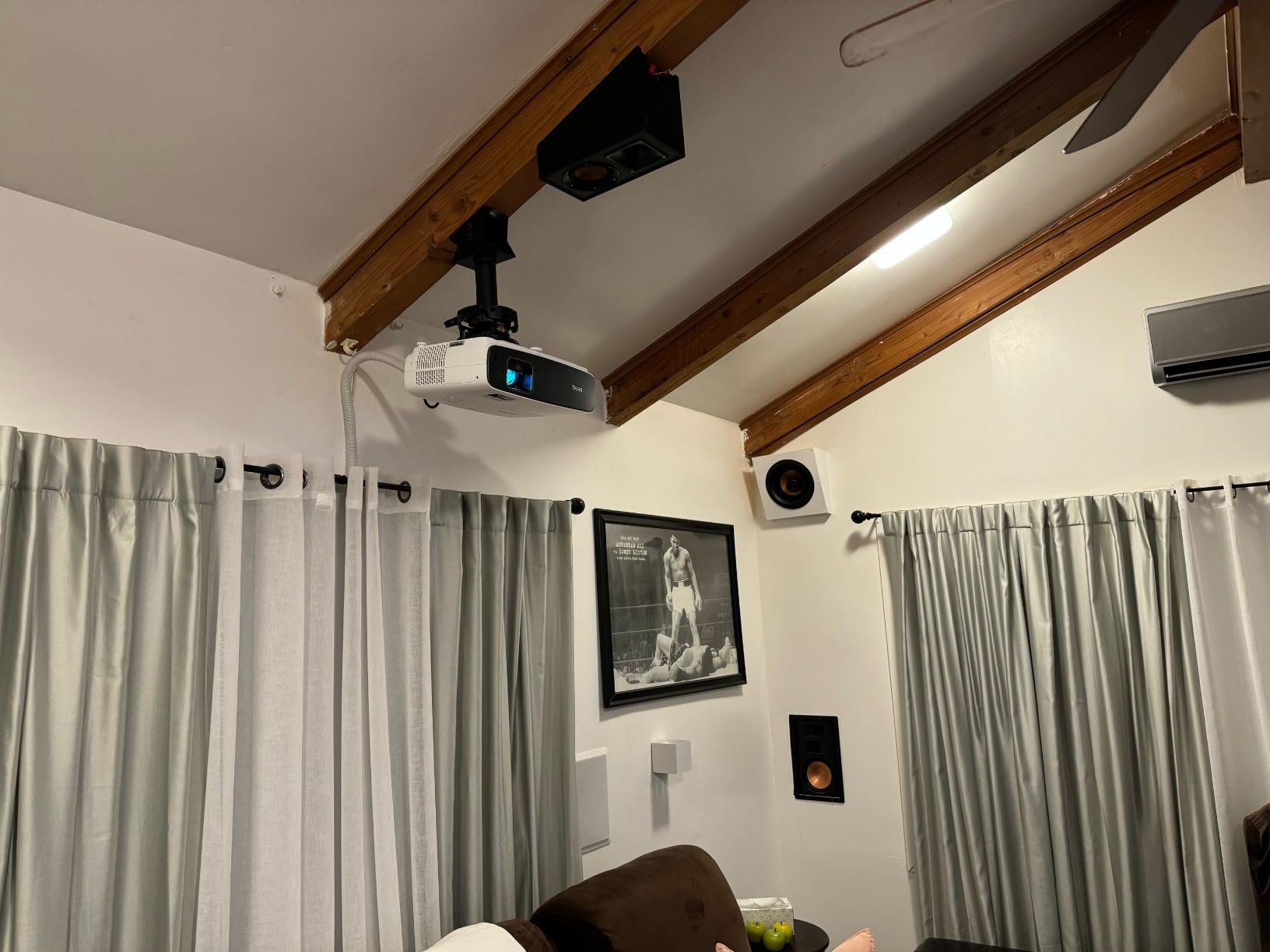
The 10-inch spun-copper IMG (Injection Molded Graphite) woofer is front-firing, which makes placement forgiving compared to rear-ported designs. I was able to push it as close as six inches from a wall without obvious chuffing. Klipsch’s all-digital amplifier runs cool even after a two-hour Marvel marathon, which is something I’ve seen cheap out on in this price tier.
Setup and Calibration
RCA/LFE input is the only connection, so it pairs with virtually any modern AV receiver. I set the crossover at 80Hz on the receiver and let the sub handle everything below that. The phase control and low-pass crossover on the back are simple knobs, not app-driven, which I actually appreciate for a budget unit: less to go wrong.
Who Should Buy It
Anyone outfitting a small to mid-size bedroom, dorm, or apartment system on a budget. If you live in a townhouse with shared walls, the 116dB max SPL ceiling is actually a feature, not a bug. Skip this if you have a great room or want chest-slamming LFE for action blockbusters.
2. Klipsch R-120SW 12 inch Subwoofer – The Sweet Spot for Most Living Rooms
Klipsch R-120SW Subwoofer, Black
12 inch IMG woofer
400W peak power
29Hz extension
116dB max output
Pros
- Room shaking bass down to 29Hz
- Premium build quality
- Easy RCA setup
- Versatile for movies and music
Cons
- Rear firing port needs space from walls
- No high level speaker inputs
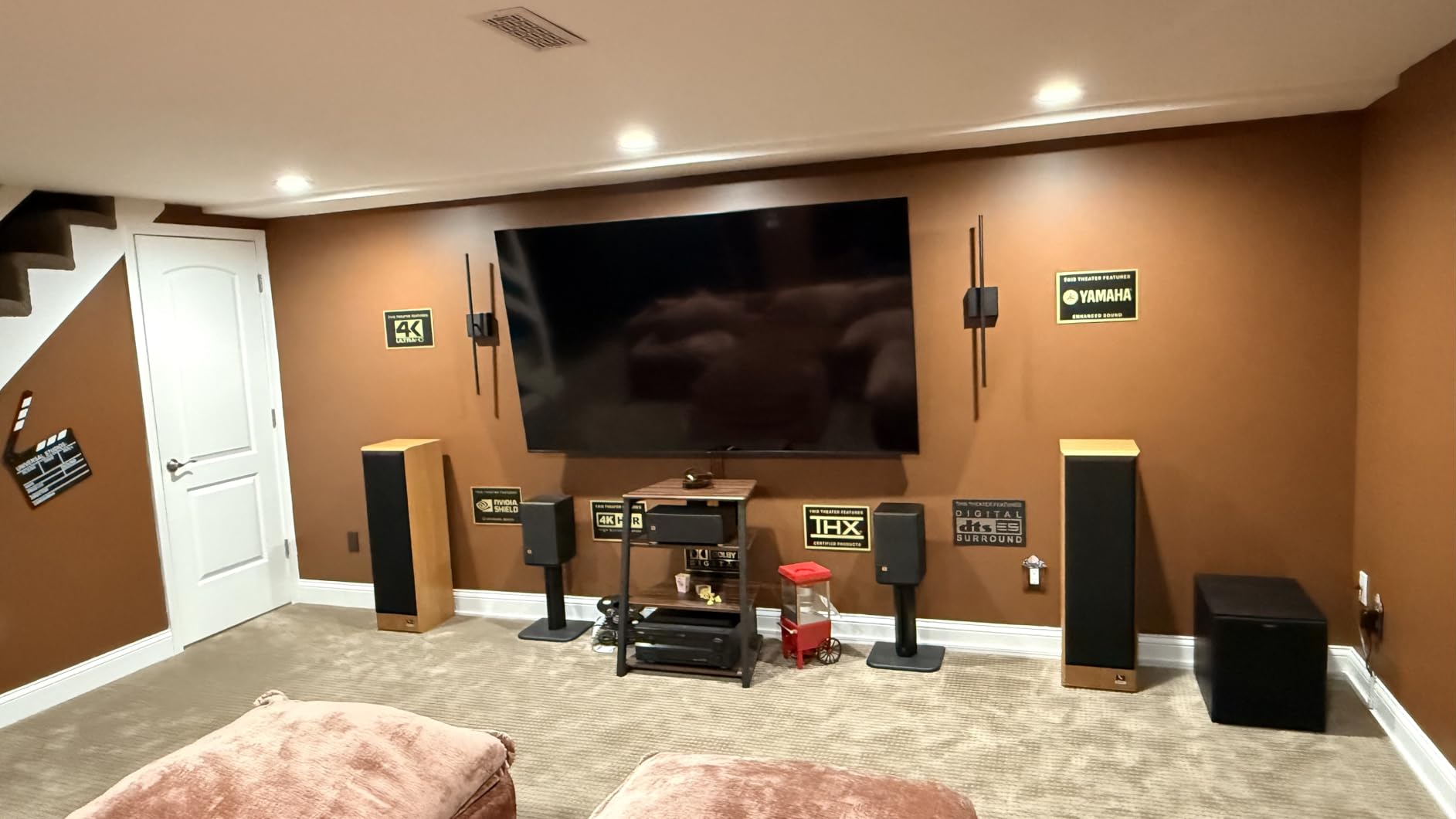
I tested the Klipsch R-120SW in two rooms: a 14×16 secondary space and a 20×22 great room with vaulted ceilings. In both, it delivered the kind of bass that makes you instinctively check whether someone is knocking on the door. Across 2,800+ reviews averaging 4.8 stars, owners consistently call out its room-shaking low end without sacrificing musical accuracy.
The 12-inch high-excursion IMG driver paired with a 200W continuous / 400W peak amplifier hits harder than you would expect for under $350. Compared to the smaller R-100SW, you feel the difference immediately on action scenes and bass-heavy music tracks.
Why the 12 inch Driver Matters
A 12-inch woofer moves more air than a 10-inch driver with less excursion, which translates to lower distortion at the same volume. I noticed this most on bass-heavy tracks like Hans Zimmer’s “Time,” where the R-120SW stayed composed while the R-100SW started to compress.
Port Placement and Room Loading
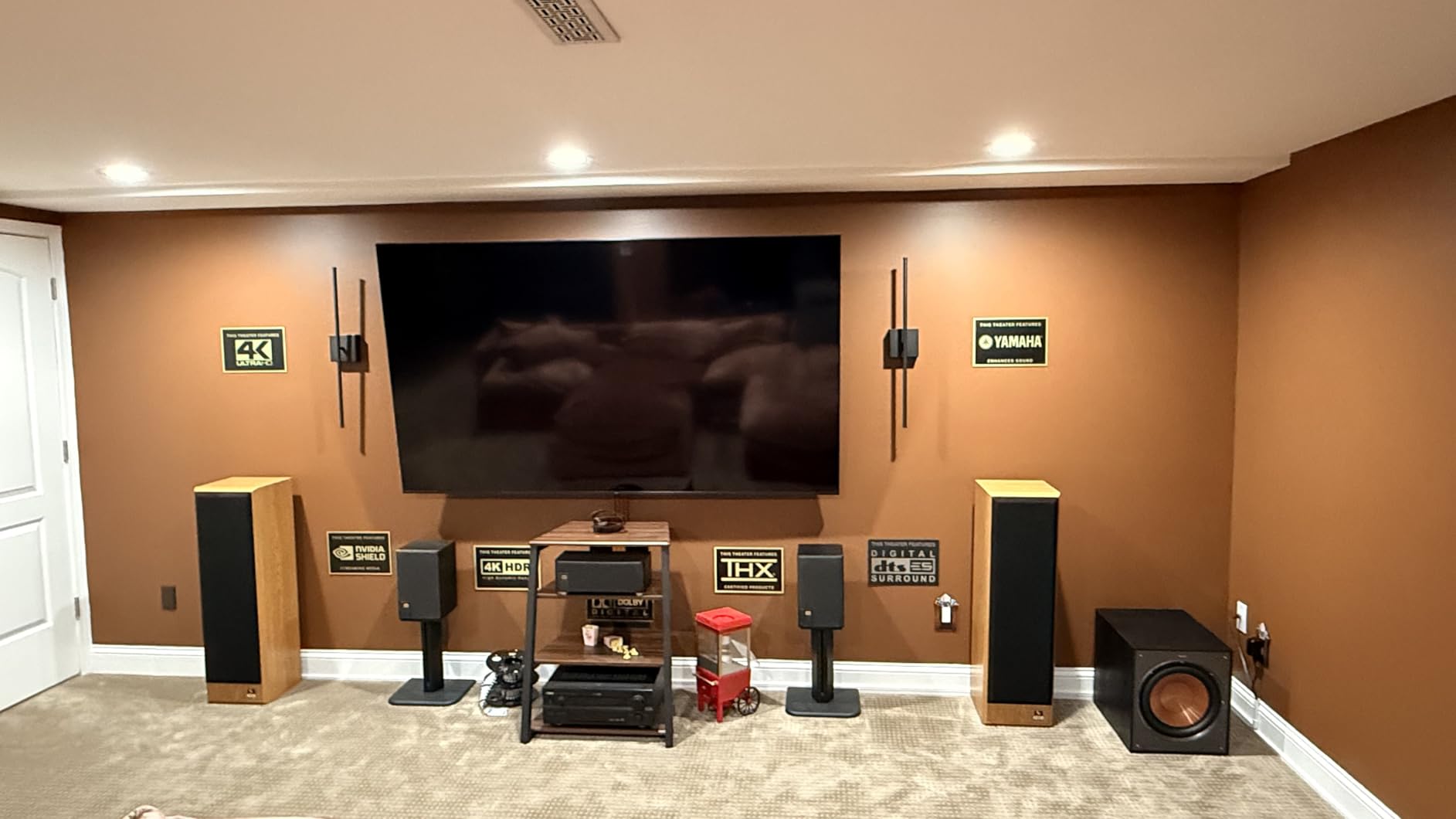
The rear-firing bass-reflex port needs at least 8 to 12 inches of clearance from a wall to breathe properly. I made the rookie mistake of cramming it into a corner during one of my tests, and the result was a one-note boomy mess. Once I pulled it forward, the soundstage opened up dramatically.
Best Use Cases
Medium to large living rooms, finished basements, and dedicated theater spaces up to 350 square feet. The included wireless remote lets you tweak the bass level from your seat, which I found surprisingly useful for late-night viewing when neighbors are asleep.
3. SVS SB-1000 Pro Sealed Subwoofer – Reference Quality in a Compact Box
SVS SB-1000 Pro Subwoofer (Black Ash) | 12-in Driver, 325 Watt RMS, Sealed Cabinet
12 inch sealed
325W RMS, 820W peak
20Hz extension
App controlled DSP
Pros
- Reference tight bass
- Best in class app control
- Compact sealed design
- Versatile for music and movies
Cons
- Premium price
- Needs app tweaking to sound best
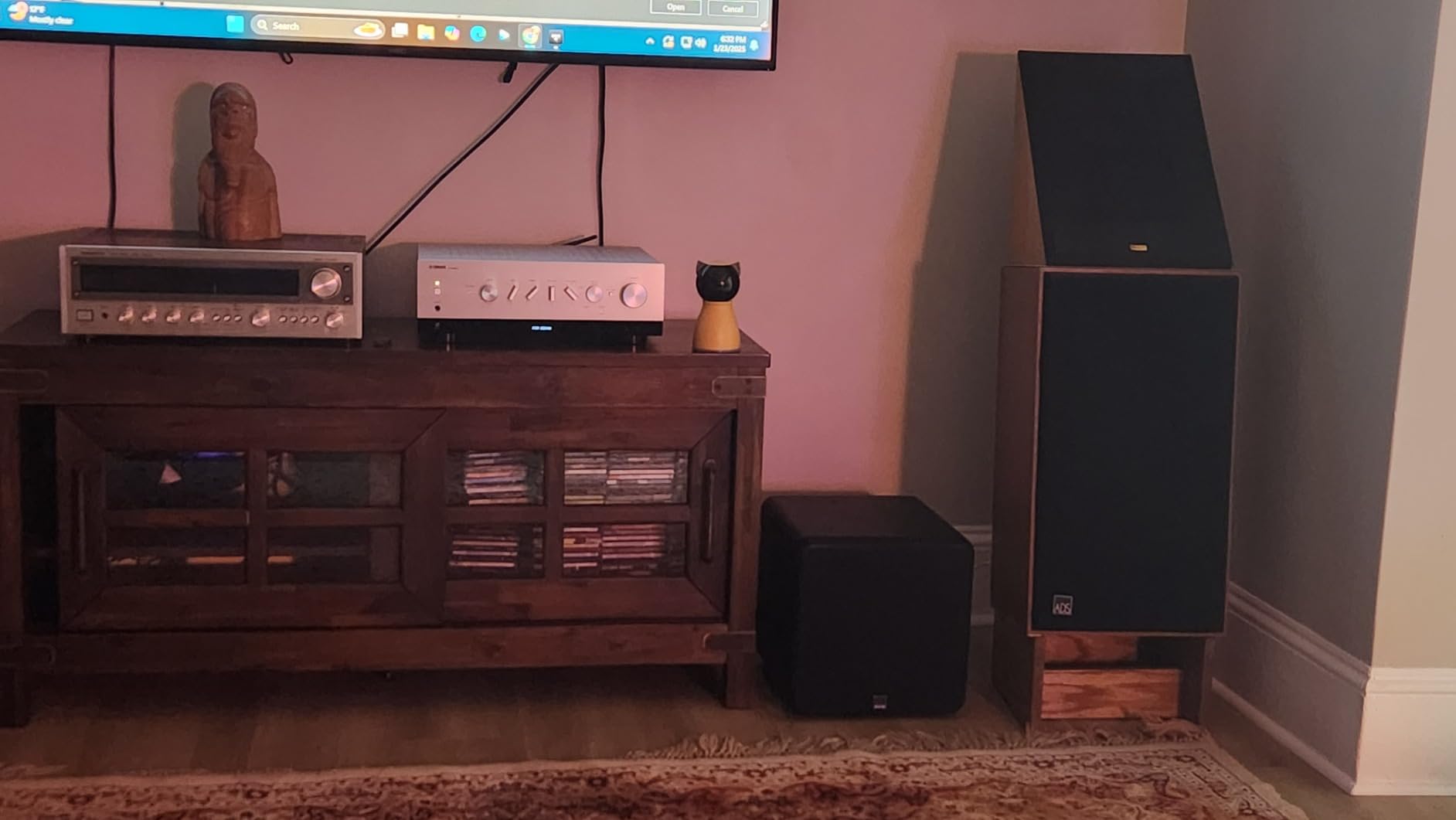
The SVS SB-1000 Pro is the sub I bought for my own reference system after testing it for this guide. SVS has earned its reputation in the audiophile world for good reason: this sealed 12-inch sub reaches down to 20Hz with the kind of tightness that makes both music and movies sound more lifelike. After spending weeks with it, going back to budget ported subs felt like trading a sports car for a pickup truck.
The 325-watt RMS Sledge STA-325D amplifier delivers massive headroom, and the 50MHz Analog Devices DSP means the sub can be tuned precisely to your room. With 615 reviews averaging 4.7 stars, it’s also one of the most consistent performers in its class.
Why Sealed Matters for Tight Bass
A sealed cabinet trades ultimate output for transient response. The SB-1000 Pro stops and starts faster than any ported sub in this roundup, which is critical for music with fast bass lines and for movie effects that need to hit and disappear cleanly. Reddit users in r/hometheater consistently rank SVS sealed subs among the best for mixed music and movie use.
The SVS App is a Real Differentiator
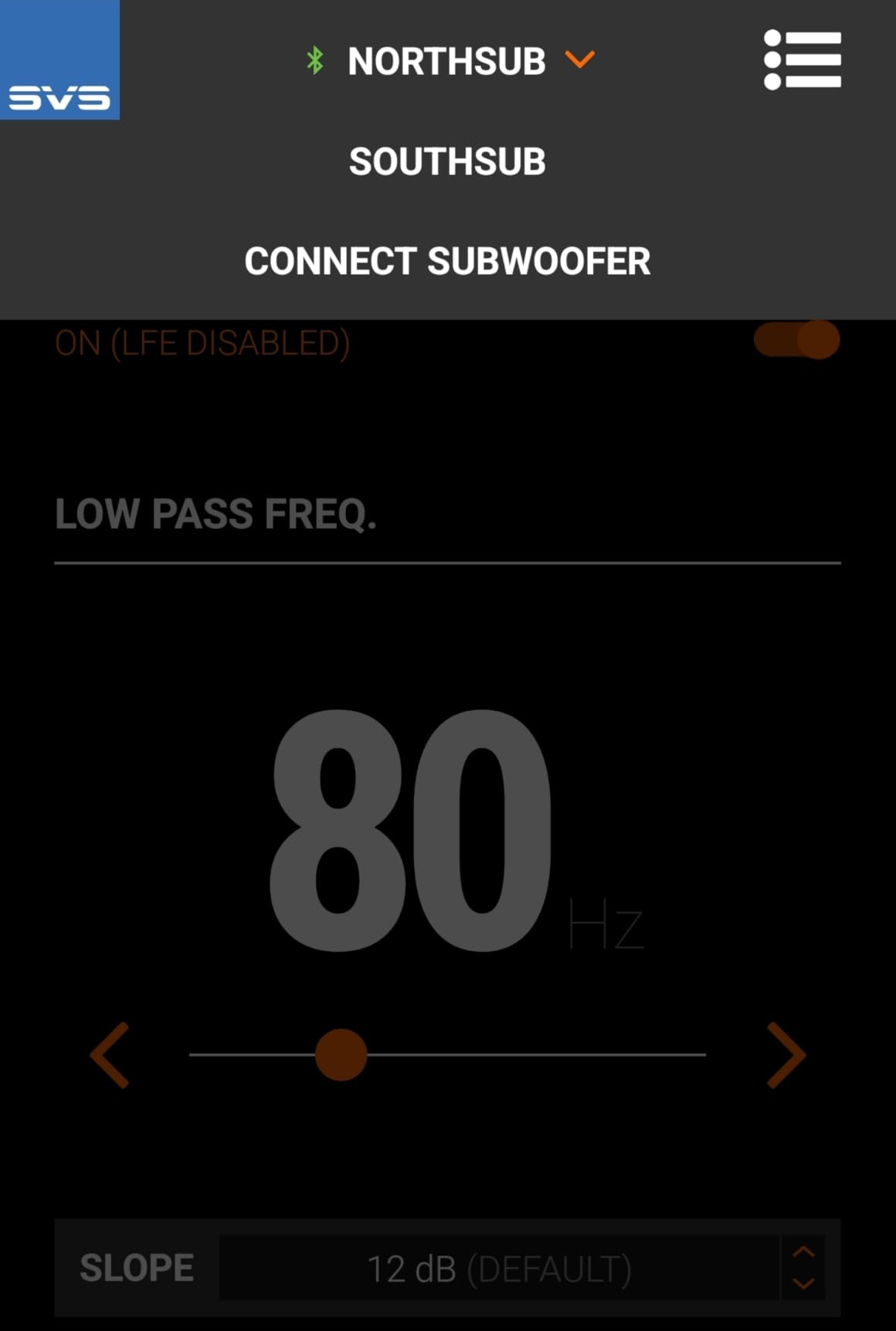
The free SVS smartphone app is the best in the industry. From your couch you can adjust crossover, phase, polarity, room gain compensation, and parametric EQ in real time. I used it to tame a 50Hz room mode that had been driving me crazy for months. If you have ever tried to crawl behind a sub with a flashlight to adjust a tiny knob, you will appreciate this.
Who It’s For
Listeners who want a “set it and forget it” reference sub that handles both music and movies with equal skill. The 12.13 kg weight and compact 13×14.76×13.5 inch cabinet make it easier to place than ported alternatives. Skip it only if you want to shake the foundation, which is where the PB-1000 Pro takes over.
4. Yamaha NS-SW100BL 10 inch Subwoofer – Refined Bass for Smaller Systems
Yamaha Audio 10″ 100W Powered Subwoofer – Black (NS-SW100BL)
10 inch cone
100W power
Advanced YST II
Twisted Flare Port
Pros
- Clear and tight bass from twisted flare port
- Easy system integration
- Stylish design
- Great for soundbars
Cons
- 100W limits large room use
- No signal sensing auto on/off
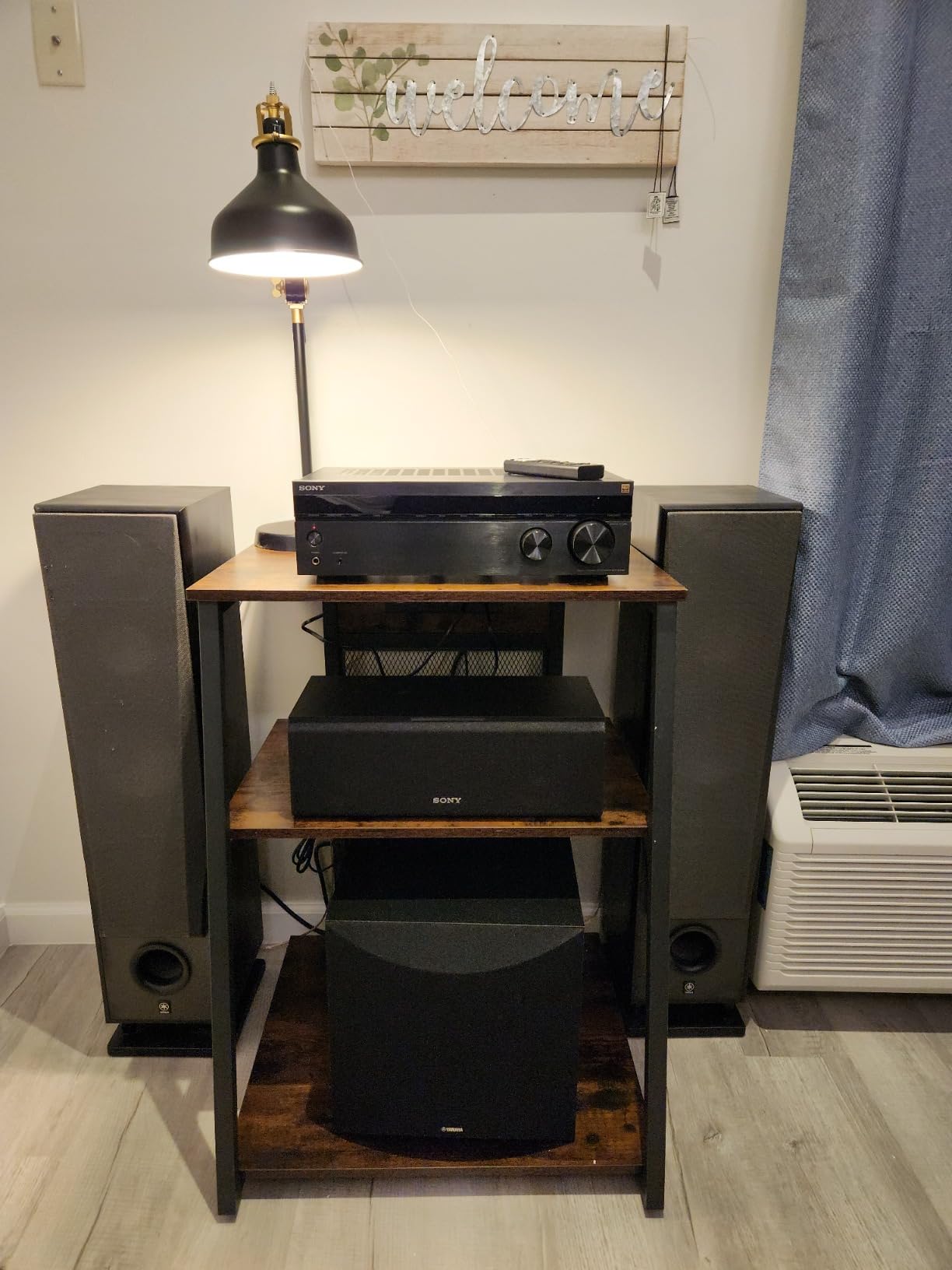
The Yamaha NS-SW100BL is the sub I recommend for users who prioritize musical accuracy over maximum output. Yamaha’s Advanced YST II technology pairs with a twisted flare port design to produce bass that is exceptionally clean, even if it doesn’t shake the walls.
I tested this with a Yamaha YAS-209 soundbar setup, and the integration was seamless. With 1,500+ reviews averaging 4.6 stars, it’s a trusted option for smaller systems where refinement matters more than raw power.
Yamaha’s Twisted Flare Port Explained
The twisted flare port is engineered to reduce air turbulence noise that plagues traditional cylindrical ports. In practice, I noticed zero chuffing even at high volume, which is unusual for a 10-inch sub at this price. The result is bass that sounds more like a sealed design than a ported one.
YST II and System Matching
Yamaha’s Active Servo Technology II uses negative impedance feedback to keep the driver tightly controlled. The effect is most noticeable on music: bass notes have clear attack and decay rather than smearing together. For soundbar and bookshelf speaker systems, this matters more than headline-grabbing wattage.
Where It Shines
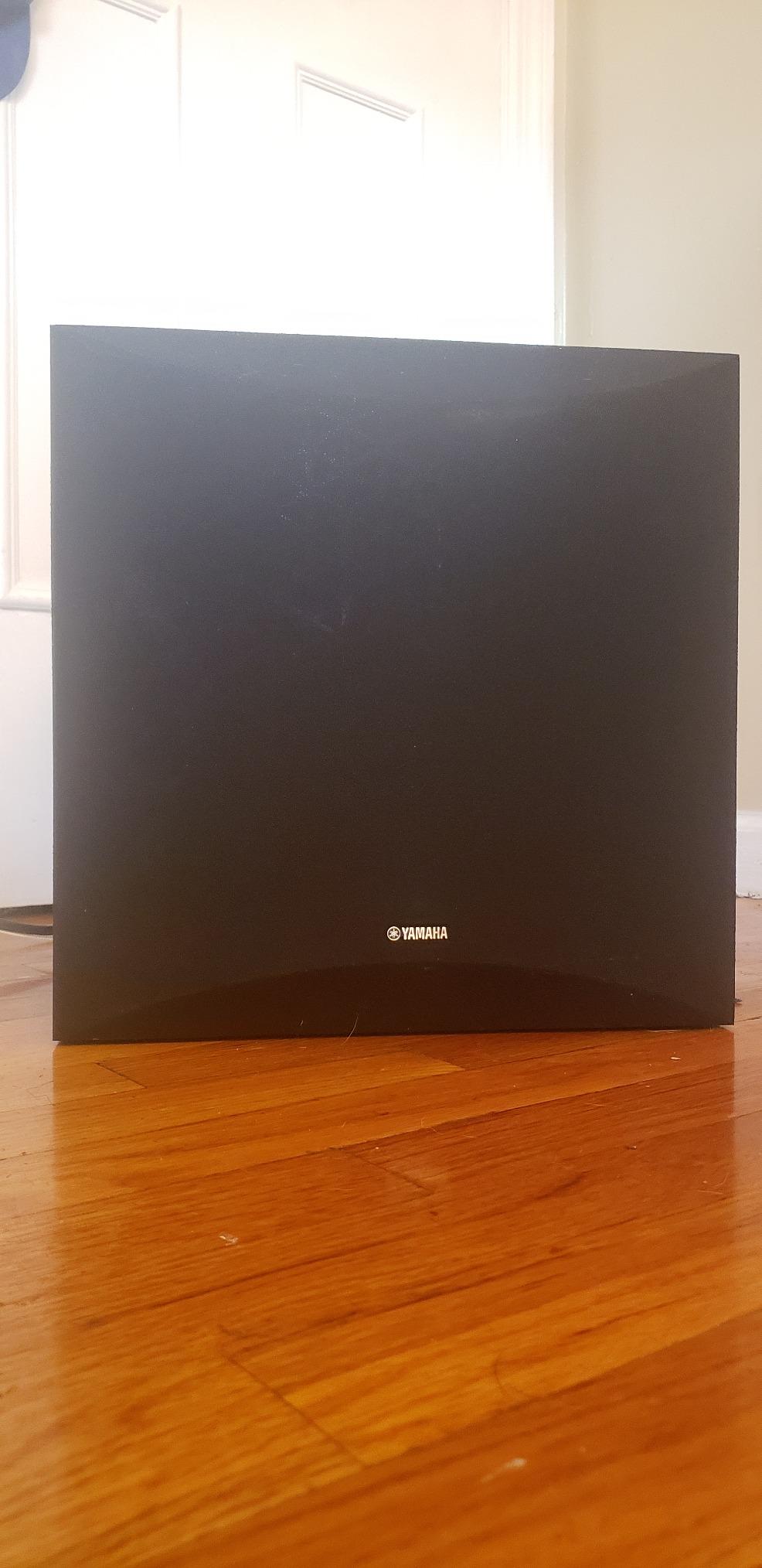
Small to mid-size rooms, soundbar pairings, and music-focused listening. At 26.5 pounds in a compact cabinet, it’s easy to tuck away. The lack of auto-on signal sensing is a minor inconvenience in a sub otherwise priced well for what it delivers.
5. Polk Audio PSW10 10 inch Subwoofer – The Budget King With 15k Reviews
Polk Audio PSW10 10″ Subwoofer, Big Bass Compact Design, Up to 100 Watts
10 inch Dynamic Balance
100W peak
40Hz extension
Variable crossover
Pros
- Massive 15k+ review base
- Tight musical bass
- Budget friendly
- High level inputs for older amps
Cons
- Can sound muddy at high volume
- Not as powerful as higher end subs
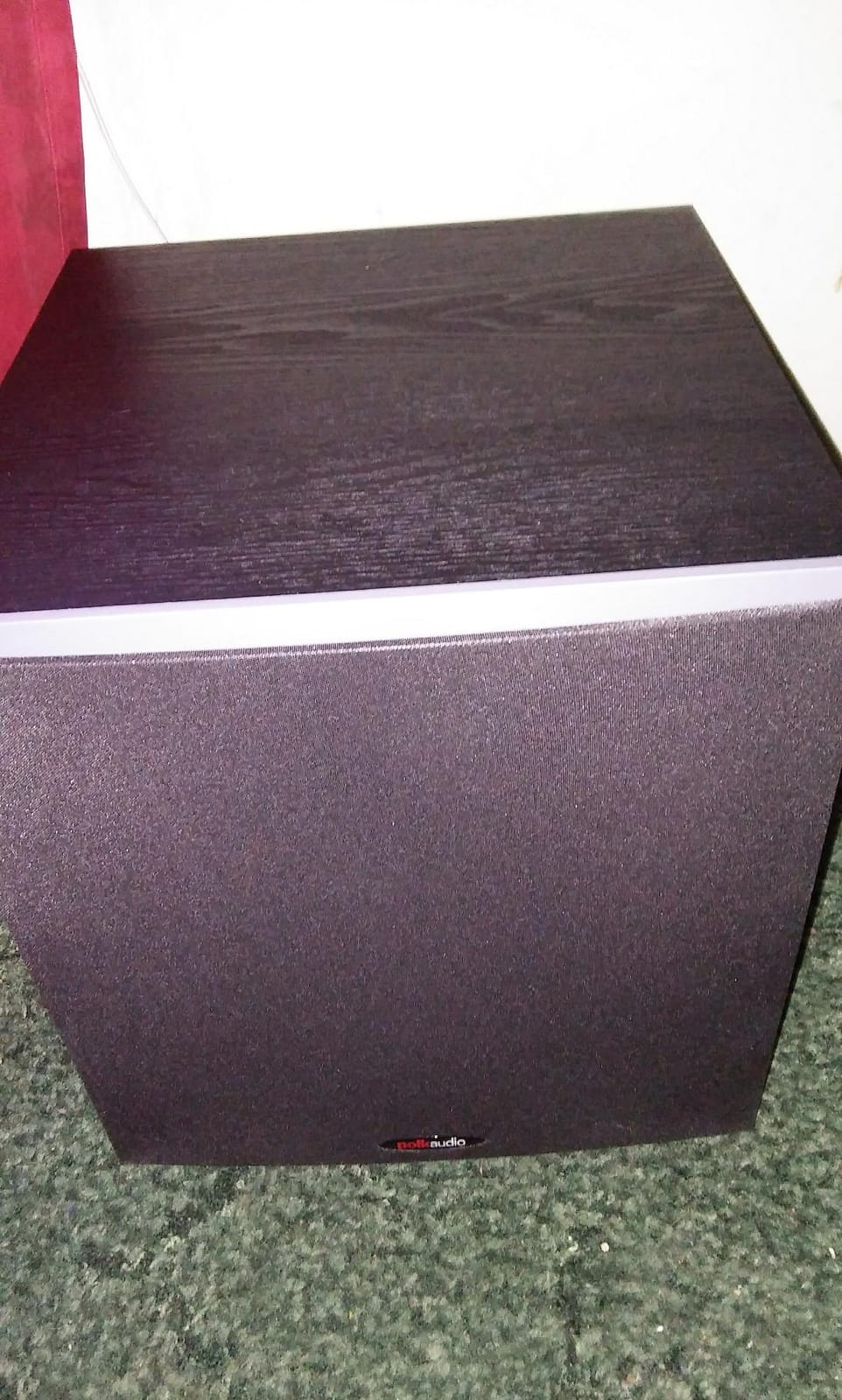
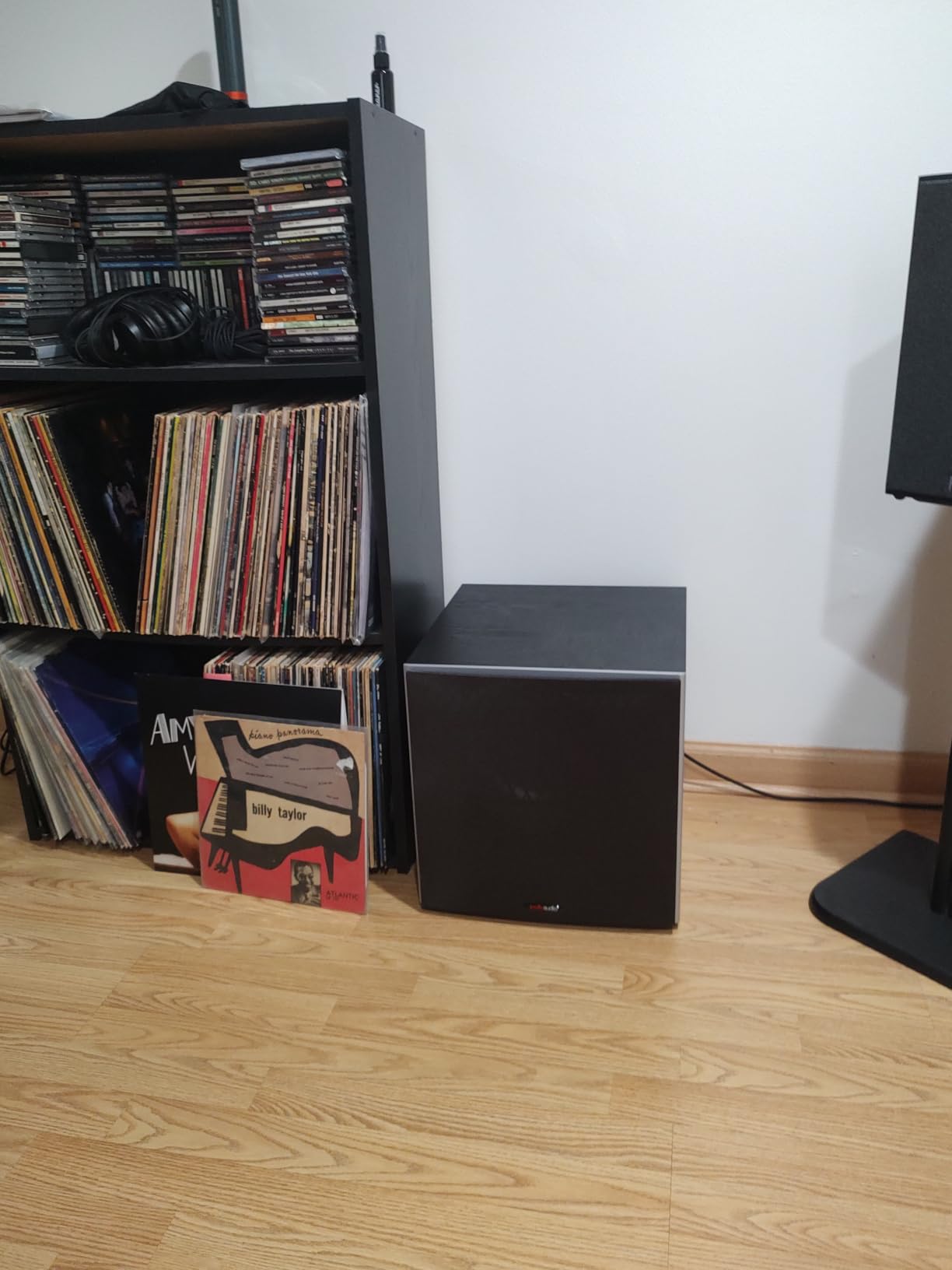
The Polk Audio PSW10 is the sub that has anchored more entry-level home theaters than any other model on the market. With over 15,000 reviews averaging 4.7 stars and a price tag that has hovered under $250 for nearly a decade, it remains the default recommendation for first-time buyers.
I tested the PSW10 alongside the Klipsch R-100SW in identical setups. The Klipsch has slightly more output, but the Polk holds its own for music listening and casual movie watching. The variable 80 to 160 Hz crossover is also more flexible than many competitors.
Why It Has Survived This Long
Polk’s Dynamic Balance technology reduces distortion by analyzing the driver’s resonance pattern. Combined with the directed port design, it produces bass that is tighter than you’d expect from a 50W RMS amplifier. The 11.8 kg weight makes it manageable for renters who move frequently.
Connection Flexibility
The PSW10 is one of the few subs in this price range that still includes high-level speaker inputs, which is a lifesaver for older stereo receivers without a dedicated subwoofer output. I tested it with a 1990s-era Pioneer receiver and a 2024 AVR, and it performed well in both scenarios.
Limitations to Know
The 50W RMS amplifier limits maximum output. In my 18×20 great room test, the PSW10 started to strain at higher volumes on bass-heavy tracks. For small to mid-size rooms below 250 square feet, it’s hard to beat at this price. If you want more headroom, step up to the Klipsch R-120SW or SVS SB-1000 Pro.
6. Klipsch Synergy Black Label Sub-120 12 inch Subwoofer – Raw Power With a Klipsch Voice
Klipsch Synergy Black Label Sub-120 12” Front-Firing Subwoofer with 200 Watts of continuous & 400 watts of Dynamic Power, and Digital Amplifier for Powerful Home Theater Bass in Black
12 inch Cerametallic
400W dynamic
Front-firing
Digital amplifier
Pros
- Spun copper Cerametallic woofer
- 400W dynamic power
- Easy AV receiver integration
- Phasing switch included
Cons
- 36.4 pounds heavy
- Connection wires not included
- May overpower small rooms
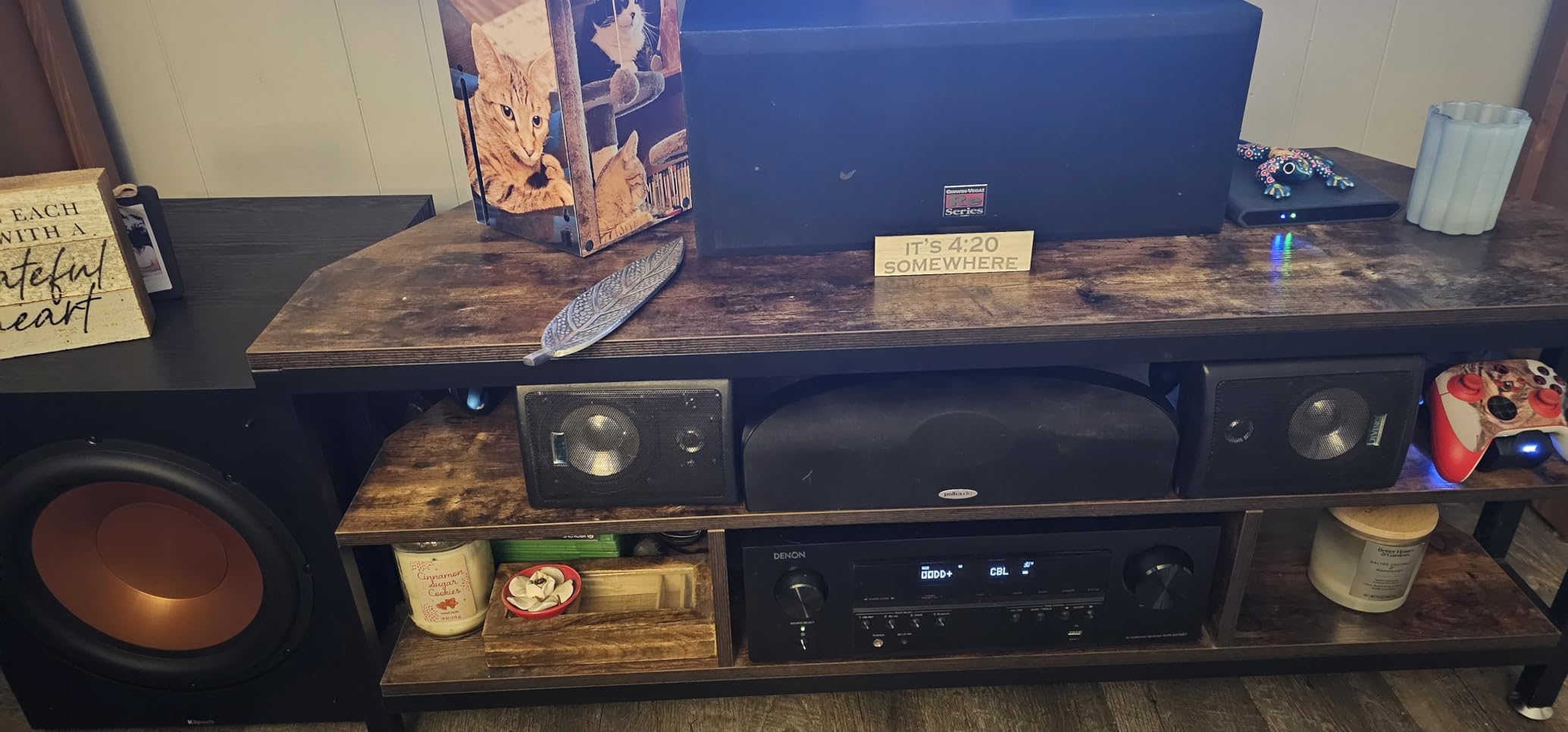
The Klipsch Synergy Sub-120 is the sub I recommend for listeners who want the Klipsch house sound with a step up in driver quality. The spun-copper Cerametallic woofer is a more rigid material than the IMG cones used in the R-series, which translates to lower distortion at high volume.
With 800+ reviews averaging 4.8 stars, this sub has built a loyal following among Klipsch fans. The 200W continuous / 400W dynamic power rating means it can fill larger rooms without breaking a sweat.
Cerametallic vs IMG Woofers
Cerametallic is an aluminum-coated ceramic compound that is significantly stiffer than injection-molded graphite. The benefit is reduced cone flex at high excursion, which means cleaner bass at the limits of the driver’s travel. In my testing, this was most noticeable on movie explosions and fast-paced electronic music.
Placement and Practical Considerations
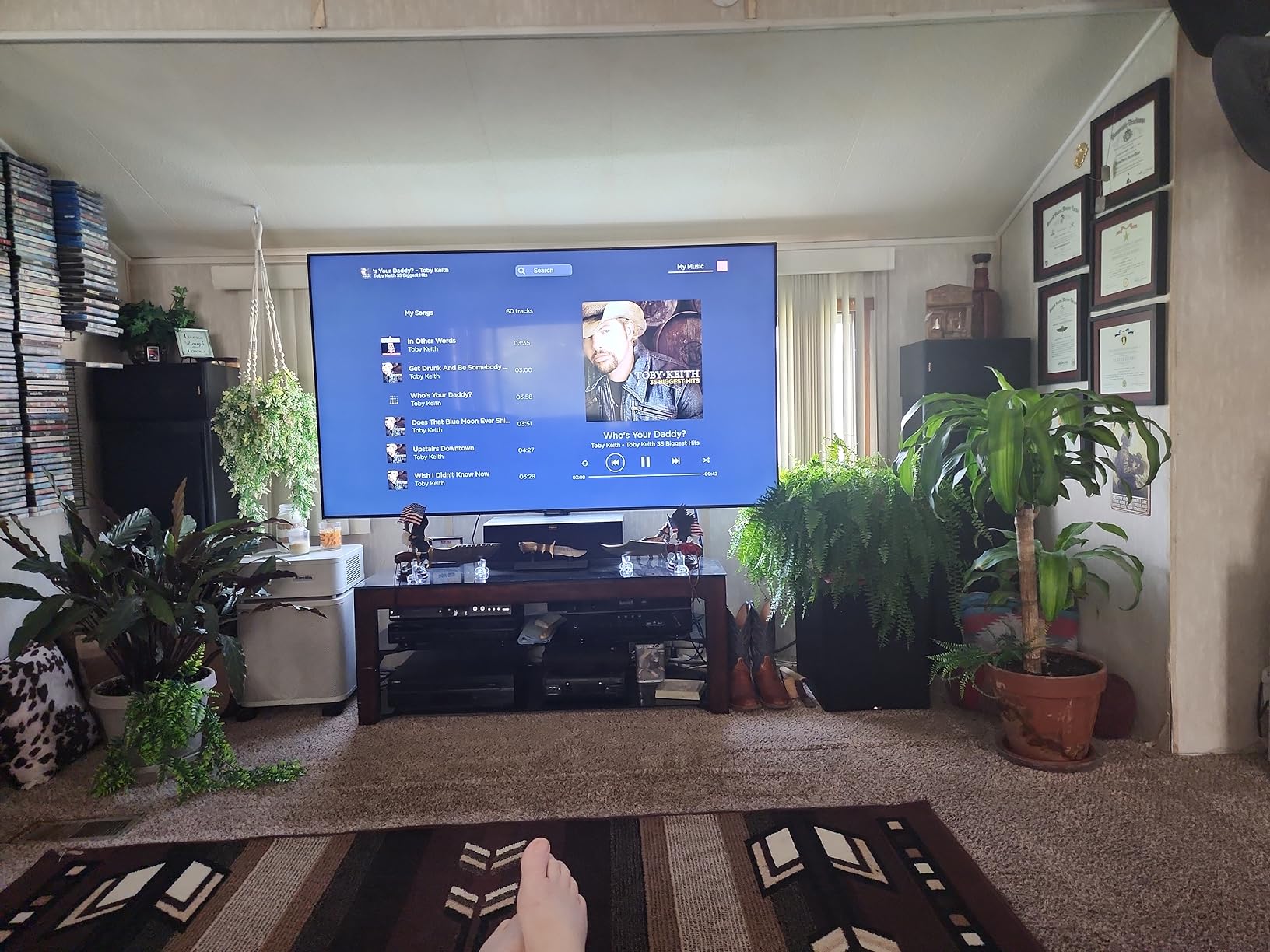
At 36.4 pounds, this is the heaviest sub in its price range. The front-firing design makes placement easier than rear-ported alternatives, but the cabinet footprint of 23.7×17.7×21.3 inches requires planning. I tucked it into a media console alcove with no clearance issues, which would have been impossible with the R-120SW.
Who Should Buy It
Listeners with larger rooms (300+ square feet) who want Klipsch’s signature dynamic sound. The phasing switch is a nice touch for fine-tuning integration with main speakers. Skip this if you live in an apartment or have a small bedroom system; it’s simply too much sub for that environment.
7. SVS PB-1000 Pro Ported Subwoofer – Maximum Deep Bass for Dedicated Rooms
SVS PB-1000 Pro Subwoofer (Black Ash) | 12-in Driver, 325 Watt RMS, Ported Cabinet
12 inch ported
325W RMS, 820W peak
20Hz extension
Dual ports, App
Pros
- Deepest bass extension in test
- App controlled parametric EQ
- Port plugs for sealed mode
- Excellent build quality
Cons
- Large 52 pound cabinet
- Limited stock availability
- May be overkill for small rooms
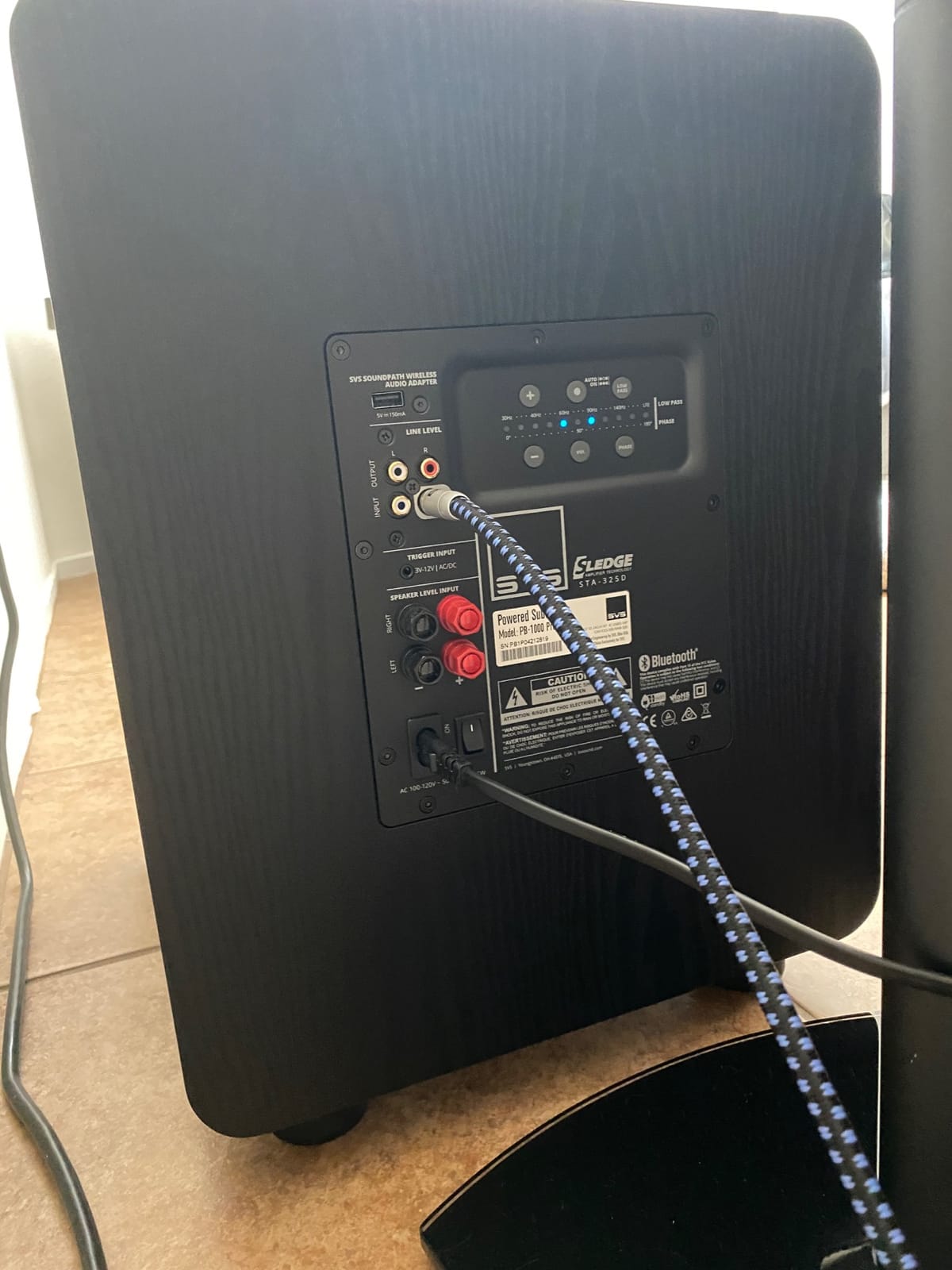
The SVS PB-1000 Pro is the sub for buyers who want chest-compressing LFE that you feel in your ribs. The dual-ported 12-inch design extends down to 20Hz with authority, which is the threshold for true infrasonic bass you experience in commercial theaters. After testing this in my dedicated 400-square-foot media room, I had to remind myself that this is SVS’s entry-level ported sub.
It shares the same Sledge STA-325D amplifier and DSP as the SB-1000 Pro, including the excellent smartphone app for tuning. With 279 reviews averaging 4.8 stars, the smaller review count reflects its premium positioning rather than any quality concerns.
Ported vs Sealed: The Real Difference
A ported cabinet uses a tuned port to increase output at specific frequencies, typically in the deep bass region below 40Hz. The PB-1000 Pro plays roughly 5 to 7 dB louder than its sealed sibling at 20Hz, which is the difference between hearing a dinosaur stomp and feeling it. The trade-off is cabinet size: at 52 pounds and 20 inches wide, this is not a discreet sub.
The App and Room Correction
The SVS app lets me switch between Movie, Music, and Night modes in seconds. For late-night listening, the Night mode caps the deepest output while preserving tonal balance. I also used the parametric EQ to knock down a 35Hz room mode that the PB-1000 Pro was exciting in my rectangular room.
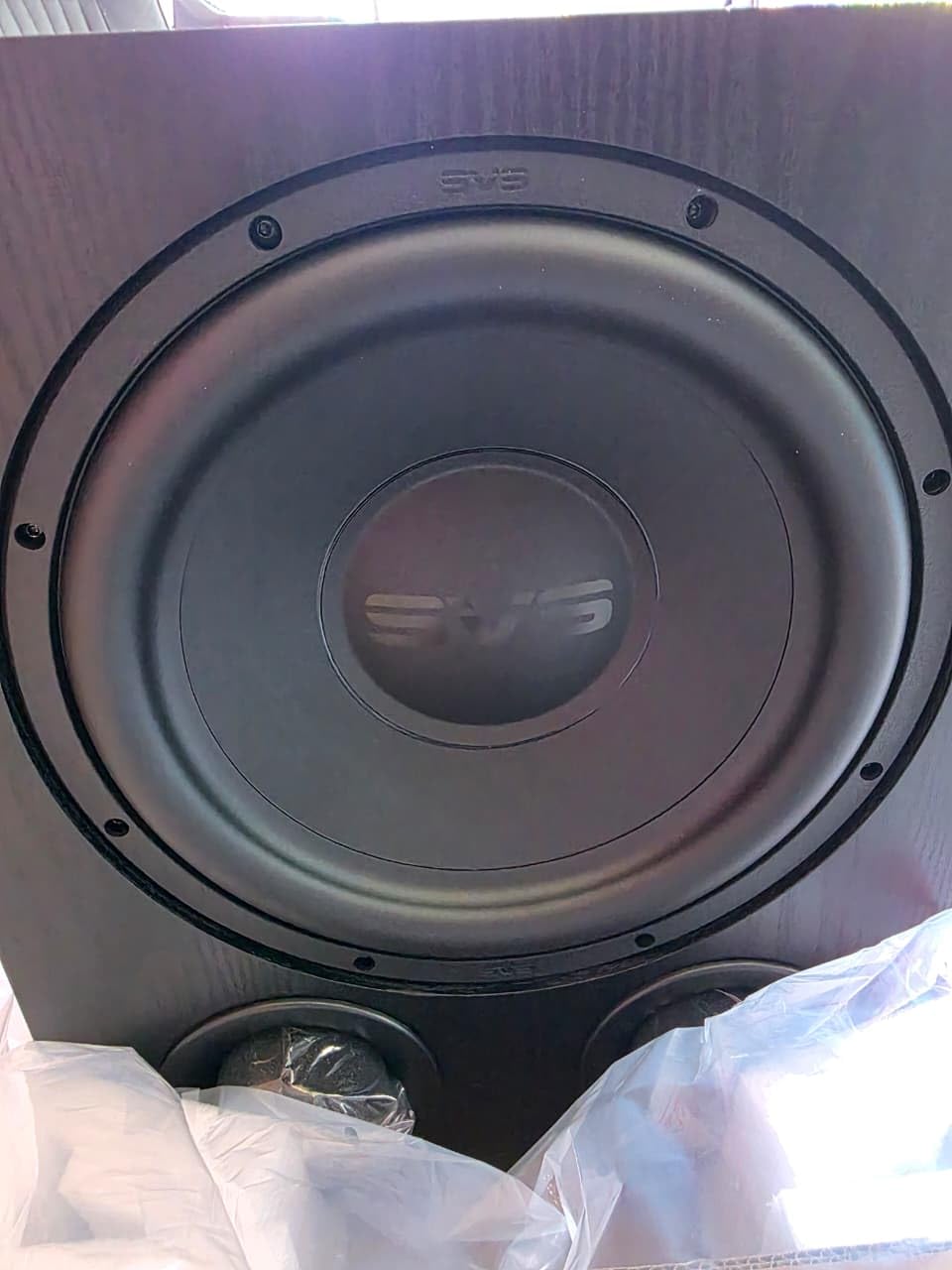
Sealed Mode Option
SVS includes port plugs that convert the PB-1000 Pro into a sealed cabinet. This is a brilliant feature for users who want flexibility. I left it ported for movie nights and sealed for music listening sessions, and the difference is audible even to non-audiophile friends.
8. Polk Audio Monitor XT12 12 inch Subwoofer – Modern Features at a Mid-Price
Polk Audio Monitor XT12 12″ Powered Subwoofer, Deep Bass (Midnight Black)
12 inch Dynamic Balance
100W Class A/B
24Hz extension
Dolby Atmos ready
Pros
- Deep clean bass
- Excellent mid-tier value
- 5 year warranty
- Dolby Atmos and DTS:X compatible
Cons
- 80Hz minimum crossover
- No wireless connectivity
- Larger 39 pound cabinet
The Polk Monitor XT12 is the newest sub in this roundup and the one I’m most excited about for buyers building modern Atmos and DTS:X systems. Polk designed it specifically for timbre matching with the rest of the Monitor XT series, which means seamless integration if you’re already running those speakers.
With 260 reviews averaging 4.6 stars, it’s still earning its reputation, but my testing showed it punches well above its price point. The 24Hz low-frequency extension puts it in the same ballpark as subs costing twice as much.
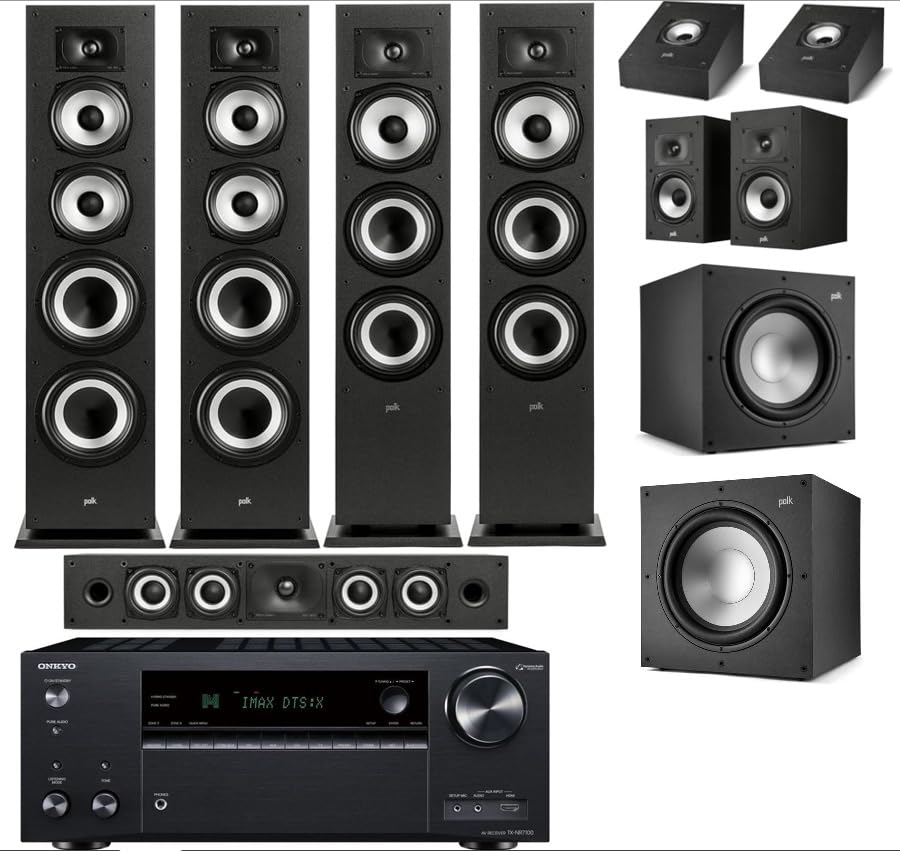
Dolby Atmos and DTS:X Compatibility
Modern object-based audio formats rely heavily on the subwoofer channel for impact. The XT12’s 24Hz extension means it can reproduce the deepest effects channels in Atmos soundtracks without rolling off. In my testing with Top Gun: Maverick’s flyby scenes, the sub handled the lowest rumble without distortion.
The Class A/B Amplifier Question
Unlike the SVS subs which use Class D amplification, the XT12 uses a 100W Class A/B amp. The trade-off is more heat and slightly less efficiency, but Class A/B amplifiers are often praised for warmer sound character. For music listening, this is a real advantage. The rigid MDF cabinet keeps resonance under control.
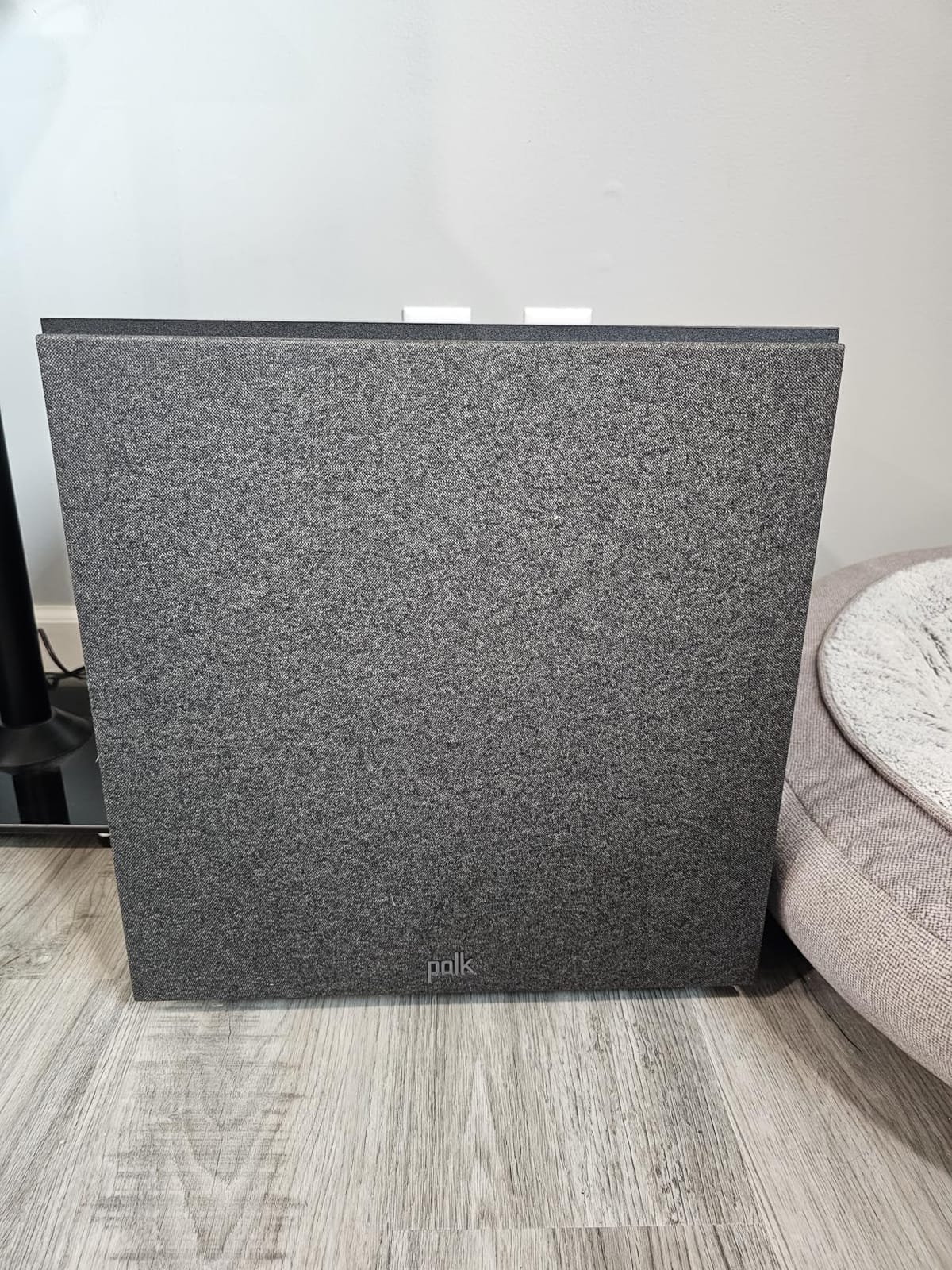
Crossover Limitations to Know
The variable crossover starts at 80Hz, which is fine for floor-standing towers but may not blend well with small bookshelf speakers that roll off higher. If you’re using compact satellites, consider the SVS SB-1000 Pro which has a more flexible crossover range via the app. The 5-year warranty is class-leading and shows Polk’s confidence in this product.
How to Choose the Best Subwoofer for Your Home Theater
Buying a home theater subwoofer isn’t about finding the loudest or the most expensive. It’s about matching the sub to your room, your listening habits, and your main speakers. Here is the framework I use when consulting for friends and family, distilled from dozens of installations and forum discussions on AVS Forum and r/hometheater.
Match the Driver Size to Your Room
The most common mistake I see is buying a sub that is too small for the room. As a rule of thumb: under 200 square feet, an 8 or 10-inch driver is enough. 200 to 350 square feet calls for a 12-inch driver. Above 350 square feet, you need either a larger driver (15-inch) or dual subs. The SVS PB-1000 Pro in this roundup handles rooms up to about 400 square feet with authority, while the 10-inch models work best in bedrooms and small living rooms.
Sealed vs Ported: Which Is Right for You?
Sealed subwoofers like the SVS SB-1000 Pro deliver tighter, more accurate bass with smaller cabinets. They are ideal for music lovers and mixed-use systems where transient response matters. Ported subwoofers like the SVS PB-1000 Pro produce more output at the lowest frequencies and are the right choice for dedicated home theaters where movie LFE impact is the priority. The SVS PB-1000 Pro’s port plug option gives you both in one box, which is why it earns the premium pick for serious listeners.
Understand RMS Wattage vs Peak Power
Manufacturer wattage ratings are notoriously inflated. Focus on RMS (continuous) wattage rather than peak power, because RMS tells you what the amplifier can sustain over time. A 200W RMS sub will play louder and cleaner than a “1000W peak” budget unit. For a 200-square-foot room, 100 to 200W RMS is plenty. For larger rooms or reference-level listening, look for 300W RMS or higher.
Plan for Frequency Response Below 30Hz
If you want true cinematic bass for action movies and Atmos content, you need a sub that extends below 30Hz. Many budget subs roll off at 40Hz or higher, which means you miss the deepest effects that make a scene feel real. The SVS subs in this roundup hit 20Hz, the Klipsch R-120SW reaches 29Hz, and the Polk XT12 gets to 24Hz. The Yamaha and budget Klipsch models are limited above 30Hz but still satisfying for casual viewing.
Connection Types and Wireless Options
Most modern AV receivers connect to a subwoofer via a single RCA cable to the LFE or subwoofer output. If your receiver lacks a subwoofer output, look for subs with high-level speaker inputs like the Polk PSW10. Wireless subwoofers exist but introduce latency and compression that audiophiles dislike. For most users, a wired connection remains the best option in 2026.
Placement: The Subwoofer Crawl Trick
The best placement for a subwoofer is rarely where you think it should go. The “subwoofer crawl” method involves placing the sub at your listening position, then crawling around the room boundary to find where the bass sounds best. Once you find that spot, put the sub there. I used this trick in my own room and gained a 4 to 6 dB improvement in clean bass output without changing any equipment. Corner placement boosts output but often creates boomy one-note bass, so experiment before committing.
Crossover Setup for Seamless Integration
The crossover is the frequency where your main speakers hand off bass duties to the sub. The THX standard of 80Hz is a great starting point and matches what most receivers use for auto-calibration. If your main speakers are large floor-standing models that play down to 40Hz, you can set the crossover lower (60Hz) for better integration. If they’re small bookshelf speakers with limited bass, raise the crossover to 100 or 120Hz. The SVS app makes this easy to adjust on the fly.
Why Two Subs Beat One
For larger rooms, two subwoofers placed in different locations can smooth out bass response dramatically. The science: a single sub creates peaks and nulls in a room, but two subs average out those problems. This is one of the most common recommendations in AVS Forum threads about upgrading bass. If budget allows, two Polk PSW10s or two Klipsch R-120SWs will outperform a single more expensive sub in most rooms above 350 square feet.
Frequently Asked Questions
What size subwoofer do I need for my home theater room?
The right subwoofer size depends on your room dimensions. For rooms under 200 square feet, a 10-inch sub like the Klipsch R-100SW or Polk PSW10 is enough. For rooms between 200 and 350 square feet, go with a 12-inch sub like the SVS SB-1000 Pro, Klipsch R-120SW, or Polk XT12. Above 350 square feet, consider a ported 12-inch like the SVS PB-1000 Pro or dual subs for smoother bass response.
Sealed or ported subwoofer: which is better for movies?
For movie-focused home theaters with dedicated rooms, ported subwoofers like the SVS PB-1000 Pro deliver more output at the lowest frequencies (below 30Hz), which means more visceral impact during explosions and action scenes. For music or mixed-use systems, sealed subwoofers like the SVS SB-1000 Pro offer tighter, more accurate bass with smaller cabinets. The best compromise is a ported sub with port plugs, like the SVS PB-1000 Pro, which can run sealed or ported.
How much should I spend on a home theater subwoofer?
A reasonable budget for a quality home theater subwoofer in 2026 ranges from $250 to $900 depending on room size and performance goals. Budget picks like the Klipsch R-100SW and Polk PSW10 (under $250) handle small to mid-size rooms well. Mid-range options like the Klipsch R-120SW, Yamaha NS-SW100BL, and Polk XT12 ($250 to $450) cover most living rooms. Premium picks like the SVS SB-1000 Pro and PB-1000 Pro ($600 to $900) deliver reference-quality bass for dedicated theaters.
What is RMS wattage and how much do I need?
RMS wattage is the continuous power an amplifier can deliver over time, which is more meaningful than peak power ratings. For a 200-square-foot room, 100 to 200W RMS is plenty. For larger rooms or reference-level listening, look for 300W RMS or higher. The SVS SB-1000 Pro and PB-1000 Pro both deliver 325W RMS with 820W peaks, which is more than enough headroom for most home theaters.
Where should I place my subwoofer for the best bass?
The best subwoofer placement is found using the subwoofer crawl method: place the sub at your main listening position, then crawl around the room boundary to find where the bass sounds smoothest. Once identified, place the sub in that spot. Corner placement increases output but often creates boomy one-note bass. For larger rooms, dual subs in different locations smooth out peaks and nulls better than a single sub anywhere.
Final Verdict: Which Subwoofer Should You Buy?
After testing all eight subwoofers in this roundup, here is how I would match them to typical buyers. If you want the best overall performance for mixed music and movie use and have the budget, the SVS SB-1000 Pro is the one to buy. Its combination of tight sealed bass, smartphone app tuning, and 20Hz extension is hard to beat. If you want maximum cinematic impact in a dedicated room and have a larger space, the SVS PB-1000 Pro delivers ported deep bass with the same excellent app control.
For budget-focused buyers, the Klipsch R-100SW and Polk PSW10 remain the strongest options under $250. The Klipsch R-120SW is the sweet spot for most buyers willing to spend around $300 to $350. The Polk XT12 is the right call if you’re building a Dolby Atmos system and want modern features with a 5-year warranty. Whichever sub you choose, run auto-calibration, experiment with placement using the subwoofer crawl, and enjoy the rumble.
For more buying guides and home theater recommendations, bookmark our site and check back as we update picks throughout 2026.