
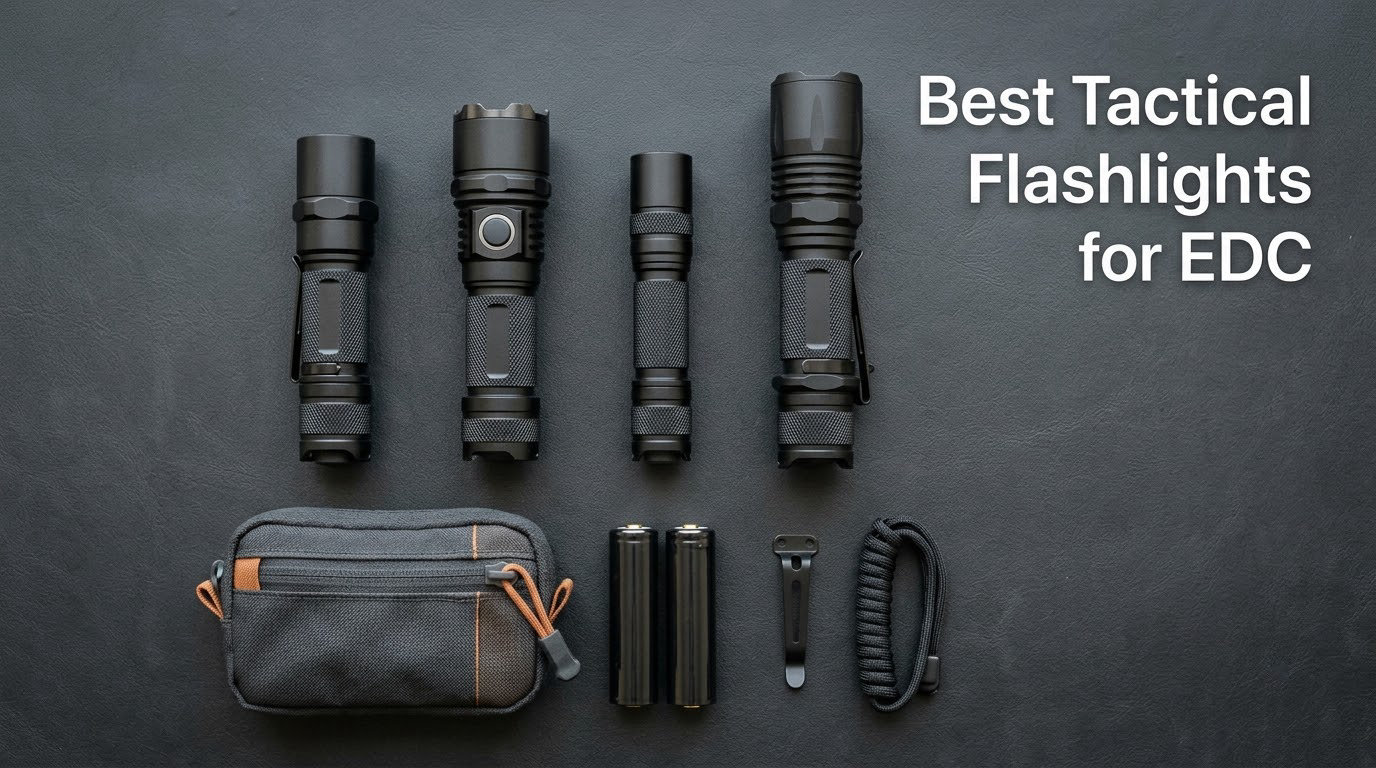
Choosing the best tactical flashlights for EDC is less about finding the biggest lumen number and more about finding a light you can start with one hand, in the dark, while everything else is already happening. We carried a shortlist of ten through weeks of pocket duty, drop tests, rain, and one genuinely bad weekend of car trouble to work out which ones deserve a place in your pocket and which ones are just impressive on a spec sheet.
What came out of that process surprised us. The light with the highest rating in this group is not the brightest one. The brightest one is not the easiest to carry. And the two that owners seem happiest with over the long haul are not the ones with the most complicated menus. All of that is in the reviews below, with the numbers that actually matter: output, candela, beam throw, battery format, switch type, and water rating.
We also leaned on what people who carry these lights every single day say on r/flashlight and CandlePowerForums, because the gap between how a light performs on a bench and how it performs at 11pm in a parking lot is enormous. Forum consensus has not changed in years: Fenix is the name that comes up most often for reliability, and about 1,000 lumens is treated as the practical ceiling for something you carry daily. We explain that logic, plus the lumens-versus-candela trap that trips up most spec sheets, in the buying guide.
Last updated for September 2026. We update this list as new models land and as warranty replacement patterns become clearer.
Our Top 3 Tested Tactical EDC Flashlights
These are the three we ended up carrying most. Each solves a different problem, and the order below reflects overall balance of rating, owner satisfaction, and carry ergonomics rather than peak brightness alone.

Comparing the Best Tactical Flashlights for EDC in 2026
All ten lights below appear in our full reviews, in the same order. Read the output column as the peak number, not the number you will be running most of the time. Several of these step down within seconds of being turned on at maximum, which is normal and not a defect.
| Product | Specs | Action |
|---|---|---|
| GearLight TAC Two-Pack |
|
Check Latest Price |
 Streamlight ProTac 1L-1AA Streamlight ProTac 1L-1AA |
|
Check Latest Price |
 OLIGHT ArkPro Ultra OLIGHT ArkPro Ultra |
|
Check Latest Price |
 Nitecore MT2A Pro Nitecore MT2A Pro |
|
Check Latest Price |
 Nitecore EDC29 Nitecore EDC29 |
|
Check Latest Price |
 Fenix PD35 v3.0 Fenix PD35 v3.0 |
|
Check Latest Price |
 Nitecore MH12 Pro Nitecore MH12 Pro |
|
Check Latest Price |
 ACEBEAM TAC AA 2.0 ACEBEAM TAC AA 2.0 |
|
Check Latest Price |
 Sofirn SP35T Sofirn SP35T |
|
Check Latest Price |
 OLIGHT Warrior Ultra OLIGHT Warrior Ultra |
|
Check Latest Price |
What Actually Makes a Flashlight Tactical
A tactical light is defined by its switch, not its wattage
The word gets thrown around loosely, so it helps to be precise. A tactical flashlight is one you can activate with your index finger while your hand is already occupied, and one that will not turn itself on inside a pocket. That means a mechanical tail switch, a real lockout, and a control layout you can learn in one minute.
Ask what Navy SEALs or FBI tactical units carry and the honest answer is that procurement is opaque and specifications change. What is consistent across both federal and military procurement is the pattern rather than the model: a compact light that starts instantly, runs on batteries that are easy to find, and does not die mid-incident.
That is the standard we applied to this list. Anything with a soft, mushy, momentary-only tail switch, or no way to stop accidental activation, was disqualified from the top spot regardless of how many lumens it produced.
Lumens measure spill, candela measures throw
Lumens are the total light a lamp throws in every direction, which is why they dominate marketing. Candela is intensity, the light concentrated into the hotspot, and it is what determines how far you can actually see. A 3,000-lumen flood light with a wide beam can be dimmer at 100 yards than a 900-lumen light with a tight beam.
Throw is usually quoted as a distance in meters or yards, measured under ANSI FL1 rules. The part most spec sheets skip is that FL1 requires the reading to hold for 30 seconds after activation. Many manufacturers measure at turn-on, so the number on the box is the number for a fraction of a second, not the number you get.
Five traits we check on every light we recommend
First, sustained output over time, because a light that throttles down after five seconds is a different tool than one that holds. Second, a mechanical lockout. Third, IP rating, ideally IPX8 or IP68. Fourth, clip depth and draw ergonomics. Fifth, whether the battery is swappable, since a sealed cell ends the service life of the whole light.
Owners on r/flashlight and CandlePowerForums are blunt about the first one. Peak output is a marketing number; the low mode is what you actually live with, and a genuinely dim low setting matters more for preserving dark adaptation than the turbo rating ever will.
1. GearLight TAC Two-Pack – Editor’s Choice for Always-Ready Carry
GearLight LED Tactical Flashlights High Lumens – Mini Flashlights for EDC Carry – Compact Powerful Emergency Flashlight Made from Military-Grade Aluminum – Drop Resistant and Water Resistant
1040 lumens
Aluminum body
10-foot drop rating
Water resistant
5.31 inch long
Pros
- Wide beam that fills a room or a backyard
- Military-grade aluminum with a 10-foot drop rating
- Two-pack includes clips and lanyards
- One-touch operation with a simple body
Cons
- Single lighting mode with no low setting
- Batteries are not included in the kit
- AAA power gives shorter runtime than rechargeable cells
This is the pick we ended up recommending most often, and the reason is logistics rather than performance. The kit gives you two complete lights with AAA battery tubes, belt clips, and hand straps, which means one can live in a jacket pocket and one in a bag or a vehicle without the two competing for the same charger or the same pocket space.
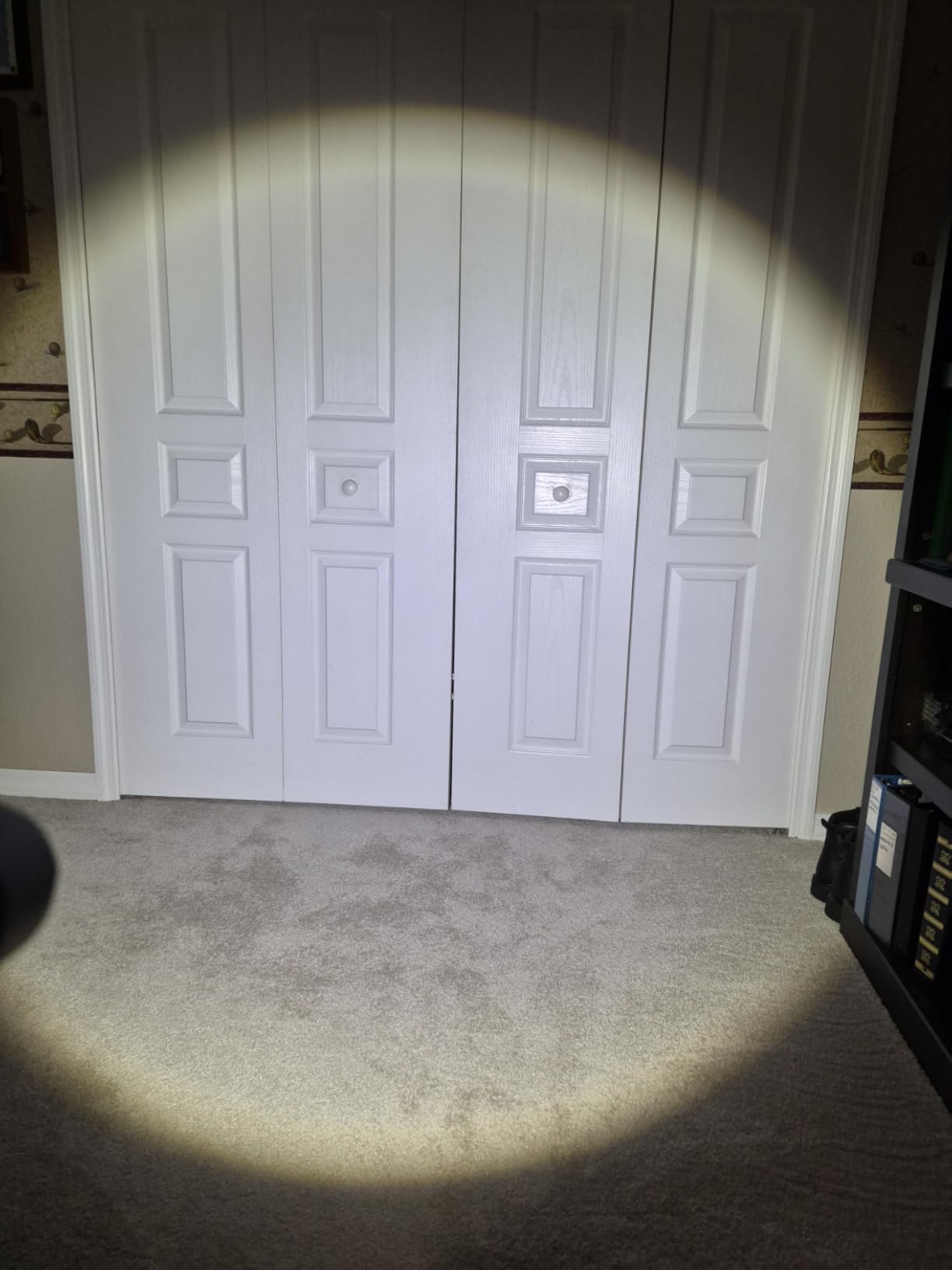
Output is a listed 1,040 lumens with an adjustable zoom that lets you move between a wide room-filling beam and a tighter hotspot. The body is machined aluminum rated to survive a 10-foot drop and water exposure, and the whole thing is short enough at 5.31 inches to disappear into a pocket.
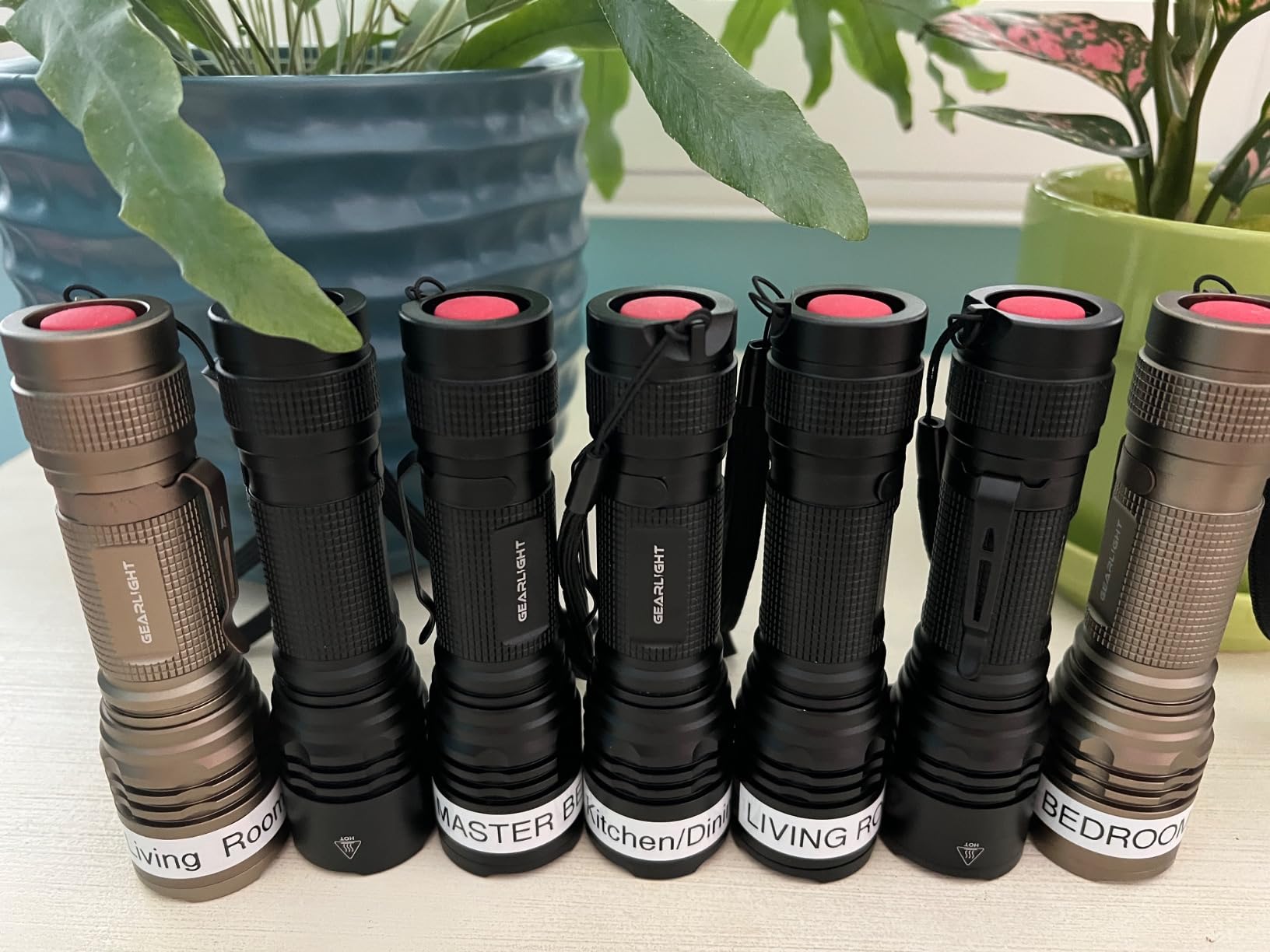
With more than 21k reviews averaging 4.7 stars, this is also the pick with the most owner history behind it, and the feedback is unusually consistent. People buy it for the two-pack format and stay because it just works: bright for its size, tough, and simple enough to hand to a family member without instructions.
What one mode means for everyday use
The single-mode design is the main compromise, and it is a real one. There is no low setting for reading a map without ruining your night vision, and no separate strobe for signaling in an emergency. We found in testing that the wide beam handles close work well enough that we stopped wishing for a second mode within a day.
Why two lights beat one in practice
A second light solves the two problems that come up constantly in forums: dead batteries and misplaced gear. Users who carry a tool or work outdoors after dark consistently report that redundancy matters more than any single spec. Run both on the same size of cell and the cost of keeping a spare on hand stays low.
2. Streamlight ProTac 1L-1AA – Best Value Dual-Fuel Pocket Light
Streamlight 88061 ProTac 1L-1AA Tactical Flashlight, Black
350 lumens
160 meter throw
CR123A or AA
Machined aluminum
IPX7
Pros
- Dual fuel means batteries are always available
- Compact at 4.25 inch and 4.8 oz
- IPX7 submersion to 1 meter
- Two-way clip for hat or pocket
- Ten-Tap mode programming
Cons
- Battery is enclosed and must be opened to change format
- Shallow clip lets the tailcap protrude
- Default strobe position in the mode cycle
- Weaker output on an AA cell
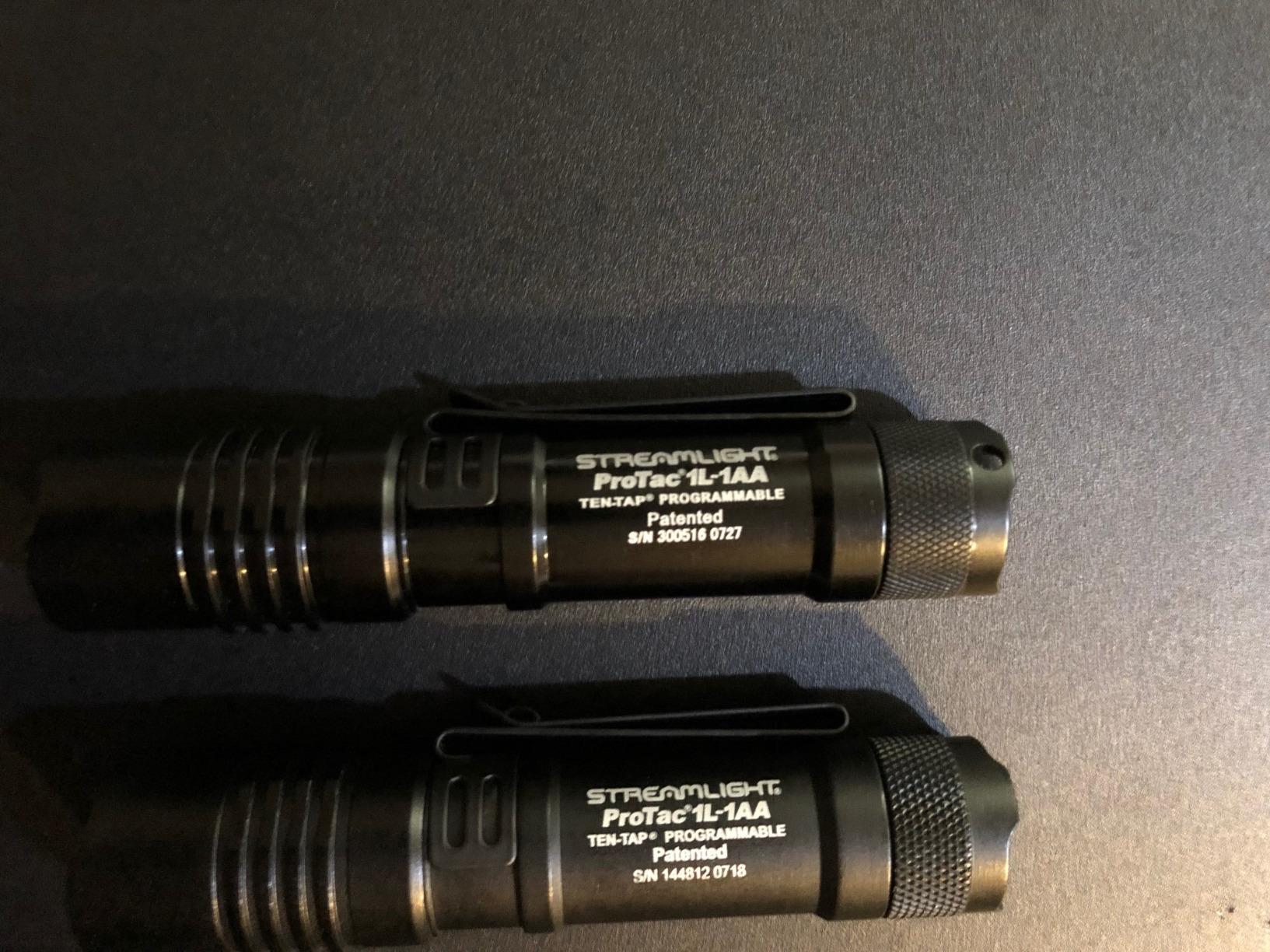
The ProTac 1L-1AA is the most quietly capable light in this group, and the dual-fuel design is the reason. It runs on a CR123A lithium cell, which is included, or on a standard AA alkaline. That single feature removes the most common failure mode in the category, which is a light you cannot use because no battery fits it.
Output is a listed 350 lumens with a listed beam distance of 160 meters, and the beam is balanced rather than narrow. That balance is the point: a hotspot good enough to pick out a shape at distance and enough spill to light a hallway at the same time.
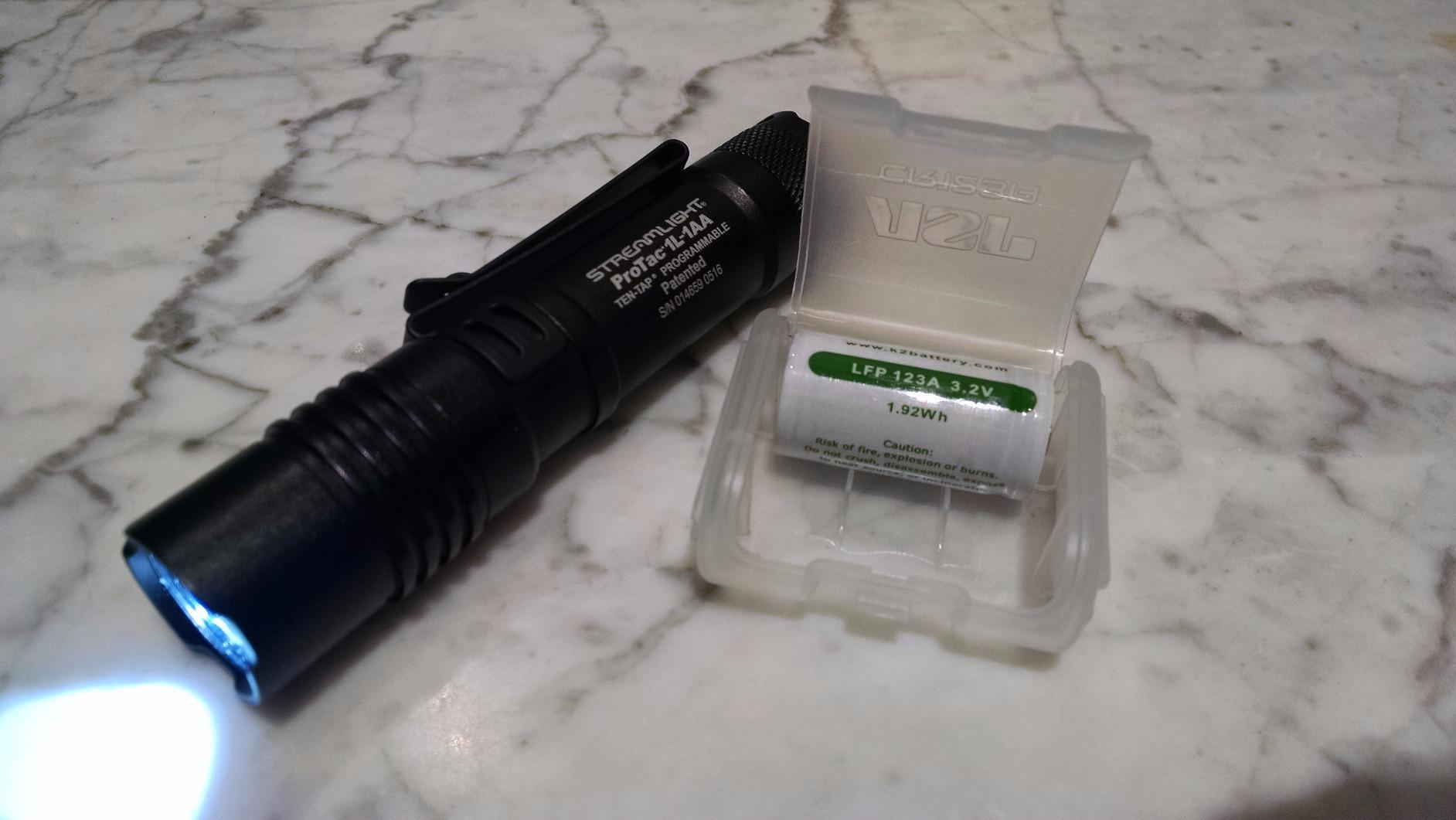
Runtime is listed at one hour on high and five hours on low, which is honest for a light this size. Owners with more than 5k reviews and 85 percent five-star ratings point to the same things: pocketability, durability after drops and river immersion, and the clip working in either direction.
Ten-Tap programming is the underrated feature
Three mode groups are available: high, strobe, low as the default, high only, or low and high. High only is a genuinely useful configuration for anyone who carries a light in a bag next to keys, because a strobe cannot be triggered by accident and there is no menu to think through at 2am.
Where the design frustrates people
Three complaints come up repeatedly and are worth knowing before you buy. The cell is enclosed, so swapping from CR123A to AA means opening the body, the clip is shallow enough that the tailcap often sticks out of a pocket, and the default mode order puts strobe between high and low, which means a tap toward low can produce a blinding flash instead.
3. OLIGHT ArkPro Ultra – Premium Multi-Source Flat Light
OLIGHT ArkPro Ultra Rechargeable Flat EDC Flashlight,1700Lumens,Onyx Black
1700 lumen flood
800 lumen spot
365nm UV
Green beam
Sealed battery
Pros
- Highest rating in this group at 4.8 across 2k reviews
- Four light sources in a single flat body
- O-aluminum unibody rated harder than 6061
- Magnetic base attaches to metal surfaces
- Lockout indicator shows when it is safe to pocket
Cons
- Battery is permanently sealed and not replaceable
- Four sources make the interface more complex than it needs to be
- Display-driven controls take practice to master
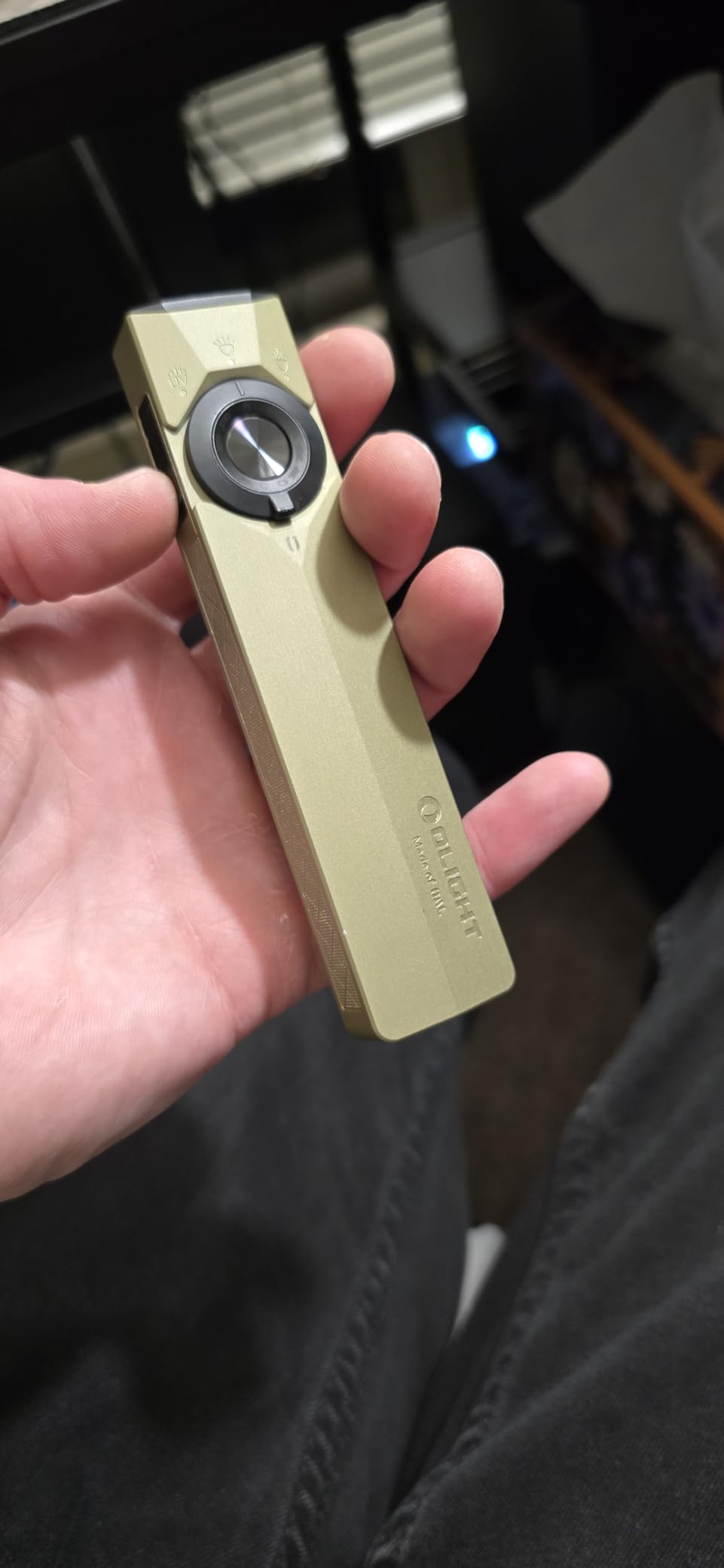
The ArkPro Ultra is the only light in this roundup that packages four genuinely different light sources into a body thin enough to clip to a shirt pocket. You get a 1,700-lumen pure flood, an 800-lumen spotlight, a 365nm UV light, and a Class 3R green beam, which is the wavelength used to preserve night adaptation.
That combination changes what a pocket light is for. The flood handles a room, the spot picks out something down a driveway, the UV finds things you cannot see in visible light, and the green mode lets you read a map or check equipment without ruining your dark adaptation.
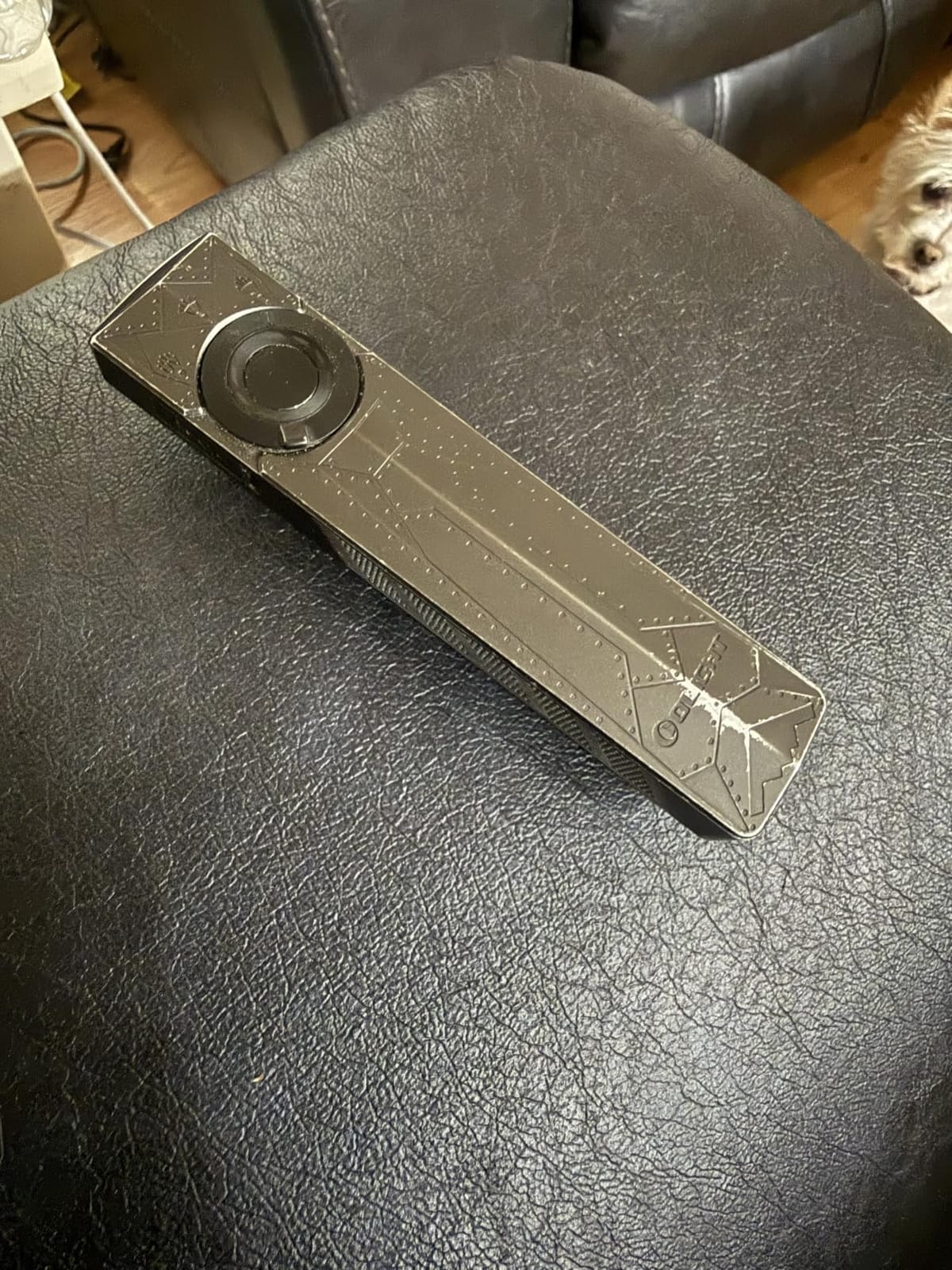
At 4.8 stars across more than 2k reviews, this is the highest-rated light in the group, and the consistency of the feedback is telling. Owners describe the build as noticeably more solid than typical gear lights, and the flat rectangular profile with a magnetic base gets singled out as the reason it lives on a shirt rather than in a drawer.
Green light and UV are the underrated modes
Green output is limited to 5mW or less, which keeps it in the Class 3R category. In practical terms, your eyes pick up green detail with far less loss of dark adaptation than white light, which matters if you are outside for hours or moving through a space where being seen is a problem.
The sealed battery is a real long-term cost
Charging works with the included magnetic cable or a USB-C cable, and the light reports its own charge state. But the cell is a built-in lithium polymer that cannot be replaced, so when it eventually degrades the whole light goes with it. For a buyer who expects a decade of service, that is the deciding factor against this pick.
4. Nitecore MT2A Pro – Best Throw in a Penlight Body
Nitecore MT2A Pro EDC Flashlight, 1000 Lumens, 279 Yard Beam, USB-C Rechargeable, Dual Power Compatibility, Compact Waterproof Slim Penlight, Including NitecoreS Sticker
1000 lumens
279 yard throw
USB-C plus 2x AA
3.45 oz
Three levels
Pros
- 279 yard beam distance from a body under 6 inch
- Very light at roughly 3 oz
- USB-C rechargeable and also runs on 2x AA alkaline
- Tail switch recalls the last level used
- Two-way clip for pockets and gear
Cons
- Only three brightness levels
- Penlight body lacks the grip and mass of a duty light
- About one hour of runtime at full output
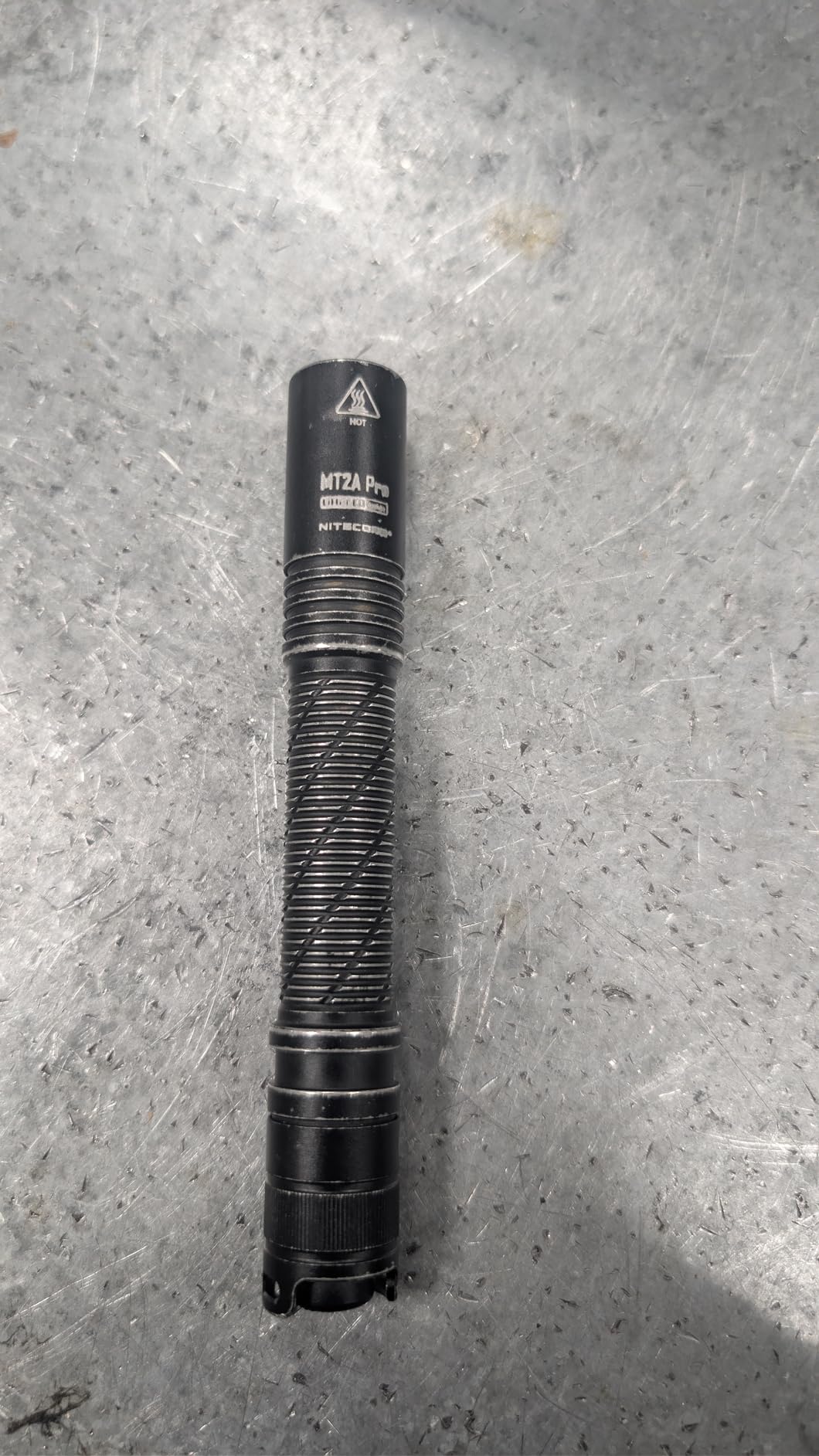
Penlights have a reputation for being dim, and this one is not. The MT2A Pro lists 1,000 lumens and a beam distance of 279 yards from a body that is under six inches long and weighs about three ounces. For a light you can operate with one hand from a coat pocket, that throw is genuinely useful.
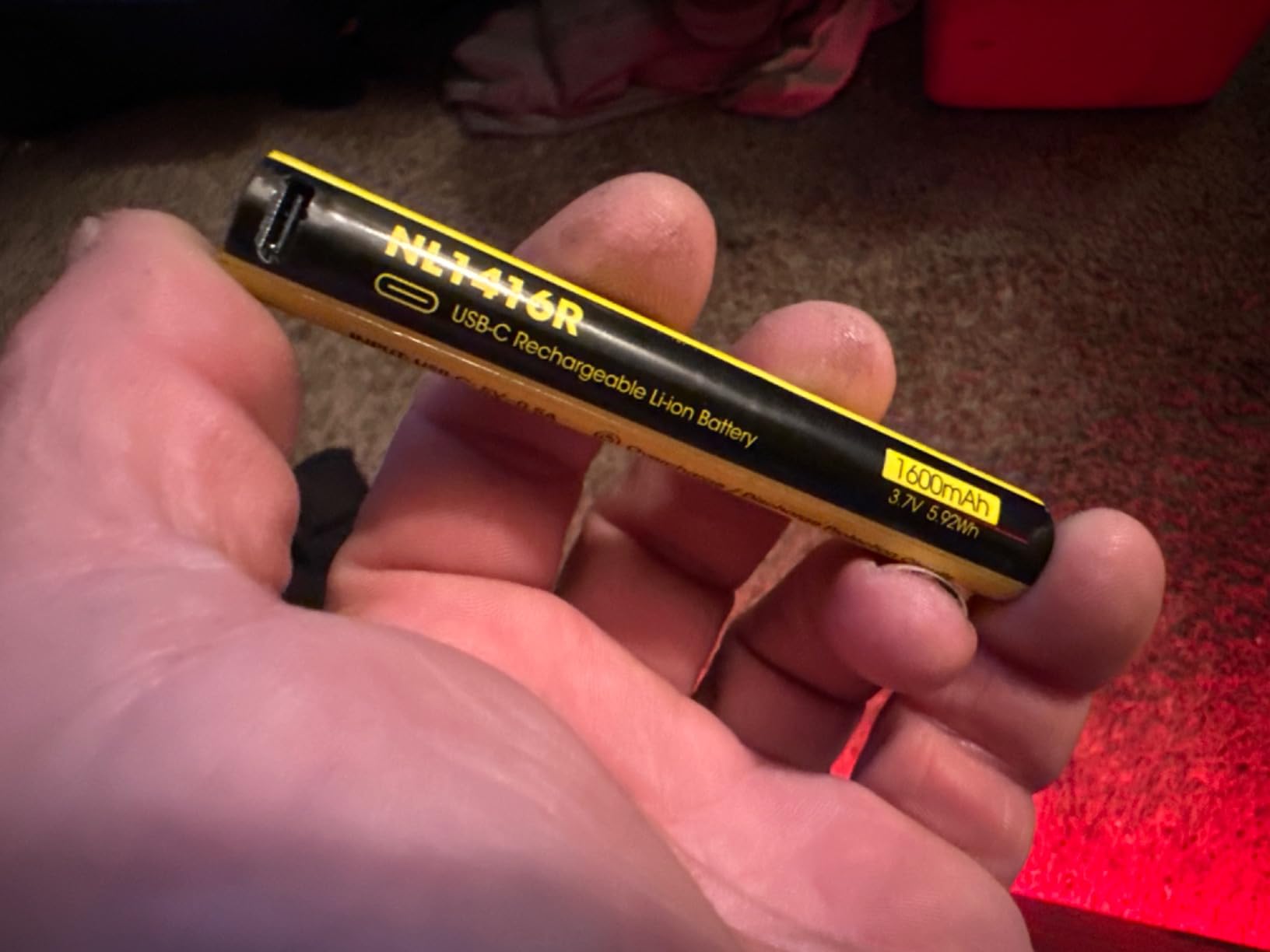
It is also USB-C rechargeable while still accepting two standard AA alkaline cells, which makes it a good bridge for people moving from disposable batteries. The tail switch handles activation and cycles three brightness levels, with memory recall returning you to the level you used last.
Owner feedback at 4.5 stars across 1,024 reviews is warm about the power-to-weight ratio and the battery flexibility. The most common reservation is the short mode list, which for a tactical-minded buyer can feel thin compared with the five or six levels offered by the bigger lights in this list.
Three levels is a constraint worth weighing
There is no dedicated strobe and no moonlight setting in this configuration. If your use case is self-defense, a tool that only offers steady output gives up the one feature owners ask for most often. For work lighting and property checks, the simplicity is a feature rather than a gap.
Penlight handling versus duty-light handling
The narrow body disappears into a pocket and works well with gloves, but it has less surface area to grip when you are bracing it against a car door or a fence. Duty-oriented users consistently prefer a slightly wider body, and reviewers here make the same note about thin penlight grips.
5. Nitecore EDC29 – Best High-Output Flat with a Real Lockout
Nitecore EDC29 6500 Lumen Rechargeable EDC Tactical Flashlight (Black)
6500 lumen turbo
437 yard throw
OLED display
Mechanical slide lock
0.76 inch thick
Pros
- 6500 lumen and 3000 lumen turbo modes from a flat body
- Only 0.76 inch thick and 5.64 oz
- OLED shows output and battery and remaining turbo time
- Mechanical slide lock stops accidental activation
- 61 hours on low with a fast USB-C charge
Cons
- No dedicated strobe since it needs a double tap
- Turbo holds full power for about 7 seconds
- Sealed battery cannot be replaced
- Reported switch wear after about a year of daily use
The EDC29 is the answer for anyone who wants genuine high output and refuses to give up a slim profile. It lists 6,500 lumens in turbo with a 437-yard maximum throw, in a body 0.76 inches thick and 5.64 ounces. Very few lights put meaningful throw into something that still slips into a dress pocket.
The OLED display is the detail that changes daily use. It shows which output level is active, remaining battery, and how much turbo time you have, so you stop guessing about whether the light is about to step down. Two tail controls handle power and turbo or strobe, and the controls can be reassigned.
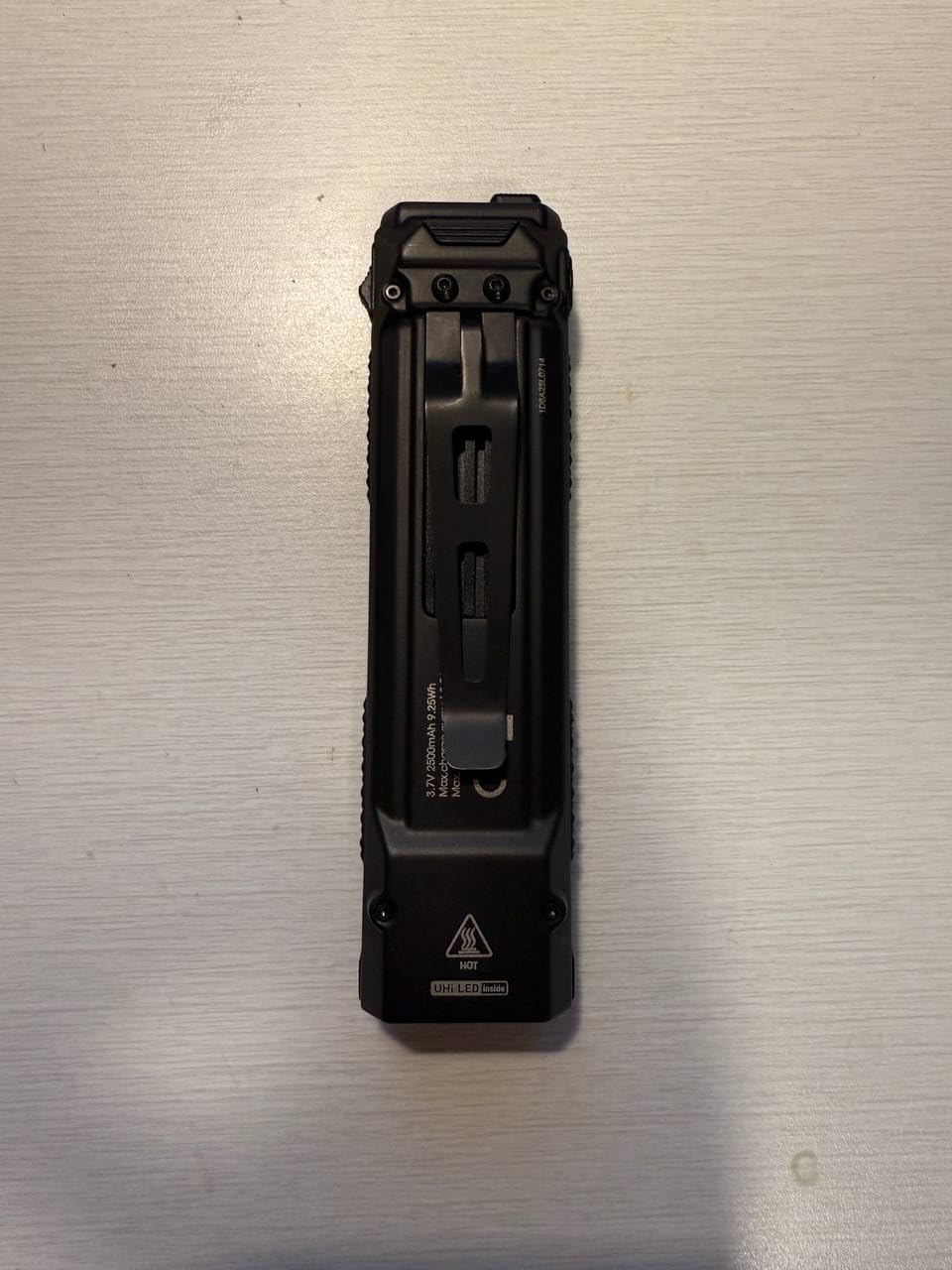
The mechanical slide lock is the carry-safety feature we look for most, and this one is genuinely instant. You slide it physically rather than pressing through a timed unlock sequence, which means no chance of the light coming alive in your pocket from a bump in a bag.
Turbo is a burst, not a mode
Owners are consistent about the seven-second limit on full turbo before it steps down. Treat that as designed behavior: turbo is for sweeping a yard, checking a treeline, or signalling, and then you drop to a sustainable level. Expecting 6,500 lumens to run for an extended period is the wrong expectation.
Switch longevity is the watch item
Across 920 reviews at 4.4 stars, the recurring criticism is that the brightness or power switch weakened after roughly a year of daily carry. Several reviewers report the brand replacing the unit under warranty, which is the right way to think about it: own it for warranty service, not for a decade of parts availability.
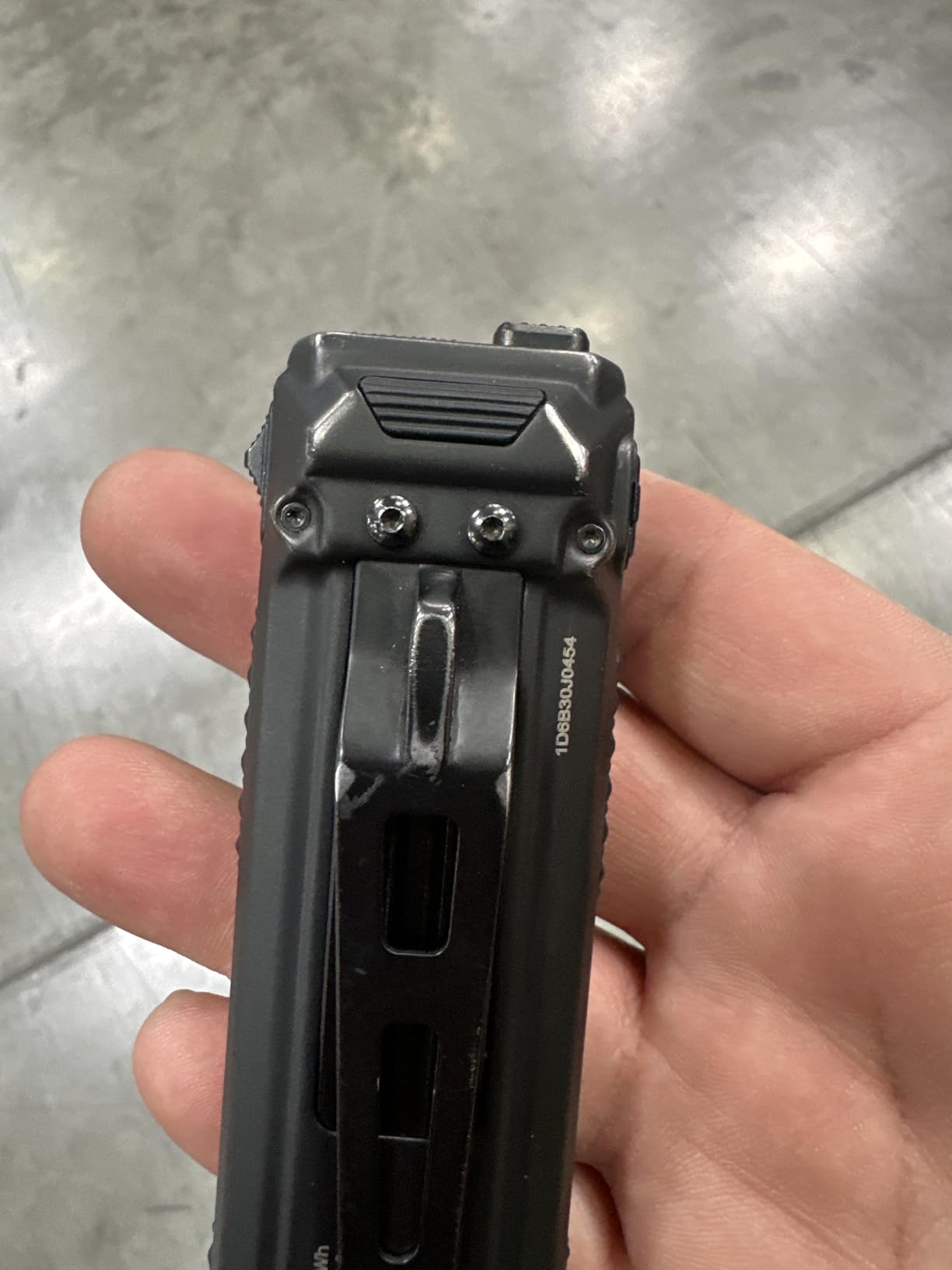
6. Fenix PD35 v3.0 – Best Tail-Switch Control for Duty Use
Fenix PD35 v3.0 Rechargeable Tactical Flashlight, 1700 Lumens EDC with Organizer (Black)
1700 lumens
390 yard reach
Two-stage tail switch
USB-C
Mode memory
Pros
- 1700 lumens with 390 yard reach from 2.92 oz
- Two-stage tail switch gives momentary and constant-on
- Momentary press is fast with a gloved or occupied hand
- Mode memory returns to the last level
- Steel clip plus holster and lanyard in the kit
- Long-term owners report years of service
Cons
- Runs hot in turbo with one reviewer measuring 143 F at the head
- Clip sits high so about an inch protrudes
- Hot settings are uncomfortable to hold
The PD35 v3.0 is the closest thing in this list to what most people picture when they hear the word tactical. Output is 1,700 lumens with a listed reach of 390 yards, and the interface is a two-stage mechanical tail switch with a metal side switch for modes.
The two-stage switch is the feature that matters most here. A full press gives constant on for working. A half press gives momentary output, which is the mode you want when you are opening a door with your other hand, checking a child’s bed, or moving a car in a dark driveway. You get light without a click and without a tail switch that stays on when you let go.
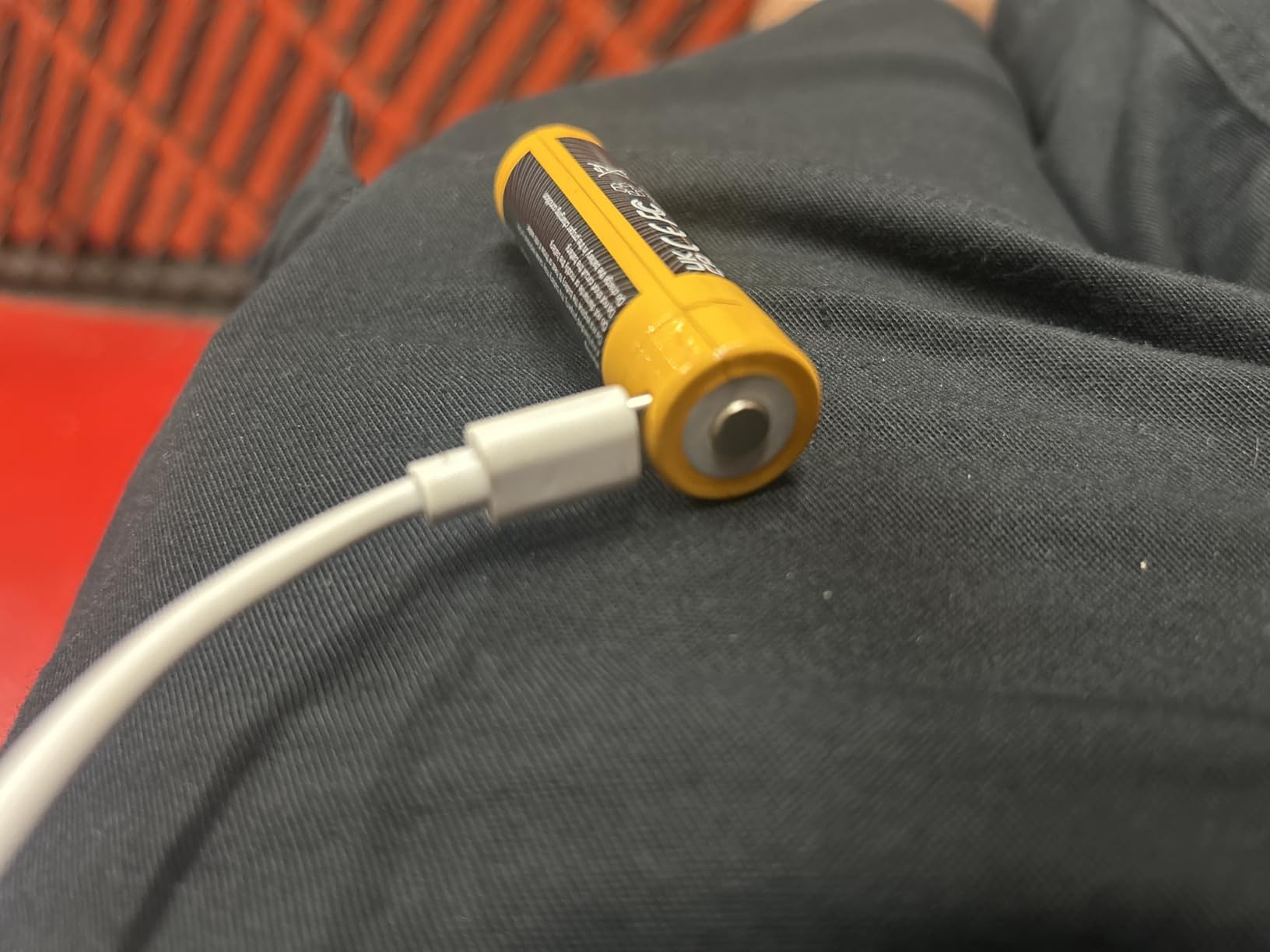
On r/flashlight, Fenix comes up more often than any other brand when people ask which lights they trust to keep working. That reputation is not marketing noise; long-term owners in the 598-review pool report years of daily use, and the two-year-plus service life they describe is exactly why a switch like this gets specified by people who carry a tool every day.
Heat is the honest limitation
One reviewer measured 143 degrees Fahrenheit at the front of the light on turbo, and other owners confirm that high and turbo are too hot to hold against skin for long. In a pocket or on a lanyard this is not a problem. It does mean the light is a finger-held tool on high, not something you leave burning in a room.
Mode memory matters more than mode count
Instead of a long list of levels, this light gives you fewer choices and remembers the one you used. For EDC that is the right trade. The complexity that causes menu mistakes in enthusiast lights simply is not present here, and the side switch indicator tells you remaining battery at a glance.
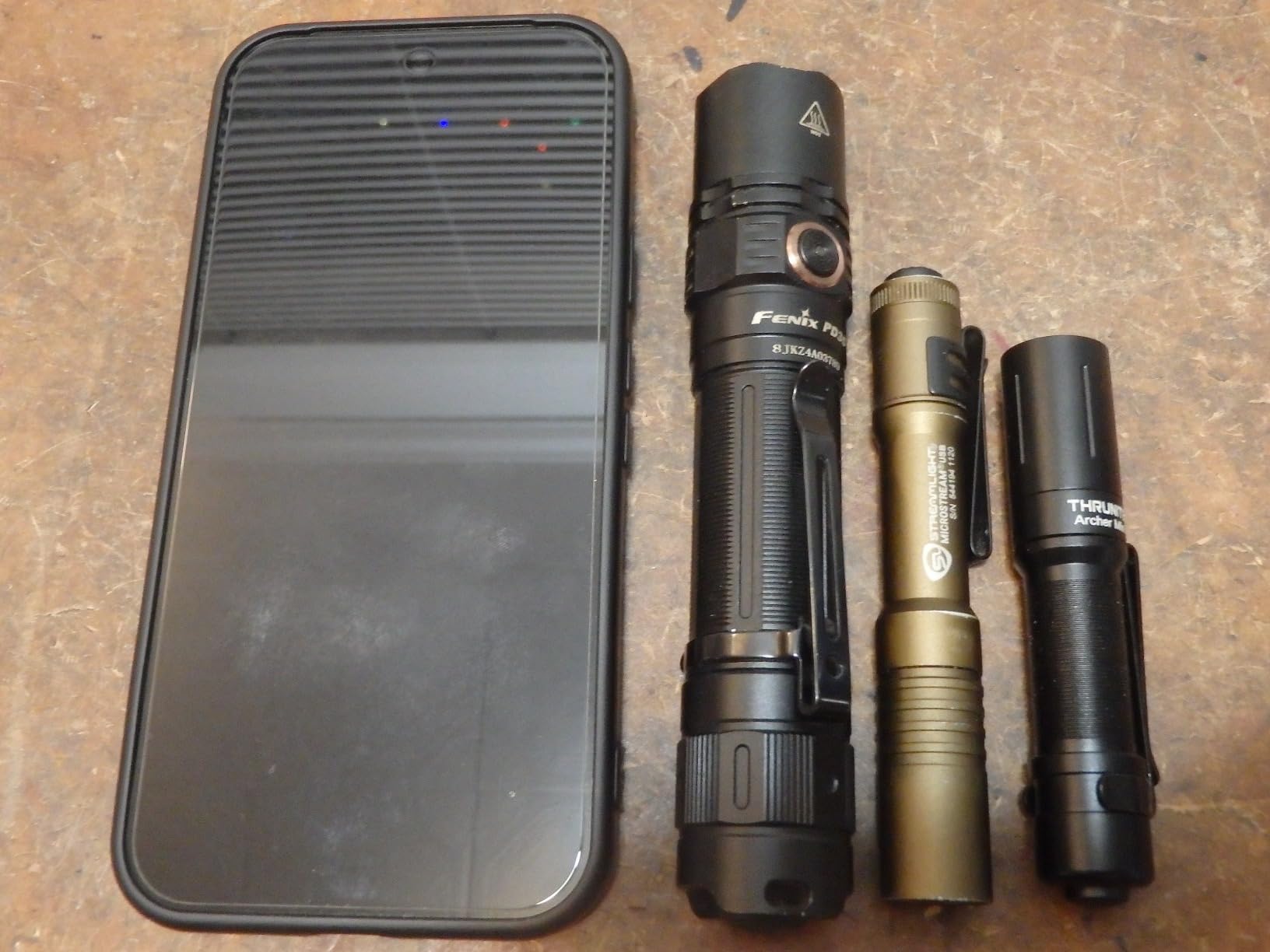
7. Nitecore MH12 Pro – Longest Throw in the Lineup
Nitecore MH12 Pro Tactical Flashlight, 3300 Lumen high Lumen USB-C Rechargeable Long Throw Compact EDC Duty Light with Holster and Lumentac Organizer
3300 lumens
552 yard throw
IP68
Aero-grade aluminum
5 brightness levels
Pros
- 552 yard throw which is the longest listed reach in this group
- Aero-grade aluminum with HA III hard anodizing
- IP68 rated and impact resistant to 1 meter
- Built-in waterproof USB-C fast charging
- Tail switch plus a mode button covering five levels and beacon and SOS
- Holster and lanyard organizer included
Cons
- High modes generate noticeable heat
- Cylindrical body is bulkier than a flat light
- Built-in battery cannot be replaced
If your use case is a property line, a driveway, or anything outdoors, throw is the only spec that matters. The MH12 Pro lists 3,300 lumens and a 552-yard beam distance, which makes it the longest-reaching light in this roundup by a wide margin.
The build is duty-grade: aero-grade aluminum with a Type III hard anodized finish, IP68 sealing, and impact resistance rated to one meter. Charging is a built-in waterproof USB-C port, and a power indicator removes the guesswork about whether the cell is charged.
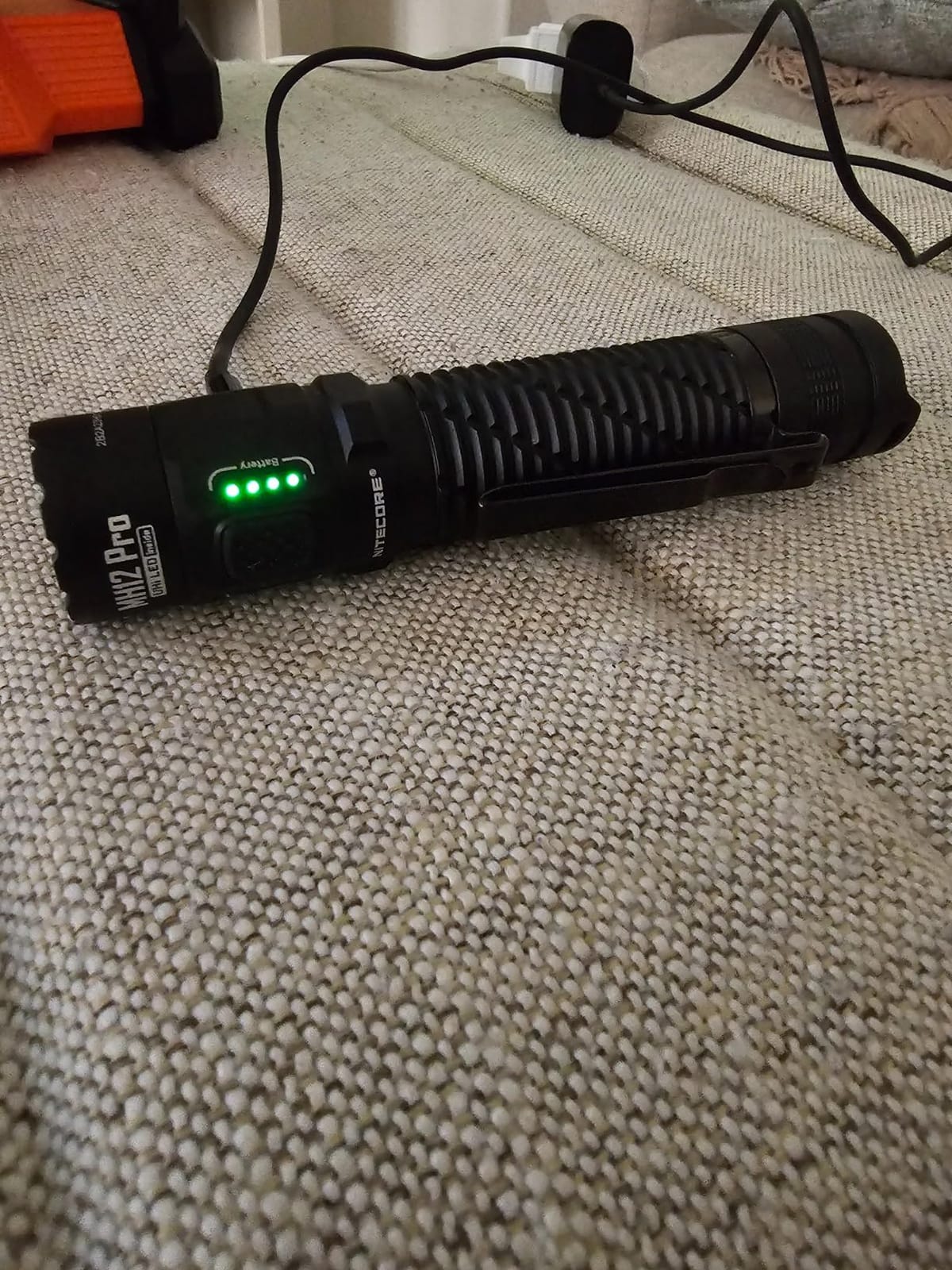
It ties for the highest rating in this group at 4.8 stars, though across a smaller 313-review pool than the leaders. The 313-review figure is worth knowing if you rely on user feedback: a smaller pool means less long-term history, so treat durability claims as promising rather than proven.
Five levels plus beacon, SOS, and strobe
The mode list is the most complete in this lineup, with five brightness settings plus a strobe, an SOS pattern, and a beacon. For signalling, a steady beacon that does not strobe in your eyes is a meaningfully safer choice in a group, and only a few compact lights include one.
Bulk versus pocketability
At over five inches long with a cylindrical body, this is a duty light that happens to be carryable rather than a pocket light. It works in a jacket pocket or with the included holster, but anyone who wants something that disappears into a front pocket should look at the flat-form lights instead.
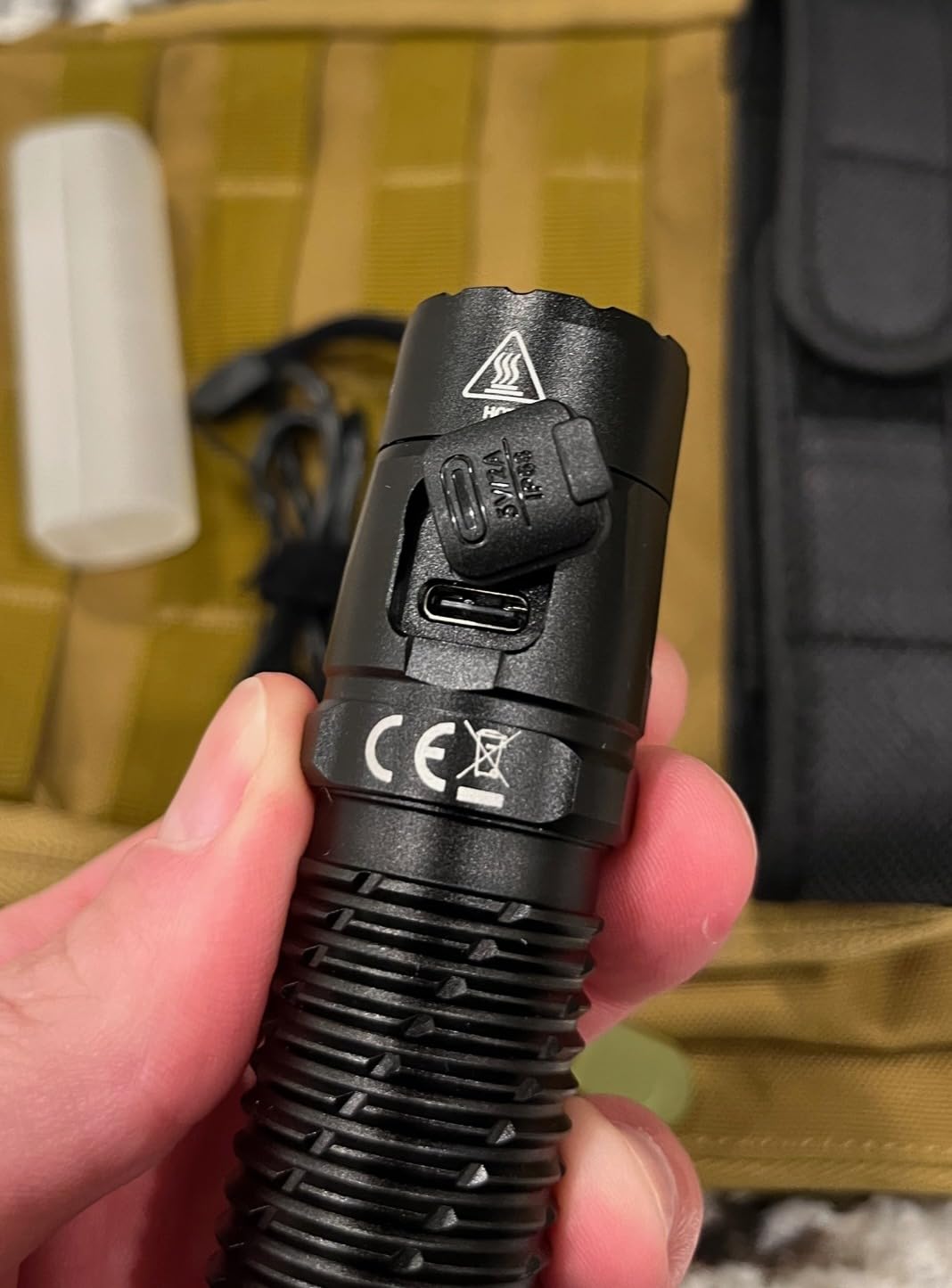
8. ACEBEAM TAC AA 2.0 – Best for Battery Flexibility
TAC AA 2.0 Tactical EDC AA Flashlight, 900 High Lumen 360M Ultra Long Range
900 lumens
360 meter throw
AA or 14500
IP68
2.6 oz
Tail stand
Pros
- 900 lumens and 360 meter throw from 4.1 inch
- Accepts a rechargeable AA/14500 or any alkaline AA
- Weighs 2.6 oz and disappears in a pocket
- Recessed tail switch resists accidental presses
- IP68 sealing and 1.5 meter impact resistance
- Tail stand plus white and orange diffusers
- 10 year warranty
Cons
- Battery must be removed to recharge
- Mode programming is fiddly with no momentary activation
- Heats up quickly on the highest setting
The TAC AA 2.0 pairs an SFT-25R emitter with a genuinely long reach for its size class: 900 lumens and a 360-meter listed beam distance from a 4.1-inch body that weighs 2.6 ounces. That is unusual performance for AA-powered hardware, and it is why this light shows up in throw-oriented forum threads.
Battery flexibility is the quiet headline. It runs on a rechargeable AA, which is the same physical size as a 14500, or on any standard alkaline AA. Owners value the very dim lowest mode, the recessed tail switch that resists firing by accident, and a 10-year warranty that is the longest in this group.
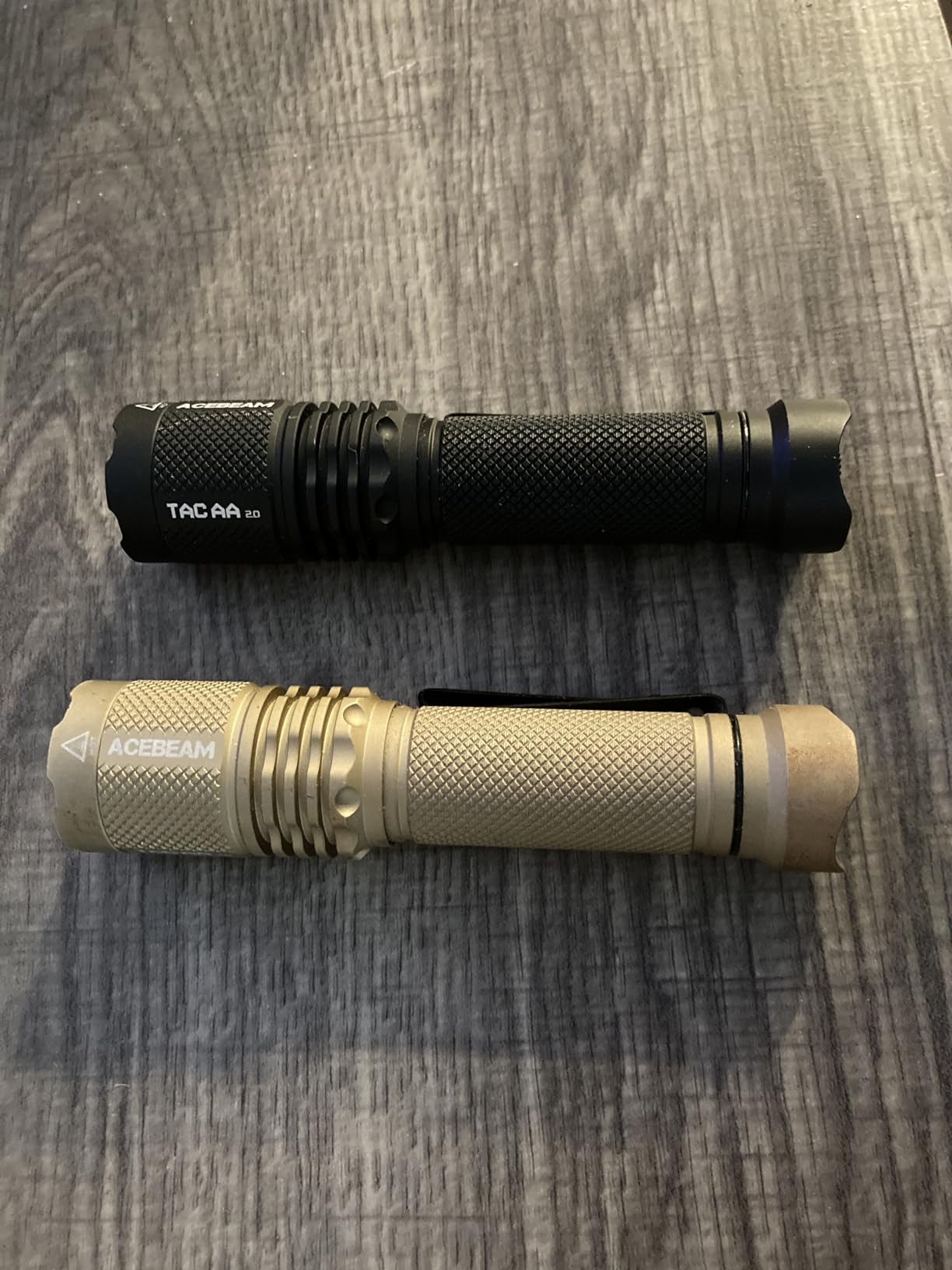
Two included diffusers, one white and one orange, turn it into a lantern-style area light when stood on its tail. That is a small feature with real utility, and it is the sort of thing that gets a light into a camping kit rather than a pocket only.
No momentary activation is the deal-breaker for some
The mode programming is fiddly, and there is no momentary-on. Anyone who needs to press and hold to sweep a beam, the way the Fenix PD35 and Sofirn SP35T allow, will notice the difference. For a work light you turn on and leave on, it costs nothing.
Recharging means opening the body
Because the cell is a standard AA rather than a sealed pack, charging happens outside the light. Owners call this inconvenient when compared with USB-C lights that charge in place, and convenient when a cell dies far from a charger.
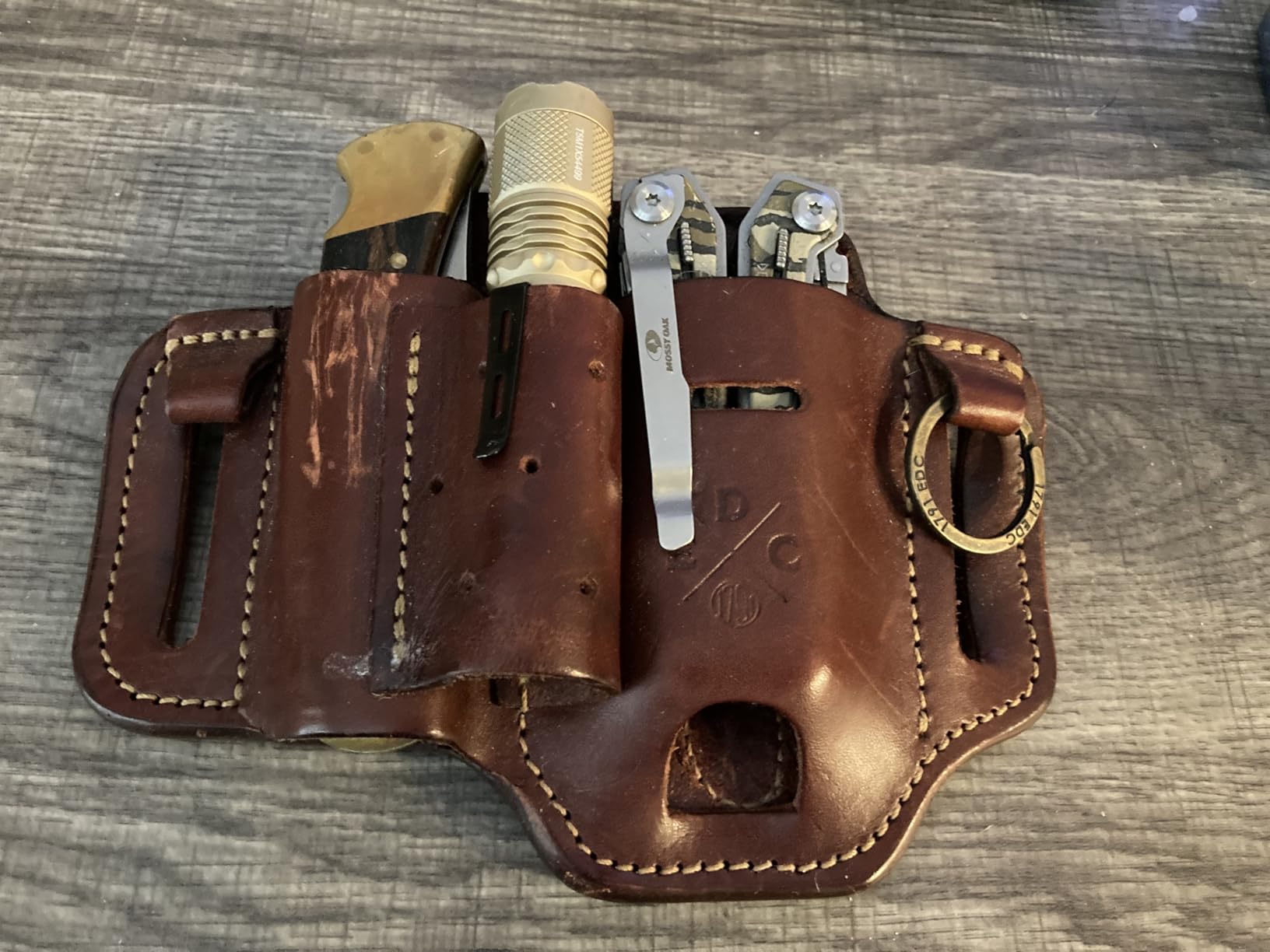
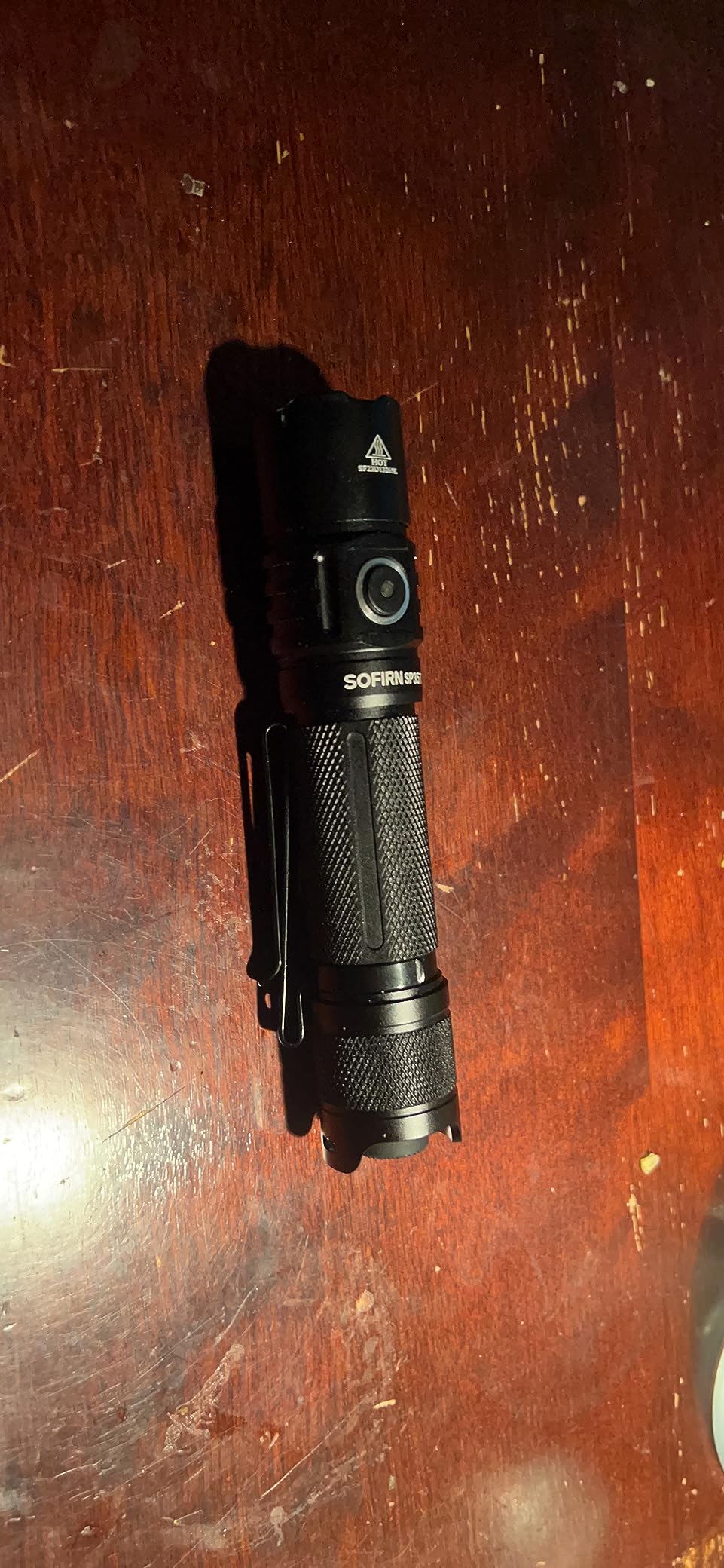
9. Sofirn SP35T – Best Dual-Switch Interface on a Budget
sofirn SP35T Tactical Flashlight, 3800 Lumens Super Bright Pocket LED Flashlight Rechargeable with Dual Switch, IPX8 Water Resistance, EDC Flashlight for Camping, Hiking, Emergency
3800 lumen turbo
280 meter throw
Dual switch
21700
IPX8
Pros
- 3800 lumen turbo lights a full room
- Tail switch for momentary and on-off plus a side switch for levels
- Tactical mode starts in turbo with a double tap for strobe
- Deep two-sided clip holds it in a pocket
- Runs nearly seven hours at medium with steady output
- USB-C charging and IPX8 sealing
Cons
- Output falls off noticeably as the battery drains
- Turbo runs very hot and steps down quickly
- Body is larger than a true pocket EDC light
- Clip is clip-on rather than screw-on
The SP35T is the value pick for anyone who wants a modern tactical interface without spending duty-tier money. It lists 3,800 lumens with 280 meters of reach, and the interface is the real feature: a tail switch for momentary or constant activation plus a side switch for brightness and mode changes.
A tactical mode group starts you in turbo, and a double tap on the side switch reaches strobe. That shortcut pattern is learned in a few seconds and is exactly the layout people coming from duty lights already know. Mode memory is handled by the general lighting group, which starts low.
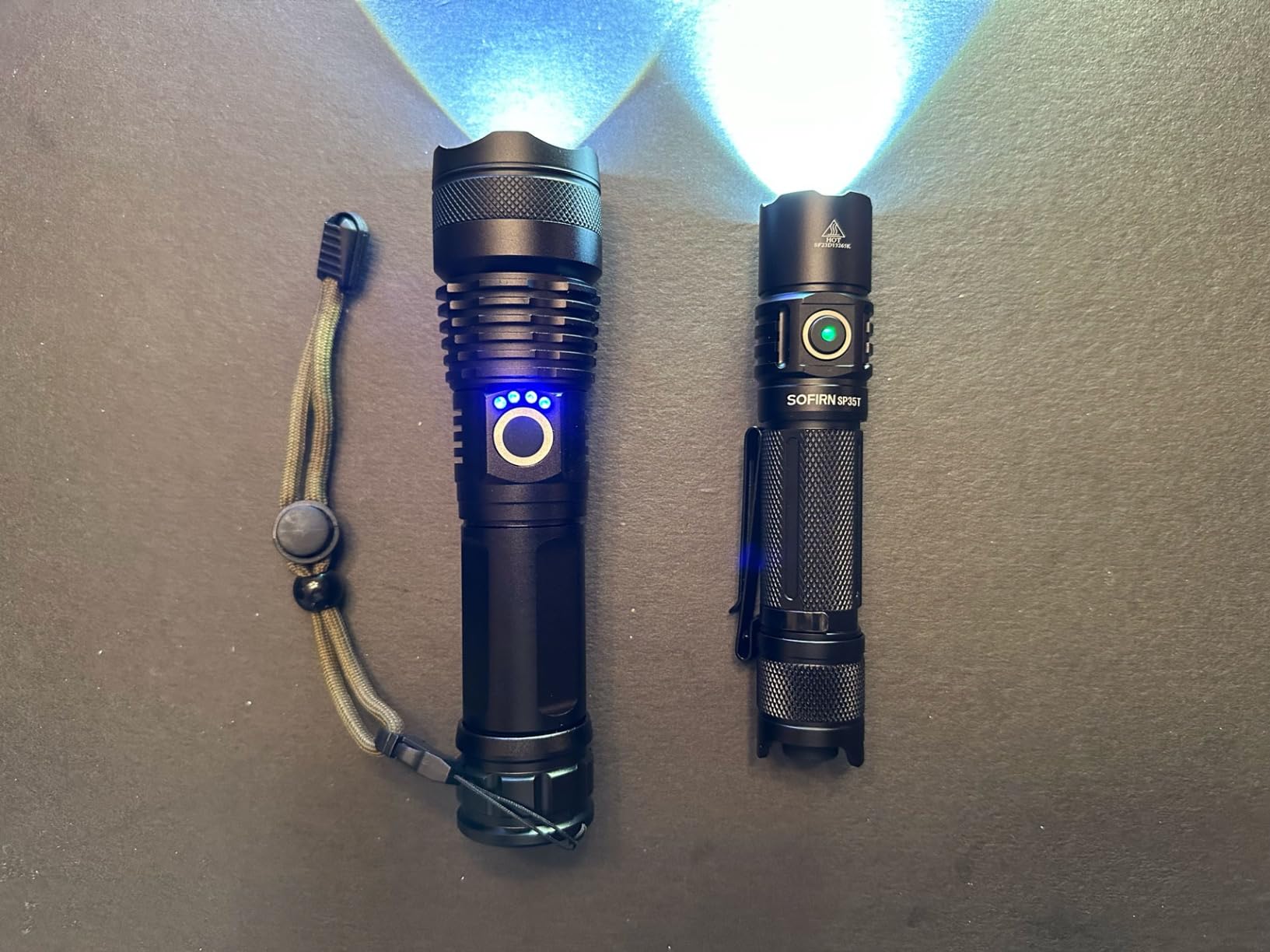
Owners who already own premium lights commonly describe it as capturing most of the experience of a name-brand tactical flashlight at a small fraction of the cost. Runtime at medium is listed around seven hours with non-diminishing brightness, which is where this light spends most of its time in practice.
Regulation is the weak point
The driver is basic, and reviewers report that output visibly drops as the cell discharges rather than holding steady. A regulated driver holds a level longer, which matters if you are walking a trail and want predictable brightness rather than a light that fades over an hour.
Size and heat tradeoffs
Turbo generates heat and steps down quickly, and at over three inches wide the body is closer to a glove-box or bedside light than a slim pocket EDC. Reviewers already carrying a penlight note it sits at the other end of the size range, which makes it a good complement rather than a replacement.
10. OLIGHT Warrior Ultra – Best for Glove Operation
OLIGHT Warrior Ultra Rechargeable Tactical Flashlight LED Olive Green
2500 lumens
26000 candela
320 meter throw
IPX8
Proximity sensor
Pros
- 2500 lumens with 26000 candela and 320 meter reach
- Dotted tail switch is easy to find and press with gloves
- Auto-dimming proximity sensor protects nearby surfaces
- Magnetic base and removable two-way clip
- Magnetic charging and a long warranty
- Button lockout by holding the side switch
Cons
- Charges only with the proprietary magnetic cable and no USB-C
- Sealed battery cannot be replaced or separated
- Mode memory sometimes returns to a lower level than expected
- Interface takes practice
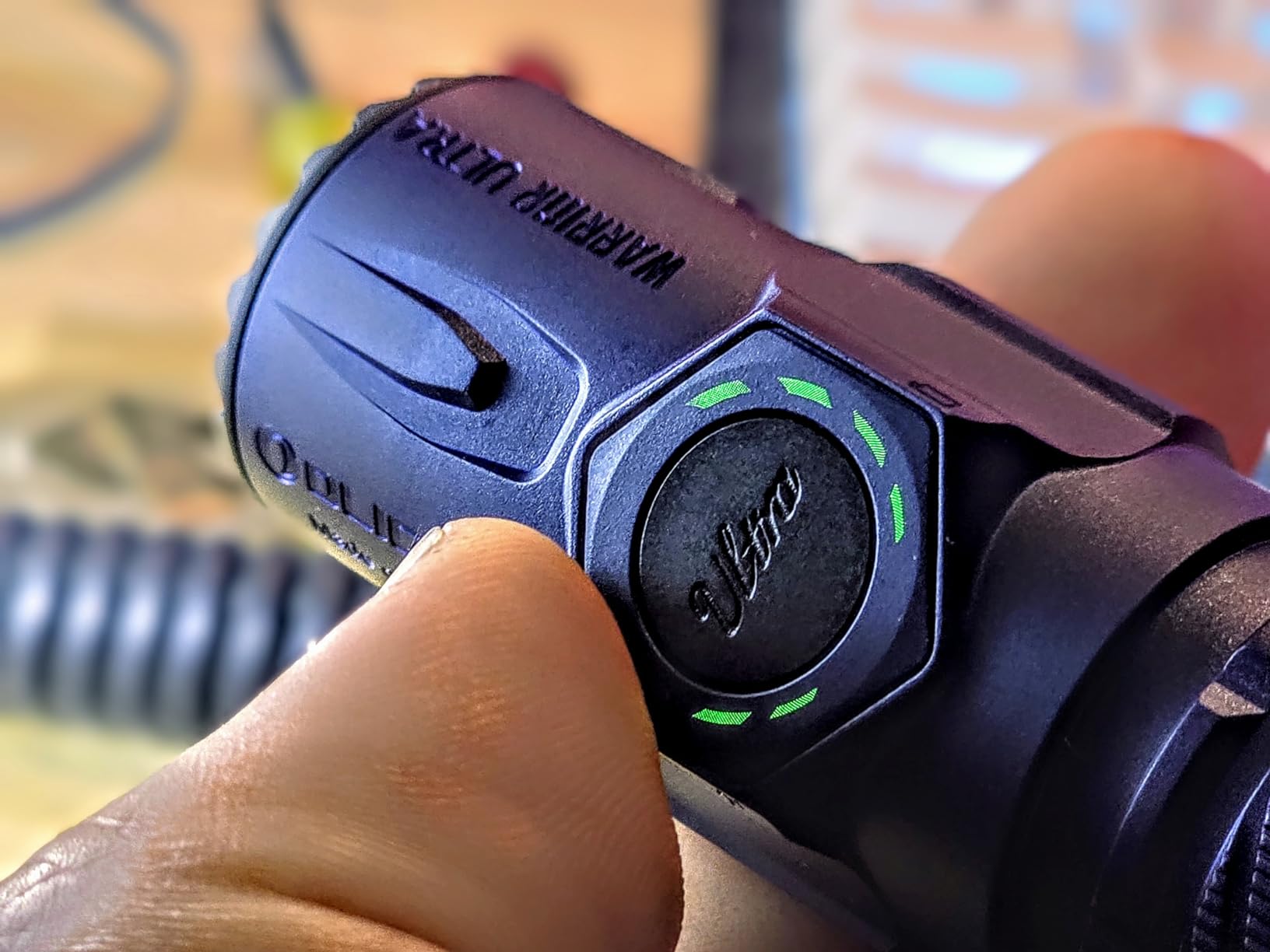
The Warrior Ultra is the pick when the light has to work in cold hands. Its tail switch is textured with raised dots, so you can find it by feel and press it through a glove, and the listed 26,000 candela with 320 meters of reach gives it a genuine hotspot rather than pure flood.
Output is 2,500 lumens in turbo and the body is rated IPX8 with two-meter drop resistance, made from the same O-aluminum alloy used on the ArkPro Ultra. An auto-dimming proximity sensor reduces output when something is close, which protects the emitter and stops it scorching a work surface or dazzling you indoors.
The 167-review pool is the smallest here, and that matters when judging a tool: enthusiastic owners describe it as the only light that combines everything they want in a single body, but there is less long-term history behind that enthusiasm than with the leaders in this list.
Charging is proprietary, and that is the real limitation
It charges over the brand’s magnetic cable rather than USB-C. If you travel with several devices, that is an extra cable to carry, and a damaged magnetic cable is a dead light. The sealed cell cannot be separated, so the service life of the light is the service life of the battery.
Lockout and glove ergonomics are its strengths
Holding the side switch for about two seconds engages button lockout, which is a fast, deliberate action rather than a hidden menu. That, plus the dotted tail switch and the magnetic base for hat or metal-surface mounting, is why it is a strong choice for winter carry and for anyone working outdoors in gloves.
Tactical for EDC: Self-Defense, Strobe, and Duty Use
Strobe works as a disorienting tool, not a weapon
The most requested feature in this category is a strobe, and the reasoning behind that request is worth stating plainly. A strobe is a momentary disorienting aid, useful for buying a few seconds when someone is closing on you in the dark. It is not a weapon, it does not incapacitate anyone, and it is not a substitute for training, distance, or an exit.
In this list, the Fenix PD35 v3.0, the Sofirn SP35T, and the Nitecore MH12 Pro all provide a dedicated strobe. The Streamlight ProTac puts strobe in its default mode cycle and can be programmed to high-only, and the Nitecore EDC29 reaches strobe by double-tapping a button rather than a dedicated control. For self-defense specifically, a light where strobe is one press away is worth extra consideration.
One-handed operation while your off hand is busy
This is the criterion most people search for last and need first. A light operated only by side buttons requires a second hand or a very specific thumb position. Tail-switch lights like the PD35 v3.0, the SP35T, the MH12 Pro, and the Warrior Ultra can be located and activated with the index finger while the other hand holds a tool, a door, a steering wheel, or something you would rather not set down.
Recessed tail switches, like the one on the ACEBEAM TAC AA 2.0, trade a little activation speed for a much lower chance of firing inside a bag. That is a reasonable trade for anyone carrying a light in a backpack.
A plain note on training and legality
Carrying a light for personal protection is lawful in most places, and a light used defensively in a reasonable way is treated very differently by courts and by common sense. None of the picks here should be bought with the idea of using it offensively. If you intend to carry a light alongside a firearm or other defensive tool, the sensible move is to train with the light in hand until activation is automatic, and to check your local rules first.
How to Choose a Tactical EDC Flashlight
Match output to the job, not to the spec sheet
Forum consensus has been remarkably stable about this for years. Roughly 50 lumens was historically the tactical threshold when practical lights were far weaker, 100 lumens handles most general work, and about 1,000 lumens is treated as the practical ceiling for a daily-carry light. CandlePowerForums members generally place the ceiling around 1,000 lumens, sometimes stretching to 1,500 in a mounted context.
Here is how we would match output to real work:
For indoor and close-range lighting such as a hallway, a car interior, or a shed, 100 to 300 lumens is more than enough, and a genuinely low setting around 20 to 50 lumens is what preserves your night vision. For close quarters where you need to identify a person or a shape at a few metres, 300 to 600 lumens is comfortable. For outdoor and yard work, 600 to 1,500 lumens is where most buyers stop. Above 2,000 lumens, output is a burst tool for sweeping and signalling, not a sustained mode.
The reason high output is unpopular for carry is consistent across forums: the heat, the step-down after seconds, the short runtime, and the fact that a very bright light in a small room blinds you more than the person across from you. Plenty of pocket lights in this roundup exceed 3,000 lumens, and none of them are worse for having that headroom.
Throw versus flood: the tradeoff that matters most
A flood beam spreads light widely and is what you want indoors, at a table, or working with your hands. A throw beam concentrates light into a tight hotspot and is what you want at a distance. If you are shopping for distance in practical carry terms, it depends on the optic, and the answer is not the light with the highest lumen number.
Read the candela figure alongside the throw distance. The ACEBEAM TAC AA 2.0 puts 900 lumens out to a listed 360 meters, the Nitecore MH12 Pro puts 3,300 lumens out to 552 yards, and the OLIGHT Warrior Ultra lists 26,000 candela at 2,500 lumens. Compare those to a wide-beam light of similar wattage, which lights a room beautifully and picks out nothing at the end of a driveway.
A good compromise is a light with a moderate hotspot and enough spill around it that you are not switching modes every time you turn around. Several lights here, including the Streamlight ProTac and the Warrior Ultra, are described by owners specifically as balanced beams for that reason.
Battery format decides pocketability
Battery size is the constraint nobody discusses until they have a light that will not fit in a pocket. Here is how the formats in this list compare.
AA and 14500 cells give you the smallest, lightest package and the least capacity. The ACEBEAM TAC AA 2.0 is the clearest example here, weighing 2.6 ounces with 900 lumens and 360 meters of reach, and accepting either a rechargeable or an alkaline cell. Pick this format if you already own batteries of that size or want the smallest possible light.
CR123A lithium cells, as in the Streamlight ProTac, deliver more energy in a small package than an AA and cost a few dollars each. 18650 cells are the classic duty format and give strong runtime with widely available cells. 21700 cells, as in the Sofirn SP35T, hold the most energy of the common cylindrical formats, which is why so many modern high-output lights use one.
Sealed built-in rechargeable packs, as in the OLIGHT ArkPro Ultra, the Nitecore EDC29, and the Warrior Ultra, give you USB-level convenience and consistent output but no field replacement. For long-term ownership, a light you can rebuild with a spare cell usually wins.
Switch type and lockout are carry-safety features
There are three switch layouts to understand. A tail switch is the primary control and can be momentary, constant, or two-stage, and it is the one you want when your other hand is busy. A side switch handles brightness and modes. A two-switch setup gives you both, which is why the Fenix PD35 v3.0, the Sofirn SP35T, the Nitecore MH12 Pro, and the Warrior Ultra all use one.
Lockout is the feature forums complain about most and competitors mention least. A light that fires in your pocket drains a cell, announces your position, and can be dangerous. Mechanical slide locks, like the one on the Nitecore EDC29, are the most reassuring because they require a deliberate physical movement. Timed lockouts are better than nothing but fail if the light is dropped.
One more carry-safety detail: a pocket clip that is too shallow lets the light fall out, and one that is too deep is hard to draw one-handed. Reviewers repeatedly flag the shallow clip on the Streamlight ProTac, while the deep two-sided clip on the Sofirn SP35T is specifically praised for retention.
IP rating, impact resistance, and clip depth
IPX8 means submersion to two meters; IP67 means one meter; IP68 combines dust-tight sealing with submersion. Any of those beats a bare water-resistant claim, which may only mean splashes. Impact resistance figures of one to two meters tell you whether the light survives a drop onto concrete, which for a pocket tool is a realistic event.
Finally, watch for inflated claims. Cheap marketplace listings advertise outputs in the tens of thousands of lumens that have no physical basis, and even legitimate manufacturers measure at turn-on rather than after the 30 seconds ANSI FL1 requires. Cross-check the candela figure, the emitter model, and the review count. A light with 800 reviews and a named emitter is a safer bet than a listing with no brand and a five-figure lumen claim.
Frequently Asked Questions
How many lumens for an EDC flashlight?
About 100 lumens handles most indoor and general work, 300 to 600 lumens covers close quarters where you need to identify a person or shape, and roughly 1,000 lumens is the practical ceiling for a daily-carry light. Forum consensus on CandlePowerForums and r/flashlight has been stable on this for years. Higher outputs are useful as bursts for outdoor sweeps, but heat, step-down behavior, and short runtime limit how long you can actually run them.
How many lumens is a good tactical flashlight?
For a tactical EDC flashlight, 500 to 1,000 lumens is the sweet spot, with a real low mode of 20 to 50 lumens for preserving night vision. The deciding factor is not peak lumens but whether the light starts instantly with a tail switch, has a lockout, and holds a useful low setting. A 1,700-lumen light with a two-stage tail switch will serve you better than a 3,800-lumen light with a side switch only.
What is the best tactical flashlight for self-defense?
The best tactical flashlight for self-defense is one that starts instantly with a tail switch while your other hand is occupied, has a dedicated strobe one press away, and locks out so it cannot fire in your pocket. In this roundup the Fenix PD35 v3.0, Sofirn SP35T, and Nitecore MH12 Pro all have dedicated strobe and tail switches. Treat any light as a momentary disorienting aid, not a weapon, and train with it before you rely on it.
What flashlights do Navy SEALs carry?
Exact procurement is not public, and specifications change, so be cautious of any specific claim. What is consistent is the pattern rather than the model: a compact light with a mechanical tail switch, standard replaceable batteries, a simple interface, and an output level in the hundreds of lumens rather than the thousands. That is the standard we used to judge every light in this roundup.
What flashlight does the FBI carry?
Federal agency models are not publicly documented, but the requirements that drive them are known: a compact, rugged, serviceable light that starts with one hand and runs on readily available batteries. Duty lights from brands like Streamlight and Fenix, which both appear in this roundup, are built to those same constraints, which is why they are the closest widely available analogs to agency gear.
What flashlight has the farthest beam distance?
Among the lights we reviewed, the Nitecore MH12 Pro has the longest listed beam distance at 552 yards, with 3,300 lumens of output. For a genuinely pocketable light, the Nitecore EDC29 lists 437 yards at 6,500 lumens in turbo, and the ACEBEAM TAC AA 2.0 reaches a listed 360 meters while running on AA cells. Throw depends on candela and the optic, not on lumen count alone.
What is the most powerful EDC flashlight in the world?
Among pocketable lights, the Nitecore EDC29 leads this roundup with 6,500 lumens of turbo output and 437 yards of listed throw in a body 0.76 inches thick. The Sofirn SP35T follows at 3,800 lumens and the Nitecore MH12 Pro at 3,300 lumens. Note that these are burst figures: turbo typically holds for about seven seconds before stepping down.
The Best Tactical Flashlight for EDC Is the One You Will Actually Carry
If you want one light that covers the most situations with the least fuss, the GearLight TAC two-pack is our pick. It has the highest owner satisfaction in this group, it survives drops and weather, and the two-light format means one stays in a jacket and one stays in a bag. For a single premium pocket light with real feature depth, the OLIGHT ArkPro Ultra leads on rating and versatility.
For duty-style control and a genuinely excellent tail switch, the Fenix PD35 v3.0 is the strongest all-round performer here. If you need real reach outdoors, look at the Nitecore MH12 Pro. If you want high output in a flat body with a mechanical lockout, the Nitecore EDC29 is the pick. And if battery flexibility matters most to you, the ACEBEAM TAC AA 2.0 lets you use whatever cells you already own.
Whichever one you pick, the best tactical flashlight for EDC is the one that starts on the first press, never fires in your pocket, and stays where you put it. Check the current listing, then go carry it. A light in a drawer protects nobody.