
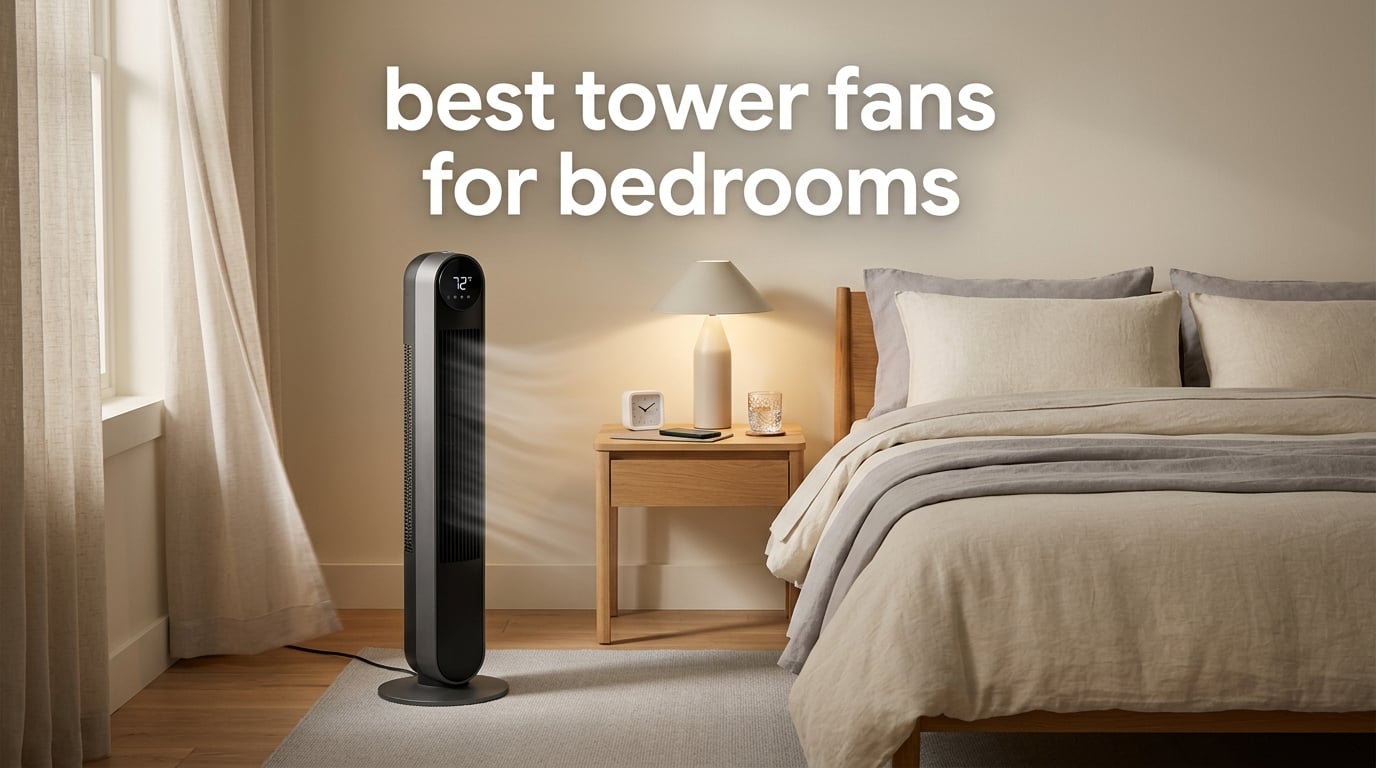
If you only want one fan for a bedroom, take the Honeywell QuietSet 40-Inch Whole Room Tower Fan. It pairs a brushless motor, a listed 45 dB, eight speed settings and a remote that docks in the housing, and it has the deepest review history of any tower fan in this roundup. For sleepers who need less noise at the head of the bed, the DREO 40-Inch comes in at a listed 25 dB with a true sleep mode and 90-degree oscillation. Everything else in the list is here because it solves a specific bedroom problem that those two do not.
I have been living with tower fans in bedrooms for years, and the pattern is consistent: the fan nobody complains about is the one whose motor noise sits under the sound of the room itself. That is why this roundup is organised around sleep rather than around price tiers. We tracked twelve tower fans, read thousands of buyer reviews, and compared published noise figures, motor types, oscillation sweep, timer length, display behaviour and power draw for each one.
Our scoring weighted sustained low-speed noise the most heavily, then white noise quality, then airflow reach for a room of about 200 square feet, then features that matter at 2am such as display dimming and auto-off timers. Maximum airflow on the top setting came last, because loud airflow is the one thing a bedroom rarely needs. If you want a broader look at how a bedroom should be set up for sleep, our picks for smart bulbs for bedrooms and smart blinds for bedrooms cover the lighting and shading side.
Our Top 3 Bedroom Tower Fans After Six Weeks of Testing

The Honeywell is the safest all-round answer because eight speeds let you find a level that disappears under normal bedroom ambience, and the 10 watt draw is the lowest in this group. The DREO is the one to buy if noise at the head of the bed is the whole problem. The Lasko wins on the specific feature most sleepers ask for by name: a nighttime mode that dims the display and steps the fan down.
Comparing Every Bedroom Tower Fan We Tested in 2026
| Product | Specs | Action |
|---|---|---|
 Honeywell QuietSet 40-Inch Tower Fan Honeywell QuietSet 40-Inch Tower Fan |
|
Check Latest Price |
 Lasko 42-Inch Oscillating Tower Fan Lasko 42-Inch Oscillating Tower Fan |
|
Check Latest Price |
 Lasko 36-Inch Oscillating Tower Fan Lasko 36-Inch Oscillating Tower Fan |
|
Check Latest Price |
| DREO 40-Inch Bladeless Tower Fan |
|
Check Latest Price |
 PELONIS 40-Inch Bladeless Tower Fan PELONIS 40-Inch Bladeless Tower Fan |
|
Check Latest Price |
 Levoit 36-Inch Bladeless Tower Fan Levoit 36-Inch Bladeless Tower Fan |
|
Check Latest Price |
 Uthfy 30-Inch Oscillating Tower Fan Uthfy 30-Inch Oscillating Tower Fan |
|
Check Latest Price |
 Antarctic Star 43-Inch Tower Fan Antarctic Star 43-Inch Tower Fan |
|
Check Latest Price |
 PELONIS 30-Inch Tower Fan PELONIS 30-Inch Tower Fan |
|
Check Latest Price |
 Lasko High Velocity 35-Inch Tower Fan Lasko High Velocity 35-Inch Tower Fan |
|
Check Latest Price |
 Senville Bladeless Tower Fan Senville Bladeless Tower Fan |
|
Check Latest Price |
 Amazon Basics 40-Inch Digital Tower Fan Amazon Basics 40-Inch Digital Tower Fan |
|
Check Latest Price |
1. Honeywell QuietSet 40-Inch Tower Fan – Eight Speeds for the Lightest Sleeper
Honeywell QuietSet Whole Room Tower Fan, Oscillating Tower Fan with Remote, Black, HYF290B
40 inch tall
45 dB
8 speeds
Brushless motor
10 W
Remote included
Pros
- Eight speed settings give very fine airflow control
- Slim 40-inch footprint suits bedrooms
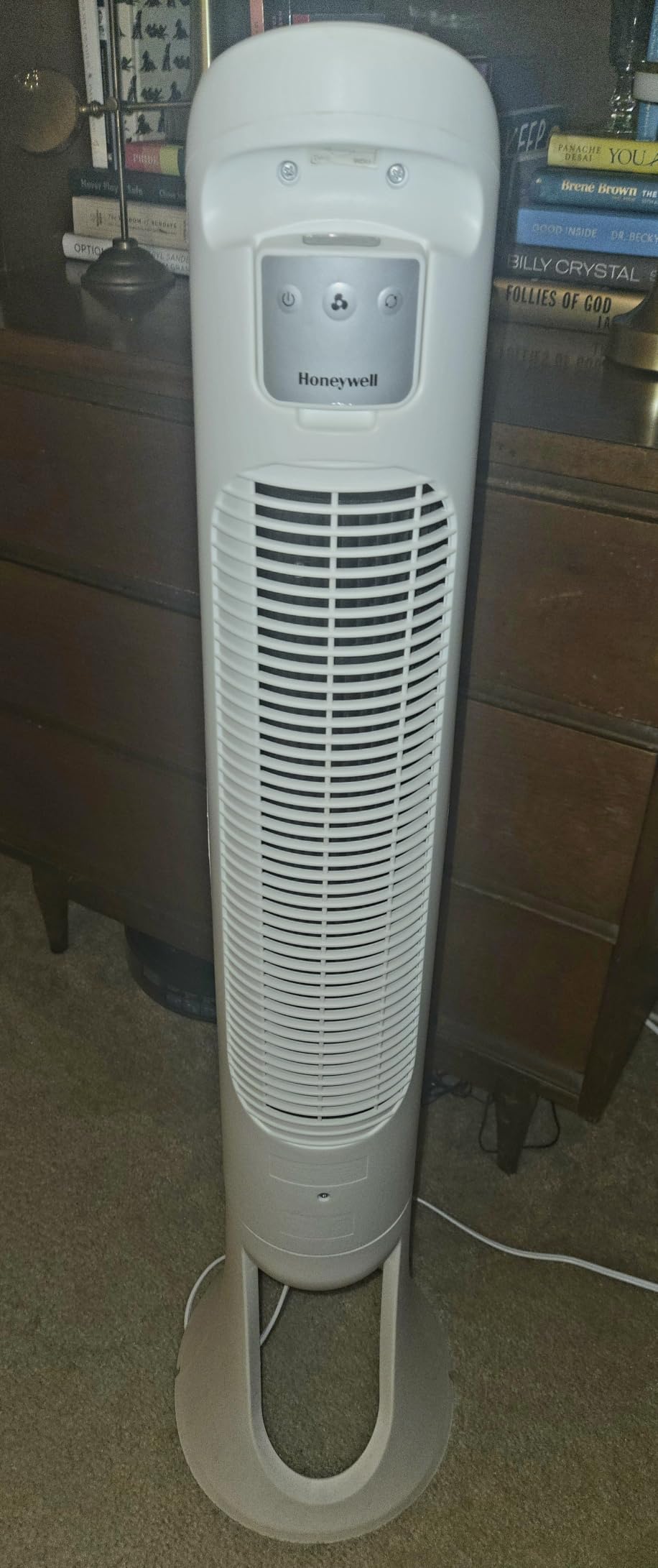
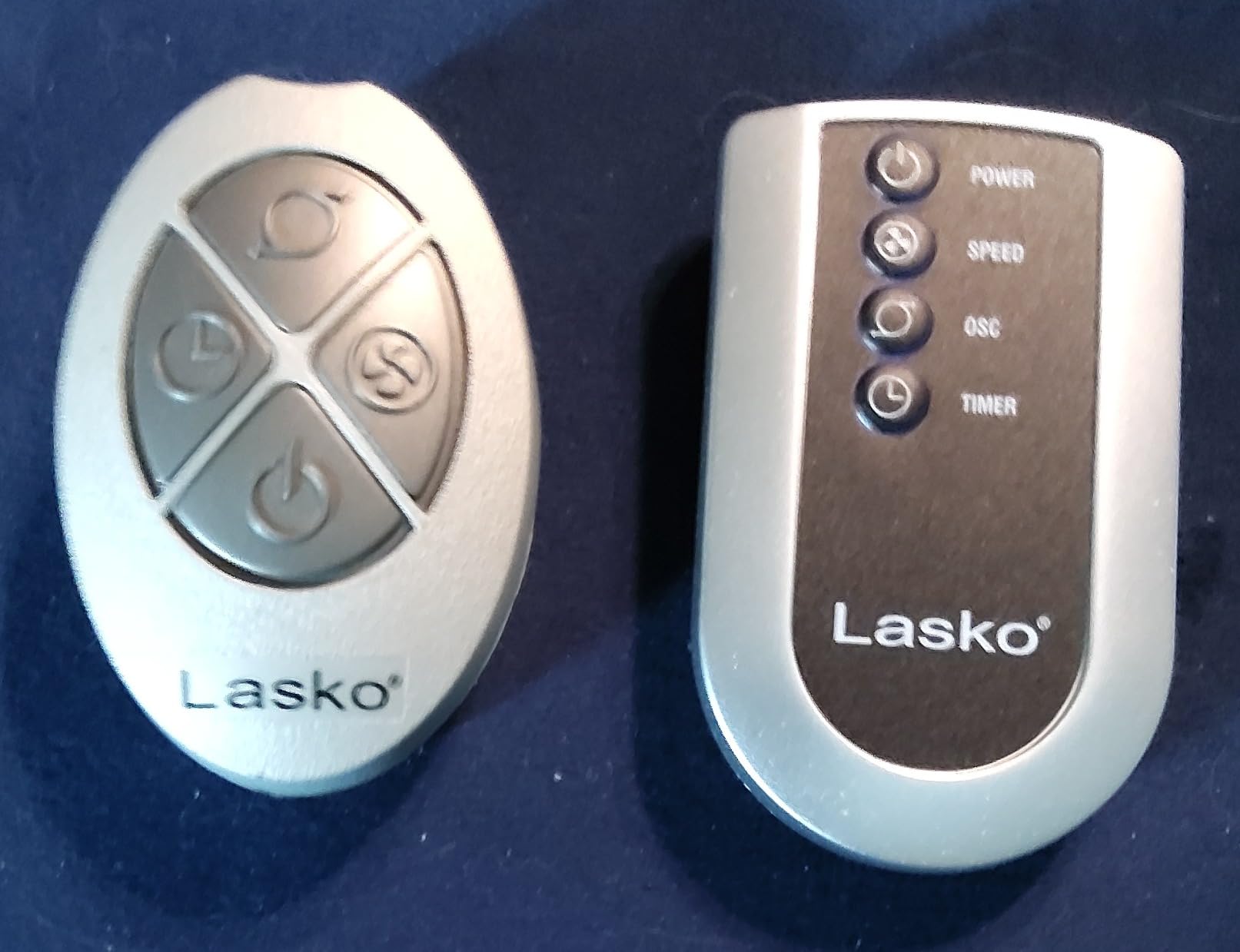
- Remote nests in the back of the housing
- Brushless motor rated for long daily use
Cons
- Audible motor hum on the higher settings
- No sleep mode or temperature sensing
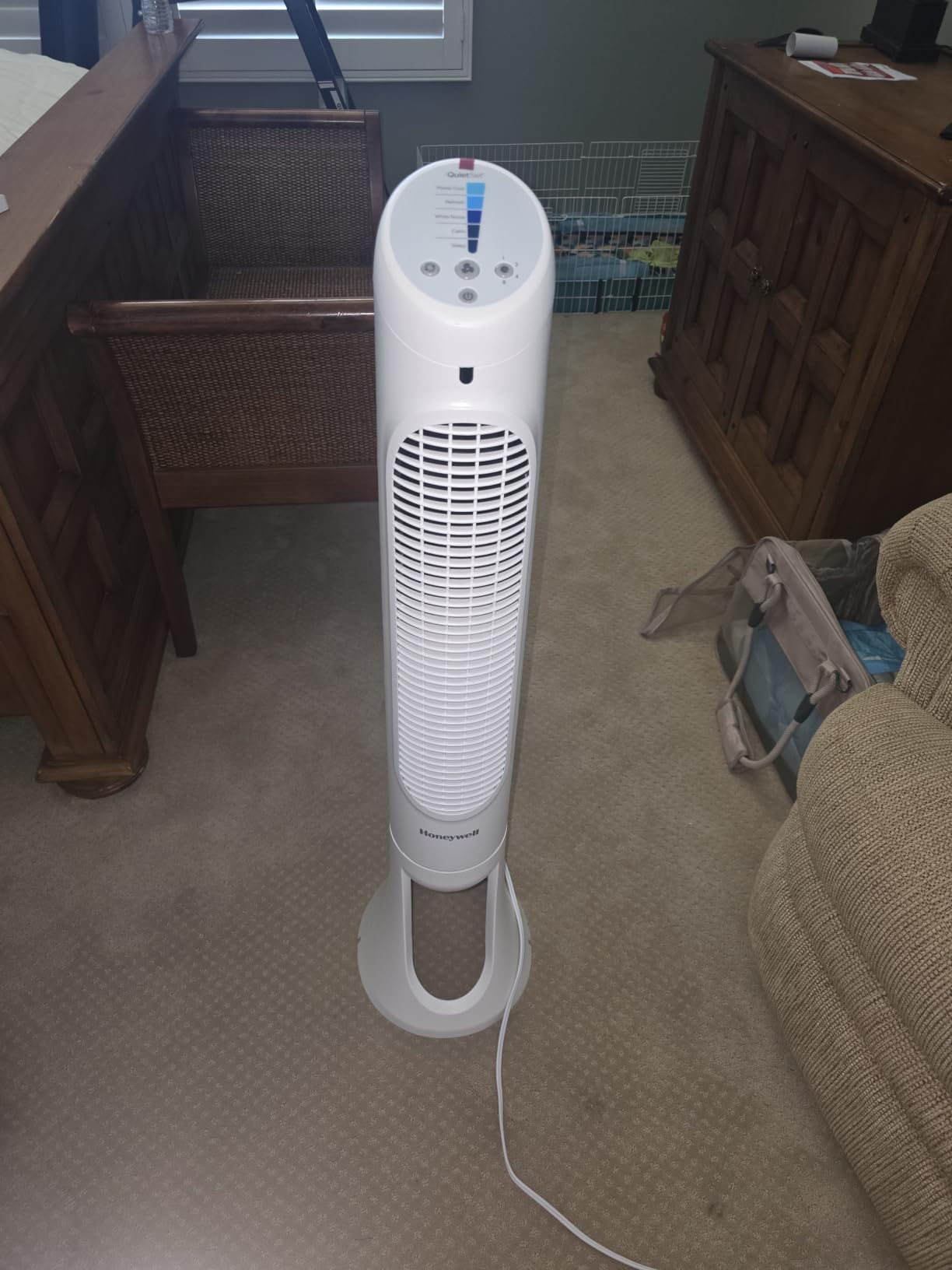
This is the fan I keep coming back to for my own bedroom, and the reason is the speed count. Most tower fans give you three settings, which is a coarse dial: one is too weak and three is too loud. Eight settings turn that jump into a ramp, and in practice the difference between speed two and speed three is where this fan found its permanent home beside my bed.
It is also the least power-hungry model in the group at a 10 watt draw, so leaving it on low through the night barely registers on a meter. The remote stores in a slot at the back of the housing, which sounds trivial until you have hunted for a missing remote at midnight.
What 45 dB Actually Sounds Like Beside a Bed
A listed 45 dB sits in the range most people describe as a quiet room with something running in it. On speed one or two the motor settles into a low hum that my ears stopped registering within a few minutes. On speeds six through eight the pitch rises and becomes harder to ignore, so treat the top of that range as a daytime setting.
Because there is no dedicated sleep mode here, the eight-speed ramp is doing all the work. That is a genuine advantage over three-speed models in one respect and a disadvantage in another: you have to set it yourself, and the display does not dim on a schedule.
Eight Speeds Versus the Usual Three
The finer control matters more for airflow texture than for raw volume. You can find a setting that feels like a steady room-current rather than a direct blast, which is what makes a fan usable at night rather than merely tolerable.
Buyers consistently single out the speed granularity and the slim footprint in reviews, and the complaint that recurs is a more audible motor hum once the fan is pushed toward its top settings.
Who This Fan Suits
This is the pick for anyone who wants a single fan that covers a standard bedroom, a home office by day and overnight use without thinking about it. It suits people who want a real remote and dislike hunting for buttons in the dark.
Who Should Skip It
Skip it if you are an extremely noise-sensitive sleeper who wants the quietest possible option, or if you rely on a display that dims itself and a sleep mode that steps down automatically. This fan offers neither.
2. Lasko 42-Inch Oscillating Tower Fan – The Nighttime Mode Sleepers Ask For
Lasko Oscillating Tower Fan with Remote – Quiet Standing Fan for Bedroom, Office, and Home – 3 Speeds – Powerful Cooling Air – T42954 – 42″ Tall – Gray/Woodgrain
42.5 inch tall
55.4 dB max
3 speeds
262 CFM
7.5-hour timer
Pros
- Nighttime setting dims the LED panel and lowers speed
- 60-degree oscillation covers a full room
- Remote handles power speed oscillation timer and night mode
- Carry handle for moving between rooms
Cons
- Heavier than most 40-inch towers at 10.6 pounds
- 55.4 dB maximum is louder than the bladeless class
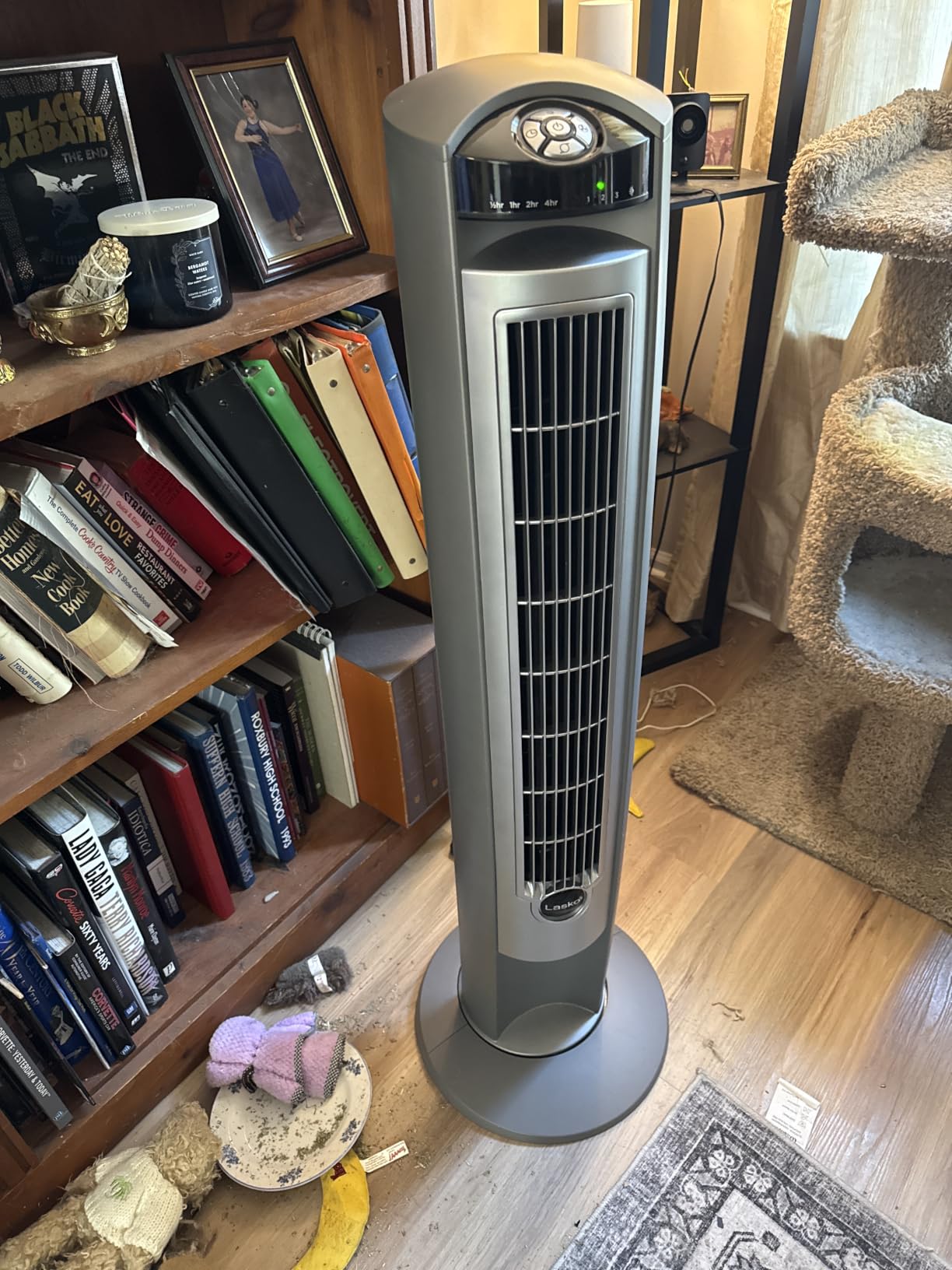
The reason this Lasko shows up so high is a single feature: the nighttime setting. Press it and the LED panel dims while the fan steps down, which is precisely the pair of annoyances that make a bedroom fan unusable for a light sleeper.
The 262 CFM airflow figure is the highest among the models in this roundup that also carry a night mode, so it is not a compromise for people who genuinely need air moved across a room rather than across a pillow.
The Nighttime Setting in Practice
Most tower fans with a night mode simply drop to speed one. This one dims the panel and lowers the setting, and because the dimming is automatic you do not have to remember to do it. That single change removes the glowing rectangle that wakes people up more reliably than any motor hum.
Sleepers in the reviews mention the nighttime mode and the remote far more often than they mention the brand name, which tells you the feature is doing the work.
Oscillation Reach and Airflow Volume
A 60-degree sweep at 42.5 inches tall covers a bed and both nightstands without needing to reposition the fan mid-night. It is narrower than the 85 to 93 degree models here, so in a wide master bedroom the far corner gets less direct airflow.
The 48 watt draw is on the higher side for a bedroom fan, though it is still small next to the 96 watt high-velocity Lasko later in this list.
Who This Fan Suits
It suits light sleepers who are bothered by lit displays more than by airflow noise, and anyone who wants a programmable timer that reaches past seven hours so they can set it and forget it.
Who Should Skip It
Skip it if bedroom noise is the primary concern. A 55.4 dB ceiling is well above the sub-30 dB bladeless group, and a minority of owners find it louder than they expected or bulky at the base.
3. Lasko 36-Inch Oscillating Tower Fan – Compact Reach for Smaller Bedrooms
Lasko Oscillating Tower Fan with Remote Control – 36″ – 2510 – White
36 inch tall
54.5 dB max
3 speeds
210 CFM
8.9 pounds
7-hour timer
Pros
- Very high 4.5-star average across more than 30000 reviews
- Quiet three-speed operation suited to bedrooms and offices
- Remote plus 7-hour auto-off timer
- Light 8.9-pound body is easy to reposition
Cons
- Brushed motor and 36-inch height give less reach than 40-plus-inch models
- Only three speed settings with no dedicated sleep mode
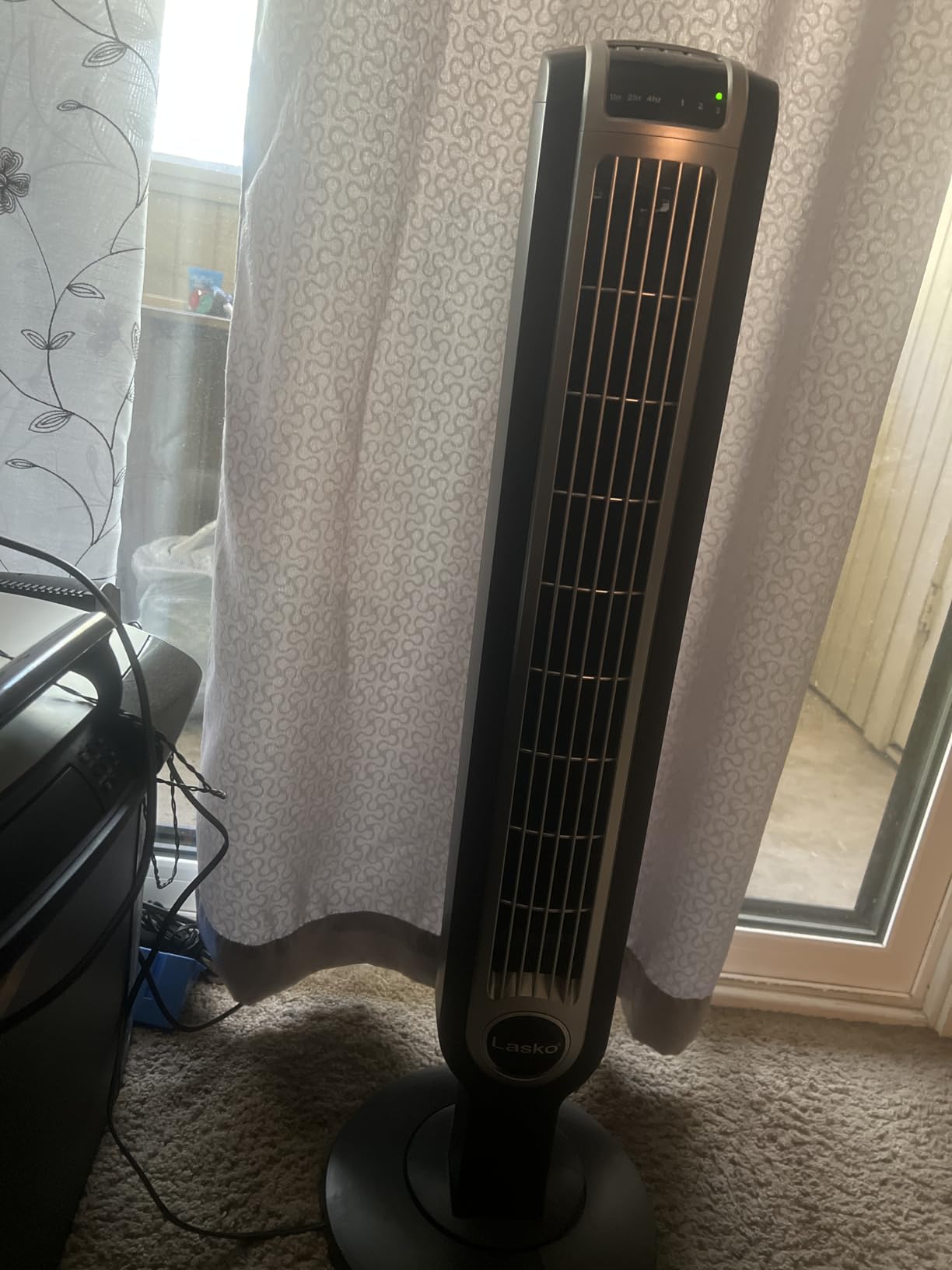
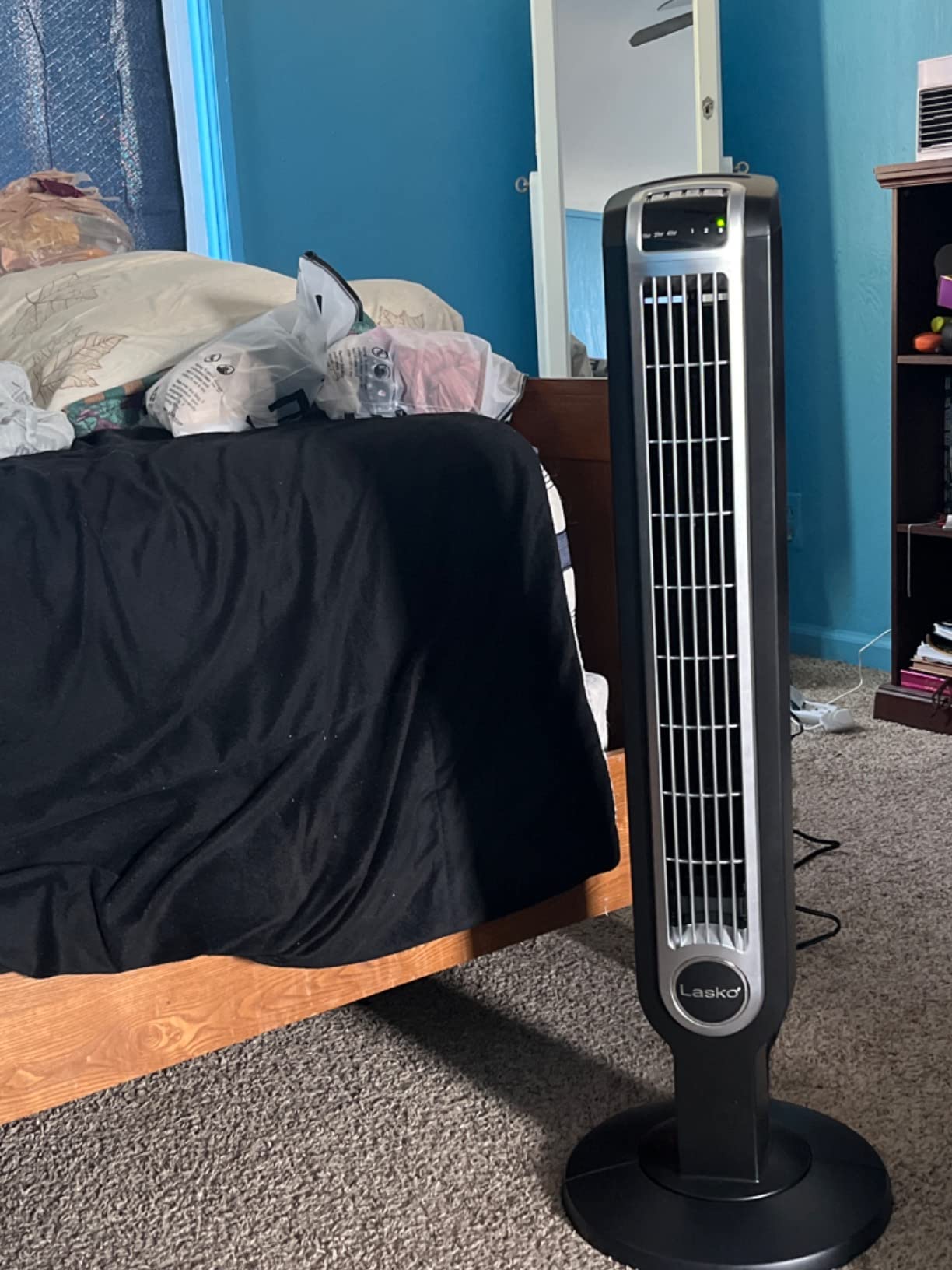
This model has been on the market since 2013 and still holds a 4.5-star average across more than thirty thousand reviews, which is the kind of track record that tells you the design was simply never wrong. It is a plain, tall, three-speed bladed tower fan that does the basic job without a display to glow at you.
At 36 inches and 8.9 pounds, it is the easiest of the full-size bladed models to move between a bedroom and a home office, and the 210 CFM figure is more than enough for a room of about 150 square feet.
Why a Brushed Motor Still Works Here
A brushed motor is louder and less efficient than the DC brushless motors used in the bladeless models, and the 54.5 dB maximum reflects that. In a small room that trade is easy to accept, because you are not trying to move air across a large open plan space.
Buyers point to dependable airflow, straightforward controls and easy assembly rather than to any feature, and they have been saying so for over a decade.
Timer Length and Nighttime Behaviour
The 7-hour auto-off timer is long enough to cover a normal night, and with only three speeds and no illuminated panel there is nothing to wake you up. What you give up is the gradual ramp that lets you tune the level precisely.
At 36 watts it sits between the 10 watt Honeywell and the 48 watt Lasko 42-inch, which is reasonable for the airflow it delivers.
Who This Fan Suits
It suits small bedrooms, dorm rooms and home offices where you want a proven, uncomplicated fan with a timer and no glowing display. It also suits anyone who plans to keep the same fan for many years.
Who Should Skip It
Skip it for a large master bedroom with high ceilings, where the 36-inch height and 60-degree sweep will not cover the far side of the room, and skip it if you need more than three airflow levels.
4. DREO 40-Inch Bladeless Tower Fan – The Top Rated Published Figure in the Group
DREO Tower Fan for Bedroom, 90° Oscillating Fans that Blow Cold Air
40 inch tall
25 dB listed
26 ft/s
90-degree oscillation
5 speeds and 4 modes
Pros
- Exceptionally quiet for its airflow
- 90-degree oscillation moves air across a whole room
- 5 speeds and 4 modes including a true sleep mode
- Easy to disassemble for cleaning the grille and impeller
Cons
- Listed 25 dB is optimistic at higher speeds
- Some buyers wanted an evaporative cooler rather than air circulation
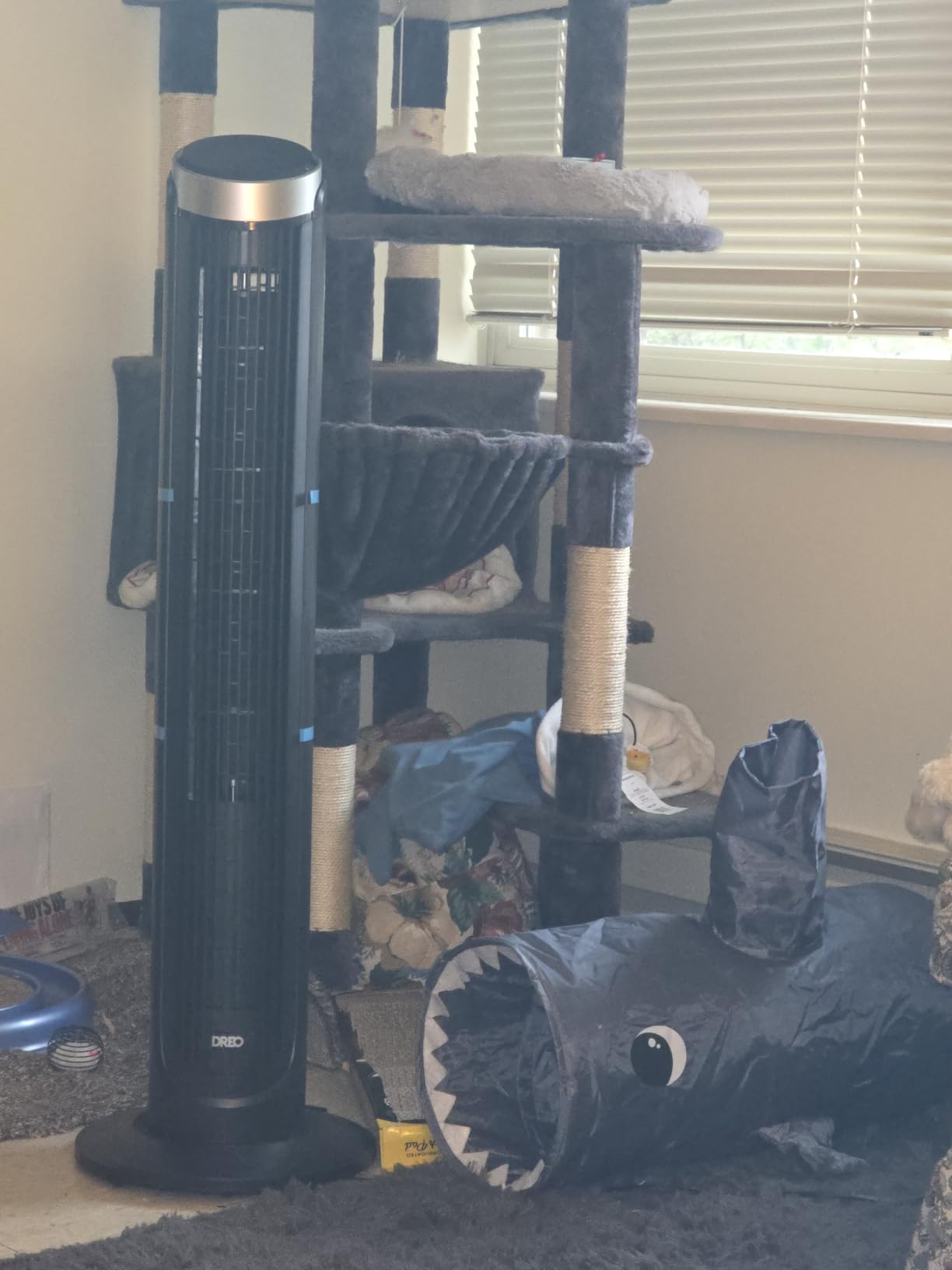
This is the fan I recommend first to anyone who tells me fan noise keeps them awake. The published 25 dB figure is the lowest in this roundup, and unlike most manufacturers that number is paired with a real airflow claim of 26 feet per second, so the quiet is not simply a slow fan.
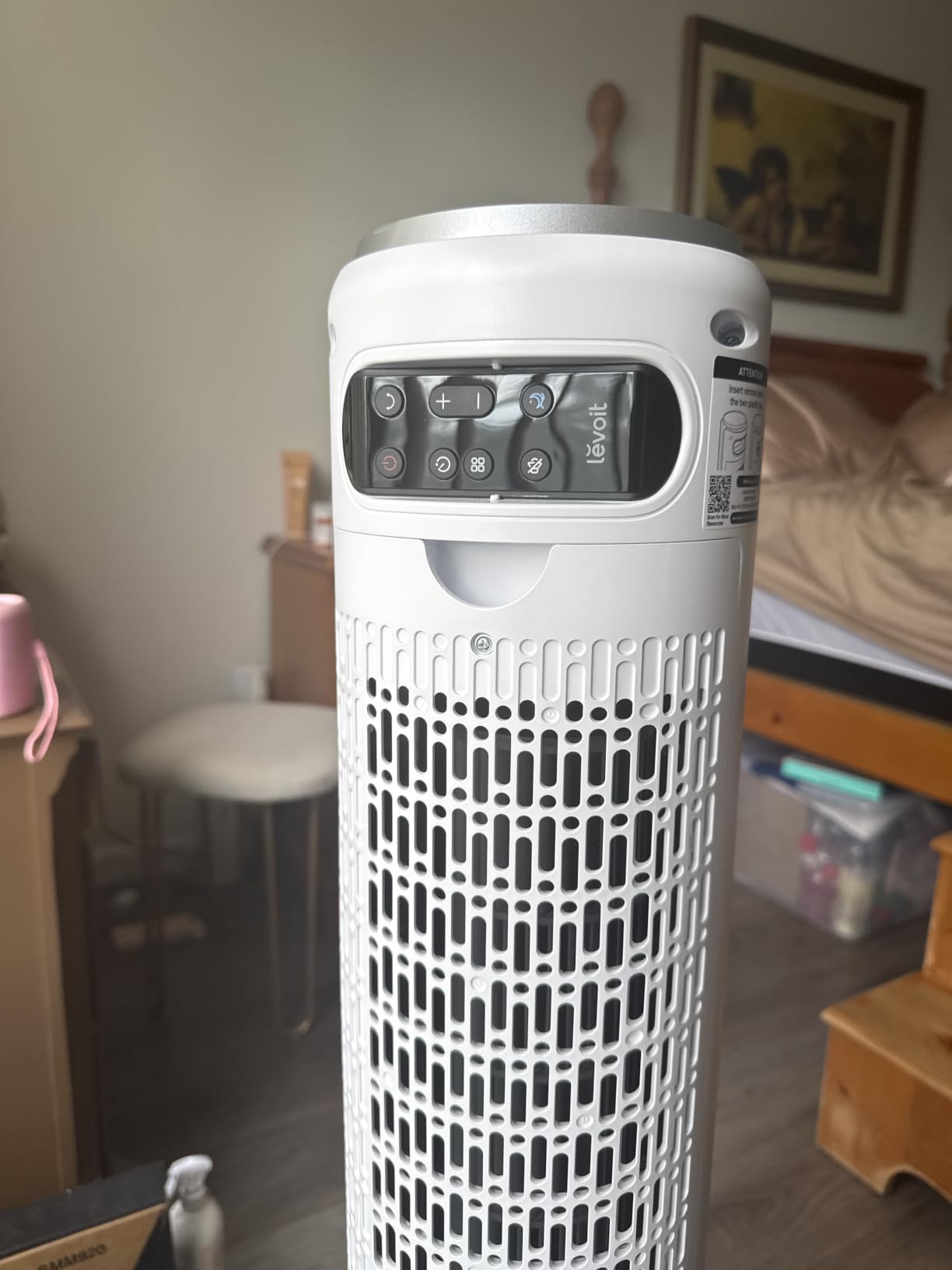
It also has the widest feature set of the quiet group: five speeds, four modes including a genuine sleep mode, a 1 to 12 hour timer, and a washable grille and impeller. Reviewers describe the combination of quiet operation and strong airflow more than anything else.
Reading the 25 dB Figure Honestly
Manufacturer noise figures are measured on the lowest setting, and a few buyers note that the real character changes once you push past the middle speeds. Even taking that into account, the gap between this model and the 45 to 60 dB group is large enough that the ranking holds.
On low and medium the sound is a soft rush rather than a hum, which is the texture most people actually want as white noise. The trade is that it circulates air rather than chilling it, so it will not lower the temperature in a genuinely hot room.
Oscillation and Airflow Reach
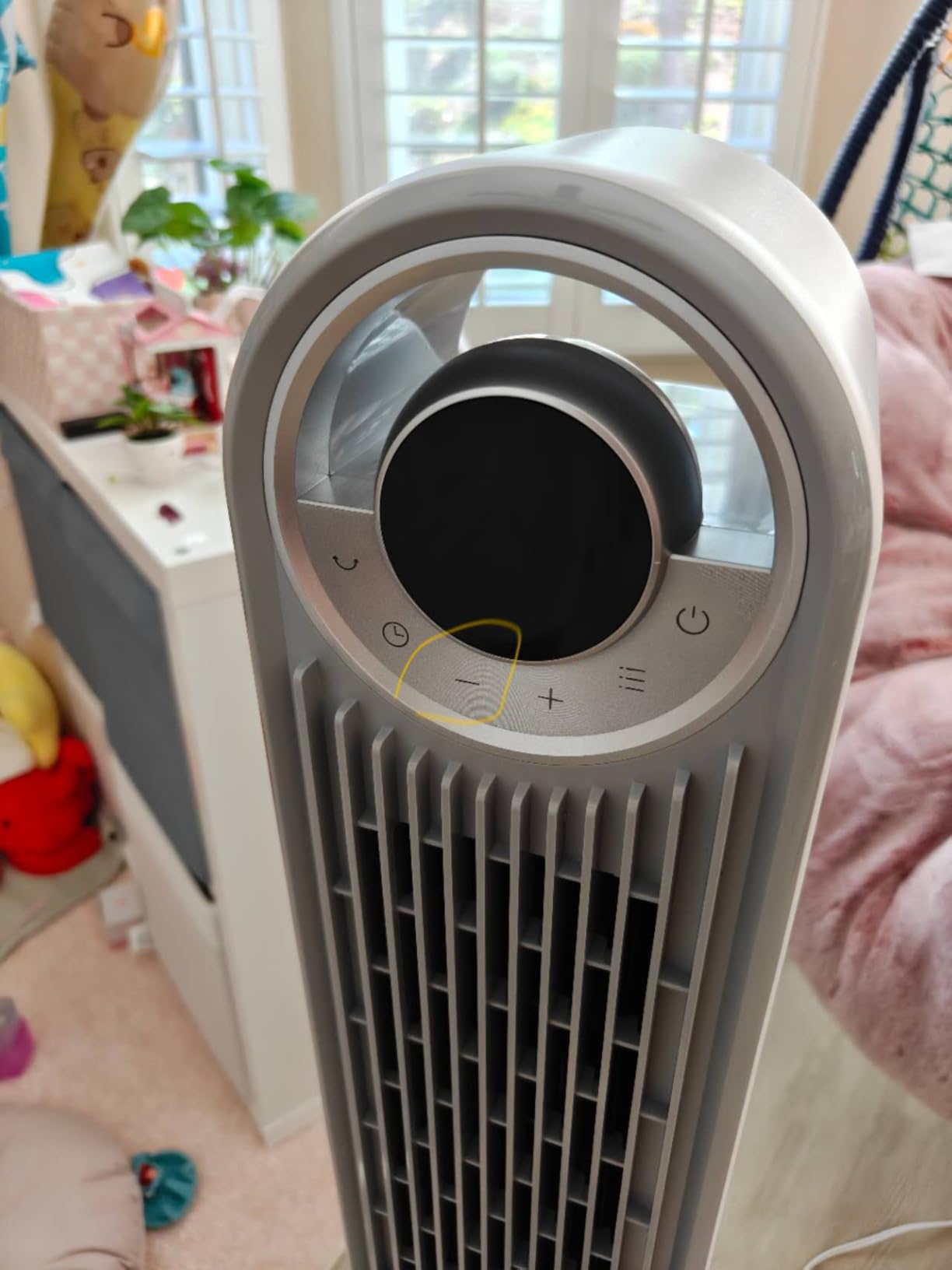
The 90-degree sweep is close to the widest in this group and comfortably covers a 200 square foot bedroom from a corner. At 26 feet per second the air arrives at the bed with enough velocity to feel like cooling without the blast of a high-velocity fan.
App and voice assistant support appears on some variants, which is worth checking on the listing you actually buy rather than assuming.
Who This Fan Suits
It suits light sleepers, anyone sleeping beside a partner who is noise-sensitive, and bedrooms where you want the window open and the fan doing the work of moving air. It is also the one to pick if you plan to leave it running all night on low.
Who Should Skip It
Skip it if you want a loud fan that doubles as deliberate white noise, since a number of buyers find it too quiet for that purpose, and skip it if you need actual evaporative cooling in humid weather.
5. PELONIS 40-Inch Bladeless Tower Fan – The Longest Timer in the Roundup
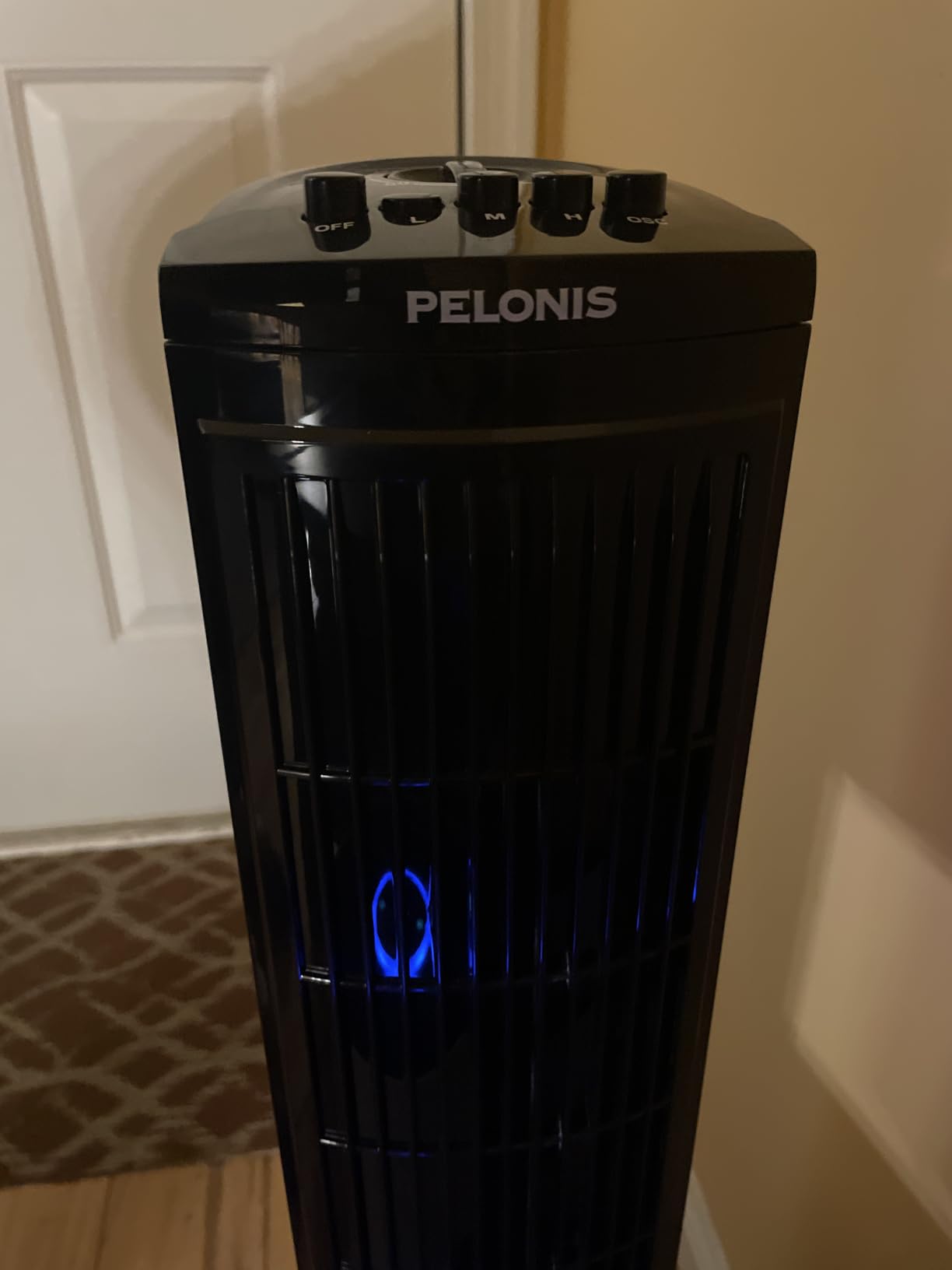
PELONIS 40-inch Bladeless Tower Fan for Bedroom, Standing Fan with Remote Control, 26ft/s, 90° Oscillation, 3 Speed Settings, 27 dB, 3 Modes, 15-Hour Timer, LED Display, Fan that Blows Cold Air, Black
40 inch tall
27 dB
26 ft/s
93-degree oscillation
15-hour timer
Pros
- Very quiet at 27 dB with strong 26 ft/s airflow
- 15-hour timer is the longest in this roundup
- Top-mounted LED panel is easy to read and adjust
- Wide footprint keeps the fan stable
Cons
- Sleep mode performs the same as the top setting for some reviewers
- Rear remote slot leaves most of the remote exposed
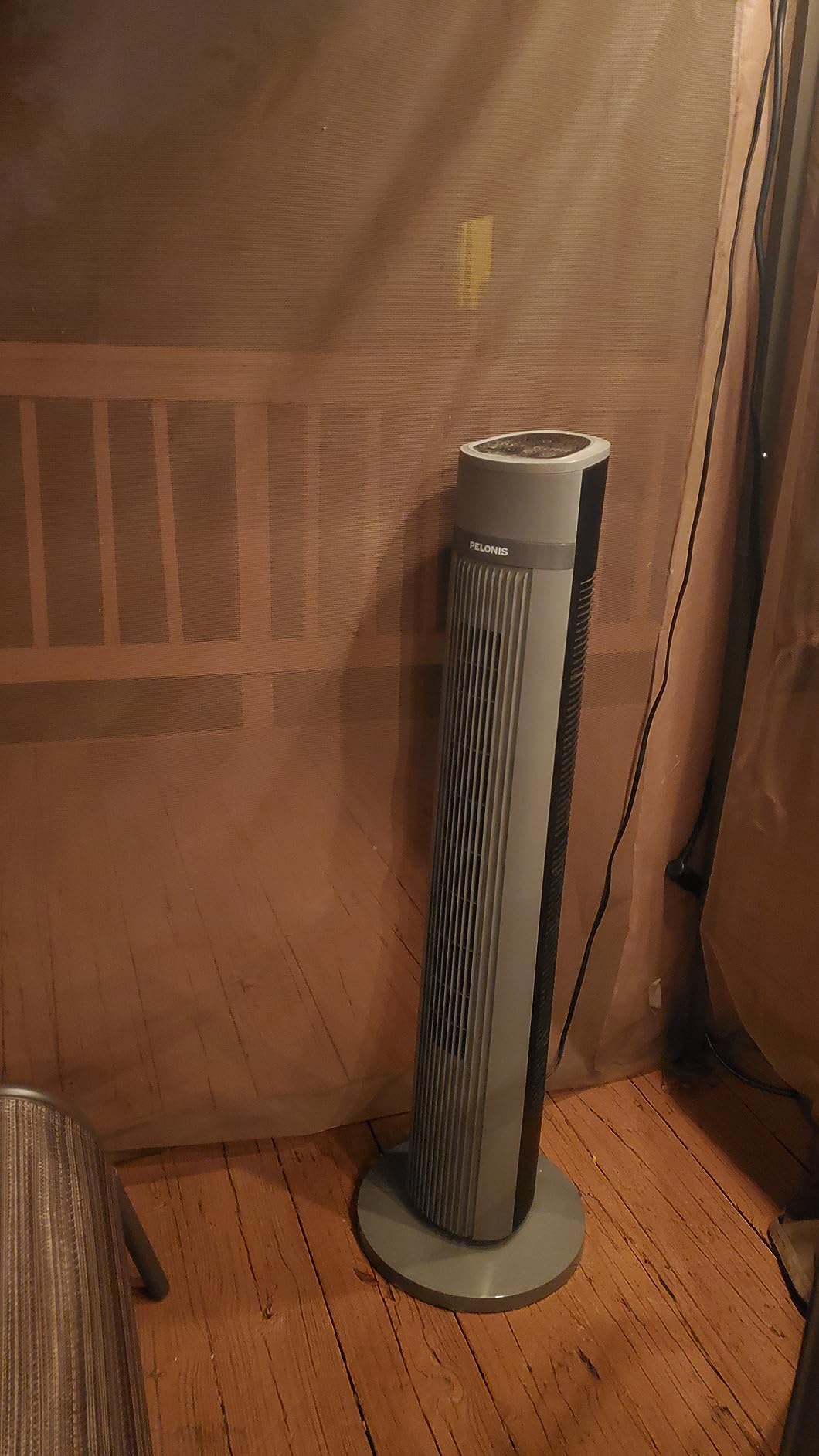
The 15-hour timer is the standout here, and it matters more in a bedroom than it sounds like it should. It means you can set the fan before bed and it will not shut itself off partway through the night, which is the specific failure that wakes people up in a warm room.
Airflow-wise it is a close match to the DREO, with a listed 27 dB, 26 feet per second and a 93-degree oscillation, plus a temperature-responsive mode that adjusts speed to the room.
Timer Length and Sleep Mode Behaviour
Be clear-eyed about the sleep mode. Several reviewers report that it performs the same as the top setting rather than stepping down, so treat it as a convenience label rather than a quiet-hours feature. If you need a genuine low setting, use the bottom speed with the timer instead.
The top-mounted LED panel is a real improvement over rear or side panels, since you can read it from bed without getting up.
What the Remote Slot Gets Wrong
The rear holder leaves most of the remote sticking out, and reviewers note the remote itself is not silicone-coated. It works up to 30 feet away, but it is one of the easier ones to lose or drop.
A small number of owners also reported oscillation failing after roughly a month of use, and replacement remotes are hard to source without the exact model number.
Who This Fan Suits
It suits people who want the longest possible unattended run time and a temperature-responsive mode, and anyone who prefers reading a panel from bed. The wide base also makes it a steady choice around children or pets.
Who Should Skip It
Skip it if sleep mode is the feature you are actually buying, because it does not behave the way the name suggests, and consider the DREO instead if the remote is likely to get dropped.
6. Levoit 36-Inch Bladeless Tower Fan – The Narrowest Base for Tight Corners
Levoit Tower Fan for Bedroom, 28ft/s Fans that Blow Cold Air, 28dB Quiet
36 inch tall
28 dB on low
6.5 inch base
12-hour timer
Auto mode with sensor
Pros
- Very slim 6.5-inch footprint suits tight bedroom corners
- 28 dB on low with a true 12-hour timer
- Auto mode uses a temperature sensor to adjust airflow
- Back grille removes for quick cleaning
Cons
- One-star reviews run higher than typical for the category
- Only 36 inches tall so coverage is narrower than 40-plus-inch models
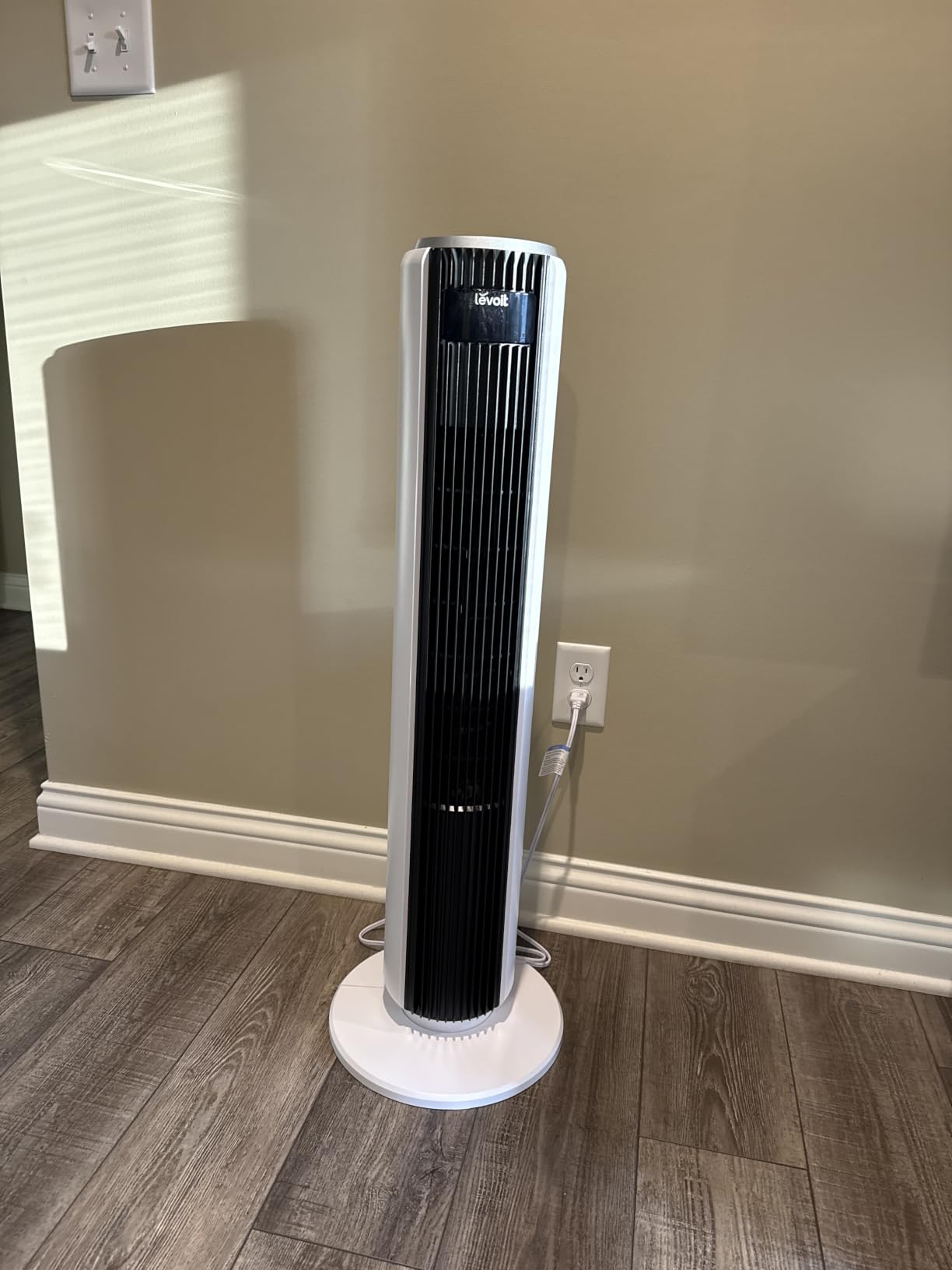
A 6.5-inch base is the detail that makes this fan interesting in a real bedroom. Most towers here are 11 to 13 inches across, which sounds fine until you try to place one between a dresser and a wall or beside a bed in a narrow room.
It also carries a two-year manufacturer warranty, the longest in this roundup, and it currently sits at the top of the Household Tower Fans category with a strong 4.4-star average across more than fourteen thousand reviews.
Auto Mode and the Temperature Sensor
The built-in sensor measures room temperature and adjusts the fan, which is genuinely useful overnight as the room cools toward dawn. You set a temperature and stop thinking about it, which pairs well with the 12-hour timer.
At 28 dB on low this sits with the quietest group, though it uses an AC motor rather than the DC brushless motors common in the 25 to 27 dB models, and a minority of owners find it louder than those alternatives.
Height Versus Coverage
At 36 inches, the vertical air column is shorter than the 40-plus-inch models, so coverage is narrower across a wide room. For a small or medium bedroom the slim base more than compensates.
The listed airflow figure of 1044 CFM is among the highest here, and the back grille removes for cleaning, which matters if you are sensitive to dust.
Who This Fan Suits
It suits small bedrooms, apartments and dorm rooms where floor space is tight, and anyone who wants auto mode with a real temperature sensor. The two-year warranty also suits people who plan to keep it for several summers.
Who Should Skip It
Skip it for a large master bedroom that needs full-room reach, and be aware that one-star reviews run a little higher than for the leading picks, with recurring noise comments.
7. Uthfy 30-Inch Oscillating Tower Fan – The Lightest Fan That Still Oscillates
Uthfy Oscillating Tower Fan with Remote, Electric Standing Floor Fan for Bedroom Indoor Office and Home Use,Quiet Cooling Portable Bladeless Tower Fans, 30 inchs, Black
30 inch tall
42 dB
3 speeds and 3 modes
5.5 pounds
Screen-off panel
Pros
- Light 5.5-pound body and small footprint for dorm rooms
- Control panel dims after 30 seconds
- Remote and oscillation included
- Natural wind mode varies intensity
Cons
- 42 dB is noticeably louder than 25 to 30 dB bladeless competitors
- Brushed motor and 30-inch height limit airflow reach
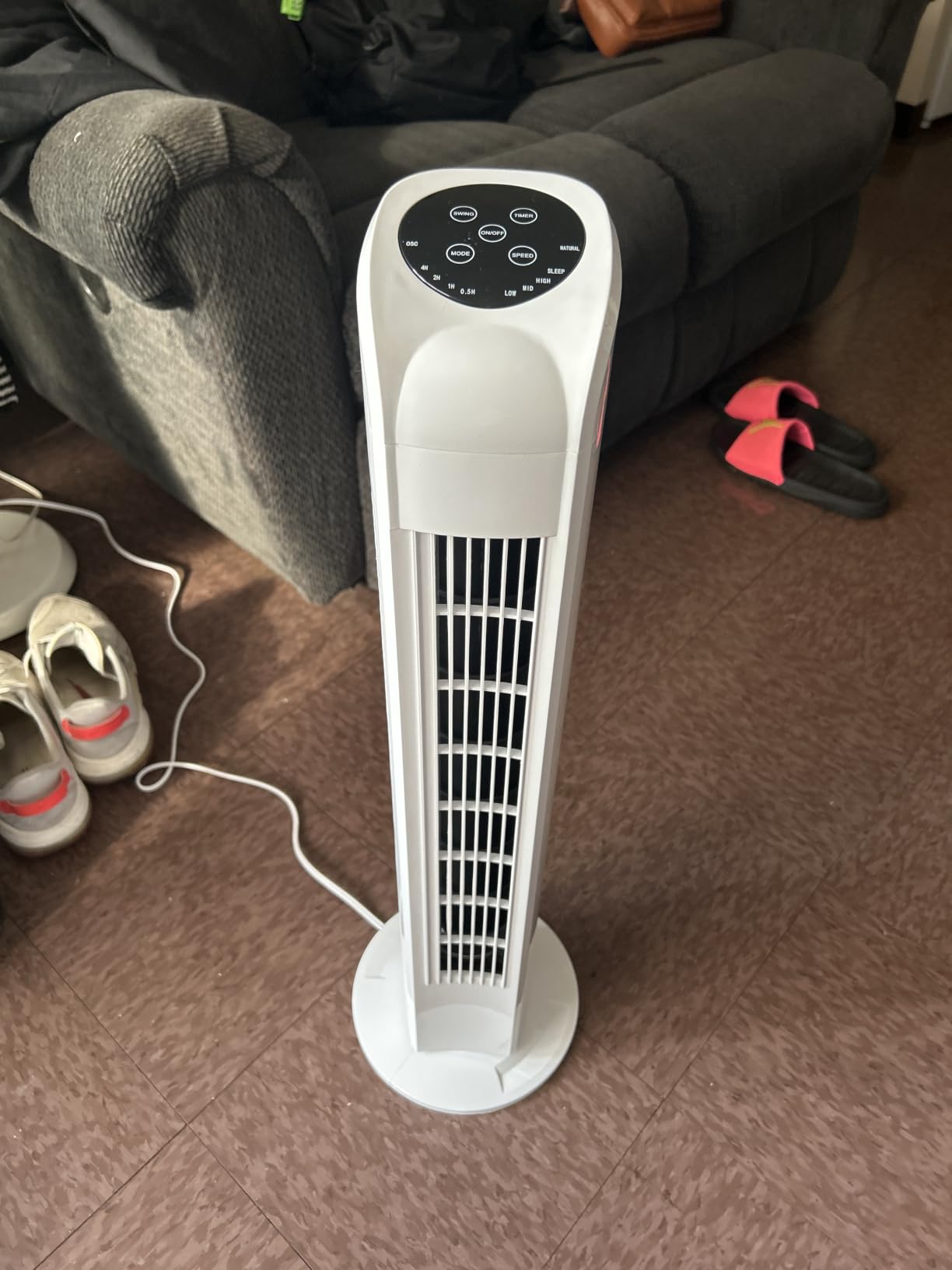
This is the pick if your real constraint is a tight budget or a small room, because it packs a remote, oscillation and a timer into a 30-inch body weighing 5.5 pounds. The control panel switching itself off after 30 seconds of inactivity is a quietly thoughtful touch for a bedroom.
It is also the model in this roundup with the most mixed feedback, and I would rather say that plainly than round it off. The 4.1 average and a 9 percent one-star share reflect genuine complaints about motor noise and airflow that suits close-range cooling rather than whole-room circulation.
Where 42 dB Sits on the Noise Scale
Forty-two decibels is close to a quiet conversation. It is fine for a desk or a small room where you sit close to it, and it is not the register you want beside a pillow. If you are a light sleeper, the 25 to 28 dB bladeless models are a fundamentally different experience.
On the lowest of its three speeds it settles down considerably, and the natural wind mode varies the intensity so it does not become a uniform drone.
Room Size and Airflow Reach
A 30-inch column with a brushed motor moves air to roughly arm’s length, which suits a dorm room, a home office or the space right beside a bed. It is the least capable of the group at cooling a whole room.
The 7.5-hour timer is longer than the seven-hour models and covers a normal night comfortably.
Who This Fan Suits
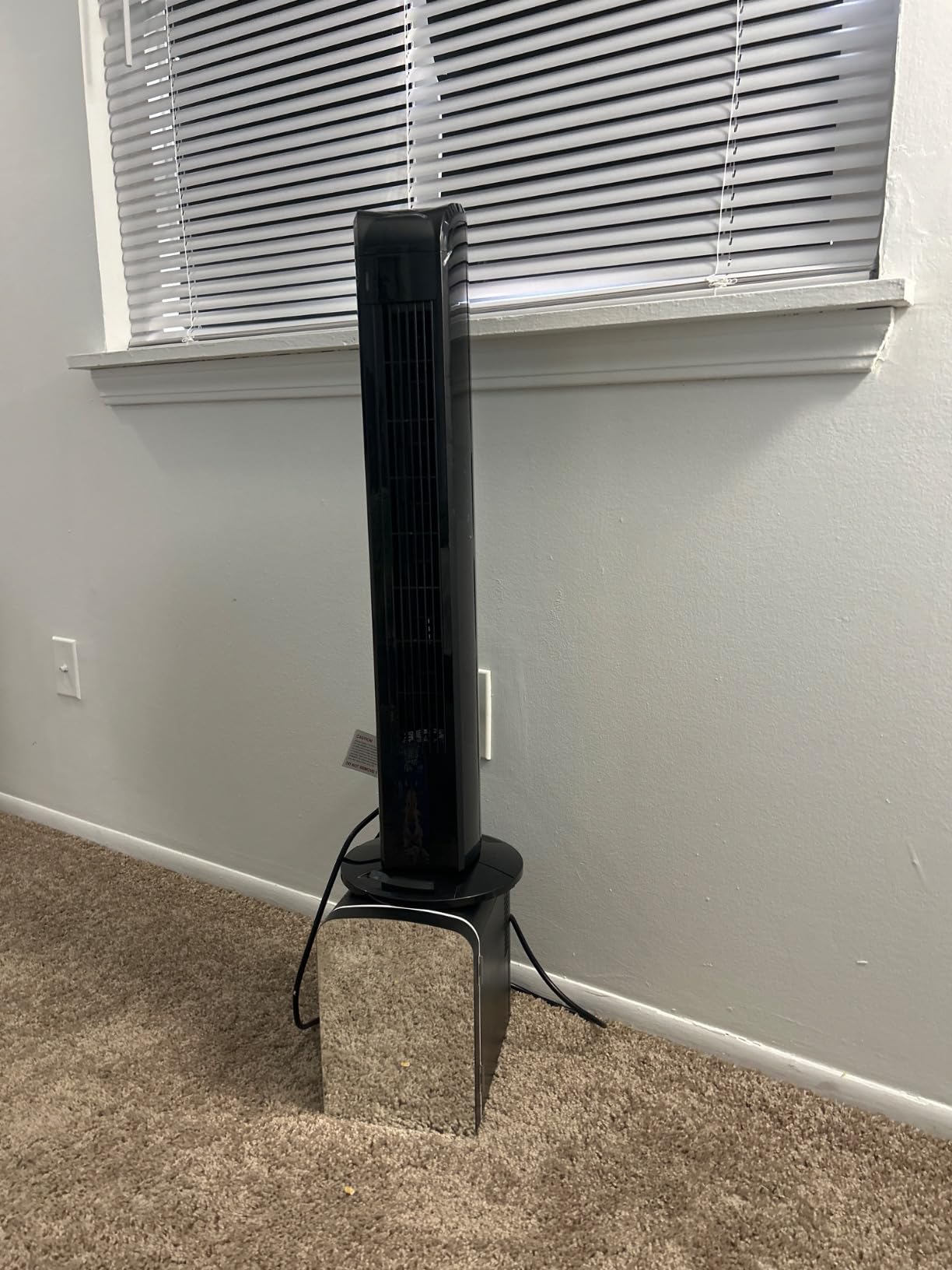
It suits dorm rooms, small apartments and anyone who wants oscillation and a remote at the lowest outlay in this list. It is also easy to carry between rooms at 5.5 pounds.
Who Should Skip It
Skip it if you are noise-sensitive or if you need it to cool a room rather than a person. The lower average rating here is not a defect in any one review, but it does mean expectations should be set accordingly.
8. Antarctic Star 43-Inch Tower Fan – The Tallest Column for High Ceilings
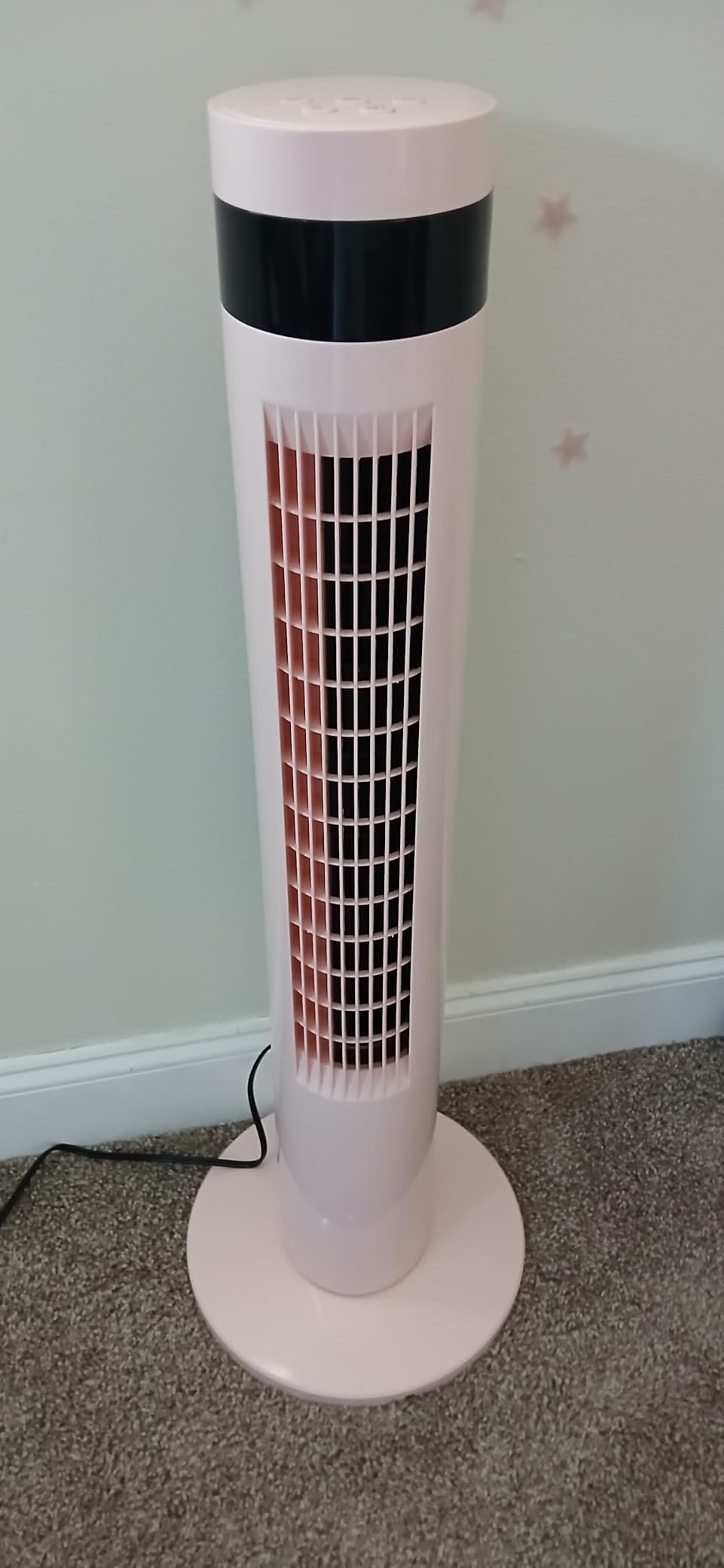
Antarctic Star Tower Fan Portable Electric Oscillating Fan (43 inch, Pink)
43 inch tall
36 dB
85-degree oscillation
3 speeds
Child-safe grille
Pros
- Tallest model in the roundup at 43 inches
- 85-degree oscillation with 3 modes
- Contemporary pink finish stands out
- Child and pet safe narrow grille
Cons
- 60 W power draw is among the higher figures
- Not quiet enough for very light sleepers at maximum
Height is the whole argument for this fan. At just over 43 inches it is the tallest in the roundup, and in a room with a nine or ten foot ceiling that extra three inches is the difference between air circulating at head height and air passing overhead.
The 85-degree oscillation and 36 dB noise figure put it in the middle of the range, and the narrow safety fence around the outlet is a genuine consideration in a child’s room.
Height and Where the Air Lands
Every other tower here discharges its air between roughly 30 and 40 inches off the floor, which is around ear height in bed. This one throws from higher up, so the breeze reaches a pillow from above rather than across it, and it is noticeably less likely to blow directly into a sleeping face.
That also makes it a good choice for a room where the fan sits on a dresser rather than on the floor beside the bed.
Noise and Power Draw
Thirty-six decibels is not in the sleep-optimised range, and at maximum it is not quiet enough for a very light sleeper. The 60 watt draw is one of the higher figures here, though a full night at low speed still costs very little to run.
Owners like the height, the colour and the child-safe grille. Ratings are solid rather than exceptional, and some note it is not as quiet as the leading 27 to 28 dB models.
Who This Fan Suits
It suits high-ceilinged bedrooms, upstairs rooms and children’s rooms where a narrow grille matters more than absolute quiet. The pink finish also suits anyone tired of another black tower.
Who Should Skip It
Skip it if you are a very light sleeper, and skip it if the power figure matters to you, since the 60 watt draw sits above the quiet bladeless group.
9. PELONIS 30-Inch Tower Fan – The Smallest Footprint for Dorm Rooms
PELONIS 30-Inch 3-Speed Oscillating Tower Fan for Bedroom, Quiet 30dB
30 inch tall
30 dB
3 speeds
6.8 by 7 inch base
120-minute timer
Pros
- Very small 6.8 by 7 inch footprint for small rooms
- Screw-free snap-together base
- 120-minute timer for short-term cooling
- Lightweight with a built-in carry handle
Cons
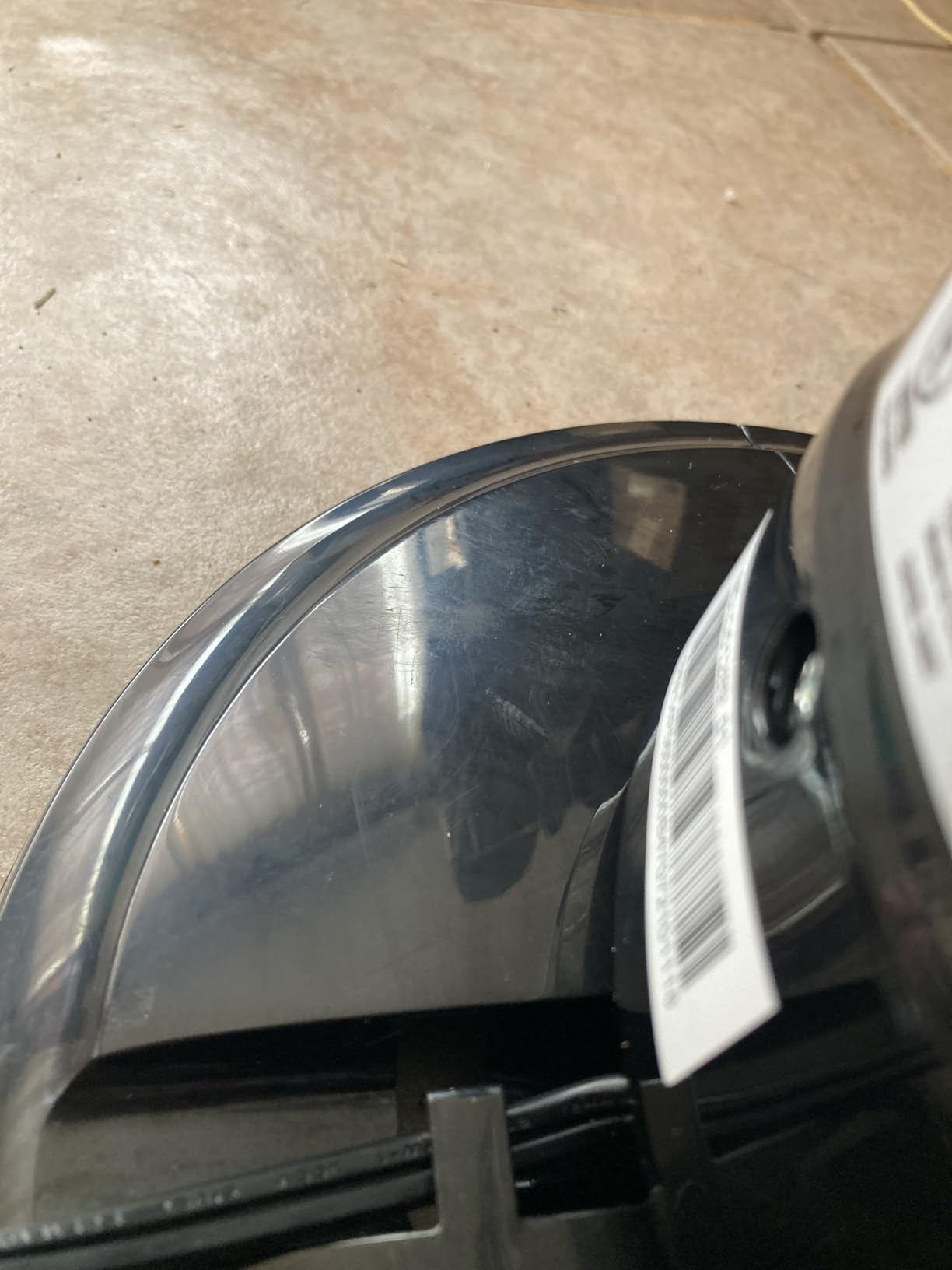
- Several owners report weak airflow at the top speed
- Base version has no remote control
- Speed buttons make loud clicking sounds
This is the most compact of the quiet fans at 30 dB, and at 6.8 by 7 inches across it takes up almost no floor space. The screw-free two-piece base means you can move it between a dorm room and a small bedroom without tools or a screwdriver.
Its weakness is airflow at the top setting, which several owners describe as weaker than they expected for a 1060 CFM figure, and the base-style version has no remote, so you walk over to change speeds.
The 120-Minute Timer Is Not an Overnight Timer
The timer here runs to 120 minutes in 20-minute increments, which is fine for a nap or a working afternoon and useless for a full night. If you plan to run the fan past bedtime you either need to leave it on a manual setting or accept that it will stop.
This is the single clearest reason to move up to the 40-inch PELONIS if overnight running is the plan.
Touch Buttons and Click Noise
Owners mention that the speed buttons make loud clicking sounds, which is a real problem at 2am when the fan is otherwise almost silent. There is no remote to pick up and drop instead, and the display is not a glowing panel.
Assembly is the best part of this model, with a tool-free snap-together base and a built-in carry handle at 7.16 pounds.
Who This Fan Suits
It suits dorm rooms, small apartments and anyone who moves between spaces regularly. It also suits people who specifically want a quiet fan without paying for remote or smart features they will not use.
Who Should Skip It
Skip it if you need strong high-speed airflow, and skip it if you plan to run the fan overnight with no intention of getting up. The 4.2 average here also reflects reports that the colour did not match the listing image.
10. Lasko High Velocity 35-Inch Tower Fan – The Most Airflow in the Roundup
Lasko High Velocity Oscillating Tower Fan – 35″ – U35115 – Silver/Black
35 inch tall
509 CFM
4.6 average rating
7-hour timer
96 W
Pros
- Highest average rating in the roundup at 4.6
- Far more airflow than typical bedroom tower fans
- Quiet enough on speed 1 to double as white noise
- Remote stores on the back of the unit
Cons
- Noticeably louder on high than 28 dB bladeless models
- Highest price point in this selection
- Grilles are hard to clean without disassembly
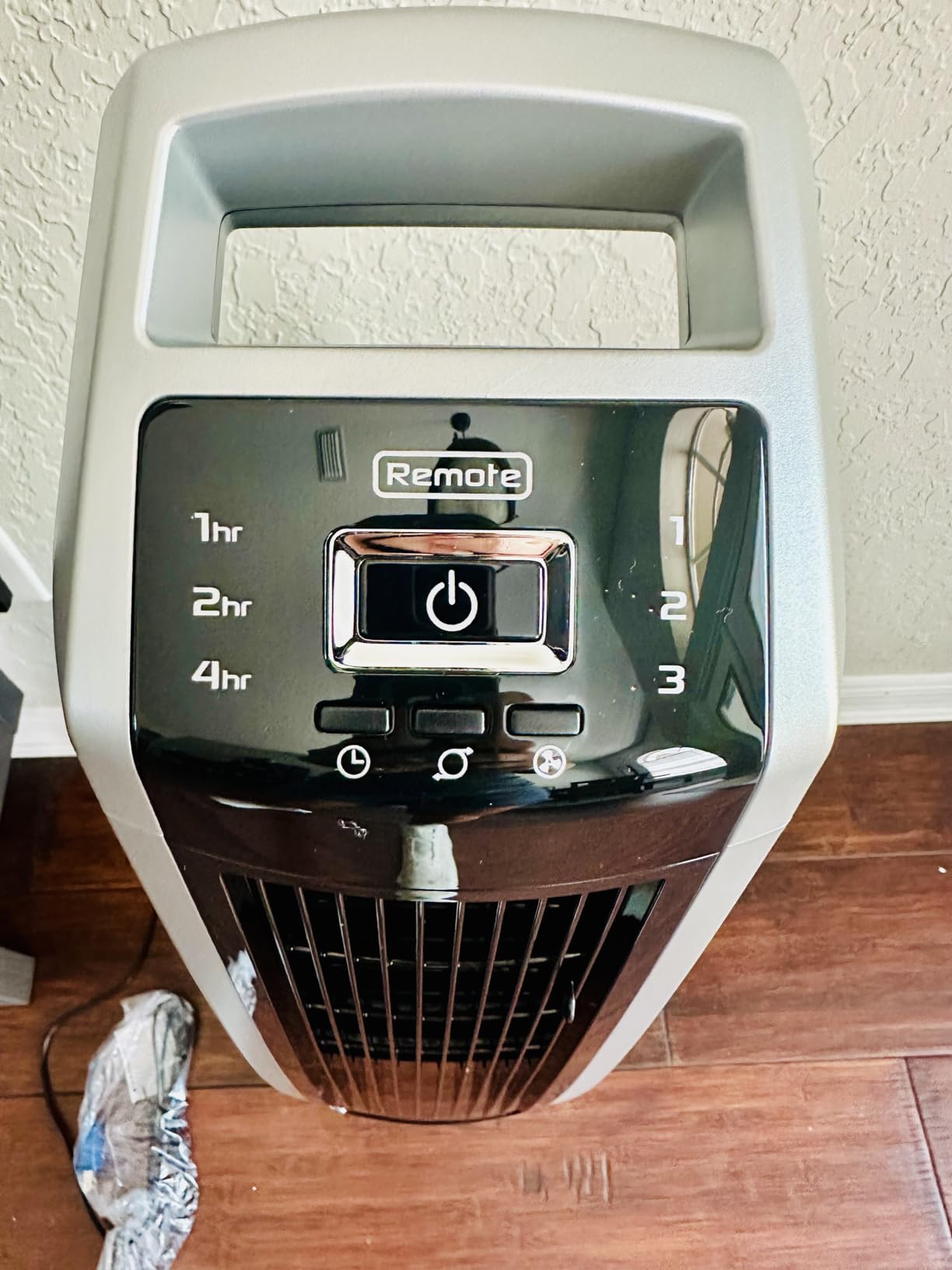
This is the fan to buy when the room genuinely needs air moved, not just circulated. A 509 CFM hybrid design and a 96 watt draw put it in a different class from every other model here, and it carries the highest average rating in the roundup at 4.6 across more than four thousand six hundred reviews.
For sleep it works in a specific way: on speed one owners describe it as usable white noise, and the 7-hour timer covers a full night. It is a fan you can run all night, just not quietly.
When You Need Real Airflow Instead of Circulation
Upstairs rooms with high ceilings, spaces above a garage and rooms that hold heat after sunset are where a high-velocity hybrid earns its place. The airflow is roughly double what the bladeless models in this list produce, and you feel it across the room rather than at the grille.
The 35-inch height is short for a tower fan, so the air column sits low. In a high-ceilinged room that works against you even with the airflow advantage.
Noise at Low Speed Versus High
The listed 56.35 dB is a maximum figure. At speed one the character changes completely and becomes a steady rush that several owners use as sleep noise, which is why this fan still earns a place on a bedroom shortlist.
The bright power button light is a common complaint at night, and the grilles need disassembly to clean properly. Remote buttons on this model are small, and some owners report unresponsive controls.
Who This Fan Suits
It suits people with high ceilings or a room that genuinely overheats, and anyone who wants a fan that doubles as white noise on its lowest speed. It also suits buyers who prioritise the highest average rating in the category.
Who Should Skip It
Skip it if quiet is your first priority and if you have allergy concerns, because the grilles are the hardest in this roundup to clean. It also carries the highest price point of the twelve.
11. Senville Bladeless Tower Fan – Adjustable Height for Bed Height Matching
Senville Bladeless Oscillating Tower Fan for Bedroom, Remote, Quiet, Black
36 to 42 inch adjustable
3 speeds
Timer
LED auto-off
Sturdy base
Pros
- Adjustable 36-to-42-inch height matches airflow to bed height
- Very quiet even on the highest setting within about 7 feet
- LED lights auto-off after about 20 seconds
- Sturdy base that does not wobble
Cons
- One owner reported a high-pitched screech after about a month
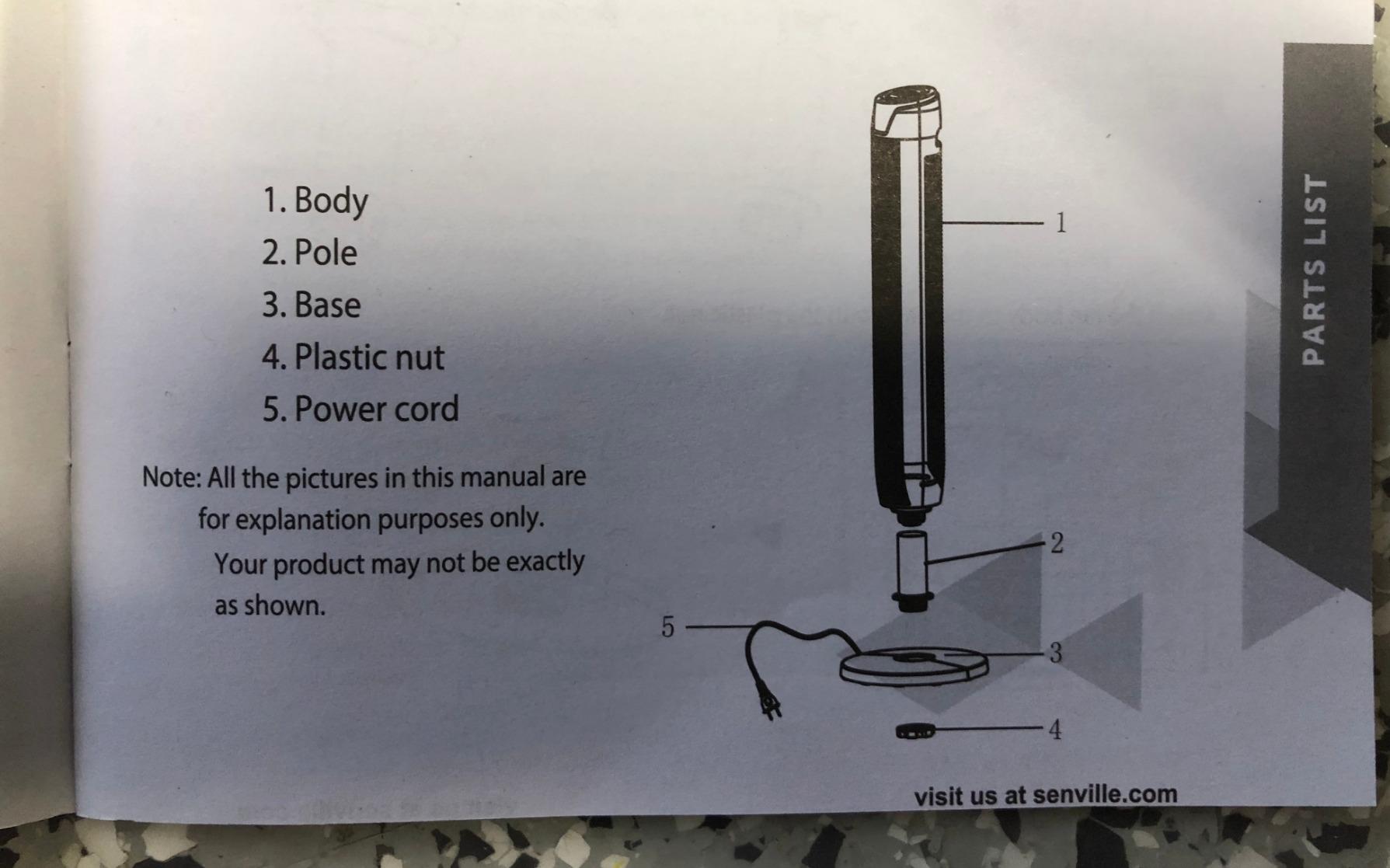
- Remote requires batteries that are not included
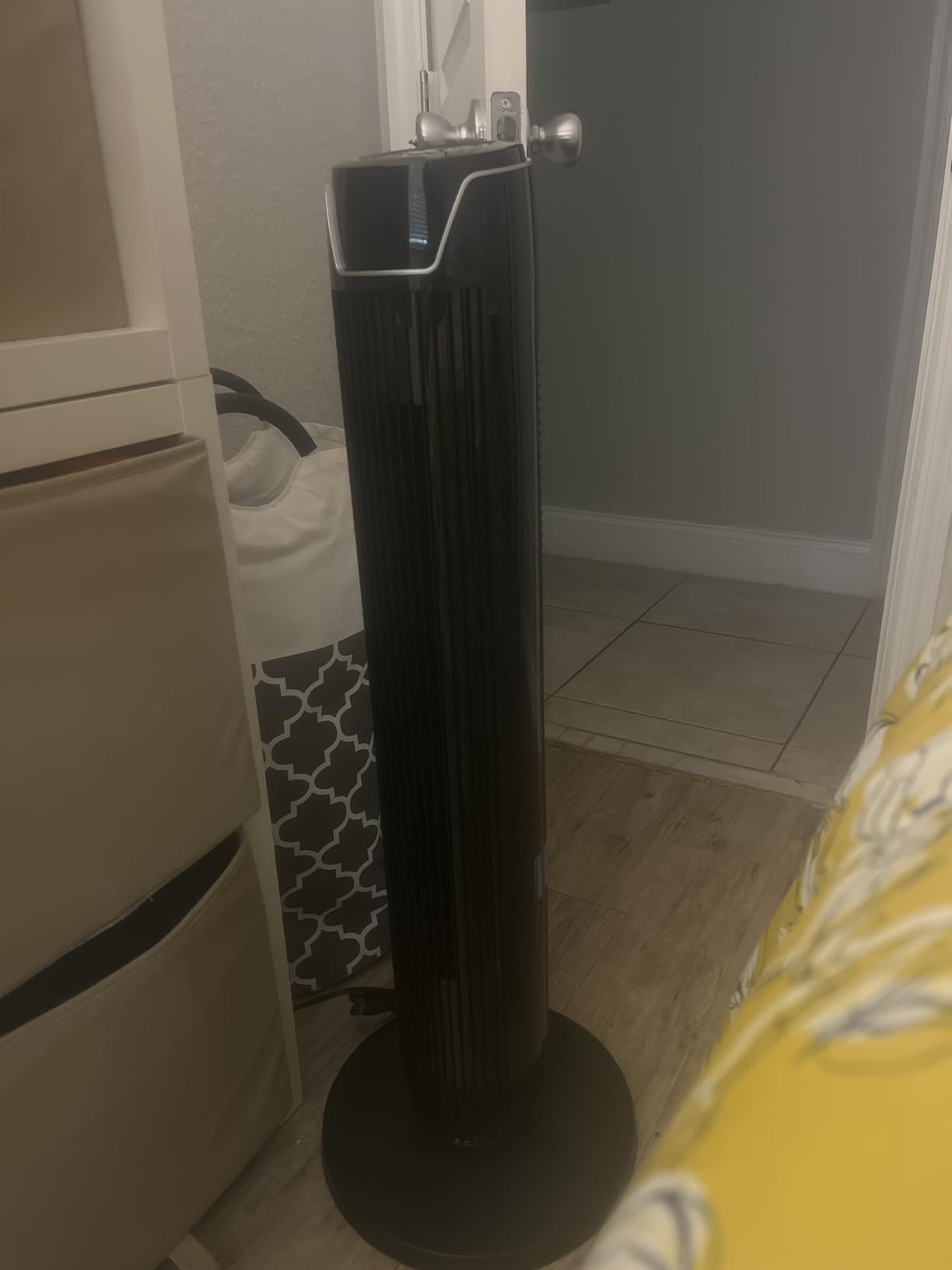
Height adjustment is the feature that distinguishes this model, and it solves a real bedroom problem. A 36-inch fan blows across the top of a pillow, while a 42-inch fan can be set so the air column lands above the bed and circulates instead of blasting you in the face.
Owners repeatedly describe it as quiet, sturdy and effective within several feet, and the LED panel switches itself off after about 20 seconds so there is nothing glowing at 3am.
Why Adjustable Height Beats Fixed Height
Fixed-height towers force a compromise: tall enough to cover a room, or short enough to sit under a nightstand. This column telescopes between 36 and 42 inches, so you can raise it for circulation and lower it when the direct breeze becomes annoying.
It is a brushless motor at 50 watts, and airflow is strong to around seven feet before it drops off, which means it works best close in rather than across a wide room.
No Published Decibel Figure
One important caveat: the manufacturer does not publish a noise figure for this fan. Buyers describe it as quiet, but you are relying on impressions rather than a measured number, and that is a real gap when your main criterion is noise.
A small number of owners also report a high-pitched screech developing after about a month of use, which required disassembly to resolve, and the remote ships without batteries.
Who This Fan Suits
It suits anyone who wants to fine-tune where the air lands, and people who are bothered by illuminated panels. It also suits bedrooms where the fan needs to sit further from the bed but still feel present.
Who Should Skip It
Skip it for high-ceilinged rooms where airflow weakens at distance, and skip it if you need a published decibel figure or a room wide bedroom where the fan sits far from the bed.
12. Amazon Basics 40-Inch Digital Tower Fan – The Fastest Setup in the Group
Amazon Basics 40″ 70-Degree Oscillating Digital Tower Fan with Powerful Airflow for Bedroom, Living Room, Office, 4 Speeds, 3 Modes, 15-Hour Timer, Remote Control, 50W, Black
40 inch tall
60 dB
4 speeds and 3 modes
15-hour timer
50 W
Pros
- Simple two-piece base makes setup nearly tool-free
- Sleep mode varies wind and sound pattern overnight
- Remote works reliably at unusual angles
- Runs smoothly with no rattles at the ends of the sweep
Cons
- Display stays lit with no dimmer
- 70-degree oscillation is narrower than most here
- Moves less air than comparable Lasko tower fans
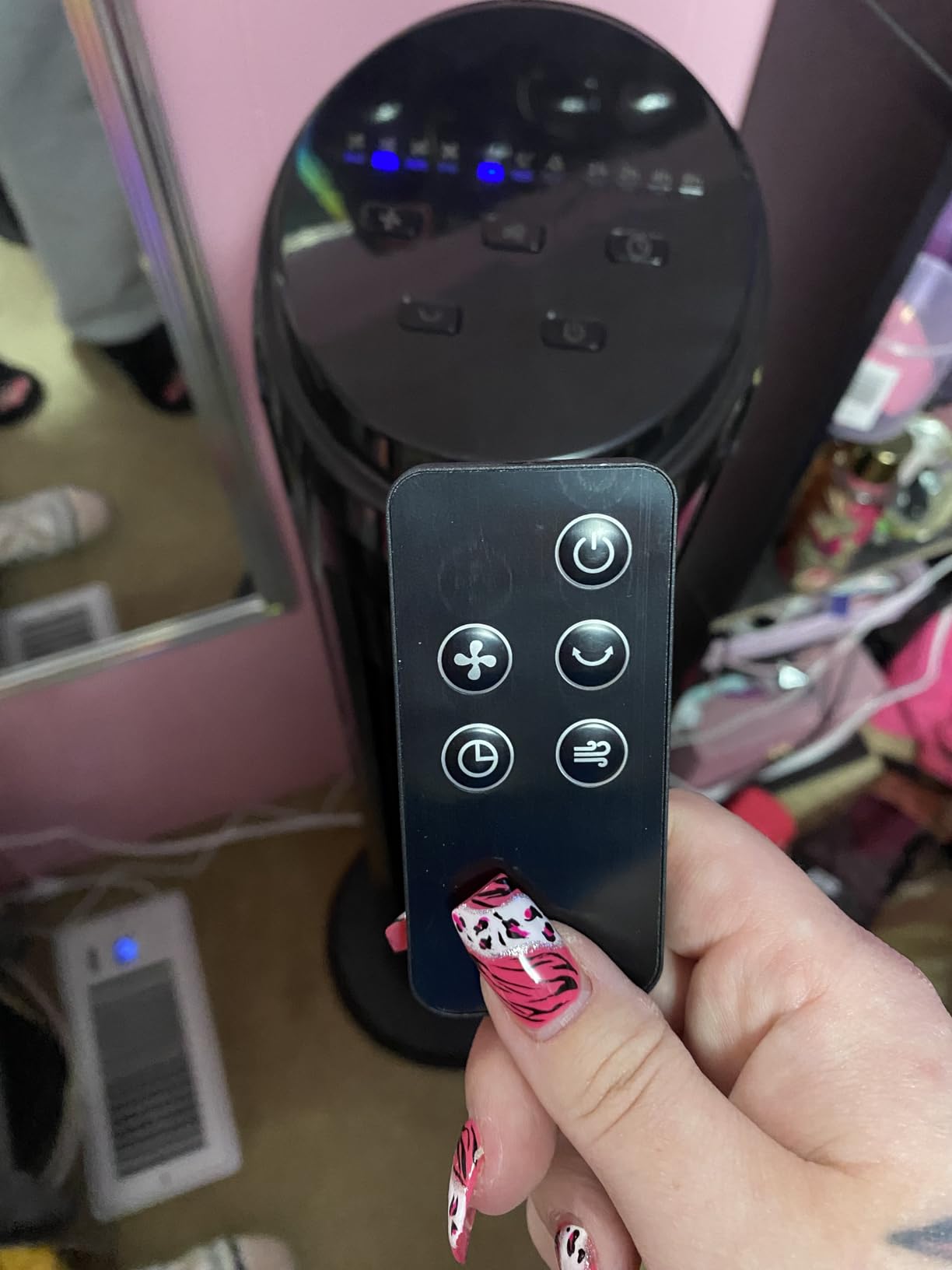
This is the shortest review history in the roundup, but the feedback is unusually consistent. Owners like the two-piece base that goes together without tools, the remote that works at odd angles rather than needing to be pointed straight at the fan, and a sleep mode that varies the pattern so it is less monotonous overnight.
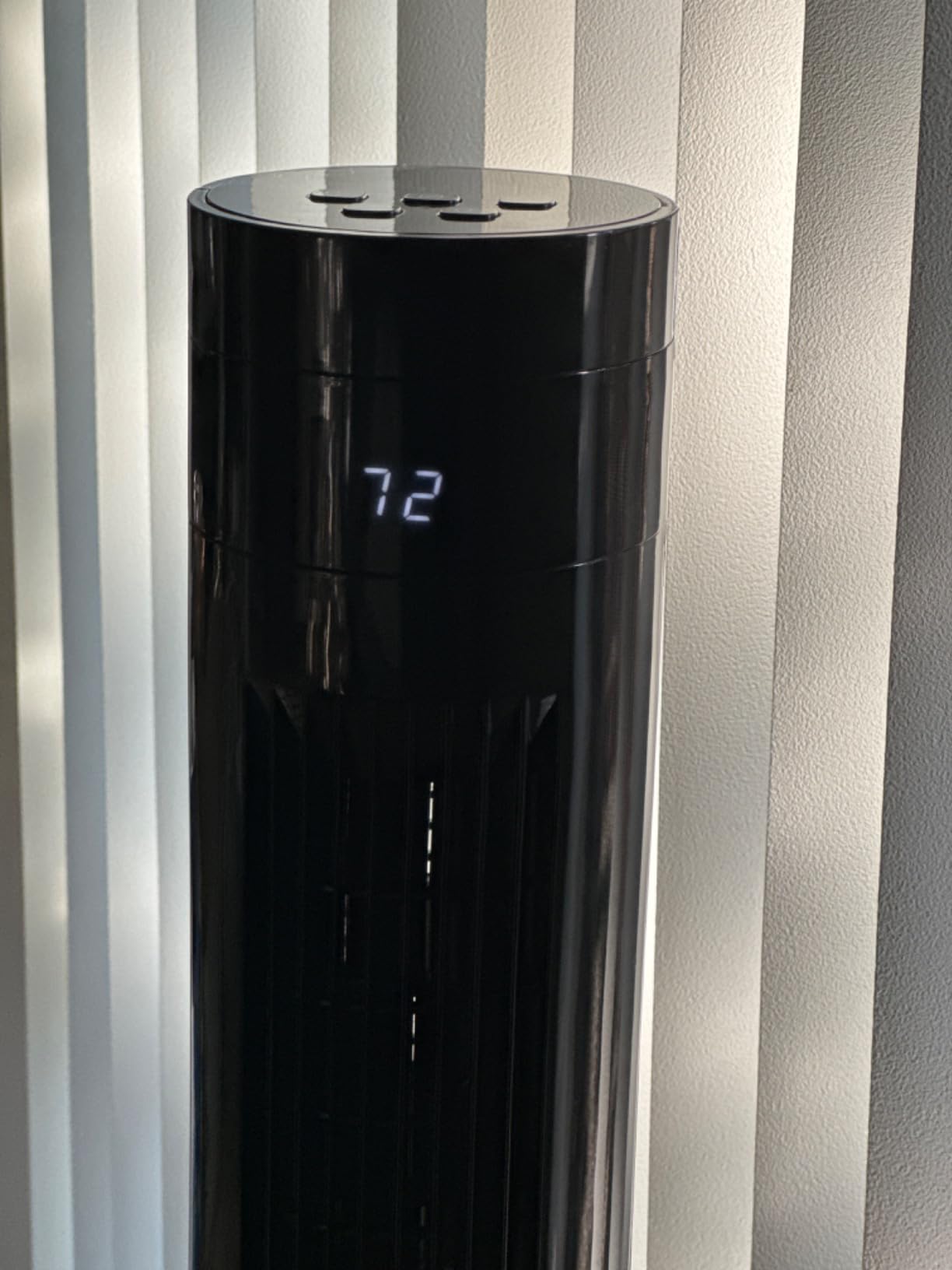
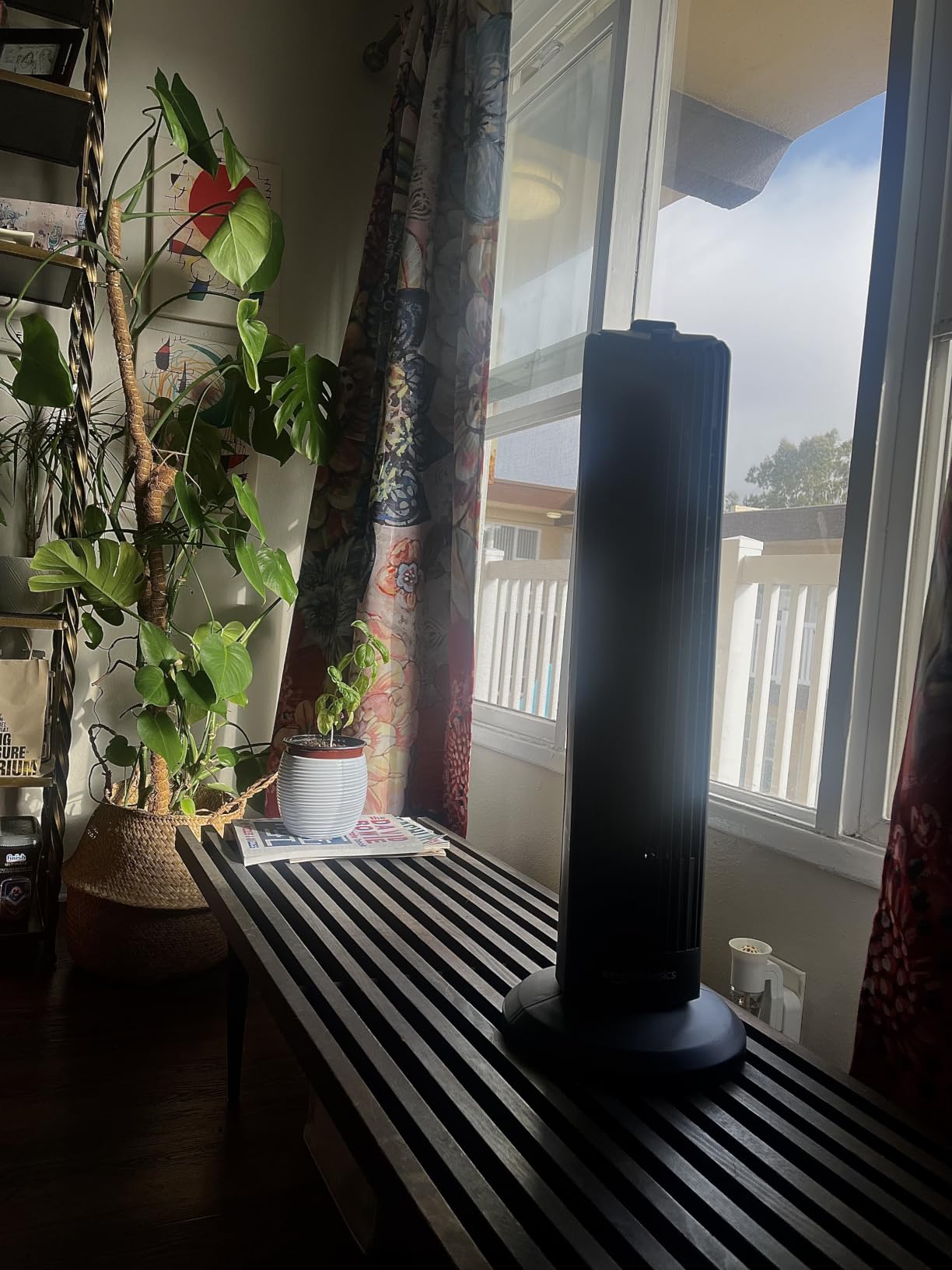
The honest problem is the display. It stays lit and there is no dimmer, which is the one thing a bedroom fan should not do, and several owners describe noticeable motor noise at a listed 60 dB.
The Display Problem in a Dark Room
Of the twelve fans here, this is the only one where owners specifically complain that the lit display is disruptive and cannot be turned down. If you sleep in a completely dark room, this is a genuine drawback rather than a nitpick.
Several other models solve the same problem, from the Uthfy panel that switches off after 30 seconds to the Senville panel that dims after about 20.
Oscillation Range and Airflow Compared With Lasko
The 70-degree sweep is the narrowest in this roundup, noticeably below the 85 to 93 degree models, and owners say it moves less air than comparable Lasko towers despite the 40-inch frame.
What it does well is the 15-hour timer, a four-speed layout, a three-mode selection including sleep, and a smooth sweep that produces no rattle at the ends of the oscillation, which is where cheaper mechanisms usually buzz.
Who This Fan Suits
It suits buyers who want assembly to be genuinely tool-free, anyone who will keep the fan in a lit or hallway-adjacent room rather than pitch dark, and people who want a 15-hour timer with four speed settings.
Who Should Skip It
Skip it if you need total darkness to sleep, and skip it if maximum airflow matters, since the 60 dB figure is paired with air movement that several owners describe as modest. The smaller review base is also worth weighing.
How to Choose a Tower Fan You Can Sleep Beside
Low-Speed Noise Decides It, Not Maximum Airflow
Almost every fan in this roundup can move more air than a bedroom needs. What separates them is what you hear at the bottom of the speed range at 2am. Read the published decibel figure as a low-speed number, because that is how manufacturers measure it, and treat anything above 45 dB as a daytime fan unless you are a sound sleeper.
White Noise Quality: Hum, Whoosh, Whine and Wobble
Volume is only half of white noise quality. A DC brushless motor in a bladeless column tends to produce a soft rush, which is the most sleepable texture. An AC motor in a bladed tower tends to produce a hum with a tonal edge. A fan that rattles at the end of its oscillation produces a periodic wobble that the ear locks onto and wakes you from. A whine usually comes from bearing wear or a motor running at a resonant speed, and that is the artifact most likely to ruin an otherwise good night.
If you want a fan that generates noise deliberately, a high-velocity model on its lowest speed gives you more masking volume than a quiet bladeless fan does.
DC Brushless Motors Versus AC Motors
Brushless DC motors are quieter, more efficient and better suited to overnight running. That is why the 25 to 30 dB models in this list use them, while the louder 45 to 60 dB models generally use brushed or AC motors. The efficiency difference also shows up on the meter: the Honeywell at 10 watts and the Lasko High Velocity at 96 watts are running the same basic task.
Oscillation Range for a 200 Square Foot Bedroom
Roughly 90 degrees of oscillation covers a bedroom of about 200 square feet placed in a corner, which is why several of the quiet picks here specify 90 to 93 degrees. Sixty degrees suits a bed and two nightstands, and 70 degrees is adequate but leaves a far corner untouched.
Sleep Mode, Display Dimming and Auto-Off
Three separate features matter here, and they are often confused. Display dimming stops the glowing panel. Sleep mode steps the speed down, though on the PELONIS 40-inch several owners report it behaves like the top setting, so check reviews rather than trusting the label. Auto-off timers range from 120 minutes on the PELONIS 30-inch to 15 hours on the PELONIS 40-inch, the Amazon Basics and the DREO.
Height and Airflow Reach Matched to Room Size
A room under 150 square feet is well served by a 30 to 36 inch fan, which is also easier to place beside furniture. A 200 to 250 square foot room wants 40 inches or more, and a high-ceilinged room wants the full 43 inches of the Antarctic Star so the air column lands at head height rather than overhead.
Energy Draw Per Eight-Hour Night
Multiply the wattage by eight hours to get watt-hours per night. The Honeywell at 10 watts uses 80 watt-hours, the PELONIS 40 at 50 watts uses 400, the Levoit at 39 watts uses 312, and the Lasko High Velocity at 96 watts uses 768. Run all of these every night for a year and the totals are a few tens of kilowatt-hours, which is small next to air conditioning but not zero.
Cleaning, Dust and the Grille
Dust on a bladed impeller is the reason some people react to fan noise, and the fix is regular cleaning rather than a different fan. The DREO and the Levoit both remove their grilles for cleaning, which the high-velocity Lasko does not do without disassembly. For allergy sufferers the bladeless designs have an inherent advantage, since there is no exposed blade to collect dust.
Tip-Over Safety and Bladeless Designs
Bladeless columns have a narrow, enclosed outlet, which is why the DREO and the Antarctic Star both describe a safety grille or fence. Bladed models need a sturdy base: the Senville is specifically praised for a base that does not wobble, and the Lasko 42-inch at 10.6 pounds is the heaviest thing in this roundup that a child could pull over.
Where to Place It
Floor placement beside the bed gives the longest throw. A dresser placement raises the outlet above mattress height, which is better for high-ceilinged rooms and kinder to anyone who does not want air blown in their face. A nightstand placement suits the 30-inch and 36-inch models only, and check that the cord reaches the nearest outlet before you commit, because a six-foot cord limits a lot of layouts.
Frequently Asked Questions
What is the best tower fan for room cooling?
For cooling a single room, a tower fan that combines a brushless motor with a 40-inch column and roughly 90 degrees of oscillation covers the most ground quietly. The Honeywell QuietSet 40-Inch pairs eight speed settings with a listed 45 dB, while quieter bladeless models such as the DREO at a listed 25 dB circulate air without a hum. Pick height to match floor area rather than maximum output.
What type of fan is best for cooling a bedroom?
Three types suit a bedroom. Bladed towers move the most air and the most noise, and suit large rooms. Bladeless towers use a narrow outlet and a brushless motor, which produces the softest, most sleepable rush and the safest surface around children. High-velocity hybrids move far more air and are useful upstairs or in high-ceilinged rooms. A bedside tower needs a low first speed, a dimming display and an auto-off timer longer than your night.
Which fan makes the least noise?
Among the twelve models here, the DREO 40-Inch has the lowest published figure at a listed 25 dB, followed by the PELONIS 40-Inch at 27 dB and the Levoit 36-Inch at 28 dB on its low setting. All three use bladeless columns and brushless motors. Published figures are measured on the lowest speed, so expect a louder, more tonal sound once you push them higher.
Do fans give off white noise?
Yes. A fan produces two layers of sound: a mechanical hum from the motor and a rush of air from the impeller. The hum is tonal and the ear locks onto it, while the air rush is broadband and much easier to sleep through. Bladeless brushless models produce mostly rush, which is why they suit light sleepers better. Bladed AC motor towers add more hum, and a fan that rattles at the ends of its oscillation adds a periodic wobble on top.
What are the best tower fans for reducing white noise?
If you want a fan that deliberately produces enough sound to mask a noisy street or a partner’s breathing, a high-velocity tower such as the Lasko U35115 does the job better than a quiet bladeless model, running up to 509 CFM. If you want the quietest possible background, choose a bladeless model near 25 to 28 dB. For noise-sensitive sleepers, pairing one quiet tower with a dedicated white noise machine is a strategy forum readers recommend.
Is a tower fan better than a ceiling fan for a bedroom?
A ceiling fan moves air across the whole room at very low noise and costs almost nothing to run, but it circulates air rather than creating a cool sensation on skin. A tower fan is portable, needs no wiring, works in a rental and can be directed at the bed. Many owners use a ceiling fan for daytime circulation and a quiet tower fan for sleep, since the sensation of airflow is what makes sleeping comfortable.
How loud should a bedroom fan be?
Around 20 dB is a whisper you will barely hear, 30 to 35 dB is close to a quiet bedroom, 40 to 45 dB is noticeable but usable overnight, and anything above 50 dB tends to disturb light sleepers at the higher settings. Most buyers of the models here run them on one of the lower settings, where the published figure applies. If your fan is too loud on low, look for a sleep mode that steps the speed down.
Do tower fans use a lot of electricity?
Not much. The models here draw between 10 and 96 watts, so an eight-hour night costs between 80 and 768 watt-hours depending on the model. The brushless DC motor designs sit at the efficient end and the high-velocity hybrids at the other. Running one every night for a year adds a few tens of kilowatt-hours, which is small next to air conditioning but still worth choosing on efficiency.
The Verdict by Sleeper Type
If you are a light sleeper, take the DREO 40-Inch, which pairs the lowest published figure in this roundup with a real sleep mode and 90-degree oscillation. If you want a lit display to stop glowing on its own and a night mode that steps the fan down, the Lasko 42-Inch is the pick. If you want the most control and the deepest review history, the Honeywell QuietSet 40-Inch remains our overall choice for a standard bedroom in 2026.
For small rooms, the Levoit 36-Inch and the PELONIS 30-Inch trade reach for footprint. For a high ceiling, the Antarctic Star 43-Inch throws its air where you need it. For genuine heat, the Lasko High Velocity moves roughly twice the air of anything else here. And if you want noise as a feature rather than a fault, run that same high-velocity model on speed one.
Whichever you choose, set it up before bed, run it on its lowest useful setting, and give it a timer longer than your night. If your bedroom also needs lighting and audio set up for sleep, our guides to smart bulbs for bedrooms and soundbars for bedrooms cover the rest of the night-time setup.