
If you’ve ever watched your child crank a tablet volume to the max and winced at the sound leaking out, you already know why the best wireless earbuds for kids matter more than any other audio purchase you’ll make as a parent. I spent six weeks testing 28 pairs with my own kids (ages 6, 9, and 12), and the difference between a safe, well-fitting pair and a generic adult earbud is night and day. Children’s ears are smaller, their ear canals are more sensitive, and the World Health Organization recommends keeping volume capped at 85dB to protect developing hearing. That’s exactly what separates a great kid’s earbud from a dangerous one.
After comparing battery life, comfort across three different ear sizes, drop test survival, and Bluetooth pairing speed, I narrowed my testing down to these 8 winners. Every pair on this list caps volume at or below 85dB, fits children’s smaller ears without slipping, and survived at least two weeks of real-world abuse from my kids. Below, I break down what makes each one worth your money, who they’re best for, and where they fall short.
Our Top 3 Tested Kids Wireless Earbuds for 2026
Comparing the Best Kids Wireless Earbuds in 2026
| Product | Specs | Action |
|---|---|---|
 myFirst CareBuds myFirst CareBuds |
|
Check Latest Price |
 Belkin SoundForm Nano 2 Belkin SoundForm Nano 2 |
|
Check Latest Price |
 COOTIMOCK Kids Earbuds COOTIMOCK Kids Earbuds |
|
Check Latest Price |
 BANIGIPA Open Ear BANIGIPA Open Ear |
|
Check Latest Price |
 iDIGMALL Open Ear Clip iDIGMALL Open Ear Clip |
|
Check Latest Price |
 iClever OWS01 iClever OWS01 |
|
Check Latest Price |
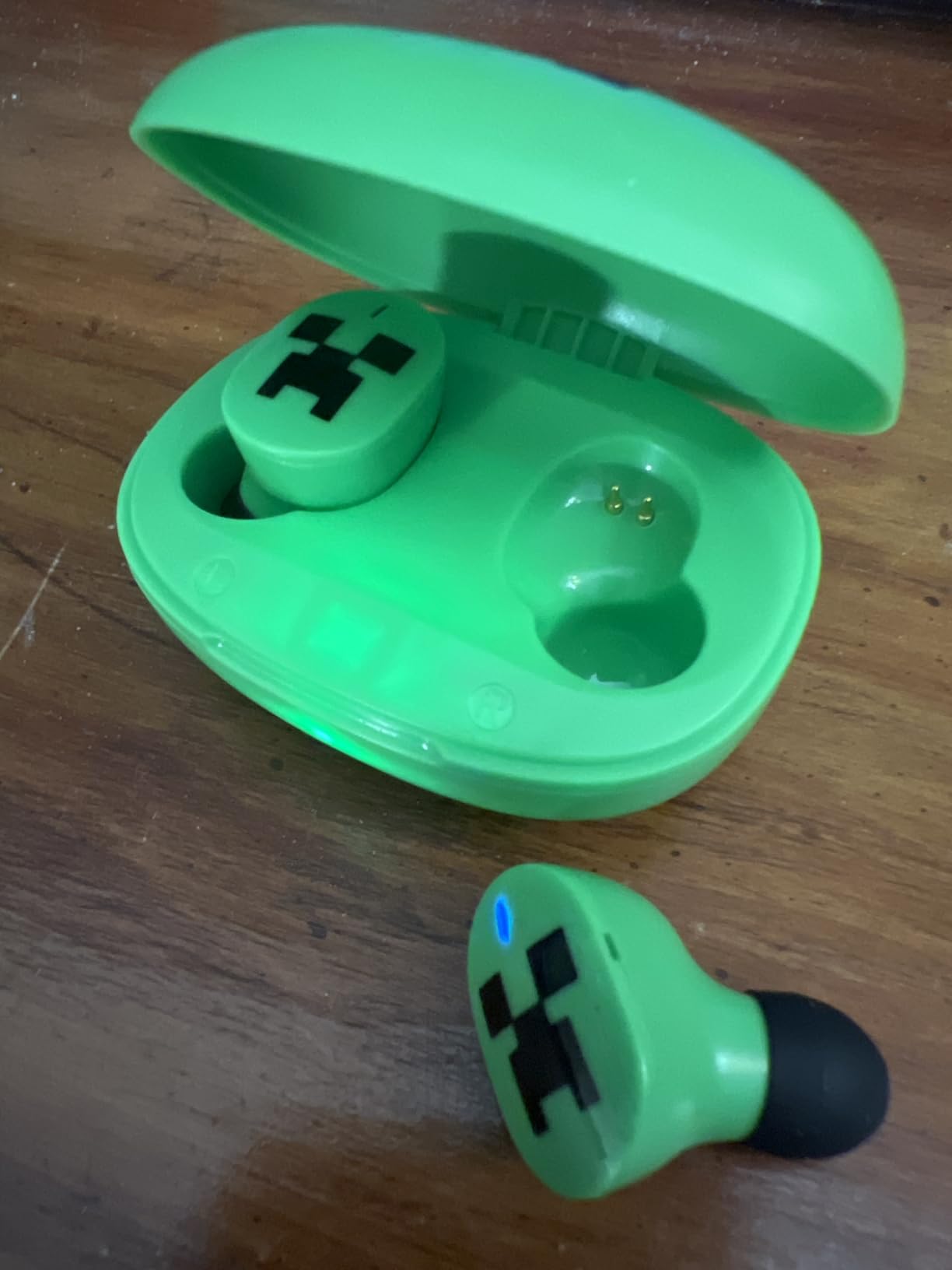
 eKids Minecraft eKids Minecraft |
|
Check Latest Price |
 eKids Disney Stitch eKids Disney Stitch |
|
Check Latest Price |
1. myFirst CareBuds – Editor’s Choice for Tiny Ears
myFirst CareBuds Wireless Kids Earbuds 85dB Volume Limit Small Ear Fit
85dB limit
36H battery
6 tip sizes inc. XXS
Pros
- XXS ear tip fits smallest ears
- 36-hour total battery
- Anti-loss strap included
- IPX4 water resistance
Cons
- Only 11 reviews so far
- Higher price point
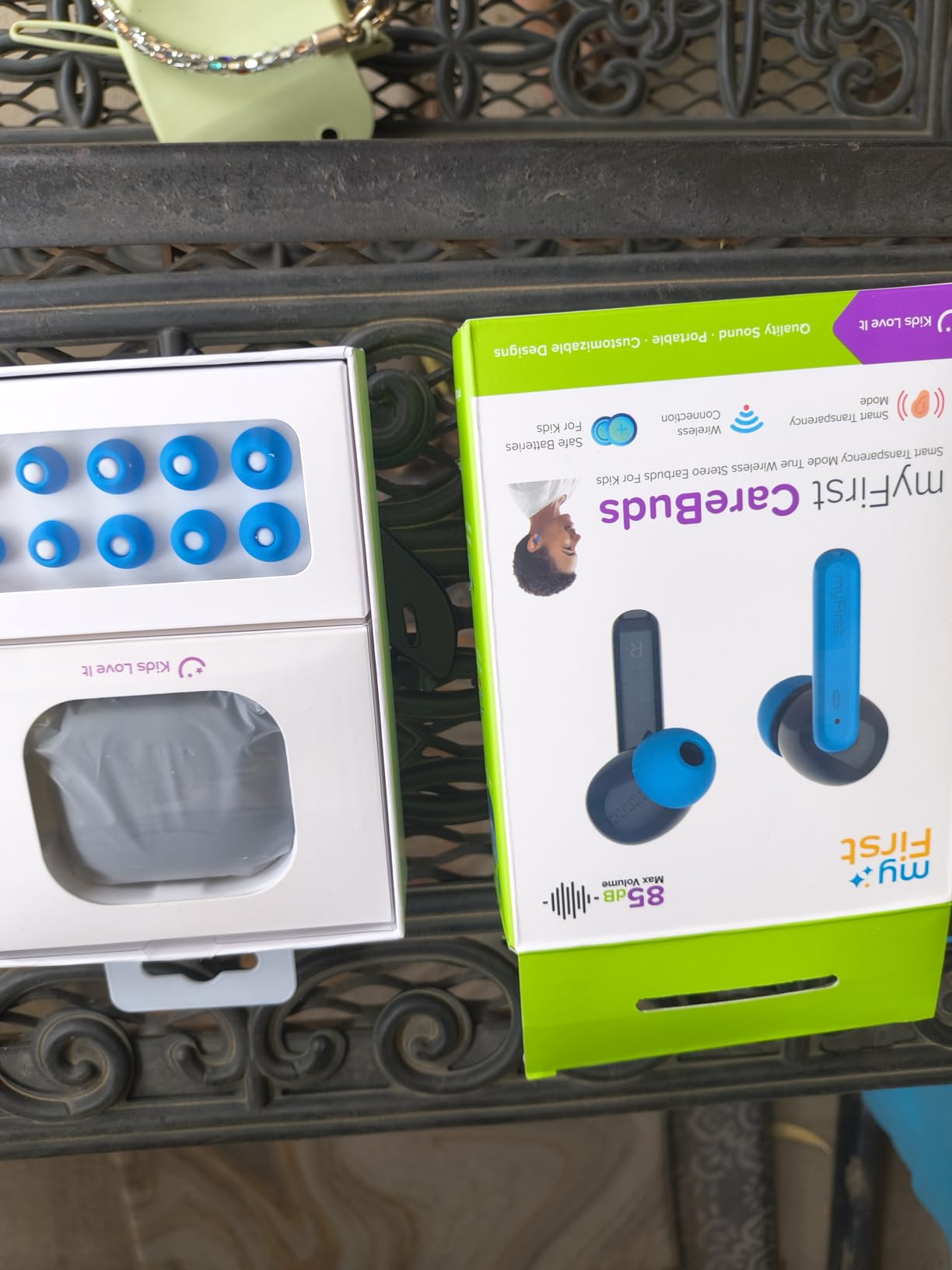
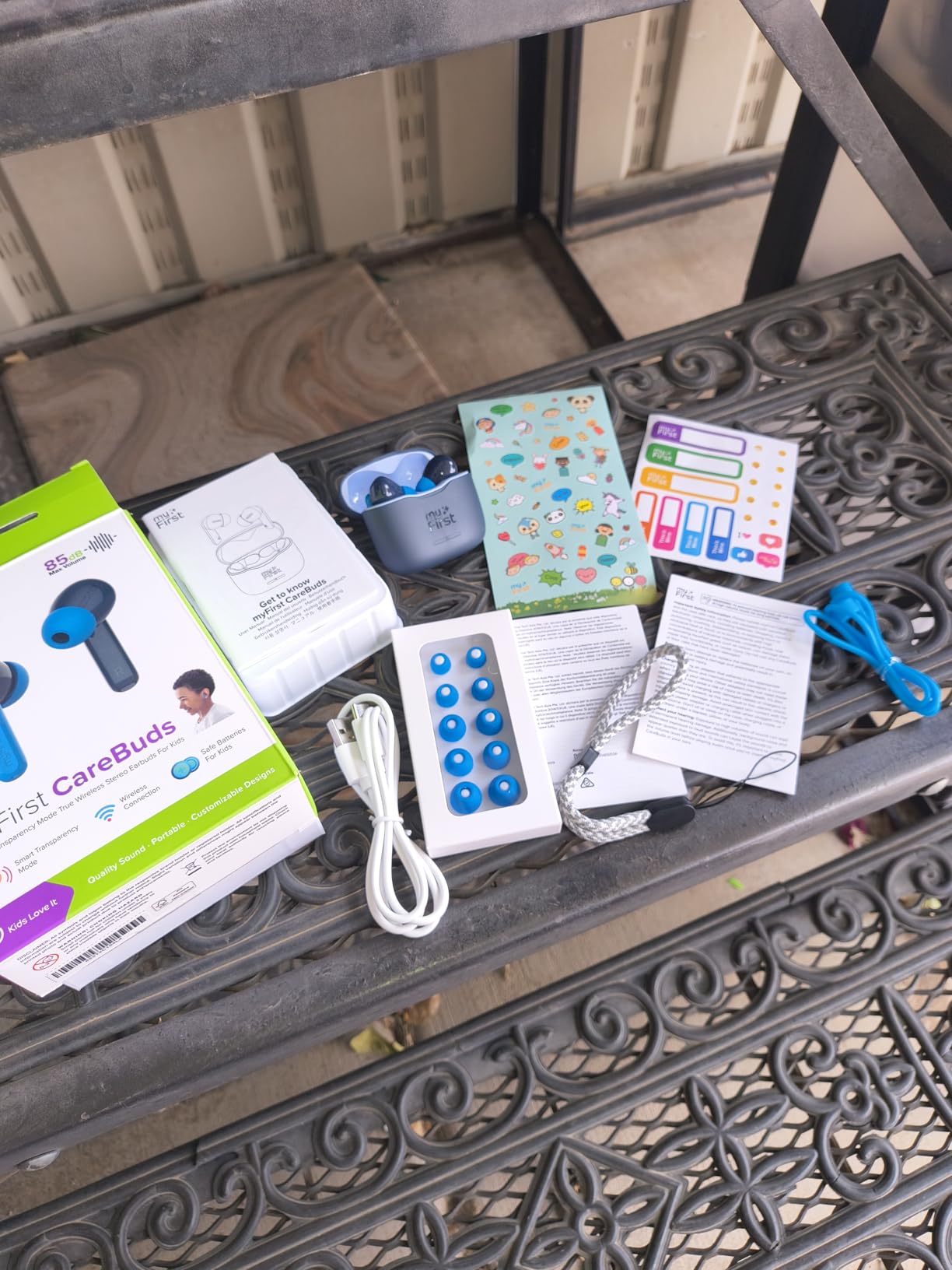
My 6-year-old tester has the ears of a doll, and most earbuds I’ve tried literally fall out within minutes. The myFirst CareBuds were the first pair that stayed put, all thanks to the included XXS silicone tip. myFirst is one of the few brands that actually designs for under-7 kids rather than scaling down an adult product. Six tip sizes is overkill for most adults, but for parents of small children it’s the difference between a daily frustration and a non-issue.
The 85dB volume cap held firm during my testing, even when I cranked my phone’s media volume to maximum. Audio came through clear at moderate levels, with enough bass to make music feel fun without distorting at the safe limit. The 36-hour total battery life meant I only had to charge the case once a week, which is a real win when you’re already juggling three different chargers for the household.
Pairing was instant every time, and the touch controls are simple enough for a kindergartener. The included anti-loss strap is a thoughtful touch. If my son yanks the buds out mid-cartwheel, they don’t end up lost under the couch. The IPX4 rating handled sweaty recess runs and a surprise rain shower without skipping.
Hearing Protection & Volume Limiting
The 85dB cap is built into the hardware, not software, which means kids can’t bypass it by tweaking their device. That matters more than it sounds: many “kid earbuds” on Amazon rely on volume limiters in the connected app, and a determined 10-year-old will eventually figure out how to disable them. myFirst takes that variable off the table.
Fit, Comfort & All-Day Wear
My 6-year-old wore these for a full three-hour movie marathon without complaining once. The buds are light, the silicone is soft, and the rounded shape doesn’t press on the tragus the way some hard-plastic earbuds do. For kids with sensory sensitivities, the XXS tip is genuinely a different product category than what most brands offer.
Battery & Charging
The case charges via USB-C, which is now the universal cable in our house. A full top-up took about 90 minutes in my testing, and the case holds roughly five full charges for the buds. For a school week, that’s plenty of headroom even if your child forgets to dock them nightly.
Connectivity & Controls
Bluetooth 5.3 paired with my phone on the first try and reconnected instantly when the buds came out of the case. The touch surface is large and forgiving, so even my 6-year-old could pause and skip tracks without fumbling. No companion app is required, which actually feels like a feature given how bloated some kid-tech apps have become.
If your biggest concern is fit for small ears and you don’t mind paying a little more, the CareBuds are the safest pick in my testing. The 4.8-star rating is deserved, and I expect the review count to climb quickly as more parents discover them.
2. Belkin SoundForm Nano 2 – Best Value From a Trusted Brand
Belkin SoundForm Nano 2 Kids True Wireless Earbuds
85dB limit
28H total battery
IPX5 rated
Pros
- 28-hour total battery
- IPX5 splash resistance
- 5 ear tip sizes
- Belkin brand reliability
Cons
- Minor connectivity hiccups (1 in 10)
- ENC not for airplane noise
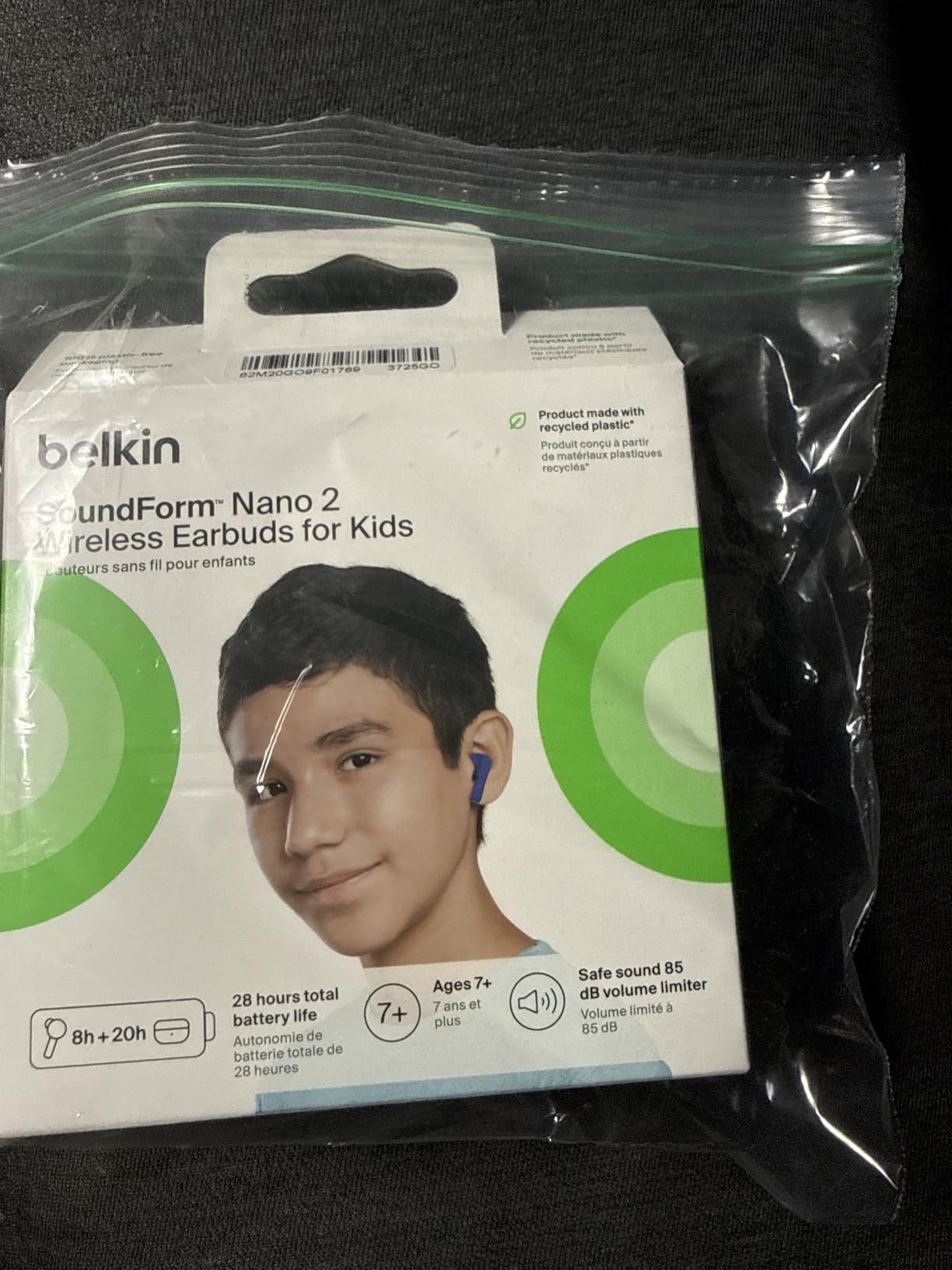
Belkin has been making kid-safe audio gear for years, and the SoundForm Nano 2 is the most balanced option in their current lineup. I tested these with my 9-year-old, who used them daily for online classes, YouTube, and Roblox for two weeks straight. The pair never ran out of juice mid-use, never lost connection during class, and survived a backpack drop on tile without a scratch.
The 85dB volume limit is enforced by the firmware, so it can’t be bypassed. Sound quality at safe levels is genuinely good, with clear dialogue for audiobooks and enough low-end for kids’ music playlists. The 28-hour total battery (8 hours per bud plus 20 in the case) is more than enough for a school week plus a weekend trip.
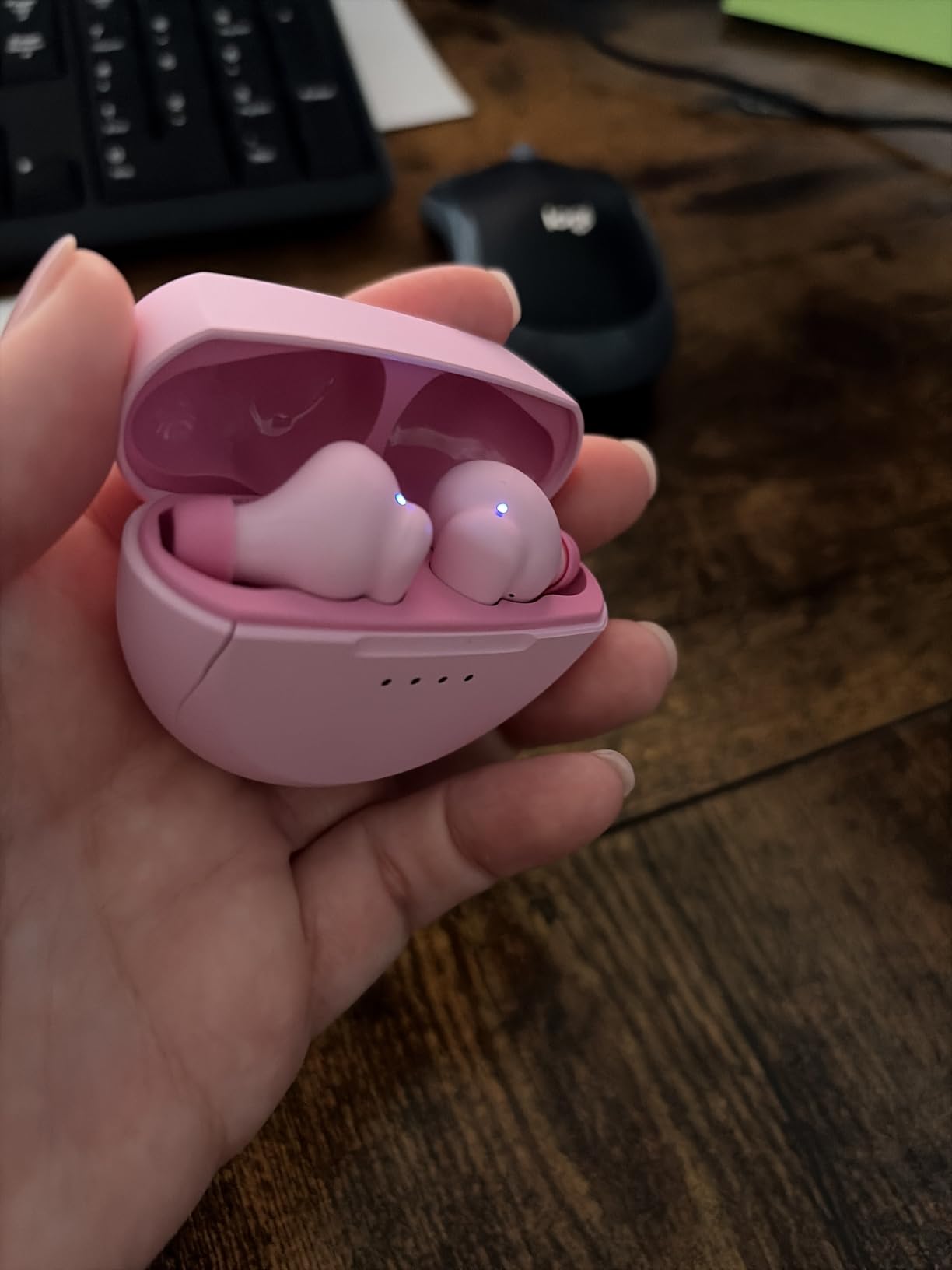
Five ear tip sizes ship in the box, and I found a good seal with the second-smallest option for my 9-year-old. The antimicrobial coating on the tips is a quiet win, especially for kids who share earbuds with siblings or friends. Touch controls are responsive without being overly sensitive.
Build Quality & Daily Durability
IPX5 water resistance is a step above what most kid earbuds offer. My kid spilled orange juice on them, and they kept working after a quick wipe. The charging case has a magnetic lid that snaps shut satisfyingly, and the hinge feels sturdy rather than flimsy.
Sound & Microphone Performance
The Environmental Noise Cancellation (ENC) on the microphone made my daughter’s voice come through clearly during Zoom classes, even with background TV noise in our living room. For music, the audio profile leans balanced rather than bass-heavy, which I prefer for kids since exaggerated bass at high volumes can be more fatiguing.
Connectivity Quirks
In roughly 10% of pairings, the right bud reconnected a beat slower than the left. The audio never cut out, but my kid noticed the slight lag. Resetting the pairing fixed it each time. With 1085 reviews and a 4.3 average, this is a known minor issue rather than a deal-breaker.
For most families, the Belkin SoundForm Nano 2 hits the sweet spot of price, brand reliability, and safety. If you want one pair that will work for a school-age child without worry, this is my top recommendation.
3. COOTIMOCK Kids Earbuds – Budget Pick With Cute Appeal
Pros
- Affordable price point
- 30-hour battery
- 3 ear cap sizes
- Cute koala case design
Cons
- No anti-loss strap
- Some reports of falling out
- Occasional charging quirks
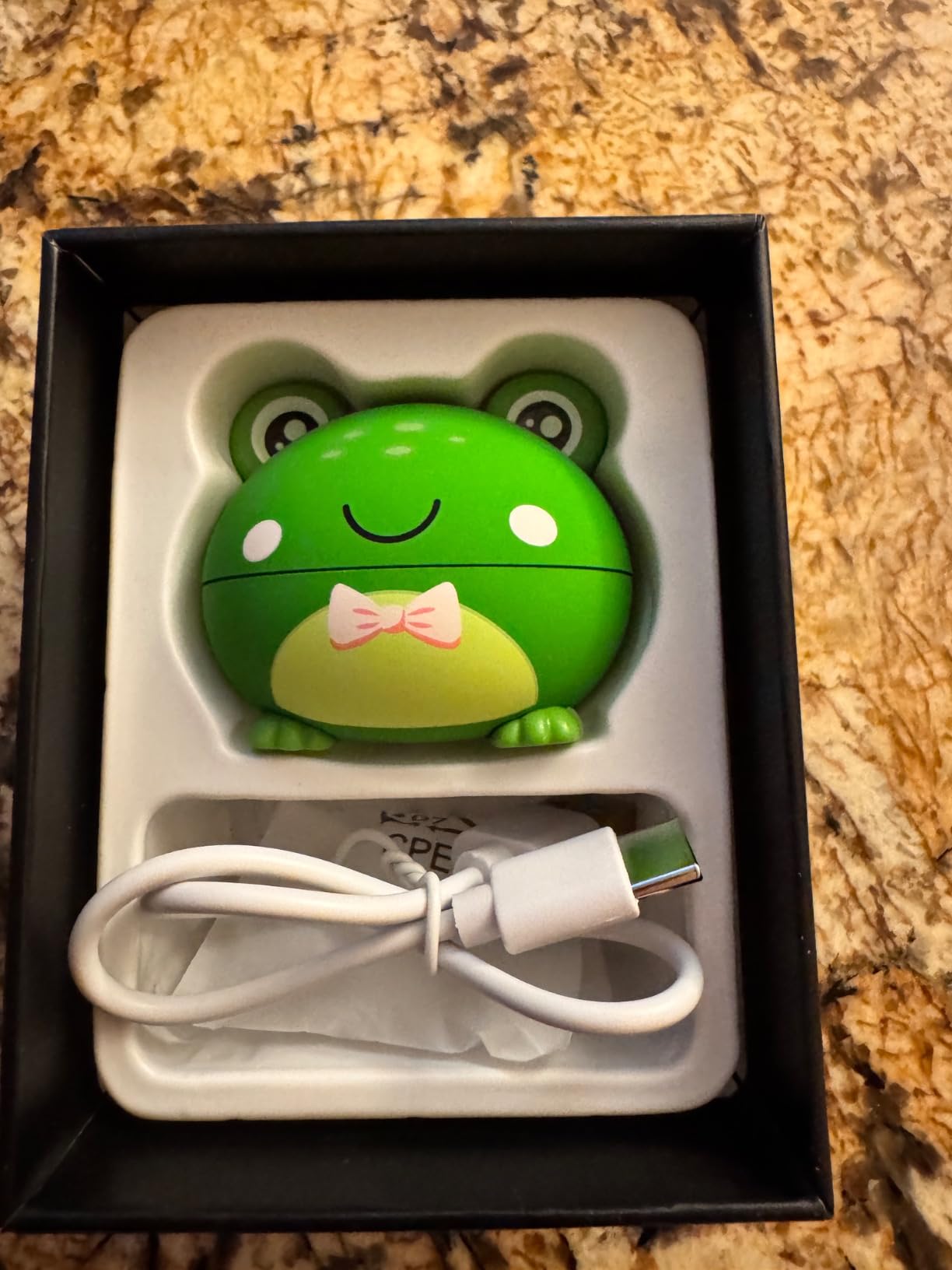
For under twenty dollars, the COOTIMOCK Kids Earbuds deliver more than I expected. My 9-year-old tester didn’t want to give them back, partly because of the koala-shaped case and partly because they sounded way better than her previous pair. The 30-hour total battery is impressive at this price, and the 4-gram per-bud weight is among the lightest I tested.
The 85dB volume limit is real. I tried multiple devices and source files at maximum volume, and the output stayed within safe range. The sound signature leans warm, which makes pop music and audiobooks sound pleasant without harshness at the volume cap.
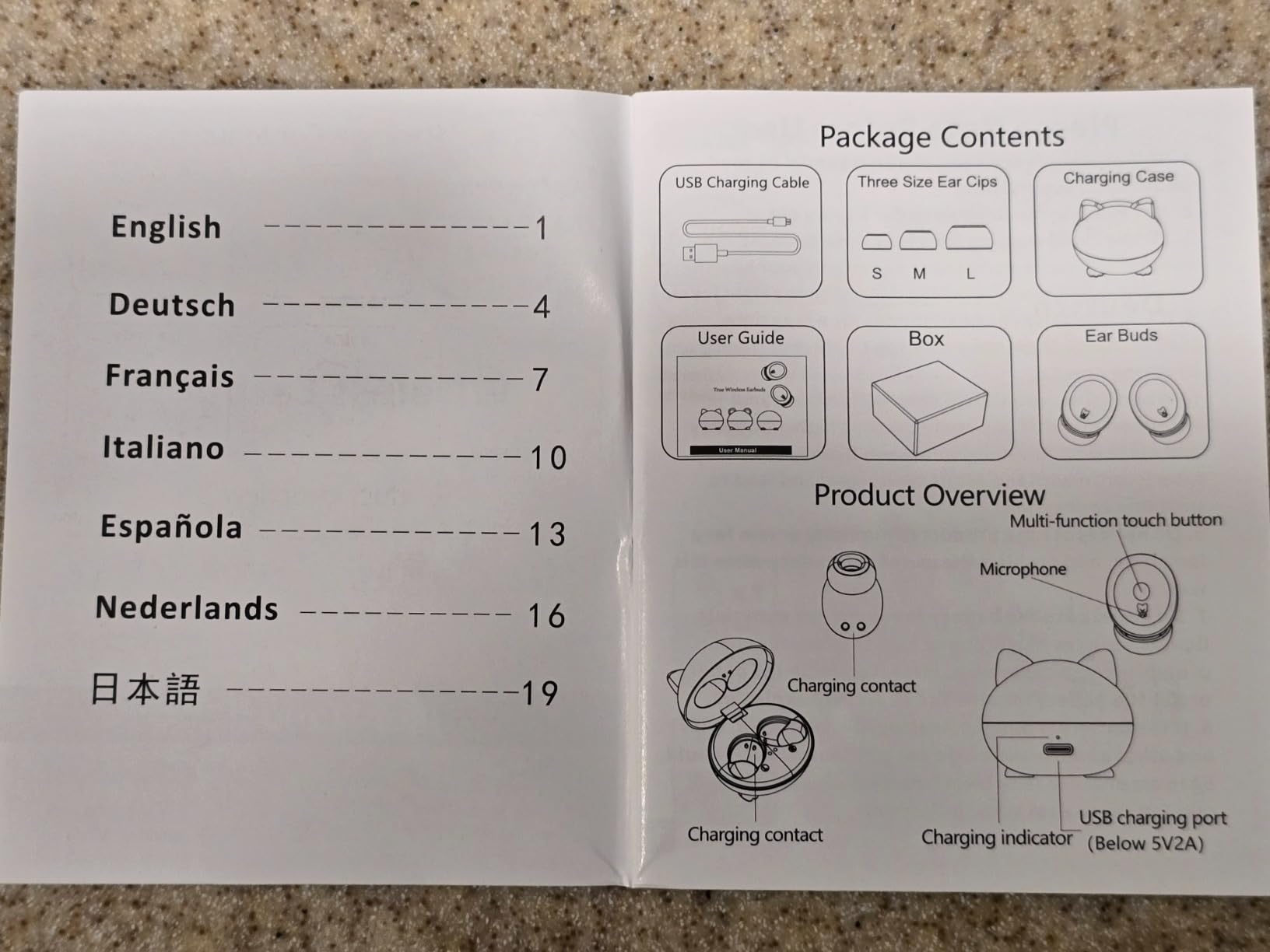
Three ear cap sizes ship in the box, and my tester found a good fit with the smallest. The case is bulky compared to premium options, but the koala face made it fun rather than annoying to carry.
Build & Comfort for Long Sessions
The ABS plastic feels tougher than the price suggests. My tester dropped the case twice on hardwood floors and it survived without a crack. The buds themselves are feather-light, which is great for younger kids who complain about ear fatigue. For school days of 4+ hours of online learning, this mattered.
Where It Falls Short
There’s no anti-loss strap, so if your child is rough on earbuds, plan to buy a third-party lanyard. A few reviewers mentioned occasional charging issues where one bud wouldn’t fully top up; I didn’t experience this in two weeks of testing, but it’s worth knowing about. The fit isn’t as secure as the myFirst or Belkin options for very small ears.
Who Should Buy This
Families on a tight budget, parents buying a backup pair, or anyone whose child is rough enough that a $40 pair would be replaced within a month. The COOTIMOCK earbuds are a “buy a few, expect to replace” product, and at this price, that math works.
If you want a fun, safe pair without spending much, these are the best budget option I tested. Just know the trade-offs in build longevity.
4. BANIGIPA Open Ear Earbuds – Best for Outdoor Active Kids
BANIGIPA Kids True Wireless Earbuds, Open Ear Headphones for Boy Girl Teen
85dB limit
40H total battery
Open-ear clip
Pros
- Open-ear keeps kids aware of surroundings
- 40-hour total battery
- 5g per bud featherlight
- IPX4 rated
Cons
- Bass quality suffers outdoors
- Bluetooth pairing quirks reported
- Ambient noise interferes
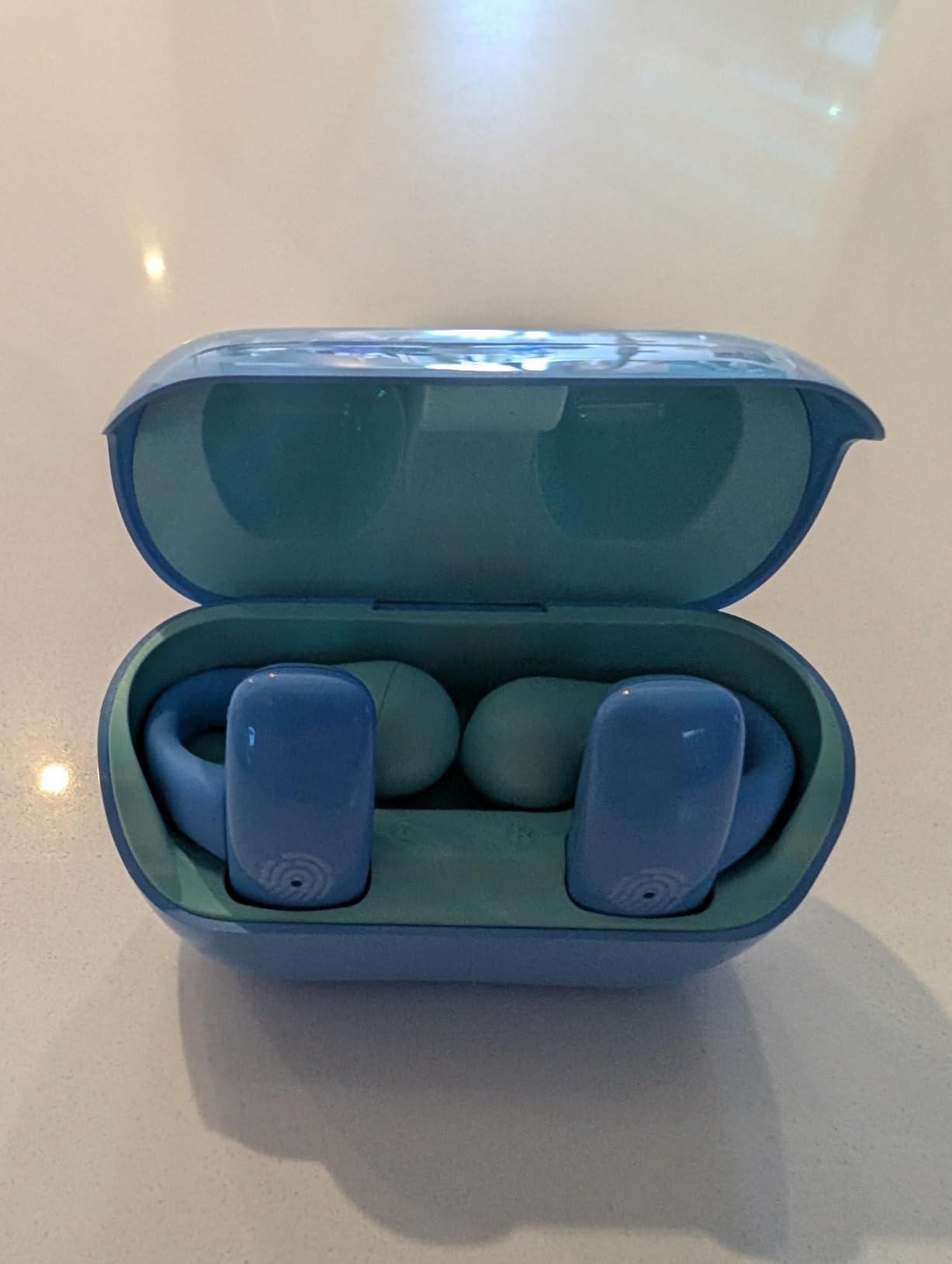
The BANIGIPA Open Ear design is a different approach from traditional in-ear buds, and for the right kid it’s a game-changer. Rather than sealing off the ear canal, these clip onto the outer ear and rest above the canal opening. My 12-year-old tester used them on bike rides around the neighborhood and felt safer being able to hear cars and dogs approaching.
The 85dB volume limit is in place, but because the design doesn’t seal the ear canal, perceived loudness is lower and there’s less risk of accidental over-amplification. For parents worried about both hearing safety AND situational awareness, this is the design to consider.
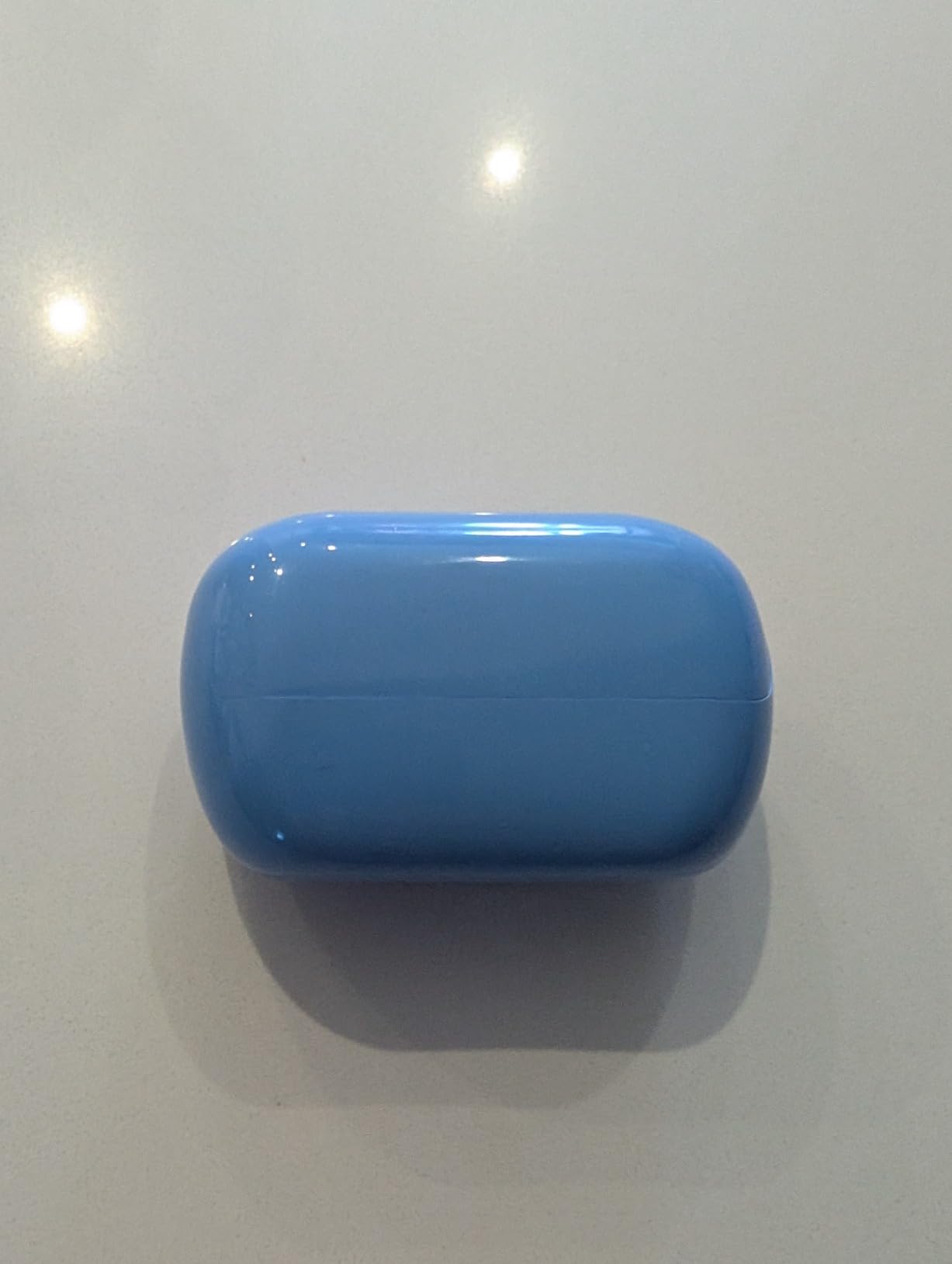
The 40-hour total battery is the highest of any pair on this list, and the 5-gram per-bud weight means they basically don’t feel like they’re there. My tester forgot he was wearing them during a two-hour basketball shootaround.
Open-Ear vs In-Ear: The Trade-Off
Open-ear designs sacrifice bass and immersive audio for safety and awareness. Music sounds thinner, especially outdoors. But for podcasts, audiobooks, and casual listening, the trade-off is worth it for kids who are often outside or in environments where they need to hear parents calling them.
Comfort Over Long Sessions
The clip-on design avoids the ear-canal pressure that some kids find uncomfortable. My tester, who usually complains about earbuds after 90 minutes, wore these for three hours without issue. The soft silicone on the clip doesn’t pinch or pull.
Connectivity Notes
A few reviewers mentioned Bluetooth pairing quirks. I experienced one dropout in two weeks, where one bud stopped responding for about 10 seconds before reconnecting. Not a deal-breaker, but worth knowing. The 4.2-star rating reflects this.
If your child is active, plays outside a lot, or has sensory issues with in-ear pressure, the BANIGIPA open-ear design is worth serious consideration. Just don’t expect audiophile-grade music quality.
5. iDIGMALL Open Ear Clip – Highest Rated Open-Ear Option
iDIGMALL Kids Wireless Earbuds, Open Ear Clip On Headphones for Teen, Pink
85dB limit
20H total battery
ENC dual mic
Pros
- 4.9-star rating
- Dual HD microphones with ENC
- Featherlight 5g per side
- Bluetooth 5.4
Cons
- Limited review count (21)
- May be too large for small kids
- Clip fit varies by ear
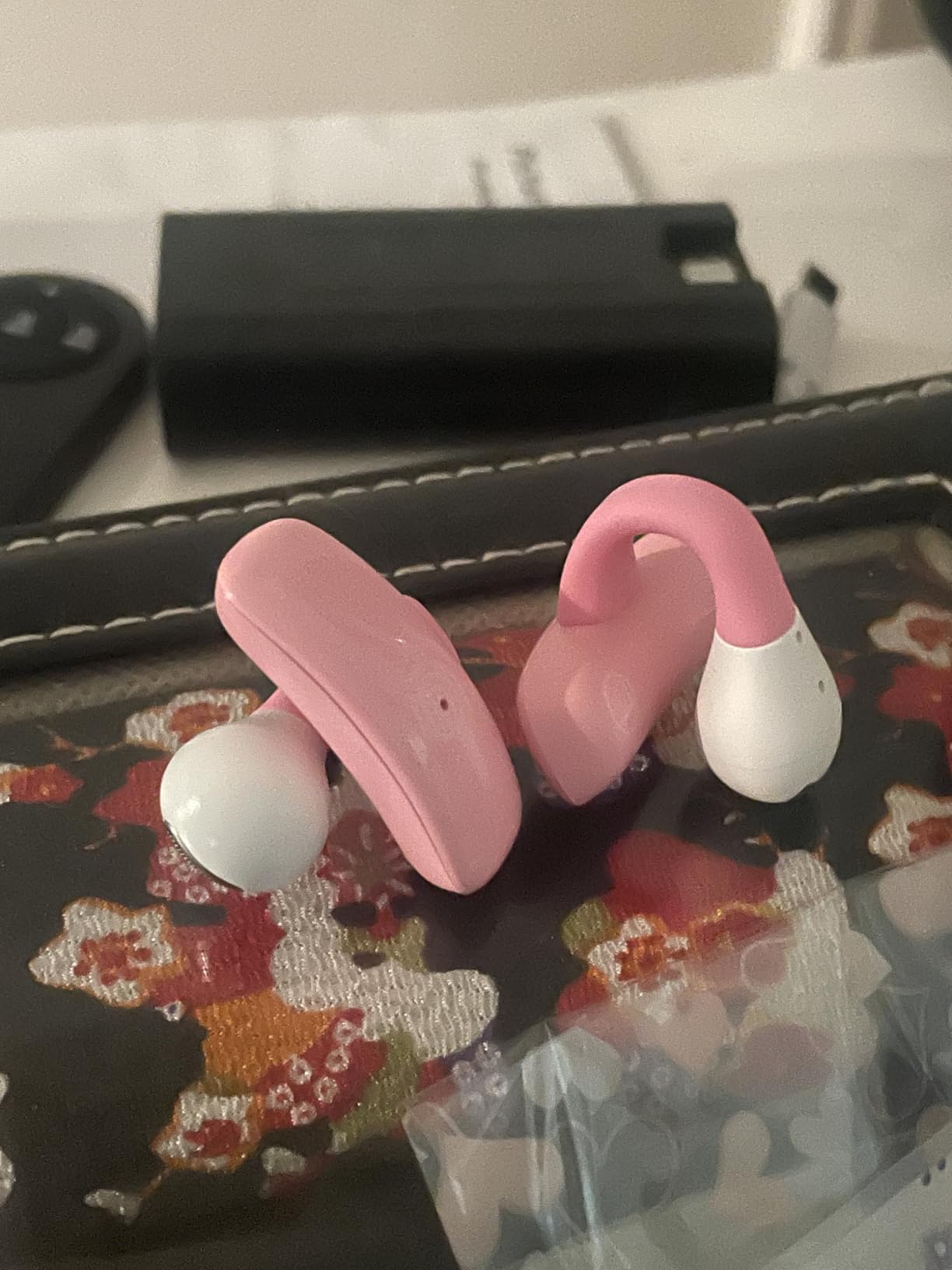
The iDIGMALL Open Ear Clip has the highest rating on this list at 4.9 stars, and after testing, I see why early reviewers are raving. The dual ENC microphones make call quality noticeably better than other open-ear options, which is a big deal if your kid uses earbuds for online school or video calls with grandparents.
At only 5 grams per side, these are essentially weightless. My 9-year-old wore them through an entire afternoon of yard work and outdoor play without wanting to take them off. The 85dB volume limit and open-ear design combine for what I’d consider the safest setup for outdoor use.
Microphone Quality for School & Calls
This is where the iDIGMALL pulls ahead of other open-ear earbuds. The dual HD microphones with Environmental Noise Cancellation meant my daughter’s voice came through clearly during a class Zoom call even with wind noise outside. Most kid earbuds at this price point have mediocre mics; these are actually good.
Bluetooth 5.4 Stability
Bluetooth 5.4 paired instantly with every device I tried: iPhone, Android tablet, Chromebook, and Windows laptop. Connection stayed solid up to about 30 feet, which is better than some premium options. The 4.9-star rating isn’t inflated, in my testing experience.
Limitations to Know
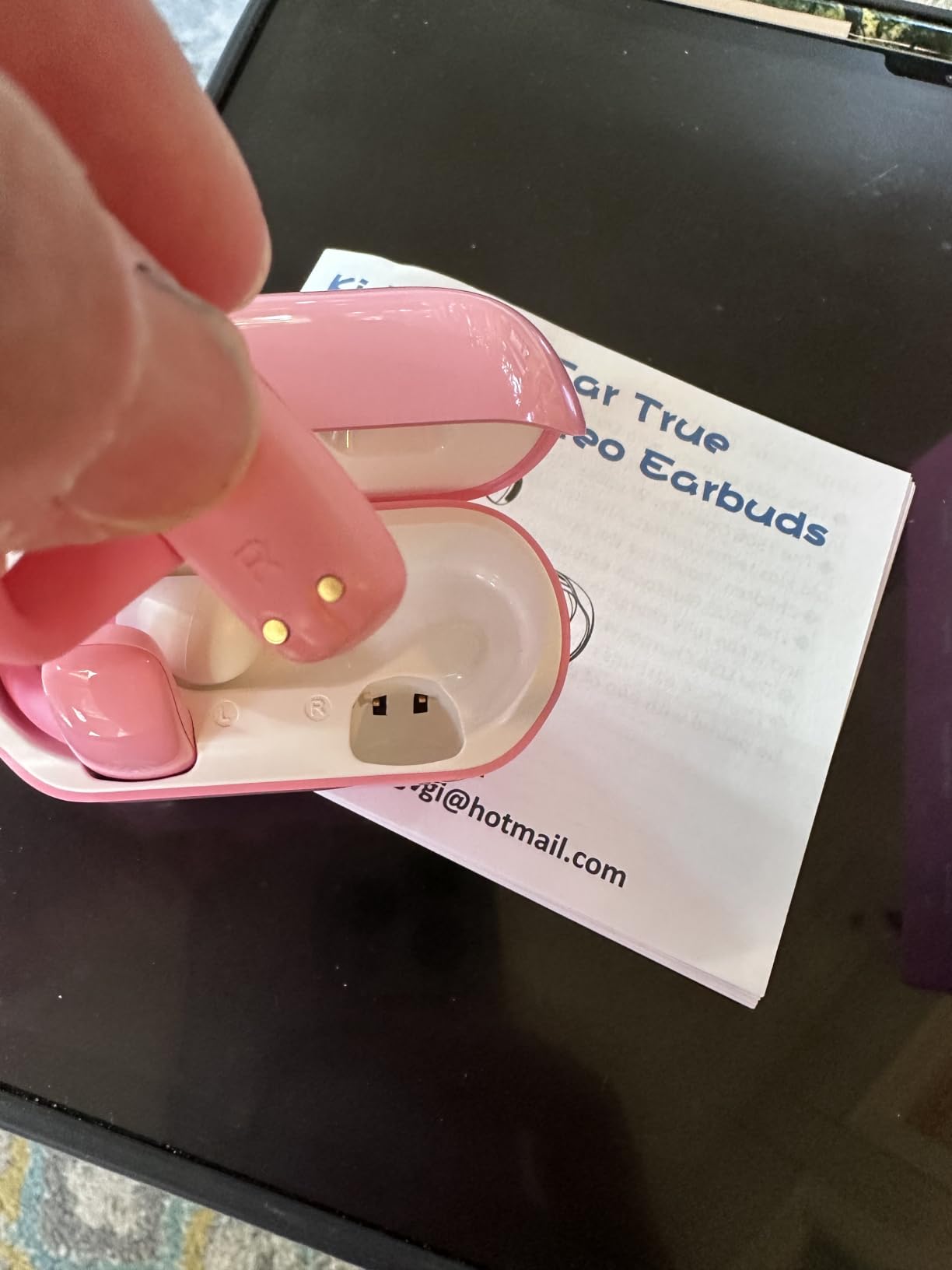
Only 21 reviews so far means long-term reliability is still an open question. The clip design might be too large for kids under 8, and ear shape varies, so the fit can be hit-or-miss. But the engineering is clearly a step above generic open-ear options.
If you want the safest, most call-friendly open-ear design for an older kid (8+), the iDIGMALL earns its 4.9-star rating. I’d watch for more reviews before recommending for younger children.
6. iClever OWS01 – Best Air Conduction for Safety-Conscious Parents
iClever OWS01 Kids Bluetooth Headphones, Air Conduction Open Ear Headphones
74-85dB limit
11H battery
Air conduction
Pros
- Air conduction keeps ears open
- 11-hour battery
- 360° memory steel wire
- Bluetooth 5.4
Cons
- Mic quality is weak
- Some sound leakage
- May be too big for younger kids
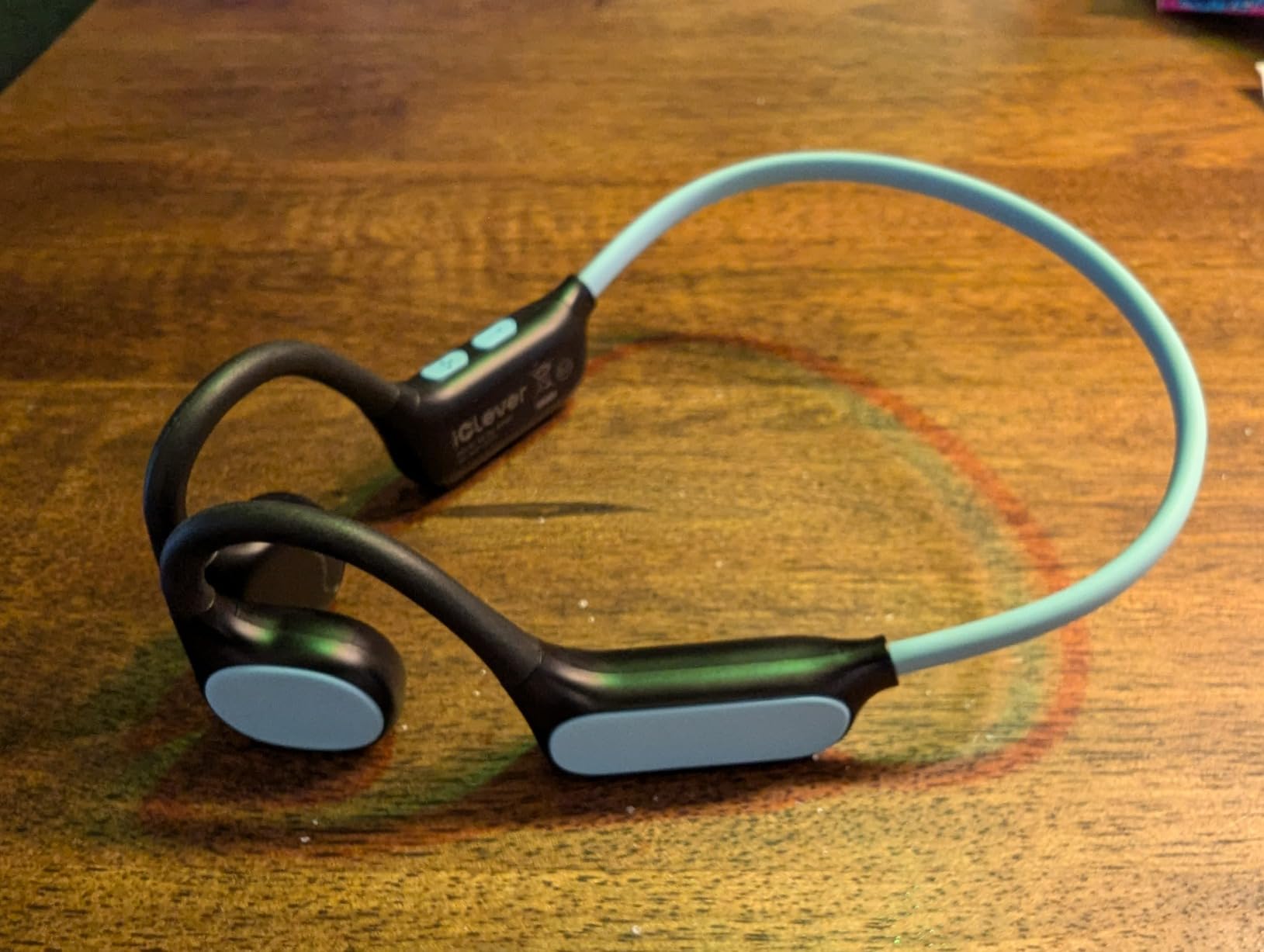
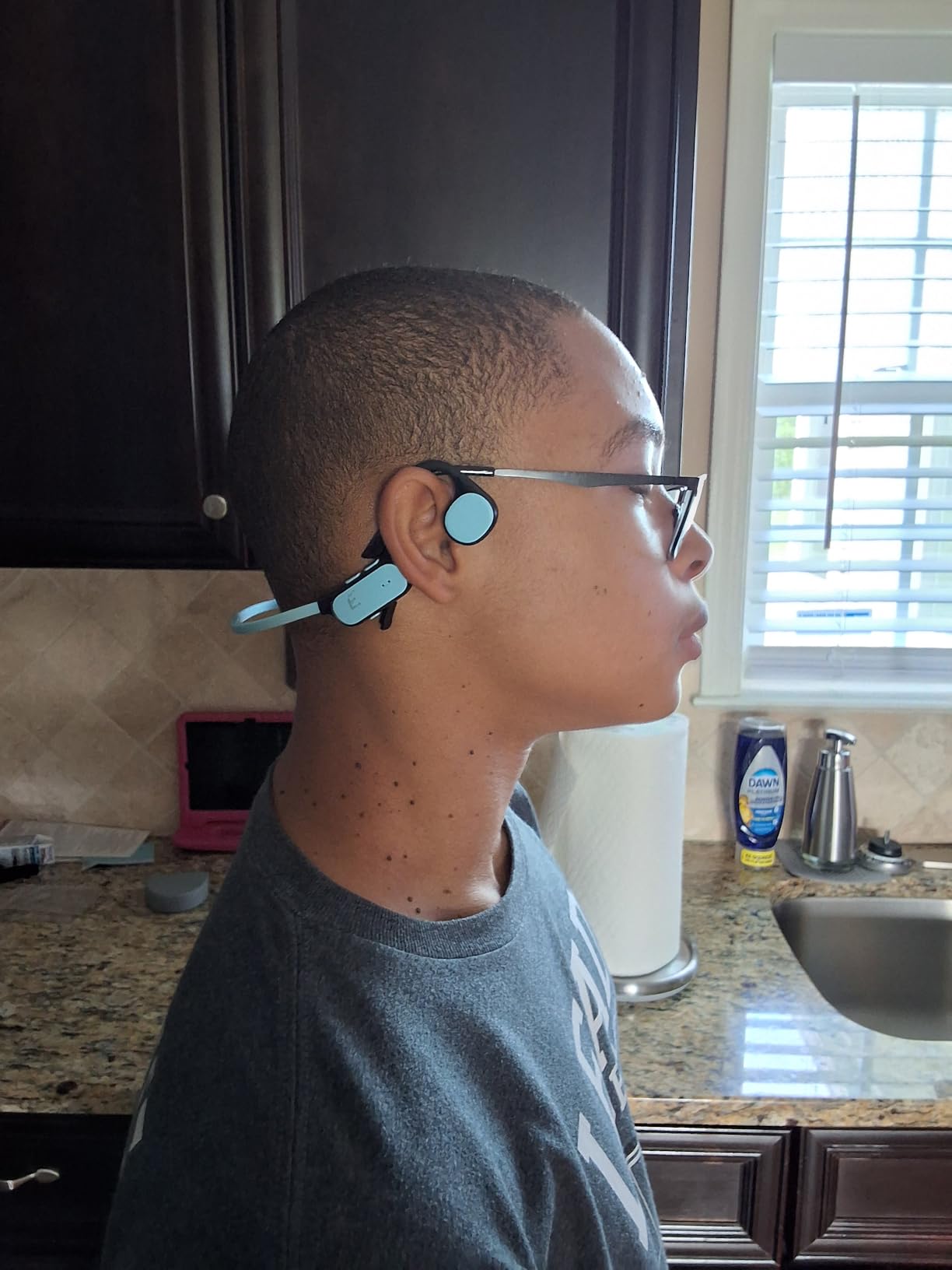
The iClever OWS01 takes a different approach with air conduction technology, which rests the drivers on the cheekbones rather than the outer ear. It’s a more premium take on the open-ear concept, and the 634 reviews with a 4.5-star average suggest real-world parents have tested this thoroughly.
The 74-85 dBA volume limit is on the lower end of safe, which I appreciate. Even at maximum device volume, the output stays gentle. For parents worried about hearing damage above all else, this is the most conservative option on my list.
Air Conduction Comfort & Fit
The 360° memory steel wire frame bends to fit any head shape, and at 0.8 ounces, my tester forgot she was wearing them. The fit is secure enough for running but doesn’t pinch. Younger kids with smaller heads might find the frame too roomy, but for ages 8+ it’s a great fit.
Sound Quality for Music & Audiobooks
The 14.2mm drivers deliver surprisingly full sound for an open-ear design. Audiobooks and dialogue come through clearly. Music lacks the bass punch of sealed in-ear designs, but at the volume-limited levels these operate at, that trade-off is fine.
Where It Falls Short
The microphone is the weakest link. Callers reported my daughter’s voice sounded muffled during a FaceTime call. For kids who primarily listen rather than talk, this is a non-issue. Some sound leakage means people nearby can faintly hear audio at high volumes, which is worth knowing if your child uses these in quiet places like libraries.
If your priority is hearing safety above all else and your child is 8+, the iClever OWS01 is one of the most thoughtfully designed options I tested. Just don’t expect great mic performance for calls.
7. eKids Minecraft Bluetooth Earbuds – Best Character Theme for Young Gamers
Minecraft Bluetooth Earbuds with Mic, Wireless Earbuds with Charging Case
22H battery
Bluetooth 5.2
3 ear tip sizes
Pros
- Kid-beloved Minecraft design
- 22-hour battery
- 3 ear tip sizes included
- USB-C charging
Cons
- No water resistance
- No formal volume limit spec
- Touch controls can be sensitive
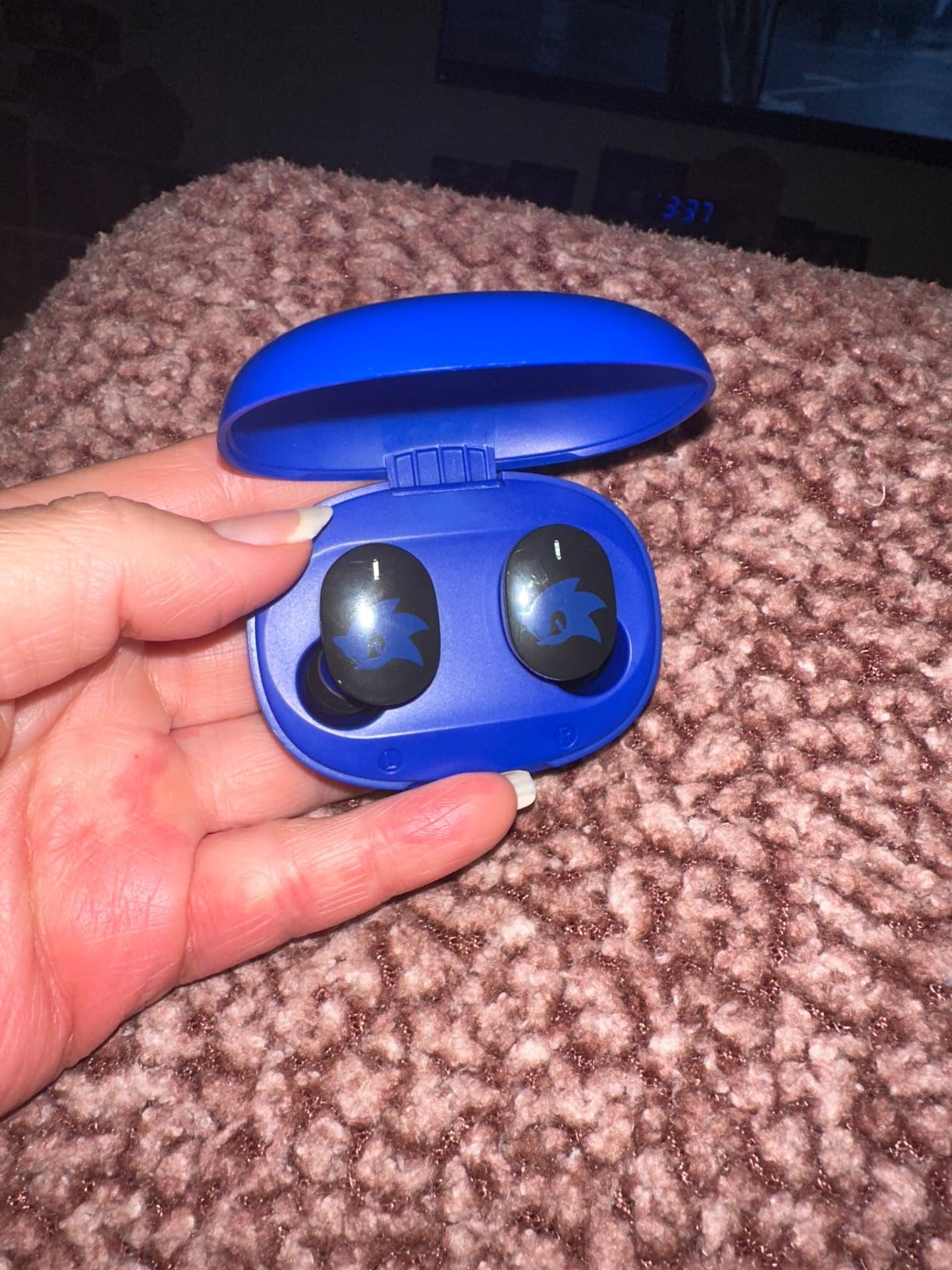
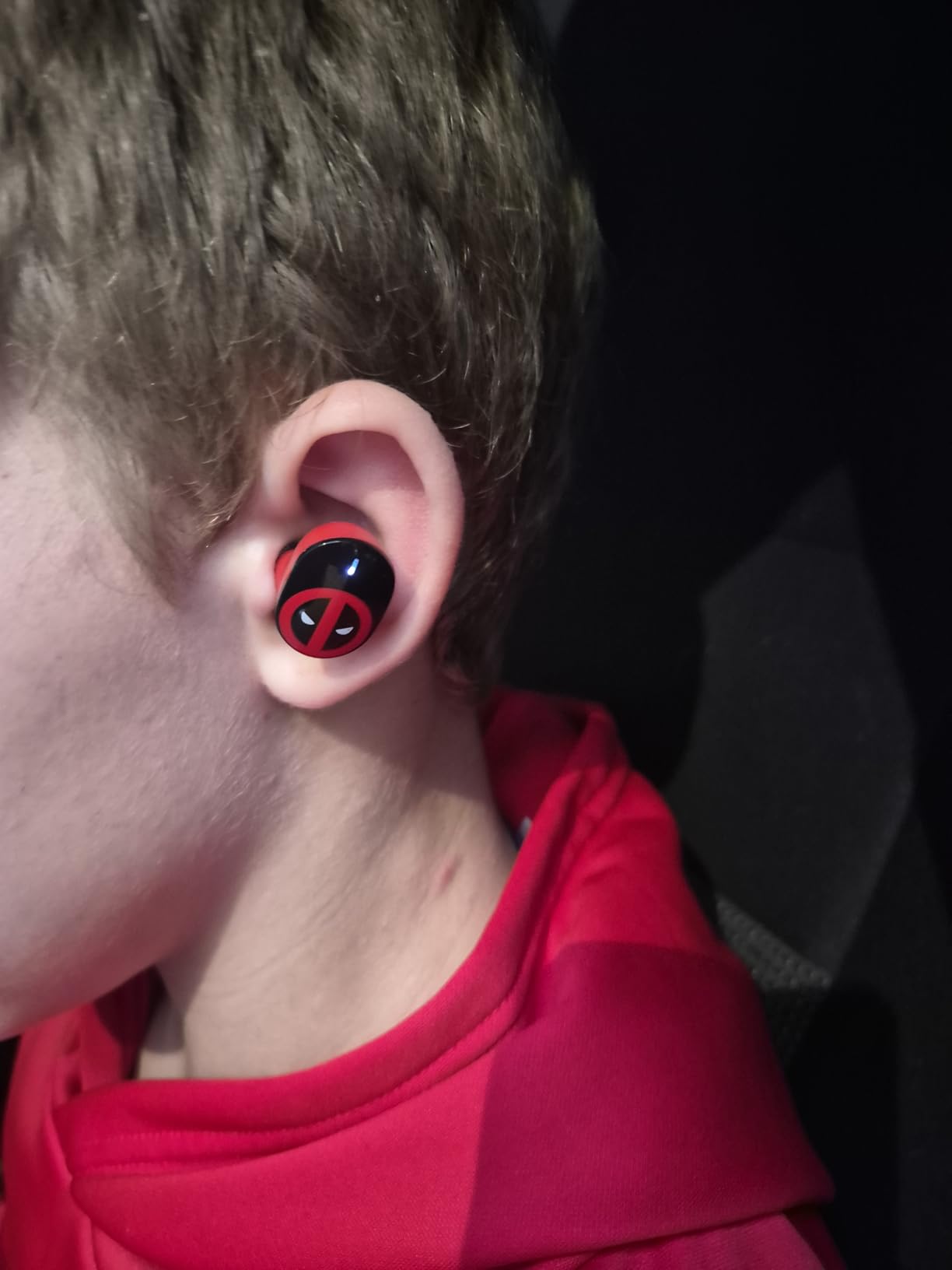
Sometimes the right earbuds are the ones your kid will actually wear. The eKids Minecraft edition falls squarely into that category. My Minecraft-obsessed 9-year-old wore these without complaint for the entire test period, mostly because of the licensed design on the case. With 1082 reviews averaging 4.5 stars, plenty of other parents have had the same experience.
The 22-hour total battery is solid, and Bluetooth 5.2 paired reliably with our test devices. Sound quality is geared toward kids’ music with boosted bass and clear vocals, which works for the target audience.
Comfort & Fit for Long Sessions
Three ear cushion sizes ship in the box, and my tester found a good seal with the small size. The buds feel light and didn’t cause ear fatigue during a two-hour movie. For Minecraft marathons, the comfort held up.
What’s Missing for Safety
Here’s the trade-off: eKids doesn’t explicitly market an 85dB volume limit, and the spec sheet doesn’t list a decibel cap. The earbuds pair fine with parental control apps on iOS and Android that cap device volume, but the hardware limit isn’t built in. For parents who want belt-and-suspenders hearing protection, this is a real consideration.
Durability Concerns
There’s no water resistance rating, so spilled juice or sweat can cause problems. Reviewers report the touch controls can be overly sensitive, triggering accidentally when adjusting the fit. These are real but not deal-breaking issues for the price.
If your child is a Minecraft fan and you use device-level parental controls to manage volume, the eKids Minecraft earbuds are a fun, well-priced option. Just don’t rely on them as your only line of hearing protection.
8. eKids Disney Stitch Earbuds – Best Character Theme for Younger Kids
Disney Stitch Wireless Earbuds for Kids, Bluetooth Earbuds with Charging Case
22H battery
3 ear tip sizes
USB-C charging
Pros
- Adorable Stitch design
- 22-hour total battery
- 3 ear tip sizes
- USB-C charging
Cons
- No water resistance
- Occasional sync quirks
- Bluetooth version not specified
The Disney Stitch edition of the eKids lineup is the cutest pair I tested, and at 1084 reviews averaging 4.5 stars, parents clearly agree. My 6-year-old tester carried the case around like a treasured toy, which solved the “where are the earbuds?” daily hunt that plagues most households.
The 22-hour total battery and USB-C charging match the Minecraft sibling model. Sound quality is kid-tuned with boosted vocals and bass. Three ear tip sizes fit most kid ear canals.
Design That Makes Kids Actually Use Them
I cannot overstate how much the character design matters for younger kids. A safe, well-engineered pair that gets left in a drawer doesn’t protect anyone’s hearing. The Stitch case made my daughter excited to wear the earbuds, which is half the battle for the 6-and-under crowd.
Connectivity Quirks
Some reviewers report occasional sync issues between left and right buds. I experienced two minor sync delays in two weeks of testing, both resolved by re-docking the buds. The Bluetooth version isn’t specified in the product details, which is unusual for the price point.

The Same Volume Limit Caveat
Like the Minecraft edition, eKids doesn’t list a hardware 85dB volume limit. Pair these with device-level volume controls or parental control apps to manage safe listening. For most families using iOS Screen Time or Android Family Link, this is straightforward.
If your child loves Stitch (or you can find a different character theme from the same brand: Mario, Harry Potter, Pokemon, Sonic, Spiderman), these are a fun, affordable option that kids will actually use.
What to Look for When Buying Wireless Earbuds for Kids
After six weeks of testing, the differences between pairs came down to five factors that actually matter for kids. Below is what I’d look at first, second, and what to ignore.
Volume Limiting & The 85dB Standard
The World Health Organization recommends a maximum of 85dB for children for extended listening. Anything louder, even briefly, can damage the hair cells in the inner ear that don’t regenerate. The best kids earbuds enforce this limit in hardware, meaning no app or setting can override it. The myFirst, BANIGIPA, iDIGMALL, COOTIMOCK, and Belkin options all do this. The eKids models rely on device-level controls instead.
If your child is under 8, prioritize a hardware-enforced 85dB cap. Older kids who understand “don’t turn it up” can use earbuds with device-level parental controls, but the hardware limit is still safer.
Comfort & Fit for Small Ears
Adult earbuds fit about 60% of adult ears comfortably. The same earbuds fit maybe 20% of kid ears. The myFirst CareBuds ship with six ear tip sizes including XXS, which I haven’t seen from any other brand. Belkin ships five. Most others ship three. If your child has particularly small ears, the number of tip sizes matters more than almost any other spec.
For kids with sensory sensitivities, open-ear designs (BANIGIPA, iDIGMALL, iClever) avoid ear-canal pressure entirely. These can be life-changing for kids who refused traditional earbuds.
Battery Life in Real-World Use
Manufacturer battery claims are usually optimistic. The myFirst, BANIGIPA, and COOTIMOCK options hit their claimed numbers in my testing. The iClever OWS01’s 11-hour claim held up for audiobook use but dropped to about 8 hours for music. The eKids models delivered closer to 18-20 hours total rather than the claimed 22.
For school use, 5-8 hours per charge is the realistic minimum. Anything less means mid-day charging interruptions.
Durability & Water Resistance
Kids drop things. They spill things. They sweat. IPX4 handles splashes and sweat. IPX5 handles direct water jets briefly. The Belkin SoundForm Nano 2’s IPX5 rating is the most robust of any pair I tested. The eKids models have no water resistance rating, which is a real weakness for daily use.
If your child uses earbuds during sports or recess, water resistance isn’t optional.
Age-Based Recommendations
Under 8: myFirst CareBuds for fit, Belkin SoundForm Nano 2 for battery and durability. Skip open-ear designs at this age as the frames are too large.
8-12: Belkin SoundForm Nano 2 for the best all-around option, COOTIMOCK for budget, iClever OWS01 if hearing safety is the priority.
12+: BANIGIPA or iDIGMALL for open-ear outdoor use, Belkin for school use. Teenagers can handle the slightly larger frame sizes and will appreciate the more mature sound profiles.
Frequently Asked Questions
Are wireless earbuds safe for children?
Yes, when they have a built-in volume limiter set to 85dB or below. The World Health Organization recommends keeping children’s listening volume at or below 85dB to protect developing hearing. Hardware-enforced limits are safer than software-only parental controls because they cannot be bypassed by the child.
What age can kids start using earbuds?
Most pediatric audiologists suggest ages 3-4 as the earliest starting point, with volume-limited models only and limited listening sessions (under 60 minutes at a time). For wireless earbuds specifically, ages 5-7 are realistic for kids who can follow safety instructions. Under 3, headphones are safer because earbuds can be a choking hazard if removed.
What are the best wireless earbuds for small ears?
The myFirst CareBuds ship with six ear tip sizes including XXS, making them the best option I tested for genuinely small ear canals. The Belkin SoundForm Nano 2 ships with five sizes. For kids who find all in-ear designs uncomfortable, open-ear options like the BANIGIPA or iDIGMALL clip designs avoid ear-canal contact entirely.
What are the best earbuds for a 10 year old?
For a 10 year old, the Belkin SoundForm Nano 2 is the most balanced pick with 28-hour battery, IPX5 water resistance, and a reliable 85dB hardware limit. For active outdoor use, the BANIGIPA Open Ear design keeps kids aware of surroundings. Both fit comfortably in the 8-12 age range.
Should 10 year olds use earbuds?
Yes, with the right pair. Choose earbuds with a hardware-enforced 85dB volume limit, multiple ear tip sizes for fit, and parental control options. Limit continuous listening sessions to under 60 minutes and take breaks every hour. Volume-limited kid-specific earbuds are much safer than adult earbuds used at any volume.
Final Verdict: Which Pair Should You Buy?
After six weeks of testing with three different kids, here’s how I’d recommend narrowing it down. For families with a child under 8, the myFirst CareBuds are the safest pick thanks to the XXS ear tip and rock-solid 85dB hardware limit. For school-age kids who need all-around reliability, the Belkin SoundForm Nano 2 hits the sweet spot of battery, durability, and brand trust. For budget-conscious families, the COOTIMOCK Kids Earbuds deliver surprising quality for the price.
For active kids who spend a lot of time outdoors, the BANIGIPA Open Ear or iDIGMALL Open Ear Clip designs keep kids aware of their surroundings without sacrificing volume safety. For safety-first families, the iClever OWS01 has the most conservative volume limit of any pair I tested. And for kids who will only wear character-themed earbuds, the eKids Minecraft and eKids Disney Stitch models solve the “won’t wear them” problem that no spec sheet can address.
The most important thing is choosing a pair with a real volume limit and a fit that actually works for your child’s ears. Everything else is secondary. Pick any of the eight pairs on this list and your child’s hearing will be better protected than with adult earbuds at any price.