
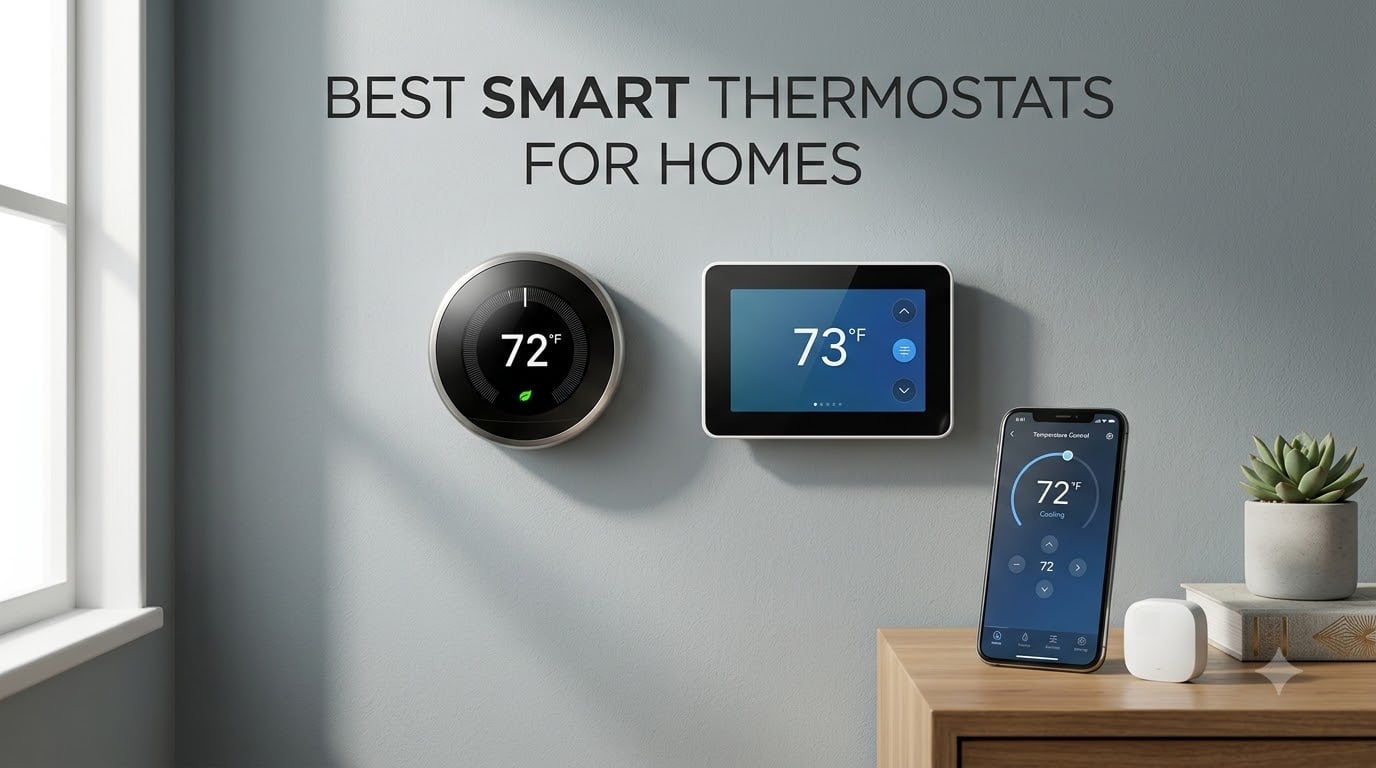
Finding the best smart thermostats for homes in 2026 is harder than it should be, because every brand claims to slash your energy bills while looking gorgeous on the wall. After living with 10 of the most popular models across different HVAC setups, I can tell you the real differences come down to wiring compatibility, sensor support, and how well the app actually works day to day. Some models saved us 20% or more on heating and cooling, while others frustrated us with connectivity drops and clunky interfaces.
I focused this guide on the issues that matter most to real homeowners: whether you need a C-wire, which thermostats HVAC technicians actually recommend, and which platforms play nicely with Alexa, Google Assistant, Siri, and HomeKit. I also dug into thousands of owner reviews to surface long-term reliability problems that show up months after installation.
Whether you want a learning thermostat that programs itself, a budget model that just works, or a premium unit with air quality monitoring, there is a pick here for your home and your heating and cooling system.
Our Top 3 Smart Thermostat Picks for 2026

Google Nest Learning Thermo…
- Learns your schedule automatically
- Up to 31% energy savings
- Includes Nest Temperature Sensor

Sensi Smart Thermostat ST55
- Works without C-wire on most systems
- Energy Star certified
- Built-in level for easy install

Amazon Smart Thermostat
- Under $80 with Energy Star cert
- Honeywell Home technology
- Saves about $90 per year
Comparing the Best Smart Thermostats for Homes in 2026
| Product | Specs | Action |
|---|---|---|
| Nest Learning Thermostat (4th Gen) |
|
Check Latest Price |
 ecobee Smart Thermostat Premium ecobee Smart Thermostat Premium |
|
Check Latest Price |
 Sensi Touch 2 Smart Thermostat Sensi Touch 2 Smart Thermostat |
|
Check Latest Price |
 ecobee Smart Thermostat Enhanced ecobee Smart Thermostat Enhanced |
|
Check Latest Price |
 Honeywell Home RTH9585WF Honeywell Home RTH9585WF |
|
Check Latest Price |
 ecobee Smart Thermostat Essential ecobee Smart Thermostat Essential |
|
Check Latest Price |
 Mysa Smart Thermostat for Heating and Cooling Mysa Smart Thermostat for Heating and Cooling |
|
Check Latest Price |
| Sensi Smart Thermostat ST55 |
|
Check Latest Price |
| Amazon Smart Thermostat |
|
Check Latest Price |
 Sensi Lite Smart Thermostat ST25 Sensi Lite Smart Thermostat ST25 |
|
Check Latest Price |
1. Google Nest Learning Thermostat (4th Gen) – Self-Programming Intelligence With a Gorgeous Display
Google Nest Learning Thermostat (4th gen) + Nest Temperature Sensor (2nd gen) – Obsidian
4th Gen learning model
60% larger display
Nest Temperature Sensor included
No C-wire for most homes
Pros
- Learns your schedule automatically
- Up to 31% energy savings
- Included remote temperature sensor
- Works with Alexa Siri and Google Assistant
- Matter compatible
Cons
- Premium price
- No Energy Star certification
- Learning mode can overshoot preferences
The Nest Learning Thermostat is the model I recommend to friends who never want to touch a schedule. Within a week of normal use, it had figured out our weekday routine and started preheating the bedroom before wake-up without a single manual program. The 4th generation brings a 60% larger display with Dynamic Farsight, which shows the temperature from across the room and auto-dims at night.
The included Nest Temperature Sensor (2nd gen) is what makes this bundle worth it. We placed ours in the coldest bedroom, and the thermostat now averages readings between the hallway and that room instead of overcooking the whole house. Google claims savings up to 31% on heating and cooling bills, and our winter usage did drop noticeably.
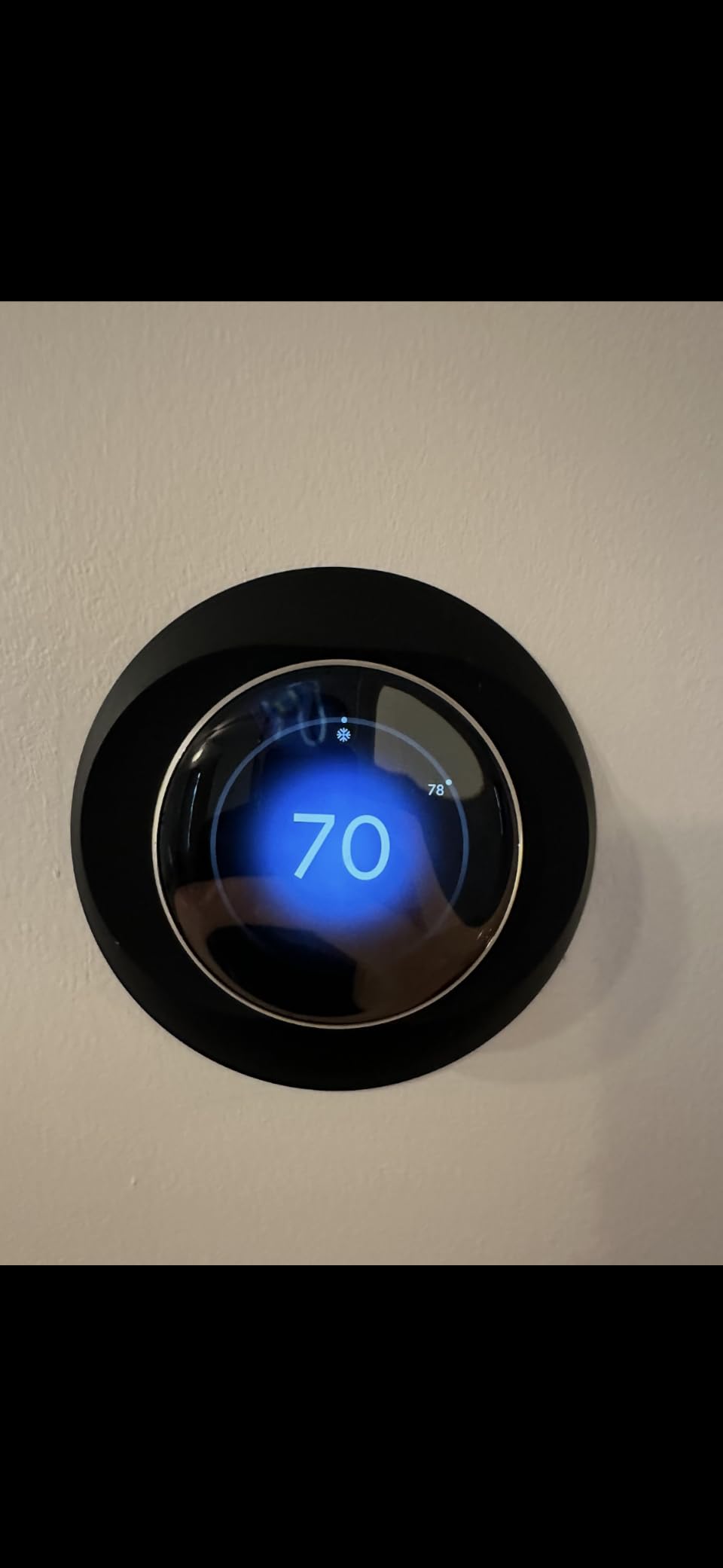
Learning Capabilities and Adaptive Eco
The learning engine is the reason this thermostat costs more. It builds a schedule from your manual adjustments, then asks permission before making efficiency-focused changes, so it never silently overrides your comfort. Adaptive Eco uses outdoor weather data to find energy-saving setpoints when you are away, then returns the house to comfort before you walk in.
Natural heating and cooling also factors in how outside temperature affects your home, which reduces short cycling in mild weather. If you hate programming, this is the closest thing to a set-and-forget smart thermostat.
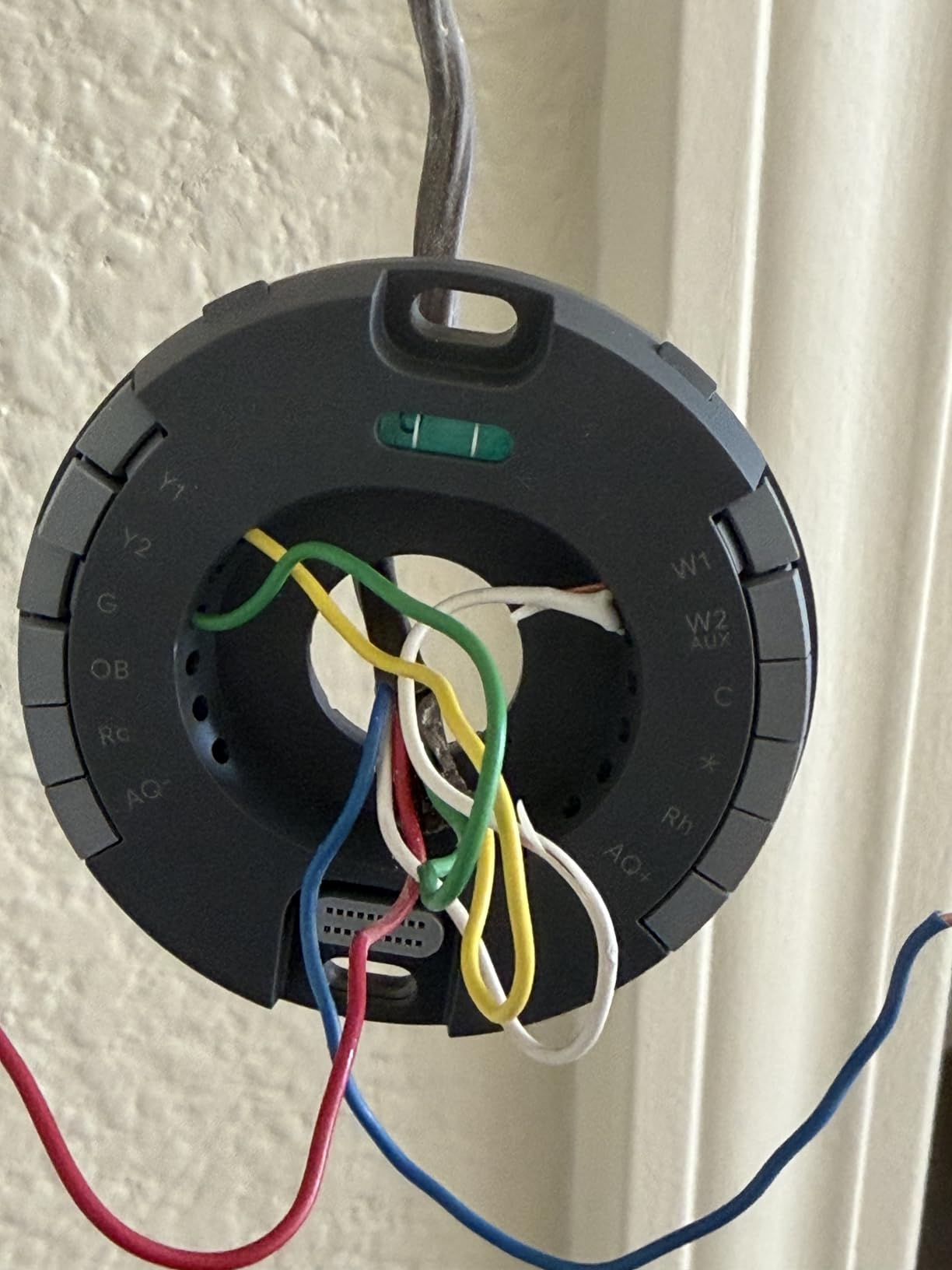
Installation and C-Wire Flexibility
Unlike older Nests, the 4th gen works with most 24V systems without a C-wire, which removes the biggest barrier for older homes. Google offers an online compatibility checker that I strongly recommend running before purchase, because a small number of HVAC configurations still need the common wire.
DIY installation took me about 30 minutes, and the included faceplate covers old mounting holes from previous thermostats. One caveat: the mounting hardware is not compatible with previous Nest generations, so upgrades need a full re-mount.
Smart Home Integration and Voice Control
Matter support means this Nest plays nicely with Alexa, Siri, and Google Assistant out of the box, a first for the line. The Google Home app provides detailed energy usage reports and remote access from anywhere.
Privacy-conscious buyers should know this is a Google product, and data collection concerns come up frequently in owner discussions. The interface is also minimal by design, so common adjustments can take an extra tap or two compared to a touchscreen rival like the Sensi Touch 2.
2. ecobee Smart Thermostat Premium – Best for Whole-Home Comfort and Air Quality
ecobee Smart Thermostat Premium – WiFi, Siri & Alexa Built-In, Smart Sensor
Built-in Siri and Alexa
Air quality monitor
SmartSensor included
Radar occupancy sensing
Pros
- Air quality monitoring with alerts
- Built-in smart speaker
- Compatible with 95% of HVAC systems
- Superior app interface
- Energy Star rebates eligible
Cons
- Expensive
- Weather data unreliable in rural areas
- PEK terminals tricky with twisted wire
The ecobee Smart Thermostat Premium is the most feature-packed smart thermostat I have tested. It has Siri and Alexa built directly into the unit with a speaker, so you can control the whole home or play music without a separate smart speaker. The built-in radar detects occupancy, which lets it preheat or precool only the rooms people are actually using.
The standout feature is the integrated air quality monitor. It tracks VOCs, humidity, and CO2 levels, then sends alerts with actionable tips when your indoor air needs attention. During a winter week with the windows shut, ours flagged rising CO2 in the afternoons, something no other thermostat on this list can do.
Room Sensors and Multi-Zone Comfort
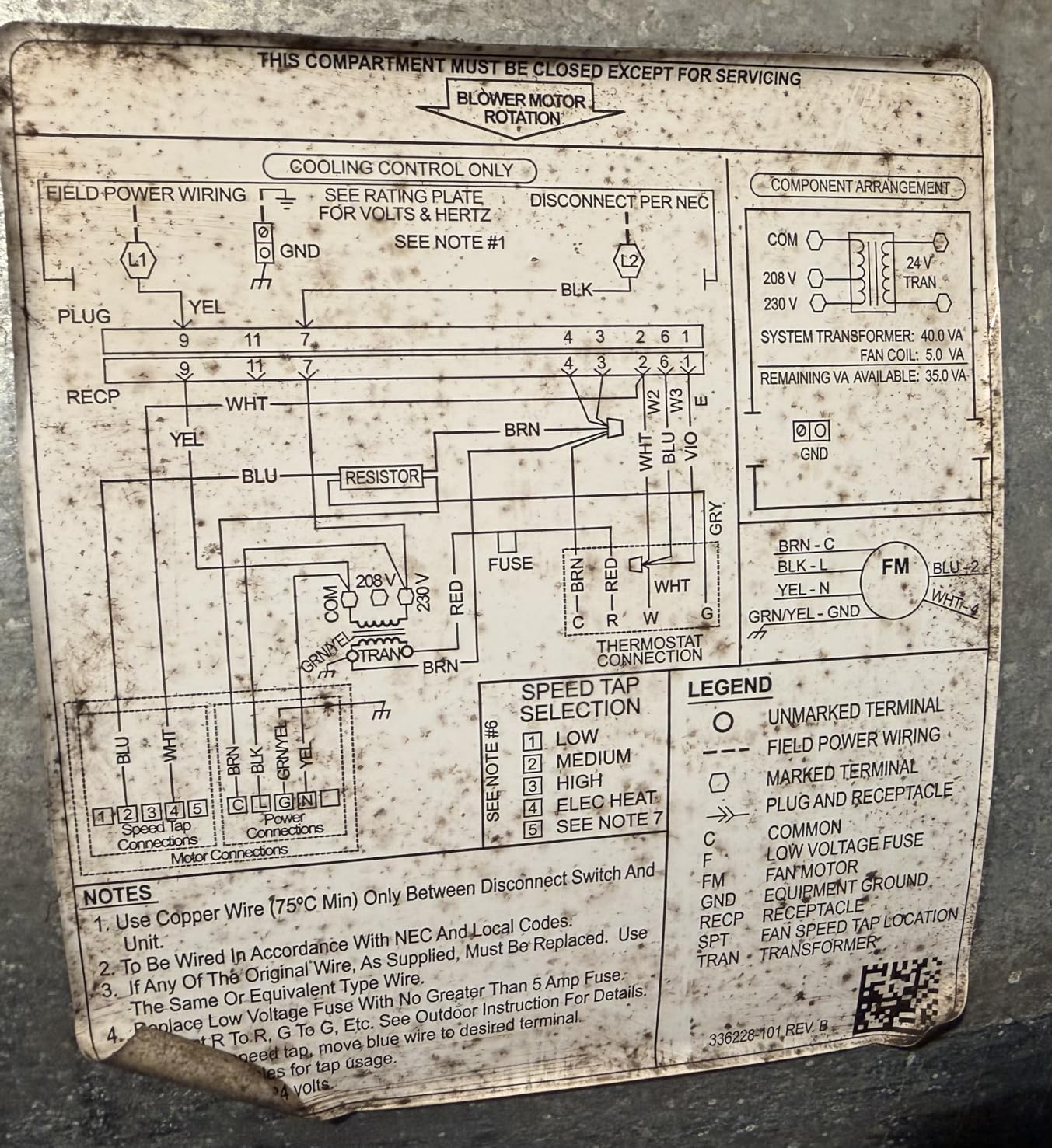
The included SmartSensor goes in your most-used room and tells the thermostat the real temperature where you actually sit, not the hallway. You can add more sensors throughout the house, and the Follow Me comfort feature prioritizes occupied rooms automatically.
This is the setup that finally killed the hot and cold spots in our bedroom. Forum users consistently echo this, naming room sensors as the single biggest comfort upgrade a smart thermostat can deliver.
HVAC Compatibility and the Power Extender Kit
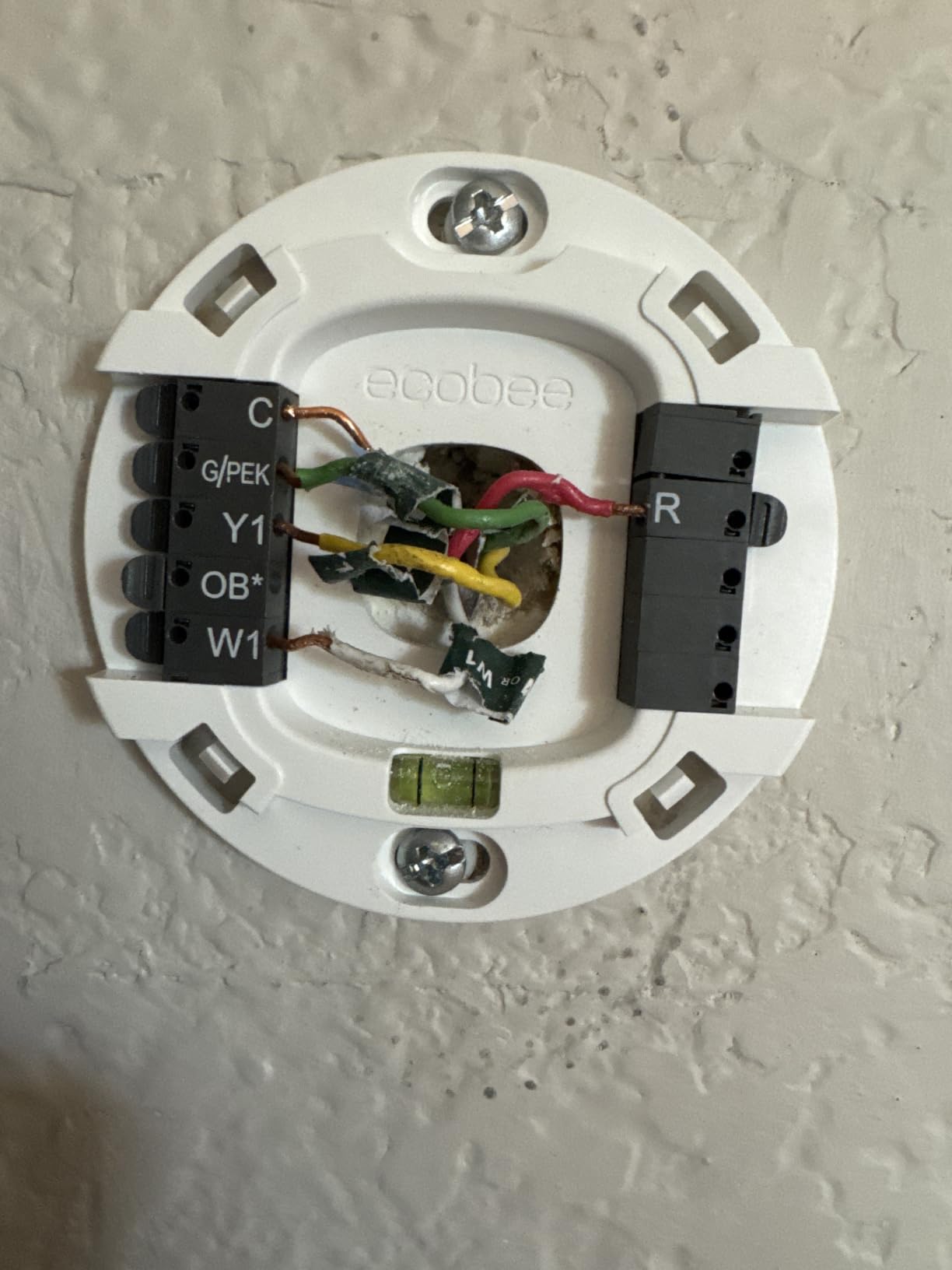
ecobee claims compatibility with 95% of HVAC systems, including complex multi-stage heat pumps, and our experience backs that up. The Power Extender Kit included in the box lets most homes without a C-wire install it anyway, though the kit does require opening the HVAC cabinet at the furnace or air handler.
The PEK terminals are fiddly with twisted copper wiring, so budget for a professional install if you are not comfortable inside the equipment. Once running, the system has been rock solid.
Energy Savings and the App Experience
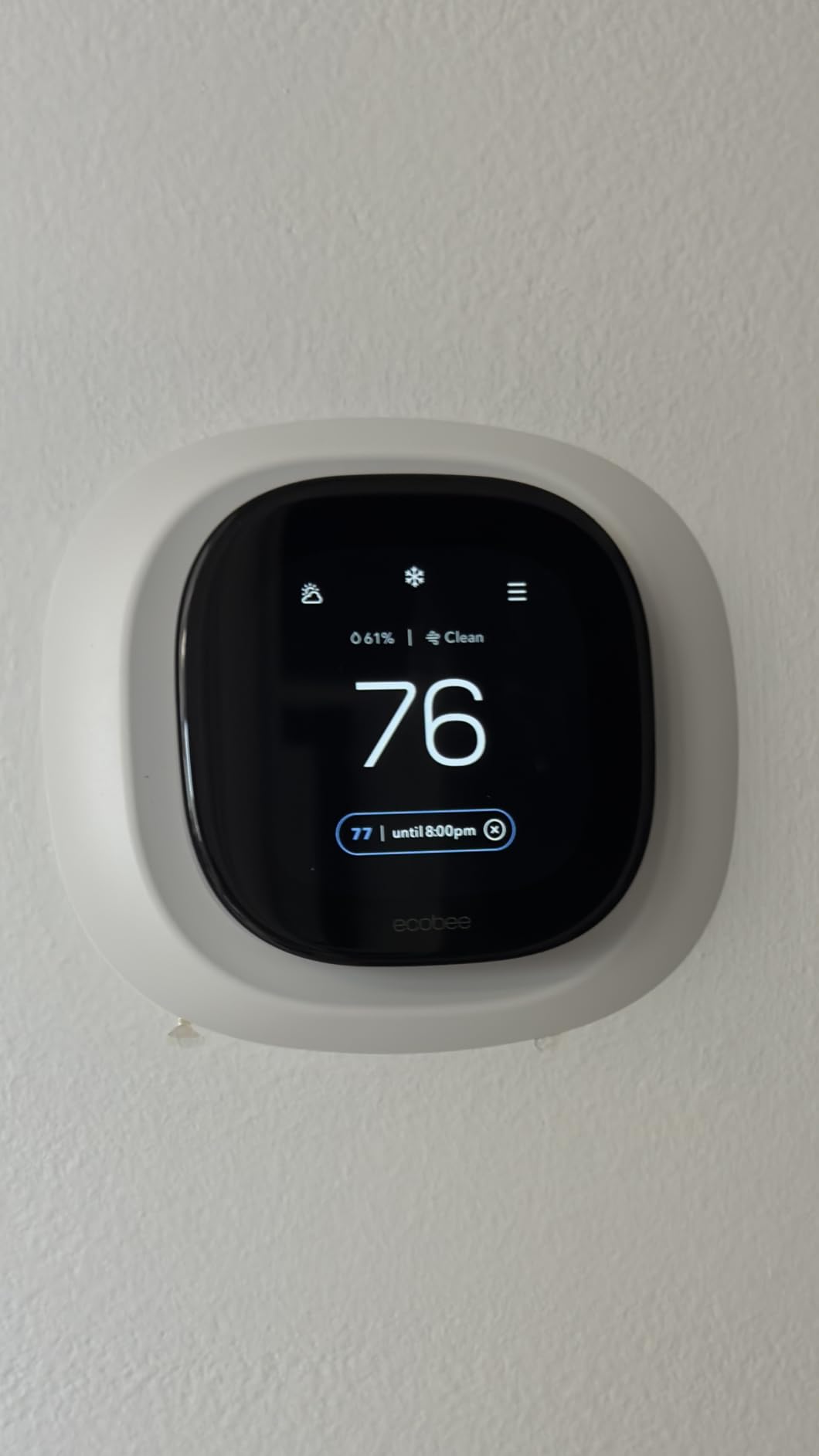
Energy Star certification makes it eligible for utility rebates, and ecobee claims up to 26% yearly savings on heating and cooling. The app is genuinely better than Google Home for scheduling, usage reports, and vacation holds, which you can set far in advance.
The one real weakness is weather-based features in rural areas, where the outdoor temperature data can be off by 15 degrees or more and updates only a few times daily. In our testing in a suburban area it was accurate, but country dwellers should temper expectations.
3. Sensi Touch 2 Smart Thermostat – Best Touchscreen for Easy Scheduling
Sensi Touch 2 Smart Thermostat Wi-Fi, Alexa, Energy Star Certified, ST76
Large color touchscreen
Unlimited schedule slots
Works with Sensi Room Sensors
Energy Star certified
Pros
- Easy DIY install with app guidance
- Unlimited daily schedule slots
- Big bright display for older users
- Up to 23% HVAC savings
- Privacy protection
Cons
- C-wire required
- Room sensors sold separately
- Wi-Fi setup PIN can be frustrating
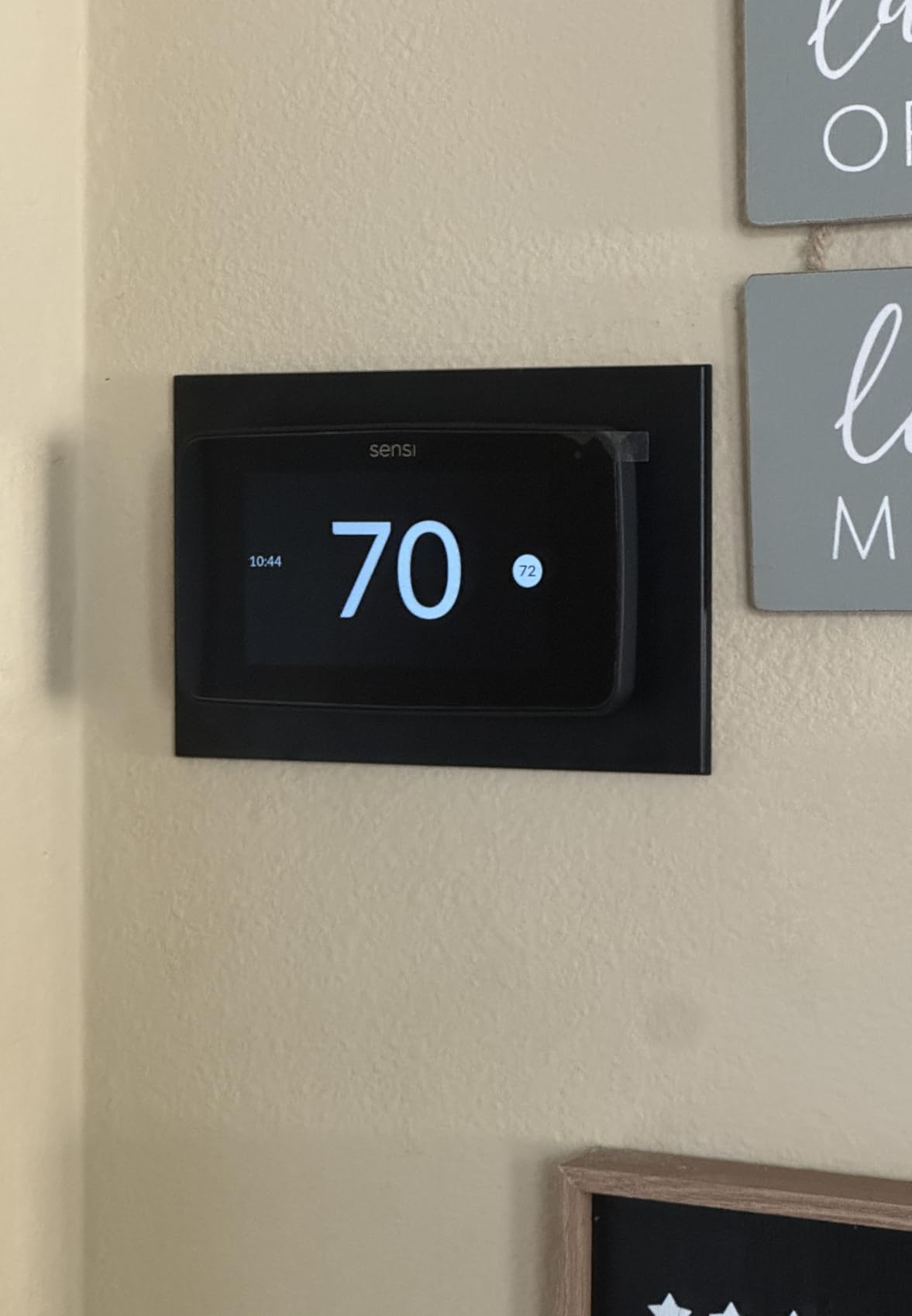
The Sensi Touch 2 by Copeland is the thermostat I hand to anyone who wants a big, friendly touchscreen and straightforward scheduling. The display is one of the largest and brightest here, and owners repeatedly mention how easy it is for older family members to read and operate. It feels like a premium device without the premium learning curve.
What sets it apart from older rivals is unlimited programming. Where legacy thermostats capped you at four time slots per day, the Sensi app lets you build a schedule as granular as your life requires. We set different comfort windows for mornings, work-from-home afternoons, and late evenings without hitting any limits.
Flexible Scheduling and Utility Rate Support
You can shape schedules around your utility’s peak pricing windows, which matters if your provider charges time-of-use rates. The thermostat also produces monthly energy reports and personalized savings tips.
Automatic switching between heat pump and auxiliary heat reduced gas usage dramatically for owners with dual-fuel setups. That alone can pay for the thermostat over a cold season.
Installation and Setup Realities
The app-guided install uses Bluetooth so your phone stays connected during wiring, and it is genuinely one of the best walkthroughs in the category. A C-wire is required, so check your existing wiring before ordering.
Wi-Fi setup is the weak spot: the PIN changes on each failed attempt, which frustrated some owners until they got the router settings right. Once connected, day-to-day reliability is strong.
Privacy and Support
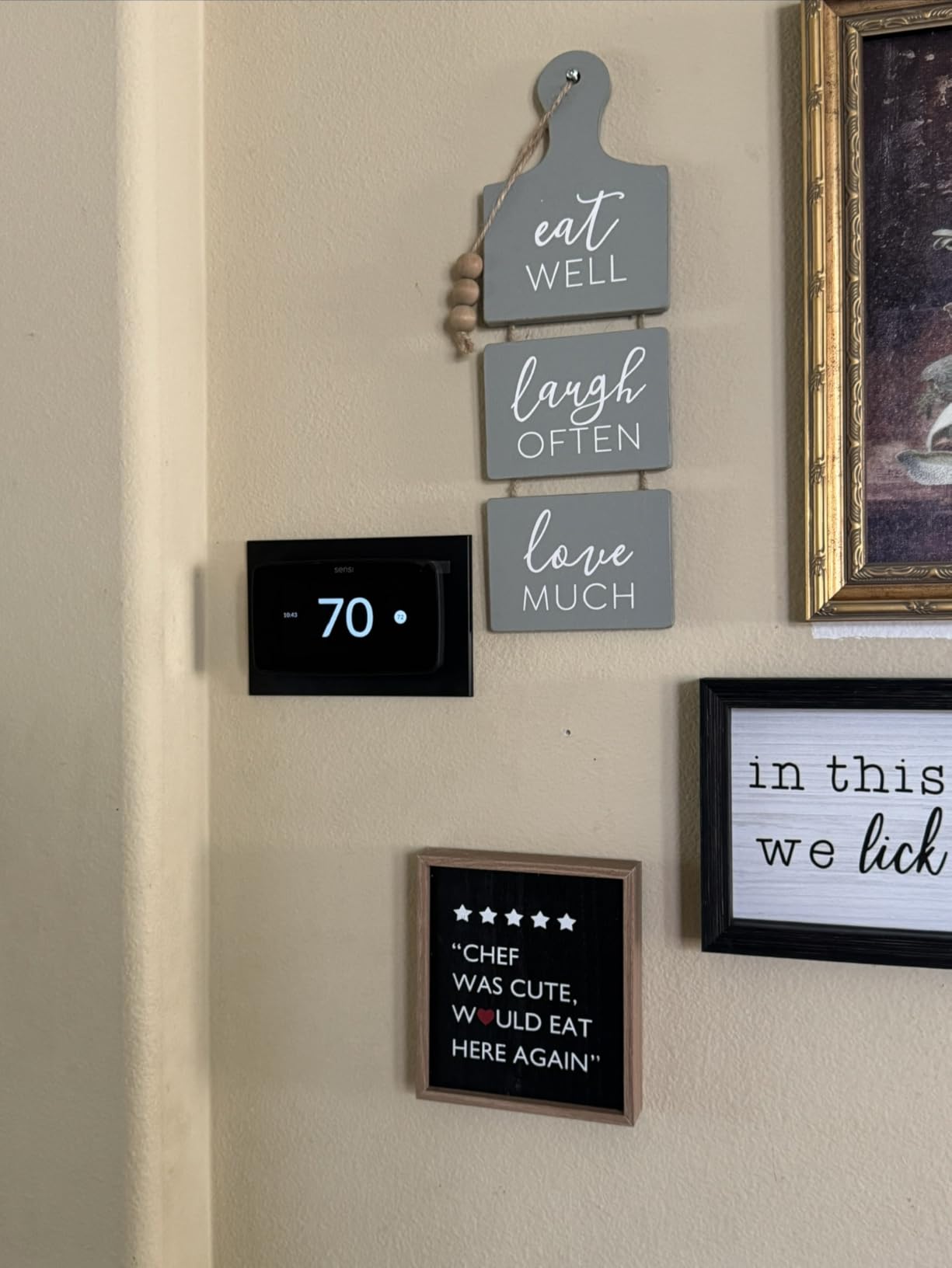
Sensi commits to never selling your personal data to third parties, a stance privacy-focused buyers notice and appreciate. Smart maintenance features send equipment alerts and filter reminders based on actual runtime.
Copeland is also the brand HVAC technicians recommend most often in forum discussions, which says a lot about long-term reliability. Phone support hold times can be long, but the app-based help center covers most issues.
4. ecobee Smart Thermostat Enhanced – Best Sensor Ecosystem Under $200
ecobee Smart Thermostat Enhanced, Programmable Wifi Thermostat
Supports up to 32 SmartSensors
Occupancy preheat and precool
PEK included
4-inch touchscreen
Pros
- Works with 90% of HVAC systems
- Up to 26% yearly savings
- Detailed energy reports
- 3-year warranty
- SmartThings integration
Cons
- PEK install requires HVAC cabinet work
- Home/Away/Sleep schedule only
- Android app bugs
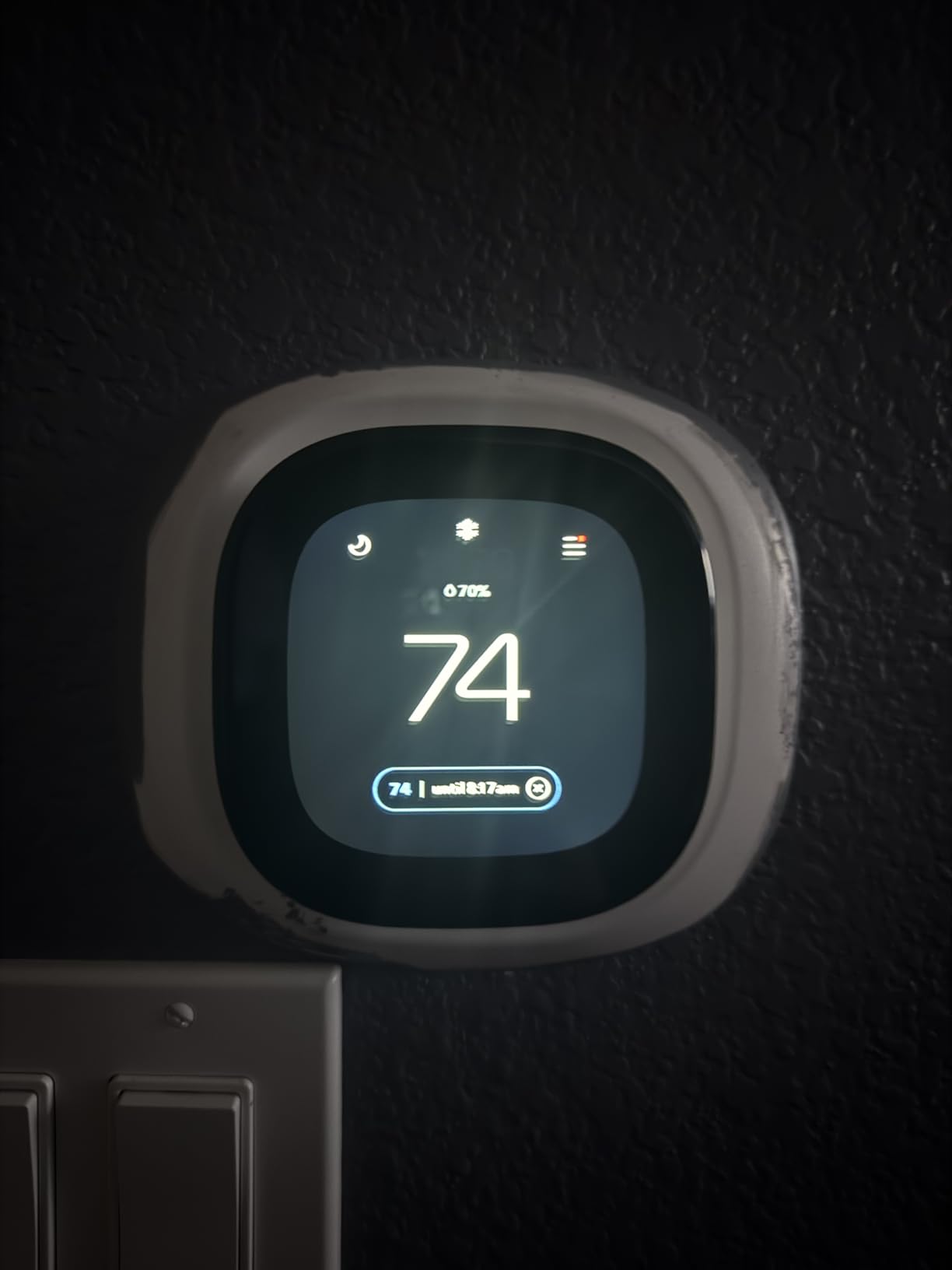
The ecobee Enhanced is the Premium’s sibling without the speaker and air quality hardware, and for many homes it is the smarter buy. You keep the occupancy-sensing radar, the learning schedule, and the ability to add up to 32 SmartSensors for room-specific comfort. The 4-inch glossy touchscreen looks sharp and responds instantly.
Its energy reports are the most detailed on this list, breaking usage down hourly, daily, weekly, and monthly. Crucially, it distinguishes between heat pump runtime and expensive auxiliary heat, so you can see exactly when your system is burning money.
Occupancy Sensing and SmartSensors
The built-in radar detects when people are home and preheats or precools before you arrive, based on learned patterns. Add SmartSensors and the system prioritizes occupied rooms, solving the classic upstairs-too-hot problem in multi-story homes.
This sensor ecosystem is the best value route into whole-home zoning without installing dedicated zone dampers. It is also Energy Star certified, so utility rebates apply in many areas.
Compatibility and Installation Trade-offs
It works with 90% of HVAC systems, including heat pumps with up to three stages, dual-speed fans, and reversible systems. The Power Extender Kit handles homes without a C-wire, but installing it means working inside the furnace cabinet.
If your wiring is straightforward with an existing C-wire, this is a 45-minute DIY job. Otherwise, factor in an hour of careful work or a pro visit.
Smart Home Integration and Limitations
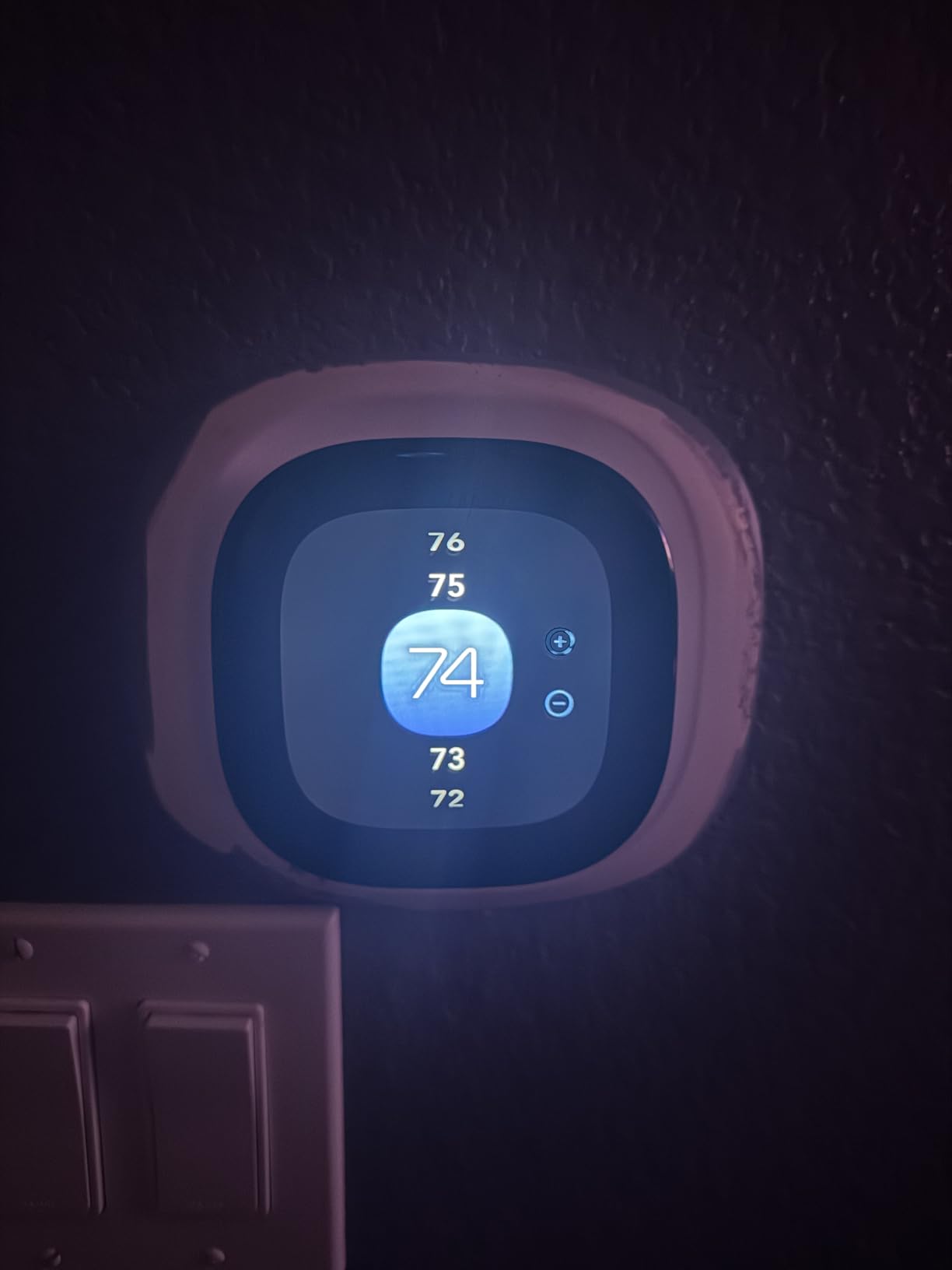
Apple HomeKit, Alexa, Google Assistant, and SmartThings all work, and SmartThings users report flawless integration. Home Assistant fans should note ecobee discontinued its API key program, making local integration harder than it used to be.
Scheduling is limited to Home, Away, and Sleep comfort modes rather than fully custom time slots. Most households will not miss the granularity, but schedule tinkerers might.
5. Honeywell Home RTH9585WF – Best Budget Color Touchscreen From a Trusted Brand
Honeywell Home RTH9585WF Wi-Fi Smart Color Thermostat, 7 Day Programmable, Touch Screen, Energy Star, Alexa Ready, C-Wire Required, Not Compatible with Line Volt Heating Gray
Customizable color touchscreen
7-day programming
Smart Response Technology
Energy Star certified
Pros
- Very affordable for the feature set
- Screen color matches your decor
- Smart Response learns cycles
- Utility demand response rewards
Cons
- Server outages disrupt remote control
- C-wire required
- No electric baseboard support
- Dated app
The Honeywell Home RTH9585WF is the veteran of this lineup, with over 20,000 reviews and a price that undercuts the premium brands by a wide margin. You get a bright color touchscreen you can customize to match your wall color, full 7-day programming, and Energy Star certification. For straight value, it is hard to beat.
Honeywell’s Smart Response Technology learns how long your home takes to heat and cool, then starts early to hit your setpoint on time. Temporary overrides snap back to the schedule automatically, which is great for households where someone always bumps the temperature.
Programming and Display
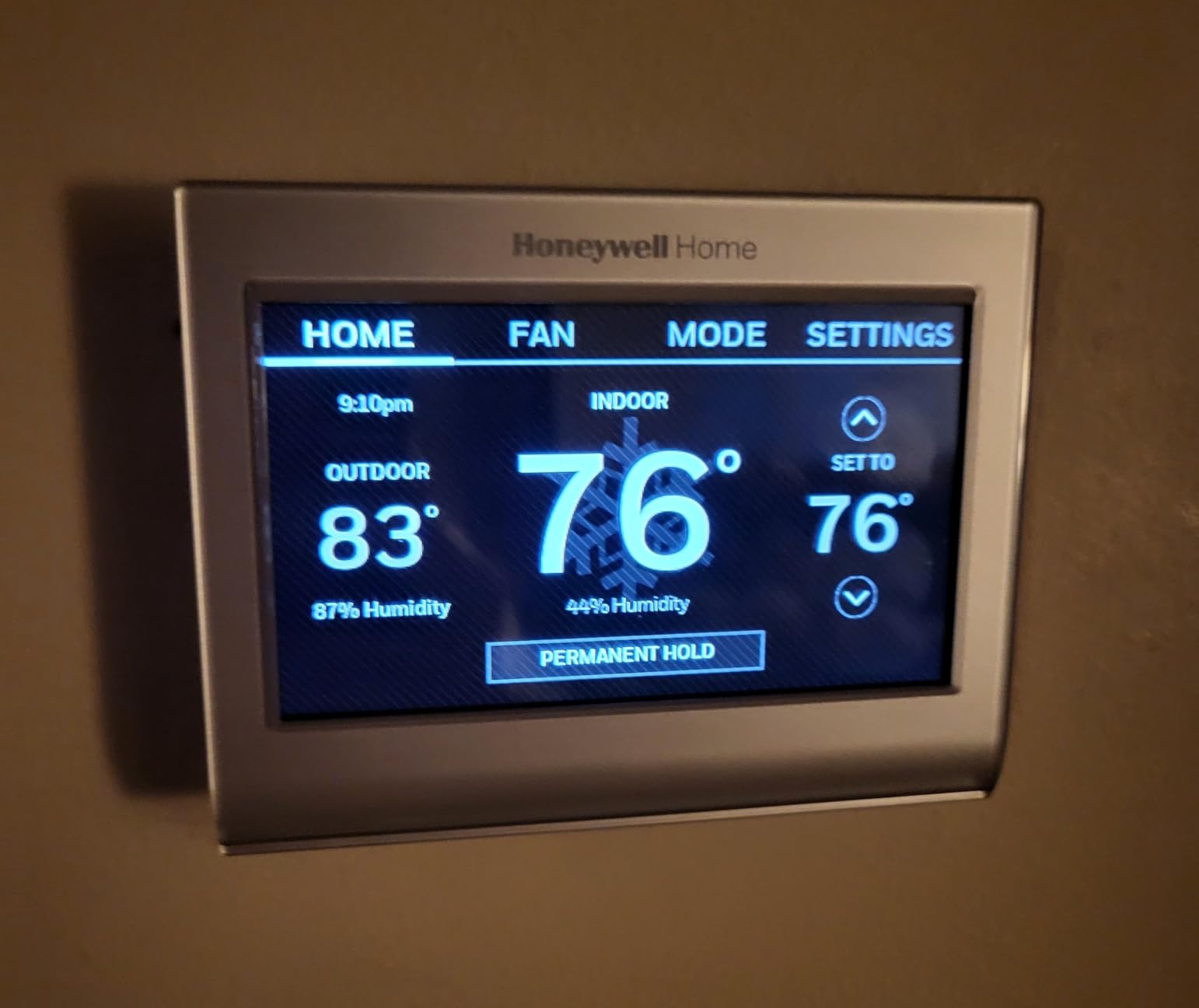
The 7-day programming supports different schedules every day, and the circulate fan option randomly runs the fan about 35% of the time to even out temperatures. The screen shows outdoor conditions and indoor humidity at a glance.
Owners love the display customization, which cycles colors to match paint or decor. It is a small touch that makes a wall-mounted device feel intentional rather than bolted on.
The Server Reliability Problem
Here is the honest caveat: Honeywell’s cloud servers have documented reliability problems stretching back six years. When they go down, remote control stops working, commands can queue and fire hours later, and the app may show false readings with no outage notification.
If you primarily control the thermostat at the wall and treat the app as a bonus, this is a non-issue. If you rely on remote access daily, the ecobee or Sensi options are safer bets, and many owners have switched for exactly this reason.
Compatibility Notes
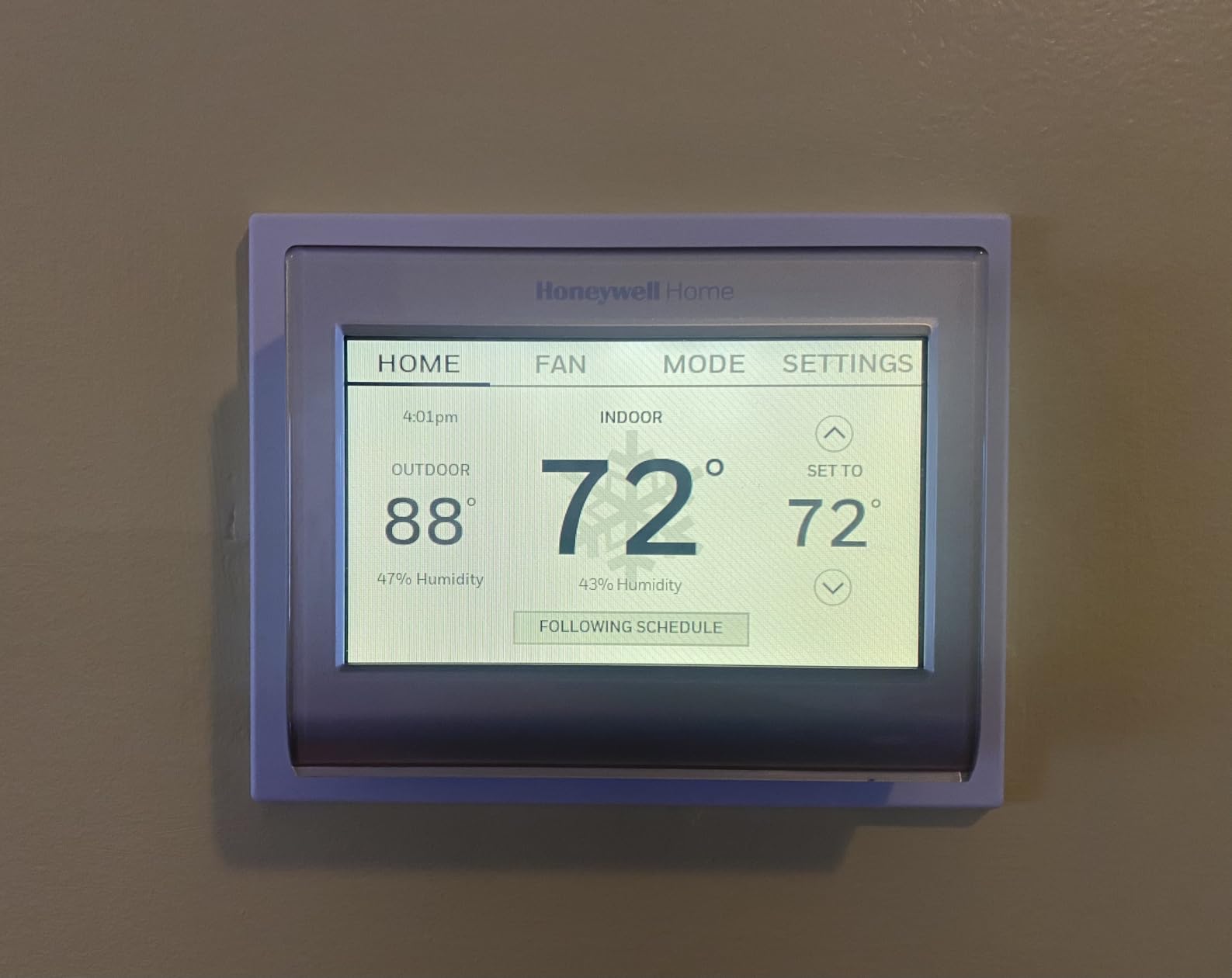
It works with most forced air, heat pump, and hydronic systems, but a C-wire is required and electric baseboard heat at 120-240V is not supported. Replacing an existing Honeywell is nearly plug-and-play when the wiring matches.
For basic smart scheduling on a budget from a brand technicians have trusted for decades, it still earns its place here.
6. ecobee Smart Thermostat Essential – Best Easy Entry Into the ecobee Family
ecobee Smart Thermostat Essential – WiFi Thermostat, Energy Star Certified
Round color touchscreen
No C-wire needed with PEK
eco+ savings features
Works with 85% of systems
Pros
- Easy DIY installation
- Up to 23% annual savings
- Works with HomeKit Alexa and Google
- Free software upgrades
- Humidity detection
Cons
- Some reliability reports after 3 months
- Short warranty through Amazon
- Limited mounting hole positions
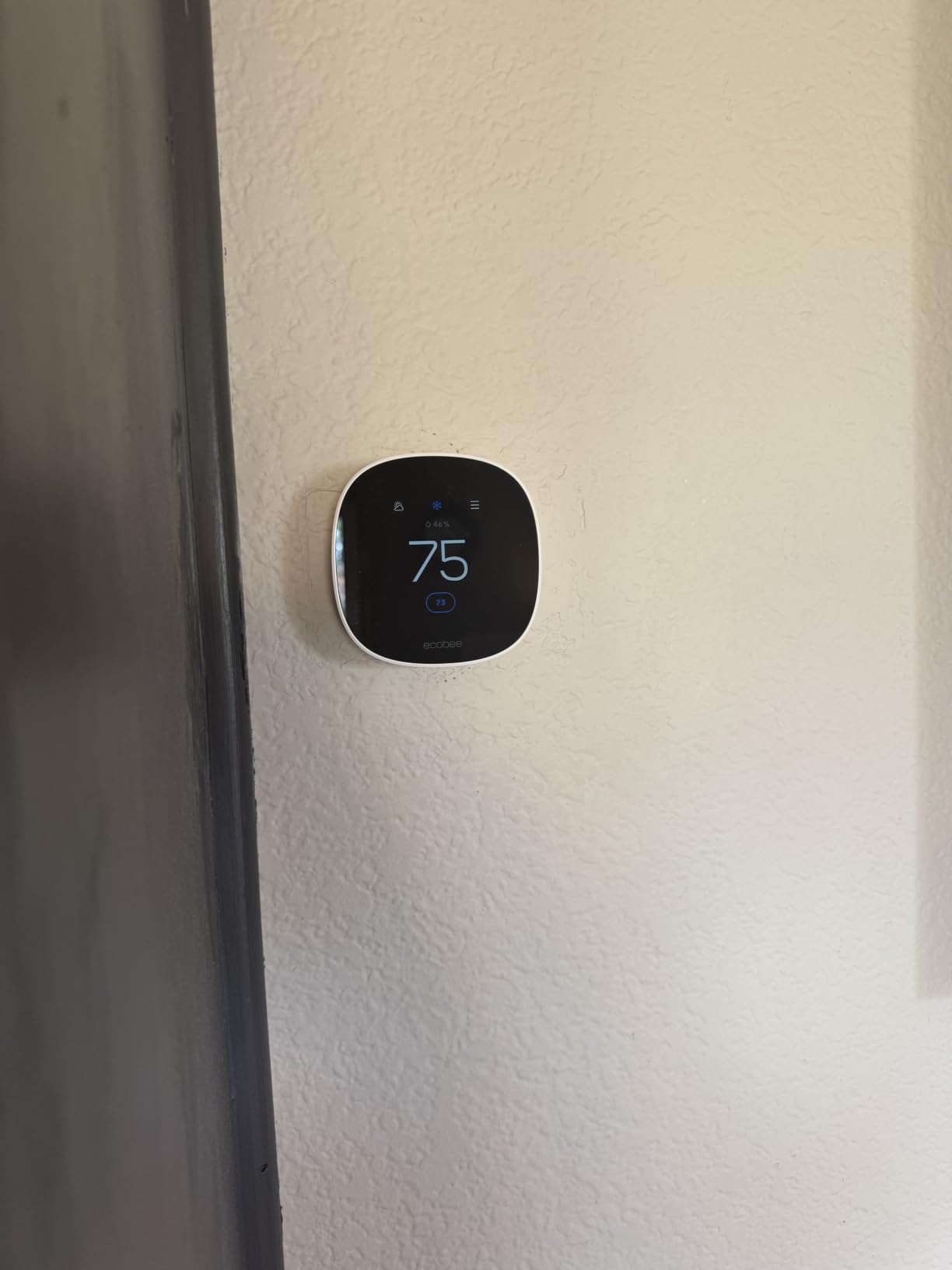
The ecobee Smart Thermostat Essential is the newest and most affordable way into the ecobee ecosystem. It keeps the round color touchscreen, full app control, and eco+ energy-saving features, while trimming the premium model’s speaker and air quality hardware. For most homes, this is all the smart thermostat you need.
Installation is genuinely easy, with no C-wire required when you use the included Power Extender Kit. ecobee says it works with 85% of residential HVAC systems, so run the online checker first if you have an unusual setup.
eco+ Features and Savings
The eco+ bundle includes automatic scheduling, auto-away mode, and humidity detection that fine-tunes comfort beyond raw temperature. ecobee claims up to 23% annual savings on heating and cooling.
Free software upgrades mean the thermostat gains features over time instead of going stale. That long-term support is a real advantage over abandoned budget models from lesser brands.
Smart Home and Voice Control
It works with Siri, Alexa, and Google Assistant, plus Apple HomeKit for scenes and automations. Touch control on the device is simple enough that guests can adjust it without a tutorial.
A few owners reported relay failures around the three-month mark, and Amazon’s return window is short, so register your warranty promptly. The majority of units run without issue.
Who Should Buy It
This is the pick if you want ecobee’s app and ecosystem without paying for a speaker and air quality sensing. It pairs well with added SmartSensors later if you want room-by-room comfort.
If your budget can stretch, the Enhanced adds the richer display and deeper HVAC support. If not, the Essential covers every core smart thermostat need.
7. Mysa Smart Thermostat – Best Minimalist Design With Long Warranty
NEW Mysa Smart Thermostat for Heating & Cooling | Programmable WiFi Thermostat | Energy Star Certified | 7-Day Scheduling | Geofencing | Vacation Mode
Minimalist premium look
Geofencing energy savings
5-year hardware protection
No subscription fees
Pros
- Geofencing cuts energy waste
- 5-year hardware warranty
- No monthly fees
- Direct Wi-Fi with no hub
- Shared family access
Cons
- C-wire required
- Matter support still pending
- LED matrix display hard to read
- No humidifier control
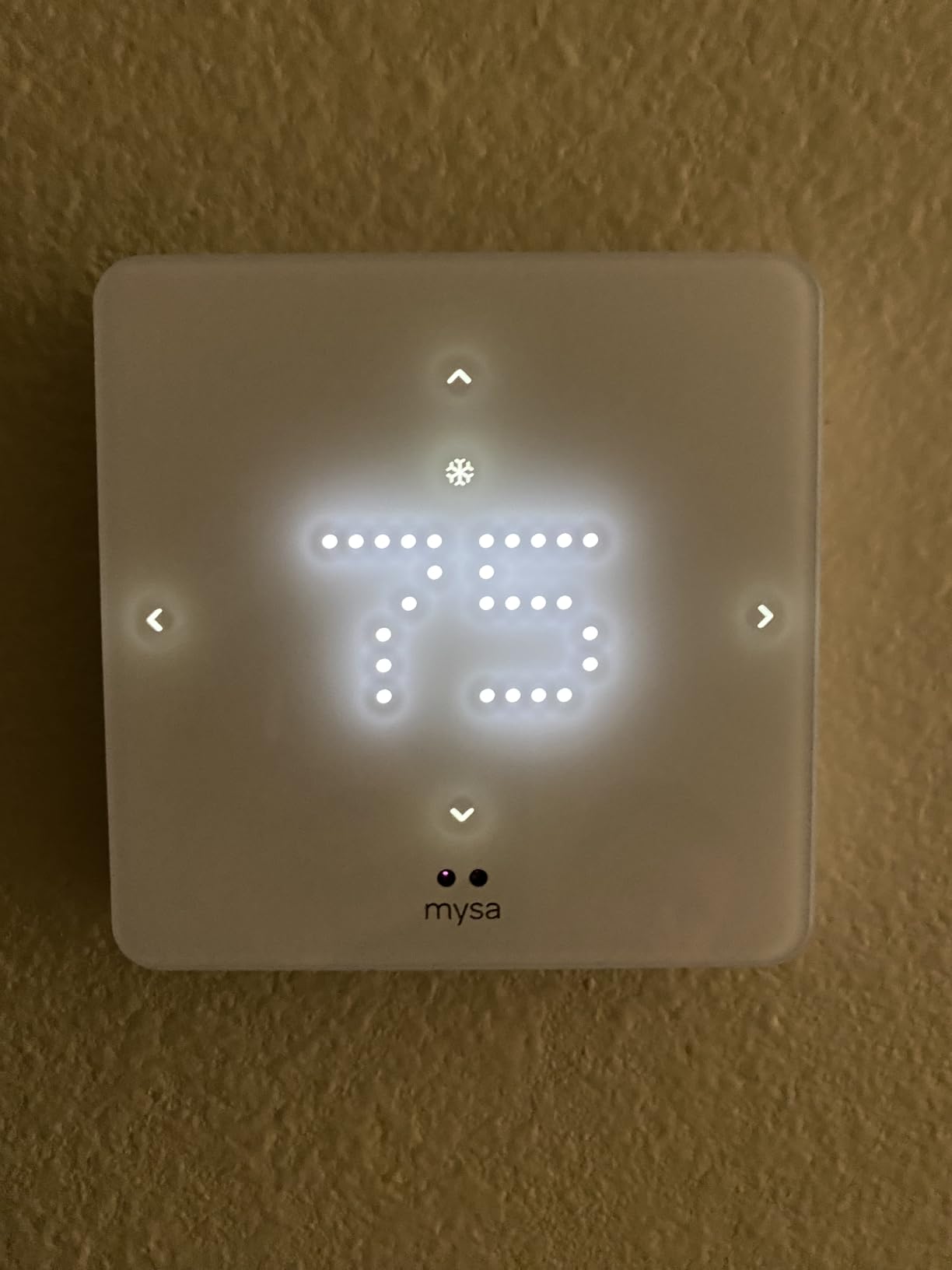
The new Mysa Smart Thermostat is the most beautiful unit in this roundup, with a slim square face and a minimalist LED dot matrix display that disappears into a modern wall. It is Energy Star certified and built around geofencing, which detects when you leave and eases the temperature to savings mode automatically.
Because it connects directly to your Wi-Fi with no hub required, setup is refreshingly simple. Mysa also commits to no monthly subscription fees, and the 5-year hardware protection is the longest warranty on this list.
Geofencing and Energy Features
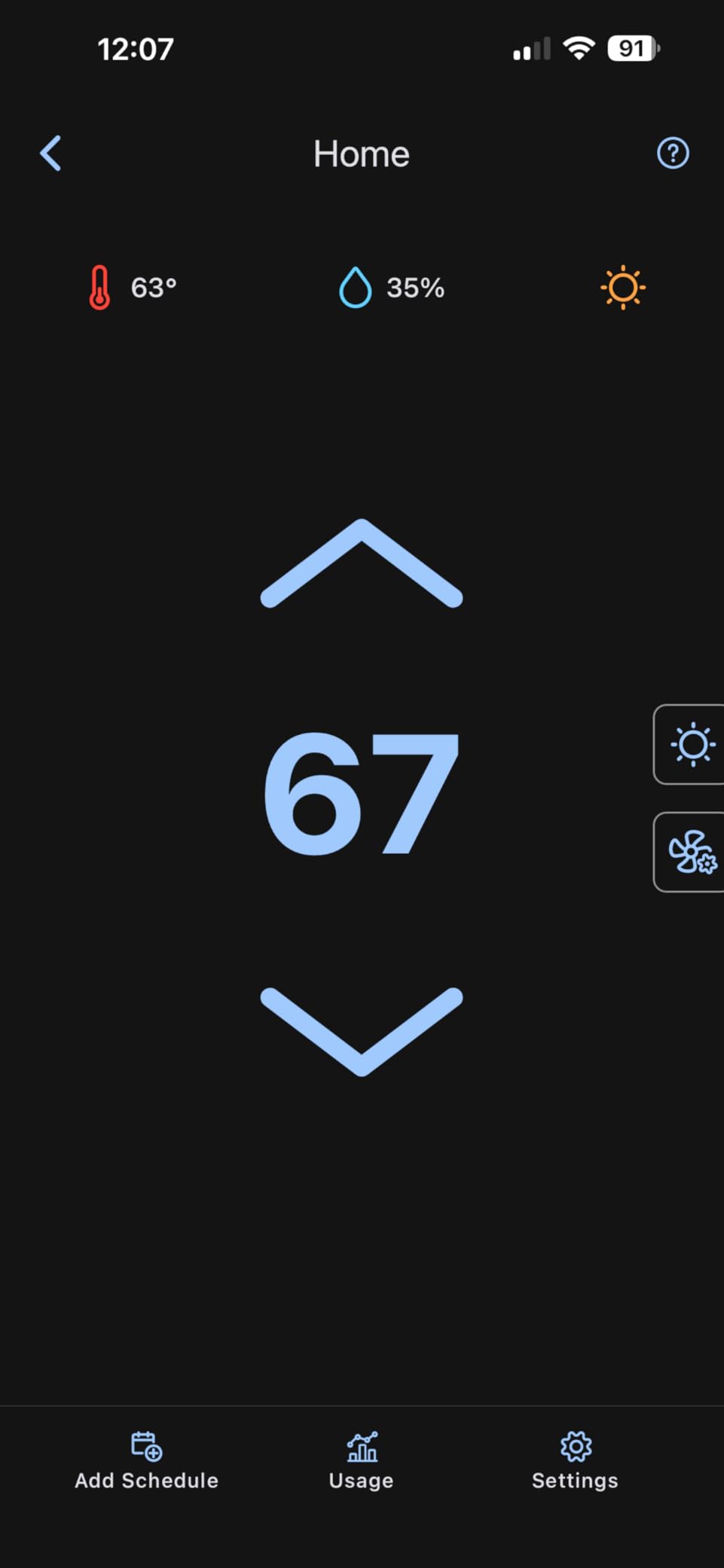
Geofencing is the core savings engine here, and it works well: leave for work, and the house drifts to an eco setpoint; head home, and it restores comfort before you arrive. Built-in humidity monitoring adds alerts for moisture problems that can drive mold or discomfort.
The energy usage reports break down consumption clearly, and 7-day scheduling plus vacation mode cover the fundamentals. It is a simpler feature set than ecobee’s, but everything included works.
Design and Daily Use
The LED dot matrix display looks elegant but is harder to read from across a room than a full color touchscreen. The thermostat’s configuration code system can also confuse during initial setup.
Shared access control lets family members manage the thermostat from their own phones, a small feature more brands should copy.
Compatibility Caveats
A C-wire is required for constant power, and there is no humidifier control support yet. Matter support is listed as coming soon, which will unlock HomeKit, Google, and Alexa integration more formally when it arrives.
As a new listing with a growing review base, long-term track record data is thinner than for rivals. The 5-year warranty offsets much of that risk.
8. Sensi Smart Thermostat ST55 – Best Value for No C-Wire Homes
Sensi Smart Thermostat, Wi-Fi, DIY, Alexa, Energy Star Certified, ST55
Works without C-wire on most systems
Built-in level
Simple button interface
Energy Star certified
Pros
- No C-wire needed on most systems
- Built-in bubble level for mounting
- Familiar button operation
- Strong privacy protection
- About 23% HVAC savings
Cons
- Some Wi-Fi connectivity reports
- App setup required for full features
- Touch interface less polished
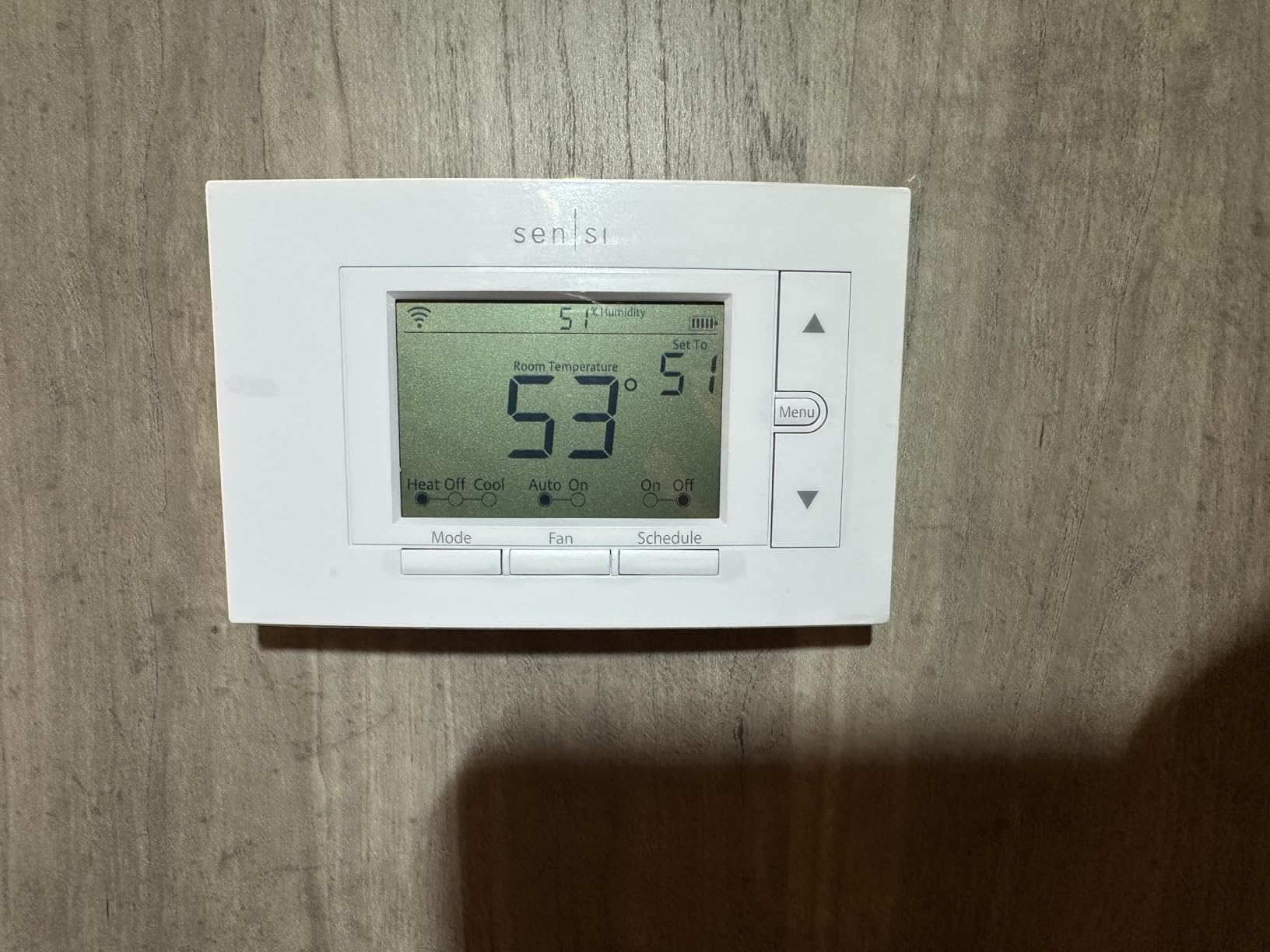
The Sensi ST55 is the thermostat I recommend most often, full stop. With nearly 23,000 reviews at a 4.4 rating and a price under the premium models, it delivers the two things most homeowners need: it works without a C-wire on most systems, and it installs in minutes with a built-in bubble level. HVAC techs like it, privacy-focused buyers like it, and it just runs.
The button interface mirrors a traditional programmable thermostat, which makes it approachable for anyone intimidated by touchscreens. Underneath, you get full app control, flexible scheduling, and Energy Star-certified savings of about 23% on HVAC energy.
No C-Wire Installation for Older Homes
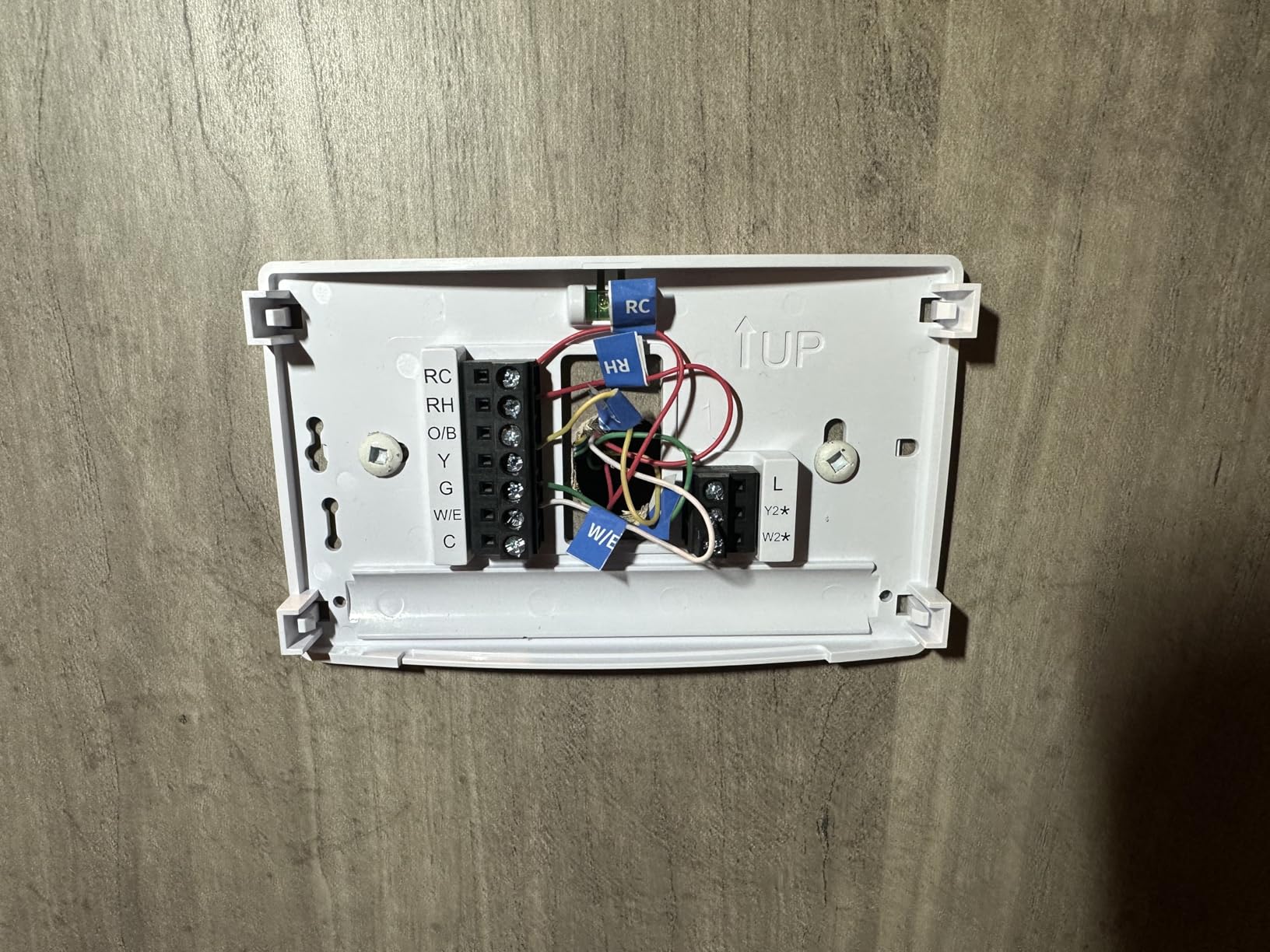
This is the standout feature. Older homes without a common wire can install the ST55 directly on most heating and cooling systems, including boilers and two-wire setups, with no Power Extender Kit or furnace work.
Combine that with the built-in level and clear instructions, and this is the easiest physical install on the list. Most owners finish in under 30 minutes.
App, Privacy, and Support
The Sensi app handles scheduling, usage reports, geofencing, and filter reminders, and it rates among the best-reviewed thermostat apps on both platforms. Sensi’s commitment to never selling personal data is a genuine differentiator.
Customer support gets consistent praise, which is rare in this category. A small number of owners report Wi-Fi dropouts, usually resolved by router adjustments.
Voice and Smart Home Control
It works with Alexa, Google Assistant, Apple HomeKit, and SmartThings, covering every major platform. Automation buffs can build scenes like “goodnight” that set the temperature and kill the lights together.
If you want a reliable, technician-approved smart thermostat without premium pricing, this is the one to buy.
9. Amazon Smart Thermostat – Best Budget Pick for Alexa Households
Amazon Smart Thermostat, Save money and energy, Works with Alexa and Ring, C-wire required
Under $80
Built on Honeywell Home tech
Alexa and Ring integration
Energy Star certified
Pros
- Very affordable
- Alexa app guided install
- Average $90 yearly savings
- Comfort zones with Alexa presence
- Traditional relay design for longevity
Cons
- C-wire required
- Only 4 preset schedule profiles
- Voice control can be inconsistent
- No aux heat indicator
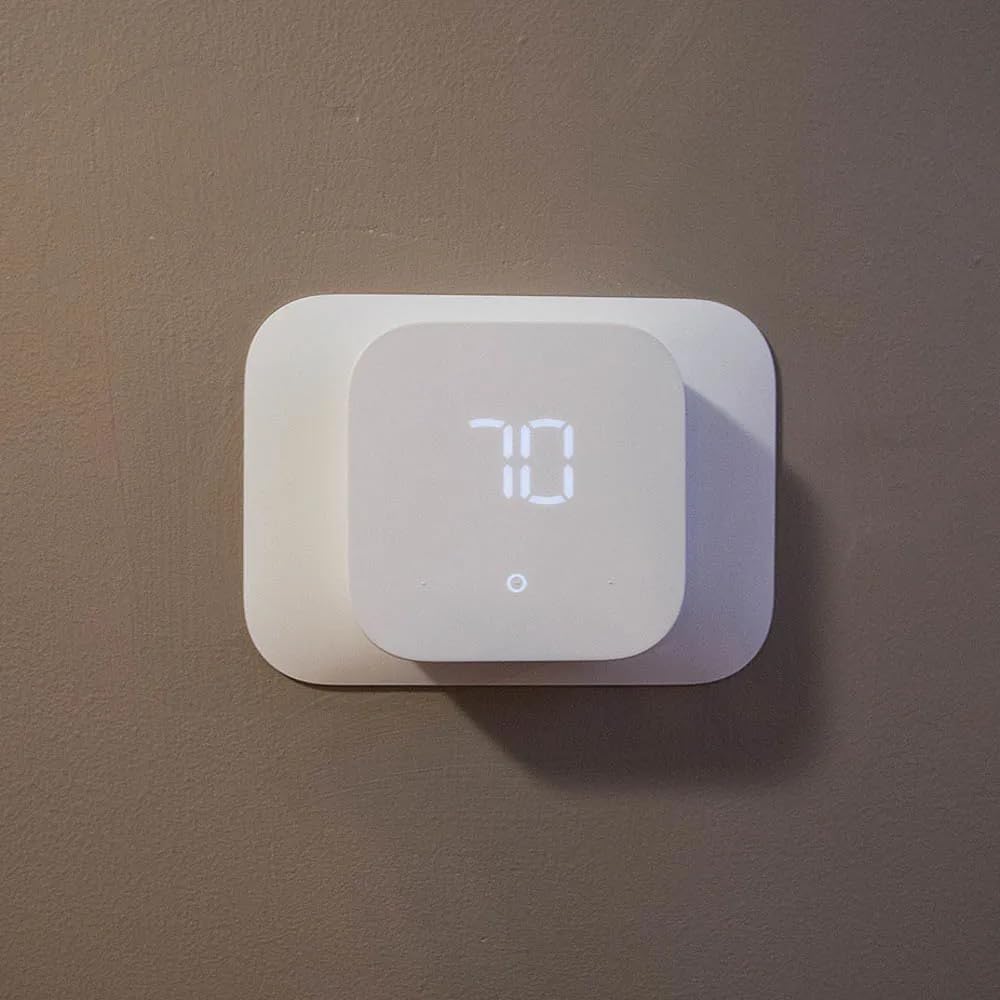
The Amazon Smart Thermostat is the cheapest credible smart thermostat you can buy, and it is built on proven Honeywell Home technology. With over 25,000 reviews and an average claimed savings of about $90 per year, it typically pays for itself within a single heating season. If your home is already wired for Alexa, this is the easiest entry point into smart climate control.
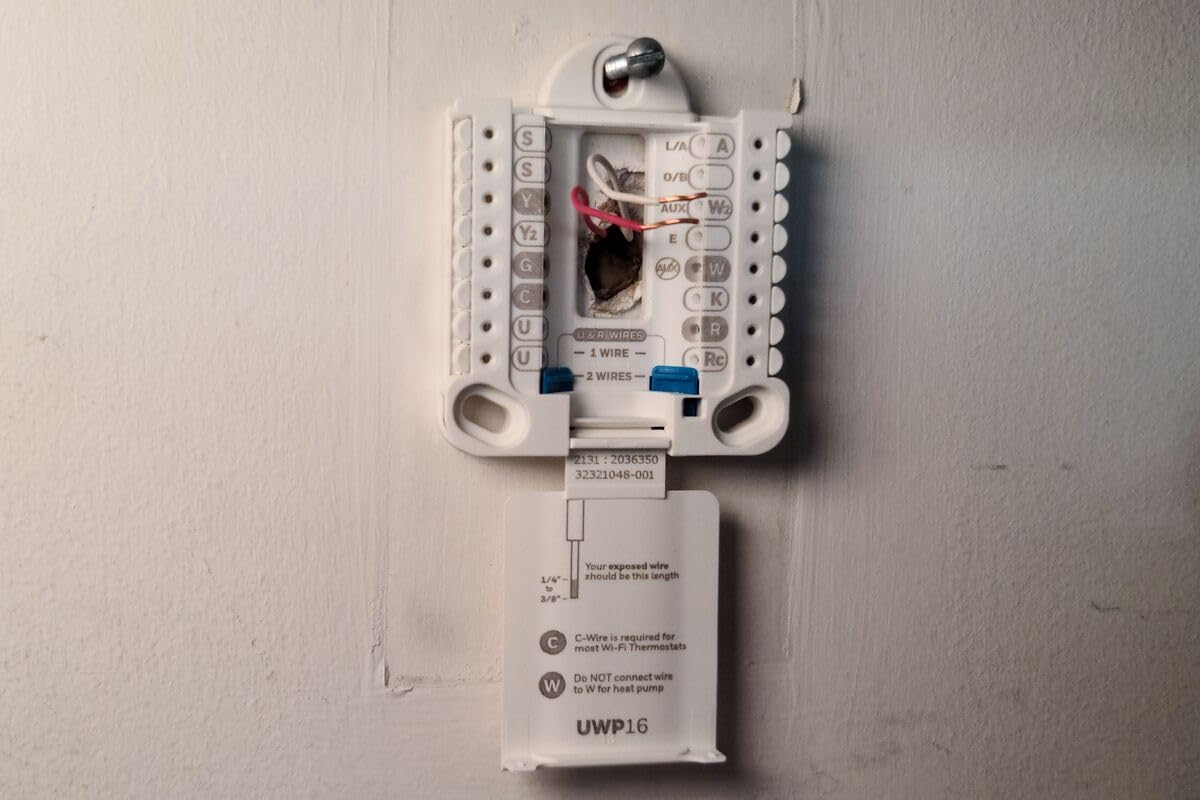
Setup is nearly automatic: the Alexa app detects the device on your account and walks you through wiring step by step. The large wall plate covers holes left by your old thermostat, which saves patching and painting.
Alexa Integration and Comfort Zones
The deep Alexa integration is the selling point. Alexa presence detection can create comfort zones that follow you around the house, and it ties into Routines and Ring devices for whole-home automation.
Voice control works well most of the time, though it occasionally misfires or requires a repeat, and there is no on-screen auxiliary heat indicator for heat pump owners.
Limitations to Know Before Buying
A C-wire is required, full stop, so check your wiring or plan to add one. Scheduling is limited to four preset profiles rather than fully custom programs, which is fine for simple routines but restrictive for shift workers.
Owners of older HVAC systems report occasional short cycling concerns. For modern systems with a C-wire, those issues are rare.
Who It Is For
If you want app and voice control, Energy Star efficiency, and a rebate-eligible thermostat for under $80, nothing else matches it. It is a category best-seller for a reason.
If you need room sensors, learning modes, or no C-wire support, spend up for the Sensi ST55 or ecobee models instead.
10. Sensi Lite Smart Thermostat ST25 – Best Ultra-Budget Energy Star Pick
Sensi Lite Smart Thermostat, WiFi, Alexa, DIY, Energy Star Certified, ST25
Most affordable Energy Star pick
C-wire not required on most systems
Geofencing
Child lock
Pros
- Lowest cost Energy Star option
- Easy DIY install with level
- Geofencing and flexible scheduling
- Privacy protection
- Shows indoor humidity
Cons
- 2.4GHz Wi-Fi only
- Basic interface with no color display
- US and Canada only
- C-wire needed for heat pumps
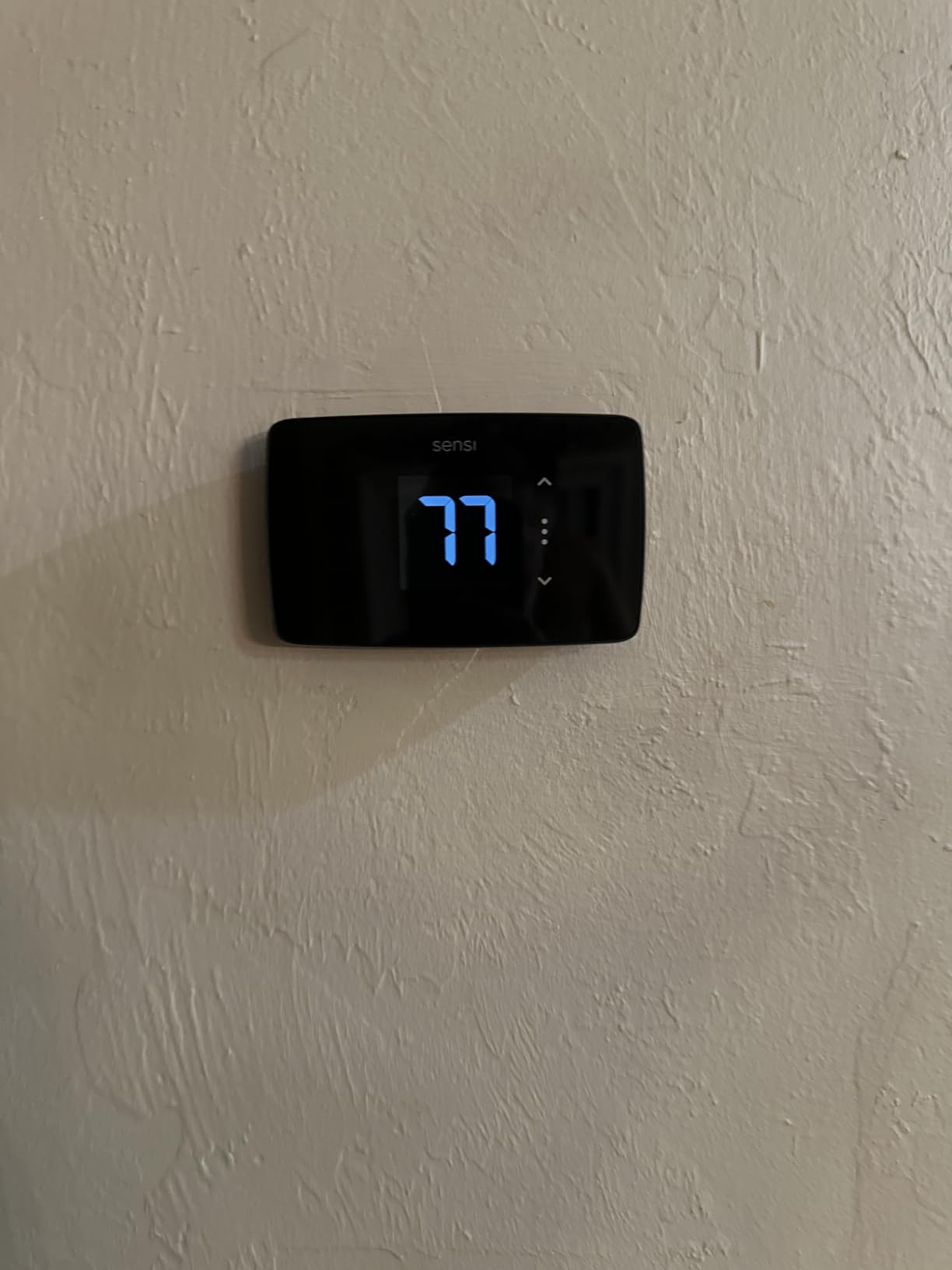
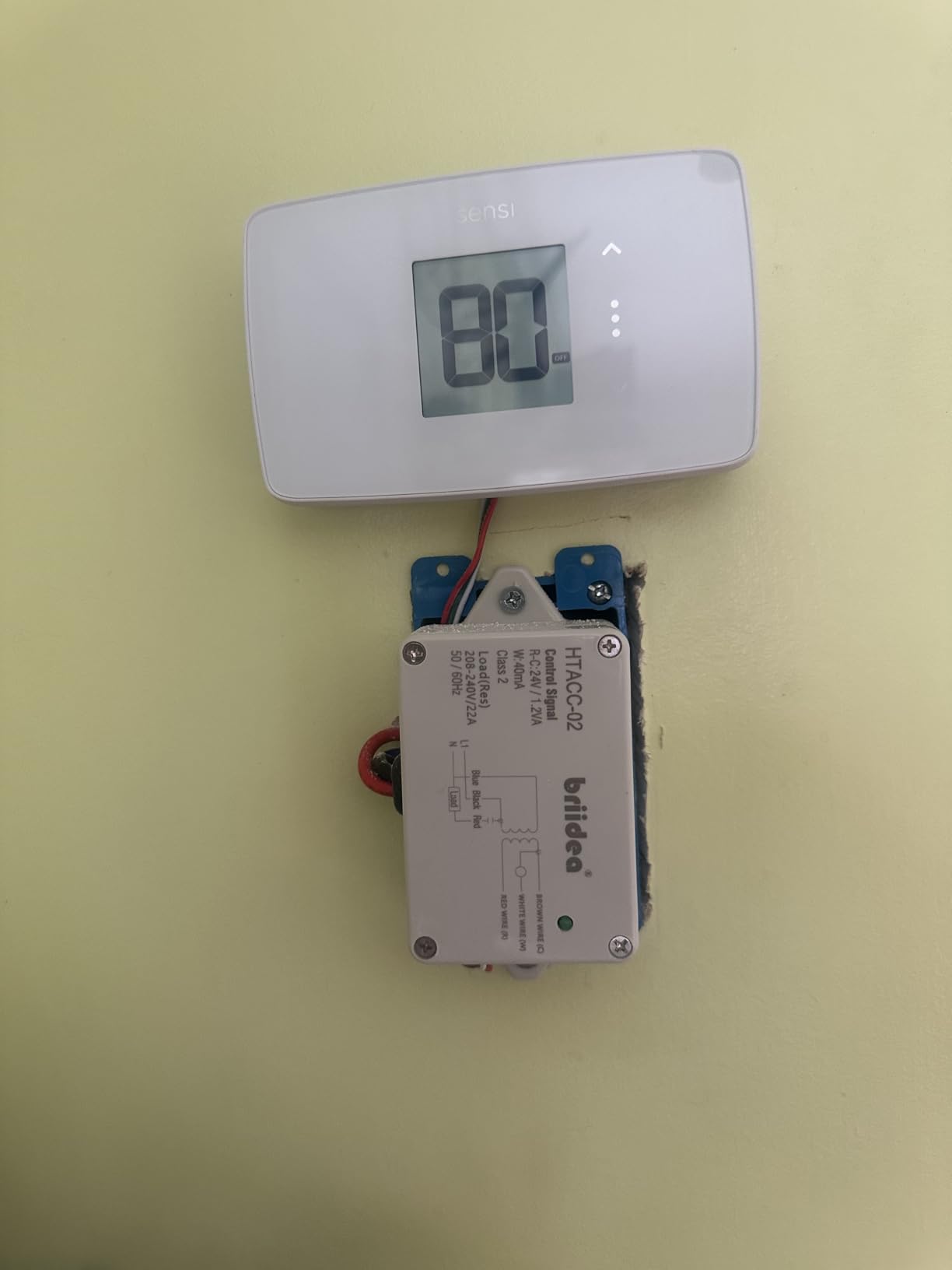
The Sensi Lite ST25 is the cheapest way to get a legitimate, Energy Star-certified smart thermostat from a reputable brand. You get the top-rated Sensi app, geofencing, flexible scheduling, and the same privacy commitments as its siblings, at the lowest price in this guide. For rentals, guest houses, or a first smart home project, it is the obvious choice.
Like the ST55, it skips the C-wire on most systems, though heat pump installations still need one. The large display is easy to read, and a child lock stops curious kids from cranking the heat.
Features for the Price
Geofencing at this price is remarkable: the house slips into savings mode when the last phone leaves and recovers before anyone gets home. The app also displays indoor humidity, a nice touch usually reserved for pricier units.
Filter reminders and usage reports round out a feature set that outpunches its cost. It works with Alexa, Google Assistant, and SmartThings for voice control.
Limitations and Connectivity
The ST25 connects to 2.4GHz Wi-Fi networks only, so you may need to split bands on a dual-band router. Some owners needed a couple of setup attempts to get a stable connection.
The monochrome display and basic on-device controls reflect the price, and it is sold only for the US and Canada. None of these are dealbreakers for a budget buy.
Who Should Buy It
Buy the Sensi Lite when you want dependable app control and real energy savings for the smallest possible spend. It shares the reliability reputation that makes Sensi the brand HVAC technicians recommend.
If you want a color touchscreen or unlimited scheduling slots, step up to the Sensi Touch 2. For pure value, the ST25 is unbeatable.
How to Choose the Right Smart Thermostat for Your Home
Every thermostat on this list can lower your energy bills, but the wrong pick for your wiring or HVAC system can turn a 30-minute upgrade into a frustrating weekend. Here is what actually matters when choosing.
The C-Wire Question: What It Is and Whether You Need One
The C-wire, or common wire, provides constant 24-volt power to keep a smart thermostat’s Wi-Fi radio running. Without it, some thermostats can’t power on at all, and others “power steal” through heating wires, which can cause short cycling or equipment damage on older systems.
Check your current thermostat: if you see a wire on the C terminal, you are set. If not, the Sensi ST55 and Sensi Lite work without one on most systems, the Nest 4th gen skips it in most homes, and ecobee models include a Power Extender Kit that solves it at the furnace.
HVAC System Compatibility
Match the thermostat to your equipment before anything else. Conventional furnaces and AC are easy, but heat pumps, dual-fuel systems, multi-stage equipment, and boilers each have specific requirements. The ecobee Premium covers about 95% of systems, the Enhanced handles heat pumps up to three stages, and the Sensi Touch 2 supports two-stage heat pumps with gas or electric backup.
Electric baseboard heaters at 120-240V are a hard no for everything on this list except specialized high-voltage models. Always run the manufacturer’s online compatibility checker with a photo of your existing wiring before ordering.
Smart Home Ecosystem Integration
Alexa households get the deepest experience from the Amazon Smart Thermostat, while Apple HomeKit users should lean ecobee or Sensi. Google Assistant users get the smoothest ride from the Nest, which also supports Matter for cross-platform setups.
Home Assistant and privacy-focused users should know ecobee retired its API key program, while Sensi’s data privacy commitments and local options make it a community favorite. Honeywell’s cloud dependency is the biggest drawback for local-control advocates.
Room Sensors and Multi-Zone Comfort
If one part of your house is always too hot or cold, room sensors matter more than any other feature. ecobee leads with support for up to 32 SmartSensors with occupancy detection, the Nest 4th gen supports add-on Nest Temperature Sensors, and Sensi offers optional room sensors for both the Touch 2 and ST55.
Sensors let the thermostat average readings across rooms or prioritize occupied spaces, which is the closest thing to true zoning without installing dampers and a zone controller.
Learning vs Programmable: Which Fits Your Life
Learning thermostats like the Nest 4th gen and ecobee models build schedules from your habits, ideal if you hate programming. Traditional programmable models like the Honeywell RTH9585WF and Sensi line give you explicit control over every time slot, better for shift workers or anyone who wants predictable behavior.
Learning can occasionally overshoot, adjusting past your preference in the name of savings. If you want zero surprises, choose programmable; if you want zero effort, choose learning.
Real Energy Savings and Rebates
Realistic savings run 10-23% on heating and cooling with consistent use of schedules, geofencing, or eco modes. Energy Star certification matters more than marketing numbers, because certified models qualify for utility rebates that can knock $50-100 off the purchase price. Every pick except the Nest 4th gen on this list carries Energy Star certification, so check your provider’s rebate page before you buy.
What HVAC Technicians Actually Recommend
Reddit threads are full of a simple question: why do HVAC guys dislike Nest? The answers usually cite proprietary behavior, aggressive power-stealing on older Nests that strained control boards, and limited serviceability. The 4th gen fixed much of this, but reputations persist.
Ask ten technicians and most will point you to ecobee for features or Sensi and Honeywell for straightforward reliability and familiar wiring. That professional preference is worth weighing, because the tech who services your furnace may end up working around your thermostat choice.
Frequently Asked Questions
Which smart thermostat is best?
The Google Nest Learning Thermostat (4th Gen) is the best overall pick for most homes thanks to its self-learning schedule, up to 31% energy savings, and included remote temperature sensor. The ecobee Smart Thermostat Premium is the best premium alternative, and the Sensi ST55 is the best value.
Is there a downside to smart thermostats?
Yes. Smart thermostats can have C-wire requirements that complicate installation in older homes, some rely heavily on cloud servers that occasionally go down, learning modes can override your preferred temperatures, and always-connected devices raise privacy concerns for some users.
Is Ecobee or Nest better?
Ecobee is better for room-by-room zoning with support for up to 32 sensors, air quality monitoring (Premium model), and works with more smart home platforms including HomeKit. Nest is better if you want automatic learning schedules, a polished design, and deeper Google Assistant integration. HVAC technicians tend to prefer ecobee.
Can I install a smart thermostat without a C-wire?
Yes, in many cases. The Sensi ST55 and Sensi Lite work without a C-wire on most systems, the Nest Learning Thermostat 4th gen skips it in most homes, and ecobee models include a Power Extender Kit that substitutes for the common wire. Heat pump systems are the most likely to still require one.
Do smart thermostats really save money?
Yes. Energy Star-certified smart thermostats typically cut heating and cooling costs by 10-23% when schedules, geofencing, or eco modes are used consistently. The Amazon Smart Thermostat saves an average of about $90 per year, and utility rebates on certified models can offset much of the purchase price.
Final Verdict: The Best Smart Thermostat for Your Home
After testing all 10, my picks for the best smart thermostats for homes in 2026 break down cleanly by need. If you want the thermostat to do the thinking, buy the Google Nest Learning Thermostat (4th Gen). If you want maximum comfort control with room sensors and air quality monitoring, go ecobee Smart Thermostat Premium, or the Enhanced to save some money.
For older homes without a C-wire, the Sensi ST55 is the safest bet and the one HVAC technicians recommend most. Alexa households on a budget should grab the Amazon Smart Thermostat, and anyone chasing the lowest possible price can trust the Sensi Lite.
Whatever you choose, check compatibility first, claim your utility rebate after installation, and let the schedules run for a full season before judging the savings. Your heating and cooling bills will thank you.