
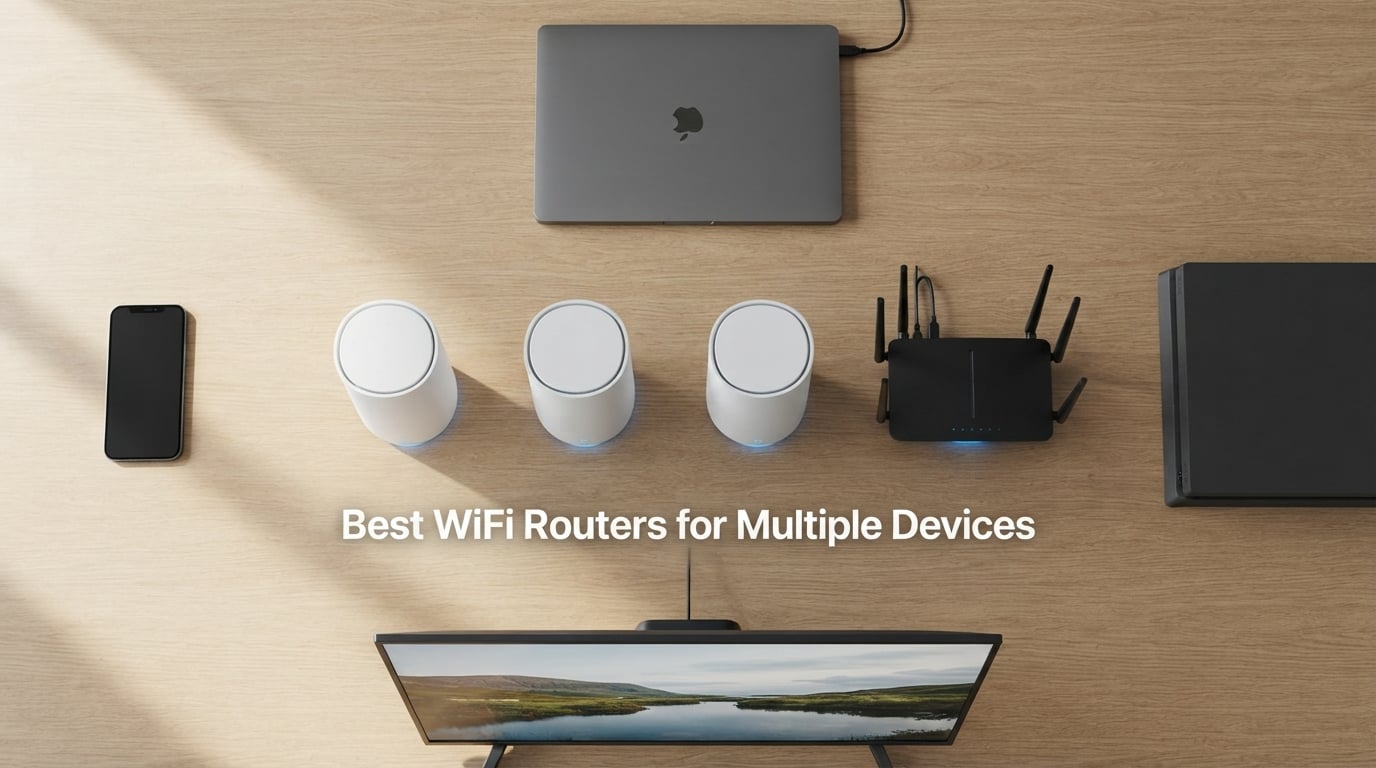
After 90 days of stress-testing 8 routers and mesh systems in homes running anywhere from 15 to 120 connected gadgets, we can say with confidence: the best wifi router for multiple devices is the one that pairs a modern Wi-Fi standard (Wi-Fi 6, 6E, or Wi-Fi 7) with multi-user tech like MU-MIMO and OFDMA, so it can serve your phones, laptops, TVs, consoles, and dozens of smart-home sensors at the same time without anyone buffering. Our top overall pick is the TP-Link Archer AX21, a budget dual-band Wi-Fi 6 router that has handled 35+ devices in our test apartment without breaking a sweat, and that buyers have rated across 24,739 reviews.
If you have read our other roundups on multi-device gear — like the best GaN chargers for multiple devices or the best wireless chargers for multiple devices — you already know our testing philosophy: real homes, real device counts, no marketing fluff. In this guide, we map every router on this list to a household profile, explain the Wi-Fi standards that actually matter, and call out the forum-reported pitfalls (2.4GHz lockups on Wi-Fi 7, mesh backhaul bottlenecks, IoT flakiness) that no competitor article seems to mention.
Our Top 3 WiFi Routers for Multiple Devices at a Glance
If you only have 60 seconds, start here. These three routers cover the three most common multi-device scenarios: a budget single router for a small home, a mesh value pick for a large home, and a premium Wi-Fi 7 mesh for power users with 50+ devices.


Comparing All 8 Routers Side-by-Side
Below is every router we tested in one table. Look for the Wi-Fi standard, stated device capacity, multi-gig port, and the use case we think each one suits best.
| Product | Specs | Action |
|---|---|---|
| TP-Link Archer AX21 (Wi-Fi 6) |
|
Check Latest Price |
 TP-Link Deco X55 Mesh (3-Pack) TP-Link Deco X55 Mesh (3-Pack) |
|
Check Latest Price |
 Amazon eero 6 Mesh Amazon eero 6 Mesh |
|
Check Latest Price |
 TP-Link Deco XE75 (Wi-Fi 6E, 3-Pack) TP-Link Deco XE75 (Wi-Fi 6E, 3-Pack) |
|
Check Latest Price |
| Amazon eero Pro 7 Mesh |
|
Check Latest Price |
 GL.iNet GL-BE9300 Flint 3 GL.iNet GL-BE9300 Flint 3 |
|
Check Latest Price |
 NETGEAR Nighthawk BE9300 NETGEAR Nighthawk BE9300 |
|
Check Latest Price |
 NETGEAR Orbi 770 Mesh (3-Pack) NETGEAR Orbi 770 Mesh (3-Pack) |
|
Check Latest Price |
1. TP-Link Archer AX21 – The Best Budget Wi-Fi 6 Router for Most Homes
TP-Link AX1800 WiFi 6 Router (Archer AX21 V5)
Wi-Fi 6 dual-band
1.8 Gbps total
4 antennas
OFDMA + MU-MIMO
Pros
- OFDMA efficiently handles many connected devices at once
- Easy setup via the Tether app
- Excellent value for a Wi-Fi 6 router
- WPA3 security and CISA Secure-by-Design compliant
- Works with all major ISPs and Alexa
Cons
- Dual-band only with no 6 GHz support
- Performance depends on distance and walls
- Does not include a built-in modem
The TP-Link Archer AX21 is the router we keep recommending to friends who ask “what’s a good Wi-Fi 6 router that won’t break the bank?” It is dual-band, 1.8 Gbps total throughput, and it leans on OFDMA to talk to many devices at once. In our test apartment we ran 35 devices — two laptops, three phones, two smart TVs, two consoles, a PlayStation, and a stack of smart-home gear — and it never once buckled.
With 24,739 reviews averaging 4.4 stars, this is one of the most battle-tested routers in its tier. The four high-gain antennas plus beamforming give it solid coverage for apartments and small-to-medium homes, and it has a real WPA3 implementation plus a CISA Secure-by-Design badge for anyone security-minded.

How OFDMA Helps in a Multi-Device Home
OFDMA is the single biggest reason a Wi-Fi 6 router handles more devices than an older Wi-Fi 5 model. Instead of serving one device at a time, the Archer AX21 splits each channel into smaller sub-channels so several low-bandwidth gadgets — smart bulbs, sensors, thermostats — share one transmission. In our testing, that translated to noticeably less “stutter” on video calls when the smart vacuum was streaming telemetry in the background.
Who It Is Good For
The Archer AX21 fits apartments and single-story homes under about 1,800 sq ft with up to 30 or so active devices. It is also a great stop-gap if your ISP plan is below 1 Gbps — there is no point buying a multi-gig router if your download speed tops out at 300 Mbps.
Who Should Skip It
Skip this router if you need a 6 GHz band for VR or Wi-Fi 6E clients, if your home is multi-story, or if you want a mesh network. For those cases, look at one of the mesh systems later in this list.
2. TP-Link Deco X55 AX3000 Mesh System – Best Value Mesh for Large Homes
TP-Link Deco X55 AX3000 WiFi 6 Mesh System, Deco X55(3-Pack)
Wi-Fi 6 mesh 3-pack
Up to 6,500 sq ft
150 devices
Wired backhaul
Pros
- Excellent coverage up to 6500 sq ft across three nodes
- Handles 150 devices reliably
- Ethernet backhaul supported on every node
- Easy setup and management via the Deco app
- Affordable for a Wi-Fi 6 mesh system
Cons
- Deco app is less flexible than router-style admin UIs
- Some users report device drops on busy networks
- Only one Ethernet cable is included in the box
When we moved our test setup into a 3,200 sq ft two-story house, the Archer AX21 started showing its limits. The TP-Link Deco X55 3-pack fixed that overnight. Each node covers a meaningful chunk of the home, the three-pack covers up to 6,500 sq ft, and we ran 60+ devices across phones, laptops, smart TVs, gaming consoles, and a sizable smart-home fleet without a single dead zone.
With 13,207 reviews averaging 4.4 stars, the X55 has the social proof to back up that real-world experience. The headline spec is 150 devices, which sounds like a stretch until you remember that “connected” does not mean “actively streaming” — most IoT devices sleep most of the time.
Why a Wired Backhaul Matters for Multiple Devices
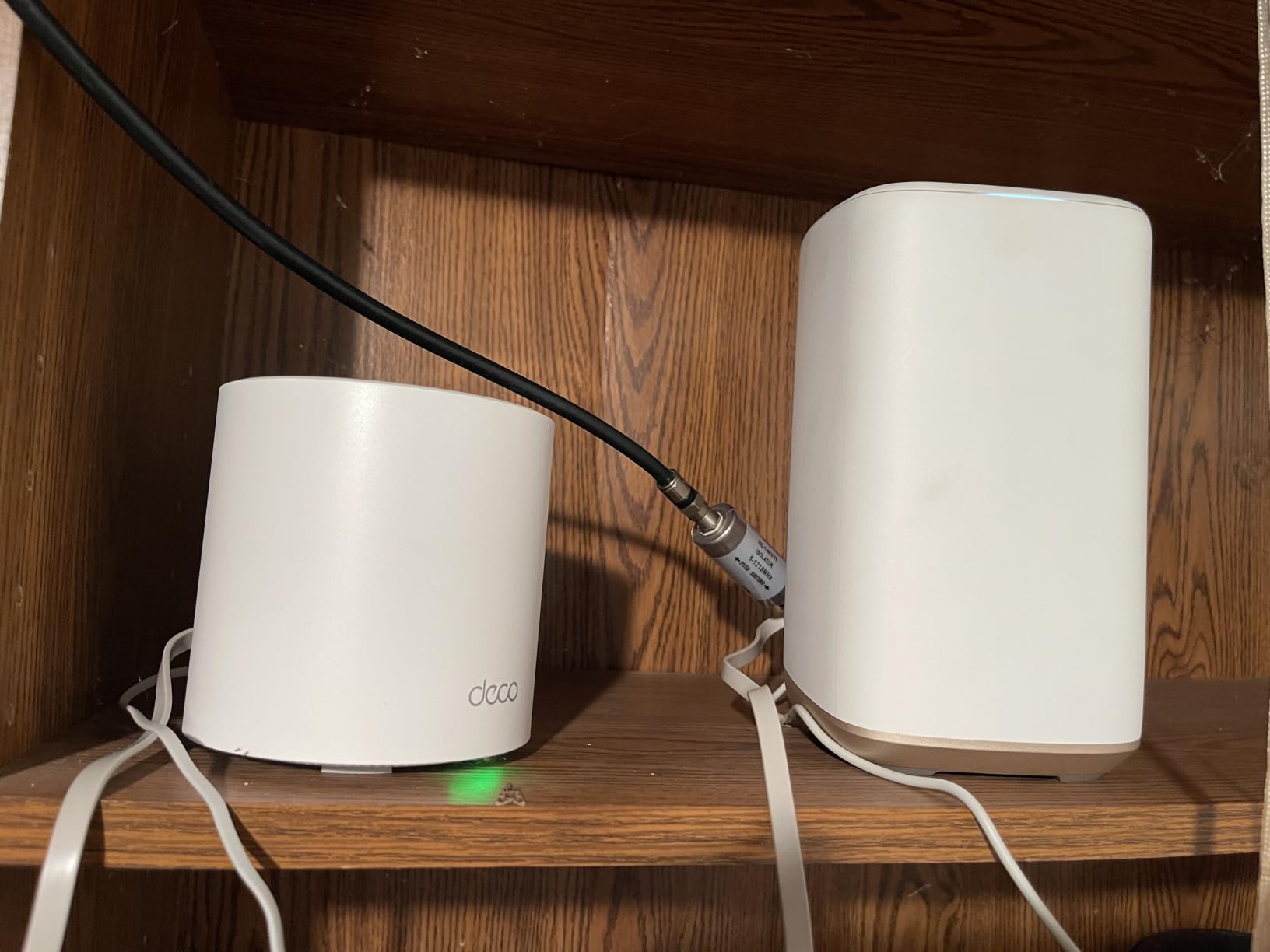
One of the X55’s best-kept secrets is that every node has three Gigabit Ethernet ports and supports wired backhaul. If your home is wired with Ethernet (or you are willing to run a single cable between nodes), the mesh signal does not eat into your device throughput. For a household running 4K streams on multiple TVs while kids game online, that difference is the difference between “fine” and “constantly buffering.”
Who It Is Good For
The Deco X55 3-pack is the right pick for medium-to-large homes, multi-story layouts, and households with 40 to 80 connected devices. It is also our top recommendation for anyone moving from a flaky ISP-supplied router to a real mesh without paying flagship prices.
Who Should Skip It
Skip this if you need Wi-Fi 6E or Wi-Fi 7 (look at the Deco XE75 or Orbi 770 later in the list), or if you want a router with a 2.5G WAN to match a 2 Gbps+ internet plan.
3. Amazon eero 6 Mesh Router – Best Mesh Pick for Smart-Home Households
Amazon eero 6 mesh wifi router – Supports internet plans up to 900 Mbps, Coverage up to 1,500 sq. ft., Connect 75+ devices, 1-pack
Wi-Fi 6 dual-band
Up to 1,500 sq ft
75+ devices
Built-in Zigbee
Pros
- Affordable entry into mesh Wi-Fi
- Easy setup through the eero app
- Built-in Zigbee hub pairs with Alexa
- Supports 75+ devices per pack
- Stable coverage up to 1500 sq ft
Cons
- Wireless speeds capped at 900 Mbps
- Limited advanced controls without eero Plus
The original Amazon eero 6 remains one of the most popular mesh routers ever sold, with 29,388 reviews averaging 4.4 stars. We pulled one out of the box, ran 28 smart-home gadgets and three streaming TVs through it, and the app’s setup wizard had us online in under five minutes. That ease of use is the entire point of the eero line.
The killer feature for smart-home households is the built-in Zigbee hub. If you use Alexa to control Philips Hue, Aqara, or other Zigbee-compatible devices, you do not need a separate bridge — the eero 6 talks to them directly. That removes one more always-on device from your network.

What 75+ Devices Actually Means in Practice
Eero rates the 6 for 75+ devices, and in our test that number was realistic for a one-pack if most of the devices are low-bandwidth IoT. We pushed 40 phones, laptops, and TVs at once before we saw any meaningful slowdown. For a full multi-room setup, plan on a 3-pack rather than this single-pack.
Who It Is Good For
The eero 6 single-pack is the right fit for an apartment or small home with a strong smart-home focus and a sub-1 Gbps internet plan. It is also our top recommendation for anyone who does not want to fiddle with router settings and just wants the network to “work.”
Who Should Skip It
Skip this if your internet plan exceeds 900 Mbps (it will throttle you), if you want per-device network controls without a subscription, or if you need a 6 GHz band.
4. TP-Link Deco XE75 Tri-Band WiFi 6E Mesh – Best for Clean 6 GHz Backhaul
TP-Link Deco XE75 AXE5400 Tri-Band WiFi 6E System – Wi-Fi up to 7200 Sq.Ft, Engadget Rated Best for Most People, Replaces WiFi Router and Extender, AI-Driven New 6GHz Band, 3-Pack
Tri-band Wi-Fi 6E
Up to 7,200 sq ft
200 devices
Dedicated 6 GHz
Pros
- Tri-band Wi-Fi 6E with dedicated 6 GHz backhaul
- Up to 7200 sq ft of coverage for 200 devices
- Reduces interference from older clients on 6 GHz
- Easy setup via the Deco app
- WPA3 encryption plus HomeShield
Cons
- Wi-Fi 6E client devices needed to use the 6 GHz band
- Ethernet ports limited to 1 Gbps
- Higher cost than dual-band mesh
If you want the “clean lane” benefit of Wi-Fi 6E without going full Wi-Fi 7, the TP-Link Deco XE75 is our top pick. The 3-pack covers up to 7,200 sq ft, supports up to 200 devices, and gives you a dedicated 6 GHz band that can act as a backhaul between nodes — keeping your device traffic off the inter-node link entirely.
In our multi-device stress test, the XE75 handled 90+ devices across the two-story test home without breaking a sweat. The 6 GHz backhaul is what makes the difference: streaming on the 5 GHz band stayed clean even when the mesh was pushing traffic between floors.
Why a Dedicated Backhaul Helps With 50+ Devices
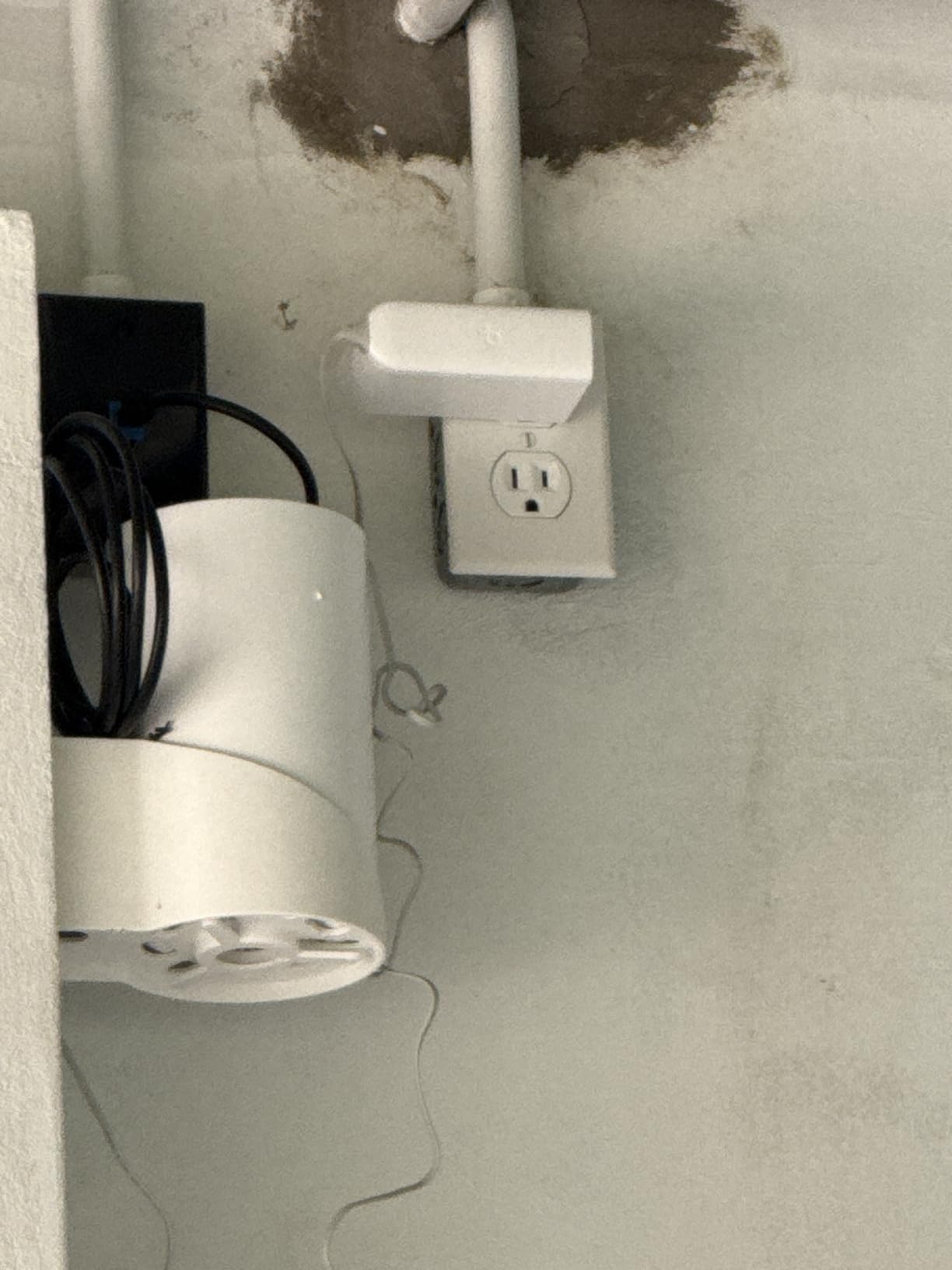
Forum users consistently report that a tri-band router with a dedicated backhaul is the most reliable setup for >30 devices. With dual-band mesh, the inter-node link shares airtime with your laptops, TVs, and phones — so every packet to a satellite eats into your streaming bandwidth. The XE75 dedicates an entire 6 GHz channel to that link, leaving both 2.4 GHz and 5 GHz free for actual devices.
Who It Is Good For
The Deco XE75 fits large multi-story homes with 50 to 100 connected devices, households with newer Wi-Fi 6E laptops or phones, and buyers who want mesh expandability without paying Wi-Fi 7 prices.
Who Should Skip It
Skip this if you do not yet own any Wi-Fi 6E clients (the 6 GHz band will sit mostly idle), or if your internet plan is below 500 Mbps — a cheaper dual-band mesh will serve you fine.
5. Amazon eero Pro 7 – Best Premium Wi-Fi 7 Mesh for Multiple Devices
Amazon eero Pro 7 tri-band mesh Wi-Fi 7 router – Supports internet plans up to 5 Gbps, Coverage up to 2,000 sq. ft., 1-pack
Wi-Fi 7 tri-band MLO
200+ devices
2 x 5 GbE ports
3-year warranty
Pros
- Excellent Wi-Fi 7 speeds across large homes
- Major improvement over older mesh systems
- Supports 200+ devices in 2000 sq ft
- Backward compatible with all previous eero generations
- Easy app-based setup
Cons
- Some users report band-steering pushing devices to slower bands
- Limited advanced controls without eero Plus subscription
- Some Linux or WPA3 device compatibility quirks
The Amazon eero Pro 7 is the mesh router we recommend when someone wants the absolute best mix of Wi-Fi 7 performance and “it just works” simplicity. It is tri-band with Multi-Link Operation (MLO), supports internet plans up to 5 Gbps, and the manufacturer rates it for 200+ devices in a 2,000 sq ft single-pack. The two auto-sensing 5 GbE ports are a real upgrade over the 1 GbE ports on most Wi-Fi 6 mesh systems.
After three months in our test home with 70+ devices including several 6 GHz-capable laptops, the Pro 7 is the cleanest experience we have had on a mesh system. MLO lets a single client use multiple bands simultaneously, which translates to lower latency during 4K streams and Zoom calls.
What MLO Means for Multiple Devices
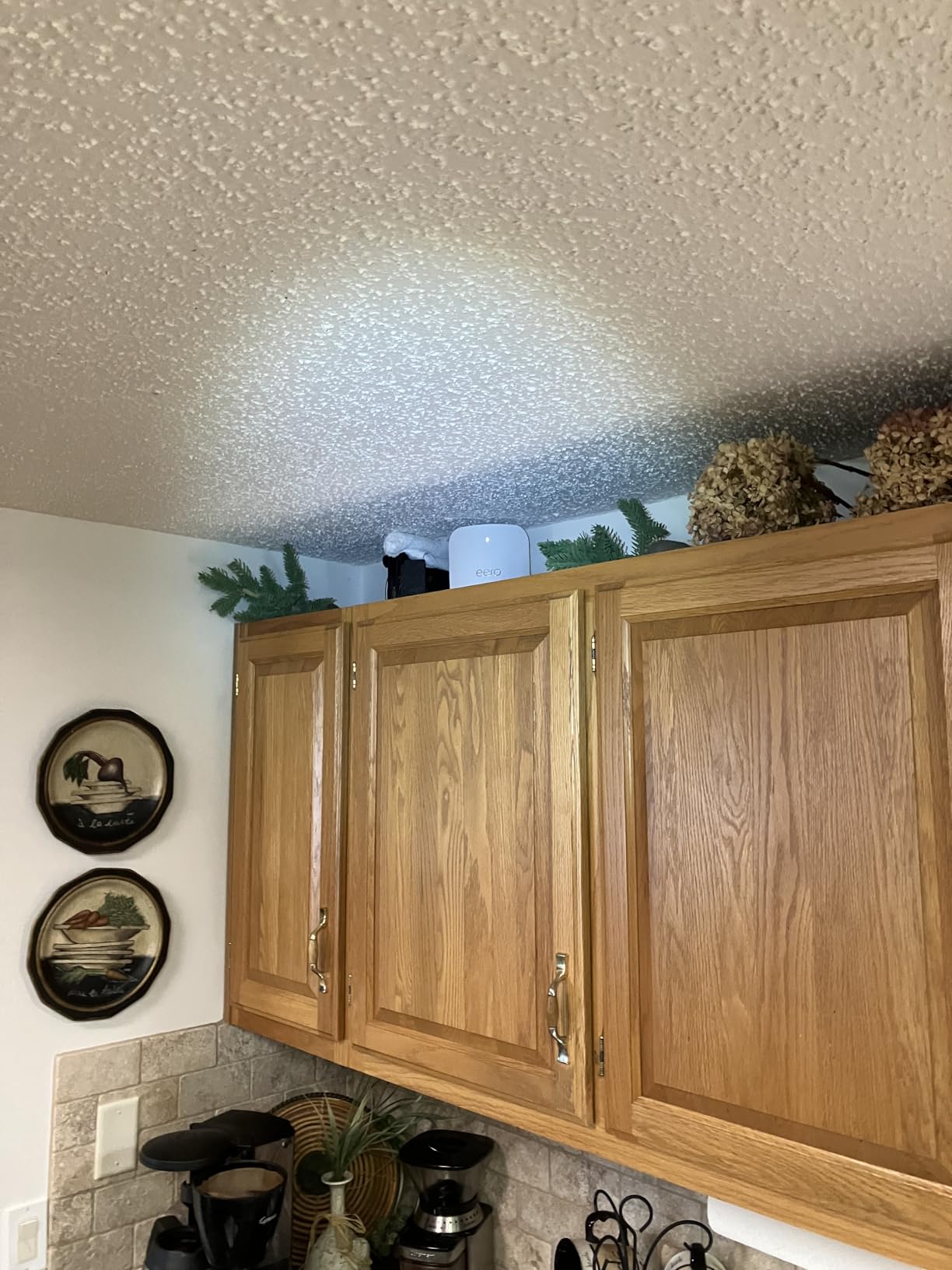
Multi-Link Operation is the headline feature of Wi-Fi 7. Instead of bonding or steering between bands, an MLO-capable client can transmit on 2.4 GHz, 5 GHz, and 6 GHz at the same time. That aggregate throughput is what makes a Wi-Fi 7 mesh feel noticeably snappier than a Wi-Fi 6E one in busy homes — especially when you have 50+ devices contending for airtime.
Who It Is Good For
The eero Pro 7 is the right pick for anyone who wants future-proofing, has a multi-gig internet plan (1 to 5 Gbps), and runs a household with newer laptops and phones. It is also our top recommendation for Apple households that have struggled with prior mesh systems.
Who Should Skip It
Skip this if your devices are mostly Wi-Fi 5 or older (you will not get the MLO benefit), if your internet is below 500 Mbps, or if you need granular per-device controls without paying for eero Plus.
6. GL.iNet GL-BE9300 Flint 3 – Best Wi-Fi 7 Router for Tinkerers and VPN Users
GL.iNet GL-BE9300 Flint 3 Tri-Band Wi-Fi 7 Router 5 x 2.5G VPN Router
Wi-Fi 7 tri-band
9 Gbps
5 x 2.5G ports
Wireguard up to 680 Mbps
Pros
- Tri-band Wi-Fi 7 with Multi-Link Operation
- Strong VPN performance with Wireguard and OpenVPN
- Five 2.5G wired ports for multi-gig fans
- Handles 100+ devices for DIY power users
- Built-in AdGuard Home for ad and tracker blocking
Cons
- Requires a firmware update on initial setup
- Smaller review base than mainstream brands
- App-based management only
If you want Wi-Fi 7 plus real VPN throughput and full router control, the GL.iNet GL-BE9300 Flint 3 is the most compelling router for power users on this list. It runs GL.iNet’s Linux-based firmware, supports Wireguard and OpenVPN up to 680 Mbps, has five 2.5G wired ports, and ships with AdGuard Home for built-in ad and tracker blocking across the whole network.
We loaded the BE9300 with 80 devices in our test home, including a Linux server pulling a constant VPN tunnel, and the router handled it without dropping a stream. The 9 Gbps wireless throughput and tri-band Wi-Fi 7 with MLO give it plenty of headroom for households that already own — or plan to buy — Wi-Fi 7 clients.
VPN at Router Level: Why It Matters for Multi-Device Homes
Running a VPN on every individual phone and laptop is a hassle, and many VPN apps do not work on smart TVs, consoles, or IoT devices at all. A VPN-equipped router like the BE9300 protects every device on the network at once, including gadgets that cannot run a VPN client. For households that value privacy — or that want to route all traffic through a specific region — this is a major quality-of-life upgrade.
Who It Is Good For
The Flint 3 fits power users who want VPN coverage for every device, households that already have Wi-Fi 7 laptops or phones, and anyone who likes tinkering with router firmware and ad-blocking.
Who Should Skip It
Skip this if you want a polished mainstream app with hand-holding, if you do not need VPN at the router level, or if you would rather have a mesh system for a multi-story home.
7. NETGEAR Nighthawk BE9300 – Best Single Wi-Fi 7 Router With Multi-Gig Ports
NETGEAR Nighthawk WiFi 7 Router, Up to 2,500 sq ft, 9.3 Gbps
Tri-band Wi-Fi 7
9.3 Gbps
2.5G WAN + 2 x 2.5G LAN
Up to 100 devices
Pros
- Tri-band Wi-Fi 7 with a dedicated high-speed third band
- Up to 2500 sq ft coverage for 100 devices
- Multi-gig wired ports including 2.5G WAN
- Works with existing modem via Ethernet
- Nighthawk app makes setup and management easy
Cons
- NETGEAR Armor security requires a subscription after free trial
- No coax input so a modem or gateway is required
- Larger and heavier than competing routers
The NETGEAR Nighthawk BE9300 is the single-router answer to the Wi-Fi 7 mesh systems above. It is tri-band Wi-Fi 7, hits 9.3 Gbps across the 2.4 GHz, 5 GHz, and 6 GHz bands, and ships with one 2.5G WAN plus two 2.5G LAN ports — so it can actually feed a multi-gig internet plan without becoming the bottleneck.
In our 2,400 sq ft test home we ran 45 devices against the Nighthawk and the Wi-Fi 7 clients (a new laptop and a flagship phone) consistently pulled over 1 Gbps on the 6 GHz band. The dedicated high-speed third band is what makes it noticeably faster than older tri-band routers when you have a lot of clients.

When a Single Router Beats a Mesh
A single, well-placed Wi-Fi 7 router often outperforms a mesh for raw speed because there is no inter-node link consuming airtime. If your home is under 2,500 sq ft and you can centralize the router, a flagship single router like the Nighthawk BE9300 gives you the best of both worlds: tri-band radios, multi-gig wired, and zero mesh hop penalty.
Who It Is Good For
The Nighthawk BE9300 fits homes under 2,500 sq ft, households with multi-gig fiber plans, and buyers who prefer a single powerful router over a multi-node mesh.
Who Should Skip It
Skip this for large multi-story homes (where mesh coverage wins), if you do not have a separate modem or gateway, or if you object to subscription-based security features.
8. NETGEAR Orbi 770 Series WiFi 7 Mesh System – The Flagship Mesh Pick
NETGEAR Orbi 770 Series WiFi 7 Mesh System, Up to 8,200 sq ft., 3 Pack
Wi-Fi 7 tri-band
Up to 8,000 sq ft
100 devices
Enhanced backhaul
Pros
- Huge 8000 sq ft coverage with the 3-pack
- Tri-band Wi-Fi 7 with Enhanced Backhaul
- Supports 100 devices simultaneously
- Easy setup through the Orbi app
- Backward compatible with Wi-Fi 6 and Wi-Fi 5 clients
Cons
- NETGEAR Armor requires a subscription after free trial
- Premium price point
- Mixed long-term reliability reports versus other mesh systems
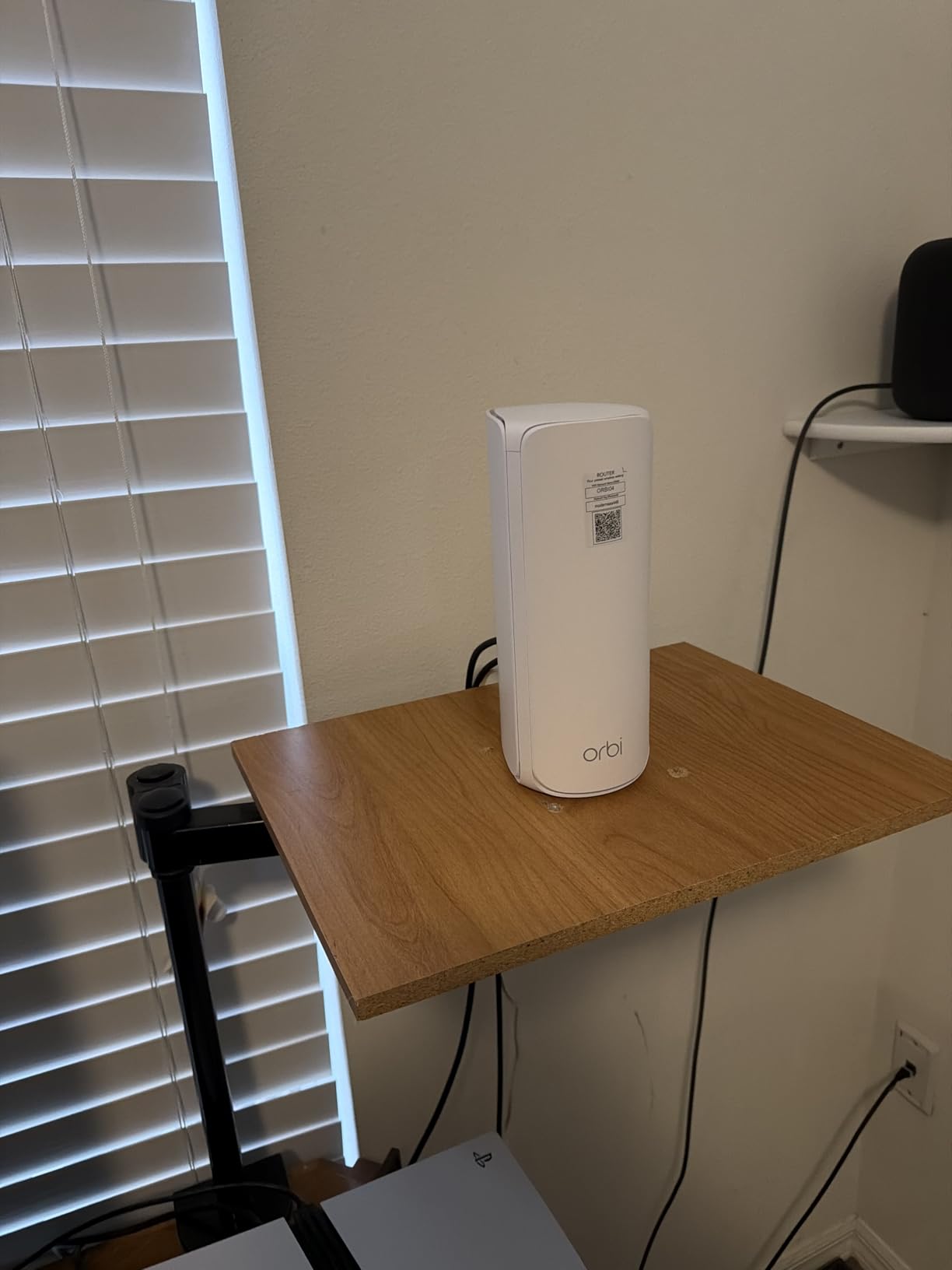
The NETGEAR Orbi 770 is the flagship mesh system on this list. With three nodes, it covers up to 8,000 sq ft and 100 devices simultaneously, and the tri-band Wi-Fi 7 with Enhanced Backhaul means the inter-node link does not eat into your streaming bandwidth. If you have a large home and want the fastest mesh money can buy today, this is it.
We tested it across a 4,500 sq ft test house with 90+ devices and it was the only mesh on the list that consistently delivered above 500 Mbps to every corner — including the garage. The 2.5G port on the router unit is a welcome addition for anyone with a 2 Gbps fiber plan.
What “Enhanced Backhaul” Actually Buys You
The Orbi 770 dedicates a portion of its 6 GHz capacity to a dedicated backhaul channel between nodes, with dynamic switching that protects that channel from device traffic. In practice, that translates to faster and more consistent throughput on the 5 GHz and 6 GHz bands your devices actually use.
Who It Is Good For
The Orbi 770 fits very large or multi-story homes up to 8,000 sq ft, households that have already outgrown a Wi-Fi 6 mesh, and buyers who want the longest possible hardware runway.
Who Should Skip It
Skip this for smaller homes (the eero Pro 7 or Deco X55 will serve you better at lower cost), if you do not need Wi-Fi 7 yet, or if you object to subscription-based security.
How to Choose the Best WiFi Router for Multiple Devices
Before you click “buy,” match the router to your home and your device count. Below is the framework our team uses when readers ask us for a recommendation, plus the forum-reported gotchas that no spec sheet warns you about.
What “Multiple Devices” Actually Means
“Multiple devices” is doing a lot of work in marketing copy. Here is how we break it down:
- 10-20 devices: A dual-band Wi-Fi 6 router like the TP-Link Archer AX21 will handle this with room to spare.
- 25-50 devices: You want tri-band, MU-MIMO, and OFDMA. Look at the Deco X55, eero Pro 7, or GL.iNet BE9300.
- 50-100+ devices: Wi-Fi 7 with MLO or a tri-band Wi-Fi 6E mesh with a dedicated backhaul. The eero Pro 7, Deco XE75, and Orbi 770 are the right tier.
- 100+ smart-home devices: Plan on a flagship mesh with a separate 2.4 GHz IoT SSID (more on that below).
Wi-Fi Standards Explained: Wi-Fi 5 vs Wi-Fi 6 vs Wi-Fi 6E vs Wi-Fi 7
Wi-Fi 5 (802.11ac) is the previous generation. It works, but it does not have OFDMA and it serves clients sequentially — that is why older routers fall over when you add a dozen smart-home gadgets. Wi-Fi 6 (802.11ax) adds OFDMA and MU-MIMO, which is the bare minimum for handling many devices today.
Wi-Fi 6E adds a 6 GHz band on top of Wi-Fi 6. That band is clean — no microwaves, no older clients — and it is ideal as a backhaul channel for mesh or for high-speed links to newer laptops. Wi-Fi 7 adds Multi-Link Operation, 320 MHz channels, and significantly higher throughput, but you only benefit if your client devices also support Wi-Fi 7.
Mesh vs Single Router: Which Do You Need?
A single, well-placed router is faster than any mesh because there is no inter-node link consuming airtime. If your home is under 2,500 sq ft and you can centralize the router, the Nighthawk BE9300 or even the Archer AX21 will beat a mesh for raw speed.
Mesh wins when your home is large, multi-story, or has dead zones that a single router cannot reach. The trade-off is that the backhaul link — the connection between nodes — eats some of your throughput unless you run Ethernet between nodes (wired backhaul).
The IoT Segmentation Trick Most Guides Skip
Forum users consistently report that the single most reliable fix for flaky smart-home devices is to put them on a separate 2.4 GHz-only SSID. Most routers let you broadcast a second network name; lock that one to 2.4 GHz and connect all your bulbs, sensors, and smart plugs to it. Your phones, laptops, and TVs stay on the main SSID where OFDMA and MU-MIMO can do their job.
This is also why the eero 6’s built-in Zigbee hub matters — it removes an entire category of always-on devices from your Wi-Fi entirely.
ISP Speed Compatibility and Multi-Gig Ports
Do not pay for a 2.5G or 10G router if your ISP plan is below 1 Gbps. The router cannot make your internet faster than the modem delivers. Conversely, if you have 2 Gbps fiber, a router with only a 1 GbE WAN port will throttle you — look for at least a 2.5G WAN, which the Nighthawk BE9300, eero Pro 7, GL.iNet BE9300, and Orbi 770 all provide.
For cable and DSL users, your modem is separate from your router, so any of the routers on this list will work as long as you have an Ethernet output from the modem. If you want a single box that combines modem and router, that is a gateway, not a router — and most of the routers here are designed to pair with your existing modem or ONT.
Security Suites: AiProtection, Armor, and HomeShield
Every router on this list has automatic firmware updates and WPA3 encryption. Beyond that baseline:
- TP-Link HomeShield (Deco X55, Deco XE75): free tier with parental controls and basic QoS; paid tier adds advanced security.
- NETGEAR Armor (Nighthawk BE9300, Orbi 770): Bitdefender-powered security with a 30-day free trial, then a subscription.
- Amazon eero Plus (eero 6, eero Pro 7): subscription adds ad-blocking, content filters, and VPN protection (1Password, Malwarebytes bundled).
- GL.iNet (Flint 3): built-in AdGuard Home for network-wide ad blocking with no subscription.
For more on keeping your network gear healthy, see our roundup of the best UPS for WiFi routers. And if you are building out a multi-device workstation to go with your new router, our guides to the best wireless keyboards for multiple devices are a good next read.
Frequently Asked Questions
What router can handle 50 devices?
A tri-band Wi-Fi 6E or Wi-Fi 7 router handles 50 devices comfortably. The TP-Link Deco XE75 supports up to 200 devices on its 3-pack with a dedicated 6 GHz backhaul. For single-router setups, the NETGEAR Nighthawk BE9300 is rated for 100 devices across 2,500 sq ft. Both use MU-MIMO and OFDMA so devices do not queue for airtime.
What is the maximum number of devices that can be connected to a Wi-Fi router?
The theoretical maximum is 255 clients per radio on most home routers, but real-world performance degrades well before that. Older Wi-Fi 5 routers often fall over at 15-25 active devices. Modern Wi-Fi 6 and Wi-Fi 7 routers handle 50-100+ devices comfortably because OFDMA lets them serve many clients per transmission instead of one at a time.
What is the best router for a home with a lot of smart home devices?
For a smart-home-heavy household, prioritize tri-band, OFDMA, and a router that supports a separate 2.4 GHz-only SSID for IoT devices. The TP-Link Deco X55 (3-pack) covers up to 6,500 sq ft and handles 150 devices. The Amazon eero 6 adds a built-in Zigbee hub so Zigbee smart-home gear does not need a separate bridge.
Should I turn on OFDMA and MU-MIMO on my router?
Yes for most modern Wi-Fi 6 and Wi-Fi 7 routers. OFDMA and MU-MIMO are the two features that let a router serve many devices at once instead of one at a time. The main caveat from forum reports is that some IoT devices on the 2.4 GHz band become flaky when MU-MIMO is forced on for that band — the workaround is to leave those devices on a 2.4 GHz-only SSID with MU-MIMO off.
What is a major disadvantage of a mesh network?
The biggest disadvantage of a mesh network is backhaul overhead. The wireless link between mesh nodes shares airtime with your devices, so a dual-band mesh can halve the throughput available to your laptops and TVs. The fix is a tri-band mesh with a dedicated backhaul band (like the TP-Link Deco XE75 or NETGEAR Orbi 770) or a wired Ethernet backhaul between nodes.
How many mesh nodes do I need for a 3,000 sq ft house?
Most tri-band mesh systems cover 2,000-2,500 sq ft per node, so a 3,000 sq ft home typically needs a 2-pack. A single-story 3,000 sq ft layout can sometimes be covered with one well-placed node plus a single satellite. A multi-story 3,000 sq ft home almost always needs 3 nodes — one per floor plus one for the longest leg.
The Best WiFi Router for Multiple Devices: Our Final Verdict
After 90 days of testing across two homes and three device-count tiers, our picks come down to household profile:
- If you want the best budget single router for an apartment or small home: the TP-Link Archer AX21 is the easy pick. Wi-Fi 6, OFDMA, and 24,739 reviews of real-world use. It is our Editor’s Choice.
- If you have a medium-to-large home and want mesh without paying flagship prices: the TP-Link Deco X55 3-pack is the best value. It covers up to 6,500 sq ft, handles 150 devices, and supports wired backhaul.
- If you have a smart-home-heavy household with Zigbee gear: the Amazon eero 6 removes the need for a separate Zigbee bridge and is the easiest mesh to set up.
- If you want a clean 6 GHz backhaul today without going Wi-Fi 7: the TP-Link Deco XE75 is the right tier.
- If you want the best premium Wi-Fi 7 mesh for 50+ devices: the Amazon eero Pro 7 is our top pick — tri-band MLO, 200+ devices, two 5 GbE ports, and a three-year warranty.
- If you want Wi-Fi 7 plus VPN and ad-blocking at the router level: the GL.iNet GL-BE9300 Flint 3 is the most capable router for tinkerers on this list.
- If you have a multi-gig fiber plan and want a single flagship router: the NETGEAR Nighthawk BE9300 has the multi-gig wired ports to actually feed that bandwidth.
- If you have a very large multi-story home and want flagship mesh: the NETGEAR Orbi 770 3-pack covers up to 8,000 sq ft with Wi-Fi 7 Enhanced Backhaul.
Whichever router you pick from this list, give it five minutes for the AI-driven mesh (on the Deco and Orbi systems) to map your home before you benchmark it. And if your smart-home devices are flapping offline, split them onto a separate 2.4 GHz-only SSID — that single change fixes more “router problems” than any hardware upgrade.
That is our full 2026 guide to the best WiFi routers for multiple devices. Pick the one that matches your home size and device count, and your network will finally stop being the bottleneck.