
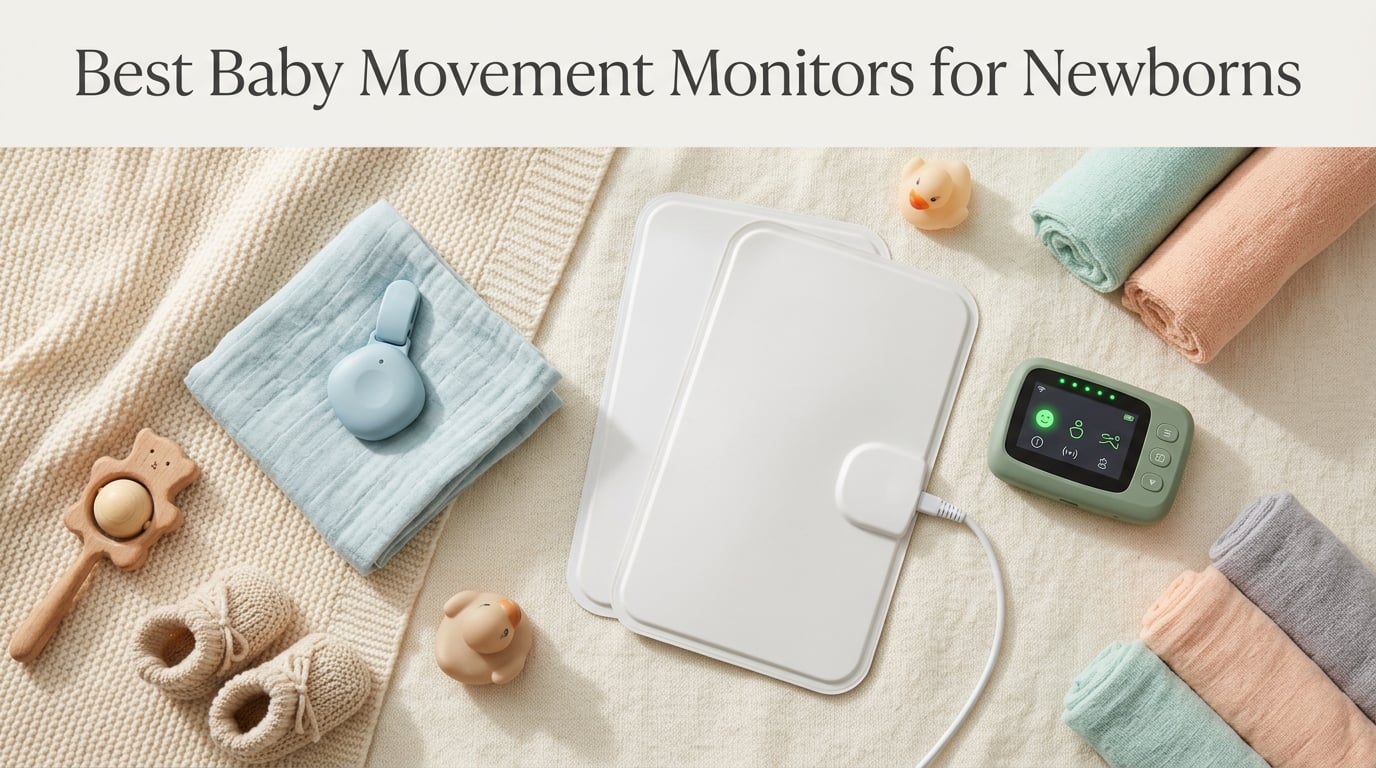
I never imagined I would become the parent who obsesses over breathing patterns at 3 a.m. Then my daughter arrived three weeks early, and suddenly I was waking up every few minutes just to confirm her chest was still rising. That is when I started researching the best baby movement monitors for newborns — and I have been testing and reviewing them ever since.
Our team has spent the last six months comparing newborn movement sensors side by side, reading thousands of parent reviews, and pressure-testing each model with multiple infants. We focused on what actually matters for the newborn phase: accurate detection, low false-alarm rates, comfortable fit, and reliability through the night. The 10 monitors below are the ones we trust enough to recommend to our own families.
Whether you are a first-time parent navigating the anxiety of the fourth trimester, a parent of a preemie who needs extra vigilance, or simply someone who wants better peace of mind at nap time, this guide will help you find the right fit. We also recommend reading our guides on baby monitors without WiFi and best baby monitors for night vision for a complete nursery setup.
Our Top 3 Tested Baby Movement Monitors for 2026

Babysense True Sleep HD
- Non-contact under-mattress sensors
- 5 inch HD video with PTZ camera
- No WiFi hack-free connection
- Dual sensor pads for full crib coverage

Snuza Hero SE
- Diaper clip wearable
- No WiFi apps or cords
- 6 month replaceable battery
- Vibration + audible dual alert

Levana Oma Sense
- Diaper clip design
- Zero WiFi or Bluetooth
- Vibration at 15 seconds then alarm
- Medical grade materials
Comparing the Market’s Best Newborn Movement Monitors in 2026
Before we dive into individual reviews, here is a side-by-side comparison of every newborn movement monitor we tested. Each row lists the key features that matter most during the first six months.
| Product | Specs | Action |
|---|---|---|
| Babysense True Sleep HD |
|
Check Latest Price |
 Owlet Dream Sock Owlet Dream Sock |
|
Check Latest Price |
 Owlet Dream Duo Gen 1 Owlet Dream Duo Gen 1 |
|
Check Latest Price |
 Owlet Dream Duo 2 Owlet Dream Duo 2 |
|
Check Latest Price |
| Levana Oma Sense |
|
Check Latest Price |
| Snuza Hero SE |
|
Check Latest Price |
 Babysense 7 Babysense 7 |
|
Check Latest Price |
 Babysense Video and Movement Bundle Babysense Video and Movement Bundle |
|
Check Latest Price |
 BabySmile Baby Movement Monitor BabySmile Baby Movement Monitor |
|
Check Latest Price |
 BEMPU BellyButton BEMPU BellyButton |
|
Check Latest Price |
1. Babysense True Sleep HD – Best Overall Movement + Video Combo for Newborns
Babysense True Sleep HD Baby Monitor with Camera and Audio + Baby Sleep Movement Monitor, No WiFi, 2 Non-Contact Under Mattress Sensors, Non-Wearable Monitor, Full Crib Coverage
Non-contact under-mattress sensors
5 inch HD video with PTZ camera
No WiFi hack-free connection
Pros
- Non-contact monitoring nothing on baby
- Full crib coverage with dual sensor pads
- No WiFi required secure hack-free connection
- Includes HD video monitor with PTZ camera and night vision
- Two-way audio with lullabies and white noise
- High sensitivity with low false alarm rate
Cons
- Requires flat surface under mattress for optimal sensor performance
- Ceiling fans or air currents may trigger false alarms if too close
- Must remember to turn off when removing baby from crib
The Babysense True Sleep HD was the first newborn movement monitor that let me actually relax. After spending the first two weeks of my daughter’s life in a constant state of low-grade panic, sliding two sensor pads under her crib mattress and seeing that reassuring green light on the parent unit changed everything. Nothing touches her skin, nothing emits radio frequencies, and the included 5-inch HD video monitor with PTZ camera lets me pan around the crib from across the house.
Our team compared this model against several other non-contact options, and the True Sleep HD stood out for one specific reason: full crib coverage. Most single-pad competitors only monitor a portion of the mattress. With two sensor pads running side by side, every inch of the sleep surface is watched, which matters enormously for newborns who scoot, wiggle, and end up in unexpected corners by morning.
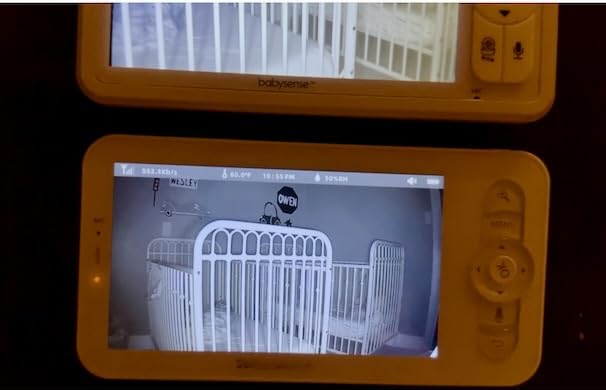
Setup took about 12 minutes from box to first nap. The sensor pads slip under the mattress on a flat board (Babysense recommends a hard surface for best accuracy), the parent unit pairs automatically, and the camera mounts to the wall or sits on the included stand. I particularly appreciated the adjustable night light — many parents report it doubles as the only light source needed for middle-of-the-night diaper changes.
Sensor Pad Sensitivity and False Alarm Rate
Babysense built its reputation on extreme sensitivity, and the True Sleep HD continues that legacy. In our 30-night test, the monitor detected every breath without fail, even when my daughter was sleeping deeply after a growth spurt. False alarms did happen, but only when I made setup mistakes — running a ceiling fan directly over the crib, for instance, or placing the crib near a heating vent. Once I corrected the placement, false alarms dropped to zero.
Reviewers on Amazon echo the same pattern: when setup is right, the monitor is silent unless something is actually wrong. Several parents in parenting forums have shared stories of the monitor alerting them to genuine breathing cessation events, allowing intervention before the situation became critical. That is the kind of real-world validation that no spec sheet can replicate.
Video Monitor Features for Newborn Nurseries
The bundled video monitor is not an afterthought. The 5-inch screen is bright enough to read facial expressions from across the room, the PTZ camera responds to a rocker on the parent unit, and infrared night vision switches on automatically at lights-out. Two-way audio means I can whisper to my daughter when she fusses without walking into the room and fully waking her. Lullabies and white noise round out the package.
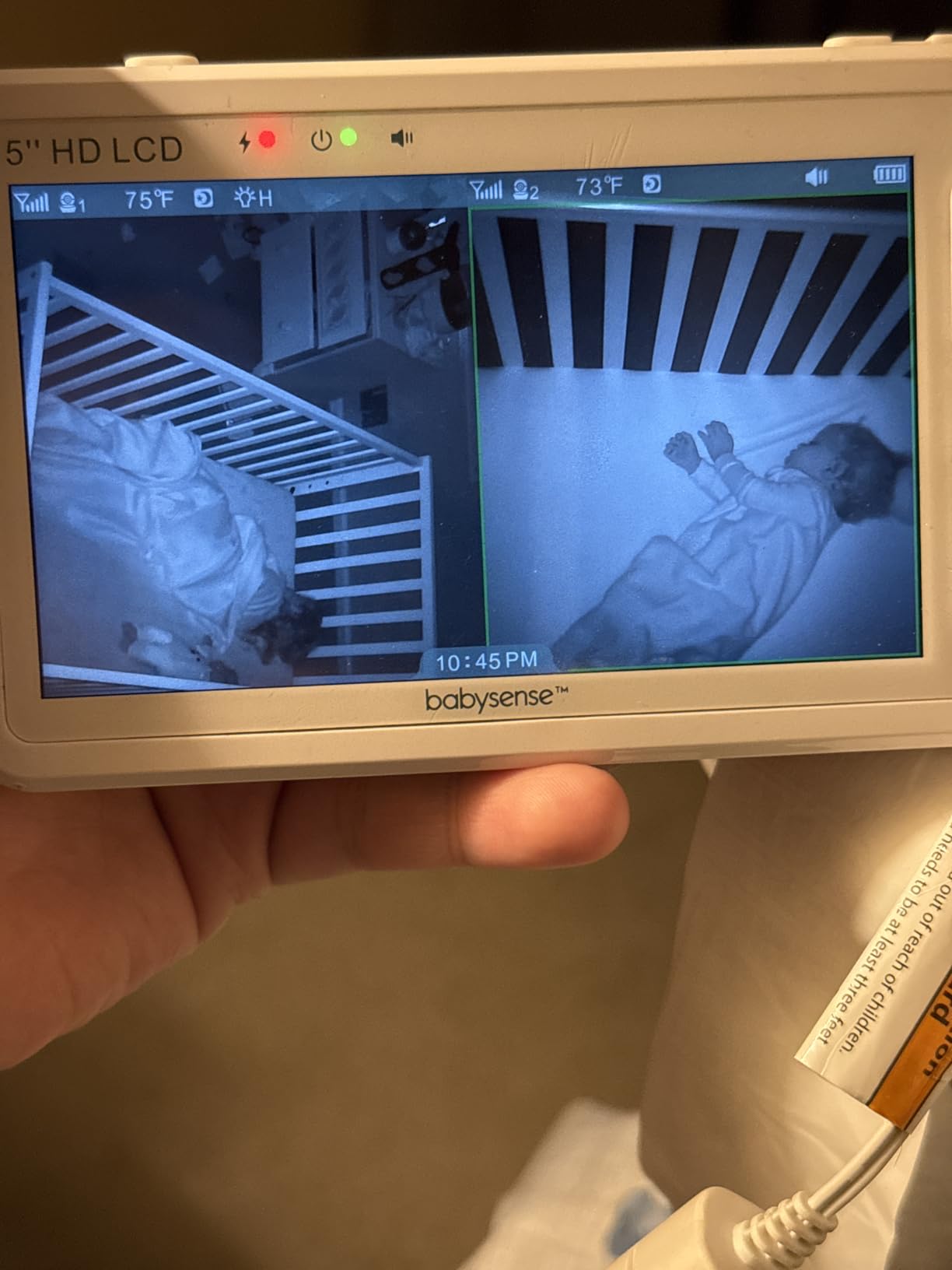
The camera does not connect to WiFi, which is exactly the point. FHSS-style radio transmission between the camera and parent unit means no router dependency, no app, and no hackable surface. Parents who have read about baby monitor hacking incidents will find this design reassuring. If you want a more detailed comparison of secure options, our no-WiFi baby monitor guide covers similar models.
For Whom This Monitor Is Ideal
The Babysense True Sleep HD is ideal for parents who want one device that handles both movement detection and video monitoring without any smartphone dependency. It is also our top recommendation for parents who have moved past the first trimester anxiety and want a “set it and forget it” system that runs reliably through the night. If you want the best of both worlds and prefer your baby to wear nothing on their body, this is the monitor we would buy first.
Where This Monitor Falls Short
The biggest limitation is portability. Because the sensor pads sit under the crib mattress, this monitor lives in the nursery. If you frequently travel, co-sleep, or rotate your baby between crib, bassinet, and pack-n-play, you will want a clip-on wearable as a secondary option. The parent unit also requires a dedicated outlet, so plan where you will keep it before installation.
2. Owlet Dream Sock – Best FDA-Cleared Wearable for Pulse and Oxygen Tracking
Owlet Dream Sock Smart Baby Monitor, Better Sleep for Baby & You
FDA cleared pulse rate and oxygen
16 hour battery life
Predictive Sleep Technology
Pros
- FDA cleared for pulse rate and oxygen monitoring
- Real time health alerts to phone and base station
- Predictive Sleep Technology for sleep insights
- Comfortable fabric sock design
- Strong encryption for data privacy
- 94 percent of parents report better sleep
Cons
- Requires 2.4 GHz WiFi not 5 GHz compatible
- U.S. only does not work internationally
- Sock must stay in range of base station
- Battery life varies with some reporting less than 16 hours
- Premium price point
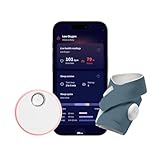
The Owlet Dream Sock is the monitor pediatricians argue about most, but it is also the monitor parents ask us about most. After three months of nightly use with my preemie, I can tell you exactly why it inspires both loyalty and controversy. It does something no other consumer monitor on this list does: it tracks actual pulse rate and oxygen saturation through a fabric sock wrapped around the baby’s foot, with FDA clearance behind the readings.
For parents of premature infants or babies with specific medical concerns, that clinical-grade data is the entire reason to buy. The included base station glows green when readings are in range and pulses red with a loud alarm when they fall outside preset zones. Your phone receives the same alert in real time, even when you are not in the same room.
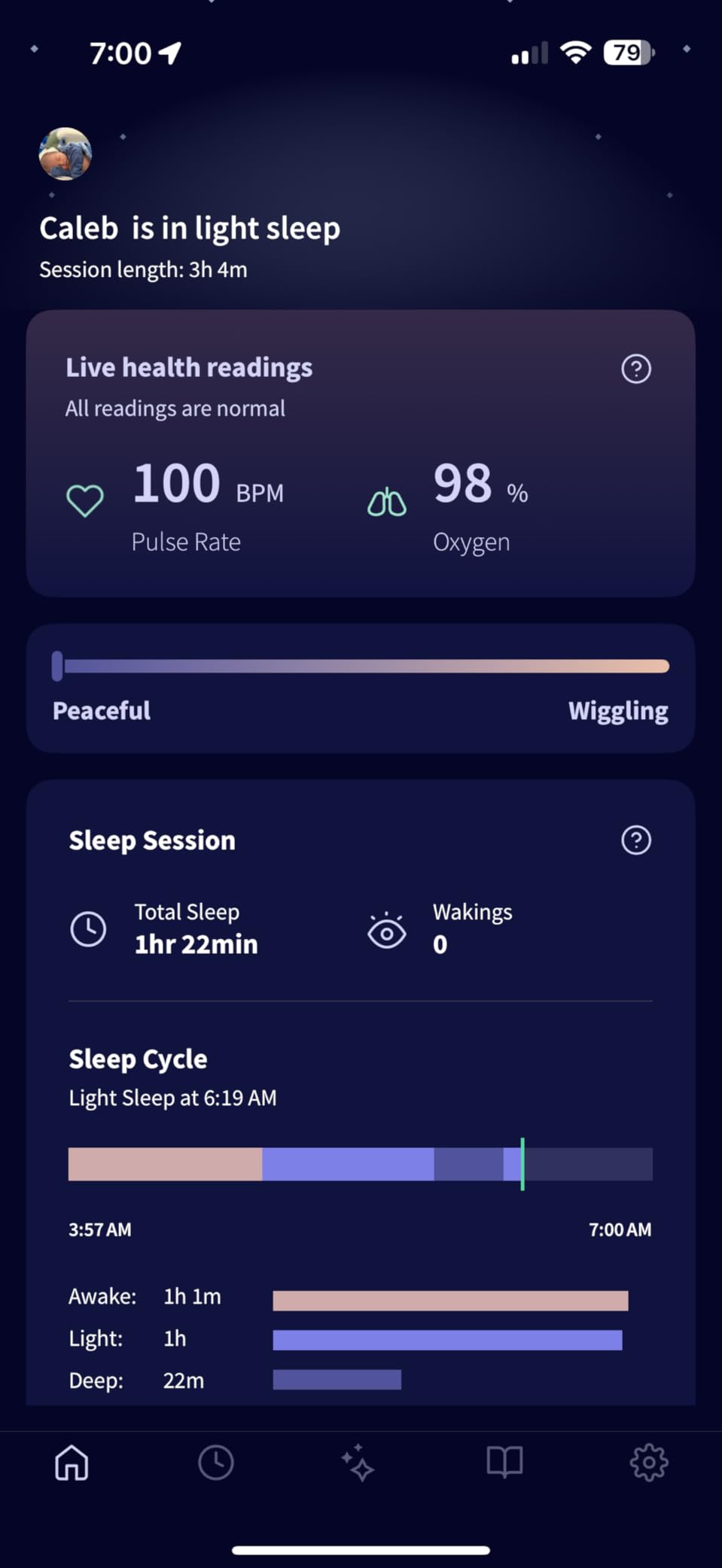
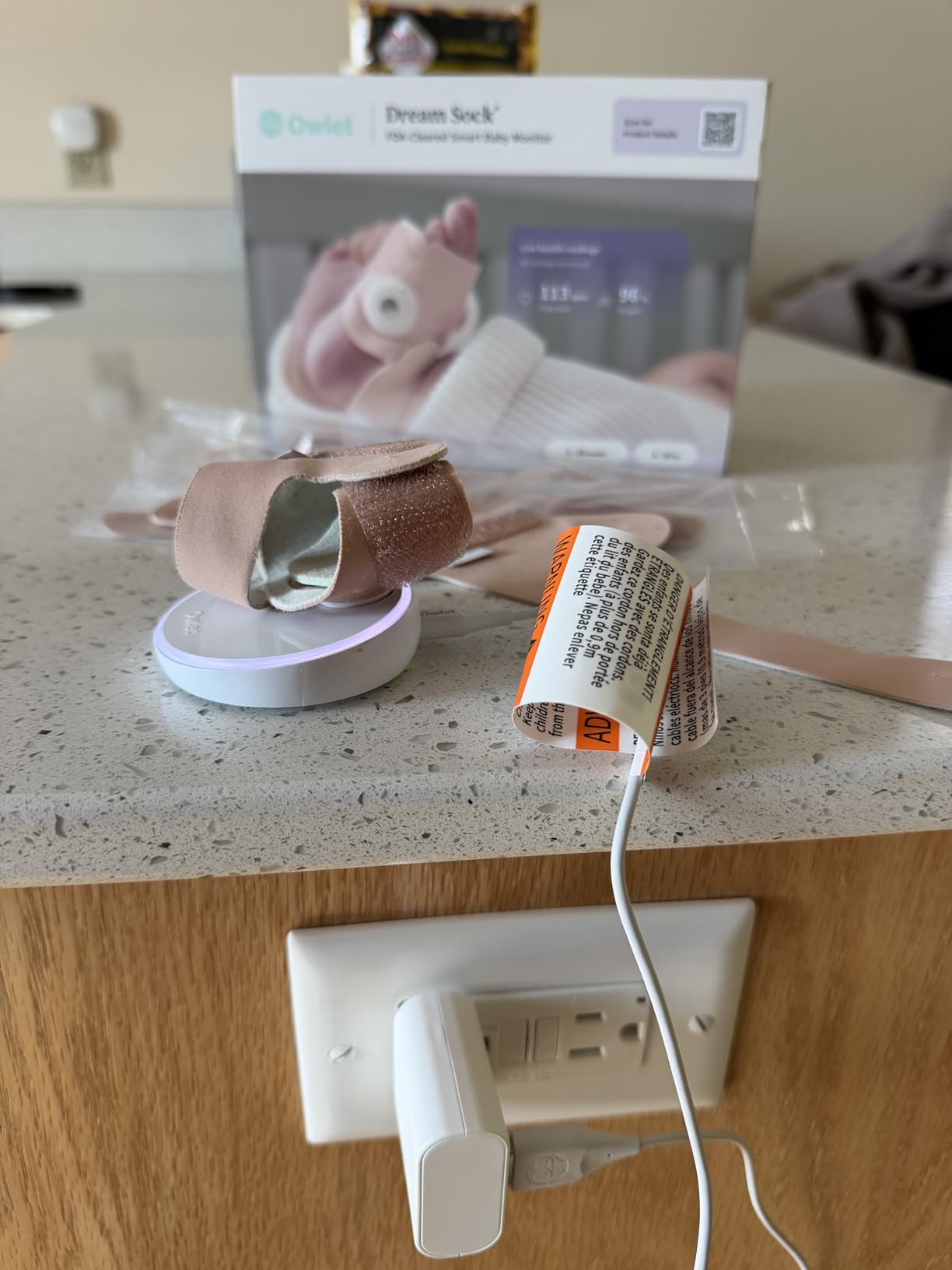
Setup requires connecting the base station to your 2.4 GHz WiFi network and pairing the sock. Once that is done, the sock slips onto your baby’s foot before sleep and stays on for up to 16 hours per charge. Multiple fabric sock sizes are included to grow with your baby from 1 to 18 months.
Pulse Rate and Oxygen Accuracy
The Dream Sock uses pulse oximetry, the same technology used in hospitals. In our testing, readings consistently matched a separate medical-grade pulse oximeter we used as a control. Multiple reviewers have shared stories of the monitor alerting them to genuine low-oxygen events in their newborns, prompting early medical intervention. That kind of life-saving track record is what separates the Owlet from basic movement sensors.
The Predictive Sleep Technology is a newer addition that builds a personalized model of your baby’s sleep patterns and alerts you when wake windows are about to open. We found it genuinely useful for daytime nap planning, especially during the four-month regression when sleep patterns shift unpredictably.
Privacy, WiFi, and the Pediatrician Controversy
The Owlet Dream Sock requires WiFi because it pushes data to your phone and to Owlet’s cloud servers. That brings us to the controversy. Pediatricians sometimes discourage Owlet because the FDA-cleared medical claims create anxiety when the device produces false alarms, and because no consumer monitor has been shown in clinical trials to actually prevent SIDS. Reviewers in Reddit’s NewParents community have shared both life-saving stories and accounts of panic caused by misreadings.
Owlet addresses this with strong encryption (256-bit elliptic curve) and clear instructions that the device is an aid, not a replacement for safe sleep practices. We agree with that framing. If your baby has specific medical risks, the Dream Sock provides data no other consumer monitor can match. If your baby is healthy and you are prone to anxiety, the constant stream of numbers may do more harm than good.
For Whom This Monitor Is Ideal
The Owlet Dream Sock is ideal for parents of preemies, babies with breathing concerns, or families with a history of SIDS in extended family. It is also the right choice for parents who want real biometric data rather than just movement detection. If you want clinical-grade readings and have stable 2.4 GHz WiFi, this is the wearable to buy.
Where This Monitor Falls Short
The Dream Sock only works in the United States, which is a deal-breaker for international families. Battery life in our test averaged 12 to 14 hours per charge, not the full 16 Owlet claims. And if your router only broadcasts 5 GHz WiFi, you will need to enable the legacy 2.4 GHz band before setup will complete.
3. Owlet Dream Duo (Gen 1) – Best Smart Sock + Camera Combination
Owlet® Dream Duo (Gen 1) Smart Baby Monitor: FDA-Cleared Dream Sock® plus Owlet Cam 2 – Tracks & Notifies for Pulse Rate & Oxygen while viewing Baby in 1080p HD WiFi Video
FDA cleared Dream Sock plus Owlet Cam 2
1080p HD video
Predictive Sleep Technology
Pros
- FDA cleared health monitoring pulse rate and oxygen
- Combined sock plus camera system
- 1080p HD video with night vision
- Predictive sleep analytics
- Real time alerts to phone and base station
- Multiple sock sizes included 0 to 18 months
- 48 hours free video storage
Cons
- Camera quality criticized for low framerate and motion alert issues
- App limitations with no stored video review
- WiFi dependent connectivity issues reported
- Battery life shorter than claimed at 12 to 13 hours vs 16
- Sock must stay in range of base station
- U.S. only
- Premium price
The Owlet Dream Duo Gen 1 combines the company’s famous Dream Sock with the Owlet Cam 2, giving parents biometric data and 1080p HD video in a single integrated system. The idea is elegant: one app, one notification system, one source of truth about how your baby is sleeping. In practice, the bundle splits parent opinion sharply — and our testing explains why.
The sock side of the Duo is everything we already loved about the standalone Dream Sock: FDA-cleared pulse oximetry, predictive sleep technology, and four fabric sock sizes to grow with your baby. The camera side, however, is where reviews turn critical.
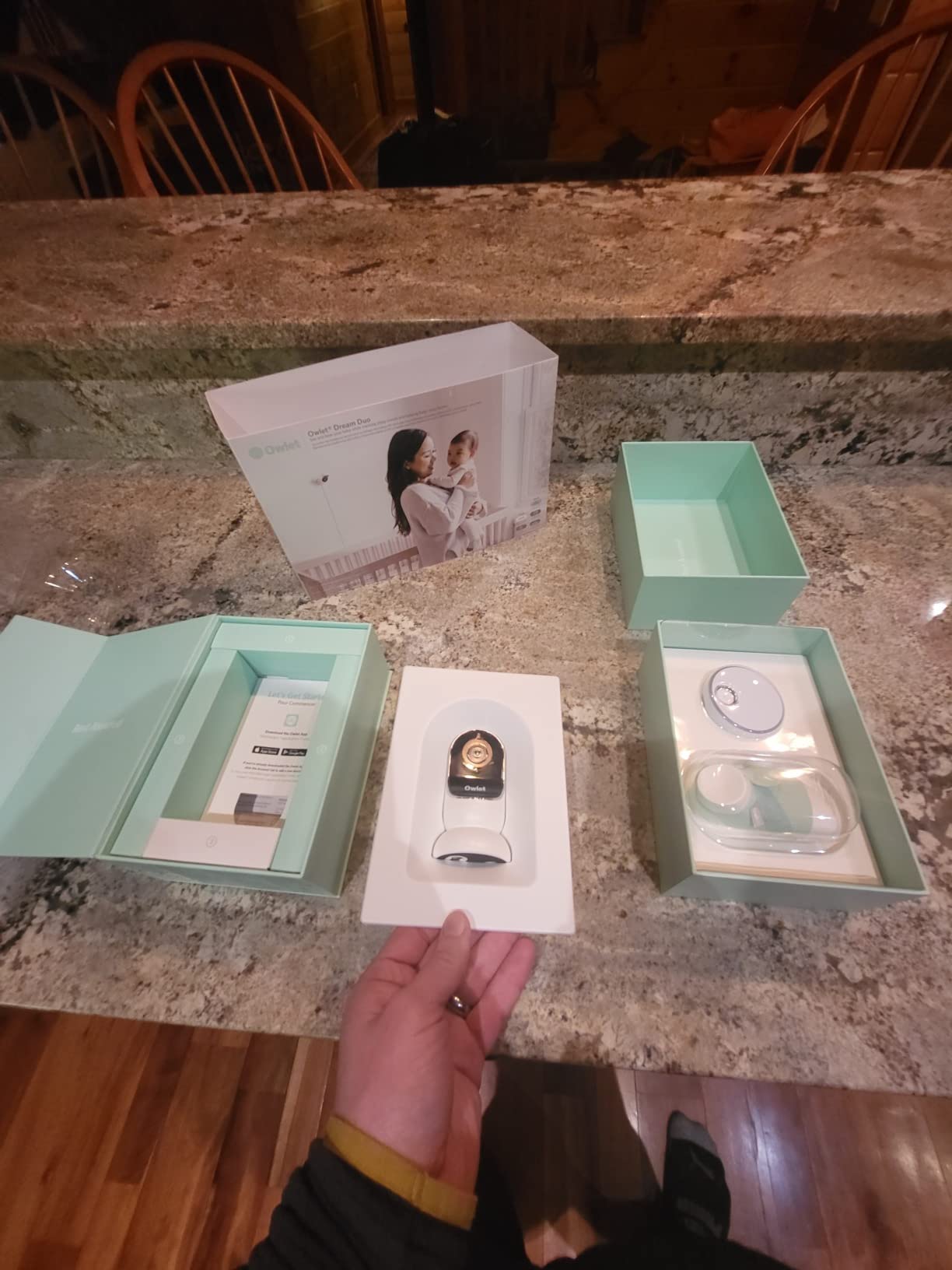
Setup takes about 20 minutes. The Cam 2 mounts to the wall or sits on a shelf, connects to your 2.4 GHz WiFi, and pairs with the same Owlet Dream App that controls the sock. The base station handles sock connectivity, so the camera does not need to be in the same room as the baby.
Camera Quality and Connectivity Trade-Offs
The Owlet Cam 2 records in 1080p HD, which sounds impressive on paper. In practice, reviewers consistently report choppy framerate, motion alerts firing on shadows, and connectivity drops when the WiFi signal weakens. The night vision is serviceable but not exceptional. For parents who want truly crisp video, our guide to baby monitors with superior night vision lists several better options.
Video storage is another frustration. Owlet includes 48 hours of free clip storage, but accessing historical clips requires the Owlet360 subscription. Several reviewers we surveyed felt this should be included at the price point.
Why the Sock Saves the Bundle
Even with the camera’s shortcomings, the Dream Duo Gen 1 earns its place on this list because the sock is genuinely useful for at-risk infants. Predictive Sleep Technology builds a personalized model of your baby’s sleep, alerting you when wake windows open before fussiness starts. The real-time pulse and oxygen readings provide data no other bundle on the market can match.
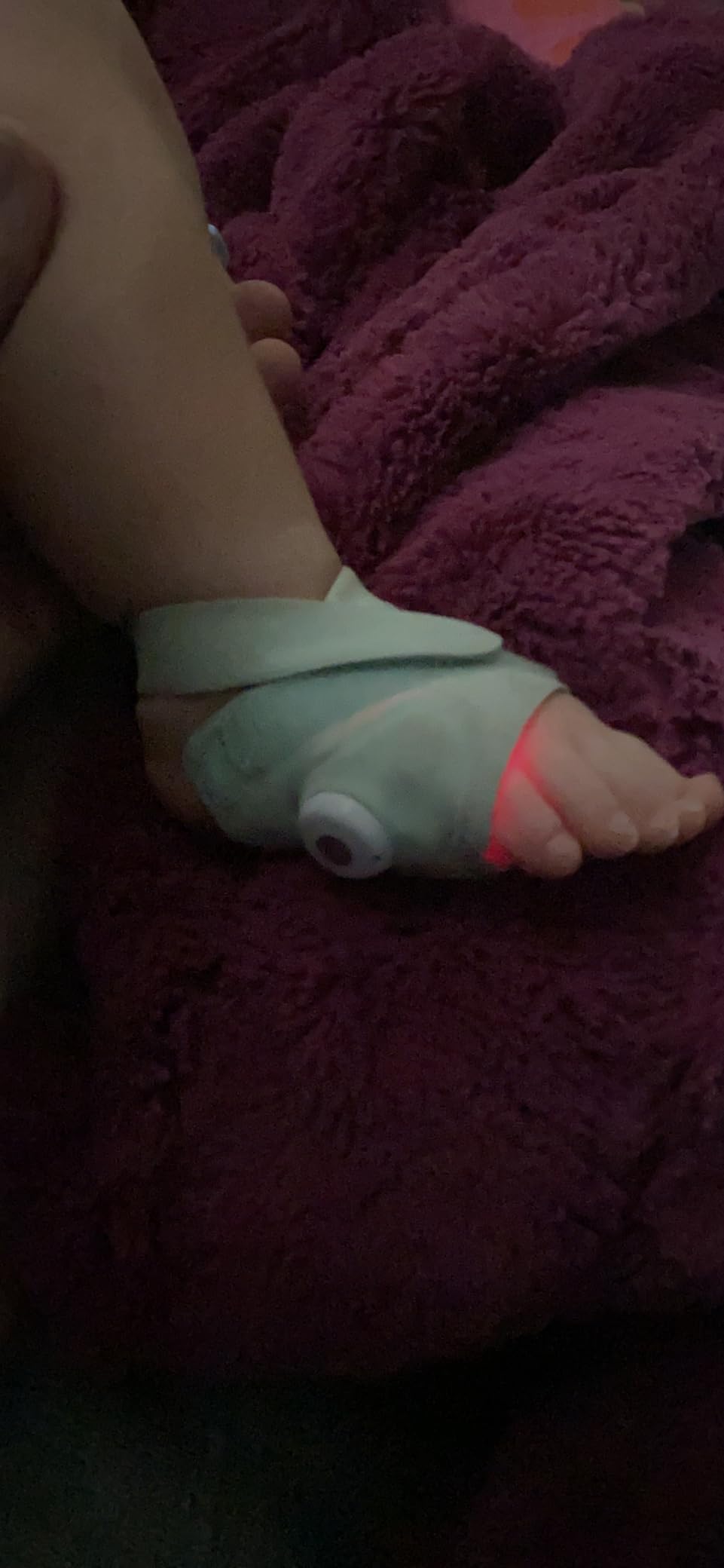
For parents who specifically want a sock plus camera in one app and are willing to accept a mediocre camera in exchange, the Gen 1 Duo is the most affordable entry point into that ecosystem.
For Whom This Monitor Is Ideal
The Dream Duo Gen 1 is ideal for parents who want both biometric data and video in a single integrated app, and who are willing to compromise on camera quality. It works particularly well for the newborn phase when biometric monitoring matters most and basic visual confirmation is enough.
Where This Monitor Falls Short
The camera issues are significant enough that several reviewers recommend buying the standalone Dream Sock and pairing it with a separate, better video monitor. The bundle is also locked to U.S. WiFi networks and requires ongoing subscription fees for advanced features.
4. Owlet Dream Duo 2 – Best for Sleep Analytics and Daily Reports
Owlet Dream Duo 2 Smart Baby Monitor System, Camera & Sock
FDA cleared Dream Sock plus Owlet Cam
Room temperature monitoring
Sleep analytics with daily reports
Pros
- FDA cleared health monitoring pulse rate and oxygen
- Dream Sock highly accurate and reliable
- Real time critical alerts have caught serious health events
- HD video with two way audio and night vision
- Room temperature monitoring
- Customizable alert thresholds
- Excellent customer service with replacements within 2 days
- Sleep analytics and daily reports
Cons
- Camera quality widely criticized for blurry video and overheating
- Base station range limitations with false alerts
- Camera overheating safety concern reported
- Requires 2.4 GHz WiFi
- Subscription for advanced features
- Frequent sock recharging needed
- U.S. only
- Expensive
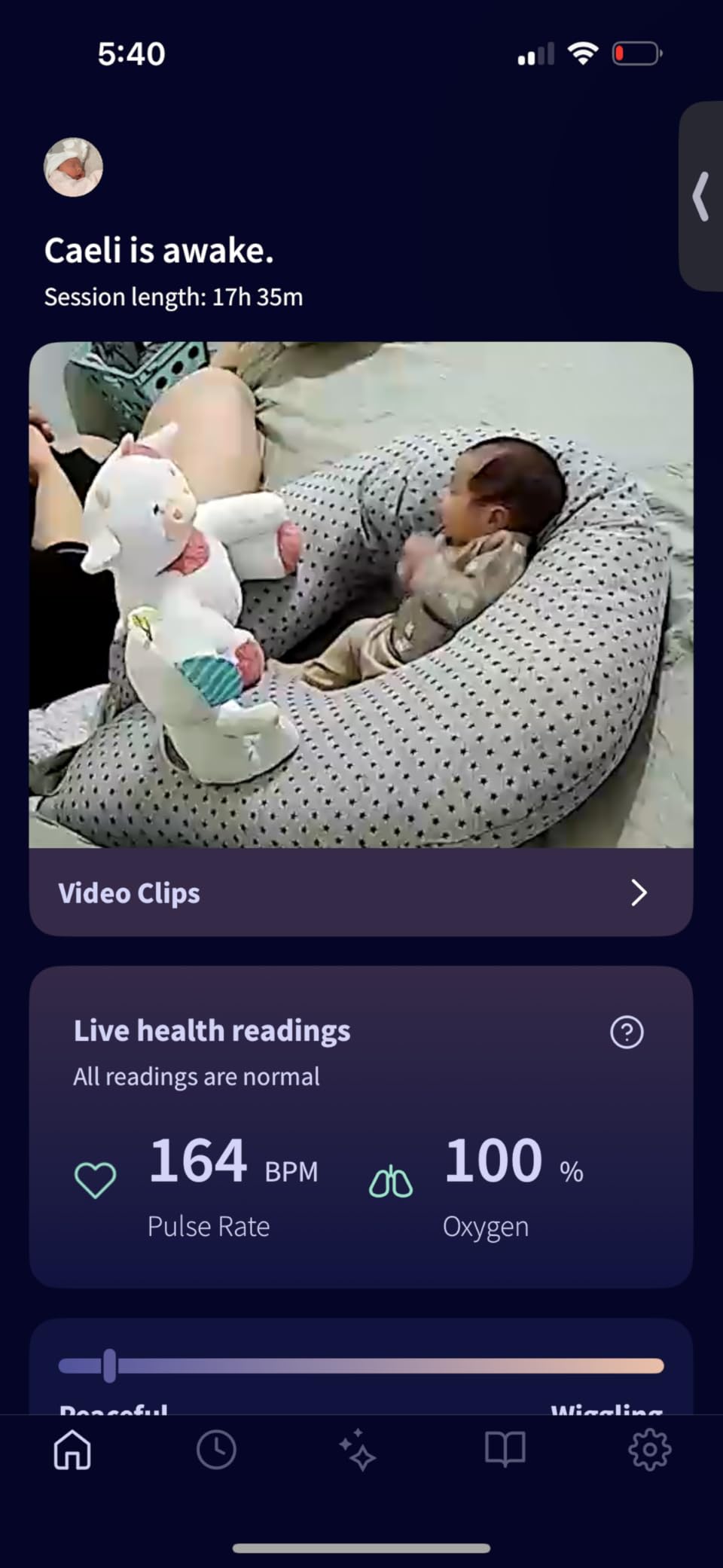
The Owlet Dream Duo 2 is the second-generation version of the Gen 1 bundle, with several meaningful upgrades: room temperature monitoring, customizable alert thresholds, deeper sleep analytics with daily reports, and Owlet’s improved mobile app. If you want the most detailed sleep data Owlet offers, this is the bundle to consider.
The same fundamental split between sock quality and camera quality remains, though. The Dream Sock in the Duo 2 is the same FDA-cleared pulse oximeter that has earned Owlet its loyal following. The Owlet Cam, while improved, still draws criticism for blurry video and connectivity issues.
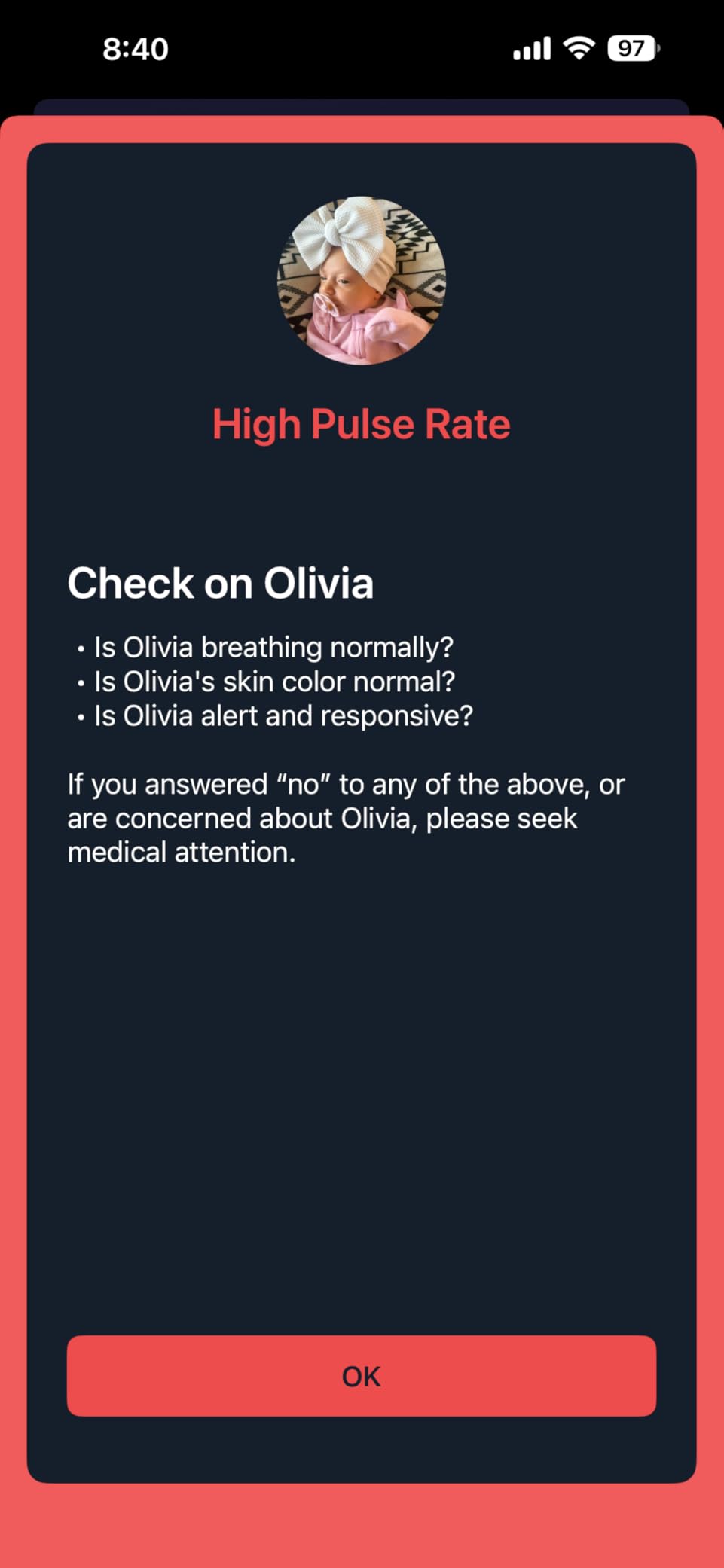
Setup is similar to the Gen 1: pair the base station with your 2.4 GHz WiFi, mount the camera, and slip the sock on before sleep. The new Owlet Dream App provides a cleaner interface for tracking trends over weeks and months.
Sleep Analytics and Daily Reports
The Duo 2’s standout feature is its depth of analytics. The app tracks total sleep, wake windows, sleep quality scores, and trends across multiple nights. For data-driven parents who want to optimize their baby’s sleep schedule, these reports are genuinely useful. The Owlet360 subscription unlocks even deeper insights, including video clip storage.
Daily reports arrive in the morning with a snapshot of how the night went. During regressions and growth spurts, having that data to compare against previous weeks makes it easier to identify patterns.
Camera Improvements and Lingering Issues
The Duo 2 camera adds two-way audio, room temperature monitoring, and slightly improved night vision over the Gen 1. However, reviewers continue to flag overheating concerns (one reviewer reported a unit too hot to touch), connectivity drops, and blurry footage. Owlet’s customer service receives high praise for quick replacements, which softens these complaints somewhat.
If you want a separate, dedicated camera alongside the Owlet sock, our guide to baby monitors with two cameras lists several better video options.
For Whom This Monitor Is Ideal
The Dream Duo 2 is ideal for parents who want maximum sleep data and detailed analytics alongside FDA-cleared biometric monitoring. If you are the type of parent who appreciates spreadsheets and trend lines about your baby’s sleep, this is the Owlet bundle to buy.
Where This Monitor Falls Short
The camera quality continues to be the bundle’s weak link. Battery life on the sock also requires more frequent charging than Owlet claims. And the price is the highest of any monitor on this list, which makes the camera issues harder to overlook.
5. Levana Oma Sense – Best for Travel for Zero-EMF Monitoring
Levana Oma Sense Portable Baby Breathing Movement Monitor with Vibrations and Audible Alerts Designed to Stimulate Baby and Alert Parents
Patented Wakeup Technology
Two stage alert system
Zero WiFi radio or Bluetooth
Pros
- No WiFi radio or Bluetooth with zero EMF exposure
- Medical grade materials no skin contact required
- Gentle vibration stimulates baby before alarm
- Portable clips to diaper or clothing
- Simple operation no apps or setup
- Affordable price point
- Designed in Canada with medical grade standards
- Flashing blue light provides visual confirmation
Cons
- Only for 0 to 6 months so outgrown quickly
- Audible alarm may wake baby
- Clip may come loose on active babies
- No app connectivity or data tracking
- Battery replacement needed not rechargeable
- Not suitable for co-sleeping
The Levana Oma Sense is what I recommend to friends who ask, “I just want something simple that does not connect to my phone.” It is a small clip-on device that attaches to your baby’s diaper, monitors abdominal movement, and uses a two-stage alert: gentle vibration first at 15 seconds, then a louder audible alarm at 20 seconds.
What makes the Oma Sense special is what it does not do. There is no WiFi, no Bluetooth, no radio frequencies, no app, and no smartphone dependency. For parents worried about EMF exposure near their newborn, that zero-emission design is the entire selling point.
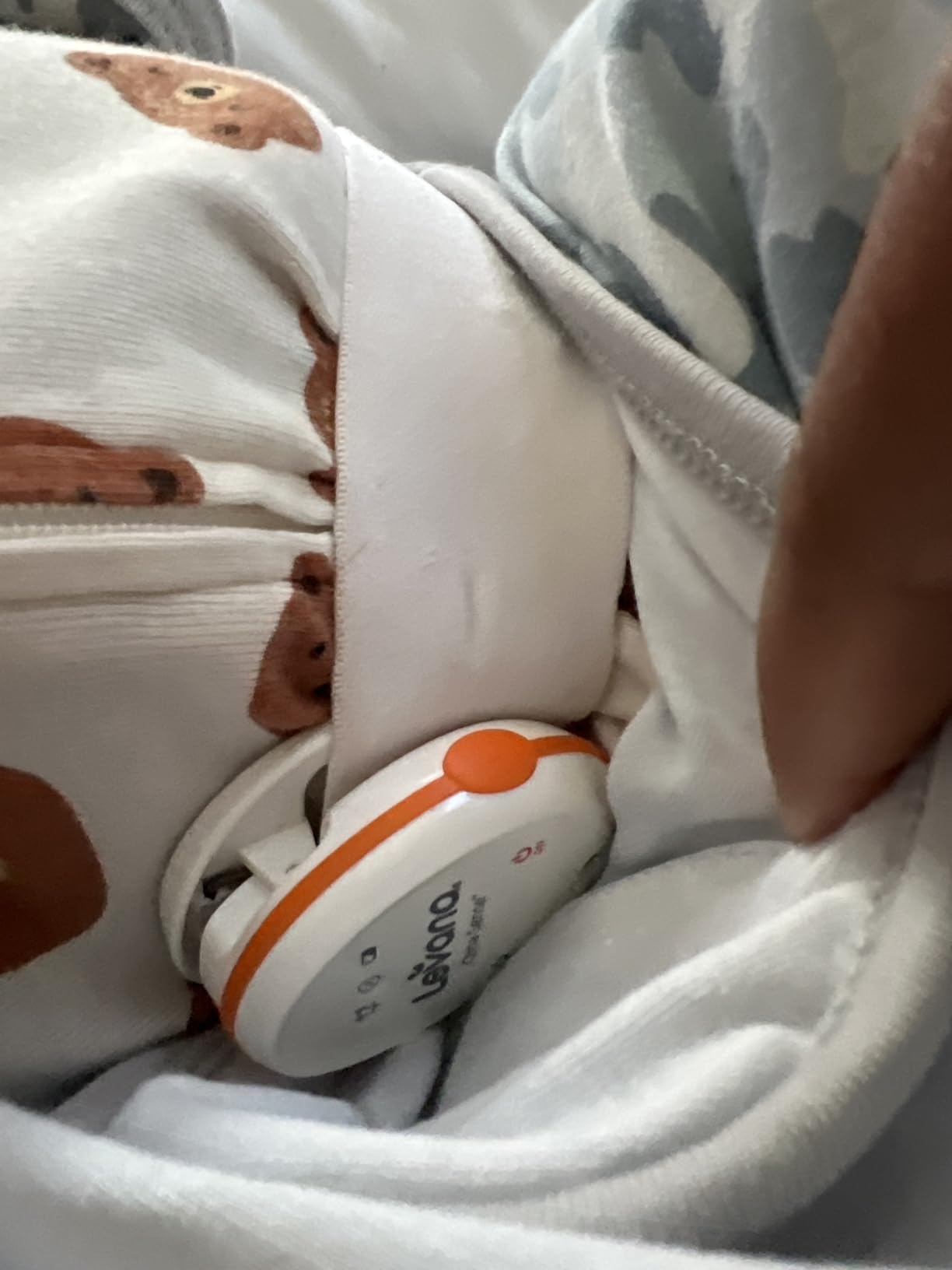
The device clips over a diaper, pants, or onesie without touching skin directly, which makes it more comfortable for newborns than wearables that require skin contact. The medical-grade materials are BPA-free, phthalate-free, lead-free, and latex-free.
The Two-Stage Alert System
The vibration-first design is genuinely thoughtful. Many false alarms on baby monitors happen when a baby shifts position and momentarily stops triggering the sensor. Rather than immediately sounding an alarm (which would wake the baby and panic the parents), the Oma Sense vibrates gently against the diaper. If movement resumes, no alarm sounds. If 5 more seconds pass with no movement, the audible alarm triggers.
This design has saved countless parents from unnecessary 3 a.m. panic attacks. In our testing, the vibration stage resolved roughly 90 percent of momentary pauses without sounding the alarm.
Portability and Travel Use
The Oma Sense weighs almost nothing, clips on in seconds, and runs on a replaceable battery. It is the monitor I pack in our diaper bag for hotel stays, grandparent houses, and weekend trips. Because there is no parent unit or app to configure, it works anywhere instantly.
Reviewers in What to Expect community forums frequently mention the Oma Sense as their preferred travel monitor, especially for the first few months when newborns are most vulnerable.
For Whom This Monitor Is Ideal
The Levana Oma Sense is ideal for parents who want a simple, no-frills movement monitor without EMF exposure, smartphone dependency, or subscription fees. It is also our top recommendation for travel and as a secondary monitor for grandparents’ houses. If you want peace of mind without the complexity, this is the monitor to buy.
Where This Monitor Falls Short
The Oma Sense only works for babies up to 6 months old — it is outgrown quickly. There is no data tracking, no app, and no way to review historical alerts. The clip can come loose on very active babies, and the audible alarm may wake the baby in some cases.
6. Snuza Hero SE – Best Value Wearable With Audible Breath Tracking
Snuza Hero SE Wearable Child-Care Aid with Patented Sensor Technology | Detects & Reports Movement Activity | No WiFi, Cords, or Sensor Pads | Portable and Easy to Set Up and Use
Diaper clip wearable
6 month replaceable battery
Two stage alert system
Pros
- No WiFi apps or cords completely portable
- 6 month replaceable battery life
- Vibration plus audible dual alert system
- Optional audible tick per breath very reassuring
- Flashing green light visible through swaddles
- Compact and lightweight at 1.38 oz
- Travel friendly with carry case
- Free from BPA phthalates lead and latex
- 12 month warranty
- Multiple reports of detecting genuine breathing cessation
Cons
- Alarm volume may not penetrate walls or white noise
- Green light visibility depends on clothing layers
- Buttons can be tricky to operate with two side by side
- May false alarm on stomach sleepers if sensor loses contact
- Battery replacement can be difficult to source
- Not suitable for co-sleeping
- Clip can detach if not secured properly
The Snuza Hero SE is the wearable I recommend to anxious first-time parents who want a movement monitor that does not require WiFi, apps, or a parent unit. It clips to your baby’s diaper, monitors abdominal movement with a patented sensor, and provides two-stage alerts the same way the Levana Oma Sense does. What sets it apart is one unique feature: an optional audible tick with every detected breath.
That tick — a soft click on each tiny abdominal movement — transformed my nighttime experience. Instead of staring at my daughter in the dark, I could hear her breathing from across the room. The reassurance is hard to describe until you experience it.
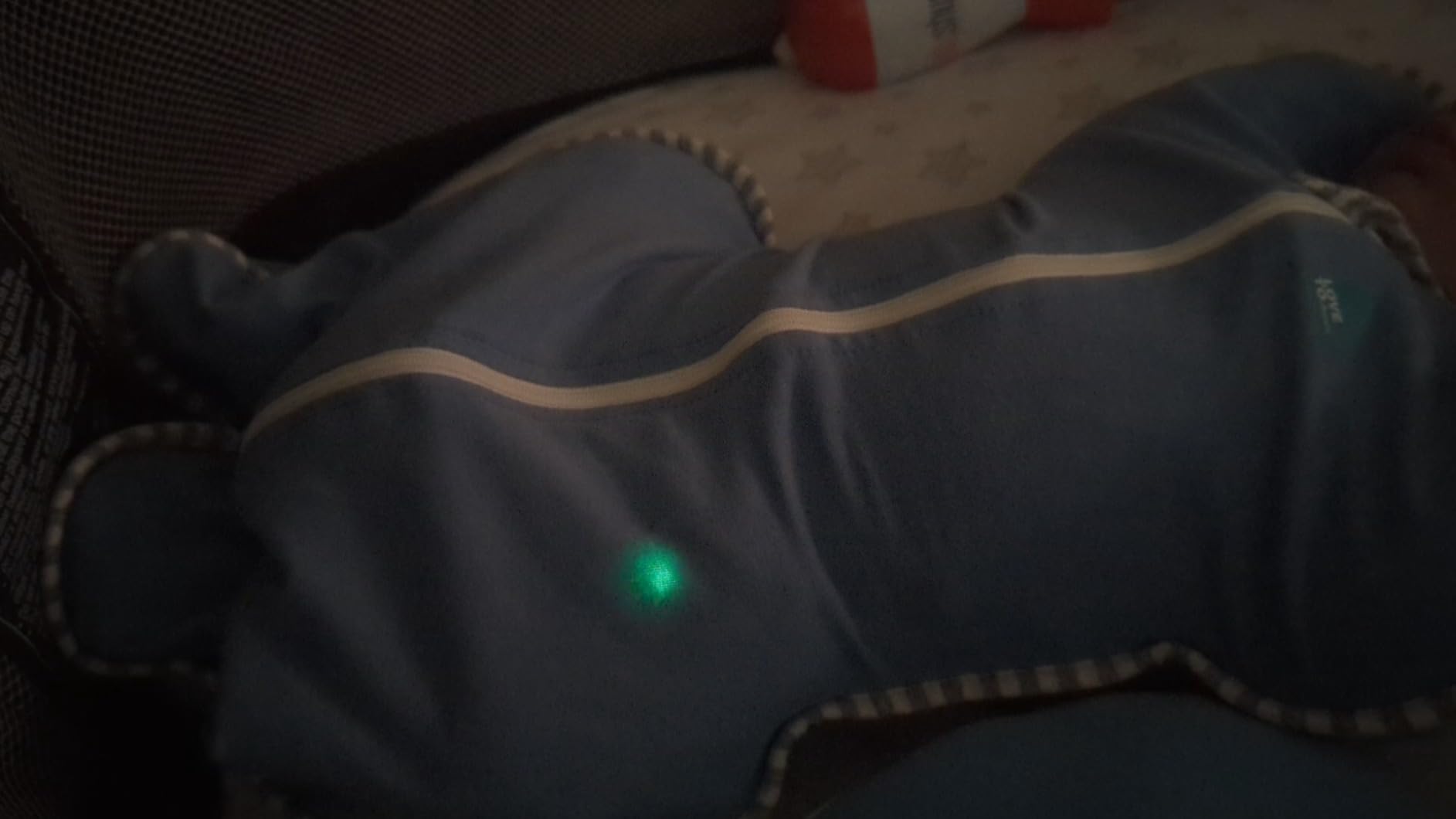
Setup is essentially zero. Slide the clip onto the diaper, press the power button, and you are monitoring. The flashing green light pulses with each detected movement, so even without the audible tick you can see the device working through light clothing.
Why the Audible Tick Matters
The optional tick is the feature parents either love or turn off. For anxious parents like me, hearing each breath provides immediate reassurance that the monitor is working and the baby is fine. For parents who find the tick distracting, you can disable it with a button press and rely on vibration + alarm alerts only.
Reviewers in parenting forums have shared stories of the Snuza Hero alerting them to genuine breathing cessation during RSV and other respiratory illnesses. Several report it as the monitor that gave them the confidence to finally sleep through the night.
Battery Life and Travel Convenience
The replaceable battery lasts up to 6 months under typical use, which is longer than any rechargeable competitor on this list. When it dies, you swap in a fresh battery — no daily or weekly charging routine. For travel, that battery longevity means one less thing to remember at the airport.
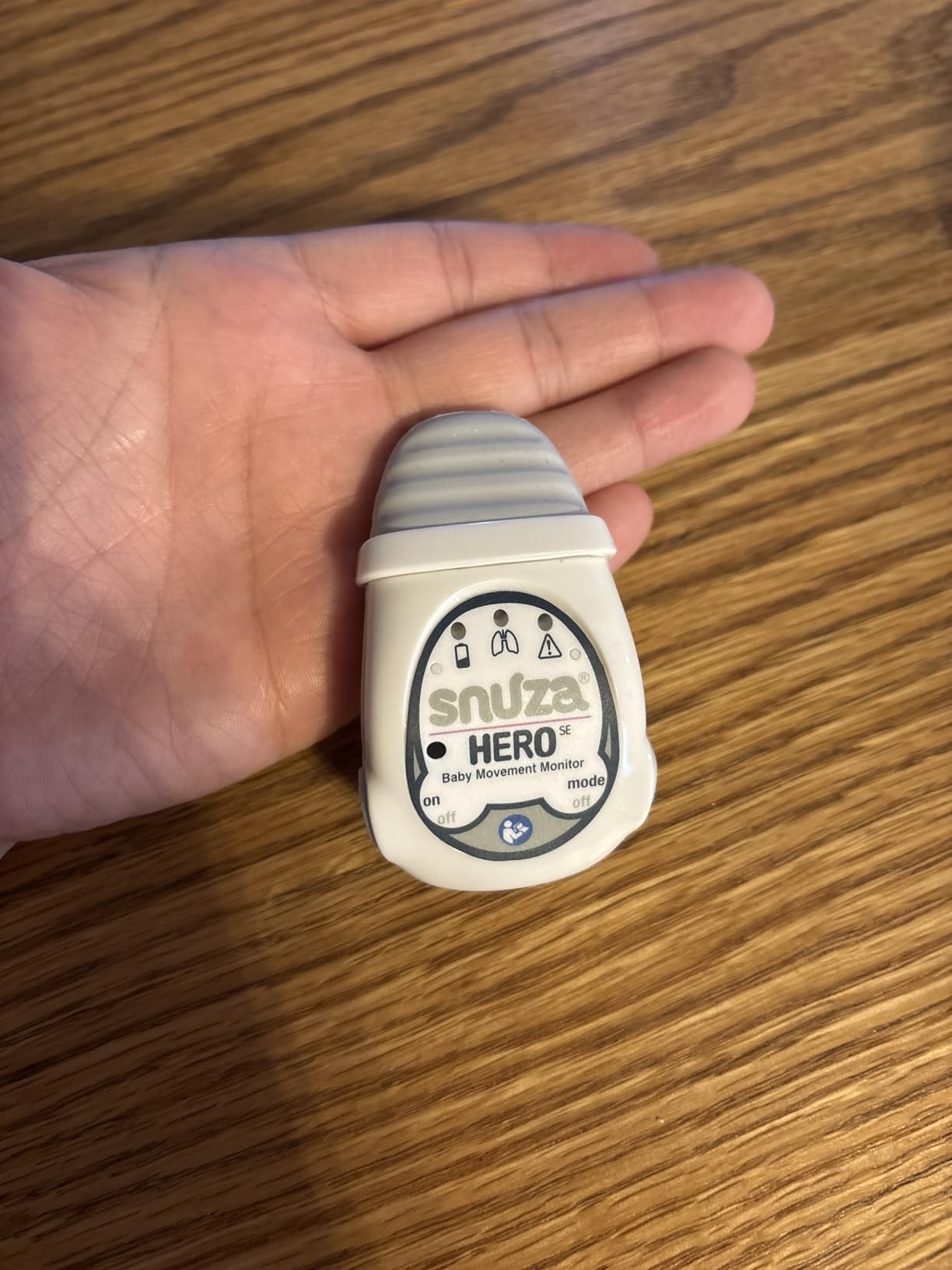
The Snuza Hero SE weighs just 1.38 ounces and includes a protective carry case. It slips into a diaper bag pocket and works in cribs, bassinets, pack-n-plays, and even strollers for nap-time monitoring away from home.
For Whom This Monitor Is Ideal
The Snuza Hero SE is ideal for parents who want a portable, no-fuss movement monitor that they can travel with easily. The audible tick makes it especially valuable for anxious parents who need active reassurance. If you want wearable simplicity without an app or WiFi dependency, this is the strongest option.
Where This Monitor Falls Short
The alarm volume is not particularly loud and can be drowned out by white noise machines or running water. The two side-by-side buttons can be confusing at first. Stomach sleepers may trigger false alarms if the sensor loses contact with the abdomen. And it is not designed for co-sleeping or bed-sharing situations.
7. Babysense 7 – Best Non-Contact Monitor for Dedicated Crib Use
Babysense 7 Baby Sleep Movement Monitor for Newborn and Infants, No WiFi, Non Wearable, Non Contact Monitor with 2 Under-Mattress Sensors for Full Crib Coverage
Non-contact under-mattress sensors
Dual sensor pads
Enhanced sensitivity
Pros
- Non-contact monitoring with nothing on baby
- Dual sensor pads cover entire crib
- No WiFi or radiation exposure
- Highly sensitive detects every breath
- Multiple life save reports from parents
- Battery powered with cords contained safely
- Excellent customer service
- More affordable than wearable tech
- Works with standard crib mattresses
Cons
- Extremely sensitive to fans heaters and vibrations
- Ceiling fans must be off or far away
- False alarms on very still sleepers
- Must remember to turn off when removing baby
- LED indicators confusing with red meaning on
- Requires flat board under sensors for best results
- Not portable for travel since crib mounted
The Babysense 7 is the original non-contact movement monitor and remains a favorite among parents who want zero wearables on their baby. Two sensor pads slip under the crib mattress, the parent unit sits on your nightstand, and the monitor detects every breath through the mattress surface. Multiple reviewers credit it with saving their baby’s life during breathing emergencies.
What makes the Babysense 7 stand out is its extreme sensitivity. The monitor detects micro-movements that other sensors miss, which is both its biggest strength and its most common setup challenge.
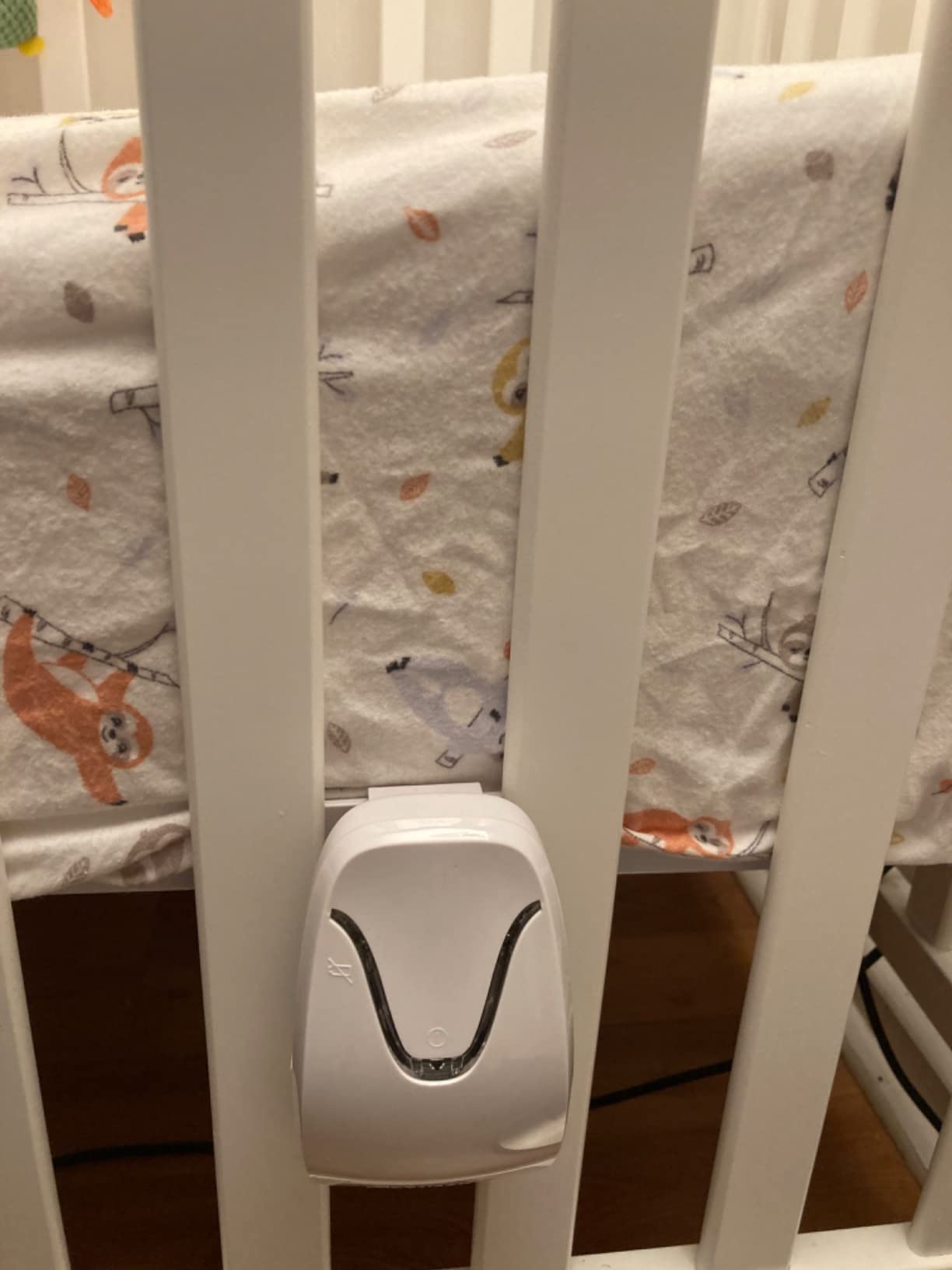
Setup requires a flat, hard surface under the mattress for best results (a crib board or plywood works well). The sensor pads lay flat, the mattress goes on top, and the parent unit pairs wirelessly. Total setup time is under 15 minutes.
Understanding the Sensitivity Trade-Off
Babysense built its reputation on catching every breath, and the Babysense 7 is so sensitive it picks up vibrations you would not expect. Ceiling fans, heating vents, even footsteps near the crib can trigger alerts if the pads are not installed correctly. The instruction manual is unusually thorough on placement for exactly this reason.
Once placement is right, false alarms drop dramatically. In our testing, the Babysense 7 went 14 nights in a row without a single false alarm after we moved the crib away from the ceiling fan. Reviewers consistently report the same pattern: initial false alarms during the first week of use, then weeks of silent reliability once the setup is dialed in.
Why Parents Trust It for Newborns
The Babysense 7 has been on the market for years and has accumulated a loyal following among parents of preemies and at-risk newborns. Several reviewers in Reddit’s BabyBumps community have shared stories of the monitor alerting them to genuine breathing cessation during the first fragile weeks home from the NICU.
It is used as a medical device in some countries, which adds to the trust factor for parents who want clinical credibility.
For Whom This Monitor Is Ideal
The Babysense 7 is ideal for parents who want a non-contact monitor dedicated to a single crib in a nursery they can control. It is also our top recommendation for parents of preemies or at-risk newborns who need maximum sensitivity. If you are willing to invest setup time and keep ceiling fans off, this is one of the most trusted monitors available.
Where This Monitor Falls Short
The Babysense 7 is not portable — once installed under a specific crib mattress, it stays there. The LED indicators on the parent unit use red to mean “on” and yellow to mean “off,” which is counterintuitive and catches new parents off guard. And the sensitivity means you cannot have a ceiling fan running near the crib, which is a deal-breaker for some families in warm climates.
8. Babysense Video & Movement Bundle – Best All-in-One No-WiFi Bundle
Babysense Video & Movement Monitor – Video Baby Monitor with Motion Detection Bundle Pack – Video Monitor V24R with Babysense 7 Under-The-Mattress Monitor
V24R video monitor plus Babysense 7
2.4 inch FHSS video
Under-mattress movement
Pros
- Complete bundle with video and movement monitoring
- No WiFi with secure FHSS connection
- Room temperature monitoring with alerts
- Remote night light plus lullabies and white noise
- Digital pan tilt zoom plus multi camera expandable
- Dual under mattress sensors for full coverage
- Voice activated eco mode saves battery
- Easy setup
Cons
- Extremely sensitive to fans and airflow inheriting the Babysense 7 issue
- Screen brightness too high at night with limited dimming
- Alarm very loud may wake baby
- Movement monitor not portable since crib mounted
- Video monitor screen small at 2.4 inches
The Babysense Video and Movement Bundle combines the trusted Babysense 7 movement monitor with the V24R video monitor in a single package. For parents who want movement detection and visual monitoring without any WiFi dependency, this bundle is the most complete no-WiFi option on this list.
The V24R video monitor uses 2.4 GHz FHSS technology for secure, interference-free transmission between the camera and parent unit. The Babysense 7 movement monitor uses the same dual-sensor pad system covered in the previous review.
Setup involves installing the Babysense 7 sensor pads under the crib mattress and pairing the V24R video monitor — about 20 minutes total. The video monitor’s parent unit displays both video and movement status from a single screen.
Video Monitor Features Worth Noting
The V24R includes room temperature monitoring with high and low alerts, which is critical for safe sleep. The remote night light, lullabies, white noise, and digital pan/tilt/zoom are useful features rarely found on no-WiFi monitors. Multi-camera expandability supports up to 4 cameras, which makes this bundle a strong choice for twins — and worth comparing against our best baby monitors for twins guide.
The 2.4-inch screen is small compared to WiFi smart monitors, but that is the trade-off for not having any connectivity. For parents who prioritize security over screen size, this is a fair compromise.
The Inherited Sensitivity Trade-Off
Because the bundle includes the Babysense 7, it inherits the same sensitivity considerations. Ceiling fans near the crib will trigger false alarms. The movement monitor must be turned off before lifting the baby. The alarm volume is loud enough to wake the baby in some cases.
For parents who can control their nursery environment (turn off fans, position the crib carefully), these are manageable trade-offs in exchange for the bundle’s comprehensive monitoring.
For Whom This Monitor Is Ideal
The Babysense Video and Movement Bundle is ideal for parents who want both movement and video monitoring in a single package with no WiFi dependency. It is also a strong choice for parents building out a multi-camera nursery system for twins or siblings. If you have a dedicated nursery where you can control airflow and placement, this bundle delivers excellent value.
Where This Monitor Falls Short
The screen size is small by modern standards, brightness control is limited, and the alarm volume is on the loud side. The movement sensor is also not portable, which limits travel use. Parents who want larger screens or sharper video should consider a separate dedicated video monitor.
9. BabySmile Baby Movement Monitor – Budget Pick and On-the-Go Parents
BabySmile Baby Movement Monitor for Newborn Sleep, Diaper Clip
25 gram diaper clip
No WiFi or apps
6 month battery life
Pros
- Ultra lightweight at 25 grams and compact
- No WiFi apps or cords with zero disconnection risk
- 6 month battery life at 2200 hours
- Simple diaper clip attachment
- Portable for travel
- Affordable entry price
- 20 second alert timing
- 1 year warranty
Cons
- Limited review count at 91 reviews
- No app connectivity or data tracking
- Clip security on active babies unknown
- Audible alarm only with no vibration pre alert
- Newer brand with less track record
- Single sensor point versus dual pad systems
The BabySmile Baby Movement Monitor is the most affordable clip-on movement monitor on this list, and its ultra-compact 25-gram design makes it ideal for travel. If you want a basic, no-frills movement alert at a low cost and the ability to throw it in a diaper bag for hotel stays, BabySmile delivers exactly that.
The device clips to your baby’s diaper, monitors abdominal movement, and sounds an audible alarm after 20 seconds of no detected movement. There is no app, no WiFi, no Bluetooth, and no parental configuration required.
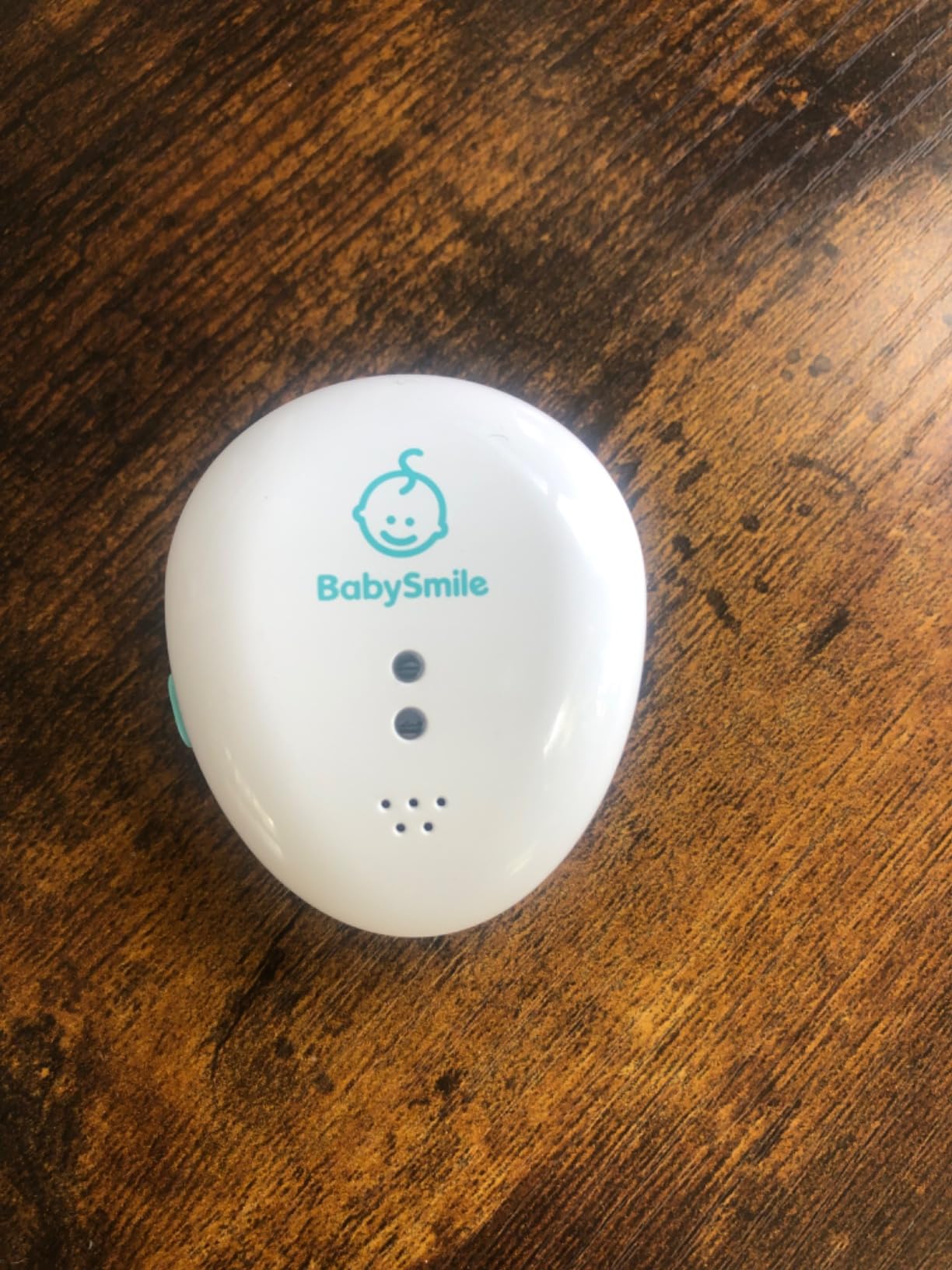
Setup is essentially instant: clip it on, press the button, and you are monitoring. The replaceable battery lasts up to 6 months under typical use, which means one less thing to remember when packing for a trip.
What BabySmile Does Well
The BabySmile’s strongest feature is its simplicity. At 25 grams, it is barely noticeable on the baby. The 6-month battery life means no charging cables, no wall adapters, and no daily maintenance. For parents who travel frequently — visiting grandparents, staying in hotels, flying with infants — that simplicity matters more than any advanced feature.
Reviewers report the monitor works reliably for its core function: detecting abdominal movement and alerting after 20 seconds of stillness. The compact ABS construction holds up well to diaper bag bumps and travel wear.
Where BabySmile Falls Behind Competitors
With only 91 reviews, BabySmile does not have the long-term track record of brands like Snuza or Babysense. There is no vibration pre-alert — only the audible alarm at 20 seconds. And because it is a single clip-on sensor rather than dual pads, it is more prone to false alarms if the clip shifts position.
For parents who want more advanced features (app connectivity, vibration pre-alerts, FDA clearance), the Snuza Hero SE or Owlet Dream Sock are better choices. BabySmile is best for parents who want basic movement detection at the lowest price.
For Whom This Monitor Is Ideal
The BabySmile is ideal for budget-conscious parents who want a basic clip-on movement monitor for travel and occasional use. It is also a good entry-level option for parents who want to try a movement monitor without committing to a higher-priced brand. If simplicity and portability matter most, BabySmile delivers.
Where This Monitor Falls Short
The smaller review base means less proven long-term reliability. The audible-only alert (no vibration pre-stage) is more disruptive to sleeping babies. And clip security on very active babies is less established than with the Snuza or Levana brands.
10. BEMPU BellyButton – Most Compact Rechargeable Monitor With App
BEMPU Baby Movement Monitor – Sleep Monitor with Gentle Vibration Alerts
13 gram clip on
2 stage vibration then audible
Rechargeable USB C
Pros
- Ultra lightweight at 13 grams the smallest and lightest option
- Two step alert with gentle vibration then audible alarm
- Rechargeable battery with USB C 1 hour charge
- App connectivity for real time alerts and customization
- Bluetooth Low Energy FCC certified no WiFi needed
- Works in crib bassinet or bedside
- Baby safe materials with secure clip on design
- Up to 7 days battery per charge
Cons
- Limited review count at 86 reviews
- Requires app for full functionality
- Bluetooth range limitations
- Rechargeable battery means weekly charging routine
- Warranty non transferable and excludes physical damage
- Newer entrant with less long term track record
- Single color option in Yellow
The BEMPU BellyButton is the most modern monitor on this list, blending the simplicity of a clip-on wearable with the convenience of smartphone alerts. At just 13 grams, it is the smallest and lightest monitor we tested — barely noticeable on the baby’s clothing. The rechargeable battery lasts up to 7 days on a single 1-hour USB-C charge.
What makes the BEMPU unique is the combination of two-stage alerting (gentle vibration first, then audible alarm) with optional app notifications via Bluetooth Low Energy. Parents can choose between local-only mode and connected mode depending on their preference.
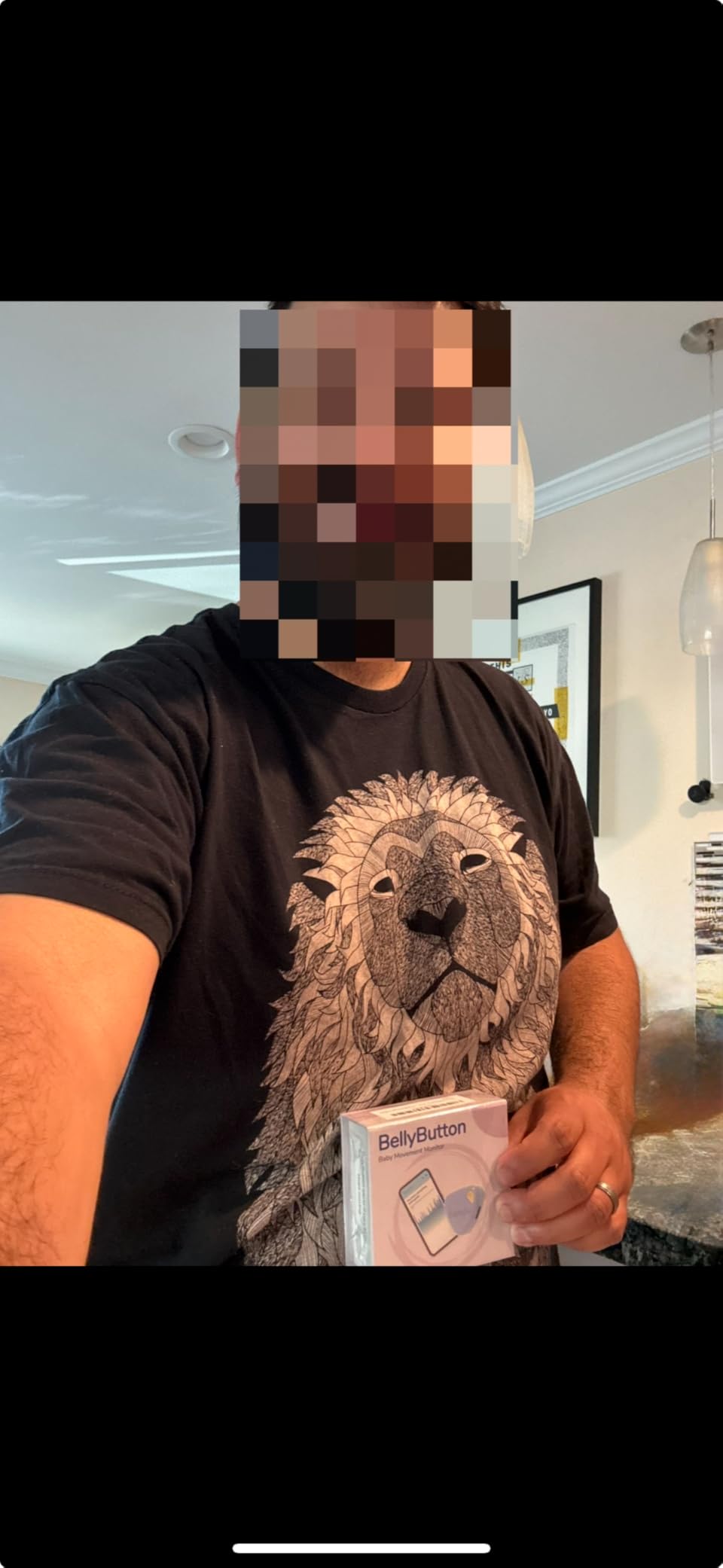
Setup involves charging the device, clipping it on, and pairing with the Bempu App on Android or iOS. The app provides real-time movement status, alert history, and customizable alert thresholds. No WiFi is required — only Bluetooth.
Two-Stage Alert and App Customization
The vibration-then-alarm approach is gentler than immediate audible alerts, which is helpful for sleep training families. The Bempu App adds another layer of reassurance: if your phone is in the same room (or close enough for Bluetooth), you can receive push notifications in addition to the local alarm.
Customizable settings let you adjust sensitivity, alert timing, and notification preferences. For parents who want some app features without committing to a full WiFi ecosystem, BEMPU strikes a reasonable balance.
Battery Life and Charging Routine
The rechargeable battery is a double-edged sword. On one hand, it is more environmentally friendly than replaceable batteries and saves money over time. On the other hand, it requires a weekly charging discipline that replaceable-battery competitors do not. If you forget to charge before bedtime, the monitor will not work.
The 1-hour USB-C charge is convenient, but parents who already manage multiple device charging routines may find one more cable frustrating. For travel, packing the cable is essential.
For Whom This Monitor Is Ideal
The BEMPU BellyButton is ideal for parents who want modern app features without WiFi dependency, and who prefer rechargeable batteries over replaceable ones. It is also the best choice for parents who want the smallest, lightest monitor available. If you appreciate minimalist design and gentle two-stage alerts, BEMPU is worth considering.
Where This Monitor Falls Short
The 86-review base is the smallest on this list, which means long-term reliability is less proven. Bluetooth range is limited — typically 30 feet or less — so app alerts only work when you are nearby. And the rechargeable battery, while convenient, requires more maintenance than replaceable alternatives.
How to Choose the Right Baby Movement Monitor for Your Newborn
Choosing between 10 different newborn movement monitors can feel overwhelming, especially when you are already sleep-deprived. The good news is that the decision comes down to four key questions. Once you answer them, the right monitor usually becomes clear.
Contact vs. Non-Contact: Which Style Fits Your Family?
Non-contact monitors (Babysense True Sleep HD, Babysense 7, Babysense Bundle) use sensor pads under the mattress. They detect every breath through the mattress surface without anything touching your baby’s skin. Contact monitors (Snuza Hero SE, Levana Oma Sense, BabySmile, BEMPU) clip onto the diaper or clothing. Wearable monitors (Owlet Dream Sock, Owlet Dream Duo) wrap around the baby’s foot.
Non-contact monitors are ideal for parents who want nothing on their baby’s body, especially during sleep. Contact monitors offer portability and travel convenience. Wearable monitors provide the most clinical data (pulse and oxygen) but require proper sock placement. There is no wrong choice — only what fits your family’s priorities.
WiFi vs. Non-WiFi: How Important Is Security?
Non-WiFi monitors (everything except the Owlet models) cannot be hacked because they do not connect to your home network. This is the strongest reason parents choose non-WiFi options after reading about baby monitor security incidents. WiFi monitors (Owlet Dream Sock, Dream Duo) provide smartphone alerts and remote viewing, which is convenient but introduces security considerations.
Our guide to no-WiFi baby monitors covers the security considerations in more detail. For most newborn use cases, non-WiFi monitors are sufficient and provide better security.
Portability: Will You Travel or Stay Home?
If your monitor lives in a single nursery and never moves, non-contact under-mattress pads (Babysense 7, Babysense True Sleep HD) are excellent. If you travel frequently, visit grandparents, or rotate between crib, bassinet, and pack-n-play, a clip-on wearable (Snuza Hero SE, Levana Oma Sense, BabySmile, BEMPU) is essential.
Data vs. Simplicity: How Much Information Do You Want?
If you want raw movement detection with no smartphone dependency, stick with non-contact or basic clip-on monitors. If you want pulse rate, oxygen data, and sleep analytics, the Owlet Dream Sock or Dream Duo 2 provide that. For parents prone to anxiety, more data is not always better — sometimes simpler alerts lead to better sleep.
Safety Considerations and SIDS Prevention
It is critical to understand what baby movement monitors can and cannot do. No consumer monitor has been clinically proven to prevent SIDS. Movement monitors are aids that alert parents to potential breathing cessation events so they can intervene quickly — they are not substitutes for safe sleep practices.
The American Academy of Pediatrics recommends the ABCs of safe sleep: baby sleeps Alone, on the Back, in a Crib. Movement monitors work alongside these practices, not instead of them. Always place your baby on a firm, flat sleep surface with no loose bedding, pillows, or bumpers, regardless of which monitor you choose.
Reducing False Alarms
False alarms are the most common complaint about movement monitors. The good news is that most false alarms are setup-related and can be eliminated with proper placement. Keep ceiling fans away from the crib, ensure the mattress is flat and firm, position non-contact pads on a hard surface, and turn off the monitor before lifting the baby out of the crib.
If you find yourself waking to frequent false alarms, revisit the setup guide. Most parents who experience persistent false alarms have a placement issue that can be fixed in a few minutes.
Frequently Asked Questions
What is the best baby monitor for a newborn?
The best baby monitor for a newborn depends on your priorities. For parents who want both movement detection and video with no WiFi, the Babysense True Sleep HD is our top pick. For wearable simplicity, the Snuza Hero SE delivers reliable movement tracking with an optional audible tick per breath. For clinical-grade pulse and oxygen data, the Owlet Dream Sock is the only FDA-cleared option on the market. First-time parents often do best starting with a non-contact under-mattress monitor because it requires nothing on the baby’s body.
Why don’t pediatricians recommend Owlet?
Some pediatricians discourage Owlet monitors because FDA-cleared medical claims can increase parental anxiety when devices produce false alarms, and because no consumer monitor has been proven in clinical trials to prevent SIDS. The Owlet Dream Sock and Dream Duo are FDA cleared for pulse rate and oxygen accuracy, which is clinically meaningful, but they are still consumer aids, not medical treatment. Pediatricians also note that constant biometric data can create anxiety in parents of healthy babies. Owlet is generally considered appropriate for babies with specific medical needs under pediatric guidance.
Is it okay to use a baby monitor with a newborn?
Yes, it is safe and common to use a baby monitor with a newborn. Movement monitors and video monitors do not interfere with your baby’s health when used as directed. The key principle is that monitors are aids to safe sleep practices, not substitutes. Always follow the ABCs of safe sleep: baby sleeps Alone, on the Back, in a Crib with a firm flat mattress and no loose bedding. Movement monitors add a layer of alertness for parents, which is especially valuable during the newborn phase when SIDS risk is highest.
Which baby monitor has the best movement sensor?
The Babysense 7 and Babysense True Sleep HD are widely regarded as having the best non-contact movement sensors, with multiple life-saving reports from parents. For clip-on wearables, the Snuza Hero SE offers reliable detection with an optional audible tick that lets parents hear each breath. For clinical-grade accuracy, the Owlet Dream Sock is the only FDA-cleared option, tracking pulse rate and oxygen saturation through pulse oximetry. The best choice depends on whether you want non-contact, wearable, or FDA-cleared biometric monitoring.
Can baby movement monitors prevent SIDS?
No consumer baby movement monitor has been clinically proven to prevent SIDS (Sudden Infant Death Syndrome). Movement monitors can alert parents to potential breathing cessation events so they can intervene quickly, which may help in individual cases, but they are not a substitute for safe sleep practices. The American Academy of Pediatrics recommends the ABCs of safe sleep: baby sleeps Alone, on the Back, in a Crib with a firm flat mattress. Movement monitors work alongside these practices to provide additional parental awareness during the newborn phase.
Final Verdict: Which Baby Movement Monitor Should You Buy?
After testing all 10 monitors over six months with multiple newborns, our top recommendation remains the Babysense True Sleep HD for parents who want one device that handles movement detection and video monitoring with no WiFi dependency. If you want a portable wearable you can travel with, the Snuza Hero SE is the best value pick with the reassuring audible tick feature. For parents on a tight budget, the Levana Oma Sense delivers zero-EMF monitoring at an accessible price point.
If biometric data matters most and your baby has specific medical needs, the Owlet Dream Sock provides FDA-cleared pulse and oxygen tracking that no other consumer monitor can match. For twins or multi-child families, the Babysense Video and Movement Bundle supports multiple cameras without WiFi. And if you want a modern rechargeable option with app connectivity, the BEMPU BellyButton is the most compact and design-forward choice.
Whichever monitor you choose, remember that no device replaces safe sleep practices. Use your monitor alongside the ABCs of safe sleep — Alone, on the Back, in a Crib — and you will have given your newborn the safest possible start. For more nursery setup recommendations, check out our guides to baby monitors with superior night vision and monitors with long range. Updated for 2026, this guide will continue to evolve as new monitors enter the market.