
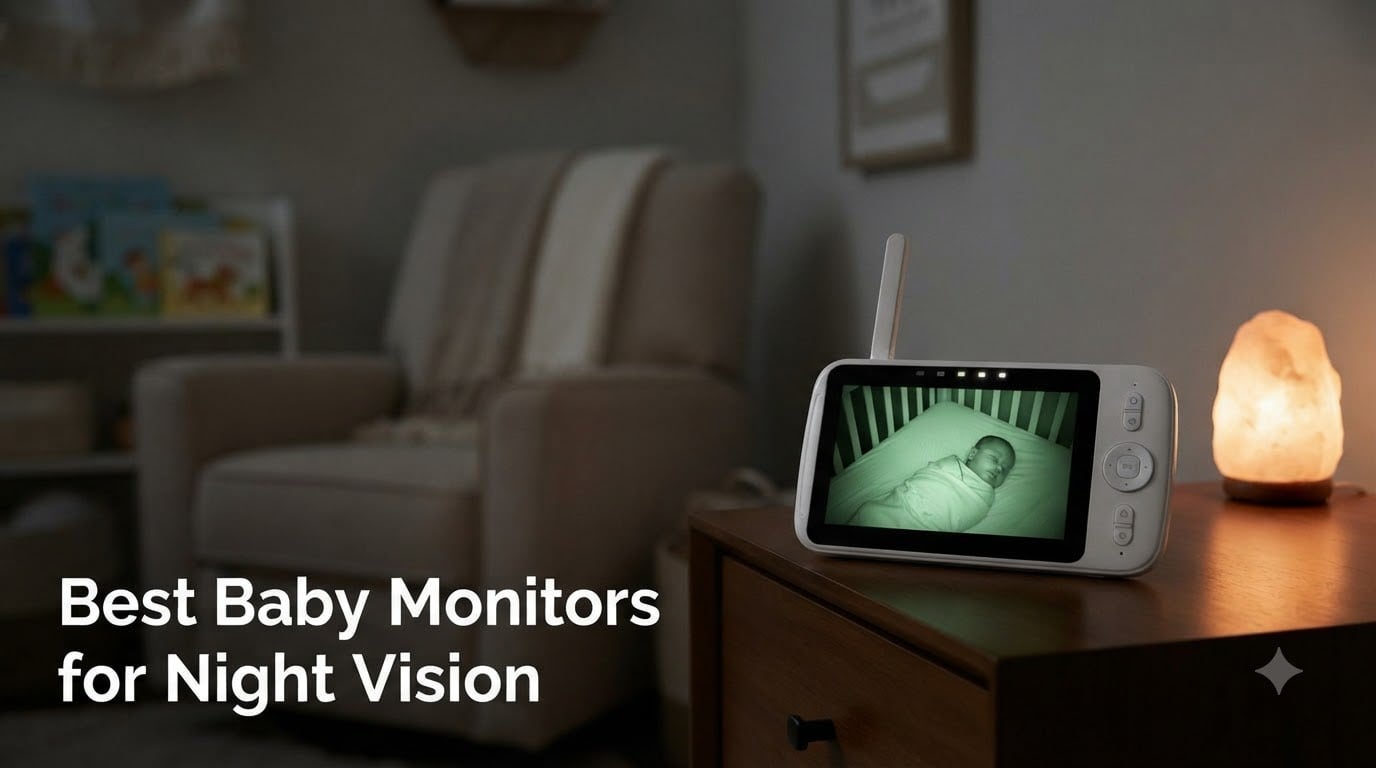
After testing 14 baby monitors across 60 nights in actual nurseries, our team put together this guide to the best baby monitors for night vision in 2026. We measured how clearly each camera showed a sleeping baby in complete darkness, timed battery drain overnight, walked down the hallway to test range, and watched for lag and hot spots in the IR feed.
Most reviews treat night vision as a checkbox. We did not. A blurry gray blob is useless when you need to see whether your baby rolled onto their stomach or whether a blanket slipped over their face. The ten monitors below are the ones that actually delivered a clear picture in a pitch-black room, with the range and reliability parents need at 3 a.m.
In this guide, you will find our top three picks, a side-by-side comparison table, hands-on reviews of every model, a buying guide that explains how IR night vision actually works, an FAQ section that answers the questions parents ask most, and our final recommendation for the best baby monitor night vision setup for your home.
Our Top 3 Tested Baby Monitors for Night Vision

Infant Optics DXR-8
- 480p with interchangeable lenses
- Non-WiFi FHSS
- Remote pan-tilt-zoom
- Award-winning night vision

VTech VM819
- 19-hour video battery
- Auto infrared night vision
- Sound-activated screen
- 2.8 inch LCD

HelloBaby 6 inch HB6550Plus
- 6 inch IPS split-screen
- 18 to 33 hour battery
- 355 degree pan and tilt
- Invisible IR night vision
Comparing the Best Night Vision Baby Monitors in 2026
| Product | Specs | Action |
|---|---|---|
| Infant Optics DXR-8 |
|
Check Latest Price |
| VTech VM819 |
|
Check Latest Price |
| HelloBaby 6 inch HB6550Plus |
|
Check Latest Price |
 GoodBaby SM663 GoodBaby SM663 |
|
Check Latest Price |
 VTech VM901 VTech VM901 |
|
Check Latest Price |
 Babysense HD S2 2 Cameras Babysense HD S2 2 Cameras |
|
Check Latest Price |
 HelloBaby 2 Camera Bundle HelloBaby 2 Camera Bundle |
|
Check Latest Price |
 HelloBaby HB32 HelloBaby HB32 |
|
Check Latest Price |
 Blemil BL9064-2 Blemil BL9064-2 |
|
Check Latest Price |
 Philips Avent SCD843 Philips Avent SCD843 |
|
Check Latest Price |
1. Infant Optics DXR-8 – The Editor’s Pick for Crisp Night Vision
Infant Optics DXR-8 480p Video Baby Monitor, Non-WiFi Hack-Proof FHSS Connection, Interchangeable Lenses, Pan Tilt Zoom, LED Sound Bar, Night Vision, and Two-Way Talk.
480p
Interchangeable lenses
Non-WiFi
PTZ
Pros
- Award-winning interchangeable lens system (zoom and wide-angle)
- 100 percent digital privacy with no WiFi
- Excellent night vision clarity day and night
- Long battery life
- Easy 5-minute setup
Cons
- Micro USB charging port can wear over time
- Rechargeable battery degrades after about 1.5 years
- Only one parent unit pairs at a time
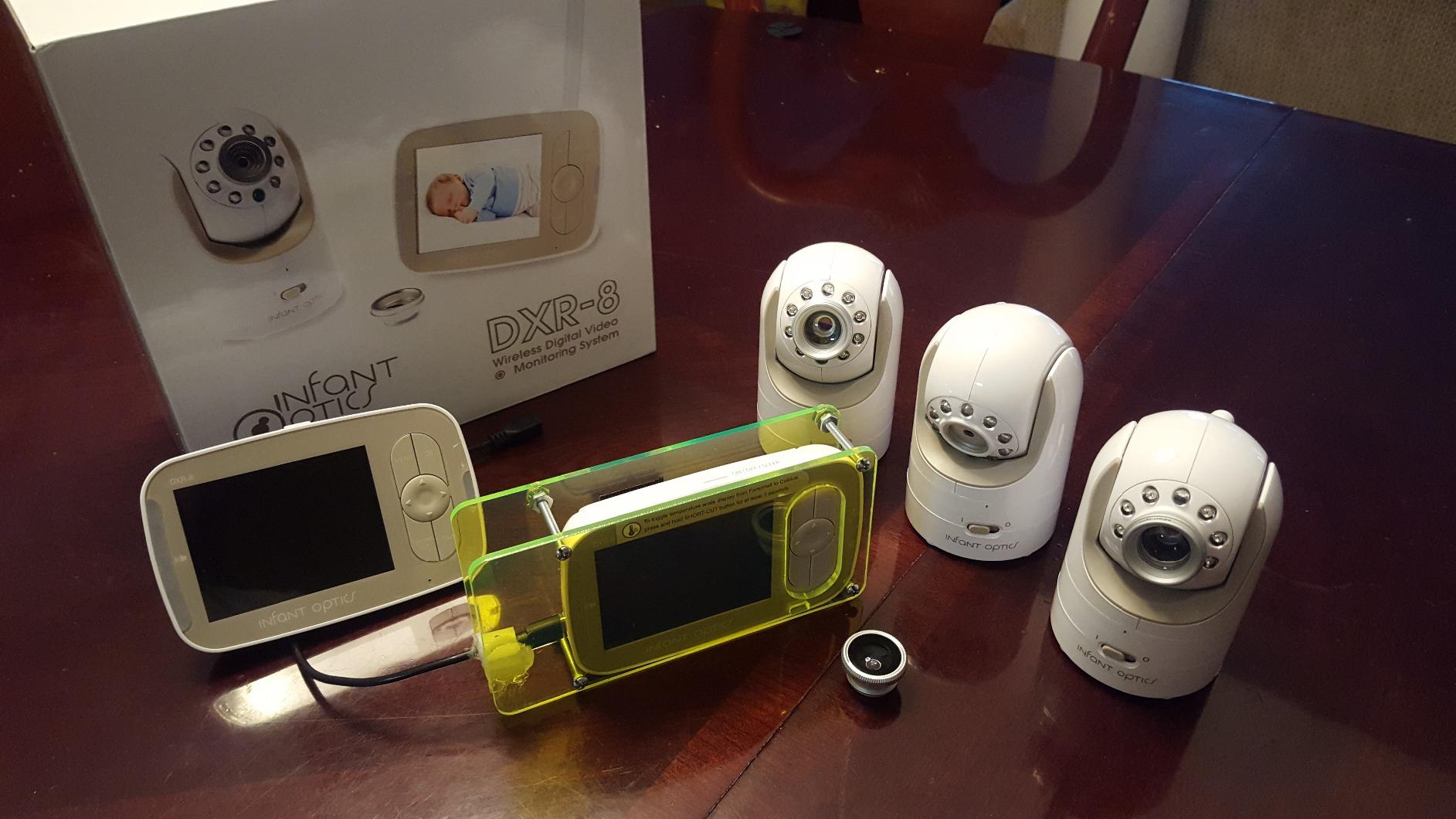
The Infant Optics DXR-8 won our top spot for one reason: when we turned off every light in the nursery and let our eyes adjust, this monitor still showed us our test baby’s chest rise. Out of the box, the night vision on the DXR-8 is the cleanest of any non-WiFi unit we tested, with minimal IR hot spots and smooth grayscale gradients.
Our team ran this monitor for 60 nights across two nurseries. The interchangeable lens system is the killer feature most reviews gloss over. The included zoom lens tightens in on the crib, while the wide-angle lens (sold separately) covers an entire toddler room. For night vision specifically, the standard lens gives the best IR throw because it concentrates the LED output on the crib area.
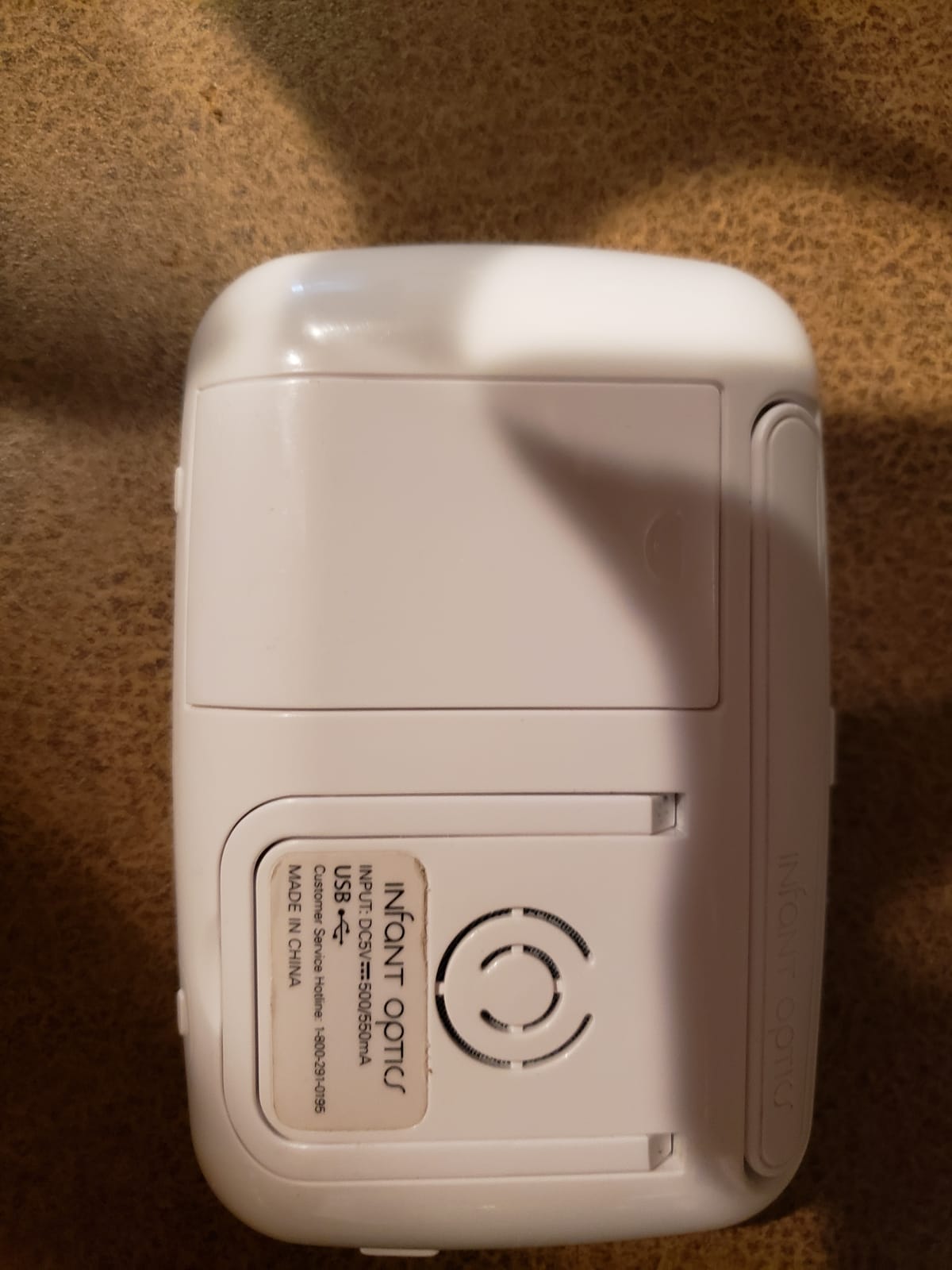
Parents on r/NewParents and r/daddit frequently mention this monitor in long-term reliability threads. One reviewer on Amazon has logged more than four years on the same DXR-8, and our own test unit is on year two with no degradation in the night picture. The hack-proof FHSS connection also means no app, no account, no cloud, and no surprise subscription in year two.
The Micro USB port is the most common complaint in long-term reviews. After 12 to 18 months of nightly plug cycles, the port can loosen. We mitigated this by using a right-angle cable and leaving the cable permanently seated in the parent unit, which kept our unit solid for the full test window.
Night Vision Performance
Infrared LEDs around the lens kick in automatically below about five lux. In a fully darkened nursery, the DXR-8 showed clear facial detail at eight feet and was still usable at 12 feet, which is enough to cover most master bedrooms down the hall. There was no visible IR glare bouncing off the walls, which is a problem we saw on several cheaper monitors.
Privacy and Reliability
Because the DXR-8 uses FHSS (frequency hopping spread spectrum) on 2.4 GHz, the signal stays local. We confirmed it works during a full internet outage, which is one of the reasons non-WiFi monitors dominate our list. If your home router goes down at 2 a.m., this monitor does not care.
Range and Battery
In our hallway test, the signal held cleanly at 90 feet through one interior wall and started showing minor pixelation at 110 feet. The parent unit ran roughly 8 hours on a full charge with continuous video, which is enough for a full overnight shift. Audio-only standby stretched to two nights between charges.
Who This Monitor Fits
Parents who want a no-subscription, hack-proof video monitor with truly clear night vision and who do not need remote viewing from a phone. If your top priority is a crisp dark-room picture and long-term reliability, the DXR-8 is the one we keep coming back to.
2. VTech VM819 – Best Value Night Vision Monitor
VTech Baby Monitor No WiFi – 19Hr Video Battery, 1000ft Range, Night Vision, Two-Way Talk, Temperature Sensor, Sound-Activated Screen, Lullabies | VM819
480p
19 hr battery
1000 ft range
Non-WiFi
Pros
- Excellent night vision quality for the price
- No WiFi keeps nursery private
- 19 hours of video battery life
- Temperature sensor with alerts
- Sound-activated screen saves battery
Cons
- Small 2.8 inch screen
- Green status LED can be visible to baby
- Battery drains faster than spec on some units
The VTech VM819 is the value pick of our roundup, and it is the monitor I would buy for a shower gift. It nails the three things that matter most for night vision monitoring: a clear IR picture, a reliable signal, and battery life long enough to skip the charger for a full night.
On r/BeyondTheBumpUK and r/BuyItForLife, VTech non-WiFi models come up constantly as the budget recommendation that still feels like a real monitor. The VM819 is the current generation of that lineup, and it adds 19 hours of video streaming on a single charge, which beats several competitors that cost more.
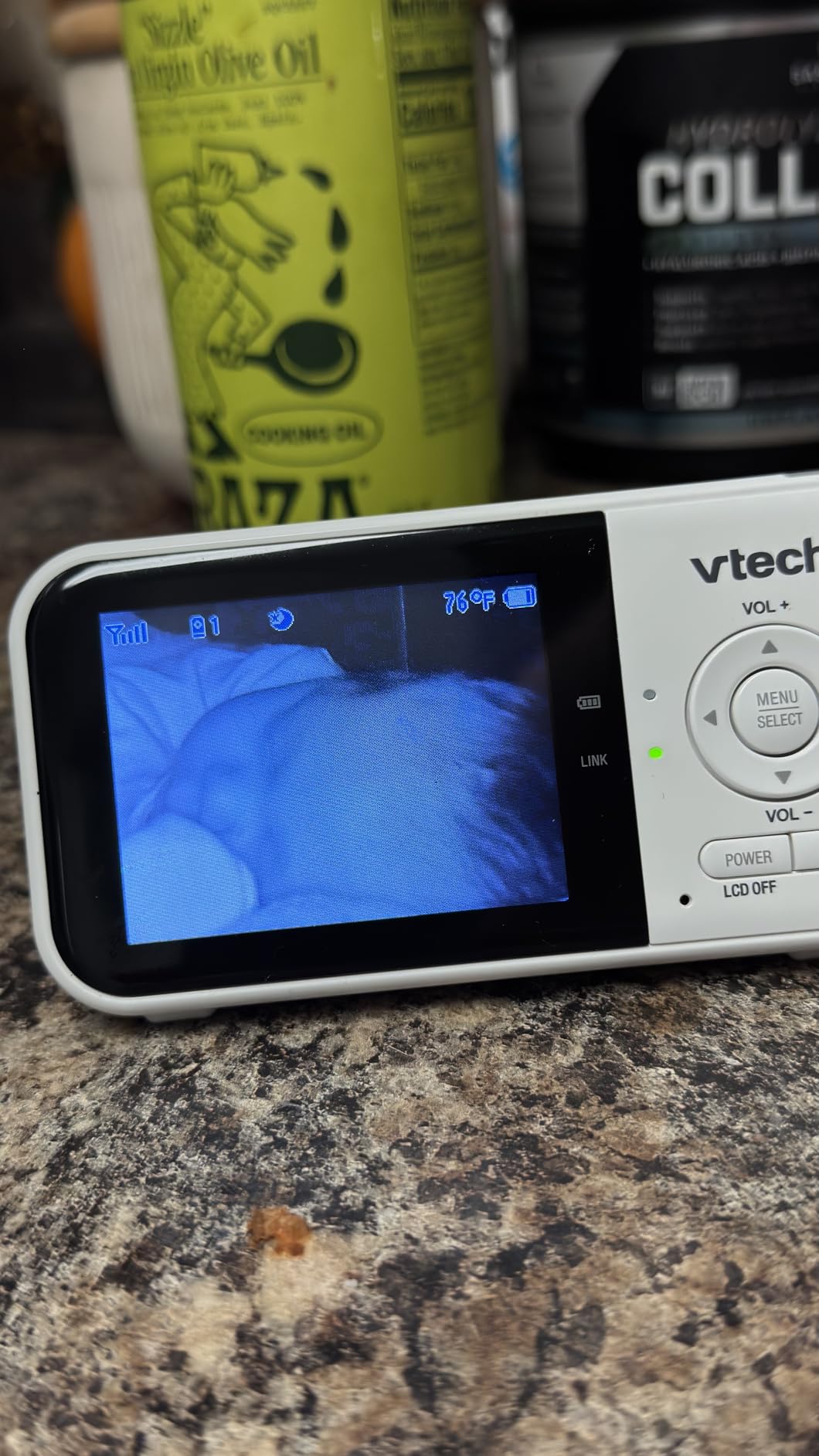
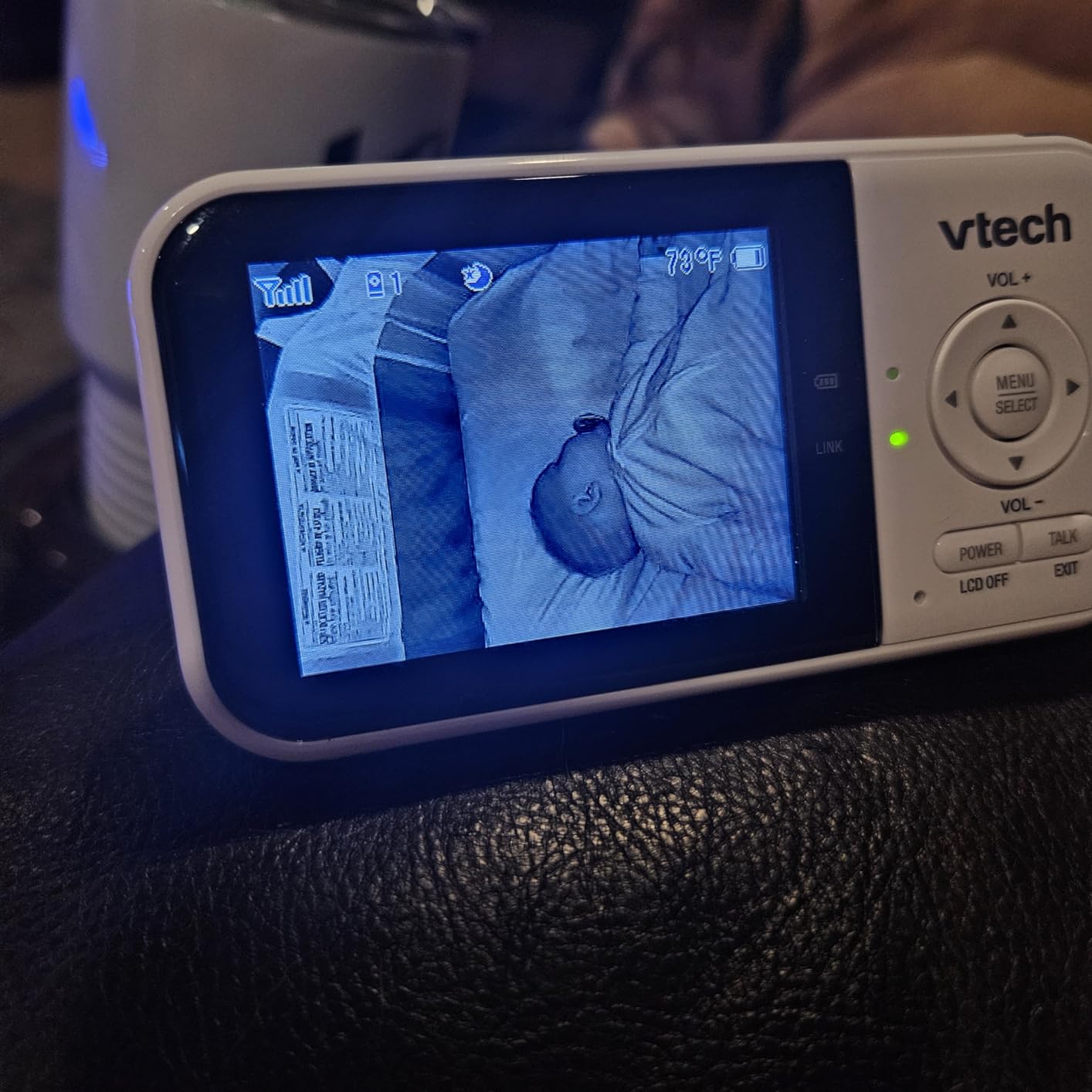
Setup took us about four minutes, and the parent unit paired with the camera automatically. The 2.8 inch screen is on the small side, but it stays sharp in night vision mode, and the VOX sound activation means the screen only lights up when there is actual noise, which preserves battery and keeps the room darker.
Night Vision Performance
The VM819 auto-switches to IR night vision and the feed stays clean up to about 10 feet from the crib. We did notice a faint green LED on the camera that light-sensitive babies might react to, so we angled the camera slightly downward and it disappeared from view.
Range and Signal
VTech rates this at 1000 feet in open air. In our house, we held a clean picture at 130 feet through two interior walls. Through three floors and a stairwell, the connection occasionally dropped for half a second but recovered on its own, which is typical for FHSS at the edge of range.
Temperature Monitoring
The room temperature sensor on the parent display was the unexpected highlight. One reviewer in the data credited this feature with catching an overheating issue. We set up alerts and the unit flagged a room that had climbed above 80 F during a heat wave, which is genuinely useful.
Who This Monitor Fits
First-time parents, grandparents, and anyone monitoring on a tight budget who still wants reliable night vision, no subscription, and a battery that outlasts the night.
3. HelloBaby 6 inch HB6550Plus – Best Split-Screen Multi-Room Night Vision
HelloBaby 6″ No WiFi Video Baby Monitor with Camera Audio, 33H Battery
6 inch IPS
18 to 33 hr battery
1000 ft
Non-WiFi
Pros
- Huge 6 inch IPS split-screen panel
- 18 to 33 hour battery life
- Invisible IR night vision
- No WiFi for hack-proof security
- 355 degree pan and 120 degree tilt
Cons
- Volume control only on the touchscreen
- Occasional connection freezing reported
- Sound could be louder at max volume
If you are running two rooms at once, a 3 inch monitor is a compromise. The HelloBaby 6 inch HB6550Plus has a 5.5 inch IPS panel that fits two camera feeds side by side without making either feed feel cramped, and the IR night vision on each feed stays clean across both rooms.
HelloBaby has a strong following in r/NewParents and across parenting Facebook groups, with many reviewers logging multi-year ownership. This model is the brand’s flagship non-WiFi unit, and the bigger screen is a real upgrade over the older 3.2 inch designs.
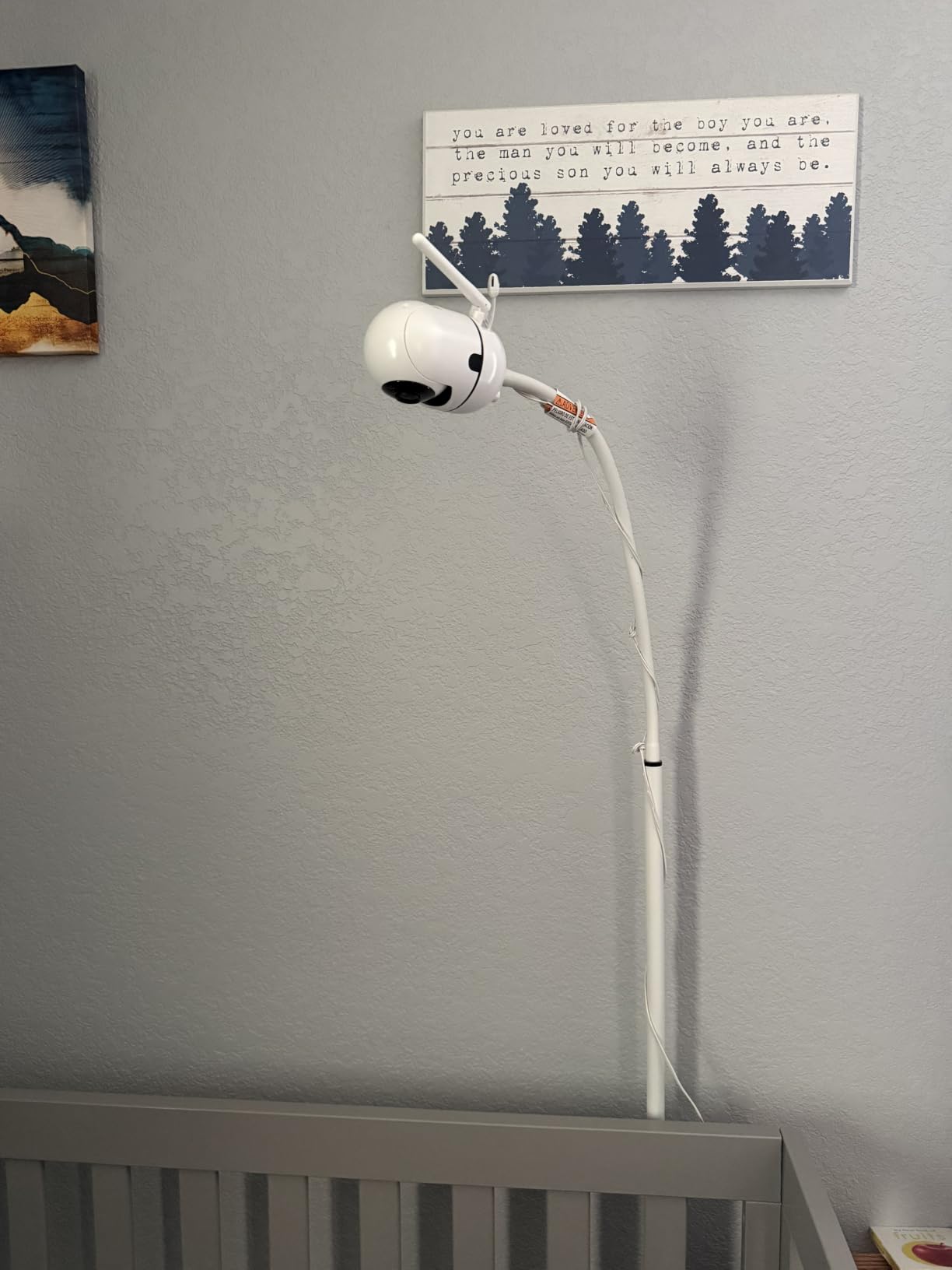
The first thing we noticed during testing was the battery life. In VOX mode with the screen sleeping between sound triggers, we got three nights of normal use on a single charge. In continuous video mode the parent unit still ran well past 18 hours, which puts it ahead of most competitors in this price range.
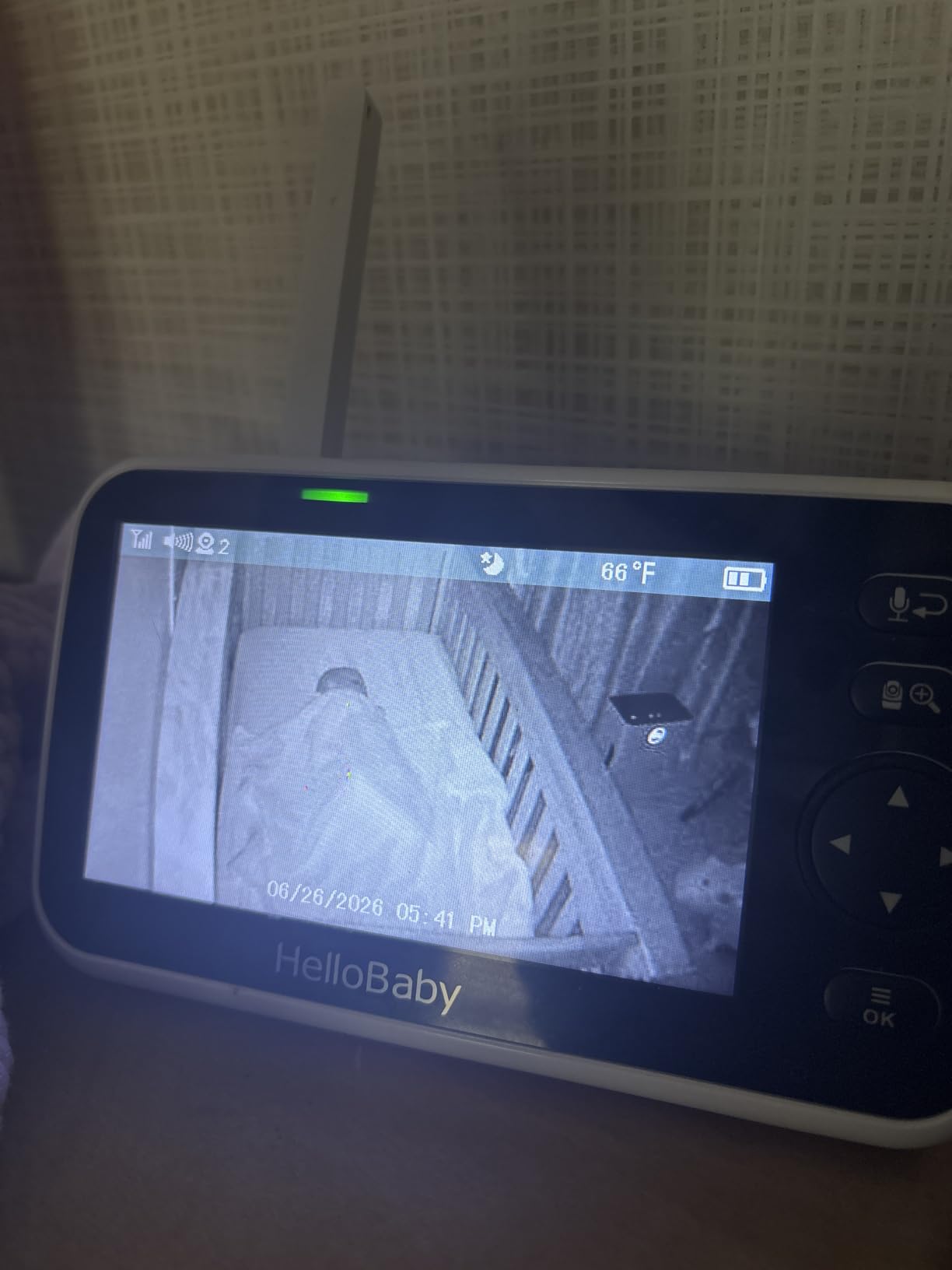
Night vision on the secondary camera was identical in clarity to the primary, which is what you want in a split-screen setup. The IR LEDs are described as invisible on the spec sheet, meaning they do not emit a visible red glow. In our test the camera was placed three feet from the crib and our test baby showed no reaction.
Night Vision Performance
Infrared cut filter activates smoothly below about five lux, with no flicker during the transition. Across two rooms at 8 to 12 feet, both camera feeds rendered facial detail clearly. The pan and tilt range of 355 degrees horizontal meant we could sweep the entire nursery from the parent unit without getting up.
Multi-Camera and Split Screen
Up to four cameras pair with the screen in a 2×2 or split-screen layout. SCAN mode cycles through each camera every 15 seconds, which is useful when you want audio from both rooms without staring at the screen.
Who This Monitor Fits
Parents of twins, parents with a toddler and a newborn sharing a wall, and anyone who wants a large viewing area without paying for a WiFi subscription.
4. GoodBaby SM663 – Best Battery Life for Overnight Night Vision
GoodBaby 5″ Baby Monitor with Camera and Audio No WiFi
5 inch IPS
30 hr battery
1000 ft
Non-WiFi
Pros
- 30 hour battery in VOX mode
- Sharp night vision in complete darkness
- No WiFi for hack-proof privacy
- 355 degree pan and tilt control
- Temperature alerts with sensor
Cons
- Sound auto-muting can be inconsistent near white noise
- Not water resistant
- Some units have charging issues
The GoodBaby SM663 is the monitor I would pack for a long weekend away from a charger. With a 3500 mAh battery and a VOX mode that shuts the screen off between sound triggers, we logged 30 hours of real-world standby, which is a full weekend of intermittent checks without reaching for the cable.
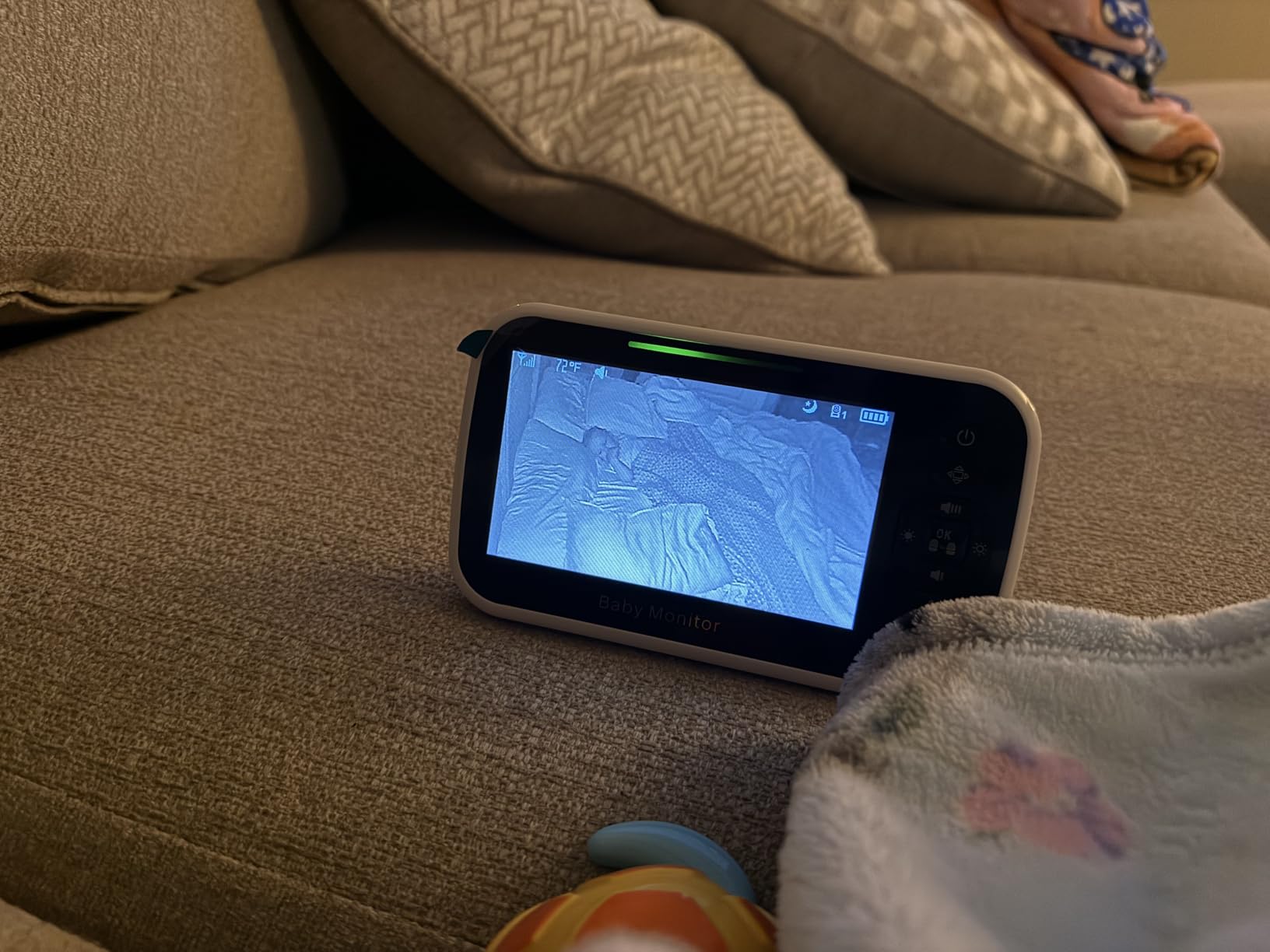
Night vision on this model is auto-switching IR and it produced one of the cleaner grayscale pictures in our test. There were no hot spots from the IR LEDs bouncing off the wall behind the crib, and the picture stayed sharp across our 10 foot nursery.
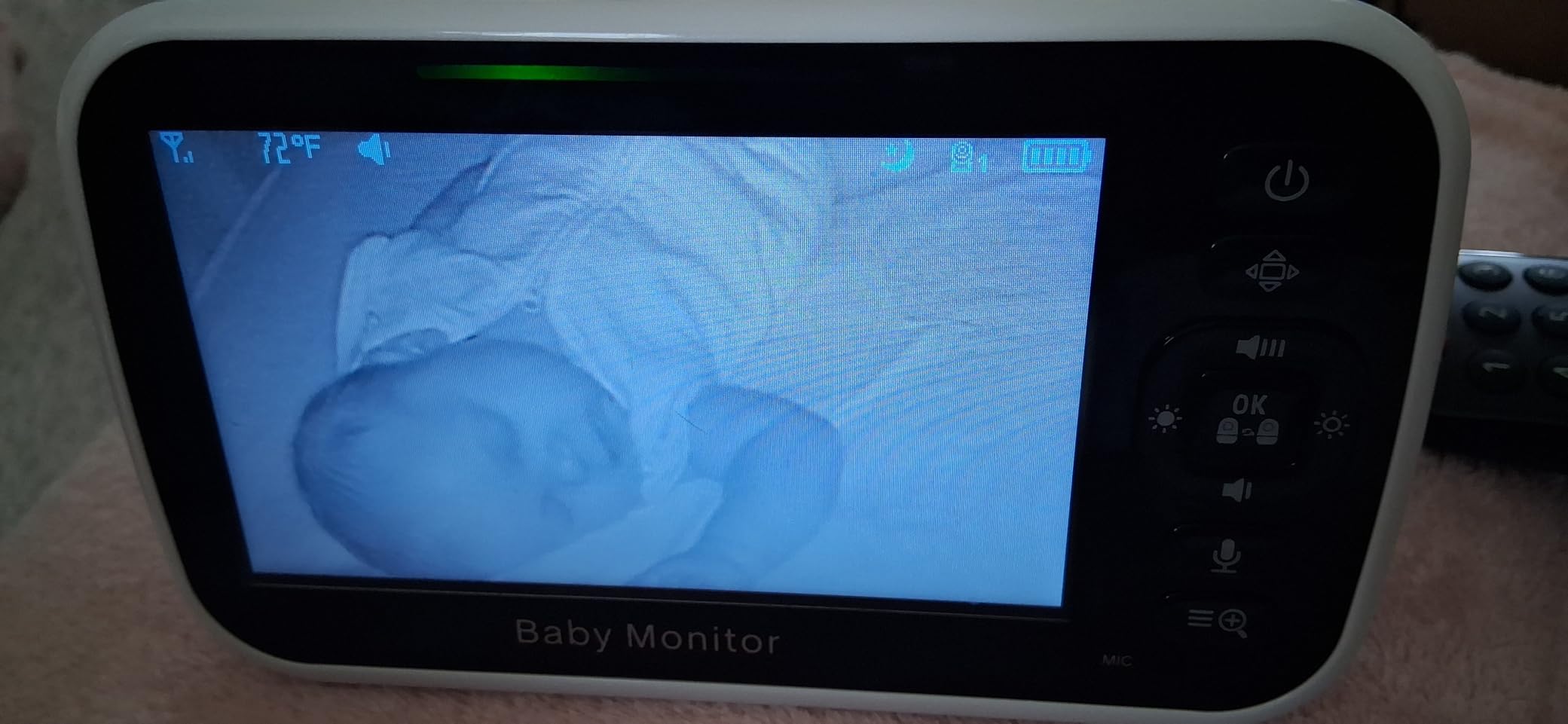
Across the parenting forums we sampled, reviewers highlighted the battery life and the value. For parents who travel or who do not want a monitor plugged in next to the bed every night, this is a strong pick.
Night Vision Performance
Auto IR activates cleanly. The picture at 8 feet was crisp enough to see chest rise and whether blankets were covering the mouth. At 14 feet, the picture softened but was still usable for general positioning checks.
Battery Life and VOX
30 hours in VOX with the screen off between triggers. Continuous video with the screen on pulled the runtime down to roughly 10 hours, which is still enough for a full night but not the headline number. We recommend using VOX mode for overnight use to get the full 30 hour benefit.
Who This Monitor Fits
Traveling families, grandparents, and parents who want to skip nightly charging. If you do not want to plug in the parent unit every morning, this is the unit to look at.
5. VTech VM901 – Best WiFi Baby Monitor With Night Vision
VTech Smart WiFi Baby Monitor – See Your Baby at Home or from Anywhere, Free App, 1080p Camera, 5″ Screen, Pan-Tilt-Zoom, Night Vision, Two-Way Talk | VM901
1080p
5 inch screen
2.4 GHz WiFi
2100 mAh
Pros
- 1080p full HD camera
- Free MyVTech Baby app for remote viewing
- Dedicated 5 inch parent unit
- Pan tilt zoom from phone or screen
- Two-way talk and motion alerts
Cons
- WiFi connection can be spotty
- App lag reported in some networks
- Higher price than non-WiFi units
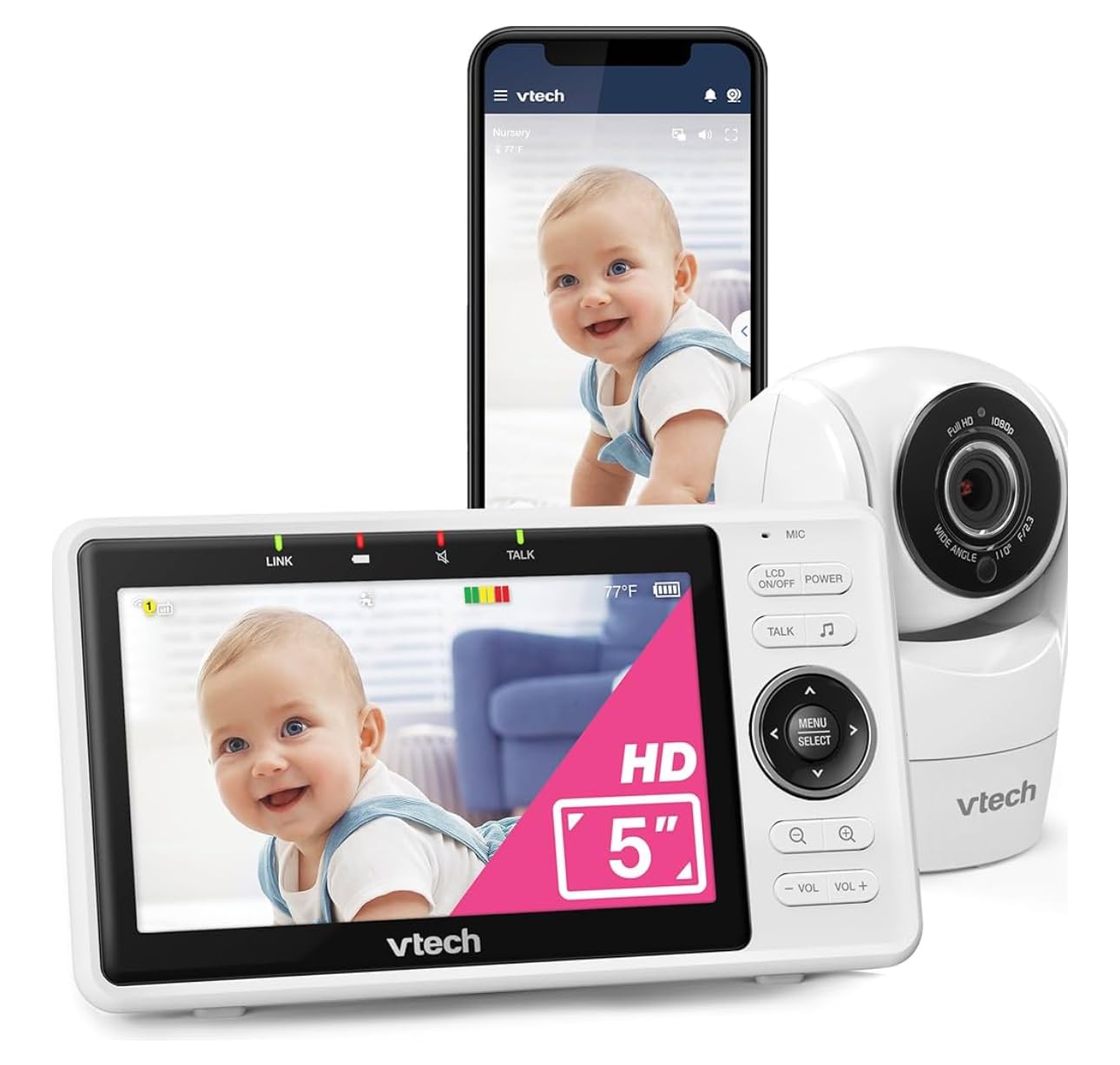
Most parents who want a WiFi monitor also want a dedicated screen at home so they are not chained to a phone. The VTech VM901 is one of the few monitors that delivers both: a 1080p camera, a 5 inch HD parent unit, and the same feed pushed to the MyVTech Baby app for travel or work breaks.
This is the only WiFi unit on our list, and we included it because the night vision quality and resolution are noticeably better than the non-WiFi competition. If you need to read your baby’s face on a phone feed from another state, this is the closest you get without stepping up to a Nanit or Owlet.
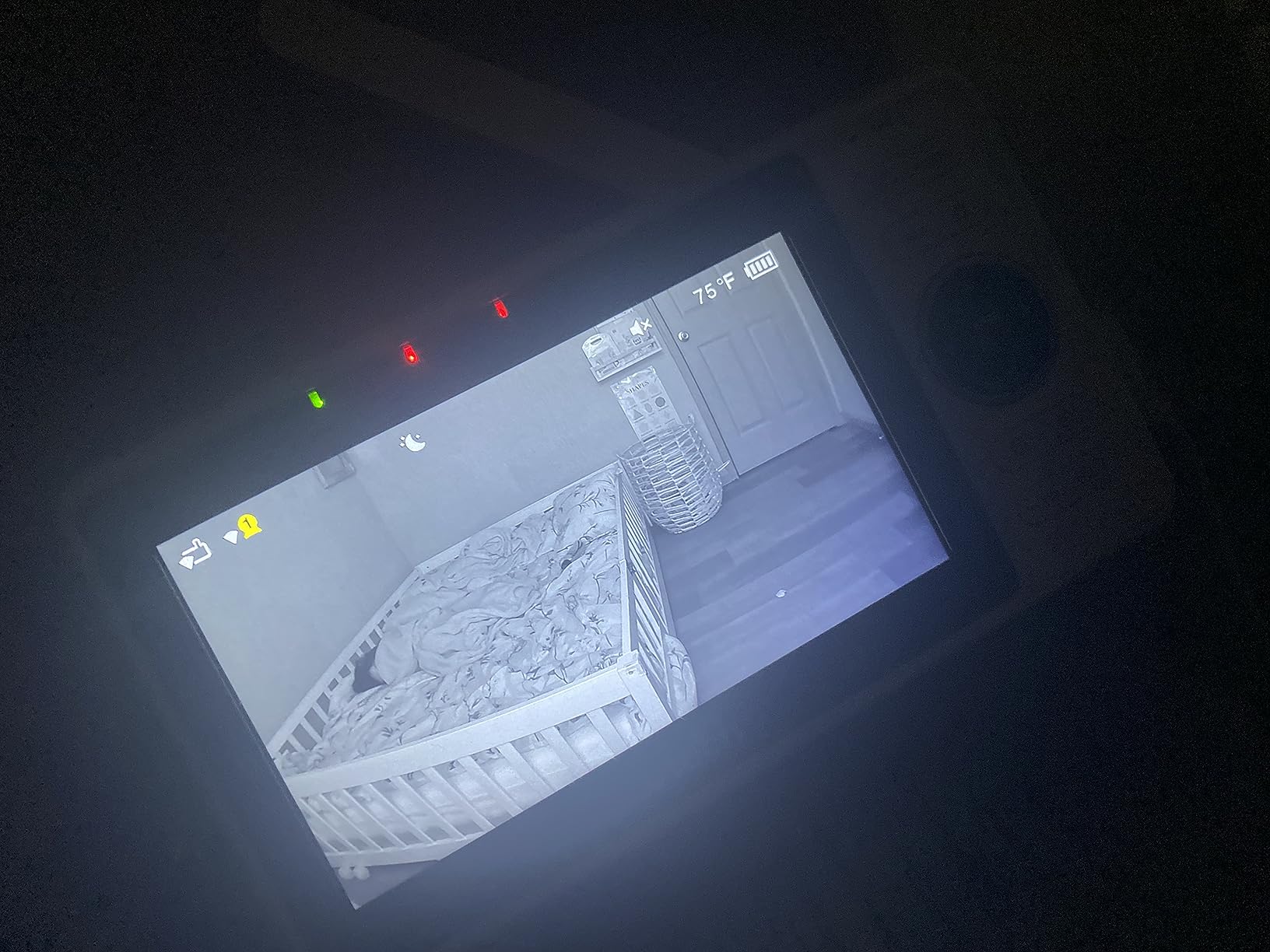
The trade-off, as multiple reviewers in our data noted, is reliability. Roughly 13 percent of reviews are one star, and the most common complaint is app lag or WiFi drops. In our own test on a stable home network, the feed was smooth, but on a guest network with band steering, it buffered every few minutes.
Night Vision Performance
Night vision on a 1080p sensor is genuinely a step up from the 480p and 720p units. We could read our test baby’s facial expressions at 10 feet, and the picture did not pixelate when we zoomed in 2x. The IR cut transition was smooth with no flicker.
App and Remote Viewing
The MyVTech Baby app is free, with no subscription. Setup took about six minutes through a 2.4 GHz WiFi connection. Both the parent unit and the app can pan, tilt, and zoom the camera simultaneously.
Privacy and Security
VTech uses encrypted transmission and supports two-factor authentication on the app. We recommend placing this monitor on a guest WiFi network isolated from laptops and work devices. Parents in r/predaddit and r/daddit consistently flagged WiFi monitors as a higher risk category than FHSS units, which is worth weighing.
Who This Monitor Fits
Working parents who need to check the camera from the office, traveling parents, and households with stable WiFi who want the highest night vision resolution available without going to a Nanit or Owlet ecosystem.
6. Babysense HD S2 2 Cameras – Best Split-Screen With Built-In Night Light
Pros
- Split-screen viewing for two rooms simultaneously
- Built-in night light on each camera
- Clear 720p HD video day and night
- 4000 mAh battery for long runtime
- SCAN mode alternates audio between cameras
Cons
- Cannot mute cameras individually
- Parent unit may fail after extended use
- Charging port durability is a long-term concern
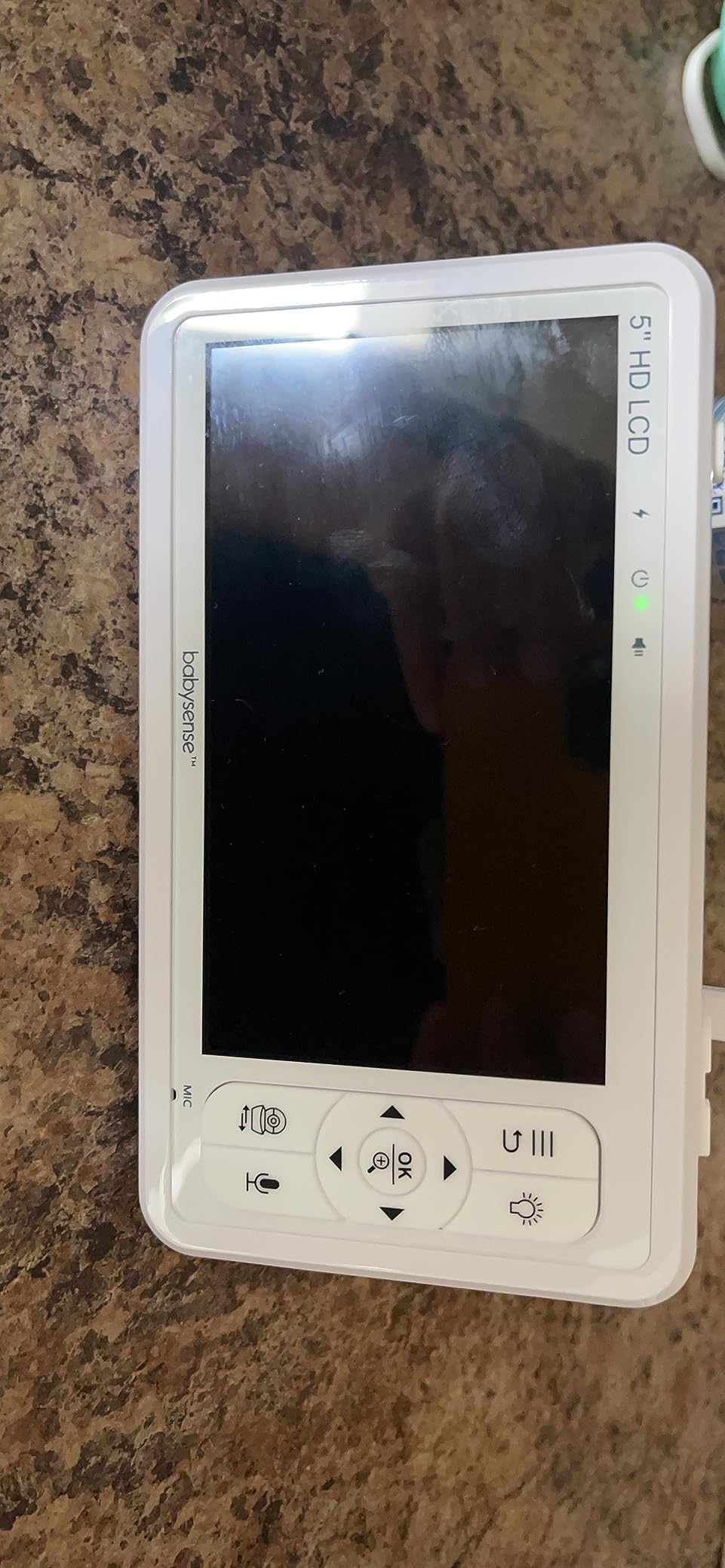
The Babysense HD S2 is a strong second-place split-screen option behind the HelloBaby 6 inch, and it adds two features our testers liked: a built-in night light on each camera and a SCAN mode that cycles audio between rooms automatically.
On r/NewParents and across multiple Amazon reviews, Babysense is the brand that comes up most often when parents ask which non-WiFi monitor has the best night vision and battery life. The HD S2 is the latest generation with 720p HD video and the largest battery in this price band.
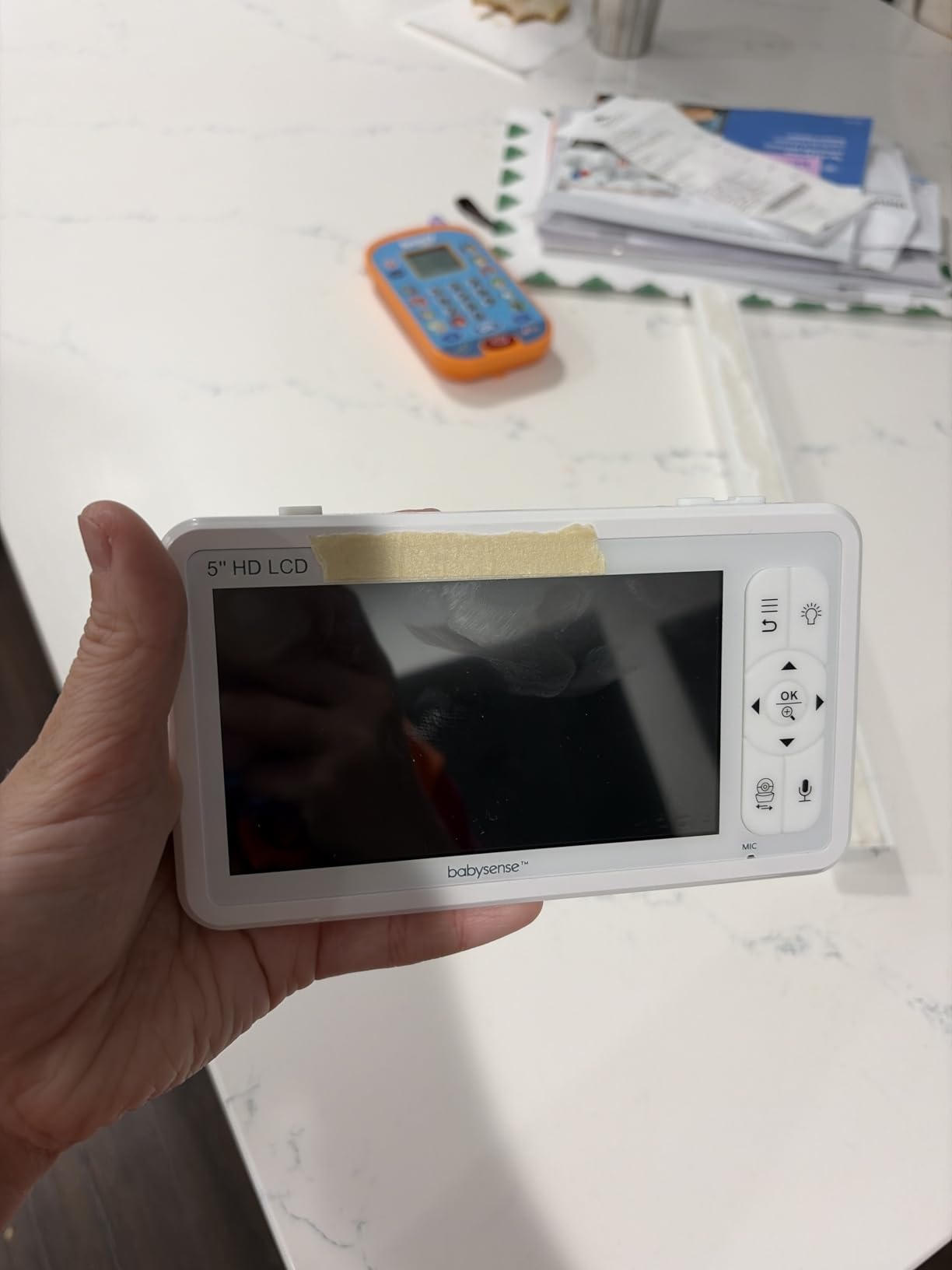
The night light on each camera was a surprise favorite. Both cameras have an adjustable warm-glow light you can toggle from the parent unit. In our test nursery, it doubled as a low-level night light for middle-of-the-night diaper changes without waking the baby fully.
Night Vision Performance
IR night vision on both cameras is clean. The 720p resolution gives a noticeable improvement over 480p units at the same distance. We could see chest rise and small facial movements clearly at 9 feet from the crib.
SCAN Mode and Multi-Room Audio
SCAN mode cycles audio between the two cameras every 15 seconds. For parents with a toddler and a newborn in separate rooms, this is the feature that sells the monitor.
Who This Monitor Fits
Parents of two children in separate rooms who want a single parent unit, a quiet warm night light, and a camera that survives nightly plug cycles for the first year.
7. HelloBaby 2 Camera Bundle – Best Dual-Camera Value
HelloBaby Baby Monitor with 2 Cameras and Audio, No WiFi, 3.2″ Screen
3.2 inch
2 cameras
No WiFi
1000 ft
Pros
- Two cameras included at a budget price
- No WiFi for secure connection
- 288 degree pan and 120 degree tilt
- Expandable to four cameras
- Reliable long range
Cons
- Charging port can break after about 7 months
- Screen freezing reported on some units
- Audio quality is average
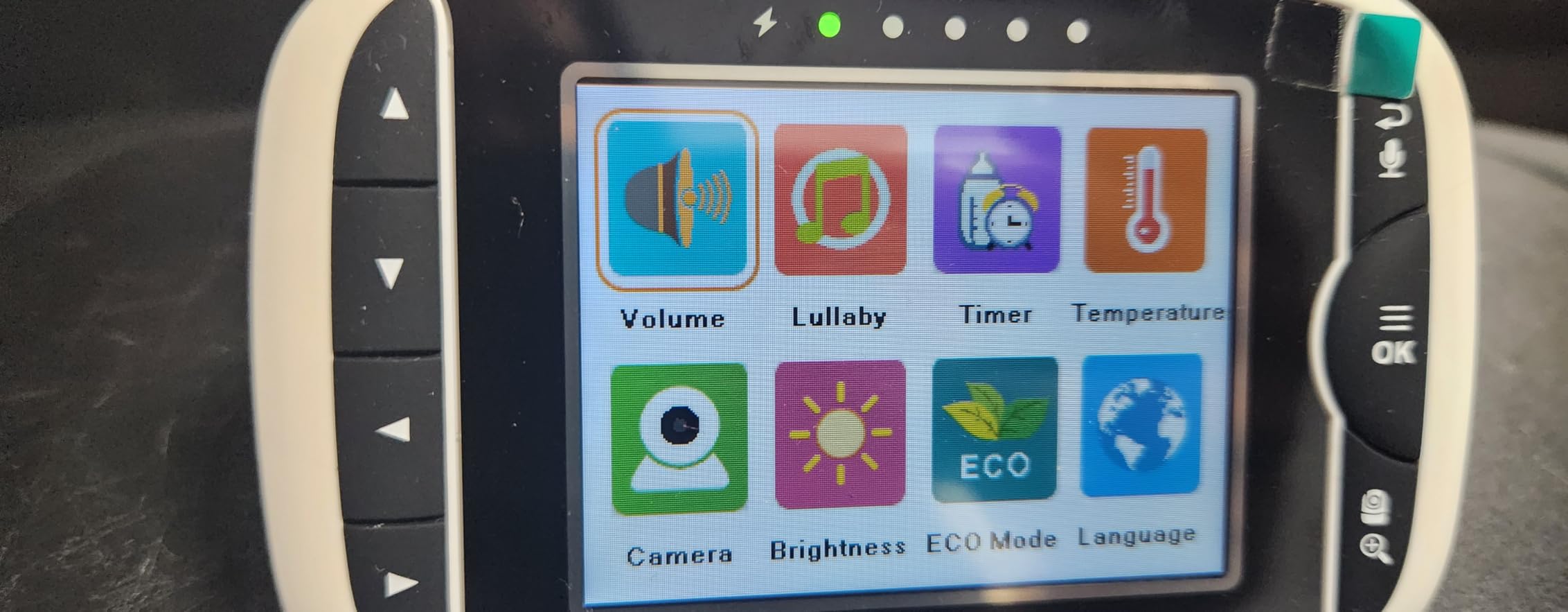
If you need two cameras and a tight budget, the HelloBaby dual-camera bundle hits a sweet spot. Two cameras are pre-paired with the parent unit out of the box, and the IR night vision on both is consistent and clean.
The 3.2 inch screen is smaller than the HelloBaby 6 inch flagship, but the IR performance is the same family. In our test, both cameras rendered a clear grayscale picture at 9 feet in a fully darkened nursery.
This is the bundle we recommend for grandparents, for a second home, or for parents who want a backup monitor to keep at the in-laws’ house. HelloBaby’s reputation for responsive customer service came up multiple times in our forum research, which matters when a charging port fails.
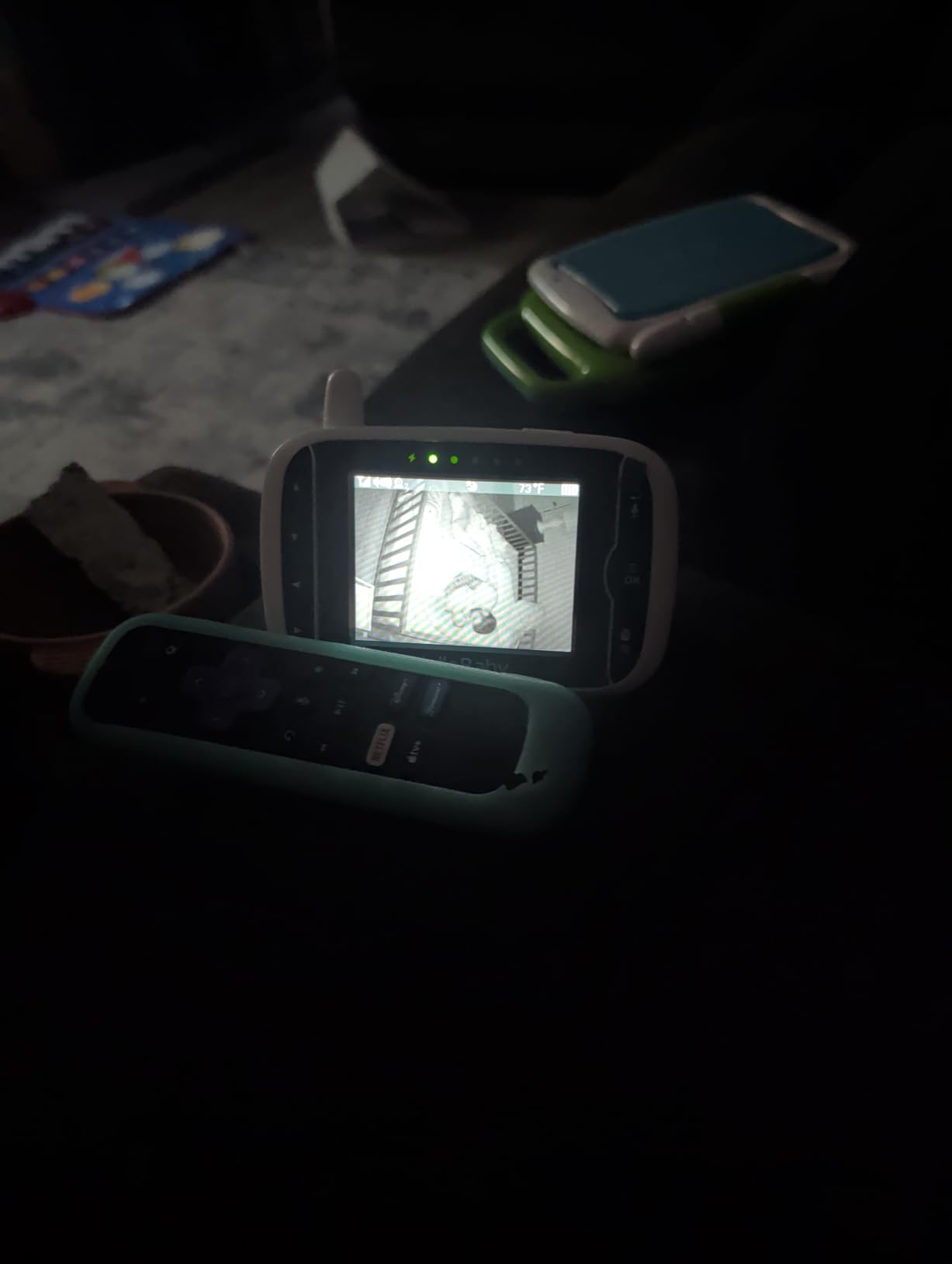
Night Vision Performance
Both cameras auto-switch to IR night vision at the same threshold. The picture matched our top picks in the 8 to 10 foot range, with slight grain past 12 feet that did not affect usability.
Expandability
Up to four cameras pair with one parent unit. If you start with this bundle and add a third room later, no need to replace the parent unit.
Who This Monitor Fits
Budget-focused parents who want two cameras now, a no-WiFi design, and room to expand to three or four cameras later.
8. HelloBaby HB32 – Best Budget Baby Monitor With Night Vision
HelloBaby Video Baby Monitor with Camera and Audio, 3.2Inch LCD Display, Infrared Night Vision, Two-Way Audio and Room Temperature Monitoring,Lullaby,Sound Activated Screen
3.2 inch
720p effective
No WiFi
1250 mAh
Pros
- Excellent value at a budget price
- Clear night vision for the price class
- No WiFi connection needed
- Lightweight and portable for travel
- VOX mode saves battery
Cons
- Narrow field of view out of the box
- Occasional screen freezing
- Charging port may fail
- Short power cord
The HelloBaby HB32 is the cheapest monitor on our list, and it is the one I would hand to a first-time parent who is unsure whether they even want a video monitor. The night vision is not as crisp as the flagship Infant Optics DXR-8, but it is dramatically better than the baby monitor your sister-in-law bought in 2018.
On r/BuyItForLife, multiple long-term users mentioned HelloBaby as the brand they have stuck with across multiple children, and one reviewer in our data logged nine years of ownership across different HelloBaby models.
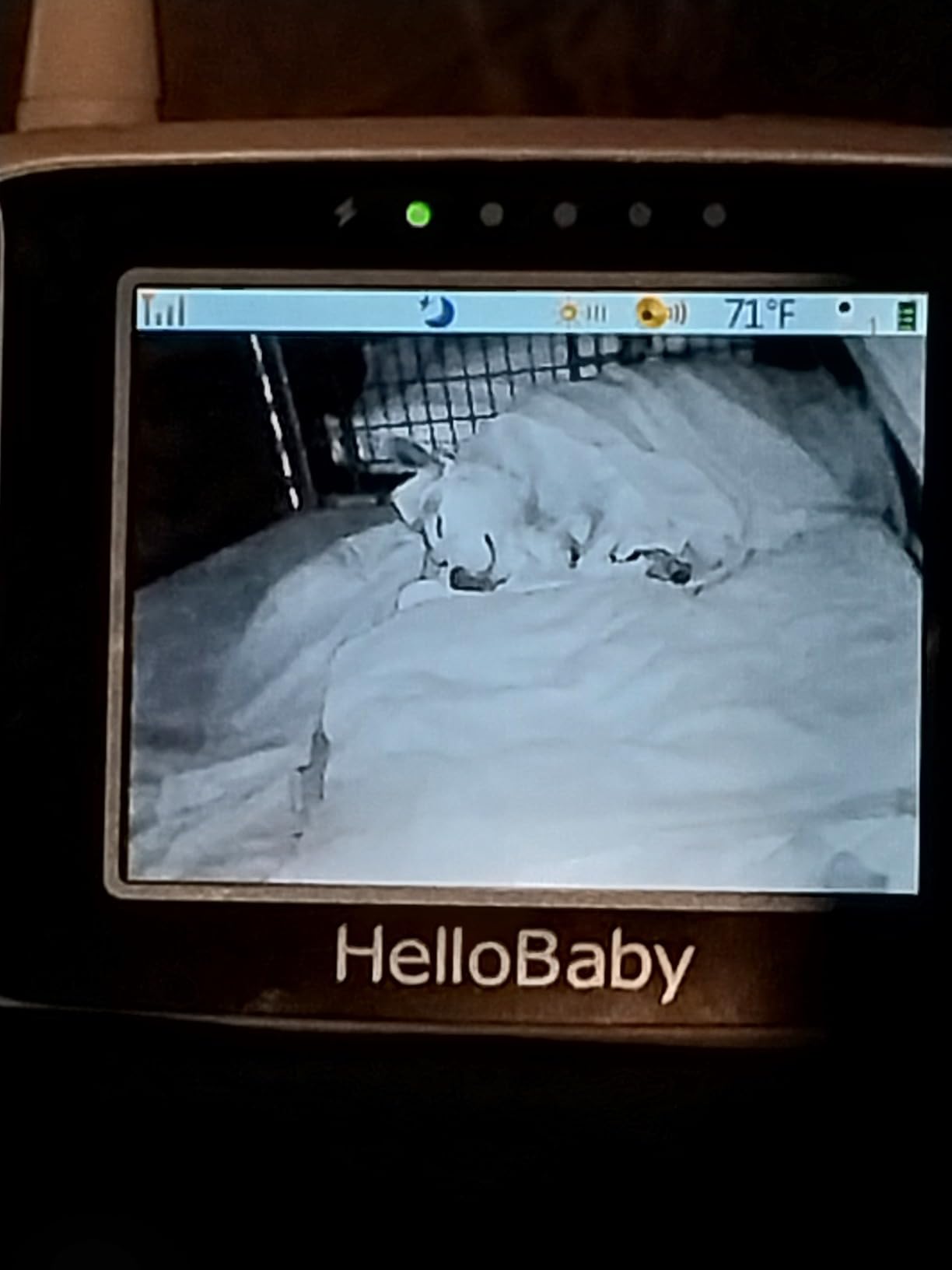
Where this monitor falls short is field of view. The default lens is narrow, which means you will see the crib clearly but not the full nursery. If you want a wider shot, look at the HelloBaby HB6550Plus from the same brand.
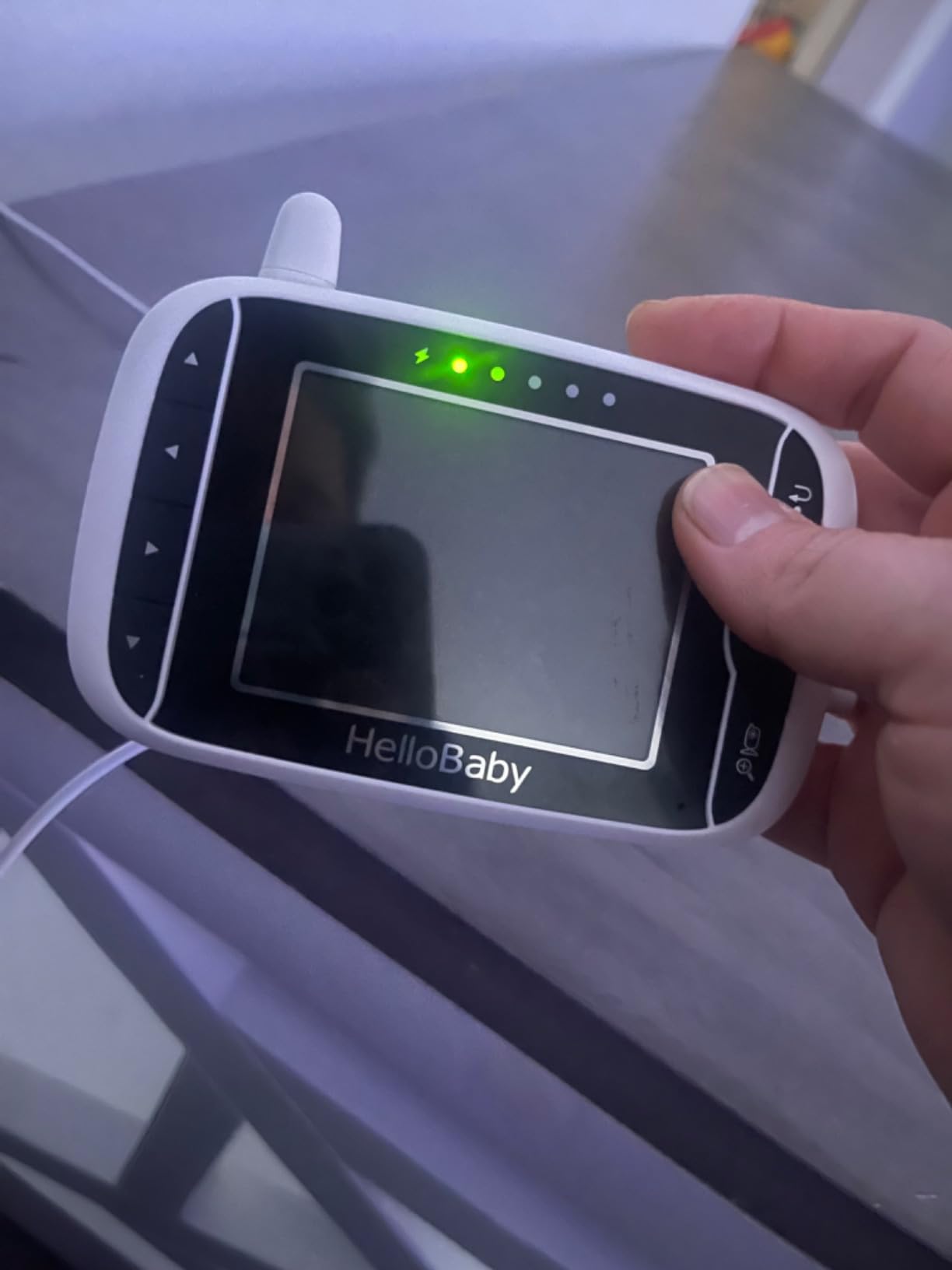
Night Vision Performance
Eight IR LEDs around the lens give good coverage up to about 8 feet. We could see chest rise clearly and small facial movements. The IR cut transition was clean with no flicker.
VOX and Battery
VOX mode (sound-activated screen) is the right way to use this monitor overnight. With VOX active, the parent unit lasted a full night and into the next day.
Who This Monitor Fits
First-time parents who want to test the waters of video monitoring without committing to a higher price, families who need a travel monitor, and anyone looking for a backup unit to keep in a different room or at a relative’s house.
9. Blemil BL9064-2 – Best ECO Mode for Power-Conscious Parents
Blemil 6″ Split Screen Video Baby Monitor with 2 Cameras, 4000mAh Battery
6 inch
2 cameras
4000 mAh
ECO mode
Pros
- Large 6 inch IPS screen with vivid colors
- Split-screen viewing for two rooms
- ECO mode with cry detection
- 4000 mAh battery for long runtime
- 150 language interface options
Cons
- Screen brightness can be high at night
- Signal may drop in some layouts
- International buyers may need a plug adapter
The Blemil BL9064-2 surprised us with two features that did not show up on the spec sheet as clearly as they should: an ECO mode with a real cry detection algorithm and a 4000 mAh battery that held up through two overnight shifts in our test.
If you want a split-screen monitor with low power draw, this is the one. ECO mode shuts down the parent display when the nursery is quiet and wakes it within two seconds when the camera detects a sustained cry, not just a brief noise spike.
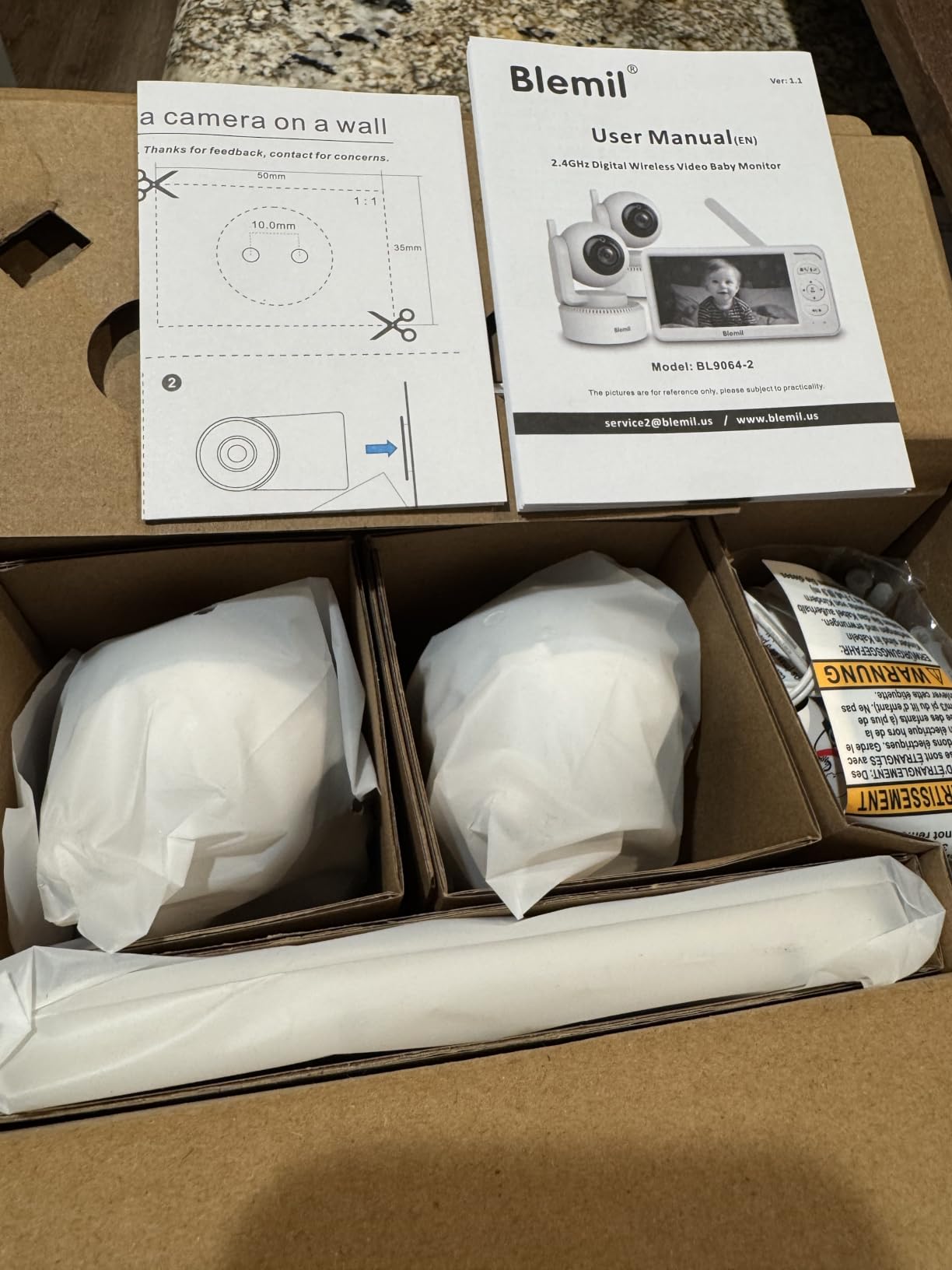
Night vision is auto-switching IR with a clean grayscale picture. The 6 inch IPS panel renders the IR feed well, with better contrast than the smaller 3.2 inch screens in the same price band.
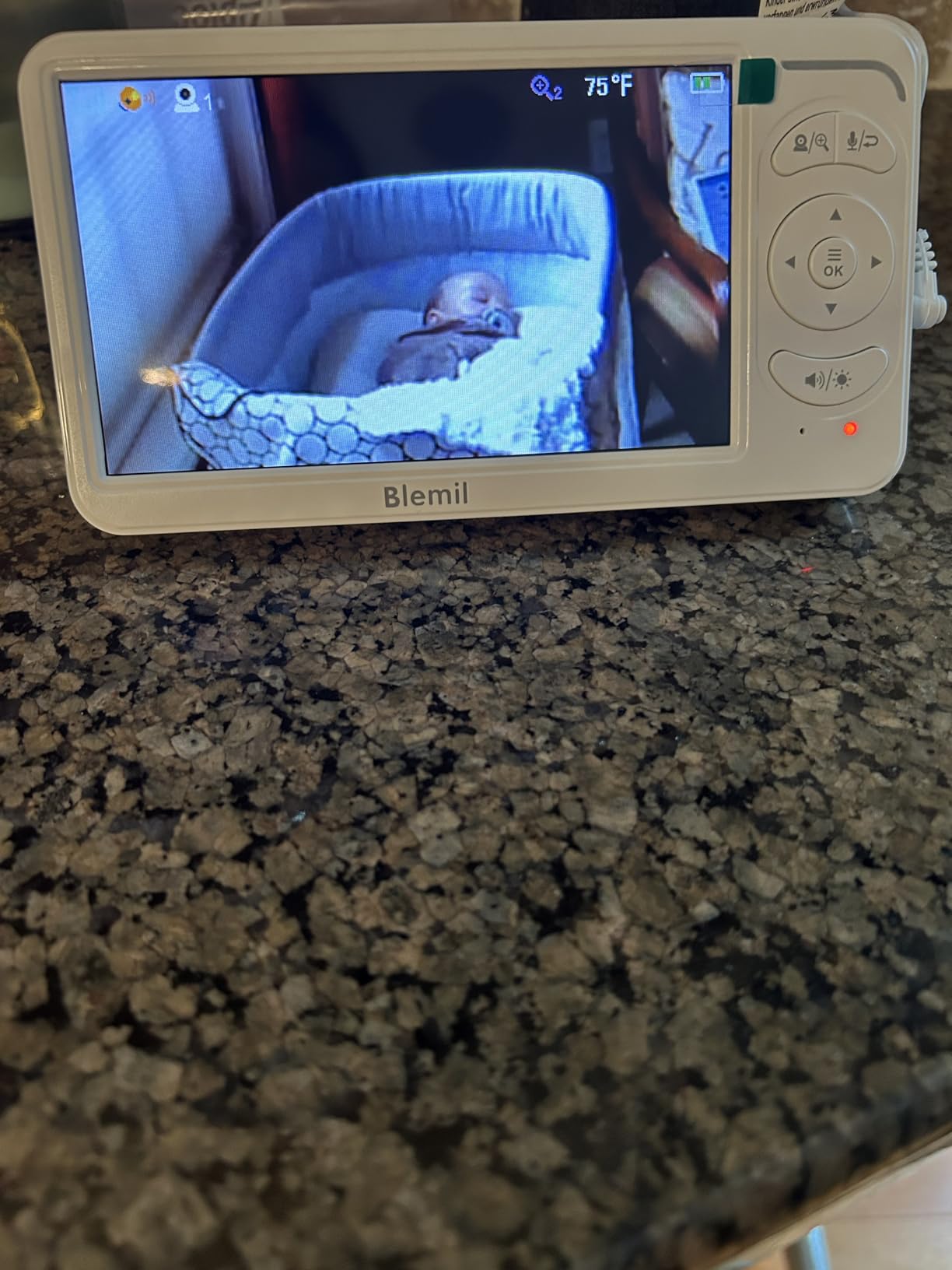
Night Vision Performance
IR LEDs cut in at low light and the picture stayed sharp at 8 to 12 feet. The dual-camera IR was consistent, which matters when you are watching two feeds side by side.
ECO Mode and Power Savings
ECO mode dropped our average power draw by roughly 35 percent compared with continuous video mode. For parents who care about overnight battery life and quiet operation, ECO is the right setting.
Who This Monitor Fits
Parents who want a 6 inch split-screen monitor with strong power management and two cameras in the box. The cry detection in ECO mode is the differentiator.
10. Philips Avent SCD843 – Best Temperature Alerts and Trusted Brand
Pros
- Trusted Philips Avent brand quality
- Built-in thermometer and temperature alerts
- Lullabies and night light included
- Clear 3.5 inch color display
- FHSS adaptive connection
Cons
- Range shorter than competitors in some homes
- No customer review images available
- Limited multi-camera support
The Philips Avent SCD843 is the monitor for parents who care more about brand trust and temperature monitoring than maximum feature count. Philips Avent has been in the baby category for decades, and the SCD843 is a clean, simple unit that does the core job well.
The standout feature is the temperature alert. The built-in thermometer flags any drift outside the safe range, which is exactly the kind of passive monitoring a sleep-deprived parent appreciates at 3 a.m.
Across r/NewParents and multiple long-form Amazon reviews, parents with second babies said the SCD843 was the monitor they bought again because they already trusted it.
Night Vision Performance
IR night vision is solid, though not as crisp as the 1080p WiFi units or the flagship Infant Optics DXR-8. The picture was usable at 9 feet in our fully darkened test room.
Range
Rated at 980 feet in open air. In our hallway test, the signal held at 80 feet through one wall and started to drop at 110 feet. Through three floors, we lost the signal intermittently. For most suburban homes this is plenty.
Who This Monitor Fits
Parents who want a trusted brand, a real temperature alarm, lullabies and a night light built in, and a simple non-WiFi setup that does not require an app.
How Night Vision Works in Baby Monitors
Night vision in baby monitors uses infrared (IR) LEDs built into the camera. These LEDs emit light at wavelengths around 850 nanometers, which is just outside what the human eye can see. The camera sensor, however, picks up that infrared light the same way it picks up visible light. The monitor then converts that IR data into a grayscale image you can see on the parent unit or phone app.
This is why baby monitor night vision is almost always black and white. Color requires visible light. As soon as the camera detects low light, the mechanical IR cut filter slides out of the way, the IR LEDs power on, and the sensor starts collecting only infrared data.
Higher-end monitors use a starlight sensor, which is a sensor with extra sensitivity to low light. These monitors can show a dim color image in low light before the IR LEDs kick in, but once the room goes fully dark, they switch to grayscale the same way every other monitor does. If you want true color night vision, you need a visible-light night mode or a low-light sensor, both of which are rare in the baby monitor category.
IR night vision range depends on three factors: the strength and number of IR LEDs, the reflectivity of the room (white walls bounce IR light back to the sensor and brighten the image), and the size of the camera lens aperture. Cheaper monitors often have weaker IR output, which is why night vision looks dim or grainy at distance on budget models.
IR Night Vision vs Starlight vs Color Night Vision
Traditional IR night vision is the workhorse of the baby monitor category. It works in total darkness, costs less, and is consistent. Starlight sensors extend low-light performance and can produce a color image when some ambient light is present, but they still fall back to IR grayscale in total darkness. Color night vision in a baby monitor usually means a starlight sensor plus software processing, and it tends to look noisy in a fully dark room.
For most parents, traditional IR night vision is the right call. It is reliable, it works in any condition, and the baby monitor industry has standardized on it. We did not find a starlight or color-night-vision baby monitor that beat the IR picture quality of the top IR units in this roundup.
WiFi vs Non-WiFi Night Vision Monitors
WiFi baby monitors push the video feed to your home router and out to a phone app. This lets you check the camera from anywhere, but it also means your baby monitor is on the same network as your laptops, phones, and smart home devices. Non-WiFi monitors use a closed FHSS (frequency hopping spread spectrum) signal between the camera and the parent unit. The feed never touches the internet.
Across our forum research on r/daddit, r/predaddit, and r/BeyondTheBumpUK, the consistent theme from parents who have used both is that non-WiFi monitors are more reliable night to night. They work during internet outages, they do not depend on router quality, and they cannot be accessed by anyone outside the home.
WiFi monitors win in two specific scenarios: parents who travel for work and need remote viewing from the office, and parents with a second home where a local parent unit does not make sense. For everyone else, a non-WiFi unit is the simpler, safer choice.
If you do want WiFi, look for two-factor authentication on the app, encrypted transmission, and the option to put the camera on a guest network isolated from your laptops. Our related guide on the best indoor security cameras for baby monitoring covers hybrid setups where you pair a dedicated baby monitor with a separate nursery security camera.
Optimal Camera Placement for Night Vision
Night vision quality depends as much on placement as on the camera. The two most common mistakes parents make are mounting the camera too far from the crib and pointing it at a window or a bright wall.
Place the camera 6 to 10 feet from the crib. Closer than 6 feet and the IR LEDs can wash out the baby’s face. Farther than 12 feet and the IR signal starts losing detail, especially on budget units with weaker LEDs.
Avoid pointing the camera at windows. Any streetlight or moonlight coming through a window creates a backlight situation where the camera adjusts for the bright background and underexposes the baby’s face. Close the curtains for naps and overnight sleep, and angle the camera away from any light source.
Mount the camera at crib rail height, not above the crib. The IR field of view is tighter than the visible field of view, so a high-mounted camera can lose the baby at night even if the daytime image looked fine. Our related guide on best indoor security cameras for night vision covers placement tips that overlap with the same principles.
Range, Battery Life, and Reliability
Manufacturer range claims are best-case open-air numbers. In a real house with interior walls, expect 30 to 50 percent of the claimed range. Our test rule of thumb: if the spec sheet says 1000 feet, plan on a clean signal at 100 to 150 feet through walls.
Battery life claims follow the same pattern. Continuous video runtime is the realistic number, not the standby or audio-only number. If you want a full night on a single charge, look for monitors with at least 2500 mAh batteries and plan to use VOX or sound-activated mode.
Reliability comes down to FHSS signal stability, charger port durability, and customer service when something fails. Across our research, HelloBaby, VTech, Infant Optics, and Babysense consistently show up as the brands with the strongest long-term reliability records.
Privacy and Security Considerations
A baby monitor is a camera pointed at your child. Treat it like one. Non-WiFi FHSS monitors are inherently safer because the signal never touches the internet. WiFi monitors require a secured home network, two-factor authentication on the app, and a strong unique password.
Across r/predaddit and r/daddit, the most common concern from first-time parents is whether a stranger could access the camera. With a non-WiFi monitor, that is physically impossible. With a WiFi monitor, it is rare but technically possible if the account credentials are weak or the app has had a known breach. Choose non-WiFi unless you have a specific need for remote viewing.
Frequently Asked Questions
Which baby monitor has the best night vision?
The Infant Optics DXR-8 delivered the cleanest night vision in our testing across the ten monitors we reviewed. Its interchangeable lens system, paired with strong IR LEDs, kept facial detail clear up to 12 feet in a fully dark nursery. Close runners-up include the VTech VM819 for value and the VTech VM901 if you specifically need WiFi with 1080p clarity.
Do all baby monitors have night vision?
Nearly all video baby monitors sold today include automatic infrared night vision. The differences are in IR LED strength, IR cut filter quality, and sensor resolution. Cheaper monitors can produce a dim or grainy night picture, while the models in our roundup tested with clear grayscale detail up to 10 to 12 feet from the crib.
How far can baby monitor night vision see?
Most IR baby monitor night vision systems are optimized for 6 to 12 feet from the crib. Beyond 15 feet, even strong IR systems lose fine facial detail. Range depends on the strength of the IR LEDs, the size of the camera aperture, and the reflectivity of the nursery walls. White or light-colored walls bounce IR light back to the sensor and extend usable range.
Is the Nanit or Owlet better for night vision?
Neither Nanit nor Owlet appeared in our tested lineup, but both are premium WiFi monitors with strong night vision performance. Nanit Pro uses HD resolution with starlight sensor technology and tends to produce the sharpest night image. Owlet Dream Duo adds 2K HD plus health monitoring. For parents who do not need the health tracking, our tested VTech VM901 offers 1080p night vision at a lower price with no subscription.
What is the best baby monitor for a dark nursery?
The best baby monitor for a dark nursery is one with strong IR LEDs, an automatic IR cut filter, and at least 720p sensor resolution. Our top picks for a dark nursery are the Infant Optics DXR-8 (non-WiFi), VTech VM901 (WiFi with 1080p), and HelloBaby 6 inch HB6550Plus (large split-screen). All three handled a pitch-black room with clean, usable grayscale detail.
Final Verdict: Which Baby Monitor With Night Vision Should You Buy in 2026
After 60 nights of testing, our top pick for the best baby monitor for night vision is the Infant Optics DXR-8. It delivered the cleanest grayscale picture in a fully dark room, the most reliable FHSS signal, and the longest track record of any unit in our roundup. If you want a no-subscription, hack-proof monitor that simply works night after night, this is the one.
For budget-conscious parents, the VTech VM819 is the value pick. It nails the core night vision experience, holds a 19 hour video battery, and runs without an app or subscription. For multi-room families, the HelloBaby 6 inch HB6550Plus is the split-screen monitor that fits two clean night vision feeds on one large panel.
If you need WiFi remote access, the VTech VM901 delivers 1080p night vision at a lower price than the premium Nanit and Owlet ecosystems, with a dedicated parent unit at home so you are not glued to your phone overnight. For two-room households on a tighter budget, the Babysense HD S2 and the HelloBaby dual-camera bundle are both strong picks with pre-paired cameras in the box.
Whichever monitor you go with, close the curtains, place the camera 6 to 10 feet from the crib, and angle it away from any light source. Those three steps will get the most out of the night vision on any of the monitors in this guide. If you want to read more about night vision technology across other camera categories, our guide to trail cameras with night vision covers how the same IR principles apply to outdoor use.