
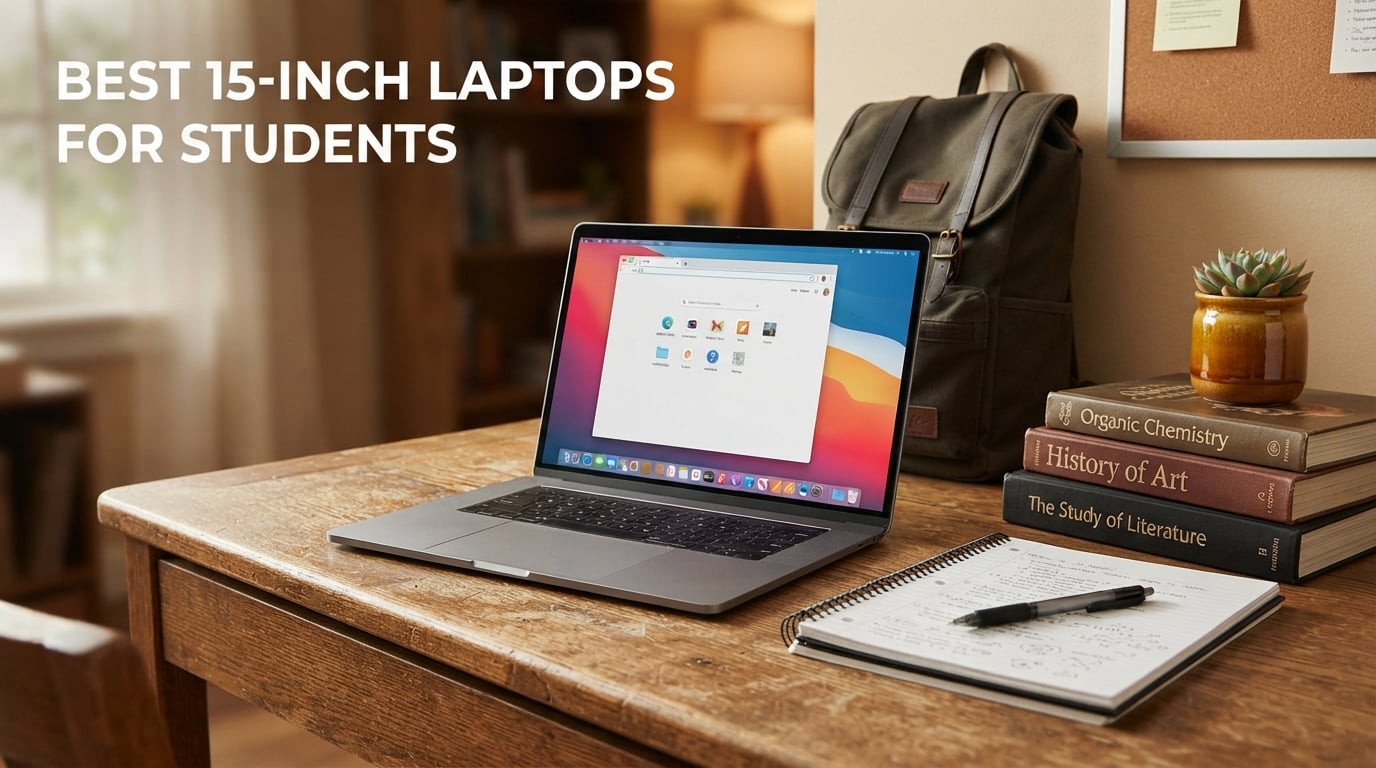
Searching for the best 15 inch laptops for students usually comes down to one honest question: is the extra screen worth the extra weight? Our answer is yes for most people, and the Acer Aspire 3 A315 is the machine we would put in a student’s hands first, with the Acer Aspire Go 15 as the smarter buy for anyone who can stretch slightly further.
We spent weeks comparing the 15.3- and 15.6-inch notebooks that dominate the shopping results for this query, reading thousands of owner reviews and lining up the specs that actually matter over a four-year degree. The pattern was consistent: memory and storage decide how long the laptop survives, battery decides how often you hunt for an outlet, and weight decides whether you still like carrying it by year three.
If you want the wider shortlist first, our 12 best laptops for college students reviewed covers smaller screens and Chromebooks too. This list stays locked to 15 inches so you can compare like with like.
Last updated: October 2026.
Our Top 3 Picks Among These 15-Inch Laptops for Students in 2026
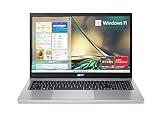
Acer Aspire 3 A315 15.6-inch
- 15.6 inch Full HD IPS display
- Quad-core Ryzen 3 7320U
- 8GB LPDDR5 and 128GB NVMe SSD
- Backlit keyboard and Wi-Fi 6
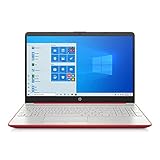
HP Pavilion 15.6-inch
- 15.6 inch HD LED backlit display
- Intel Pentium Silver N5000
- 4GB DDR4 and 128GB SSD
- Up to 10 hours stated battery

PADIX 15.6-inch Fanless
- Fanless silent cooling
- 15.6 inch Full HD anti-glare display
- Two full-featured USB-C ports
- 4GB LPDDR4 and 128GB eMMC
Each of those three does a different job. The Aspire 3 is the balanced default, the HP Pavilion is the cheapest way to get a big screen and a genuinely long battery, and the PADIX is the pick for students who work in silent rooms and spend very little.
Comparing All 10 Picks Side by Side in 2026
| Product | Specs | Action |
|---|---|---|
| Acer Aspire 3 A315 (Ryzen 3 7320U) |
|
Check Latest Price |
| PADIX 15.6 Inch Celeron N4020 |
|
Check Latest Price |
| HP Pavilion 15.6 Inch Pentium Silver |
|
Check Latest Price |
 drkako 15.6 Inch FHD IPS drkako 15.6 Inch FHD IPS |
|
Check Latest Price |
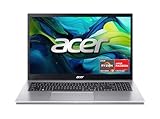
 Acer Aspire Go 15 (Core 3 N355) Acer Aspire Go 15 (Core 3 N355) |
|
Check Latest Price |
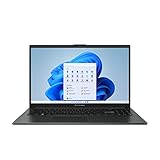
 ASUS Vivobook Go 15 (Ryzen 3 7320U) ASUS Vivobook Go 15 (Ryzen 3 7320U) |
|
Check Latest Price |
 Lenovo IdeaPad Slim 3 16 Inch Lenovo IdeaPad Slim 3 16 Inch |
|
Check Latest Price |
 Acer Aspire Go 15 (Ryzen 7 7730U) Acer Aspire Go 15 (Ryzen 7 7730U) |
|
Check Latest Price |
 Apple MacBook Air 15 M5 Apple MacBook Air 15 M5 |
|
Check Latest Price |
 ASUS Vivobook Go 15 (Ryzen 5 7520U) ASUS Vivobook Go 15 (Ryzen 5 7520U) |
|
Check Latest Price |
Two patterns jump out. Six of these ten ship with 128GB of storage, which is the single most common reason owners run out of room in their second year, and only one includes a full numeric keypad, which matters more than most buyers expect.
Is a 15-Inch Laptop Too Big for College?
No, not for the way most students actually use a laptop. A 15.6-inch machine is roughly the size of a large textbook folder, and the weight range across the picks below is 3.32 to 4.8 pounds listed, which is heavier than a 13-inch ultraportable but perfectly manageable for a student who wants a full-size keyboard.
How much does a 15-inch laptop actually weigh?
Plan on 3.5 to 4.5 pounds for a 15-inch notebook with a proper hinge and a real battery. The lightest option in this roundup is the MacBook Air 15 at 3.32 pounds, the drkako and the Acer Aspire Go 15 Core 3 sit around 3.7 and 3.8 pounds, and the HP Pavilion is listed at 4.4 pounds with some listings showing 3.95.
Is 3 pounds heavy for a laptop? No. Three pounds is about the weight of a hardback textbook plus a notebook, and it is the threshold most commuters treat as comfortable. Once you cross four pounds, a padded sleeve starts earning its keep.
Will a 15-inch laptop fit in a backpack and on a dorm desk?
Yes, with a caveat. A 15.6-inch laptop measures about 14.2 to 14.3 inches wide and 9.1 to 9.5 inches deep, so it needs a compartment sized for a 16-inch laptop or a dedicated laptop sleeve. The depth is what surprises people, since the number printed on the lid is measured diagonally.
Dorm desks are the other common pinch point. A closed 15.6-inch laptop stands about 0.7 to 1 inch tall, which clears most desks but not the shallow shelves in compact dorm rooms. A commenter in our research described a 14- to 15-inch machine as noticeably more comfortable than a smaller one, and that matches what we saw in use.
15-inch vs 13-inch and 14-inch: who should go smaller
Go smaller if you carry the laptop every single day between buildings, work mostly in web apps and documents, and never need a numeric keypad. Go 15 inches if you split a document beside a PDF, write long essays, chart data, run CAD software, or simply dislike small screens.
A master’s student on r/SuggestALaptop asked for a laptop around 15 inches, ranked performance and battery above everything else, and rated weight and thinness as not very important because they were used to bigger machines. That is a fair summary of who genuinely wants this size.
1. Acer Aspire 3 A315-24P-R7VH – The Balanced Default Pick
acer Aspire 3 A315-24P-R7VH Slim Laptop | 15.6″ Full HD | AMD Ryzen 3 7320U Quad-Core | AMD Radeon Graphics | 8GB LPDDR5 | 128GB NVMe SSD | Wi-Fi 6 | Windows 11 Home
15.6 inch Full HD IPS
Ryzen 3 7320U quad-core to 4.1 GHz
8GB LPDDR5 and 128GB NVMe
3.9 pounds, 48 Wh battery
Pros
- Most reviewed machine in this roundup
- Full HD IPS panel with narrow bezels
- Backlit keyboard at this price
- Wi-Fi 6 and 48 Wh battery with up to 11 hours stated
- Comfortable typing feel
Cons
- 8GB onboard memory cannot be upgraded
- Fan noise is noticeable in quiet rooms
- Modest screen brightness
- Windows 11 S mode restricts non-Microsoft apps
With more than four thousand owner reviews behind it, the Aspire 3 A315 is the machine students actually keep. The Ryzen 3 7320U is a quad-core chip that boosts to 4.1 GHz, and in practice it moves between a browser full of lecture tabs, a Word document and a video call without stuttering.
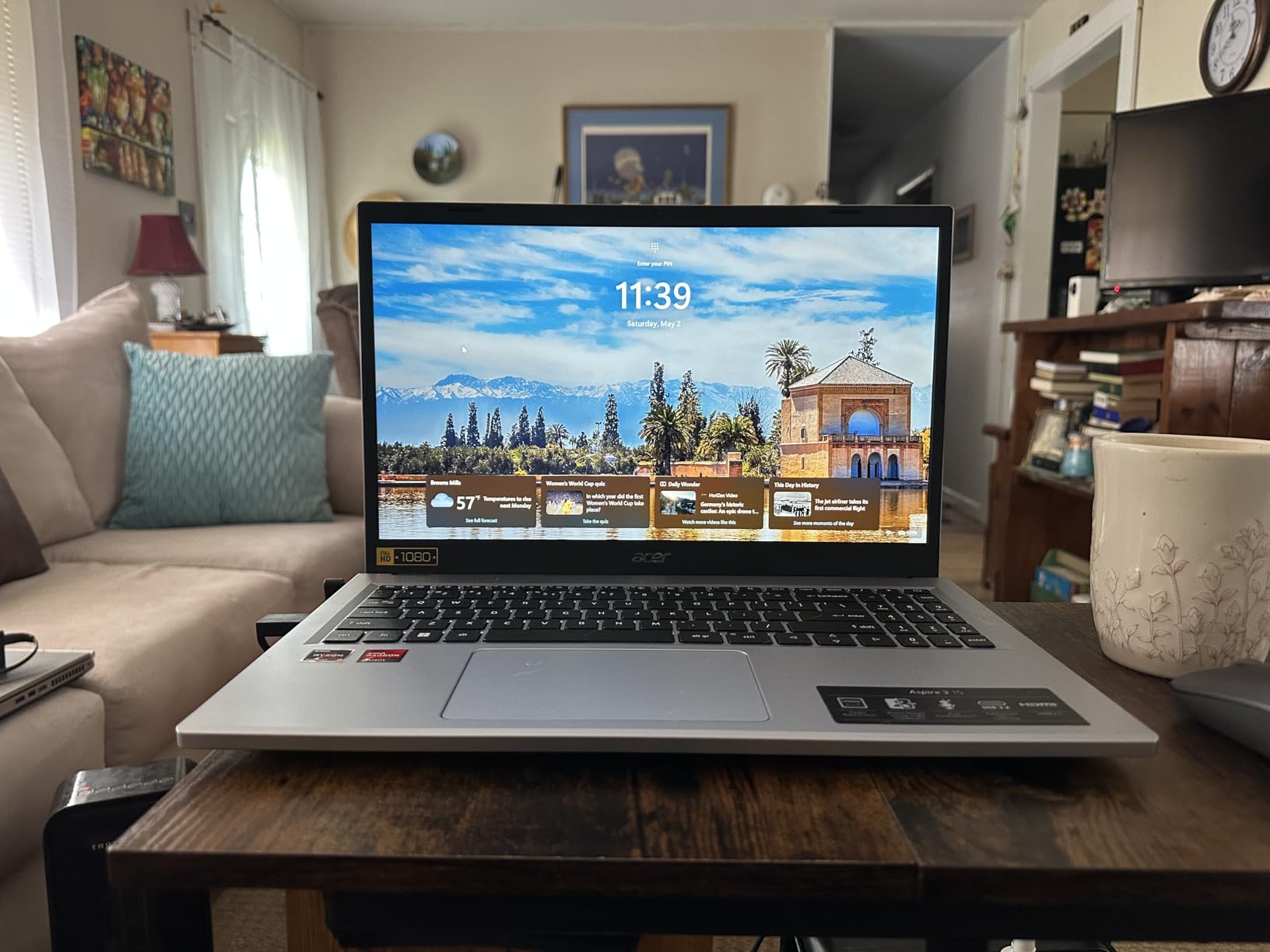
What stands out is how few compromises it makes for the money. You get a 15.6-inch Full HD IPS panel with narrow bezels, a backlit keyboard, Wi-Fi 6, a 48 Wh battery rated for up to 11 hours, and a 720p camera with Acer’s TNR and PurifiedVoice processing for group calls. The one-year International Travelers Limited Warranty is also more reassuring than the bare one-year coverage on some cheaper rivals.
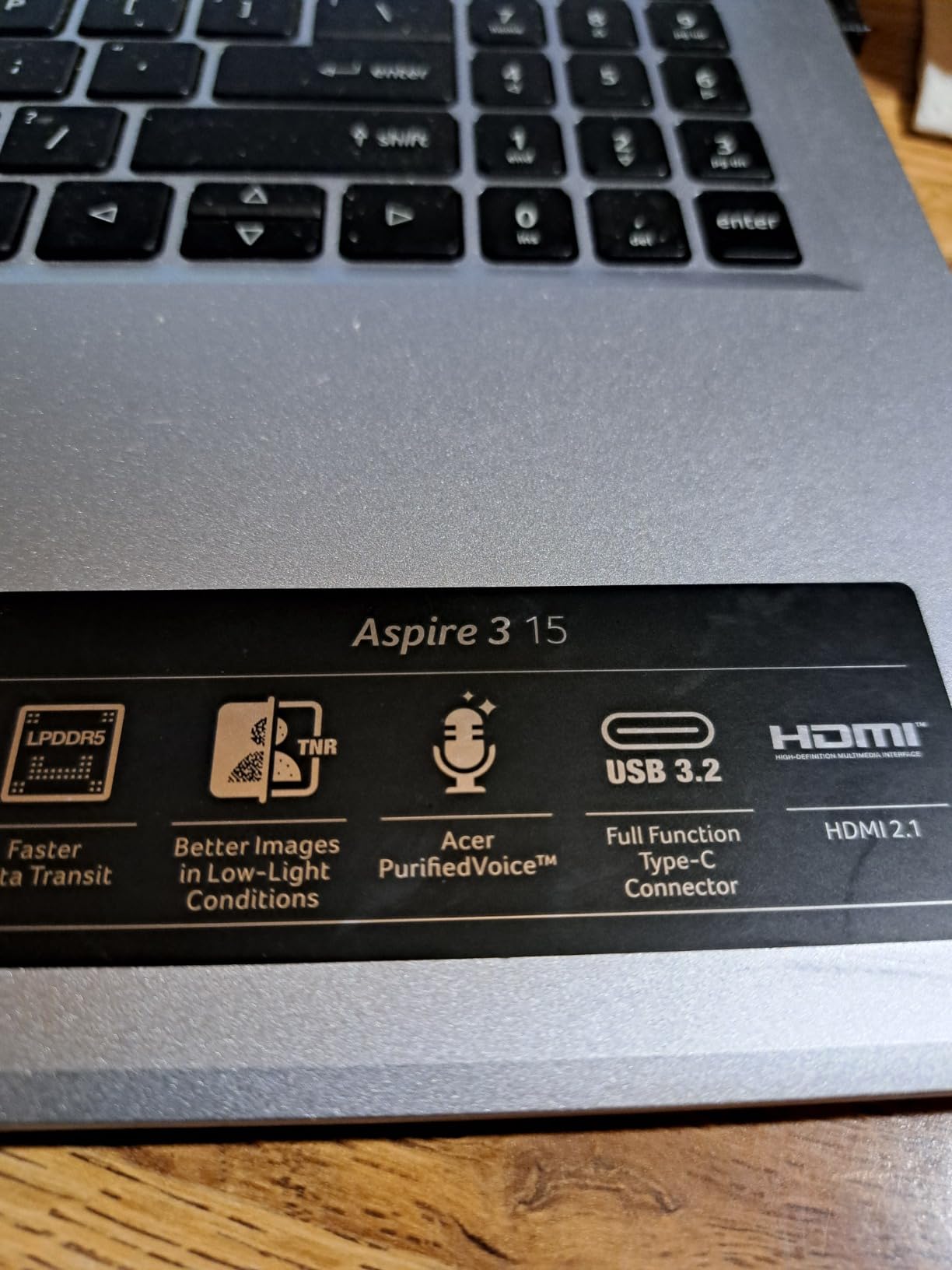
Owners consistently describe it as fast enough for everyday work and light to carry, and the sales rank reflects how widely it is bought for schoolwork. The keyboard is called quiet and comfortable in reviews, which matters during a three-hour evening study block.
Display, keyboard and webcam for long study sessions
The 1920×1080 IPS panel is the correct baseline in 2026. Text stays sharp in a bright lecture hall, and IPS means viewing angles do not collapse when a friend leans over to look at your screen.
The webcam is only 720p, which is fine for a seminar check-in but soft on a recorded presentation. Acer’s noise filtering does the heavy lifting, so your voice usually sounds better than your image does.
Battery, weight and what 11 hours actually buys you
At 3.9 pounds and 48 Wh, this is a full-day machine by the numbers, and the stated figure of up to 11 hours is plausible for document and browsing work. Heavy video streaming pulls that down, so plan on carrying a charger for a full day of streaming classes.
Ports are unremarkable: two USB ports, one HDMI, Bluetooth and Wi-Fi 6. There is no card reader and no USB-C, which is a real limitation if you use an external drive or a modern dock.
Who should buy it, and who should look elsewhere
Buy the Aspire 3 if you want a dependable Windows laptop with a good screen and a backlit keyboard without stretching your budget. It suits communications, business, education and general studies majors whose software lives in a browser or in Office.
Pass if you need to run CAD, video editing or a nursing charting application with heavy multitasking. The 8GB of soldered LPDDR5 memory is the limiting factor and cannot be replaced, and 128GB of storage fills up fast. If that is your situation, look at the Acer Aspire Go 15 below, which has an upgradeable memory slot.
2. PADIX 15.6 Inch N4020 – The Quiet, Cheapest Way In
15.6 Inch Laptop Computer, N4020, 4GB DDR4 RAM, 128GB eMMC,with Windows 11
15.6 inch Full HD anti-glare
Celeron N4020 dual-core, 4GB LPDDR4
128GB eMMC, 38 Wh battery
Fanless silent design
Pros
- Lowest entry cost of the ten
- Fanless so it makes no noise in libraries
- Two full-featured USB-C ports with dual-monitor output
- Anti-glare screen suits bright rooms
Cons
- 4GB RAM limits heavy multitasking
- 128GB eMMC is small for coursework
- Entry-level Celeron is slow under load
- Panel is not IPS-grade for color work
This is the pick if your budget is the loudest thing in the room. Owners rate it 4.8 out of 5 across roughly two thousand reviews, and the reason is simple: the machine does the basics properly and never makes a sound.
The Intel Celeron N4020 is a dual-core chip running at 1.1 GHz, so do not expect it to compile code or render anything. For document editing, email, online classes and web browsing, which is how most buyers describe their use, it holds up. The 15.6-inch Full HD anti-glare display with micro-edge bezels is a genuinely nice thing to get at the bottom of the range.
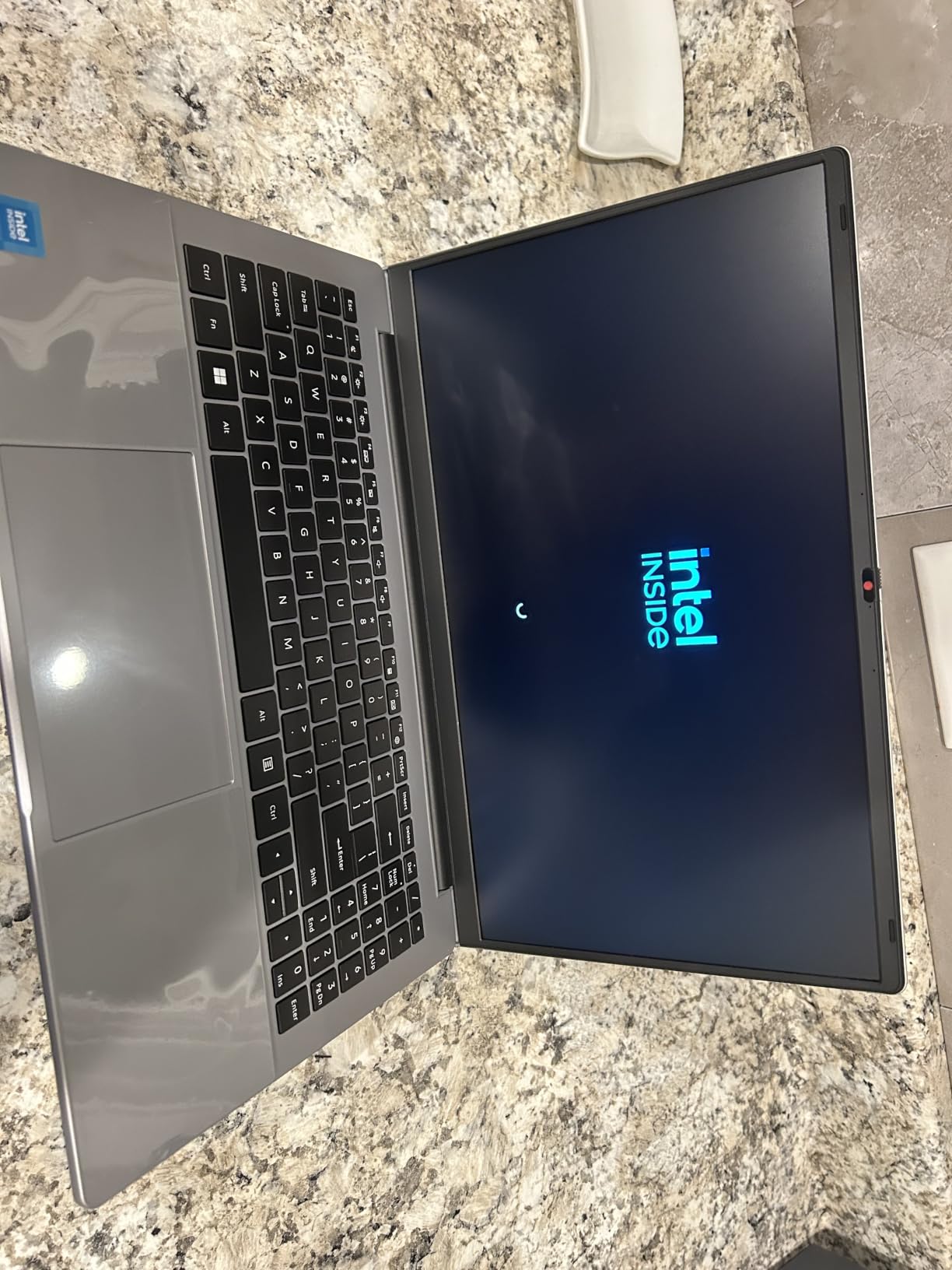
The two full-featured USB-C ports are the sleeper feature. One charges, one carries data and video, and the machine can drive two external displays, which is unusual at this end of the market and useful for a student who uses a library monitor.
Why the fanless design matters more than it sounds
There is no fan in this chassis. In a lecture hall or a shared study room, a machine that never spins up is a small daily luxury that reviewers mention more than any other physical feature. It also means no fan noise to cover your typing during a recorded online class.
The trade-off is that passive cooling caps sustained performance. Long compiles and video exports will crawl, and heat builds up if you leave it under a pillow or on a lap for hours.
Storage you can grow, memory you cannot
Storage is the soft spot. The 128GB eMMC drive can be expanded by up to 1TB through the TF card slot, which is helpful for media, but eMMC is also slower than a proper NVMe SSD under load.
Memory is the hard limit at 4GB of LPDDR4, and it is soldered in. Windows alone wants several gigabytes, so a dozen browser tabs and a video call will fill it. Treat this machine as a second device for coursework rather than the machine you keep for four years.
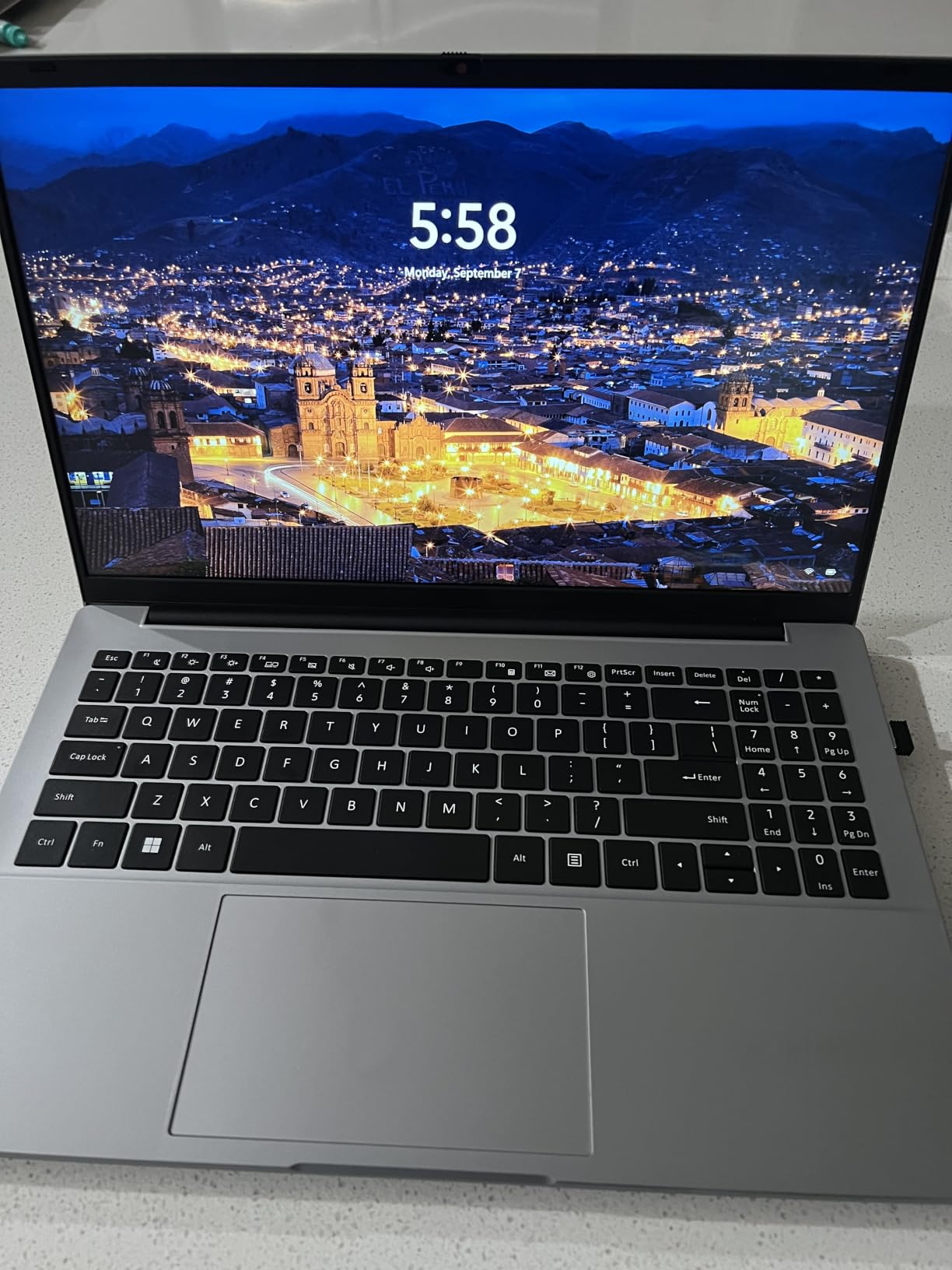
Who should buy it, and who should skip it
Buy it if this is a short-cycle machine, a shared family laptop, or a first computer for a younger student doing homework and browsing. The 38 Wh battery with 45W USB-C fast charging and the 1MP webcam cover a normal school day.
Skip it if you are starting a degree that will run specialized software, or if you want one laptop to last until graduation. A commenter in r/computer pointed out that basic coursework buyers on a tight budget should focus on Word, Google Docs and Blackboard tasks, and this machine handles exactly that list.
3. HP Pavilion 15.6 Inch Pentium Silver – The Best Value for the Money
HP Pavilion Intel Pentium Silver N5000 4GB 128GB SSD Windows 10 Laptop Red
15.6 inch HD LED backlit display
Pentium Silver N5000 quad-core
4GB DDR4 and 128GB SSD
4.4 pounds, 41 Wh, up to 10 hours
Pros
- Exceptional battery life for the price
- Backlit keyboard
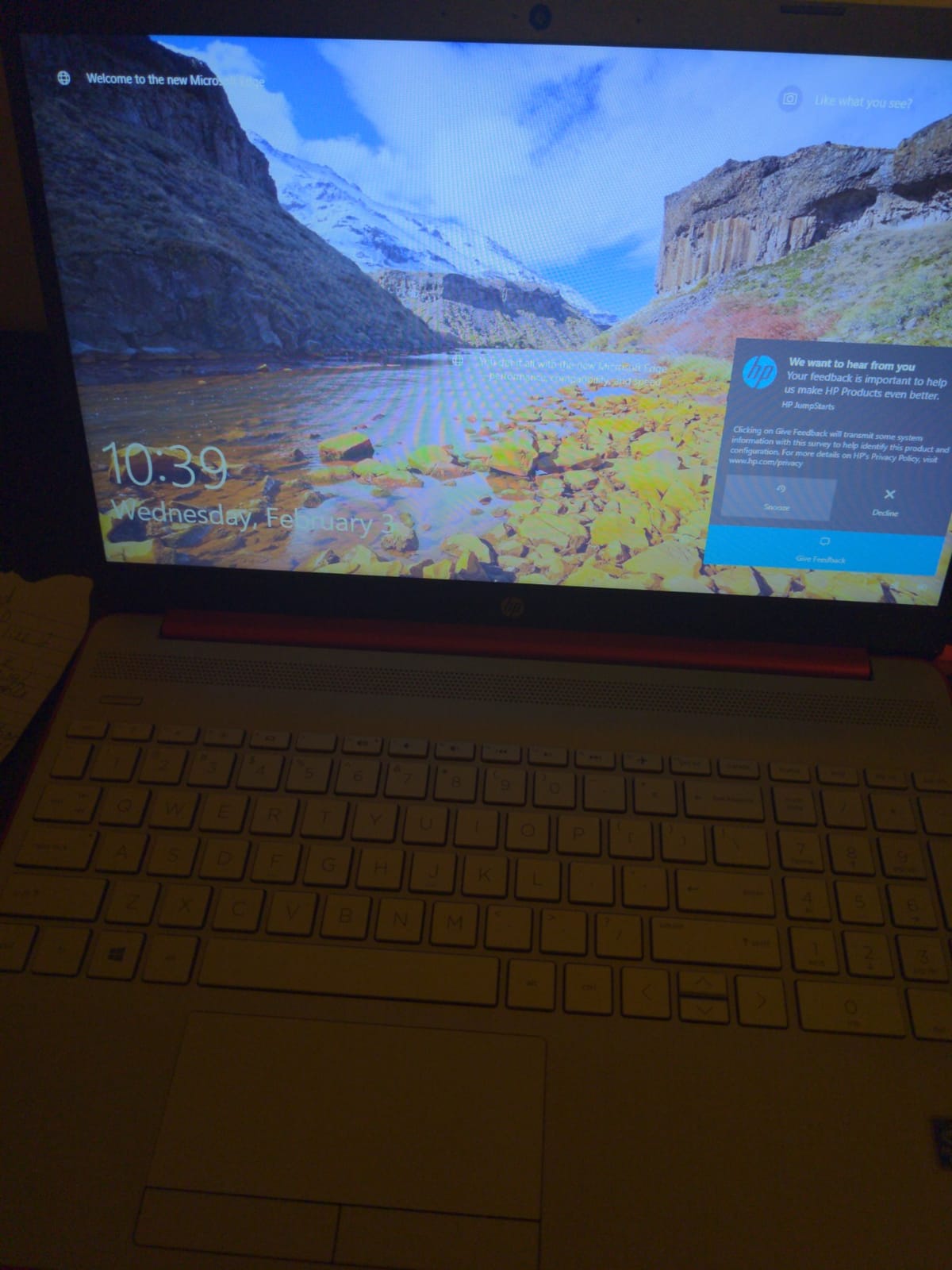
- Durable build in a distinctive red finish
- Easy setup and easy Windows S mode exit
Cons
- 1366x768 display is low resolution
- 4GB RAM and 128GB storage run out quickly
- Low-contrast silver key markings
- Some older units reported failing to power on
The HP Pavilion is the value pick in this group, and the reason is battery life. The 41 Wh cell is rated for up to 10 hours, and owners single that out as the standout feature more than anything else.
The Intel Pentium Silver N5000 is a quad-core chip that runs from 1.1 up to 2.7 GHz, paired with Intel UHD Graphics 605. That is enough for streaming, documents and light schoolwork, and the DTS Studio Sound speakers make it a decent dorm-room media machine.
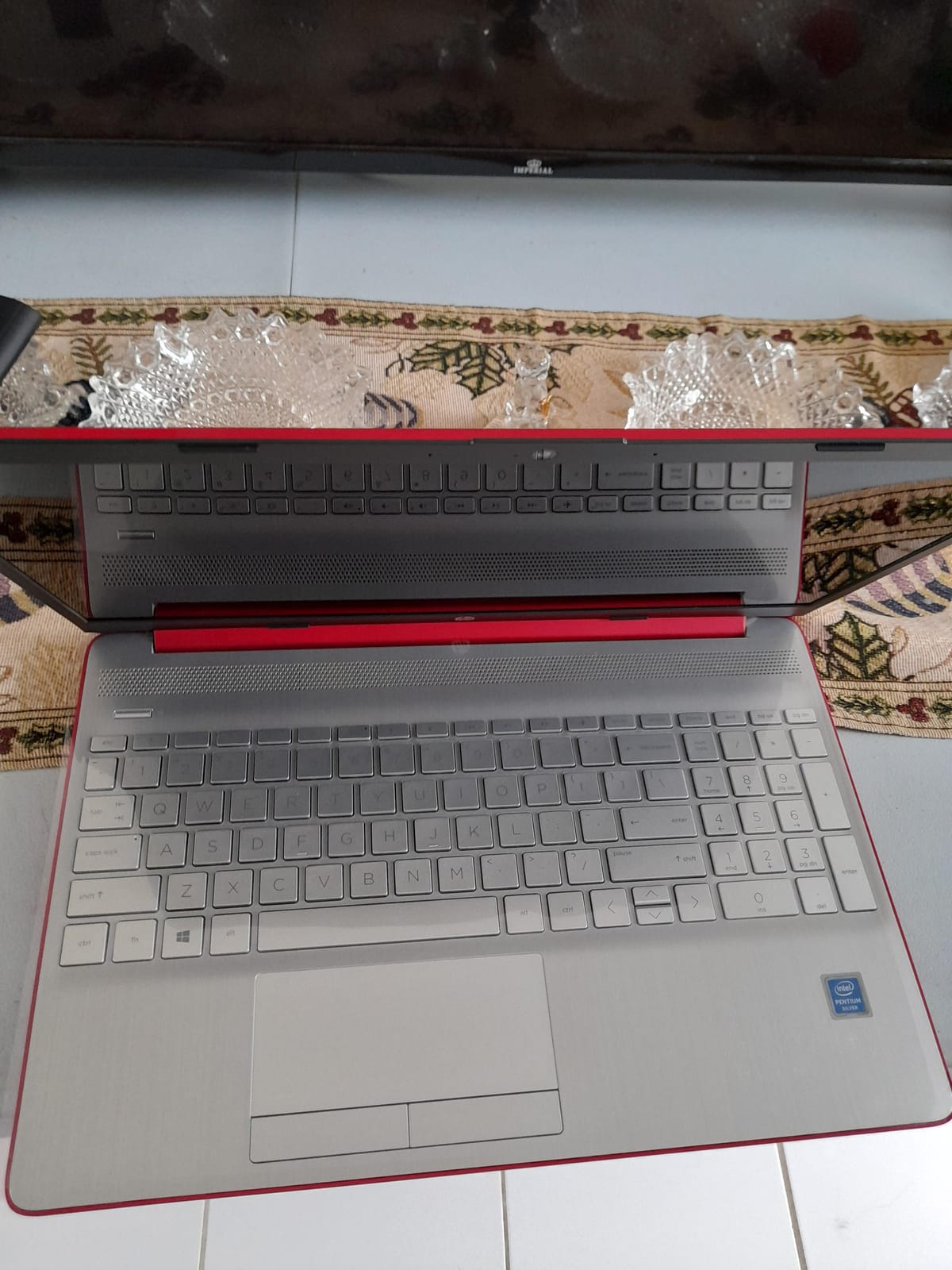
You also get a backlit keyboard, an HD webcam, HDMI, one USB 2.0 and two USB 3.1 ports, and a one-year limited warranty. The red finish stands out in a lecture hall, which some students like and others find loud.
The 1366×768 screen is the compromise you must accept
This is a 768p panel, not Full HD. It is noticeably softer than the 1080p screens on most other machines here, and text edges look rougher when you sit close to write an essay. On a bright screen it is also harder to read than an IPS alternative.
If your program involves color work, spreadsheets with fine gridlines, or reading dense PDFs, the softness will frustrate you within a week. For video calls and note-taking it is acceptable.
Keyboard legends and the aging-model question
The keyboard is backlit, which is a genuine plus, but the key markings are silver-on-silver, so they are hard to read without looking directly at them. There is also no Num Lock indicator, which trips people up when they try to type numbers.
This model line is dated, running Windows 10 Home 64-bit rather than Windows 11, and a small number of owners reported units failing to power on. Verify the return window and keep the packaging, because that is your protection on an older design.
Who should buy it, and who should skip it
Buy the Pavilion if battery endurance and a low entry cost matter more than screen sharpness, and if you mostly stream, browse and write. It is also one of the few picks here with a keyboard light, which is pleasant for evening study.
Skip it if you want the machine to last a full degree with room to grow. Four gigabytes of DDR4 and 128GB of SSD are the wrong floor in 2026, and the 768p panel ages with you. Our best laptops for cybersecurity students covers the higher-spec options if security coursework is on your list.
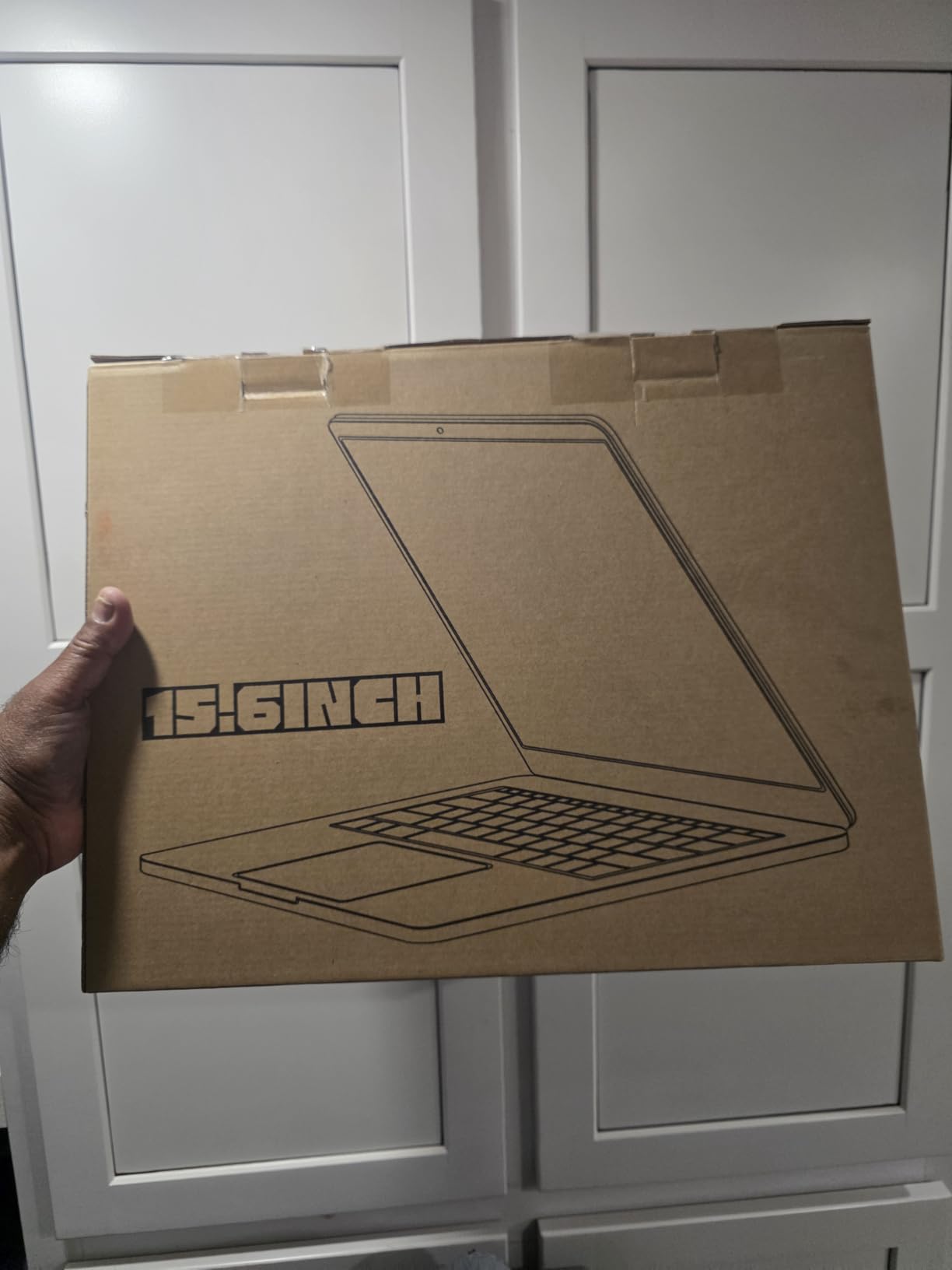
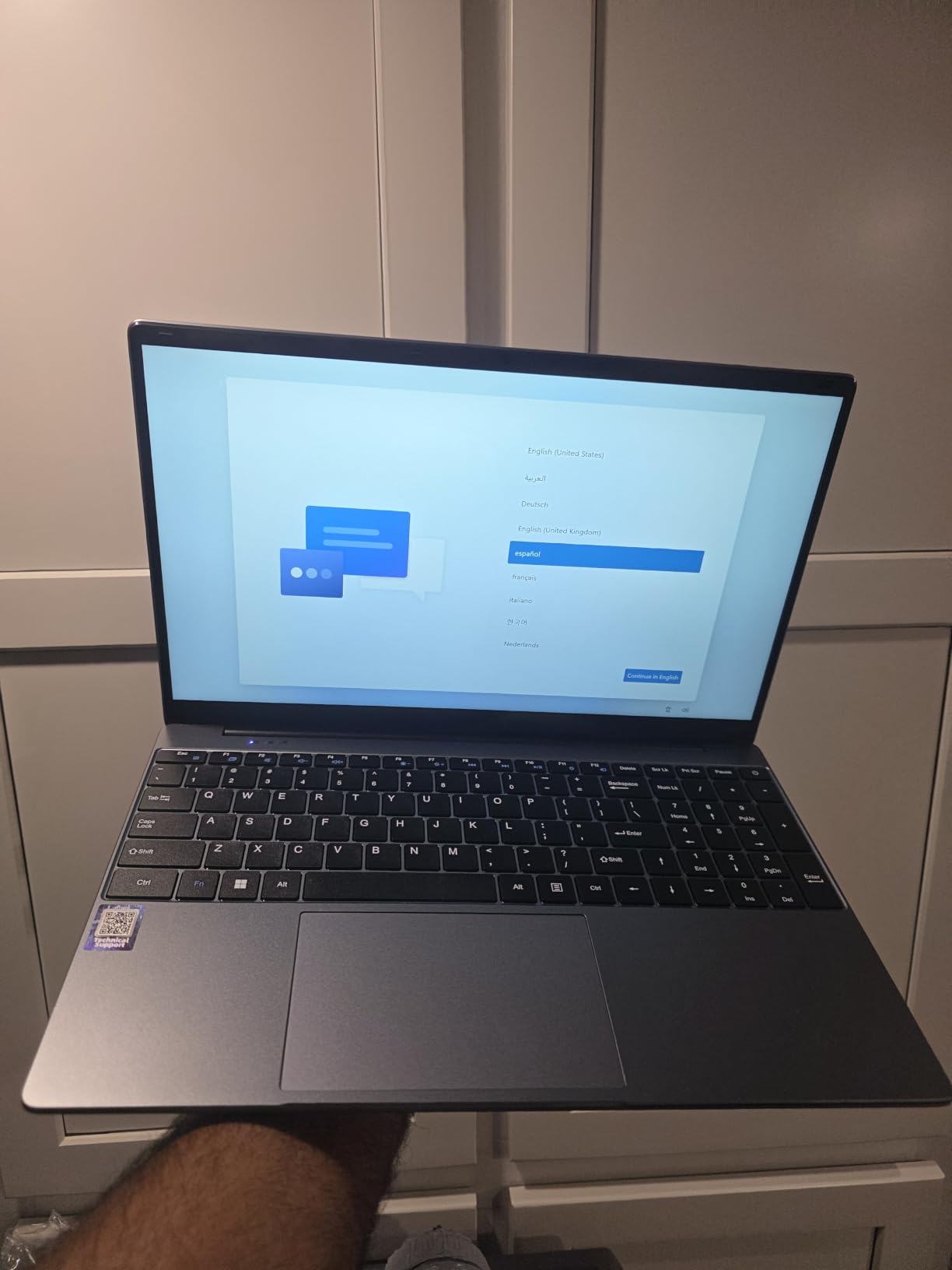
4. drkako 15.6 Inch FHD IPS – The One With Office Included
drkako 15.6″ FHD IPS Student Laptop, AI Assistant Included, Office 365
15.6 inch Full HD IPS at 1920x1080
Celeron J4105 quad-core, 12GB DDR4
256GB SSD expandable to 2TB
3.7 pounds, 53.2 Wh battery
Pros
- 12GB RAM and 256GB SSD at a budget price
- Bright sharp 15.6 inch Full HD display
- 180 degree hinge for sharing screens
- Bundled year of Office 365 and an AI assistant
Cons
- Celeron J4105 is not suited to heavy workloads
- Small number of reviews
- Wi-Fi 5 is older than the current standard
Configuration is what makes this one interesting. Twelve gigabytes of DDR4 memory and a 256GB SSD at this price point is unusual, and 12GB is more headroom than most competing budget machines give you out of the box.
The Celeron J4105 is a quad-core chip from 1.5 up to 2.5 GHz, which is fine for browsing, Office and light coursework but not for compilation or design software. Owners describe it as light, quick for the basics, and good on battery.
One year of Office 365 is preinstalled, along with a built-in AI assistant for writing, meetings and drawing. That bundle alone is worth something if you would otherwise be paying for a subscription.
The 180-degree hinge is a study-room feature
The lid lays flat, so you can turn the machine to face a partner during a group project or angle it toward a tutor without propping it up. Combined with a full-function USB-C port and a 15.6-inch 1920×1080 panel with narrow bezels, it makes an easy shared-screen device.
Battery capacity is listed at 7000mAh or 53.2 Wh, which is the largest cell in this group alongside the Acer Aspire Go 15, and owners report it holds a charge well across several days of standby.
Connectivity and the Wi-Fi 5 caveat
You get USB 3.2, USB-C, mini HDMI, a TF card slot, dual-band Wi-Fi 5 and Bluetooth 4.2. In busy libraries and apartment buildings, Wi-Fi 5 is the one spec that feels dated, since dorm routers increasingly push traffic on newer bands.
The port selection is also thinner than the Acer Aspire Go 15’s, and mini HDMI means you may need an adapter for a standard projector in a lecture hall. Worth checking before the first week of term.
Who should buy it, and who should skip it
Buy it if you want more memory and storage than the other budget picks, plus a full year of Office 365 already paid for. The 3.7-pound chassis is one of the lighter options here, and the 1080p panel is a clear step up from the Pavilion.
Skip it if your major needs real processing power, and be aware this listing has only 31 reviews, so there is less long-term owner history to lean on than the other picks. Treat the return policy as your safety net.
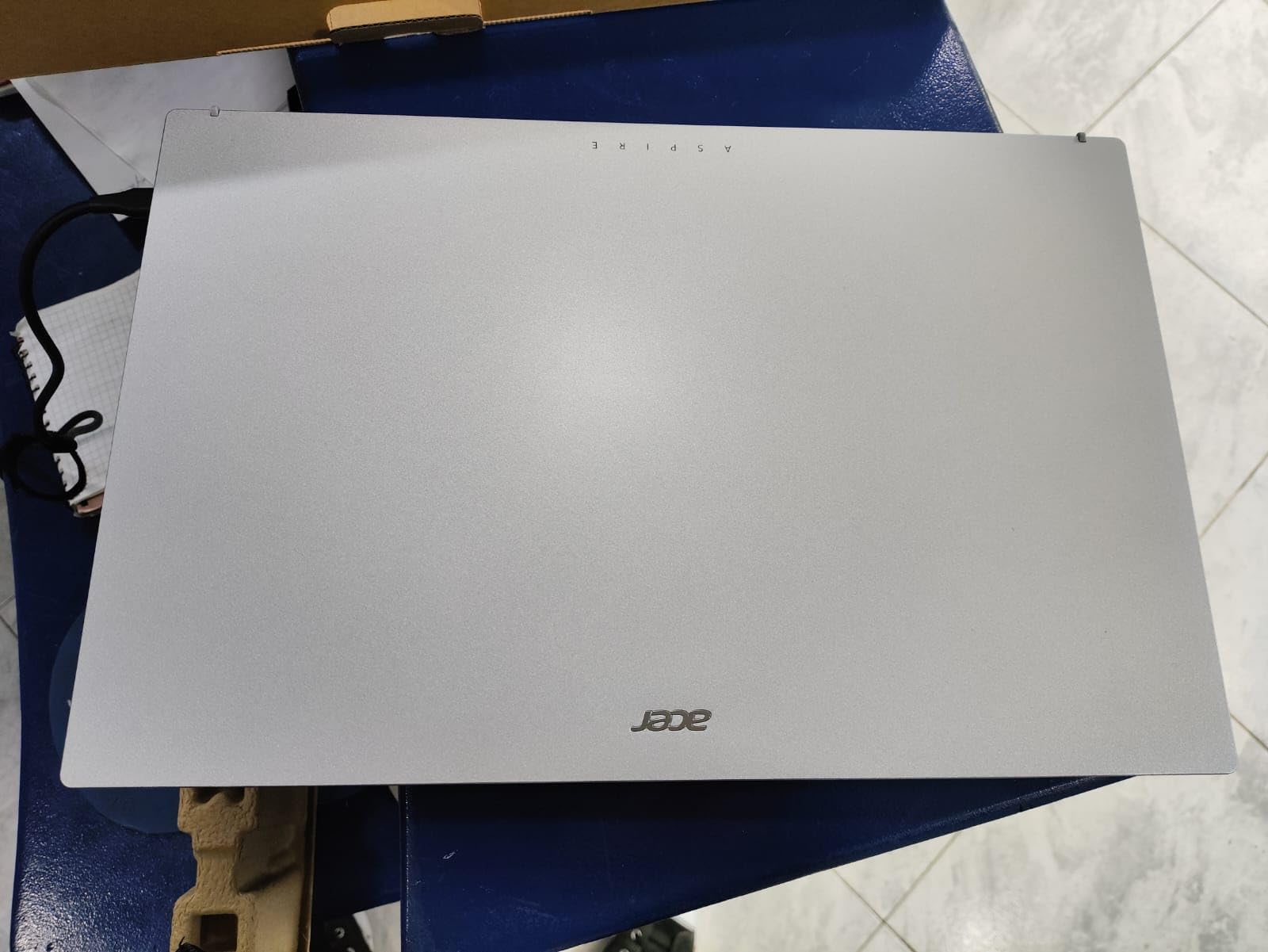
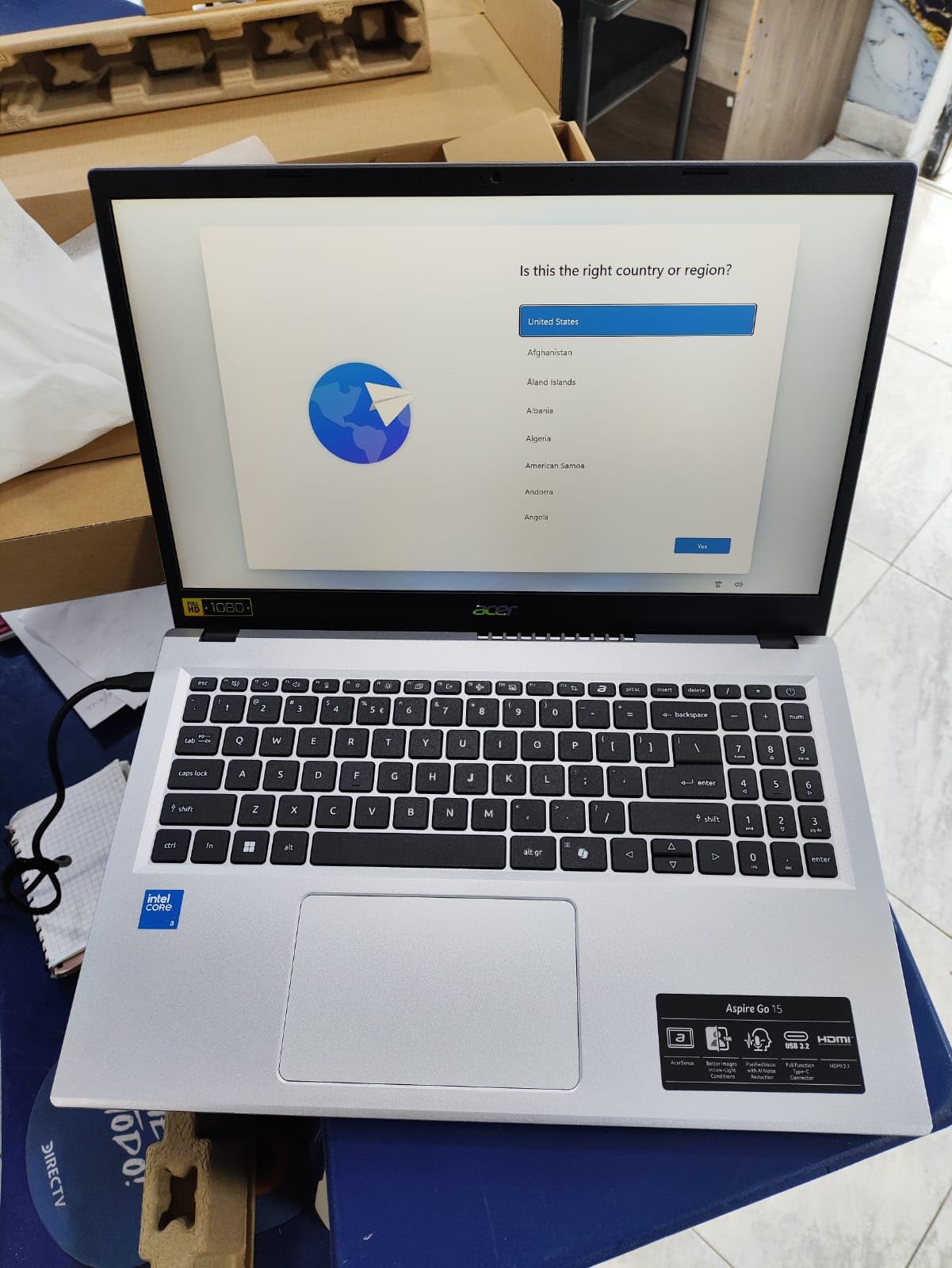
5. Acer Aspire Go 15 Core 3 N355 – The One You Can Upgrade
acer Aspire Go 15 AI Ready Laptop | 15.6″ FHD (1920 x 1080) IPS Display | Intel Core 3 Processor N355 | Intel Graphics | 8GB DDR5 | 128GB UFS | Wi-Fi 6 | Windows 11 Home in S Mode | AG15-32P-39R2
15.6 inch Full HD IPS display
Intel Core 3 N355 8-core, 8GB DDR5
128GB UFS plus a free M.2 slot
3.8 pounds, 48 Wh, up to 12.5 hours
Pros
- Memory is upgradeable to 16GB via a DIMM slot
- Free full-length M.2 slot makes storage easy to grow
- Very fast USB-C charging
- Good 15.6 inch Full HD IPS display
- Strong port selection including HDMI 2.1
Cons
- 128GB storage is very small out of the box
- Windows updates run slowly on this configuration
- Some units reported hanging after updates
- Windows 11 S mode restricts app installs
This is the pick we would tell a student to buy if they can hold out a little longer than the cheapest tier. The Intel Core 3 N355 is an eight-core chip running from 1.9 up to 3.9 GHz, and it is a step up from the dual-core and quad-core Celerons elsewhere in this list.
More important than the processor is what you can change later. The 8GB of DDR5 sits in a DIMM slot and can go to 16GB, and there is a free full-length M.2 slot for a larger NVMe drive. For a student budgeting across four years, that flexibility is worth more than any single spec.
Owners highlight the fast USB-C charging, with roughly half an hour taking a flat battery past 90 percent, plus a comfortable keyboard and solid sound. A dedicated Copilot key launches the built-in assistant, and AcerSense handles battery, storage and app management.
Ports, charging and dorm-room practicality
Two USB-C 3.2 Gen 2 ports with DisplayPort output and up to 45W charging, two USB 3.2 Gen 1 ports, HDMI 2.1, an audio jack and a Kensington lock slot make this the best-connected budget machine here. The lock slot matters if you plan to use it in a shared library.
At 3.8 pounds and 48 Wh with up to 12.5 hours stated, it balances weight and endurance well. A 720p camera with TNR and PurifiedVoice handles group video calls, and BluelightShield reduces blue light exposure during late-night study sessions.
What S mode means and how to leave it
This ships with Windows 11 Home in S mode, which restricts installing software outside the Microsoft Store. That matters more than it sounds if a course requires a program from a direct download. Switching to full Windows 11 is a few clicks in Settings, but owners report that process is fiddly.
The other recurring complaint is speed. Windows updates take a long time on this configuration, and some units reported hanging or freezing after an update. Budget an afternoon after a major release, and keep your files backed up while updates run.
Who should buy it, and who should skip it
Buy the Aspire Go 15 if you want a full-size keyboard, an upgrade path, and ports that let you connect a monitor without an adapter. It is the best balance of price, weight and future-proofing in this group.
Skip it only if the 128GB drive is a deal-breaker and you cannot add storage later. Given the free M.2 slot, that is a solvable problem, and adding a 1TB drive costs less than most accessory budgets for a first-year student.
6. ASUS Vivobook Go 15 (Ryzen 3 7320U) – The Durable Campus Build
ASUS Vivobook Go 15.6” FHD Slim Laptop, AMD Ryzen 3 7320U Quad Core Processor, 8GB DDR5 RAM, 128GB SSD, Windows 11 Home, Fast Charging, Webcam Sheild, Military Grade Durability, Black, E1504FA-AS33
15.6 inch Full HD NanoEdge at 250 nits
Ryzen 3 7320U quad-core to 4.1 GHz
8GB LPDDR5 and 128GB SSD
Listed at 4.8 pounds
Pros
- Slim chassis at 14.19 by 9.15 by 0.70 inches
- US military-grade tested durability
- Camera privacy shutter for shared spaces
- Good port selection with USB-C display output
Cons
- 45% NTSC color and 250 nit brightness make a dim panel
- 128GB SSD fills quickly
- Wi-Fi 5 rather than Wi-Fi 6
- Average speakers
The Vivobook Go 15 shares the Ryzen 3 7320U with the Acer Aspire 3 but wraps it in a thinner, lighter-looking chassis that measures 14.19 by 9.15 by 0.70 inches. ASUS markets it at 3.59 pounds, while the listed weight reads 4.8 pounds, so check the spec on the exact unit.
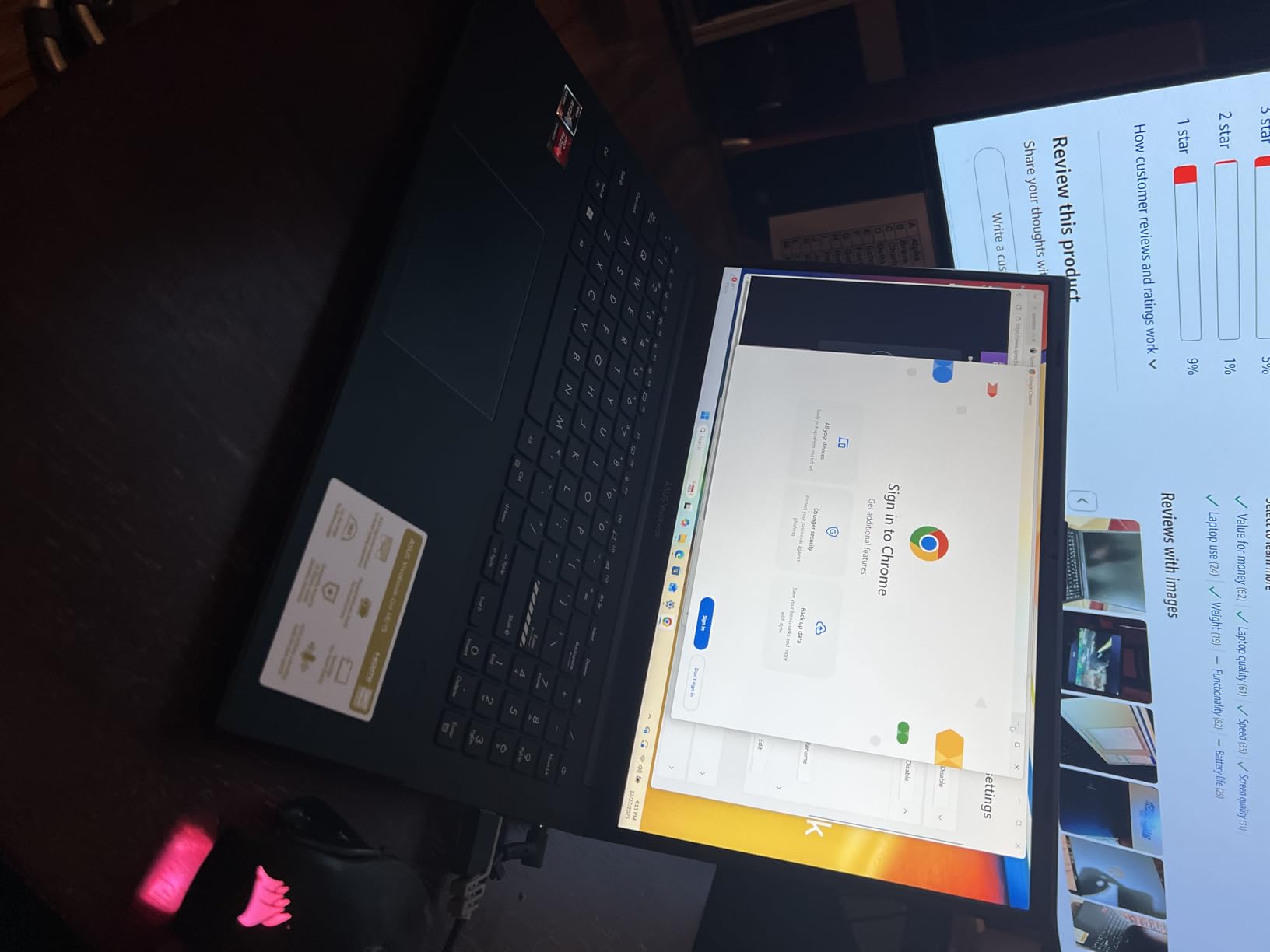
Where ASUS differentiates is durability and privacy. The chassis is US military-grade tested, and the 720p camera has a physical privacy shutter, which is a real advantage in a dorm or a study room you share with a stranger.
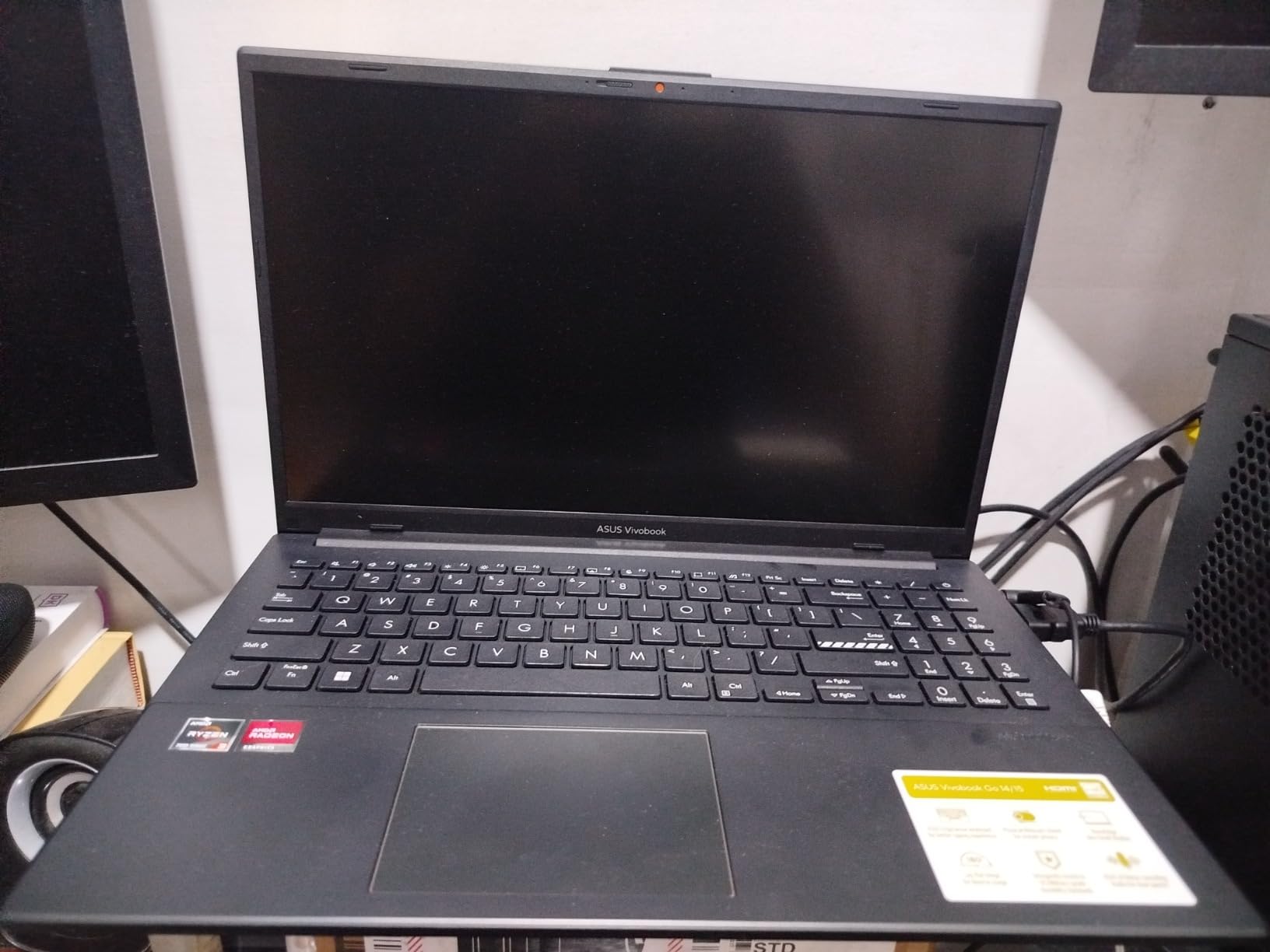
The port selection is unusually good for the money: a USB-C with power and display output, a USB-A 3.2, a USB-A 2.0, HDMI 1.4, a 3.5mm combo jack and a DC-in. That means one USB-C cable handles charging and an external monitor.
The dim panel is the honest drawback
The 15.6-inch Full HD NanoEdge display runs at 60Hz with 250 nits of sustained brightness and a 45% NTSC color gamut. In a bright lecture hall, you will be turning brightness up and still fighting glare, and colors look washed out compared with the 300-nit IPS panels on the Acer models.
For coursework that is fine. For photo editing, design work or a film program, it is not. The narrow 45% gamut also means the panel is a standard LED rather than a full IPS part, so viewing angles can shift.
Thermals, keyboard and everyday carry
ASUS uses an ErgoSense keyboard with a precision touchpad and a 180-degree hinge. Owners like the typing feel for long sessions, and the 42 Wh battery with ASUS fast charging gets you through a normal day of documents and browsing.
Wi-Fi 5 and Bluetooth 5.1 are the older standards, and speakers are average at this level. The 128GB SSD is the same constraint as the Aspire 3, and this one has no free expansion slot listed, so plan on cloud storage from day one.
Who should buy it, and who should skip it
Buy it if durability and a physical camera shutter matter more than screen quality, and if you want the Ryzen 3 7320U in the thinnest chassis in this roundup. A commenter in r/LaptopForStudent pointed to the Asus Vivobook line as a strong current Windows choice, and this is the budget end of it.
Skip it for a creative major, for outdoor note-taking in bright rooms, or if your campus network is Wi-Fi 6 only. Our guide to 15-inch laptop privacy screens is worth a look if you work in a busy library.
7. Lenovo IdeaPad Slim 3 16 Inch (Core i5-13420H) – The Performance and Numpad Pick
Lenovo 16″ FHD+ Premium Performance Laptop, i5-13420H, 16GB RAM, 512GB SSD
16 inch WUXGA IPS at 300 nits
Core i5-13420H 8-core, 12 threads
16GB DDR5 and 512GB NVMe SSD
3.7 pounds with numeric keypad
Pros
- Most powerful configuration in the roundup
- 16GB DDR5 memory upgradeable to 40GB
- 512GB PCIe Gen4 SSD
- Full numeric keypad
- Aluminium top cover and MIL-STD-810H tested
Cons
- 16-inch footprint is bulkier than a 15-inch
- Camera has no Windows Hello face login
- Costs more than most 15-inch picks in this roundup
- 45% NTSC color accuracy
This listing is a 16-inch machine, which is one step past the size most students want, but it earns its place because it is the only pick here with a numeric keypad and the most capable processor. The Intel Core i5-13420H has eight cores, twelve threads and boosts to 4.6 GHz.
Memory is 16GB of DDR5, upgradeable to 40GB, and storage is a 512GB PCIe Gen4 NVMe SSD. For a software, data or engineering student, those are the specs that decide whether a laptop still feels fast in year three.
The full numeric keypad is the feature that pulls nursing, accounting and finance students toward this size, because fifteen inches is about the smallest screen that reliably fits one. Entering numbers into a spreadsheet with a numpad is a completely different experience from the top row.
Display and build quality above the entry tier
The 16-inch WUXGA panel runs at 1920×1200 with 300 nits and an anti-glare finish, which is brighter than most of the 250-nit panels in this group. The Luna Grey chassis has an aluminium top with a textured bottom, and it is MIL-STD-810H tested, so it is built to survive a bag.
Color accuracy is limited by a 45% NTSC gamut, so this is a work screen rather than a color screen. At roughly 3.7 pounds, 1.68 kg, it is light for a 16-inch body, but the extra inch of width is obvious in a lecture seat.
Connectivity, security and what you give up
You get two USB-A 3.2 Gen 1 ports, a USB-C 3.2 Gen 1 with Power Delivery 3.0 and DisplayPort 1.2, HDMI 1.4, an SD card reader and a headphone jack, plus Wi-Fi 6 and Bluetooth 5.2. Firmware TPM 2.0 handles encryption, and the camera has a physical privacy shutter.
The camera does not support Windows Hello face login, so you type a PIN or use a fingerprint alternative instead. The 16-inch footprint also means it will not fit the smaller sleeves and desks a 15.6-inch machine does, so measure before you commit.
Who should buy it, and who should skip it
Buy it if you type numbers all day or run software that punishes a weak processor, and if you will use an external monitor at home so the bulk sits on a desk. It is also the only pick here with Microsoft 365 included and a TUV Rheinland low blue light certification.
Skip it if you carry the laptop between classes every day and want the smallest possible footprint, or if your budget is tight. Our guide to laptops for architecture students covers the heavier software these specs are close to handling.
8. Acer Aspire Go 15 (Ryzen 7 7730U) – The Smoothest Multitasker
Acer Aspire Go 15 AI Ready Laptop | 15.6″ FHD (1920 x 1080) IPS Display | AMD Ryzen 7 7730U | AMD Radeon Graphics | 16GB DDR4 | 512GB PCIe Gen4 SSD | Wi-Fi 6 | Windows 11 Home | AG15-42P-R9FW
15.6 inch Full HD IPS at 300 nits
Ryzen 7 7730U 8-core to 4.5 GHz
16GB DDR4 upgradeable to 32GB
512GB PCIe Gen4 SSD, 53 Wh
Pros
- Ryzen 7 handles many apps and large downloads smoothly
- 512GB SSD covers a full course workload
- Backlit keyboard included
- Lightweight for a 15.6 inch performance machine
- Good 15.6 inch Full HD IPS screen
Cons
- Speakers are weak even at full volume
- Keyboard backlight times out after 30 seconds
- Fans are audible under load
- 60Hz display with a reported yellow tint until BluelightShield is off
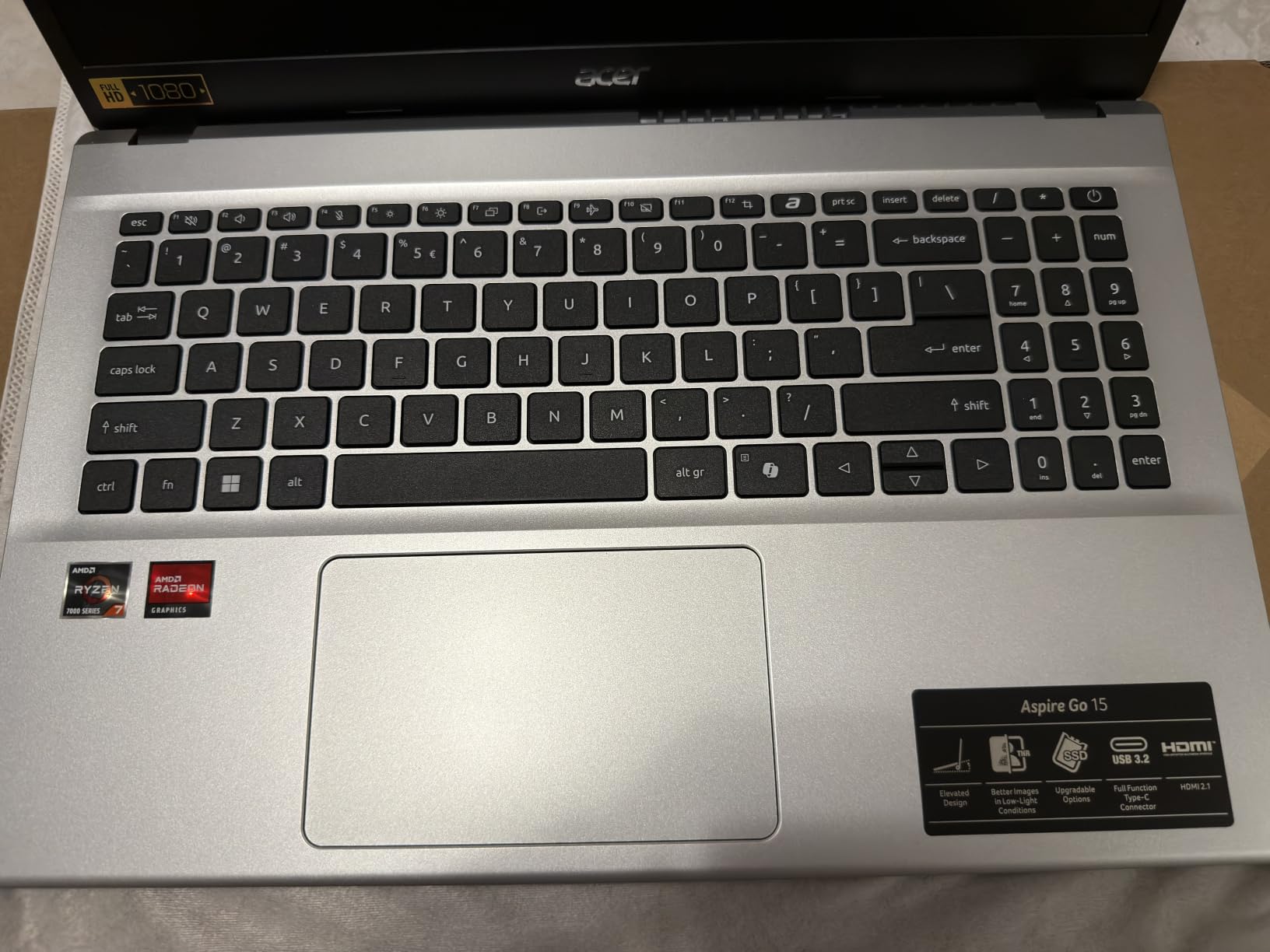
If you want the smoothest experience in a 15.6-inch body, this is the one. The AMD Ryzen 7 7730U has eight cores boosting to 4.5 GHz, and owners describe it running multiple apps and large downloads without complaint.
The combination of 16GB of DDR4, upgradeable to 32GB, and a 512GB PCIe Gen4 SSD is the spec floor we would actually recommend for a four-year degree. Very few laptops in this price band give you both.
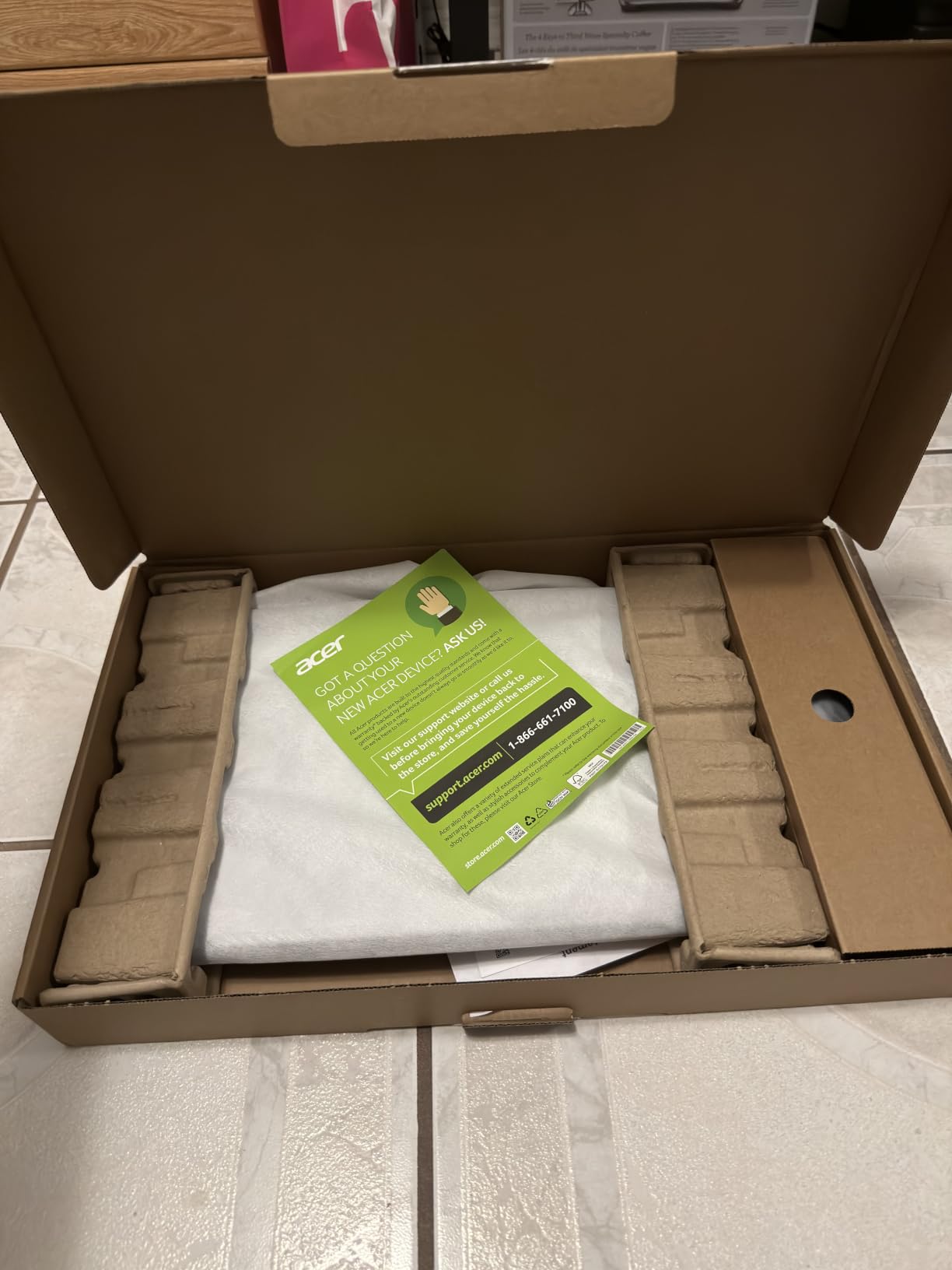
Setup is straightforward, with OneDrive migration reported as quick, and the 15.6-inch Full HD IPS panel at 300 nits is brighter and more accurate than most of the entry-tier screens here. A backlit keyboard is included, which is not guaranteed at this level.
Screen quality and the BluelightShield caveat
A 300-nit IPS panel is a real upgrade for studying in a lit room, and the narrow-bezel design keeps the footprint manageable at 14.29 by 9.5 inches. Acer’s BluelightShield mode reduces blue light for evening work, which is genuinely useful during late library sessions.
Some buyers saw a yellow tint on the display while BluelightShield was enabled and fixed it by turning the setting off. If the color looks off to you out of the box, that is the first thing to check.
Fans, vents and dorm-room noise
The 53 Wh battery is the largest here, and the four USB ports include a full-function USB-C alongside HDMI 2.1. Under load the fans become audible, and the vents sit on the front underside rather than the back, so a lap can block airflow.
The keyboard backlight times out after about 30 seconds of inactivity, which some students find annoying in a dark lecture hall. Speakers are weak at full volume, so use headphones for group calls and video.
Who should buy it, and who should skip it
Buy it if you want 16GB of memory and 512GB of storage without moving to a much larger price band, particularly if you keep many tabs and documents open while on a video call. Students in business, communications and social science fit this profile.
Skip it if you work in silence at night, if you need a GPU for CAD or 3D work, or if you watch a lot of video on the built-in speakers. Integrated Radeon Graphics handle coursework, not rendering.
9. Apple MacBook Air 15-inch (M5) – The One That Outlasts the Day
Apple 2026 MacBook Air 15-inch Laptop with M5 chip: Built for AI, 15.3-inch Liquid Retina Display, 16GB Unified Memory, 1TB SSD, 12MP Center Stage Camera, Touch ID, Wi-Fi 7; Midnight
15.3 inch Liquid Retina display
Apple M5 chip, 16GB unified memory
1TB SSD, up to 18 hours stated
3.32 pounds, fanless
Pros
- Up to 18 hours of stated battery life
- Silent fanless design at 3.32 pounds
- Superb 15.3 inch Liquid Retina display
- 12MP Center Stage camera with Desk View
- Thunderbolt 4 and MagSafe
Cons
- Highest cost of any pick in this roundup
- Only two Thunderbolt 4 ports plus MagSafe and headphone jack
- macOS means no Windows-specific software
- 16GB memory is the only listed configuration
The MacBook Air 15 is the outlier in this list, and it earns its place on endurance. The stated battery life is up to 18 hours, which is the longest claim of any pick here, and at 3.32 pounds it is also the lightest machine we reviewed.
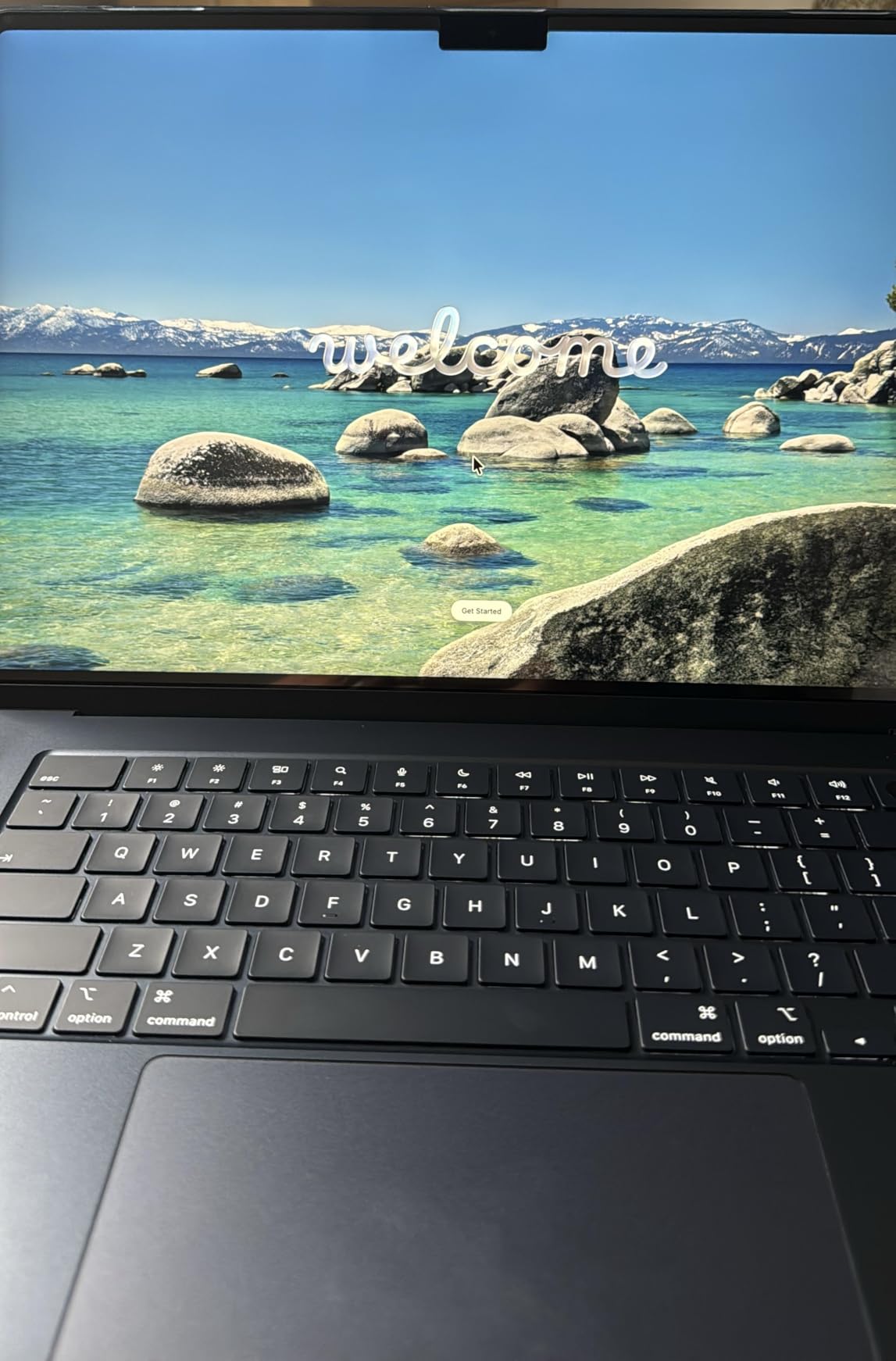
The M5 chip drives a 15.3-inch Liquid Retina display that supports one billion colors, paired with 16GB of unified memory and a 1TB SSD. There is no fan, so it makes no noise in a lecture hall or a shared dorm room.
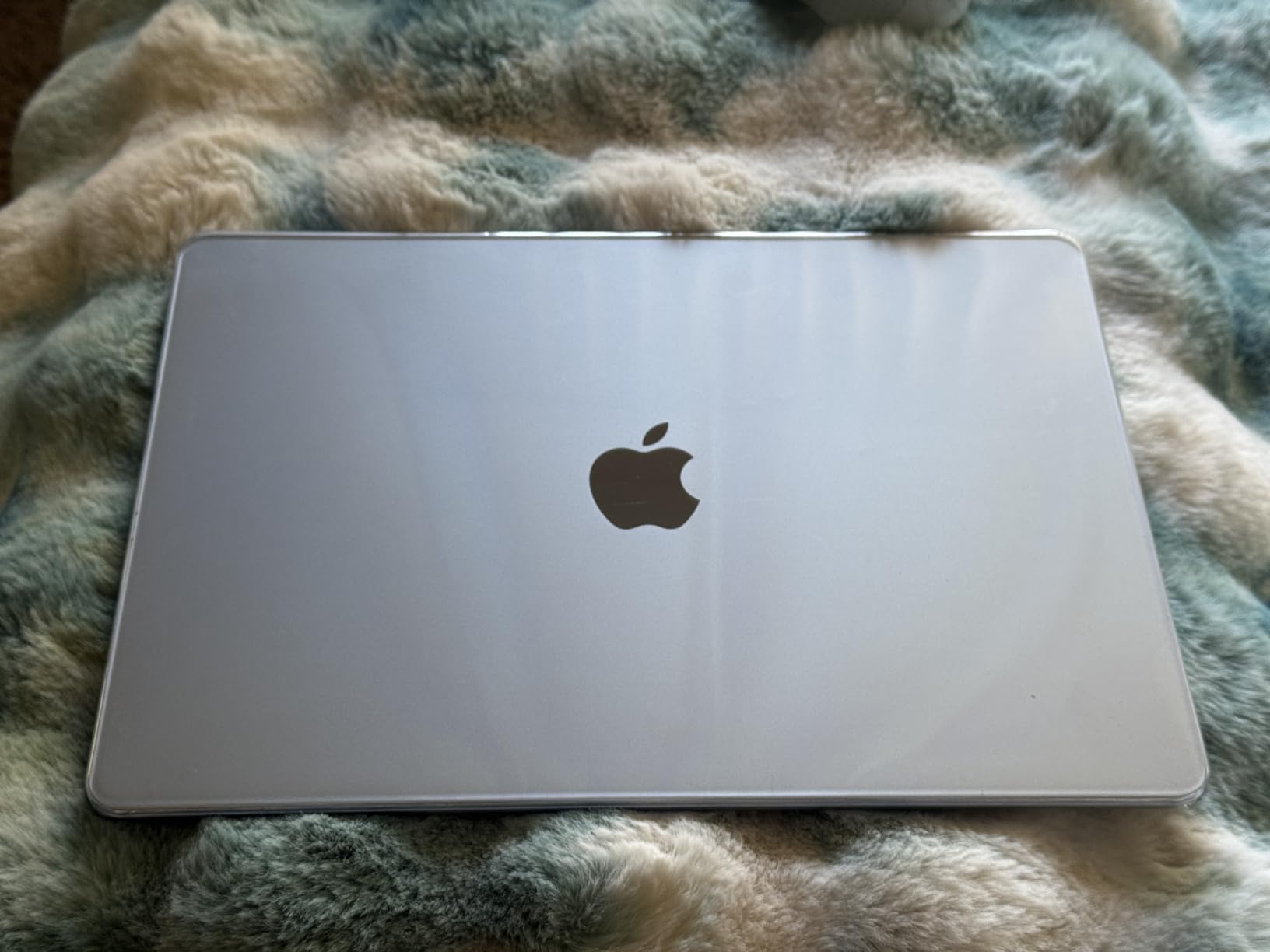
Owners describe fast performance, an all-day battery and a superb screen, with 90 percent five-star ratings on this configuration. The 12MP Center Stage camera with Desk View frames you properly when someone joins a call late, which matters more in practice than the megapixel count suggests.
Build, keyboard and the ecosystem advantage
At 0.45 inches thick and 3.32 pounds, this is the most portable large-screen laptop in the roundup. The six-speaker system with Spatial Audio and Dolby Atmos is far better than the laptop speakers on every other pick here, and the three-mic array is good for group study sessions.
Touch ID handles login and payments without a password, and the Apple Intelligence features run on device with privacy protections. If you already own an iPhone or iPad, the continuity features are a genuine daily convenience rather than a gimmick.
Ports, software and the price reality
Port selection is limited to two Thunderbolt 4 ports, a MagSafe charging port and a headphone jack. You can drive up to two external displays, which is enough for a desk setup, but a USB-A stick means carrying an adapter.
The trade-offs are software and cost. macOS will not run Windows-only programs, so check your major’s required software before committing. This configuration is also the most expensive machine in the roundup, which is why it sits below the Windows picks for most students. Our gaming laptop guide for college students covers the alternative if you want to game on the same machine.
Who should buy it, and who should skip it
Buy it if your major is fully macOS-compatible, you value battery life above raw upgradeability, and you want a large screen you can carry every day. For a creative student or a commuter, the weight-to-endurance ratio is the best in this group.
Skip it if the cost is the deciding factor, if you need Windows software or gaming on a dedicated GPU, or if you want to upgrade memory later. A commenter in r/LaptopForStudent recommended the 15-inch MacBook Air specifically for battery life, and that remains the core of the case.
10. ASUS Vivobook Go 15 (Ryzen 5 7520U) – The Best Storage for the Money
ASUS 2023 Vivobook Go 15 Laptop, 15.6″ FHD Display, AMD Ryzen 5 7520U Processor, 8GB RAM, 512GB SSD, Windows 11 Home, Mixed Black, E1504FA-AS52
15.6 inch Full HD NanoEdge display
AMD Ryzen 5 7520U quad-core
8GB LPDDR5 and 512GB SSD
3.6 pounds, 42 Wh battery
Pros
- 512GB SSD plus a free M.2 slot
- Light at 3.6 pounds
- Long stated battery life with 50 percent charge in 30 minutes
- Wi-Fi 6E
- ErgoSense keyboard suits long typing
Cons
- No backlit keyboard
- Narrow viewing angle with color shift off-axis
- 60Hz display rather than higher refresh
- Some units reported failing to boot out of the box
This Vivobook is the version to buy if storage is your worry. Most of the machines in this roundup ship with 128GB, and this one pairs a 512GB SSD with a free M.2 slot, so you can double it later without opening a warranty conversation.
The Ryzen 5 7520U is a quad-core chip that boosts to 3.7 GHz, a step above the Ryzen 3 models. Owners report it handling Office work, browsing and even Canva graphics smoothly, which is a reasonable ceiling for coursework.
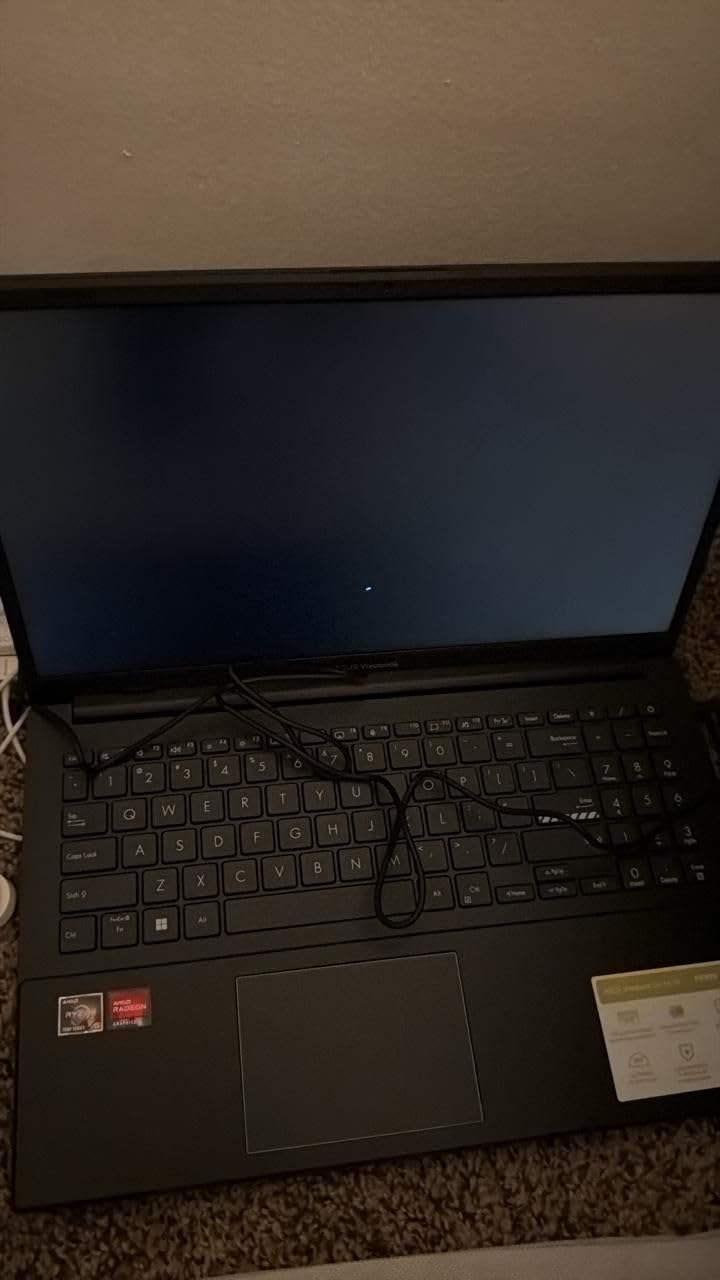
At 3.6 pounds it is one of the lighter machines here, and the 42 Wh battery recharges to 50 percent in about 30 minutes. That mid-day top-up is more useful in practice than a slightly larger cell.
Battery, connectivity and the missing backlight
Owners highlight hours of use on a single charge, and Wi-Fi 6E gives you access to the newer 6 GHz band, which is a genuine advantage on a crowded campus network where the 2.4 and 5 GHz bands are saturated.
The keyboard has no backlight. That is a real cost for evening study in a dim room, and it is the one specification here that most owners complain about alongside the screen. If you work late often, add a small desk lamp to your budget instead.
Screen limitations to know before you buy
The 15.6-inch Full HD NanoEdge display is 60Hz, and owners report color shift when it is viewed off-axis. In practice, a partner sitting beside you in a lecture hall may see a washed-out image that looks fine to you.
The chassis measures 14.9 by 9.15 by 0.7 inches, so it is fractionally wider than the other 15.6-inch Vivobook, and ASUS uses IceCool thermal design with US military-grade testing. A small number of units reportedly failed to boot out of the box, so confirm the return window before your first deadline passes.

Who should buy it, and who should skip it
Buy it if you store large media files, keep a lot of coursework offline, or plan to add a second drive. The Ryzen 5 chip, 512GB of storage and Wi-Fi 6E make it the best-balanced specification per pound in this roundup.
Skip it if you study at night and need a lit keyboard, or if you want a color-accurate screen for design work. For most business, communications and general studies majors, though, it covers four years comfortably.
How to Choose a 15-Inch Student Laptop Without Regretting It
Every pick above can handle documents, video calls and web-based coursework. The differences that decide whether you are happy in year two are memory, storage, keyboard and battery, in that order.
The spec floor: how much RAM and storage you actually need
Buy at least 8GB of memory today, and treat 16GB as the target if the budget allows. Windows plus a browser with a dozen tabs and a video call will fill an 8GB machine, and soldered memory cannot be fixed later. The Acer Aspire Go 15 in the Core 3 N355 and the Ryzen 7 7730U are the two picks where you can buy 8GB and step up to 16GB yourself.
For storage, 128GB is a rough starting point that most students outgrow within two years. Prefer 256GB or more, and check for a free M.2 slot. If you must take a 128GB drive, plan to keep documents in cloud storage from the start rather than treating the laptop as an archive.
Numpad: the real reason nursing and accounting students want 15 inches
Fifteen inches is about the smallest common screen that fits a full numeric keypad, which is why nursing, accounting, finance and engineering students keep gravitating to this size even when a smaller laptop would be easier to carry. Data entry into a spreadsheet or a charting form is genuinely faster with a numpad.
Only the Lenovo IdeaPad Slim 3 in this roundup includes one. If your coursework involves frequent number entry, check for a numpad before you buy anything else, and test the keypad spacing in person if you can.
Windows, macOS or ChromeOS: check your major’s software first
Ask your department for the software list before you choose an operating system. Nursing charting tools, engineering packages such as MATLAB and AutoCAD, and most accounting systems are Windows-first, and no browser-based machine will run them. A commenter on r/LaptopForStudent named the 15-inch MacBook Air as a battery pick, but only for students whose major permits macOS.
A software engineering student on r/laptops asked for 32GB of memory, a 1TB SSD and a high refresh display in a thin 14- or 15-inch body, and explicitly did not want to overspend on gaming hardware. That request is realistic, but it is a different buying tier from the budget picks here, and it is worth budgeting for if it describes you.
Refurbished, open-box or new
A commenter in r/LinusTechTips recommended a used business ThinkPad as the smart student buy, noting that a 14- to 15-inch machine is more comfortable than a smaller one. That advice holds if you know what to check: battery health, screen condition, keyboard wear, and whether the warranty has meaningful time left.
Refurbished models with a full one-year warranty are a reasonable second choice for a budget student. Open-box units are new hardware at a discount, but the warranty can be shorter, so confirm the terms before you commit.
When to buy and what to check on the first day
Students who asked for advice in forums consistently mention waiting for back-to-school and post-holiday sale windows, and that is when the biggest reductions on these models tend to appear. Buy before term starts, not the week of, so you have time to exchange a faulty unit.
On day one, update Windows, sign into cloud storage, and check the battery report. If fan noise or a flickering screen appears within the return window, deal with it immediately rather than hoping it improves.
15-Inch Laptops to Avoid as a Student
The clearest answer to what laptop to stay away from is a short list of spec failures, and every one of them shows up in the reviews of budget 15-inch machines. These are the patterns to walk away from.
- 4GB of memory. It is sold as an entry configuration and it is already the minimum. Any laptop you expect to keep for a full degree should offer 8GB with an upgrade path, or 16GB out of the box.
- 128GB of eMMC storage. Slower than an NVMe SSD and small enough to fill with one semester of downloaded lecture material and documents.
- 1366×768 panels. A 15-inch screen at 768p feels soft when you read for hours, and the low resolution is harder to fix with software.
- TN or 45% NTSC dim panels under 300 nits. Washed-out color and poor viewing angles make shared-screen work and bright rooms frustrating.
- Windows 10 models in 2026. Support windows are shrinking, and a machine that cannot receive security updates is a poor investment for a four-year degree.
- Machines with no way to grow. Soldered memory plus a drive with no free slot means you are stuck with the configuration the manufacturer chose.
- Noisy fans in a small room. A machine that sounds like a jet in a quiet study space is genuinely distracting during recorded classes and online seminars.
None of these are dealbreakers on their own. They become dealbreakers when three of them appear together, which is exactly the pattern in the cheapest tier of this market.
Frequently Asked Questions
Is a 15-inch laptop too big for college?
No, not for most students. A 15.6-inch laptop weighs roughly 3.3 to 4.8 pounds and measures about 14.3 by 9.4 inches, so it fits a standard 16-inch laptop compartment and most dorm desks. It is heavier than a 13-inch ultraportable, but it gives you a full-size keyboard, often a numeric keypad, and a screen that fits a document beside your notes.
Does a 15-inch laptop fit in a backpack?
Yes, in a compartment sized for a 16-inch laptop or with a separate sleeve. Most 15.6-inch models measure around 14.2 to 14.3 inches wide and 9.1 to 9.5 inches deep, so the depth is the number that catches people out. A padded sleeve is worth adding, and check that the bag’s depth rating covers the closed thickness of the machine.
What laptop should students stay away from?
Avoid any 15-inch laptop with only 4GB of memory, 128GB of eMMC storage, a 1366×768 display, a dim TN or 45% NTSC panel under 300 nits, or a Windows 10 model with limited support remaining. Also skip machines with no upgrade path, since soldered memory and a sealed drive leave you stuck with the configuration the manufacturer chose for four years.
Is 3 pounds heavy for a laptop?
No. Three pounds is roughly the weight of a hardback textbook plus a notebook, and it is the threshold most commuters treat as comfortable for a full day. Across the 15-inch machines we compared, weights ran from 3.32 pounds on the lightest to 4.8 pounds on the heaviest listed, so the difference matters more when it passes four pounds.
How much RAM do I need for a college laptop?
Buy at least 8GB, and target 16GB if your budget allows. Windows plus a dozen browser tabs and a video call will fill an 8GB machine, and soldered memory cannot be replaced later. Ideally choose a laptop with a memory slot so you can step up to 16GB later without paying for a new computer.
Which 15-Inch Laptop Should You Buy?
If you want one answer, the Acer Aspire 3 A315 is the 15-inch laptop for students we would buy first in 2026: a Full HD IPS screen, a backlit keyboard, Wi-Fi 6 and a battery rated for up to 11 hours, backed by the largest owner base in this roundup.
If you can hold out for a machine that grows with you, the Acer Aspire Go 15 with the Core 3 N355 is the smarter choice, because its memory is upgradeable and it has a free M.2 slot. If your major is number-heavy, the Lenovo IdeaPad Slim 3 is the only pick here with a full numeric keypad and the most capable processor. If battery is everything, the MacBook Air 15 is the endurance winner, provided your software runs on macOS. And if cost is the deciding factor, the HP Pavilion and the PADIX cover the lowest end of the range.
Whichever you choose, buy 8GB of memory or better, confirm the storage can be expanded, and get it well before term starts so you can exchange a faulty unit in time. Use the buttons above to see the current configuration and finish setting up your new machine.