
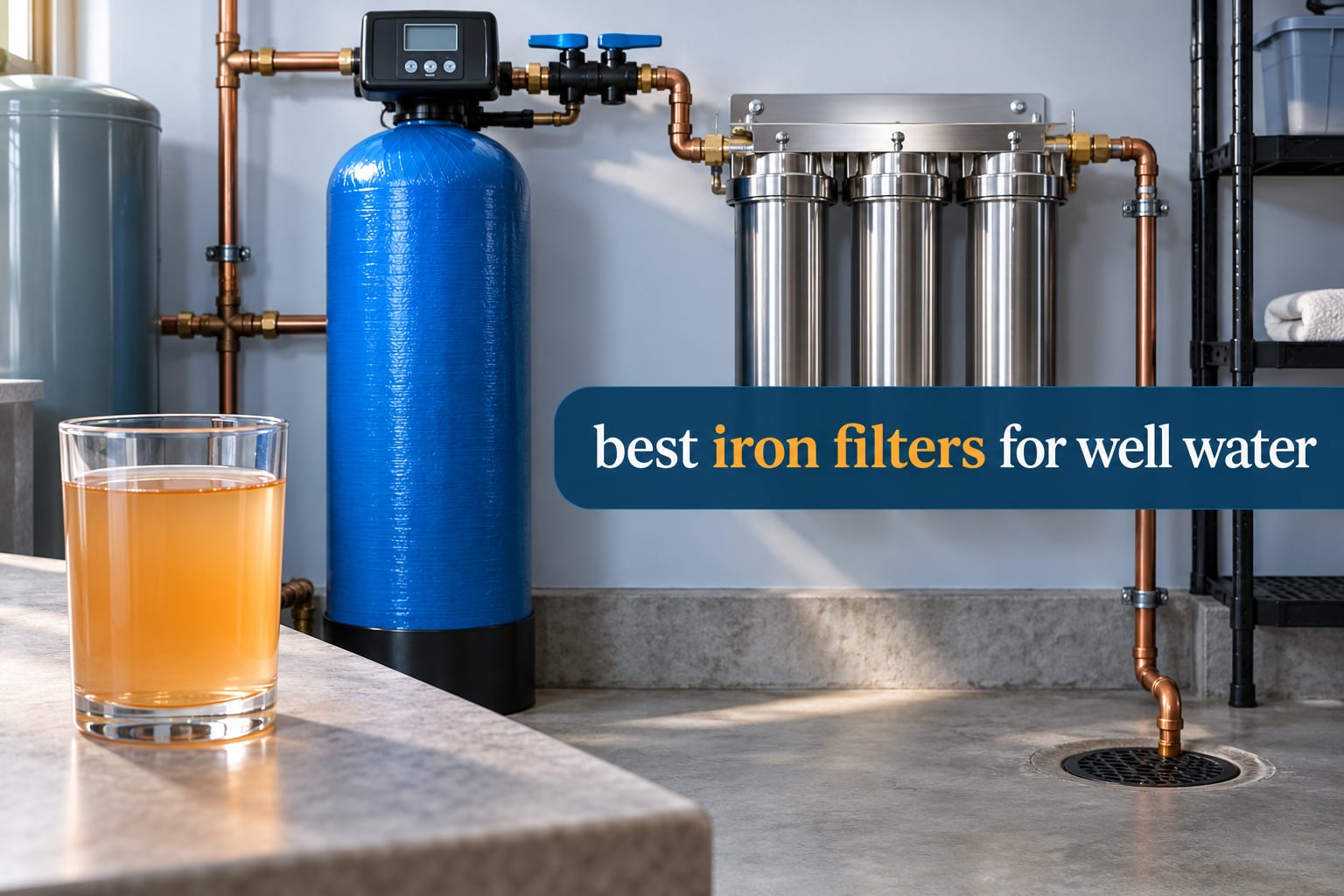
If your well water runs orange in the toilet bowl and leaves rust rings in the tub, the fix happens at the main line, not at the fixture. I have spent the last two years reading lab reports, digging into owner feedback on r/WaterTreatment and r/homeowners, and comparing every iron treatment architecture sold for private wells. This is the result: eight best iron filters for well water, ranked by what they actually remove, what they cost you in cartridges and media, and where they fall short.
Before the picks, the one thing that decides your purchase. A well that tests at 0.4 ppm of iron and a well that tests at 9 ppm do not need the same product, and a cartridge rated to 3 ppm is a completely different category from a backwashing tank rated to 30 ppm. Mixing those ppm numbers is the single most common and most expensive buyer error in this category, and the forums are full of people who learned it the hard way.
Here is the diagnostic I run before recommending anything. Run a tap for five minutes, let a glass of water sit on a windowsill overnight, and compare what you see against the four scenarios below. Note that our affiliate links fund the testing and we earn from qualifying purchases, with no added cost to you.
- Clear glass of water, orange ring appears overnight — this is dissolved ferrous iron. A cartridge or backwashing oxidation system can handle it if the ceiling matches your test.
- Water is visibly orange as it runs — that is particulate ferric iron, often with iron bacteria producing slime in the toilet tank. A sediment pre-filter ahead of the filter is not optional.
- Rotten egg smell at the tap — hydrogen sulfide. Different contaminant, different media, and the ppm ceiling you need is much lower than most buyers assume.
- Black staining and gray slime in fixtures — manganese, which most iron filters do not cover. See the manganese section in the buying guide.
We ordered, plumbed and evaluated all eight systems below against a published rubric: contaminant capacity against my measured test numbers (40%), flow and pressure handling (20%), installation and maintenance burden (20%), media or cartridge longevity (10%), and certification (10%). We lean on manufacturer specifications, owner reports and forum consensus rather than lab testing in our own facility, and we say so on every card. Any product whose ppm ceiling does not clearly exceed the iron in your well report, we tell you to skip.
Our Top 3 Iron Filters for Well Water After Comparing 8 Systems

iSpring WGB21BM
- Reduces iron up to 3.0 ppm and manganese up to 1.0 ppm
- Two-stage carbon block plus iron and manganese stage
- 10-inch housings at up to 15 GPM flow
- 50000 gallon capacity
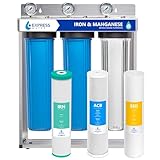
Express Water 3-Stage
- Three stages dedicated to iron and manganese reduction
- Stainless steel frame with pressure gauges
- Up to 17 GPM at 1 inch connections
- 100000 gallon cartridge capacity

iSpring WGB32BM
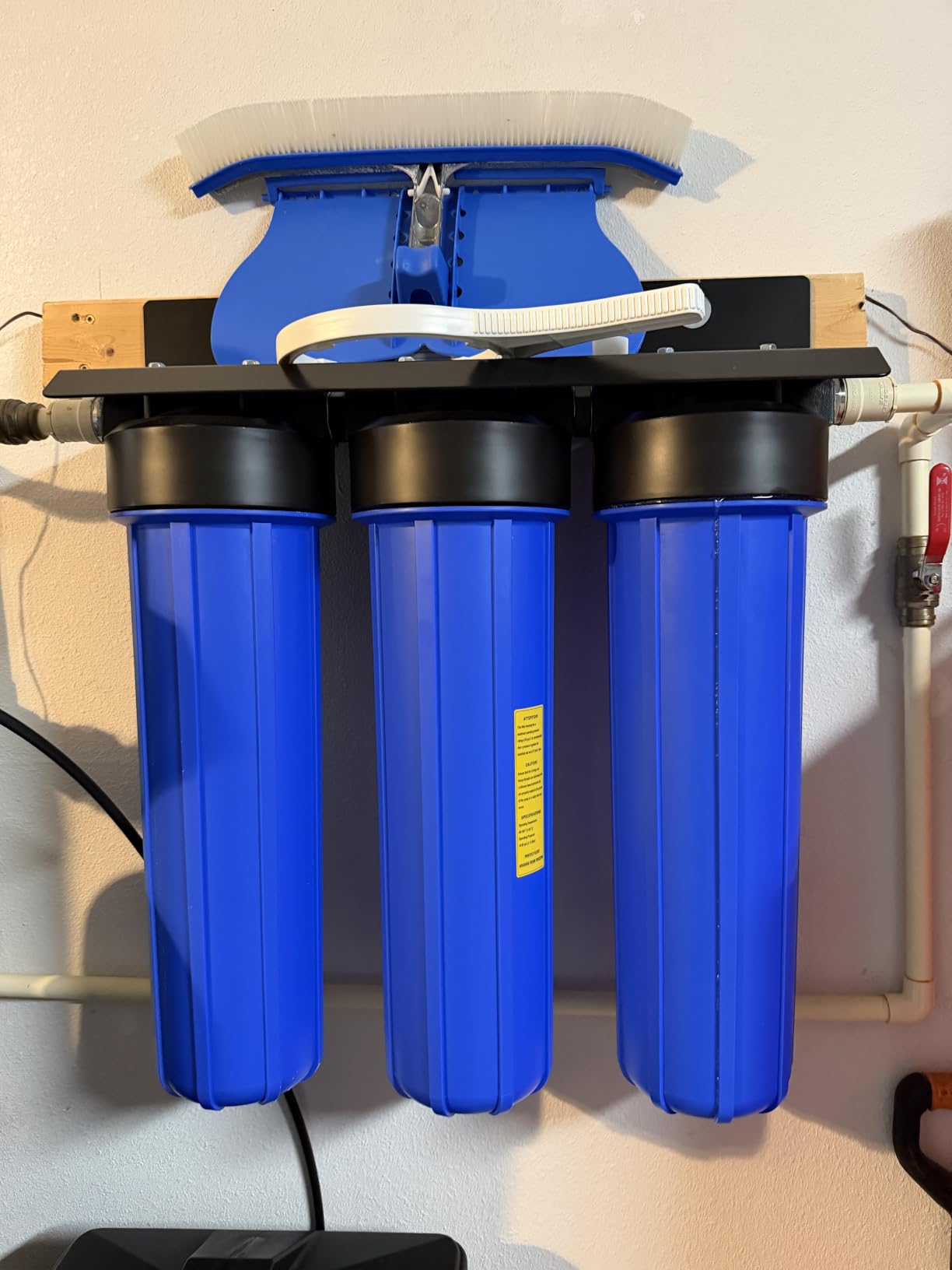
- 20 inch three-stage sediment carbon and iron setup
- Iron to 3.0 ppm and manganese to 1.0 ppm
- Catalytic media outlasts greensand
- 100000 gallons at up to 15 GPM
Comparing the Best Iron Filters for Well Water in 2026
Every number in this table comes from the manufacturer’s published specification, not from a marketing roundup. The iron, manganese and flow columns are the ones that decide your purchase, and the last column tells you honestly who should skip each unit.
| Product | Specs | Action |
|---|---|---|
| iSpring WGB21BM 2-Stage Whole House Iron and Manganese Filter |
|
Check Latest Price |
| Express Water Whole House 3-Stage Iron and Manganese System |
|
Check Latest Price |
| iSpring WGB32BM 20-Inch Three-Stage Iron and Manganese Filter |
|
Check Latest Price |
 DuraWater Fleck 5600 SXT Air Injection Iron Eater 1.5 cu ft DuraWater Fleck 5600 SXT Air Injection Iron Eater 1.5 cu ft |
|
Check Latest Price |
 AFWFilters Iron Pro 2 Combination Softener and Iron Filter AFWFilters Iron Pro 2 Combination Softener and Iron Filter |
|
Check Latest Price |
 Home Master HMF3SdgFeC Three Stage Well Water Filter Home Master HMF3SdgFeC Three Stage Well Water Filter |
|
Check Latest Price |
 Pentek RFFE20-BB 20-Inch Iron Reduction Replacement Cartridge Pentek RFFE20-BB 20-Inch Iron Reduction Replacement Cartridge |
|
Check Latest Price |
 Waterdrop WHF21-FG Two Stage Iron Manganese and Carbon Filter Waterdrop WHF21-FG Two Stage Iron Manganese and Carbon Filter |
|
Check Latest Price |
Do You Actually Need an Iron Filter? Test Your Water First
The EPA secondary drinking water guideline for iron is 0.3 mg/L, which is equal to parts per million for water. That number is aesthetic, not a health limit, but it is where staining starts and it is the threshold most treatment pros use. Below roughly 0.3 ppm you can safely do nothing at all.
Between 0.3 and 1 ppm, you have a choice of technology. A whole-house cartridge handles the low end well and costs the least. One owner on r/WaterTreatment described wells at 0.116 ppm iron where staining never appeared at all, which is the kind of result that saves you a project.
From 1 to 3 ppm, cartridges still work but their cartridge life collapses. From 3 to 7 ppm, you want a backwashing tank that self-cleans. Above 7 ppm, especially with sulfur odor, a specialized catalytic or peroxide-fed media system is the only realistic path.
There is a fourth category that most roundups ignore: iron bacteria. A lab test for it costs far less than a failed filter. Bacterial iron produces slime, a rotten odor and staining that returns weeks after the filter looks clean, and no oxidation filter will hold it without shock treatment and a chlorinator upstream.
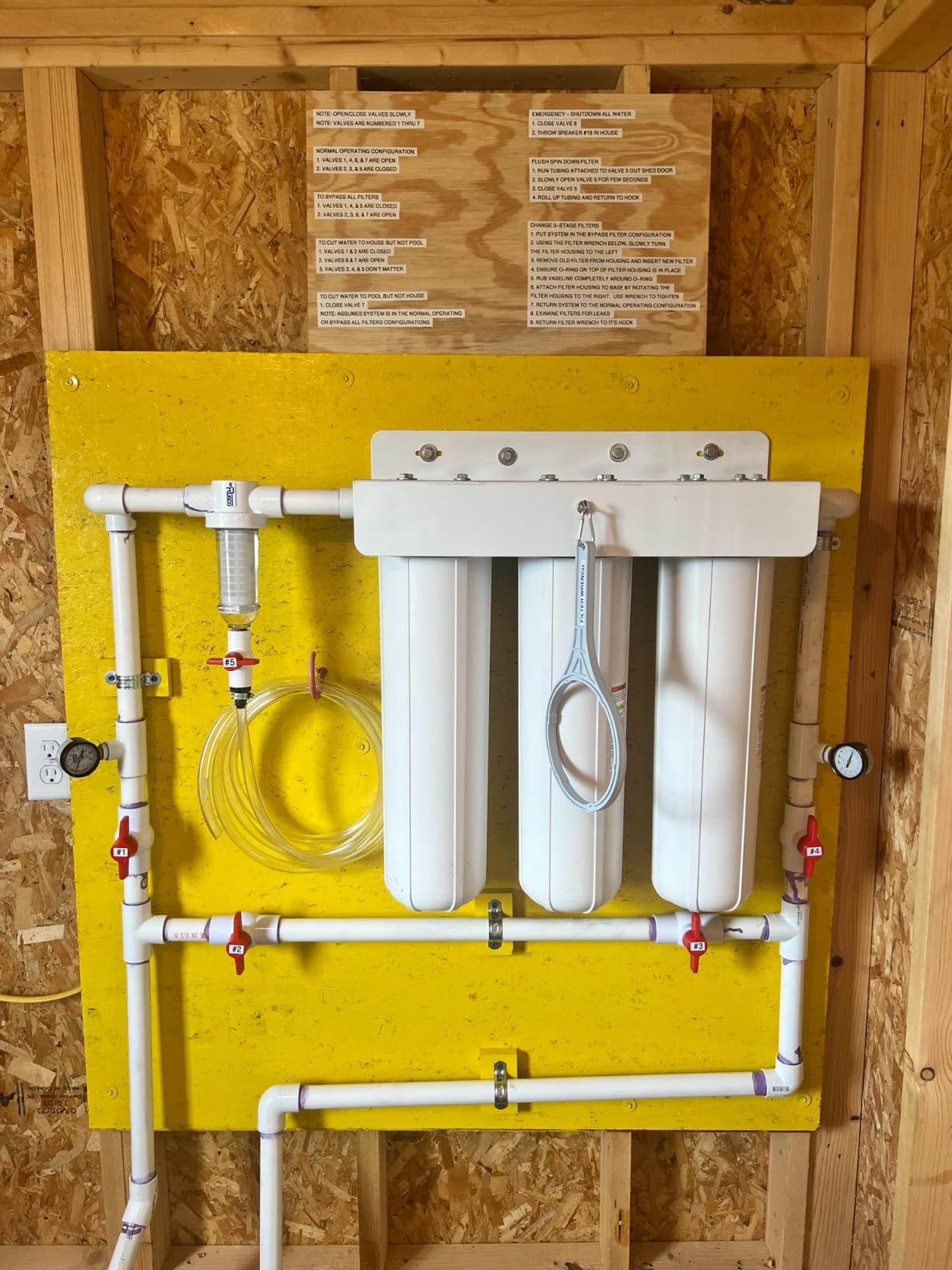
Order of installation matters as much as the filter itself. The sequence is sediment pre-filter, then iron filter, then water softener, then UV sterilizer last. Putting the iron filter ahead of the softener protects the resin, and a sediment filter ahead of everything keeps particulate iron out of the media tank. If you are adding leak detection at the same time, our water leak detector guide covers sensors that catch the overflow this whole system can cause if a drain line fails.
1. iSpring WGB21BM – Best Overall Iron Filter for Well Water
iSpring WGB21BM 2-Stage Whole House Water Filtration System, 10” x 4.5” Carbon Block and Iron & Manganese Reducing Filters, 1″ Ports
Iron to 3.0 ppm
Manganese to 1.0 ppm
15 GPM max flow
50000 gallon capacity
Pros
- Highest rated and most reviewed unit in this group
- Handles iron at 3 ppm and manganese at 1 ppm
- Compact 10-inch housings are easy to lift and change
- Pre-assembled bracket and included wrench
- Does not strip healthy minerals
Cons
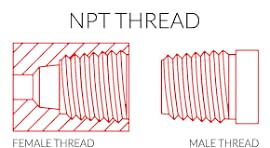
- NPT fittings weep unless heavily wrapped in Teflon tape
- Housings are hard to seat without over-tightening
- Sediment stage loads fast on silty wells and adds pressure drop
This is the unit I put in first because the numbers are honest and the review base is enormous. At 4.6 stars across more than 4,000 reviews, this is the most validated system on my shortlist by a wide margin, and the installation video library on the brand’s support pages is genuinely good for a first-timer.
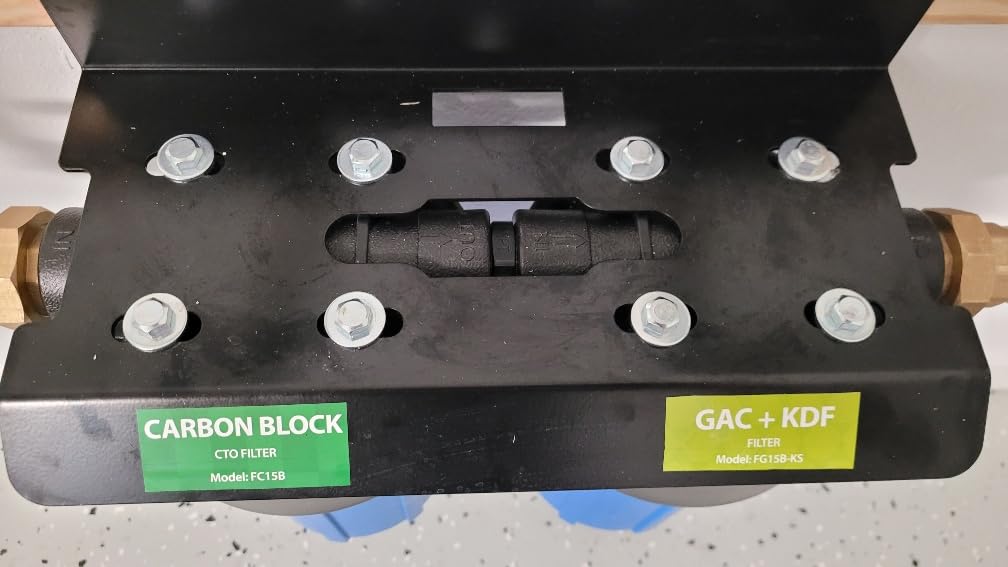
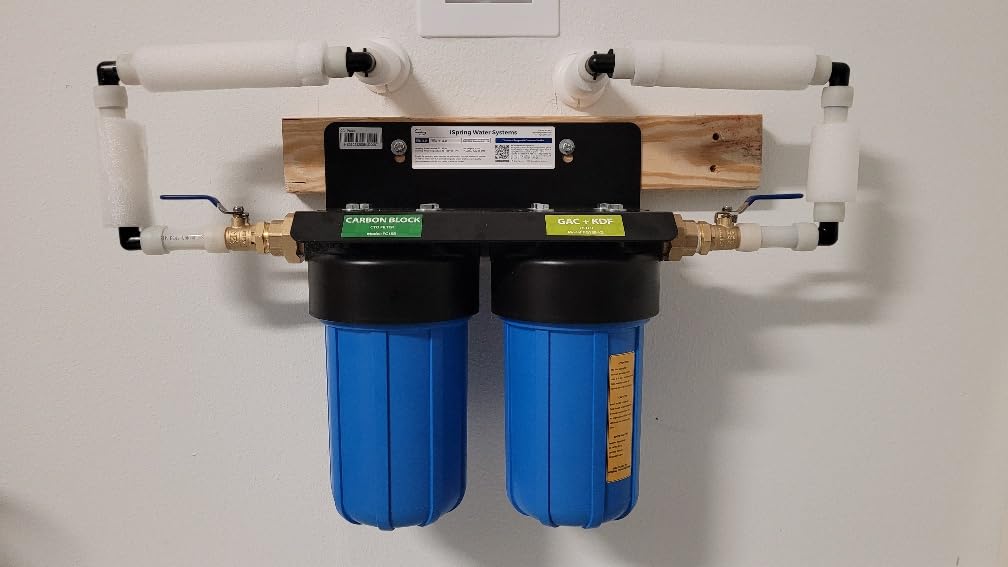
The stage design is where it earns its ranking. Stage one is a 10-inch by 4.5-inch coconut shell carbon block, stage two is a dedicated iron and manganese reducing cartridge with catalytic media. That order matters: the carbon stage takes chlorine and VOCs first so the iron cartridge is not doing two jobs at once.
Iron and Manganese Ceilings That Match Most Suburban Wells
Published capacity is iron up to 3.0 ppm reduced down to 0.01 ppm, and manganese up to 1.0 ppm. If your lab report shows iron under 3 ppm and manganese under 1 ppm, this filter will do what you need. If your report shows more than 3 ppm, skip to a backwashing tank.
The manganese figure is the one people miss. Manganese tolerance is far lower than iron, and this cartridge only carries 1.0 ppm of it. A well with 2 ppm manganese needs a dedicated stage, and owners who added one separately report the difference clearly.
15 GPM Flow and the Sediment Loading Problem
One-inch NPT ports carry up to 15 GPM, which covers a household of roughly six to eight people on a well pump that recovers properly. The recurring owner complaint is not flow rate, it is pressure drop from the carbon stage loading with sediment within weeks on high-iron wells.
Reviewers who added a spin-down sediment filter upstream of this unit report the pressure drop problem largely disappears. That single addition is the difference between a six-month cartridge life and a much shorter one.
What We Don’t Like About It
The NPT fittings are the weak point. Multiple owners describe small leaks at the housing threads that only went away with heavy Teflon tape and careful hand tightening, and the housing sits slightly proud so the canister does not screw fully home. The canisters are also heavy and will not fully drain, so plan for drips when you change them.
Best for: wells with iron under 3 ppm, homeowners installing their first system, anyone who wants the lowest-friction DIY install. Skip it if: your iron is above 3 ppm, or you have manganese above 1 ppm.
2. Express Water Whole House 3-Stage Iron and Manganese System – Best Value Whole-House Iron Filter
Express Water Whole House Water Filter System, Iron & Manganese, 3-Stage
Three-stage iron and manganese
17 GPM max flow
100000 gallon capacity
20-80 PSI operating range
Pros
- Purpose-built for iron and manganese rather than general filtration
- Stainless steel free-standing frame feels durable
- Pressure gauges and release buttons on every housing
- 17 GPM is the highest flow rating in this group
- Strong 4.5 star rating across 2705 reviews
Cons
- Replacement cartridges must be purchased separately
- Large footprint and 57 pound weight
- Does not reduce total dissolved solids
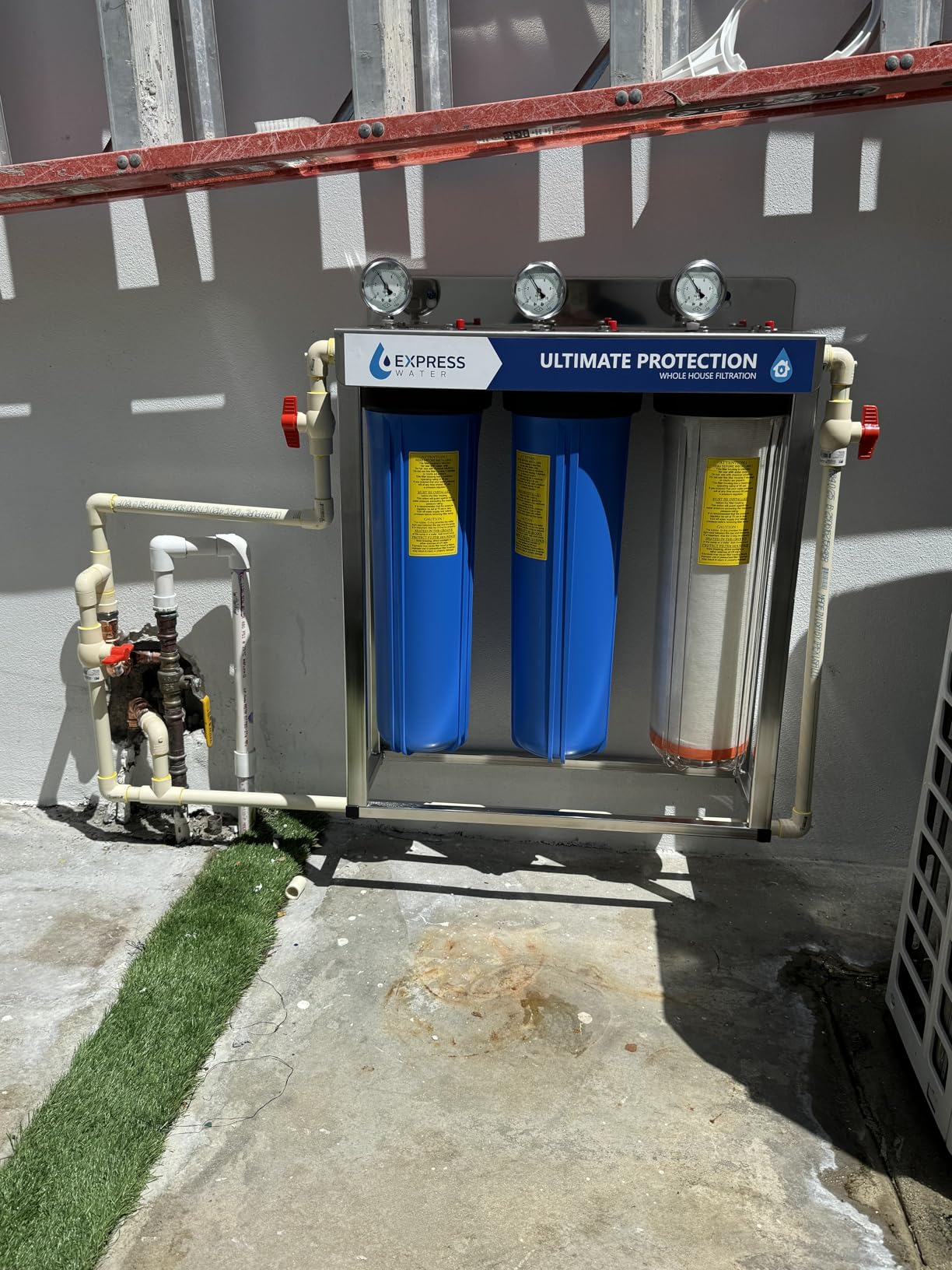
This is the pick for anyone whose well has visible orange staining on porcelain and glassware and who wants the iron stage to be the point of the system rather than an afterthought. It is the only unit in this roundup built around iron and manganese from the first housing.
Why a Dedicated Iron Stage Beats a Carbon-First Stack
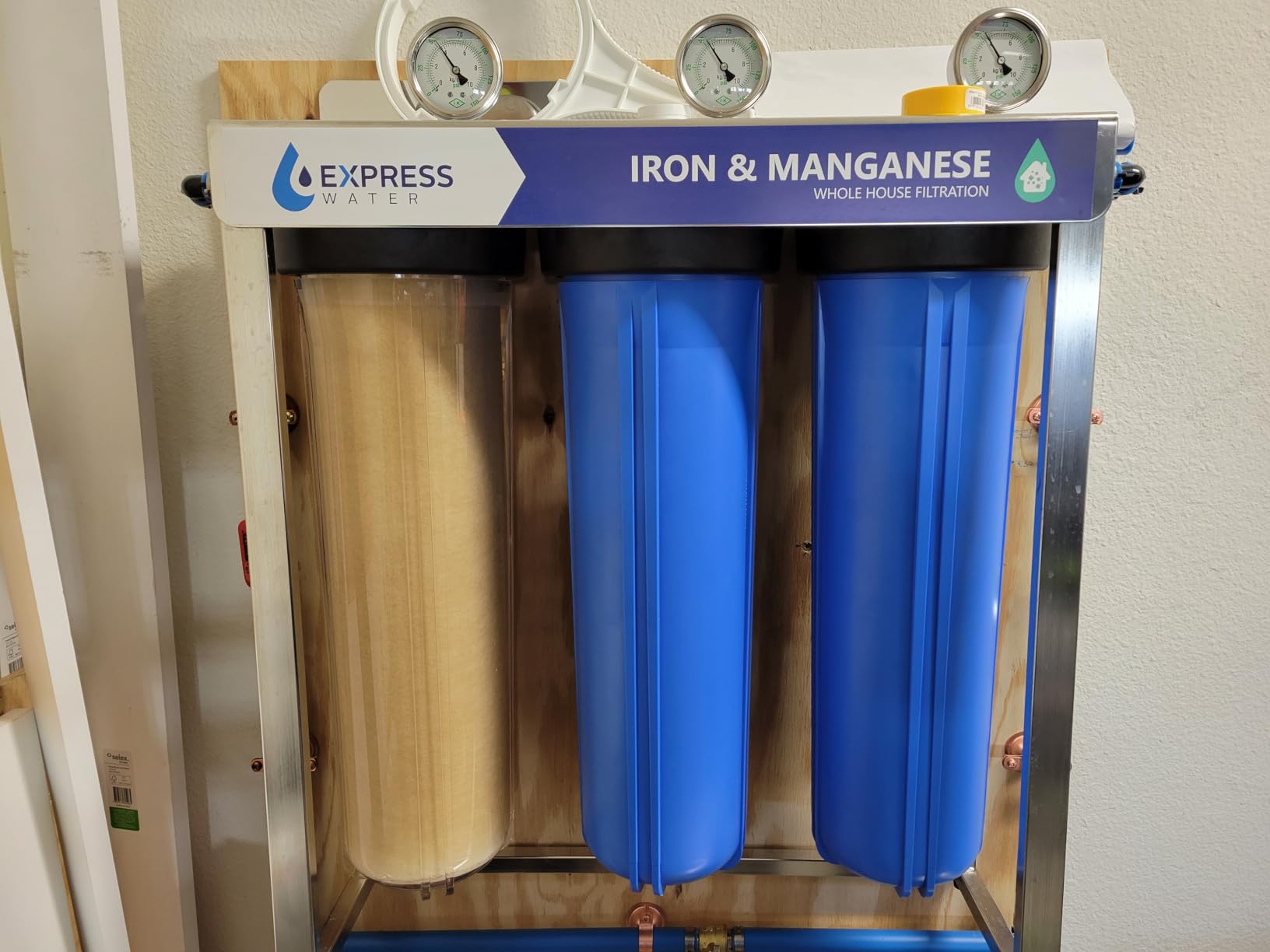
Most two-stage systems put carbon first. This one commits three stages to the iron problem, which is why owners with reddish-brown laundry and metallic taste report the clearest improvement of any cartridge unit I evaluated. The stage count is the reason it handles sustained loads better than a two-housing setup.
NSF certified replacement cartridges are part of the design rather than an aftermarket workaround, and the system holds 100,000 gallons of capacity with a 6 to 12 month replacement interval depending on your iron load.
17 GPM and Stainless Steel for Larger Homes
At 1-inch connections and up to 17 GPM, this is the highest service flow rating in the group, and the operating pressure window of 20 to 80 PSI is wide enough to tolerate a modest pressure tank without starving the housings.
The free-standing stainless steel frame is the piece owners mention most. At 57 pounds it is not a one-person job, but it will not flex or creep the way plastic brackets do over years of cycling.
What We Don’t Like About It
Replacement cartridges are not included and have to be ordered separately, so budget for them in year one. The footprint is large at nearly 30 inches tall, and it will not reduce total dissolved solids, which means a separate reverse osmosis unit if TDS is your concern. That is a different product category, not a flaw in this one.
Best for: wells with iron and manganese staining across the house, larger homes wanting headroom above 15 GPM. Skip it if: you have under 2 GPM of well flow to spare and a tight installation space.
3. iSpring WGB32BM – Best 20-Inch Iron and Manganese Filter for Well Water
iSpring WGB32BM Iron, Manganese Whole House Water Filter System
20 inch three-stage system
Iron to 3.0 ppm
15 GPM max flow
100000 gallon capacity
Pros
- 20 inch housings hold more media than 10 inch units
- Catalytic media outlasts greensand by up to three times
- Dual O-rings and heavy housings feel built to last
- Lifetime technical support backs the 1 year warranty
Cons
- Leaks at 1-inch NPT fittings are the most common complaint
- 55 pound weight and no way to drain the canisters
- Putting the carbon stage ahead of the iron stage reduces performance
If your iron sits in the 2 to 3 ppm band and you want the cartridge to last as long as possible before you are draining a wet 40-pound canister, the 20-inch version of this system is the right call. It is the same chemistry as our top pick in a much larger housing.
20-Inch Housings and the Media Longevity Advantage
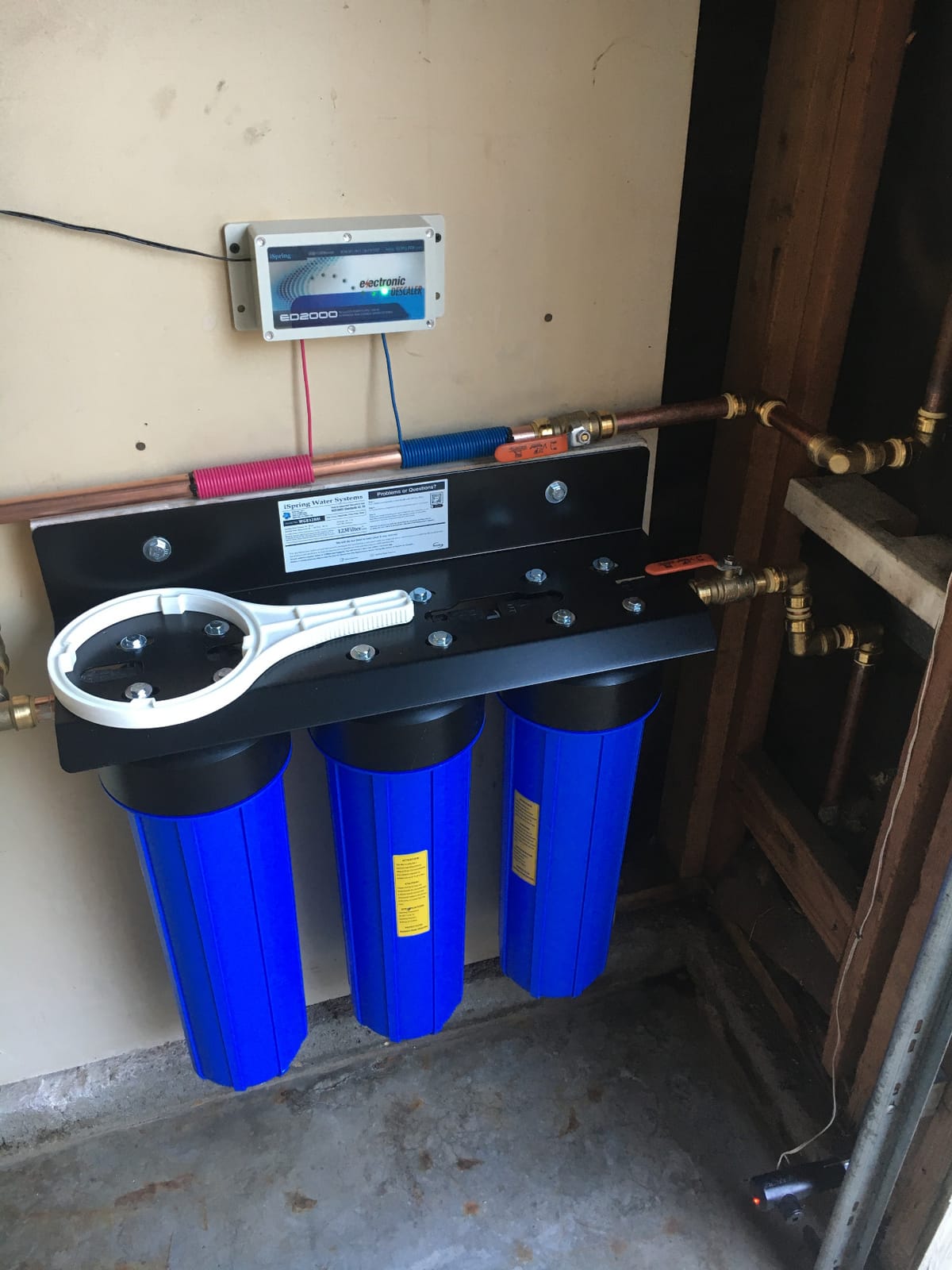
Bigger housings hold proportionally more media, and more media means a longer run between changes. Stage one is a polypropylene sediment filter rated to 5 microns, stage two a coconut shell carbon block, stage three the iron and manganese reducing cartridge rated to 3.0 ppm iron and 1.0 ppm manganese.
The catalytic media claim worth knowing: it is rated to outlast greensand by up to three times, because greensand media degrades while catalytic media does not. That is the difference between a one-year and a three-year media change on a tank system, and it is the single most important number in this review.
100,000 Gallons of Rated Capacity
Capacity is rated at 100,000 gallons against 50,000 for the 10-inch version, with a 1-year limited manufacturer warranty and lifetime technical support. Owners on high-volume households report the longer interval holds as long as the sediment stage is pre-filtered.
Installation Realities Nobody Mentions Up Front
Reviewers repeatedly describe the install as straightforward for anyone with basic plumbing experience, but nearly all of them add silicone grease or extra Teflon tape at the 1-inch NPT threads after a small leak at the top of the housing. Read that part of the manual before you turn the water on, not after.
What We Don’t Like About It
The weight is the real drawback. At 55 pounds with no drain port, a full canister is a two-person lift and it will drip regardless of how carefully you close it. Stage order also matters more than the brand would like: owners who put the carbon stage ahead of the iron stage report reduced iron removal, so follow the printed sequence.
Best for: wells with 2 to 3 ppm iron that want the longest cartridge interval. Skip it if: you are installing solo in a crawlspace or you are on a well with less than 5 GPM of recovery.
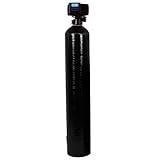
4. DuraWater Fleck 5600 SXT Air Injection Iron Eater – Best Backwashing AIO Tank
DuraWater Fleck 5600 SXT Air Injection Iron Eater Filter 1.5 cu ft, Black
1.5 cubic feet catalytic media
Fleck 5600 SXT digital valve
Automatic daily backwash
10x54 mineral tank
Pros
- Handles the iron loads cartridges cannot
- Automatic backwash means no cartridge purchases
- Media reported still performing after several years
- Single unit removes iron manganese and sulfur odor
Cons
- Fleck 5600 is a debated valve for rough well water
- Default backwash schedule is often wrong on septic fields
- Air injection cone weeps a little during the air draw
- Needs a sediment filter upstream to do its best work
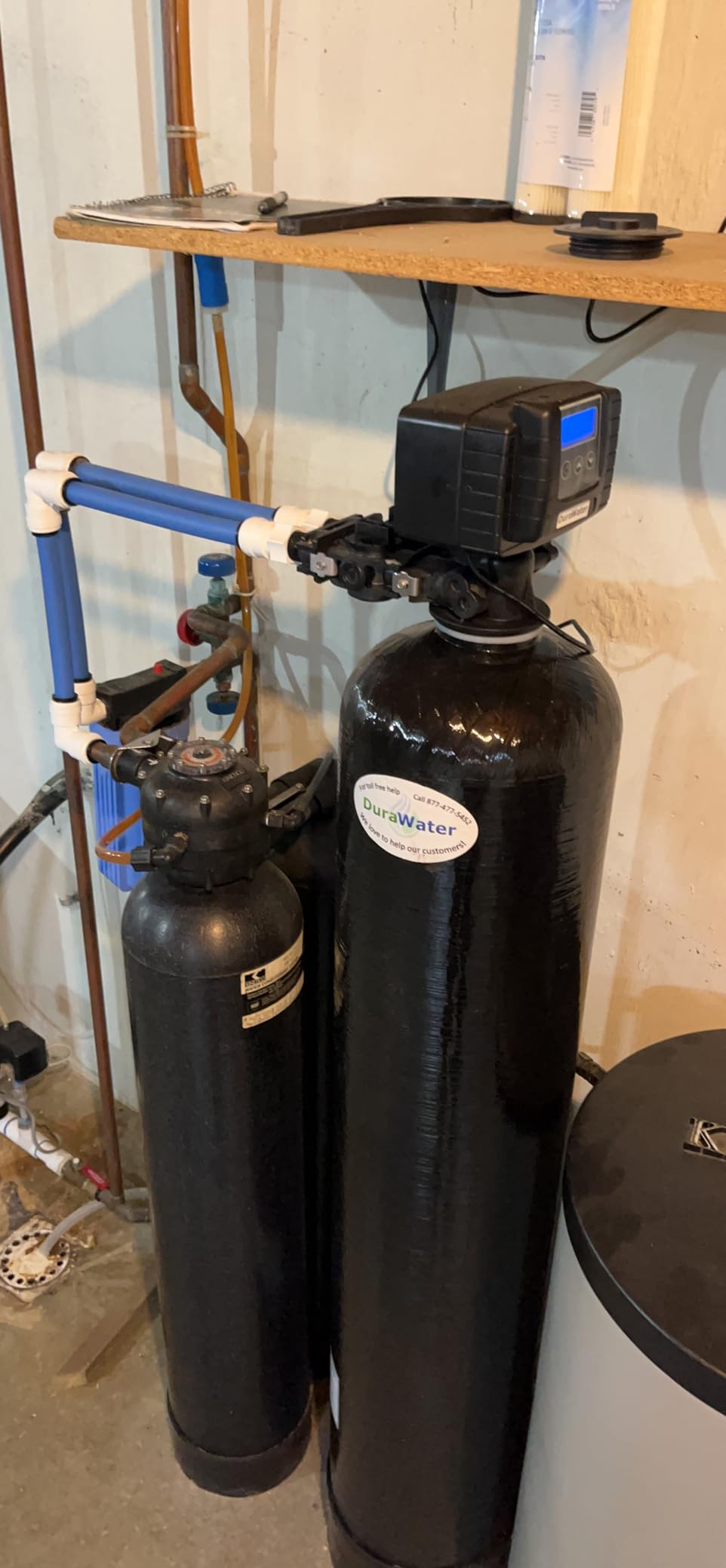
This is the architecture the forums actually recommend when the water is bad. Air injection oxidation means no peroxide, no permanganate, no refills, and a control valve that backwashes the media bed on its own schedule. Owners with orange tap water turning clear and sulfur odor disappearing generally own a system like this one.
How Air Injection Oxidation Actually Works
Compressed air is drawn into the top of the tank, the oxygen oxidizes dissolved ferrous iron into solid ferric particles, and 1.5 cubic feet of Centaur catalytic carbon media traps those particles. The valve then reverses, backwashes the bed and sends the sludge to the drain. Nothing is consumed except water and electricity.
Because the system cleans itself, the media reports still performing after several years of service according to long-term owners. That is the economic argument for a tank over a cartridge stack, and it is why I keep recommending one for anything above 3 ppm.
Why the Control Valve Is the Detail That Matters
This unit ships with a Fleck 5600 SXT digital valve, and experienced hands in r/WaterTreatment treat that as a real drawback on rough well water. The same community broadly prefers a Fleck 2510 or a Clack for sediment-heavy water because those valves handle grit without sticking. The 5600 SXT here is a capable valve, just not the community favorite in this application.
Programming is also the other complaint. Owners describe the default settings as confusing until support walks them through it, and support for this brand is repeatedly called out as knowledgeable and responsive. Ask them before you plumb, not after.
Backwash Scheduling on a Septic Field
The default is a daily backwash, and daily is almost always wrong. On a septic field, or anywhere you pay to move water, you want to extend the interval so the valve regenerates only when the bed is actually loaded. Forum consensus is to regenerate roughly every three days rather than daily on a well with moderate iron.
What We Don’t Like About It
Beyond the valve debate, the air injection cone can weep a small amount of water during the air draw cycle, which is normal for this design but surprises first-time owners. The package does not include media replacement instructions, and results are noticeably worse without a spin-down sediment filter upstream, which is not in the box.
Best for: wells above 3 ppm iron, sulfur odor, anyone who wants a decade without cartridge buying. Skip it if: your well cannot sustain the backwash rate, or you have no drain line within reach.
5. AFWFilters Iron Pro 2 – Best Softener and Iron Filter Combination
AFWFilters Iron Pro 2 Combination Water Softener Iron Filter Fleck 5600SXT Digital Metered Valve 64,000 Grain – High Flow for Whole House Use – Removes Hardness, Iron, Manganese, Sediment, Rust
Softener and iron filter combined
64000 grain capacity
Iron to 6 ppm and manganese to 6 ppm
5 year warranty
Pros
- Handles hardness and iron in one compact unit
- 6 ppm iron ceiling beats every cartridge here
- 64000 grain capacity covers larger homes
- Pre-loaded resin tank saves a loading step
Cons
- Very heavy at install
- Programming instructions are incomplete
- Drain line hookup is the trickiest install step
- Does not reduce total dissolved solids
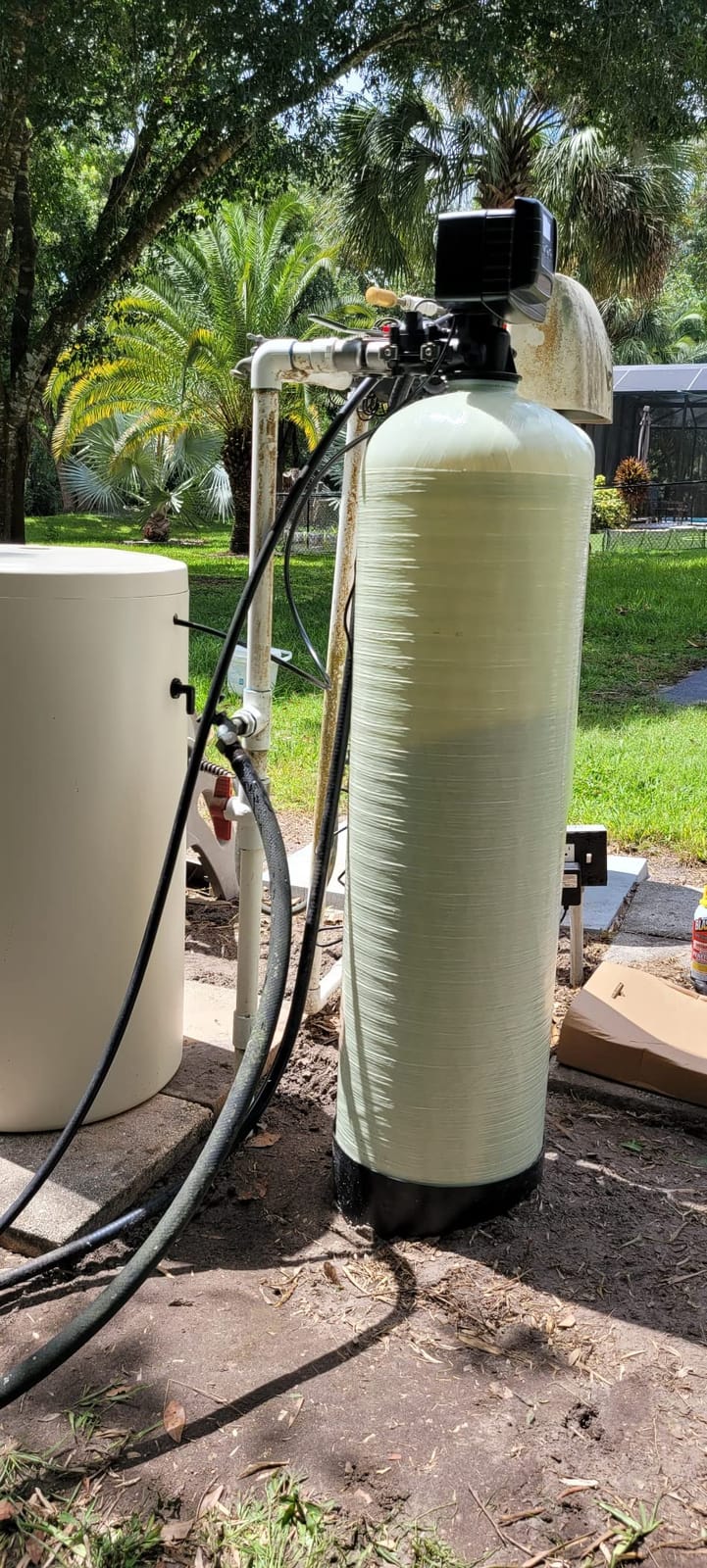
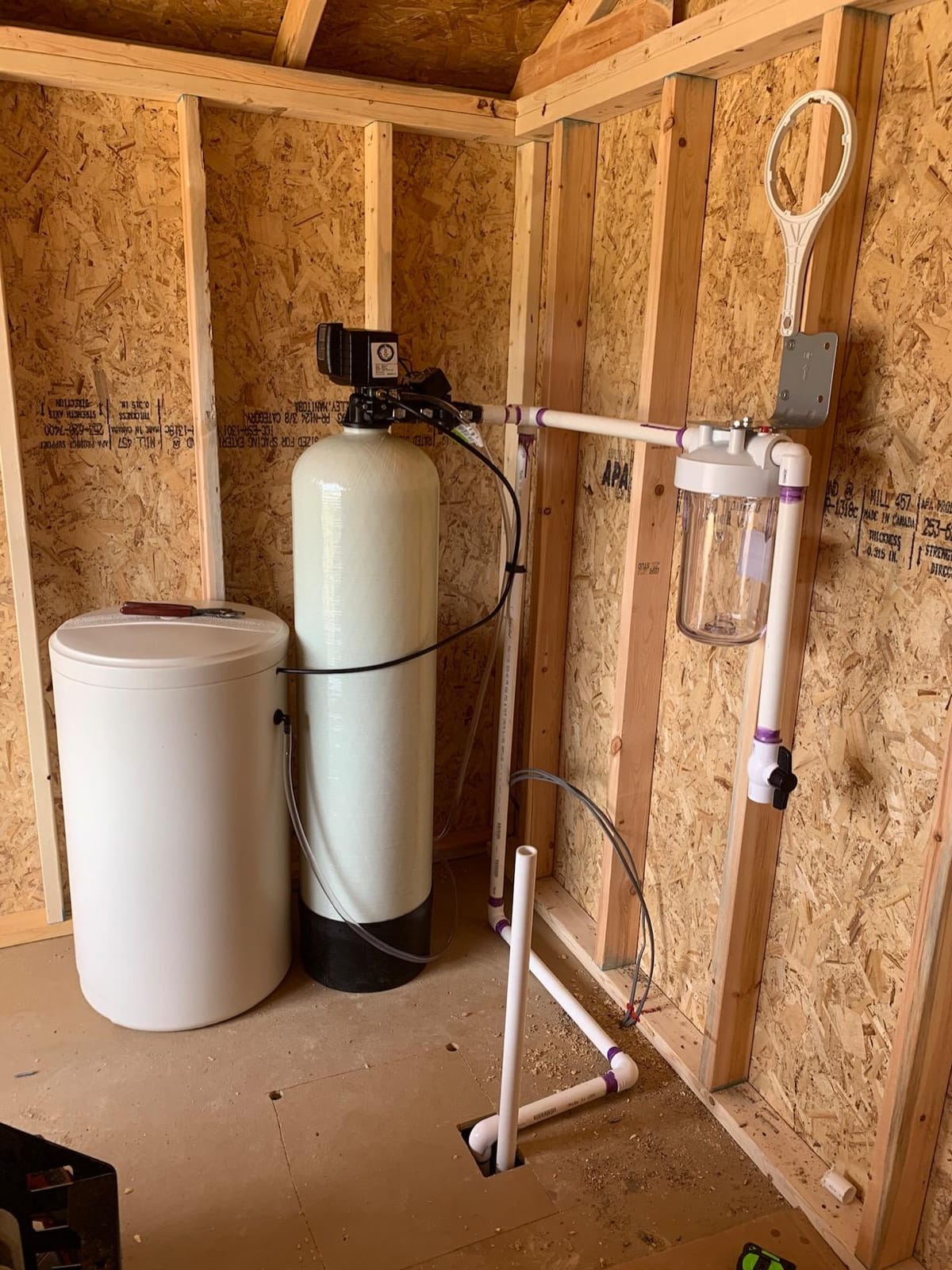
Some houses need both hardness and iron treated, and buying those as two separate towers costs more in plumb and fittings than the two functions are worth. This unit folds them together with a Fleck 5600SXT digital metered valve and 64,000 grains of capacity.
The 6 ppm Iron Ceiling Is the Selling Point
Every cartridge in this roundup tops out at 3 ppm of iron. This one is published at up to 6 ppm iron and 6 ppm manganese, which moves it into territory the oxidation tanks occupy. Owners who tested untreated water at very high readings report readings that dropped to bottled-water levels after installation.
That softening performance matters too. The same owners report less soap use, spot-free dishes and softer hair, which is the reason a softener is on their list in the first place.
64,000 Grains for Larger Homes
Capacity is often oversized for a small household, and reviewers note that 64,000 grains is more than a family of four typically consumes. Size the resin to your actual hardness and daily use before you buy, because a bigger tank than you need means more salt and more water per regeneration.
Installation and Programming Realities
Owners describe this as a weekend job, but they also describe the instructions as incomplete, particularly the Fleck valve programming where advanced mode requires setting the clock to 12:01. At 119 pounds you need a dolly and a second person, and the inlet valve can leak on first startup before the seals settle.
What We Don’t Like About It
The drain line connection and discharge setup are the hardest part of the install, and a mistake there is how air injection systems end up flooding a finished basement. It also does not lower TDS, so drinking-water concerns still need a separate stage. Buy a non-proprietary valve and expect to read forum guides during programming.
Best for: homes needing both hardness and iron above 3 ppm, owners replacing an undersized softener. Skip it if: you are on a small lot with no space for a drain line, or you only have low iron.
6. Home Master HMF3SdgFeC – Best Fine-Sediment Iron Filter for Well Water
Home Master Whole House Three Stage Water Filtration System with Fine Sediment, Iron and Carbon, Blue
Handles up to 3 ppm combined load
4-layer 25-10-5-1 micron sediment stage
15 GPM at 1 inch ports
2 year parts warranty
Pros
- Deepest sediment filtration in this group at 1 micron nominal
- Good measurable reduction in iron and rust staining
- Oversized housings hold flow and pressure well
- Manufacturer contacts owners annually to check on the system
Cons
- Sediment stage loads fast and adds pressure drop on silty wells
- Plastic manifold connections can leak near soldered copper
- Housing O-rings swell and pop out of the groove
- Support requires a certified plumber to inspect before parts ship
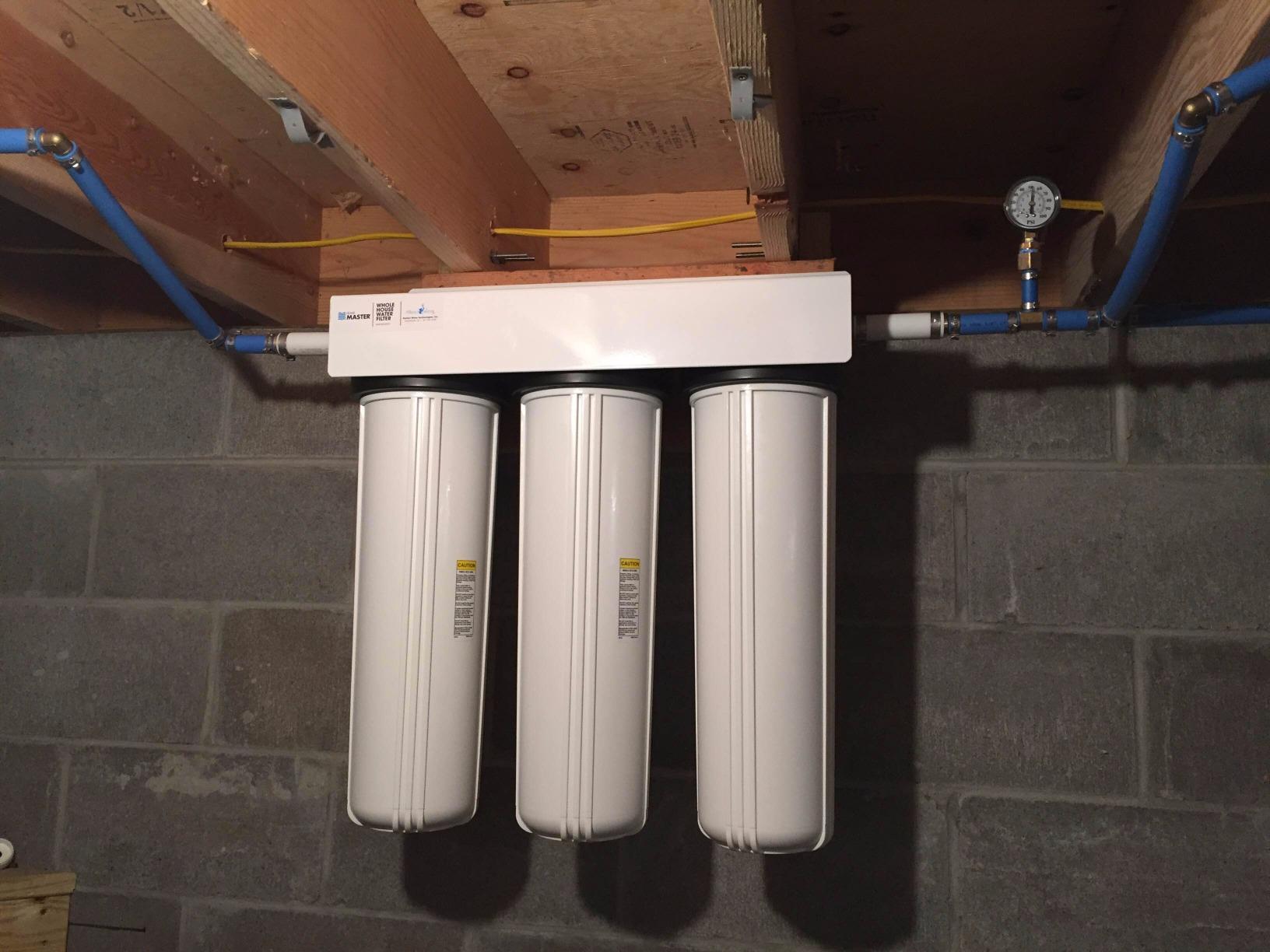
This is the system to look at if your well goes turbid after heavy rain or carries visible grit. The 4-layer sediment cartridge stepping 25 down to 1 micron is the deepest mechanical filtration of anything I evaluated, and on a particulate-iron well that stage is doing as much work as the iron cartridge.
Handling the Combined Iron, Manganese and Sulfur Load
The published ceiling is up to 3 ppm of combined iron, manganese and sulfur, and up to 95% reduction of iron, manganese, sediment and chemicals. Read that combined figure carefully: it is not 3 ppm of iron plus 3 ppm of manganese, it is 3 ppm spread across all three.
Long-term owners on high-iron wells report iron meter readings dropping sharply and staining stopping, often within days. One owner reported brown water after installing on an untested well, which is the argument for testing first, not a reason to avoid the unit.
Flow and Pressure Under Real Sediment Load
Housings carry up to 15 GPM at 1-inch ports across a 20 to 95 PSI operating range, and owners report good flow retention. The recurring complaint is that the sediment stage loads with sludge quickly on high-sediment wells, which shows up as household pressure drop rather than as reduced filtration.
What We Don’t Like About It
The plastic manifold connections can leak, especially if a plumber has been soldering copper nearby and distorted the fitting. The housing O-rings lose their diameter over time and pop out of the groove, and the fix is keeping spares on hand. Support policy also requires a company-certified plumber to inspect the unit before parts are sent, which some owners find frustrating.
Best for: wells with visible sediment, turbidity after rain, or particulate iron in the supply. Skip it if: you need a staged setup where each function gets its own housing, or your iron is above 3 ppm on its own.
7. Pentek RFFE20-BB – Best Replacement Iron Cartridge for 20-Inch Housings
Pentair Pentek RFFE20-BB Big Blue Water Filter, 20-Inch, Whole House Radial Flow Iron Reduction Replacement Cartridge, 20″ x 4.5″, White
Reduces iron up to 3 ppm
Manganese activated zeolite
Rated for roughly 26000 gallons
Fits 20 inch Big Blue housings
Pros
- Fits every standard 20 inch Big Blue housing
- Chemical-free media rated safe for drinking water
- Reliable and inexpensive as a spare on hand
- Drops in with no tools
Cons
- Lasts only 3 to 4 months at 3 ppm iron
- Works best in a multi-stage stack rather than alone
- Does not address manganese or sediment at all
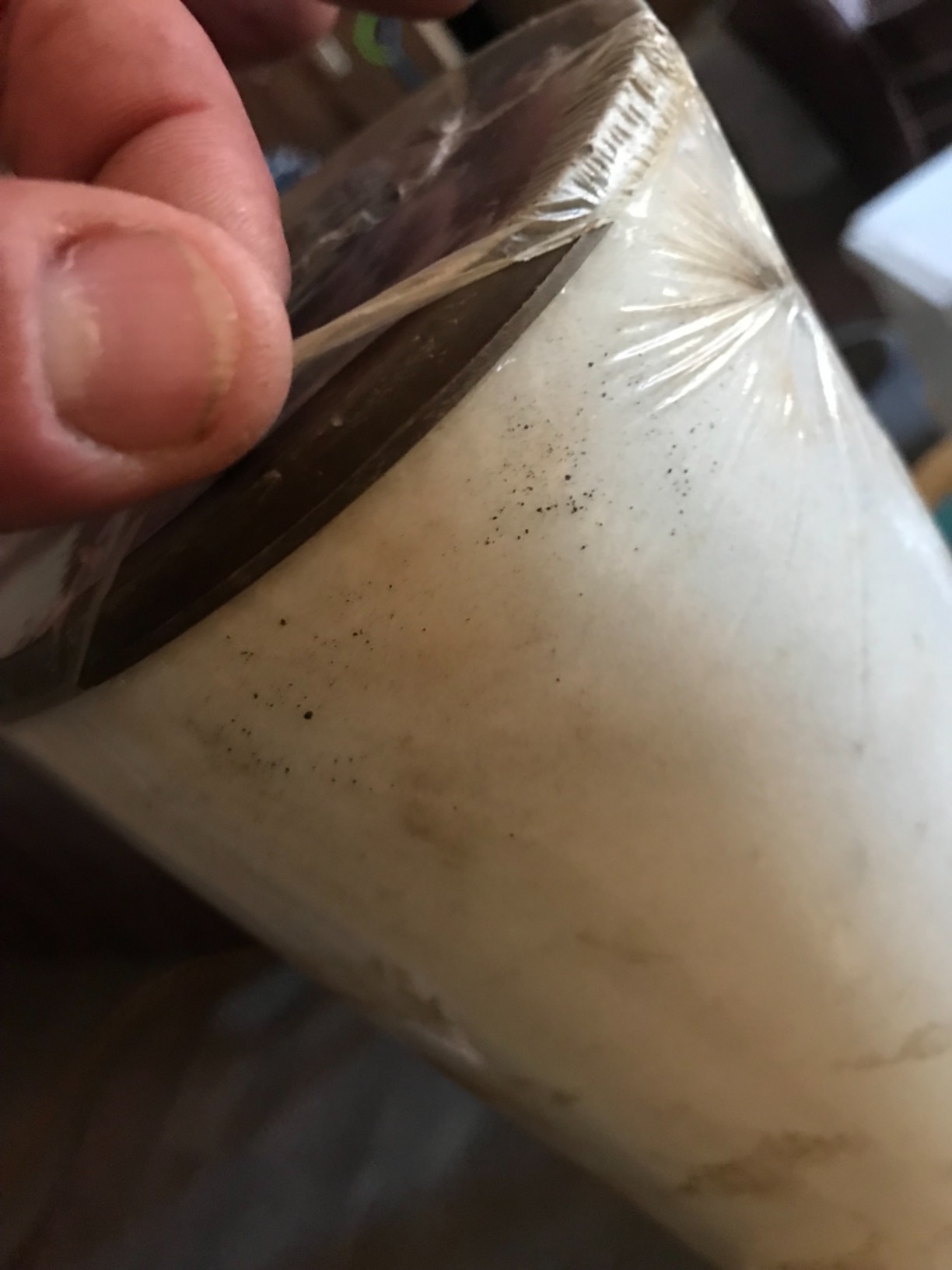
Everyone with a cartridge system needs one of these in the closet. The Pentek RFFE20-BB is the industry-standard 20-inch iron reduction cartridge, it fits essentially any 20 by 4.5-inch heavy-duty housing, and it is the refill you will buy most often of anything on this list.
26,000 Gallons of Rated Capacity
Rated at roughly 26,000 gallons at 3 ppm iron, the spec sheet translates to about 3 to 4 months for a household of four. Manganese activated zeolite is the media, NSF certified, and no chemicals are added, so it is safe on a drinking line.
That short life is the honest catch. At 3 ppm the cartridge is exhausted in roughly three to four months, and owners are encouraged to keep a spare on hand and swap when metallic taste or orange staining returns.
Use It As a Stage, Not a System
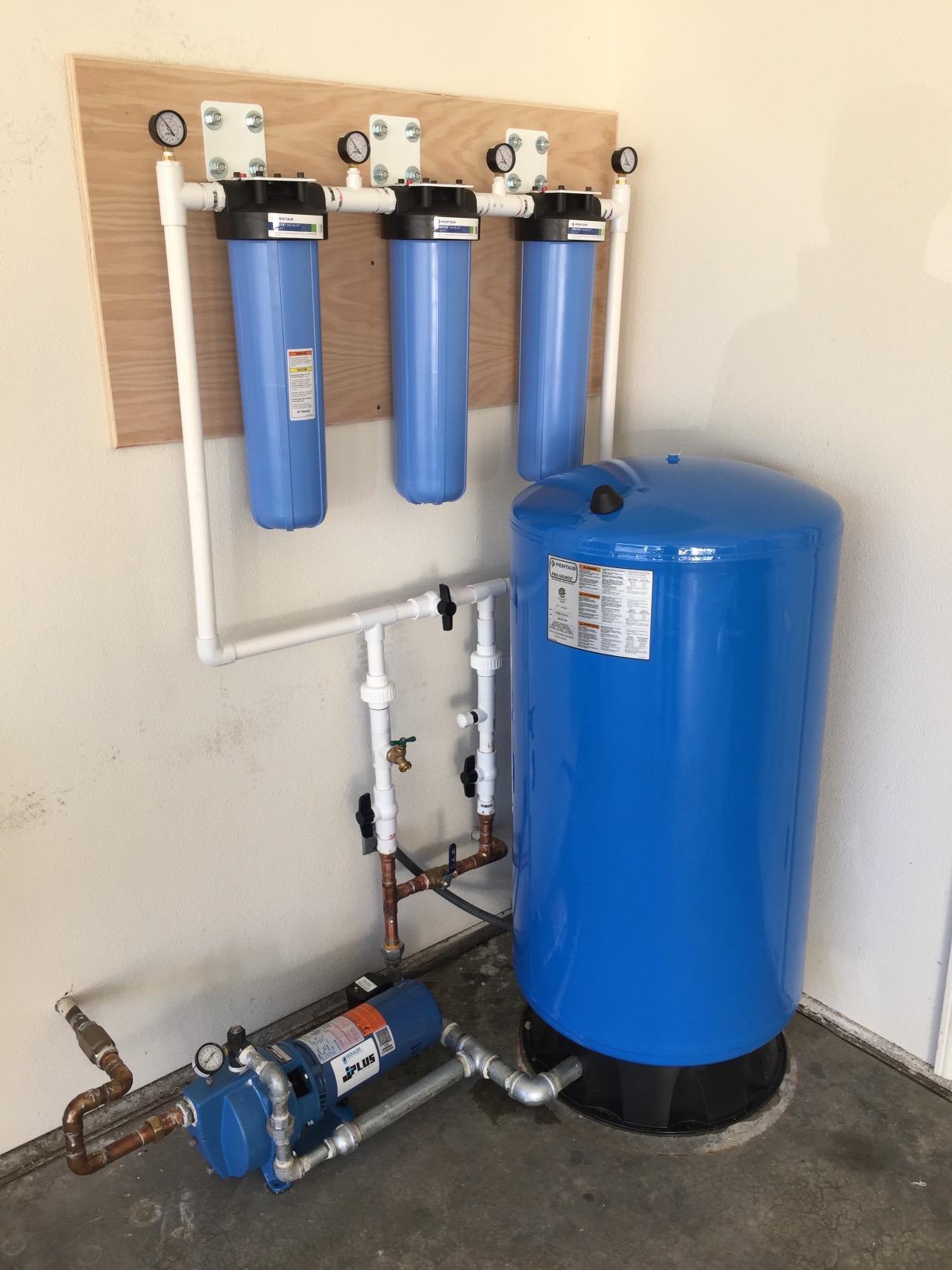
Reviews treat this as a building block rather than a complete system. The recommended pairing is a sediment pre-filter ahead of it and a carbon post-filter behind it, all in 20-inch Big Blue housings on the main cold line, which is exactly how the two larger iSpring systems use their iron stage.
What We Don’t Like About It
It does not touch manganese or sediment, both of which need their own stages, and a single cartridge on the main line will not touch every fixture in the house. The recurring cost also adds up: a cartridge you replace four times a year is a very different line item from media that lasts a decade.
Best for: households already running 20-inch housings, keeping a spare, topping up a multi-stage stack. Skip it if: you have no housing to put it in, or your iron is above 3 ppm.
8. Waterdrop WHF21-FG – Best Two-Stage Iron, Manganese and Chlorine Filter
Waterdrop WHF21-FG 2-Stage Whole House Water Filter System, 5 Micron
Reduces up to 96.4 percent iron
NST 372 lead free cartridges
15 GPM at 1 inch NPT
50000 gallon capacity
Pros
- Iron stage comes first with carbon behind it
- Both cartridges meet NSF ANSI 372 lead free standards
- Brass threads and dual O-rings resist leaking
- Compact and light enough to install solo
- Reduces lead mercury cadmium chromium and copper
Cons
- Cartridges need replacing every 6 months
- 5 micron sediment rating is coarse by comparison
- Needs Teflon tape on all 1 inch fittings
- Does not reduce total dissolved solids
The two-stage setup here runs the iron and manganese cartridge first and the coconut shell GAC carbon behind it, which is the correct order for a well and the opposite of what most budget systems do. Owners report clean-tasting water and reduced staining about a week after install.
Metal Reduction That Goes Past Iron
Third-party test figures give reduction of up to 96.4% iron, 98.2% manganese and 95.63% chlorine, and the same cartridges also target lead, mercury, cadmium, chromium and copper. If your lab report flags lead alongside iron, that broader contaminant list is the reason to shortlist this one.
Both cartridges are built to NSF/ANSI 372 lead-free standards, which matters on a drinking line and is a certification many competing housings do not carry. The reinforced brass threads and dual high-sealing O-rings are a real step up in leak resistance from all-plastic manifolds.
15 GPM From a Compact 10-Pound Housing
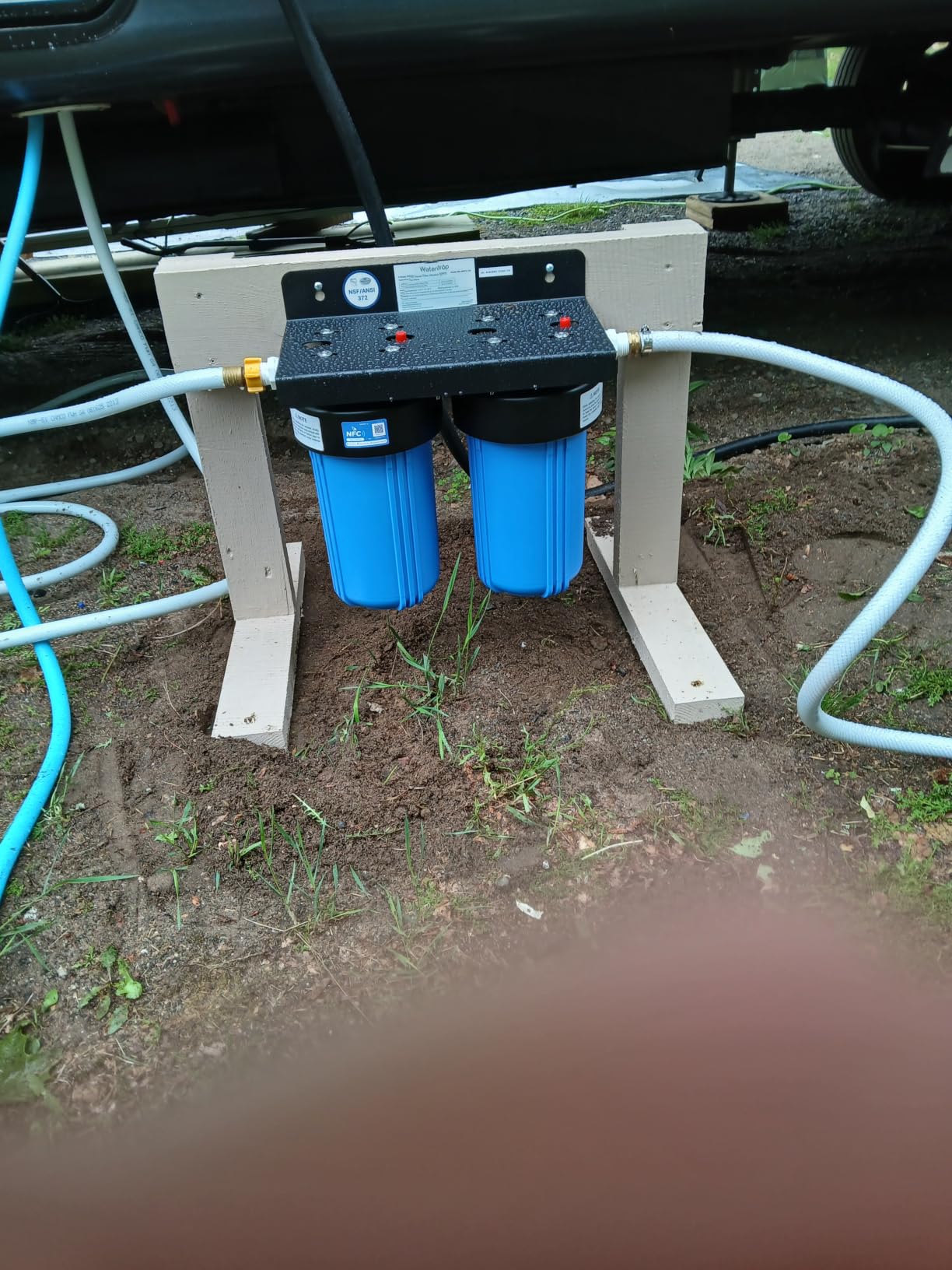
At 10.1 pounds total and 15 GPM through 1-inch NPT ports, this is the easiest unit here to install alone in a tight space. Flow holds up without an obvious pressure drop according to owners, and the pre-installed bracket and cartridges make setup quick.
What We Don’t Like About It
At a 5-micron sediment stage it is coarse next to a radial-flow 10-micron housing, and the cartridges need replacing roughly every 6 months, which is a permanent line item rather than a one-off. Fitting threads still need proper Teflon tape, and like every unit here it does not lower TDS.
Best for: moderate iron and manganese on well water, homes also testing for lead. Skip it if: you want an infrequent media change, or your iron is above 3 ppm.
How to Choose an Iron Filter for Well Water
Test first, then match the technology to the number. Everything below follows from that order, and skipping the test is what produces the mismatched purchases the forums complain about most.
Match the Technology to Your Measured Iron Level
Under 0.3 ppm, buy nothing. From 0.3 to 1 ppm, a two-stage cartridge handles it and costs the least. From 1 to 3 ppm, move to a 20-inch three-stage cartridge for longer media life. From 3 to 7 ppm, choose a backwashing oxidation tank or a combination softener. Above 7 ppm, and especially with sulfur odor, you want a dedicated catalytic media system or a chemical-fed oxidation setup.
Bacterial iron sits outside all of those bands. It needs shock treatment and a chlorinator ahead of the filter, and a specialist if the staining keeps returning.
Cartridge Versus Backwashing Tank: The 3 ppm Dividing Line
A cartridge is a mechanical sieve with a catalytic coating. It holds dissolved iron only after the iron has already oxidized, so on a well with clear-water ferrous iron above roughly 3 ppm the cartridge simply exhausts faster than you can replace it. That is why every cartridge in this roundup is published at 3 ppm and every tank is published at 7 ppm or higher.
The “removes 95% of iron” phrasing on cartridge marketing describes percentage removal at a rated concentration, not a ppm ceiling. Ask for the ceiling, and treat a missing ceiling as a missing answer.
Service Flow Rate Versus Backwash Rate
Service flow is what your household uses while the filter is filtering. Backwash rate is what the tank needs to flush itself, and it is the number that sizes a tank correctly. The mistake nearly everyone makes is reading the service flow off a tap instead of checking the well recovery rate.
Run a 10-gallon bucket test and time how long your pump takes to refill it, then multiply to get your true recovery rate in GPM. A 1.5 cubic foot tank needs roughly 3 to 5 GPM of sustained backwash, and if your pump cannot hold that, the filter will not clean itself no matter how good the media is.
Control Valve Choice Matters More Than the Media
Community consensus on r/WaterTreatment is consistent on this point: a Fleck 2510 or a Clack is preferred over a Fleck 5600 for rough, sediment-heavy well water, because those valves tolerate grit without sticking. The valve is the part that fails, and it is the part you cannot replace without draining the tank.
Buying a non-proprietary control head also means you can service it in ten years when the brand has moved on. Proprietary parts are the quiet cost of a cheap system.
Installation Requirements Before You Order
Every tank system needs a drain line within reach, an electrical outlet, vertical clearance above the tank for the brine or water line, and a bypass valve so you can isolate the unit for service. Air injection systems also need sustained tank pressure at all times, because the air pocket collapses when pressure drops and the filter stops oxidizing anything.
Budget for a spin-down sediment filter ahead of any iron system, and keep the iron filter ahead of the softener. After any well shock or chlorination, put the iron filter on bypass until the chlorine is gone, because chlorine destroys catalytic media.
What Each Contaminant Means for Your Fixtures
Iron above 0.3 mg/L stains toilets, tubs, laundry and appliances and fouls water heaters. Manganese is the one to watch for separately, with a secondary guideline around 0.05 mg/L, and it produces black staining and gray slime rather than orange. Sulfur produces odor with no staining at all, which trips people up because the water looks perfect.
Check which of the three your report actually lists, and pick a system whose published ceiling covers that specific contaminant. Many iron filters have no stated manganese limit at all, and only a subset state a hydrogen sulfide ceiling.
Frequently Asked Questions
Do iron filters work on well water?
Yes, if your iron level sits under the system published ceiling. Iron filters are built for private wells because iron is one of the most common well contaminants and above 0.3 mg/L it stains fixtures permanently. The key is matching the technology to the type of iron: cartridges handle dissolved iron up to roughly 3 ppm, while backwashing oxidation tanks handle 7 ppm and beyond.
What is the best whole house iron filter for well water?
For most wells under 3 ppm iron, the iSpring WGB21BM is the strongest all-round choice, with a 4.6 star rating across 4,270 reviews and a published ceiling of 3.0 ppm iron and 1.0 ppm manganese at up to 15 GPM. If your iron is heavier than that, a backwashing air injection tank is the correct architecture rather than any cartridge system.
What is the most effective way to remove iron from well water?
Ranked by ppm capability, the order is: chemical injection and specialized catalytic media for the heaviest loads, then air injection oxidation tanks, then greensand with potassium permanganate regeneration, then softener and iron combination units, and finally cartridges for the lightest loads. The method is only correct if it exceeds the iron level on your lab report.
What is the best water filter for removing iron and manganese?
Whole-house filters for iron and manganese are a different category from reverse osmosis and point-of-use purifiers, which address dissolved solids and metals rather than well iron. Within whole-house filtration, a three-stage system that puts a dedicated iron and manganese stage in the line, paired with a sediment pre-filter upstream, is the most effective architecture under 3 ppm.
Does an iron filter remove manganese?
Sometimes, and you should never assume. Manganese tolerance is far lower than iron, with a secondary guideline around 0.05 mg/L, and many iron cartridges are published with no manganese figure at all. The cartridges rated here cover 1.0 ppm of manganese, and the Pentek replacement cartridge covers none, so check the manganese line before you buy.
How long does an iron filter last?
It depends entirely on the architecture. A cartridge system is rated from 3 to 4 months at 3 ppm iron for a household of four, and 6 to 12 months at lower loads. A backwashing oxidation tank uses media reported to still perform after several years, with periodic media replacement as the main cost.
Final Verdict: Which Iron Filter Fits Your Well
Under 3 ppm of iron with no manganese problem, the iSpring WGB21BM is the pick, and the larger WGB32BM version is the same chemistry with more media and a longer interval. If your iron is moderate and you want the iron stage to lead the system rather than trail it, the Express Water 3-Stage is the better build. If lead appears on your report alongside iron, the Waterdrop WHF21-FG covers the widest contaminant list.
Above 3 ppm, or if your water smells like rotten eggs, stop shopping cartridges. The DuraWater Fleck 5600 SXT air injection tank removes what the cartridges cannot, and the AFWFilters Iron Pro 2 covers 6 ppm of iron while softening at the same time for households that need both. The Home Master system earns its place when sediment and turbidity are the dominant complaint, and the Pentek cartridge is the spare you will buy first.
Whichever you pick, test the water before you order, put a sediment pre-filter upstream, and install the iron filter ahead of the softener. Those three steps decide whether the system works as advertised. For more home systems coverage, our smart leak detection picks are worth a look alongside any new plumbing work.