
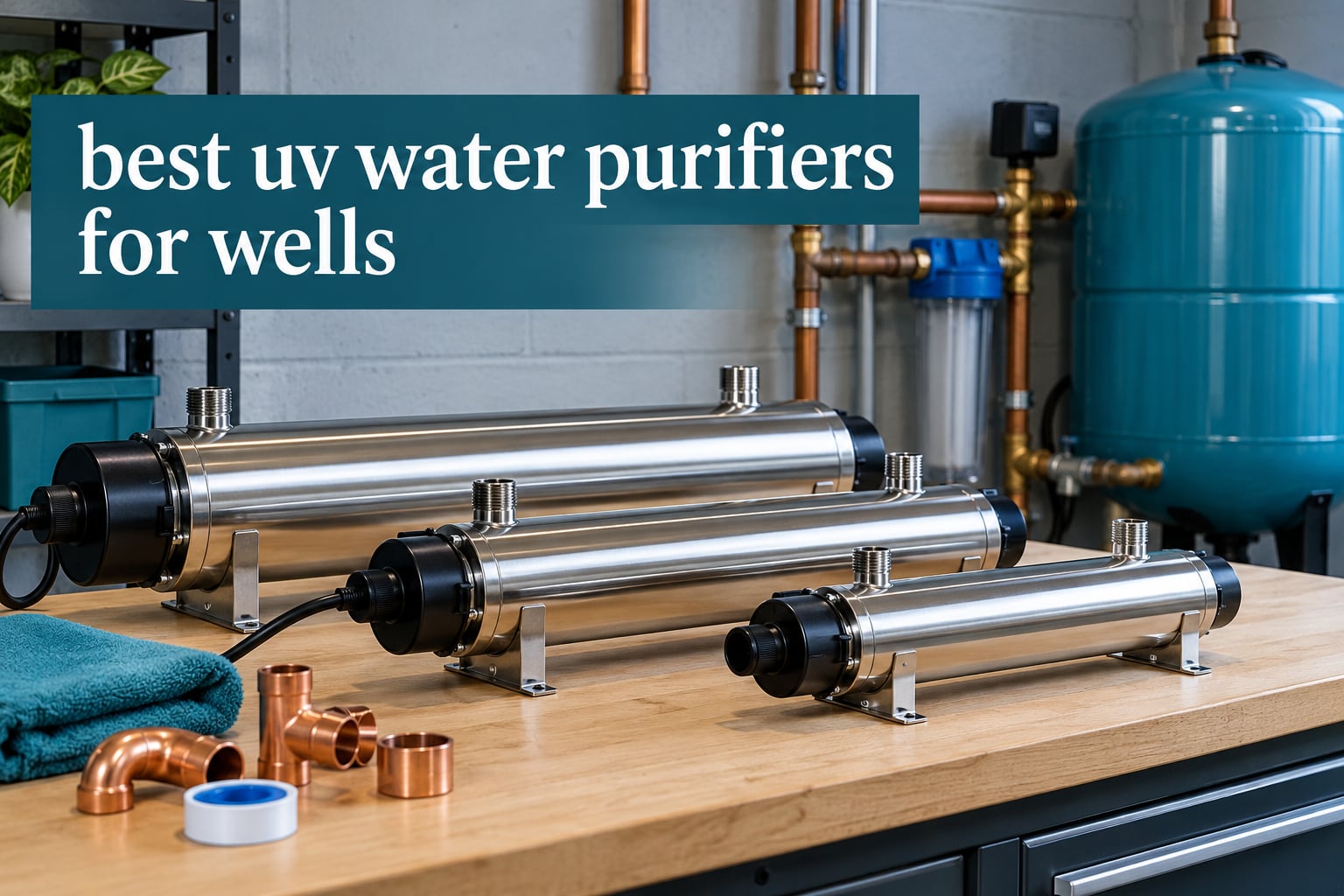
If you are choosing among the best UV water purifiers for wells, the decision comes down to three numbers: your well’s flow rate, the gallons per minute the chamber is rated for, and what else is in your water besides bacteria. Ultraviolet light is the only common treatment that continuously kills coliform, E. coli, Giardia and Cryptosporidium without adding chlorine, salt or any chemical residual, which is exactly why well owners with livestock, children or a pond on the property gravitate toward it.
Our team worked through twelve inline ultraviolet systems for private wells, comparing published flow ratings, chamber materials, lamp technology, sensor design, warranty terms and the failure patterns that owners actually report. We are not a lab, so we are not going to claim we cultured bacteria in a petri dish for six weeks. What we did do is read every published specification, cross-check it against the review record, and model the sizing math that almost no roundup gets right.
This guide covers the best UV water purifier for well water setups from 9 GPM cottage units to 24 GPM whole-property systems, plus the pre-filtration, placement and maintenance rules that decide whether a UV chamber actually works or quietly underperforms. We also spell out what UV cannot do, because that is the single most important sentence in this entire article for anyone dealing with iron, nitrates or farm runoff.
What Is the Best UV Filter for Well Water?
The best UV filter for well water is an inline, whole-house chamber rated well above your pump’s actual flow, installed as the final treatment stage after sediment filtration. It should carry a 254 nm germicidal lamp, an audible lamp-out alarm, and a stainless steel reactor sized in gallons per minute. For most households, that means a 12 GPM unit for a 3 to 5 GPM well.
Here is the mechanism in plain terms. Water flows through a stainless steel chamber and passes a UV lamp sealed inside a quartz sleeve, which is transparent to UV light. Germicidal UV-C at 254 nanometers penetrates the cell wall of bacteria, viruses and protozoa and disrupts the DNA so they cannot reproduce. No chemicals are added, nothing is stripped out, and the water chemistry, taste, pH and mineral content come out the far side unchanged.
Two variables decide whether that works: intensity and contact time. Their product is the UV dose, measured in millijoules per square centimeter. Manufacturers quote a flow rating at a stated dose, so a chamber rated 12 GPM at 40 mJ/cm2 delivers a different dose than the same chamber at 16 mJ/cm2. Run clear water past a 12 GPM lamp at 20 GPM and the organisms simply pass through faster than the dose can be delivered. Oversizing the unit is not a luxury; it is the whole safety margin.
One critical caveat. Private well results change. A clean panel this year does not guarantee a clean panel next year, and a flooded yard, a nearby manure spread, a failed septic field or a heavy rain season can all shift the bacterial picture. Test annually, and treat UV as part of a monitoring program rather than a one-time purchase.
Our Top 3 Picks for Well Water in 2026
We narrowed twelve systems down to three standouts. The first is the strongest overall pick for a typical private well, the second is the one we would buy for a mid-size home on a 5 GPM well, and the third is the choice for households that need headroom or a compact cabinet footprint.

HQUA-OWS-12 40W
- 40W lamp rated at 12 GPM
- 304 stainless chamber
- 3/4 inch MNPT inline ports
- Spare bulb included

iSpring UVF55FS
- 55W lamp rated at 12 GPM
- Smart flow sensor with three modes
- 37.5 inch 304 stainless reactor

VIQUA VH410
- 18 GPM whole-home capacity
- Inactivates Cryptosporidium and Giardia
- 365 day lamp countdown timer
Quick Comparison of Every UV Unit We Reviewed in 2026
Every chamber below is rated in gallons per minute, and the column that matters most is that number. Match it to your well pump output, then add headroom.
| Product | Specs | Action |
|---|---|---|
| HQUA-OWS-12 40W Whole House UV |
|
Check Latest Price |
| iSpring UVF55FS |
|
Check Latest Price |
 Bluonics 55W UV System Bluonics 55W UV System |
|
Check Latest Price |
 Geekpure GP-UV55W Geekpure GP-UV55W |
|
Check Latest Price |
 Ronaqua 55W UV Ronaqua 55W UV |
|
Check Latest Price |
 US Water Filters 4C-151 US Water Filters 4C-151 |
|
Check Latest Price |
| VIQUA VH410 |
|
Check Latest Price |
 Aquaboon 55W UV Aquaboon 55W UV |
|
Check Latest Price |
 Bluonics 110W 24 GPM Combo Bluonics 110W 24 GPM Combo |
|
Check Latest Price |
 Viqua VH200 Viqua VH200 |
|
Check Latest Price |
 iSpring UVF20 LED iSpring UVF20 LED |
|
Check Latest Price |
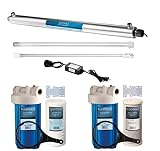 Bluonics 55W + Sediment/Carbon Kit Bluonics 55W + Sediment/Carbon Kit |
|
Check Latest Price |
One caution about the table above. Several of these listings do not publish a UV dose figure at all. When a seller quotes only a GPM number and no mJ/cm2 rating, treat the flow number as a ceiling rather than a target, and size up.
1. HQUA-OWS-12 40W – The Most Proven 12 GPM Chamber for Wells
HQUA-OWS-12 120V 40W 3/4″ MNPT Inlet/Outlet Whole House Ultraviolet Water Purifier Filter, + 1 Extra UV Bulb
40W lamp
12 GPM rated
37.2 inch 304 stainless chamber
3/4 inch MNPT ports
Pros
- Largest review base in the category with 1060 ratings
- Chemical free with no change to taste color odor or pH
- Green and red indicator lights on the ballast
- Doubles wrapped packaging protects the glass in transit
Cons
- Ballast is the most common failure point reported
- Handful of units developed pinhole leaks after about five years
- Water in the line can heat up if a faucet has not run
The HQUA-OWS-12 is the unit we keep coming back to, and the reason is not the specification sheet, it is the volume of real service behind it. With more than a thousand ratings averaging 4.4 stars, this is the single most battle-tested 12 GPM inline UV chamber available for a home well, and the owner reports cluster around one recurring theme: well water odor and bacteria problems that disappeared after install.
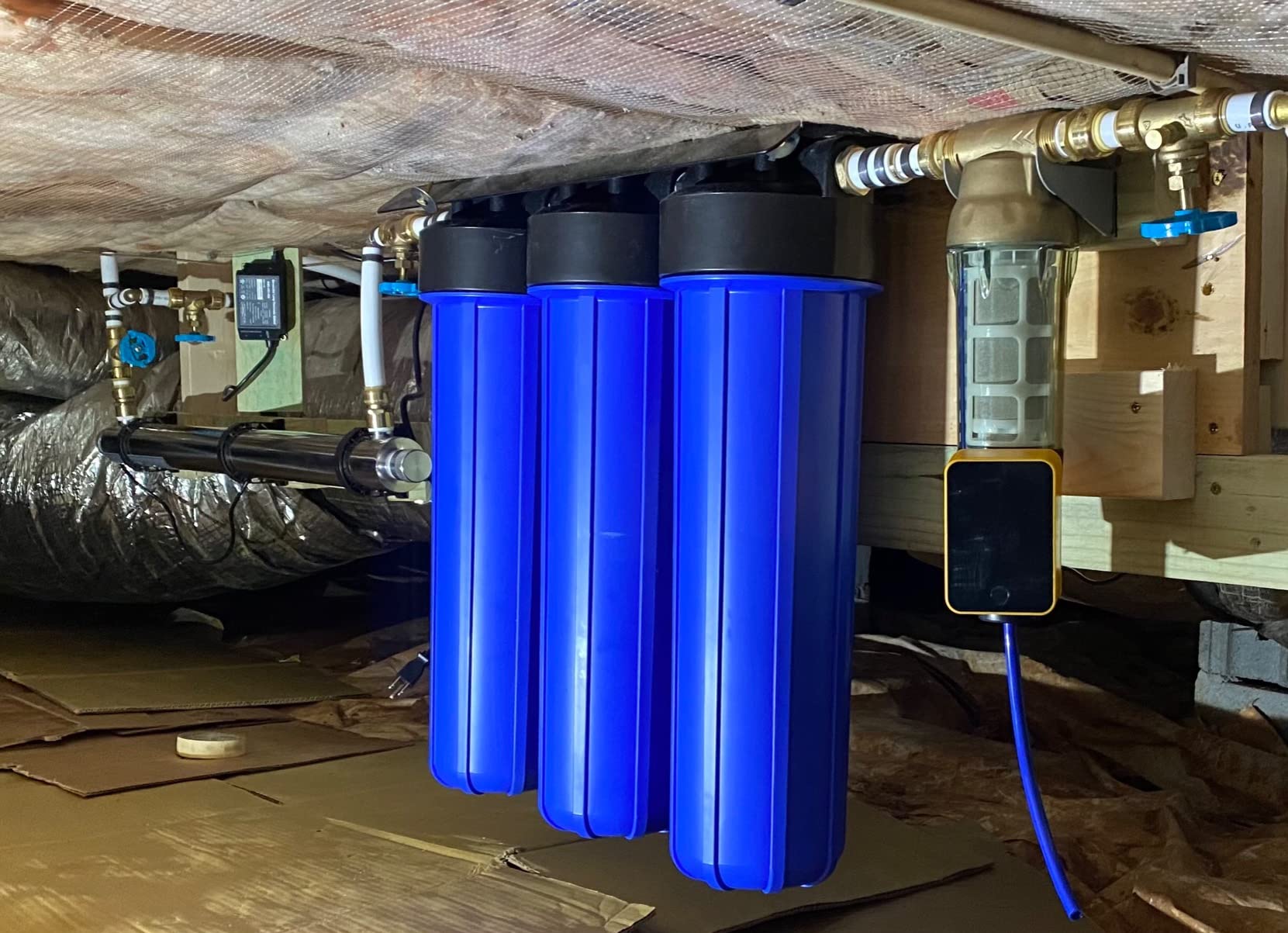
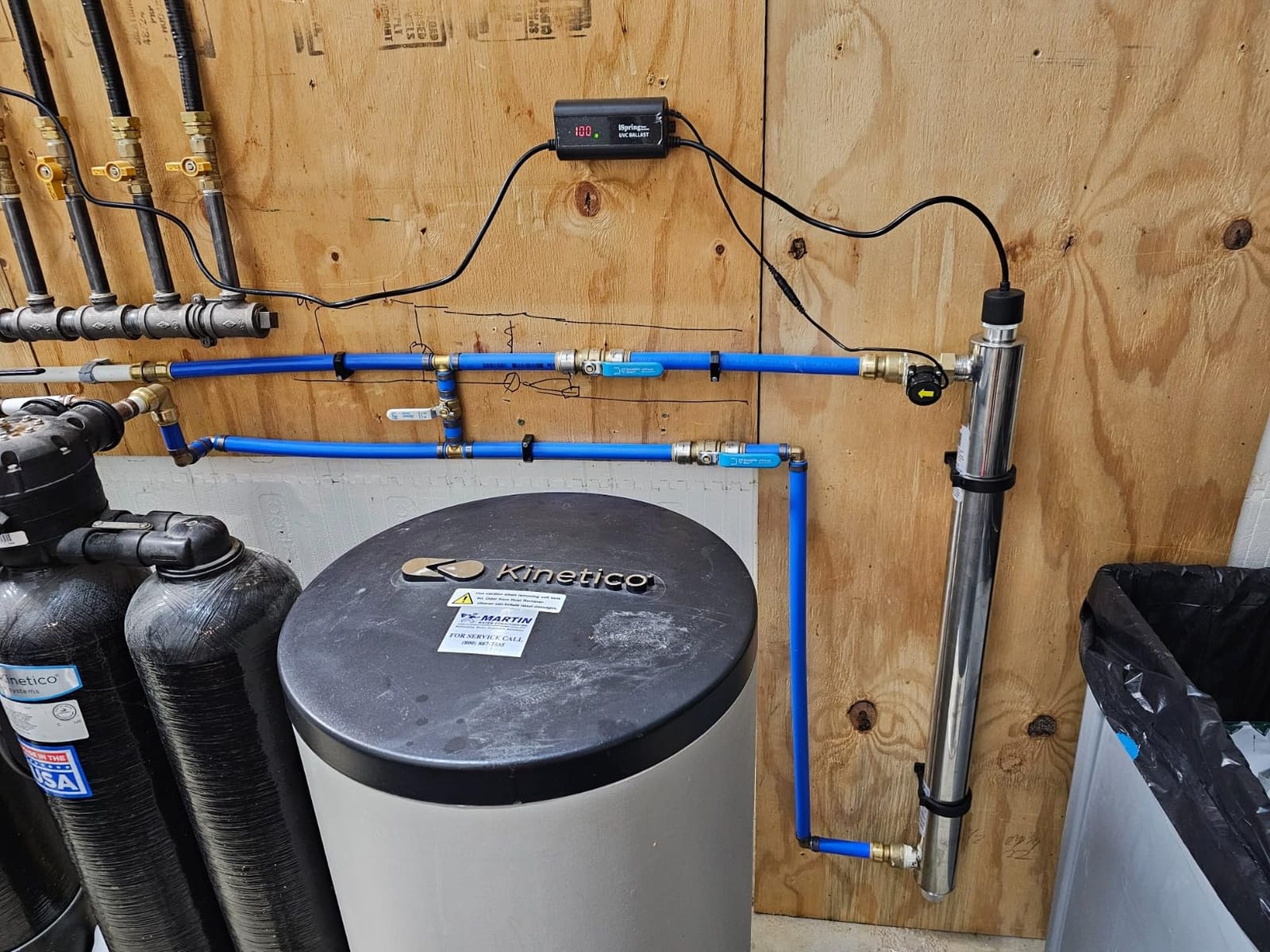
At 40 watts in a 37.2 inch long 304 stainless reactor with 3/4 inch MNPT inlet and outlet, it is a conventional horizontal inline design. That matters. Horizontal inline mounting is the standard for point-of-entry work because the chamber can be strapped into a wall or cabinet next to the pressure tank, plumbed directly into the line after your pressure tank and shutoff valve.
Installation is genuinely a do-it-yourself job. The manufacturer recommends horizontal mounting with metal connectors at the inlet and outlet, and owners report finishing the cut-in in under an hour with basic tools. Gloves are included in the box, which sounds like a small detail until you remember that fingerprints on a quartz sleeve are the number one cause of premature lamp failure.
Ballast Indicators and Daily Operation
The ballast carries green and red indicator lights, so you can confirm at a glance that the unit is energized and the lamp is firing. On a well where you are not certain what is flowing where, that visibility is worth more than it sounds. Owners describe simply glancing at the box after a heavy rain to confirm the system is live.
The ballast is also the most common failure point across this product’s reviews. Several owners replaced it within months, others after a few years of fine service. Treat the ballast as a consumable part of ownership rather than a surprise, and check that replacement parts are available from the manufacturer before you commit.
Chemical-Free Treatment and Water Chemistry
UV disinfection adds nothing but light to the water. Taste, color, odor and pH pass through untouched, and there is no salt to add to the softener and no filter media to replace. For households where the same line feeds livestock troughs or garden irrigation, that is a meaningful operational advantage over chlorine dosing.
One behavior to know about: if a faucet has not been run in a while, the first draw from the line can come out noticeably warm. Several owners mention it. It is normal for a sealed UV chamber that is powered and holding a lamp, and it clears once water moves through.
Long-Term Durability Reports
Multiple owners report several years of continuous service, and the manufacturer has been responsive with replacement parts. A few units did develop pinhole corrosion leaks after roughly five years, which is a fair expectation for any stainless chamber in this price class rather than a defect unique to this listing.
One arrival arrived with a broken replacement bulb in the box, an isolated shipping issue. The heavy double-wrapping on the main unit is clearly designed to prevent exactly that kind of damage, so the extra bulb appears to have been packed separately.
2. iSpring UVF55FS – Best Value Pick With a Smart Flow Sensor
iSpring UVF55FS Whole House UV Water Filter, 1″ MNPT Inlet/Outlet, 12 GPM
55W lamp at 12 GPM
37.5 inch 304 stainless reactor
Flow sensor with three modes
1 inch MNPT ports
Pros
- Flow sensor energizes the lamp only when water moves
- Long 37.5 inch chamber gives strong contact time
- Mounting clips included for a straightforward install
- 30 day money back guarantee plus lifetime tech support
Cons
- Quartz sleeve must be cleaned every 6 to 12 months
- Bulb still needs annual replacement to hold rated output
- Must be installed after sediment and carbon filtration
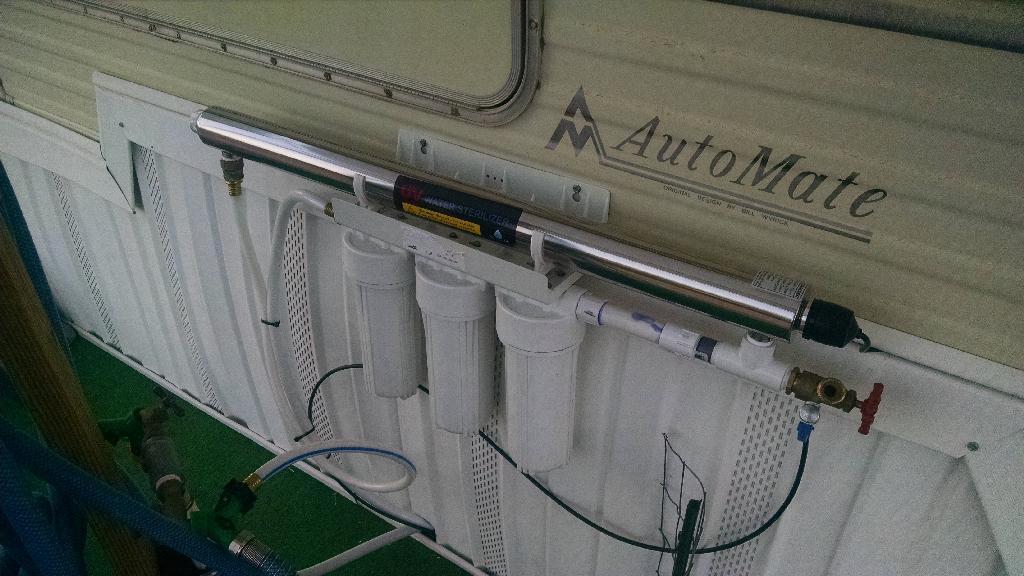
The iSpring UVF55FS is the system we would put in a house with three or more bathrooms on a 5 GPM well. It pairs a 55 watt lamp in a 37.5 inch 304 stainless reactor with an upgraded ballast that carries a smart flow sensor switch, and at 615 reviews averaging 4.4 stars it has more documented service history than anything else in the higher-capacity tier.
That flow sensor is the feature that separates it from the budget crowd. It can run in Auto, Move and Stop modes, and in the default configuration it wakes the lamp only when water actually moves through the chamber, triggering at roughly 0.66 gallons per minute. On a well household, that can add meaningful hours to lamp life because a UV chamber left burning around the clock is burning through rated hours for no treatment benefit.
Chamber Length, Contact Time and Pressure Loss
The 37.5 inch reactor is on the longer side for a 12 GPM unit, and length equals contact time at a given flow. Longer dwell in the chamber means a higher delivered dose for the same lamp power, which is the same reason we prefer a larger chamber over a shorter one at the same rated flow.
Owners report minimal pressure loss across the chamber, which is a real consideration if you are on a shallow well with a modest pump. The 1 inch MNPT inlet and outlet is a step up from the 3/4 inch ports common on cheaper kits, and it lines up better with modern 1 inch well plumbing and pressure tank setups.
Annual Lamp and Sleeve Maintenance
iSpring rates the UVB55FS lamp for up to 9,000 hours inside a durable quartz sleeve, and recommends replacing the lamp annually and cleaning the sleeve every 6 to 12 months. That is standard practice for the category, not a defect, but it is a real line item in your ownership budget.
The cleaning interval matters more on hard water or iron-bearing wells. Scale on the quartz sleeve blocks UV light before it reaches the water, and a scaled sleeve is the most common reason a working lamp produces disappointing results.
Warranty and Support Terms
This listing carries a 30 day money back guarantee, a one year manufacturer warranty with an extended warranty available on registration, and lifetime technical and customer support. The lifetime support line is unusual in this category and worth something to owners who intend to keep a unit running for a decade.
The 17280 gallon per day capacity figure in the listing translates back to the 12 GPM rating, which is a useful sanity check: 12 gallons per minute times 1440 minutes is 17280 gallons in a day of continuous flow. If your household never runs the tap for 24 straight hours, your real demand is a fraction of that, which is exactly why oversized chambers work so well here.
3. Bluonics 55W UV System – Most Versatile With Audible Status Alarms
Whole House UV Water Filter System 12 GPM – 55W Stainless Steel UV Light System – LED Indicator & Audible Alarm – for Well & City Water – Includes 2 Extra Bulbs – Bluonics
55W UV lamp
12 GPM point-of-entry rating
Stainless steel chamber
3/4 inch NPT connections
Pros
- Two extra UV bulbs included in the box
- LED indicator plus audible alarm for status
- Owners report E. coli tests coming back clear after install
- Complete kit includes chamber ballast lamp sleeve and gloves
Cons
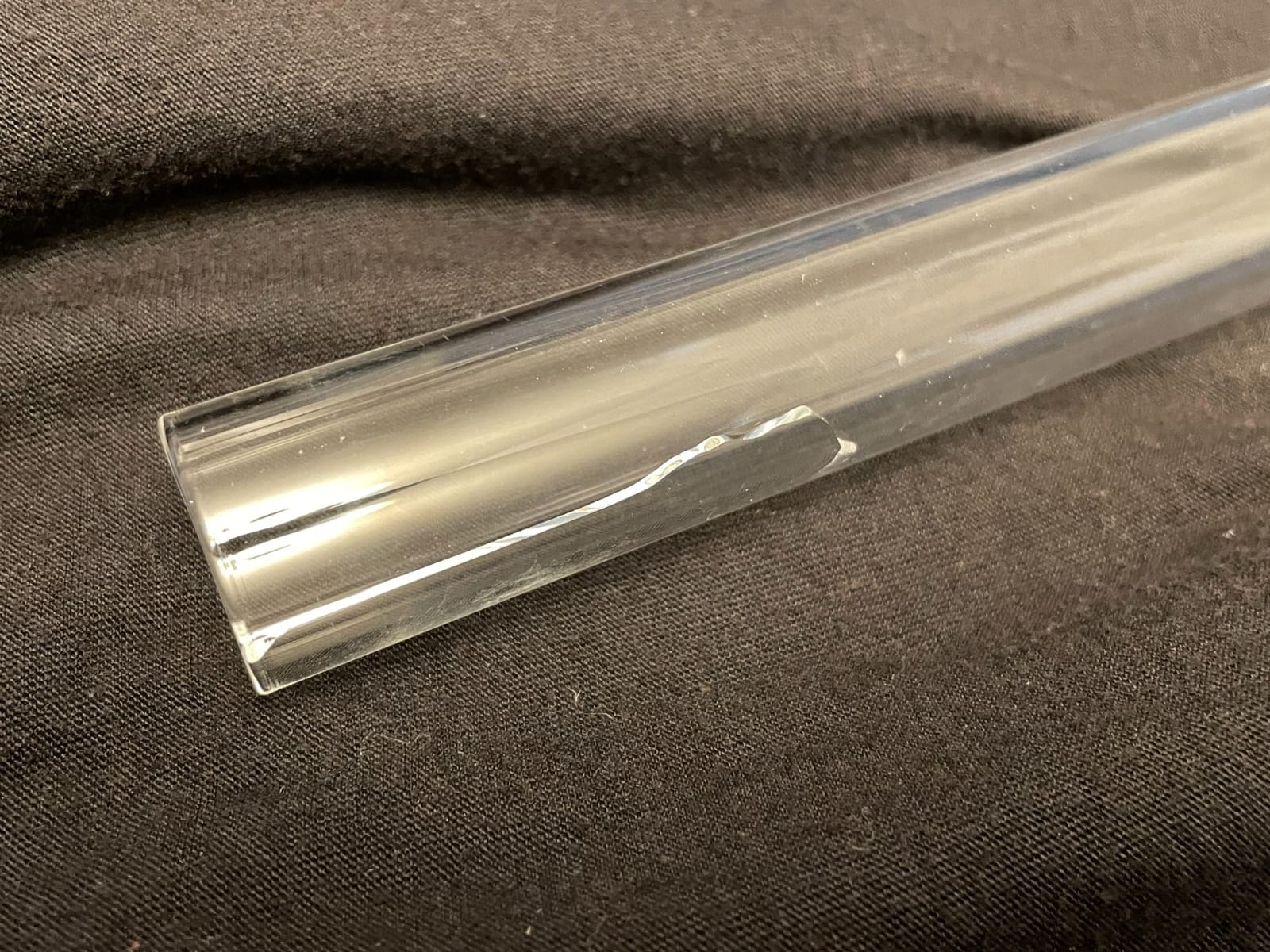
- Sleeve on the 12 GPM model reported too short to seat fully against the end cap O-ring
- Ballast failures recur and some parts were outside warranty
- Instructions omit the warning not to touch the glass bulb
The Bluonics 55W is a straightforward 12 GPM point-of-entry system rated to handle well and city water, and at 197 reviews averaging 4.3 stars it holds up as a solid entry point. It ships as a complete kit: chamber, ballast, lamp, quartz sleeve, O-rings and gloves, plus two additional UV bulbs so the first few lamp changes are already covered.
The two spare lamps are the practical headline. Lamp replacement is the single recurring cost in UV ownership, and having two extras in the box means you are not ordering bulbs the week your first one fades.
Audible Alarm and LED Status Monitoring
The ballast carries both an LED indicator and an audible alarm for system status. On a system that protects an entire house from invisible contamination, an audible fault alert is worth paying a little for, because a lamp that quietly stops firing is the worst possible failure mode.
That monitoring matters more than it seems when you consider how UV failures present. The water does not change taste, smell or color when the lamp dies. Without an indicator or alarm, a dead lamp can go unnoticed for months.
Sleeve Sealing Complaints on the 12 GPM Model
The most repeated issue in this product’s reviews is that the quartz sleeve on the 12 GPM model has been reported too short to seat fully against the end cap O-ring, producing leaks that some owners addressed with silicone sealant. If you install this unit, check the sleeve seats evenly and compress the O-ring uniformly before you close the chamber, and recheck after pressurization.
Ballast failures also recur here, and some buyers were initially told replacement parts were outside the warranty. The one year manufacturer warranty is on the short side compared to the premium tier, so budget for a possible ballast purchase in year two or three.
TDS Limits and Pressure Range
This system is rated to handle water up to 2000 parts per million total dissolved solids, the highest TDS ceiling published among the inline chambers in this guide, and it operates around 125 psi. Well owners with iron, manganese or hardness concerns still need pre-filtration, because a fouled sleeve kills UV performance long before TDS becomes the limiting factor.
One genuine gap in the documentation: the instructions do not warn against touching the glass bulb. Oil from bare fingers on a UV lamp glass surface can reduce output and shorten lamp life, so handle it with the included gloves or a clean cloth.
4. Geekpure GP-UV55W – Best Spare Parts Package in a 12 GPM Body
Geekpure 12 GPM Whole House UV Water Filter-1“NPT-55 Watt
12 GPM flow rating
1 inch NPT ports
304 stainless chamber
Nine thousand hour lamp life
Pros
- Includes three UV lamps and three quartz sleeves
- Owners report coliform positive samples turning clear
- Simpler lamp and sleeve changeover than costlier systems
- ISO9001:2015 certified manufacturer and WQA member
Cons
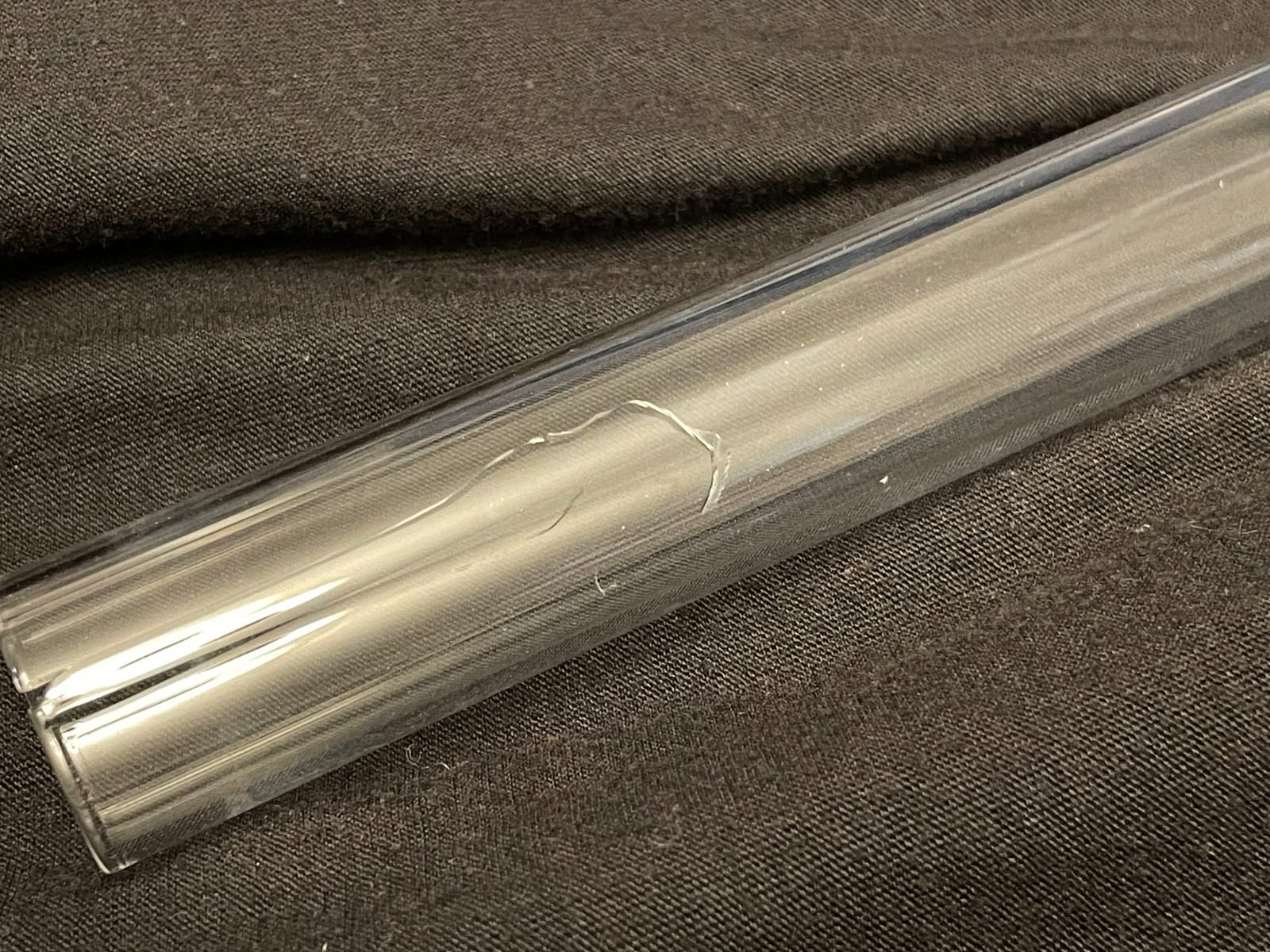
- Quartz sleeves and lamps are fragile and some arrived cracked
- Mounting clips are too weak to hold the chamber on a wall
- Reactor runs hot when water sits unused
The Geekpure GP-UV55W is a 12 GPM whole house UV filter with 1 inch NPT inlet and outlet, a 304 stainless chamber, and an electronic ballast that drives both an audible and a visual alarm. At 168 reviews and 4.4 stars it sits in the same tier as the HQUA and iSpring units, and the difference is in what arrives in the box.
Three lamps. Three quartz sleeves. Three fixed clamps. No other inline chamber in this guide includes that many spare glass components, and since the quartz sleeve is the piece most likely to crack during a changeover, that quantity has real value.
Documented Coliform Improvement on Real Wells
Multiple owners report wells that previously tested positive for coliform returning clean results after installation. That is the outcome that matters for anyone dealing with county-mandated testing, and it is the reason a UV chamber earns its place in the treatment train even when other filtration is already handling taste and odor.
Owners also mention a simpler lamp and sleeve changeover than the higher priced system this replaced for them. In a category where maintenance is the main ongoing task, serviceability is a legitimate reason to pick one chamber over another.
Operating Pressure, Temperature and Chlorine Tolerance
The published rated operating conditions are 50 to 60 psi, 40 to 110 degrees Fahrenheit, with free chlorine tolerance below 0.1 ppm. That last number is worth pausing on. If you shock chlorinate your well for bacteria, you need a carbon filter ahead of the UV chamber, because chlorine attenuates UV light and will quietly degrade treatment performance.
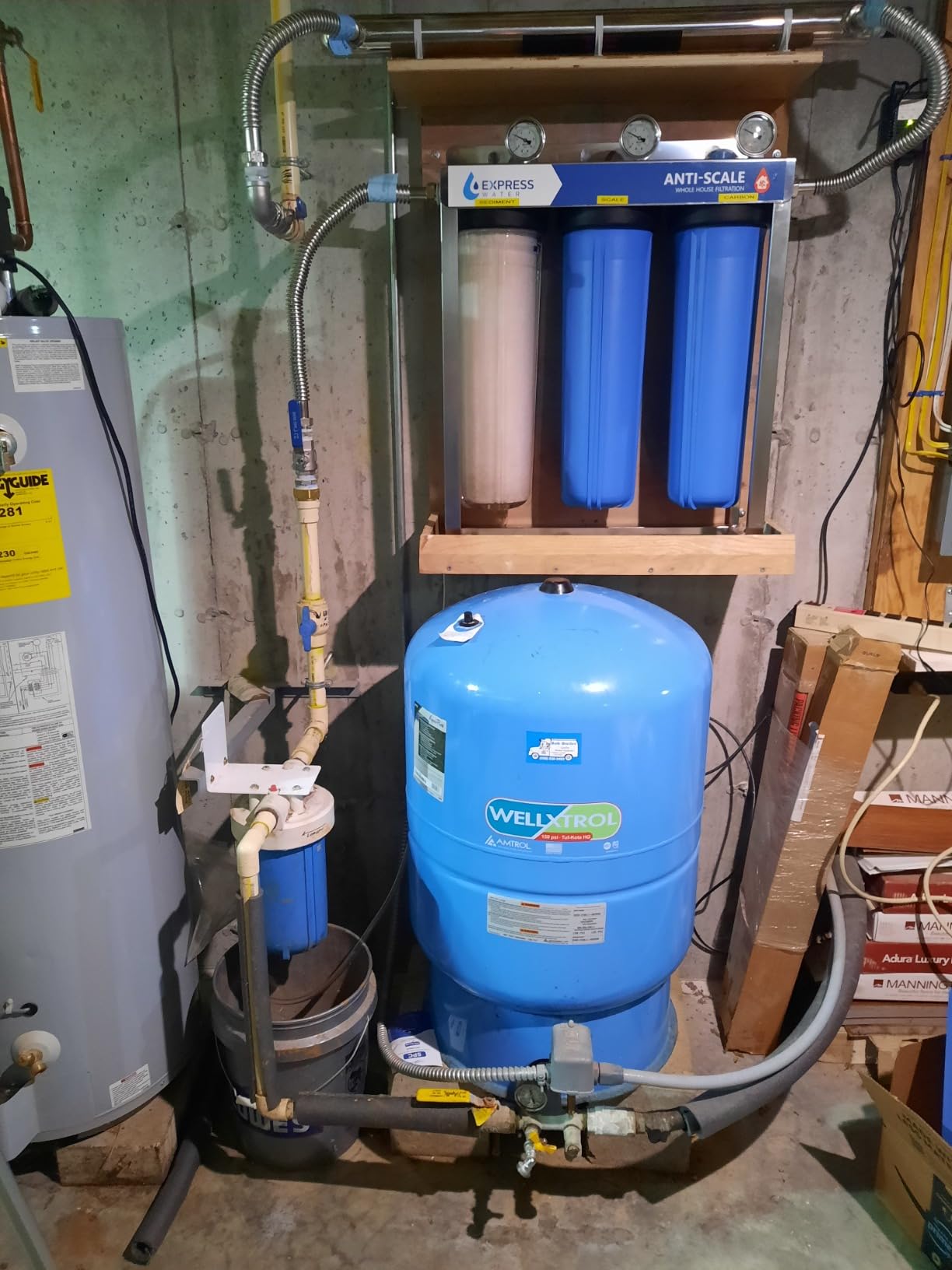
That ordering rule, sediment and carbon before UV, is not a suggestion. It is stated in the listing itself, which explicitly warns the unit cannot filter well water directly and must be the last stage after sediment filtration.
Packaging Fragility and Mounting Hardware
The two consistent complaints are packaging and hardware. Quartz sleeves and lamps are fragile and several buyers received them cracked in transit, and the included mounting clips are described as too weak to hold the chamber on a wall. If you install this one, plan on a proper wall bracket or strap rather than relying on the supplied clips.
Like several inline chambers, the reactor runs hot when water sits unused, so give it enough clearance and avoid enclosing it in a tight cabinet without ventilation.
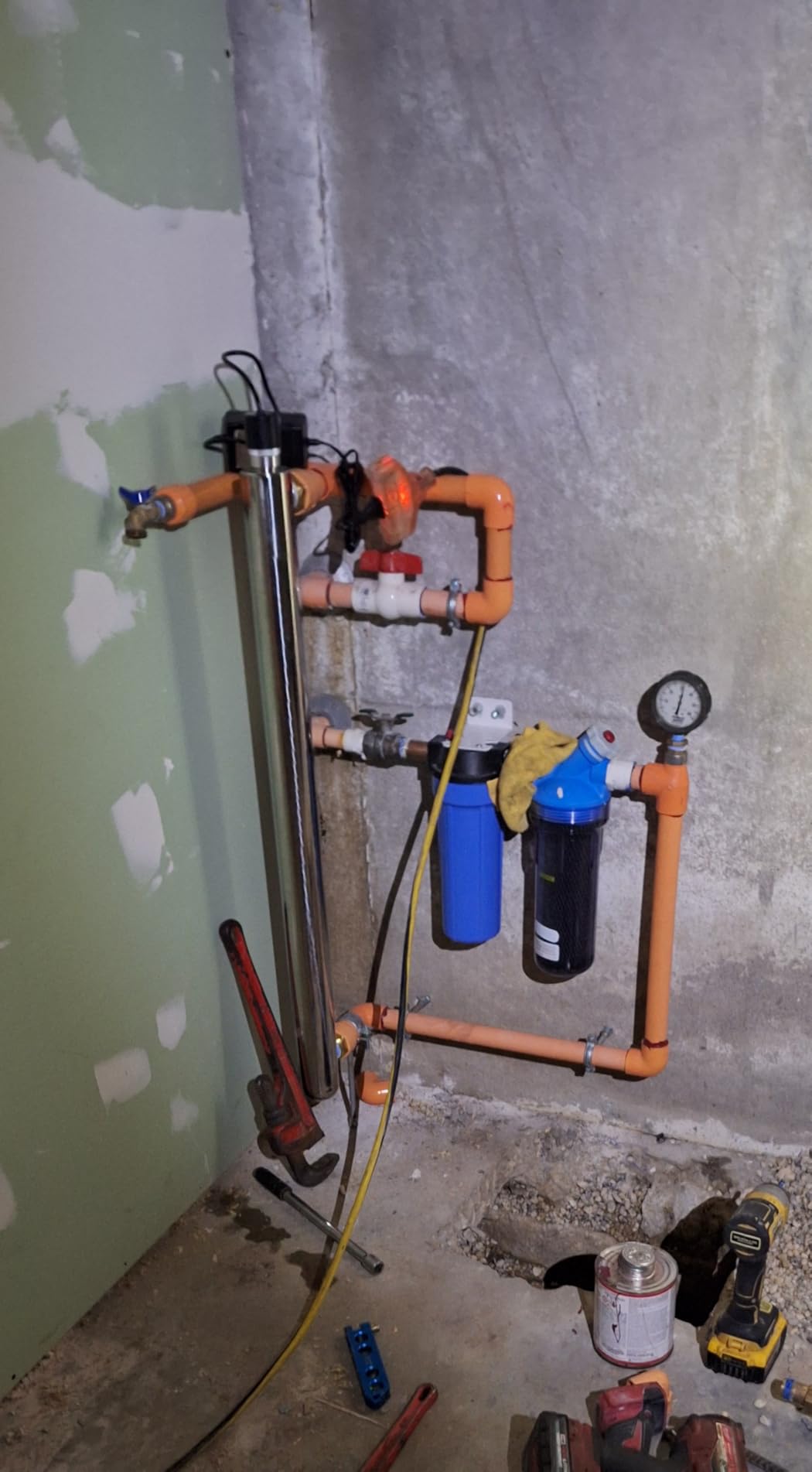
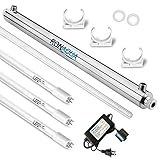
5. Ronaqua 55W UV – Best for Tight Plumbing With 3/4 Inch Ports
Ronaqua 55W Whole House UV Light Water Purifier, 12 GPM, 3/4” MNPT Ports – Includes 2 Free Replacement Bulbs, Long-Lasting Performance, Ideal for Well & City Water
55W UV lamp
12 GPM rated
3/4 inch MNPT ports
36 inch chamber
Pros
- Three lamps included with many owners past one year on the original bulb
- 3/4 inch ports fit standard plumbing without oversized fittings
- Owners report county coliform tests coming back absent
- Simple assembly using O-rings on the quartz tube
Cons
- No seller warranty beyond the 30 day return window
- Ballast failures within about nine months reported by several owners
- Lowest average rating here at 4.0 with a 13 percent one star share
The Ronaqua 55W is a 12 GPM inline chamber with 3/4 inch MNPT ports, a 55 watt lamp and a 36 inch stainless body, supplied with three UV lamps, a quartz sleeve, a ballast and three mounting clips. It is the most compact option in this guide, and for older plumbing that has not been upsized to 1 inch, that physical fit is the deciding factor.
Owners who had county required coliform tests pass after installation report the real world outcome you are buying this for. Several are still running the original lamp more than a year in.
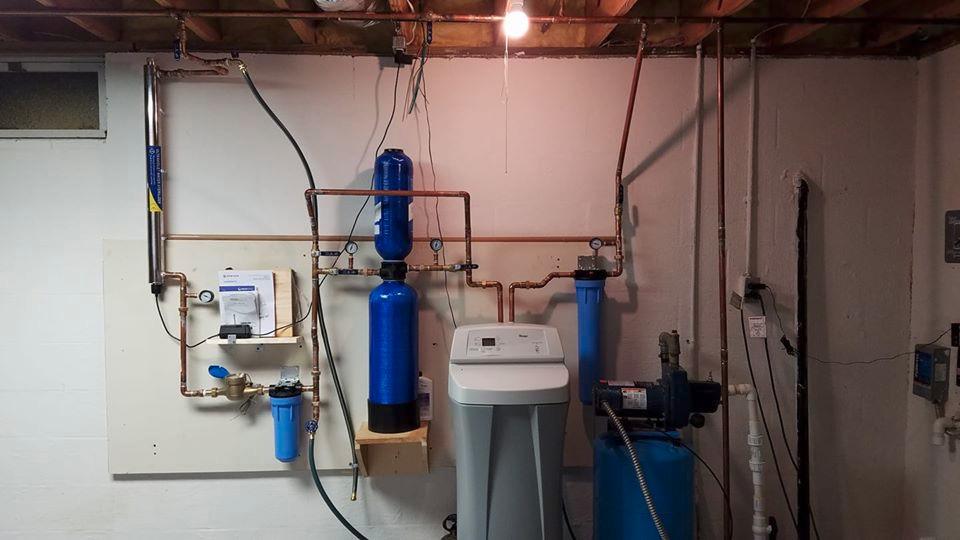
Port Sizing as the Real Feature
Every other 12 GPM chamber here uses 1 inch ports except the Bluonics 55W, and the HQUA uses 3/4 inch. On an older installation with 3/4 inch copper or galvanized supply, forcing 1 inch fittings means buying reducers and adapters, and in a tight utility space that can turn a one hour job into a longer one. The Ronaqua avoids that entirely.
The tradeoff is flow headroom on paper. If you later decide to add irrigation or a second dwelling, a 1 inch ported chamber is easier to grow into.
Warranty Reality Check
This is the most important thing to know about the Ronaqua. The seller offers no warranty beyond the standard 30 day return window, and charges return shipping on defective units. At 4.0 stars with a 13 percent one star share, the complaints are concentrated in ballast and transformer failures inside roughly nine months.
We still include it because the port sizing solves a genuine physical problem and the coliform results are documented. But treat the first year as a proving period, test early, and keep your receipt.
TDS Ceiling and Operating Context
The listed maximum TDS is 300 parts per million, the lowest ceiling among the inline chambers here, and the listed filter life cycle is three years. On a well with modest mineral content that is fine. On a high TDS well you will want a different chamber.
Weight is seven pounds and the chamber measures 36 by 3 by 5 inches, so it mounts easily in a utility room, a crawlspace or beside a pressure tank without a dedicated cabinet.
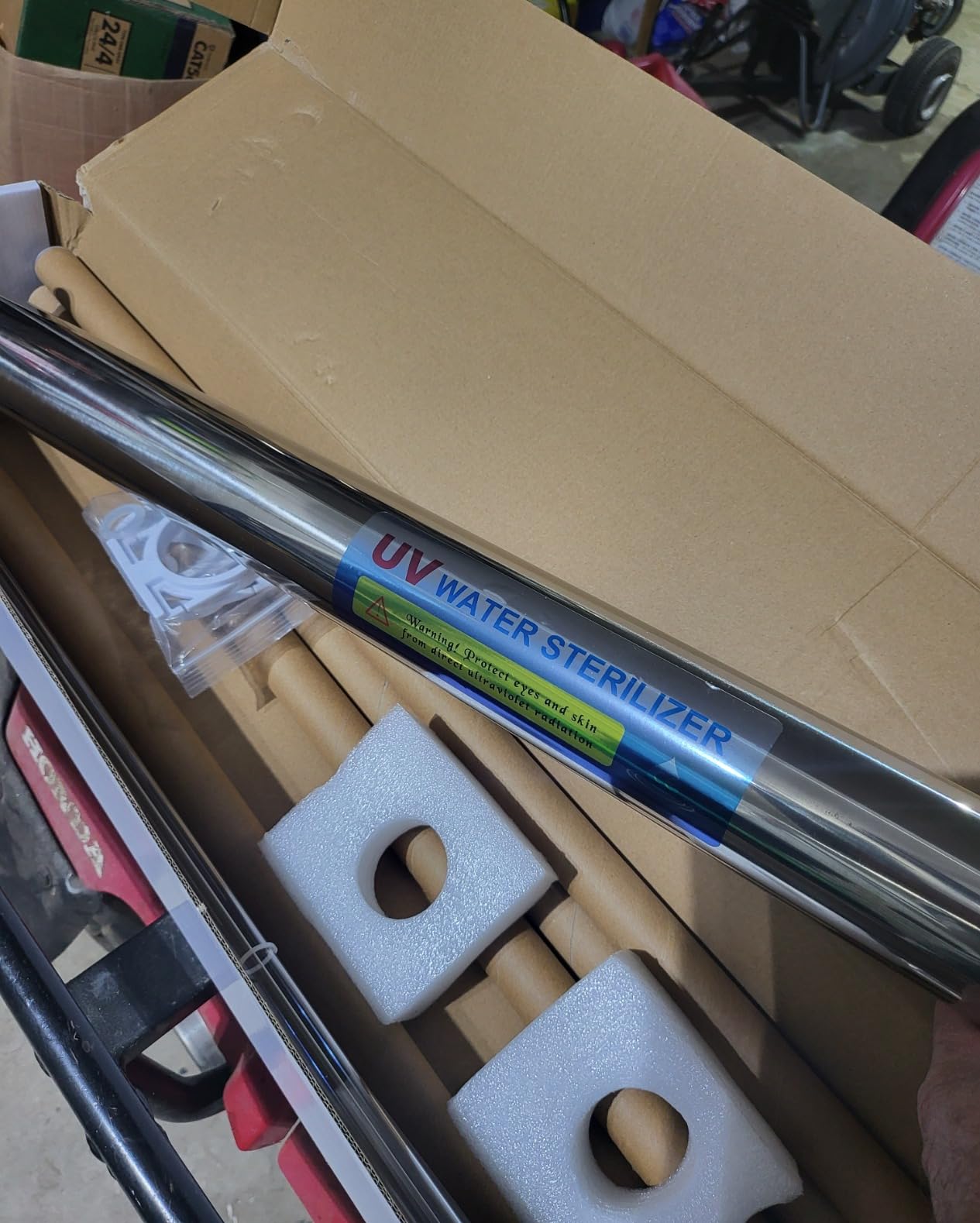
6. US Water Filters 4C-151 – Best Warranty and Highest Capacity Per Dollar
US Water Filters 4C151 Ultraviolet Light Water System – 15 GPM, 316L Stainless Steel, 10,000 hr lamp Life, 1″ MNPT, 120V
15 GPM at 30 mJ/cm
316L stainless chamber
10000 hour lamp
10 year chamber warranty
Pros
- Strongest warranty published here at 10 years on the chamber
- Fully potted splash proof ballast built for wet utility rooms
- 10000 hour lamp rating is the longest specified in this set
- Four digit LED controller with audible and visual lamp out indication
Cons
- Installation instructions are QR code only and thin on key steps
- Only 17 reviews so long term reliability is not well documented
- One owner reported a failure after about three months
The 4C-151 is the one unit here that publishes a real dose figure alongside its flow rating: 15 GPM at 30 millijoules per square centimeter, on 1 inch NPT connections and a standard 120 volt outlet. For buyers who have been comparing marketing claims rather than engineering numbers, this is the most transparent listing in the group.
It also carries the strongest warranty we found, at ten years on the UV chamber, three years on the controller and one year on lamps and quartz sleeves. That ten year chamber term is a meaningful upgrade over the one year coverage attached to most 12 GPM kits.
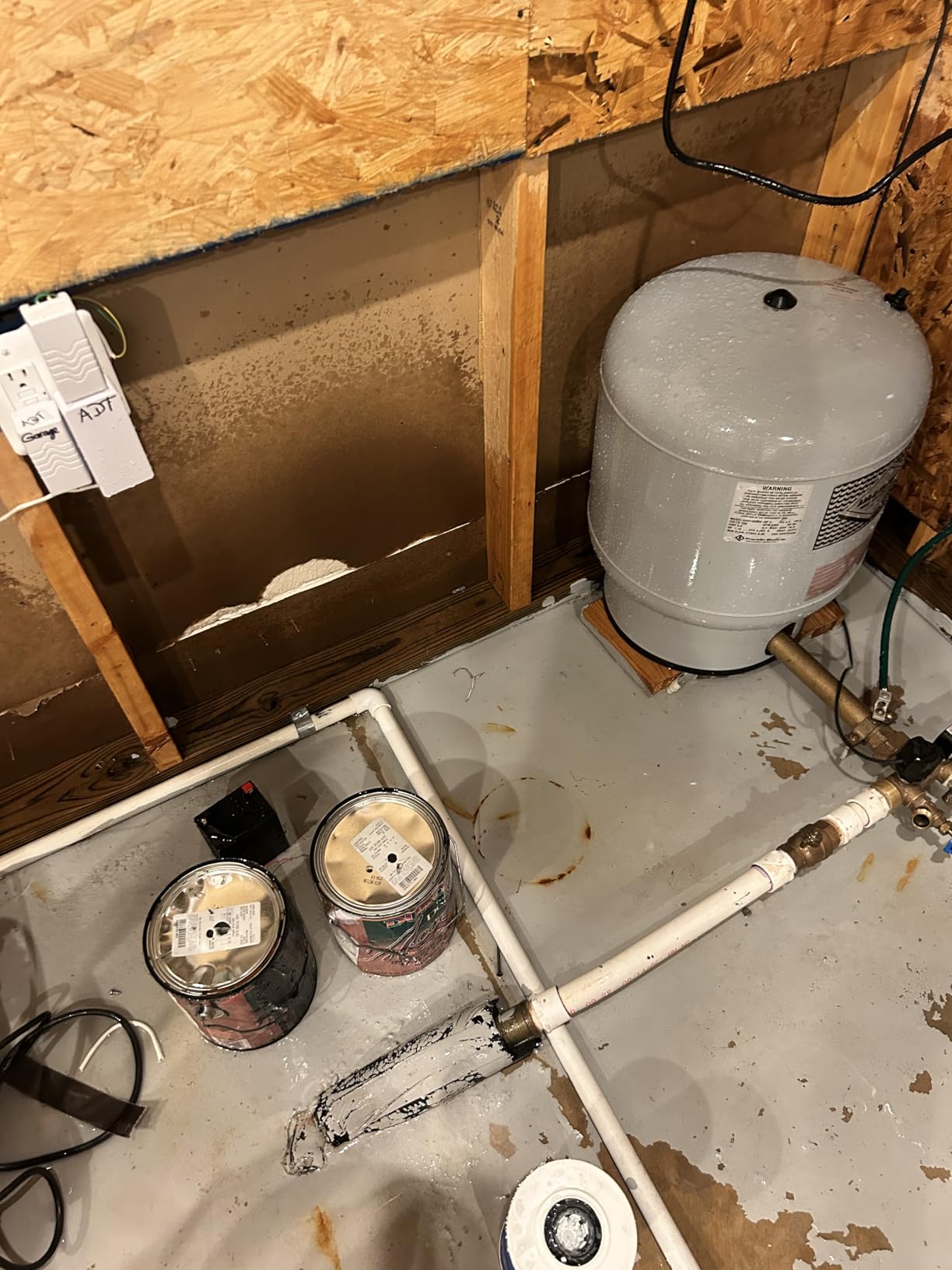
15 GPM Capacity and the 10,000 Hour Lamp
Fifteen gallons per minute handles a 5 GPM well with generous headroom and leaves room for irrigation or a household that runs multiple fixtures at once. The lamp is rated for 10,000 hours of continuous treatment, roughly a year at full burn, inside a rugged axial flow stainless steel chamber.
Because the rating is published at 30 mJ/cm2, you know the dose you are buying. A chamber rated only in GPM gives you no such reference, and that missing number is why some cheap units disappoint in real well conditions.
Controller, Ballast and Wet Environment Durability
The controller is a four digit LED display with both audible and visual lamp out indicators, so you get two ways to know the lamp is firing. The ballast is fully potted and splash proof, which is a deliberate design choice for the reality of a well pump room where a little water on the floor is normal.
That potted ballast design directly addresses the failure mode that showed up repeatedly in cheaper units. Electronics fail from moisture, and a sealed ballast is the difference between a ten year warranty being plausible and being decorative.
Thin Review Volume and Installation Support
Be honest about the data here: 17 reviews is a small sample, and long term reliability is not well documented. Reports include a unit that stopped working after about three months and another owner describing a flood traced to the installation.
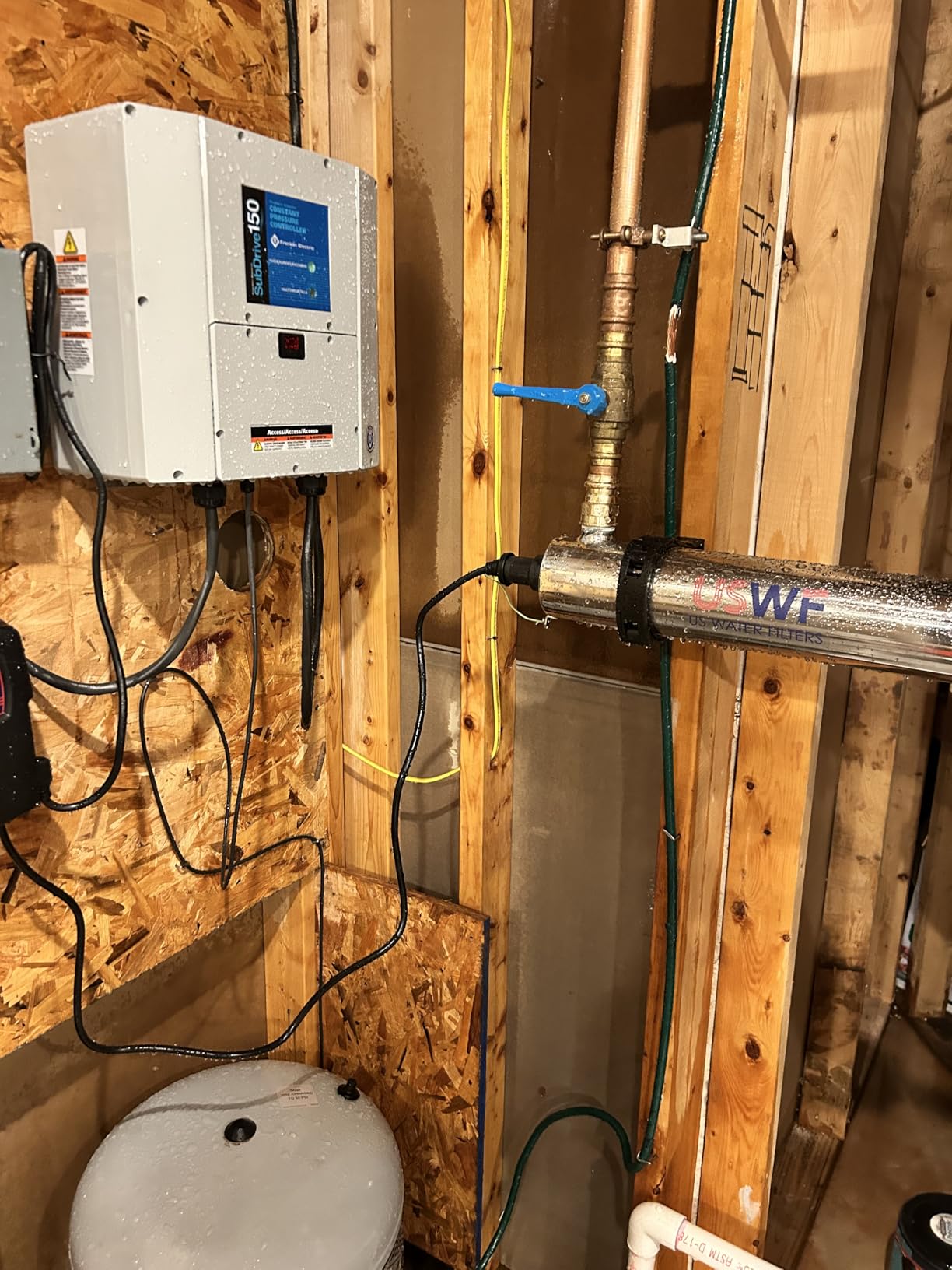
Installation instructions are reachable only by QR code and reviewers describe them as thin on the tube, spring and lamp cap steps. Given the ten year warranty, paying a plumber for the cut-in is money well spent here rather than a sign of inability.
7. VIQUA VH410 – Premium Pick for Large Homes and Maximum Flow
VIQUA VH410 Whole-Home UV Water System, 18 GPM, 3/4-1 Inch NPT, 100-240V
18 GPM whole-home flow
Compact 304 chamber
365 day lamp timer
100-240V operation
Pros
- Highest flow capacity here at 18 GPM from a compact chamber
- 365 day countdown timer makes annual lamp changes easy
- Threaded connectors accept two different hose sizes
- Owners report long service including a full year of use
Cons
- Highest price point in this guide
- Inlet and outlet on opposite sides is awkward in tight installs
- Standing water comes out very hot after an idle period
The VIQUA VH410 is the premium pick, and the reason is flow: 18 GPM in a compact chamber that measures 4.5 by 11.8 by 14.3 inches. If you have a high producing well, a large household, irrigation on the same line or a planned addition, this is the unit that gives you room to grow without a second pass through the plumbing.
It publishes a specific organism list, inactivating Cryptosporidium, Giardia, E. coli and fecal coliform. Specific claims are easier to evaluate than a vague percentage, and they map directly onto the contaminants well owners actually test for.
Compact Chamber, Real Throughput
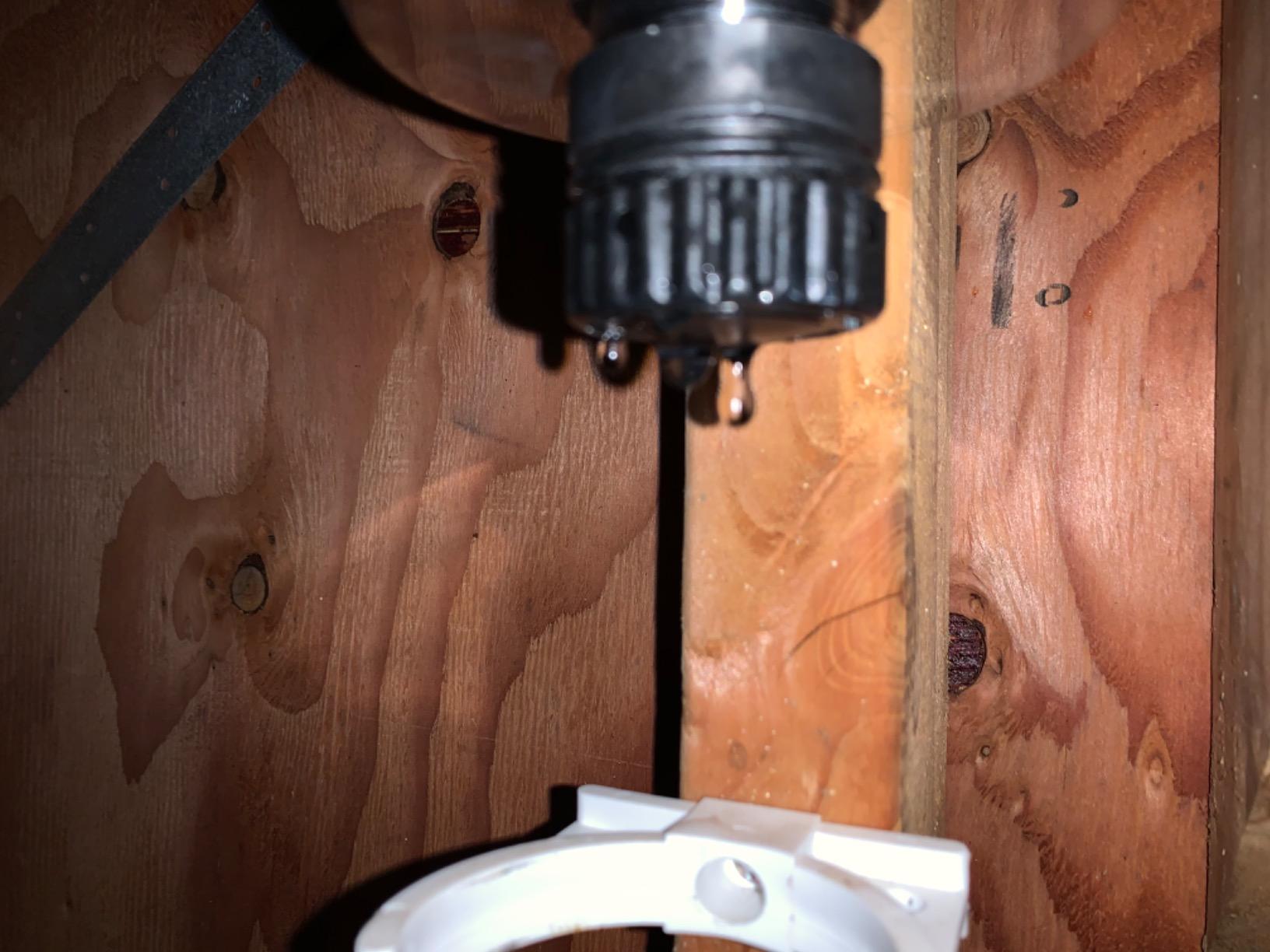
Eighteen gallons per minute is the highest flow capacity in this guide, delivered through a chamber small enough to fit in a tight filtration cabinet. The high output lamp technology is what allows that: more UV energy from a shorter envelope, so you get contact time and flow without a reactor that eats floor space.
Owners report a unit still going strong after a full year of service, and at 81 reviews the sample is small but the 4.4 average with a 72 percent five star share is solid for this tier.
365 Day Lamp Countdown Timer
The ballast includes a 365 day countdown lamp replacement timer. This sounds like a small convenience and is actually one of the better design decisions in the category, because the most common reason UV systems underperform is that the lamp quietly aged past its rated output while nobody was counting.
Replacement parts are individually identified: controller BA-ICE-CL, lamp S410RL-HO, lamp and sleeve QL-410, and sleeve QSO-410. Knowing those part numbers ahead of the day you need them is the difference between a five minute fix and an emergency.
Port Layout and Installation Practicalities
Inlet and outlet are on opposite sides of the chamber, which is standard inline geometry but can be awkward in a cramped installation unless you have street elbows available. Plan the cabinet space and the fittings before you buy, not after.
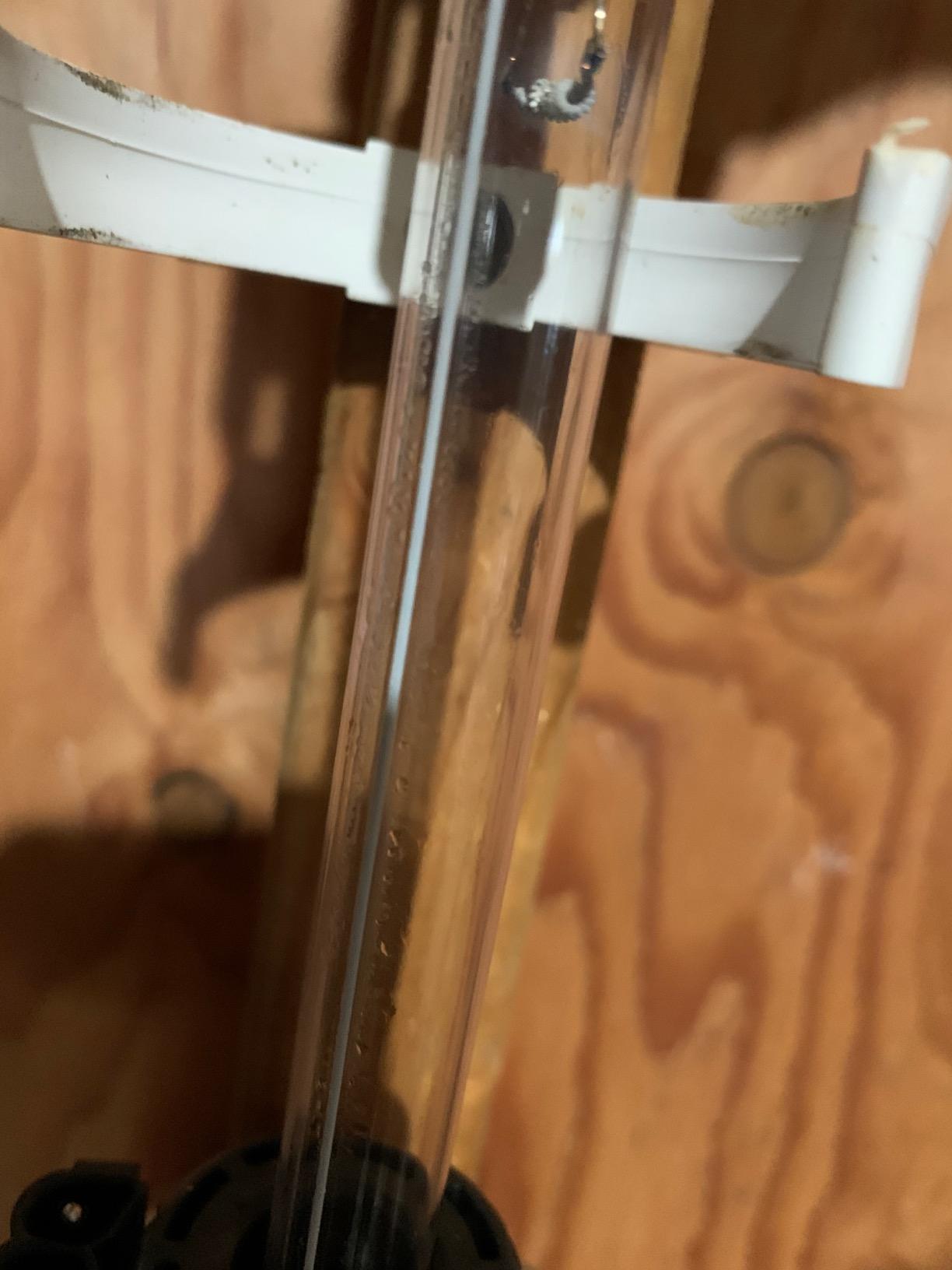
One owner reported the unit beeping and refusing to power on after roughly twelve hours of use, an isolated report against otherwise positive feedback. Standing water in the chamber also comes out very hot on the first draw after an idle period, the same behavior shared by most inline UV units in this guide.
8. Aquaboon 55W UV – Best Flow Sensor in a Stainless Reactor
UV Water Purification System 55W, 12 GPM – UV Water Filter with Smart Flow Sensor Switch – Whole House UV Water Purifier Ensuring Water Purity – UV Light for Well & City Water + 1 Extra Lamp
55W UV lamp
Flow sensor switch
SAE 304 stainless chamber
12 GPM capacity
Pros
- Well water tests came back clean the day after installation for one buyer
- Stainless chamber reflections make it more efficient than black plastic
- Flow sensor limits lamp on time when water is not moving
- One owner reports a failed ballast replaced plus a full refund
Cons
- The flow sensor and control valve is the weak point and has leaked for several owners
- Plumbing washer can be damaged if fittings are over tightened
- One owner rated technical support as unusable
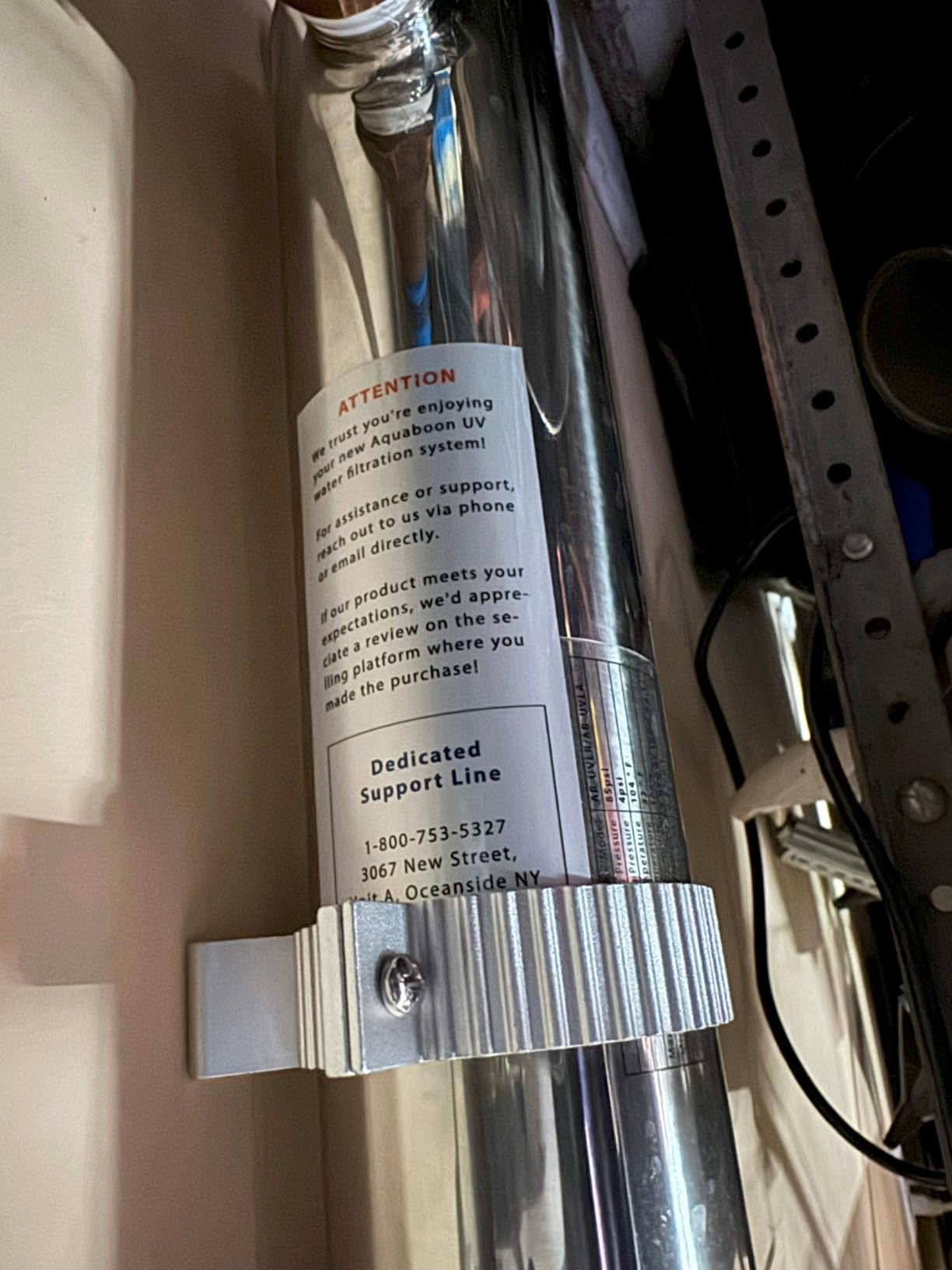
The Aquaboon pairs a 55 watt lamp with a smart flow sensor switch in an SAE 304 stainless chamber rated at 12 GPM. The 37 inch chamber measures only 2.5 inches across, making it one of the slimmest reactors here, and stainless steel is the better choice than black plastic because its internal surfaces reflect UV light back through the water instead of absorbing it.
It claims a 99.99 percent reduction of microorganisms at the DNA level with no chemicals, and one owner reported well water tests came back completely clean the day after installation.
Flow Sensor Behavior and Lamp Life
The flow sensor switch limits lamp on time when water is not moving, which extends bulb life and reduces electricity use. That is the correct behavior for a well household where the pump cycles on and off through the day rather than running continuously.
Ironically the sensor is also this unit’s most reported failure point. Multiple owners have had the flow sensor or flow control valve break off or leak, and the manufacturer still supplies it as a light duty part with no repair O-ring kit offered. Budget for the possibility of replacing the sensor, and consider a plumber who can work around it if it fails.
Connection Adapters and Installation
Two stainless steel NPT pipe adapters are included, covering both 3/4 inch and 1 inch plumbing, which removes the most common reason a well owner returns a chamber. Fittings do need care, though: one owner had the plumbing washer damaged by over tightening.
Ballast indicator lights and audible alerts make status easy to check, which is a genuine plus on a system whose failure is otherwise invisible.
Service and Support Variability
Customer service reactions range from excellent to unresponsive, and that spread explains the wide one star share at a 4.2 average. One owner reports the company replaced a failed ballast and refunded the full purchase. Another rated the technical support number as unusable.
Given that spread, the honest recommendation is to photograph your install, keep the manual, and confirm replacement part availability before buying. One bulb also arrived broken, another instance of glass components arriving damaged.
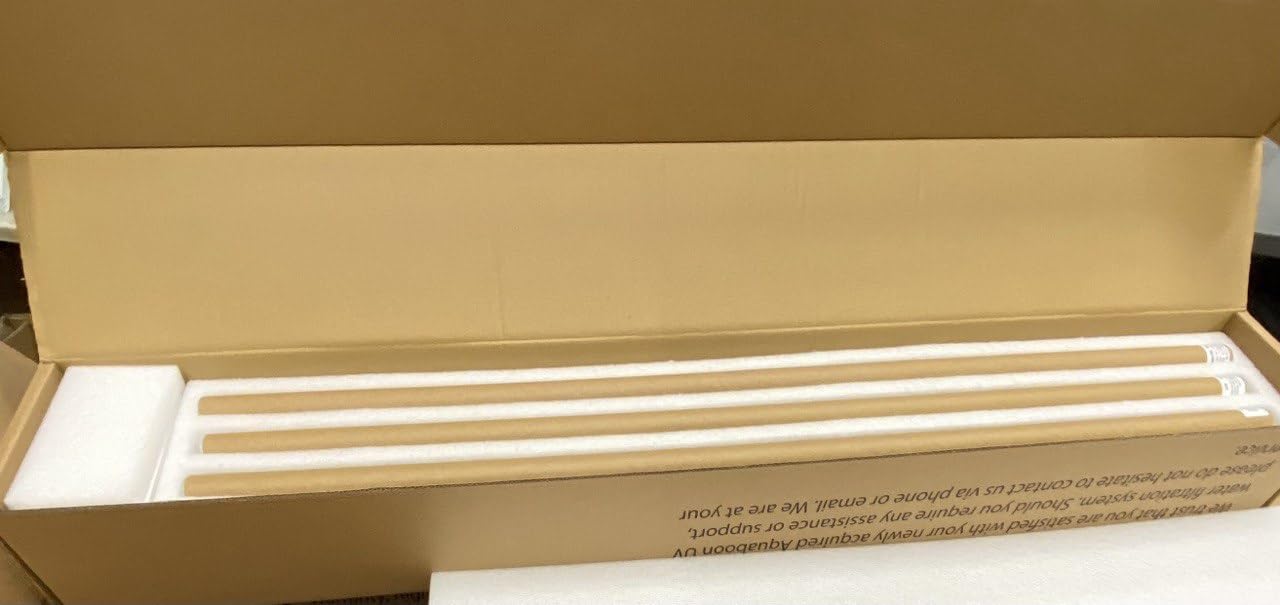
9. Bluonics 110W 24 GPM – Best Complete Treatment Train in One Package
Bluonics Whole House Water Filter System for Well Water, 3 Stage Sediment Carbon Filters with 110W UV Light, 24 GPM, 20 x 4.5 Housings, 1 in NPT
24 GPM system
20 by 4.5 inch housings
110W dual bulb UV chamber
1 inch NPT ports
Pros
- Dual bulb UV design gives real redundancy if one lamp dies
- Sediment and carbon pre-filtration upstream means the chamber sees clear water
- Owners with E. coli and hydrogen sulfide problems report clean tests
- Metal mounting bracket on the UV section instead of a plastic clip
Cons
- Housing threads are coarse and leak without heavy tape and plumbers putty
- UV bulbs can heat water well over 120 degrees with no warning
- No mounting hardware included despite the booklet list
This is the only system here that solves the pre-filtration problem instead of leaving it to you. The Bluonics 110W pairs a 110 watt UV chamber with two 20 by 4.5 inch housings containing sediment stages for sand, silt, rust and debris plus a carbon stage for chlorine taste and odor, all feeding a 24 GPM assembly on 1 inch NPT ports.
That ordering is exactly right. The UV chamber receives pre-filtered water, which is the only condition under which a UV lamp performs to its rating. For a first time well owner who does not yet know what their water is doing, a bundled train removes the most common installation mistake.
Dual Bulb Redundancy and Staggered Replacement
The dual bulb UV design gives genuine redundancy. If one lamp dies, the other still protects the water. Owners also value staggered lamp replacement, which keeps one bulb newer and stronger at any given time instead of letting both fade together.
At 66 reviews this has the most detailed owner feedback in the group, and the sentiment is unusually specific: buyers with E. coli and hydrogen sulfide problems report tests coming back clean and water tasting good.
Housing Threads and the Water Heating Side Effect
Two practical warnings. The filter housing threads are coarse and leak unless heavily wrapped in tape and plumbers putty, so budget time for that. And the UV bulbs can heat water well over 120 degrees, a behavior owners flag because the materials do not disclose it.
Also note that no mounting hardware is included in the box despite the booklet listing it, and bulb replacement requires planning clearance during installation, which is easy to get wrong in a tight cabinet. PVC fittings must not be used on the UV section, because the light degrades them.
What This System Does Not Do
This is not a reverse osmosis system and it is not designed to reduce total dissolved solids. It addresses sediment, chlorine taste and odor, and microorganisms, at a 500 parts per million TDS ceiling and a 100 degree Fahrenheit upper temperature rating.
For most whole house well applications that is the right scope, but if you are chasing drinking water quality at the tap, a dedicated reverse osmosis unit is still the tool for minerals and metals.
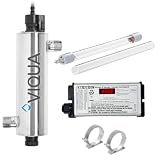
10. Viqua VH200 – Best for Small Homes, Cottages and Cabins
VIQUA VH200 Home Stainless Steel Ultraviolet Water System
9 GPM at 30 mJ/cm
35W lamp at 120VAC
15 inch compact chamber
3/4 to 1 inch MNPT
Pros
- Highest average rating in this guide at 4.5 stars
- Owners retested negative for coliform and E. coli after installation
- Compact 15 inch chamber fits where larger reactors will not
- Complete system including lamp sleeve chamber and controller
Cons
- Smallest capacity here at 9 GPM so it suits smaller homes and cottages
- One unit arrived with a shattered quartz sleeve and no lamp
- Sleeve handling during replacement requires care and a spare on hand
The Viqua VH200 is the community consensus answer, and it appears at the top of the ranking discussion in the plumbing forum this category gets searched through. The advice there is simple and correct: it is a 9 GPM unit that works well on a 5 GPM system. If your well pumps 5 GPM, this is the chamber, and the 1.8x headroom is the safety margin we described earlier.
At 4.5 stars it carries the highest average rating in this guide, and at 50 reviews it has the smallest pool. Both facts matter: the owners who bought it like it, and few enough people have bought it for the long term record to be deep.
Multiple Flow Rates at Different Doses
This is the listing most transparent about the flow rate and dose relationship. It publishes three options: 16 GPM at 16 mJ/cm2, 9 GPM at 30 mJ/cm2, and 7 GPM at 40 mJ/cm2. Those are the numbers most competing listings omit entirely.
Read them as a menu rather than marketing. If your peak household demand is low, 16 GPM may suffice. If you want a stronger dose, 7 GPM is the conservative setting. Most well households end up at 9 GPM, the middle figure, which is why it is the number quoted in advice forums.
Compact Footprint for Tight Installations
The chamber is 15 inches by 3.5 inches and draws 35 watts at 120 volts, so it mounts in a small cabinet, a crawlspace or a cabin mechanical area without a dedicated equipment room. The complete system includes the UV lamp, quartz sleeve, chamber and ballast controller.
Owners whose water previously failed for coliform and E. coli retested negative after installation, and the compact design is frequently cited as the reason the unit was the one that fit.
Where This Unit Stops Being Enough
Nine GPM is the smallest rated capacity in this guide. It is a good fit for a small home, a cottage, a cabin or an off grid property, and a poor fit for a family of five with three bathrooms running multiple fixtures.
One unit arrived with a shattered quartz sleeve and no lamp, apparently from a prior return, so inspect the contents before you start the install. Quartz sleeve handling during replacement requires care, and keeping a spare on hand is worth the cost given how easily glass cracks in a cramped cabinet.
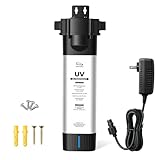
11. iSpring UVF20 LED – Best for Never Replacing a Lamp
iSpring UVF20 Whole House LED UV Water Filter, 3/4″ MNPT Inlet Outlet
LED module rated 8000 hours
Built in automatic flow sensor
12 GPM capacity
3.4 pound body
Pros
- The only unit here that eliminates lamp replacement entirely
- Mercury free design produces no ozone or odor
- Flow sensor switches the UV source on only when water moves
- Compact at 3.4 pounds and installed in about an hour
Cons
- The included mounting bracket is described as flimsy
- One unit's status light never turned on after installation
- A few owners reported small leaks at the threaded connections
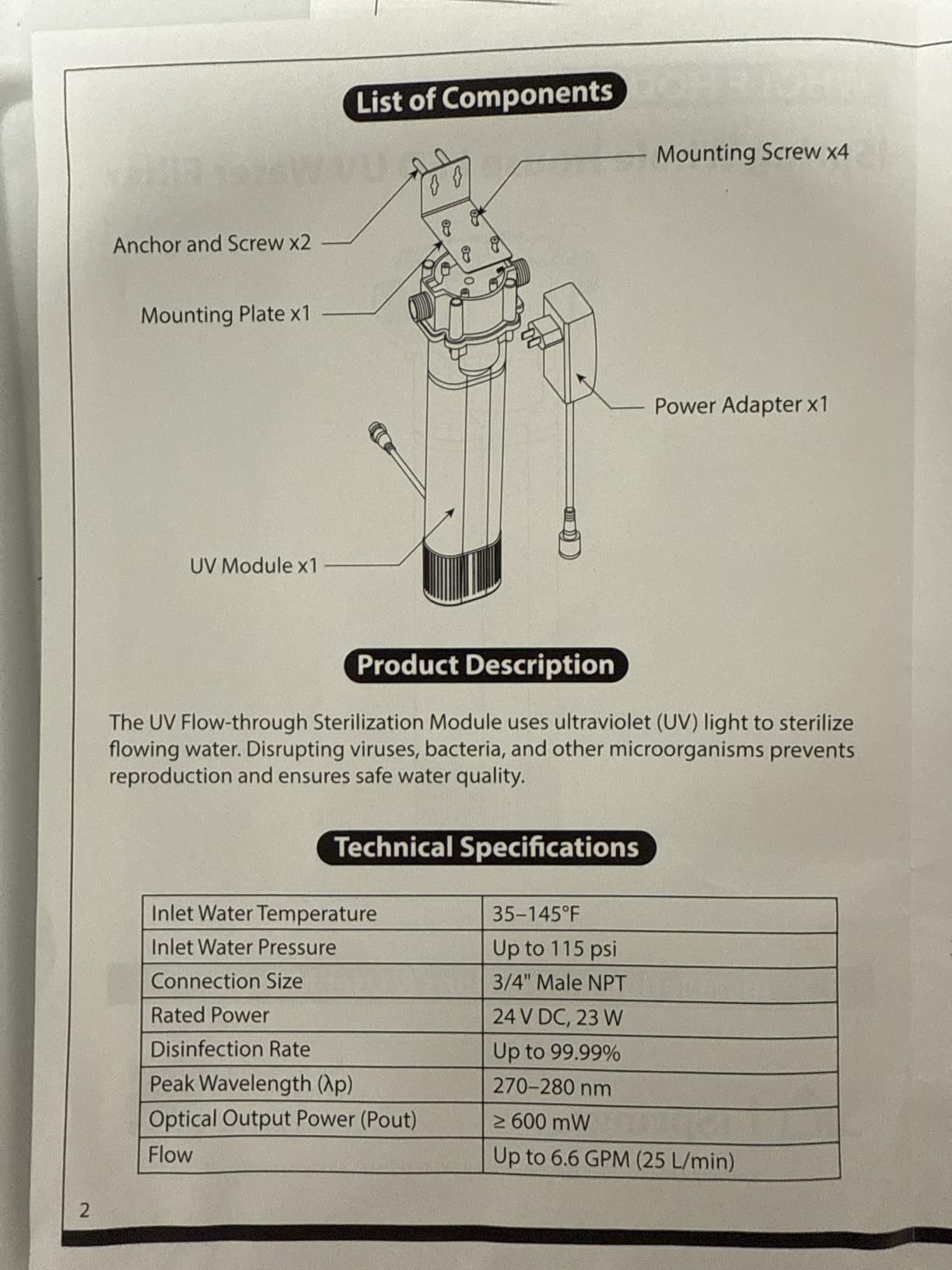
The iSpring UVF20 is the outlier in this roundup, and if you are tired of annual bulb replacement it is the reason to keep reading. Instead of a mercury vapor lamp in a quartz sleeve, it uses a mercury free LED UV module rated for up to 8,000 hours, which the manufacturer converts to up to 11 years on a two hour daily schedule.
Every other system here asks you to budget for a lamp each year. This one converts that recurring cost to a decade or more of ownership, and it is why this listing earns a place in a guide dominated by quartz sleeve designs.
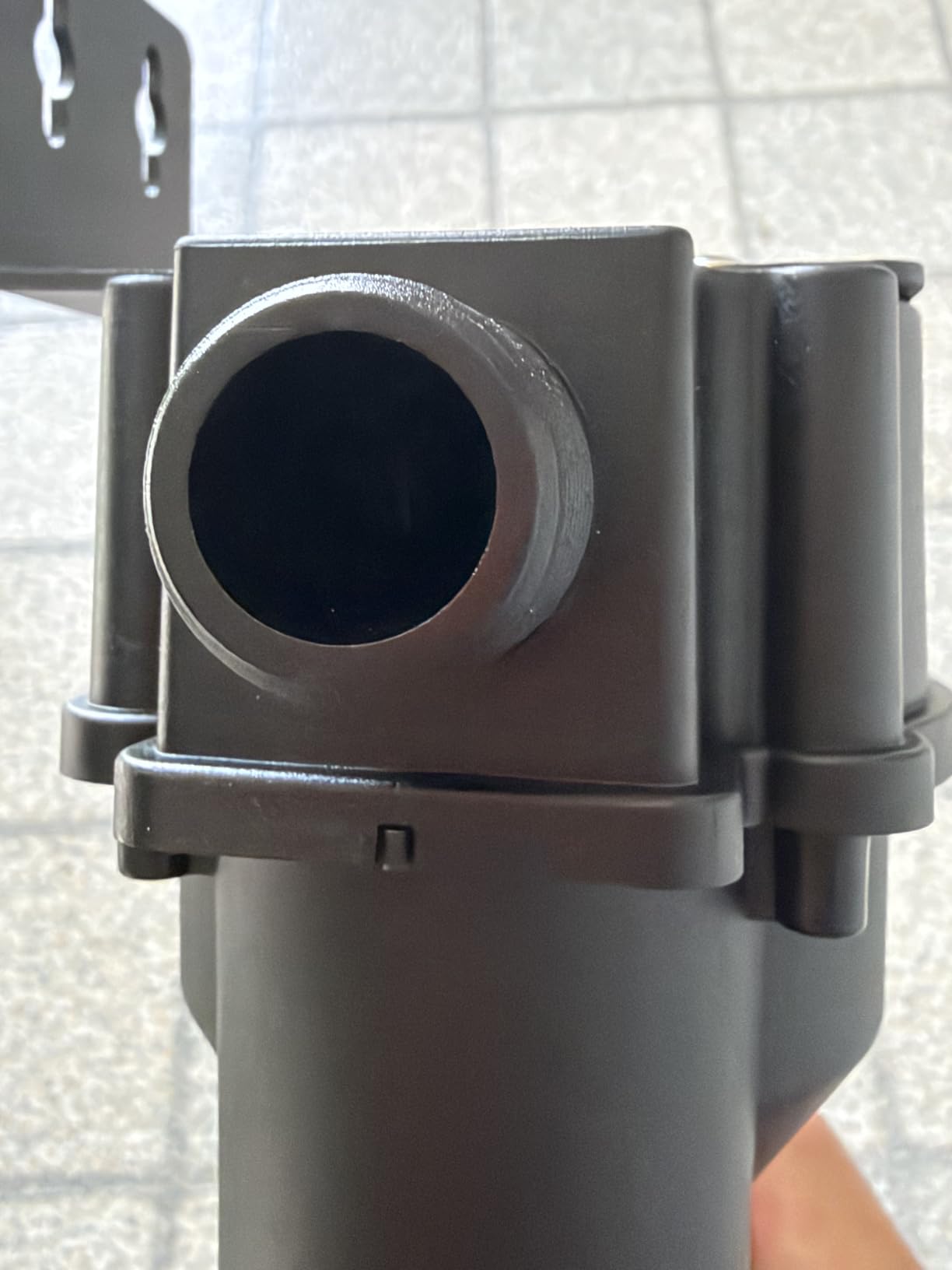
LED UV Versus Quartz Lamp Systems
The tradeoff is output. A 55 watt mercury lamp floods its quartz sleeve with UV-C, and the sleeve keeps the water physically separated from the glass. An LED array pushes light out across multiple emitters with no sleeve, instant startup and no warm-up time, which is why the listing claims instant startup.
Mercury free operation produces no ozone and no odor, and the LED module has far more moving-free durability than a lamp that has been run past its rated hours. The cost is raw intensity, which is why LED units tend to sit at modest flow ratings. Up to 12 GPM with a 3/4 inch MNPT connector is the published figure here.
Automatic Flow Sensor and Startup Behavior
The built in automatic flow sensor activates the module only when water flows through the chamber. Combine that with an 8,000 hour rated life and lamp changes essentially disappear from your maintenance calendar for well over a decade.
Users on stubborn wells that keep testing positive for bacteria report the issue clears after installation, and the unit is claimed to deliver up to 99.99 percent microorganism reduction with no chemicals.
Mounting and Early Installation Feedback
The weaknesses are physical. The included mounting bracket is described as flimsy and needs extra support, and a few owners reported small leaks at the threaded connections. One unit’s status light never turned on after installation, and the troubleshooting site would not load.
At only 27 reviews this is the thinnest sample in the guide, so long term data is limited. The aluminum body at 3.4 pounds and 14.2 inches tall installed in about an hour, which is the easiest physical install of any unit here.
12. Bluonics 55W Plus Sediment and Carbon Kit – Best Starter Combo
55W UV Ultraviolet Light Plus Sediment and Carbon Well Water Filter Purifier System for Rust, Iron, Sand, Dirt, Sediment Bad Taste/Odor.12 GPM UV System and 2 Heavy Duty Housings Size 4.5″x10″
Four stage assembly
20, 5 and 1 micron filtration stages
55W UV chamber
1 inch MNPT ports
Pros
- Bundles pre-filtration and UV in one package
- Three filtration stages at 20
- 5 and 1 micron address sediment rust and chlorine
- Owners with twice positive wells report a clean sample after install
- Support replaced a cracked component promptly
Cons
- The ballast is excluded from warranty
- All four threaded fittings leaked for at least one owner who removed both canisters
- Requires plumbing skill and the brand recommends a plumber
This kit stacks four stages in a single frame: a 20 micron string wound sediment filter for sand, dirt, silt and rust, a 5 micron carbon block for chlorine, taste, odor and organic solvents, a 1 micron sediment stage for fine particles, and a 55 watt UV chamber with a 36 inch lamp in a 304 stainless body.
It is the most complete pre-filtration plus UV package in this guide for a 12 GPM application, and the stage order is correct. Clear water reaches the quartz sleeve, which is the only condition under which a UV lamp delivers its rated dose.
Filtration Stages and What Each One Catches
Twenty micron string wound media handles the coarse load that comes off a new well or after rain: sand, grit and rust flakes. The 5 micron carbon block then takes chlorine, taste, odor and organic solvents, which matters if you shock chlorinate. The 1 micron stage is a final polish for fine particulate before the UV stage.
Replacement cartridges are sold separately under their own listing, so plan for annual filter changes in addition to lamp replacement. Housing sizes are heavy duty 4.5 by 10 inch with 1 inch US standard NPT brass inlet and outlet fittings.
Results on Wells That Tested Positive Twice
Owners running this kit on wells that tested positive twice report a clean sample afterward and noticeable whole home taste improvement. That is the outcome that justifies the assembly, and support is praised for replacing a cracked component promptly and answering install questions.
Operating range is 40 to 125 psi with a 100 degree Fahrenheit upper temperature rating and a 500 parts per million TDS ceiling, in a unit weighing 32 pounds.
Warranty Exclusions and Plumbing Skill
Two honest limitations. The ballast is excluded from the warranty, so a failure under a year leaves you paying out of pocket, and warranty coverage is essentially limited to the metal tube. All four threaded fittings on the filter assemblies leaked for at least one owner, who removed both canisters.
The brand itself recommends hiring a plumber for this one. Unlike a bare inline chamber, a four stage assembly with 1 inch brass fittings and frame mounting is a real plumbing job, and the leak complaints trace directly to fitting technique rather than to bad parts.
What UV Water Treatment Cannot Remove
UV kills organisms. It does not remove anything. That single sentence is the most important thing in this article, and it is the answer to the most common question searchers ask about the downside of UV disinfection.
Ultraviolet light disrupts DNA. It has no mechanism for stripping dissolved minerals, binding metals, adsorbing organic compounds or physically filtering particles. A UV chamber adds light to water and sends it out the other side, so anything that is not a living organism passes through untouched.
Specifically, UV will not reduce nitrates, which is the concern for wells near agricultural land, barns, manure storage or a septic field. It will not remove iron, manganese or hardness, so an iron-stained sink and orange rings are not a UV problem. It does not take out pesticides, herbicides, solvents or petroleum compounds, it does not address total dissolved solids, and it does not reduce PFAS.
Sediment is the near miss. A UV chamber will not filter grit, sand or rust, and a cloudy sleeve blocks the very light the system depends on. That is why pre-filtration is a functional requirement rather than an optional upgrade, and why some listings state outright that they must be the last stage after sediment filtration.
Finally, UV leaves no residual behind. That is a genuine advantage over chlorine, and it is also a genuine limitation. Chlorine keeps protecting water downstream in the pipe; UV protects only the water inside the chamber, at the moment it passes. If a lamp fails, there is no leftover disinfection protecting the house.
The practical takeaway: treat UV as one stage in a train, not a solution. If you are not sure what is in your water, a lab panel covering coliform and E. coli, nitrates, iron, manganese, pH, hardness and total dissolved solids tells you which other stages you need. For homes prone to flooding, having a leak detection system in place is a sensible complement while you are re-plumbing anything, and our guides to water leak detectors for basements and water leak detectors with smart alerts cover that side of the risk.
How to Size a UV Unit for Your Well
Size by flow rate, then add headroom. A UV chamber’s GPM rating is the maximum flow at which it still delivers its published dose, so the correct unit is the one rated comfortably above the water moving through it at peak times, not the one that exactly matches your pump.
Here is the method. First, find your pump’s rated flow in gallons per minute from the well log, the pump nameplate, or a timed fill test at the cold tap. A common residential figure is 8 to 12 GPM, with a usable sustainable yield well below that. Second, estimate your household’s real peak demand. Two to three people with one or two bathrooms and no irrigation rarely exceed 4 to 5 GPM of simultaneous fixture flow.
Third, apply the ratio the community advice settles on. If your well produces 5 GPM, use a unit rated 9 to 12 GPM. If your well produces 8 GPM, choose 12 to 15 GPM. If you irrigate or run a household above four people, go one tier higher again. Oversizing costs a little more up front and buys a large safety margin against both short bursts and scale buildup degrading the dose over a decade.
That rule is why the Viqua VH200, a 9 GPM unit, gets recommended so often for 5 GPM wells, and it is the same logic that makes the 12 GPM chambers in this roundup appropriate for most suburban homes.
One more sizing input that owners overlook. The listings here publish widely varying TDS ceilings, from 300 parts per million on the Ronaqua to 2000 on the Bluonics 55W. Cloudier or higher mineral water both reduce UV penetration, so if your TDS reading sits near the top of your unit’s published range, move up a size rather than relying on the flow number alone.
Finally, size the whole train, not just the chamber. Adding a carbon filter, a softener or a spin down filter ahead of the UV stage each consume flow capacity through pressure drop, and a system plumbed at its absolute limit will show it as reduced household pressure at peak hours.
Buying Guide: What Actually Decides Which UV Unit Lasts
Match Rated GPM to Well Yield, Then Oversize
This is the criterion most roundups bury, and the one that matters most. A unit rated below your pump’s flow delivers less dose than published, and the reduction is invisible: your water still tastes fine, your tests may still pass intermittently, and the chamber is quietly underperforming. Size up, always.
Get the Pre-Filtration Order Right
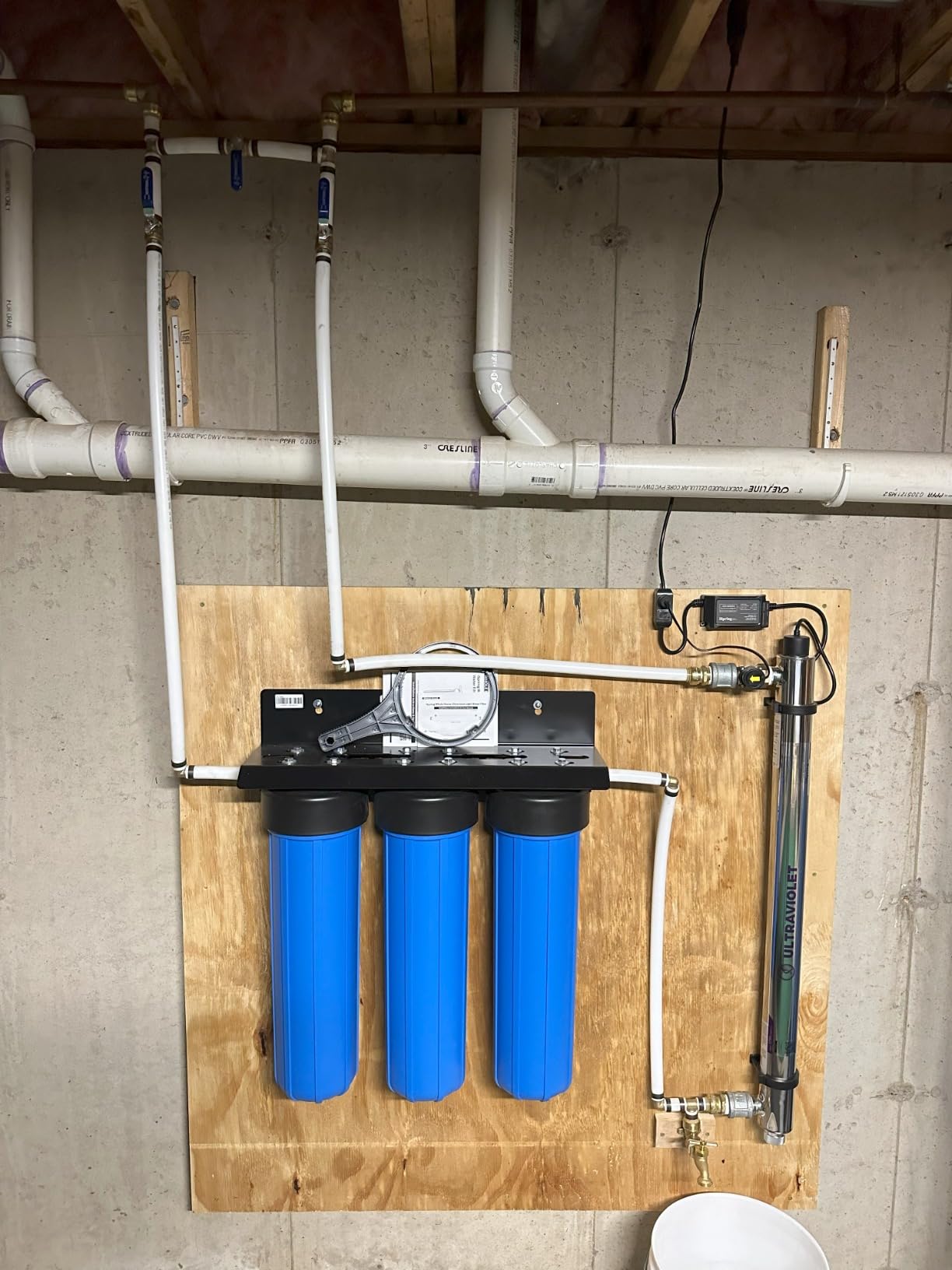
The treatment train order is not a matter of preference. The working sequence for a typical private well runs from a spin down or sediment filter at the well head, to an iron filter or softener if the water test calls for it, to a carbon filter if you shock chlorinate or want taste and odor control, and then to the UV chamber last, inline on the way to the house.
UV goes last for two reasons. Anything turbid or iron stained blocks UV light before it reaches the organisms, and a softener resin bed downstream of a UV chamber would be sterilized repeatedly, which is simply wasted work. One listing in this roundup warns explicitly that it cannot filter well water directly and must be the last stage.
Decide Between LED UV and Quartz Lamp Systems
A mercury vapor lamp in a quartz sleeve delivers higher raw intensity and is the standard across this category, with replacements rated at 9,000 to 10,000 hours and an annual change. A mercury free LED module removes the annual task entirely, with ratings up to 8,000 hours that translate to a decade of ownership on a modest duty cycle.
Choose a quartz lamp system if you want the highest flow per dollar and have no anxiety about maintenance. Choose LED if the recurring lamp cost and the annual reminder are what make you avoid UV altogether, which is the single most common reason well owners end up dosing chlorine instead.
Look for a Flow Sensor or Alarm
UV failures are silent because the water does not change. A flow sensor, an LED status light, a four digit controller or an audible lamp out alarm is what tells you the lamp is still firing. Several systems in this guide combine a flow sensor with audible alerts, and those are the ones we would pick given the same budget.
The iSpring UVF55FS runs its sensor in Auto, Move and Stop modes, and the iSpring UVF20 activates only when water moves. The flow sensor is also the most common failure point on the Aquaboon, so treat it as both a feature and a part to keep on hand.
Understand the Quartz Sleeve Before You Buy
The quartz sleeve is the UV transparent barrier between the lamp and your water, and it is the maintenance item that decides long term performance. Water on the sleeve is harmless. Scale, iron oxide and mineral deposit are not, because they block the light before it reaches the organisms.
On hard water or an iron-bearing well, expect to clean the sleeve every 6 to 12 months with a dilute descaling solution, and treat that interval as a schedule rather than a surprise. If your well runs clear and soft, a yearly check is enough.
Read the Warranty Terms, Not Just the Length
Coverage lengths vary enormously here. The US Water Filters 4C-151 carries ten years on the chamber, three on the controller and one on lamps and sleeves. Several 12 GPM kits carry one year. One seller on this list offers nothing beyond the return window.
Watch for exclusions as well. The Bluonics 55W combo kit explicitly excludes the ballast from warranty, and warranty coverage there is essentially limited to the metal tube. A ballast is the most commonly replaced component across this entire category, so a warranty that excludes it is worth considerably less than its length suggests.
Check Port Size and Connection Type
Most systems here use 1 inch MNPT ports, several use 3/4 inch, and a few ship with adapters covering both. Match the chamber to your existing plumbing rather than assuming, because reducers add parts and leak points. If your well plumbing is older 3/4 inch, the HQUA and the Ronaqua are the two that fit without modification.
Budget for the Recurring Costs
Sticker price is the smallest number in ownership. Every quartz lamp system needs a lamp roughly annually at rated hours, plus sleeve cleaning, plus filter changes on anything upstream. The LED module removes the lamp line item for a decade or more, which is the single strongest financial argument for that unit.
Two more recurring realities. On very hard water the UV bulbs can heat water well over 120 degrees, and standing water in an unused chamber comes out very hot on the first draw, so run the tap briefly after a long idle period. And if you plan to run a basement or utility room, a smart water leak detector in the same room protects you from a flood if a fitting fails, as we cover in our smart water leak detector guide.
Test Before and After, Every Year
A clean panel one year does not guarantee a clean panel the next. Flooding, heavy rain, a nearby construction project or a failing septic system can all change what comes out of the ground. Re-test annually for coliform and E. coli at minimum, and keep the results next to your UV install date so you can tell whether a system is doing its job or just running.
Frequently Asked Questions
What is the best UV filter for well water?
The best UV filter for well water is an inline whole-house chamber rated well above your pump’s flow, installed as the last treatment stage after sediment filtration. Look for a 254 nm germicidal lamp, an audible lamp-out alarm and a stainless steel reactor. For a typical 3 to 5 GPM well, a 12 GPM unit is the right size.
Is a UV filter necessary for well water?
A UV filter is necessary whenever a well can pick up bacteria, viruses or protozoa, which includes most private wells near farms, livestock, septic systems or flood-prone ground. It is not necessary if repeated lab panels show consistently clean results and your water chemistry needs no other treatment. Because well results change, test at least annually rather than deciding once.
What is the downside of UV disinfection water?
UV only disrupts the DNA of living organisms. It does not remove nitrates, iron, manganese, hardness, pesticides, solvents, total dissolved solids, PFAS or sediment, and it leaves no residual protection in the pipes after the water leaves the chamber. A fouled quartz sleeve also silently reduces output, so pre-filtration and sleeve cleaning are ongoing requirements.
How big a UV system do I need for my well?
Match the unit rating to your pump’s flow in gallons per minute and add headroom. A 5 GPM well should run a 9 to 12 GPM chamber, an 8 GPM well should run 12 to 15 GPM, and homes with irrigation should go one tier higher. Undersizing a unit reduces the delivered UV dose below its published figure without any visible change in the water.
Can UV remove nitrates and iron from well water?
No. UV disinfection inactivates bacteria, viruses and protozoa such as Cryptosporidium and Giardia, and does nothing to dissolved substances. Nitrates near agricultural land require anion exchange or reverse osmosis. Iron and manganese require an iron filter or a properly sized softener. These treatments belong upstream, with the UV chamber installed last.
How often do you replace a UV lamp?
Quartz lamp systems are typically rated for 9,000 to 10,000 hours, which is close to one year of continuous burning, so an annual change is standard. A flow sensor that powers the lamp only when water moves extends that considerably. Mercury free LED modules are rated around 8,000 hours but run far less often, which the manufacturer converts to up to 11 years on a short daily schedule.
What type of whole house water filter is best for well water?
The right train for most wells runs a sediment or spin down filter at the head, then an iron filter or softener if testing calls for it, then a carbon filter for chlorine taste and odor, and finally a UV chamber installed last and inline to the house. UV placed earlier in the line gets blocked by sediment and does not protect downstream components.
Which UV Water Purifier Is Right for Your Well?
If you are on a typical 3 to 5 GPM well and want the most proven chamber money can buy, the HQUA-OWS-12 40W is our pick. It carries the deepest review record in this category, ships with a spare bulb and installs in under an hour with basic tools.
If you want a smarter controller and a longer reactor, the iSpring UVF55FS adds a flow sensor with three operating modes and a 37.5 inch chamber. If you need genuine headroom, irrigation capacity or a compact footprint in a full cabinet, the VIQUA VH410 handles 18 GPM and adds a 365 day lamp countdown.
If the annual lamp change is the reason you have been avoiding UV, the iSpring UVF20 LED module removes that task for a decade or more. If your well also has iron, sediment or chlorine, the bundled Bluonics systems put pre-filtration in front of the UV chamber correctly, and the US Water Filters 4C-151 pairs a published 30 mJ/cm dose with the longest warranty in the group. For a small home, cottage or cabin on a modest well, the Viqua VH200 at 9 GPM is the community standard and our highest rated pick at 4.5 stars.
Whichever one you choose, install it last, size it above your pump, pre-filter the water, clean the sleeve and test the well every year. That is the whole method, and it is why the best uv water purifiers for wells all work the same way once they are plumbed correctly.