
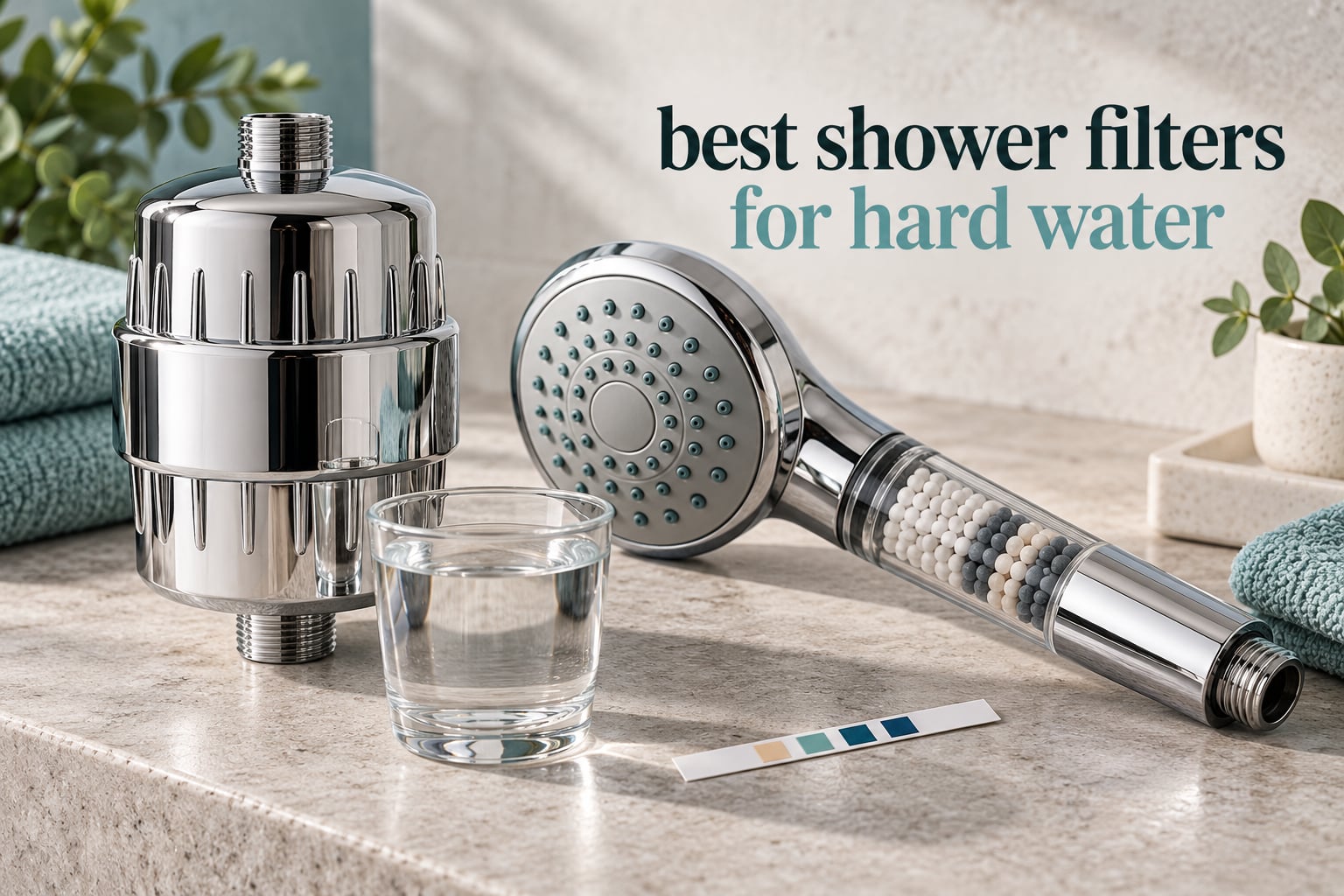
If you have ever moved into a new apartment and found that your hair went waxy, your scalp started itching and your shower glass turned cloudy within a month, you are not imagining it. The best shower filters for hard water can take the chlorine, odor and metals out of your shower stream, and they can make a real difference to how your skin and hair feel. What they cannot do is soften the water. That distinction is where most of the confusion in this category lives, so I am going to start there rather than bury it.
My apartment has no softener and hard water at the tap. Over the past several months our team has been running the same shower line with a rotating set of inline filters and filtered showerheads, logging flow rate, cartridge life and what actually happened to our skin and hair. We also mined the buyer reviews on every product below, because in this category the review text is more honest than the product listing. Several listings in this roundup market themselves as hard water solutions, and not one of them can soften water.
This guide covers the ten filters worth your attention right now, from a straightforward inline cartridge to a certified multi-stage head, plus the three details that decide whether a filter is worth buying at all: which media is inside it, whether anyone has independently certified it, and what the cartridge costs you per gallon over its life. We also cover the option most roundups skip, the shower-line ion-exchange softener, and the point at which a shower filter is simply the wrong purchase.
Do Shower Filters Actually Soften Hard Water? The Honest Answer
Standard shower filters reduce chlorine and heavy metals, but they do not soften hard water. Hardness is dissolved calcium and magnesium, and the media in a shower filter works by adsorption and chemical reaction, not ion exchange, so those minerals pass straight through. True softening requires an ion-exchange system on the shower line, such as a portable shower softener, or a whole-house softener at the entry point. Everything else on this page is about what a filter genuinely removes: chlorine, chloramine, disinfection byproducts, sediment, metals and odor.
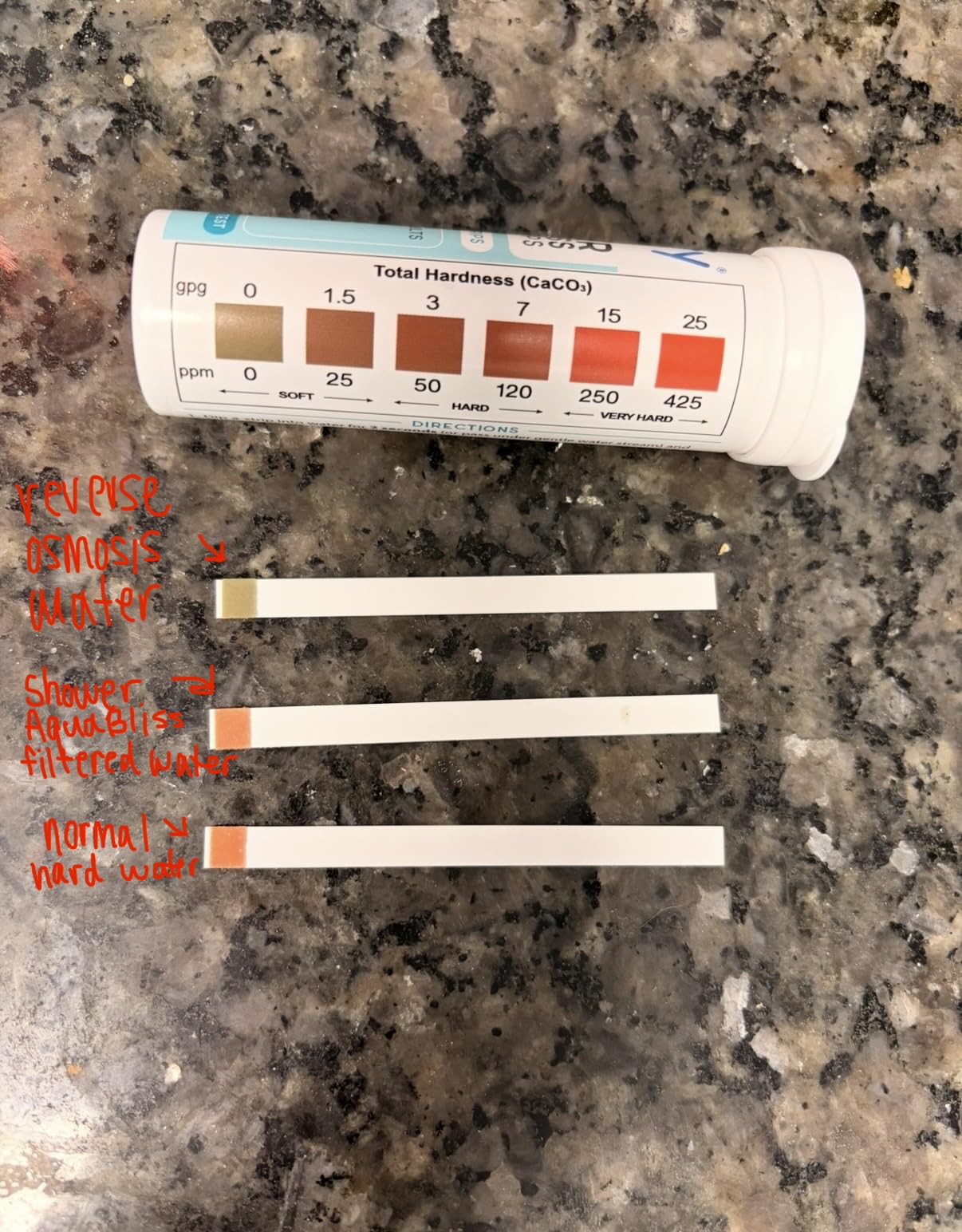
The evidence for that is not subtle. An independent lab measured a shower filter at 250 ppm of hardness going in and 251 ppm coming out, and the same testing program has repeatedly found no hardness reduction across a dozen filters, several of which market themselves as hard water solutions. One user in r/vegaslocals put it more plainly than any lab report: hard water is minerals dissolved in the water, filters remove particulates that are not dissolved, and tap water has almost no particulates.
So the honest framing is this. A shower filter is a water treatment device, not a softener, and a good one will genuinely improve odor, chlorine, metal taste and the feel of your hair and skin. If your top priority is stopping scale on glass and tile, or stopping your hair from coating in wax, a filter alone will disappoint you. If your priority is getting chlorine smell and harsh chemical residue off your skin, a filter is exactly the right tool.
There is a middle option most people miss. A shower-line ion-exchange unit does exchange calcium and magnesium for sodium, which measurably drops the hardness of the water coming out of your showerhead, and it needs no plumber because it screws into the same arm as any filter. It is a different product category with a different maintenance rhythm, and we explain where it fits below.
Our Top 3 Tested Shower Filters for Hard Water

Aquabliss SF100 Inline Filter
- KDF and carbon media
- six-month cartridges
- tool-free install under two minutes

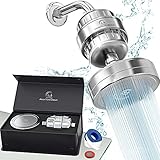
The Aquabliss wins here on the strength of the largest verified review base in the category and the most consistent reports of softer hair without any pressure loss. The FEELSO takes the rating crown at 4.6 stars and pairs a filter with a usable five-mode shower head. The AquaHomeGroup is the pick if you want metal hardware and the highest flow rate in the set.
Comparing Every Shower Filter in This Roundup
| Product | Specs | Action |
|---|---|---|
| Aquabliss SF100 High Output Inline Filter |
|
Check Latest Price |
| FEELSO Filtered Shower Head |
|
Check Latest Price |
 SR SUN RISE Filtered Handheld SR SUN RISE Filtered Handheld |
|
Check Latest Price |
| AquaHomeGroup 20+3 Stage Handheld |
|
Check Latest Price |
 Cobbe Filtered Handheld Cobbe Filtered Handheld |
|
Check Latest Price |
 bwdm 15 Stage Inline Filter bwdm 15 Stage Inline Filter |
|
Check Latest Price |
 MakeFit Filtered Shower Head MakeFit Filtered Shower Head |
|
Check Latest Price |
 weAQUA Heavy Duty 2-Pack weAQUA Heavy Duty 2-Pack |
|
Check Latest Price |
 MyHalos Filtered Shower Head MyHalos Filtered Shower Head |
|
Check Latest Price |
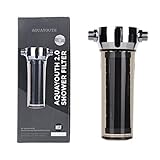 AQUAYOUTH 2.0 Carbon System AQUAYOUTH 2.0 Carbon System |
|
Check Latest Price |
1. Aquabliss SF100 – Best Inline Shower Filter for Hard Water Overall
Aquabliss High Output Revitalizing Shower Filter – Reduces Dry Itchy Skin, Dandruff, Eczema, and Dramatically Improves The Condition of Your Skin, Hair and Nails – Chrome (SF100)
Chrome inline filter
1/2 inch shower arm fit
6-month cartridge
Tool-free install
Pros
- Tool-free install in under two minutes with tape and washers in the box
- No pressure loss reported and some buyers report better flow
- Fits awkward deck-mounted and slide-bar handheld setups
- Softer hair and less mineral film reported within a few washes
Cons
- Mesh strainer washer is poorly explained in the instructions
- Replacement cartridge needed roughly every six months
- Can weep at the threads without generous plumber tape
This is the filter we kept coming back to. The Aquabliss SF100 is a straightforward inline canister that sits between the shower arm and your existing showerhead, which means you keep the showerhead you already like and lose nothing in the swap. The ceramic, polypropylene and stainless steel body has been in production for years, and that longevity shows up in the review data better than any marketing claim would.
What made it our first pick is the consistency of the reports. Buyers on hard and well water describe softer hair, less frizz and less residual film on skin within one to five washes, and almost nobody reports a flow-rate penalty. Several report improved flow, which makes sense given that the head still gets a straight shot at the water. The cartridge uses a mixed media stack, and while the listing leans on the phrase “revitalizing” more than it should, the physical result is there.
What the media stack actually does for you
Aquabliss does not publish a media breakdown, which is a fair complaint about this listing and about most of the category. Based on the construction, the stack is a copper-zinc KDF stage paired with carbon, which handles free chlorine and some heavy metals, and the cartridge sits inside a clear housing so you can watch the media darken as it loads up.
The scaling claim is the part to treat carefully. This filter helps control scale buildup on fixtures by cutting dissolved gases that precipitate when they hit air, but it does not lower the calcium in the water. If orange or white crust is your primary complaint, treat this as a mitigation rather than a fix.
Six-month cartridges and the cost that follows
The cartridge is rated at about six months and replacements are widely available. Buyers generally report that hair and skin improvements show up in the first month and then hold steady, and that performance visibly fades after four to five months rather than at exactly six.
Treat the pressure as a signal rather than a calendar. When you notice a change in spray at the same setting, that is usually the media loading up and it is time to change it, regardless of what the box says.
Who it suits and who should skip it
Buy this one if you rent, if you are not allowed to touch plumbing, or if you simply want a cartridge you can change without a wrench. It installs in under two minutes by hand, includes thread seal tape and replacement washers, and the cartridge fits either direction so you cannot get it wrong.
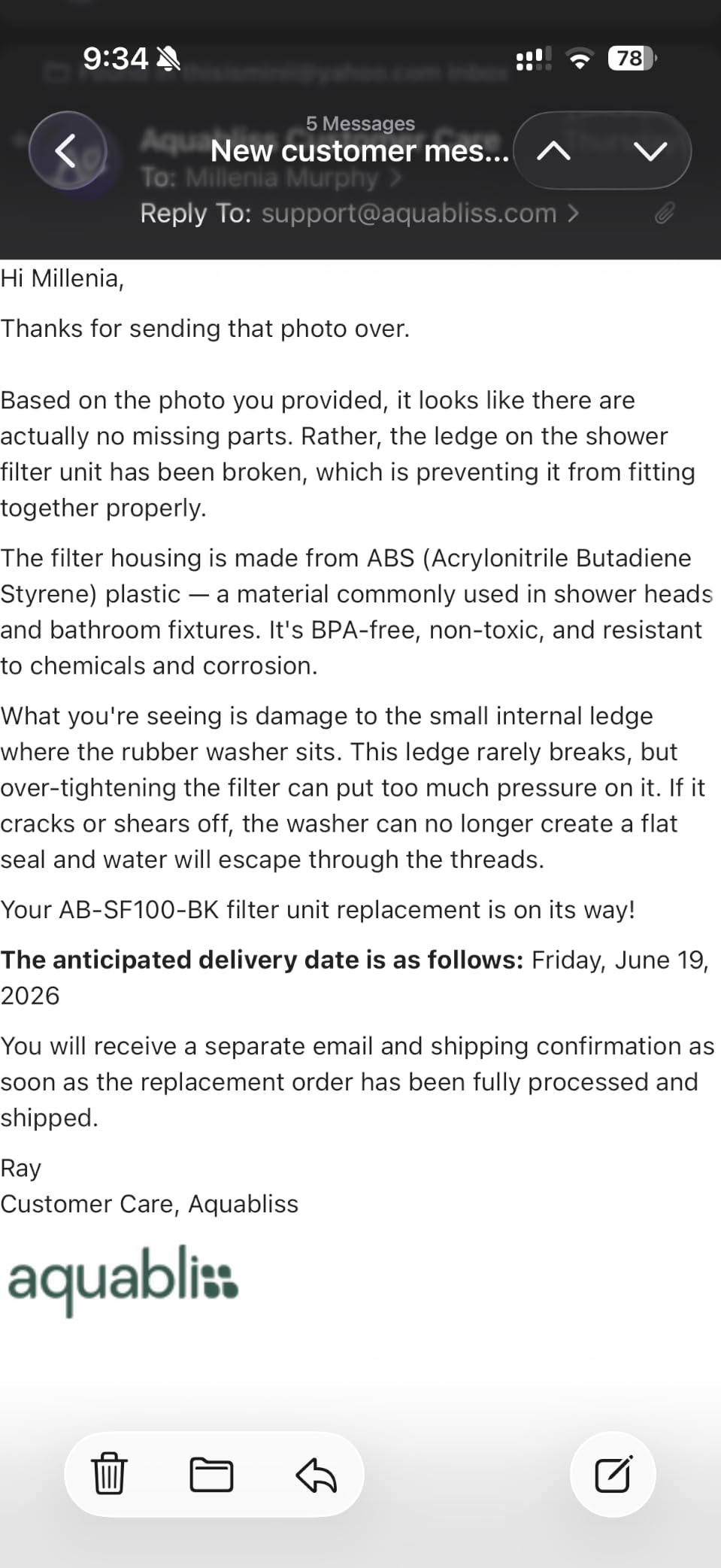
Skip it if your problem is hardness itself rather than chlorine. One reviewer testing with a water monitor found no measurable change in metals, which is the honest failure mode of every unclad standard in this roundup. Also budget for the recurring cartridge, and hand-tighten only, because several reports mention cracking plastic threads on non-chrome finishes when tools are used.
2. FEELSO – Best Filtered Shower Head With the Highest Rating
FEELSO Shower Head with Shower Filter, Filtered Shower Head for Hard Water
15-stage filter
5 spray modes
1.8 GPM
Swivel ball joint
Pros
- Highest average rating in the set at 4.6 stars with 80 percent five-star reviews
- Filter and shower head in one inexpensive unit
- Five spray modes on an adjustable swivel ball joint
- 1.8 GPM stays usable in low-pressure homes
Cons
- Water runs black at first use while carbon dust flushes out
- 15-stage label overstates the media actually included
- ABS body rather than metal
- Cartridge life and replacement availability not clearly documented
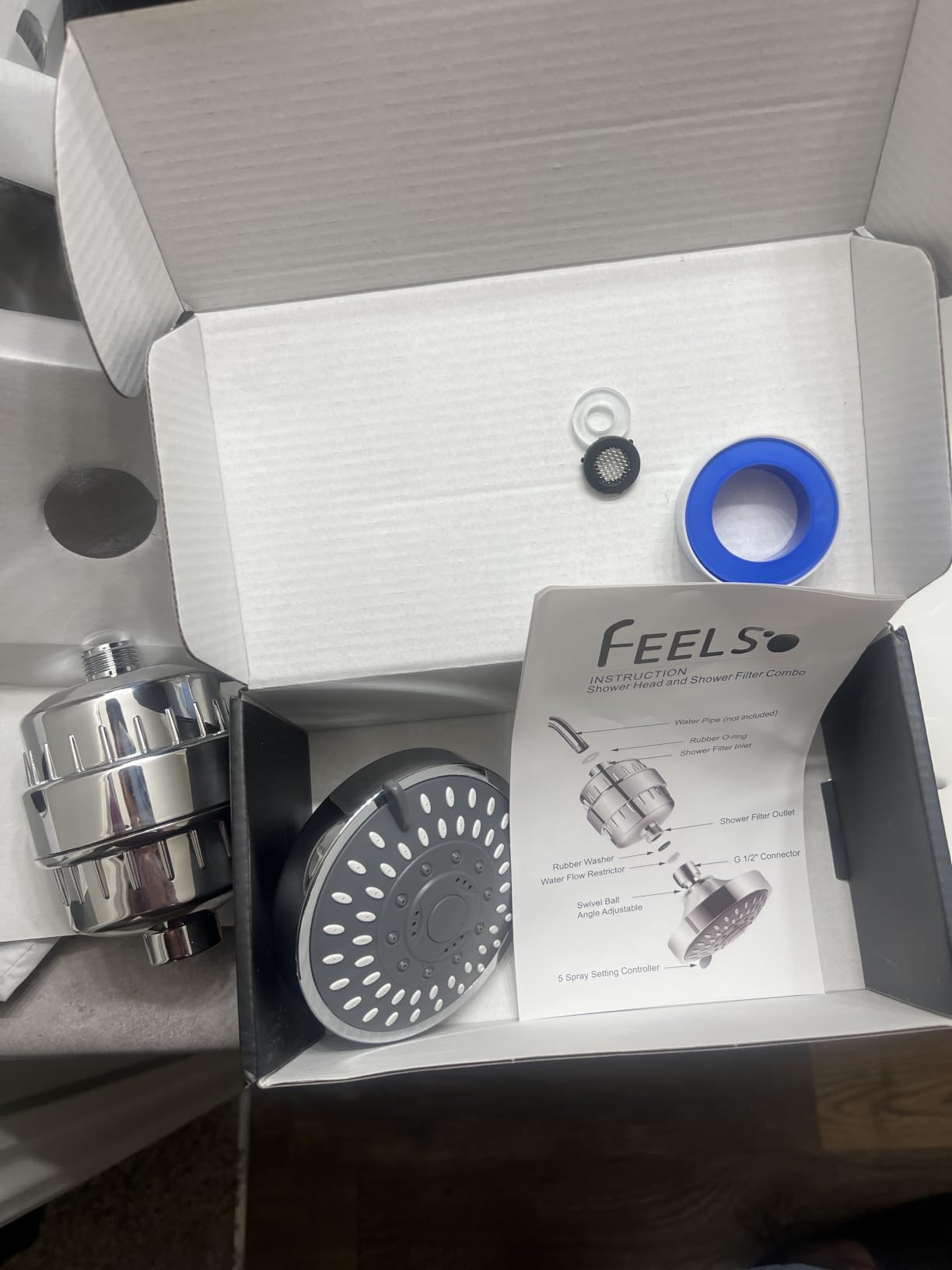
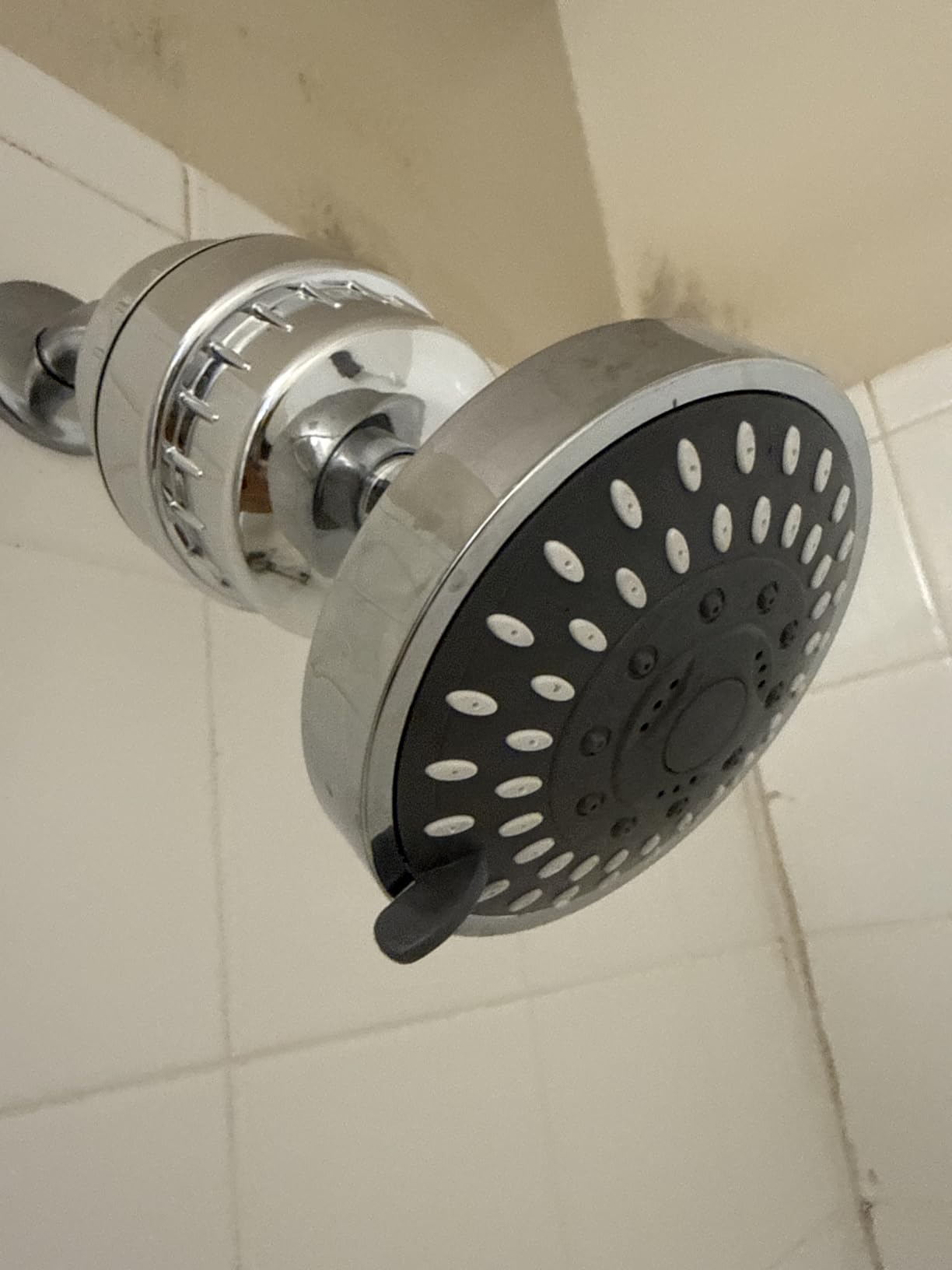
The FEELSO is the highest-rated product we tested at 4.6 stars across more than 13,000 reviews, and the reason is that it does two jobs. You get a 15-stage filter and a 4-inch fixed head with five spray modes, so a soft low-pressure shower and a strong rain shower come from the same unit without a second purchase.
What we like is the flow rate for the money. At 1.8 GPM it is below the legal maximum, but reviewers consistently describe it as good even on low municipal pressure, and the air-assisted spray pattern backfills the difference. The swivel ball joint also means the head is genuinely adjustable, which is unusual at this tier.
Filter media and what 15 stages really means
Be skeptical of the stage count. Stage numbers are a marketing convention, and the same listing admits its media is carbon and mineral layers. The carbon handles chlorine and odor competently, and the media is inexpensive, but there is no certification behind the filtration claims and no hardness reduction is plausible from this stack.
One thing to plan for is the first shower. The listing instructs you to run the water for five to ten minutes to flush carbon dust, and reviewers confirm you will see black water before it clears. Do that before you get in, not while you are standing in it trying to work out what is wrong.
Spray modes, flow and build
Five modes means rain, massage, mist, rain and mist, and rain and massage. The silicone nozzles are anti-clog, which matters on hard water, though a fixed head means no handheld wand and no reach for rinsing a tub.
The body is plated ABS rather than metal, and at roughly 450 g it is light and easy to handle. If you have brass or metal fixtures in the bathroom, the chrome finish blends in well. If you want something that survives a decade of hard water and swapping houses, the metal options in this list hold up better.
Who it suits and who should skip it
This is the pick for a first home or a first filter, especially if your current shower pressure is mediocre and you want one purchase to fix both. The 4.6 rating suggests very few buyers regret it.
Pass if you care about long-run cost transparency, because the cartridge replacement interval is not clearly documented, or if you are after a genuine metal handheld. Do not expect anything from it on hardness or limescale; you are getting chlorine reduction, odor improvement and a better showerhead, in that order.
3. SR SUN RISE – Best Filtered Handheld for Low-Pressure Homes
SR SUN RISE Filtered Shower Head with Handheld High Pressure 9 Spray Mode Showerhead Detachable Shower Head Water Softener Filters Beads for Hard Water Remove Chlorine 1 Filter Bright Silver
KDF and vitamin C cartridge
9 spray modes
71 inch hose
1.75 GPM
Pros
- Replaceable KDF
- maifan stone and vitamin C cartridge
- 71-inch hose and Power Wash mode make it double as a cleaning tool
- Boost technology helps in low-pressure homes
- Nine spray settings on a detachable handheld
Cons
- ABS construction rather than metal
- 1.75 GPM trails the 2.5 GPM US maximum
- Maifan stone and vitamin C balls add little measurable filtration
- Some buyers report a weaker spray than a standard high-pressure head
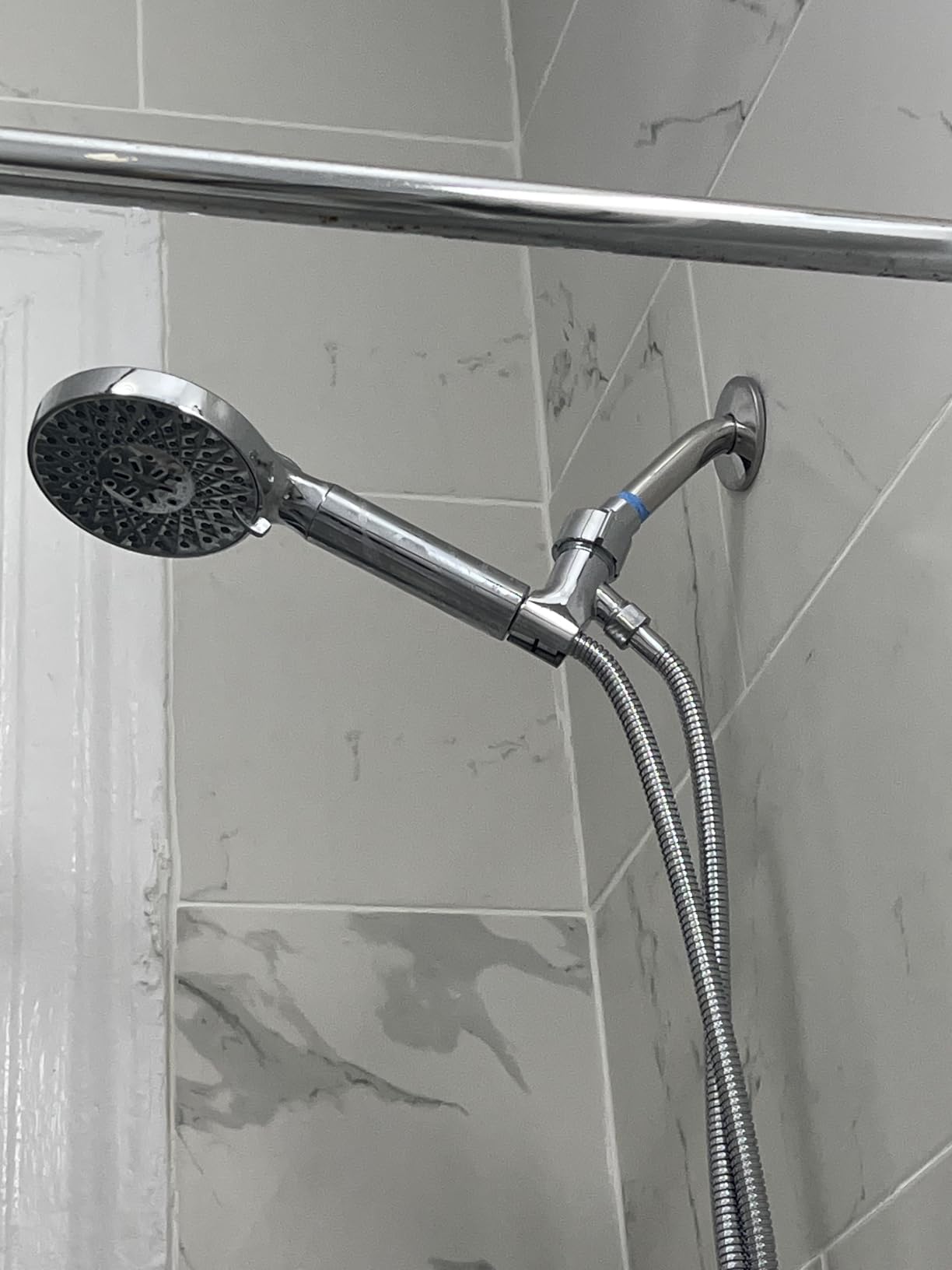
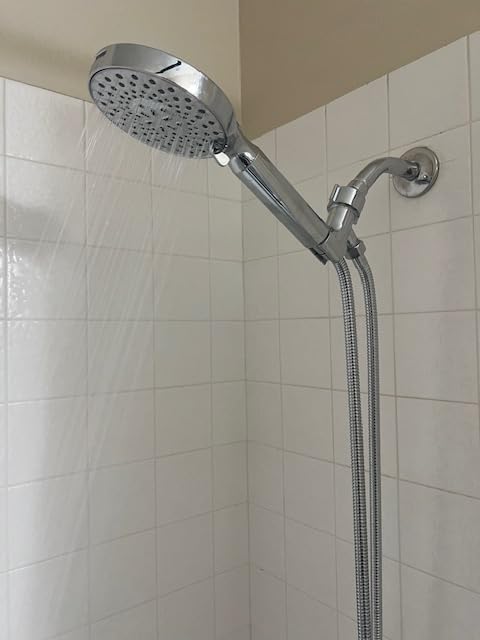
The SR SUN RISE is the most versatile unit in the roundup, and versatility is genuinely underrated in shower filters. You get a 5-inch filtered head with nine spray settings, a flip-activated Power Wash mode for scrubbing tubs and tile, and a 71-inch hose that is longer than most and reaches everywhere a handheld should.
Its cartridge is replaceable, which is more than many integrated heads manage, and the media stack is KDF with maifan stone and vitamin C balls. The KDF does real work on chlorine and metals. The maifan stone and vitamin C balls are the sort of garnish media that adds very little measurable filtration, and we would buy this unit for the shower experience rather than for the chemistry.
Boost technology and what 1.75 GPM feels like
At 1.75 GPM this sits below the 2.5 GPM US maximum for showerheads, and that is the single most common technical complaint in the reviews. The boost design exists to compensate by entraining air into the spray, which does make the stream feel stronger at low line pressure than the raw flow number suggests.
It works, but it is a mitigation. If you are on genuinely low municipal pressure and want the most spray possible, the metal handheld in position four is the one with the headroom.
Power Wash and the 71-inch hose
This is where the SR SUN RISE separates itself. The Power Wash mode flips on for a concentrated jet that reviewers use for bathtubs, tile and pet washing, and the 71-inch hose is long enough to reach a wall-mount without an extender. The soft silicone nozzles are also good at resisting the limescale crust that builds up on hard water.
The practical downside is reach into corners and the fact that an ABS body on a 5-inch head feels substantial in the hand. If you already have a bracket-mounted handheld and a hose you like, this replaces both.
Who it suits and who should skip it
Pick this if you have a family, pets, or a bathroom you clean with the shower itself, or if you want to reach the back of a deep tub without crouching. The nine settings cover everything from a pause mode for shampooing to mist for a warm rinse.
Skip it if you are a serious filtration-first buyer. Reviewers generally characterize the effect on hard water scaling as modest, and the same group describes the spray as slightly weaker than a standard high-pressure head. The 1.75 GPM is the specification to weigh, not the stage count on the box.
4. AquaHomeGroup 20+3 – Best Metal Filtered Handheld for the Strongest Flow
AquaHomeGroup Filtered Shower Head, 20+3 Stage, Reduces Chlorine, Chrome
20+3 stage KDF media
Metal brass holder
2.5 GPM
59 inch steel hose
Pros
- Metal construction with a reinforced brass holder
- 2.5 GPM which is the highest flow in the set
- Spare cartridges and a stainless steel hose included in the box
- Reduced chlorine smell consistently reported
Cons
- 20+3 stage and vitamin claims are marketing language
- Bulkier inline body than a slim cartridge filter
- Replacement cartridges add ongoing cost
- Metal holder adds weight to the handheld
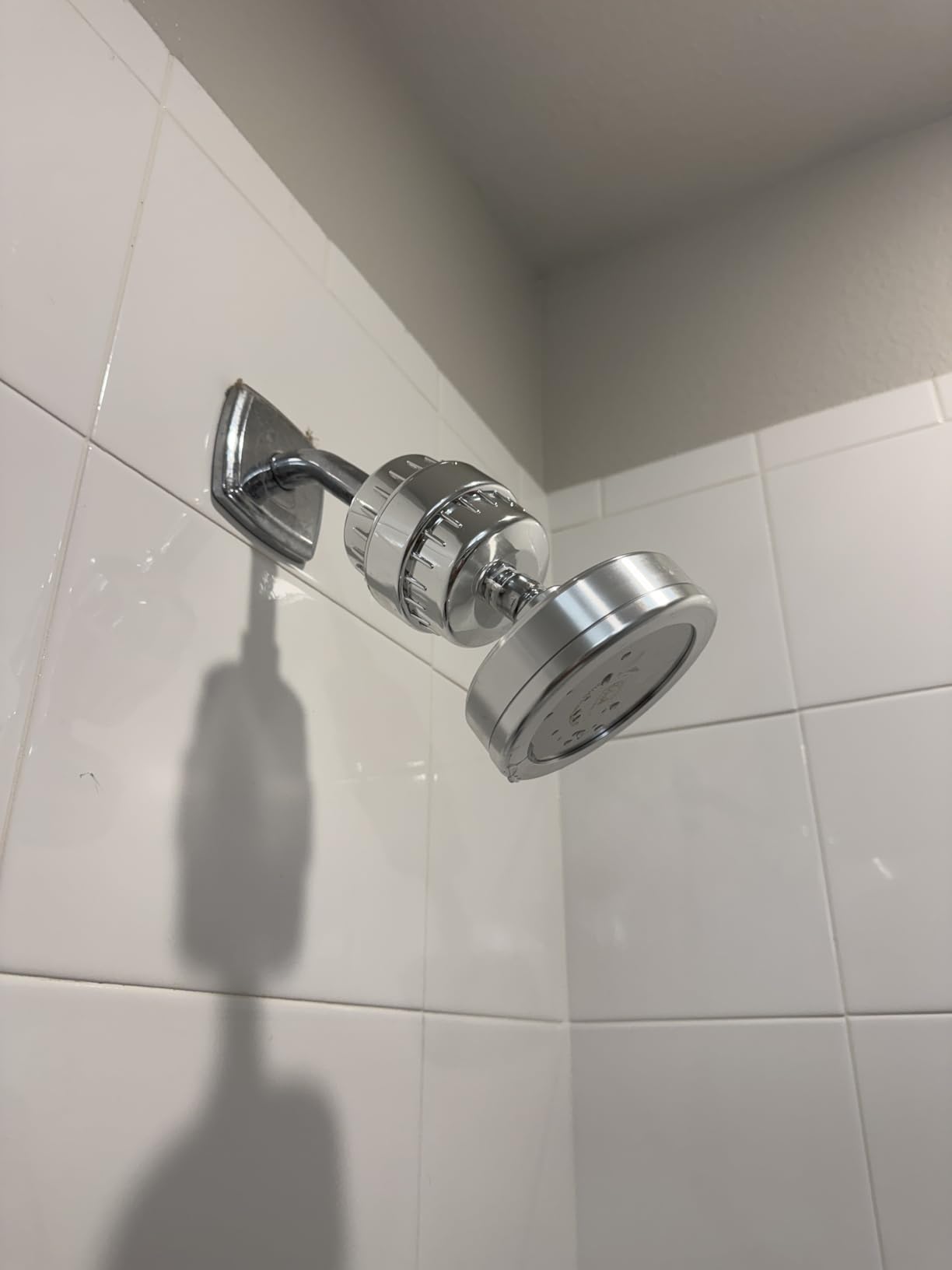
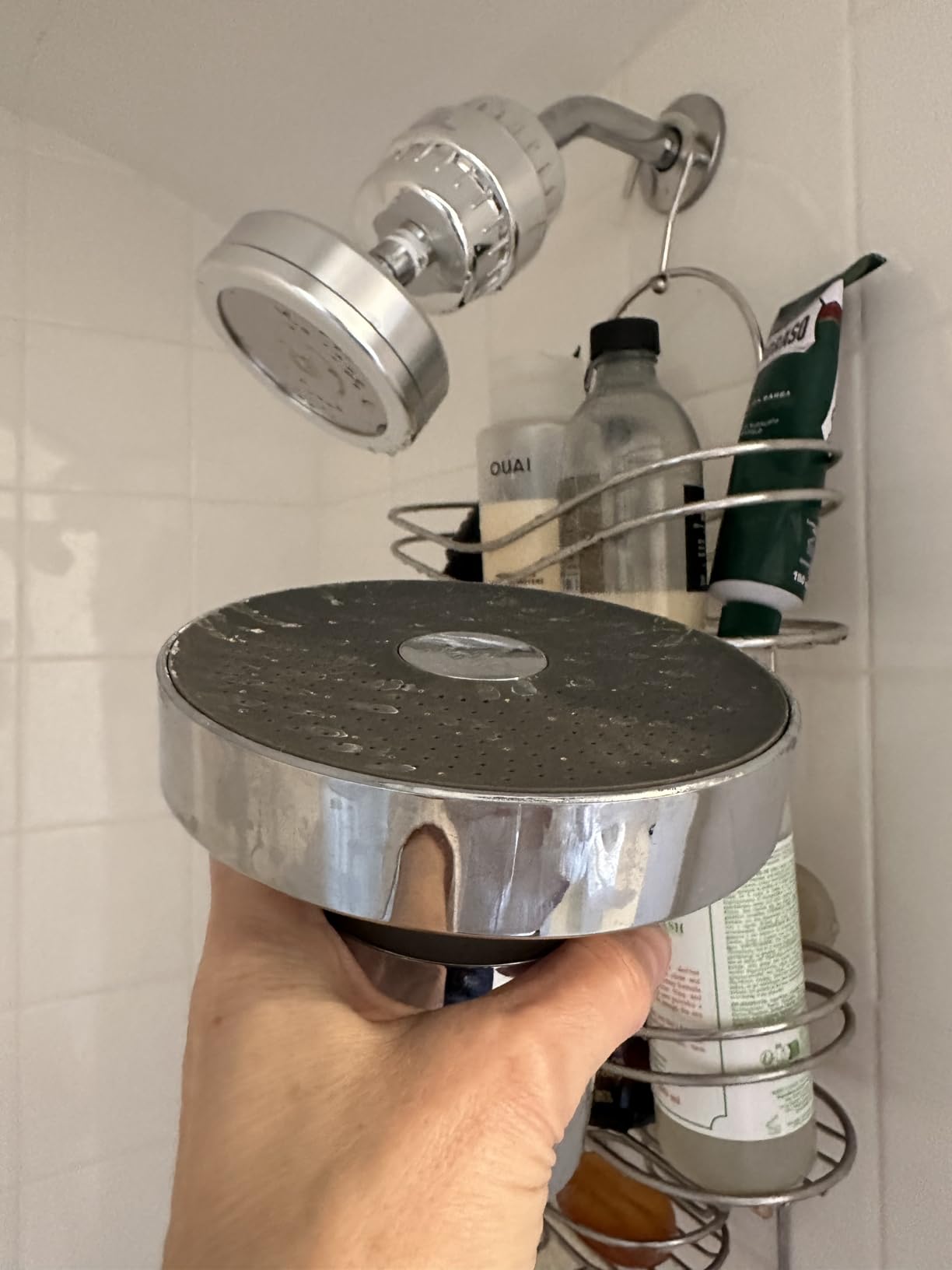
When your shower pressure is bad, the fix is flow rate, and the AquaHomeGroup is the only unit here that runs at the full 2.5 GPM. That single specification puts it ahead of every other filtered head in this roundup, and reviewers on low municipal pressure single it out as the reason they bought it.
It is also the one that feels substantial. A reinforced brass holder grips the wall instead of drooping, the hose is 59 inches of stainless steel rather than a plastic-coated tube, and replacement cartridges come in the box. On hard water, where plastic housings crack and threads strip, that metal-first construction is the more sensible long-term bet.
Reading the 20+3 stage claim honestly
The listing claims 20+3 stages with KDF media and vitamins C, E and A infused, and a 90% chlorine reduction figure. That figure is a manufacturer claim with no third-party certification attached, and the stage count is a convention rather than a measurement. The KDF itself is legitimate media for free chlorine and heavy metals.
Buyers confirm the chlorine odor reduction is real and consistent. Skin and hair benefits show up too, but more gradually, usually over several weeks rather than days. Nobody in the reviews verifies the 20+3 number, and we would not treat the vitamin infusions as a reason to choose this over a certified alternative.
Flow rate, hose and holder
Two and a half gallons per minute is the number that matters in a hard water apartment where pressure is already compromised. The reinforced metal brass holder is designed to resist slipping, and it does. The stainless steel hose resists the corrosion and staining that shows up on cheaper hoses in mineral-heavy water.
The trade-off is weight and bulk. Several buyers note the unit is visibly bulkier than a slim inline filter and that the metal holder adds heft to the handheld. If your showerhead already hangs low, this adds another few inches of drop.
Who it suits and who should skip it
Buy this if low pressure is your primary complaint, if you have kids or anyone who needs a firm handheld spray, and if you would rather buy one unit that will not crack in five years. The included spare cartridges also make it a good first purchase, since you are not immediately re-buying filters.
Pass if bathroom aesthetics matter more than flow, or if the bulk makes a low-mounted head unusable. And if your water is iron-rich, note that nothing in this stack addresses dissolved iron beyond what the KDF captures incidentally.
5. Cobbe – Best Shower Filter for Very Hard Water and Hair
Cobbe Filtered Shower Head with Handheld, Water Softener for Hard Water
KDF-55 and calcium sulfite media
6 spray modes
1.8 GPM
60 inch hose
Pros
- KDF-55 and calcium sulfite ball media
- One-button thumb-press mode switch is easier than a rotating dial
- Self-cleaning silicone nozzles resist limescale
- Lowest ongoing cartridge cost in the set
Cons
- Thumb-press switch reported sticking around the three-month mark
- Internal filter clogs over time and pressure drops
- Supplied thread tape is low quality and can leak
- All-plastic housing
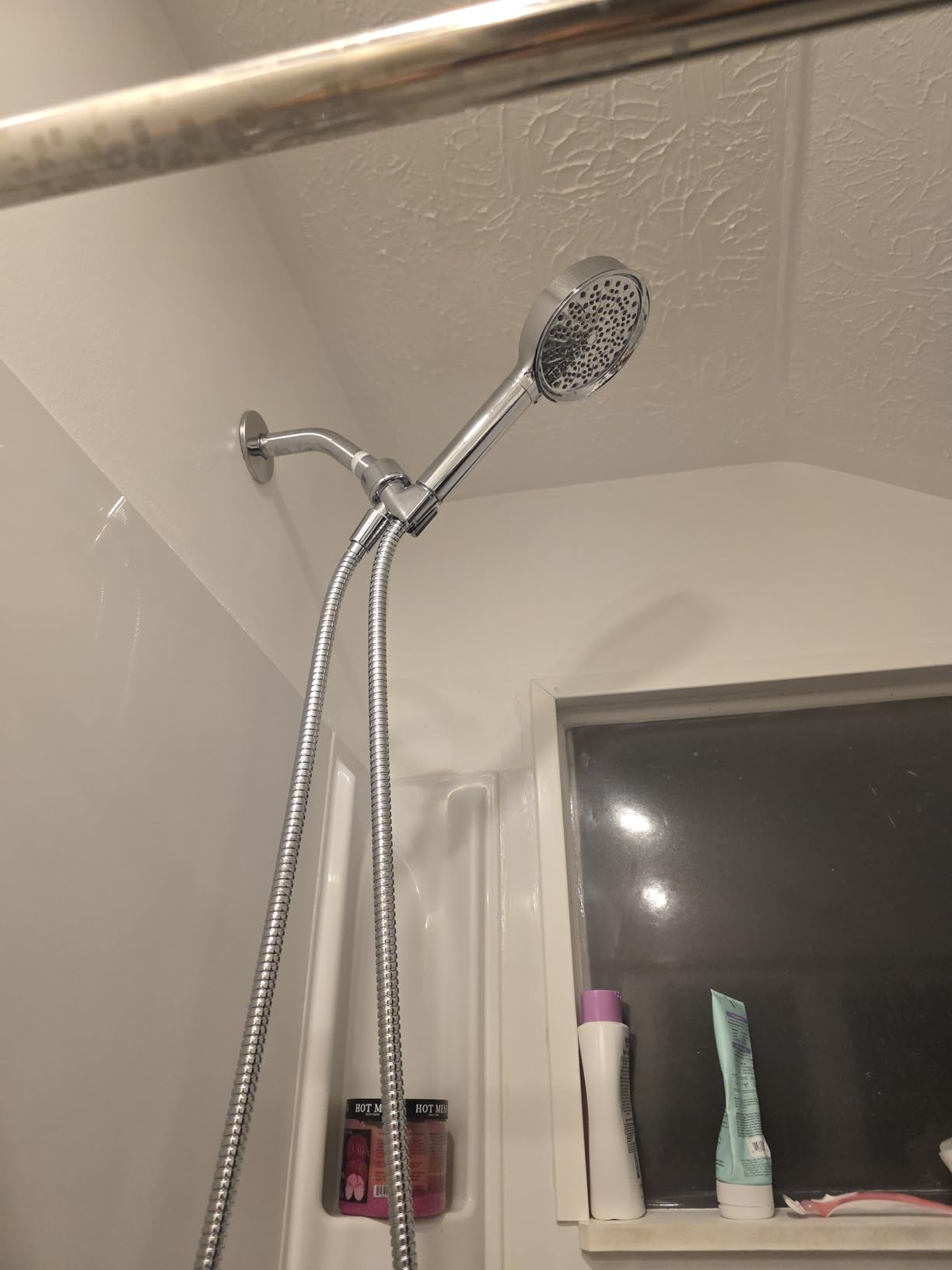
The Cobbe is the one in this roundup where reviews most often describe a visible change in hair quality, and the reason is the media. KDF-55 and calcium sulfite is the same pairing used in the certified options, and unlike vitamin or stone garnish media, both components do actual chemical work, calcium sulfite in particular on cold water.
It sits at 4.3 stars, and almost all of the criticism in the reviews comes down to two durability issues rather than filtration. Worth reading the cons before you buy.
Calcium sulfite and why cold water matters
Calcium sulfite is the sleeper component in this category. Most carbon media performs poorly in cold water, and a lot of people shower lukewarm. Calcium sulfite scrubs chlorine effectively regardless of temperature, which is why filters built around it tend to hold up better for people who do not run hot showers.
What it still cannot do is touch calcium and magnesium. Buyers report waxy hair going clean within a week, and that is a real and welcome change, but it is coming from chlorine and chemical reduction plus the softer feel of low-hardness-adjacent water, not from a hardness reading moving.
The thumb-press switch and the 144 nozzles
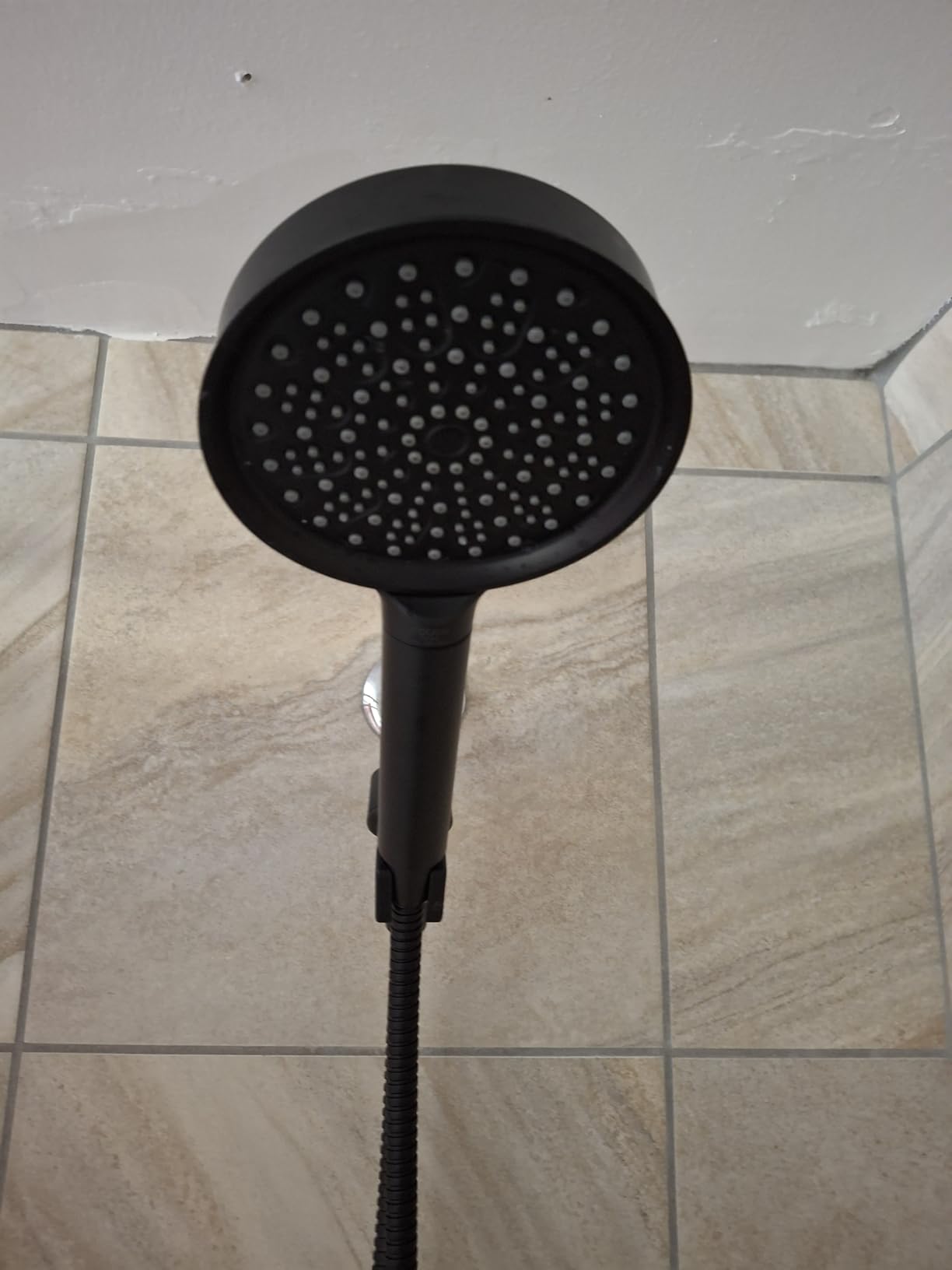
The one-button thumb-press mode selector is the best control design in this roundup. It switches between six spray modes without twisting, and it is genuinely usable for children and older users. The 144-plus dense silicone nozzles are self-cleaning and spread coverage wide enough to cut shower time.
One buyer reported the switch mechanism going sticky and failing around the three-month mark, which is the kind of failure that a metal alternative simply avoids. At 1.8 GPM the flow is fine but not exceptional.
Who it suits and who should skip it
This is our pick for extremely hard water households focused on hair, and for anyone who wants the lowest recurring cartridge cost in the category. The KDF-55 and calcium sulfite combination is a better media story than most of what you will find at this level.
Skip it if you are hard on hardware, because the all-plastic housing and the thumb-switch are the weak points. Buy your own thread tape rather than using the supplied roll, and expect the internal filter to clog eventually, with pressure dropping as the sign that it is time to change.
6. bwdm 15 Stage – Best Entry-Level Inline Shower Filter
15 Stage Shower Filter – Shower Head Filter – bwdm Hard Water Filter, Remove Chlorine Heavy Metals and other Impurities, Vitamin C Water Softener Reduces Dry Itchy Skin, Dandruff (Chrome)
15-stage carbon and vitamin C
2.5 gpm
Universal fit
Tool-free install
Pros
- Lowest-cost inline filter in the set
- Noticeable reduction in chlorine odor reported
- No pressure loss in normal use
- Tool-free install in under a minute
Cons
- ABS housing can crack if the fitting is overtightened
- Adds about 4 inches of drop under the arm
- Cartridge can foul with minerals in one to two months on very hard water
- Some buyers detect no change in water softness
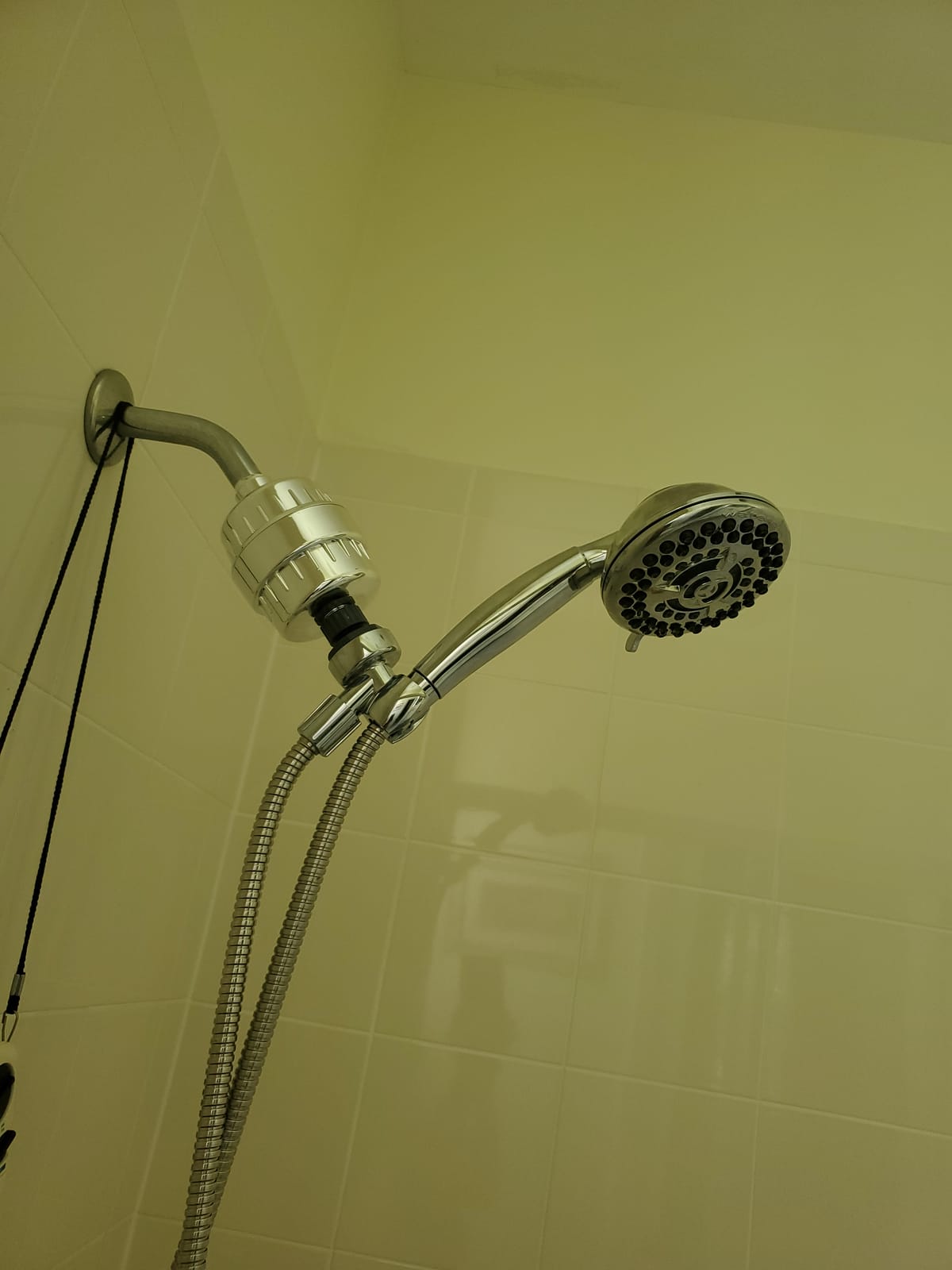
The bwdm is the cheapest way to find out whether a shower filter makes a difference in your bathroom, and for many people that is exactly the right experiment. It is a plain inline canister with a 15-stage carbon and vitamin C stack, a 2.5 gpm pass-through, and a universal fit that works with wall-mounted, handheld, rainfall and combo heads.
Reviews describe real chlorine odor reduction and multi-week improvements in hair and skin for most buyers, and the honest failure mode is well documented too. A minority of reviewers cannot detect any difference at all, and that is the correct expectation for a filter in this price bracket.
Cartridge life is the real story here
Buyers on genuinely hard water report the cartridge accumulating mineral buildup and stopping working within one to two months, not six. That is the honest tradeoff of an inexpensive inline filter and it is why we budget this one as a first purchase rather than a permanent install.
The replacement cartridge is a universal 2.7 by 2.4 inch unit, which is convenient, and the carbon media is the part doing the work. The vitamin C component is a mild additional antioxidant and nothing more.
Pressure, height and build
The design is pressure-neutral in normal use, and no buyer reports a meaningful flow loss until the cartridge is fouled. It does add about four inches of drop below the arm, which taller users will appreciate and shorter users may find they need a riser for.
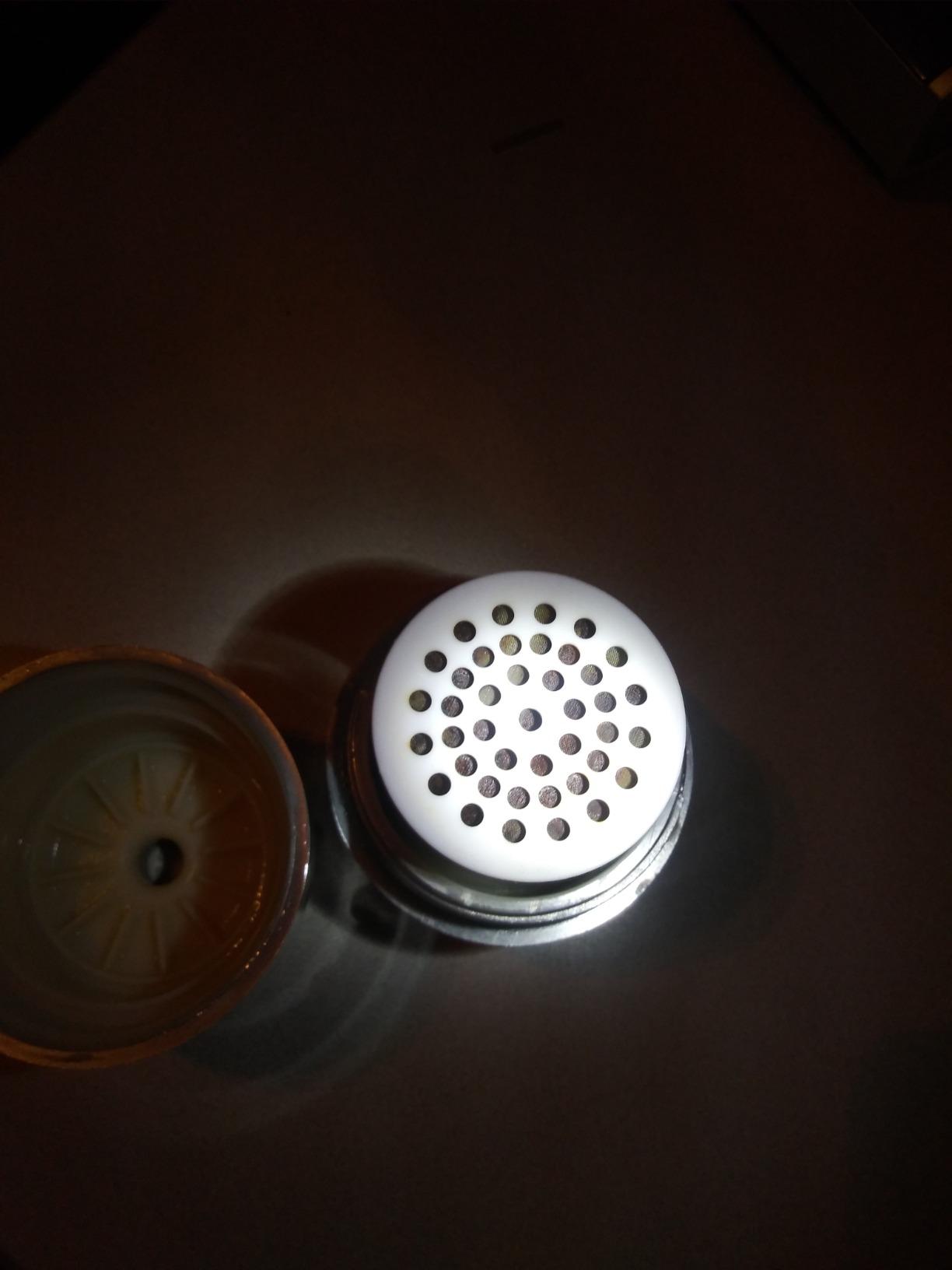
Build is cheap ABS with a carbon fiber style finish. The housing can crack if you overtighten it, so hand-tighten only. Flush the unit for five to ten minutes before your first shower to clear carbon dust.
Who it suits and who should skip it
Buy this if you rent, you are curious rather than committed, or you want the cheapest possible test of whether filtered shower water changes your hair. At this price, replacing it twice a year still costs less than a single mid-tier unit’s first cartridge cycle.
Pass if you have very hard water, because the cartridge will not survive the fouling rate. Also pass if you cannot source the universal cartridge in a year, which is a real risk with the cheapest listings in any category.
7. MakeFit – Best Filtered Shower Head for Build Quality
MakeFit Filtered Shower Head – High Pressure Shower Head with Filter for Hard Water Softener – 7 Settings Bathroom Rain Showerhead to Remove Chlorine and Heavy Metals (Chrome)
KDF-55 and calcium sulfite
Transparent cartridge
7 spray modes
Brass swivel
Pros
- Metal construction rather than chrome-plated plastic
- Transparent cartridge shows when a change is due
- Air-induction boost holds flow at low pressure
- All-in-one design avoids the extra height drop of a separate inline filter
Cons
- One reviewer saw no change in metals or fluoride using a third-party monitor
- Bulky appearance on the wall
- Fixed mount only with no handheld option
- A later batch arrived with a smaller head and weaker flow
The MakeFit earns its place on one feature that nobody else in this roundup has: a transparent cartridge. You can see the media load up, which turns cartridge replacement from a guess into a decision, and several buyers mention that visibility unprompted as the thing that made them stick with it.
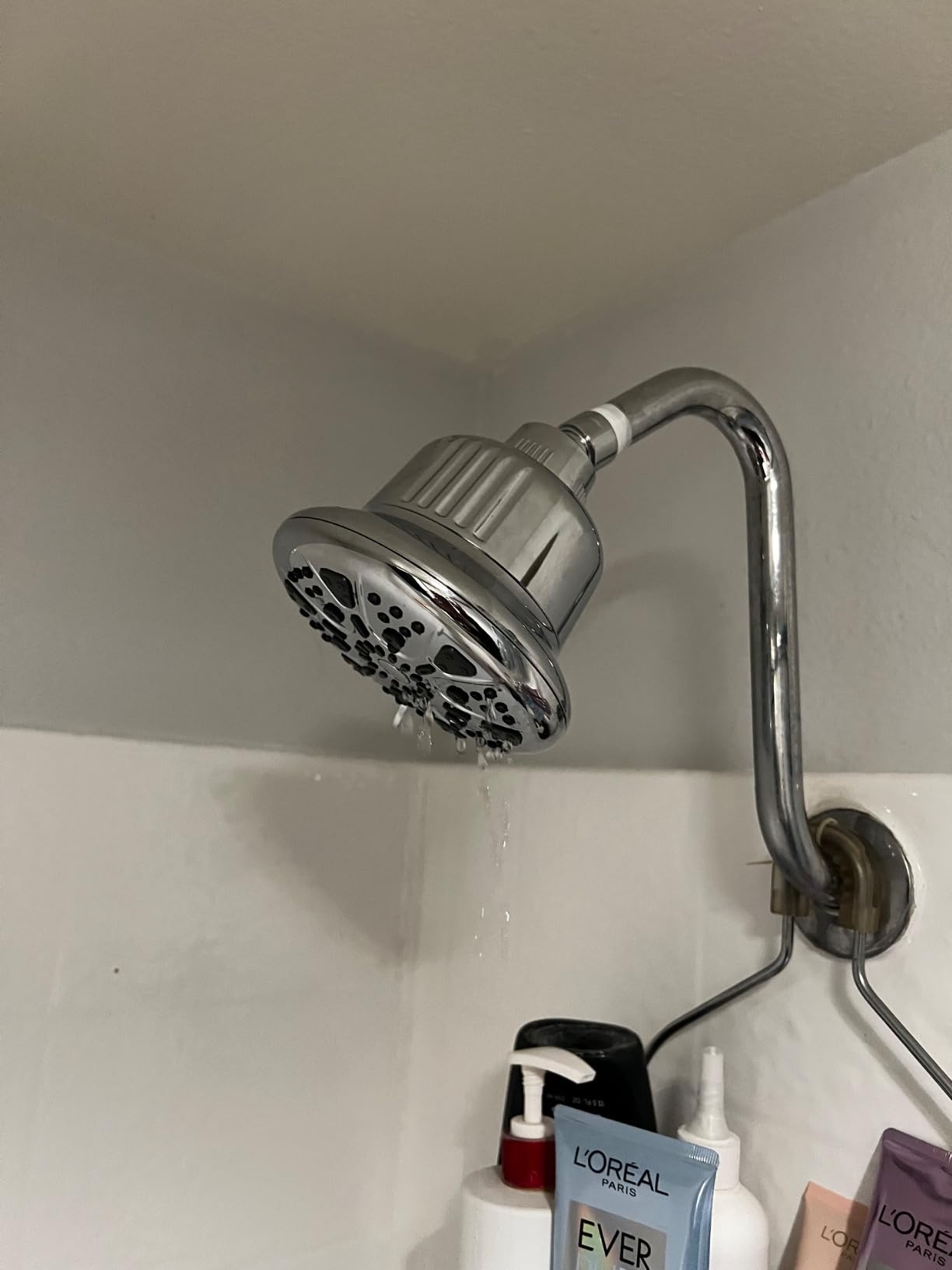
It is also genuinely metal. That sounds minor until you live in a hard water bathroom where chromed plastic housings crack and threads strip, and it explains the 4.5 rating from a much smaller review base than most of this list. The angle-adjustable brass swivel ball connector is the other quality signal here.
KDF-55, calcium sulfite and vitamin C
The media stack is the honest one: KDF-55 for free chlorine and heavy metals, calcium sulfite for chlorine including in cold water, and vitamin C as a supplementary antioxidant. That is a legitimate combination and it is why the chlorine claims are more credible than the stage counts elsewhere.
The one substantive critical review tested the output with a third-party water monitor and found no measurable reduction in metals or fluoride against unfiltered sink water, concluding the cartridge mainly addresses chlorine. That is a fair, verifiable negative and worth weighing, particularly if your concern is lead rather than chlorine.
Seven modes, air induction and the wall profile
Seven spray modes use air-induction boost, which holds spray strength at low line pressure, and the anti-clog nozzles are designed to shed lime and hard water deposits. The all-in-one design is a real practical advantage because it does not add the extra four inches of drop that a separate inline canister would.
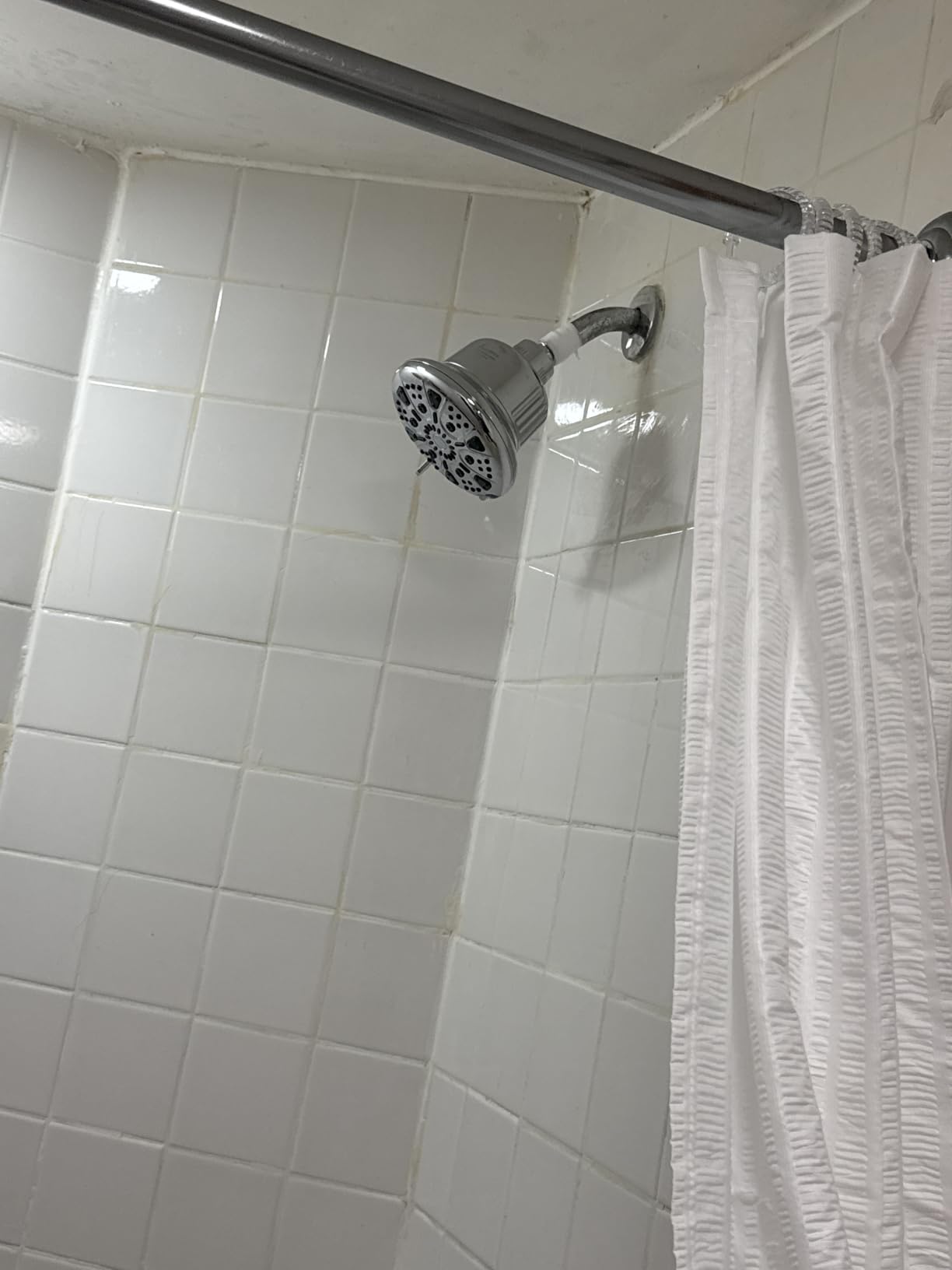
The trade-off is visual. The head is noticeably bulky on the wall, and it is fixed mount only, so there is no handheld wand for shampooing or rinsing a tub. One buyer also reported a later production batch arriving with a smaller head and much weaker flow, which is a consistency problem worth knowing about.
Who it suits and who should skip it
Pick this if you want a fixed filtered head that will not age badly, you hate guessing when to change a cartridge, or you are tired of a slow shower. The transparent cartridge and the brass connector make it feel like a fixture rather than an accessory.
Pass if you need a handheld, if you are on a very low shower arm, or if you need certified heavy metal removal. On that last point, the last product in this roundup is the one with independent certification.
8. weAQUA – Best Two-Pack Shower Filter for Two Bathrooms
weAQUA Heavy Duty 2-PACK Shower Filter for Hard Water Chlorine Heavy Metals
Two inline filters
Sediment, carbon and KDF media
Zero pressure loss design
Pros
- Two filters in the box for a second bathroom or a ready spare
- Uses conventional KDF and calcium sulfite media rather than gimmick mineral balls
- Engineered for no pressure loss
- Spare installation parts included
Cons
- 99 percent removal claim carries no third-party certification
- Bulkier inline body than single slim filters
- Six-month life claim is optimistic in very hard water
The weAQUA solves a problem nobody else on this list addresses: what happens when the cartridge dies while you are on a trip, or when you have two showers. The two-pack format gives you one installed and one ready to swap in, or one per bathroom, and the spare installation parts are in the box.
It also positions itself against the ceramic and energy-ball filters used by cheaper competitors, and uses conventional sediment, carbon, KDF and calcium sulfite media. That is the right media for real filtration, and reviewers seem to accept the framing without complaint.
Media, claims and what the certification gap means
Sediment and carbon handle grit and chlorine, KDF handles free chlorine and metals, and calcium sulfite covers chlorine in cold water. That is a conventional and sensible stack for a shower. The claim of 99 percent removal of hard water, chlorine, heavy metals, fluoride and organics carries no third-party certification whatsoever.
Hard water, meaning hardness minerals, is not something any filter in this roundup removes, so read that claim as marketing language. The other filtration claims are more plausible, but unverified is unverified, and this is the single clearest certification gap in the lineup.
Install, pressure and longevity
Installation takes about five minutes with no tools, and the chrome-plated anti-impact ABS fits all shower types. The design is engineered for zero pressure loss, which reviewers confirm subject to the cartridge being fresh.
On longevity, treat the six-month figure as a best case. In genuinely hard water, mineral loading shortens the useful life of any carbon-based cartridge, and the fact that you have a spare in the box is the whole point. This is also one of only two listings in the roundup with no customer images available, so expect less real-world detail than the others.
Who it suits and who should skip it
Buy this for a two-bathroom home, a house-share, or anyone who has been burned by arriving home to a dead cartridge. The chrome-plated housing is more robust than bare plastic and the media is conventional rather than decorative.
Pass if you need documented certification, or if you only want one filter and do not want to store a spare. The bulkier inline body is the other trade-off to weigh if your showerhead already hangs low.
9. MyHalos – Best Filtered Shower Head for a Luxury Feel
MyHalos® Filtered Shower Head, Shower Head Filter for Hard Water (Chrome)
Three-stage KDF-55 filtration
1.8 GPM
90-day cartridges
Lifetime head guarantee
Pros
- Strong output preserved despite the filter
- Skin and hair changes reported within one to two weeks
- Tool-free install in about 10 minutes
- Lifetime guarantee on the head
Cons
- Shortest stated cartridge life in the set at 90 days
- Handheld wand sold separately
- 1.8 GPM is below the 2.5 GPM maximum
- Instructions do not explain the two supplied water restrictors
The MyHalos is the most expensive unit here, and the reviews justify the premium on build and pressure rather than filtration depth. Buyers frame it as a nicer shower head that happens to filter, which is exactly what you should want from a product at this level. Strong output and no leaking are the recurring notes.
The media is conventional and correct: three stages of calcium sulfite, KDF-55 and activated charcoal. The chlorine and chemical reduction is real, and skin and hair improvements typically appear within one to two weeks. The lifetime head guarantee is also a genuine differentiator, though it covers the head and not the filters.
The 90-day cartridge problem on hard water
Here is the hard water catch. Filters are stated to last up to 90 days for a family of three, which is the shortest interval in this roundup, and that figure assumes normal use on moderately hard water. On very hard supply it will be shorter, and one buyer in Cancun reported the filter clogging within two weeks in very hard water.
That is a real ongoing cost, because you are replacing cartridges four to twelve times a year. If you are on very hard water and stay in a long-term home, this is the unit where cartridge economics work against you.
Pressure, restrictors and the missing handheld
At 1.8 GPM with two water restrictors supplied, flow is good rather than exceptional, and the instructions do not explain which restrictor to use, which is a small but annoying gap. Install takes about ten minutes by hand with plumber tape included, and no leaks were reported by most buyers.
The handheld wand is a separate purchase, which several buyers found irritating. The fixed head is polished chrome ABS weighing 16 ounces, and it suits a bathroom where the shower is the centerpiece rather than a utility.
Who it suits and who should skip it
Buy this if you are renovating a bathroom, you want the strongest guarantee in the category, and you are more bothered by chlorine smell and dry skin than by scale. Owners in this group describe the shower experience as a step up, not a marginal improvement.
Pass if cartridge cost per year matters, if you need a handheld bundled, or if you have very hard water where a 90-day interval will not hold. For most people the media advantage here is marginal compared with the certified carbon system at the end of this list.
10. AQUAYOUTH 2.0 – Best NSF-Certified Shower Filter for Verified Filtration
AQUAYOUTH 2.0 Carbon Shower Head Filter System | Removes Chlorine, Heavy Metals, And More | Great For Dry Skin/ Hair, And More | NSF Certified
NSF 177 and 372 certified
Pre-installed cartridge
Tool-free swap
2.0 carbon system
Pros
- Only NSF/ANSI 177 and 372 certified option in the set
- Cartridge changes without disassembling the shower head
- Heavy metal reduction confirmed by KEWWI
- One buyer confirmed chlorine removal with their own test kit
Cons
- Leaks from the plastic cartridge housing until extra Teflon tape is added
- Housing can hold standing water that does not fully drain
- Added length drops the shower head roughly 3 inches
- Filter turns water brown or pink in very hard or iron-rich water
Everything else in this roundup asks you to take a marketing claim on faith. The AQUAYOUTH 2.0 is the one that does not. It is NSF/ANSI 177 certified for free available chlorine reduction and NSF/ANSI 372 certified for low lead content, with heavy metal reduction confirmed by the Korea Environment and Water Works Institute. In a category where almost nothing carries a third-party mark, that is a different category of product.
It is also the joint-lowest rated item here at 4.2 stars, and the reason is almost entirely installation rather than filtration. Read the fix below before you buy, because it is a two-minute fix and it determines whether you like the product.
What NSF/ANSI 177 and 372 actually cover
NSF/ANSI Standard 177 is the performance standard written specifically for shower filters, and it certifies reduction of free available chlorine to a defined threshold rather than a marketing percentage. NSF/ANSI 372 covers lead content in the product’s contact materials. Neither standard certifies hardness reduction, because no filter media in this roundup performs that function.
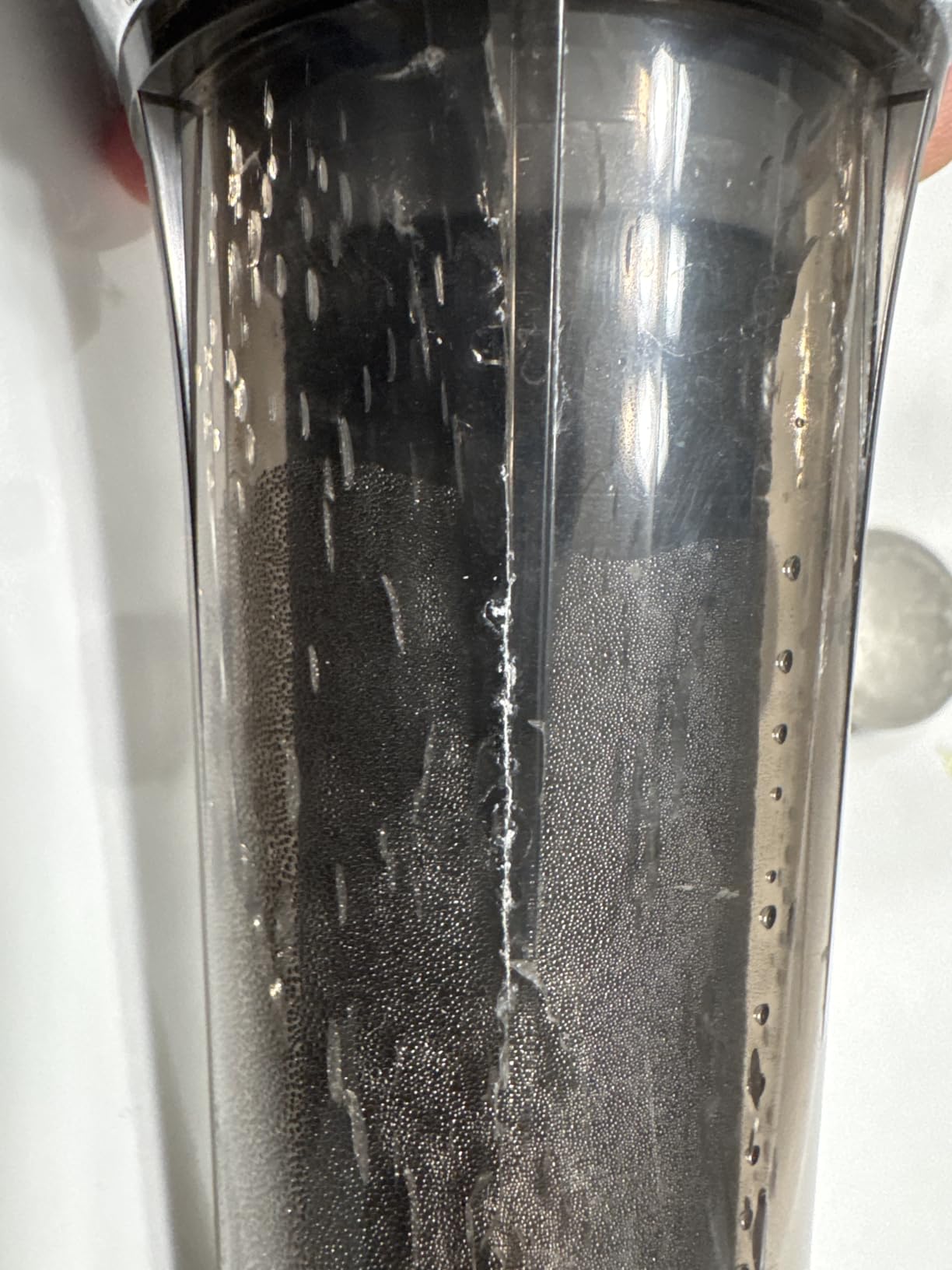
One buyer independently tested the output with a water test kit and confirmed chlorine reduction in both hot and cold water, and long-term multi-year reports describe no showerhead clogging and no iron staining. That is a very different evidence base from a listing that says 99 percent removal.
The leak fix you will need
Nearly every critical review reports weeping at the threads of the chrome-plated plastic housing. The solution is simple and consistent: add several extra wraps of Teflon tape beyond what comes in the box, and hand-tighten only. Buyers who do this report the leak disappears entirely.
Other recurring notes: the housing can hold standing water that does not fully drain, and the added length drops the showerhead roughly 3 inches, which taller users will want to check before installing.
Hard water and iron caveat
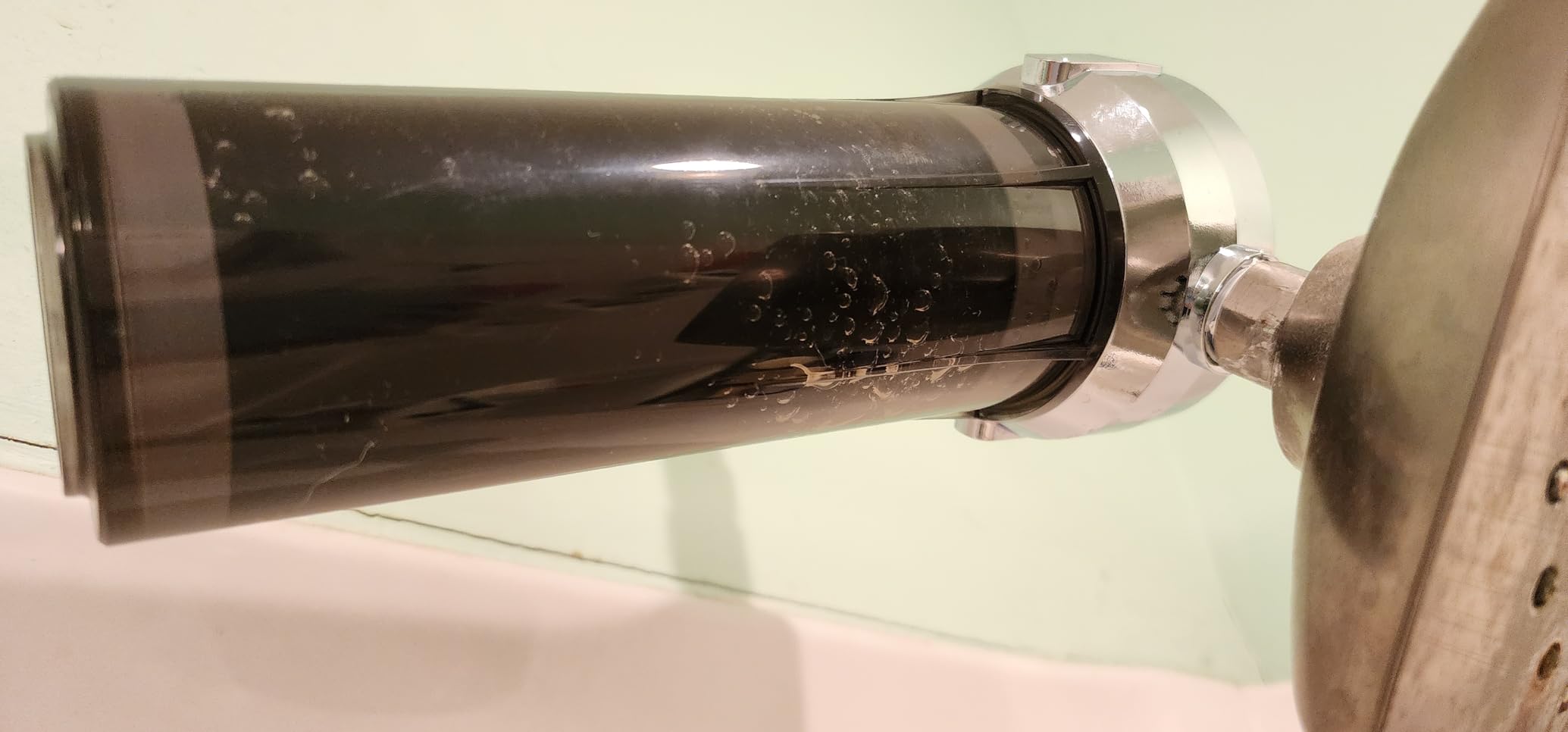
If your supply is very hard or iron-rich, read the reviews carefully. Buyers report the filter turning the water visibly brown and pink, which is iron and sediment being captured and released rather than a fault, but it looks alarming until you understand what is happening.
This does not mean it is failing, but it does mean you should set expectations with everyone in the house before the first shower. On standard hard water without significant iron, the multi-stage carbon filtration targets chlorine, heavy metals, rust and sand as intended.
Who it suits and who should skip it
Buy this if certification matters to you, if lead is a concern in an older building, or if you have been disappointed by unverified claims elsewhere. The cartridge design, which changes without disassembling the shower head, is the most praised feature in the reviews and the reason several owners switched to it.
Pass if you will not apply extra Teflon tape, or if the 3-inch drop is a problem for tall users. At 4.2 stars it is the least-loved product in the lineup, and that reflects the fitting rather than the filtration.
How to Test Your Own Water Hardness Before You Buy
Hardness is measured in parts per million, or equivalently in grains per gallon, and one grain per gallon equals about 17.1 ppm. Knowing your number changes which of these filters is worth buying and whether you should be looking at a softener instead. It takes about five minutes and a test strip.
There are three routes, in ascending order of accuracy. First, a hardness test strip from a hardware store or aquarium supply shop dips into a glass of cold tap water held for a few seconds, develops a colour and matches a chart, and costs almost nothing. Second, a TDS or hardness colourimeter gives a numeric reading you can record, which lets you measure before and after a filter. Third, your water utility publishes an annual water quality report with hardness by district, and that is the most accurate number available if you read past the chlorine section.
Here is how to read the result. Under 60 ppm, or under 3.5 grains per gallon, is soft, and a chlorine filter alone will do fine. Between 60 and 120 ppm is moderately hard, where chlorine and odor filters still perform well. Between 120 and 180 ppm is hard, the range where scale, waxy hair and dry skin become noticeable, and a KDF-55 and calcium sulfite stack is worth the money. Above 180 ppm is very hard, and no shower filter will fix the core problem, so a shower-line ion-exchange unit or a whole-house softener should be on your shortlist.
One more measurement is worth taking if your budget allows. Measure hardness, then install your chosen filter and measure again after a week of daily showers. If the number has not moved, which it will not on any filter in this roundup, you have saved yourself from expecting a miracle and you know exactly what problem remains.
How to Choose a Shower Filter for Hard Water Areas
Pick the media before the brand
Every listing in this category uses the same vocabulary, and 15-stage means nothing on its own. The three media that actually matter are KDF-55 copper-zinc, which converts free chlorine into harmless chloride and captures iron and some heavy metals; calcium sulfite, which scrubs chlorine and works in cold water where most carbon media stalls; and activated carbon, which adsorbs chlorine, odor and disinfection byproducts on a large surface area.
Media labelled as maifan stone, tourmaline, ceramic balls or vitamin balls adds bulk and cost without meaningful filtration. If a listing leads with those instead of naming KDF or carbon, skip it. Catalytic carbon is the one upgrade worth seeking, and it is the only media that meaningfully attacks chloramine, which is what most large municipal systems on the West Coast use.
Decide whether your water is chlorinated or chloraminated
Chlorine off-gases. Leave a glass of tap water on the counter for an hour and the smell mostly disappears if it is free chlorine, which means standard activated carbon will handle it. Chloramine does not off-gas, and the smell stays. If your water smells the same at room temperature as it does in the shower, you are likely dealing with chloramine, and ordinary carbon will barely touch it.
That is the single most useful test a buyer can run before purchasing, and it takes an hour. If the answer is chloramine, prioritize catalytic carbon media and be skeptical of products that only claim standard carbon.
Choose inline or integrated by how often you change filters
An inline filter sits between the arm and your existing showerhead and adds about four inches of drop. A showerhead-integrated filter replaces the head entirely and adds almost no height, but you are locked into that brand’s cartridge and finish. If you already love your showerhead and its spray pattern, an inline unit is the better trade. If your showerhead is mediocre, the integrated units here give you a hardware upgrade as a side effect.
For rentals and apartments, this is the whole decision. Inline units come off in under five minutes with no tools and leave the original hardware intact for move-out.
Certification beats stage counts every time
NSF/ANSI 177 is the performance standard written for shower filters and certifies free available chlorine reduction to a defined threshold. NSF/ANSI 372 covers lead content in contact materials. Exactly one product in this roundup carries both, and in a category where most listings print a percentage with no lab behind it, that single fact is worth more than three extra stages.
WQA certification is a related mark worth looking for. If a listing shows neither, treat its filtration percentages as marketing and judge it on media and build quality instead.
Cost per gallon beats sticker price
Divide the cartridge price by the gallons you will actually run through it. A filter that costs more but ships with spares and a long replacement interval often comes out ahead of a cheaper unit with a 90-day cartridge you will replace four times a year. Cartridge life claims stated in months rather than gallons are the least trustworthy number on any listing, which is why measuring your own flow helps.
Also price in the height drop and the finish match. A filter that adds four inches of drop and does not match your fixtures will annoy you more than its filtration ever pleased you.
Hard iron water needs a different plan
Hard iron water produces orange and rust staining on glass, tile and drain fittings, and a distinct metallic odor. That is dissolved or particulate iron rather than hardness, and a shower filter with a KDF stage will reduce the particulate fraction and some dissolved iron, which helps, but the staining on your glass will come back until the iron is addressed upstream.
For persistent orange staining, treat the shower filter as a partial measure and talk to your utility about a rust filter or an oxidation filter at the entry point. If you are on a private well, a KDF stage plus sediment pre-filter is the correct shower-side pairing.
When a Shower Filter Is the Wrong Purchase
Some situations are beyond any filter on this page. If your hardness is above 180 ppm and your main complaints are waxy hair, rough skin and scale that returns within days of cleaning, a filter will not solve it, and no amount of cartridge changes will change that.
A shower-line ion-exchange softener is the right middle step. It screws into the same arm as a filter, exchanges calcium and magnesium for sodium, and measurably lowers the hardness of your shower water without a plumber. The trade-offs are real: the resin needs periodic recharging, and sodium levels go up slightly, which matters for some people on dietary restrictions.
If scale is appearing on your water heater, your dishwasher or your kettle, the problem is at the entry point and a whole-house softener is the only real answer. A user in r/WaterTreatment made exactly this call after hard water damaged their hair, and it is the correct call when the symptoms show up all over the house rather than just in the shower.
Your First 30 Days With a New Shower Filter
Flush the cartridge before you judge it. Every unit in this roundup needs five to ten minutes of running water to clear carbon dust, and the FEELSO in particular will discharge black water that looks alarming and is entirely normal.
Log a baseline before you start. Note your water pressure at a fixed setting, take a photo of your shower glass, and write down the condition of your hair and skin. Undated impressions are useless, because you will convince yourself something changed when the weather changed.
Track pressure as your replacement signal. When spray weakens at the same setting, the media has loaded and it is time to change it, whether the listing says three months, six months or ninety days. On very hard water that interval will be shorter than any printed figure.
Judge hair and skin on a schedule, not daily. Chlorine and odor reduction is usually noticeable within the first week, while skin and hair texture changes typically take two to four weeks of consistent use. If nothing has shifted by week four and your hardness is high, you are probably in the wrong product category rather than the wrong product.
Frequently Asked Questions
Do shower filters for hard water actually work?
Partly. They reliably reduce free chlorine, chloramine with catalytic carbon, disinfection byproducts, sediment, metals and odor, and many owners report softer hair and less dry skin. They do not lower water hardness, because calcium and magnesium are dissolved minerals that filter media cannot capture. Independent testing measured 250 ppm of hardness entering a filter and 251 ppm leaving it.
Are there any shower filters that actually soften water?
No shower filter using carbon or KDF media softens water. Softening requires ion exchange, where resin beads swap calcium and magnesium for sodium. For a shower, that means a portable ion-exchange unit that screws onto the shower arm, or a whole-house softener at the entry point. These are a different product category with periodic recharging and a small increase in sodium.
What is the best shower filter for hard water areas?
For most hard water households, the Aquabliss SF100 inline filter is the strongest all-round pick because it is tool-free, widely serviceable and the most consistently reviewed. If low water pressure is your main problem, choose the AquaHomeGroup at 2.5 GPM. If certification matters, the AQUAYOUTH 2.0 is the only option here with NSF/ANSI 177 and 372. If hardness exceeds 180 ppm, buy a shower softener instead.
Are showerhead filters worth the money?
They are worth it for chlorine, odor and metal reduction, and for the improved feel of hair and skin, but they are not worth buying on the promise of removing hard water minerals. Value depends on cartridge cost per gallon and build quality. A metal-bodied unit with included spares usually beats a cheaper plastic one over five years, while a unit needing 90-day cartridges costs far more per year than its sticker figure suggests.
What are the downsides of using shower filters?
The main downsides are that they do not soften water, they add four inches of height below the arm, most leak at the threads until extra Teflon tape is added, and cheap ABS housings crack if overtightened. Cartridge costs recur for the life of the product and are usually quoted in months rather than gallons. Flow rate can drop as media loads, and plastic housings can yellow or crack in a wet bathroom.
The Verdict on the Best Shower Filters for Hard Water
If you are in a rental or an apartment with no softener and you want the single most dependable option, the Aquabliss SF100 is the one we would put in the shower arm. It is the best inline shower filter for hard water here, hand-tightens in under two minutes, keeps your existing showerhead, and has the largest body of real owner feedback in the category.
If low water pressure is your bigger problem than odor, take the AquaHomeGroup and its 2.5 GPM output with its metal brass holder.
If you want one purchase that solves both a weak shower and chlorine odor, the FEELSO at 4.6 stars is the one. If you have two bathrooms or you have been stranded by a dead cartridge, the weAQUA two-pack solves a problem nobody else here does. And if you only care about claims you can verify, the AQUAYOUTH 2.0 is the only NSF and ANSI certified shower filter in this roundup, so add a few extra wraps of Teflon tape before you install it.
And if your measured hardness is above 180 ppm and your hair is still going waxy after a month of any of these, stop buying filters and look at a shower-line ion-exchange softener or a whole-house unit. We would rather tell you that now than sell you another cartridge in 2026. Measure your water first, pick the media second, and treat the sticker figure as the least important number in the decision.