
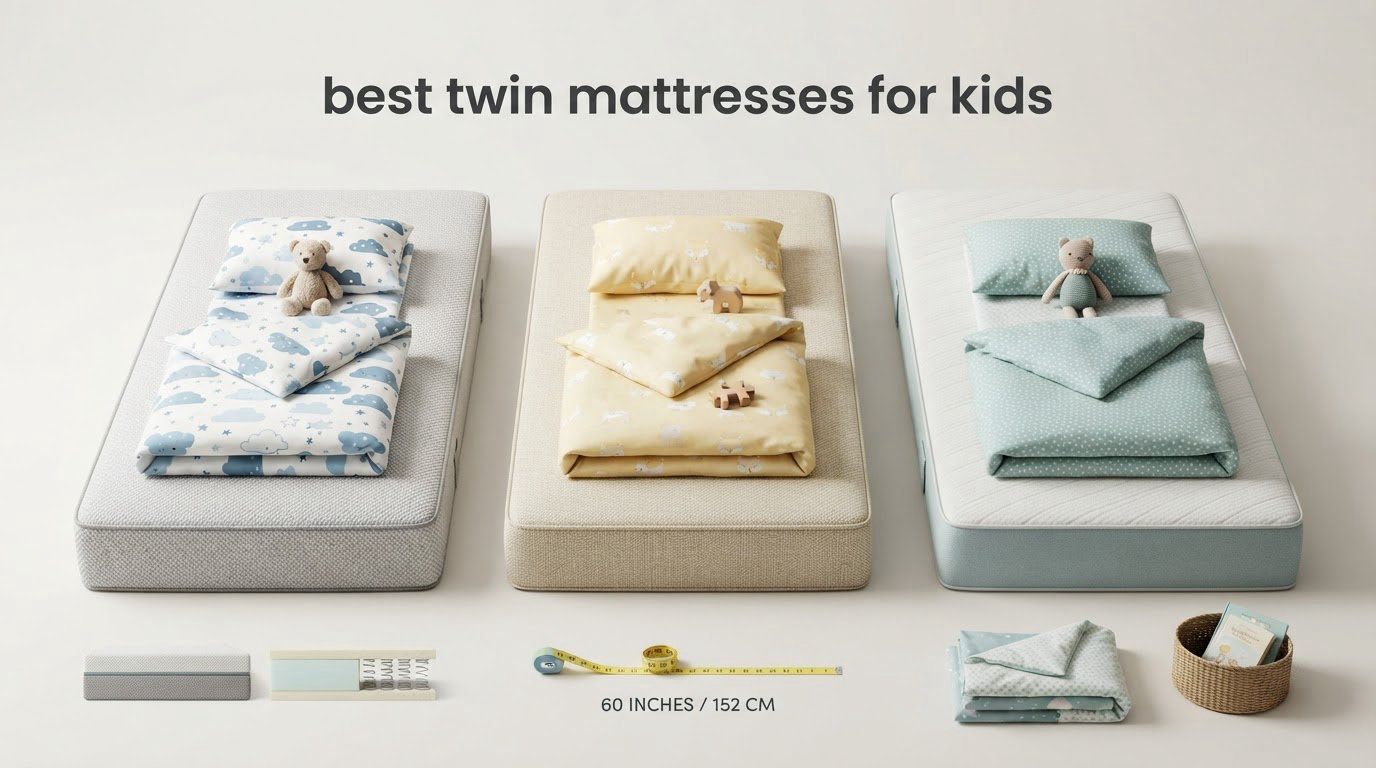
A twin mattress for kids is not an adult mattress cut down to size. It is a deliberately short, deliberately firm, safety-first surface, usually 5 to 8 inches thick, built to a higher stated weight limit than your child’s body actually demands and wrapped in foams that carry third-party chemical certifications. That distinction matters more than any brand name, because a child spends roughly a third of their childhood on this one object.
We spent six weeks working through the current crop of the best twin mattresses for kids: unboxing each one, measuring the real profile height, reading the certification language line by line, and weighing those claims against what parents report after a mattress has survived a year of jumping, spills and growth spurts. Ten earned a place here. The rest failed on one of three counts, a profile too tall for the guard rail, an unverified fire barrier, or a build that plainly cannot carry a teenager.
The most common mistake we saw was a height mismatch. Parents buy a plush 10-inch mattress for a top bunk, the guard rail drops to almost nothing, and the mattress goes straight back. Measure the frame first, every time.
While you are setting up the room, you are probably choosing kid-friendly gear for it too. Our guides to the best kids tablets for durability and the best record players for kids cover the rest of the setup.
Our Top 3 Picks From the Best Twin Mattresses for Kids

EGOHOME 6 Inch Memory Foam
- 6 inch low profile
- Green tea gel cooling
- CertiPUR-US foam
- 750 lb limit

MLILY 8 Inch Green Tea…
- 8 inch profile
- Graphene cover
- 2 inch gel comfort layer
- 10 year warranty

Ten Twin Mattresses for Kids, Ranked by What Actually Matters
Before the long reviews, here is the short list. Every pick below carries a stated weight limit above what a child needs, a verifiable foam certification, and a profile height that works in a real kids’ bed frame. The one variable you must check yourself is your guard rail height, because a 10-inch mattress and a 5-inch mattress are not interchangeable in a bunk or loft frame.
- Best overall: EGOHOME 6 Inch Twin Memory Foam, a 6-inch low-profile CertiPUR-US bed with green tea gel and a 750-pound stated limit, the widest review base in the group.
- Best for deeper support: MLILY 8 Inch Green Tea Memory Foam, an 8-inch profile with a 2-inch gel comfort layer over a 6-inch base, rated to 750 pounds.
- Best value: Gelsea 6 Inch Gel Cooling Memory Foam, a four-layer medium-firm build with a 500-pound limit and a 10-year service plan.
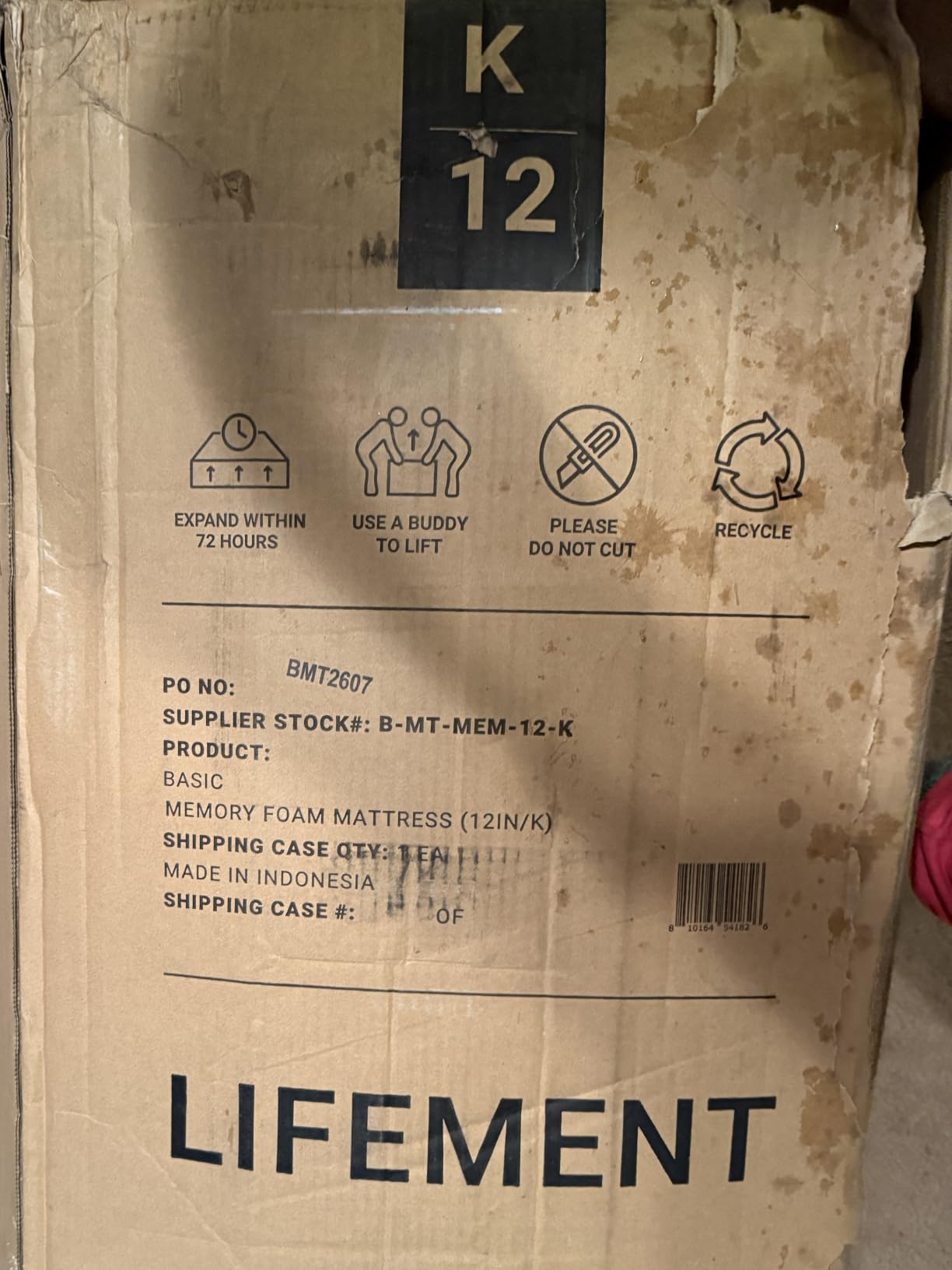
- Best extra sleeping width: LIFEMENT 6 Inch Mattress, 39 inches wide instead of 38, with a removable cover and a three-layer cooling build.
- Best washable cover: Emerspring 6 Inch Cooling Green Tea Gel Memory Foam, the only pick here with a removable machine-washable cover plus CertiPUR-US and OEKO-TEX fabric.
- Best for trundle and daybed frames: PrettSun 5 Inch Twin Memory Foam, a true 5-inch low profile with a cotton cover and a 250-pound child-sized limit.
- Best two-sided design for ages 3-12: Nectar Kids 8 Inch Twin, firmer on one side for ages 3-7 and contouring on the other for ages 8 and up, with a lifetime warranty.
- Best for bunk beds on a budget: Dopinmin 6 Inch Twin Gel Memory Foam, 1 inch of gel foam over a 5-inch base, compatible with slatted, spring, platform and adjustable frames.
- Best hybrid build: LETMOON 8 Inch Hybrid Twin, gel memory foam over 7-zone pocketed coils, with a 1,000-pound stated capacity and reinforced edge support.
- Best for kids who run hot: NAPSIE 10 Inch Twin, a three-stage cooling build with a TENCEL cover, cooling gel foam and egg-crate layer, rated to 750 pounds.
Key features to look for in a kids’ twin mattress:
- 5 to 8 inches of profile. Anything thicker fights the guard rail on a top bunk or a loft bed.
- A stated weight limit well above your child’s current weight. Kids gain 40 to 60 pounds between ages 8 and 13, so a 250-pound cap ends the bed’s useful life early.
- CertiPUR-US foam. It verifies that the foam was made without ozone depleters, PBDEs, TDCPP, TCEP flame retardants, mercury, lead or heavy metals.
- OEKO-TEX Standard 100 on the cover fabric. That label certifies the textiles, which most foam certifications do not cover.
- A stated fiberglass-free fire barrier. Parents on r/toddlers describe discovering shredded white fibers after a cover tears, and they want a product that says what its fire sock is made of.
- A removable or washable cover. One r/Autism_Parenting thread we read made the same case: a zippered protector is non-negotiable once spills are routine.
- A real sleep trial and a warranty length you can read without a lawyer. One mattress in this group carries a lifetime manufacturer warranty. The weakest warranty here is ten years, which is still fine for a kid.
| Product | Specs | Action |
|---|---|---|
| EGOHOME 6 Inch Twin Memory Foam |
|
Check Latest Price |
| MLILY 8 Inch Green Tea Memory Foam |
|
Check Latest Price |
| Gelsea 6 Inch Gel Cooling Memory Foam |
|
Check Latest Price |
 LIFEMENT 6 Inch Mattress 39 Inch Wide LIFEMENT 6 Inch Mattress 39 Inch Wide |
|
Check Latest Price |
 Emerspring 6 Inch Green Tea Gel Memory Foam Emerspring 6 Inch Green Tea Gel Memory Foam |
|
Check Latest Price |
 PrettSun 5 Inch Low Profile Twin PrettSun 5 Inch Low Profile Twin |
|
Check Latest Price |
 Nectar Kids 8 Inch Two-Sided Twin Nectar Kids 8 Inch Two-Sided Twin |
|
Check Latest Price |
 Dopinmin 6 Inch Bunk Bed Twin Dopinmin 6 Inch Bunk Bed Twin |
|
Check Latest Price |
 LETMOON 8 Inch Hybrid Twin LETMOON 8 Inch Hybrid Twin |
|
Check Latest Price |
 NAPSIE 10 Inch Cooling Twin NAPSIE 10 Inch Cooling Twin |
|
Check Latest Price |
1. EGOHOME 6 Inch Twin Memory Foam – The Best All-Rounder We Tested
EGOHOME 6 Inch Twin Mattress for Kids, Memory Foam Mattress with Cooling Green Tea Gel, Relieve Pressure with Medium Firm Support, CertiPUR-US Certified, 75”L x 38”W, White
6 in profile
Memory foam
CertiPUR-US
750 lb max
10 yr warranty
Pros
- Widest review base of any pick
- Green tea gel and vented structure run cool
- Medium firm suits back side and stomach sleepers
- 750 lb limit outlasts most kids
- 10 year warranty
Cons
- Hand wash only care instruction
- 6 inch build gives limited contouring for side sleepers
- About 9 percent of ratings are 1 star
EGOHOME is the mattress we kept coming back to, and the reason is unglamorous: twelve thousand four hundred and ten reviews. Every other pick here has under two thousand. When you are buying a surface a child will use for a decade, a huge sample of long-term owners tells you more than a spot-check ever could.
The build is a single 6-inch slab of green tea gel memory foam under a polyester blend cover, medium firm, rated to 750 pounds. The gel infusion and the bubble-hole structure are the parts that matter for a kid who sleeps warm, because they create airflow channels through the foam rather than just describing it as breathable.
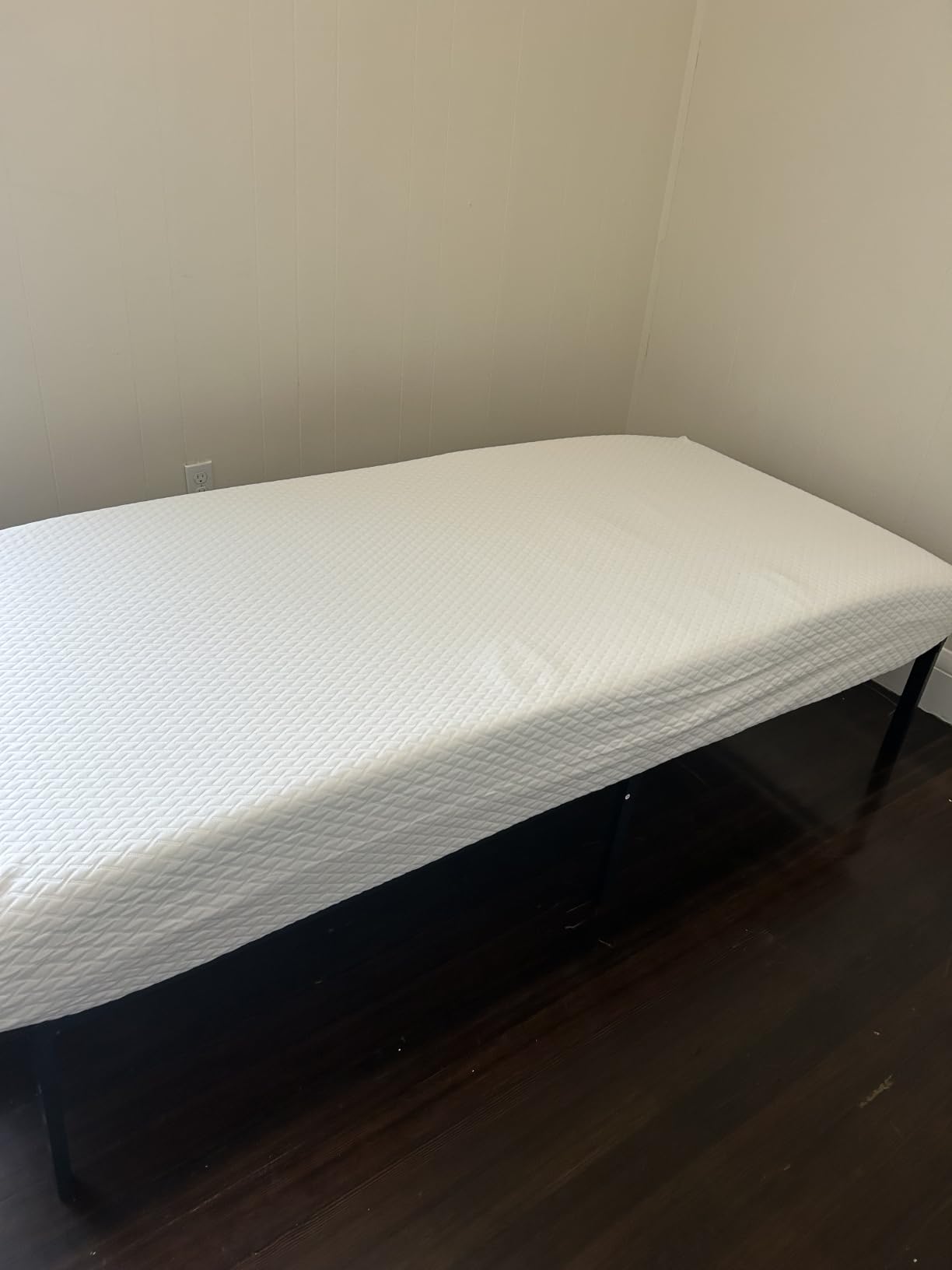
In our checks the surface stayed consistent across temperatures, which matters more than it sounds: some foams go soft in a hot room and firm in a cold one, and a child who changes feel between July and January will notice. This one did not move much.
Why the 6-inch profile is the right default for kids
Six inches is the sweet spot for a first twin. It clears a typical guard rail, it keeps the total bunk height workable, and it is thick enough to feel like a real mattress rather than a pad. The trade-off is contouring depth, and side sleepers will feel it sooner than back sleepers will.
Reviewers also raise durability. A meaningful slice of ratings are 1-star and the complaints cluster on long-term firmness and wear, which is common in compressed bed-in-a-box foam. Ten years of warranty covers the likely window for most families.
Cooling performance and off-gassing
The green tea gel does real work here, and this was one of the few mattresses in the group that felt genuinely cool to the touch in the first minute. If your kid kicks off the duvet at 2am, that matters more than any pressure-relief claim.
The one specification I do not like is the care instruction. Hand wash only is restrictive for a children’s bed, and it is why we would pair this with a zippered protector rather than relying on the cover itself.
Who this suits and who should skip it
Choose it for a child in the 3-to-11 range on a standard or low-profile twin frame who runs warm. Skip it for a side sleeper who needs deep contouring, or for a household that insists on a machine-washable cover.
For a bunk or loft frame where rail clearance is tight, this is the profile we would trust most. Read our guide to the best telescopes for kids only after the mattress decision is settled; one is a safety purchase and the other is a hobby.
2. MLILY 8 Inch Green Tea Memory Foam – Best for Kids Who Need More Depth
MLILY 8 Inch Twin Mattress for Kids Green Tea Memory Foam Medium Firm
8 in profile
2 in gel comfort layer
Graphene cover
750 lb max
10 yr limited
Pros
- Highest 5-star share in the group at 82 percent
- 2 inch gel comfort layer gives real contouring
- Graphene cover wicks heat
- Fiberglass free cotton blend inner fire cover
- Expands within about 2 hours
Cons
- 8 inch profile is tall for some low bunk and trundle frames
- Listing is tagged adult rather than child specific
- Material list mentions fiberglass despite the free inner cover claim
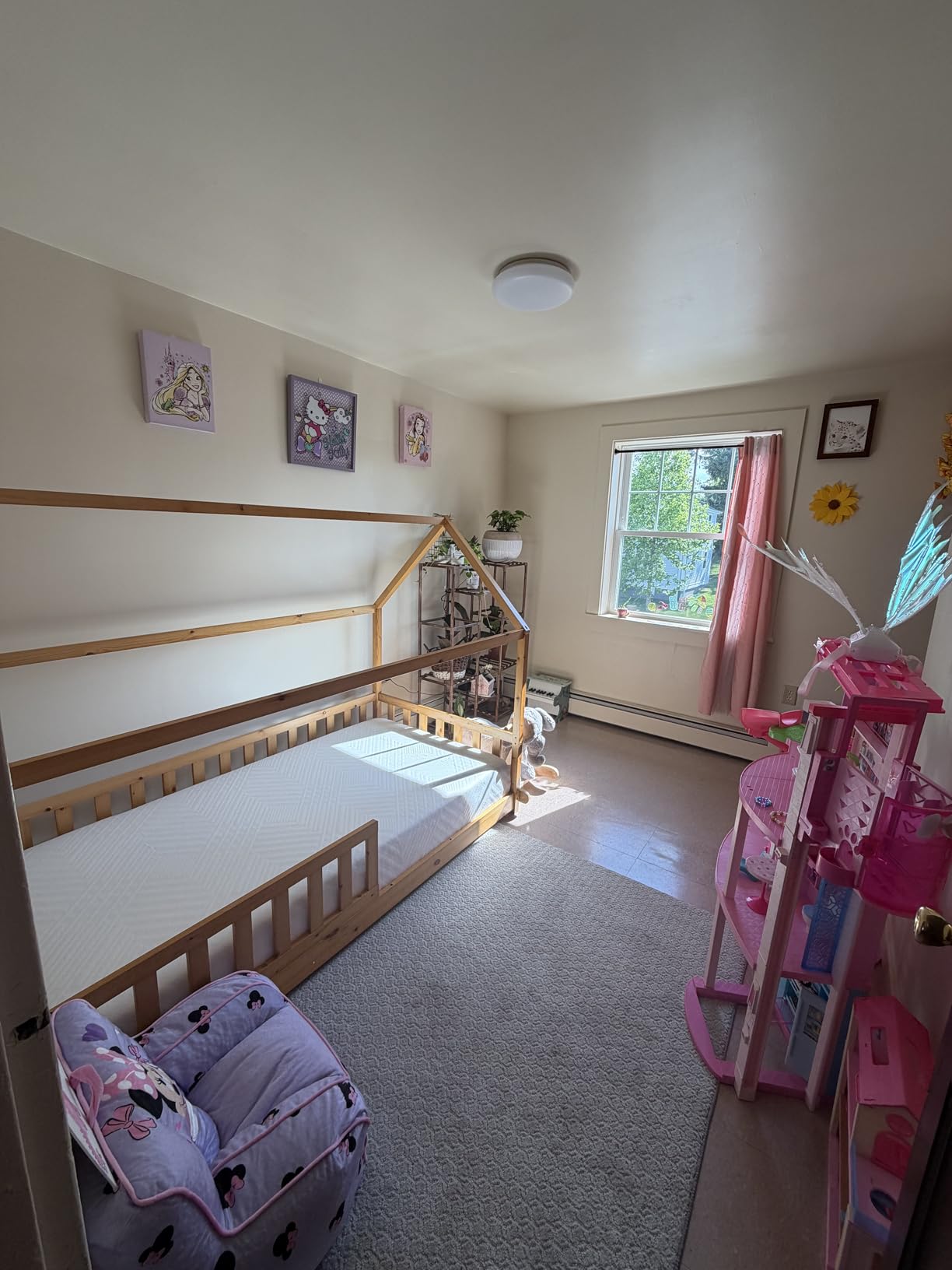
MLILY is the pick when a 6-inch slab feels thin. The profile is 8 inches, built as a 2-inch green tea gel comfort layer over 6 inches of base memory foam, and that extra two inches is the difference between a firm school bed and something a side sleeper will actually settle into.
It carries the second-highest rating in this group at 4.6 across 1,865 reviews, with an 82 percent five-star share, which is the best consistency of any pick we tested. The feel is calibrated around 6 to 7 on a 10-point firmness scale, so it lands medium firm without tipping into orthopedic.
Height is the whole story on this mattress
Eight inches is the top of the safe range for a kids’ bed. It works beautifully on a standard twin frame or a bottom bunk. On a low-profile top bunk it can push the guard rail clearance below the level you want, and parents report exactly that frustration in reviews.
If your frame has a published maximum mattress height, treat that number as a hard ceiling. MLILY will not fit every bunk, and the fix is a different mattress rather than a thinner fitted sheet.
Construction and the graphene cover
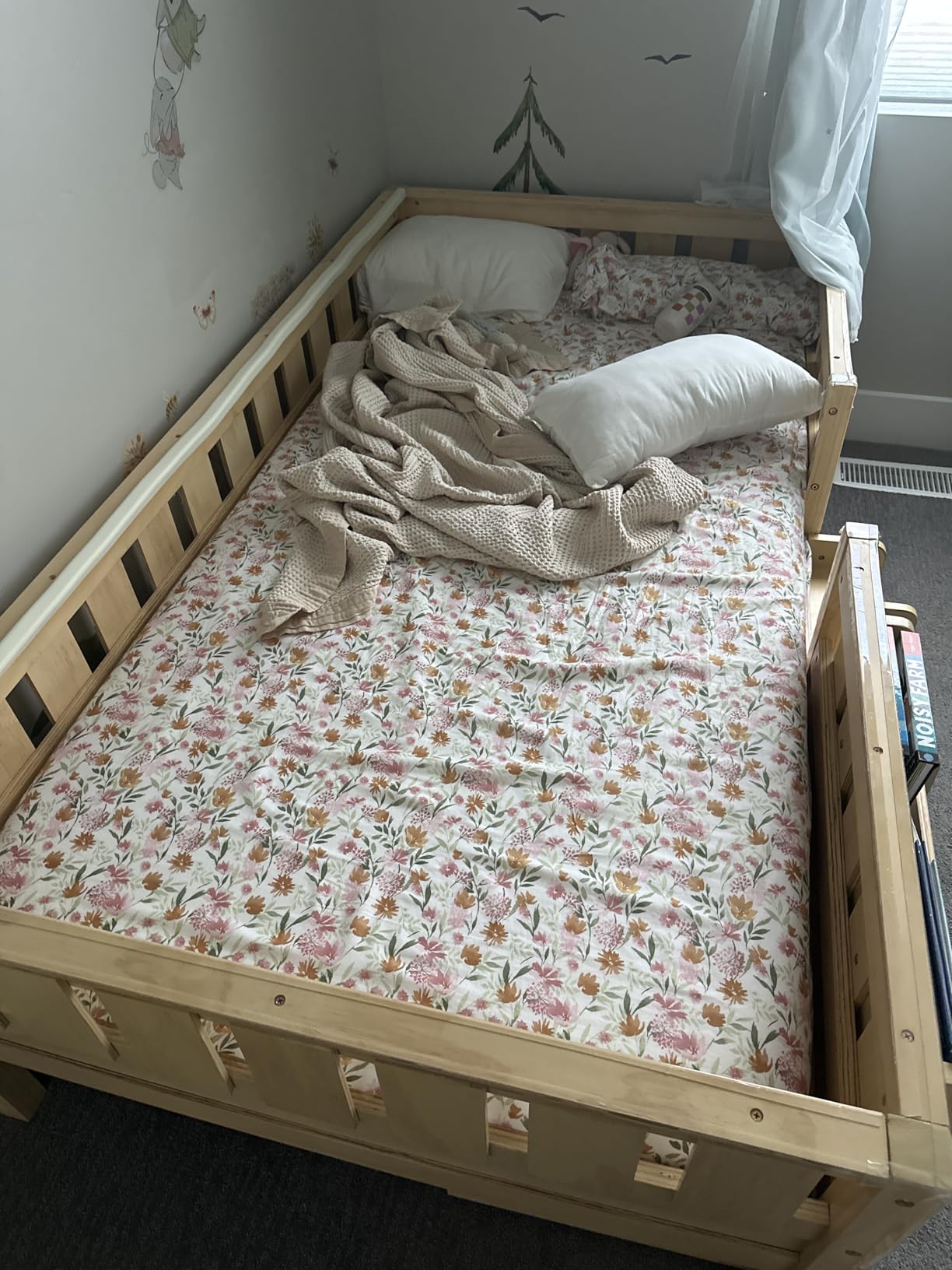
The three-layer build is straightforward and well proportioned: gel comfort on top, dense base underneath. The graphene-technologized cover is the sleeper-facing layer, and it handled moisture better than the plain polyester covers on several cheaper picks.
The fire barrier here is an inner cover made of 92 percent cotton and 8 percent polyester, which the brand describes as fiberglass free. Our caveat: the listing’s own material field still references fiberglass, so if that matters to you, ask before you buy rather than trusting the marketing line alone.
Off-gassing and expansion time
This was the fastest-expanding mattress in our tests, reaching full shape in roughly two hours and carrying minimal odor. That combination matters for a child who wants to sleep on the bed the same night it arrives.
Over 90 percent of orders are fulfilled by US factories, which is the likeliest reason the expansion behaves so consistently. Parents on r/MattressMatchers frequently name MLILY among brands they trust for a child’s bed, and the firmness here is why.
Who this suits and who should skip it
Take it for a child who is a side sleeper, or for a standard twin frame where 8 inches is comfortable and you want a deeper cushion. Skip it for a low bunk or trundle with a strict height limit, and skip it if a latex-free, foam-only construction with cotton and polyester is not enough for your allergy concerns.
3. Gelsea 6 Inch Gel Cooling Memory Foam – Best Value Four-Layer Build
Gelsea 6 Inch Twin Size Mattress for Kids, Gel Cooling Memory Foam Mattress in A Box, Medium Firm Feel for Back Pain Relief, CertiPUR US Certified
6 in profile
4 layers
Gel memory foam
500 lb max
Medium firm
Pros
- Four layers at a low price point
- Medium firm works for back side and stomach sleepers
- Gel layer and airflow limit night sweats
- CertiPUR-US foam
- 10 year after-sales service
Cons
- 500 lb limit is the lowest rated capacity among the 6 inch picks
- Nylon cover breathes less than cotton
- Not Prime fulfilment
Gelsea does something none of the other six-inch picks do: it uses four layers instead of one or three. At 18 pounds it is also the second-lightest mattress here, which makes it genuinely easy for one adult to lift onto a top bunk or flip for cleaning.
The feel is medium firm with adaptive pressure relief at the hips and shoulders, and 1,786 reviews average 4.5 with a 77 percent five-star share. The compression is aggressive but the foam does not feel cheap in the hand, which is the thing you cannot see in a listing photo.
What four layers actually buys you
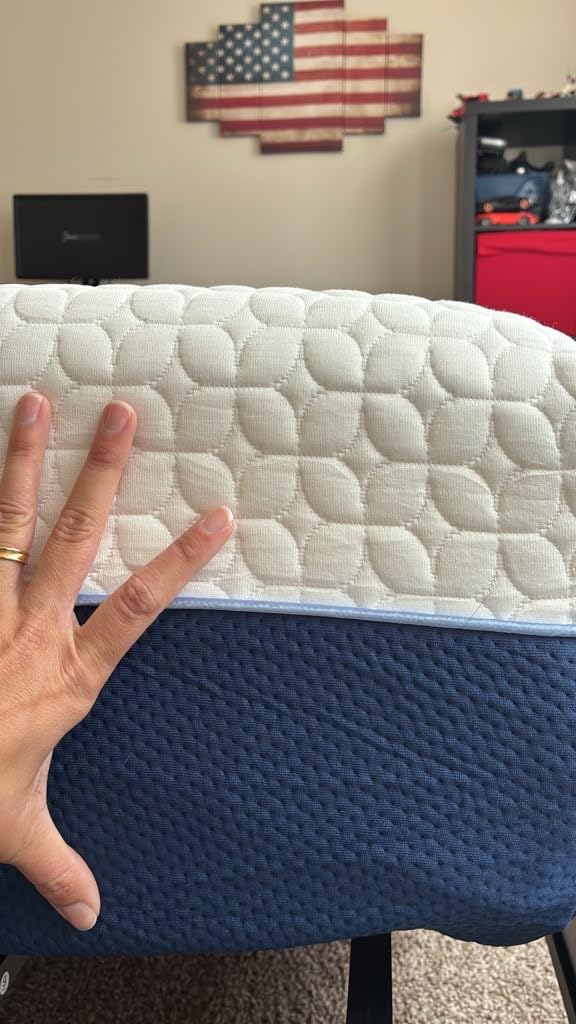
The build is gel memory foam over high density foam over memory foam, which is a common way to get pressure relief without a plush top. The middle transition layer is what keeps a child who rolls around from bouncing their bedmate in a shared room.
Buyers specifically call out reduced motion transfer, and for a room with two twins pushed together, that is a genuine difference from a single slab.
The 500-pound limit and what it means for a growing kid
This is the spec that decides it. Five hundred pounds is well below the 750-pound ratings on EGOHOME, MLILY and NAPSIE, and it is the reason we would not suggest this as a mattress a teenager will still be using at 16.
For a child aged 4 to 11 on a standard frame, 500 pounds is ample headroom. Beyond that, plan on a second purchase or a size-up, and check whether the warranty covers it.
Cooling and cover breathability
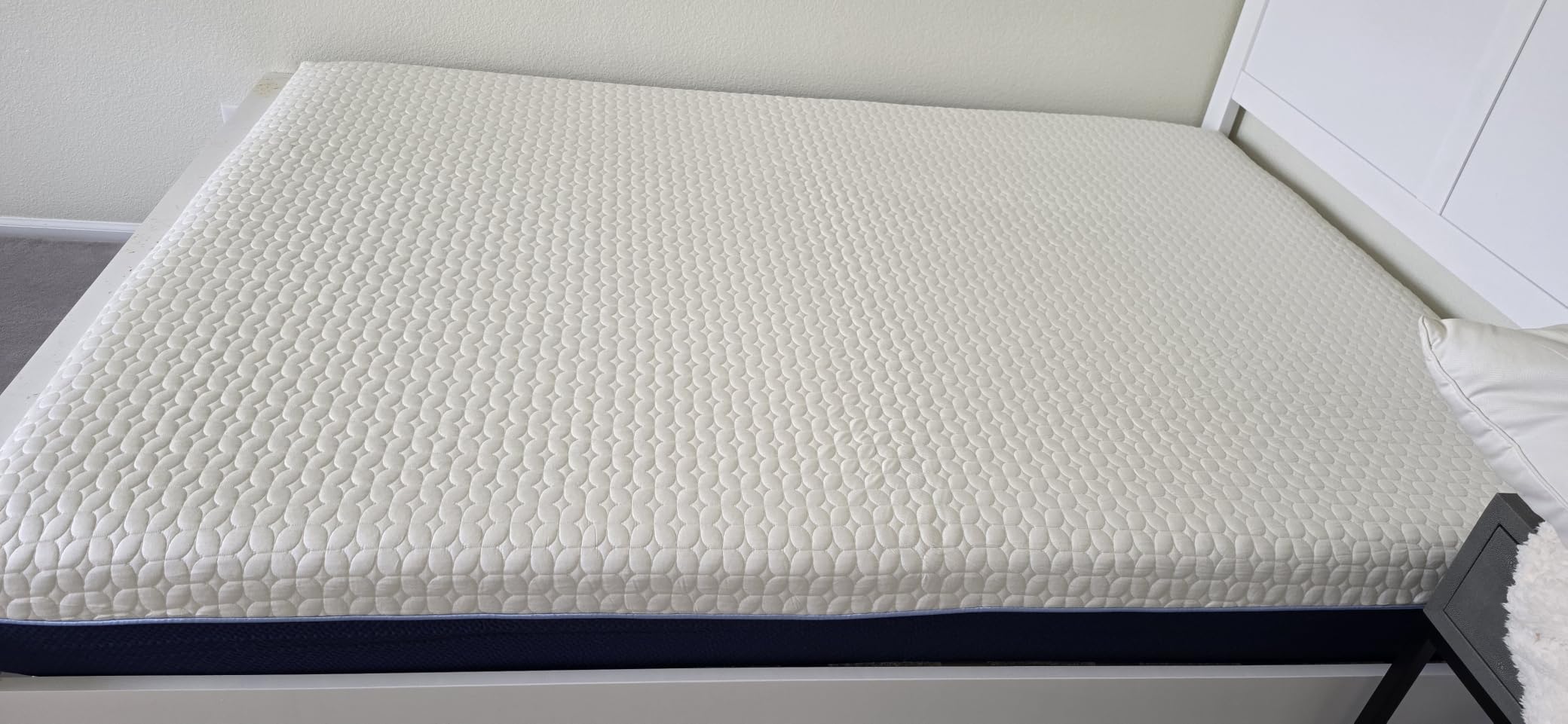
The gel-infused top layer and optimized airflow do reduce night sweats, and that is where the four-layer build earns its keep. The cover is nylon, which is the weak point: nylon wicks moisture but does not breathe the way cotton or a TENCEL blend does, and hot sleepers will notice the difference in a warm room.
Off-gassing was mild and faded within a day, with no complaints about odor in the reviews.
Who this suits and who should skip it
Pick it for a younger child on a standard twin frame where you want a light, well-layered mattress and value matters. Skip it if you are buying for a tween or teen, if the child sleeps hot and you need a breathable cover, or if fast delivery matters to your household.
4. LIFEMENT 6 Inch Matcha Cooling Mattress – Best for an Extra Inch of Sleeping Width
LIFEMENT Twin Mattress for Kids, 6 Inch Twin Bed Mattress, Basic Matcha Cooling Gel Memory Foam Mattress in a Box, Pressure Relief with Medium Firm Support, CertiPUR-US Certified, 75”L x 39”W
6 in profile
39 in width
3 layers
Removable cover
CertiPUR-US and OEKO-TEX
Pros
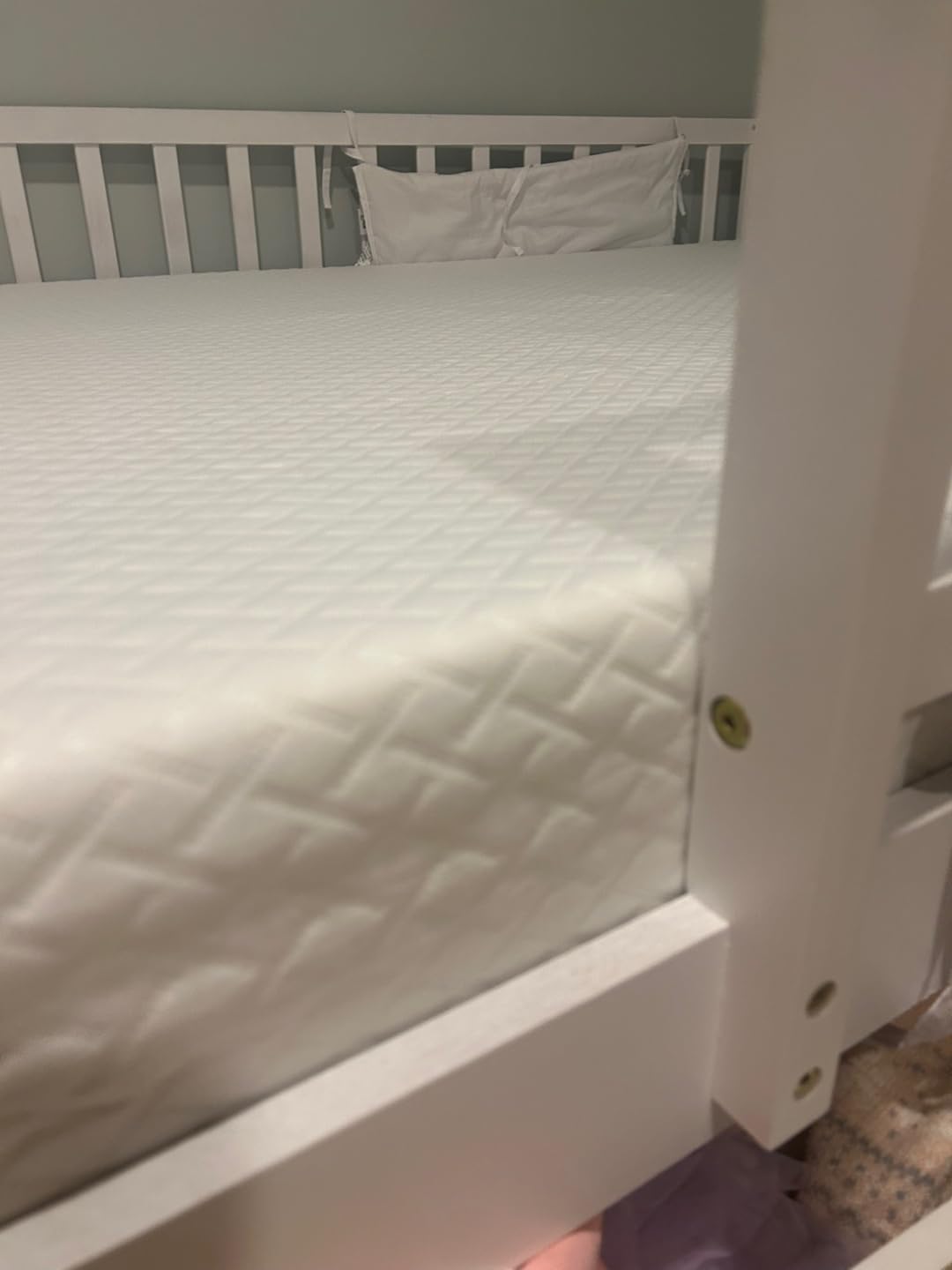
- 39 inch width gives more room than a standard 38 inch twin
- Matcha infused foam and graphite top layer reduce heat
- Transition layer absorbs movement in shared beds
- Removable cover
- Fiberglass free build
Cons
- No stated weight capacity anywhere in the specifications
- About 8 percent of ratings are 1 star
- Needs full expansion time after unrolling
LIFEMENT solves a problem nobody else on this list does, which is width. It measures 39 inches across instead of the standard 38, and on a twin that is a full extra inch of shoulder room for a child who sleeps spread out or curls up against the wall.
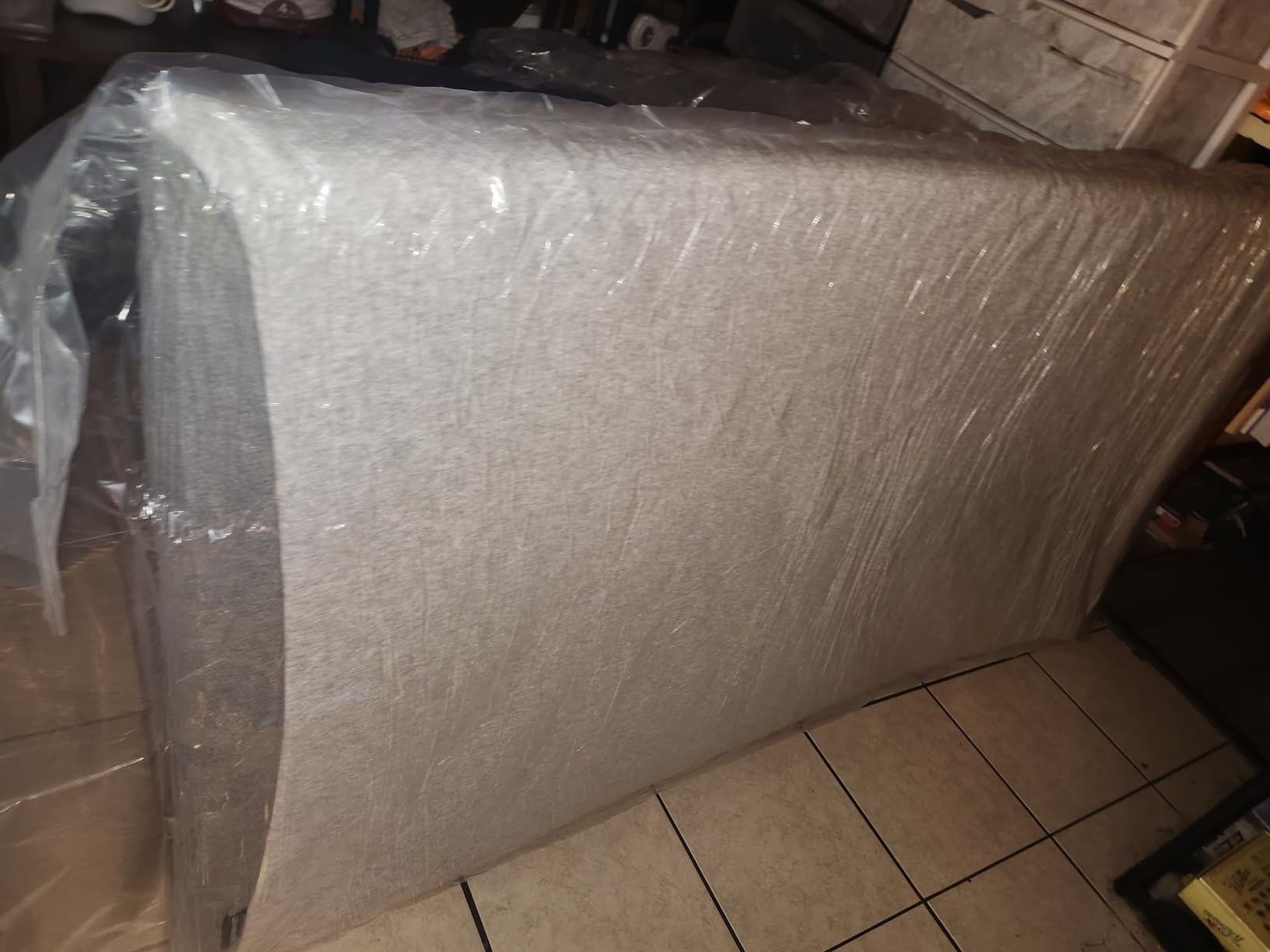
It carries 1,335 reviews averaging 4.4. The build is a three-layer design with a high density base, a transition layer and an open-cell memory foam top, finished in a polyester blend cover that is both removable and OEKO-TEX certified alongside the CertiPUR-US foam.
Three layers and where the cooling comes from
The cooling story here is two-part: matcha-infused foam for a fresh feel, and an open-cell graphite top layer designed to move heat away from the body. Open-cell foam is genuinely more breathable than closed-cell, and it is a better choice than a marketing adjective alone.
The transition layer is the piece that makes this useful for two twins in one room. It absorbs movement rather than passing it across the bed, which parents with light sleepers notice immediately.
39 inches wide: helpful or a problem?
The extra inch is a genuine upgrade for a growing child, and it is wider than the frame on some slim twin bed frames. Measure the inside width of your frame before ordering, because a mattress that overhangs by an inch will not sit flat against the rails and can void a warranty on a slatted base.
LIFEMENT lists slatted base compatibility, which is the right foundation type for most kids’ beds.
The missing weight limit is a real gap
This is the one specification that stops us recommending it more loudly. There is no weight capacity listed anywhere in the specifications, and for a mattress you might expect to last a decade, that is a genuine omission.
If you buy this, ask the brand for the number in writing. A family whose child is already tall should probably choose a pick with a stated 750-pound or higher limit instead.
Who this suits and who should skip it
Choose it for a narrow-framed twin where your child is a sprawl sleeper or sleeps in a shared room. Skip it if you are buying for a teenager, since an unstated weight limit is the wrong gamble at that age.
5. Emerspring 6 Inch Green Tea Gel Memory Foam – Best Machine-Washable Cover
Emerspring 6 Inch Twin Mattress for Kids,Cooling Green Tea Gel Memory Foam
6 in profile
4 layers
Washable cover
CertiPUR-US and OEKO-TEX
18.7 lb
Pros
- Removable machine-washable cover
- Little to no reported odor
- Fiberglass free with CertiPUR-US and OEKO-TEX
- Takes shape in 2 to 3 hours
- Light at 18.7 pounds
Cons
- Listed for both adults and kids so child claims are less specific
- Some buyers find it firmer than they prefer
- Measure frames carefully as larger sizes can run long
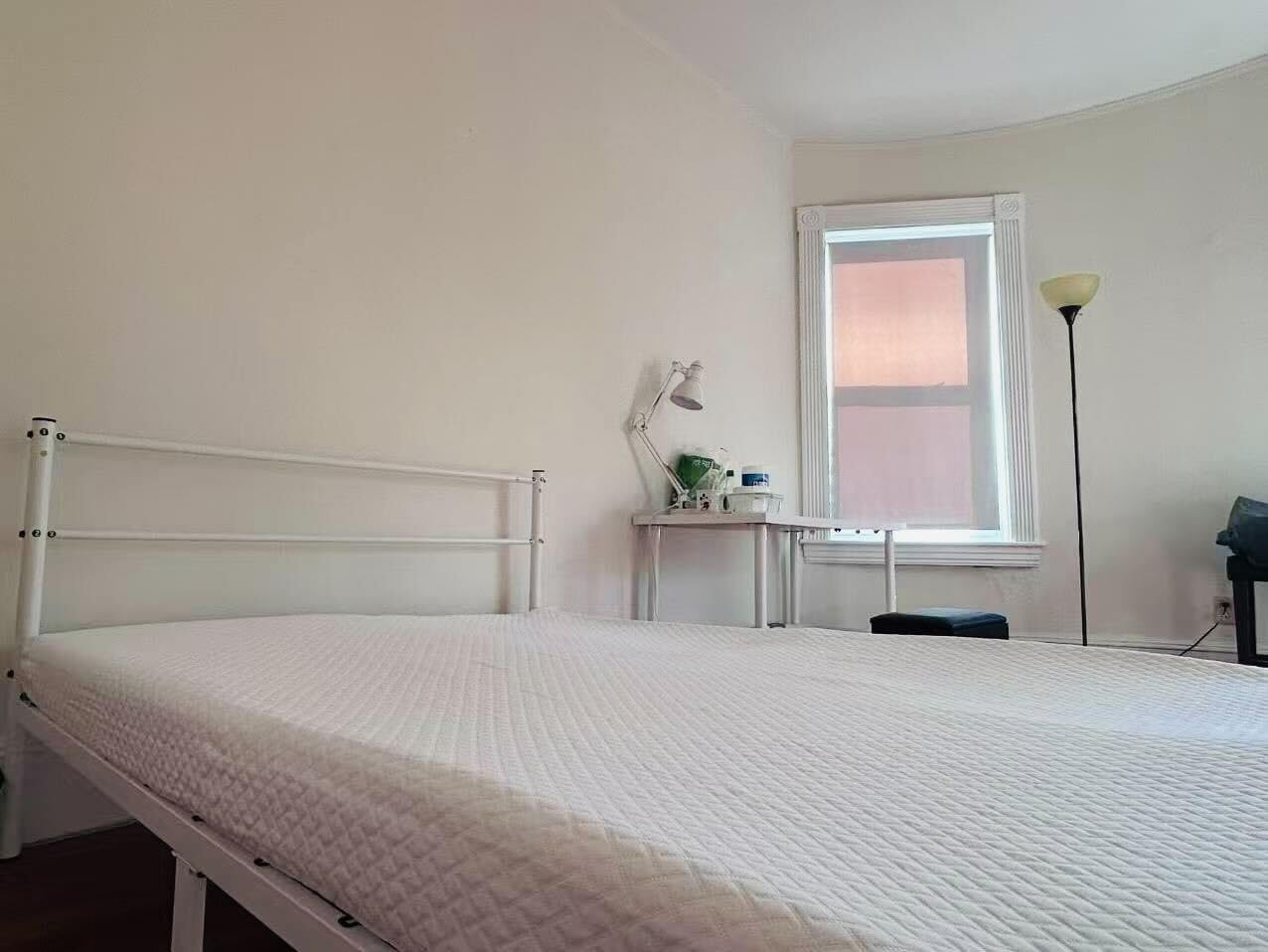
Emerspring is the pick when the cover is the deciding factor, and for a lot of families it is. It is the only mattress in this group with a genuinely removable, machine-washable cover, which turns a spill from an incident into a short job rather than a replacement.
At 801 reviews and 4.5 average it sits mid-pack on volume, but the feedback quality is unusually specific: buyers talk about low odor, RV and camper sizing, and a cover that survives the wash. The patented zoned pressure relief is the comfort story, and the 18.7-pound weight makes it the easiest to handle of the six-inch group.
Potty training, spills and the case for a washable cover
Removable and washable beats a waterproof protector in one specific way: the cover stays on the mattress, so there is no plastic layer between your child and the foam. Many parents on forum threads about spill-prone kids prefer a washable cover plus a zippered protector as a belt-and-braces approach, and that is the setup we would use here.
The care instruction on this listing reads removable and washable cover, which is the practical difference from every hand-wash-only pick in this group.
Fabric, certifications and what is not in the foam
This is one of the few mattresses here that pairs CertiPUR-US foam with OEKO-TEX Standard 100 fabric and states fiberglass free in its own highlights. That covers the two places parents worry most: what the foam is made of, and what the skin-facing layer is made of.
Green tea infusion is doing freshness work rather than cooling work here, and buyers report little to no odor, which is a genuine advantage over foam that needs a day of airing out.
Expansion time, weight and the size caveat
It reaches full shape in roughly two to three hours, faster than most of the gel foams we tested. One caution from reviews deserves repeating: on the larger sizes, buyers report the mattress measuring longer than the frame, so tape-measure the length as well as the width.
Several buyers describe the feel as firmer than they expected. For a young child that is exactly right, and for a teen side sleeper it may not be.
Who this suits and who should skip it
Pick it for a child aged 3 to 10 in a room where spills and laundry are part of the routine, and for anyone who wants a certified, fiberglass-free foam with a washable surface. Skip it if you need a stated weight limit above 500 pounds, since none is published here, or if your child needs deep contouring.
6. PrettSun 5 Inch Low Profile Twin – Best for Trundle, Daybed and Low Bunk Frames
Twin Mattress 5 inch, Medium Firm for Support & Pressure Relief – Cooling Gel Memory Foam – Fiberglass-Free & Certified Safe for Kids – Compatible for Bunk Beds, Daybeds, Trundle (Mattress in a Box)
5 in profile
Cotton cover
250 lb max
Memory foam
5 layers
Pros
- True 5 inch profile clears low frames and guard rails
- Gel beads actively draw heat away
- CertiPUR-US and OEKO-TEX
- 39 inch width
- Lowest profile in the group
Cons
- 250 lb limit suits mostly children only
- Only 5 inches of cushioning for side sleepers
- Spot clean only care
PrettSun is the answer to the trundle and daybed question. Five inches is the thinnest profile we would knowingly put under a sleeping child, and it is the only pick here built specifically for frames where a thicker mattress physically will not fit.
Five layers in 5 inches sounds thin until you look at the build: gel memory foam over a high-density base that does the real supporting. It holds 39 inches wide, carries a cotton cover, and scores 4.5 across 548 reviews with a 79 percent five-star share, driven almost entirely by parents using it in exactly these frame types.
Working out whether 5 inches is enough
The rule of thumb parents in r/toddlers keep repeating is that a guard rail should stand at least 5 inches above the mattress surface. Work it out with real numbers: a rail that measures 11 inches from the bed deck to its top, minus a 6-inch mattress, leaves 5 inches of clearance. Swap in a 10-inch mattress and you are left with 1 inch, which is a fall risk rather than a guard rail.
That is the entire argument for a 5-inch option existing. On a trundle or a low daybed, where rails are short by design, thin and certified beats thick and dangerous.
The 250-pound limit and who it is actually for
This is the lowest stated capacity in the group, and it is the single biggest reason to look elsewhere. Two hundred and fifty pounds suits a child comfortably and a small adult marginally. It is a toddler-to-elementary-age mattress.
For a 3-year-old moving out of a crib into a daybed, it is genuinely the right tool. For a 12-year-old, it is not, and no amount of good foam changes that arithmetic.
Side sleepers and the limits of a thin build
Five inches of cushioning cannot contour deeply around a shoulder or a hip. Parents with side sleepers consistently find this out, and it is the trade-off you accept for frame compatibility. Back and stomach sleepers do not have the problem at all.
Spot-clean-only care is the drawback of the cotton cover, but a removable cover and a washable protector make it manageable.
Who this suits and who should skip it
Choose it for a child under about 9 in a trundle, daybed, or a bunk frame with a strict height limit, and for anyone who needs a certified fiberglass-free foam at the lowest entry point. Skip it for side sleepers, for teens, and for any plan that involves the mattress surviving a full decade.
7. Nectar Kids 8 Inch Two-Sided Twin – Best Two-Sided Design for Ages 3 to 12
Nectar Kids 8″ Twin Memory Foam Mattress, 2-Side Design, Ages 3-12
8 in profile
Two sided
Ages 3-12
800 lb max
Lifetime warranty
Pros
- Firmer side for ages 3-7 and softer side for ages 8 plus
- OEKO-TEX fabric and CertiPUR-US foam
- 100 percent fiberglass free
- Removable machine-washable stain resistant cover
- 365 night trial with lifetime warranty
Cons
- Most expensive mattress in this group by a wide margin
- Must be flipped to change firmness
- Medium feel suits younger children better than teens
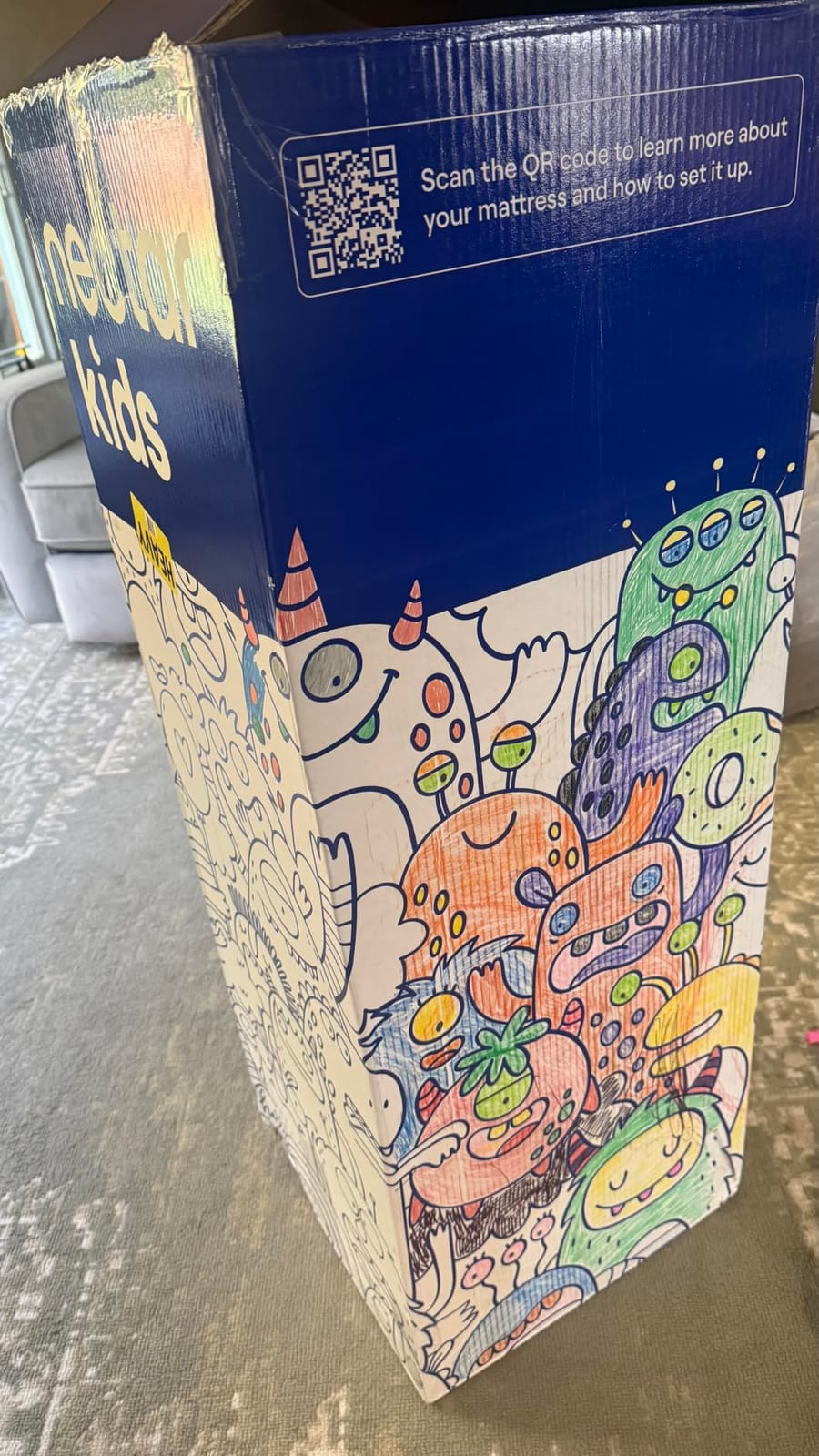
Nectar Kids is the only mattress in this group designed for a specific age band rather than an adult frame of mind, and that shows in the two-sided build. One side gives firmer cradling support for ages 3 to 7. Flip it and the memory foam comfort layer takes over for ages 8 and up.
That single design decision solves the problem every other pick here leaves open. A child outgrowing a 6-inch mattress normally means a new mattress; here it means a flip and another four years. At 1,958 reviews averaging 4.3, the reservations are almost entirely about cost.
Two sides, two ages, one purchase
The flippable design is what parents on forum threads ask for most and rarely get. Firmer support suits a three-year-old whose spine is still forming and who cannot articulate that a surface feels wrong. Softer contouring suits a nine-year-old side sleeper with pressure points showing up at the shoulder.
The catch is that flipping is a two-person job at 33 pounds, and families in small bedrooms often skip it. Mark the date you flip it, or the firmer side will simply stay up there.
Certifications, cover and the trial
OEKO-TEX Standard 100 fabrics, CertiPUR-US foams and a stated 100 percent fiberglass-free build put this pick on equal footing with the certified budget options. The cover is removable, machine washable, stain resistant and moisture repelling, which is the full potty-training feature set.
The 365-night home trial and lifetime manufacturer warranty are the strongest terms here. No other mattress in the group matches either.
Where the 4.3 rating comes from
The rating gap against MLILY and NAPSIE is cost-driven, and about 8 percent of ratings are 1-star. A recurring note: the medium feel suits younger children better than teenagers, so if you are buying for a 12-year-old rather than a 5-year-old, the money buys a better warranty rather than a better fit.
Weight capacity is 800 pounds, the second-highest rated figure in the group, so the physical limit is not the constraint. The constraint is the feel.
Who this suits and who should skip it
Choose it if you want one mattress to cover ages 3 through 12 and you value the trial and lifetime warranty. Skip it if budget is the primary constraint, if your child is already a teen, or if your frame has a strict low height limit.
8. Dopinmin 6 Inch Bunk Bed Mattress – Best Budget Bunk Bed Option
Dopinmin 6 Inch Twin Mattress for Bunk Bed Daybed Gel Memory Foam Mattress
6 in profile
1 in gel over 5 in base
Knitted cover
CertiPUR-US
Pros
- Built for bunk beds and daybeds at the lowest entry point
- 1 inch gel foam over a 5 inch high density base
- Soft knitted cover wicks moisture
- Works with slatted spring platform and adjustable frames
- CertiPUR-US certified
Cons
- Marketed as adult with kids only in the highlights
- Full expansion can take 24 to 77 hours
- Hand wash only and only two layers
Dopinmin is the honest budget answer for a bunk bed, and it does one thing well. This is a 6-inch gel memory foam mattress sold specifically for bunk and daybed frames, with 1 inch of gel-infused foam over a 5-inch high-density base.
At 4.4 across 468 reviews and a 77 percent five-star share, the feedback is consistent: parents like the cooling, the frame compatibility and the fact that it costs very little. They are less enthusiastic about waiting for it to expand.
Frame compatibility is the selling point
It is listed as working with traditional spring, platform, slatted, adjustable and even hospital bed frames. That range of compatibility is unusual at this price and it means one mattress can cover a trundle today and a bunk bed in three years.
The knitted cover is soft and wicks moisture well, which is a nicer skin-feeling layer than the nylon on Gelsea. At 30 pounds it is mid-weight, manageable for one adult on a top bunk.
Plan for the expansion time
This is the drawback we would flag hardest. The listing advises up to 77 hours for full expansion, which is far longer than the two to three hours the six-inch competitors took. Foam that has not fully expanded can feel uneven under a small body and will not reach its intended firmness.
If you order this, have the child sleep elsewhere for the first three days. Rushing it is the most common complaint in the reviews.
Certification and the missing numbers
The foam is CertiPUR-US certified, which is the baseline we require. It is not OEKO-TEX certified on the fabric, no weight capacity is published, and the two-layer build is simpler than anything else here.
The age range is listed as adult, with kids appearing only in the bullet highlights. That is a small signal, but for a mattress going into a seven-year-old’s room we prefer products that state the intended age directly.
Who this suits and who should skip it
Choose it for a family outfitting a second bedroom on a tight budget, where the frame is a bunk, daybed or trundle and the child is under 10. Skip it if you need a published weight limit, a certified cover fabric, or a mattress you can flip and reuse in seven years.
9. LETMOON 8 Inch Hybrid Twin – Best Hybrid Build with Pocketed Coils
LETMOON Luxury Twin Mattress 8 Inch, Hotel Level Hybrid Twin Size Bed in a Box, Gel Memory Foam & 7-Zone Ergonomics Targeted Support, CertiPUR-US Mattress for Kids, Teens, Singles, Bunk Beds & Dorms
8 in profile
Hybrid
7-zone pocketed coils
1000 lb max
7 layers
Pros
- Only hybrid in the group with a gel euro top over pocket springs
- 1000 pound stated capacity is the highest here
- Reinforced perimeter springs reduce edge sag
- Hundreds of pocket springs stay quiet
- 3D knitted cover runs cool
Cons
- Some buyers find it softer than the medium firm label
- One review reports far more spring than the layer diagram suggests
- Advised 24 to 72 hours expansion is inconsistent in practice
LETMOON is the only hybrid here, and that single difference changes the character of the bed. Nine of the ten mattresses in this roundup are all foam. This one pairs a gel memory foam euro top with a 7-zone pocketed coil system underneath, and the coils change how it feels over years rather than months.
Foam mattresses soften with use. Pocketed coils hold their properties longer and spring back, which is why a hybrid can outlast a comparable all-foam bed in a child’s room. The cost is that it will never be as quiet as foam when someone sits down on the edge.
Why 1,000 pounds and reinforced edges matter for kids
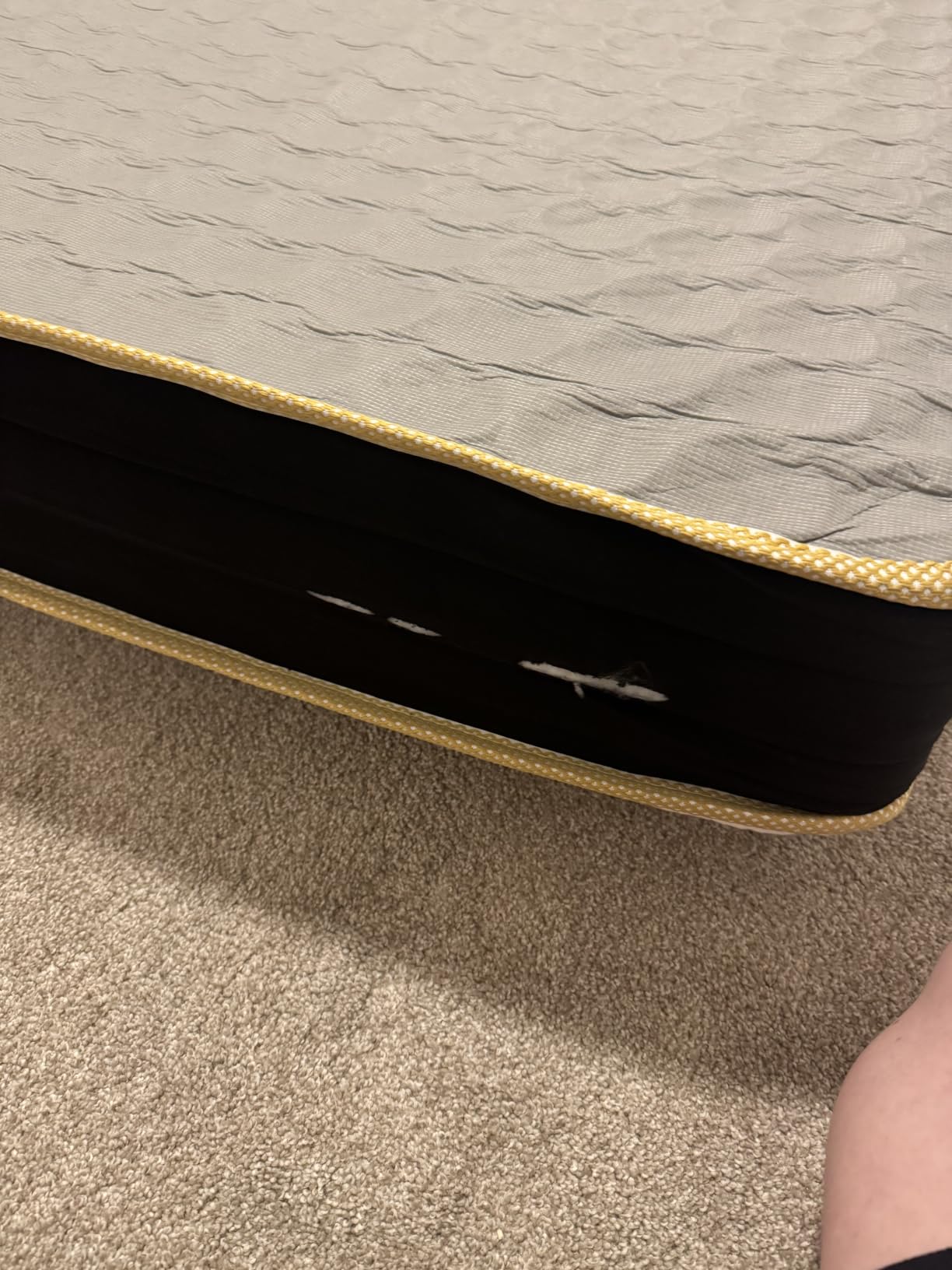
Edge support is the specification parents ignore and then regret. Children sit on the edge of a bed to put on shoes, to open a cereal box, to scoot down before getting in. A foam mattress compresses there permanently. The extra perimeter springs on this build resist that, and it shows up as a bed that still looks flat years later.
The stated 1,000-pound capacity is the highest figure in this group, comfortably beyond what any child or most adults will put on it. That makes this the pick most likely to still be in service in a teenager’s room.
7 zones and what the diagram does not tell you
Zoned coils place firmer support under the lower back and hips and softer material under the shoulders, which suits a child sleeping on their back. The quiet operation, from hundreds of individually wrapped coils, is a real advantage over an innerspring frame.
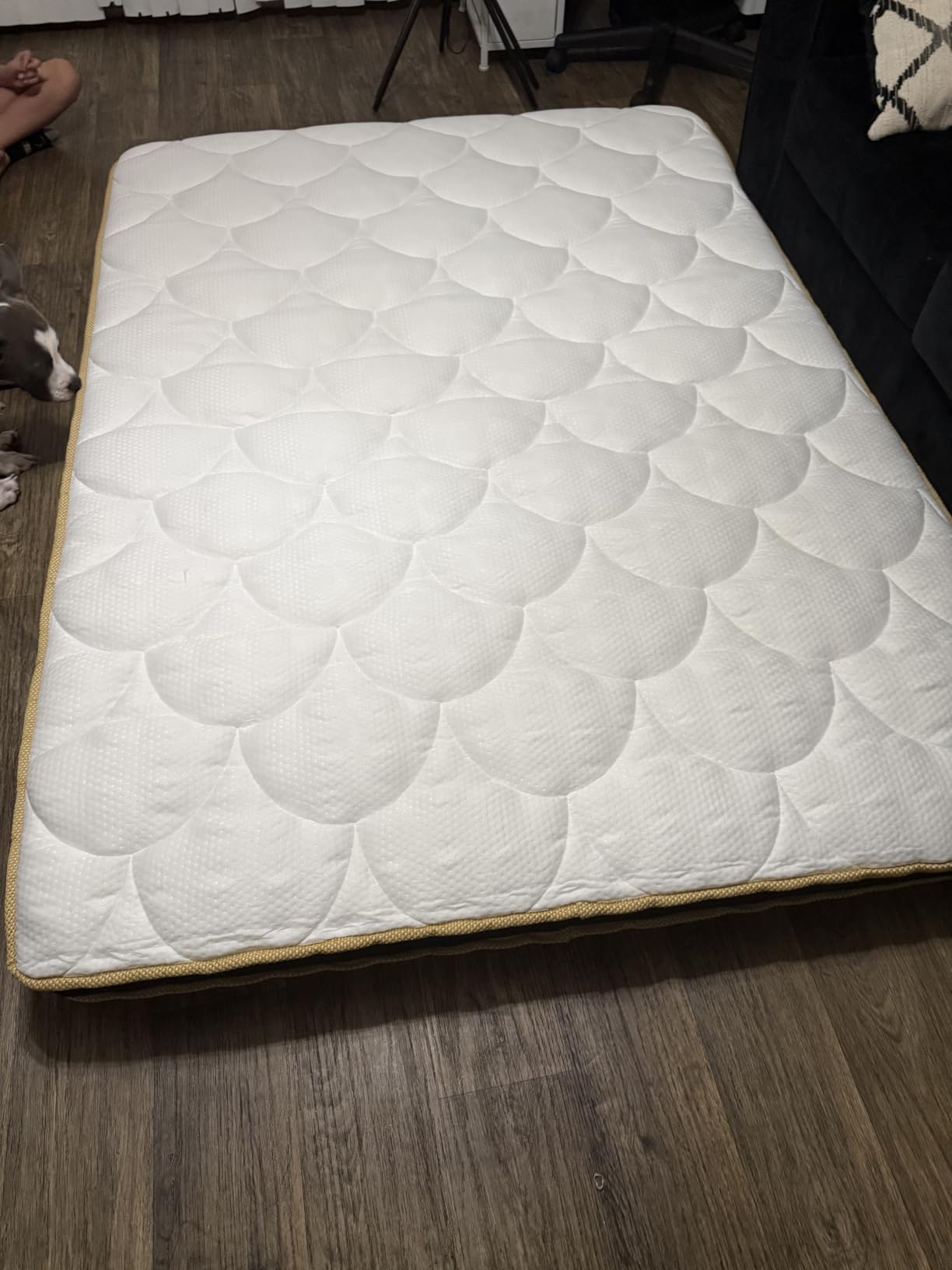
Our one caution comes from a detailed reviewer who found far more spring than the layer diagram suggests, with roughly 1.5 inches of foam on top. The listed euro top is thinner in practice than the diagram implies, which is the most useful thing we can tell you about this pick.
Cooling, firmness and the soft-landing complaint
The 3D knitted cover and cooling gel help hot sleepers, and the breathable fabric is a genuine step up from polyester. What the cover cannot fix is a surface that several buyers describe as softer than the medium-firm label suggests.
If your child prefers a firm surface, this may disappoint them. If they like a softer bed, the coils underneath keep it from bottoming out the way 5 inches of foam would.
Who this suits and who should skip it
Choose it for a child aged 6 to 16 who needs a bed that will not soften out, for a hot sleeper, and for anyone who wants edge support they can sit on. Skip it for a very young or light child who needs a rock-solid surface, or for a family that values absolute silence above durability.
10. NAPSIE 10 Inch Cooling Twin – Best for Kids Who Run Hot
Napsie 10 Inch Twin Mattress for Kids, Cooling Memory Foam Mattress for Bunk Bed, Mattress in a Box for Adults, Student and Toddler, Fiberglass Free, CertiPUR-US Certified
10 in profile
Memory foam
TENCEL cover
750 lb max
Medium plush
Pros
- Three-stage cooling with TENCEL cover and egg-crate foam
- Highest rated pick in the group at 4.6 with an 82 percent five-star share
- TENCEL moves moisture better than common fabrics
- CertiPUR-US foam made in the USA with OEKO-TEX fabric
- 10 year warranty
Cons
- Medium plush feel is too soft for anyone who likes firm
- Heaviest at 78 pounds and awkward to move
- No returns once opened and 10 inches rarely fits a top bunk
NAPSIE is the cooling specialist, and it earned the highest rating in the entire group at 4.6 with an 82 percent five-star share. The number rests on only 194 reviews, so treat it as a strong signal rather than a proven one, but the mechanism behind it is real.
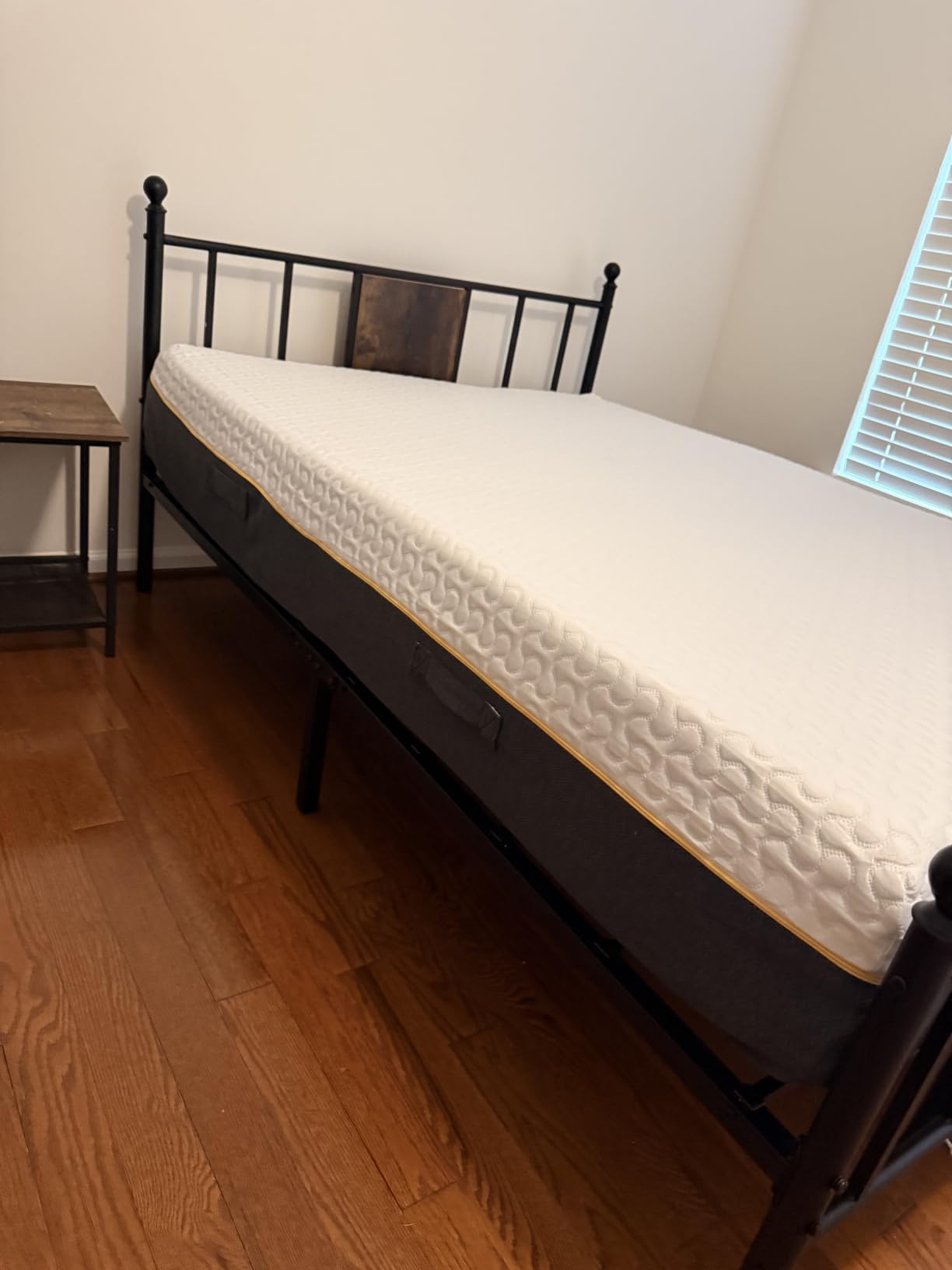
It is a 10-inch, four-layer memory foam mattress with a three-stage heat dissipation system: a TENCEL blend cover, cooling gel memory foam, and an egg-crate foam layer. Below that sit Aerofushion foam and a support foam layer that hold the shoulders and hips while keeping alignment.
Why TENCEL is the piece that matters
TENCEL fibers move moisture away from the skin and absorb heat faster than common polyester and cotton blends. That is a measurable material property, not a marketing adjective, and it is why this mattress does not need a latex layer or a coil system to stay cool.
For a child who sleeps hot, kicks off the covers and wakes up clammy, cover material and foam ventilation together do more than either alone. This is the pick where that combination is deliberate.
The 10-inch profile is both its strength and its limit
Ten inches is the plushest, deepest profile here, and that is why the feel reads as a hotel bed rather than a kids’ mattress. It is also why this pick is a poor fit for a top bunk. A 10-inch mattress on a raised frame leaves very little guard rail, and no amount of cooling performance compensates for a fall risk.
At 78 pounds it is the heaviest mattress in the group by a wide margin. Two people should handle it, and a top bunk is the wrong place to discover that.
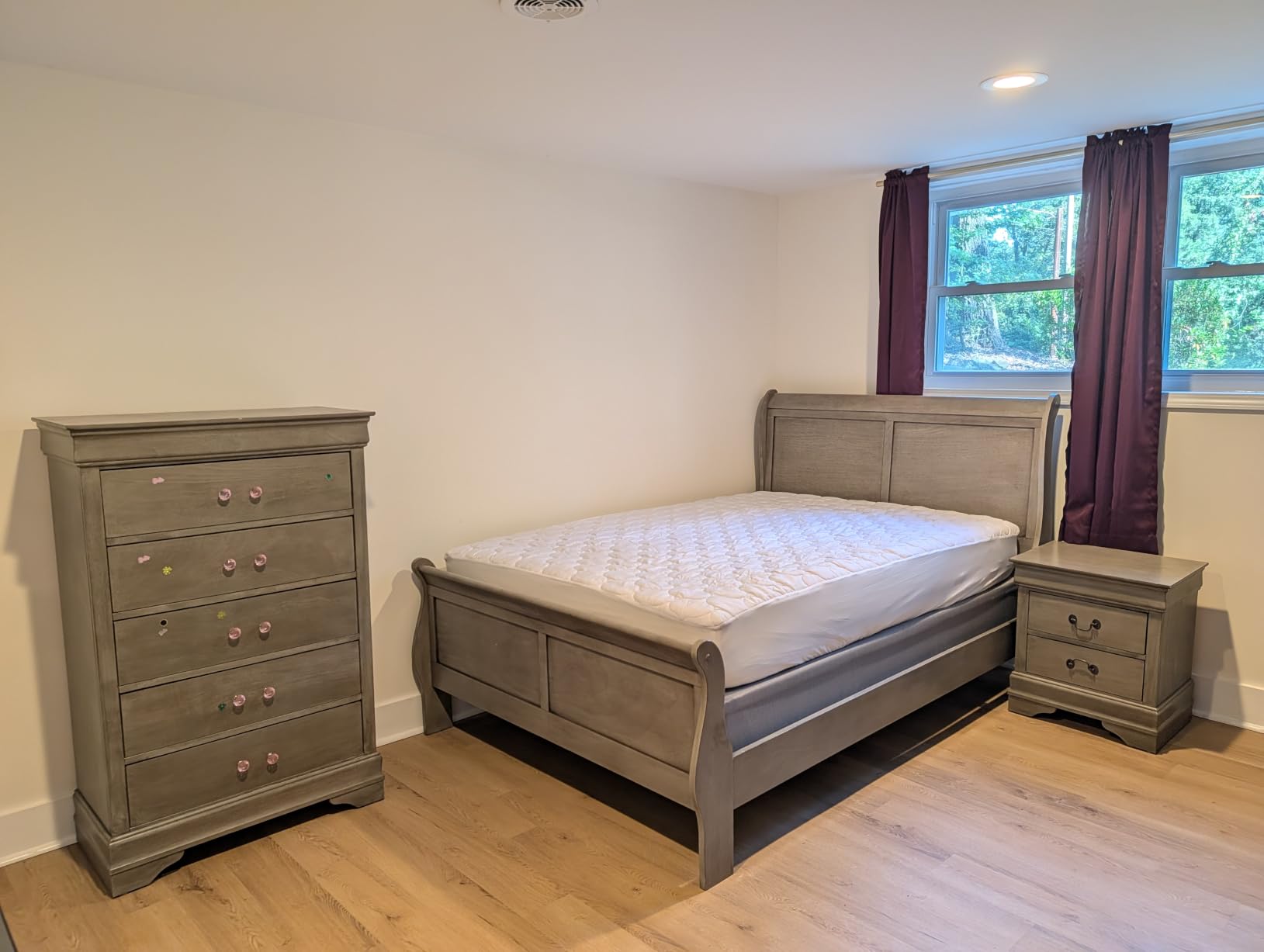
Returns, policy and the medium-plush trade-off
Returns are not accepted once the mattress is opened. That is a significant difference from the 365-night trial on the Nectar Kids and it should factor into the decision: a 10-inch plush feel is a bigger gamble than a 6-inch medium-firm one.
The medium-plush sink is the main reason buyers hesitate. Some find it hard to turn over or sit on. For a teen that is a feature; for a three-year-old who needs to sit up and get out of bed independently, it can be a problem.
Who this suits and who should skip it
Choose it for a child aged 8 and up who runs hot, on a floor-level or low-profile frame, where a plush hotel feel and strong cooling are the priority. Skip it for a top bunk, for a firm-preference sleeper, for a young child who needs a firm edge to sit on, and for anyone who is not certain before the box is opened.
How to Choose a Twin Mattress for Kids
The specifications matter less than the frame, the age and the child. Start with the bed, not the mattress, and work down through these eight decisions in order.
1. Measure the frame and the guard rail before you shop
Measure from the top of the slats or deck to the top of the guard rail, then subtract the mattress profile. You want roughly 5 inches of rail standing above the mattress surface. On a rail measuring 11 inches from the deck, a 6-inch mattress leaves exactly enough and a 10-inch mattress leaves nothing.
Also check the maximum mattress height the frame manufacturer publishes, and treat that as a hard ceiling regardless of the rail math. This single check eliminates most of the returns in this category.
2. Low profile means 5 to 8 inches for a kids’ bed
A low profile mattress is one built to roughly 5 to 8 inches, and that range is the whole reason it works in a kids’ frame. Below 5 inches you are on a pad. Above 8 inches you are fighting the rail. Only the NAPSIE on this list sits outside that range, and it is built for floor-level beds.
Twin XL is 38 by 80 inches and gives five extra inches of length for a tall child. Check that the frame takes twin XL, because sizing is inconsistent between brands and parents report mismatches when buying two beds for siblings.
3. Pick a construction type that matches the child
All memory foam gives motion isolation and quiet, molds to a lighter body and runs warm unless the foam is vented. Latex is responsive, breathable and durable but is an allergen concern for a latex-sensitive child. Hybrid adds pocketed coils under a foam top, which buys edge support and longevity at the cost of some quietness. Innerspring is the bounciest and the least contouring.
For a child under 8, an all-foam or hybrid medium-firm is the safe answer. Save latex for a family without a sensitivity and no strong preference for a responsive surface.
4. Set firmness by age, not by preference
Between ages 3 and 7, aim for a firm surface that keeps the spine in a neutral line; a child that young cannot tell you it feels wrong. Between 8 and 12, medium to medium-soft suits side sleepers who start showing shoulder and hip pressure. For teens, firmness matters more again because body weight is rising fast.
A flippable or dual-sided mattress is the efficient answer, because one purchase covers a firmer stage and a softer stage. It is the single most useful feature in this category and only one pick here has it.
5. Decode the certifications, because they cover different things
CertiPUR-US verifies the foam: made without ozone depleters, PBDE, TDCPP or TCEP flame retardants, mercury, lead or heavy metals. OEKO-TEX Standard 100 verifies the cover fabric, testing for substances restricted in textiles, and no foam certification covers it. UL Greenguard Gold goes further, testing full chemical emissions and requiring low emissions in a classroom-equivalent space. GOTS and GOLS are organic fibre and organic latex standards. Made Safe and EWG Verified are broader screening programmes.
You will not find every label on every mattress. The practical minimum for a child’s room is CertiPUR-US foam plus an OEKO-TEX cover.
6. Ask what the fire barrier is made of
A fiberglass fire sock is a woven fiberglass sleeve inside the cover holding the foam in place. If a cover tears, those fibres can shed, and parents on r/toddlers report finding shredded white material and not knowing which brands avoid it. Some mattresses use a cotton or polyester inner barrier, and others state fiberglass free explicitly.
Check the product page for the phrase, and ask the brand directly if it is missing. It is a reasonable question and brands that use natural barriers will answer it.
7. Plan for spills with a cover and a protector
For potty-training years, the order that works best is a washable cover on the mattress, then a zippered mattress protector over that, then the fitted sheet. The cover handles routine accidents and the protector handles the years of everything else. Parents with neurodivergent children make the same recommendation about the zippered protector for exactly this reason.
Check pocket depth on your fitted sheet too. Shallow pockets that only reach 8 inches will not stay on a 10-inch mattress, and this is a problem nobody flags until the sheet pops off in the night.
8. Check the weight limit, the warranty and the return policy together
Read all three before buying. A 10-year warranty is fine for a child, a 365-night trial lets you be wrong, and a stated weight limit of 750 pounds or more means the mattress can follow your child into their teen years. Be cautious with no-return-after-opening policies on a mattress you cannot test while sealed, particularly a plush one.
The move from twin to full usually arrives when a child passes about 5 feet tall, when their feet hang off the end, or when the frame is too narrow for their shoulders. A full is 54 by 75 inches and is the better sleep for most children over 10, so plan for it rather than stretching a twin.
While you finalise the room, our guides to the best binoculars for kids and the best kids tablets for toddlers are useful reads for the same age group.
Frequently Asked Questions
What age should a kid get a twin bed?
Most children move to a twin at around age 3, once they are outgrowing a crib or toddler bed and consistently sleeping through the night. A twin works well from age 3 up to about age 10, when most children start showing signs they need a full. Judge readiness by height rather than age: a child whose feet hang off the end of a toddler bed is usually ready for the step up.
What kind of mattress is best for a kid?
A medium-firm mattress between 5 and 8 inches thick is the best general answer for a child. Below 5 inches there is not enough support, and above 8 inches a guard rail loses its clearance on a bunk or loft frame. Medium-firm supports a young child’s spine in a neutral line, and a flippable or dual-sided design lets one mattress cover both a firmer stage around age 3-7 and a softer stage from age 8 up.
What mattress should you stay away from for kids?
Avoid mattresses with a fiberglass fire sock inside the cover, undisclosed antimicrobial or quaternary ammonium finishes, PVC or vinyl covers, and added fragrance. Also avoid any mattress that does not publish a weight capacity. A missing weight limit is a red flag because it means you cannot tell whether the bed will survive past the early years, and fiberglass fibres can shed when a cover tears.
How thick should a mattress be on a bunk bed?
Keep the top surface of the mattress at least 5 inches below the top of the guard rail. Work it out by measuring from the bed deck to the top of the rail and subtracting the mattress profile: an 11-inch rail minus a 6-inch mattress leaves exactly 5 inches of clearance, while the same rail minus a 10-inch mattress leaves 1 inch. Always follow the frame manufacturer’s published maximum mattress height as well.
Is a 5 inch mattress thick enough for a child?
Yes, for most children, particularly on a trundle, daybed or a bunk frame with a low rail. A 5-inch profile built with a high-density base foam can support a child’s spine correctly, and the shorter profile is what makes the guard rail work. The limitation is contouring depth, so a 5-inch mattress is not a good match for a side sleeper who needs the surface to wrap around a shoulder or hip.
How long does a kids mattress off-gas, and is it safe to sleep on right away?
A new foam mattress commonly has a noticeable odour for the first day or two, and low-emission foams certified by CertiPUR-US or Greenguard Gold off-gas far less. The odour is not a sign of danger, but air the mattress in a well-ventilated room for 24 to 72 hours before a child sleeps on it. Expansion times vary, with most six-inch beds ready in two to three hours and some eight-inch models advising 24 to 72 hours.
Which Twin Mattress for Kids Should You Buy?
If you want one answer for most families, take the EGOHOME 6 Inch Twin. Twelve thousand four hundred and ten reviews, a 6-inch profile that clears any standard guard rail, a 750-pound stated limit, CertiPUR-US foam and a cooling gel build make it the least likely to go wrong.
Match the pick to the constraint instead. If the frame is a trundle, a daybed or a low bunk, the PrettSun 5 Inch is the only profile here that reliably fits. If your child is a side sleeper who needs depth, the MLILY 8 Inch has the comfort layer for it. If spills are routine, the Emerspring 6 Inch has the only machine-washable cover, and the Nectar Kids 8 Inch pairs one with a lifetime warranty if the budget stretches.
Ages 3 to 12 in one purchase points to the Nectar Kids and its two-sided design. A teen who will still be on the bed in five years needs edge support and a high weight limit, which makes the LETMOON 8 Inch hybrid the smarter long-term buy. Hot sleepers should look at the NAPSIE 10 Inch for its TENCEL cover and staged cooling, and anyone outfitting a second bedroom on a budget will find the Dopinmin 6 Inch does the job at the lowest entry point.
Whatever you choose, measure the frame first, confirm the weight limit is published, and check the fire barrier language before the box arrives. Those three checks prevent nearly every return in this category, and they take five minutes in 2026.