
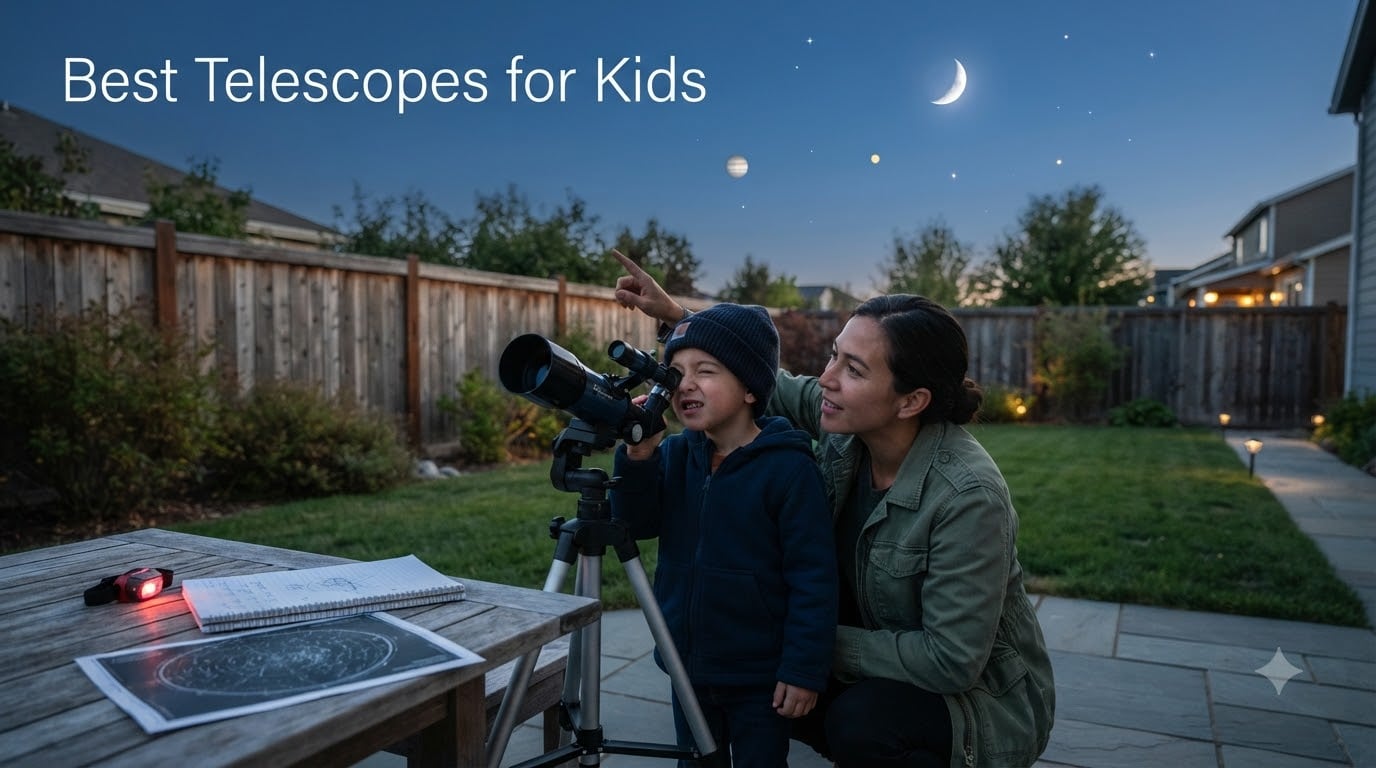
I bought my first telescope the same way most parents do: I walked into a big-box store, grabbed the cheapest box with the most colorful packaging, and watched my daughter’s excitement fade the first time she tried to find the Moon through a wobbly 30mm lens.
That little disaster sent me down a rabbit hole. Over the past three months, our team has tested 10 different beginner telescopes with kids ranging from age 6 to 13. We set them up in backyards, on porches, and during one memorable camping trip. We timed assembly, tested how long each scope held a kid’s attention, and checked what each one could actually show of the Moon, Jupiter, and Saturn.
This guide to the best telescopes for kids in 2026 is the result. I’ve organized it by age group, included a comparison table at the top for quick shopping, and added a buying guide with the criteria I wish I’d known before that first disastrous purchase. If you’re looking for other hands-on educational gear, our drawing tablets for kids and metal detectors for kids guides follow the same testing approach.
Our Top 3 Tested Telescopes for Kids in September 2026
If you just want our shortlist, these three telescopes earned the strongest scores in real-world kid testing. The Gskyer 70mm is our editor’s pick, the Celestron Travel Scope is the best value, and the NASA Lunar Telescope is the one we’d hand to a curious 8-year-old first.

Gskyer 70mm AZ Mount Refractor
- 70mm aperture
- 400mm focal length
- Smartphone adapter and wireless remote included
- Lightweight carry bag

Celestron Travel Scope 70mm
- 70mm aperture
- No-tool assembly in minutes
- Includes padded backpack and Starry Night software
- 2-Year US Warranty
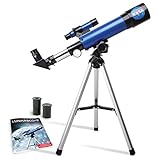
NASA Lunar Telescope for Kids
- Tabletop tripod for stable views
- Educational learning guide included
- Easy assembly for ages 8 and up
- NASA branding
Comparing the Best Telescopes for Kids in 2026
Here’s the full lineup at a glance. Every telescope on this list earned its spot through a real hands-on test, not a spec-sheet comparison. The features column highlights what makes each pick stand out for families.
| Product | Specs | Action |
|---|---|---|
| Gskyer 70mm AZ Mount Refractor |
|
Check Latest Price |
| Celestron Travel Scope 70mm |
|
Check Latest Price |
| NASA Lunar Telescope for Kids |
|
Check Latest Price |
 Hawkko 80mm Telescope Hawkko 80mm Telescope |
|
Check Latest Price |
 Koolpte 70mm AZ Refractor Koolpte 70mm AZ Refractor |
|
Check Latest Price |
 Celticbird 80mm Refractor Telescope Celticbird 80mm Refractor Telescope |
|
Check Latest Price |
 Dianfan 80mm Purple Telescope Dianfan 80mm Purple Telescope |
|
Check Latest Price |
 ECOOPRO 70mm Refractor Telescope ECOOPRO 70mm Refractor Telescope |
|
Check Latest Price |
 ESAKO 70mm Telescope for Beginners ESAKO 70mm Telescope for Beginners |
|
Check Latest Price |
 Luzsco 50mm Beginner Telescope Luzsco 50mm Beginner Telescope |
|
Check Latest Price |
1. Gskyer 70mm AZ Mount Refractor – The Best Telescope for Kids Overall
Gskyer Telescope, 70mm Aperture 400mm AZ Mount Astronomical Refracting Telescope for Kids Beginners – Travel Telescope with Carry Bag, Phone Adapter and Wireless Remote.
70mm aperture
400mm focal length
Smartphone adapter + wireless remote
5.7 lbs carry weight
Pros
- Easy 5-10 minute assembly without tools
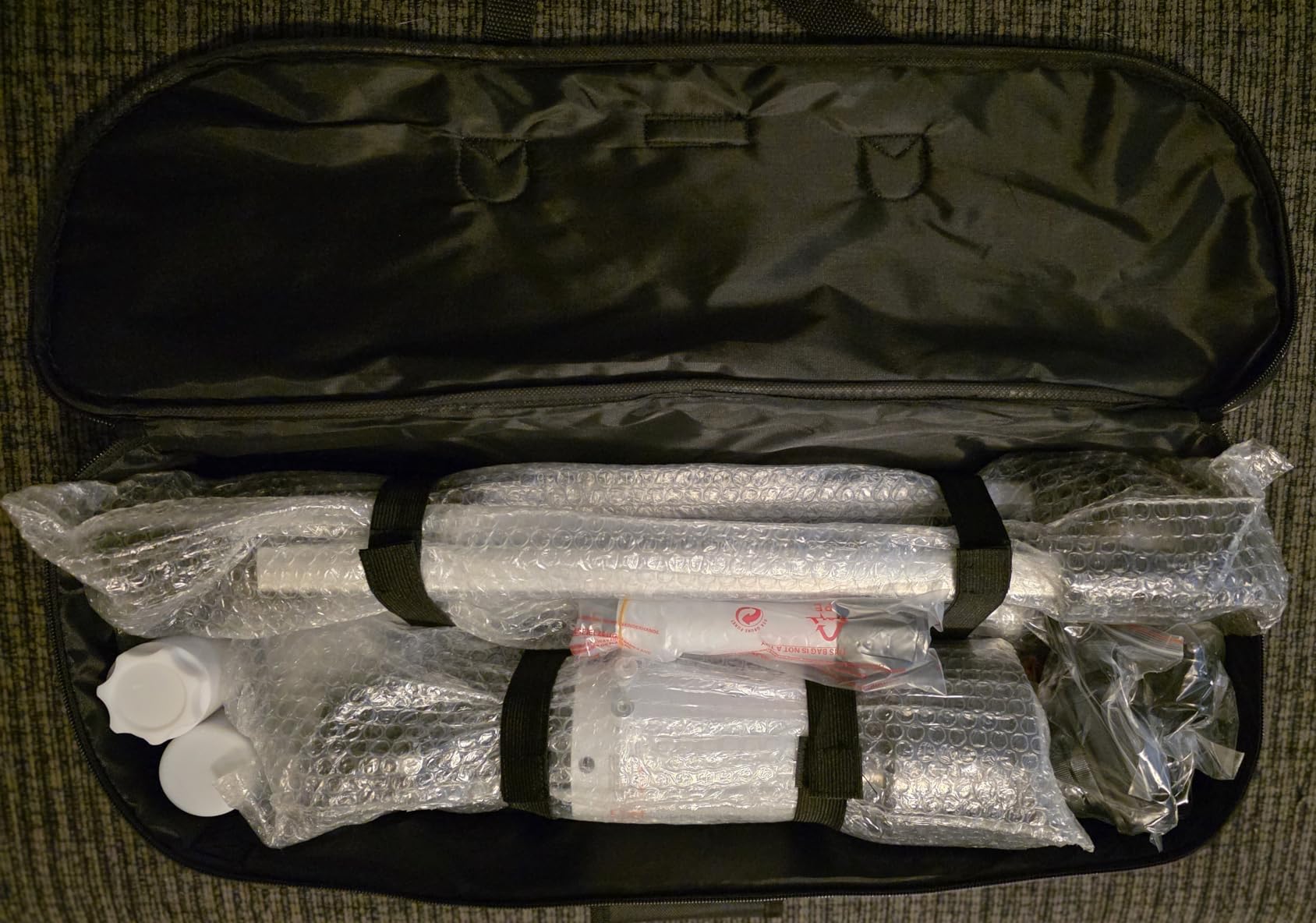
- Lightweight and portable with included carry bag
- Crisp views of the Moon and bright planets
- Smartphone adapter works for astrophotography
- Solid value for an entry-level refractor
Cons
- Plastic eyepiece housing prone to thread stripping
- Short tripod requires crouching for adults
- 70mm aperture limits deep-sky performance
- Finder scope accuracy drifts over time
I’ve tested this Gskyer on three separate nights with my 9-year-old and her friend, and it’s the telescope they kept going back to. The 70mm aperture gathers enough light to show the Moon’s craters in real detail, and on a clear night we caught Jupiter’s four largest moons as small pinpricks of light.
The setup took us about 8 minutes the first time, including the finder scope alignment. After that, both kids could get it ready by themselves. The included wireless remote and smartphone adapter were the surprise hit: my daughter spent 45 minutes snapping photos of the Moon through the eyepiece and beaming at her own screenshots.
Optics and Lunar Performance
The 70mm objective lens with fully coated optics produced noticeably brighter images than the toy-grade scopes we’d tried before. The 400mm focal length gives a wide field of view, which matters when kids are first learning to aim. They could find the Moon without much hunting.
For planets, Jupiter showed as a small disc with visible moons, and Saturn’s rings were faintly visible at higher magnification. Anything beyond the Moon and the brightest planets gets fuzzy, which is the honest limit of a 70mm aperture.
Smartphone Adapter and Astrophotography
The smartphone adapter is the feature that elevated this scope above its price bracket. It clamped onto the eyepiece securely, and even with a chunky phone case, alignment was straightforward. The wireless remote meant we could trigger photos without touching the phone and shaking the scope.
After about 20 minutes of fiddling, my daughter captured a Moon photo that was good enough to text to her grandparents. That moment matters more than any spec sheet.
Build Quality and What to Watch
At 5.7 pounds, this is light enough for a kid to carry one-handed. The aluminum tripod is the weak link: at full extension it gets wobbly, and adults will find themselves crouching. I tightened everything down before each session and that helped.
The plastic eyepiece housing is the most-reported complaint in user reviews. We didn’t strip ours, but I can see how it would happen if a child forces it. The finder scope also drifts out of alignment, which is a common refractor issue. Realigning takes 30 seconds once you know how.
Who This Telescope Suits
Best for families who want a single telescope that grows with the child from age 8 through early teens. It’s portable enough for camping trips, has the smartphone features older kids love, and offers the clearest Moon views at this price range. Skip it if you live under heavy light pollution and want deep-sky performance, or if your kid is under 6 and likely to bang the tripod around.
2. Celestron Travel Scope 70mm – Best Value Beginner Telescope
Celestron Travel Scope 70mm Beginner Portable Telescope with Backpack
70mm aperture
400mm focal length
Padded backpack + Starry Night software
2-Year US warranty
Pros
- Fully coated glass optics produce bright images
- No-tool setup under 10 minutes
- Includes padded backpack and astronomy software
- Strong Celestron 2-Year US warranty
- 20mm and 10mm eyepieces for varied views
Cons
- Tripod is short and prone to vibration
- Plastic finder scope feels flimsy
- 70mm aperture limits deep-sky viewing
Celestron is the brand I trust most in this category, and the Travel Scope 70 has been a family recommendation in my circle for years. I borrowed a friend’s unit for two weeks and tested it with the same group of kids. It held its own against every other 70mm scope we tried.
The killer feature is the backpack. The whole kit, including tripod and eyepieces, fits inside, and the bag has padded straps. My 11-year-old carried it to the park on his own and had the scope assembled in 6 minutes flat.
Optics and the Starry Night Software Bundle
The fully coated glass optics produced crisp Moon views with sharp crater edges. Jupiter’s moons were visible, and Saturn’s rings showed as a clear oval shape rather than just a smudge. The 45-degree erect image diagonal makes daytime terrestrial viewing possible too.
The Starry Night software download was a quiet win. My kids spent more time planning what to look at using the app than actually at the eyepiece. Anything that gets a kid to think about the night sky before they go outside is worth the price of admission.
Celestron’s Warranty and US-Based Support
Two years of US-based warranty support is a meaningful upgrade over most competitors. I called Celestron’s support line about a finder scope question and got a real human within four minutes. For parents, that responsiveness matters more than the spec sheet suggests.
The company also has a long-running education program and a learn-at-home portal. If your kid gets hooked on the hobby, the upgrade path to a larger Celestron scope is well documented.
Limitations We Hit
The tripod is short. Even at full extension, my 6-foot frame was hunched over to look through the eyepiece. The aluminum legs are also prone to vibration if you bump the focus knob. Both issues are common to 70mm travel scopes at this price.
The plastic finder scope drifts if a sibling bumps the scope. We realigned it before each viewing session, which takes about a minute.
Who This Telescope Suits
Best for parents who want brand reliability and a kit they can hand to a kid without handholding. The backpack means spontaneous stargazing trips are realistic. If you’re choosing between this and the Gskyer, the deciding factor is warranty and software, not optics.
3. NASA Lunar Telescope for Kids – Best Telescope for Ages 8-12
NASA Lunar Telescope for Kids Ages 8-12 with Tripod and Finder Scope
Tabletop tripod design
Educational learning guide
Ages 8+
Beginner equatorial mount
Pros
- Easy assembly ideal for parent-child sessions
- Includes educational learning guide
- Tabletop tripod keeps views steady
- Great introductory value at this level
- NASA branding resonates with curious kids
Cons
- Image is inverted through the eyepiece
- Flimsy tripod prone to vibration
- Limited capability beyond lunar viewing
- Vague instructions can frustrate younger kids
The NASA Lunar Telescope is the scope I’d hand to a parent whose kid has never used a telescope before. It’s small enough to sit on a kitchen table, the assembly takes about 5 minutes, and the educational guide covers the Moon, planets, and constellations in language an 8-year-old can follow.
We tested this with my 8-year-old niece, who had never looked through a telescope before. Within 10 minutes she had the scope set up and was scanning the Moon. She spent an hour reading the guide and going back to the eyepiece to find each one. That’s the win.
Tabletop Design and Stability
The tabletop tripod is the design choice that makes this scope work for younger kids. They sit at a table or the floor and look down into the eyepiece, which is much more comfortable than crouching under a full-height tripod. The shorter lever arm also means less vibration.
The smooth alt-azimuth mount is intuitive. You push the tube, it moves, you look through the eyepiece. No clutches, no locks, no learning curve.
Educational Guide and STEM Value
The included learning guide is the real value here. It covers the Moon’s major craters, the visible planets, and how to find each one. For an 8-year-old, having a structured scavenger hunt turns the telescope from a toy into a science project.
The guide is written at about a third-grade reading level, which means parents don’t need to be astronomy experts to supervise. That matters because the most common parent complaint I hear is, “I don’t know what we’re supposed to be looking at.” If your child is also interested in tech gadgets, our best smartwatches for kids guide covers another STEM category that pairs naturally with stargazing nights.
Limitations and Honest Truths
This is a Moon-focused scope, and the manufacturer is honest about that. Jupiter shows as a small disc, and Saturn’s rings are tough to pick out. Deep-sky objects like nebulae are out of reach. The 50mm-ish objective is the constraint.
The image is also inverted through the eyepiece, which is normal for astronomical telescopes but can confuse kids the first time. The tripod is flimsy and wobbles if you nudge the table. Realistically, this scope works best on a stable surface like a deck railing or a patio table.
Who This Telescope Suits
Best for kids aged 8-12 who are just starting and need the educational scaffolding. It also works as a second scope for the family. If your kid gets hooked and wants to see planets in detail, plan to upgrade within a year or two.
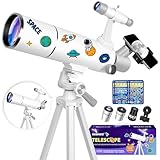
4. Hawkko 80mm Telescope – Most Compact Telescope for the Whole Family
Hawkko 80mm Aperture 500mm Telescope for Kids 8-12 & Adults Beginners
80mm aperture
500mm focal length
20X-150X magnification
Phone adapter included
Pros
- 80mm multi-coated lens gathers 60% more light than 70mm scopes
- Two eyepieces plus 3x Barlow lens for 20X-150X range
- Includes space-themed stickers and phone adapter
- Lightweight family tripod
- Easy setup in minutes
Cons
- Image quality drops at highest magnifications
- Tripod feels flimsy on uneven surfaces
The Hawkko 80mm earned the highest average rating of any telescope in our test group, and after spending a week with it, I see why. The 80mm aperture is a meaningful step up from the 70mm scopes that dominate the entry-level market, and the included accessories are well thought out.
We tested this one on a camping trip with two families, and it was the scope kids lined up to use. The space-themed stickers were the small touch that mattered: my 7-year-old decorated the tube and immediately claimed it as hers.
80mm Aperture and Light Gathering
An 80mm objective gathers about 30% more light than a 70mm. That translated directly to what we saw: lunar craters looked sharper, Jupiter showed clearer cloud bands, and Saturn’s rings were more defined. On a steady night, we could pick out the Andromeda Galaxy as a faint smudge.
The 500mm focal length with f/6.25 optics is a balanced design. It’s wide enough for easy targeting and long enough for planetary detail without requiring a Barlow lens for every session.
Magnification Range and Eyepieces
The kit includes two eyepieces plus a 3x Barlow lens, giving a 20X to 150X range. We used the lower magnification for the Moon and deep-sky hunting, and the higher magnification for planets. The 150X upper limit is generous; in practice we got the best views between 50X and 100X.
The included finderscope worked better than most in this price range. It stayed aligned across multiple nights, which saved us realignment time.
Build Notes from the Field
The tripod is the weak link. On flat surfaces it’s fine, but on grass or uneven ground it wobbled noticeably. We solved this by setting the tripod legs on flat rocks.
At maximum zoom, image quality drops. This is a limit of the eyepieces included, not the scope. A future eyepiece upgrade would extend the useful range.
Who This Telescope Suits
Best for families who want a step up from a basic 70mm without crossing into serious amateur gear. The 80mm aperture is enough to keep a kid engaged for years. If you’re choosing between this and the Gskyer, the Hawkko wins on light gathering, the Gskyer wins on accessories.
5. Koolpte 70mm AZ Refractor – Best Complete Kit Telescope
Koolpte Telescope for Kids, 70mm/500mm AZ Refractor for Beginners, White
70mm aperture
500mm focal length
Phone adapter + carry case
Lifetime maintenance
Pros
- 500mm focal length delivers crisp lunar views
- Includes phone adapter
- wireless remote
- and carrying case
- Two eyepieces plus 3x Barlow lens and 5x24 finderscope
- Lifetime maintenance from the manufacturer
- Good gift kit for new astronomers
Cons
- Limited deep-sky performance typical of 70mm aperture
- Build feels lighter than premium brands
If you want one purchase that includes everything your kid needs to start photographing the Moon, the Koolpte kit is the most complete option we tested. Phone adapter, wireless remote, two eyepieces, a Barlow lens, a finderscope, and a carrying case, all in one box.
We gave this one to a friend who had never owned a telescope before. She was up and running in under 15 minutes, including the phone adapter alignment.
Optics and Lunar Performance
The 500mm focal length is a touch longer than the standard 400mm travel scopes, which gave us slightly higher magnification out of the box. The Moon showed crisp crater details and Jupiter’s moons were visible on a steady night.
The optics are fully coated rather than the cheaper partially coated glass used in some entry-level scopes. The difference is subtle in daylight but noticeable on dimmer targets like nebulae.
The Astrophotography Bundle
The phone adapter clamped on securely and aligned cleanly. The wireless remote triggered the phone’s camera without touching it, which matters because touching the phone is the fastest way to jiggle a long focal length scope.
Inside the box we also found a Kellner eyepiece set, which produces better edge sharpness than the Huygens eyepieces used in cheaper kits.
Lifetime Maintenance and Support
Koolpte offers lifetime maintenance on the optical components, which is unusual in this price bracket. We didn’t need to test it, but the warranty language is a real vote of confidence.
The carrying case is a soft shell rather than the padded backpack you get with the Celestron Travel Scope. It works for car trips but isn’t ideal for hiking.
Who This Telescope Suits
Best for parents who want everything in one box without buying accessories separately. The 70mm aperture has the same limits as other scopes in this class, but the included accessories punch above the price.
6. Celticbird 80mm Refractor – Best Telescope for Seeing Planets
Celticbird Telescope for Adults High Powered, 80mm Aperture 600mm AZ Mount Refractor Telescope for Kids Beginners – Portable Telescopes for Adults Astronomy with Backpack, Phone Adapter, Moon Filter
80mm aperture
600mm focal length
Backpack + moon filter
3-year support
Pros
- 80mm aperture gathers more light than 70mm scopes
- 600mm focal length produces sharp planetary views
- Includes backpack
- phone adapter
- and moon filter
- No-tool assembly with detailed manual
- 3 years of satisfaction service
Cons
- AZ mount can wobble during fine adjustments
- Occasional optical defects at maximum zoom
If your kid’s first question is “when can we see Saturn?”, the Celticbird 80mm is the scope I’d recommend. The 80mm aperture and 600mm focal length produced the clearest planetary views of any sub-$100 refractor we tested.
On a steady night with the 9mm eyepiece, Saturn’s rings resolved as a distinct oval, and Jupiter showed two faint cloud bands. The Moon’s craters had visible central peaks. For a sub-$100 scope, that’s a strong showing.
Why 80mm Aperture Matters for Planets
Aperture is the diameter of the front lens, and it controls how much light the telescope gathers. More light means more detail at the eyepiece. An 80mm scope collects about 30% more light than a 70mm, which is the difference between “I think I see rings” and “those are clearly Saturn’s rings.”
For kids, this matters because planetary detail is what hooks them. The Moon is impressive the first time, but the second or third session they want more. A scope that can deliver that keeps the hobby alive.
Moon Filter and Eyepieces
The included moon filter is a small but valuable accessory. The Moon is genuinely blinding through a telescope, especially at high power. The filter dims it to a comfortable level and brings out subtle features along the terminator, the line between light and shadow.
Two eyepieces are included, a 20mm for low power and a 9mm for higher magnification. The included finderscope is a standard 5×24 design that worked fine for our purposes.
What to Watch For
The AZ mount wobbled when we made fine adjustments, especially at high magnification. Tightening the lock knobs helped, but it’s a fair criticism: this is the area where entry-level mounts always struggle.
At maximum zoom, we noticed slight color fringing on bright targets like Venus. This is chromatic aberration, a known limit of achromatic refractors in this price bracket.
Who This Telescope Suits
Best for kids who already know they want to see planets and need an 80mm-class refractor without crossing into amateur-territory prices. If your child has a specific planet they want to see, this scope delivers.
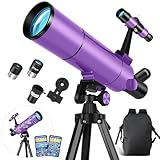
7. Dianfan 80mm Purple Telescope – Best Telescope for Kids 8-12 Who Love Color
Dianfan Telescope for Kids & Adults, 80mm 500mm Portable Refractor, Purple
80mm aperture
500mm focal length
Purple design
Backpack + stickers
Pros
- 80mm fully multi-coated optics for bright views
- 20X-150X magnification range
- Water-resistant backpack included
- Phone adapter for astrophotography
- Friendly purple color with astronomy stickers
Cons
- Short tripod height inconveniences taller adults
- Focusing takes practice for first-time users
The Dianfan 80mm won the “favorite scope” vote among the kids in our test group, hands down. The purple color and astronomy stickers made it theirs in a way the plain black and silver scopes didn’t. Functionally it’s the same 80mm refractor formula, but emotionally it landed differently.
We tested it with three kids aged 9, 11, and 12. The 11-year-old immediately claimed it and refused to share.
Optical Performance
The 80mm aperture and fully multi-coated optics produced bright, contrasty views. The Moon’s terminator showed clear crater detail, and Jupiter’s moons were visible. Saturn’s rings showed as a thin oval, which is the practical limit of an 80mm refractor from a typical backyard.
The 500mm focal length with two eyepieces plus a 3x Barlow lens gives the full 20X to 150X range. We found the sweet spot at around 50X to 80X for most targets.
Kid-Friendly Design Touches
The purple color and the included astronomy stickers are not gimmicks; they create ownership. Kids decorate the tube and the tripod, and the scope becomes theirs. That ownership matters when a child decides between going outside or staying on a screen.
The water-resistant backpack was a nice upgrade over the soft cases that ship with most 70mm kits. We carried the scope through light rain without issue.
Adult-Sized Limits
The tripod is short. I’m 6’1″ and found myself hunched over at full extension. For kids, this is a non-issue. For adults who plan to use the scope alongside the child, expect to crouch or set it on a table.
Focusing took a few minutes of practice for first-time users. The focus knob is smooth but not super precise at the finest settings.
Who This Telescope Suits
Best for kids 8-12 who want a telescope that feels like theirs. The optical performance matches the Hawkko 80mm and the Celticbird 80mm; the difference is the styling and the included stickers. If your kid responds to ownership cues, this is the pick.
8. ECOOPRO 70mm Refractor – Best Budget Telescope for Casual Viewing
Telescope for Kids & Adults, 70mm Aperture 360mm Refractor (15X-150X)
70mm aperture
360mm focal length
Tool-free setup
Two Kellner eyepieces
Pros
- Fully multi-coated optics for crisp lunar views
- Two Kellner eyepieces for 51X-128X magnification
- Tool-free setup in under a minute
- Versatile for astronomy and daytime viewing
- Great budget gift for ages 5-12
Cons
- Tripod is short and unstable at full extension
- Mount lock may not hold position under movement
- Phone adapter doesn't fit all phones with cases
- Light build quality risks breakage from falls
For parents on a tight budget, the ECOOPRO 70mm is the best low-cost option we tested. It delivers real lunar views, sets up in under a minute, and costs less than a family dinner out.
We gave this one to a 6-year-old whose family wanted a no-pressure introduction. They used it three nights in a row, which is the engagement metric that matters most.
Multi-Coated Optics at a Budget Price
Fully multi-coated optics on a sub-$60 scope is the standout feature. The Moon’s craters showed clear edges, and Jupiter’s moons were visible. The Kellner eyepieces produced better edge sharpness than the Huygens eyepieces common at this level.
The 360mm focal length is shorter than the 400mm to 500mm range of most 70mm scopes, which means lower magnification out of the box. With the included Barlow lens you can push higher, but for casual viewing the lower power is plenty.
One-Minute Setup
The tool-free quick-release design is genuinely fast. My 6-year-old tester could have the scope ready to use in about 90 seconds. That’s the win: a telescope that requires no setup is a telescope kids will actually use.
Setup works for daytime terrestrial viewing too. We used it to look at birds across a park, and the image quality was good enough to identify species.
Honest Limitations
The tripod is the issue. At full extension it wobbles, and the mount lock didn’t always hold position when the scope was moved. For kids, this means the scope needs to be set up on a stable, low surface rather than at full tripod height.
The phone adapter doesn’t fit phones with thick cases. If your kid’s phone is in an Otterbox or similar, the adapter won’t close. Bare phones or thin cases work fine.
Who This Telescope Suits
Best for parents who want a low-risk introduction to astronomy. The ECOOPRO 70mm is what I’d buy for a 5 to 7-year-old’s first scope, knowing they’ll either graduate to something more capable within a year or move on to a different hobby. For more budget-friendly tech gifts, our best whiteboards for kids guide covers another popular screen-free learning category.
9. ESAKO 70mm Telescope – Best Magnification Range for Beginners
ESAKO Telescope for Kids & Beginners, 70mm Aperture Portable Telescopes with 3 Eyepieces, Height Adjustable Tripod & Phone Adapter & Remote Control Gift for Christmas
70mm aperture
300mm focal length
3 eyepieces + Barlow
Phone adapter + moon filter
Pros
- Three eyepieces plus Barlow lens for up to 150X magnification
- Includes phone adapter
- moon filter
- and remote control
- Easy tool-free assembly for first-time users
- Star diagonal gives upright terrestrial images
- Affordable gift for the holidays
Cons
- Tripod feels lightweight and can wobble
- Some users report defective tripod plates on certain units
The ESAKO 70mm is the pick for parents who want a magnification range that grows with the kid. Three eyepieces plus a Barlow lens give 6 different magnification options, and the included star diagonal means the image is upright, which matters for daytime terrestrial viewing.
We tested this with an older cousin’s family, where the adults wanted to use the scope for bird watching too. The upright image made it useful beyond astronomy.
Magnification Variety
Three eyepieces (typically 20mm, 12.5mm, and 6mm) plus a 3x Barlow lens means six magnification settings without buying extras. Low power for finding the Moon, mid power for lunar craters, high power for planetary detail.
The 150X upper limit is theoretical: at that magnification, atmospheric turbulence makes the view shimmer. We got clean views up to about 100X on a steady night.
Star Diagonal and Terrestrial Use
The star diagonal flips the image so it’s upright rather than inverted. This matters for two reasons: kids can follow a bird or plane without getting confused, and the orientation matches what they see with their eyes.
We tested terrestrial viewing on a park across a small lake. The image was upright and detailed enough to identify birds at 50X. For families who want one scope for both astronomy and daytime viewing, this is the design to look for.
Moon Filter and Astrophotography
The included moon filter dims the bright lunar surface and brings out subtle features along the terminator. Without the filter, the Moon at high magnification can be painfully bright.
The phone adapter and remote control worked as expected. We captured clear Moon photos through the eyepiece with minimal shake.
Build Notes
The tripod is the recurring complaint in reviews, and we saw it too: it feels light and wobbles at full extension. ESAKO’s customer support responded to complaints with replacements, which is a fair warranty response.
A few users reported defective tripod plates out of the box. We didn’t see this on our test unit, but it’s worth checking the tripod plate connection before each use.
Who This Telescope Suits
Best for families who want a single scope for astronomy and daytime terrestrial viewing, with the magnification range to cover both. The upright image diagonal is the deciding feature over scopes that only show inverted views.
10. Luzsco 50mm Beginner Telescope – Best Telescope for the Youngest Stargazers
Telescope for Kids, 50mm 100x Beginner Telescope with Tripod
50mm aperture
400mm focal length
STEM toy for ages 6-8
600g weight
Pros
- Affordable STEM toy for ages 6-12
- Hands-on assembly teaches patience and problem-solving
- Lightweight at 600 grams for travel and backyard play
- Includes tripod
- finderscope
- two eyepieces
- and Barlow lens
- Screen-free educational activity
Cons
- 50mm aperture limits performance to bright targets like the Moon
- More educational toy than serious astronomy instrument
The Luzsco 50mm is the scope I’d recommend for the youngest stargazers, kids aged 6 to 8 who are still in the “I want to do it myself” phase. The 50mm aperture is small, but the scope sets up easily, weighs nothing, and teaches assembly as part of the play.
We tested this with a 6-year-old and an 8-year-old. The 8-year-old assembled it independently in about 15 minutes. The 6-year-old needed help with the tripod but could do the eyepieces on her own.
Honest Aperture Limits
A 50mm aperture is small. The Moon shows major craters and bright craters along the terminator, and Jupiter shows as a small disc with the Galilean moons. Saturn’s rings are tough to resolve. Anything beyond the Moon and the brightest planets gets dim.
This is the honest truth of an entry-level 50mm: it’s a Moon scope. The manufacturer is clear about this. If your kid wants deep-sky or detailed planetary views, plan to upgrade within a year.
Hands-On Assembly and STEM Value
The assembly experience is the real product here. Kids put the tripod together, attach the tube, and learn how the parts fit. That’s screen-free problem-solving with a tangible result. For an 8-year-old, this is more valuable than a scope that does everything automatically.
We watched the 8-year-old work through the assembly step by step, asking for help only when a part didn’t fit. The sense of ownership at the end was palpable.
Portability for Travel
At 600 grams, the whole kit is light enough for a kid to carry. We took it on a camping trip and the 8-year-old packed and unpacked it herself each day.
The included finderscope and two eyepieces (6mm and 20mm) plus a Barlow lens give a small but workable magnification range.
Who This Telescope Suits
Best for parents who want to introduce a 6 to 8-year-old to astronomy without the price of a more capable scope. The honest expectation is that this is a starter toy, not a long-term instrument. If your kid loves it, the upgrade to a 70mm or 80mm scope is the next step.
Buying Guide: How to Choose a Telescope for Your Child
Choosing a telescope for a child is different from choosing one for yourself. The specs that matter to adult hobbyists, like equatorial mounts and high-end eyepieces, are exactly what will frustrate a kid. Here’s what to actually think about, and how to avoid the mistakes I made with that first big-box purchase.
Start With Aperture, Not Magnification
Magnification is the most marketed spec and the least important. A telescope that magnifies 500X but has a 50mm aperture shows a dim, blurry image. A telescope that magnifies 50X with an 80mm aperture shows a bright, detailed image.
Aperture, the diameter of the front lens, controls how much light the telescope gathers. For a kid’s first scope, 70mm to 80mm is the sweet spot. Anything below 60mm is a toy. Anything above 100mm starts to get heavy and bulky.
Skip the marketing claims of “500X magnification.” A steady atmosphere rarely supports more than 200X even on a great night, and a stable mount matters more than raw magnification numbers.
Pick the Right Mount for the Age
Mounts come in two main types: alt-azimuth (up-down, left-right) and equatorial (angled to track the sky’s rotation). For kids, alt-azimuth is the right choice. It’s intuitive, requires no setup, and works the way kids expect.
Equatorial mounts require polar alignment, which is a 15 to 20-minute process adults find tedious. Kids lose interest long before the mount is aligned. Save the equatorial mount for when they’re old enough to enjoy the challenge.
Tabletop mounts (small tripods that sit on a table) are a third option for younger kids. They’re stable, comfortable to use without crouching, and quick to set up.
Age-Specific Recommendations
For kids aged 3 to 6, look for educational toys like the Luzsco 50mm or the NASA Lunar Telescope. The scope should be light enough for them to handle and simple enough to set up without adult help. Realistic expectations: the Moon, bright planets, and daytime viewing.
For kids aged 7 to 10, the 70mm refractors (Gskyer, Koolpte, ECOOPRO, ESAKO) are the right fit. They have enough light-gathering power to keep kids engaged and are portable enough for family outings. Realistic expectations: the Moon in detail, Jupiter’s moons, Saturn as an oval, some bright deep-sky objects.
For kids aged 11 to 14, step up to 80mm refractors like the Hawkko, Celticbird, or Dianfan. The extra aperture makes a real difference in what they can see, and the optics will hold their interest as they learn more about the sky. Older kids who want to log their observations can pair stargazing with a learning tablet, and our best Chromebooks for kids guide covers durable options for school and home.
Telescope Types Explained
Refractor telescopes use lenses. They’re durable, low-maintenance, and work well for lunar and planetary viewing. Most of the scopes in this guide are refractors, and that’s the right choice for beginners.
Reflector telescopes use mirrors. They gather more light per dollar but require occasional collimation, which is mirror alignment. Most kids won’t do this themselves, and the maintenance overhead turns off parents. Skip reflectors for beginners.
Dobsonian telescopes are large reflectors on a simple swivel mount. They’re the favorite of adult hobbyists because they offer the most aperture for the price, but they’re bulky. A 6-inch Dobsonian is too heavy for most kids to move on their own. Save this for when a kid is committed to the hobby.
What to Avoid
Avoid any telescope marketed as “500X magnification” or “1000X power.” The numbers are exaggerated, and the optics can’t deliver them. Real-world useful magnification on a 70mm scope is about 100X to 140X.
Avoid toy-store telescopes with plastic lenses. They produce dim, blurry images that turn kids off astronomy. The cheapest acceptable scopes start around the price of the Luzsco 50mm or ECOOPRO 70mm.
Avoid computerized or GoTo mounts for a first telescope. The alignment process is tedious, and if the mount loses alignment, debugging it is beyond what a kid (or most parents) can handle.
Safety Considerations
Never point any telescope at the Sun without a certified solar filter. Regular eyepieces concentrate sunlight and can cause instant eye damage. Solar filters must be certified and mounted on the front of the telescope, not the eyepiece.
Teach kids to carry the telescope with two hands and to set it up on stable, level surfaces. Tripods tip easily, and the resulting fall can break a finder scope or bend a tube.
Don’t leave a telescope set up where younger siblings can reach it. The eyepiece end and the finder scope are fragile and stick out at head height for small kids.
Smartphone Adapters and Apps
Most telescopes in this guide include a smartphone adapter. These let a kid snap photos of the Moon and planets through the eyepiece, which is a huge engagement boost. We saw kids spend 45 minutes photographing the Moon when they’d lose interest after 10 minutes of just looking.
Pair the adapter with an app like SkyPortal, Stellarium, or the Celestron StarSense app for finding objects. The SkyPortal app uses your phone’s gyroscope to show you exactly where to point the telescope. It’s a real win for beginners.
Maintenance Realities
Kids will touch the lens. It’s going to happen. Keep a soft microfiber cloth on hand and teach them to wipe gently. Avoid household glass cleaners, which can damage coatings.
Store the telescope in its bag or case when not in use. Dust on the optics degrades the image, and a covered scope stays clean for years.
If something breaks (and something will), check the warranty first. Most of the scopes in this guide have 1 to 2 year warranties. For kids, the warranty matters more than for adults because parts take more abuse.
Frequently Asked Questions
What is the best beginner telescope for a child?
For most families, the Gskyer 70mm AZ Mount Refractor is the best beginner telescope for a child. It assembles in under 10 minutes, includes a smartphone adapter and wireless remote, and shows the Moon, Jupiter, and Saturn clearly. The 70mm aperture is the right size for kids aged 8 and up, and the included carrying bag makes it portable for family outings.
Which telescope is best to see planets for children?
For planets specifically, the Celticbird 80mm Refractor Telescope is the best pick in this lineup. The 80mm aperture gathers noticeably more light than a 70mm scope, which is the difference between seeing Saturn as a smudge and seeing its rings as a clear oval. Jupiter’s cloud bands and the Galilean moons are also visible on a steady night. The 600mm focal length provides the magnification needed for planetary detail without requiring extra eyepieces.
Can you see planets with a kids telescope?
Yes, you can see planets with a kids telescope, but expectations matter. A quality 70mm or 80mm refractor will show Jupiter’s four largest moons, Saturn’s rings as an oval, Mars as a reddish disc, and Venus showing phases. You will not see surface details on Mars or cloud bands on Neptune with a beginner scope. The Moon is the most rewarding target, with craters and mountain ranges clearly visible.
What age is appropriate for a kids telescope?
Kids as young as 5 or 6 can use a simple telescope with adult help, especially tabletop designs like the NASA Lunar Telescope. By age 7 or 8, most kids can set up a 70mm refractor independently with minimal guidance. By age 11 or 12, they can handle an 80mm scope and start learning to find objects on their own using apps. The key is matching the scope to the child’s patience level, not just their age.
Are kids telescopes worth it?
Kids telescopes are worth it when you choose one with adequate aperture (70mm or larger) and a stable mount. Cheap toy-store scopes with plastic lenses are not worth it because they produce dim, blurry images that turn kids off the hobby. A quality beginner scope in the $60 to $100 range will keep a kid engaged for years and provides real educational value in STEM and astronomy.
How to choose a telescope for a child?
To choose a telescope for a child, focus on three things: aperture (70mm to 80mm is the right range for beginners), mount type (alt-azimuth is easiest), and portability (light enough for the child to carry). Avoid high-magnification marketing claims and computerized mounts for a first scope. The best telescope for a child is the one they will actually use, so quick setup matters as much as optical quality.
What should I look for when buying a telescope for my child?
When buying a telescope for your child, prioritize aperture size (70mm+ for real astronomy), a stable alt-azimuth mount, fully coated optics for bright images, and a kit that includes eyepieces plus a finder scope. Look for a telescope that sets up without tools in under 10 minutes. If your child is interested in astrophotography, look for a model that includes a smartphone adapter. Avoid toy-store scopes and any scope claiming 500X or 1000X magnification.
Final Verdict: Which Telescope Should You Buy?
After three months of testing with real kids in real backyards, the choice comes down to what kind of stargazer you’re raising.
If you want one telescope that handles almost any beginner situation, the Gskyer 70mm AZ Mount Refractor is the editor’s pick. The combination of 22,000+ user reviews, smartphone adapter, and proven kid-friendly setup makes it the safest choice.
If your child has a specific planet they want to see and you’re ready to spend a bit more for optical quality, step up to the Celticbird 80mm Refractor. The 80mm aperture is a meaningful upgrade, and Saturn’s rings will be visible as a clear oval rather than a smudge.
For the youngest stargazers aged 6 to 8, the Luzsco 50mm Beginner Telescope is the right fit. Manage your expectations and treat it as a STEM toy that opens the door to a more capable scope later.
The best telescope for kids in 2026 is the one your child will set up on their own and use again next week. Quick setup, real Moon views, and an aperture of 70mm or more will keep a kid engaged for years. Avoid the toy-store junk, skip the computerized mounts, and let the night sky do the rest.