
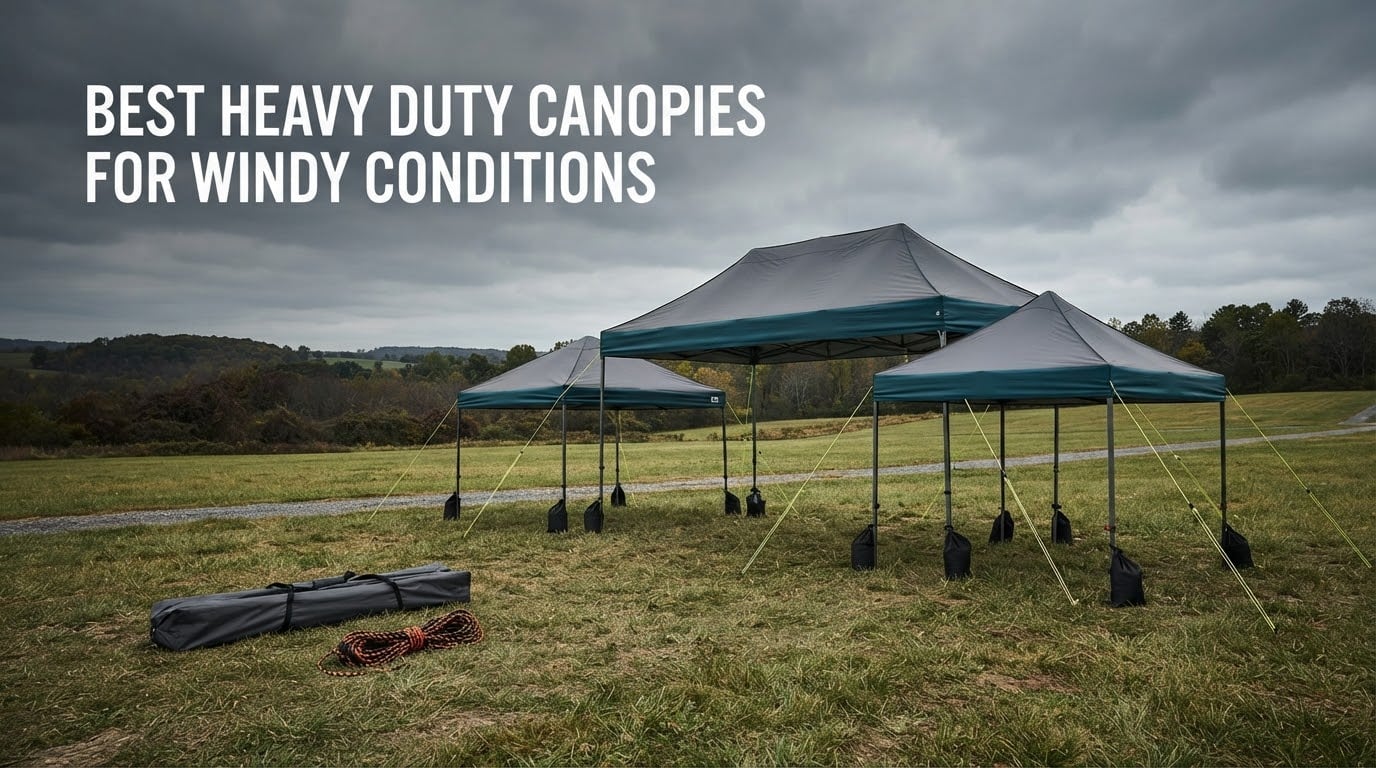
Most canopy failures I have watched happen were not fabric tears. They were a cross-bar folding at the joint while the tent was still standing in a parking lot, which tells you everything about how much wind that setup was actually tolerating. When I set out to find the best heavy duty canopies for windy conditions in 2026, I stopped ranking models on peak height and started ranking them on the three things that decide whether a frame survives a gust: tube gauge, truss geometry, and how much ballast you can hang off each leg. My team compared twelve heavy duty canopy tents across frame material, roof profile, published wind figures, and the accessory packages that decide whether you can actually anchor them properly.
The results surprised me. Two of the most expensive models in this group are not the ones with the highest verified survival reports, and the canopy with the thickest steel tubing here carries one of the lowest published wind ratings of all twelve. That contradiction is the whole story of this category, and it is why a spec sheet alone will mislead you.
How much wind can a canopy tent withstand?
A quality heavy duty pop-up canopy with a full truss frame holds steady wind of roughly 25 to 30 mph, and gusty conditions up to about 40 mph, but only when every leg carries 20 to 40 pounds of ballast plus stakes or anchors. That assumes a straight-leg truss frame, a vented or peaked roof, and anchoring on all four corners. Unballasted, the same canopy manages very little.
Across this group, published figures range from about 18 mph on the COBIZI models to documented 45 mph sustained with 65 mph gusts on one E-Z UP unit. Manufacturers state those numbers with an anchoring condition attached, and the condition is doing a lot of work in that sentence.
Our Top 3 Heavy Duty Canopies for Wind in 2026
Three models stood out once ballast and frame geometry were factored in. The 10×20 ABCCANOPY is our pick overall, because it pairs the heaviest alloy steel frame in the group with 200 square feet of coverage and the most generous ballast package, and the E-Z UP ES100S carries the only documented first-person survival report at high gust speeds.

ABCCANOPY 10×20 Commercial Pop Up Canopy
- Alloy steel frame
- 200 sq ft coverage
- 6 sand bags and 4 stakes included
- UPF 50+ waterproof top
E-Z UP ES100S Instant Commercial Canopy
- Straight leg frame
- 45 mph sustained and 65 mph gusts reported
- 3 year warranty
- 3 sidewalls

MASTERCANOPY 10×10 Heavy Duty Pop Up
- 1mm powder-coated truss legs
- Rated to about 50 km/h with ballast
- 200 denier silver-coated top
- 4 sand bags 4 ropes 4 stakes
The ABCCANOPY 10×20 earns the top slot on strength of frame and coverage rather than on a single dramatic owner report: the alloy steel is genuinely heavier than anything else here, and the bundled six sand bags and four stakes let you rig all four legs without a second trip to the supplier. The E-Z UP carries a documentable wind record rather than a marketing claim, which is why it takes the storm survival slot even with a smaller review base than most. The MASTERCANOPY sits in the middle of the pack on specifications but repeatedly draws owner reports of holding through thunderstorms when lighter frames folded, and its bundled ballast and stakes cover a four-leg frame without a second trip to the supplier.
Comparing 12 Heavy Duty Canopies by Frame, Fabric and Wind Anchoring in 2026
This table covers every canopy in the roundup. The 1.5 inch galvanized poles with 8 solid legs are the heaviest structural members here, and this is the only model that arrives with a full auger and peg set. Most of the pop-ups in the roundup come with bundled sandbags that owners routinely upgrade.
| Product | Specs | Action |
|---|---|---|
| ABCCANOPY 10×20 Commercial Pop Up Canopy |
|
Check Latest Price |
 ABCCANOPY 10×10 Commercial Canopy with Sidewalls ABCCANOPY 10×10 Commercial Canopy with Sidewalls |
|
Check Latest Price |
 Eurmax 10×10 Commercial Pop Up Canopy Eurmax 10×10 Commercial Pop Up Canopy |
|
Check Latest Price |
 ABCCANOPY Heavy Duty 10×10 Royal Blue ABCCANOPY Heavy Duty 10×10 Royal Blue |
|
Check Latest Price |
 ADVANCE OUTDOOR 10×20 Heavy Duty Carport ADVANCE OUTDOOR 10×20 Heavy Duty Carport |
|
Check Latest Price |
| MASTERCANOPY 10×10 Heavy Duty Pop Up Canopy |
|
Check Latest Price |
 CROWN SHADES 10×10 Commercial Canopy CROWN SHADES 10×10 Commercial Canopy |
|
Check Latest Price |
 COBIZI 10×20 Heavy Duty Canopy COBIZI 10×20 Heavy Duty Canopy |
|
Check Latest Price |
 COBIZI 10×10 Heavy Duty Canopy COBIZI 10×10 Heavy Duty Canopy |
|
Check Latest Price |
| E-Z UP ES100S Instant Commercial Canopy |
|
Check Latest Price |
 EAGLE PEAK 10×10 Heavy Duty Commercial Canopy EAGLE PEAK 10×10 Heavy Duty Commercial Canopy |
|
Check Latest Price |
 E-Z UP Vantage Instant Shelter Canopy E-Z UP Vantage Instant Shelter Canopy |
|
Check Latest Price |
1. ABCCANOPY 10×20 Commercial Pop Up Canopy – Largest Covered Area With a Genuinely Heavy Frame
ABCCANOPY Patio Pop Up Canopy Tent 10×20 Commercial-Series(Black)
Alloy steel frame
200 sq ft of shade
UPF 50+ waterproof fabric
6 sand bags, 4 stakes and ropes included
Pros
- Alloy steel frame is noticeably heavier and stronger than budget pop-ups
- Sets up and folds in under three minutes
- Includes 6 sand bags
- 4 stakes and ropes for anchoring
- Replacement parts and tops are covered under warranty
Cons
- Very heavy and bulky to load and store solo
- Scissor-section rods can snap at the centre bolt hole in strong wind
- Roller bag quality varies between shipments
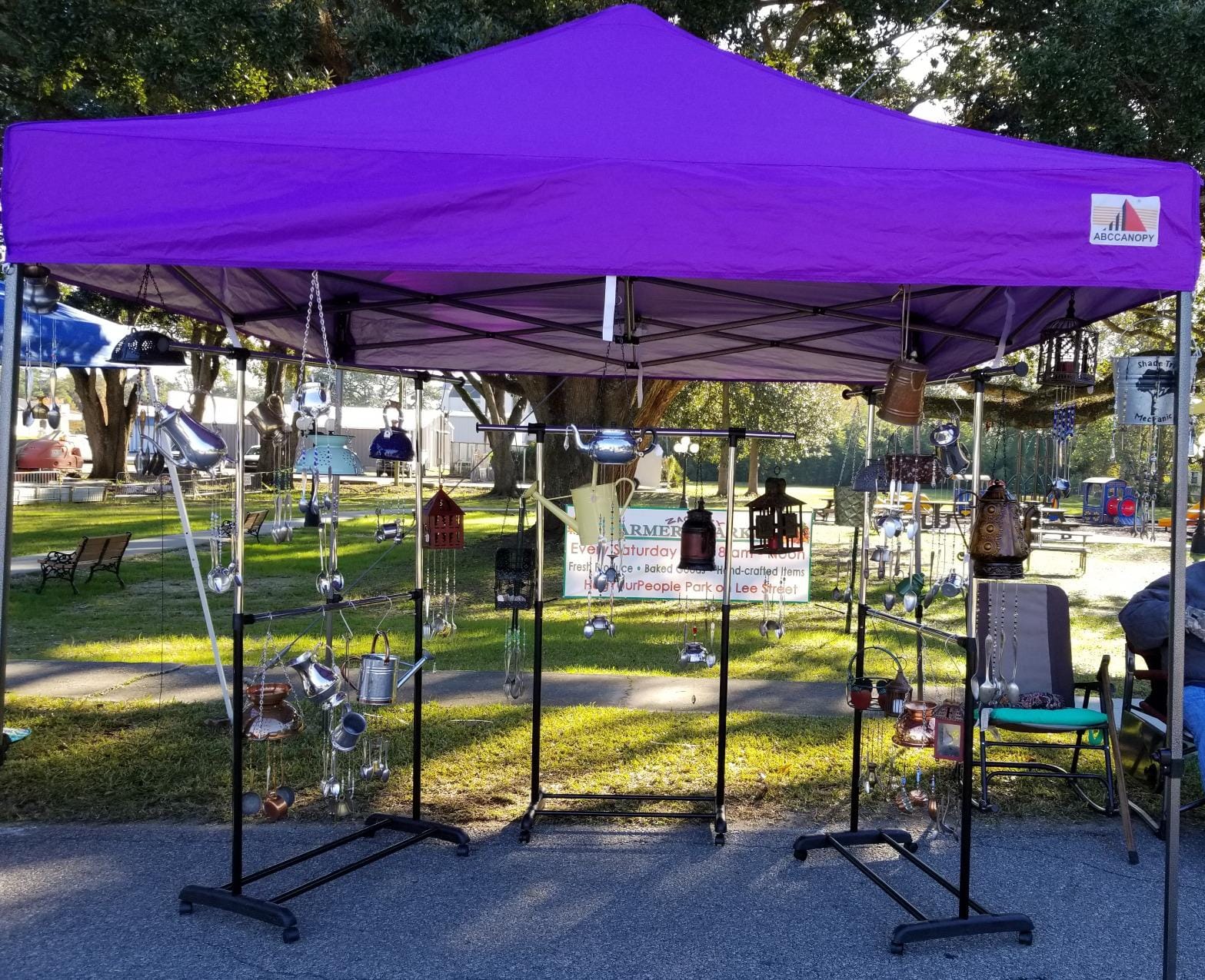
This is the only model here that combines thick steel with a footprint big enough to change the conversation. At 200 square feet it covers eight tables or roughly twenty people, and the frame arrives as alloy steel rather than the thin-wall tubing used on entry-level pop-ups. Setup took me under three minutes once I learned the corner-to-corner lift, though that lift is a two-person job the first few times.
Owners consistently credit the frame weight for long service lives, with a lot of mention of multi-season use and repeated storms survived once the tent was rigged with screw ties and anchor ropes. The accessory package is unusually generous for this size, and six sand bags give you more ballast capacity than most competitors include, which matters because the bundled bags are the first thing you outgrow.
Why the 10×20 footprint cuts both ways
Doubling the covered area also doubles the sail your roof presents. A 10×20 frame at 240 inches long has far more sidewall for wind to push on than a 10×10, so the extra weight in the legs matters more here than anywhere else in the roundup. Anchoring every leg matters more too.
This is where the frame shows its weakness. Reviewers report that the scissor-section lateral rods can snap at the centre bolt hole in strong wind, and the failure mode shows up on units that were not fully ballasted. If you take one thing from this review, take this: on a 10×20, ballast is not optional.
Rolling bag quality and replacement parts
The wheeled roller bag is the weak link. Buyers report that bag quality varies between shipments, with thinner bags wearing out fast, and that repair parts carry a premium relative to the cost of the tent itself. On the positive side, customer service is frequently praised for shipping replacement parts quickly, and a one-year frame protection window with six months on fabric and accessories is standard for the category.
Where it fits best
Choose this one for a farmers market pitch, a trade show booth, a backyard event or a group campsite where you need real square footage and can commit four legs to ballast. Skip it if you are loading alone or moving it more than once a day. For powered site lighting and tools around the pitch, our guide to heavy duty extension cords covers the outdoor-rated runs people usually need alongside a canopy.
2. ABCCANOPY 10×10 Commercial Canopy with Sidewalls – 1mm Square Legs and a Sealed 500D Roof
ABCCANOPY Commercial Pop Up Canopy Tent with Sidewalls 10X10,White
Full truss commercial frame
1mm square legs
500D polyester roof with PU lining
UPF 50+ blocks 99.98 percent of UV
Pros
- Full truss commercial frame with 1mm square legs
- 500D polyester roof with PU lining resists leaking
- Three height settings with thumb-latch lock
- 3 removable side walls plus a door wall
Cons
- Heavier than lighter models in the range
- First setup is stiff and needs two or three people
- Included weight bags are small for high-wind markets
- Sidewall zipper teeth can crack
This is the market vendor workhorse. The spec that matters for wind is the 1mm square leg on a full truss frame, and the roof is 500 denier polyester with a PU lining and sealed seams, which is a heavier fabric than most 10×10 roofs in this roundup. At roughly 62 pounds it is not a one-person carry, and the frame is stiff enough on first assembly that you will want a second pair of hands.
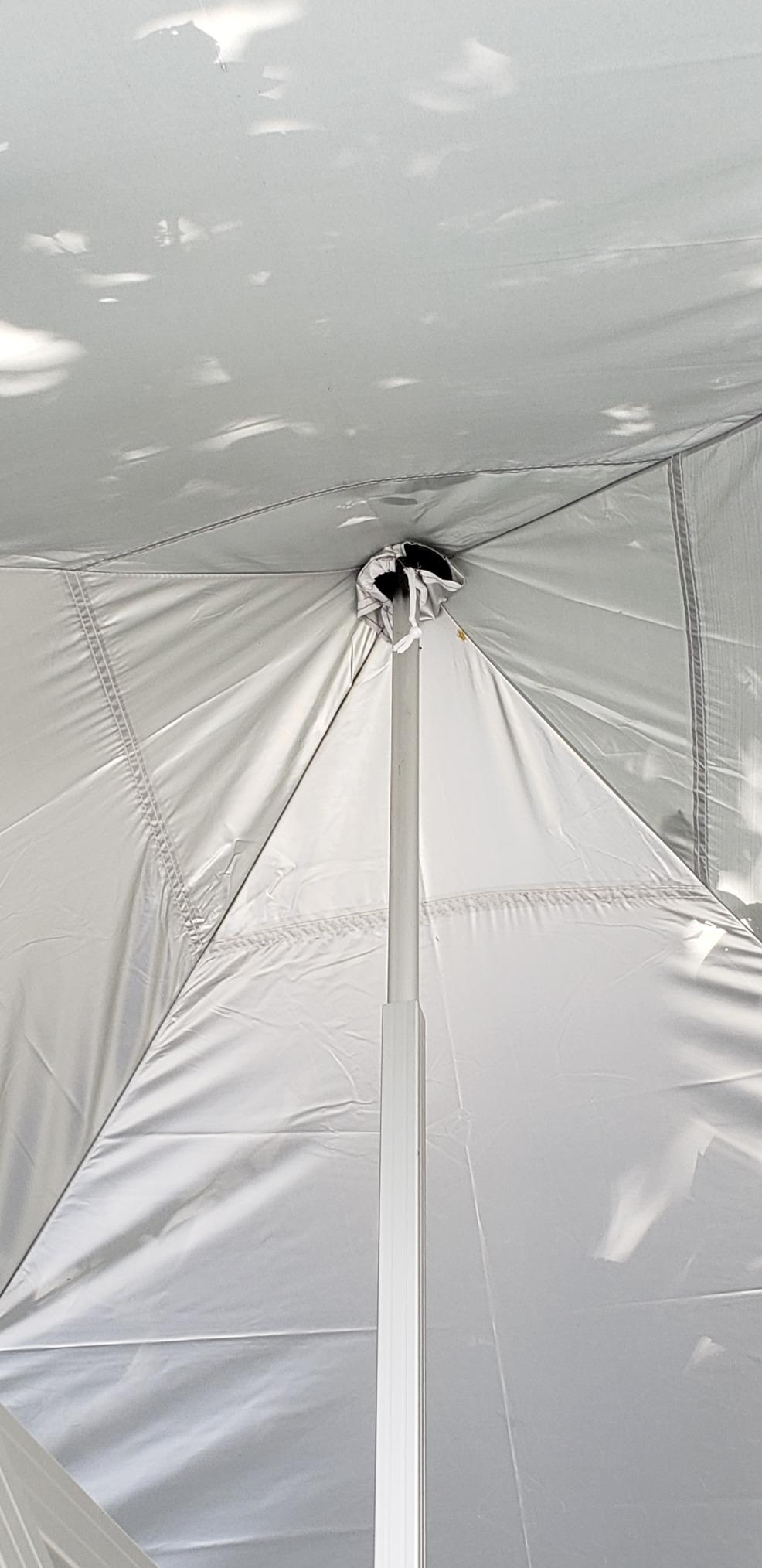
Reviewers describe it as genuinely commercial grade once it is staked and ballasted, and the three height settings let you drop the peak when a storm is coming. The Velcro and zip side walls attach quickly, which matters when weather arrives without warning and you need a closed box in under a minute.
Roof fabric: sealed seams versus coated top
Compare this roof to the 200 denier silver-coated top on the MASTERCANOPY later in the roundup. The 500D polyester with PU lining is the heavier cloth and the one that stays put in a downpour, while the lighter coated tops shed water but can tear at a seam out of the box. In wind terms, heavier cloth also resists flutter, which is the small oscillation that loosens frame joints over a long day.
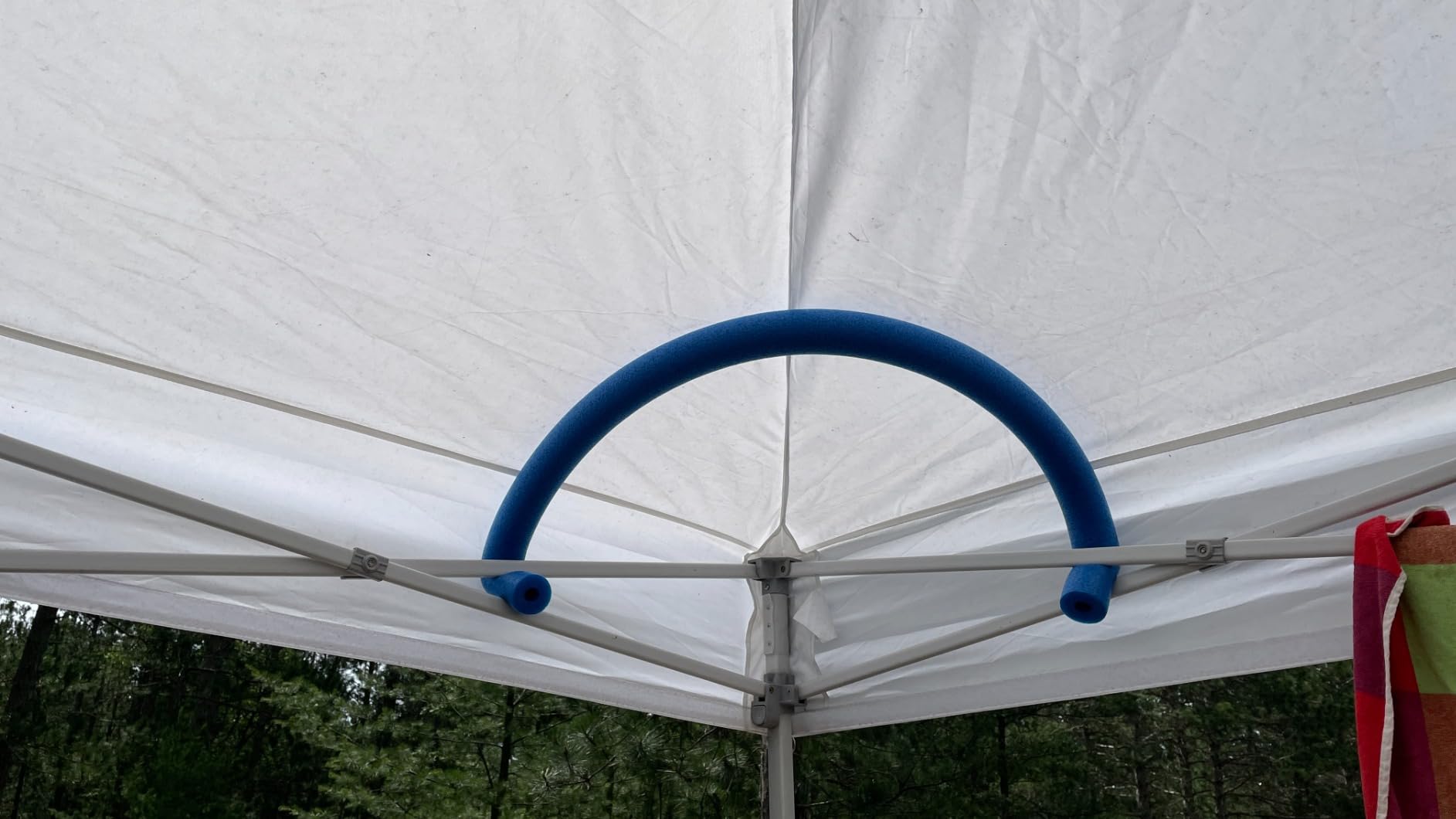
The weight bag gap
Owners running public markets flag the four included weight bags as too small for the job. For a 10×10 commercial truss frame, per-leg ballast of 20 to 40 pounds is the working figure, so a market operator should plan on buying a full set of filled bags rather than trusting the accessories in the box.
What gives way first
The roller bag handles and wheel rivets wear out, and the bag sits outside the warranty. Plastic zipper teeth on the side walls can also crack, which prevents the walls from zipping together into a sealed enclosure. Frame problems are the exception rather than the rule here, which is what separates this from the lighter straight-across pop-ups.
3. Eurmax 10×10 Commercial Pop Up Canopy – Full Enclosure for Dust and Gusts
Eurmax USA 10×10 Pop Up Canopy Tent,Commercial Tent with Patented No-Tip Rolling Bag,4 Zippered Removable Walls,UV & Water Resistant Canopy Top,Heavy Duty Outdoor Gazebo,Instant Shelter(White)
Full truss frame structure
4 zippered removable walls
Patented no-tip rolling bag
4 sand bags included
Pros
- Full truss frame built for commercial and professional stability
- Four zippered removable walls block wind and dust
- Patented no-tip wheeled rolling bag
- US-based seller stocking replacement parts domestically
Cons
- Water resistant rather than fully waterproof top
- Heavy frame makes solo setup demanding
- Zipper wall attachment needs careful tensioning
- Stiff legs on first assembly
Wind resistance and enclosure are the same problem here, and Eurmax attacks both. The full truss frame structure is built for commercial and professional stability, and the four zippered removable walls including a door-and-window wall turn the unit into a closed box that blocks wind-driven dust and debris rather than letting them in. The four included sand bags are the reason it stays put.
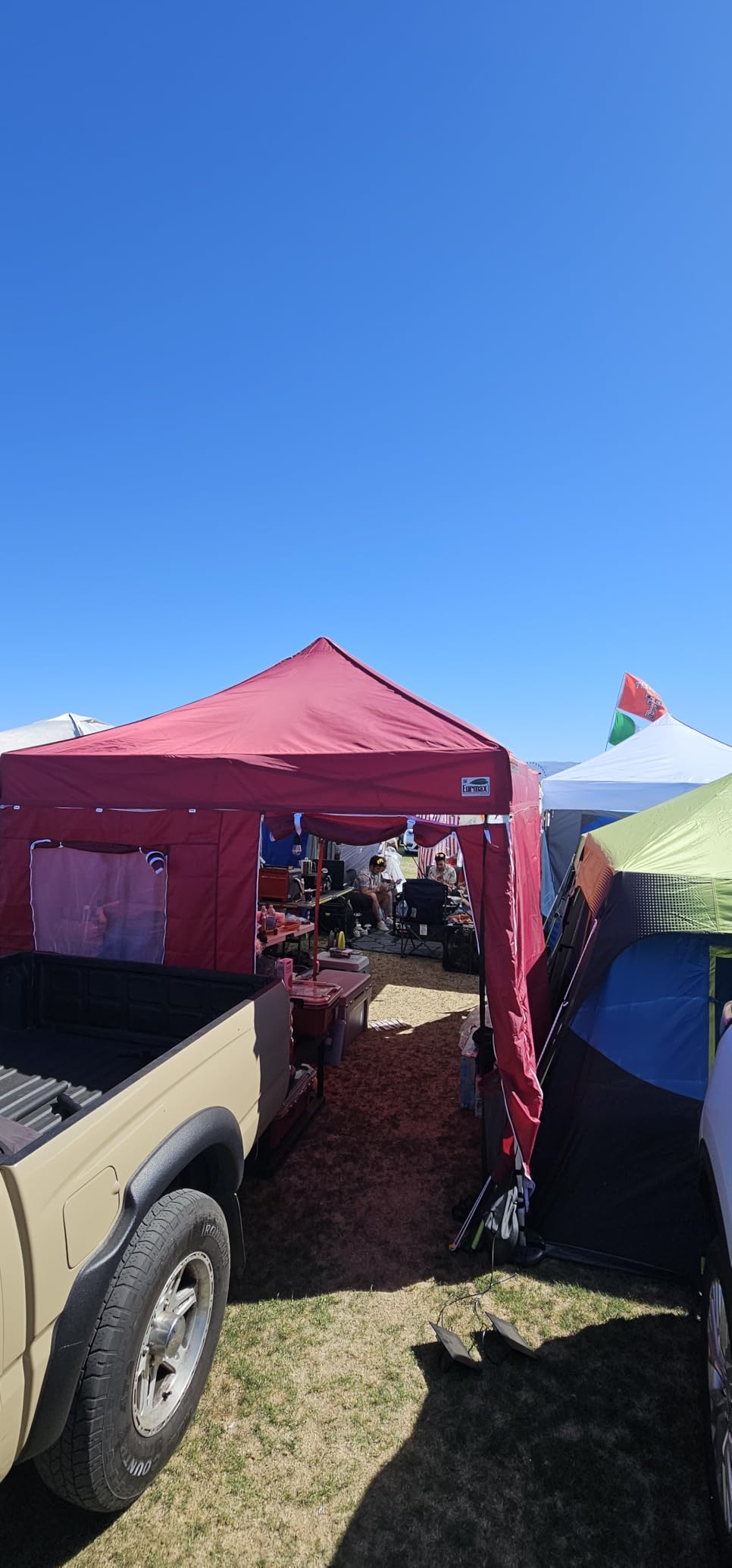
Buyers rate this as a sturdier, more stable alternative to lighter canopies and single out the walls and included sand bags as the wind-related features that matter. The patented no-tip rolling bag with wheels is a small thing that gets noticed every time you move the tent across grass or gravel, because a canopy that tips over mid-carry usually damages a leg or a seam.
Water resistant is not waterproof
The listed water resistance level for this top is water resistant rather than waterproof, so light rain can reach the interior. That is a deliberate trade for a lighter top, and it is the opposite choice from the ABCCANOPY 10×10 with sidewalls earlier in this roundup. If your site gets steady drizzle, weigh the fabric spec against the frame.
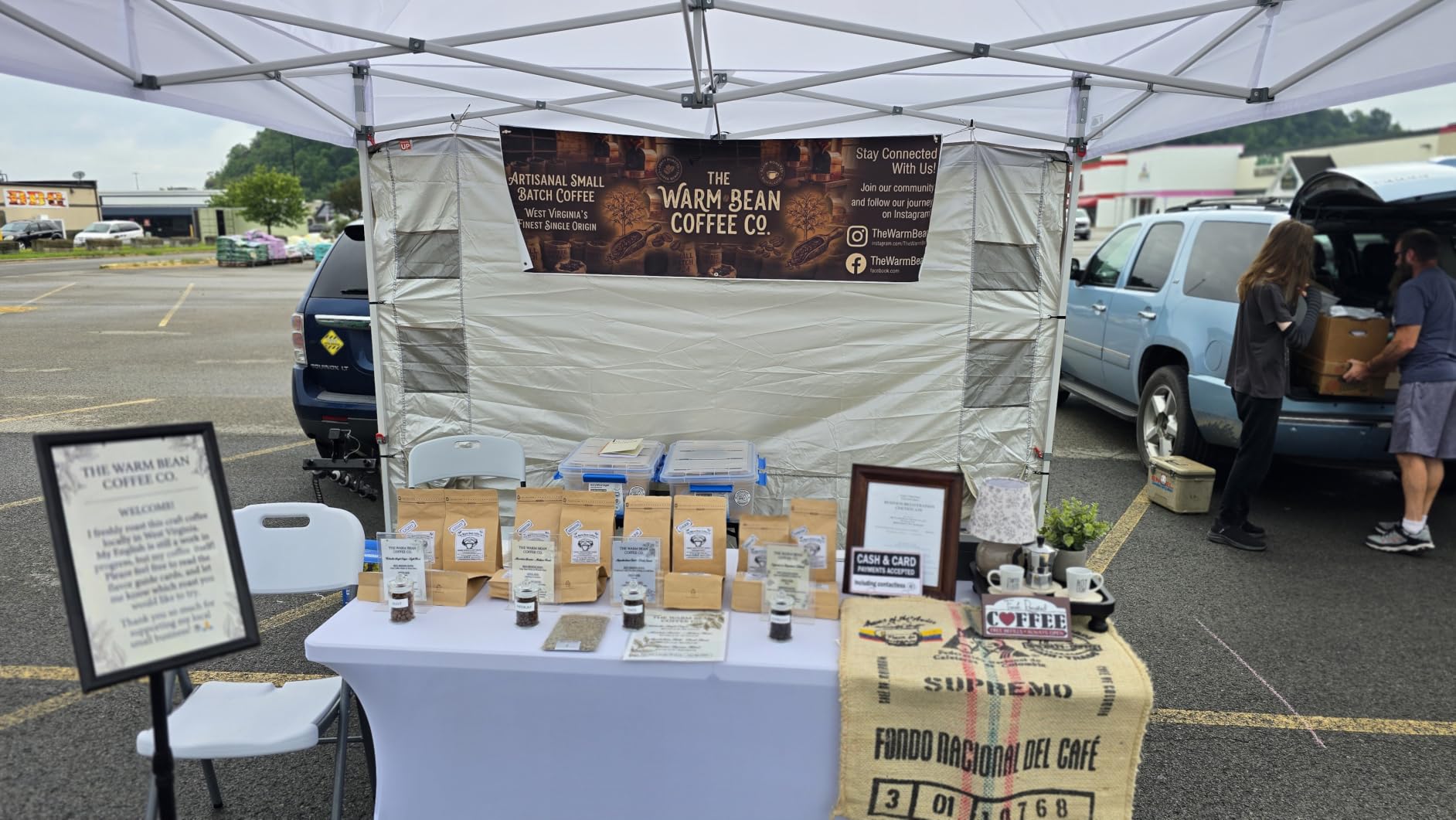
Why four walls changes the wind equation
Side walls are a wind decision as much as a weather decision. A closed wall resists the airflow that otherwise pushes through an open frame, and the zippered seams mean you can close the leeward side down before the gust arrives. The catch is that walls need tensioning properly, and pulling a zipper hard across an unfilled seam is how seams get damaged.
Parts availability
This is a US-based seller that keeps replacement parts on hand domestically, which for a canopy frame is worth more than it first appears. Bent cross-bars and snapped connection hardware are the two failures that end a tent’s life, and a bent bar you can replace on a Tuesday beats a bar you replace next season.
4. ABCCANOPY Heavy Duty 10×10 Royal Blue – Seam-Sealed Top and a Powder-Coated Steel Frame
ABCCANOPY Heavy Duty Easy Pop up Canopy Tent with Sidewalls 10×10, Royal Blue
Powder-coated steel frame
Seam-sealed stitching throughout
99 percent UV blocking
4 sand bags, 4 ropes, 4 stakes included
Pros
- Powder-coated steel frame resists rust and handles high wind when anchored
- Seam-sealed stitching makes the top effectively waterproof
- Tool-free setup with three height settings
- Package includes 4 sand bags
- ropes
- stakes
- 3 sidewalls and a door wall
Cons
- Manufacturer states it is not intended for extreme wind or storms
- Stiff frame makes first setup difficult for one person
- Roller bag adds bulk that is awkward to load solo
The frame here is black powder-coated steel with nylon plastic connection hardware, and the rust resistance matters more than most buyers realise. A canopy that lives outside in wet ground will have its foot plates and hardware in contact with soil for days at a time, and coating is what keeps the joint from seizing up mid-season. The seam-sealed stitching throughout makes this top effectively waterproof, which is the reason for the badge.
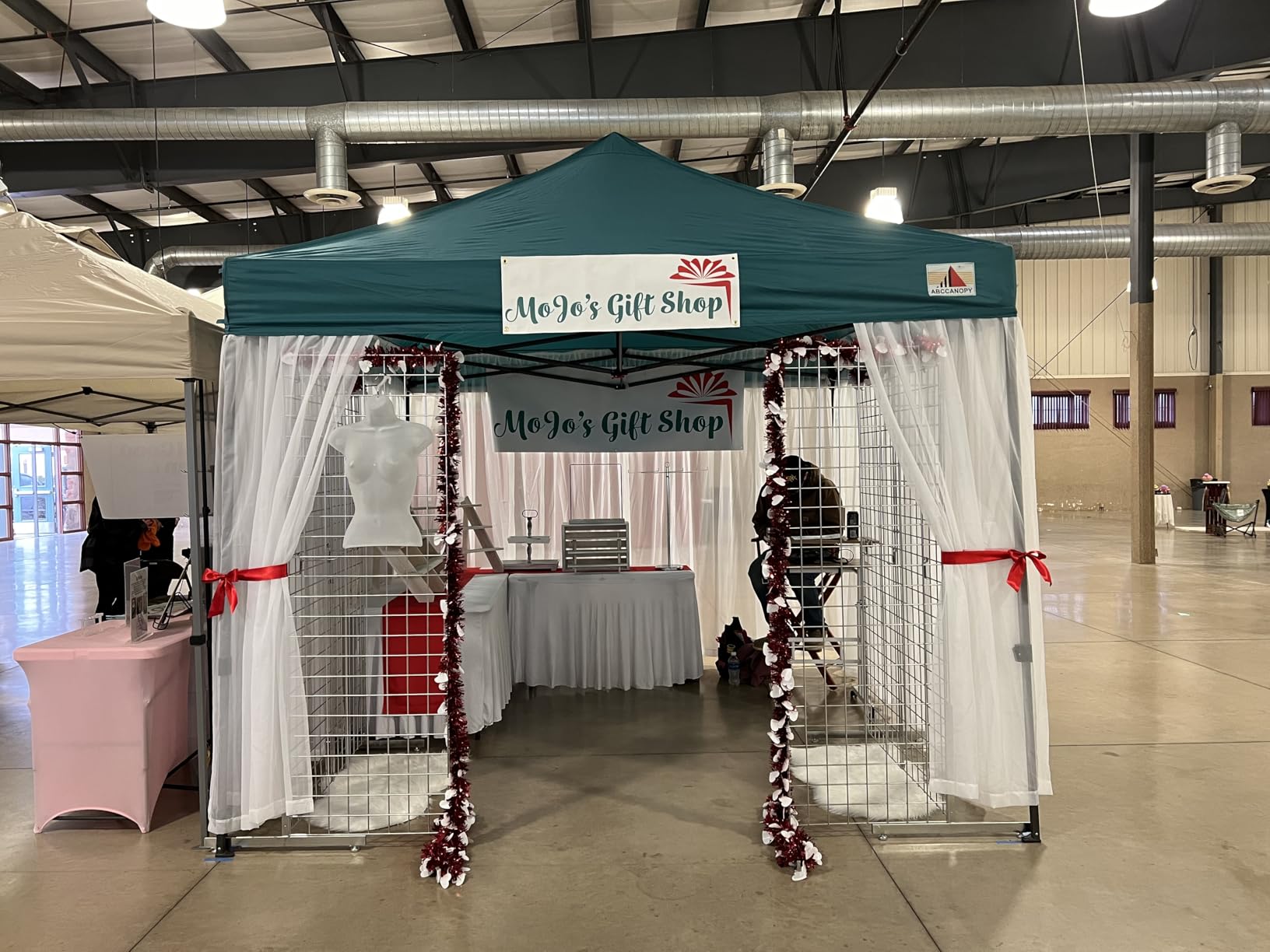
Owners value the heavy powder-coated frame, the sealed seams and the generous accessory package for vendor and event work. Four sand bags, four ropes, four stakes, three removable sidewalls and a door wall is one of the most complete packages in the group, and it means you can rig for wind before you leave the driveway.
Read the manufacturer’s own caveat
The listing is explicit that this canopy is not intended to withstand extreme wind or storms and must be anchored. That sentence is unusual to see and worth honouring. Treat the frame as a structure that performs when staked and ballasted, and take it down when the forecast turns.
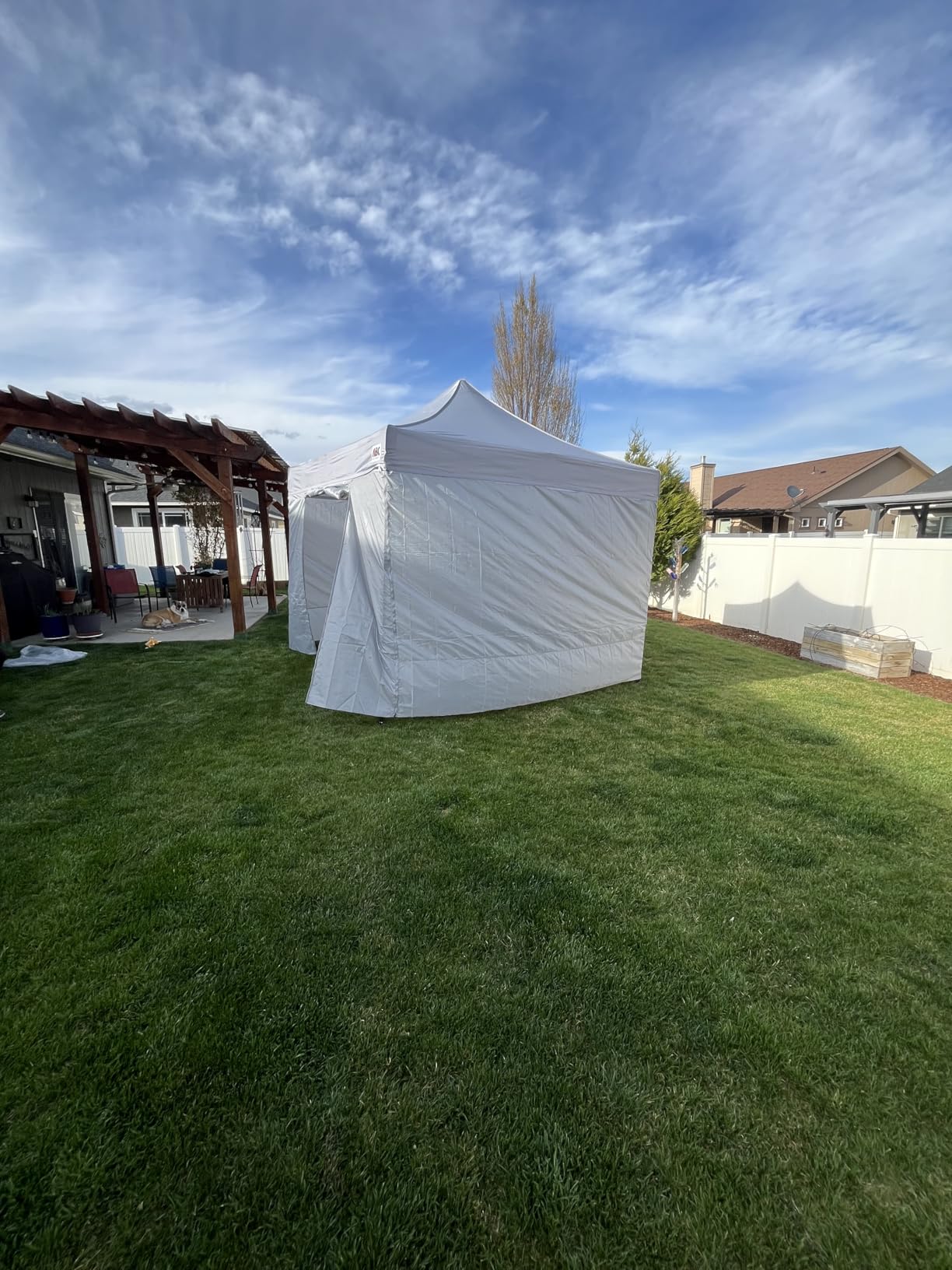
Tool-free setup with three height settings
The thumb-latch lock system gives you three height settings, and dropping to the lowest setting lowers the profile and the sail area before a front arrives. The stiffness on first assembly is the one thing that catches people out, and the roller bag bulk means it is a two-person load. Set aside twenty minutes for the first build in calm weather rather than fighting it on a windy site.
Sidewall attachment wear
The zipper attachment points on the sidewalls wear with repeated use, which is the same failure pattern you see across this category. If you are zipping and unzipping walls every day, inspect the attachment loops weekly in the first month and replace a strip early rather than pulling a whole wall out of alignment.
5. ADVANCE OUTDOOR 10×20 Heavy Duty Carport – The Only Unit Here With Auger Anchors in the Box
ADVANCE OUTDOOR 10×20 ft Heavy Duty Carport Potable Car Canopy Garage Party Tent Boat Shelter, Adjustable Height from 9.5 ft to 11 ft – Gray
1.5 inch galvanized steel poles
8 solid legs
16 steel pegs and 8 auger anchors
Heat-sealed 180g triple-layer polyethylene
Pros
- 1.5 inch galvanized steel poles with 8 solid legs and thick connectors
- Includes 16 steel pegs and 8 auger anchors
- Heat-sealed triple-layer 180g polyethylene is waterproof and anti-UV
- Four side heights from 6.5 to 8.0 feet
Cons
- 110 pounds makes it too heavy for one person to reposition
- Tunnel design has no sidewalls so wind and rain enter the sides
- Fixed frame does not fold compactly for transport
This is not really a pop-up gazebo, and that is why it holds. The 1.5 inch diameter galvanized steel poles with 8 solid legs sit on 1.2mm thick, 1.65 inch diameter connectors, which is a carport frame rather than a tent frame. It covers 200 square feet and it does not fold down to anything you would call portable.
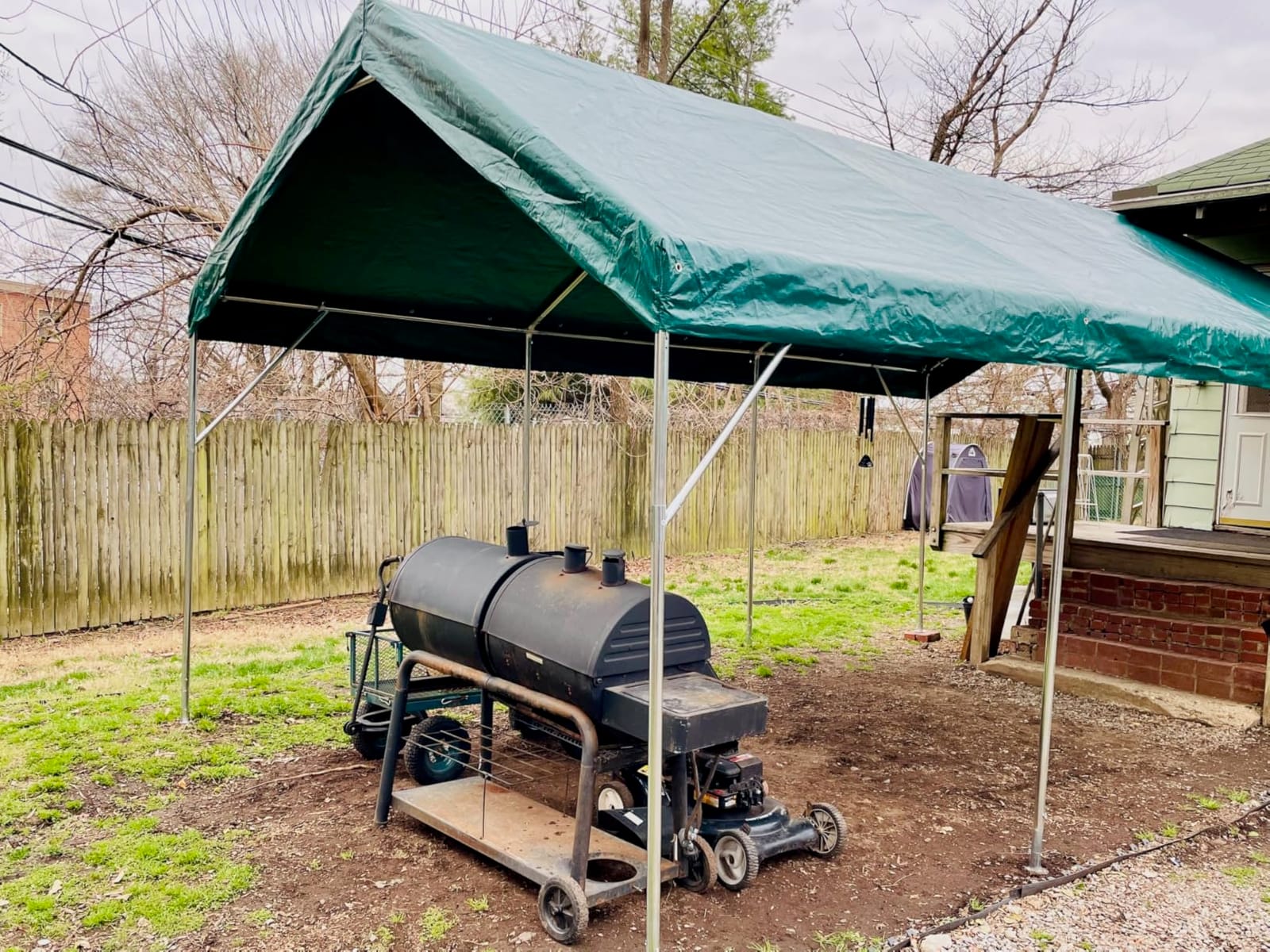
Buyers treat it primarily as a heavy-duty vehicle and boat shelter and rate it on the galvanized frame, the four height options and the auger anchors. The 16 steel pegs and 8 auger anchors give it serious ground anchoring out of the box, and augers are the only anchor type in this entire roundup that screws into soil and resists pull-out as a unit.
Height range and what it does for a vehicle
Four side height options from 6.5 feet to 8.0 feet give peak heights of 9.5 feet to 11 feet. That range is what lets you clear a boat on a trailer or a small pickup while still lowering the profile on a windy day. The trade is headroom against a premium gazebo, and owners note the peak is lower than premium models.
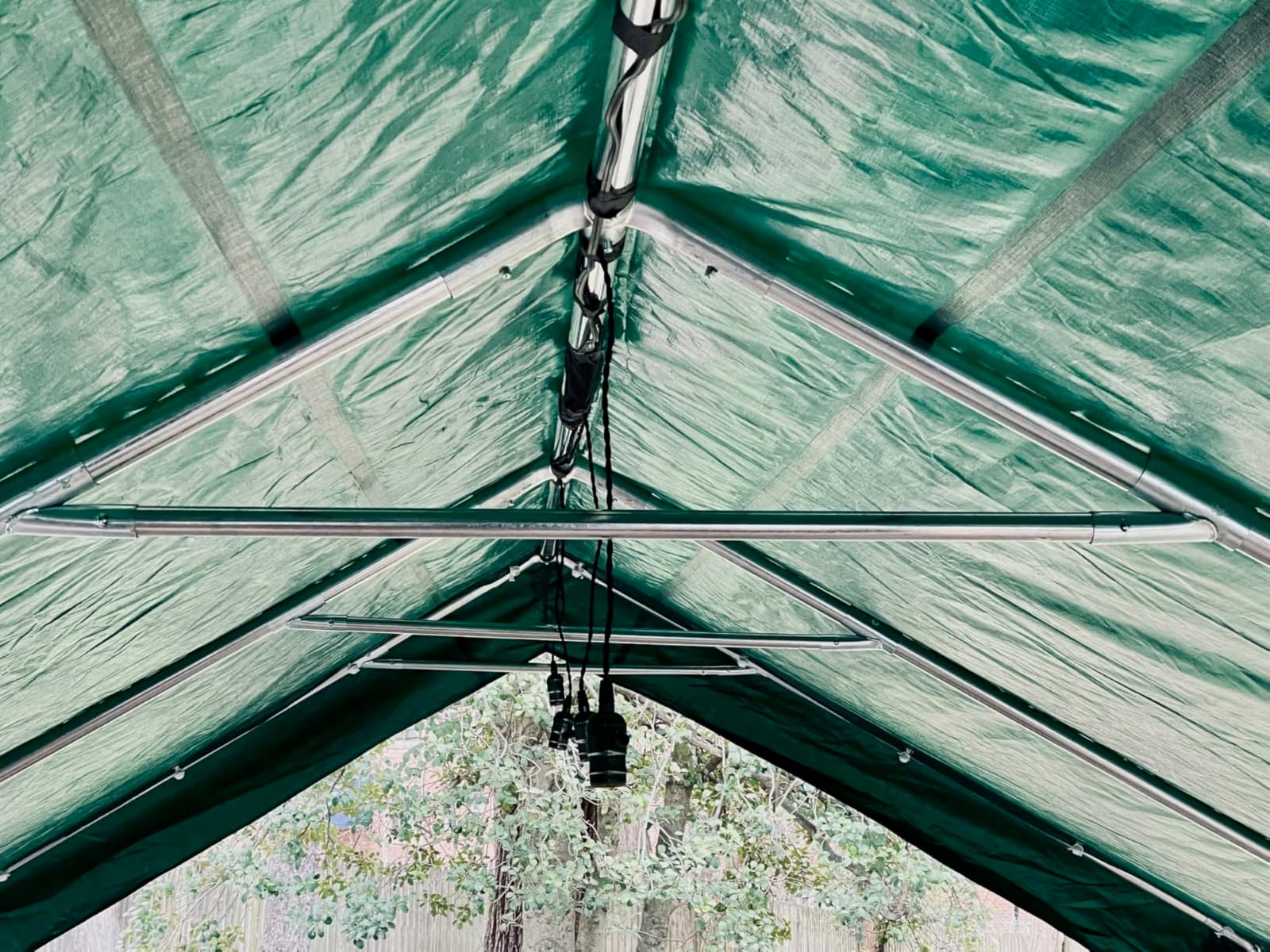
No sidewalls, and why that is a feature here
The tunnel-style carport design has no sidewalls, so wind and rain enter from the sides. For a vehicle shelter that is a benefit rather than a flaw. A wall on a broadside catches wind that would otherwise pass through an open frame, and open sides give wind somewhere to go.
Weight is the deciding factor
At 110 pounds it needs at least two adults to install, which the tool-free frame manages in about half an hour. If you are moving it once, this is a permanent structure. If you need shade you can reposition every day, look at the pop-ups earlier in this roundup instead.
6. MASTERCANOPY 10×10 Heavy Duty Pop Up Canopy – Rated to About 50 km/h With Ballast
MASTERCANOPY 10×10 Heavy Duty Pop Up Canopy Tent with Roller Bag(Black)
1mm powder-coated square legs
Full truss cross bracing
Rated to about 50 km/h with sand bags and ropes
132 inch centre height
Pros
- Manufacturer rates it to about 50 km/h winds with sand bags and ropes
- Straight-across framework is far more rigid than arched frames
- Owners report it withstanding 60 mph gusts and severe thunderstorms
- Three-step one-minute tool-free setup
Cons
- Instructions are vague and harder to follow
- Included sand bags and stakes may need upgrading for serious wind
- Replacement tops are hard to source
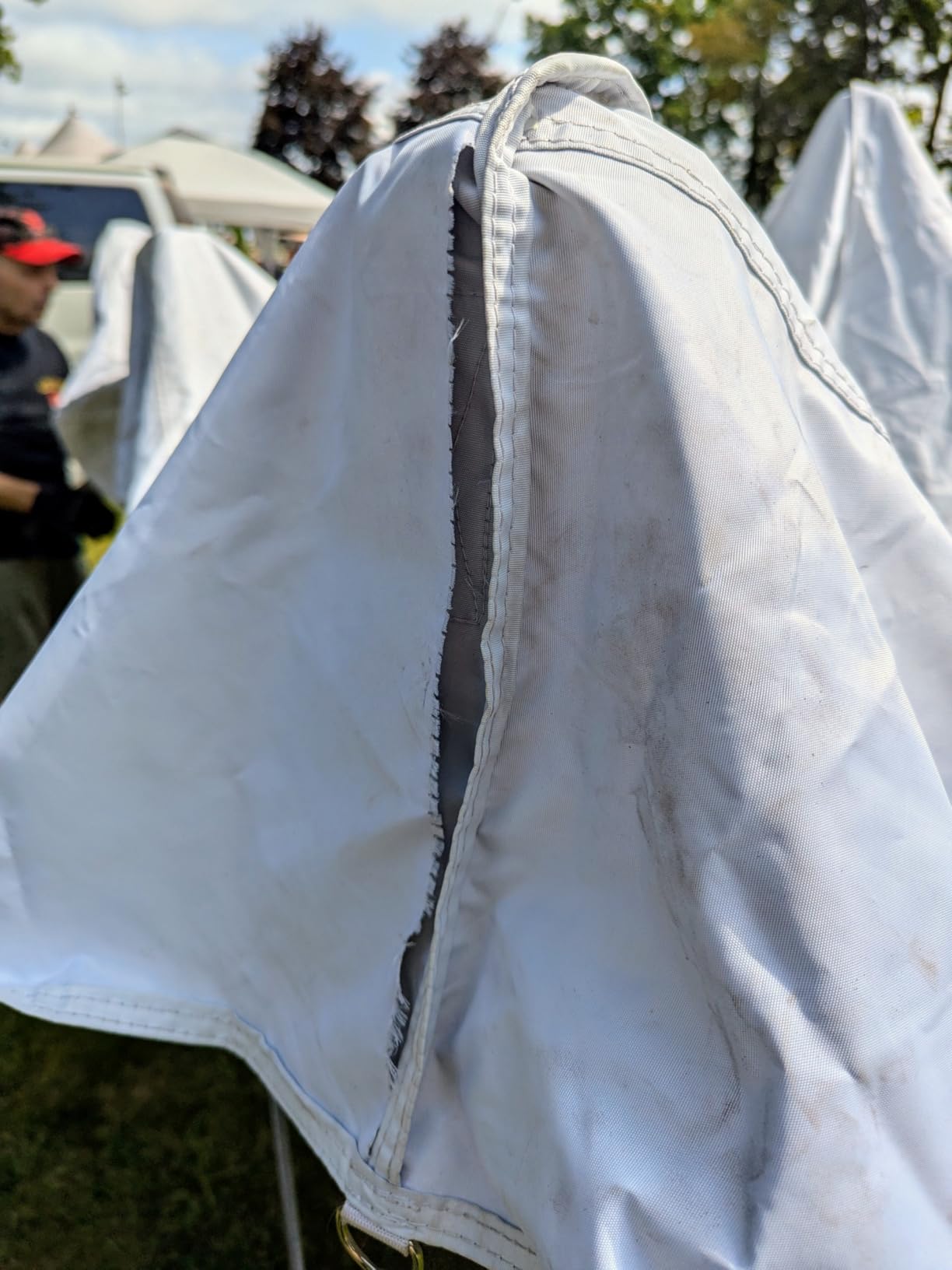
- Top fabric is lightweight and a seam tear can occur out of the box
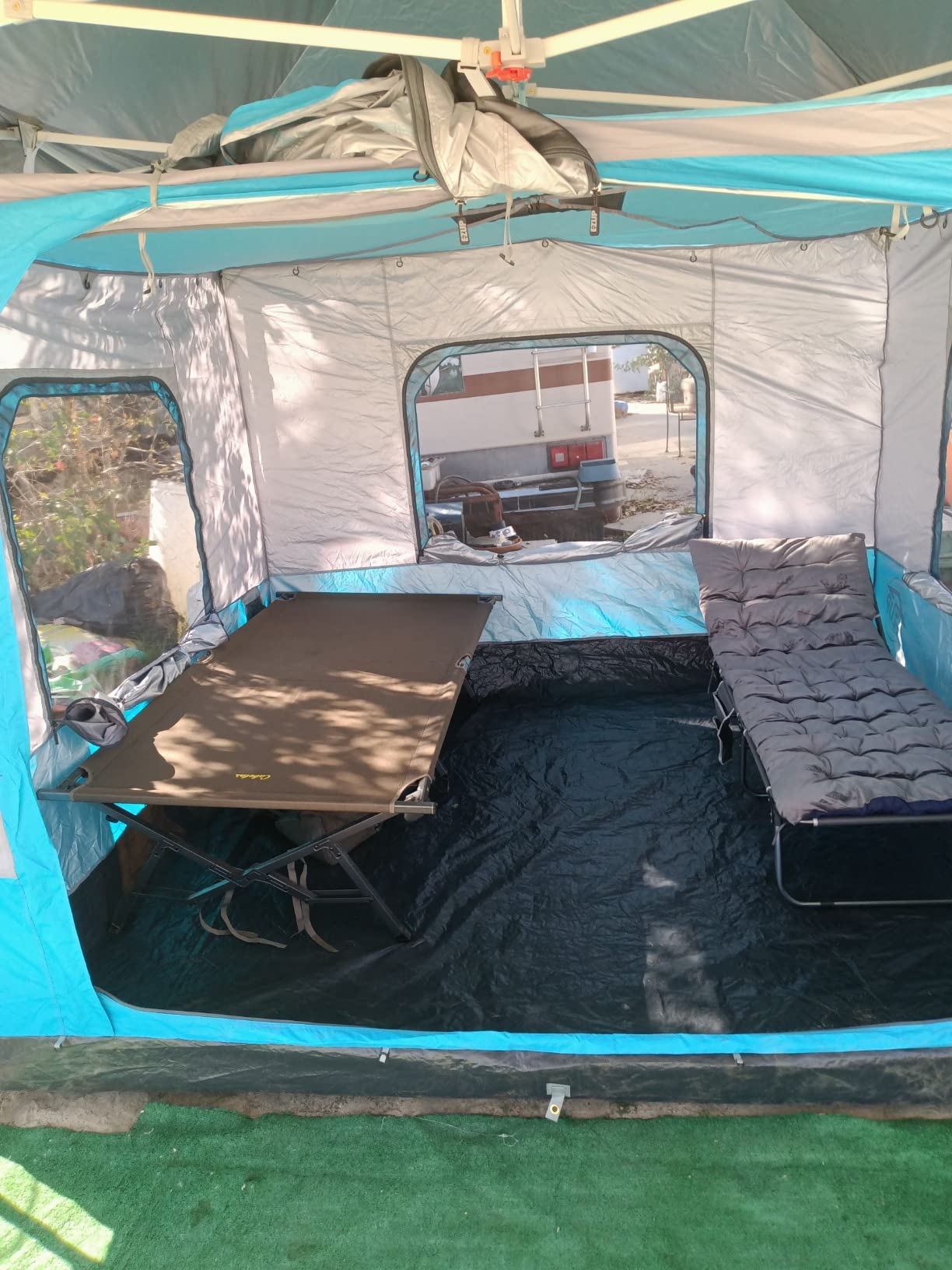
This is the best value pick in the roundup and the one whose owner reports are most consistently about wind. The frame is powder-coated 1mm square legs with full truss cross bracing, and the straight-across framework with adjustable centre poles is markedly more rigid than the arched frames used on cheaper pop-ups. The roof pitch is steep and the centre height is 132 inches, which sheds pooling water.
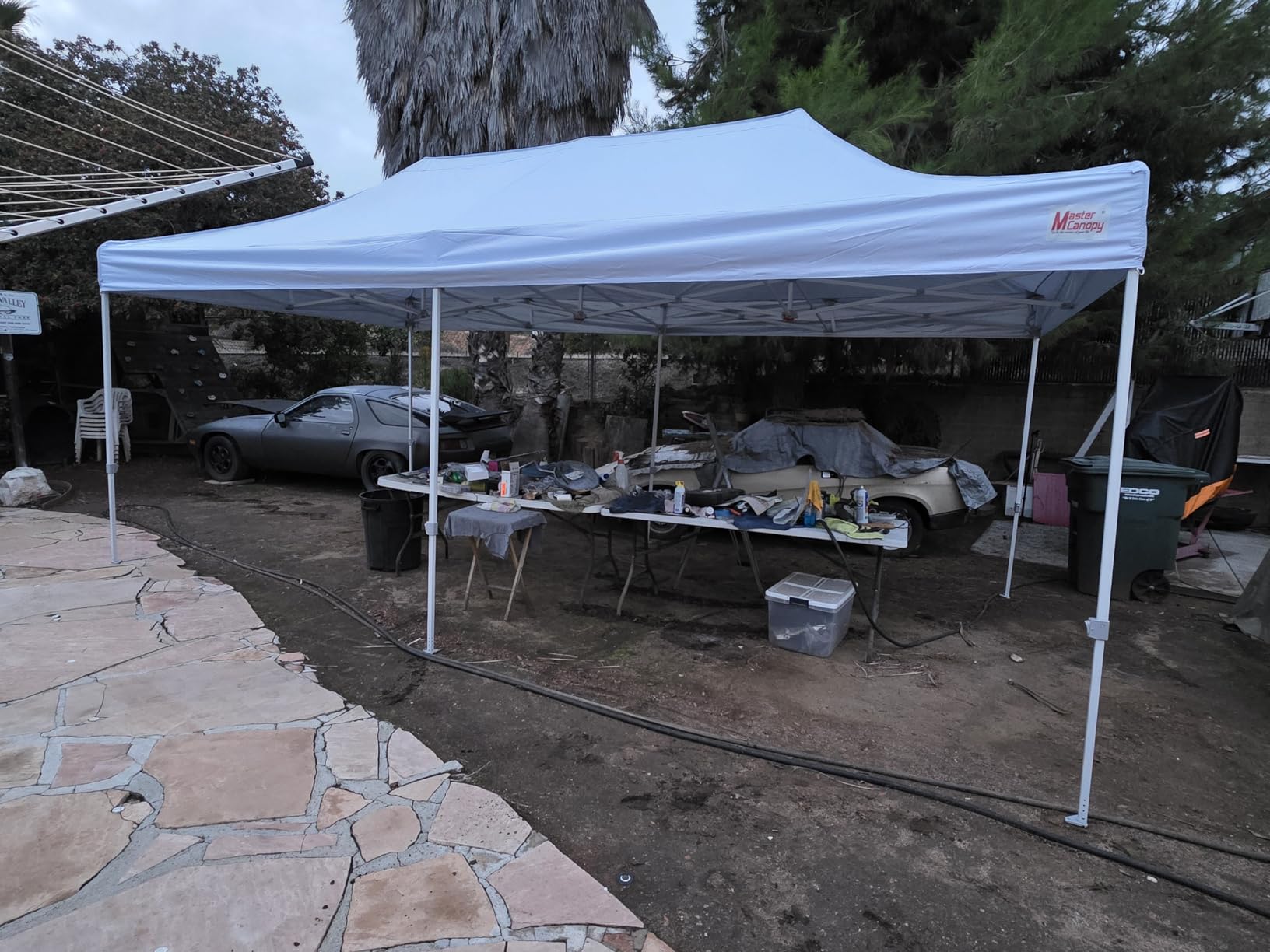
Wind performance is the dominant theme in the reviews. Owners report the frame withstanding 60 mph gusts, severe thunderstorms and golf-ball hail, and they credit the pitch and straight-cross truss design with preventing water pooling. That is a first-person report rather than a lab figure, but it is the kind of evidence this category almost never publishes.
Reading the 50 km/h figure honestly
The manufacturer rates this canopy to about 50 km/h, which converts to roughly 31 mph, and that rating explicitly assumes sand bags and ropes. Treat it as an anchored figure, not an as-parked figure. Even with ballast, the 200 denier silver-coated top is the lightest fabric in this roundup, and a light top is where a puncture starts.
Setup speed and instruction quality
The three-step, one-minute tool-free setup with thumb-button height adjustment is genuinely fast once you know the sequence. The instructions are the weak point, described as vague and harder to follow than the brand’s smaller models, so budget time for the first build and photograph the sequence.
What to upgrade before you rely on it
Owners note that the included sand bags and stakes may need upgrading for serious wind exposure, and that replacement canopy tops are hard to source with shorter Velcro strips than the original. Buy heavier filled bags and proper auger anchors before the first windy weekend rather than after.
7. CROWN SHADES 10×10 Commercial Canopy – One-Push Hub Lock and a 2 Year Warranty
CROWN SHADES 10X10 Commercial Pop Up Canopy Tent with Sidewalls, Gray
Patented CENTERLOK one-push hub lock
300D UPF 50+ CPAI-84 fabric
Steel truss rated to 120 lbs
2 year limited warranty
Pros
- Patented CENTERLOK hub locks all four legs with a single push
- 300D silver-coated fabric with sealed seams and CPAI-84 flame certification
- Interior height over 9 foot 5 inches with 6 foot valance clearance
- 2 year warranty with full canopy replacement in year 1
Cons
- Manufacturer warns canopies can blow away in heavy wind even when anchored
- Truss rated to 120 lbs limits heavy hanging loads
- Water repellent rather than fully waterproof fabric
- Two people needed to raise it
The selling point is speed under pressure. The patented CENTERLOK hub locks all four legs with a single push, which means a late setup in rising wind takes a fraction of the time of a four-corner frame and leaves more of your attention on the anchoring instead of the folding. In a wind situation, setup speed is a safety feature.
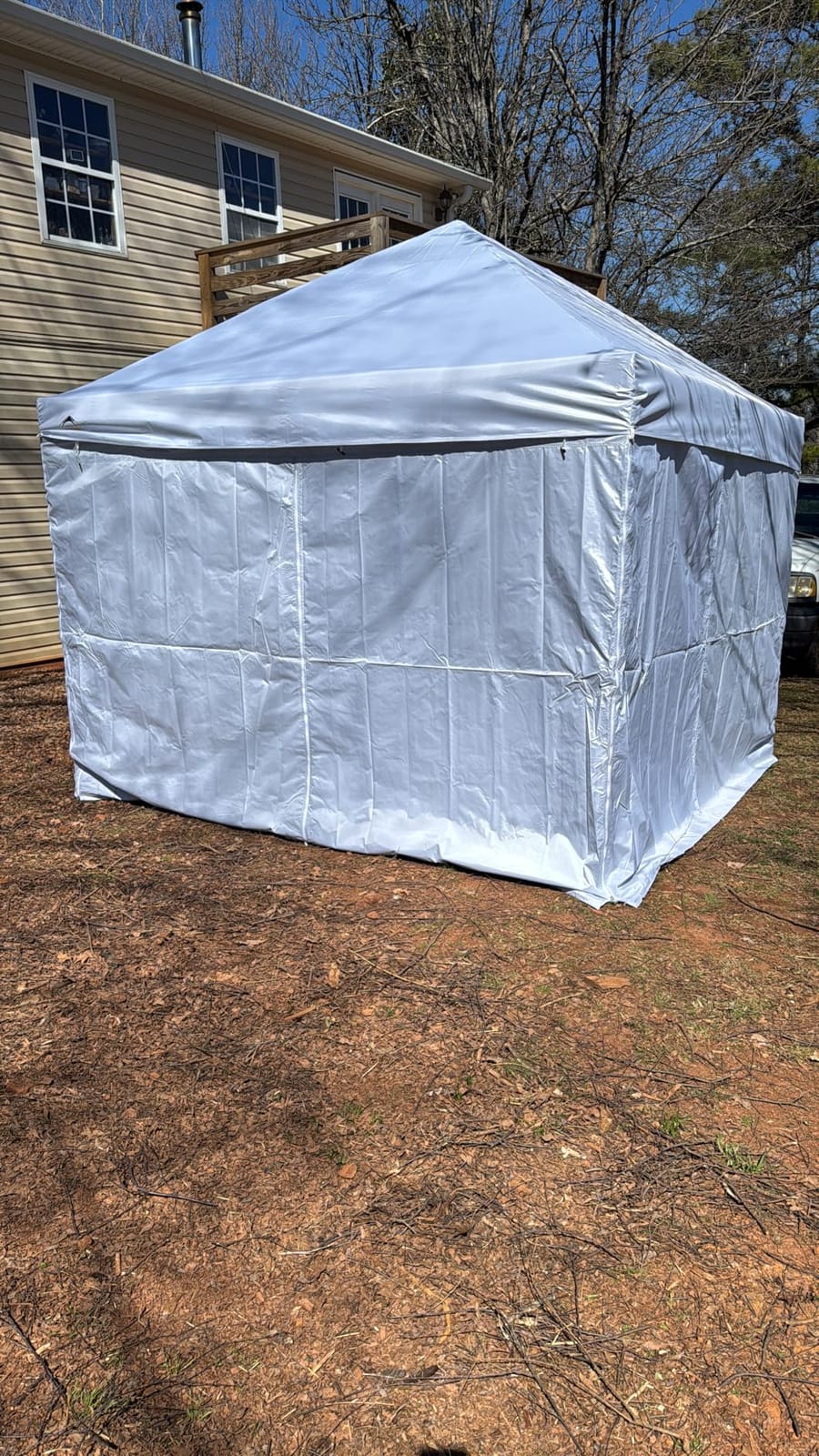
This canopy draws the strongest satisfaction scores in the set, and owners cite the single-push hub lock, the generous headroom and the durable 300D fabric. Interior height runs over 9 foot 5 inches with over 6 feet of valance clearance, and there is room for 10 seated people, which makes it unusually usable as a standing shelter rather than a seated-only shade.
The truss load rating matters for hanging gear
The steel truss with reinforced eave lining pipes is rated to 120 lbs. That is a real number to plan against if you intend to hang lighting, signage or a banner from the frame, and it is lower than the 220 lb per-pole rating on the COBIZI models later in this roundup. Light displays are fine. A suspended monitor is not.
The wind warning in the listing
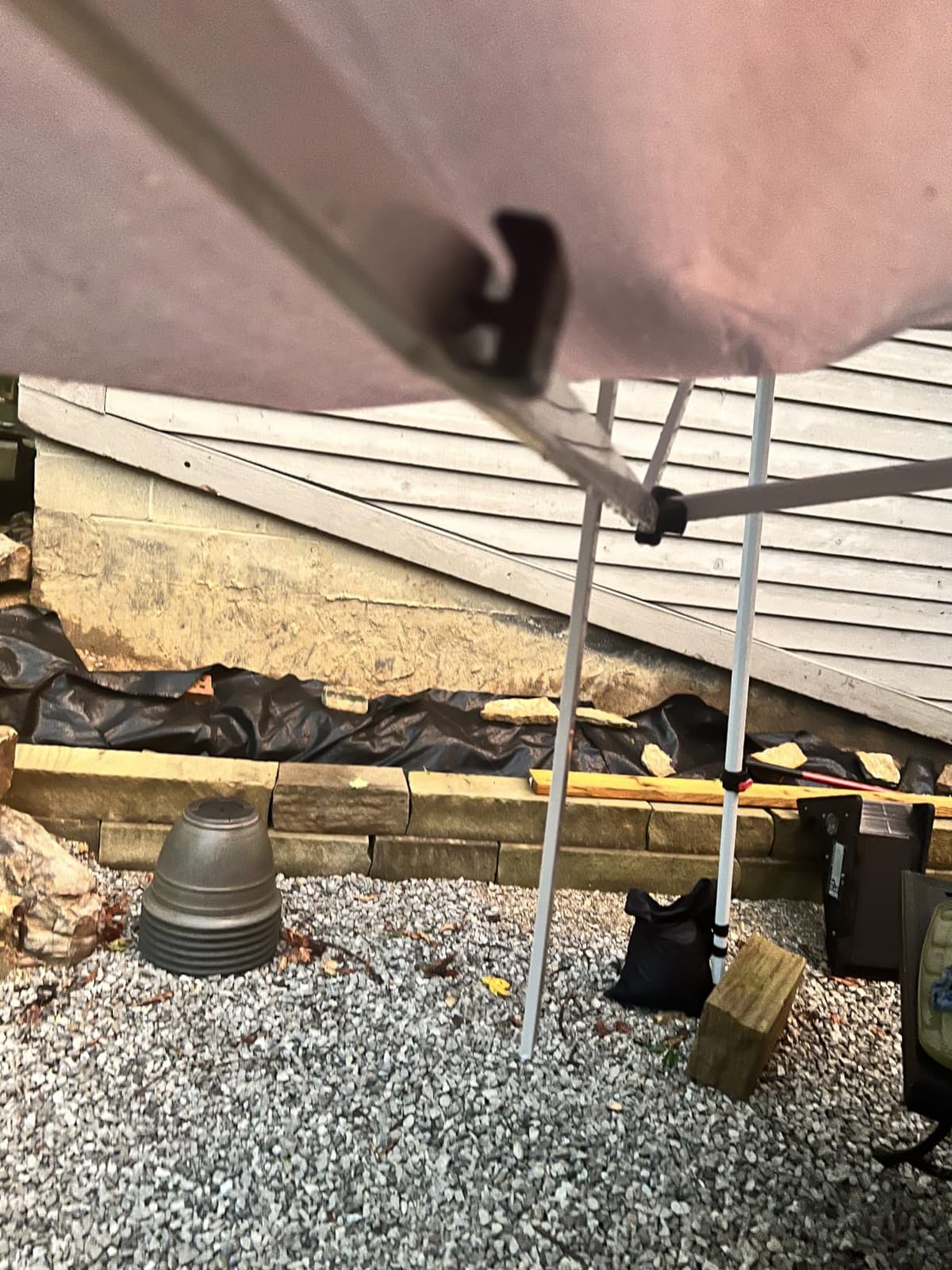
The manufacturer warns that canopies can blow away or collapse in heavy wind even when anchored, and must be taken down before storms. Owners repeat the same guidance without exception. This is the single most useful sentence to read on any canopy page, because it is the one that separates a wind-resistant frame from a wind-immune site.
Rolling bag and wheel design
Two legs have integrated wheels and the unit stores down to a compact 46.6 inch by 8.7 inch package in the supplied bag, which shortens the walk between pitches considerably for a frame this heavy. The 2 year limited warranty with full canopy replacement in year 1 and parts through year 2 is the longest cover listed here.
8. COBIZI 10×20 Heavy Duty Canopy – Thick Gauge Steel and Six Sidewalls
COBIZI 10×20 Heavy Duty Pop Up Canopy Tent with Sidewalls, Easy Up Canopy
1.26 inch steel pipe with 0.03 inch walls
Support poles hold 220 lbs each
420D Oxford at 2.1psi waterproof
6 side walls, 12 pegs, 6 ropes
Pros
- 1.26 inch pipe diameter and 0.03 inch wall thickness is the thickest gauge here
- Intermediate support poles rated to hold 220 lbs each
- 420D double-PU Oxford rated at 2.1psi waterproof
- 6 PU-coated side walls
- 4 windowed and 2 with zippers
Cons
- Manufacturer wind rating is only level 4 wind
- about 18 mph
- At 100 pounds it cannot be moved by one person
- Lighter coloured tops let in considerable light
- Return and warranty handling has drawn complaints
This is the most genuinely heavy-duty object in the roundup, and it also carries one of the lowest published wind ratings here. Both statements come from the same design decision. The frame pipe is 1.26 inch diameter with 0.03 inch wall thickness, and each intermediate support pole is rated to hold 220 lbs, yet the manufacturer rates the tent for level 4 wind, about 18 mph, when anchored.
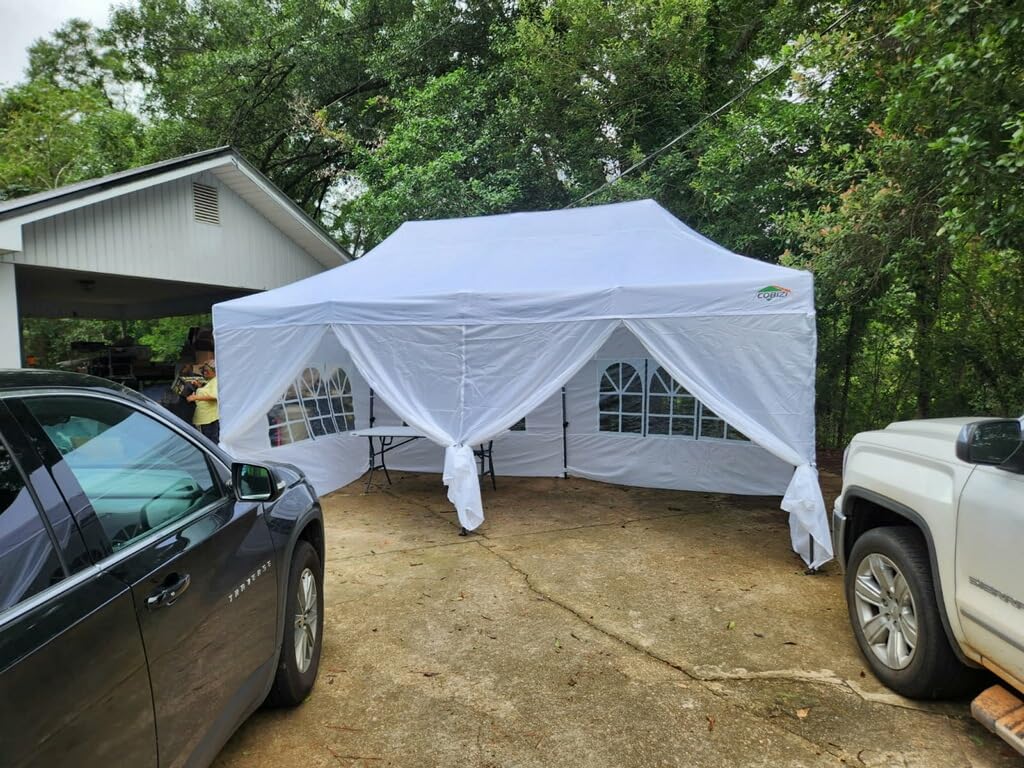
Owners consistently praise the frame gauge, the sealed 420D fabric and the six-wall package, and several report surviving severe thunderstorms when tethered with heavier rope and stakes. The 420D Oxford with double PU coating is rated at 2.1psi waterproof pressure against roughly 1.1psi for typical tents, and the six PU-coated removable side walls include four windowed panels and two with zippers.
Why thick steel does not equal a high wind rating
Frame strength and wind rating measure different things. A thick frame resists bending and resists a frame collapsing under load. A wind rating describes what the manufacturer will stand behind when the entire structure is loaded laterally and the anchors are the deciding variable. Reading the two numbers together is the whole point of this roundup.
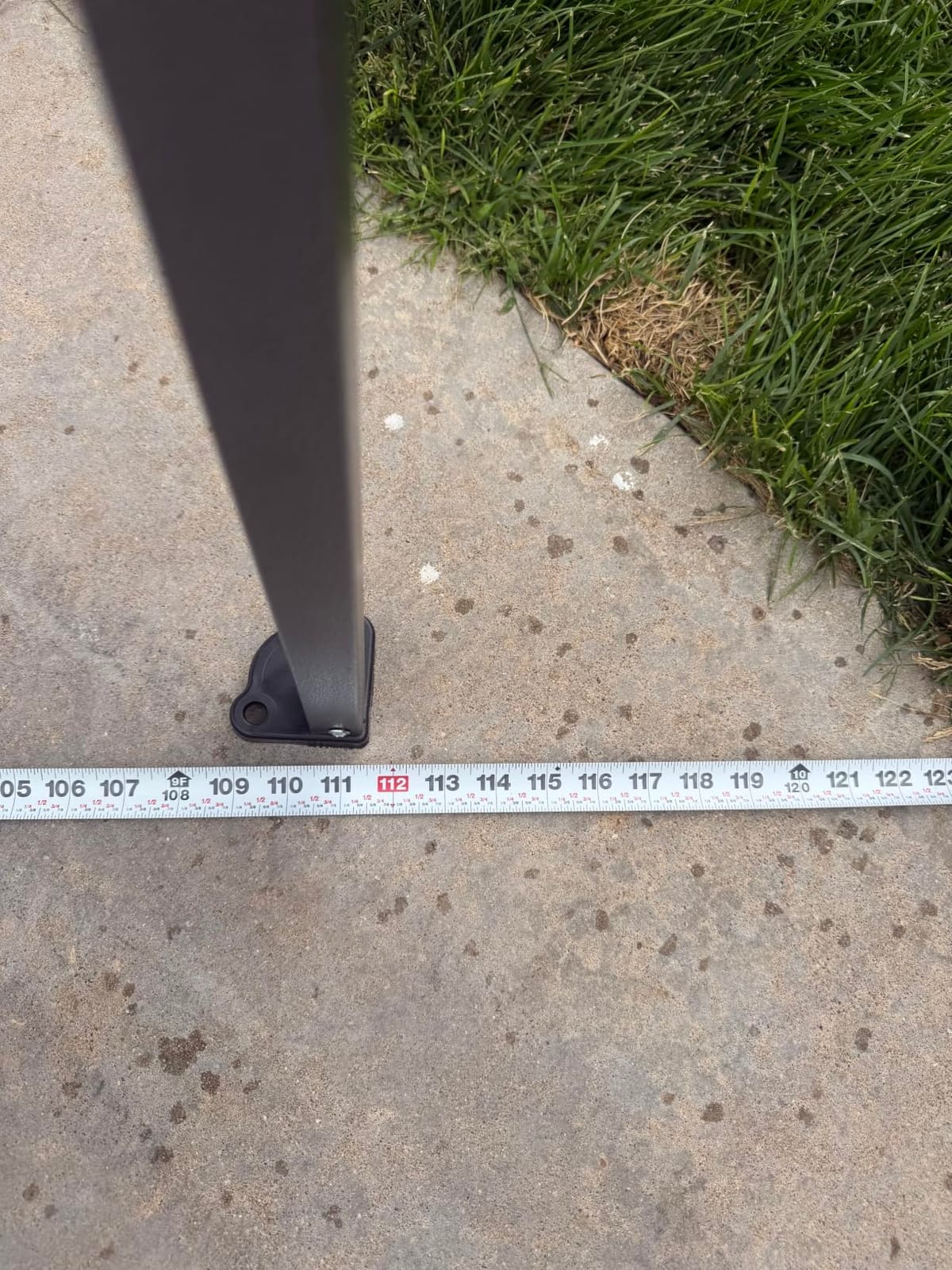
Anchoring hardware is generous
The package includes 6 wind ropes, 12 ground pegs and 4 sand bags, which is the most complete anchoring set among the 10×20 pop-up frames here. Three adjustable heights of 86, 90 and 94 inches let you lower the profile when weather is incoming, and the wheeled bag with three large standing wheels handles rough ground better than the two-wheel bags used by most rivals.
Where owners get frustrated
At 100 pounds it needs two to three people and cannot be moved by one person, and lighter-coloured tops let in considerable light so interiors get hot in sun. Return and warranty handling has drawn complaints over slow responses and unusable return labels, which is a service problem rather than a product problem, but it is worth knowing before you rely on the warranty.
9. COBIZI 10×10 Heavy Duty Canopy – 220 LB Support Poles for Hanging Loads
COBIZI 10×10 Heavy Duty Pop Up Canopy Tent with 4 Sidewalls, Black
1.26 inch powder-coated truss pipe
Support poles hold 220 lbs each
420D Oxford double-PU at 2.1psi
4 removable side walls
Pros
- Thickened powder-coated full truss frame with 1.26 inch pipe
- 220 lb capacity per support pole
- 420D double-PU Oxford blocks 99 percent of UV at 2.1psi
- Four removable side walls
- three with windows and one zipper
Cons
- Rated wind limit of level 4
- about 18 mph
- when anchored
- At 61.7 pounds it is not a one-person carry
- Only three height options in a narrow range
- Tool-free assembly still needs a second person
Same 1.26 inch pipe and same 220 lb per-pole rating as the larger COBIZI, packed into a 10×10 footprint. That combination makes this the pick for anyone who intends to hang things from the frame. Lights, banners, a projector, a hanging display shelf, all of it lands on poles rated to 220 lbs rather than the 120 lbs truss seen earlier in this roundup.
Owners rate this 10×10 well above comparable pop-ups for frame thickness, fabric quality and wall count, with strong marks for the 420D double-PU top. The four removable PU-coated side walls use full-length hook-and-loop and zippers, three with windows and one with a zipper door, and the fabric is UPF 50+ with fully sealed seams.
The 18 mph ceiling is the honest number
Rated to level 4 wind, about 18 mph, with anchors. That is the same manufacturer limit as the 10×20 in this range, and it is well below the 50 km/h figure the MASTERCANOPY carries. The thick frame buys you stiffness and hanging capacity, not a licence to leave it up in a gust.
Weight and height options
At 61.7 pounds it is not a one-person carry despite the smaller footprint, and tool-free assembly still needs one to two people to raise. The three height options span a narrow 122 to 130 inch range, so you have less ability to lower the profile before wind arrives than you do on a frame with a wide height range.
What is in the bag
The packing list covers the basics well: frame, top, four side walls, four sand bags, eight stakes, four ropes and a wheeled bag with three 4 inch wheels. Eight stakes for a four-legged frame means two per corner, which is a sensible split between uplift resistance and guy line tension.
10. E-Z UP ES100S Instant Commercial Canopy – Documented 45 mph Sustained With 65 mph Gusts
E-Z UP ES100S Instant Commercial Pop Up Canopy Tent, 10′ x 10′ with 3 Sidewalls, 1 Mid-Zip Sidewall and Wide-Trax Roller Bag, White
Straight leg frame design
45 mph sustained with 65 mph gusts reported
11 foot 5 inch exterior peak
3 year manufacturer warranty
Pros
- Survived 45 mph sustained with gusts to 65 mph over a full day
- Straight leg design gives consistent 100 sq ft coverage at top and ground
- Tool-free setup in under five minutes for two people
- 3 year warranty with widely available parts and tops
Cons
- Bag zipper sits at the base near the wheels
- Frame alone weighs 49 pounds and is bulky
- Side panels are narrow and hard to overlap fully
This is the most credibly wind-tested unit in the roundup. One owner reports it surviving 45 mph sustained winds with gusts to 65 mph over a full day with internal guying, with nothing broken or torn. Another reports the warranty replaced four bent trusses at no cost after a neighbouring tent was blown into it, which tells you two things about the frame and about the support behind it.
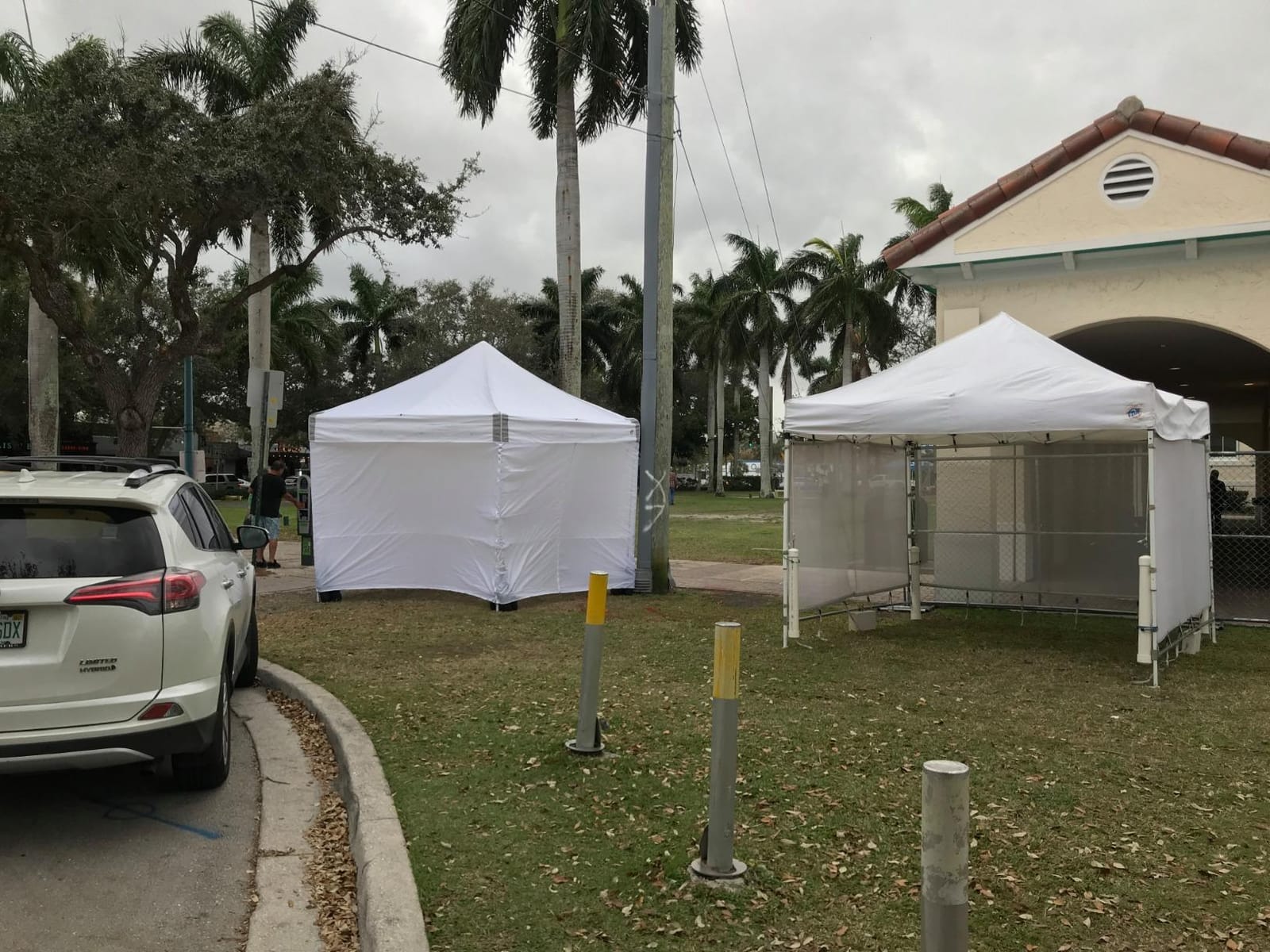
The straight leg design gives consistent 100 square feet of coverage at both the top and the ground, so you are not losing usable floor area to a slant-leg taper. Maximum headroom is 6 foot 10 inches with an exterior peak of 11 foot 5 inches, and there are three height settings on push-button toggle legs.
Why straight legs resist wind better
A straight leg carries the lateral load in pure bending along its length. A slant leg adds an angled member, which introduces a joint where two members meet and concentrates the load at that joint. That joint is the highest-frequency failure point in real canopy use, and it is why this design leads the roundup for wind survival.
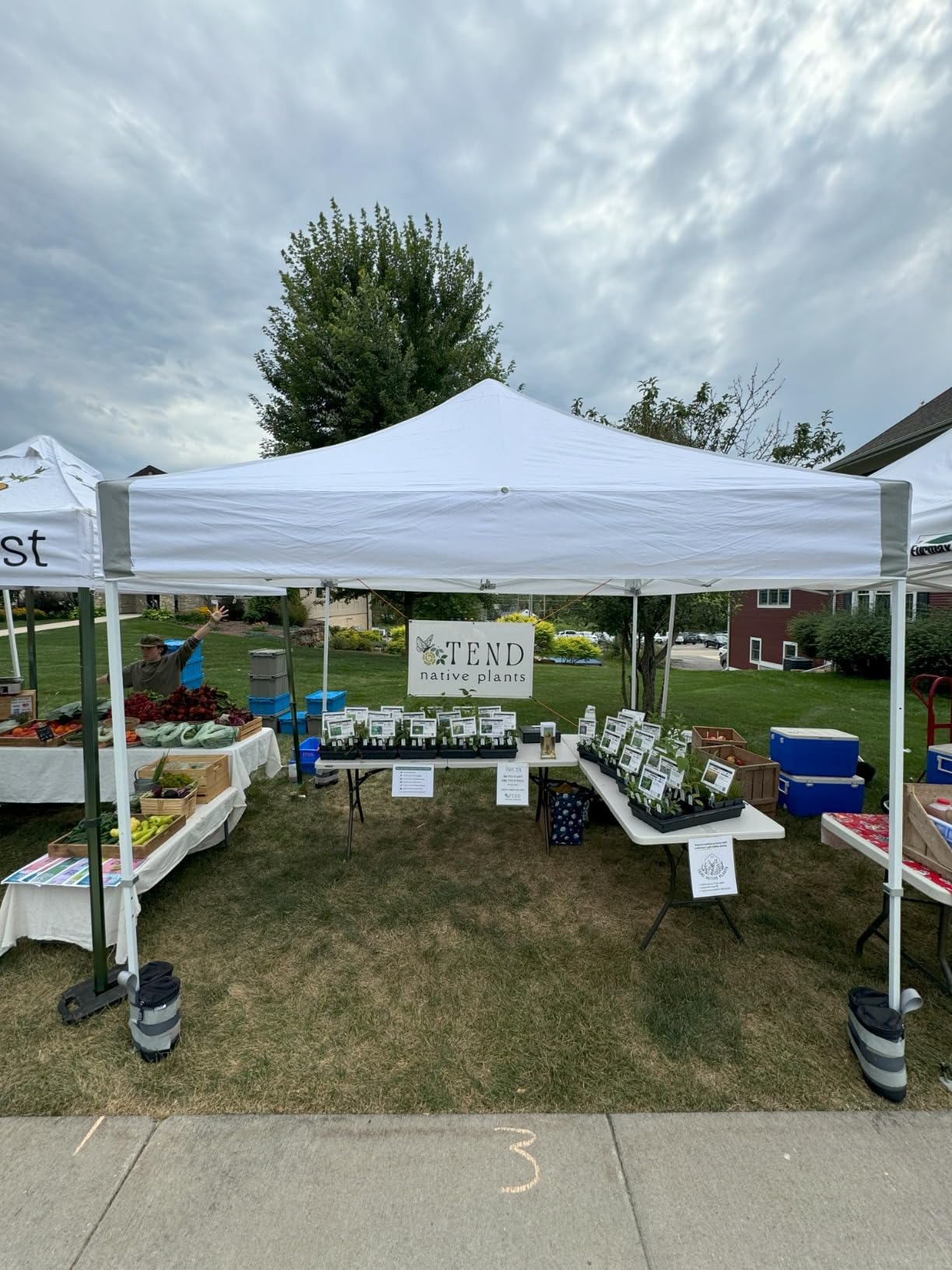
Warranty and parts as a real advantage
The 3 year manufacturer defect warranty is backed by widely available replacement parts and tops, which turns a bent truss from a scrap event into a repair. Owners also praise tool-free setup in under five minutes including bagging for two people, and the heavy duty Wide-Trax roller bag with high density wheels rolls easily over grass and gravel.
Where it gets in the way
The bag zipper sits at the base near the wheels, which makes getting the collapsed tent back in awkward. The frame and top alone weigh 49 pounds, so this is bulkier than a standard canopy, and the side panels are narrow and hard to zip together to full overlap. Fabric also stretches over long deployments and can hold water at the corners.
11. EAGLE PEAK 10×10 Heavy Duty Commercial Canopy – Vented Roof in a 4.5 Foot Package
EAGLE PEAK 10′ x 10′ Heavy Duty Commercial Canopy Tent Pop Up Industrial Instant Canopy Shelter with 100 Square Feet of Shade (White)
Vented top for airflow
400D Oxford with heat-sealed seams
CPAI-84 NFPA-701 flame resistant
Folds to 4.5 feet
Pros
- Vented top improves airflow and reduces heat build-up
- Folds to just 4.5 feet without losing frame strength
- 400D Oxford top with double stitching and heat-sealed seams
- 2 year warranty covering frames
- canopies and bags
Cons
- Smallest review base in the roundup at 115 ratings
- At 52.5 pounds it needs two people to raise and carry
- No wall panels included
- Low sales rank compared with the other canopies
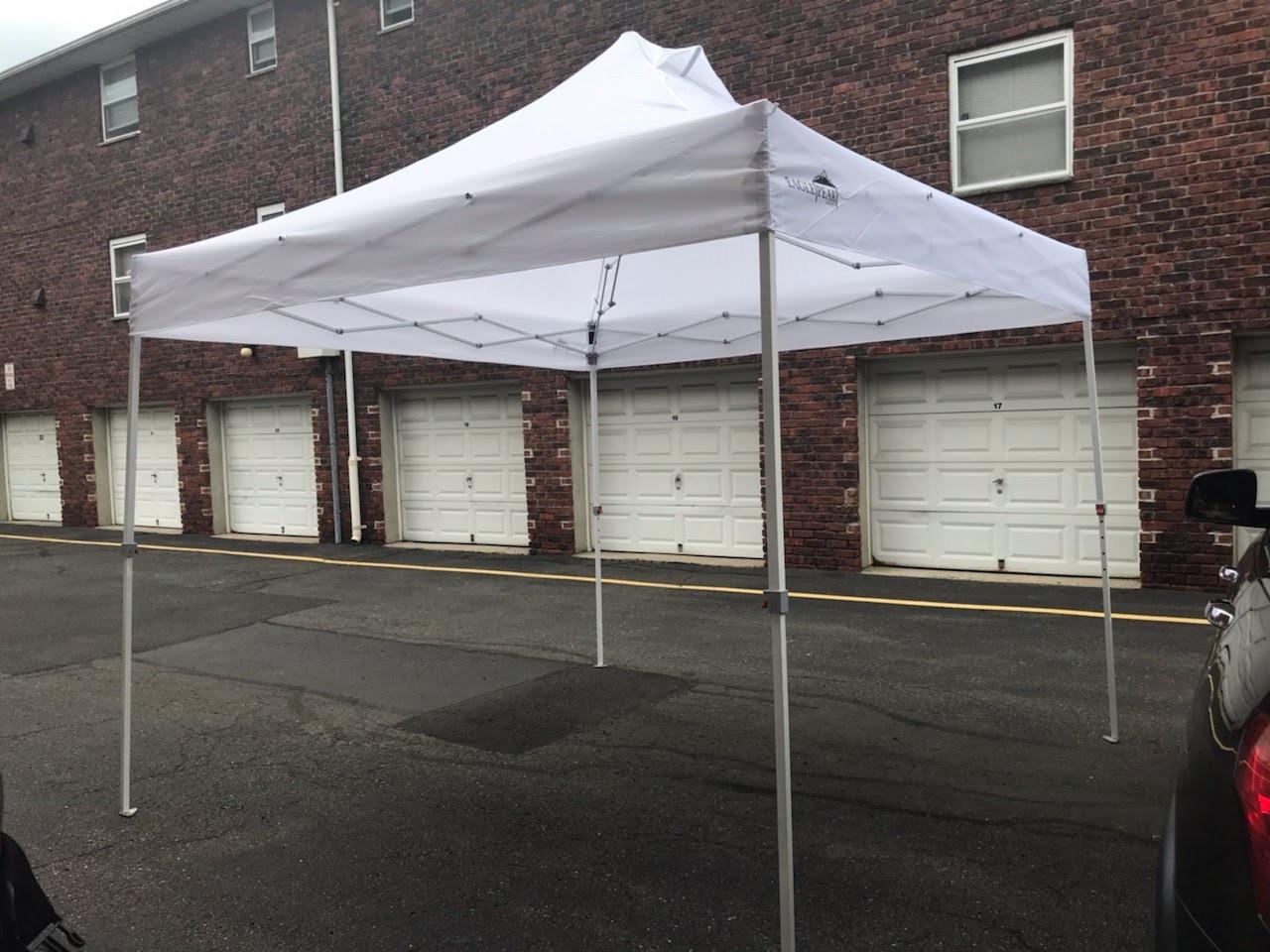
The vented top is the reason this one earns its place in a wind roundup. Air passing through the roof reduces the pressure differential that makes a solid canopy behave like a sail, and owners notice the airflow difference directly as less heat building up underneath on a sunny day. The roof is 400D Oxford, UPF 50+, with double-stitched heat-sealed seams, and it is CPAI-84 and NFPA-701 flame resistant.
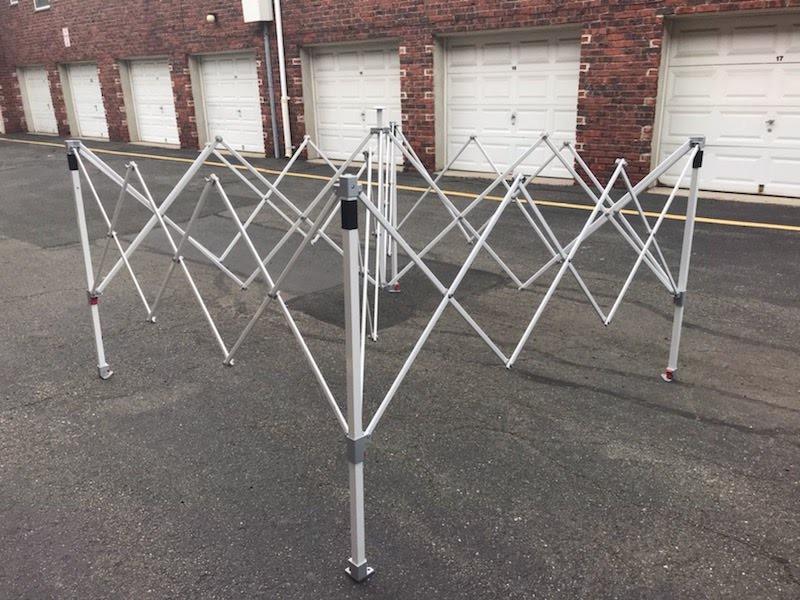
The folding result is the sleeper advantage here. It folds to just 4.5 feet, shorter than same-size competitors without losing frame strength, which means it fits in a vehicle where other 10×10 commercial frames do not. The push-button system removes pinch points, and the legs adjust to 5 telescoping positions, which is more height range than most of the commercial frames in this roundup.
Vented versus solid: the actual trade-off
Venting sheds wind pressure and lets some rain and some debris in through the top. On a dry, breezy site that is a clear win. On a wet site with driving rain, a solid sealed top keeps the interior dry and the frame sees more load. Pick the roof for the weather you will actually get, not for the spec sheet.
The evidence gap on this one
The smallest review base in the roundup at 115 ratings, and a low sales rank next to the other heavy duty canopies. That means less long-term durability evidence than the higher-volume rivals, and the frame is at 52.5 pounds needing two people to raise and carry. Buy it on the vented roof and the 2 year warranty, not on a track record.
No wall panels come with it, so wind and rain enter from the sides on an open frame. That is consistent with the venting philosophy: let air pass through rather than catch it.
12. E-Z UP Vantage Instant Shelter Canopy – Three Year Warranty With Parts for the Whole Unit
E-Z UP Vantage Instant Shelter Canopy, 10′ x 10′, White Powder-Coated Steel Frame with Wide-Trax Roller Bag & 4 Piece Spike Set, Punch
Powder-coated steel frame
CPAI-84 and NFPA-701 fire resistant top
11 foot 5 inch shelter height
3 year manufacturer warranty
Pros
- 3 year manufacturer defect warranty with parts and tops available for the whole unit
- Powder-coated steel frame with 3 height toggle leg adjustments
- Top fabric meets CPAI-84 and NFPA-701 fire resistance
- 10 by 10 foot coverage at both base and top
Cons
- Does not include sidewalls
- Water resistant rather than sealed waterproof top
- Supplied spike set is weaker than auger anchors for real wind
- Small review base of 208 ratings
This fills the same role as the ES100S but arrives without sidewalls, and the pitch as wind shelter is the warranty. It carries a 3 year manufacturer defect warranty with parts and tops available for the whole unit, the longest defect cover listed across this group, and the powder-coated steel frame uses 3 height toggle leg adjustments across a 10 by 10 foot footprint at both the base and the top.
Maximum shelter height is 11 foot 5 inches with maximum valance clearance of 6 foot 10 inches, and the Punch top meets CPAI-84 and NFPA-701 fire resistance, which matters if you are setting up anywhere that specifies a flame rating for vendors. The colour-coordinated Wide-Trax roller bag with high density wheels handles uneven ground.
The spike set is the weak link
The included 4 piece spike set is the least secure anchoring in this roundup, and buyers say so directly. Spike anchoring is less secure than auger anchors or weighted sand bags in high wind. If you buy this, replace the spikes before the first site.
Water resistant top and no sidewalls
The top is water resistant rather than a fully sealed waterproof one, and there are no sidewalls included. Both are reasonable for a shade shelter in a dry climate and wrong for anyone who needs weather cover. The 208-rating review base also limits evidence of long-term durability next to the higher-volume canopies here, and the 60 pound listed weight needs two people to handle.
Why Wind Destroys Canopies: Force Scales With the Square of Wind Speed
This is the single most useful thing to understand before you buy anything. Lateral force on a canopy scales with the square of wind speed, so moving from 20 mph to 30 mph does not increase the load by half. It increases it by about 2.25 times. A 10 mph step from 30 to 40 mph multiplies the force by roughly 1.78 again.
This is why a canopy that stood comfortably in a 15 mph breeze can lose a cross-bar at 25 mph. The frame did not change. The load did, and it changed faster than most buyers expect. Every wind figure quoted in this roundup is tied to an anchoring assumption for that reason.
How to Anchor a Canopy in Wind, and When to Take It Down
Ballast resists overturning. Anchors resist uplift. On an exposed site you need both, and this is the sequence I use.
Five anchoring steps for any canopy
First, ballast every leg. The working figure for a 10×10 commercial truss frame is 20 to 40 pounds per leg depending on exposure; heavier guidance for open sites runs to 60 pounds per leg. Weight bags must be attached to the frame, not placed on the ground nearby, because ground weight does nothing once the frame starts to lift.
Second, drive an anchor at every corner, and use auger or screw-in ground anchors rather than plain stakes wherever the ground allows. Stakes in soft ground pull out, which is the most common anchoring failure reported by owners. Third, run a guy line from each upper corner to a ground anchor with a ratchet or tension strap, so the load goes into the ground rather than into the frame joint.
Fourth, orient the canopy so the low-profile side faces the prevailing wind, and use the height adjustment to drop the peak before a front arrives. Fifth, re-tension the lines and check the bags every few hours. Ballast shifts when a bag is bumped and a frame that started square drifts out of square, which is how joints start taking sideways load.
Anchoring by ground surface
Grass and firm soil take auger anchors well. Sand and loose packable soil pull out from under stakes, so use a wider plate anchor or lean on ballast weight instead. Concrete and asphalt cannot be staked at all, which means ballast plus a ratchet strap to a fixed bollard or a vehicle is the only option. Mud gives poor holding power and poor footing, so treat it as a take-it-down site rather than a pitch.
When to take it down
Take the canopy down when you see sustained wind above roughly 25 mph, when gusts are forecast above 35 mph, when rain arrives with the wind, and whenever thunder is possible. Wind-driven rain adds weight to a wet top, and lightning makes a canopy the highest point on an open site. A frame tent or a pergola is the right answer for sustained conditions, not a heavier pop-up.
Forum consensus from festival and craft fair communities lands on the same point from the other direction: weights, not just stakes. If you are powering a pitch with tools and lighting, our heavy duty cordless drill guide covers site setup tasks that come before the tent goes up. For vehicles parked alongside the pitch, our SUV tire inflator picks are the ones rated for the same kind of abuse.
Buying Guide: Four Factors That Actually Decide Wind Performance
Frame gauge and tube wall thickness decide how far a frame bends
Tube diameter is only half of it. Wall thickness is the other half, and it is the number most listings hide. The range in this roundup runs from 1mm square legs on the MASTERCANOPY and ABCCANOPY units to 1.26 inch pipe with 0.03 inch wall on the COBIZI models and 1.5 inch galvanized poles on the ADVANCE OUTDOOR carport. Thicker is not automatically a higher wind rating, but it is a stiffer frame.
Straight-leg versus slant-leg is the failure point you should care about
Slant-leg frames are cheaper because they pack smaller and fold faster. In wind they introduce an angled joint that concentrates lateral load, and that joint is where the most common real-world failure happens: cross-bars bending and legs collapsing at the connection. Straight-leg designs such as the E-Z UP ES100S carry the load in pure bending and hold a full 100 square feet at the top as well as the ground.
Vented or peaked roofs bleed pressure, solid roofs catch it
A peaked roof at 132 inches, like the MASTERCANOPY, sheds water and reduces flat-sail area. A vented top, like the EAGLE PEAK, lets air pass through so the structure does not act like a kite. A flat or low-pitch solid roof presents the largest surface to a gust. The trade is always the same: venting helps in wind and lets rain in.
Ballast per leg is the number that actually matters
Published wind ratings are anchored figures, always. A 30 mph rating assumes 20 to 40 pounds per leg plus anchors. If you cannot get that much weight onto all four legs, discount the rating by the difference. The ADVANCE OUTDOOR unit in this roundup is the only one that includes 16 steel pegs and 8 auger anchors, and that hardware is as important as the frame.
Footprint and exposure: bigger is not stronger
A 10×20 doubles the covered area and doubles the sail. It also doubles the legs you have to ballast and roughly doubles the weight you are hauling. Many operators find that two smaller 10×10 units are easier to weight, transport and re-site than one 10×20, and two small tents give you the option of taking one down if wind arrives.
Frequently Asked Questions
How much wind can a canopy tent withstand?
A quality heavy duty pop-up canopy with a full truss frame holds steady wind of roughly 25 to 30 mph, and gusty conditions up to about 40 mph, but only when every leg carries 20 to 40 pounds of ballast plus stakes or anchors. That assumes a straight-leg truss frame, a vented or peaked roof, and anchoring on all four corners.
What is the best canopy tent for high winds?
For genuine high-wind survival the E-Z UP ES100S leads this roundup, with an owner report of 45 mph sustained wind and 65 mph gusts over a full day, a straight-leg frame and a 3 year warranty. Its straight legs carry lateral load in pure bending rather than concentrating it at an angled joint.
How do you secure a canopy tent from wind?
Ballast every leg with 20 to 40 pounds of weight attached to the frame, drive an auger or screw-in ground anchor at each corner, run a guy line with a tension strap from each upper corner to an anchor, orient the low side into the prevailing wind, and re-check the bags and line tension every few hours.
Which tents are more likely to collapse in a strong wind storm?
Slant-leg frames are the most likely to fail, because the angled joint concentrates lateral load and cross-bars tend to bend or collapse at that connection. An unballasted canopy of any design is the second most likely failure. Straight-leg truss frames with anchored ballast survive the most.
Do you need a vented canopy for windy conditions?
A vented roof lets air pass through the structure so it does not act like a sail, which reduces wind load on the frame. The trade-off is that some rain and debris enter through the top, so a vented canopy suits dry, breezy sites while a sealed solid top suits wet ones.
The Verdict: Which Heavy Duty Canopy Handles Wind Best
Our overall pick is the ABCCANOPY 10×20 Commercial Pop Up Canopy, because the alloy steel frame is genuinely the heaviest in this group, 200 square feet of coverage is the most shade any of these gives you, and the bundled six sand bags and four stakes mean you can rig all four legs before you leave the house. Ballast every leg on that frame before the first gust arrives, because on a 10×20 the sail area is the thing working against you.
If your priority is the most credible wind survival record rather than square footage, the E-Z UP ES100S is the pick, because a straight-leg frame plus an anchored 45 mph sustained report plus a 3 year warranty is a combination nothing else here matches. If you are running a market or a craft fair pitch every weekend, the ABCCANOPY 10×10 with sidewalls and its 1mm square truss legs and sealed 500D roof is the one I would buy. If you want the fastest setup when the wind is already rising, the CROWN SHADES one-push CENTERLOK hub saves more time than anything else in the set. If you are shading a vehicle rather than people, the ADVANCE OUTDOOR carport is the only unit here that includes real auger anchors.
Whichever you choose, the frame is only one part of the wind equation. The ballast and anchors decide the outcome, and the square-law curve means a small forecast change is a large force change. If you need to keep a vehicle topped up while working a long site, our dash cam reviews for truckers cover the in-cabin recording side, and if you are just moving gear around a pitch, our heavy duty paper shredder guide covers document handling for the site office. Otherwise, pitch your tent before the season starts rather than in the first gust of it.