
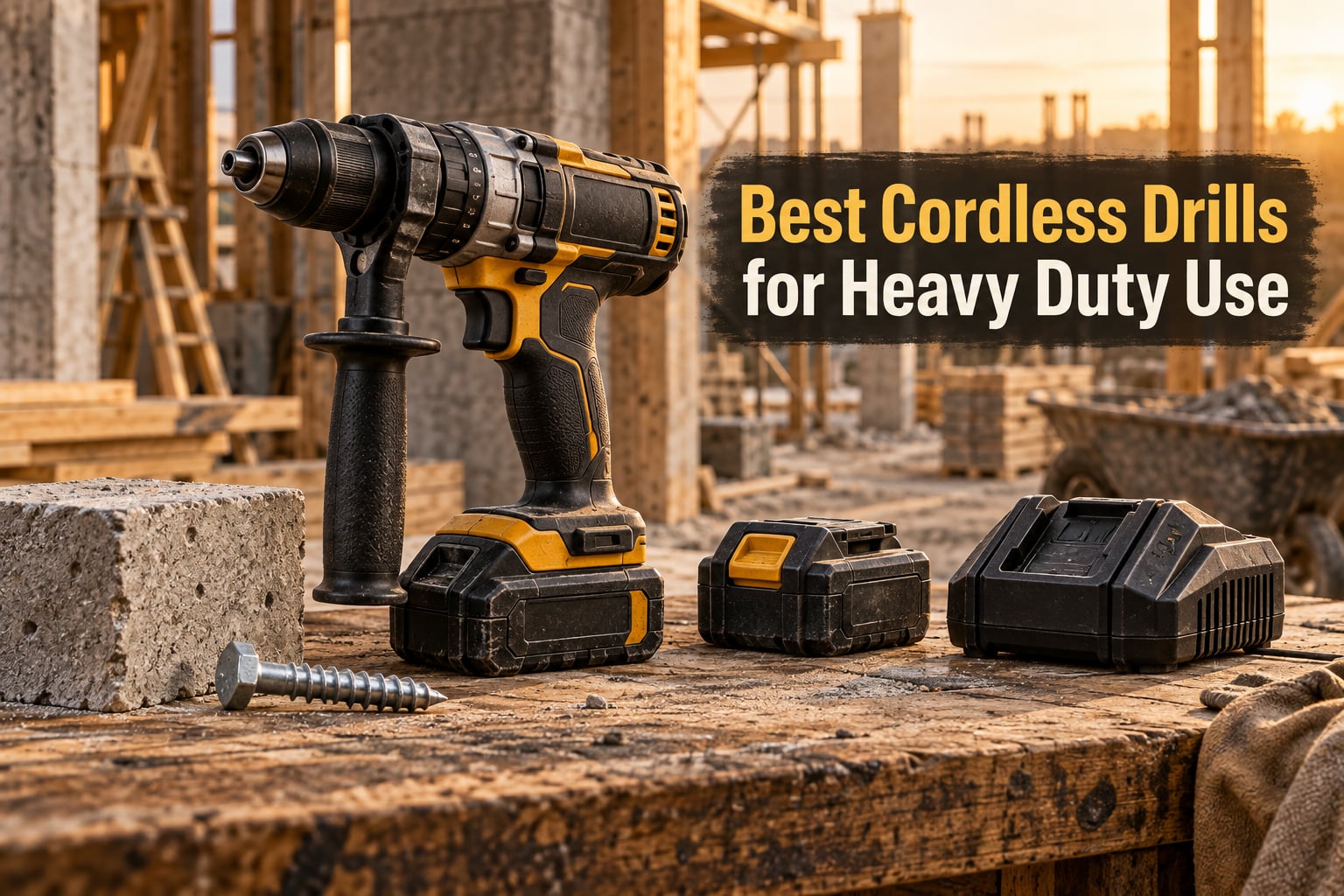
The strongest cordless drill for heavy duty use in this group is the Milwaukee 2904-20 M18 FUEL, which carries the highest published peak torque figure we found at 1,400 in-lb, roughly 158 Nm. But torque alone is not the whole story, and the drill we would actually hand a contractor is the DEWALT DCD996B, a 1/2 inch brushless hammer drill that pairs 2,000 RPM top speed with a three-speed gearbox and a 1/2 inch ratcheting metal chuck. Below we rank all eight of the best cordless drills for heavy duty use, with the torque, hammer rate, weight and battery format behind each pick spelled out so you can match a tool to the fasteners you actually drive.
I have spent years buying into these battery platforms one tool at a time, which is how most people end up with a drill. That experience shapes every pick here: the wrong drill in the right platform wastes money, and the right drill in a platform you have no batteries for wastes more. So each entry below lists what the tool is, who it suits, and where it falls short. Our heavy duty extension cord guide covers the other half of a jobsite power setup, since a cordless drill still needs a place to charge.
One honest note before we start. We did not run controlled lab testing on these drills. Every figure in this guide comes from manufacturer specifications and from thousands of owner reviews, and we say so plainly wherever a brand does not publish a number. The heaviest-reviewed tools here have more than 7,000 ratings behind them, which is the closest thing to a durability track record that exists for a power tool.
Our Top 3 Heavy Duty Cordless Drills for 2026
These three lead the group for different reasons, and the first one is the pick most people should buy. The DEWALT DCD996B is the only drill here with a three-speed gearbox, a carbide-insert metal chuck and a manufacturer spec sheet that names 300 watts of output. The Makita XFD131 carries the highest average rating in the lineup at 4.8, though it is a driver-drill with no hammer mode. The Milwaukee 2904-20 posts the highest torque number, 1,400 in-lb, and is the one to buy if you already own M18 packs.
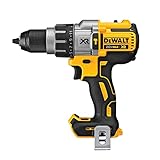
DEWALT DCD996B Hammer Drill
- Brushless 1/2 inch hammer drill
- 3 speeds to 2
- 000 RPM
- Carbide-insert metal chuck

Makita XFD131 18V LXT Kit
- 440 in-lb brushless torque
- 3.0Ah battery and charger included
- No hammer mode

Milwaukee 2904-20 M18 FUEL
- 1400 in-lb max torque
- Carbide-toothed metal chuck
- Hammer mode for block and brick
Comparing All Eight Heavy Duty Cordless Drills Side by Side
Every drill below is a hammer drill or a hammer driver drill with a metal chuck, which is the entry requirement for this list. Three of the eight come with a battery and charger in the box, and five are sold as bare tools, which changes the real cost of ownership more than most buyers expect. Use the table as a fast screen, then read the section for the tool you are actually considering.
| Product | Specs | Action |
|---|---|---|
| DEWALT DCD996B Hammer Drill |
|
Check Latest Price |
 Milwaukee 2804-20 M18 FUEL Milwaukee 2804-20 M18 FUEL |
|
Check Latest Price |
 CRAFTSMAN CMCD711C2 Kit CRAFTSMAN CMCD711C2 Kit |
|
Check Latest Price |
 Makita DHP489Z 18V LXT Makita DHP489Z 18V LXT |
|
Check Latest Price |
 DCK 20V Brushless Hammer Drill DCK 20V Brushless Hammer Drill |
|
Check Latest Price |
 Dong Cheng 20V Hammer Drill Dong Cheng 20V Hammer Drill |
|
Check Latest Price |
| Makita XFD131 18V LXT Kit |
|
Check Latest Price |
| Milwaukee 2904-20 M18 FUEL |
|
Check Latest Price |
1. DEWALT DCD996B 20V MAX XR Hammer Drill – The Most Complete Heavy Duty Spec Sheet
DEWALT 20V MAX XR Cordless Hammer Drill Driver Brushless, Heavy Duty 1/2″, 3-Speed, Tool Only (DCD996B)
Brushless hammer drill
1/2 inch ratcheting metal chuck
3 speeds to 2,000 RPM
Tool only, 3-year warranty
Pros
- Immediate torque across all three speed settings
- Carbide-insert all-metal chuck grips bits firmly
- Hammer mode handles concrete
- block and masonry
- Balanced grip with vibration control handle
- Bright 3-mode LED with a 20 minute spotlight
Cons
- Keyless chuck has a reputation for early failure
- Forward and reverse switch placement needs work
- 3-speed selector can stick when changing gear
- Hammer mode is loud in enclosed rooms
The DCD996B is the drill we recommend to anyone starting a 20V MAX system from scratch for construction work. It is a genuine brushless hammer drill, not a drill-driver wearing a hammer badge, and DeWalt specifies 300 watts of maximum power, 2,000 RPM and drilling capacity of 15 mm in metal and 16 mm in wood. That is a drill sized for 1/2 inch masonry anchors and structural lag work, not for hanging a shelf.
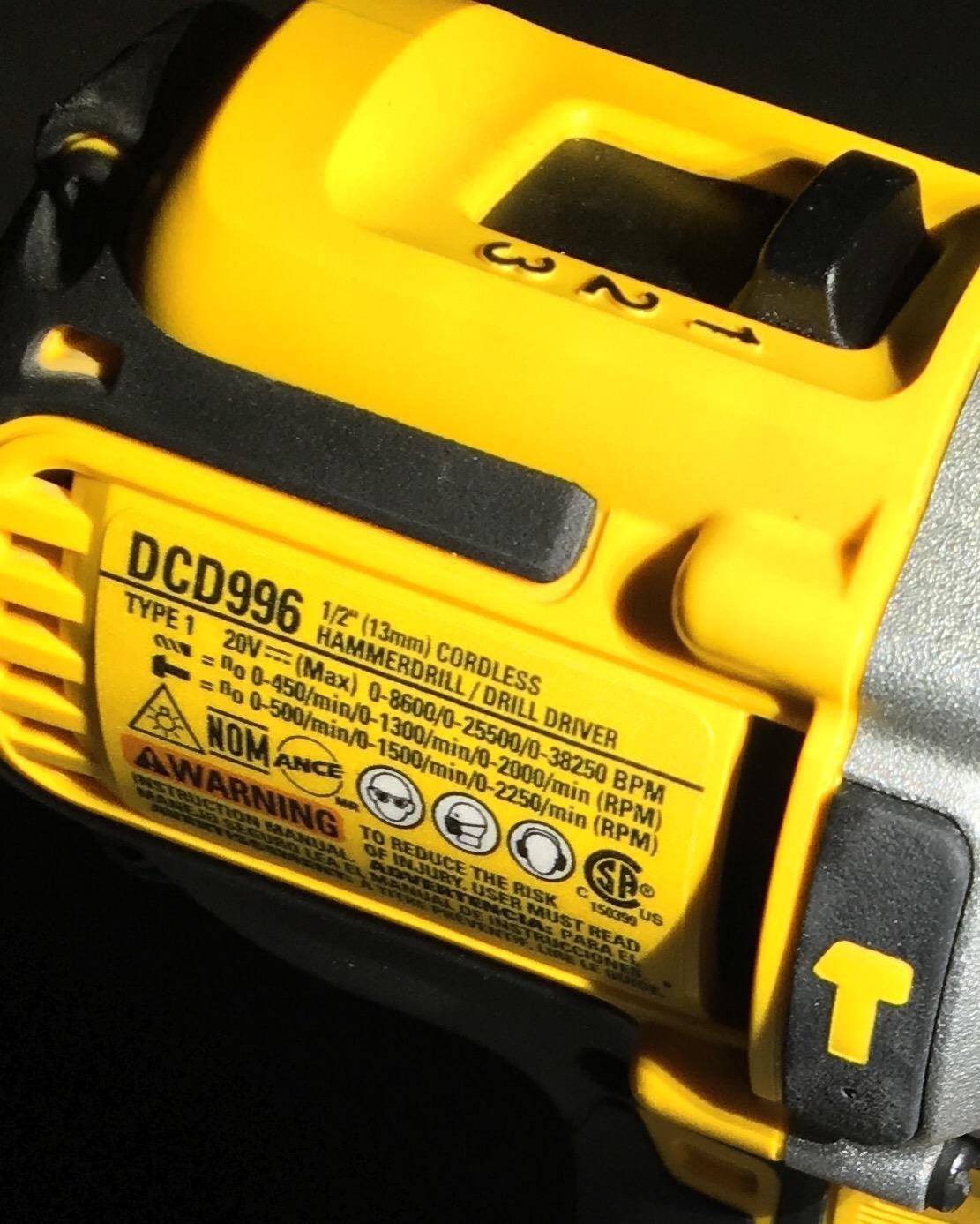
Owners consistently describe this as the most capable non-corded drill they have held, and the review base of more than 7,000 ratings is by far the largest here. Long masonry sessions on 5Ah packs are reported without a meaningful loss of charge, which is the behaviour you want on a full day of concrete work.
Why the Three-Speed Gearbox Matters More Than Torque Alone
Most single-speed and two-speed drills force you to choose between driving speed and drilling speed. The DCD996B gives you a low gear for high-torque fastening, a middle gear for general driving and a high gear up to 2,000 RPM for boring. When a self-feed bit or a Forstner bit binds in framing lumber, that third gear is the difference between a clean hole and a stalled job.
DeWalt does not publish an in-lbs torque figure for this tool, which owner communities regularly call out as frustrating when cross-brand shopping. We are not going to guess at a number. What the manufacturer does publish, 300 watts of output and a three-speed gearbox, is enough to place it in the heavy duty class on evidence rather than marketing.
The Chuck, the Handle and the Light
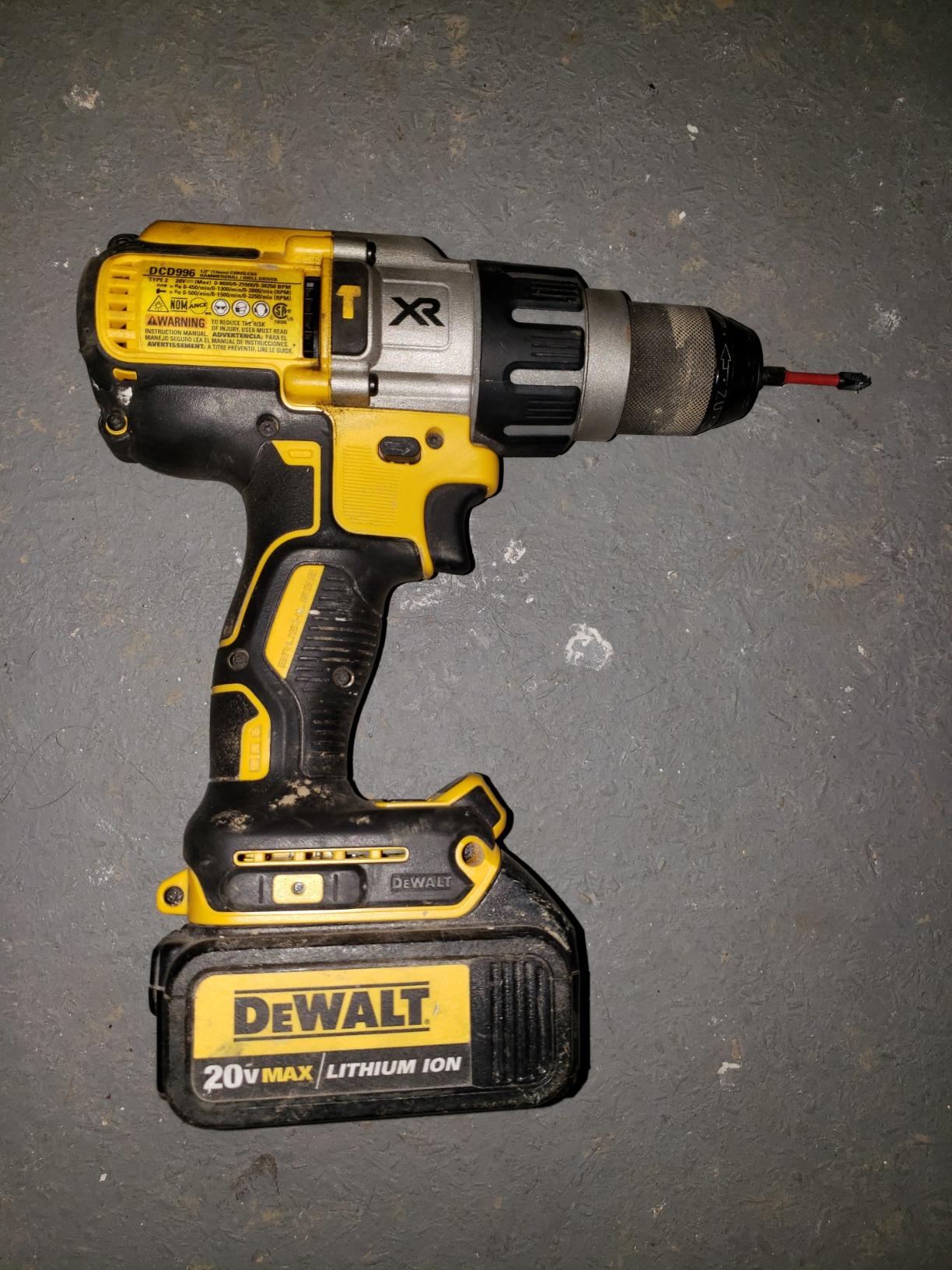
The 1/2 inch ratcheting chuck uses carbide inserts, and that is the detail that matters when you are boring 6 inch holes with a hole saw. Plainer keyless chucks on competing tools lose grip under that kind of side load. The vibration control handle is a rubber-overmould design that takes the sting out of a long run in masonry, and the 3-mode LED with a 20 minute spotlight shutoff is genuinely useful in a wall cavity or under a deck.
Two complaints repeat. The keyless chuck mechanism has a reputation for premature failure and is awkward to service, and the forward and reverse switch sits where your grip naturally lands. The 3-speed selector can also stick when you change gear with gloves on, and hammer mode is loud enough to be unpleasant indoors.
Who Should Buy the DCD996B
Buy this one if you own 20V MAX batteries already, or if you are buying your first platform and want the most complete heavy duty drill available. It suits electricians, remodelers and finish carpenters who need one tool to cover driving, drilling and light masonry. Skip it if you only hang pictures, and think twice if you mostly work overhead, because 4 lb of bare tool plus a 5Ah pack is a real load at arm height. The listed 3-year limited warranty is also the shortest among the big-brand tools here.
2. Milwaukee 2804-20 M18 FUEL Hammer Drill – Compact Power for Existing M18 Owners
Milwaukee 2804-20 M18 FUEL 1/2 in. Hammer Drill (Tool Only) Tool-Peak Torque = 1,200
M18 FUEL brushless hammer drill
1,200 in-lb peak torque
Three drive modes
Tool only
Pros
- Class-leading torque in a compact body
- Works across the full M18 battery range
- Overload protection guards tool and battery
- Driving
- drilling and hammer modes in one tool
Cons
- Bare tool only
- so a battery and charger are extra
- Compact size is less comfortable for long high-torque fastening
- Less published owner feedback than the kit listings
This is the drill to add if you have already built an M18 collection. Milwaukee specifies 1,200 in-lb of peak torque from a Power State brushless motor that it claims delivers up to 60 percent more power than the competitive set, with Redlink Plus intelligence handling overload protection. The drive mode, drill mode and hammer mode selector gives you the same three-way flexibility as the larger Milwaukee hammer drills in a smaller shell.
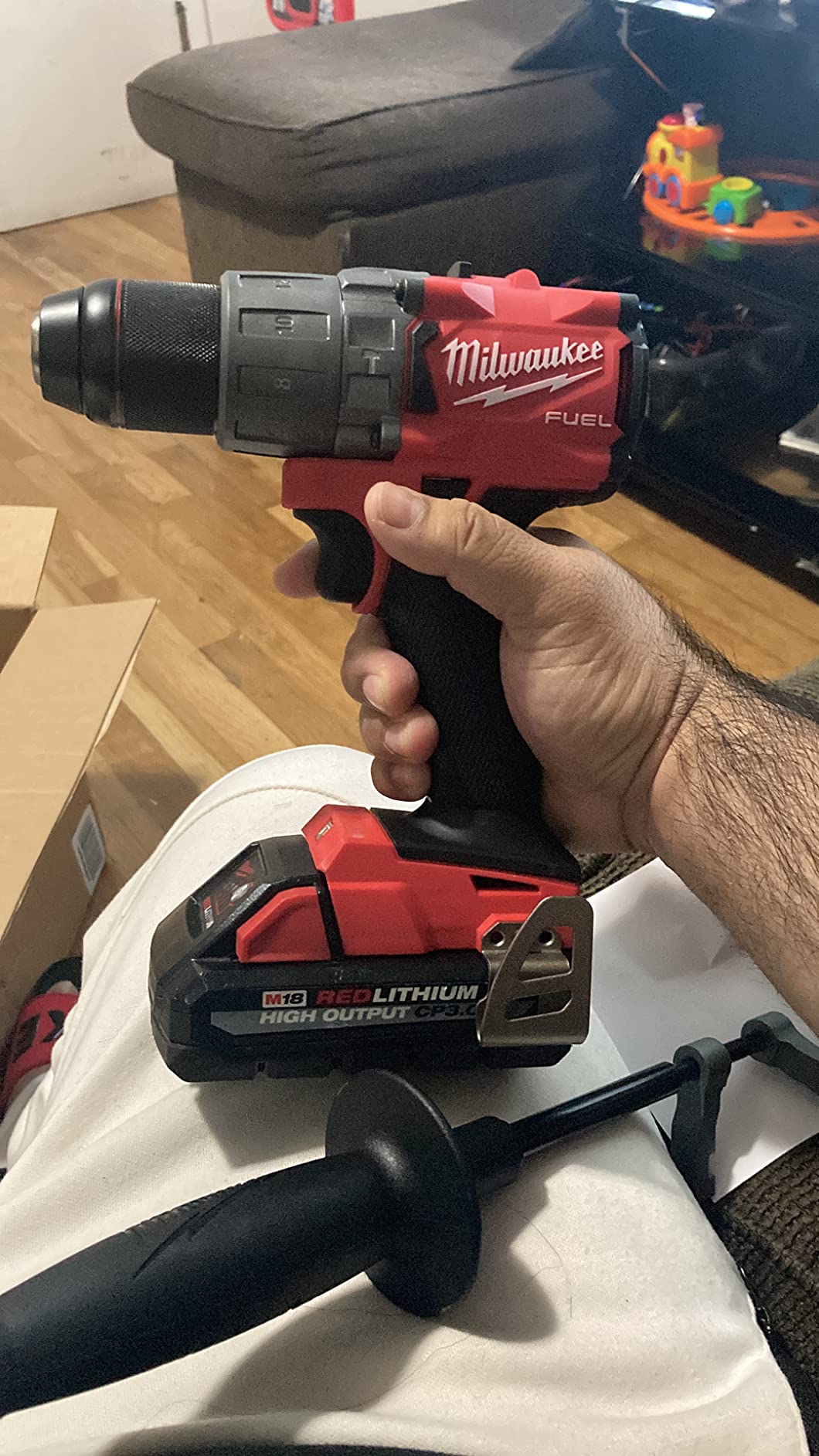
With roughly 85 percent of ratings at five stars, the owner feedback centres on exactly what you would expect from an FUEL tool: power output and platform compatibility. The recurring caveat is format rather than function. It is a bare tool, so it functions as an addition to an M18 battery ecosystem rather than a complete purchase, and the compact proportions are less pleasant for long stretches of high-torque fastening than a full-size hammer drill.
Redlink Plus and Why Overload Protection Matters
Overload protection is not a gimmick on a job site. When a 3/8 inch lag screw binds in treated lumber, an unprotected motor and battery pack can cook themselves. Redlink Plus monitors draw and cuts power before that happens, which is one reason owner communities describe replacing Milwaukee packs rather than tools after years of daily use. The same electronics also mean the tool reads the battery and delivers what the pack can actually give, so a 2.0Ah pack and a 5.0Ah pack feel meaningfully different here.
Where the 2804-20 Fits Against the Rest of the Group
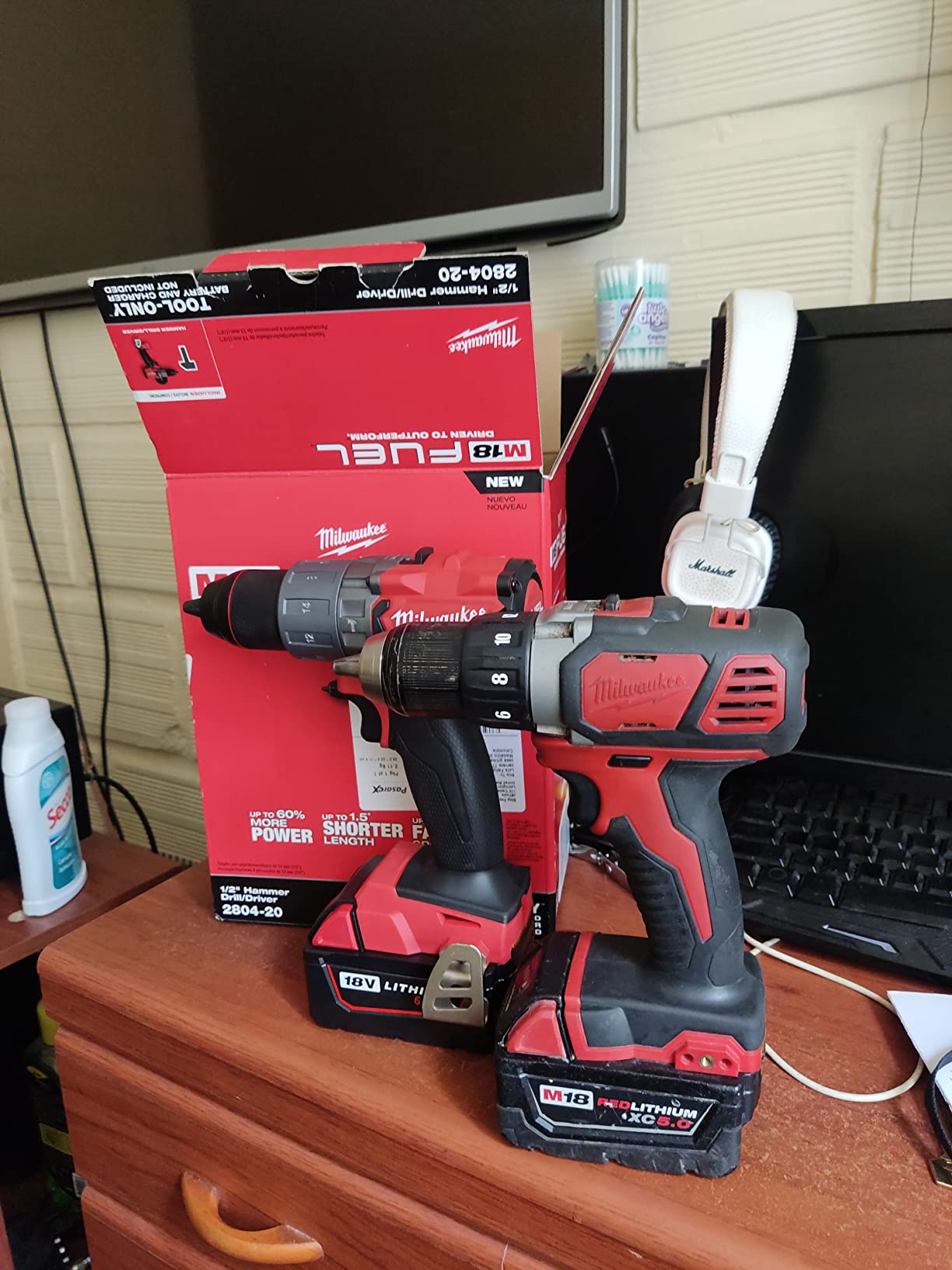
At 1,200 in-lb of peak torque this sits below the 2904-20 in the same platform, and it is the more compact of the two. That trade is worth understanding: the smaller drill is easier in a joist bay or between studs, while the larger one is steadier on a long lag screw. Professionals working outdoors in electrical work tend to favour the FUEL drill and impact pairing for torque and clutch control under daily load, and this is the drill half of that pairing.
Who Should Buy the 2804-20
This is the right pick if you already own M18 packs and chargers, and you want a second hammer drill for a van or a second crew. It is also the safer buy than the 2904-20 for a homeowner, since 1,200 in-lb is plenty for 1/2 inch anchors and most deck work without the weight. It is not the right first Milwaukee purchase if you have no batteries, because the platform cost lands on you all at once.
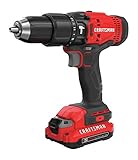
3. CRAFTSMAN CMCD711C2 V20 Hammer Drill Kit – The Best Value Complete Package
CRAFTSMAN V20 Cordless Hammer Drill Kit, 1/2 inch, 2 Batteries and Charger Included (CMCD711C2)
V20 1/2 inch hammer drill
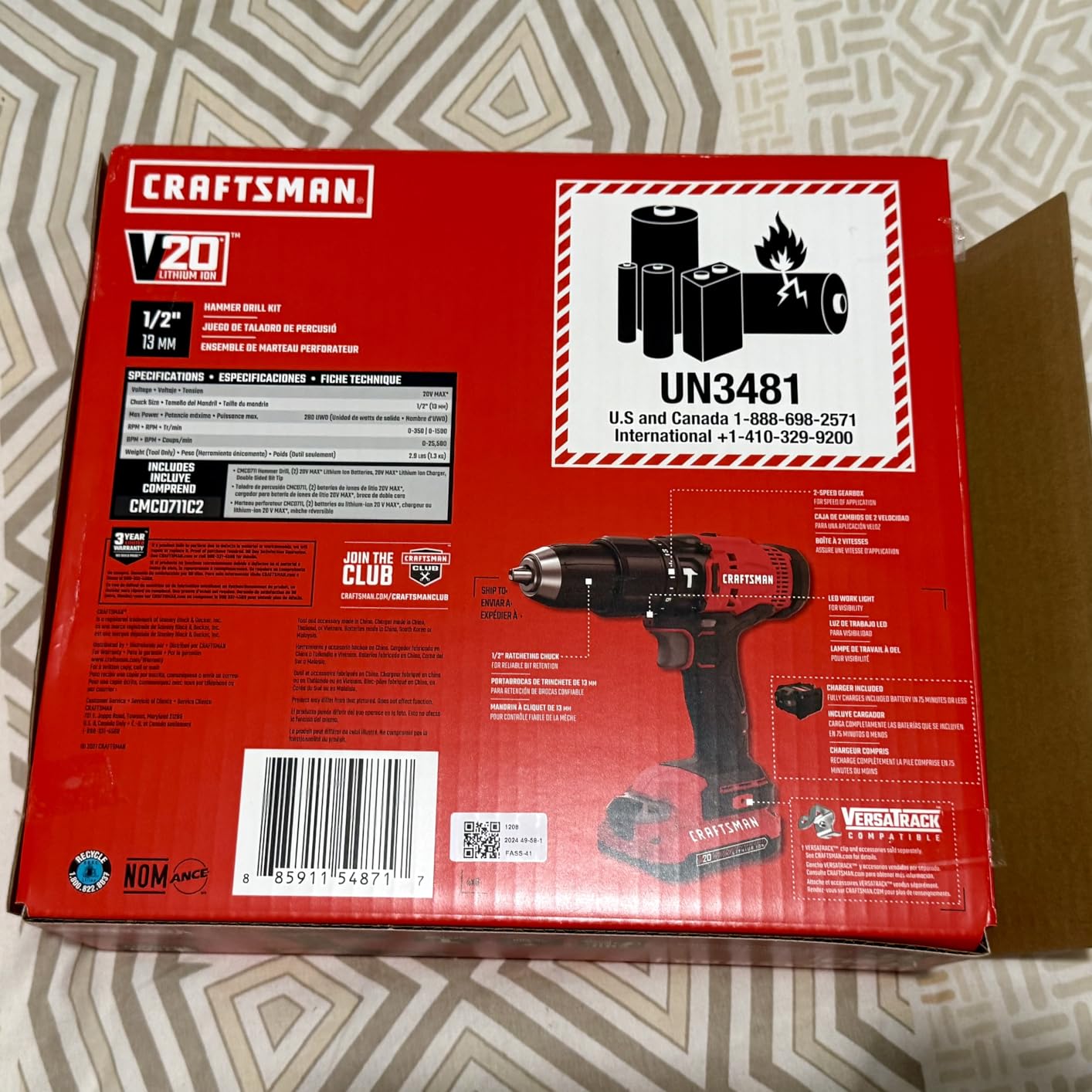
280 unit watts out
25,500 BPM
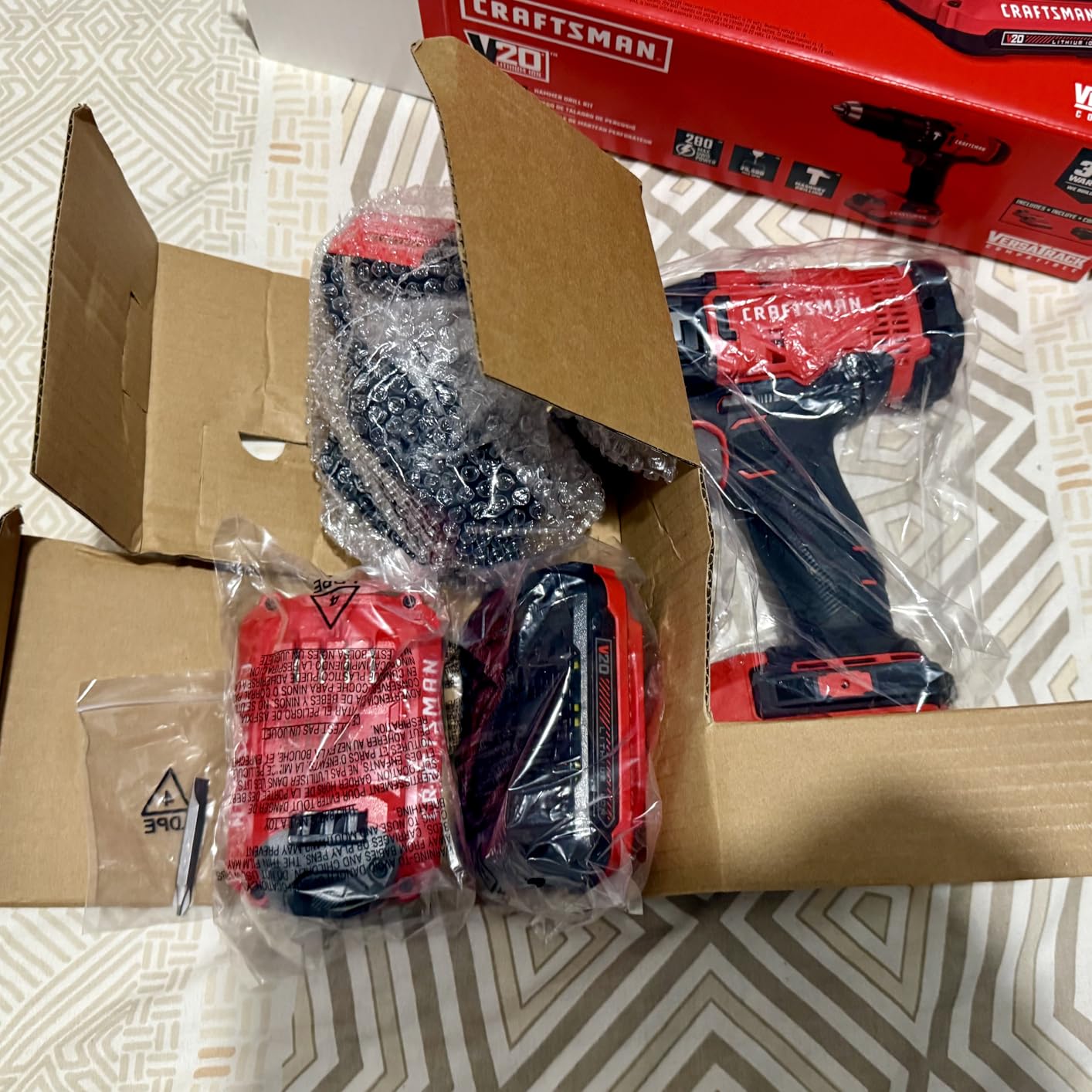
Two batteries plus charger included
Pros
- Two 20V MAX batteries and a charger in the box
- 25500 BPM works well in concrete and brick
- 1/2 inch ratcheting chuck holds bits under load
- Two-speed gearbox covers fastening and drilling
Cons
- Only two speeds with a 1500 RPM ceiling
- 1.3 Ah packs are the smallest capacity in the group
- Torque is well below premium brushless hammer drills
The CRAFTSMAN V20 kit solves the problem that stops most people from buying a bare tool: you get two lithium-ion batteries and a charger in the box. For a homeowner or a remodeler who needs one capable hammer drill and nothing else, that completeness is worth more than the last 200 in-lb of torque. Owners treat it as a value jobsite kit, and about 80 percent of ratings are five stars.
Where 280 Unit Watts Out and 25,500 BPM Sit
The output figure of 280 unit watts out places this drill below the DEWALT and Milwaukee brushless machines here, and you feel it on long lag screws. What it does well is masonry. The 25,500 BPM hammer rate is competitive, and owners report it handling concrete and brick anchors without drama. The 1/2 inch ratcheting chuck is the right part for the job, since bit retention under hammer load is where cheaper drills fail.
The gearbox is the real limitation. Two speeds topping out at 1,500 RPM means no high-speed boring mode, so a hole saw in framing lumber will be slower than on a three-speed tool. If your work is mostly driving screws and tapping anchors, that ceiling rarely comes up.
The Battery Problem Hidden in the Box
Two batteries is a genuine advantage for all-day work, but 1.3 Ah is the smallest capacity in this entire lineup. That means the two packs will not last as long as a single 4.0Ah or 5.0Ah pack, and the V20 charger needs about 60 minutes or less to bring one back. The kit also fits the VERSATRACK wall system, though the clip and accessories are separate purchases. Plan on buying one larger V20 pack as a second battery rather than relying on the two small ones for a full day of masonry.
Who Should Buy the CRAFTSMAN V20 Kit
Buy this if you want a complete heavy duty capable package with batteries in hand and you are not loyal to another platform. It is a sensible weekend warrior kit and a legitimate remodel tool for a contractor who runs one brand. Skip it if you already own 20V MAX or M18 packs, because the platform does not cross over, and skip it if driving 3 inch structural lag screws is a daily task rather than an occasional one.
4. Makita DHP489Z 18V LXT Hammer Driver Drill – Metal Gear Housing and 70 Nm
Makita DHP489Z 18V Lithium-Ion Cordless Hammer Driver Drill 13mm(1/2″)|70Nm|1800rpm|Brushless Motor|XPT|Variable Speed|without Battery and Charger
18V LXT brushless hammer drill
70 Nm (73 N m) torque
21 clutch settings
Metal gear housing, tool only
Pros
- Metal gear housing holds up in demanding work
- 21 torque settings plus drill mode for control
- Twin LED job light with pre-glow and afterglow
- Drives a 1 inch ship auger into 2x lumber in high speed
- Runs on the widely deployed 18V LXT platform
Cons
- Parallel import
- so warranty coverage may differ
- Tool only
- battery and charger sold separately
- 1800 RPM ceiling is below several rivals
- Smallest review base here at 524 reviews
The DHP489Z is the hammer drill half of the 18V LXT platform, and at 70 Nm, roughly 515 in-lb, it delivers real class torque from a brushless motor. The metal gear housing is the detail that separates it from plastic-housed tools in the same class, and it is the reason this drill holds up when you are boring into framing all day.
21 Clutch Settings and the Ship Auger Claim
Twenty-one torque settings plus a separate drill mode is a finer adjustment than most hammer drills in this group offer, and it matters when you are driving a structural screw into softwood without overdriving. Makita also specifies that the drill handles a 1 inch ship auger in high speed mode into 2x lumber, which is a genuinely useful capability on a framing crew and a good reason the top gear exists.
The 1,800 RPM ceiling is lower than the DEWALT and DCK drills here, so high-speed boring is not the strongest part of this package. The twin LED job light with pre-glow and afterglow is a nice touch, since the afterglow keeps the work point lit for a moment after you release the trigger.
What the Parallel Import Status Changes
This listing is described as a parallel import, which means the tool is functionally equivalent to the officially distributed version but may differ in model number, accessories, packaging, manuals and warranty coverage. That is the single biggest caveat here, and it is why we would not make this the first recommendation for someone whose livelihood depends on a warranty claim. The rating of 4.7 across 524 reviews is strong, but it is the smallest review base of the eight tools we evaluated.
Who Should Buy the DHP489Z
Buy it if you already own 18V LXT batteries and want a hammer drill rather than the driver-drill that usually comes in that platform. It is a strong match for carpenters, cabinet installers and electricians who need controlled fastening plus light masonry. If you are starting from nothing on Makita, the XFD131 kit later in this guide is the more complete starting point.
5. DCK 20V Brushless Hammer Drill – Genuine Brushless Power With a Full Kit
DCK 20V Brushless Hammer Drill, 531 in.lbs, 36000 BPM, 1/2″ Keyless All-Metal Chuck, 4.0Ah Battery, 22+1+1 Clutch, Impact Drill Kit for Drilling Brick Wall, Metal, Wood, KDJZ05-13
20V brushless hammer drill
531 in-lb (60 N m) torque
36,000 IPM hammer rate
1/2 inch all-metal chuck
Pros
- Real 600W brushless motor that runs cool under load
- 36000 IPM punches through block and poured concrete
- 1/2 inch keyless all-metal chuck is rare in a kit
- Includes 4.0Ah battery
- charger
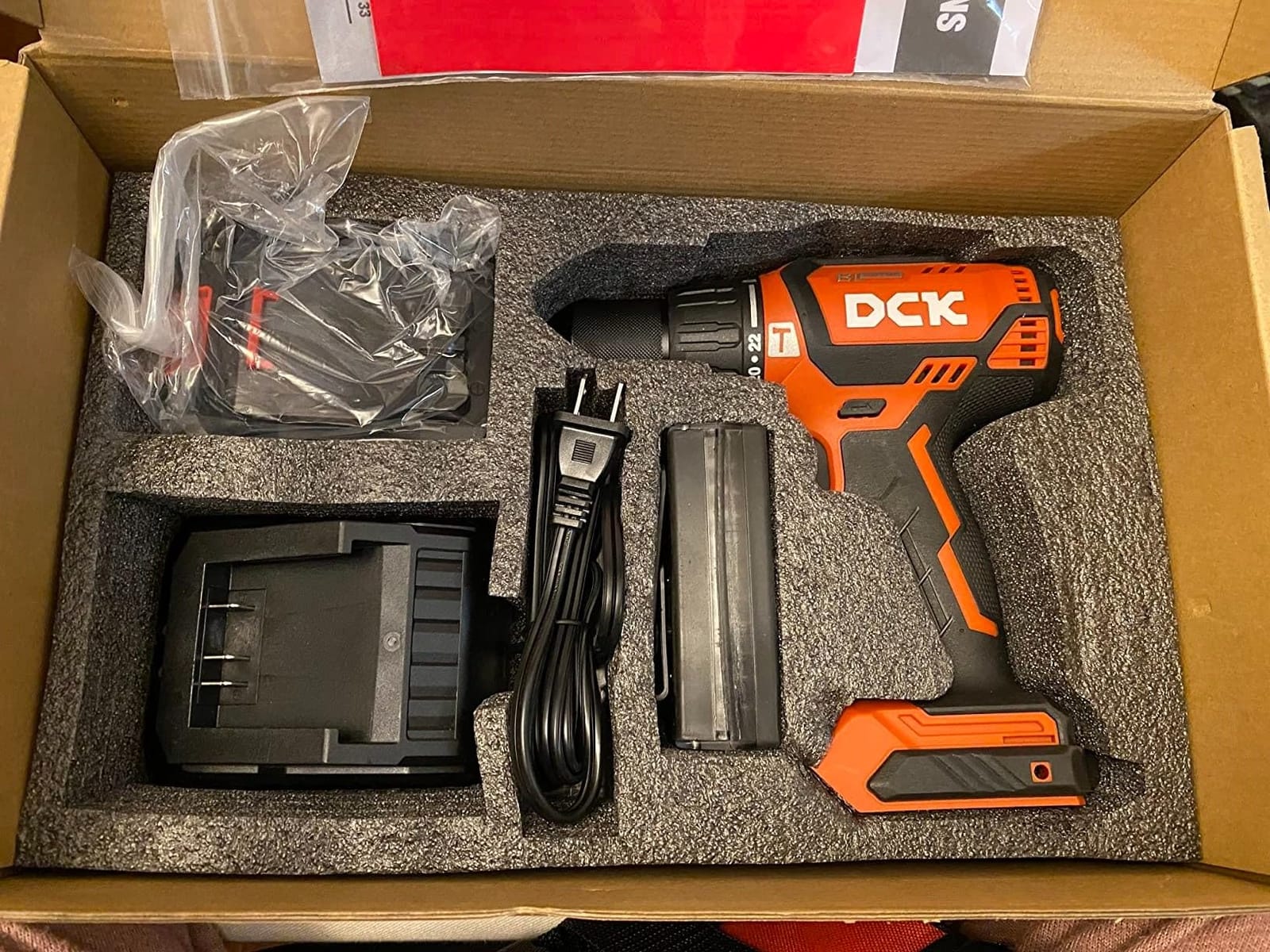
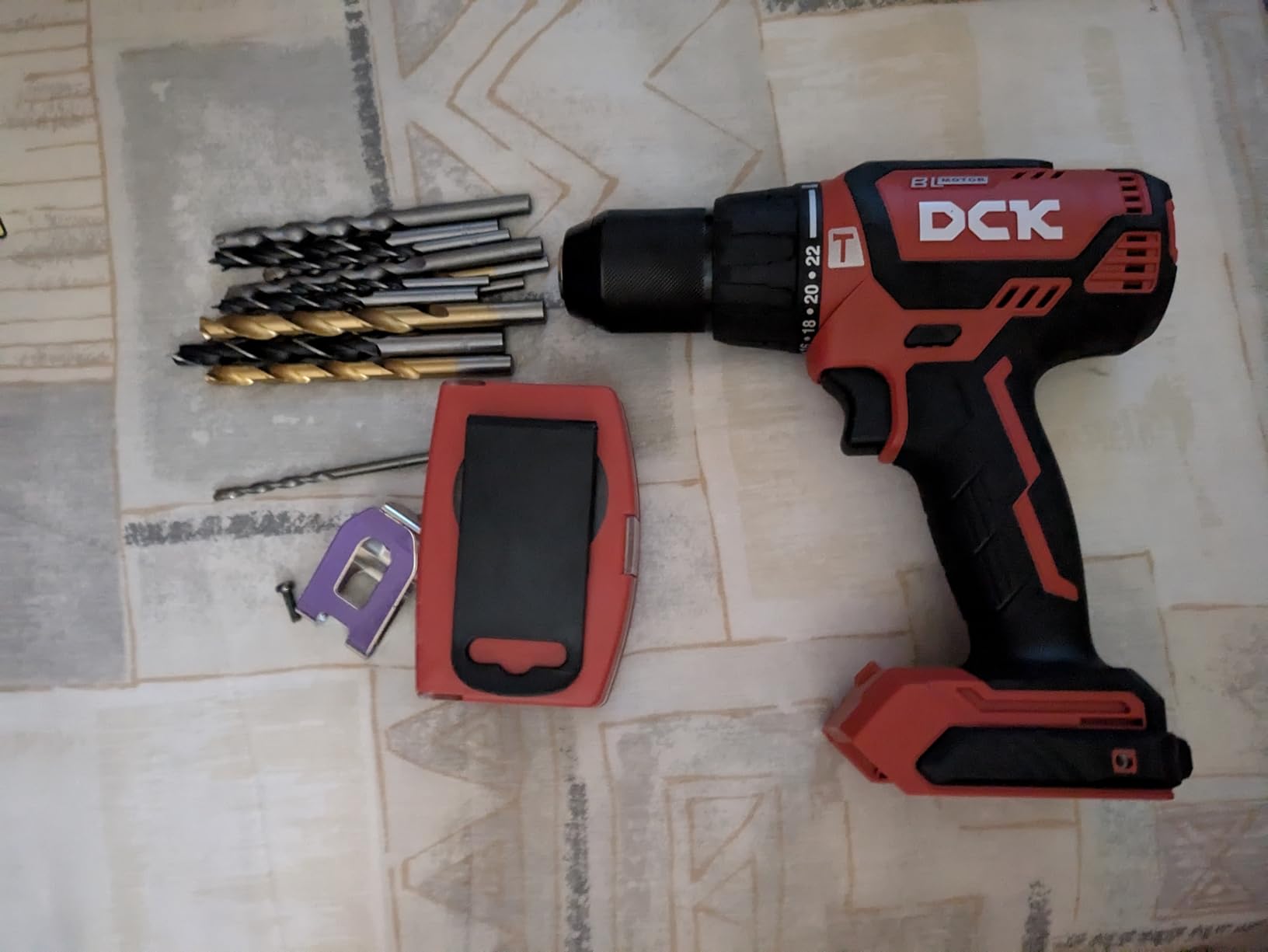
- 42 bits
- belt hook and bag
Cons
- LED work light only stays on while the trigger is held
- Chuck can run sticky after long hammer-mode sessions
- 8.8 lb listed weight is heavy for overhead work
- Only two speeds with no low fastening gear
The DCK is the value pick in this group and the most surprising one. A genuine 600W brushless motor, 531 in-lb of torque, a 36,000 IPM hammer rate and a 1/2 inch keyless all-metal chuck in a kit that includes a 4.0Ah battery, a charger and 42 bits is not a combination you normally see from an established brand. Owners repeatedly say it performs above its price, with 80 percent of ratings at five stars.
What 36,000 IPM and a Metal Chuck Actually Buy You
That hammer rate is the highest published figure in this lineup, and it is the reason owners report the drill moving through cinder block and poured concrete quickly. The keyless all-metal chuck is the second important part. Chuck wobble and bit slippage are the standard failure mode on entry-level drills, and a metal mechanism designed to handle the heat of sustained hammer drilling avoids most of it. Rated capacity is 1/2 inch in brick, 1/2 inch in steel and 1-1/2 inch in wood.
The brand publishes a useful runtime claim: one 4.0Ah charge drives up to 800 ST6X50 screws or drills 90 holes of 1-2/5 inch diameter through 19/16 inch board. That is the kind of concrete figure most listings omit.
Where the Compromises Sit
Three limits are worth weighing. The LED work light only stays on while the trigger is held, with no afterglow, which makes it nearly useless for setting anchors in a dark cavity. The chuck can run slightly sticky after extended hammer-mode use. And the listed 8.8 lb weight is heavy for overhead work, though a good share of that figure is the kit packaging rather than the bare tool.
The gearbox is two-speed only, 0-550 and 0-2,200 RPM, with a 22+1+1 clutch. There is no third low gear, so high-torque fastening runs at the lower speed only. Warranty is two years on the drill and one year on the battery and charger, which is shorter than the big brands but longer than some entry-level competitors offer.
Who Should Buy the DCK
Buy it if you want a hammer drill with real masonry capability and a complete kit without committing to a major battery ecosystem. It is a strong weekend and renovation tool for tapcons, shelf standards and block work. Skip it if you need 3 inch lag screws as a daily task, or if your work is mostly overhead where the listed weight will catch up with you.
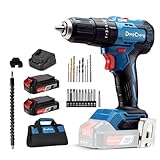
6. Dong Cheng 20V Brushless Hammer Drill – Lightest Body in the Group
Dong Cheng 20V Brushless Heavy-duty Impact Drill, 443 in-lbs, 27000 IPM, 1/2″ Keyless Metal Chuck, 20+1+1 Clutch, Cordless Hammer Drill with 2 Battery Kit for Drilling Brick Wall, Metal, Wood
20V brushless hammer drill
443 in-lb (50 N m) torque
27,000 BPM
2 lb body, two batteries included
Pros
- Brushless motor runs cool and quietly on cinder block
- 2 lb body reduces fatigue overhead and in tight spaces
- 1/2 inch all-metal ratcheting chuck with secure grip
- Two batteries and a charger are included
- 20+1+1 clutch gives fine fastening control
Cons
- 443 in-lb torque sits below premium hammer drills
- 2.0 Ah packs give only moderate masonry runtime
- Much smaller review base than the established brands
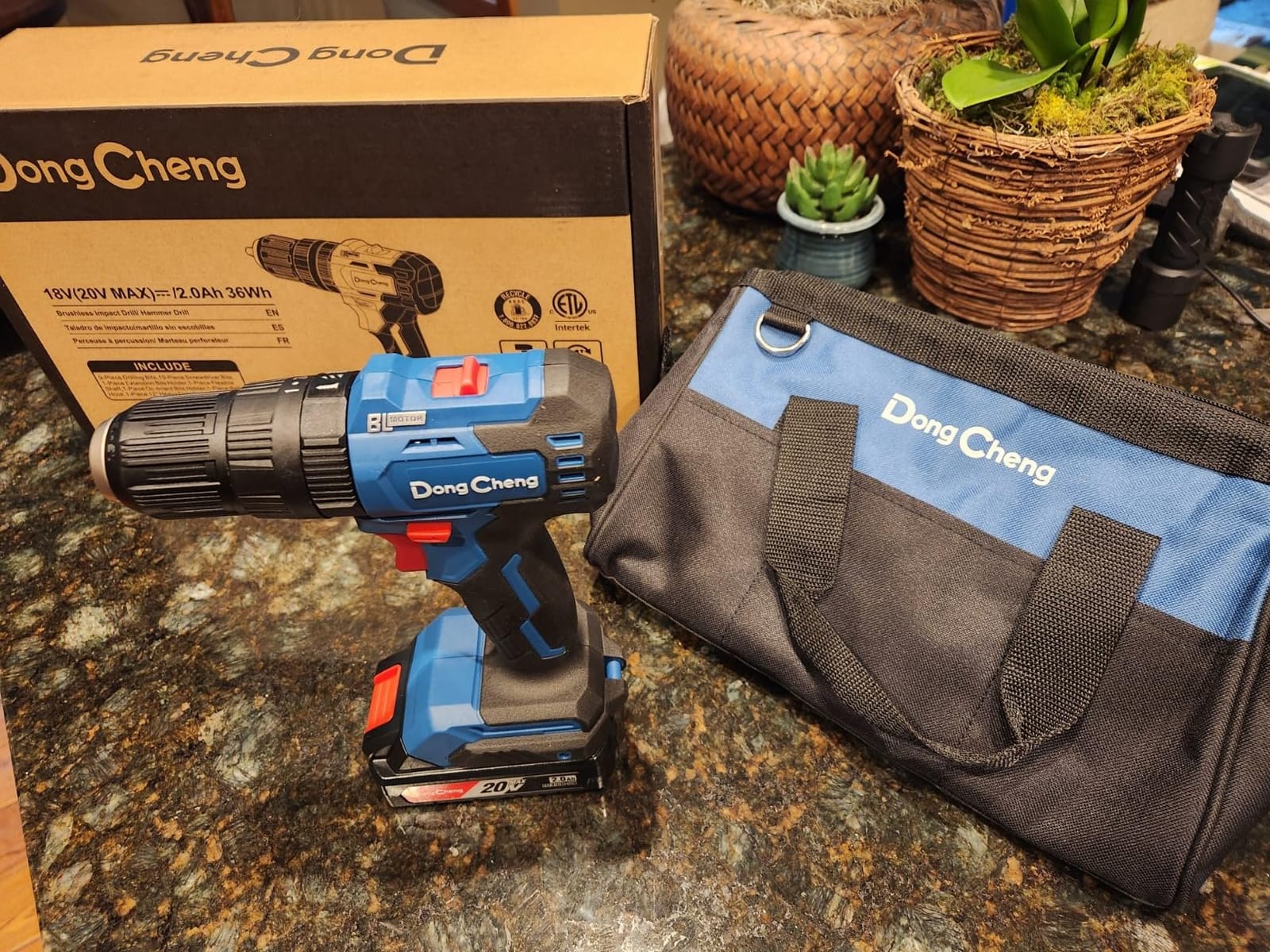
The Dong Cheng is the odd one out here: a genuine brushless hammer drill that weighs 2 lb and includes two batteries. At 443 in-lb of torque and 27,000 BPM it is not a heavy duty machine, and we would not pretend otherwise. What it is, based on owner feedback, is the best handling drill in the group for overhead work, tight cavities and light masonry.
Why 2 lb Changes the Way You Work
Owners consistently single out the weight, and the soft-grip handle is cited as comfortable in daily use. That matters more than it sounds. Fatigue is the reason professional crews reject capable drills, and a 2 lb body driven overhead with a battery attached is a fundamentally different day from a 4 lb one. The 20+1+1 clutch gives unusually fine control for delicate fastening on cabinet hardware and trim.
Owner surprise is the theme of the reviews, with 82 percent five-star ratings. People expect a light, cheap tool and find a brushless motor running cool and quiet on cinder block.
The Two Compromises That Define It
Torque of 443 in-lb is the lowest here alongside no heavy fastener work, so 3 inch lag screws and long structural screws are out of scope. The 2.0 Ah batteries included are the most cited limitation, giving only moderate runtime on sustained masonry before a swap is needed. With two packs in the kit you can work around it, but two small batteries is not the same as one large one.
The review base of 447 ratings is the smallest of the eight tools, and the brand has far less recognition and less service support than the established names. Dual speed of 0-550 and 0-1,800 RPM is otherwise sensible.

Who Should Buy the Dong Cheng
Buy it if you work overhead, in crawl spaces or in shop cabinets, and you want a hammer mode that works on brick and block without dragging around 5 lb. It is also a reasonable first tool for a renter or a student building a first platform cheaply. Skip it for structural framing, deck ledgers or anything you drive daily, where the torque ceiling and the 2.0 Ah packs will show up in week one.
7. Makita XFD131 18V LXT Driver-Drill Kit – The Highest Rated Tool in the Lineup
Makita XFD131 18V LXT® Lithium-Ion Brushless Cordless 1/2″ Driver-Drill Kit (3.0Ah), Variable Speed
18V LXT brushless driver-drill
440 in-lb max torque
Two speeds to 1,900 RPM
3.0Ah battery, charger and bag
Pros
- Highest average rating in this lineup at 4.8
- Balanced low weight and a grip kind to arthritic hands
- Chuck and clutch hold bits securely
- Brushless motor gives strong torque for its class
- Complete kit with 3.0Ah battery
- charger and bag
Cons
- No hammer mode for masonry drilling
- 3.0Ah is the smaller pack
- 5.0Ah extends runtime
- Work light casts a shadow over the work point
- 18V LXT packs are costly to replace
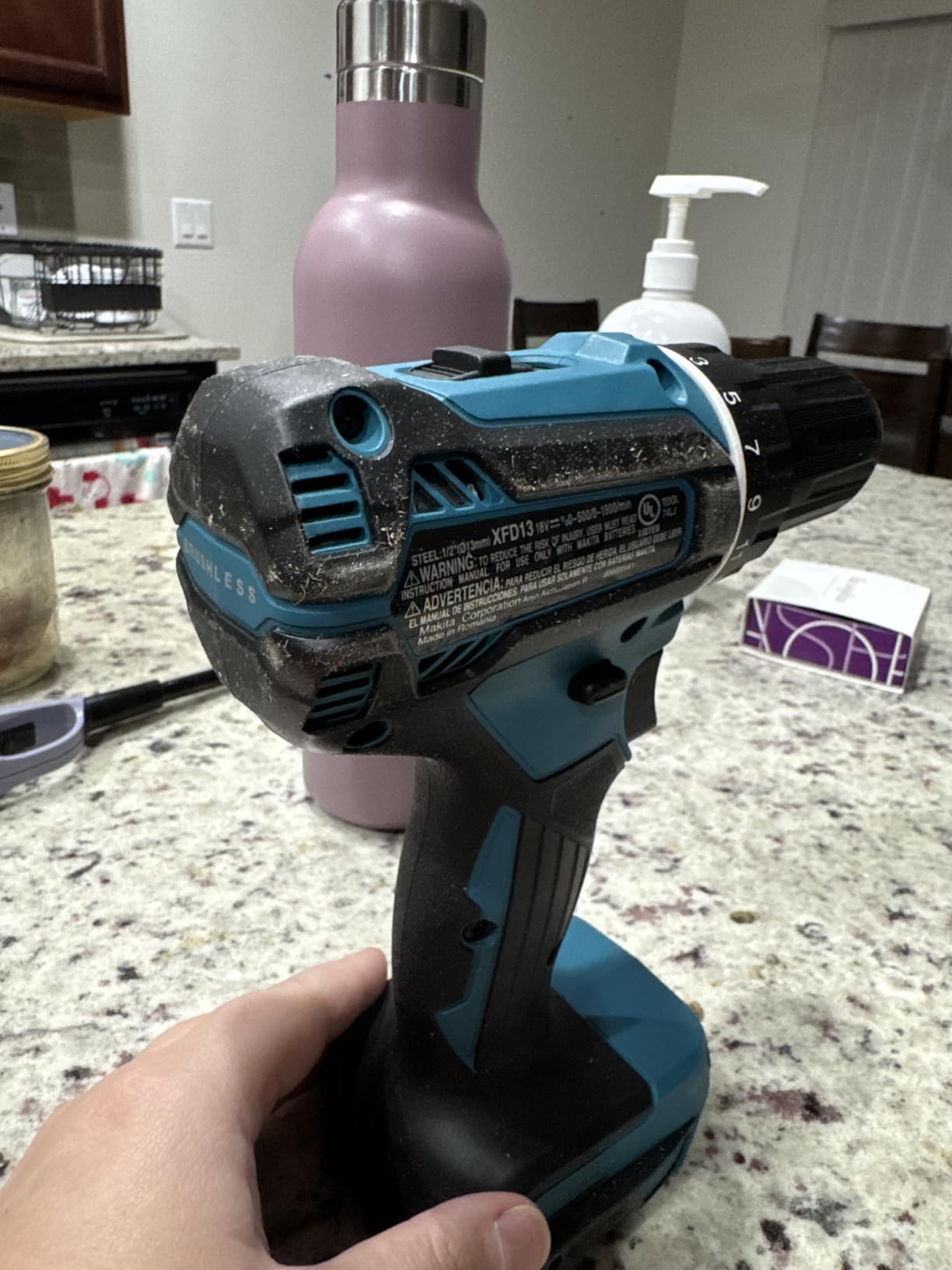
The XFD131 is the most thoroughly reviewed tool in this group at 4.8 across 2,270 ratings, and owners frequently describe it as the last drill they expect to buy. It is a driver-drill rather than a hammer drill, so it will not touch concrete, but for wood, drywall, cabinetry and general fastening it is the most refined and best-balanced drill here.
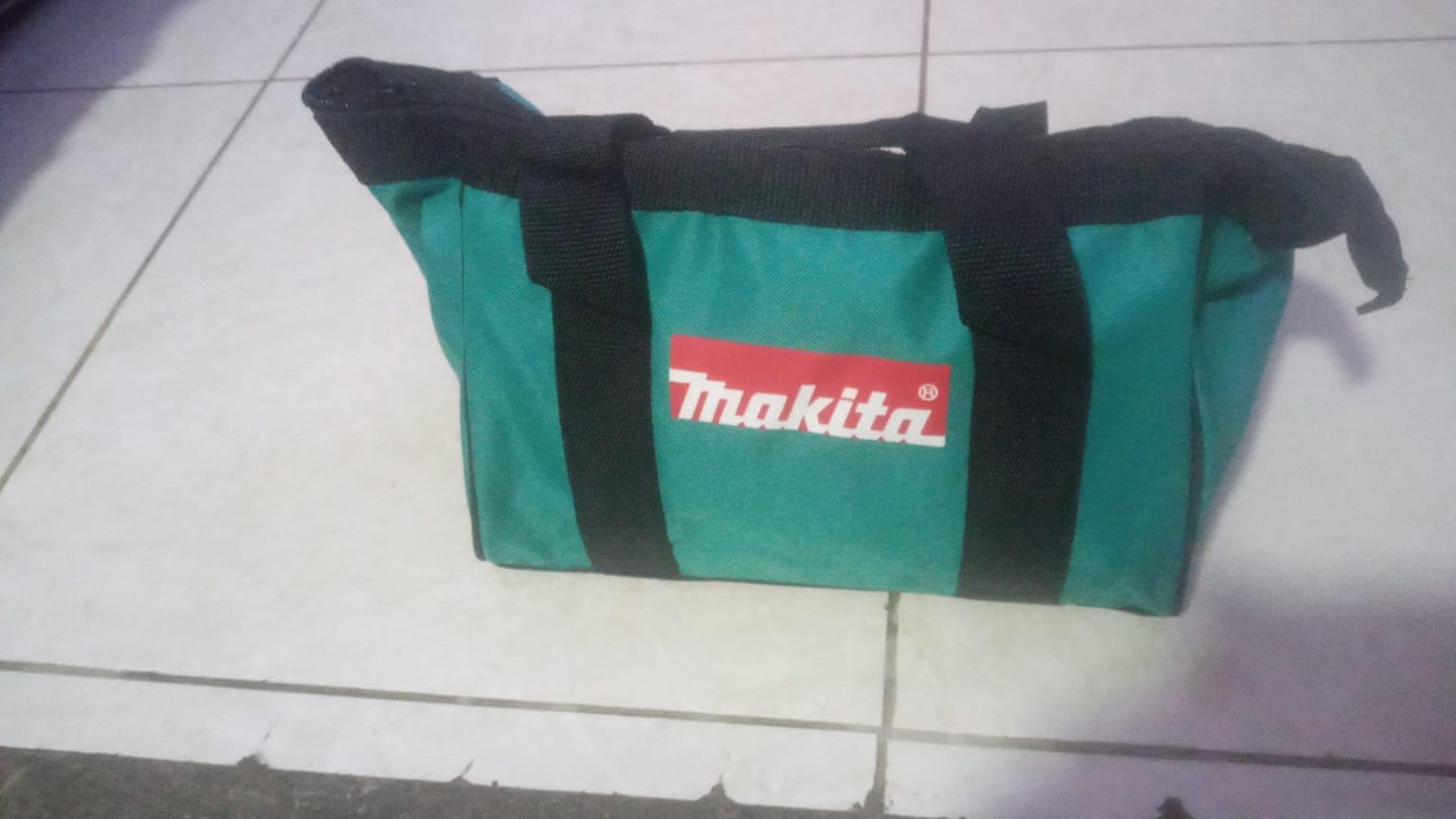
440 in-lb, Two Speeds and a Brushless Motor
Makita specifies 440 in-lb of maximum brushless torque with a mechanical two-speed transmission of 0-500 and 0-1,900 RPM. The electronically controlled brushless motor is claimed to deliver up to 50 percent longer runtime per charge, and the 3.0Ah battery, DC18SD charger and tool bag are all in the box with a three-year limited warranty across tool, battery and charger. For a homeowner or a finish carpenter who does not drill masonry, that package is genuinely complete on day one.
The grip is the detail owners praise most. Several reviewers with arthritic hands single out the balance and low weight, and the chuck and clutch hold bits more securely than some competing brands. It is a drill you can work all day with without the forearm fatigue that ends your productivity.
Why the Absence of a Hammer Mode Is Not a Flaw Here
A hammer drill adds weight, cost and a mode you may never use. If your work is cabinetry, trim, drywall, framing with standard screws or general repair, the XFD131 does all of it faster and lighter than a hammer drill. If you need concrete and masonry, the DHP489Z on the same platform is the matching tool, and having both on 18V LXT is one of the cleaner platform arguments in this guide.
The Real Criticism Is the Ecosystem
The recurring complaint is not the tool, it is the platform. 18V LXT battery packs are expensive to replace, and cross-compatibility between newer and older LXT packs and chargers is inconsistent, which matters if you own tools from across a decade. A second repeated note is that the work light casts a shadow over the work point. Both are reasons to buy the kit rather than accumulate batteries piecemeal.
Who Should Buy the XFD131
Buy it as a first Makita tool, as a dedicated interior finish drill, or as the drill that lives in the truck for everything that is not concrete. Skip it if you regularly set masonry anchors, drill block or need a hammer mode at all. If you want one drill to do everything including concrete, buy the DHP489Z instead and accept the 1,800 RPM ceiling.
8. Milwaukee 2904-20 M18 FUEL Hammer Drill – The Highest Torque Figure on Paper
Milwaukee Electric – M18 Fuel. 1/2 Hammer Drill/Driver
M18 FUEL 1/2 inch hammer drill
1,400 in-lb max torque
Carbide-toothed all-metal chuck
Tool only, M18 batteries
Pros
- Highest published torque figure in this group
- Carbide-toothed metal chuck grips and retains bits
- Hammer mode cuts quickly into brick and block
- Runs efficiently on M18 5.0Ah packs
- All-metal belt clip and a 4.6 lb weight
Cons
- Lowest average rating here with a 5% one-star share
- Battery and charger are not included
- Listed top speed of 650 RPM is unusually low for the class
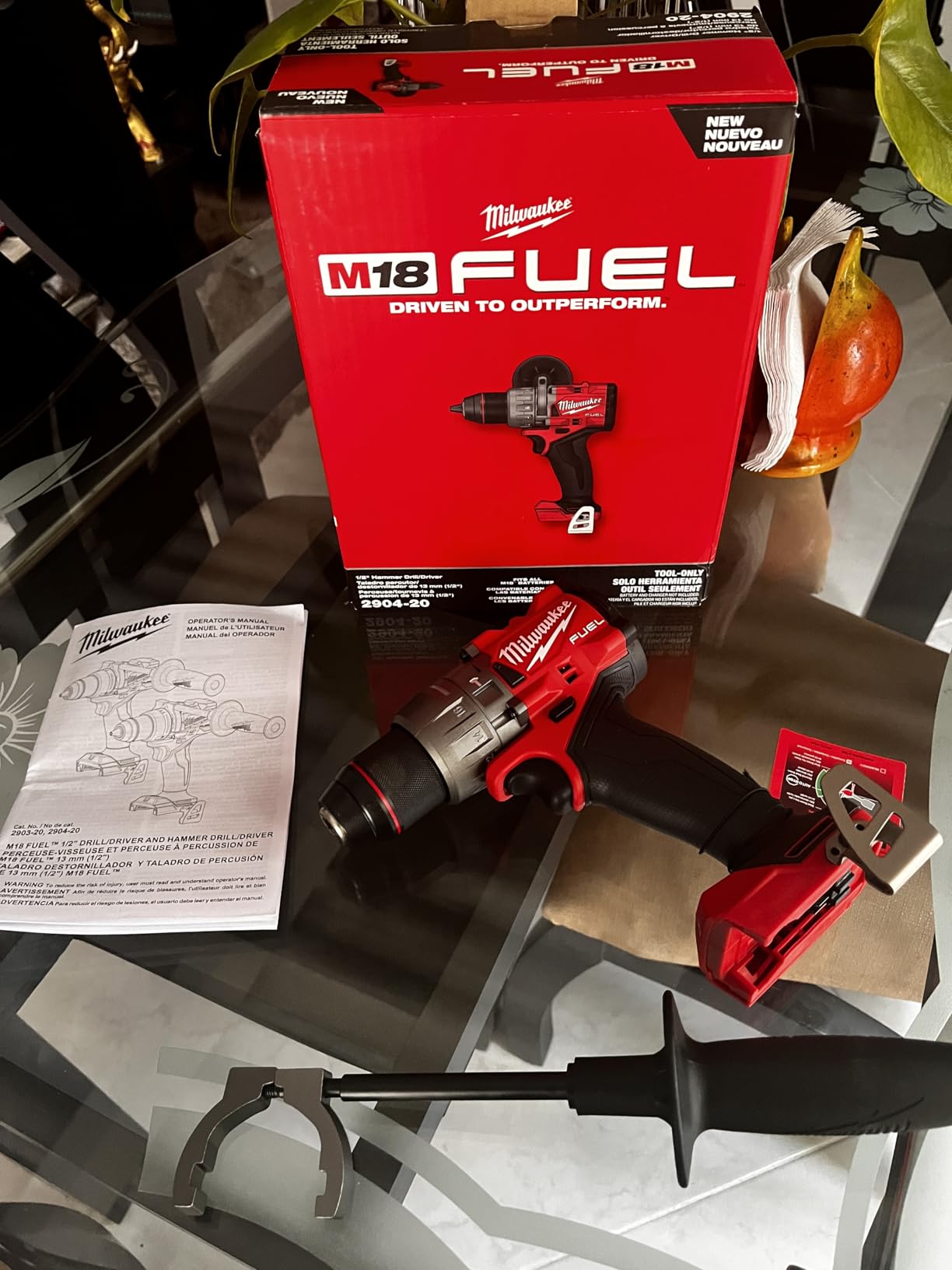
The 2904-20 is the drill that carries the highest published torque figure in this guide at 1,400 in-lb, about 158 Nm, and it ranks in the top ten of Amazon’s Power Hammer Drills category. It is the machine most professionals name first when asked which cordless drill is the strongest, largely because that number and the M18 platform behind it are what they already own.
Carbide Teeth and the 5.0Ah Advantage
The 1/2 inch all-metal chuck with carbide teeth is the most durable chuck design in this group and the one that holds a hole saw or a screw extractor under load. The mechanical clutch is consistent across fastener sizes, which matters when you mix framing screws and structural lag on the same shift. Owners highlight the hammer mode cutting quickly into brick and block, and the tool running efficiently on M18 5.0Ah packs for extended runtime, which is the pack size this drill is designed around.
It also carries an all-metal belt clip and weighs 4.6 lb, so it rides on a harness without the clip tearing out after a season of crawling through attic spaces.
Why Its Rating Is the Lowest Here
At 4.5 with a 5 percent one-star share, this is the lowest average rating in the lineup, and the complaints cluster around the bare-tool package and accessory quality rather than the drivetrain. The listed maximum speed of 650 RPM is also unusually low for the class, which makes high-speed boring slower than the DEWALT and DCK drills here. If your work is drilling 6 inch holes with a hole saw rather than driving structural fasteners, that number matters more than the torque.
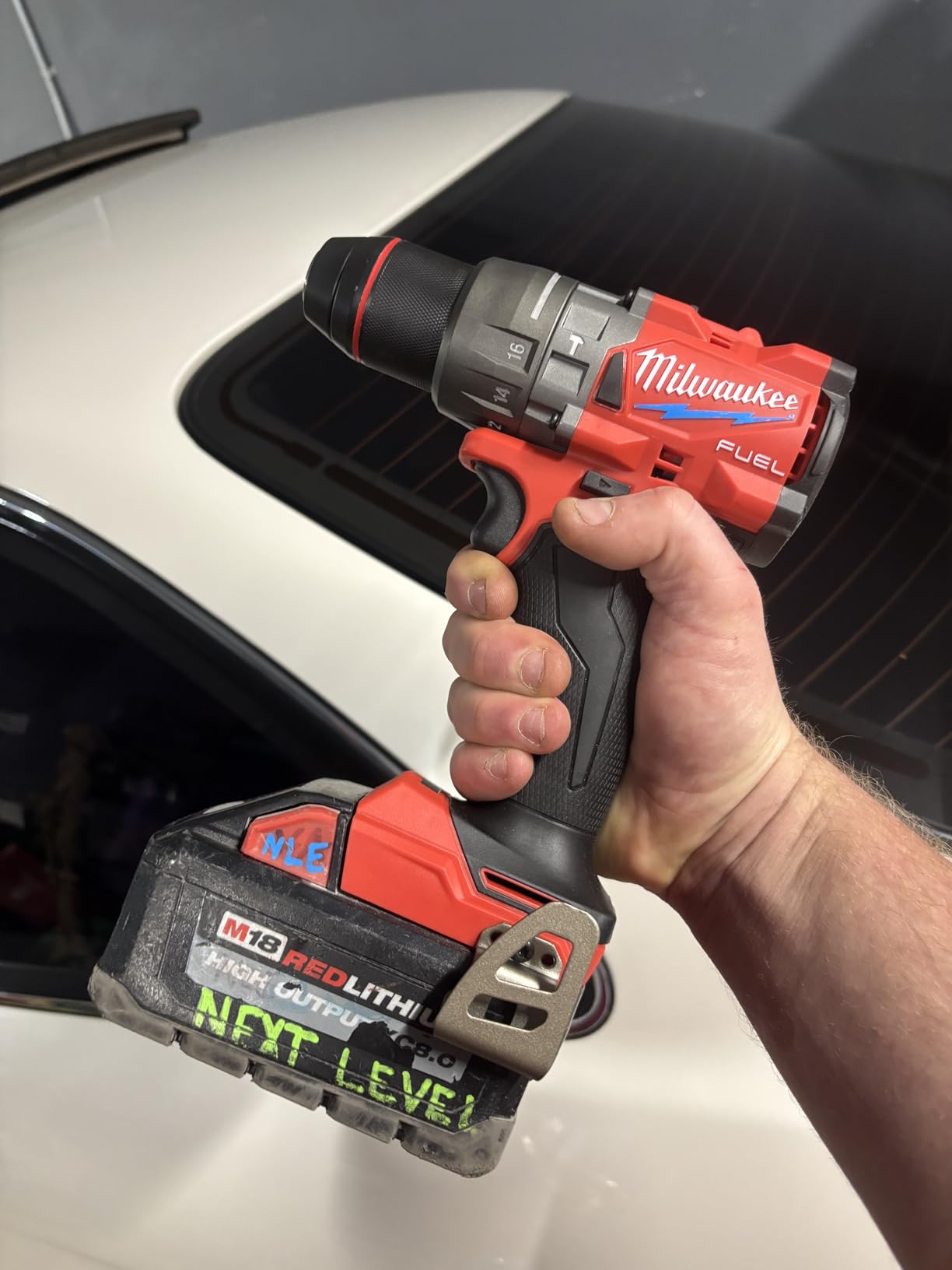
The practical test is whether you already own M18 batteries. If you do, this is the drill to add. If you do not, the battery and charger turn a strong bare tool into the most expensive way to enter the platform, and the 2804-20 at 1,200 in-lb is a more sensible starting point.
Who Should Buy the 2904-20
Buy it if you own M18 packs, your work is masonry and structural fasteners rather than high-speed boring, and you want the most torque in the group. It is the right drill for a concrete-heavy remodel, a foundation contractor or an electrician running masonry anchors daily. Skip it as a first purchase without batteries, and consider it for overhead work only with a 2.0Ah pack, since 4.6 lb plus a 5.0Ah pack is heavy at arm height.
What Heavy Duty Actually Means on a Jobsite
Most drill roundups use heavy duty as a synonym for powerful, which is how non-hammer drill-drivers end up at the top of a list of heavy duty picks. We use a narrower definition built around four jobs. If your work is picture hanging and flat-pack furniture, you do not need a heavy duty drill, and buying one means carrying weight you never use.
- 1/2 inch masonry anchors in concrete, brick or block. This requires a genuine hammer mode, a metal chuck and enough battery capacity to hold speed without stalling partway through the hole.
- 3 inch lag screws and structural fasteners. This is where peak torque in in-lb stops being a spec-sheet curiosity and becomes the difference between finishing the fastener and stripping the head.
- 6 inch hole saws and self-feed bits through framing lumber. Side load on the chuck is brutal here. It is the reason carbide-toothed metal chucks appear on the tools we rank at the top.
- All-day continuous duty. Sustained load means a brushless motor with proper thermal management, and a platform that lets you keep two batteries rotating rather than one battery and a long wait.
Torque alone is not a complete answer, which is why a 1,400 in-lb drill with a low top speed can be the wrong tool for boring while a 440 in-lb driver-drill is perfect for a day of cabinetry. Match the tool to the fastener, and match the platform to the batteries you already have.
How We Picked These Eight Cordless Drills
Our criteria were deliberately narrow. Every tool here has a hammer mode or a hammer driver drill configuration, a metal chuck, and a manufacturer-published torque, power or output figure. Tools that could not supply a published number, or that relied on a bare drill-driver to pass as heavy duty, did not make the list. We also required enough owner feedback to evaluate durability claims honestly.
Where a brand does not publish a torque figure, we say so rather than estimating one. DeWalt is the notable case with the DCD996B, and readers regularly flag that as a real barrier to cross-brand shopping. We also publish rated weights as listed, with the caveat that kit packaging inflates them, and we tell you when a figure looks unusual, as with the 650 RPM listing on the Milwaukee 2904-20.
We did not run controlled lab tests, and we are not going to describe breakaway torque, runtime curves or concrete drilling results we did not measure. What we did read was thousands of owner reviews, looking for the failure modes that show up repeatedly: chuck wobble, gear housing cracks, sticky selectors and batteries that die early. Where a complaint repeats, it appears in the cons below.
Buying Guide: How to Choose a Cordless Drill That Survives Real Work
Start With the Battery Platform, Not the Drill
This is the most consistent piece of advice in every forum discussion about heavy duty drills. If you already own M18 batteries, buy the Milwaukee. If you own 20V MAX, buy the DeWalt. If you own 18V LXT, buy the Makita. Platform lock-in is the mistake beginners make most often, and it is the mistake that costs the most. A bare tool with no packs and no charger is not a cheap purchase, it is a deferred platform purchase with extra steps.
Platform depth also determines whether you can add an impact driver later. Most heavy fastener work is actually impact driver work, and if your chosen platform has a mature impact driver line, that is a genuine advantage. Nobody buying a bare tool from a major brand should have to buy a second battery ecosystem for the driver.
Torque Thresholds Worth Knowing
Under about 400 in-lb suits cabinetry, trim and general household fastening. Between 400 and 700 in-lb covers framing screws, subfloor and light masonry anchors, which is where the Makita XFD131 at 440 in-lb and the Dong Cheng at 443 in-lb sit. Above 1,000 in-lb is contractor territory, covering 1/2 inch masonry anchors, deck ledger screws and structural lag, which is where the DEWALT, both Milwaukees and the Makita DHP489Z land.
Read the hammer rate too, measured in BPM or IPM, because that governs masonry rather than fasteners. The DCK leads this list at 36,000 IPM, the Craftsman sits at 25,500 and the Dong Cheng at 27,000. Also check RPM if you bore large holes, since the 650 RPM listing on the 2904-20 and the 1,500 RPM ceiling on the CRAFTSMAN both limit high-speed work.
Brushless vs Brushed, and Why It Decides Longevity
Every drill in this guide is brushless except the general class of brushed hammers they are replacing, and that is not a small detail. A brushed motor uses carbon brushes that wear and generate heat, and that heat is what shortens tool life under sustained load. Brushless motors convert more battery energy into useful work, run cooler and need no brush replacement. In owner language, the recurring failure mode on cheap drills is brush death, and it is the one failure a brushless design removes.
Hammer Drill vs Rotary Hammer vs Impact Driver
These three get confused constantly. A hammer drill adds a rapid percussive action to a standard drill and is for masonry anchors and small holes in concrete and block, which is what every hammer drill here is. A rotary hammer uses a heavier piston mechanism and SDS tooling for 3/4 inch holes and demolition, and it is a different machine at a different price. An impact driver has no chuck and delivers a socket-driven rotational impact for driving lag screws and structural fasteners, and it will do that job faster and better than any drill in this guide.
Most people who buy a heavy duty drill end up buying an impact driver within a year. If your work is framed as driving fasteners, budget for both rather than over-buying a single tool.
Weight With a Battery, Not Marketing Bare Weight
Forum users consistently call out bare-tool marketing weight as misleading, and they are right. The number that matters is the tool with a pack installed. That is why the 4 lb listed figure on the DEWALT and the 2 lb figure on the Dong Cheng matter so much, and why 5.4 lb on the CRAFTSMAN kit figure is not a real handling comparison. For overhead and all-day work, weight is a deal breaker before torque ever becomes relevant.
Bare Tool vs Kit, and the Brands Pros Avoid
Three kits here include batteries and a charger, which removes the largest cost objection for a first-time buyer. Everything else is a bare tool. Owner communities consistently treat a bare tool with no batteries as the most common purchasing trap, so if you have no packs for a platform, buy the kit version or budget for a battery and charger immediately.
On brands, the long-standing community view is that M18, 20V MAX and 18V LXT are the heavy duty tier and handle professional continuous use. Third-tier tools are frequently described as having wobbling chucks, low power and short battery life, and that pattern is exactly what forum users describe as a reason to avoid them for construction. That does not mean the value picks in this guide are bad. It means you should understand what you are getting and hold them to the job you are doing, which for the DCK and the Dong Cheng is light to medium duty rather than framing.
Finally, factor in warranty length as a quality signal. A three-year tool warranty or a five-year platform warranty is treated as a genuine indicator of build confidence, and a two-year drill with a one-year battery is a fair warning to expect a shorter working life.
Whatever you choose, plan the site power around it properly, and our heavy duty extension cord guide covers the cords and chargers that keep a cordless setup running all day. If your work truck is the base of operations, our dash cam guide for truckers covers the other half of a mobile jobsite setup.
Frequently Asked Questions
Which cordless drill machine is the strongest?
The Milwaukee 2904-20 M18 FUEL carries the highest published peak torque figure in our testing group at 1,400 in-lb, roughly 158 Nm. The DEWALT DCD996B is the stronger all-round choice because it pairs a three-speed gearbox with 2,000 RPM top speed and a carbide-insert metal chuck, which matters for hole saws and self-feed bits that the Milwaukee’s listed 650 RPM top speed slows down.
What is the best brand for cordless drills?
For heavy duty professional work, the consensus across owner communities points to three platforms: Milwaukee M18, DeWalt 20V MAX and Makita 18V LXT. Each has a deep ecosystem, a mature impact driver line and a repair network. The correct brand is usually whichever one you already own batteries for, because platform lock-in costs more than any difference between the drills themselves.
Which cordless drill brands are considered the worst?
Owners most often describe entry-level brands from Black+Decker, Skil and similar makers as having wobbling chucks, low power and short battery life, and unsuitable for professional construction. Value brands that ship real brushless motors with metal chucks, such as the DCK and Dong Cheng models in this guide, fare better on paper but still fall short of the major platforms for daily structural work.
Is the Milwaukee M18 better than the DeWalt XR?
Neither is better in the abstract. The Milwaukee 2904-20 publishes more torque at 1,400 in-lb and has an all-metal chuck with carbide teeth, which favours masonry and structural fasteners. The DeWalt DCD996B has a three-speed gearbox, higher top speed and more published owner feedback. Electricians working outdoors often favour the M18 FUEL pairing, while carpenters who bore large holes tend to prefer the DeWalt gearbox.
How much torque do I need for heavy duty drilling?
For 1/2 inch masonry anchors, 3 inch lag screws and continuous all-day jobsite use, look for at least 1,000 in-lb of peak torque from a brushless hammer drill. Cabinetry and drywall need under 400 in-lb. Between 400 and 700 in-lb covers framing screws, subfloor and light anchors, which is the band where the Makita XFD131 at 440 in-lb and the Dong Cheng at 443 in-lb sit.
Should I buy a bare tool or a kit?
Buy a kit if you own no batteries for that platform, because a bare tool needs a battery and a charger before it does anything. Owners consistently identify bare-tool purchases with no packs as the most common costly mistake. Buy the bare tool only if you already have compatible packs and a charger, since the kit version simply bundles what you would buy next anyway.
Final Verdict: Which Heavy Duty Cordless Drill Should You Buy?
If you own M18 packs and your work is concrete, masonry and structural fasteners, the Milwaukee 2904-20 gives you the most torque in the group. If you want the most complete heavy duty specification and the deepest owner feedback, start with the DEWALT DCD996B, which is our pick of the best cordless drills for heavy duty use in 2026.
For a complete package with batteries in the box, the CRAFTSMAN V20 kit is the value route. For overhead and tight-space work, the Dong Cheng at 2 lb is hard to ignore. And for interior finish work with no concrete in sight, the Makita XFD131 is the best-rated drill we evaluated. Start from the batteries you already own, and the rest of the decision takes about two minutes.