
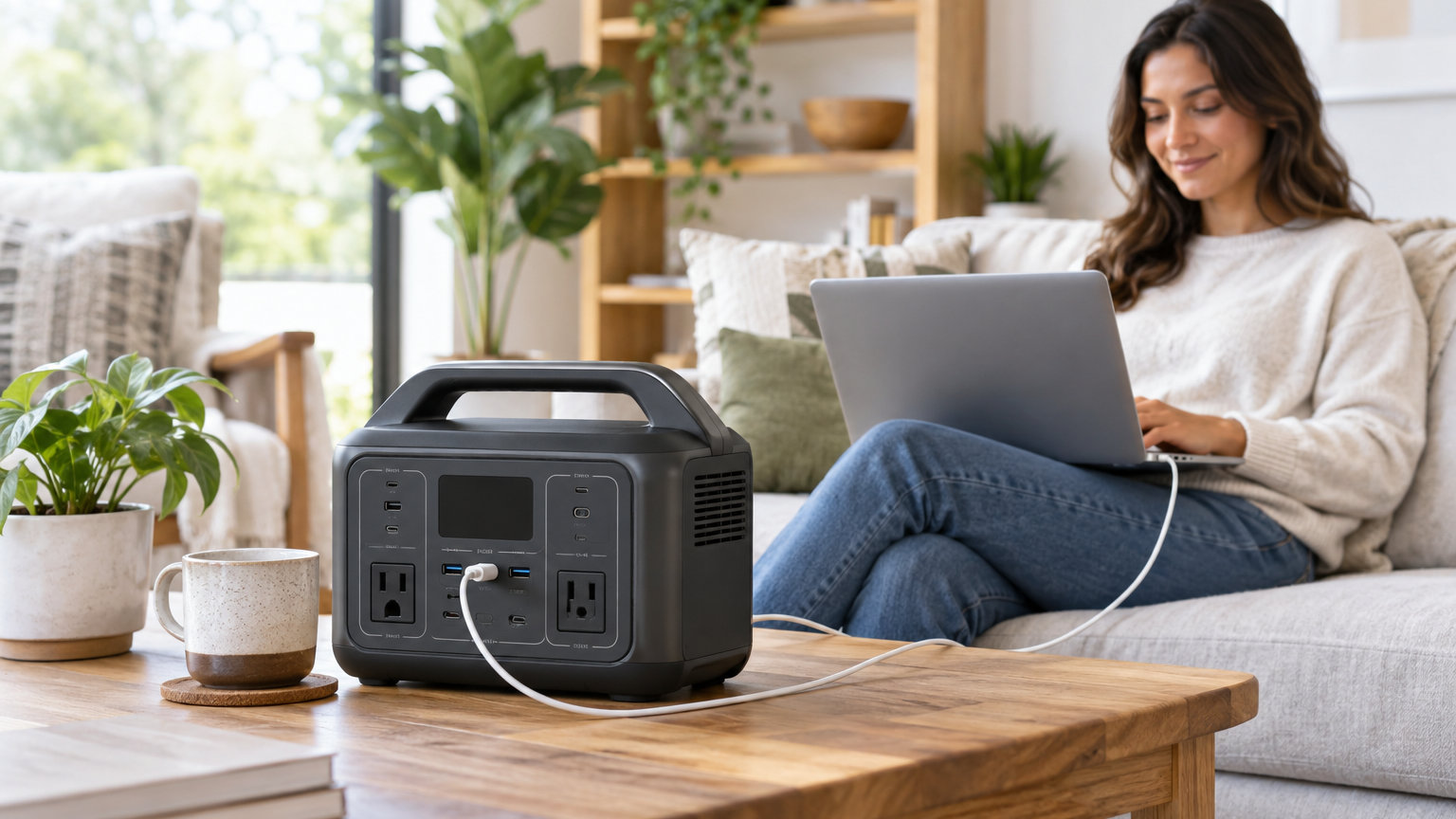
When Amazon’s October sale kicks off, the Jackery Explorer 1000 v2 is the power station worth watching first, because it pairs a 1,500W output (3,000W surge) with 1,070Wh of capacity, hits a full charge in about an hour, and still weighs under 24 pounds. If you mainly need to run kitchen appliances during an outage, the Anker SOLIX C1000 brings the same 1,800W output in a smaller shell. For multi-day backup where you want room to grow, the BLUETTI AC200PL expands to 8,448Wh with extra batteries.
These ten picks span everything from a 7-pound weekend companion to whole-home backup stations, and all of them are the models we’re keeping our eyes on during Prime Big Deal Days portable power station deals on October 6-7, 2026. Most offers need a Prime membership, and a free trial counts.
Our Top 3 Picks for Prime Big Deal Days Portable Power Station Deals (October 2026)

Jackery Explorer 1000 v2
- 1500W output / 1070Wh capacity
- 1-hour fast charge
- 23.8 lb weight


Prime Big Deal Days Portable Power Station Deals Compared
| Product | Specs | Action |
|---|---|---|
| Jackery Explorer 1000 v2 |
|
Check Deal Price |
| Anker SOLIX C1000 |
|
Check Deal Price |
| BLUETTI AC200PL |
|
Check Deal Price |
 Jackery Explorer 300 Jackery Explorer 300 |
|
Check Deal Price |
 BLUETTI AC180 BLUETTI AC180 |
|
Check Deal Price |
 EF ECOFLOW RIVER 2 EF ECOFLOW RIVER 2 |
|
Check Deal Price |
 Anker SOLIX C300 Anker SOLIX C300 |
|
Check Deal Price |
 EF ECOFLOW RIVER 2 Max 500 EF ECOFLOW RIVER 2 Max 500 |
|
Check Deal Price |
 BLUETTI Elite 100 mini BLUETTI Elite 100 mini |
|
Check Deal Price |
 EF ECOFLOW DELTA 2 Max EF ECOFLOW DELTA 2 Max |
|
Check Deal Price |
How We Chose
We compared battery capacity, AC output, charging speed, port selection, weight, owner ratings, review counts, and warranty terms across these ten models, drawing on Amazon listing data and reviewer feedback checked in October 2026.
1. Jackery Explorer 1000 v2: Editor’s Choice for Most Buyers
Jackery Explorer 1000 v2 Portable Power Station,1070Wh,1500W
Capacity: 1,070Wh
Output: 1,500W
Charge: 1 hr
Weight: 23.8 lbs
Pros
- Powerful 1500W output with 3000W surge
- 1-hour fast charging to full
- 10-year lifespan with LFP battery
- Smart app control with quiet mode
- Lightweight for capacity at 23.8 lbs
Cons
- 3 AC outlets may feel limited for a 1kWh unit
- App required for some charging modes
The Jackery Explorer 1000 v2 hits the middle of the market where most households actually live, and it does so without dragging around 50 pounds. At 23.8 pounds with a built-in handle, it’s the kind of station you carry to the kitchen when the power goes out, then back to the garage when the lights come back.
Standout numbers: 1,500W of continuous AC output (3,000W surge), 1,070Wh of LiFePO4 capacity, and a full recharge in roughly one hour using the emergency charging mode. Owners report running a full-size refrigerator for around 7 hours and recharging a laptop 15+ times before the battery dips below 20%.
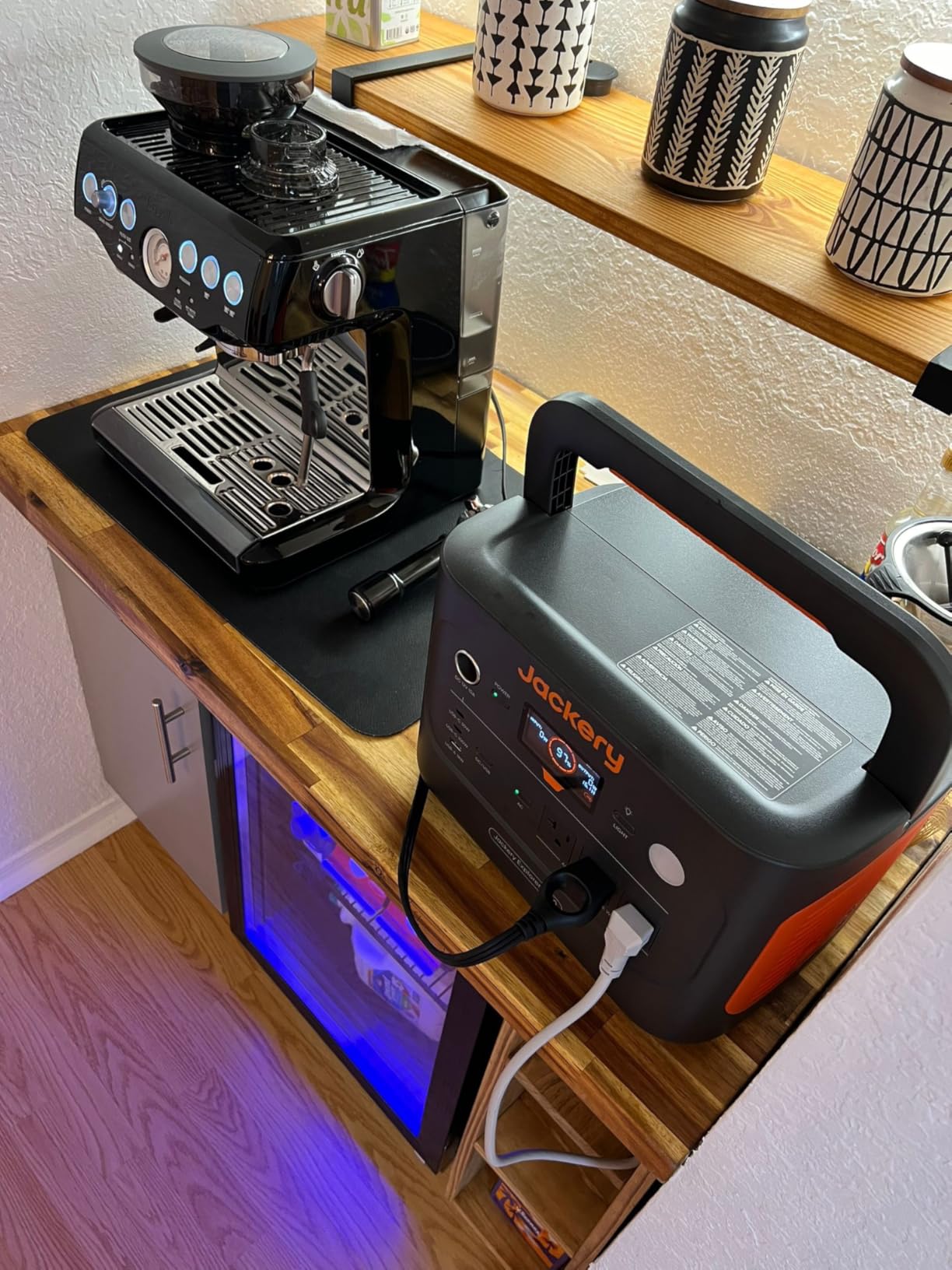
Seven ports cover most setups: three pure sine wave AC outlets, two USB-C ports (100W PD), one USB-A, and a 12V car port. The LFP cell chemistry is rated for 4,000+ cycles, which Jackery translates to a 10-year lifespan in normal household use.
Where this fits best: a 1,500W space heater or a 1,800W induction cooktop exceeds the Jackery’s output, and the Anker SOLIX C1000 handles those loads more comfortably. For most refrigerators, routers, CPAP machines, and laptops, the Jackery is the more balanced pick at 4 pounds lighter.
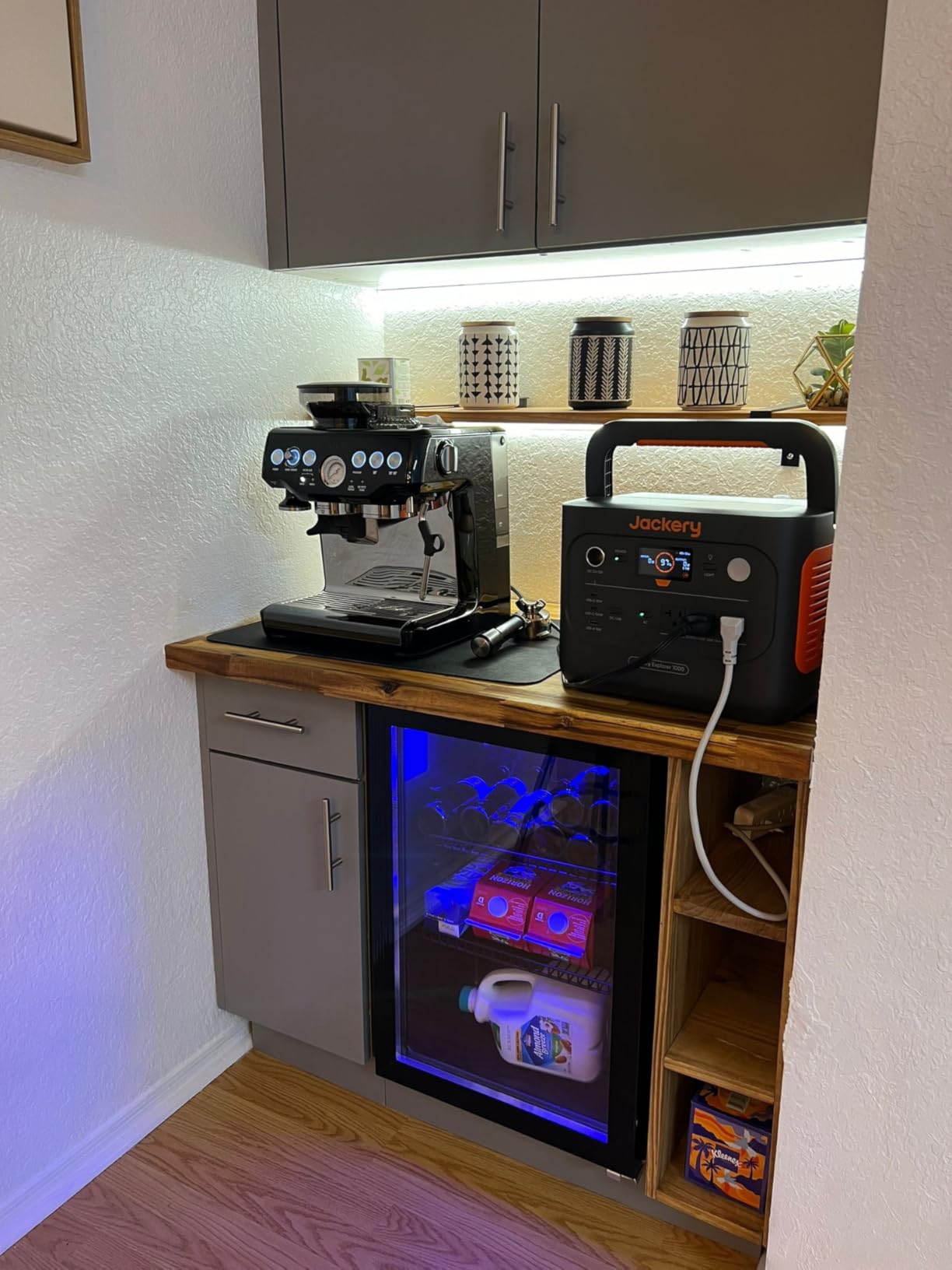
Skip it if you need expandability, the BLUETTI AC200PL grows to over 8kWh with extra batteries, which the Jackery cannot. For a single-unit home backup that charges fast and stores easily, this is the one most readers will end up happiest with.
2. Anker SOLIX C1000: Best for Running Kitchen Appliances
Anker SOLIX C1000 Portable Power Station with Car Charging Cable, 1,056Wh
Capacity: 1,056Wh
Output: 1,800W
Charge: 43 min to 80%
Weight: 27.6 lbs
Pros
- 1800W output with SurgePad to 2400W
- 80% charge in 43 minutes
- 15% smaller than comparable 1kWh units
- 11 versatile ports
- 10-year LiFePO4 lifespan
Cons
- Slightly heavier than the Jackery 1000 v2
- SurgePad boosts output but isn't unlimited
The Anker SOLIX C1000 is the pick for anyone whose outage plan includes an actual microwave, induction burner, or hair dryer. The 1,800W continuous output covers most kitchen appliances without tripping, and the 2,400W SurgePad handles short bursts above that.
What owners like most: the 43-minute top-up to 80% via AC input, and the fact that 11 ports mean nobody has to unplug the lamp to charge a phone. The 600W max solar input also beats most 1kWh competitors, useful for topping off between cloudy days.
The trade-off is weight, at 27.6 pounds it’s a few pounds heavier than the Jackery 1000 v2. Several reviews mention that SurgePad-enabled appliances sometimes need a firmware update before they run cleanly, a one-time fix.
The other 1,800W option on this list, the BLUETTI AC180, has a true UPS function with a 20ms switchover for desktop computers and modems. The trade-off is size: the Anker is meaningfully smaller and recharges faster, but the AC180 wins on switchover speed. If your priority is keeping a server or workstation alive, the AC180 edges ahead; if it is running bigger loads in a smaller package, the C1000 wins.
Good to know: the C1000 ships with both an AC cable and a car charging cable, so you can top it off on a road trip without buying extras.
3. BLUETTI AC200PL: Most Versatile for Whole-Home and RV Backup
BLUETTI AC200PL Portable Power Station 2304Wh 2400W LiFePO4 Solar Generator
Capacity: 2,304Wh
Output: 2,400W
Charge: 60 min to 80%
Weight: 72 lbs
Pros
- 2400W AC output with 3600W lifting power
- Expandable to 8448Wh with extra batteries
- 0-80% recharge in 60 minutes
- 12 ports including 30A TT30 RV outlet
- LiFePO4 with 3000+ cycles
Cons
- Heavy at 72 lbs
- Bigger footprint than single-battery stations
The BLUETTI AC200PL is for people who treat a power outage the way they treat a power bill, with planning. At 2,304Wh out of the box and the option to add B300, B210P, or B230 batteries up to 8,448Wh, this is the closest thing on the list to a home battery that still rolls on casters.
The 2,400W continuous output (3,600W lifting power) will run a 1,500W microwave and a refrigerator at the same time. The 30A TT30 port and 48V RV compatibility are why this is also the pick for anyone with a serious RV setup.
Two things to know before buying: 72 pounds is not a one-hand carry, and you’ll want to keep it on the ground floor near the appliances you actually plan to run. The 10ms UPS switchover is fast enough for computers, modems, and CPAP machines, which several owners cite as a deciding factor.
Where this fits: the BLUETTI AC200PL gives you a higher peak (3,600W lifting power) and a dedicated 30A RV outlet that the EF ECOFLOW DELTA 2 Max does not have. The DELTA 2 Max is quieter at 30 dB and recharges faster to 80%. If RV power matters, BLUETTI; if indoor quiet and faster top-ups matter, DELTA.
This is a different category of machine from the Jackery Explorer 1000 v2, more generator than grab-and-go. Choose it because you want expandability and you don’t mind the weight.
4. Jackery Explorer 300: Most Compact by Owner Reviews
Jackery Explorer 300 Portable Power Station,292Wh
Capacity: 292Wh
Output: 300W
Charge: 4 hrs
Weight: 7.1 lbs
Pros
- Ultra-lightweight at 7.1 lbs
- Versatile power for 6 devices
- Fast solar charging (80% in 2.8 hrs)
- 4000+ charge cycles with LiFePO4
- 2 AC outlets plus 100W USB-C PD
Cons
- 300W output limit excludes kitchen appliances
- 2 AC outlets mean a power strip for several devices
More than 11,000 owners have weighed in on the Jackery Explorer 300, and 81% of them gave it five stars. That’s the kind of track record worth paying attention to during a sale, because it means the listing is rarely a disappointment in person.
At 7.1 pounds with 292Wh of capacity, this is the station you throw in the trunk for a beach day or keep by the bed for a phone-charging and CPAP-running backup. Owners report 25-30 phone charges, 4-5 laptop top-ups, and roughly 5 hours running a small fan.
Standout detail: the 100W USB-C PD port means you can charge a MacBook Pro directly without the AC brick converting power twice. That saves a meaningful percentage of the battery in real use.
Skip the Jackery 300 if you want to run anything that pulls more than 300W, which rules out most kitchen gear. For pure campsite and bedroom use, it punches well above its weight. The best portable power stations for home backup tend to be larger, but for the grab-and-go use case this is the easy call.
5. BLUETTI AC180: Best for Fast Top-Ups Before a Trip
BLUETTI Portable Power Station AC180, 1152Wh LiFePO4 Battery Backup w/ 2 1800W (2700W peak) AC Outlets, 0-80% in 45Min, Solar Generator for Camping, Off-grid, Power Outage
Capacity: 1,152Wh
Output: 1,800W
Charge: 45 min to 80%
Weight: 37.4 lbs
Pros
- 0-80% charge in 45 minutes
- 1800W output with 2700W peak
- 20ms UPS switchover
- 500W solar input
- 5-year warranty
Cons
- Heavy at 37.4 pounds
- Some early units needed firmware updates
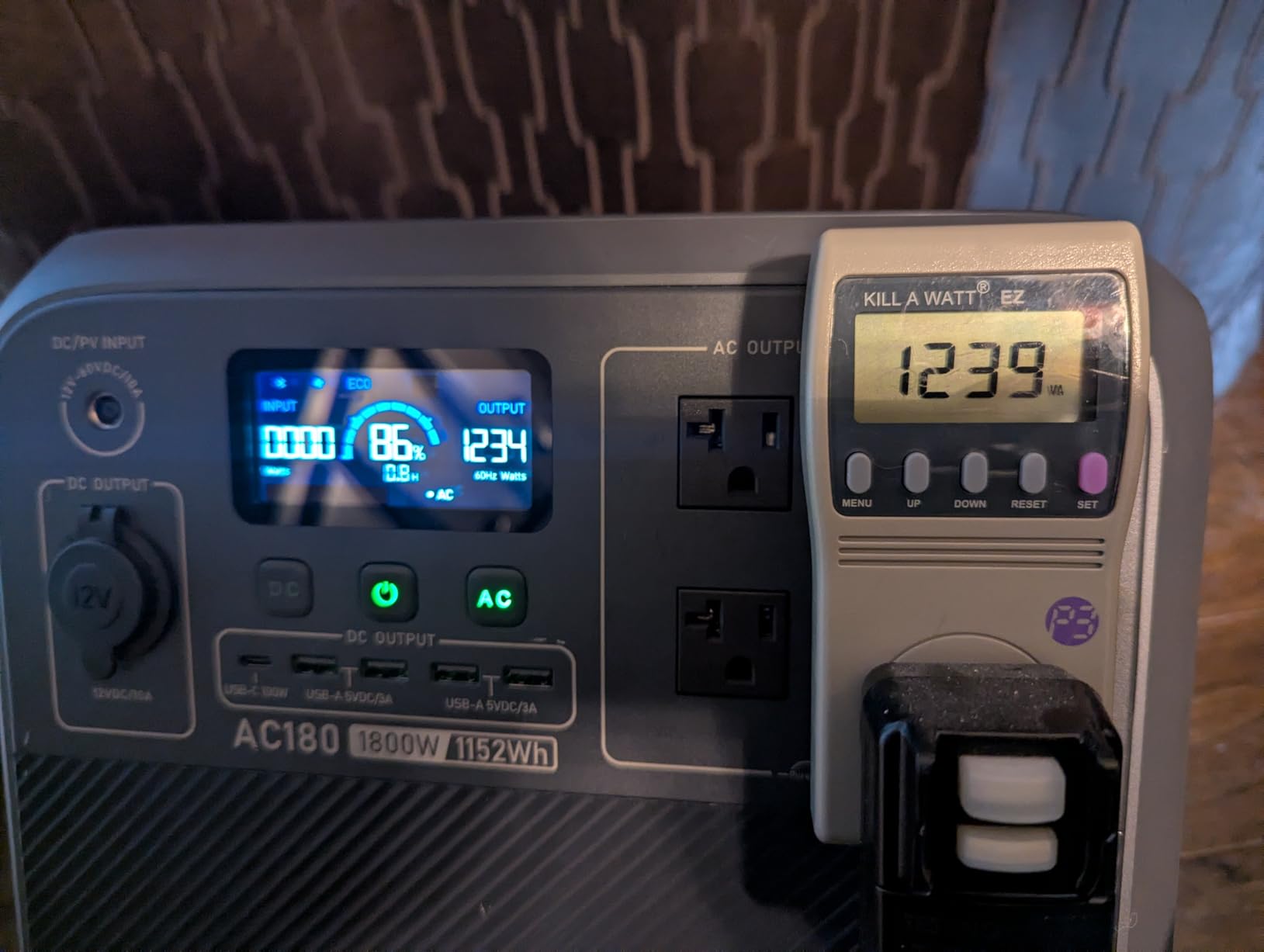
The BLUETTI AC180 charges to 80% in 45 minutes, which is faster than almost anything in its capacity class. If you’ve ever started packing for a camping trip at 9pm and realized the power station was dead, this is the model that gets you out the door by 10.
Specs to know: 1,152Wh of LiFePO4 capacity, 1,800W continuous output with a 2,700W peak, and a 20ms UPS switchover that keeps desktop computers and network gear alive when the grid drops. The 500W solar input is a real path to indefinite off-grid runtime in summer sun.
What sets it apart is the 20ms UPS, meaningfully faster than most competitors’ 30ms+ switchovers, a small but real difference for sensitive electronics. Owners report strong customer service when firmware updates are needed; a handful of early reviews flagged initial battery calibration issues that the company resolved. The 5-year warranty is the longest in this capacity tier.
Heavier than the Anker SOLIX C1000 at 37.4 pounds and a touch slower to charge, so pick the C1000 if weight is the priority. Pick the AC180 if 20ms UPS and the longer warranty matter more for desktop and network gear.
6. EF ECOFLOW RIVER 2: Budget Pick for Light Backup
EF ECOFLOW Portable Power Station RIVER 2, 256Wh 300W
Capacity: 256Wh
Output: 300W
Charge: 1 hr
Weight: 7.7 lbs
Pros
- 1-hour AC recharge with X-Stream
- Lightweight at 7.7 lbs
- LFP battery with 10-year lifespan
- 6 ports for everyday devices
- 5-year warranty
Cons
- 256Wh capacity limits to light use
- Lower 4.3 average rating than competitors
The EF ECOFLOW RIVER 2 is the smallest LiFePO4 station on the list, and the lowest-capacity too. If your use case is keeping phones, a router, and a lamp alive for an evening, 256Wh is plenty, and the 7.7-pound weight means you actually take it with you.
Standout feature: the 1-hour X-Stream AC recharge, which is faster than stations several times its size from a few years ago. The LFP cell chemistry gives it the same 3,000+ cycle lifespan as much larger models.
Skip this one if you need to run anything with a heating element, 300W is the ceiling. The RIVER 2 trades 30Wh and one USB-C port against the Anker SOLIX C300, but the C300 is quieter at 25 dB and better suited to a tent.
Good to know: the 4.3 average rating is the lowest on this list, and reviews show some users hit reliability hiccups that warranty service resolved. The 5-year warranty is your safety net.
7. Anker SOLIX C300: Best for Quiet Tent Power
Anker SOLIX C300 Portable Power Station, 288Wh Solar Generator for Camping
Capacity: 288Wh
Output: 300W
Charge: ~1.5 hrs
Weight: 9.1 lbs
Pros
- 140W two-way USB-C fast charging
- 25 dB quiet operation
- 8 versatile ports
- LiFePO4 with 3000 cycles
- 15% smaller than similar designs
Cons
- 288Wh capacity for light use only
- 300W output excludes kitchen gear
At 25 dB, the Anker SOLIX C300 is the quietest station in this lineup, quieter than a typical bedroom fan. For campers who don’t want a high-pitched inverter hum ruining a quiet morning, that matters more than a few extra watt-hours.
The 140W two-way USB-C ports are the highlight for anyone traveling with a modern laptop. You can charge the station through USB-C and power a 100W laptop through USB-C at the same time, which is rare in this size class.
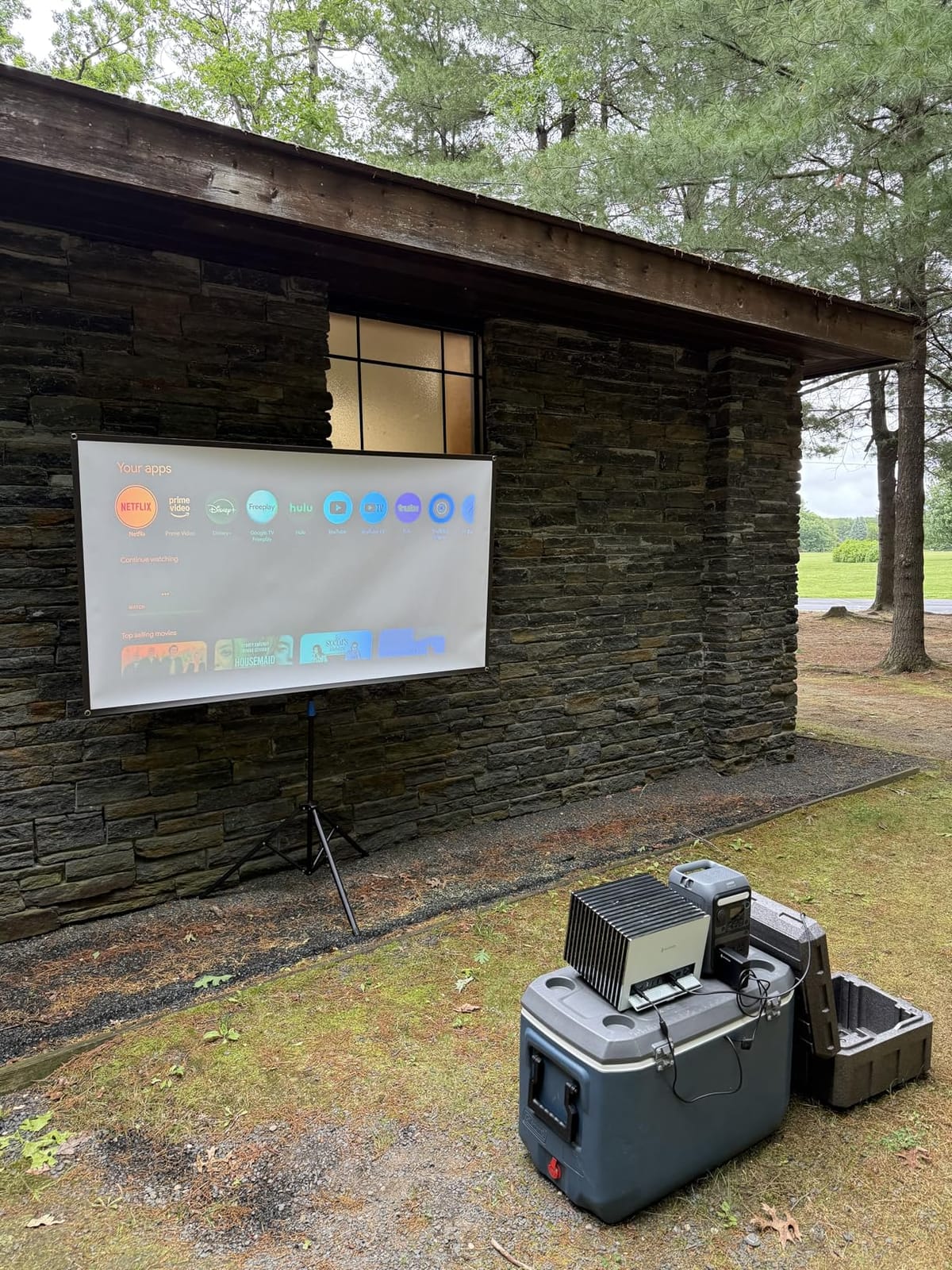
Eight ports cover the usual mix: three AC outlets, two USB-C, one USB-C 15W, one USB-A, and a car socket. At 9.1 pounds, it’s a touch heavier than the Jackery 300 but smaller in footprint.
The Jackery Explorer 300 has a larger owner base (11,288 reviews vs. 1,914) and a more established track record, but the Anker is quieter and has faster USB-C. If quiet is the priority, Anker; if breadth of community feedback matters, Jackery.
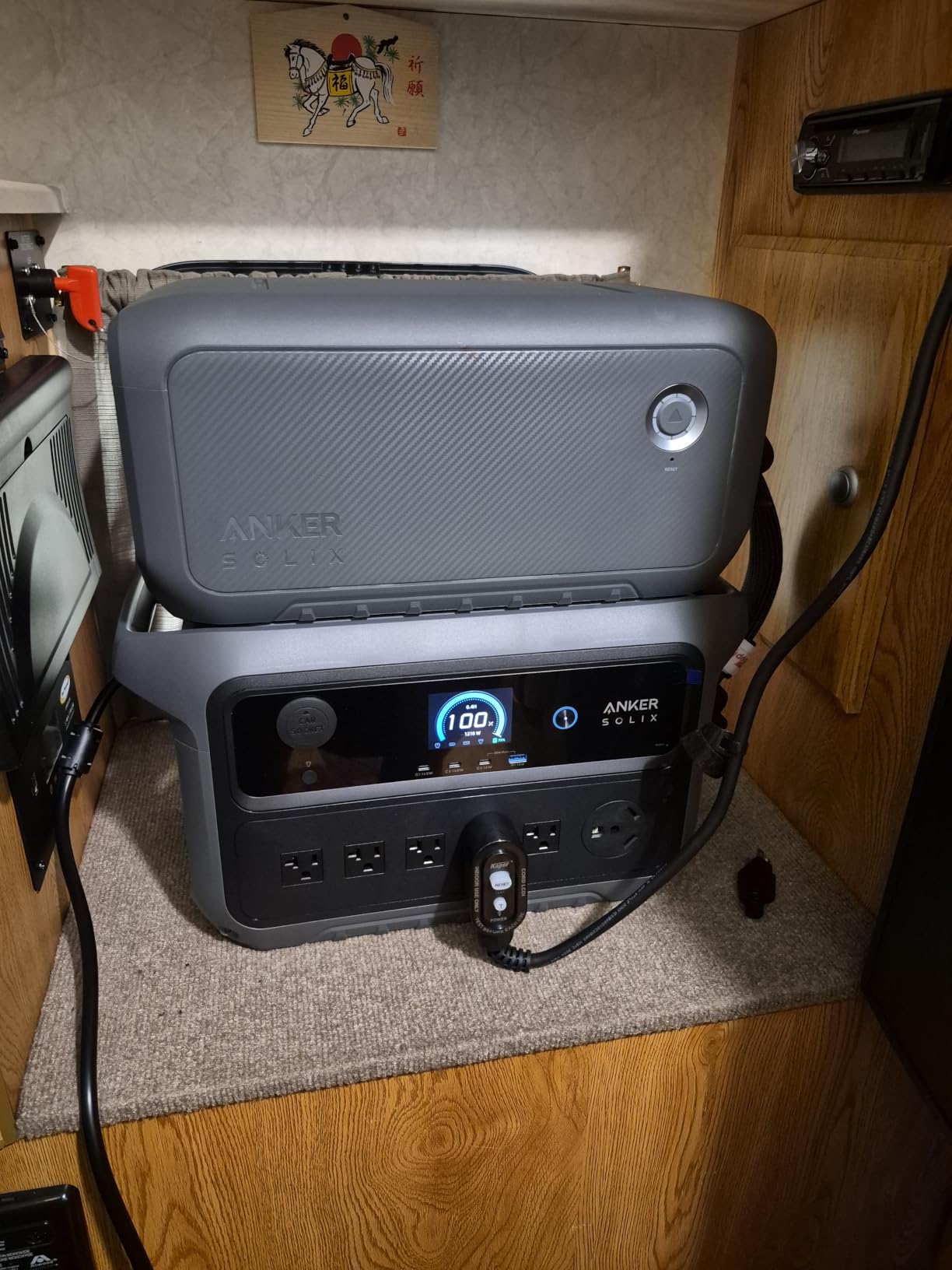
Pair this with a portable solar panel and you have a fully off-grid weekend setup that fits in a backpack.
8. EF ECOFLOW RIVER 2 Max 500: Best Mid-Range for Weekend Trips
EF ECOFLOW Portable Power Station River 2 Max 500, 499Wh LiFePO4 Battery
Capacity: 499Wh
Output: 1,000W
Charge: 1 hr
Weight: 13.3 lbs
Pros
- 1-hour AC recharge with X-Stream
- 1000W output for most small appliances
- 11 ports for versatile use
- 10-year LFP lifespan
- Lightweight at 13.3 lbs
Cons
- Some fan noise during fast charging
- Fewer third-party reviews than top sellers
The EF ECOFLOW RIVER 2 Max 500 sits in the gap between the 300W class and the 1,000Wh+ class, and that’s exactly why it’s worth watching during a sale. With 499Wh and 1,000W of output, it runs small kitchen gear, a CPAP, and laptops, all in a 13.3-pound box.
Standout numbers: 1-hour X-Stream AC charging, 220W max solar input (good for a mid-size portable panel), and 11 total ports. The LFP battery is rated for 3,000+ cycles, which works out to roughly a decade of weekly camping weekends.
Good to know: the RIVER 2 line is single-unit only, so it cannot grow with extra batteries the way the EF ECOFLOW DELTA 2 Max and BLUETTI AC200PL can. For trips where every pound counts and expansion is not a goal, it’s hard to beat. The 13.3-pound carry weight and 11 ports make it the most versatile mid-size option on this list.
Skip it if you want expandability. For pure single-unit weekend use, the 1-hour AC recharge is the headline feature that owners mention most often.
9. BLUETTI Elite 100 mini: Best Compact 1kWh Desktop Backup
BLUETTI Elite 100 mini Portable Power Station for Camping 1004.8Wh 700W LFP
Capacity: 1,004.8Wh
Output: 700W
Charge: ~1.5 hrs
Weight: 23.5 lbs
Pros
- 45% smaller than comparable 1kWh units
- 17-year lifespan with UltraCell LFP
- 140W USB-C fast charging
- 10ms UPS backup
- Quiet operation
Cons
- Only 3 outlets
- 700W output limits to mid-size loads
The BLUETTI Elite 100 mini has the smallest footprint of any 1kWh station on this list, roughly 45% smaller than the average 1kWh competitor. The vertical form factor fits beside a desk or inside a closet where a wider station simply wouldn’t go.
The UltraCell LFP chemistry is rated for 6,000+ cycles, which BLUETTI translates to a 17-year lifespan. That math assumes one cycle per day, so real-world use will likely stretch it further.
Standout feature: 10ms UPS switchover, fast enough for any desktop computer, modem, or CPAP. The 140W USB-C port charges a MacBook Pro directly at full speed.
Where the Elite 100 mini makes sense: a quiet corner of a home office where you want the battery hidden, a closet backup for a router and modem, or a vehicle setup where vertical space is at a premium. Where it does not: anywhere you need to run a hair dryer, microwave, or space heater, the 700W output is the ceiling.
Good to know: the 4-year warranty is shorter than the 5-year industry standard, a small concession for the compact design. Only 3 outlets means a power strip is in your future if you plan to charge several things at once.
10. EF ECOFLOW DELTA 2 Max: Best Whole-Home Expandable Backup
EF ECOFLOW Portable Power Station DELTA 2 Max 2048Wh, 2400W LiFePO4 Battery
Capacity: 2,048Wh
Output: 2,400W
Charge: 43 min to 80%
Weight: 50.7 lbs
Pros
- Expandable from 2kWh to 6kWh
- 30 dB quiet operation
- 80% charge in 43 minutes
- X-Boost to 3400W
- 10-year LFP lifespan
Cons
- Heavy at 50+ lbs
- Larger footprint than mid-size stations
The EF ECOFLOW DELTA 2 Max is the pick for people who want to back up an actual portion of a house, not just a single room. With 2,048Wh out of the box and the option to add extra batteries up to 6kWh, it covers everything from a fridge and freezer to a sump pump and modem, all at the same time.
The 2,400W continuous output (3,400W with X-Boost) handles most household circuits, and the 30 dB operation is the quietest among 2kWh+ stations. The 43-minute charge to 80% is meaningfully faster than the BLUETTI AC200PL, which takes 60 minutes for the same top-up.
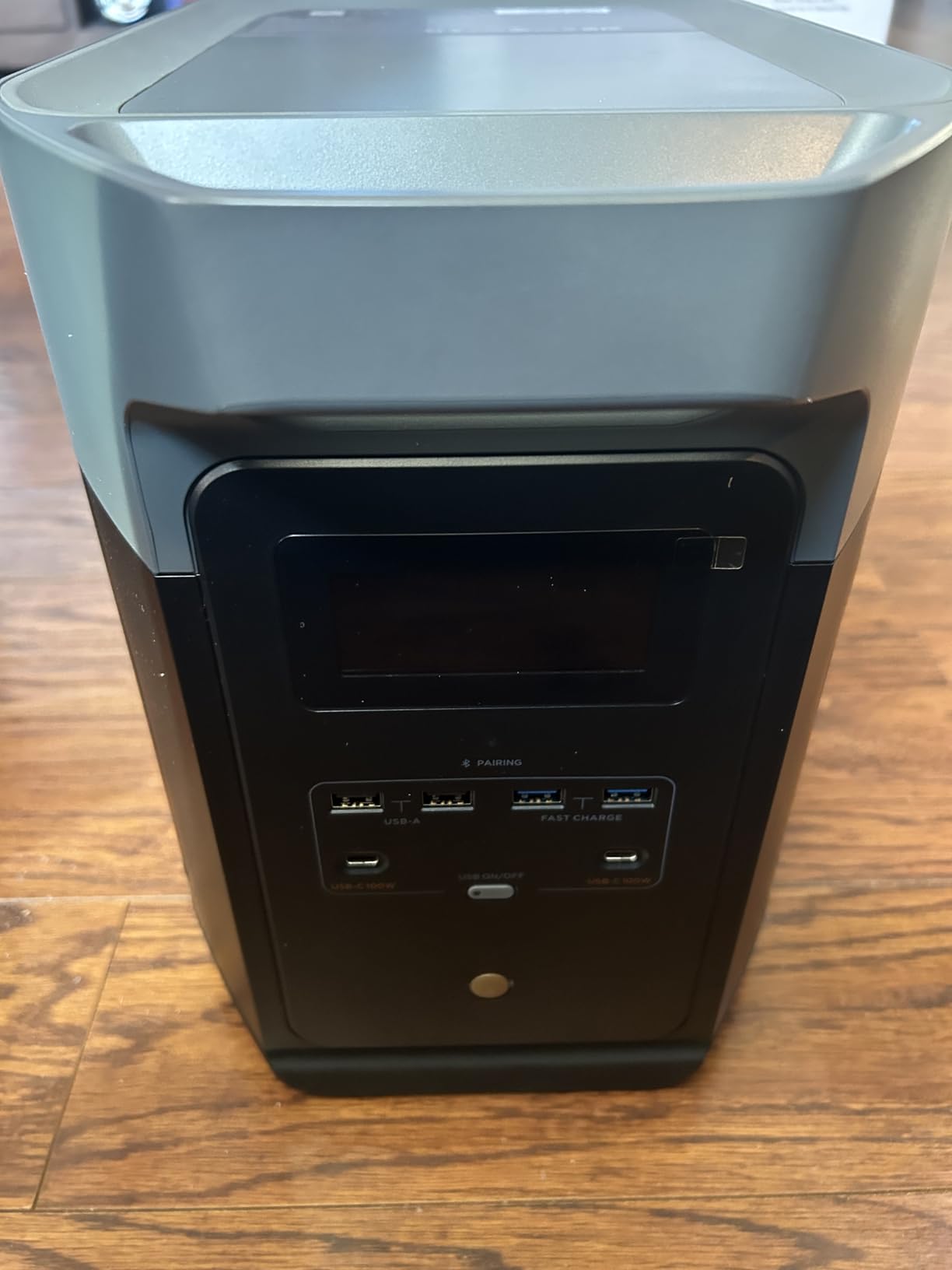
Owner reports from long-term use: a full-size refrigerator runs for roughly 14 hours, a CPAP for 4-5 nights, and a 1,500W space heater for just over an hour on the base 2,048Wh. Add one extra battery and multi-day runtime for the essentials becomes realistic.
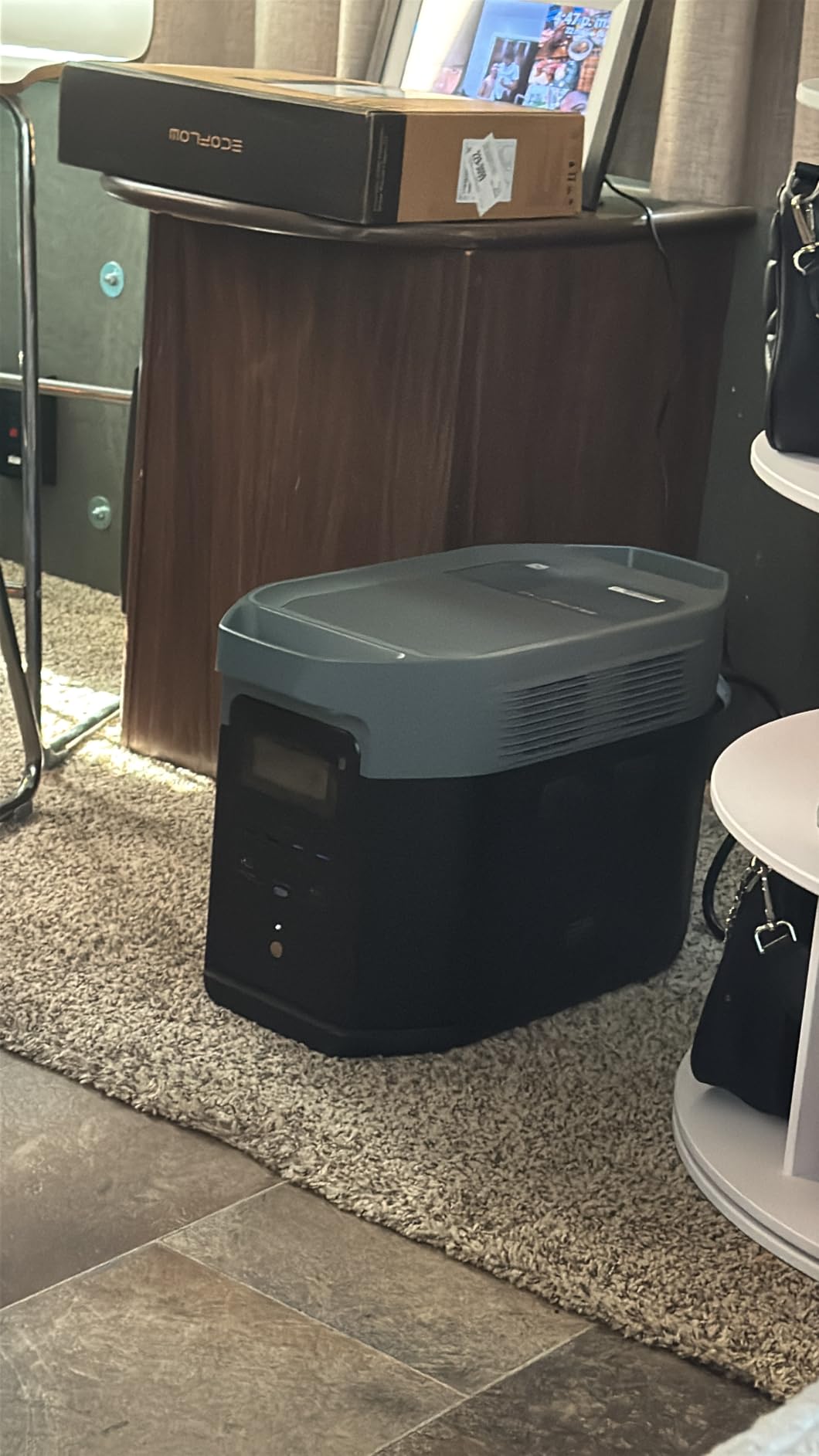
Where this station makes sense: a finished basement or garage where you want a single, quiet box running essentials through a multi-day outage. Where the BLUETTI AC200PL makes more sense: an RV or workshop where the 30A TT30 outlet and 8.4kWh expandability matter more than the lower noise floor.
How to Choose Portable Power Stations During Prime Big Deal Days
Battery Capacity and Runtime
Battery capacity is measured in watt-hours (Wh), and the simple rule is bigger capacity means more runtime for the same devices. Stations under 300Wh handle phones, laptops, and small fans for a weekend. The 500-1,200Wh range covers CPAP machines, routers, and most small kitchen gear for a day or two. Above 2,000Wh, you’re looking at full-size refrigerators and multi-day backup.
For a household of four wanting to ride out a 24-hour outage, the Jackery Explorer 1000 v2 and Anker SOLIX C1000 hit the capacity sweet spot. For multi-day outages where you also want to run a fridge, the BLUETTI AC200PL and EF ECOFLOW DELTA 2 Max are the picks worth a look.
Output Power and Ports
Output wattage is the ceiling on what the station can run at one time. A 300W station will not run a microwave (1,000W+). A 1,500W station handles most small kitchen gear. A 2,400W station covers everything except central AC and electric stoves.
Port count matters when the family is gathered around one station. The BLUETTI AC180, Anker SOLIX C1000, and BLUETTI AC200PL all carry 11-12 ports, the highest in this lineup. For USB-C laptop users, the Anker SOLIX C300 and BLUETTI Elite 100 mini both offer 140W two-way USB-C, which is rare in this class.
Charging Speed and Options
AC charging speed separates the fast-recovery stations from the overnight ones. The Jackery Explorer 1000 v2 and EF ECOFLOW RIVER 2 line both hit full in roughly an hour. Solar input matters for off-grid use; the BLUETTI AC200PL accepts 1,200W of solar, more than any other station on this list.
If you plan to pair the station with portable solar panels for power stations, check the max solar input wattage, not just the included panel size. The BLUETTI AC200PL, Anker SOLIX C1000, and BLUETTI AC180 all accept 500W+ of solar input, which is what you want for a meaningful recharge on a sunny day.
Portability and Weight
Weight divides the list into three tiers. The 7-10 pound tier (Jackery 300, RIVER 2, Anker C300) lives in a backpack. The 13-28 pound tier (RIVER 2 Max, Elite 100 mini, Jackery 1000 v2, Anker C1000) is grab-and-go with one hand. The 37-72 pound tier (BLUETTI AC180, AC200PL, DELTA 2 Max) is a two-person carry or a rolling cart.
For a station that follows you on every trip, the Jackery Explorer 300 or Anker SOLIX C300 are the easy picks. For a station that mostly lives in one place and rolls out when needed, the heavier models give you much more capacity per dollar.
Brand Reliability and Warranty
Established brands with long track records tend to honor warranties more easily. Jackery, EcoFlow, BLUETTI, and Anker all offer 4- to 5-year warranties on most of these models, and all four have U.S.-based customer service operations. The BLUETTI Elite 100 mini has a 4-year warranty; everything else on the list has 5 years except the Jackery 300 (2 years).
For long-term value, look for LiFePO4 (LFP) battery chemistry. Every station on this list uses LFP except the Jackery Explorer 300, which lists both lithium-ion and LiFePO4 depending on the production run. LFP cells last 3,000-6,000 cycles vs. roughly 500-1,000 for older lithium-ion chemistries.
How to Shop Portable Power Station Deals During the Sale
During Prime Big Deal Days, listings change hourly and the same model can appear under different sellers at different prices. Before you check out, confirm the model number on the listing matches the one we reviewed (Jackery JE-1000D, EcoFlow EFR607, BLUETTI AC180, Anker A1761, and so on). Sellers sometimes relist older production runs at attractive prices, and those may have older firmware or shorter warranties.
Check whether the listing is sold and shipped by Amazon directly, which simplifies returns, and whether it ships to your address (a handful of these cannot deliver to PO Boxes). Most offers during the sale require a Prime membership; a free trial counts. The deals worth watching are the ones on brand-new, current-year production with the full manufacturer warranty included.
Quick checklist before you buy:
- Match capacity (Wh) to your actual outage plan
- Confirm output wattage covers your largest device
- Check port count and USB-C wattage for your laptop
- Verify LFP battery chemistry for long-term use
- Confirm model number, seller, and warranty terms on the listing
Frequently Asked Questions
When is Prime Big Deal Days 2026?
Prime Big Deal Days runs October 6-7, 2026, on Amazon. Most offers during the event require a Prime membership, and a free trial counts toward access.
Do I need Amazon Prime for these deals?
Yes, most Prime Big Deal Days offers require an active Prime membership at the time of purchase. A free 30-day trial also works and can be cancelled after the event if you do not want to continue. Some listings from third-party sellers may run at the same prices without Prime, but the headline deals are gated to members.
What capacity portable power station do I need for home backup?
For a 24-hour outage covering a fridge, router, and a few lights, aim for at least 1,000Wh. The Jackery Explorer 1000 v2 and Anker SOLIX C1000 are solid picks at that level. For multi-day outages, 2,000Wh or more is more comfortable, and models like the BLUETTI AC200PL and EF ECOFLOW DELTA 2 Max can be expanded with extra batteries.
Which Prime Big Deal Days portable power station deals are worth buying?
Focus on the picks that match your largest device. For most households, the Jackery Explorer 1000 v2 is the easiest all-around choice. For higher-output kitchen gear, the Anker SOLIX C1000. For whole-home backup with room to grow, the BLUETTI AC200PL or EF ECOFLOW DELTA 2 Max. For camping and quiet use, the Anker SOLIX C300 and Jackery Explorer 300 are the lightest.
What size power station is best for camping?
For weekend car camping, 300-500Wh is usually enough to run lights, phones, a small fan, and a laptop. The Jackery Explorer 300 and EF ECOFLOW RIVER 2 Max 500 are the most popular picks in that range. For tent camping where quiet matters, the Anker SOLIX C300 at 25 dB is hard to beat. Pair any of them with a portable solar panel for multi-day off-grid trips.
Final Verdict: Prime Big Deal Days Portable Power Station Deals
Buy the Jackery Explorer 1000 v2 if you want one station that covers most household needs: 1,500W output, 1,070Wh capacity, 1-hour recharge, and a 23.8-pound carry weight that does not require a cart.
Buy the EF ECOFLOW RIVER 2 if you’re on a tight budget and mainly need phone, laptop, and router backup. Buy the Anker SOLIX C1000 if you want to run microwaves, induction cooktops, or other high-draw kitchen gear. Buy the BLUETTI AC200PL if you want whole-home or RV backup with room to expand to 8.4kWh. Buy the Anker SOLIX C300 if quiet campsite power matters more than capacity.
Watch all ten listings through the two-day event, as the best picks during the Prime Big Deal Days portable power station deals change throughout the event.
 Elena Vasquez
  Priya Kapoor