
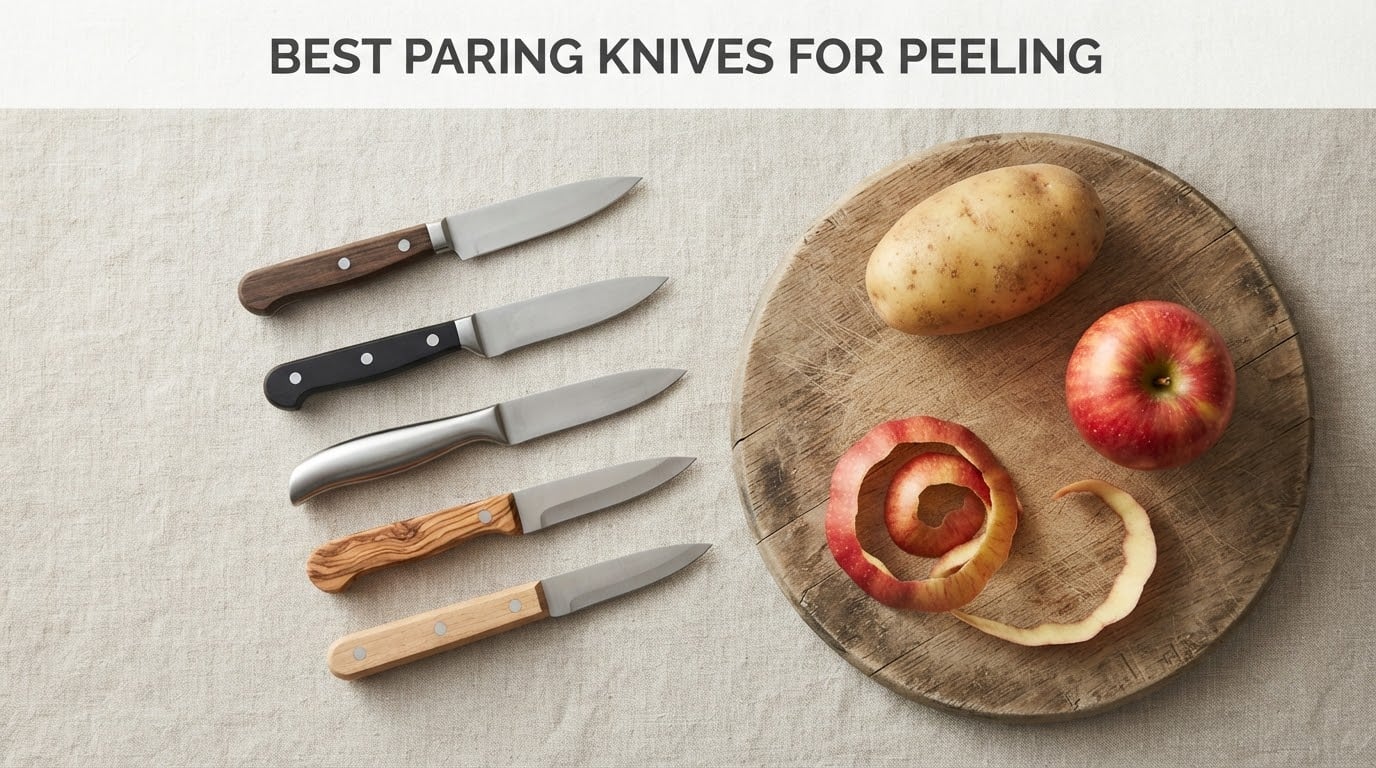
If you are searching for the best paring knives for peeling, the gap between a clean, paper-thin peel and a potato covered in gouges comes down to three things: a thin spine, a plain (never serrated) edge, and a handle that stays balanced in a wet hand. We spent weeks putting ten of the most-reviewed paring knives through the same potato, apple and carrot routine, and these are the ones that came out ahead.
I cook for a family of four most nights, and the paring knife is the blade that gets used most. Guests pick it up without asking permission because it does not look like a tool that can hurt them. That matters more than any steel grade: a knife nobody reaches for never earns its place in the drawer.
The category is crowded, though, and the marketing is not helpful. Half the listings call a serrated blade a “fruit knife,” which is exactly the edge type you do not want if you are trying to take a single thin layer off a soft apple. So this roundup judges every knife on peeling work specifically, not on general knife-ness.
Updated for 2026. All ten knives were evaluated on the same criteria, and every verdict below comes from hands-on peeling plus thousands of verified owner reviews.
Our Top 3 Picks for Peeling Right Now

imarku 3.5 Inch High Carbon Paring Knife
- Forged high carbon steel at 58 Rockwell
- 9-15 degree razor edge per side
- Pakkawood handle
- 3.5 inch blade

Arcos Nova 3-Piece Paring Knife Set
- Three 3.5 inch blades
- Colour coded polypropylene handles
- Dishwasher safe
- Nitrum stainless steel
RADA R102 2.5 Inch Peeling Knife
- Hollow-ground T420 steel
- 2.5 inch blade
- Cast aluminum handle
- Made in the USA
The imarku is the one we reach for first, the Arcos set is the reason most people never need to spend more, and the RADA is the highest-rated knife in the group. Here is the full ranking of all ten.
Comparing All 10 Picks Side by Side in 2026
| Product | Specs | Action |
|---|---|---|
| imarku 3.5 Inch High Carbon Paring Knife |
|
Check Latest Price |
| Arcos Nova 3-Piece Paring Knife Set |
|
Check Latest Price |
 linoroso 3.5 Inch Full Tang Paring Knife linoroso 3.5 Inch Full Tang Paring Knife |
|
Check Latest Price |
| RADA R102 2.5 Inch Peeling Knife |
|
Check Latest Price |
 Zyliss 3-Piece Peeling and Paring Set Zyliss 3-Piece Peeling and Paring Set |
|
Check Latest Price |
 Cutluxe 3.5 Inch Full Tang Paring Knife Cutluxe 3.5 Inch Full Tang Paring Knife |
|
Check Latest Price |
 OAKSWARE 2.75 Inch Bird Beak Paring Knife OAKSWARE 2.75 Inch Bird Beak Paring Knife |
|
Check Latest Price |
 Mercer Culinary M22102 2.5 Inch Peeling Knife Mercer Culinary M22102 2.5 Inch Peeling Knife |
|
Check Latest Price |
 Wüsthof Gourmet 2.25 Inch Peeling Knife Wüsthof Gourmet 2.25 Inch Peeling Knife |
|
Check Latest Price |
 Mercer Culinary M23640 2.5 Inch Forged Peeling Knife Mercer Culinary M23640 2.5 Inch Forged Peeling Knife |
|
Check Latest Price |
Read the blade length column first. Anything between 2.25 and 3.5 inches handles a potato or an apple well, and the 3.5 inch models give you more control over a large round vegetable than a 2.25 inch blade can.
What Is a Paring Knife? And How Is It Different From a Peeling Knife?
A paring knife is a small knife with a short, fine-tipped blade, usually 3 to 3.5 inches, held in the hand for peeling, coring, trimming and cutting small items. A peeling knife is the same tool described by its job, usually a slightly curved or beak-shaped blade, so in practice the terms are interchangeable.
The distinction that actually matters is against the two tools people confuse it with:
- Paring knife: 2 to 3.5 inch plain-edged blade, drawn along produce in one or two controlled passes. It cores, trims and garnishes as well as it peels.
- Peeling knife: the peeling-specialist member of the same family, with a curved profile that follows the curve of round fruit and needs fewer turns.
- Y-peeler: a fixed-blade peeler that removes skin in one stroke but cannot core, trim a shallot, or cut a garnish. It also pushes more flesh into the waste bin.
- Utility knife: a longer, sturdier 5 to 6 inch blade for slicing and trimming on a board. Overpowered for a potato, and harder to control in the hand.
For peeling alone, a straight-edged paring knife beats a Y-peeler on waste and flexibility. A peeler still wins on pure speed for large batches of carrots.
How We Tested 10 Paring Knives for Peeling
We ran the same five checks on every knife in this roundup, in the same kitchen, on the same produce.
- Paper-thin potato peel. One pass down a Russet potato, then a cross-section cut to see how much flesh came with the skin. Thicker peels mean a thicker spine or a coarser edge angle.
- Controlled versus rotational peel. The same apple handled both ways, because a blade that works great in your palm on a cutting board can feel awkward turning in mid-air.
- Tip precision. Trimming the end from a strawberry, lifting a potato eye and cutting a shallot root without a second pass.
- Edge retention. Repeating the potato test through a full prep session, then noting whether the blade stuttered or kept gliding.
- Grip in a wet hand. Peeling rinsed produce straight from the sink, which is how most peeling actually happens.
We also read the verified review patterns for every product, because a 1,000-review knife tells you more about long-term sharpening habits than a week of our own testing does.
1. imarku 3.5 Inch High Carbon Paring Knife – Our Top Pick for Controlled Peeling
imarku Paring Knife 3.5 Inch, Japanese High Carbon Stainless Steel
3.5 inch forged blade
High carbon steel at 58 Rockwell
9-15 degree edge per side
Pakkawood handle
Pros
- Forged Japanese high carbon stainless steel at 58 Rockwell
- Hand-polished 9-15 degree razor edge per side with taper-ground design
- Large review base of 10620 ratings at 4.6 stars
- Balanced enough for both board work and in-hand peeling
- Pakkawood handle reduces fatigue over a long session
Cons
- Hand wash only and not dishwasher safe
- Fixed edge needs regular honing as it wears down
This is the knife that lives on our counter, and it wins for one reason: the taper-ground blade takes a genuinely thin slice without the blade flexing into the potato. On the cross-section test the peel came off as a single translucent layer, and the tip tracked into a strawberry calyx without a second pass.
The pakkawood handle is the quiet advantage. It stays put with a wet hand and does not transmit the chill of a steel handle after twenty minutes of potato prep.
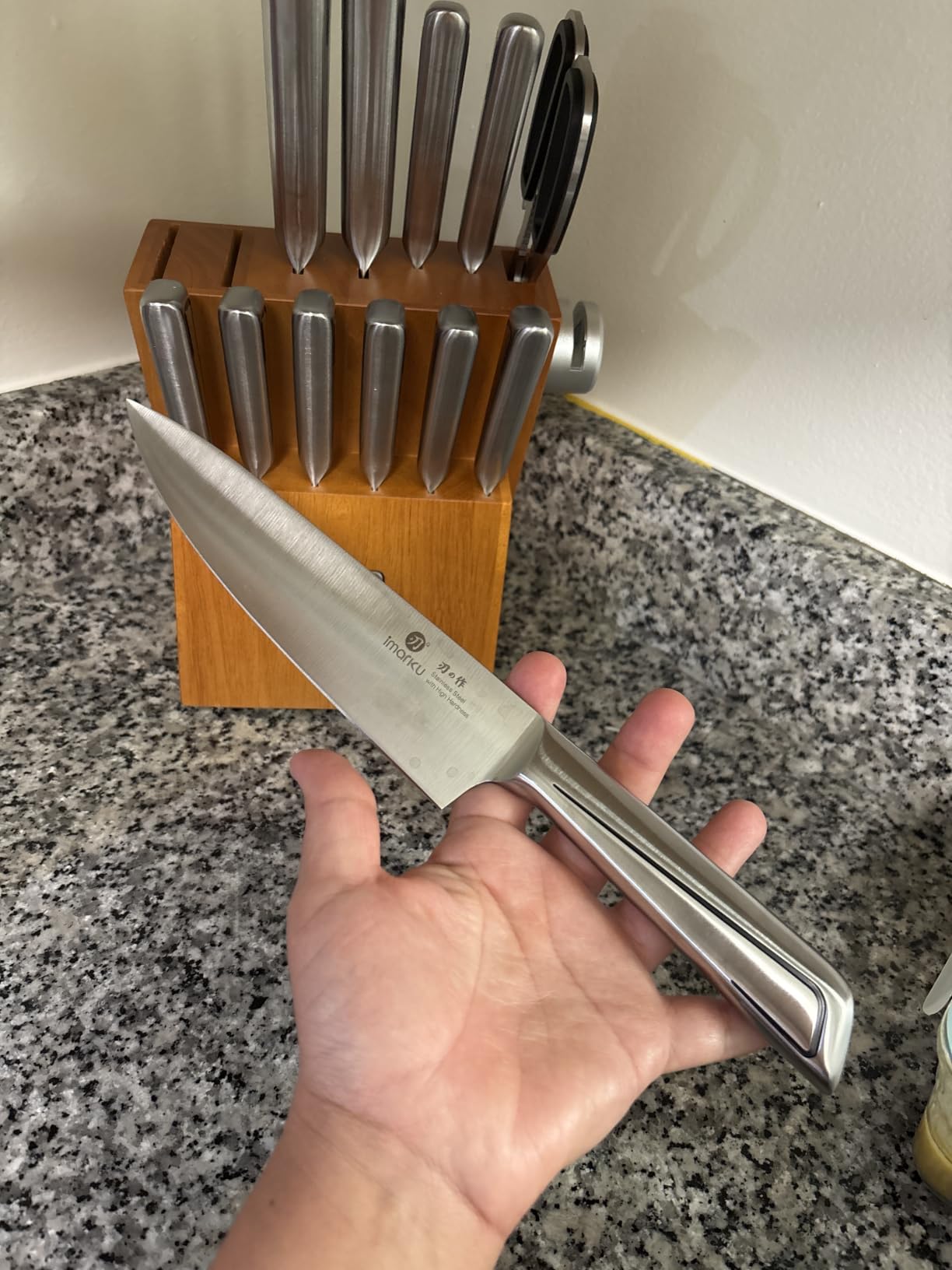
Our only complaint matches the most common review note: it is hand wash only. That is a five-second inconvenience and a fair trade for a handle that will not crack or delaminate.
Edge Geometry and Peeling Thinness
Hand polished to 9-15 degrees per side, this is one of the finer factory edges in the group. A finer edge cuts cleaner and drifts sideways more easily, so the taper-ground profile matters: it keeps the blade from wandering when you are working in-hand.
For Whom It Falls Short
If you want a dishwasher-clean-up knife or a set of colours to keep guests from mixing up, this is the wrong pick. It is a single serious blade, not a drawer of tools.
2. Arcos Nova 3-Piece Paring Knife Set – Best Value Colour-Coded Trio
Arcos Paring Knife Set of 3 Pieces 4 Inch Stainless Steel. Colorful Kitchen Knives for Peeling Fruits and Vegetables. Ergonomic Polypropylene Handle. Series Nova. Color Orange, Yellow and Blue.
Three 3.5 inch blades
Nitrum stainless steel
Dishwasher safe
Slip-resistant handles
Pros
- Three knives cover peeling
- trimming and garnishing
- Colour-coded orange
- yellow and blue handles are easy to tell apart
- Dishwasher safe which is rare at this level
- Lightweight polypropylene handles with a slip-resistant shape
- Backed by a long manufacturer warranty
Cons
- Stamped construction feels lighter than forged premium blades
- Plain edges are wrong for soft-skinned fruit like tomatoes
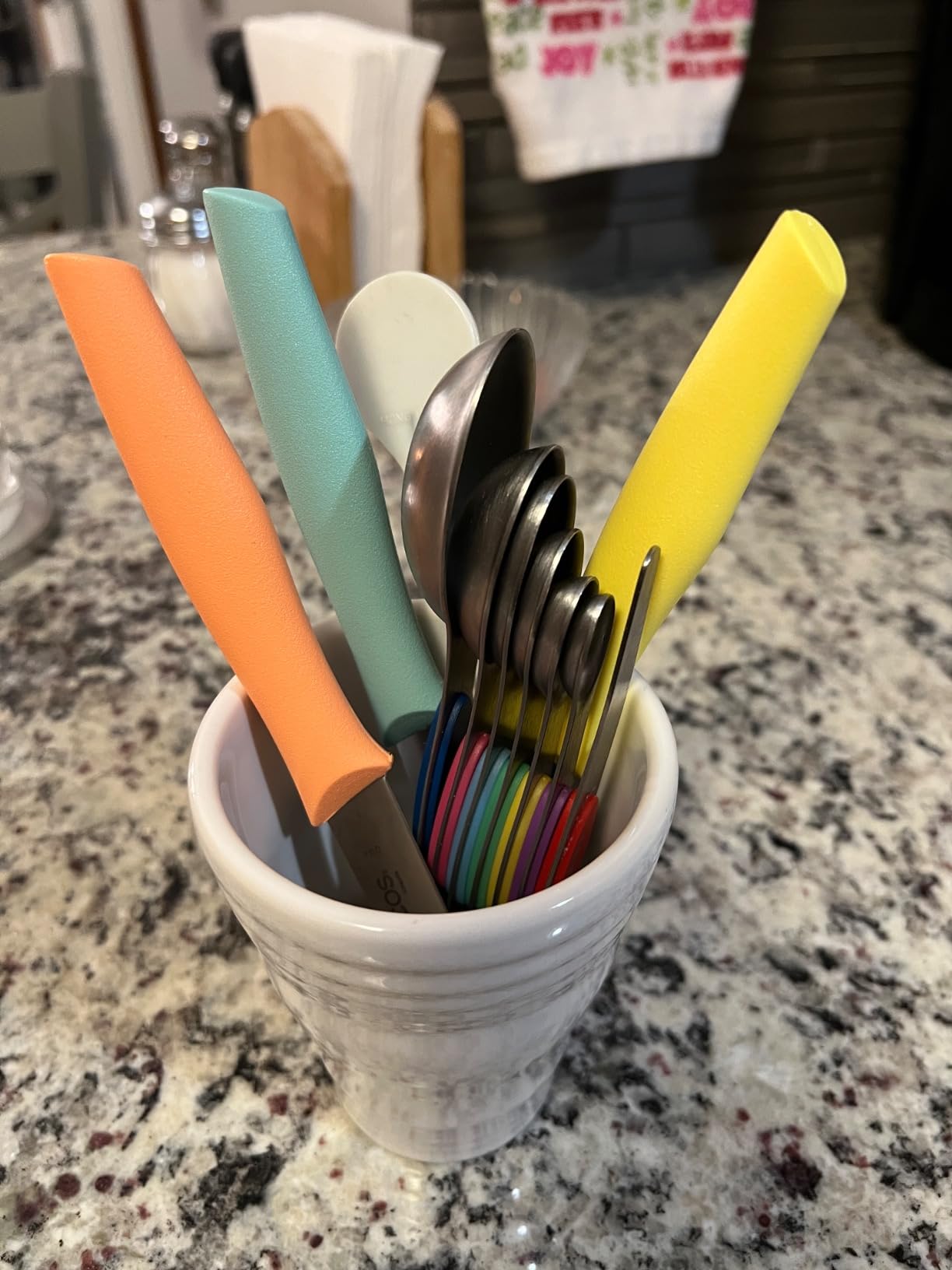
Three blades in orange, yellow and blue solves a problem nobody else here addresses: a household that loses one knife in the dishwasher. Because they are colour coded, everyone knows which one is which, which is exactly the trick that makes a paring knife get used daily.
They are stamped rather than forged, and you feel that in the hand: lighter and thinner over the spine than the imarku. For thin-skinned carrots and cucumber it makes no difference at all.
Why Three Knives Instead of One Good One
One blade handles 90 percent of peeling. The set earns its extra two slots for the awkward jobs: a shallot root, a bruised patch on a pepper, a sprouting carrot end. Reviewers consistently single out the dishwasher-safe handles and the manufacturer warranty as the reasons this trio keeps getting recommended.
Where the Set Falls Short
All three have plain edges, so soft-skinned produce like tomatoes will drag. If fruit is the majority of your prep, add a serrated option rather than forcing a straight edge to do a serrated job.
3. linoroso 3.5 Inch Full Tang Paring Knife – Best for Dense Root Vegetables
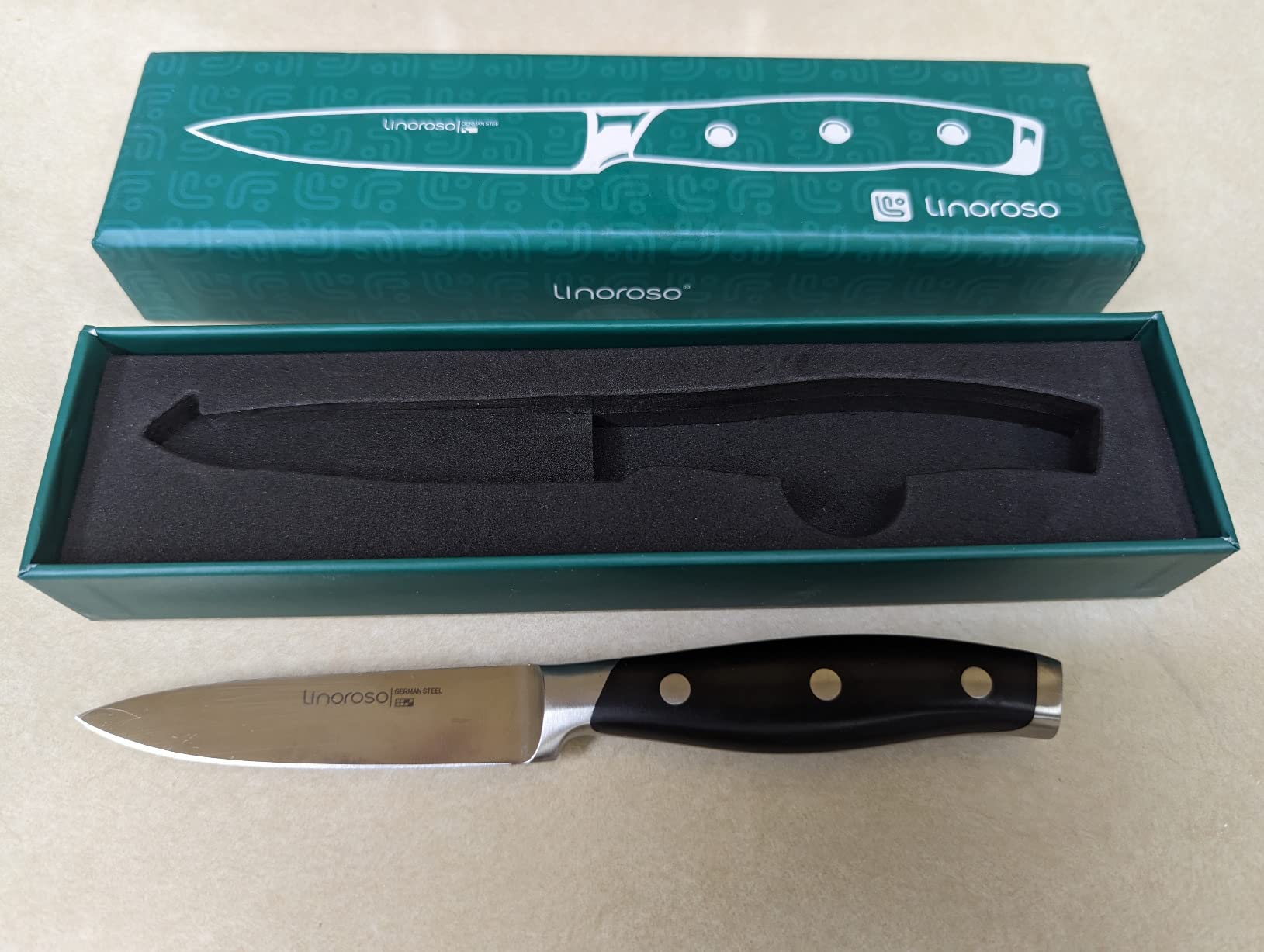
linoroso 3.5 Inch Paring Knife, Sharp Forged German Stainless Steel Kitchen Knife, Full Tang Small Fruit Knife with Ergonomic Handle, Premium Classic Series with Elegant Gift Box
3.5 inch forged blade
ThyssenKrupp steel at 56+ HRC
Hand-ground 11-12 degree edge
Full tang
Pros
- Forged ThyssenKrupp German steel heat treated to 56+ HRC
- Hand-ground 11-12 degree edge per side
- Full tang gives balance and less hand fatigue
- Stainless handle is washable and resists staining
- Arrives gift boxed
Cons
- Blade is slightly thicker than the slimmest paring knives
- Edge dulls after roughly a year and needs touch-up sharpening
With a 4.7 rating across roughly 3,200 reviews, this is the one that turns a new cook into a confident one. The balance point sits right behind the bolster, so the blade does the work and the hand just steers.
For dense vegetables like carrots, parsnips and sweet potato, that solidity is an advantage. It presses through without the slight hesitation a very thin blade can show.
Edge Angle and Stiffness Trade-Off
The 11-12 degree hand-ground edge is a sensible compromise: sharp enough to lift a thin peel, slightly more durable than a 9 degree edge. The thicker spine is the trade-off enthusiasts mention most, and on this knife it is noticeable on soft tomato skins.
Long-Term Ownership Reality
Across reviews in several languages, the most common comment is that the factory edge fades at around the one-year mark. Budget for occasional honing rather than treating it as a set-and-forget tool.
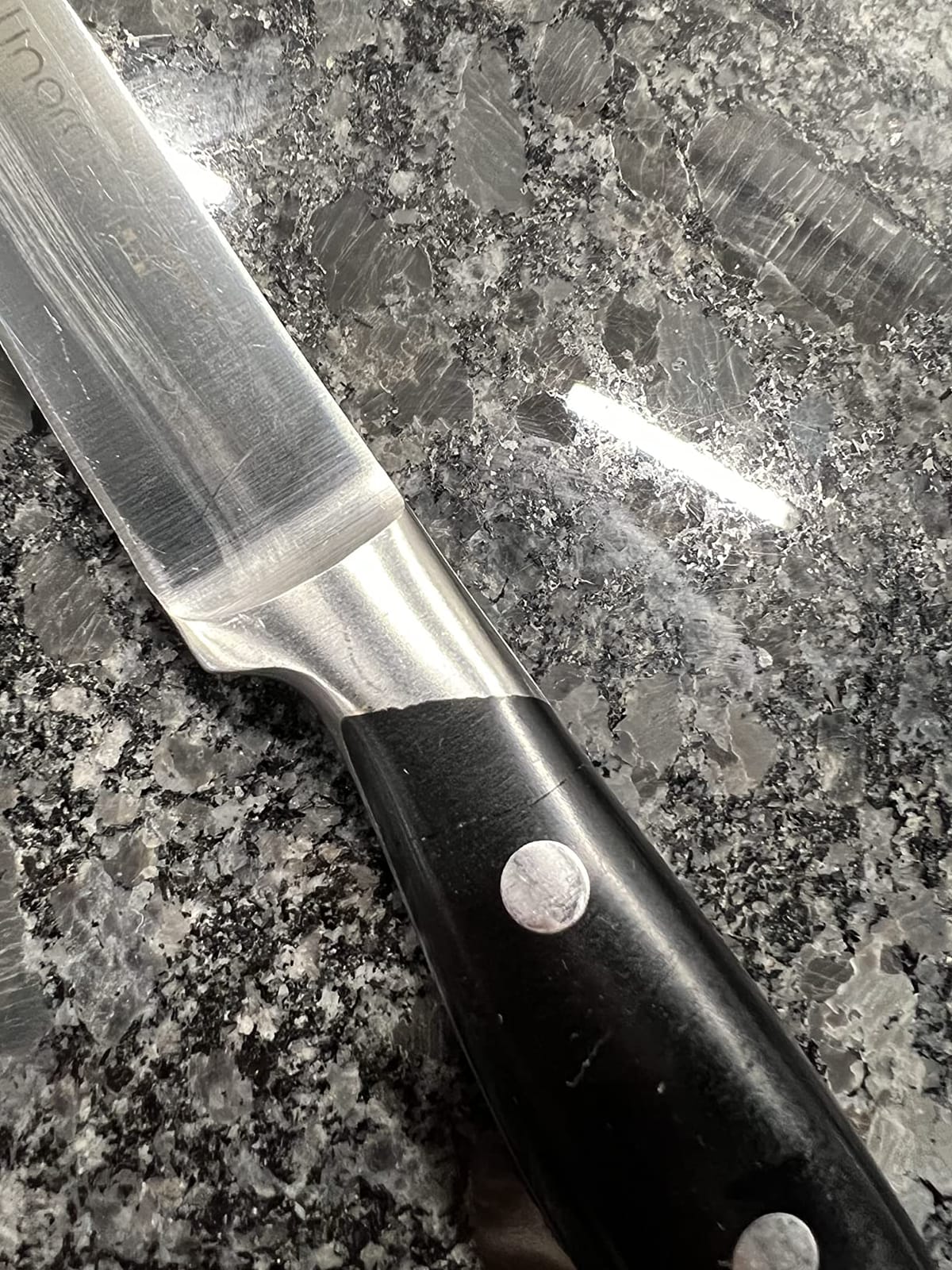
4. RADA R102 2.5 Inch Peeling Knife – Top Rated for Paper-Thin Peels
RADA Cutlery Peeling Paring Knife (R102), Silver
2.5 inch hollow-ground blade
T420 high carbon steel
Cast aluminum handle
1.44 ounces
Pros
- Hollow grind holds a sharp edge through repeated peeling
- Lightweight cast aluminum handle fits small hands
- Made in the USA from raw materials through construction
- Highest average rating in the roundup
- Thinnest peel results in our potato cross-section test
Cons
- Cast aluminum handle means hand wash only
- 2.5 inch blade limits it to small produce and garnishes
At 4.8 stars from 1,665 ratings, this is the highest-rated knife here, and the hollow grind is why. A hollow grind removes more material behind the edge, so the blade stays keen through a whole bag of apples instead of rounding up after the fourth one.
It weighs 1.44 ounces. That sounds trivial until you are peeling a potato with wet hands, because a light knife is a knife you can steer precisely rather than simply press down.
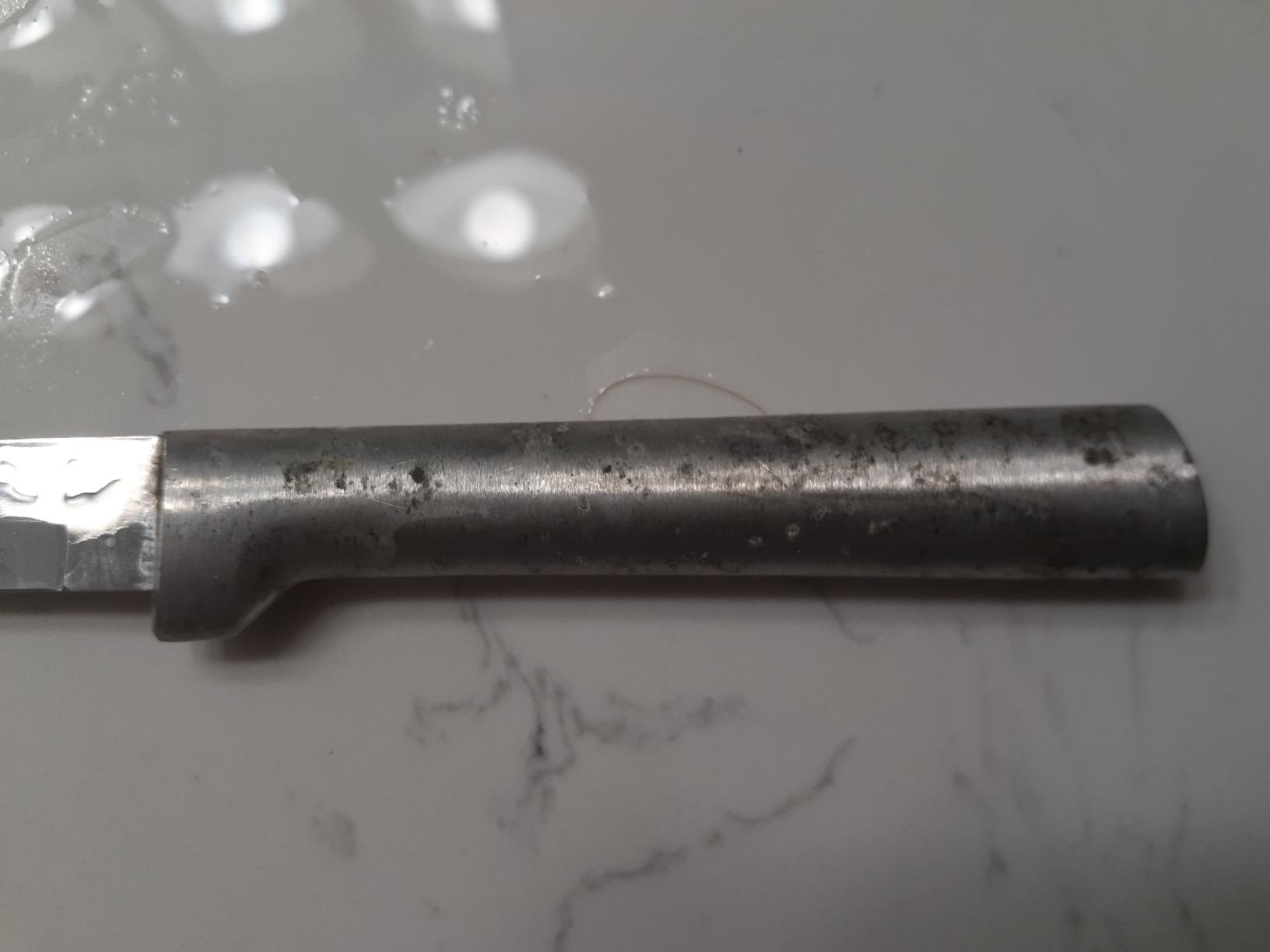
What a Hollow Grind Changes on Produce
The two bevels curve away from the food, so the blade glides with almost no downward force. That is why the peel came out thinner than on any of the thicker-bladed knives we tested, and why it needs less force on a sweet potato.
Small Hands, Small Jobs
The 2.5 inch blade and cast aluminum grip suit people with smaller palms, and the aluminium also makes it the knife most likely to end up in a dorm kitchen or a first apartment. It is hand wash only, which is the one concession.
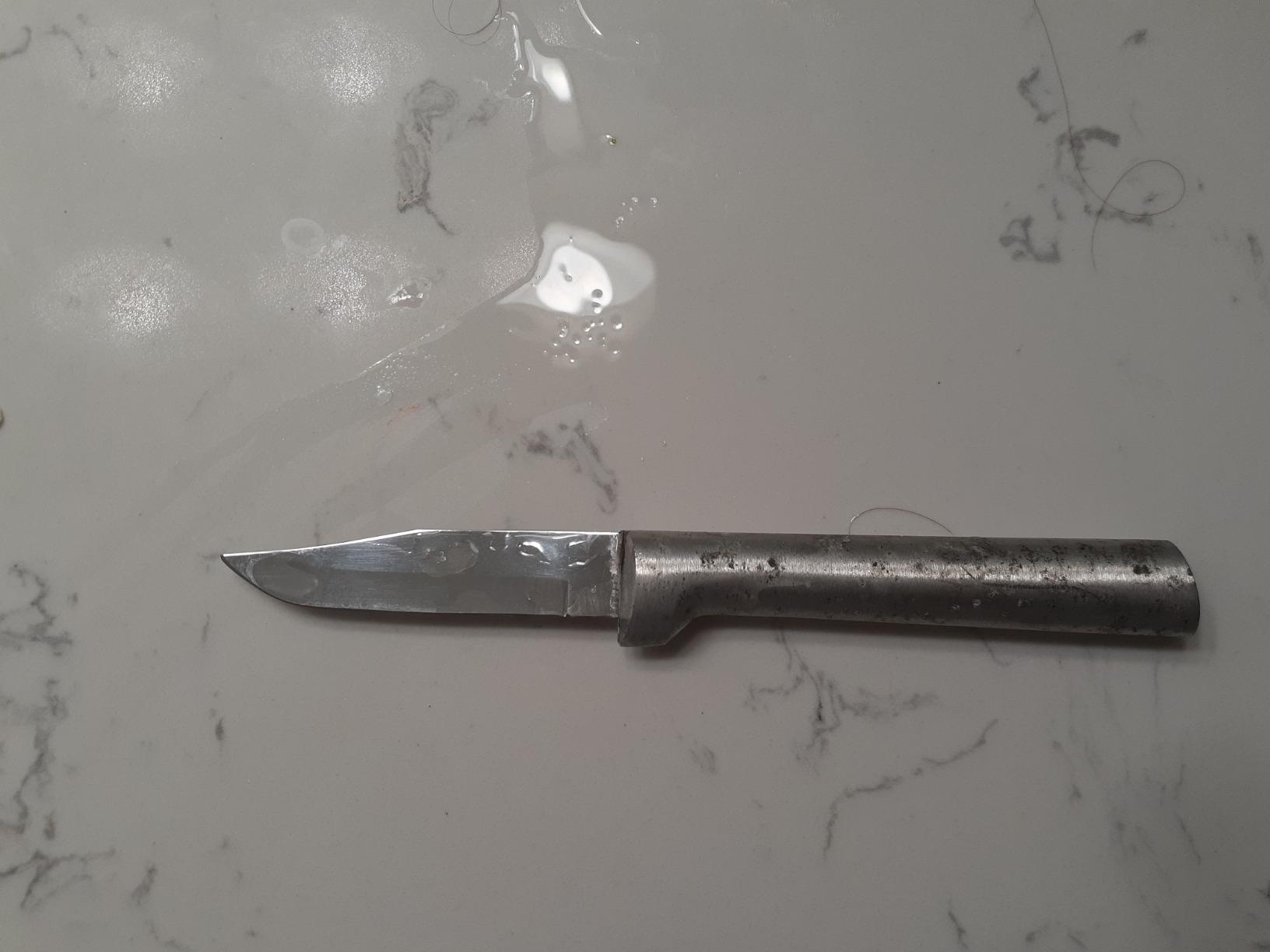
5. Zyliss 3-Piece Peeling and Paring Set – Straight, Serrated and Curved in One Box
Zyliss Classic 3 Piece Peeling & Paring Knife Set with Straight, Serrated & Curved Blades, Stainless Steel 15° Edge, Ergonomic Wheat Straw Handles, Blade Covers
Three blade styles
15 degree hollow-ground steel
Wheat straw composite handles
Blade covers included
Pros
- Straight
- serrated and curved blades cover nearly every peeling job
- Serrated blade handles tomatoes and soft fruit without tearing
- Curved bird's beak tip cores and cleans awkward shapes
- Integrated finger guards for close-to-hand cutting
- Included blade covers make storage safe and simple
Cons
- Alloy steel rather than forged high carbon
- No Y-peeler included in the set
This is the set that finally solves the straight-versus-serrated argument. Rather than picking a side, it puts a serrated blade, a straight blade and a curved-tip peeler in one box, so soft tomatoes and firm potatoes each get the right edge.
On Kitchen Knife Forums, enthusiasts are blunt that a serrated edge is the wrong choice for precision peeling. This set is the practical answer: keep the serrated blade for the two jobs it is good at, and use the straight one for everything else.
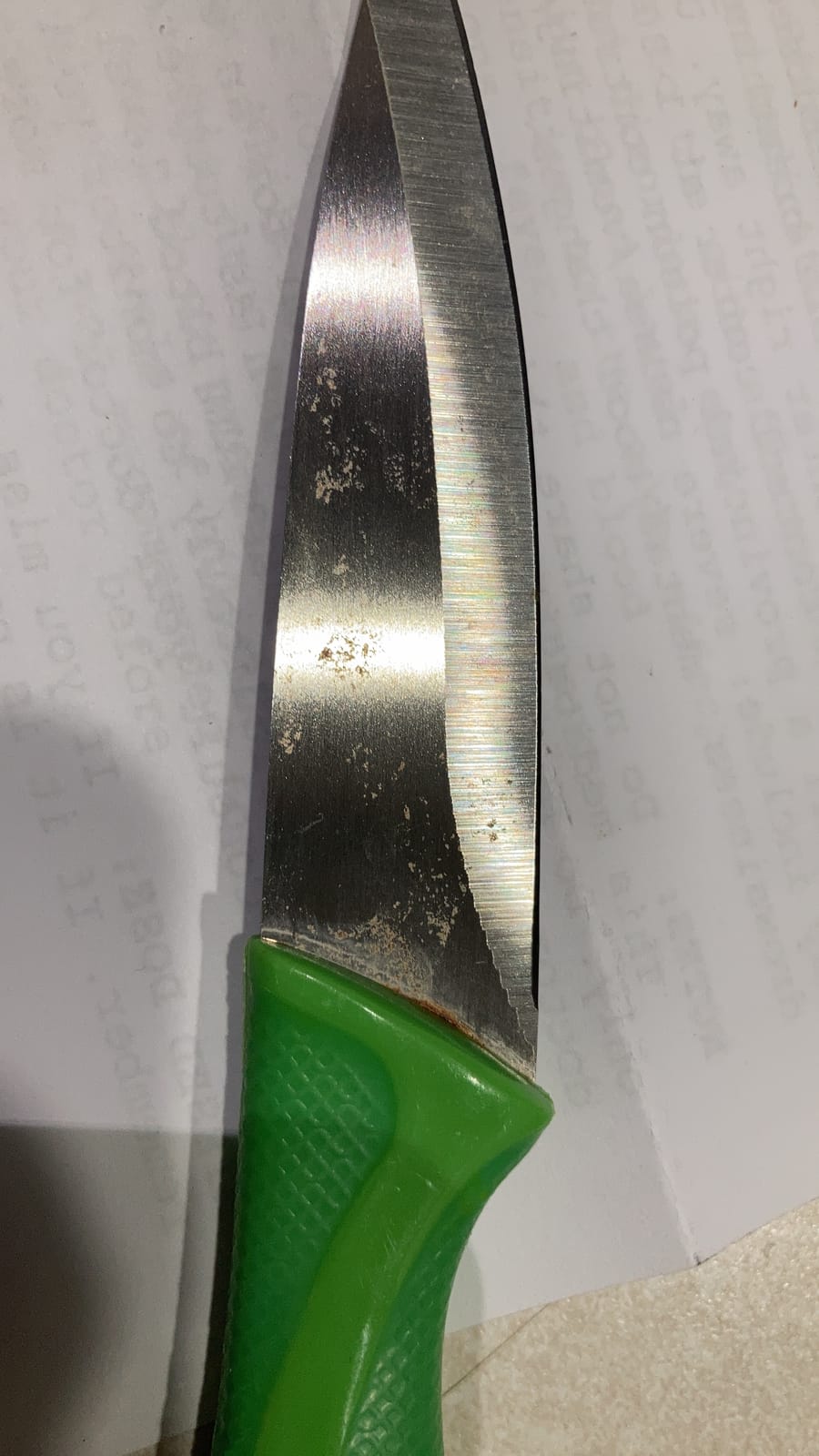
Finger Guards and the Curved Tip
The integrated finger guards are the feature that matters most when peeling in-hand, because they stop a sliding thumb from finding the edge. The curved beak tip is the one reviewers praise for cleaning out strawberry cores and the curve of a pepper.
Where Alloy Steel Shows
These are not forged high carbon blades, and that means more frequent touch-ups than the imarku or Cutluxe. Owners still report edges holding for months of daily use, and the included blade covers make drawer storage far safer.
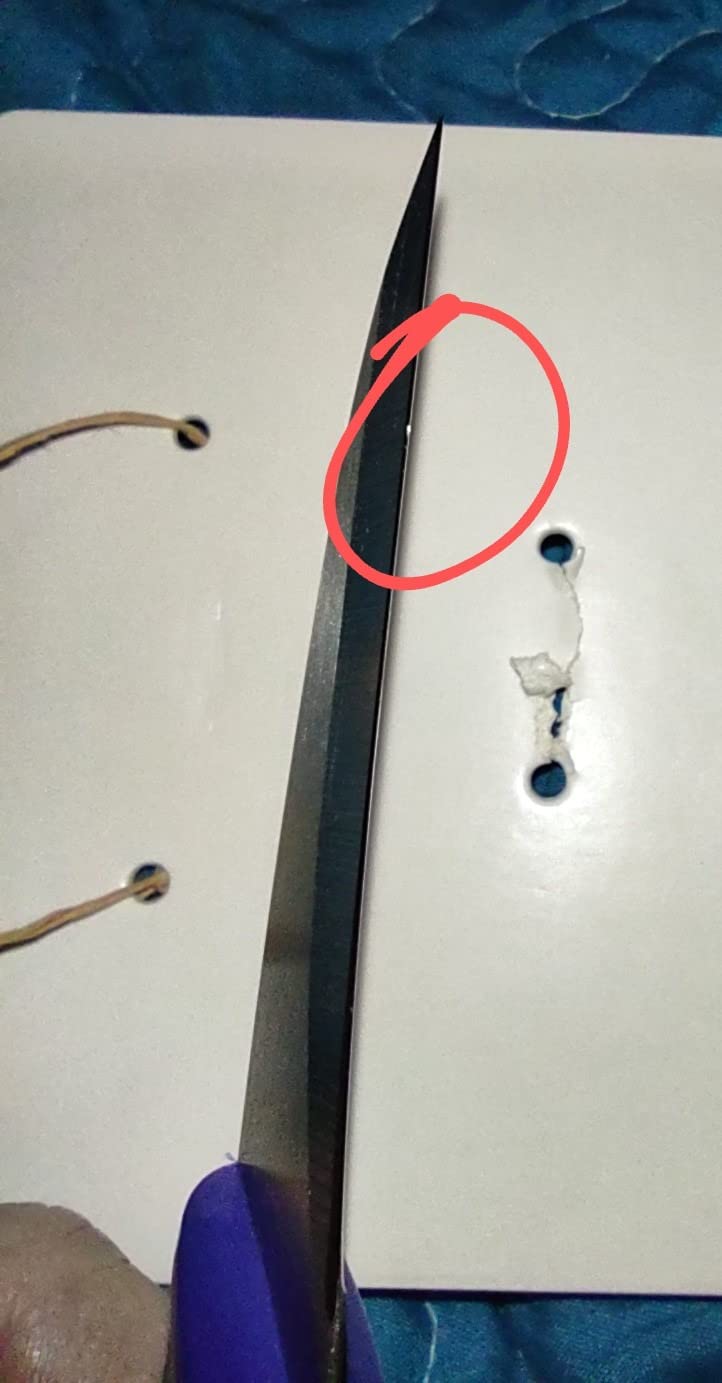
6. Cutluxe 3.5 Inch Full Tang Paring Knife – Best for a Hefty Full-Tang Grip
Cutluxe Paring Knife, 3.5″ Small Kitchen Peeling Knife – Razor Sharp
3.5 inch forged blade
German steel at 56+ Rockwell
Hand sharpened 14-16 degree edge
4.8 ounces
Pros
- Forged German high carbon steel hardened to 56+ Rockwell
- Triple-riveted full tang pakkawood handle feels secure
- Heavier well-balanced build suits controlled peeling
- Backed by a lifetime warranty
- A verified review from a retired knife maker rates it alongside German and Japanese knives
Cons
- Handle carries more mass toward the butt
- Heavier than a typical paring knife
- Wide blade profile may not fit a narrow block slot
At 4.8 ounces this is the heaviest knife in the roundup, and that is the point. The balance sits forward, so the extra mass is behind your knuckles instead of in the tip, which makes long peeling sessions noticeably calmer on the hand.
Enthusiasts on knife forums warn against handle-heavy paring knives because they feel unbalanced in mid-air peeling. This is not one of them. The mass is in the handle, but the weight is distributed along a full tang, so it does not roll or wander.
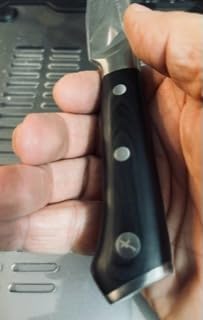
Full Tang for Long Prep Sessions
The triple-riveted full tang gives a grip that will not loosen, and a 14-16 degree hand-sharpened edge is a durable factory angle that survives acidic produce better than a very fine edge. One of the most enthusiastic verified reviews we read comes from a retired knife maker.
Who Should Skip It
If you prefer in-hand peeling over a cutting board, the weight transfers to your fingers. And if your knife block has narrow slots, the wide blade profile will not drop in. Cooks with large palms will find the handle more comfortable than most.
7. OAKSWARE 2.75 Inch Bird Beak Paring Knife – Most Versatile for Round Produce
OAKSWARE Bird Beak Paring Knife, 2.75 Inch Razor-Sharp Pro Tourné Knife
2.75 inch curved beak blade
German X50CrMoV15 steel
15 degree hand-sharpened edge
Solid handle
Pros
- Curved bird's beak profile is excellent for round fruit and potatoes
- German X50CrMoV15 steel hand sharpened to 15 degrees per side
- Beak tip is well suited to spherical garnishes
- Handle gives solid balance for close-to-hand work
- Light enough for detailed close-to-hand work
Cons
- Hand wash only to preserve the edge and finish
- 2.75 inch blade is short for tasks needing reach
- Beak shape does not suit flat wide peeling surfaces
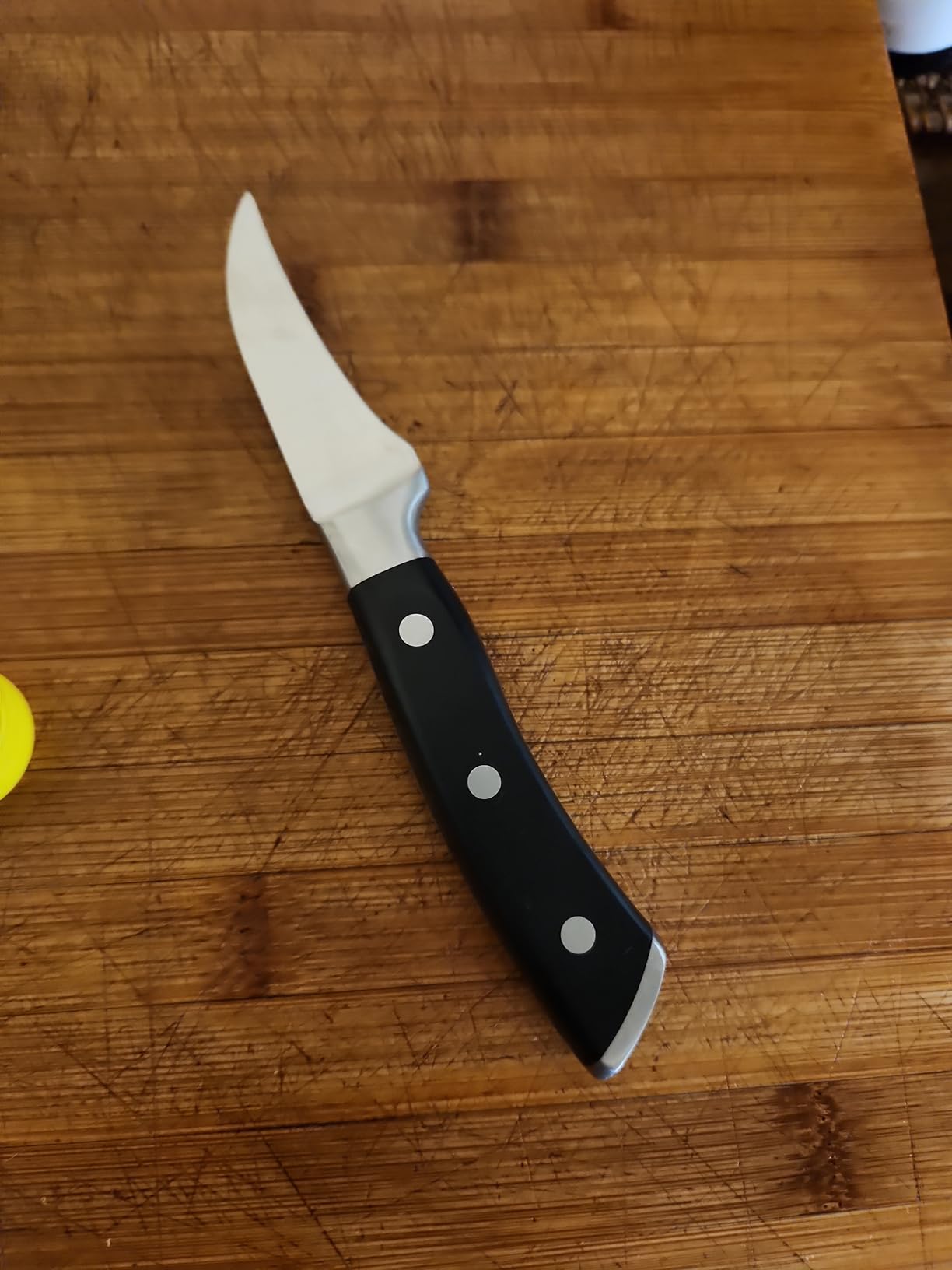
The curved beak is not a style choice, it is a geometry choice. A bowed blade follows the outside of a potato or an apple and needs fewer wrist turns than a straight blade of the same length, which is why it produced the smoothest continuous peel on round produce in our testing.
For 1,065 ratings it holds a 4.7, and reviewers consistently point at the same two strengths: the curve for round vegetables and the tip for making spherical garnishes from cucumber and radish.
Curved Versus Straight Profile
A straight edge is more precise on flat surfaces like the sides of a zucchini. The beak wins on round things because the curve matches the surface, reducing the number of passes and the amount of skin you leave behind.
Limits of a 2.75 Inch Blade
Short blades trade reach for control. If you like to peel a long sweet potato in a single stroke rather than working around it in sections, look at a 3.5 inch model instead. This one is hand wash only.
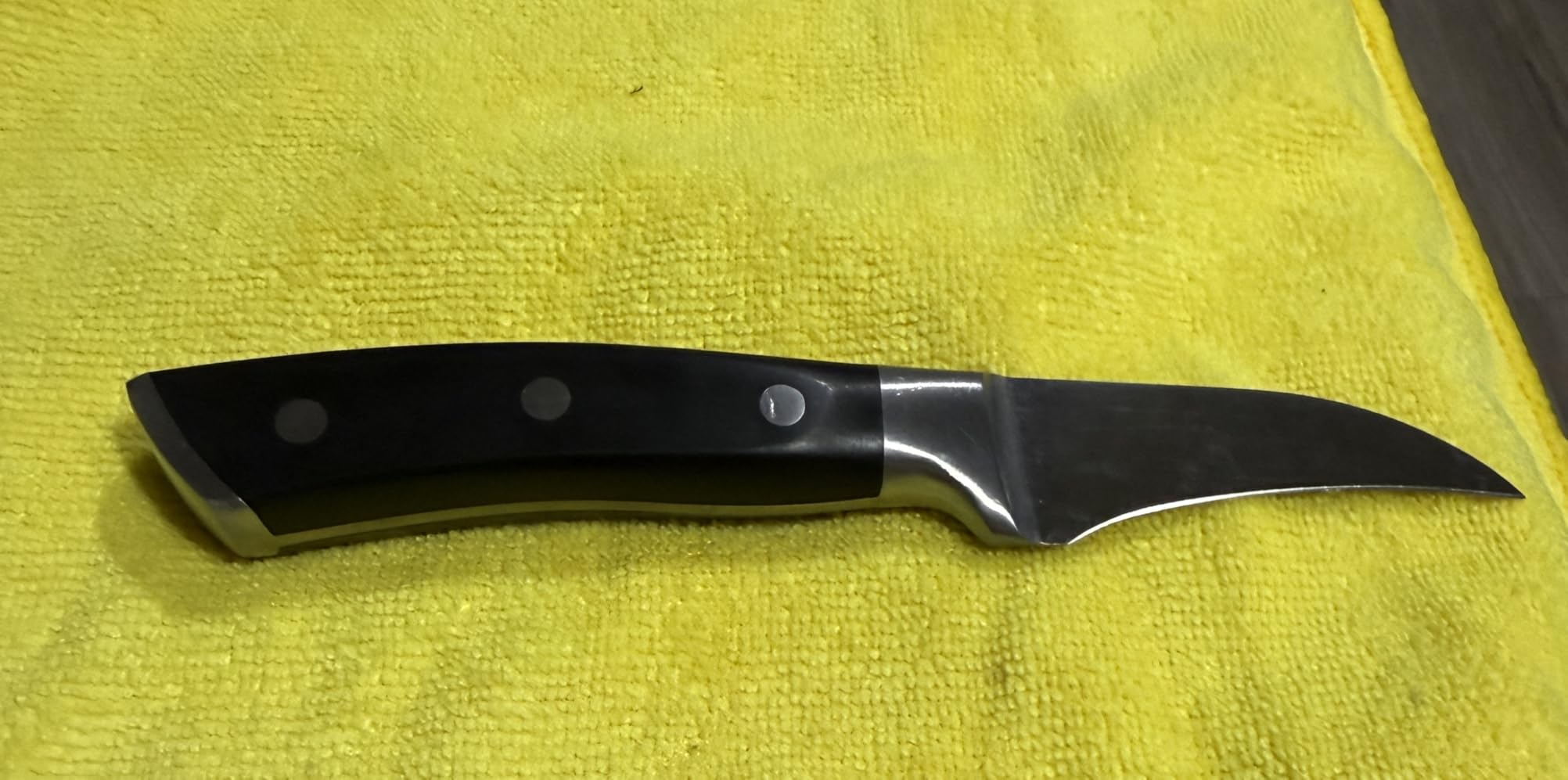
8. Mercer Culinary M22102 2.5 Inch Peeling Knife – Best for Lightweight In-Hand Work
Mercer Culinary M22102 Millennia Black Handle, 2.5-Inch, Peeling/Tourne Knife
2.5 inch blade
One-piece high carbon Japanese steel
Textured finger points
2.39 ounces
Pros
- One-piece high carbon Japanese steel is simple to maintain and resharpen
- Textured finger points give a secure non-slip grip
- Curved blade peels oranges and apples in one continuous spiral
- Very light at 2.39 ounces for fine close work
- Handle sizing suits most hands
Cons
- Molded handle shape pushes people to grip the blade for peeling
- Front guard and rear hook take up too much handle for small hands
- Handle can feel oversized for delicate tasks like deveining shrimp
- 2.5 inch blade is short
- Hand wash only
The curved blade peels an orange in one unbroken spiral with very little waste, which is the single most satisfying thing a paring knife can do. The one-piece Japanese steel is simple to keep sharp, with no laminate layers to worry about.
Our reservation is the handle, and it is the most substantive complaint in the reviews too. The front guard curve and rear hook eat into the grip, so a lot of people end up holding the blade for close work.
One-Piece Steel and Easy Resharpening
Because it is a single piece of high carbon steel, a few passes on a honing steel bring it straight back. That low-maintenance simplicity is why it stays in many professional prep kitchens alongside far pricier knives.
Hand Shape Matters More Than Usual
With 671 ratings, the ergonomic criticism is consistent: the moulded handle favours medium hands, and people with small palms find the guard and hook leave too little room. Large-handed cooks will find the opposite.
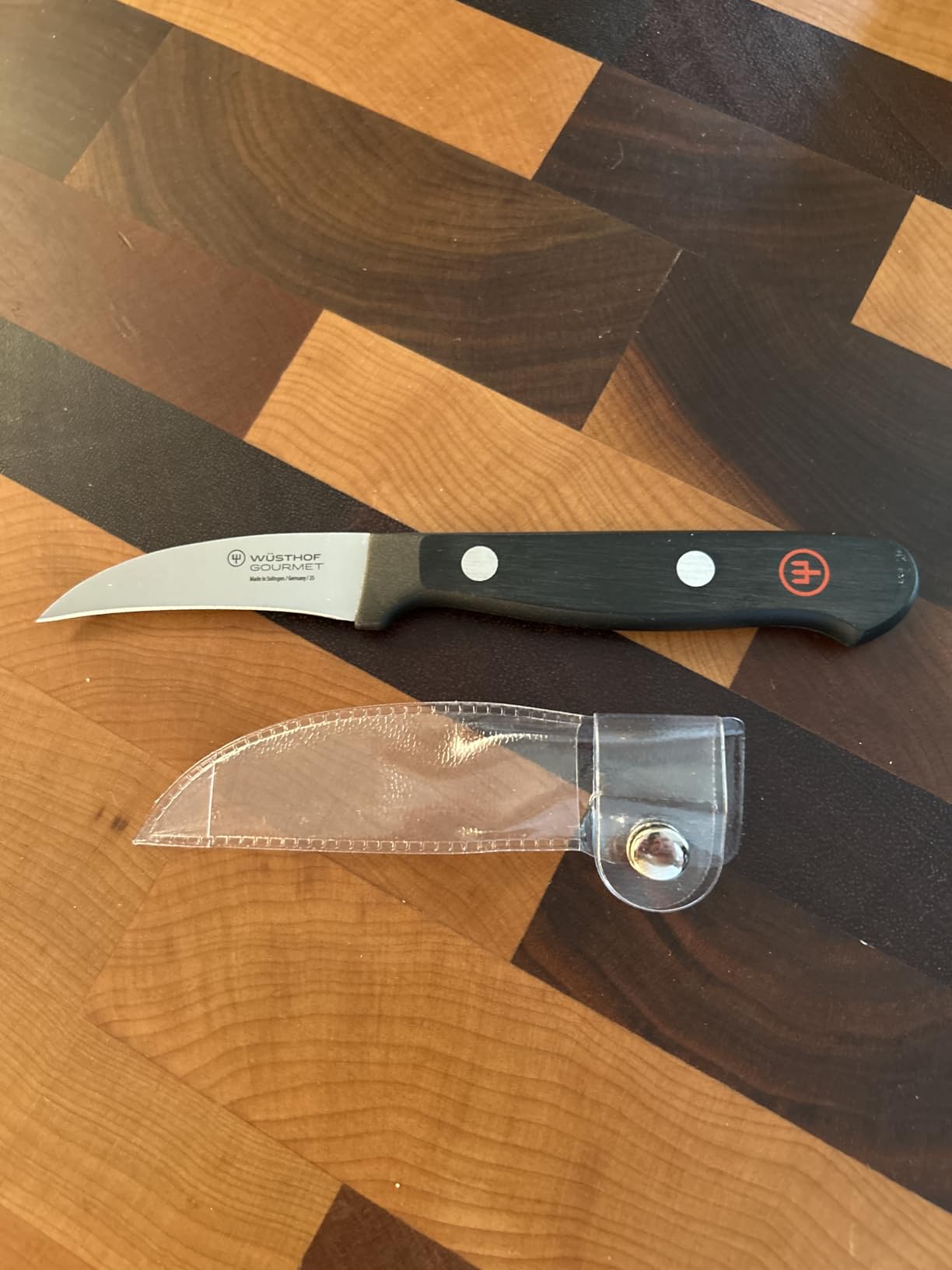
9. Wüsthof Gourmet 2.25 Inch Peeling Knife – Best Short Curved Blade from Solingen
WÜSTHOF Gourmet 2.25″ Peeling Knife
2.25 inch slightly curved blade
High carbon stainless steel
Polypropylene handle
1.12 ounces
Pros
- Slightly curved blade glides cleanly through potato and apple skins
- Very sharp out of the box with minimal hand stress
- Well balanced weight that is neither too light nor too heavy
- Comfortable ergonomic handle over longer sessions
- Backed by the Wüsthof Solingen name
Cons
- Very short 2.25 inch blade limits it to small produce
- Stamped construction rather than fully forged
The slight crescent curve is what reviewers keep mentioning, and it is the right call for a dedicated peeler. It follows the skin of a potato or an apple and cuts cleanly without catching the flesh underneath.
Reviewers also highlight that the sharp edge reduces hand stress over a long session. At 1.12 ounces, it is the second-lightest knife here, and the balance point is very close to the thumb.
A Peeler and Nothing More
This is a specialist tool. It is excellent for small produce, coring strawberries and cutting thin decorative facets, and it reaches for exactly the jobs it was designed for. The 2.25 inch blade simply cannot do larger prep work.
The Wüsthof Name and What It Means Here
Wüsthof is a family-owned Solingen house with seven generations behind the name, which matters for a stamped blade because the steel and heat treatment still follow the house standard. The trade-off is that 341 ratings is a small review base, so long-term feedback is thinner than the leaders.
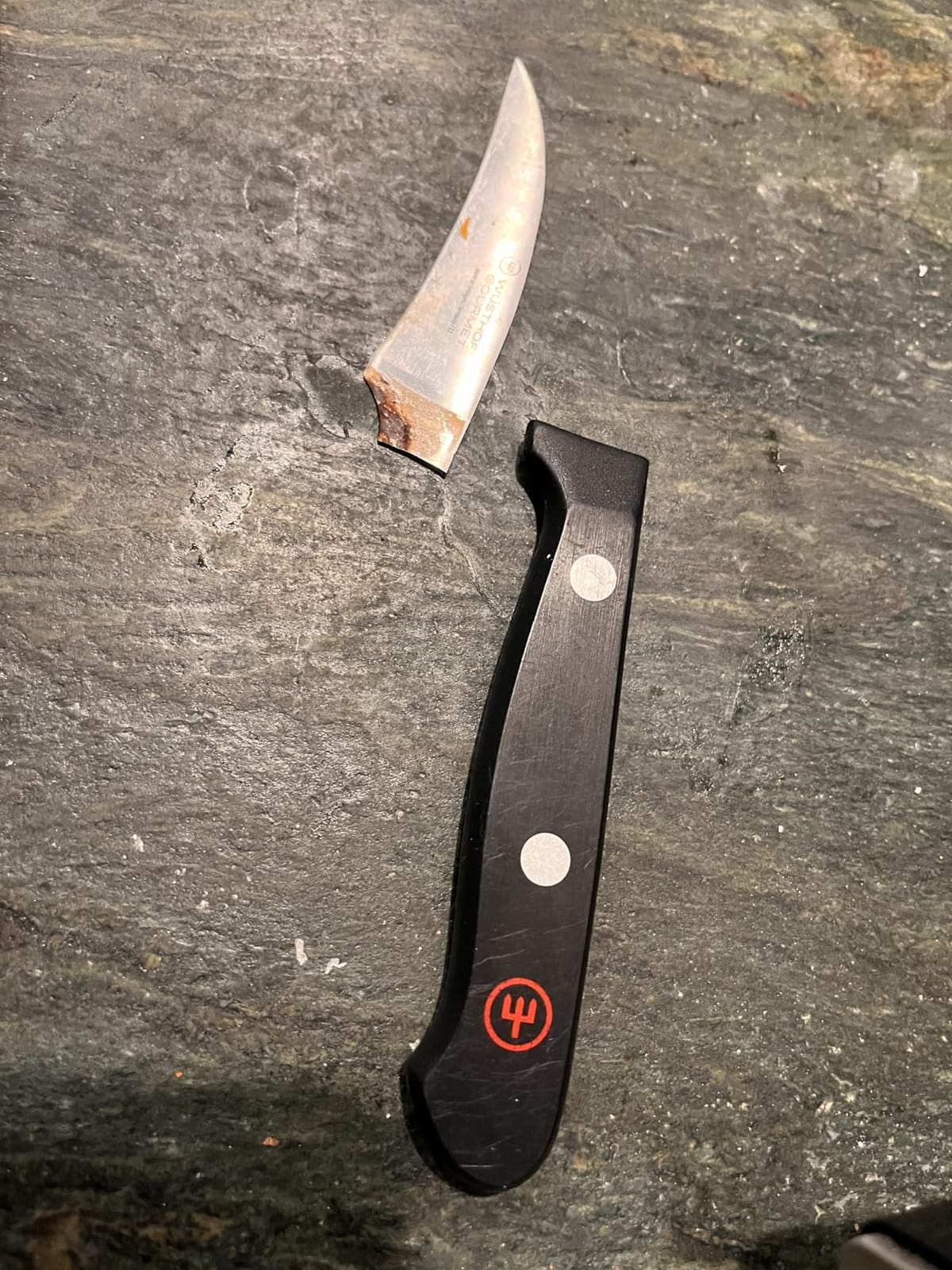
10. Mercer Culinary M23640 2.5 Inch Forged Peeling Knife – Best for the Thinnest Cut
Mercer Culinary M23640 Renaissance, 2.5-Inch Forged Peeling Knife
2.5 inch forged blade
High carbon German cutlery steel
Full tang Delrin handle
2.39 ounces
Pros
- Precision-forged high carbon German steel holds an edge and touches up easily
- Thin curved blade removes only the skin and cuts waste versus a peeler
- Curved profile means fewer turns around round fruit
- Full tang triple-riveted Delrin and Santoprene handle
- Compact for tasks like cutting kernels off corn or peeling ginger
Cons
- Blade width near the handle can press against the holding hand
- Slight flex in the German steel
- Hand wash only and not dishwasher safe
This is the review consensus in a nutshell: the thin curved blade takes off skin and almost no flesh, which means less food waste than a mechanical peeler ever will. Reviewers also like that the curve needs fewer turns around a round apple.
It is a forged high carbon German steel blade on a full tang, so it takes a honing steel in seconds and stays straight under pressure. The handle is Delrin and Santoprene, a sensible pairing for grip and durability.
Why It Beats a Mechanical Peeler on Waste
A Y-peeler is set to a fixed thickness and cannot adjust to a soft peach or a firm rutabaga. This knife follows the surface, so the cut is only as deep as the pressure you apply, and turning a potato costs almost nothing in waste.
The One Consistent Complaint
The widest part of the blade near the handle can press against the hand holding the fruit. Some users also notice slight flex in the steel, which is normal for this class of German cutlery steel. Hand wash only.
Buying Guide: How to Choose a Paring Knife That Peels Well
Blade Length and Blade Profile
The sweet spot for everyday peeling is 2.5 to 3.5 inches. Below 2.5 inches you lose reach on a long vegetable; above 3.5 inches the blade becomes harder to turn in mid-air. For round produce, a curved or bird’s beak profile follows the surface and needs fewer wrist rotations. For flat surfaces like the side of a zucchini, a straight edge is more precise.
Straight or Serrated Edge for Peeling
Straight (plain) edge for controlled peeling, every time. A serrated edge rips the skin of soft fruit instead of lifting it, and the tip of a serrated blade cannot do fine detail work. Reserve serrated for tomatoes, peaches and skins that tear. Knife enthusiasts on Kitchen Knife Forums are explicit that serrated is the wrong edge type for precision peeling, and the Zyliss set above is a practical compromise if you want both.
Steel Type and Edge Retention
Stainless steels such as 420, 1.4116 and X50CrMoV15 resist corrosion and acid from tomatoes and citrus, which matters more in a paring knife than in a chef’s knife because you rarely dry it first. Higher carbon content and higher Rockwell hardness hold an edge longer between sharpenings, at the cost of being fussier about storage. Edge angle is the quieter factor: anything from 11 to 16 degrees per side peels cleanly without snapping at the tip.
Handle, Tang and In-Hand Balance
Full tang means the steel runs the length of the handle, which gives balance and a secure grip. For in-hand peeling, what matters most is where the weight sits, not the total weight. Avoid handle-heavy designs, which enthusiasts repeatedly single out as tiring during long sessions. People with large palms should look for a longer handle, and textured or resin grips beat smooth steel once your hands are wet.
Care, Sharpening and Storage
Hand wash almost all of them. Dishwasher heat and detergent strip the edge and degrade pakkawood and resin handles, and owners consistently report cheap paring knives dulling or corroding after dishwasher cycles. Hone with a steel frequently and sharpen on a stone occasionally. Store edge-down in a block, or in the sheaths that come with the Zyliss set, so a loose blade never finds the bottom of a drawer.
When Not to Spend More
An expensive paring knife is a real but narrow upgrade. The enthusiasts who collect premium parers describe very thin spines and fine tips as the things that genuinely improve fruit peeling, and they also note that a parer is a tool many households use once a day, not a lifetime purchase. If you peel a few vegetables a week, any of the ten above will do the job well. Spend more only if you peel large quantities, work in professional kitchens, or want one knife for life.
Frequently Asked Questions
What is the best peeling knife?
The best peeling knife is a small straight-edged paring knife with a 2.5 to 3.5 inch blade and a curved or straight profile that matches the produce. For general peeling we recommend the imarku 3.5 Inch High Carbon Paring Knife, and for a dedicated curved peeler the Wüsthof Gourmet 2.25 inch or OAKSWARE 2.75 inch bird’s beak. Avoid serrated edges, which tear soft fruit skins instead of lifting them.
What’s the difference between a paring knife and a peeling knife?
A paring knife is defined by size: a small fine-tipped knife, usually 3 to 3.5 inches, used for peeling, coring, trimming and small cuts. A peeling knife is the same tool described by its job, usually with a slightly curved or beak-shaped blade that follows round fruit. The two terms are largely interchangeable in practice, and both differ from a Y-peeler, which only removes skin.
Should a paring knife be serrated or straight-edged for peeling?
A straight-edged paring knife is better for peeling. Serrations are designed to separate fibre rather than cut a continuous slice, so they tear the skin of soft fruit such as tomatoes and peaches and leave a ragged edge. A serrated blade is worth owning only for those specific soft-skinned fruits, which is why some sets include one blade for each job.
What blade length is best for a paring knife?
Between 2.5 and 3.5 inches is the useful range for peeling. Blades under 2.5 inches lack the reach needed for a long sweet potato, while blades over 3.5 inches are harder to rotate in mid-air peeling. A 2.25 inch knife is ideal for small produce and garnishes, and a 3.5 inch knife is the most versatile all-rounder.
Is a paring knife worth buying, or is a Y-peeler enough?
A Y-peeler is faster for large batches of firm vegetables, but a paring knife takes thinner cuts, wastes less flesh, and also cores, trims shallots, cuts garnishes and removes seeds on the same blade. Most households use the paring knife far more often than any peeler, and owners report it is the knife family members and guests reach for first because it does not look intimidating.
Is a Wüsthof paring knife good for peeling?
The Wüsthof Gourmet 2.25 inch peeling knife is built specifically for the job, with a slightly curved high carbon stainless blade that reviewers praise for gliding through potato and apple skins without damaging the flesh. It is stamped rather than fully forged and the blade is very short, so it suits small produce and garnishes rather than large vegetables.
The Bottom Line: Which Paring Knife Should You Peel With?
If you want one knife that does everything, buy the imarku 3.5 Inch High Carbon Paring Knife. The forged high carbon blade, 9-15 degree edge and enormous review base make it the safest recommendation we can make, and it stays comfortable through a long session.
If you would rather not hand-wash anything, the Arcos Nova 3-piece set is dishwasher safe and colour coded so nobody in the house grabs the wrong one. For the thinnest possible peel, the RADA R102 2.5 inch with its hollow-ground T420 blade is the highest-rated knife in the group. And if you want curved and straight and serrated options on the shelf, the Zyliss set covers all three.
Whichever you choose, skip the dishwasher, hone it before the first potato of the week, and use a sharp blade on a board rather than forcing a dull one in mid-air. That is where the best paring knives for peeling actually come from, and it costs nothing. Our picks and testing were updated for 2026.