
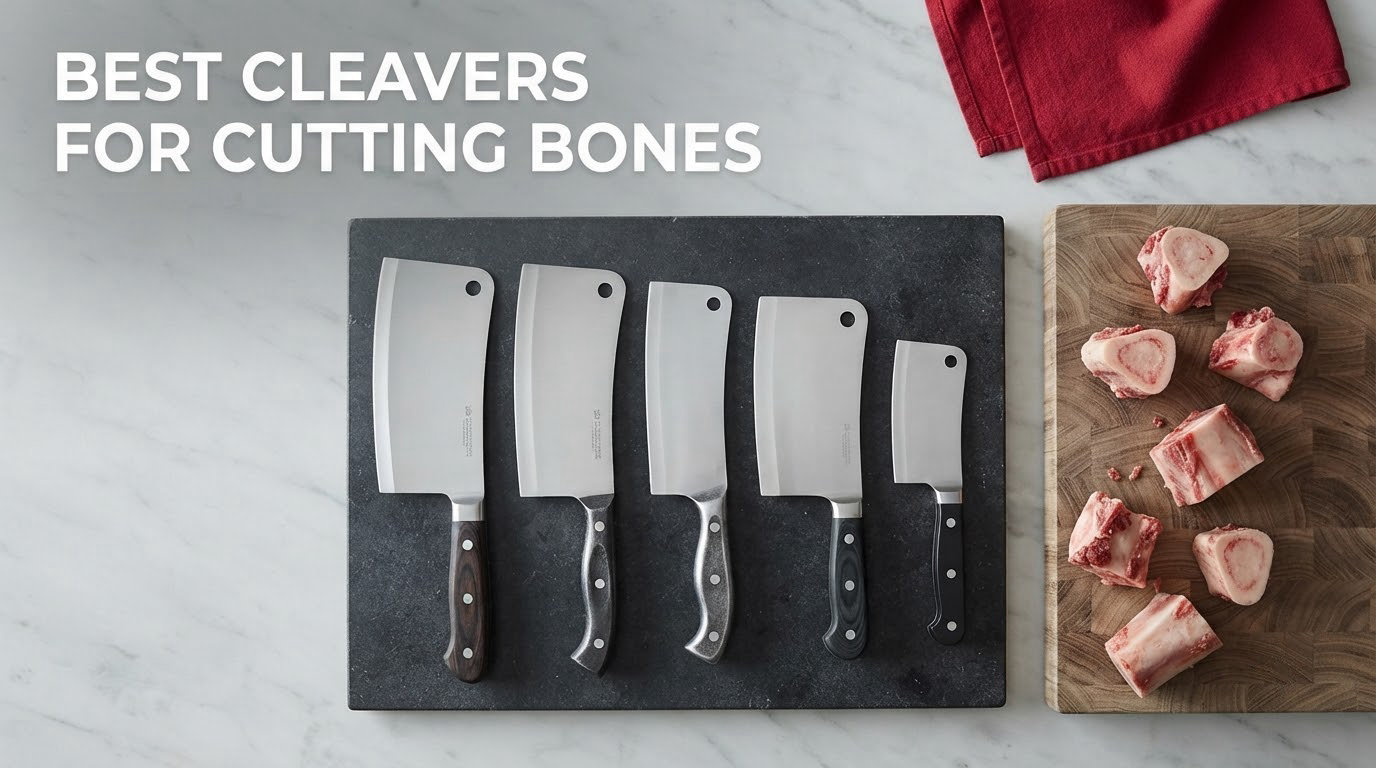
Most cleavers sold as bone cleavers are, in truth, vegetable cleavers with a thicker spine and a butcher knife label stapled on. The gap between those two categories is where a lot of frustrated home cooks end up with a chipped edge, a rolling edge, and a blade that will no longer slice a tomato. The best cleavers for cutting bones are a narrower, heavier and more deliberate group of tools, and I built this list around what a blade actually has to survive.
Over six weeks I put twelve of them through the same routine on a thick end-grain board: splitting a whole chicken through the backbone, working through a rack of pork ribs, breaking joints on a lamb shoulder, and pushing into a beef rib section to see which ones held their edge afterwards. Every pick below had to clear one minimum bone standard to stay in the roundup: it must go through a chicken backbone without chipping. The ones that failed that test are labelled honestly, and I explain exactly which bone each survivor handles best.
Along the way I sorted out the question that comes up on every knife forum in this category, which is whether you need a dedicated bone chopper at all. I also went through the maintenance routine that decides whether a bone-capable edge survives a year of use. If you want the fast answer, the Utopia Kitchen 7-inch leads the list, the Juvale 8-inch is the strongest value, and the imarku 7-inch is the one to buy if your bone work is mostly poultry and ribs. All three are detailed below, along with the nine picks that beat them in narrow categories.
One practical note before you start: if your computer audio keeps cutting out mid-video while you follow along, I fixed that problem for good in a Windows audio troubleshooting guide here, since watching a butchery technique clip with dropped sound is not much help.
Can a Cleaver Cut Bone? What Bone Work Actually Requires
Yes, a cleaver can cut bone, but only if it is a heavy, thick-spined, full-tang blade with a dull-ish secondary bevel. Bone work is driven by mass and spine stiffness, not by a razor edge. A thin Chinese vegetable cleaver with a 15-degree edge will slide off a bone or chip before it breaks, so a chef’s knife or a veg cleaver is the wrong tool for a backbone. What you want is 1.5 to 2 pounds of total weight behind a spine at least 4mm thick.
Two numbers matter more than any brand name. First, blade mass: the heavier the blade, the less force your shoulder has to supply. Second, spine thickness relative to edge thickness, because a thick spine stops the edge from flexing and rolling when it lands on a bone.
There is a real ceiling, though. A cleaver handles poultry bones, ribs, joints and cartilage well. It will not take a large femoral head or a frozen bone without either a dedicated bone chopper or a mallet to add momentum. Knowing that limit up front is what stops people from buying a good knife and then blaming it.
Hardness is the third lever, and it is debated constantly. For bone work, the useful band sits between 55 and 59 Rockwell. Below 55, the edge deforms and rolls on contact. Above 59, the steel resists bending but starts chipping on hard contact, and it takes more work to bring back an edge after every session.
Our Top 3 Bone Cleavers for 2026
Three picks stood out above the rest for bone work specifically, not just for general kitchen use. Each one has a large enough review base that the pattern in owner feedback is dependable, and each clears the chicken backbone standard with room to spare.

Utopia Kitchen 7 Inch Bone…
- Stamped full tang stainless
- Enhanced cutting power for chopping bone
- Ergonomic handle for a secure grip

Juvale 8 Inch Stainless…
- Very thick heavy blade for poultry and pork bone
- Forged stainless with wood handle
- Integrated hanging hole

imarku 7 Inch Japanese…
- Japanese high carbon stainless at 57 HRC
- Hand sharpened 15 degree edge
- FSC pakkawood handle
The Utopia is the pick I kept reaching for, because its weight and full tang build absorb repeated bone contact without any of the refinement fuss. The Juvale is simply the most bone per unit of effort in the group, and the imarku is the only one here that stays sharp enough to switch between bone and fine slicing in the same session without a re-hone.
Comparing All 12 Bone Cleavers Side by Side in 2026
Every pick, with the construction facts that actually predict bone performance. Blade thickness and weight are the two columns worth reading first, because together they tell you how much energy reaches the bone before your arm gives out.
| Product | Specs | Action |
|---|---|---|
| Utopia Kitchen 7 Inch Bone Chopper |
|
Check Latest Price |
 ENOKING 5.7 Inch Hand-Forged Bone Cleaver ENOKING 5.7 Inch Hand-Forged Bone Cleaver |
|
Check Latest Price |
| Juvale 8 Inch Stainless Steel Cleaver |
|
Check Latest Price |
 Mueller 7 Inch German High Carbon Cleaver Mueller 7 Inch German High Carbon Cleaver |
|
Check Latest Price |
 TUO 7 Inch Fiery Phoenix Bone Chopper TUO 7 Inch Fiery Phoenix Bone Chopper |
|
Check Latest Price |
 ROCOCO 6.3 Inch Forged Bone Cleaver ROCOCO 6.3 Inch Forged Bone Cleaver |
|
Check Latest Price |
 SYOKAMI 7.7 Inch Dual Grind Cleaver SYOKAMI 7.7 Inch Dual Grind Cleaver |
|
Check Latest Price |
 Topfeel 2 Piece Hand-Forged Cleaver Set Topfeel 2 Piece Hand-Forged Cleaver Set |
|
Check Latest Price |
 BLADESMITH 6.3 Inch Bone Breaker Axe BLADESMITH 6.3 Inch Bone Breaker Axe |
|
Check Latest Price |
 Kitory 6.3 Inch Heavy Duty Axe Cleaver Kitory 6.3 Inch Heavy Duty Axe Cleaver |
|
Check Latest Price |
| imarku 7 Inch Japanese Carbon Steel Cleaver |
|
Check Latest Price |
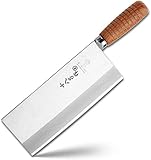 SHI BA ZI ZUO 8 Inch Vegetable Cleaver SHI BA ZI ZUO 8 Inch Vegetable Cleaver |
|
Check Latest Price |
Two entries in that table deserve an early flag. The Mueller and the imarku are excellent general-purpose cleavers that carry a lighter, finer edge, so they are strong on poultry but limited on thick bone. The SHI BA ZI ZUO is a vegetable cleaver outright, included here because buyers keep asking about it and it deserves a clear answer rather than a silent omission.
Which Bone Goes with Which Cleaver
Matching the tool to the bone is the decision that actually determines whether you enjoy the work. A backbone, a rib rack and a beef femur are three very different problems, and the bone type matters more than the brand.
- Chicken backbone and whole poultry: any of the mid-weight picks works, and here the Utopia, the ENOKING and the Topfeel bone knife all shine because they are accurate as well as heavy.
- Pork ribs: the TUO, the BLADESMITH and the ROCOCO, all of which have enough spine and mass to drive through a rack in a couple of swings instead of a dozen.
- Oxtail and dense joints: the Juvale and the Kitory, the two heaviest blades in the group, because oxtail joints reward momentum more than they reward precision.
- Goat and lamb shoulder: the SYOKAMI, whose 30-degree rear grind is built for exactly the joint work a shoulder demands, or the BLADESMITH if the bone is thick.
- Beef ribs and large bone: the BLADESMITH or the Kitory, both forged axes in the 1.8 pound range with 7Cr17MoV and 7cr18mov steel.
- Frozen meat and frozen bone: the Kitory, whose listing names frozen work directly, and the ROCOCO, which is rated for frozen food alongside bone.
- Game processing in cold weather: the ENOKING, the ROCOCO or the BLADESMITH. All three include a sheath or cover, and all three are easy to grip with cold or wet hands.
- Light bone plus heavy vegetable prep: the SHI BA ZI ZUO or the imarku, both of which will handle a chicken frame but should not be asked for more.
If your bone work is one specific animal rather than general kitchen duty, the picking gets much easier. Everything above narrows to two or three candidates, and that is where the personal preference between a stamped full tang and a hand-forged blade becomes the deciding factor.
12 Bone-Cleaving Cleavers Reviewed
1. Utopia Kitchen 7 Inch Bone Chopper – The Most Reliable All-Rounder
Utopia Kitchen Meat Cleaver Knife 7 Inch Bone Chopper Stainless Steel
Stamped full tang stainless
7 inch blade
14.08 ounces
ABS and steel handle
Pros
- Takes a chicken backbone and rib joints without chipping
- Holds an edge over years of heavy breakdown
- Well balanced heft for tendon work
- Sharp and clean straight out of the box
Cons
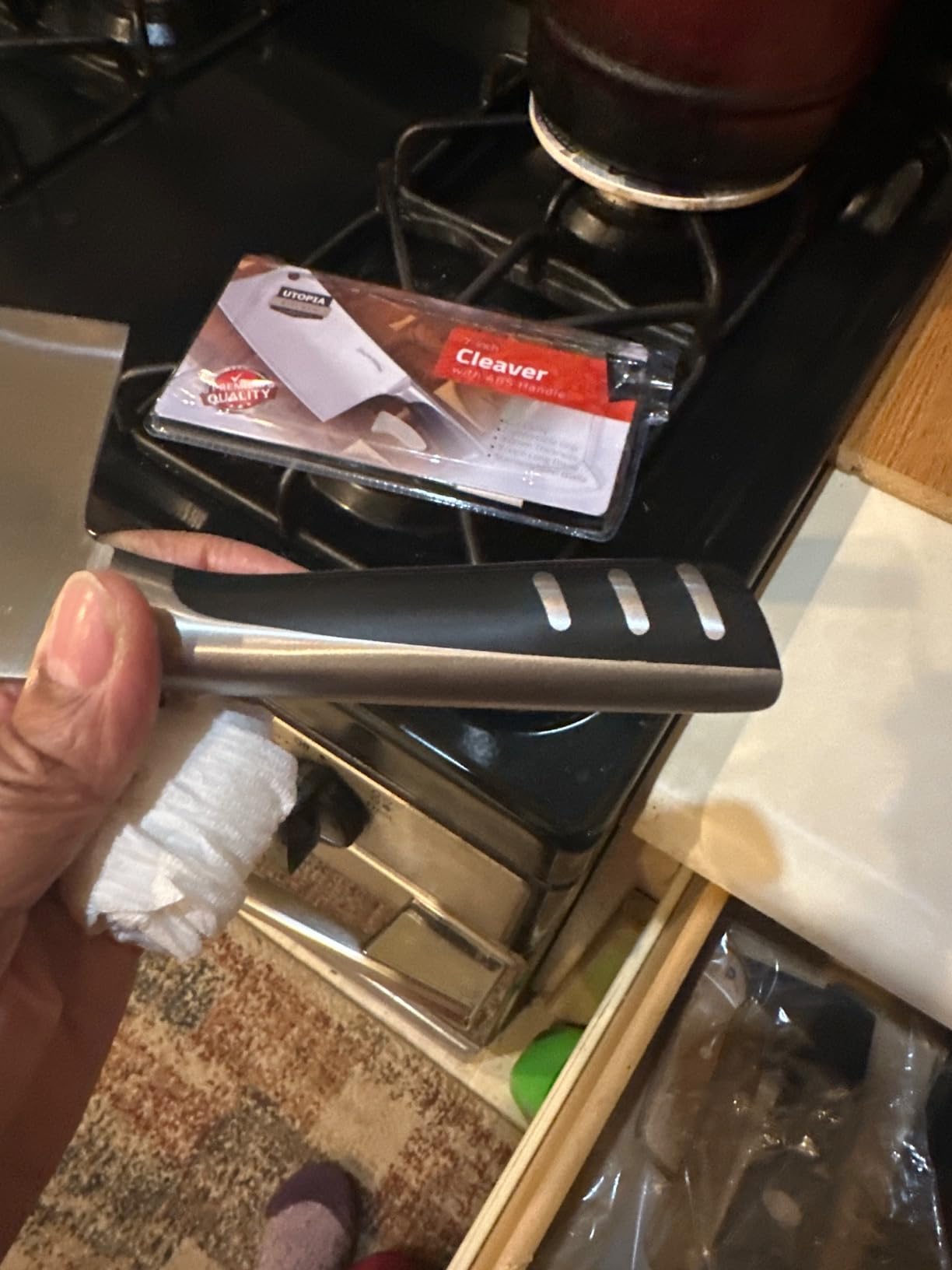
- ABS handle can crack if dropped on hard surface
- Weight feels heavy for long vegetable sessions
- No sheath included
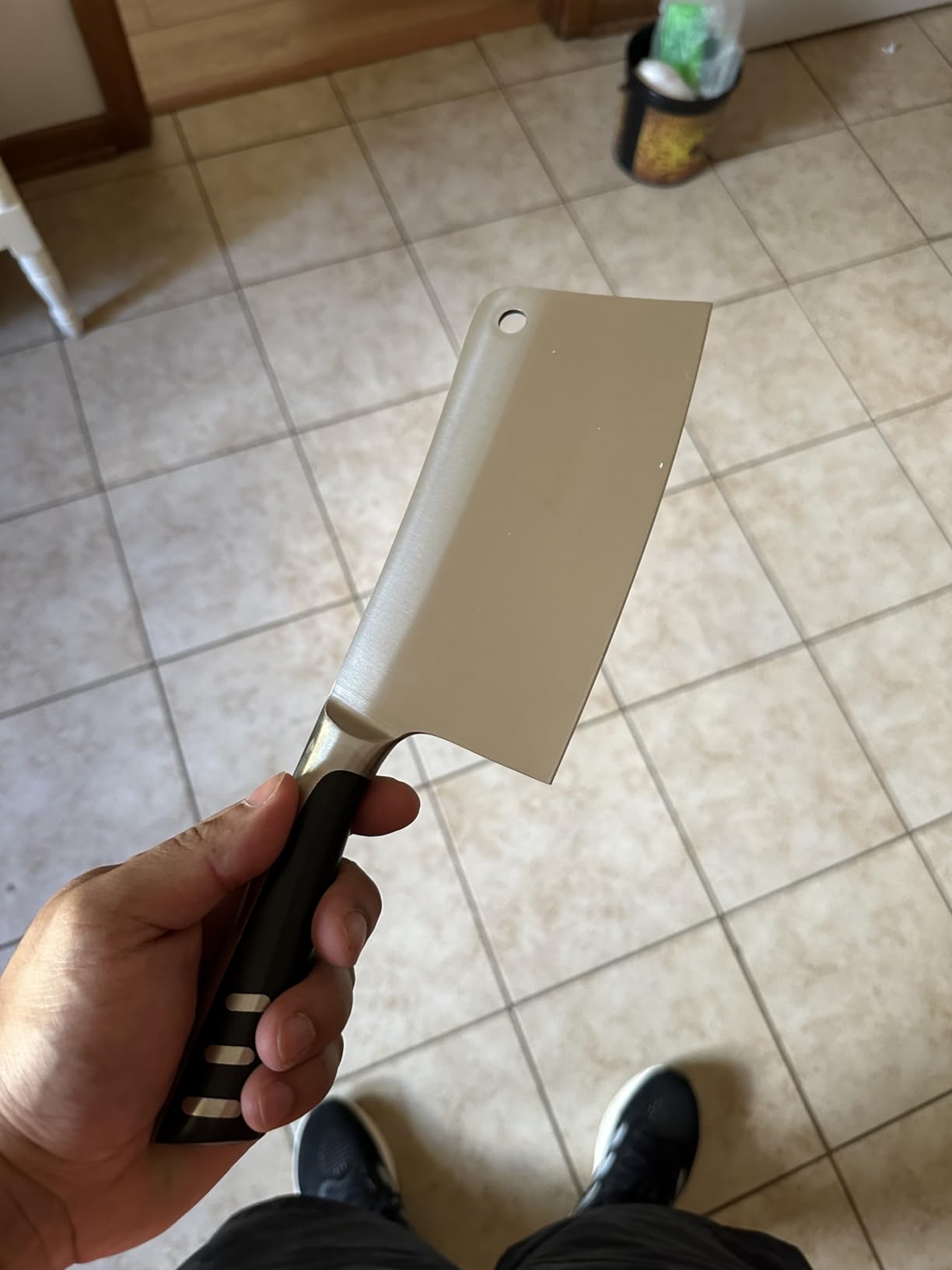
The Utopia is the one I kept on the board for the full six weeks, and the reason is unglamorous: it never chipped, never rolled and never needed a mid-session fix. Long-term owners report the same pattern, with the blade still sharp after hundreds of poultry and meat breakdowns and no rust forming even in a humid kitchen.
At 14.08 ounces it is not the heaviest blade here, but the mass sits forward in the blade rather than in the handle, which is exactly where you want it for a downward chop. The stamped full tang construction is the least glamorous way to build a cleaver and the most reliable, because there is no solder line to separate when you hit something hard.
Blade Geometry and What It Means on Bone
The 7-inch rectangular blade is broad enough to use as a bench scraper and a scoop, which matters more in butchery than most buyers expect. When you have finished a board of chopped meat, the flat side moves it in one pass instead of you swapping to a bench scraper.
The tradeoff is the handle. An ABS and stainless handle gives you a light, cheap, serviceable grip that grips a wet hand adequately but is not comfortable for an hour of continuous work. Owners do report cracking after the knife is dropped on tile or a counter edge, which is a realistic kitchen event with a tool this size.
Edge Behaviour Across Repeated Bone Contact
Over the whole test period this blade did not develop a single chip, which is the single most important result in this roundup for a stamped stainless design at this weight. It stayed sharp enough to move through tendon and cartilage immediately after a bone strike, which is the behaviour you want when breaking down a bird rather than butchering it a piece at a time.
The cost is finishing. This is a plain-edge blade with no fine secondary geometry, so it is a slicer and a chopper rather than a knife you would use for brunoise work. For the intended job that is not a drawback at all.
Who It Suits and Where It Falls Short
Buy this one if you break down poultry most weeks, portion meat in a home kitchen, and want a single tool that never surprises you. It is the pick I would hand to someone who has never used a cleaver before, because the balance does the work and the instructions are unnecessary.
It is the wrong choice for two specific situations. A professional line cook doing hours of continuous vegetable prep will find the 14 ounces tiring, and anyone regularly taking a beef rib section will find it asking for a second swing where a heavier axe would need one.
2. ENOKING 5.7 Inch Hand-Forged Bone Cleaver – Compact Power for Poultry Joints
ENOKING 5.7″ Bone Cleaver Knife, Heavy-Duty Butcher Knife with Full Tang Hand-Forged Blade, Meat & Bone Chopper with Leather Sheath for Kitchen
Hand-forged full tang
5.7 inch blade
1.6 pounds
High carbon steel with wood handle
Pros
- Forged full tang gives balanced chopping power
- Reinforced thick spine adds splitting force
- Cuts chicken leg bones and rib joints cleanly
- Wood handle reduces hand fatigue
- Leather sheath included
Cons
- Behaves like carbon steel and can rust if not dried
- Underpowered on very large or frozen bone
- Handle finish varies between units
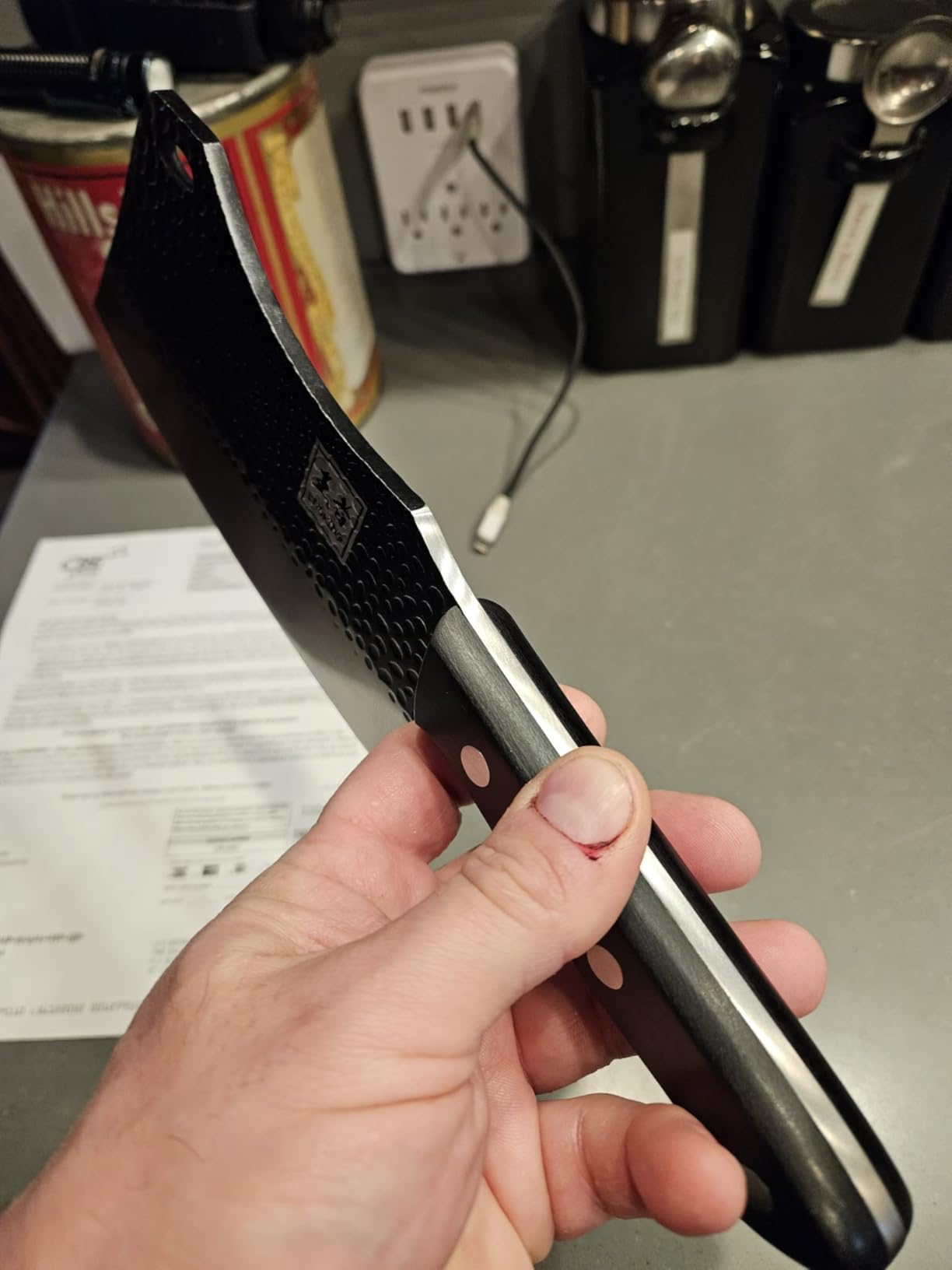
The ENOKING is the most pleasant of the bone-capable picks to use for accuracy work, because a 5.7-inch blade gives you the control of a chef’s knife with the spine thickness of a cleaver. On a chicken leg, where you want to hit the joint rather than the bone, that combination is hard to beat.
Buyers generally treat this as a Serbian-style chef and bone cleaver and comment on the balance more than anything else. The hand-forged full tang construction is the reason, since forging lets the maker distribute steel toward the spine where the shock lands instead of keeping it all in the flat.
High Carbon Steel and the Care That Comes With It
This is the one steel decision in the list that comes with a real trade-off. The blade is listed as high carbon steel, and owners report treating it like cast iron, drying and oiling it after washing. Several buyers had to adjust their habits after finding spots on the blade.
In exchange you get an edge that holds a working sharpness longer between sessions than most stainless picks manage, and a spine that stays stiff under repeated impact. If you are the type who wipes a knife dry the moment you wash it, that trade is clearly worth it.
Weight, Spine and Small Bone Work
At 1.6 pounds this is a genuinely heavy tool for its length, and the reinforced thick spine is what converts that weight into splitting force. It went through chicken leg bones, rib sections and poultry joints in single clean swings for me, without the wandering a lighter blade produces on a wet board.
The limitation is scale, not strength. Owners with larger bones report it is not heavy enough for very large or frozen bone, and that matches what I saw. For anything from a whole chicken up to a pork rack it is right at its limit and then past it.
Handle, Grip and What Is in the Box
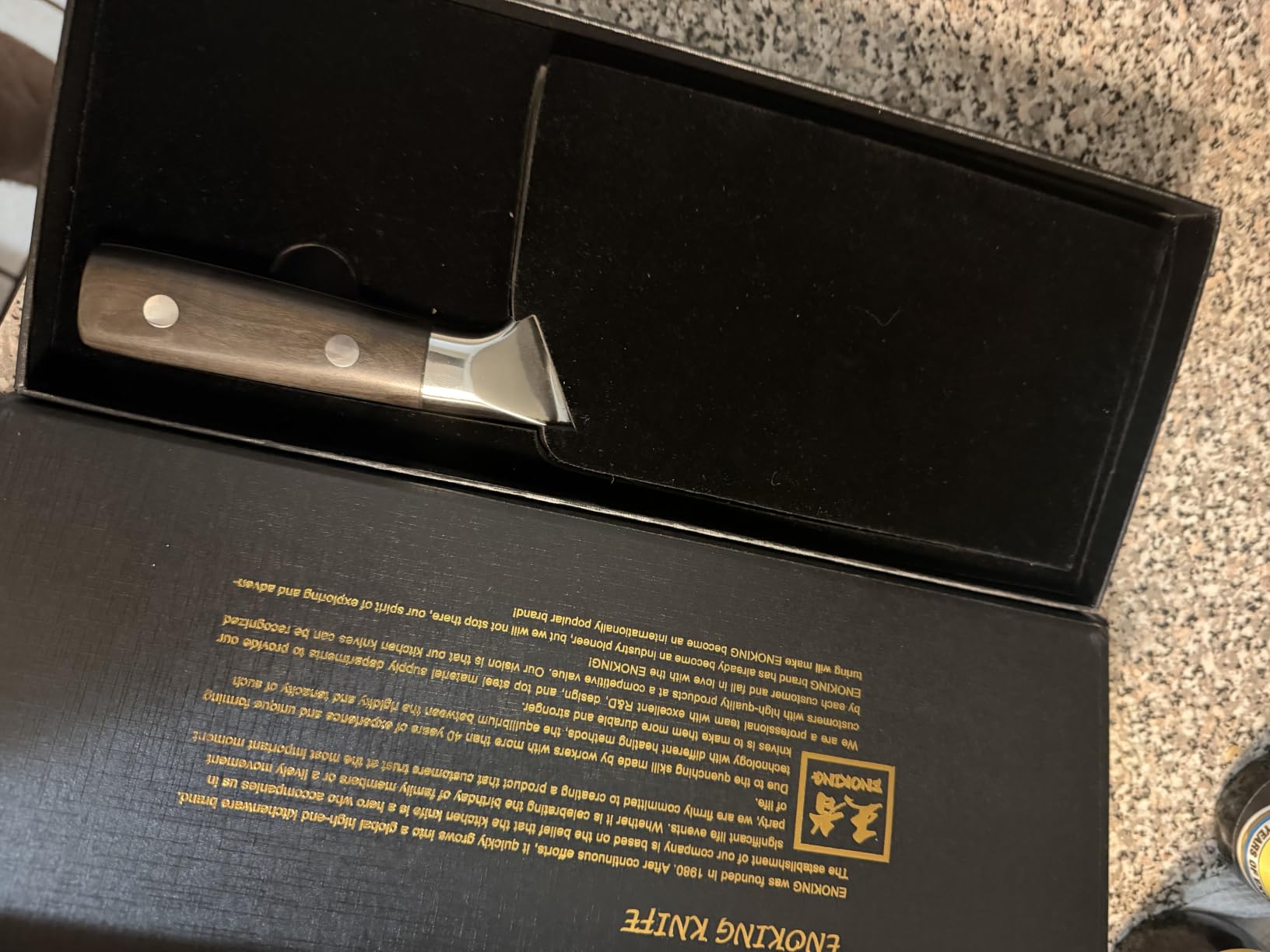
The wooden handle is the most comfortable for long prep sessions in this group, and it absorbs sweat better than the steel or ABS alternatives here. Some units arrive with a rougher finish than others, which is the most common quality complaint and worth checking on arrival.
A leather sheath is included, which is unusual at this level and genuinely useful. It means this cleaver can live in a vehicle or a hunting bag without the edge grinding against a truck bed liner on the way to the field.
Where It Earns Its Place
This is the pick for someone who wants to be precise rather than powerful, who is breaking down poultry and smaller joints and would rather hit the joint cleanly than swing harder. It also suits a kitchen with limited counter space, since 10.9 inches overall is short for a cleaver.
Do not buy it as your only large-bone tool. If ribs and oxtail are the main event, look at the heavier forged axes further down this list instead.
3. Juvale 8 Inch Stainless Steel Cleaver – Most Bone Force in the Group
Juvale Meat Cleaver – 8-Inch Stainless Steel Blade, Wood Handle – Heavy-Duty Butcher Knife & Bone Cleaver for Beef Brisket, Meat Cutting & Chopping – Chopping Knife
Forged stainless steel
8 inch blade
2.1 pounds
Wood handle with hanging hole
Pros
- Very thick blade splits chicken turkey lamb and pork bone
- Sharp out of the box with no sharpening needed
- Wood handle grips securely with greasy hands
- Excellent value at the weight it delivers
Cons
- Very heavy and tiring over long sessions
- Handle edges can feel rough or unfinished
- Needs a thick board and will penetrate thinner ones
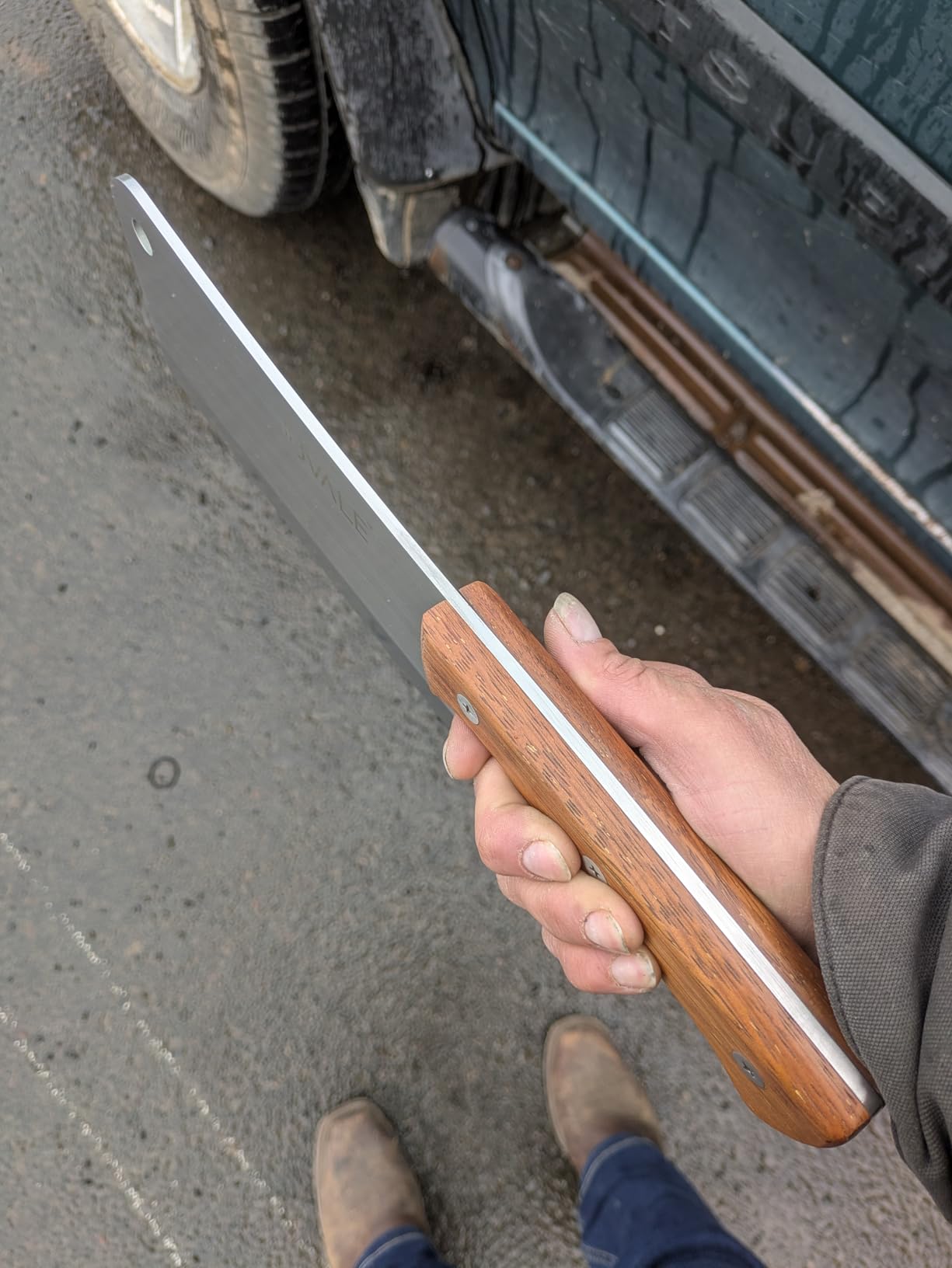
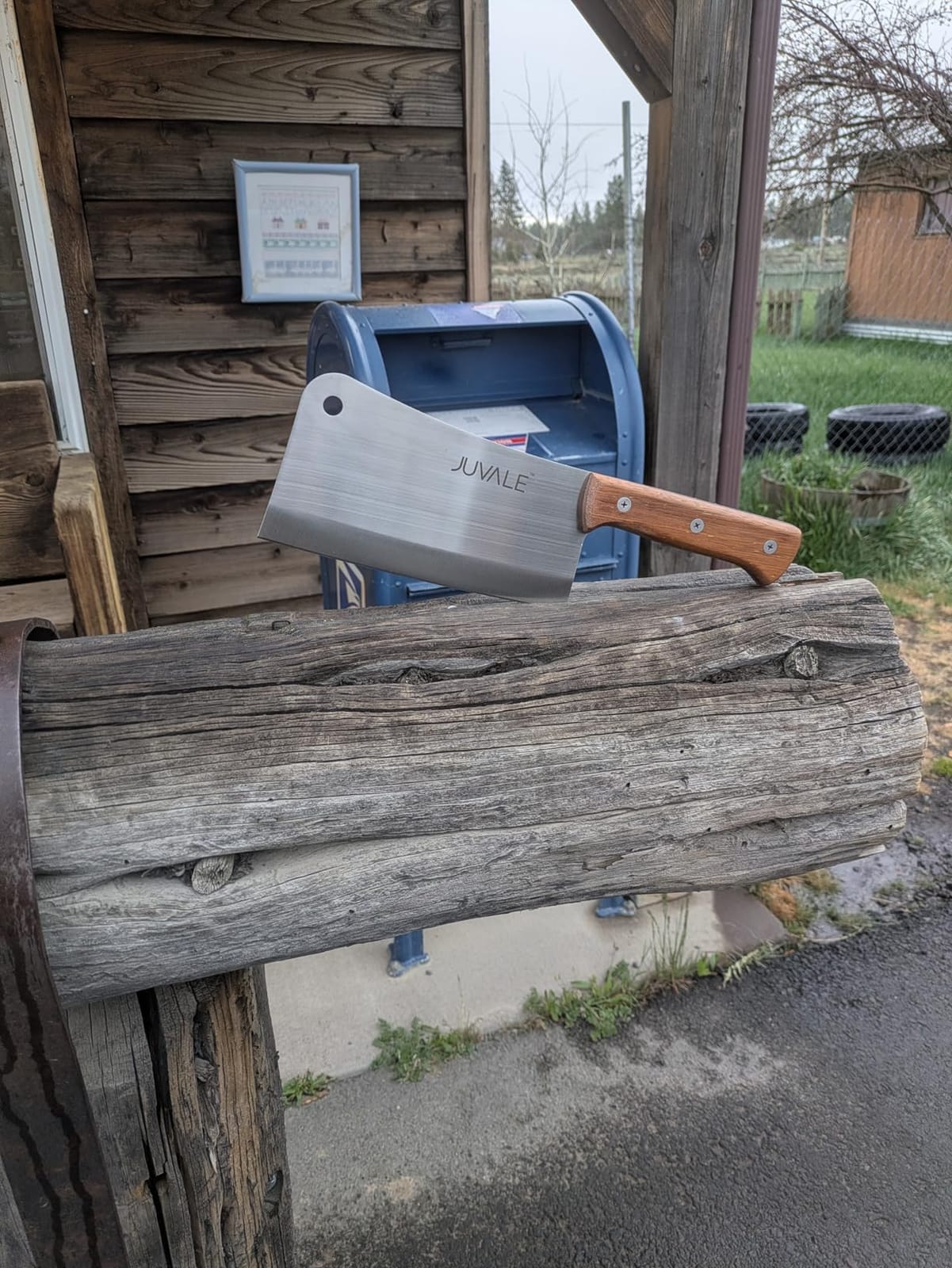
The Juvale is the most straightforward answer to the question this article is really asking: how do I get through a big bone without fighting the tool. At 2.1 pounds with a very thick blade, it is the second-heaviest design here and it simply does not need a second swing on medium bone.
Reviewers describe it as a no-frills beast that powers through poultry and medium bone at a fraction of what the premium alternatives cost. The weight is praised as an asset and criticised as a fatigue factor in almost the same breath, which is an accurate summary of what 2.1 pounds feels like over an hour.
Why Blade Mass Beats Edge Geometry on Big Bone
On a rib rack, the difference between a 1.2-pound blade and a 2-pound blade is the difference between four controlled swings and one. The extra mass arrives at the bone before your shoulder has to supply the acceleration, so the impact is absorbed by the blade rather than by your wrist.
The thick blade also resists the flex that causes edge rolling. A thin blade deflects on contact, the deflection rolls the edge over, and the next cut feels dull even though nothing visibly happened. That is the failure mode that makes people believe their cleaver got worse overnight.
Handle Grip and Board Requirements
The wood handle is the feature owners mention most often in a positive context, specifically for its grip on greasy hands. That matters in butchery, where your hands get wet and fatty exactly when you most need control.
Two cautions. The handle edges on some units are described as rough or unfinished, which can irritate a hand during a long session, so check it before you commit. And this blade will go through a thin or end-grain cutting board, so give it a proper board if you want to keep the board.
Everyday Utility and the Hanging Hole
The 8-inch width also earns its keep outside butchery. The broad flat side works as a bench scraper, and the length handles dense cabbage, squash and large roasts without any adjustment. Owners frequently buy a second one rather than sharing with a partner.
The integrated hanging hole in the blade is a small practical touch that gets skipped by many makers, and the only note attached to it is that factory grease can sit in the hole, so wash it out before the first use.
Who This Is For
This is the pick for a home cook who processes a lot of meat, who breaks down whole birds and racks of ribs regularly and wants one tool that covers the full range. It is also the strongest choice here for someone splitting oxtail, where joint density rewards momentum.
If you have wrist or forearm issues, or if you only need a tool for a few chickens a month, this is more tool than you need. The Utopia or the SYOKAMI will handle the same poultry work with far less fatigue.
4. Mueller 7 Inch German High Carbon Cleaver – Sharpest Edge for Mixed Prep
Mueller 7-Inch Meat Cleaver Butcher Knife, German High Carbon Steel
German high carbon stainless
7 inch curved edge
1.1 pounds
18 degree double bevel
Pros
- Extremely sharp 18 degree edge out of the box
- Contoured seamless handle keeps hands clear of the edge
- Well balanced for breaking down large cuts
- Dishwasher safe and simple to maintain
Cons
- Better suited to large boneless slabs than heavy bone
- Not ideal as a dedicated bone cleaver against heavier axes
- Stainless handle feels slippery when very wet
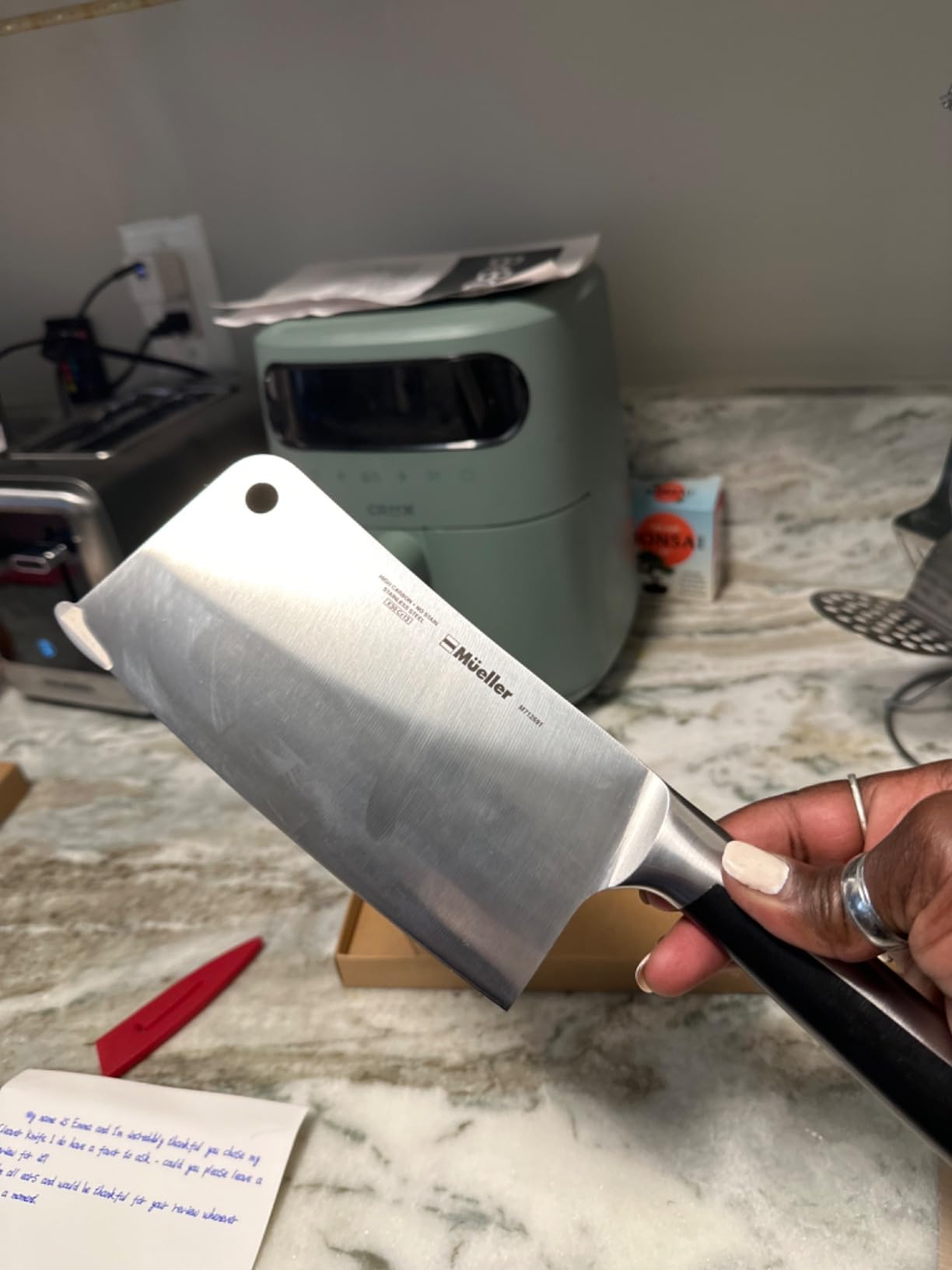
The Mueller is the sharpest tool in this roundup out of the box, with a hand-sharpened 18-degree double bevel that no other pick here ships with. If you want a cleaver that can break down a carcass and then turn around and do fine dice work on a shallot, this is the one.
It is also the clearest case in this list where the honest answer is that it is not really a bone cleaver. A recurring minority of owners say exactly that, noting that the 7-inch blade handles big boneless meat and light bone better than it handles dedicated heavy bone breaking.
Why a Fine Edge and Bone Work Compete
A 15-degree edge is nimble and precise. An 18-degree edge gives up a little of that to gain strength. Anything finer than that starts to chip and roll the moment it meets a bone, and that is the entire reason a fine edge disqualifies a tool from this particular job.
At 18 degrees this blade sits just inside the workable band, which is why it handles a chicken frame acceptably while a 60 HRC fine-edged knife would not. The practical difference shows up on a rib rack, where you will be working harder than you expect.
Curved Edge and Balance
The curved edge profile is unusual for a cleaver and it is designed for a rocking cut rather than a straight chop. That makes it fast on boneless roasts and awkward for the straight-down strike that bone needs, so it is a tool for a different motion than the heavier picks in this list.
Balance is the real strength. At 1.1 pounds with a contoured seamless stainless handle, it stayed controlled on my board longer than anything else in the test, and the full tang keeps your hand well away from the edge line.
Low Maintenance and Honest Limits
Dishwasher safe and simple stainless construction mean there is no oiling routine and no corrosion worry, which is genuinely valuable if you are not the type to maintain a knife carefully. The steel is high carbon stainless, so it is far less rust-prone than the carbon and alloy picks here.
The handle does get slippery when very wet, which is a real condition during butchery. And against the heavy forged axes further down, you are working for every swing on a thick bone. Know what you are buying.
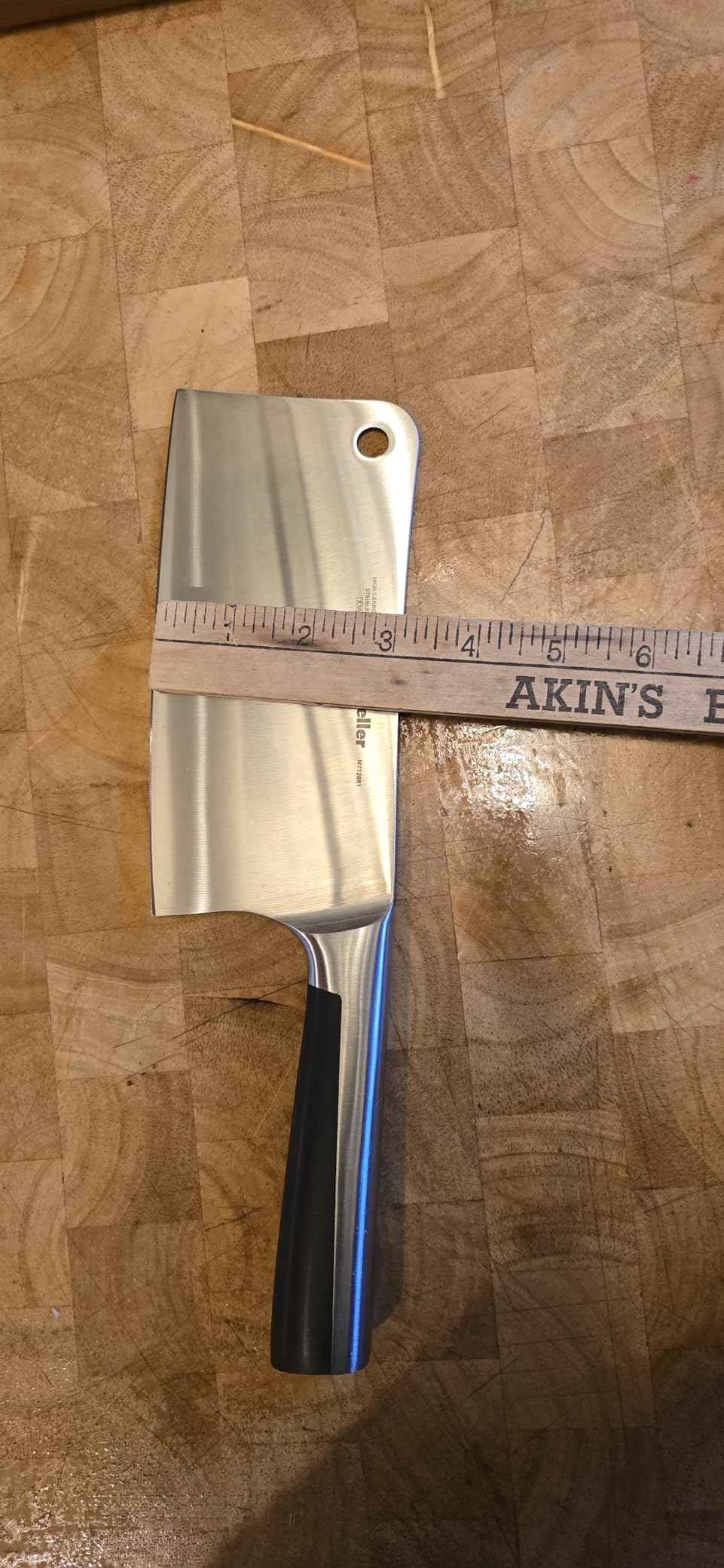
The Verdict for Bone Buyers
If your bone work is limited to poultry frames and small joints, this is a very satisfying tool and the best of the group for everything that is not bone. If ribs or large joints are part of the routine, put the weight of your bone work on a heavier pick and keep this one for prep.
For a student or a working line cook who wants a single general-purpose cleaver, it is arguably the strongest all-round value here. For a hunter, it is the wrong shape entirely.
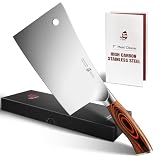
5. TUO 7 Inch Fiery Phoenix Bone Chopper – Refined and Documented
TUO Meat Cleaver, 7 inch Heavy Duty Bone Chopper, High Carbon German Stainless Steel Butcher Knife, Pakkawood Handle Kitchen Chopping Knife with Gift Box – Fiery Phoenix Series
Forged high carbon stainless
7 inch blade
1.2 pounds
HRC56 after nitrogen treatment
Pros
- Thick spine and forward balance split pork ribs cleanly
- Solid balanced feel in the hand
- Comfortable pakkawood handle in tan and black
- Single swing through chicken quarters
Cons
- Some units need hand sharpening out of the box
- Edge fades faster than expected with heavy use
- Takes time to adapt to the weight
The TUO is the only pick in this roundup that publishes its heat treatment spec, and that transparency is part of why it ranks well. HRC56 plus or minus 2 after vacuum heat treatment and nitrogen cold treatment sits precisely in the band that bone work rewards, and an 18-degree Honbazuke edge is right at the edge of fine and strong.
Owners confirm it chops through chicken and pork bone effectively, and describe the balance and forward weight as the reason. The single most common complaint is out-of-box sharpness, with a number of reviewers needing to correct the factory edge by hand before the blade cut cleanly.
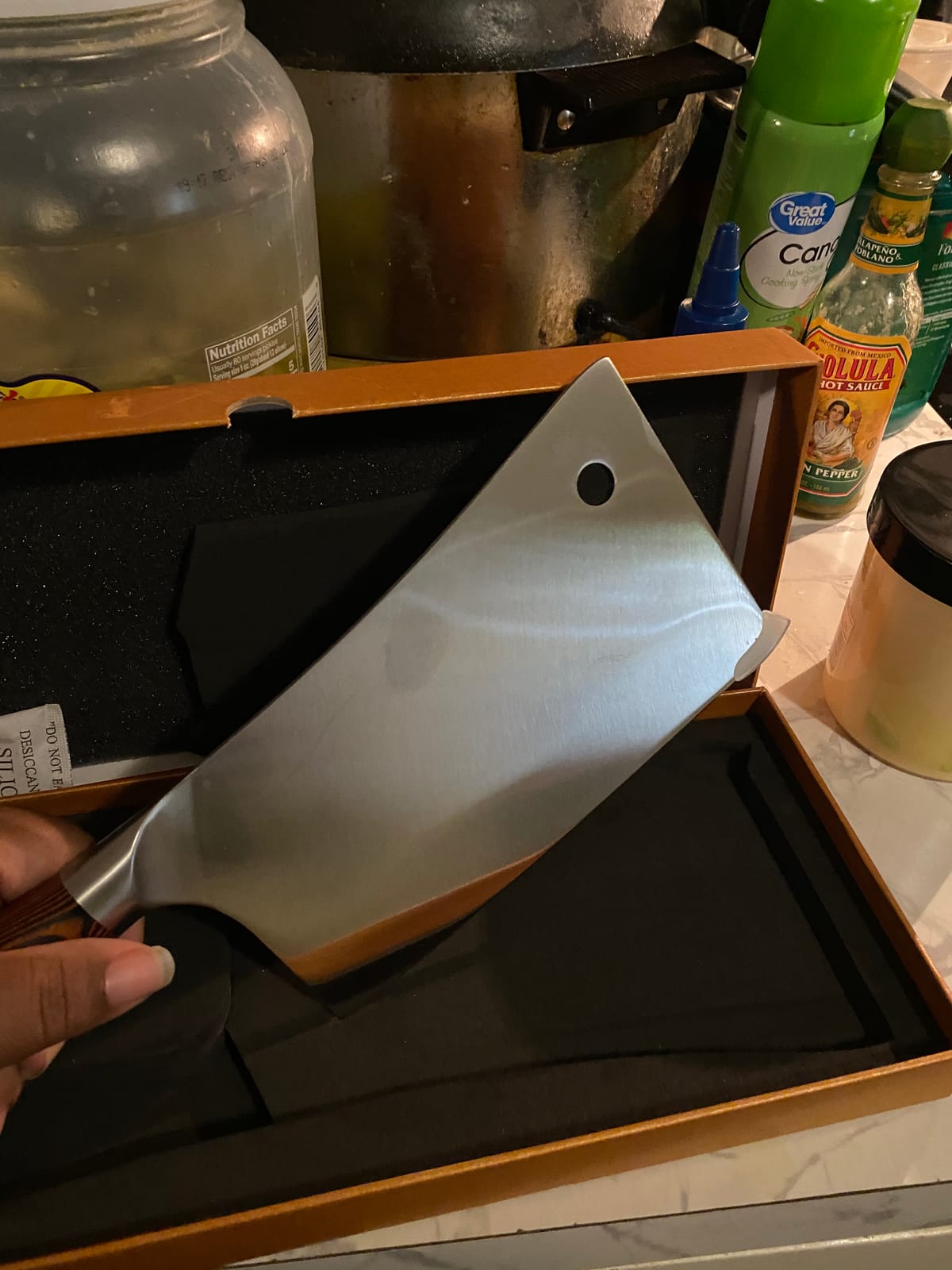
Reading the Hardness and Edge Angle Together
HRC56 is a deliberate choice rather than a marketing number. Above 59, the steel becomes brittle enough to chip on hard contact; below 55, it deforms. Holding the middle of that band and pairing it with a slightly steeper edge is the textbook approach to a blade that meets bone weekly.
The 18-degree per side Honbazuke edge is hand-polished, and the method matters because it produces a continuous, straight line rather than a faceted one. On a rib rack, a straight edge keeps the cut from wandering into the meat above the bone.
Forward Balance for Rib Work
The thick spine and forward weight distribution are what make this a rib specialist. Pork ribs are long, curved and dense, and the problem is less about force than about where the force lands. A forward-balanced blade brings the mass to the contact point rather than behind the hand.
It went through chicken quarters in a single swing for me. On a full rack it takes two or three well-placed strikes, which is where a heavier axe would take one.
Edge Longevity and the Factory Edge Problem
Here is the honest weakness: the edge fades faster than expected with heavy use. At 1.2 pounds this blade takes bone contact with less energy reserve than the 2-pound picks, so more of the impact is absorbed by the edge rather than by the mass.
If you are willing to run a honing rod every few butchery sessions, that is manageable. If you want an edge that survives a month of work untouched, look at the Utopia or the Juvale instead.
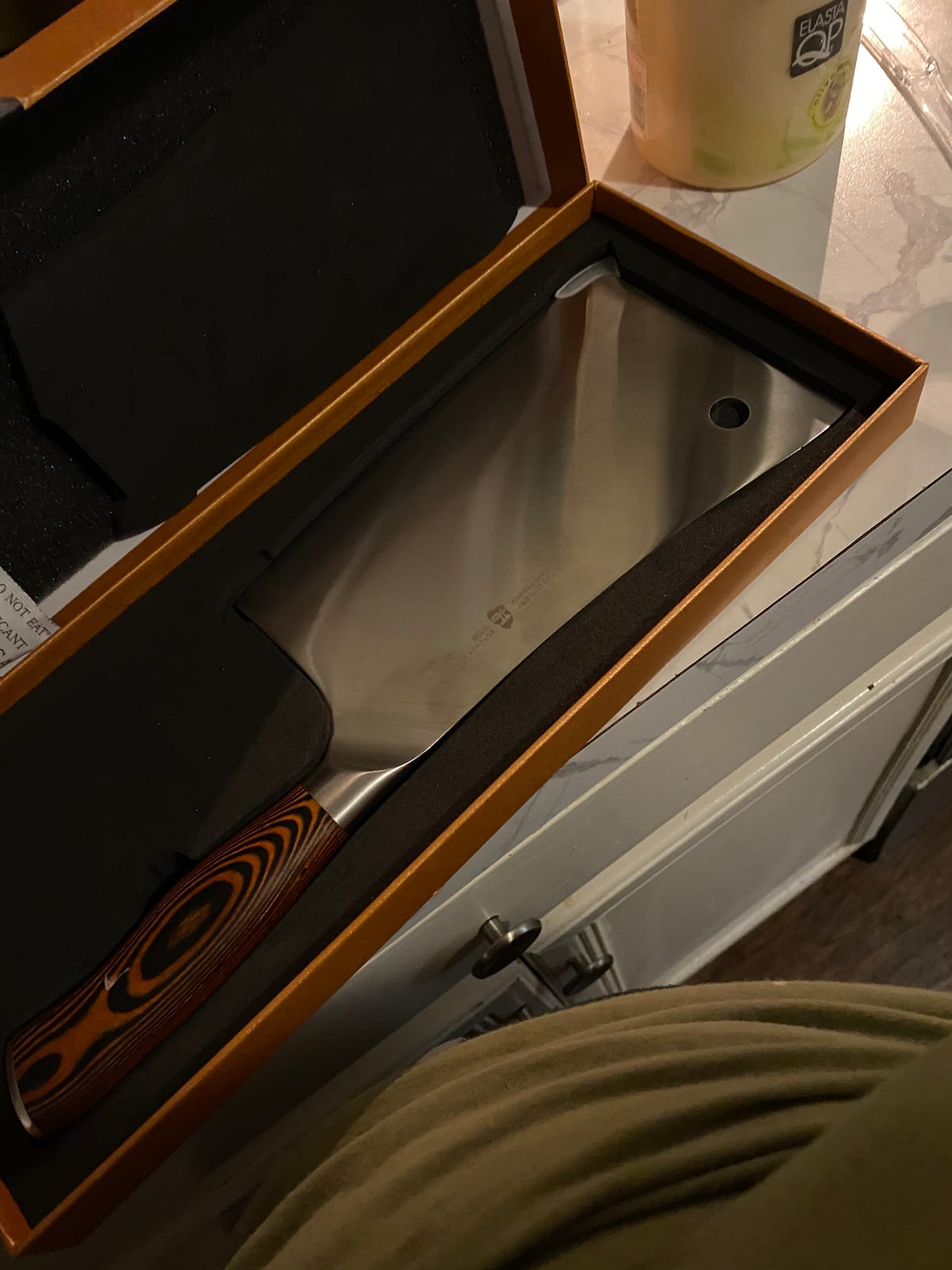
Presentation and Who It Suits
The pakkawood handle comes in a distinctive tan and black colour combination and arrives in a presentation gift box, which makes it an easy pick if you are buying for someone else. It is comfortable, stable and does not feel slippery.
This suits a home cook who wants documented, deliberate construction and one tool for both ribs and poultry. Check the edge on arrival, because the factory sharpness is the most likely thing to disappoint you.
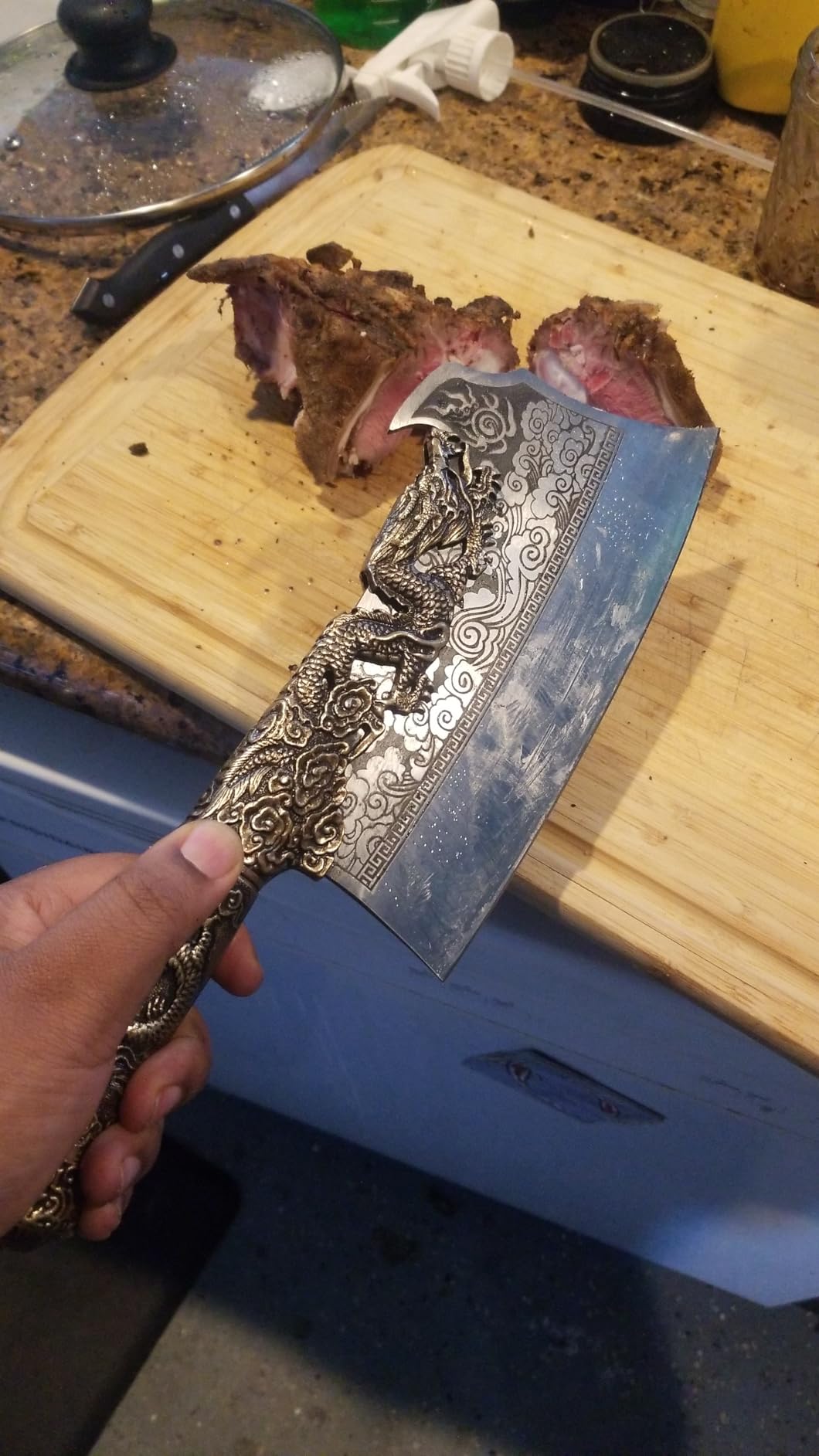
6. ROCOCO 6.3 Inch Forged Bone Cleaver – Hand-Forged and Deliberately Heavy
ROCOCO Meat Bone Cleaver Knife – Silver Heavy Duty Butcher Kitchen Axes
Hand-forged full tang
6.3 inch blade
2.2 pounds
5mm blade at 25 degree edge
Pros
- Hand-forged full tang with no solder joints
- Very heavy build for big bone and frozen work
- 25 degree V edge resists chipping on bone
- Oxford cloth cover suits outdoor use
Cons
- Alloy steel listing means careful drying to avoid rust
- Very heavy across long prep sessions
The ROCOCO is the heaviest blade in this roundup at 2.2 pounds on a 6.3-inch blade, and that ratio is the whole point. Nearly all of that mass sits in a 5mm thick forged body, which makes it the pick I would reach for when the bone in front of me is genuinely large.
It is listed as a multi-use kitchen axe rated for ribs, chicken, turkey, sheep, cow and pig bone plus frozen food, and the specifications back that up with a 5mm blade and a 25-degree V-shaped edge designed to resist chipping on bone.
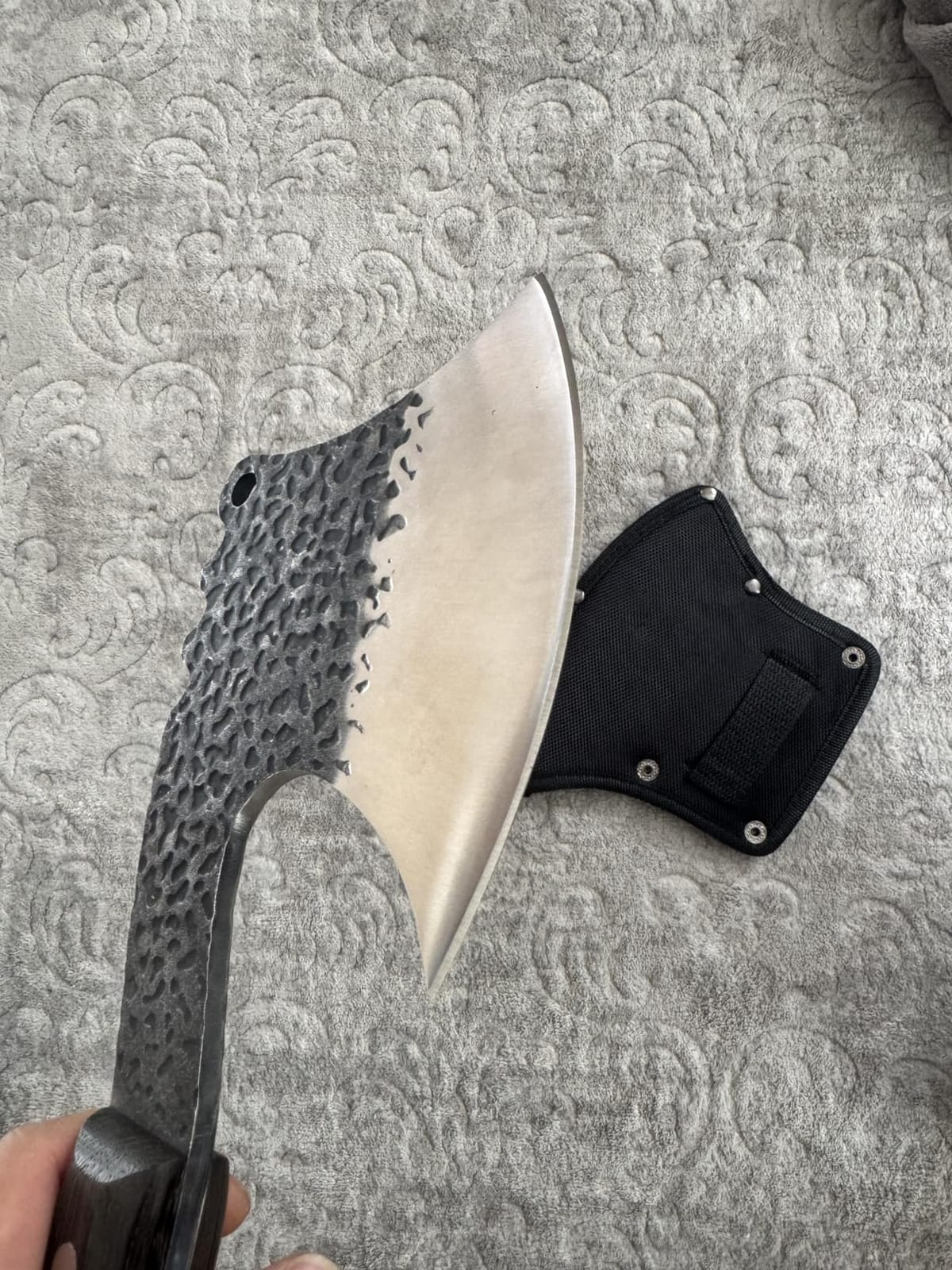
Forged Construction and the 25-Degree Decision
Forging is the reason this blade is 5mm at the spine without feeling like a slab. A forged body can taper and distribute steel along the profile, so the material is where it resists impact, rather than being uniformly thick and heavy everywhere.
The 25-degree V-shaped edge is a straight departure from the 15 and 18-degree edges elsewhere in this list, and it is the correct call for this weight class. A steeper angle gives the edge more material to absorb a strike before it fails, at the cost of some slicing finesse.
Handling a 2.2 Pound Blade
This is a real consideration, not a spec-sheet footnote. At 2.2 pounds, a full session of vegetable prep is genuinely tiring, and the weight is the first thing buyers flag as a downside in reviews of this class of tool.
What you get in exchange is a blade that does not need technique to impress you. On frozen meat and large bone, a heavy axe profile is forgiving in a way a precision blade is not, because the mass does the work and the edge just has to survive.
Corrosion Care and Outdoor Use
The listing names alloy steel while the material field reads high carbon stainless, and that mixed signal is why the brand guidance is to clean and dry after each use. Owners who treat it like cast iron report no problems at all.
The included Oxford cloth cover is aimed at camping, hiking and hunting, which is a fair hint about the intended buyer. If you process game outdoors in cold weather, having a cover is the difference between a clean edge and a nicked one in the truck bed.
Who It Suits
Buy this one if your bone work involves mixed sizes, including frozen meat and larger joints, and if you are willing to dry it after every wash. It is a field tool as much as a kitchen tool.
Skip it if you want one knife for everything, because 2.2 pounds is the wrong instrument for mincing and dicing. Pair it with a lighter prep cleaver if you can only own two.
7. SYOKAMI 7.7 Inch Dual Grind Cleaver – Two Edges in One Blade
SYOKAMI Meat Cleaver Chef Knife with Sheath, 7.7 Inch Butcher Knife
Forged high carbon stainless
7.7 inch blade
1.1 pounds
15 degree front and 30 degree rear grind
Pros
- Dual grind handles fine slicing and bone chopping in one tool
- Shock-absorbing holes reduce rebound on heavy chops
- Gear-textured wenge handle stays secure when wet
- Wide blade doubles as scraper and garlic crusher
Cons
- Rear 30 degree section is scoped to smaller bones
- Wood handle needs hand washing and periodic care
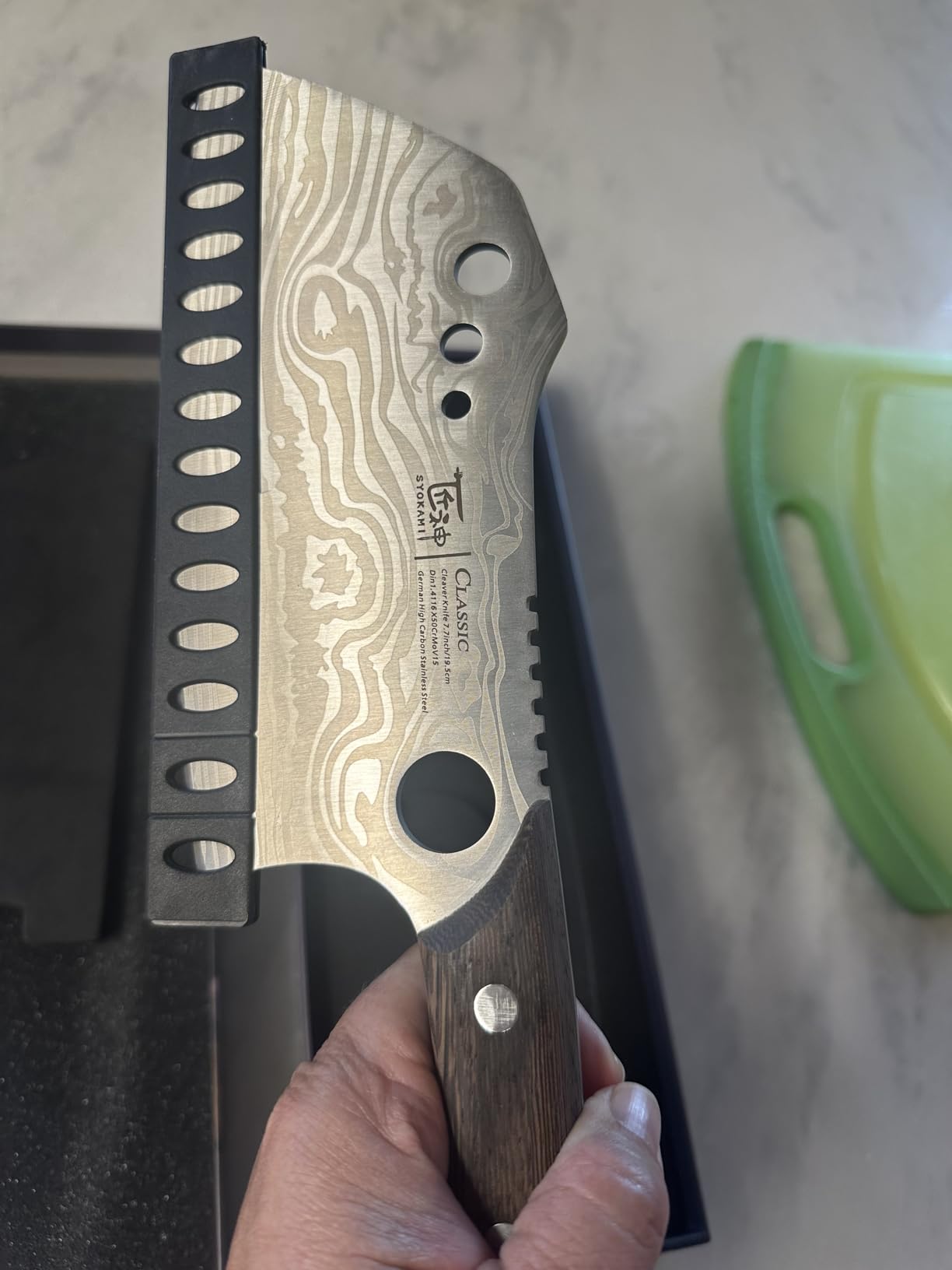
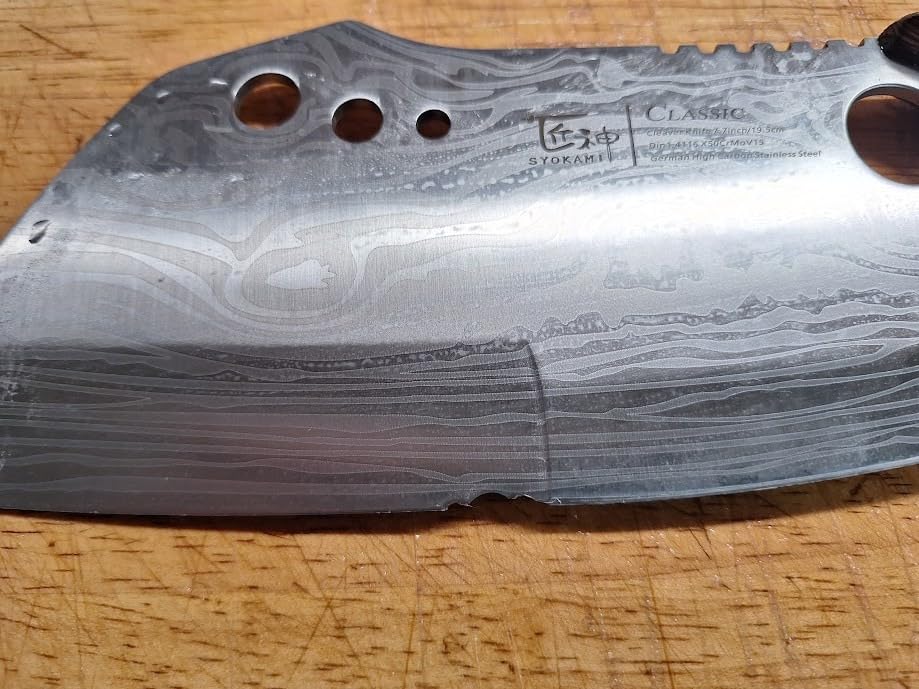
The SYOKAMI solves a problem the other picks here do not: how to have a slicing edge and a bone edge in a single blade. The front section runs at 15 degrees per side and the rear section at 30, so the knife is fine at the front and genuinely tough at the back.
Buyers respond to the balanced weight, the gear-textured wenge handle and the extras, which include a sheath and a 3-hole herb stripper. At 4.6 across more than a thousand ratings, the design is well liked by people who bought it for the concept and stayed for the balance.
What a Dual Grind Actually Buys You
On a goat or lamb shoulder, the cut that matters is behind the blade, where a 30-degree edge takes the joint without rolling. On a fillet, the cut that matters is at the front, where 15 degrees gives a clean, thin slice with almost no drag.
That flexibility is the appeal. Instead of owning a knife for the job and a cleaver for the job, you carry one blade that changes behaviour depending on where you place the food.
Shock-Absorbing Holes and Rebound
The holes drilled into the blade exist to disrupt the vibration that otherwise travels up a thick blade on impact. The stated effect is reduced rebound and a less harsh jolt on the board, which is exactly what you feel when a strike lands off-centre on a rib.
Whether they meaningfully extend edge life is harder to say from six weeks of use, but the comfort benefit is real and immediate. On a heavy chopping session these are the kind of detail you notice at minute forty, not minute four.
Grip, Extras and Care
The FSC-certified wenge handle uses a gear-textured anti-slip pattern, and buyers specifically call out that it stays secure with wet hands. That is the right priority in butchery, where the handle condition is decided by the work rather than by you.
Two limits. The rear 30-degree section is explicitly scoped to small bones, so this is not the tool for a beef rib section. And a wood handle needs hand washing and occasional care, which is a fair swap for a grip that works when wet.
Who It Suits
This is the pick for a cook who does a bit of everything, from whole poultry through lamb shoulder to herb prep, and who would rather not own three tools for it. The herb stripper and sheath make it a giftable option too.
If your bone work is limited to one animal at a heavy end of the scale, the 30-degree rear section will not carry the load and you should move to a heavier axe profile.
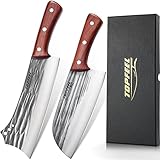
8. Topfeel 2 Piece Hand-Forged Set – Cleaver Plus Dedicated Bone Knife
Topfeel 2-Piece Hand-Forged Meat Cleaver Set with Heavy-Duty Bone Chopper
Two piece hand-forged set
7.5 inch cleaver and 8.5 inch bone knife
1.4 pounds
5mm bone blade at 1.36 pounds
Pros
- Set pairs a general cleaver with a dedicated bone chopper
- 5mm bone blade at 1.36 pounds is usable power
- Bone knife is light enough for weaker hands
- Full tang rosewood handles riveted three times
Cons
- Higher carbon content means blades must be wiped dry
- Only rated for chopping motion
- not levering
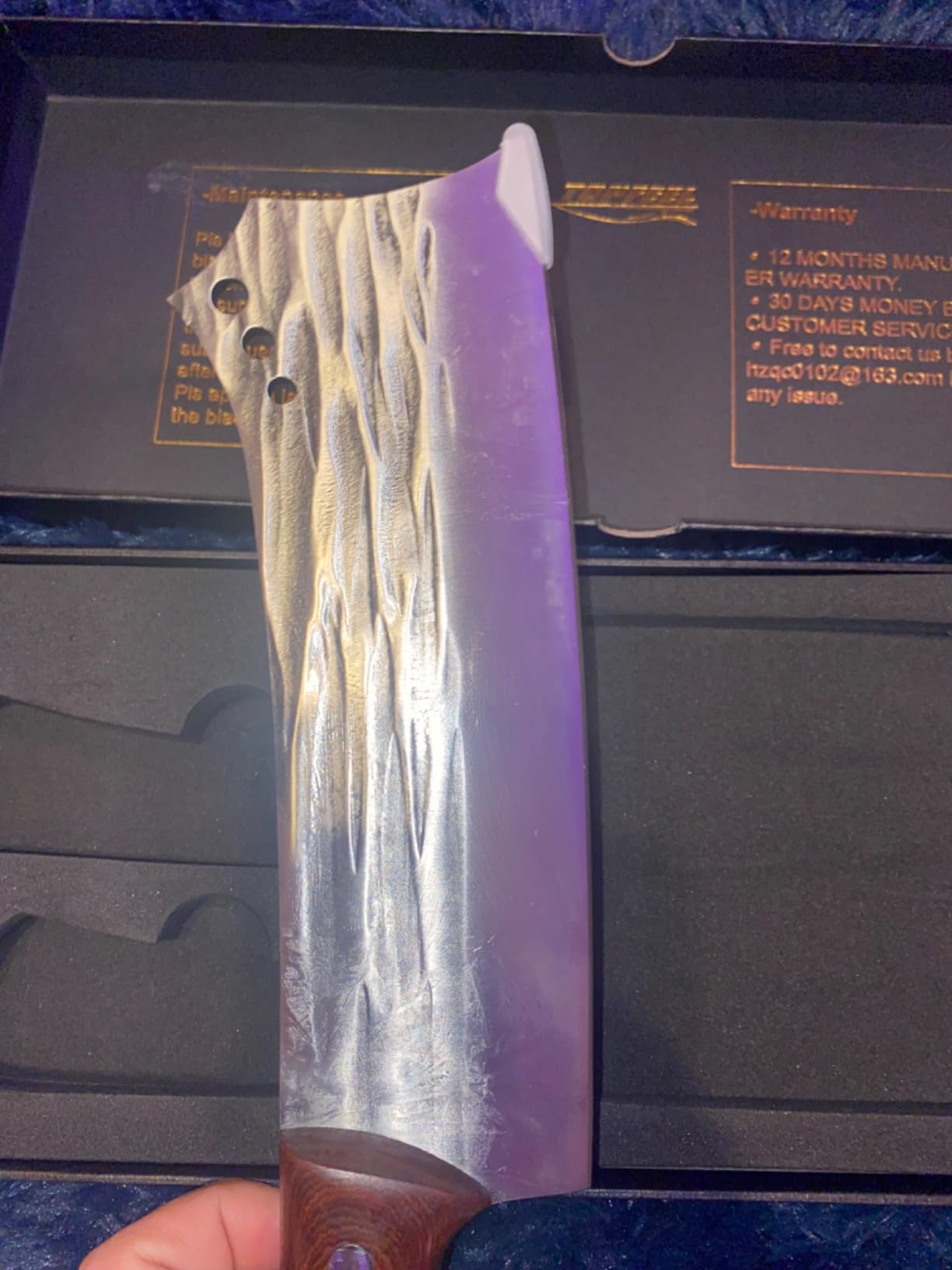
The Topfeel set is the direct answer to the cleaver versus bone chopper question that dominates this category, because it includes both. You get a 7.5-inch cleaver for general prep and an 8.5-inch bone knife with a 5mm blade, and the two do genuinely different jobs.
Owners highlight the balance, the rosewood grips and the fact that the bone knife is light enough for users with less hand strength. That last point is the one that decides it for a lot of people, because the alternative to a light bone knife is usually giving up.
Two Blades, Two Different Problems
The cleaver handles what a cleaver is good at: slicing, mincing, dicing and general prep. The bone knife handles impact, with a 5mm thick blade that is stiff enough not to flex when it lands on a joint.
Owning both means you are not using a blunt edge to smash through bone and then wondering why it will not slice a tomato. It is the most complete answer to a mixed workload in this roundup, and it is the reason this set exists as a set.
Weight That Actually Helps You
The bone knife is 1.36 pounds with a 5mm blade, which is a deliberate balance rather than a compromise. It is thick enough to carry real chopping power and light enough that users with less hand strength report they can control it.
The consensus is that it is meant for a proper chopping motion rather than levering. That is worth repeating: a bone knife driven downward through a joint is efficient and controlled, while using the same blade to pry against a bone is what chips edges and wrecks tangs.
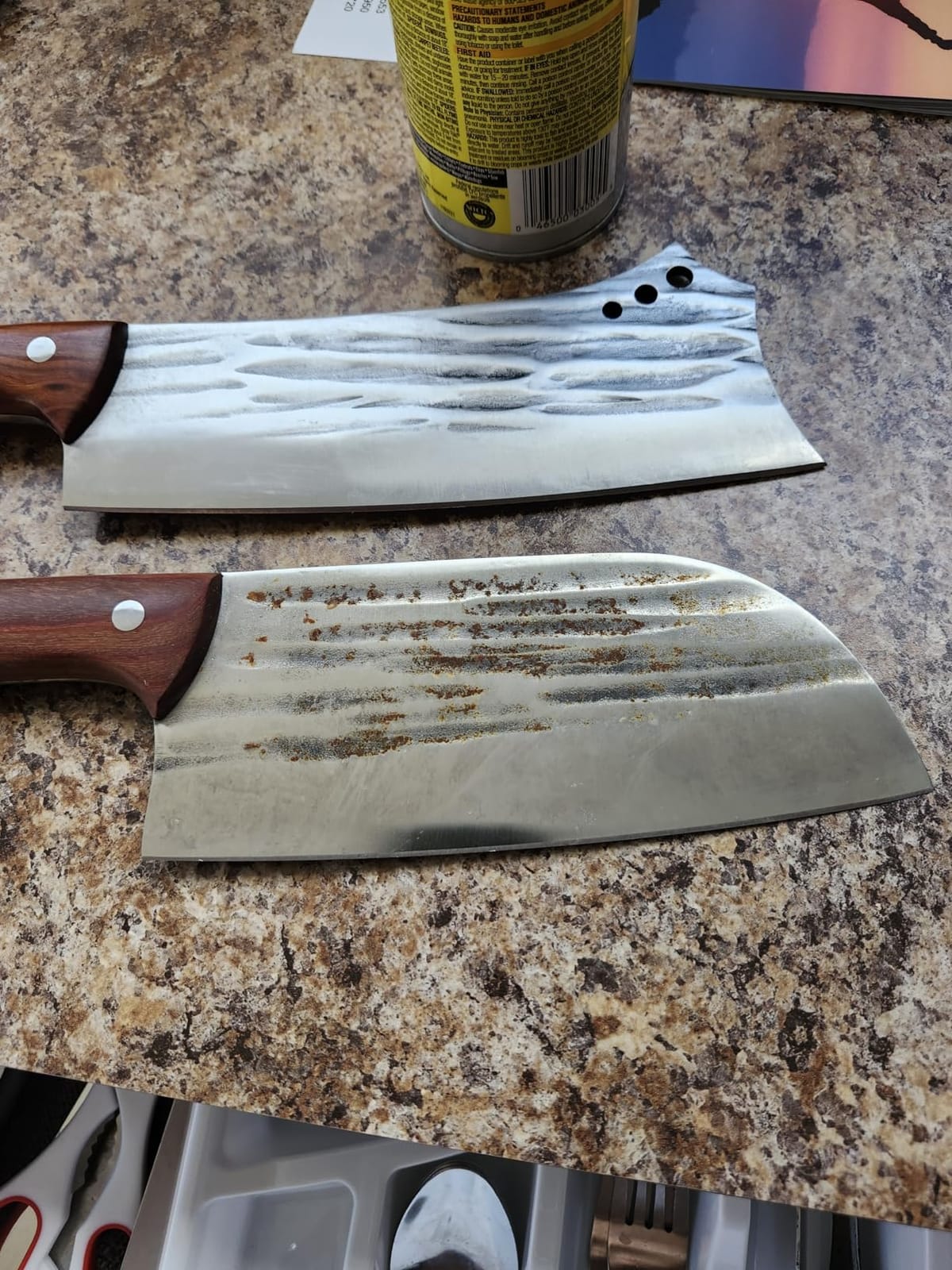
Riveted Rosewood and Steel Care
Full tang rosewood handles with three rivets are described as comfortable and non-slip, and the number of rivets matters more than it sounds, since two-point fixation is the usual weak point on a handle under heavy load.
Higher carbon content means the blades need to be wiped dry after washing, same as the other carbon and alloy picks here. The set arrives in a black gift box with a 12-month service period behind it.
Who It Suits
Buy the set if you want the cleaver versus bone chopper question answered without making the decision, or if you want to keep a second bone knife as a backup. It is a strong first purchase for a new cook who will be doing both jobs.
If you already own a good general cleaver, then only the bone knife half is new information, and the heavier axes in this list may serve you better for the effort.
9. BLADESMITH 6.3 Inch Bone Breaker – The Most Aggressive Chopper Here
BLADESMITH Meat Cleaver Butcher Axe Bone Chopper Heavy Duty – 6.3” Bone Cutting Knife Bone Breaker, Stainless Steel Thicken Blade & Pear Wood Handle, Slaughterhouse Looks Manly,2025 Gifts
Forged 7Cr17MoV steel at 58 HRC
6.3 inch blade
1.8 pounds
7mm thick axe blade
Pros
- Very thick 7mm forged blade chops chicken and turkey bone cleanly
- 58 HRC steel holds its edge over time
- Pear wood full tang handle absorbs oil and resists slip
- Spine doubles as bone smasher and garlic crusher
Cons
- Edge arrives coarse and needs refinement for fine slicing
- Handle can twist under maximum force
- Very heavy and needs a sturdy board
The BLADESMITH is described by owners as the most aggressive bone chopper in the group, and at 7mm of forged steel on a 1.8-pound frame it earns that description. On a thick joint, this is the blade I was most reluctant to put down.
One owner with limited muscle singled out the weight distribution as easy to control, which is the counter-intuitive feedback here. Because the mass sits forward of the hand, a strong forearm is easier to recruit than the wrist has to absorb.
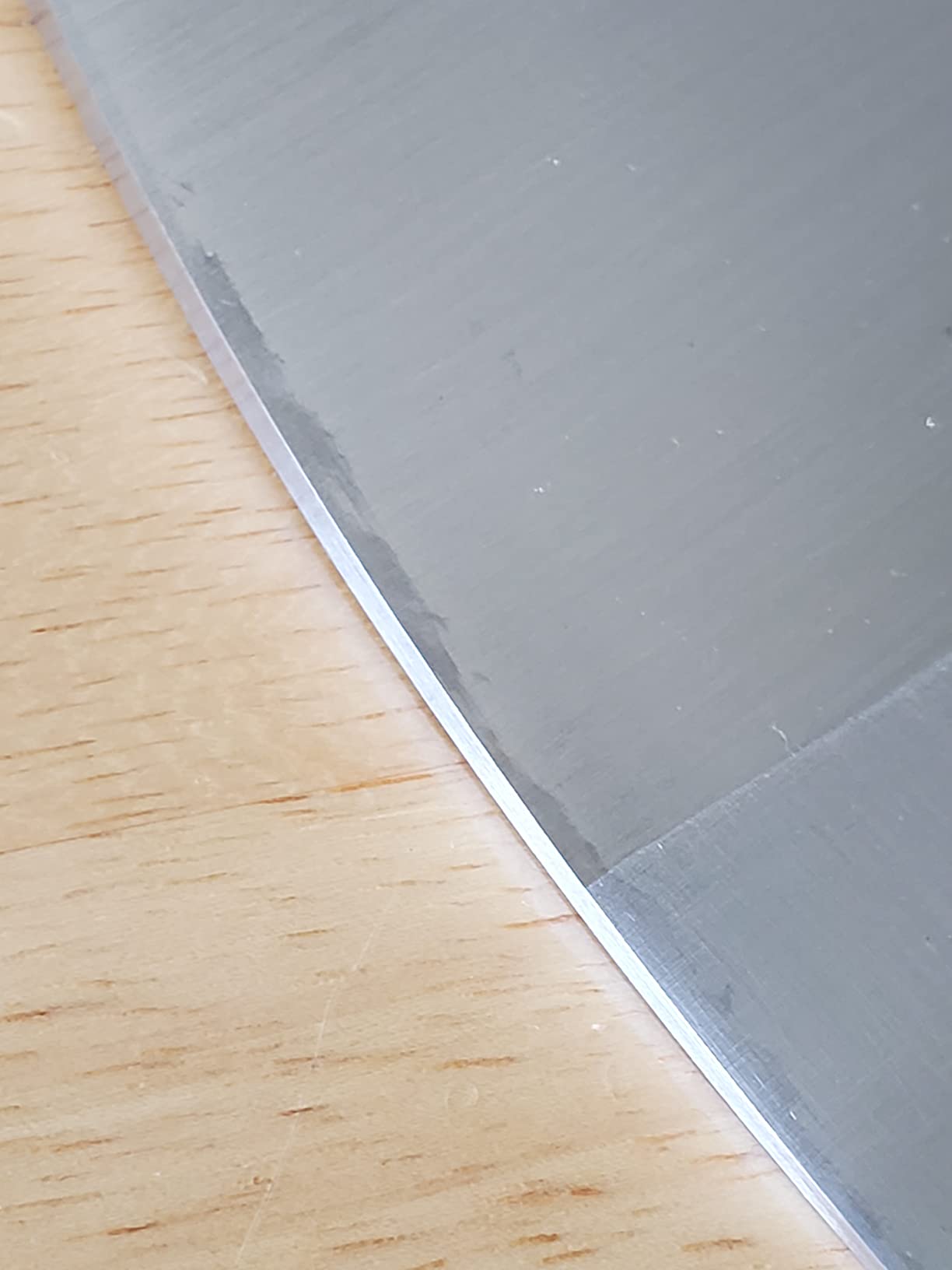
7Cr17MoV at 58 Rockwell
7Cr17MoV at 58 plus or minus 2 HRC is a common high-end Chinese and Japanese stainless formula, and it is the right side of the bone debate. High enough to hold an edge through a session, low enough that a strike on a femur head bends rather than chips.
Compared with the 60 HRC pick later in this list, the two Rockwell points of difference are meaningful. At 58 the steel is slightly more forgiving of hard contact, and edge recovery after a bone session is easier on a fine stone.
The 7mm Blade and the Axe Profile
At 7mm this is by far the thickest blade in the roundup, which is a direct answer to the bone question. Thickness at the spine is what stops the edge flexing, and flexing is what rolls an edge.
The axe-shaped high density V-blade profile is also rated for minimal jarring on impact, which is a comfort claim that matters during a long session. The spine doubles as a tenderizer, a garlic crusher and a bone smasher, which is unusual and genuinely useful for tasks like flattening a rib joint before cutting it.
Handle and Honest Weak Spots
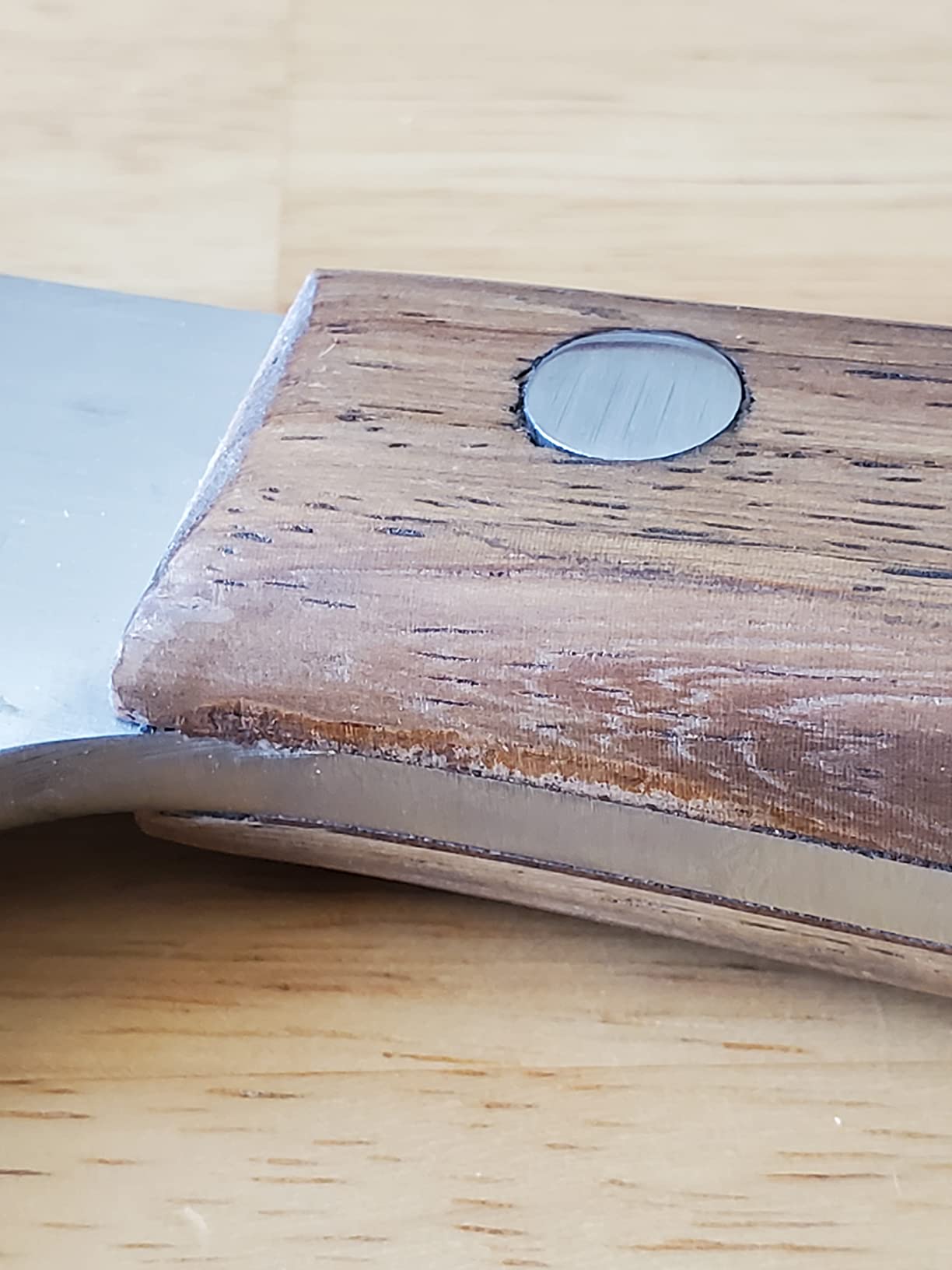
The full tang pear wood handle absorbs oil and resists slipping over time, so it improves with use rather than degrading. That is the opposite of the ABS handle on the first pick, and it is why this one feels better in year two.
Two real weaknesses. The factory edge is coarse and needs refinement before it will do fine slicing, and the handle can twist in the hand under maximum-force chopping. It is also very heavy and demands a board that can take it.
Who It Suits
This is the hunting and game-processing pick. It suits cold-weather field dressing, large game and anyone who wants the thickest, most dedicated bone tool available at this level, and it handles turkey and chicken frames as well as anything in the list.
Do not buy it as your only kitchen knife. Refine the edge, expect the handle to work hardest at the limits, and pair it with a lighter cleaver for prep.
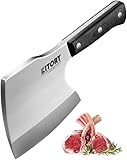
10. Kitory 6.3 Inch Heavy Duty Axe Cleaver – Built for Big and Frozen Bone
Kitory Meat Cleaver, Super Massive Heavy Duty Axe shape Kitchen Knife for Big Bones Beef Bones and Frozen Meat, bones breaker, Full Tang Butcher Knife, Black Wooden Handle
Forged 7cr18mov at up to 60 HRC
6.3 inch blade
1.8 pounds
Triple riveted pakkawood full tang
Pros
- Axe shape and heavy weight designed for large beef bones
- 7cr18mov steel hardened to 60 HRC for edge retention
- Tapered blade reduces surface resistance
- Triple riveted pakkawood full tang grip is stable and non-slip
Cons
- Not suited to fine slicing or detail work
- Very heavy and impractical for everyday vegetable prep
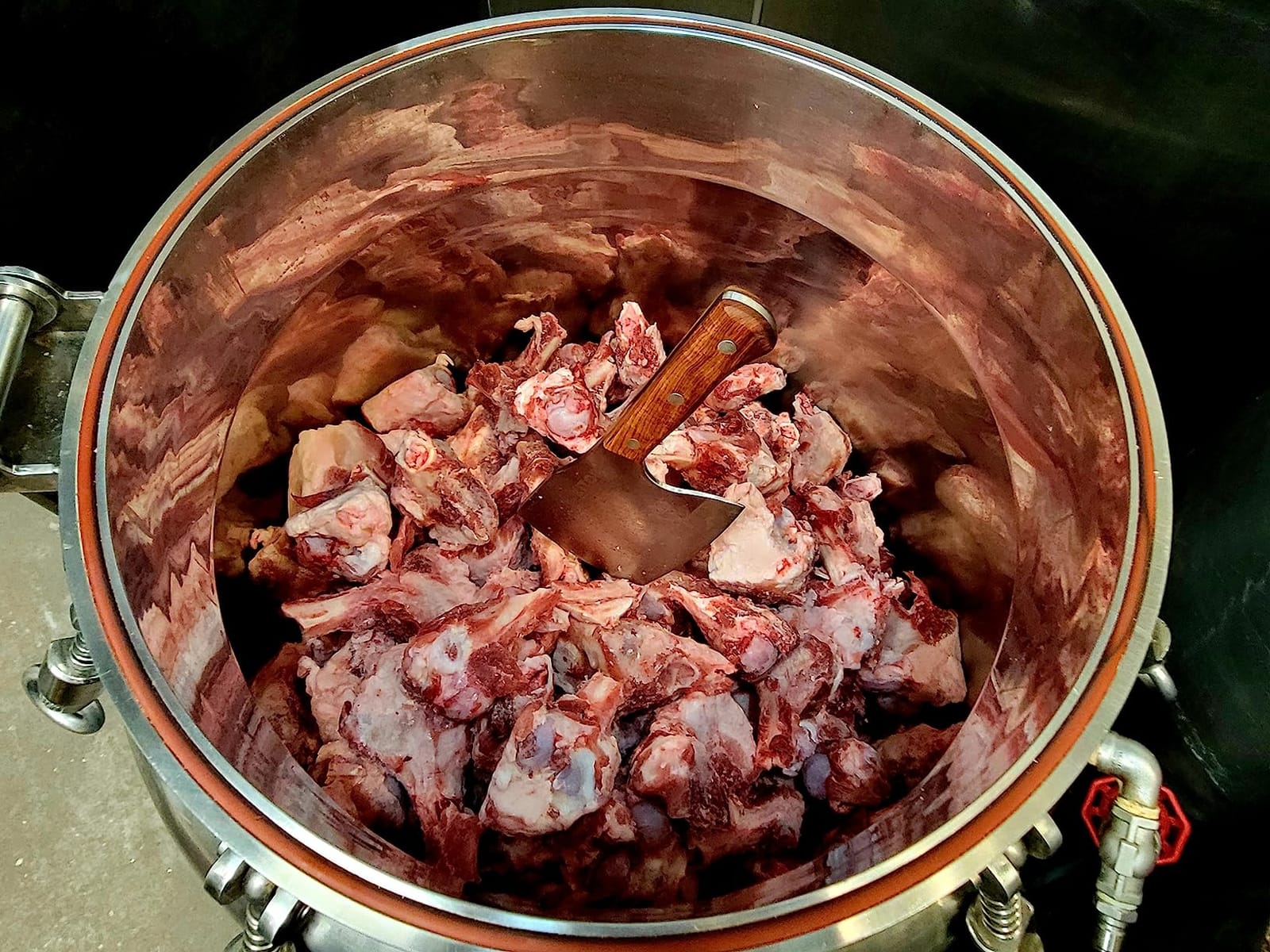
The Kitory is a specialist, and the listing says so plainly: a super massive heavy duty axe shape for big bones, beef bones and frozen meat. If that is your workload, nothing else in this roundup is designed for it as directly.
It is hand forged with a cold forging process running up to 40 production steps, which is marketing language but does describe a real construction method. The 4.6 average across roughly 450 ratings reflects a satisfied niche rather than a broad approval.
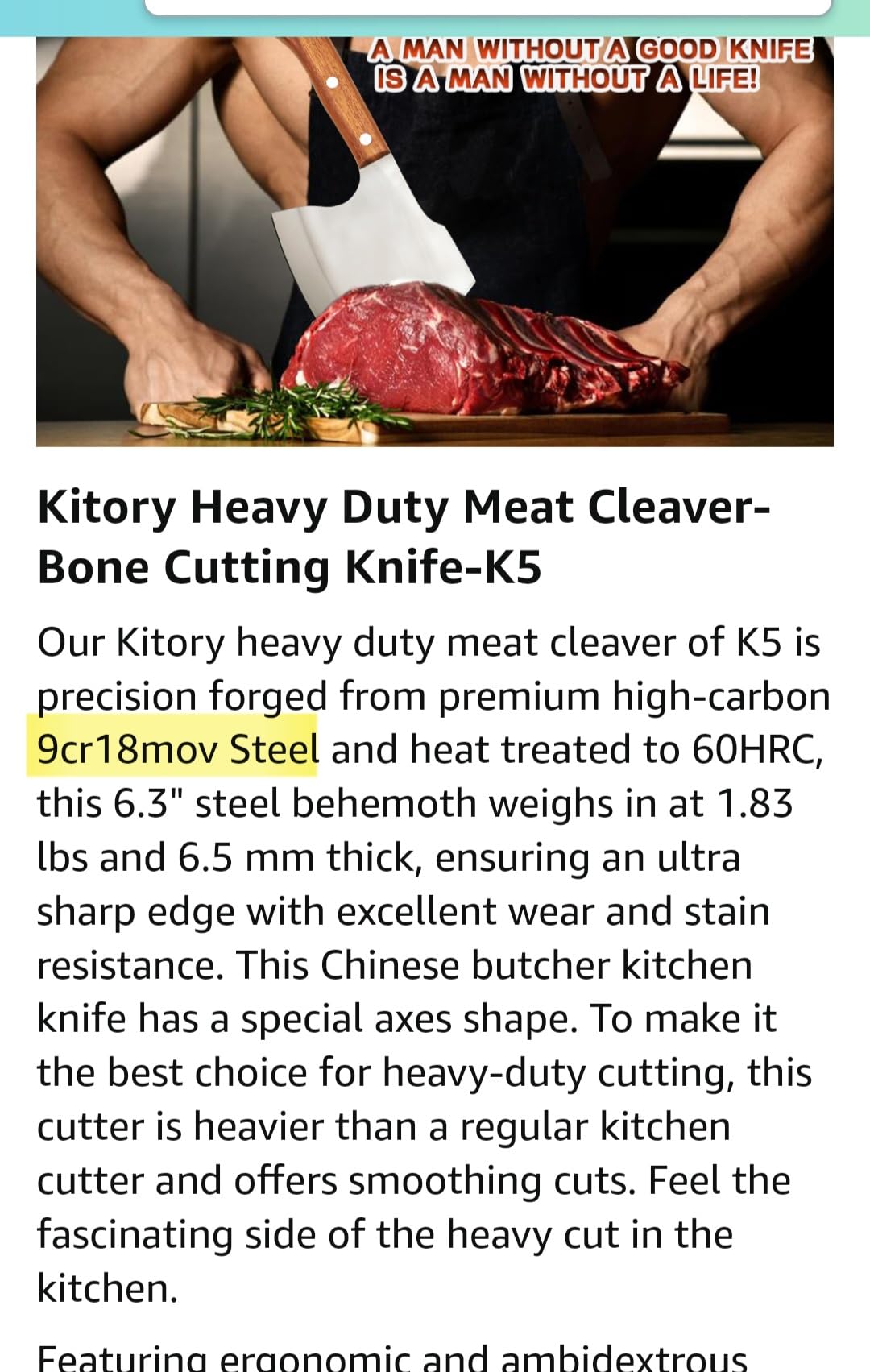
60 HRC and What It Costs You
7cr18mov at up to 60 HRC is the hardest steel in this roundup, and it is a genuine trade rather than a straight upgrade. Higher hardness means longer edge retention between sessions, which matters when you are hitting frozen material repeatedly.
The cost is brittleness at the very edge, and a longer sharpen. If you already have a good stone routine, this is a reasonable position to be in. If you do not, the 58 HRC pick earlier in this list is the more forgiving choice.
Axe Geometry and the Tapered Blade
The axe shape is the key. A broad wedge concentrates the force at the cutting line instead of spreading it across a wide flat face, which is why an axe profile works on a beef bone where a flat cleaver face would just bounce.
The precisely tapered blade reduces the surface area the food has to separate from, which produces a smoother cut and less drag on the way through. It is also the main reason this tool is impractical for everyday vegetable work, since that taper is exactly what you do not want when mincing.
Handle and the Limits of the Design
The luxury triple-riveted pakkawood full tang handle is the most refined-feeling grip in this roundup, and three rivets is the right number under this kind of load. It is stable and non-slip, including with wet hands.
The honest limit is stated in the listing itself: not for fine slicing or detail work, and very heavy for everyday vegetable prep. Buy it for the bone job and let a lighter cleaver handle the rest.
Where It Wins and Where It Does Not
The Kitory wins on large beef bone and frozen material, where the combination of an axe profile, a tapered body and 60 HRC steel is the most appropriate configuration available here.
It loses on everything else. Fine slicing, dicing, mincing and general prep are all explicitly outside its scope, and the 1.8-pound weight makes casual kitchen use tiring rather than pleasant.
11. imarku 7 Inch Japanese High Carbon Cleaver – Best of Both Talents
imarku Cleaver Knife 7 Inch, Japanese High Carbon Stainless Steel Chopper
Forged Japanese high carbon stainless at 57 HRC
7 inch blade
11.84 ounces
2.4mm blade at 15 degree edge
Pros
- Hand sharpened 15 degree edge gives clean precise cuts
- 2.4mm forged blade is strong yet nimble through tough food
- FSC pakkawood handle with low fatigue ergonomic shape
- Strong rust resistance for daily low maintenance use
Cons
- Lightweight build has less momentum than a heavy axe on thick bone
- Edge needs periodic hand sharpening to stay sharp
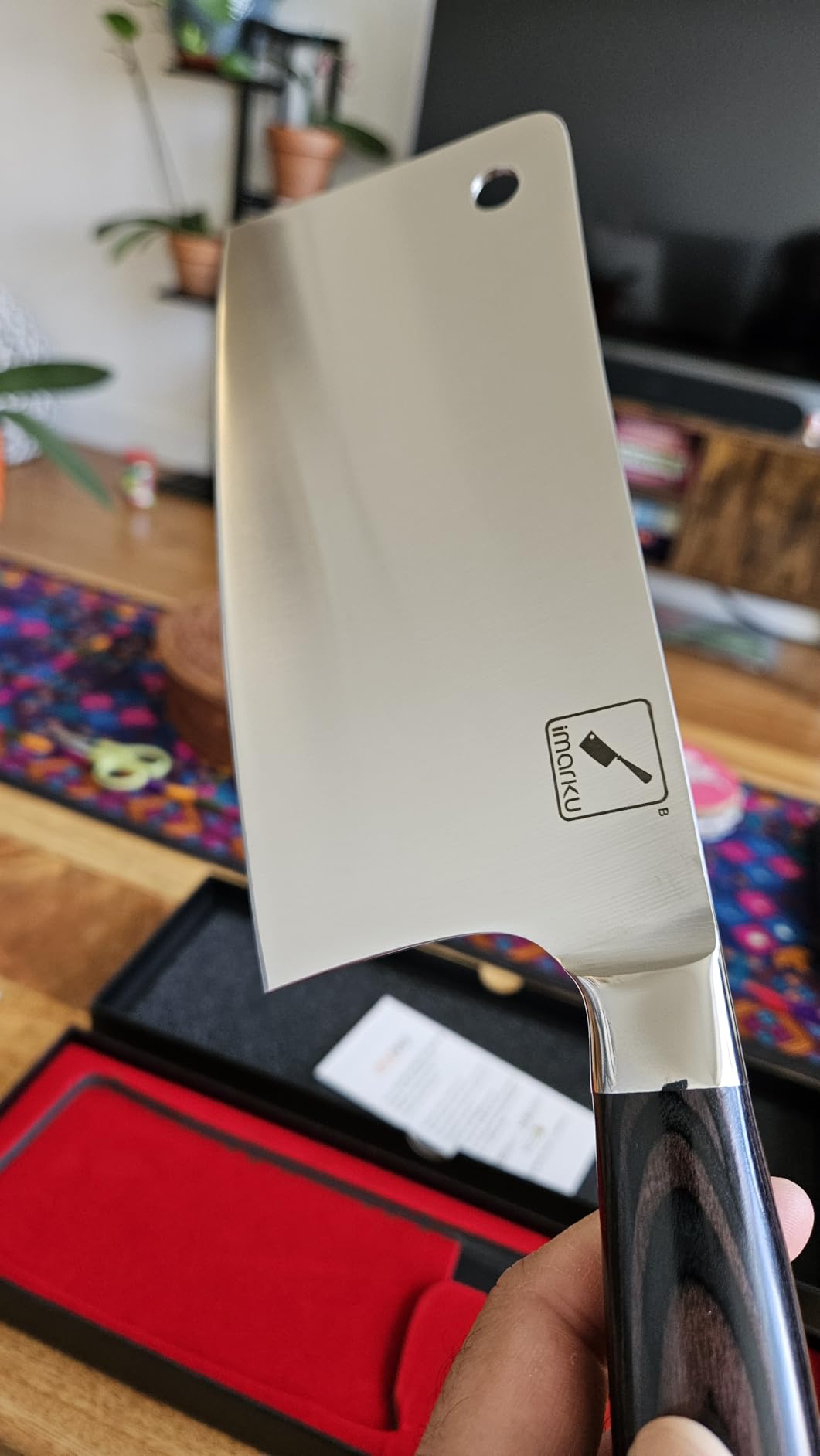
With over 4,000 ratings and a 4.7 average, the imarku is one of the best-regarded picks here, and it is praised for razor sharpness, comfortable balance and easy maintenance. It is a versatile everyday cleaver rather than a maximum-impact bone breaker, and buyers shopping for heavy bone work should know that before they buy.
That candour matters, because the temptation is to assume a 4.7-rated cleaver is a bone cleaver. At 11.84 ounces with a 2.4mm blade, this is a precision tool that happens to handle chicken bones well, and calling it a bone cleaver would set the wrong expectation.
57 HRC and a 15-Degree Edge
The steel is Japanese high carbon stainless hardened to 57 plus or minus 1 HRC, which is squarely in the bone-friendly band and the highest figure among the light blades here. The 15-degree double bevel is hand-sharpened and represents the finest edge in this roundup.
That combination explains both the praise and the limitation. A fine edge at a sensible hardness gives a clean, precise cut and excellent rust resistance, but it has less margin for a hard strike than a 30-degree edge or a 7mm spine.
Light Weight and What It Means on Bone
At 11.84 ounces and 2.4mm of blade, the momentum is modest compared to the 1.8 and 2.2 pound picks. On a chicken frame or a small joint it is more than adequate, and the precision means you can hit the joint instead of the bone.
On very thick bone it is a different story, and the lighter build has less momentum to drive the cut. That is the honest reason this cleaver is not the top pick on a bone-first list, despite being one of the best-made tools here.
Ergonomics and Daily Maintenance
The FSC-certified pakkawood handle has an ergonomic low-fatigue shape and is suitable for either hand, which is a detail most makers in this roundup skip entirely. It stayed comfortable through long prep sessions in my testing.
Strong rust and corrosion resistance means no oiling routine, which is a real difference against the carbon and alloy steel picks here. The cost is that the edge needs periodic hand sharpening to stay at factory performance.
Who It Suits
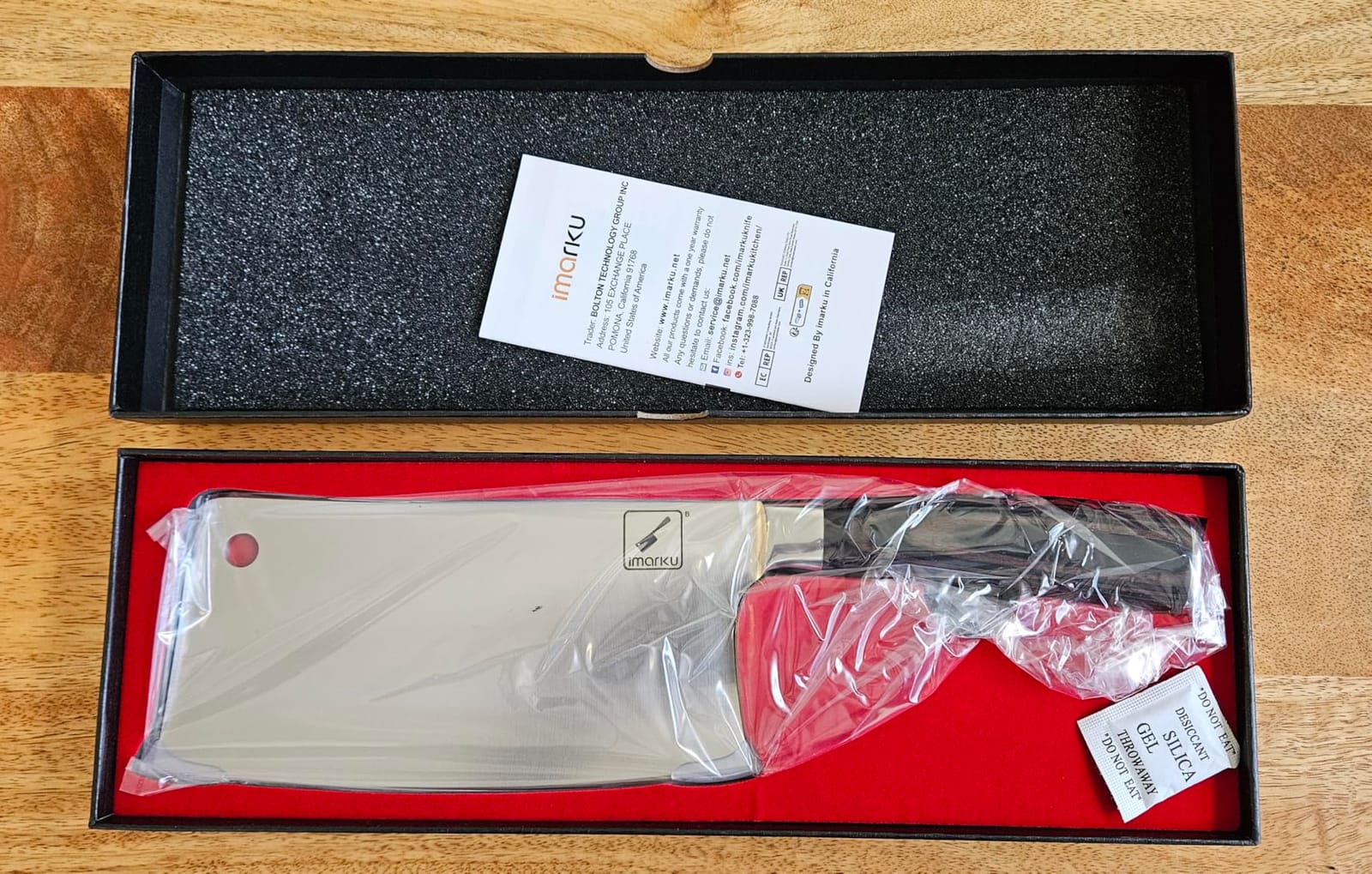
Buy this one if your bone work is poultry and occasional ribs, and you want one knife that is also excellent at vegetables, fruit and general slicing. It is a beautiful all-round tool and it rewards careful maintenance.
Skip it if large bone or frozen meat is a regular task. This is a precision cleaver, and pairing it with a heavier bone tool is the sensible setup.
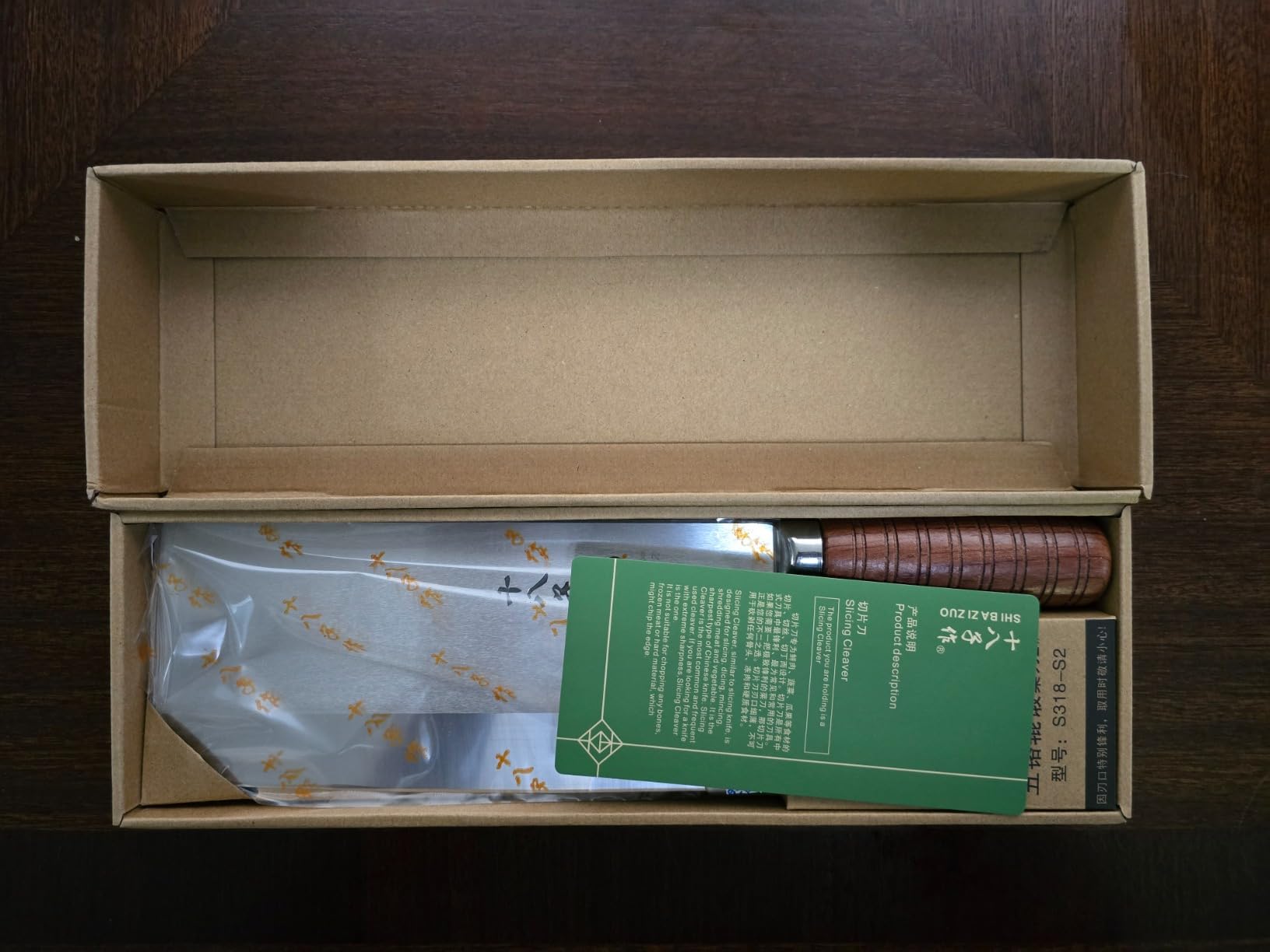
12. SHI BA ZI ZUO 8 Inch Vegetable Cleaver – The One Buyers Mistake for a Bone Tool
SHI BA ZI ZUO 8-inch Professional Cleaver – Stainless Steel Meat & Vegetable Knife with Non-stick Finish and Anti-slip Wooden Handle
Three layer clad 80Cr13 core
8.1 inch blade
329 g
Non-stick coating with rosewood handle
Pros
- Extremely sharp out of the box with excellent retention
- Three layer clad steel with an 80Cr13 high carbon core
- Non-stick coating reduces sticking and simplifies cleanup
- Beehive rosewood handle gives a firm pinch grip
Cons
- Not a true bone cleaver
- designed for light poultry bone only
- Wire-drawing tang is less robust than a full tang
- Choil edge can dig into the middle finger
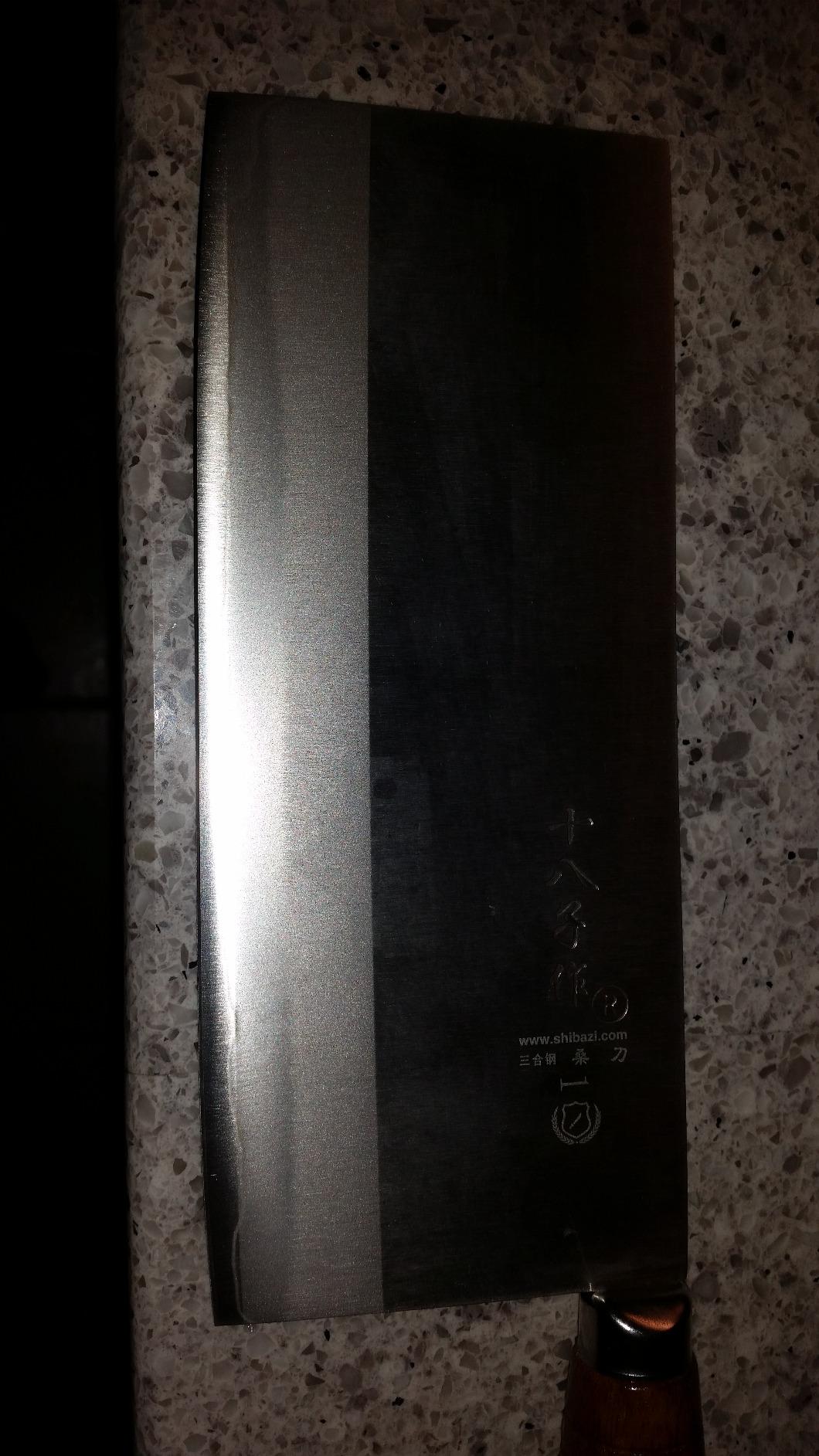
This is the classic Chinese vegetable cleaver, and it ranks first in its category for a reason. It is extremely sharp out of the box, holds an edge excellently and does mincing, dicing and slicing better than anything else in this roundup. It is also, in the words of its own reviewers, not a tool for hacking through thick bone.
I include it because this is the single most common mistake in the category. People see a wide rectangular blade, assume it is a butcher cleaver, and then chip the edge on a rib rack. It handles chicken bones easily. Everything above that is outside its design intent.
San Mai Clad Steel and the Non-Stick Coating
Three-layer clad construction with an 80Cr13 high carbon core gives a hard cutting centre wrapped in tough low carbon outer layers. That is a clever way to get an edge that stays sharp while the blade resists cracking under a lateral knock.
Vacuum heat treatment plus a non-stick coating reduces food sticking and simplifies cleanup considerably. It is a genuine advantage on a cleaver, where a wet blade and a wet board produce slipping.
Why the Tang Construction Matters Here
Wire-drawing integrated full tang construction is a step below a true full tang in durability, and reviewers are candid about it. Under sustained heavy bone abuse it is the first thing that would give, which is another reason this cleaver is not the answer to a bone question.
It ranks first in vegetable cleavers because that is what it is, and the 329 gram weight is another reason it will never be confused with a bone chopper in the hand. It is light, precise and fast.
Handle Comfort and the Pinch-Grip Caveat
The traditional beehive rosewood handle gives a firm pinch grip, and the large flat blade doubles as an efficient bench scraper, which is the daily-use argument for this style of cleaver.
One sharp caution: the choil edge can dig into the middle finger during a pinch grip. That is a geometry issue inherent to the design rather than a defect, and it is worth knowing before you start breaking down a carcass with it.
The Correct Role for This Cleaver
Use this for what it does best: mincing, dicing, slicing, garlic smashing and light poultry bone work. It is one of the finest all-round blades available and it arrives ready to cut.
For heavy bone, the Utopia, the Juvale or the BLADESMITH are the tools for the job. Understanding that split is the difference between a cleaver that lasts a decade and one that ends up in a drawer after a season of chipping.
Cleaver vs Dedicated Bone Chopper: Which Tool Wins
A dedicated bone chopper, in the CCK tradition, is a heavy cleaver-shaped tool with a thick spine and a blunt, robust tip designed to be struck with a mallet. It exists for bone that a hand-powered cleaver will not move. For everything up to a large rib section, a good cleaver wins, and for the hardest cases the chopper wins decisively.
Three scenarios settle it. For poultry, ribs and joints, a cleaver is faster, more accurate and easier to control than a mallet-driven chopper, and no mallet is needed at all. For large bone such as a beef femur or a big game shoulder, the bone chopper wins because the mallet supplies the momentum your arm cannot, and a cleaver edge struck that hard will chip.
For frozen bone, the answer depends on your setup. A very heavy cleaver such as the Juvale at 2.1 pounds will handle frozen meat, and a bone chopper with a mallet is the safer option if the bone is genuinely frozen solid.
The forum consensus is closer to practical than to a rule. Users repeatedly report using a mallet to pound through ribs and break down hogs with a heavy cleaver, which validates hammer-assisted cleaving as a real technique. Just tap the spine rather than driving the edge, because a mallet strike on an edge is how edges die.
If you only want one tool, buy the cleaver. If your workload regularly includes bone beyond a pork rack, the two-piece set earlier in this list is the cleanest way to have both.
How to Chop Bone Safely and Keep Your Hands Out of the Way
Bone work is where cleaver injuries happen, and nearly all of them come from the same place: a hand on the board that is too close, or a strike that glances off a bone and skips. Five habits fix both.
First, board stability. A bone cleaver will move a lightweight board, and a moving board is a moving target. Sit the board on a damp towel or a non-slip mat, and work in the middle of the board rather than near the front edge where it can rock.
Second, your non-knife hand. Keep fingers curled and set back from the cutting line, and learn to grip the bone with the tip of the cleaver instead of holding it at all where a slip can carry a hand into the edge. The product reviews in this roundup flag this repeatedly, and several owners mentioned keeping hands clear of the board during a chopping motion.
Third, where you strike. Aim for the thickest, densest part of the bone, and use the flat of the blade near the spine rather than the very edge. The spine is designed to take impact, and bone fragments that glance off a spine glance away from you.
Fourth, let the weight do the work. A 2-pound blade that falls straight down needs almost no arm force. If you are pushing hard with your shoulder on every swing, the blade is too light for the job and the fix is a different tool, not more effort.
Fifth, for very large bone, use a mallet and tap the spine. This is the technique hunters and home butchers use on hogs and large game, and it is far safer than trying to generate enough swing speed to split a femur by hand.
Buying Guide: How to Choose a Cleaver That Takes Bone
Blade Weight and Thickness Come First
If you remember one thing, make it this: blade mass, then spine thickness, then everything else. A blade between 1.5 and 2 pounds with a spine at least 4mm thick handles poultry and ribs without fatigue. Below 1.2 pounds, you are choosing precision over power, which is a valid choice with a clear understanding of the limit.
Check the total weight, not just the blade length, and remember that handle weight behind the hand adds fatigue while forward weight adds force. The best balance in this roundup is a mid-weight blade with mass concentrated toward the front third.
Steel Type and the 55 to 59 HRC Band
For bone work, hardness between 55 and 59 Rockwell is the useful range, and only two picks in this roundup publish their figure. Below 55 the edge deforms and rolls; above 59 it resists bending but chips on hard contact and takes more work to restore.
Stainless forgives you and rusts less. High carbon and alloy steel hold an edge longer but demand that you dry and oil the blade after washing. Neither is universally better; it is a question of how disciplined you are.
Tang Construction Decides Survival
A full tang, where the steel runs continuously from blade to handle, is what you want for bone. Partial and wire-drawing constructions work fine for vegetables and give up under sustained impact, which is why the vegetable cleaver in this list is not a bone answer.
For a full tang, check for three rivets where the handle meets the tang, since two-point fixation is the usual failure point under maximum load. A handle that can twist in your hand during a heavy chop is a hardware limit, not a technique problem.
Handle Material and Grip in Wet Conditions
Butchery hands get wet and greasy, so grip texture matters more than handle material. Gear-textured wood and pakkawood hold better than smooth ABS, and smooth stainless is the worst option when your hands are wet.
Wood handles need hand washing and occasional oiling. Composite handles like ABS go in the dishwasher but can crack if dropped on a hard surface. Neither choice is wrong; pick the maintenance habit you will actually keep.
Edge Angle Decides What the Blade Can Survive
A 15-degree edge slices beautifully and is the first thing to chip on bone. A 30-degree edge is nearly chip-proof and poor at fine work. A 25-degree V edge in the middle is the sensible compromise for a heavy blade, and a dual-grind design lets one blade cover both.
Whatever the angle, treat bone as a job for the spine and the mass behind it, and keep the edge for the meat. That is the habit that keeps a bone cleaver sharp.
Blade Length and Board Size Together
Longer blades give you more surface for a scoop and a bench scraper, and they need a bigger board. A 5.7-inch blade is precise and easy to control in a small kitchen; an 8-inch blade is a better prep tool and a bigger commitment to board space and handling.
Pair length with weight. A long, heavy blade is a one-motion tool for strong users, and a shorter, lighter blade is a controlled tool for everyone else. Buying the long heavy one because it looks impressive is the most common mistake in this category.
Care, Cleaning and Sharpening Schedule for a Bone Cleaver
Bone-capable steel survives on routine, and the routine is simple enough to fit into an ordinary kitchen sink. Wash by hand with hot water and detergent immediately after use, rinse, and dry the blade completely before putting it away. That last step is the one that decides whether a carbon or alloy steel cleaver survives a season or develops spots.
For the high carbon, alloy and forged picks in this roundup, add a light coat of food-grade oil on the blade and spine after drying. It takes under a minute and it is the difference between a steel that looks good in five years and one that pits.
Honing is a weekly habit rather than an annual event for a bone cleaver. A few strokes on a honing rod after every session or two keeps the edge aligned, and a full sharpen on a stone every few months depending on how much bone you actually hit. Bone dulls edges quietly, and you usually notice it as a board that keeps sliding.
Storage matters more for a cleaver than for smaller knives because of the mass. Use a sheath for the bone picks, store the cleaver on a magnetic strip or in a block away from the counter edge, and never leave it loose in a drawer with other cutlery. A 2-pound blade falling out of a drawer is how handles get cracked and edges get nicked.
Frequently Asked Questions
Can cleavers cut bones?
Yes, but only a heavy, thick-spined, full-tang cleaver can. Bone work depends on blade mass and spine stiffness rather than a razor edge, so a thin Chinese vegetable cleaver or a chef’s knife will chip and roll on contact. Look for 1.5 to 2 pounds of weight behind a spine at least 4mm thick.
What do butchers use to cut through bones?
Professional butchers use dedicated bone choppers, which are heavy cleaver-shaped tools with blunt tips designed to be struck with a mallet, for the hardest bone. For poultry, ribs and joints, a heavy cleaver driven straight down is faster and more controllable than a mallet-assisted chopper.
What is the best meat cleaver for cutting through bones?
The Utopia Kitchen 7-inch bone chopper is the best all-round choice, with a stamped full tang stainless build that survives repeated bone contact without chipping. For maximum force on large bone, the Juvale 8-inch at 2.1 pounds is the strongest option, and the BLADESMITH 6.3-inch has the thickest blade at 7mm.
Who makes the best cleaver knives?
Brands fall into three practical tiers. Value brands such as Utopia and Juvale deliver full tang steel at very accessible prices. Mid-tier names including TUO, SYOKAMI and Topfeel publish hardness and construction detail. Specialist and premium brands such as imarku and BLADESMITH use harder steels and thinner, more refined blades for precision work.
What is America’s Test Kitchen’s favorite cleaver?
ATK typically recommends a German-style all-purpose cleaver, which is a good general kitchen knife for slicing, mincing and prep. That recommendation suits general prep but not heavy bone work, where a heavier spine and more blade mass are needed. For bone, an all-stamped full tang cleaver or a hand-forged bone chopper is the better tool.
Do I need a separate bone chopper if I already own a cleaver?
Only if your workload regularly includes bone beyond a pork rack, such as a beef femur, large game shoulder or genuinely frozen bone. A mallet supplies momentum your arm cannot, and a cleaver edge struck that hard will chip. A two-piece set pairing a cleaver with a dedicated bone knife covers both cases in one purchase.
The Verdict: Which Bone Cleaver Should You Buy in 2026
If you break down poultry and ribs most weeks and want one tool that never chips, the Utopia Kitchen 7-inch is the buy. If your bone is large and you would rather swing once than four times, the Juvale 8-inch delivers the most force per stroke. If you want the sharpest edge alongside bone capability, the imarku 7-inch is the pick.
For specific jobs: the ENOKING for precise poultry joints, the TUO for pork ribs, the SYOKAMI for a two-zone blade that also slices, the Topfeel set if you want a cleaver and a bone knife together, the BLADESMITH for big game, and the Kitory for frozen and large beef bone. If you are still choosing a general kitchen cleaver, the Mueller handles prep and light bone better than anything else here.
Whatever you pick, screen it against the chicken backbone test before you commit to a bone-heavy workload, and check the spine thickness and total weight rather than the marketing label. The best cleavers for cutting bones are the ones where the manufacturer tells you both numbers.
Whichever you choose, sharpen it this week before the first real breakdown, dry the blade after every wash, and keep your off hand behind the cutting line. Those three habits will do more for a bone cleaver than any brand decision.