
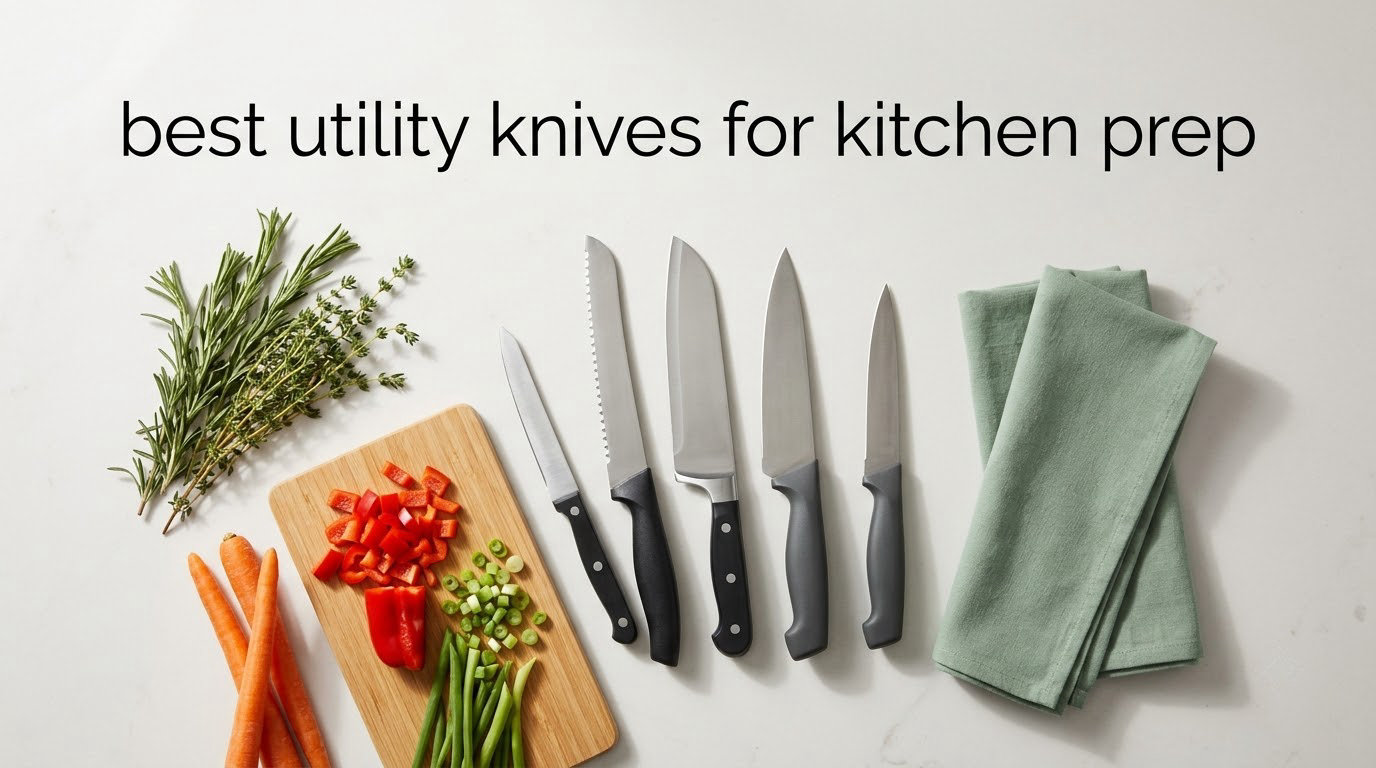
A kitchen utility knife is a small multipurpose knife, usually 5 or 6 inches long with a narrow blade, used for the mid-size prep work that sits between a paring knife and a chef’s knife. Peeling potatoes, slicing soft fruit, dicing onions, coring apples, prepping sandwiches, and slicing bread rolls all fall in its lane. If you want the best utility knives for kitchen prep, that is the category covered here.
One clarification before we go further. This guide is about food prep knives only, not retractable box cutters, snap blades, or razor-blade utility knives used for drywall and carpet. Search results constantly blur those two categories, and the tools have nothing in common. A kitchen utility knife is a fixed-blade, food-safe tool you keep in a block or a drawer.
I have been cooking on a daily rotation of small prep knives for the past few years, and my team compared the twelve models below on the only things that matter for prep work: how the edge behaves on a ripe tomato, how the handle feels with wet hands, whether the blade flexes on a hard carrot, and how the knife holds up after a month of washing. I also leaned on what cooks report in r/chefknives, r/TrueChefKnives, and r/Cooking, where the consensus on what makes a prep knife good is remarkably consistent.
The short version of that consensus: full tang construction is the primary quality signal, weight and balance matter more than raw sharpness, and a serrated edge is valued for one specific reason, which is that it does not crush delicate produce. We use those criteria throughout. If you want to build out the rest of your setup, our picks for sous vide machines for meal prep and Android tablets for kitchen use cover the other half of weeknight dinner prep.
Our Top 3 Utility Knives for Everyday Kitchen Prep
These three earned the top spots after we weighed rating, review volume, build quality, and how the knife behaved across common prep tasks. The full list of twelve follows below.
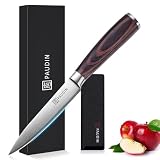
PAUDIN 5 Inch Forged Utilit…
- Forged high-carbon stainless core at 56+ Rockwell
- Pakkawood handle with polished bolster
- Waved blade pattern
- Sharp out of the box

Victorinox 4.5 Inch Serrate…
- Serrated Swiss-made blade
- Round safe tip
- Bright orange synthetic handle
- Compact 4.5 inch blade

Cutluxe 5.5 Inch Full Tang…
- Forged German 1.4116 steel at 56+ Rockwell
- Triple-riveted full tang pakkawood handle
- Hand sharpened at 14-16 degrees per side
- Lifetime warranty
Comparing the Best Utility Knives for Kitchen Prep in 2026
Every pick below is a fixed-blade kitchen knife, and each one earns a place for a different reason. Blade length, edge type, steel and handle material decide what a knife is good at, so those are the attributes to scan first.
| Product | Specs | Action |
|---|---|---|
| PAUDIN 5 Inch Forged Utility Knife |
|
Check Latest Price |
| Victorinox 4.5 Inch Serrated Utility |
|
Check Latest Price |
 Zyliss 5.25 Inch Utility with Sheath Zyliss 5.25 Inch Utility with Sheath |
|
Check Latest Price |
| Cutluxe 5.5 Inch Full Tang Utility |
|
Check Latest Price |
 TUO 5 Inch Slim Utility Knife TUO 5 Inch Slim Utility Knife |
|
Check Latest Price |
 Mercer Culinary Genesis 5 Inch Mercer Culinary Genesis 5 Inch |
|
Check Latest Price |
 Henckels Classic 6 Inch Utility Henckels Classic 6 Inch Utility |
|
Check Latest Price |
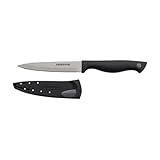 Farberware EdgeKeeper 4.5 Inch Farberware EdgeKeeper 4.5 Inch |
|
Check Latest Price |
 CoquusAid 5 Inch Serrated Utility CoquusAid 5 Inch Serrated Utility |
|
Check Latest Price |
 HOSHANHO 6 Inch Japanese Utility HOSHANHO 6 Inch Japanese Utility |
|
Check Latest Price |
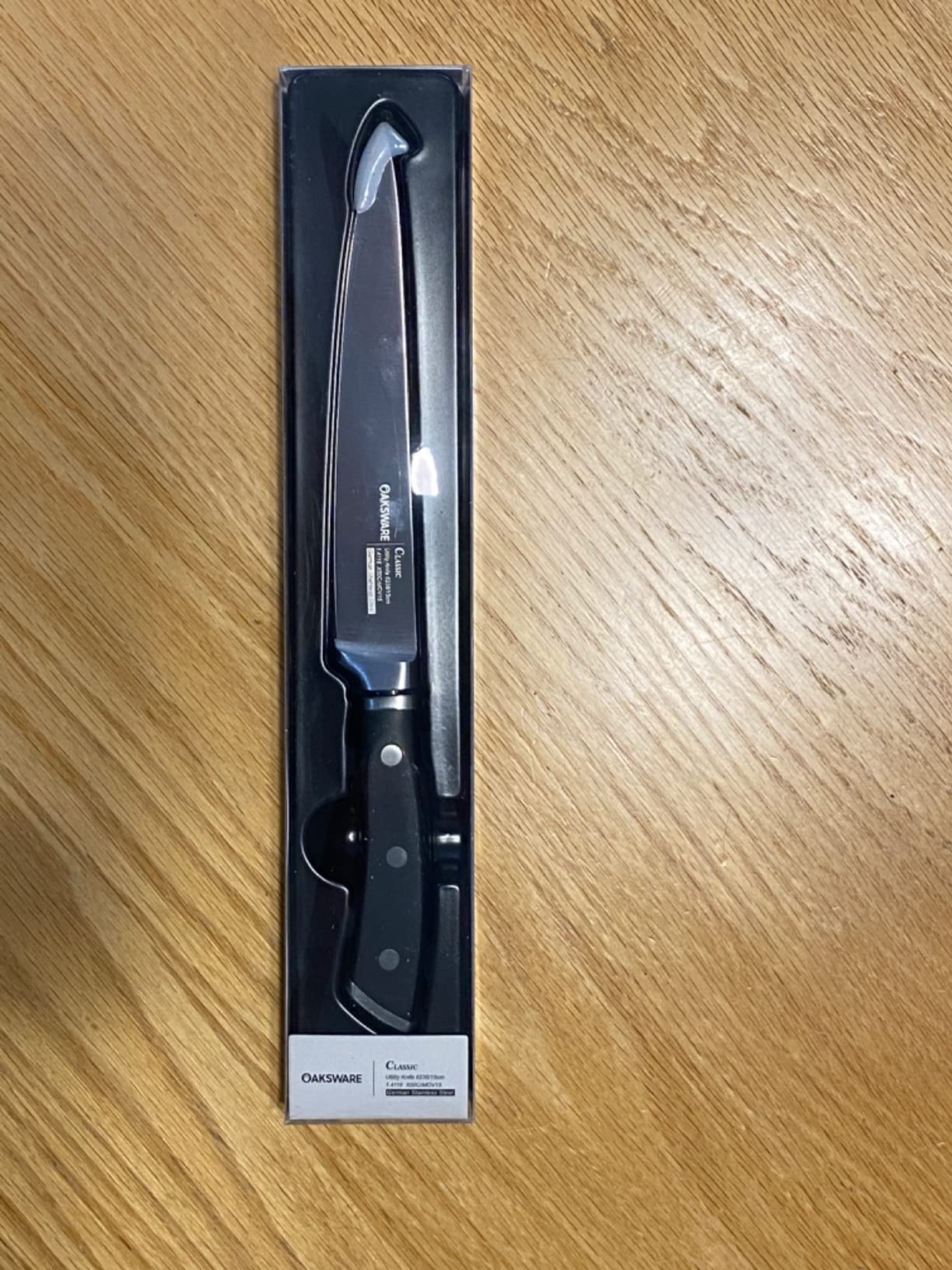
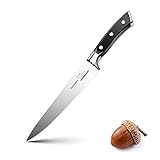 OAKSWARE 5.5 Inch Utility Knife OAKSWARE 5.5 Inch Utility Knife |
|
Check Latest Price |
 Wusthof Classic 6 Inch Utility Wusthof Classic 6 Inch Utility |
|
Check Latest Price |
1. PAUDIN 5 Inch Forged Utility Knife – The All-Round Prep Pick
PAUDIN Kitchen Utility Knife, 5 Inch Chef Knife Fruit Knife, Gift Box
Forged high-carbon stainless core at 56+ Rockwell
Pakkawood handle with polished bolster
Plain edge
196 g
Pros
- Nimble all-purpose profile for slicing
- dicing and mincing
- Sharp out of the box and easy to re-sharpen
- Ergonomic pakkawood handle with good balance
- Gift box packaging
Cons
- Thin blade profile is not ideal for heavy chopping
- Waved pattern is a finish rather than true Damascus steel
This is the knife I reach for first when a recipe calls for a whole onion, a stack of apple slices, or a quick trim job before the pan gets hot. The forged high-carbon stainless core holds an edge out of the box and stays sharp through a week of ordinary prep, and the 196 gram weight keeps the blade moving without feeling twitchy.
It carries the highest review volume of any pick in this roundup, and the sentiment is unusually consistent. Owners describe the same two things: it is sharp immediately, and it is balanced well enough to use for extended sessions without hand fatigue.
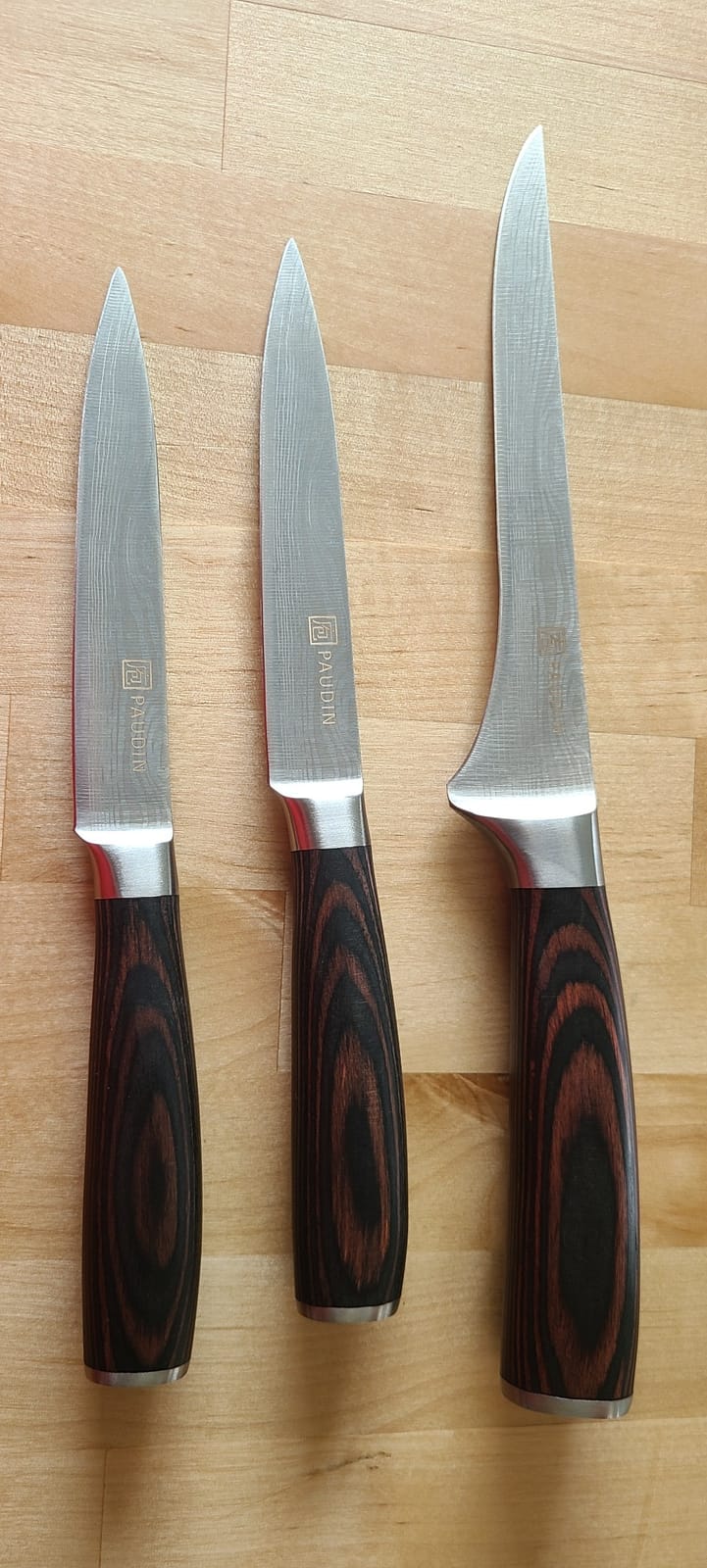
The pakkawood handle with a polished bolster gives you a secure pinch grip even when your hands are rinsed and damp, which is the state they are in for most of a dinner shift. The bolster also gives you somewhere to put your index finger as you push through a dense vegetable.
What the waved blade pattern actually is
The rippled surface is a finish applied to 5Cr15MoV stainless steel, not layered Damascus. Nobody is going to hand you a genuine damascus pattern at this level, and the cut quality does not depend on it. What matters is the 56+ Rockwell core underneath, and that part is solid.
Where the thin profile helps and where it hurts
The slim blade slices cleanly through soft produce and makes tight trimming moves easy to control. It does flex a little under real force, so if you are working through dense root vegetables or want to rock through a big pile of cabbage, you will be happier with a chef’s knife. For mid-size prep, which is what this knife is built for, the profile is an advantage.
Who should skip it
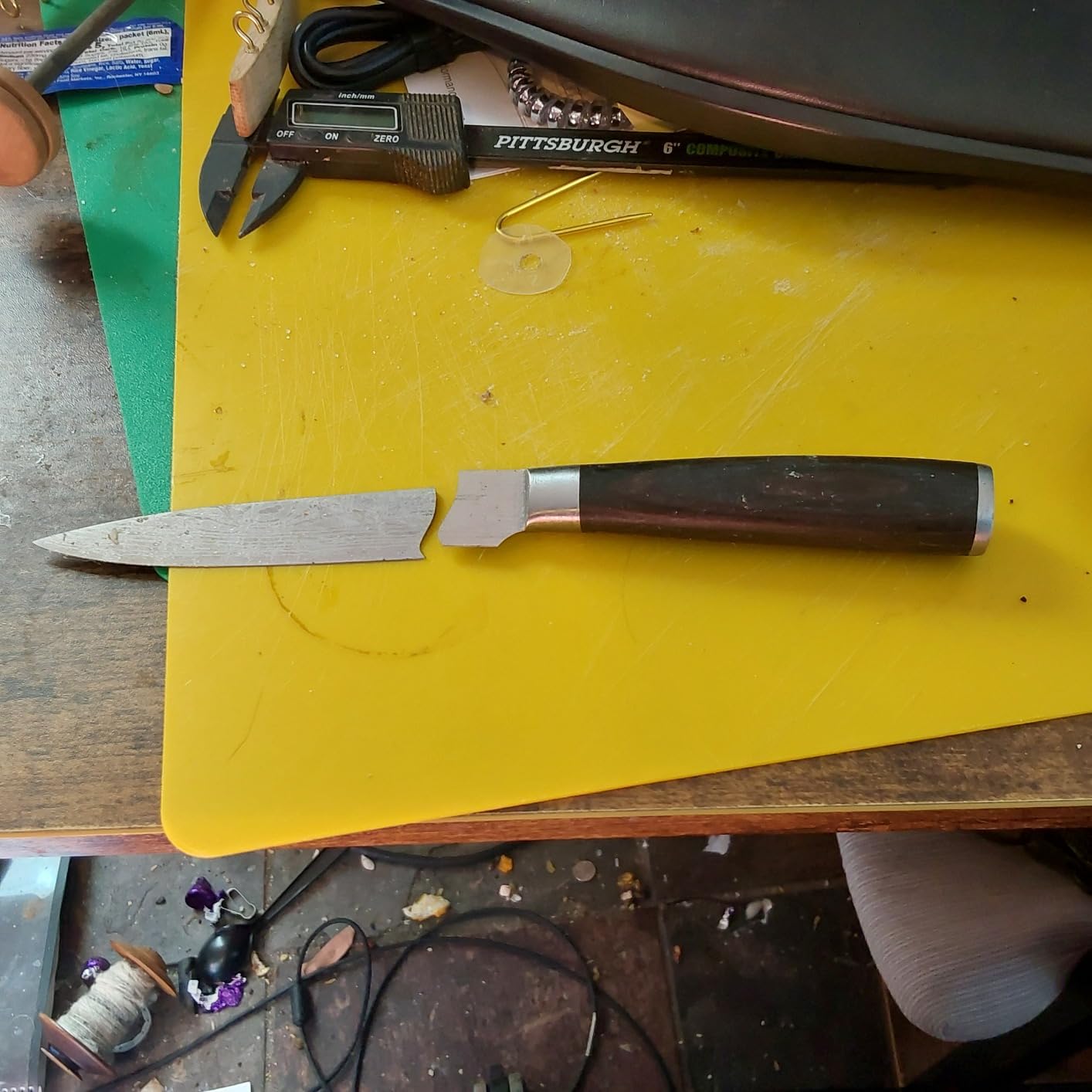
If your prep is mostly hard root vegetables, bone-in meat, or heavy chopping, move up in size or pick a heavier blade. If you want a genuine multi-layer Damascus billet, this is not that knife and the listing does not claim it is.
2. Victorinox 4.5 Inch Serrated Utility Knife – The Budget Serrated Classic
Victorinox VIC-6.7836.L119 Swiss Classic Utility – Colored 4½” Serrated Round Blade ¾” width at handle Orange, Multicolor
Serrated Swiss-made blade with round tip
3/4 inch blade width at handle
Synthetic handle
4.5 inch blade
Pros
- Excellent 4.8 rating with 91 percent five-star scores
- Serrated edge works well on tomatoes
- bread and soft fruit
- Compact 4.5 inch size suits small hands
- Distinctive orange handle is easy to find in a drawer
Cons
- Serrated edge is not suited to fine straight cuts or chiffonade
- Small blade limits it to light prep tasks
This is the default answer on r/TrueChefKnives whenever someone asks what a beginner should buy, and after using it the reason is obvious. The 4.5 inch serrated blade cuts a ripe tomato into clean, intact slices instead of turning it into a puddle, and the round tip means you can follow the curve of a pepper or a small squash without worrying about punching through the skin.
It is also the highest-rated knife in this group at 4.8, with 91 percent of ratings at five stars across more than 2,000 reviews. That kind of consistency over that much volume is rare in this category.
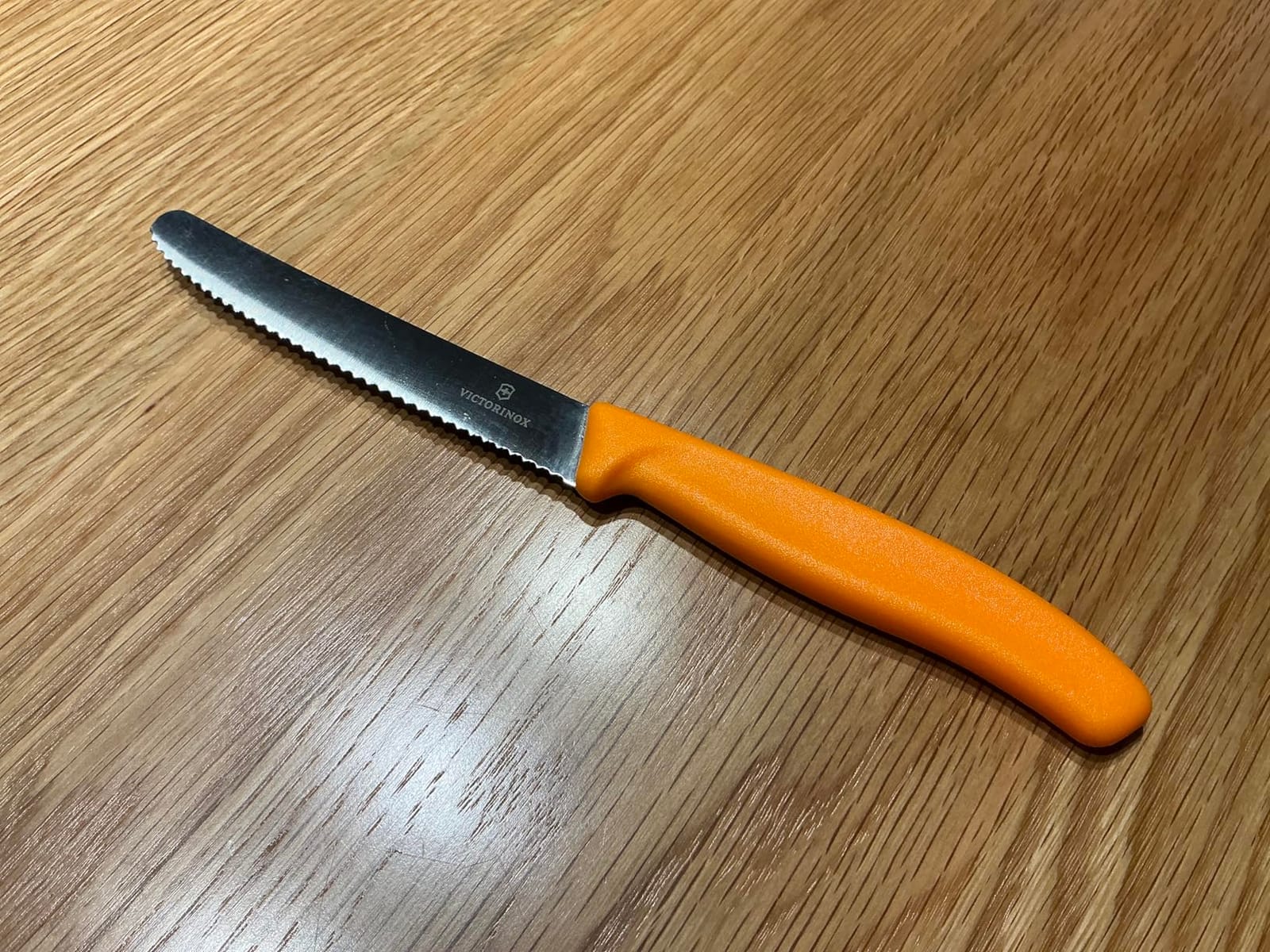
Why serrations are the right call for soft produce
Serrated teeth act like a saw rather than a cleaver. Each tooth peaks slightly, so the blade contacts a thin line of the tomato skin and the flesh below never gets crushed, which is exactly what cooks on r/Cooking describe when they say a serrated utility knife saves the salad. On bread and soft fruit, the same teeth break the surface cleanly with almost no downward force.
The tradeoff you accept with a serrated edge
You give up clean straight cuts. A serrated blade drags slightly through a tomato rather than gliding, and it cannot do a chiffonade or a paper-thin slice of onion. For cooks whose prep is mostly soft produce, that trade is worth it. For cooks who want precision flat cuts, a straight-edge utility knife is the better tool.
Small size as a feature, not a flaw
At 4.5 inches with a 3/4 inch blade width at the handle, this is a genuinely small knife. Cooks with smaller hands say it fits their grip properly, and it keeps more of the food in contact with the board. The downside is obvious: it is a light prep tool, not something to load with a whole head of cabbage.
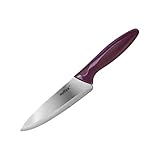
3. Zyliss 5.25 Inch Utility Knife with Sheath – Built for Packed Kits and Mixed Drawers
Zyliss Utility Knife with Sheath Cover – Precision Knife for Cutting & Slicing – Paring Knife for Meat, Fruits & Vegetables – Culinary Kitchen Knife – 5.5″ Carbon Stainless Steel Blade – Purple
Stamped high-carbon stainless blade at 5.25 inches
Soft-touch rubber grip handle
Included safety sheath
1.6 ounce weight
Pros
- Included sheath makes it safe to store in a mixed-tool drawer or pack for camping
- Very sharp out of the box and re-sharpens easily
- Lightweight and comfortable for extended prep
- Dishwasher safe though hand washing is recommended
Cons
- Thin stamped blade needs frequent sharpening on hard produce
- Sheath is fiddly to draw the knife in and out of
- Lightweight feel may not suit users wanting a heavier blade
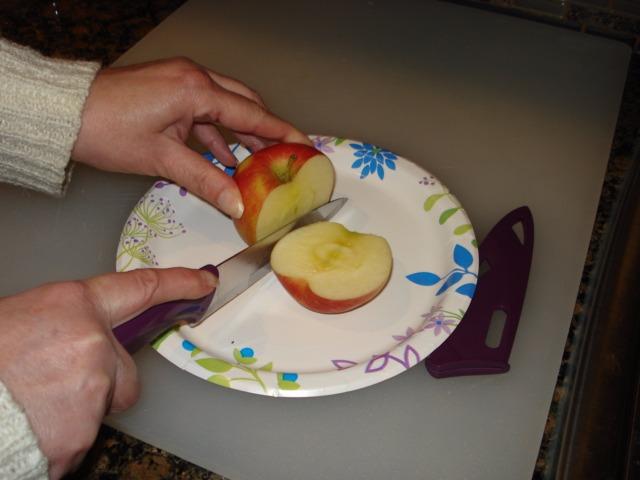
The reason this knife is on the list is the sheath. Almost every other pick in this roundup is a bare blade that needs a block, a drawer slot, or careful handling, and this one has a cover that snaps over the edge. Owners buy these in multiples, one for the kitchen, one for a van, one for a camping kit.
The blade itself is straightforward: stamped high-carbon stainless, 5.25 inches, sharp on arrival and easy to bring back with a hone. The soft-touch rubber grip keeps it comfortable through a long session of peeling and trimming.
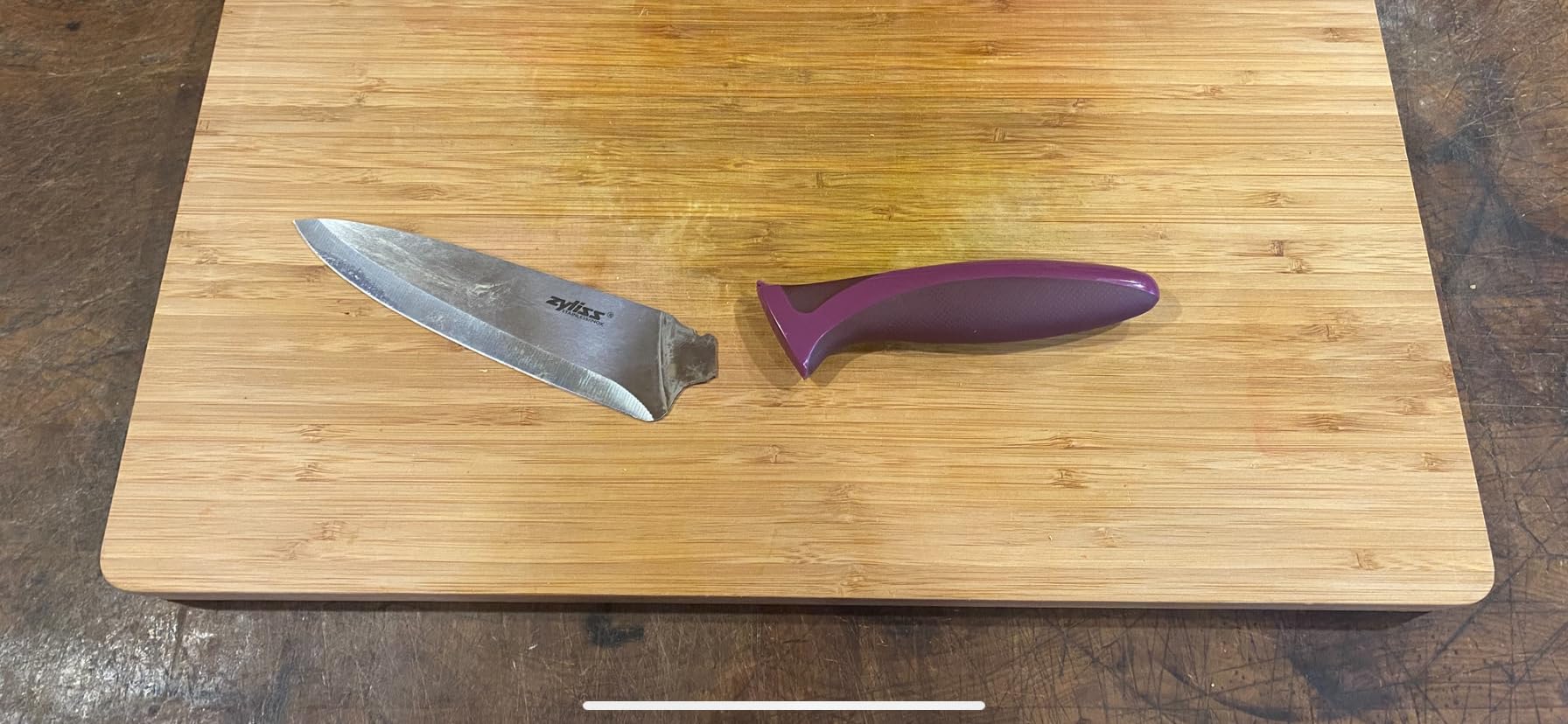
Stamped steel and what it means in practice
Stamped construction means the blade is cut from sheet steel rather than forged. It is thinner and lighter than a forged blade, which makes it nimble for delicate work, but it also means the edge loses its bite faster on hard produce. If you spend a lot of time on carrots, potatoes, and beets, expect to hone more often than you would with a forged blade.
Using the sheath safely
Reviewers raise one recurring complaint: the sheath is awkward to draw the knife from, and a hand that slides toward a blade instead of away from it is a real risk. Push the knife into the sheath with the spine leading, and take the cover off before you use it rather than pulling the blade out sideways.
A good knife for learning to prep
The violet finish makes this knife easy to identify and slightly less anonymous in a shared kitchen, and at 1.6 ounces it is light enough for a cook still building hand strength. A lot of the feedback we read describes it as a first real knife that replaces a mismatched starter block.
4. Cutluxe 5.5 Inch Utility Knife – Full Tang Weight in a Small Blade
Cutluxe Kitchen Utility Knife, 5.5″ Paring Knife – Razor Sharp Blade
Forged German 1.4116 steel at 56+ Rockwell
Full tang with triple-riveted pakkawood handle
Edge hand sharpened at 14-16 degrees per side
5.28 ounce weight
Pros
- Very sharp out of the box with good edge retention
- Full tang build feels substantial and well balanced
- Handle is large and rounded and comfortable for bigger hands
- Backed by a lifetime warranty
Cons
- Heavier than many users expect for a 5-5.5 inch knife
- Pakkawood handle must be hand washed
Most 5 inch utility knives are built for small hands because of how narrow and light they are. This one goes the other direction. The handle is large and rounded, the tang runs the full length of the blade, and at 5.28 ounces the knife has a presence that feels substantial in the hand from the first cut.
That weight comes from the full tang construction, where the steel runs unbroken from the tip through the handle and is pinned in place with three rivets. It is the quality signal that enthusiasts on bladeforums.com and kitchenknifeforums.com consistently point to first, and on a 5.5 inch blade it makes a bigger difference than you would expect.
Forged German steel and the 14-16 degree edge
The blade is forged from German 1.4116 high-carbon steel, hardened to 56+ Rockwell, with an edge hand sharpened at 14 to 16 degrees per side. That is a fairly wide, workmanlike bevel, which is the right choice for prep knives that will meet potatoes and bread crusts rather than a delicate sashimi cut.
Handled how you want it, with one exception
The full tang with three rivets means there is no joint to loosen and no place for the handle to twist under lateral force. It is the grip cooksfknives reviewers describe as the benchmark for what a small handle should feel like. The one rule is that pakkawood and dishwasher heat do not mix, so this knife gets washed by hand and dried right away.
Who finds it too much
Some reviewers find it heavier than they expected for a knife this size, and a few describe the factory sharpness as almost aggressive for someone with less experience. If you want the same steel in a lighter package, the TUO below is 3.2 ounces and noticeably quicker to move.
5. TUO 5 Inch Slim Utility Knife – Precision Trimming Without the Weight
TUO Utility Knife, 5 inch Small Kitchen Knife for Paring & Slicing, with Ergonomic Pakkawood Handle, High Carbon German Stainless Steel – Fiery Phoenix Series
Forged German X50CrMoV15 steel at HRC56 plus or minus 2
Honbazuke hand sharpening at 14 degrees per side
Pakkawood handle with polished bolster
3.2 ounce weight
Pros
- Lightweight slim blade suited to delicate trimming tasks
- Hand-honed edge delivers excellent sharpness and retention
- Well balanced pakkawood handle with polished bolster
- Gift box included
Cons
- Narrow blade is not intended for heavy chopping
- Pakkawood handle requires hand washing
Where the Cutluxe is dense, this is light. At 3.2 ounces with a slim narrow blade, it moves quickly and precisely, and it is the one I would hand to someone doing fine trimming work on soft fruit, small veg, or a stack of sandwich ingredients.
The steel is the same family as the Cutluxe, forged German X50CrMoV15 vacuum heat treated to HRC56 plus or minus 2. What separates the two is the profile and the finish of the edge, which here is hand sharpened with the Honbazuke method at 14 degrees per side.
What Honbazuke sharpening actually does
It is a traditional Japanese technique that builds a shinier, more acute bevel than a standard machine grind. The practical result in a home kitchen is an edge that feels noticeably cleaner on a ripe peach or a thin slice of cheese, and that stays keen longer between sessions. Reviewers describe exactly that step up from dull starter knives.
Balance over heft
The polished bolster and pakkawood handle give you a pinch grip that stays secure when your hands are wet, and the balance point sits forward of the handle so the blade does not want to tip. This is the knife to pick if a full tang feels like too much knife for the work you actually do.
Where it is the wrong tool
A slim blade at this length is a trimming instrument, not a chopping one. For onions in bulk, dense cabbage, or anything that wants real downward force, you want a chef’s knife or a deeper utility blade. As with any pakkawood handle, it stays out of the dishwasher.
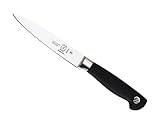
6. Mercer Culinary Genesis 5 Inch Utility Knife – Best Grip for Wet Hands
Mercer Culinary M20405 Genesis 5-Inch Utility Knife,Black
Precision-forged high-carbon German steel
Taper-ground edge
Santoprene handle with non-slip grip
5 inch blade
Pros
- Non-slip Santoprene handle stays secure with wet hands
- Forged German steel with taper-ground edge holds sharpness
- Well suited to general day-to-day prep
- Backed by a lifetime limited warranty
Cons
- Hand wash only with no dishwasher option
- Entry-level construction within the Mercer line
Handle grip is the underrated variable in prep work, and it matters more than most buyers think. Your hands get rinsed every time you handle a tomato or an onion, and a smooth handle turns a confident cut into a slipping one. The Santoprene grip on this Mercer model is the most consistently wet-hand-friendly in the group, and reviewers call it out specifically.
The blade is precision-forged high-carbon German steel with a taper-ground edge, which means the bevel is ground from the spine down to the edge rather than being a flat, uniform wedge. That taper is why it keeps cutting smoothly and why it slides under a slice of cheese or a tomato without needing downward pressure.
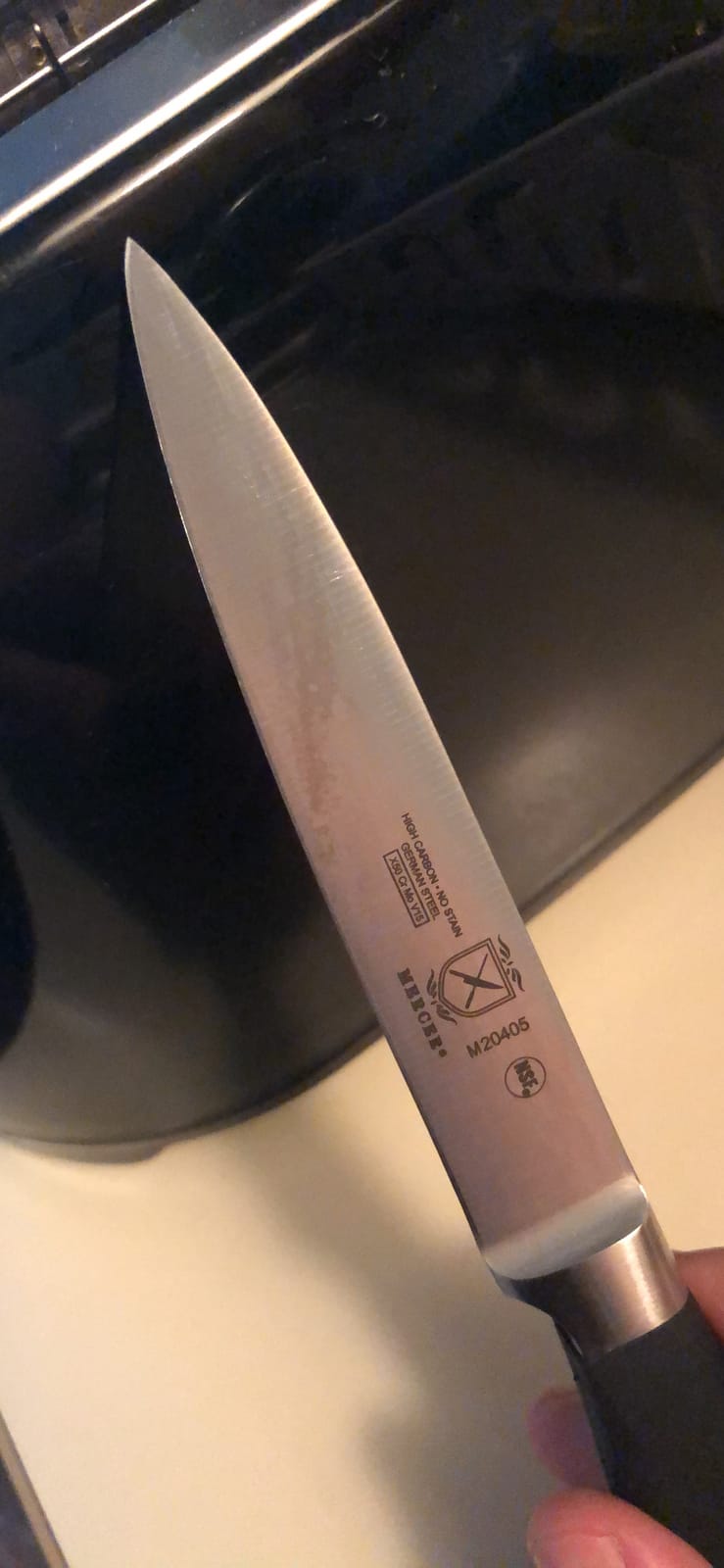
Built for the in-between jobs
Mercer positions this as the in-between knife for pickles, fruit, cheese, apple peeling, and sandwiches, and that is a fair description of where a 5 inch utility blade earns its keep. It is not a rocking knife and it will not replace a chef’s knife, but for the fiddly trimming that happens between the big cuts, it is quick and predictable.
Care rules and the dishwasher question
This one is hand wash only, with no dishwasher option at all. That matches what enthusiasts recommend anyway, since the heat and detergent in a dishwasher cycle is what dulls edges and corrodes rivets over time. Wipe it dry right after washing and store it away from the sink where moisture sits.
Where it sits in the range
Within the Mercer line this is entry-level construction, and that shows in the handle feel compared with a full tang pakkawood knife. It also ranks in the top tier of its category for overall sales, which tells you how much of the ordinary prep work in home kitchens it is quietly handling. For general day-to-day use, it does that job very well.
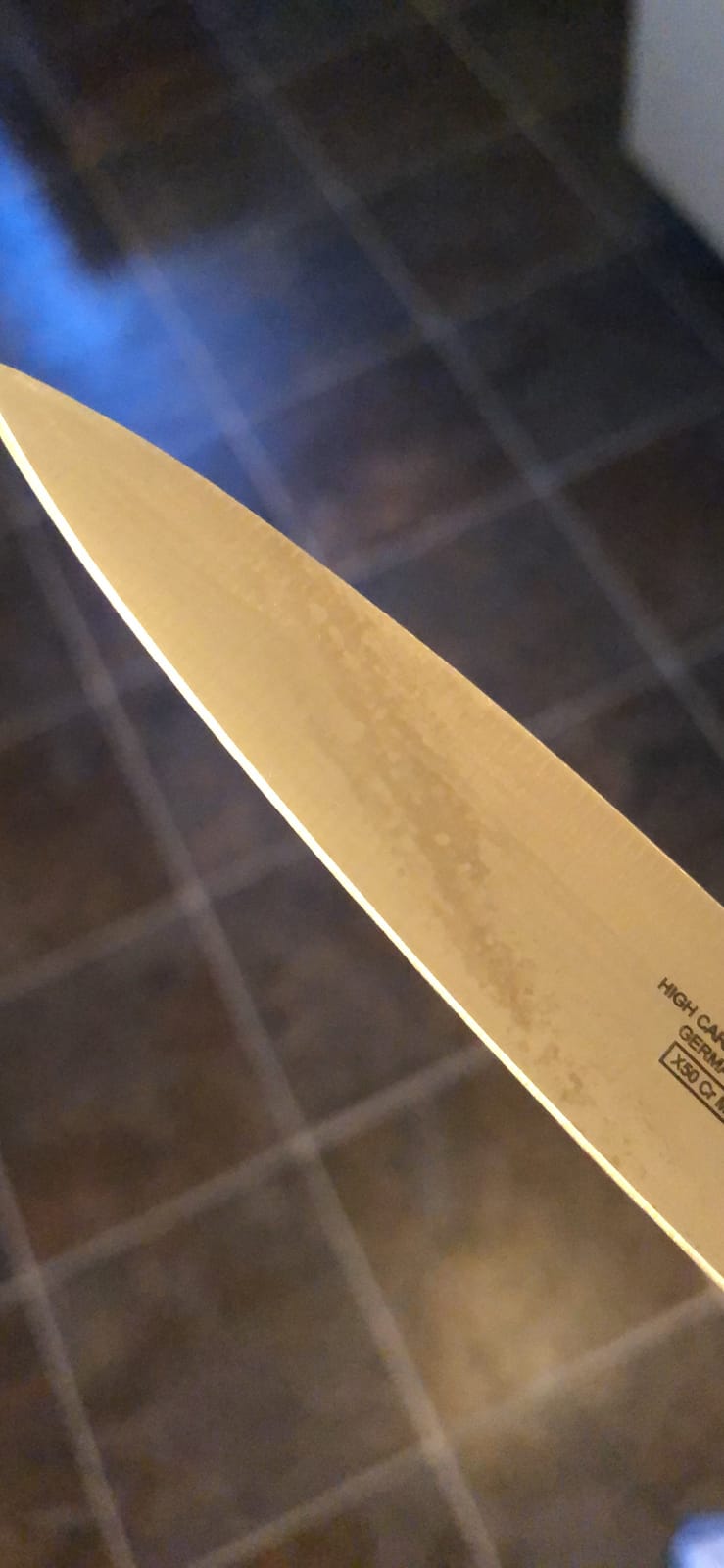
7. Henckels Classic 6 Inch Utility Knife – The Deep Blade You Rarely Find
Henckels Classic 6-Inch Utility Knife, Razor-Sharp, German Engineered
Fully forged high-carbon stainless steel at 6 inches
One inch blade depth
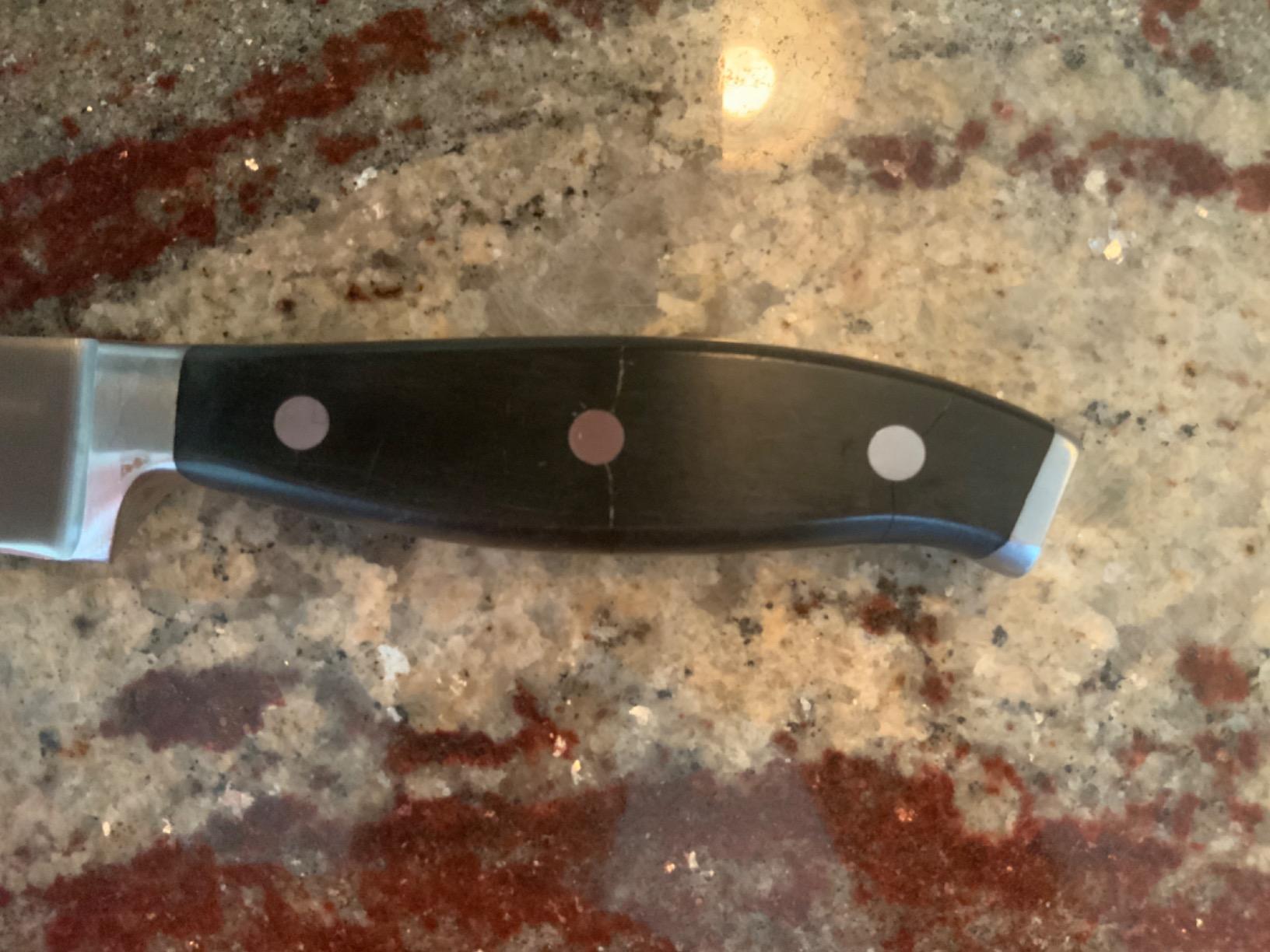
Triple-rivet handle
Dishwasher safe or hand wash
Pros
- Holds its edge for months of daily use without sharpening
- Deep one-inch blade at six inches is hard to find elsewhere
- Sharp tip works well for detail work on melon and honeydew
- Well balanced
- lightweight and easy to clean
Cons
- Handle can feel small for users with very large hands
- Hard steel is difficult for beginners to sharpen at home
- Priced above most competitors in the class
Most six inch utility knives have a blade width that is only about three quarters of an inch. This one is a full inch deep, and that extra height is the whole reason to buy it. A deeper blade can move a stack of slices, cut through a thick wedge of melon, or handle a chunk of squash that a shallow blade would have to attack in three separate passes.
It is fully forged high-carbon stainless with a triple-rivet handle, finely honed for a satin finish, and rated to hold its edge for months of daily use. Repeat buyers describe owning a third or fourth one, which tells you as much about satisfaction as the review average does.
Edge retention versus sharpening ease
There is a real trade here and it is the most common complaint in the reviews. The steel is hard enough to stay keen for a long time, which is exactly what makes it less forgiving if you only own a standard whetstone and are new to sharpening. A softer, more frequent honer is a better companion to this knife than it is to the Victorinox above.
Handling and grip size
At six inches and only 1.6 ounces, the knife is lighter than the length suggests and sits well in the hand for slicing work. The one recurring note is that the handle can feel small if you have very large hands, which is the opposite trade-off to the Cutluxe. Pair this one with normal-to-smaller hands and a deeper blade requirement.
Care flexibility
This is one of the few picks here that is genuinely comfortable in the dishwasher, though hand washing still gives you a longer-lived edge. If you want a utility knife you can rinse and drop in a cycle without thinking about it, that is a fair practical advantage for a busy household.
8. Farberware EdgeKeeper 4.5 Inch Utility Knife – Maintenance Without a Sharpener
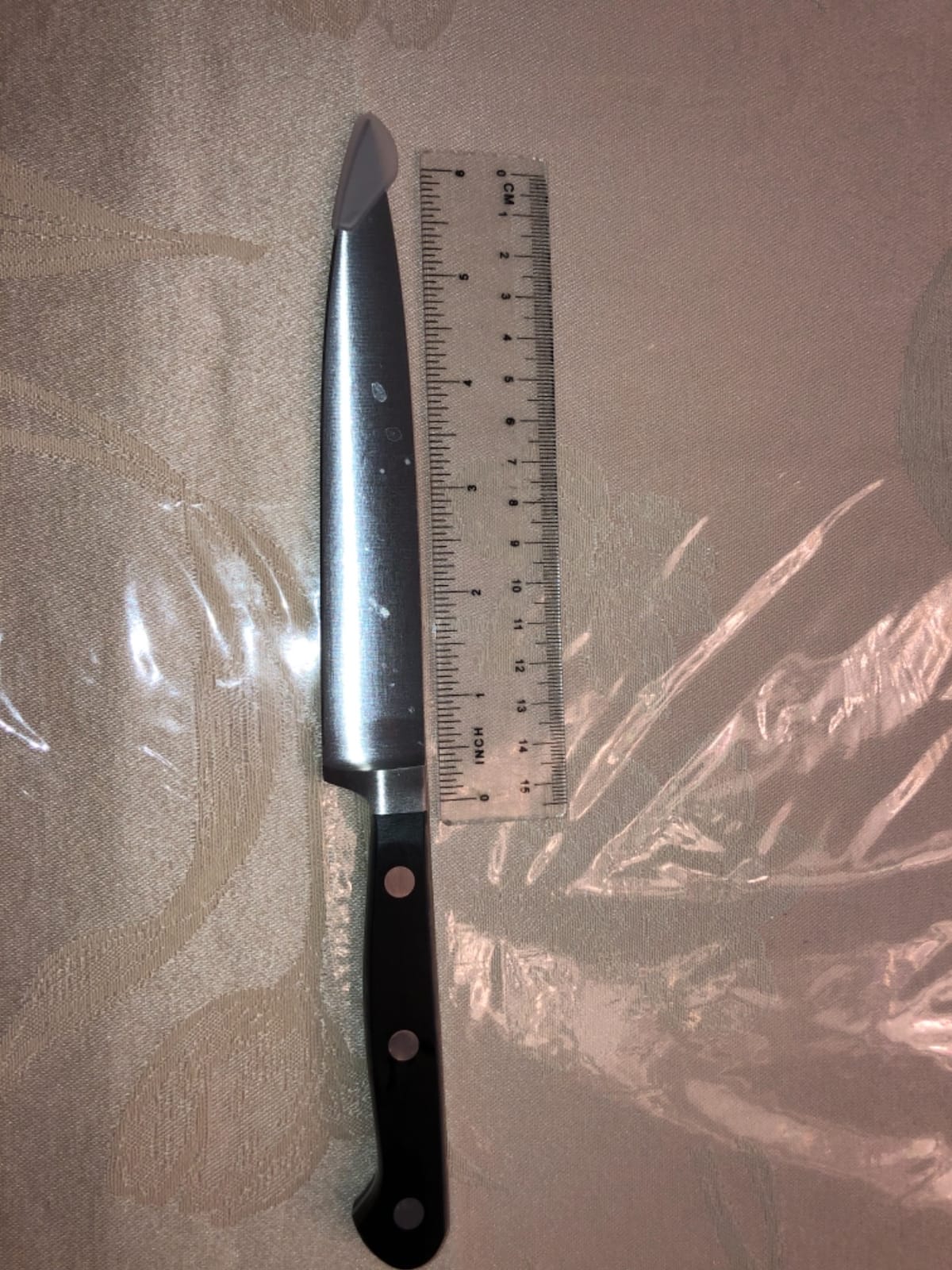
Farberware EdgeKeeper 4.5-Inch Utility Knife with Sharpening Sheath
Stamped high-carbon stainless blade at 4.5 inches
EdgeKeeper sheath with integrated sharpener
Ergonomic comfort grip handle
3 ounce weight
Pros
- Self-sharpening sheath removes the need for a separate sharpener
- Sheath doubles as safe drawer storage
- Compact 4.5 inch size suits small produce and garlic
- Comfortable grip for longer prep sessions
Cons
- Stamped construction is lighter and less refined than forged rivals
- Small size limits it to fine prep tasks
- Sheath sharpening is a touch-up rather than a full hone
The idea here is simple enough that I wish more products did it. The sheath has a built-in sharpener, so every time you slide the blade in or pull it out, it gets a light touch-up. For a cook who does not own a whetstone and does not want to think about sharpening, that removes the single biggest reason serrated and straight prep knives go dull and stay dull.
The blade is stamped high-carbon stainless at 4.5 inches, which makes it a fine prep tool for garlic, shallots, small fruit, and soft vegetables. The handle is shaped to reduce hand fatigue over longer sessions rather than to feel premium.
What the sheath sharpener will and will not do
Be clear-eyed about this. The EdgeKeeper mechanism removes microscopic dullness as you store the knife, which keeps a working edge going far longer. It will not restore an edge that has gone properly blunt, and it does not put a factory-fine bevel back on a knife that has been abused. It is maintenance, not sharpening, and treating it that way avoids disappointment.
Where the stamped build shows
At 3 ounces with a stamped blade, this is the lightest and least refined construction in the roundup. Buyers who compare it against a forged full tang knife notice the difference in how substantial it feels. What you get instead is a knife that is easy to handle, easy to store safely, and easy to keep sharp by accident.
Best use
It is a secondary prep knife. Keep it for the small work that happens constantly, trimming and slicing garlic, shallots, chillies, and soft fruit, and you will rarely have to think about the edge. Wipe the sheath with a damp cloth rather than washing it, and hand wash the blade.
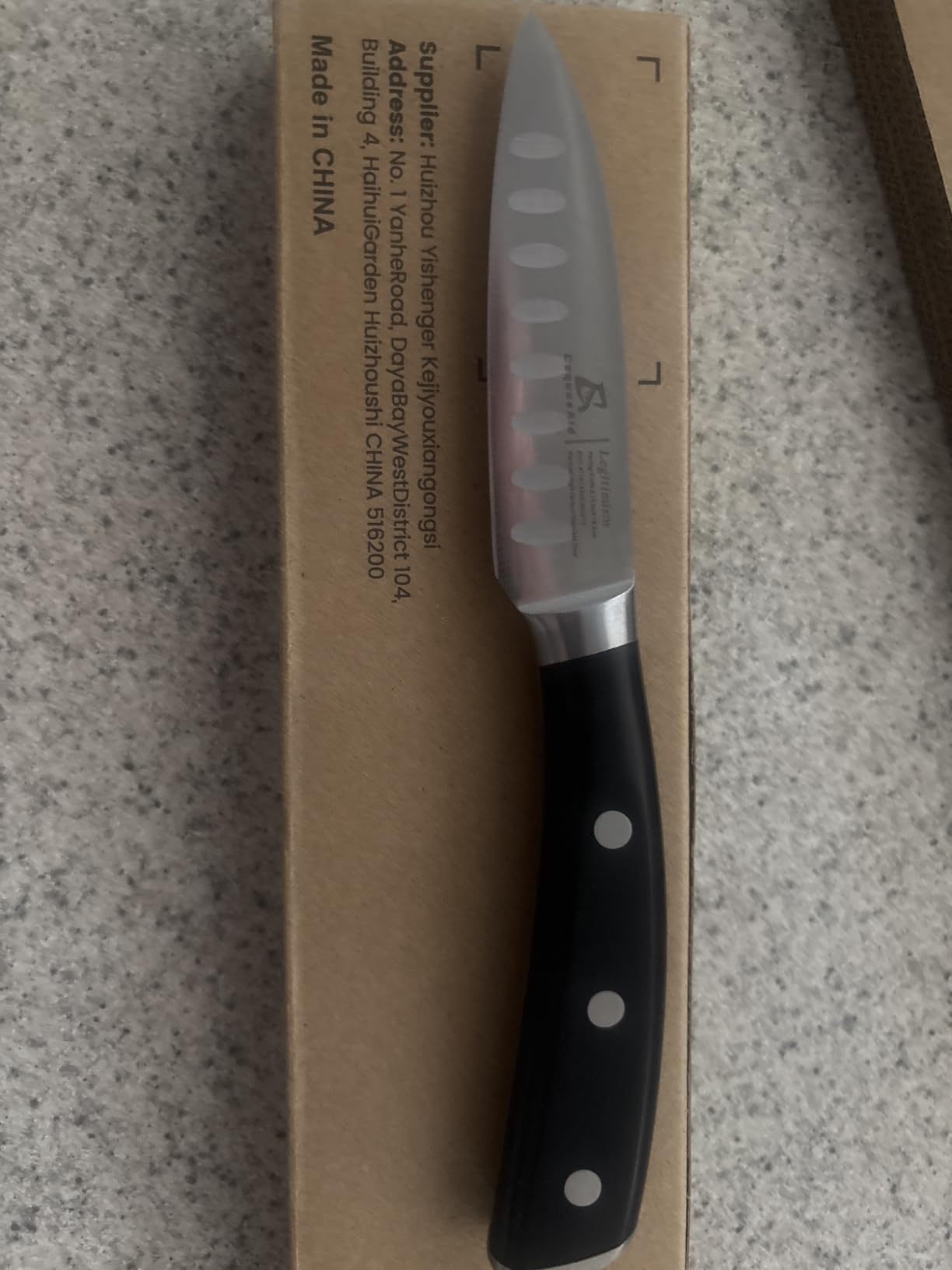
9. CoquusAid 5 Inch Serrated Utility Knife – Built for Tomatoes and Soft Produce
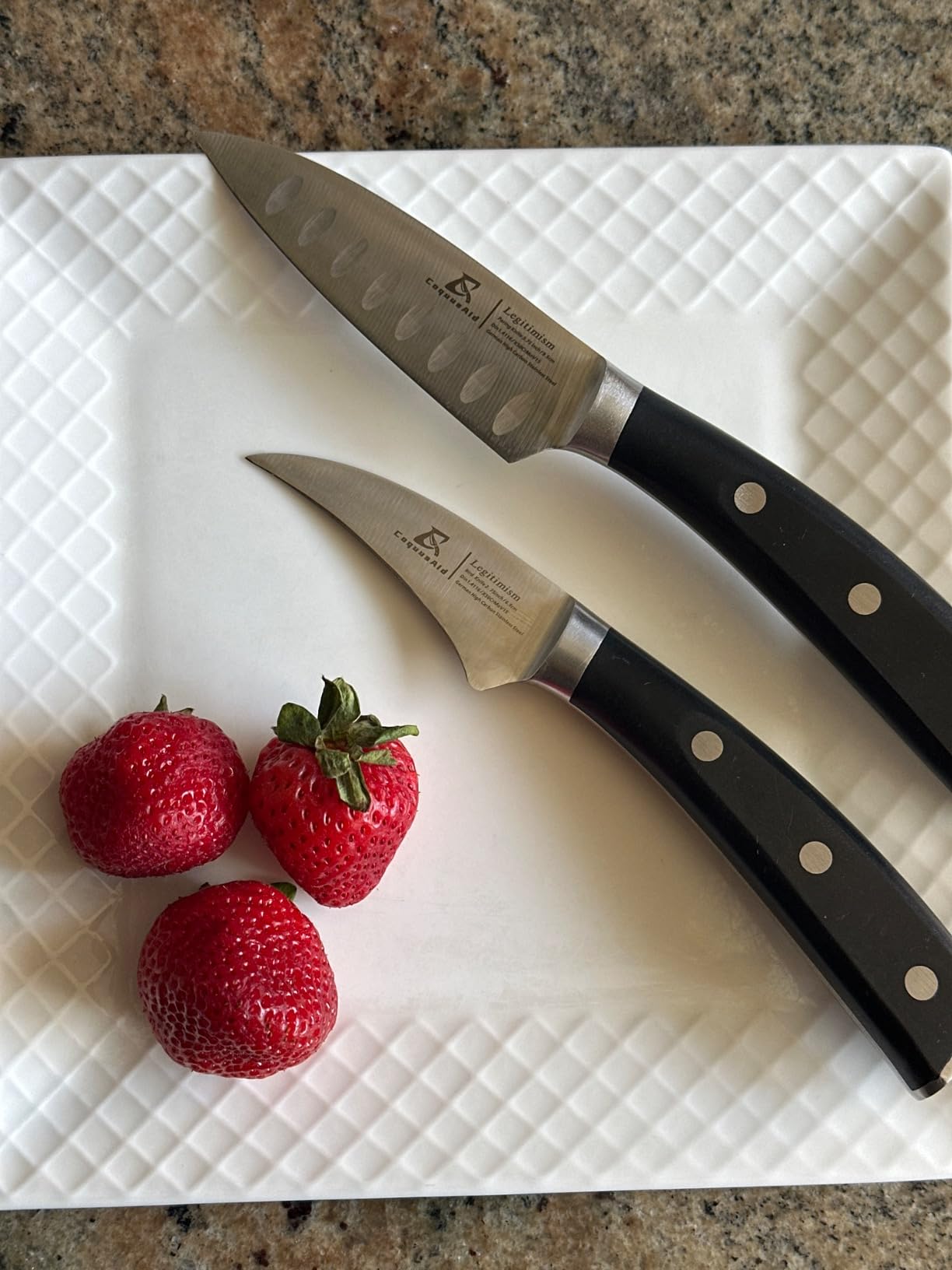
CoquusAid 5 inch Kitchen Utility Knife, Serrated Blade Tomato Knife
Serrated arc design with rounded transitions between teeth
Rounded safe tip
Full tang with triple-rivet handle
Rock-hollow dimples for food release
Pros
- Serrated edge is excellent on tomatoes
- bread and soft-skinned fruit
- Rounded tip is a good safety feature for new cooks
- Comfortable balanced handle that fits smaller hands
- Holds sharpness for months without sharpening
Cons
- Serrations limit use for fine straight cuts
- Shank-to-blade transition curves out slightly which some users find a minor hazard
- Not premium steel
The most common complaint about a serrated prep knife is that it tears the skin of a tomato and turns the inside to mush. The serrations on this one are cut as an arc with rounded transitions between the teeth rather than as straight, aggressive points, and that shape is what produces the clean, intact slices reviewers describe.
It is a 5 inch forged blade with a full tang and a triple-rivet handle, so the construction is more serious than the price tier suggests. Reviewers report the edge lasting six months or more between sharpening sessions, which is unusual for a serrated blade.
Rounded transitions and why they matter
Straight-cut serrations have peaks that catch and tear. Rounded transitions mean each tooth rolls into the next, so the blade shears rather than rips. It is a small geometry change with an obvious result on anything with a delicate skin, including peaches, plums, and soft cheese.
The rock-hollow dimples
Two shallow hollows are ground into the blade face. Food sits up in them rather than suctioning flat against the steel, so tomato slices and cucumber rounds release as you lift the knife instead of tearing off. It is a modest feature that shows up in real use every single time you use this knife.
One shape complaint worth knowing
Some users flag where the handle meets the blade, saying the transition curves out slightly and can catch a hand that slides forward. Keep your knuckles tucked and your fingers behind the bolster and it is a non-issue, but it is the detail to check if you are particular about a pinch grip.
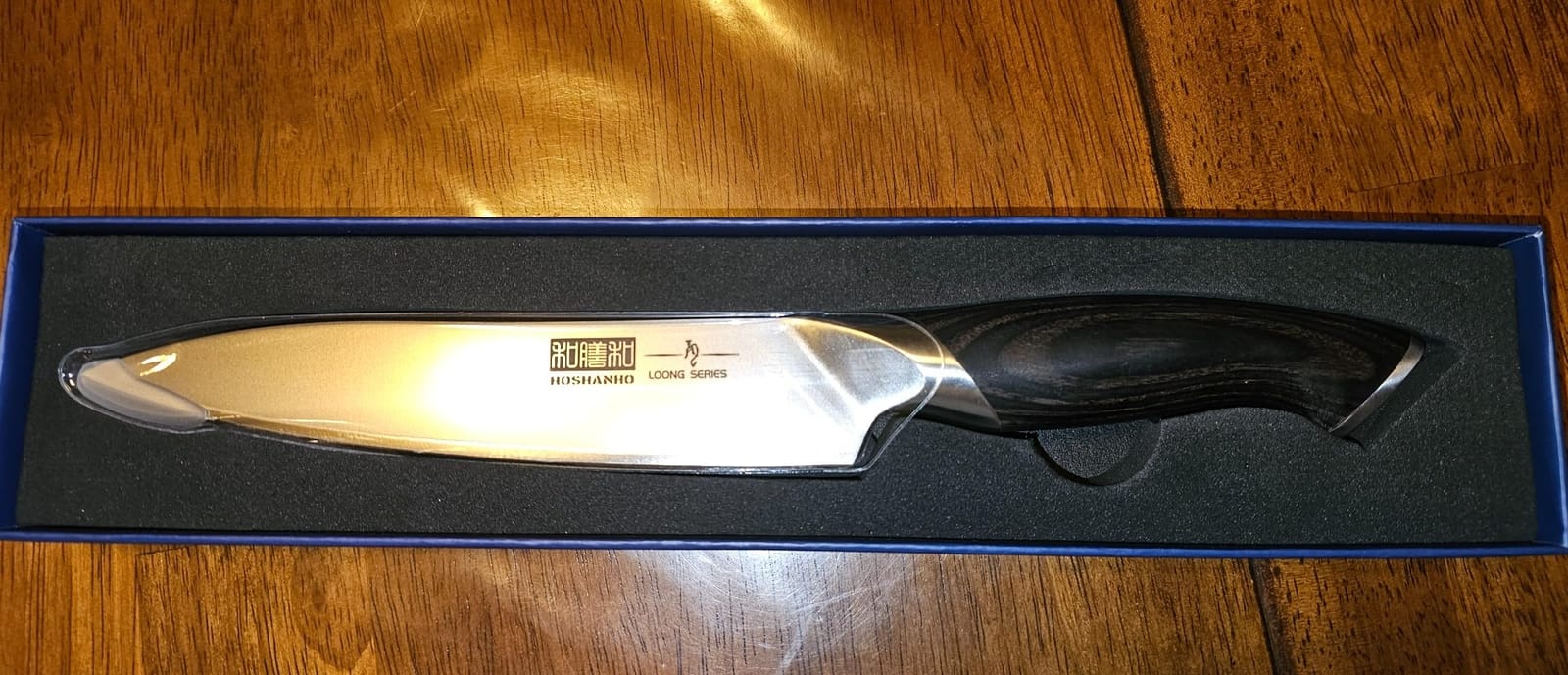
10. HOSHANHO 6 Inch Japanese Utility Knife – Harder Steel for Dense Vegetables
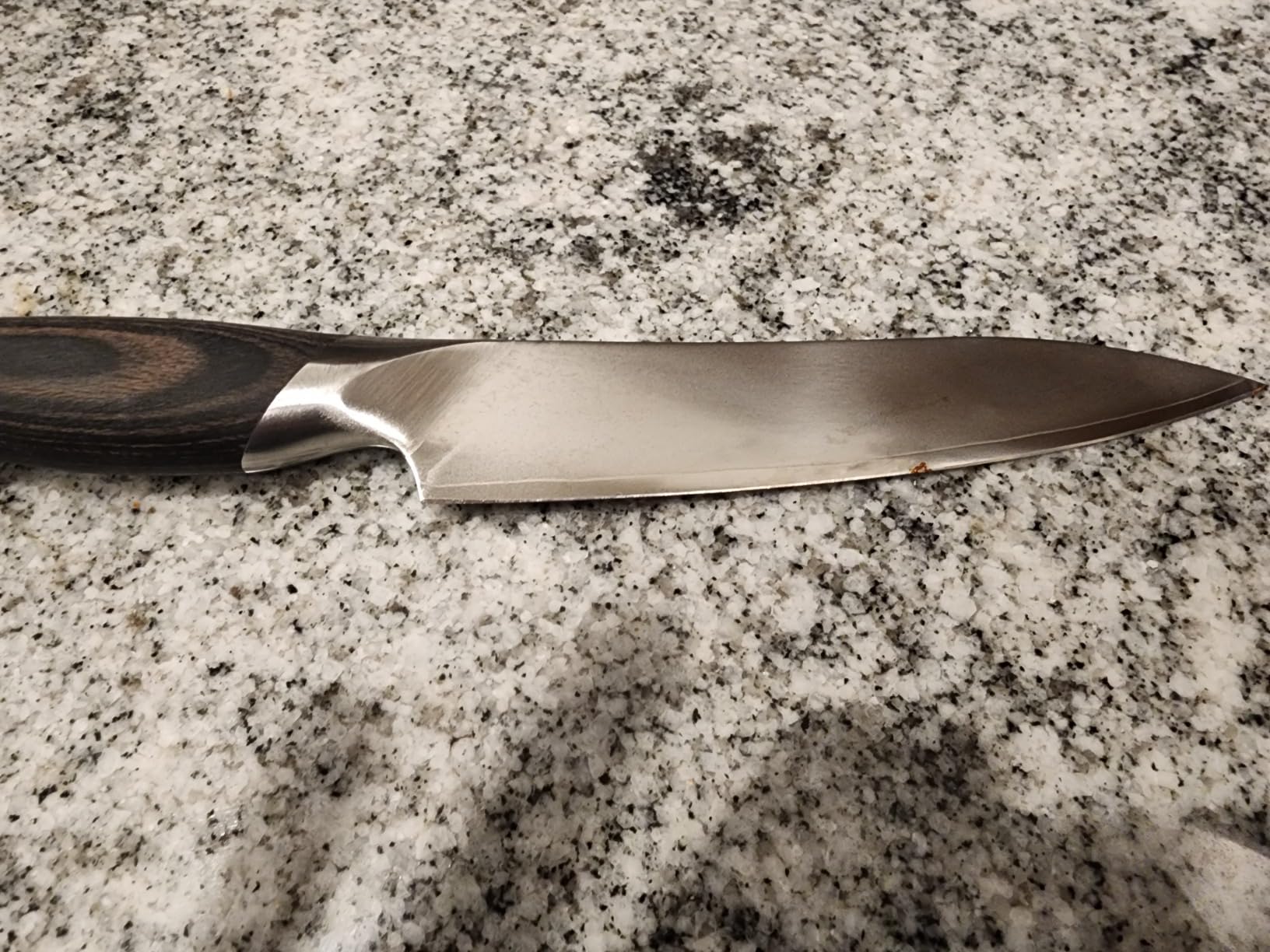
HOSHANHO 6 Inch Kitchen Knife, Ultra Sharp Japanese Kitchen Utility Knife
Japanese triple-stacked steel with 10Cr15CoMoV core at 60 HRC
Hand sharpened to 15 degrees per side
Frosted blade finish with pakkawood handle
4 ounce weight
Pros
- Very sharp out of the box and holds an edge through weeks of use
- Good balance and weight in the hand
- Cuts dense vegetables such as sweet potatoes easily
- Attractive frosted blade and wood grain handle
Cons
- Some pieces arrive with handle gaps and sharp bolster edges that can catch the hand
- Not NSF certified
- May need sharpening soon after purchase
This is the pick for anyone who wants Japanese steel specifications in a 6 inch blade. The core is 10Cr15CoMoV at roughly 0.3 percent carbon, vacuum heat treated and nitrogen frozen, then polished to 60 Rockwell. That hardness figure is higher than anything else in this roundup, and it is the reason it cuts dense vegetables like sweet potato without hesitation.
At 4 ounces with a 10.5 inch overall length, it balances well in the hand. The frosted blade finish and clear wood grain pakkawood handle also make it the most gift-worthy knife on the list, and reviewers frequently mention that they bought it as a present.
What 60 HRC buys you
Harder steel holds an edge longer and resists rolling on hard contact, which is exactly what you want when the knife meets a sweet potato, a butternut squash, or a dense piece of celeriac. The same hardness means the blade is less forgiving of a careless drop onto a hard tile or a wooden cutting board used as a chopping surface. Treat the edge and it performs well.
Handling and the sharpening reality
The edge is hand sharpened to 15 degrees per side, which is a solid prep angle that balances bite and control. Some owners report wanting an extra sharpening session shortly after buying to reach its full potential, and that is a normal part of buying a very hard blade new.
Build consistency is worth checking on arrival
One detailed review flagged inconsistent handle fitment and missing NSF certification, and other owners mention handle gaps and sharp bolster edges that can catch a hand. Check the fit and the bolster when the knife arrives, before you use it on a busy prep night.
11. OAKSWARE 5.5 Inch Utility Knife – Forged Full Tang at a Budget Level
OAKSWARE 5.5 Inch Kitchen Utility Knife, German High Carbon Stainless Steel
Forged German 1.4116 stainless steel at 57+ Rockwell
Full tang with triple rivets and bolster
14-16 degree hand-polished edge per side
4.64 ounce weight
Pros
- Highest rated value pick in the roundup at 4.8 with 86 percent five-star scores
- Forged full tang build at an entry price point
- Sharp edge suited to fruit
- vegetables
- bread and deboning
- Ergonomic riveted handle with protective bolster
Cons
- Stainless steel handle rather than pakkawood or wood
- Slim blade is for prep work rather than heavy chopping
The most surprising thing about this pick is the specification sheet. A forged full tang blade, German 1.4116 steel hardened to 57+ Rockwell, and a triple-riveted handle with a bolster, on a knife that costs less than most people expect to pay for a utility blade. Reviewers consistently rate it above what the price implies.
The 14 cm blade carries a 14 to 16 degree hand-polished edge per side, and at 4.64 ounces it sits between the heavier Cutluxe and the lighter TUO. That middle weight is the compromise most home cooks end up preferring for all-around prep.
Where a stainless handle beats wood
The handle is riveted stainless rather than pakkawood, which means it tolerates a wet sink and a busy kitchen better than wood. It will not absorb moisture, swell, or split, and you can rinse it quickly without thinking about it. You give up the warmth and the absorbency of wood, and in a utility knife that is an acceptable trade.
Preparation tasks it handles well
Reviewers use it for fruit, vegetables, bread, and deboning. The full tang gives it the lateral strength to push through the joint of a small piece of meat without twisting, and the bolster gives your index finger a stop. For a cook building a first solid setup, that combination covers most of what a second knife needs to do.
Its limits
The blade is slim, which is right for prep and wrong for heavy chopping. If you want to rock through a pile of cabbage or take the spine to a butternut squash, a thicker chef’s knife or a cleaver-style blade is the correct instrument. Note that review volume is the lowest in this group, so treat the 4.8 rating as strong but less deeply tested.
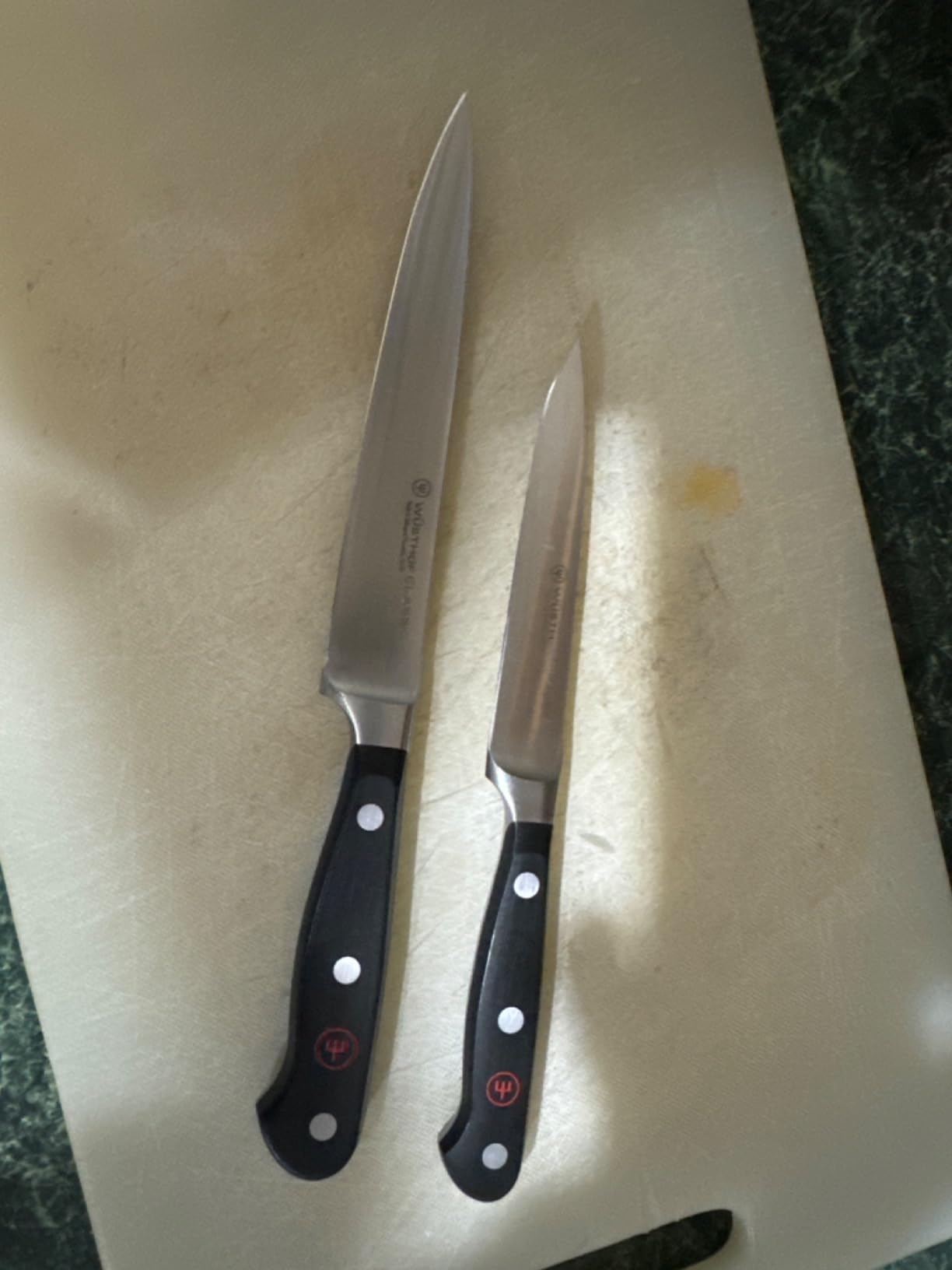
12. Wusthof Classic 6 Inch Utility Knife – The One You Stop Replacing
WÜSTHOF Classic 6″ Utility Knife, Black
Forged high-carbon stainless steel from Solingen
Full tang and full bolster
Triple-riveted POM handle
6 inch blade
Pros
- Exceptional 4.8 rating with 90 percent five-star scores
- Forged Solingen steel that stays sharp and sharpens easily
- Excellent balance and weight for a 6 inch blade
- Full bolster and triple-rivet handle feel durable and safe
Cons
- Most expensive option in the roundup by a wide margin
- Hand clean only with a damp cloth and keep it off glass
- ceramic and metal surfaces
This is the knife you buy once. The blade is forged from a single piece of high-carbon stainless steel made in Solingen, with a full tang running the entire length and a full bolster at the front of the handle. The triple-riveted POM handle is moulded synthetic, which means it will not swell, crack, or soften with heat the way wood can.
It sits at 4.8 with 90 percent five-star ratings. Reviewers report Wusthof knives in their kitchens lasting 25 years or more, and comparing them favourably against cheaper sets they had already replaced. That is the argument for the price gap, and it is a fair one.
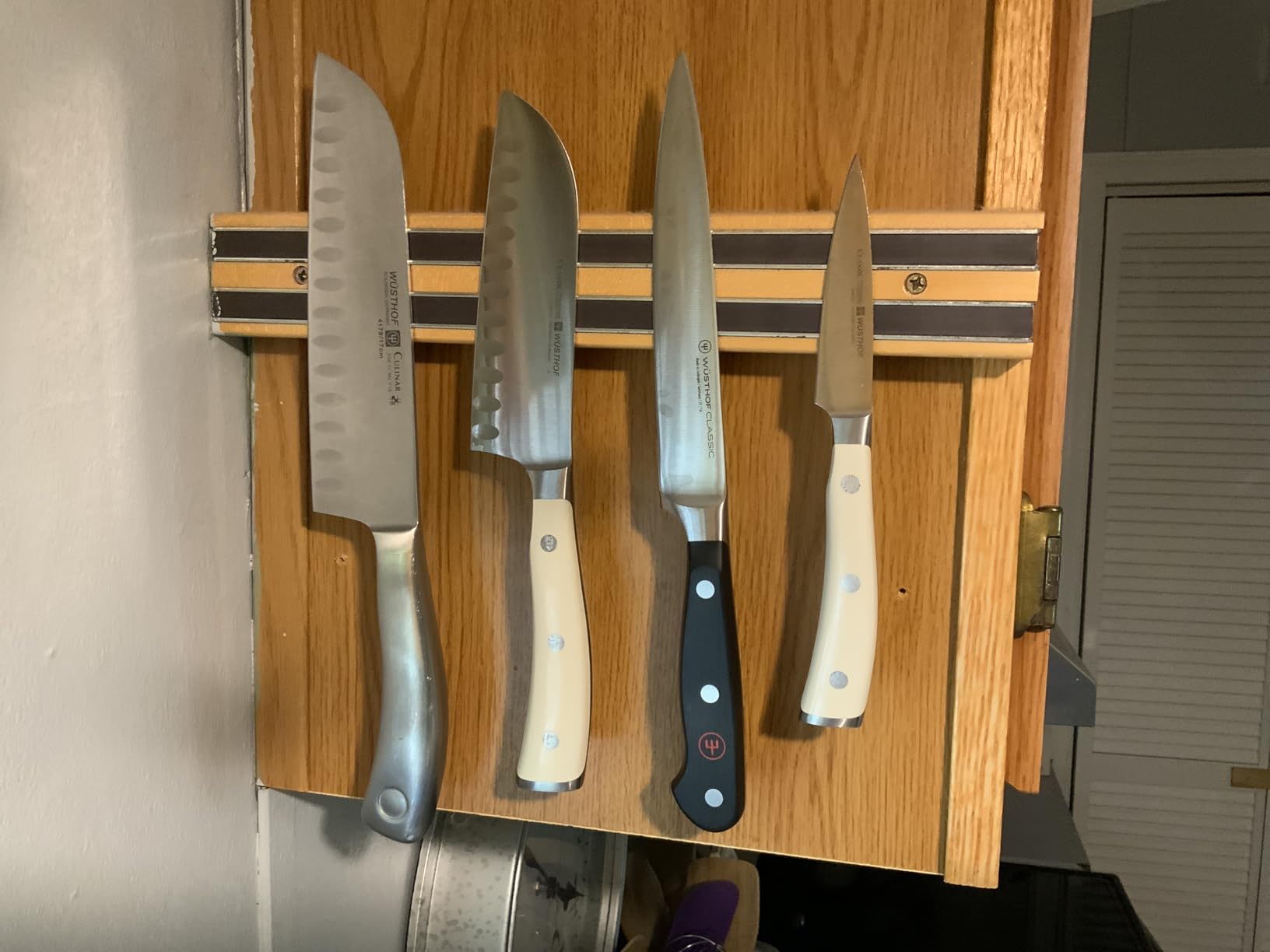
Why the full bolster matters more than the steel
Many utility knives have a partial bolster or none at all, meaning the handle meets the blade directly. A full bolster adds a thick collar of steel between them, which does two things: it gives your index finger a hard stop so it cannot slide forward onto the edge, and it adds weight to the front of the handle to balance the blade. On a 6 inch knife, that balance is the difference between a controlled slice and a wobble.
Care that takes two minutes
Wusthof asks for a damp cloth and hand cleaning only, and specifically says to keep the blade away from glass, ceramic, and metal surfaces. Those surfaces are the ones that dull an edge fastest, and the rule is a good habit to build with any knife, not just this one. Wipe it, dry it, put it away, and it will still be sharp in a decade.
When the cheaper knife makes more sense
If you cook a few times a week, replace a starter block every couple of years, and lose interest in a knife quickly, the premium tier is wasted on you. The forged full tang options further up this list deliver the same core construction for a fraction of the outlay. Buy this one if you intend to keep it for a very long time.
Utility Knife vs Prep Knife vs Paring Knife: The Terminology Sorted
Is a utility knife the same as a prep knife? In practice, yes, they are two names for the same idea, and the confusion is mostly about which tasks each name implies. A prep knife is a working description meaning a knife for prep tasks. A utility knife is a size-and-shape description meaning a small, narrow, multipurpose blade. When a brand calls something a prep knife, it is usually a utility knife with a different label.
The clearer question is how a utility knife differs from the two knives it sits between.
Against a paring knife: a paring knife has a short blade, usually 3 to 3.5 inches, and a pointed tip. It is for detail work, trimming, and controlled cuts in hand. A utility knife is longer and has more blade to work with, so it handles a whole onion, a stack of slices, or a loaf of bread that a paring knife would make awkward.
Against a chef’s knife: a chef’s knife is 8 inches or longer with a tall, wide blade and enough weight to rock through dense vegetables. A utility knife is narrower and more precise, which is why it is better for tight trimming and why it keeps more of the food in contact with the board. A utility knife is a complement to a chef’s knife, not a substitute, and it cannot replace a chef’s knife for prep work that needs real downward force.
On blade depth, the Henckels Classic above is the clearest example of how much variation exists inside this one category. Most 6 inch utility blades are about three quarters of an inch deep. That one is a full inch, and that single inch of extra height changes what you can slice in a single pass.
One more naming caution. Retail utility blades and retractable utility knives are entirely different products used for entirely different jobs, and search engines mix them constantly. Everything in this guide is a fixed-blade food prep knife with a handle designed for a kitchen, not a snap-off blade holder.
Which Utility Knife for Which Prep Task
Matching the knife to the food is where a utility knife earns its place in the drawer. Here is how the picks above cover the most common prep jobs.
Slicing tomatoes and other soft fruit: you want serrations. The Victorinox and the CoquusAid both cut a ripe tomato into intact slices because the teeth break the skin without crushing the flesh. A straight edge will still work, but you will press harder and lose more juice.
Peeling potatoes, carrots, and apples: a narrow straight edge wins. The TUO and the OAKSWARE give you a fine point and a slim blade that follows the curve of the vegetable. Take short strokes and keep the blade angled away from your knuckles.
Dicing onions: a straight edge, because you want clean flat faces against the board. The Mercer Genesis and the PAUDIN both have the control for it. If you are sensitive to onion compounds, a serrated blade is genuinely better for you, since it tears more cell structure and releases less of the irritant.
Zesting citrus and hard cheese: the Henckels 6 inch has the sharp tip and the deeper blade for detail work on a melon or a firm cheese wheel. A shallow utility blade will not reach the center of a honeydew cleanly without a lot of re-angling.
Slicing bread and rolls: either edge works, for different reasons. A straight edge compresses a soft crumb and gives you a clean slice, while a serrated edge cuts through a crust without crushing the interior. For crusty bread and rolls, the serrated picks are noticeably better.
Chopping herbs: a straight edge, and a wide flat blade helps more than the edge type. Use the broad side of the blade, rock the tip, and let a bigger knife do what a small one cannot. This is a task where the chef’s knife wins.
Cutting cooked meats and sandwiches: the 5.5 to 6 inch forged options handle this best. The full tang on the Cutluxe, the OAKSWARE, and the Wusthof gives the lateral strength to saw cleanly through a stacked sub roll or push through a chicken thigh joint without the blade twisting.
Meal prep for the week: volume changes what you want. One onion at a time suits a slim 5 inch blade. A Sunday session dicing a dozen onions is chef’s knife work, and stretching a utility blade to cover it is how knives get abused and dulled.
If you are building a prep station for longer sessions, our tablet stands for kitchen use roundup keeps recipes visible without occupying counter space next to the board.
How to Choose a Utility Knife: Buying Guide
Straight edge or serrated: decide this first
It is the single decision that changes how a knife behaves, and everything else is a preference. Choose a straight edge if you want clean flat cuts, dicing, trimming, and any kind of precision work, and if you are willing to sharpen it. Choose serrated if most of your prep is soft fruit, bread, and cooked meats, if you want to avoid a sharpening routine, and if slicing tomatoes without crushing them matters to you.
There is a third path that costs more attention than most beginners expect. Honing a serrated blade requires a special serrated hone or a diamond paste used at the correct angle, and getting it wrong leaves a blade that is worse than when you started. If you do not own a stone and do not plan to learn, a straight edge is the safer choice.
Blade length and depth
The consensus on r/chefknives is that the 165 to 175 mm range, roughly 6.5 to 7 inches overall, is the sweet spot for all-purpose prep. A 5 inch blade gives more control on small work and fits smaller hands. A 6 inch blade moves more food per stroke and handles denser ingredients. Blade depth matters as much as length and is easier to overlook, so check the listed width as well as the length.
Steel type and what it means for your habits
High-carbon stainless, which covers most of the picks here, is the easiest steel to live with. It resists corrosion, takes an edge well, and forgives a missed honing session. Fully stainless steel is more corrosion resistant and slightly less keen. Very hard steel such as the 60 HRC Japanese core holds an edge longest but needs more care around hard surfaces and is harder to bring back by hand.
Ceramic blades deserve a mention here rather than a recommendation. They stay sharp far longer and never rust, but they are brittle, they chip if you land the tip sideways, and many cannot go in a dishwasher. For prep work on a wooden board, steel is the safer default.
Tang, bolster, and handle
A full tang means the steel runs unbroken from the tip through the entire handle and is pinned with rivets. It is the primary quality signal among enthusiasts and it resists twisting under lateral force. A partial or absent tang is lighter and cheaper, which is acceptable for light prep.
A bolster is the thick collar of steel between blade and handle. It gives your index finger a physical stop so it cannot slide onto the edge, and it adds front weight for balance. On a 6 inch utility knife, a full bolster is one of the better reasons to spend more.
For handle material, pakkawood feels the best in the hand and needs hand washing. POM and other moulded synthetics tolerate heat, moisture, and daily abuse. Steel handles are the most durable and can be slippery when wet unless the shape does the work. Whatever you choose, look for a shape that keeps your knuckles off the blade and offers a wet grip.
Forged or stamped
Forged blades are shaped by hammering, which lets the maker control the thickness profile and generally produces a stronger, better-balanced knife. Stamped blades are cut from sheet steel, which makes them thinner, lighter, and cheaper, and which means they lose their edge faster on hard produce. A forged full tang is a reasonable quality threshold; a stamped blade is fine for a second knife.
Handedness and grip fit
Most utility knives are neutral to handedness because the handle is symmetric and the edge is centred. Two details can still catch a cook who cuts in the opposite direction: an asymmetric bolster shape, and serrations ground with a bevel that favours one side. Check reviews for comments about the handle meeting the blade if that is a concern for you. More practically, pick a handle size that suits your hand, and that single factor does more for comfort than any material choice.
How to Care for and Sharpen a Kitchen Utility Knife
Most edge loss is avoidable. Almost every forum thread on this topic makes the same point: a utility knife that is washed, dried, and stored properly stays sharp far longer than a cheap knife that is soaked in a dishwasher cycle and dropped into a drawer of loose silverware.
Wash by hand, always. Even for knives labelled dishwasher safe, hand washing preserves the edge. The heat, the detergent, and the tumbling all dull a blade. Rinse in warm water with mild detergent, dry immediately, and never leave a knife sitting in a sink or a drainboard.
Store it away from other cutlery. A loose blade in a mixed drawer chips edges on forks and other knives. A block, a sheath, or a knife rest keeps the edge protected. Two of the picks above, the Zyliss and the Farberware, include a sheath that also handles storage.
Use a cutting surface that is kind to edges. Wood or a soft composite board. Glass, stone, and metal surfaces destroy an edge in a handful of cuts, which is the single fastest way to make a good knife feel bad.
Hone straight edges regularly. A honing rod does not remove metal, it straightens a rolled edge back into alignment. Do it every few prep sessions, before the edge is actually dull, and it takes under a minute. When the hone stops helping, move to a whetstone and remove a thin layer of steel to restore the bevel.
Sharpen serrations with a serrated tool. A serrated hone or a triangular diamond paste is the right instrument. Match the angle to the tooth profile, work gently, and remove far less metal than you think you need. The Zyliss and Farberware sheaths handle the light daily touch-up for you if you would rather not learn this at all.
Cut resistant gloves exist and they help. If you are new to prep, a glove protects the fingertips that do the most damage on a mandoline, a peeler, or a bad onion. It costs very little and it is the fastest way to keep cooking after a cut instead of putting the knife down for a week.
Frequently Asked Questions
What is the best knife for kitchen prep?
For most home cooks, a 5 or 6 inch utility knife with a straight edge handles the widest range of prep work, and the OAKSWARE 5.5 inch offers a forged full tang build at an entry price. Add a serrated option like the Victorinox or CoquusAid if soft fruit, bread, and tomatoes are a regular part of your cooking, since a straight edge will crush them. A chef’s knife still handles dense vegetables and heavy chopping, which no utility knife replaces.
Is a utility knife the same as a prep knife?
In practice, yes, the two terms describe the same tool in most kitchens. A prep knife is a working description that means a knife for prep tasks, while a utility knife is a size and shape description meaning a small, narrow, multipurpose blade. Both usually refer to a 5 to 6 inch fixed blade. The confusion mostly comes from retailers using the terms interchangeably and from box-cutter utility knives sharing the same name.
What is the best utility knife for kitchen use?
The best utility knife for kitchen use is a fixed-blade food prep knife, not a retractable box cutter or a snap-blade tool. Within that category, the PAUDIN and Mercer Genesis stand out for all-round prep, the Victorinox and CoquusAid are the strongest serrated options for soft produce, and the OAKSWARE and Cutluxe give you a forged full tang build. Pick by the food you cut most and the edge type you will actually maintain.
What do you use a 5 inch serrated utility knife for?
A 5 inch serrated utility knife is built for soft-skinned produce and crusty bread. Tomatoes, peaches, plums, and soft cheese slice cleanly because the teeth break the surface without crushing the flesh underneath. It also handles bread and rolls well, since the serrations cut through a crust with far less pressure than a straight edge. It cannot do clean flat cuts, paper-thin slicing, or a chiffonade, so keep a straight edge for those tasks.
Should I buy a utility knife or a paring knife?
A utility knife handles far more. A paring knife has a 3 to 3.5 inch blade and a fine point, which makes it better for detail trimming and controlled cuts held in your hand, but it struggles with a whole onion or a stack of slices. A utility knife has a longer, still-narrow blade that covers peeling, dicing, slicing soft fruit, and sandwich prep. If you already own a chef’s knife, a paring knife is the better second purchase; if you own nothing, start with a utility knife.
What are the top 5 utility knives?
Our top five for kitchen prep are the PAUDIN 5 inch forged utility knife as the all-round pick, the Victorinox 4.5 inch serrated utility as the best budget serrated option, the Cutluxe 5.5 inch full tang for large hands, the Mercer Culinary Genesis 5 inch for its grip with wet hands, and the OAKSWARE 5.5 inch for a forged full tang build at an entry price point. Each covers a different hand size, edge type, and grip preference.
How do I choose a utility knife?
Decide the edge type first, because it changes the knife’s behaviour more than any other factor. Straight edge for flat cuts, dicing, and precision work if you will sharpen it. Serrated for soft fruit, bread, and tomatoes if you want low maintenance. Then check blade length against your hand size, look for a full tang and a bolster if the price is right for you, and choose a handle that feels secure when wet. Weight and balance matter more than factory sharpness.
Which Utility Knife Should You Buy in 2026?
If you want one knife and no more, take the PAUDIN 5 inch forged utility knife. It is sharp on arrival, balanced at 196 grams, holds a plain edge through ordinary prep, and has the largest review base of anything in this roundup, which means the opinions behind it are well tested.
If your prep skews toward soft produce and bread, the Victorinox 4.5 inch serrated is the stronger pick, and the CoquusAid 5 inch serrated is the upgrade if you want full tang construction and a rounded safety tip. If you have large hands or grip strength issues, the Cutluxe 5.5 inch full tang gives you a handle that fits and a bolster to push against. If you want the most construction per dollar, the OAKSWARE 5.5 inch is a forged full tang with a 57+ Rockwell core, and there is nothing else in this list that matches that combination at its price.
For dense vegetables and harder steel, the HOSHANHO 6 inch Japanese-style blade is the one that will not blink, and the Wusthof Classic 6 inch is the choice for a knife you expect to keep for decades rather than seasons. Add the Farberware EdgeKeeper if sharpening is the part of knife ownership you would rather avoid entirely.
Whichever you pick, wash it by hand, dry it right away, keep it off glass and stone, and hone a straight edge before you think it is dull. That habit matters more than any of the twelve blades on this list.