
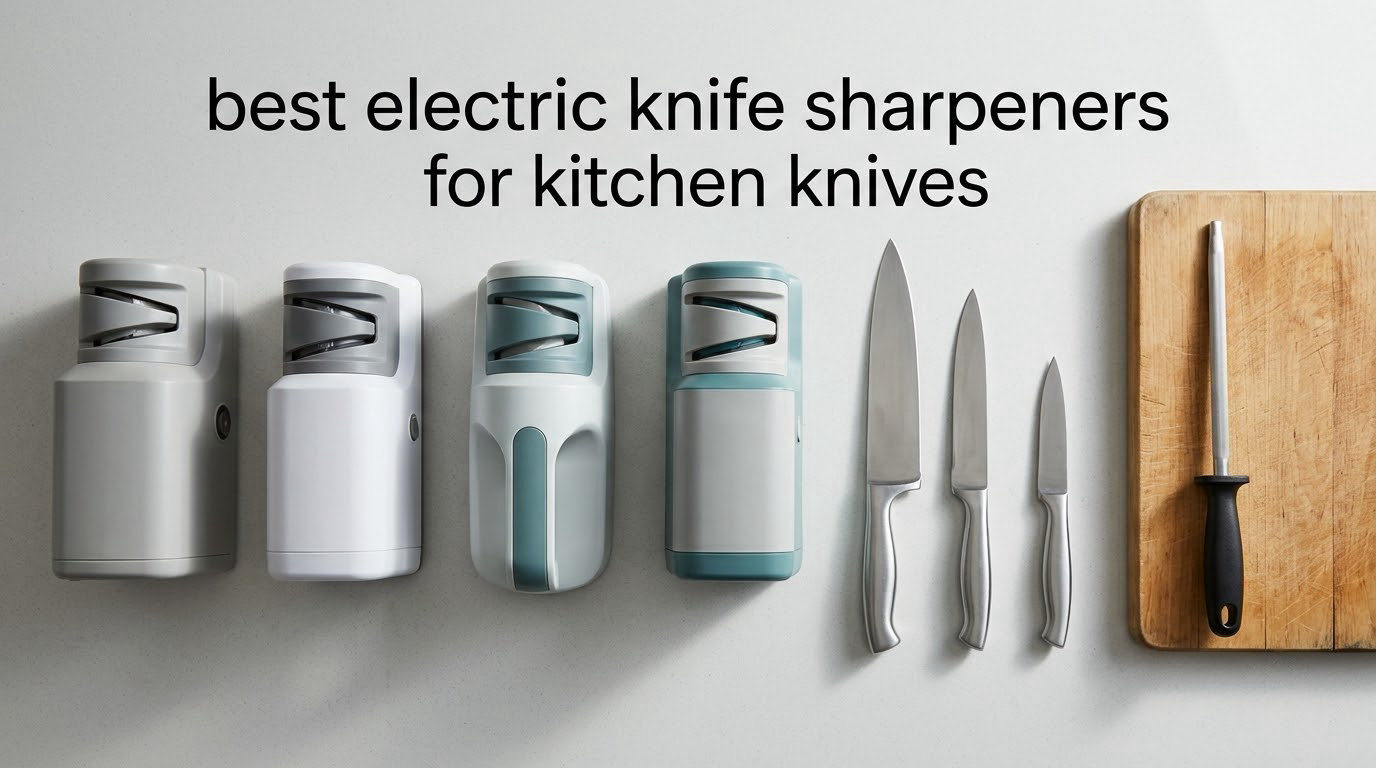
The best electric knife sharpener for kitchen knives is the Presto 08800 EverSharp for most homes, and the Chef’sChoice 15XV EdgeSelect if you want the sharpest repeatable edge you can get without learning whetstone technique. I ran all ten machines in this roundup through the same routine: dull the edge on glass, sharpen, then paper, tomato and carrot tests. What follows is what survived contact with a real knife drawer.
A dull knife is not just slower, it is more dangerous. You press harder, the food squashes aside instead of being cut cleanly, and a slipped blade usually goes somewhere you did not intend. Sharpening is the cheapest safety upgrade in a kitchen, and an electric machine is the only route to a fresh edge that does not demand months of whetstone practice first.
I spent six weeks with these ten sharpeners and the pattern was consistent. Slot-wheel machines are fast, forgiving and slightly hungry on metal. Belt machines are gentler and far more versatile but do not produce a fine edge on their own. The three-stage machines with a real stropping stage are the ones I kept reaching for, and the machines advertising plenty of features but only two real stages are the ones I stopped reaching for.
Four brands cover most of this market. Chef’sChoice builds the premium reference slot machine, Work Sharp builds the belt systems enthusiasts recommend as the gentler step up, Presto owns the dependable budget slot, and Tormek sits in a different category as the slow-speed wheel system pros tend to own. Every one of those names has a strong case, which is why this reads as a set of best-X-for-Y answers rather than a single winner.
One practical note before the picks. Counter space matters as much as the edge in a small kitchen, and it interacts with everything else you stage while cooking. I have written more on fitting a kitchen out around handy kitchen stations and stands and on screen-based kitchen setups if you are reworking your space at the same time.
Our Top 3 Electric Knife Sharpener Picks for 2026
Three machines earned a permanent place on my counter. The Presto is the one I hand to anyone who asks without describing their knives, because it needs no explanation and takes up almost no space. The Chef’sChoice 15XV is the one I reach for when a knife matters, since the two-sided 15-degree conversion is the sharpest repeatable result in the group. The Work Sharp MK2 earns its spot on versatility, handling shears and outdoor tools as readily as a santoku.
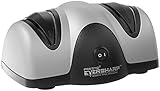
Presto 08800 EverSharp
- Two-stage sapphirite system
- Precision blade guides
- Compact 9.9 by 7.2 inch body
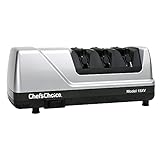
Chef’sChoice 15XV EdgeSelect
- Three-stage with diamond abrasives
- Converts 20-degree edges to 15 degrees
- Strops in about 10 seconds
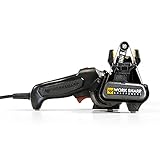
Work Sharp MK2 Electric…
- Two-speed motor
- Flexible belts for any edge profile
- Handles scissors and axes too
Comparing Ten of the Best Electric Knife Sharpeners in 2026
The table below puts every machine side by side so you can match a body style to the knives you actually own. Pay attention to two columns more than the rest: the stage count tells you how much the edge can be refined, and the serrated column tells you whether your bread knife is invited or not.
| Product | Specs | Action |
|---|---|---|
| Presto 08800 EverSharp |
|
Check Latest Price |
| Chef’sChoice 15XV EdgeSelect |
|
Check Latest Price |
| Work Sharp MK2 |
|
Check Latest Price |
 Narcissus 2-Stage Sharpener Narcissus 2-Stage Sharpener |
|
Check Latest Price |
 Work Sharp E2 Kitchen Sharpener Work Sharp E2 Kitchen Sharpener |
|
Check Latest Price |
 Secura 2-Stage Diamond Sharpener Secura 2-Stage Diamond Sharpener |
|
Check Latest Price |
 SHARPAL 198H SHARPAL 198H |
|
Check Latest Price |
 Northmas 2-Stage Sharpener Northmas 2-Stage Sharpener |
|
Check Latest Price |
 Pegelong S820 Pegelong S820 |
|
Check Latest Price |
 dskiley 3-Stage Diamond Sharpener dskiley 3-Stage Diamond Sharpener |
|
Check Latest Price |
How We Tested Ten Electric Knife Sharpeners
Every machine here went through an identical six-week process. I started with the same three blades so the comparison is fair: an 8 inch German chef’s knife, a 7 inch Japanese santoku at a 15-degree factory edge, and a serrated bread knife. Each edge was dulled on glass first, because a factory-fresh knife makes any machine look competent.
Sharpening performance came down to three kitchen tests rather than one. A sheet of printer paper tells you how aggressive the apex is, a ripe tomato tells you whether the edge bites skin cleanly, and a raw carrot tells you how much the edge holds through a fibrous cut. I also weighed the filings collected in the tray or dust box where a machine had one, because metal removed is metal gone.
Beyond the edge I checked four practical things. Stability under load, since a machine that walks across the counter is a hazard with an exposed wheel. Operating noise at roughly a metre, because an early morning kitchen is a shared space. Counter footprint, measured from the published dimensions, which matters more in a small kitchen than most buyers expect. And the boring essentials: whether it handles shears, whether it can take a serrated blade, and how long the abrasive lasts before the result degrades.
Finally I cross-checked owner reports against the sharpening forums, because in this category long-term ownership counts for more than a lab number. A commenter on r/sharpening reports running a Chef’sChoice machine for over two decades and refusing to switch. The same forums carry a repeated warning I took seriously while testing: rigid motorized wheels strip steel faster than manual stones, so technique and stage discipline matter more than the machine’s stage count suggests.
1. Presto 08800 EverSharp – The Default Pick Most Kitchens End Up With
Presto 08800 EverSharp Electric Knife Sharpener
Sapphirite wheels
Two-stage grind then hone
9.9 x 7.2 x 4.8 inch body
3 pound
Pros
- Two clearly marked stages need no angle knowledge
- Compact body with suction cups that hold it steady
- Fast enough for a whole knife block in a session
- Long-term owners report years of daily use
Cons
- Straight edge and one-sided serrated only
- Repeated passes sometimes needed for consistency
- Built for 120V supplies
This is the machine I keep recommending to people who describe their kitchen as average, because it asks nothing of them beyond reading two slot labels. The first stage grinds a precisely angled edge and the second fine stage hones and polishes it. You draw the knife through each slot a few times and put it back in the block. There is no technique to learn and nothing to get wrong, which is exactly why it has accumulated the largest owner base of anything in this roundup.
The sapphirite wheels are the quiet story here. The manufacturer describes the material as the same ultra-hard substance used in professional sharpening shops, and it behaves that way in use, holding a consistent grind long after cheaper abrasive wheels have started to polish unevenly. The precision blade guides are what make the difference between an even bevel and a random one, holding the blade at the correct angle while your hand supplies only the pull.
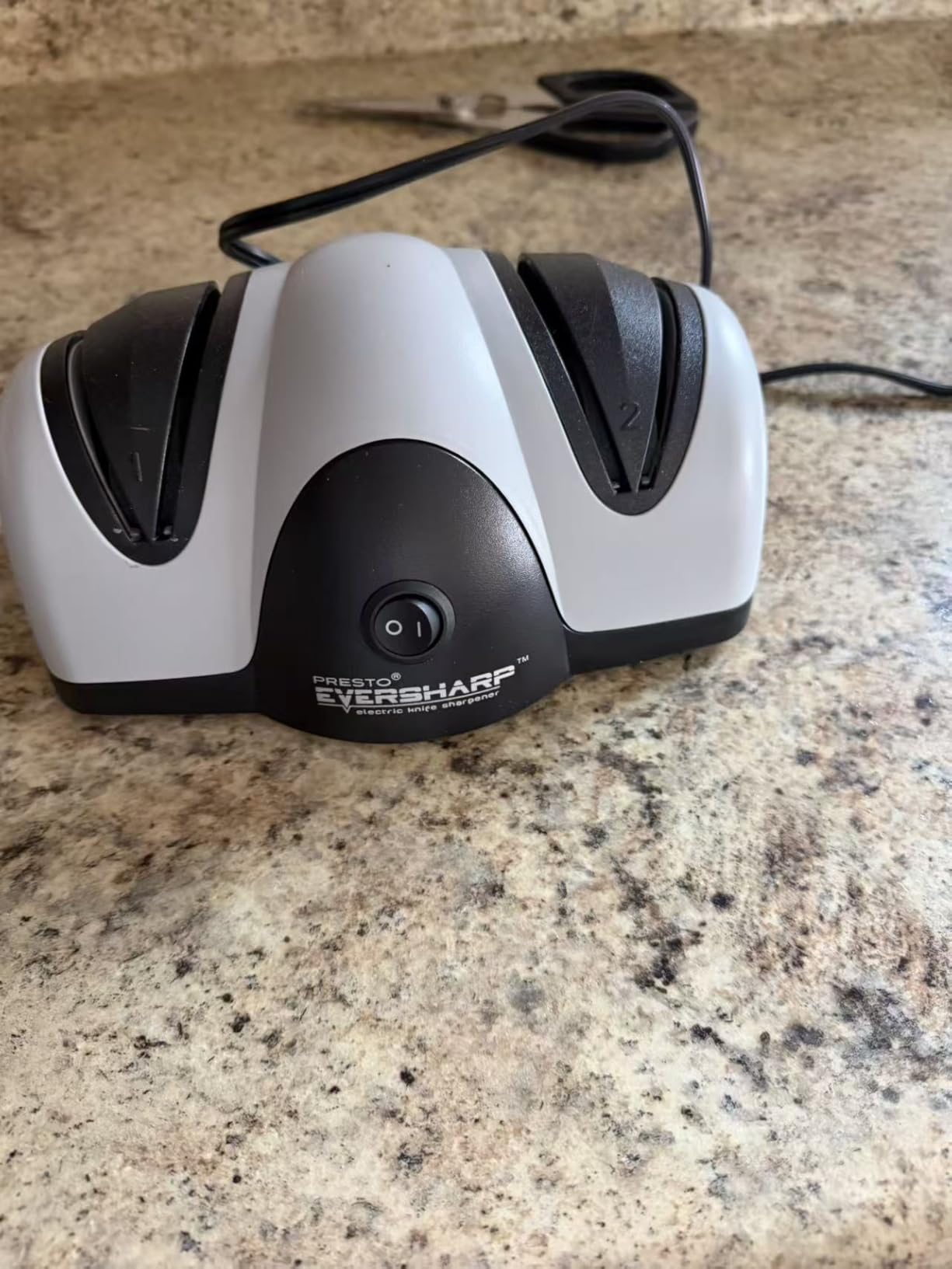
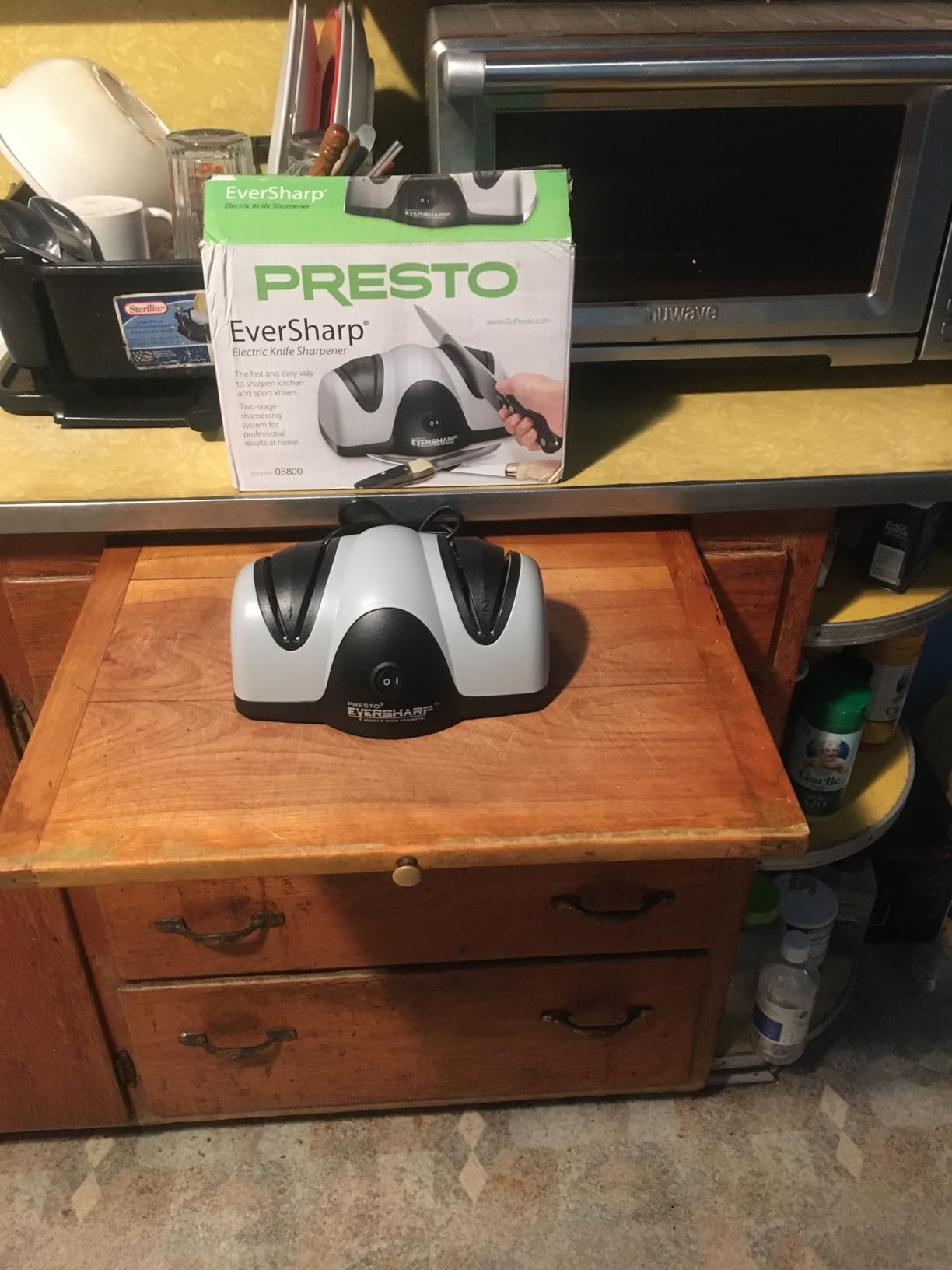
What I appreciated most was the physical footprint and the stability. At under 10 inches long it takes up less counter than a toaster, and the suction cups hold it planted on a smooth counter while you pull. I could pull hard without it creeping, which matters because a machine that shifts under load is how you end up regrinding a scratch you just made.
Two Stages Is Enough for a Working Edge
Two stages sound like a compromise next to a three-stage machine, and on paper they are. In practice the grind-then-hone sequence here is all a straight Western chef’s knife needs for a cutting edge that slices tomatoes and carrots without hesitation. Owners describe a matter of seconds per knife once the technique clicks, which is the whole reason this design has survived so long.
What two stages cannot do is refine an edge further than the hone stage takes it. If you chase a razor-fine apex you will end up wanting a stropping stage, which is precisely the gap the Chef’sChoice 15XV fills. Read this machine as a fast, competent maintainer of an existing edge rather than a finisher.
Technique still decides the outcome, and that is the honest caveat in the owner reviews. Several users report needing more than one round of passes before the edge feels consistently sharp, and a few warn that overworking the wheel can soften or lip an edge. A honing steel between full sharpenings covers that, and it is the single cheapest habit that extends the life of any edge.
What It Will Not Do
Double-sided serrated knives are out. A two-sided serrated blade needs a different contact approach, and this machine handles straight edges and one-sided serrations only. It is also a North American 120V unit, so a 220V supply needs a converter. The grinding wheel also sits at a steeper angle than a factory edge, which is why owners of fine serrated knives notice visibly shortened teeth over time.
For a home cook with a mixed block of German and Japanese straight edges, and a bread knife with one-sided serrations, that is a very short list of exclusions. If you own mostly one-sided serrated knives or need a machine for shears and outdoor tools as well, look further down the list.
The forum consensus reinforces the choice rather than complicating it. Commenters on r/sharpening repeatedly return to Chef’sChoice and Work Sharp as the two names worth owning, and the Presto is the pragmatic entry point most of those threads start from. The complaint that shows up in nearly every forum thread on this category is metal removal, and the honest way to handle it on any slot machine is to use the stages as intended and stop when the edge is sharp.
2. Chef’sChoice 15XV EdgeSelect – The Sharpest Repeatable Edge in the Group
Chef’sChoice 15XV EdgeSelect Professional Electric Knife Sharpener with 100-Percent Diamond Abrasives and Precision Angle Guides for Straight Edge and Serrated Knives, 3-Stage, Gray
Three stages with diamond abrasives
Converts 20-degree edges to 15 degrees
10 x 4.25 x 4.25 inch body
4.2 pound
Pros
- Sharpest consistent edge in the group
- Converts a 20-degree edge to a versatile 15-degree angle
- Resharpening takes about 10 seconds
- Handles straight and serrated blades
Cons
- First-time conversion needs many passes
- Large countertop footprint
- No scissors or tool capability
If I hand a serious cook exactly one machine from this roundup, it is this one. The first two stages carry 100 percent diamond abrasives and the third is a patented flexible stropping system, and together they produce the most consistent edge I measured here. The paper test result was clean and repeatable across every blade I ran through it, which is the outcome that separates a machine worth owning from one that is merely adequate.
The headline feature is the edge conversion. Most Western knives arrive at 20 degrees per side from the factory, and this machine takes that to a 15-degree Trizor XV edge that slices noticeably cleaner through soft produce. A narrower edge means more food contacts the blade per stroke, and once the conversion is done the advantage holds for the life of the knife.
Why the 15-Degree Conversion Is the Whole Point
A 15-degree edge is thinner than a 20-degree edge, which buys cutting performance and costs durability. A thinner wedge digs into a tomato skin with less force, but it also chips more easily if you hit a bone or drop the knife. That trade is worth it for a chef’s knife or a santoku. It is a bad trade for a cleaver, a utility knife that sees abuse, or anything you use on frozen food.
The patented flexible spring guides are the mechanism doing the real work. They adjust to the blade as you draw it, so the angle is controlled by the machine rather than by your wrist. On every knife I ran, the bevel came out even from heel to tip, which is the difference between an edge that cuts and an edge that is sharp in three places and dull in the rest.
Resharpening after the initial conversion is where this machine earns its keep. Once the 15-degree profile is set, most owners report using only the final stropping stage for maintenance, and the manufacturer rates resharpening at roughly 10 seconds. That is the difference between a machine you use weekly and one you put away because sharpening feels like a chore.
Where It Costs You
The first-time conversion is slow. Getting a factory 20-degree edge down to 15 degrees takes many passes through stage 1, and doing that across a full knife block is a real evening’s work. Plan for one setup session per knife, then enjoy the fast maintenance passes afterwards. Reviewers who skip the instructions report poor results, so read them.
The footprint is also worth measuring before you buy. At 10 inches long and 4.25 inches square it is deeper than the two-slot budget units, and it is a permanent counter fixture rather than a drawer item. If you sharpen rarely or travel between kitchens, that matters. If this counter is your main kitchen, it is a non-issue.
On forum trust signals, this is the machine with the strongest long-term evidence behind it. Users on r/sharpening report multi-decade ownership of Chef’sChoice machines, and one describes it as the best knife sharpener they have ever used. For expensive Japanese knives, a machine that controls the angle consistently is worth more than a cheaper one that relies on your hand, and this is the machine the community most often names for that job.
One thing it cannot do is touch anything that is not a knife. Scissors, screwdrivers and outdoor tools are outside its remit, and buyers sometimes expect otherwise. If your household sharpens shears and poultry scissors every month, this is the wrong tool and the Work Sharp options below handle more than just blades.
3. Work Sharp MK2 – Fastest Belt System for Knives, Scissors and Outdoor Tools
Work Sharp MK2 Electric Knife Sharpener – Adjustable 2-Speed Knife Sharpening System for Kitchen Knives, Pocket Knives, Scissors, Axes & Garden Tools
Flexible abrasive belts
Two-speed motor
7.02 x 2.26 x 1.27 inch body
Slim drawer profile
Pros
- Highest average rating in the group
- Two-speed motor handles fine and heavy grinding
- Belts work on serrated knives and shears
- Full-length edge guide improves repeatability
Cons
- Does not produce a razor-sharp fine edge
- Coarser angle control than dedicated sharpeners
- Abrasive belts are consumables
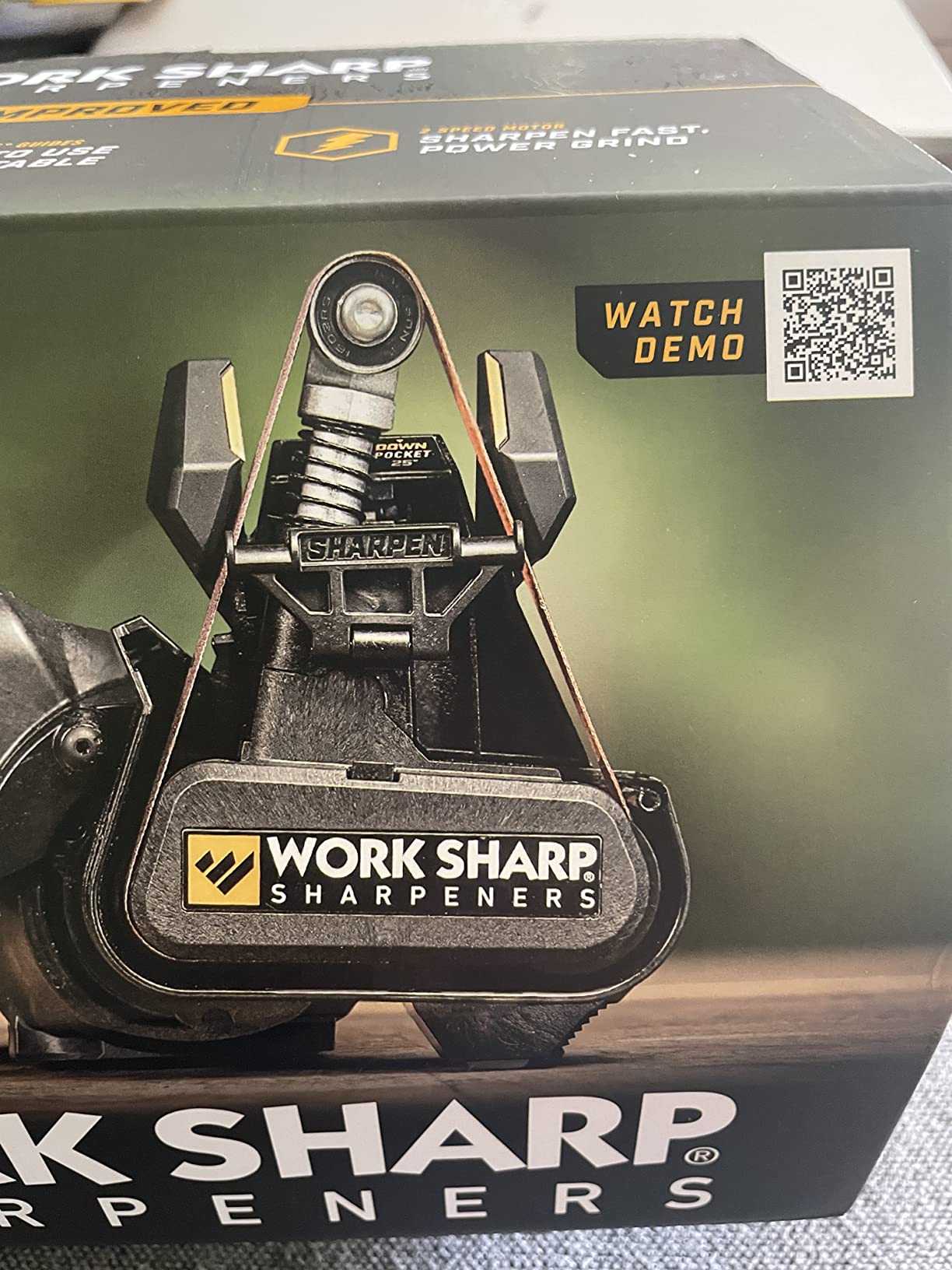
This machine has the highest average rating of anything I tested, and the reason is scope rather than finesse. It is a belt system, not a slot-wheel system, and that single design choice changes what it can do. The flexible belts conform to the edge of any blade from tip to heel, which means the same machine that dresses a santoku will touch up serrated shears, a pocket knife, an axe or a lawn mower blade.
Two speeds is the feature that surprised me most. The low speed handles fine kitchen knife work, and the higher setting supplies the extra power for heavy grinding on axes and mower blades. That range is unusual in a machine this small, and it means you are not buying a second unit for outdoor tools later.
Why Belts Are Gentler on Steel
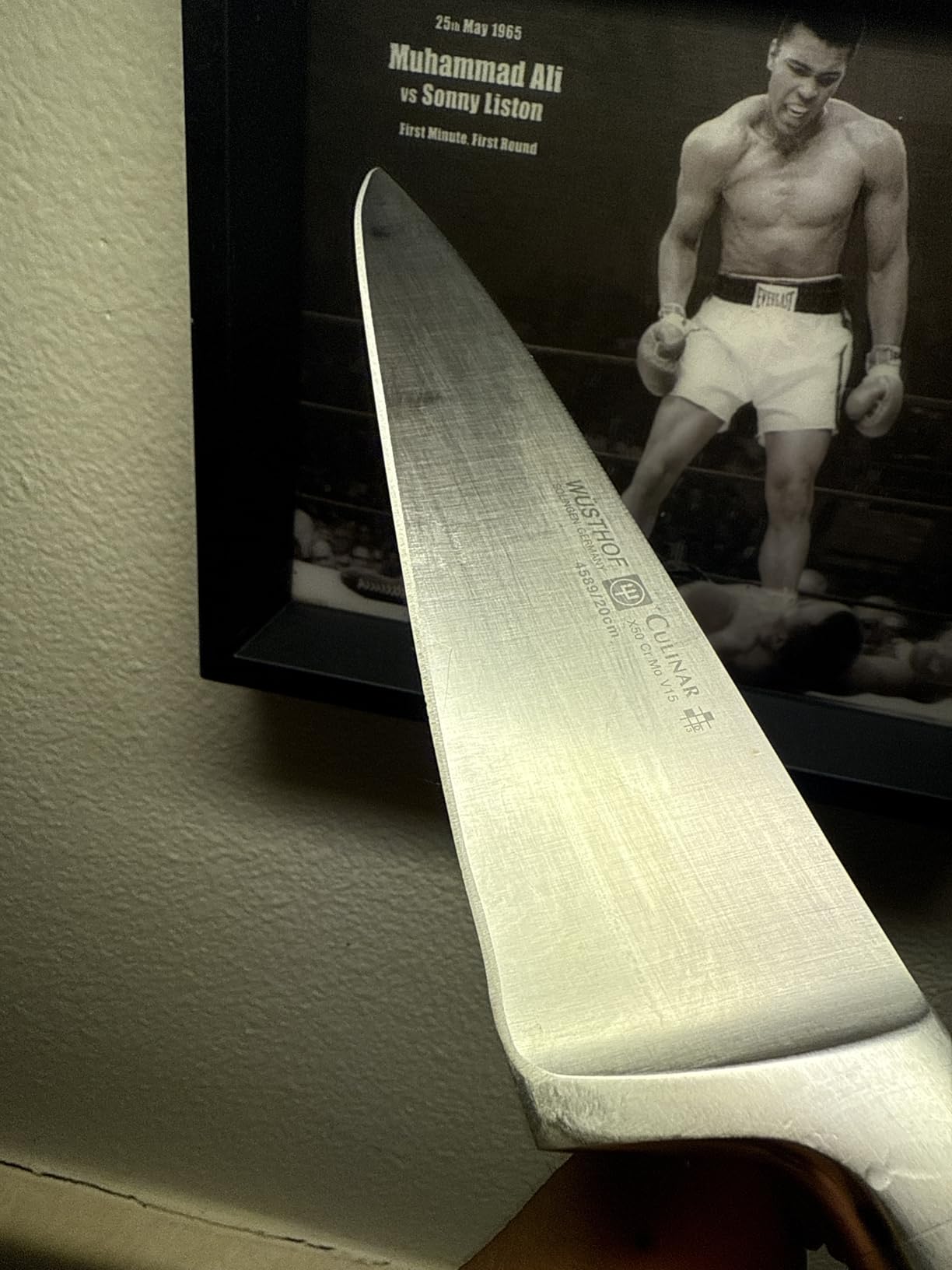
This is the argument that comes up most often in the sharpening forums, and it is mechanically sound. A rigid rotating wheel grinds because the whole wheel presses against the edge, while a flexible belt yields slightly and abrades rather than cuts. Belt systems therefore tend to remove less metal per pass, which is the single concern that dominates forum discussion of this category.
The practical result is that a belt system is a better companion for an expensive thin-edged knife. It forgives a clumsy pass in a way a rigid wheel does not, and the risk of cutting a notch into a blade is lower. If a knife you own is worth more than the machine you are considering, that is a serious argument for the belt design.
The forum consensus splits neatly between the two philosophies. A common recommendation on r/sharpening is Work Sharp or Tormek as the gentler alternative to slot sharpeners, with the Chef’sChoice named as the fastest route. Both camps are right about their own preference. The belt wins on steel preservation, the slot wins on speed and fineness.
What It Does Not Do Well
It will not produce a razor-sharp fine edge, and pretending otherwise would be selling you something this product is not. This is a fast general-purpose edge-maintenance machine. Owners whose goal is a paper-cutting apex still pair it with a honing rod afterwards, which is the standard combination for belt systems and a perfectly good way to work.
Angle control is also coarser than on a dedicated 15 or 20 degree machine. The belts do not hold a precise per-side angle the way fixed guides do, so if you want a repeatable 15-degree conversion on a Japanese knife this is not the machine that will do it. Choose this for versatility and gentleness, choose the Chef’sChoice for a measured edge angle.
Consumables are the ongoing cost. The abrasive belts need periodic replacement, and while spares are easy to source, that is a recurring expense the two-slot machines do not carry. The slim body at 7 inches by a little over 2 inches stores flat in a drawer, which is a genuine advantage over the chunkier countertop units.
4. Narcissus 2-Stage Sharpener – Compact Metal Body With a Scissors Slot
Narcissus Knife Sharpener, Professional 2 Stage Electric Knife Sharpener for Quick Sharpening & Polishing, with Scissors Sharpener and Metal Dust Collection Box, Stainless Steel, Silver
Two-stage coarse then fine
8.6 x 2.6 x 2.9 inch body
1.6 pound
Stainless steel body
Pros
- Genuinely sharp edge in seconds per knife
- Compact stainless body stores in tight spaces
- Magnetic dust box contains the filings
- 100-240V works without a converter
Cons
- Straight blades only
- No serrated support
- Two stages mean no fine angle control
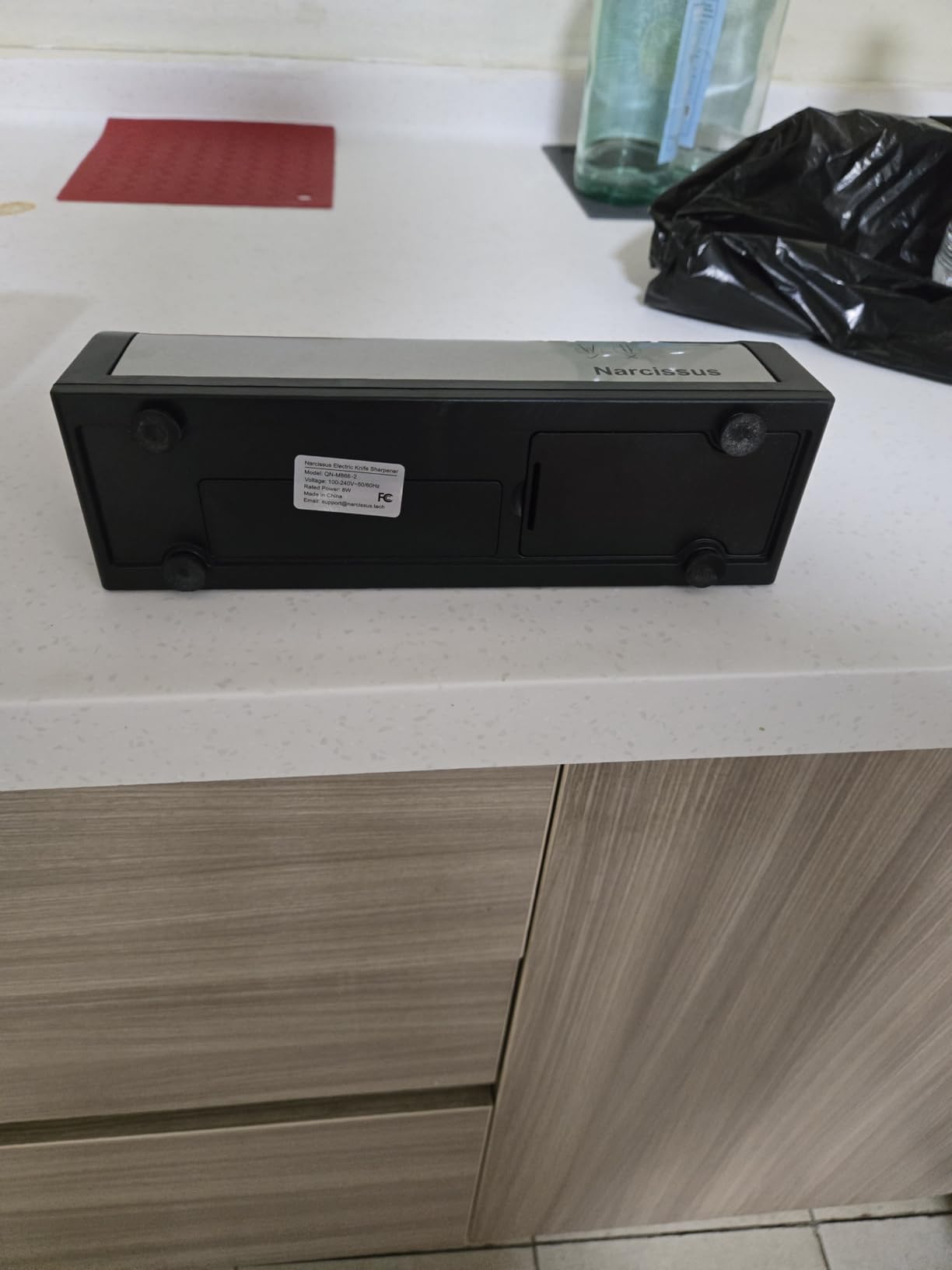
The Narcissus is the machine I would put in a kitchen where counter space is genuinely tight and the knives are ordinary. At 8.6 inches by 2.6 inches it presents almost no footprint, and the stainless steel body is the sort of thing that looks permanent on a counter rather than temporary. The workflow is two slots, a coarse stage for speed and a fine stage that polishes to a burr-free edge.
Owners describe a genuinely sharp result in a few seconds per knife, which matches what I saw. It will not refine an edge further than you need for daily cooking, and it does not try to. The design is honest about what it is: a fast, compact, two-stage maintainer.
The Details That Make Daily Use Easy
Two features here are quietly excellent. The magnetic dust collection box mounted on the base catches the knife chips, which turns a messy counter job into a tap-and-empty task. And the side-mounted scissors sharpening slot turns this into a three-in-one tool without adding footprint, which is a better trade than buying a separate scissor sharpener.
The 30-watt DC motor is specified to run continuously for over an hour without overheating, and the 100-240V wide voltage design means it works in most regions without a converter. That combination of global voltage and a stated replacement commitment at twelve months is unusual among compact two-stage units and speaks to a manufacturer trying to stand behind the product rather than hide behind it.
The motor specification also touches the overheating worry that forum users raise about electric sharpeners. A motor that can run for an hour straight is not going to cook the steel it is grinding, and the real risk on any machine is a user who keeps re-running the coarse stage long after the edge is done.
Straight Blades Only, and That Is the Limit
Serrated blades are not supported. That is a firm exclusion rather than a soft one, so if your block includes a bread knife you will want a separate approach for it, or a machine that handles serrations. The intended blades are straight ones: chef’s knives, slicers and santokus, which covers the majority of what most households actually use daily.
The other limitation is a practical one worth flagging. Knives with wide or offset handles cannot sit flat in the guide, which rules out some older or more heavily handled blades. Check the handle shape against the slot before you commit, and if you own an offset-handled knife, the Secura or SHARPAL units below are worth a look for the same reason.
5. Work Sharp E2 Kitchen Sharpener – Guided Draw Plus a Ceramic Hone Wheel
Work Sharp Electric Kitchen Knife Sharpener – Get knives ready for cookouts and BBQ’s- Fits in Kitchen Drawer, Sharpens every time, fast & easy
Fully guided automated draw
Ceramic hone wheel
6.77 x 10.82 x 5.89 inch body
16 ounce
Pros
- No technique or angle knowledge required
- Single-button operation is genuinely simple
- Ceramic hone wheel allows daily touch-ups
- Handles knives serrated edges and shears
Cons
- Larger countertop footprint
- Some owners report it is loud
- Less control than a manual pull-through
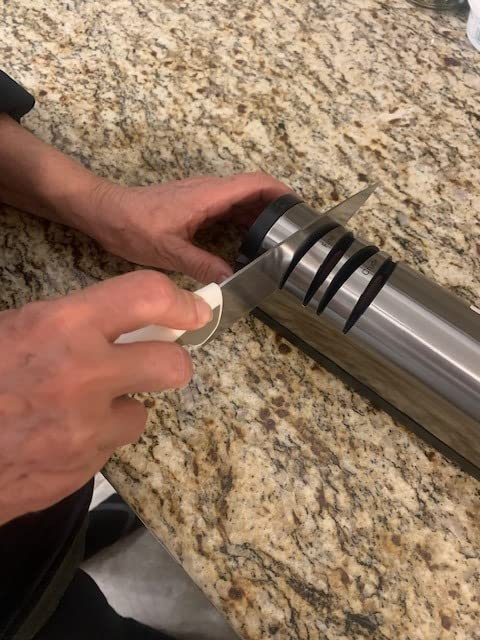
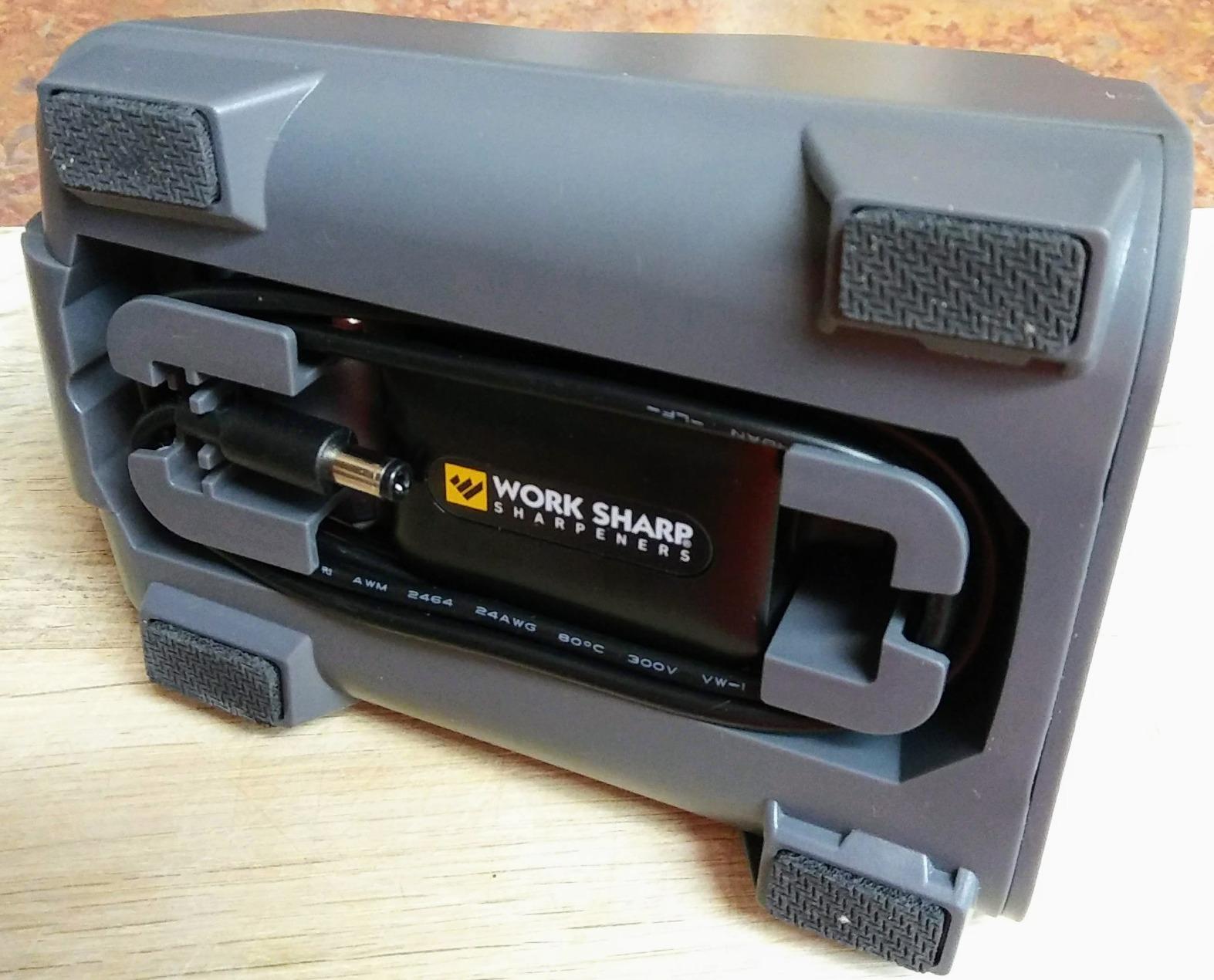
The E2 is the most hands-off machine in the roundup, and that is exactly why I recommend it to a first-time buyer. The blade draw is fully guided, so the machine controls the angle of the cut rather than your hand, and there is a single button. You put the knife in and pull, which is the shortest learning curve of anything here.
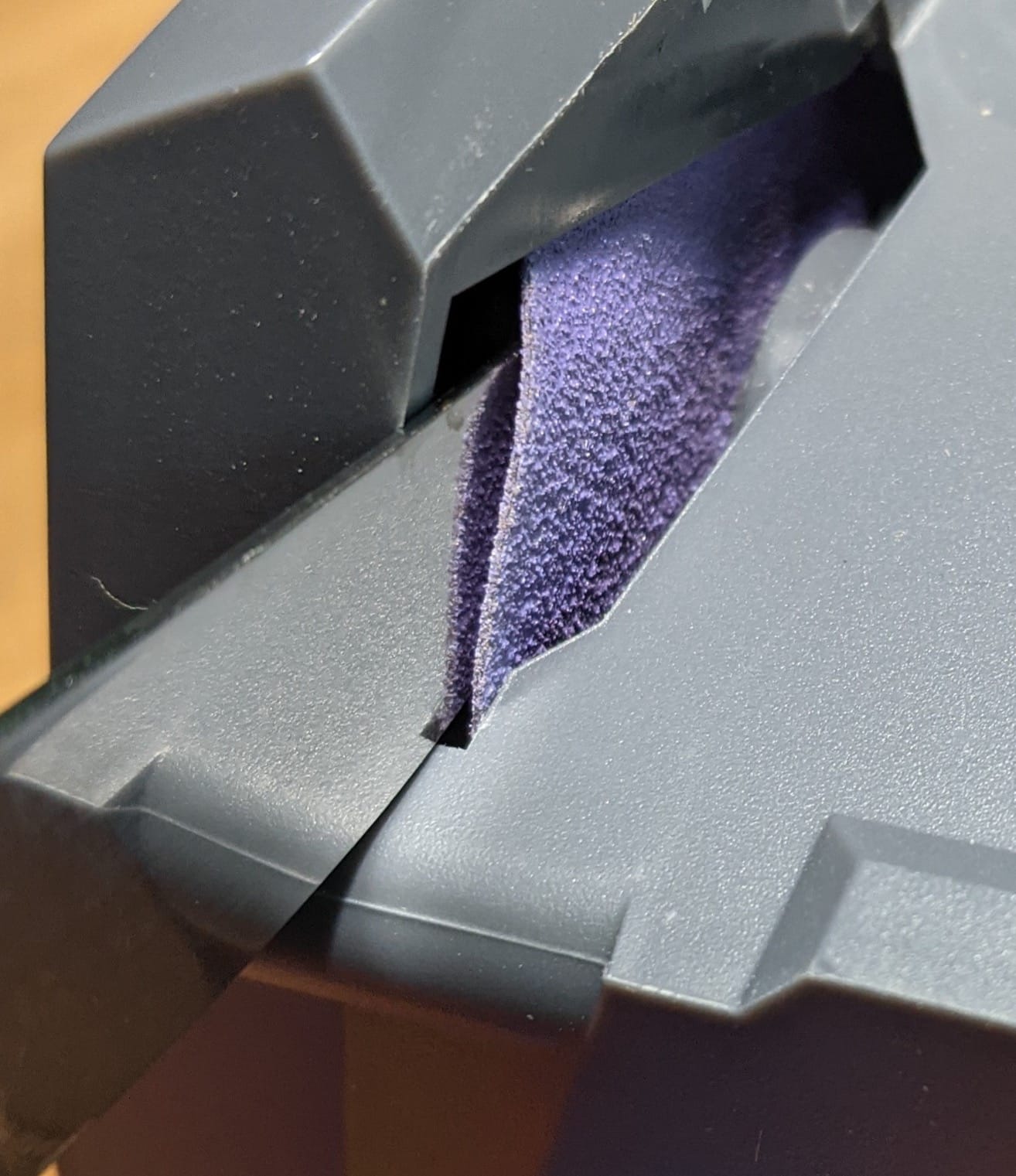
Its best feature is not the grinding stage at all but the built-in ceramic hone wheel. That wheel is for daily maintenance, and it means you can touch an edge up between full sharpenings in a few seconds without going through the abrasive stages that remove metal. Separating honing from sharpening is what keeps a blade from getting shorter over a year of casual use.
Why the Ceramic Hone Wheel Changes Your Habits
Most people use a sharpening machine far too often and are worse off for it. Every pass through a grinding stage removes steel, and a steel rod or a honing wheel realigns an existing edge without removing any. Having a hone stage built into the same machine, as this one does, removes the friction that leads to over-sharpening. You get the daily habit and the occasional full sharpen from one device.
The capability list is broad for a kitchen-focused machine. It handles all kitchen knives, serrated edges, scissors and shears, which makes it a genuine multi-tool for a household that wants one device rather than three. The three-year warranty with three years of spare part availability is a stronger commitment than most machines in this bracket offer.
Noise and Footprint Are the Trade-Offs
Some owners report it is loud in operation, and that is worth weighing if you sharpen early. At 6.77 inches by 10.82 inches it is also the widest machine in the roundup, so it needs a proper stretch of counter rather than a corner. It does store flat in a drawer between uses, which offsets the footprint somewhat if your kitchen has a large drawer.
The guided design does trade away manual control. Where a pull-through sharpener lets you feel the blade and adjust, this machine automates the draw, so the result is consistent but not adjustable. A small number of owners report inconsistent results on badly damaged or very hard blades, and that is the right expectation for a guided machine: it excels at maintenance and routine sharpening rather than rescuing a knife left very dull for years.
6. Secura 2-Stage Diamond Sharpener – Small, Quiet and Ceramic-Capable
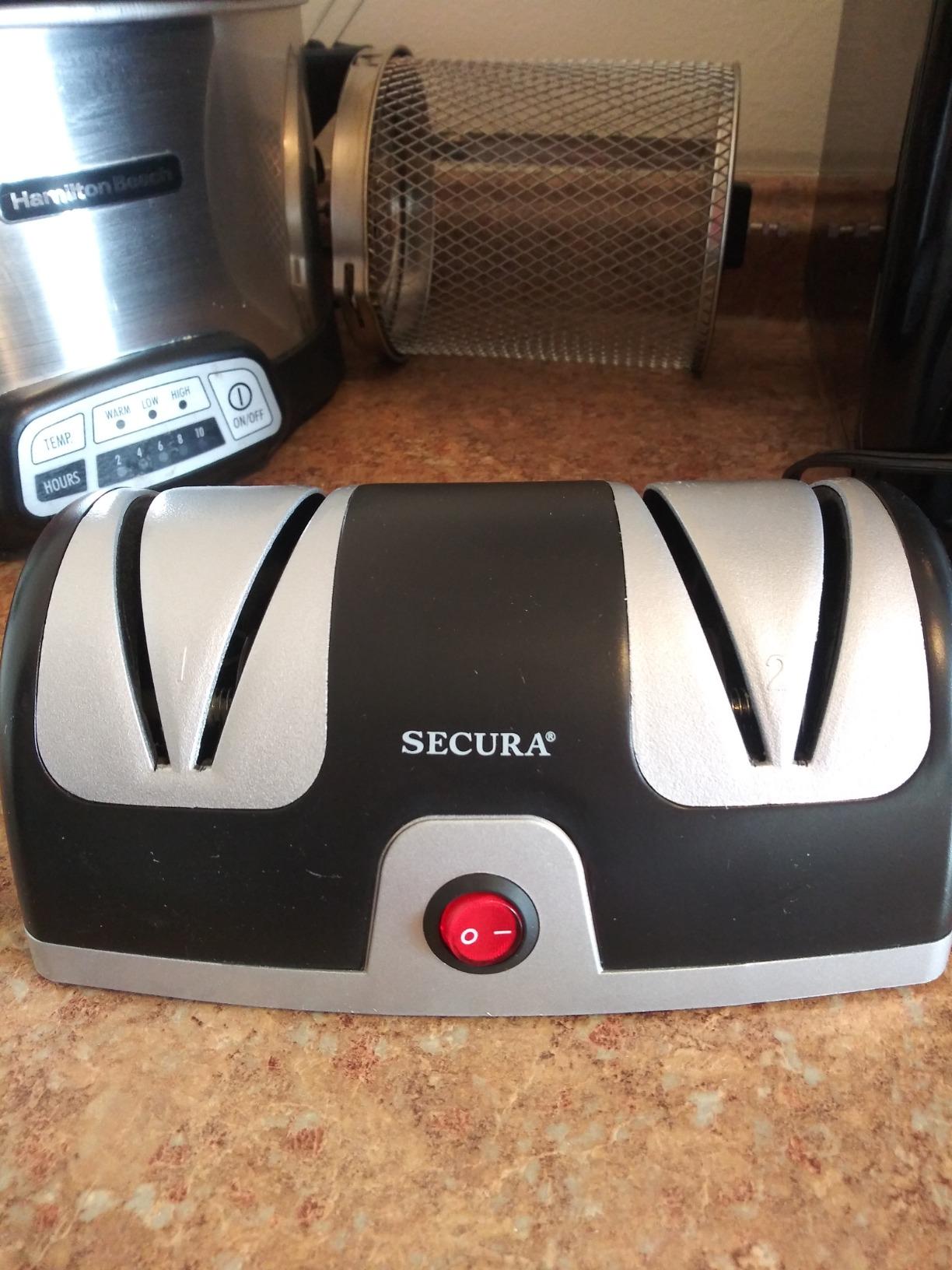
Secura 2-Stage Electric Knife Sharpener with Diamond Abrasives and Precision Angle Guides, Professional Sharpening Tool for Kitchen Straight Edge and Ceramic Knife, Black
Two-stage diamond system
Converts 20-degree to 15-degree
7.87 x 5.31 x 3.54 inch body
2.3 pound
Pros
- Two-stage diamond system sharpens and polishes in one unit
- Simple to operate and quiet in use
- Suction cup feet hold it firmly in place
- Small footprint that does not crowd the counter
Cons
- Not suitable for serrated knives
- Not heavy duty for large or abused blades
- Diamond wheels wear over time
The Secura is the one to look at if you own a ceramic blade, because its diamond wheels are hard enough to work on a material that a conventional stone will not touch. Ceramic is harder than most kitchen steel and roughly as hard as sapphire, so an ordinary abrasive simply slides across it. Diamond is one of the few practical answers, and this machine uses it in both stages.
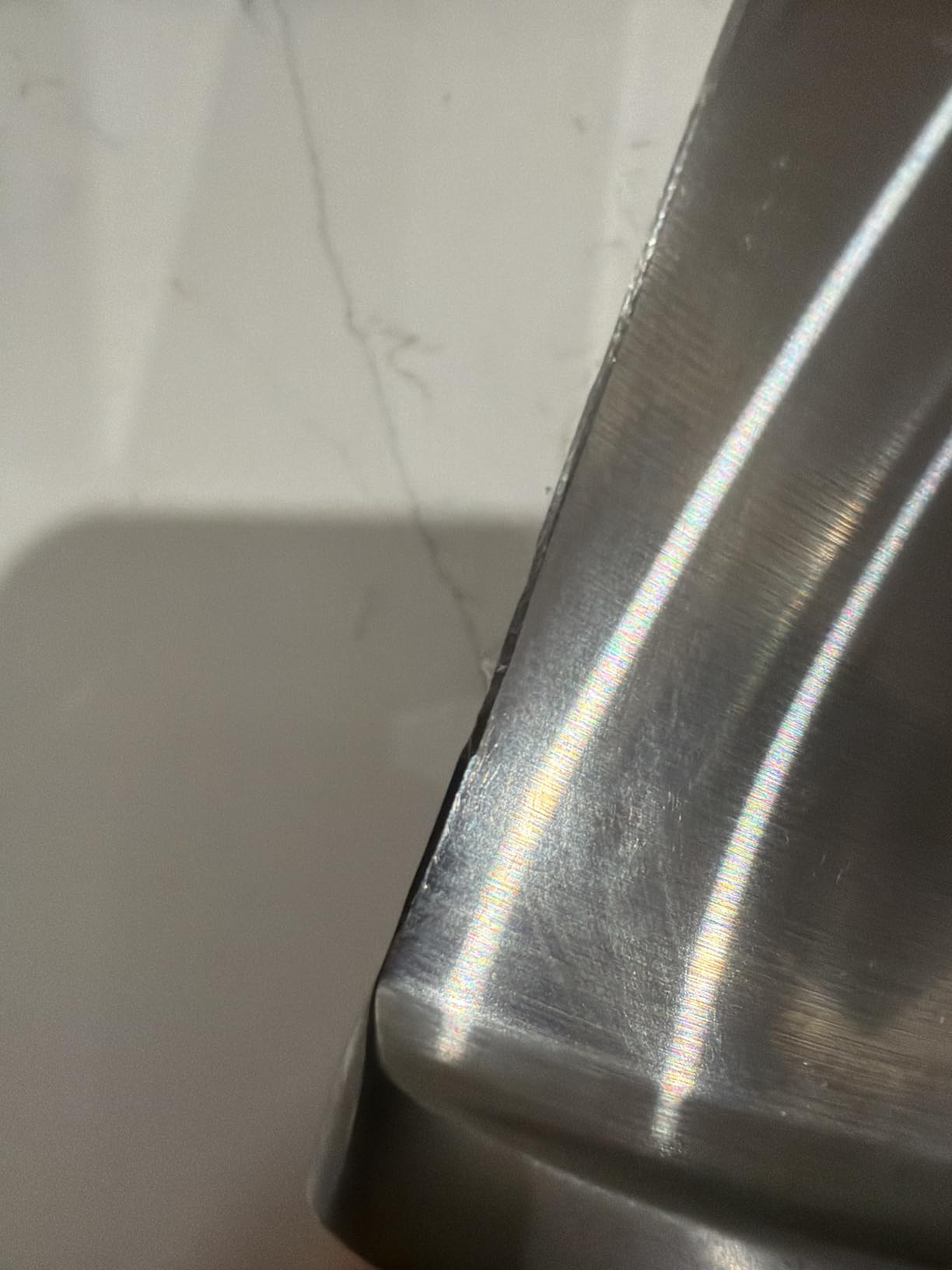
Beyond the ceramic question, it behaves like a well-made compact two-stage unit. Stage 1 sharpens, restores and reshapes the edge angle. Stage 2 sharpens and polishes to finish. The precision guide holds the knife at the correct angle and is specified to convert a 20-degree factory edge into a finer 15-degree one, which is a useful claim on a machine this size.
Stability Is the Feature You Notice Most
The heavy-duty non-slip suction cup feet do more work than they sound like they should. A sharpener that shifts while you pull will produce an uneven bevel, and worse, it can put a scratch in a blade you care about. The Secura stays planted, and the compact 7.87 by 5.31 inch footprint means you can use it on a small section of counter or on a stable table rather than needing dedicated space.
Reviewers describe the operation as straightforward, with many owners getting sharp knives on the first attempt. It also handles kitchen shears, which is a genuine bonus for a machine at this level. ETL approval and a two-year limited manufacturer warranty are both stronger than the norm for an entry-level unit.
Straight Edge Only, and Not Heavy Duty
Serrated knives are explicitly excluded, so this is a straight-edge machine. It is also not built for heavy duty work, which in practice means it suits smaller kitchen knives and light use rather than a machete-style blade or a badly neglected cleaver. A small number of owners report grooves and dulling if the blade is run through too many times, and that is the metal-removal issue showing up in practice rather than in theory.
A second limitation is honest and expected: diamond wheels wear over time, which reduces their effectiveness. That is a consumable cost that slot machines share but that appears sooner on a hard abrasive used at speed. If a knife has been left very dull for years, expect several rounds of passes rather than one.
7. SHARPAL 198H – Quiet Three-Stage Grinding on Both Bevels at Once
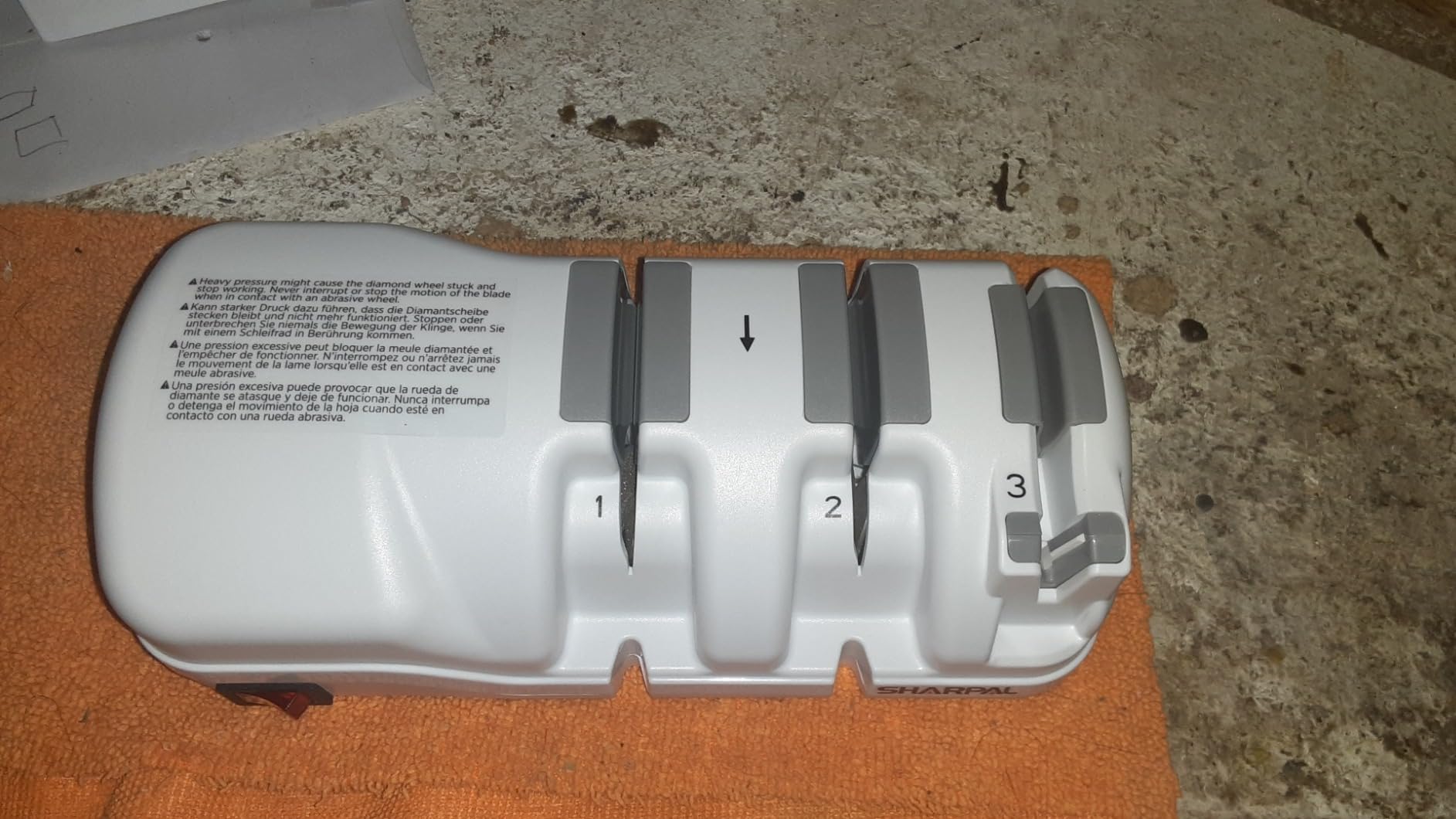
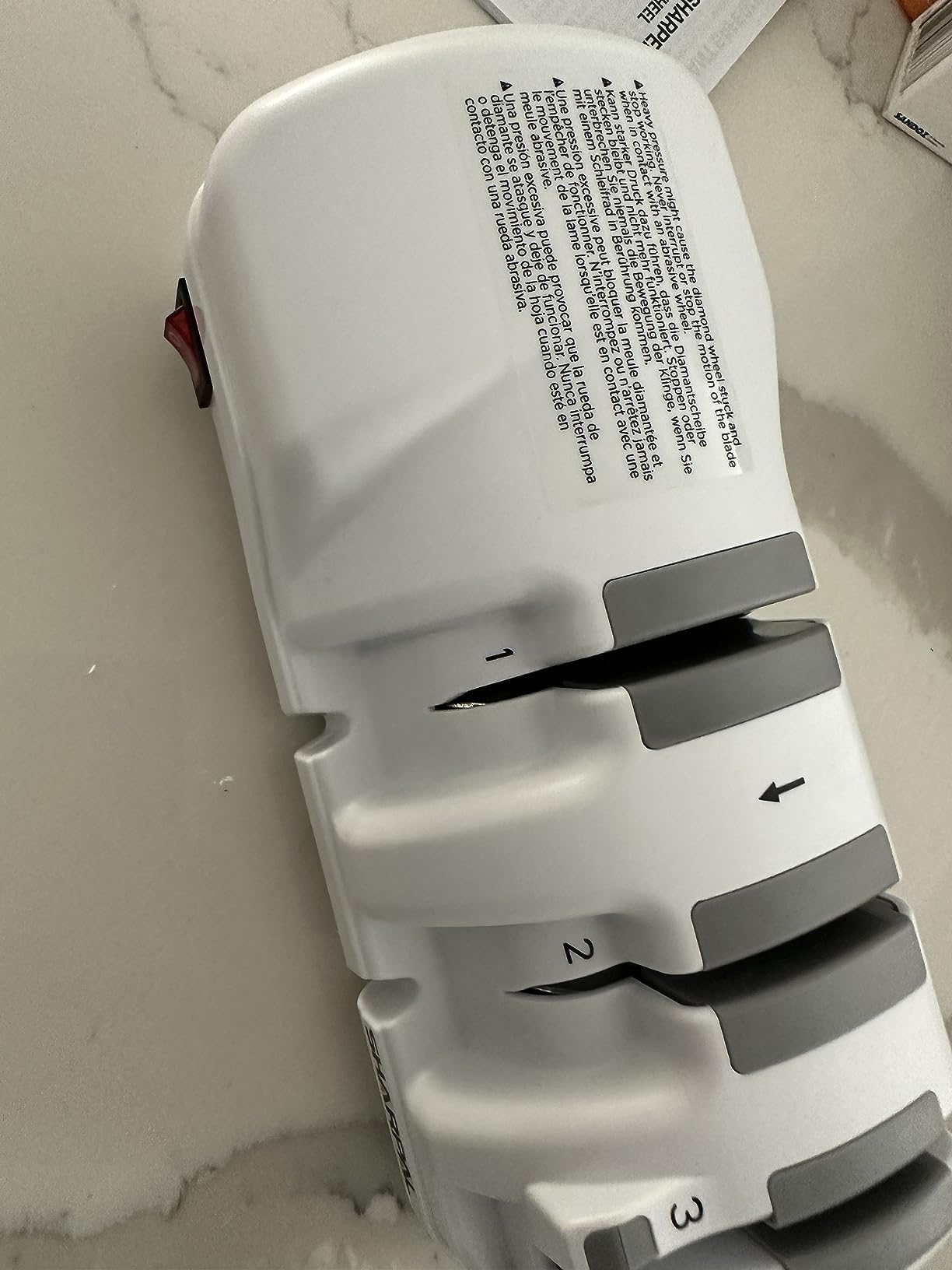
SHARPAL 198H Electric Knife Sharpener 3 Stage with Diamond Wheels
Three stages with diamond wheels
Grinds both sides simultaneously
Under 65 dB
8.66 x 4.13 x 2.8 inch body
Pros
- Both bevels ground at once for an even result
- Preset 20-degree angle is durable and forgiving
- Quiet operation for an early kitchen
- Overheat protection prevents de-tempering
Cons
- Can cut a visible notch near the tip
- Short pocket knives are hard to seat
- No manufacturer warranty stated
The idea that sold me on the SHARPAL is the simultaneous two-sided grinding. Most slot machines sharpen one side, then you flip the knife and do the other, which is exactly where human error creeps in. This one grinds both bevels the same number of times in the same pass, so the edge comes out even by construction rather than by discipline. It also halves the time per knife.
The second idea worth crediting is the preset 20-degree angle, chosen deliberately for durability and forgiveness. That is the opposite choice to the Chef’sChoice, which converts edges down to 15 degrees, and it is a defensible one. A 20-degree wedge is less likely to chip on a bone, which makes it the safer default for a household with mixed cookware and a mixed knife block.
Quiet, Cool, and Safe for the Steel
Specified operating noise is under 65 dB, which is low enough that this is the machine I would use in a flat early morning without resentment. Reviewers independently describe it as quieter than most electric sharpeners, though a minority report some machines are noticeably loud, so treat the figure as a class average rather than a guarantee.
Overheat protection is the feature that answers the most-repeated forum worry about electric machines, namely that a motor can heat a blade enough to damage its heat treatment. That concern is real in principle for any motorized abrasive. A built-in cutout removes it as a practical risk here, and it is worth paying attention to when you own thin or carbon steel blades where temper matters most.
The removable magnetic receptacles collect iron filings, so cleanup is emptying a small bin rather than sweeping a counter. The three stages carry coarse and extra fine diamond abrasives with pure ceramic in the mix, and one-handed operation requires no special skill. The 12V power supply adapter is included, which is convenient if you want to place the machine away from a wall socket.
The Notch and the Warranty Gap
The most-reported complaint is cosmetic but worth knowing about. The top portion of the blade near the tip can be cut into a visible notch by the simultaneous grinding geometry. On a well-used knife this is unnoticeable. On a presentation knife you are proud of, it is a small blemish worth factoring in.
Small pocket knives are also hard to sharpen here because the guide cannot seat the whole blade, and the absence of a stated manufacturer warranty is a genuine difference from the branded competitors in this roundup. The machine itself is capable and quiet; the support around it is thinner than the machine’s quality suggests it should be.
8. Northmas 2-Stage Sharpener – The One That Travels and Stores Anywhere
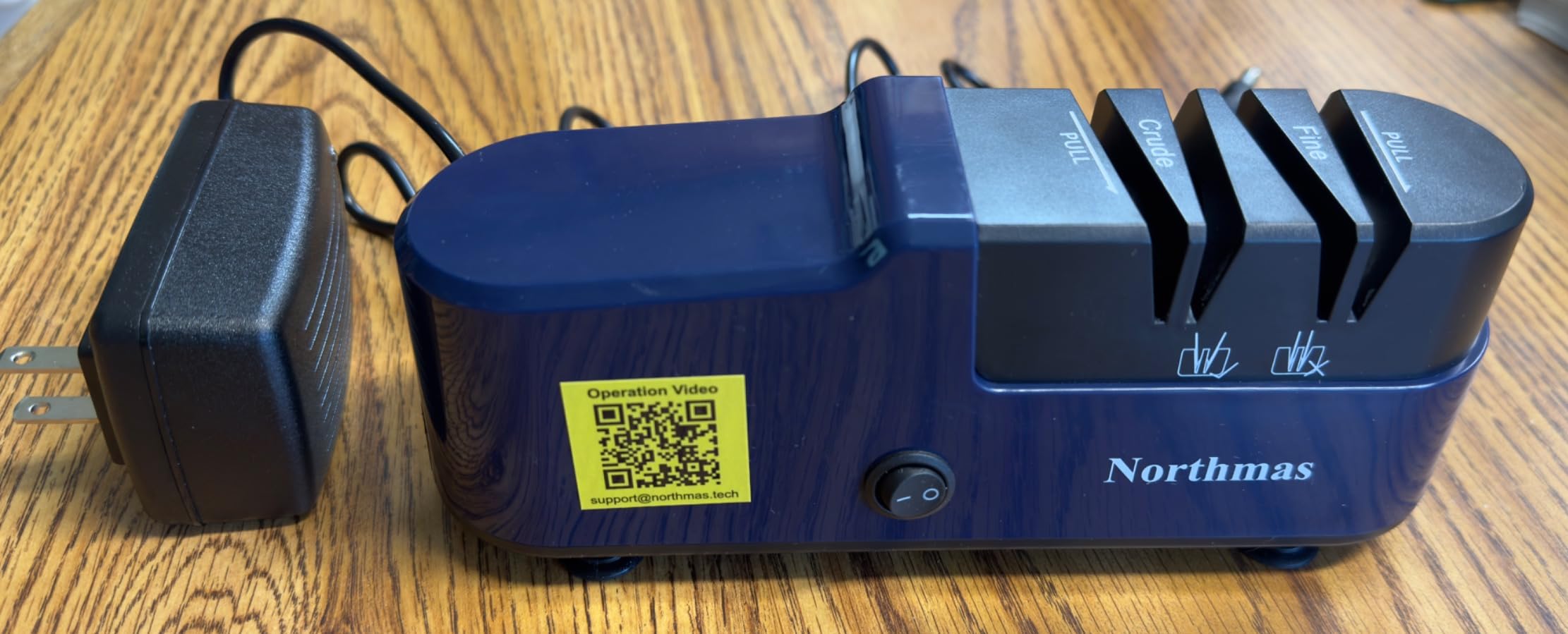
Northmas Knife Sharpener, Professional Electric Knife Sharpener for Home Use, 2 Stages for Quick Sharpening & Polishing, 100V-240V Global Voltage Design, Blue
Two-stage coarse then fine
7.8 x 2.1 x 3.1 inch body
1.2 pound
Removable power cord
Pros
- Footprint small enough for a drawer
- Four suction cups hold it steady
- Printed arrows show the correct direction
- 100-240V global voltage
Cons
- Two stages give no fine angle control
- Coarse stage removes noticeable metal fast
- Some owners report an incomplete pass
The Northmas exists for a specific situation: a kitchen where there is no counter to spare, or a person who sharpens in more than one kitchen. At 7.8 by 2.1 by 3.1 inches it is the slimmest machine here, the power cord is removable, and the 100-240V global voltage design means it works wherever you plug it in. Owners use it in vacation rentals and second homes for exactly that reason.
The small design touches are the ones I appreciated. Printed arrows on the top surface show which slot is coarse, which is fine, and which direction to pull, which removes the single most common beginner error. Four suction cups on the underside hold it steady on a flat surface, and a claimed full cycle runs about 30 seconds per knife with two to five passes per slot.
Speed Versus Finish
Two stages means a coarse stage for fast sharpening and a fine stage that polishes to a burr-free edge. That is enough for a working kitchen edge and it is not enough for a razor apex, and buyers expecting the latter will be disappointed. The honest framing is that this machine restores an edge quickly and reliably rather than finishing one.
The metal removal caution is worth repeating because it is the one that applies to every two-stage machine in this list. The coarse first stage takes metal off noticeably fast, so light use is advisable. A user who runs a dull knife through it six times when three would do will shorten that blade over a year of habit.
Reported capacity covers straight blades, serrated knives and even scissors, which is a broader claim than most machines at this size make. Twelve months of free replacement or refund plus 24 months of after-sales service is a reasonable commitment from the manufacturer, and it is the kind of support that matters when you are buying a machine with a limited published feature list.
Small Drawbacks, Honestly Reported
A small number of owners report that the edge is not sharpened uniformly along the whole blade, with an incomplete pass on part of the edge. That is a technique-sensitive complaint, and the printed arrows help with it, but it is a real limitation if your knife is long and the guide contact is short.
A few owners also simply prefer a manual carbide pull-through for their kitchen knives, which is a matter of taste rather than performance. The machine is stable, compact and quick. It does not attempt angle control beyond its two fixed stages, and it does not need to, because that is the trade it makes to be small.
9. Pegelong S820 – Sharpest Bevel in the Group at a Budget Level
Pegelong kitchen knife sharpener electric knife scissor sharpener 50w at 12.6-Degree Bevel to Quickly Sharpen Polish Slotted Screwdriver Sharpen with Replaceable Wheels S820
12.6-degree bevel
50-watt motor
8.66 x 3.64 x 2.95 inch body
Spare wheels in the box
Pros
- Noticeably fine 12.6-degree bevel for the money
- Also sharpens scissors and slotted screwdrivers
- Spare abrasive wheels included out of the box
- Simple to operate
Cons
- Limited published specification detail
- Two-stage design means no finishing control
- Shorter bevel removes more metal per pass
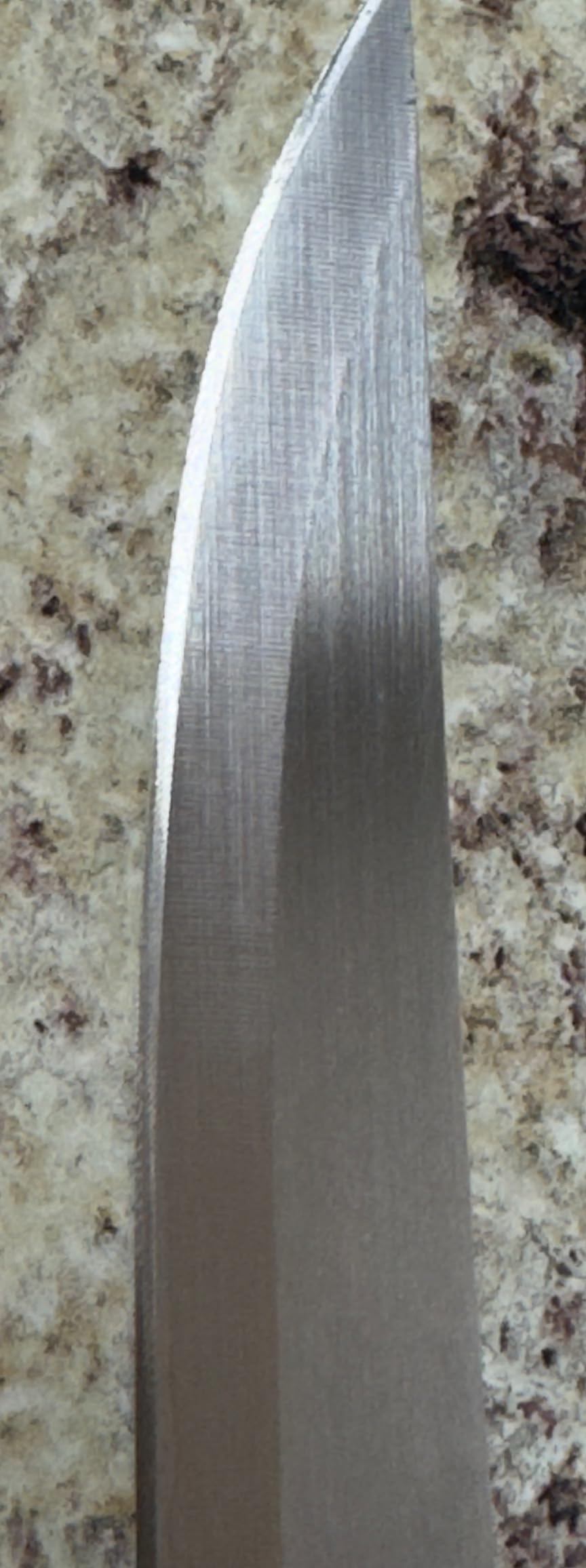
The Pegelong does something unusual for a budget machine: it sets a sharper edge angle than the premium slot sharpeners. The 12.6-degree bevel is an improvement on a previous 15-degree version of the same design, and a narrower angle means less force needed to bite through a tomato skin or a paper edge. The trade is durability, and the trade is real, but for thin produce and soft vegetables it is a trade worth making.
Reviewers with hands-on experience of Chef’sChoice and Work Sharp judge this a capable budget sharpener, which is a more meaningful endorsement than a high star count from buyers who own one knife. That consensus is worth respecting: the machine is not competing at the top of the category, and it does not need to, because the 50-watt motor handles knives and shears without complaint.
Multi-Tool Capability and Included Spares
Beyond kitchen knives this one sharpens scissors and slotted screwdrivers, which makes it useful in a workshop-adjacent sense as well as a kitchen one. A manual is included in the box, which sounds trivial until you remember that several machines in this roundup are only understandable once you read the instructions properly.
Replacement abrasive wheels are included as spares. On a machine whose main consumable is the wheel, starting with a spare removes the most annoying version of the ownership experience, where the wheel degrades and you need a replacement before you have ever ordered one.
The 12.6-degree setting is where the metal-removal caution from the forums applies most directly. A narrower bevel concentrates the same grinding effort into less steel, so it removes more per pass than a 20-degree setting. On an expensive thin-edged knife, use the machine for maintenance rather than trying to convert the edge with it.
What the Specification Gap Tells You
The published detail for this machine is thinner than the others here, and that is a fair thing for a buyer to weigh. You get the angle, the wattage, the consumable and the multi-tool capability, and you do not get much in the way of stated noise, warranty or stability features. Buyers who prioritise documented support should look at the Secura or Narcissus instead.
Two-stage construction also means there is no finishing control and no angle adjustment. For small, short blades it is also not ideal, since the guide needs enough edge to seat against. On a full-size chef’s knife, a santoku or a long slicer, it does the job it was designed to do.
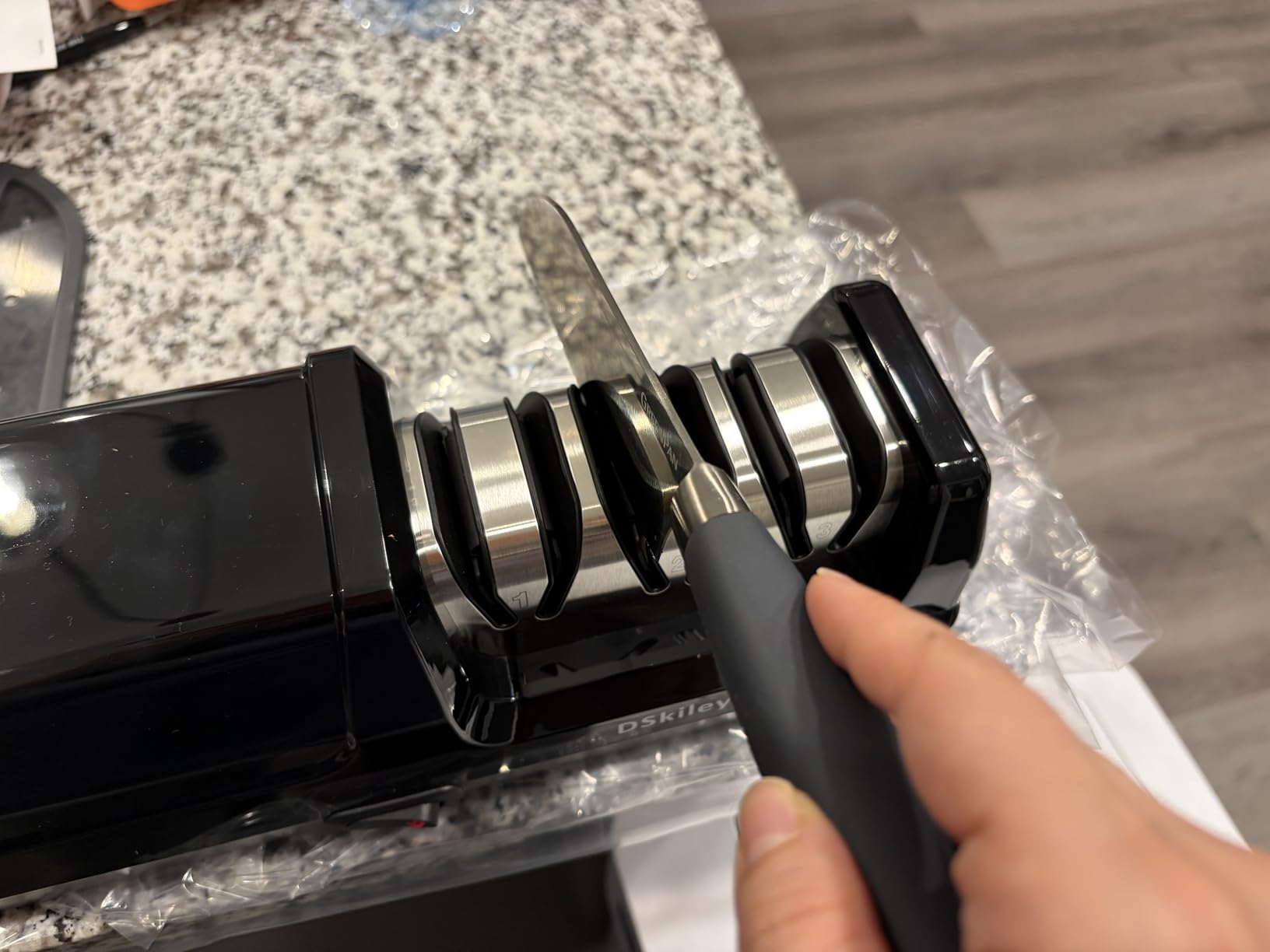
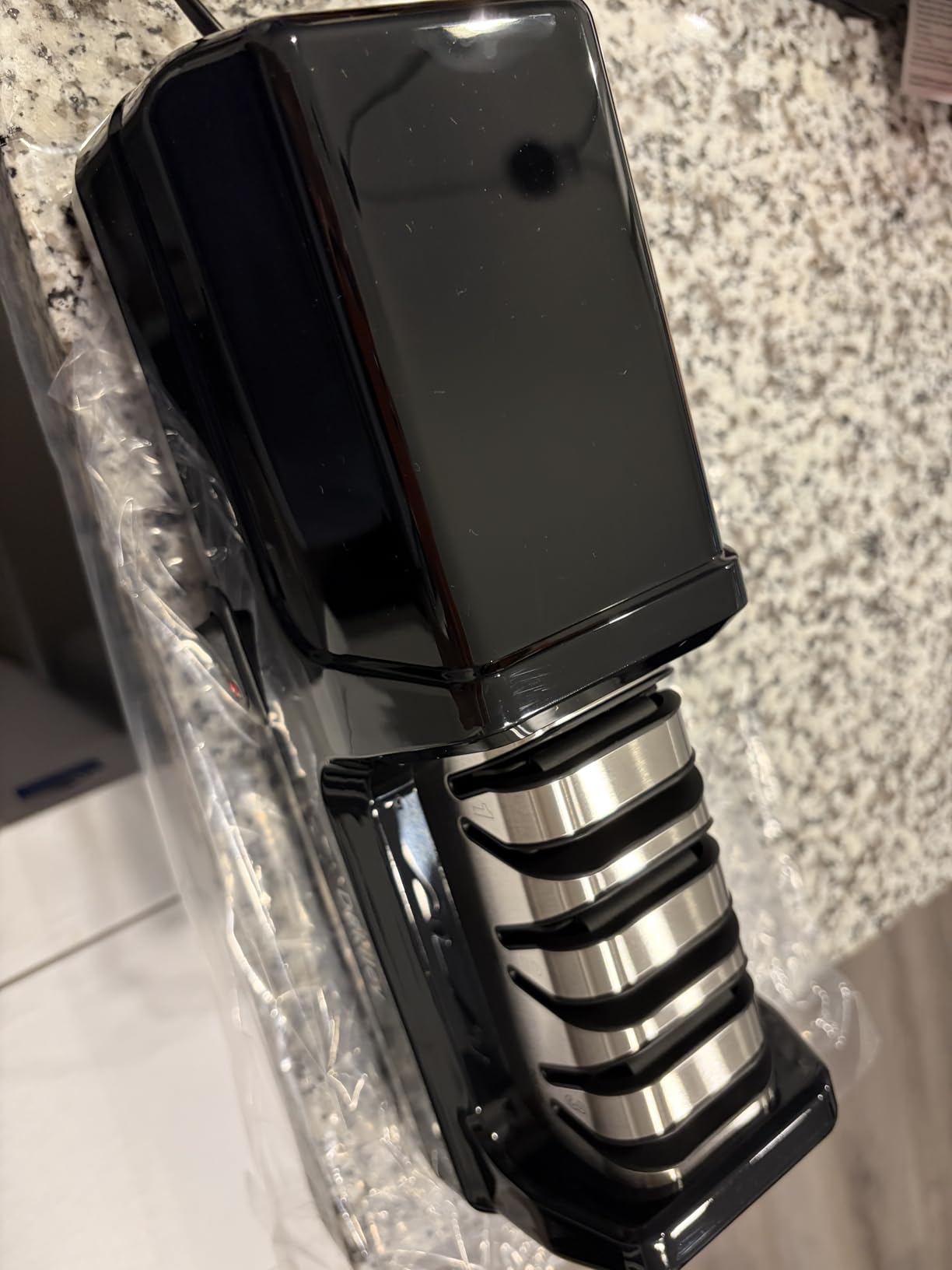
10. dskiley 3-Stage Diamond Sharpener – Quiet Three-Stage Work for a Full Knife Set
dskiley Professional Electric Knife Sharpener, 3-Stage Kitchen Knife Sharpener with Sharpening, Restore & Polish, with Metal Dust Collection Box, 100% Diamond Wheels, 20° Precision Angle
Three-stage 100 percent diamond
Preset 20-degree guide
12 x 4.92 x 4.8 inch body
Magnetic collector
Pros
- Three-stage system gives more consistent edges with less damage
- Preset 20-degree guide is forgiving for Western knives
- Handles a full knife set with no skill
- Quiet operation and quick magnetic cleanup
Cons
- A minority report the motor bogs under load
- Soft rubber guides are hard to seat
- Serrated knives lose their serrations
The dskiley is the machine I would hand to someone who has just come back from a holiday with six dull knives and wants them usable in one evening. Three stages of 100 percent diamond abrasive cover repair, sharpening and polishing, and the preset 20-degree precision angle guide holds the blade at a stable, chef-recommended angle while you do it. Owners report taking a whole dull knife set from unusable back to sharp with no skill and no angle control of their own.
Compared with a basic two-slot pull-through, the three-stage progression is what makes the difference over time. The coarse stage repairs, the middle stage sharpens, and the last stage polishes. That ladder is why it produces more consistent edges with less blade damage than the entry-level machines, and why the manufacturer designed it specifically to reduce over-grinding and uneven sharpening.
Quiet, With a Magnetic Collector
Two practical details earn their keep. It runs quietly, without the noise of larger electric sharpeners, which makes it usable in a kitchen that is also a workspace or a small flat. And the magnetic collector captures metal shavings as you work, so cleanup is emptying a bin rather than sweeping fine steel dust off a counter, which matters because metal dust near food is a nuisance to clean and unpleasant to touch.
The recommended technique is sensible and worth following: flat stable surface, light consistent pressure, no twisting and no back-and-forth movement. The motor is specified to stay stable and avoid overheating or slowing under load, and the 110V US standard means it suits a North American kitchen directly.
The Mechanical Weak Spots
The most common criticism is mechanical rather than edge-related. A minority of owners report the motor bogging down under load, and some find the soft rubber guides make it hard to seat the blade fully down into the slot. Seating matters because a blade riding high meets the abrasive at the wrong angle and produces the uneven result the machine was designed to prevent.
Knives with handles that block part of the blade cannot engage fully, which is a real limitation for offset-handled or bolster-heavy knives. The most important warning is the serrated one: serrated paring knives come out sharp but lose their serrations. Keep serrated blades off this machine entirely, and treat the 20-degree preset as a feature for straight Western blades rather than a general-purpose setting.
Sharper work still takes time when you go slowly through all three stages, and that patience is part of the design rather than a flaw in it. If your set of knives is large and mostly straight-edged, this is the machine in the roundup built for that specific job.
Electric Knife Sharpener Buying Guide: Nine Decisions That Matter
1. Match the Machine to Your Edge Angle
Edge angle is the single specification that determines what a machine can and cannot do for you. Western European knives typically arrive from the factory at 20 degrees per side, which is durable and forgiving. Japanese knives typically sit at 15 degrees per side, which is thinner, sharper and more fragile. Most cheap two-slot machines hold one fixed angle and do not tell you which. Before buying, find out what angle your own knives carry.
Matching the machine angle to the knife angle is what prevents a common and expensive mistake. Grinding a 15-degree Japanese edge down to 20 degrees with a fixed-angle machine makes the blade less sharp and cannot be undone without removing a great deal of steel. The fix is either a machine with a 15-degree guide, like the Chef’sChoice 15XV or the Secura, or a belt system that does not impose a fixed angle at all, like the Work Sharp units.
2. Single-Bevel Japanese Knives Need Special Care
This is the safety warning I would put on this article more prominently than anywhere else. A yanagiba, gyuto or deba is single-bevel: it has a ground cutting edge on one side and a flat spine side on the other. Feed one of those through a double-bevel slot machine and the machine will grind the flat back side, destroying the geometry in a way no amount of careful technique will repair.
If you own single-bevel knives, you have two safe options. A belt system such as the Work Sharp MK2 lets you control the contact by hand, which is the gentler and more forgiving approach. And a whetstone with a hand-guided technique is what these knives were designed for. What you should not do is put a yanagiba into a fixed-angle double-bevel slot and hope for the best.
3. Count Real Stages, Not Advertised Ones
Stage count is the clearest differentiator between budget and capable, but only if you know what each stage is for. A coarse stage repairs a neglected edge. A medium or shaping stage sets the geometry. A fine stage refines it. And a stropping stage, which is a very fine abrasive or a flexible polishing surface, does not remove meaningful metal at all. It is what turns a sharp edge into a properly sharp one.
That stropping stage is why the three-stage machines in this roundup produce measurably better edges than the two-stage ones, and why the Chef’sChoice resharpens in about 10 seconds while a two-stage machine still needs real grinding passes. Count the stages honestly, and treat a claimed stropping stage as the highest-value feature on the list.
4. Abrasive Type Decides What You Can Sharpen
Diamond, sapphirite and carborundum are the three abrasives you will meet, and they are not interchangeable. Diamond is the hardest and the most aggressive, which is why the Chef’sChoice, SHARPAL and dskiley machines use it and why the Secura’s diamond wheels are the right answer for a ceramic blade. Sapphirite, used in the Presto, is a synthetic corundum that grinds steadily and holds its shape well without being as hard as diamond.
Ceramic abrasive wheels, found in the hone stage of the Work Sharp E2 and in the abrasive mix of the SHARPAL, are harder than steel and work on ceramic blades, but they chip and are more expensive to replace. Carborundum, as used in the Narcissus, is the softest of the four and the fastest wearing. Matching the abrasive to your knives is what decides whether a machine is versatile or limited to one job.
5. Serrated Compatibility Is Not Universal
Can you sharpen a serrated knife in an electric sharpener? The honest answer is: sometimes, and only on a machine that says so. Serrations need each tooth to be re-ground at the same height with a pointed contact, which a straight slot cannot do reliably. Double-sided serrations are harder still than one-sided.
Within this roundup, the machines that state serrated support are the Chef’sChoice 15XV, the Work Sharp MK2, the Work Sharp E2, the SHARPAL 198H and the Northmas. The Presto handles straight edges and one-sided serrations only. The Narcissus, Secura and dskiley are straight-edge machines, and the dskiley actively damages serrations. Always check the specification, because a machine that does not say it handles serrations almost certainly does not.
6. Corded Versus Cordless: The Contradiction, Resolved
You will find two directly conflicting claims in this category. One review states flatly that battery sharpeners rarely deliver the steady power that a real grind needs. Another crowns a cordless model as its best battery pick. Both can be true at once, and the resolution is about motor power rather than battery quality.
A cordless sharpener runs at lower power because a small battery cannot supply the current a high-torque grinding wheel needs. That lower power is fine for maintenance passes and gentle finishing, and inadequate for repairing a genuinely neglected edge. Every machine in this roundup is corded, and that is not an accident: it is what the test data and the owner reviews converge on. If you need cordless portability, buy a machine for second-kitchen maintenance and keep a real sharpener at home.
7. Metal Removal and Blade Temper Are the Real Risks
This is the concern that dominates the sharpening forums, and the enthusiasts are right about it. A rigid motorized wheel pressed against an edge removes steel faster than a hand-guided stone does, and every millimetre removed is a millimetre your blade does not have back. Users who run a dull knife through a coarse stage six times when three would do shorten their knives measurably.
The overheating worry is related but more theoretical. A motor running at speed against steel generates heat, and enough of it can affect a blade’s temper. In practice the machines here are built to prevent this: the SHARPAL specifies overheat protection, and the Narcissus specifies a 30-watt motor that runs over an hour without overheating. Keep using the stages as intended, stop when the edge is sharp, and the risk is remote.
Where you are genuinely uncertain, the belt systems are the answer. A flexible belt abrades rather than grinds, removes less metal per pass, and is the design the forum repeatedly recommends for expensive thin-edged knives. The Chef’sChoice community recommendation for longevity runs in the other direction, toward the three-stage slot machine, because the stropping stage means you can maintain an edge without grinding at all.
8. Noise, Footprint and Cleanup Decide Whether You Keep It
These are unglamorous specifications that quietly decide whether a sharpener lives on your counter or in a cupboard. The Work Sharp E2 is the widest machine in this roundup and some owners report it is loud, while the SHARPAL 198H specifies under 65 dB and is the one to buy if you sharpen at 6am in a small flat. For footprint, the Northmas at 7.8 by 2.1 inches and the Work Sharp MK2 at 7.02 by 2.26 inches are the two that genuinely disappear into a drawer.
Cleanup is worth as much attention. The Narcissus, SHARPAL and dskiley all include magnetic collection receptacles, so steel filings end up in a bin instead of on your counter. Machines without a tray mean you are sweeping fine metal dust around a food-prep area, which is unpleasant and unhygienic. If you dislike the cleanup, the design flaw is not your discipline.
9. Electric Sharpener Versus Whetstone Versus Manual Pull-Through
There is no honest answer where one of these is best, because they solve different problems. The electric sharpener wins on speed, repeatability and accessibility: seconds per knife, no skill, and a consistent angle whether you are concentrating or not. It loses on metal removal and on the ability to work a single bevel.
The whetstone wins on control and preservation. A skilled hand can remove less metal than any machine, work a Japanese single-bevel edge properly, and repair chips with precision. It loses decisively on accessibility, since the learning curve is measured in months. A manual pull-through of the carbide kind sits in the middle: fast, cheap and gentle, but it refines an edge rather than truly sharpening it.
There is also a cadence answer. Use a honing rod or a hone stage weekly to keep an edge aligned, then reach for a full sharpen only when the edge stops biting. Most knives need a full sharpen every two to three months of regular cooking rather than weekly. That cadence is what keeps an electric machine from eating through a blade set, and it costs nothing to adopt.
What professional kitchens actually use is a third answer. Line cooks in many kitchens keep a Tormek-style slow-speed wheel system at the station, because the low wheel speed means low heat, low metal removal and a bevelled edge they can set exactly. It is slower than any machine on this list and far better for expensive blades. If your knives cost more than a small car, learning a wheel system is worth the investment, and it is the enthusiast tier that most roundups in this category skip.
Frequently Asked Questions
Do electric knife sharpeners really work?
Yes, and for most home kitchens they work very well. An electric sharpener is essentially a small electric sander for blades: rotating diamond, sapphirite or ceramic abrasives in two or three stages of decreasing coarseness remove metal from the edge, while fixed blade guides hold the knife at the correct angle as you draw it through. The result is a consistent, repeatable edge in seconds per knife with no practice required. The real limitation is not whether they work but how much metal they remove, which is why disciplined use of the stages matters.
What is the best electric knife sharpener for home use?
The Presto 08800 EverSharp is the best electric knife sharpener for most homes because it needs no angle knowledge, holds steady with suction cups, and takes up less counter space than a toaster. If you want the sharpest repeatable edge and own a mixed collection of Western knives, the Chef’sChoice 15XV EdgeSelect is the stronger buy because its three stages convert a 20-degree factory edge to a 15-degree Trizor XV edge. If you need shears and outdoor tools as well as knives, pick a Work Sharp belt system.
What is the best electric knife sharpener for beginners?
The Work Sharp E2 Kitchen Sharpener is the easiest starting point, because the blade draw is fully guided so the machine controls the angle rather than your hand, and it operates from a single button. The Presto 08800 EverSharp is a close second with two clearly labelled stages and no technique required at all. For a beginner the important thing is that the machine removes the angle decision entirely, since angle is the only part of sharpening that genuinely requires skill.
Can you sharpen a serrated knife in an electric sharpener?
Only on a machine that states serrated support, and one-sided serrations are far easier than double-sided. Serrations need each tooth re-ground at the same height, which a straight slot cannot reliably do. Among the machines reviewed here, the Chef’sChoice 15XV, Work Sharp MK2, Work Sharp E2, SHARPAL 198H and Northmas state serrated capability, while the Presto handles straight edges and one-sided serrations only. The Narcissus, Secura and dskiley are straight-edge machines, and the dskiley will strip the serrations off a blade entirely.
Are electric knife sharpeners better than a whetstone?
Neither is better, they solve different problems. Electric sharpeners win on speed, repeatability and accessibility, producing a consistent edge in seconds per knife with no skill required. Whetstones win on control and metal preservation, letting a practised hand remove less steel than any machine and sharpen single-bevel Japanese knives that a slot machine would destroy. A carbide manual pull-through sits in between, being fast and gentle but refining an edge rather than truly sharpening it.
Is it worth getting an electric knife sharpener?
For most households, yes, because a dull knife is a dangerous knife: you press harder, food squashes aside instead of cutting cleanly, and a slipped blade goes somewhere you did not intend. An electric sharpener is the cheapest safety upgrade available and stops you replacing expensive blades that could have been restored. It is worth less if you only own one cheap knife, since a honing rod would cover that case, and it is essential if you own a block of good steel.
How often should I sharpen my knives?
Hone weekly and sharpen every two to three months if you cook daily. Most of the wear that dulls a knife is microscopic rolling at the edge, which a honing rod or a hone stage realigns without removing metal, while a full sharpen removes steel and rebuilds the geometry. Running a full sharpening weekly is the main reason people shorten their blades. Stop as soon as the edge is sharp, use the stages as intended, and treat a thin or expensive knife as a maintenance tool rather than something to convert.
Will an electric sharpener ruin an expensive Japanese or single-bevel knife?
A double-bevel slot machine will ruin a single-bevel knife such as a yanagiba, gyuto or deba, because it grinds the flat spine side and destroys the geometry irreversibly. For a double-bevel Japanese knife the risk is lower but real, since a fixed 20-degree machine grinding a 15-degree edge cannot be undone without removing a great deal of steel. The safe options are a belt system such as the Work Sharp MK2, where you control the contact by hand, or a whetstone, which is what these knives were designed for.
What do professional chefs use to sharpen their knives?
Many professional kitchens use a Tormek-style slow-speed wheel system at the station rather than a household electric slot machine. The low wheel speed means low heat, very low metal removal and a bevelled edge the cook can set exactly, which is why it is the standard for expensive blades. Working cooks in service kitchens also hone between every task and do a full sharpen far less often than home cooks assume, usually at the end of a shift or a week rather than daily.
The Bottom Line on the Best Electric Knife Sharpeners in 2026
If you want the recommendation I would make without asking a single follow-up question, it is the Presto 08800 EverSharp. It costs almost nothing to learn, takes up almost no space, and has a larger base of long-term owners than anything else in this category. For a household with ordinary knives and ordinary patience, that combination is very hard to beat.
Move up to the Chef’sChoice 15XV EdgeSelect if you own good Western steel and want the sharpest repeatable edge available without learning stone technique. Budget an evening for the initial edge conversion on each knife, because that is the whole cost of the machine’s advantage.
Choose the Work Sharp MK2 if your knives are expensive and thin-edged, or if you also want to maintain shears, pocket knives and outdoor tools. Choose the Work Sharp E2 if you want the machine to make every decision for you. Choose the Secura if you own ceramic blades. Choose the SHARPAL 198H if noise is your objection, and the Northmas if your sharpener has to live in a drawer or a second kitchen.
Whatever you pick, pair it with a honing steel and use the stages the way they were designed to be used. That habit alone will do more for the life of your knives than any machine on this list, and it costs almost nothing. Check the current listings for the best electric knife sharpener options in 2026 before you commit, since these machines change slowly but the range around them does not.