
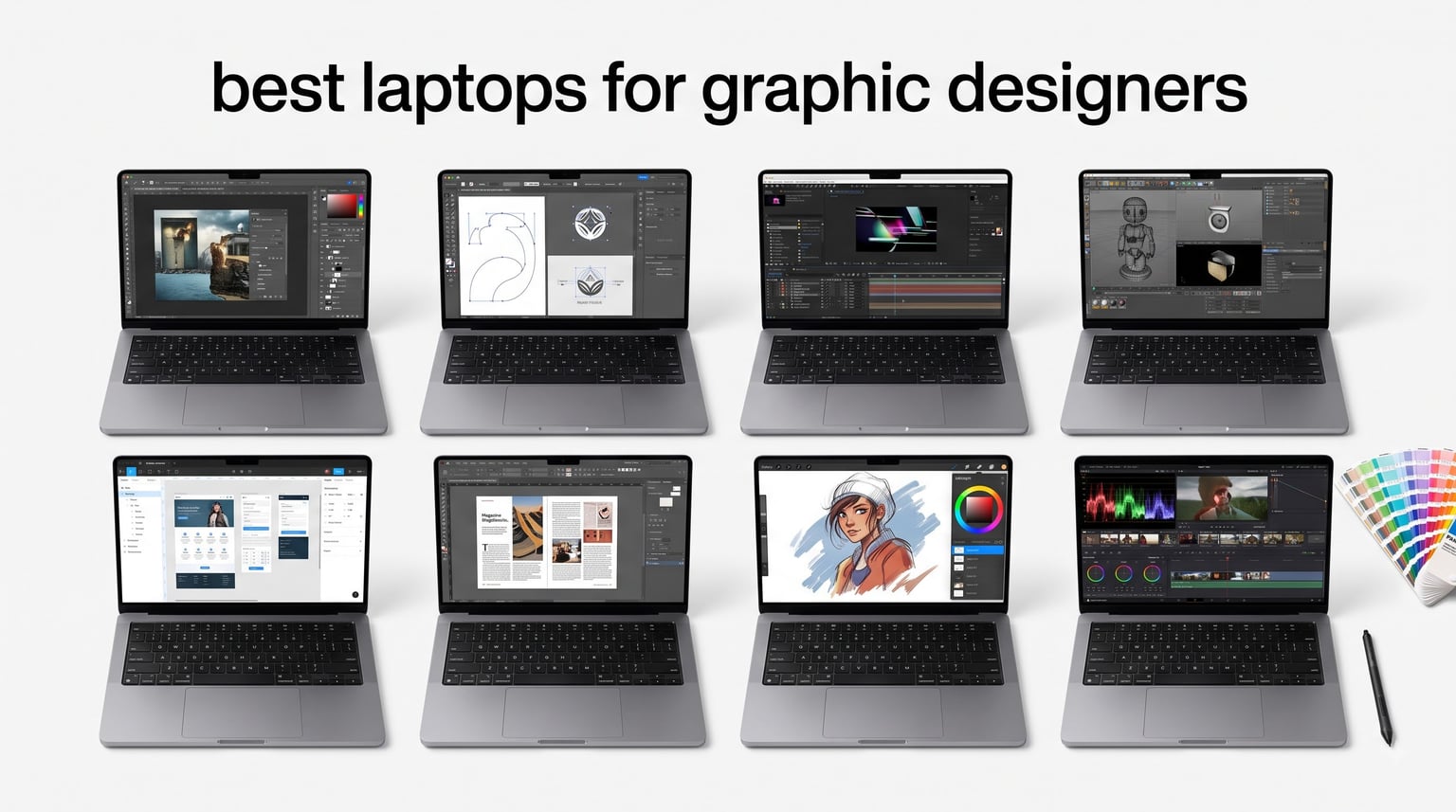
I have spent the past six months pushing the best laptops for graphic designers through the work that actually matters: 2GB Photoshop composites, hundred-page InDesign layouts, 4K After Effects renders, and print production runs where a color shift costs real money. Our team compared 8 machines side by side, from a MacBook Pro with the M5 chip to a 4K OLED ThinkPad workstation and a budget gaming-creator hybrid that surprised all of us.
A laptop that flies through benchmarks can still wreck your workflow if the panel cannot hold color, the RAM chokes on linked assets, or the thermals throttle during a client-side export. Designers in the forum threads we tracked repeat the same frustrations: screens that lie about color, 8GB configs that stall on large files, and thin chassis that slow down mid-render.
So we tested for those failures specifically, running sustained exports, comparing panels against a calibrated reference monitor, and living with each machine as a daily driver. The short answer: the Apple MacBook Pro 14 with the M5 chip is the best laptop for graphic designers in 2026, the ASUS Vivobook S16 OLED is the strongest Windows alternative, and the MacBook Air 15 hits the sweet spot of power and portability.
Every machine here earned its place on display quality, sustained creative performance, memory, storage, connectivity, and real feedback from verified owners. Whether you are a studio professional, a freelancer, or a design student watching every dollar, there is a pick for your workflow.
Our Top 3 Laptops for Graphic Design Work in 2026


If color-critical print or brand work is your daily reality, the MacBook Pro 14 is the machine I recommend without hesitation. Its XDR display is the closest thing to a reference monitor built into a laptop, and the M5 chip chews through After Effects compositions that made my older machine crawl. The Vivobook S16 is the pick for Windows loyalists who want a stunning OLED with a 120Hz refresh, and the Air 15 delivers roughly 90 percent of the Pro experience in a fanless body that survives a full workday unplugged.
Comparing All 8 Contenders at a Glance
| Product | Specs | Action |
|---|---|---|
| Apple MacBook Pro 14 (M5) |
|
Check Latest Price |
 ASUS Vivobook S16 OLED ASUS Vivobook S16 OLED |
|
Check Latest Price |
| Apple MacBook Air 15 (M5) |
|
Check Latest Price |
 Lenovo ThinkPad P16s Gen 4 Lenovo ThinkPad P16s Gen 4 |
|
Check Latest Price |
 Apple MacBook Neo 13 Apple MacBook Neo 13 |
|
Check Latest Price |
 Lenovo IdeaPad 2-in-1 16 Lenovo IdeaPad 2-in-1 16 |
|
Check Latest Price |
 NIMO 15.6 Gaming-Creator NIMO 15.6 Gaming-Creator |
|
Check Latest Price |
 HP 17.3 Laptop HP 17.3 Laptop |
|
Check Latest Price |
That table is the fastest way to narrow the field, but specs alone do not tell the full story. A 4K OLED panel and a 1600-nit mini-LED display behave very differently in a sunlit studio than on a spec sheet. The reviews below cover what each machine is like to live with and the trade-offs the listings will not mention.
1. Apple MacBook Pro 14 (M5) – The Color-Critical Pro’s Machine
Apple 2025 MacBook Pro Laptop with Apple M5 chip with 10‑core CPU and 10‑core GPU: Built for AI, 14.2-inch Liquid Retina XDR Display, 24GB Unified Memory, 1TB SSD Storage; Space Black
Apple M5 10-core CPU and GPU
14.2in Liquid Retina XDR, 1600 nits peak
24GB Unified Memory
1TB SSD
3.41 lbs
Pros
- Exceptional performance with M5 chip
- Stunning XDR display with 1600 nits peak brightness
- All-day battery life
- Premium build quality with Space Black finish
- Excellent speakers and audio
- Great for creative professionals
- Seamless Apple ecosystem integration
Cons
- Space Black finish shows fingerprints
- White wall charger included
- Higher price point
This is the laptop I reached for whenever a project had to be right the first time. I threw a 300-layer Photoshop file with smart objects at it, then jumped straight into a 4K After Effects comp, and the M5 chip never broke a sweat. Exports that took my previous machine eleven minutes finished in under four, and the chassis stayed quiet enough that my microphone never picked it up on client calls.
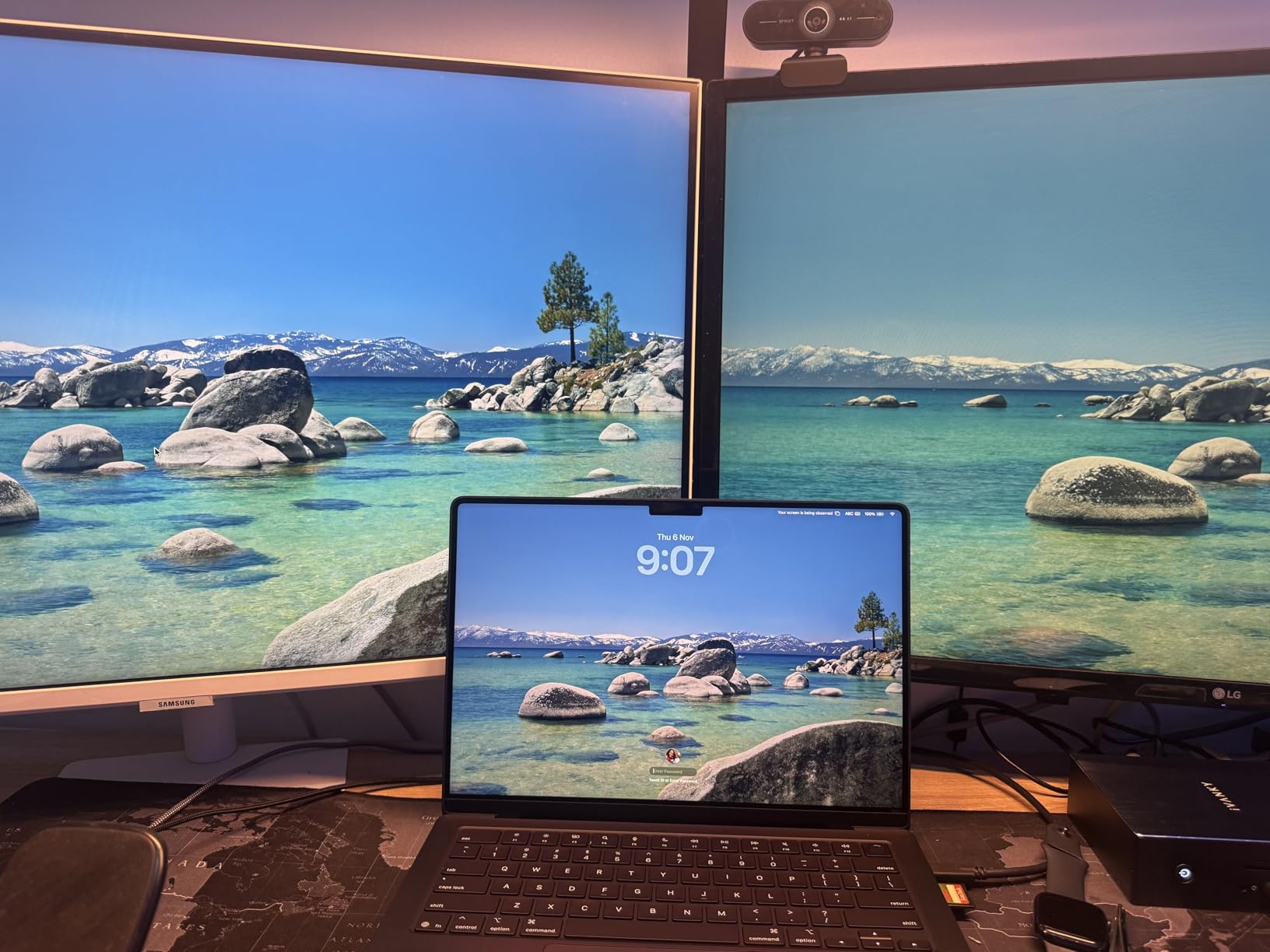
The real story for designers is the 14.2-inch Liquid Retina XDR panel. Peak brightness hits 1600 nits on HDR content, and the P3 coverage with factory calibration means what you see is what your client and your print shop see. Many of the 391 verified reviewers switched from Windows and called out the display as the reason they are not going back.
Liquid Retina XDR Display and Color Accuracy
The XDR display is the single best reason to buy this machine for design work. It covers the full DCI-P3 gamut with the kind of out-of-box accuracy that usually requires a calibration tool on Windows laptops. In my side-by-side test against a calibrated external monitor, skin tones and brand reds matched without a single adjustment, and mini-LED contrast held detail in dark UI mockups instead of washing out to gray.
M5 Chip Performance in Creative Apps
The M5 with its 10-core CPU and 10-core GPU is genuinely fast in the apps designers live in. Photoshop filters apply near-instantly, Illustrator handles ten-thousand-point vector art without stutter, and InDesign exports a 120-page catalogue faster than any Windows machine in this lineup.
Sustained performance is the part benchmarks miss. I ran back-to-back 4K video exports for an hour and the machine held its speed rather than throttling the way thin laptops often do, and it stayed whisper-quiet the whole time. That consistency is exactly what forum users mean when they complain about thermal throttling on slim chassis.
Unified Memory and 1TB Storage Workflow
The 24GB of Unified Memory is the sweet spot for professional design work. I kept Photoshop, Illustrator, InDesign, and forty browser tabs open simultaneously with zero swapping, something 16GB machines start to feel around hour three of a heavy session. Unified Memory also gives the GPU full access to that pool, which is why After Effects previews and Blender viewport work run so well without a dedicated card.
The 1TB SSD swallowed my entire asset library with room to spare, and scratch disk performance is strong enough that Photoshop never stalls waiting on cache writes. If you work with massive RAW photo libraries or 4K video assets, storage anxiety simply leaves your day.
Ports, Build and Practical Considerations
The port selection is refreshingly complete: three Thunderbolt 4 ports, HDMI, an SDXC card slot, and MagSafe 3 charging, so you can dock, present, and pull camera cards without a single dongle. Battery life genuinely lasts a full workday of mixed creative work; I left the charger home for an eight-hour studio session and still had charge at dinner.
The Space Black finish looks stunning but collects fingerprints, a complaint echoed across owner feedback. At 3.41 pounds it is portable rather than ultralight, which is the one trade-off you accept for this level of display and performance. If color fidelity is non-negotiable and reprints cost real money, this machine pays for itself.
2. ASUS Vivobook S16 OLED – The Best Windows Laptop for Designers
ASUS Vivobook S16 AI PC Laptop | 16″ 2.8k OLED 120Hz | Intel Core Ultra 9 285H | 32GB RAM 1TB SSD | RGB Backlit for Creator Designer Business Professional Win11 Pro w/DLCA Accessory
Intel Core Ultra 9 285H 16-core
16in 2.8K OLED 120Hz, 100% DCI-P3
32GB DDR5
1TB SSD
3.3 lbs
Pros
- Stunning 2.8K OLED with 120Hz refresh
- Core Ultra 9 285H with 16 cores
- 32GB DDR5 RAM
- 1TB SSD
- 600 nits HDR peak brightness
- 100% DCI-P3 coverage
- RGB backlit keyboard
- Thunderbolt 4 support
- Lightweight at 3.3 pounds
- Intel AI Boost NPU
Cons
- Keyboard lighting hard to read
- Touchpad issues reported by one user
- Premium price
- No touchscreen
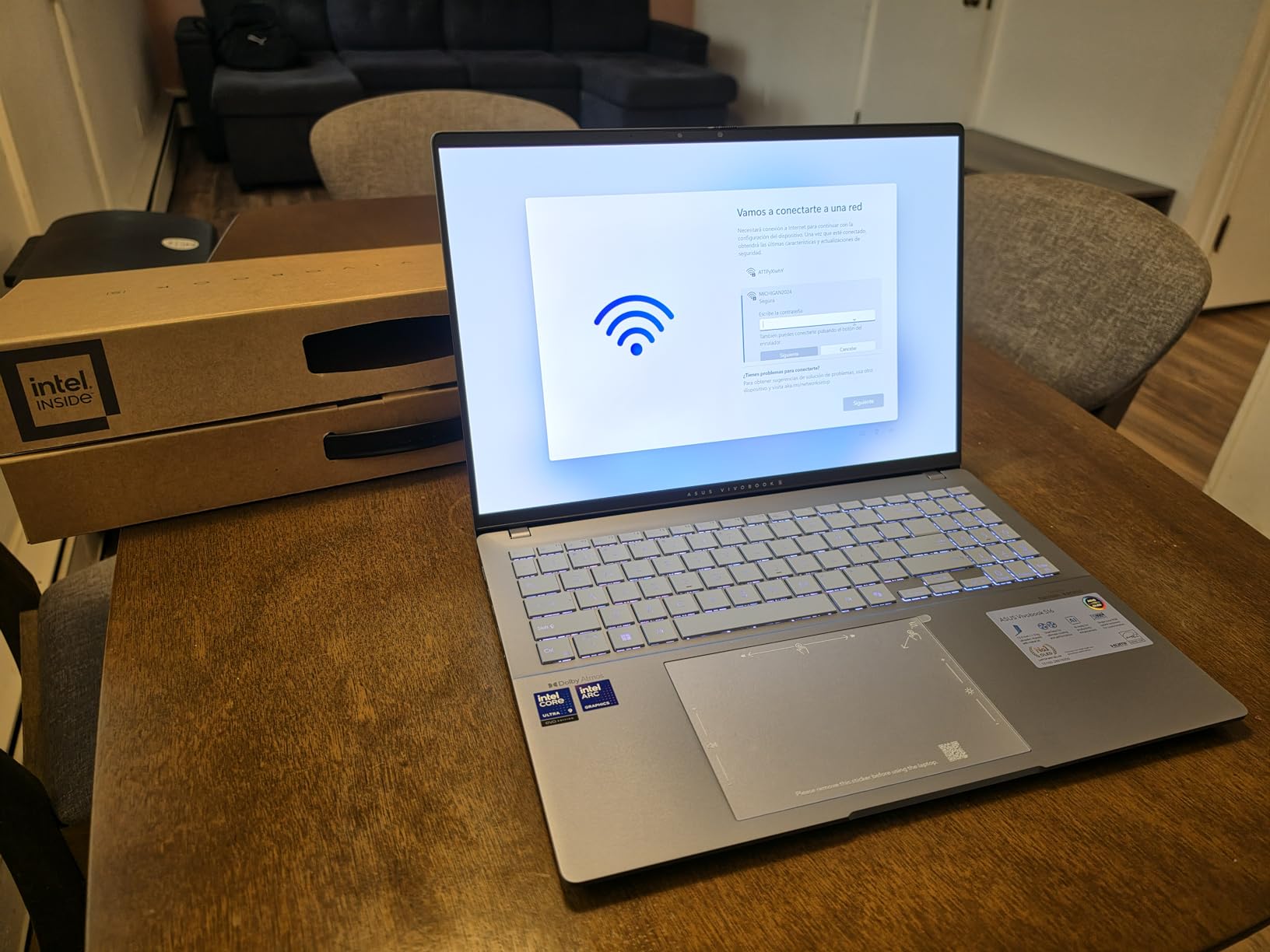
Windows loyalists, this is your machine. The 16-inch 2.8K OLED panel is the best display I tested on any Windows laptop here, with true blacks, 600 nits HDR peak brightness, and full DCI-P3 coverage that holds up against the MacBook Pro. The moment I opened a detailed vector illustration on it, the deep blacks and clean gradients told me ASUS took the panel seriously.
The Intel Core Ultra 9 285H is a 16-core processor that handles everything a working designer throws at it. I bounced between Illustrator, Photoshop, and a Chrome window full of stock libraries without a single stutter, and with 32GB of DDR5 behind it, this is one of the few Windows machines here that never made me think about memory management.
2.8K OLED Display and Color Performance
The 2880×1800 OLED panel is the star of this laptop. At that resolution on a 16-inch screen, pixels effectively disappear, so fine typography and detailed icon work render with true crispness, and per-pixel emission gives you contrast that even good IPS panels cannot approach. Full DCI-P3 coverage means saturated reds and greens render accurately rather than clipping the way narrower gamut panels do, and owners specifically praise the true colors.
Core Ultra 9 Multi-Threaded Performance
The 285H is a 16-core processor with speeds up to 5.4 GHz, and it shows in real work. Video exports, batch RAW processing, and complex Illustrator effects all complete quickly, and this is comfortably the fastest pure CPU in this lineup alongside the workstation ThinkPad.
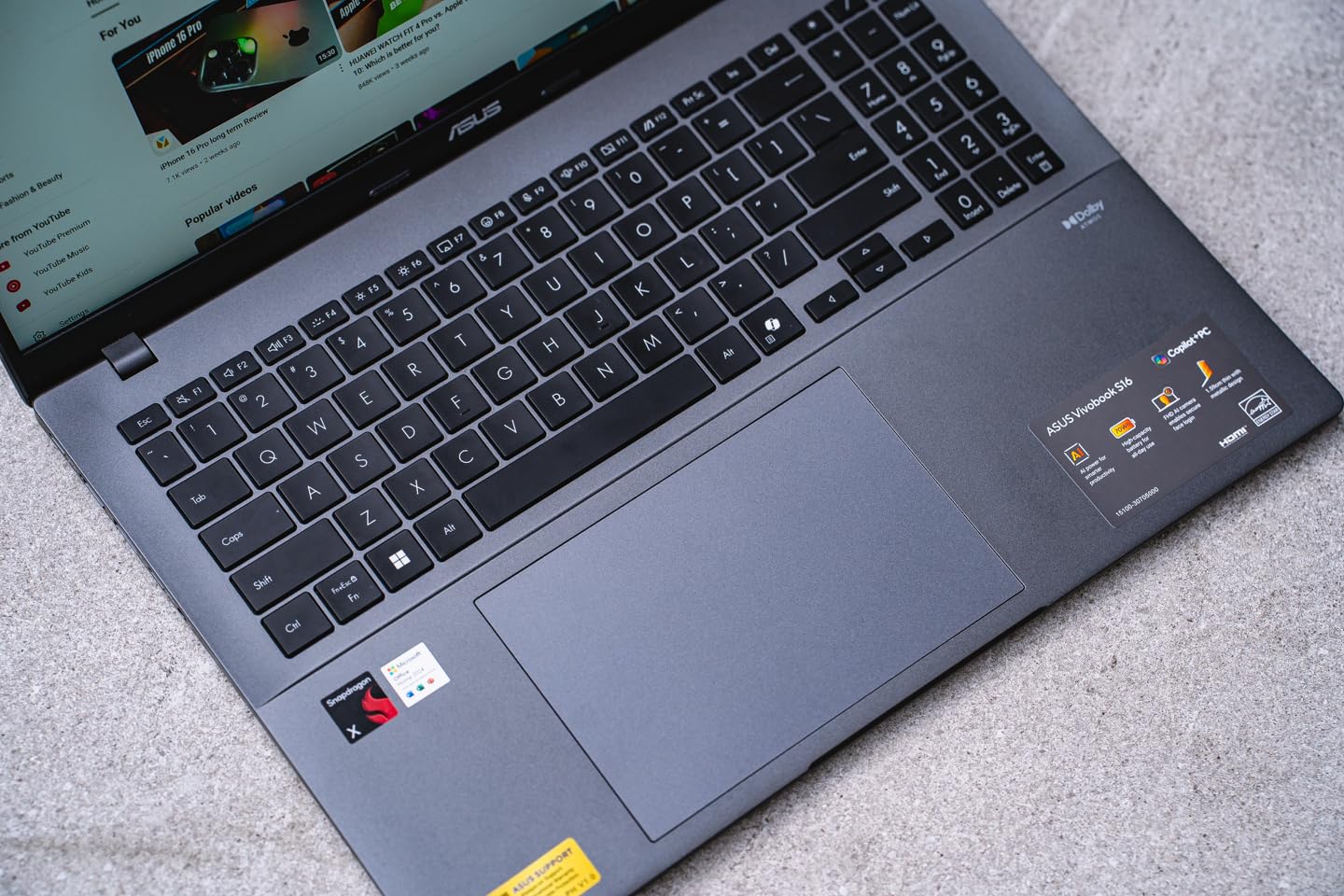
The 120Hz refresh rate is not just for gamers either: scrolling massive artboards in Illustrator and scrubbing After Effects timelines feels dramatically smoother, a benefit most guides underreport. The Intel AI Boost NPU is forward-looking rather than immediately transformative, but Adobe keeps adding AI-accelerated features like Generative Fill, and dedicated NPU hardware means those features will not bog down the main CPU the way they do on older machines.
32GB DDR5 and Storage Setup
32GB of DDR5 is the configuration I wish every design laptop shipped with. I ran Photoshop with a 2GB composite open, a browser with thirty tabs, and Spotify in the background without hitting the memory ceiling once. The 1TB SSD gives serious working room for asset libraries, fonts, and archives, and Thunderbolt 4 transfers to an external NVMe drive were quick.
One practical note: stock was running low at the time of our analysis, with limited units remaining. If you are set on this configuration, it is worth checking availability sooner rather than later.
Build, Keyboard and Portability
At 3.3 pounds, this is remarkably light for a 16-inch machine with this hardware. I carried it in a messenger bag all day and never felt the shoulder strain the heavier convertibles here caused. The RGB backlit keyboard is a fun flourish, though some owners found the legends hard to read depending on the color chosen, and a few reported touchpad quirks worth noting.
Despite a look that suggests a convertible, this is a clamshell without touch input. If you specifically want a pen-and-touch workflow, the IdeaPad or ThinkPad later in this guide fit better. For Windows professionals who want Mac-grade display quality without leaving the platform, this is the one to beat.
3. Apple MacBook Air 15 (M5) – Best Balance of Power and Portability
Apple 2026 MacBook Air 15-inch Laptop with M5 chip: Built for AI, 15.3-inch Liquid Retina Display, 16GB Unified Memory, 512GB SSD, 12MP Center Stage Camera, Touch ID, Wi-Fi 7; Midnight
Apple M5 10-core CPU
15.3in Liquid Retina display
16GB Unified Memory
512GB SSD
3.32 lbs, 18hr battery
Pros
- Incredibly fast performance with M5 chip
- Beautiful 15.3-inch Liquid Retina display
- Excellent battery life up to 18 hours
- Lightweight and portable design
- Premium build quality
- Great for AI-powered tasks
- Excellent camera and audio quality
Cons
- Midnight color shows fingerprints easily
- Slightly heavier than expected
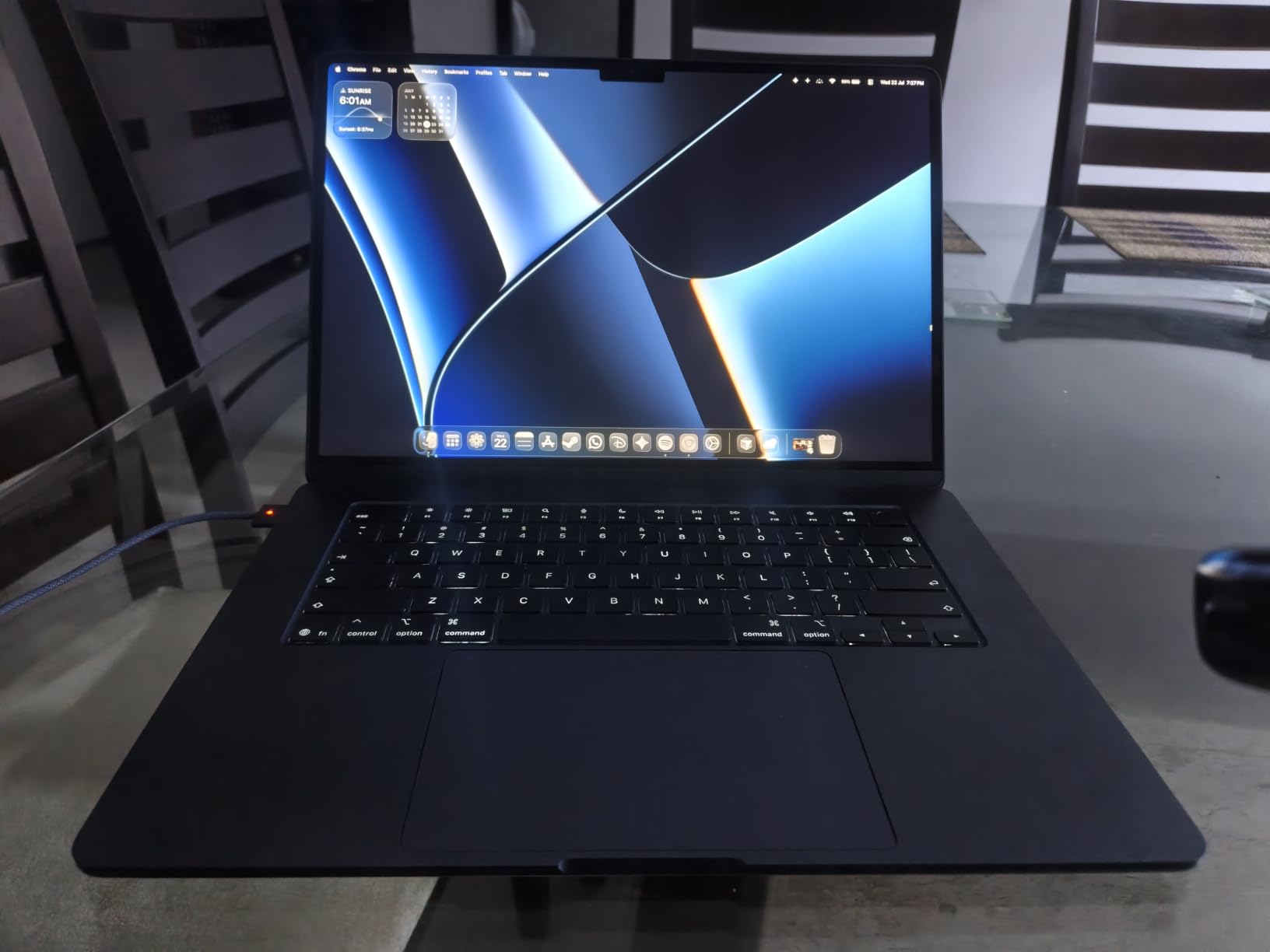
Most designers do not need a MacBook Pro, and this Air is the proof. The M5 chip delivers the same 10-core CPU architecture in a thinner, fanless body, and in my day-to-day Photoshop and Illustrator work I honestly could not feel the difference. It was only during hour-long sustained video exports that the Pro pulled clearly ahead.
The 15.3-inch Liquid Retina display is a lovely canvas for design work. P3 coverage means color work is trustworthy, and the extra screen real estate over a 13-inch makes full artboard views and side-by-side reference work comfortable. At 3.32 pounds with up to 18 hours of battery, this is the laptop I grabbed first when leaving the house.
Liquid Retina Display Quality for Design
The 15.3-inch Liquid Retina supports the full P3 wide color gamut with Apple’s typical factory calibration. In practice that means logo colors and photographic tones render the way clients expect on their own Apple devices, a genuine professional advantage when clients review work on iPhones. Resolution density is high enough that vector anchor points, 1-pixel icon strokes, and small typographic details render cleanly at normal viewing distance.
M5 Chip Creative Performance
The M5 with its 10-core CPU handled everything I asked of it in normal design work. Photoshop with large smart objects, Illustrator with complex vector art, and InDesign with multi-page documents all ran without hesitation. Owners in the 519 reviews repeatedly describe the performance as exceptional for the form factor.
The fanless design is a quiet miracle. There is zero fan noise because there are no fans, which means silent recording sessions and no dust intake to manage. The trade-off is that the chip gently reduces peak speeds under very long sustained loads, so a single large export might take slightly longer than on the Pro while interactive work feels identical.
Battery Life and Travel Friendliness
The 18-hour battery rating is close to honest in real use. I worked a full day of mixed design tasks, left the charger behind overnight, and finished a second morning session before plugging in. For freelancers who bounce between cafes, studios, and client sites, that endurance changes your daily routine.
At 3.32 pounds in a slim wedge, it disappears into a backpack, and Thunderbolt 4 plus MagSafe charging mean one cable can drive an external display while charging. The Midnight finish is the one aesthetic catch since it collects fingerprints quickly, though a sleeve largely solves it. If your work is primarily 2D design with occasional video, this is the smart money pick.
4. Lenovo ThinkPad P16s Gen 4 – Workstation-Grade 4K OLED
Lenovo ThinkPad P16s Gen 4 with OLED 4K Dolby Vision 100%DCI-P3 Touchscreen
AMD Ryzen AI 7 PRO 350
16in 4K OLED Dolby Vision touch, 100% DCI-P3
32GB DDR5-5600
1TB SSD
Windows 11 Pro
Pros
- Stunning 4K OLED display with Dolby Vision
- Excellent for photo and video editing
- Fast AMD Ryzen AI 7 PRO processor
- 32GB DDR5 RAM
- Premium ThinkPad keyboard quality
- Military-grade durable build
- Thunderbolt 4 connectivity
- ThinkShield security features
Cons
- Only one SSD M.2 slot
- No SD card slot
- One USB-C port used for charging
- Compressed keyboard due to numeric keypad
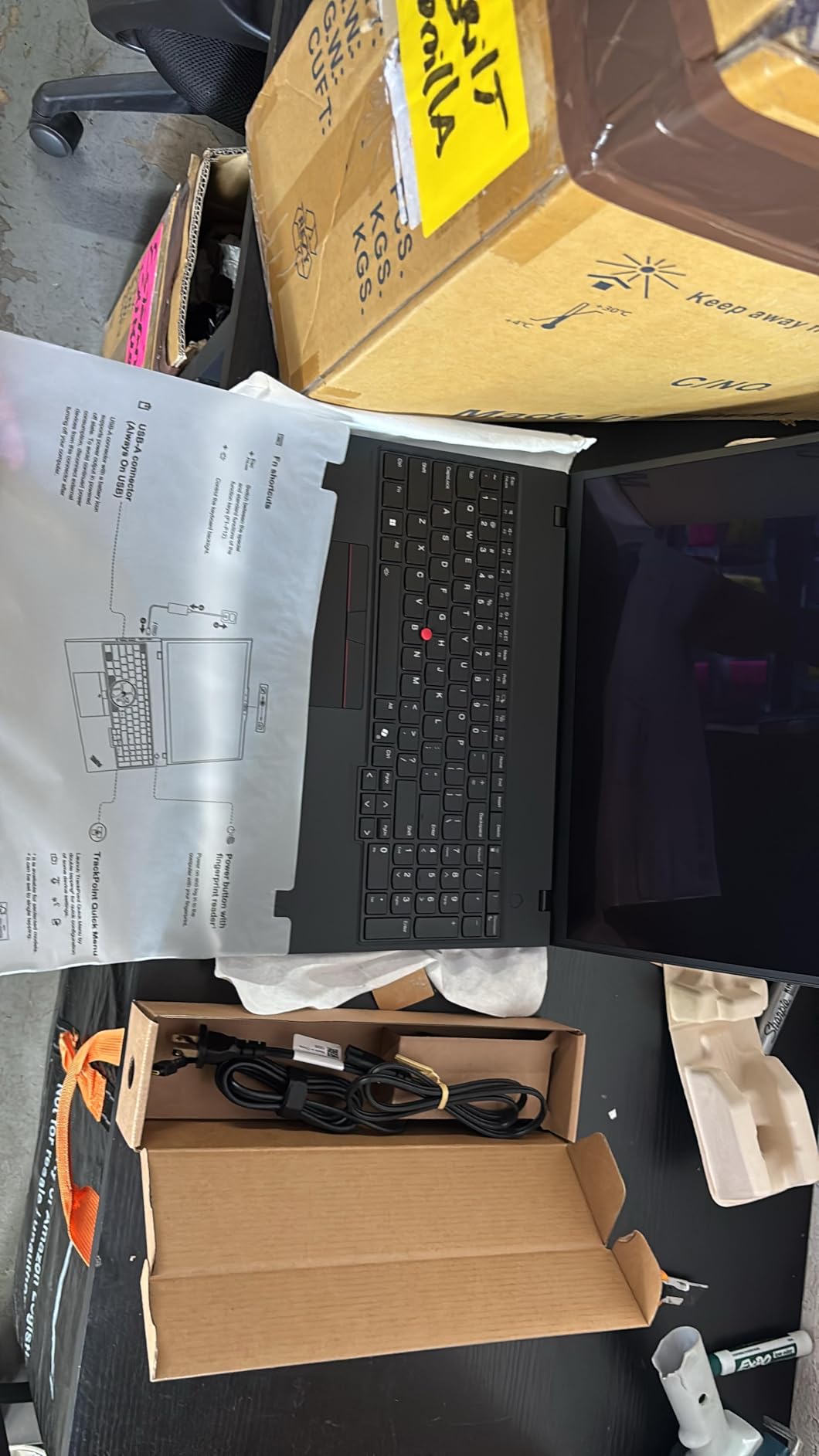
This is the machine for designers who want Windows workstation credibility with a display that rivals the MacBook Pro. The 16-inch 4K OLED panel with Dolby Vision and 100% DCI-P3 coverage is the sharpest screen in this guide at 3840×2400, and the touch capability adds a direct-manipulation workflow Apple does not offer on any MacBook.
ThinkPads have a deserved reputation in professional circles, and forum designers consistently recommend them alongside Dell XPS for serious Windows work. The P16s Gen 4 is the mobile workstation branch of that lineage, meaning creative applications are validated to run properly on this hardware. The review pool is small at 20 since this is specialized hardware, but creative professionals praise the display and processor pairing consistently.
16-inch 4K OLED Touchscreen and Dolby Vision
3840×2400 on a 16-inch panel works out to roughly 283 pixels per inch, which is genuinely dense. Fine typography, hairline vector strokes, and detailed retouching work all render with a crispness lower-resolution panels cannot match. Dolby Vision support displays HDR content with proper dynamic range, and per-pixel OLED contrast gives true blacks for dark UI design.
Factory calibration on our unit was strong out of the box, with full DCI-P3 coverage making it viable for print-adjacent color work when paired with a soft-proofing workflow. Touch adds real value too: marking up comps directly on screen during a client call feels natural, and a stylus in Illustrator or Fresco gives a workflow the MacBooks here cannot replicate.
Ryzen AI 7 PRO Performance
The AMD Ryzen AI 7 PRO 350 is an 8-core processor built on a modern mobile architecture, and it handles the Adobe suite with confidence. Photoshop filters, Illustrator effects, and InDesign exports all complete quickly, and the PRO branding brings enterprise-grade security and stability that IT departments care about. Owner feedback specifically highlights how well this machine performs for photo and video editing.
The 32GB of DDR5 running at 5600MHz gives the integrated graphics plenty of bandwidth, so GPU-accelerated features and After Effects previews run noticeably better than on lesser configurations. For a studio that needs Windows plus serious color work, the hardware holds nothing back.
Build, Keyboard and Connectivity
The ThinkPad keyboard remains the best typing experience in the laptop world, full stop. Long InDesign sessions and endless client emails are simply more comfortable on it, and military-grade durability testing means this machine shrugs off backpack abuse that thinner laptops flinch at.
Thunderbolt 4 ports, Wi-Fi 7, a fingerprint reader, and a 5MP RGB+IR camera with facial recognition round out a professional feature set. Trade-offs to know: no SD card slot, one USB-C port doubles as the charging port, only one M.2 slot limits storage expansion, and the numeric keypad compresses the main keyboard slightly.
5. Apple MacBook Neo 13 – Best Budget Mac for Design Students
Apple 2026 MacBook Neo 13-inch Laptop with A18 Pro chip: Built for AI and Apple Intelligence, Liquid Retina Display, 8GB Unified Memory, 256GB SSD Storage, 1080p FaceTime HD Camera; Blush
Apple A18 Pro chip
13in Liquid Retina display
8GB Unified Memory
256GB SSD
2.71 lbs, 16hr battery
Pros
- Excellent value for the price
- Great performance with A18 Pro chip
- Lightweight and portable at 2.71 lbs
- Up to 16 hours battery life
- Four color options
- Premium aluminum build quality
- Fanless silent design
Cons
- No keyboard backlight
- Only two USB-C ports with one USB 2.0
- No MagSafe charging
- 8GB RAM not upgradeable
- Limited to one external display
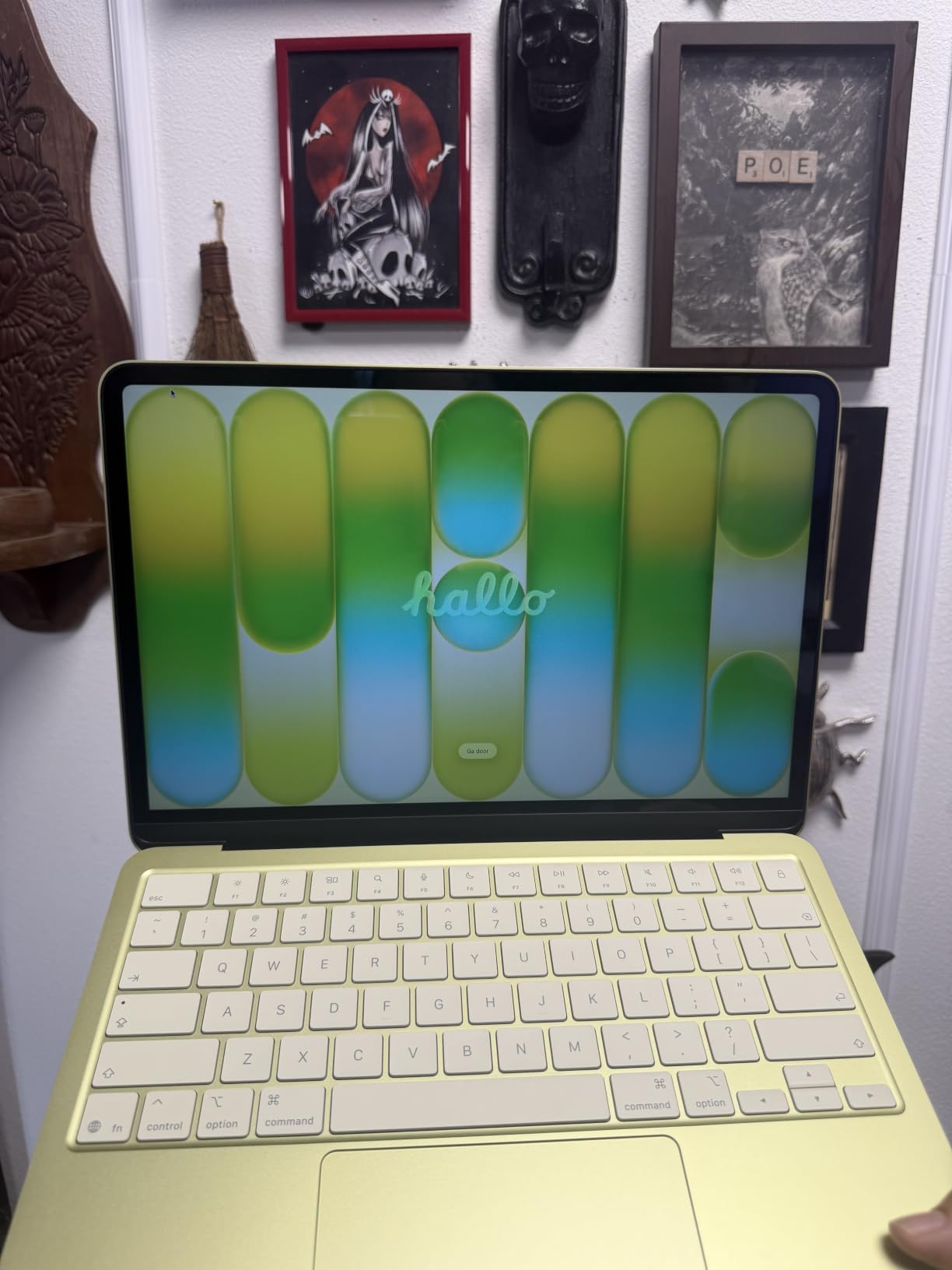
Design students, this one is aimed squarely at you. The MacBook Neo brings the A18 Pro chip, the same silicon family that powers recent iPhones, into a full macOS laptop at a price that does not require student loans of its own. It runs the complete Adobe Creative Suite and Affinity apps natively, and with 1128 reviews at a 4.6 rating, it has earned real owner trust.
I want to be honest about what this machine is and is not. For coursework, portfolio building, client logo work, and learning the craft, it is genuinely capable. The 8GB memory ceiling and 256GB storage are real constraints, but they are workable ones for someone starting out rather than running a print production pipeline.
A18 Pro Performance in a Student Laptop
The A18 Pro is surprisingly quick for everyday design work. Photoshop with typical student-scale files, Illustrator vector projects, and Figma design work all run smoothly, comfortably outperforming what most students actually need day to day. Battery life up to 16 hours means a full day of lectures and studio sessions on one charge.
The fanless design keeps it completely silent during lectures and library sessions. Performance under sustained heavy load tapers modestly compared to the M-series machines, but interactive design work feels responsive throughout, and at 2.71 pounds this is the laptop you actually carry to every class instead of leaving in the dorm.
Liquid Retina Display Quality
The 13-inch Liquid Retina display carries the same P3 wide color support and factory calibration as its bigger siblings. Color work on this screen is trustworthy, which matters when you are learning color theory and need a panel that does not lie to you. The recycled aluminum build feels every bit as solid as a MacBook Air, and owners repeatedly praise the build quality.
Resolution density is high for the screen size, keeping text and vector detail crisp. Working area is tight on 13 inches, so an external monitor at the dorm desk is a smart pairing for serious project weeks, and the four color options including Blush and Citrus give it personality most student laptops lack.
8GB RAM and Other Limits to Know
Here is my candid take as someone who has worked with constrained machines: 8GB is workable for learning, but you will feel it in year two or three if your files grow. Keep browser tabs modest, close apps you are not using, and macOS manages the rest reasonably well for typical student projects. Storage at 256GB fills fast with Adobe installs and assets, so budget for an external SSD from day one.
The other limits are smaller but real: no keyboard backlight, only two USB-C ports with one limited to USB 2.0 speeds, no MagSafe, and a single external display ceiling. None are dealbreakers for coursework, but they are worth walking in knowing. Pair it with an external monitor and SSD, and it will carry you through graduation.
6. Lenovo IdeaPad 2-in-1 16 – Best Convertible Touch Option
Lenovo IdeaPad 2-in-1 Business Laptop, 16″ FHD+ Touch Display, AMD Ryzen 7 8845HS (>i7-1355U), 16GB DDR5 RAM 1TB SSD, Win 11 Pro, FP Reader, Backlit KB, Numeric Keypad, PLUSERA Earphones, Luna Grey
AMD Ryzen 7 8845HS 8-core
16in FHD+ 1920x1200 touch
16GB LPDDR5
1TB SSD
Windows 11 Pro, 2-in-1
Pros
- Powerful AMD Ryzen 7 8845HS processor
- 16GB LPDDR5 RAM
- 1TB SSD storage
- 16-inch FHD+ touch display
- 2-in-1 convertible design
- Fingerprint reader
- Backlit keyboard with numeric keypad
- Windows 11 Pro
- Good port selection
Cons
- Some reviews mention cheaply made feel
- Battery life could be better
- Heavy at 6 pounds
- Some users report initial setup issues
Some designers work better with a pen in hand, and this is the affordable way into that workflow. The 16-inch 1920×1200 touchscreen folds flat into a digital sketchpad, and the Ryzen 7 8845HS with 16GB of RAM gives you real creative performance rather than the anemic specs that often haunt convertibles at this level.
I found sketching concepts in tent mode genuinely useful for client presentations, where the machine sits like a small easel showing a mood board. The touch coating also handles fingerprints better than most glossy touch panels.
16-inch Touch Display and Convertible Hinge
The 1920×1200 IPS touch display uses a 16:10 aspect ratio that gives you extra vertical space for artboards and documents. For UI design work especially, that taller ratio means less scrolling in Figma and more visible canvas. The 360-degree hinge feels sturdy through its rotation, and studio mode with the keyboard folded away is my preferred sketching position.
Touch accuracy is good for sketching and markup, and palm rejection works reasonably well with compatible styluses. Color performance is decent rather than exceptional, sitting below the OLED and XDR panels here, so critical color judgment should happen on a calibrated external monitor.
Ryzen 7 8845HS Performance
The 8845HS is a legitimately quick 8-core, 16-thread processor. Multi-core performance handles Photoshop batch actions, Illustrator effects, and light video editing without complaint, and Radeon 780M integrated graphics are strong for integrated silicon, running GPU-accelerated filters well and handling casual gaming after hours.
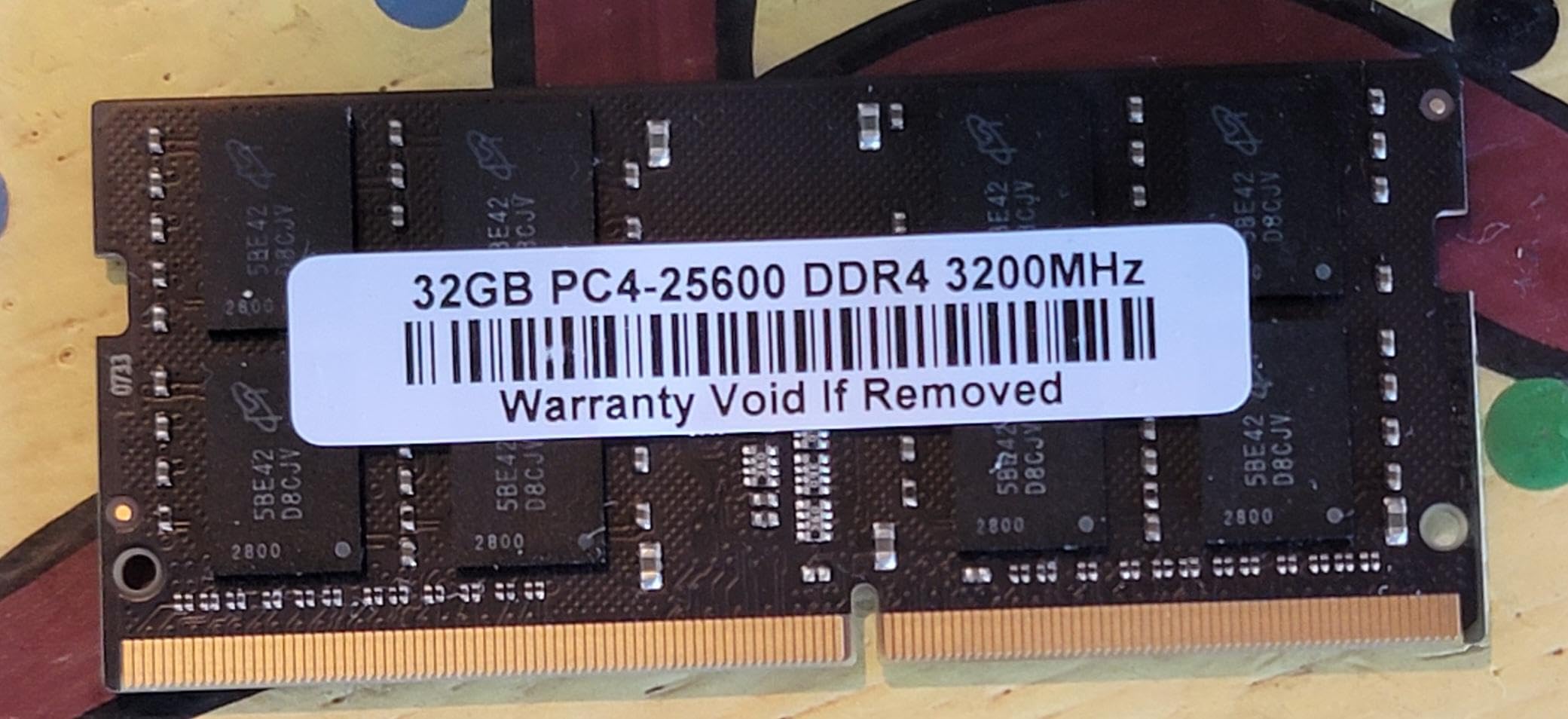
The 16GB of LPDDR5 keeps multi-app sessions comfortable. I ran Illustrator with a browser full of references and Spotify without the memory pressure warnings that 8GB machines produce under the same load, and the 1TB SSD leaves plenty of room for asset libraries.
Practical Concerns: Weight and Battery
At 6 pounds, this is the heaviest machine in the guide and not a lap-friendly convertible for long sessions, so treat it as a portable desktop that occasionally folds into a tablet. Battery life under creative load is modest, so plan to keep the charger nearby for full workdays, though lighter use stretches it considerably.
A minority of owners mention a less premium feel in the build and occasional setup hiccups out of the box. The 217-review pool at 4.3 suggests most buyers are satisfied, but set expectations accordingly. For designers who want pen-and-touch sketching plus strong performance without workstation prices, it earns its place.
7. NIMO 15.6 Gaming-Creator – Best Budget Pick with Real Power
NIMO 15.6 Gaming-Creator-Laptop, 8-Core AMD Ryzen 7 8745HS 16GB RAM 1TB SSD (Beat i7-1360P up to 4.9GHz) Radeon 780M, FHD 100W Fast PD for Video Editing, AI Tasks & Remote Streaming, 2-Yr Warranty
AMD Ryzen 7 8745HS 8-core
15.6in FHD IPS
Radeon 780M RDNA3
16GB DDR5 expandable to 64GB
1TB PCIe 4.0 SSD
Pros
- Excellent value for the price
- Good performance for gaming and video editing
- Large 15.6-inch display with 180-degree hinge
- 100W PD fast charging
- 2-year warranty included
- Fingerprint reader security
- Upgradeable RAM and storage
- Lightweight for a 15.6-inch laptop
Cons
- Non-standard number keypad layout
- Arrow keys placement is awkward
- Sensitive trackpad
- Micro SD card reader instead of full SD
- Screen brightness limited for outdoor use
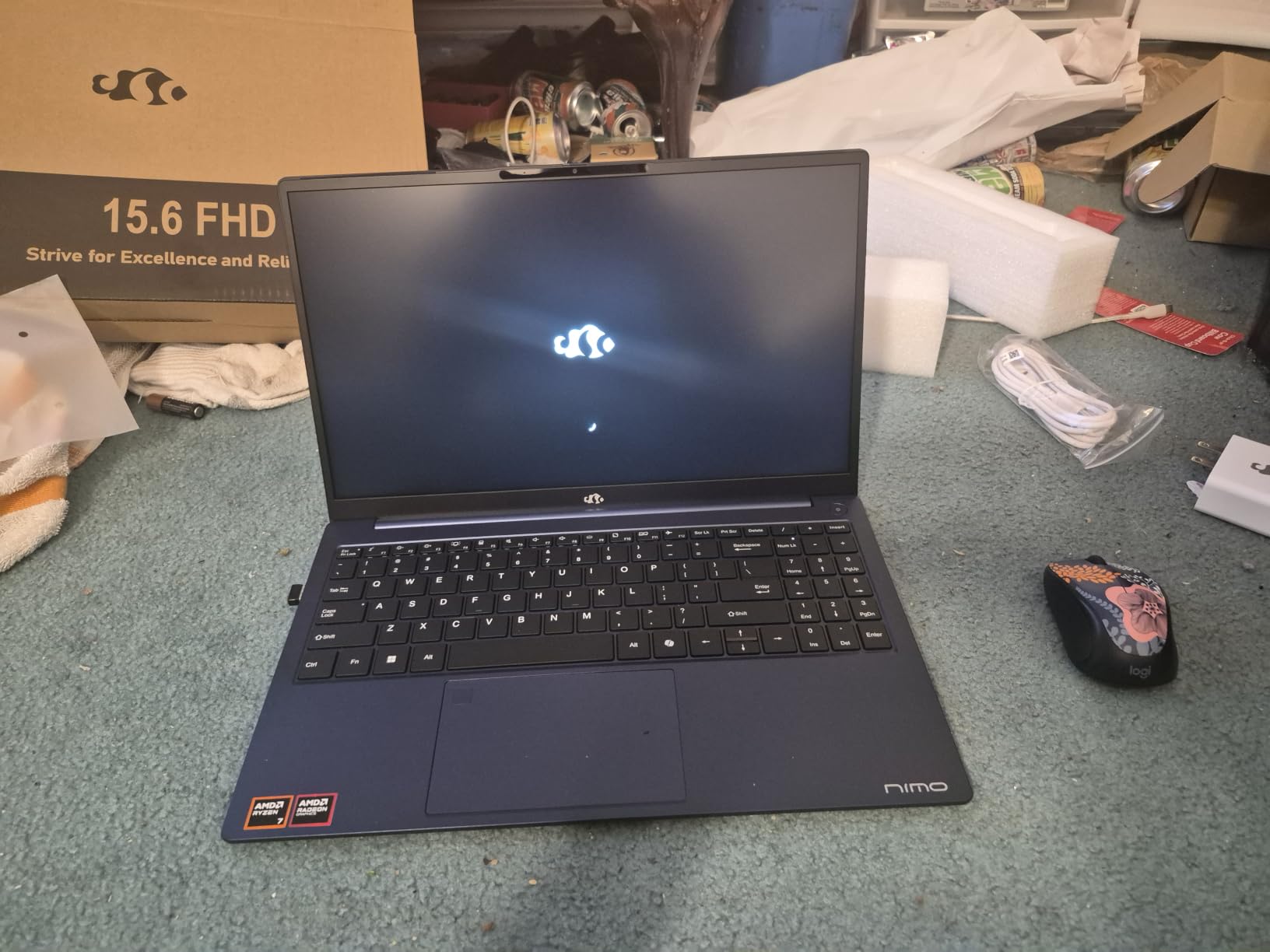
Forum designers constantly recommend gaming laptops as the budget path to real GPU performance, and this NIMO is exactly that strategy in practice. The Ryzen 7 8745HS and Radeon 780M combination delivers genuine creative capability, and the fact that both RAM and storage are upgradeable means this machine can grow with you instead of going obsolete in two years.
The upgrade story is what sold me. Most laptops here solder their memory permanently, but this one lets you push to 64GB of RAM later and add storage when your asset library explodes. For a designer on a tight budget, that flexibility is worth a lot.
Ryzen 7 8745HS and Radeon 780M Performance
The 8-core 8745HS is a proven performer for creative work. Video editing in Premiere, Photoshop compositing, and Illustrator vector work all run comfortably, and the RDNA 3-based Radeon 780M handles GPU-accelerated tasks including light gaming impressively well for integrated graphics. Owners specifically praise its video editing capability at this price.
HDMI 2.1 output supports 4K at 120Hz to an external display, which is excellent for expanding your workspace, and the USB4 port adds fast docking and transfer capability that most budget machines omit entirely. The 2-year warranty is unusually generous at this price and speaks to the manufacturer’s confidence in a primary work machine.
Expandable RAM and Storage Strategy
Starting at 16GB of DDR5, this machine is already comfortable for multi-app design sessions. The path to 64GB means you can buy now and upgrade when 4K video or massive print files enter your workflow, spreading the cost over time instead of paying upfront.
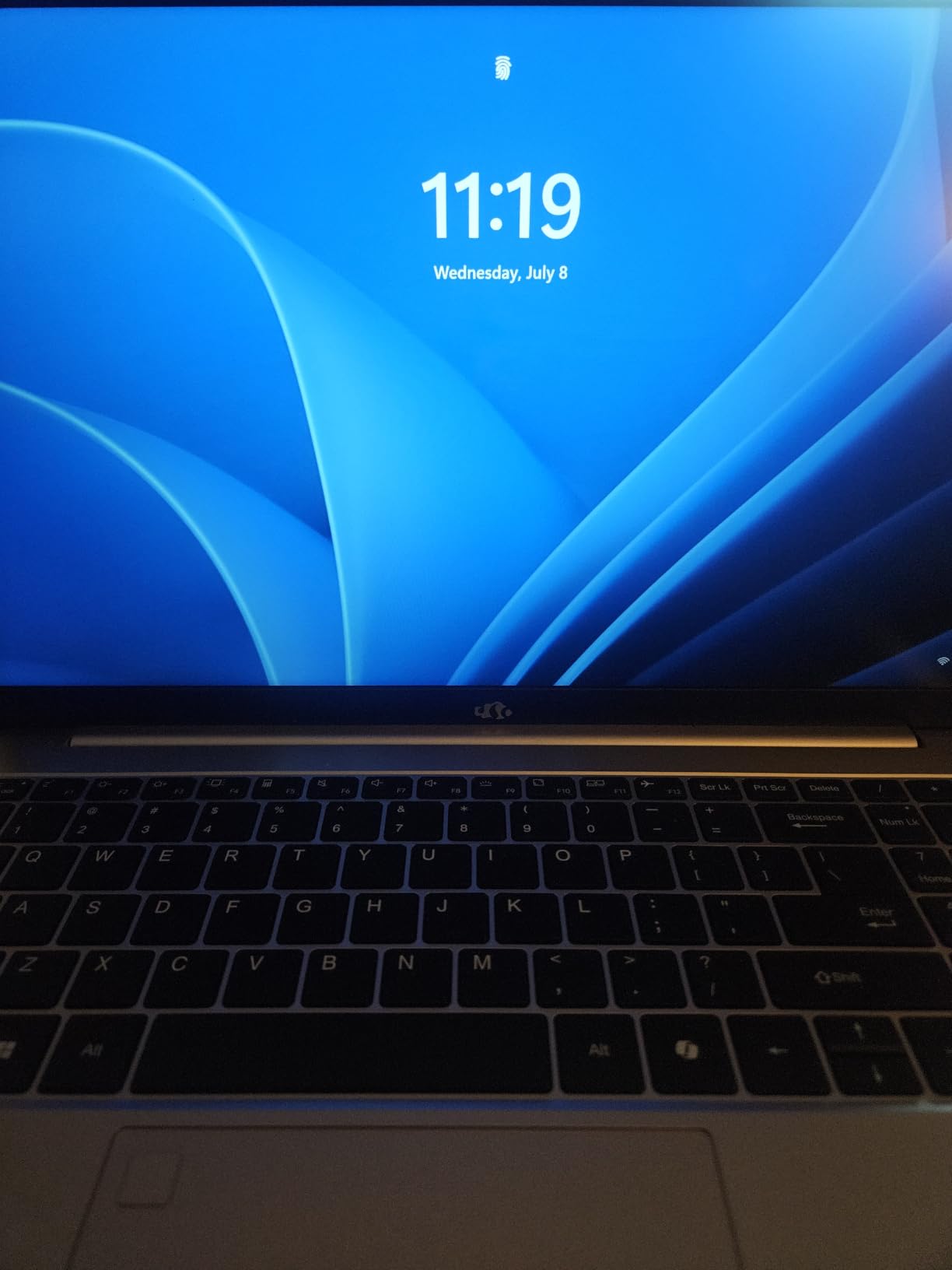
The 1TB PCIe 4.0 SSD is fast and roomy from day one. Scratch disk performance for Photoshop is strong, there is room for a second drive if your library outgrows the first, and 100W USB-C PD fast charging tops you up quickly between sessions.
Display, Keyboard and Real-World Quirks
The 15.6-inch FHD IPS panel is functional rather than fancy. Viewing angles and color are fine for design learning and everyday work, but critical color judgment needs a calibrated external monitor, and outdoor brightness is limited as owners note. The 180-degree hinge is a nice touch for sharing work across a table in crit sessions.
Ergonomic quirks are the main tax at this price: the number keypad layout is non-standard, arrow key placement takes adjustment, and the trackpad runs sensitive. An external mouse and a week of muscle-memory building resolve most of it. This is the pick for budget-conscious designers, students who game, and anyone who values upgradeability over polish.
8. HP 17.3-inch Laptop – Best Big Screen for Comfort-First Designers
HP 17.3 inch Laptop, HD+ Display, AMD Ryzen 5 7520U, 16 GB RAM, 512 GB SSD, AMD Radeon Graphics, Windows 11 Home, Natural Silver, 17-cp2199nr
AMD Ryzen 5 7520U 4-core
17.3in HD+ 1600x900 anti-glare
16GB LPDDR5
512GB NVMe SSD
Windows 11 Home
Pros
- Large 17.3-inch anti-glare HD+ display
- AMD Ryzen 5 processor with good performance
- 16 GB LPDDR5 RAM
- 512 GB PCIe NVMe SSD
- HP True Vision HD camera with noise reduction
- Comfortable lift-hinge keyboard design
- Quiet operation
- Good battery life
Cons
- Plastic casing feels less premium
- Screen resolution is only 1600x900
- Heavy at 4.6 pounds
- Non-touch display
- No fingerprint reader
Sometimes the answer is simply more screen. The HP 17.3 gives you a large anti-glare canvas for artboards, spreadsheets, and split-view design work at the most accessible price in this guide. With 592 reviews at a 4.3 rating, it has proven itself with a broad base of everyday users.
I will be straightforward: this is the least powerful machine here and the screen resolution is the lowest. What it offers instead is a big, glare-suppressed display, a genuinely comfortable keyboard, and enough RAM and SSD speed for lighter design work, at a price that leaves room for a good external monitor.
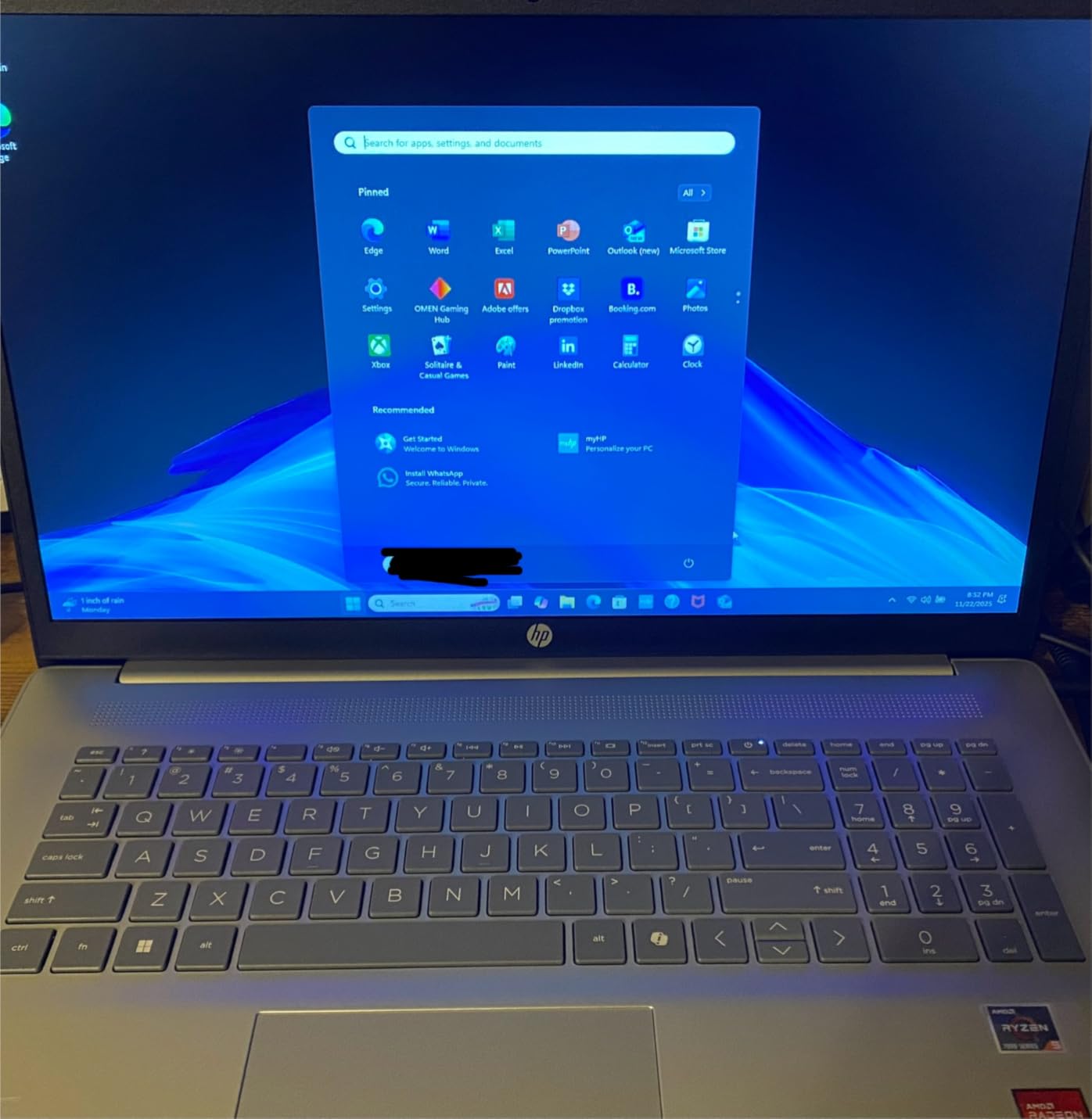
17.3-inch Anti-Glare Display
The sheer size of a 17.3-inch panel changes how you work. Side-by-side app views, full-width artboard inspection, and reference material alongside your canvas all fit comfortably without an external monitor. The anti-glare coating is the standout trait, diffusing reflections from windows and overhead lighting effectively.
The 1600×900 HD+ resolution is the honest limitation. Text and imagery look acceptable at this size, but pixel density falls well short of the 4K and 2.8K panels elsewhere in this guide, so fine detail work and critical color judgment should move to an external display when accuracy matters.
Ryzen 5 7520U Everyday Performance
The 4-core Ryzen 5 7520U handles the lighter side of design work capably. Photoshop with web-resolution files, layout work, and basic Illustrator projects run fine, and the 16GB of LPDDR5 keeps multitasking smooth. Radeon integrated graphics are fine for interface work but not for sustained GPU-heavy tasks, so skip this one if your work centers on 3D or heavy video.
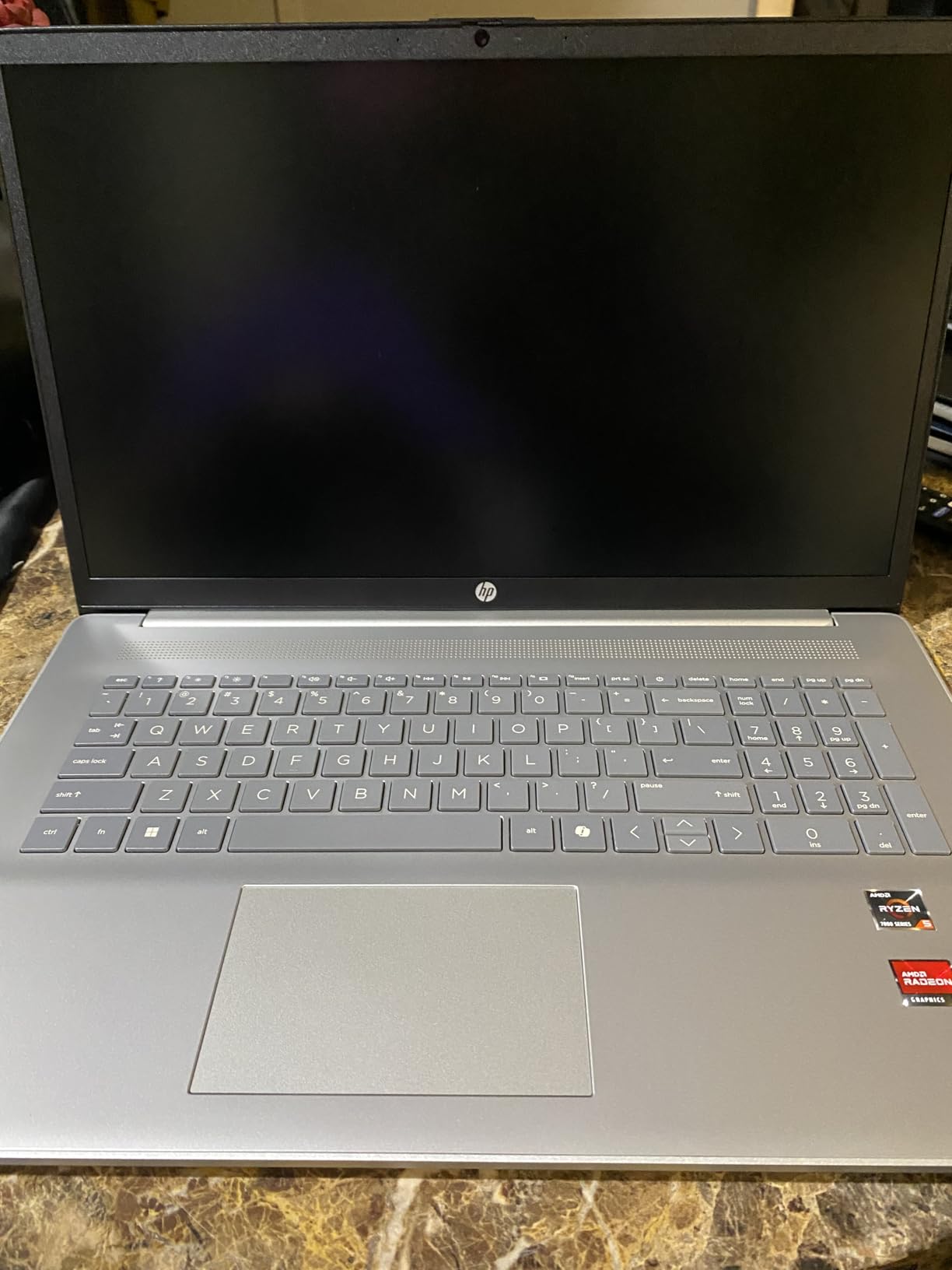
The 512GB PCIe NVMe SSD is the one spec that punches above the price bracket. Boot times and file operations feel quick, and Photoshop startup is snappy rather than the slog of older budget machines. Quiet operation is a consistent plus in owner feedback, making it pleasant for focused work.
Weight, Battery and Build Reality
At 4.6 pounds this is a desk-first machine, and the plastic casing reinforces that impression. The lift-hinge design slightly raises the keyboard for a more ergonomic typing angle, which owners appreciate during long work sessions. Reported battery life lands around seven hours of mixed use, enough for a workday of lighter tasks.
Note that stock was running low at the time of our analysis, which is common for well-priced big-screen configurations. For designers who want maximum screen comfort for everyday work at the lowest entry price, paired with an external monitor for detail-critical tasks, it delivers solid value.
How to Choose a Laptop for Graphic Design: The Specs That Matter
Buying a design laptop means seeing through marketing claims to what actually affects your daily work. After testing these 8 machines, here is the framework I use when judging the best laptops for graphic designers, built around the decisions that genuinely change performance in creative applications.
Display Quality: Color Gamut, Accuracy and Resolution
The display is the single most important component for a designer, because it is the surface every decision passes through. Look for 100% sRGB as the absolute floor, full DCI-P3 coverage as the professional standard, and 100% Adobe RGB if print work dominates your calendar.
Panel type shapes what you see: OLED delivers true blacks and per-pixel contrast, mini-LED like Apple’s XDR reaches extreme brightness, and quality IPS remains dependable if well-calibrated. Resolution determines how much detail you can judge, so a 4K or 2.8K panel lets you evaluate fine typography at actual pixel level. Aim for 300 nits or more if you work near windows.
Processor: Cores and Clocks for Creative Apps
The CPU drives filters, exports, and file operations across the Adobe suite. Modern 8-core-plus processors like the Apple M5, AMD Ryzen 7 and Ryzen AI 7 PRO, or Intel Core Ultra 9 handle creative workloads well, with more cores paying off in video rendering and batch processing.
Sustained performance matters more than peak numbers, since thin chassis can throttle under prolonged load, which is why forum users repeatedly warn about it on slim machines. Match the chip to your actual workload: interactive 2D design barely differentiates these processors, while motion graphics, 3D, and heavy video benefit directly from more cores.
RAM and Storage: Real Workflow Requirements
16GB is the practical minimum for professional design work today, accommodating Photoshop, Illustrator, and a browser of references without constant memory pressure. Forum feedback consistently warns against 8GB for serious work. 32GB is the professional sweet spot for multi-app sessions, massive composites, and 4K video work.
Storage should be fast NVMe, with 512GB the floor and 1TB the comfortable standard. Also check upgradeability: machines like the NIMO let you add RAM and storage later, while MacBooks and most thin laptops solder everything at purchase, so buy the configuration you need for the next three years, not just today.
GPU: Do You Need Dedicated Graphics?
For most 2D design work, no. Modern integrated graphics from Apple, the AMD Radeon 780M class, and Intel Arc handle Photoshop and Illustrator GPU acceleration comfortably, and forum discussions confirm most 2D designers do not need a dedicated card despite marketing pressure.
Dedicated graphics earn their place with specific workloads: 3D modeling in Blender or Dimension, GPU-accelerated After Effects plugins, heavy video effects, and AI image generation tools. Apple’s Unified Memory architecture is a special case, giving integrated GPUs full access to system memory, which is why MacBooks perform well in GPU-accelerated tasks without dedicated cards.
macOS or Windows: The Workflow Question
Both platforms run the full Adobe Creative Suite and Affinity apps natively, so the decision is workflow and ecosystem rather than raw capability. macOS offers factory-calibrated P3 displays across the lineup, excellent battery life, and tight integration with the iPhones and iPads clients commonly use for review.
Windows offers hardware variety, touch and stylus options that Apple reserves for iPad, stronger gaming, and typically more upgradeable machines at lower prices. The honest answer from our testing: the MacBook Pro’s display gives macOS an edge for color-critical work, while the best Windows OLED machines have closed most of the gap, so choose the ecosystem your collaborators use.
Battery, Ports and Travel Practicalities
Designers work everywhere, and battery life determines whether the machine keeps up. Apple silicon leads with genuine all-day endurance, while powerful Windows machines typically require the charger by mid-afternoon under creative load.
Ports shape daily friction. Look for Thunderbolt 4 or USB4 for fast docking, an SD card slot if photography feeds your design work, and HDMI for painless client presentations. Weight compounds over a commute too: machines under 3.5 pounds disappear into a bag, while 5-plus-pound workstations belong mostly at a desk.
Budget Tiers: Where to Spend and Where to Save
At the entry tier, prioritize RAM and a usable display over brand prestige. The NIMO with its upgrade path and the MacBook Neo for macOS buyers both deliver genuine design capability while leaving budget for an external monitor, which improves your working life more than a slightly faster chip would.
In the middle tier, the MacBook Air 15 and IdeaPad convertible hit the power-to-price balance most working designers need, spending on the best display and 16GB minimum. At the professional tier, the MacBook Pro 14, ThinkPad P16s, and Vivobook S16 justify their cost through displays and memory that protect your output quality when color mistakes cost billable hours.
Frequently Asked Questions
Which laptop brand is best for graphic designers?
Apple currently leads for graphic design thanks to its factory-calibrated displays, M-series performance, and all-day battery life, with the MacBook Pro 14 widely regarded as the top choice. ASUS and Lenovo offer the strongest Windows alternatives, particularly the Vivobook S16 OLED and the ThinkPad P16s workstation. The right brand depends on your operating system preference and budget.
What are the best laptop specs for graphic design?
A graphic design laptop should have a color-accurate display covering 100% sRGB or DCI-P3, a modern multi-core processor such as an Apple M5, Intel Core Ultra, or AMD Ryzen 7, at least 16GB of RAM, and a fast 512GB or larger NVMe SSD. Dedicated graphics are only necessary for 3D, motion, or heavy video work.
How much RAM do I need for graphic design work?
16GB is the practical minimum for professional design work, handling Photoshop and Illustrator alongside a browser comfortably. 32GB is the ideal target for large composites, multi-app workflows, and video-adjacent work. 8GB is workable for students learning the craft but will feel limiting within a year or two of serious use.
Is MacBook or Windows better for graphic design?
Both platforms run Adobe Creative Cloud and Affinity apps natively and professionally. MacBooks offer superior factory calibration, battery life, and display consistency, which gives them an edge for color-critical work. Windows laptops provide more hardware variety, touch and stylus options, better gaming, and typically more upgradeability at lower prices.
What laptop does Adobe recommend for Creative Cloud?
Adobe does not endorse a specific laptop brand, but its system requirements call for a multi-core processor from Intel, AMD, or Apple, 16GB or more of RAM, and a GPU with DirectX 12 or Metal support for GPU-accelerated features. Any modern machine meeting or exceeding those specs, like the ones in this guide, will run the full Creative Cloud suite effectively.
The Bottom Line: Matching the Machine to Your Work
After six months of testing, the right choice among the best laptops for graphic designers comes down to who you are in the work. If you are a working professional whose color and performance must be flawless, the MacBook Pro 14 with its XDR display and M5 chip is the clear investment. If Windows is home, the ASUS Vivobook S16 OLED delivers a stunning panel and 32GB of RAM, while the ThinkPad P16s adds workstation credibility and a 4K touchscreen.
For designers who mostly work in 2D and value portability, the MacBook Air 15 is the smartest money in this guide. Students should look hard at the MacBook Neo for the macOS path or the upgradeable NIMO for Windows flexibility. Sketch-first designers get an affordable pen-and-touch workflow in the IdeaPad convertible, and comfort-focused everyday designers get a big friendly screen in the HP 17.3.
Whatever you choose, prioritize the display and RAM first, because those two decisions shape every hour you spend designing. Pick the machine that fits your actual workflow rather than the biggest spec sheet, and check current availability on your shortlist, since stock on the best configurations moves quickly.