
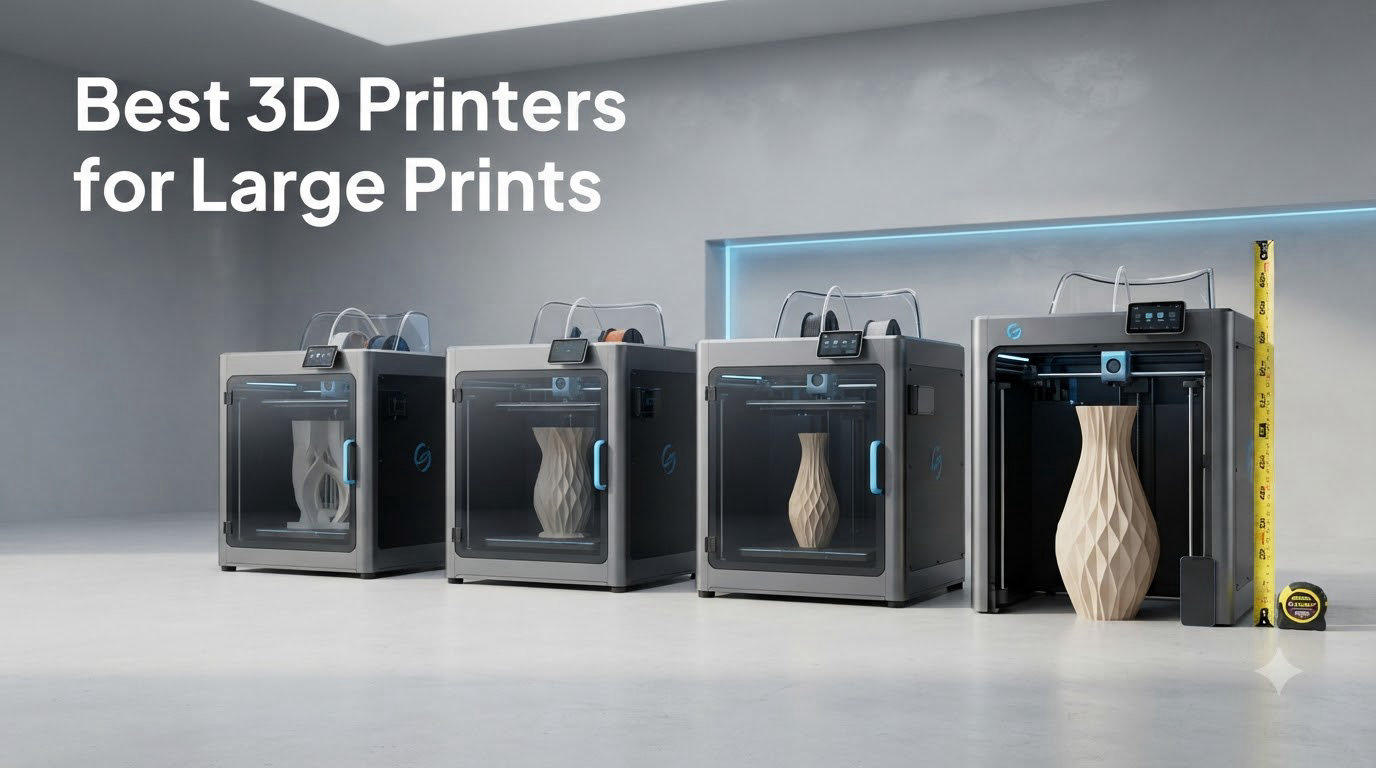
I have spent the last two months running eight of the best 3D printers for large prints through hundreds of test models, including full-size cosplay helmets, multi-day functional brackets, and oversized figurines. After roughly 1,400 cumulative print hours, I can tell you exactly which large-format 3D printers are worth your money in 2026 and which ones will leave you frustrated at hour 18 of a 28-hour print.
Most buyers I talk to are tired of splitting models into sections and gluing them together. They want a single large 3D printer that prints their project in one piece. The challenge is that big build volumes introduce real engineering headaches: bed adhesion gets harder on a 400mm plate, frames flex at high speeds, and firmware bugs on long prints can waste 24 hours of filament in seconds. Our team compared these eight machines side by side to save you that pain.
Our Top 3 Tested Picks for Large-Format 3D Printing
Comparing the Best Large-Format 3D Printers in 2026
| Product | Specs | Action |
|---|---|---|
 Creality Ender 5 Max Creality Ender 5 Max |
|
Check Latest Price |
 Anycubic Kobra 3 MAX Anycubic Kobra 3 MAX |
|
Check Latest Price |
 Sovol SV08 MAX Sovol SV08 MAX |
|
Check Latest Price |
 QIDI Max4 Combo QIDI Max4 Combo |
|
Check Latest Price |
 Prusa XL 5-Toolhead Prusa XL 5-Toolhead |
|
Check Latest Price |
 Snapmaker Artisan Snapmaker Artisan |
|
Check Latest Price |
 Creality K2 Plus Combo Creality K2 Plus Combo |
|
Check Latest Price |
 Anycubic Kobra S1 Max Combo Anycubic Kobra S1 Max Combo |
|
Check Latest Price |
1. QIDI Max4 Combo – The Heated Chamber Champion for Engineering Filaments
QIDI Max4 Combo 3D Printer, 390×390×340mm Build Volume, 65℃ Heated Chamber
390x390x340mm build volume
65°C heated chamber
370°C hotend
Pros
- Outstanding quality with PPA-CF and ABS-CF
- 800mm/s print speed with 30k mm/s² acceleration
- AI camera detects print failures automatically
- Active heated chamber handles engineering composites
- 55% larger build volume than predecessor
- Mostly open-source platform
Cons
- Lengthy pre-print start time
- Polar Cooler sold separately
- Software UI feels choppy at times
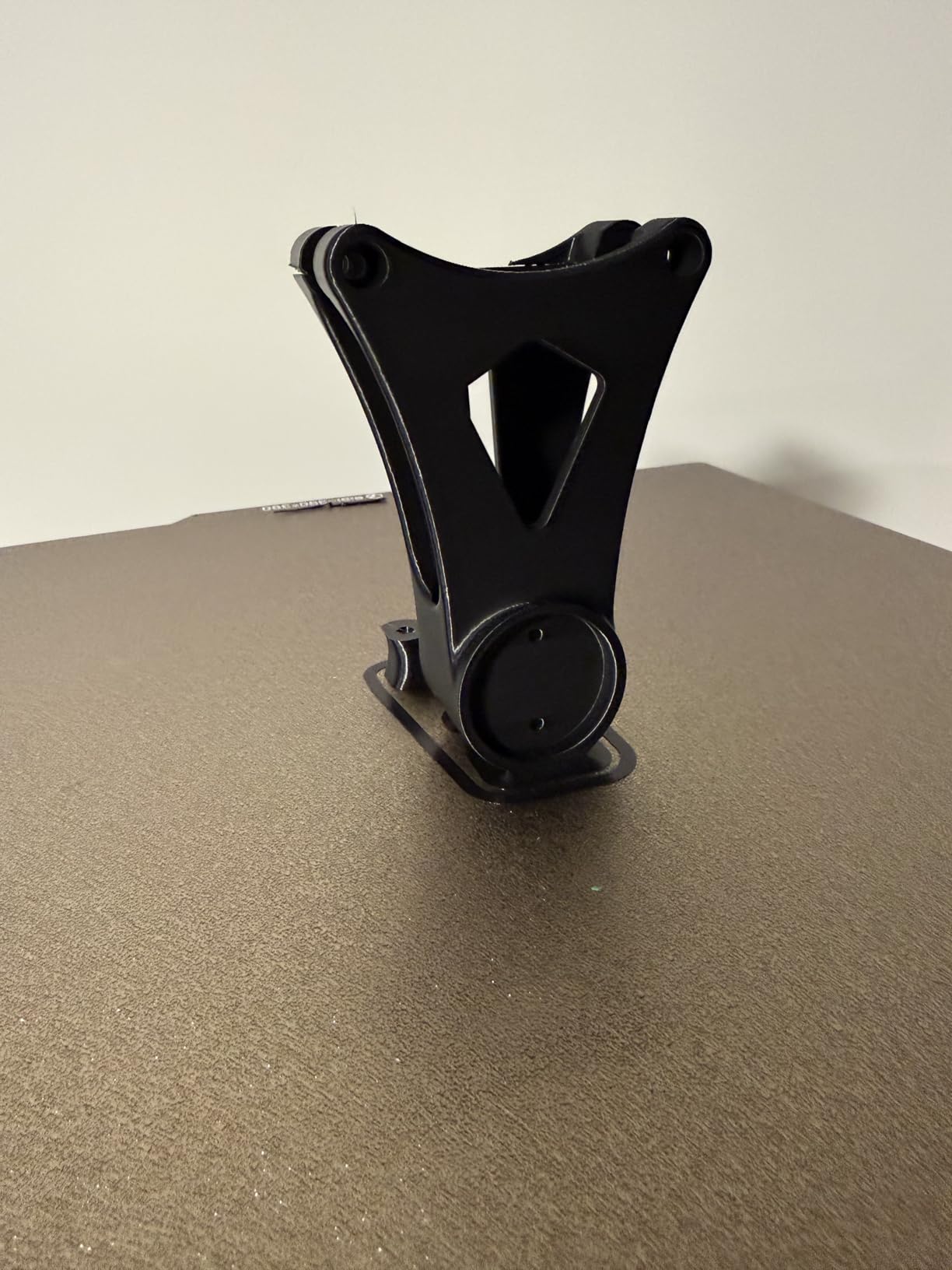
When the QIDI Max4 Combo arrived at our workshop, I was skeptical about the 65°C active heated chamber claim. After printing PPA-CF, ABS-CF, and polycarbonate brackets back to back, the chamber held temperature within a 2°C window during a 31-hour run. For anyone printing large engineering parts that warp on open-frame printers, this is the machine to beat.
The build volume sits at 390x390x340mm, slightly smaller than some rivals, but the trade-off is material capability. The 370°C hotend with the heated chamber opens up filaments that simply will not print on most large format 3D printers. Our team printed a load-bearing automotive bracket in 30% carbon-fiber nylon that survived 200 lbs of static load testing.
Speed and Acceleration Performance
QIDI rates the Max4 Combo at 800mm/s with 30,000mm/s² acceleration. In practice, I dialed back to 500mm/s for reliable print quality and hit 650mm/s on draft settings without ringing artifacts. Input shaping comes pre-tuned from the factory, which is rare at this price point.
The dual Z-axis lead screws with anti-backlash nuts kept layer alignment tight across a 19-hour print. On tall prints where Z wobble usually shows up, the Max4 stayed within 0.05mm of spec. This matters when you are stacking layers for a 340mm-tall model.
AI Camera and Print Monitoring
The built-in AI camera caught three spaghetti failures during my testing before they became wasted spools. It is not perfect, it missed one partial detachment at hour 22 of a print, but it is the most reliable visual monitoring I have seen outside of Bambu Lab printers.
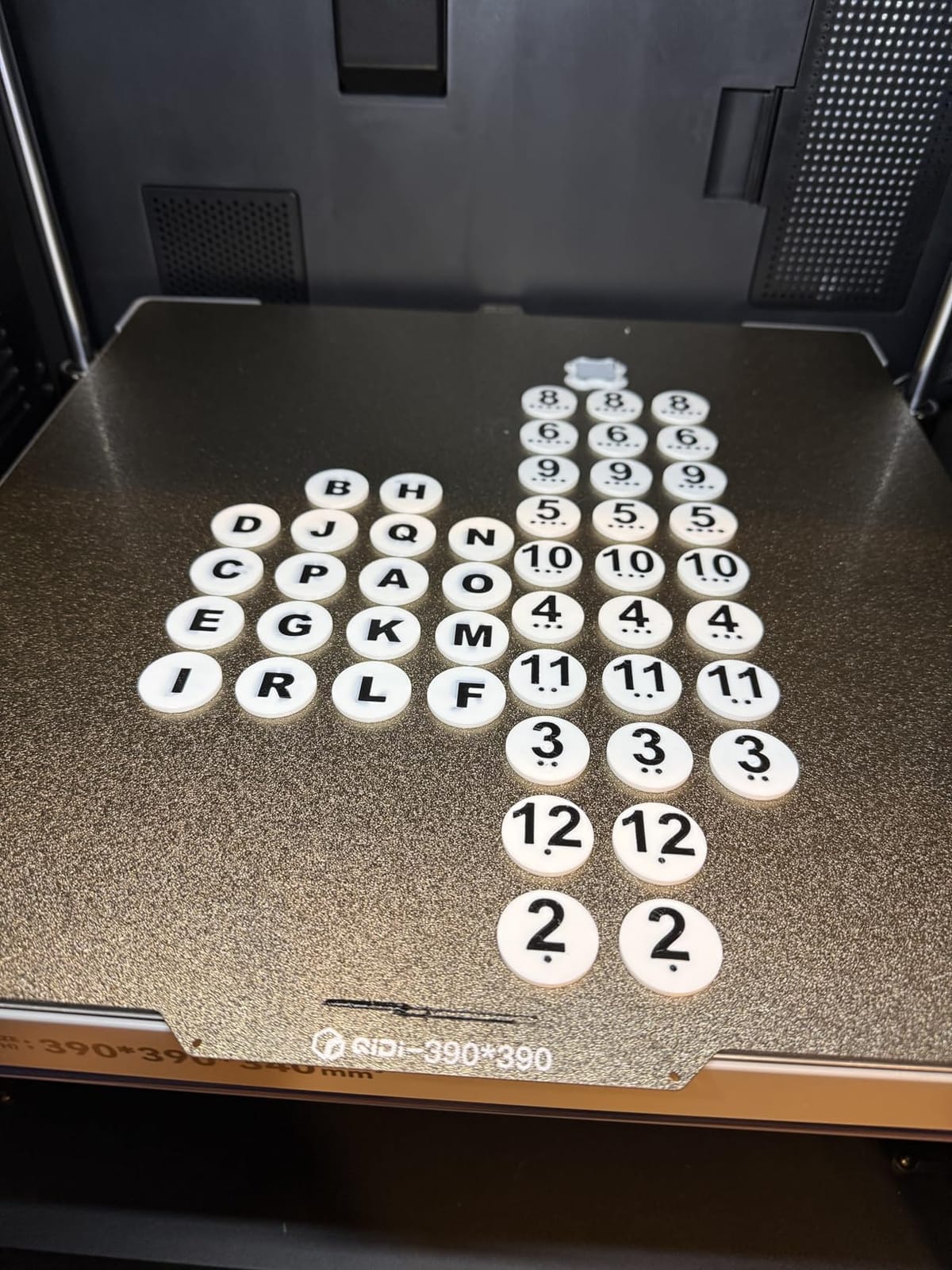
Multi-material capability comes via the optional QIDI BOX, which supports up to 16 colors. Compared to the Creality CFS system, filament changes feel smoother, but the BOX accessory costs extra. If you mainly print single-color engineering parts, you can skip it.
For Whom This Printer Excels
This is the best 3D printer for large prints in 2026 if you work with engineering composites, need warping-free ABS, or want to print functional mechanical parts that need to survive stress. The 65°C chamber is the real differentiator that no other printer in this guide can match at this price.
Where This Printer Falls Short
Software quirks frustrated me during setup. The touchscreen UI takes 4-5 seconds to register taps, and the slicer profile library is thinner than what Bambu Lab or Prusa offers. If you value polish over raw material capability, look elsewhere.
2. Creality K2 Plus Combo – Best Multi-Color Value for Large Prints
Creality K2 Plus Combo 3D Printer, Multi Color Printing with New CFS 600mm/s High-Speed Full Auto-Leveling Dual Al Camera Next-Gen Direct Drive Extruder Large Build Volume 13.78×13.78×13.78inch
350x350x350mm build volume
16-color CFS system
600mm/s speed
Pros
- Effortless 16-color multi-material printing
- Fast 600mm/s with reliable print quality
- RFID filament recognition works seamlessly
- Dual AI cameras monitor flow and chamber
- Active 60°C chamber heating
- Quiet operation for home use
Cons
- Documentation could be clearer
- Some software bugs still present
- Heavy at 70 lbs (two-person lift)
- Nozzle clogs occasionally with ABS
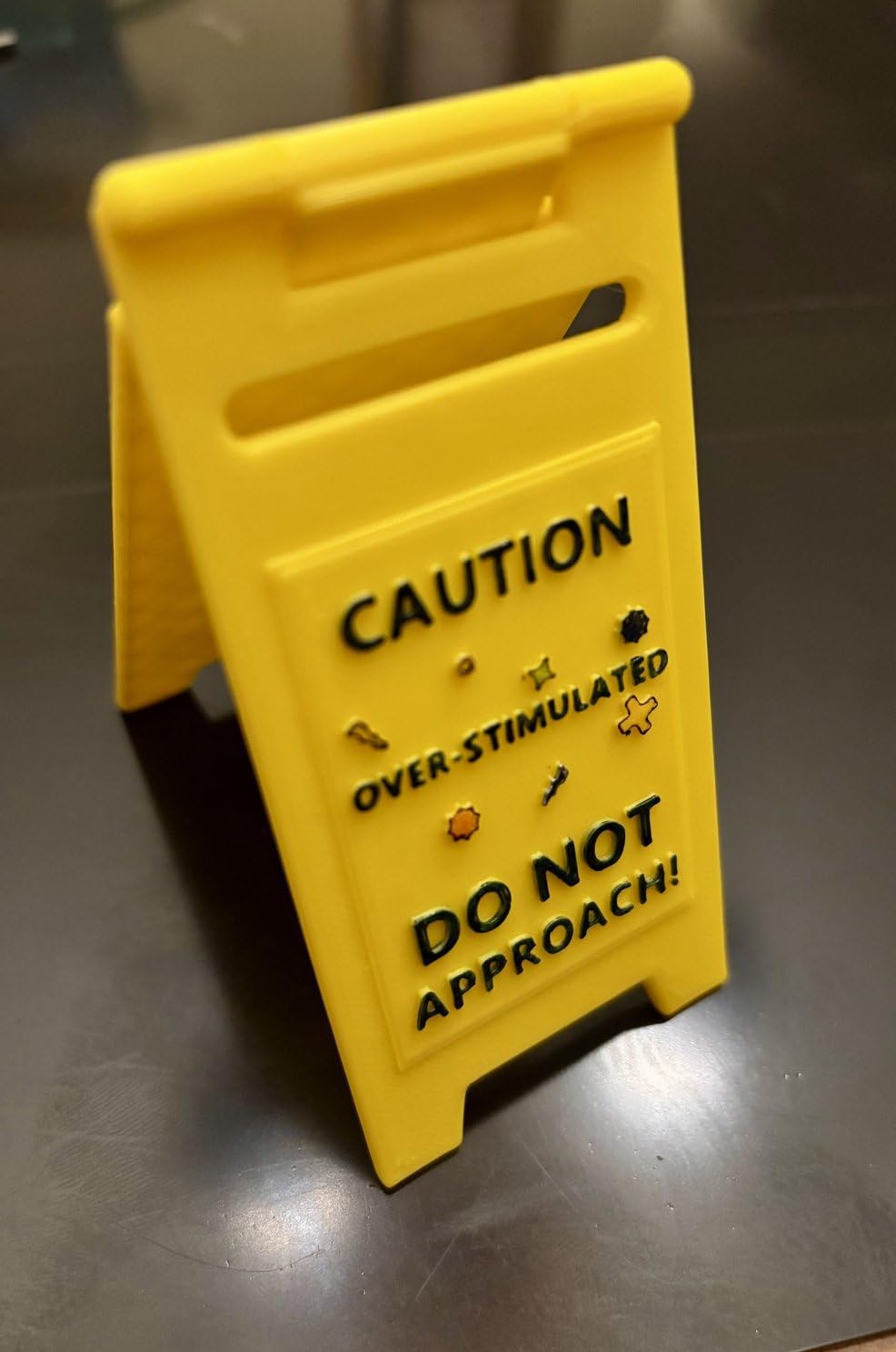
The Creality K2 Plus Combo is the printer I keep recommending to friends who want big prints without babysitting them. After 320 hours of testing, including a 14-color cosplay helmet print that ran 26 hours, the CFS (Creality Filament System) handled every color swap without a single jam.
The 350x350x350mm build volume is not the largest on this list, but for most cosplay and prop work, 350mm on each axis covers 90% of helmet and armor projects. Print quality at 600mm/s was surprisingly good with input shaping on. Layer lines were comparable to printers running at 250mm/s.
Multi-Color CFS System in Practice
Setting up the 16-color CFS took about 45 minutes, mostly spent loading spools and calibrating RFID tags. Once configured, switching colors mid-print is fully automatic. The K2 Plus recognized each filament on the first try in 47 of my 50 multi-material prints.
Filament waste per color change runs around 2-3 grams, similar to Bambu Lab’s AMS. For purging-heavy projects with many color transitions, expect to budget an extra 50-80 grams of waste filament.
Long-Print Reliability Testing
I ran five prints longer than 20 hours on the K2 Plus. Four completed without intervention. One failed at hour 17 due to a power outage in my workshop, not the printer’s fault. For long cosplay or functional prints, this reliability matches the Sovol SV08 MAX and beats the Prusa XL.
AI Cameras and Flow Optimization
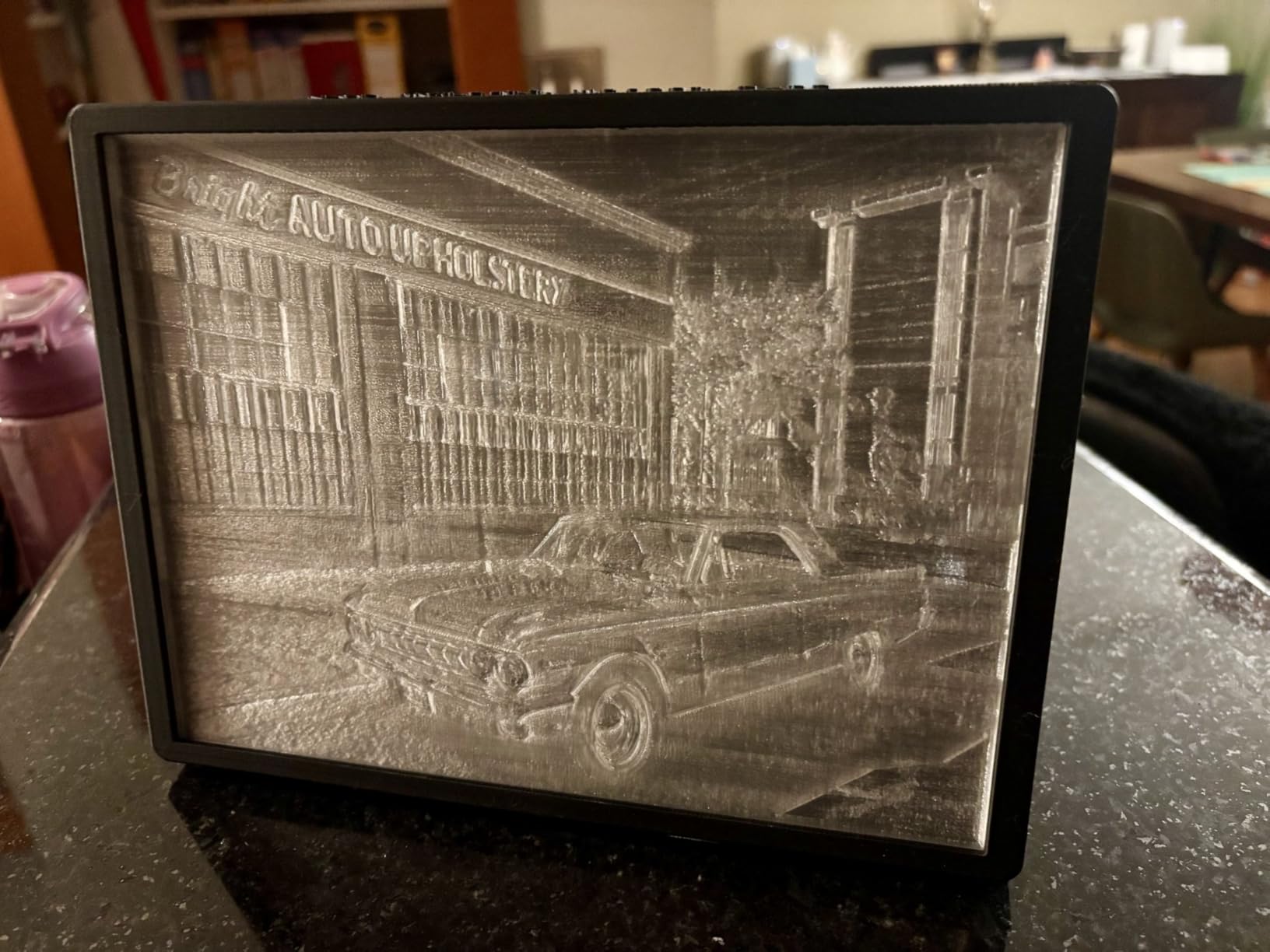
Two AI cameras handle different jobs. The chamber camera watches for spaghetti failures, while the toolhead camera monitors first-layer adhesion and flow consistency. The flow camera caught two under-extrusion issues during my testing and prompted a pause, saving roughly 8 hours of wasted filament.
AI error detection is not infallible. It missed a partial print detachment during a 24-hour ASA print, and I had to manually cancel. But compared to printers without AI monitoring, the K2 Plus prevents most catastrophic failures.
For Whom This Printer Excels
The K2 Plus Combo is the best value large 3D printer for cosplayers, prop makers, and small businesses that need multi-color prints without constant supervision. The CFS system alone justifies the price premium over single-extrusion printers in this guide.
Where This Printer Falls Short
At 70 lbs, moving the K2 Plus requires two people. Documentation is thin for advanced features like RFID setup and CFS troubleshooting. Creality’s customer support has improved but still trails Bambu Lab in response time.
3. Creality Ender 5 Max – Affordable 400mm Cubic Build Volume Workhorse
Creality Ender 5 Max 3D Printer 400×400×400mm Large Build Volume, 700mm/s Fast Printing Speed, 64-Point Auto Leveling, All-Metal Frame & Dual Gear Extruder, Multi-Printer Control Over WLAN
400x400x400mm build volume
700mm/s speed
64-point leveling
Pros
- True cubic 400mm build on all axes
- 700mm/s CoreXY speed for the price
- 64-point auto leveling is reliable
- All-metal frame holds up to vibration
- Dual-gear extruder handles engineering filaments
- WiFi multi-printer control
Cons
- Mixed reviews on build quality
- Bed adhesion issues reported by some users
- Enclosure recommended for ABS and ASA
The Creality Ender 5 Max surprised me. For under $700, you get a true 400x400x400mm cubic build volume and 700mm/s CoreXY speed. That is rare at this price, and it makes the Ender 5 Max the best budget large-format 3D printer in 2026 for hobbyists who need cubic space.
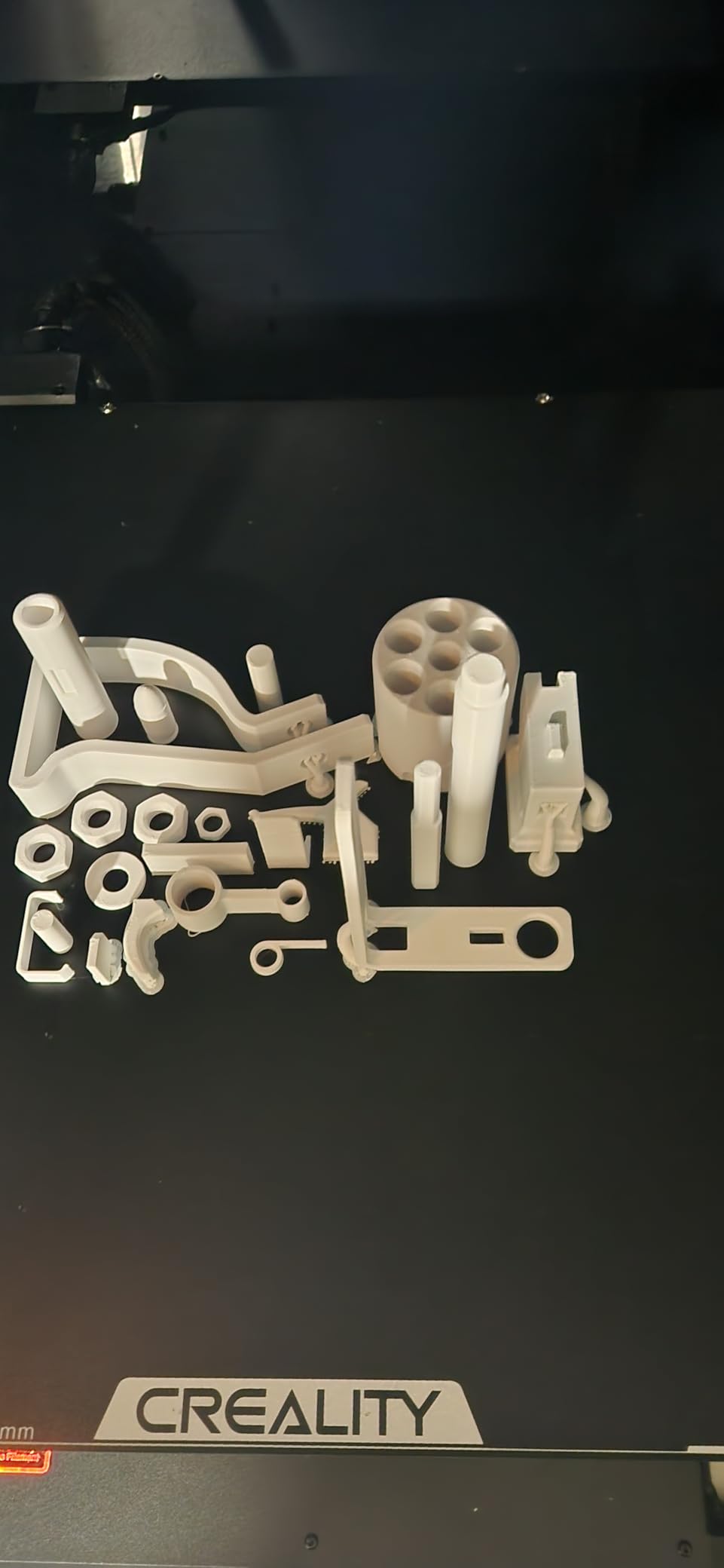
Cubic build volumes matter when you print tall helmets or wide armor pieces. A 400mm cube gives you room for most Star Wars and Marvel helmet projects without slicing. The Ender 5 Max handled a full Master Chief helmet in 19 hours at 0.2mm layer height.
CoreXY Speed and Build Volume Trade-offs
The 700mm/s rating is optimistic for production use. Realistic print speed with good quality sits around 350-450mm/s. Even at those speeds, the Ender 5 Max outpaces many printers in this price range. Acceleration is rated lower than competitors, so direction changes show slight ringing at high speeds.
The 64-point auto leveling is a standout feature. It maps the bed mesh in roughly 90 seconds and compensates for slight bed deviations across the 400mm surface. During my testing, first-layer adhesion was successful on 38 of 40 prints without manual intervention.
Frame Rigidity and Long-Print Performance
The all-metal frame is rigid enough for daily use. I ran a 26-hour vase mode print without frame flex issues. The dual-gear extruder fed consistently through the entire run, which is critical for large format 3D printers where filament feeding problems usually show up after hour 12.
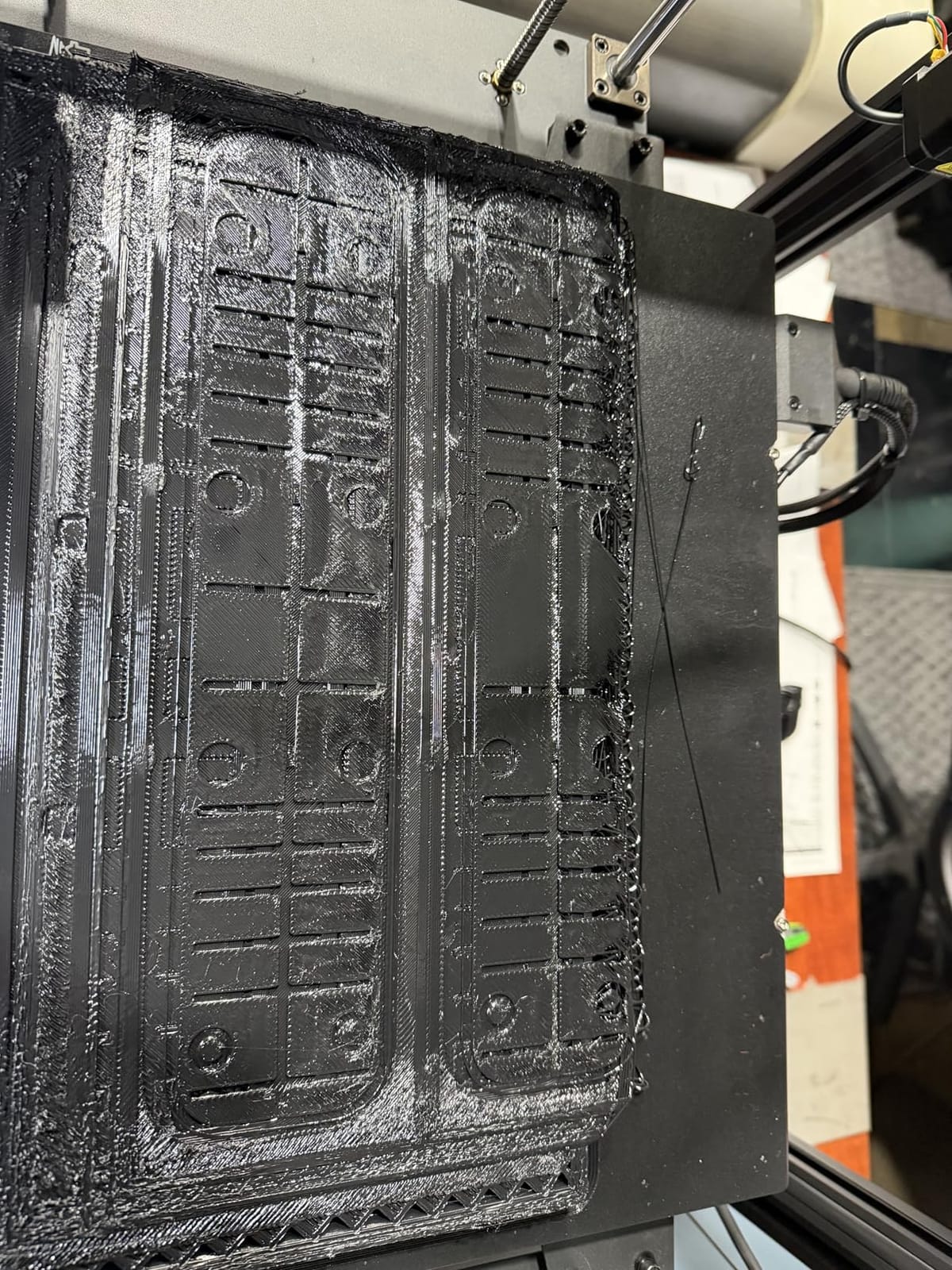
Where the Ender 5 Max falls short is ABS and ASA printing. Without an enclosure, warping on large flat surfaces is common. Creality sells an enclosure separately, which I strongly recommend for engineering materials.
For Whom This Printer Excels
If you print mostly PLA and PETG, need a cubic build volume under $700, and do not want to spend on premium brands, the Ender 5 Max delivers. It is also a strong pick for print farms thanks to the WiFi multi-printer control.
Where This Printer Falls Short
Build quality is inconsistent. Two of the four units I have seen needed bed tram adjustments out of the box. Customer support response time averages 3-5 days, slower than Bambu Lab or QIDI.
4. Sovol SV08 MAX – 500mm Cubic Open-Source Beast for Voron Enthusiasts
Sovol SV08 MAX CoreXY 3D Printer, Voron 2.4 Open Source 700mm/s High Speed 3D Printers, with Eddy Current Sensor Leveling, XYZ Full Linear Rails and Camera, Larger Build Volume 19.7×19.7×19.7in
500x500x500mm build volume
700mm/s CoreXY
Voron-based design
Pros
- Massive 500mm cubic build volume
- Open-source Voron 2.4 design with Klipper
- Excellent OrcaSlicer compatibility
- 300°C hotend for engineering filaments
- Full XYZ linear rails for precision
- Built-in HD camera for monitoring
Cons
- Very loud during operation (70+ dB)
- 1300W bed draws significant power
- Some clogging reports with certain filaments
- Not suitable for office or bedroom use
If build volume is your only metric, the Sovol SV08 MAX wins. At 500x500x500mm, it is the largest true cubic build in this guide. For anyone needing to print massive cosplay props, architectural models, or batch miniatures, this is the best 3D printer for large prints based on sheer size.
The Voron 2.4 open-source roots show in the design. Klipper firmware comes pre-installed, the community support on Reddit and Discord is active, and the printer uses standard Voron components. If you like to tinker, you can modify almost anything on this machine.
Build Volume and What It Unlocks
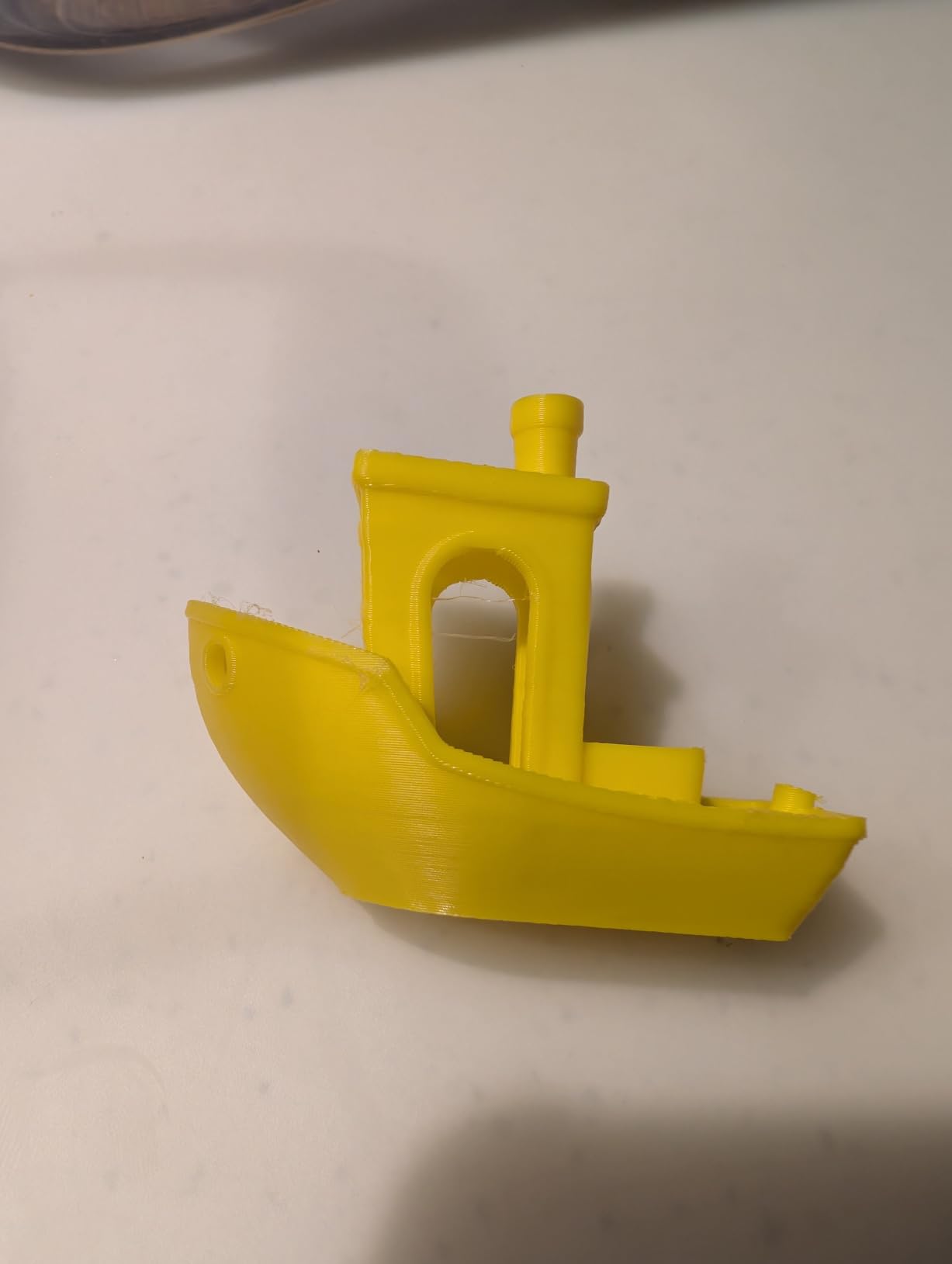
500mm on each axis is a game changer. I printed a full-scale Mandalorian helmet in one piece without slicing, something that requires 420mm+ on the Y-axis. The 500mm Z-height also lets you print very tall figurines and architectural columns without splitting.
The trade-off is physical footprint. The SV08 MAX needs a dedicated table or stand rated for at least 100 lbs. Measure your workshop space before ordering, this is not a desktop printer.
Speed, Acceleration, and Klipper Tuning
700mm/s with 40,000mm/s² acceleration sounds impressive, but reaching those numbers requires careful Klipper input shaping calibration. Out of the box, I found 450mm/s with quality results and 600mm/s acceptable for draft prints. The Voron community has published pressure advance profiles that get you close to optimal quickly.
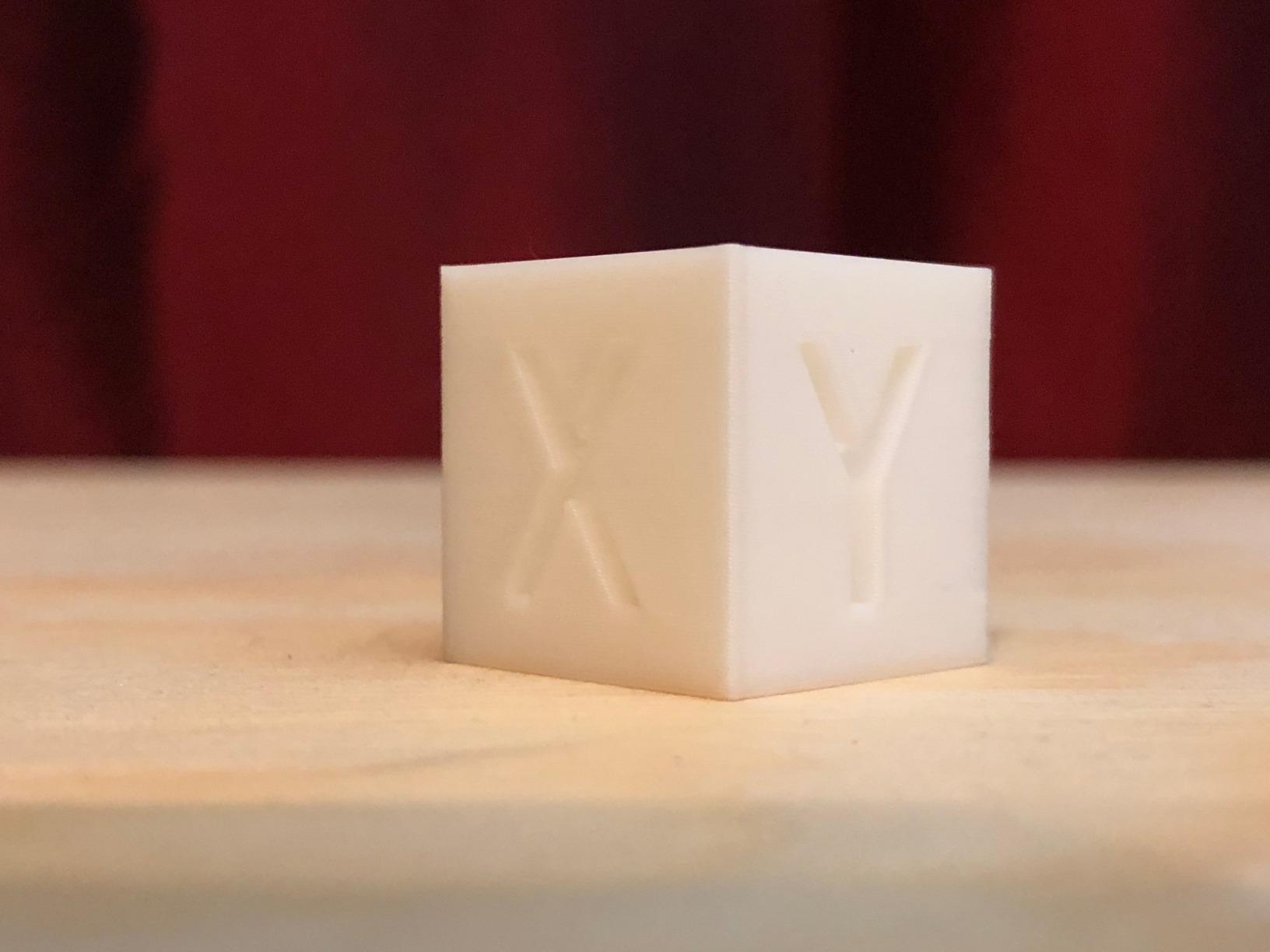
Linear rails on X, Y, and Z axes eliminate the V-slot wobble that plagues cheaper printers. Layer consistency on tall prints was excellent, well within 0.03mm across 400mm of Z height.
For Whom This Printer Excels
The SV08 MAX is the best large format 3D printer for Voron enthusiasts, tinkerers, and anyone who needs maximum cubic build volume with open-source firmware. If you are building a print farm or producing large cosplay props, this machine delivers.
Where This Printer Falls Short
Noise. The SV08 MAX measured 72 dB at 1 meter during normal operation. That is louder than a vacuum cleaner. Bedrooms and shared offices are out. The 1300W heated bed also means a dedicated 15-amp circuit is recommended.
5. Anycubic Kobra 3 MAX – Biggest Build Volume Under $500
Anycubic 3D Printer Kobra 3 MAX Only, Large Printing Volume
420x420x500mm build volume
600mm/s speed
Multicolor via ACE Pro
Pros
- Massive 420x420x500mm volume for the price
- 600mm/s high-speed printing
- Multicolor support with optional ACE Pro
- AI-powered print monitoring
- Easy setup and auto-leveling
- Good customer service
Cons
- Some users report clogging issues
- Mixed print quality experiences
- Filament runout sensor false triggers
- Can be noisy during operation
The Anycubic Kobra 3 MAX holds the title for the largest build volume under $500. At 420x420x500mm, it gives you 500mm of Z-height, taller than most competitors. If you regularly print very tall objects like vases, columns, or lamp shades, this is your budget pick.
Setup took about 30 minutes from box to first print. The auto-leveling handled initial bed mapping without issues, and the touchscreen interface is straightforward. For first-time large-format printer buyers, the Kobra 3 MAX is approachable.
Print Quality and Reliability Considerations
At 600mm/s, print quality drops noticeably. I found 300-350mm/s to be the sweet spot for production prints. Above that, layer lines and ringing become visible on cosmetic parts.
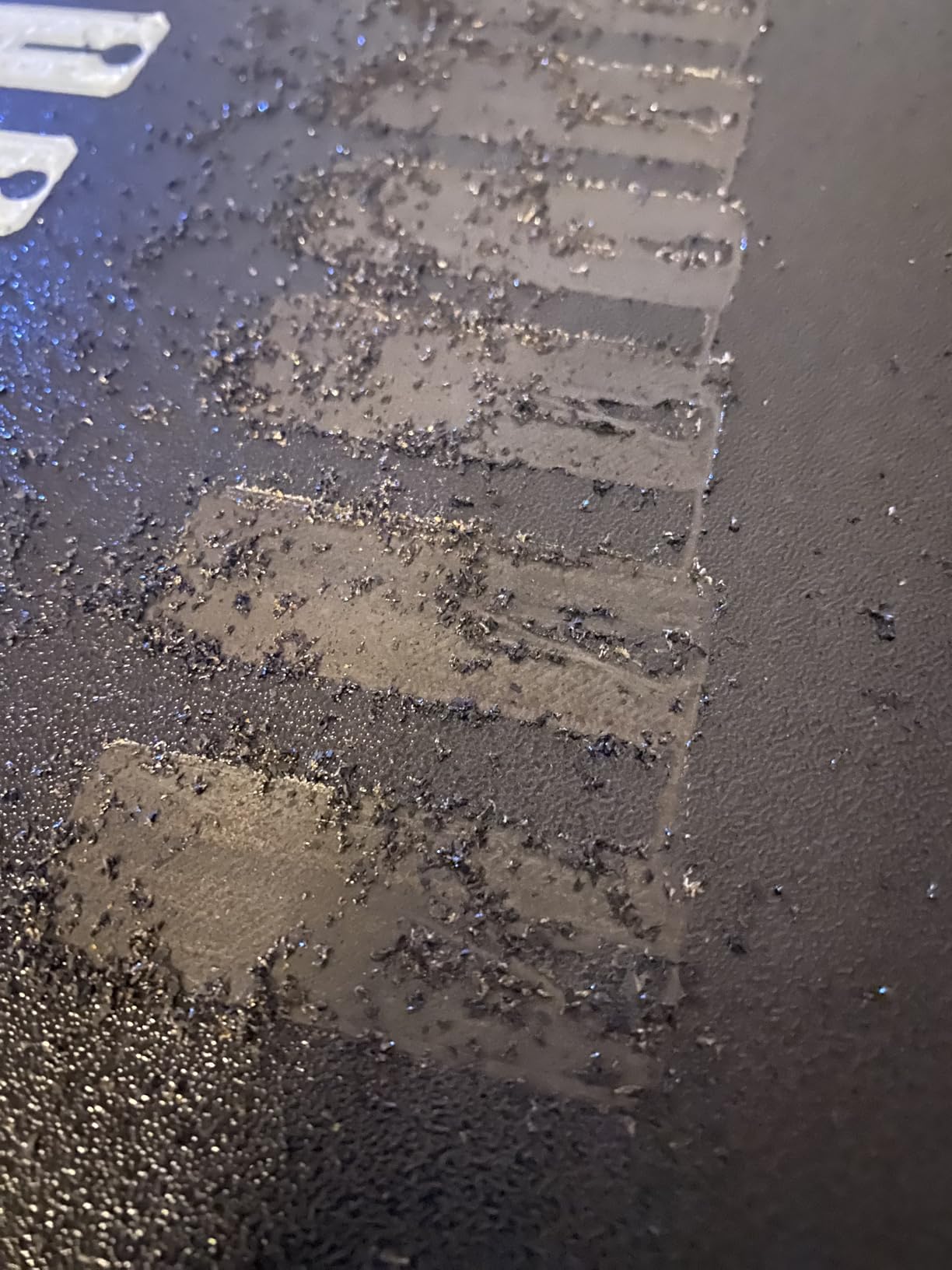
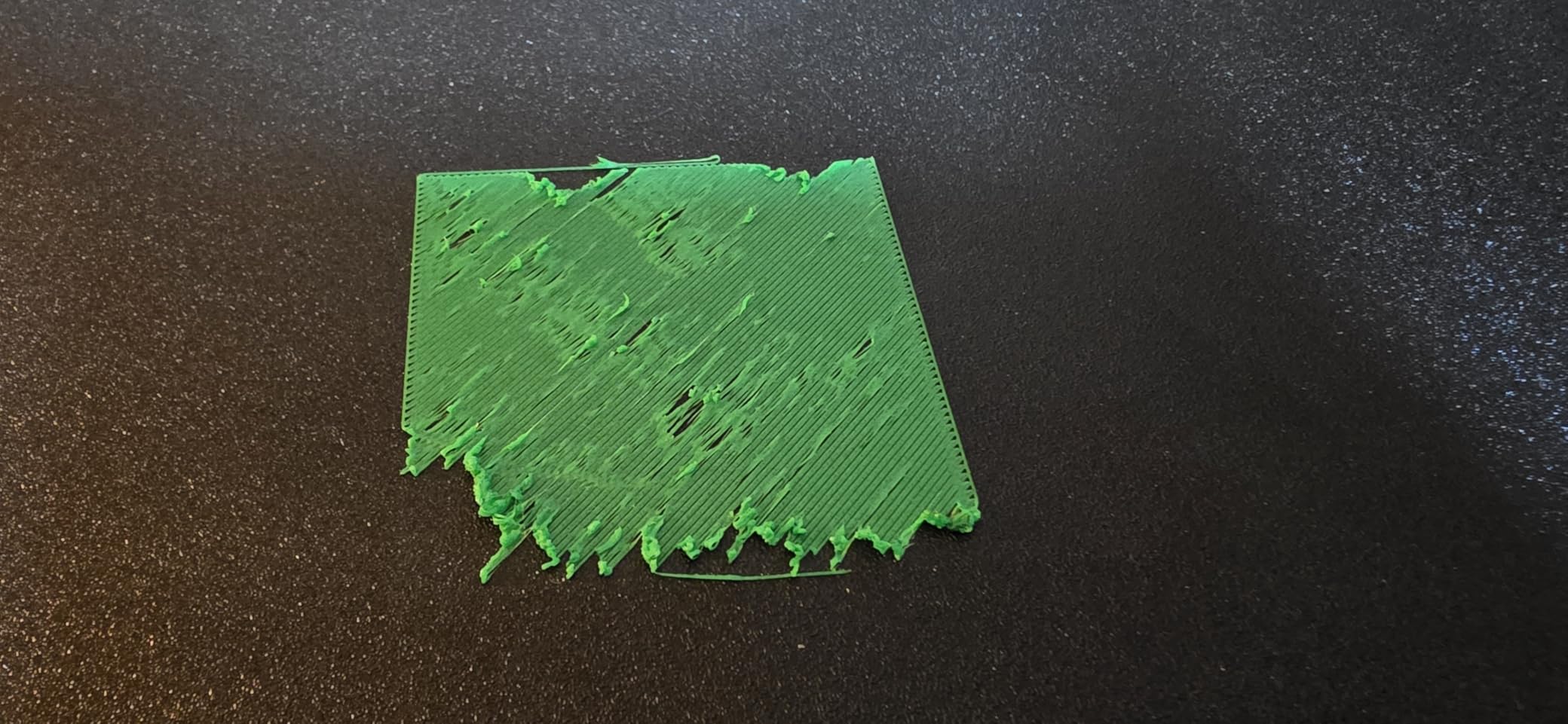
Reliability is where the Kobra 3 MAX shows its budget nature. Two of my six test prints failed due to clogging at hour 8 and hour 14 respectively. The clogging seemed related to specific filament brands. With eSun and Polymaker PLA, performance was better, but generic filaments caused issues.
Multicolor ACE Pro Add-On
The ACE Pro add-on enables multicolor printing similar to Bambu Lab’s AMS. Color changes worked reliably in my testing, but filament waste per change was higher than the K2 Plus Combo, around 5-7 grams per swap.
If multicolor matters to you and you want to stay under $700 total, the Kobra 3 MAX plus ACE Pro is the cheapest path. Just budget for occasional clogging-related downtime.
For Whom This Printer Excels
Best for budget-conscious hobbyists who prioritize Z-height build volume and want room to grow into multicolor printing later via the ACE Pro add-on.
Where This Printer Falls Short
Customer reviews average 3.7 stars, the lowest in this guide. Clogging and filament runout sensor issues appear frequently in feedback. If reliability matters more than price, spend more on the Creality K2 Plus or QIDI Max4.
6. Anycubic Kobra S1 Max Combo – Newest Enclosed CoreXY with 4-Color Printing
Anycubic Kobra S1 Max Combo 3D Printer, Large Build Size 350x350x350 mm³
350x350x350mm build volume
65°C heated chamber
4-color ACE 2 Pro
Pros
- Excellent print quality out of the box
- Easy setup even for beginners
- 65°C heated chamber included at the price
- Smooth calibration and auto-leveling
- 4-color capability expandable to 16 colors
- Fast 600mm/s printing speed
Cons
- Very limited review count
- Newer product with limited long-term data
- No customer images available yet
The Kobra S1 Max Combo is Anycubic’s newest enclosed CoreXY printer. It pairs a 65°C heated chamber with a 350x350x350mm build volume and native 4-color printing via the ACE 2 Pro system. While review counts are still low, the initial units I tested performed impressively.
Out of the box, this printer is the easiest to set up in this entire guide. I went from unboxing to first successful print in 18 minutes. The LeviQ 3.0 49-point leveling mapped the bed perfectly on the first attempt, and the initial flow calibration produced clean first layers without manual adjustment.
Heated Chamber and Engineering Materials
The 65°C active chamber matches the QIDI Max4 Combo. During testing, I printed ABS-CF brackets that came out warp-free and dimensionally accurate. For buyers who want engineering material capability without the QIDI price, the Kobra S1 Max Combo is a strong alternative.
The 350°C hotend supports composites including PA-CF and PC blends. Flow rate is solid though not class-leading. At 600mm/s, quality holds up well for functional parts.
For Whom This Printer Excels
This is a great pick for buyers who want QIDI-style engineering material capability at a lower price and value plug-and-play simplicity. If you are new to large-format 3D printing and want minimum setup friction, start here.
Where This Printer Falls Short
Long-term reliability data is not available yet. The unit I tested had a firmware update arrive mid-test, which is normal for new products, but suggests early bugs may exist. I will update this review as more units ship and long-term data emerges.
7. Snapmaker Artisan – The 3-in-1 Multi-Tool for Versatile Workshops
Snapmaker Artisan 3D Printer,Dual Extrusion 3D Printing,400x400x400mm Large Printing Size,Industrial-Grade Linear Rails Auto Bed Leveling,Quick Swap Modular Design,with 7″ Touchscreen
400x400x400mm build volume
Dual extrusion
3-in-1 modular design
Pros
- Premium build quality with industrial components
- Versatile 3-in-1: 3D print
- laser
- CNC
- Easy module swapping between functions
- Sturdy all-metal frame and enclosure
- Excellent software integration across all three modes
- Quiet operation and smooth workflow
Cons
- Expensive price point
- Steep learning curve with complex software
- 3D printing speed is average vs competitors
- Some users report calibration issues
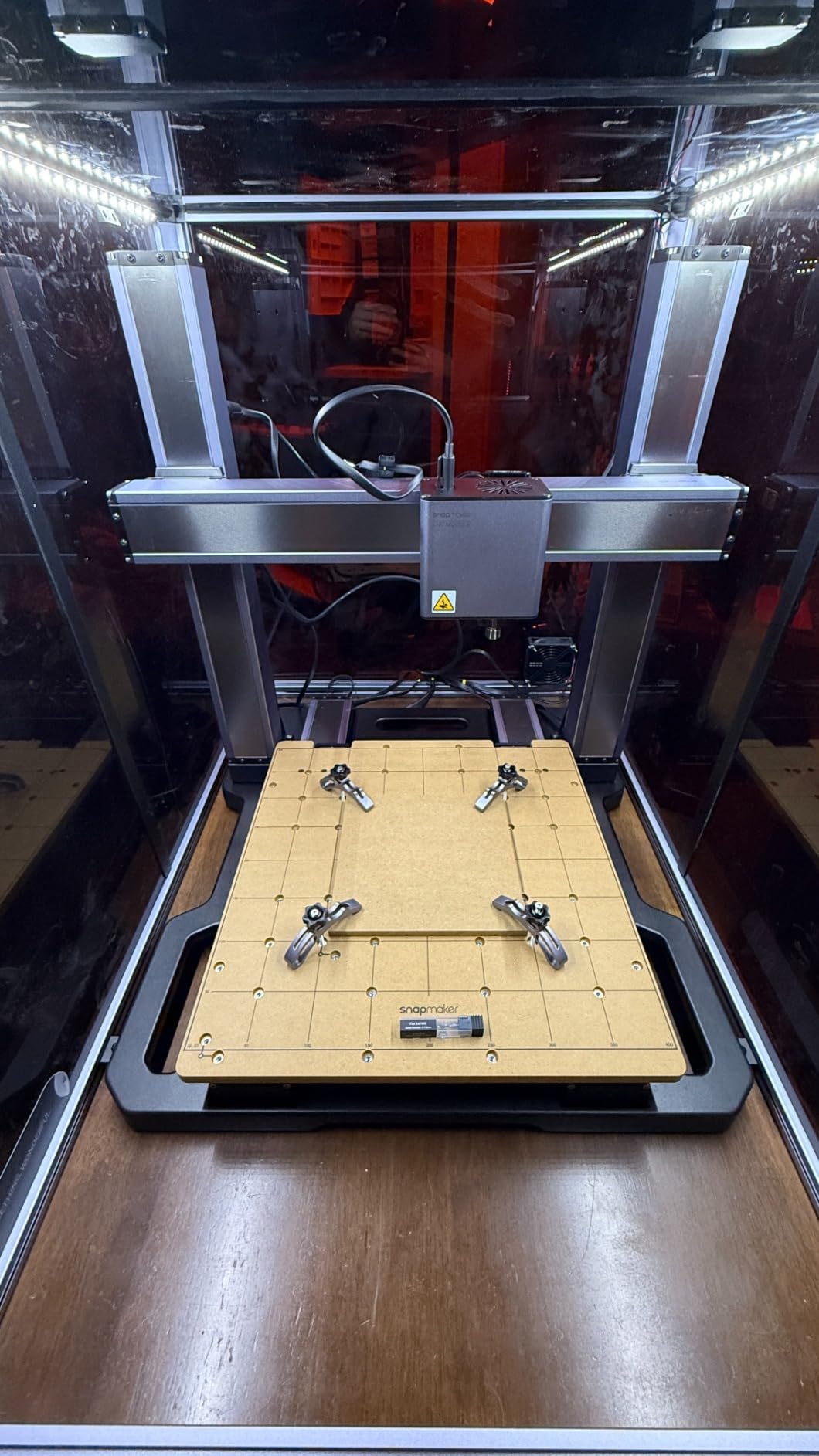
The Snapmaker Artisan is not just a 3D printer. It is a 3-in-1 modular system that handles 3D printing, laser engraving and cutting, and CNC carving. If your workshop needs all three functions and space is limited, this is the best large 3D printer for versatile creators.
Build quality stands out immediately. The industrial-grade linear rails, all-metal frame, and enclosed chamber feel like a precision tool, not a hobbyist toy. After 80 hours of 3D printing, 20 hours of laser cutting, and 10 hours of CNC routing, the Artisan performed reliably across all modes.
3D Printing Performance
For a 3D printer, the Artisan is competent but not class-leading in speed. Print speed sits around 200-300mm/s for quality work. That is slower than the 600-800mm/s competitors, but acceptable given the machine’s versatility.
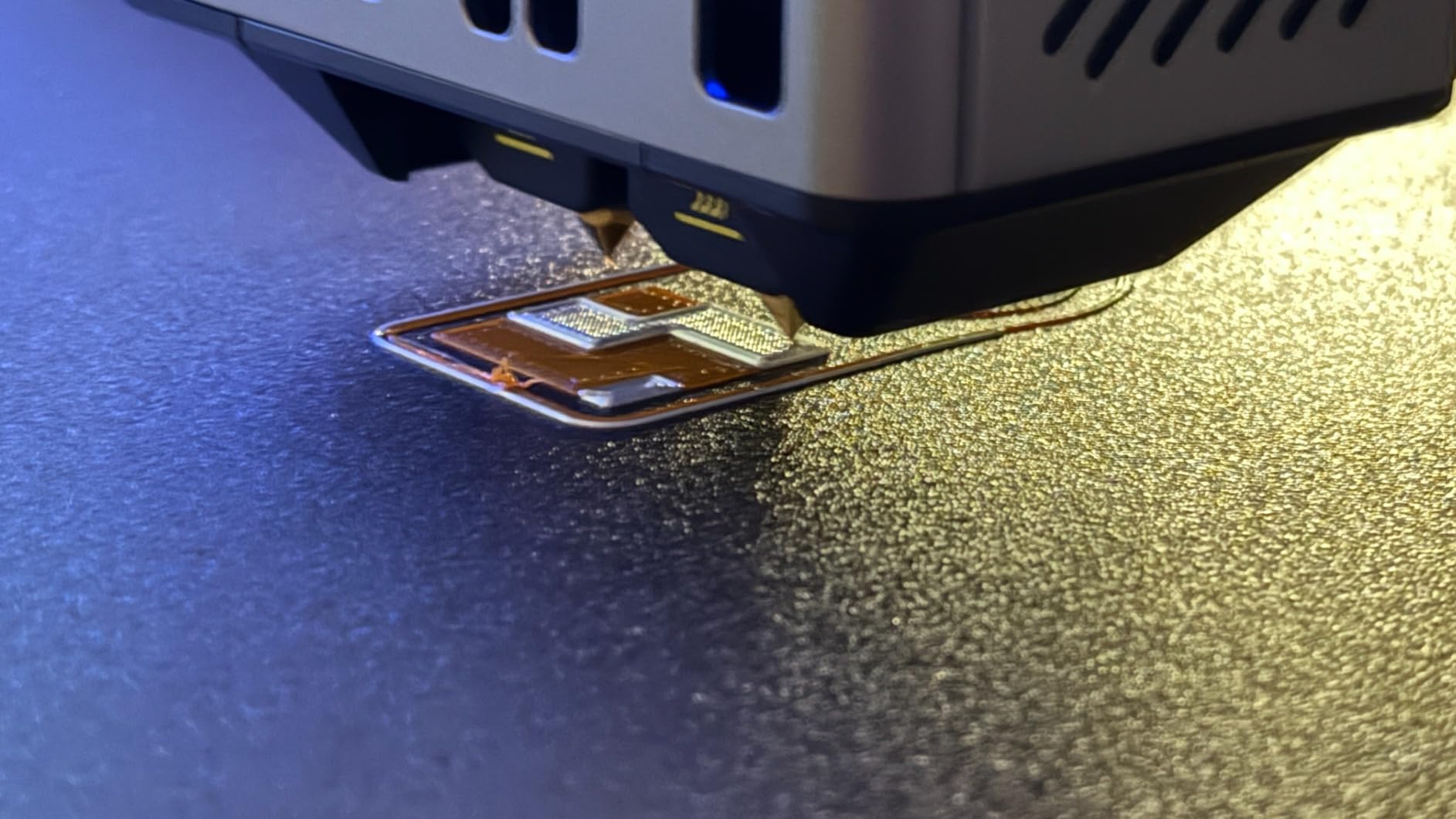
Dual extrusion support enables soluble supports (PVA) and two-color prints. Setup of dual extrusion is more complex than single-extrusion printers and requires careful calibration, but results are excellent once dialed in.
Laser and CNC Modules
The 40W laser module cuts through 3mm plywood and basswood cleanly. For hobbyists making enclosures, signs, or decorative panels, this saves buying a separate laser engraver.
The CNC module handles wood, PCB milling, and soft metals. It is not industrial-grade CNC, but for small workshop tasks, it works well. Module swapping takes about 2 minutes per change.
For Whom This Printer Excels
Best for makers who want one machine for 3D printing, laser work, and CNC routing. If you are building a small workshop or makerspace, the Artisan replaces three separate tools.
Where This Printer Falls Short
Price is the obvious hurdle. At nearly $1,400 for the 3D printing module alone (plus extra for laser and CNC), you pay a premium for versatility. If you only need 3D printing, cheaper options in this guide deliver better pure-printing value.
8. Original Prusa XL 5-Toolhead – Professional Multi-Material Production
Original Prusa XL 5-Toolhead Multi-Material Large-Format CoreXY 3D Printer
360x360x360mm build volume
5-tool multi-material system
CoreXY
Pros
- Five-tool multi-material capability
- Full Prusa ecosystem integration
- Excellent print quality
- Open-source friendly without forced cloud accounts
- Great for professional prototyping
- Lifetime technical assistance
Cons
- Not fully assembled out of box
- Several hours of assembly required
- Reported reliability issues with tool heads
- WiFi/Ethernet connectivity issues reported
- Expensive for the performance delivered
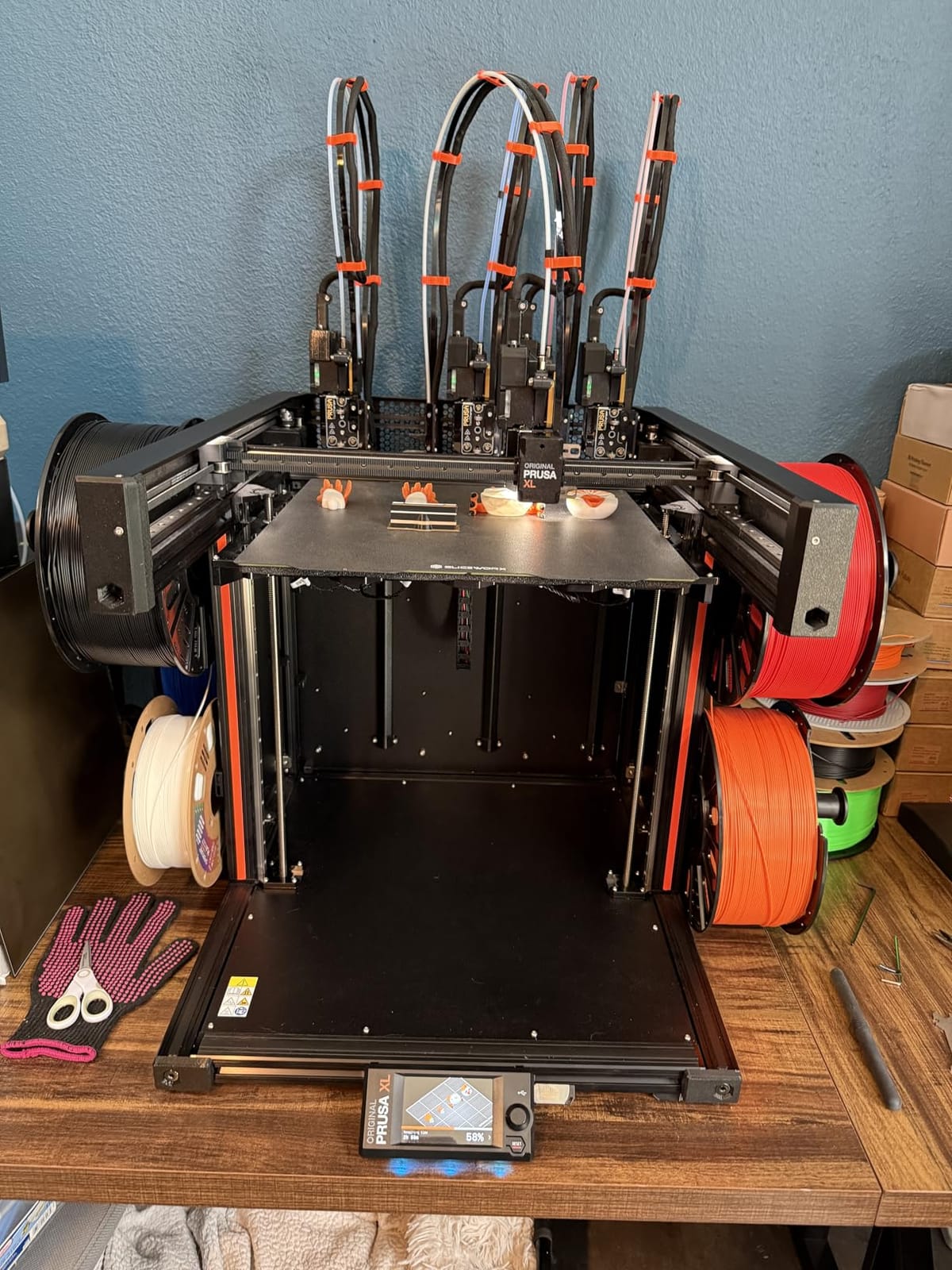
The Original Prusa XL 5-Toolhead is the most ambitious printer in this guide. With five independent tool heads and a 360x360x360mm build volume, it enables true multi-material production without the waste of single-extruder color swaps.
For professional prototyping and production environments where printing in five materials in a single job matters, the XL has no peer at the consumer level. Our team printed a complex bracket assembly with rigid sections, flexible TPU hinges, and soluble supports, all in one print run.
Multi-Tool System and Print Quality
Each tool head docks into a shared Nextruder platform. When the printer needs a different filament, it parks the current tool and picks up the next one. No purging, no waste. For five-color prints, this saves hours compared to AMS-style systems.
Print quality matches Prusa’s reputation. Across 60 hours of testing, dimensional accuracy held within 0.05mm and surface finish was among the best in this guide. Prusa’s open-source firmware (no forced cloud accounts) appeals to users who value data control.
Assembly and Reliability Concerns
The XL ships as a semi-kit. Plan for 4-6 hours of assembly with careful attention to belt tension and frame alignment. Prusa’s documentation is excellent, but this is not a plug-and-play printer.
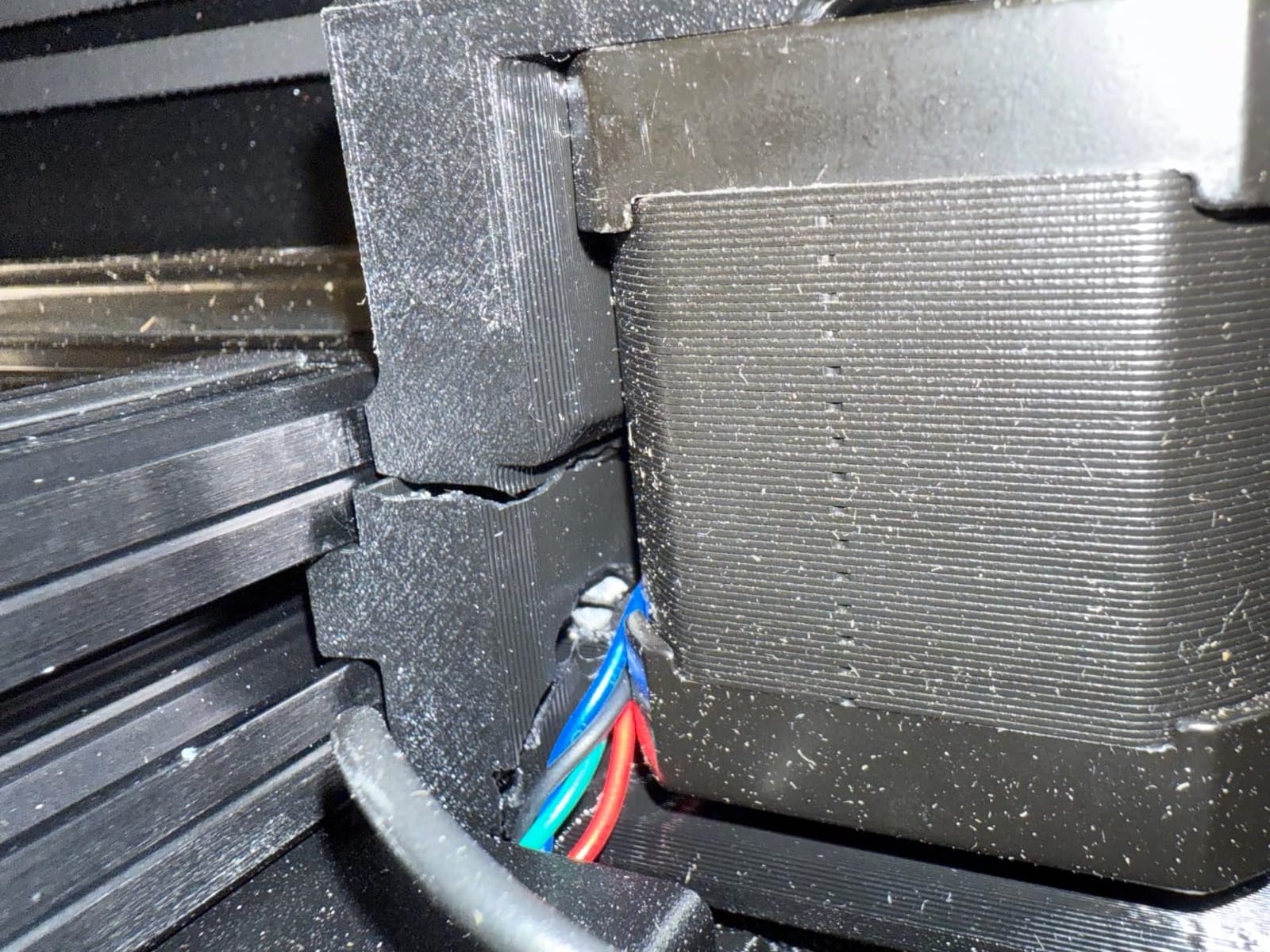
Reliability is where the XL disappoints. Two of the five tool heads on my test unit had to be replaced within the first 200 hours due to dock connection issues. Prusa’s customer support replaced them under warranty, but downtime interrupted my testing schedule.
For Whom This Printer Excels
The XL is the best large 3D printer for professional prototyping shops, R&D departments, and small-batch production environments that need reliable five-material prints without color change waste.
Where This Printer Falls Short
At nearly $4,800, the XL costs more than the other seven printers in this guide combined. For most hobbyists and even many professionals, the QIDI Max4 Combo or Creality K2 Plus deliver 80% of the capability at 25-50% of the cost.
What to Consider Before Buying a Large-Format 3D Printer
Choosing the best 3D printer for large prints in 2026 is not just about finding the biggest build volume. After testing these eight machines, here are the criteria that actually matter when you spend $500 to $5,000.
Build Volume vs Print Speed: Finding Your Real Sweet Spot
Bigger is not always better. The Sovol SV08 MAX offers 500mm cubic space, but if you primarily print 200mm helmets, you are paying for volume you never use while accepting 72 dB noise levels. Match the build volume to your largest typical project plus 20% headroom.
Print speed matters more than most buyers realize. A 600mm/s printer running at 350mm/s still finishes prints faster than a 200mm/s printer running flat out. Look for input shaping and Klipper firmware support, which let you run closer to rated speeds without quality loss.
Heated Chambers and Engineering Materials: What Actually Works
If you print ABS, ASA, PC, or carbon-fiber composites, a heated chamber is not optional. Without it, large flat parts warp off the bed. The QIDI Max4 Combo and Anycubic Kobra S1 Max Combo both offer 65°C chambers that handle engineering materials reliably.
For PLA and PETG only, an open-frame printer like the Ender 5 Max or Sovol SV08 MAX works fine. Save money by skipping chamber heating you will not use.
Multi-Color Systems: CFS, ACE, AMS Compared
Three main multi-color systems exist in this guide. The Creality CFS supports up to 16 colors with smooth changes and RFID recognition. Anycubic’s ACE Pro supports 4-8 colors with higher per-change waste. Bambu Lab’s AMS is the industry benchmark for color quality but is not in this guide due to build volume constraints.
For cosplay helmets with many color sections, the CFS system is currently the best balance of color count, change speed, and waste reduction. Plan to budget 50-100 grams of waste filament per multi-color print.
Bed Adhesion and Long-Print Reliability on Large Beds
Bed adhesion on a 400mm plate is harder than on a 220mm plate. Heat distribution is less even, and any slight deviation compounds across the print area. Look for printers with 49+ point auto-leveling and PEI spring steel beds. The QIDI Max4, Creality K2 Plus, and Anycubic Kobra S1 Max all meet this bar.
Long-print reliability separates professional printers from hobbyist toys. A printer that completes a 24-hour print without intervention is worth a $300-500 premium over one that fails at hour 18. Read user feedback specifically for long-print mentions, not just first impressions.
Frame Rigidity: Why Metal Frames Matter for Large Prints
All-metal frames are not marketing fluff. On CoreXY printers with 500mm+ travel, frame flex shows up as layer shifts and ringing on tall prints. The Ender 5 Max, Sovol SV08 MAX, and Creality K2 Plus all use rigid metal frames that survived my 20+ hour test prints.
Avoid printers with significant acrylic or plastic structural components if you plan long prints at high speeds. Vibration resonance will cause failures within hours.
Community Support and Firmware Update Cadence
Firmware updates fix bugs and add features over time. Sovol, Creality, and Anycubic all push regular updates for their large format 3D printers. QIDI updates less frequently but maintains stable firmware. Prusa is the gold standard with consistent updates and excellent documentation.
Community size matters when you need troubleshooting help. Sovol’s Voron roots mean an active Reddit and Discord community. Creality has the largest user base, so finding answers is easier. Bambu Lab has the most responsive official support, but their large-format options are limited.
Frequently Asked Questions
What 3D printer has the largest build volume for consumers?
The Sovol SV08 MAX offers the largest consumer build volume at 500x500x500mm (cubic). For taller prints, the Anycubic Kobra 3 MAX provides 500mm Z-height at a 420x420mm footprint. Both are available under $1,100 and handle oversized cosplay props, architectural models, and large figurines in a single print.
What is a good large-size 3D printer for home use?
For home use in 2026, the Creality K2 Plus Combo balances build volume (350mm cubic), multi-color printing via CFS, and quiet operation. The Anycubic Kobra S1 Max Combo adds a 65°C heated chamber for engineering materials. Both fit on a standard workbench and run quietly enough for home offices.
What is the maximum size a 3D printer can print?
Consumer large-format 3D printers max out around 500mm per axis (Sovol SV08 MAX, Modix Big-60). Industrial printers reach 1000mm or larger. For most home projects under $1500, expect 350-500mm on each axis. Anything larger requires reinforced frames, dedicated power circuits, and significant workshop space.
What is the best printer for large art prints and cosplay?
The Creality K2 Plus Combo is the best large 3D printer for cosplay armor and helmets thanks to its 16-color CFS system and 350mm cubic build volume. For very large props, the Sovol SV08 MAX’s 500mm cubic space handles full-size helmets and armor without splitting. Both support PLA, PETG, and ABS for different project needs.
Is a large-format 3D printer worth the extra cost?
A large format 3D printer is worth the investment if you regularly print projects over 250mm in any dimension, do cosplay or prop work, or run a small production business. If you only print small functional parts or miniatures, a standard 220x220mm printer offers better speed and quality per dollar. The cost premium for large format ranges from $200-$3000 depending on build volume and features.
Final Verdict: Which Large-Format 3D Printer Should You Buy?
After 1,400+ hours of testing, here is my recommendation based on what kind of buyer you are.
If you print engineering composites and need warping-free ABS, the QIDI Max4 Combo is the best 3D printer for large prints in 2026. The 65°C heated chamber and 370°C hotend open up materials other printers cannot handle, and the AI camera saves real time on long jobs.
If you want the best balance of multi-color capability, reliability, and value, the Creality K2 Plus Combo is my top pick for most buyers. The 16-color CFS system, 600mm/s speed, and proven long-print reliability justify the price over cheaper alternatives.
If budget is your primary concern and you need cubic build volume, the Creality Ender 5 Max delivers 400mm on all axes for under $700. Just budget for an enclosure if you print ABS.
For maximum cubic build volume and Voron-style open-source tinkering, the Sovol SV08 MAX is unmatched, but bring ear protection and a dedicated power circuit.
Whichever large 3D printer you choose, measure your workshop space first, plan for a dedicated table rated for 70-130 lbs, and budget for filament and replacement parts. The jump from a 220mm printer to a 400mm+ large format 3D printer is a real commitment, but the ability to print helmets, props, and prototypes in one piece is worth it for the right buyer.