
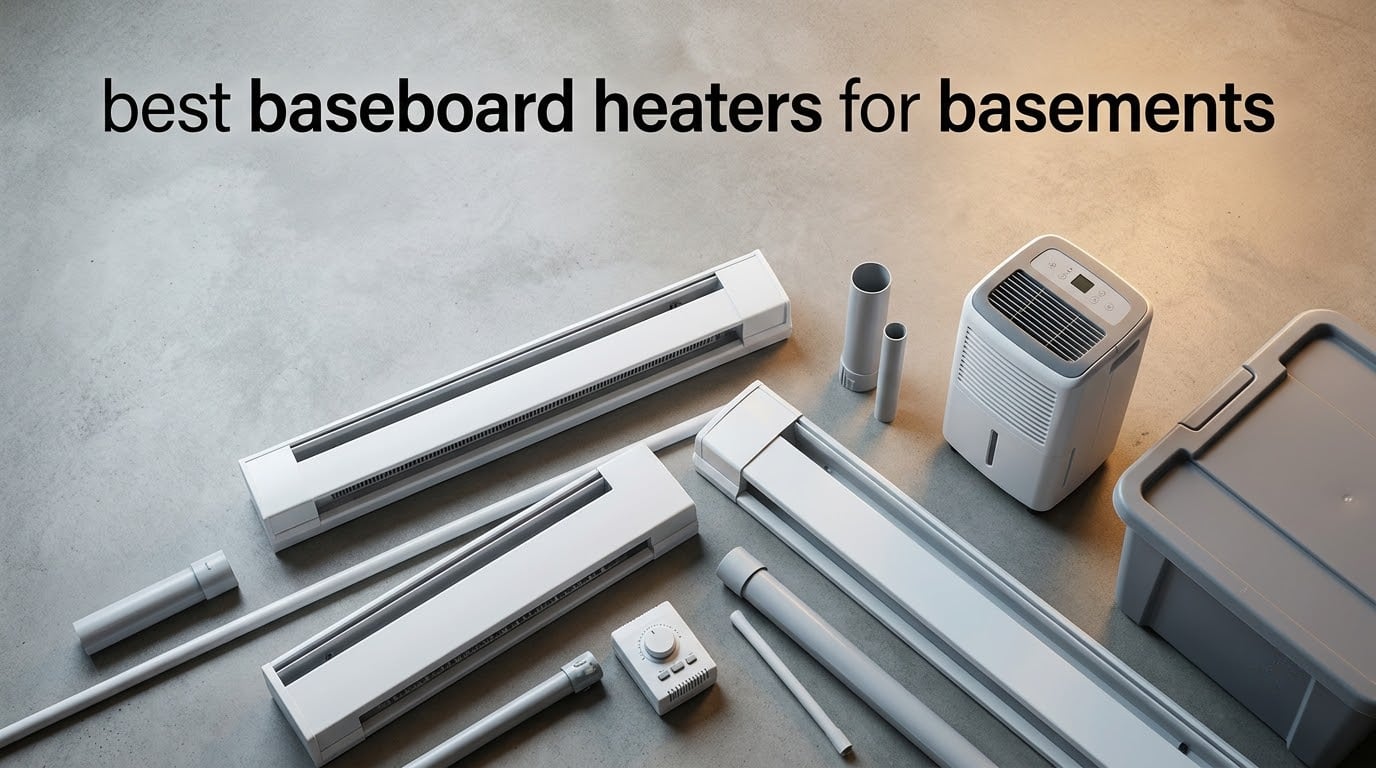
The best baseboard heaters for basements are 240V hardwired convection models like the Cadet F Series 3F750W, because a basement is a below-grade, moisture-prone space where plug-in heaters cannot legally live and low-wattage units cannot carry a full room. The right unit depends almost entirely on whether you have panel capacity, how many finished rooms you are heating, and whether anyone will be sitting near a hot metal cabinet for hours.
I have spent the last several months reading specifications, wiring requirements, and owner reviews on every baseboard heater that showed up repeatedly in basement renovation conversations, then I sorted them by the things that actually break a basement install. I did not test wattage with a clamp meter, and I will not pretend otherwise. What I did do is cross-check every spec sheet against owner reports, separate the two heating technologies properly, and work out how many heaters a real 600, 800, and 1000 square foot basement needs.
That last part matters more than any single product. Most failed basement heating decisions are sizing failures, not product failures. A 1000 watt unit dropped into a 900 square foot basement will technically turn on and technically do nothing, and the owner will conclude the heater is a bad product when the real problem is arithmetic.
A few things I watched for in every listing. Is the unit 120V plug-in, 120V hardwired, or 240V hardwired? Is it convection or hydronic? Does it have a high-limit thermal cutout, and is it UL or ETL listed? Does it include a thermostat, or does the thermostat cost extra? And is the housing powder-coated steel, which matters a great deal in a room that deals with seasonal humidity and the occasional sump pump hiccup.
Basements also carry their own risk profile. If water gets in, the priority is detection before anything else, so I would put a set of water leak detectors for basements in place before installing any electrical heating. The second basement-specific issue is connectivity — a basement is often the worst-served room in the house for wireless signal, and smart thermostat hubs need a link to the main floor. Our WiFi extender picks for basements cover that gap if you want app control.
Below is the full lineup, then the sizing math, then the safety and voltage decisions that determine which of these you should actually buy in 2026.
Our Top 3 Baseboard Heaters for Basement Rooms in 2026

Comfort Zone CZ600 1500W
- 1500W 120V plug-in convection
- Silent fanless operation
- Tip-over switch and overheat protection
- Heats one room up to 300 sq. ft.
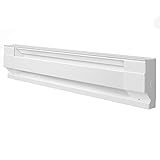
Cadet F Series 3F750W 36 inch
- 750W/563W at 240V/208V
- 2560/1925 BTU convection
- Universal wiring with knockouts
- Limited lifetime warranty

Fahrenheat FBE15002 1500W
- 1500W 5120 BTU convection
- Portable 120V plug-in fanless design
- High-temperature safety cutout
- 45-inch low-profile body
The CZ600 takes our top slot because it has the deepest review history in the group at 4.1 stars across more than 1600 ratings, which means its weaknesses are known and survivable rather than mysterious. The Cadet F Series earns the highest satisfaction score at 4.5 stars and is the right answer if you can have a 240V circuit run. The Fahrenheat FBE15002 is the value pick for anyone without an electrician in the budget.
Comparing Every Baseboard Heater in This Roundup
| Product | Specs | Action |
|---|---|---|
| Comfort Zone CZ600 1500W Baseboard |
|
Check Latest Price |
 Comfort Zone CZ650BWT Digital Baseboard Comfort Zone CZ650BWT Digital Baseboard |
|
Check Latest Price |
| Fahrenheat FBE15002 1500W |
|
Check Latest Price |
| Cadet F Series 3F750W 36 inch |
|
Check Latest Price |
 Marley 2542NW 2 Foot 240V Marley 2542NW 2 Foot 240V |
|
Check Latest Price |
 ROVSUN 48 Inch Baseboard with Remote ROVSUN 48 Inch Baseboard with Remote |
|
Check Latest Price |
 Dimplex LC2005W31 20 Inch Linear Convector Dimplex LC2005W31 20 Inch Linear Convector |
|
Check Latest Price |
 Dimplex LC3010W31 30 Inch Linear Convector Dimplex LC3010W31 30 Inch Linear Convector |
|
Check Latest Price |
 KING 3K1207-BW K Series KING 3K1207-BW K Series |
|
Check Latest Price |
 BEYOND HEAT BH650 Digital Baseboard BEYOND HEAT BH650 Digital Baseboard |
|
Check Latest Price |
 Cadet SoftHeat EBHN750W 47 Inch Hydronic Cadet SoftHeat EBHN750W 47 Inch Hydronic |
|
Check Latest Price |
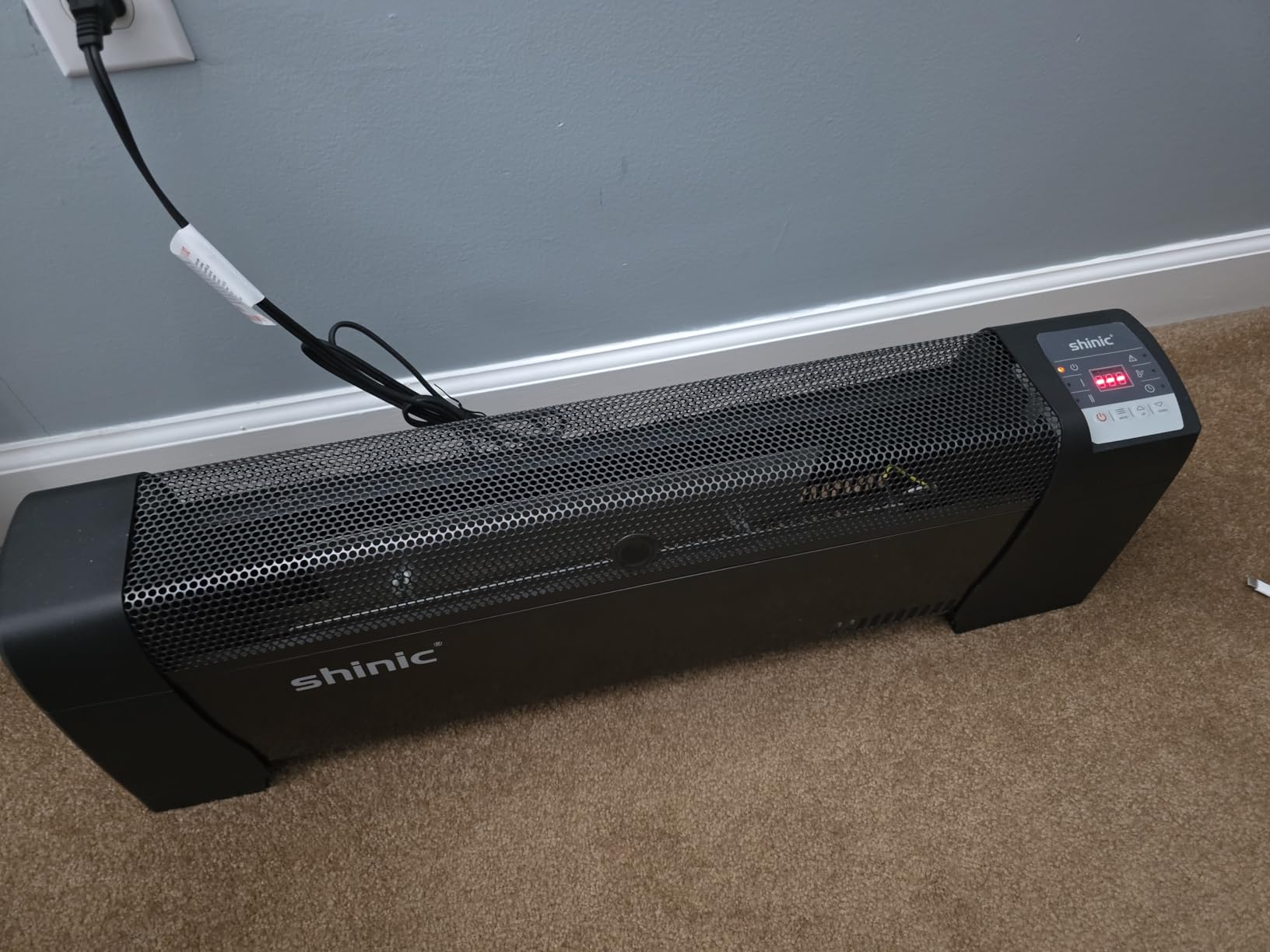
 shinic RW600-15 Digital 120V shinic RW600-15 Digital 120V |
|
Check Latest Price |
Two columns in that lineup do most of the sorting work. Voltage decides whether you need an electrician at all, and technology decides whether you are buying fast heat or long-lasting gentle heat. Everything else is placement and finish.
Convection vs Hydronic: Which One Belongs in a Basement?
Convection baseboard heaters put a hot element directly in the airstream. Room air enters the bottom slot, passes over the element, and rises along the wall and ceiling, creating a slow circulation loop with no fan anywhere in the loop. The result is fast response — you feel a difference in minutes — and a warm stripe on the wall directly above the unit.
Hydronic baseboard heaters seal the element inside a copper tube filled with a heat-transfer fluid. The fluid carries energy into the cabinet slowly, and the cabinet releases it steadily for a long time after the thermostat closes. Surface temperature stays lower, which makes the unit safer around children and pets, and the room feels more even because the heat is not switching on and off in bursts.
For basements specifically, hydronic wins on two counts and loses on one. It wins on surface safety in a playroom or finished media space, and it wins on comfort in a cold below-grade room where the thermostat would otherwise cycle constantly on a convection unit. It loses on cost and on the fact that a thermostat is sold separately on the model in this lineup — a detail that catches a lot of buyers off guard.
One common misconception: hydronic baseboard heaters are not connected to your boiler or water supply. Electric hydronic units are self-contained sealed systems. There is no plumbing to run and nothing to refill.
1. Comfort Zone CZ600 1500W – Quiet Room Heat With No Wiring Work
Comfort Zone Electric Baseboard Space Heater with Adjustable Thermostat, Dent-Proof End Panels, Overheat Protection, Tip-Over Switch, & Stay-Cool Body, Ideal for Home, Bedroom, & Office, 1,500W, CZ600
1500W convection at 120V
Claims 300 sq. ft. of coverage
Tip-over switch and overheat protection
Silent fanless operation
Pros
- Two heat settings with an adjustable manual thermostat
- Silent fanless convection for bedrooms and offices
- Tip-over switch plus overheat protection and stay-cool body
- Dent-proof end panels in a low-profile white housing
- Warms one room instead of the whole house
Cons
- Manual dial thermostat is less precise than a digital model
- 1500W output is modest for larger rooms in cold weather
- Warm-up is gradual rather than immediate
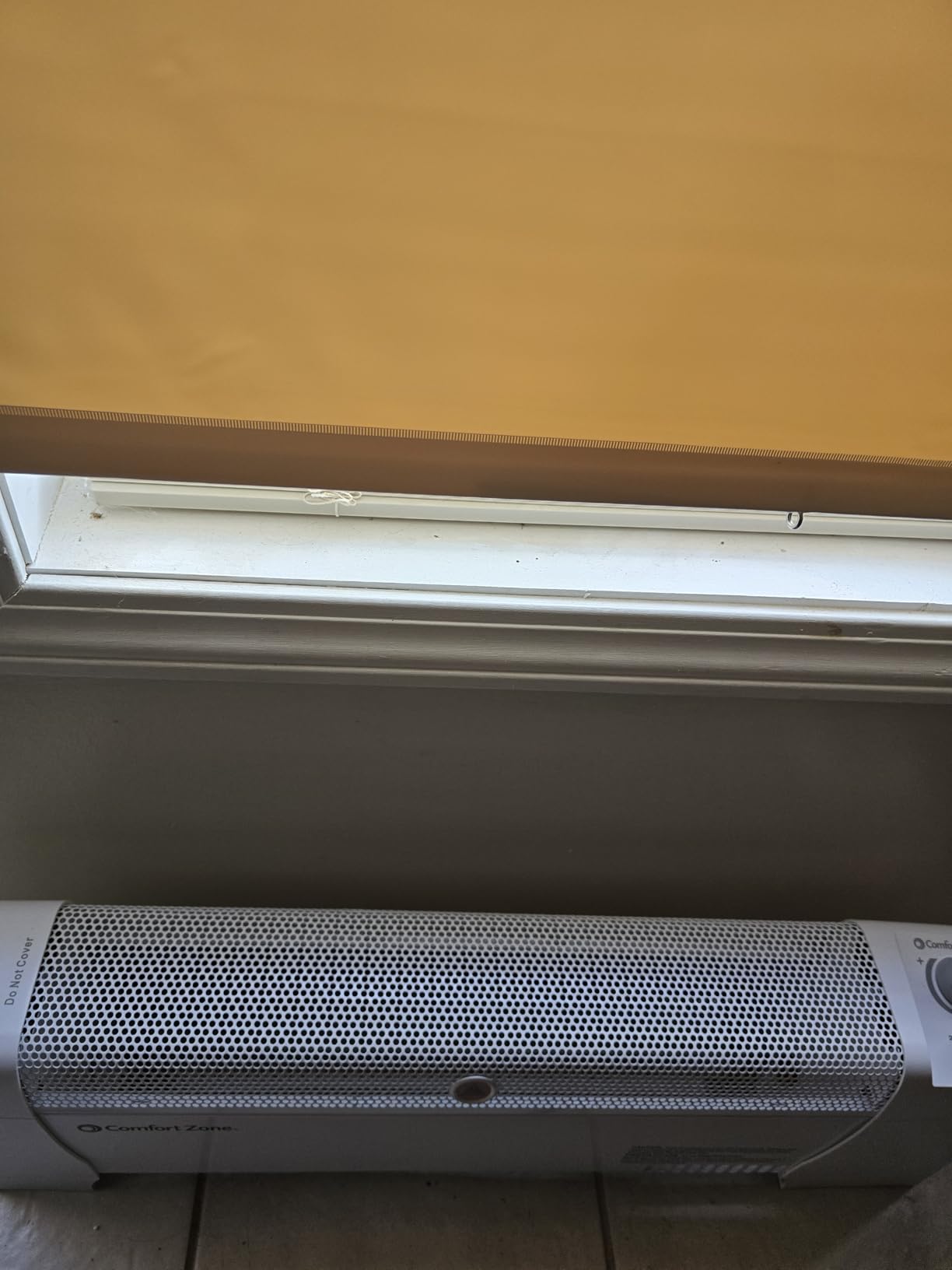
Our team kept coming back to this unit because of one number: more than 1600 ratings, which is roughly four times the review base of most permanent baseboard heaters on the market. That much history matters for a component that sits inches from a wall in a room where a failure would be expensive. When a product has that many owners, the failure modes stop being hypothetical.
In use it behaves exactly as a 1500 watt convection baseboard should. Room air enters the bottom intake, crosses the element, and rises. The cabinet itself stays cool enough to handle, and there is no fan noise at all, which matters if the basement is a media room. The two heat settings and the adjustable thermostat give you a dial, not a schedule.
For basement work specifically, this is the unit you reach for when the space is unfinished, the walls are bare, and pulling a new 240V line is not realistic this season. A 12.5 amp draw at 120V is the highest a standard 15 amp branch circuit allows, and a dedicated circuit is still the right call for continuous heating duty.
Coverage Claims and What 1500W Really Warms
The listing claims coverage up to 300 square feet and 5120 BTU of output. Owner reports are more conservative, and that gap is normal for convection units. In practice reviewers describe it as a strong fit for a bedroom, home office, or finished basement room rather than a full open-plan space. Basements lose heat through below-grade walls, so treat the coverage figure as an upper bound and size up if the room has a glass door or a wide window wall.
Safety Package and Damp-Room Suitability
Three separate protections are built in: a tip-over switch that cuts power if the unit is knocked, an overheat sensor that shuts it down on excessive internal temperature, and a stay-cool body. It is indoor-rated, not weather-rated, so it belongs inside the envelope of the basement rather than against an exposed foundation wall. Combined with a working sump pump and dehumidifier, that is a reasonable package for a space that sees occasional dampness.
Where It Falls Short in a Basement
The manual dial thermostat is the most common complaint, and it is a fair one in a room that needs to hold a narrow temperature band overnight. The 1500 watt figure is also honest but modest, and owners in cold weather note it takes sustained run time to noticeably warm a space. If your basement zone is above 250 square feet, this is the wrong class of heater.
2. Comfort Zone CZ650BWT Digital Baseboard – Scheduling That Works Before You Wake Up
COMFORT ZONE Digital Convection Baseboard Heater with Timer – White
1500W convection at 120V
Digital thermostat with display
Built-in timer for scheduling
Claims 150 sq. ft. coverage
Pros
- Digital display gives precise setpoint control
- Built-in timer schedules heating and shutoff
- Two selectable heat settings
- Silent fanless convection for sleep and work
- Overheat protection and tip-over safety switch
Cons
- Stated 150 sq. ft. coverage is small for a 1500W rating
- Countdown timer only with no weekly program
- Needs a full-length outlet run along the wall
This is the CZ600 with a brain, and for a basement the difference is bigger than it sounds. A basement is typically the last room to warm up and the first to go unused during the day. A countdown timer lets you start heat at 5:30am so the room is comfortable when you come downstairs, which is exactly the pattern owners describe wanting.
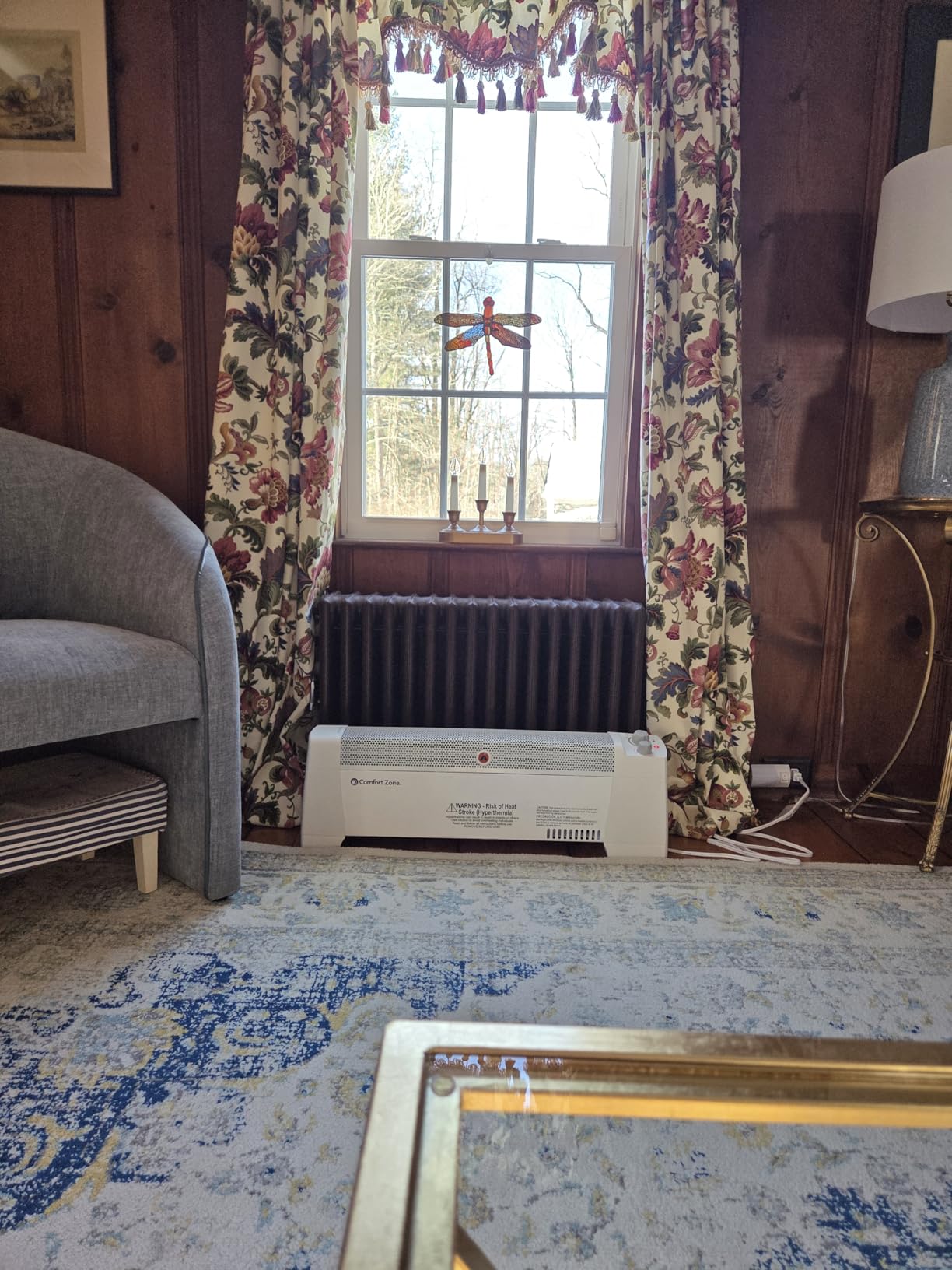
The floor-mount chassis is low and long at just over 35 inches, and the white housing disappears along a poured wall. Fanless convection means the only sound in the room is the occasional click of the element cycling.
The honest weakness is the coverage rating. The manufacturer lists 150 square feet for a 1500 watt unit, which is well under half the 300 square feet claimed by the closely related CZ600. Treat the 150 figure as the realistic number and you will not be disappointed, but do not use it to heat an open basement rec room.
Digital Control and the Timer Advantage
The electronic thermostat spans 35 to 95 degrees Fahrenheit and the display removes the guesswork from a dial. Reviewers consistently single out the timer as the reason the unit earns its rating, because in a below-grade space the temperature lags the thermostat by a long margin. A schedule compensates for that lag in a way a manual dial cannot.
Clearance, Outlets, and the Corded Reality
This is a corded 120V unit, so you need a receptacle within cord reach along the base of the wall. In a finished basement with baseboard trim removed and outlets on the upper third of the wall, that can mean extending an outlet. Plan for it before you buy, and keep the cord path clear of the convection intake and exit slots.
What Buyers Wish Were Different
Beyond the modest coverage figure, the most repeated note is the lack of a weekly program. If you want true zoned scheduling, you will need a smart plug or an external timer. Reviewers also point out that the 12.5 amp draw deserves a dedicated 15 amp circuit rather than sharing an existing receptacle circuit.
3. Fahrenheat FBE15002 1500W – The Basement Workhorse With a 45-Inch Footprint
Fahrenheat FBE15002 Portable Electric Baseboard Heater,1500 Watt, 120 Volt, 46″ Wide, White
1500W convection at 120V
5120 BTU output,250 sq. ft.
Linear high-temperature safety cutout
45 inch low-profile floor mount
Pros
- Completely fanless with no motor or fan noise
- Cool-touch steel casing eases safety concerns
- No moving parts to wear out
- Thermostat accuracy holds an even temperature
- Low-profile body fits under windows and along walls
Cons
- Strong manufacturing odor on first run that takes hours to vent
- Gradual heat rise better for steady warmth
- Back support feet are awkward to attach and detach
- 12.5A draw needs a dedicated circuit for continuous use
The Fahrenheat name matters in this category. It is a long-established manufacturer of hydronic and convection baseboard equipment, and owners mention US-made construction with local service and parts availability as part of why they bought it. The manufacturer is listed as Marley Engineered Products, the same company behind the Marley unit later in this roundup.
Fanless convection at 1500 watts and 5120 BTU is the sweet spot for a basement storage or workshop zone. The 45-inch body slides under a low window or runs along a wall where a 48-inch unit will not fit, and because there is no fan, dust from a stored-workshop corner is not blown into the breathing zone.
The single most-reported issue is not a defect but an experience: a strong new-product smell on first run that can take hours of venting to clear and is enough to set off a smoke alarm. Run the unit for several hours with a basement door open and a window cracked before anyone sleeps down there.
Why Fanless Convection Matters in a Basement
No moving parts means no motor bearing to wear and no fan blade noise to carry through a finished ceiling. It also means the unit does not redistribute the dust and allergens that settle in an unfinished basement. Reviewers report that the thermostat holds an even temperature with minimal cycling, which is exactly the behavior you want in a room that is hard to heat.
Thermostat Accuracy and Duty Cycle
This unit cycles on temperature rather than on a fixed timer, and owners report minimal temperature swing. In practice that means fewer on-off transitions per hour, which is the single biggest driver of how your electric bill behaves. Plan on a dedicated 15 amp circuit for continuous operation rather than sharing a general-purpose receptacle circuit.
Fit, Clearance, and the Feet Problem
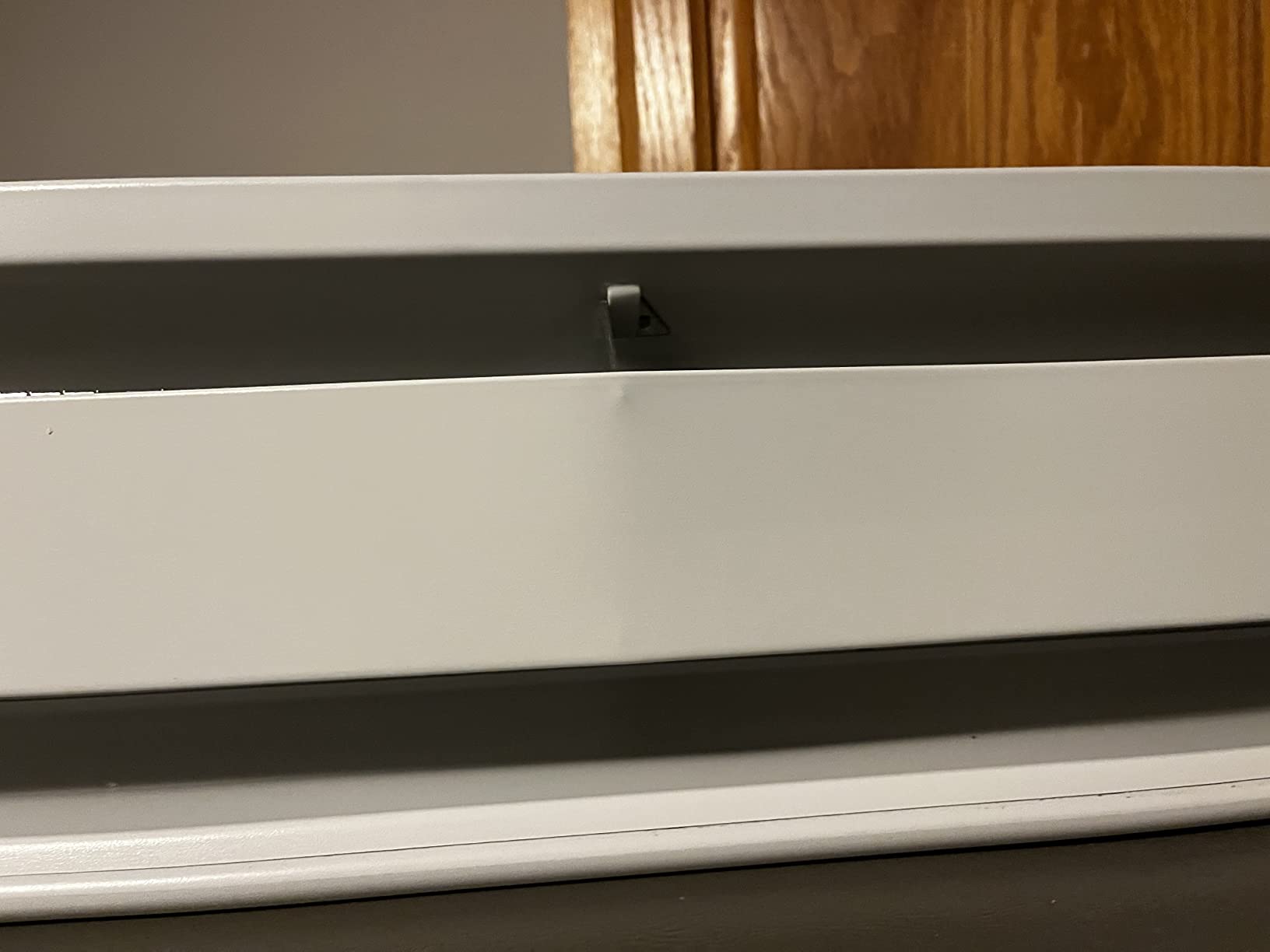
The low profile is the reason this unit earns a place in a basement. The recurring practical complaint is the rear support feet, which reviewers describe as awkward to attach and prone to detaching whenever the unit is moved. Set the feet properly and test them before you rely on the unit on carpet or a slightly uneven slab.
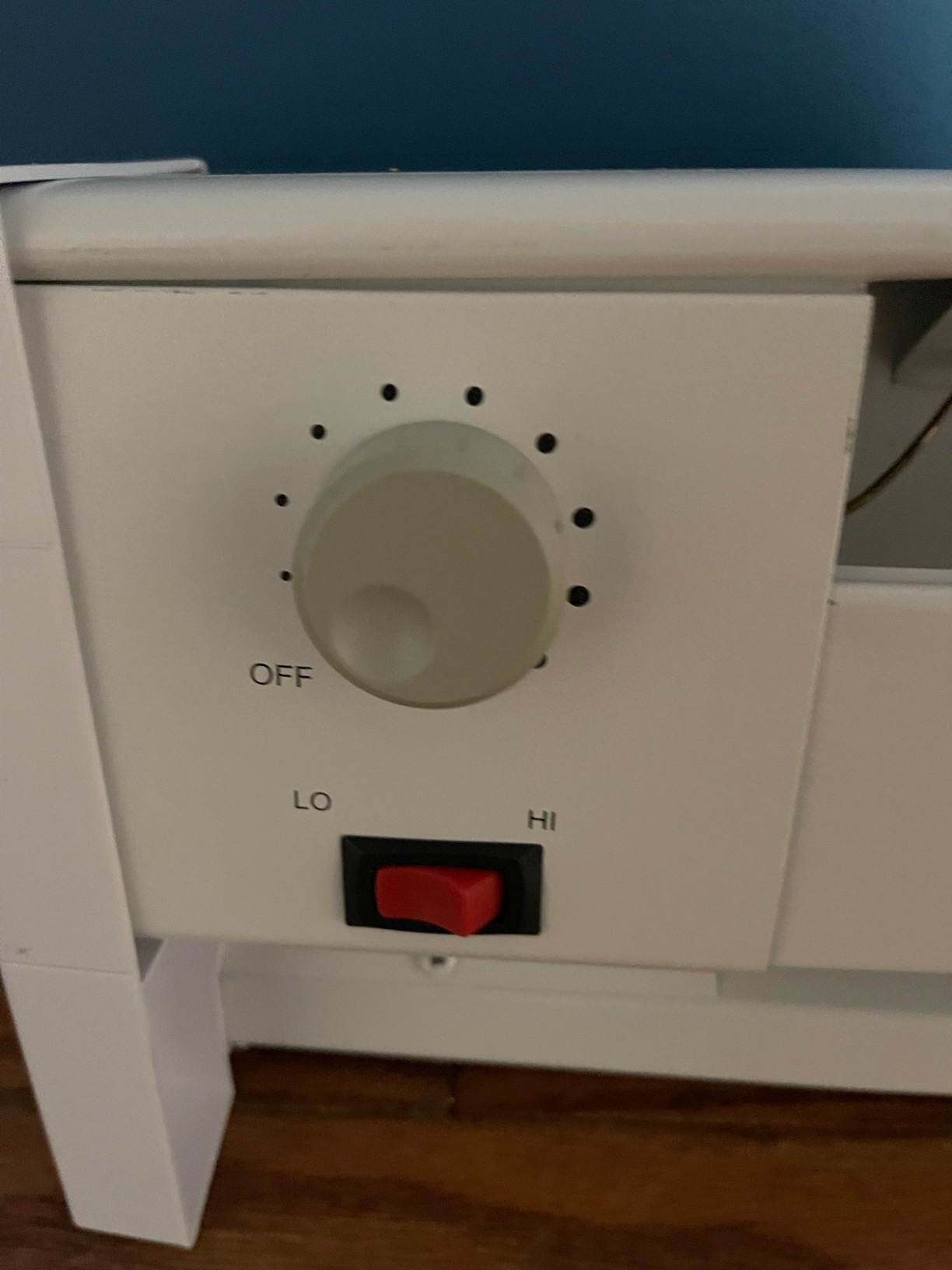
4. Cadet F Series 3F750W 36 Inch – The Permanent Install With a Lifetime Warranty
Cadet F Series 36″ Electric Baseboard Heater (Model: 3F750W, Part: 09952), 2560/1925 BTU, 240/208 Volt, 750/563 Watt, White
750W/563W at 240V/208V
2560/1925 BTU convection
36-inch wall or baseboard mount
Limited lifetime warranty
Pros
- Highest average rating in this lineup at 4.5 stars
- Universal wiring with pre-punched knockouts
- Runs very quietly and blends into the room
- Low 3.13A draw is easy on existing 240V circuits
- Limited lifetime warranty for long-term peace of mind
Cons
- Requires 240V hardwiring so it is not a plug-in unit
- No exposed-coil child safety guard included
- Needs several hours at full output to burn off factory oils
- Occasional units arrive with a bent casing or misaligned fins
This is the highest-satisfaction heater in the group, with 4.5 stars and 76 percent five-star ratings. It is also the one most people mean when they say they want a real baseboard heater rather than a space heater shaped like one. Cadet is a hardwired, wall-mounted, line-voltage unit designed to be part of the building.
At 750 watts on a 240V circuit it draws just 3.13 amps, which is a genuinely useful number in a basement with an older 100 amp panel. Reviewers frequently use it as a replacement for older baseboards, and the universal wiring pattern with pre-punched knockouts makes the swap straightforward for anyone comfortable with a wire stripper.
It is also the unit most often paired with a matching tamperproof thermostat, which reviewers mention as a specific benefit in hallways and rental-adjacent spaces where you do not want a tenant cranking the dial to maximum.
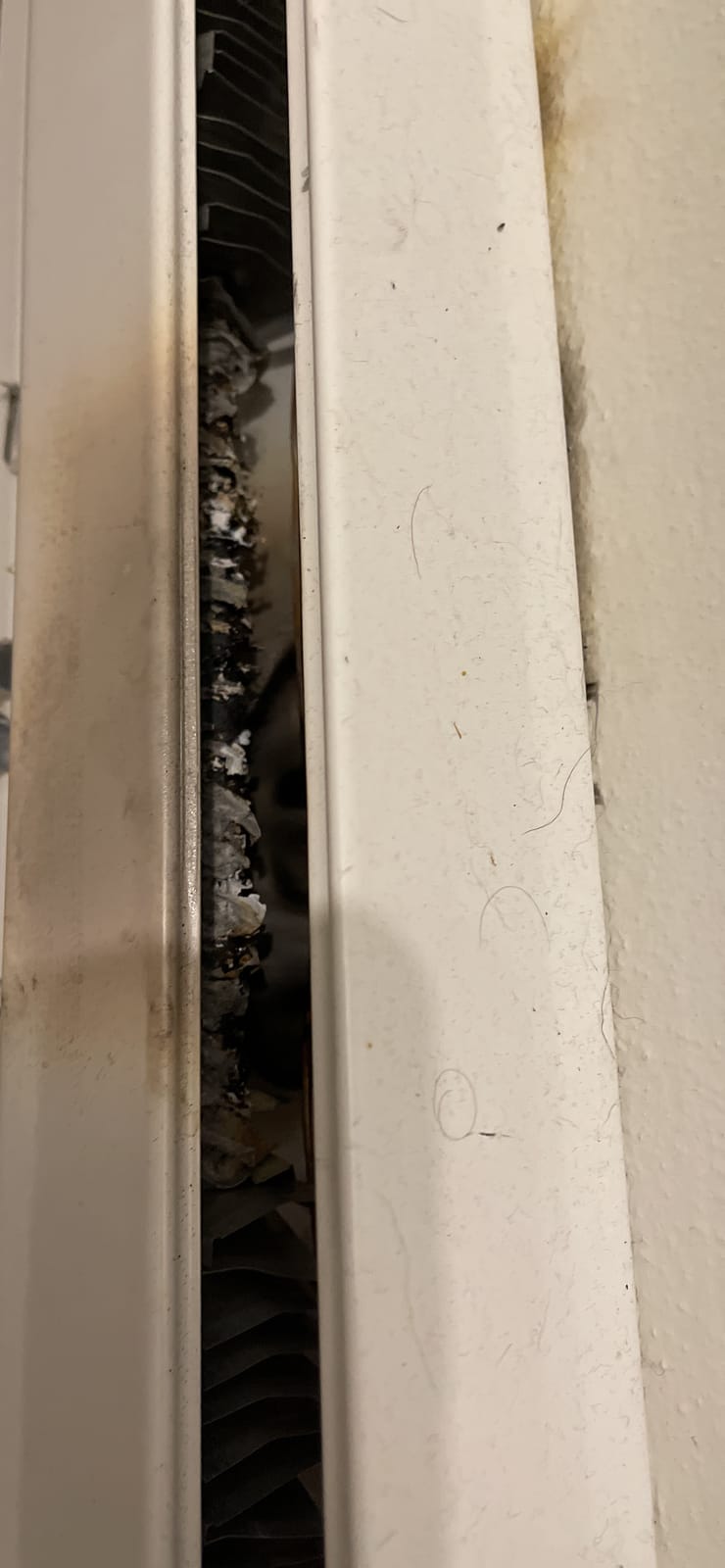
Multi-Watt and Dual-Voltage Capability
At 240V the unit delivers 750 watts and 2560 BTU. Wired for 208V — common in older buildings and in some apartment-derived panels — it drops to 563 watts and 1925 BTU. That flexibility is the reason to choose this heater for a house with an unusual panel, because you are not locked into a single supply configuration.
Installation Details That Decide Success
Cadet is widely praised for clear wiring instructions and for a universal wiring arrangement that removes guesswork. The physical footprint is 4 inches deep by 36.3 inches wide by 7 inches high, and it can be mounted on the wall or on the floor depending on your trim detail. Mount it with the intake slot clear — reviewers who had trouble report almost always trace back to a blocked or carpeted intake.
Factory Odor, Damage Reports, and What to Check on Arrival
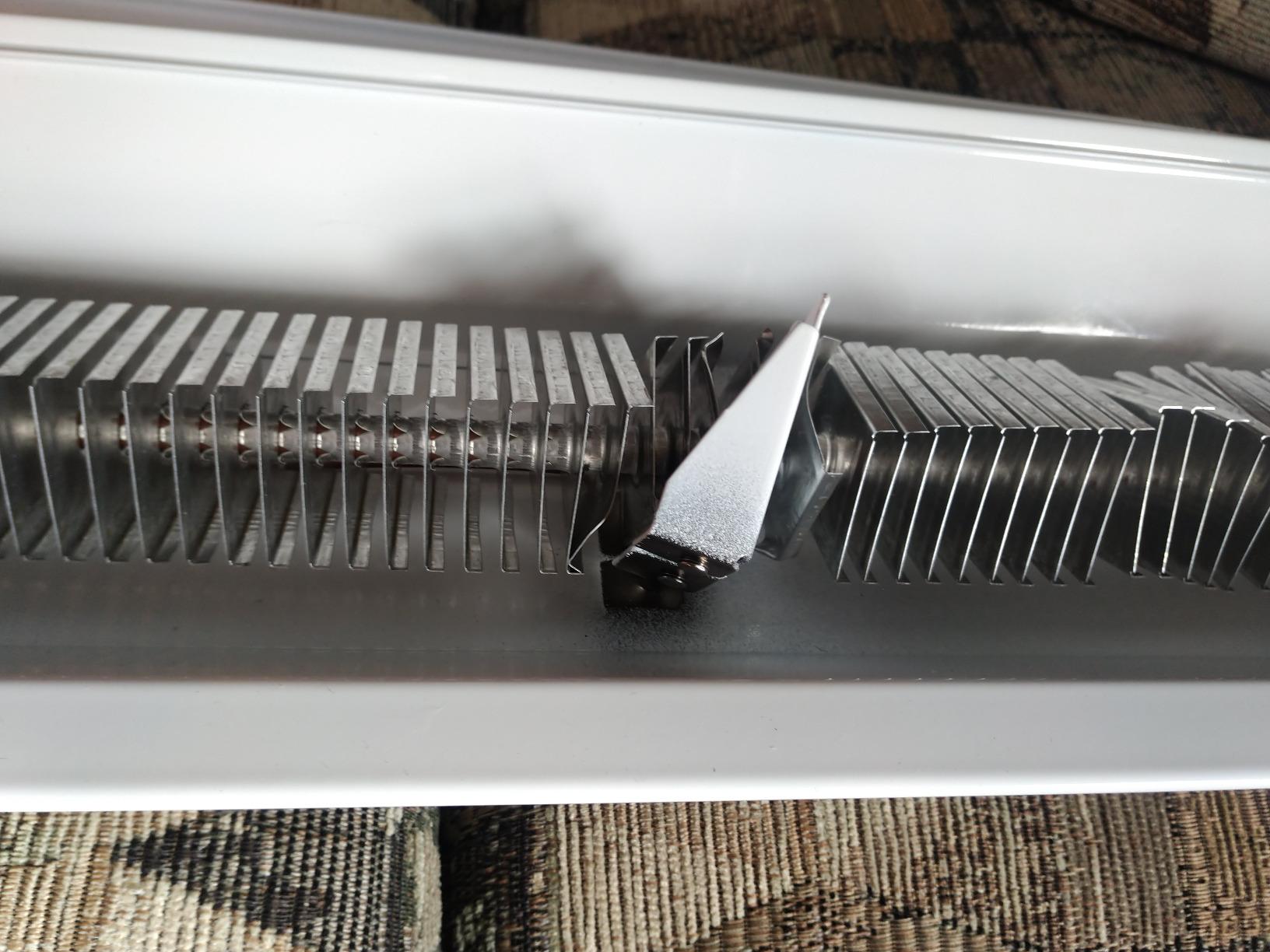
Two recurring themes. First, run the unit for several hours with a window open to burn off factory oils, a step that appears in most owner guidance for this heater. Second, a small number of reviewers report units arriving with a bent casing or misaligned internal fins. Inspect the cabinet and the element on arrival, before installation, because that is when a replacement is painless.
5. Marley 2542NW 2 Foot 240V – Compact Hardwired Heat for Small Rooms
240V 2′ BASEBOARD HEATER
2500 watt rated convection output
240V hardwired,2-foot slim housing
UL listed with overheat protection
Large wiring compartment
Pros
- Even draft-free convection heat without hot and cold zones
- Fanless airflow avoids blowing dust and allergens
- Large wiring compartment with dual knockouts and cable clamp
- UL listed with overheat protection
- Compact 2-foot format fits tight rooms and short runs
Cons
- Requires 240V hardwired installation
- Shorter 2-foot length delivers less heat than longer runs
- Limited review count means less long-term owner feedback
Sometimes the reason a basement heating plan fails is purely spatial. A stair landing, a half bath, a mechanical room corner — these spaces have six feet of usable wall, not four. The Marley 2542NW is a 2-foot unit that solves exactly that, and it carries a 4.4 star average from 101 reviews with 71 percent five-star ratings.
It is convection, fanless, and UL listed with overheat protection that shuts the unit down if the air intake is blocked. Reviewers consistently credit the even floor-to-ceiling warmth with no hot and cold zones, which is a better result than portable heaters usually deliver.
The specification sheet lists a 2500 watt rated output on a 240V circuit, and the maximum thermostat setting is listed at 130 degrees Fahrenheit. The unit is slim at just under 5 inches deep.
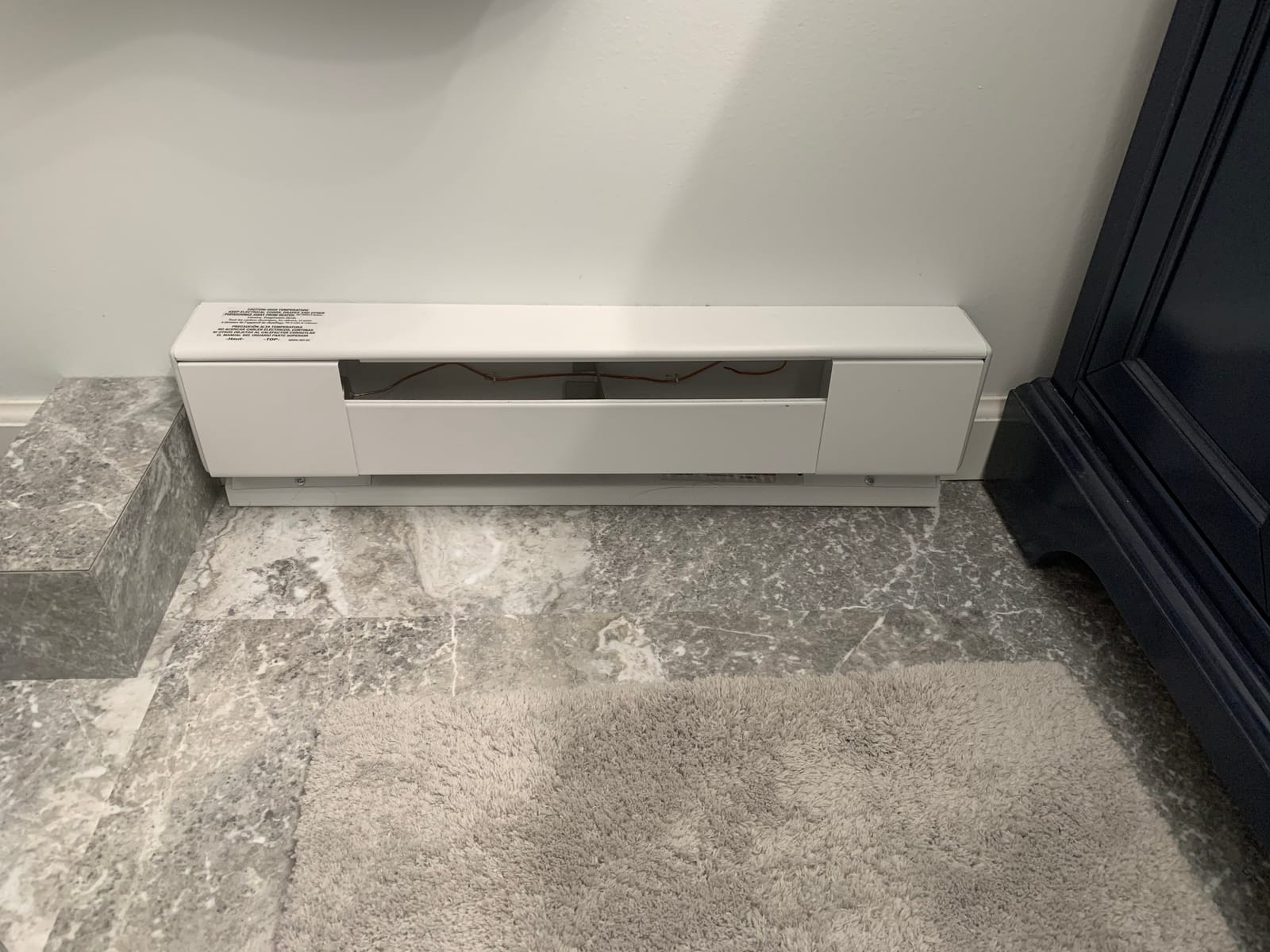
Why Short Bodies Solve Real Basement Problems
Baseboard heat works by drawing cold air in low and pushing warm air up the wall. A short body does that just as well as a long one as long as it is not crammed into a corner where the convection loop gets blocked. The 2-foot format lets you place it on an exterior wall segment between a window and a doorway, which is precisely where a basement needs the heat.
Wiring That a Contractor Will Not Fight
The large wiring compartment, dual knockouts, and built-in cable clamp are the most-praised practical details in reviews. Those are the features that decide whether a hardwired install is a clean 20-minute job or a return visit. The unit weighs 5 pounds and mounts as a floor-standing or wall unit.
Limitations Worth Weighing
The 2-foot length is inherently a lower-output footprint than a full-length baseboard, so plan to use more of them in a large zone rather than one. The review count is thin at 101 ratings, which means less long-term owner data than the Cadet or Comfort Zone models here. And it still needs a 240V circuit — there is no plug-in version in this lineup.
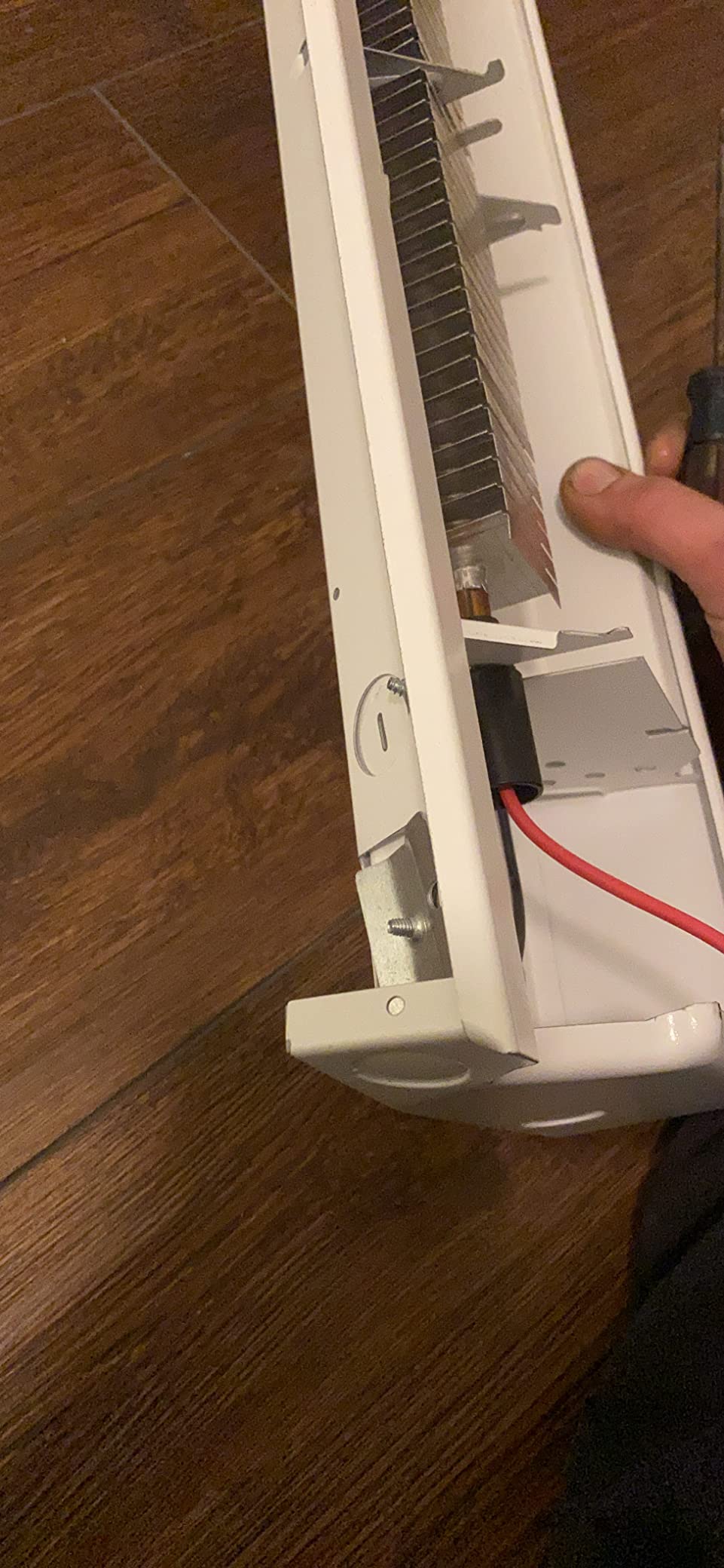
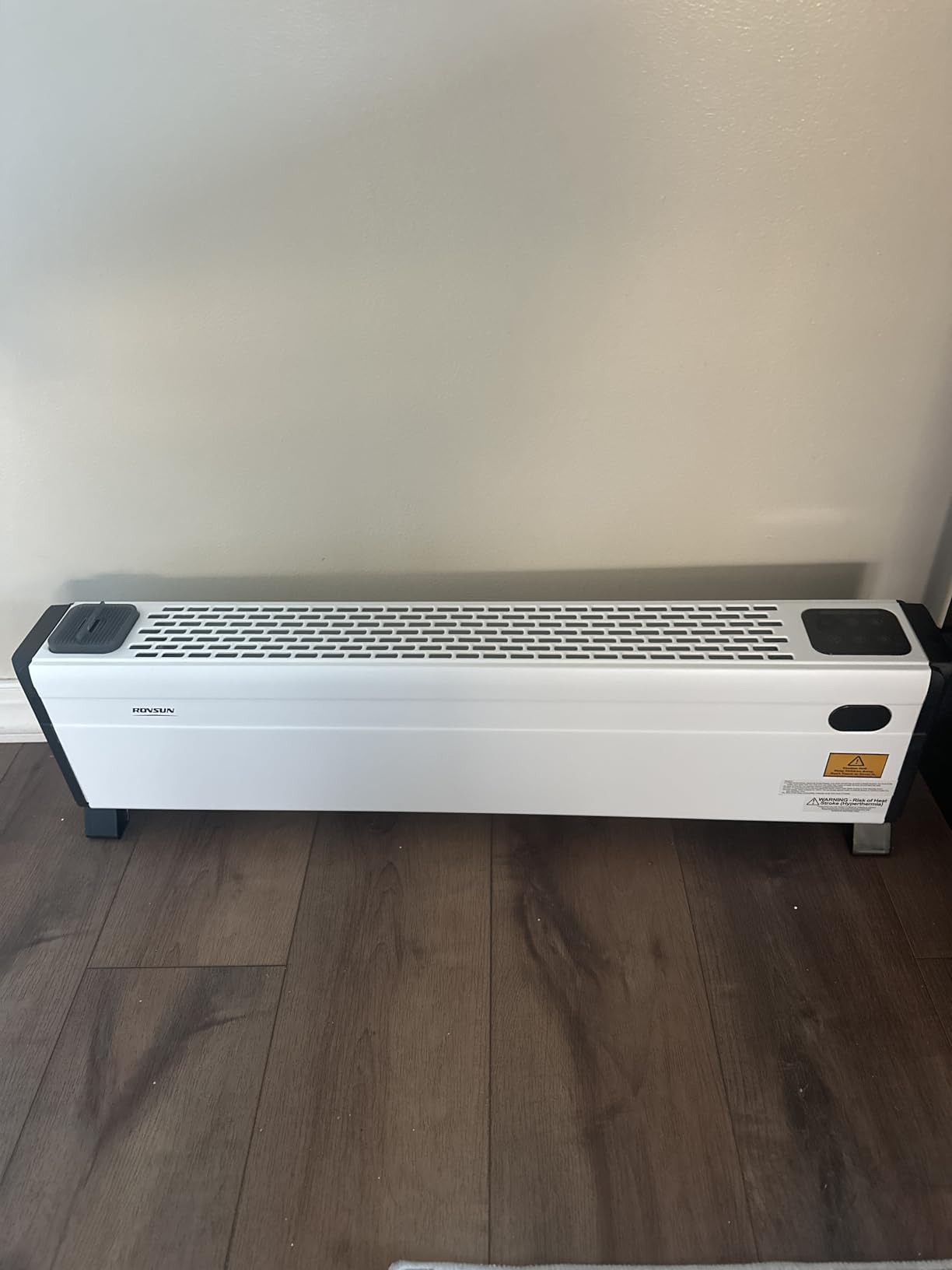
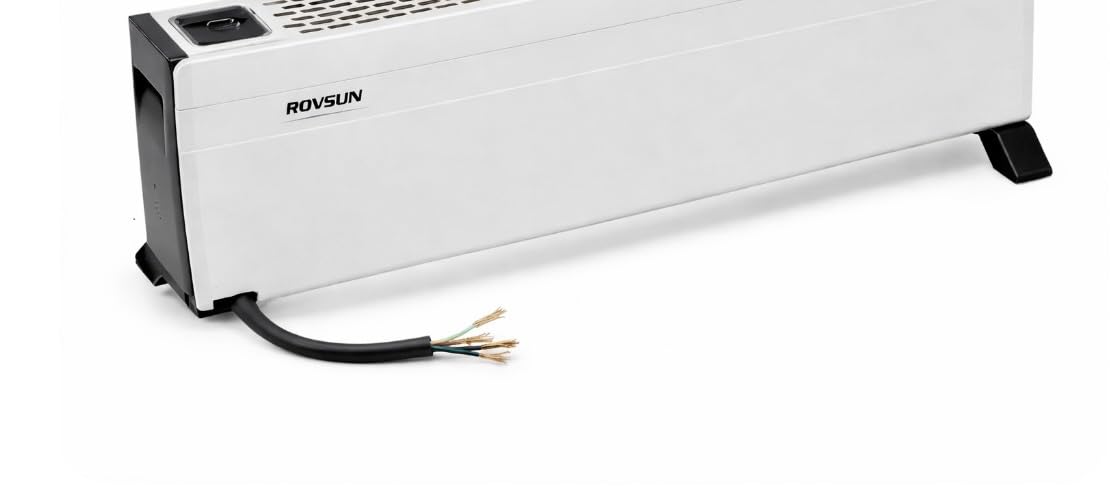
6. ROVSUN 48 Inch Baseboard with Remote – The Feature-Heavy Plug-In Option
ROVSUN 48” Electric Baseboard Heater with Remote, Convection Space Heater
1500W convection at 120V
Claims up to 400 sq. ft. coverage
Remote control and LED touch panel
Built-in humidifier
Pros
- Remote plus LED touch panel for control from a seat
- Three adjustable heat settings
- Widest coverage claim in this lineup
- Built-in humidifier offsets dry winter air
- 12-hour timer for a preset schedule
- Child lock and tip-over protection
- Low-noise fanless operation
Cons
- Long 48-inch body is bulky for smaller rooms
- 4.0 star average with 13 percent one-star reviews
- Child lock can add steps to everyday adjustments
This is the only unit in the lineup with a built-in humidifier, and in a winter basement that is a real feature rather than a gimmick. Basement air is often both cool and dry once the heating runs, and adding moisture as it heats is a genuine comfort gain. It pairs with a remote control and a full LED touch panel for temperature, power, and timer.
Three heat settings, a 12-hour timer, child lock, and tip-over protection round out a feature set that is unusually generous. The fanless convection core keeps noise low for sleeping or working. At 48 inches it is the longest unit in this roundup, which cuts both ways.
Be measured about this one. The 4.0 star average carries a 13 percent share of one-star reviews, which is a wider spread than the other units here and a signal that quality varies more between production runs. For a permanent basement install we would lean toward a hardwired model; for seasonal supplemental heat, this is a capable option.
The Humidifier Question in Below-Grade Rooms
Adding moisture to basement air does two useful things. It offsets the dry feeling that comes from running electric heat in winter, and it can help keep static discharge down in a finished room. It is not a substitute for a dehumidifier in summer, where the goal is the opposite. Owners who like the feature report the air feels noticeably more comfortable during long cold stretches.
Control Surface and Household Disruption
The remote and LED touch panel cover power, temperature up and down, timer, and heater on/off. The 12-hour timer is longer than the countdown offered by the digital Comfort Zone and covers a typical overnight-plus-morning block. The child lock prevents accidental changes, though reviewers note it can add friction to everyday adjustments in a busy room.
Footprint, Coverage, and Where It Does Not Belong
The 400 square foot coverage claim is the widest in this lineup, but claims like that assume a well-insulated, draft-free room. At 48 inches long and 9.3 inches tall, the unit is bulky — it will dominate a small finished room and it will not tuck under a low sill. Expect to place it along an open wall rather than in a tight corner.
7. Dimplex LC2005W31 20 Inch Linear Convector – Big Warmth in a Tiny Footprint
DIMPLEX NORTH AMERICA LC2005W31 500W 20″ White Base Heater
500W/375W at 240V/208V
20-inch body up to 42 percent smaller
Top heat discharge up to 40 percent faster
Shark-fin blade element
Pros
- Compact 20-inch body solves tight-space installs
- Very quiet compared with older heat registers
- Stylish low-profile look for bathrooms and small rooms
- Surprising heat output for its small size
- Shark-fin blade element improves transfer and element life
- Weighs only 3 pounds so it is easy to reposition
Cons
- 500W output is modest and needs a 240V circuit
- Mounting standoffs are cheap plastic parts that fit loosely
- Some units arrive bent or partially unassembled
- Higher price relative to the wattage delivered
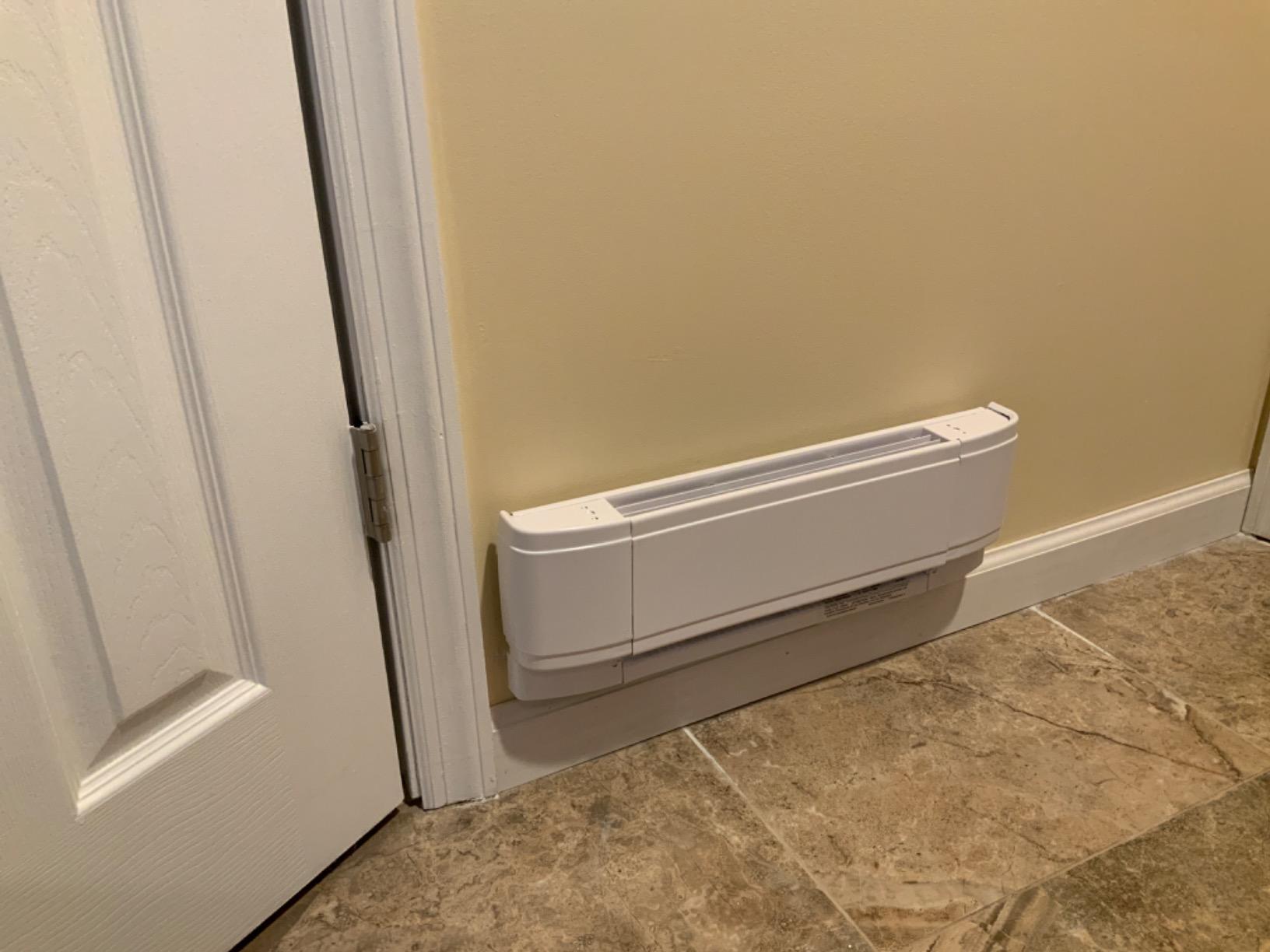
Dimplex is one of the most recognized names in electric baseboard heat, and the linear convector line is its answer to the problem of short wall runs. This 20-inch model is listed as up to 42 percent shorter than a conventional baseboard, and buyers consistently confirm that it fits where nothing else will.
The mechanical story is a shark-fin blade element mounted on a steel tubular sheath. Dimplex claims faster heat discharge from the top of the unit, which pushes warm air toward the center of the room instead of letting it pool along the wall. Reviewers back up the quiet operation, calling it noticeably better than older heat registers.
It weighs 3 pounds, so it is also the easiest unit in this roundup to reposition during a remodel, and that is a real advantage in a basement where layout decisions often come after drywall.
When 500 Watts Is the Right Number
500 watts sounds small until you realize this unit is aimed at the spaces larger baseboards cannot serve: a basement half bath, a stair landing, a small study nook. The listing also claims 300 square feet of coverage, though owners in colder conditions describe performance as better suited to enclosed small rooms than to open ones. Size by function, not by the number on the box.
The Standoff Problem and How to Handle It
Mounting standoffs are the most repeated complaint in reviews, described as cheap plastic pieces that fit loosely and can come loose once installed. If you install this unit, use your own fasteners through the cabinet or into the studs rather than relying on the supplied spacers alone. That single change removes most of the complaints associated with this model.
Durability Details Worth Noticing
The element is fully enclosed in a steel sheath, which the manufacturer describes as improving both life expectancy and rust resistance. That matters in a basement where humidity is a standing condition rather than an occasional event. The slim white housing at 2.38 inches deep also tucks neatly into a finished wall corner.
8. Dimplex LC3010W31 30 Inch Linear Convector – Double the Output in the Same Slim Family
Dimplex 30″ Linear Convector Electric Baseboard Heater (Model: LC3010W31), 240V, 1000W, White
1000W at 240V
300 sq. ft. coverage
Up to 42 percent shorter body
Full-length automatic overheat shutoff
Pros
- 1000W output for a 240V room in a slim body
- Up to 42 percent shorter than conventional baseboards
- Shark-fin blade element on an enclosed steel tubular sheath
- Full-length automatic overheat shutoff
- Powder-coated finish resists fading and abrasion
- Quiet fanless convection
Cons
- Requires 240V hardwiring
- 4.0 star average with 13 percent one-star reviews
- Higher price than conventional baseboards of similar wattage
- Fewer than 60 reviews limits long-term confidence
If the 20-inch Dimplex is too small for your room, this is the same design philosophy at twice the output. At 1000 watts on a 240V circuit, rated at 4.8 amps, it delivers 1000W for rooms up to 300 square feet while still fitting where a full-length baseboard will not go.
The safety design is stronger than most in this category. A full-length automatic overheat shutoff spans the entire element, and the cabinet carries a polyester and epoxy powder coating that resists fading and abrasion. The element is a nickel chromium unit fully enclosed in a steel sheath, which the manufacturer credits with longer life and rust resistance.
Its 4.0 star average from 57 reviews is the thinnest review base of the hardwired units here, with 13 percent one-star feedback. That is not a dealbreaker for a component with a straightforward design, but it does mean you are buying on specification rather than on accumulated owner history.
Why 1000W at 240V Is the Sweet Spot for Zoning
At 4.8 amps, this heater is easy to pair on a panel and gives you a clean 1000 watt increment per room. That granularity is what makes basement zoning work: two rooms at 1000 watts each is a very different load profile on a panel than a single 2000 watt heater, and it gives you independent thermostats per room.
Surface Finish and a Damp Environment
Polyester and epoxy powder coating is the finish detail that matters most below grade. Basement humidity and a working dehumidifier will still leave condensation on a cold cabinet, and a powder-coated steel shell handles that far better than a painted or bare surface. The enclosed steel-sheathed element is the other half of that corrosion story.
Where the Trade-Off Sits
You pay more per watt than a conventional full-length baseboard, and the 30-inch body still needs 240V wiring. Owners who moved up from the 20-inch model report the doubled output as the deciding factor. The thin review base is the main reason we did not push this unit higher in the ranking.
9. KING 3K1207-BW K Series – Permanent 120V Heat Without a 240V Line
KING 3K1207-BW K Series Baseboard Heater, 3′ / 750W / 120V, Bright White
750W natural convection at 120V
Wall-mount 36-inch format
Aluminum ribbon fin element
7-year limited warranty
Pros
- 120V hardwired avoids the need for a 240V circuit
- Crushproof aluminum ribbon fin element for durability
- Full-length safety cutout for automatic overheat protection
- Completely noise-free natural convection
- Dent-resistant die-formed cover in bright white
- 7-year limited warranty
- Compact 36-inch width fits bedrooms and dorm rooms
Cons
- Hardwired install still requires running 120V wiring
- Only 54 reviews means less long-term owner feedback
- 750W covers a smaller zone than higher-wattage 240V units
- Wall-mount design is fixed rather than portable
This unit solves a problem that rarely gets discussed: you want a permanent hardwired baseboard, but you do not have a 240V circuit and do not want to add one. The KING K Series delivers 750 watts of natural convection on 120V, permanently mounted, with a full-length safety cutout.
Reviewers are clear that its 120V hardwired configuration is often the deciding factor in rooms where running a 240V line is impractical. It is a legitimate middle ground between a plug-in space heater and a full 240V baseboard — less conspicuous, more reliable, and controllable by a wall thermostat, but with lower output.
It carries a 7-year limited warranty, which is the second-longest coverage in this lineup behind the Cadet F Series, and the die-formed dent-resistant cover keeps the profile clean in a finished room.
Element Design and Long-Term Durability
The aluminum ribbon fin element is built with a crushproof design, which addresses the most common way baseboard elements fail: physical damage during construction or from moving furniture. Combined with a 7-year warranty, this is the construction-focused choice in the lineup. It also draws 12.5 amps on 120V, so it belongs on its own 15 amp circuit.
Why Silence Is Non-Negotiable in a Finished Basement
People converting basements into living or media spaces consistently describe noise as the deciding factor. A natural convection heater with no motor produces nothing to hear. The KING is 36 inches wide and just under 7 inches tall, and the dent-resistant cover is a small detail that matters when a laundry basket ends up a few inches from the cabinet.
The Limits of 750W at 120V
Be realistic about the ceiling. 750 watts covers a smaller zone than any of the 240V units here, and a basement with poor insulation will need several of these to heat a large open area. The review base is also the thinnest in the roundup at 54 ratings. If your basement is large, this is a unit for the small finished room rather than the whole space.
10. BEYOND HEAT BH650 – Dual-Wattage Digital Control in a Compact Body
BEYOND HEAT Electric Baseboard Space Heater 1500W with Digital Thermostat
750W/1500W dual heat settings
Digital thermostat from 40F to 90F
Stay-cool body with dent-proof end panels
ETL approved
Pros
- Digital thermostat with a readable display
- Two heat settings that match small and medium rooms
- Stay-cool body and dent-proof end panels
- Tip-over switch plus overheat protection for dual coverage
- Silent convection suited to bedrooms and offices
- Compact 29-inch body that moves easily between rooms
- ETL approved for US safety standards
Cons
- Timer is limited compared with longer-duration programmable models
- 16 percent share of 3-star reviews reflects mixed control experiences
- 1500W output suits small to medium areas only
- Warm-up takes time on a radiant element
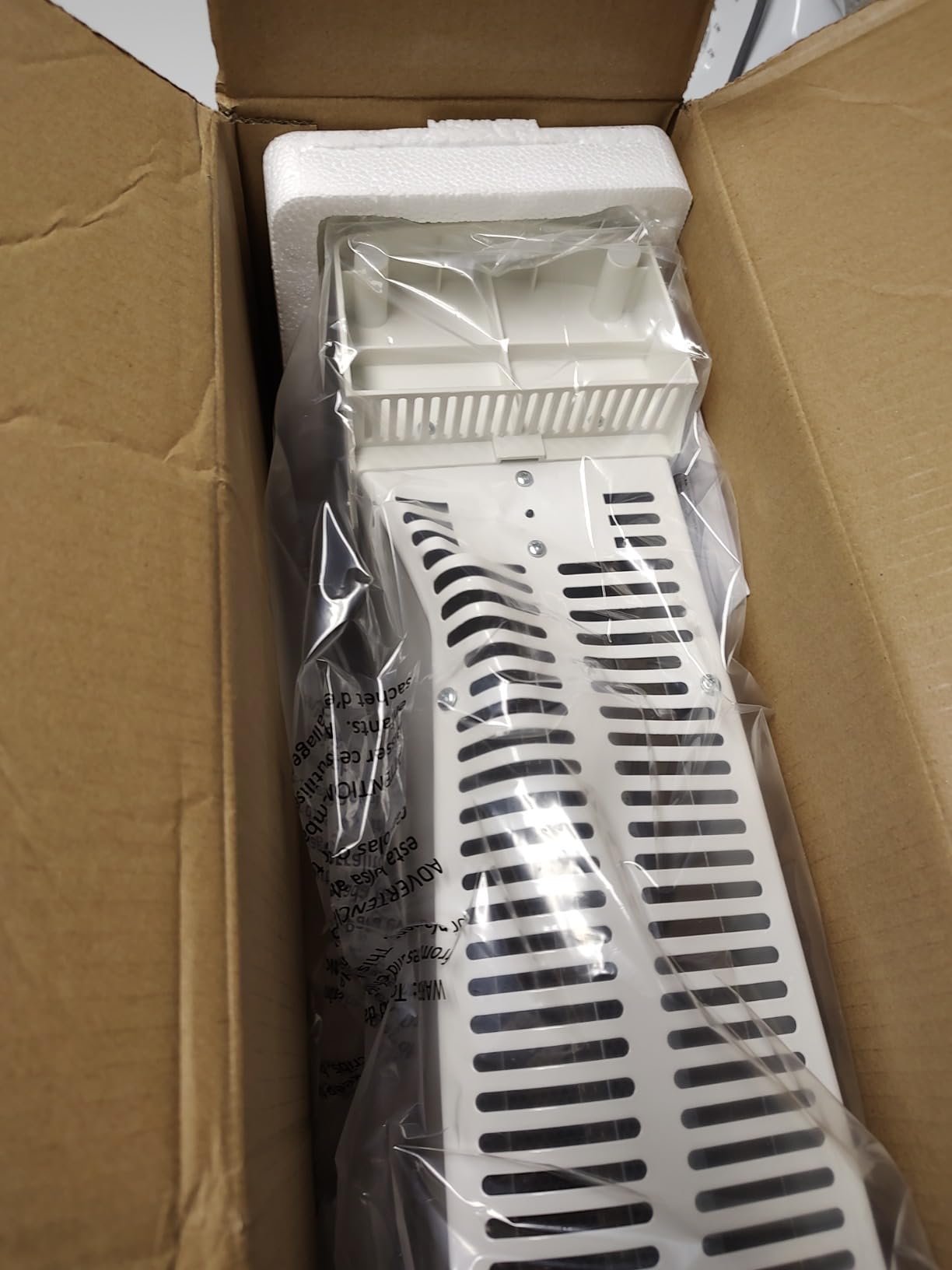
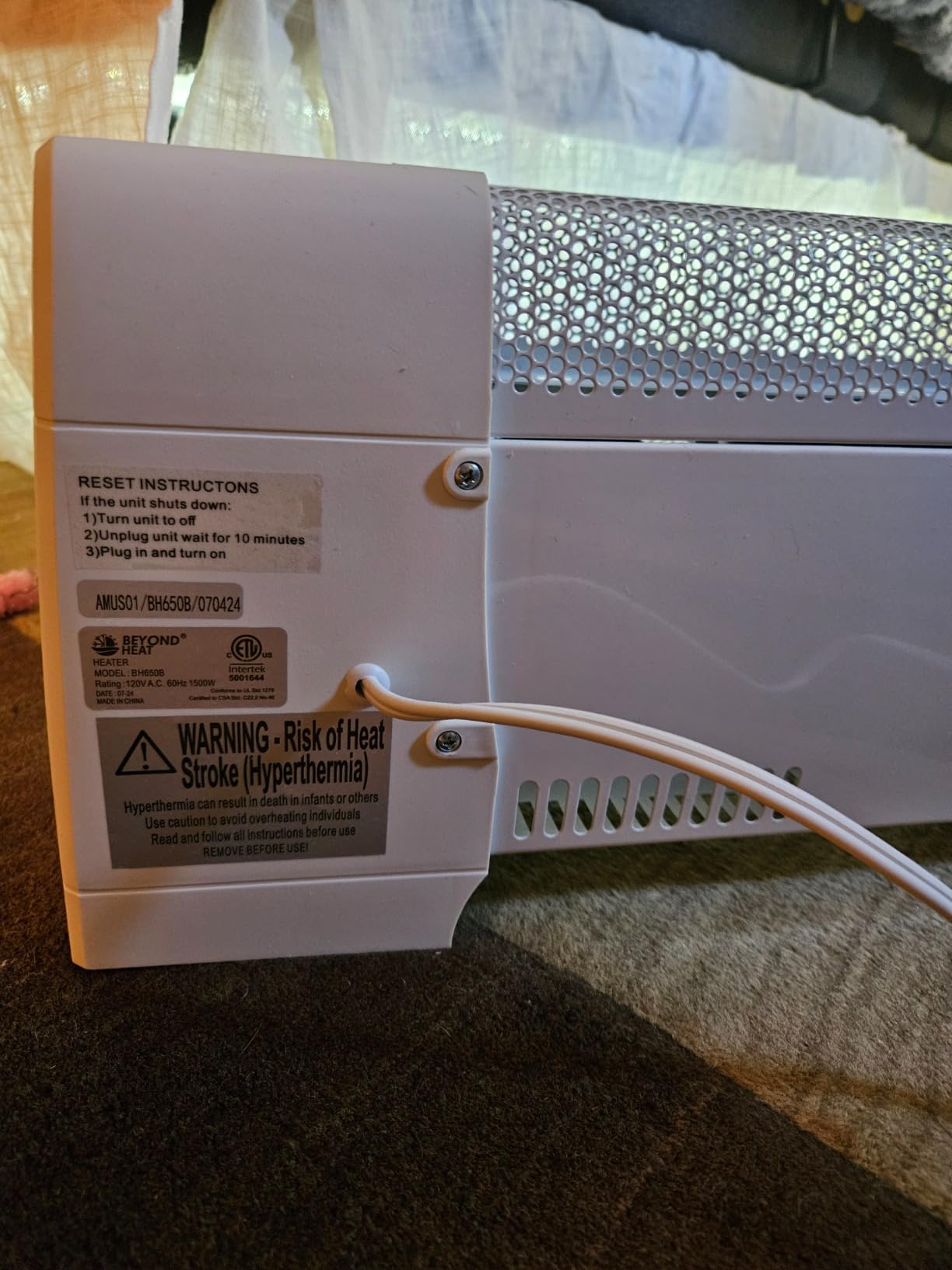
The BH650 is the rare budget unit that takes safety seriously enough to name certifications and components. It is ETL approved for US standards, carries both a tip-over switch and an overheat protection system, and has a stay-cool body with dent-proof end panels — a package normally associated with higher tiers.
The dual 750 and 1500 watt settings let you match output to the room rather than running full power all the time. The digital thermostat spans 40 to 90 degrees Fahrenheit with a display, and owners repeatedly cite the clear readout as the reason they prefer it over a dial.
Its 4.2 star average comes with a 16 percent share of three-star reviews, which reviewers tie to inconsistent temperature control accuracy. Treat that as a known rough edge rather than a disqualifier, and check the setpoint holds steady in the first week.
Why Dual Wattage Matters for Basement Zones
Two heat settings are not a gimmick in a space like a basement. A storage room that only needs to stay above freezing does not need 1500 watts, and a finished study during working hours does. Running the lower setting when the space is not occupied meaningfully reduces energy use over a season, which is the argument basement owners make when they describe baseboard heat as cheap to operate.
Safety Components and What ETL Approval Means
ETL approval is an independent testing mark, and on a permanently energized heating device it is worth more than a marketing claim. Pair it with the tip-over switch, the overheat sensor, and the stay-cool body and you have the same class of protection as the permanent units in this roundup. That is unusual for a portable-format heater.
Scheduling Limits and the Compact Footprint
The timer is shorter and less capable than models offering longer scheduling windows, and there is no weekly program. At just under 29 inches and about 5 inches deep, however, the unit is the most compact option with a digital thermostat here, which makes it easy to move between a finished room and a utility space as seasons change.
11. Cadet SoftHeat EBHN750W 47 Inch Hydronic – The Safer Surface in a Kids’ Basement
Cadet SoftHeat 47″ Electric Hydronic Baseboard Heater (Model: EBHN750W, Part: 13458), 2560/1925 BTU, 240/208 Volt, 750/563 Watt, White
Hydronic with self-contained fluid
750W/563W at 240V/208V
2560/1925 BTU output
Lower surface temperature than standard
Pros
- Runs warm but not dangerously hot to the touch
- Retains heat for longer-lasting gentle warmth after cycling
- Whisper-quiet with reduced allergens for bedrooms and nurseries
- Heavier-gauge metal resists denting
- Simple wiring and even heat reported by owners
Cons
- Thermostat must be purchased separately
- Packaging coverage claims conflict with the listing
- Requires 240/208V hardwiring so it is not a plug-in unit
This is the hydronic option in a roundup otherwise dominated by convection, and the reason to buy it is surface temperature. The sealed fluid system means the cabinet runs warm rather than hot, which is the single most important characteristic if the basement below you is a playroom, a bedroom, or a finished space where a child might lean against the wall.
Owners also report that it retains heat and continues giving off warmth after the thermostat cycles off, which is the thermal mass advantage of the sealed copper tube design. That longer, gentler output is exactly what a poorly insulated below-grade room needs, because it reduces the on-off cycling that makes cheap heaters feel uneven.
Two things to plan for. The thermostat is not included, and the fluid system is entirely self-contained — no plumbing, no boiler connection, nothing to refill.
Thermal Mass and the Case for Steady Heat
Thermal mass is simply the ability of a component to store heat. A convection cabinet with an exposed element dumps its energy quickly and goes cold when the thermostat opens. A fluid-filled cabinet releases energy over a much longer window. In a basement where walls bleed heat continuously, that longer release means the room temperature holds steadier and the thermostat cycles less.
Surface Temperature and Household Safety
This is the reason hydronic units exist in the residential market. The cabinet runs warm to the touch rather than dangerously hot, and owners describe the experience as hot-water-like radiant warmth. If you have small children or a pet that sleeps near the wall, that difference is not cosmetic — it removes an entire category of household risk.
Specification Gaps to Plan Around
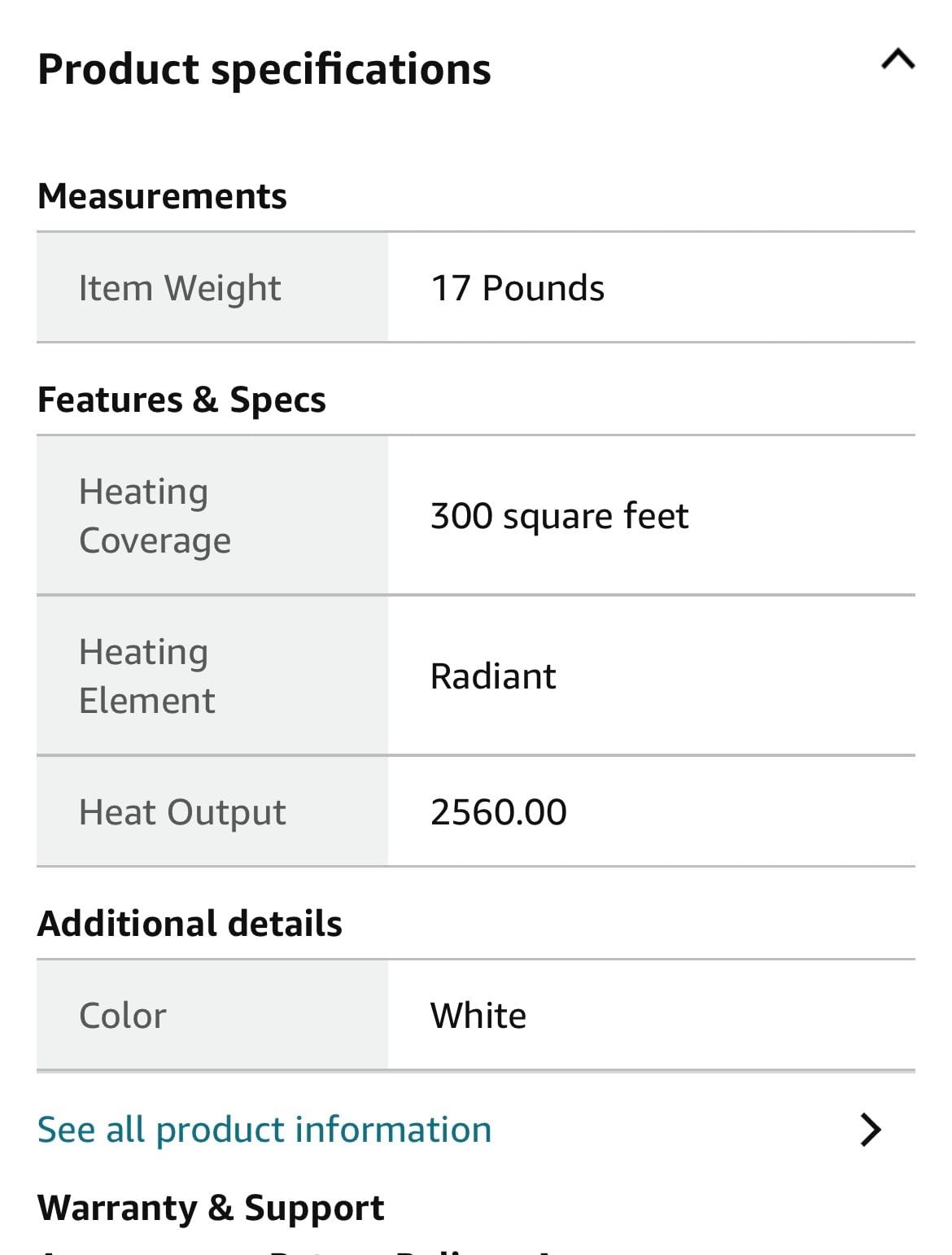
There are two practical wrinkles. The thermostat is sold separately, so budget for a line-voltage model. And a minority of reviews flag that the coverage figure printed on the box does not match the listing, so size from the wattage rather than the box. At 750 watts and 3.13 amps on 240V, it is a modest but well-behaved load.
12. shinic RW600-15 – The Quietest Dual-Wattage Plug-In Here
shinic Electric Baseboard Heater 120V with Digital Thermostat, Timer, Convection Space Heater for Indoor Use, Bedroom, Office, Overheat & Tip-Over Protection, Silent Operation, 1500W/750W, Black
750W eco and 1500W rapid modes
Approximately 30 decibels operating noise
Digital panel with programmable timer
Child lock and tip-over shutoff
Pros
- Heats within about 3 seconds with selectable output
- Very quiet at roughly 30 dB for bedrooms and offices
- Digital thermostat and programmable timer simplify scheduling
- Multiple protections including tip-over overheat child lock and dent-proof ends
- Portable plug-in design with a 6-foot cord
Cons
- Convection warms a smaller zone than hydronic baseboard heat
- 15 percent share of 3-star reviews indicates some inconsistency
The shinic RW600-15 is the only unit in this roundup that publishes an operating noise figure, at approximately 30 decibels. That is a measurable claim rather than a marketing adjective, and it matters enormously if your basement is a bedroom, a home office, or a media room where a fan motor would be instantly audible.
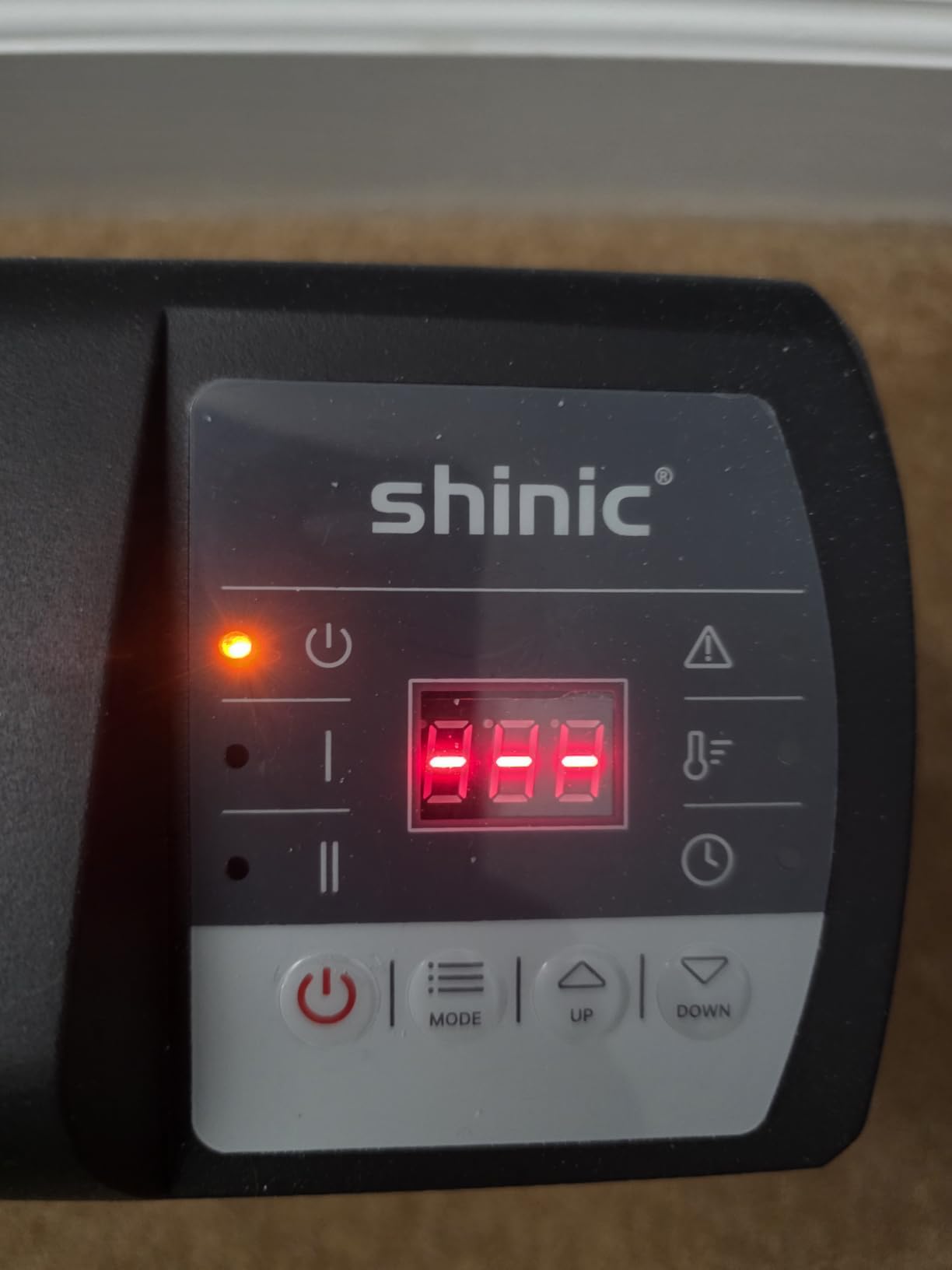
It is also the most programmable 120V unit here. The digital panel offers a 750 watt eco mode and a 1500 watt rapid mode, a programmable thermostat, and a timer with automatic shutoff. The safety stack covers tip-over, overheat, a child lock, and dent-proof end panels.
Owners report noticeable warmth within a few seconds of switching on, which is a fanless convection result rather than a forced-air one. The 4.3 star average is solid, with a 15 percent share of three-star reviews reflecting occasional inconsistency in output or controls.
What 30 Decibels Actually Means in a Room
At roughly 30 dB this unit is quieter than a refrigerator hum and far below a forced-air fan. For a finished basement bedroom, that is the difference between a heater you forget is running and one you turn off after an hour. It is the strongest reason in this roundup to accept a smaller heated zone in exchange for true silence.
Programming That Replaces a Wall Thermostat
The digital panel and timer together substitute for the wall thermostat you would otherwise need on a hardwired unit. That is a genuine advantage in a rental or a basement where wiring a line-voltage thermostat is inconvenient. The 6-foot cord keeps the unit portable, and the black finish is the only non-white option in the lineup.
Honest Limits
Convection heat warms a smaller zone than a hydronic baseboard, so you will be planning on more than one of these for a large open space. And with 33 reviews, the feedback base is small enough that individual experiences carry a lot of weight in the average. Verify the thermostat holds the setpoint during the first cold week.
How Many Baseboard Heaters Does Your Basement Need?
Use 10 watts per square foot as a baseline for a well-insulated basement with moderate climate, and raise that to 12 to 15 watts per square foot if you are in a cold climate, the walls are uninsulated, or the space has a glass door or large window wall. Multiply square footage by that number and you have your total wattage budget.
Then divide by the wattage of the heaters you plan to use, and you have your count. A 1000 watt heater on a 240V circuit is the most flexible increment for zoning, because two rooms at 1000 watts loads the panel far more gently than one 2000 watt unit and lets each room hold its own setpoint.
- 600 square feet basement: 6000 watts at the 10 W rule, 7200 to 9000 watts in a cold climate. Six 1000 watt units, or four 1500 watt units if the zone is one open space rather than separate rooms.
- 800 square feet basement: 8000 watts baseline, 9600 to 12000 watts cold. Six 1500 watt heaters spread across the perimeter works well, with one per finished room and the remainder on exterior walls.
- 1000 square feet basement: 10000 watts baseline, 12000 to 15000 watts cold. Six 2000 watt-equivalent loads or eight 1500 watt units, and at this size you should be planning on dedicated circuits rather than a single feed.
- Single finished room of 200 square feet: 2000 watts baseline, 2400 to 3000 watts cold. One 1500 watt convection unit plus a second smaller unit if the room has a cold wall.
Placement follows the same logic. Baseboards work best on an exterior foundation wall where they offset the heat loss they exist to replace, and they should sit under a window when one is present. Never block the intake or discharge slots with trim, baseboard casing, storage, or a dehumidifier hose.
Are Baseboard Heaters Safe in a Basement That Floods?
Yes, provided you treat the heater as an electrical appliance that lives above the water line. The concern that comes up most often on home improvement forums is exactly this one, and the honest answer is that no heater of any type should ever be reachable by standing water, because the failure mode is a short circuit regardless of brand.
Four practices do the real work. Mount the unit so its lowest point is at least a few inches above the finished floor, which keeps it above the shallow sheet water that comes with a sump pump failure. Keep it on a dedicated circuit so that a ground fault trips one breaker rather than darkening the whole basement. Run a proper GFCI-protected circuit in any space you consider wet-adjacent, and pair that with a sump pump with a float switch and a battery backup. And control ambient humidity with a dehumidifier, because condensation on a cold cabinet is a slow corrosion problem even when nothing floods.
For hydronic units there is one additional factor. Because the fluid is sealed inside a copper tube, a hydronic baseboard has more thermal inertia if its cabinet gets wet, but the electrical element and the wiring compartment still demand the same protection. Do not assume a hydronic cabinet is waterproof.
Finally, inspect units at the start of each heating season. Clear dust from the element and discharge slots, look for corrosion along the bottom edge of the cabinet, and confirm the high-limit cutout and the tip-over switch still function. That ten-minute annual check catches most problems before they become damage.
240V Hardwired vs 120V Plug-In: Which Basement Needs Which?
Choose 240V hardwired whenever you can. It delivers roughly twice the power for half the current, which means more heat per circuit, less load on an older panel, and a permanent installation controlled by a wall thermostat. Every 240V unit in this roundup is designed to be part of the building rather than an appliance sitting against it.
Choose 120V when you cannot run a new 240V line. That includes unfinished basements with no panel margin, rental spaces, garage conversions, and rooms where an electrician’s visit is not in the current budget. You have three sub-options: a plug-in 1500 watt unit on a 15 amp circuit, the KING 3K1207-BW for permanent 120V hardwiring, or a low-wattage 240V unit if a 240V circuit already exists but you want less output.
- 240V hardwired: roughly 2500 to 5120 BTU per unit, wall thermostat control, permanent install, needs an electrician for most homes, 2 or 3 amps per heater on most units in this roundup.
- 120V hardwired: 750 watts on a dedicated 15 amp circuit, wall thermostat control, permanent install, no 240V line needed.
- 120V plug-in: 750 to 1500 watts, portable, instant installation, no electrician, and a continuous heating load on a branch circuit that should not be shared.
One caution on plug-in units. A 1500 watt heater at 120V draws 12.5 amps, which is close to the 15 amp limit of a standard branch circuit. Running it continuously alongside other loads on the same receptacle circuit is a common source of tripped breakers. Give it a circuit of its own.
What It Costs to Run a Baseboard Heater in a Basement
The math is simple enough to do on a napkin, and doing it before you buy prevents the most expensive basement heating mistake. The formula is watts divided by 1000, multiplied by hours per day, multiplied by 30, multiplied by your local electricity rate per kWh.
Worked example for a 1500 watt unit run 8 hours a day: 1500 divided by 1000 equals 1.5 kW. Multiplied by 8 hours equals 12 kWh per day. Multiplied by 30 days equals 360 kWh per month. Multiply that by your own utility rate per kWh to get the figure on your bill.
- 750 watt unit, 8 hours per day: 180 kWh per month.
- 1000 watt unit, 8 hours per day: 240 kWh per month.
- 1500 watt unit, 8 hours per day: 360 kWh per month.
- 2000 watt equivalent, 8 hours per day: 480 kWh per month.
- 1500 watt unit, 12 hours per day: 540 kWh per month.
Zoning is the lever that changes these numbers most. Heating one occupied basement room at 1500 watts for 8 hours costs roughly half of heating a 1000 square foot space continuously at the same wattage. Thermostats that cycle rather than run constantly reduce the duty cycle further, and hydronic units reduce cycling because the stored heat keeps the room comfortable after the element shuts off.
Newer units are not dramatically more efficient than older ones. Every resistance heater converts essentially all incoming electricity to heat, and the remaining differences are surface finish, element longevity, and controls rather than conversion efficiency. The real savings come from insulation, air sealing, and running only the zones you occupy.
Basement Prep Checklist to Complete Before You Buy a Heater
Baseboard heat is a zoning solution, not an envelope solution. If the basement walls are uninsulated, no heater on this list will perform as rated, because it will be fighting steady heat loss rather than replacing it.
- Insulate the below-grade walls to roughly R-13 to R-15, or match local code for basement rim joists and foundation walls.
- Insulate the ceiling over a conditioned basement to around R-30 if ducted air from above is part of the plan.
- Install a proper vapor barrier on the warm side of the assembly, and seal window wells and the rim joist area where air leaks into the space.
- Verify panel capacity and circuit space before selecting 240V models, and confirm the amperage of anything else already on the panel you intend to use.
- Confirm the sump pump and add a backup, then decide on a dehumidifier to control condensation on cold cabinets.
- Map the electrical and water risk so you know where a leak would travel, then position heaters away from that path.
Skipping step one is the expensive mistake. Heaters sized for an uninsulated room run continuously, cycle constantly, and deliver less comfort than a properly sized unit in a sealed space.
How to Choose a Baseboard Heater for a Basement
Wattage and BTU Output
Sizing starts with the 10 watt per square foot baseline and adjusts for climate and insulation. Convert watts to BTU to sanity-check a listing: multiply watts by 3.412. A 1500 watt convection unit is roughly 5120 BTU, and a 750 watt unit is roughly 2560 BTU. When a listing claims 300 square feet of coverage for 1500 watts, treat that as an upper bound for a well-insulated, draft-free room, not a promise in an uninsulated basement.
Voltage and Circuit Requirements
Decide 240V hardwired versus 120V before you compare features, because it eliminates half the field instantly. For 240V units, check the amperage and confirm it against your panel. Most units in this roundup draw between 3.13 and 4.8 amps on 240V, which is easy on most panels, while every 120V plug-in unit draws 12.5 amps and deserves its own circuit.
Hydronic vs Convection for Your Space
Choose hydronic when surface safety, sustained even warmth, or a bedroom or playroom matters most, and accept the extra cost and the separately sold thermostat. Choose convection when you need faster response, a lower cost, a thermostat in the box, or a portable unit you can move with the season. In a finished media room, the absence of a fan matters more than most buyers expect.
Thermostat and Zoning Control
Check carefully whether a thermostat is included. Units with a built-in dial or digital control can be upgraded, but hardwired units with no control need a separate line-voltage thermostat. If you already have older dial-style baseboards and want app-based control, the practical path is a line-voltage smart switch or smart thermostat rated for resistive heating, since smart thermostats designed for low-voltage systems will not work on a 240V baseboard circuit.
Safety Certification and Shutoffs
Look for UL or ETL listing, a full-length high-limit thermal cutout, and overheat protection that shuts the unit down if the air intake is blocked. A tip-over switch matters for portable units. A linear high-temperature safety cutout, a crushproof element, and a child lock are all indicators of how seriously the manufacturer treats failure modes.
Warranty Length and Element Design
Warranty length is a reasonable proxy for how long the manufacturer expects the element to last. In this lineup the Cadet F Series carries a limited lifetime warranty, the KING K Series carries 7 years, and several portable units carry 1 year against manufacturer defects. Element construction matters too: an enclosed steel-sheathed element resists rust in a humid space better than an exposed coil.
Housing Length, Finish, and Clearance
Measure the wall before you pick a length. 36, 45, 48, and 20-inch bodies each solve a different layout problem, and short units exist specifically for tight basement rooms. Powder-coated steel is the finish to prefer below grade, and every unit needs clear intake and discharge slots with a few inches of air above the cabinet.
Where to Buy and How to Avoid a Bad Unit
Trade supply houses and plumbing-and-HVAC distributors are the right source for permanent 240V baseboard heat, because they stock complete lines, trim kits, and matching thermostats in the sizes you actually need. Big-box and online marketplaces are appropriate for plug-in units. Either way, inspect the unit on arrival before installation — a bent casing, misaligned fins, or a damaged element is trivial to return and expensive to discover behind finished drywall.
Frequently Asked Questions
What is the best heater for a basement?
A 240V hardwired electric baseboard heater is the best heater for most finished basements because it delivers the most heat per circuit, mounts permanently, and runs silently with no fan. Pair it with a wall thermostat, a working sump pump with battery backup, and a dehumidifier, and size it at roughly 10 watts per square foot of conditioned space.
How many baseboard heaters do I need for a 1000 square foot basement?
At the standard 10 watts per square foot rule, a 1000 square foot basement needs about 10000 watts. In a cold climate or an uninsulated space, raise that to 12000 to 15000 watts. Six 1500 watt heaters or eight 1000 watt 240V heaters covers that load, and each finished room should get its own unit and thermostat.
How many square feet will a 1500 watt baseboard heater heat?
A 1500 watt convection baseboard heater rated at about 5120 BTU is generally considered adequate for a room of roughly 150 to 200 square feet when the space is insulated and draft-free. Manufacturer claims of 300 square feet or more assume ideal conditions. Basement zones with cold foundation walls or large glass areas usually need a second unit.
Are baseboard heaters safe in a basement that floods?
Baseboard heaters are safe in a basement as long as they sit above the water line, use a dedicated circuit with GFCI protection, and are never reachable by standing water. Mount the unit above the finished floor, keep a sump pump with a float switch and battery backup in service, control humidity with a dehumidifier, and clear the element and intake slots once a season.
Are baseboard heaters more efficient than other electric heaters?
All resistance heaters convert nearly all incoming electricity into heat, so a new baseboard heater is not meaningfully more efficient than an older one at the same wattage. The real differences are controls, element lifespan, and surface finish. The genuine savings come from insulating the basement envelope, air sealing, and running only the zones you actually occupy.
Can you use a smart thermostat with an electric baseboard heater?
Yes, but it must be a line-voltage thermostat rated for resistive heating loads, or a line-voltage smart switch placed on the baseboard circuit. A thermostat designed for 24V low-voltage HVAC systems will not work on a 240V baseboard circuit. Confirm the load rating matches the heater wattage, and expect the app-based control to replace a dial rather than a wall-mounted low-voltage setup.
The Verdict: Which Baseboard Heater Fits Your Basement
Our overall pick, the Comfort Zone CZ600, is the safest starting point for most people because its 1500 watts, 120V plug-in design, and deep review history cover the most basement situations without an electrician. It is the right call for an unfinished space, a workshop corner, or a single room you want warm this season.
If you can have a 240V circuit run, skip past it and start with the Cadet F Series 3F750W. At 4.5 stars with a limited lifetime warranty and a 3.13 amp draw, it is the highest-satisfaction permanent install in this roundup and the easiest to add to an older panel.
Choose the Fahrenheat FBE15002 when you want a longer body and a more established heating brand without a hardwired install. Choose the Cadet SoftHeat EBHN750W hydronic when a child or pet shares the room and surface temperature is your top concern, remembering that the thermostat is separate. Choose the KING 3K1207-BW when you want permanent 120V heat. Choose the shinic RW600-15 when silence is the priority.
And before any of them go in, insulate the walls, verify the sump pump, and run the sizing math. The best baseboard heaters for basements in 2026 are the ones matched to the room, the circuit, and the moisture conditions you actually have. Check current pricing on any of the models above before you order.