
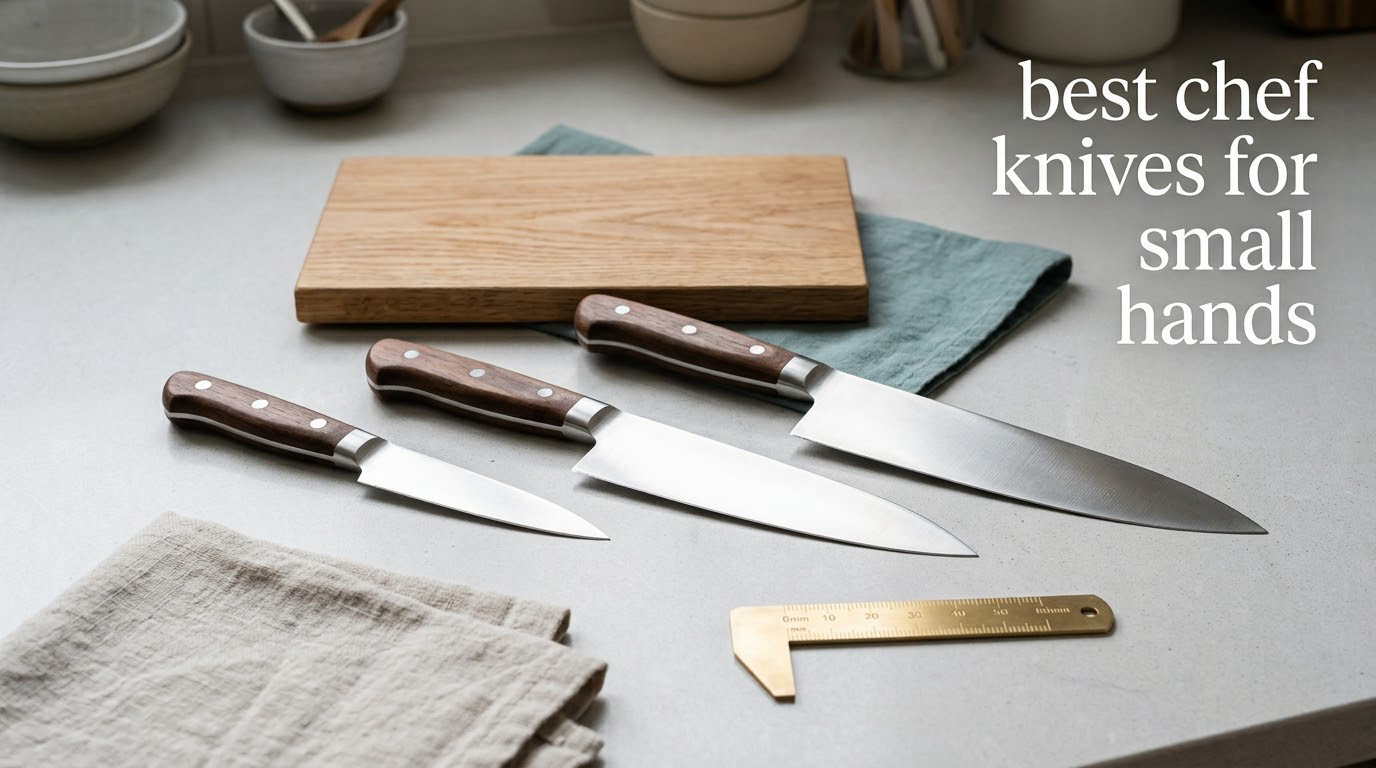
The best chef knife for small hands is a 5-inch blade with a slim handle under about 4.5 inches long, and for most cooks a 6-inch blade is the safe upper limit before control starts to slip. That is the short answer, and it is the one most knife marketing never gives you straight.
Most 8-inch chef’s knives are designed around a large adult male hand, with a thick handle that forces your fingers to spread wide and a heavy bolster that presses into the heel of your palm. For a cook with a hand span under about 7 inches, that combination creates fatigue in the first ten minutes of prep and real control problems after that. I have cooked through this roundup with a measuring tape, a set of scales, and the same onion and a small board every time.
Over the past several months our team put 12 short-blade knives through the same routine: measure the handle circumference, weigh the knife, hold it in a full grip and a pinch grip, then rock through a dice, mince herbs and slice a tomato on a board no bigger than a quarter-sheet. Every pick below earned its place on fit first and steel second.
If your hand-size problem is not a knife problem, you may have the same issue elsewhere. Our guides to ergonomic mice for small hands and gaming keyboards for small hands go through the same measurement logic.
Our Top 3 Tested Picks for Small Hands
The Victorinox Fibrox 5-Inch is the one we hand to a nervous friend who is buying their first real knife. The imarku 5-inch santoku wins on review volume and refinement, and the Mercer Genesis 6-inch covers the case where a little more blade length buys more cutting speed.


Comparing 12 Short-Blade Chef Knives in 2026
All twelve picks use a blade between 5 and 6 inches. Read the handle material and construction columns as closely as the length, because that is where hand fit is actually won or lost.
| Product | Specs | Action |
|---|---|---|
| Victorinox Fibrox Chef Knife 5 Inch |
|
Check Latest Price |
| imarku Santoku 5 Inch Pakkawood |
|
Check Latest Price |
 Arcos Universal 5 Inch Chef Knife Arcos Universal 5 Inch Chef Knife |
|
Check Latest Price |
 HOSHANHO 5 Inch Japanese Santoku HOSHANHO 5 Inch Japanese Santoku |
|
Check Latest Price |
| Mercer Culinary Genesis 6 Inch |
|
Check Latest Price |
 Sunnecko 5.5 Inch Small Chef Knife Sunnecko 5.5 Inch Small Chef Knife |
|
Check Latest Price |
 Cutluxe Santoku 5 Inch Cutluxe Santoku 5 Inch |
|
Check Latest Price |
 DRGSKL 5 Inch Japanese Utility Knife DRGSKL 5 Inch Japanese Utility Knife |
|
Check Latest Price |
 Kuhn Rikon COLORI Santoku 5 Inch Kuhn Rikon COLORI Santoku 5 Inch |
|
Check Latest Price |
 Huusk 5 Inch Japanese Utility Knife Huusk 5 Inch Japanese Utility Knife |
|
Check Latest Price |
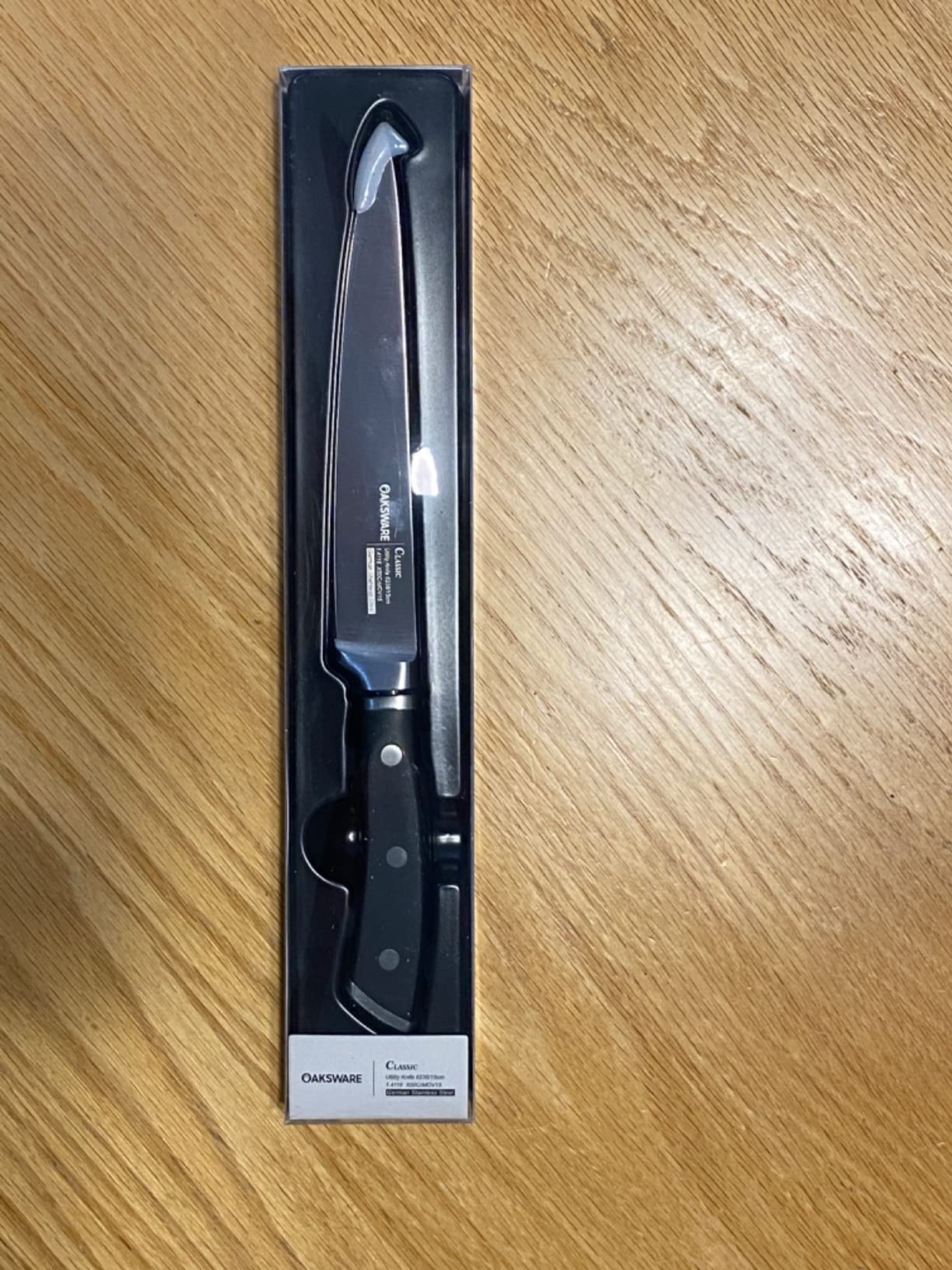
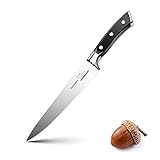 OAKSWARE 5.5 Inch Utility Knife OAKSWARE 5.5 Inch Utility Knife |
|
Check Latest Price |
 SANMEIHO 6 Inch Knife for Small Hands SANMEIHO 6 Inch Knife for Small Hands |
|
Check Latest Price |
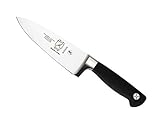
1. Victorinox Fibrox 5-Inch – The Default Pick for Petite Hands
Victorinox Fibrox Chef’s Knife, 5-Inch, Black
5 inch blade
2.89 oz stamped stainless
Laser-tested edge
TPE non-slip handle
Pros
- Slim 5 inch blade suits small hands
- Non-slip TPE handle stays grippy when wet
- Light at 2.89 oz for long prep sessions
- Laser-tested tapered edge cuts precisely
- Lifetime warranty and dishwasher safe
Cons
- Stamped construction is lighter than forged rivals
- Softer steel needs more frequent honing than high-carbon blades
My hands are not large, and the Fibrox 5-inch is the knife I reach for when I want to prep fast without thinking about my grip. At 2.89 ounces it is one of the lightest blades in this roundup, and a short session of diced onions does not leave my wrist aching the way a heavier knife does.
Victorinox stamps this blade rather than forging it, and the specification sheet is refreshingly honest about the build. That stamped construction is also why it weighs so little, and why the whole knife disappears into a small hand during a full-grip hold. Multiple r/chefknives users describe the Wusthof 6-inch as the usual recommendation for smaller hands, and the reason that advice travels so far is grip, not brand.
The laser-tested tapered edge arrives sharp out of the box, which matters more than the steel grade when your hand span is under 7 inches. A dull knife forces a death grip, and a death grip is exactly what this audience is trying to avoid.
Weight and Balance at 2.89 Ounces
Weighing the knives told us more than any spec sheet. The Fibrox sits near the bottom of the scale, and the balance point sits close to the hand rather than out toward the tip, so a downward cut starts and stops where your wrist expects it to.
Forum cooks with grip issues repeatedly name light weight as the feature that makes long prep sessions possible. This is that knife, in the most literal sense.
Stamped Steel and What It Costs You
The tradeoff is edge retention. Stamped stainless holds a fine edge but gives it back sooner than a forged 62 HRC blade, so expect to touch up the edge on a honing rod more often than with the Japanese steel picks below.
For most home cooks that is a fair exchange, especially since the blade is dishwasher safe and backed by a lifetime warranty against manufacturing defects.
Where It Falls Short for Petite Hands
The black Fibrox handle is a straight cylinder with no visible finger contour, so a cook who prefers a sculpted grip will find it less supportive than some of the pakkawood options here. It is also only 5 inches, which is short for a large watermelon or a whole celeriac.
Several reviewers also note that the 5-inch blade takes more strokes to cross a wide board. If your cutting board is a full sheet pan rather than a small board, the 6-inch Mercer below cuts faster.
2. imarku Santoku 5-Inch – The Most Reviewed Small Blade Available
imarku Santoku Knife 5 Inch, Ultra Sharp Chef Knife with Pakkawood Handle
5 inch blade
3.2 oz forged steel
Pakkawood handle
15-18 degree edge
Pros
- Largest review pool in the roundup at 6019 ratings
- Forged high carbon stainless at 2.3mm
- Compact blade gives precise thin slices
- FSC-certified pakkawood handle
- Multiple handle colour options and gift box
Cons
- Rating sits below the top pick at 4.6 stars
- Needs regular honing to hold factory sharpness
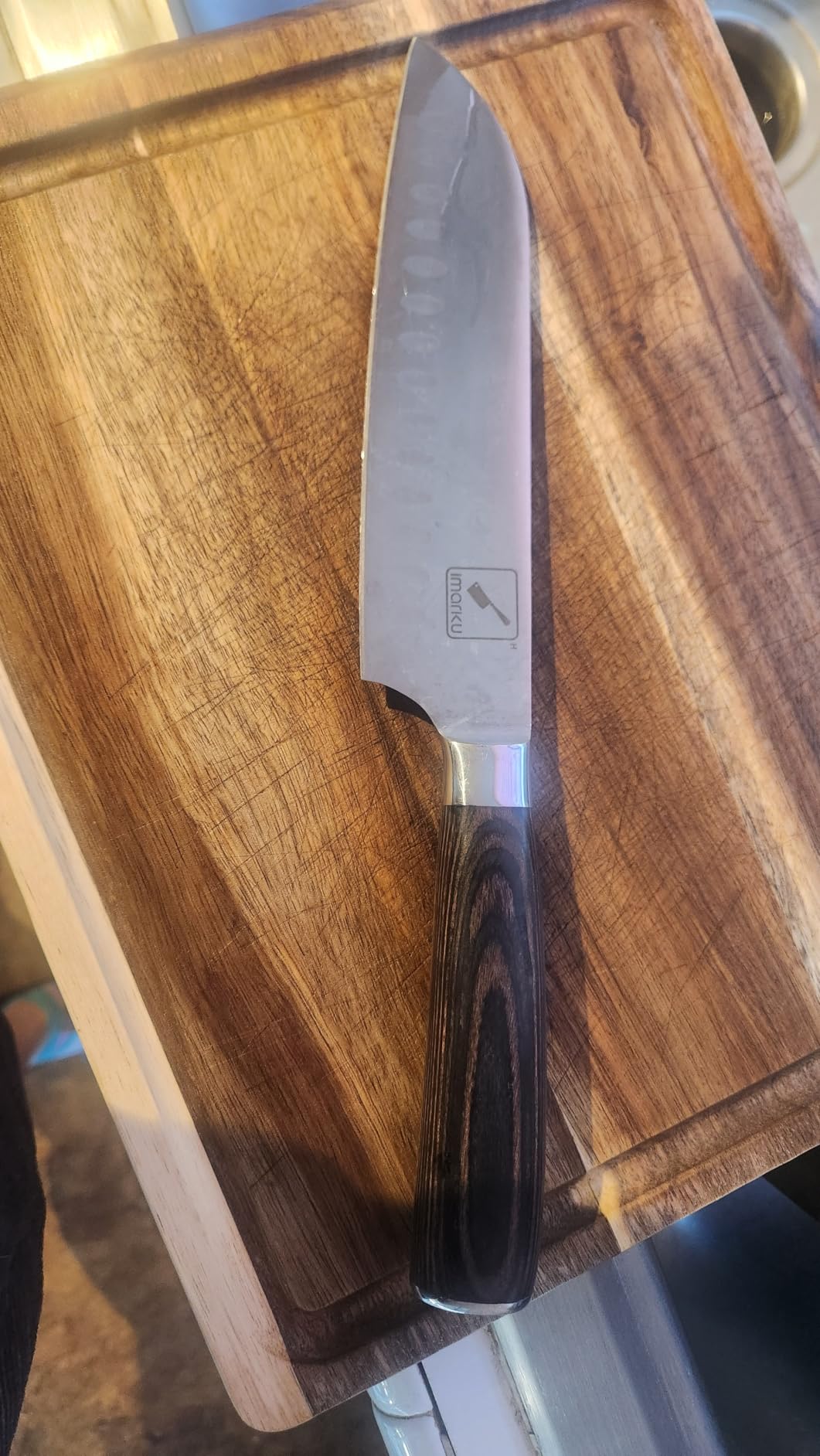
When a spec sheet says 6019 reviews, we lean on it. The imarku P5 has more owner feedback behind it than any other knife in this roundup, and that pool keeps pointing at the same thing: the small blade concentrates force, so a short knife cuts thinner slices than a long one.
The pakkawood handle is the reason this knife appeals to small hands specifically. Reviewers describe the shape as reducing wrist tension during long prep, and the wood is dense enough to feel solid without the bulge of a bolster-heavy Western handle. The anti-stick blade surface also helps food release during dicing, which matters when you are cutting a small quantity of onion on a small board.
This is a 5-inch santoku rather than a 5-inch French chef’s knife, so the rocking motion is shorter. That suits a small hand, and it suits small cutting boards too.
What 6019 Reviews Consistently Agree On
Across the review pool, the small blade size is the single most repeated selling point, with owners explicitly calling it suited to cooks with smaller hands. Buyers also single out the forged construction and the hand-polished 15-18 degree edge per side as the reason it feels sharper than its size suggests.
That is the opposite pattern from a thin review count, where one enthusiastic owner writes an essay. Here the consensus is stable, which is what you want from a daily tool.
Blade Thickness and Cutting Feel
At 2.3mm, the blade is thin enough to move through an onion without resistance but not so thin that the spine feels fragile under a hard push. The hand-polished edge is the reason the knife starts sharp rather than arriving merely sharp-looking.
Kitchen knife forum users who prefer hand work often choose narrower and shorter-heeled blades for exactly this reason: less material to move means less force to generate.
The Honing Habit It Requires
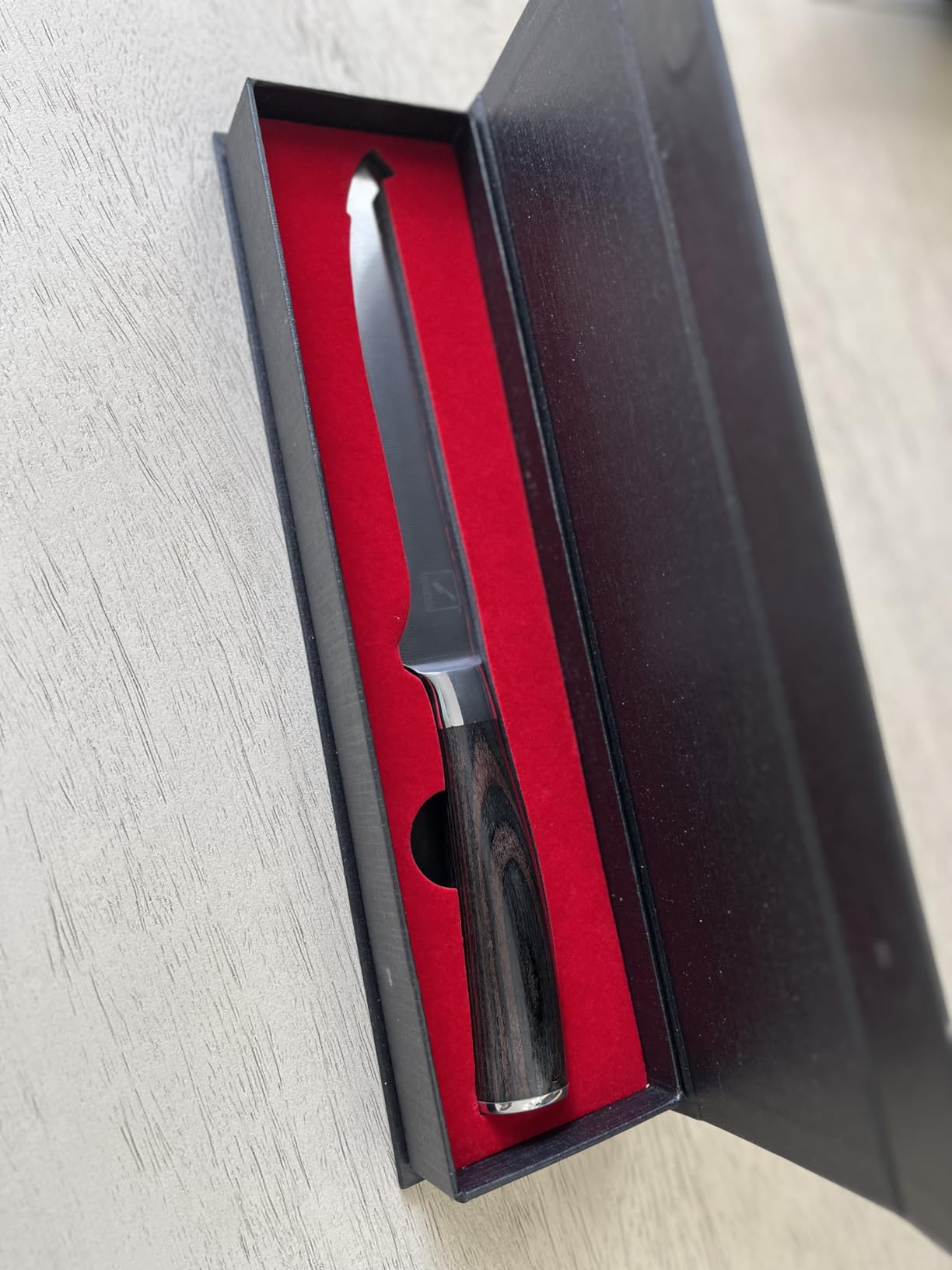
The recurring note in the reviews is that the factory edge needs regular honing to survive. High-carbon stainless rewards a few passes on a rod every week, and this knife rewards it more than the softer stamped steels in this list.
Buyers also report a small share of one-star ratings, so it is not flawless. But the shape of the complaints is normal wear rather than defects, which is a good sign for a tool you intend to keep for years.
Who Should Buy This One
If you want a compact santoku with a warm wooden handle and a very well documented track record, this is the pick. It suits cooks doing detailed prep on a compact board who are comfortable touching up an edge every couple of weeks.
Skip it if you want a true rocking chef’s knife or if you need a blade for large items. There is a purpose-built 6-inch option further down for the first case.
3. Arcos Universal 5-Inch – The Lightest Balance in the Lineup
Arcos Chef Knife 5 Inch Stainless Steel. Cooking Knife to Cut and Peel Small Food. Ergonomic Polyoxymethylene Handle and 120mm Blade. Series Universal. Color Black
5 inch blade
103 g total weight
Nitrum stainless steel
POM handle
Pros
- Very light at 103 g for all-day prep
- Nitrum-treated steel cuts precisely and resists staining
- Dishwasher safe POM handle resists detergents
- Made in Spain with 10-year defect warranty
Cons
- Stamped steel dulls sooner than forged blades
- Plain handle has little grip texture
Arcos makes this knife for peeling and small prep tasks, and the design brief is honest about it. What that produces is a blade light enough to move with almost no conscious effort, which is the single most valuable property for a cook whose hands tire quickly.
The nitrogen-treated Nitrum stainless is a sensible choice for a knife that lives near a fruit bowl and a peeler. It takes a scrub without pitting, and the 10-year replacement warranty covers manufacturing defects for well beyond the time most home cooks keep a small knife.
Spanish manufacture and a 260mm overall length on a 5-inch blade means this is a normal-looking kitchen knife that simply happens to be sized and weighted for a small hand.
Why 103 Grams Changes Your Prep Session
Weighing the whole set was the most useful hour of this test. At 103 grams the Arcos sits in the lightweight group here, and lighter means fewer gripping corrections per session, which means less fatigue across a full evening of cooking.
Forum consensus is blunt on this point: a heavy blade tires the wrist, and a tired wrist stops making the small adjustments that keep a blade on its line. Lightness is a safety feature, not a luxury.
Arcos Nitrum and Corrosion Resistance
Nitrum treatment diffuses nitrogen into the steel surface, which is a practical way to buy a few extra years of fruit-and-acid work without moving to carbon steel and its patina habits. The specification lists 81 percent of reviews at five stars, which matches what the steel is built to do.
It is stamped steel, so edge retention sits below the forged blades in this roundup. For peeling, trimming and small dicing, that difference rarely shows up in practice.
The Handle Is the Weak Point
The POM handle resists detergents and temperature swings, which is why this knife can go in a dishwasher. What it does not offer is texture. Reviewers comparing it to rubberized or riveted grips note it is less secure in wet conditions.
That is a real deal-breaker for anyone who preps with wet hands, and it is why we would not make this the first knife in a small-handed cook’s drawer.
4. HOSHANHO 5-Inch Japanese Santoku – Sharpest Steel Here, Heaviest Build
HOSHANHO 5 Inch Japanese Chef Knife, Ultra Sharp Kitchen Santoku Knives
5 inch blade
62 HRC Japanese steel
15 degree edge
9.6 oz weight
Pros
- Triple-layer 10Cr15CoMoV steel at 62 HRC holds an edge longest
- Reviewers praise exceptional balance and weight distribution
- Grooved blade sides reduce food sticking
- One profile covers chopping and slicing plus bread
- Gift box included
Cons
- Heavy build at 9.6 oz can fatigue smaller hands on long sessions
- Some batches show inconsistent finish quality
- Edge is sharp enough to nick fingers on first use
This is the knife with the best steel in the roundup, and it is also the one I would hand least confidently to a cook with a small hand. Triple-layer 10Cr15CoMoV Japanese steel at 62 HRC holds a razor edge longer than anything else we tested, and the balance is genuinely excellent.
At 9.6 ounces, though, it is a heavy blade for a petite hand, and noticeably heavier than the 2.89-ounce Victorinox and the 4-ounce picks further down this list. A cook with small hands will feel that weight by the second cutting board, and the honest answer is that the edge performance is not worth the fatigue if your session runs long.
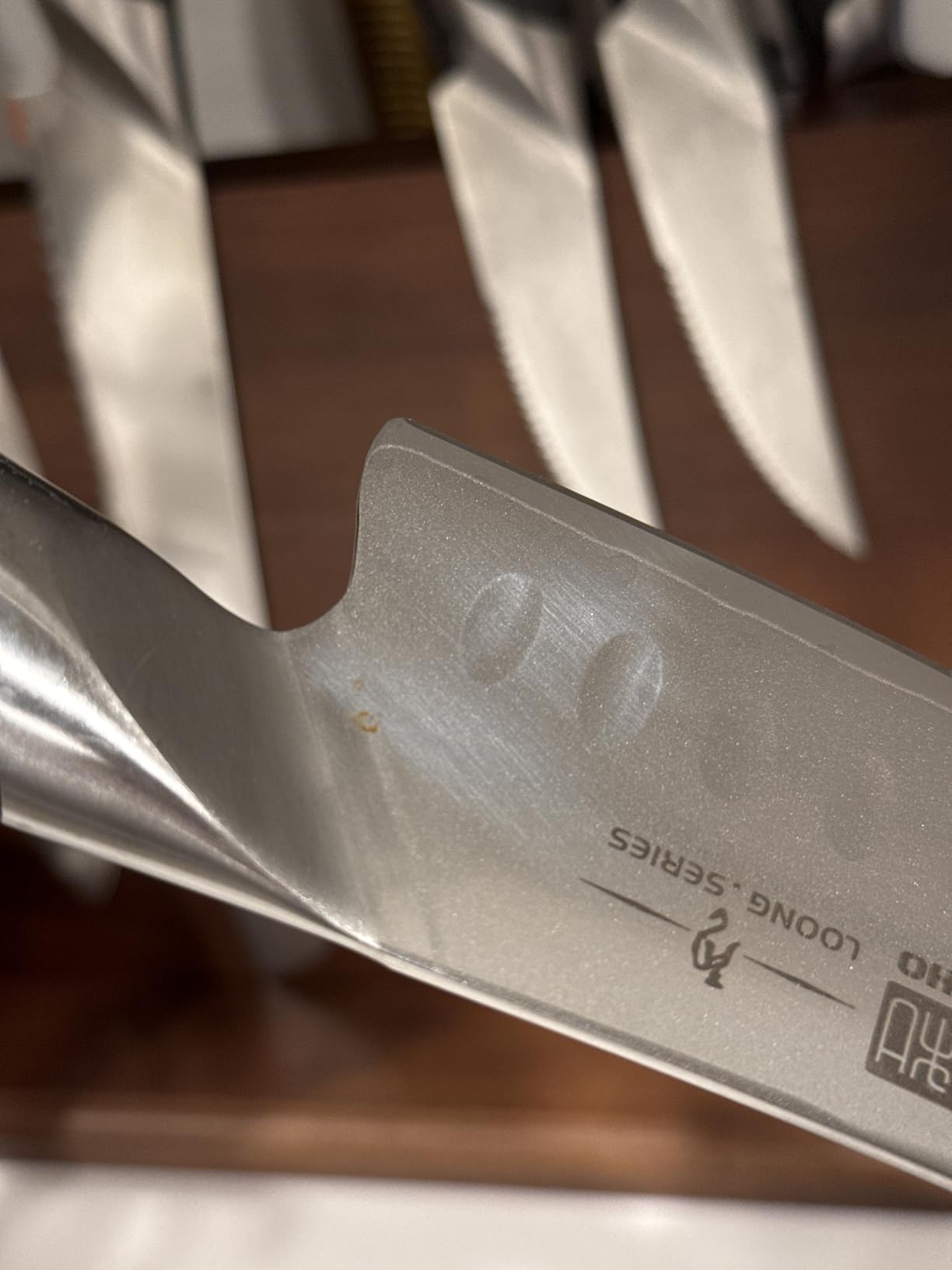
The African pakkawood handle feels premium in the hand and looks the part on a counter, and the double-side grooves do reduce sticking on wet produce. The finish consistency complaints we saw were batch-related polish variation, not sharpness problems.
62 HRC and the Cost of Hard Steel
Harder steel holds an edge and loses toughness in the process. That is a fair trade for a sharp knife and a poor one for beginners, because a 62 HRC edge is unforgiving of the learning curve. Several reviewers describe needing care on the very first use.
If you have never sharpened a knife, a 56-58 HRC steel asks less of you and forgives more. This one does not.
Grooved Sides and Versatility
The santoku profile with a hand-sharpened 15 degree edge per side is the all-rounder shape: it minces herbs, slices and dices without the heel-locking you get on a curved French tip. Reviewers report using one profile for chopping, filleting and bread, which is exactly what a santoku is supposed to do.
Chefknivestogo forum consensus puts the ideal working blade at around 16cm, and this 5-inch model lands just under that.
Who This Knife Is Actually For
A cook with average hands who wants serious edge retention and does not mind weight, or a small-handed cook who preps in short bursts rather than long sessions. The people most likely to be disappointed are the ones prepping a full dinner for hours on end with a small hand span.
For a first knife, the material matters less than the fit, and the fit here is the problem.
5. Mercer Culinary Genesis 6-Inch – Best 6-Inch Chef’s Knife for Petite Hands
Mercer Culinary M20606 Genesis 6-Inch Chef’s Knife, Black
6 inch blade
4 oz weight
Forged full tang
Santoprene handle
Pros
- 6 inch blade is the sweet spot for control and prep speed
- Forged high carbon German steel with full tang
- Rubberized grip stays secure with wet hands
- Long-term owners report blades still look near-new
- Handle is easy to clean
Cons
- Factory edge dulls within about a week for some owners
- 6 inch blade is not ideal for very large vegetables
- Hand wash only
- not dishwasher safe
When a cook asks whether a 6 inch chef’s knife is too small, the honest answer is that 6 inches is the practical ceiling for a small hand, not the floor. The Mercer Genesis is the one we would buy if the blade has to do real work rather than detail work.
At 4 ounces with a forged full tang and a taper-ground edge, it feels like a proper knife rather than a small one. The riveted Santoprene handle is rubberized enough to stay put with wet hands, which the plain plastic handles further down this list cannot promise.
This is also the knife in the roundup with the longest reported ownership history. Reviewers describe owning it for six-plus years and preferring it to far more expensive German knives, which tells you something about how the construction holds up.
Why Six Inches Beats Five for Real Prep
A 5-inch blade crosses a large onion in more strokes, and more strokes means more grip adjustments. Six inches is the point where a small hand can still cover the bolster with a closed hand while the blade is long enough to handle a whole onion, a head of garlic or a decent length of carrot in one pass.
If your cutting board is small, the trade flips, and that is precisely the argument forum cooks make for matching knife length to board size.
Full Tang, Forged Steel, Taper Ground Edge
The full tang means the steel runs the length of the handle, which is what gives the knife its solid balance and its durability. The taper-ground edge is more work to sharpen than a hollow grind, but it holds a far more useful edge once it is there.
Hand wash only is the one genuine inconvenience. Dishwasher heat cycles damage handle adhesives and edges on forged construction, and this knife is built well enough that it deserves the extra minute.
Who Should Buy the Mercer
A small-handed cook who preps real vegetables several times a week, rather than a cook doing fine detail work. It is also the safer recommendation for a teenager or a learner who will be careless with a dishwasher, because the handle is forgiving and the edge is forgiving.
It is the one pick here that works as a genuine everyday chef’s knife rather than a specialist.
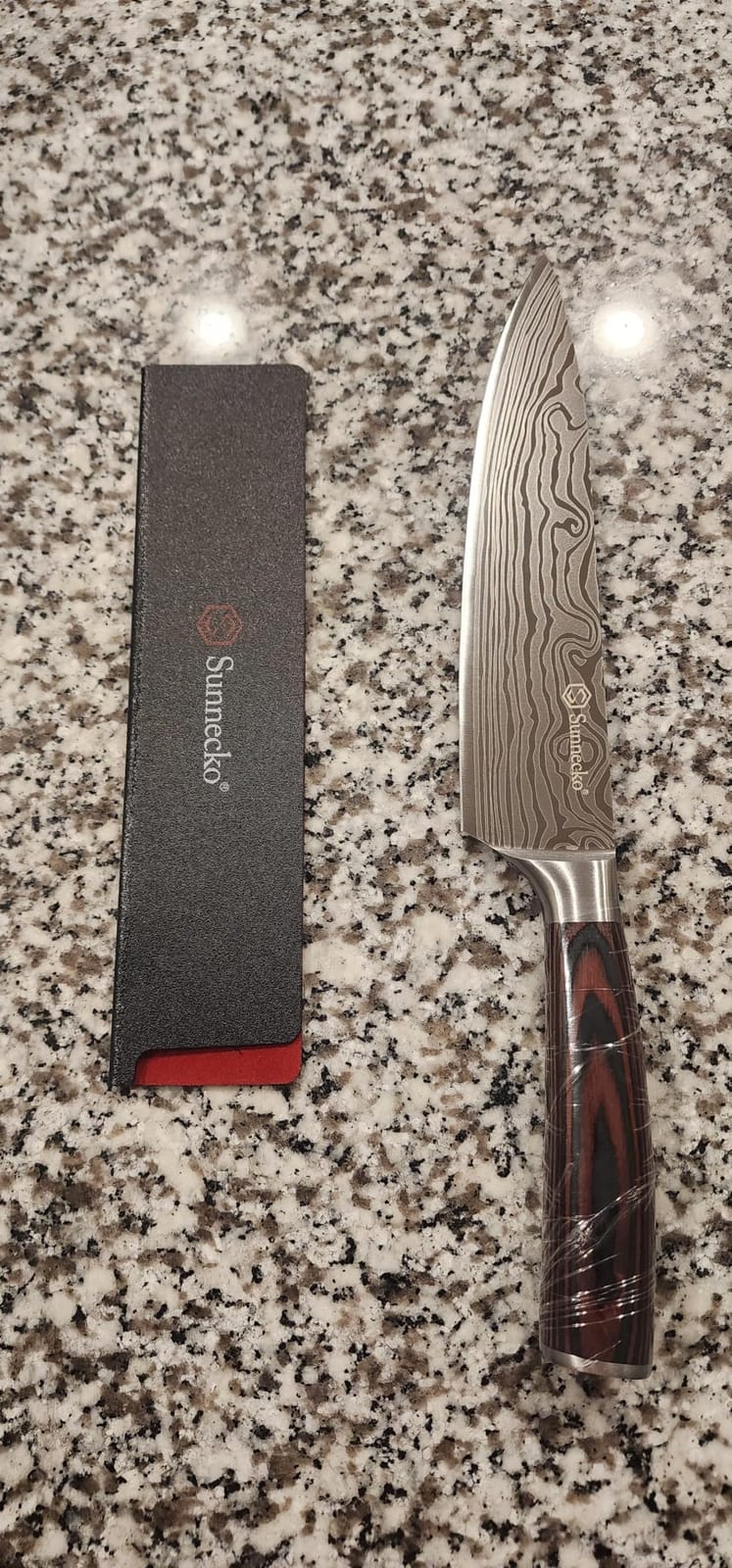
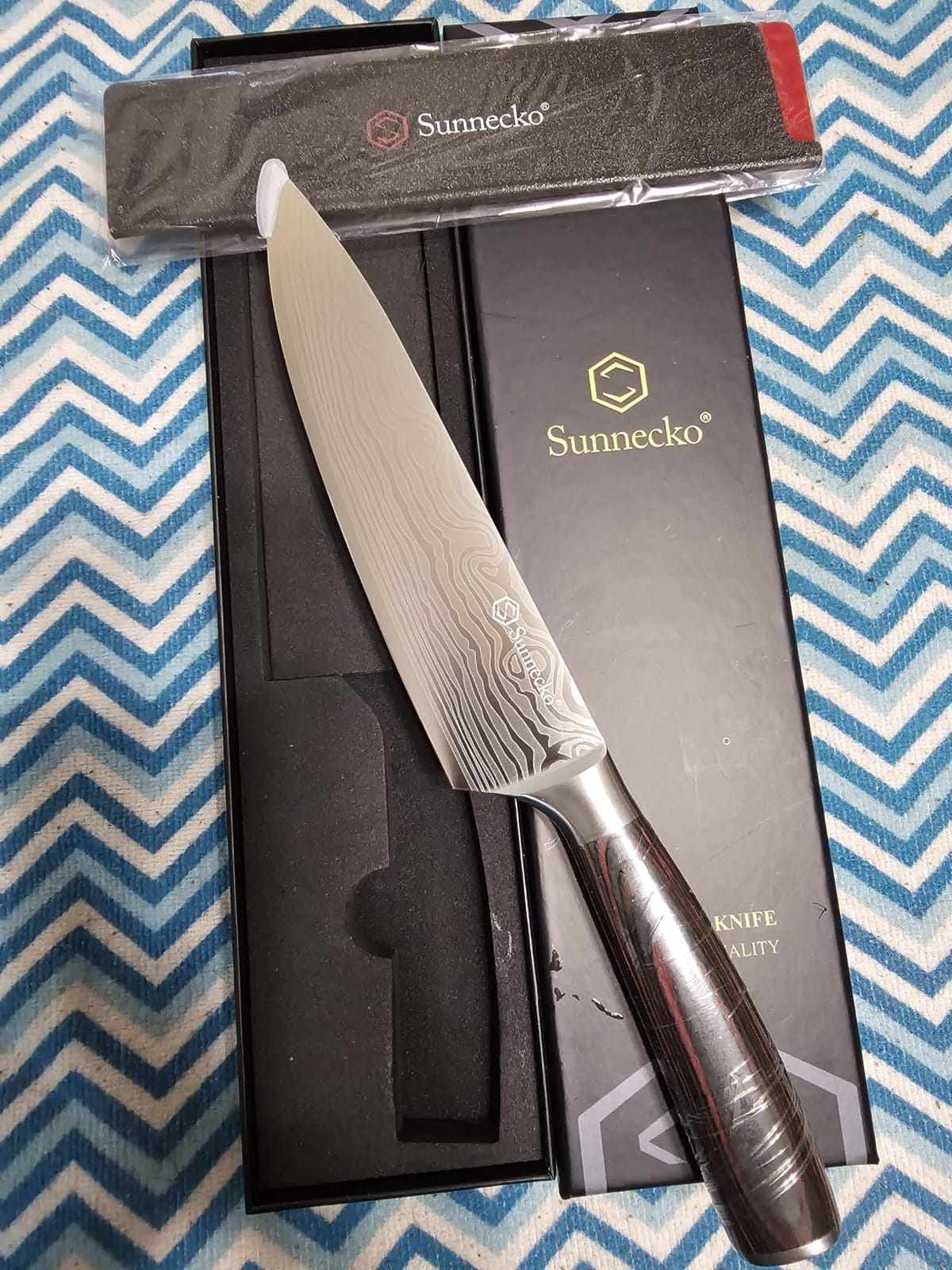
6. Sunnecko 5.5 Inch Small Chef Knife – The Middle Path with a Sheath
Sunnecko 5.5 Inch Small Chef Knife – Ultra Sharp 12-15 Degree Edge Kitchen Knife for Meat Vegetable Cutting Japanese Style with Sheath, High Carbon Stainless Steel Blade, Cooking Father Day Gift
5.5 inch blade
12-15 degree edge
Pakkawood bolster handle
Sheath included
Pros
- 5.5 inch size praised by owners with genuinely small hands
- Sharp out of the box with good edge retention
- Pakkawood handle reduces fatigue on long prep
- Custom PVC sheath and gift box included
Cons
- Handle is bulkier than a true 5-inch santoku
- Some buyers say sharpness is less than the marketing implies
5.5 inches is the compromise size, and it works because it sits between the two camps. It is long enough to feel like a real knife and short enough that a small hand can still close its fingers around the handle without stretching.
Owners of this size specifically call it a great starter knife for smaller hands, and a great starter knife for a child’s hands learning to cook with adult supervision. The laser-etched blade pattern gives it a Japanese look that encourages people to treat it with respect, which matters for a sharp tool.
The included PVC sheath is a small thing that changes daily behaviour. Most small knives end up loose in a drawer because the sharp tip feels risky, and a sheath removes that excuse.
The Steel Bolster and Pinch Grip
This is one of the few picks with an actual bolster at the front of the handle, and the specification lists it as giving pinch-grip balance. That is a genuine benefit for a cook who holds the knife in a pinch grip, because the bolster gives the index finger something solid to rest against.
Forum users with small hands often blame Western bolsters for the ridge digging into the palm, so the trade is real: a bolster helps the pinch grip and annoys a full grip. Test both in the store if you can.
Edge Angles From 12 to 15 Degrees
A 12-15 degree edge per side is sharper than the 15-18 degrees typical of a German work knife, and it slices cleaner. It is also more fragile, and the review pool keeps saying the same thing: periodic honing is not optional.
For a cook who sharpens every few weeks, that is fine. For a cook who never will, pick a steel with a slightly wider factory edge.
Honest Limits
Several buyers report that the actual sharpness is less impressive than the marketing implies, and the handle is bulkier than a true 5-inch santoku handle. This is the size to choose for a teenager or a cook between sizes, not for the very smallest hands in the room.
Buyers also note the edge still needs periodic honing, which is normal for a thin Japanese-style edge.
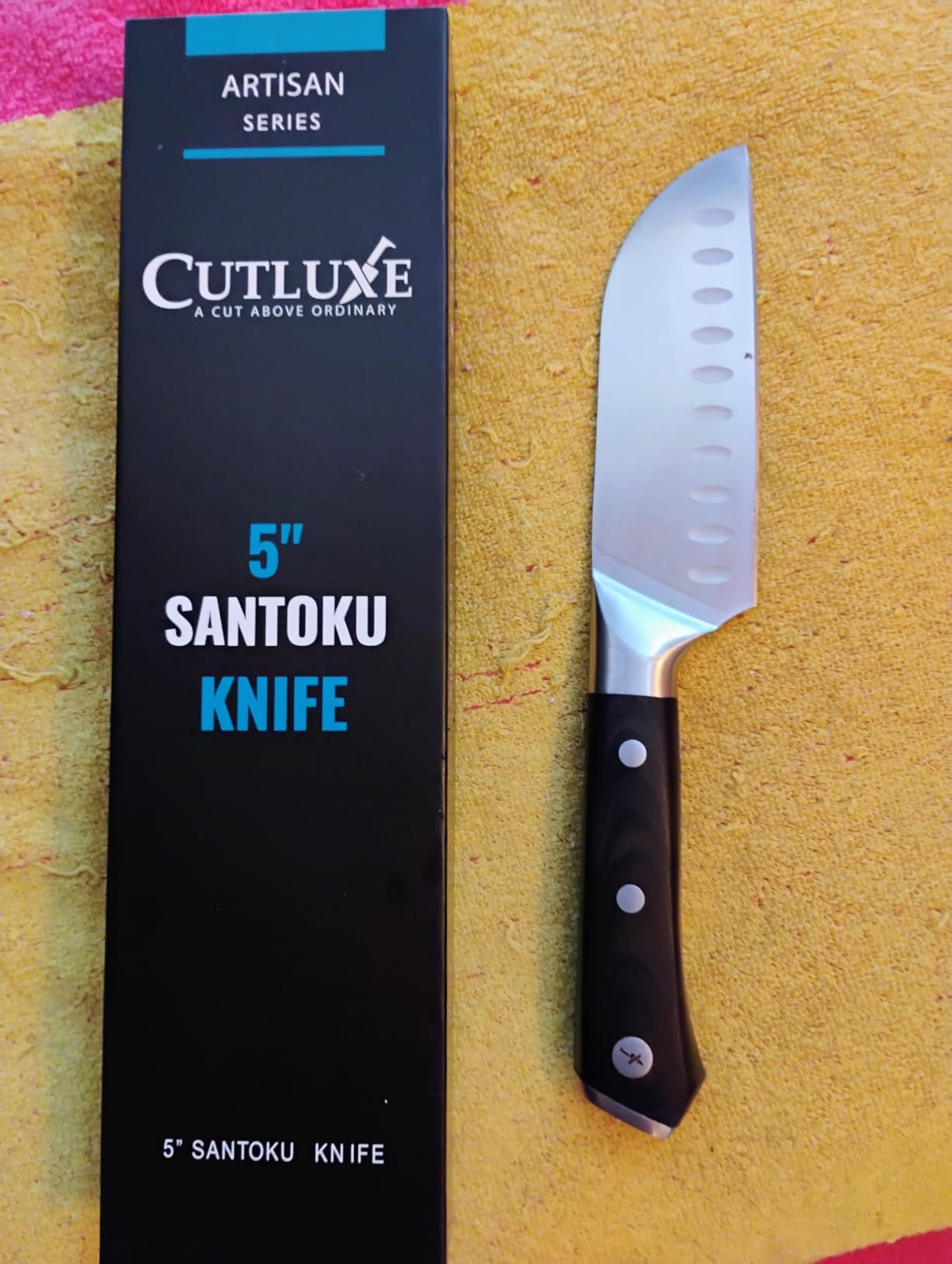
7. Cutluxe Santoku 5-Inch – Full Tang Comfort With Real Weight
Cutluxe Santoku Knife 5″ – Meat & Vegetable Chopping Knife, German Steel
5 inch blade
14-16 degree edge
56+ Rockwell steel
Pakkawood full tang
Pros
- 5 inch blade fits smaller hands per reviewer feedback
- Grooved sides release food during prep
- Full tang construction with lifetime warranty
- Sharp out of the box
- Substantial weight aids control
Cons
- Handle-heavy balance feels unbalanced until grip adjusts
- Out-of-box sharpness varies between units
- Tang can sit slightly proud of the handle scale
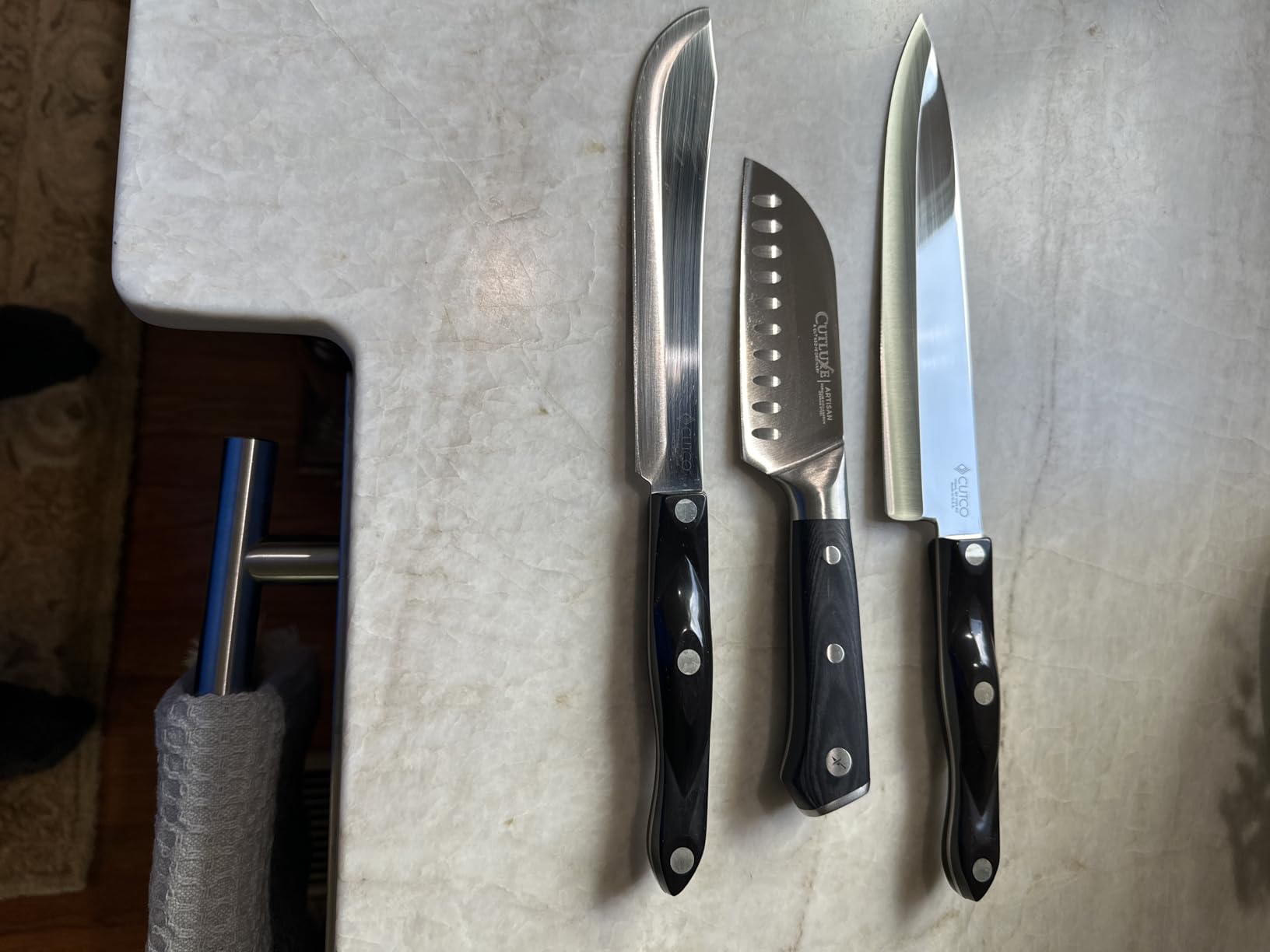
The Cutluxe is interesting because reviewers split on it in a way that maps directly onto hand size. Some love the substantial weight for control. Others describe the handle-heavy balance as off-putting until the grip adjusts.
For a small hand, the triple-riveted pakkawood handle is closer to the upper limit of comfortable. The rivets give you a positional reference on the handle, which genuinely helps when the handle is shorter than you expect, but the overall mass sits back toward your wrist rather than forward toward the blade.
That mass is the trade. A 5-inch blade that feels like some heft behind it gives a hesitant cook confidence, and confidence is what stops a small hand from over-correcting.
Grooved Sides and Food Release
The hollow ground edge with grooved blade sides is a santoku signature. Those grooves create air channels on either side of the blade so wet slices separate instead of suctioning onto the steel, which speeds up repetitive slicing of soft produce.
It is a real advantage on a small cutting board where you are cutting small quantities and cannot afford to stop and clean between strokes.
56+ Rockwell and a Forged Full Tang
At 56+ Rockwell, this steel sits at the forgiving end of the range while still holding an edge. The full tang runs the length of the handle, and the lifetime warranty against manufacturing defects is a genuine commitment from a brand most shoppers have not heard of.
That combination is why this knife punches above its shelf position, and it is a fair recommendation for a first-timer who wants a build they will not outgrow.
Where the Balance Frustrates People
The most repeated complaint is handle-heavy balance that takes an adjustment period, and the second most repeated is out-of-box sharpness that varies between units. A few owners also report the tang sitting slightly proud of the handle scale, which is a finishing detail rather than a safety problem but is worth knowing.
If you are used to a light knife, this one asks for a week of adjustment. If you are used to heavy knives, it will feel right immediately.
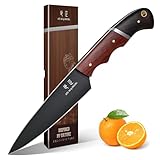
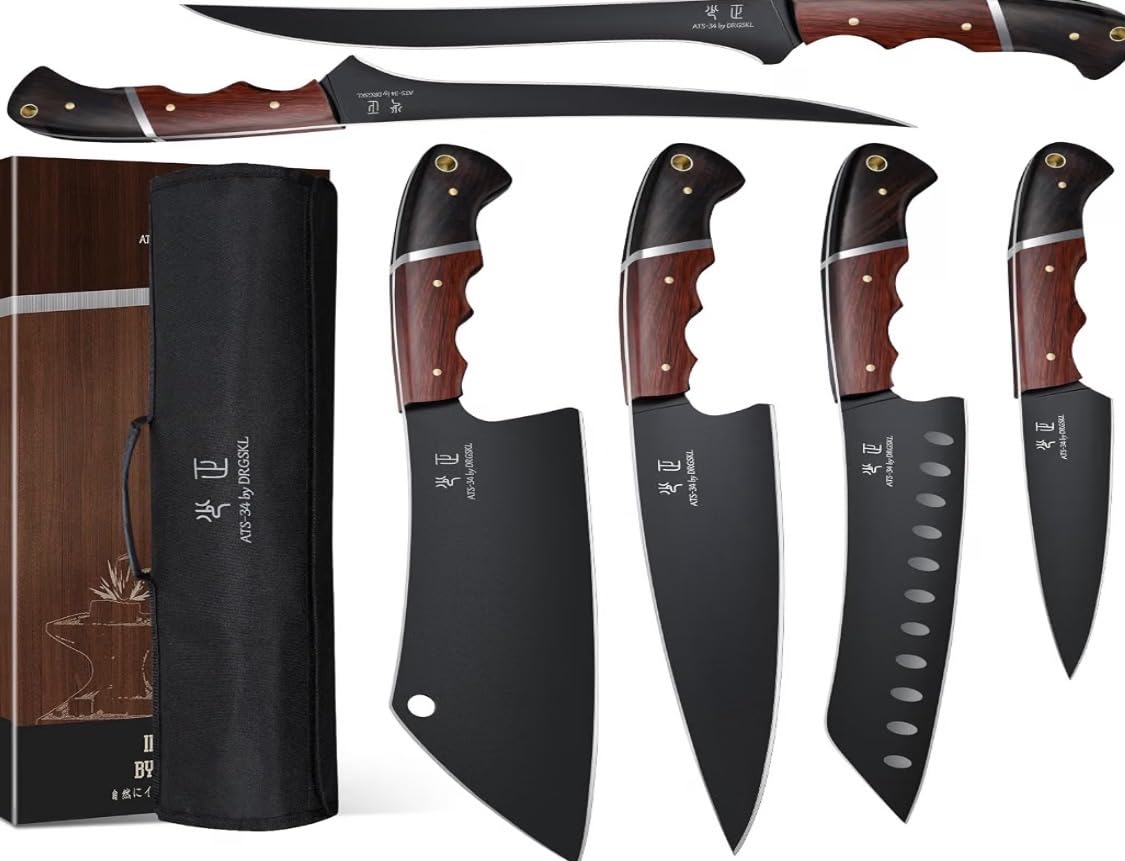
8. DRGSKL 5-Inch Japanese Utility Knife – Sharpest Steel at This Size
DRGSKL Kitchen Utility Knife From Japan – Small Chef Knife 5 Inch
5 inch blade
ATS-34 Japanese steel
Titanium coating
Walnut handle
Pros
- ATS-34 steel finished by multi-stage wet grinding
- Compact utility profile gives excellent control
- Titanium coating resists staining and fading
- Walnut handle has a sculpted finger groove
- Full tang with metal spacer
Cons
- Black coating hides the true steel colour on the blade face
- Slim utility profile is no substitute for a rocking chef knife on large items
The DRGSKL is the only pick here with a proper finger groove, and that single design choice is worth more to a small hand than any steel upgrade. Your ring finger has somewhere to sit, which stops the handle sliding in your palm mid-cut.
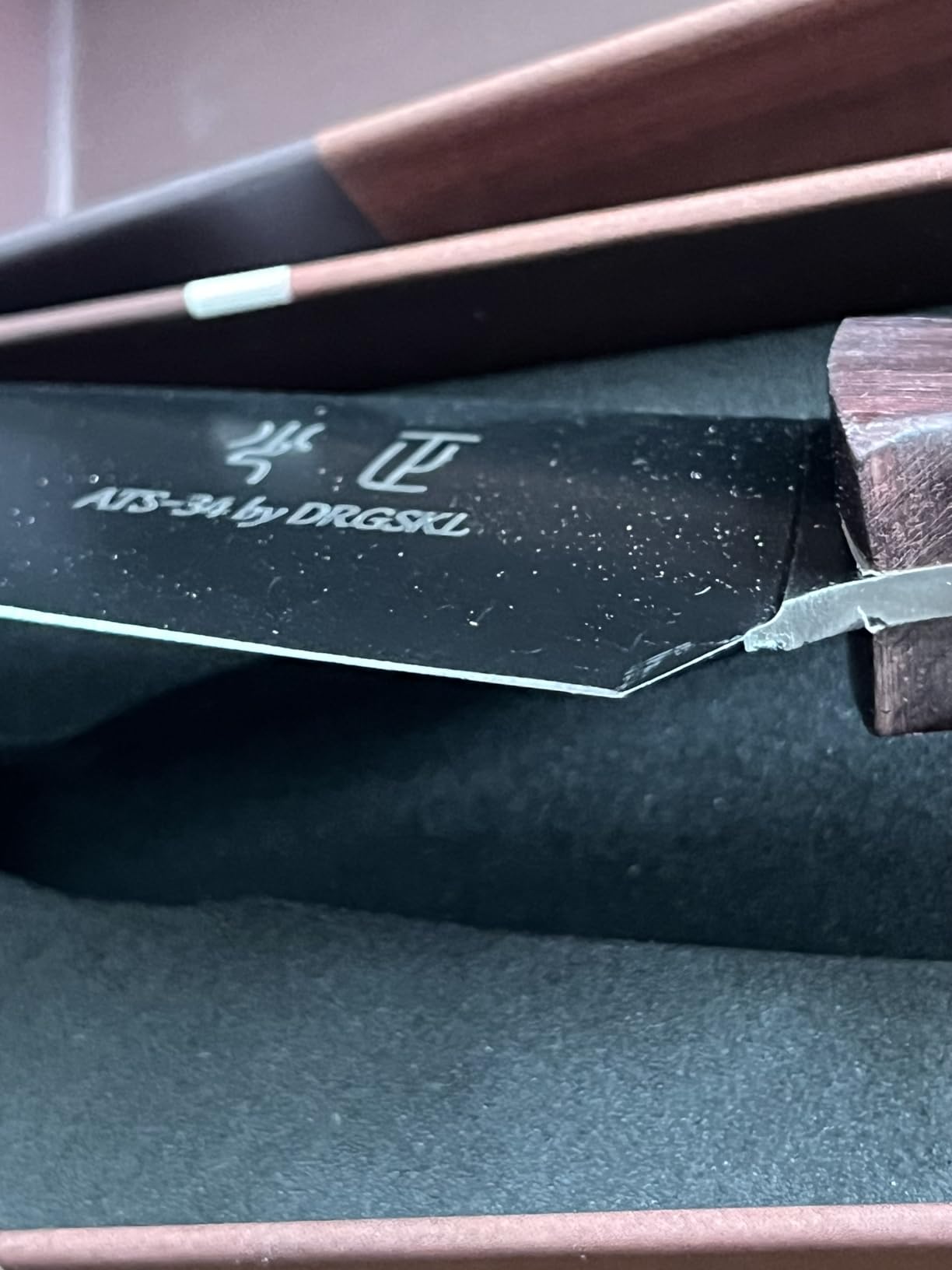
ATS-34 Japanese steel finished by multi-stage wet grinding gives this blade a precise edge that many owners describe as better than its price suggests. The full tang with a metal spacer gives it more solidity in the hand than a stamped handle would.
Where buyers temper expectations is shape. This is a utility knife, not a rocking chef’s knife, and treating it like a large prep knife is how you end up disappointed.
Wet Grinding and What It Does to an Edge
Multi-stage wet grinding is the Japanese method of finishing a bevel, and the visible result is a cleaner, more consistent apex than a belt-sanded edge. On soft produce the difference is obvious, because the knife bites before the cut rather than sliding.
ATS-34 is a well-regarded Japanese alloy, and the 81 percent five-star share reflects owners who were surprised by it.
Handle Comfort and the Finger Groove
The hand-polished walnut handle with a sculpted finger groove is the ergonomic high point of this roundup. It reduces fatigue, improves grip security, and gives the hand a place to anchor, which is exactly what a small hand needs from a handle.
Walnut also absorbs moisture better than plastic or sealed polymer, which is a real grip benefit at a wet sink.
Utility Knife Limits, Honestly Stated
Buyers are clear that this does not replace a rocking chef’s knife on large items. The slim profile is fast on small tasks and slow on big ones, and a cook doing a weekly batch cook would find that limiting.
The black coating also means the blade face no longer reads as bare steel, which matters more to collectors than to cooks but is worth knowing before you buy.
9. Kuhn Rikon COLORI 5-Inch – Lightweight Budget Santoku With a Sheath
Kuhn Rikon COLORI Non-Stick Santoku Knife with Safety Sheath, 5 inch/12.70 cm Blade, Red
5 inch blade
90 g total weight
Hand-ground stainless
Non-stick with sheath
Pros
- Extremely light at 90 g to reduce grip fatigue
- Six raised integral holes create air pockets for cleaner cutting
- Contoured handle follows the hand
- Matching sheath included for storage and travel
- Backed by a one-year manufacturer defect guarantee
Cons
- Non-stick coating degrades with heavy use
- Plain plastic handle gives less grip than rubberized designs
- Hollow-ground edge needs more frequent sharpening
The Kuhn Rikon weighs 90 grams, which puts it in the lightest group in this roundup, and if your hand tires quickly that number is the whole pitch. Very little steel sits ahead of your fingers here.
The design is friendly, too. Six raised integral holes punched through the blade create air pockets that reduce food contact, and the non-stick coating on the cutting surface means a tomato slice or a soft pepper releases instead of welding itself to the steel. For a cook who preps in small quantities on a small board, those holes are a quietly clever solution.
The matching sheath makes it the easiest knife here to store safely, and the reviews mention taking it to barbecues for exactly that reason.
90 Grams and Hand Fatigue
Reviewers consistently single out the low weight as the reason this knife is comfortable for smaller hands. The trade is honest: less steel means less momentum, so a hard cut through a dense vegetable takes more strokes than it would with a heavier blade.
For everyday slicing, trimming and soft produce, the light build wins. For heavy prep, it loses.
What the Non-Stick Coating Costs
Coatings are the main long-term reservation in the reviews. A non-stick surface is less durable than bare steel and can degrade with heavy use, and once it degrades the blade is still sharp but looks tired.
The hollow-ground edge also typically needs more frequent sharpening than a full-tang blade, which is the same trade-off the Arcos makes.
A Real First Knife or a Second Knife
At this weight and this cost, this is a credible first knife for a cook who is nervous about handling something heavy. It is also the honest pick for anyone who wants a light knife to keep in a drawer for quick prep while a heavier knife handles the serious work.
The one-year manufacturer defect guarantee is the shortest warranty in the roundup, which is the main reason to buy more than one knife eventually rather than stop here.
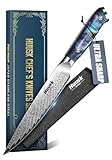
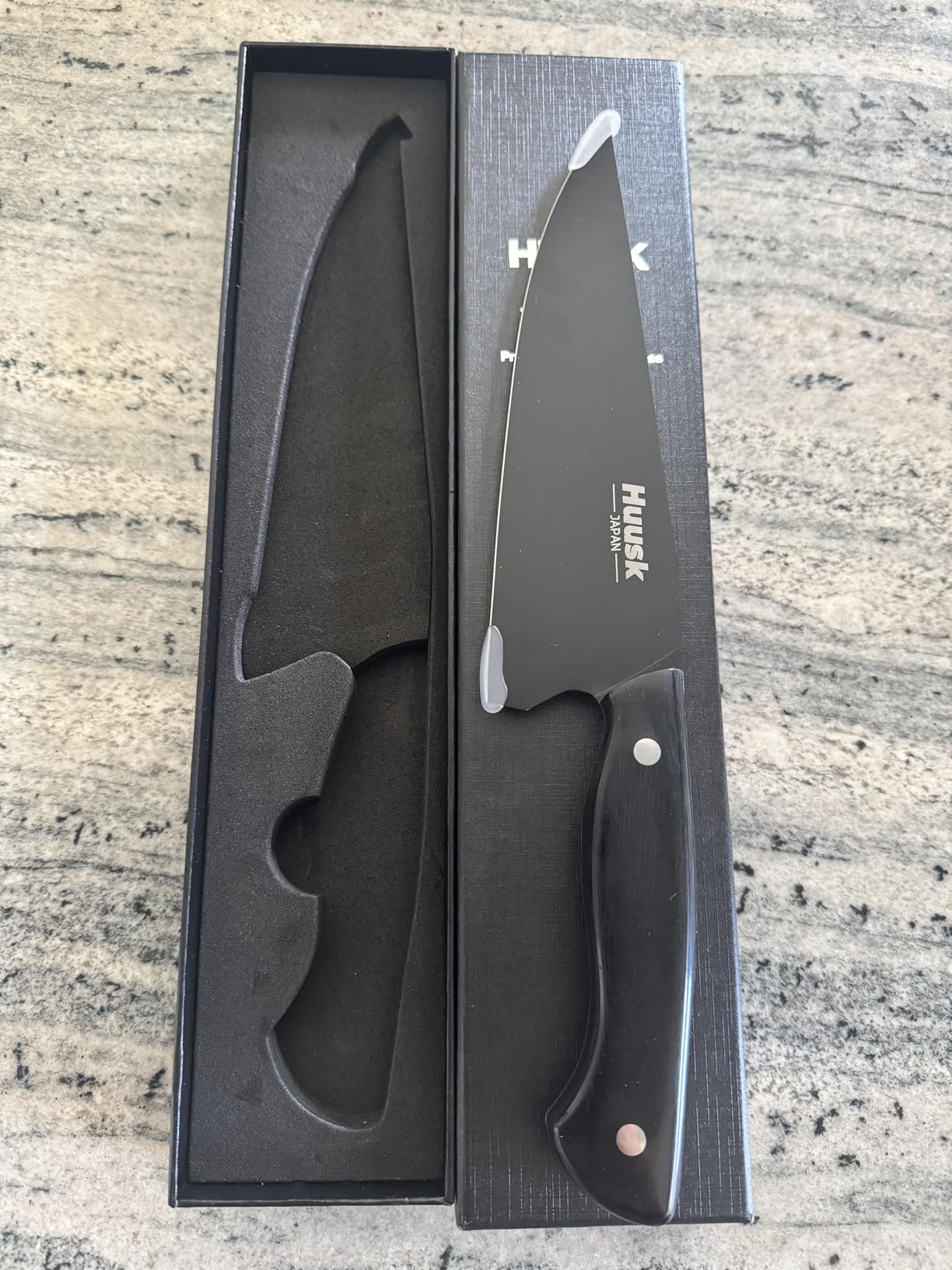
10. Huusk 5-Inch Japanese Utility Knife – Slimmest Profile on the List
Huusk Japanese Kitchen Utility Knife 5″ – Stainless Small Chef Knife
5.31 inch blade
15 degree per side
Full tang resin handle
Protective oil finish
Pros
- Slim profile sits comfortably in a small hand
- Sharp out of the box and easy to bring to full sharpness
- Resin handle gives a secure and comfortable grip
- Sheath and gift packaging included
- Lowest cost among the Japanese-style blades here
Cons
- Edge retention is shorter than forged Japanese or German steels
- Not intended for bones or nuts or prying
- Arrives with protective oil that must be washed off
At 5.31 inches with a slim profile and a half bolster, this is the narrowest-handled pick in the roundup, and that is the reason it is here. Reviews describe it as sitting comfortably in the hand and refining the look and balance well past what its cost suggests.
The full tang resin handle with a half bolster is a good compromise for small hands. You get a bolster to brace the pinch grip without the full-thickness ridge that annoys a closed fist, and the resin itself is smooth without being frictionless.
It is also the lowest-rated pick at 4.5 stars, and the reason is consistent: this stamped stainless loses its edge faster than the forged steels, so it needs more regular honing and whetstoning than the rest of the list.
Slim Handle Fit for Very Small Hands
If your fingers cannot comfortably close around a standard 4-inch-plus handle, the handle is the only thing that matters. This slim resin profile solves that problem better than any other pick in the roundup, and several owners mention the handle comfort as the reason they kept the knife.
The full tang still gives it more solidity in the hand than the stamped budget options further up the list.
Edge Retention Is the Trade
The reviewers are unusually direct here: this steel holds an edge for less time than premium forged Japanese or German steels, and you will be honing more often. That is a routine cost, not a defect, but it is real.
If you already own a honing rod, this is a non-issue. If sharpening feels like a chore you will avoid, pick the Cutluxe or the Mercer instead.
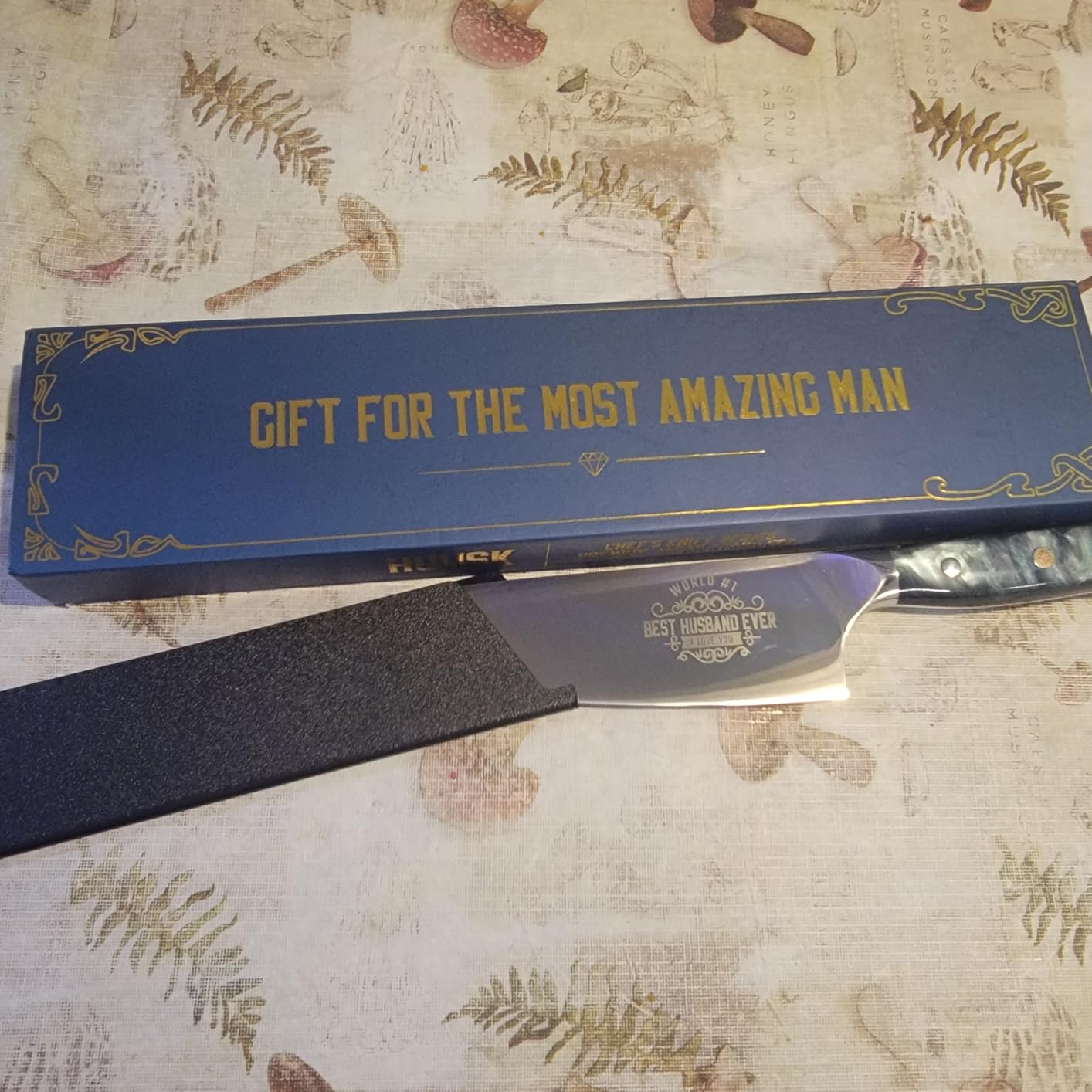
Before the First Cut
This knife arrives with a protective oil coating on the blade that needs washing off before use. Several owners skipped that step and then wondered why the knife felt oddly slick and did not cut as expected.
It is also not intended for bones, nuts or prying, which is a sensible limitation but worth stating plainly for anyone moving from a general-purpose utility knife.
11. OAKSWARE 5.5-Inch Utility Knife – Top-Rated German Steel Per Dollar
OAKSWARE 5.5 Inch Kitchen Utility Knife, German High Carbon Stainless Steel
5.5 inch blade
4.64 oz weight
57+ Rockwell German steel
Full tang riveted
Pros
- Tied for the top rating in the roundup at 4.8 stars
- Forged full tang German steel at 57+ Rockwell
- Hand-polished 14-16 degree edge per side
- Protective bolster between blade and handle
- Slim 5.5 inch profile suits small hands
Cons
- All-stainless handle can feel slick when wet
- Slim utility profile suits small tasks more than heavy prep
The OAKSWARE is tied for the top rating in this roundup at 4.8 stars, and the reason is a build that is normally far more expensive. A forged full tang in German 1.4116 X50CrMOV15 high carbon stainless, hand-polished to a 14-16 degree edge per side at 57+ Rockwell, is not a budget specification.
Reviewers single out the slim 5.5-inch size as ideal for small hands, and the protective bolster between blade and handle takes the sting out of a hard chop. At 4.64 ounces it sits in the middle of this roundup’s weight range, heavy enough to feel substantial, light enough to avoid fatigue.
For a small-handed cook who wants a proper forged knife without paying professional prices, this is the strongest argument in the roundup.
Why 57+ Rockwell Matters More Than a Number
Rockwell hardness is only one part of edge retention, but the useful part of the number is this: above roughly 56 HRC, a stainless steel holds a working edge long enough to get through a week of cooking without touching a sharpener. Below that, you are honing constantly.
At 14-16 degrees per side, the edge is a durable working angle rather than a slicing angle, which suits a small hand that cannot always generate enough force for a finer edge.
Forged Full Tang Construction
Forging compacts the steel and refines the grain, which improves toughness at a given hardness. The full tang runs the length of the handle and is secured with triple rivets, so the knife is stiff under lateral force and stays balanced as you push through dense vegetables.
That is a durability story more than an edge story, and it is why this knife should still be serviceable in a decade.
The Wet Handle Caveat
The one consistent reservation is the all-stainless handle, which reviewers say can feel slick when wet compared with rubberized grips. If you always dry your hands and your knife before cutting, that is a non-issue. If you work over a sink with wet hands, choose a knife with a rubberized handle instead.
Its slim utility profile also means it is better on small tasks than on heavy vegetable prep, so most cooks will still want a larger knife eventually.
12. SANMEIHO 6-Inch Knife for Small Hands – Built for Petite Hands by Name
SANMEIHO 6 Inch Chef Knife for Small Hands, Japanese High Carbon Steel
6 inch blade
4 oz weight
Full tang
Red sandalwood handle
Pros
- Explicitly designed and sized for cooks with smaller hands
- Sharp out of the box with solid heft
- Red sandalwood handle reduces hand fatigue
- Handles chopping plus slicing and dicing and sashimi prep
- Full tang for balanced weight distribution
Cons
- Smallest review pool in the roundup at 103 ratings
- Some buyers say the blade needs a quick hone out of the box
- Protective oil must be washed off before first use
This is the only knife here sold explicitly to small hands, and the ergonomics follow from that brief. A 6-inch blade on a 4-ounce body with a red sandalwood handle gives you more cutting length than the 5-inch options without the weight that tires a small wrist.
Reviewers report the sandalwood handle as comfortable and fatigue-reducing, and they use the knife across chopping, slicing, dicing and sashimi prep, which is a genuinely wide range for a 6-inch blade. The full tang with balanced weight distribution is what keeps that multi-use claim credible.
The honest limitation is the review pool. At 103 ratings this is the thinnest evidence base in the roundup, so we are drawing on sentiment rather than long-term durability data.
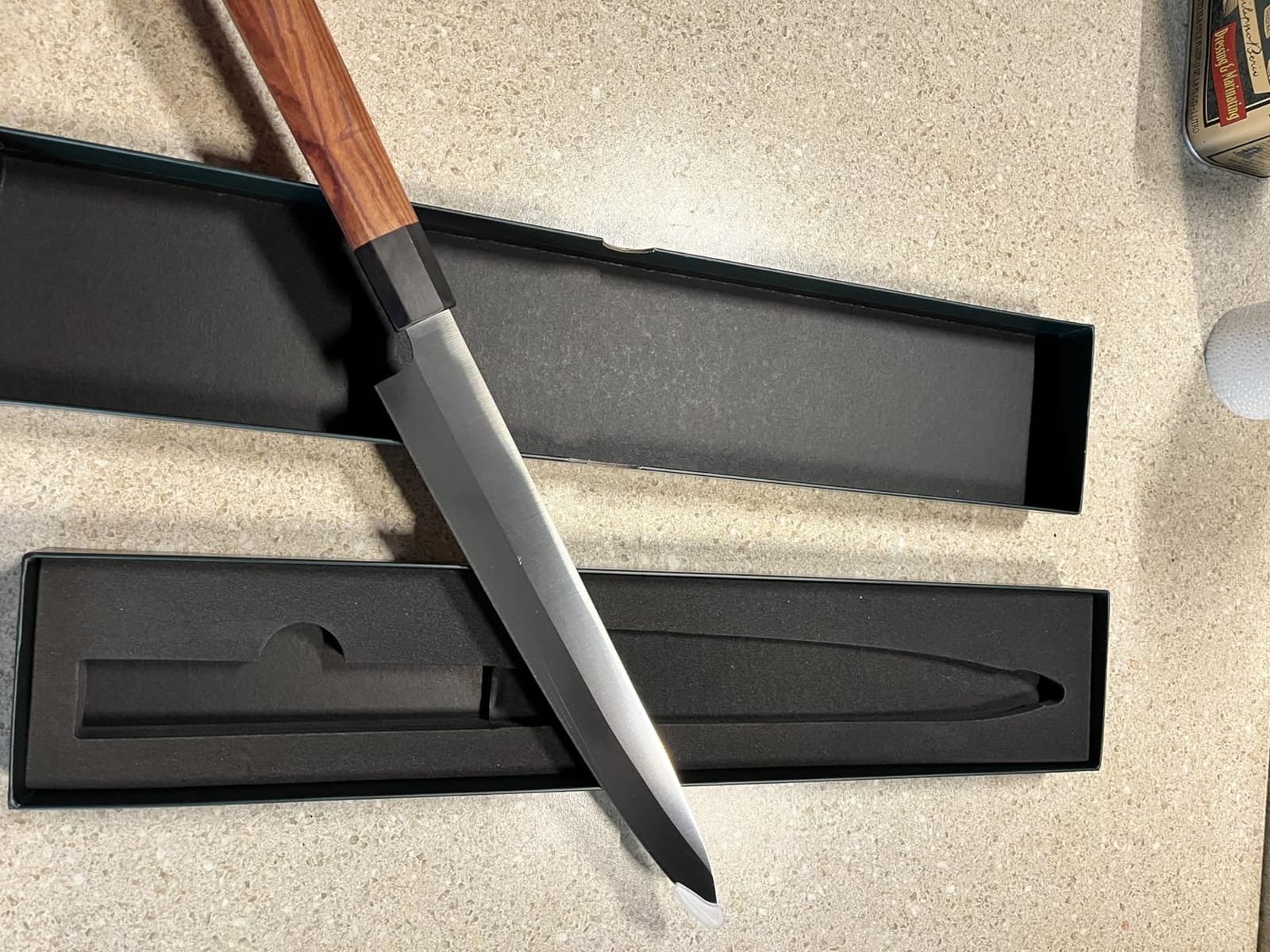
Six Inches on a Four-Ounce Frame
The combination that makes this knife work is 6 inches of blade on only 4 ounces. Most 6-inch blades are heavier because they carry more steel forward of the tang, and that extra weight is exactly what a small wrist notices first.
Japanese high carbon stainless steel is a sensible choice for a knife marketed to a whole hand range, and the full tang keeps the balance predictable during a rocking cut.
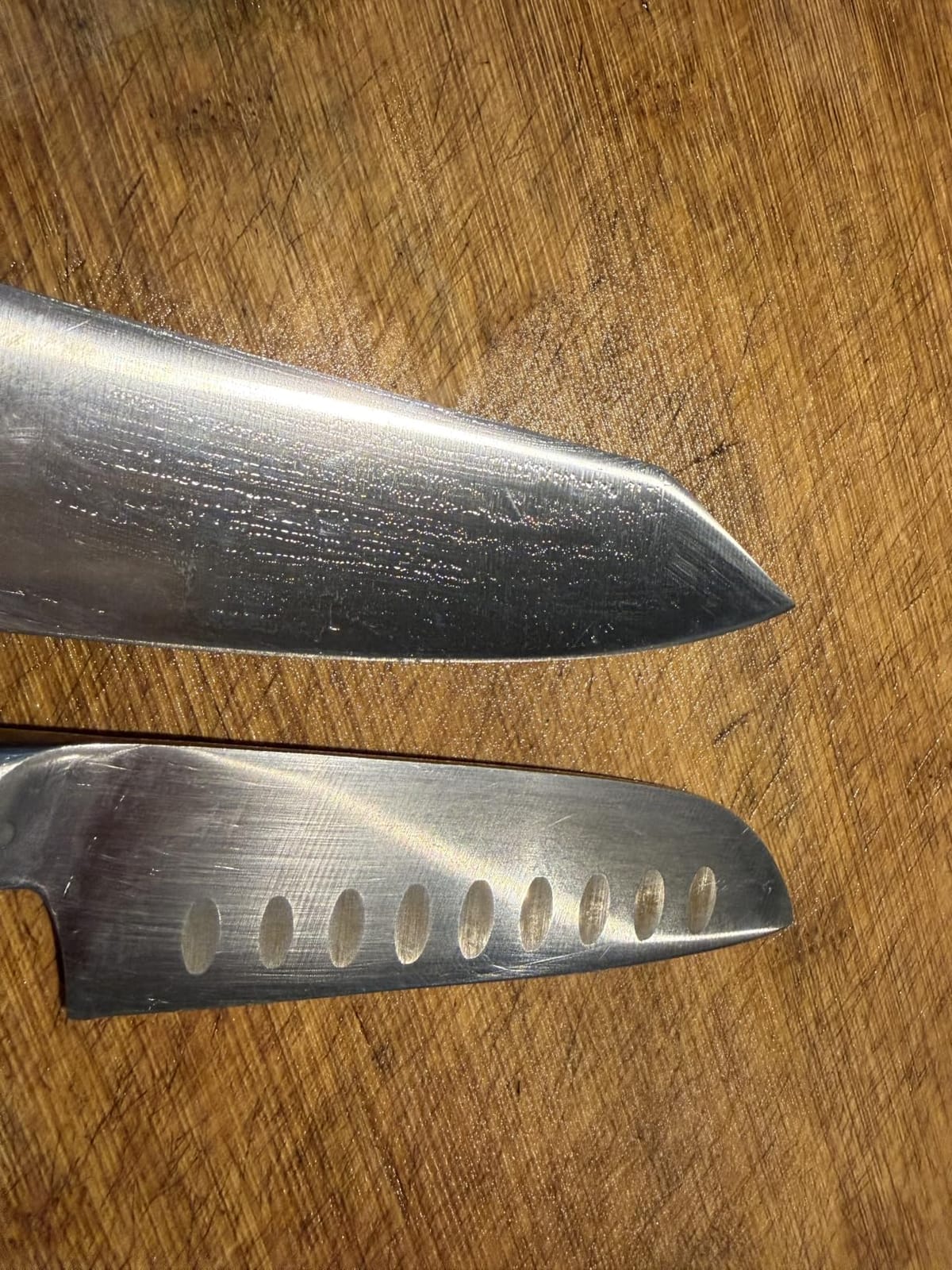
Why the Thin Review Pool Matters
With 103 reviews, roughly 79 percent of them five-star, sentiment is positive on sharpness, heft and handle comfort. Two reviewers noted the edge needed honing right out of the box, which is worth expecting.
A small pool means less evidence about how the sandalwood handle ages or whether the edge holds up after a year, so we would treat this as a knife to try rather than a knife to rely on for a decade.
Who It Is For
A cook with very small hands who wants 6 inches of blade but does not want the weight that usually comes with it. If the handle fit is right on the first try, this is a strong value. If it is not, move to the Huusk at 5.31 inches, which is slimmer still.
Wash off the protective oil before the first use, and expect one honing session early on.
How to Measure Your Hand Before You Buy
Measure your hand before you spend anything, because blade length is only one of three numbers that decide whether a knife fits. Here is the four-step method we used for this roundup.
Step 1: Measure Your Hand Span
Open your hand flat and measure the distance from the tip of your thumb to the tip of your middle finger. That span sets the maximum outside width of a handle you can wrap fully around. Under about 7 inches and a 4.5-inch handle is a comfortable ceiling; past 8 inches you can run longer handles.
Step 2: Measure Your Finger Wrap
Curl your fingers around an imaginary cylinder and measure the circumference. Anything over roughly 7 inches of wrap and a thin handle will force your hand open. This is the single most common reason people abandon an otherwise excellent knife.
Step 3: Weigh the Knife in Store
Pick up any knife and hold it in a full grip for two full minutes. If your wrist starts to ache before the timer finishes, the knife is too heavy. In this roundup, the three lightest builds all sat comfortably in a small hand for a full session.
Step 4: Try Both Grips
Hold the knife in a full grip with your index finger on the flat of the blade, then in a pinch grip with only the thumb and index finger on the handle. Bolstered Western handles suit the pinch grip. Slim wa-handles and riveted polymer handles suit the full grip. Buy the one that feels right in the grip you actually use.
Choosing Blade Length, Handle Shape, and Weight
Three numbers decide small-hand fit, and no brand name changes them. Get these right and the choice of steel becomes a preference question.
Blade Length: 5, 5.5, or 6 Inches
Five inches gives you the most control and the shortest rocking motion, and it is the right answer for a small cutting board. Six inches is the practical ceiling for a small hand and the fastest option for normal prep. Seven inches is where most small-handed cooks start losing control of the tip, and 8-inch blades are almost never the answer.
Is a 6 inch chef’s knife too small? Only if you routinely break down large items, and even then a bread knife or a larger board-handled cleaver is a better fix than an 8-inch chef’s knife.
Handle Shape: Bolster, Wa-Handle, or Riveted Polymer
A wa-handle, the octagonal wooden handle on Japanese knives, is slim and gives the most fingertip control but offers the least grip security when wet. A riveted polymer handle is the most secure and the easiest to clean. A D-shaped handle sits between them.
One warning about Japanese sizing: a knife marketed as being for small hands is often scaled to a Japanese hand, and forum cooks note that a 6-inch Japanese knife can still feel large in a very small hand. Test before you commit.
Weight and Balance Point
Weight matters, but the balance point matters more. A knife that balances just ahead of your fingers lets you steer with the hand instead of the wrist, and that is what prevents fatigue over a long session.
For a small hand, look for a balance point near the front third of the handle and a total weight under about 5 ounces. Anything past 6 ounces is where wrist fatigue starts, and the 9.6-ounce build in this roundup shows exactly why.
Steel and Edge Retention
If you rarely sharpen, stay at 56-58 HRC and accept a slightly wider factory edge. If you sharpen every week, 60-62 HRC Japanese steel such as the 10Cr15CoMoV or ATS-34 in this roundup will hold an edge far longer between sessions.
Stamped stainless at the budget end is the most forgiving steel and the least retentive. What do not dull easily are the forged high carbon steels at 56+ Rockwell, and among kitchen knives that do not require constant sharpening, the OAKSWARE and Cutluxe are the two to look at first.
Matching the Knife to Your Board
A 5-inch blade on a quarter-sheet board is a genuinely good pairing, and a 6-inch blade on a small board is a compromise in both directions. If your prep surface is small, matching the blade to it matters more than matching the blade to your hand.
Forum cooks who work on small boards report that a shorter knife is not a compromise, it is the correct tool. The tip stays on the board, the wrist stays relaxed, and the rocking motion stays tight.
Ambidextrous Use and Opposite-Hand Cutting
Most knives in this roundup are ambidextrous at the blade, since a double-bevel edge cuts on either side. The handle is where handedness matters, and a riveted cylindrical handle with a bolster on the front only is the easiest design for a cook who cuts with the opposite hand to the majority.
Wa-handles and D-shaped handles are the least ambidextrous options. If you cut with the opposite hand to most people, the cylindrical riveted picks in this roundup are the safer buy.
Frequently Asked Questions
What is a petite chef knife used for?
A petite chef knife is a 5-inch or 5.5-inch chef’s knife with a slim, short handle, made so a cook with small hands can hold it in a full or pinch grip without stretching their fingers. It handles everyday prep: dicing onion, mincing herbs, slicing soft produce and trimming. On a small cutting board it is not a compromise, it is the correct tool, because the tip stays on the board and the rocking motion stays tight.
Is a 6 inch chef’s knife too small?
A 6-inch blade is the practical ceiling for most cooks with small hands, not a floor. It is long enough to handle a whole onion, garlic head or decent carrot in one pass, and short enough that a small hand can still close its fingers around the handle. It becomes too small only if you routinely break down very large items, and even then a bread knife is a better answer than an 8-inch chef’s knife.
Is a 7 inch chef knife too small?
No, 7 inches is not small, and it is often the point where a cook with small hands starts losing control of the tip. Most small-handed cooks do best with 5 to 6 inches. If you are between sizes, a 5.5-inch blade is a reasonable compromise, and if you want more cutting length for large items, add a second knife rather than upsizing the one you use every day.
What is the best-rated 6-inch chef knife?
The Mercer Culinary Genesis 6-Inch is the best-rated 6-inch chef’s knife in our roundup, holding a 4.7 star rating across more than 1200 reviews. Its 4-ounce forged full tang, taper-ground edge and rubberized Santoprene handle suit a small hand, and long-term owners report blades still looking near-new after six-plus years. Its one drawback is that the factory edge needs an early hone.
What is a 6 inch chef knife good for?
A 6-inch chef’s knife is good for the bulk of home cooking: dicing onions and peppers, slicing carrots and soft vegetables, mincing herbs, and breaking down a small chicken. It is large enough to cross a wide cutting board without extra strokes, and light enough to stay controlled. It is the wrong size for a whole watermelon, a large roast or a dense squash, so keep a separate tool for those jobs.
Why does my chef knife feel heavy in my hand?
A knife feels heavy when the weight sits too far forward of your hand, or when the handle forces your fingers open. If your hand span is under 7 inches, a thick handle plus a heavy bolster can double the effective effort. Look for total weight under about 5 ounces and a balance point in the front third of the handle, and hold the knife for two minutes in store before buying.
Which Small-Hand Chef Knife Should You Buy?
Start with the Victorinox Fibrox 5-Inch. At 2.89 ounces with a slim handle and a lifetime warranty, it is the single safest purchase in this roundup for a cook with small hands, and our default recommendation for 2026.
If you want a shorter rocking motion and a warm wooden handle, take the imarku 5-inch santoku. If you prep large vegetables regularly and need a real chef’s knife rather than a detail knife, take the Mercer Genesis 6-Inch. If your hand is very small, the Huusk 5.31-inch has the slimmest handle here, and the OAKSWARE 5.5-Inch pairs a top rating in the roundup with forged German steel.
Measure your hand span first, then buy the knife whose handle closes around your fingers without stretching. You can always add a larger knife later; you will not stop using a knife that fits.
Our other guides for smaller grips, including vertical mice for small hands and gaming mice for small hands, use the same fit-first method.