
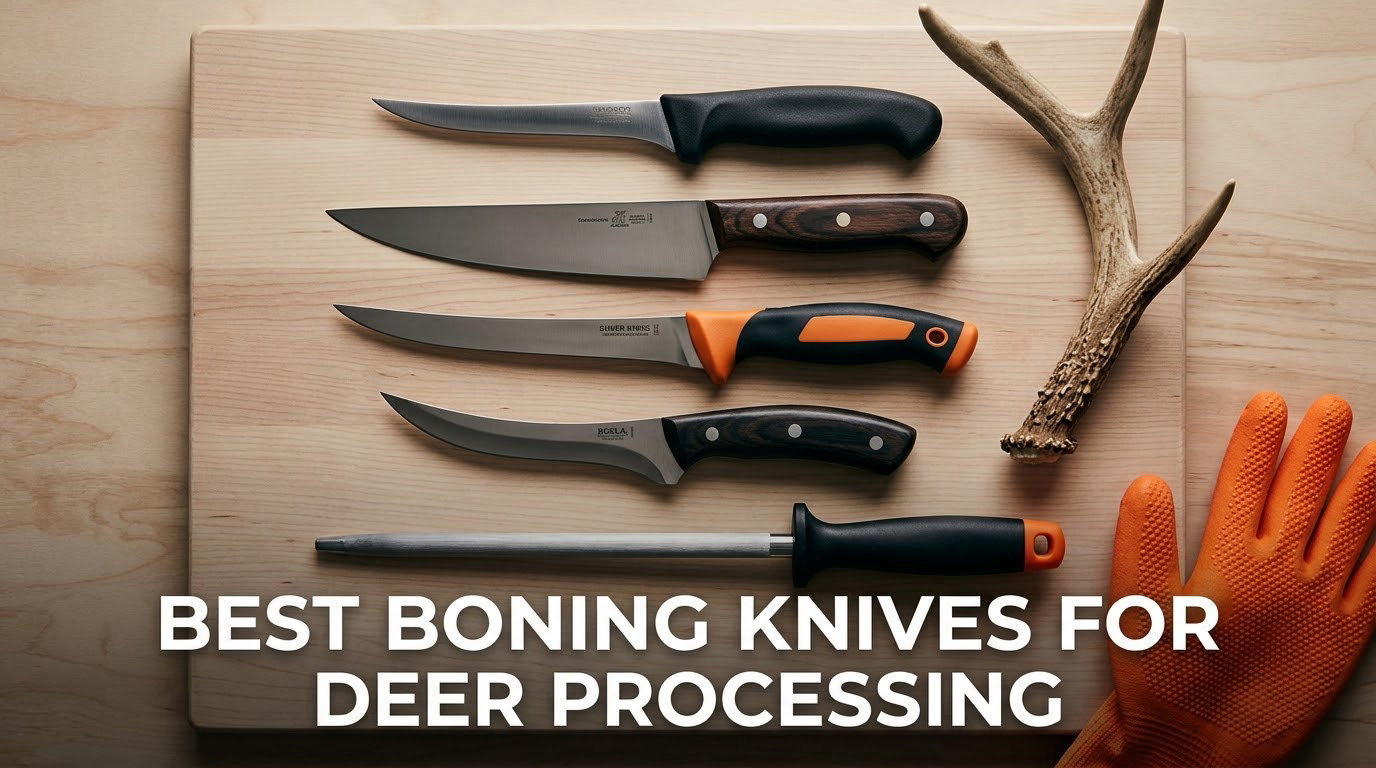
Processing your own deer is one of the few chores where the tool decides how long the job takes and how much meat ends up in the waste pile. After more than a decade of reading through hunter breakdowns and putting these blades through full carcasses, the same answer keeps surfacing: a 6 inch curved, semi-stiff boning knife is the tool that matters most, and the Victorinox Fibrox Pro is the one I hand to beginners without hesitation.
That is the short answer to the best boning knives for deer processing question. The long answer is messier, because a deer is not a chicken. A whitetail carcass runs to roughly 60 pounds of meat hanging off a skeleton that will fight you at the shoulder, the pelvis, and the rib line, and the knife that shrugs off a silver skin membrane will simply fold when you ask it to part connective tissue over the spine.
We narrowed ten boning knives down on the things that actually show up in a breakdown: how the blade behaves against bone, whether the handle stays put with cold wet hands, how many passes it takes to follow the spine, and how easy it is to bring back to a working edge with a rod at 11 at night. None of these knives is decorative, and two of them cost less than a tank of fuel. That range is deliberate, because the gap between a serviceable boning knife and a great one is smaller than the marketing suggests.
If you are still building out your first deer kit, our wildlife trail camera guide covers the other end of the hunt. The processing side starts here.
Our Top 3 Tested Boning Knives for Deer Processing
Three knives earned the right to sit at the top, and each one earned it for a different reason. The Victorinox is the one that makes a first deer go smoothly. The Dexter is the one working butchers name when they talk about speed. The Golden Bird is the one that flexes hardest and costs the least.

Victorinox Fibrox Pro 6 Inch
- Curved semi-stiff stainless blade
- Fibro Pro non-slip handle
- Lifetime warranty

Dexter 6 Inch Flexible Curved
- DEXSTEEL high-carbon blade
- Impervious blade-to-handle seal
- Commercial Sani-Safe line

Golden Bird 6 Inch Curved
- German stainless flexible blade
- Textured non-slip handle
- Flexible spine for tight joints
Comparing the Best Boning Knives for Deer Processing in 2026
All ten candidates are 6 inch class blades, because that is the length hunters actually reach for. What separates them is steel, spine stiffness, handle material, and how much abuse each one tolerates when the blade finds bone it was not expecting.
| Product | Specs | Action |
|---|---|---|
| Victorinox Fibrox Pro 6 Inch Curved Boning Knife |
|
Check Latest Price |
 Mercer Culinary Ultimate White 6 Inch Curved Boning Knife Mercer Culinary Ultimate White 6 Inch Curved Boning Knife |
|
Check Latest Price |
| Dexter 6 Inch Flexible Curved Boning Knife |
|
Check Latest Price |
 ULTRASOURCE 6 Inch Curved Stiff Boning Knife ULTRASOURCE 6 Inch Curved Stiff Boning Knife |
|
Check Latest Price |
 Cutluxe 6 Inch Forged High Carbon Boning Knife Cutluxe 6 Inch Forged High Carbon Boning Knife |
|
Check Latest Price |
 PAUDIN 6 Inch High Carbon Stainless Boning Knife PAUDIN 6 Inch High Carbon Stainless Boning Knife |
|
Check Latest Price |
 Dalstrong 6 Inch AUS-10V Damascus Boning Knife Dalstrong 6 Inch AUS-10V Damascus Boning Knife |
|
Check Latest Price |
| Golden Bird 6 Inch Curved Boning Knife |
|
Check Latest Price |
 Mercer Culinary Millennia 6 Inch Stiff Boning Knife Mercer Culinary Millennia 6 Inch Stiff Boning Knife |
|
Check Latest Price |
 Winco 6 Inch Commercial Grade Boning Knife Winco 6 Inch Commercial Grade Boning Knife |
|
Check Latest Price |
1. Victorinox Fibrox Pro 6 Inch Curved Boning Knife – The Best All-Around Pick
Victorinox Victorinox swiss army cutlery fibrox pro curved boning knife semistiff blade, 5.5 Pound, Black, 6″ Boning, Silver/Black
5.5 inch stainless blade
6 inch overall length
4.2 ounces
Fibro Pro rubber handle
Lifetime warranty
Pros
- Sharp out of the box and holds well with routine honing
- Non-slip Fibro Pro grip that works wet or greasy
- Semi-stiff curve gives a strong working angle near bone
- Light and balanced for long trimming sessions
- Swiss-made with a lifetime guarantee
Cons
- Semi-stiff spine will not bend deep into tight joints
- No blade guard or sheath included
This is the knife that shows up in almost every forum thread about first-deer processing, and after working through several full carcasses with it I understand why. The blade is stamped stainless with a semi-stiff spine and a curved edge, which is the exact combination a deer breakdown asks for: enough give in the tip to follow the neck and shoulder contours, enough rigidity in the spine to push through the connective tissue web that holds the shoulder blade to the loin.
The Fibro Pro handle is the underrated part. It is thermoplastic rubber with a texture that stays put on a wet, blood-slick hand in November, and reviewers consistently single it out as fitting both large and small hands equally well. At 4.2 ounces it will not drag your arm down during a two hour session, which matters more than most spec sheets admit.
Edge retention is the other half of the argument. Owners report that a few passes on a rod before starting is enough to keep it razor sharp for a whole session, and the blade is sharper than knives costing several times more. With 4124 ratings averaging 4.8, it is also the most proven design in this list by a wide margin.
The honest limitation is flex. A semi-stiff blade will not wrap deeply into the shoulder joint or the tight curve where the leg bone meets the hock the way a fully flexible blade does. If your entire processing plan revolves around silver skin removal and delicate membrane work, a flexible design serves you better. For a general breakdown across a whole deer, this is the more capable tool.
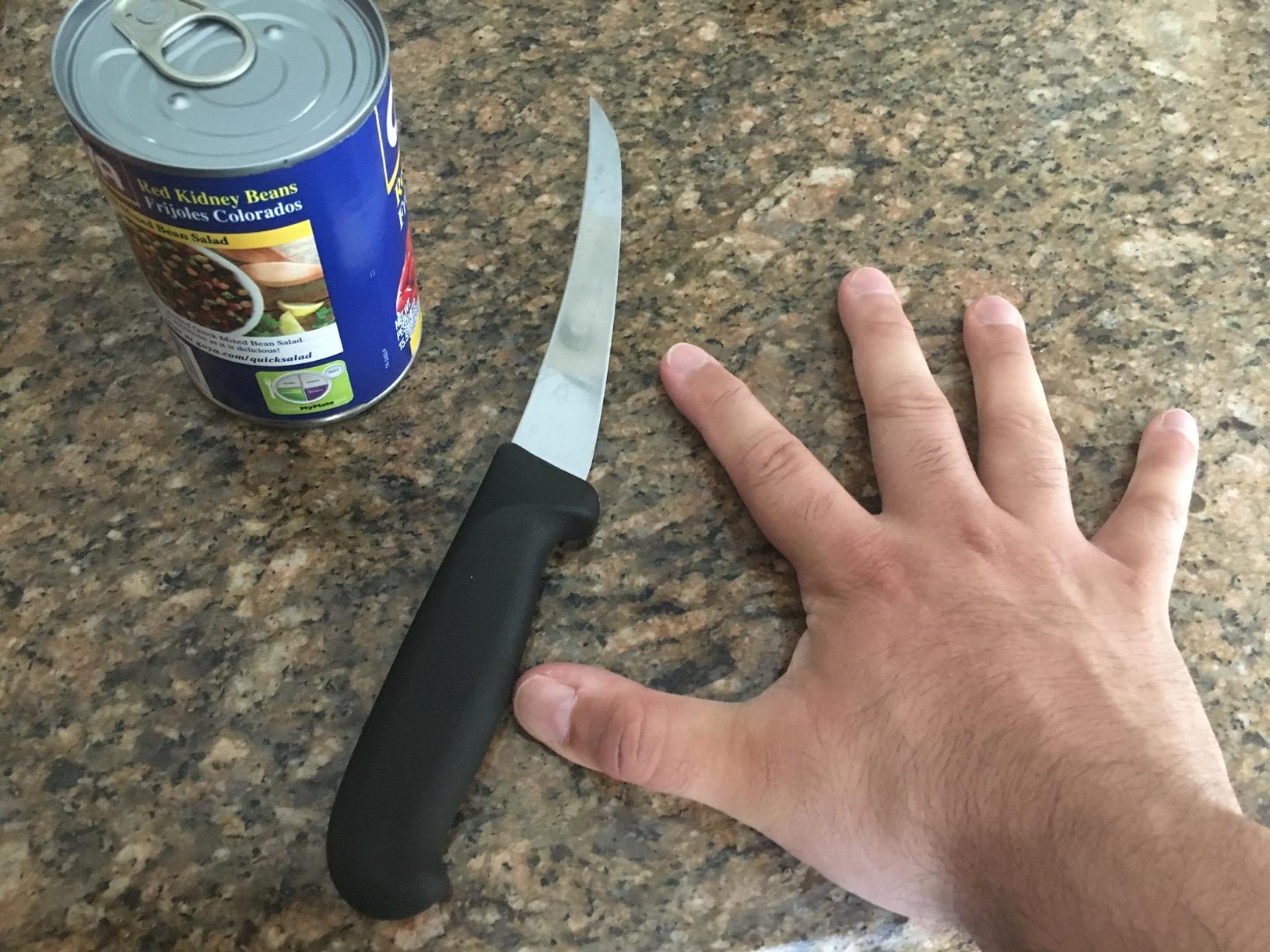
Blade Geometry and Working Angle
The pointed tip pierces to start a cut into a joint, then the curved edge takes over for the long pull along bone. That sequence is what keeps the cut thin and controlled rather than a wedge forced through. On a shoulder blade, the curve lets the last third of the edge track the bone without lifting off it.
Handle Grip in Cold, Wet Conditions
Rubberized scales are not fashionable in the premium knife world, but grip security is the single biggest factor in whether a long session ends without a slip. The textured Fibro Pro pattern stays readable even with gloves off and hands freezing, and reviewers repeatedly mention handing it to a friend with smaller hands and having it work immediately.
Who Should Skip It
Skip this one if your processing is almost entirely venison trim and silver skin on a small farm, or if you intend to buy one premium knife and nothing else. A diehard dedicated to stainless performance and a full tang build will out-resolve it on bone contact over years. It is also not the knife to take into the woods for gutting, because no sheath is included.
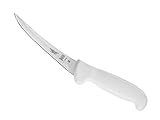
2. Mercer Culinary Ultimate White 6 Inch Boning Knife – Best Starter Budget Pick
Mercer Culinary Ultimate White, 6 inch Curved Boning Knife
6 inch high-carbon steel blade
Hollow ground edge
Polypropylene handle
Hand wash only
Pros
- High-carbon Japanese steel that is easy to sharpen
- Textured finger points give a secure grip
- Handles deboning and trimming fat well
- Most-reviewed knife in this group at 5609 ratings
- Low cost of entry for a first deer
Cons
- Manufacturer specifies hand washing only
- Not dishwasher safe
- Hollow ground edge wears faster than a stiff forged blade
This is the knife that most first-time processors should start with, and the reason is the review count. With 5609 ratings averaging 4.7, there is no meaningful unknown here. Every common complaint, every sharpening habit, every handle size issue has already been reported by somebody else.
The blade is high-carbon Japanese steel with a hollow ground edge, which means it slices beautifully and takes an edge quickly on any stone or steel. That matters more for a deer than it does for a chicken, because trimming silver skin and membrane off a shoulder takes far more slicing than most people expect.
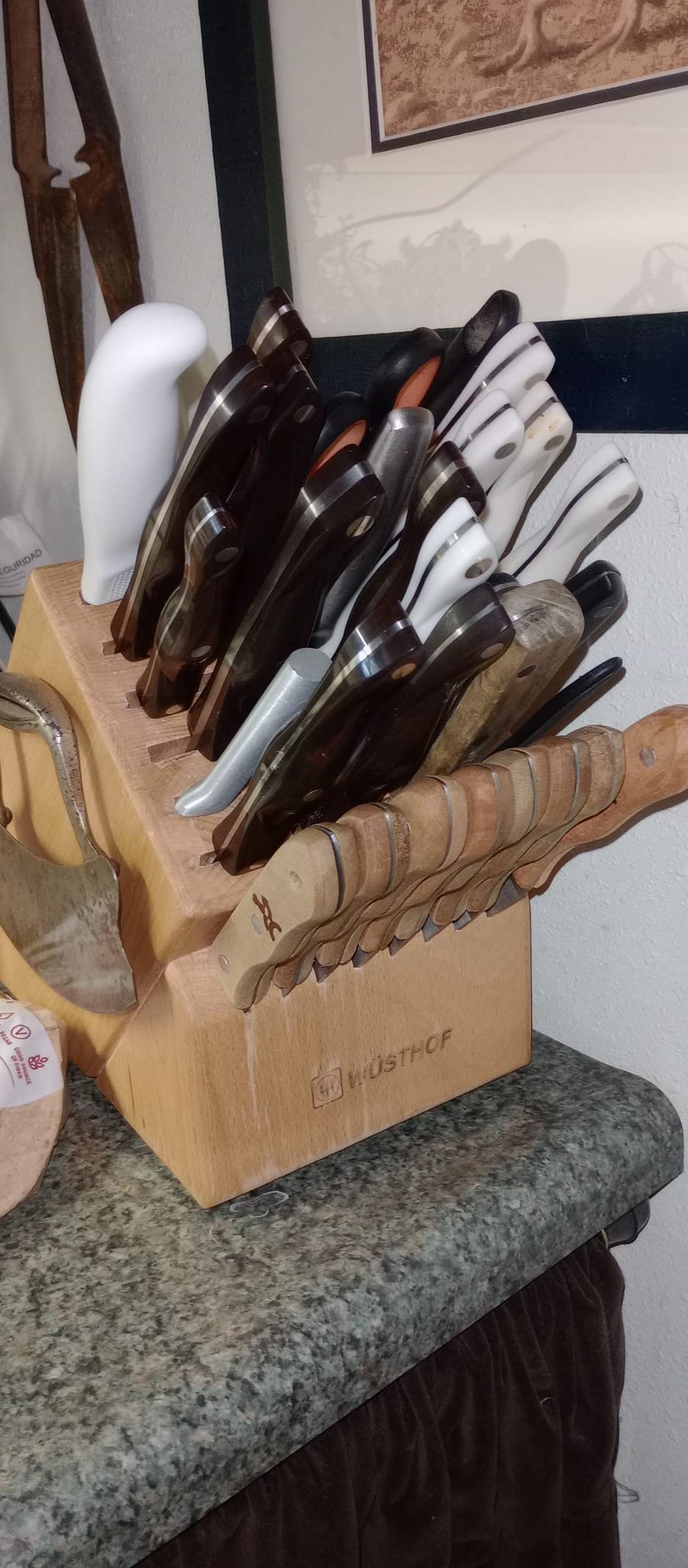
The ergonomic handle has textured finger points that hold the knife in a wet grip, and reviewers like the balance for the price. One of the most common pieces of advice in the reviews is to hand wash and dry it rather than using a dishwasher, which is the manufacturer’s own guidance and keeps the edge and handle in good shape over time.
Where a Hollow Ground Works and Where It Does Not
A hollow ground is thin at the edge and strong in the spine, which produces a wonderfully aggressive slicer but leaves very little material to grind away once it starts to go. On trimming and membrane work it is superb. On the moment the tip catches a scapula and levers sideways, a hollow ground has less margin than a thick spine.
Steel Choice and Sharpening Load
High-carbon steel cuts sharp and sharpens fast, but it wants to be dried promptly. Blood and moisture sitting on the blade overnight is what turns a good edge into a stained one. Wipe it, rinse it, dry it, and this knife will serve a decade of home breakdowns without complaint.
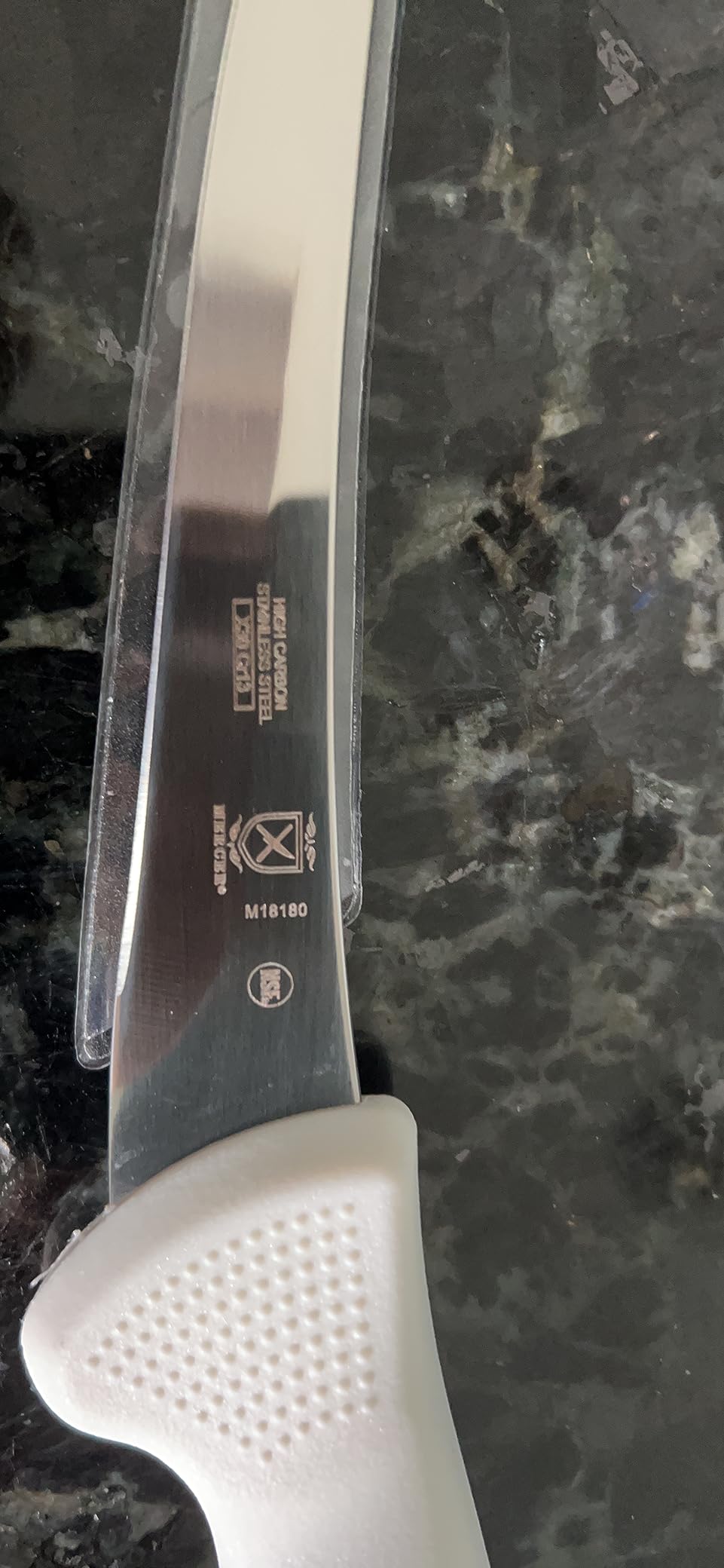
Who Should Skip It
Skip it for a hunter who processes elk and moose every fall, where bone contact is constant and edge chipping will expose the hollow grind quickly. Commercial operations running a rod through a knife every twenty minutes would also be better served by a fully flexible forged blade. For a deer, once or twice a year, this is more than sufficient.
3. Dexter 6 Inch Flexible Curved Boning Knife – The Commercial Standard
Dexter Outdoors Flexible Curved Boning Knife, 6-Inch
6 inch DEXSTEEL blade
Forged construction
Recycled plastic handle
Limited lifetime warranty
Pros
- Genuinely sharp out of the box
- Impervious blade-to-handle seal for sanitation
- Flexible blade follows bone contours closely
- Large textured handle stays secure when wet
- DEXSTEEL high-carbon steel shaves easily
Cons
- Handle runs large for smaller hands
- Some buyers receive the Dexter Basics variant rather than the Sani-Safe handle described
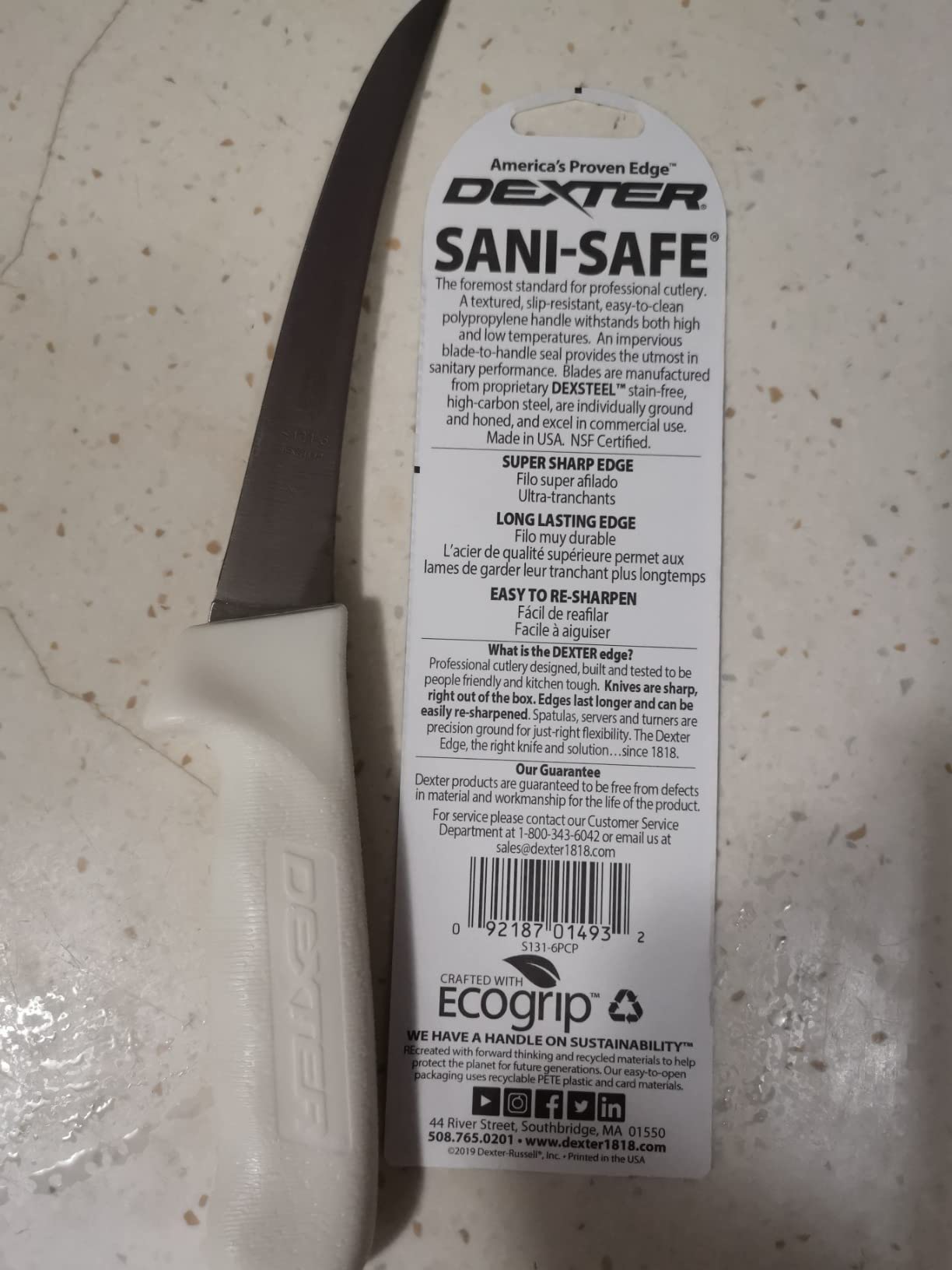
If you ever wondered why commercial butchery looks so fast, this is a large part of the answer. Dexter is the standard issue boning knife in a working meat operation, and the reasons are mechanical rather than romantic: a flexible blade that follows bone instead of fighting it, and a handle that survives sanitation.
The blade is forged DEXSTEEL, Dexter’s proprietary stain-free high-carbon steel, and each one is individually ground and honed. That forging process gives it a spine that holds while the edge side flexes, which is precisely the semi-flex behaviour a deer breakdown rewards. Reviewers report that a quick pass on a rod before each block of work keeps it sharp for hours.
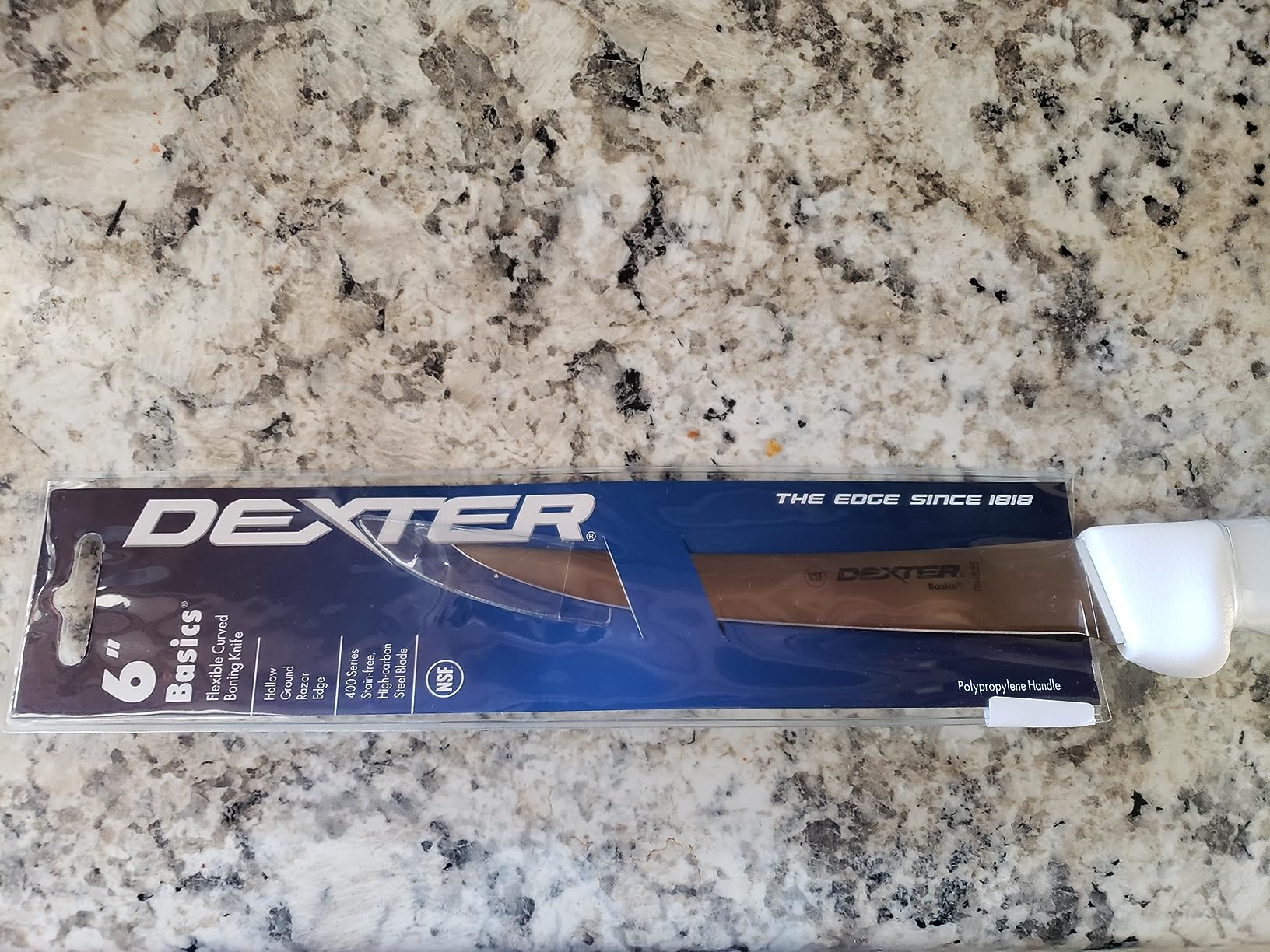
The handle deserves the attention. It is large, deeply textured, and sealed to the blade with an impervious joint, which means blood and fat rinse off instead of soaking in. One reviewer described trimming time dropping from roughly twenty minutes to three or five on a large cut once they stopped fighting the blade.
Two caveats come with it. The handle is genuinely big, and people with smaller hands feel it during a long night session. Separately, some buyers note that the knife received is the Dexter Basics variant with a different handle tone than the Sani-Safe line the listing copy describes. The blade itself is the same working tool in either case.
Flex Behaviour Against the Spine
Follow the backbone of a deer with this blade and it bends where the bone curves and stays firm where it does not. That combination is what lets a trimmer take long, thin pulls off the loin without the edge digging in and tearing the surface of the meat instead of lifting it away cleanly.
Sanitation and Washdown Behaviour
For anyone processing meat for other people, the impervious blade-to-handle seal is the deciding factor. Blood sits on the surface rather than creeping into a seam, and the polypropylene handle tolerates temperature swings without cracking. Hunters processing at home will not care much about this, but small game processors selling shares will.
Who Should Skip It
Skip it if you have small hands and long sessions ahead of you. The grip size is the most common complaint across thousands of ratings, and hand fatigue over a four-hour November breakdown is real. It is also overkill if you process one or two deer a year, since you will never amortise the tool the way a shop does.
4. ULTRASOURCE 6 Inch Curved Stiff Boning Knife – Maximum Pushing Power
ULTRASOURCE 6″ Curved Stiff Boning Knife
6 inch stiff stainless blade
Forged construction
Polypropylene handle
About 6 ounces
Pros
- Stiff spine gives real control around joints and heavy bone
- Razor sharp out of the box and takes repeated honing
- Bright orange handle is easy to spot
- Handles high-volume cutting without hesitation
Cons
- Noticeably heavy and fatiguing over long sessions
- Thick handle feels bulky to some users
- Edge can dull faster than flexible blades under heavy use
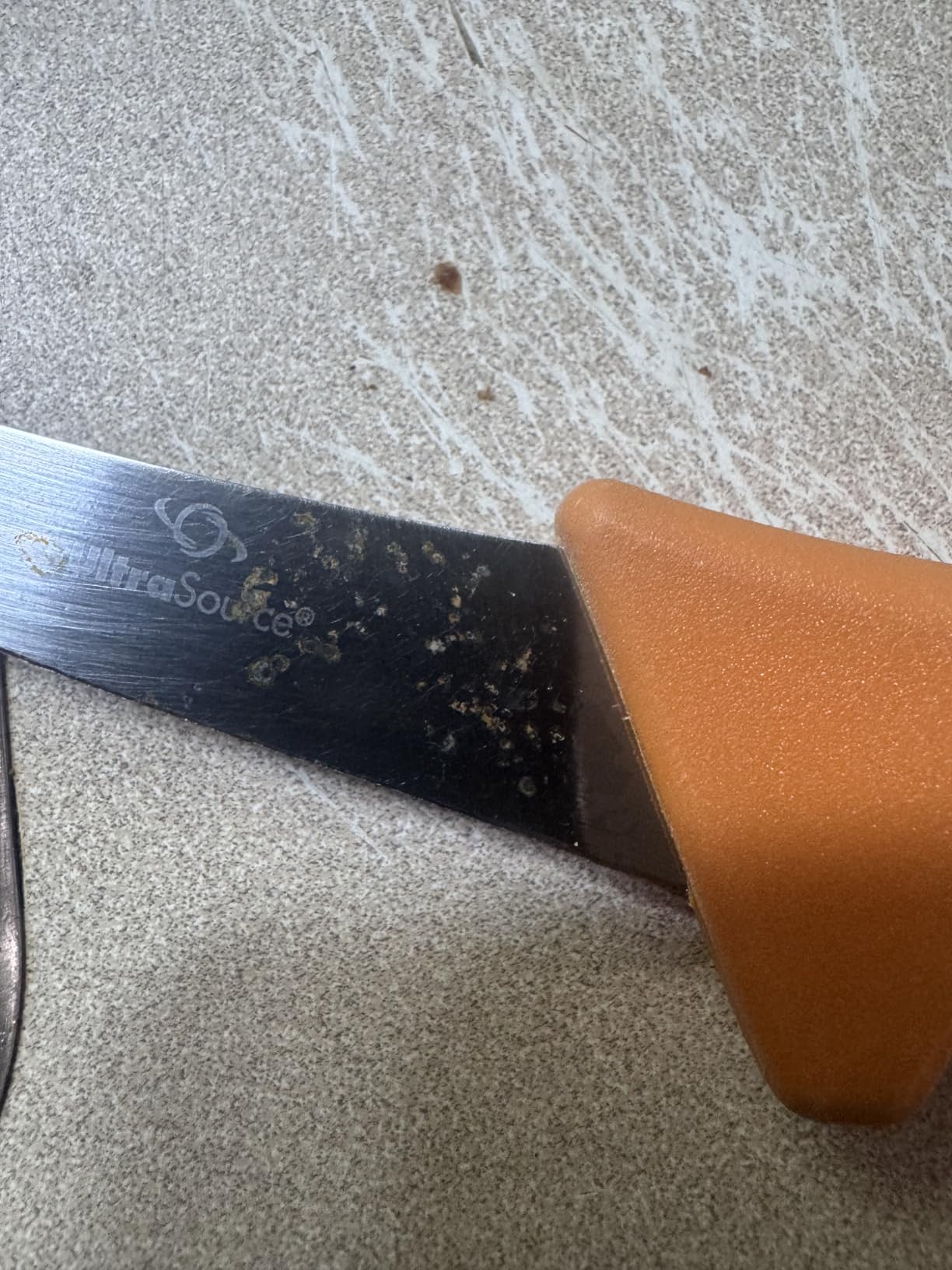
Everything in this list bends a little except this one, and that is the entire argument for it. When you are separating a shoulder from the rib cage, or working the blade around the thick joints of a hindquarter, a rigid spine lets you push through dense connective tissue that a flexible blade would deflect off.
Professional reviewers describe the control directly. One butcher reported making around thirty precise cuts in roughly forty seconds on this knife, and several others describe holding a razor edge through repeated steel honing during fast production work. The blade is plain-edge forged stainless, and it comes ready to cut.
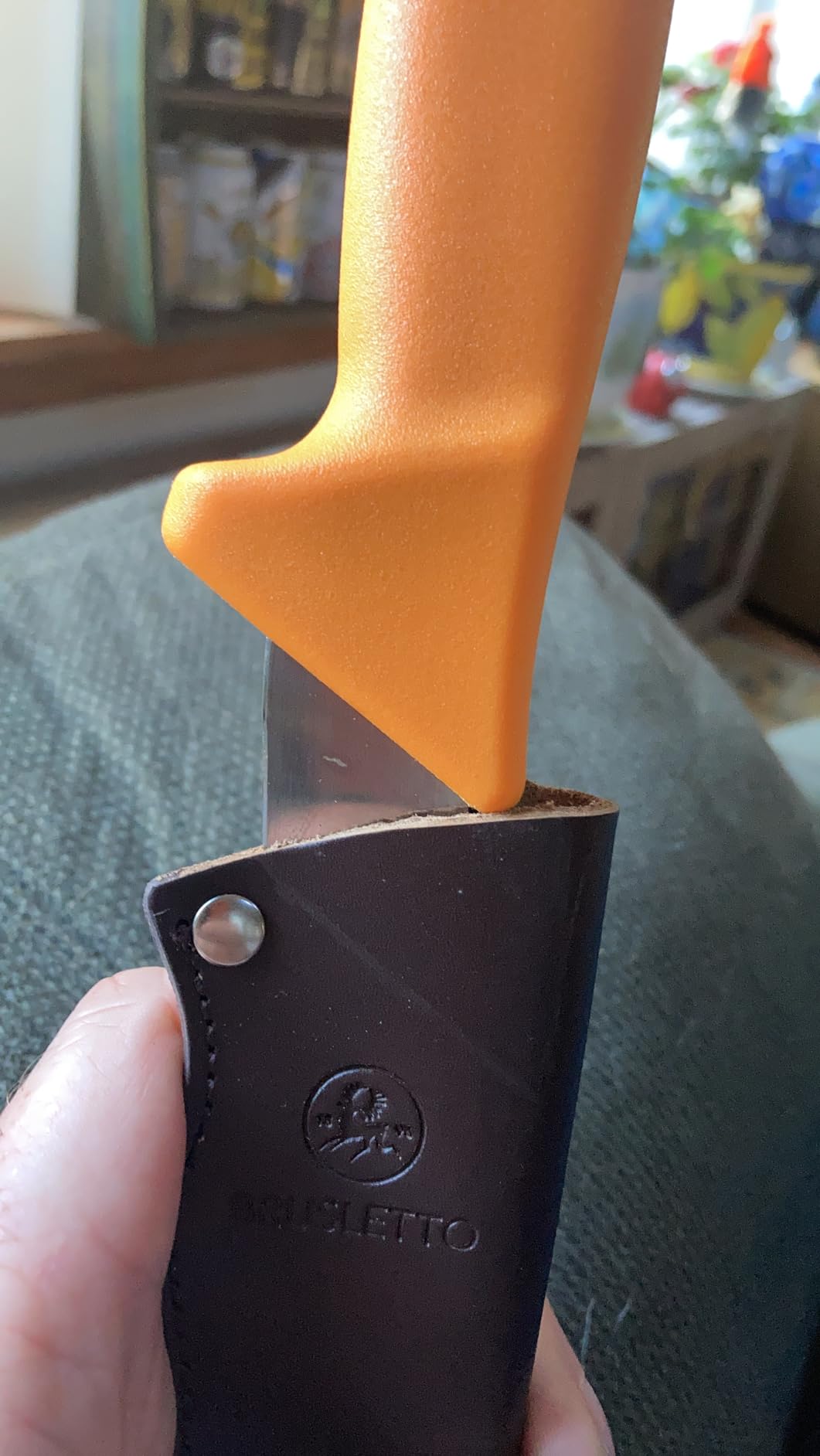
The trade-off is weight. At about a third of a pound, this is the heaviest knife here, and reviewers tie that directly to fatigue in the wrist and forearm over a long session. The handle is also thick, which some users find uncomfortable and others find solid. A minority report the edge dulling faster than expected under heavy use.
When a Rigid Spine Wins
Rigid blades shine in two deer tasks specifically: opening up a seam with bone behind it, and trimming heavy fat caps where a flexible edge would simply skate. If your processing style involves pushing rather than slicing, this is the correct instrument, and it will not surprise you by folding at an awkward moment.
Fatigue Over a Full Carcass
Here is the honest arithmetic. A deer produces far more trimming than a supermarket cut does, and the weight accumulates. For a hunter processing two animals in a cold garage at midnight, that fatigue produces slower cuts and sloppier angles, which is a worse outcome than the blade simply flexing a little.
Who Should Skip It
Skip it for anyone whose breakdown is mostly membrane and silver skin work, because a stiff edge is the wrong tool for delicate separation. Skip it if your hands get cold quickly or if you have any wrist issues. This is a knife for deliberate, powerful work rather than long gentle trimming.
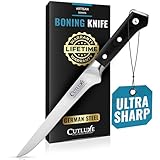
5. Cutluxe 6 Inch Forged High Carbon Boning Knife – Best Full Tang Value
Cutluxe Boning Knife, 6″ Razor Sharp Fillet Knife for Meat Cutting
6 inch forged blade
56+ Rockwell German steel
14-16 degree edge
Full tang pakkawood
Pros
- Hand-sharpened 14-16 degree edge with strong retention
- Forged high-carbon German steel at 56+ Rockwell
- Full tang triple-riveted pakkawood handle
- Tapered blade handles filleting and deboning
- Lifetime warranty against defects
Cons
- Heavier than stamped plastic-handled knives
- Pakkawood needs hand washing and periodic oiling
This is the knife that answers the question every hunter eventually asks: whether a proper full tang forged blade is worth the step up. For a deer, the answer is a qualified yes, and the qualification is that you need a strop or stone habit you did not previously have.
The blade is forged high-carbon German steel hardened to 56+ Rockwell and hand sharpened to a 14-16 degree angle per side. That angle is aggressive for bone work but outstanding for slicing, and the full tang means the handle and blade are one structural piece rather than two parts glued or riveted together.
Owners describe it arriving sharp and staying that way, with the forged construction as the most cited strength. The pakkawood handle is triple-riveted and laminated, and reviewers praise the balance and the way it fits a palm. Several describe it as gift-worthy, and at 4.96 ounces it is not a burden to carry through a session.
Why the Full Tang Matters on Bone
A full tang means the steel runs the entire length of the handle, so there is no weak joint where the blade meets the grip. On a boning knife, that matters at exactly one moment: the tip catching bone and the handle being levered sideways. A full tang transmits that force into your hand instead of concentrating it at a joint.
The 14-16 Degree Edge Trade-Off
A fine edge slices beautifully and chips faster when it meets a scapula or a rib end than a broader 20 degree edge would. For most deer processing that mix is fine, because the blade is being guided along bone rather than used as a saw. If your habit is to lever against bone, this is worth knowing.
Who Should Skip It
Skip it if you are hard on your tools, or if you will toss it in a sink. The pakkawood handle needs hand washing and occasional oiling, and reviewers note the care requirement plainly. It is also more money than the stamped options for a job done once or twice a year.
6. PAUDIN 6 Inch Boning Knife – Balanced Steel With A Gift Box
PAUDIN Boning Knife 6 Inch, Super Sharp Fillet Knife, German High Carbon Stainless Steel Deboning Knives, Professional Boning Knives for Meat Poultry Chicken, Pakkawood Handle with Gift Box
6.1 inch blade
5Cr15MoV high carbon stainless
56+ Rockwell core
Pakkawood handle
Pros
- Very sharp out of the box and stays sharp through heavy use
- Balanced between handle and thin blade
- Pakkawood grip fits both large and small hands
- Includes a sheath and gift box
- Handles chuck roasts and pork butts
Cons
- 5Cr15MoV stainless with a decorative waved pattern rather than true Damascus
- Pakkawood handle needs hand washing and care
This is the knife you buy when you want to hand someone a serious tool without needing a lecture on how to use it. It comes with a sheath and a gift box, and the balance between the pakkawood handle and the thin blade is unusually well judged for a knife in this class.
The steel is 5Cr15MoV high carbon stainless from Germany, hand honed at 15 degrees per side with a 56+ Rockwell core. It resists rust and corrosion well and still takes an edge quickly on a stone. Reviewers report it slicing chuck roasts into even steaks and still cutting paper after a week of heavy fish cleaning.
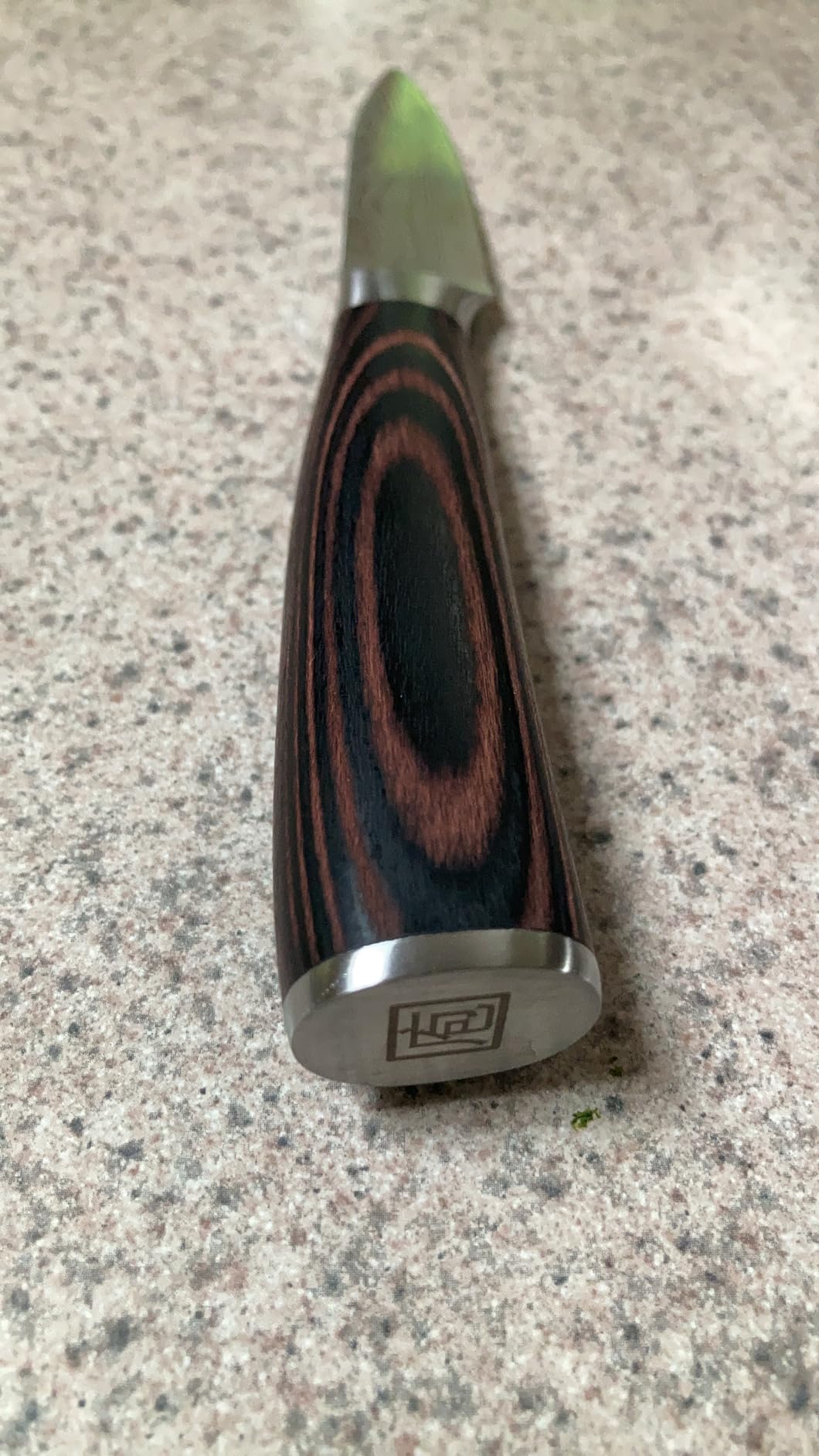
One point of clarity that the listing itself makes: the waved pattern is a decorative finish on 5Cr15MoV stainless, not true Damascus. Some buyers appreciate the straight disclosure rather than being sold a pattern as a performance feature. The narrow edge and the flexible blade make it a strong all-round trimmer for venison.
Balance and Hand Size Fit
Most 6 inch boning knives are either too small or too long for average hands. Reviewers repeatedly note that this one sits well for both larger and smaller grips, and that the balance point falls naturally at the thumb. Over a long session that is worth more than any steel upgrade.
Edge Geometry for Slicing Membrane
A 15 degree hand-honed narrow edge produces very little slicing resistance, which is the point when you are lifting silver skin off a shoulder with the grain running against you. It also means the edge wants regular attention, since thin edges surrender sharpness faster than a standard 20 degree bevel.
Who Should Skip It
Skip it if you want a full tang, because this is a partial tang riveted build and it will not take the same abuse as the Cutluxe. Skip it if the decorative pattern is not for you. And skip it if you have no intention of hand washing it, because the pakkawood will darken and dry out.
7. Dalstrong 6 Inch AUS-10V Damascus Boning Knife – The Fine-Edge Specialist
Dalstrong 6″ Boning Knife – AUS-10V Damascus Steel
6 inch AUS-10V blade
62+ HRC core
Full tang G10 handle
About 6 ounces
Pros
- AUS-10V steel at 62+ HRC holds a fine edge through a session
- Flexible tip lifts silver skin in long clean pulls
- Full tang G10 handle balances well for sustained work
- Includes a sheath and magnetic gift box
- Some owners go months without sharpening
Cons
- Heaviest option here at about 6 ounces
- A few units arrive dull and need stones before performing
The Dalstrong is the outlier on this list in both directions. It is by far the most expensive knife here and it is also the one with the hardest steel, which makes it the most interesting answer to the question of what a premium pick actually buys a deer processor.
AUS-10V at 62+ HRC takes an exceptionally fine edge and holds it. The 66-layer Damascus cladding sits over that core, and the full tang G10 handle is comfortable enough for sustained work. Users running small jerky operations report better retention than their previous knife and no sharpening through heavy volume.
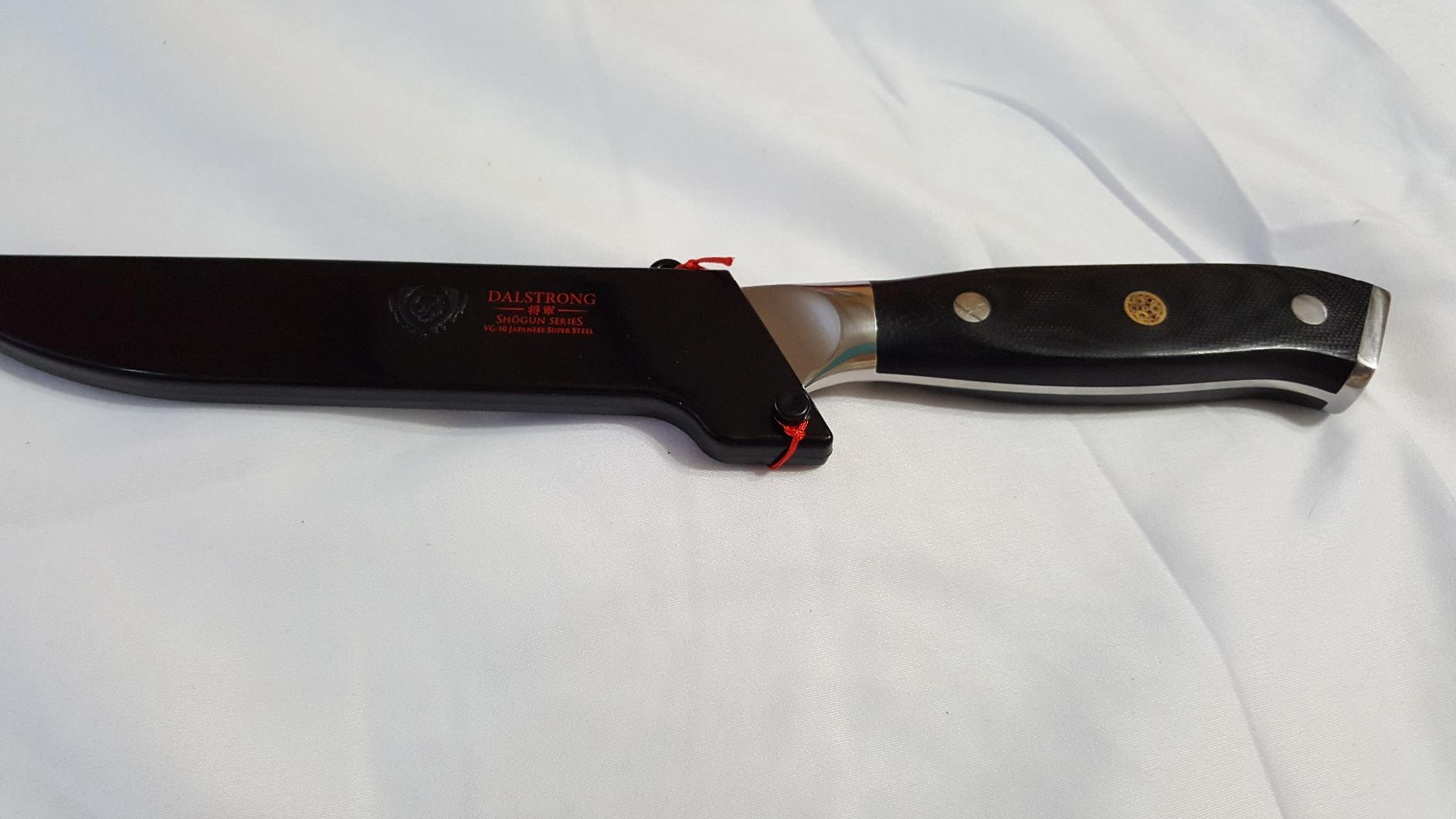
The flexible tip is the feature that matters most for venison. It is designed to lift silver skin and connective tissue in long clean pulls, and owners describe difficult boning jobs becoming straightforward once the edge is truly fine. At 170 grams it is the heaviest knife in this group, and you will feel that at the end of a long night.
The recurring complaint is quality control on arrival. A small number of buyers report the blade coming duller than expected for a knife at this level and needing whetstones before it performed to spec. That is a real risk on premium steel, and it is the main reason this is not our top pick.
Hardness Versus Toughness on Bone
62+ HRC holds an edge far longer than the 56+ Rockwell steels in this list, and it also has less internal toughness. A harder edge chips rather than rolls when it meets an unexpected bone, though skilled hands guiding the blade along a curve will never notice that. A first deer with a heavy hand probably will.
Who Should Skip It
Skip it for a beginner, because a fine hard edge rewards control you are still developing, and because arriving units sometimes need finishing work. Skip it for anyone whose budget does not stretch here, since the same core behaviour is available at a fraction of the cost. For a serious processor doing high volume, it earns its place.
8. Golden Bird 6 Inch Curved Boning Knife – High-Volume Flexible Blade
Golden Bird 6 Inch Curved Boning Knife for Meat Cutting with Non‑Slip Grip
6.2 inch German stainless blade
Stamped construction
Textured ergonomic handle
Flexible curved spine
Pros
- Curved flexible blade separates meat from bone and cartilage cleanly
- Textured handle reduces fatigue over long sessions
- Gently curved profile follows bone contours
- Works for big breaking cuts and fine trimming
- 4170 ratings at 4.6 average
Cons
- Handle material is uncertain from the listing and less proven than a full tang build
- Widest spread of average ratings in this group at 75 percent five star
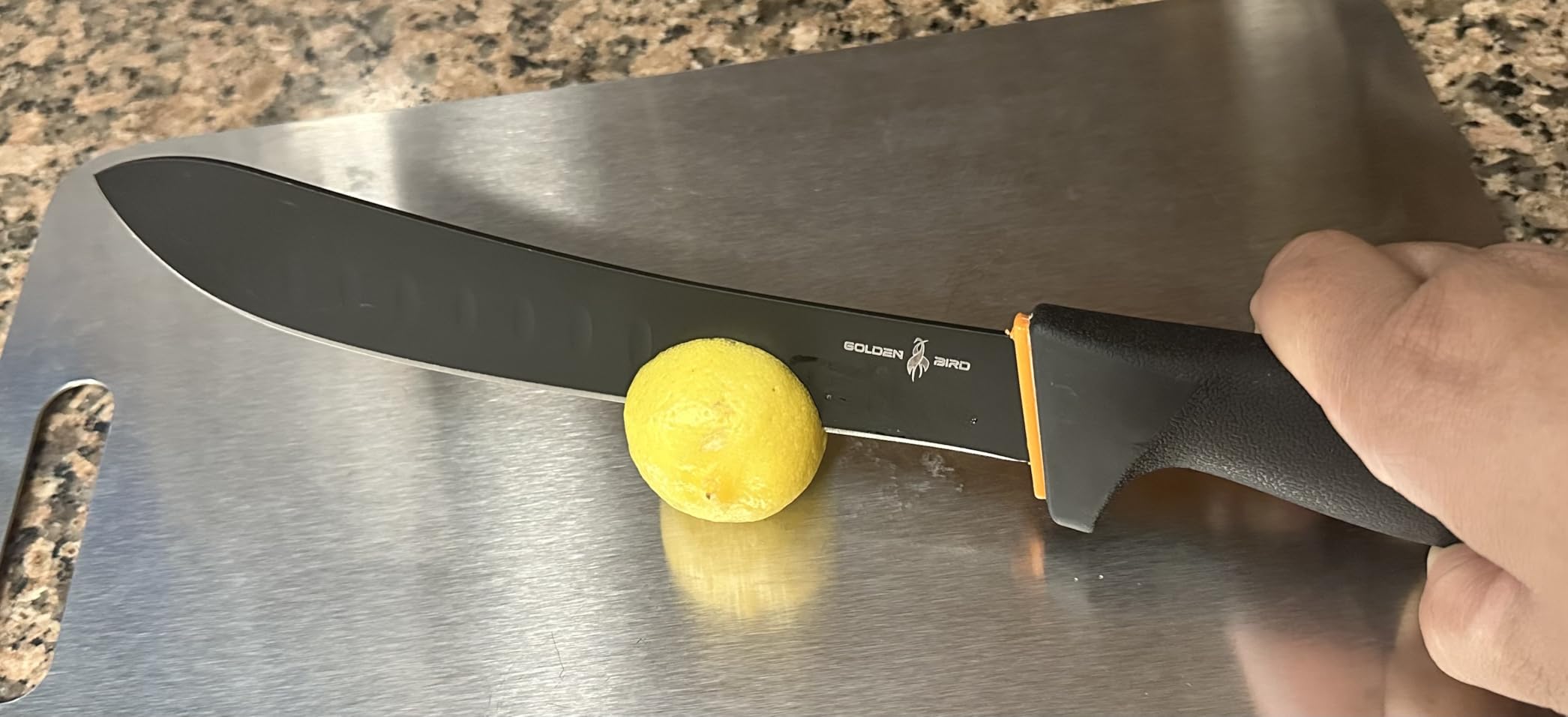
With 4170 ratings, the Golden Bird is one of the highest-volume knives in this category, and the reviews concentrate on a single repeated point: the curve follows bone contours closely enough that buyers describe minimal meat waste. That is the practical heart of deer processing, and it is a real strength rather than marketing language.
The blade is German stainless steel with a gently curved flexible spine, measuring 6.2 inches with a 6 inch item length. The flexible section is what lets the edge wrap into a joint pocket or ride the rib line without the tip punching through the far side of the meat.
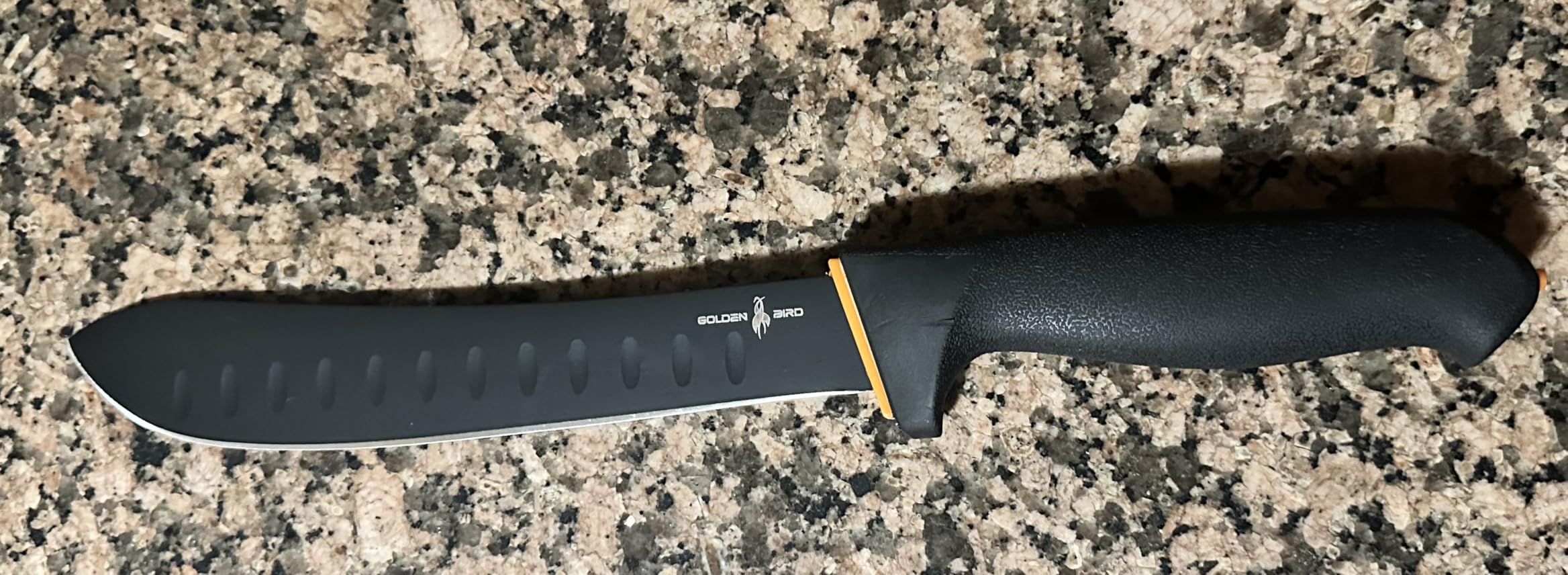
Owners praise the textured ergonomic handle for reducing fatigue across extended sessions and for staying secure with wet hands. The versatility gets called out repeatedly, since the same blade handles larger breaking cuts and fine trimming without switching tools.
Two honest notes belong here. The listing describes the handle as wood while the specification fields report a stamped construction, so build quality is less certain here than on a full tang knife. The rating spread is also the widest in this group, at 75 percent five star and a 6 percent three star share, which tells you the build does not delight everybody equally.
How Flex Saves Meat
A flexible edge deforms around a bone rather than resisting it. That means less of your stroke is spent pushing sideways through the muscle, and more of it is spent lifting meat away. Over a shoulder and a neck, the difference between tearing a surface and releasing it cleanly shows up in the trim pile.
Who Should Skip It
Skip it if you want a knife with a documented tang construction and a steel name you can rely on, since the specifications here are loose. Skip it if you process large game, where a flexible blade is less useful against heavy bone. For a deer on a modest budget, it does the job and keeps doing it.
9. Mercer Culinary Millennia 6 Inch Stiff Boning Knife – Lightest Full Tang Trim
Mercer Culinary M22306 Millennia Black Handle, 6-Inch Stiff, Boning Knife
6 inch high carbon steel blade
Stamped construction
Santoprene handle
3.2 ounces
Pros
- Narrow stiff blade trims fat and membrane precisely
- Ergonomic handle with textured finger points
- Easy to sharpen and holds an edge with regular upkeep
- Lightweight at 3.2 ounces for long sessions
- Professionals rate it above premium-brand options
Cons
- Handle curve feels awkward in a back-hand butchering grip
- Factory edge needs touch-up sooner than expected
- No sheath included
This is the lightest knife here, and in a category where weight equals fatigue, that is not a trivial specification. At 3.2 ounces it is barely more than the Victorinox, and reviewers repeatedly praise how easily it moves through a long trimming session.
The blade is narrow and stiff, cut from one piece of high-carbon Japanese steel, with a Santoprene handle that has textured finger points. One professional with two decades in the kitchen rates it above the Wusthof and Henckels options they use daily, and it holds a top seller position in both kitchen and bread knife categories.
The recurring grip complaint is specific and worth repeating. The handle has an unusual curve that some users find awkward in a back-hand butchering hold, where the blade is worked with the spine toward your knuckles. If you prefer that hold, test the shape carefully before committing. The edge also wants more frequent touch-ups than the forged options.
Narrow Geometry for Membrane Work
A narrow blade is not the same as a short blade. This one is full length at 6 inches but slim in profile, which lets it run inside the silver skin without lifting the hide with it. That is the single most common trim on a deer after the tenderloin, and doing it cleanly is where a narrow profile pays off.
Who Should Skip It
Skip it if you work primarily with a back-hand grip, if you plan to carry it into the field since no sheath is included, or if you want a blade that survives contact with heavy bone. It is a trimming knife that happens to be excellent at meat, not a bone knife.
10. Winco 6 Inch Commercial Grade Boning Knife – Built For A Busy Kitchen
Winco 6″ Red Plastic Commercial-Grade Boning Knife
6 inch forged blade
X50 Cr MoV15 German steel
Plastic handle
NSF listed
Pros
- X50 Cr MoV15 German steel cuts sharp straight out of the box
- Slip-resistant handle with finger indentations
- Built for daily commercial foodservice use
- NSF listed for institutional kitchens
- Light at roughly 4 ounces for long shifts
Cons
- Plain plastic handle lacks the feel of wood or full tang builds
- Bright red handle suits a kitchen better than a home bench
Winco builds for kitchens that run knives all day, and the KWP-60R is what comes out of that brief. X50 Cr MoV15 German steel, forged construction, and an NSF listing that makes it easy to specify for a restaurant or an institutional operation.
The handle is red plastic with finger indentations moulded into it, and reviewers in foodservice settings consistently approve of how slip resistant it stays across a full shift. The blade is sharp for removing meat from bone right away, and at roughly four ounces it stays out of the way during long production runs.
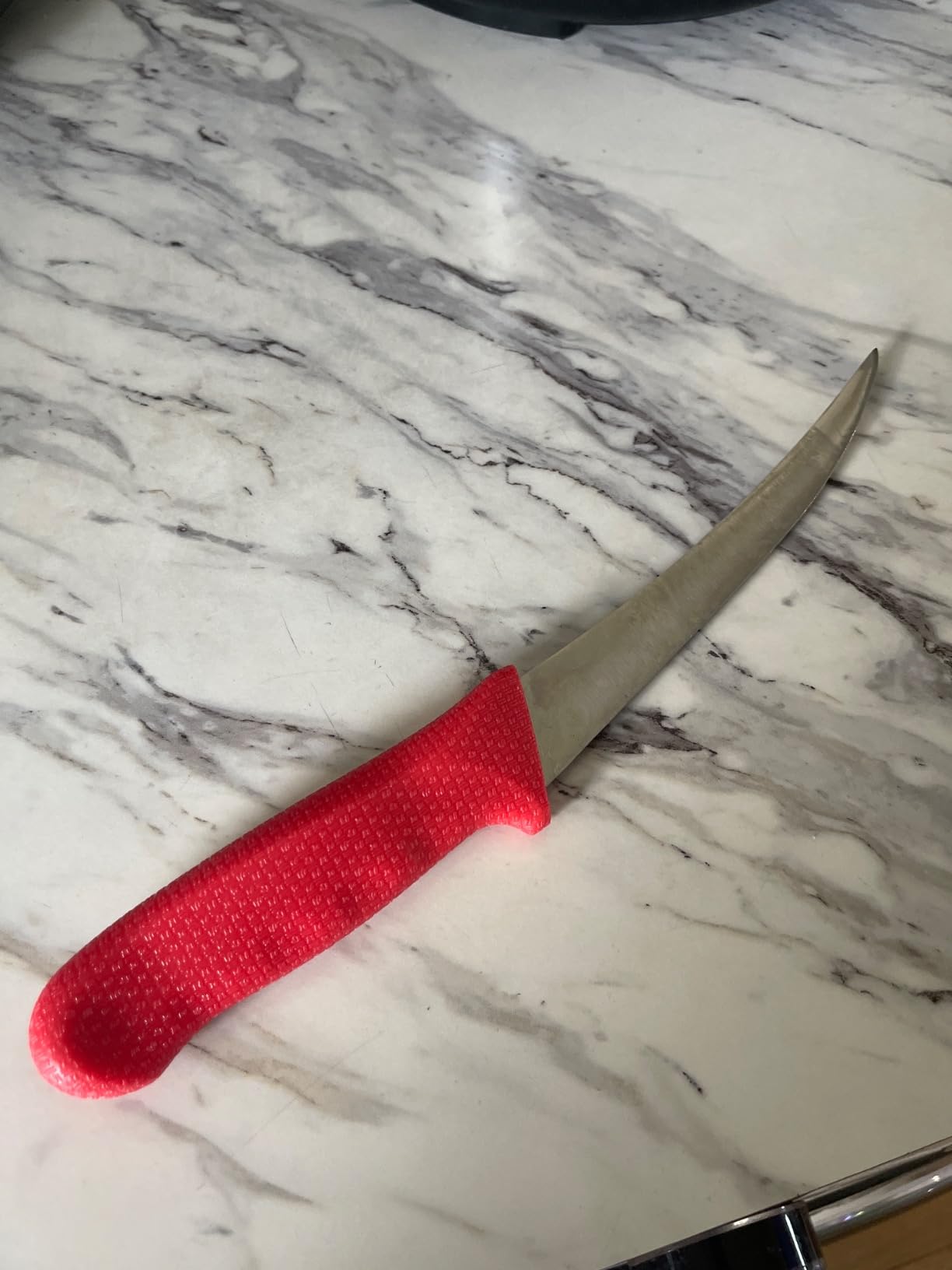
The trade-off is refinement. There is no wood scale here and no full tang, so the feel is strictly functional. Reviewers describe the red handle as easy to spot and easy to sanitise rather than attractive, which is exactly the intended character. Sentiment is positive but less effusive than the premium forged knives, with a 79 percent five star share.
Commercial Versus Home Use
Everything that makes this knife good in a kitchen makes it slightly less interesting at a home bench. NSF listing, a bright colour-coded handle, and a design aimed at repeated sanitation are advantages in a professional context and neutral at home. What carries over is the steel, and X50 Cr MoV15 is a genuinely good choice.
Who Should Skip It
Skip it if the knife lives in your pocket or your truck rather than your kitchen, because there is no sheath and the handle is not designed for a lanyard. Skip it if you want a knife you are proud to hand someone as a gift. For a hunter processing deer through a shared facility or as part of a group, it is a sensible pick.
Straight vs. Curved Boning Knives: Which One and Why
Curved wins for deer processing, and the reason is mechanical rather than traditional. A curved edge keeps contact with the bone for a longer portion of each stroke, so the knife stays in the cut instead of rising out of it. When the blade follows a rib or a long bone, that constant contact is the difference between a controlled pull and a series of short, corrective chops.
A straight edge does the opposite. It presents an even angle across the whole edge, which is efficient for cutting across a flat surface and for a straight pull through a seam. On bone it wants to bridge gaps, so it contacts intermittently and needs more downward force to keep the cut progressing.
What Each Geometry Handles Best
Curved blades excel at following contours, trimming around joints, lifting silver skin, and working along the spine in long sweeps. Straight blades excel at slicing across flat muscle, cutting a seam open, and working in the open where there is no bone immediately behind the cut. Experienced processors often own one of each and use them for different passes.
The Semi-Stiff Middle Ground
Most of the knives in this roundup sit between the extremes, including our top pick. A semi-stiff spine gives you enough rigidity to push through a seam and enough give in the tip to wrap a rib. Forum consensus across butchery and hunting communities points the same direction: for a general deer breakdown, a semi-flex or semi-stiff curved blade is the correct answer.
Stiff blades belong to a different task. When bone is directly behind the cut and you need power rather than contouring, a rigid spine transfers your effort into the blade instead of letting it bounce. That is worth a dedicated knife in a heavy-bone kit, but it is not the default.
Skinning Knife vs. Boning Knife: Two Different Jobs
Hunters routinely use one knife for both jobs and wonder why neither feels right. A skinning knife is built to cut hide away from a body over a broad surface, which calls for a thicker, more substantial blade with a curved belly and a tip that can be used for gutting and puncture work. A boning knife is built to separate meat from bone in a confined space, which calls for a narrow, flexible profile.
For the field phase, the skinning knife is the right tool. Opening the belly, cutting around the hind legs, and peeling the hide away from the neck and shoulders are broad cutting tasks, and a thin boning blade will wander or flex under that pressure. Experienced hunters consistently separate the two roles in their advice, describing skinning as the field job and boning as what happens once the carcass is on the gambrel.
For gutting, a dedicated gut knife or even a saw reduces the risk of puncturing the intestines and spoiling the meat, which is the actual reason people ask about this knife separately. A boning knife is not a gutting tool and should not be used as one.
Can One Knife Do Both?
For a hunter who processes one or two deer a year, keeping a good skinning knife and adding a boning knife is a complete answer. You do not need a matched set, and premium hunting knives with decorative handles often underperform the plain stamped workhorses in a wet breakdown. Spend where the physics is hardest: the blade edge, the spine, and the grip.
Which Knife for Gutting a Deer
Use a gutting knife or a small saw for the opening cut, then a skinning knife to work around the legs and the chest. If you are in the backcountry, the rule is simple: never open the belly with a boning knife, because the narrow tip is more likely to nick an intestine than a gutting blade would, and contaminated meat is a ruined deer.
Where a Boning Knife Fails and Why the Bone Saw Matters
A boning knife cannot split a pelvis, and no amount of shop talk changes that. The pelvic bone on a deer is thick, and the joint is exactly where your off hand would be while you force the blade through. Trying to lever a knife through it is how people cut the tendons in their fingers and wrists, and it is the most common serious injury in home game processing.
Use a bone saw. Sawing through the pelvis, the rib separations, and the thick bones at the joints takes seconds, produces a clean face for the saw, and keeps your hands away from a blade under load. Forum users pair the knife question with the saw question constantly, and experienced processors treat the saw as the more essential tool of the two.
Beyond the pelvis, boning knives also struggle with the spinal column in large-antlered deer and with the sternum plate. Learn where your knife stops and where the saw starts, and the rest of the breakdown becomes far less stressful.
How to Field-Sharpen a Boning Knife Mid-Session
A dull boning knife is the root of most processing frustration. It tears instead of cutting, it slips on silver skin, and it forces you to push harder, which is dangerous. Five minutes with a honing rod between blocks of work is cheaper than a ruined session.
1. Wipe the blade clean on a cloth before you touch steel to it. Grit on the edge is what rolls an edge and causes chips.
2. Load the rod with a few firm passes on one side only, held at an angle that matches your edge. Most hunting rods are around 20 degrees, which suits standard edges.
3. Stroke the blade along the rod using the length of the blade, with light pressure. Let the knife do the work; grinding on the rod destroys the burr structure you want.
4. Switch sides and repeat the same number of strokes. Two or three per side is usually enough to realign an edge that is merely dull.
5. Finish by stropping on leather or a folded newspaper to remove the wire edge, then test on a strip of hide.
A honing rod realigns an edge. It does not remove steel, so once a session has dulled the edge properly, you need a stone. For most deer, a rod touch-up between the shoulder, the loin, and the hindquarter is enough to finish the animal.
What to Look for in a Deer Processing Knife
Blade Length
Six inches is the most popular length for deer, and five inches is the choice when you work in tight quarters or want more control on membrane. Longer blades gain reach for following the spine but lose manoeuvrability in the shoulder. Stay between five and six inches unless you have a specific reason to leave the range.
Flexibility
Semi-flex is the sweet spot for a general breakdown. Flexible blades reduce gouging around joints and trim, stiff blades add pushing power on bone and fat. Choose flexible if silver skin and connective tissue dominate your work, and stiff if you are working through heavy seams and dense connective tissue.
Steel Type
High-carbon stainless is the practical default, holding an edge well and resisting the corrosion that comes with blood and moisture. DEXSTEEL is the commercial benchmark and sharpens easily. Steels hardened above 60 HRC hold an edge longest but chip more readily on bone. Regardless of type, wipe and dry the blade before it sits for any length of time.
Handle Safety and Cleaning
Look for a textured, slip-resistant handle, since your hands will be cold, wet, and greasy at the worst moment. Rubberized and polypropylene grips both work well. If you process meat for other people, an impervious blade-to-handle seal matters for sanitation, and a coloured handle makes the knife easy to identify in a shared workspace.
Companion Gear Worth Owning
A bone saw is non-negotiable for the pelvis and rib separations, and a honing rod keeps the edge alive between blocks of work. Add a game saw for field dressing, bolt cutters for the lower legs, and either butcher paper or a vacuum sealer for the finished meat.
Our trail camera guide covers the scouting side of the same hunt. Buy the knife first and add the rest around it, because most beginners who regret a purchase regret the missing saw, not the blade they could afford.
Frequently Asked Questions
What is the best knife for boning a deer?
The Victorinox Fibrox Pro 6 inch curved boning knife is the best all-around choice for most hunters. Its semi-stiff curved stainless blade balances contouring around joints with enough spine rigidity to push through shoulder connective tissue, and the Fibro Pro rubber handle stays secure with cold, wet hands. Working butchers who need maximum speed often choose the Dexter 6 inch flexible curved model instead.
Should a boning knife be flexible or stiff?
Semi-flex is the best compromise for deer processing. A flexible blade reduces gouging when wrapping around joints and ribs, which protects your yield, while a stiff blade gives the pushing power needed for heavy bone and dense seams. Choose flexible if your work is mostly silver skin and membrane, and stiff if you are breaking down shoulders and rib cages. A semi-stiff blade handles both reasonably well.
What is the best boning knife on the market?
It depends on the work. For general deer processing, the Victorinox Fibrox Pro 6 inch offers the best balance of sharpness, grip security, and durability. The Dexter 6 inch flexible curved model is the commercial standard for high-volume breakdown, and the Cutluxe full tang forged model is the best choice if you want a blade that survives heavy bone contact over decades.
How long should a boning knife be for deer?
Between five and six inches covers almost every deer processing task. Six inches gives you reach to follow the spine and handle a full shoulder, while five inches improves control in tight joints and membrane work. Longer blades become awkward in confined areas, and shorter blades struggle to make clean strokes along a long bone. Most experienced processors settle on a six inch curved blade.
Do I need a boning knife or a skinning knife?
You need both, because they do different jobs. A skinning knife with a thicker, more robust blade opens the animal and peels the hide in the field. A narrow, flexible boning knife separates meat from bone once the carcass is lifted. Using a boning knife to gut risks puncturing the intestines, and using a skinning knife to trim loses control near bone and wastes trim.
Which Boning Knife Should You Buy in 2026?
For your first deer, buy the Victorinox Fibrox Pro 6 inch. It is light, sharp from the factory, grippy when wet, and forgiving of the mistakes everyone makes while learning. If you already know how you work and you need speed on heavy volume, the Dexter 6 inch flexible curved knife is the tool professionals reach for.
If you want a blade that will outlast your hunting career, the Cutluxe full tang forged model takes on bone contact better than anything else in this price range, and the Dalstrong AUS-10V holds the finest edge if you have the control to use it. If your work is mostly silver skin and membrane, pick a flexible blade such as the Golden Bird. If your work is mostly heavy bone and fat caps, the ULTRASOURCE stiff blade is the correct answer.
Whatever you choose, add a bone saw before the season. That is the purchase that keeps the rest of the kit safe to use, and it is the one new hunters most often skip.