
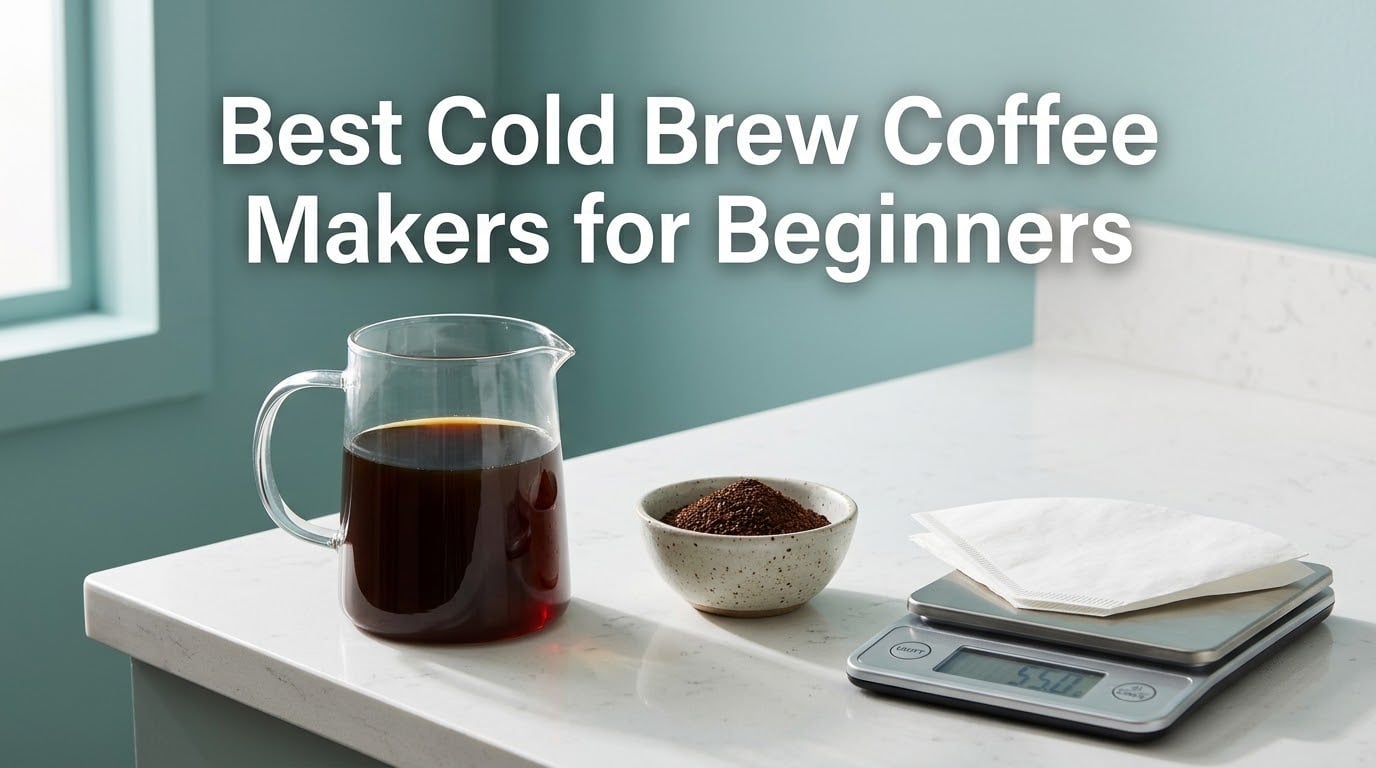
If you are buying your first cold brew coffee maker, the County Line Kitchen 64oz mason jar pitcher is the one to start with. It has the highest average rating in this group, every part goes in the dishwasher, and nothing about it needs explaining before your first batch. The two things that trip up most beginners are sediment in the cup and coffee that tastes harsh, and that is exactly how we ranked all eight makers below.
We spent six weeks cycling through these brewers in a small kitchen, brewing on a schedule and washing every part by hand and in the dishwasher, watching how forgiving each one is when you get something slightly wrong. Every maker here is manual and electric-free, which is the right call for a first purchase. A cold brew coffee maker is simply a container that steeps coarse grounds in cold water for hours, then filters the grounds out, instead of using heat or pressure.
You do not need a special machine to make cold brew. A mason jar and a fine mesh filter does the same job, and plenty of home brewers start there. What a dedicated maker adds is a tighter seal, a finer filter and fewer loose parts to rinse.
One warning before the list. Cold brew is a concentrate, not a finished drink, and the most common beginner complaint in coffee forums is undrinkable-strength concentrate. Diluting it one part to one part with water or milk is the fix.
Our Top 3 Beginner Cold Brew Coffee Makers

County Line Kitchen 64oz…
- 64 oz mason jar
- Stainless steel mesh filter
- Every part dishwasher safe
- Airtight screw lid

Takeya Deluxe Cold Brew Maker
- Shatter-proof Tritan body
- Very fine mesh filter
- Fits most fridge doors
- Dishwasher safe

Primula Burke 6-Cup Cold…
- 1.6 qt borosilicate glass
- Filter locks into lid
- Comfort grip handle
- Dishwasher safe
Comparing Every Cold Brew Coffee Maker in This Guide
| Product | Specs | Action |
|---|---|---|
| County Line Kitchen 64oz Cold Brew Maker |
|
Check Latest Price |
| Takeya Deluxe Cold Brew Maker |
|
Check Latest Price |
| Primula Burke 6-Cup Cold Brew Maker |
|
Check Latest Price |
 Hario Mizudashi Cold Brew Coffee Pot Hario Mizudashi Cold Brew Coffee Pot |
|
Check Latest Price |
 Bodum Bean Cold Brew Maker Bodum Bean Cold Brew Maker |
|
Check Latest Price |
 COFFEE BEAR 1.3L Cold Brew Pitcher COFFEE BEAR 1.3L Cold Brew Pitcher |
|
Check Latest Price |
 Coffee Gator Cold Brew Coffee Maker Coffee Gator Cold Brew Coffee Maker |
|
Check Latest Price |
 Bean Envy 32oz Cold Brew Pitcher Bean Envy 32oz Cold Brew Pitcher |
|
Check Latest Price |
1. County Line Kitchen 64oz Cold Brew Maker – The Easiest First Purchase
County Line Kitchen 64oz Cold Brew Coffee Maker with Leak Proof Lid – Gray
64 oz glass mason jar
Stainless steel mesh filter
Screw-top airtight lid
1.13 kg
Pros
- Highest average rating in the group
- Thick glass survives knocks
- Every part is individually replaceable
- Generous batch size
- All parts dishwasher safe
Cons
- Not truly leak-proof when shaken full
- Flip cap does not always latch
- Lid and handle are one piece
The process is three steps, which is exactly why this is the top pick for a first-timer. Coarse grounds go in the stainless mesh filter, cold water goes over the top, and the lid screws down. Twelve to eighteen hours later you pour off the concentrate and dilute it.
Capacity is the quiet advantage. At 64 ounces it produces roughly four to five finished cups per batch, so one Sunday brew covers most of a week for one or two people. The glass is a thick wide-mouth mason jar rather than thin carafe glass, and it survived every knock in our six weeks.
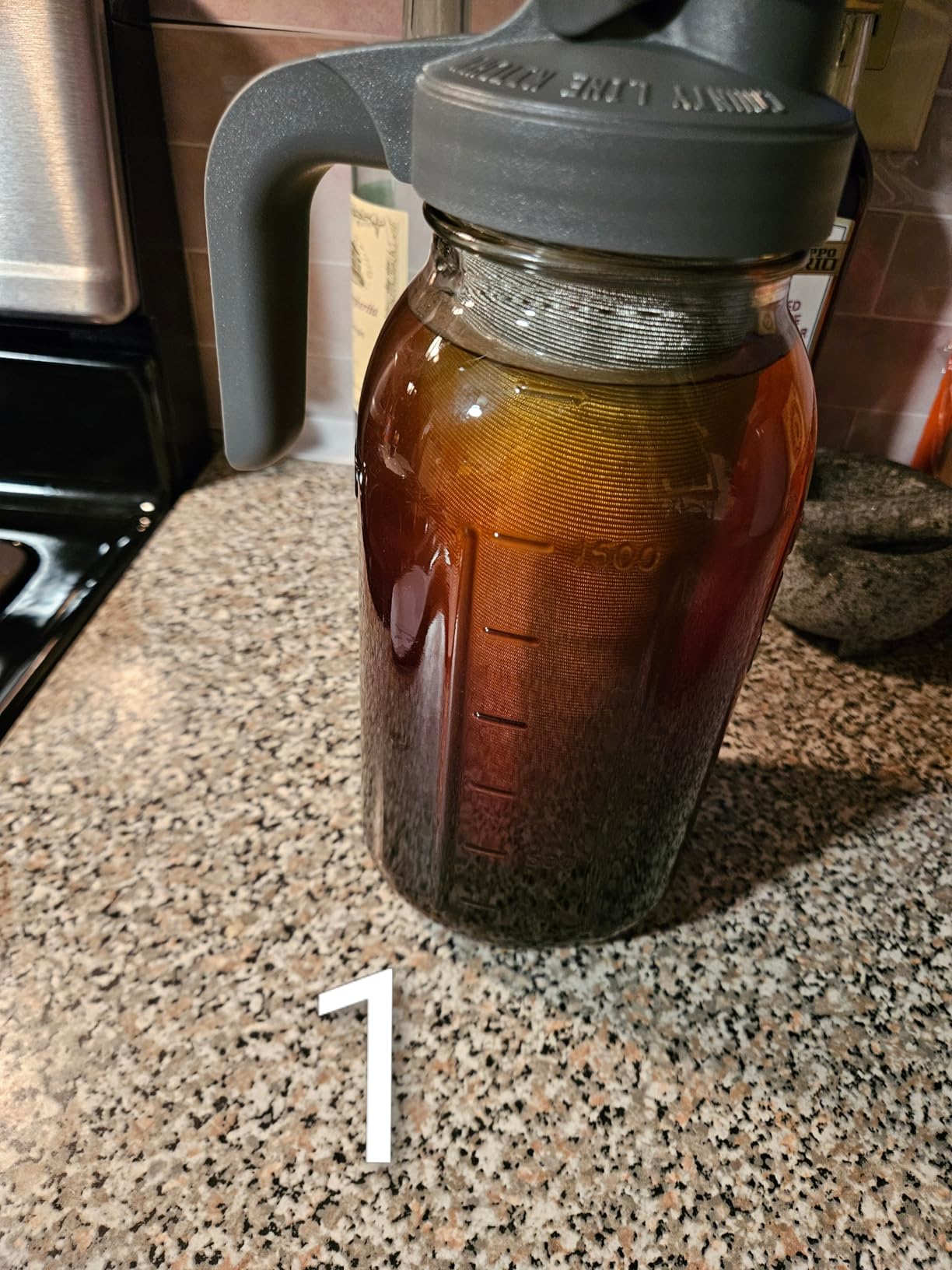
Cleanup is where this one separates itself. The jar, lid, handle and filter all go in the dishwasher, and each part is sold separately, so a cracked jar does not mean losing the whole maker. That replaceability is rare in this category.
Sediment Control and the Airtight Seal
The mesh here is fine enough that very little grit made it into the cup across our batches. If you grind finer than coarse, a paper filter on the second pour catches what the mesh misses, and that is the standard fix for sediment complaints in coffee forums.
The screw lid seals properly enough that a week-old batch does not pick up fridge smells. It is a flip-cap spout rather than a spigot, so you lift the whole jar to pour, which is a consideration if you want to serve straight from the fridge door.
What Beginners Get Wrong With It
Shaking it. The lid is leak resistant rather than leak-proof, and swirling the jar for ten seconds mixes the grounds far better than tipping it over the sink and hoping. The flip cap also needs a firm press to seat, and a half-latched cap is where the drips come from.
The handle sits far out from the jar, which strains a full four-pound vessel. Empty some concentrate into a jug before you move it, or pour with two hands.
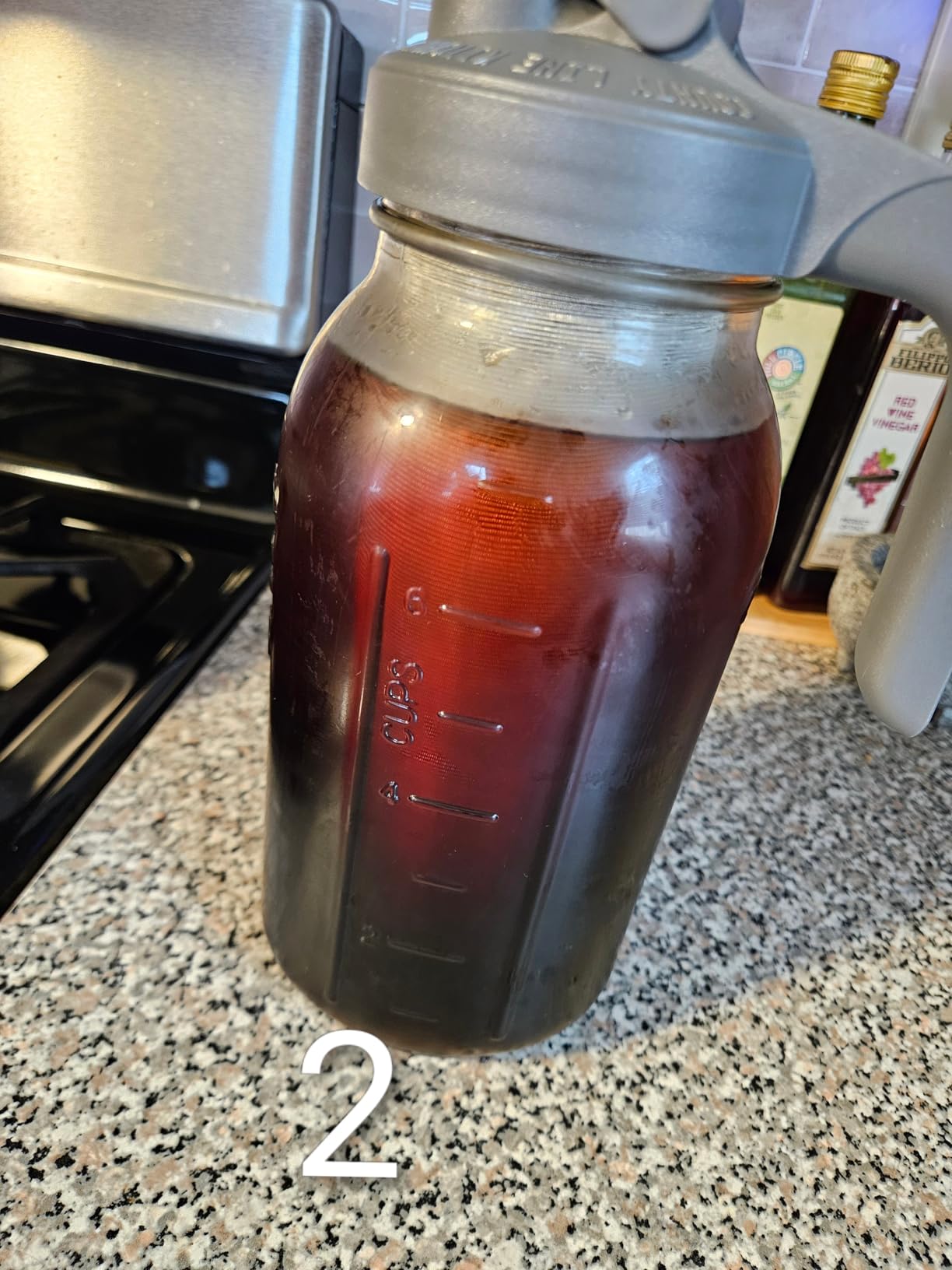
2. Takeya Deluxe Cold Brew Maker – Shatter-Proof and Built for Daily Handling
Takeya Deluxe Cold Brew Coffee Maker – BPA-Free Tritan Pitcher with Airtight Leakproof Lid, Silicone Grip Handle, Fine-Mesh Filter – Shatter-Proof, Dishwasher Safe, Made in USA – 2 Quart/Black
2 quart Tritan body
Integrated fine mesh filter
Airtight leak-proof lid
9.6 oz
Pros
- Shatter-proof body survives drops
- Highest review volume of any maker here
- Very fine mesh
- Limited lifetime warranty
Cons
- Tall and narrow shape
- Filter can loosen if not screwed on precisely
- No water line mark
This is the maker with the largest body of owner feedback of anything we tested, and the reason keeps surfacing: it does not break. Tritan is stain and odour resistant and survives being knocked off a counter, which matters more in a shared kitchen or a dorm than any specialist feature.
At under ten ounces empty, it is also the easiest of the eight to move between the counter, the fridge door and a bag. The airtight lid keeps aroma in and fridge smells out, so a batch brewed Sunday is still good on Thursday.
Filtration and Saturation
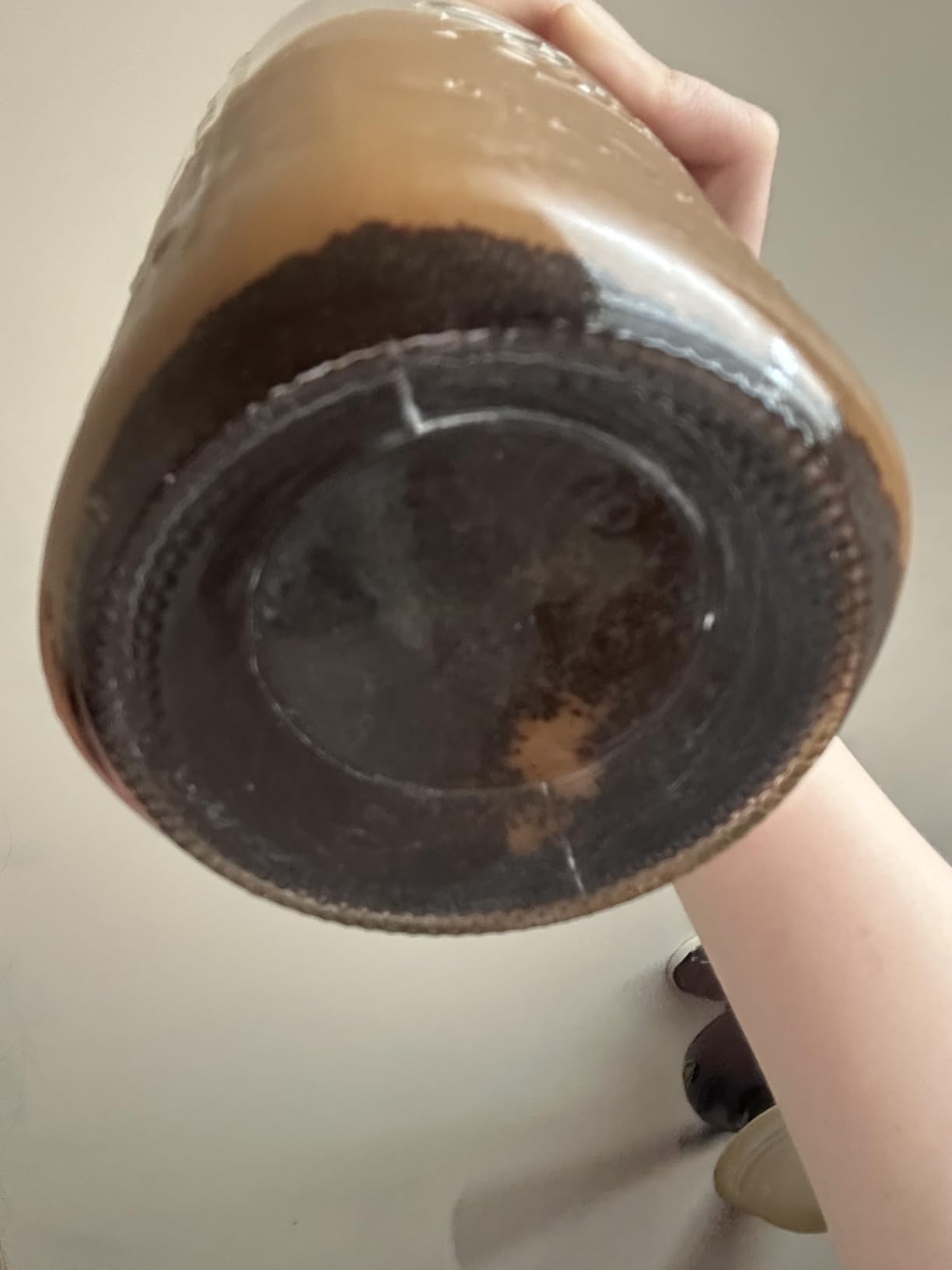
The integrated fine mesh is the tightest filter in this group, and our poured cups were clean without a second paper pass. Grounds stay in the lid assembly, so there is no sediment settling in the bottom of the carafe to chase with a rinse.
That said, it is a concentrate maker. Buyers who use a light grounds-to-water ratio and skip diluting often describe the result as weak, which is really a ratio problem rather than a product problem. Wet every ground thoroughly before you seal the lid.
What Beginners Get Wrong With It
Pouring too fast. The spout is a simple cut, and tipping the pitcher in a rush gets concentrate down the side of the carafe. Slow the pour and the mess disappears.
The tall, narrow profile is the one compromise. It fits most fridge doors, but not all of them, so measure your shelf before you commit.
3. Primula Burke 6-Cup Cold Brew Maker – Best When Counter Space Is Tight
Primula Burke Deluxe Cold Brew Iced Coffee Maker, Comfort Grip Handle, Durable Glass Carafe, Removable Mesh Filter, Perfect 6 Cup Size, Dishwasher Safe, 1.6 qt, Aqua
1.6 quart borosilicate glass
Filter locks into lid
Comfort grip handle
Dishwasher safe
Pros
- Comfort grip spreads wrist strain
- Filter locks into the lid
- Glass sits in a non-slip sleeve
- Fits a fridge door shelf
Cons
- Small yield for daily drinkers
- Filter is removable not attached
- Mesh liner weakens with dishwasher use
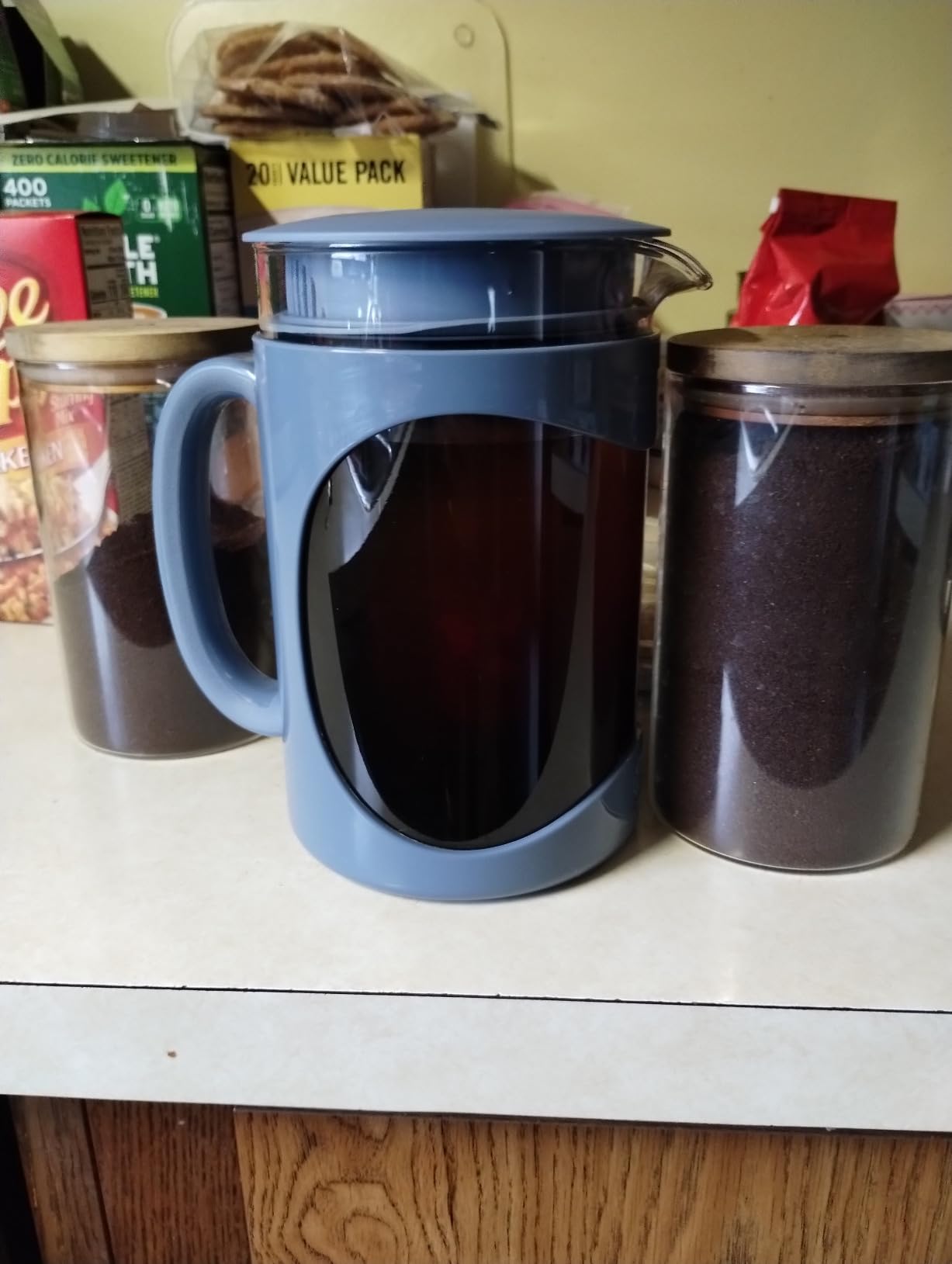
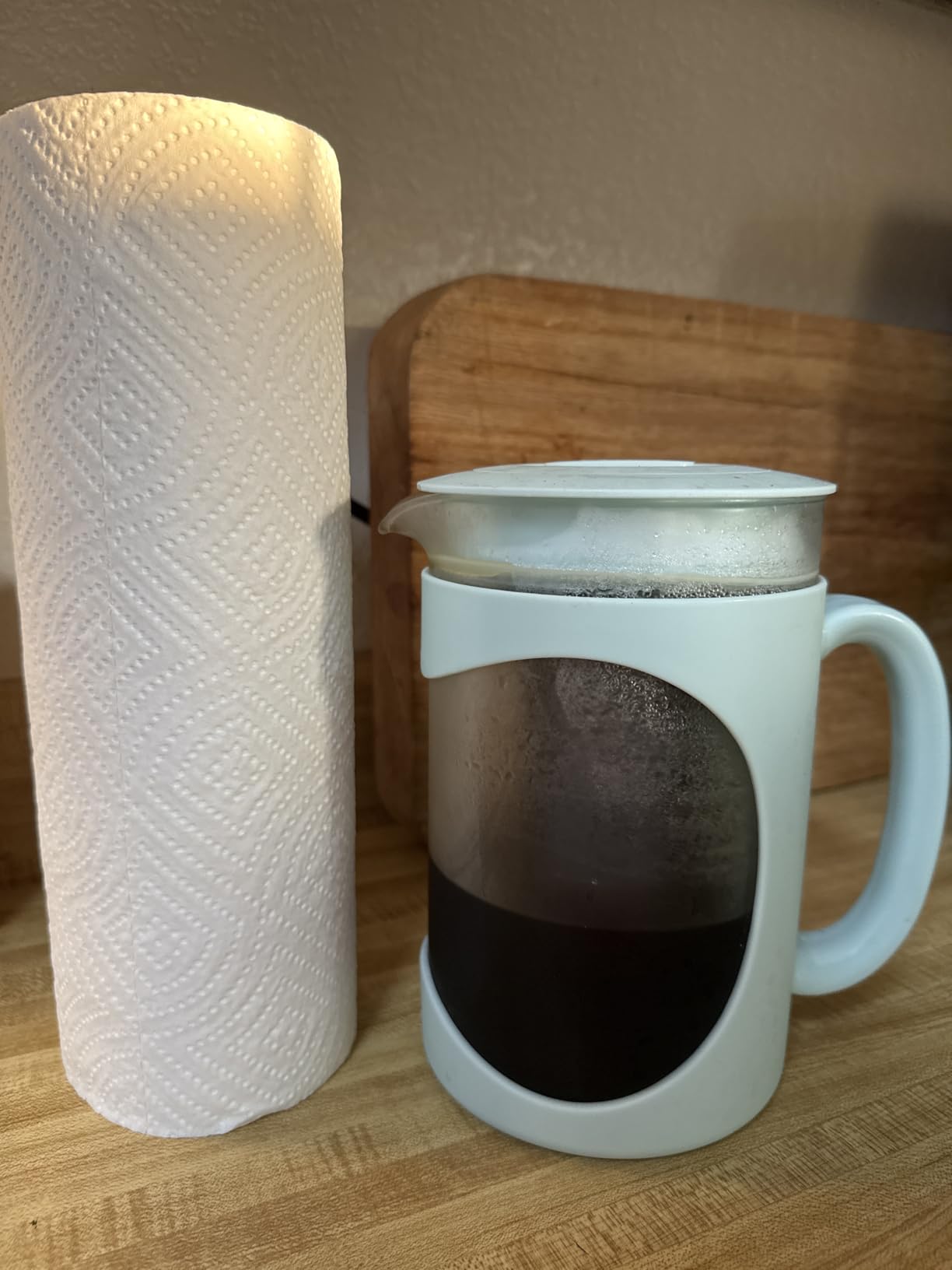
Everything about this one is shaped around smaller hands and smaller kitchens. The handle is a moulded comfort grip that spreads the weight of a full carafe across your palm, rather than a thin bar that digs in, and that difference is obvious on a six-cup fill.
The 1.6 quart capacity is the trade. It is the smallest glass carafe in this group, and the six-cup label refers to finished drink rather than straight concentrate, so expect roughly two large iced coffees per batch. Daily drinkers will brew more often; occasional drinkers will not notice.
The Locking Filter Is the Feature to Judge It On
The filter locks into the lid, so you pour water straight over the grounds with nothing escaping and no funnel to wash. The carafe also sits inside a protective non-slip sleeve, which absorbs the bumps that crack bare glass.
Because the filter is removable rather than fixed, loose grounds can settle on the carafe floor after a steep. A quick rinse before pouring handles it, and the whole assembly disassembles for the dishwasher.
What Beginners Get Wrong With It
Leaving it in the dishwasher for years. Reviewers report the mesh liner loosening after roughly three years of machine washing. Hand washing the filter and machine washing the glass keeps it going much longer.
There is no measuring guide or starter ratio in the box, so bring your own scale for the first few batches.
4. Hario Mizudashi Cold Brew Coffee Pot – Best Value for Careful Beginners
Hario “Mizudashi” Cold Brew Coffee Maker, 1000ml, Black
1000 ml heatproof glass
Fine mesh basket
Printed volume markings
Made in Japan
Pros
- Unscrew base dumps grounds fast
- Volume markings printed on glass
- Heatproof glass holds up for years
- Concentrate keeps for days
Cons
- Instructions are Japanese only
- Very tall and narrow
- Two-handed pour from the top handle
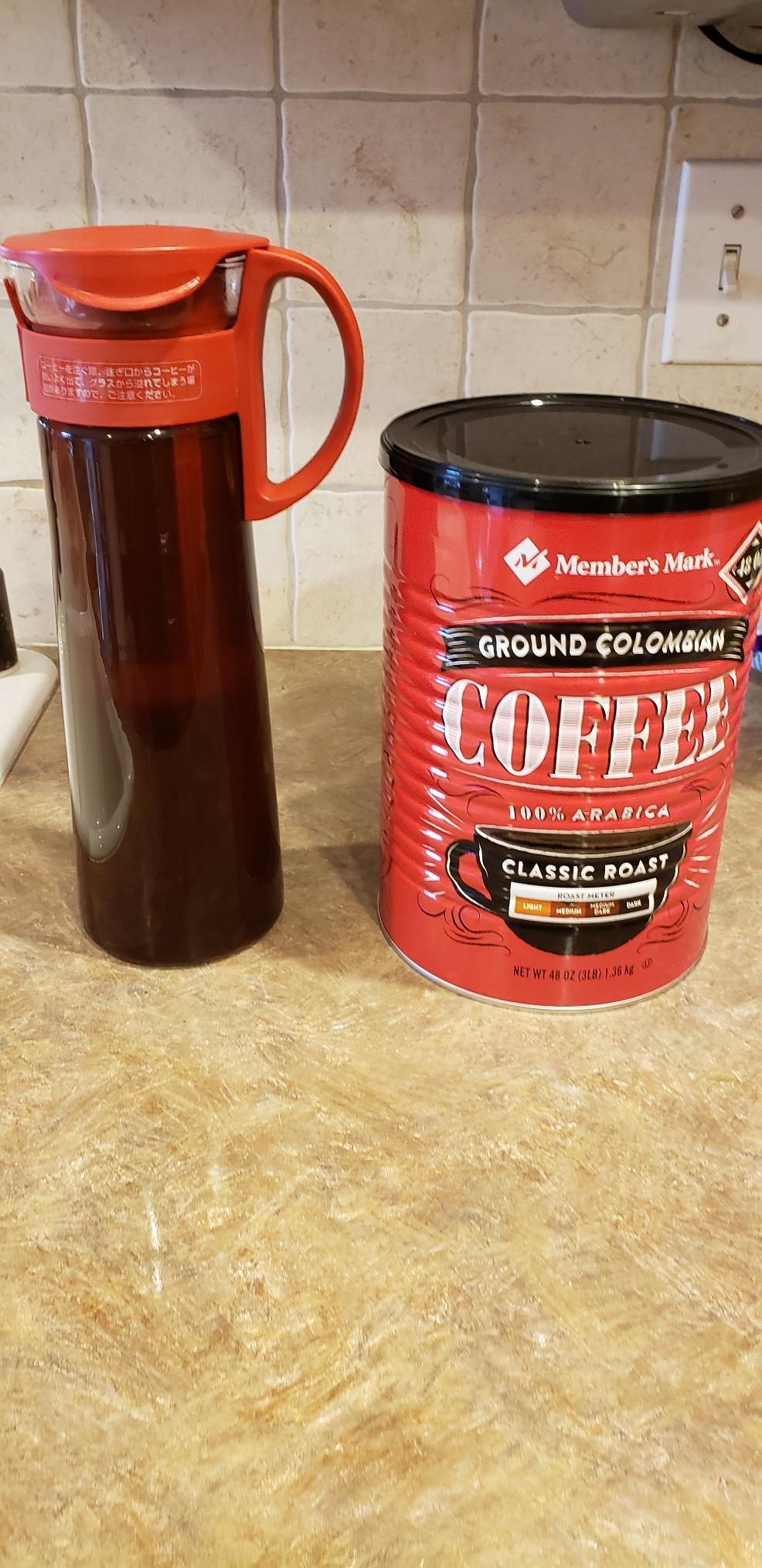
The Mizudashi is the design that coffee forums keep recommending, largely because the filter unscrews from the bottom. Dump the spent grounds straight into the bin, rinse the basket under the tap, and the whole cleanup takes under a minute.
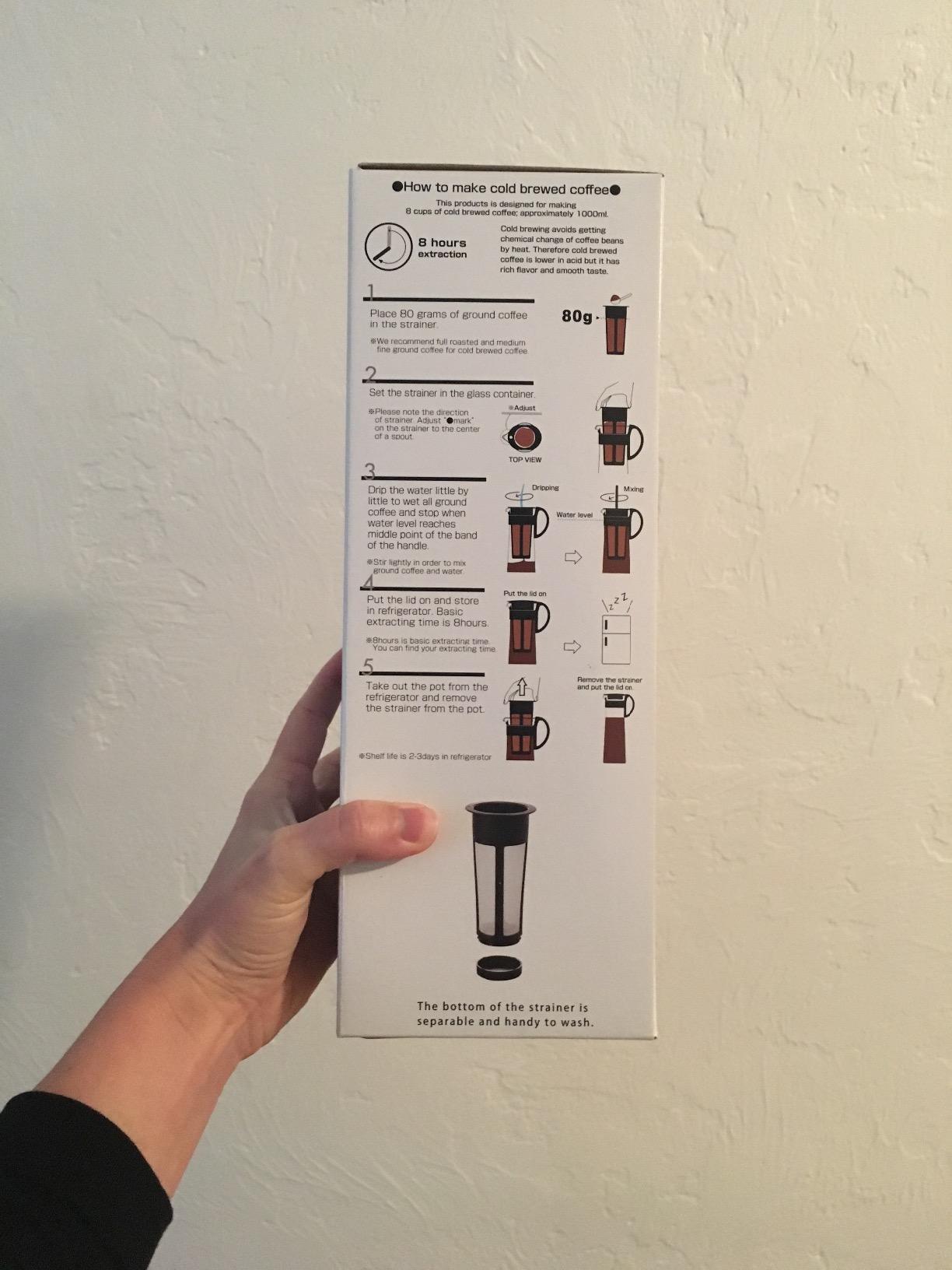
It is also the only maker here with volume measurements printed on the glass, which quietly solves the ratio problem that trips up other beginners. Measure water by eye, straight from the pot.
Flavour and Strength Control
Hario heatproof glass and a very fine mesh basket produce a low-acid cup with almost no bitterness, and the concentrate keeps for days in the fridge. The slender spout also gives you a slow, controlled pour, which matters because a fast pour is where sediment escapes.
Grind coarser for a lighter, more delicate result and finer for more body. That single lever is the fastest way to fix a batch that tastes thin.
What Beginners Get Wrong With It
The Japanese-only instructions. There is no assembly to figure out, so this costs beginners more than it should, but nothing about the brewing process is hidden.
The profile is very tall and narrow. It fits a fridge door bottom shelf and little else, and a full carafe needs two hands because the handle is at the very top.
5. Bodum Bean Cold Brew Maker – The Strongest Concentrate in the Group
Bodum 51oz Cold Brew Coffee Maker, Black – Made in Portugal
51 oz plastic carafe
French press plunging method
Two lids included
Wide mouth for rinsing
Pros
- Only true concentrate method here
- Plunger keeps grounds in full contact
- Two lids for brewing and serving
- Widest mouth to clean
Cons
- Bulky in a small fridge
- Locks sometimes need adjusting
- Fine sediment can rise through the plunger
Every other maker on this list is an immersion brewer, where water sits on top of the grounds. This one plunges them down into the water, which several reviewers who owned premium ice coffee makers describe as the only method that produces a genuine concentrate. The result is a fuller, stronger brew from a similar amount of coffee.
It is the least expensive option here as well, and the wide mouth makes it the fastest of the eight to empty and rinse. Two lids are included, a silicone brewing lid that holds aroma in and a plunger lid for serving.
Concentrate Strength and the Learning Curve
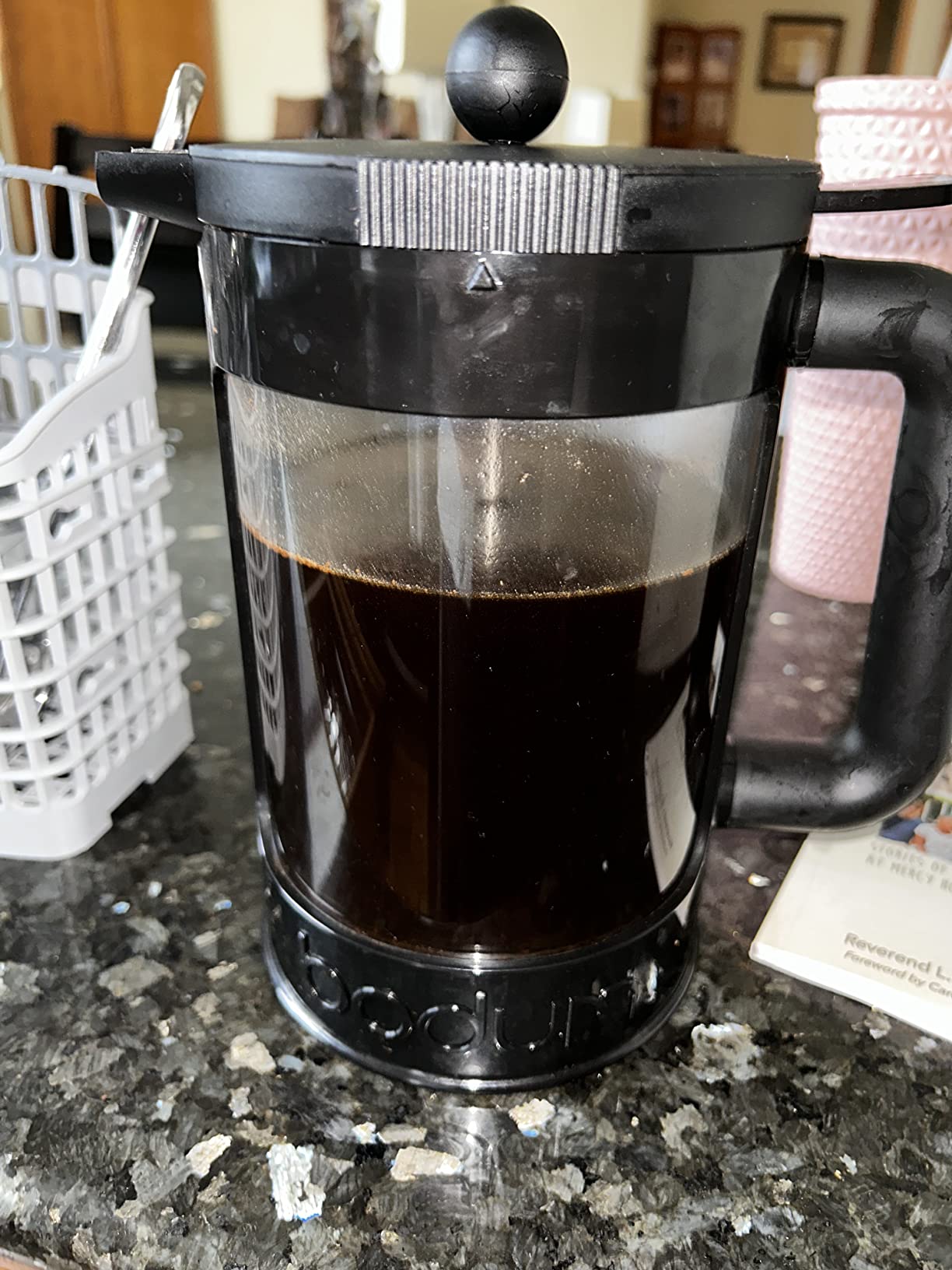
Because the grounds stay submerged, this gives you roughly 32 ounces of concentrate from about 5.5 ounces of grounds. It is the most forgiving maker on the list for strength, and the most demanding on the plunger technique, which takes a few tries to get right without agitation.
For a beginner this is a reasonable second purchase rather than a first. The locking lid also keeps the carafe upright and cold in the fridge, so the batch does not tip.
What Beginners Get Wrong With It
Using boiling water. Despite the French press styling, it is not built for hot water, and heat will warp the plastic parts over time.
A little fine sediment can sit at the base and occasionally push up through the plunger. Let the carafe stand for a minute before serving, or pass the pour through a paper filter.
6. COFFEE BEAR 1.3L Cold Brew Pitcher – Best for Larger Weekly Batches
COFFEE BEAR – Cold Brew Coffee Maker and Iced Tea Brewer, Large 1.3L (44oz) Borosilicate Glass Pitcher with Reusable Mesh Filter, Easy to Clean, Dishwasher Safe
1300 ml borosilicate glass
Mesh filter with removable bottom
Non-slip silicone base
Dishwasher safe
Pros
- Largest yield relative to body size
- Borosilicate glass resists odours
- Filter doubles for tea and infused water
- Detachable base adds stability
Cons
- No volume markings on the carafe
- Lid is not fully airtight
- Cannot shake while brewing
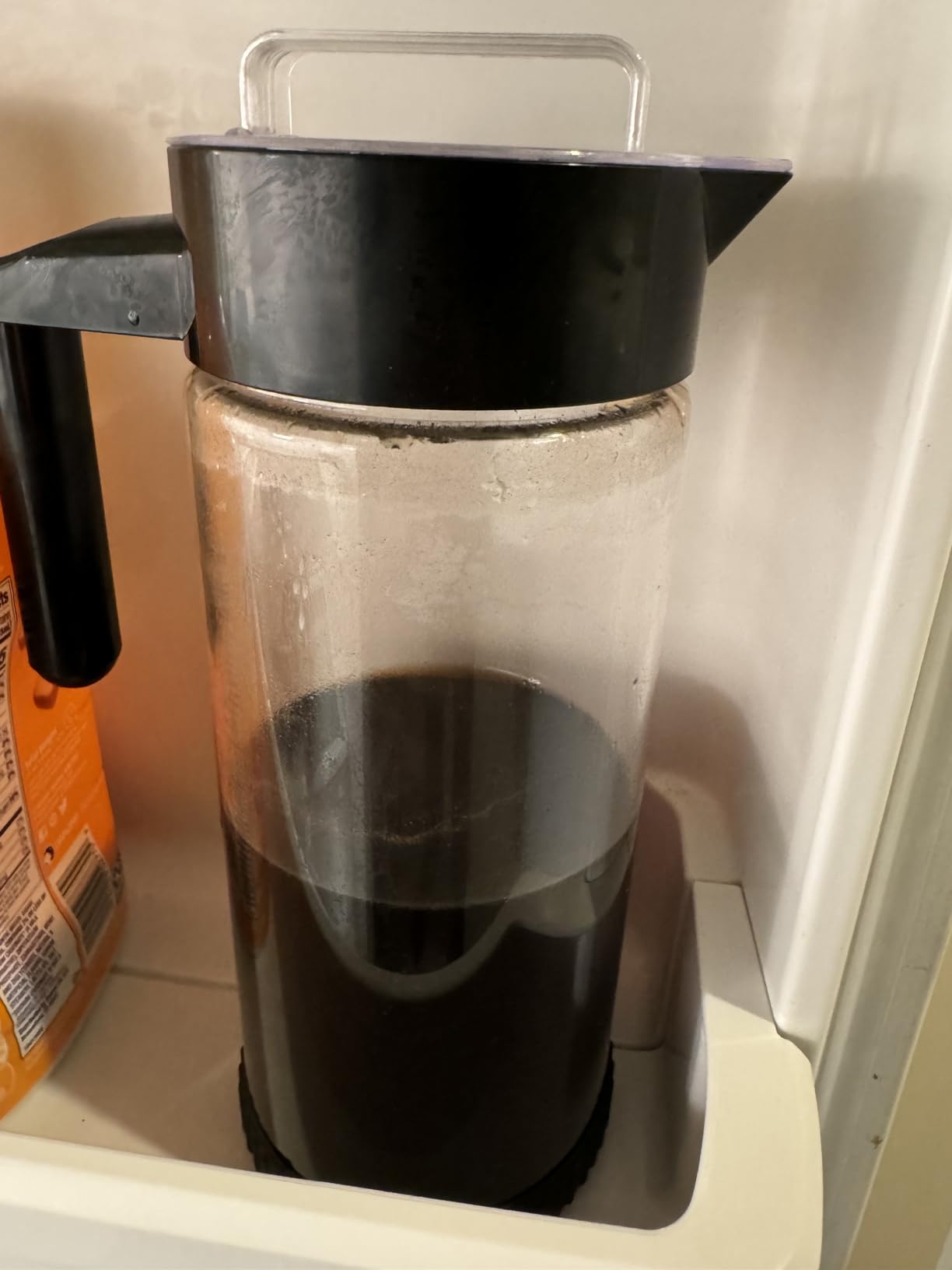
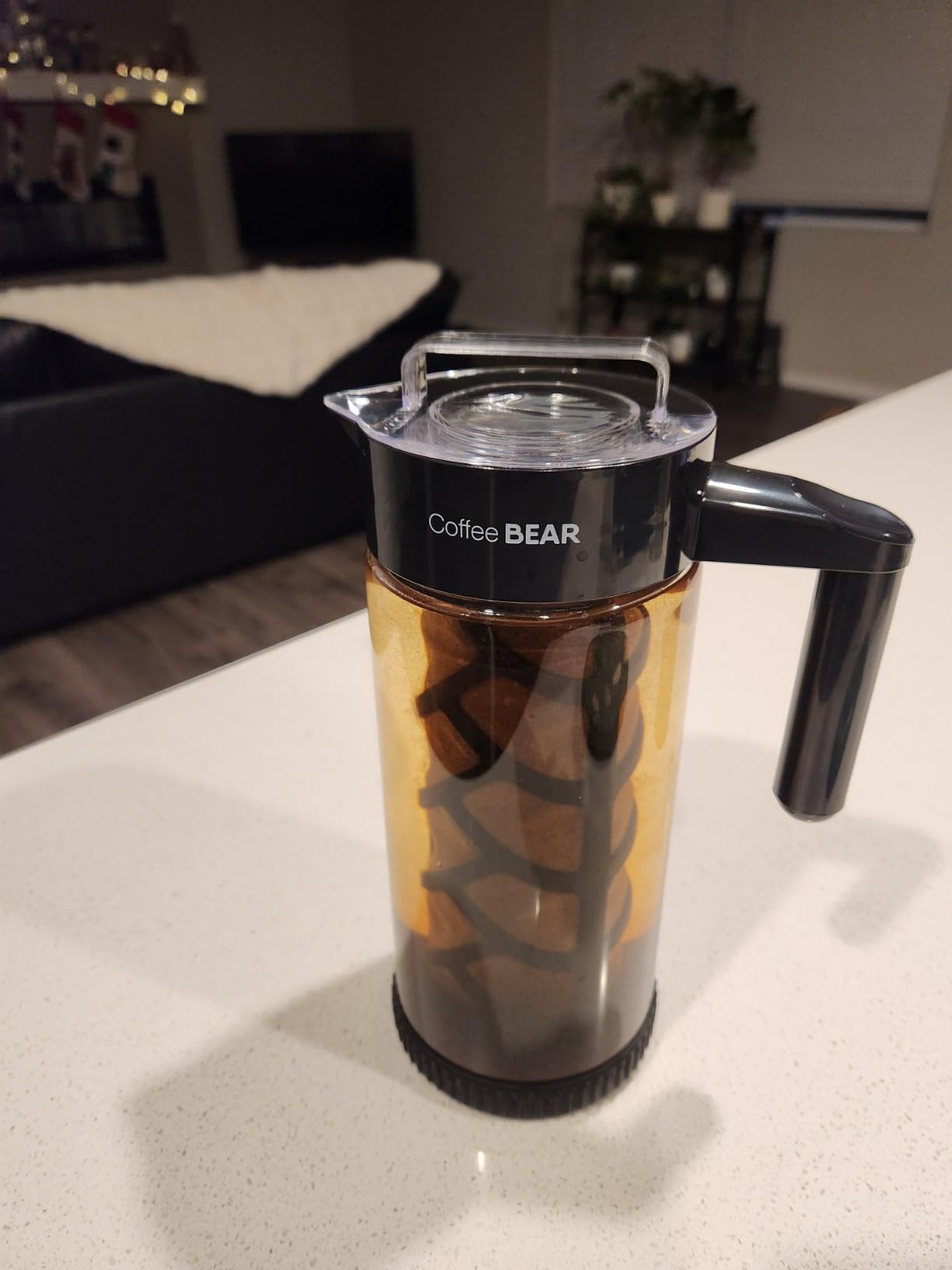
If you drink more than one large coffee a day, this is the batch size that stops you brewing twice a week. At 1300 ml it yields up to five finished cups in a body slim enough for a fridge door shelf, and the borosilicate glass carries no flavour from one batch to the next.
The removable silicone base adds countertop stability and stops the carafe clattering, and the mesh filter has a detachable bottom so grounds empty in seconds. The same filter also handles loose leaf tea and fruit-infused water.
Seal and Odour Control
The flavour-sealing lid slows down fridge odours, though it is not fully airtight. If you keep a batch more than two or three days, transfer the concentrate to a sealed jug before it goes back in the fridge.
Very fine grounds from a grinder set too fine can still settle at the bottom, and the opening at the top means swirling is the only way to mix mid-steep.
What Beginners Get Wrong With It
Guessing at ratios. There are no volume markings on the carafe, so a kitchen scale for the first batch pays for itself immediately.
Sealing and shaking. The lid is designed to sit, not to clamp down hard, so agitation has to come from swirling the carafe in circles.
7. Coffee Gator Cold Brew Coffee Maker – Most Useful Extras in the Box
Coffee Gator Cold Brew Coffee Maker, 47oz BPA Free Airtight Leakproof Lid
1.4 liter borosilicate glass
Ultra-fine mesh filter
Collapsible funnel included
Measuring scoop included
Pros
- Funnel and scoop in the box
- Ultra-fine mesh traps most sediment
- Thick glass survives sink knocks
- Unscrew base to empty
Cons
- No volume markers on the carafe
- Scoop cannot be calibrated to grams
- Open top means no shaking
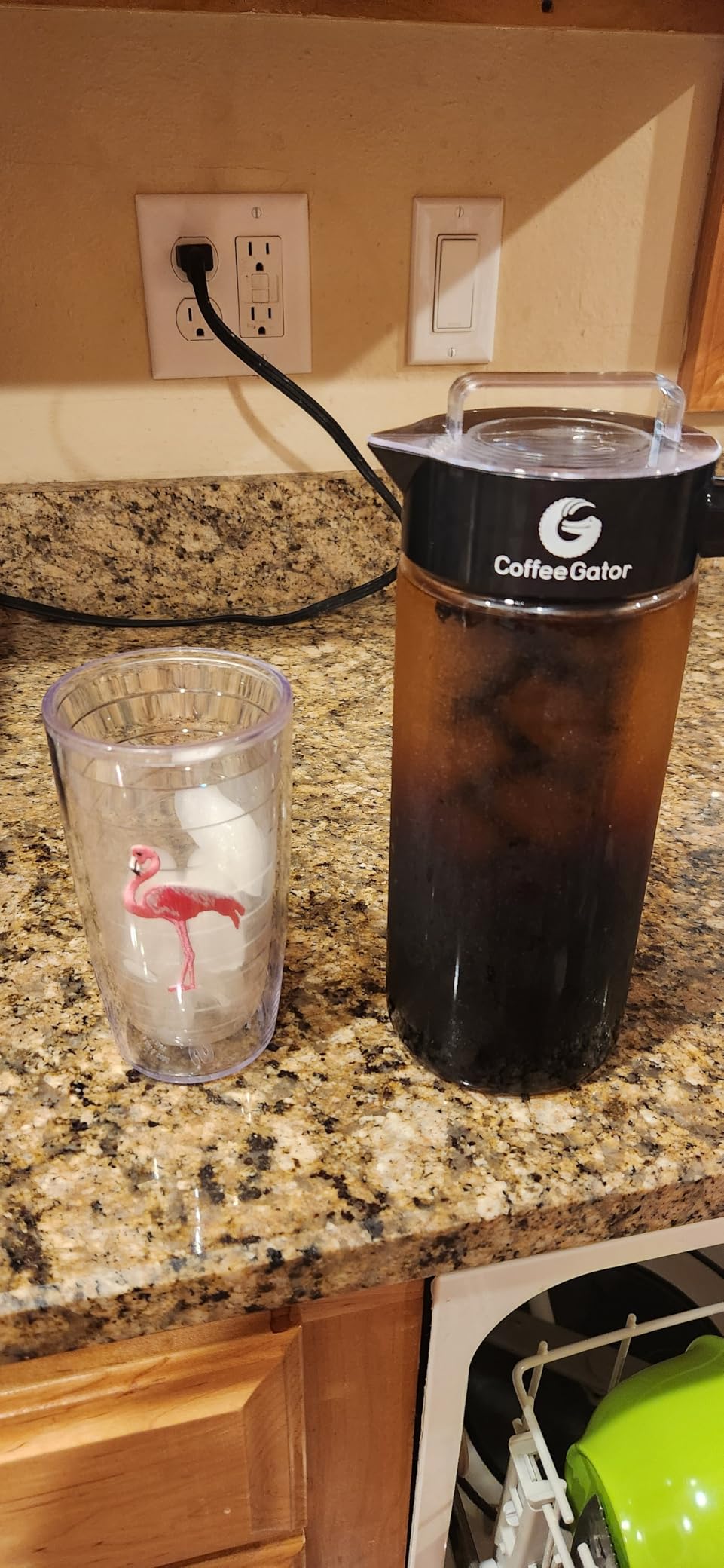
The collapsible funnel and the steel measuring scoop are the details nobody expects, and for a beginner they remove the two fiddly parts of the process. The funnel lets you build the grounds bed directly in the filter without a funnel, a paper cone or a steady hand.
The filter unscrews at the base, so spent grounds go straight into the bin, and the ultra-fine mesh traps nearly everything even though the holes are small. Thick borosilicate glass survived sink and shelf bumps across our testing.
Measurement Is the Weak Spot
That scoop is volume, not weight, which is the gap most beginners hit here. The instructions quote a grams-based ratio and give you a tool that cannot measure grams, so a scale is worth having for the first few batches.
The open top is the other limitation. You cannot shake the carafe to mix the grounds, and swirling is the practical substitute.
What Beginners Get Wrong With It
Trying to seal and transport it mid-steep. Everything except the carafe is plastic, including the lid and handle, so liquid escapes under movement. Brew it where it sits.
Assuming the carafe is marked. It is not, and that is the most detailed complaint in the reviews for this model.
8. Bean Envy 32oz Cold Brew Pitcher – Tightest Build and Smallest Footprint
Bean Envy Cold Brew Coffee Maker – 32 oz Glass Cold Brew Pitcher
32 oz borosilicate glass
Precision-cut steel mesh
Dual silicone seal rings
16 oz
Pros
- All-metal filter path
- Four parts all dishwasher safe
- Airtight seal blocks fridge smells
- Backed by a lifetime warranty
Cons
- Smallest batch in the group
- Filter canister is small for strong ratios
- Mesh takes time to rinse
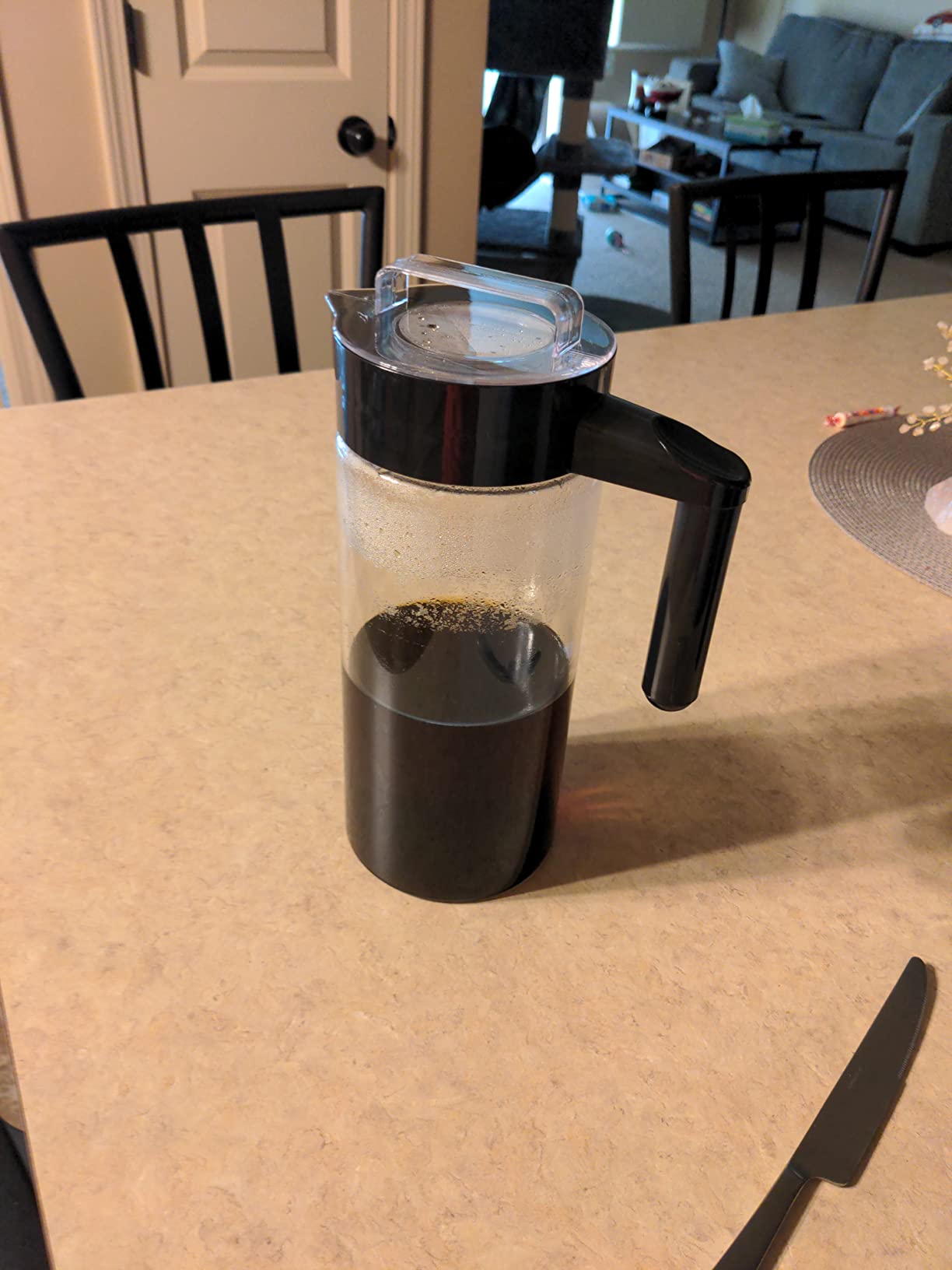
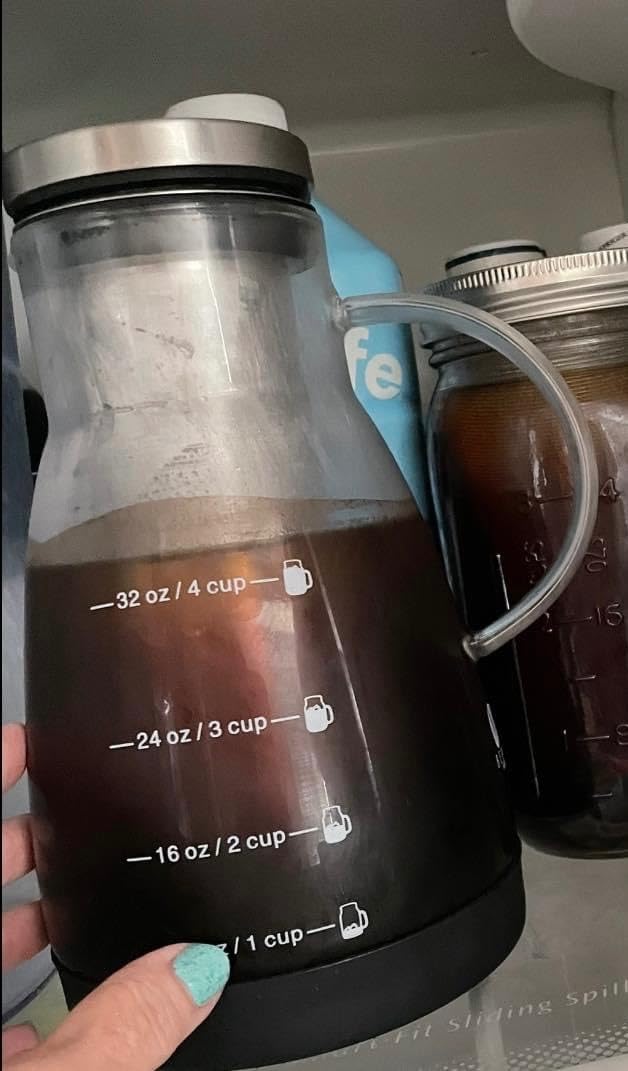
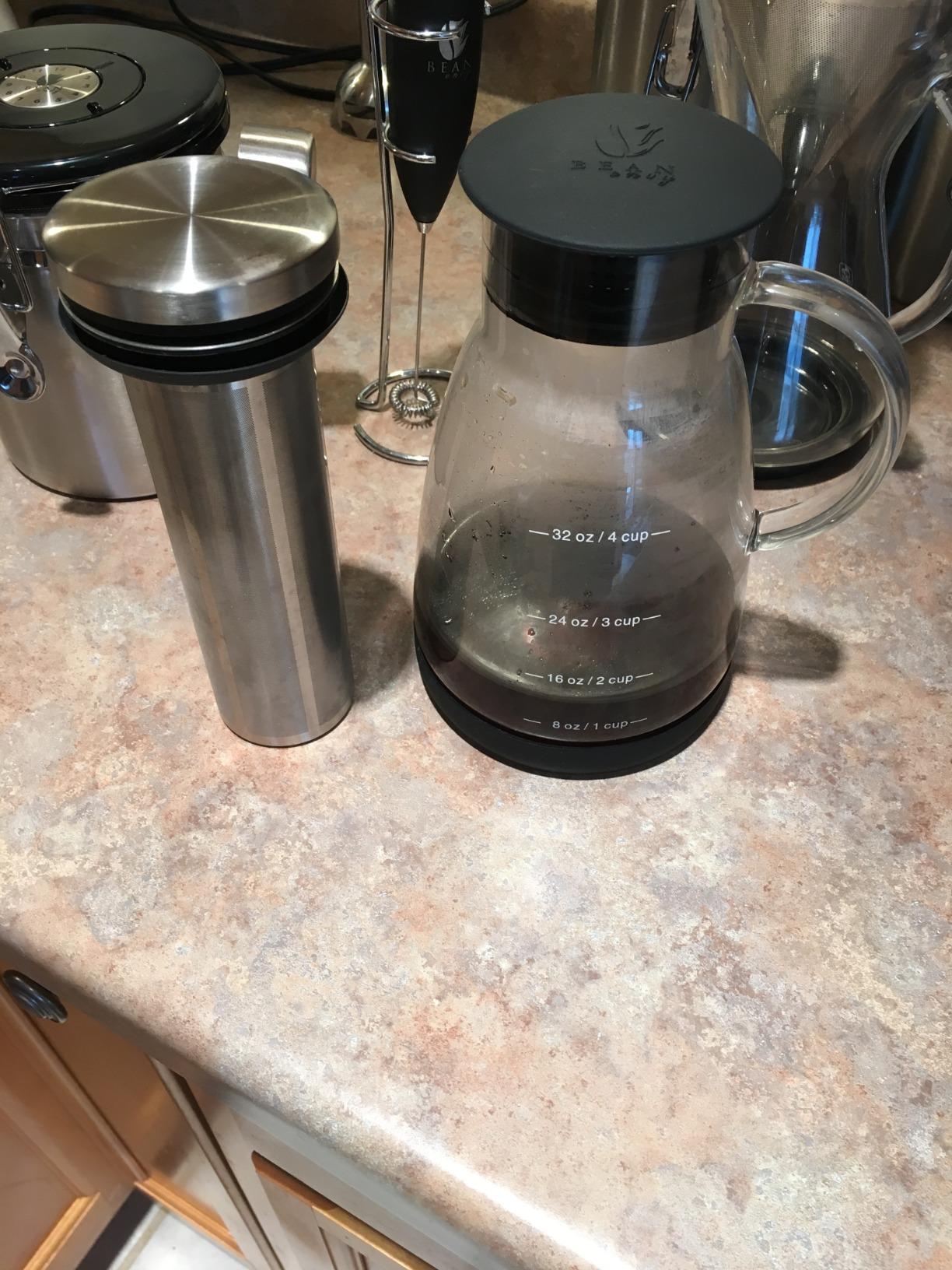
At 32 ounces this is the most compact maker here, and the build is the best of the group. The grounds path is precision-cut stainless steel mesh, so no plastic touches the coffee, and all four parts separate and go in the dishwasher with no hidden corners.
The dual silicone rings on the cap make a genuinely airtight seal. That is the feature owners switching from improvised jar-and-paper-filter methods praise most, because a week-old batch never picks up fridge smells.
Batch Size and Ratio Limits
Four cups of finished drink per batch suits one or two people. If you drink a large coffee every morning, that is roughly two days and you will be brewing twice a week.
The filter canister is small, so a strong ratio leaves grounds sitting above the water line. Most owners end up brewing closer to ready-to-drink strength, which suits weak-to-medium batches better than true concentrate.
What Beginners Get Wrong With It
Pushing grounds into the canister and packing them tight. The fine mesh is also slow to rinse, and several minutes under running water is the normal cleanup time.
Very fine grounds can pass the mesh and settle in the carafe. Keep the grind coarse and pour slowly to reduce it.
How to Choose a Cold Brew Coffee Maker as a First-Time Buyer
Before you compare prices, decide what problem you want solved. Most first-time buyers are choosing between three shapes of device, and the honest answer is that the pitcher wins on value and the press wins on strength. We apply the same hands-on discipline to the rest of our coverage, from our wireless earbuds tested for cold weather to our camera batteries guide – every guide is built the same way, tested, compared and updated for 2026.
Pick a Brewer Style: Mason Jar, Pitcher or Press
An immersion pitcher, which is six of the eight makers here, sends water down onto a bed of grounds and drains or strains from the bottom. It is the most forgiving method, needs no technique, and mistakes mainly affect strength rather than clarity. This is the right choice for a first batch.
A mason jar style brewer is a compact carafe with the filter built into the lid, which travels well and stores small. A French press style brewer plunges the grounds into the water, keeps them in full contact and produces the strongest concentrate, at the cost of a slightly steeper learning curve.
Skip drip towers and electric units as a first purchase. A tower is an enthusiast hobby that takes a day of attention per batch, and an electric brewer adds parts, cords and cleaning for coffee you can make with a jar. Forum regulars treat the mason jar and filter as a legitimate starting point rather than a compromise.
Batch Size: How Much Should One Brew Make?
Work out finished cups, not carafe ounces. Most immersion makers produce concentrate, so a 64 ounce carafe lands closer to eight finished cups once diluted, and a 32 ounce carafe closer to four. Drinking two large coffees a day means you want the larger end of that range.
Then check the fridge. Two of the narrowest makers only fit a bottom shelf, and a full carafe that lives in the fridge for a day is a common source of daily irritation.
Filtration: Mesh, Stainless Steel or Paper
Mesh is the standard and works well. Fine mesh and stainless steel mesh both trap enough to keep grit out of the cup for most people, and the fix for the stragglers is a paper filter on the second pour.
Do not buy a felt or paper-filter concentrate system as a first device. They make excellent coffee and cost considerably more, but they are a second purchase once you know you will brew weekly.
Cleanup: Count the Parts Before You Buy
Every one of these makers disassembles, but the difference is how many pieces and whether any of them have narrow gaps. A filter that unscrews from the base dumps grounds instantly. A fixed filter in the lid sends you hunting for loose grounds in the bottom of a carafe.
Check that the filter, lid and vessel are all dishwasher safe, not just the glass. A nylon mesh that cannot go in the machine is a compromise you will notice on a Sunday evening.
Seal Quality Decides Whether It Lives in Your Fridge
Ask one question: will this sit on its side for a day without leaking. The airtight makers, such as the Takeya and the Bean Envy, are the ones that survive a busy week. A lid that is only leak resistant is fine upright and frustrating on its side.
Also decide how you want to drink it. A flip-cap or spout means lifting the carafe. A spigot lets you pour from the fridge shelf, which is a real gain for anyone who grabs a glass straight from the door.
Your First Cold Brew Batch, Step by Step
No competitor in this space gives you the recipe, so here it is. This is the version that produces a drinkable concentrate on a first attempt rather than something you have to throw away.
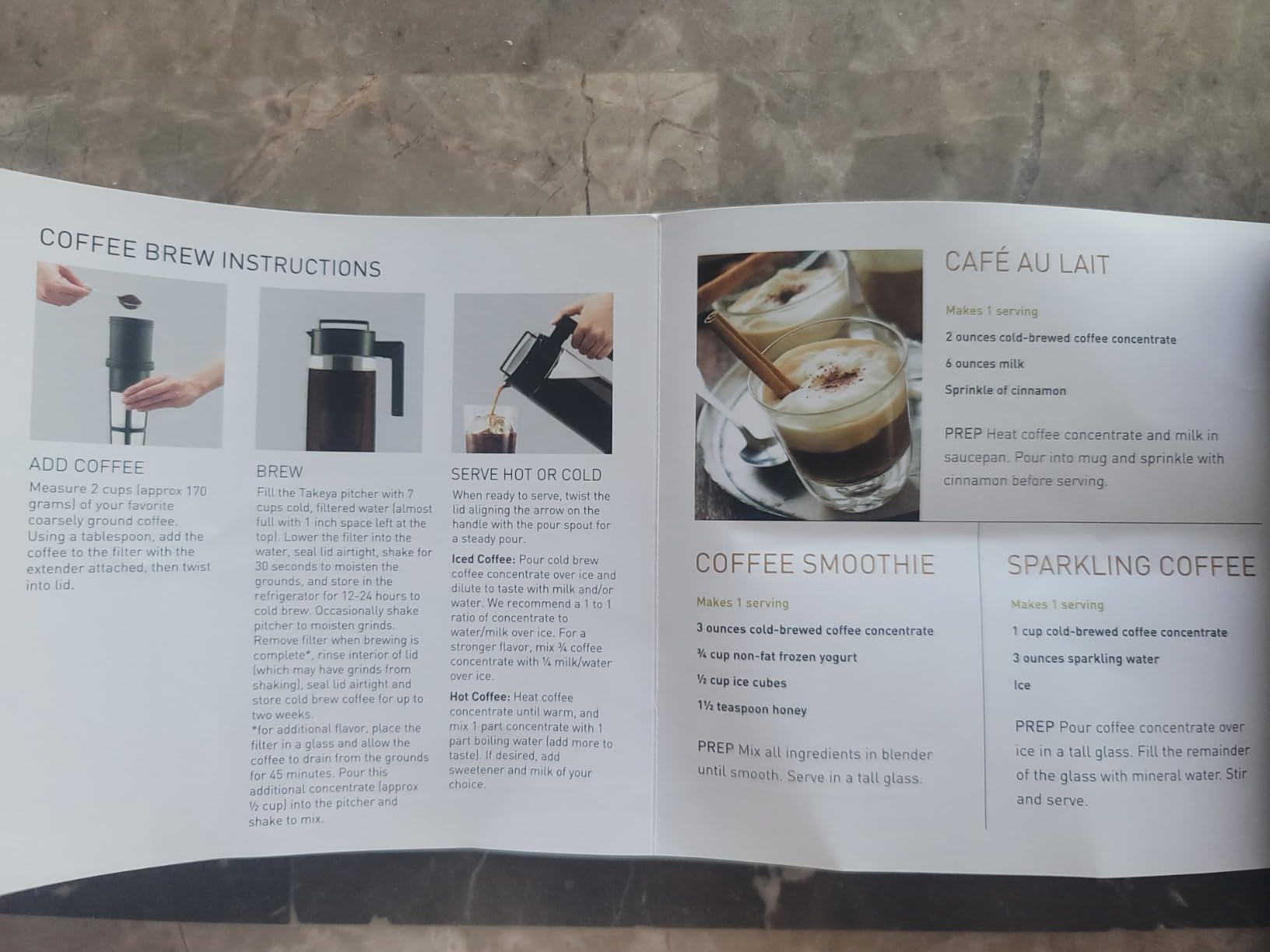
1. Weigh the coffee. Use a coarse grind, close to table salt. Start with roughly 85 grams of coarse grounds for 900 ml of water, which is close to a one-to-ten ratio by weight.
2. Wet the grounds completely. Pour about 200 ml of cold filtered water over the grounds first, swirl the carafe, and wait five minutes. Dry grounds left at the top of the bed extract poorly and make weak, uneven coffee.
3. Top up and seal. Add the remaining water, stir once to level the bed, and screw the lid down. Every maker here warns against warm or boiling water, so use cold water straight from the tap or fridge.
4. Steep 12 to 18 hours. Twelve hours is a lighter, more delicate cup and 18 hours is a stronger one. Do not go past 24 on a first batch; that is where bitterness comes from.
5. Filter and dilute. Let the grounds settle, pour off the concentrate, and dilute one part concentrate to one part water or milk.
6. Store it cold. Keep the concentrate in the fridge in a sealed jug or the maker itself if the lid seals. Cold brew keeps for about a week refrigerated, and dilution on demand is always better than diluting the whole batch on day one.
Five Beginner Mistakes and How to Fix Them
1. Drinking the concentrate straight. It is roughly twice the strength of brewed coffee. Dilute one to one and it becomes a normal drink.
2. Grinding too fine. Fine grounds extract bitter compounds fast and push sediment through the mesh. Coarse is the fix for both problems at once.
3. Steeping past 24 hours. Harshness and astringency almost always come from a long steep or a heavy dose. Twelve to eighteen hours is the sweet spot.
4. Pouring straight into the glass without a second pass. Let the brew settle, or pass it through a paper filter to catch the last of the grit.
5. Waking the whole kitchen for a 5:30 brew. Cold brew is a next-day process by design. Brew before bed, drink in the morning.
Frequently Asked Questions
What machine makes the best cold brew coffee?
For a first-time buyer, the best cold brew coffee maker is the County Line Kitchen 64oz glass mason jar pitcher. It has the highest average rating in our group, a stainless steel mesh fine enough to keep grit out, a large batch size, and every part is dishwasher safe and sold separately.
What is the best coffee to use in a cold brew coffee maker?
Use a coarse grind, roughly the size of table salt, and start with about 85 grams of grounds to 900 ml of cold water. Coarse grounds extract evenly without bitterness and keep sediment out of the cup. Grind finer for a stronger, fuller cup and coarser for a lighter one.
Do you need a special coffee maker for cold brew?
No. A cold brew coffee maker is just a container that steeps coarse grounds in cold water and filters them out. A mason jar with a fine mesh filter does the same job at no cost, and a dedicated maker simply adds a tighter seal, a finer filter and fewer parts to wash.
Can I make cold brew coffee in a mason jar?
Yes. Add 85 grams of coarse grounds to a clean mason jar, wet them with about 200 ml of cold water, top up to 900 ml, seal and refrigerate for 12 to 18 hours, then strain through a fine mesh filter or a paper filter to catch sediment.
Do cold brew pitchers work?
Yes, and for most people they are the best first device. A glass or Tritan pitcher with a fine mesh filter steeps grounds evenly, pours easily and washes in one piece. Expect concentrate rather than ready-to-drink, so always dilute one part concentrate to one part water or milk.
How long does homemade cold brew keep?
Refrigerated in a sealed jug, cold brew concentrate stays good for about a week and often longer, though freshness fades first. If your maker lid is not fully airtight, transfer the concentrate to a sealed container so it does not take on fridge odours.
Why does my cold brew taste bitter or harsh?
Three causes cover almost every case: steeping too long, grinding too fine, or drinking the concentrate undiluted. Cut the steep to 12 to 18 hours, use a coarse grind, and dilute one part concentrate to one part water or milk before tasting again.
How do I get sediment out of cold brew?
Use the coarsest grind you can manage, let the brewer sit undisturbed so the grounds settle before you pour, and pour slowly through the spout. For the last of the grit, pass the finished concentrate through a paper filter or a second fine mesh strainer as you serve it.
Which Cold Brew Coffee Maker Should You Buy?
If you want one answer, buy the County Line Kitchen 64oz mason jar maker. It is the most forgiving on a first batch, the easiest to wash, and the most reviewed with the highest rating here. If you knock things over constantly, take the Takeya, which is shatter-proof and fits a fridge door. If counter and fridge space are the problem, the Primula Burke solves both.
If your real interest is stronger coffee rather than easy coffee, the Bodum Bean gives you a true concentrate, and the Hario Mizudashi gives you the cleanest cup with printed measurements on the glass. Whatever you choose, start with a coarse grind, 85 grams to 900 ml, a 12 to 18 hour steep, and dilute one to one. That single habit fixes most first-batch disappointment. If you are still undecided, you can also see how we build out other buying guides this year, from our power bank guide to our cold climate jump starter picks, all built the same way: tested, compared and updated for 2026.