
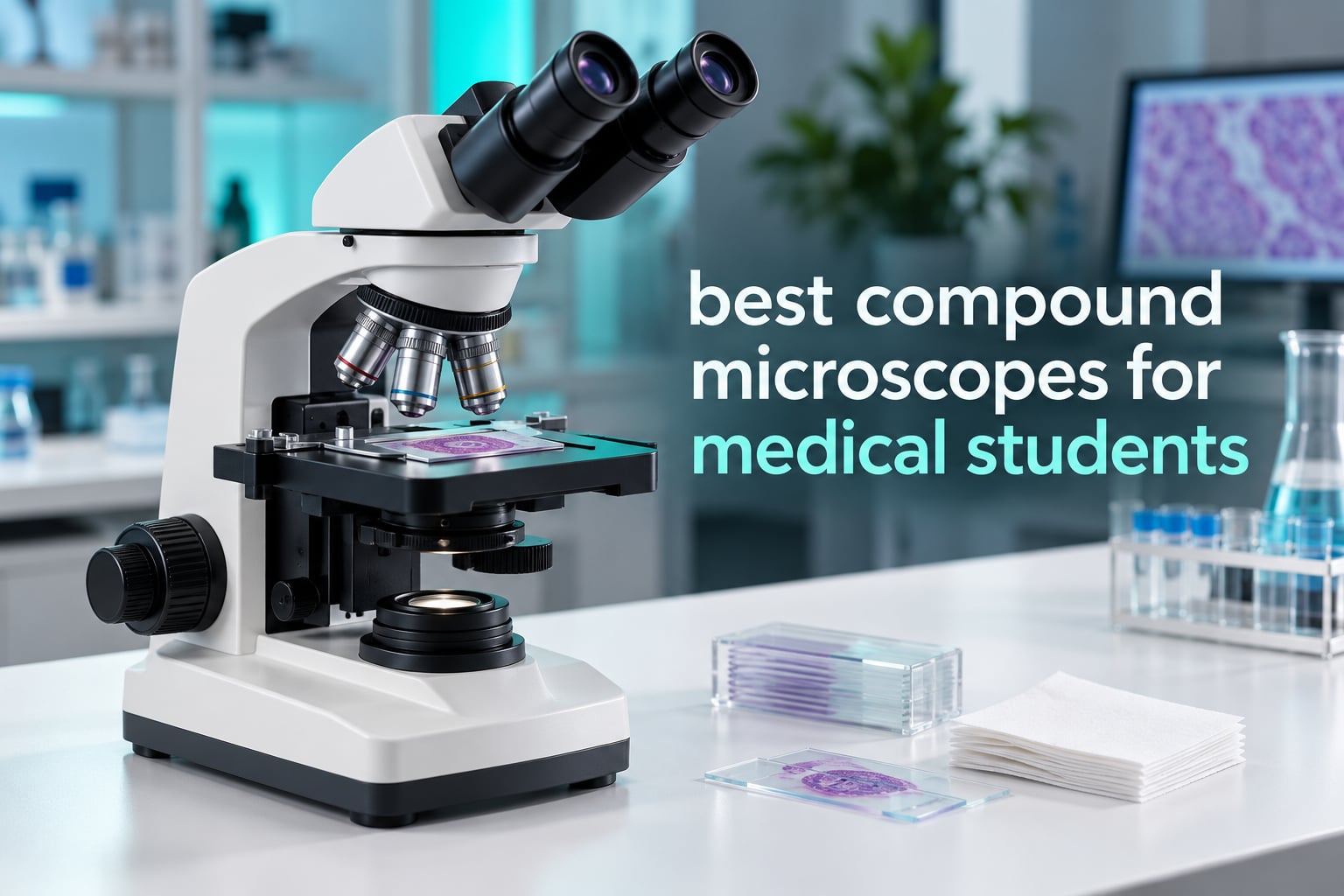
Choosing a compound microscope for medical school goes wrong in one predictable way: you read a listing that shouts 2000X, pay for a number that is really just an eyepiece multiplied by a 2X lens, and then spend first-year histology wondering why a Gram-stained section looks like grey soup. After working through the current crop of student scopes, the honest answer is that the optics matter less than the head type, the stage and the objective set you actually receive.
The best compound microscopes for medical students share four traits: achromatic 4X, 10X, 40X and 100X oil objectives, a real mechanical stage, an Abbe condenser with an iris diaphragm, and a body that will survive four years of being shoved into a dorm closet. The professional standard sits with Zeiss, Olympus, Leica and Nikon, the group commonly called the big four microscope brands. Below them sit the student-grade names that do most of the work in teaching labs today, led by AmScope, OMAX and Swift.
We spent weeks putting these ten scopes through prepared histology sections, blood smears and stained bacterial slides, checking not just the printed magnification but the magnification at which the image actually still holds detail. We also matched every pick against what a first-year student actually does in the lab: reading tissue sections at 100X and 400X, working a Gram stain, and finding a single parasite in a thick blood film.
If you are still assembling the rest of your study setup, our picks for the best inkjet printers for students and the best laptops for architecture students cover the other gear decisions that come up before orientation week.
Our Top 3 Picks for First-Year Med School
Three scopes stood out above the rest, and they win for different reasons. The OMAX handles full laboratory work with a binocular head and a double-layer stage, the TOMLOV earns its spot by being the easiest instrument here to learn on, and the AmScope B120C-E1 gives you a binocular head with a camera in the box at a tier most students can justify.
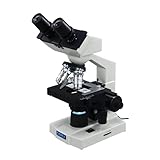
OMAX M82ES 2000X Binocular
- Achromatic 4X-100X oil objectives
- Double layer X-Y mechanical stage
- NA1.25 Abbe condenser
- 5 year warranty

TOMLOV CM101 40X-2000X
- Coaxial coarse and fine focus
- Dual LED illumination
- 4X 10X 40X achromatic objectives
- 6 position filter disc
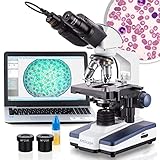
AmScope B120C-E1 40X-2500X
- Binocular head with mechanical stage
- Abbe condenser with blue lens
- Included 1.0MP USB camera
- 5 year warranty
Comparing All 10 Scopes at a Glance
The table below is the fastest way to narrow the field. Head type tells you who can look at a slide, the objective list tells you what power you actually have, and the stage line tells you whether you will spend your evenings hunting for a specimen by hand.
| Product | Specs | Action |
|---|---|---|
| OMAX M82ES-SC100-LP100-OM 2000X Binocular |
|
Check Latest Price |
| TOMLOV CM101 40X-2000X Monocular |
|
Check Latest Price |
 PalliPartners SWXWJ-1 2000X Kit PalliPartners SWXWJ-1 2000X Kit |
|
Check Latest Price |
| AmScope B120C-E1 40X-2500X Binocular |
|
Check Latest Price |
 SWIFT SW380T 2500X Trinocular SWIFT SW380T 2500X Trinocular |
|
Check Latest Price |
 AmScope M150C-PS25 Portable 1000X AmScope M150C-PS25 Portable 1000X |
|
Check Latest Price |
 AmScope M102C-PB10 1000X Monocular AmScope M102C-PB10 1000X Monocular |
|
Check Latest Price |
 Herwicm wy-462 2500X Binocular Herwicm wy-462 2500X Binocular |
|
Check Latest Price |
 JECONE ET1 2500X Monocular JECONE ET1 2500X Monocular |
|
Check Latest Price |
 BEBANG YW-3006 2000X Monocular BEBANG YW-3006 2000X Monocular |
|
Check Latest Price |
Does Your Medical School Make You Buy a Microscope?
Most medical schools supply a fully equipped teaching lab, and plenty of students never need to think about this at all. Students on Student Doctor Network talk about this every year: plenty of them reach graduation without ever owning a scope, and one first-year described getting their first real look through a microscope only years after school. Others buy anyway, and the smart ones buy for reasons beyond the requirement.
Here is how to settle the question in five steps before you spend anything.
- Read the enrollment packet and pre-matriculation checklist for a required equipment list.
- Email the registrar or the course coordinator for first-year histology and ask whether scopes are provided.
- Ask whether any elective, research elective or summer placement requires a personal instrument.
- Check whether the school lists an approved model or specification, because some programs specify a head type.
- Confirm whether the student society owns loaner scopes before you commit to buying one.
If the answer is that the lab supplies everything, buy a scope anyway only if you want to study at 2am in your dorm room. Nothing replaces a personal instrument for histology review, and the scopes below all double as premed, nursing and lab-technician instruments.
1. OMAX M82ES-SC100-LP100-OM 2000X Binocular – The All-Round Lab Workhorse
Awarded Best Compound Microscope 2016 – OMAX 40X-2000X Lab LED Binocular Microscope with Double Layer Mechanical Stage w Blank Slides Covers and Lens Cleaning Paper
Achromatic 4X-100X oil objectives
X-Y mechanical stage
NA1.25 Abbe condenser
5 year warranty
Pros
- Metal frame with stain resistant enamel finish
- Double layer X-Y stage with scales and 70mm x 30mm travel
- Achromatic DIN 40X and 100X oil objectives included
- 100 slides and 100 cover slips in the box
- 5 year manufacturer warranty
Cons
- Swiveling head and oil objective take practice
- Coarse and fine knobs on both sides rather than one
This is the scope we kept coming back to. The M82ES carries a 45 degree inclined binocular head that swivels a full 360 degrees, which matters more than it sounds when you are moving between a dorm desk and a lab bench. Interpupillary distance slides between 55mm and 75mm, and both eyetubes carry their own diopter adjustment, so two different people can sit down and get a sharp image without swapping the eyepieces.
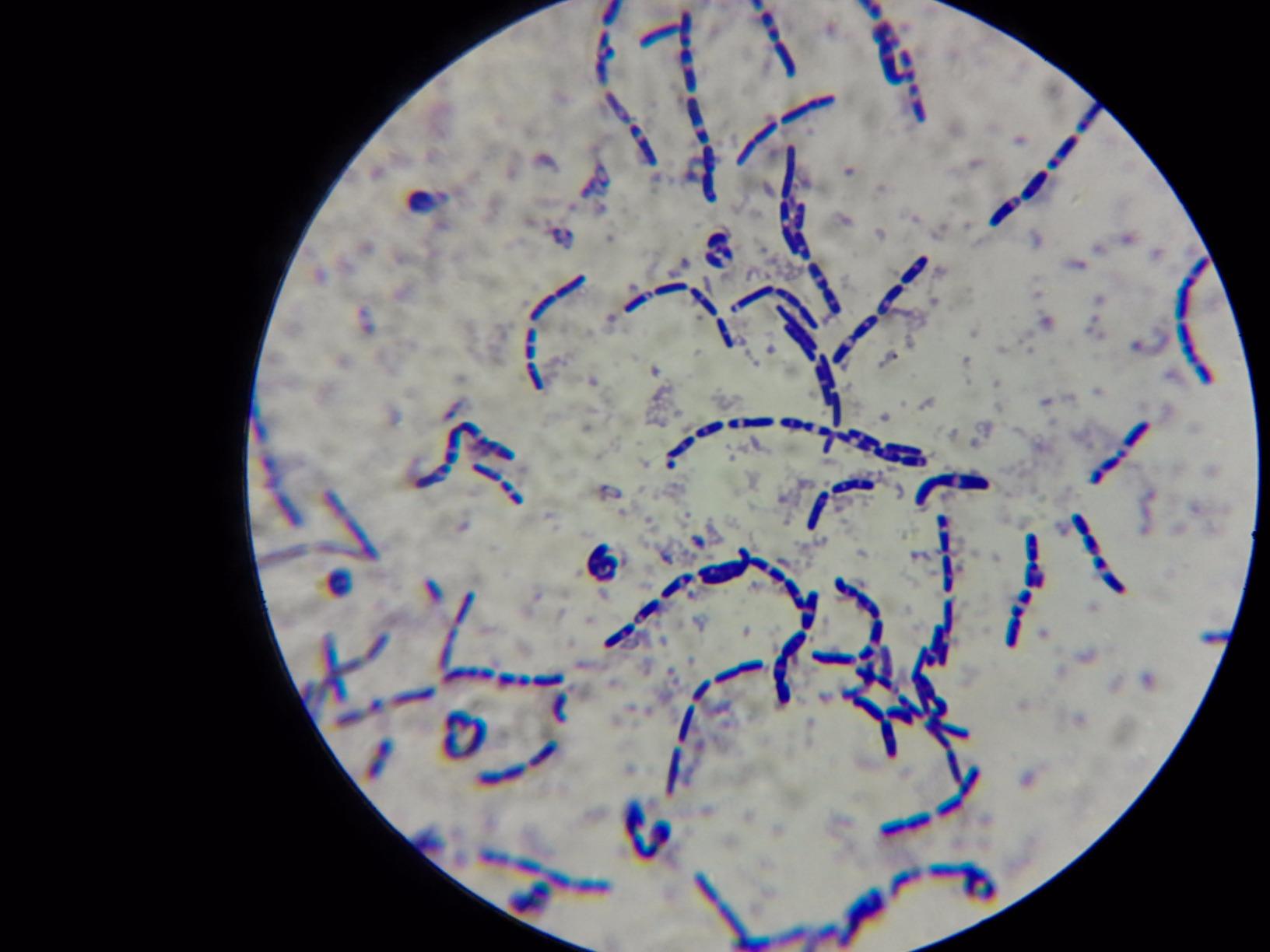
Optically it is properly equipped for laboratory work. The objective set is achromatic DIN 4X, 10X, 40X and a 100X oil immersion lens, paired with wide field WF10X and WF20X eyepieces. Reviewers repeatedly note that useful detail for routine slide reading tops out around 400X, and that the 1000X and 2000X settings demand both immersion oil and steady technique. That is normal, and it is exactly the behaviour of a real instrument.
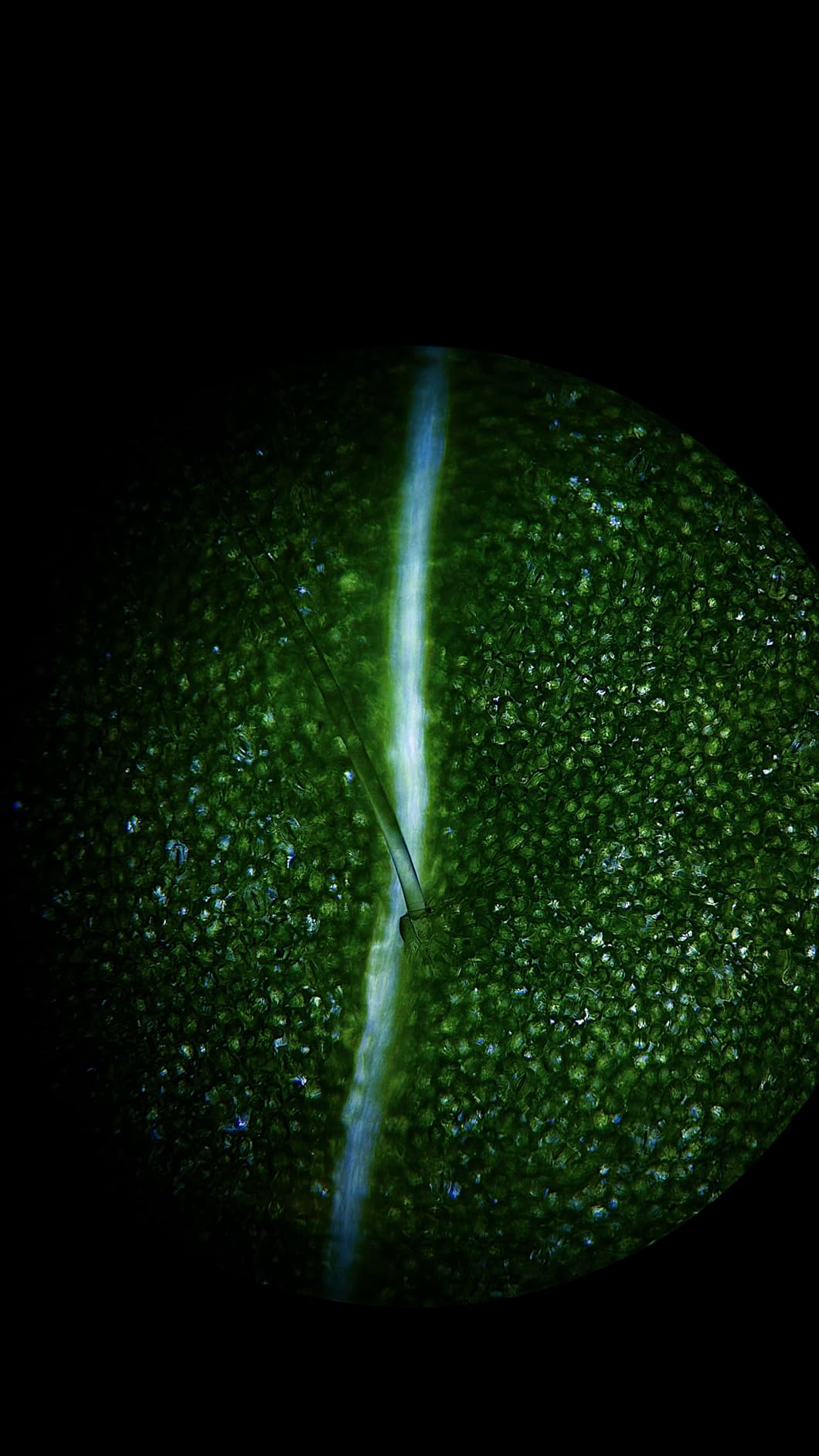
Why the mechanical stage decides everything
The double layer X-Y stage measures 115mm by 125mm with 70mm by 30mm of travel and printed scales on both axes. At 400X the field of view is small enough that moving a slide with your fingertips is hopeless, so the stage is not a convenience feature, it is the difference between reading a section and guessing at it.
An upward moving stage lock protects the objective and the slide when you rack focus aggressively, which is something you will do on day one and stop doing by month three.
Condenser and illumination for stained slides
The NA1.25 Abbe condenser with iris diaphragm is the component most often downgraded in cheap scopes, and it is the one that decides whether a faint Gram stain is legible. Opening the iris until the field is evenly lit, and then closing it slightly for contrast, is a technique you cannot perform properly without a real condenser.
Illumination comes from a transmitted LED with adjustable intensity, which stays cool and does not shift colour as you change brightness. There is no incident light, so opaque specimens such as hair or fabric are not this scope’s job.
Build quality and what arrives in the box
The frame is solid metal with a stain resistant enamel finish, and at 9.6 pounds it stays planted on the bench instead of creeping across it. The package includes 100 blank glass slides, 100 cover slips and 50 sheets of lens cleaning paper, plus a UL approved AC/DC adapter that accepts 100-240V.
The 5 year manufacturer warranty is among the longest on this list, and that matters when the instrument has to survive a four-year program plus a move at the end of it.
Who it suits and where it falls short
This is the right pick for a student who wants one instrument that handles histology, bacteriology and blood work without compromise, and it is the one we would put on a desk and keep for four years. It is also a binocular scope with no camera port, so if your plan involves research electives or pathology photography you should look at a trinocular model instead.
2. TOMLOV CM101 40X-2000X Monocular – The Easiest Scope to Learn On
TOMLOV Compound Microscope with Coarse & Fine Focus for Adults & Students,
Monocular 360 degree head
4X 10X 40X achromatic objectives
Coaxial coarse and fine focus
Dual LED
Pros
- Coaxial focus is genuinely smooth for the tier
- Dual top and bottom LED handles opaque samples
- Lightweight at 2.7 pounds
- Five prepared slides included
Cons
- Monocular head allows one viewer at a time
- Advertised 2000X needs the 2X lens
- Only a 1 year warranty
Two thousand two hundred fifty five reviews at a 4.5 average makes this one of the most proven instruments on the list, and for a first-year student learning microscope technique it is unusually forgiving. The monocular head rotates a full 360 degrees so you can swing it aside instead of ducking under it, and the viewing angle is easy on a neck that has been bent over a library book for three years.
The working magnification you will actually use is 40X, 100X and 400X from the achromatic 4X, 10X and 40X objectives with the WF10X eyepiece. The WF25X eyepiece takes you higher, and the headline 2000X figure requires the extra 2X lens in the optical path. Reviewers are consistent on this point: the useful optical detail stops well short of the printed maximum.
Focus control that forgives clumsy beginners
Coaxial coarse and fine knobs let you find the specimen quickly, then creep onto focus with the fine knob alone. On a monocular student scope this is the feature that most improves your first month, because hunting for focus at 400X with a loose fine adjustment is the fastest way to decide you hate histology.
The trade-off is real: with one eyepiece, only one person can look at a given moment, so this scope does not support the paired study sessions that some histology courses run.
Two lighting paths and a filter disc
Dual LED illumination gives you transmitted light from below for prepared transparent slides and incident light from above for opaque material such as leaves, fabric and coins. That flexibility makes it a useful scope for anatomy and surface work, not just blood films.
The 6-position disc diaphragm adds clear, yellow, purple, blue, green and red positions. On a pale blood smear the green and blue positions genuinely improve contrast, which is exactly the kind of tool that helps a student see what an instructor is pointing at.
Where it will not take you
There is no mechanical stage, no camera port and a one-year warranty. Fine for premed review sessions and a first year of lab practicals, but not the instrument to build a research track on.
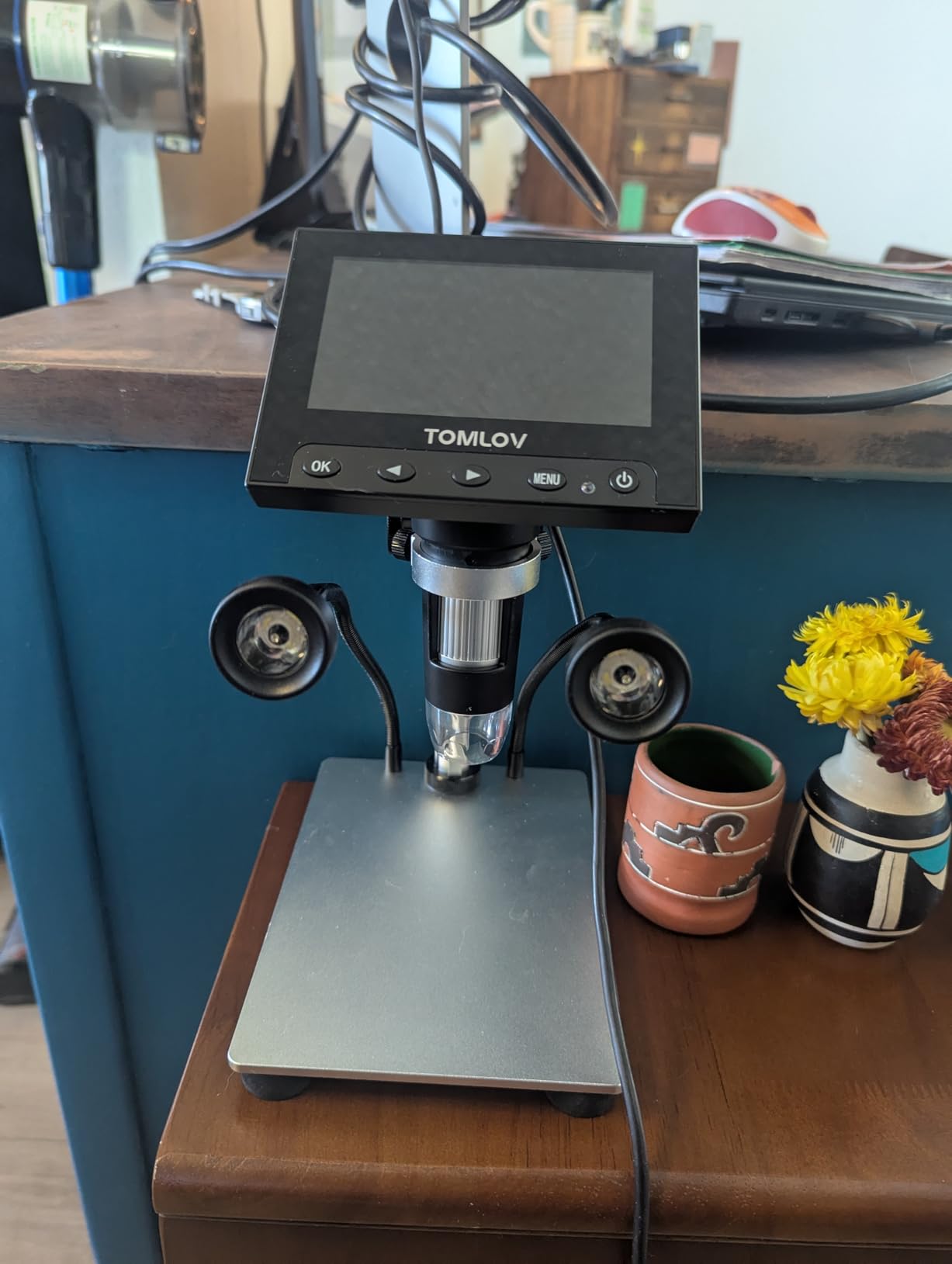
At 2.7 pounds and 6.3 by 4.72 by 11.81 inches it fits in a backpack, and the box includes five prepared slides, five blank slides and round cover slips. If you want to learn the fundamentals on something forgiving and proven, this is the scope to start with.
3. PalliPartners SWXWJ-1 2000X Kit – Best for Phone Photomicrography
PalliPartners Compound Microscope for Adults & Students, White
4X 10X 40X objectives with WF25X eyepiece
Top and bottom LED
Coaxial focus
Phone clip and remote
Pros
- Universal phone clip adapter included
- Bluetooth remote shutter avoids shake
- Ten prepared plus 18 blank slides
- Compact footprint for a dorm desk
- SGS certified for safety
Cons
- Loose lens fit if handled roughly
- No mechanical stage so slides move by hand
- Real magnification well under 2000X
- Thin manual and a region specific power adapter
This kit answers the most common phone-camera question we saw from students: can I photograph a slide without buying a separate microscope camera. The universal phone clip clamps onto the eyepiece, and the Bluetooth remote shutter lets you trigger the capture without touching the phone. Reviewers point out that the clip makes capture simple, and the kit saves you buying a separate USB camera.
The optical set is 4X, 10X and 40X achromatic objectives with a WF25X eyepiece and a 2X lens, giving 100X through 2000X across the range. The practical ceiling for legible detail is far below the printed maximum, so treat the phone as a study aid for shared slides rather than a publication camera.
What you can actually see
Top and bottom adjustable LED illumination means translucent biological material and opaque objects both light up, and coaxial coarse and fine knobs give more precise adjustment than the simplest plastic scopes. For onion skin, cheek cells and simple pond samples it performs well enough that a student can genuinely learn to focus.
For stained tissue sections at 400X the picture softens quickly, which is the honest limitation of a light polycarbonate body at this tier.
Mechanical weaknesses worth knowing
Reviewers report lenses that can wobble in the housing or shift out of alignment if the scope is knocked, and with no mechanical stage you find specimens by hand. Both are acceptable on a dorm desk. Neither is acceptable if the instrument has to travel between rooms on a cart.
The bundled power supply is not suited to every region, and the manual is of limited help, so check the adapter before you rely on it.
Best fit for the job
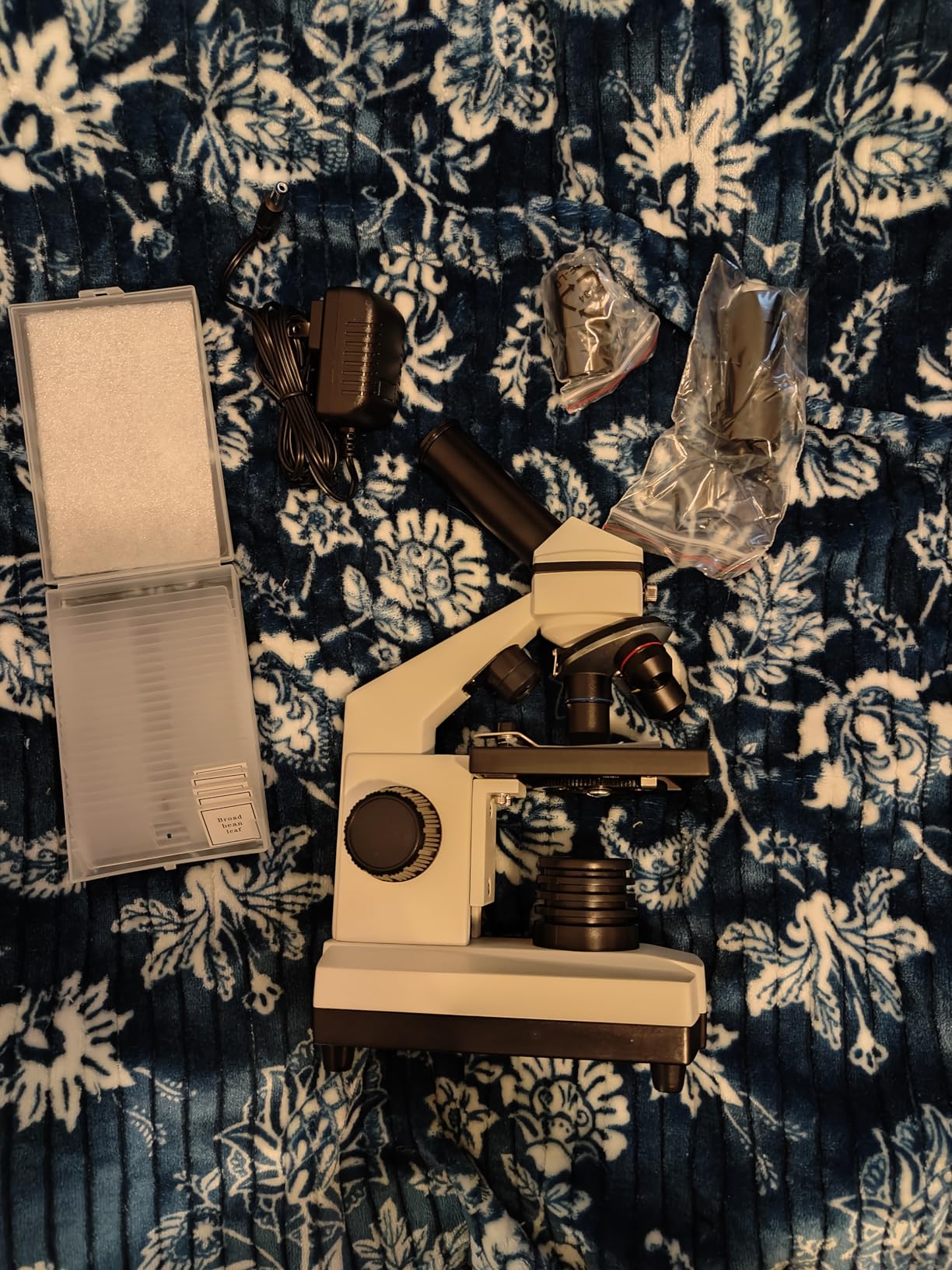
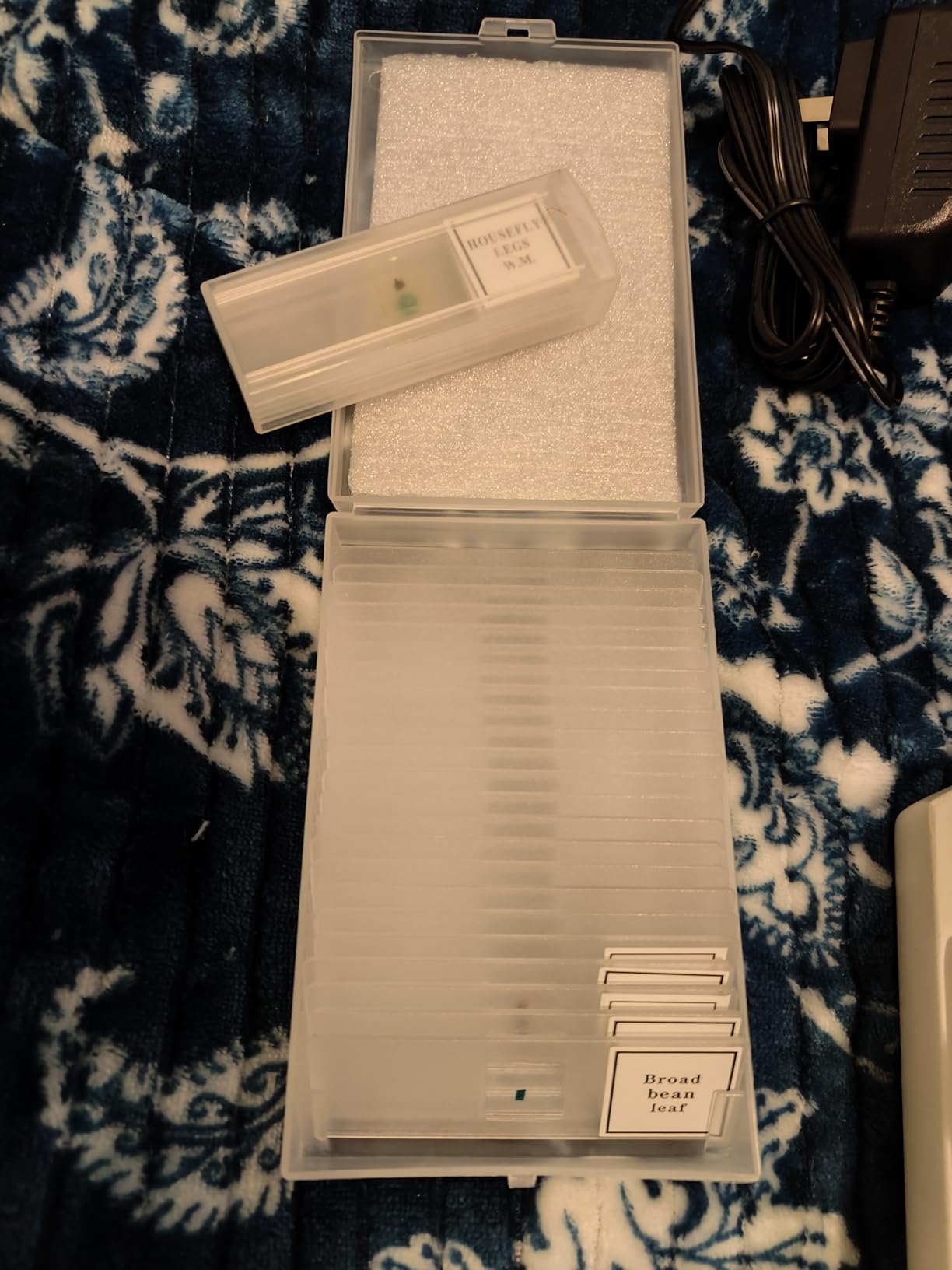
If your phone is how you share notes with a study group, this is the pick. The kit carries 10 prepared slides, 18 blank slides, the phone clip, the remote and a power adapter, and it is SGS certified for non-toxic materials and electrical safety, which matters in a shared family home.
4. AmScope B120C-E1 40X-2500X Binocular – Best Value Binocular With a USB Camera
AmScope B120C-E1 LED Binocular Compound Microscope, 40X-2500X
40X-2500X binocular range
Abbe condenser with blue lens
Mechanical stage
1.0MP USB camera
Pros
- Binocular head at a reachable tier
- Mechanical stage steadies positioning
- Includes USB camera and Windows software
- Dimmer controlled LED with fly eye lens
- 5 year manufacturer warranty
Cons
- Bundled 1.0MP camera resolution is low
- Documentation may not match the model
- No calibration slide included
- Oil immersion at the top end needs practice
The B120C-E1 is the pick we recommend when a student insists on a binocular head and a camera without stepping up to a research-grade price. AmScope is a recognised optics brand with US parts support, and the 5 year warranty on a machine of this specification is unusual.
Magnification runs from 40X to 2500X, and again that number is a product of eyepiece and objective choice rather than a claim about resolution. Reviewers across the board describe the optics as clear and the mechanics as smooth, while noting that useful resolution arrives well before the headline figure.
Illumination and condenser quality
The LED source feeds a specialised fly eye lens that produces bright, daylight-balanced light, which matters when you are judging stain colour honestly rather than through a yellow cast. An Abbe condenser with a pivoting blue lens handles the standard brightfield work of a medical lab, and the dimmer lets you bring intensity down for pale blood films.
Camera, software and what you can record
The bundled 1.0MP USB camera comes with microscopy software for Windows and will capture images of a slide for study notes or lab reports. Reviewers are blunt that the sensor resolution is well below what the optics can deliver, so treat it as a documentation tool. If you want publication-quality photomicrography, budget for a better camera or use a phone adapter instead.
Stage and build
The mechanical stage gives smooth, repeatable positioning, and dual precision focus keeps 400X work stable. The frame mixes metal and plastic, and at 11.81 by 9.06 by 16.54 inches it is a full-size bench instrument.
Caveats to plan around
Two small annoyances: shipped documentation sometimes does not match the model and has to be sourced from the manufacturer, and no calibration slide is included, so measurement work needs a separate purchase. Both are easy to plan around.
5. SWIFT SW380T 2500X Trinocular – Best Trinocular Head for a Research Track
Swift SW380T 40X-2500X Magnification, Siedentopf Head, Research-Grade Trinocular Microscope Compound Lab with Wide-Field 10X/25X Eyepieces, Mechanical Stage, Ultra-Precise Focusing, Camera-Compatible
Trinocular Siedentopf head
30 degree viewing tilt
WF10X and WF25X eyepieces
Mechanical stage
Pros
- Trinocular head keeps both eyes free for a camera
- 30 degree Siedentopf tilt reduces neck strain
- Interpupillary adjustment without losing focus
- Ultra precise coaxial coarse and fine focus
- Objectives reported sharp across 85-90 percent of field
Cons
- Transmitted light only so opaque samples are hard to light
- Short working distance at 400X and 1000X
- Thin undersized dust cover
- Camera attachment not included
The SW380T is the one to buy if you might head toward pathology, a research elective or a summer placement where you need to photograph a slide while still looking at it. A trinocular head splits the light: two eyepieces for you and a third port above for a camera, and because you keep both eyes in the head you do not go blind to the specimen while the shutter fires.
Owners include practicing pathologists and veterinary students who report the optics holding up for real diagnostic and hematology work. Several upgraded from older student scopes specifically for the head and the stage.
Why the Siedentopf head is the whole point
A Siedentopf head sits at a 30 degree tilt rather than the near-vertical angle of a standard binocular. On a long hematology session that difference shows up in your neck, and the head rotates fully for shared use in a lab where one scope serves two students.
Interpupillary distance adjusts without losing focus, and the WF10X and WF25X glass eyepieces are interchangeable, which means the magnification choices are optics rather than printed arithmetic.
Objective set and magnification steps
Four DIN achromatic objectives on a revolving turret produce six usable levels: 40X, 100X, 250X, 400X, 1000X and 2500X. Reviewers describe the objectives as sharp across roughly 85 to 90 percent of the field of view, which is a meaningful upgrade on scopes whose image goes soft at the edges.
Working distance is short at 400X and 1000X, so keep slides clean and approach focus slowly. These are 4.3 kilograms of instrument measuring 13.39 by 9.45 by 17.72 inches, so plan the bench space.
Stage, lighting and the camera gap
The mechanical stage has its controls on one side with the focus knobs, which keeps your hand in one place. Illumination is transmitted LED only, so thick or opaque samples above 100X are difficult to light, and a thin undersized dust cover is included rather than a proper one.
The camera attachment is not included. Budget separately for it, and note that the trinocular port is what makes the purchase worthwhile.
For a general medical student who will never leave a binocular head this scope is more than you need. For anyone who wants to take photographs, this is the correct choice on the list.
6. AmScope M150C-PS25 Portable 1000X – Best Portable Scope With 25 Prepared Slides
AmScope M150C-PS25 Series Portable Monocular Compound Microscope – 1000X
Portable monocular design
40X to 1000X range
LED ring light
25 prepared slides included
Pros
- Metal build that survives heavy use
- 25 prepared slides included for learning
- Stated magnification holds for practical work
- Easy to move between rooms or store
- 5 year manufacturer warranty
Cons
- Computer camera attachment not included
- Phone over the eyepiece is a workaround only
- Monocular head allows one viewer
The M150C-PS25 is the honest entry point for most premed and first-year students. It stops at 1000X, which sounds modest next to the 2500X listings, and that is precisely the point: the magnification it claims is the magnification it delivers.
Buyers who wanted something sturdier than a children’s toy scope report being pleasantly surprised by the metal construction and the accurate magnification. Several use it at home with kids for schoolwork, which is a fair second life for it.
LED ring light and all optical glass
A ring light around the base gives even illumination across the field with no hot spot, so a prepared slide does not have a bright centre and dark corners. Achromatic objective lenses in an all optical glass path keep the image clear at the top of the range, and the 45 degree viewing angle is comfortable.
The scope is sold in configurations, so confirm that the package you choose includes the 25 prepared sample slides.
The camera expectation gap
The listing imagery implies a computer camera, and the consistent complaint in reviews is that one is not included. A phone camera held over the eyepiece works as a study aid, and it is not a substitute for a proper camera port when you need real photomicrography.
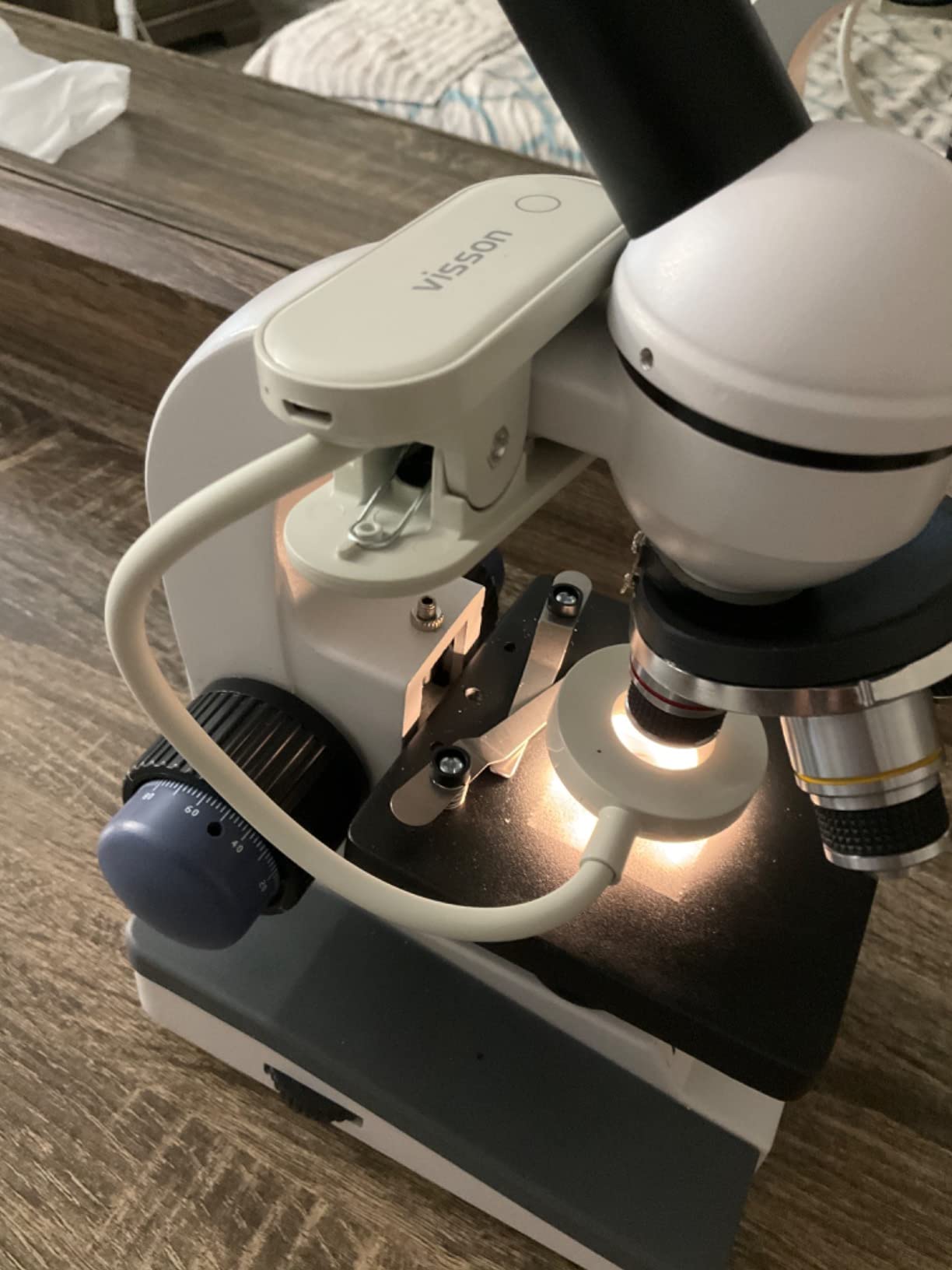
Portability as the real feature
At 3.3 pounds and 14.8 by 10.31 by 6.81 inches it moves between a dorm room and a shared lab easily, and the 5 year warranty covers the four years ahead of you. The monocular head means one viewer at a time, which is the trade for the low weight.
7. AmScope M102C-PB10 1000X – Best Metal-Body Starter on a Tight Budget
AmScope M102C-PB10 1000X Biological Compound Microscope with Prepared
Monocular head to 1000X
Single lens condenser with disc diaphragm
Wall powered LED
All metal frame
Pros
- Wall powered LED far brighter than battery student scopes
- All metal frame with all optical glass lenses
- Easy to focus for children and beginners
- Five magnification settings to 1000X
- Five blank and five prepared slides included
Cons
- No fine adjustment focus knob
- Some report the light source failing early
- Monocular head with no mechanical stage
- Not sufficient for advanced college lab work
The M102C-PB10 is the pick when the budget is the main constraint and the goal is a first instrument for anatomy class or premed review. The wall-powered LED produces far brighter, more even light than the battery lamps used on plastic student scopes, and that single change does more for image quality than any amount of printed magnification.
The build is an all-metal framework with all optical glass lenses, and it arrives with five blank and five prepared slides. Reviewers consistently describe it as adequate and better made than plastic competitors.
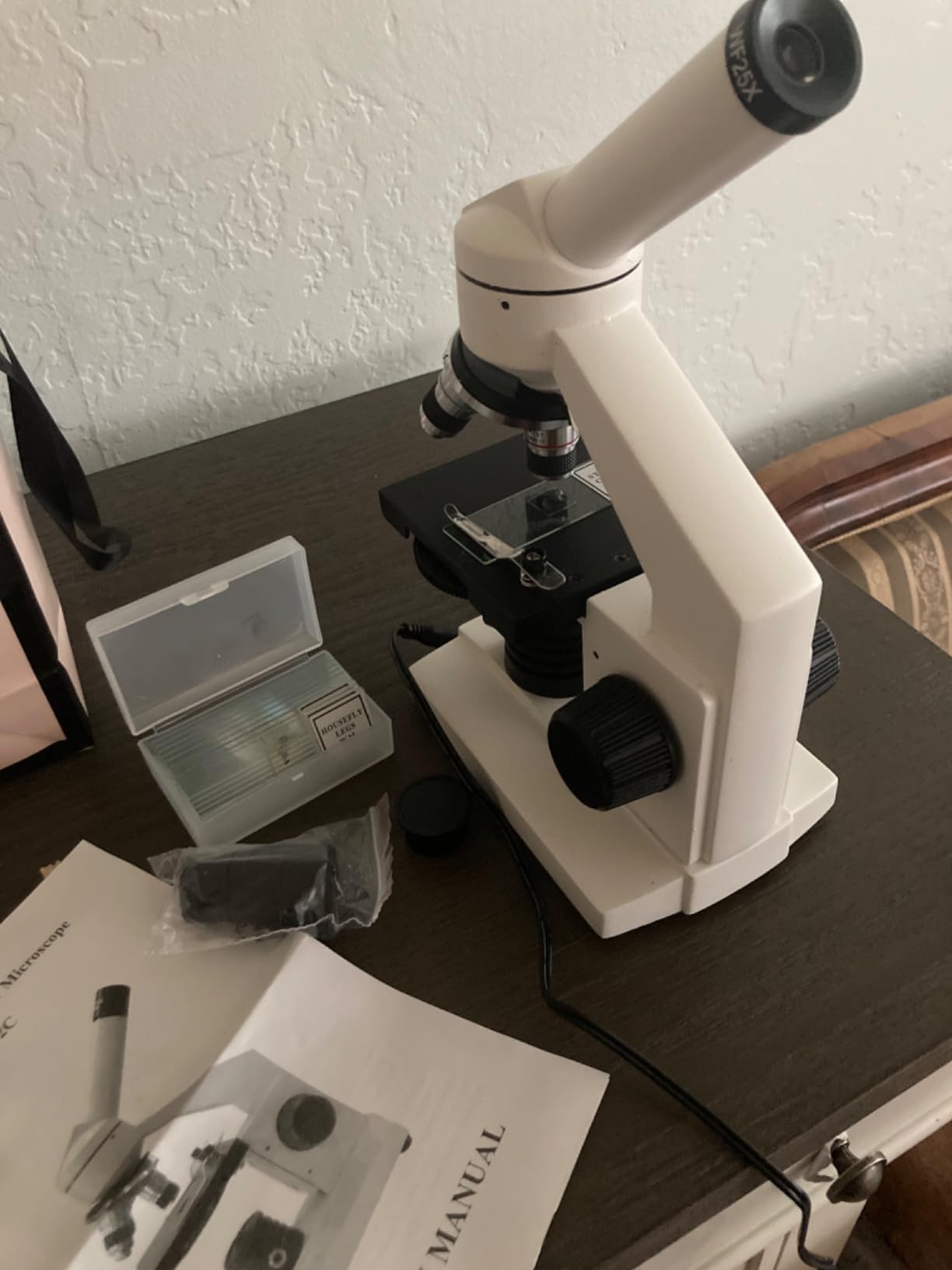
The missing fine focus is the deciding flaw
There is no fine adjustment knob, only coarse focusing. At 100X on a blood smear that is workable; at 400X it is frustrating, because everything from the cover slip to the objective moves at once.
If you are going to spend any of your budget on one improvement, a fine focus knob is it.
Condenser and lighting limits
The single lens condenser with disc diaphragm sits well below an Abbe condenser on image quality, and some owners report the light source failing early with no replacement bulb available. Treat it as a first instrument you might upgrade in your second year.
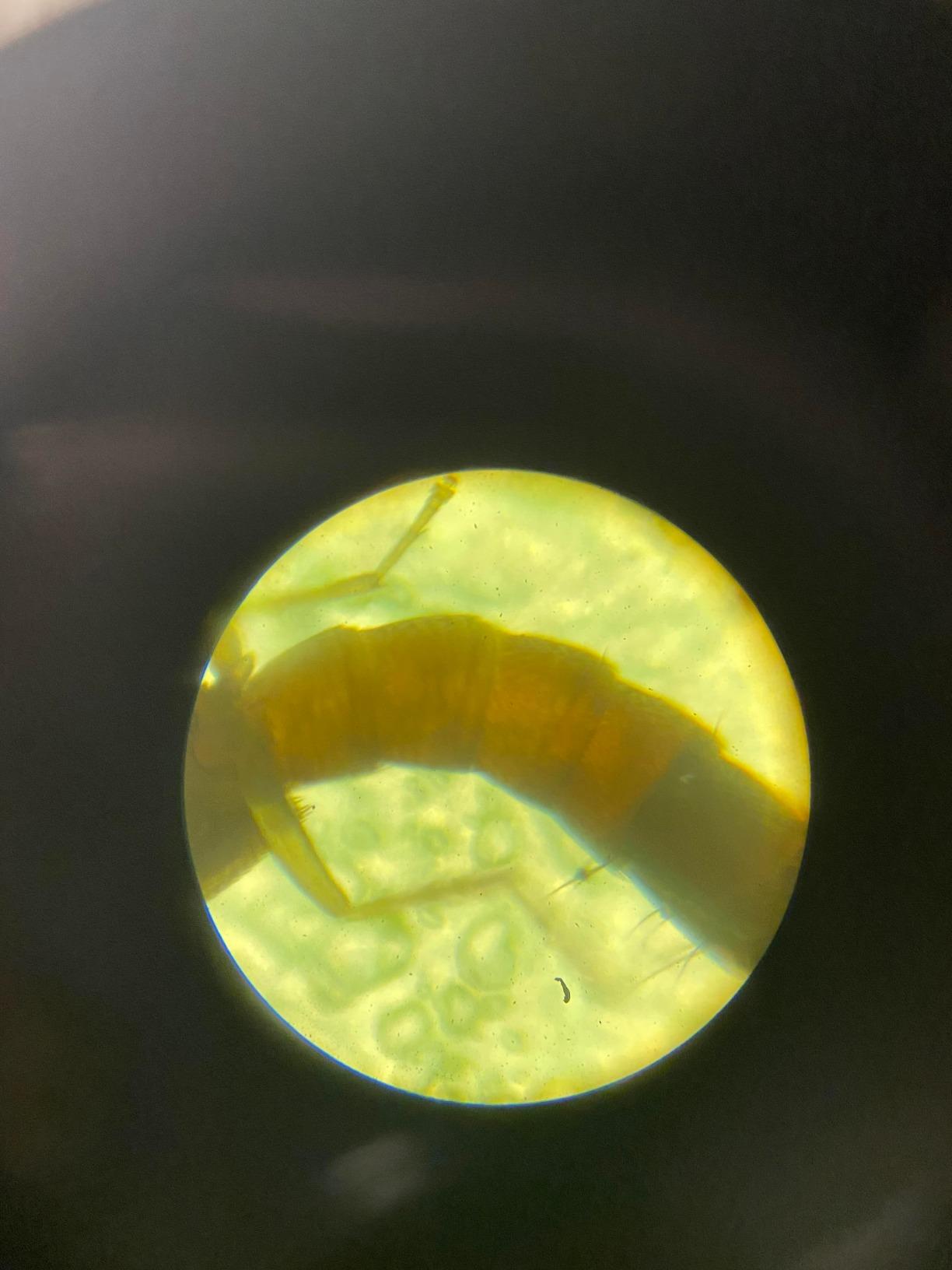
A sensible first purchase
Owners also note it may not be enough for advanced college laboratory work, which is fair. As a stepping stone with a 5 year warranty behind it, the value is hard to argue with.
8. Herwicm wy-462 2500X – Binocular Viewing With a Two-Layer Mechanical Stage
Compound Microscope,40X-2500X ,WF10x and WF25x eyepieces, Dual LED Lighting and Two-Layer Mechanical Stage,Microscope for Adults… ASIN B0CCNZFJ61
Ultra wide binocular eyepieces
Two layer mechanical stage
Dual LED with fill light
4X 10X 40X objectives
Pros
- Binocular head lets two people view together
- Two layer mechanical stage with scales
- Coarse and fine knobs on both sides
- Dual LED with fill light for varied samples
- Comfortable wide field over long sessions
Cons
- Objective set limited to 4X 10X 40X
- Not a recognised optics brand and thin documentation
- Effective resolution far below 2500X
The Herwicm solves one specific problem: getting a binocular head and a mechanical stage without moving up a price tier. Buyers who chose it generally wanted both features, and they report clear images, comfortable wide-field viewing and a stage that works for everyday slides.
Coarse and fine knobs sit on both sides of the base, so whichever hand you use, the adjustment is there.
Wide field eyepieces and shared viewing
The ultra wide-angle binocular eyepieces give a large field of view, which is described as comfortable over long sessions and useful when two people need to see the same thing at the same time. In a lab that costs extra to duplicate, sharing one binocular scope is the practical route.
Stage, lighting and the objective ceiling
A two-layer mechanical stage with a spiral moving scale makes locating a specimen much easier than hunting by hand, and the telescopic objective lens retracts to protect against a lens and slide collision, which is a sensible guard for a student still learning focus technique.
Adjustable top and bottom LED lighting with an integrated fill light handles transparent and opaque samples. The honest weakness is the objective set: 4X, 10X and 40X only, with no oil immersion lens, so the 2500X ceiling depends on eyepiece swapping rather than genuine resolution.
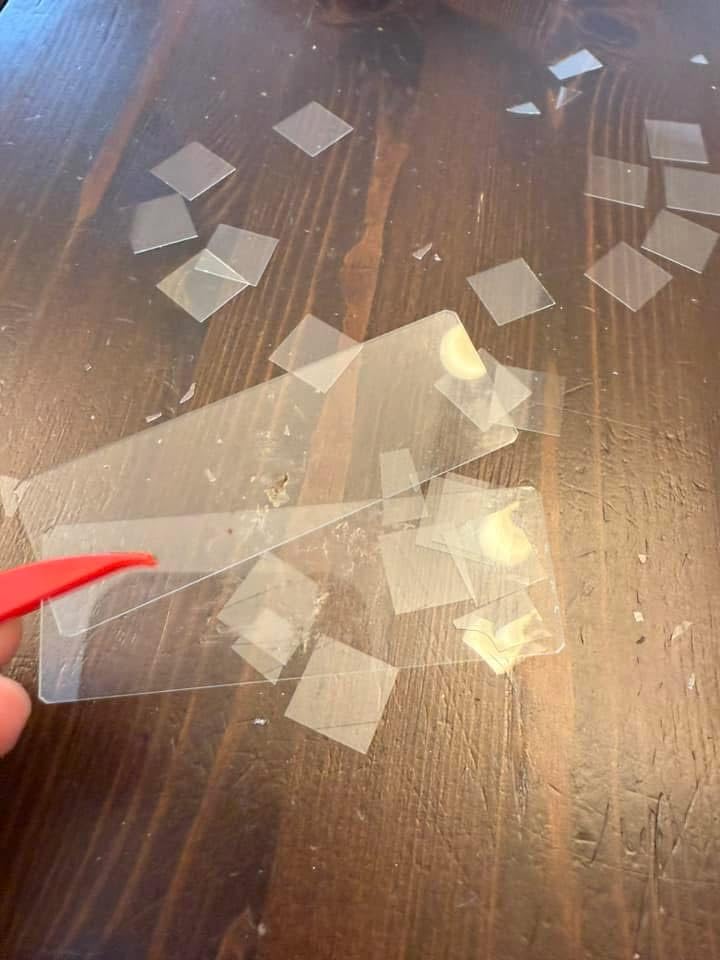
What the brand name costs you
The manufacturer is not a recognised optics brand and the documentation is thin, so replacement parts and detailed instructions are harder to source than with AmScope or OMAX. Buyers who accept that trade get a capable study scope.
9. JECONE ET1 2500X – Dual Lighting and a Phone Holder in One Package
Microscope for Adults & Kids, 40X-2500X High-Power Compound Microscope for Students, School Lab & Home Schooling,Equiped with Slides Set & Phone Holder (White)
Incident and transmitted LED
Coarse and fine focus
5 color filter wheel
Phone holder
Pros
- Dual illumination covers slides and opaque objects
- Coarse and fine focus balance
- Built in 5 color filter wheel for contrast
- Phone holder makes sharing images easy
- Metal construction with a wide accessory kit
Cons
- Effective resolution far below 2500X
- Monocular head allows one viewer
- No mechanical stage
- Small light frame feels unstable at high power
The ET1 is bought by students, homeschool families and casual hobby users, and reviewers tend to be satisfied with the lighting, the filter wheel and the phone holder. The accessory bundle is generous: five specimen slides, five blank slides, tweezers and droppers, plus 360 degree rotating eyepieces.
Its place on this list is home and review use rather than formal laboratory work, but it handles more than most scopes at this entry tier.
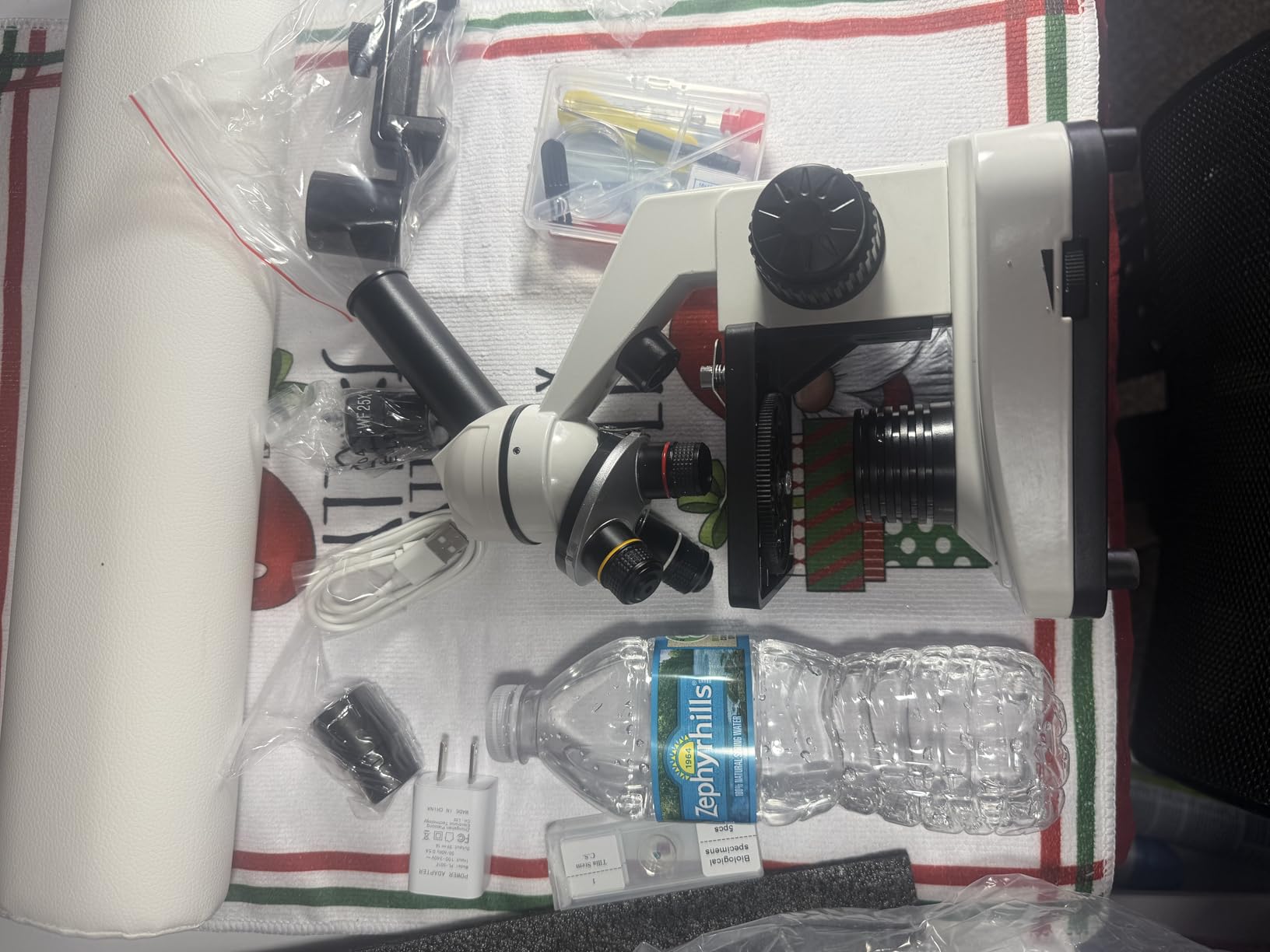
Incident and transmitted light in one body
Two LED sources, one above and one below, with a dimmer knob for intensity. Transmitted light handles prepared slides and stained smears, while incident light covers opaque objects such as a coin or a fingerprint, which no single-path scope manages.
The 5-color filter wheel under the stage adds yellow, red, blue, green and purple positions, and on low-contrast transparent samples the difference between clear and blue can be the difference between seeing a cell wall and guessing.
What to expect at the top of the range
The printed maximum is not achievable in practice, the frame is small at 1.59 kilograms, and it feels less stable at high power than a heavier bench scope. There is no mechanical stage, so you move the slide by hand.
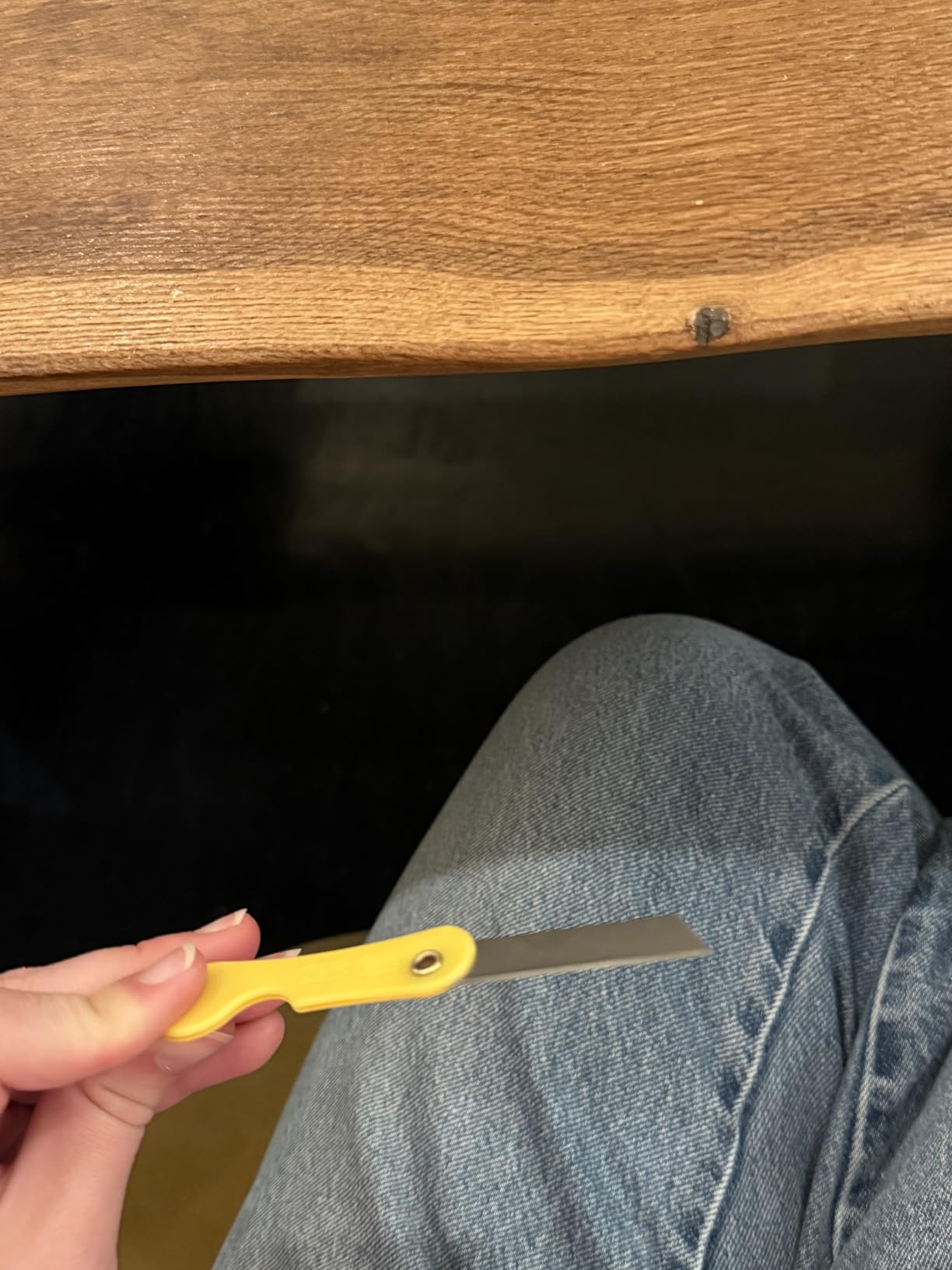
Best use case
If you want to study at home and share what you see with a study group, the phone holder makes that simple and the filter wheel makes pale specimens readable. Just do not expect diagnostic-grade resolution.
10. BEBANG YW-3006 2000X – Most Reviewed Entry Scope With a Full Accessory Kit
2000X Compound Microscope for Kids Adults: Microscope for Biology Education
WF25X eyepiece with 2X lens
Coarse and fine focus
0.65 NA condenser
Slides tools and bag
Pros
- Largest review base on this list at 2909 ratings
- Solid metal frame with coarse and fine focus
- Dual LED plus 0.65 NA condenser
- Accessory bundle includes a 15 slide set and bag
- Light at 2.4 pounds and easy to store
Cons
- 2000X requires adding the 2X lens
- Monocular head with no mechanical stage
- Only a 1 year warranty
With 2909 ratings this is the most reviewed scope we evaluated, and the feedback is broadly positive about metal construction, both lighting options and an accessory kit that is unusually complete for the money. Buyers use it for school biology, home study and hobby specimen viewing.
The 0.65 NA single-lens condenser with disc diaphragm produces decent brightfield images through the top and bottom LEDs, and the coarse and fine knobs on a solid metal frame give more control than a basic children’s scope.
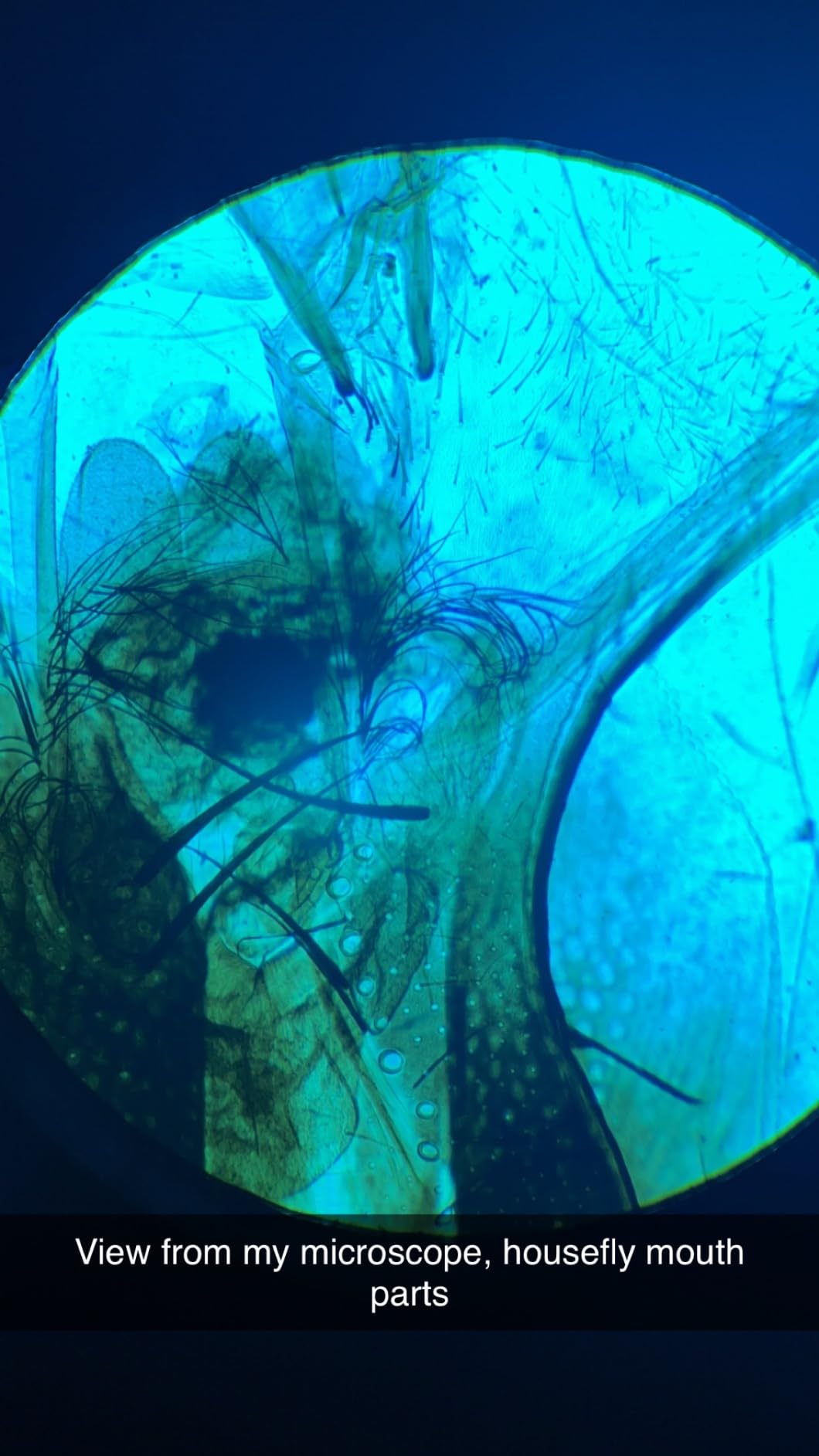
Reading the magnification honestly
The six settings of 100X, 200X, 250X, 500X, 1000X and 2000X come from a WF25X eyepiece alone or combined with the 2X lens across the 4X, 10X and 40X objectives. The 2000X setting only exists once that lens is in the path, and experienced users consistently flag the printed figure as inflated.
At 2.4 pounds and 5.51 by 3.94 by 11.42 inches it fits on a small shelf or in a school bag, and the power source works from AC or battery.
What is in the bag
A phone adapter, a wire shutter, ten operating accessories, a 15-piece microscope slide set and a carrying bag. For a first year of premed review that is genuinely more useful than another hundred magnification points would have been.
The realistic ceiling
Experienced reviewers note that a trinocular or binocular head plus a mechanical stage would be needed for serious work. Take this one for review sessions and school biology, and upgrade when the research elective comes around.
How to Choose a Compound Microscope for Medical School
Most of the bad purchases in this category come down to four decisions: head type, objective set, stage and condenser. Everything else on a product page is decoration. Here is what each one actually changes.
Monocular, binocular or trinocular head
A monocular head has one eyepiece, so only one person looks at a time. It is lighter, cheaper and perfectly serviceable for solo review sessions at 400X.
A binocular head uses both eyes, which reduces eye strain over a long hematology or pathology session and lets two people share one scope. A trinocular head adds a third port for a camera while both eyes stay in the eyepieces, and that is the correct choice if you will do photomicrography or lean toward research or pathology.
On the student doctor network forum, the discussion around buying a personal scope centres less on magnification and more on head type, footprint and whether one-handed operation is possible at a crowded bench. Those are exactly the details product pages bury. If photomicrography is on your list, our picks for the best DSLR cameras for photography students cover the imaging side of the workflow.
Total magnification vs. objective magnification
This is the most common buyer error in the category. Total magnification is simply objective magnification multiplied by eyepiece magnification. A 40X objective with a 10X eyepiece gives 400X total. A 40X objective with a 25X eyepiece gives 1000X total.
So 1000X total from a 100X oil objective and a 10X eyepiece is not the same image as 1000X total from a 40X objective and a 25X eyepiece. The second gives a wider field and more usable light, which is what you want when you are looking for a parasite in a blood film.
Any listing that reaches its headline number by stacking a 2X lens on a 25X eyepiece is doing arithmetic, not optics. Judge a scope by its objectives, not its headline.
Mechanical stage vs. plain clip stage
A mechanical stage has X and Y control knobs that move the slide in two axes, usually with printed scales. Above 400X, where the field of view shrinks to a few millimetres, this is the difference between studying a slide and chasing it. Budget for a mechanical stage whenever you can.
Resolving power and numerical aperture
Resolving power is the ability to separate two points that sit close together, and a good laboratory compound scope resolves down to roughly 0.2 microns. That figure comes from numerical aperture, which is a property of the objective and the condenser working together.
A higher NA condenser such as the NA1.25 Abbe on the OMAX collects more light and resolves more detail than a simple single lens condenser, which is why cheap scopes look flat and grey on stained tissue. Histology, Gram stains and blood smears all depend on this, and a phone camera cannot substitute for it.
Condenser, iris diaphragm and illumination
The condenser focuses light onto the specimen and the iris diaphragm controls how much of it gets through. Dimming down to roughly 70 percent opens the aperture for contrast without losing resolution, and it is how you find a faint organism against a stained background.
LED illumination has largely replaced tungsten in student scopes because it runs cool, starts instantly and holds colour steady. Variable intensity matters more than brightness for pale slides. If you expect to look at opaque material, you also want incident light from above, which only some scopes on this list provide.
Used institutional scopes without buying a problem
Hospital liquidations and clinic closings regularly release professional Zeiss, Olympus or Leica scopes, and there is real evidence that they hold up. One surgeon on the student doctor network described buying a 15 year old Zeiss from a closing surgery center and calling it the best value purchase he had ever made for optics and longevity. Another reported buying three Leica demonstration units for top-notch optics and fine focus lenses.
Inspect four things before you commit: clean the eyepieces and objectives and look for haze or fungus in the glass, check that the focus travel is smooth with no grinding, confirm the stage moves without backlash, and verify that the illumination and condenser are included. Know that parts for discontinued professional models can be harder to source, and that a scope without a mechanical stage is rarely a bargain.
There is a durability counterpoint too. The same forum records a mid-priced Seiler scope being described as falling apart after roughly seven years of daily use and needing duct tape and re-screwed fasteners. Buy for the four years you need it, but buy something built to outlast them.
Maintenance across a four-year program
Between every session, lower the stage, rotate the nosepiece to clear the oil lens and wipe the 100X objective with lens paper only. Immersion oil allowed to dry becomes a cement that has to be cleaned off with solvent, and solvent on a plastic body is damage waiting to happen.
Cover the scope when it is not in use, keep it away from a heating vent, and dust the stage rails so the X and Y motion stays smooth. Before a move between apartments or a summer return home, pack the stage lock and loosen the focus tension. Budget a modest annual spend on lens cleaning solution and replaceable bulbs, and expect the resale market for a decent binocular scope to be far thinner than for a laptop.
Frequently Asked Questions
Is 1000x enough to see sperm?
Yes. Sperm heads measure around 5 microns long, so a 400X total magnification with a 40X objective and a 10X eyepiece brings them clearly into view. A 1000X total view from a 100X oil objective shows fine internal detail, but 400X is enough to identify and count sperm on a prepared smear. What matters more than the number is the resolving power of the objective and the condenser.
Do I need to buy my own microscope for medical school?
Usually not. Most medical schools supply well-equipped teaching labs and provide scopes for scheduled practicals, so many students graduate without ever owning one. Check the enrollment packet, ask the course coordinator directly, and confirm whether any elective or research placement requires a personal instrument. Buy your own only if you want to study slides at home on your own schedule.
Is Swift or AmScope better?
Both are respected student-grade brands and both sell achromatic binocular and trinocular models. Swift leans toward larger trinocular heads with comfortable Siedentopf angles, such as the SW380T, while AmScope covers a wider range from budget monocular scopes to binocular models with bundled cameras. Judge them on the objective set, the condenser and the warranty rather than on the brand name alone.
Is AmScope a good microscope brand?
Yes. AmScope is one of the most established names in student and lab microscopy, with US-based parts support and warranties of five years on many models. Its range runs from metal monocular scopes for beginners up to binocular and trinocular instruments with camera ports. On forums like r/biology, owners regularly point to AmScope binocular scopes in the mid range as strong value for the optics delivered.
What are the big 4 microscopes?
The big four microscope brands are Zeiss, Olympus, Leica and Nikon. They set the optical standard for professional and clinical laboratories and are what most medical school teaching labs use. AmScope, OMAX, Swift and Motic occupy the student and small-lab tier, offering comparable achromatic objectives and mechanical stages at a fraction of the professional price.
Which microscope is most commonly used in school labs?
A binocular compound light microscope is the standard instrument in school and medical teaching labs. It uses an objective above the slide and an eyepiece in the head to magnify thin transparent specimens up to about 1000X total, and it resolves detail near 0.2 microns. Professional teaching labs typically use Zeiss, Olympus, Leica or Nikon instruments, often one per pair of students.
Which microscope is best for medical students?
For most first-year medical students, a binocular compound microscope with achromatic 4X, 10X, 40X and 100X oil objectives, a mechanical X-Y stage and an NA 1.25 Abbe condenser is the right instrument. Our top pick in that class is the OMAX M82ES-SC100-LP100-OM. If you plan a research or pathology track, choose a trinocular model such as the SWIFT SW380T so a camera can attach without blocking your eyepieces.
Which Compound Microscope Should You Buy?
If you want one instrument that handles every first-year task without compromise, the OMAX M82ES-SC100-LP100-OM is the pick: binocular head, full achromatic objective set through 100X oil, a double layer mechanical stage and an NA1.25 Abbe condenser, backed by a 5 year warranty. If you are learning microscope technique from scratch and want the most forgiving instrument available, take the TOMLOV CM101, a 4.5 rated scope with 2255 reviews that is the easiest instrument here to learn on.
If your budget is the deciding factor, the AmScope M102C-PB10 gives you a metal body and a bright wall-powered LED for first-year review, even with its missing fine focus knob. If you need a binocular head and a camera without moving up a tier, the AmScope B120C-E1 bundles both. If photomicrography is part of your plan, the SWIFT SW380T trinocular head is the correct instrument.
Whatever you choose, judge it by the objectives, the stage and the condenser rather than by the magnification printed on the box. Check whether your school supplies scopes before you buy, then pick the instrument that matches the lab work you will actually do in 2026.