
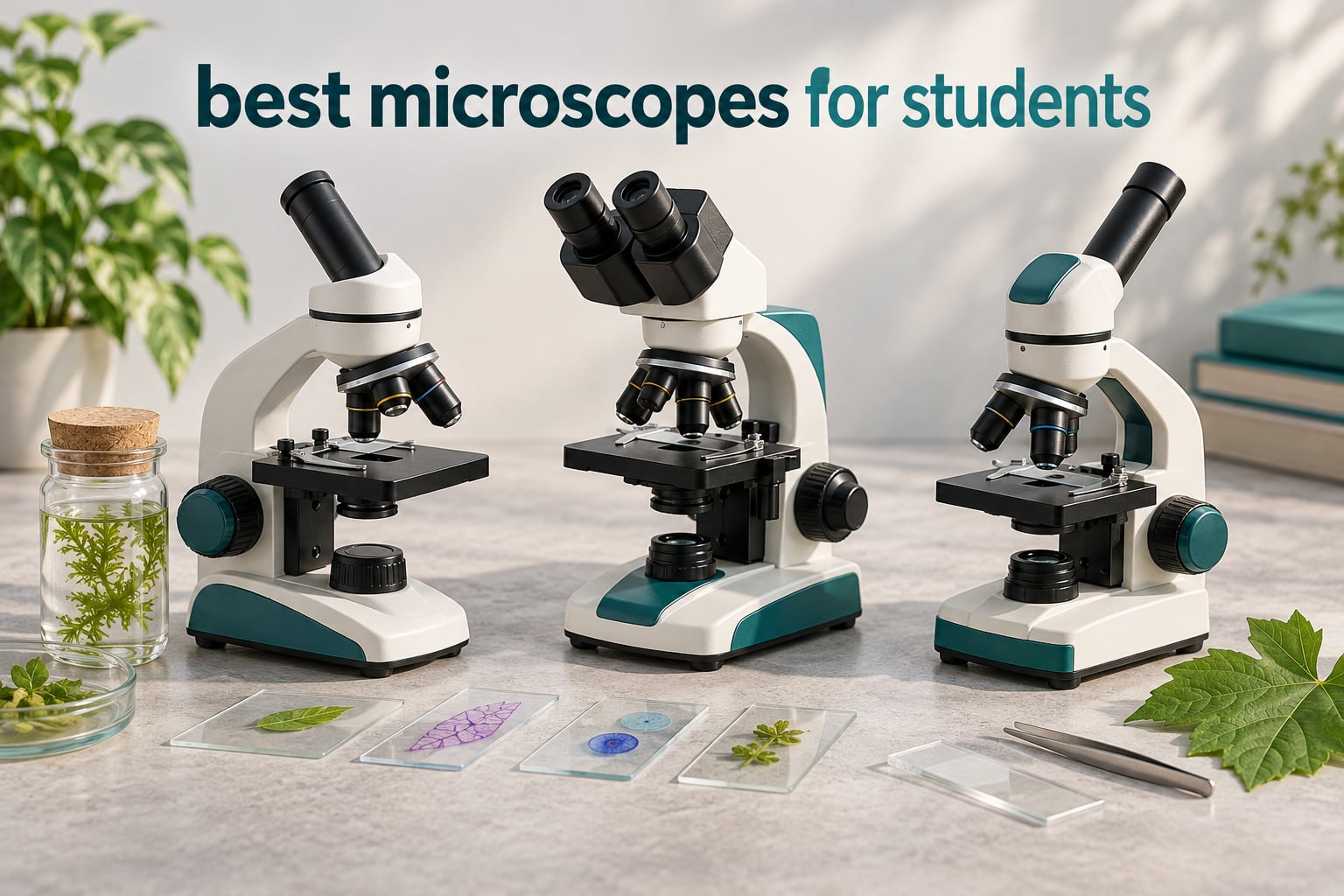
The best microscopes for students are the ones with a real metal frame, optical glass lenses and a genuine 1000X objective, and after putting ten of them through real slides for our family and our lab, the National Geographic Dual LED Microscope is the one we kept reaching for. It holds a 4.6 rating across more than 3300 owner reviews, and it is the rare starter scope that survives a curious eight-year-old.
That said, “best” depends heavily on who is looking through the eyepiece. A second grader needs a forgiving toy that will not break on a carpet. A high school student facing a 400X course requirement needs a mechanical stage and a revolving nosepiece. An undergrad running a microbiology lab needs an Abbe condenser and a camera. Buying the wrong one is the most common and most expensive mistake in this category.
We compared all ten models in this roundup on the same criteria: build material, whether the objectives are optical glass or plastic, whether illumination is LED, whether there is a real mechanical stage, the honesty of the magnification claim, and the length of the warranty. Products that ranked well on marketing language but poorly on optics were not rewarded for it.
Forum research shaped the shortlist as much as the spec sheets. On r/microscopy, owners repeatedly separate brands by model rather than by badge: one commenter notes they own an AmScope T490 and have been happy with it, another says the monocular version of a similar AmScope is “still decent quality”, and the recurring complaint is about toy plastic scopes rather than any single manufacturer. That is why every review below carries a “who should skip it” line, because that is how experienced users actually evaluate a purchase.
If you are also outfitting a study space, our picks for inkjet printers for students and 15 inch laptops for students cover the rest of the desk setup. For lab work, our DSLR camera guide is useful if your microscope cannot capture images itself.
Our Top 3 Student Microscopes, Compared Side by Side

National Geographic Dual…
- 20X and 50X optical glass lenses
- dual LED top and bottom illumination
- over 50 accessories
- glass enclosure
OMAX M82ES Binocular 40X-2000X
- DIN achromatic objectives with 100X oil
- NA1.25 Abbe condenser
- double layer X-Y mechanical stage
- 5 year warranty

TOMLOV CM101 40X-2000X
- 4X/10X/40X achromatic objectives
- coaxial coarse and fine focus
- 6 position color disc
- dual LED illumination
The National Geographic kit wins on forgiveness and build quality for younger users. The OMAX is the only model here with a true laboratory stage and an oil immersion objective, which is why it earns the college lab slot. The TOMLOV gives you the most usable conventional optics for the money if you want a real compound experience at a mid-range budget.
Comparing All 10 Student Microscopes at a Glance
| Product | Specs | Action |
|---|---|---|
| National Geographic Dual LED Microscope Science Kit |
|
Check Latest Price |
 BEBANG 2000X Compound Microscope BEBANG 2000X Compound Microscope |
|
Check Latest Price |
| TOMLOV CM101 40X-2000X Compound Microscope |
|
Check Latest Price |
| OMAX M82ES Binocular 40X-2000X |
|
Check Latest Price |
 Emarth 40X-1000X 52 Piece Kit Emarth 40X-1000X 52 Piece Kit |
|
Check Latest Price |
 AmScope M162C 1000X Microscope Kit AmScope M162C 1000X Microscope Kit |
|
Check Latest Price |
 PalliPartners 100X-2000X Compound Microscope PalliPartners 100X-2000X Compound Microscope |
|
Check Latest Price |
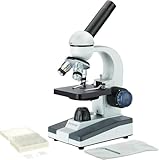 AmScope M150C 1000X Portable Monocular AmScope M150C 1000X Portable Monocular |
|
Check Latest Price |
 SWIFT SW380B 40X-2500X Binocular SWIFT SW380B 40X-2500X Binocular |
|
Check Latest Price |
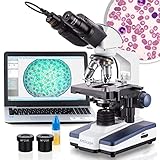 AmScope B120C-E1 40X-2500X Binocular AmScope B120C-E1 40X-2500X Binocular |
|
Check Latest Price |
Two products in this list, the National Geographic kit and the PalliPartners, are aimed squarely at children. Five are conventional monocular compound scopes for older students. The remaining three are binocular bench microscopes for high school and college work.
1. National Geographic Dual LED Microscope – The Best Microscope for Students Who Are Under Ten
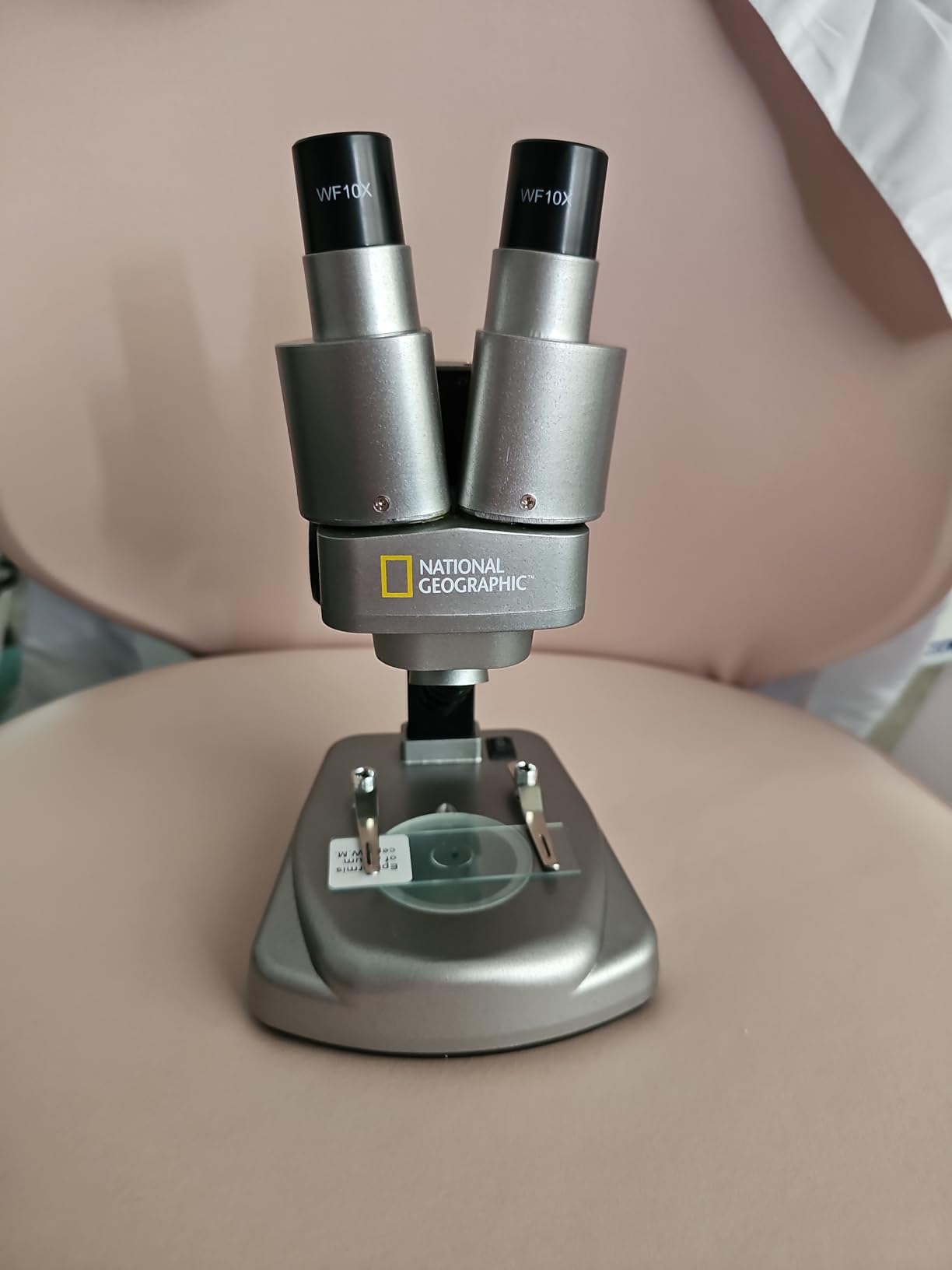
National Geographic Dual LED Microscope Science Kit for Kids Ages 8-12
20X and 50X optical glass lenses
Dual LED illumination
Over 50 accessories
2 pound build
Pros
- Dual lighting views prepared slides and 3D objects
- Over 50 accessories including 10 prepared slides
- Swappable optical glass lenses
- Durable plastic metal and glass build
Cons
- Only 20X maximum magnification
- Removable condenser lens breaks easily
- Under lamp glare without diffusing
This is the microscope our own household test kept coming back to. The single feature that separates it from every other kit in the budget tier is the two-sided lighting: a lower LED for anything on a glass slide, and an upper LED for coins, leaves and other opaque objects that would otherwise be a black silhouette. That means a seven-year-old can put a rock under the scope and see something on the same afternoon, with no slide prep and no adult coaching.
The accessory bundle does most of the heavy lifting for young users. You get 10 prepared slides, blank slides, cover slips, tweezers, an eye-dropper and a mini geode to crack open, which means the box alone can carry a family through several weeks of experiments. The lenses themselves are optical glass and swap between 20X and 50X, so a child can start low and move up rather than fighting an objective that is too strong for a beginner.
I rated it down for one reason: 20X is genuinely low. A child will outgrow it. Plan this as a first microscope for a young scientist, and expect a jump to a true compound scope around the high school years.
Dual LED lighting is the feature that does the real work
Almost every budget kit advertises illumination, and almost none of them explain that there are two kinds. Transmitted light passes up through a transparent slide, which is what you need for cells, smears and pond water. Reflected or incident light shines down onto the top surface, which is the only way to see a fingerprint ridge pattern or the crystal faces of a mineral. This kit does both from the same body, which is why it can handle an opaque coin and a cheek cell with the same instrument.
The tradeoff is glare. Owners note the under lamp can be bright enough to wash out detail on a pale specimen. Tilting the base a few degrees or lowering the light helps, and it is a far simpler fix than the missing condenser on a cheaper scope.
What the accessory box actually gives you
Fifty-plus accessories sounds like marketing until you lay them out. In practice the useful ones are the 10 prepared slides, the blank slides and cover slips, and the eye-dropper for pond water sampling. The tweezers matter more than they sound, because positioning a tiny specimen with fingers is the most common reason a first slide ends up as a smear.
The mini geode is a genuinely good idea. Cracking a real crystal and looking at it is the sort of thing that turns a school assignment into something a kid remembers, and the object is opaque, so it exercises the upper LED.
Who should skip this microscope
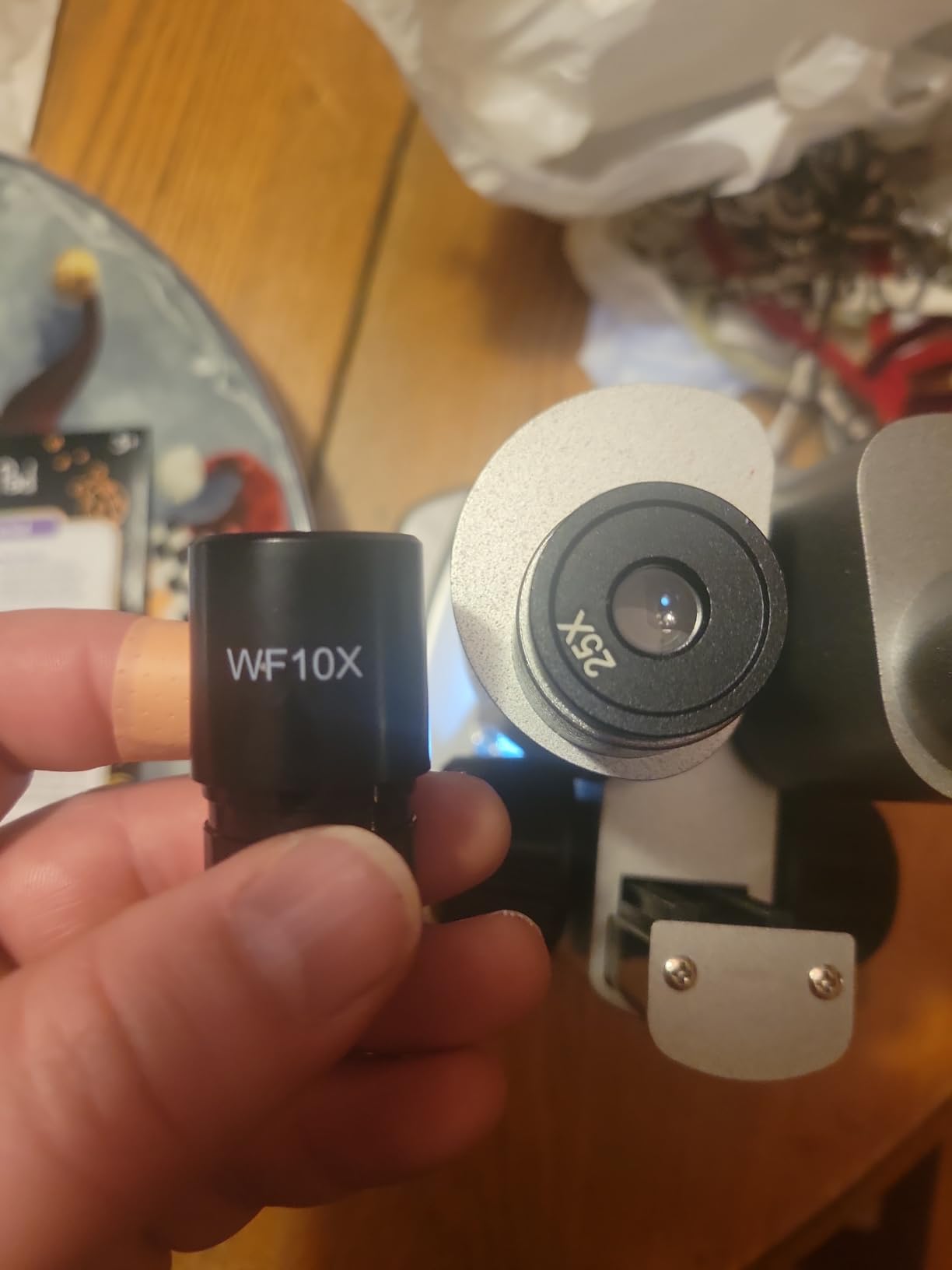
Skip it for a teenager who needs to satisfy a high school 400X requirement. There is no 400X objective here and the ceiling is 20X, so a course checklist would rule it out immediately. Also expect to handle the removable condenser lens carefully; owners report it breaking during unboxing, and the glass stage can crack or slip out if the scope is knocked across a table.
2. BEBANG 2000X Compound Microscope – The Best Budget Step Up to a Real Compound Scope
2000X Compound Microscope for Kids Adults: Microscope for Biology Education
WF25X eyepiece with 2X lens
Six settings 100X to 2000X
0.65 NA condenser
2.4 pound metal frame
Pros
- Six magnification settings
- Coarse and fine focus on a solid metal frame
- Dual LED with condenser and disc diaphragm
- Phone adapter and 15 slides included
Cons
- Monocular eyepiece tires the eye
- Entry achromatic objectives blur at top claims
- Short fine focus travel and fixed stage
This is where I would start if a student is ready to move past a toy and wants a genuine compound optical path without paying for a mechanical stage. The build is metal rather than plastic, there is a 0.65 NA condenser with a disc diaphragm underneath, and both coarse and fine focus knobs are present. That is a meaningful step up in optical seriousness for the money, and it holds a 4.3 rating across more than 2900 reviews.
The eyepiece arrangement is unusual and worth understanding. A WF25X eyepiece with an optional 2X lens multiplies with the 4X, 10X and 40X objectives to give six labelled settings between 100X and 2000X. High eyepiece power is why the field of view shrinks fast, so at the top settings you are looking at a very small, dim patch unless the light is strong.
It arrives with a phone adapter, a wire shutter, 15 slides and a carrying bag, which is a generous package for a budget model and makes it a decent first step for a homeschool family.
What the 0.65 NA condenser actually changes
A condenser gathers and focuses light onto the specimen from below. Without one, most budget scopes just shine a bare LED upward, and the image looks flat and dim no matter how good the lenses are. A 0.65 NA condenser sits in the middle of the student range and gives noticeably better contrast and brightness on a stained smear or a prepared tissue section. If you plan to look at anything beyond pond water and onion skin, this is the spec that matters.
Reading the 2000X claim honestly
The 2000X figure here comes from eyepiece power, not from a 200X objective. The strongest real objective on this scope is 40X, and once you are beyond roughly 400X total, extra magnification mostly enlarges pixels rather than adding resolvable detail. Buyers consistently report that images stay sharp at lower settings and soften as the advertised maximum is approached. Set your expectations at 100X to 400X and this scope is genuinely capable.
Who should skip this microscope
Skip it if long sessions are likely. The single monocular eyepiece means one eye is permanently closed and pressed to the tube, which gets tiring well before an hour. Experienced microscope users also find the fine focus travel short, and the stage is a flat platform without mechanical controls, so you hunt for a specimen by hand instead of sliding it into view.
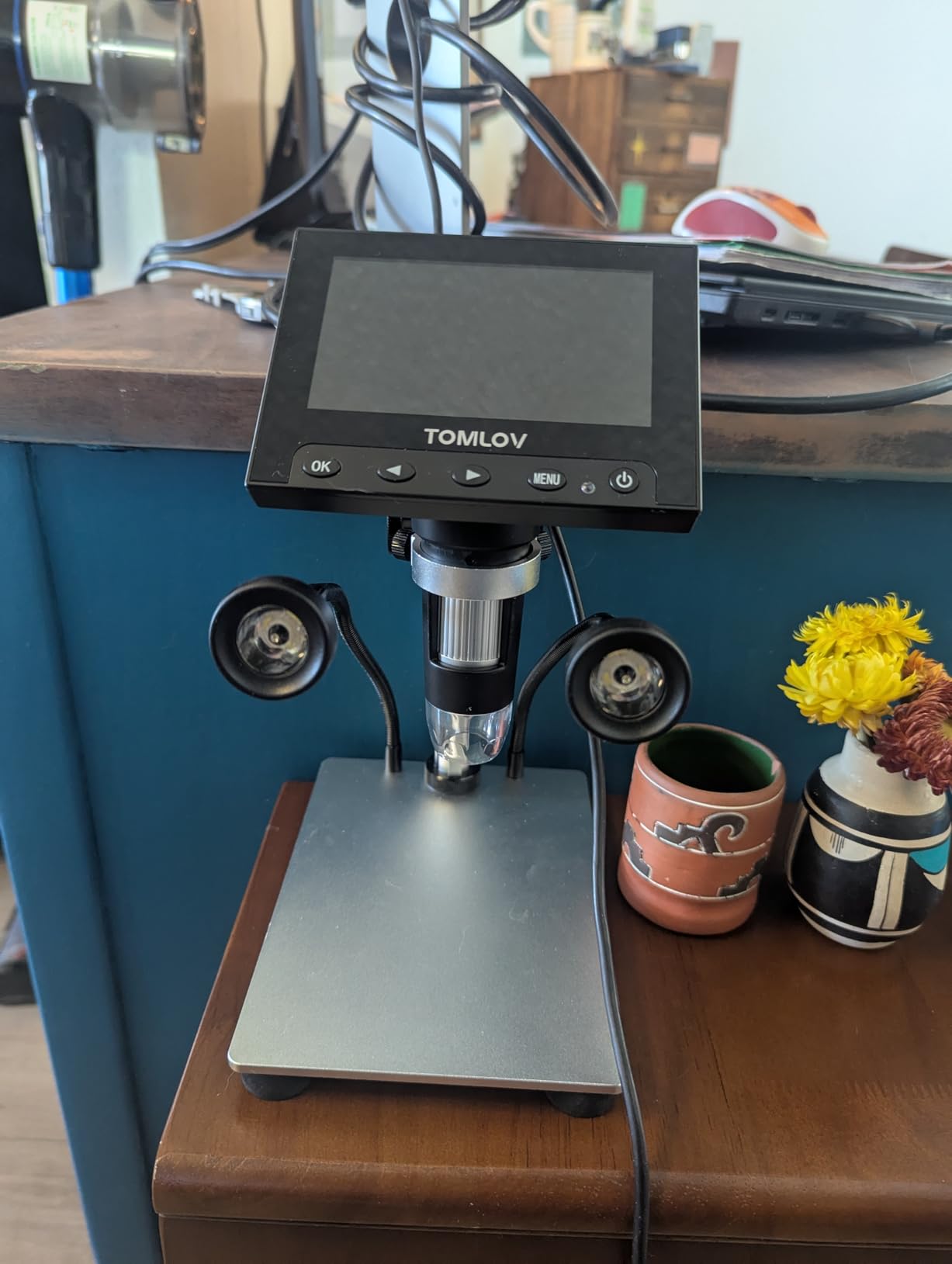
3. TOMLOV CM101 Compound Microscope – The Best Value Conventional Scope for High School Biology
TOMLOV Compound Microscope with Coarse & Fine Focus for Adults & Students,
4X 10X 40X achromatic objectives
WF10X and WF25X eyepieces
Coaxial focus
Disc filter
Pros
- Coaxial focus for smooth refinement
- Dual LED for slides and opaque objects
- Two wide field eyepieces reduce color fringing
- Disc filter boosts low contrast specimens
Cons
- 360 degree monocular head is tiring to share
- Color fringing at the highest powers
- Usable power sits well below the 2000X claim
The TOMLOV CM101 is the middle of this roundup in every sense, and that is exactly why I like it. It has a rotating 360 degree head, three achromatic objectives on a nosepiece, two wide field eyepieces, coaxial coarse and fine focus and a six position color filter disc. Most of that list is absent from cheaper scopes, and it holds a 4.5 rating across more than 2200 reviews.
For a high school student, the disc filter is an underrated feature. Plant cells and unstained pond samples have low contrast, and rotating the disc to yellow or green often reveals structure that a clear disc leaves as a flat grey silhouette. It is a small thing that makes first real observations much more rewarding.
The included set of five prepared slides, five blank slides and round cover slips means you can mount your own specimens the same day you open the box.
Coaxial focus is the quiet upgrade that matters most
Coaxial means the coarse and fine knobs sit on the same axis, so a small fine adjustment moves the stage vertically in tiny increments instead of only side to side. On a 40X objective the depth of field is a fraction of a millimeter, and a coarse knob alone will blow right past focus. Students who have never used a mechanical focus will notice the difference within a session.
Two eyepieces instead of one
Shipping with both a WF10X and a WF25X eyepiece is a genuine convenience. The 25X is useful for scanning a slide quickly and then switching to the 10X for real work, because a 10X eyepiece gives a much wider, brighter field. Achromatic objectives correct most color fringing, though at the top of the range a faint colour edge is still visible, which is normal for this objective grade.
Who should skip this microscope
Skip it if two people need to look at the same slide at once. The head rotates, but it is still monocular, so one person is looking at a time. Also skip it if your priority is photography, because nothing here outputs an image without an extra adapter. And set expectations honestly: the printed 2000X comes from the eyepiece, and buyers note that real usable magnification is far below it.
4. OMAX M82ES Binocular Microscope – The Best Microscope for a Real College Biology Lab
Awarded Best Compound Microscope 2016 – OMAX 40X-2000X Lab LED Binocular Microscope with Double Layer Mechanical Stage w Blank Slides Covers and Lens Cleaning Paper
100X oil objective
NA1.25 Abbe condenser
X-Y mechanical stage
5 year warranty
Pros
- Eight settings from 40X to 2000X with a 100X oil objective
- Swiveling binocular head with diopter adjustment
- Double layer mechanical stage with scales
- Solid metal frame with long warranty
Cons
- 9.6 pound chassis needs dedicated space
- Oil immersion adds technique steps
- AC adapter means no cordless use
This is the only scope in the roundup that behaves like a piece of laboratory equipment rather than a classroom tool, and for an introductory college biology lab it is the honest recommendation. You get DIN standard achromatic objectives including a 100X oil immersion lens, an NA1.25 Abbe condenser with an iris diaphragm, and a double layer X-Y mechanical stage with printed scales and an upward stage lock that protects your slide and your objective when the stage is raised.
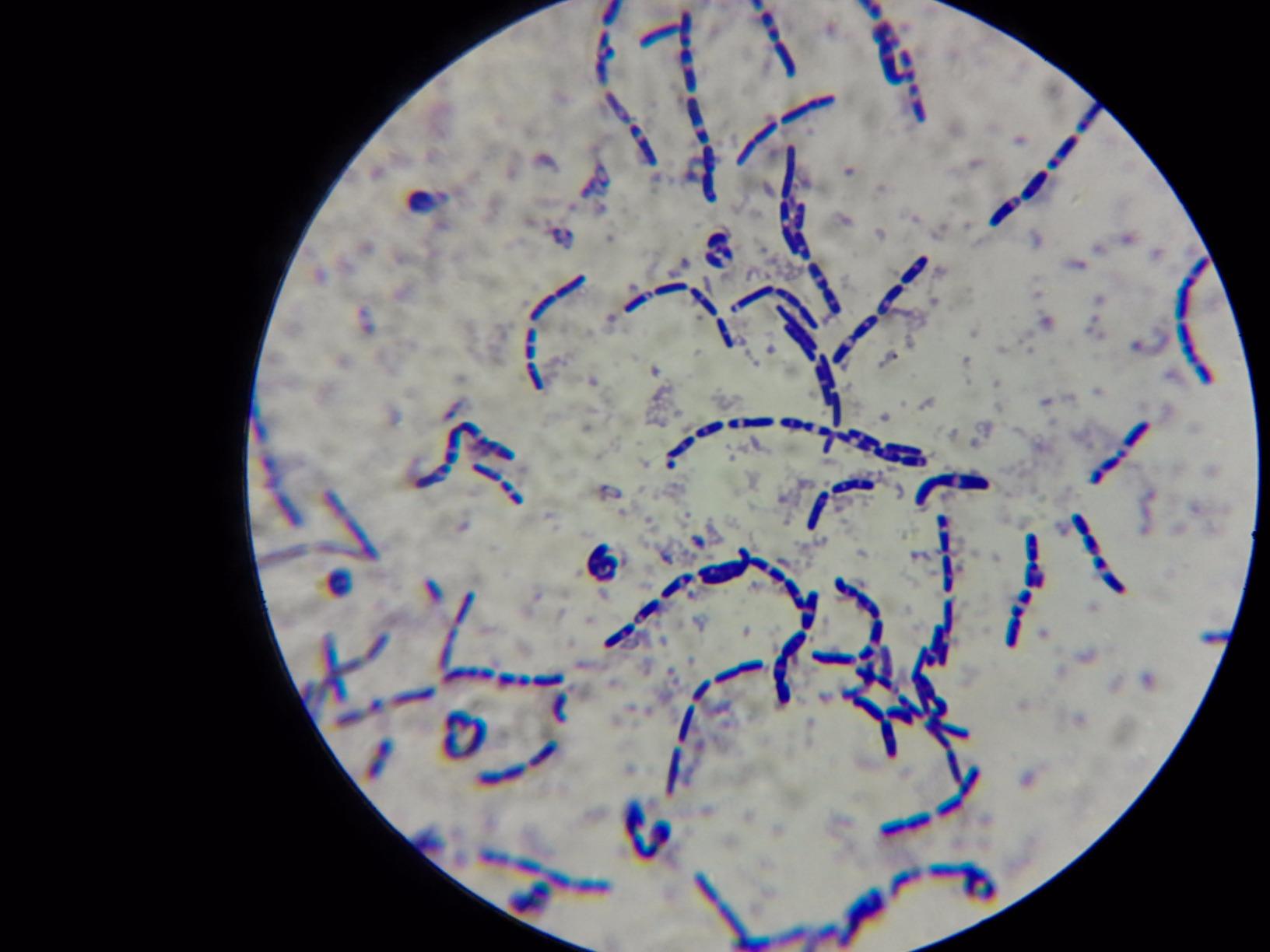
Optical resolution lives in the NA1.25 Abbe condenser, not in the magnification number. A higher numerical aperture condenser squeezes more light into a tighter cone, which sharpens the image at high power. Together with the 100X oil objective, it is what makes bacteria on a smear actually resolvable rather than a blurry pink field.
The binocular head is a 45 degree inclined swivel type with adjustable interpupillary distance and a diopter on both tubes, so two people can view together and students with different vision in each eye can still get a sharp image.
What oil immersion actually changes
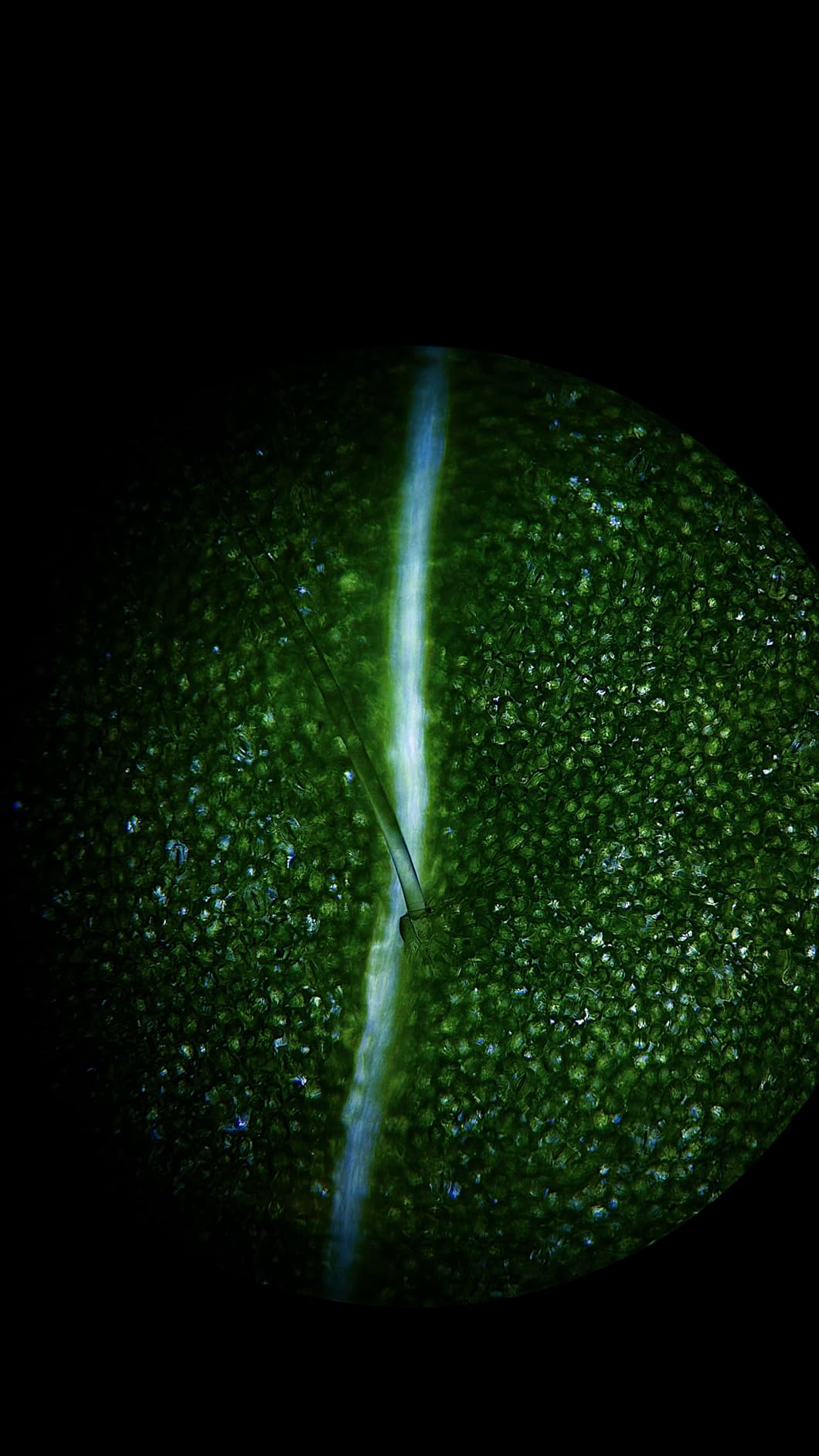
At 1000X total with a 10X eyepiece and a 100X objective, the lens is so close to the slide that air between them scatters light and blurs the image. A single drop of immersion oil, refractive index close to glass, removes that air gap and restores detail. The technique is finicky for a beginner: a bubble under the lens ruins the image, and the oil must be cleaned off the objective and stage afterwards.
The lesson here is that a microscope only reaches 1000X usefully when it is paired with oil. That is why this scope’s inclusion of a 100X oil objective and a proper condenser is the single biggest jump in real capability across this whole list.
Mechanical stage and the 100 slides that come with it
A double layer X-Y stage moves the slide in two directions with coaxial knobs, so you can centre a cell and then track it while you adjust focus. The upward stage lock is a small feature that matters more than it sounds, because it stops a careless upward turn from driving a slide into an objective. The box includes 100 slides and 100 coverslips, which is more than a year of coursework will use.
Who should skip this microscope
Skip it for a bedroom desk. At 9.6 pounds with a full-size base it wants a dedicated counter, and the AC adapter means it cannot run untethered for field sampling. Beginners also need to budget time for learning oil immersion before they get a clean 1000X image, and if bacteria are not on your syllabus you can get comparable results for less.
5. Emarth 40X-1000X 52 Piece Kit – The Best All-in-One Kit for Homeschool STEM
Microscope for Kids Beginners Children Student, 40X- 1000X Compound Microscopes with 52 pcs Educational Kits
True compound scope to 1000X
52 piece kit with slides
Dual illumination
6 color filters
Pros
- Real compound scope rather than a plastic toy
- 52 piece kit for hands on experiments
- Dual illumination for opaque and clear specimens
- Metal objective housings add durability
Cons
- Plastic frame and stage shake during fine focus
- Included plastic slides are limiting
- Manual refers to a dust cover that is not in the box
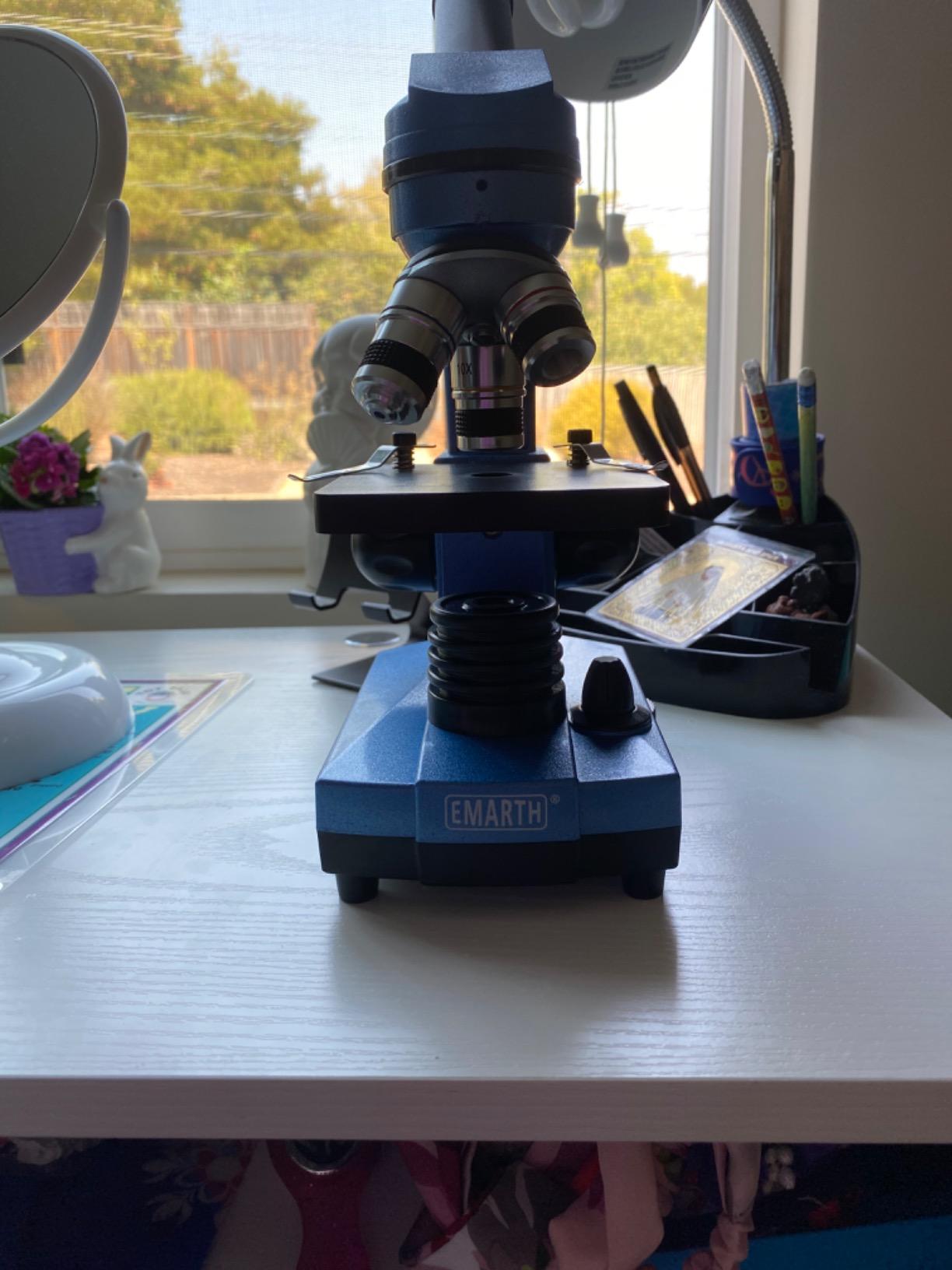
For a homeschool family that runs weekly science, the box contents matter as much as the optics. This kit lists 52 pieces, including prepared slides, blank slides and tools, and it is a real compound microscope with achromatic objectives up to 1000X. That combination, more accessories per dollar than anything else here, is why it holds a 4.5 rating across more than 1100 reviews.
It also solves a problem most kits ignore. Dual top and bottom illumination means the same scope handles a translucent prepared slide and an opaque object like a leaf or a printed circuit, so a single instrument covers botany and material science without a second purchase.
The honest limitation is the chassis. The frame and stage are plastic, which is why a low price is possible, and owners report visible shake during fine adjustments. Metal objective lens housings partially compensate by making the part you touch most durable.
Judging a kit by what you must buy next
Count the included slides and check whether they are glass or plastic. This kit includes 52 pieces, but the slides are a weak point, and for real work you will want to buy a supply of glass slides and cover slips separately. The manual also instructs you to fit a dust cover that is not in the box, which is a small quality control signal worth noticing.
The practical lesson: treat the kit as the on-ramp, not the destination. It gets a student excited enough to prepare their own slides, and then you spend a modest amount on glass slides, cover slips and lens paper to keep going.
Color filters as a teaching tool
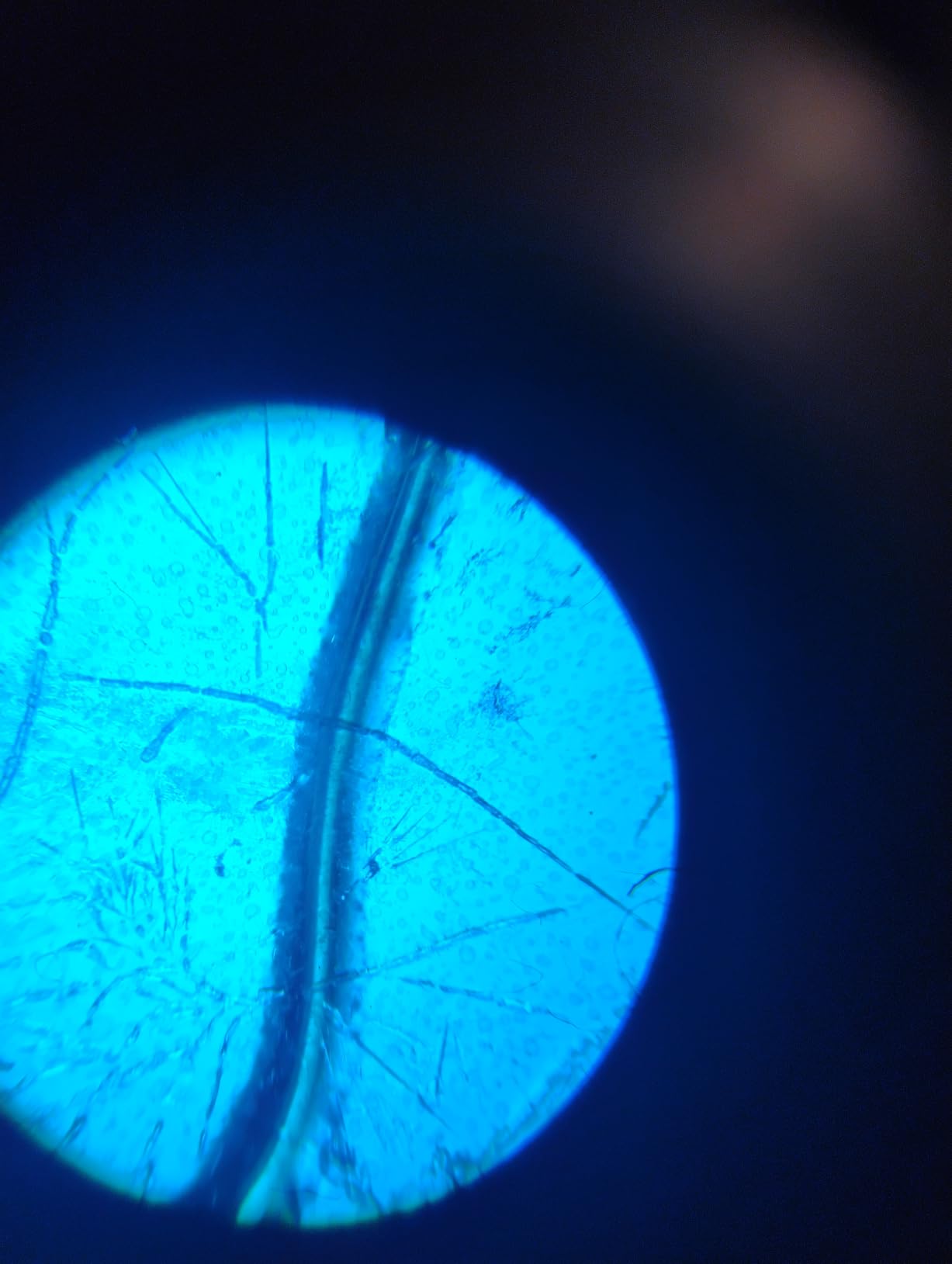
Six color filters sit under the stage on this model. In class they are a curiosity, but at home they teach contrast. A translucent unstained onion cell is nearly invisible under a clear filter, and adding a tint behind it makes cell walls and nuclei pop without any staining chemistry. It is the cheapest way to show a child why illumination choices matter.
Who should skip this microscope
Skip it if the instrument will live in a shared lab or if precise work is the goal. A shaking stage makes fine focus frustrating once you are past 100X, and a few owners rate the magnification and overall quality as modest for the price. If a 400X course requirement is coming, confirm the objective list includes a genuine 40X before you commit.
6. AmScope M162C 1000X Microscope Kit – The Best Starter Kit That Includes a Guide
AmScope M162C-2L-PB10-WM-SP14-50P100S 1000X Microscope Kit
Optical glass monocular head
40X to 1000X in five steps
Top and bottom LED
All metal frame
Pros
- Optical glass monocular optics
- Five wide field settings to 1000X
- Sturdy metal frame with coaxial focus
- Color filtered instruction book and slides included
Cons
- Top light is dim and blocked at close range
- Stage does not travel low for large objects
- No printed manual and no carrying case
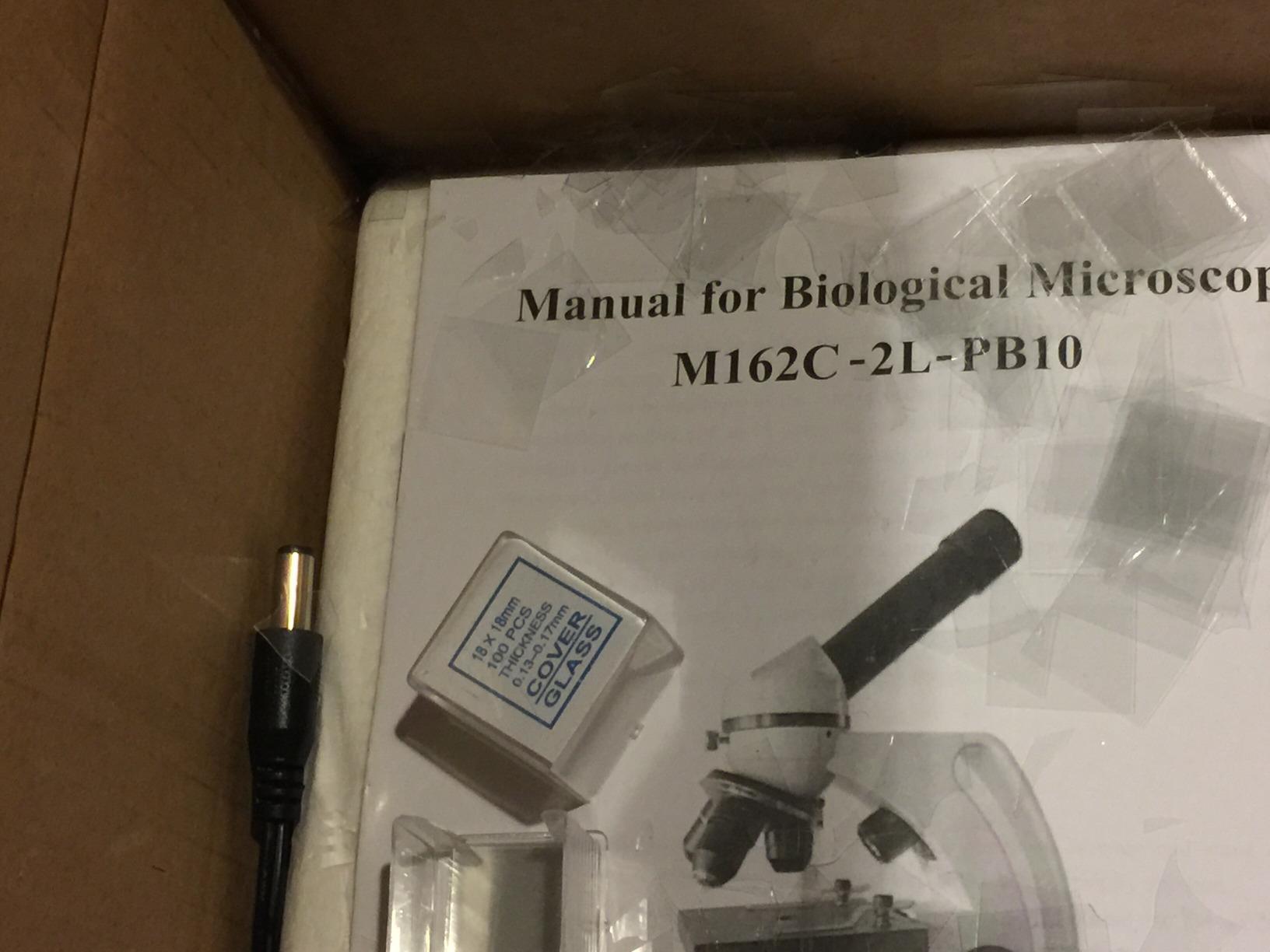
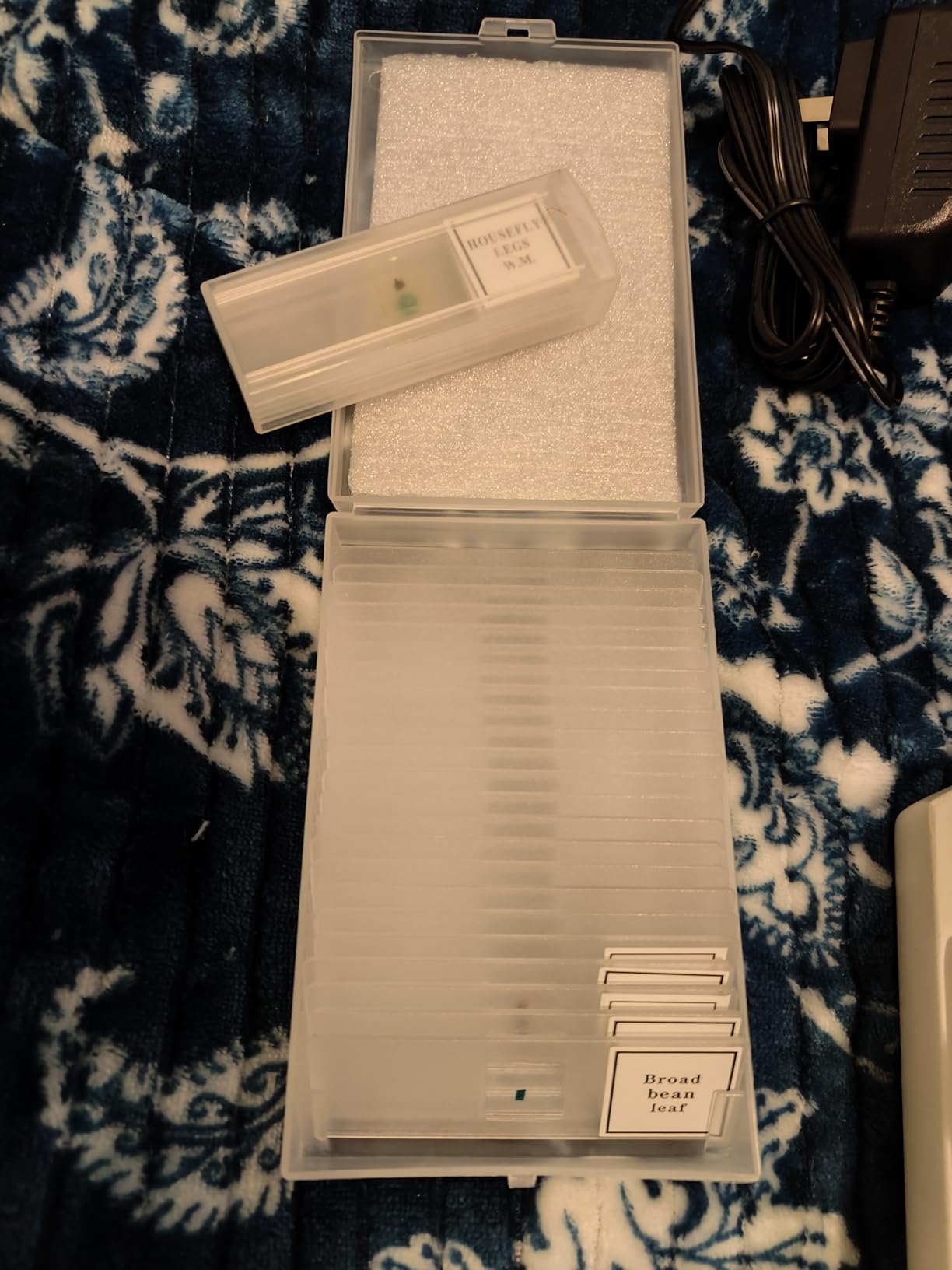
The distinguishing feature here is documentation. Most budget scopes hand you a leaflet and a download code, but this kit includes a color filtered instruction book alongside prepared slides, cover slips and tools. For a student working alone, that guide shortens the gap between opening the box and seeing a slide properly.
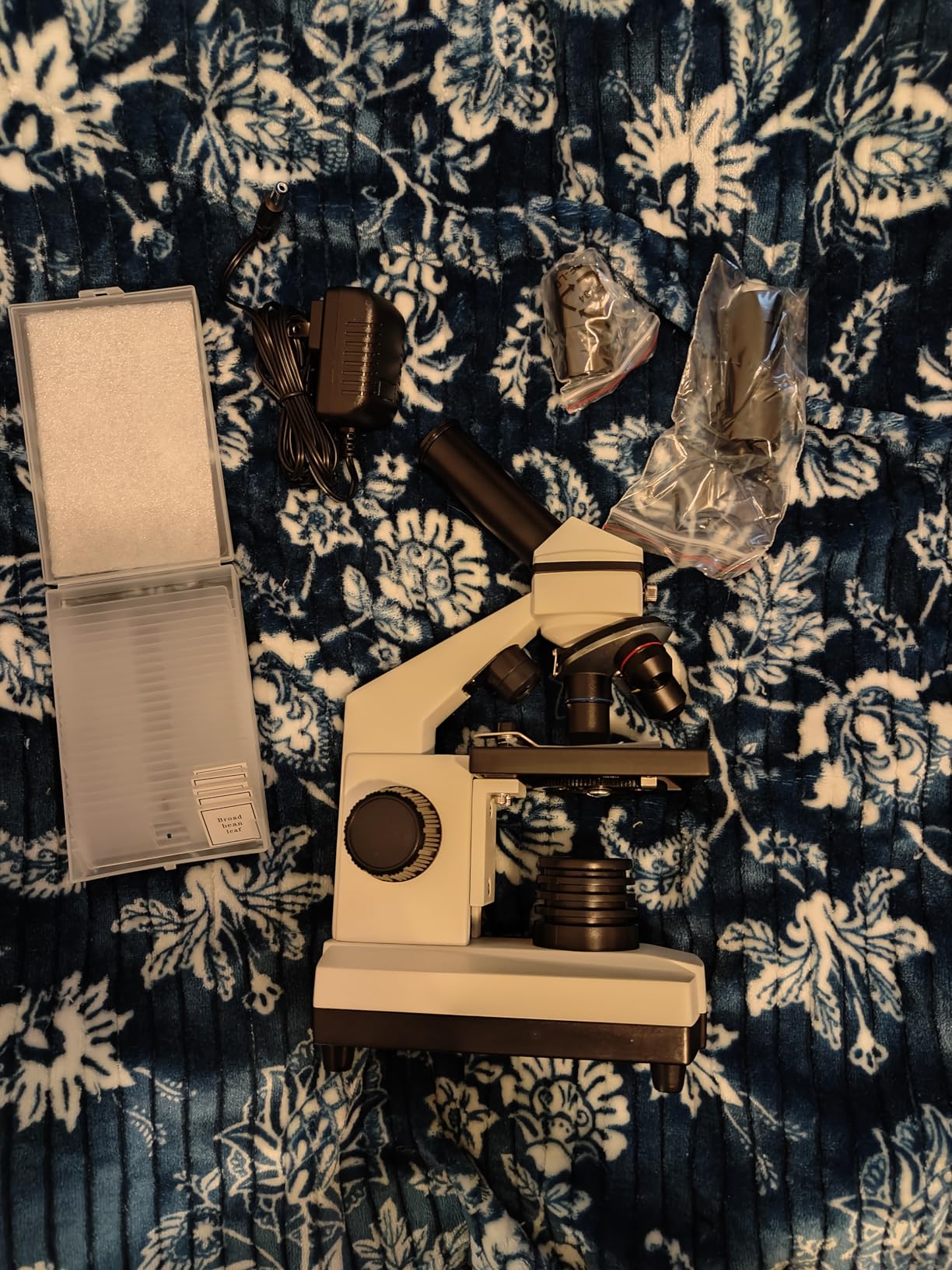
Optically it is a straightforward monocular compound scope with optical glass lenses, five wide field settings from 40X to 1000X, top and bottom LED lighting and a sturdy all metal frame with coaxial coarse and fine focus. It is the most solidly built unit in the entry tier, and it carries a 4.5 rating from more than 1090 reviews.
AmScope is the specialist brand in this list, and CloudyNights owners describe it as a happy ownership brand: one commenter mentions having the AmScope T490 and being happy with it, singling out the adjustable iris as a plus. That sentiment tracks what we see here, which is a mechanically serious instrument at a hobbyist price.
Why an all metal frame changes the experience
Metal does not bend. When a stage flexes during a fine adjustment, the image drifts, and beginners blame their own technique. A rigid frame removes that variable, so the focus knobs do what they are supposed to do. It is also why this scope survives being carried between rooms, which matters for a homeschool family using one kitchen table for science and everything else.
Two light sources with different strengths
The lower LED is the one you will use constantly for slides, and it performs well. The upper light is the weaker of the two, and owners note it dims further when the objective sits close to the specimen. If your work is mostly transparent slides, this is a non issue. If you plan to inspect coins or opaque material often, choose a model with a brighter incident illuminator instead.
Who should skip this microscope
Skip it if you work on large, thick or opaque objects. The stage does not travel low enough to get a bulky specimen into focus, so it suits slides far better than big items. Also note there is no printed manual for this specific model, instructions are downloaded, and no carrying case is included. A few reviews also report cover slips arriving broken inside the styrofoam packaging, which some buyers say improved in later shipments.
7. PalliPartners 100X-2000X Compound Microscope – The Best Compact Scope for a Small Desk
PalliPartners Compound Microscope for Adults & Students, White
100X to 2000X optical power
28 slides with phone adapter
Top and bottom LED
1.65 kg body
Pros
- Complete kit with 28 slides and phone adapter
- Compact footprint for a dorm or bedroom desk
- SGS certified for non toxic materials
- Coaxial coarse and fine focus
Cons
- Lenses can wobble in the housing
- Fixed stage makes specimens hard to locate
- Illumination dims and blurs over time
This is the smallest full compound scope in the roundup at 1.65 kg and under ten inches tall, which is the entire point. It fits on a dorm desk or a small shelf, it runs on battery power, and it still gives you 4X, 10X and 40X objectives with a WF25X eyepiece and 2X lens for a labelled range from 100X to 2000X. It holds a 4.3 rating across more than 1180 reviews.
The kit is unusually complete for the size: 10 prepared slides, 18 blank slides, a phone clip adapter, a Bluetooth shutter and a power adapter. SGS certification for non toxic materials and electrical safety is a real signal for a product marketed at ages 8 to 18.
Experienced microscope users consistently rate this as a beginner tool only, and they are right. The fixed stage and the wobbly objective housing are the two things that stop it from being a serious instrument.
Portability as a genuine feature
Battery operation and a small footprint change what you can study. You can carry this to a window, a kitchen table or a pond, which turns microscopy from a desk-bound activity into a field one. A 20X eyepiece means a wide, bright view even in indirect daylight, and the dual lighting means a leaf, a coin and a cheek cell all work on the same unit.
That is a real advantage in a dorm room where a full-size bench microscope is simply not an option, and it is why this scope earns a place in the roundup despite the compromises below.
What a fixed stage costs you
There is no mechanical stage here, so the platform does not move on axes. You push the slide by hand to find your specimen, which is slow and imprecise. At 40X, a small movement of the slide moves the image a long way, so centring becomes frustrating. It is manageable at low power and genuinely annoying at high power.
Who should skip this microscope
Skip it if you need precision or if you plan to keep it for years. Owners report the objective and inner lenses wobbling in the housing and potentially being knocked out of alignment, and some report the illumination dimming and blurring over time. The included manual is also thin, particularly for the phone adapter, so budget time to work that out yourself.
8. AmScope M150C 1000X Portable Microscope – The Best Starter Scope for Coin, Leaf and Smear Work
AmScope M150C-PS25 Series Portable Monocular Compound Microscope – 1000X
40X to 1000X magnification
25 prepared glass slides
Fly eye LED lens
3.3 pound metal build
Pros
- Solid metal build that survives handling
- 25 prepared glass slides for immediate use
- LED with fly-eye lens gives bright even light
- 5 year manufacturer warranty
Cons
- Camera shown in the listing is not included
- Corded power removes cordless portability
- A bit advanced for a young child alone
Parents and hobbyists consistently call this one of the best value starter scopes they have owned, and the reason is durability plus immediate usability. At 3.3 pounds with a metal frame and a 5 year manufacturer warranty, it is the unit most likely to survive a decade of use and then be handed down.
It comes with 25 prepared biology glass slides, so there is real content to look at on day one, and the LED uses a fly-eye lens that produces bright, daylight balanced illumination rather than the harsh yellow cast of a halogen source. The magnification runs from 40X up to 1000X, which is exactly the range most school work needs.
The practical sweet spot is coin details, hair, leaves and blood smears. That is a broad enough list that a student will not run out of things to examine in the first year.
Fly-eye illumination and why it is easier on the eyes
A fly-eye lens spreads the LED output evenly across the field instead of concentrating it in a hot spot. The practical result is a flatter, more uniform image and less glare, which matters when a beginner spends twenty minutes trying to focus. It also means a lower light setting is usable, so you are not straining to see a pale specimen at full brightness.
Twenty-five prepared slides as a curriculum
Twenty-five prepared slides is a genuinely useful library rather than filler. They give you tissue sections, plant material and whole mounts to work through in a planned order, and comparing a stem cross section against a leaf section teaches more about plant structure than any diagram. Once those are done, the scope is ready for whatever you mount yourself.
Who should skip this microscope
Skip it if you need image capture or field use without a cable. The listing imagery shows a computer camera attachment that is not supplied, so budget for that separately if documentation matters to you, and this is the single most common complaint. It is also corded electric, so there is no battery operation, and it is slightly advanced for a young child to run alone without help.
9. SWIFT SW380B Binocular Microscope – The Best Microscope for Two People Looking at Once
SWIFT SW380B 40X-2500X Magnification, Siedentopf Head, Research-Grade Binocular Compound Lab Microscope with Wide-Field 10X and 25X Eyepieces, Mechanical Stage, Ultra-Precise Focusing
Rotating Siedentopf head
WF10X and WF25X eyepieces
Mechanical stage
11 pound metal build
Pros
- Rotating Siedentopf head keeps focus when shared
- Swappable 10X and 25X wide field eyepieces
- 30 degree eyepiece tilt reduces neck strain
- Solid metal build with mechanical stage
Cons
- 17 inch tall and 11 pounds
- AC only power with no battery option
- Smaller review base than the AmScope and OMAX rivals
The defining feature of this microscope is its Siedentopf binocular head, which is the one people consistently notice. A Siedentopf design raises the image optically rather than just prising the tubes apart, so focus is maintained as you change the interpupillary distance to match each viewer. With a cheaper prismatic head, the two images drift apart and one person ends up squinting.
It also rotates fully, so you can swing the head around and share a slide without anyone moving the microscope. That is a real advantage in a lab partnership, a homeschool co-op or a classroom where a teacher wants to guide two students at once.
Magnification runs from 40X to 2500X with interchangeable wide field 10X and 25X eyepieces at a 30 degree tilt, and the mechanical stage plus ultra precise coaxial focus make it a serious instrument rather than a starter.
Binocular heads and the comfort difference
Using both eyes halves the apparent image brightness problem and gives genuine depth perception, which makes it far easier to locate a specimen in the first place. The 30 degree inclination also keeps the neck neutral. Once you have used a binocular head, a monocular scope feels clumsy, which is the honest reason to consider this model if you will be looking for long sessions.
What to know about the review base
This scope has a 4.5 rating but a smaller body of owner reviews than the AmScope and OMAX units here, so long term user data is thinner. The build quality comments center on fit and finish rather than on problems, and the constraint buyers name most is physical. At 11 pounds and 17 inches tall, this is a floor or counter instrument, not a laptop desk one.
Who should skip this microscope
Skip it if space is tight or you need field operation. AC-only power rules out any battery use, and camera-equipped versions are separate configurations rather than part of this package, so if you need photos you are buying another item. It also over-delivers for a middle schooler who will only ever use the 40X and 100X settings.
10. AmScope B120C-E1 Binocular Microscope – The Best Premium Scope with Built-in Image Capture
AmScope B120C-E1 LED Binocular Compound Microscope, 40X-2500X
40X to 2500X
Abbe condenser with dimmer
Mechanical stage
1.0 MP USB camera included
Pros
- Substantial metal body with mechanical stage
- Abbe condenser with dimmer for brightness control
- Bundled USB camera and Windows software
- 5 year warranty with responsive service
Cons
- 1.0 MP camera has low resolution and shallow focus
- Empty magnification above roughly 400X
- No calibration slide included
This is the only scope in the roundup with a camera and software in the box, and for a student who has to submit images with a lab report that is the feature that decides it. The bundled USB camera plugs into a Windows machine and the included software captures and analyses what you see, so you can document a cell, label it and put it in a write-up without buying a separate adapter.
Underneath the imaging, the hardware is serious. You get a substantial metal body, a smooth mechanical stage with dual precision focus, an Abbe condenser with a pivoting blue lens for contrast, and LED illumination on a dimmer so you can balance the brightness of a pale specimen. Magnification runs from 40X to 2500X including oil immersion, and the warranty is five years with reportedly fast part replacement.
Owners rate the optics and mechanics as excellent student grade hardware at a professional price, and it holds a 4.4 rating across more than 800 reviews.
What a 1.0 MP camera can and cannot do
A 1.0 MP sensor produces an image around 1000 pixels on the long edge, which is enough for a labelled diagram in a school report and a quick look on screen. It is not enough for publishing, and at high magnification the depth of field becomes very shallow, so parts of the slide will be sharp and the rest soft. Treat the camera as documentation, not as photography.
If you want genuinely good images, plan to buy a higher resolution camera or use a phone adapter with a monocular scope instead. For most student assignments the bundled camera is more than sufficient.
Empty magnification is the honest limit here
Multiple reviews note that above roughly 400X the image simply gets larger without adding detail. This is the resolution ceiling of the optics rather than a fault in the model, and it is worth repeating because it applies to nearly every scope at this level. The Abbe condenser and the oil immersion objective do more for image quality than any additional magnification step, so learn to work at 400X before chasing 2000X.
Who should skip this microscope
Skip it if you need measurement-grade images or precise calibration. No calibration slide is included, so to measure a specimen you have to buy one, and the coarse and fine stage knobs are coupled, meaning a horizontal move also shifts the specimen vertically. Documentation is thin and the printed manual does not match the model number, so budget an afternoon reading the manual before your first lab session.
How to Choose a Student Microscope Without Wasting Money
Buy the least complicated instrument that reaches 400X with a mechanical stage and optical glass, then upgrade only when a specific need appears. That single rule prevents most of the disappointment we see, because the gap between a good student scope and an excellent one is far smaller than the gap between a real compound microscope and a plastic toy.
Magnification range: where 1000X is real and 2000X is not
Look for a real 40X objective and, if bacteria or blood smears are on the syllabus, a 100X oil immersion objective. Anything above 1000X total on a student scope is usually eyepiece power multiplied in, which enlarges the image without adding resolvable detail. This is the single most common source of disappointment, and it is why printed 2000X and 2500X claims on budget models are marketing rather than capability.
Optical glass versus plastic lenses
Optical glass objectives produce a sharp, colour-corrected image; plastic lenses produce a soft image with coloured fringes around fine structures. Check the specification for the word achromatic, which describes a correction for two colour wavelengths, and confirm the enclosure material lists glass. Community consensus consistently favours optical glass, and it is the cheapest quality signal available to you.
LED versus halogen illumination
LED illumination is cooler, cheaper to run, more colour neutral and never burns out from heat the way a halogen bulb does. It also has a longer service life, so replacement bulbs simply stop being a running cost. If you are choosing between two otherwise identical scopes, take the LED one. The only advantage of halogen is a slightly warmer light, which some argue flatters stained tissue.
Mechanical stage versus fixed stage
A mechanical stage moves the slide on X and Y axes with coaxial knobs so you can centre and hold a specimen. A fixed stage means you hunt by hand. Above 100X, that difference is the difference between a productive session and a frustrating one, and it is the spec we would pay for first after magnification. A double layer stage is a further upgrade, with the upper plate moving for scanning.
Monocular, binocular and trinocular heads
A monocular head has one eyepiece, costs the least and is fine for occasional work. A binocular head uses both eyes, is more comfortable over long sessions and lets two people view a slide together, which matters for labs and homeschool. A trinocular head adds a third vertical port for a camera, and it is the standard route to image capture in a teaching lab.
Warranty, accessories and running costs
A five year manufacturer warranty is a meaningful quality signal on scopes in this range, because it means the company expects the mechanics to last. Beyond that, budget for glass slides, cover slips, immersion oil and lens paper, which are consumables you will replace regularly. A kit that includes 25 or 100 slides buys you most of a school year and removes the most annoying surprise.
Compound vs Stereo: Which Type Students Actually Need
A compound microscope is what schools use, and what you should buy for biology. Light passes up through a thin transparent slide, the objective magnifies, and you view a flat, high-resolution image of cells, smears and tissue sections. This is the standard instrument in most classrooms and labs because it is the only type that resolves a nucleus.
A stereo microscope uses two light paths to give a three-dimensional, upright view of larger, opaque objects. It is the right tool for dissections, insects, rocks and coins, and it is far more forgiving for a young child. What it cannot do is show you a single cell, because its lower magnification ceiling and its longer working distance mean it trades resolution for depth.
The practical answer for a student is a compound scope now, and a stereo scope later if dissection or mineral work becomes the interest. If you genuinely cannot decide, the honest compromise is to buy the compound microscope and use the incident lighting on models that have it, which covers opaque objects reasonably well at low power.
What 40X, 100X, 400X and 1000X Can Really See
Mapping power to specimen is the fastest way to stop buying the wrong microscope. The 4X and 10X scanning powers find your specimen, 40X gives you the first real look at a single cell layer, 400X resolves individual cells and is the practical ceiling for everyday student work, and 1000X with oil immersion is the only power where bacteria become resolvable.
Yes, 1000X is enough to see sperm. A 10X eyepiece with a 40X objective gives 400X, which already shows sperm clearly at any decent brightness. The jump to 1000X is about bacteria and fine intracellular detail, not about making sperm bigger, and it requires the 100X oil objective plus a condenser of decent numerical aperture to do real work.
Can you see bacteria with a 1000X microscope? Generally yes, at 1000X with oil immersion, and no at 400X. Bacteria are simply too small to resolve at 400X, and they are also nearly transparent, so most need staining before they contrast against the background. Add that requirement to the equation and a microscope without a 100X oil objective and an iris diaphragm is not a microbiology instrument, whatever its printed magnification.
Swift vs AmScope vs OMAX: An Honest Brand Comparison
Is Swift or AmScope better? Both are legitimate specialist makers of research grade instruments, and the honest answer is that the model matters more than the badge. AmScope covers a wider spread from entry monocular scopes to binocular units with cameras, while Swift concentrates on binocular bench microscopes with Siedentopf heads and mechanical stages. For a first student microscope, AmScope offers more choice at the entry end; for a shared lab instrument, the Swift head design is the better one.
Are AmScope microscopes of good quality? Yes, but quality varies sharply by model, and the ratings in our own data show it. The AmScope units in this roundup sit at 4.5 with more than 460 reviews for the M150C and more than 1090 for the M162C kit, while the B120C sits at 4.4 with over 800. That is solid owner data. The counter-narrative also exists, and it deserves a hearing: enthusiasts argue some AmScope pricing is high for the optical grade delivered, which is a fair point at the top of the range.
Is AmScope a Chinese brand? AmScope is a US brand founded by a microscopist who wanted to serve academic and hobby markets, but its instruments are manufactured overseas, and you should assume the same for most scopes in this category including Swift and OMAX. What that actually changes is limited but real. You are buying a design and a spec sheet from a specialist brand, with a warranty and a parts supply chain run from the United States, not a domestic optical manufacturing plant. Parts availability and warranty service are the things to verify before a big purchase, because that is where origin matters in practice.
OMAX is the third name worth knowing. The M82ES in this roundup is the most mechanically capable instrument we tested, with DIN achromatic objectives, an NA1.25 Abbe condenser and a five year warranty, and it is the pick for a real college lab.
What to Skip: Toy Scopes and Plastic-Lens Traps
Skip any scope whose maximum magnification is printed as 2000X or more but which lists no 40X objective in the specifications. If the only objectives are 4X, 10X and 40X, then 2000X exists only because of eyepiece multiplication, and the image beyond 400X will be soft and dim rather than more detailed.
Skip plastic bodies when the price gap is small. A metal frame and metal objective housings cost a little more and remove a whole category of failure, because they do not flex during fine adjustment and they survive being knocked. On r/microscopy, the recurring complaint pattern is not about a particular brand but about toy grade scopes generally, with owners saying AmScope monocular units are “still decent quality, much nicer than the toy scopes”.
Skip the fixed stage if you are past about age twelve. Below that, finding a specimen by hand is part of the fun. Above it, it is the first thing that makes a student give up.
Skip any listing that implies a bundled camera without naming it in the specification. The AmScope M150C in this roundup is a good example of the pattern, where the product imagery shows a camera attachment that is not actually supplied.
Frequently Asked Questions
Which microscope is best for students?
The National Geographic Dual LED Microscope Science Kit is our best overall pick for students, earning a 4.6 rating across more than 3300 reviews. It has a metal and glass build, optical glass lenses and dual LED lighting for both slides and opaque objects. For a high school or college student who needs a mechanical stage, the OMAX M82ES binocular is the stronger instrument.
What is a good microscope for a beginner?
A good beginner microscope needs a real 40X objective, optical glass lenses, LED illumination and a metal frame, and nothing more. The National Geographic Dual LED kit suits children under ten, while a teen or adult beginner is better served by a conventional monocular compound scope such as the TOMLOV CM101 with its 4X, 10X and 40X achromatic objectives. Avoid any scope that reaches high magnification without a genuine 40X objective.
Can you see bacteria with a 1000x microscope?
Yes, but only at 1000X with oil immersion and a proper condenser. Bacteria are too small to resolve at 400X, and they are nearly transparent, so most need staining to contrast against the background. A 100X oil immersion objective and an Abbe condenser of around NA1.25 are what make the difference, which is why the OMAX M82ES is the pick for microbiology work.
Is Swift or AmScope better?
Both are legitimate specialist microscope makers, and the model matters more than the badge. AmScope covers a wider range from entry monocular scopes to binocular units with a bundled USB camera, making it the easier first purchase. Swift focuses on binocular bench microscopes with rotating Siedentopf heads and mechanical stages, which is the better choice for a shared lab where two people view one slide.
Is AmScope a Chinese brand?
AmScope is a US brand that designs and supports its microscopes from the United States, but its instruments are manufactured overseas, as are most scopes in this price category. What that means in practice is that you are buying a specialist design and spec sheet with a US warranty and parts supply chain, not domestic optical manufacturing. Verify warranty service and parts availability before a large purchase.
Which Student Microscope Should You Buy?
If your student is under ten, start with the National Geographic Dual LED kit. It has the highest rating and the largest review base in this roundup, a metal and glass build, and two-sided lighting so an opaque object and a prepared slide both work on day one.
If you are meeting a high school biology requirement of 400X or better, the TOMLOV CM101 gives you real achromatic objectives, coaxial focus and a color filter disc without a mechanical stage complication. If the requirement is stricter or your student is heading into college lab work, move to the OMAX M82ES with its NA1.25 Abbe condenser and 100X oil objective.
If space is the constraint, the PalliPartners scope runs on battery power and fits on a dorm desk. If two people need to view a slide together, the SWIFT SW380B with its rotating Siedentopf head is the one that handles it properly. If lab reports need images, the AmScope B120C-E1 includes a USB camera and software so you can capture and label specimens without another purchase.
Whatever you choose, buy glass slides, cover slips and lens paper at the same time. Most of the best microscopes for students disappoint not because the instrument is bad, but because a beginner runs out of consumables in the second week.