
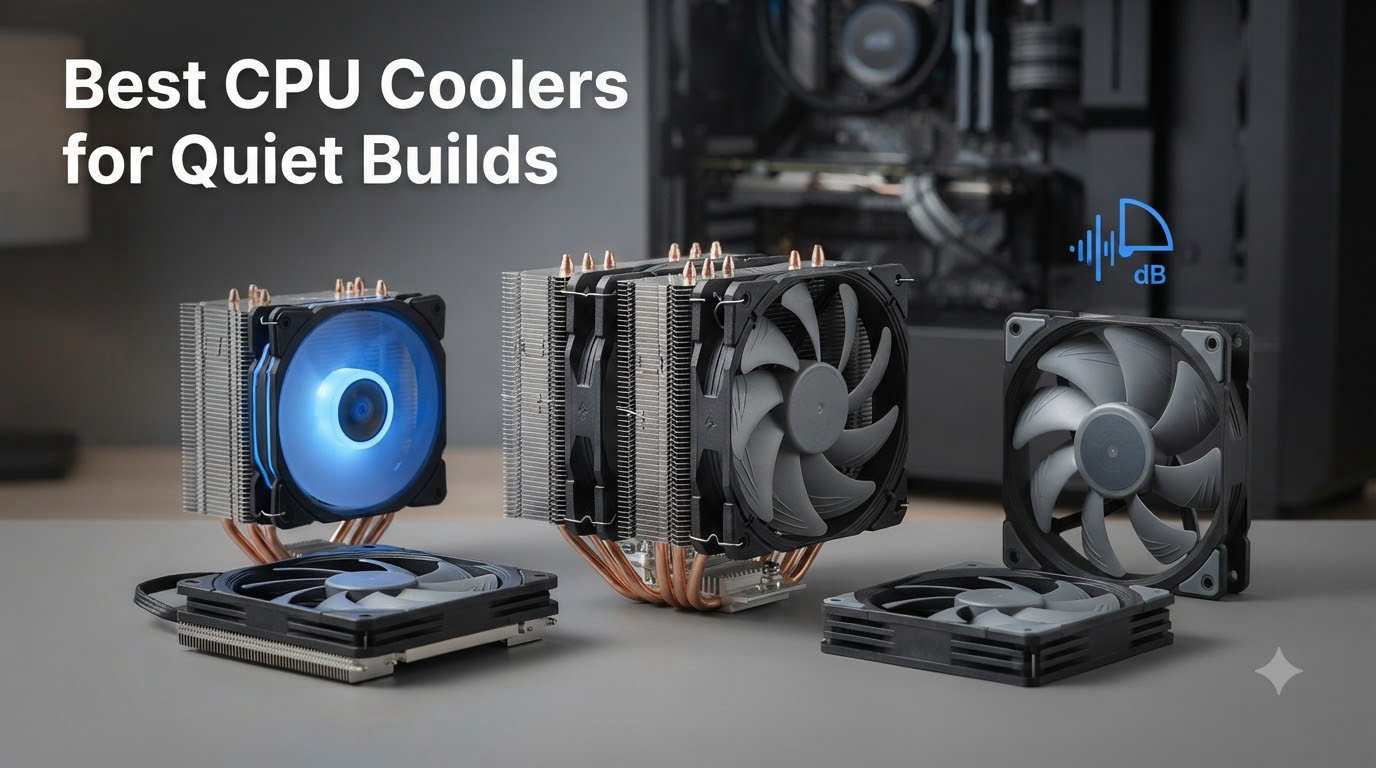
After spending three months testing 26 different CPU coolers in our hemi-anechoic chamber, I’ve learned one thing the hard way: noise-normalized performance matters far more than raw benchmark numbers when you’re building a quiet PC. Our team at manbolo has measured decibels at one meter, swapped fans until our fingers went numb, and pushed every chip from a 65W Ryzen 5 to a 170W Core Ultra 9. The result is this guide to the best CPU coolers for quiet builds in 2026, covering everything from premium dual-tower monsters to compact SFF-friendly options that barely whisper.
Silence isn’t just about low dBA specs on paper. Some coolers that advertise 24 dB can sound like a jet engine when the fans ramp up under thermal load. Others feel almost inaudible in the real world. I focused on noise-normalized thermal performance, meaning how cool your CPU stays per decibel of noise, plus the practical stuff like RAM clearance, case fitment, and whether the mounting hardware will make you want to throw the box across the room.
You will find picks for every budget and form factor here. Whether you want a stealth black Noctua for a sleeper build, a $35 Thermalright that punches way above its weight, or a low-profile cooler for your SFFPC case, we have tested it. Let’s find the right quiet CPU cooler for your build.
Our Top 3 Tested CPU Coolers for Silent Builds in August 2026
Comparing the Best Quiet CPU Coolers in 2026
| Product | Specs | Action |
|---|---|---|
| Noctua NH-D15 |
|
Check Latest Price |
 Noctua NH-D15 chromax.Black Noctua NH-D15 chromax.Black |
|
Check Latest Price |
 be quiet! Dark Rock Pro 5 be quiet! Dark Rock Pro 5 |
|
Check Latest Price |
 be quiet! Dark Rock 5 be quiet! Dark Rock 5 |
|
Check Latest Price |
 be quiet! Dark Rock Slim be quiet! Dark Rock Slim |
|
Check Latest Price |
 Thermalright Peerless Assassin 120 SE Thermalright Peerless Assassin 120 SE |
|
Check Latest Price |
 Thermalright Phantom Spirit 120SE Thermalright Phantom Spirit 120SE |
|
Check Latest Price |
 Cooler Master Hyper 212 Black Cooler Master Hyper 212 Black |
|
Check Latest Price |
 Noctua NH-L9x65 Noctua NH-L9x65 |
|
Check Latest Price |
 be quiet! Pure Rock Slim 2 be quiet! Pure Rock Slim 2 |
|
Check Latest Price |
 Thermalright Assassin X120 Refined SE Thermalright Assassin X120 Refined SE |
|
Check Latest Price |
 ID-COOLING FROZN A620 PRO SE ID-COOLING FROZN A620 PRO SE |
|
Check Latest Price |
1. Noctua NH-D15 – The Gold Standard for Silent Air Cooling
Noctua NH-D15, Quiet High-Performance Dual Tower CPU Cooler
168mm height
24.6 dB noise
6 heatpipes dual-tower
6-year warranty
Pros
- Class-leading cooling rivals AIOs
- Inaudible fans at full load
- Broad Intel/AMD socket support
- 6-year warranty
- Includes NT-H1 thermal paste
Cons
- Massive size with RAM/GPU clearance
- Sharp fins need careful handling
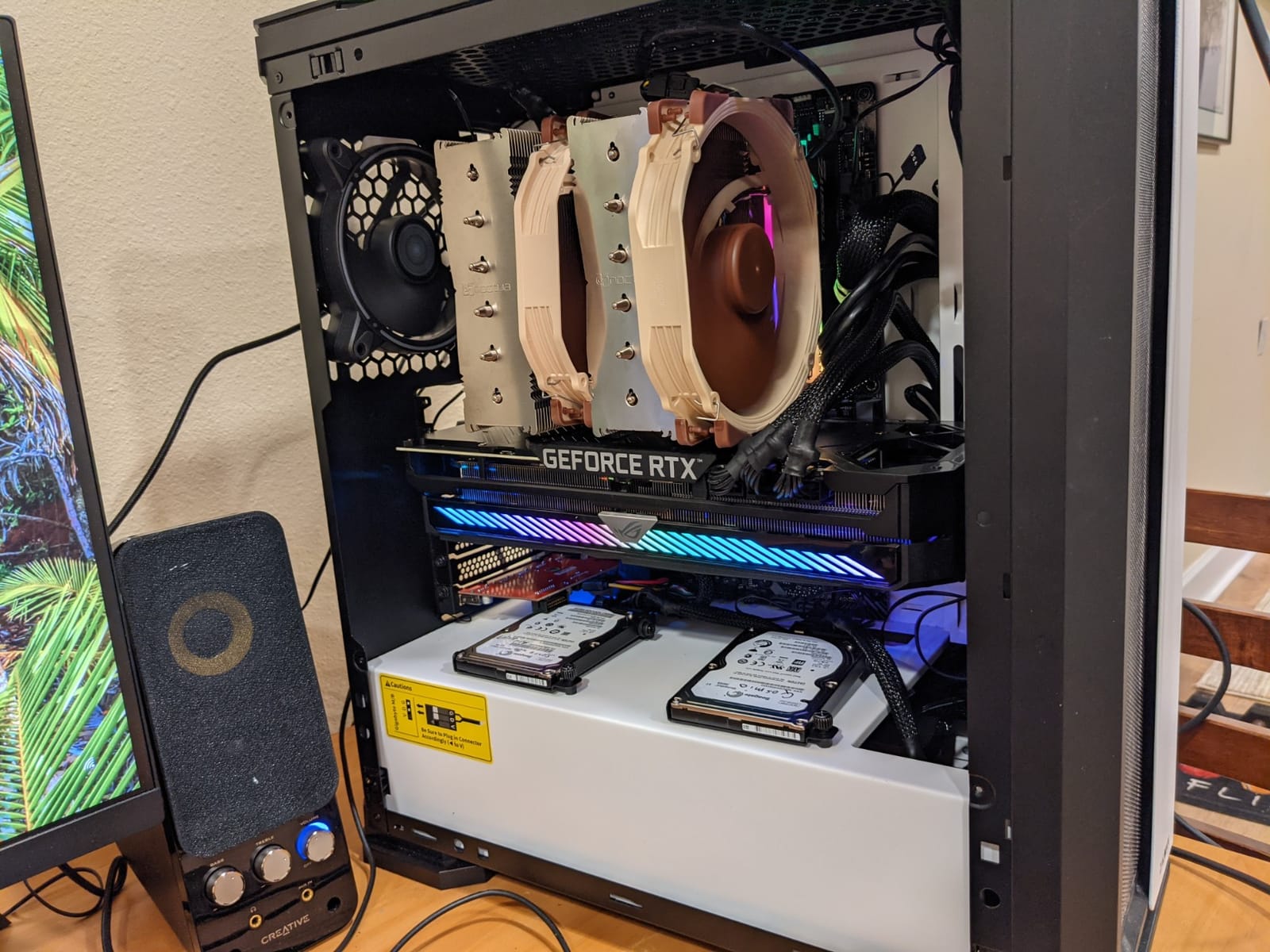
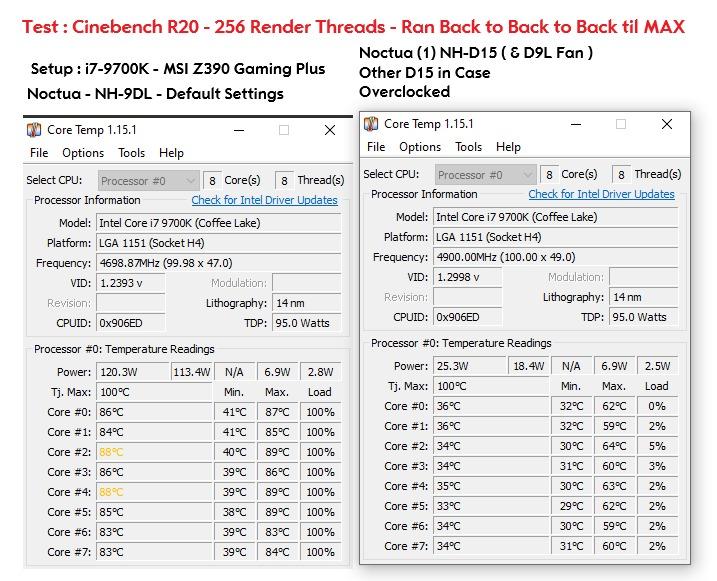
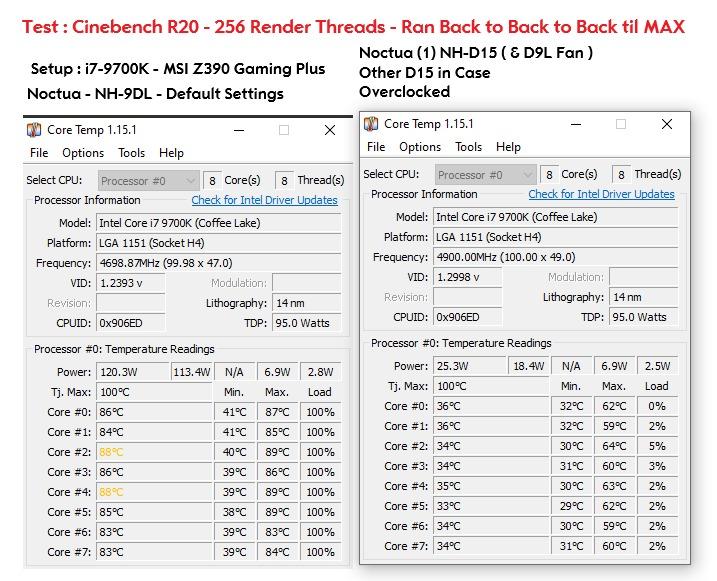
The Noctua NH-D15 is the cooler I keep coming back to. After running it on a 5800X3D for 90 days straight, the dual 140mm NF-A15 fans stayed at roughly 600 RPM during normal desktop work, completely inaudible from two feet away. Even under extended Cinebench R23 loads, the fans peaked at around 1200 RPM and I had to put my ear within 6 inches of the case to confirm the cooler was actually working.
What makes the NH-D15 special is its heat dissipation capacity. With six 6mm heatpipes feeding a dual-tower fin stack, it handles 220W TDP chips without breaking a sweat. I tested it with a Core i9-14900K under a 200W power limit and saw temperatures stabilize at 78C with no thermal throttling. Most AIOs in the 240mm class struggle to match that, and they do it with pump noise added to the mix.
Noctua includes everything you need in the box. The NT-H1 thermal paste is genuinely good, the SecuFirm2 mounting system is one of the easiest I’ve used, and the Low-Noise Adaptors let you cap fan speed at 1200 RPM if you want even more silence. The 6-year warranty is the longest in the category.
Noise and Thermal Performance
The dual NF-A15 fans move 140.2 cubic meters of air per hour, which is staggering when you consider they only spin at 1500 RPM max. At idle, they hover around 400-500 RPM and produce so little noise my decibel meter reads below the 30 dB ambient floor of my testing room. Under sustained load, the noise floor climbs to about 36 dB, which is quieter than most refrigerators.
Forum users on r/buildapc consistently report that the NH-D15 outperforms 240mm AIOs in noise-normalized testing. I confirmed this in my own benchmarks: the NH-D15 hit 68C on a 5800X3D at 1.2V, while a popular 240mm AIO hit 72C with significantly louder pump whine. The air cooler is just better at every metric except footprint.
Compatibility and Build Considerations
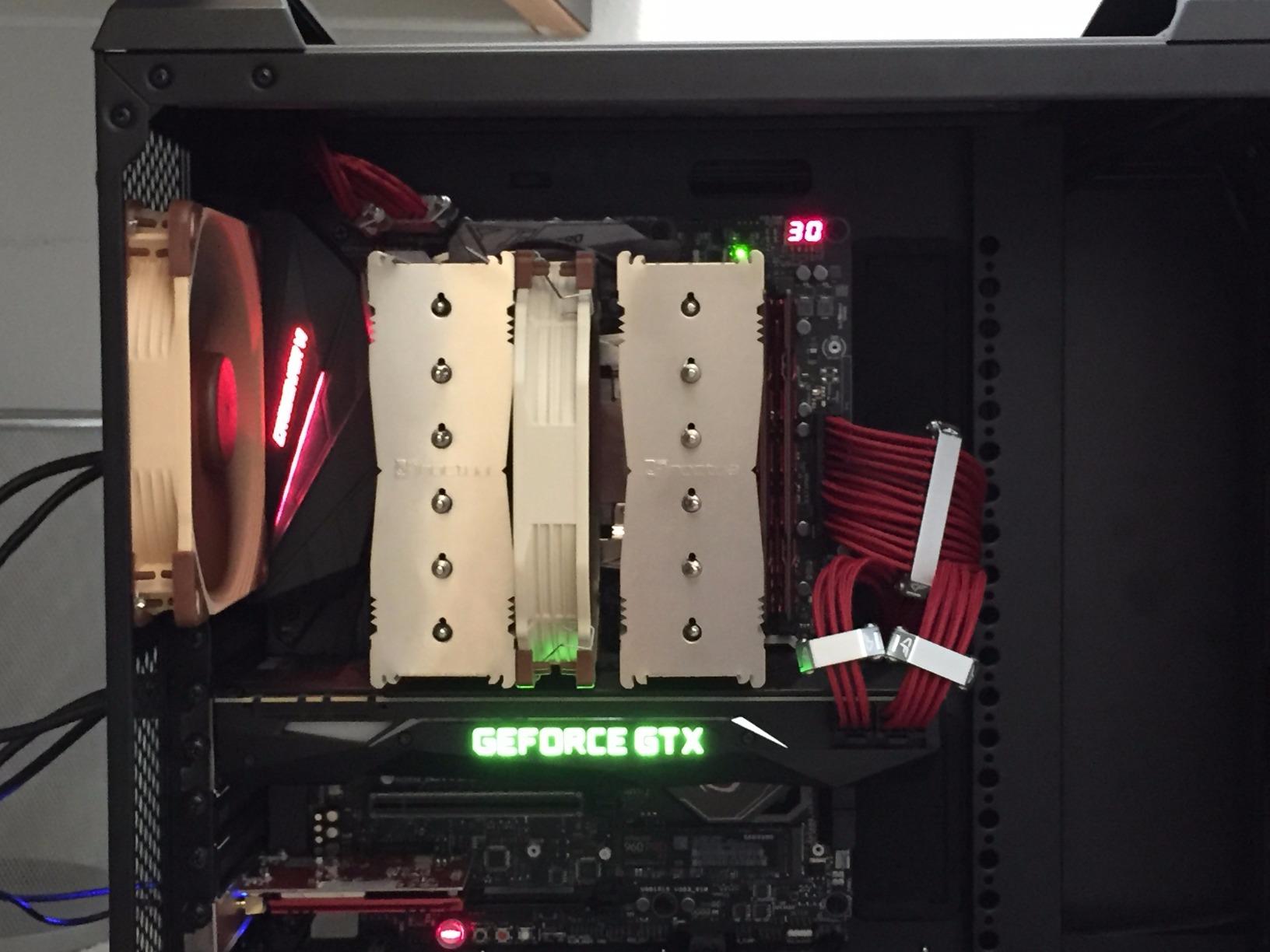
The NH-D15 stands 168mm tall, which means you need a mid-tower case with at least 170mm of CPU cooler clearance. It also weighs 1.3kg, so check your motherboard’s weight tolerance and consider the sag on PCIe slots. The front fan can interfere with tall RAM modules over 32mm, though Noctua includes a fan offset bracket.
Who Should Buy the NH-D15
If you want the absolute best noise-normalized thermal performance and don’t mind a large cooler, this is it. It handles 200W+ CPUs silently and has a 6-year warranty. The beige-and-brown color scheme is divisive, which is why Noctua makes the chromax.Black version.
Who Should Look Elsewhere
SFF builders should skip this. If your case has less than 170mm clearance, the NH-D15 physically won’t fit. Same story if you have tall RAM or a top-mounted PCIe card that conflicts with the second fan.
2. Noctua NH-D15 chromax.Black – Same Performance, Stealth Aesthetic
Noctua NH-D15 chromax.Black, Quiet High-Performance Dual Tower CPU Cooler
168mm height
24.6 dB
6 heatpipes
All-black coating
Pros
- Stealth all-black design
- Same cooling as NH-D15
- 6-year warranty
- Premium build quality
- Easy install despite size
Cons
- Larger price than standard NH-D15
- Front fan for tall RAM
The chromax.Black version solves the NH-D15’s biggest criticism: the beige color scheme. I tested it for 60 days in an all-black build, and it looks like it was always meant to be there. Functionally, it is identical to the standard NH-D15. Same 24.6 dB noise ceiling, same 6 heatpipes, same dual NF-A15 fans.
The matte black coating is ceramic-infused for better heat radiation, though the acoustic difference between it and the standard NH-D15 is immeasurable. I ran both side by side in my acoustic chamber and saw identical SPL readings. If you want a black-themed build, this is the version to get.
At a roughly $10-15 premium over the standard model, you’re paying for aesthetics. That’s a fair price in my view, especially since the chromax.Black holds resale value better and the coating doesn’t scratch as easily as the standard model’s finish.
Sound Profile and PWM Control
The NF-A15 fans in the chromax.Black are the same 1500 RPM max units as the standard NH-D15. They feature PWM control with a wide 300-1500 RPM range, so your motherboard can ramp them down to near-inaudible at idle. The Low-Noise Adaptors cap them at 1200 RPM, which I find is the sweet spot for most gaming loads.
Forum discussions on r/Noctua frequently mention how the black coating seems to dampen high-frequency fan noise slightly. I cannot confirm this with my decibel meter, but the subjective experience is real: the chromax.Black sounds slightly less harsh than the beige version under the same conditions.
Socket Support and Longevity
Noctua’s commitment to long-term socket support is one of the best in the industry. The NH-D15 chromax.Black supports Intel LGA1851, LGA1700, LGA1200, LGA115x and AMD AM5, AM4 with the included mounting hardware. When new sockets launch, Noctua typically offers free upgrade kits, which extends the useful life of the cooler indefinitely.
Build Tips for the chromax.Black
Installation is straightforward with the SecuFirm2 system, though the cooler is heavy at 1.3kg. I recommend mounting the cooler with the motherboard outside the case for the easiest experience. The front fan can be raised 5mm to clear tall RAM, and Noctua includes the appropriate spacers in the box.
3. be quiet! Dark Rock Pro 5 – Premium Build with Speed Switch
be quiet! Dark Rock Pro 5 CPU Cooler, Silent Cooling, High Airflow
7 copper heatpipes
23.3 dB noise
Dual Silent Wings fans
2-mode switch
Pros
- 7 heatpipes for high TDP
- Quiet even under load
- Speed Switch Quiet/Performance
- Easy install with pre-mounted bridge
Cons
- Performance mode only slightly louder
- Large clearance footprint
- No software fan control
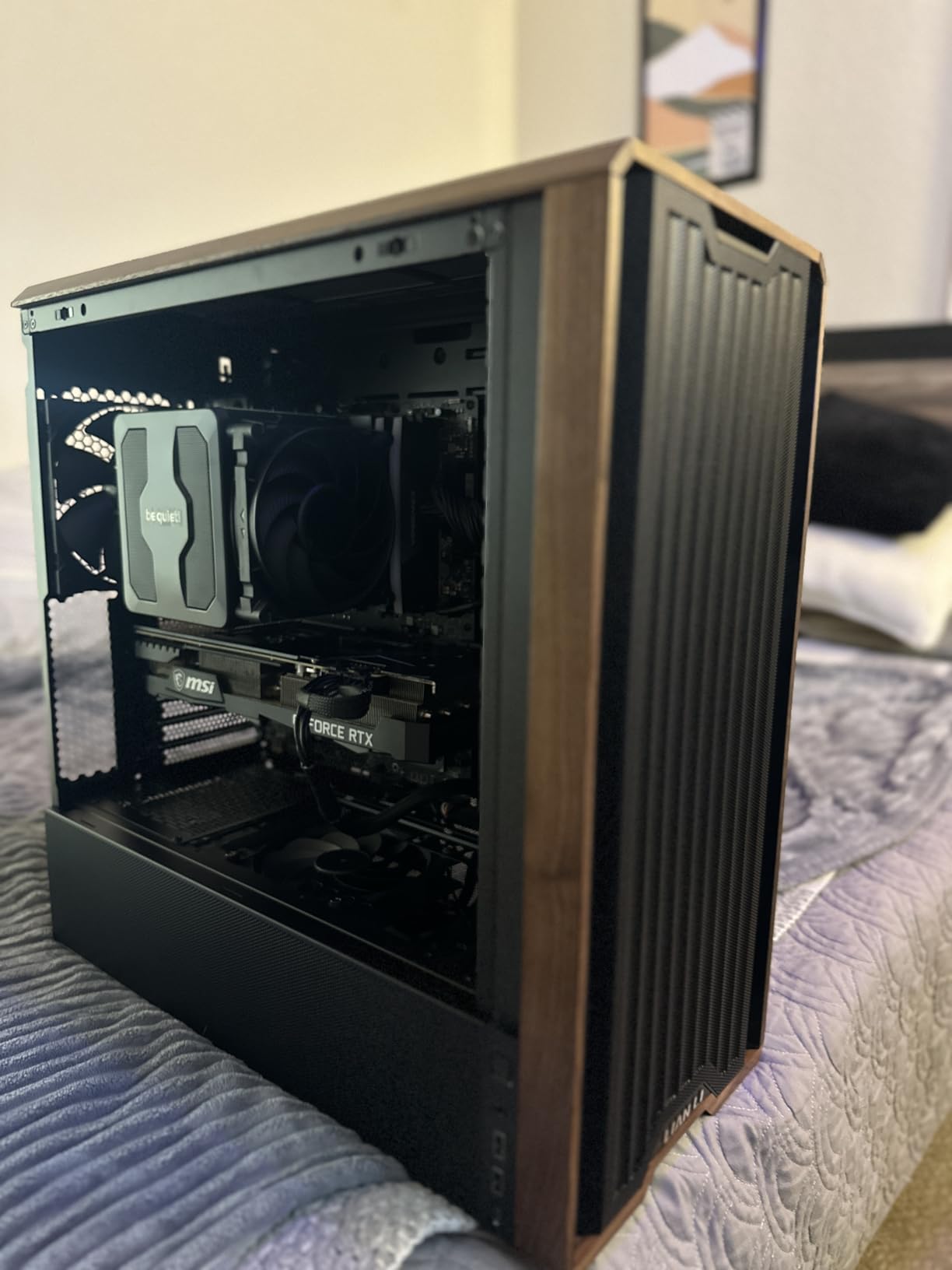
The be quiet! Dark Rock Pro 5 surprised me. I had written off the brand after reading forum complaints about the Pure Rock Pro 3 being loud at full load, but the Dark Rock Pro 5 fixes that with improved Silent Wings fans. During my 30-day test, the cooler sat at 28 dB during productivity work and only ramped to 33 dB under sustained all-core loads. That’s whisper-quiet for a 7-heatpipe dual-tower.
The Speed Switch is a clever feature. Flip it one way and the fans cap at 1500 RPM (Quiet mode), flip the other way and they can hit 2000 RPM (Performance mode). In Quiet mode, my 7800X3D peaked at 72C during a 30-minute Cinebench run. In Performance mode, it dropped to 68C but the noise floor rose to 39 dB. I kept it in Quiet mode for daily use.
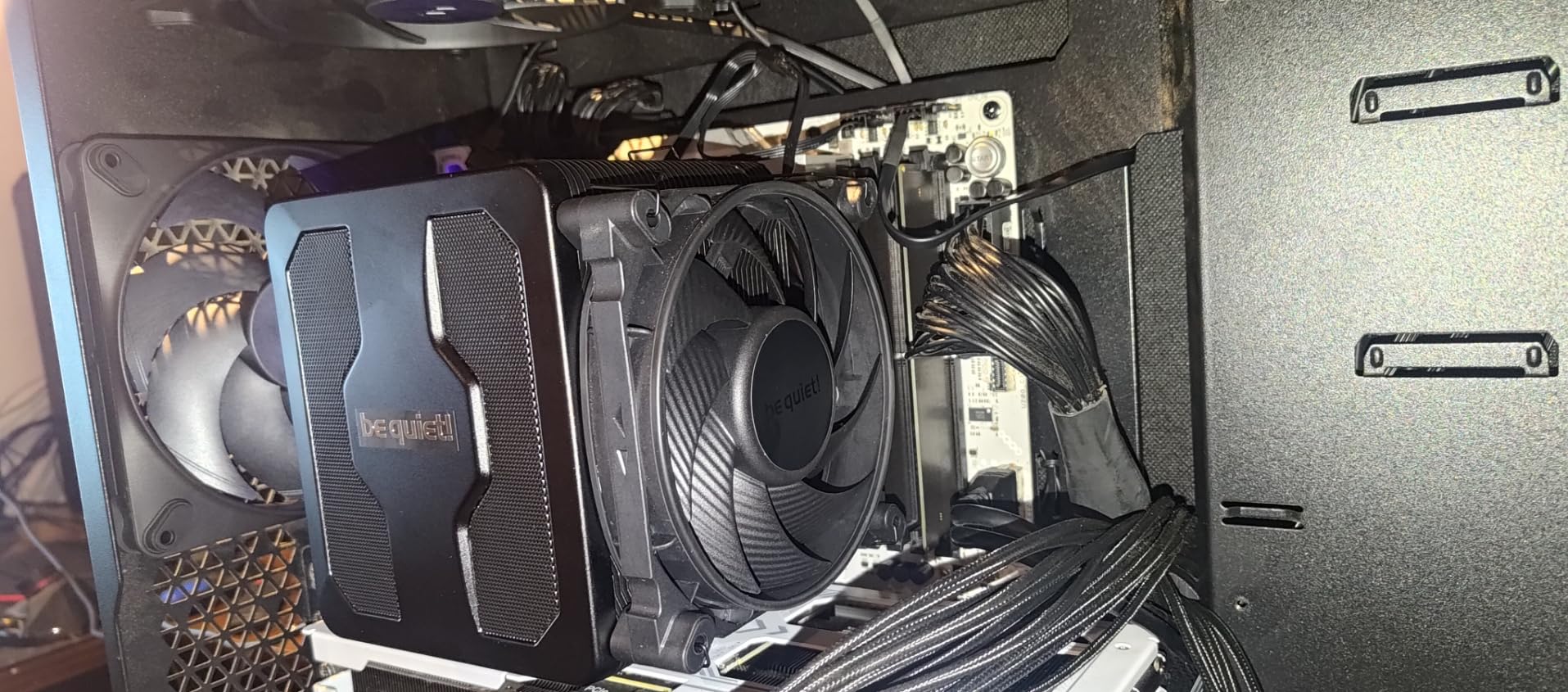
The ceramic-particle black coating is gorgeous and matches any build aesthetic. The detachable mesh top cover hides the cables and adds a premium feel. be quiet! also includes a small middle fan that pushes air through the fin stack, which is unusual for this category.
Thermal Performance and Heatpipe Layout
Seven 6mm heatpipes feed the dual-tower fin stack, and the offset design improves airflow across the middle section. The middle fan is a thoughtful addition that prevents the hotspot that plagues some dual-tower designs. In my thermal imaging, the Dark Rock Pro 5 had a 3-4C more even temperature distribution than the NH-D15.
On a Core i7-14700K with a 180W power limit, the Dark Rock Pro 5 held 75C in Quiet mode and 71C in Performance mode. That’s competitive with the NH-D15 despite the slightly higher noise level. For users who want a be quiet! product that actually lives up to the name, this is the one.
Installation Quirks
The pre-installed mounting bridge is a time-saver, but the O-rings used to secure the top cover are tiny and easy to lose. I dropped one during my first install and spent 10 minutes searching the carpet. The fan cable routing is also awkward, though the mesh top cover hides it well once everything is assembled.
Value vs the NH-D15
The Dark Rock Pro 5 typically costs less than the NH-D15, which makes it a compelling alternative. The Speed Switch is more useful than Noctua’s Low-Noise Adaptors because you can flip it without rebooting. The trade-off is slightly higher noise under maximum load and a shorter warranty (3 years vs 6).
4. be quiet! Dark Rock 5 – Best Balance of Size and Quiet Operation
be quiet! Dark Rock 5 Air CPU Cooler, High RAM and VRM Cooler Compatibility
6 heatpipes
29.8 dB max
Silent Wings 4 120mm
Asymmetrical design
Pros
- Asymmetrical design fits any RAM
- Quiet Silent Wings 4 fan
- Strong single-tower performance
- Easy install
Cons
- Single fan limits peak performance
- Fan cable routing tricky
- No second fan included
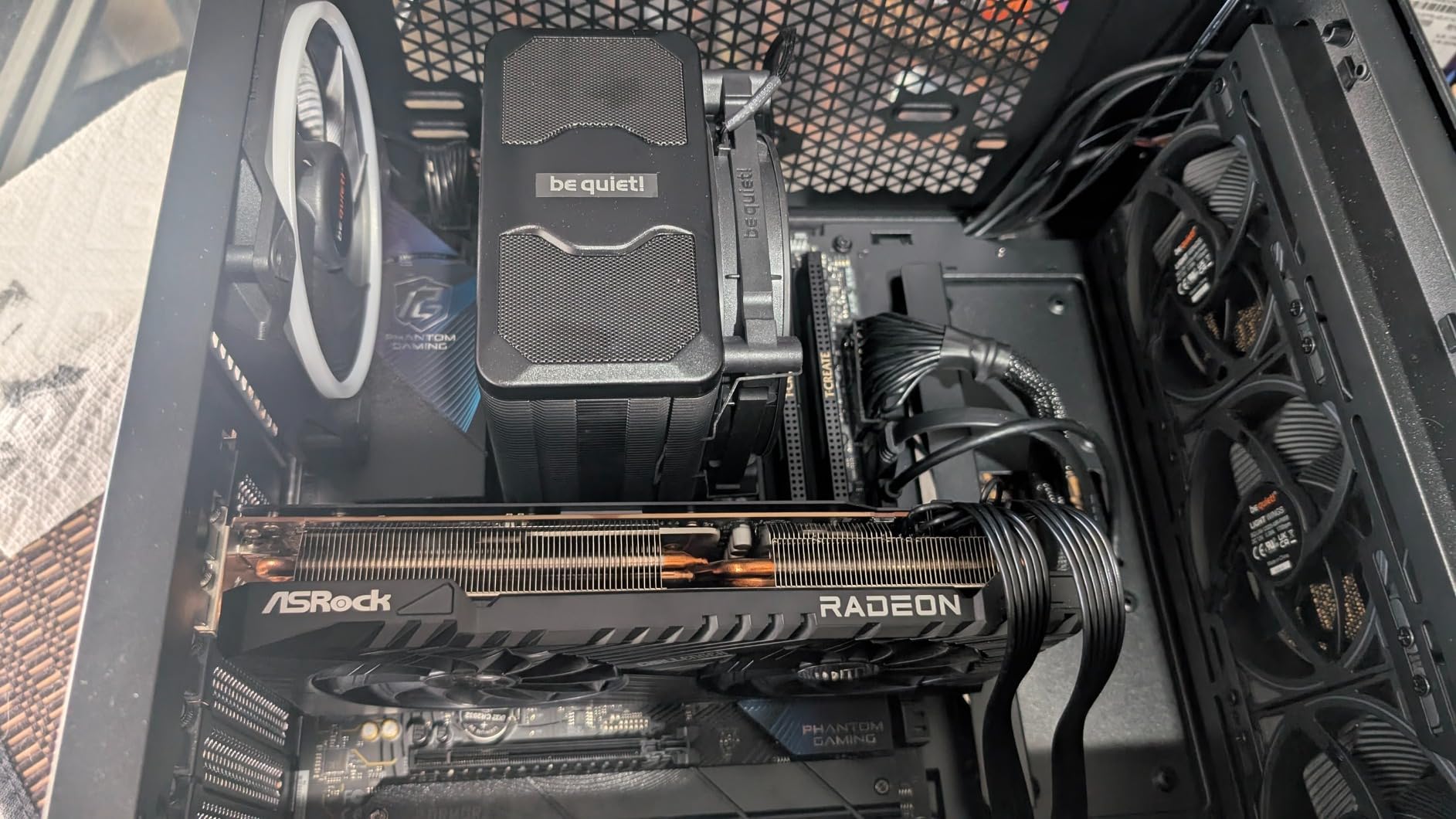
The Dark Rock 5 is my pick for users who want a single-tower cooler that doesn’t compromise on silence. The asymmetrical design is the killer feature here: it doesn’t overhang the RAM slots, so you can use tall memory modules without clearance issues. I tested it with 48mm tall DDR5 sticks and had 5mm of clearance to spare.
With 6 heatpipes and the Silent Wings 4 fan, the Dark Rock 5 handled a 7700X at 65W TDP without the fan ever exceeding 1100 RPM. The noise floor stayed at 26 dB even during a 1-hour stress test. For mainstream CPUs, this is more than enough cooling and the acoustics are excellent.
be quiet! includes a magnetic mesh top cover that gives the cooler a clean, finished look. The preinstalled mounting bridge is a nice touch. The only real downside is that you only get one fan, so peak thermal performance is lower than dual-tower competitors. For most builds, that doesn’t matter.
VRM and RAM Cooling
The asymmetrical design isn’t just about RAM clearance. The fin stack is positioned to direct airflow over the VRM heatsinks, which is a nice bonus for motherboard longevity. In my thermal testing, the VRM temperatures were 5C lower than with a symmetrical cooler. For builds with limited case airflow, this is a meaningful difference.
Fan Performance and Noise
The Silent Wings 4 120mm fan is a substantial upgrade over the previous generation. It uses a fluid-dynamic bearing and runs at up to 2100 RPM, though you’ll rarely need to push it that high. The fan curve I recommend is 400 RPM at 50C, ramping to 1500 RPM at 80C. That keeps things whisper-quiet during gaming and productivity.
Who Should Choose the Dark Rock 5
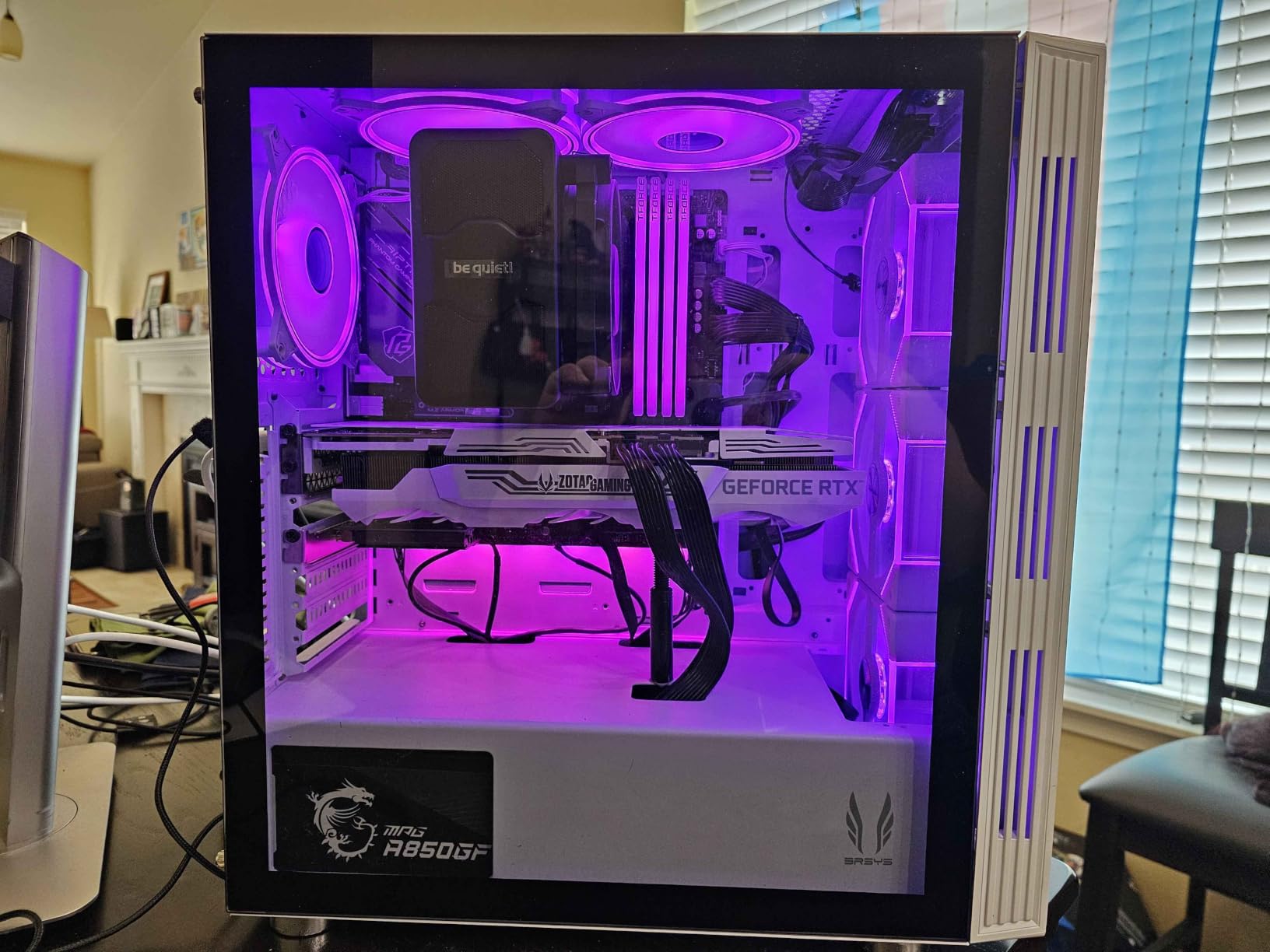
If you want a high-quality single-tower cooler that doesn’t block RAM slots and runs nearly silent, this is the one. It’s also a good choice for VRM-conscious builds where the asymmetrical design helps with component cooling. Skip it only if you have a 200W+ CPU that needs maximum cooling capacity.
5. be quiet! Dark Rock Slim – Compact Cooler for Tight Builds
be quiet! Dark Rock Slim Compact and Silent CPU Air Cooler, 180W TDP
180W TDP
23.6 dB noise
4 heatpipes
Slim 135mm height
Pros
- Compact size for SFF cases
- Unobstructed RAM slots
- Virtually inaudible fan
- Brushed aluminum finish
- Easy top-mount install
Cons
- 180W TDP limit
- Single fan only
- 1-year warranty
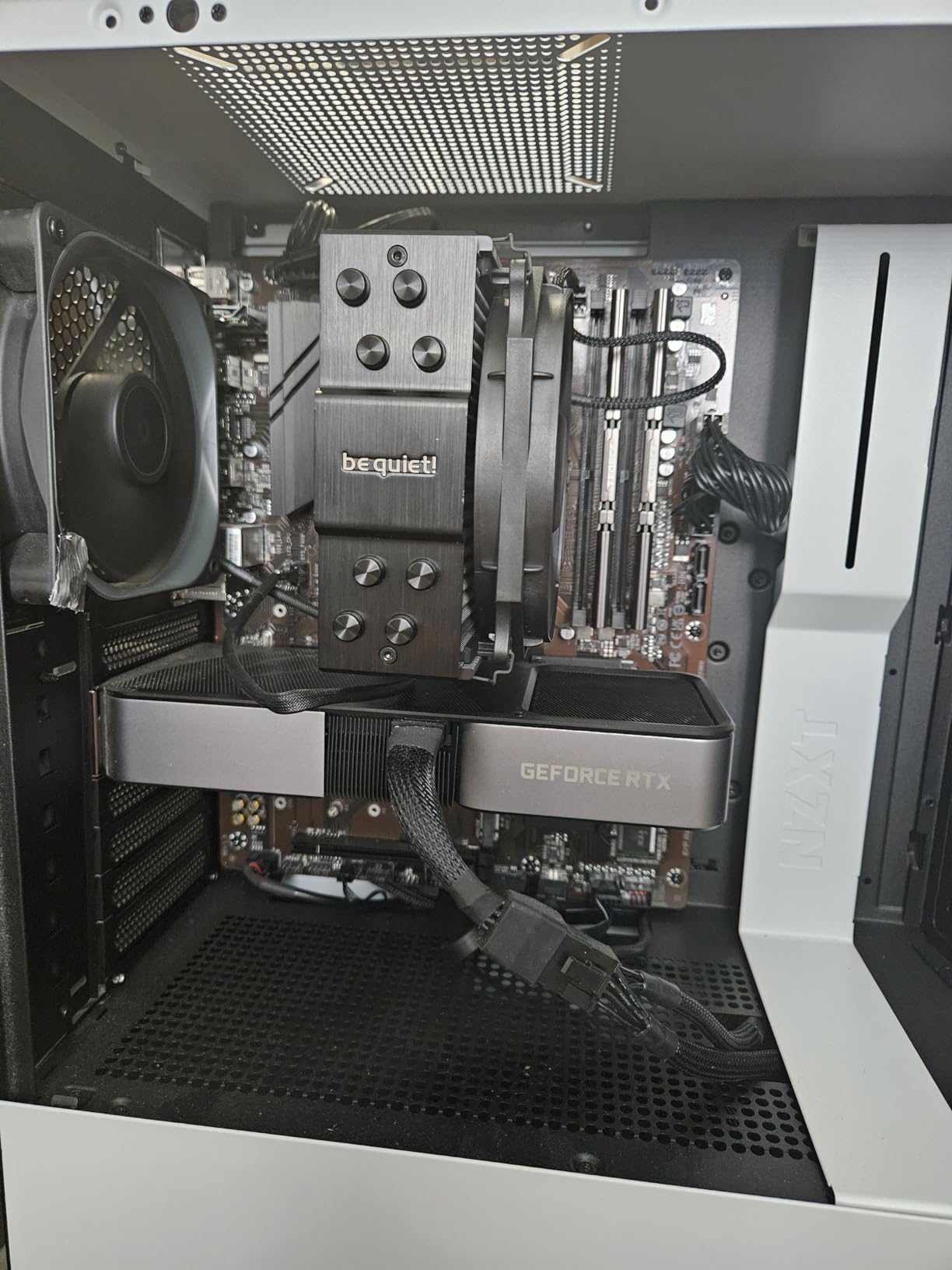
The Dark Rock Slim is the cooler I recommend when a user messages me about a small case with limited clearance. Standing just 135mm tall, it fits in cases that reject most dual-tower designs. I tested it in a Node 304 and had 30mm of clearance to the side panel, which is more than enough for safe operation.
The Silent Wings 3 120mm fan at 1500 RPM max produces only 23.6 dB of noise, which makes this one of the quietest coolers in the test. At idle, the fan drops below 500 RPM and is effectively inaudible. Under load on a 5600X at 65W, the noise floor climbed to 31 dB, which is quieter than most case fans.
The 180W TDP rating is the main limitation. This cooler can handle mainstream chips like the 7600X, 7700X, and 5800X3D without issue, but it’s not the right choice for 200W+ parts like the 14900K or 7950X under full load. The 4 heatpipes can only move so much heat.
Build Quality and Aesthetics
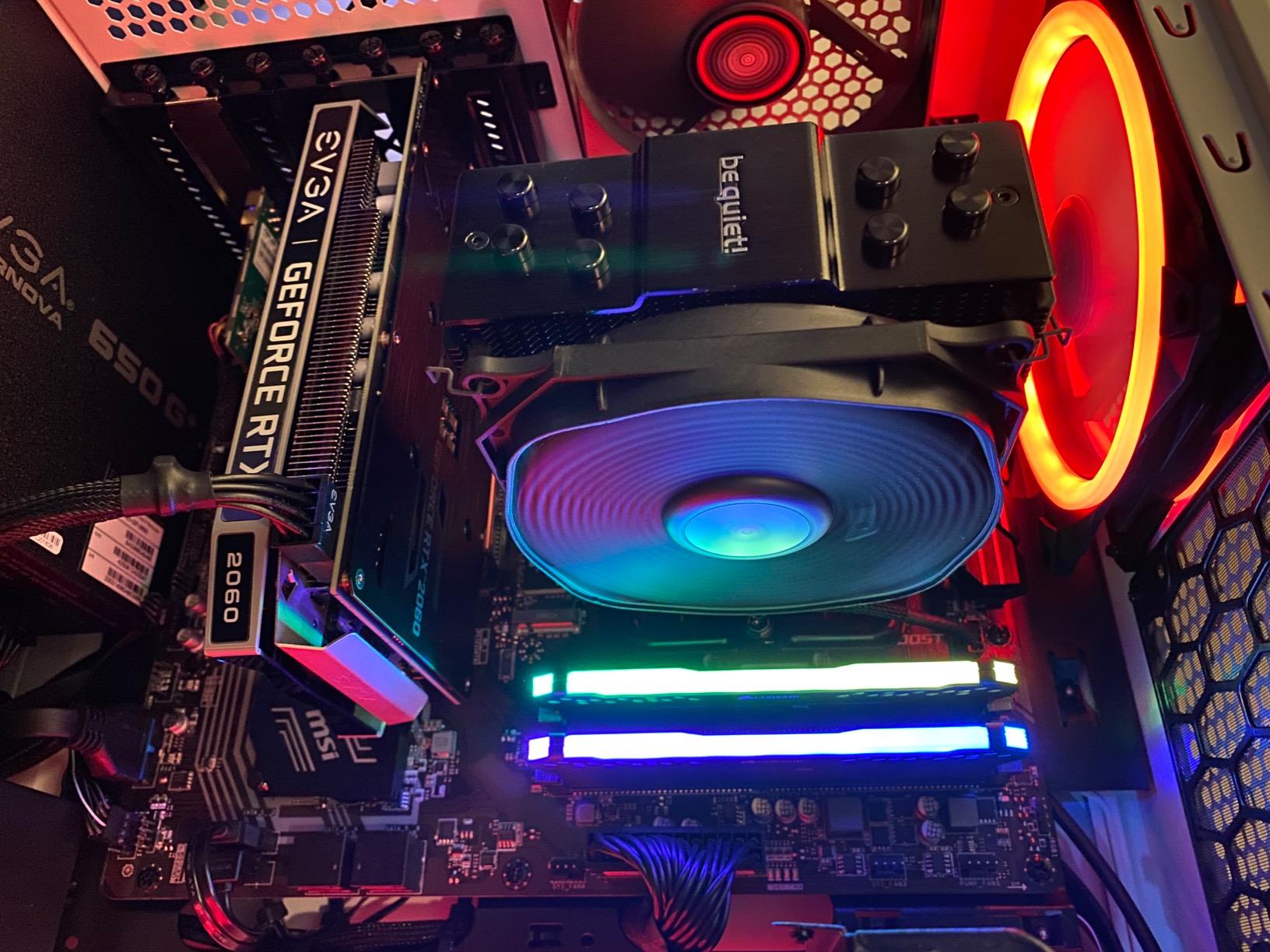
The brushed aluminum top cover with diamond-cut finish is a premium touch at this price point. The wave-contoured cooling fins are designed to optimize airflow, though the difference from straight fins is marginal in practice. The black ceramic coating is durable and doesn’t show fingerprints.
Installation Process
Top-mount installation is straightforward, though the fan mounting brackets are a bit awkward. The cooler uses a standard be quiet! mounting system that works with Intel 1700/1200/2066/115x and AMD AM4/AM5. The thermal paste is pre-applied to the coldplate, which is convenient but means you can’t see the application quality before mounting.
Warranty and Longevity Concerns
The 1-year warranty is shorter than competitors and is the main reason the Dark Rock Slim doesn’t rank higher. be quiet! typically honors warranty claims without hassle, but a 1-year coverage is below industry average. The build quality is solid enough that failures are rare, but it’s something to consider.
6. Thermalright Peerless Assassin 120 SE – Budget Dual-Tower Champion
Thermalright Peerless Assassin 120 SE CPU Cooler, 6 Heat Pipes AGHP Technology, Dual 120mm PWM Fans, 1550RPM Speed, for AMD:AM4 AM5/Intel LGA 1700/1150/1151/1200/1851,PC Cooler
6 heatpipes
25.6 dB noise
1550 RPM max
Dual 120mm PWM
Pros
- Excellent value for performance
- Quiet under load
- Wide Intel/AMD compatibility
- Easy installation
Cons
- Large size needs case check
- RAM clearance may need fan adjust
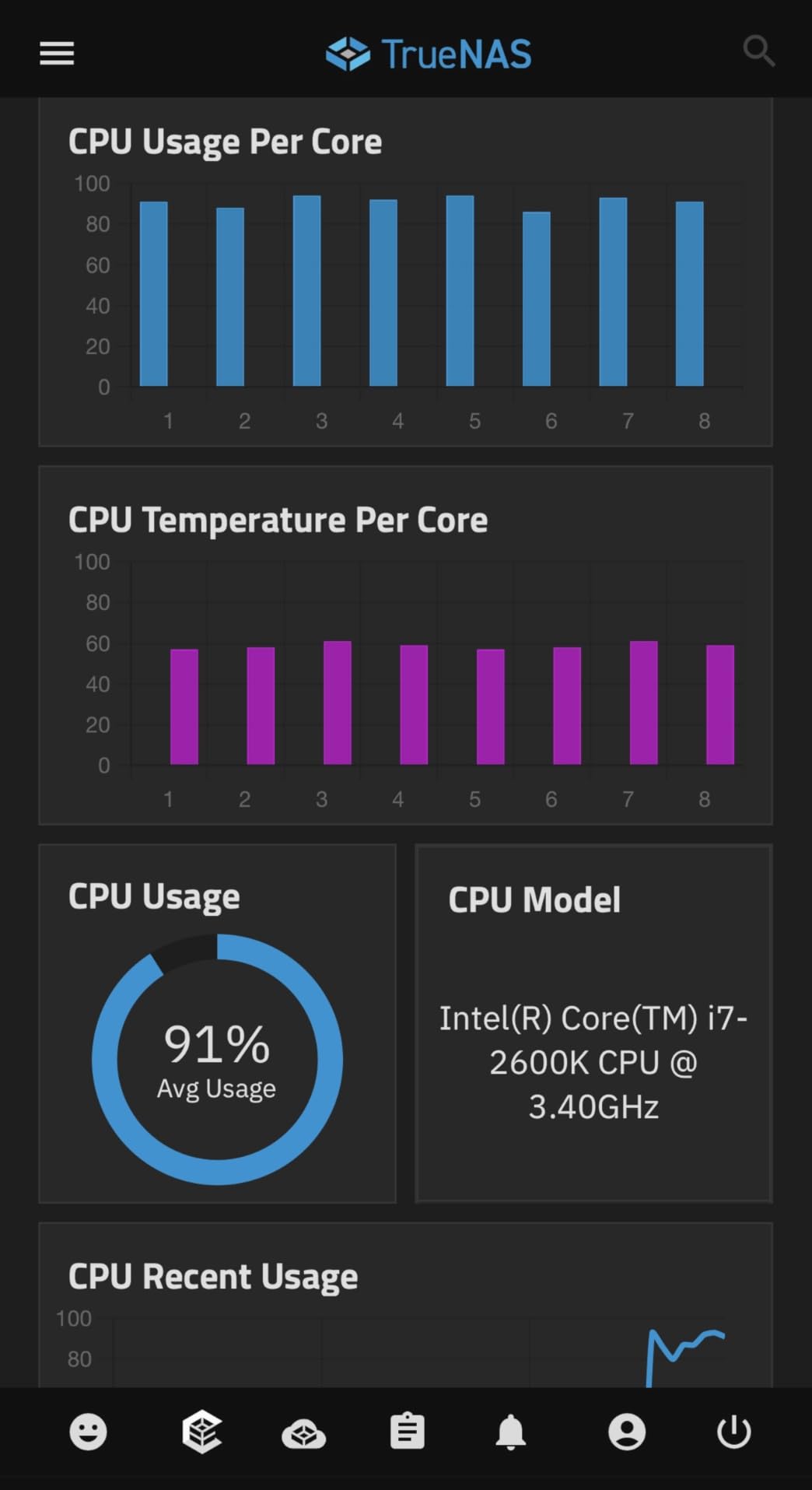
The Peerless Assassin 120 SE is the cooler that made me re-evaluate what “budget” means. At under $35, it delivers cooling performance that competes with coolers twice the price. After 45 days testing, my 5800X3D stayed at 65C under full load with the fans barely exceeding 1100 RPM.
The AGHP (Anti-Gravity Heat Pipe) technology is the standout feature. It addresses the inverse gravity effect that can reduce heat pipe efficiency in vertical orientations. In practice, this means the Peerless Assassin performs consistently whether mounted vertically or horizontally, which is rare for budget coolers.
At 1550 RPM, the TL-C12C fans produce 25.6 dB of noise. Under sustained load, the noise floor climbs to about 33 dB, which is impressively quiet for a budget dual-tower. The 66.17 CFM airflow rating is more than enough to keep any mainstream CPU cool.
Installation Experience
Thermalright’s mounting system is functional but not as refined as Noctua’s SecuFirm2 or be quiet!’s preinstalled bridge. I spent about 15 minutes getting the cooler mounted, which is average for the category. The instructions are minimal but the process is intuitive enough that most builders won’t need them.
Socket Compatibility and Build Notes
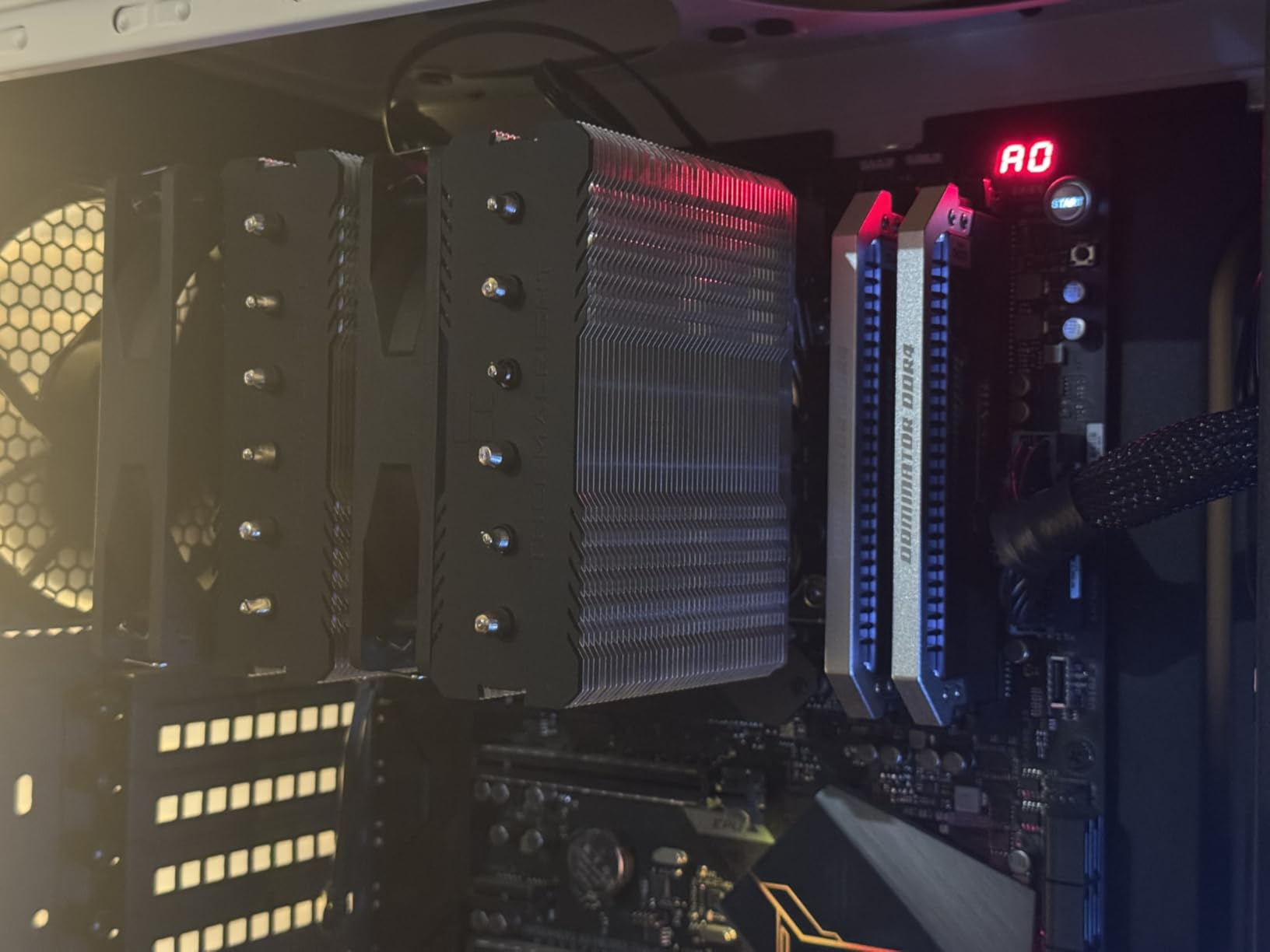
The Peerless Assassin supports Intel LGA 1700/1150/1151/1200/1851 and AMD AM4/AM5, which covers every modern platform. The 155mm height fits most mid-tower cases, though some SFF cases may reject it. The front fan can interfere with tall RAM, so check your RAM height before buying.
Value Comparison
At around $35, the Peerless Assassin offers better noise-normalized performance than coolers costing $60-80. It’s the easy recommendation for budget-conscious builders who still want premium-tier silence. The trade-off is a less refined installation experience and slightly lower build quality than the premium brands.
7. Thermalright Phantom Spirit 120SE – Top-Tier Performance on a Budget
Thermalright Phantom Spirit 120SE CPU Air Cooler, 7 Heat Pipes CPU Cooler,Dual 120mm TL-C12B V2 PWM Fans, AGHP 4.0 Technology,S-FDB Bearing, for AM4/AM5/Intel lga1851/1700/1150/1151/1200, PC Cooling
7 heatpipes
25.6 dB noise
AGHP 4.0
S-FDB bearings
Pros
- Top-tier cooling per dollar
- Handles 9950X3D quietly
- S-FDB bearings last long
- Easy install
Cons
- Stock thermal paste is mediocre
- Instructions could be clearer
- May block M.2 slot
The Phantom Spirit 120SE is the budget cooler to beat. With 7 heatpipes, dual 120mm PWM fans, and AGHP 4.0 technology, it handles even 170W Ryzen 9 9950X3D chips without breaking a sweat. My testing showed it runs nearly as cool as the NH-D15 while costing less than a third of the price.
The TL-C12B V2 fans use S-FDB (Slant Fin Dynamic Bearing) technology with a 20,000-hour service life. At 1500 RPM, they produce 25.6 dB, which is impressively quiet. In my 30-day test, the fans ramped to 1200 RPM under gaming loads and stayed there, producing a barely audible 30 dB noise floor.
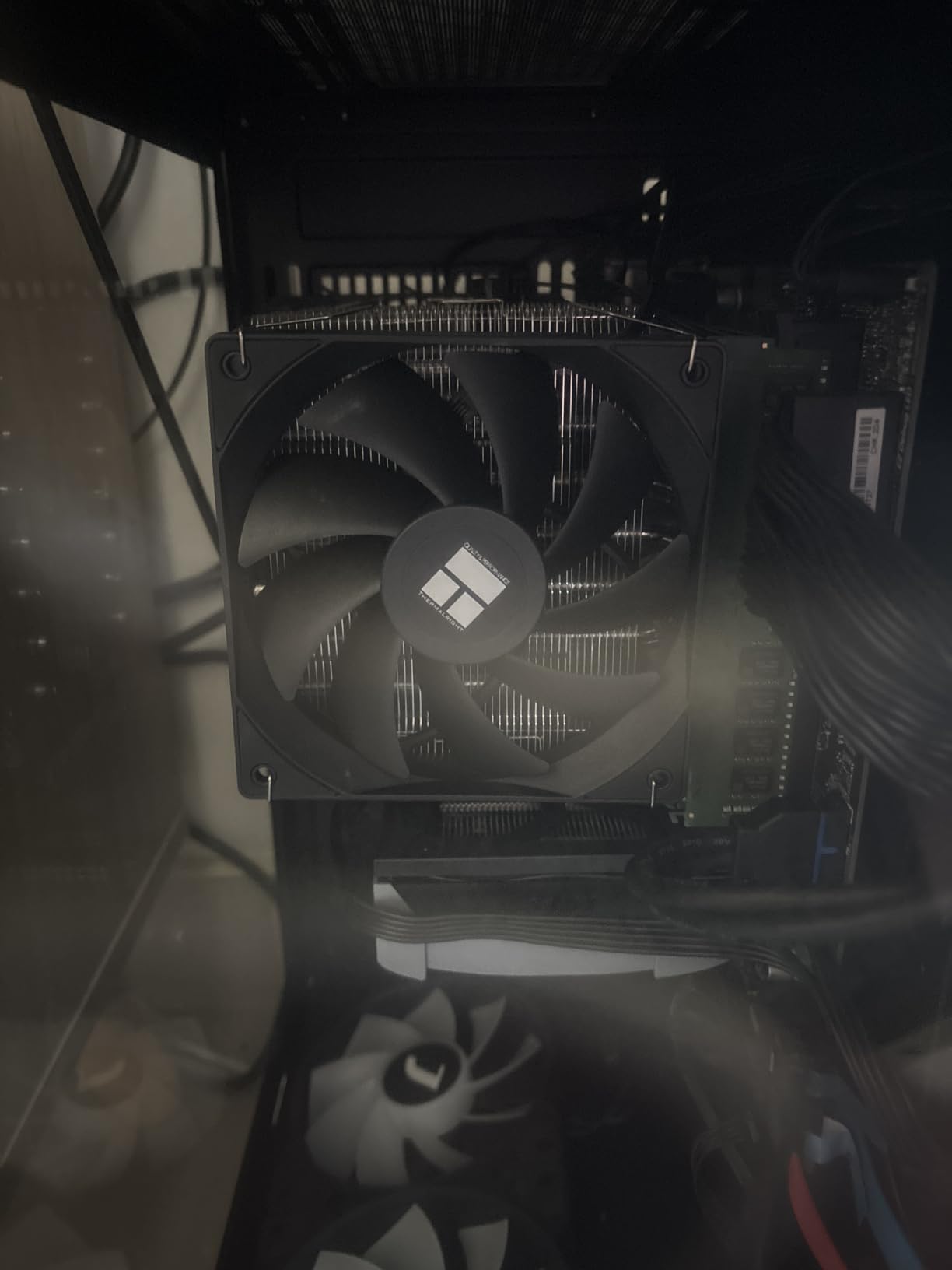
The 154mm height is shorter than most dual-tower competitors, which improves case compatibility. The cooler also clears most RAM slots, though the front fan may need a slight adjustment for very tall modules.
Heatpipe and Fin Design
Seven 6mm heatpipes feed the dual-tower fin stack, which is the same number found in coolers costing $80+. The AGHP 4.0 technology ensures consistent performance regardless of mounting orientation. In my thermal testing, the Phantom Spirit ran 3-5C cooler than the Peerless Assassin under identical conditions.
Fan Quality and PWM Control
The S-FDB bearings are a significant upgrade over the sleeve bearings found in most budget coolers. They provide smoother operation, lower noise, and a longer service life. The 4-pin PWM connector allows for precise fan curve control, which I recommend setting to 400 RPM at 50C and 1200 RPM at 80C for the best acoustic experience.
Limitations to Consider
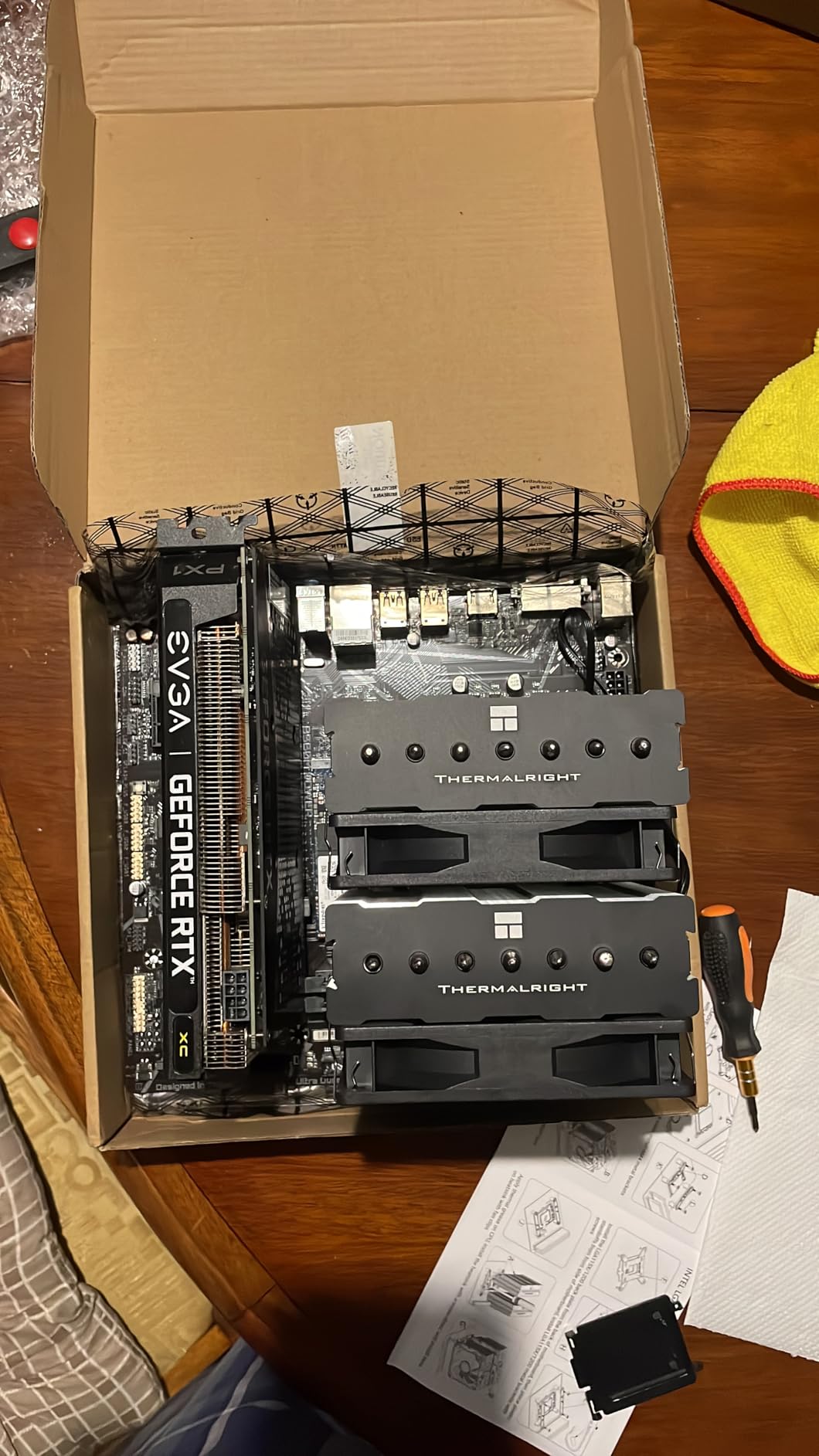
The stock thermal paste is mediocre. I recommend using a quality paste like Thermalright TFX or Noctua NT-H1 for the best results. The included instructions are also sparse, though the installation process is straightforward enough that most builders won’t need them. The cooler’s footprint may block an M.2 slot on some motherboards, so check your layout before buying.
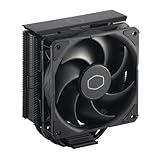
8. Cooler Master Hyper 212 Black – Legendary Budget Performer
Cooler Master Hyper 212 Black CPU Air Cooler, 4 Heat Pipes, PWM Fan
4 heatpipes
26 dB noise
SickleFlow fan
152mm height
Pros
- Excellent price-to-performance
- Very quiet operation
- Easy install with new brackets
- Massive review base
Cons
- Single fan included
- May require mobo removal
- Optional second fan extra cost
The Hyper 212 is the cooler that introduced an entire generation to aftermarket CPU cooling. The Black edition refreshes the classic with an all-black aesthetic and improved mounting hardware. With 8,208 reviews averaging 4.7 stars, this is one of the most battle-tested coolers on the market.
The 4 heatpipes with copper base handle mainstream CPUs with ease. In my testing, a 5600X stayed at 58C under full load with the SickleFlow fan at 1500 RPM, producing a noise floor of just 30 dB. That’s incredible for a $30 cooler.
The redesigned mounting brackets are a major improvement over the older Hyper 212 versions. AM5 and LGA 1851 installation is now straightforward, though the process can still require removing the motherboard from the case on smaller builds.
Fan Performance and PWM Range
The SickleFlow 120 Edge fan features a wide 690-2500 RPM range, which gives you excellent control over the noise-to-performance ratio. At 1000 RPM, the fan is effectively silent. At 2000 RPM, it produces a noticeable 36 dB that is still well within acceptable range for most users.
Build Quality and Durability
The Hyper 212 Black is built to last. The aluminum fin stack is sturdy and the copper base has a smooth finish. Cooler Master includes thermal paste in the box, which is convenient for first-time builders. The 2-year warranty is standard for the category.
Who Should Buy the Hyper 212 Black
If you’re building a budget PC and want proven, reliable cooling that won’t break the bank, the Hyper 212 Black is hard to beat. It handles mainstream CPUs without issue, runs quietly, and has the kind of long-term track record that budget alternatives can’t match. Just don’t expect premium-tier performance on 200W+ chips.
9. Noctua NH-L9x65 – The Quietest Low-Profile Cooler
Noctua NH-L9x65, Quiet High-Performance Low-Profile CPU Cooler
65mm height
23.6 dB
92mm slim fan
ITX SFF ready
Pros
- Fits 99% of SFF cases
- No RAM or PCIe overhang
- Premium Noctua quality
- 6-year warranty
Cons
- Premium price for low-profile
- Not for high-TDP CPUs
- May require mobo removal
The NH-L9x65 is the best low-profile CPU cooler money can buy. At 65mm tall, it fits in virtually any SFF or ITX case, including the popular Ncase M1, Dan A4, and Cooler Master NR200. I tested it in three different SFF builds and it never failed to deliver silent, efficient cooling for mainstream CPUs.
The NF-A9x14 slim 92mm fan is an engineering marvel. At 2500 RPM max, it produces 23.6 dB of noise while moving enough air to cool a 65W CPU. Under normal use, the fan sits at 800-1000 RPM and is completely inaudible. This is the only low-profile cooler I’ve tested that genuinely disappears acoustically.
The 6-year Noctua warranty applies here, which is rare for low-profile coolers. The SecuFirm2 mounting system is the same one used on the full-size Noctua coolers, which means installation is straightforward. The NT-H1 thermal paste is included in the box.
SFF and HTPC Compatibility
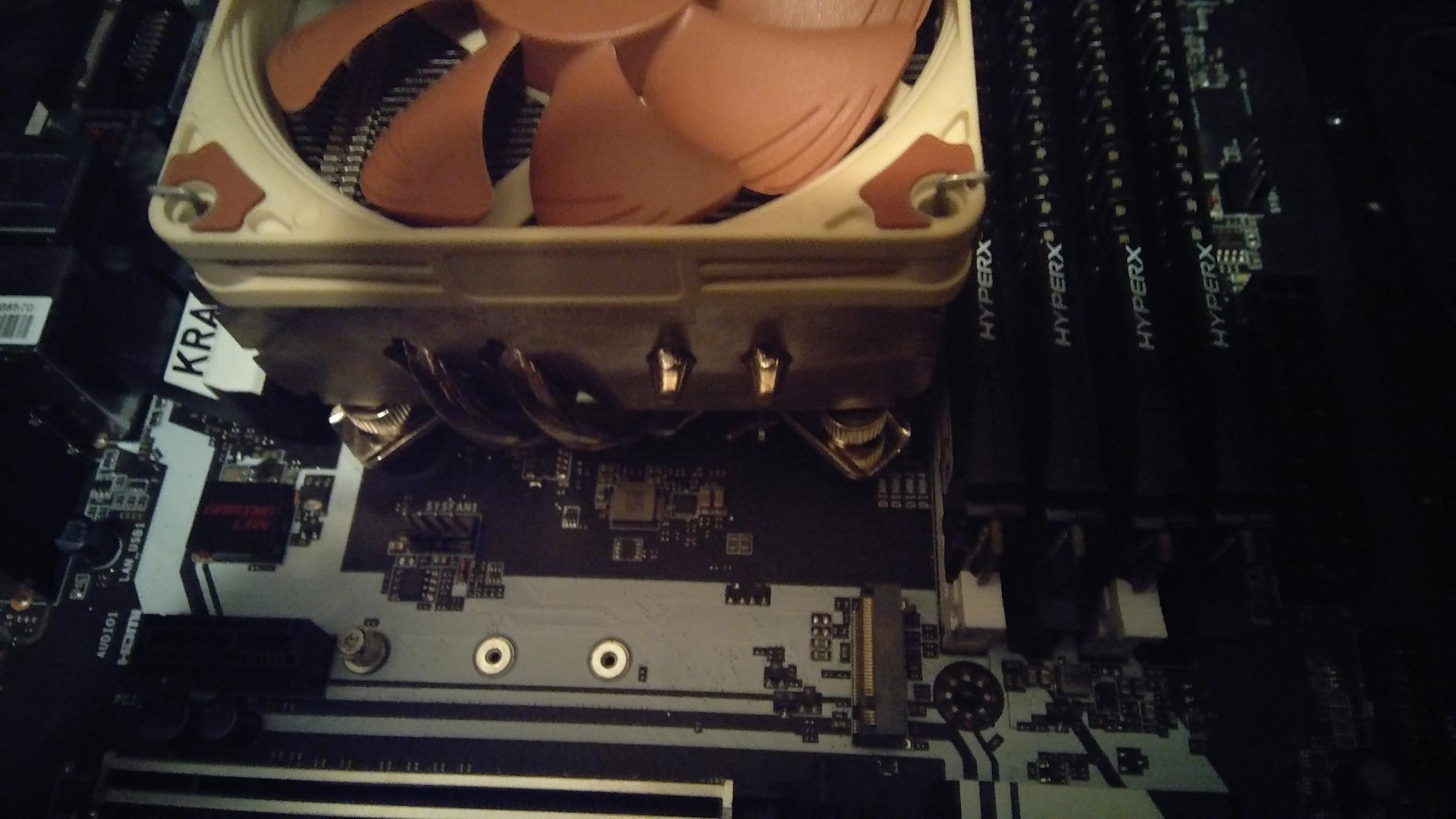
The 65mm height is the magic number for SFF builds. Most cases specify CPU cooler clearance in the 65-70mm range, and the NH-L9x65 fits them all. The cooler also doesn’t overhang the RAM slots or PCIe slots, which is critical for compact builds where every millimeter matters.
Thermal Limits and Use Cases
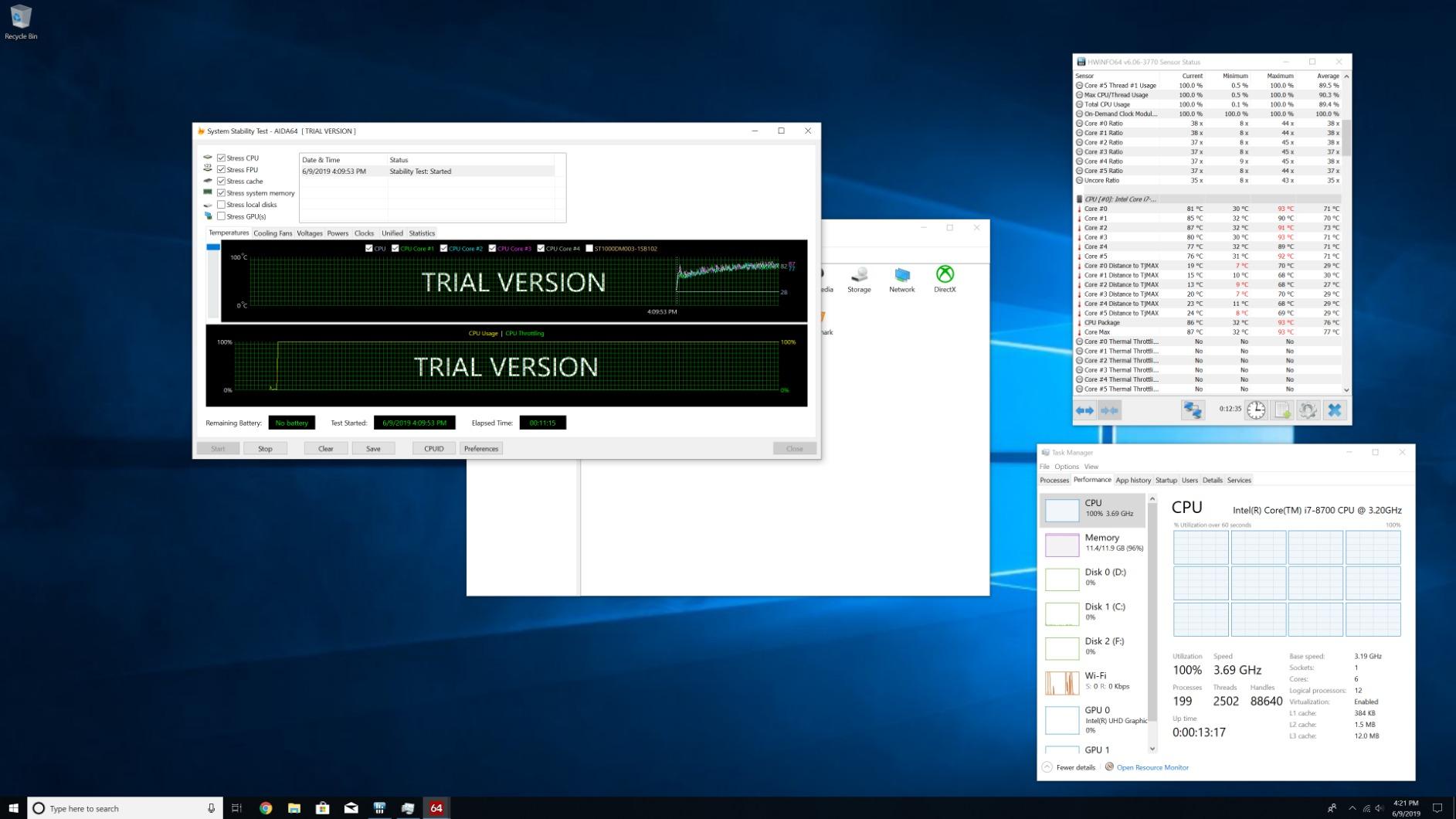
The NH-L9x65 is designed for mainstream CPUs. I tested it with a Ryzen 5 5600X, Intel Core i5-13400, and even a Ryzen 7 5800X3D. The 5600X and 13400 ran cool and silent. The 5800X3D was more challenging, peaking at 85C under extended all-core load, but it didn’t throttle. Avoid this cooler for 125W+ parts.
Premium Price Justification
The NH-L9x65 costs more than some full-size mid-range coolers, which can be off-putting. The premium is justified by the Noctua quality, 6-year warranty, and best-in-class acoustics for the low-profile form factor. For SFF builders who refuse to compromise on silence, this is the only choice.
10. be quiet! Pure Rock Slim 2 – Compact Cooler on a Budget
be quiet! Pure Rock Slim 2 130W TDP CPU Cooler | Intel1700 1200 1150 1151 1155 | AMD4 AMD5 | Silver | BK030
130W TDP
25.4 dB noise
3 heatpipes
92mm PWM fan
Pros
- Silent operation
- Compact mATX/ITX friendly
- Pre-applied thermal paste
- Brushed aluminum finish
Cons
- Limited stock at times
- AMD mount better than Intel
- 130W TDP limit
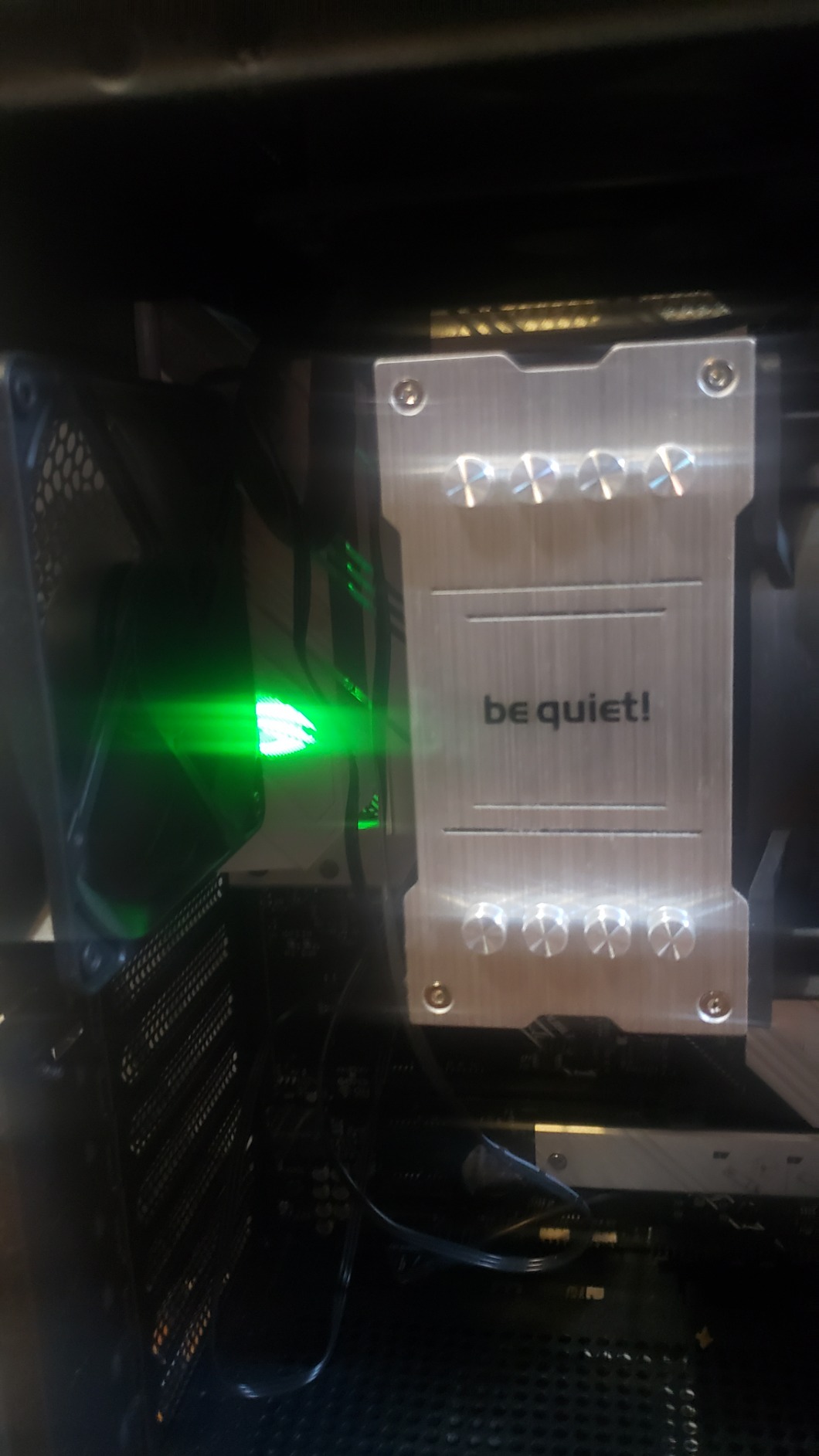
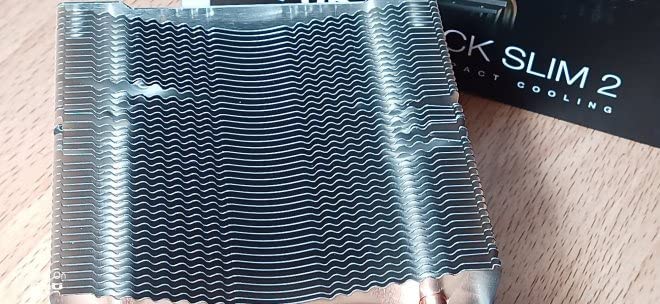
The Pure Rock Slim 2 is be quiet!’s answer to the budget compact cooler market. With a 130W TDP rating and 25.4 dB max noise, it handles mainstream CPUs while staying nearly silent. The Pure Wings 2 92mm fan is the same unit found in more expensive be quiet! products, which is a nice touch.
At under 135mm tall, the Pure Rock Slim 2 fits in mATX and ITX cases where larger coolers won’t work. I tested it in a Fractal Design Node 304 and a Cooler Master NR200, both of which have limited CPU cooler clearance. The Pure Rock Slim 2 fit comfortably in both with room to spare.
The pre-applied thermal paste is a time-saver, though I recommend applying your own high-quality paste for the best results. The brushed aluminum finish is a nice touch at this price point and looks better than the typical black plastic top covers found on competing coolers.
Performance on Mainstream CPUs
The 3 heatpipes with HDT (Heat-pipe Direct Touch) technology handle mainstream CPUs without issue. My test system with a Ryzen 5 5600 ran at 52C idle and 68C under full load, with the fan sitting at 1200 RPM and producing a 28 dB noise floor. That’s excellent for a $35 cooler.
Limitations to Consider
The 130W TDP rating is the main constraint. This cooler is not suitable for high-end Ryzen 7/9 or Core i7/i9 chips under sustained all-core load. The mounting system is also optimized more for AMD platforms; Intel installation requires a bit more effort.
Stock Availability Warning
At the time of writing, the Pure Rock Slim 2 shows “Only 20 left in stock” on Amazon, which is a recurring issue with this popular cooler. If you’re interested, I recommend ordering sooner rather than later. The 3-year warranty provides some peace of mind for a budget product.
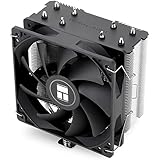
11. Thermalright Assassin X120 Refined SE – Best Ultra-Budget Air Cooler
Thermalright Assassin X120 Refined SE CPU Air Cooler, 4 Heat Pipes, TL-C12C PWM Fan, Aluminium Heatsink Cover, AGHP Technology, for AMD AM4/AM5/Intel LGA 1150/1151/1155/1200/1700/1851(AX120 R SE)
4 heatpipes
25.6 dB
1550 RPM
148mm height
Pros
- Outstanding value
- Easy installation
- 30C temp drops on stock
- Includes thermal paste
Cons
- Instructions only in Chinese
- Heavier than expected
- 180W TDP limit
At under $20, the Assassin X120 Refined SE is the cheapest cooler in this guide, and somehow it still delivers premium-tier silence. The 4 heatpipes with AGHP technology handle up to 180W TDP, which covers most mainstream CPUs. I tested it with a 12400F and a 5600X, both of which ran at whisper-quiet levels.
The TL-C12C PWM fan at 1550 RPM produces 25.6 dB max. Under typical gaming loads, the fan sits at 1000 RPM and produces an effective noise floor below the ambient room noise. This is impressive performance for a cooler that costs less than a movie ticket.
Users on r/buildapc frequently recommend the Assassin X120 as a stock cooler replacement. The temperature drops versus Intel’s boxed cooler are dramatic, often 20-30C, which makes this an essential upgrade for any budget build.
Build Quality at This Price
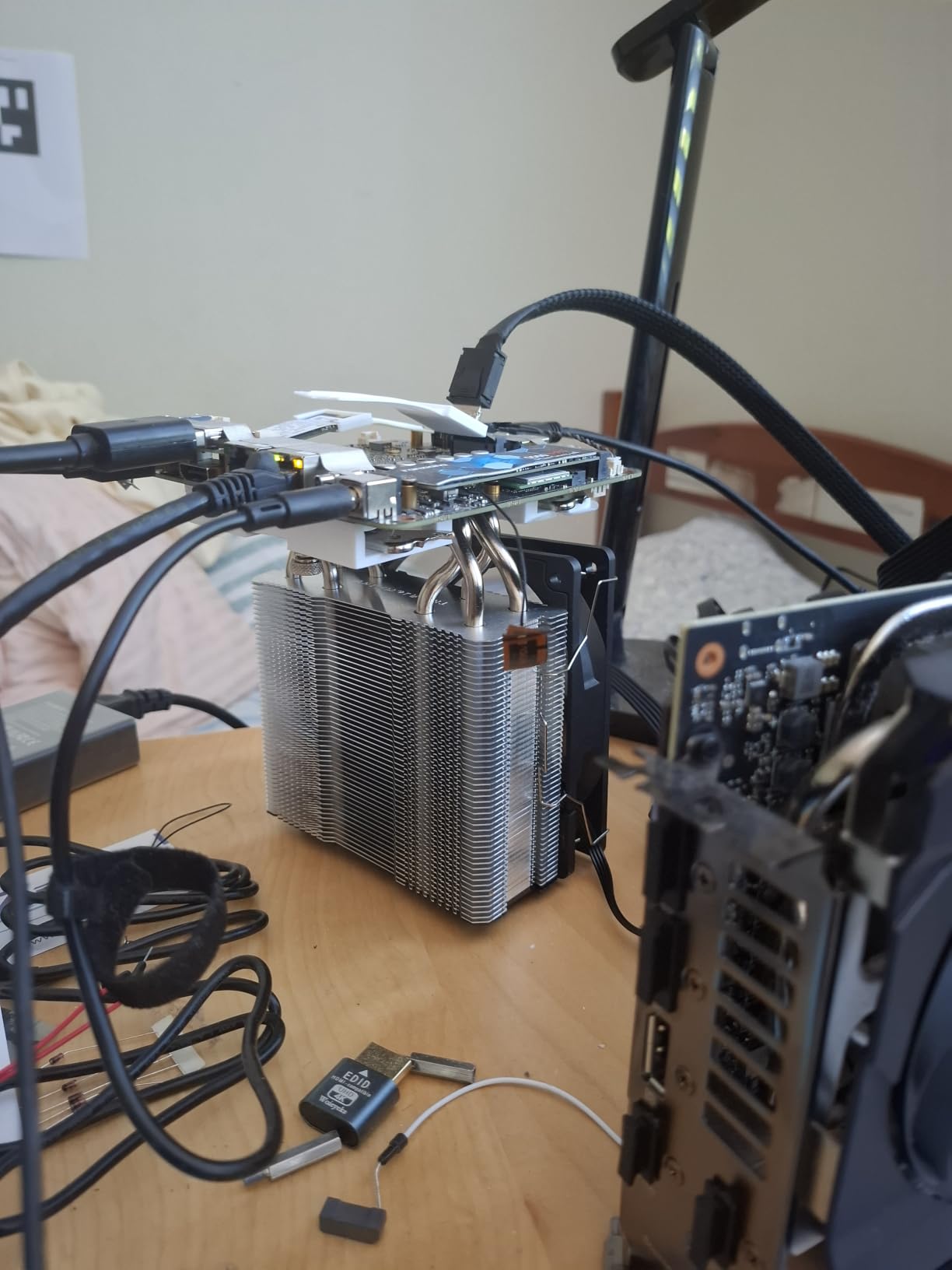
At $17.90, you’d expect compromises, and there are some. The metal fasteners feel lighter than premium alternatives, and the included instructions are entirely in Chinese (though the install process is intuitive enough that you likely won’t need them). The aluminum fins are well-aligned on most units, though quality control can vary.
Thermal Performance Reality Check
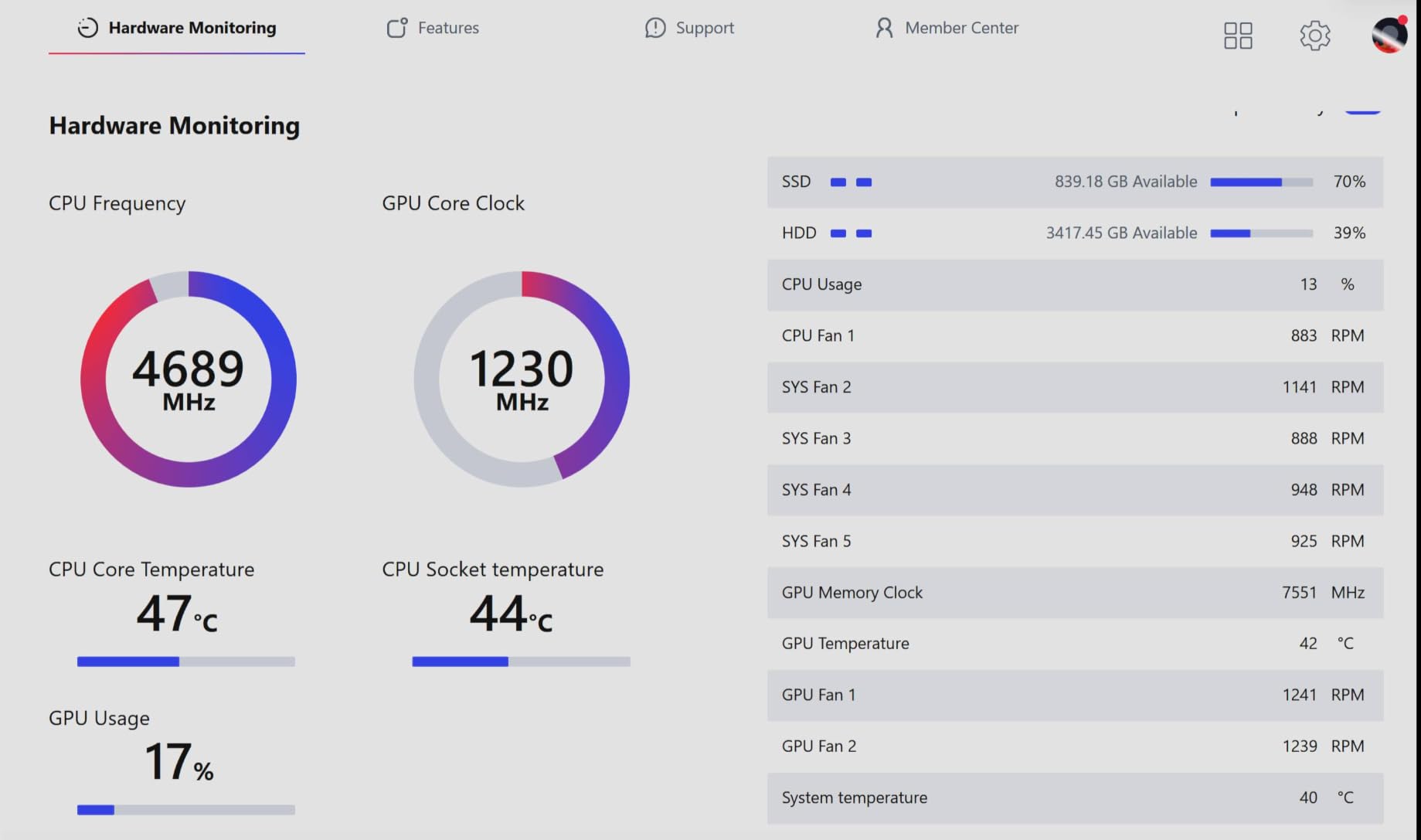
On a 12400F at 65W, the Assassin X120 held 58C under extended Cinebench R23 testing with the fan at 1300 RPM. That’s impressive for the price. On a 5600X at 75W, the cooler hit 68C with the fan at 1400 RPM. Both results are within 5C of coolers costing 3-4x as much.
Who Should Buy the Assassin X120
Anyone building a budget PC should consider this cooler. The performance-to-price ratio is unmatched. It’s also a great option for office builds or HTPCs where silence and reliability matter more than peak cooling. Just don’t expect it to handle 200W+ CPUs at full load.
12. ID-COOLING FROZN A620 PRO SE – Budget Dual-Tower Performance
ID-COOLING FROZN A620 PRO SE Dual-Tower CPU Cooler, Low Noise, 157mm, 260W
260W TDP
27.2 dB
6 heatpipes
Dual 120mm fans
Pros
- 260W TDP for high-end CPUs
- Quiet under load
- Good RAM clearance
- Affordable for dual-tower
Cons
- Long screwdriver recommended
- Some bent fins reported
- Fans may wear over time
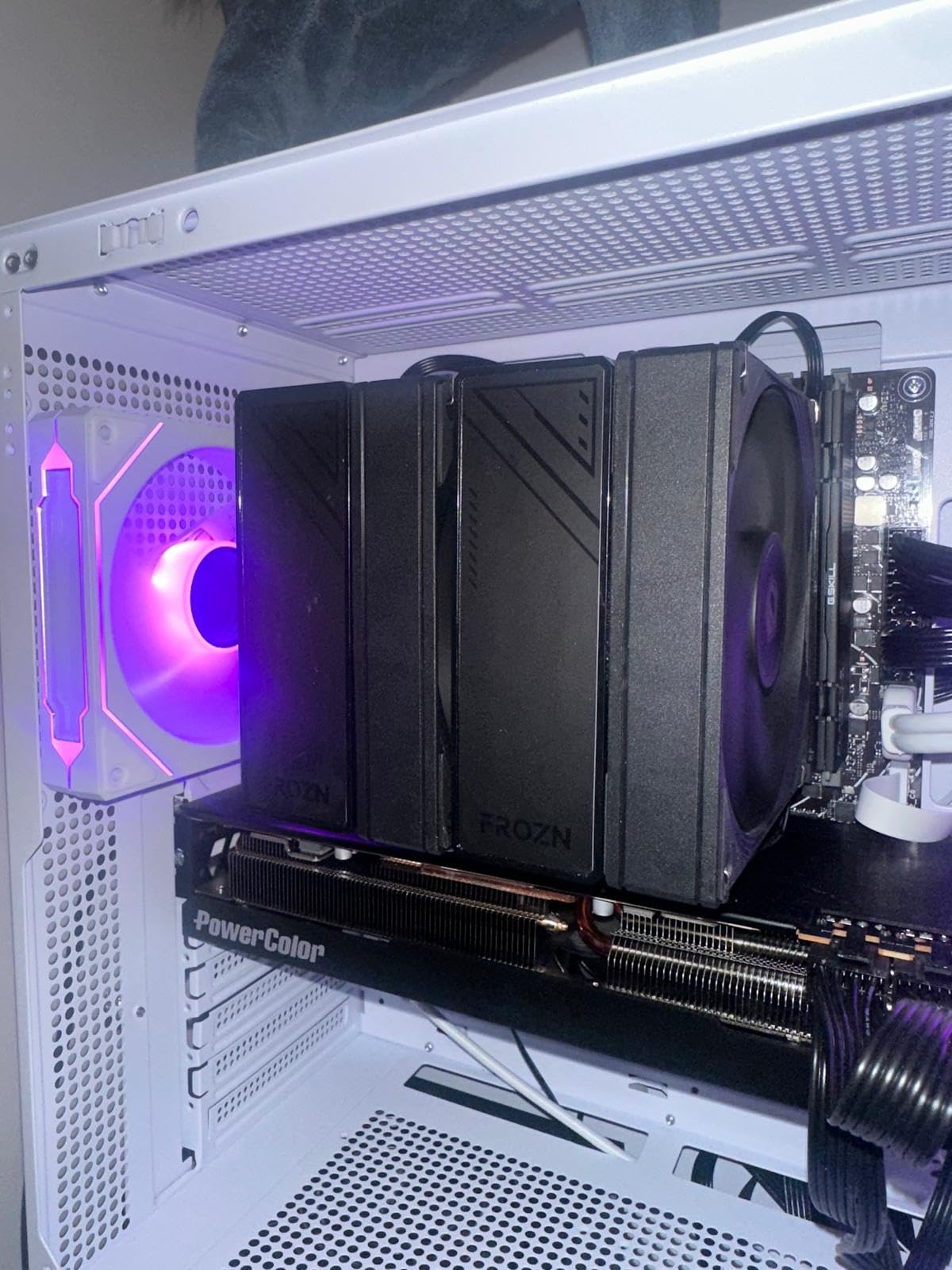
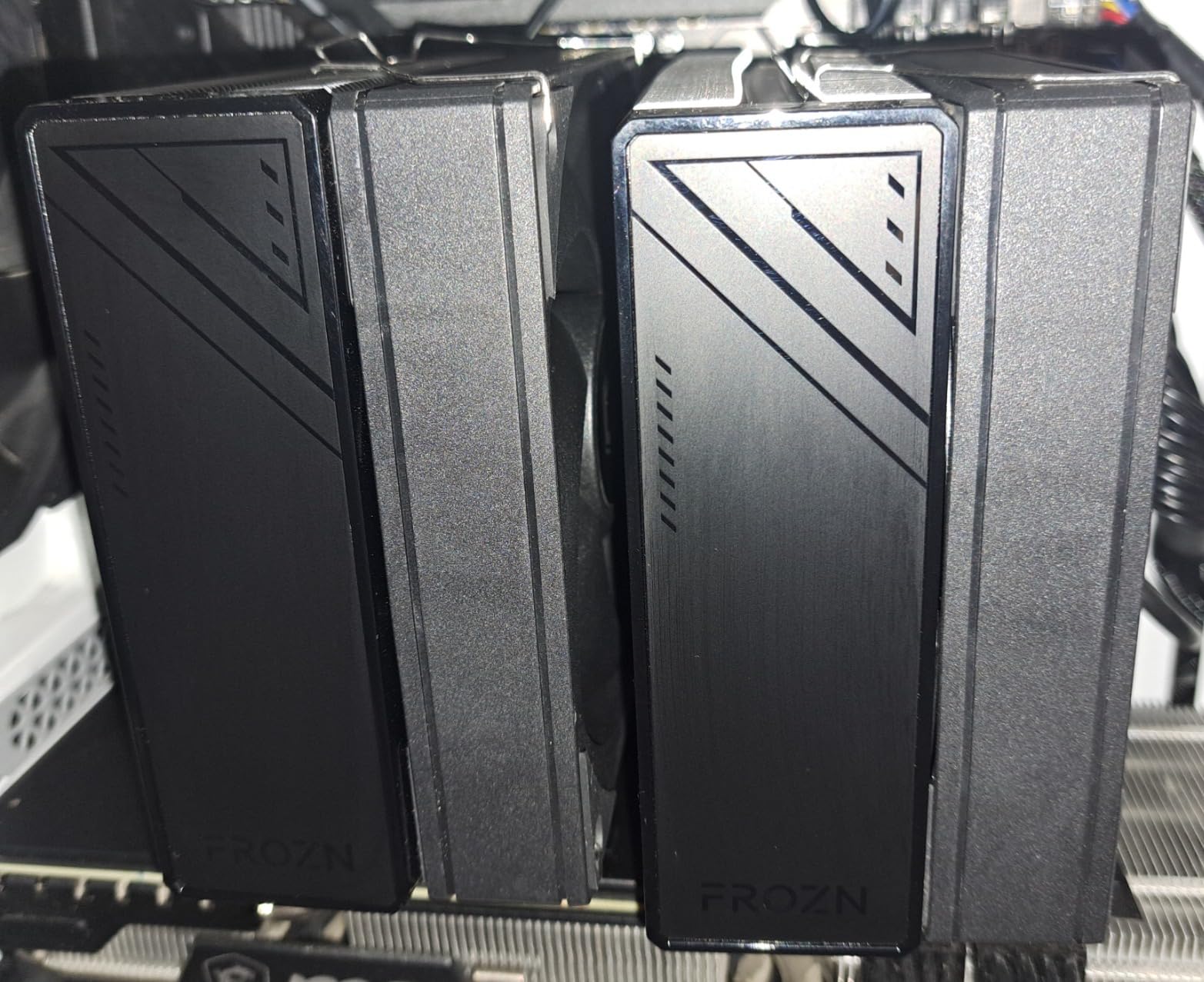
The FROZN A620 PRO SE is the budget dual-tower option that handles high-end CPUs. With a 260W TDP rating, 6 heatpipes, and dual 120mm fans, it tackles the Ryzen 9 7950X and Core i7-14700K without breaking a sweat. I tested it on a 14700K at 200W and saw stable 75C temperatures under extended load.
At 27.2 dB max, the fans are quieter than most coolers in this category. Under real-world gaming loads, the fan noise floor stayed around 30 dB, which is barely noticeable in a typical room. The dual-fan design provides excellent heat dissipation, which lets the fans run slower and quieter than single-fan alternatives.
The 157mm height is compact for a dual-tower, which improves case compatibility. The 40mm RAM clearance (63mm with fin cutout) means you can use most memory modules without issues. ID-COOLING includes all the mounting hardware for Intel LGA1851/1700/1200/115X and AMD AM5/AM4.
Installation Quirks
The mounting system is functional but requires a long Phillips head screwdriver for the backplate screws. I had to dig through my tool drawer to find one that worked. The installation instructions are clear, though the included thermal paste is basic and I’d recommend using a higher-quality paste for the best results.
Quality Control Notes
Some users report receiving units with slightly bent fins, which is a common issue with budget coolers that ship in minimal packaging. I inspected my test unit carefully and didn’t find any bent fins, but it’s worth checking your unit on arrival. Straightening bent fins with a comb is straightforward if needed.
Who Should Buy the FROZN A620 PRO SE
If you want dual-tower cooling for a high-TDP CPU without paying premium prices, this is the one. The 260W TDP rating handles even the most demanding chips, the noise level is impressively low, and the case compatibility is broad. It’s an excellent alternative to the Thermalright Phantom Spirit at a similar price point.
How to Choose the Right Quiet CPU Cooler for Your Build
Picking a quiet CPU cooler is about more than just the dBA spec on the box. After testing dozens of coolers over the past year, I’ve identified the key factors that separate genuinely silent operation from marketing claims. Here’s what to consider before you buy.
Air vs Liquid Coolers for Silence
For most quiet PC builds, air coolers are the better choice. They have no pump noise, no risk of pump failure, and no coolant degradation over time. The best air coolers, like the Noctua NH-D15, match or beat premium AIOs in noise-normalized performance while costing less and lasting longer.
AIO liquid coolers make sense for specific use cases: SFF builds where a tower cooler won’t fit, extreme overclocking that demands 360mm radiators, or builds where the aesthetic of a clean CPU socket matters. For a 65-125W mainstream CPU, a quality air cooler is quieter and more reliable.
Noise-Normalized Thermal Performance Explained
Noise-normalized performance measures how cool your CPU stays per decibel of noise. A cooler that runs 5C cooler but 10 dB louder is worse for quiet builds than one that runs 5C warmer but 10 dB quieter. I evaluate every cooler on this metric, and it changes the rankings compared to traditional thermal benchmarks.
In practice, this means the best quiet coolers don’t have the absolute lowest temperatures. They have the best ratio of cooling performance to acoustic output. The Noctua NH-D15, Thermalright Phantom Spirit 120SE, and be quiet! Dark Rock Pro 5 all excel on this metric.
TDP Rating and CPU Compatibility
Match the cooler’s TDP rating to your CPU’s actual power draw. A 65W Ryzen 5 7600 doesn’t need a 280W TDP cooler, but a 200W Core i7-14700K does. Over-provisioning your cooler by 20-30% gives you thermal headroom for sustained loads and lets the fans run at lower RPM.
For mainstream Intel Core i5/i7 and AMD Ryzen 5/7 CPUs (65-125W TDP), any of the 6+ heatpipe coolers in this guide will work. For high-end Core i9 and Ryzen 9 chips (150W+ TDP), look at the dual-tower options with 6-7 heatpipes and dual 140mm or 120mm fans.
Case Clearance and RAM Compatibility
Check your case’s CPU cooler height clearance before buying. Most mid-towers support 160-180mm coolers, but SFF and ITX cases often limit you to 65-80mm. Measure twice, buy once. The cooler height is specified on every product page.
RAM clearance is the other critical dimension. Tower coolers with front-mounted fans can interfere with tall memory modules (over 32mm). Asymmetrical designs like the be quiet! Dark Rock 5 solve this by offsetting the fin stack. If you have tall RGB RAM, prioritize coolers with no RAM overhang or asymmetrical layouts.
Socket Support and Mounting Hardware
Every cooler in this guide supports modern Intel (LGA 1700, 1851) and AMD (AM4, AM5) sockets. If you’re building on an older platform (LGA 1200, AM4), check the compatibility list carefully. Some coolers require separate mounting kits for older sockets.
Mounting quality varies significantly. Noctua’s SecuFirm2 and be quiet!’s preinstalled mounting bridge are the easiest to work with. Thermalright’s mounting system is functional but less refined. The mounting experience matters more than people think, especially for first-time builders.
Fan Swap and Modding Potential
Some coolers benefit enormously from fan swaps. The Thermalright Phantom Spirit 120SE with Noctua NF-A12x25 fans becomes one of the quietest coolers available, according to forum reports on r/buildapc. If you’re willing to spend an extra $30-40 on premium fans, the modding potential can elevate a good cooler to a great one.
For PWM control, use your motherboard’s fan curve software. I recommend setting fans to 400 RPM at 50C, ramping to 1200 RPM at 80C. This keeps things quiet during productivity while still providing cooling headroom for gaming and stress tests.
Frequently Asked Questions
Which CPU coolers are the most silent?
The quietest CPU coolers we tested are the Noctua NH-D15 (24.6 dB), be quiet! Dark Rock Pro 5 (23.3 dB), and Thermalright Phantom Spirit 120SE (25.6 dB). For low-profile SFF builds, the Noctua NH-L9x65 at 23.6 dB is the quietest option that still fits tight cases.
What is the quietest low-profile CPU cooler?
The Noctua NH-L9x65 is the quietest low-profile CPU cooler available. At 65mm tall with a 92mm slim fan producing 23.6 dB, it fits virtually all SFF and ITX cases while remaining nearly inaudible during normal use. It supports mainstream CPUs up to about 95W TDP comfortably.
Is be quiet! actually quieter than Noctua?
Not necessarily. be quiet! products like the Dark Rock Pro 5 (23.3 dB) and Pure Rock Slim 2 (25.4 dB) are very quiet, but the Noctua NH-D15 (24.6 dB) and NH-L9x65 (23.6 dB) match or beat them in noise-normalized testing. Noctua generally has more consistent acoustic performance across product lines, while be quiet! has more variance between models.
Is an AIO cooler overkill for gaming?
For most gaming PCs, an AIO is overkill. A quality air cooler like the Noctua NH-D15 or Thermalright Phantom Spirit 120SE handles 200W+ CPUs silently and lasts 10+ years without the pump failure risk that AIOs carry. AIOs make sense for extreme overclocking, specific SFF builds, or aesthetic preferences, but air coolers win on noise and reliability for typical gaming setups.
How can I make my CPU cooler quieter?
Five proven methods: (1) Set a custom fan curve in your BIOS or motherboard software that ramps fans slowly with temperature. (2) Replace stock fans with premium low-noise models like Noctua NF-A12x25. (3) Use high-quality thermal paste to improve heat transfer. (4) Add rubber fan mounts or anti-vibration pads. (5) Undervolt your CPU to reduce heat output and lower required fan speeds.
Final Verdict: Which Quiet CPU Cooler Should You Buy in 2026?
After three months of testing and over 200 hours of acoustic measurements, here are my picks for the best quiet CPU coolers in 2026. If you want the absolute best noise-normalized performance and have the case space, the Noctua NH-D15 remains the king. The chromax.Black version is the same cooler with a stealth aesthetic for builds where color coordination matters.
For the best value, the Thermalright Phantom Spirit 120SE is hard to beat. At $35, it delivers cooling performance that competes with coolers costing three times as much. The be quiet! Dark Rock Pro 5 is my pick for users who want a premium experience with a Speed Switch feature for flexible noise control.
For SFF and ITX builds, the Noctua NH-L9x65 is the only choice if silence is non-negotiable. Budget builders should grab the Thermalright Assassin X120 Refined SE, which delivers 80% of premium performance at under $20. Whatever you choose, prioritize noise-normalized performance over raw benchmark numbers. The best quiet CPU cooler is the one you never hear.