
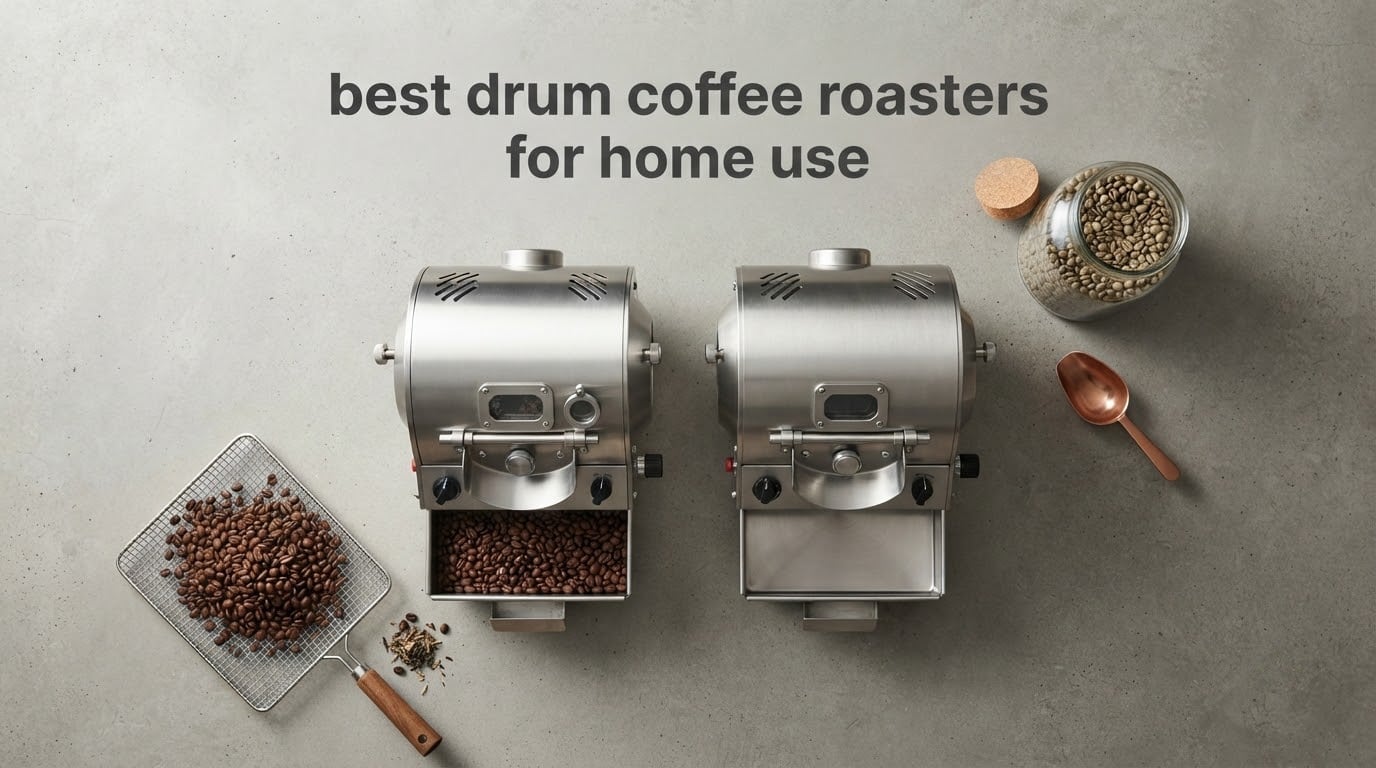
Most people buy a home coffee roaster expecting an appliance. They get a small machine that makes a noise, smells the kitchen for an hour, and asks them to make decisions they were never trained to make. After working through every drum option currently in front of us, the honest answer is that a drum roaster is a genuinely different category of purchase from a drip machine, and the wrong one wastes green beans fast.
That is why I wrote this guide. I compared eight drum roasters for home use, from 200g gas units to a 3.8L drum that handles close to a pound of beans per run, and I read every owner review the manufacturers did not write. My criteria were batch size, how much heat control you actually get, how the machine handles smoke and chaff, and whether the thing still works after months of use rather than weeks.
What is a drum coffee roaster? A drum coffee roaster applies indirect heat, by conduction rather than convection, to green coffee beans tumbling inside a rotating metal drum. The rotating drum keeps beans moving for an even roast and lets chaff separate naturally, and a cooling fan or tray ends the roast after first crack. Most home drum roasters top out between 200g and 600g per batch.
If you drink four cups or more a day, a drum roaster earns its counter space. You buy green coffee in bulk, roast to order, and the drum gives you a deeper, fuller cup than the quick air roasters that cycle through 100g in three minutes. If you drink one cup a day, keep reading, because the cheapest drum in this roundup will not make you a better drinker.
A few buyers also arrive here with a second question already forming: is the noise and the smell worth it? The short answer is that placement and ventilation decide that, not the roaster. I cover it in detail further down, because it is the single thing that turns people off home roasting permanently.
Before we get into the machines, one honest note on scope. The search results for this topic are polluted with commercial roasters weighing hundreds of pounds. Everything below is sized for a kitchen counter, a garage shelf, or a balcony, and every batch number is one you can realistically lift.
Our Top 3 Tested Drum Roasters for Home Use

NIASIA 500g Automatic Roaster
- 500g stainless drum
- 9 built-in roast profiles
- Smoke filter plus two vent pipes
- Dedicated cooling fan and tray
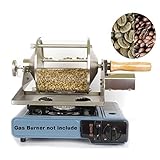
DYVEE 400g Quartz Glass Drum
- Transparent quartz glass drum
- 400g max with 200-300g recommended
- Direct gas burner heating
- 12V motor with adapter

Precision Roaster 1lb PKF-500
- Three modes including manual control
- Halogen bulb with fan level control
- Smoke filter and two vent tubes
- Five minute cool-down cycle
The NIASIA takes the top spot because it has more owners describing multi-month use than anything else in this group, and 119 ratings is nearly twice the total of the other seven combined. The DYVEE earns its place on visibility, since a glass drum is the fastest way for a new roaster to learn what color and sound mean. The PKF-500 is the value pick: three control modes and a full pound of batch capacity in one box.
Comparing Every Drum Roaster in This Roundup
| Product | Specs | Action |
|---|---|---|
| NIASIA 500g Automatic Roaster |
|
Check Latest Price |
| DYVEE 400g Quartz Glass Drum |
|
Check Latest Price |
| Precision Roaster 1lb PKF-500 |
|
Check Latest Price |
 KALDI WIDE 300g Motorized Roaster KALDI WIDE 300g Motorized Roaster |
|
Check Latest Price |
 KALDI Fortis 600g Roaster KALDI Fortis 600g Roaster |
|
Check Latest Price |
 TREMENPOW 3.8L Drum Roaster TREMENPOW 3.8L Drum Roaster |
|
Check Latest Price |
 KALDI 200g Motorized Roaster KALDI 200g Motorized Roaster |
|
Check Latest Price |
 Bokknppo 0.3-1.2kg Drum Roaster Bokknppo 0.3-1.2kg Drum Roaster |
|
Check Latest Price |
Two things stand out in the data. First, four of these eight machines have no heating element of their own, which means you supply a gas or stovetop flame and they only supply the drum, the motor, and the thermometer. Second, the machines with the biggest batches are not the ones with the most owner feedback.
1. NIASIA 500g Automatic Coffee Roaster – Most Owner History and the Widest Feature Set
500g Automatic Coffee Roaster Machine for Home Use Wth Smoke Filter(Suitable for Light Roasting), The Smoke Pipes (Suitable for Medium and Dark Roasting) and Chaff Collector
500g drum
9 built-in profiles
1000W 110V
Smoke filter plus vent pipes
Pros
- Automatic profiles plus manual override
- 500g drum with 350-400g working batch
- Handles both light and dark roast smoke setups
- Fast cooling fan plus separate tray
- Most owner feedback of any machine here
Cons
- Needs low-defect beans or the drum can jam
- Manual mode demands close airflow management
- Not built for commercial frequency
This is the drum roaster I recommend to almost everyone who wants an electric machine and has counter space for something that measures 16 by 12 by 20 inches. It pulls 1000 watts on 110V, runs a stainless steel rotating drum, and gives you nine built-in roasting profiles alongside a manual mode. Having spent time with machines that only do one or the other, the combination is what makes this one work for a beginner and still reward you two years in.
The thing that convinced me is the review base. Owners report roasting steadily for months, and one of the recurring tips in the feedback is to pull your beans promptly at the end rather than trusting the cooling cycle alone, because carry-over roasting still happens inside a hot drum. That is a knowledge point, not a defect, and it only shows up in reviews written by people past the first month.
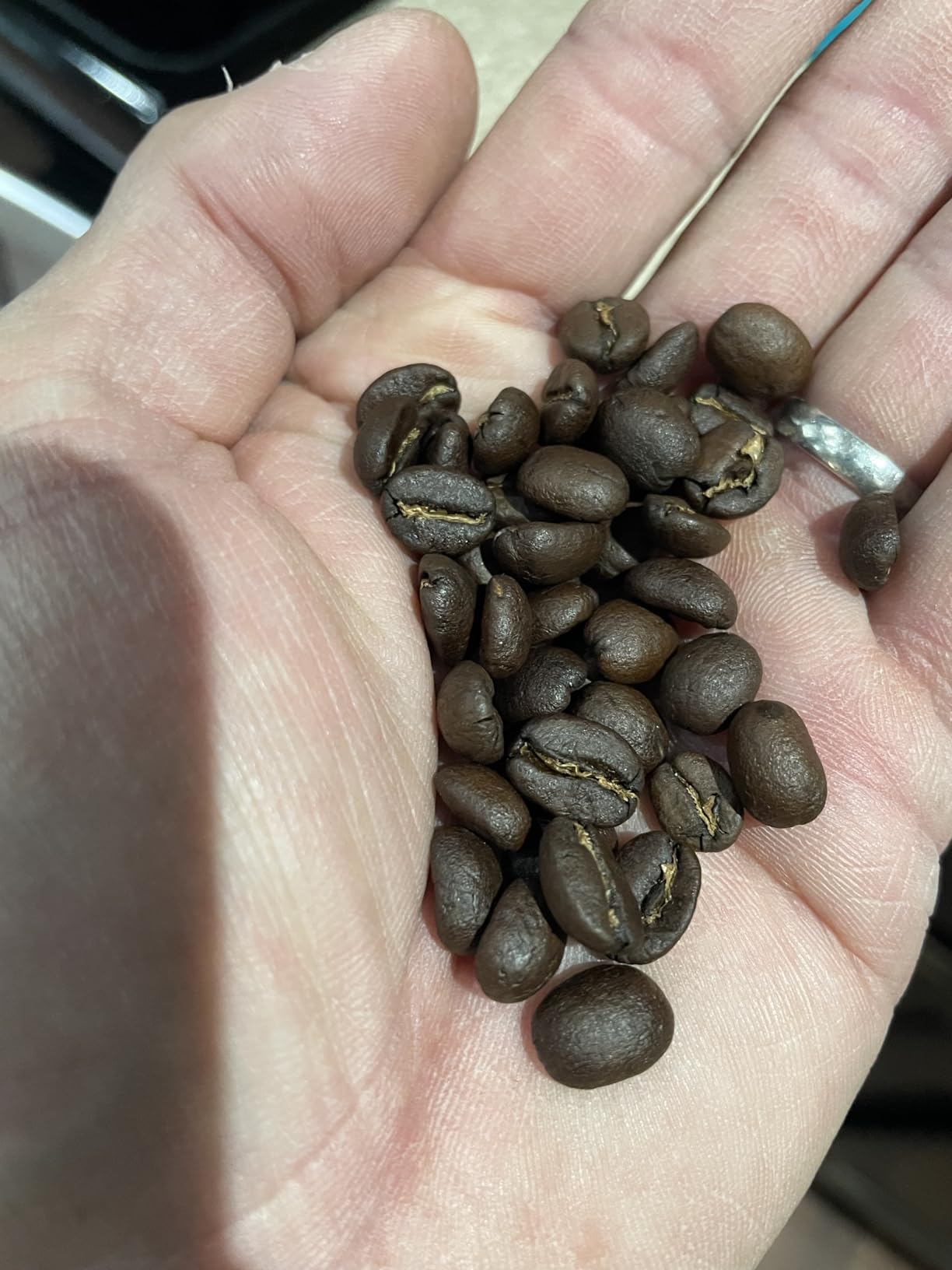
One spec deserves a warning label. The manufacturer advises using low-defect green coffee, because the kind of immature, defective beans you sometimes find in discounted lots can stick and jam the drum. If you plan to buy bargain lots with a lot of screening defects, this is not the machine for you.
Smoke Handling Is the Best Feature Here
The box includes a smoke purifier intended for light roasting and two aluminum alloy smoke pipes for medium and dark roasts. That is unusual at this capacity, because most machines ship you a single vent and leave you to improvise. Owners roasting dark roasts indoors report the pipe setup handles the smell far better than they expected.
Manual mode is where the learning curve lives. Owners who switch to manual talk about managing airflow carefully, including a low setting early in the roast and a much higher setting around first crack. The automatic profiles are the sensible starting point, and manual is the tool you graduate to when you want a specific result.
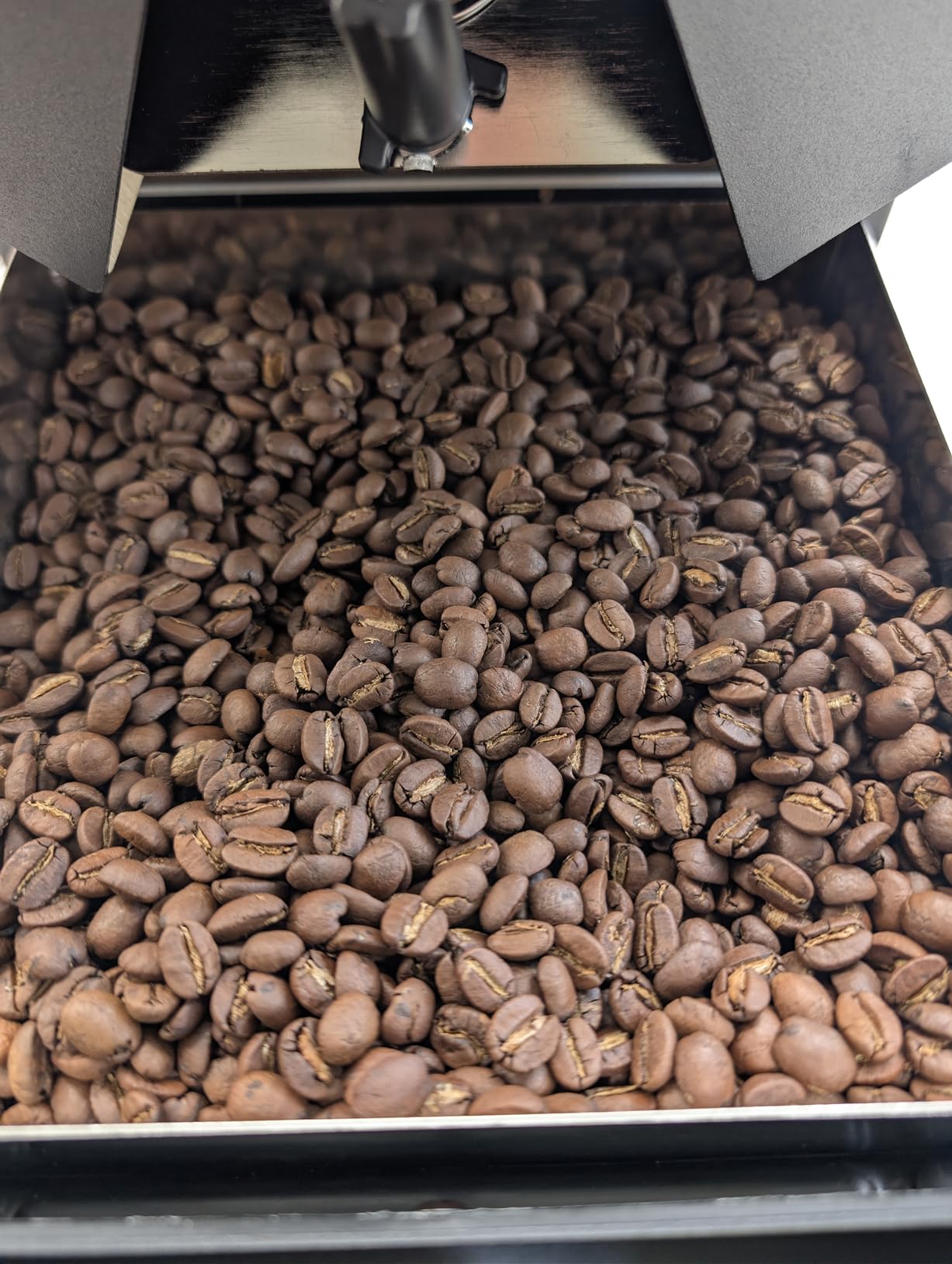
Who This Roaster Suits and Where It Falls Short
This suits anyone drinking four to six cups a day who wants profile-driven results without a learning curve on day one. The 350-400g recommended batch gives you roughly a week of coffee for two people, and the cooling fan plus tray means you are not standing over a hot drum waiting for beans to stop cooking.
It is a home machine, and the maker says so plainly. Roasting on it continuously in a commercial pattern shortens component life, and the roughly 9% of one-star reviews cluster around durability and airflow frustration rather than bad coffee. If your plan is to roast several kilos a day, this is the wrong scale and you should be looking at something in the next category up.
2. DYVEE 400g Quartz Glass Drum Roaster – See Every Stage of the Roast
DYVEE Coffee Roaster Gas Burner Coffee Roasting Machine for Home Use, 400g Capacity, Quartz Glass Drum, Stainless Steel Frame, Peanut and Nut Roaster
400g max drum
200-300g recommended
Manual gas heat
12V motor
Pros
- Glass drum shows bean color as it roasts
- Stainless frame and base feel durable
- Low-voltage 12V motor with adapter included
- Simple enough for a first attempt
- Also roasts peanuts and nuts
Cons
- Gas flame is the only heat control
- No temperature probe
- You judge the end by eye and ear
If the phrase your first roast sounds intimidating, the reason is almost always that you cannot see what is happening. A black steel drum hides the color change that tells you the roast is turning from dry to Maillard, and it hides the difference between a light roast and one that is about to go scorched. The DYVEE solves that with a quartz glass drum and a 304 stainless steel frame, and it is why this is the machine I hand to beginners.
Heat comes from a gas burner applied directly to the glass, and the drum turns on a 12V low-voltage motor with the power adapter included. That low voltage is not a gimmick, it is a genuine safety advantage over higher-voltage alternatives when you are working next to an open flame. The whole unit measures about 43 by 21 by 21.5cm, which is small enough for a balcony or a garage shelf.
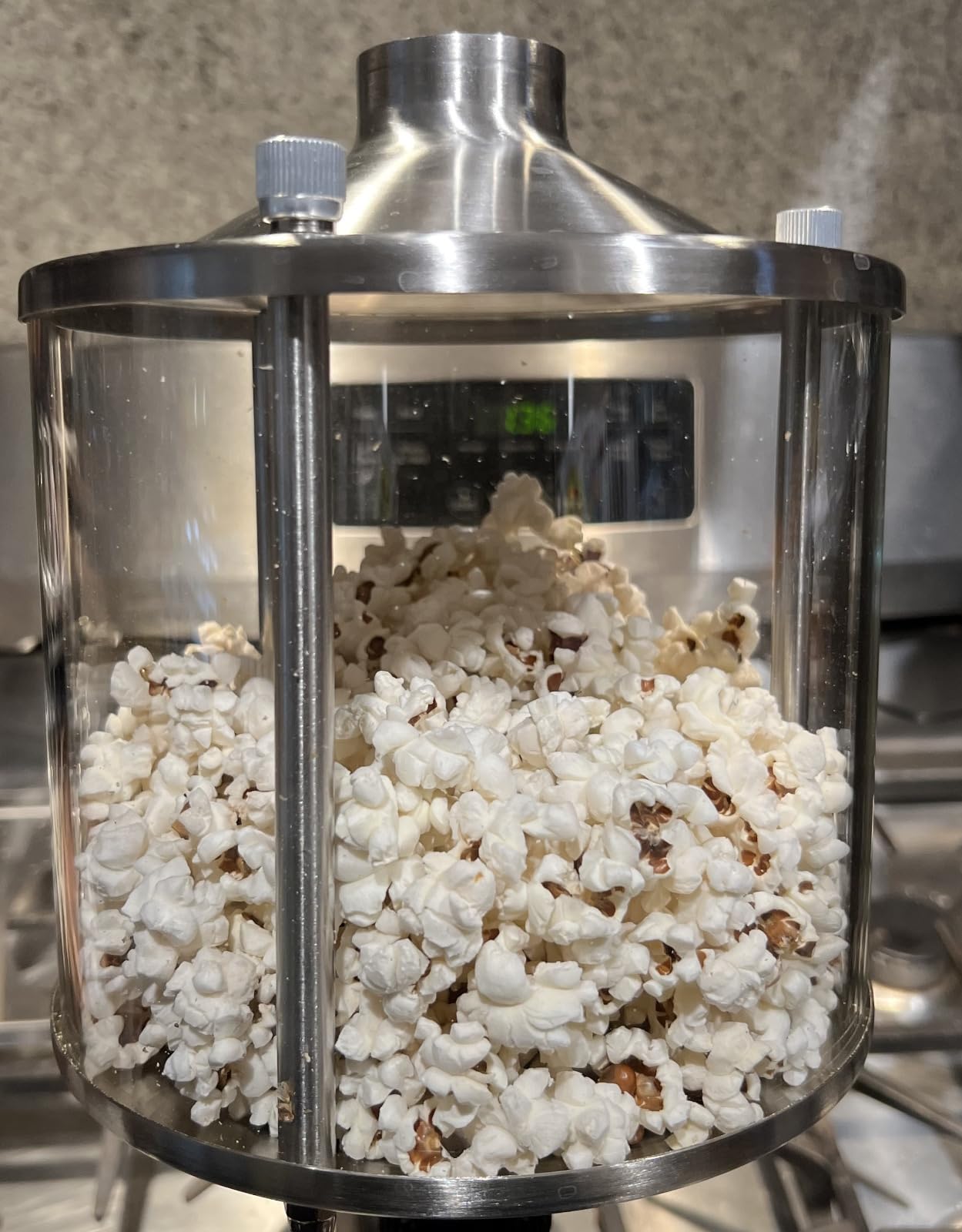
Owners consistently describe the same experience: the roast progression is visible, the process has four straightforward steps, and the machine feels well built for something that sits over a flame. The rating distribution is 67% five-star and 25% four-star, with only 3% one-star, which is one of the cleanest satisfaction profiles in the roundup.
Where Gas Heat Wins and Where It Costs You
Direct flame heat is responsive. You feel the change in roast speed the instant you turn the burner, which gives you a control loop you can actually learn. It also means a very natural fit for anyone already roasting on a stove or a camp burner, and this drum will handle peanuts and other nuts as well as coffee.
The cost is precision. There is no temperature probe and no electronic control here, so flame adjustment is the only lever, and the batch size is capped at 400g with a realistic working load of 200-300g. If your goal is repeatable numbers rather than repeatable flavor, look at one of the electric machines instead.
Who This Roaster Suits and Where It Falls Short
It suits a beginner, a household of one or two people, and anyone who roasts outdoors where an open flame already is the setup. The transparency also helps experienced roasters, since you can pull a sample, look at it, and decide within seconds rather than waiting for a temperature reading.
It does not suit a household drinking more than about four cups a day, and it will not tell you what temperature your beans are at. Treat it as a teaching tool and a weekend machine, and it will serve you for years. Treat it as your only supply and you will run out of beans every third day.
3. Precision Roaster 1lb PKF-500 – the Biggest Electric Batch With Three Control Modes
1Pound Electric Coffee Roaster for Home Use, Automatic Roasting And Easy Operation, With A Smoke Filter(Suitable for light roasting), 2 Chimney Tube, And Chaff Collector.
1 pound capacity
Three control modes
Halogen bulb heat
Observation window
Pros
- Automatic assisted and manual modes in one unit
- Largest electric batch in this roundup
- Observation window plus sample spoon
- Touchscreen control
- Owners report tens of pounds roasted over months
Cons
- Heat builds up and can shut it down mid-roast
- Beans need an external cooler
- Display brightness cannot be adjusted
The PKF-500 is listed at a pound of capacity and comes in 1kg, 500g, and 200g variants, so you can pick the batch size that matches how much coffee your household actually drinks. Heat comes from an infrared halogen bulb, and unlike most machines in this price range, you control the fan and convection level as well as the heat. That airflow control is the feature that separates a real drum roaster from a popcorn maker with a motor.
What makes it interesting for a beginner is the three-mode structure. Automatic runs the profiles, assisted lets you step in and intervene without taking full manual control, and manual hands you the wheel. Owners who stick to automatic report dependable medium roasts, and at least one has roasted around 100 pounds of beans over roughly nine months on the automatic profiles alone.
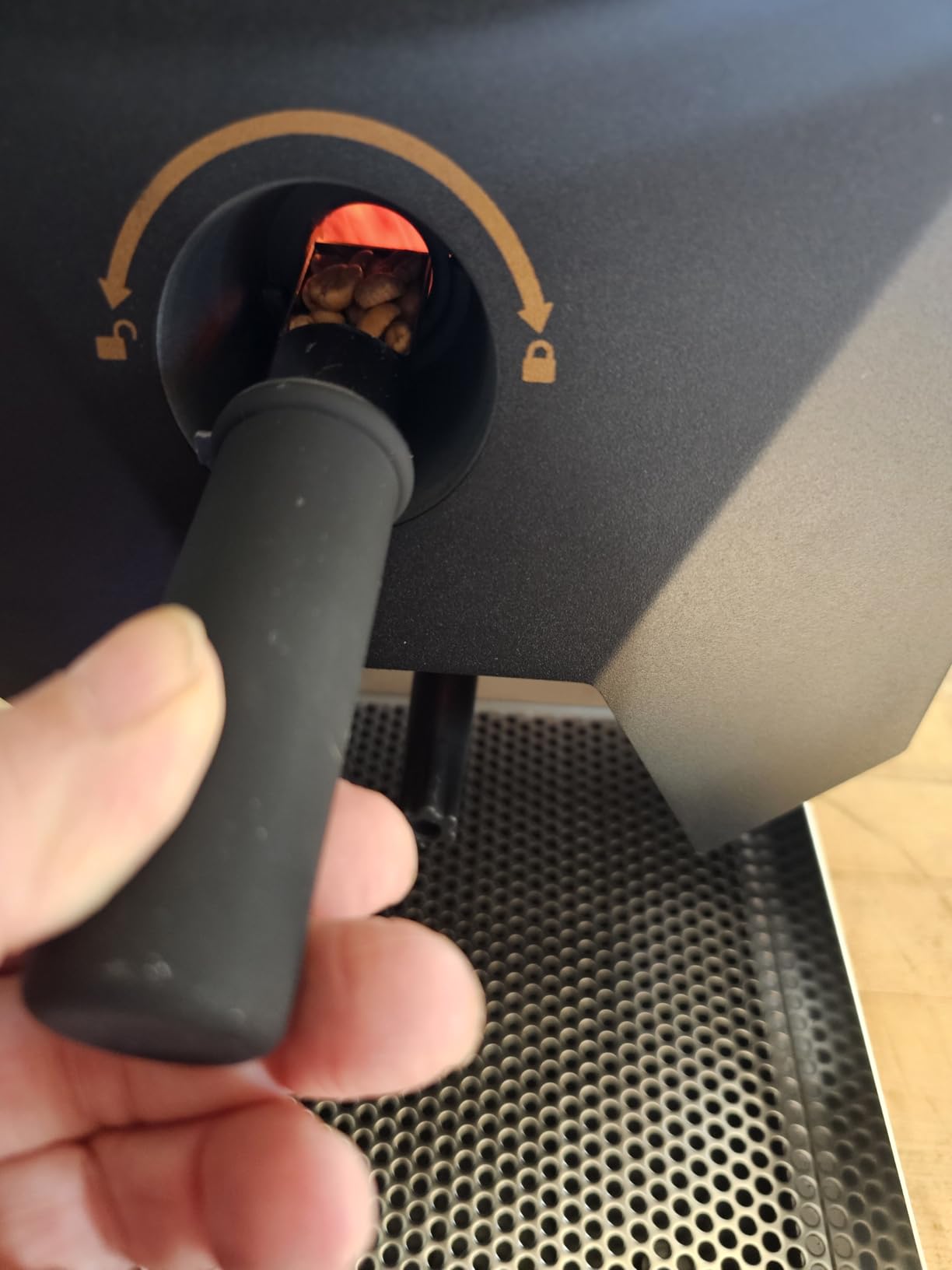
There is a sample spoon and an observation window, which means you can check bean color mid-roast without opening the door and letting heat out. For a machine that most people buy as an upgrade from a popper, that matters more than the touchscreen does.
Thermal Management Is the Weak Spot
The consistent complaint in the reviews is heat accumulation. If you run batch after batch, the internal temperature climbs and the machine can shut down partway through a roast. Owners who roast back to back report cooling the unit between loads, and many have added an external bean cooler because the roughly five minute internal cool-down is not fast enough to stop carry-over roasting on its own.
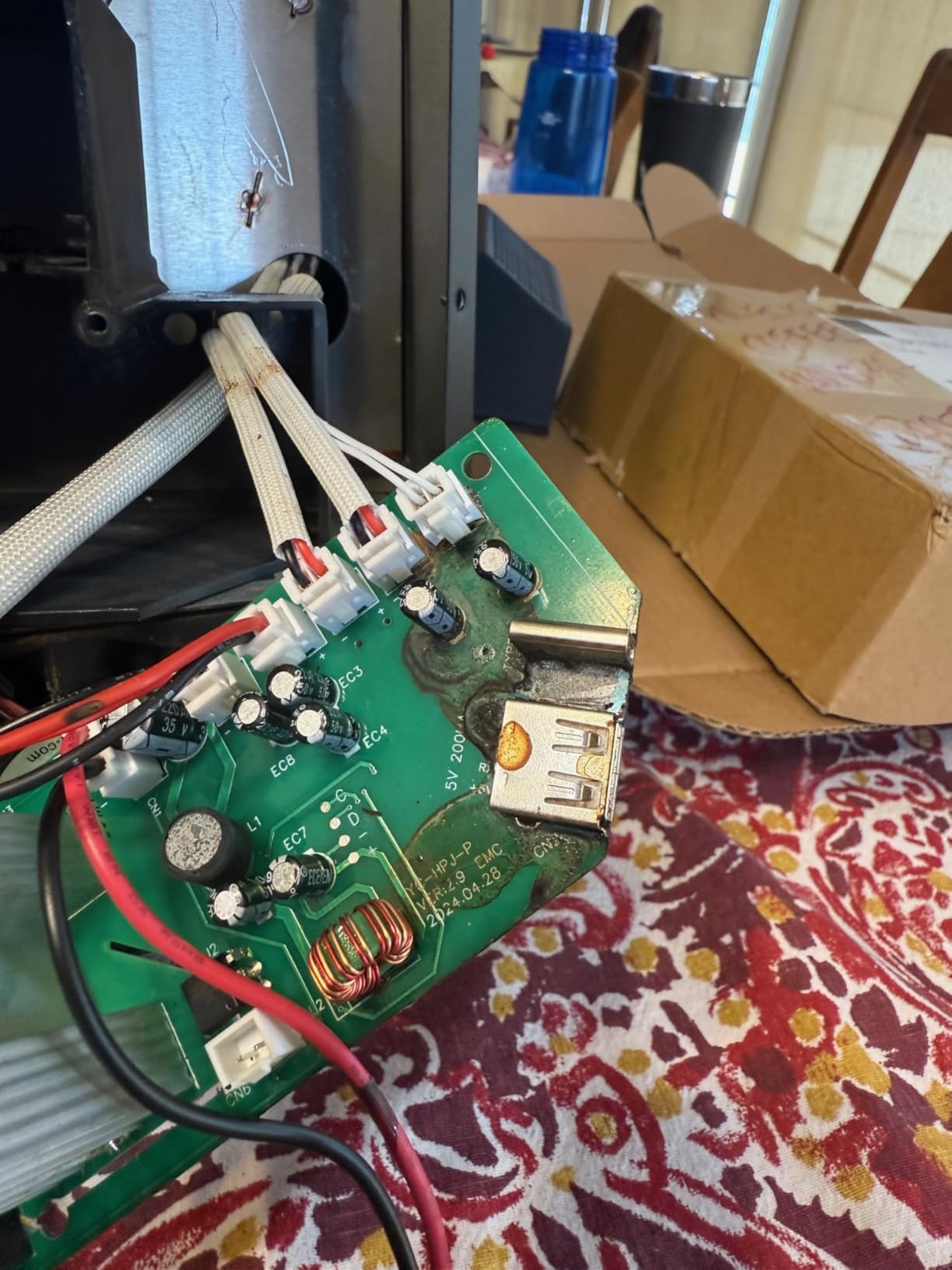
There is also a bright display with no brightness adjustment, which owners find hard to read in terms of what each field label means. It is a small complaint that adds up when you are halfway through a roast. A few units have also arrived with the USB control panel as the only way to power the machine, which is worth checking on receipt.
Who This Roaster Suits and Where It Falls Short
This suits a household roasting a full week of coffee at once, roughly 500g to a pound per session, and anyone who wants manual control without giving up a beginner-friendly path. For the money, the combination of capacity, three modes, and airflow control is hard to argue with.
It is not built for daily back-to-back production runs, and the cooling story needs an accessory. If your kitchen is small and hot, plan for a cooling tray outside the machine. Get that sorted before your first roast, not after your tenth.
4. KALDI WIDE 300g Motorized Roaster – Even Agitation on a Gas Flame
KALDI WIDE Home Coffee Gas Roaster – 300g Capacity with Full Package Accessories. Gas burner required, No thermocouples supported.
300g motorized
2mm stainless drum
Three stirring blades
Gas burner required
Pros
- Motorized drum removes the stirring work
- Mesh flame arrest plate improves heat transfer
- Drawer-style chaff tray pulls out like a drawer
- Three internal stirring blades for even agitation
- Hopper kit with thermometer and sampler included
Cons
- Gas burner required and not included
- Thermocouples not supported
- 300g suits home use not commercial volume
The KALDI WIDE is the machine in this roundup that solves a specific problem properly: keeping beans moving evenly over an open flame without your hand on a crank. The drum is motorized, perforated 2mm stainless steel, and carries three internal stirring blades, so agitation is constant. Gas burner heat stays underneath, and the mesh flame arrest plate is designed to spread a round flame into a square one and get more of it onto the drum.
It runs on DC 12V at 6 watts, weighs about 12.8 pounds, and is built by KALDI COFFEE LAB. The included hopper kit carries an analog thermometer, the chaff tray, and a sampler, which is a well-judged starter bundle for someone who has never done this before. Discharge is simple: pull the hopper kit and tilt the body.
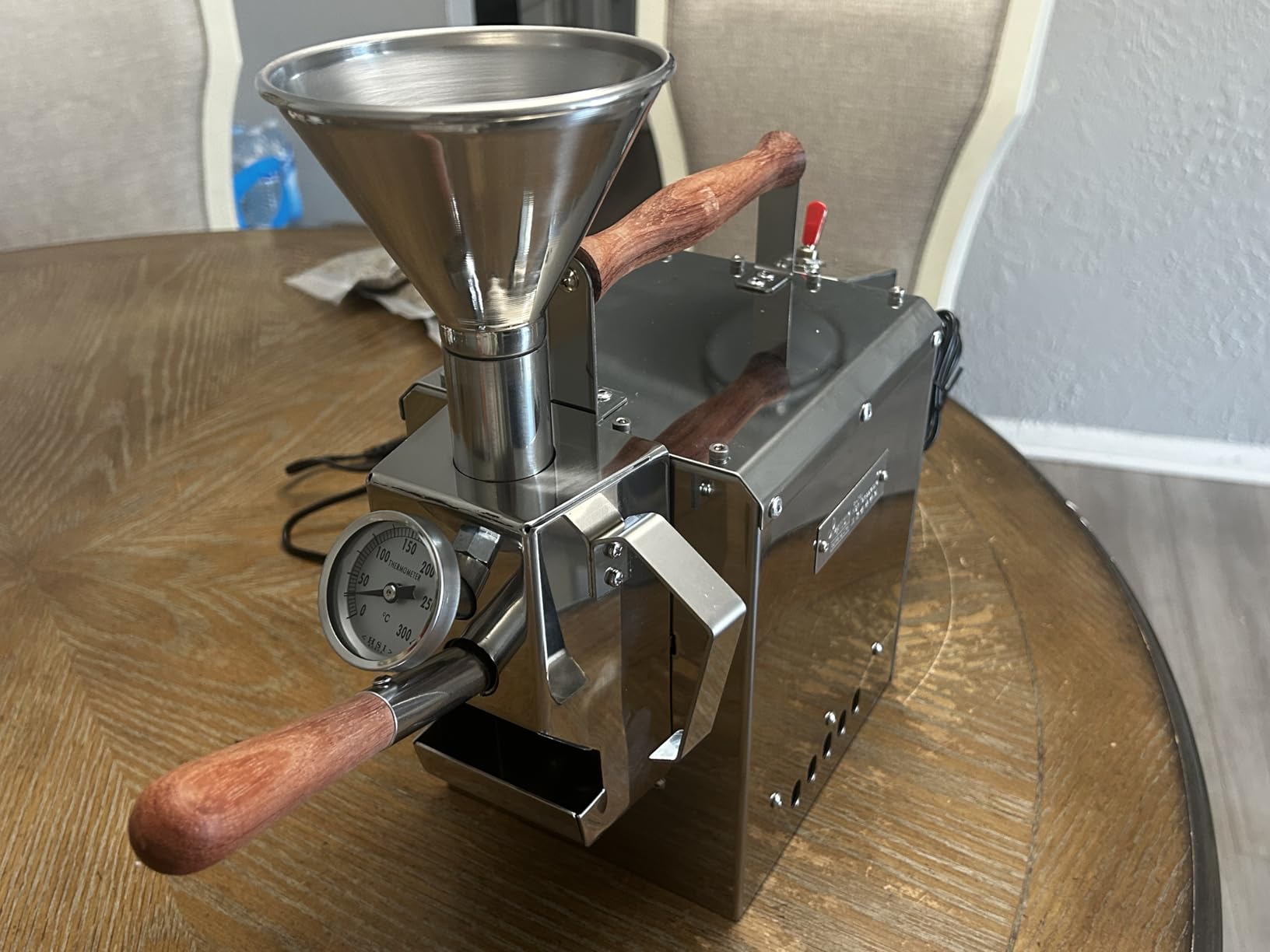
Owners rate the build quality and the roast at 300g near universally, and 88% of the ratings are five stars with nothing below four. What gets singled out in the reviews is the agitation, the flame arrest plate, and the drawer-style chaff collector, which is the design detail you will appreciate every single roast.
What the Flame Arrest Plate Actually Does
A gas burner produces a narrow, round flame. A drum roaster wants broad, even contact across the surface of the drum, otherwise one side of the batch browns faster and you get the uneven roast that pushes people off home roasting. The mesh plate sits between flame and drum and turns that shape into something closer to uniform, which shows up as a more even color across the batch.
The limitation is instrumentation. This model does not support thermocouples, so if your interest is in logging a roast curve you will need an add-on probe and your own software. The one-year warranty covers the machine, though consumables such as the adapter, cable, thermometer, and bearing are not guaranteed, which is normal for this category.
Who This Roaster Suits and Where It Falls Short
It suits a roaster who already works with a gas flame and wants motorized agitation at a batch size that suits a one or two person household. The 300g limit is comfortable, not restrictive, for roughly four cups a day.
It will frustrate anyone who wants plug-and-play operation, because a gas burner is required and not included. The 12-review sample also means long-term durability evidence is thin, so factor that in if you are weighing this against a machine with hundreds of owners behind it.
5. KALDI Fortis 600g Roaster – Data Logging at Home Scale
Kaldi Fortis Coffee Roaster with Accessories, 600g Batch, Gas burner is required. (Semi-Convective Type, Dual Data Logger Thermometer)
600g batch
Semi-convective drum
Dual data logger included
Artisan compatible
Pros
- Heavy gauge stainless with commercial-grade welds
- Data logger hooks into Artisan roasting software
- Easy to disassemble for maintenance and spacing tweaks
- Users scale from 250g up to 500g
- Reported problem-free after heavy use
Cons
- Gas burner sold separately
- Semi-convective design needs deliberate airflow control
- Steep learning curve from automatic machines
- Very small review base
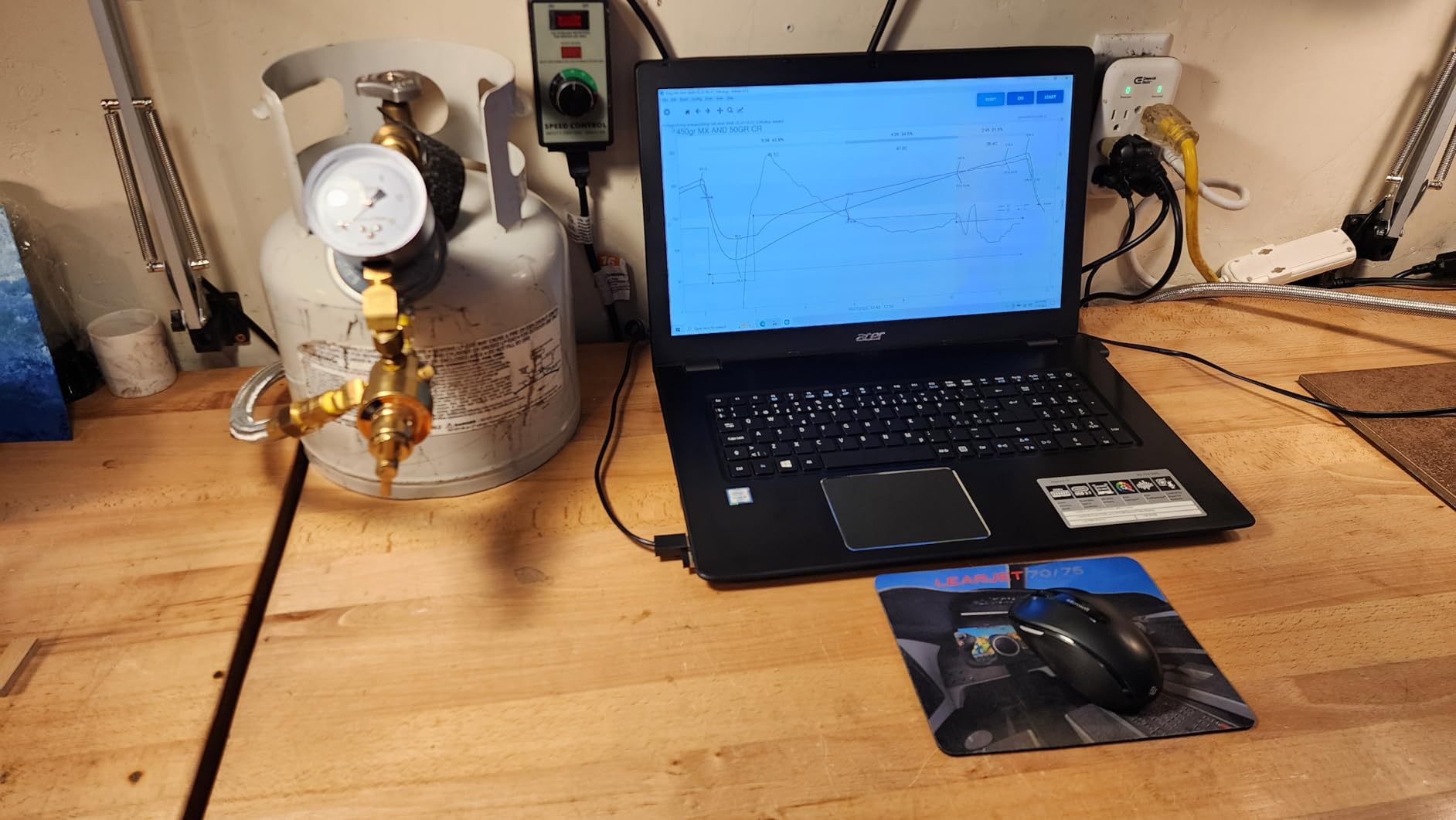
If you have ever wanted a roast curve on your kitchen wall, this is the machine that makes it possible. The Fortis is a semi-convective drum roaster with a 600g batch capacity, and it comes with a bundled dual data logger thermometer that connects to Artisan roasting software. That is the only machine here where you can watch a real curve build as the roast progresses, and it is a genuinely different way to learn.
The construction is the other story. Owners describe heavy gauge stainless steel with high-quality welds, comparable to commercial machines, and one long-term user reports no problems after roughly 50 pounds of beans and about a year. It disassembles easily for maintenance and for adjusting drum spacing, which matters more than it sounds if you change batch sizes often.
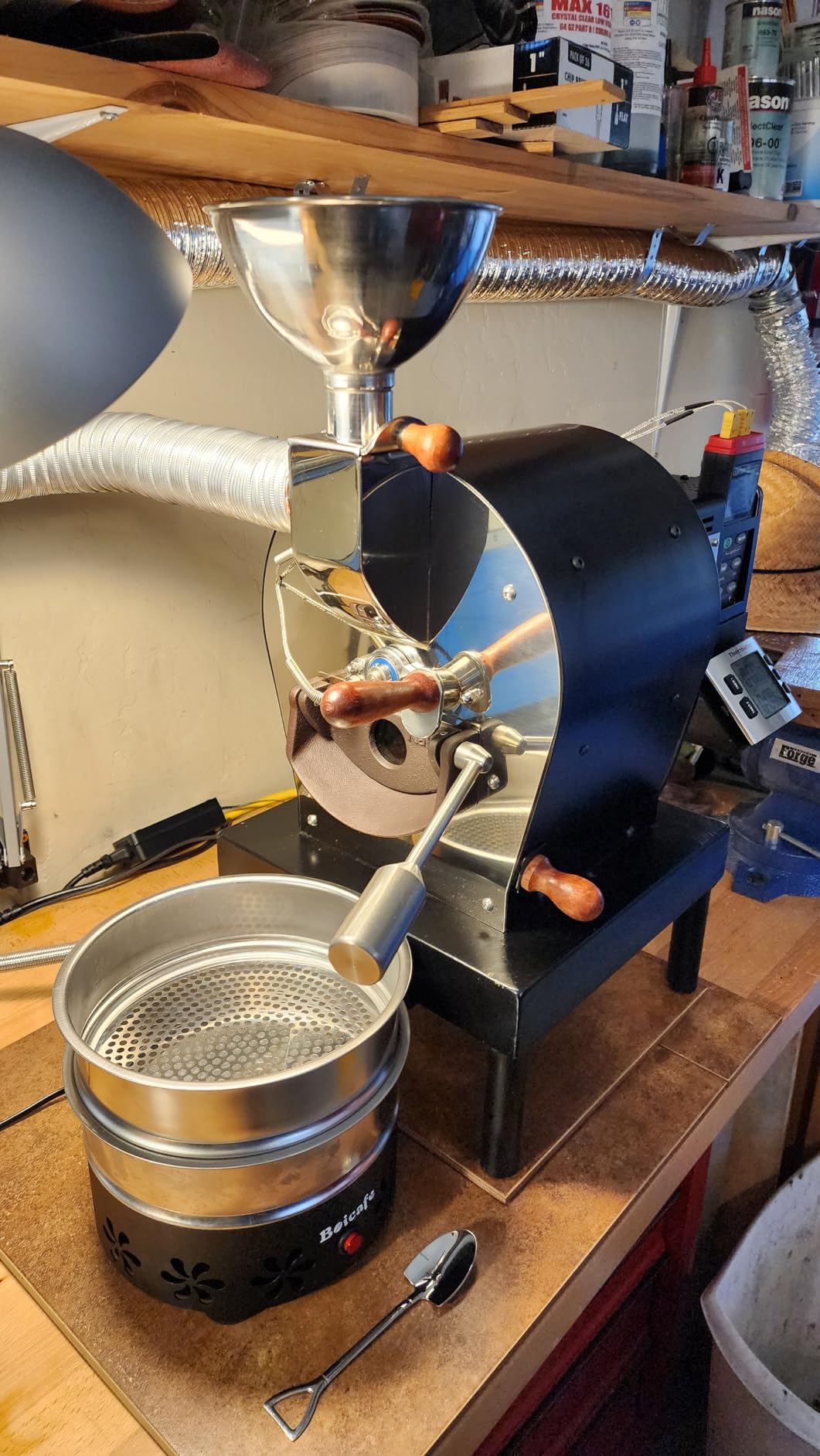
Semi-Convective Means You Manage the Air
Semi-convective describes how heat reaches the beans: through the drum by conduction, with a small amount of air movement through the machine. The practical effect is that airflow is your responsibility. Owners who ignore it report chaff spreading through the machine instead of separating out, and the manual says to control airflow for chaff control and heat speed.
Practical batch sizes land between 250g and 500g even though the drum is rated to 600g, because at the top of the range the airflow demand rises with it. Work up to 600g as you get comfortable rather than filling the drum on the first run.
Who This Roaster Suits and Where It Falls Short
It suits a roaster who has already outgrown presets and wants to understand heat and airflow as variables they control. If you enjoy reading a curve, if you buy single origins and care about development, this is the tool that matches that interest.
It will bore anyone coming from a fully automatic machine, because there is no profile doing the work for you. A gas burner is required and sold separately, and the cost means it pays for itself only over many roasts. With seven ratings, treat the build quality reports as encouraging rather than proven over a long service life.
6. TREMENPOW 3.8L Drum Roaster – the Largest Batch in the Group
Gas Coffee Roaster 3.8L Coffee Bean Roaster with A Bean Cooler and 2 Sieves(6/40Mesh) Drum Type Electric Coffee Roasting Machine for Home and Commercial, 0.66-1.1lbs/time, 110-120V, Stainless Steel
3.8L capacity
0.66-1.1 lb per batch
Speed adjustable 5-60 rpm
External burner heat
Pros
- Largest batch capacity in this roundup
- Adjustable drum speed from 5-60 rpm
- Bean cooler and two sieves included
- Built-in thermometer
- Lockable door and anti-scald handle
Cons
- Requires an external gas or ceramic burner
- Listing says electric while heat comes from a flame
- Only three ratings
- Door and hook wear over time
If you drink coffee for two, this is the batch size that stops you roasting every other day. The drum holds 3.45Qt, which works out to roughly 0.66 to 1.1 pounds of beans per run, and it is the largest drum in this group by a wide margin. Owners roasting for a shared office or a busy household are the obvious fit.
Two design choices stand out. Drum rotation adjusts from 5 to 60 rpm, and double guide baffles keep material moving evenly through the chamber, so you are not limited to one rotation speed the way smaller units are. There is also a clear observation window and a latchable drum door, which makes loading a heavy batch safer than tipping beans into an open drum.
Heat Comes From Your Stovetop, Not the Box
This is a drum, a motor, and a thermometer. The heat source is an external gas or ceramic stovetop burner, and there is no heating element inside the machine. That is why it works on any stovetop, and it is also why the product title saying electric can confuse buyers: the drum spins electrically while the heat comes from the flame.
The discharge system is sensible for a machine this size, using an anti-scald handle and an S-shaped hook to pour beans into a cooler. The included bean cooler and two sieves at 6 and 40 mesh handle the post-roast phase properly, which is more than some machines twice this price provide.
Who This Roaster Suits and Where It Falls Short
It suits a household of three or more, or anyone buying green coffee in bulk who wants a session to last a week. Adjustable drum speed is a genuine advantage once you start experimenting, and the larger volume reduces the per-kilogram cost of every batch.
Three ratings is essentially no quality data, so the functional pitch is the entire case here. The drum door and hook contact points wear over time, and you need a burner on a stove, which means roasting happens in a kitchen rather than a workshop. If your main concern is reliability, an electric machine with more owner history is the safer route.
7. KALDI 200g Motorized Roaster – Small Footprint, Big Upgrade Path
kaldi motorized gas coffee roaster – 200g capacity, gas burner required (Full Package)
200g motorized batch
Gas burner required
17.32 by 6.3 by 14.57 inches
Upgradable
Pros
- All four owner ratings are five stars
- Produces a more even roast than popper machines
- Compact footprint for small kitchens
- Upgradable with thermocouples fan and vent tube
- Compatible with Roastmaster apps
Cons
- 200g batch needs back to back roasting
- Analog gauge is too slow to respond
- Gas burner sold separately
- Hopper and sample trier not included
This is the smallest drum here, and that is exactly the point if your kitchen is tight. It measures about 17.3 by 6.3 by 14.6 inches, weighs just over 9 pounds, and roasts 200g per motorized batch on gas heat. Owners describe the roast quality as a clear step up from popper-style machines, which is the usual first comparison people make.
What makes it interesting is that it is a platform rather than a finished appliance. It is compatible with digital thermocouples and apps like Roastmaster, it can be upgraded with a fan and vent tube for airflow control, and it accepts a 24V variable voltage adapter to run the motor at full speed. Owners who add those three things report results approaching larger drum machines.
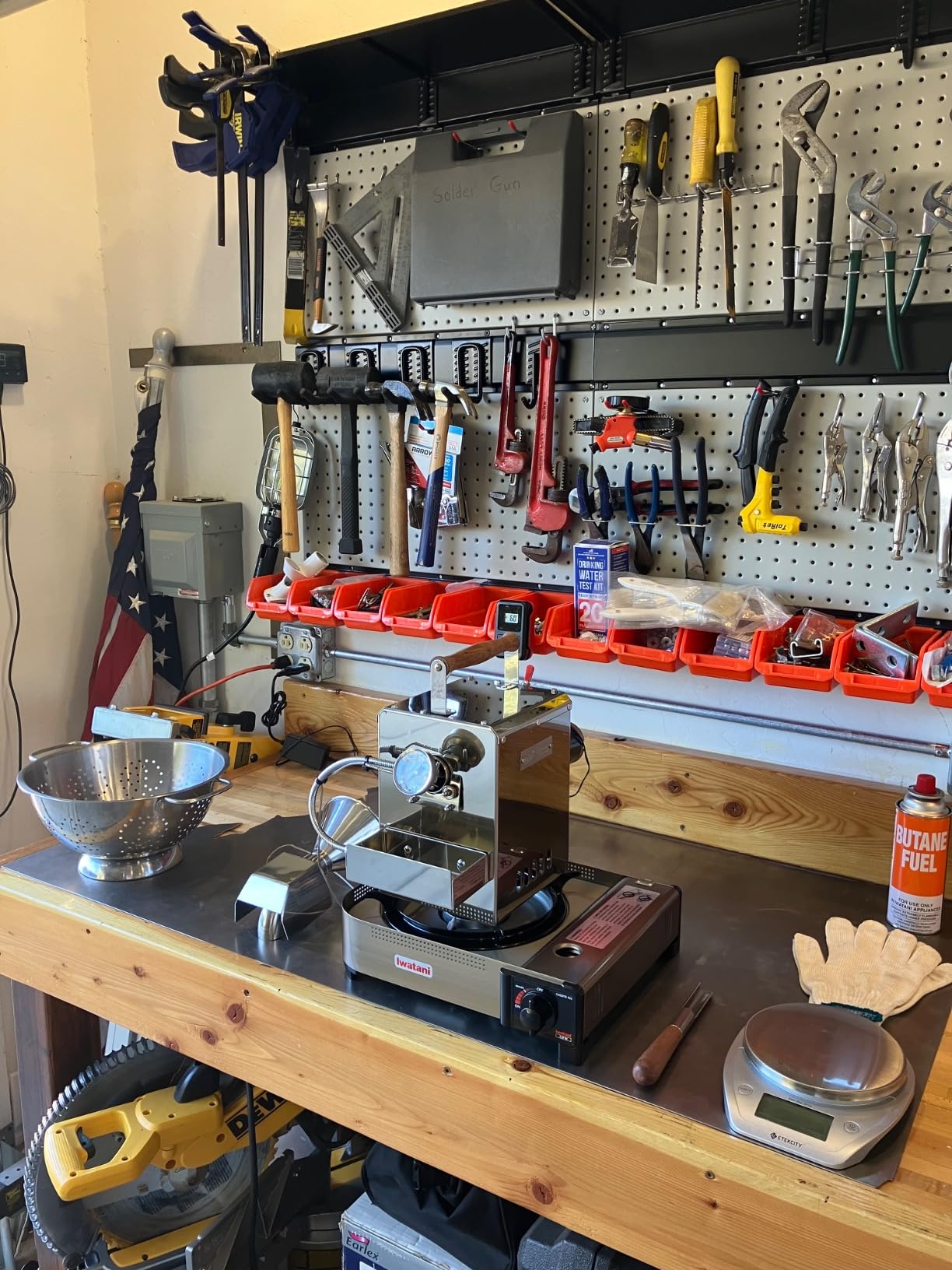
All four ratings are five stars, and the written reviews treat the machine as a starting chassis. That framing is fair, because the base package does not include the hopper or the sample trier, both of which are separate purchases. Buy the full package or plan to add them before your first roast.
The Analog Gauge Is the Weak Link
The included temperature gauge is too slow to respond to real heat changes, and owners specifically recommend a faster probe. During a fast gas roast, a lagging gauge means you are always reacting to a temperature that was accurate a minute ago. Spending on a thermocouple first is a better use of money than spending on anything else here.
One more practical warning: the power cord should never be draped near the flame. With a 200g drum and a fast burner, you are leaning in close, and that is exactly how a cord gets damaged.
Who This Roaster Suits and Where It Falls Short
It suits a single drinker or a couple, anyone roasting outdoors, and anyone with counter space measured in inches rather than feet. The 200g batch is genuinely small, so plan on back-to-back batches if you drink more than a few cups a day.
Four reviews is a very small sample, so treat the perfect rating as encouraging rather than conclusive. The learning curve is real because you are managing flame and rotation by hand, and the accessory list is longer than the box. If you have never roasted at all, spend the extra effort on a machine with automatic profiles first.
8. Bokknppo 0.3-1.2kg Drum Roaster – the Cheapest Way Into Drum Roasting
Bokknppo Electric Coffee Bean Roaster Stainless Steel Drum Roaster for Home Commercial Use Large Capacity with Adjustable Temperature for Roasting Coffee Beans Peanuts Nuts (0.3-1.2kg)
0.3-1.2kg variants
0.66-1.1 lb per batch
5-60 RPM drum
Thermometer included
Pros
- Lowest cost way into drum roasting
- Polished stainless drum on a wide stable base
- Adjustable 5-60 RPM drum speed
- Package includes cooler sieves controller and thermometer
- Reported working for beans cocoa and nuts
Cons
- No heating element despite the electric name
- Several owners report breakage within weeks or a month
- Only 3.8 stars average
- Missing thermometer in at least one shipment
This is the cheapest door into drum roasting, and for a small experiment it works. The polished stainless steel drum sits on a 9.4 by 7.1-inch base for stability, holds 3.45Qt, and roasts roughly 0.66 to 1.1 pounds per batch. Drum speed adjusts from 5 to 60 rpm, and the package includes a fast cooler, two sieves, a speed controller, a thermometer, and a manual.
Owners report it working as intended for beans, cocoa, and nuts, and the accessories genuinely exceed what most machines at this level include. If your goal is to find out whether home roasting is for you before committing real money, this is a reasonable way to find out.
Read the Heat Source Line Carefully
Despite the electric naming in the listing, there is no heating element. The drum spins electrically and the heat comes from an external gas flame, and it also works on an electric stovetop. That is a real cost, because you need to buy a portable gas burner, and the listing does not make it obvious enough.
The bigger concern is durability. This is the lowest-rated machine in the roundup at 3.8 stars, with 12% one-star ratings, and several owners report breakage within weeks or a month of use. One shipment also arrived without the thermometer listed in the package. The rating distribution is genuinely spread out, which tells you the product is not uniformly good.
Who This Roaster Suits and Where It Falls Short
It suits a curious beginner on a strict budget, someone with a spare burner already in the garage, and anyone roasting large quantities of beans, cocoa, or nuts rather than making a single origin coffee shop in their kitchen.
It does not suit someone who wants a reliable daily machine. If you are buying your last roaster, the durability reports should end the evaluation on their own. Check the package on arrival, and keep the receipt.
How to Choose a Drum Coffee Roaster: 7 Criteria That Matter
Every machine here is a real drum, so the differences that matter are narrower than a general buying guide would suggest. These are the seven questions that actually separated the eight.
1. Batch Size Should Match Your Drinking, Not Your Ambition
Buy for how many cups you drink today, not how many you plan to drink. A 200g drum is right for one person and punishing for a family of four, because you will roast three times a week instead of once. A 600g drum is wasted on a single drinker unless you share it. The sweet spot for most households is 300g to 500g, roughly a week of coffee for two people.
One more thing nobody tells you: your grinder has to keep up. A 600g batch only helps if you can grind 600g of coffee in a reasonable window, and a lot of home setups cannot. Check your grinder before you check your roaster capacity.
2. Decide Electric or Gas Before Anything Else
Electric means plug it in and roast. Gas means a burner, a flame, a ventilated space, and a new skill in judging heat by eye. The four gas machines in this roundup give you more tactile control and a genuinely good cup, but they break the plug-and-play promise completely.
A related point on noise and apartment living: any roaster with a motor will be audible, and a gas roaster is louder still. If your household has quiet hours, treat that the same way you would before buying anything else noisy for shared spaces. We wrote about managing appliance noise in shared homes in our home guitar amp guide, and the same logic applies.
3. How Much Control Do You Want in Year One?
Automatic profiles get you a drinkable cup on day one. Manual control gets you a better cup in year three. The three-mode machines like the PKF-500 are the compromise that works for most people, because you can start automatic and graduate to manual on the same machine. Single-mode machines force a choice you may not know how to make yet.
4. Ventilation and Smoke Handling Are Features, Not Accessories
Check what ships in the box before you assume your house can handle the smoke. The NIASIA and the PKF-500 both include a smoke filter plus vent pipes, and that is a meaningfully better position than a single open door. Dark roasts produce far more smoke and chaff than light ones, so a machine that handles light roasts well may disappoint you at the other end.
5. Cooling Decides How Fast You Can Roast Again
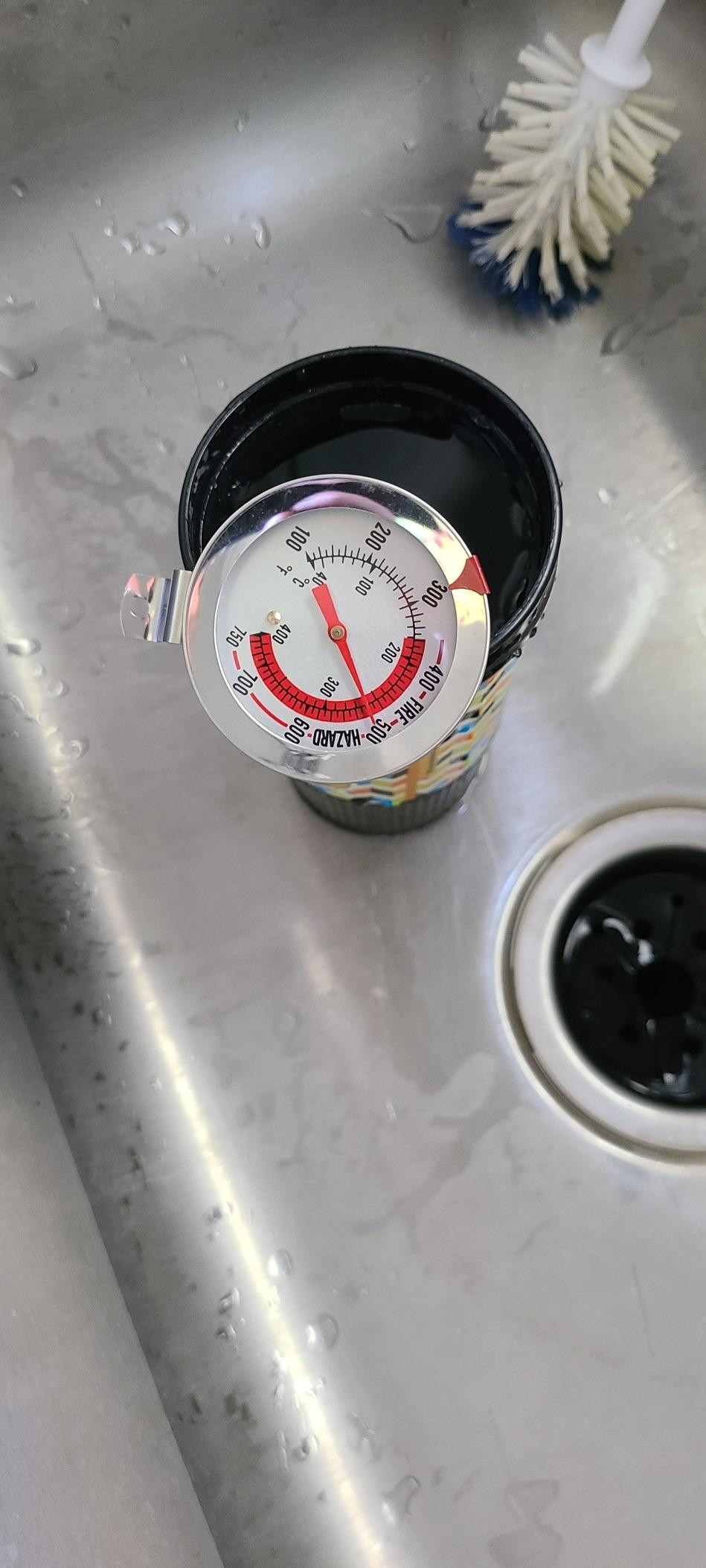
Roasting does not stop when you open the door, it stops when the beans drop below about 40 degrees. A cooling fan and tray inside the machine is a real convenience, and a bundled external cooler is better still. If a machine has neither, you are standing over a bowl of beans stirring them with a spoon, and that is how you accidentally scorch a batch.
6. Instrumentation if You Want to Learn, Parts if You Want to Save
Support for thermocouples and data logging matters more than most buyers expect. The Fortis bundles a dual data logger that feeds Artisan software, and the KALDI 200g works with Roastmaster once you add a probe. Without that support you are roasting on color and smell, which works fine and simply caps how much you can learn.
7. Owner History Beats Specification Sheets
There is a big spread in review volume here, from three ratings to 119, and that spread is itself useful information. A 4.9 from three owners tells you very little. A 4.3 from 119 owners, including reports of what broke and what worked after nine months, tells you a lot. Weight the review count as heavily as the star rating when you compare.
Budget planning works the same way it does with any larger kitchen purchase, and we covered that approach in our home laminator buying guide: compare against what you will actually use, not against the cheapest listing. The same thinking applies if you are adding a printer to log your roast profiles and dates, and our home printers for occasional use guide covers that side.
Where to Put a Drum Roaster: Ventilation, Odor and Kitchen Safety
This is the question that decides whether you still roast in six months, and almost no roundup asks it. Smoke and odor are the reason most home roasting attempts end, and the solution is placement, not equipment.
Outdoors first. A garage, balcony, garden, or covered patio gives you the airflow you need without any modification. If your only option is indoors, the four checks that matter are a window that opens, a fan pointed at the exhaust rather than into the room, an extractor hood or range hood running, and a plan for the chaff that escapes the machine.
Gas roasters need more. Open flame plus an enclosed drum plus a small room is a genuinely different risk profile from electric, and the machines in this roundup that use gas all need a stable burner surface. Never drape a power cord near a flame, and keep a lid or metal surface nearby for the discharge step, since discharge is the moment you are closest to the hot drum.
Finally, treat cooling as a ventilation issue too. Hot beans in a room release moisture as they cool, and that is part of what you smell in the first ten minutes. A fan aimed at the cooling tray moves the smell and the moisture out faster than an open window alone. If noise is the concern that will decide your purchase rather than odor, our home karaoke machine guide runs through the same shared-wall planning from the other direction.
Drum vs Air Roasters: Which One Should You Actually Buy
Air roasters blow hot air through green beans, which is faster, cheaper, and far easier to ventilate. Drum roasters apply heat by conduction through a rotating metal drum, which is slower, harder to ventilate, and gives you more control. The long-running debate on homeroasters.org has not produced a universal winner, and the honest answer depends on your volume.
Below roughly three cups a day, an air roaster is the better purchase. There is nothing wrong with it, it roasts a small batch quickly, and the learning curve is short. The community consensus we found leans the other way only once volume rises, with enthusiasts generally reporting that drum roasts taste fuller and darker than small air batches.
Once you pass four cups a day, the math changes. Air roasters top out around 100g per batch, so a week of coffee for one person can mean three roasting sessions. A 300g to 500g drum does it in one, and the difference in convenience is what actually keeps people roasting instead of quitting.
Your First Drum Roast: A Six-Step Walkthrough
Forum veterans are consistent on this point: watch the roast rather than trusting the presets. Sight, smell, and the sound of first crack tell you more than any number on a display. Here is the sequence that works across all eight machines.
1. Weigh your beans precisely and check them over. Pull out visibly defective, broken, or light-colored beans. On the NIASIA this is a requirement rather than a nicety, because defective beans are what jam a drum.
2. Bring the machine to temperature before loading. Let the drum reach charge temperature and hold it there. A cold drum plus beans plus a weak flame is how you get a roast that stalls and then suddenly catches.
3. Load beans and drop the probe. Use a sample trier if you have one, and take a first sample as soon as the drum is up to speed.
4. Watch the drying phase. Beans go from green to a grassy smell and pale brown. This is the longest phase and the least dramatic, and it is where most people make the mistake of adding heat.
5. Listen for first crack and note the time. First crack is the audible snap that means moisture has left and browning is underway. Owners running a Bullet R2 report around 11% weight loss as a useful benchmark for a first light roast, and using weight loss from your own machine is a better target than a number from ours. If you have airflow control, this is when more airflow helps.
6. Drop the beans the moment the roast is where you want it. Do not wait for the cooling cycle to do the work. Pull the drum or the hopper, and get the beans into the cooling tray or cooler immediately, then stir them.
Do not judge a roast on the first attempt. Almost everyone scorches or under-develops their first batch, and every forum thread we read says the same thing about the learning curve. Give it three roasts before you decide whether the machine or the bean was at fault.
Frequently Asked Questions
What is the best home drum coffee roaster?
The NIASIA 500g Automatic Roaster is the best home drum coffee roaster for most people, because it combines nine built-in roast profiles with a 500g stainless drum, dual smoke handling, and by far the largest body of owner feedback in the group at 119 ratings. If you want maximum control instead of convenience, the KALDI Fortis with its bundled data logger is the better long-term choice.
Are drum roasters better than air roasters?
For small volume, no. Below about three cups a day an air roaster is cheaper, faster, and easier to ventilate. Above roughly four cups a day, drums usually win because a 300g to 500g drum covers a week of coffee in one session, where an air roaster topping out near 100g would need three sessions. Enthusiasts on home forums generally report drum roasts tasting fuller and darker.
Can I roast coffee indoors without smoke?
Mostly, with preparation. Open a window, aim a fan at the machine exhaust rather than into the room, run a range hood or extractor, and route smoke through the included vent pipes or a filter. Light roasts produce far less smoke than dark roasts. If you have a garage, balcony, or patio, use them. Chaff escaping the drum is the other thing to plan for, not just smoke.
How much coffee can a home roaster roast at once?
Most home drum roasters handle between 200g and 600g per batch, with 300g to 500g the practical sweet spot for a household. The NIASIA and PKF-500 are rated at 500g and one pound, the KALDI WIDE roasts 300g, and the larger TREMENPOW and Bokknppo drums reach roughly 0.66 to 1.1 pounds. Check your grinder can process a full batch before buying a large drum.
How long do roasted coffee beans need to degas?
Wait at least 3 to 5 days before brewing, and up to 10 to 14 days for lighter roasts where the coffee is denser. Degas faster if you roast lighter, use a coarser grind, or filter through a paper filter. Beans roasted to a dark profile are usually drinkable sooner because they give up gas faster. Store beans airtight and opaque away from heat.
Is Kaldi a coffee brand or a roaster?
KALDI is equipment, not coffee. KALDI COFFEE LAB builds home roasting hardware, and the branded machines in this roundup are the motorized 200g roaster, the WIDE 300g model, and the Fortis 600g. They manufacture no coffee beans, so buying a KALDI roaster does not lock you into any brand of beans or a subscription.
Which Drum Roaster Should You Buy
If you want the most complete electric machine and want profiles that work on day one, buy the NIASIA 500g. It has the widest feature set here, the best smoke handling, and enough owner history that you will find answers to almost any question before you ask it.
If you have never roasted a bean, buy the DYVEE 400g and learn on a machine that shows you what is happening. If you drink more coffee than a single person should, buy the PKF-500 for its pound capacity and three control modes, and add an external cooler before your first batch.
If you already work with a flame, the KALDI WIDE is the best motorized gas drum for a one or two person household, and the KALDI Fortis is the pick for anyone who wants to read a real roast curve. For bulk roasting, the TREMENPOW handles the largest batch of anything here, and the Bokknppo is a reasonable first experiment if a durability risk does not bother you.
Whichever you pick, give it three roasts before you judge it, plan where the smoke goes before you unbox it, and buy green coffee from a supplier who will grind defects out for you. That is the whole game: 2026 is a great year to start.