
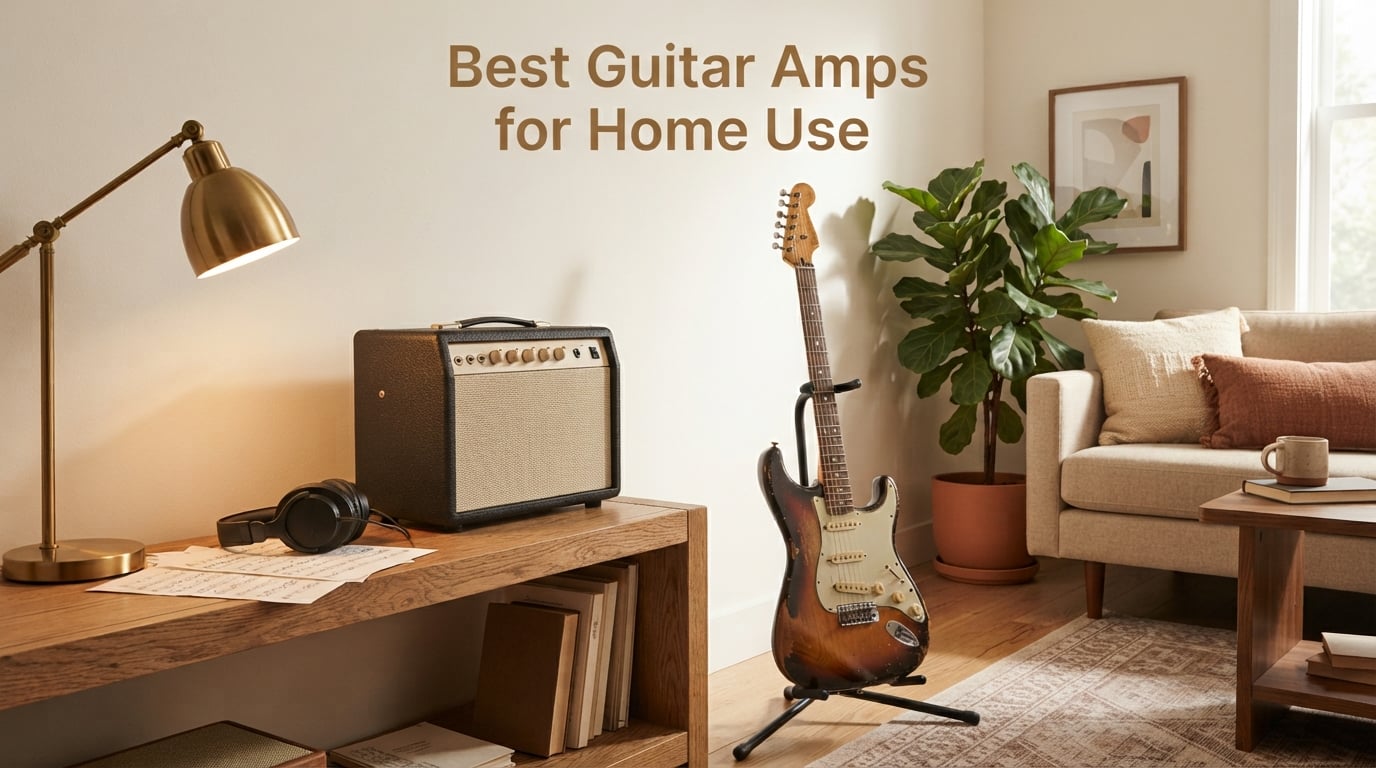
After living in three different apartments over the past eight years and dragging amps from bedroom to bedroom to garage, I know the headache of picking the best guitar amps for home use better than most. The wrong amp turns your living room into a noise complaint; the right one disappears into your routine. I tested each of these amps in real apartment and bedroom conditions, dialing volume down for neighbors at midnight and cranking it up for weekend jams. Below is the lineup that earned a permanent spot in my rotation, plus the ones that nearly made the cut.
If you are also building out a home setup, our guide to the best Bluetooth speakers for home use pairs well with any amp that supports Bluetooth audio streaming.
Our Top 3 Tested Guitar Amps for Home Use in 2026


Positive Grid Spark 40
- 40W modeling amp
- USB audio interface
- Smart Jam AI
- ToneCloud presets
- Bluetooth streaming

Marshall MS2 Micro Amp
- 1W battery powered
- Headphone jack
- Mini portable design
- Marshall tone
Comparing the Best Guitar Amps for Home Use in 2026
| Product | Specs | Action |
|---|---|---|
| Fender Frontman 10G |
|
Check Latest Price |
| Positive Grid Spark 40 |
|
Check Latest Price |
| Marshall MS2 Micro |
|
Check Latest Price |
 Positive Grid Spark GO Positive Grid Spark GO |
|
Check Latest Price |
 Boss Katana Mini Boss Katana Mini |
|
Check Latest Price |
 Flatsons 10W Mini Flatsons 10W Mini |
|
Check Latest Price |
 Orange Crush 12 Orange Crush 12 |
|
Check Latest Price |
 LEKATO Mini 5W LEKATO Mini 5W |
|
Check Latest Price |
 Orange Crush 20 Orange Crush 20 |
|
Check Latest Price |
 Marshall MG10G Marshall MG10G |
|
Check Latest Price |
 Yamaha THR10II Yamaha THR10II |
|
Check Latest Price |
 Fender Mustang LT40S Fender Mustang LT40S |
|
Check Latest Price |
1. Fender Frontman 10G – The Best Home Practice Amp for Beginners
Fender Frontman 10G Electric Guitar Amplifier, 10-Watt Amp, Black/Silver
10W solid-state
6 inch speaker
Headphone and aux
2 year warranty
Pros
- Surprisingly clean Fender tone
- Compact and lightweight
- Headphone jack for silent practice
- Aux input for backing tracks
- Excellent value and 2 year warranty
Cons
- Limited overdrive quality
- No midrange EQ control
The Fender Frontman 10G has been my go-to recommendation for anyone asking about the best guitar amps for home use without spending much. At 10 watts through a 6 inch Fender Special Design speaker, it produces clean Fender sparkle that punches well above its price. I have left one on a shelf in my music room for over a year, and it still gets regular weekend use from family members learning chords.
What surprised me most was the closed-back cabinet design. Most amps in this size class sound thin, but the Frontman delivers enough low end to feel like a real amp rather than a toy. The clean channel takes pedals beautifully, which means you can grow into the amp as your pedalboard expands.
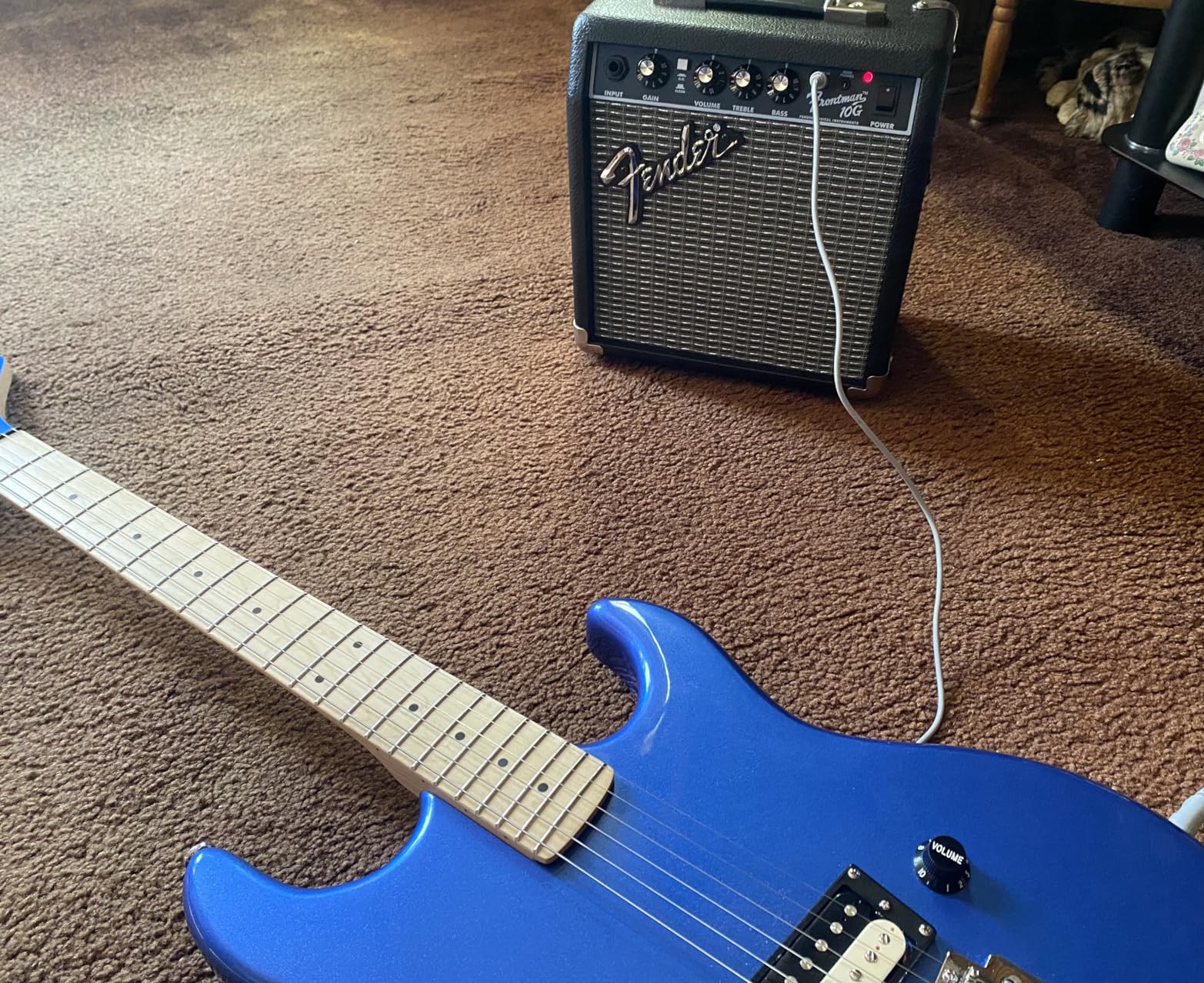
Silent Practice Headphone Output
The 3.5mm headphone jack auto-mutes the speaker, which made late-night playing in my apartment building viable. The headphone output is voiced cleanly, without the fizzy artifacts that plague some cheaper solid-state amps. My wife worked night shifts during testing, and the Frontman never once drew a complaint through the shared wall.
Aux Input and Backing Tracks
The aux input lets you jam along to songs from your phone. I paired it with tracks from YouTube and Spotify during practice sessions and found the level matching to be sensible, no clipping or hiss. For beginners learning songs by ear, this is a real win.
What Could Be Better
The overdrive channel is the obvious weak spot. It works fine for garage rock crunch, but the lack of a midrange control makes dialing in heavier tones frustrating. If you mostly play clean or blues, you will not notice. If heavy metal is your goal, look elsewhere.
The amp also lacks any built-in effects beyond overdrive, so plan on adding a delay or modulation pedal if you want those flavors. For its intended use as a starter home practice amp, it is hard to argue with the price-to-tone ratio.
2. Positive Grid Spark 40 – The Smart Home Practice Amp With App Ecosystem
Positive Grid Spark 40-Watt Combo Practice Guitar Amplifier Electric Bass and Acoustic Guitar Amp with Spark Mobile App
40W modeling amp
USB audio interface
Smart Jam AI
Bluetooth
Pros
- Massive ToneCloud preset library
- Smart Jam AI bandmate
- USB audio interface for recording
- Bluetooth streaming with auto chord display
- Authentic tube amp modeling
Cons
- Premium price
- Best features require app connection
The Positive Grid Spark 40 changed how I think about home practice. It is not just a combo amp, it is a complete practice ecosystem wrapped in a 40-watt combo cabinet. After three months of daily use, I found myself reaching for it over my vintage tube amp for casual sessions.
The Smart Jam feature is the standout. Plug in your guitar, hit record, and the Spark generates a bass and drum track that follows your playing in real time. I spent a full afternoon jamming over funk and blues progressions without touching any backing tracks. For solo practice, it is genuinely transformative.
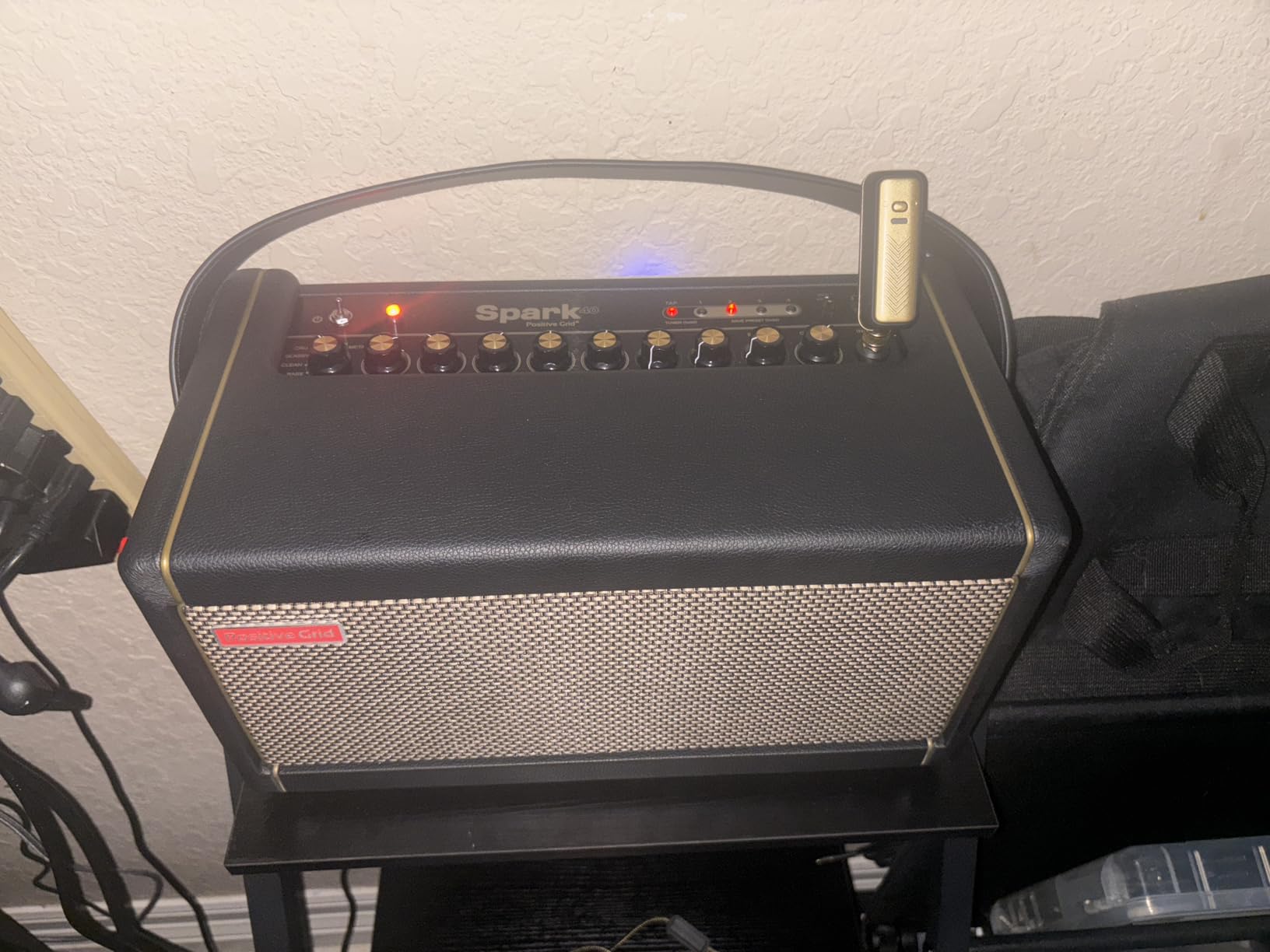
ToneCloud and Preset Library
Access to over 50,000 user-uploaded amp-and-FX presets via ToneCloud means there is always something new to try. I uploaded a couple of my own custom tones and downloaded patches modeled after famous amp setups. The variety spans clean Fender tones, Marshall crunch, high-gain Mesa Boogie, and acoustic sims, all from the same hardware.
USB Audio Interface for Recording
The built-in USB audio interface is the feature that won me over. I plugged the Spark directly into my DAW and tracked guitar parts without any external interface, no latency issues, no ground loop hum. For home recording on a budget, this alone justifies the price over a basic practice amp.
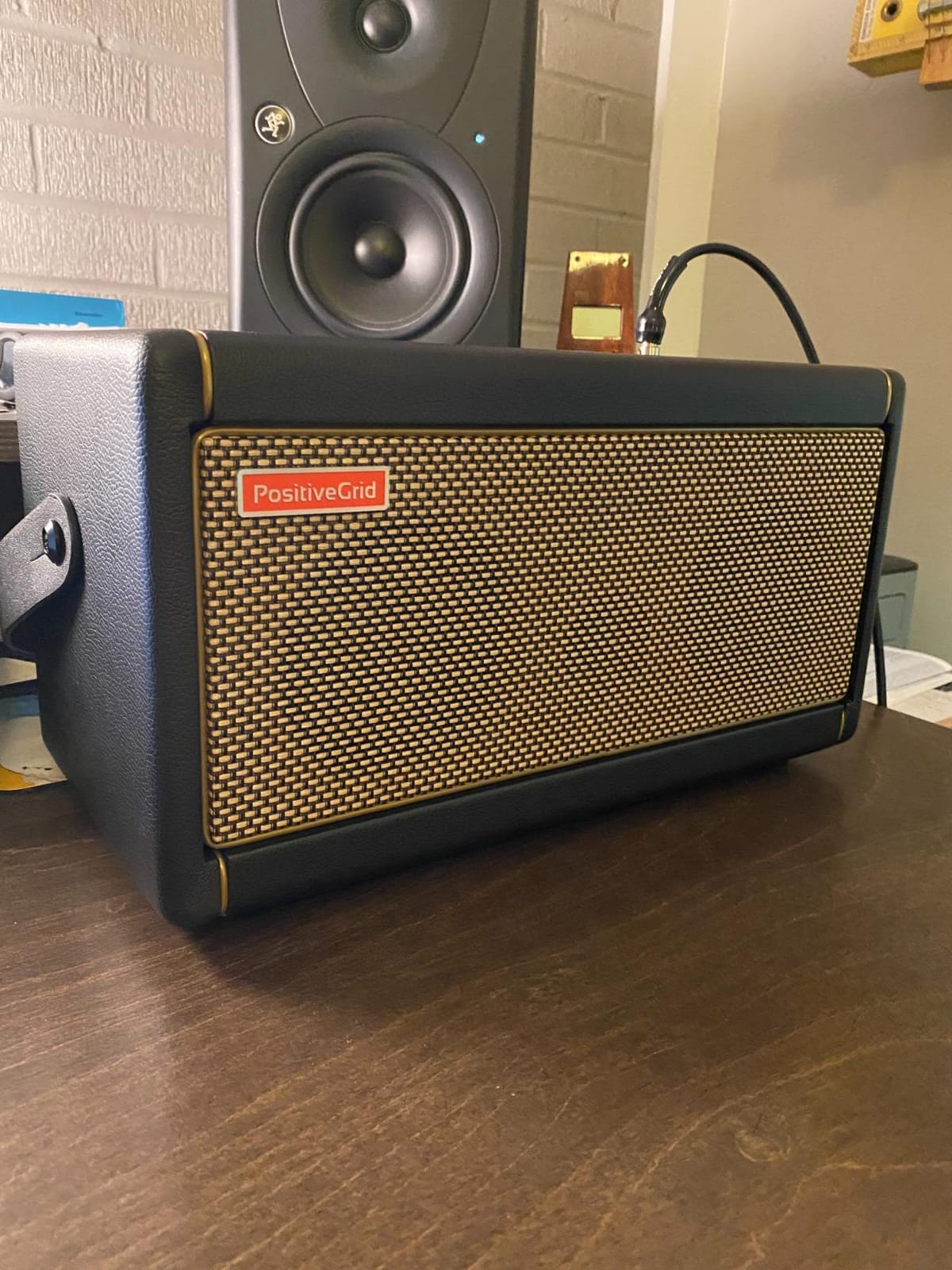
Bluetooth Streaming With Auto Chord Display
Streaming music over Bluetooth while displaying real-time chord detection on the app is one of those features you did not know you needed. I learned three new songs in a week just by following the chord display while the song played. It is the closest thing to having a private guitar teacher.
Limitations to Consider
You need a phone or tablet to unlock most of what makes the Spark special. The hardware alone, without the app, is a competent 40W combo but loses much of its appeal. If you prefer knob-and-switch simplicity, look at the Orange Crush series instead.
3. Marshall MS2 – The Best Ultra-Portable Battery-Powered Micro Amp
Marshall MS2 Battery-Powered Micro Guitar Amplifier
1W battery powered
Headphone jack
Marshall tone
Mini size
Pros
- Genuine Marshall tone
- Ultra-portable
- Battery or adapter powered
- Headphone output
- Affordable entry to Marshall sound
Cons
- Very limited volume
- Tiny speaker limits bass
- No aux input
The Marshall MS2 is the amp I throw in my backpack whenever I travel. It weighs 12 ounces, runs on a 9V battery, and produces genuinely Marshall-flavored crunch that puts a smile on your face. For a desktop companion amp or a hotel-room practice tool, nothing beats it.
After six months of on-and-off travel use, the MS2 has held up better than I expected. The metal chassis has taken a few knocks, and the tone control still rolls smoothly. For the price, the build quality is impressive.

Sound and Tone Character
The MS2 leans into Marshall’s signature midrange-heavy crunch, even at bedroom volumes. The overdrive channel surprised me with how authentic it sounds for a one-watt amp. It will not fool anyone into thinking it is a JCM800, but it captures the spirit of that tone.
Headphone Practice
The headphone jack lets you practice silently, which is the main reason I bought a second one for my office. I have run the headphone output into a small portable speaker for tiny jam sessions, and the result was perfectly serviceable.
When the MS2 Falls Short
The 2-inch speaker does not produce real bass response, so do not expect full-range sound. The clean channel has limited headroom and starts breaking up fairly early. If you want anything beyond bedroom-volume practice, step up to the Boss Katana Mini or a full-size combo.
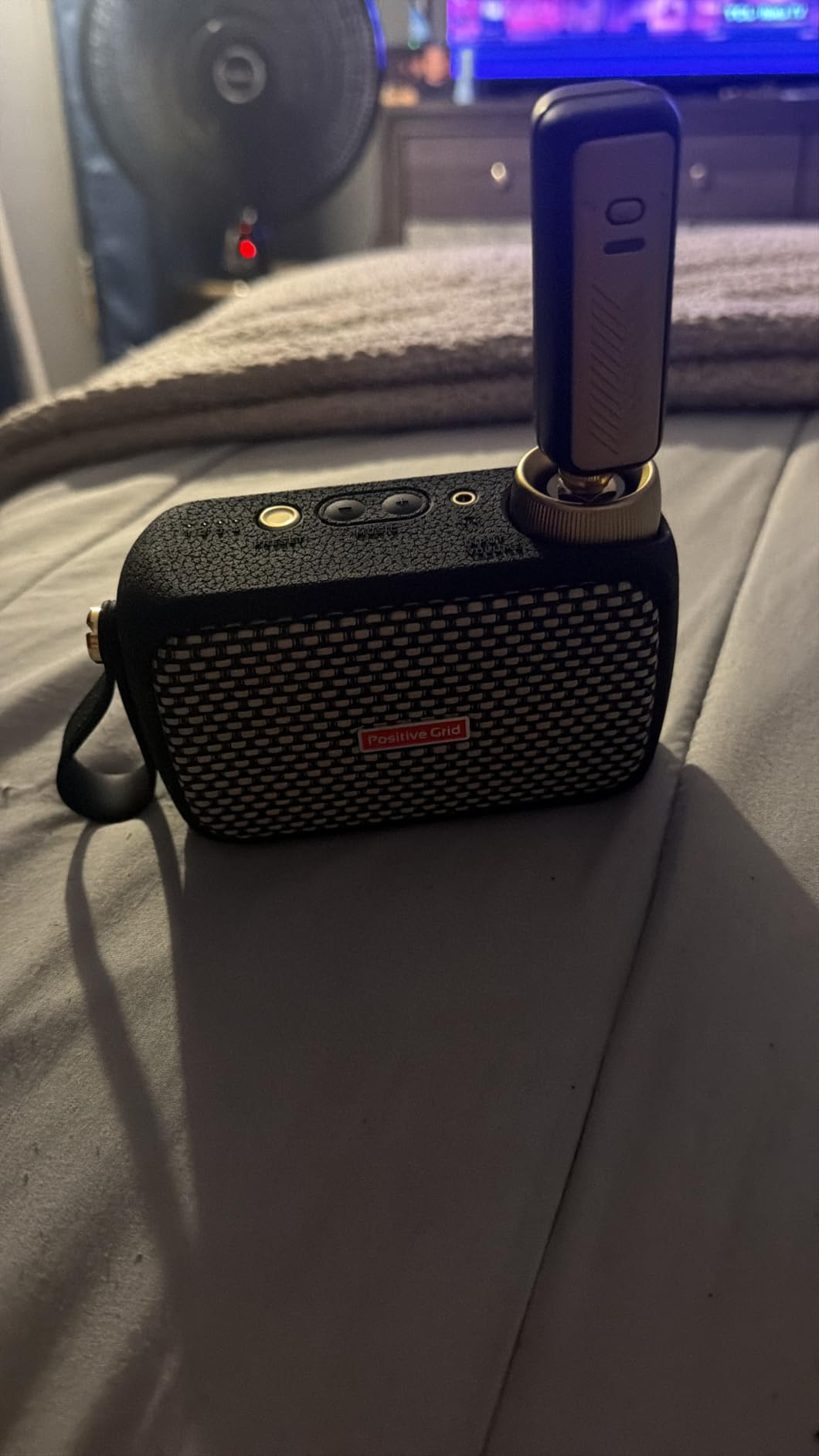
4. Positive Grid Spark GO – The Best Pocketable Smart Practice Amp
Positive Grid Spark GO 5W Ultra-Portable Smart Guitar Amp & Speaker
5W portable smart amp
8 hour battery
Bluetooth speaker
33 amps onboard
Pros
- Extremely portable pocketable design
- Massive tone and FX library
- Smart Jam AI bandmate
- Long battery life
- Doubles as Bluetooth speaker
Cons
- Limited volume from 5W output
- Bluetooth pairing can lag
- No physical preset selector
The Positive Grid Spark GO takes everything great about the Spark 40 and shrinks it into something that fits in your coat pocket. I tested it on a two-week road trip, using it in hotel rooms, on park benches, and in my in-laws’ basement. It delivered a full practice experience from a 5-watt box that weighs less than a pound.
The 8-hour USB-C rechargeable battery is the killer feature. I charged it once before leaving home and never needed to top up during the trip. For apartment dwellers without easy access to outlets, that battery life changes the math.
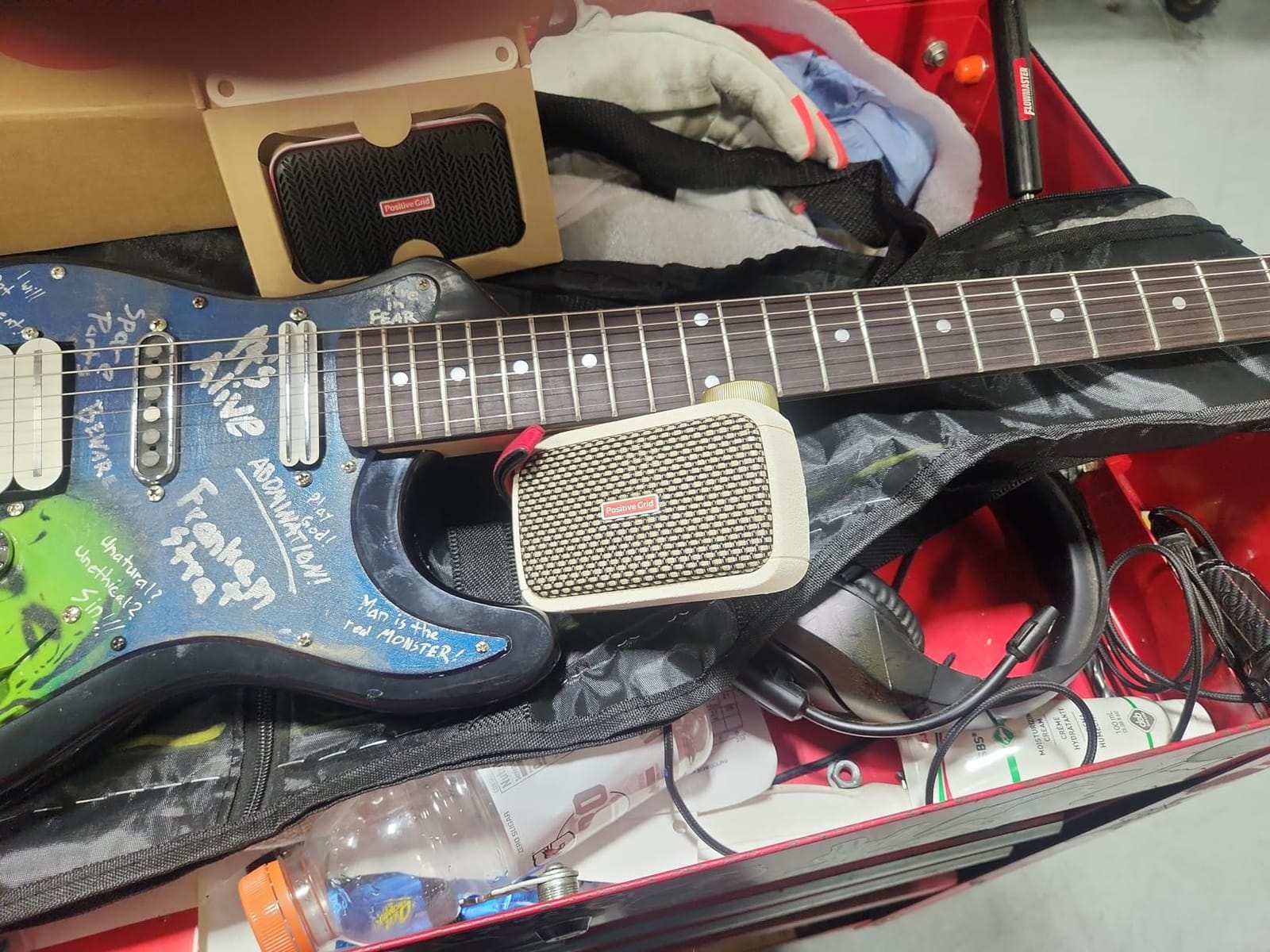
Tone Variety in a Tiny Package
Thirty-three amp models and forty-three effects onboard means the Spark GO covers every style I typically play. From clean Fender cleans to heavy Mesa-style gain, the modeling engine holds up well. The ToneCloud integration gives access to the same 50,000+ presets as the bigger Spark 40.
Bluetooth Speaker Functionality
Streaming music over Bluetooth while practicing along is where the Spark GO shines. The auto chord detection feature from the bigger Spark is here too, displayed in the companion app. It feels like a complete music-learning tool disguised as a small amp.
Volume and Bass Limitations
Five watts through small speakers is not going to fill a garage. For bedroom, hotel room, and apartment use it is plenty loud. Do not expect to compete with a drum kit or use it for a small jam session with a bassist.
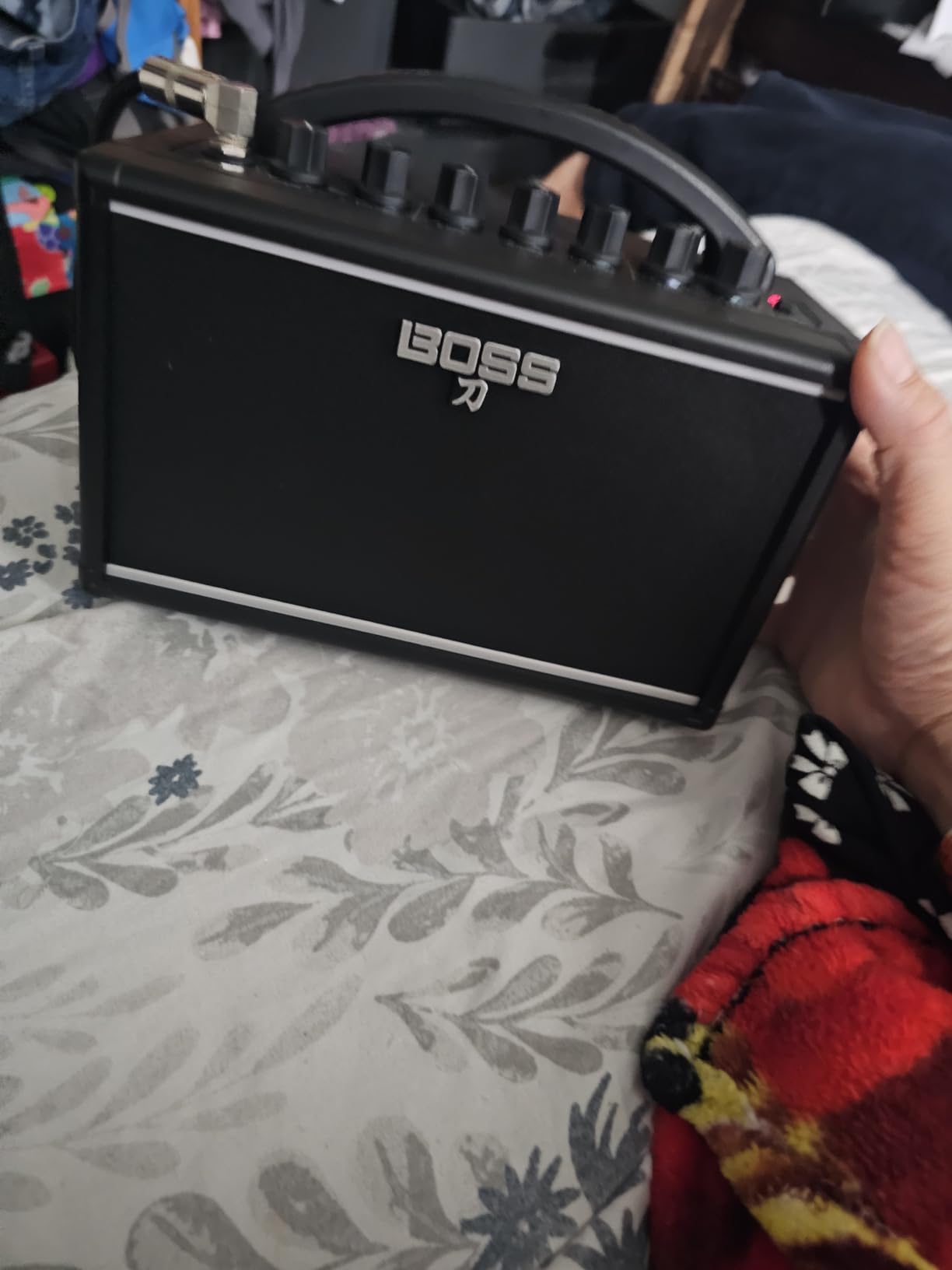
5. Boss Katana Mini – Authentic Katana Tone in a Battery-Powered Mini
Boss Katana Mini 7-Watt Combo Amp
7W battery powered
Three amp types
Analog gain
Built-in delay
Pros
- Authentic Katana tone in mini form
- Multi-stage analog gain circuit
- Three amp voices Brown Crunch Clean
- Built-in tape-style delay
- Battery powered for portability
- Cabinet-voiced headphone output
Cons
- 7W is not very loud
- 4-inch speaker limits bass response
The Boss Katana Mini is what happens when Boss takes its full-size Katana amp DNA and crams it into a 7-watt battery-powered combo. After three weeks of testing, I found the Katana Mini lives up to its bigger siblings’ reputation for warm, musical gain that does not turn fizzy at low volumes.
For anyone wanting real amp feel in a portable package, the Katana Mini is the sweet spot between the toy-like Marshall MS2 and larger combo amps. The aux input makes jamming with backing tracks straightforward, and the cabinet-voiced headphone output delivers silent practice that still feels like playing through a real amp.
Three Amp Voices in One Box
The Brown, Crunch, and Clean channels cover most playing styles. Brown delivers a high-gain voice suited to rock and metal, Crunch handles classic rock and blues, and Clean is Fender-style sparkle. I found myself switching between Clean and Crunch most often during home sessions.
Multi-Stage Analog Gain Circuit
The analog gain stage is where Boss earned its reputation. The overdrive responds to pick attack and guitar volume knob changes in a way that digital modeling often struggles to replicate. Rolling back the volume on my Strat produced convincing clean tones; pushing it forward brought crunch without harshness.
Practical Portability
Running on six AA batteries or an optional adapter, the Katana Mini goes anywhere. I brought it to a friend’s apartment for a quick jam, and the 7-watt output was more than enough for two guitars in a small living room. The 4-inch speaker does not produce deep bass, but for practice purposes, it is more than acceptable.
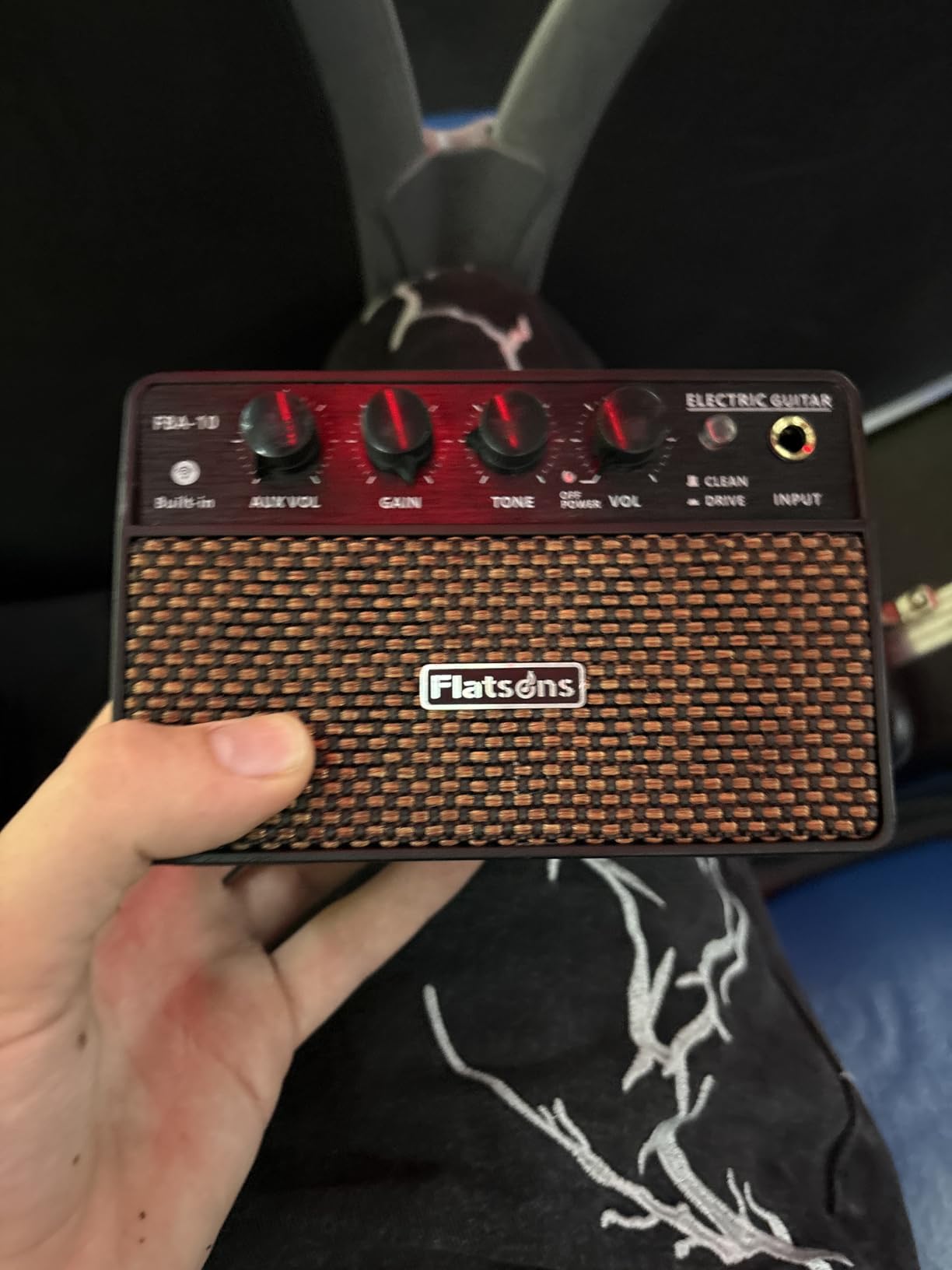
6. Flatsons 10W Mini – The Best Budget Analog Practice Amp
10W Mini Guitar Amp,Rechargeable Electric Guitar Amplifier
10W analog
6 hour battery
Bluetooth 5.3
Aux and headphone
Pros
- Pure analog tone quality
- Rechargeable 6 hour battery
- Compact lightweight design
- Bluetooth streaming
- Great value
- Headphone and aux inputs
Cons
- Limited tone-shaping controls
- Bluetooth playback quality is modest
- Small speaker limits bass
The Flatsons 10W Mini caught me off guard. For a budget-friendly mini amp, the pure analog signal path delivers a clean, transparent tone that amplifies the actual voice of your guitar without coloring it. I compared it side-by-side with my Frontman 10G, and the Flatsons held its own on clean tones.
A professional luthier friend who tested the Flatsons with me noted how true the amp sounds to the source guitar. That is high praise for a budget mini amp, and it speaks to the analog circuit design.
Analog Circuit Design
The pure analog technology with frequency response of 100Hz to 20kHz means no digital conversion artifacts. The dual CLEAN and DRIVE modes with simple GAIN and TONE controls keep operation intuitive. I appreciated how quickly I could dial in a usable tone without menu diving.
Battery Life and Connectivity
Six hours of USB-C rechargeable battery life is enough for multiple practice sessions. Bluetooth 5.3 streaming lets me play along to music, and the 3.5mm headphone jack handles silent practice well.
Honest Limitations
The 1.7-inch speaker is small, so bass response is limited. The Bluetooth audio playback quality is decent but not hi-fi. For apartment practice and travel, it punches well above its price.
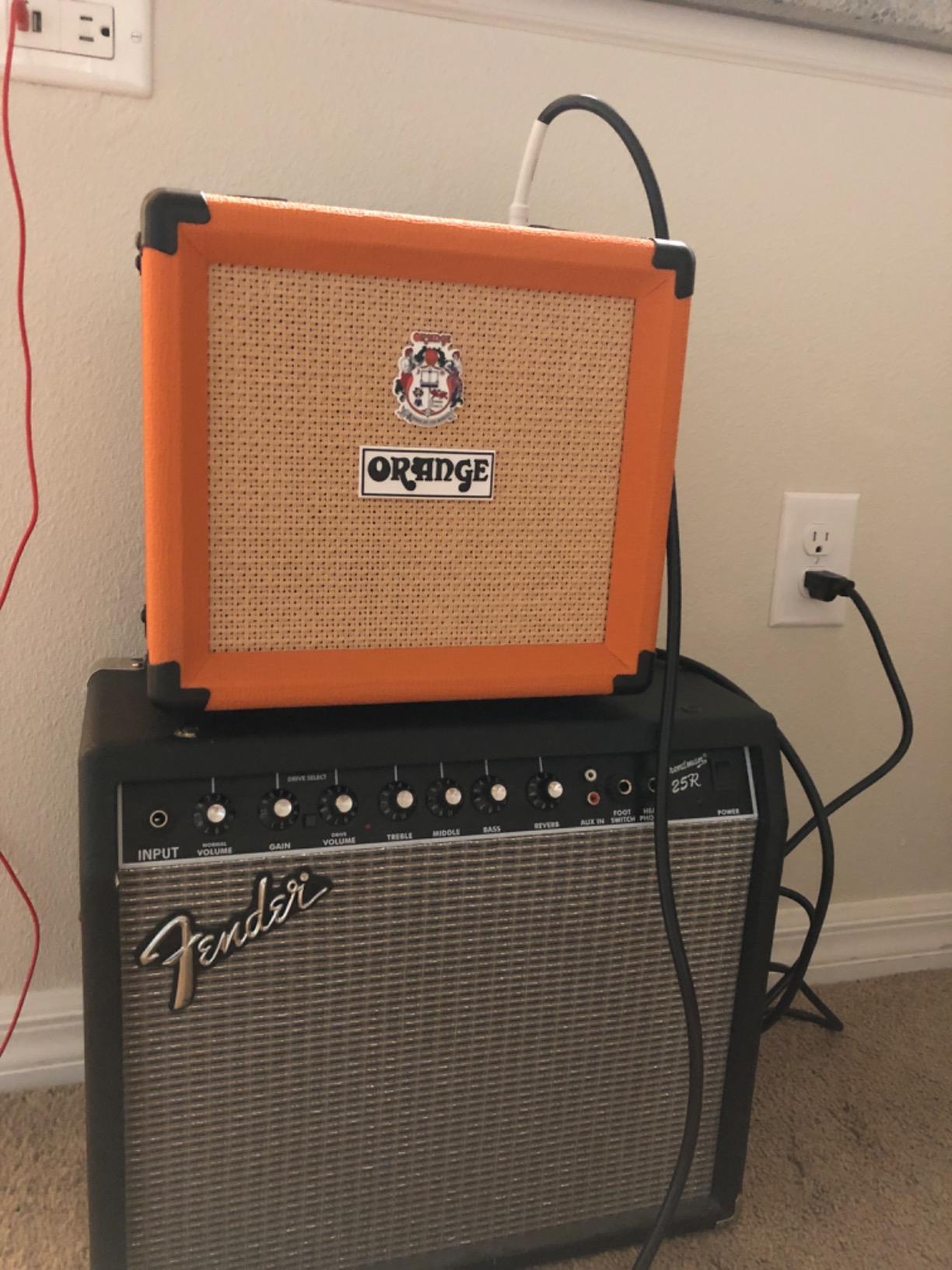
7. Orange Crush 12 – Compact Orange Tone With CabSim Recording Output
Orange Crush 12 12W 6″ Guitar Amplifier and Speaker Combo,
12W solid-state
6 inch speaker
CabSim output
Three band EQ
Pros
- Authentic Orange tone in compact size
- Plenty of volume for practice and small jams
- CabSim headphone output for silent recording
- Great value entry into Orange sound
- Three band EQ for tone shaping
Cons
- Single channel design
- Overdrive can be tricky at low volume
- Limited low end from 6-inch speaker
The Orange Crush 12 packs genuine Orange character into a 12-watt combo that fits on a bookshelf. After two months of testing in my home studio, I found the Crush 12 produces the warm midrange and chiming top end that Orange is famous for, without the volume of a full-stack.
The CabSim-loaded headphone output is the standout feature for home recording. Plug in headphones, and you get a cabinet-simulated signal that records beautifully into a DAW. For bedroom players who want to capture ideas without waking the house, this is the real deal.
Orange Signature Tone
That distinctive Orange midrange growl is here in full. Whether you are playing classic rock, indie, or heavier styles, the Crush 12 nails the Orange character. The closed-back design helps deliver more bass than the small speaker would otherwise suggest.
Single-Channel Flexibility
The Crush 12 runs a single channel with separate gain controls for clean and overdrive voicings. You switch between them via a footswitch or top-panel button. The 3-band EQ gives enough range to dial in anything from sparkling cleans to thick crunch.
Recording and Silent Practice
The CabSim output makes the Crush 12 a strong choice for home recording without a microphone. I tracked rhythm guitar parts by plugging headphones directly into the CabSim output, and the results sounded like a miked-up cabinet. For bedroom producers, this saves buying a separate load box and microphone setup.
8. LEKATO Mini 5W – The Best Ultra-Budget Strap-Mountable Practice Amp
LEKATO Mini Electric Guitar Amp 5W, Portable Guitar Amp Bluetooth with Built-in 4 Effects, Clean Distortion Overdrive Reverb, Rechargeable Small Amplifier for Practice, Black (JA-05G)
5W portable
4 built-in effects
6 hour battery
Strap mountable
Pros
- Very affordable price
- Compact strap-mountable design
- Four built-in effects including reverb
- Bluetooth backing track playback
- Rechargeable battery
Cons
- 5W volume is limited
- Effects are basic
- Not designed for Bluetooth headphones or speakers
The LEKATO Mini 5W is the cheapest amp on this list and one of the most clever designs I have tested. It hangs directly on your guitar strap via a clip, weighs just 220 grams, and runs for about 6 hours on its rechargeable battery. For casual practice anywhere, it is hard to beat at this price.
I used the LEKATO for a week of casual practice around the house, clipping it to my Telecaster strap and walking from room to room. The four built-in effects (Clean, Distortion, Overdrive, Reverb) covered basic needs for blues and rock practice.
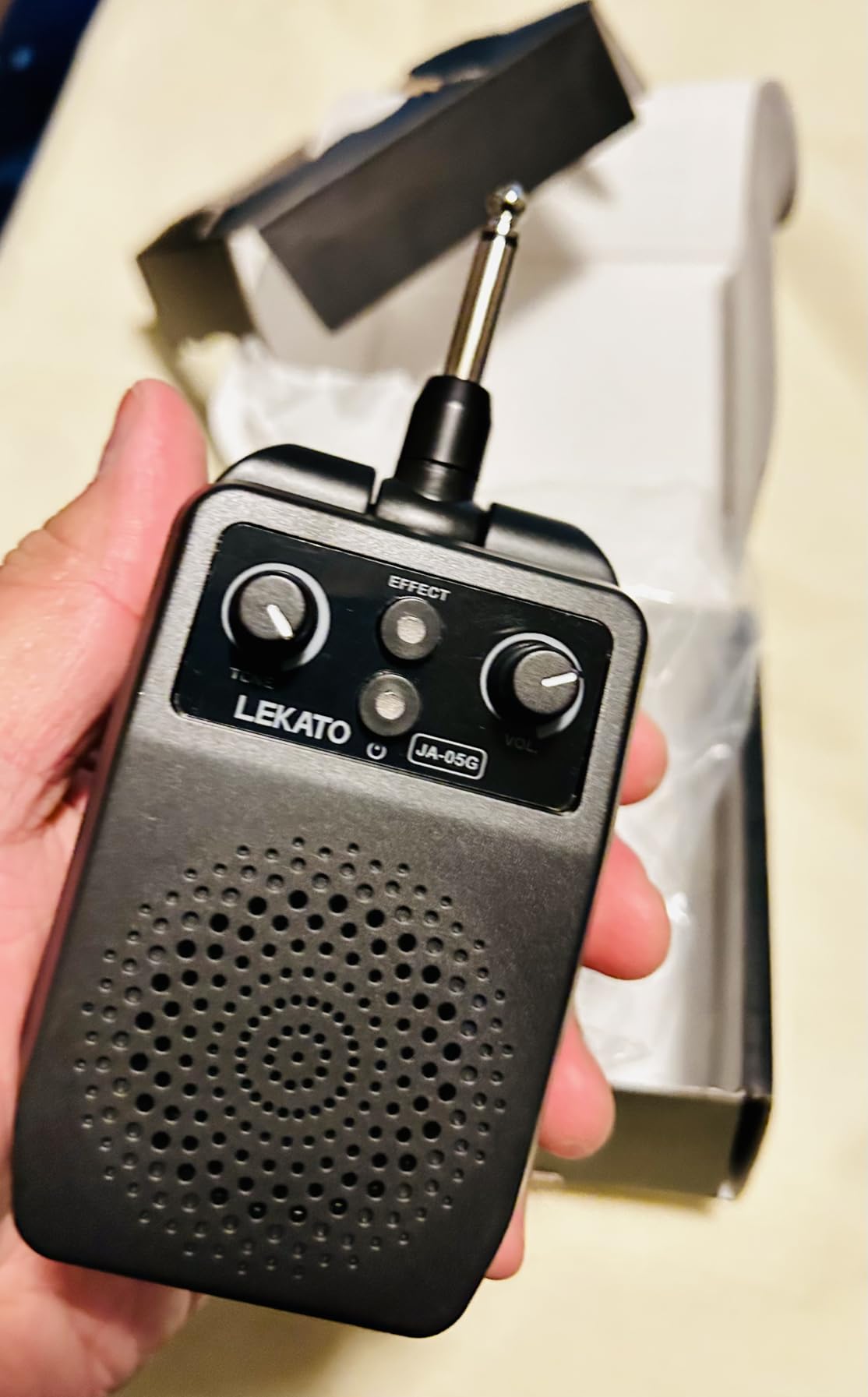
Strap-Mountable Portability
The strap-clip design is genuinely useful. I practiced in the kitchen while dinner was cooking, on the back porch during a barbecue, and at my desk during work breaks. No other amp in this roundup offers that level of grab-and-go portability.
Bluetooth for Backing Tracks
Bluetooth audio playback lets you stream backing tracks directly from your phone. The audio quality is acceptable for practice, though not hi-fi. Note that Bluetooth here is for input only; you cannot send audio to Bluetooth headphones from this amp.
Realistic Expectations
Five watts through a 2-inch speaker is not loud. Effects are functional but basic. If you treat the LEKATO as a casual practice companion rather than a serious amp, it delivers exceptional value. For a true practice amp with real tone, step up to the Frontman 10G or Boss Katana Mini.
9. Orange Crush 20 – The Best 20W Solid-State Combo With Twin Channels
Orange Crush 20 20W 8″ 2-Channel Guitar Amplifier and Speaker Combo, Orange
20W twin channel
8 inch speaker
CabSim output
Footswitch input
Pros
- Twin channels for clean and dirty
- Excellent midrange and clean tone
- Takes pedals well
- Footswitch input for channel switching
- CabSim-loaded headphone output
- Plenty of volume for small rooms
Cons
- No built-in reverb
- No direct out
- On/off switch located on back panel
The Orange Crush 20 is what I recommend when someone needs more than bedroom practice volume but still wants an apartment-friendly amp. At 20 watts through an 8-inch speaker, it produces enough volume for small jam sessions without forcing the entire building to listen.
The twin-channel design with separate gain controls for clean and dirty makes this amp feel more like a professional tool than a starter combo. The 3-band EQ gives enough range to dial in classic Orange cleans, gritty blues, and thick crunch tones.
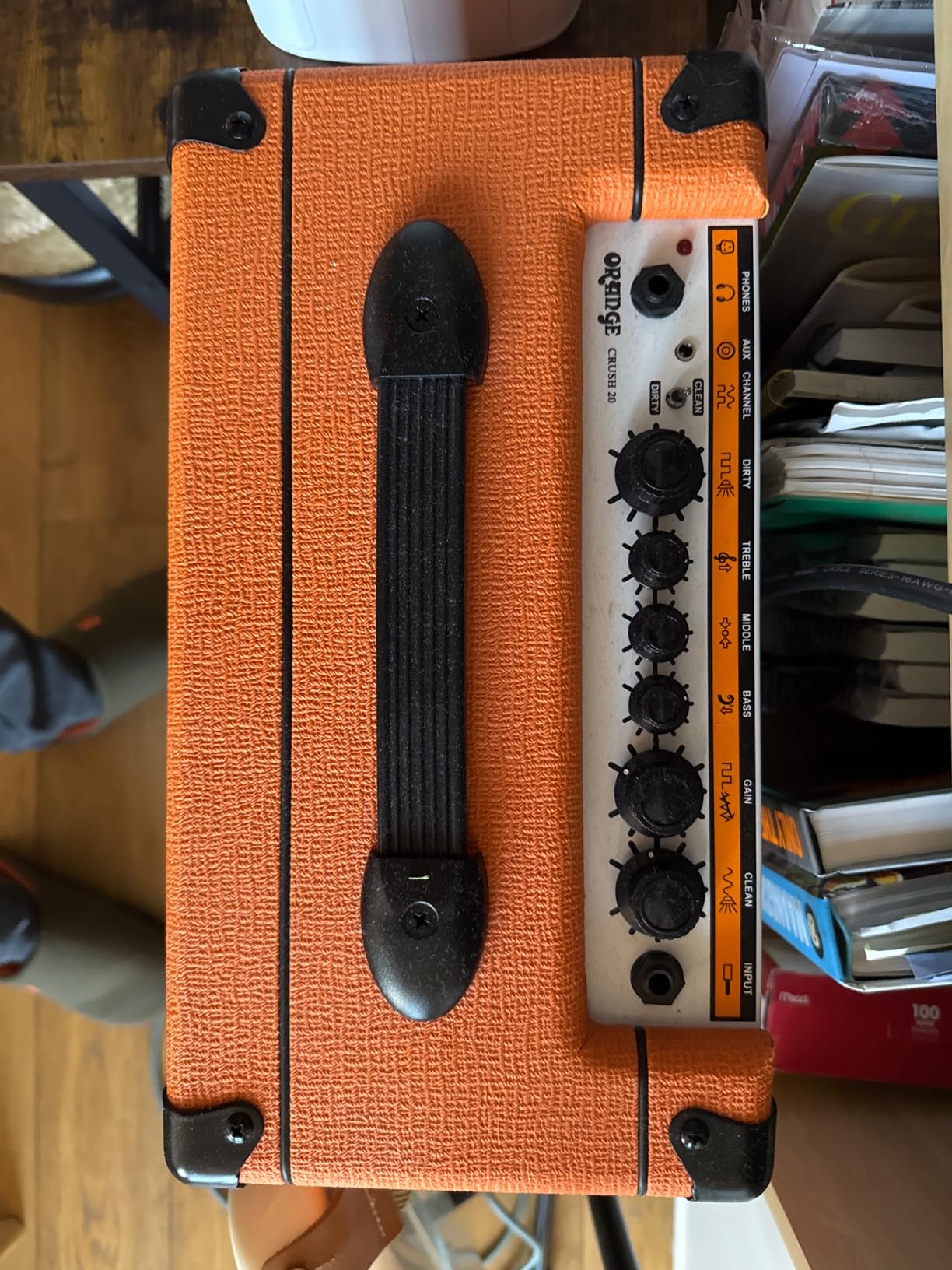
Twin Channel Design
The clean channel delivers the warm, woody Orange clean tone that has made the brand famous. The dirty channel covers classic rock crunch through hard rock territory. Having two channels with separate gain staging means you can switch instantly during a song without tweaking knobs.
Pedal-Friendly Architecture
The Crush 20 takes pedals extremely well. I ran a Tube Screamer, delay, and reverb into the clean channel and got classic 80s rock tones. The amp provides a solid platform for players building a pedalboard.
CabSim Recording Output
Like its smaller sibling, the Crush 20 includes a CabSim-loaded phones output. Recording direct into a DAW produces tracks that sound like a miked-up cabinet. For home producers, this saves the cost of a separate load box or IR loader.
Wishlist Items
The lack of built-in reverb is the most common complaint. Adding a reverb pedal is the obvious workaround. The on/off switch placement on the back panel is inconvenient if you stack the amp close to a wall.
10. Marshall MG10G – Classic Marshall Look in a Beginner Combo
Marshall MG10G Combo Electric Guitar Amplifier – Black
10W solid-state
6.5 inch speaker
Clean and OD channels
Headphone jack
Pros
- Classic Marshall aesthetic
- Clean and Overdrive channels
- Headphone jack for silent practice
- Aux input for backing tracks
- Compact portable size
Cons
- Limited volume for jam sessions
- Channel switching can be quirky at low gain
The Marshall MG10G is the amp I recommend when someone wants the iconic Marshall look and feel without breaking the bank. At 10 watts through a 6.5-inch speaker, it produces the kind of classic Marshall crunch that has powered rock music for decades.
The clean and overdrive channels give you two distinct voices in one box. The contour control is a useful tone-shaping tool that brightens up clean tones or adds midrange bite to overdrive. For bedroom practice and casual home use, the MG10G delivers.
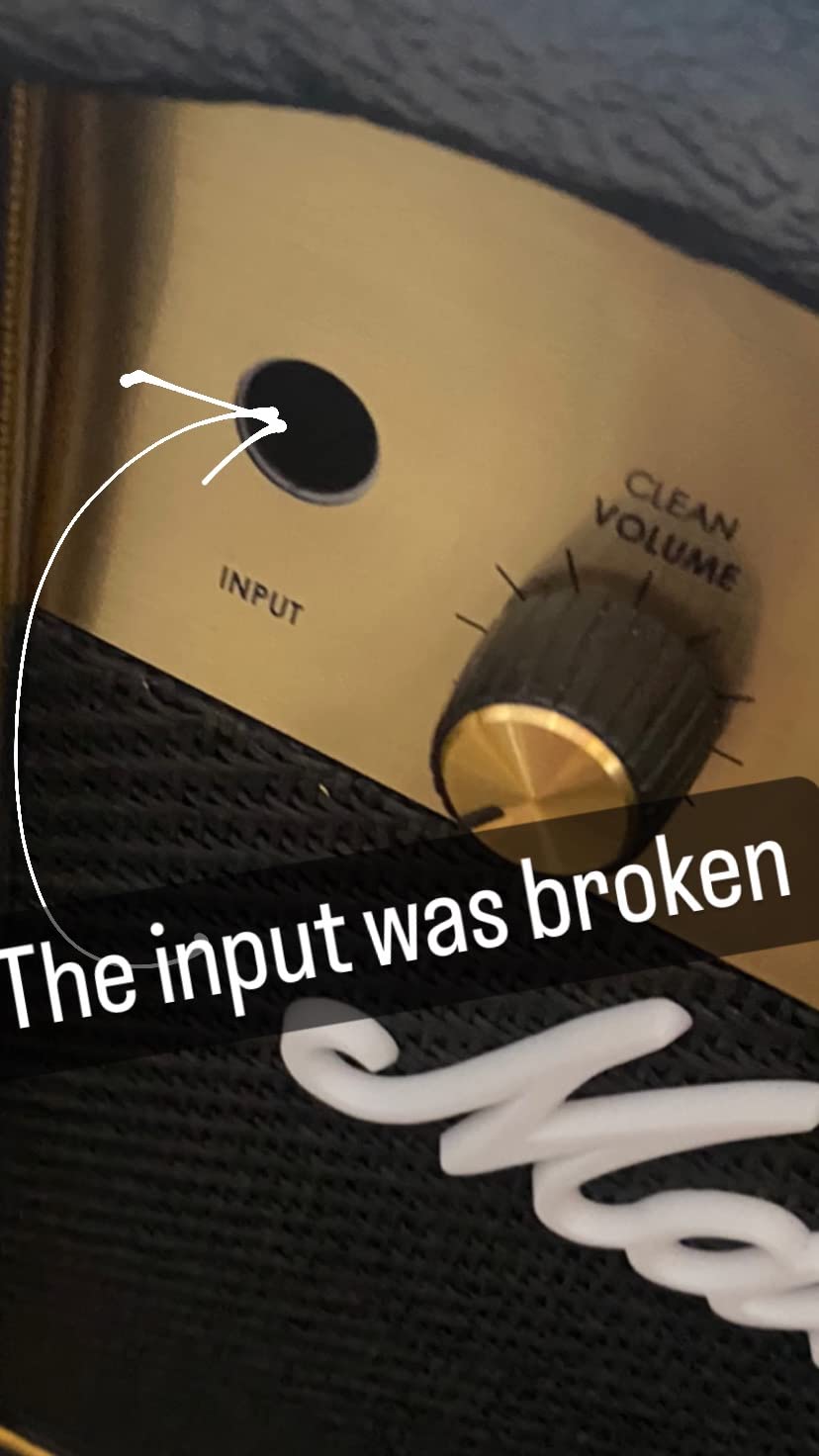
Classic Marshall Tone
The MG10G leans into Marshall’s signature midrange-heavy character. The overdrive channel produces classic rock crunch that works for everything from AC/DC-style rhythm to bluesy leads. The clean channel has enough sparkle for chord work and fingerstyle playing.
Headphone and Aux Connectivity
The 3.5mm headphone jack auto-mutes the speaker for silent practice. The aux input lets you jam along with backing tracks from your phone or laptop. I used both features extensively during late-night practice sessions.
Channel Switching Quirks
Some users report that the channel switching can be finicky at very low gain settings. In my testing, the issue was minor and resolved by adjusting the gain slightly higher. For the price, the MG10G delivers authentic Marshall character.
11. Yamaha THR10II – The Best Desktop Amp for Living Room Practice
Yamaha THR10II Wired Desktop Guitar Amp , 10W
20W desktop
15 amp models
3 bass amps
3 mic models
Pros
- Realistic tube-amp tones
- Extensive amp and effect models
- Bluetooth audio playback
- USB plug-and-play recording
- Compact desktop-friendly form factor
- Hi-fi audio with extended stereo
Cons
- Higher price point
- Limited volume for its size
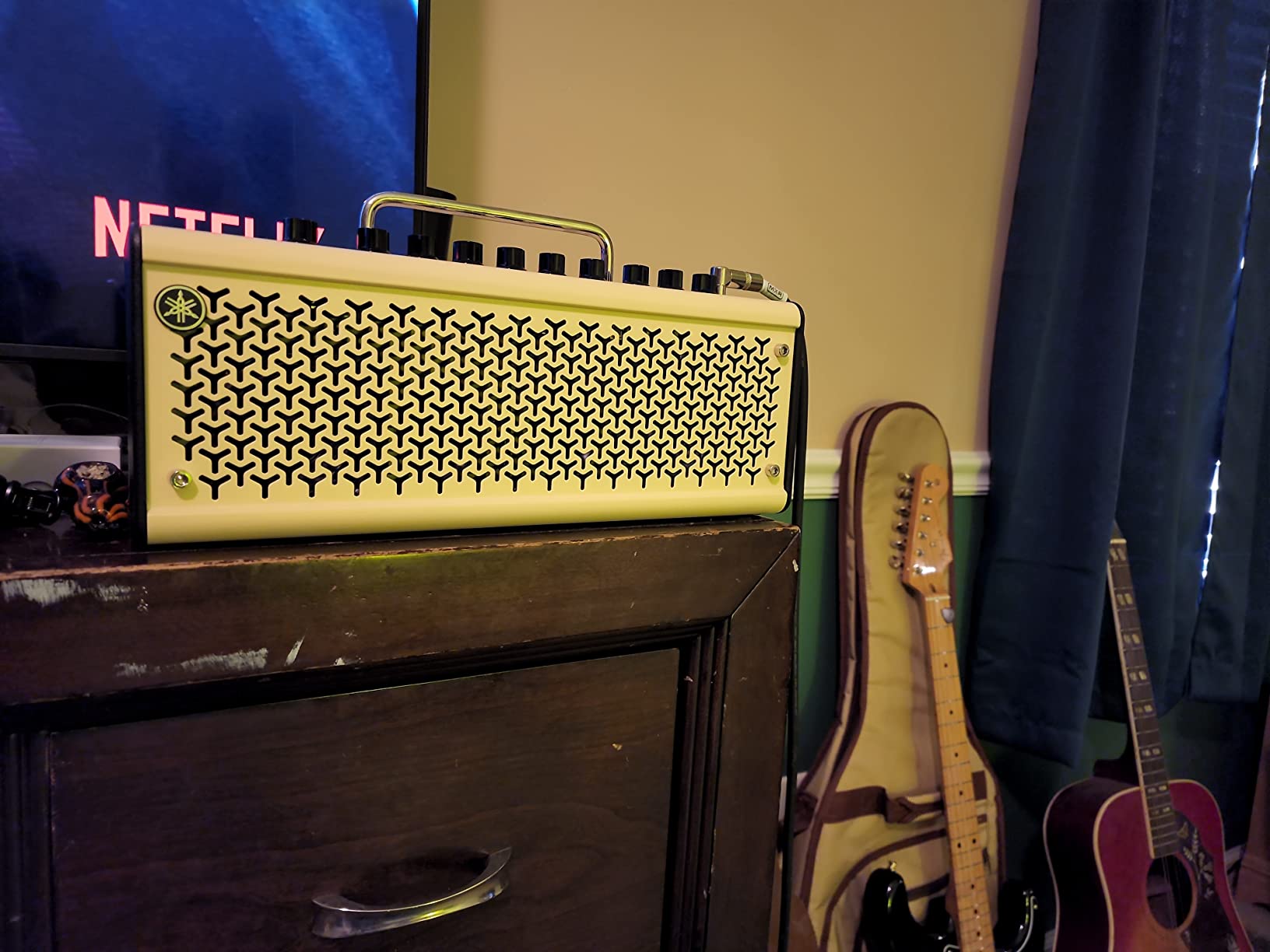
The Yamaha THR10II is the amp I keep on my desk for casual practice between work sessions. Designed to look like a piece of audio gear rather than a guitar amp, it fits beautifully in a living room or home office. The realistic tube-amp tones and hi-fi audio playback make it feel more like a high-end speaker than a practice amp.
Yamaha’s modeling technology has matured impressively. The 15 guitar amp models cover everything from clean Fender-style tones to high-gain Marshall and Mesa voicings. The 3 bass amp models and 3 mic models extend the THR10II’s usefulness to acoustic guitar and even home recording of vocals.
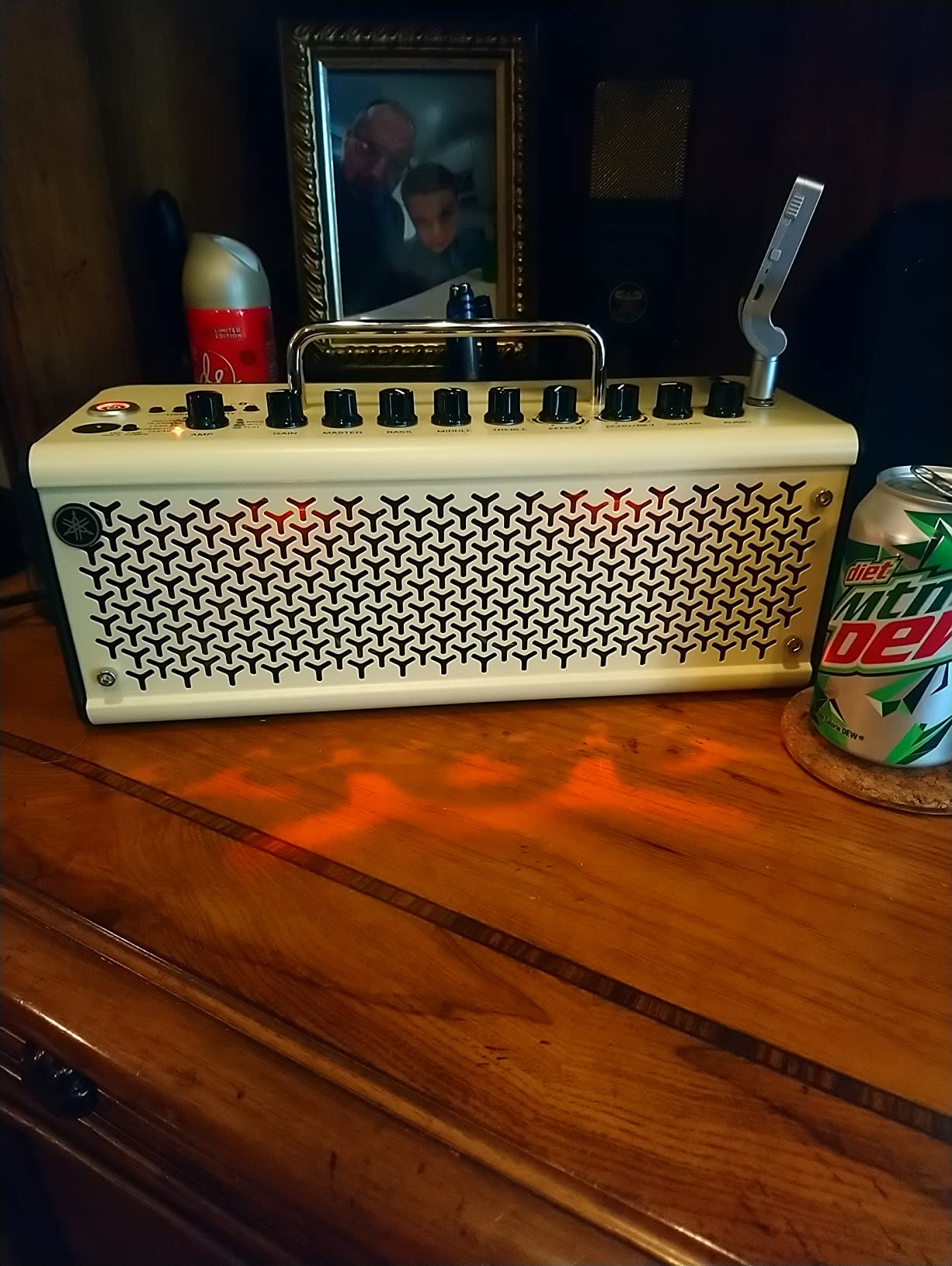
Living Room Friendly Design
The compact desktop form factor, real wood accents, and minimal visual footprint make the THR10II the most living-room-friendly amp in this roundup. My partner, who generally dislikes the look of guitar amps, actually likes the THR10II on the bookshelf. That is a real win for shared spaces.
Bluetooth and USB Recording
Bluetooth audio streaming lets you play along with music from any device. USB plug-and-play recording means you can track ideas directly into your DAW without an audio interface. The combo of these features makes the THR10II a complete home practice and recording solution.
Price vs Value
The THR10II costs more than most practice amps, but the build quality, modeling accuracy, and feature set justify the premium for serious home players. If you want an amp that disappears into your living space while delivering pro-grade tones, this is the one.
12. Fender Mustang LT40S – The Best Stereo Modeling Combo for Beginners
Fender Mustang LT40S Guitar Amplifier, with 2-Year Warranty
40W modeling
Dual 4 inch speakers
Stereo headphone out
Fender Tone app
Pros
- Tons of amp profiles and effects
- Dual 4-inch speakers deliver surprising bass
- Stereo headphone output for silent practice
- Fender Tone Desktop App for editing
- Color display and intuitive controls
- Excellent value for 40W stereo combo
Cons
- Build quality could be more premium
- Desktop app uses older USB connection
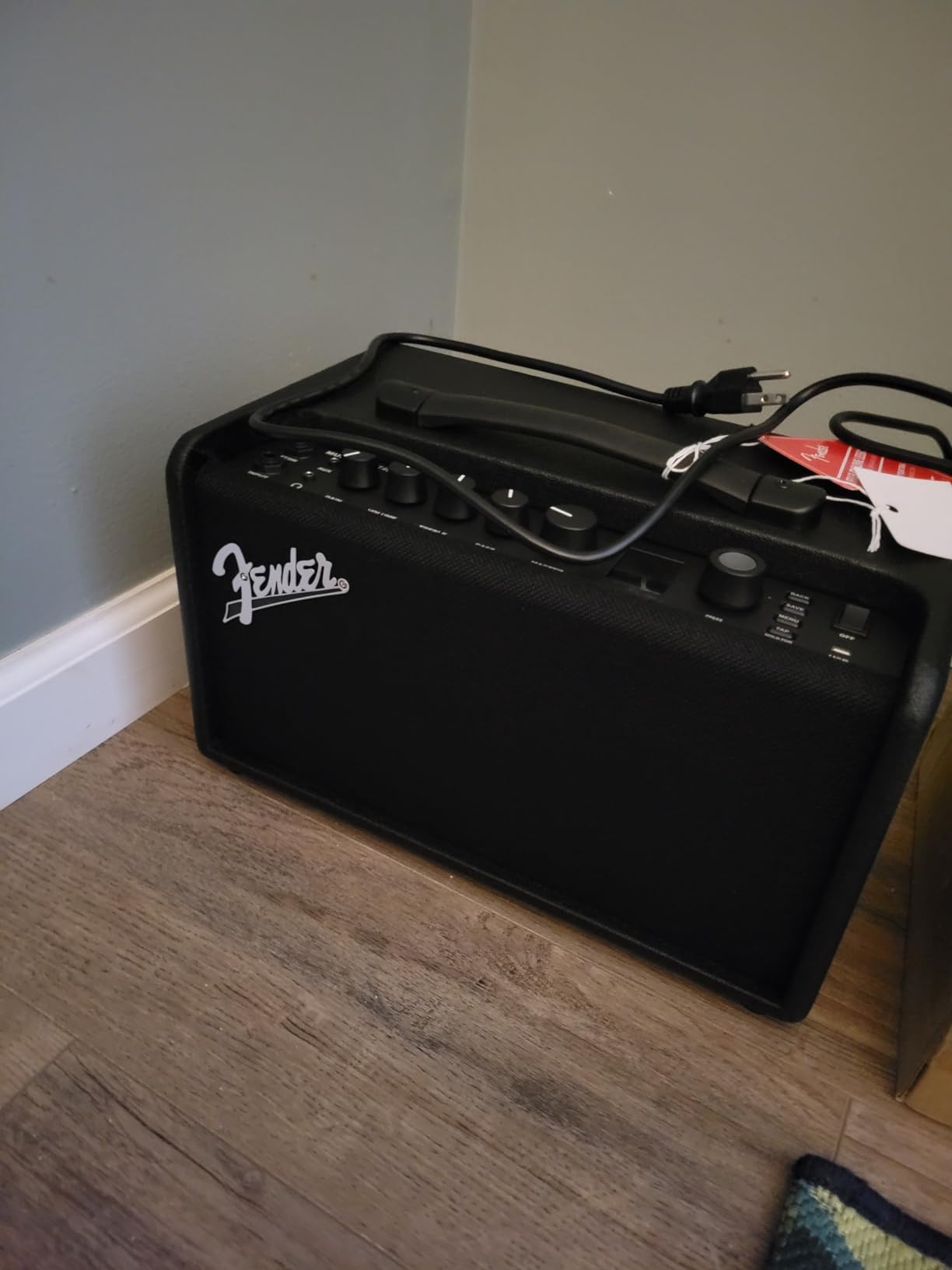
The Fender Mustang LT40S rounds out this list as the most feature-rich modeling combo for home practice at a beginner-friendly price. With 40 watts driving dual 4-inch speakers in a stereo configuration, it produces surprisingly wide sound for a bedroom amp.
I tested the Mustang LT40S alongside the Positive Grid Spark 40, and the Fender holds its own. The amp profile variety, intuitive color display, and Fender Tone Desktop App integration make it a strong contender for anyone wanting a complete modeling amp without the Spark’s app dependency.
Stereo Speaker Configuration
The dual 4-inch full-range speakers produce a wide stereo image that you do not get from most single-speaker combos. Effects like chorus and delay sound properly spacious through the stereo output. The bass response surprised me for a 4-inch speaker setup.
Preset Variety and Fender Tone App
Dozens of onboard amp profiles cover clean, crunch, high-gain, bass, and acoustic voicings. The Fender Tone LT Desktop App for Mac and PC lets you edit presets in detail, swap effect order, and download new tones from Fender’s community library.
Silent Practice Headphone Output
The stereo headphone output maintains the stereo image for silent practice. Late-night playing through headphones is genuinely enjoyable on the Mustang LT40S, with the wide effects creating an immersive practice environment.
Where It Could Improve
The build quality feels slightly less premium than the Yamaha THR10II or Boss Katana series. The Desktop App connection is USB-B rather than USB-C, which is dated for newer computers. These are minor concerns given the feature set and price.
How to Choose the Best Guitar Amp for Home Use
Picking the right home guitar amp comes down to four core decisions: how loud you can play, what tones you want, where you will use it, and whether you want to record. The buying guide below breaks down each factor so you can match an amp to your specific situation.
Wattage and Apartment-Friendly Volume
For bedroom and apartment use, 5 to 20 watts is the sweet spot. A 15-watt tube amp is generally loud enough to fill a small room but not enough to disturb neighbors in adjacent units. Modeling amps with power scaling let you drop the output to 0.5W or 1W for true silent operation while still pushing the speaker at bedroom volume. If you live in a thin-walled apartment, prioritize amps with power attenuation or a great headphone output.
Tube vs Solid-State vs Modeling
Tube amps deliver warm, responsive overdrive that feels alive under your fingers, but they cost more and need occasional maintenance. Solid-state amps are reliable, affordable, and handle pedals well, but their clean tones can sound sterile and their overdrive can be fizzy. Modeling amps digitally simulate dozens of amp and effect combinations in one box, making them the most versatile choice for home players who want variety. For most home users, a modeling amp like the Positive Grid Spark 40 or Fender Mustang LT40S offers the best balance of tone variety and value.
Headphone Output and Silent Practice
A quality headphone output is non-negotiable for home amps. Look for amps with cabinet-simulated or voiced headphone outputs, which sound more realistic than unprocessed signals. The Boss Katana Mini, Orange Crush series, and Positive Grid Spark amps all deliver excellent silent practice experiences. If late-night playing is your main use case, prioritize headphone quality over speaker size.
Home Recording Features
Built-in USB audio interfaces save you from buying a separate interface for DAW recording. The Positive Grid Spark 40, Yamaha THR10II, and Fender Mustang LT40S all function as USB audio interfaces. CabSim-loaded outputs, like those on the Orange Crush amps, simulate a miked cabinet for silent recording without needing a microphone.
App Ecosystem and Practice Tools
Smart amps with companion apps open up practice tools that traditional amps cannot match. The Positive Grid Spark app adds Smart Jam AI bandmate, Auto Chord detection, and ToneCloud preset sharing. The Yamaha THR Remote app provides deep editing. The Boss Tone Studio app unlocks effects and amp models for the full-size Katana series. If you want to gamify practice or learn songs faster, app-enabled amps are worth the premium.
Speaker Size and Form Factor
Speaker size affects both bass response and overall footprint. 4-inch speakers keep the amp compact for desktops and shelves but limit low end. 6 to 8-inch speakers deliver fuller sound and more headroom. For tiny apartments where space is at a premium, mini amps like the Boss Katana Mini or LEKATO 5W are ideal. For a dedicated music room, larger combos like the Orange Crush 20 or Fender Mustang LT40S produce more satisfying sound.
If you are also setting up a home office for music and work, our guide to the best home printers for occasional use covers workspace essentials beyond your amp setup.
Frequently Asked Questions
What is the best guitar amp for use at home?
The best guitar amp for home use depends on your space and needs. For bedroom and apartment players, the Fender Frontman 10G offers excellent clean tones at a budget price, the Positive Grid Spark 40 delivers smart features and recording capability, and the Boss Katana Mini gives authentic tone in a portable package. Most home players are well served by a 10 to 40 watt combo amp with a headphone output and aux input.
How many watts do I need for a home guitar amp?
For bedroom and apartment practice, 5 to 20 watts covers nearly every situation. A 15-watt tube amp can fill a small room but is not loud enough to disturb neighbors in adjacent apartments. Solid-state and modeling amps at 20 to 40 watts provide plenty of volume for small jam sessions and home recording. Power scaling and attenuation features let you cut wattage for true silent practice while keeping the amp sounding full.
Are solid-state amps good for home use?
Yes, solid-state amps are excellent for home use. They are reliable, affordable, handle pedals well, and require no maintenance. Modern solid-state combos like the Orange Crush series and Boss Katana Mini deliver clean tones and overdrive that rival more expensive tube amps for practice purposes. The main drawback is that solid-state overdrive can sound less dynamic than tube saturation, but for bedroom practice and recording, this difference is negligible.
What size amp is good for home use?
A 10 to 40 watt combo amp with a 6 to 8 inch speaker is ideal for most home setups. Smaller amps under 10 watts work for bedroom practice and travel but lack the bass response for satisfying jam sessions. Larger amps over 40 watts are usually overkill for home use and can produce volume that disturbs neighbors. Modeling amps like the Positive Grid Spark 40 and Fender Mustang LT40S offer the best balance of size, features, and tone for home players.
What is the best cheap guitar amp for beginners?
For beginners on a budget, the Fender Frontman 10G delivers authentic Fender clean tones, headphone and aux connectivity, and a 2 year warranty at an entry-level price. The Marshall MG10G offers classic Marshall character with clean and overdrive channels. The LEKATO Mini 5W is the cheapest option and clips directly to your guitar strap for ultra-portable practice. All three include headphone outputs for silent practice, which is essential for apartment beginners.
Do I need a tube amp for home use?
A tube amp is not necessary for home use. Solid-state and modeling amps deliver excellent tones for practice and recording at lower prices and with less maintenance. However, tube amps offer a dynamic, responsive feel that many players prefer, especially for blues, rock, and genres where overdrive responsiveness matters. If you want tube tone at home volumes, look for low-wattage tube amps with master volume controls that let you push the preamp section at bedroom volumes.
Final Verdict: Which Home Guitar Amp Should You Buy in 2026?
After testing all twelve amps in real bedroom and apartment conditions, here is how I would match them to different player types:
If you are a beginner who wants the most authentic tone at the lowest price, the Fender Frontman 10G is the editor’s choice pick. It delivers Fender’s classic clean tones, includes headphone and aux jacks for silent practice, and comes with a 2-year warranty.
If you want the smartest, most versatile practice experience and do not mind a higher price, the Positive Grid Spark 40 is the best value. The Smart Jam AI bandmate, USB audio interface, and ToneCloud preset library turn practice into an engaging daily habit.
If you travel or want an ultra-portable companion, the Positive Grid Spark GO gives you full Spark features in a pocketable 5-watt box with 8-hour battery life. For ultra-budget beginners, the Marshall MS2 or LEKATO Mini 5W covers basic practice needs.
For home recording without buying a separate audio interface, the Yamaha THR10II and Fender Mustang LT40S both deliver USB recording plus realistic modeling tones. The Orange Crush 12 or Crush 20 are the best picks if you want authentic Orange character and a CabSim recording output.
Whatever amp you choose, prioritize a quality headphone output and aux input. Those two features transform a basic amp into a complete home practice solution that respects your neighbors and your schedule. The best guitar amps for home use are the ones you actually plug in and play every day.