
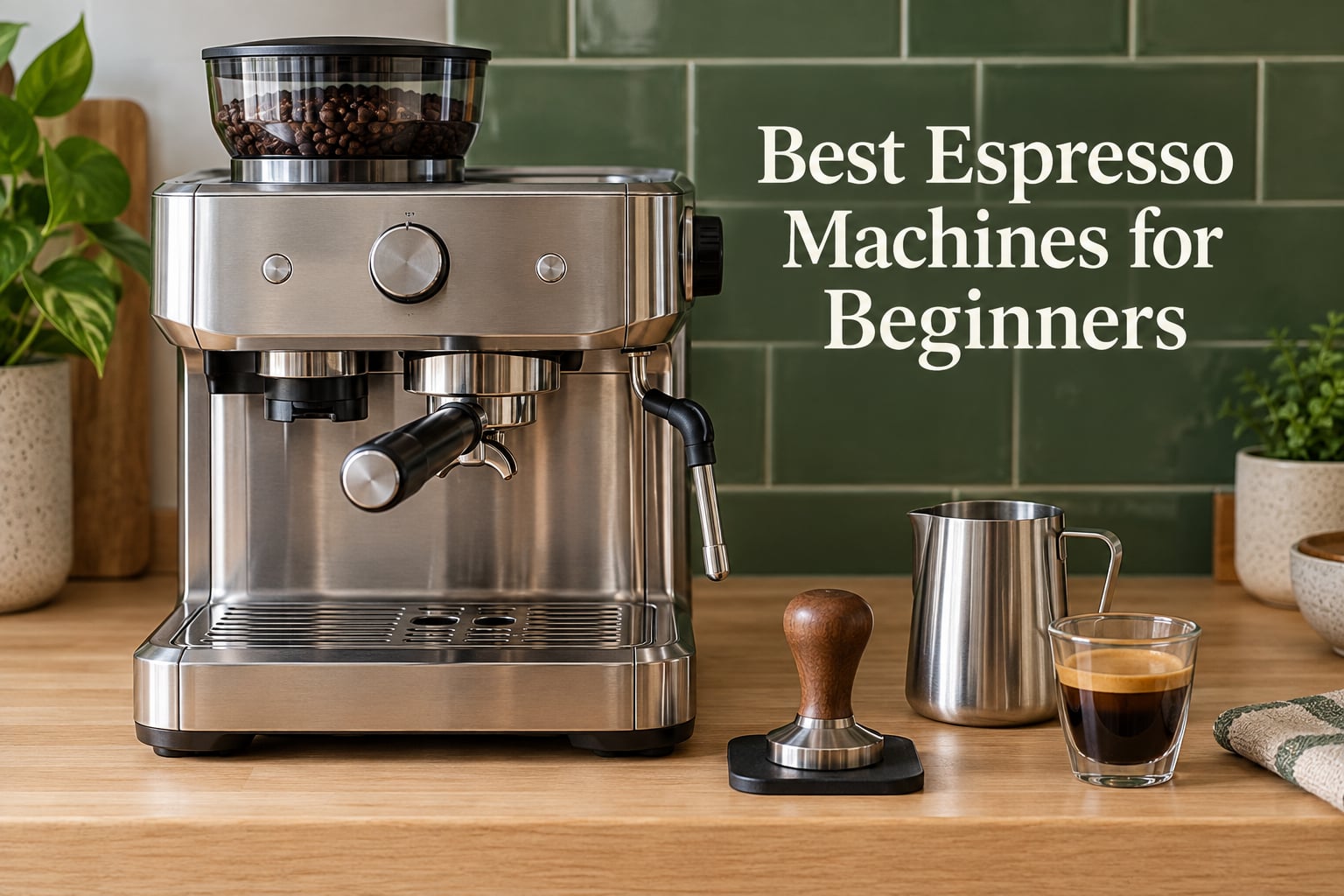
The best espresso machines for beginners are the ones that forgive a bad grind, heat up fast, and hand you a steam wand you can still control after the fifth flat coffee. The Breville Barista Express is the one I keep coming back to, because its built-in burr grinder and PID temperature regulation remove the two things that trip up almost every first-timer. If your total budget is tighter, the De’Longhi Stilosa does the same job for a fraction of the outlay, and you add a grinder separately.
That grinder point matters more than any other in this guide. Across r/espresso threads, home-barista forums, and thousands of owner reviews, the same complaint repeats: people buy a capable machine, feed it pre-ground supermarket coffee, and conclude the machine is broken. Grind quality decides 80 percent of the cup. The machine decides most of the rest.
My team pulled twelve machines in this roundup, weighed the specifications against real owner feedback, and ranked them by how forgiving they are on day one rather than by how much control they eventually offer. That is a deliberate departure from most espresso roundups, which reward the enthusiast machine and punish the beginner for wanting a latte on a Tuesday morning.
Three things changed how I ranked them. First, heat-up time, because a machine you wait eight minutes for at 7am loses to one that is ready in 30 seconds. Second, whether a pressure gauge or temperature readout exists, because visible feedback is the fastest way for a beginner to learn what they are doing wrong. Third, how much the machine does automatically before it stops being fun.
If you want a shorter, price-capped read first, my guide to home espresso machines under 500 dollars covers the same category from the other direction.
Our Top 3 Beginner Espresso Machines Tested in 2026

Breville Barista Express
- Built-in conical burr grinder
- PID temperature control
- Manual microfoam steam wand

Comparing Every Pick in This Espresso Machine Roundup for 2026
| Product | Specs | Action |
|---|---|---|
| Breville Barista Express |
|
Check Latest Price |
 De’Longhi Stilosa De’Longhi Stilosa |
|
Check Latest Price |
| CASABREWS CM5418 |
|
Check Latest Price |
 Gevi 20 Bar Compact Gevi 20 Bar Compact |
|
Check Latest Price |
 CASABREWS 3700 Essential CASABREWS 3700 Essential |
|
Check Latest Price |
 Breville Bambino Breville Bambino |
|
Check Latest Price |
 Ninja Luxe Cafe Premier Ninja Luxe Cafe Premier |
|
Check Latest Price |
 Neretva 20 Bar Super Compact Neretva 20 Bar Super Compact |
|
Check Latest Price |
 atatix 20 Bar Espresso Maker atatix 20 Bar Espresso Maker |
|
Check Latest Price |
 CASABREWS Ultra CASABREWS Ultra |
|
Check Latest Price |
 CHULUX Slim CHULUX Slim |
|
Check Latest Price |
 SHARDOR 20 Bar Touchscreen SHARDOR 20 Bar Touchscreen |
|
Check Latest Price |
1. Breville Barista Express BES870XL – Best Overall for Beginners Learning Espresso
Breville BES870XL Barista Express Espresso Machine, Brushed Stainless Steel
Integrated conical burr grinder
PID temperature control
54mm portafilter
22.1 pounds
Pros
- Built-in grinder removes the biggest beginner mistake
- Repeatable PID temperature control
- Manual wand produces real microfoam
- Fast enough for a weekday morning
Cons
- Large 22.1 pound body takes real counter space
- Manual workflow has a genuine learning curve
- Grinder and tamping are separate steps
This is the machine I hand to friends who say they want to learn. The Barista Express puts a conical burr grinder, a PID-controlled boiler, a manual steam wand and a 54mm portafilter in one stainless steel body, which means a beginner can go from beans to a textured milk drink without buying anything else. Owners describe the same pattern repeatedly: rough shots in week one, repeatable shots by week three.
At 4.4 stars across more than 27,000 reviews, it carries the largest and longest-established review base in this roundup, and that matters for a first purchase. When a component wears out or an owner asks whether to upgrade the baskets, there is a deep body of real-world answers behind the machine rather than a handful of listings.
Grinder, Boiler and Group Head Specifications
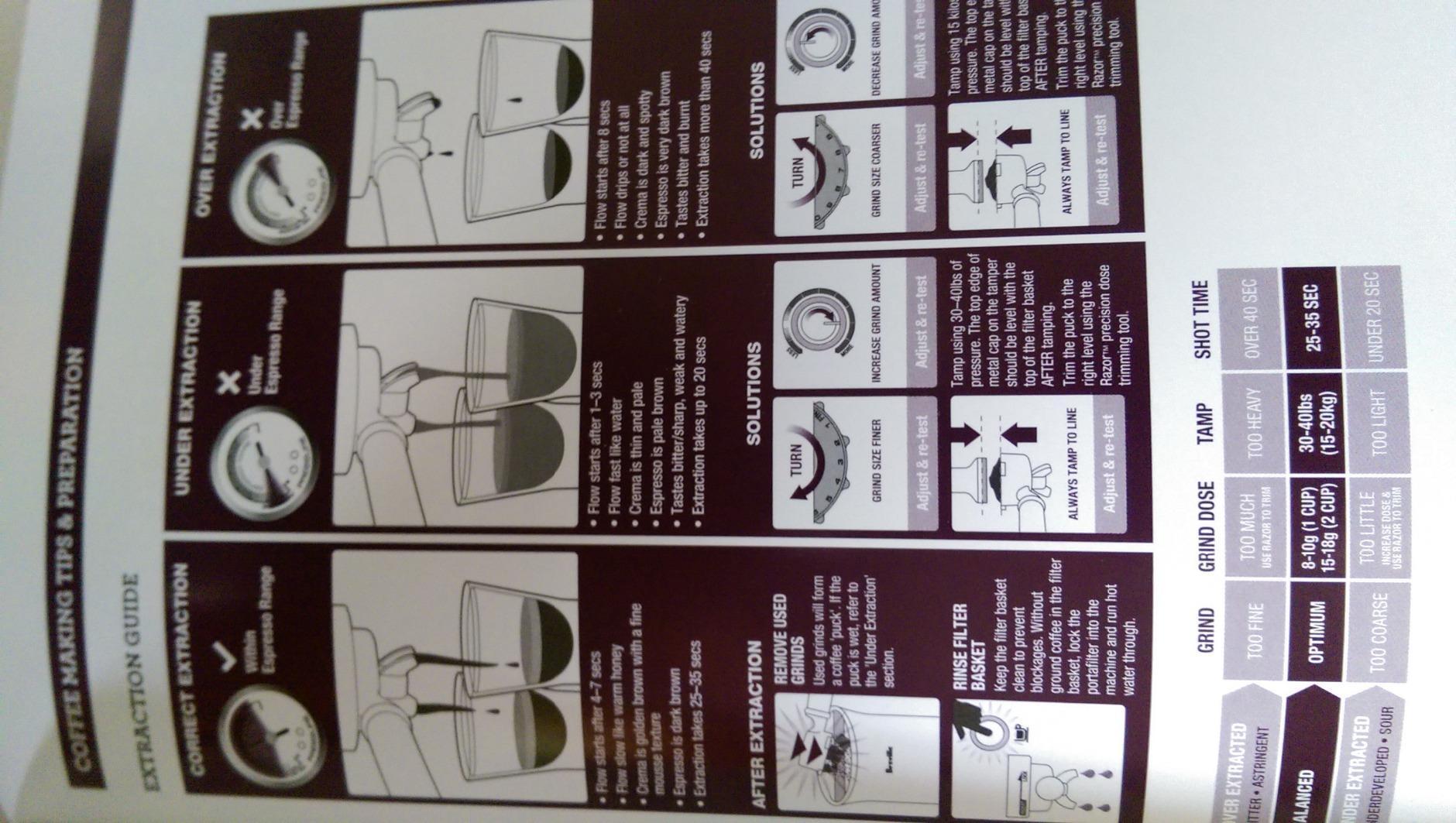
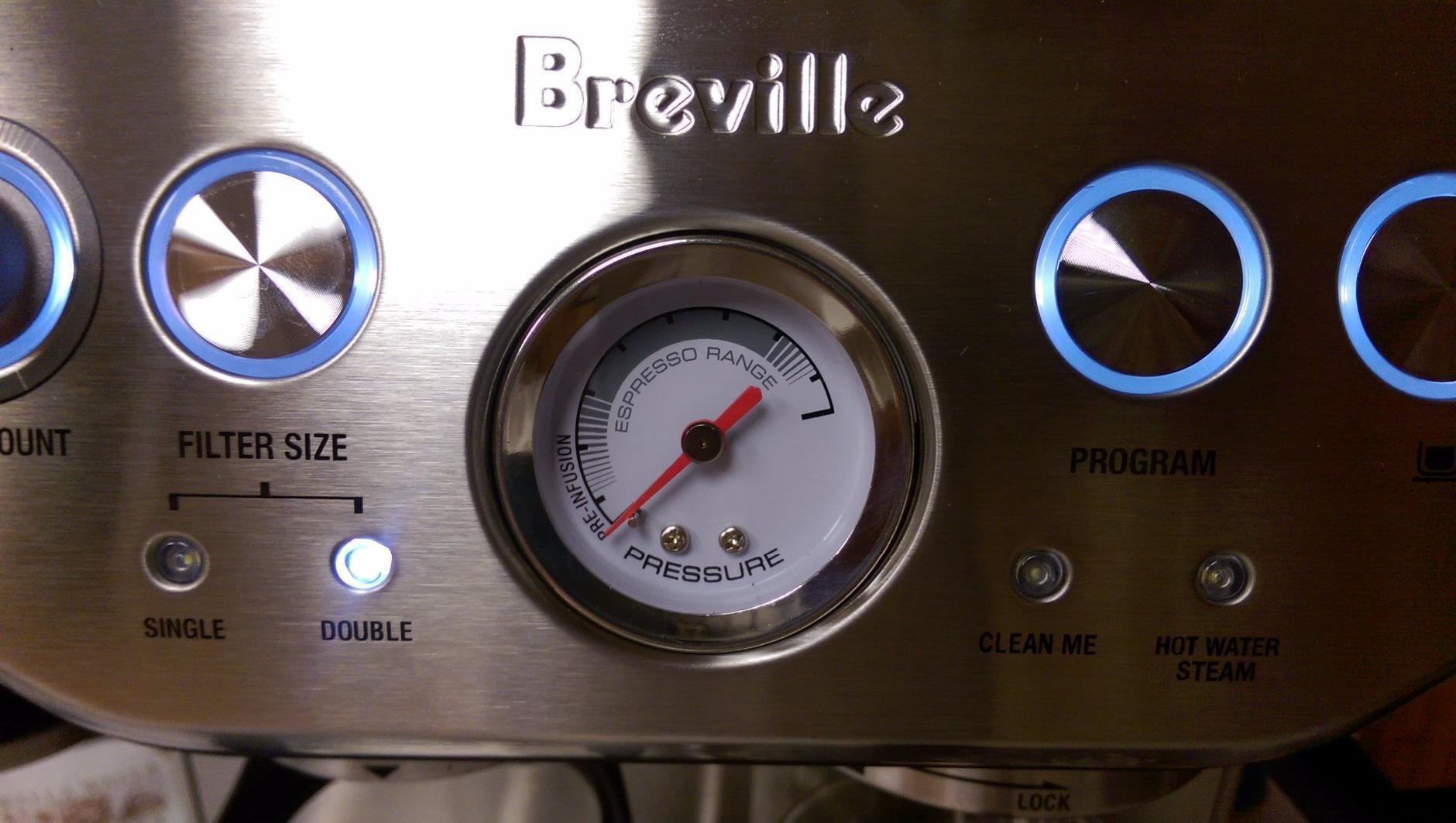
The integrated grinder is the reason this machine sits at number one. It has a simple grind size dial and a half-pound bean hopper, and it doses directly into the portafilter, so the coffee goes from bean to puck in a few seconds. The boiler is PID regulated, which means it holds a steady extraction temperature rather than swinging hot and cold across the shot. Low pressure pre-infusion wets the puck evenly before full pressure hits, which is the single biggest defense against channeling.
The trade-off is physical. The body is 22.1 pounds and measures 13.8 inches deep by 12.5 inches wide by 15.9 inches tall, so it needs a genuine stretch of counter. The water tank holds 67 ounces, which is generous, and the package includes a Razor Dose trimming tool, a stainless steel portafilter, single and dual wall baskets, an integrated tamper, a milk jug, a cleaning disc, tablets, a brush, an Allen key and a water filter.
Who This Machine Suits
Choose the Barista Express if you want to actually learn the craft rather than just consume drinks. The manual steam wand gives you throttle control over milk texture, so latte art is achievable once your shots stop channeling. It is also the right pick if you drink straight espresso and Americano, because the hot water function and programmable shot volume cover both without extra equipment.
Where It Falls Short for a Beginner
The honest drawback is the manual workflow. Grinding, dosing, tamping and pulling are all your job, and the learning curve is real. If you want a machine that does the work for you on a weekday morning while you get to work, skip to the Ninja Luxe Cafe Premier. Also measure your counter first; this is the largest machine here.
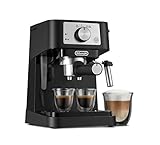
2. De’Longhi Stilosa EC260BK – Best Value Manual Espresso Machine for Newcomers
De’Longhi Stilosa Compact Manual Espresso Machine, Manual Milk Frother
15 bar pump
Stainless steel boiler
9.5 pounds
33.8 oz tank
Pros
- Proven Italian brand with a huge owner base
- Compact and light at 9.5 pounds
- Stainless steel boiler built for longevity
- Manual wand gives direct milk control
Cons
- No grinder
- so pre-ground coffee is required
- No PID temperature control
- 15 bar is the lowest pump figure here
The Stilosa is the machine I recommend when someone is not sure they will stick with the hobby. It is a fully manual 15 bar machine with a stainless steel boiler, and it has been sold in large numbers for years, which means parts, advice and replacement baskets are easy to find. The manual steam wand gives you real control over milk texture, and the portafilter ships with both single and double shot filters.
Reviewers consistently describe a short learning period before shots and milk texture become repeatable. That is the honest framing: this is not an appliance you press a button and get a drink. It is the cheapest credible way to learn what pressure, dose and timing actually do.
Specs That Matter for a First Machine
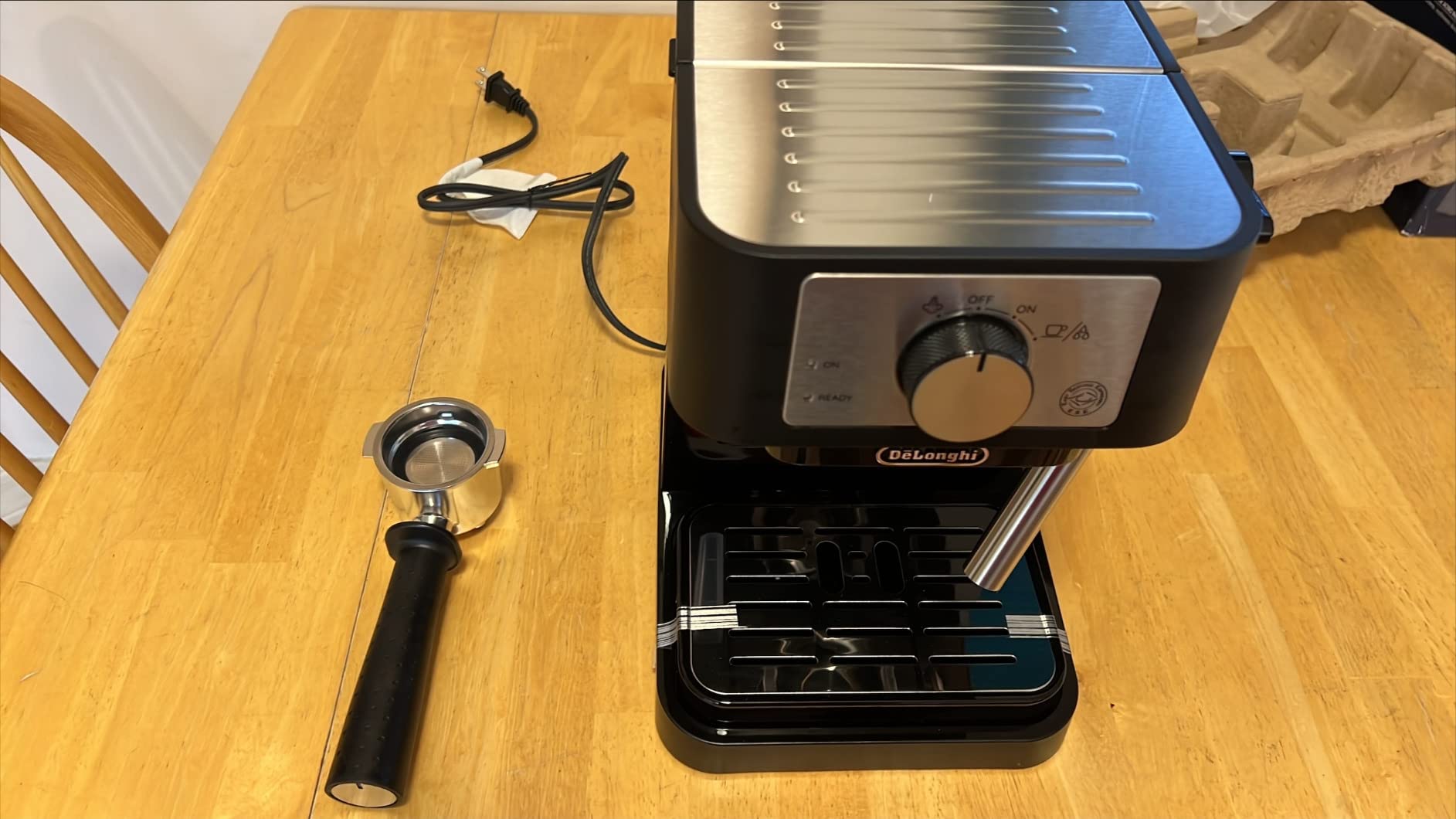
The boiler is stainless steel, which is why this machine outlasts plastic-boiler competitors in owner reports. Power is 1100 watts, the pump is rated at 15 bar, and the water tank is 33.8 fluid ounces. Dimensions are 8.07 inches deep by 13.5 inches wide by 11.22 inches tall at 9.5 pounds, so it fits a small kitchen easily. A two-level cup holder handles a range of cup sizes, and spare parts are listed as available for five years.
What is missing is as important as what is present. There is no built-in grinder and no PID control, so the machine cannot correct for temperature drift or bad grind. You will need a separate grinder, and a hand grinder or a budget electric burr grinder is the sensible pairing.
Who This Machine Suits
Pick the Stilosa if your priority is straight espresso, your counter space is limited, and you want the cheapest credible path into the hobby. It is also a strong second machine later, because the fundamentals you learn on it transfer to anything else.
Where It Falls Short for a Beginner
Two things cause most disappointment. First, the 15 bar pump is the lowest figure in this roundup, and without PID control temperature stability is basic. Second, plastic is used in areas beyond the boiler. If you want the machine to do more of the work, look at the Gevi 20 Bar Compact, which adds a pressure gauge and one-touch shot buttons.
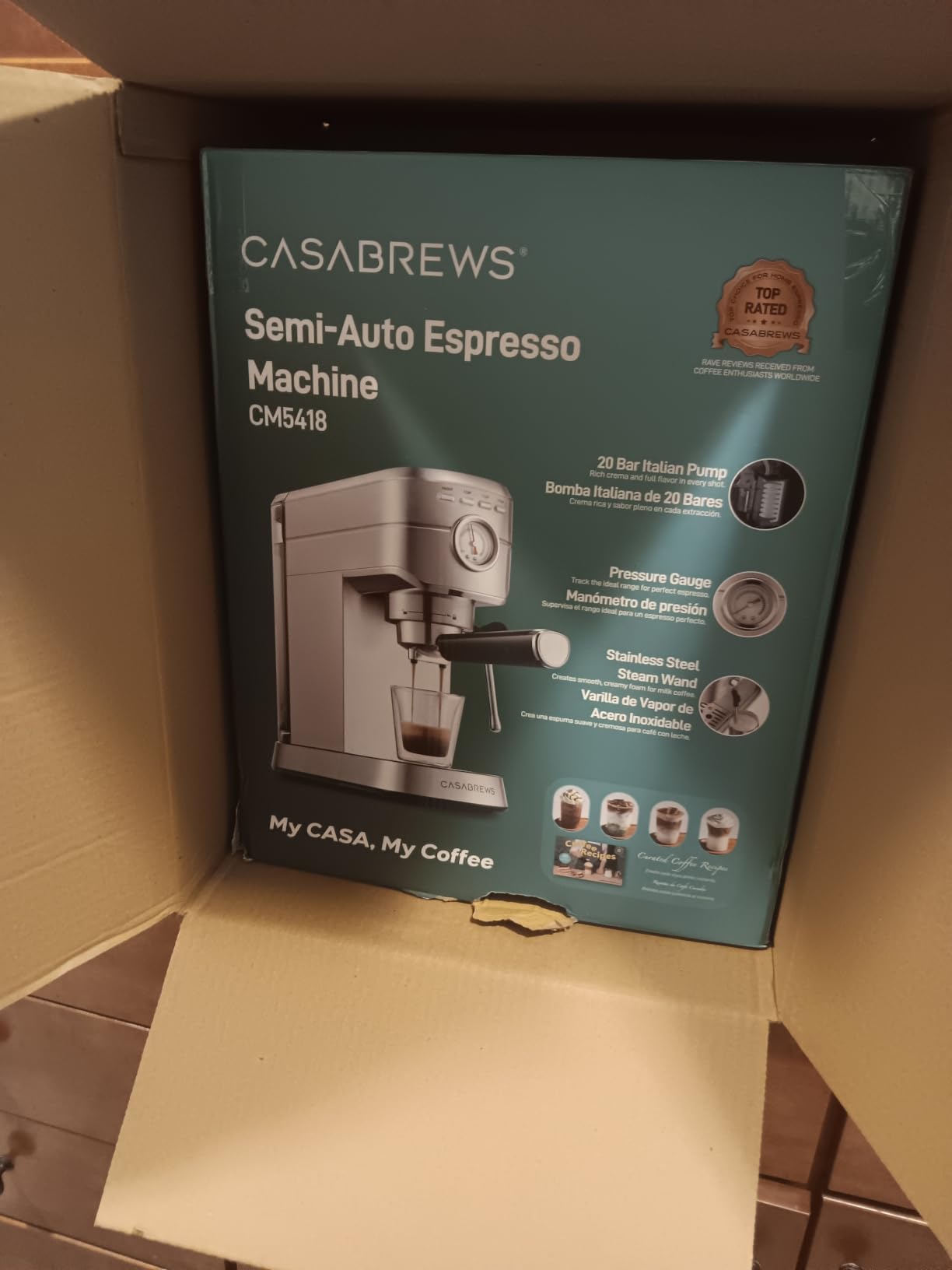
3. CASABREWS CM5418 – Best Compact Espresso Machine for Small Kitchens
CASABREWS CM5418 Compact Espresso Machine with Milk Frothing Steam Wand
20 bar pump
Built-in pressure gauge
5.47 inch width
34 oz tank
Pros
- Pressure gauge shows first-timers what is happening
- Narrow 5.47 inch footprint saves counter space
- Steam wand produces quick smooth microfoam
- Detachable 34 oz tank is easy to fill
Cons
- Must cool down between frothing and pulling shots
- Low steam wand nozzle is awkward with tall cups
- Included plastic tamper and baskets disappoint
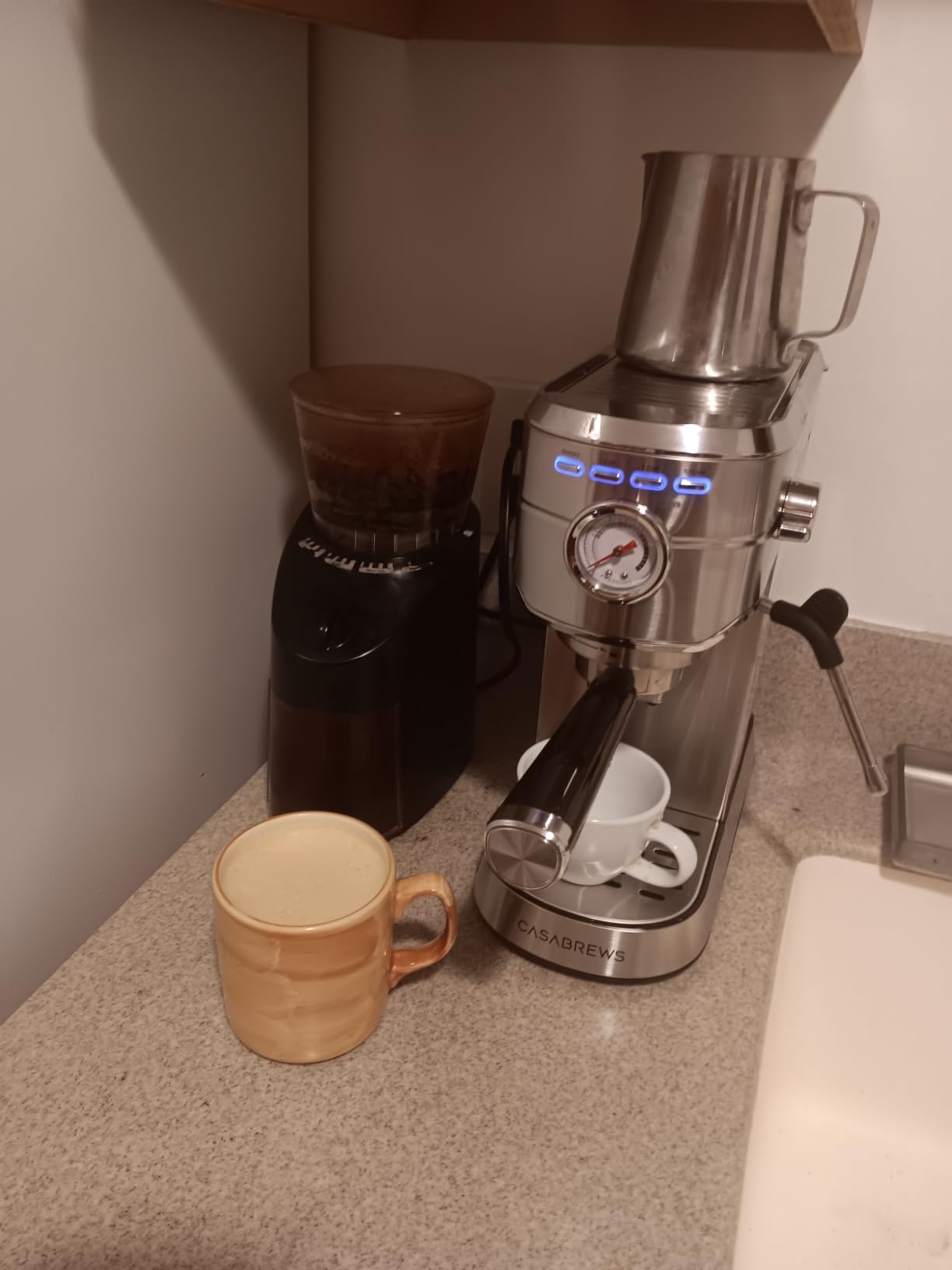
This is the narrowest serious espresso machine in the roundup, at 5.47 inches wide, and that is exactly why it earns a place. Apartment kitchens rarely have 13 inches of spare width, and this machine gives you a 20 bar Italian pump, a 1350 watt boiler and a built-in pressure gauge in a body you can push against a backsplash.
The pressure gauge is the feature owners single out most. A first-timer can watch the needle settle into a working range instead of guessing, and that single dial shortens the learning curve more than any other addition at this tier.
Pressure, Portafilter and Tank Specifications
The pump is rated at 20 bar with a 1350 watt boiler, and the unit draws 120 volts. The portafilter is 51mm, which is smaller than the 58mm commercial standard, so baskets are not interchangeable with enthusiast machines. Programmable one-cup and two-cup buttons handle shot volume, and the detachable water tank holds 34 ounces. Weight is 8.6 pounds, and dimensions are 12.28 inches deep by 5.47 inches wide by 11.97 inches tall.
Owners rate the steam wand highly for cappuccinos and lattes, but the recurring complaint is operational. The machine must cool down between frothing milk and pulling another shot, and that pause trips the over-heating protection mode. Plan your workflow around it rather than being surprised mid-morning.
Who This Machine Suits
Choose this one for a small kitchen, a home office, or anyone who wants milk drinks without a dedicated espresso station. The visible gauge also suits a beginner who learns better from feedback than from instructions.
Where It Falls Short for a Beginner
The cool-down cycle is the biggest drawback and the most cited. The steam wand nozzle also sits low, which is awkward with taller cups, and the included plastic spoon-style tamper and baskets are commonly replaced by owners within a few weeks. Budget for a proper tamper.
4. Gevi 20 Bar Compact ECMG0 – Best for Visible Pressure and Button-Controlled Shots
Gevi 20 Bar Compact Espresso Machine for Home,Latte、Cappuccino Coffee Maker
20 bar pump
NTC temperature control
Pressure gauge
8.6 pounds
Pros
- Full stainless steel housing instead of plastic
- Pressure gauge and one-touch shot buttons
- Removable froth nozzle simplifies cleaning
- Hot water function for Americanos and tea
Cons
- Auto shut-off after frothing interrupts back-to-back drinks
- Steam wand is loud and needs practice
- No built-in grinder
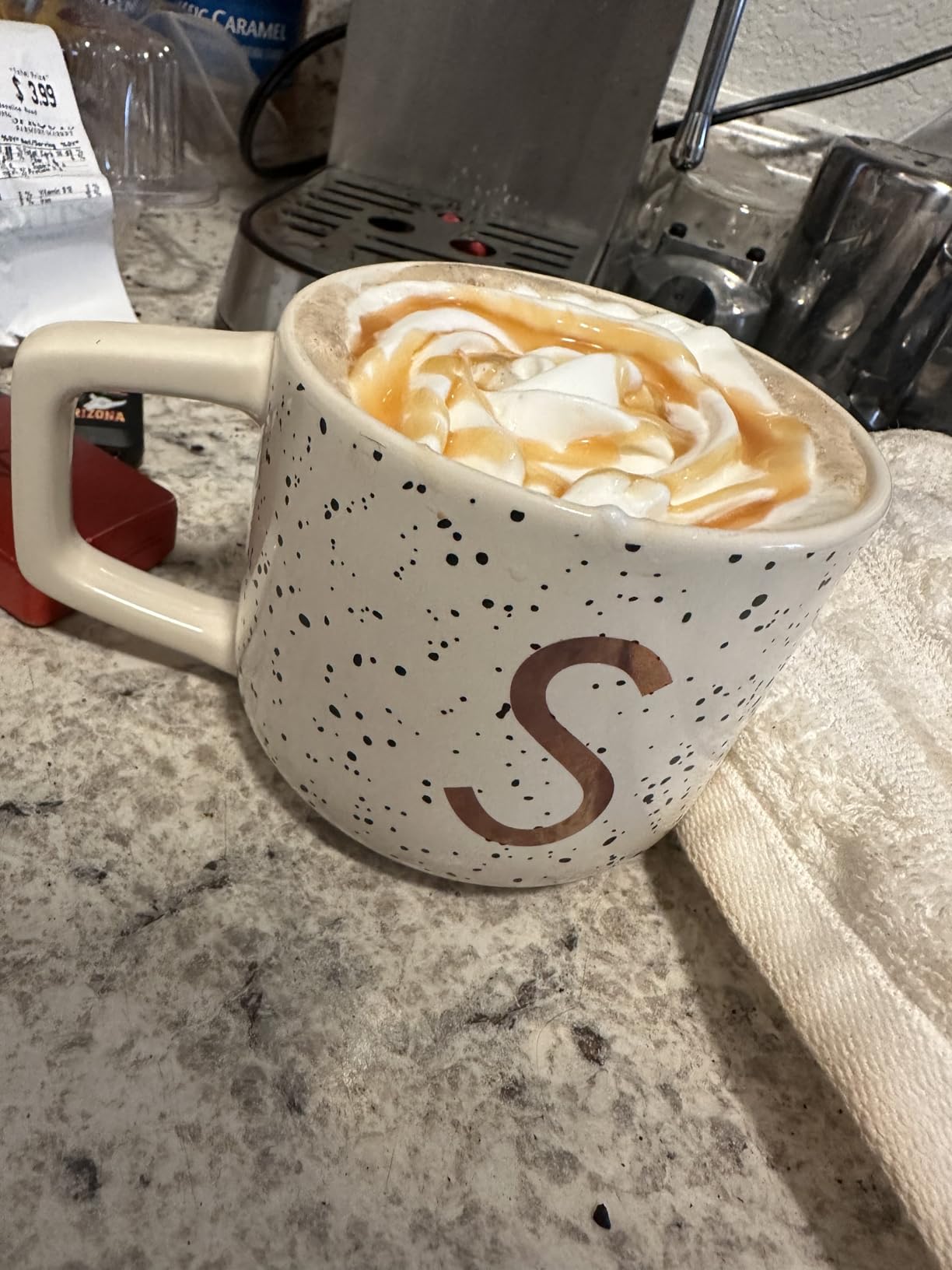
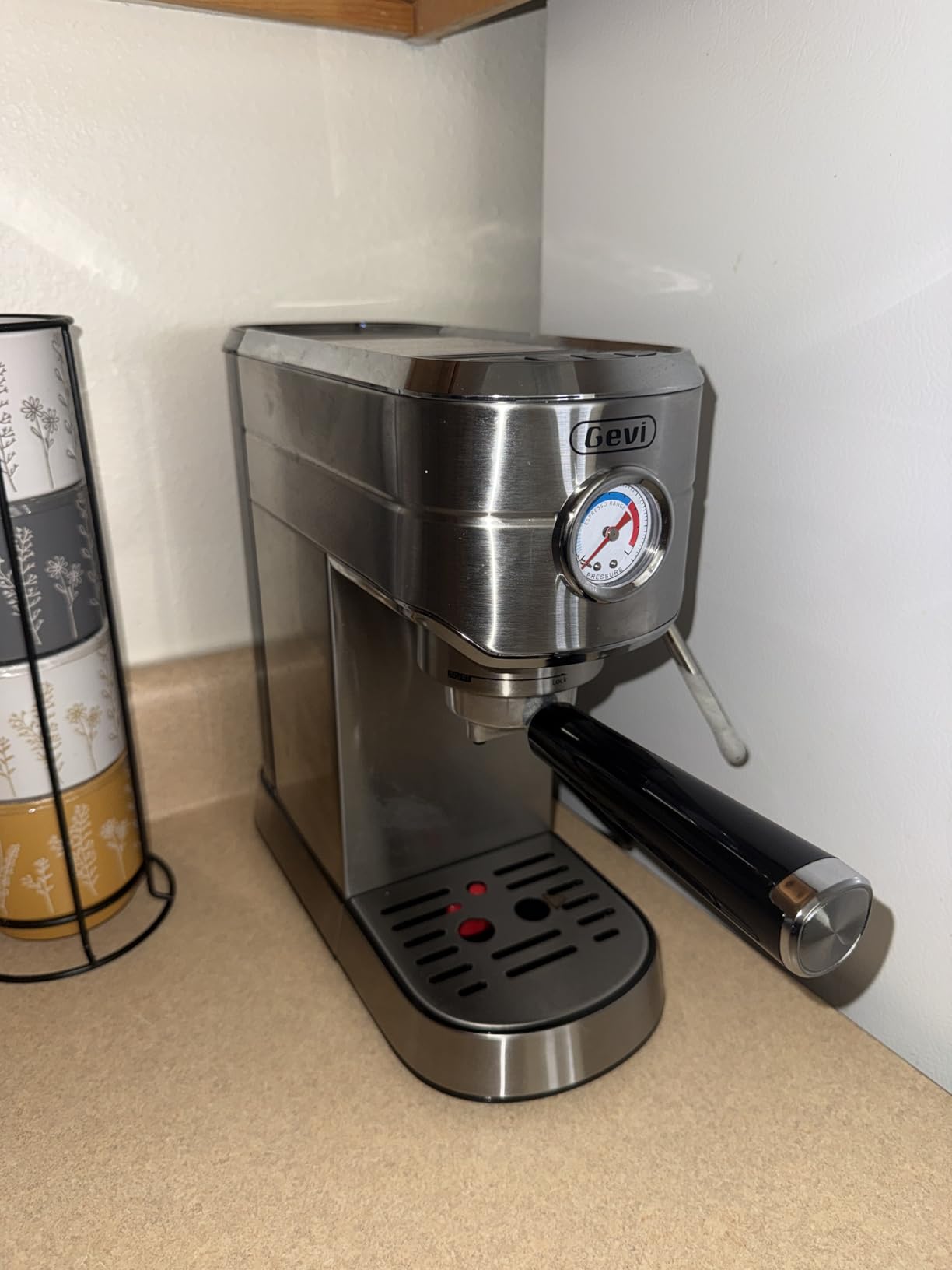
The Gevi is the machine I would tell a beginner to buy if they want the CASABREWS CM5418 workflow with a more premium shell. Reviewers consistently name the visible pressure gauge and the automatic shot metering as the two features that made the biggest difference versus cheaper manual-pump models.
It runs a 20 bar pump with NTC temperature control, pre-infusion, a pressure gauge, adjustable shot volume, auto shut-off, a removable water tank and a cup warmer. The warranty is 12 months with lifetime technical support, which is a meaningful support commitment for a first machine.
Body, Boiler and Footprint
This is a compact two-thirds size body in full stainless steel rather than plastic-dominant construction, at 8.6 pounds and 12.3 by 5.5 by 12 inches. The 1350 watt boiler and 20 bar pump sit behind one-touch single and double shot buttons, which removes the manual pump timing that frustrates beginners on cheaper models. A removable froth nozzle makes the steam wand far easier to clean than a fixed one.
The 1 liter water tank and cup warmer cover the daily workflow, and the hot water function handles Americanos and tea without a separate kettle. Output is 120 volts at 1350 watts.
Who This Machine Suits
Pick the Gevi if you want stainless steel durability at a compact price and you would rather press a button than judge shot timing by eye. It suits a first-time buyer who plans to keep the machine for years.
Where It Falls Short for a Beginner
The auto shut-off after frothing means two people cannot order back-to-back drinks without waiting. Owners also note the steam wand is loud and takes practice to produce textured foam. And with no built-in grinder, you are buying a burr grinder separately.
5. CASABREWS 3700 Essential – Best Entry Machine on a Tight Budget
CASABREWS 3700 Essential Stainless Steel Espresso Machine with Steam Wand
20 bar pump
43.9 oz water tank
8.1 pounds
Brushed stainless steel
Pros
- Lowest entry point with a 20 bar pump and 1350W system
- Large 43.9 oz tank cuts refill frequency
- Brushed steel body wipes down easily
- Steam wand supports microfoam
Cons
- No pressure gauge
- so extraction is invisible
- Included plastic tamper and baskets get replaced
- Same cool-down requirement as sibling models
The 3700 Essential is the cheapest credible way to find out whether espresso is for you. It pairs a 20 bar professional pump and a 1350 watt heating system with a brushed stainless steel body and a 43.9 ounce detachable water tank, and at 8.1 pounds it is light enough to move when you need the counter space.
Reviewers rate it strongly on price-to-capability and on the generous tank. The missing pressure gauge and the need to buy a better tamper are the two most common suggested upgrades, and both are cheap to solve.
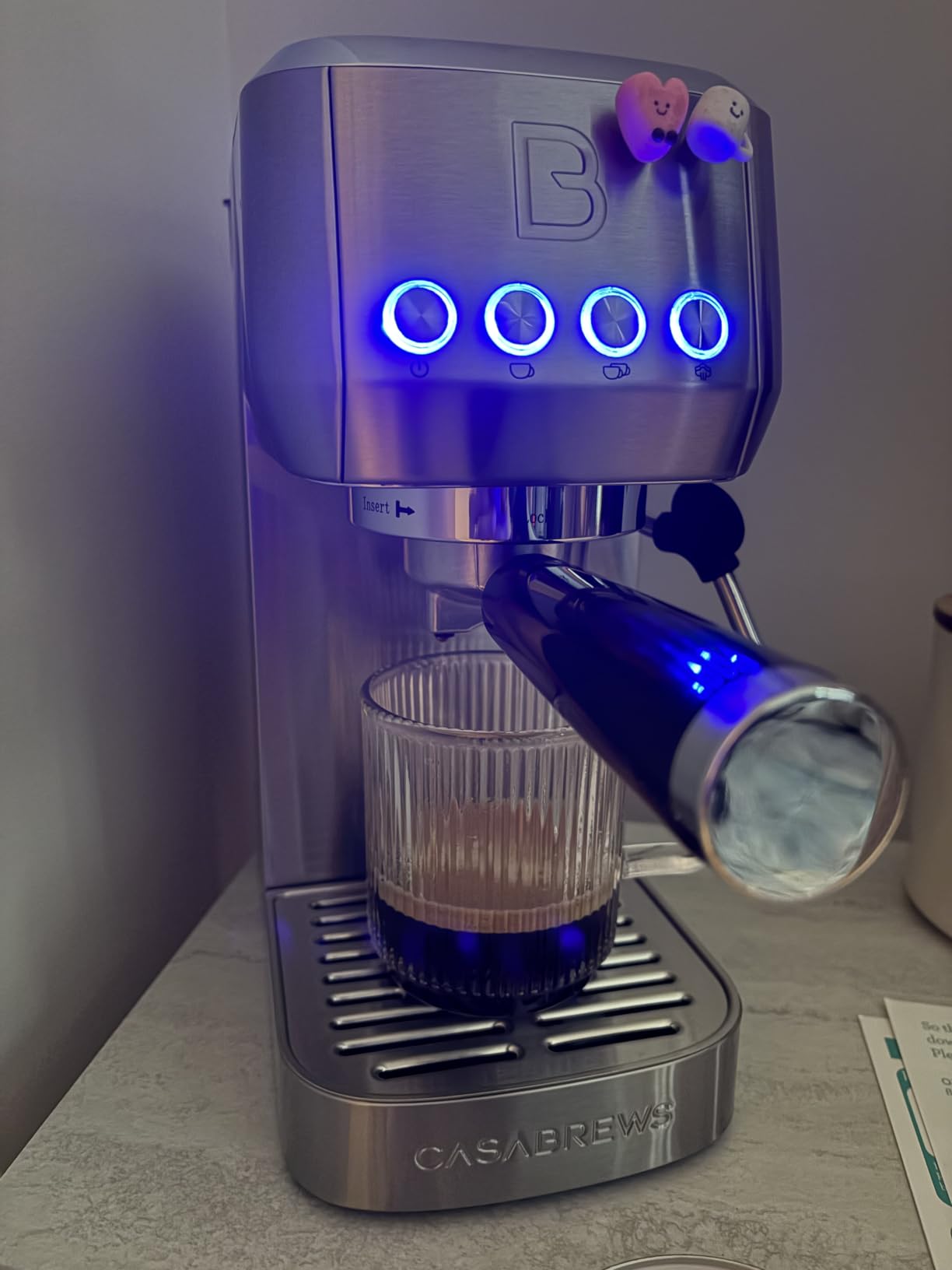
What You Get and What You Add
It ships with one cup and two cup stainless steel brewing filters and a portafilter, plus a removable drip tray and simple button operation. Dimensions are 12.6 inches deep by 5.7 inches wide by 12.5 inches tall, so it stays narrow. Note that a first-use cycle is required before brewing.
Since there is no pressure gauge, you have no visible feedback during a shot, and the included plastic spoon-tamper and baskets are the accessories owners most often replace. It shares the cool-down requirement between steaming and pulling shots with the other entry 20 bar models in this list.
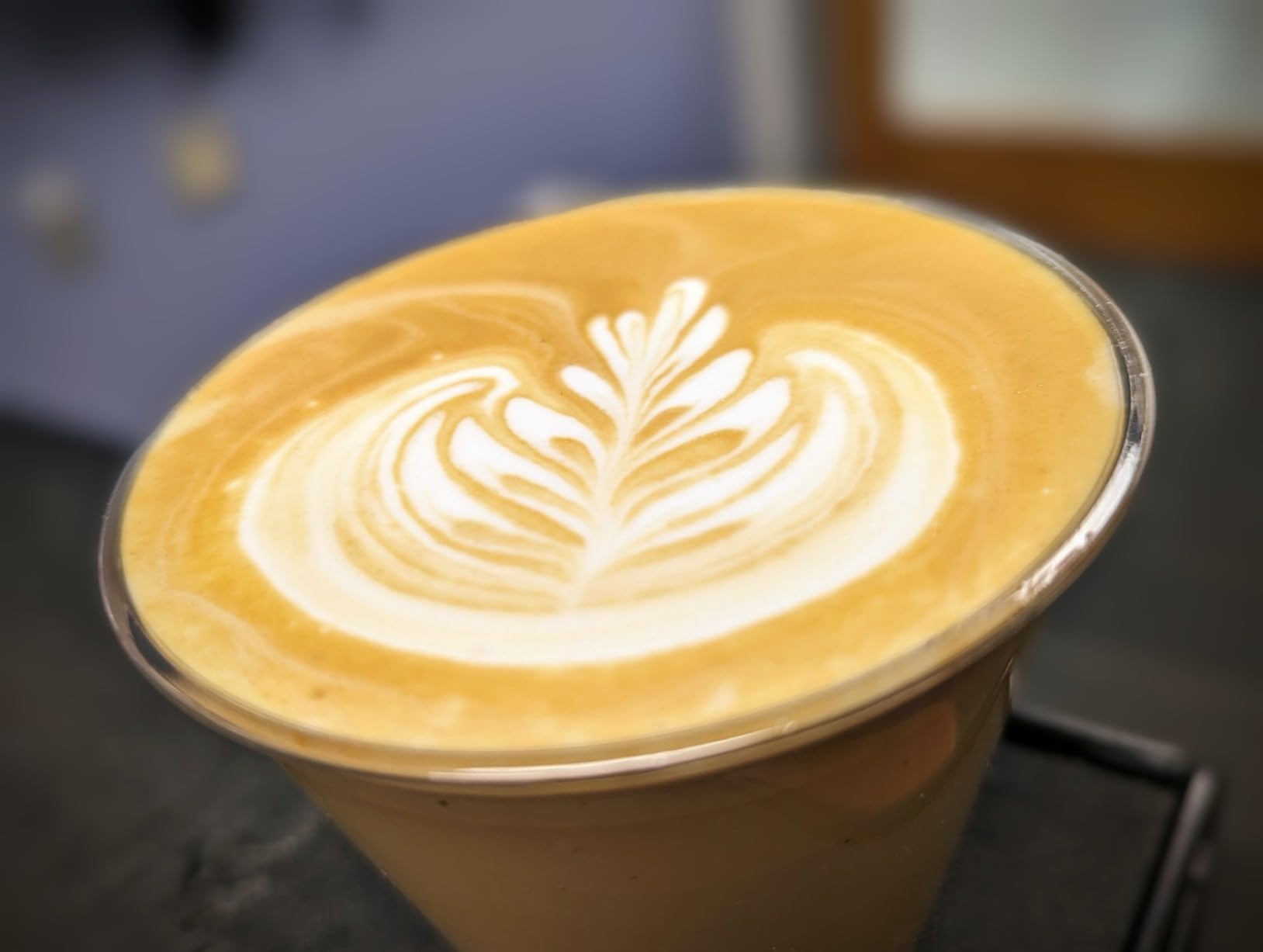
Who This Machine Suits
Choose it if you want a trial machine, if you mostly drink larger milk drinks rather than straight espresso, or if counter space is tight. The 43.9 ounce tank means fewer refills for a household.
Where It Falls Short for a Beginner
Without a gauge, a beginner cannot see pressure, and the plastic accessories work against you on your first ten shots. If you can stretch the budget, the Gevi adds the gauge and one-touch metering that make those early shots far less frustrating.
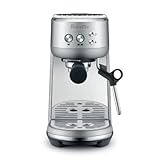
6. Breville Bambino BES450BSS – Best for Fast Morning Espresso and Hands-Free Milk
Breville BES450BSS Bambino Espresso Machine, Brushed Stainless Steel
ThermoJet 3 second heat-up
Automatic steam wand
PID regulation
54mm portafilter
Pros
- Reaches extraction temperature in about 3 seconds
- Automatic wand produces hands-free microfoam
- Compact 6.3 inch width fits small counters
- PID regulation and low pressure pre-infusion
Cons
- No grinder
- so whole beans need separate equipment
- Heating design trades away brewing and steaming together
- Automatic wand limits manual texture control
Heat-up speed is the Bambino’s whole argument, and it is a strong one. The ThermoJet heating system reaches extraction temperature in about 3 seconds, which means a weekday latte is a two-minute project rather than a ten-minute one. For a beginner who will abandon a hobby that is slow to start, that matters more than most spec sheets suggest.
The automatic steam wand produces hands-free microfoam at a controllable temperature, and the machine includes PID digital temperature regulation and low pressure pre-infusion for even extraction. Owners frequently note that the speed design is a trade-off for anyone who wants to brew and steam at the same time.
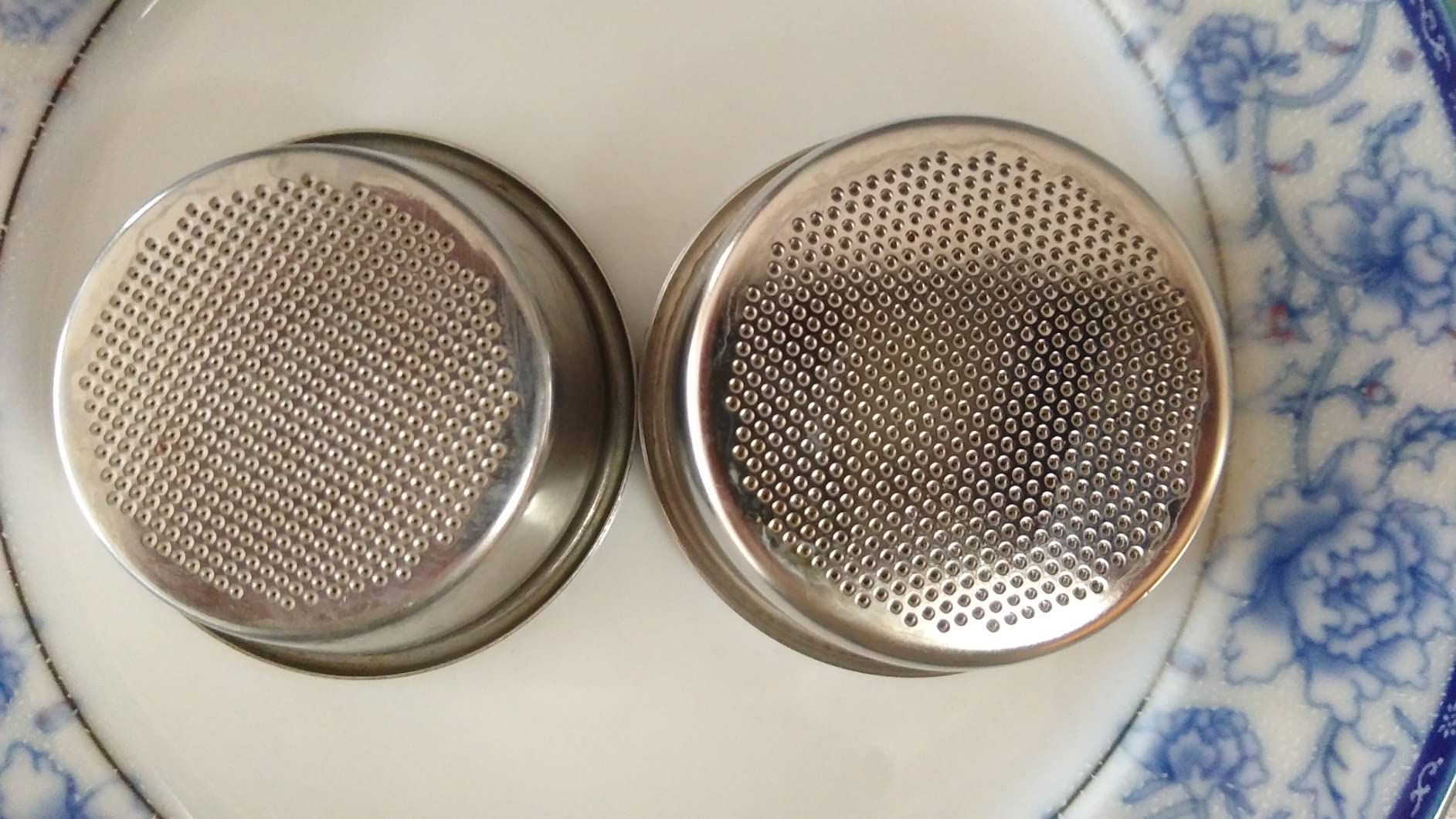
Portafilter, Power and Footprint
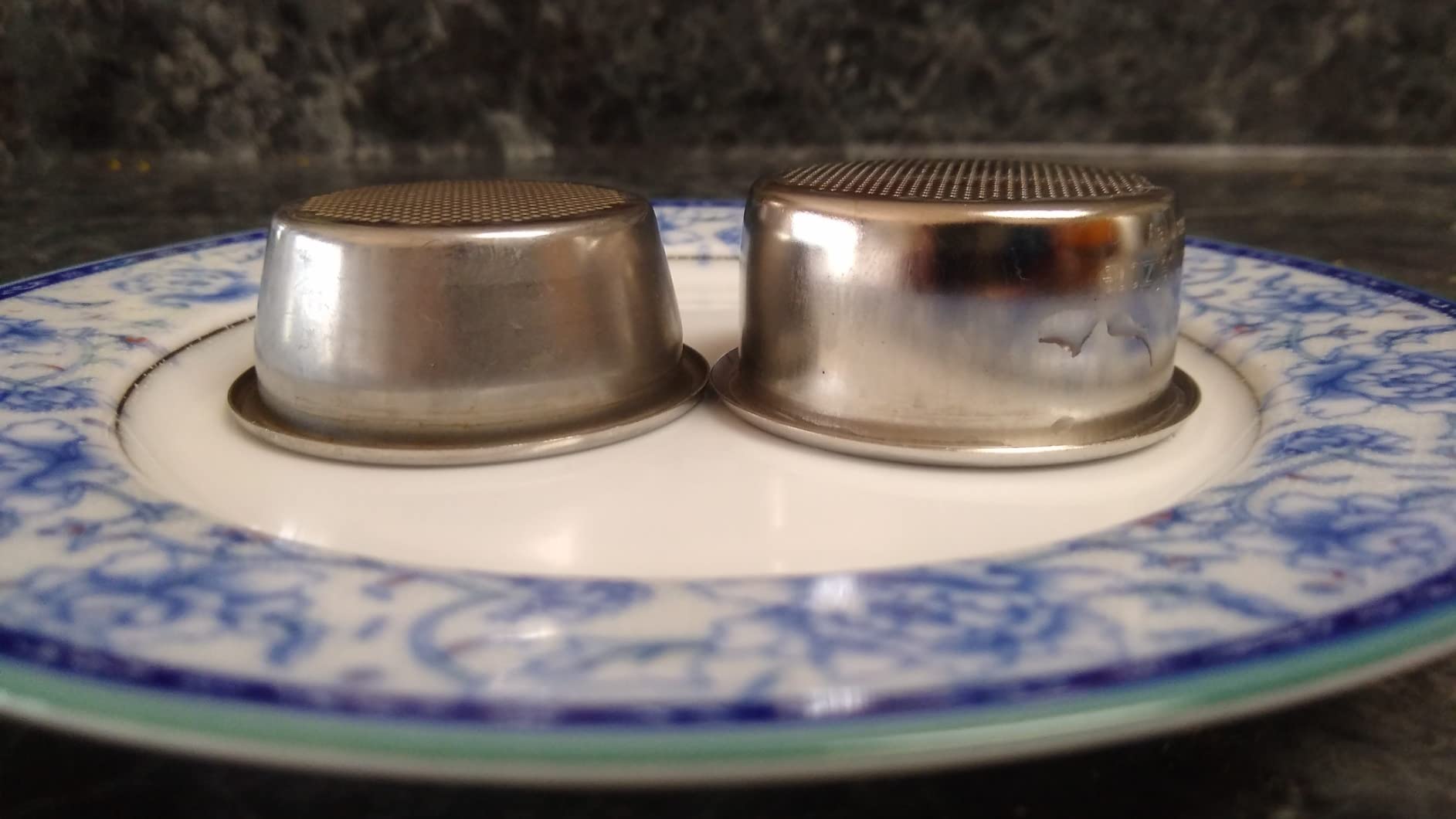
The portafilter is 54mm and sized for a 19 gram dose, which is close to the standard 18 gram starting point most guides use. Power is 1560 watts at 110 volts, the body is 10.9 pounds, and dimensions are 13.7 inches deep by 6.3 inches wide by 12 inches tall. The 47 ounce capacity and one cup, two cup, hot water and steam buttons cover the daily routine, and the box includes single and dual wall baskets, a milk jug, a portafilter and a tamper.
There is no grinder inside, so whole beans require separate equipment. That is the deal-breaker for many buyers, and it is worth planning for before you commit.
Who This Machine Suits
Pick the Bambino if your mornings are short and you want the machine to do the frothing for you. It is also a good fit for a small kitchen, at 6.3 inches wide, and for anyone who wants a compact Breville footprint without the Barista Express footprint.
Where It Falls Short for a Beginner
It carries the lowest average rating in this roundup at 4.0, with a 16 percent one-star share, and the reviews point at speed-first design. The heating system prioritizes reaching temperature quickly over brewing and steaming simultaneously at full temperature, and the automatic wand removes the manual control a learner may want. If you want a grinder in the box, the Barista Express is the alternative.
7. Ninja Luxe Cafe Premier ES601 – Best With Zero Learning Curve
Ninja Luxe Café Premier 3-in-1 Espresso Machine, Drip Coffee, & Cold Brew
3-in-1 espresso drip and cold brew
25 setting burr grinder
Barista Assist dosing
4.4 pounds
Pros
- Handles espresso drip coffee and cold brew in one unit
- Assisted grinding dosing and tamping removes guesswork
- Built-in conical burr grinder with 25 settings
- Four preset milk programs plus manual frothing
Cons
- Largest footprint here at 13.39 inches wide
- Newest line with a small review base
- Light for a machine with an integrated grinder
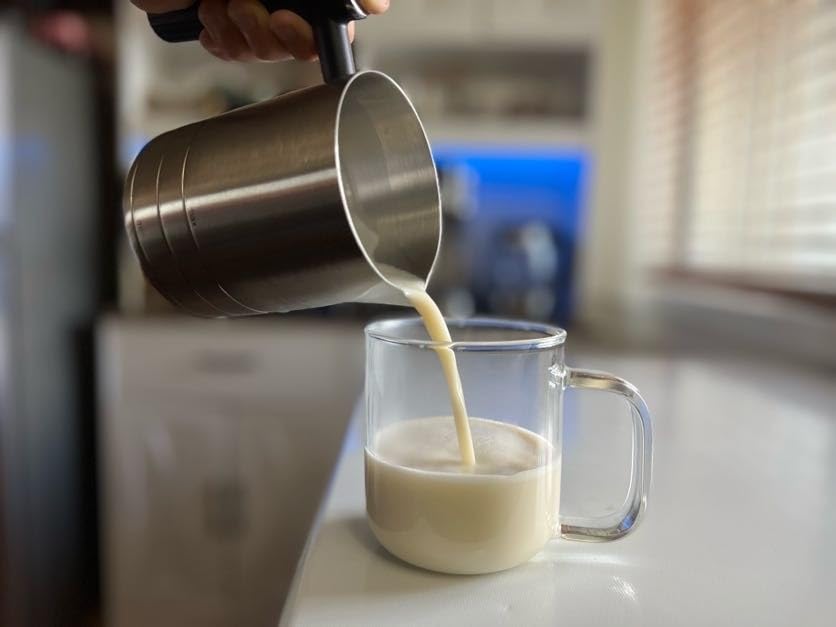
This is the pick for a beginner who does not want a learning curve. Barista Assist Technology guides grinding, weight-based dosing, assisted tamping and temperature, and the Dual Froth System delivers hands-free microfoam across four preset programs. You press a button and the machine makes a repeatable drink, which for many people is the difference between a habit and an abandoned gadget.
It is also the only 3-in-1 machine here. Espresso in double or quad shots, drip coffee, and cold brew come out of the same body, and cold-pressed espresso mode covers cocktails and iced lattes.
Grinder, Power and Footprint
The integrated conical burr grinder offers 25 grind settings, which is finer control than most machines at this level. Power is 1650 watts at 120 volts, and the machine accepts both ground coffee and whole beans. Built-in accessory storage reduces countertop clutter, which matters given how many parts come with it.
Dimensions are 12.99 inches deep by 13.39 inches wide by 14.57 inches tall, making it the widest body in this roundup. The listed item weight of 4.4 pounds is light for a machine with an integrated grinder, so anchor it on a flat surface.
Who This Machine Suits
Choose it if you want espresso, drip coffee and cold brew without learning puck preparation, or if you are the only coffee drinker in a house that also wants regular coffee. The assisted workflow makes it a genuinely good first machine for a busy person.
Where It Falls Short for a Beginner
It is the widest machine here, and it is the newest line, so the review base is much shorter than the established picks. Long-term durability feedback simply does not exist yet at the same depth. Experienced owners also tend to treat assist features as a bridge rather than a destination, since they remove the part of espresso people fall in love with.
8. Neretva 20 Bar Super Compact PE3660U – Best for Temperature Visibility
Neretva 20 Bar Espresso Machine Super Compact Espresso Coffee Machine
20 bar pump
Temperature monitor and display
1.3L tank
198F water
Pros
- Visible temperature display for brewing and steaming
- Pre-infusion reduces channeling
- Stainless steel set with dosing funnel
- Compact footprint at 11 by 12 by 9.1 inches
Cons
- Listed 17 pound weight is heavy for its size
- Less established brand than the majors
- Only pressurized baskets are included
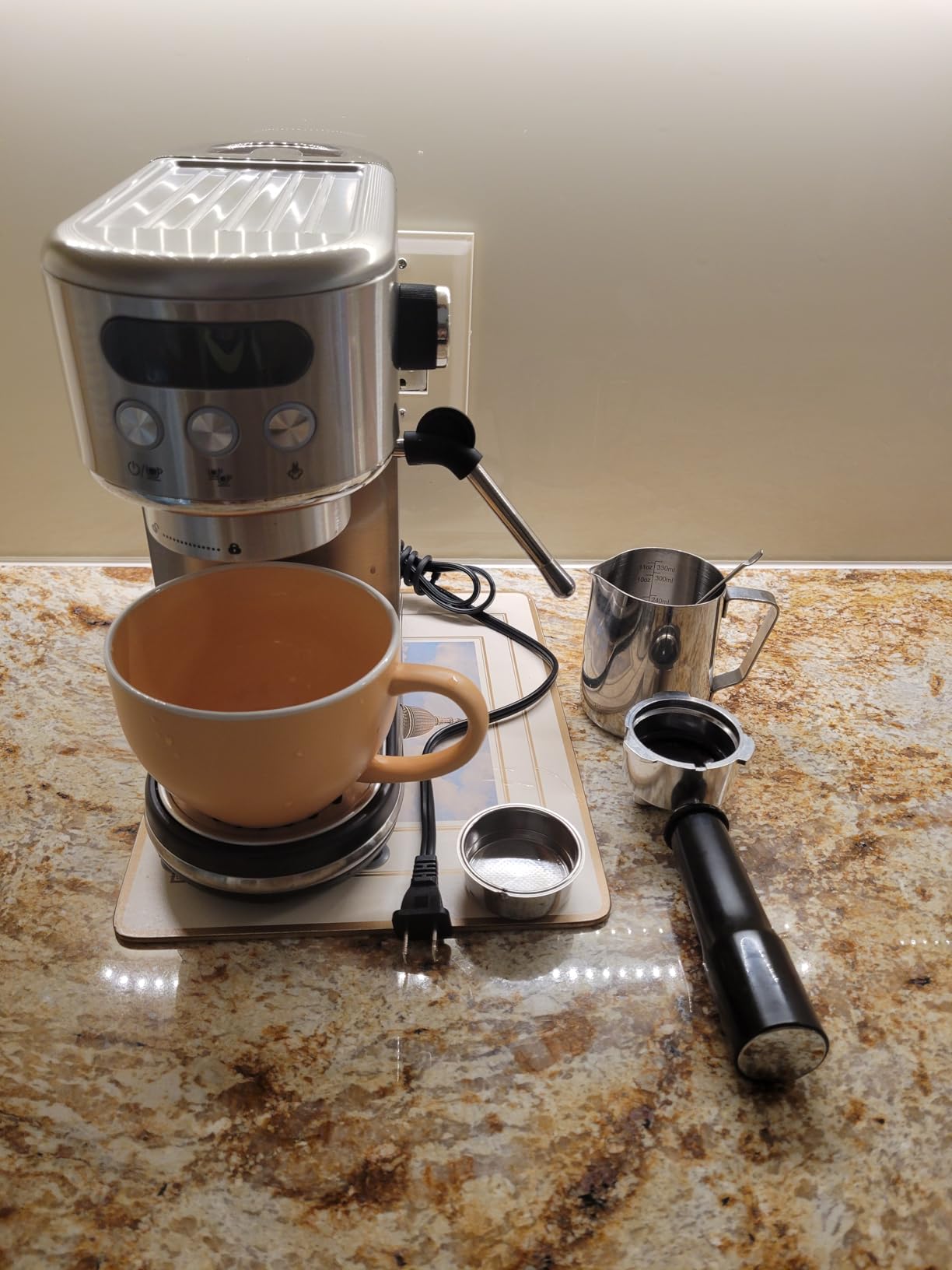
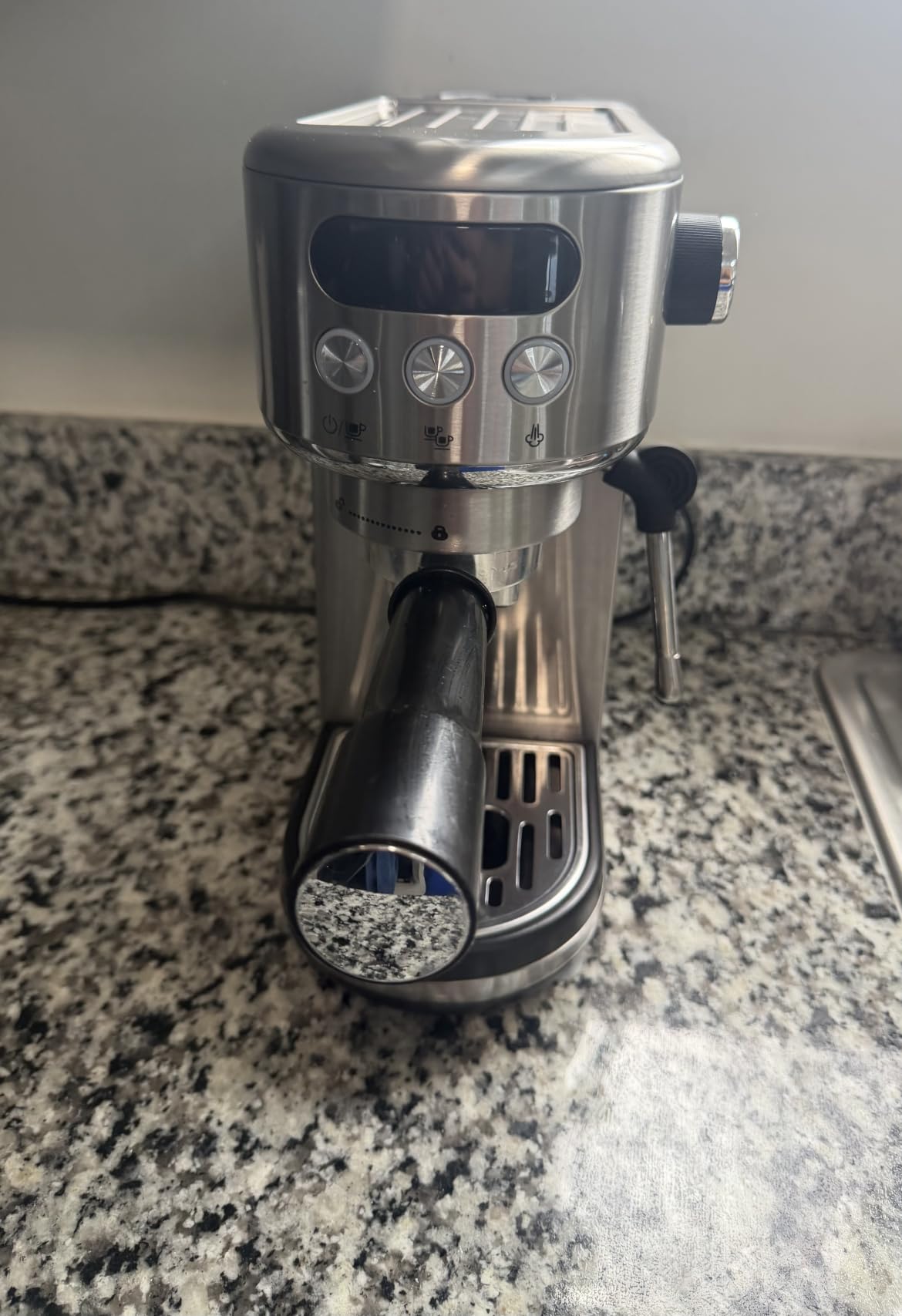
The Neretva’s differentiator is a temperature monitor and display, which shows the heat state for both brewing and steaming. For a beginner, that readout is the second most useful feedback tool after a pressure gauge, and owners highlight the stainless steel set as a quality signal at this price.
It holds a high average rating on a small review base. Read that honestly: the 4.4 average is real, but with 1,330 reviews there is less long-term and brand-support history than the Breville, De’Longhi and CASABREWS picks.
Pressure System and Tank
The machine runs a 20 bar pressure system with a 1350 watt boiler at 198F, plus low pressure pre-infusion to reduce air bubbles during extraction. The 1.3 liter removable water tank sits under a cup warmer, and the stainless steel set includes a dosing funnel, a portafilter and single and double shot filters. Output is 120 volts.
Dimensions are 11 inches deep by 12 inches wide by 9.1 inches tall, but the listed weight is 17 pounds, which is heavy relative to machines of similar size. Plan for a sturdy shelf rather than a light cabinet.
Who This Machine Suits
Pick it if you learn from visible data rather than from trial and error, and you want stainless steel components in a mid-sized body. It is a reasonable step up for someone who has already run a cheap plastic machine.
Where It Falls Short for a Beginner
Only pressurized filter baskets are included, which limits upgrade options later. The brand is also less established than Breville, De’Longhi or CASABREWS, so parts and support are harder to plan around.
9. atatix 20 Bar EM3111 – Best for Manual Shot Control and Fast Preheat
atatix Espresso Machine with Milk Frother, 20 Bar Pressure Espresso Maker
NTC temperature control
30 second preheat
Manual mode to 102 seconds
7.5 pounds
Pros
- Reaches 90-96C in about 30 seconds
- Manual mode lets you set shot time and strength
- Automatic presets calibrated to 28 and 42 seconds
- Lightest build here at 7.5 pounds
Cons
- Instruction manual is incomplete for first-time users
- Dosing funnel holds about 14g rather than 16-18g
- No built-in grinder
The atatix is the only machine in this roundup that lets a beginner do both things at once: press a button for a calibrated shot, or take manual control and run an extraction for up to 102 seconds. NTC precision temperature control preheats in about 30 seconds and holds a consistent 90 to 96C, and the automatic presets are calibrated to 28 seconds for single shots and 42 seconds for doubles.
Reviewers consistently praise the fast heat-up, the precise temperature holding and the ability to fine-tune manually. The most cited beginner issues are thin documentation and a slightly undersized dosing funnel, and owners report strong replacement customer service from the brand.
Pump, Base and Tank
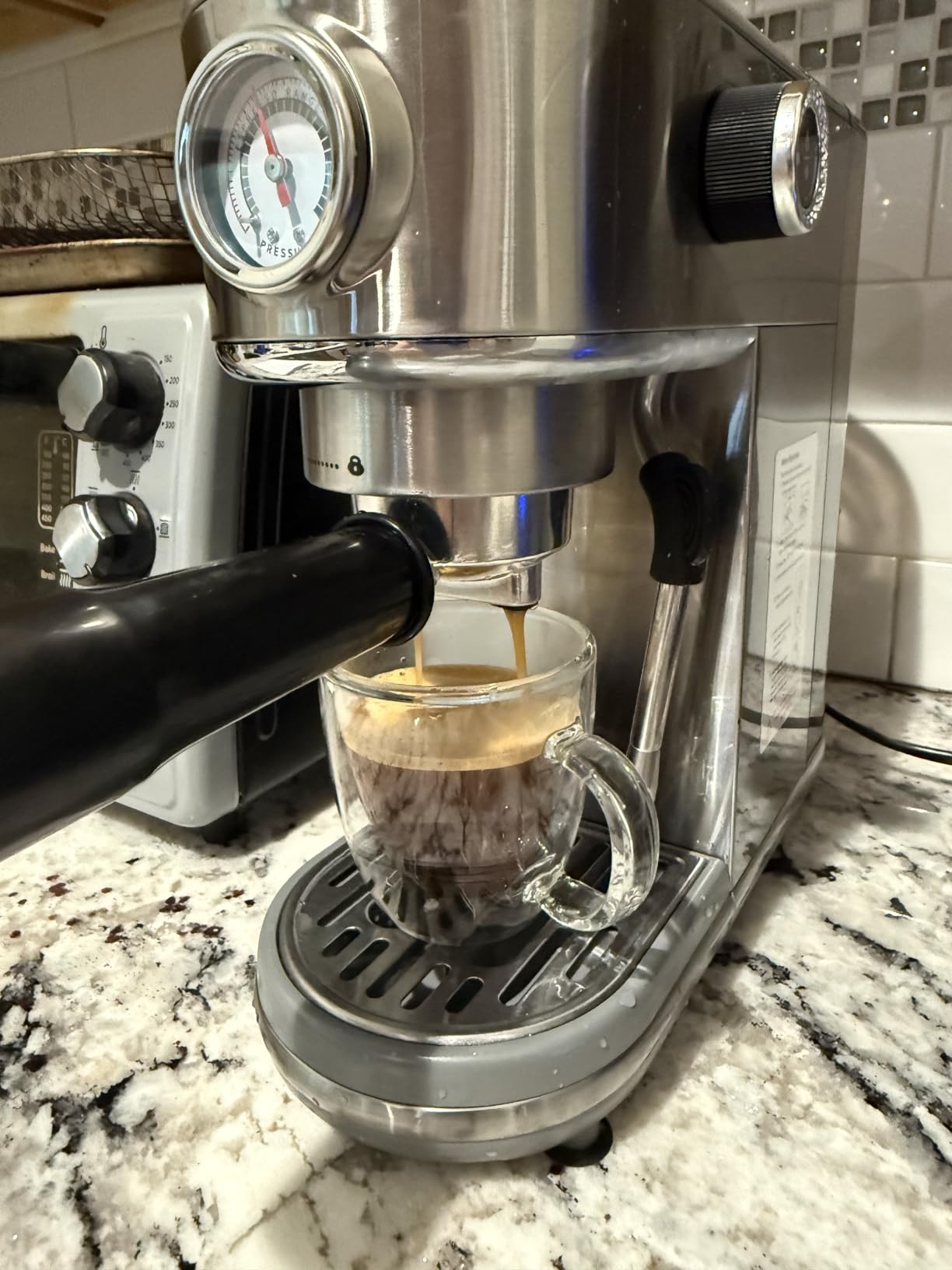
The 20 bar pump system maintains 9 to 10 bar through the shot, which is the working range rather than a headline number. Power is 1350 watts at 120 volts, and four silicone suction cup corners keep the unit stable on the counter while the pump runs. The body is BPA-free ABS and brushed stainless steel in a classic style, weighing 7.5 pounds at 12 by 5 by 11 inches.
The 45 ounce removable water tank and detachable drip tray handle refills, and the cup-warming top cover doubles as a shelf. One detail to plan around: the double shot funnel holds about 14 grams of grounds rather than a full 16 to 18 gram dose, so buy a proper dosing funnel.
Who This Machine Suits
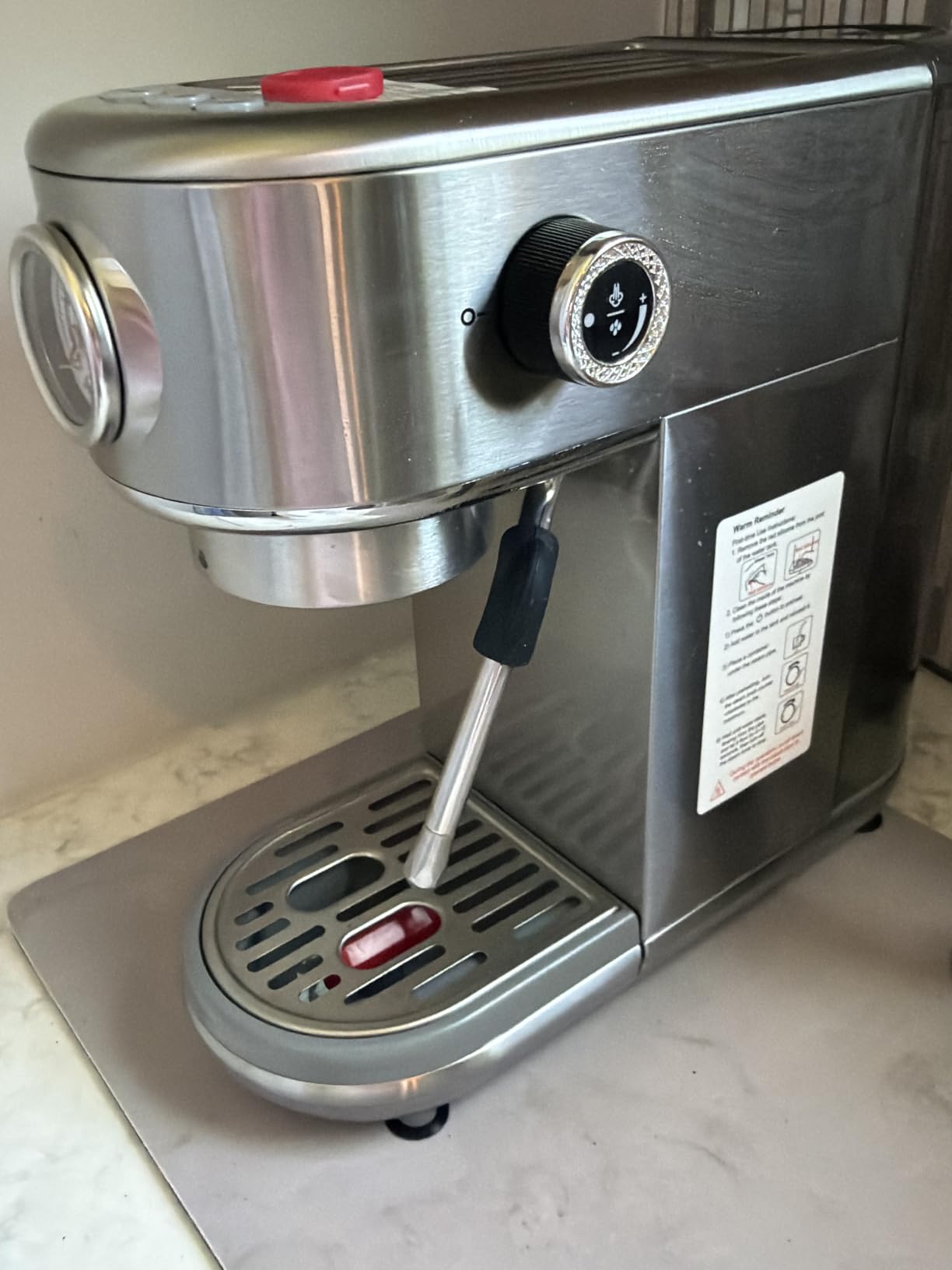
Choose this if you want to grow into the craft without being blocked by a machine that only offers one workflow. Manual mode plus fast preheat suits someone who will want to experiment once the basics land. The light 7.5 pound build also suits a small kitchen.
Where It Falls Short for a Beginner
The instruction manual is described as incomplete for first-time users, which matters more here than on a machine with a simpler workflow. There is no built-in grinder, so a separate one is required for good results, and the included funnel is undersized for a standard double dose.
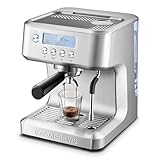
10. CASABREWS Ultra 58mm – Best 58mm Portafilter Step Up From Entry Models
CASABREWS Ultra Espresso Machine, Barista Espresso Maker with Steam Wand
58mm metal portafilter
Four temperature settings
LCD display
73 oz water tank
Pros
- Highest average rating in this roundup at 4.5
- Commercial standard 58mm all-metal portafilter
- Four selectable brewing temperatures
- Shots can be pulled back to back
Cons
- Included 58mm baskets give poor results until replaced
- Lightweight aluminum handle does not retain heat
- Puck sticks to the shower screen after shots
The Ultra is the step-up pick, and the reason is the portafilter. A commercial standard 58mm all-metal portafilter means the baskets, tamping pressure and dose language all match the machines enthusiasts buy, so nothing you learn here has to be relearned when you outgrow it. Four selectable brewing temperature settings with an LCD display are unusual at this tier.
It holds the highest average rating in this roundup at 4.5. Users frequently report that replacing the included filter basket transforms shot quality, so treat a basket upgrade as part of the purchase rather than an accessory.
Tank, Heat and Workflow
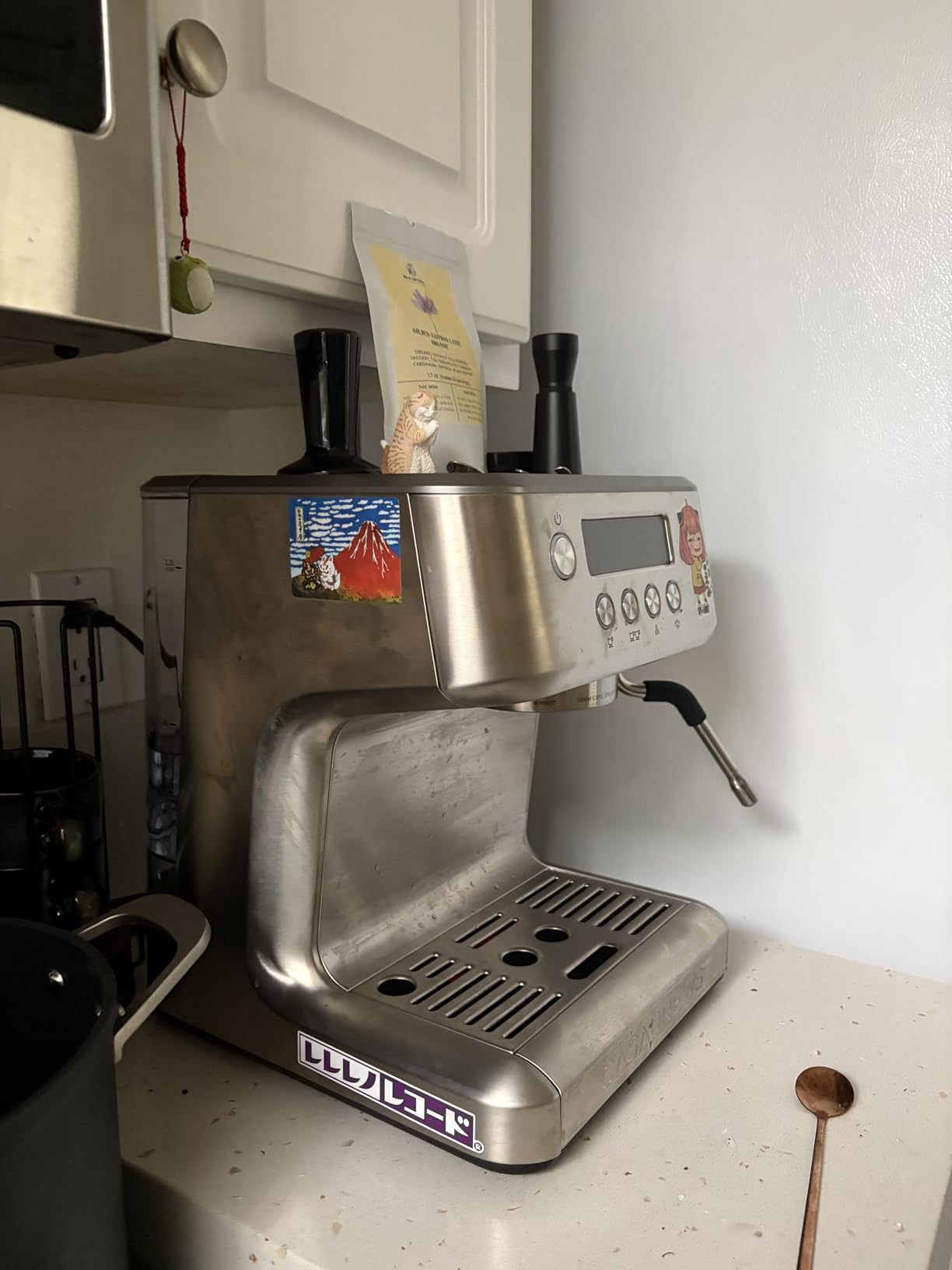
The 20 bar Italian pump and 1350 watt heating system sit behind volumetric programmable shot buttons and a dedicated hot water function. The 73 ounce removable water tank has a visible water level and a low-water warning, with an easy-fill flip-up lid, which is the largest tank in this roundup. Clean-up takes two to three minutes, and automatic depressurization lets you pull shots back to back.
Weight is 13.6 pounds at 12.2 by 10.31 by 12.9 inches, so this is a full-size machine. The cast aluminum portafilter handle is the weak point: it is light and does not retain heat, which affects how the handle feels after a double shot.
Who This Machine Suits
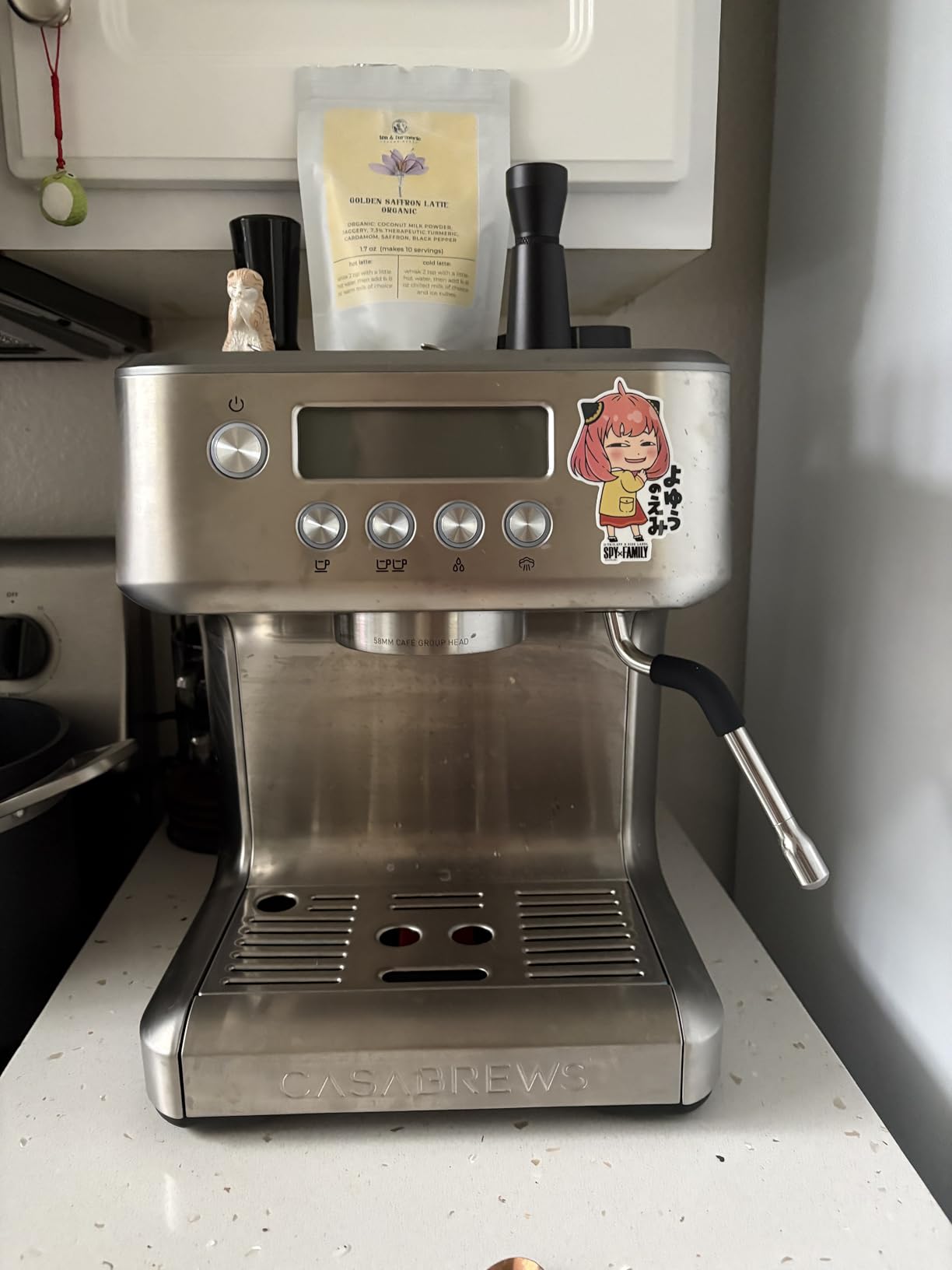
Choose the Ultra if you are confident espresso will be a long-term hobby and you want a portafilter size that never becomes obsolete. The 73 ounce tank suits a household or an office making several drinks a day, and the back-to-back shot capability removes the cool-down problem that frustrates owners of cheaper 20 bar machines.
Where It Falls Short for a Beginner
Plan on replacing the included 58mm baskets, because owners report disappointing taste and crema until that happens. The puck also frequently sticks to the shower screen after a shot, there is a slight internal rattle during operation, and the steam wand needs practice before it produces dense froth.
11. CHULUX Slim C5010 – Best for the Narrowest Counter Space
CHULUX Slim Espresso Machine with Milk Frother for Home Cappuccino, Creamy
5.5 inch width
20 bar pump with gauge
30 second preheat
40 oz tank
Pros
- Narrowest body in the roundup at 5.5 inches
- Pressure gauge and pre-infusion at an entry price
- Food-grade boiler tank and steam wand
- 25 minute auto shut-off saves energy
Cons
- No grinder
- so pre-ground coffee is required
- Smallest and newest review base here
- Entry-level build quality
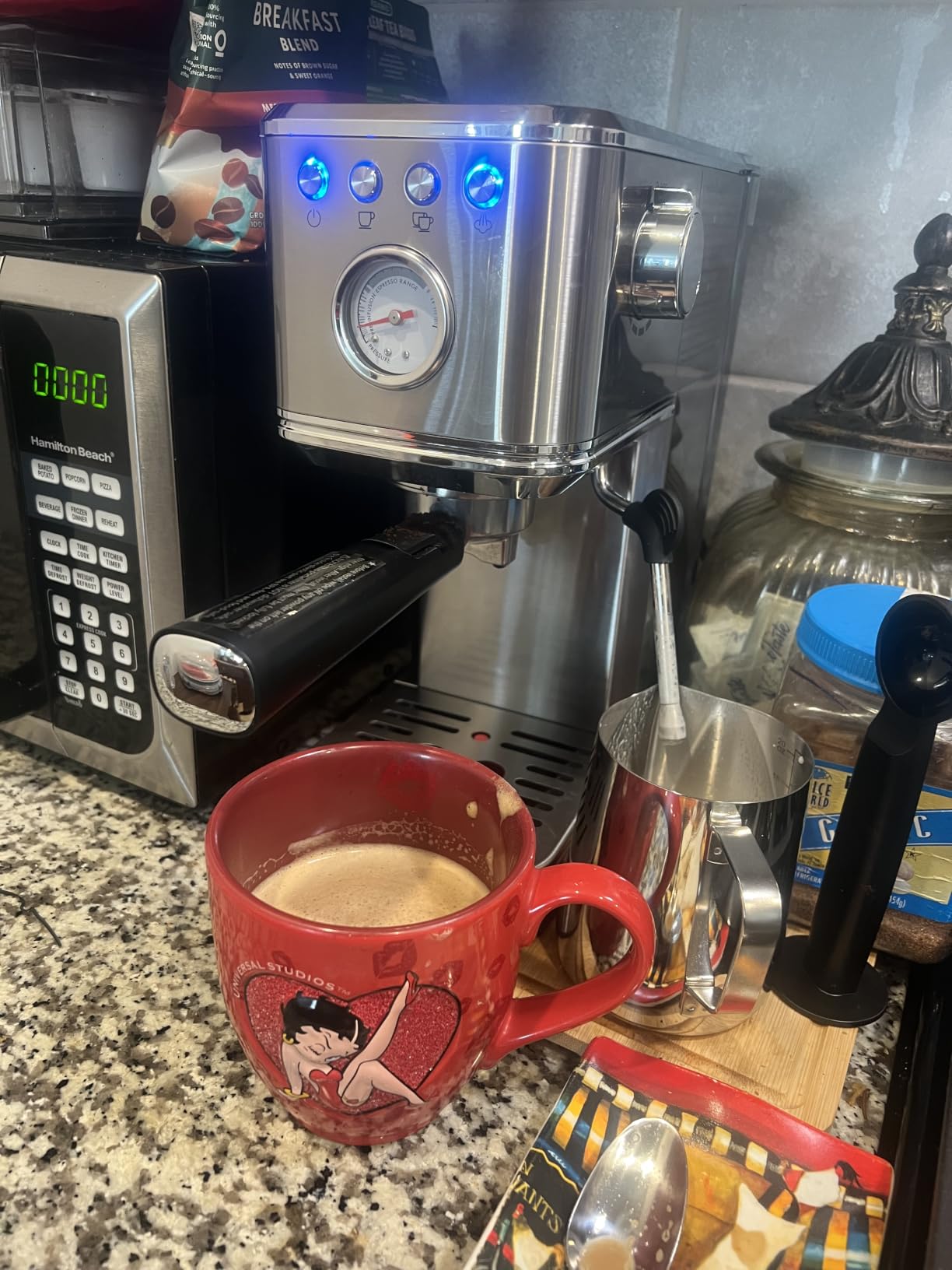
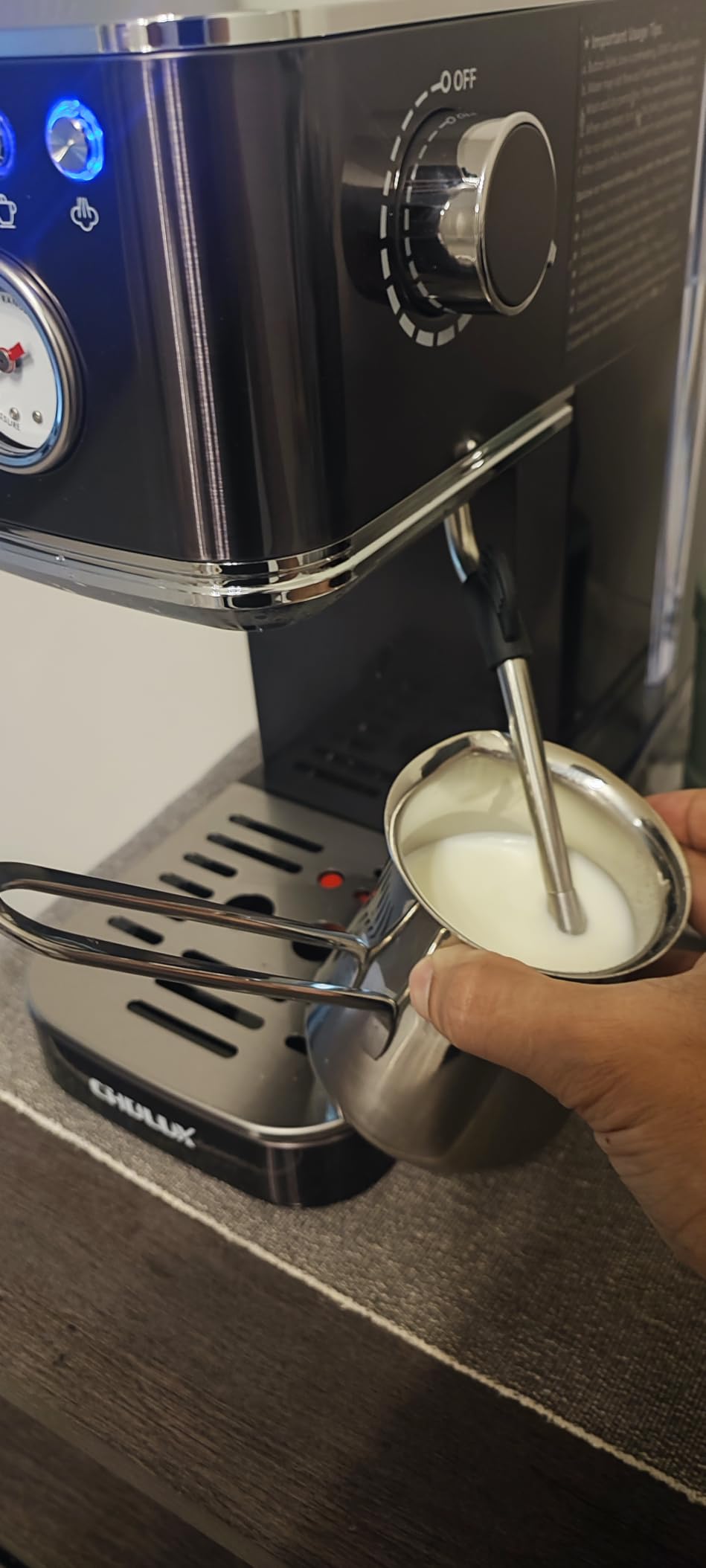
The CHULUX Slim is 5.5 inches wide, matching the CASABREWS CM5418 for the narrowest body available, and it adds a pressure gauge and pre-infusion at an entry price point where those features are normally reserved for higher tiers. Reviewers highlight exactly that combination as the reason the machine stands out.
It is also a very new model, so the review history is short and entirely recent. The 4.5 rating is encouraging, but you are buying ahead of the long-term durability data that older picks have accumulated.
Boiler, Tank and Controls
The 20 bar Italian pump feeds a 1350 watt boiler that preheats in about 30 seconds, and the machine carries a real-time pressure gauge plus pre-infusion. The food-grade components run through the boiler, tank, brew head, silicone pipes, filter and steam wand, which is a fuller list than most machines at this price can claim. The 40 ounce tank and removable drip tray keep maintenance simple, and a 25 minute auto shut-off handles the end of the day.
Operation is deliberately basic: add grounds, press a button. Dimensions are 11.7 inches deep by 5.5 inches wide by 12.5 inches tall at 7.8 pounds.
Who This Machine Suits
Pick it if counter width is your binding constraint and you want a gauge to learn from. The stainless steel body and matte finish also suit a kitchen where appearance matters more than the feature list.
Where It Falls Short for a Beginner
There is no built-in grinder, so you need pre-ground coffee, which goes stale quickly and limits how much you can learn about grind adjustment. The build quality is entry-level, and with the smallest review base in the roundup there is limited owner history to lean on.
12. SHARDOR 20 Bar CM1661 – Best Touchscreen and Guided Descaling Experience
SHARDOR Espresso Machine 20 Bar, Professional Espresso Machine with Milk Frother and Touchscreen, Expresso Coffee Machines with Adjustable Temperature,for Cappuccino, Latte, Stainless Steel, Silver
LED touchscreen
One-touch descaling
Three NTC temperature settings
45 oz tank
Pros
- Only machine here with a full LED touchscreen
- One-touch descaling routine built in
- Three selectable extraction temperatures
- Longest warranty here at 2 years
Cons
- Smallest review base at 425 reviews
- 51mm portafilter is below the 58mm standard
- No grinder
- so pre-ground coffee is required
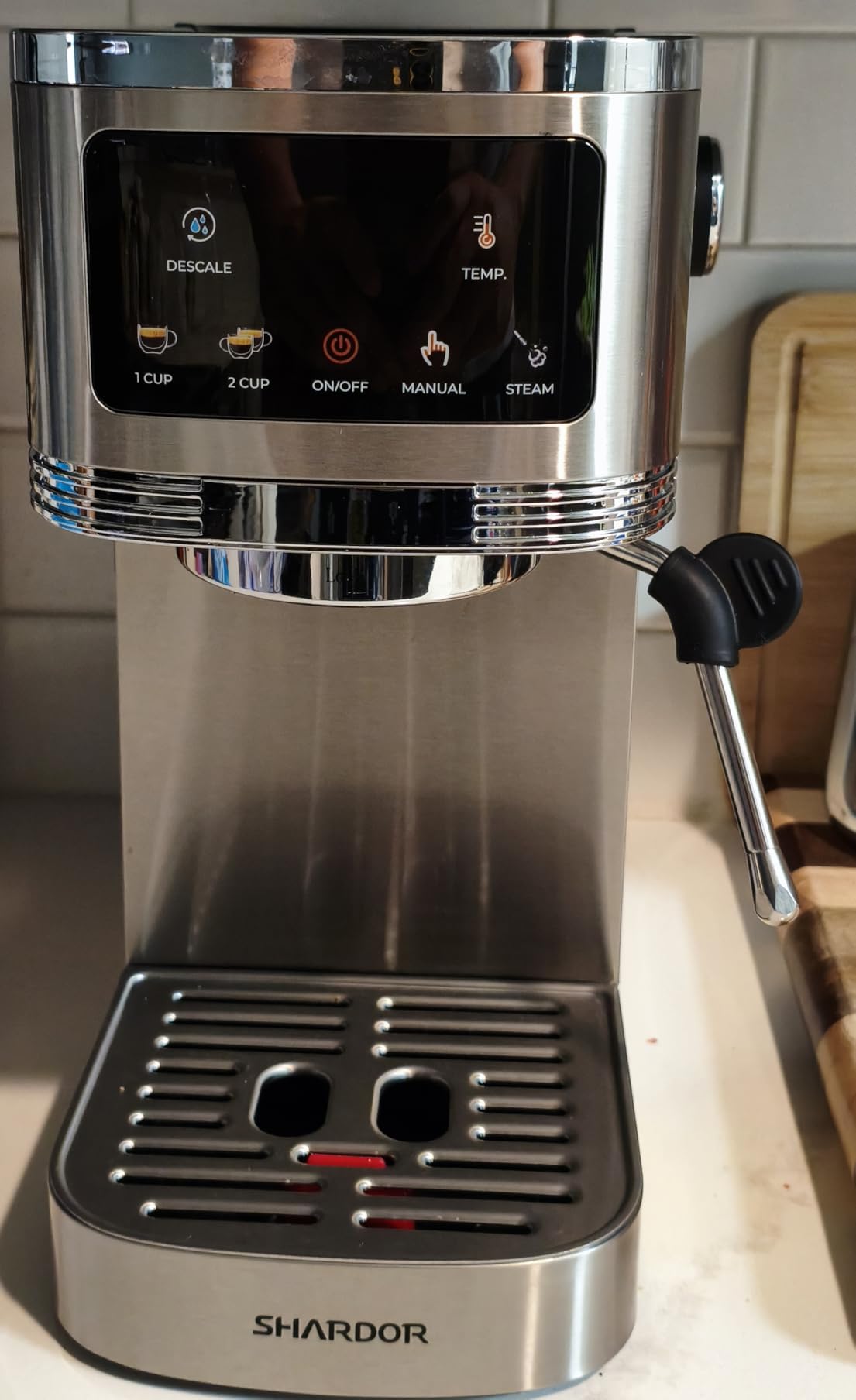
The SHARDOR is the newest and least-reviewed product in this roundup, and it is distinctive for one reason: a full LED touchscreen control panel. Single or double cup, manual mode, steam and descaling all run from the interface, and there is a one-touch descaling routine that removes the maintenance step beginners most often skip.
The 2 year manufacturer warranty is the longest in this roundup, which matters when the review history is still short. Reported results are positive on value and ease of use, but you should accept that there is not yet a long history of owner feedback.
Temperature Control and Physical Design
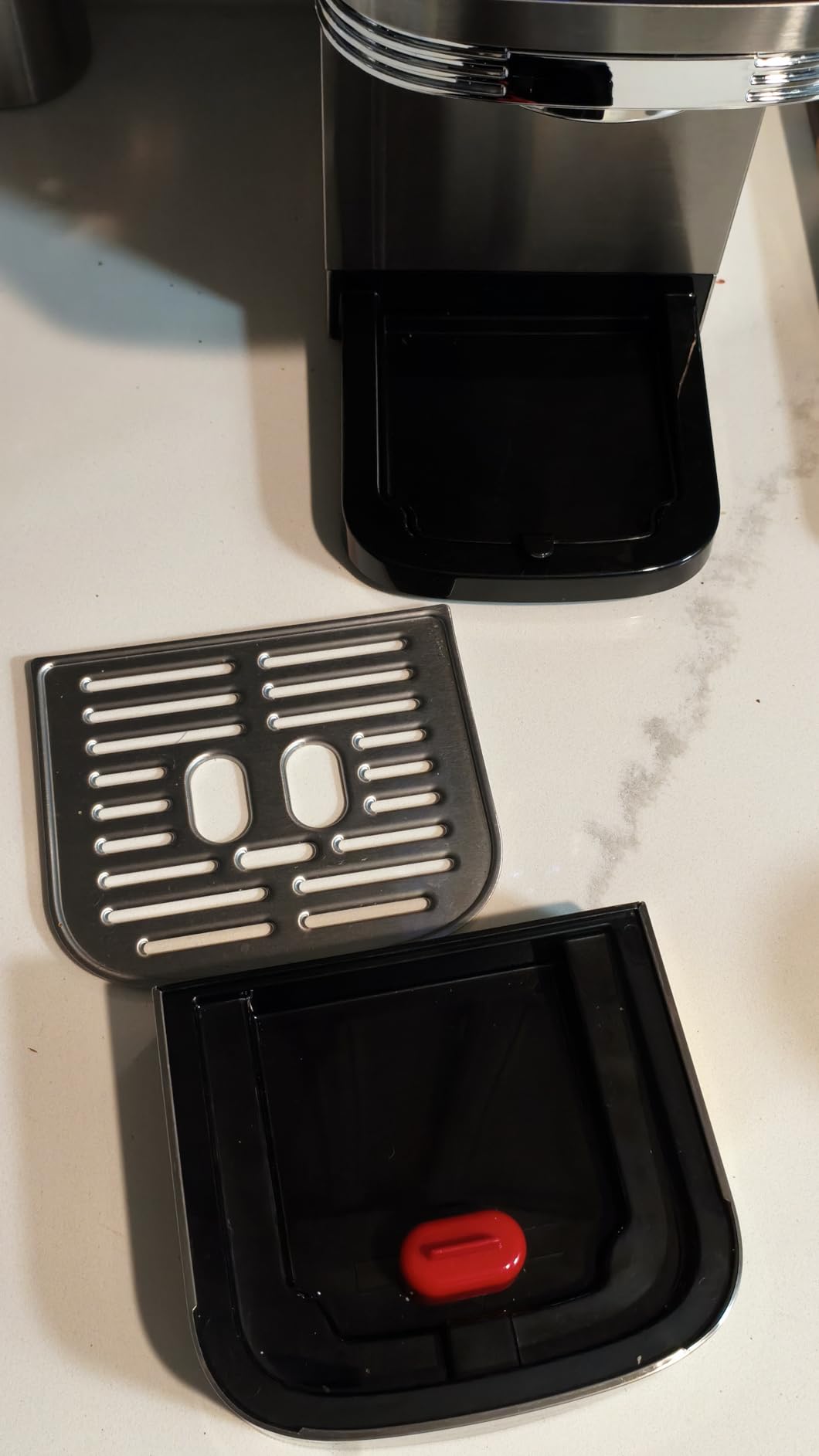
The 20 bar pump is driven by a 1350 watt motor, and NTC precision temperature control offers three settings you can select from the panel. The 45 ounce removable water tank, easy-clean drip tray and cup warmer cover the daily routine, and a 15 minute auto shut-off handles the end of the session.
The body is compact at 8.14 inches deep by 5.12 inches wide by 15.27 inches tall, so it is narrow but noticeably tall. That vertical footprint works in your favor as a cup warmer and against you under a low cabinet. Weight is 8.5 pounds and the material is stainless steel in a compact style.
Who This Machine Suits
Choose it if you want guided maintenance and dislike hunting for descaling instructions, or if the touch interface genuinely appeals to you. The three temperature settings also give a beginner more control than a single fixed setting without requiring deep knowledge.
Where It Falls Short for a Beginner
It carries the smallest review base in the roundup at 425 reviews, all of them recent. The 51mm portafilter is smaller than the 58mm commercial standard used by the CASABREWS Ultra, which narrows your basket upgrade path, and there is no built-in grinder.
How to Split a Beginner Espresso Budget Between Machine and Grinder
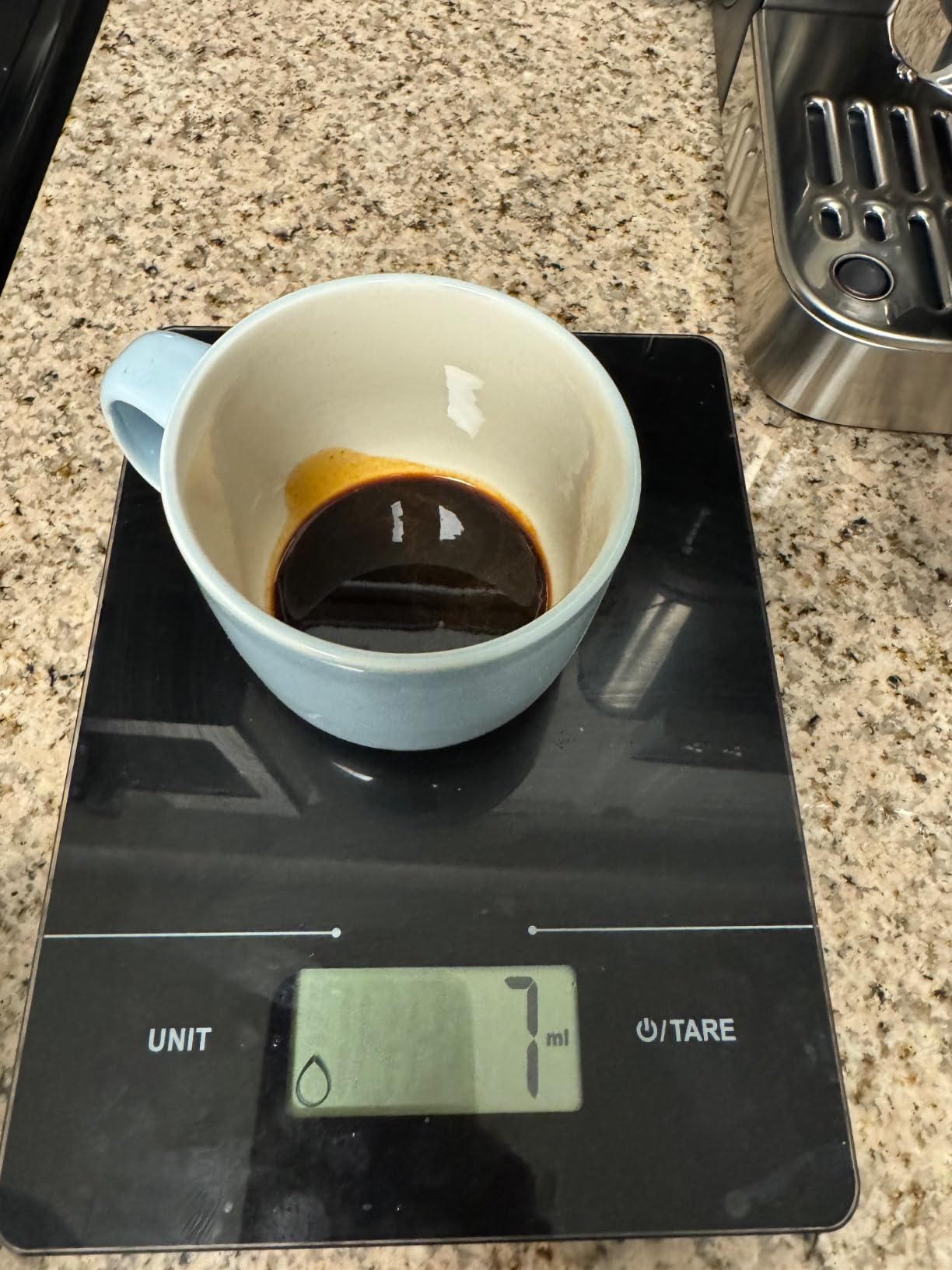
No competitor on this topic lays out the full setup cost, and it is the question that decides whether your first machine is a joy or a dust-covered shelf. A machine without a grinder is an incomplete espresso system, and a machine plus a blade grinder is worse than a cheaper machine with a real burr grinder.
The rule I use: put roughly half your total budget into the grinder. Community consensus across r/espresso and home-barista threads is consistent that grind quality matters more than machine price, and that a mid-range machine paired with a proper burr grinder beats an expensive machine fed pre-ground coffee.
Here is the split I would use for three total budgets, expressed as ratios rather than prices, since machine pricing moves constantly:
- Total budget spent 60 percent on the machine, 40 percent on the grinder. Works when you want a premium machine with a built-in grinder, such as the Breville Barista Express, and only need a scale and a tamper alongside it.
- Split roughly 40 percent machine, 60 percent grinder. The smarter move for pure espresso quality, pairing something like the De’Longhi Stilosa or CASABREWS Ultra with a dedicated burr grinder.
- Machine plus hand grinder. When the total budget is tight, a hand grinder is a realistic entry point and owners frequently recommend models in that class for first setups.
Set aside a small amount beyond those two items for a scale, a proper tamper and a dosing funnel. The plastic spoon-style tampers included with several entry machines here are the first thing owners replace, and a scale is what lets you hit a repeatable 18 gram dose.
Owners also report a common two-stage path: buy something modest to confirm the hobby, then upgrade within a year. That is a reasonable strategy, but it only makes sense if the first machine teaches you something. A machine with a pressure gauge or temperature readout does, and a machine with a hidden plastic pump does not.
What to Consider Before You Buy Your First Espresso Machine
Grinder First, Machine Second
Espresso needs a grind fine enough to resist water, consistent shot to shot. That is a burr grinder job, and a blade grinder cannot do it because it crushes rather than grinds. Whether that burr grinder is built into the machine or bought separately is the practical question, and the honest answer from experienced owners is that a separate grinder produces better results but a built-in one produces a better first experience.
If you are buying a grinderless machine, budget for one. If you want a single appliance and no shopping, the Breville Barista Express covers both.
Steam Wand Quality and Milk Texturing
If you drink lattes and cappuccinos, the steam wand decides whether you will keep the habit. A manual wand with a throttle gives you texture control and makes latte art possible. An automatic wand produces hands-free microfoam and is easier, but it removes the control you would grow into. Both are legitimate; they just serve different people.
One practical warning from owner reviews: single-boiler machines at this tier need a pause between steaming milk and pulling a shot, and the CASABREWS CM5418 and 3700 Essential both require that cool-down. Plan the order of your drinks around it.
Portafilter Size and Dose
The portafilter is the handle that holds the filter basket, and its diameter in millimetres determines which baskets and accessories fit later. The 58mm size is the commercial standard and the most future-proof, used by the CASABREWS Ultra here. Sizes around 51mm and 54mm are common in compact machines.
For a beginner, aim for a double dose of 18 grams as the reference point, and check whether the dosing funnel that ships with the machine can hold it. The atatix funnel holds about 14 grams, which is a real limitation on an otherwise capable machine.
Boiler Type, Heat-Up Time and Pressure Claims
A single boiler heats brewing water and steam with the same element, which is why entry machines pause between the two jobs. A dual boiler gives you both at once and is the reason enthusiast machines brew and steam simultaneously. Almost everything in this roundup is a single boiler.
On pressure, the headline numbers matter less than they look. A 20 bar pump is marketing; what matters is how much pressure reaches the puck, and that figure is closer to 9 bar. Machines with a visible gauge, such as the CASABREWS CM5418, the Gevi and the CHULUX Slim, let you see that for yourself instead of taking a spec on faith. On temperature, PID control on the two Breville machines holds a steadier target than a fixed thermostat.
Water Tank, Counter Space and Descaling
Measure your counter before you order. Width matters most, and the machines here range from 5.12 inches on the SHARDOR to 13.39 inches on the Ninja Luxe Cafe Premier. Water tank size ranges from 33.8 ounces on the De’Longhi Stilosa to 73 ounces on the CASABREWS Ultra, and a larger tank means fewer refills when two people drink at once.
Descaling is the task that scares new owners, and it is simpler than it sounds. Run the machine’s descale cycle with the supplied tablets on a schedule rather than waiting for a taste problem. The SHARDOR puts it behind one touch on its panel, which is the most beginner-friendly implementation here.
Super-Automatic Versus Semi-Automatic
A semi-automatic machine makes you grind, tamp, pull and steam. A super-automatic does all four and hands you a finished drink. Forum consensus treats these as different products rather than different tiers: super-automatics produce decent drinks but remove the craft, and experienced users often describe them as expensive coffee makers.
That said, a super-automatic is a valid choice for a beginner who does not want to learn. The Ninja Luxe Cafe Premier is the clearest example in this roundup, and if your goal is a repeatable weekday latte rather than a weekend ritual, it will serve you well.
Your First Week of Dialing In Shots
The single most useful thing a beginner can learn in week one is the 30 second rule. Start with an 18 gram dose, tamp level, and aim for a shot that runs from the first drop to about 30 seconds. If it gushes in 15 seconds, grind finer. If it stalls at 45, grind coarser. Change one variable at a time.
Keep the machine and dose constant while you adjust only the grind. After five or six shots the cup will taste repeatable, and that consistency, not any individual shot, is what makes espresso worth the counter space.
Frequently Asked Questions
Is De’Longhi or Breville better?
Breville is better for a beginner who wants a built-in grinder and hands-on learning, and De’Longhi is better for a beginner who wants the lowest-cost credible machine and already plans to buy a grinder. Breville machines here include the Barista Express with a conical burr grinder and the Bambino, while the De’Longhi Stilosa has no grinder and no PID control. If the grinder is part of your budget either way, De’Longhi plus a separate burr grinder is the stronger espresso setup.
What is the best entry-level espresso machine?
The best entry-level espresso machine for most beginners is the Breville Barista Express, because it combines an integrated burr grinder with PID temperature regulation so you can learn without buying a separate grinder. If your budget is much lower, the De’Longhi Stilosa and the CASABREWS CM5418 are the strongest step-down options, and the CM5418 adds a pressure gauge that speeds up learning.
What is the 30 second rule for espresso?
The 30 second rule means a well-extracted double espresso should run from the first drop for roughly 25 to 30 seconds using an 18 gram dose. If the shot gushes out in 15 seconds, the grind is too coarse. If it stalls around 45 seconds, the grind is too fine. Adjust only the grind, one step at a time, and keep the dose fixed while you dial in.
What is the best affordable espresso machine for beginners?
The most affordable credible beginner espresso machine here is the De’Longhi Stilosa, a manual 15 bar machine with a stainless steel boiler at 9.5 pounds. Below that, the CASABREWS 3700 Essential and CHULUX Slim work for a trial, and the CHULUX adds a pressure gauge and pre-infusion at a lower entry point. None of these include a grinder, so budget for one separately.
Is it worth getting an espresso machine with a grinder?
Yes, for a first machine, because the built-in grinder removes the most common beginner mistake of using stale pre-ground coffee. The trade-off is that integrated grinders sit between a budget and a premium electric burr grinder in consistency. If you already own or plan to buy a good grinder, a grinderless machine like the CASABREWS Ultra or Breville Bambino gives you a better setup for the same money.
What is more important, an espresso machine or a grinder?
The grinder matters more for cup quality, because grind consistency decides the extraction. A common recommendation is to put roughly 40 to 60 percent of your total setup budget into a burr grinder and the remainder into the machine. A mid-range machine with a real burr grinder produces better espresso than an expensive machine fed pre-ground coffee.
How hard is it to make espresso at home?
The first ten shots are genuinely hard, and most beginners quit before the machine is the problem. Dose by weight, tamp level, and time the shot rather than judging by eye, and the learning curve usually flattens within two to four weeks. Machines with a pressure gauge or temperature display, and automatic frothers, shorten that period considerably.
Which Espresso Machine Should You Buy First?
If you want one machine that teaches you the craft and needs no extra purchases, buy the Breville Barista Express. Its integrated burr grinder and PID temperature regulation solve the two problems that end most beginner attempts, and the manual steam wand keeps latte art within reach once your shots stop channeling.
If your total budget is tight and you already know you will buy a grinder, start with the De’Longhi Stilosa. It is compact, has a stainless steel boiler, and costs a fraction of the all-in-one route, and everything you learn transfers to a bigger machine later. If counter space is the problem rather than money, the CASABREWS CM5418 gives you the same class of machine in 5.47 inches of width, with a pressure gauge that shortens the learning period.
If you do not want a learning curve at all, the Ninja Luxe Cafe Premier is the honest pick. It handles grinding, dosing, tamping and frothing, and it also makes drip coffee and cold brew, at the cost of the widest footprint in the roundup. And if you are already certain this is a long-term hobby, go straight to the CASABREWS Ultra for its 58mm all-metal portafilter and four temperature settings, and replace the included baskets early.
Whichever you choose, buy the grinder before you blame the machine, learn the 30 second rule in your first week, and give it two full months before judging it. That is the best espresso machines for beginners advice that actually changes your cup.