
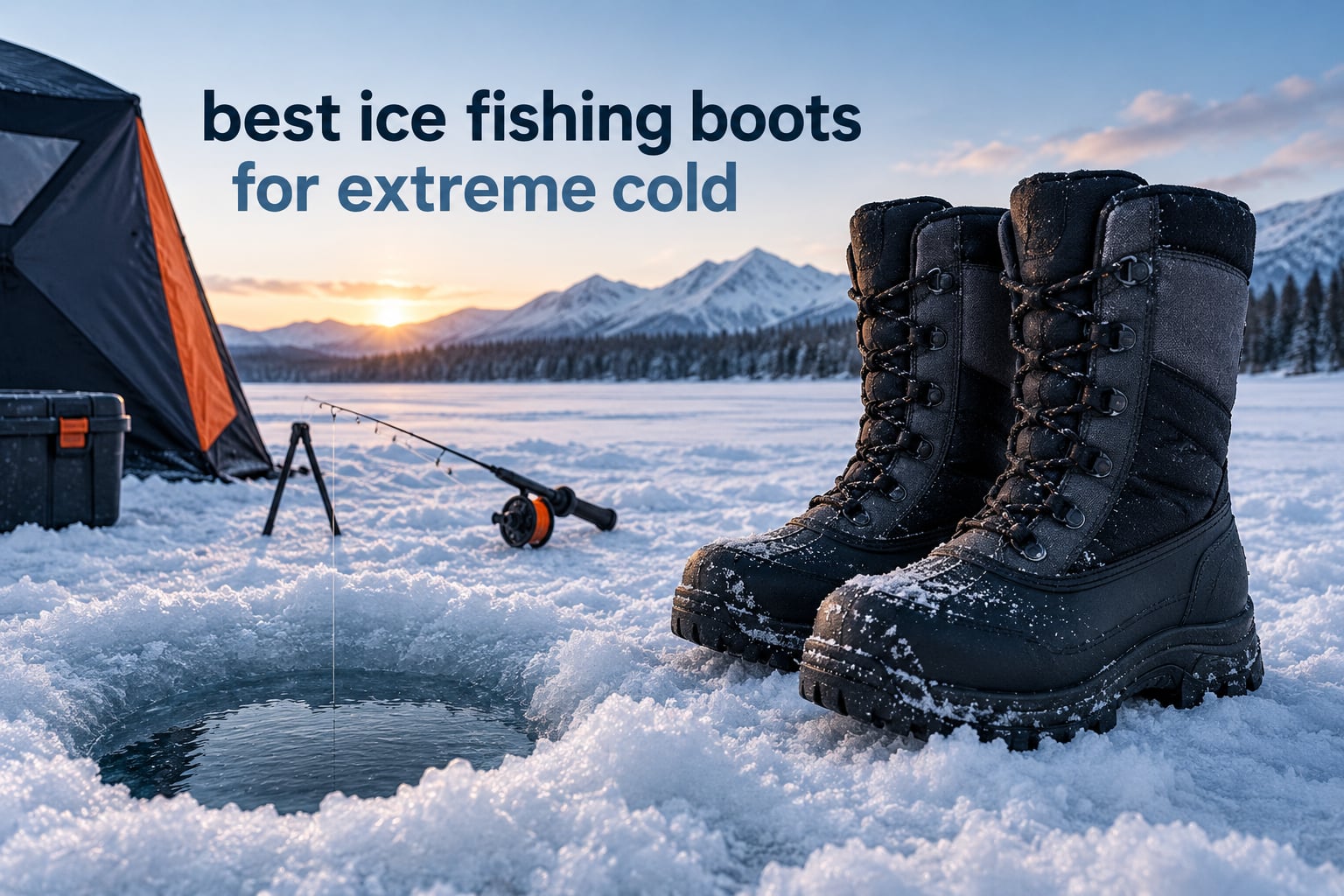
Most boots marketed for winter are not built for the hours you actually spend on lake ice. The best ice fishing boots for extreme cold do three things at once: they trap air with real insulation, they shut out meltwater from slush and snow, and they keep your feet dry for ten hours or more.
That last part is the one people miss. Cold feet drain your core heat fast and end the trip early, but wet feet are worse, because moisture strips warmth far quicker than cold air alone. A boot rated to minus 40 is only useful if nothing leaks into the liner by hour three.
We compared 12 pairs of insulated ice fishing boots built for this, weighing manufacturer temperature ratings against what buyers actually report after full days on hard ice and slush. Our selection criteria were insulation level, waterproof construction, liner quality, outsole design, and how each boot holds up when you sit still rather than when you walk. Last reviewed and updated for 2026.
One more note before we get into the picks: no boot on this list gives you reliable footing on glare ice out of the box. Traction aids are not optional in this category, and we say which boot needs them least further down.
Our Top 3 Tested Picks for Extreme Cold on the Ice

MUCK Arctic Pro Insulated Boot
- 8mm neoprene bootie
- 100% waterproof MUCKPROOF shell
- Comfort Topline wide opening
- Bob-Tracker multi-terrain outsole

MUCK Arctic Sport Tall
- 5mm neoprene bootie
- Fleece lining
- 2mm thermal foam footbed
- MS-1 shaped outsole

Baffin Snow Monster Insulat…
- Arctic rated -22F to -49F
- Removable multi-layer B-Tek liner
- Seam-sealed leather upper
- Icepaw grip pads
The MUCK Arctic Pro earned the top slot on warmth, waterproofing and sheer volume of owner feedback. The Arctic Sport Tall gives you nearly the same construction at a lower tier, and the Baffin Snow Monster is the pick when a removable multi-layer liner matters more than slip-on convenience.
Comparing 12 Insulated Ice Fishing Boots Side by Side in 2026
| Product | Specs | Action |
|---|---|---|
| MUCK Men’s Arctic Pro Insulated Boot |
|
Check Latest Price |
| MUCK Men’s Arctic Sport Tall |
|
Check Latest Price |
| Baffin Snow Monster Insulated All-Weather Boot |
|
Check Latest Price |
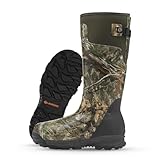 LaCrosse Alphaburly Pro 18 Inch 1600g LaCrosse Alphaburly Pro 18 Inch 1600g |
|
Check Latest Price |
 Baffin Men’s Control Max Snow Boot Baffin Men’s Control Max Snow Boot |
|
Check Latest Price |
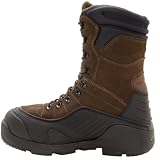 ROCKY Blizzard Stalker 1200G Insulated Boot ROCKY Blizzard Stalker 1200G Insulated Boot |
|
Check Latest Price |
 Baffin Men’s Tundra Insulated Boot Baffin Men’s Tundra Insulated Boot |
|
Check Latest Price |
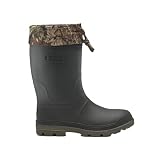 Kamik Icebreaker Insulated Waterproof Boot Kamik Icebreaker Insulated Waterproof Boot |
|
Check Latest Price |
 KEEN Revel 4 Mid Height Polar Insulated Boot KEEN Revel 4 Mid Height Polar Insulated Boot |
|
Check Latest Price |
 MUCK Arctic Ice Tall with Vibram Arctic Grip A.T. MUCK Arctic Ice Tall with Vibram Arctic Grip A.T. |
|
Check Latest Price |
 Korkers Polar Vortex 1200 with SnowTrac Sole Korkers Polar Vortex 1200 with SnowTrac Sole |
|
Check Latest Price |
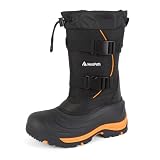 Nextpath -40F Waterproof Insulated Snow Boots Nextpath -40F Waterproof Insulated Snow Boots |
|
Check Latest Price |
Two things stand out in that lineup. Only the LaCrosse Alphaburly Pro carries a stated minus 60F rating, and the Baffin Control Max, Baffin Snow Monster and Nextpath all give you a fully removable liner you can pull out and dry between sessions.
1. MUCK Arctic Pro Insulated Boot – The Best All-Round Ice Fishing Boot We Tested
MUCK Men’s Arctic Pro Insulated Boot, Brown, Size 12(M)
8mm neoprene bootie
100% waterproof MUCKPROOF shell
2mm thermal foam footbed
Bob-Tracker outsole
Pros
- Exceptionally warm for sitting still
- Roomy wide toe box for thick socks
- Completely waterproof in slush and mud
- Fast slip-on entry with gloves on
Cons
- Bulky before break-in
- Runs wide so size up for thick socks
- Rubber upper can crack after several seasons
- Limited grip on bare ice without traction aids
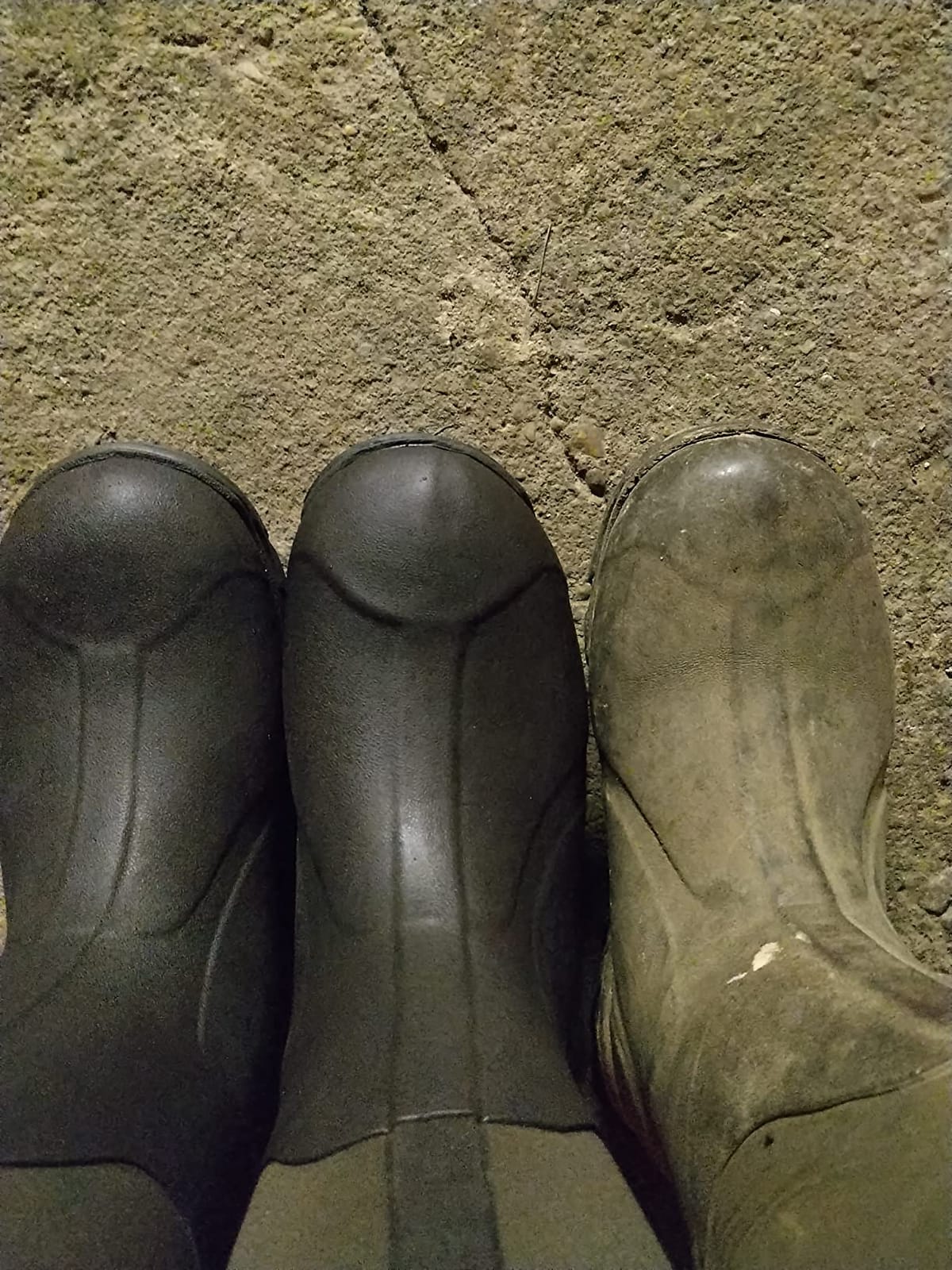
The MUCK Arctic Pro is the boot we keep coming back to. It has the highest review count in this group by a wide margin, and the pattern in that feedback is remarkably consistent: owners describe sitting for hours in serious cold and simply not noticing it.
What makes it work on the ice is the 8mm neoprene bootie sitting under the shell, combined with 2mm of thermal foam under the footbed. Neoprene holds warmth even when damp, and it does not compress as quickly as loose fiber fill when you sit still for a long stretch.
Warmth That Holds Up When You Sit Still
Most insulated footwear is tested by people walking. The Arctic Pro earns its reputation from people sitting. Buyers report comfort through full days on ice and cold-weather trips where nothing was lost except a little bulk they expected to wear in.
The wide last is a genuine advantage here. Thick merino wool socks fit without crowding your toes, which matters over a ten-hour session when cramped toes become a distraction and eventually a cold spot.
Waterproofing and the Slip-On Advantage
The MUCKPROOF shell is rated fully waterproof, and meltwater from snow on the ice runs off rather than soaking in. Slush is the enemy of most boots on a spring outing, and this one is built for it.
Pull-on entry with no laces means nothing catches, nothing freezes shut and nothing has to be re-tied with numb hands. On a shanty trip where you step in and out of the shelter constantly, that is a real advantage.
Where It Falls Short
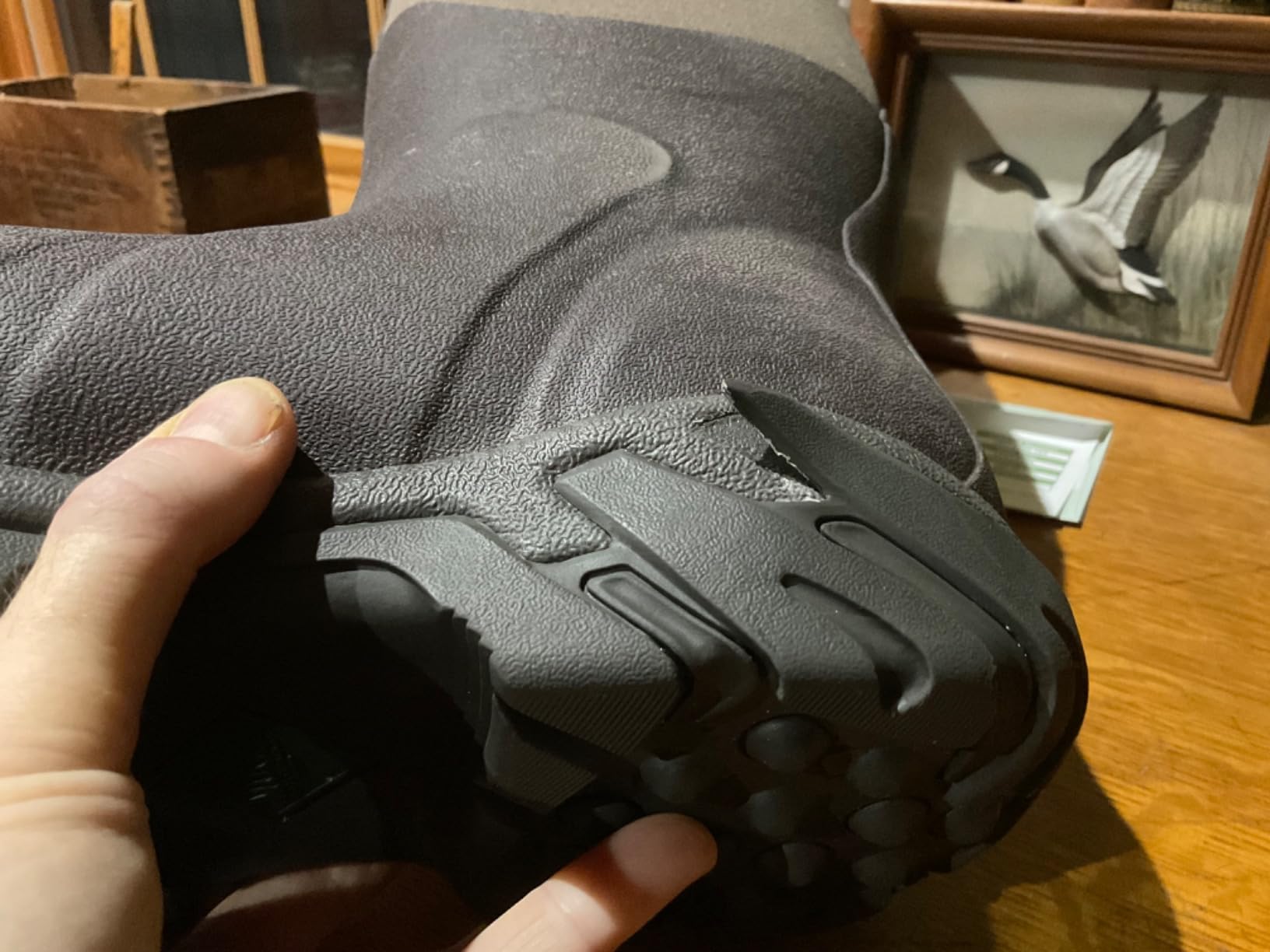
The main complaints are about bulk and long-term durability. The boot is stiff and oversized-feeling before it breaks in, and there is no rubber heel wedge, which makes it hard to pull off and does not anchor snowshoe straps.
Buyers also note that the neoprene upper can crack after several years of hard use, so treat it as a seasonal-to-mid-life boot rather than a lifetime purchase. On bare glare ice, the Bob-Tracker tread is fine in snow and mud but needs added traction aids for safe walking. Because it runs wide, most owners recommend a size up if you plan to wear thick socks.
2. MUCK Arctic Sport Tall – Best Value Boot for Long Days on the Ice
MUCK Men’s Arctic Sport Tall, Black, Size 9(M)
5mm neoprene bootie
Fleece lining
2mm thermal foam footbed
MS-1 shaped outsole
Pros
- Very warm while walking and sitting
- Completely waterproof in snow and standing water
- Roomy last fits wide feet
- Good grip in mud and soft snow
Cons
- Only offered in whole sizes
- Snug at the calf for wide calves
- Less warmth than a pac boot when sitting for many hours
- Weak grip on bare ice
The Arctic Sport Tall is the value pick of this roundup, and it is close to the Arctic Pro in the ways that matter most. If you are outfitting a family or a group for a weekend on the lake, the difference across several pairs adds up fast.
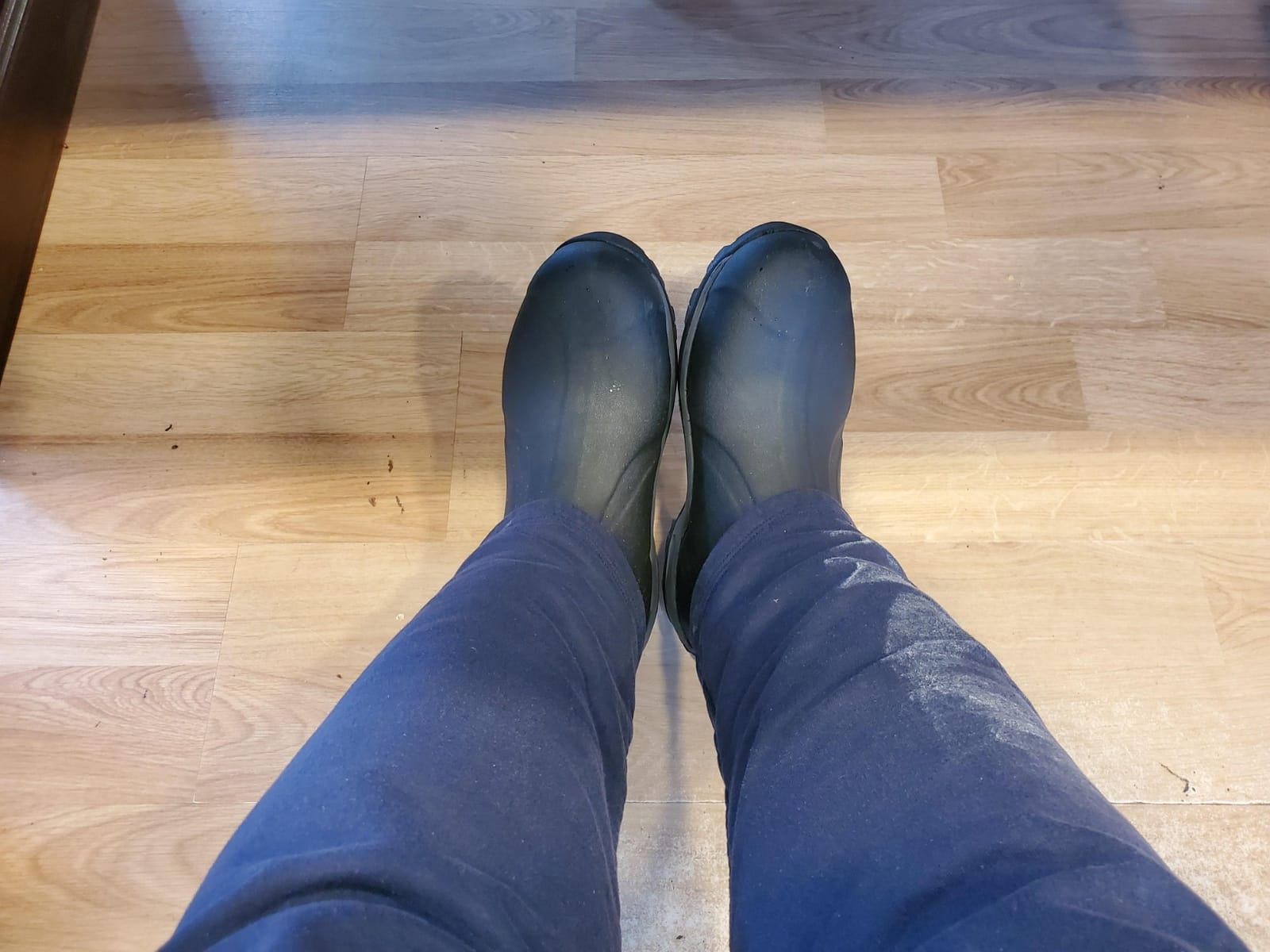
It uses the same waterproof MUCKPROOF approach and the same pull-on format. The insulation package is slightly lighter, with a 5mm neoprene bootie paired with a fleece lining, and that difference shows most clearly during long inactive periods.
Insulation Compared With the Arctic Pro
The gap is real but modest. Owners of both boots describe the Arctic Pro as warmer when standing still for extended periods, while the Sport Tall holds up well when you are moving or when your session involves more walking than sitting.
For typical lake ice fishing in northern US and Canadian conditions, the Sport Tall is comfortably sufficient. For extended deep-cold standouts, step up a class.
Fit, Sizing and the Calf Opening
Two sizing issues come up repeatedly. First, this boot is offered only in whole sizes, so anyone who wears a half size has to choose a direction and test it. Second, the calf opening is snug, and it will not accommodate jeans pulled over the top.
If you are layering thin pants under bibs, that works fine. If your usual winter setup is denim or loose flannel, look at a taller pac boot instead.
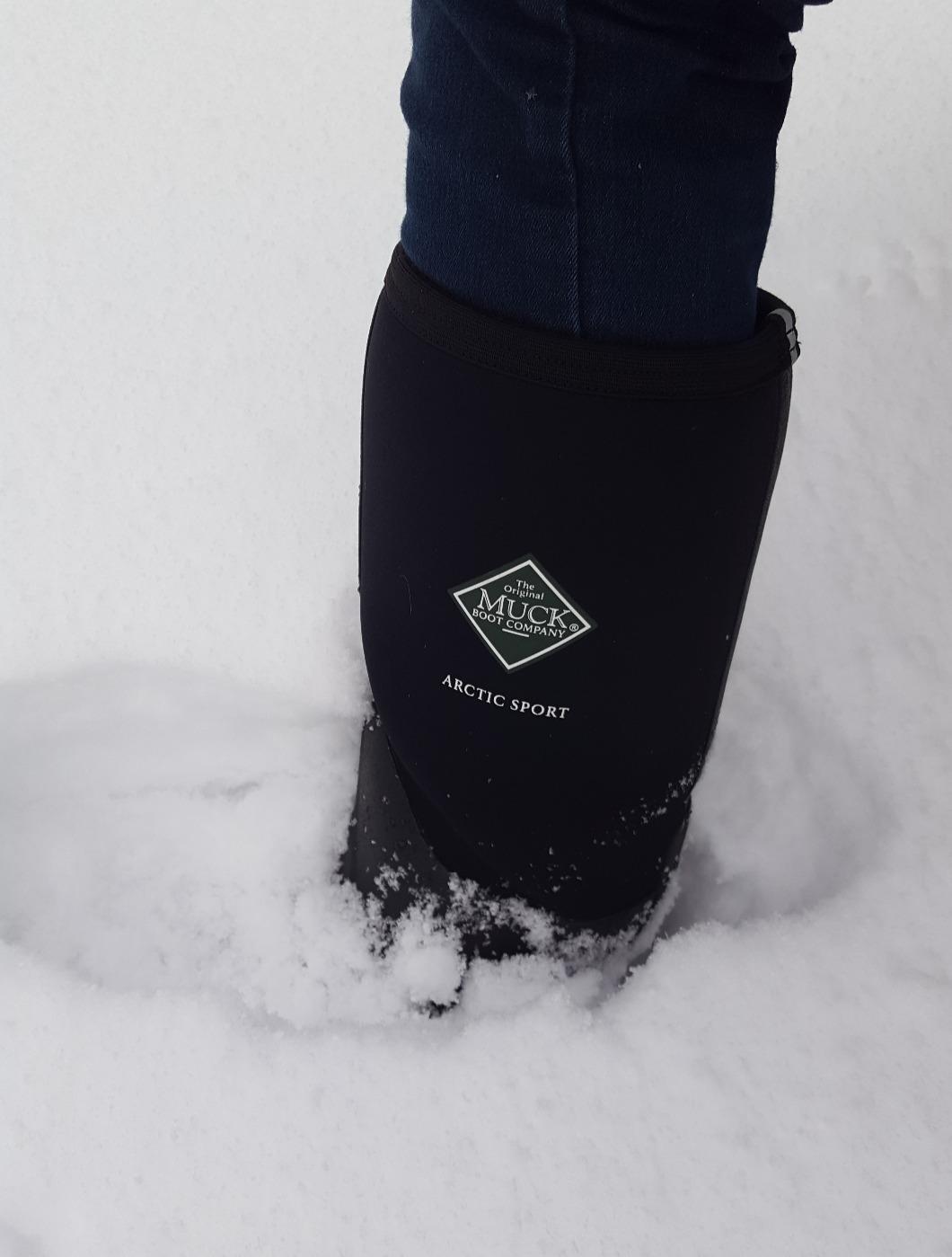
Durability and Traction Notes
The MS-1 shaped outsole is described as rugged and stable, and it performs well in mud and soft snow. On hard ice it is noticeably less sure-footed, which is exactly the surface where you need cleats regardless of boot.
A few buyers report occasional manufacturing failures such as toe leaks or a split zipper, so inspect the boot on arrival rather than assuming a good rating means a flawless pair. Over thousands of reviews, these remain the exception.
3. Baffin Snow Monster Insulated All-Weather Boot – The Best Deep Cold Boot for Standing Still
Baffin Men’s Snow Monster Waterproof Slip-Resistant Lightweight Extreme-Weather Winter Boot for Snowshoeing & Ice Fishing, Black, 7
Arctic rated to -49F
Removable multi-layer B-Tek liner
Seam-sealed leather upper
Icepaw grip pads
Pros
- Among the warmest boots owners have owned
- Lightweight and flexible enough to drive in
- Removable liner lets you dial warmth up or down
- Quick on and off with speed lacing
Cons
- Runs small so size up
- Waterproofing is inconsistent at the toe stitching
- Ice grip is only moderate without crampons
- Gaiter collar is hard to tuck pants into
The Baffin Snow Monster is the one to look at when you are standing around on ice for hours in genuinely deep cold. It is Arctic rated from minus 22F to minus 49F, and owners wear it in those conditions with confidence.
What separates it from rubber pac boots is the removable multi-layer liner. It layers a wicking surface, foam, hollow fiber insulation, a vaporized aluminum membrane, and a moisture-control mesh in a single sock you can pull out and dry.
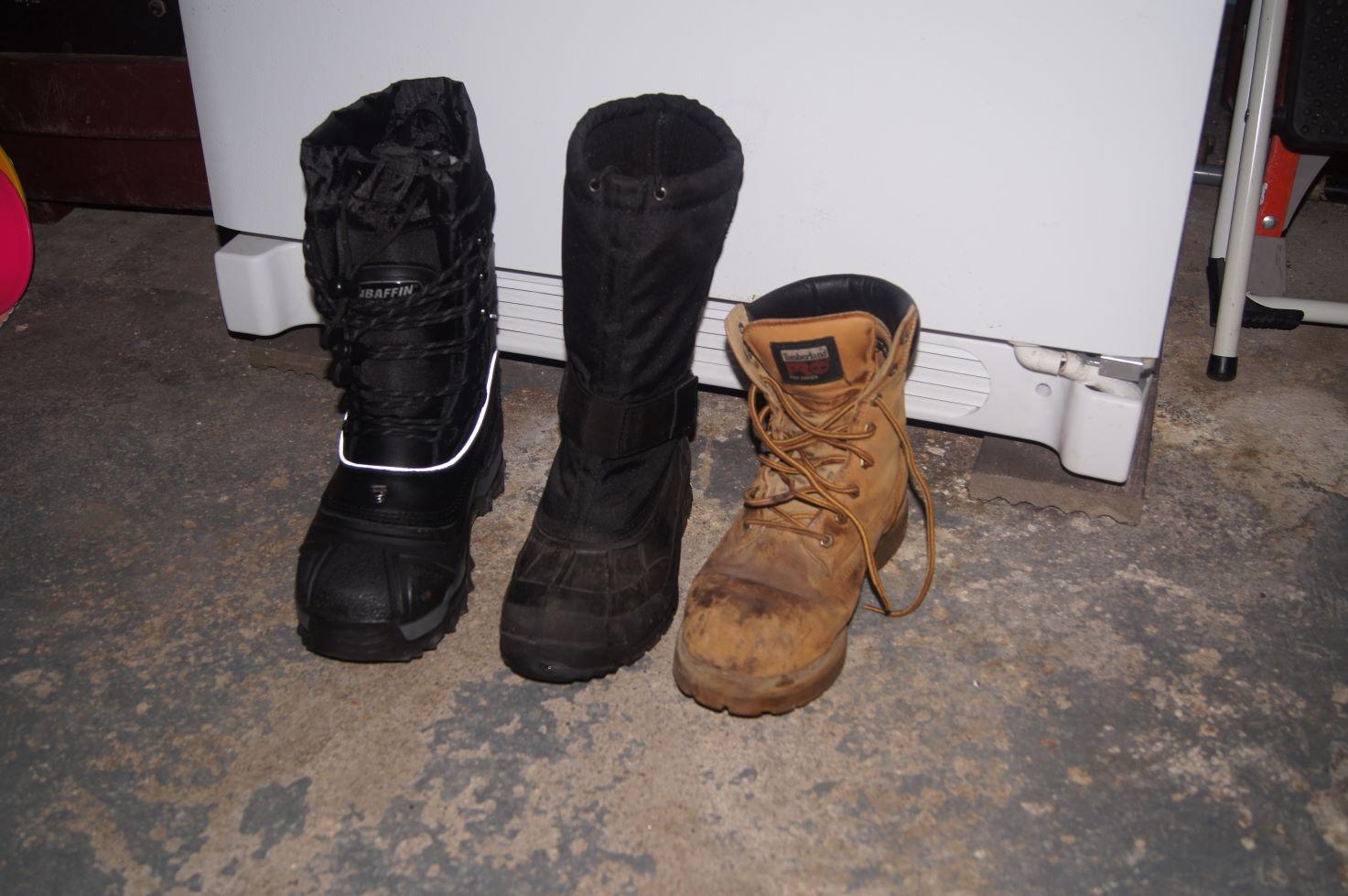
The Multi-Layer Liner System in Detail
The liner stacks Thermaplush wicking material, B-Tek Foam, B-Tek Heat hollow fiber, a vaporized aluminum membrane, PolyWool, Hydromax and a Diamond Net outer. Each layer does a different job, and together they let you reduce warmth on a sunny spring afternoon by removing the liner entirely.
That dial-up, dial-down ability is the feature forum users rate most highly on multi-day trips. A boot you can strip down to a lighter liner on a mild day is far more versatile than one fixed at maximum insulation.
Weight and Drive Comfort
At roughly two pounds in package weight, this is one of the lighter high-insulation boots here, and owners note it is flexible enough to drive a truck or sled in. Heavy boots force you to slide your feet rather than place them, and on a long drive to a remote lake that adds up.
The full-grain leather upper is seam-sealed, and a locking nylon snow collar keeps drifts out. The Arctic Rubber shell and EVA midsole keep it flexible while the Polar Rubber outsole handles the outside world.
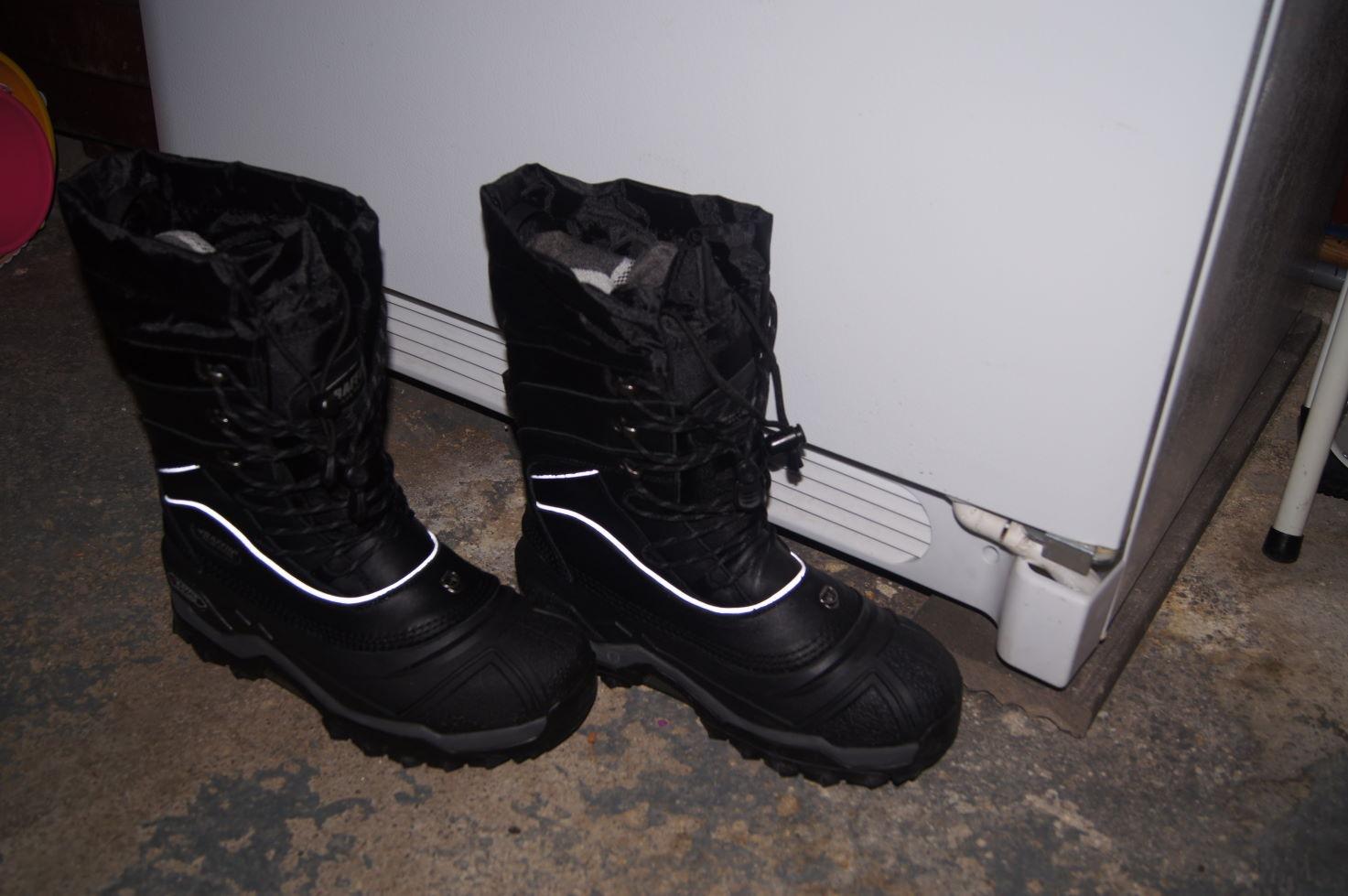
Sizing and Waterproofing Caveats
Size up, and some owners say size up by a full size and a half. The fit runs narrow, which is unusual for a boot people expect to wear with heavy socks.
Waterproofing is good but not flawless, with some owners reporting slow leaking at the toe stitching in shallow water. The Icepaw grip pads help on ice but do not replace crampons or chains on hard glare surfaces.
The speed-lace system needs a two-stage tightening, and the gaiter collar makes it awkward to tuck jeans or casual pants inside. Plan your layering around it.
4. LaCrosse Alphaburly Pro 18 Inch 1600g Boot – The Only Minus 60F Rating Here
LaCrosse Waterproof Hunting Boots, Mossy Oak Country Dna 1000g, 14
Rated to -60F
Waterproof rubber and neoprene
18-inch shaft
Adjustable rear gusset
Pros
- Very warm at low temperatures
- No leaks in bank fishing and wading
- Aggressive tread grips mud and wet rock
- True to size
Cons
- Very bulky and heavy
- Limited foot cushioning over long sessions
- Insulation stops at the ankle
- 18-inch height limits ankle support
The Alphaburly Pro 18 is the boot with the most aggressive temperature claim in this group, rated for warmth as low as minus 60F. At 1600 grams of insulation it is genuinely built for the coldest scenarios, and owners report warm feet in a treestand at minus 25C.
The tradeoff is size. This is an 18-inch shaft hunting boot with a wide fit, and it is the bulkiest option here by a wide margin. Think of it as the boot you put on when you are staking deep structure and staying put rather than moving.
1600 Grams of Insulation and What It Means
At 1600g, this sits in the tier most manufacturers consider their sweet spot for sustained cold exposure. It is meaningfully more insulation than a 1200g boot and noticeably less than a double pac system, but it is concentrated in the foot where it counts on ice.
Owners specifically note that the insulation is concentrated in the foot and the area above the ankle feels less protected. If you are standing in deep snow rather than on ice, that is worth weighing.
Construction and Outsole Grip
Waterproof rubber and neoprene construction has held up well, with no reported leaks in bank fishing or wading. A quick-dry moisture-wicking lining helps manage the condensation that builds up in any fully sealed boot over a long day.
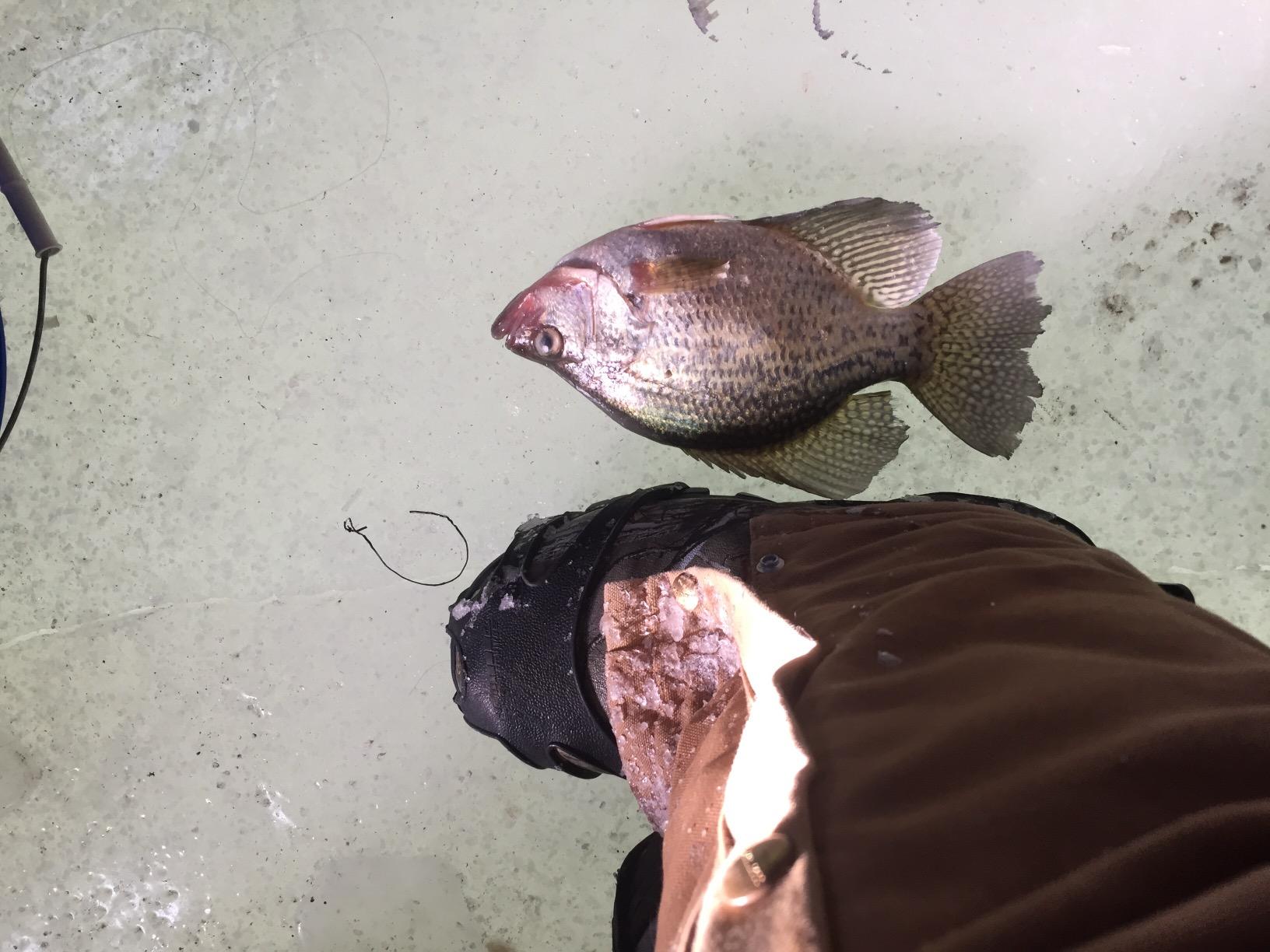
The burly outsole with aggressive tread grips mud, wet rock and shoreline surfaces well. Like most boots here, it still wants cleats on smooth lake ice. An adjustable rear gusset lets you tighten the calf, which helps keep the shaft from riding up.
Who Should Skip It
If you walk a long way to the lake, an 18-inch boot will tire your legs and limit ankle mobility on uneven ground. The height also removes much of the ankle support a shorter boot provides.
Cushioning is another limitation. Owners report that feet get sore after four or five hours of standing or light hiking, because the footbed prioritizes warmth over sustained support. For a full day of standing and drilling holes, plan on a foam sit pad.
5. Baffin Control Max Snow Boot – A Pac Boot With Arctic Rating and a Liner You Can Pull Out
Baffin Men’s CONTROL MAX Waterproof Insulated Extreme-Weather Leather Boots
Arctic rated to -49F
Removable Comfort-Fit liner
B-Tek Dry waterproof base
Icepaw outsole pads
Pros
- Arctic rated with adjustable warmth via removable liner
- Waterproof base handles slush and wet ice
- Icepaw outsole pads for snow and ice grip
- Lightweight rubber shell with EVA midsole
Cons
- Pac style bulk makes it less nimble on long walks
- Rating starts at minus 22F rather than deeper
- Back panel can rub on a snowmobile seat
The Control Max shares the Arctic rating and the Baffin liner technology of the Snow Monster, but it is a more conventional pac boot with a lace fastening. If you want a secure, adjustable fit rather than a speed-lace system, this is the one to compare against.
It is explicitly marketed and tested for ice fishing and snowshoeing, which is unusual for a boot in this category. Most extreme cold boots are hunting boots that ice anglers happen to wear.
Comfort-Fit Liner and B-Tek Dry Base
The removable Comfort-Fit inner boot system layers Thermaplush wicking material, B-Tek Heat insulation and a vaporized aluminum membrane. As with the Snow Monster, the liner is the piece you pull out at night to dry.
The B-Tek Dry waterproof base paired with a seam-sealed full-grain insulated leather upper is what keeps feet dry in slushy, wet conditions. Buyers rate that combination highly for ice fishing specifically.
D-ring Lacing and Waffle-Comb Cushioning
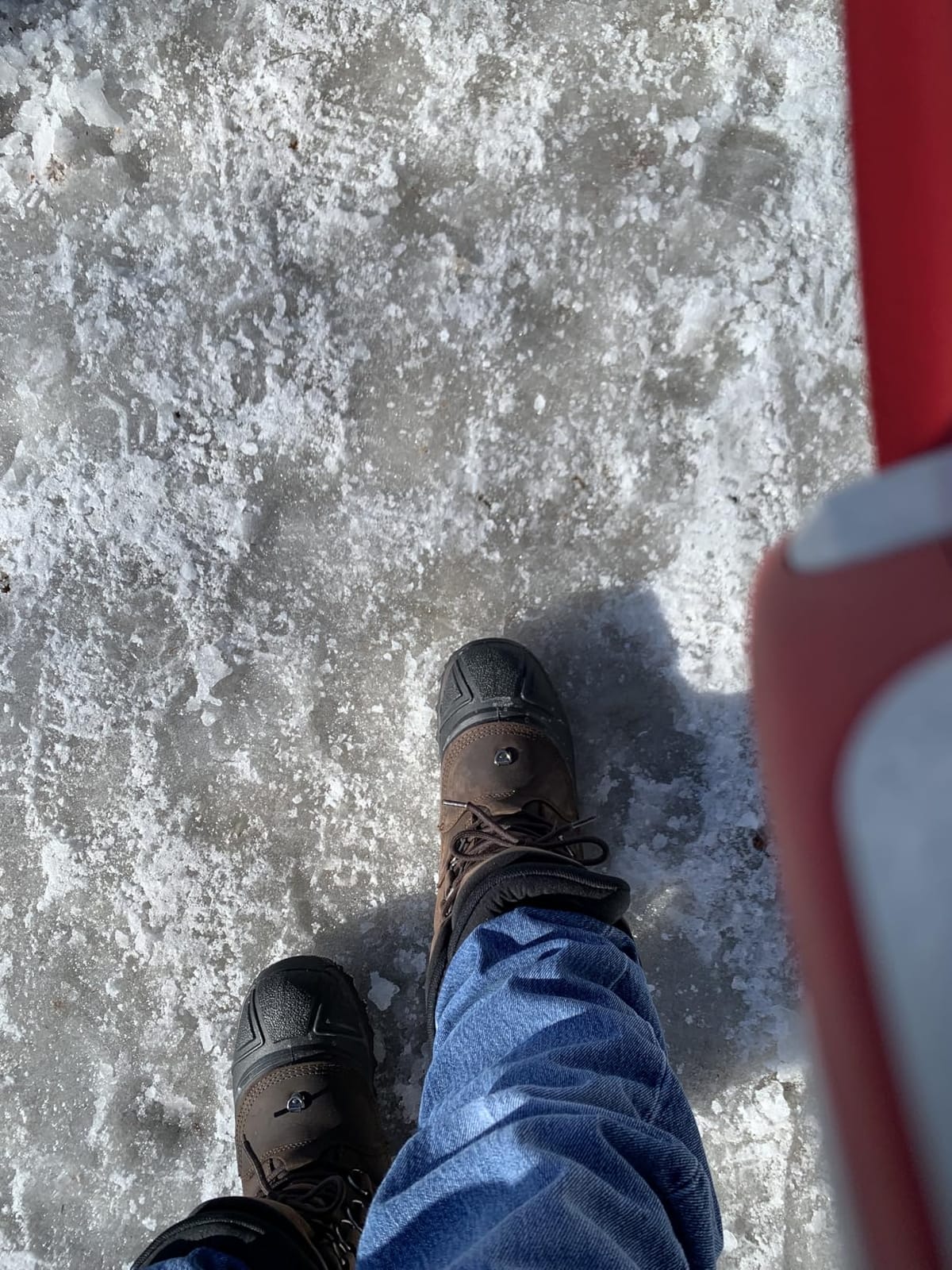
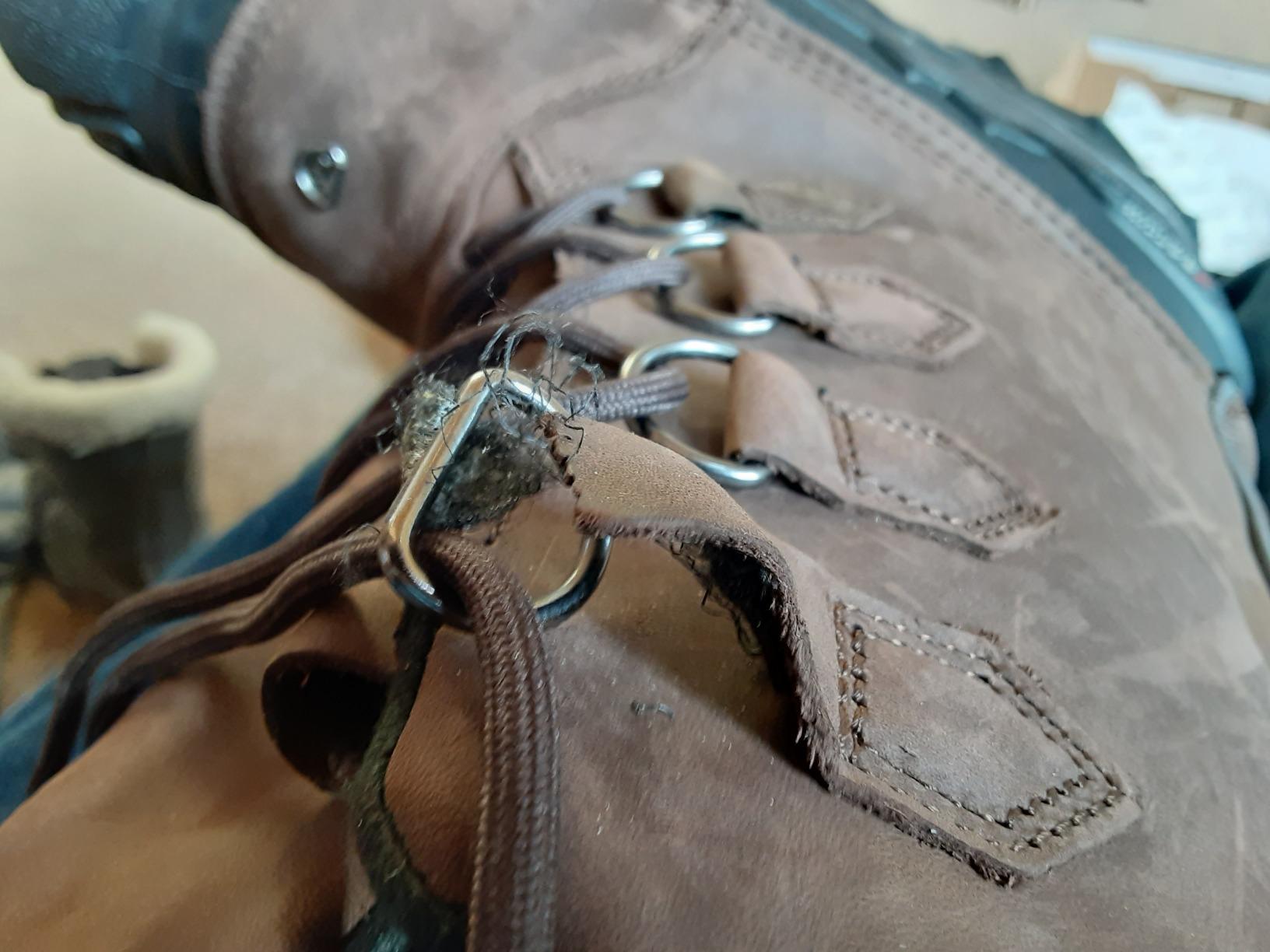
D-ring front lacing with a gaiter clip and waffle-comb footbed gives a secure fit with even tension. The Polar Rubber outsole with Icepaw contact-point pads is among the better ice-traction designs in this lineup, though it is still no substitute for crampons on glare ice.
Tradeoffs to Know About
This is a pac boot, so it is bulkier and less nimble than a mid-height lace-up boot on a long walk in. Its Arctic rating begins at minus 22F, so it covers serious cold without claiming the deepest readings of the Alphaburly. The tall shaft can also press against a snowmobile seat, so test that fit before a long ride.
6. ROCKY Blizzard Stalker 1200G Boot – A Secure Laced Fit With 1200 Grams of Fill
Rocky Men’s Blizzard Stalker Pro Hunting Boot,Brown/Black,12 M US
1200G insulation
Waterproof rubber construction
Durable rubber vamp
Removable mesh PU footbed
Pros
- 1200g warmth in deep cold and wet snow
- Waterproof build suited to slush
- Durable rubber vamp and padded collar
- Secure adjustable lace-up fit
Cons
- Heavier than lighter insulated alternatives
- Laces are awkward with gloves on
- Wide sizes limited to one colourway
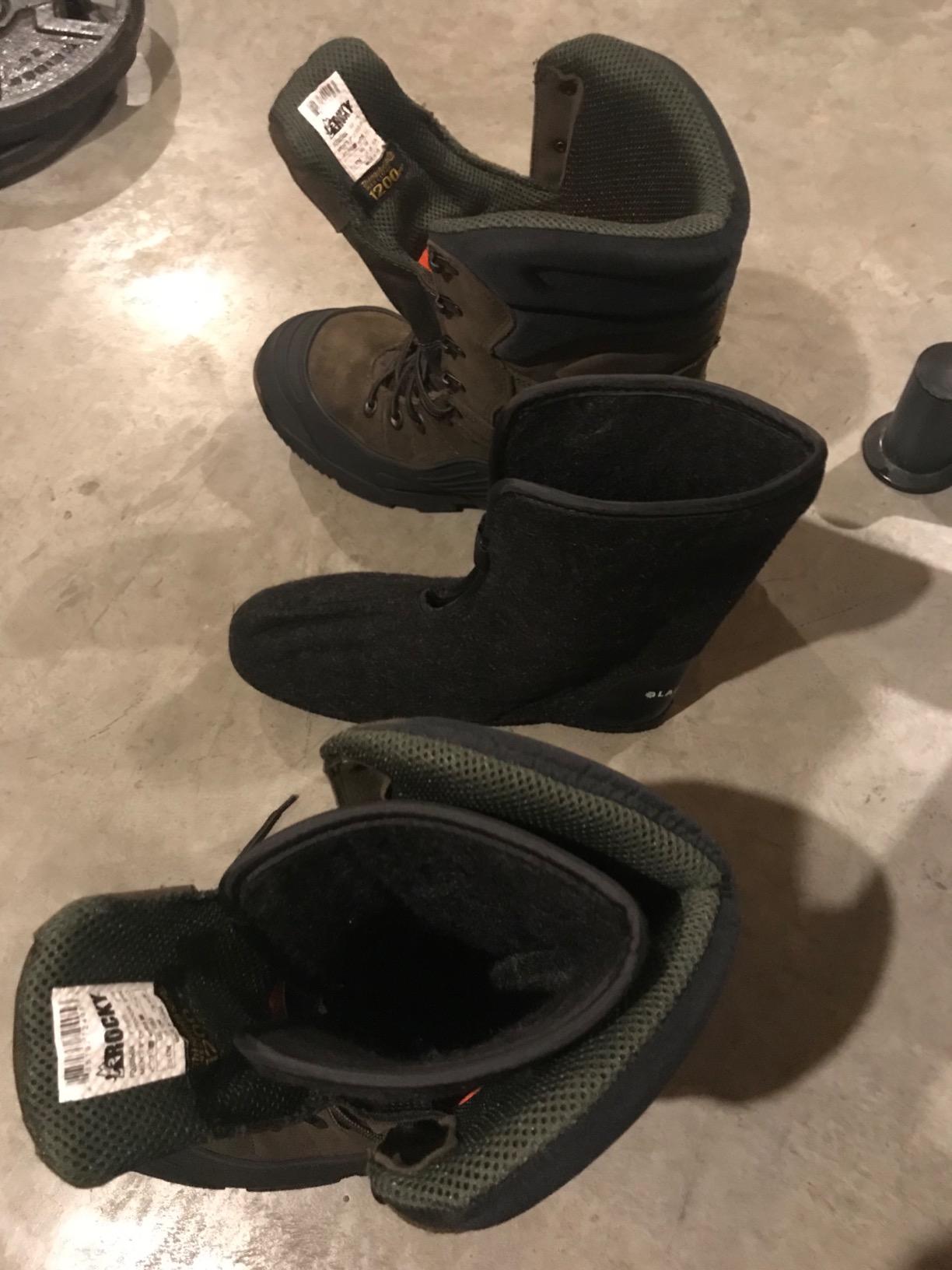
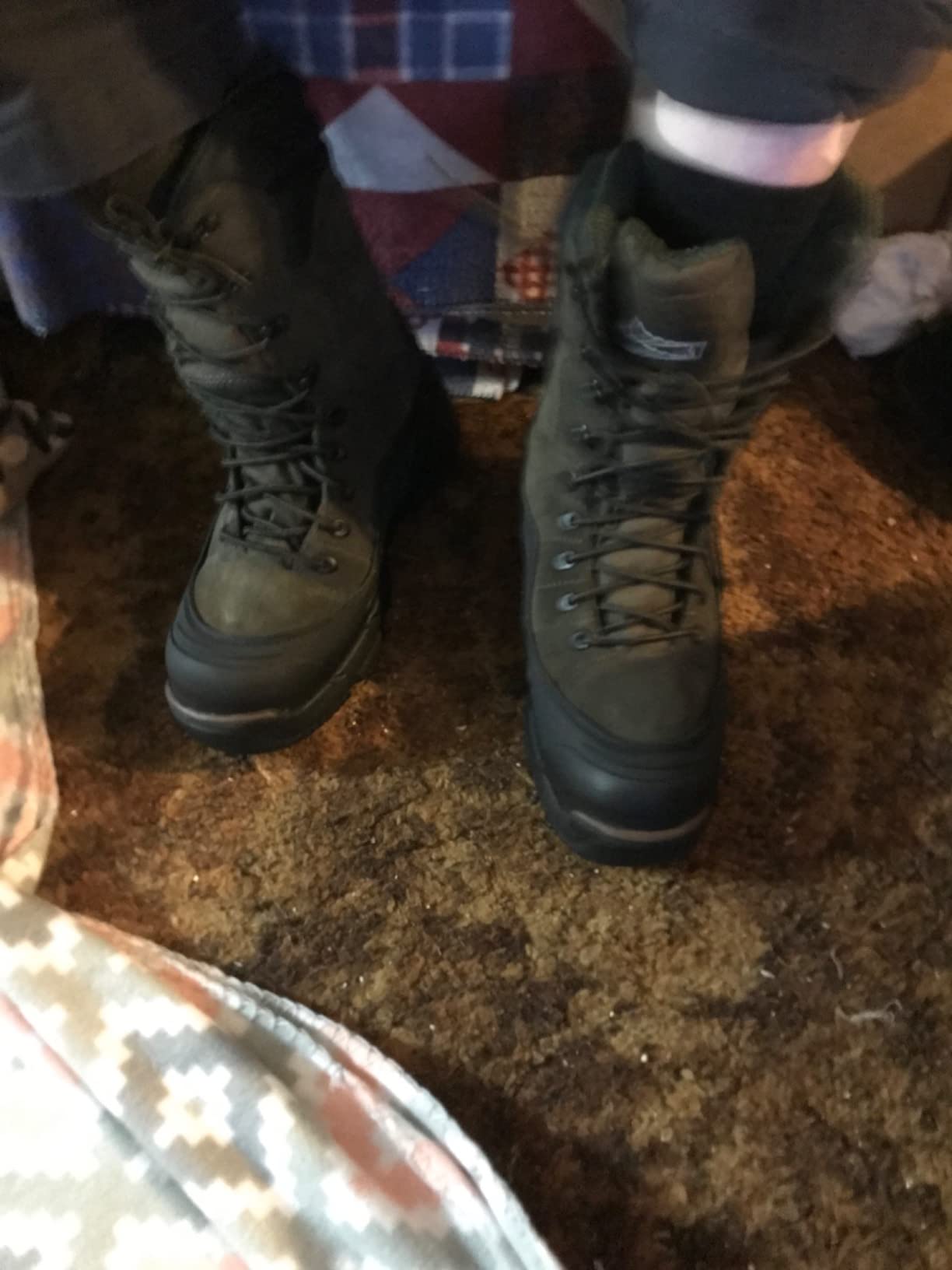
The Blizzard Stalker is a straight lace-up insulated boot with 1200 grams of fill, and it sits right in the middle of the insulation tier most buyers are looking for. There is nothing clever about it, which is sometimes exactly what you want on the ice.
The lace-up closure is the real differentiator against the slip-ons that dominate this category. You get an adjustable fit across the instep and a secure heel hold, at the cost of fumbling with laces in cold weather.
1200 Grams and a Rubber Vamp
1200g is the sweet spot for most northern lake conditions. It handles single-digit and low subzero air, wet snow and slush, and a full day of standing without the bulk of a 1600g boot.
The durable rubber vamp is the part that takes abuse. Slush, ice chips from the auger and snow crust all hit the front of the boot, and the rubber takes that better than a fabric upper. A padded collar and extended tongue keep snow out around the top.
Cushioning and Fit Control
A removable mesh PU footbed is a nice touch on a boot at this level, because it can be swapped or dried. The trade is that it is not the cushioned platform a premium pac boot provides for eight-hour standing sessions.
The closure is the main practical annoyance. Adjusting laces with thick gloves on takes practice, and if you are constantly moving between a shanty and the auger, a pull-on boot is faster.
Weight and Sizing Notes
This is a heavier build than the lighter insulated alternatives on this list, and you will feel it after a mile of walking in. If you are riding in on a sled, the weight matters less.
Wide sizes are only offered in the camo colourway, so if you need a wide fit and want black, that narrows your options. The padded collar helps keep warmth in, but it is a boot that takes a few wears to stop feeling stiff.
7. Baffin Tundra Insulated Boot – A Lighter Option for Milder Winters
Baffin Men’s TUNDRA Insulated Waterproof Lightweight Extreme-Weather Outdoor Snow Winter Boots for Snowshoeing & Ice Fishing, Black, 13
Tundra rated 14F to -22F
Lightweight Arctic Rubber shell
Removable multi-layer liner
Snow collar
Pros
- Warm and comfortable through long snowshoeing outings
- Lightweight and easy to slip on
- Good rubber lower section and firm tread
- Solid liner quality for the tier
Cons
- Tundra rating is not deep cold
- Little traction on ice patches
- Stiff sole with little give
- Water resistance is partial
We include the Tundra because plenty of anglers ice fish in climates where an Arctic-rated boot is overkill. This one is Tundra rated for 14F to minus 22F, uses the same removable liner technology as the pricier Baffin boots, and weighs about two pounds in package.
It is the most flexible boot in this lineup, and owners like it for snowshoeing, snow shoveling and general winter work. On ice in mild conditions, it does the job.
Same Liner Technology, Lighter Rating
The liner stacks Thermaplush, B-Tek Foam and B-Tek Heat, a vaporized aluminum membrane, PolyWool, Hydromax and a Diamond Net. That is the same multi-layer approach as the Snow Monster and Control Max, which means you can strip it down to a lighter liner when conditions warm up.
The difference is the rating tier, not the design. If you fish in the northern US in most winters, this is a sensible, lighter option that still handles deep cold snaps.
Flexibility and Entry
The tall nylon upper has a locking snow collar, reflective piping and a Velcro ankle strap, plus a rear pull loop for entry. Owners report slipping it on without bending, which matters when you are getting out of a sled bag in a windchill.
Limitations on Ice
Traction is the biggest limitation. Owners specifically flag little grip on ice patches, which means microspikes or similar aids are needed more often here than with an Icepaw or Vibram outsole.
The sole is stiff with little give, so cobblestones and rough pavement are felt through the foot on the walk to the truck. Water resistance is also partial rather than fully waterproof, so puddles can soak in.
Cushioning is lighter than a premium pac boot. For five-hour sessions it is fine; for ten hours standing, add a sit pad. Some buyers also find the sizing runs large.
8. Kamik Icebreaker Insulated Waterproof Boot – Rated Deep Cold With a Removable Liner
Kamik Icebreaker Winter Boots for Mens with 8mm Zylex Removable Liner, Camouflage – 10
8mm removable Zylex liner
Rated to -40C/-40F
35.56 cm shaft height
Made in Canada
Pros
- 8mm removable liner gives strong warmth
- Rated to -40C/-40F for genuine extreme cold
- Tall shaft blocks deep snow and slush
- Lightweight and durable
Cons
- Liner is slow to dry once soaked
- Rubber upper is stiff at first
- Roomy last can feel loose for narrow feet
- No aggressive ice-traction outsole
The Kamik Icebreaker is one of the highest-volume boots in this roundup, and the reason is simple: a stated minus 40F rating with a removable liner at an entry-level tier. Owners consistently describe it as strong value for cold, slushy conditions.
Made in Canada with a 35.56 cm shaft, it is built for depth. That height blocks snow on a drifted lake access and keeps slush out of the top when you are standing in a hole.
The 8mm Zylex Liner
Zylex is a synthetic insulation rated at 8mm of thickness in this boot, and it delivers more warmth per gram than many fillers of the same class. The removable design means you can pull it out to dry, which matters on multi-day trips.
The catch is drying time. Owners note the liner can be slow to dry once soaked, so on a two-day trip bring a second liner or a pair of dry socks to swap in overnight.
Fit and Break-In
The last is wide and roomy, which suits thick socks but can feel loose for narrow feet. If you are between sizes, this is worth trying on rather than ordering blind.
The rubber upper is stiff at first and needs breaking in, similar to most molded rubber boots. After that, owners report good durability and light weight for a boot with this much insulation.
Traction on Hard Ice
There is no aggressive ice-traction outsole here, which is the single most important limitation to know. On glare ice you will want separate cleats regardless of how warm the boot is.
Waterproof insulated construction handles slushy ice and wet conditions well, which is where this boot does its strongest work. For deep snow access on a cold, snowy winter, it is hard to argue with the shaft height or the rating.
9. KEEN Revel 4 Mid Height Polar Insulated Boot – Best for Walking to the Lake
KEEN Men’s Revel 4 Mid Height Polar Insulated Waterproof Snow Boots, Black/Lemon Curry, 9.5
Polar Grip ice traction
KEEN.WARM rated to -25F
KEEN.DRY waterproof membrane
Stability shank
Pros
- Outstanding ice grip from Polar Grip sipes
- Lightweight with real ankle support
- Generous toe box suits thick socks
- No break-in period on the leather upper
Cons
- Mid cut lets snow in on long walks without gaiters
- Rating is shallower than extreme cold pac boots
- Some durability complaints on stitching and sole
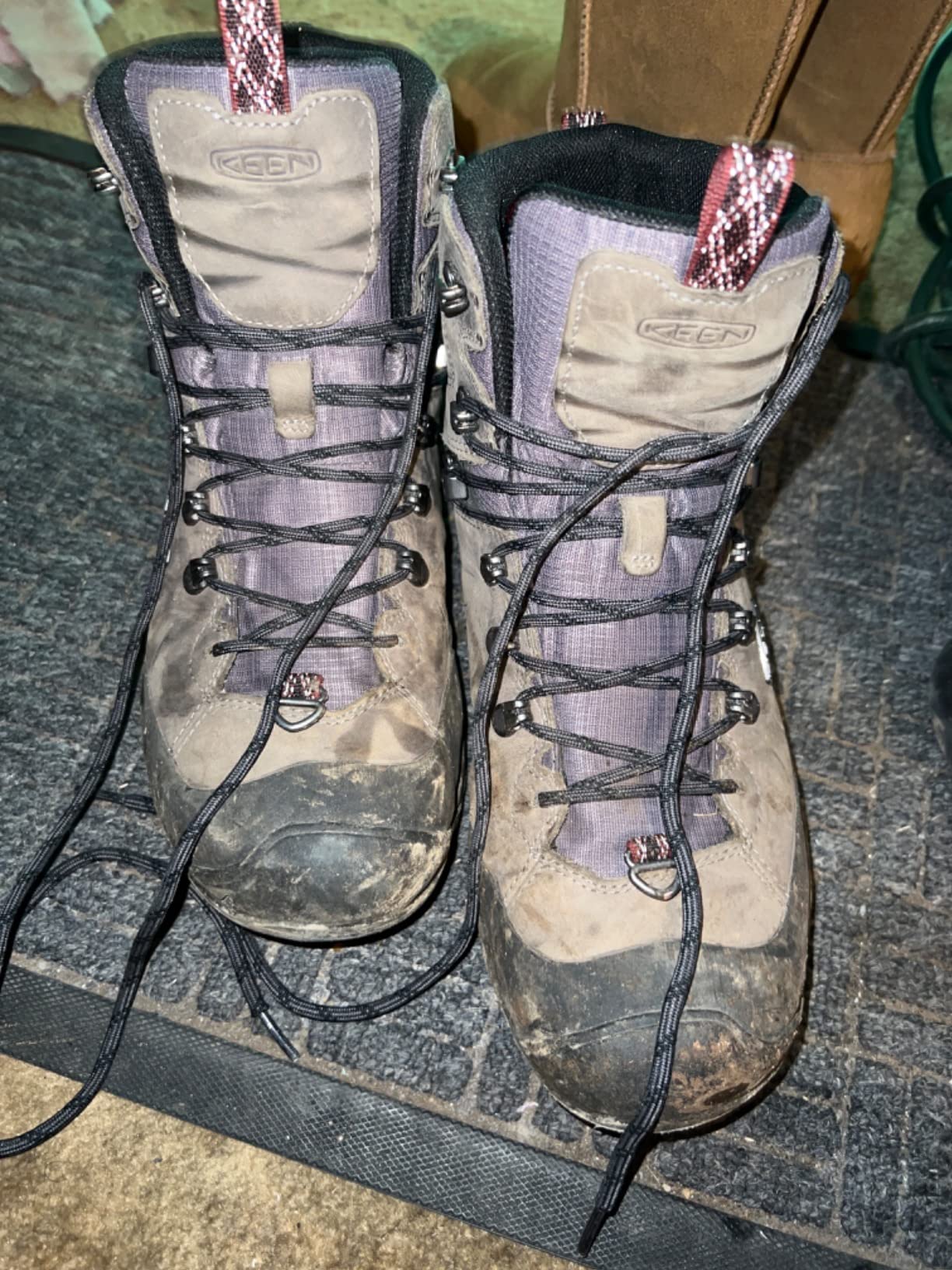
The Revel 4 Mid is the boot we would put on our feet if the day involved a lot of walking across rough ice to reach a spot. It is the most athletic option here, and its outsole is designed from the start to grip ice rather than merely survive it.
Polar Grip uses micro glass fiber technology combined with 5mm multi-directional lugs. Buyers describe near-cleat grip, and many say it removes the need to strap on traction aids for ordinary ice conditions.
Breathability and the KEEN.DRY Membrane
This is the only boot in the lineup with a genuinely breathable waterproof membrane. That matters more than it sounds: foot sweat is the most common complaint among people who buy heavy insulated boots, and sweat that cannot escape becomes cold sweat later.
The premium leather and performance mesh upper from LWG-certified tanneries vents reasonably well. Owners report warm and dry feet through deep snow and subzero wind, tested in serious wind chill on a Colorado 14er.
Ankle Support and Fit
A stability shank gives torsion control and a cushioned collar adds comfort, which is a real advantage over slip-on boots that leave your ankle free to roll. KEEN Original Fit gives a generous toe box that suits thick socks well.
The upper needs no break-in, which is unusual in this category. That is a genuine advantage if you are buying boots days before a trip.
Where It Falls Short
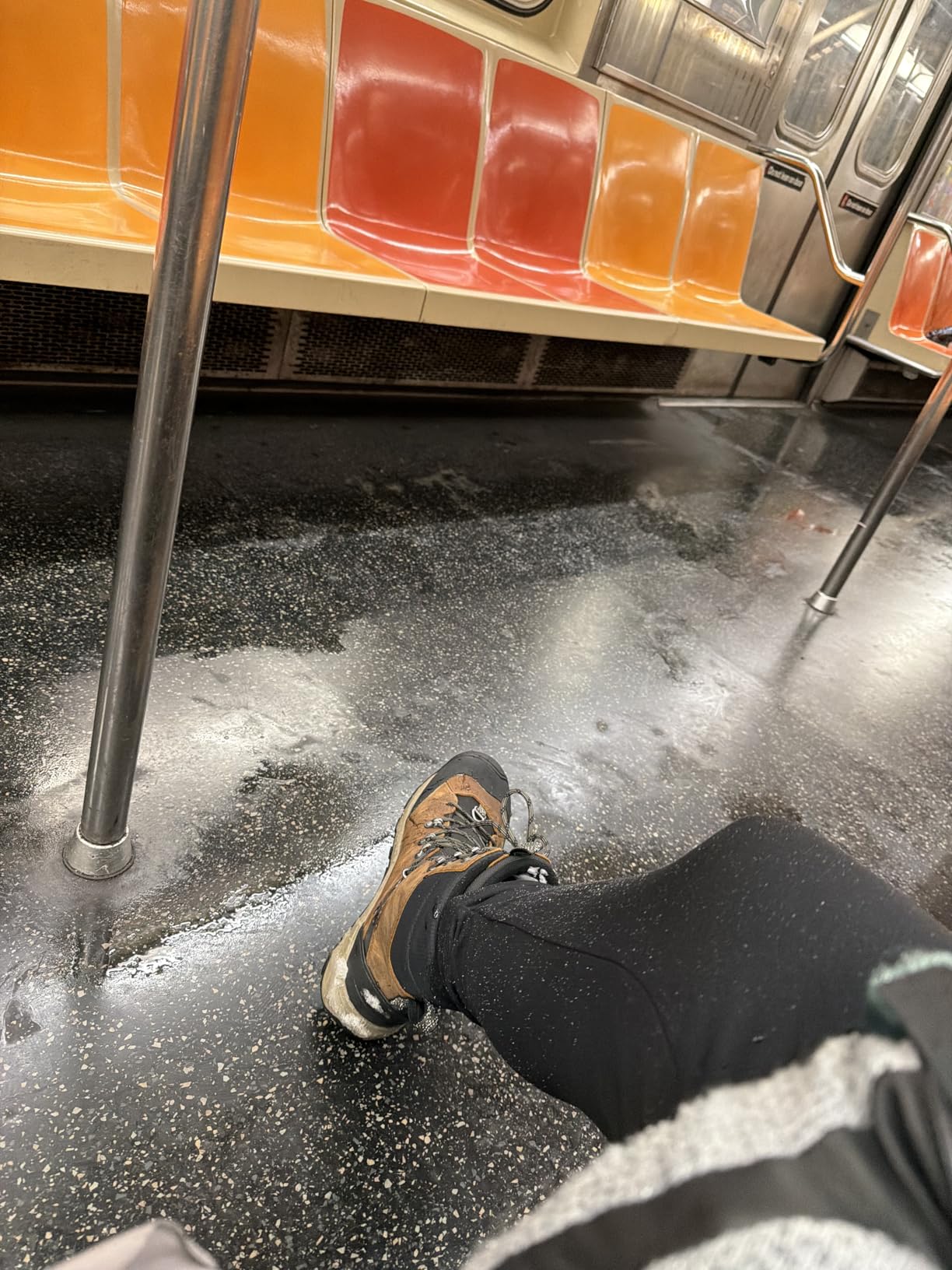
The KEEN.WARM rating is minus 25F, shallower than the Arctic-rated pac boots here. That is fine for most southern and mid-latitude lake ice, and not enough for extended deep-cold standouts.
The mid-height cut can let snow in on longer walks without gaiters, so carry a pair if the access crosses deep drifts. Durability is the other complaint, with some owners reporting sole separation or foreflex stitching failure within a year, so inspect early and keep the return window open.
The leather also arrives darker than the product photos. And because it is a shoe-shaped last, it will not accept the very thick socks some northern anglers wear, or tuck into pants.
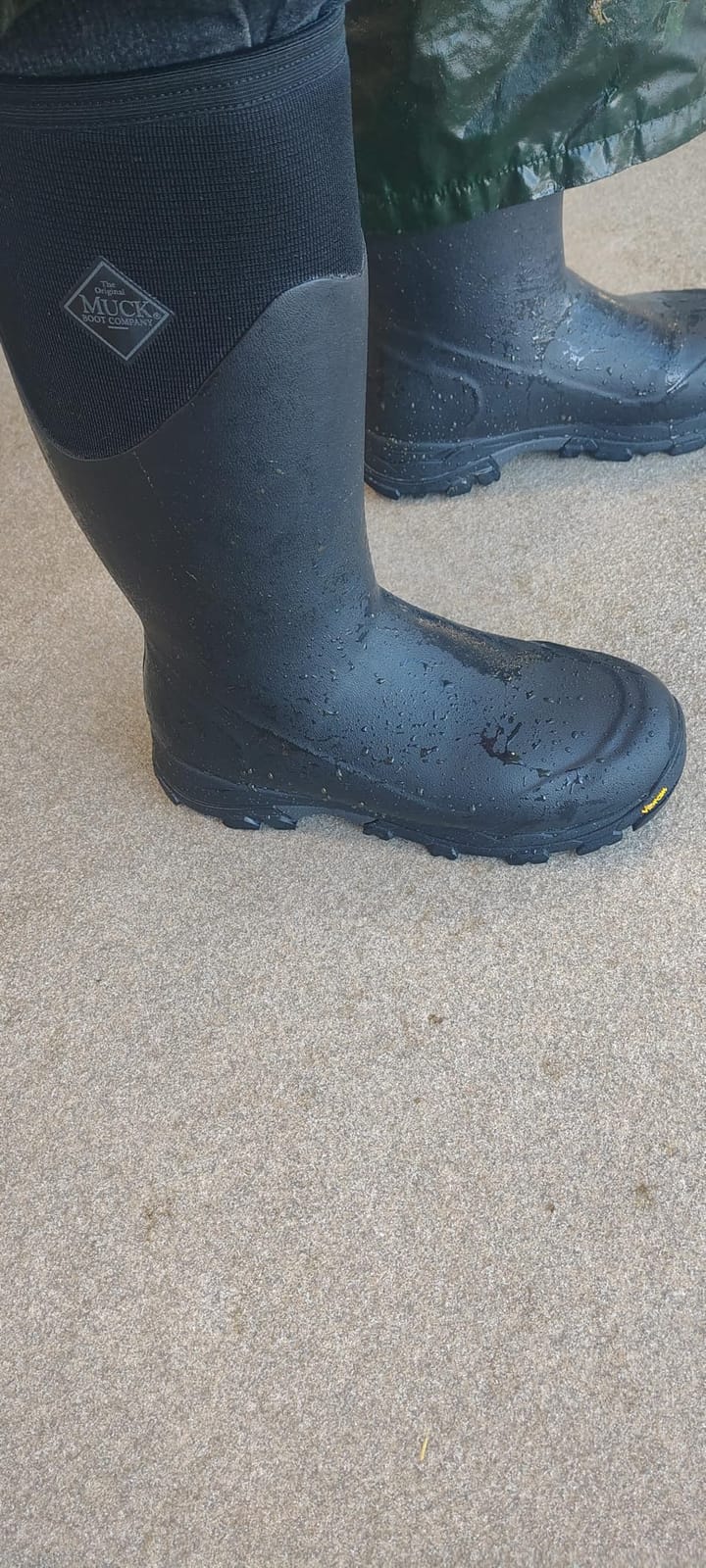
10. MUCK Arctic Ice Tall with Vibram Arctic Grip A.T. – A Tall Pac Boot Built for Hard Ice
MUCK Men’s Arctic Ice Insulated Boot + Vibram Arctic Grip A.T., Brown, Size 10(M)
Vibram Arctic Grip A.T. outsole
15-inch boot shaft
bioDEWIX dry footbed
Spandura upper
Pros
- Most reliable hard ice traction in this lineup
- 15-inch shaft keeps snow and slush out
- Waterproof MUCKPROOF shell
- Lightweight midsole for long days
Cons
- Widest rating spread of the picks
- Listing describes the boot as water resistant
- 15-inch shaft traps heat on warmer days
This is a tall MUCK pac boot built around a Vibram Arctic Grip A.T. outsole, and that single component is the reason it earns a place here. When traction is the thing you are worried about, the outsole brand matters more than any marketing temperature rating.
The 15-inch shaft and a 16.5 inch shaft circumference give it real coverage for deep snow access, and the pull tab plus lightweight midsole keep it workable on and off.
Vibram Arctic Grip Outsole Performance
Owners describe it as the most reliable traction on hard ice of any boot in this roundup. Arctic Grip compounds are formulated for ice and the siped pattern bites into smooth surfaces where a conventional lug pattern glides.
That does not mean you can ignore safety on glare ice. It means this boot needs added traction aids least of anyone on this list, which is a meaningful distinction when you are walking a dark lake at dusk.
Moisture Management and Fit
A bioDEWIX dry footbed insert with NZYM handles odor and moisture, which is a practical upgrade for multi-day use when you cannot fully dry a liner between sessions. The Rugged Spandura upper adds durability where boots typically fail.
Be aware of the listed water resistance level, which the product data describes as water resistant rather than fully waterproof, even though the marketing claims a waterproof MUCKPROOF shell. If you expect to stand in slush for hours, keep spare socks.
Bulk and Heat Retention
At 15 inches, this is a bulky boot that can trap heat on mild days. It is built for winter, and wearing it through a warm spell means opening the shaft to dump heat.
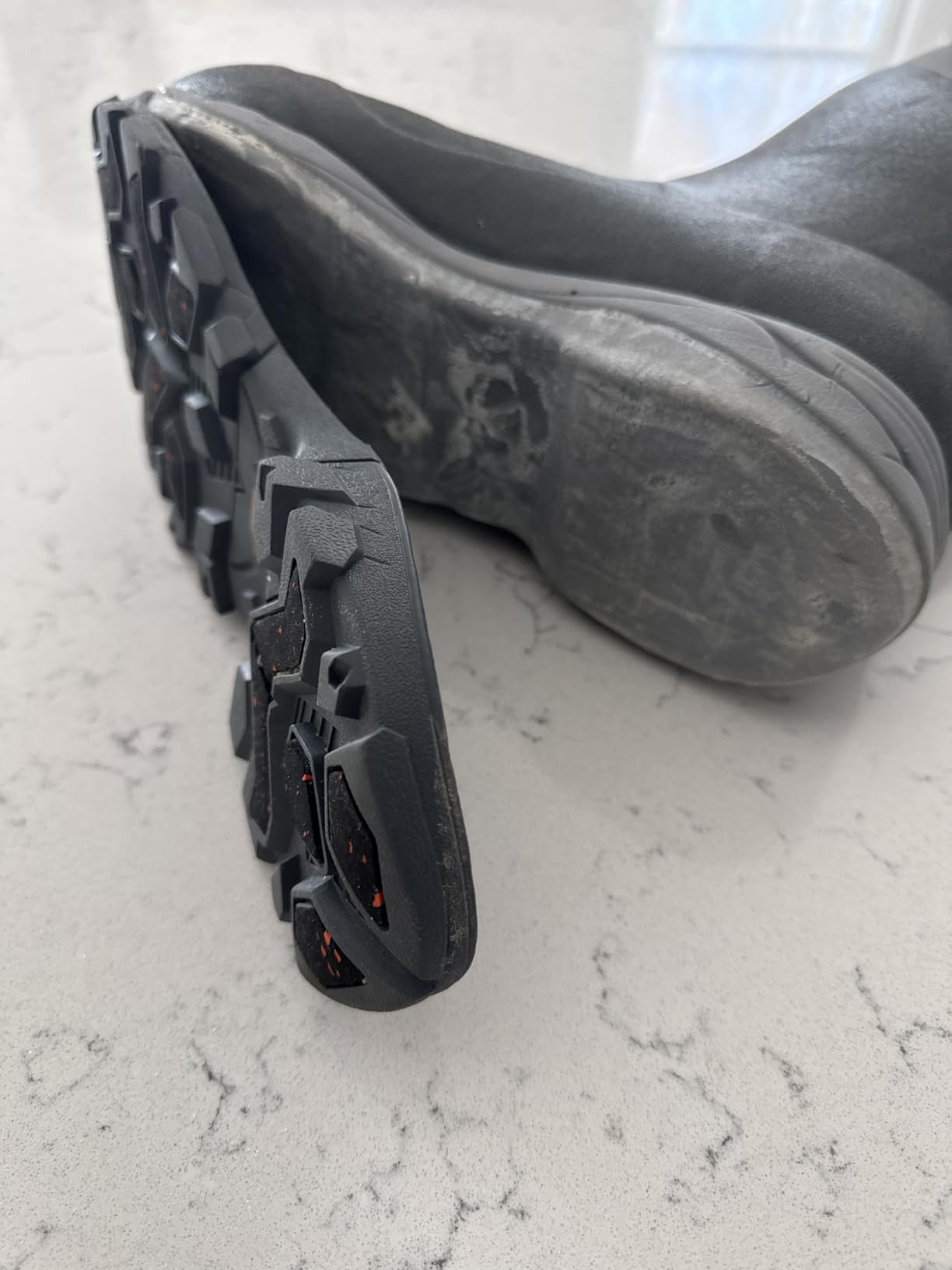
The rating spread is also the widest of any pick here, with a notable share of one-star reviews. Expect some variance between pairs, so inspect the stitching and outsole bonding on arrival.
11. Korkers Polar Vortex 1200 with SnowTrac Sole – Sized for Snowmobile Footwells
KORKERS Men Polar Vortex 1200 w/SnowTrac Sole, Color: Black/Silver, Size: 11 (OB9901BK-11)
1200g insulation
SnowTrac ice and snow sole
Interchangeable stud attachments
Roomy wide fit
Pros
- Described as the warmest boot some owners have worn
- SnowTrac cleated sole adds serious ice grip
- Comfortable fit for wide feet
- Handles Alaskan and Maine winter conditions
Cons
- Runs small so size up
- Studded sole attachment sold separately
- Plastic heel stud can break on broken ice
- Lowest review count in the roundup
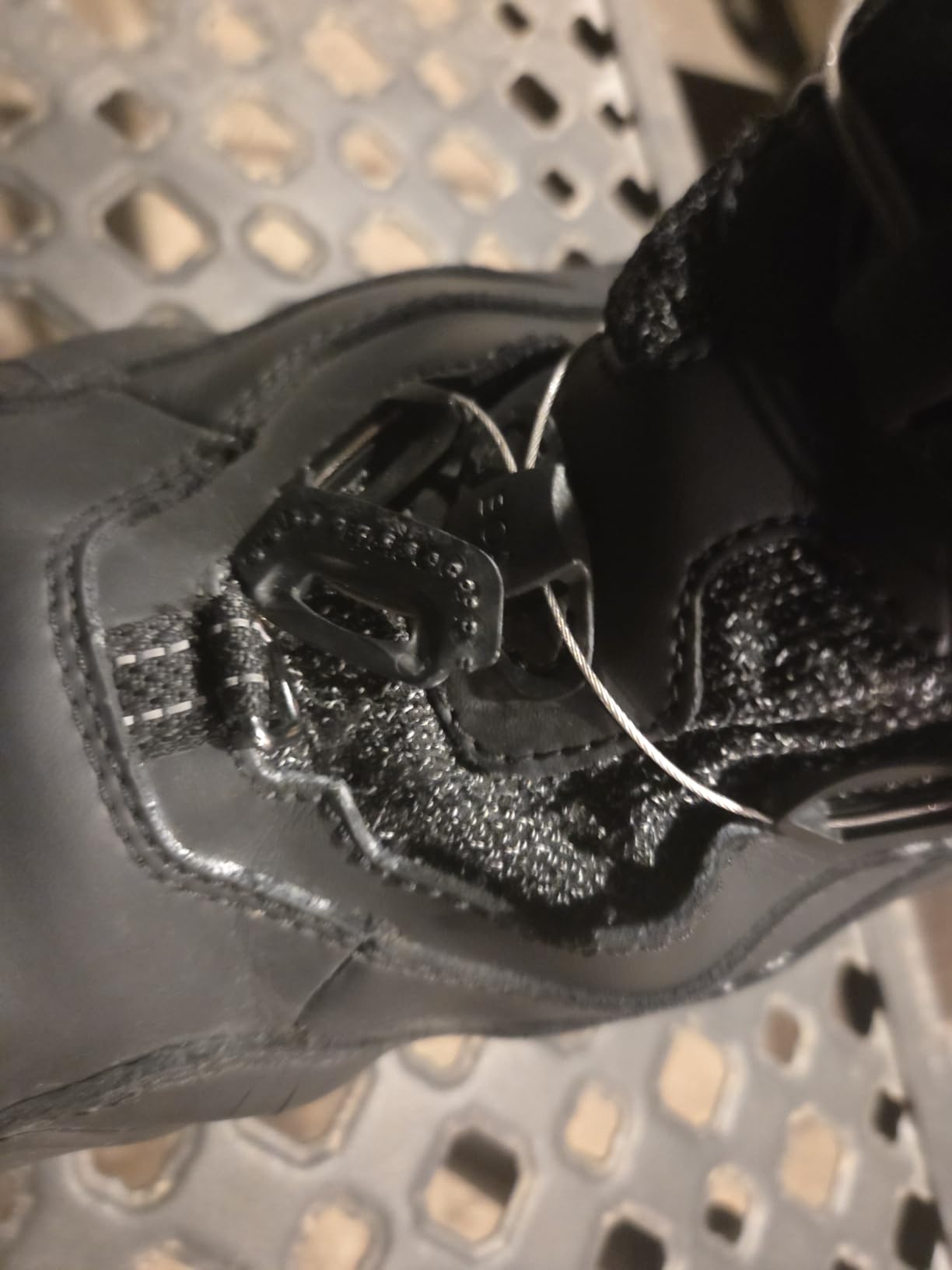
The Polar Vortex is the boot forum users most often connect with snowmobile footwell fit, and that is because it was designed around a tight envelope. If you ride to your spot rather than walk, the boot profile matters as much as the insulation.
At 1200g with a SnowTrac sole system and interchangeable stud-style attachments, it delivers serious grip on ice and snow. Owners describe it as among the warmest boots they have personally worn.
Footwell Fit and Pedal Clearance
A narrow footwell means your boot has to fit under a dash without catching, and a wide boot becomes a problem on long rides. The Polar Vortex sits inside that envelope while still providing real insulation, which is a hard combination to find.
The trade-off is that some anglers find this boot less refined for walking. It was not designed as a hiking boot, and long approaches over rough terrain will feel less refined than a mid-height lace-up.
Sizing and the Stud System
It runs small, and owners frequently recommend sizing up. The studded sole attachment is a separate purchase, so factor that in before you assume the boot comes with the ice grip.
The plastic heel stud attachment is not dependable and can break off on broken ice, which is a common surface on a lake with current or near a pressure ridge. Keep a pair of strap-on crampons as backup.
Durability and Expectation Setting
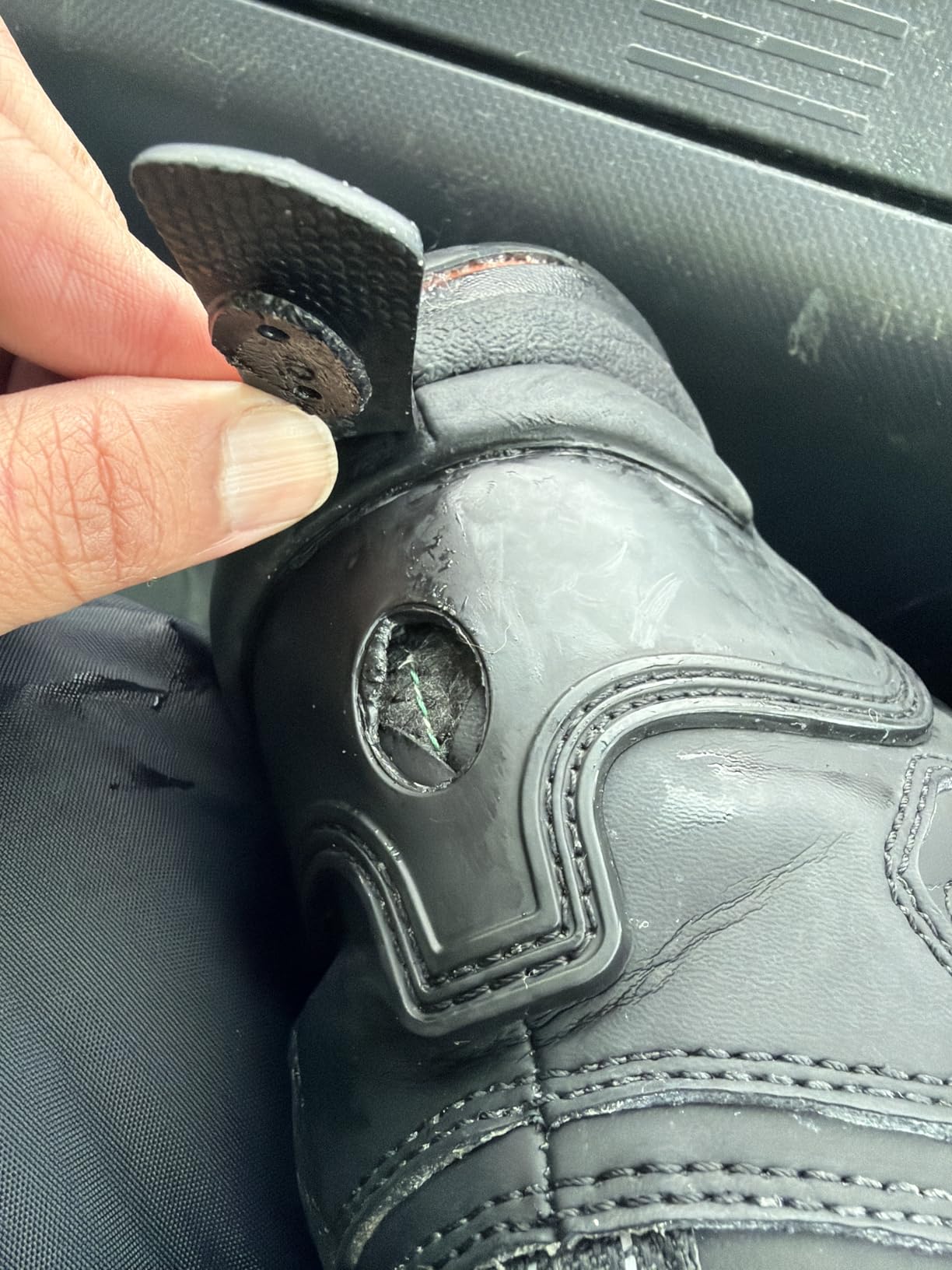
Durability is the weak point. Some owners report the boot failing or breaking within a few months of use, and the review count is the smallest in this roundup, which means less long-term evidence either way. On the plus side, the fit is comfortable for wide feet, and owners using it in Alaskan and Maine winter conditions report good results.
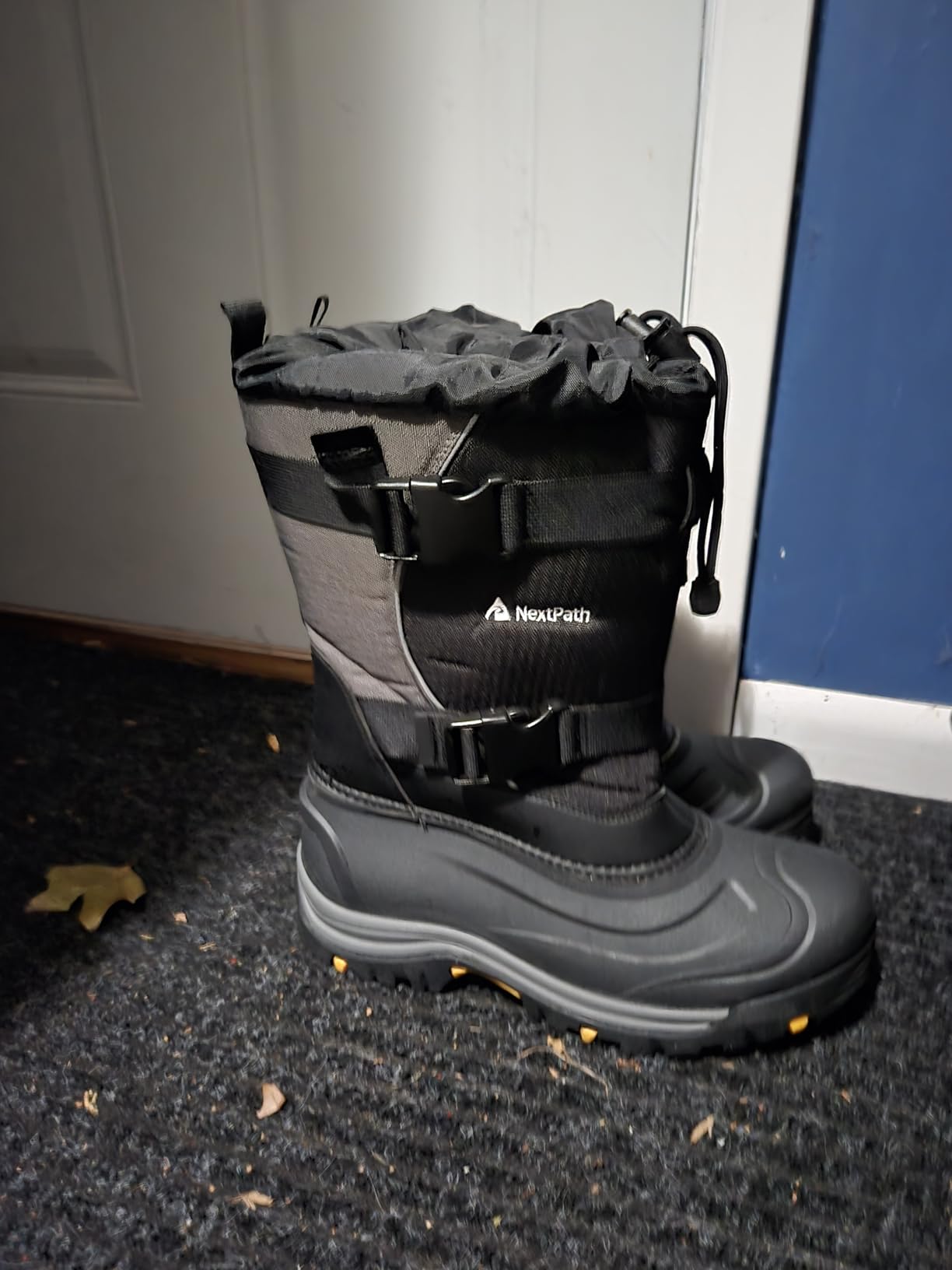
12. Nextpath -40F Waterproof Insulated Snow Boots – Best for Overnight Liner Drying
Nextpath Men’s Snow Boots, Waterproof Insulated Winter Boots for Men, -40°F
12mm removable four-layer liner
Washable liner rated to -40F
One-piece TPE waterproof shell
Pros
- Four-layer Thinsulate liner warm in low subzero weather
- Waterproof molded shell performed well in wet conditions
- Light at about 1.5 pounds per boot
- Washable liner dries overnight
- Deep-lug tread for packed snow
Cons
- Not built for severe wind chill
- Runs small so size up
- Buckles hard to tighten with gloves
- Snug through the foot
The Nextpath boot does one thing that almost no boot in this category does: it makes the liner washable and fast to dry. For multi-day trips where the same pair of boots gets soaked every evening, that is a feature you notice on day two.
The liner is a 12mm removable four-layer stack with heat-reflective foil, felt, 3M Thinsulate and velvet, rated to minus 40F. Owners report it holding warmth in single-digit to low subzero weather and deep snow.
Liner Design and Drying Time
Removable in seconds, washable, and light enough to air out overnight. On a three-day trip that is the difference between warm feet on day three and cold feet because yesterday’s liner never dried.
Heat-reflective foil in the liner bounces body heat back toward the foot, which works especially well when you are sitting still in a shanty rather than active.
Weight and Construction
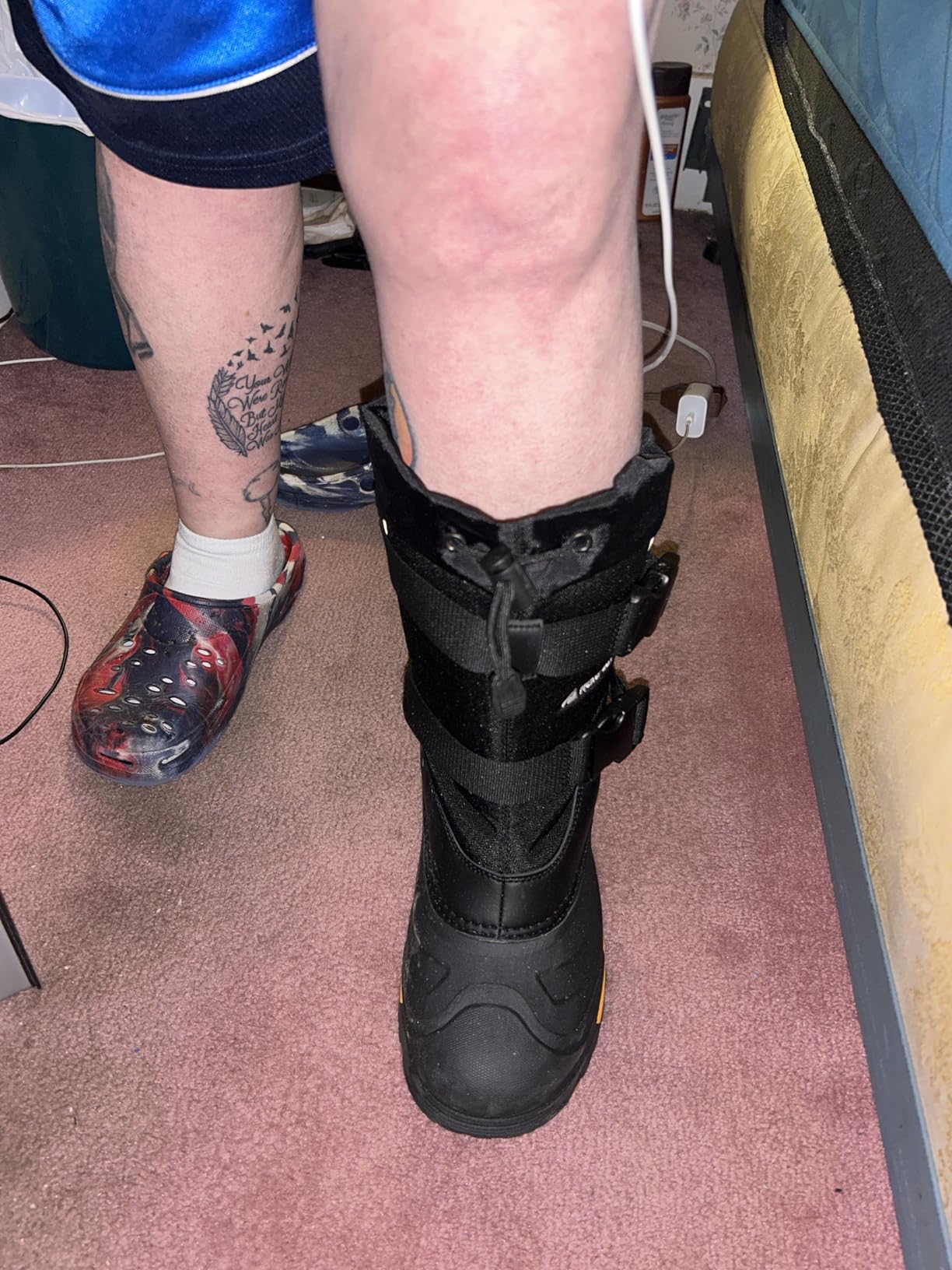
At roughly 1.5 pounds per boot, this is among the lightest options here, which matters on a long walk to a remote access. The molded one-piece TPE waterproof shell base handles wet ground and slush, and the anti-wicking Oxford upper drains rather than absorbs.
Two quick-release buckles, a drawcord collar cinch and a heel pull tab give a decent fit for an entry-level boot. The 14-inch shaft and deep-lug outsole are aimed at packed snow and slush.
Where It Falls Short
It is not built for severe wind chill. One owner reported frozen feet in Chicago conditions, which is a useful warning if your trips involve exposed wind on open ice rather than sheltered lake.
Sizing is the other recurring issue: most buyers recommend going up a half size to two full sizes. The internal inserts also make it snug through the foot, so thick socks reduce room inside.
The top buckles are hard to tighten with gloves on but easy to loosen, which is at least better than laces. Treat this as a snow and hunting boot that handles cold reasonably rather than a true deep-cold pac boot.
How to Choose Ice Fishing Boots for Extreme Cold
Insulation Grams and What Each Tier Actually Delivers
Insulation is sold in grams of fill, and the useful thresholds are narrower than the marketing suggests. Below 800g is a general winter boot, not an ice fishing boot.
The 800g to 1200g range covers most lake ice conditions in the northern US and southern Canada. From 1200g to 1600g is the sweet spot for sustained cold and multi-hour sessions. Above 2000g, you are in double pac boot territory and should accept the bulk.
Our 1200g examples are the ROCKY Blizzard Stalker and the Korkers Polar Vortex. At 1600g we have the LaCrosse Alphaburly Pro 18. Where a brand does not publish grams, look at the layers instead: an 8mm neoprene bootie or a multi-layer felt and foil liner is roughly comparable to a 1200g class boot.
Temperature Ratings Are Targets, Not Guarantees
A minus 40F rating means the insulation was tested under laboratory conditions, usually while inactive, and it tells you the materials will not fail. It does not guarantee comfort. Owners of boots rated well below zero still report cold feet when they sit still for ten hours, because comfort depends on fit, sock choice and liner loft as much as raw fill.
Treat ratings as a screen rather than a promise. Anything rated to minus 22F or warmer belongs to the mid-latitude winter tier, and a boot rated minus 49F or deeper is a genuine deep cold tool.
Waterproof Construction Is What Keeps You Fishing
Look for a seamless or vulcanized rubber lower shell, seam-sealed leather or nylon uppers, and a locking snow collar. The lower shell is what gets hit by slush, so a waterproof membrane higher up the boot matters less than a solid rubber base.
Beware the difference between waterproof and water resistant. Some listings in this roundup describe a boot as water resistant in the specifications while marketing it as waterproof, which is a real distinction when you are standing in a slush hole for an hour.
Removable Liners and the Foot Sweat Problem
Foot sweat is the most common complaint from people who buy heavy insulated boots. Sweat that cannot escape becomes cold sweat, and cold sweat against your skin is what actually makes your feet cold, not the air temperature.
Removable liners solve this on multi-day trips because you can pull them out at night and dry them. Look for breathable wicking layers near the foot and a liner that separates from the shell.
If your trips are single-day, prioritize warmth over breathability. Related cold-weather gear matters too, and our guide to wireless earbuds for cold weather covers protecting your ears and electronics in the same conditions.
Traction on Ice and the Cleat Question
No winter boot sole grips glare ice reliably. Ice fishing happens on flat, smooth, frozen lake surfaces, which is the worst case for any outsole. Treat cleats, microspikes or crampons as mandatory equipment rather than an accessory.
What a good outsole does buy you is grip in slush, soft snow, mud and rough ice where you step off the lake. The Vibram Arctic Grip in the MUCK Arctic Ice Tall and the Polar Grip system in the KEEN Revel 4 are the two designs here that come closest to reducing how often you need added traction.
Sizing When You Are Ordering Online
Size up if you plan to wear thick merino wool socks, and expect a break-in period with any molded rubber boot. Boots that run wide, like the MUCK Arctic Pro, may fit true to size. Boots that run small, like the Baffin Snow Monster and the Korkers Polar Vortex, usually need a full size up.
Whole-size-only models such as the MUCK Arctic Sport Tall leave half sizes uncovered, so read the fit notes carefully. And check whether the model comes in a wide width at all, because several in this category only offer wide sizes in one colourway.
Socks and Layering
Wear merino wool socks, never cotton. Cotton traps moisture and loses insulation when wet, which is the single most common beginner mistake in this sport. Two thin merino pairs beat one thick pair, because you can remove a layer if you start sweating.
Avoid very thick socks in low-cut boots that are not built for them, since compression plus a tight toe box is how cramped toes start. For shanty sitting, a removable liner lets you strip insulation rather than fight it with socks.
Frequently Asked Questions
What is the warmest boot for ice fishing?
Among the picks here, the warmest depends on your session: the MUCK Arctic Pro wins for pure warmth in stationary conditions thanks to an 8mm neoprene bootie and thermal foam footbed, while the LaCrosse Alphaburly Pro 18 carries the deepest stated rating at minus 60F with 1600g of fill. For a removable liner that lets you adjust warmth, the Baffin Snow Monster is rated to minus 49F. Always add traction aids regardless of which boot you choose.
How warm are 400 gram Thinsulate boots?
400g is a general winter fill level, not an ice fishing level. As a rough guide: under 800g suits ordinary winter use, 800g to 1200g covers most lake ice conditions, 1200g to 1600g is the sweet spot for sustained cold and multi-hour sessions, and above 2000g is deep pac boot territory with added bulk. Boots in this roundup use 1200g and 1600g fills or comparable 8mm neoprene and multi-layer felt liners.
Do ice fishing boots need ice cleats?
Yes, and we would argue always. You are standing on flat, smooth frozen lake surfaces, which is the worst possible surface for any outsole. Boots with Icepaw pads, SnowTrac studs or Vibram Arctic Grip improve grip in slush and rough ice, but they do not replace purpose-made traction aids on glare ice. Add strap-on crampons or microspikes to your gear list.
Should I size up when ordering ice fishing boots online?
Usually yes, because you will be wearing thick merino wool socks and because insulated liners already occupy a lot of volume. Boots that run small, such as the Baffin Snow Monster and the Korkers Polar Vortex, commonly need a full size up. Boots that already run wide, such as the MUCK Arctic Pro, may fit true to size. Check whether the model is offered in whole sizes only before you order.
What socks should I wear with ice fishing boots?
Merino wool, in two thin pairs rather than one thick pair. Merino wicks moisture away from the skin and keeps its insulation when damp, while cotton absorbs sweat and loses warmth the moment it gets wet, which is the most common mistake new anglers make. Thick socks also need room in the boot, so size up a half size if you plan to wear them. If your boots have a removable liner, you can strip insulation instead of adding socks.
Final Verdict: Which Boot Fits Your Ice Fishing Trip
If you want one pair that handles almost any lake ice condition, the MUCK Arctic Pro is the choice, with the widest fit and the strongest warmth feedback of anything we reviewed. If you are buying for a group or keeping costs down, the MUCK Arctic Sport Tall delivers nearly the same package for less.
If you are standing in genuine deep cold, go with the Baffin Snow Monster for its adjustable removable liner, or the LaCrosse Alphaburly Pro 18 if you want the deepest stated rating and do not mind the weight. For snowmobile access, the Korkers Polar Vortex 1200 fits the footwell. For long walks across rough ice, the KEEN Revel 4 Mid gives you real ankle support and the best ice grip without extra traction.
Whichever boot you settle on, pair it with merino wool socks, a spare dry pair, and strap-on traction aids. Then pick your spot, drill your hole and stay warm while you wait. If you are setting up a shelter or a cabin on the lake, our guides to ice makers for RVs and nugget ice makers cover the cold-weather extras that make a long day on the ice more comfortable.