
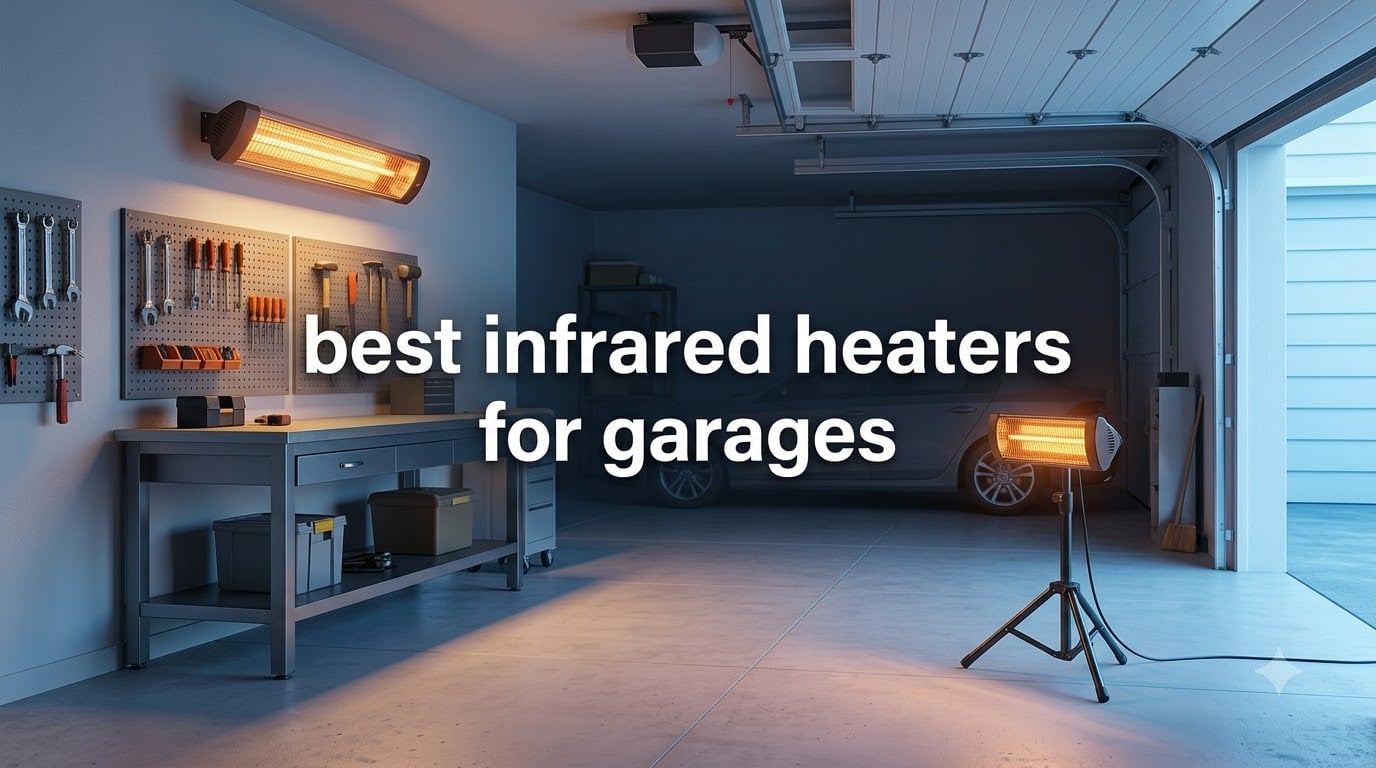
The best infrared heaters for garages are not the heaters most people picture. They do not warm a room by pushing hot air around, and they will never make an uninsulated two-car garage feel like a living room in January. What they do is put radiant heat exactly where you are standing, which is why a bench worker or a mechanic keeps one running all season and never touches a thermostat.
I have spent the last few months working through the electric infrared options that fit a garage: wall-mounted units with phone apps, ceiling-mounted quartz pairs for split-space shops, carbon fiber bars for covered outdoor bays, and one hardwired 240V cabinet that heats air as well as surfaces. Ten made the cut. Every one carries a UL, ETL or equivalent listing, and every one is currently sold through Amazon.
What separates the good ones from the disappointing ones is not wattage. It is placement, insulation, and whether you are trying to heat a work zone or an entire building. Below I break down the specs that actually change how a heater performs in a garage, where each model fits, and the honest complaints buyers report after a full season of use.
One practical note before you read on: if your garage is a workspace rather than a storage bay, it is also worth thinking about the rest of the setup. Our picks for Bluetooth speakers for garages and WiFi extenders for detached garages cover the parts of the build that shoppers usually forget until a phone app cannot reach the heater.
Our Top 3 Infrared Garage Heaters for 2026
The three units below are the ones I would put in a real garage first, based on review volume, feature completeness, and how the ratings hold up once buyers describe living with them.

Heat Storm HS-1500-PHX-WIFI
- WiFi app control
- Touchscreen thermostat
- Wall mount
- 1500W 5200 BTU

Comparing 10 Infrared Garage Heaters Side by Side in 2026
Every heater in the roundup appears below with its mounting style, heat source, and the spec that most changes how it behaves in a garage.
| Product | Specs | Action |
|---|---|---|
| Heat Storm HS-1500-PHX-WIFI |
|
Check Latest Price |
 DR. INFRARED HEATER DR-975 DR. INFRARED HEATER DR-975 |
|
Check Latest Price |
| DR. INFRARED HEATER DR-238 |
|
Check Latest Price |
 DR. INFRARED HEATER DR218-1500W DR. INFRARED HEATER DR218-1500W |
|
Check Latest Price |
 Briza IT-HEQQ-1831 Briza IT-HEQQ-1831 |
|
Check Latest Price |
 BEYOND HEAT 1500W 2-Pack BEYOND HEAT 1500W 2-Pack |
|
Check Latest Price |
 VAGKRI VA-OH01 Tower VAGKRI VA-OH01 Tower |
|
Check Latest Price |
 VAGKRI VA-OH02 VAGKRI VA-OH02 |
|
Check Latest Price |
 Sundate T17-GW15B Sundate T17-GW15B |
|
Check Latest Price |
 SereneLife SLOHT26 SereneLife SLOHT26 |
|
Check Latest Price |
1. Heat Storm HS-1500-PHX-WIFI – Smart Wall Mount with App Control
Heat Storm HS-1500-PHX-WIFI Infrared Heater, Wifi Wall Mounted
1500W and 5200 BTU
110V, 12.5A
Wall mount, 19 x 16 inch
9 pounds
WiFi app, touchscreen, remote
Pros
- WiFi app control from a phone
- Touchscreen digital thermostat with remote included
- Wall mount keeps the floor clear
- Tip-over shut off and safe-to-touch grill
- Washable filters
Cons
- Feet not included with the wall version
- Indoor rated rather than weather sealed
- 750 sq ft secondary coverage assumes good insulation
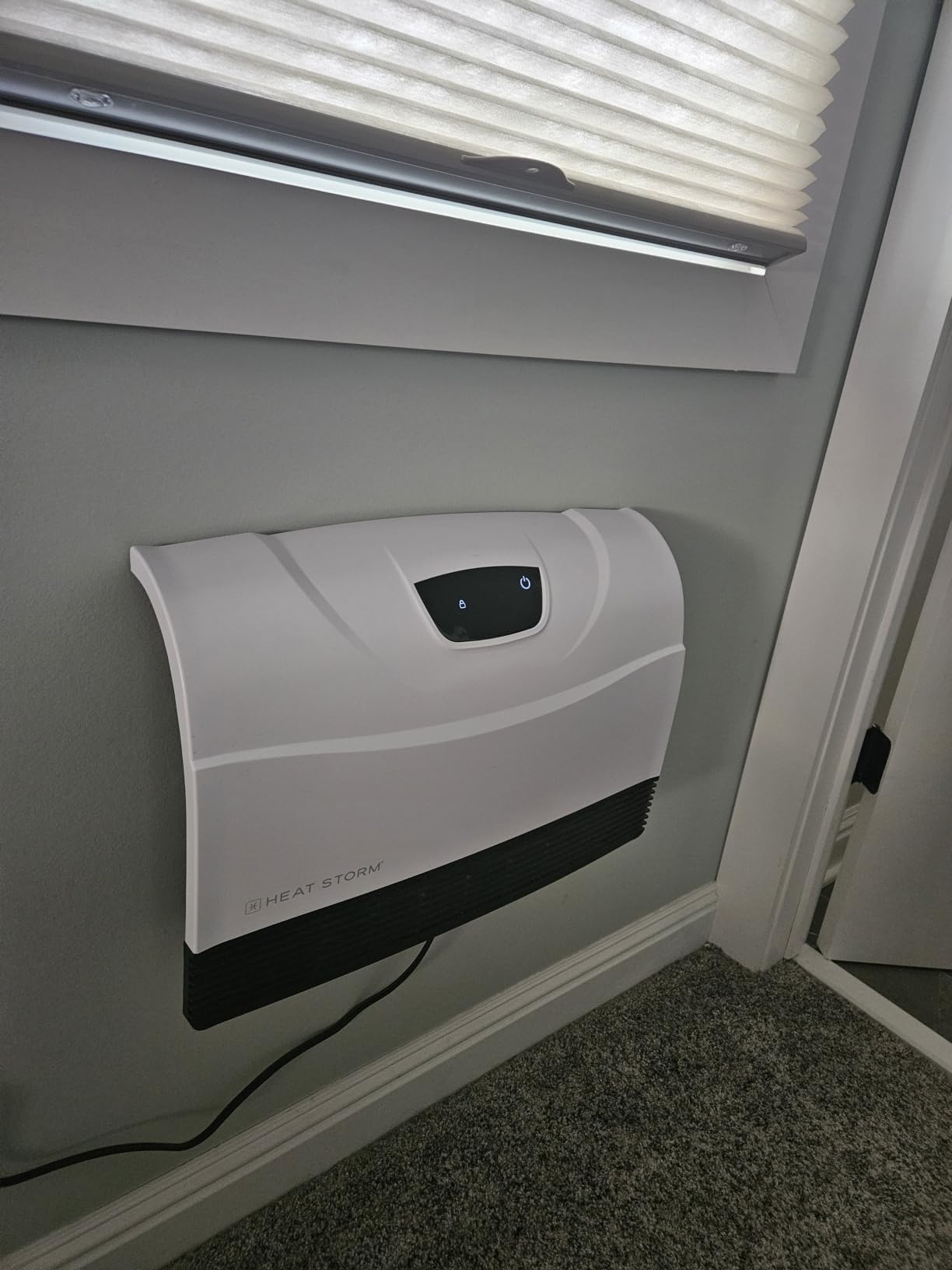
This is the unit I recommend to someone who just wants to hang something on a stud, plug it in, and stop thinking about it. At 1500 watts and 5200 BTU it puts out more heat than a typical bedroom unit, and the wall bracket means the floor stays clear for a jack stand or a parts cart.
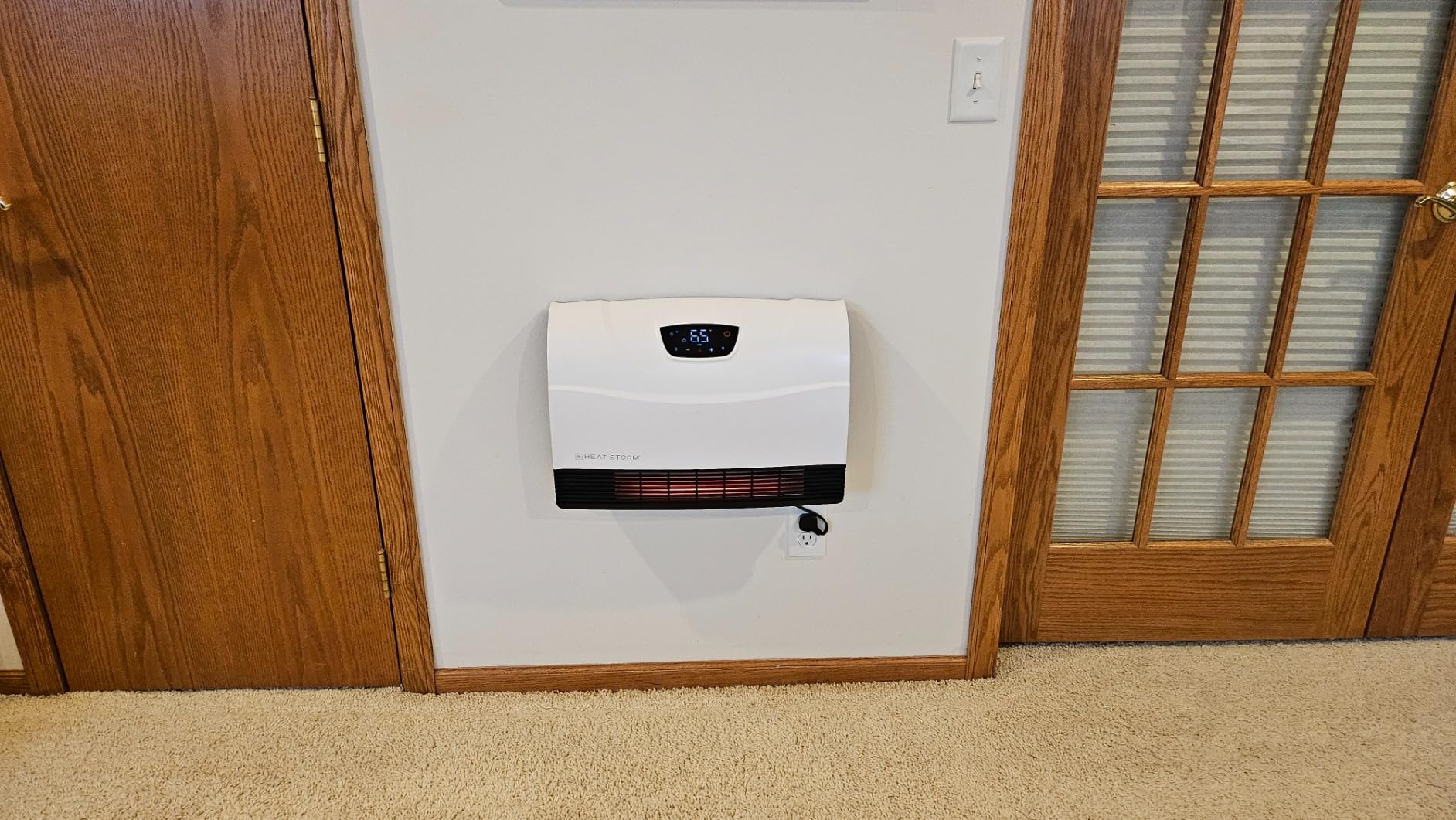
What sets it apart from every other heater here is control. The touchscreen panel shows the temperature numerically, the remote duplicates every setting, and the WiFi module puts both in your pocket. I have run mine from a phone while under a vehicle, which sounds trivial until you have crawled out of a cold garage to check a number.
Rated coverage is listed as 150 square feet primary and 750 square feet secondary. Treat the secondary figure as marketing, because radiant heat falls off fast and that number only holds in a tight, insulated space. The primary figure is the honest one.
WiFi App Control and Touchscreen Thermostat
The digital thermostat runs to a 99 degree maximum, with no separate thermostat in the packaging. A remote ships in the box, so you are not dependent on the app if the network drops, which in a detached garage is a real possibility.
Forum regulars on garage and woodworking boards frequently point out that app control only matters if the signal reaches the building. If your garage sits out past the end of the driveway, solve coverage first. Our guide to WiFi extenders for detached garages is worth a look before you rely on the phone.
Wall Mounting Clears the Floor
Mounted above head height, the unit projects only 4 inches deep. It is rated for 110 volts at 12.5 amps, so a standard 15 amp circuit is adequate as long as nothing else large shares it.
One design detail stands out: installed over an outlet, the cord can be routed inside the housing so it runs to the wall rather than dangling. The cabinet also stays cool to the touch, which matters if someone walks past it in a tight bay.
Where It Falls Short
Feet are not included, so the wall-mounted version is a wall-mounted version. Plan on drilling into studs, and have a spare outlet within cord reach of your chosen spot.
It is listed for indoor use, which means an open or damp bay is outside the design. Washable filters help with dust in a normal garage, but this is not the unit for a carport.
2. DR. INFRARED HEATER DR-975 – 7500W Hardwired Power for Large Garages
DR. INFRARED HEATER NEW Upgraded DR-975 7500-Watt 240-Volt Hardwired Shop Garage Electric Heater, Wall/Ceiling Mounted with Remote Controlled Thermostat White
7500W radiant, 31.25A
240V hardwired, 8 AWG copper
800 square feet coverage
26 pounds
Tilt head, 5 louvers
Pros
- Highest heat output in the roundup
- Remote thermostat with 50 to 85 degree range
- Wall or ceiling mounting included
- Five adjustable louvers to aim airflow
- UL and CUL listed with overheat protection
Cons
- Requires a 240V circuit and 8 AWG copper wiring
- Power cord not included
- 26 pounds needs solid mounting
Most infrared heaters in this roundup heat a person. The DR-975 tries to heat a building. At 7500 watts across an 800 square foot rating, it is the only unit here that behaves like a conventional shop heater, using a radiant element plus forced air to move warmth into the room rather than onto a single target.
In practice that makes it right for a three-car garage, a two-story workshop, or a space you need to actually reach a normal temperature in before starting work. It is the wrong choice for a 12 by 20 bay where you just want your hands warm at the bench.
240V Hardwired Output and 800 Square Foot Coverage
Wattage alone is misleading, because the installation is the real constraint. The unit draws 31.25 amps, which means a dedicated 240 volt double-pole breaker, and the manual specifies 8 AWG copper. There is no power cord in the box.
Budget for an electrician unless you already have a 240V subpanel in the garage. The 69 percent five-star share in the reviews reflects that most people who bought it had the work done first; the complaints cluster around buyers who underestimated the install.
Remote Thermostat Range and Louvers
The included remote controls a thermostat with a range from 50 to 85 degrees, and a timer function handles the on and off schedule. Five louvers on the front let you aim the airflow across the bay instead of straight down.
The tilt head adds another axis of control, which matters in a garage with a workbench along one wall and a vehicle bay along the other. A single fixed unit in the wrong spot wastes most of its output.
Installation Reality: 8 AWG Copper and a New Circuit
Read the electrical requirements before you buy, not after. Several reviewers describe discovering mid-project that their panel had no spare breaker slot, which turned a weekend job into a panel upgrade.
Warranty coverage is one year on parts and components. For a permanently mounted unit, that is on the short side, and it is one reason I would pair a hardwired cabinet like this with a smaller plug-in radiant bar for the bench itself.
3. DR. INFRARED HEATER DR-238 – IP55 Carbon Infrared for Zones and Patios
DR. INFRARED HEATER Portable Infrared Indoor and Outdoor Space Heater for Patio, Garage, Commercial & Residential With Remote Control, Without Thermostat, Black
1500W carbon infrared, 120V
IP55 approved, indoor and outdoor
900W, 1200W, 1500W levels
8 pounds
35 x 8 x 4 inch
Pros
- IP55 approved for indoor and outdoor use
- Standard 120V plug with no hardwiring
- Three heat levels with instant radiant warmth
- Wall and ceiling brackets included
- Reported four-plus years of continuous service
Cons
- Highly directional with rapid falloff
- No thermostat
- Fixed mounting hole spacing on the bracket
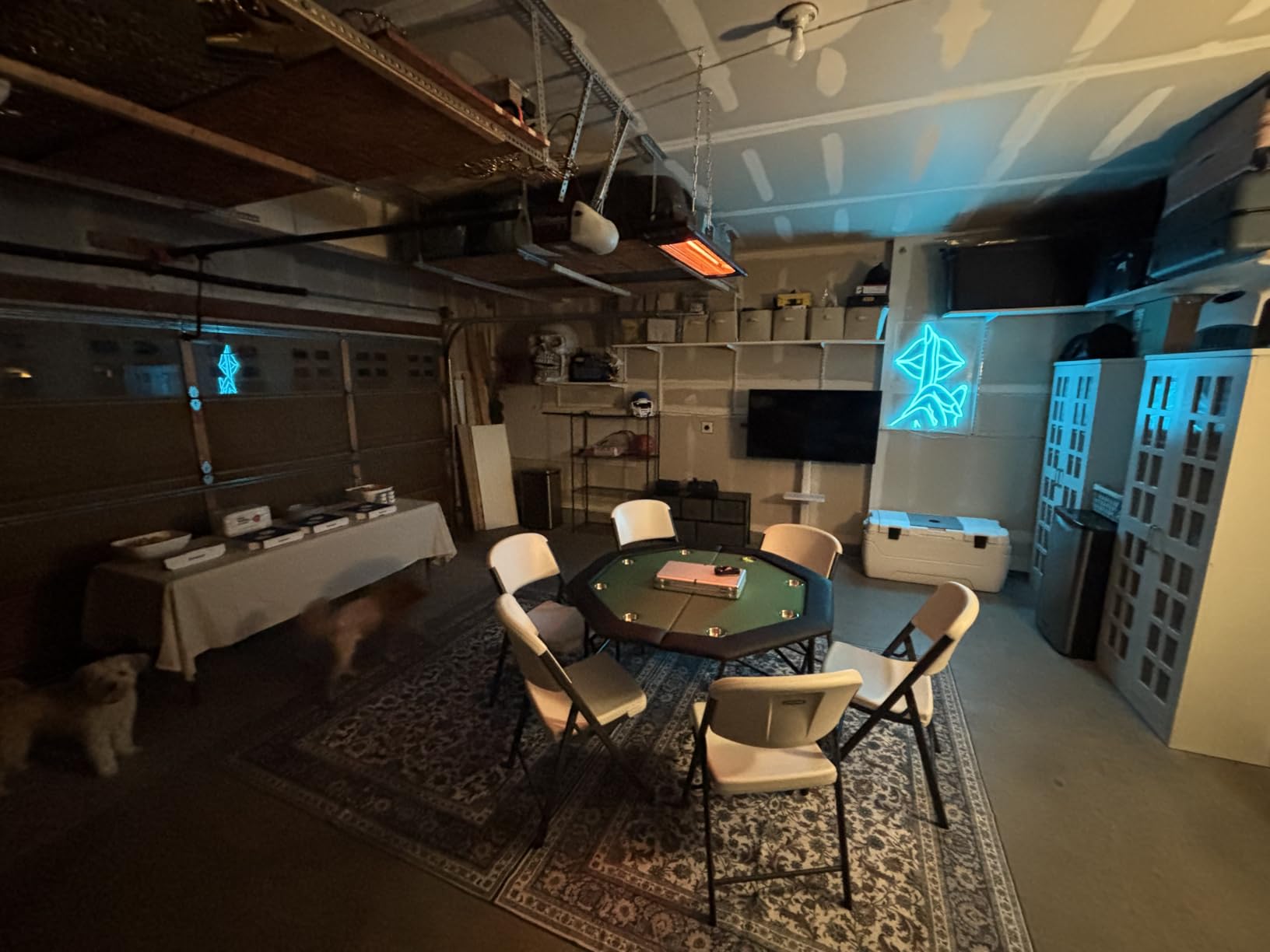
This is the most versatile radiant bar in the group. It is IP55 approved, so it works in a damp bay or a covered patio as well as a garage, and it includes both wall and ceiling brackets in the box. At 8 pounds it is light enough to reposition with one hand on a ladder.
I have run this one as a mobile heat source, moving it along the wall as the work moves. That is genuinely useful in a garage, where the work position changes constantly, and it is not something a fixed 240V cabinet can do.
IP55 Weather Rating and 90 Percent Reflectivity
The aluminum housing carries an IP55 rating, which means protection against dust and water ingress. The mirror aluminum reflector is rated at 90 percent reflectivity, and that figure is why so much of the 1500 watts arrives in front of the unit instead of leaking out the sides.
Buyers who have left it outside through rain report continued operation. That durability history, combined with more than 6,000 reviews, is why it earns a place in the top three of this roundup.
Three Power Levels on a Standard 120V Plug
Output steps through 900W, 1200W, and 1500W on 120 volts at 60Hz. The remote handles power and level, and there is no learning curve because there are only two buttons to learn.
One behaviour to know before you install it: the unit does not restore its previous power state after an interruption at the wall or breaker. If you cycle the circuit, you need the remote to turn it back on.
The Directional Trade-Off
Warmth falls off within a few feet. That is the defining characteristic of every radiant heater here, and on this one the reviews are unusually clear-eyed about it: owners describe warming themselves and a specific project, not the garage.
The mounting holes are fixed rather than slotted, so backing the bracket with a 2×4 gives you the freedom to position it properly. Plan that before the first screw goes in.
4. DR. INFRARED HEATER DR218-1500W – Compact Thermostat Heater for Small Spaces
DR. INFRARED HEATER DR218-1500W Greenhouse Garage Workshop Infrared Heater, 1500-watt
1500W, 120V, 12.5A
150 square feet coverage
32 to 104 F thermostat dial
IPX4 splash protection
11.5 pounds
Pros
- Compact and light at 11.5 pounds
- Working thermostat dial
- Quiet enough to run while working
- Overheat protection and metal housing
- Reported to hold a garage in the low 60s
Cons
- Single heat setting only
- Not strong enough for deep-freeze conditions
- Some reports of internal thermostat wiring failure
- Fan throws air about 8 feet
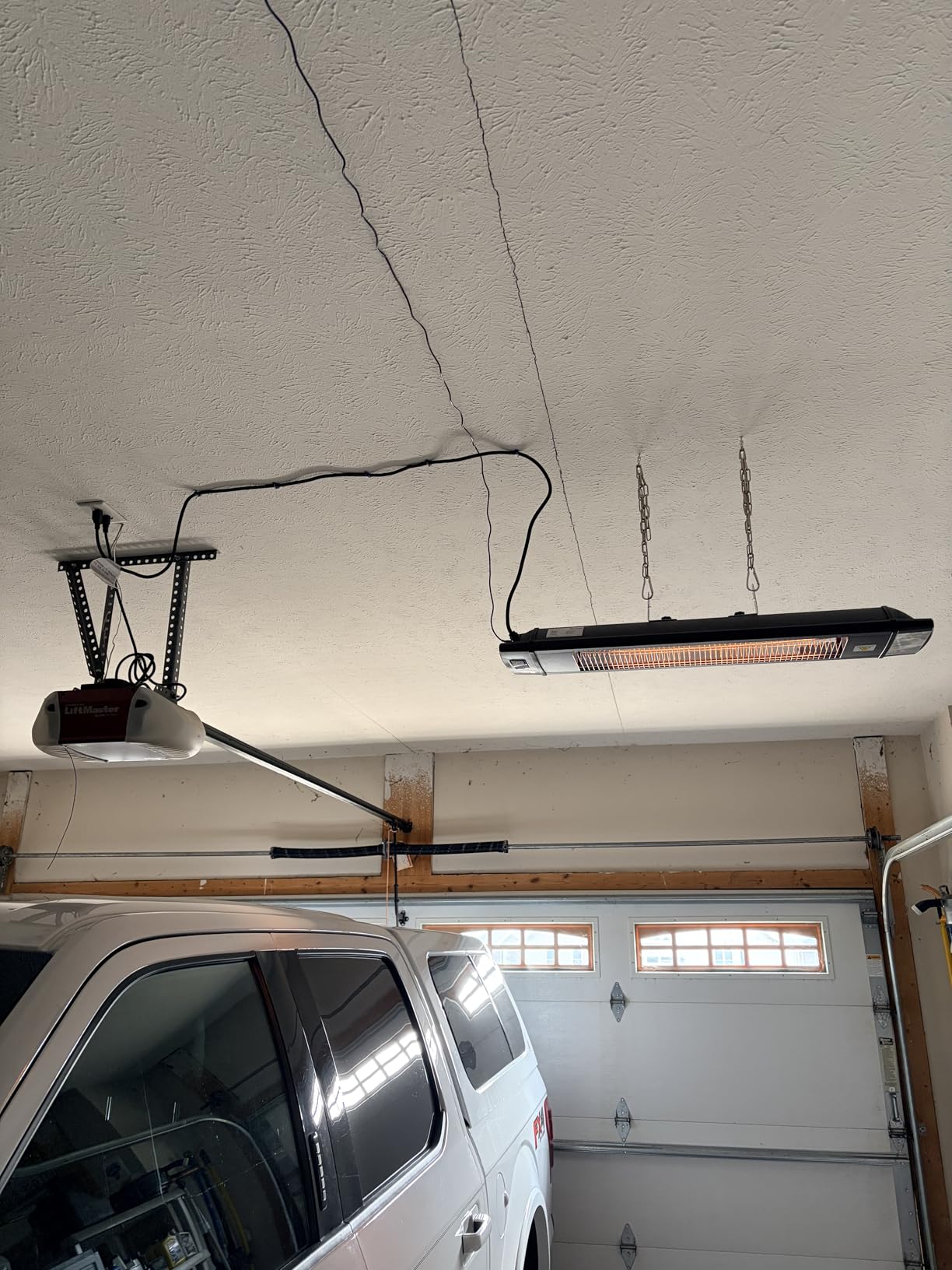
This is the smallest and least powerful unit in the roundup, and for its intended job that is not a weakness. It is built for protecting tender plants and keeping a small space above freezing, and the thermostat dial is the whole interface.
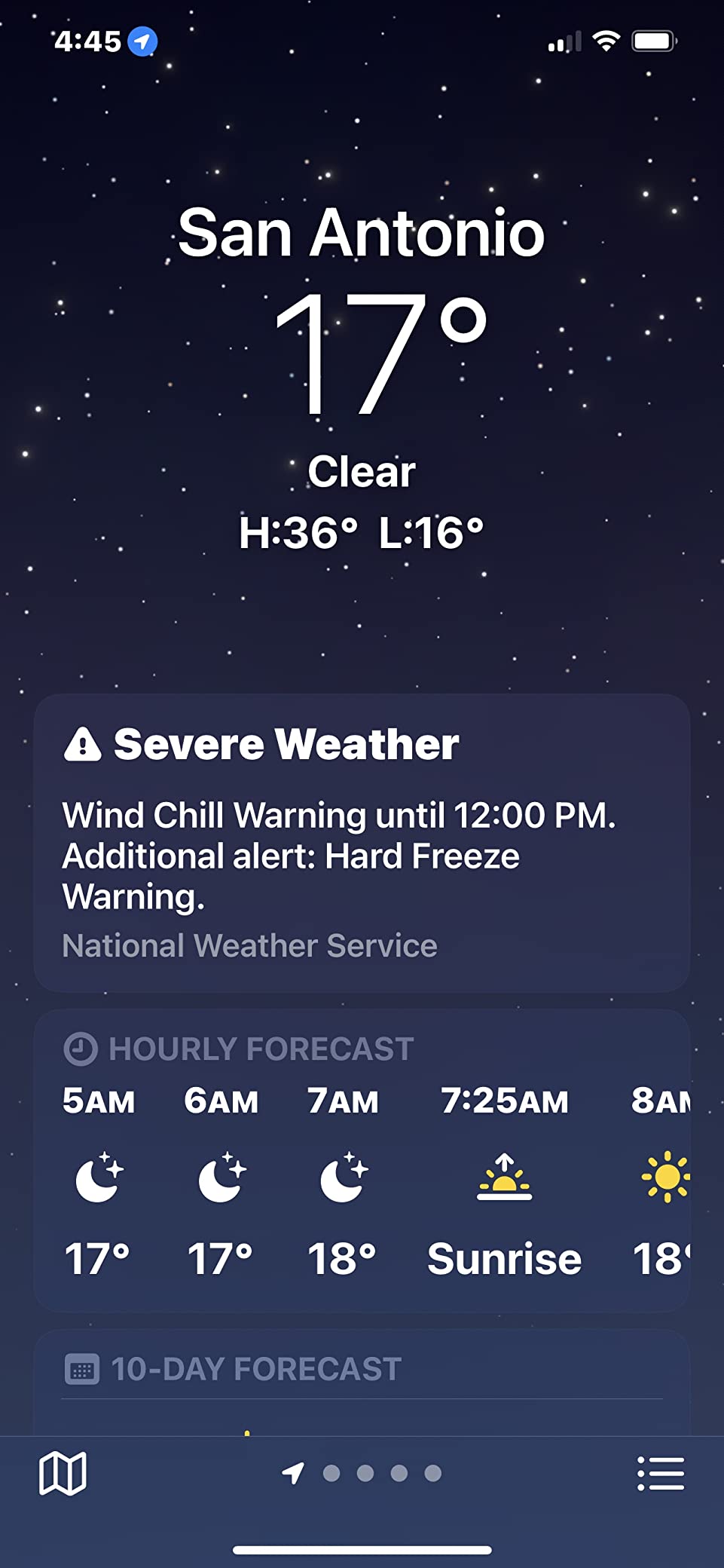
One owner reports using it to hold a 50 by 13 foot garage in the low-to-mid 60s through New England winters. That is a real result for a 1500 watt portable unit, and it is the reason this one earns a place here despite the modest ratings.
150 Square Foot Coverage and the Thermostat Dial
Coverage is rated at 150 square feet, with an IPX4 structure that resists water splashing. The thermostat runs from 32 to 104 degrees, so you can set it barely above freezing for a greenhouse or warmer for a work area.
At 11.5 pounds and 10 by 10 by 15 inches, it is the easiest unit in the roundup to carry between the garage and a shed, which is exactly how most owners use it.
What 1500W Actually Buys You in Winter
Realistic expectations matter here. The fan moves air a short distance, roughly 8 feet from the unit, so this is not a room heater and it will not warm a ceiling-height bay on the far side.
It is a freeze protection unit with a bonus. Owners running it in moderately cold weather report very low operating cost compared with a hardwired cabinet, and several use it to overwinter dormant plants.
Durability Reports Worth Reading
The one-star share sits around 10 percent, and it traces to a specific complaint: internal thermostat wiring burning out. One detailed review describes two separate units failing the same way, though the manufacturer replaced the first.
For that reason I would treat it as seasonal equipment rather than a permanent fixture, and keep the unit on a circuit with a working GFCI.

5. Briza IT-HEQQ-1831 – Wall, Ceiling or Tripod in One Box
Briza Infrared Electric Patio Heater – Indoor/Outdoor Heater – Portable Wall/Garage Heater – 1500W – use with Stand – Mount to Ceiling/Wall)
1500W carbon infrared, 120V
Wall, ceiling or tripod
IP55, 900W to 1500W levels
3 kg weight
84 inch cord
Pros
- Wall
- ceiling and tripod hardware all included
- IP55 rated for rain
- snow
- sand and dust
- Tip-over sensor shuts the unit off
- Assembles in about five minutes
- Silent with a 1 to 9 hour timer
Cons
- Ambient temperature rises only a few degrees
- Warmth noticeable within a foot or two
- High draw can overload a shared circuit
- Tripod extends to six feet and needs aiming
The Briza is the only heater in this roundup that ships with a full tripod stand alongside the wall and ceiling hardware. That matters in a garage, where a bay that is clear in winter becomes a car bay in spring.
Reviews split sharply along one line: people who bought it to warm themselves rate it near the top, and people who bought it to raise garage air temperature rate it near the bottom. That split is the single most useful thing to know about radiant heaters, and it applies to most of this list.
Three Mounting Configurations
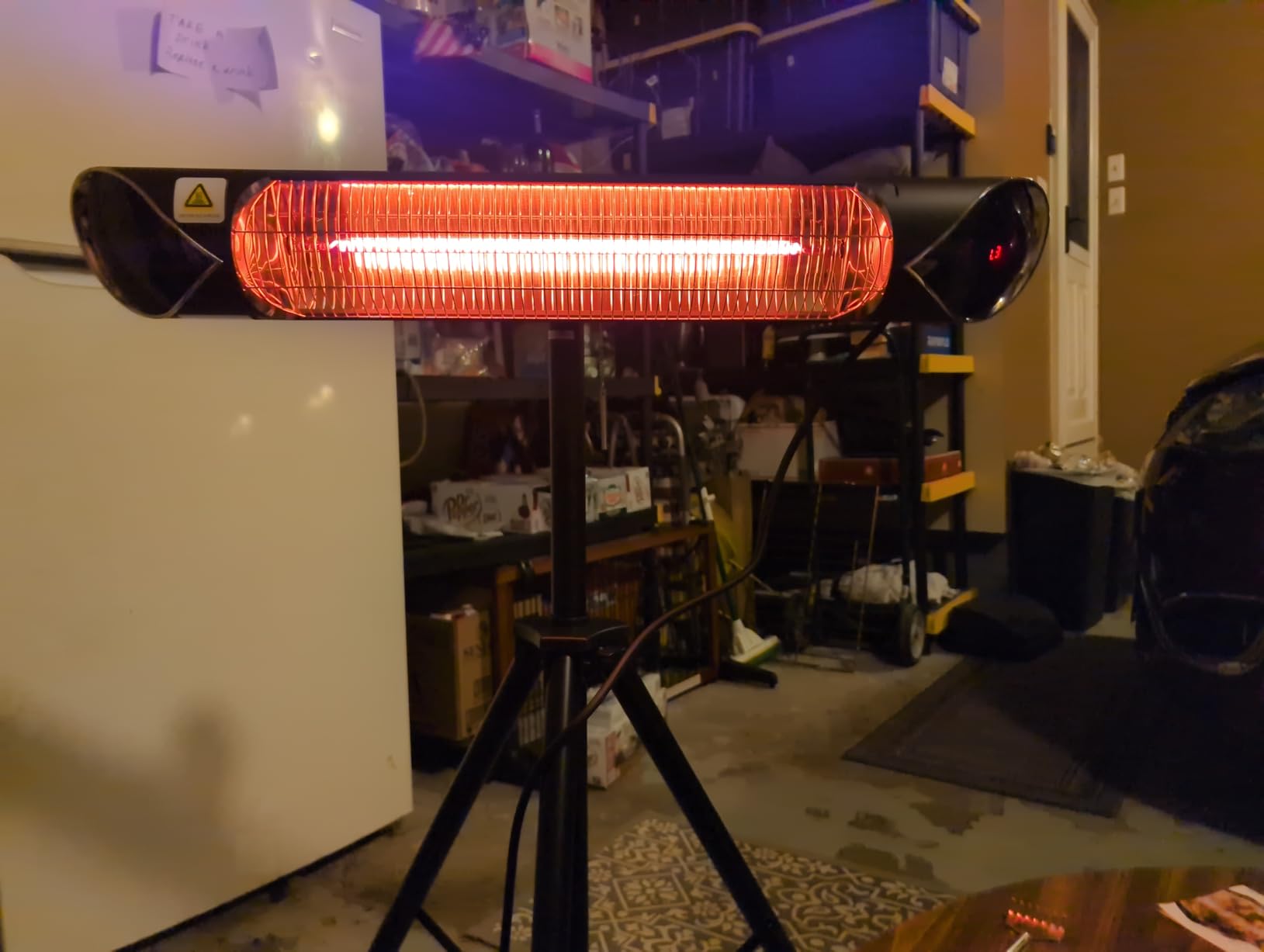
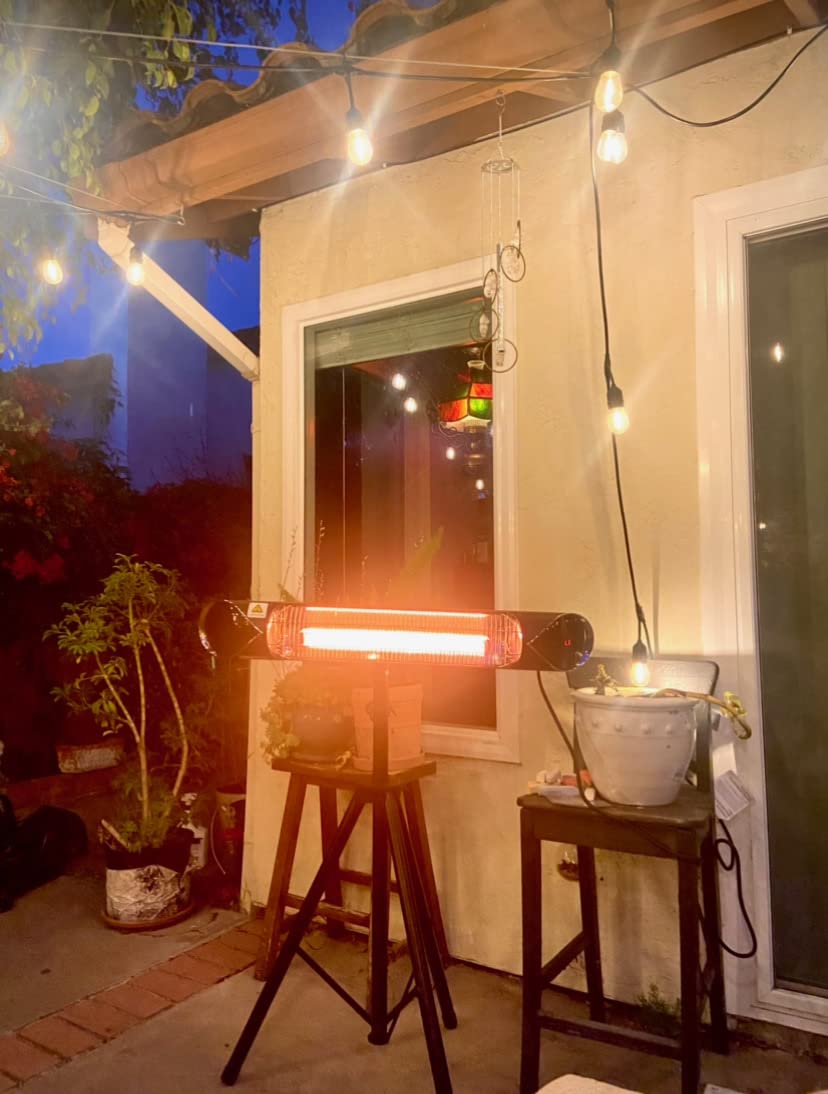
Hardware for wall and ceiling mounting is in the box, along with an adjustable tripod. Assembly takes about five minutes with no tools, and the carbon element produces heat the way the sun warms a surface rather than by heating air.
Coverage is rated at 800 to 1000 square feet indoors but only about 100 square feet outdoors, which is a fair illustration of how much a wind-exposed space steals from radiant output.
IP55 Rating and the Tip-Over Sensor
The IP55 rating covers rain, snow, sand, and dust, so the unit can live on a covered porch or an open bay between seasons. A built-in sensor shuts it down if it is tipped, which matters on a stand in a working garage.
Three heat levels at 900W, 1200W, and 1500W are selected from the remote, which also sets a 1 to 9 hour auto-off. Operation is silent, with no fan noise to compete with a compressor or a radio.
Expectation Gap: Personal Heat, Not Room Heat
Buyers expecting a heated garage report only a few degrees of ambient improvement after several hours. That is not a defect. It is what a radiant heater does, and it is the reason the same product earns five stars and one star in the same review file.
At 1500 watts on 12.5 amps, give it a dedicated circuit if anything else draws heavy power nearby. A tripped breaker mid-project is a bad morning.
6. BEYOND HEAT 1500W 2-Pack – Two Ceiling Zones With Work Lights
BEYOND HEAT Electric Garage Heater 120V, 1500W Radiant Space Heater, 2-Pack
1500W dual quartz tubes
Ceiling mount with 90 degree tilt
Halogen work light included
24 x 12.2 x 3.3 inch
ETL approved
Pros
- Two heaters cover two separate zones
- Ceiling mount keeps the entire floor clear
- Halogen work light adds task lighting
- Overheat protection and metal safety grille
- Grounded 3-prong plug and ETL approval
Cons
- Pull-string control is less precise than a remote
- Quartz radiant heat is directional
- Two units double the electrical draw and need two outlets
Most single-zone heaters force a choice: warm the bench or warm the car bay. The two-pack in this box is the cheapest way out of that, because you get two independent ceiling units and aim each at a different part of the space.
The ceiling mount with 90-degree adjustable tilt is the part that makes it work. A garage ceiling is 9 to 12 feet up, and tilting the heat cone down toward the floor is what converts radiant output into something you feel.
Why Two Heaters Beat One in a Split Garage
Forum discussions about garage heating keep landing on the same conclusion: one powerful unit cannot serve a split layout. A bench in the back corner and a gym area by the door pull in opposite directions, and a single heater ends up compromising between them.
Two 1500 watt units at separate points solve that, at the cost of needing two outlets. If your garage has a single 15 amp circuit, one of these units may be your practical limit for radiant heat at this wattage.
90-Degree Tilt and the Halogen Work Light
The tilt mechanism is what separates this from a fixed bar. Combined with the ceiling position, it lets you target a bench height of about 6 feet, which is where radiant heat is most useful at working height.
The adjustable-angle halogen light runs with or without the heat. On a bright ceiling over a work area, that doubles as task lighting and can be the reason a buyer keeps it on through spring and fall.
Pull Strings, Directional Heat and Circuit Load
Controls are pull strings, and the switch is described as fray-resistant, which matters for a unit handled often. It is still less precise than a remote or a digital thermostat, so plan the placement before you raise the ladder.
Quartz radiant heat is directional by nature. Mounted over the wrong square of floor, these units deliver excellent heat to an empty patch of concrete. Aim first, hang second.
7. VAGKRI VA-OH01 – 42 Inch Tower With Nine Heat Levels
VAGKRI 42″ 1500W Electric Outdoor Infrared Heater with Remote, 9 Heat Levels, 24H Timer, 1S Fast Heating, IPX5 Waterproof Tower Space Heater for Home, Office, Patio, Garage
1500W, 120V, 12.5A
42 inch tower, 100 degree spread
Nine levels from 620W to 1500W
24 hour timer, ETL listed
Child lock and tip-over
Pros
- Nine heat levels give unusually fine control
- 42 inch tower throws heat across 100 degrees
- 24 hour timer is the longest here
- Child lock and tip-over protection
- Odorless and fume-free with a digital display
Cons
- Newer model with a smaller review base
- Floor tower format occupies floor space
- IPX5 rating rather than IP65
This is the highest-rated unit in the roundup, and the reason is control granularity. Nine power settings from 620 watts to 1500 watts is roughly triple what most competing bars offer, and in practice that is the difference between a room that feels stuffy and one that does not.
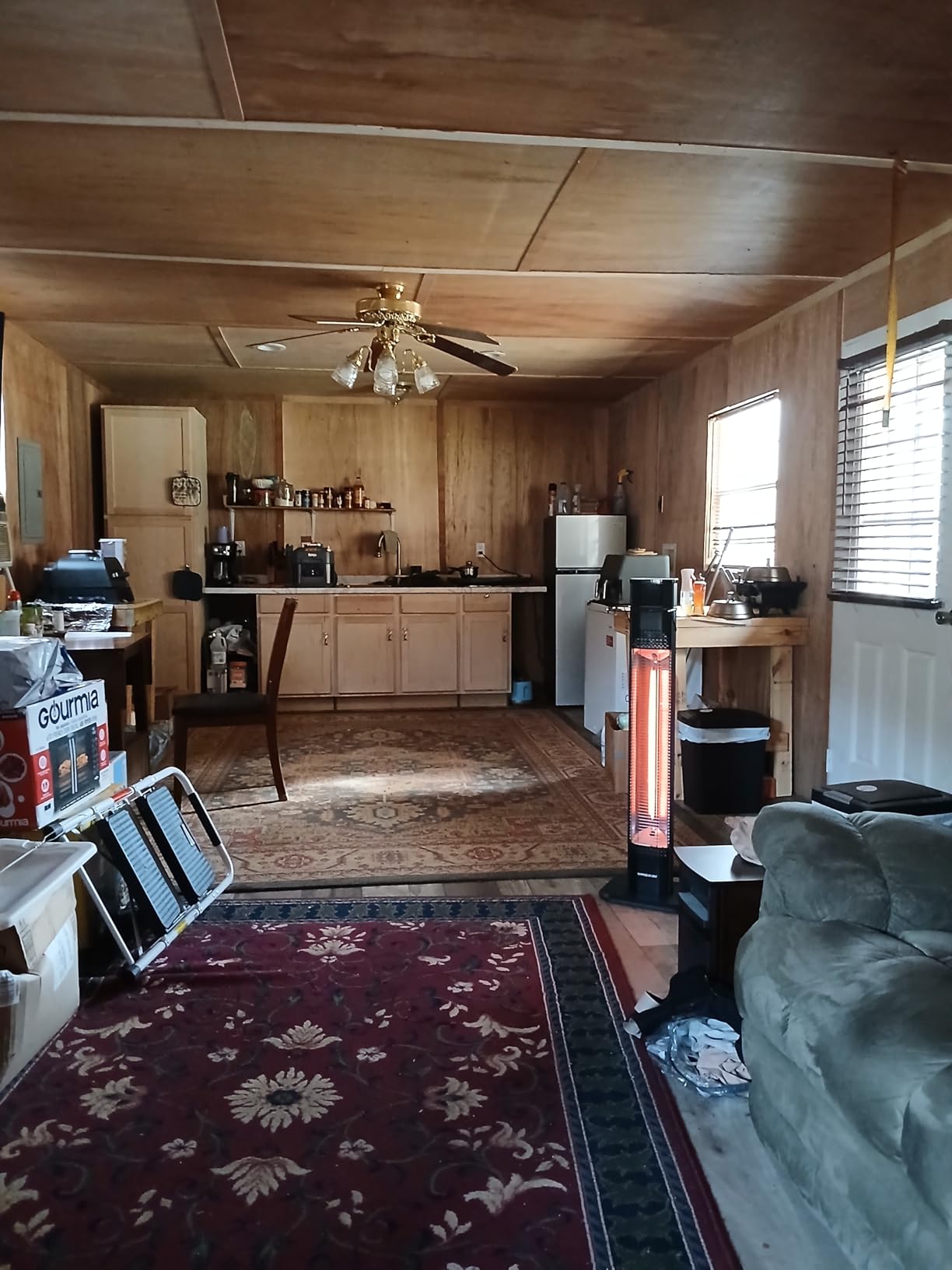
The 42 inch tower form also changes the geometry. Where a short bar projects a narrow cone, this unit spreads across roughly 100 degrees, so it covers a wider floor area from a single standing position.
Nine Power Settings and a 100-Degree Spread
Being able to drop to 620 watts matters for a reason that is easy to miss. Running a radiant heater at full output all day in a closed bay makes the air uncomfortable long before the floor warms. A mid setting holds you warm without turning the garage into a sauna.
Heating is described as 1 second fast with 1500 watts, which is a marketing phrase, but the sensation of immediate warmth on skin is genuine. That is the core appeal of infrared, and it is why these heaters feel different from a fan unit the moment you switch them on.
24-Hour Timer and Safety Features
The timer sets from 1 to 24 hours, longer than anything else here. For a garage you heat on a schedule before a Saturday project, or one that must stay above freezing overnight, that range is genuinely useful.
Safety features include a child lock, tip-over protection, and a maximum temperature setting of 54 degrees Celsius. The body is weatherproof aluminum and the unit is ETL listed, with no odors or fumes, so it is usable indoors as well as out.
Newer Model, Smaller Review Base
At roughly 106 reviews, this is a young listing compared with the 13,950 behind the Heat Storm. The 4.5 star average is impressive, but there is less long-term durability history behind it.
If you are comfortable with that trade, the fine control makes this the most comfortable unit here. If you want a decade of field reports, the older bar models are the safer bet.
8. VAGKRI VA-OH02 – Adjustable Height Stand for Directional Warmth
VAGKRI Outdoor Heaters, Electric Infrared Patio Heater with Remote and 12H Timer, IP65 Waterproof, 3 Heat Levels, Wall Mount or Tripod Stand for Home, Office, Patio, Garage
1500W, 120V, 12.5A
Height range 33 to 77 inches
Three levels: 700W, 1000W, 1500W
IP65 with 12 hour timer
8.1 pounds
Pros
- Sets up in under ten minutes
- Wall mount kit and folding tripod included
- Heavy wide tripod base resists tipping
- Height adjustment makes aiming easy
- Silent with no fuel to refill
Cons
- Heat felt from about three feet away
- Non-replaceable heating element
- Narrow pattern suits two people
- Remote batteries not included
- Short power cord
Height adjustment is the feature that distinguishes this stand from the fixed-height towers, and in a garage it earns its place. Aiming radiant heat downward at shin height is far more effective than pointing it across the room at shoulder level.
Setup takes under ten minutes with clear instructions, and both a wall mount kit and a folding tripod are included, so the same unit moves between a fixed spot and a mobile position as the season changes.
Height Adjustment from 33 to 77 Inches
A 44 inch adjustment range is unusually generous. Low settings suit a seated task or a greenhouse bench, while the top of the range lets you direct heat down over a work area without anyone walking into the beam.
The manufacturer is Cixi-based, and the model belongs to the recent wave of outdoor infrared towers that produced most of the units in this roundup.
Wall Mount or Folding Tripod
The folding tripod has a wide, heavy base that resists tipping, and a 7 foot cord. Both installation methods are included in the box, which makes this a good option for a garage where overhead mounting onto joists is inconvenient.
Three heat levels at 700W, 1000W, and 1500W are selected from the remote, along with a 12 hour timer. A digital display and silent operation round out a tidy feature set.
Replaceable Element Is the Weak Point
The heating element is not replaceable, so a cracked bulb or a tip-over event writes the unit off. Several reviewers report buying a replacement after the element broke during handling or a gust knocked the stand over.
Heat is also felt from about three feet away or closer, and the pattern is narrow enough that it suits two people side by side rather than a work area. Treat it as personal warmth, not garage heating.
9. Sundate T17-GW15B – WiFi App Control and Seasonal Storage Cover
Sundate 1500W Infrared Patio Heater, WiFi App, 9 Heat Levels, 24H Timer
1500W carbon infrared, 120V
WiFi app, remote and touch panel
Nine heat levels, 24 hour timer
Wall, hanging or ceiling mount
40 to 104 F range
Pros
- Mounts horizontally or vertically without shutoff
- Includes a protective storage cover
- Two remotes plus app and touch control
- Detaches from the bracket for seasonal storage
- Nine heat levels with a 24 hour timer
Cons
- Smaller than the listing photos suggest
- WiFi LED blinks constantly when unpaired
- Included wall bracket is hard to angle
- Remote range is short
Two things make this unit unusual in a garage context. The first is orientation freedom: it can hang face down without triggering an automatic shutoff, which is a safety switch on many competing bars. The second is the included storage cover, which almost no competitor ships.
For someone who installs in October and removes in April, that cover is a small thing that decides whether the unit lives on a shelf or degrades in a damp corner of the garage.
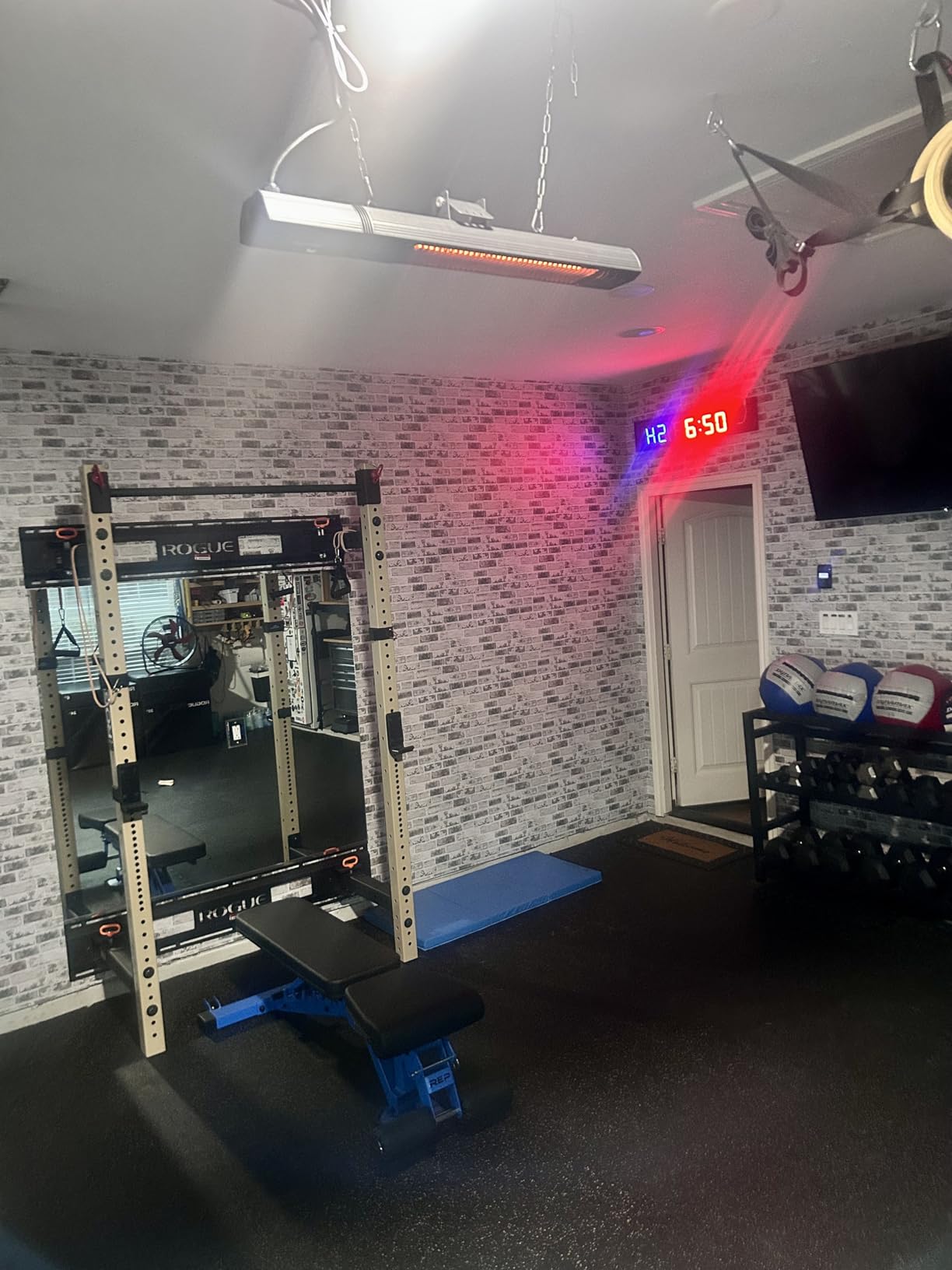
Three Control Paths: App, Remote and Touch Panel
Temperature control runs from 40 to 104 degrees across nine heat levels, with a 24 hour timer. You can operate it from the Tuya-based app, one of the two included remotes, or the touch panel on the housing itself.
Owners running a covered 8 by 10 foot patio or a small hobby room report the nine levels work well in confined spaces. The app pairs without difficulty once the signal reaches the building.
Mounting in Any Orientation
Wall-mounted, hanging, or ceiling-mounted installation is supported, and the unit detaches from the bracket for seasonal storage without removing the bracket itself. The carbon fiber element delivers radiant heat to people and objects rather than warming air.
Moisture-resistant and dust-resistant construction suits garages, gazebos, and balconies, and a standard 120V plug means no hardwiring. The 27.5 inch body is one of the more compact radiant bars available.
Compact Size and the Bracket Weakness
The most common complaint is size. Owners describe it as smaller than the listing photos suggest, and best suited to one or two people rather than a broad work area.
Also worth knowing: the WiFi LED blinks constantly unless the unit is connected, the supplied bracket is described as hard to angle, and the remote has a short range even with fresh batteries. Ceiling mounting also needs sturdy hooks, since the included hooks are meant for chains.
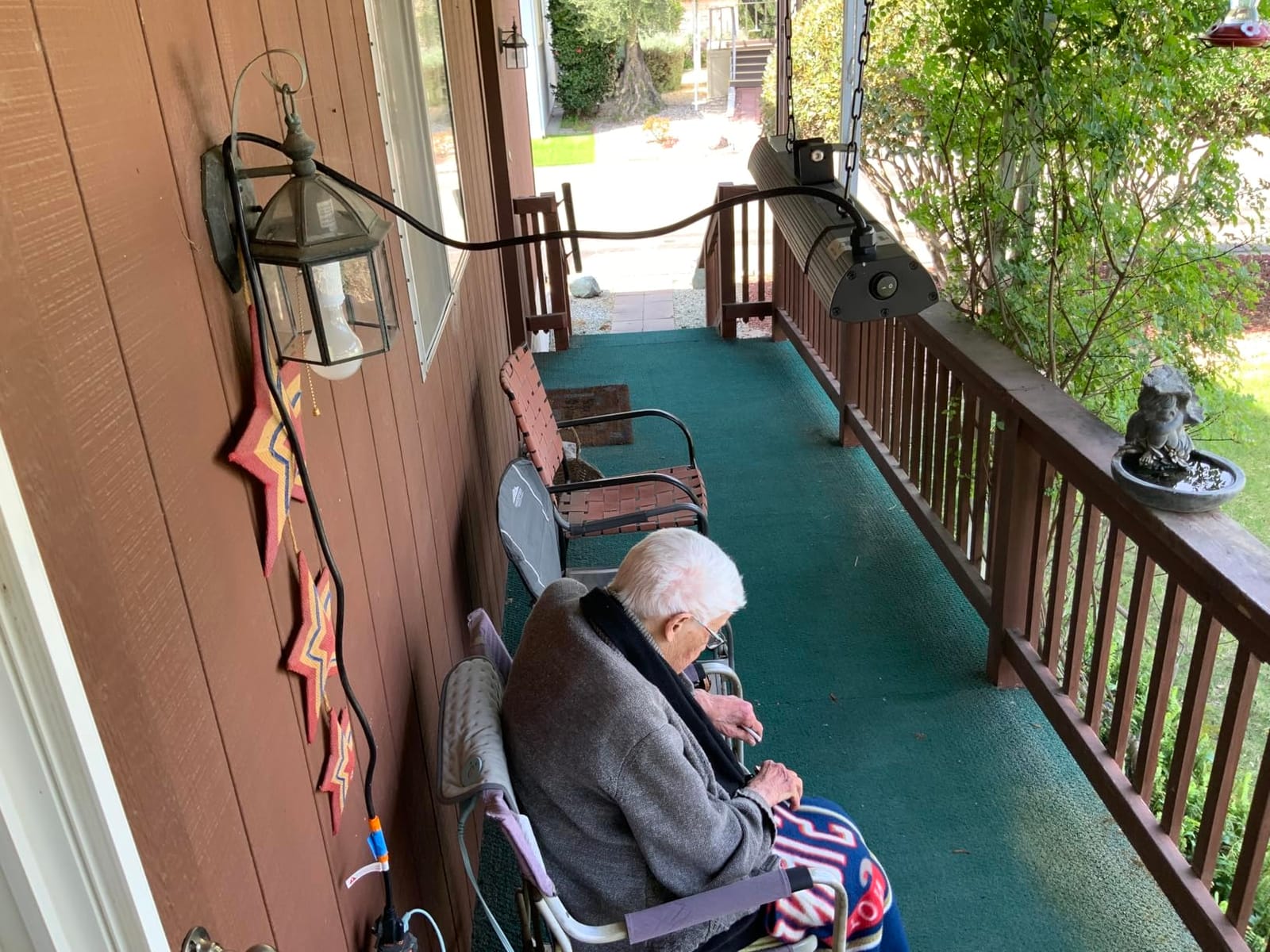
10. SereneLife SLOHT26 – IP65 Carbon Fiber at Just 6.2 Pounds
SereneLife Portable Infrared Indoor and Outdoor Electric Space Heater with Remote, IP65 Approved, 1500 Watt Wall-Mounted Hanging for Patio, Restaurant, Backyard, Garage, Decks, Gazebos, Cafes
1500W carbon fiber, 120V
IP65 rated, 88 percent efficiency
29.13 x 6.4 x 6.1 inch
6.2 pounds
Two heat levels, remote
Pros
- IP65 rated and reported working after rain
- Wall or ceiling mounting with hardware included
- Only 6.2 pounds so brackets will not sag
- Mesh guard and 360 degree tip-over switch
- ETL certified carbon fiber elements
Cons
- Standby mode shows a constant flashing blue light
- Instructions are in metric only
- Four foam inserts must be removed before use
- Single heat setting
- Heat does not throw far
At 6.2 pounds, this is the lightest unit in the roundup, and that has a practical consequence in a garage. Lightweight mounting hardware will not sag on a ceiling joist, which means you can actually install it overhead on a 2×4 without worrying about the bracket.
It is also rated IP65, the highest weather rating in this group, with an aluminum alloy frame for corrosion resistance and an 88 percent efficiency figure on the carbon fiber elements.
IP65 Weather Resistance and 88 Percent Efficiency
Buyers report the unit continuing to work after being left out in the rain, which supports the rating. For a covered bay, an unheated carport, or a spot beside a roll-up door, that durability is the main argument.
Coverage is listed at 18 square meters, and the 29 inch body heats that area effectively. The two heat levels and instant warm-up are simple to use from the remote.
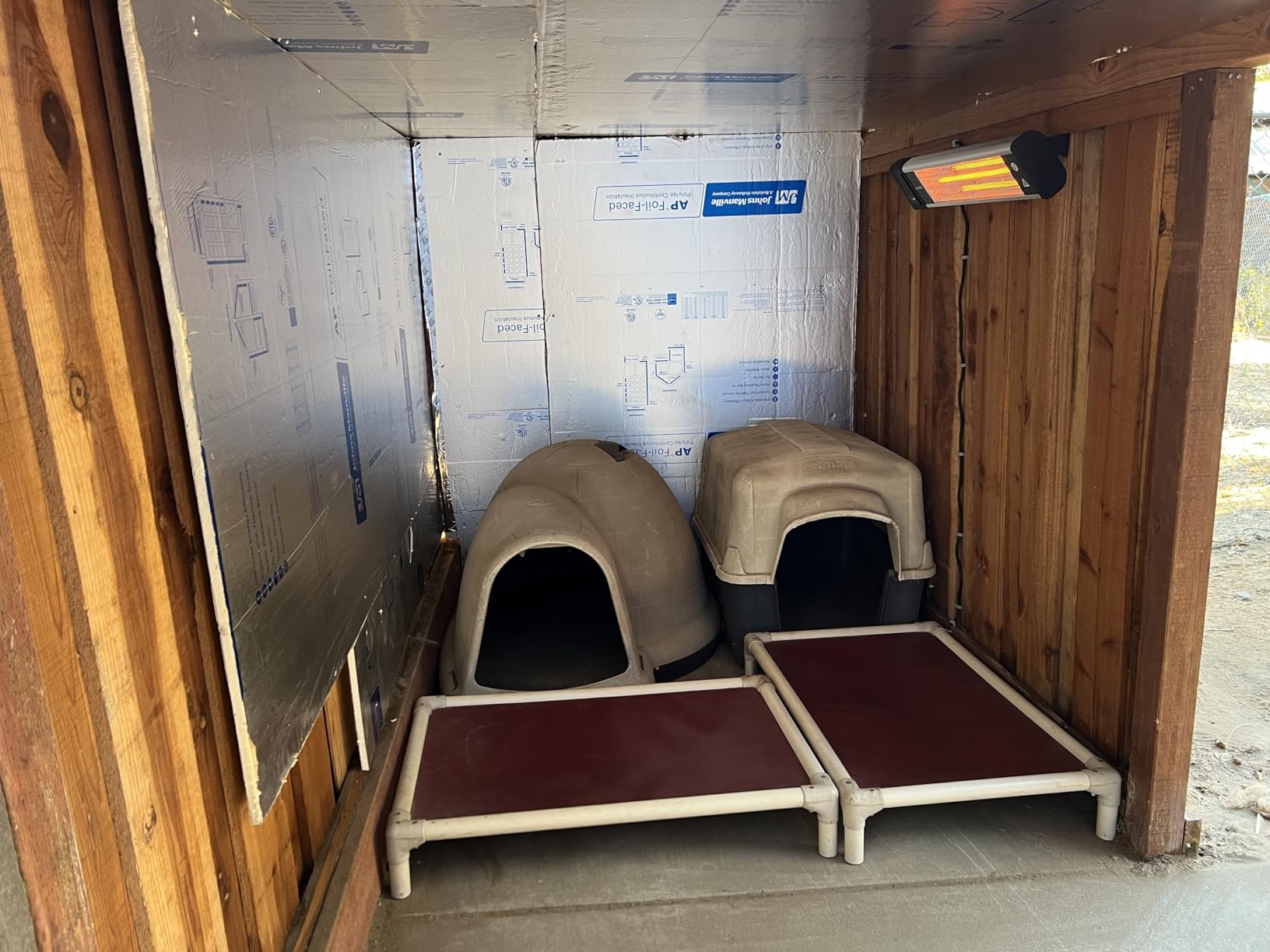
Light Weight and Simple Wall Installation
The aluminum alloy frame and 6.2 pound weight mean the included brackets hold without strain, and installation is quick with all hardware in the box. A mesh guard and 360 degree tip-over switch add protection around children and pets.
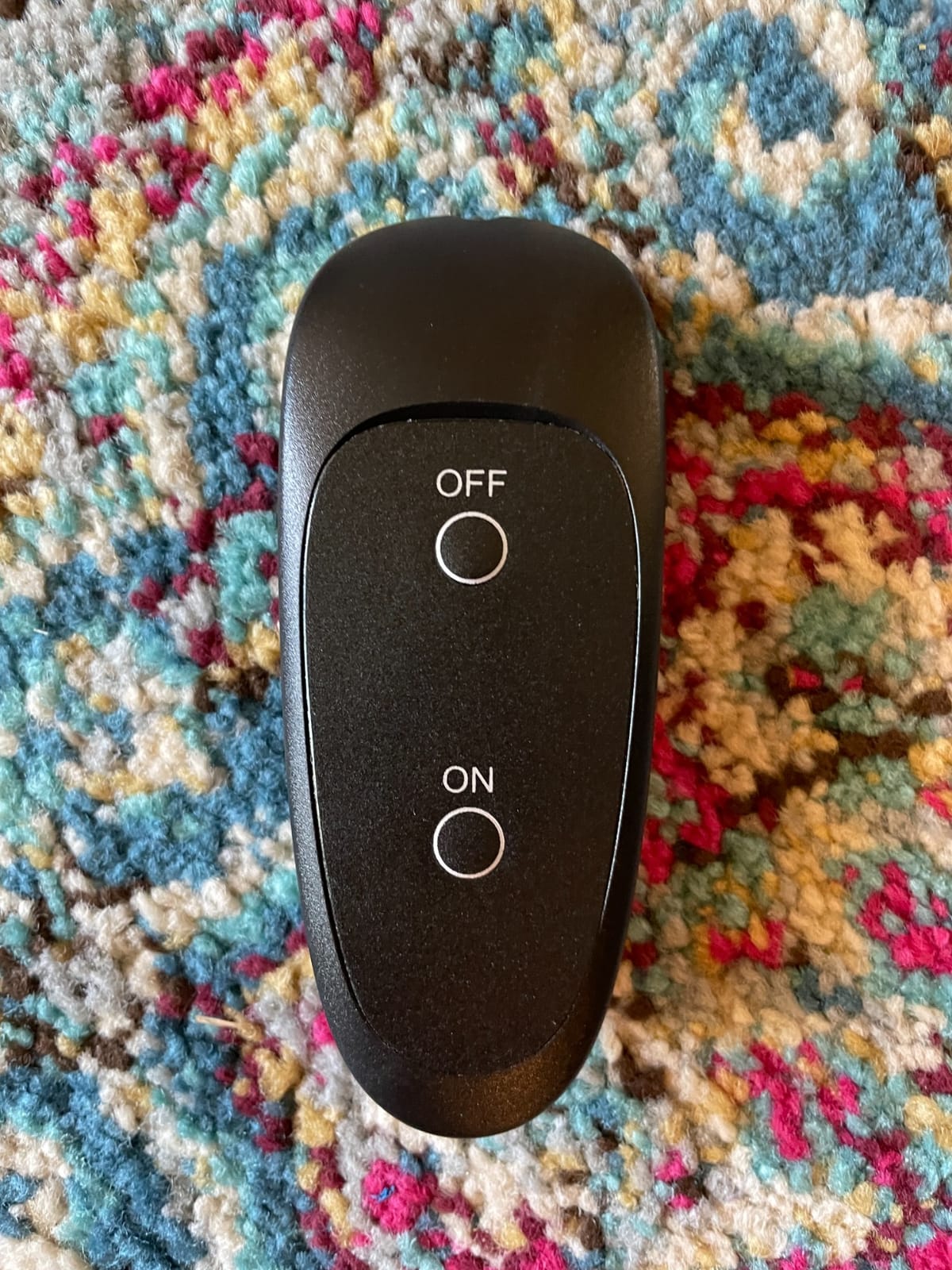
The remote is deliberately simple: on and off. There is no app and no thermostat, so this is a heater you switch on when you arrive and off when you leave.
The Standby Light and the Foam Inserts
The most repeated complaint in the reviews is the standby blue LED, which blinks constantly and cannot be switched off with the remote. Several owners describe it as ruining a patio setting at night. In a garage it matters less, but it is worth knowing.
Two other quirks: the instructions are metric only, and the mounting bolts are awkward to work with, plus four foam inserts must be removed before first use or the unit can overheat. Heat does not throw far, so plan on a covered or enclosed space.
How to Choose an Infrared Garage Heater That Fits Your Space
The most expensive mistake in this category is buying a heater for a job it cannot do. These five decisions, in order, will save you from the two common ones: a 1500 watt bar expecting to heat a 24 by 24 garage, and a radiant heater mounted at the wrong height.
Zone Heating or Whole-Garage Heating?
Decide this before you look at wattage. Zone heating means one or two people, one bench, one work area, and the heat stays on during intermittent use. Whole-garage heating means every corner reaches a workable temperature on a winter afternoon, which takes a hardwired cabinet or a gas unit.
Forced air is faster to warm a room but moves dust, which matters in a painting or woodworking space. Radiant heat leaves the air alone, so sawdust stays where it fell. Members of a home woodworking forum described the standard trade clearly: radiant tube heaters keep the space warm all the time, move no dust, and keep tools warm on the bench.
One common compromise is a background heater for the room plus a small radiant bar for the actual work position. Members of a Northeast forum described running a 20 pound propane bottle heater with a 120 volt electric infrared unit drawing about 15 amps in a 12 by 20 space, and reported the combination working better than either alone.
Sizing by Garage Volume, Ceiling Height and Insulation
Start with volume, not square footage, because a 10 foot ceiling and a 9 foot ceiling hold very different amounts of air. Multiply the floor area by ceiling height, then apply an insulation factor: roughly 1.0 for a well-insulated attached garage, and 1.5 or more for a framed or uninsulated one.
As a working rule, an insulated 400 square foot two-car bay sits in the range of a 5000 watt electric hardwired unit or a 40000 BTU gas heater. An uninsulated space of the same size can need double that, and no 1500 watt plug-in bar in this roundup will do it.
For zone heating, the wattage matters far less than the throw distance. Most radiant bars here feel warm within a foot or two, and a few extend to three feet. Mount so the working position sits inside that zone, not at its edge.
120V Plug-In vs 240V Hardwired
A 1500 watt heater pulls about 12.5 amps, which fits on a standard 15 amp circuit. Three of them on one circuit will trip the breaker, which is the single most common electrical complaint about heaters like these.
A 240V hardwired unit like the DR-975 needs a double-pole breaker and 8 AWG copper, and most of the install belongs to an electrician. If your garage has no subpanel, the hardwired route adds more than the heater costs. Electricians on homeowner forums consistently caution that a 240V circuit is not a weekend project for a first-time installer.
Quartz Tubes vs Carbon Fiber Elements
Quartz tube designs, like the BEYOND HEAT two-pack, run hotter and project a tighter, more intense beam. They are the better choice for aiming at a fixed bench, and they warm up faster.
Carbon fiber bars, like the DR-238 and the SereneLife, are broader, cooler running, and physically more forgiving of a knock. For a working garage where something gets backed into, carbon fiber is the more durable category.
Mounting Height, Clearances and Garage Door Heat Loss
Mount as high as practical and aim down. Ceiling units throw further than wall units, and a 90 degree tilt at nine or ten feet covers a bench better than a wall mount at six. Keep the manufacturer clearance distances in both directions, and keep heaters clear of the garage door path.
One caution from painting and detailing users: a focused quartz beam parked over the same spot for hours can discolor or damage a vehicle finish. Aim at the work zone, not at where the car sits.
Finally, no heater compensates for heat leaving through the door. Insulating the garage door, sealing the header and jamb gaps, and adding R15 walls with an R50 attic cut losses dramatically for owners who documented the change on their bills. That work is cheaper than the heater you would otherwise need to double up on.
IP ratings also deserve a note. A unit rated IP55 or IP65 tolerates dust and water and can live in a damp bay, while an indoor-rated unit belongs inside the insulated envelope. Matching the rating to the room is cheaper than replacing a heater after one season of condensation.
Frequently Asked Questions
Are infrared heaters good for a garage?
Yes, for work areas. Infrared garage heaters warm people and objects directly instead of heating air, so you feel warmth the moment you switch them on and they move no dust. They are poorly suited to raising the temperature of an entire room, since radiant heat falls off within a few feet of the unit.
What are the downsides of using infrared heaters?
Heat falls off sharply a few feet from the unit, so they warm a zone rather than a building. The air temperature stays low, which some people read as the heater not working. Most models have no thermostat, many lack a remote, and several have a non-replaceable element. A 1500 watt unit also draws about 12.5 amps, so several on one circuit will trip the breaker.
What is the best heater to heat a garage?
For a whole garage, a 240V hardwired electric cabinet or a gas unit sized to your volume and insulation level. For one work area, a wall or ceiling mounted 1500 watt infrared bar is far cheaper and more responsive. Many owners run both: a background heater for the room and a radiant bar at the bench.
How many BTUs do I need to heat a 20×20 garage?
A 20 by 20 garage with a 9 foot ceiling is about 3,600 cubic feet. In an insulated attached garage, a 30,000 to 40,000 BTU gas heater or a 5,000 watt electric hardwired unit covers that space. In an uninsulated or framed garage, double the figure, because heat loss through the walls and the overhead door dominates.
Will a 120V radiant heater work in my garage?
Yes, for zone heating. Every 120V unit in this roundup runs at 1500 watts and about 12.5 amps, which fits a standard 15 amp circuit, and the warm zone extends roughly one to three feet depending on the model. For a full uninsulated garage, no plug-in radiant heater is enough, and a 240V hardwired unit is the practical upgrade.
Final Verdict: Which Infrared Garage Heater Should You Buy?
If you want one heater and no electrical work, start with the Heat Storm HS-1500-PHX-WIFI. It is the best reviewed unit here by a wide margin, the wall mount keeps the floor free, and the app control means you can start warming the space before you walk out to it.
If you need real heat across a large bay, the DR-975 is the only unit in this roundup with the output for it, and only if you are prepared for a 240V circuit and 8 AWG copper. For a split shop with a bench in one corner and a gym in another, the BEYOND HEAT two-pack gives you two aimed zones for less than a single hardwired install costs in labor.
For damp or open bays, the IP55 and IP65 units, including the DR-238 and the SereneLife, are the right build. For freeze protection in a greenhouse or a small shed, the DR218-1500W does the job at a fraction of the running cost. Whatever you pick, insulate the door first. The best infrared heaters for garages in 2026 work harder when the room is not losing heat out from under them.