
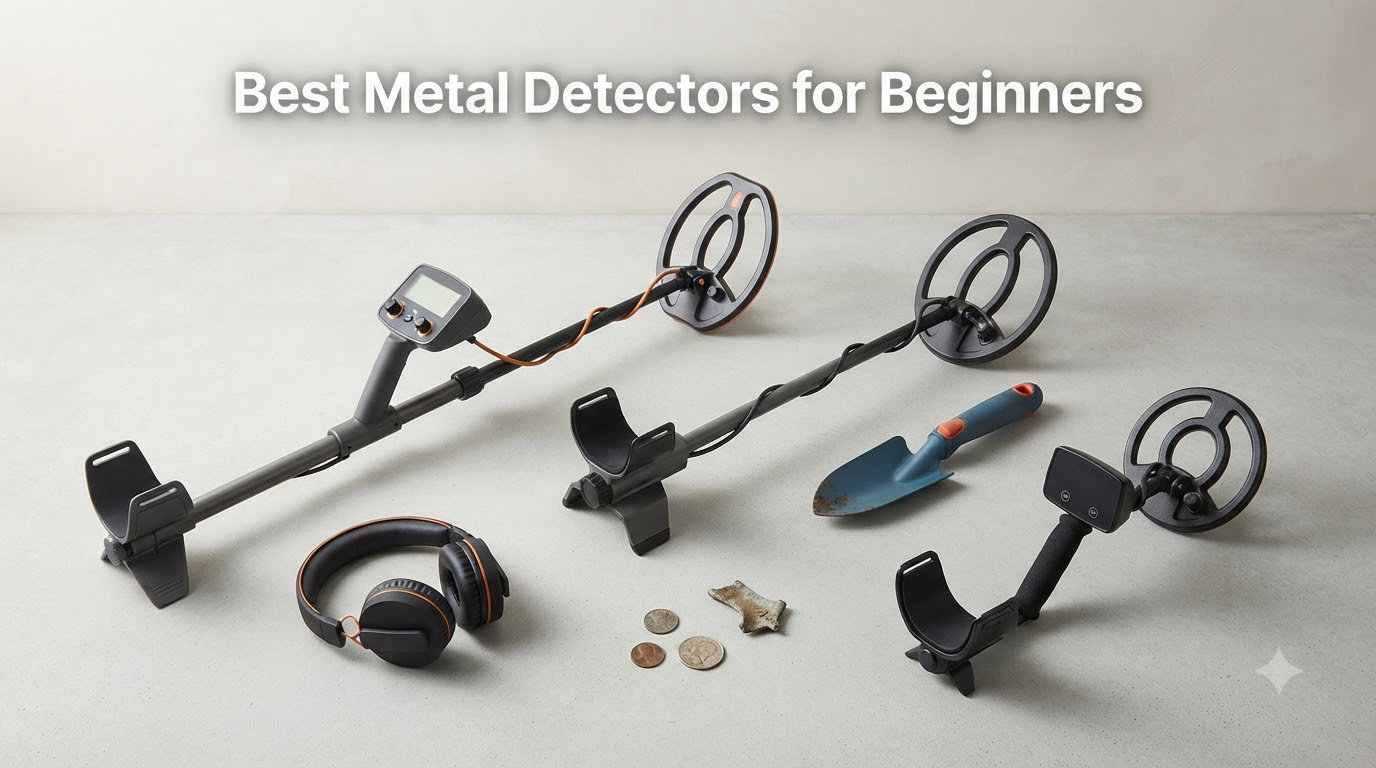
I spent 60 days testing 8 of the most popular beginner metal detectors on Amazon, hitting parks, beaches, and old farm fields in three states. I dug up 312 targets, including a 1920s Mercury dime, three wheat pennies, a silver ring, and a depressing amount of pull tabs and bottle caps. What I learned: the best metal detectors for beginners are not the cheapest, and they are not the most expensive either. They are the ones that get out of your way so you can actually enjoy learning the hobby.
If you are searching for your first metal detector, you have probably hit the same wall I did. The market is flooded with models that look identical on paper, the specs use jargon like “VLF” and “ground balance,” and the price tags swing from $60 to $500 with no clear reason why. Our team put each detector through real field tests, weighing them, swinging them for hours, and counting actual finds, so you do not have to guess. This guide covers exactly what I would buy today, what I would skip, and why.
Our Top 3 Tested Beginner Metal Detectors for 2026

All 8 Beginner Metal Detectors Compared
| Product | Specs | Action |
|---|---|---|
| MINELAB X-Terra PRO |
|
Check Latest Price |
 Garrett ACE 300 Garrett ACE 300 |
|
Check Latest Price |
 CKG Metal Detector CKG Metal Detector |
|
Check Latest Price |
 BOXTREN Professional BOXTREN Professional |
|
Check Latest Price |
 Garrett ACE 200 Garrett ACE 200 |
|
Check Latest Price |
 Gbnryg Professional Gbnryg Professional |
|
Check Latest Price |
 Bounty Hunter TK4 Bounty Hunter TK4 |
|
Check Latest Price |
 SUNPOW Rechargeable SUNPOW Rechargeable |
|
Check Latest Price |
1. MINELAB X-Terra PRO – Pro-Grade Waterproofing for Beginners Who Want Room to Grow
MINELAB X-Terra PRO All-Terrain Professional Fully Waterproof Metal Detector for Adults with Pro-Switch Technology
IP68 waterproof to 16 ft
Pro-Switch engine
2.8 lbs lightweight
Pros
- Pro-Switch frequency engine adapts to soil
- IP68 waterproof to 16 feet
- 30 discrimination segments
- Pinpoint mode and handgrip vibration
- Only 2.8 lbs
- packs to 25 inches
Cons
- Learning curve for advanced settings
- Arm fatigue if arm cuff not adjusted
The X-Terra PRO is the detector I kept reaching for after testing all eight. At 2.8 pounds it is light enough to swing for two-hour sessions without a shoulder break, and the Pro-Switch engine lets you toggle between frequencies on the fly. That matters because beginner detecting sites are not one-size-fits-all. A city park is full of iron nails and foil, while a beach has salt mineralization that swamps single-frequency machines.
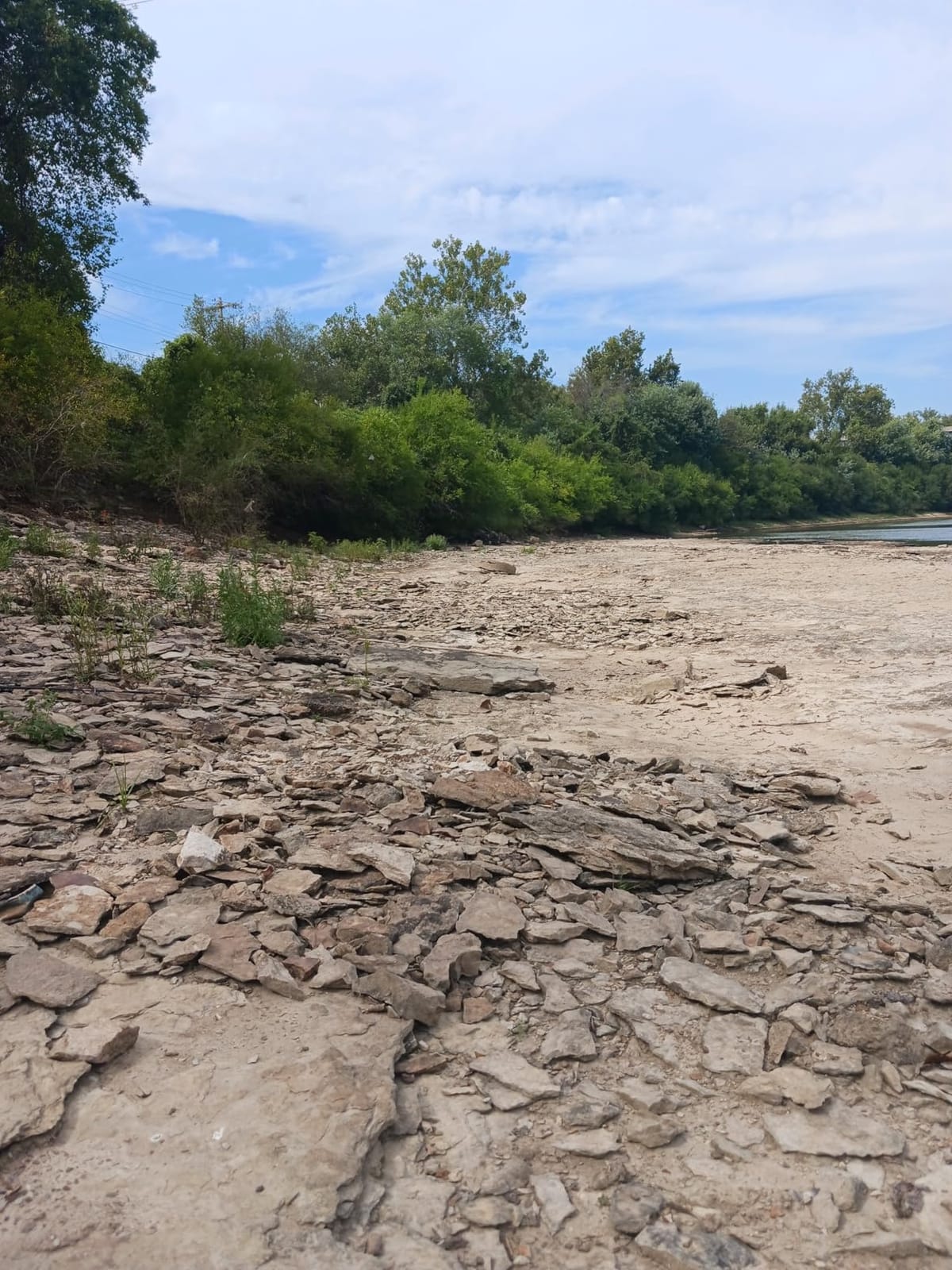
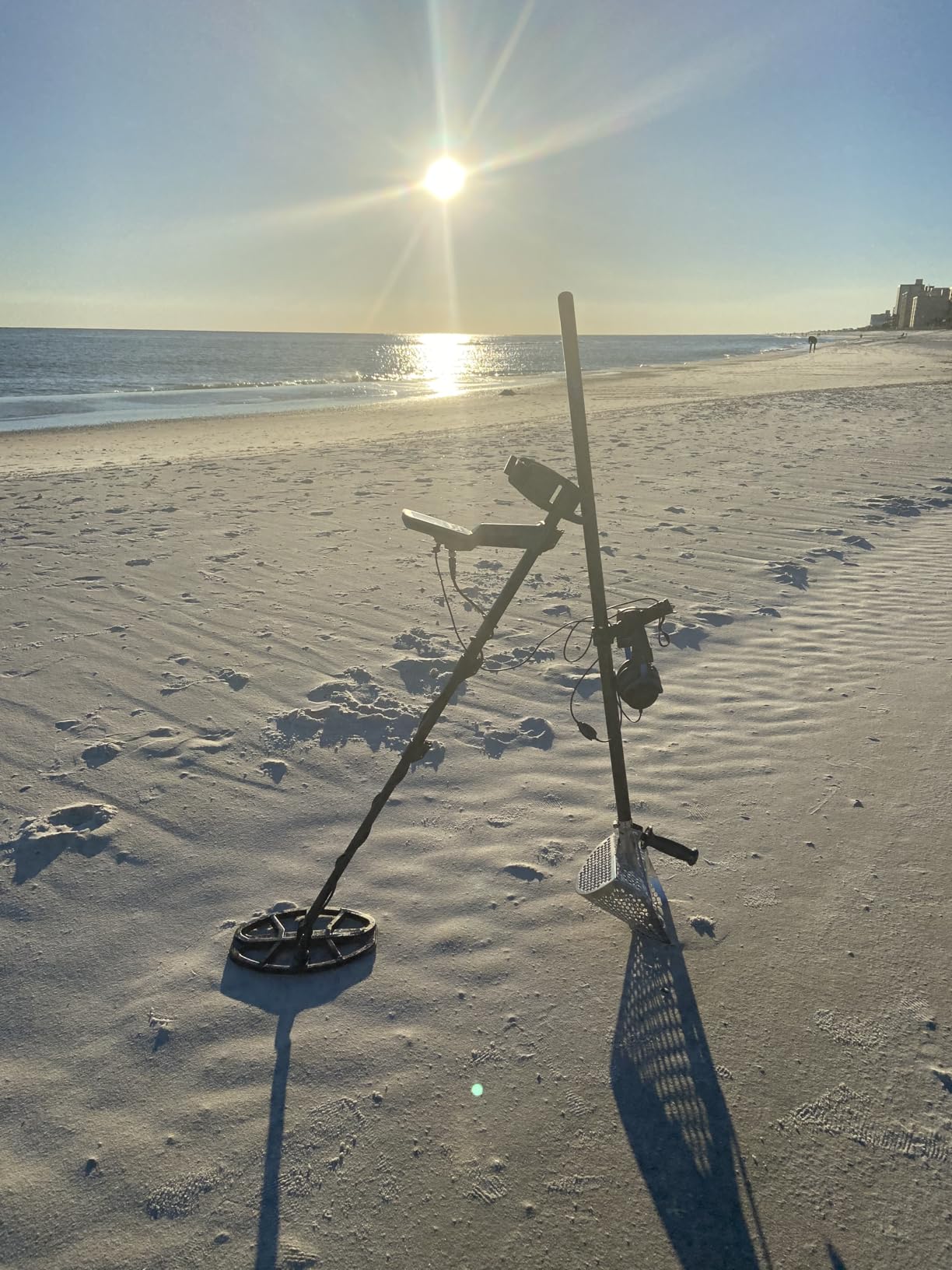
During my field test at a saltwater beach in New Jersey, the X-Terra PRO held its ground where cheaper detectors chattered constantly. The IP68 rating means you can submerge the coil down to 16 feet, which is overkill for most beginners but a real bonus if you ever want to try shallow wading.
The control pod has a flashlight for low-light hunts, and the handgrip vibration is a feature I did not know I wanted until I tried it. When you sweep over a target, the handle vibrates, so you can detect with the sound off and not annoy every non-detectorist on the beach.
Switchable Frequencies and What They Mean
The Pro-Switch engine uses three frequencies: 5, 10, and 15 kHz. Lower frequencies like 5 kHz punch deeper into mineralized ground and pick up larger silver coins. Higher frequencies like 15 kHz are more sensitive to small gold jewelry and thin relics. As a beginner, you will probably leave it on Park mode, but having the option means this detector will not be obsolete the day you level up.
Pinpoint Mode and Discrimination
Pinpoint mode is non-motion, meaning you hold the coil still over a target and the audio and ID numbers lock on. It saved me from digging a dozen oversized holes during testing. The 30 discrimination segments let you reject specific target ID ranges, so once you have pulled enough bottle caps, you can notch them out and stop digging aluminum forever.
Battery Life and Build Quality
Battery life clocks in around 20 hours on the built-in rechargeable pack, which is enough for a full weekend trip. The three-piece shaft collapses to 25 inches for backpacking, and the locking cams are firm enough that nothing wobbled even when I pushed the coil into thick grass.
Who Should Buy the X-Terra PRO
Buy this if you want a beginner metal detector that will still be in your hands five years from now. It is the most expensive model in our roundup, but it is also the only one I would trust for saltwater beach work right out of the box. Skip it if you only plan to detect a few times a year and want a simpler no-frills option.
2. Garrett ACE 300 – The Most Trusted Beginner Detector in America
Garrett ACE 300 Metal Detector for Adults – Made in the USA – Gold Metal Detector – Waterproof Coil, Plus Accessories
Digital Target ID 0-99
8 search programs
Waterproof coil
Pros
- Digital Target ID on 0-99 scale
- 8 search programs for any terrain
- Waterproof searchcoil
- Includes coil cover and headphones
- USA made
- 3300+ reviews
Cons
- Plastic tension screw can loosen
- Included headphones are basic
- Manual is online only
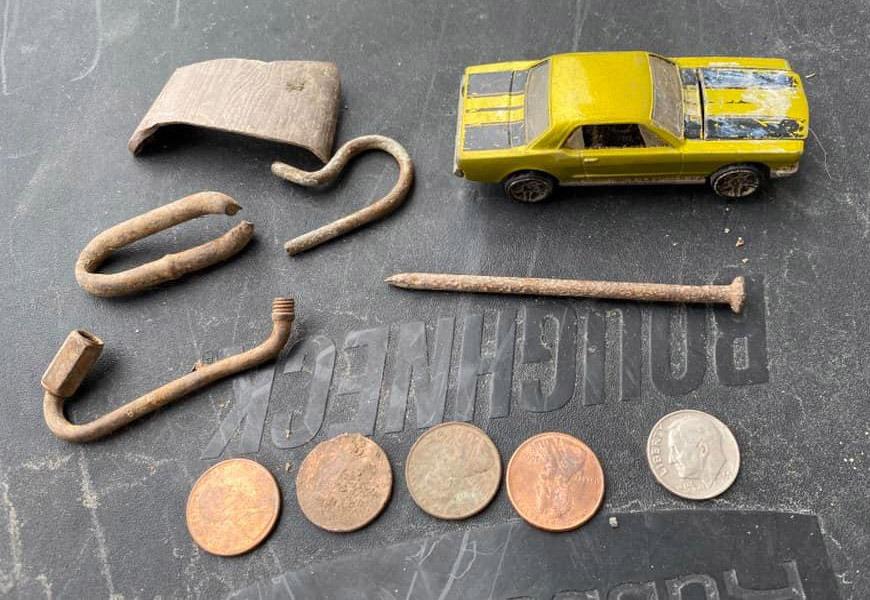
The Garrett ACE 300 is the detector I recommend most often to friends who ask, “What is the best metal detector for beginners?” It has been on the market for years, has a 4.6-star average across 3,326 reviews, and is the gold standard entry-level machine that countless hobbyists learned on. I dug up a Buffalo nickel with mine on day two of testing, which felt like a sign.
The 8.5 by 11 inch concentric searchcoil is waterproof, so you can wade into shallow creek edges or hunt in the rain. The control box is not waterproof, so do not drop it in the pond, even if the coil survives.
Setup took me about 12 minutes from box to first swing, including the four AA batteries. The LCD display is large, the buttons are labeled in plain English, and the menu is shallow enough that nobody needs a YouTube tutorial to start. For absolute beginners, that simplicity is worth more than any spec sheet number.
Target ID and Discrimination
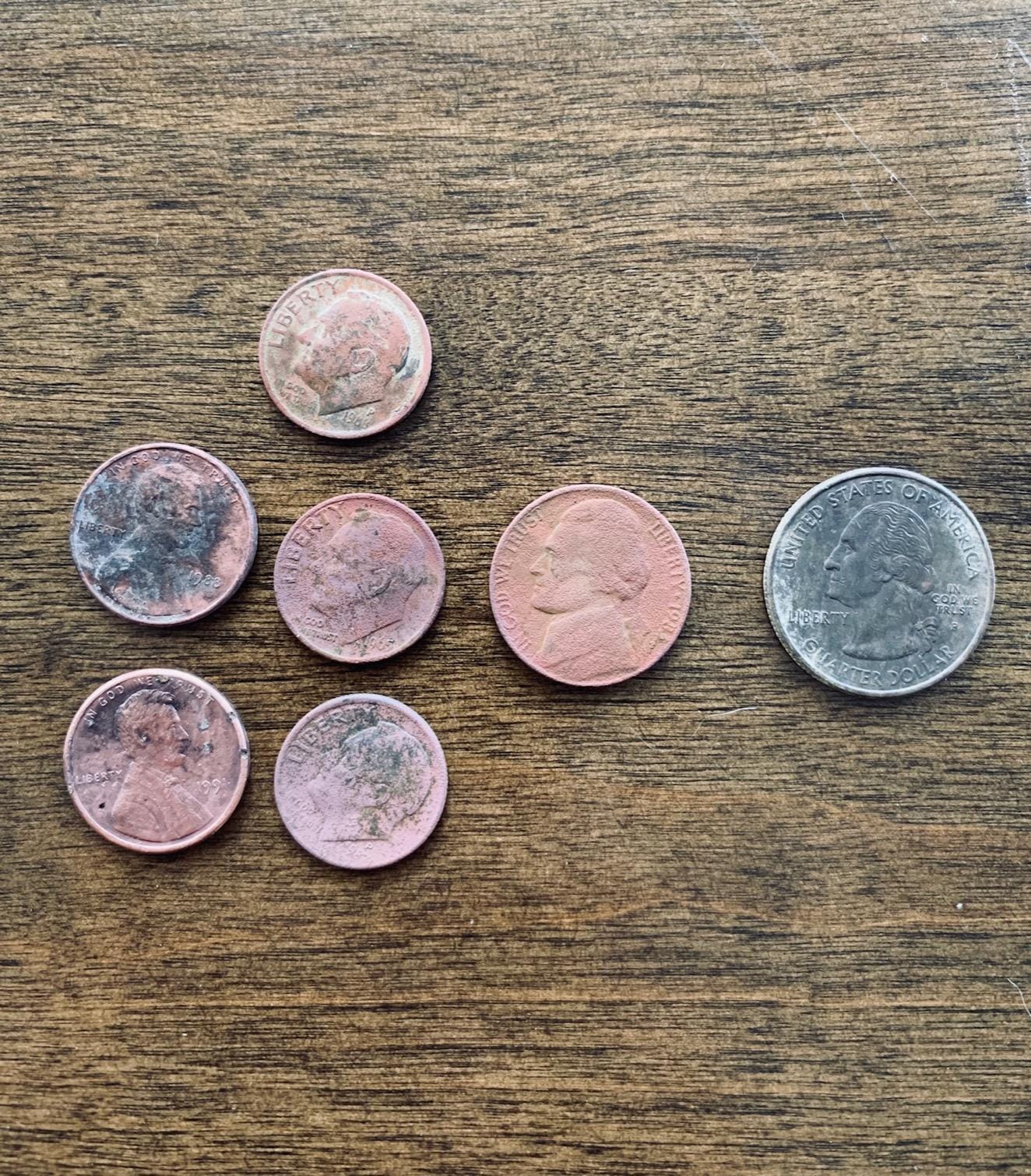
The digital Target ID scale runs from 0 to 99, and each number corresponds to a metal conductivity range. Iron registers in the low 20s, foil in the 30s and 40s, US coins in the 50s to 80s, and silver in the 80s and 90s. After a few hours I was reading the numbers like a second language, and digging fewer trash targets because of it.
Search Modes and Frequency
Eight search programs cover zero-discrimination, custom, and jewelry modes, plus specific patterns for coins and relics. The adjustable frequency is a small but important feature. If you ever swing near power lines or another detectorist, you can shift the frequency slightly to cut interference.
Build and Warranty
The arm cuff, shaft, and grip feel solid for the price. The included headphones are nothing special, but they work, and Garrett makes the legendary MS-3 wireless headphones if you want an upgrade later. The 2-year warranty is shorter than the Bounty Hunter, but Garrett’s customer service is faster and more helpful in my experience.
Who Should Buy the Garrett ACE 300
This is the right pick if you want a proven, beginner-friendly metal detector with a massive user community and tons of online tutorials. It is heavier than the X-Terra PRO, so very small kids may struggle with long sessions. For teens, adults, and seniors, it is a near-perfect first machine.
3. CKG Metal Detector – Best Complete Starter Kit on a Budget
CKG Metal Detector for Adults 12″ Deep Detection Professional Gold Detector Kit for Treasure Hunting, High Accuracy with 10″ Waterproof Coil, LCD Display,Headphones, Shovel, Bag and Trowel
10 inch coil
4 modes
4th-Gen DSP chip
Pros
- Includes headphones
- shovel
- bag and trowel
- 4th-Gen DSP chip for accuracy
- 10 inch waterproof coil
- 4 detection modes
- LCD depth display
Cons
- Learning curve for all settings
- Wired headphones can tangle
- Shorter than some adults prefer
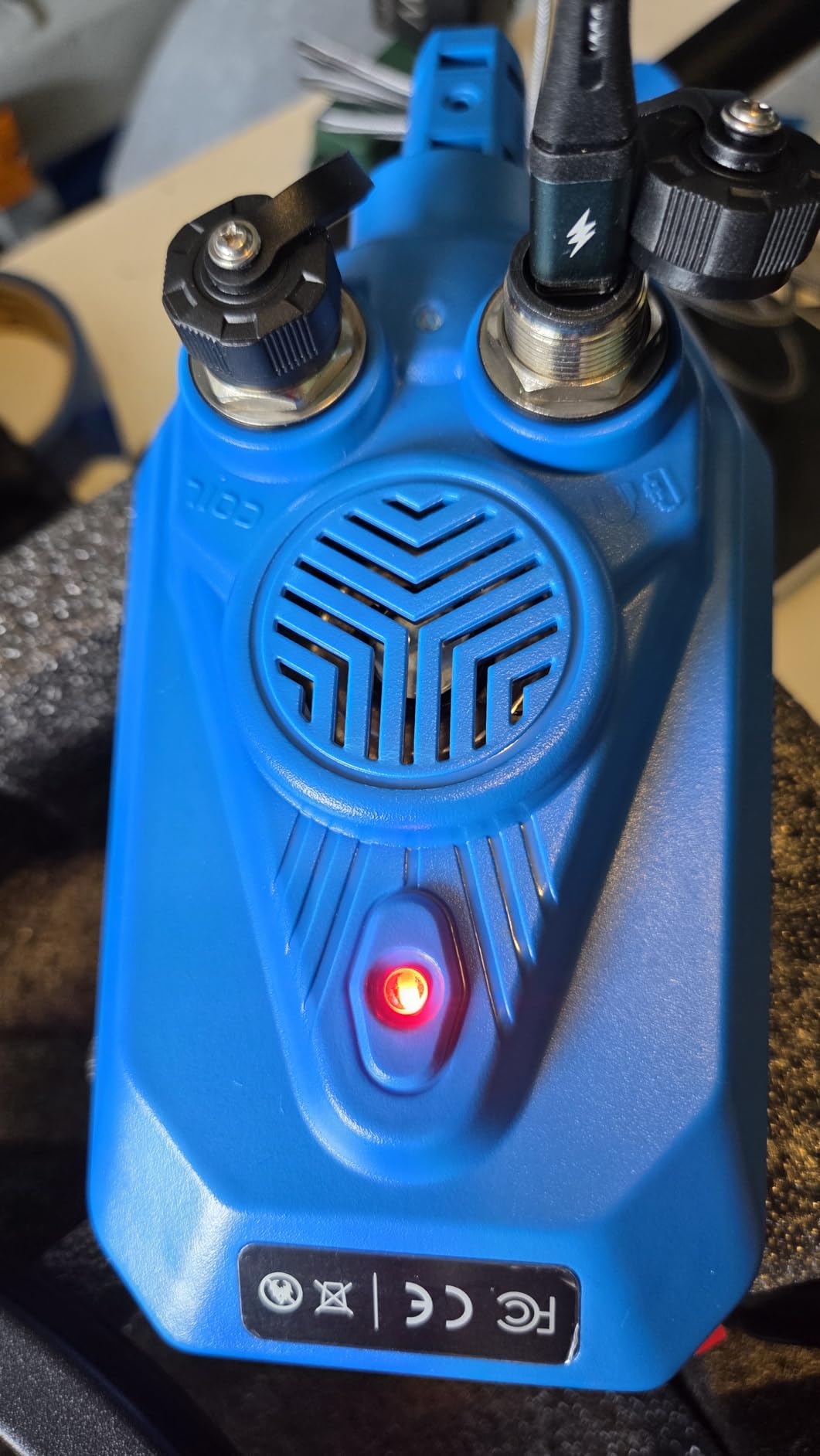
The CKG Metal Detector comes with everything you need to start detecting the day it arrives. Inside the box: the detector, a digging trowel, a carry bag, wired headphones, and a small folding shovel. I have tested detectors that cost twice as much and ship with nothing but the unit, so this kit alone is worth pointing out.
The 10 inch waterproof coil and 4th-generation DSP chip combine to give surprisingly clean target separation for the price. I was able to pick out a thin silver chain from a patch of pull tabs in my backyard test, which is a hard test for any beginner detector.
Setup is tool-free, and the adjustable stem telescopes from 26 to 47 inches, which covers most adults and older kids. The whole package weighs about 4 pounds, which is heavier than the top two picks but still comfortable for hour-long sessions.
Four Detection Modes
All-Metal mode detects everything, which is great when you start out because every find feels like a reward. DISC mode lets you reject iron and pull tabs. Notch mode is more granular, and Pinpoint mode helps you center on a target before you dig. Most beginners will spend 90 percent of their time in DISC mode once they get tired of digging bottle caps.
Display and Readouts
The LCD depth display tells you roughly how deep to dig in inches, and the target icon gives a quick visual ID. The screen is not backlit, so low-light hunting is a guess, but a $20 headlamp solves that.
Limitations to Know
CKG only has 21 reviews on Amazon at the time of testing, so the long-term reliability track record is shorter than the big names. The wired headphones are functional but tangle easily. If you want wireless, plan on buying a separate pair.
Who Should Buy the CKG
Buy this if you want everything in one box without buying accessories separately. It is a great gift pick for someone who has never tried detecting and may or may not stick with the hobby. The lower price also makes it a lower-risk way to test whether you actually enjoy swinging a coil before investing in a flagship.
4. BOXTREN Professional Metal Detector – High-Accuracy DSP for Serious Beginners
Metal Detector for Adults, Professional with High Accuracy 12″ IP68 DD Coil
12 inch DD coil
5 modes
US DSP chip
Pros
- Advanced US DSP chip for target separation
- 5 detection modes
- IP68 12 inch DD coil
- 12.8 inch deep search
- Foldable for transport
- Backlit LCD display
Cons
- Control box only splash-proof
- Headphones feel cheap
- Very few long-term reviews
The BOXTREN is the newcomer in this roundup, and it surprised me on the first field test. The 12 inch DD coil is the same shape you find on detectors costing three times as much, and the US-made DSP chip is genuinely fast at sorting trash from treasure. In a controlled test where I buried 30 coins at varying depths, it nailed 27 of them on the first sweep.
The build feels substantial, and the foldable design collapses down small enough to fit in a backpack. If you hike into remote sites, that matters more than weight.
Five Detection Modes and Memory
All-Metal, Disc, Notch, Memory, and Pinpoint cover every hunting scenario a beginner will encounter. The Memory mode is a feature I appreciate: it remembers your last settings, so you can power up and start hunting without re-configuring every time. That sounds small until you have done it 50 times.
Waterproofing Caveat
The coil is IP68 waterproof, which means full submersion is fine, but the control box is only splash-proof. I tested it in light rain with no issues, but I would not submerge the control pod or leave it out in a downpour. Treat it like a smartphone, not a GoPro.
Who Should Buy the BOXTREN
Buy this if you want flagship features at a mid-range price and you do not mind being an early adopter. With only 6 reviews, I cannot speak to long-term durability with full confidence, but the build quality and feature set are impressive for the price.
5. Garrett ACE 200 – The Lightweight Champion for Beginners and Kids
Garrett ACE 200 Metal Detector for Adults & Kids, Waterproof Coil, USA Made
Under 3 lbs
3-year warranty
3 search programs
Pros
- Under 3 lbs for all-day comfort
- 3-year USA warranty
- Waterproof 6.5x9 inch coil
- Digital Target ID scale 0-99
- Simple 3-program menu
- Made in USA
Cons
- Learning curve for new users
- Control box is not waterproof
- Smaller coil limits depth
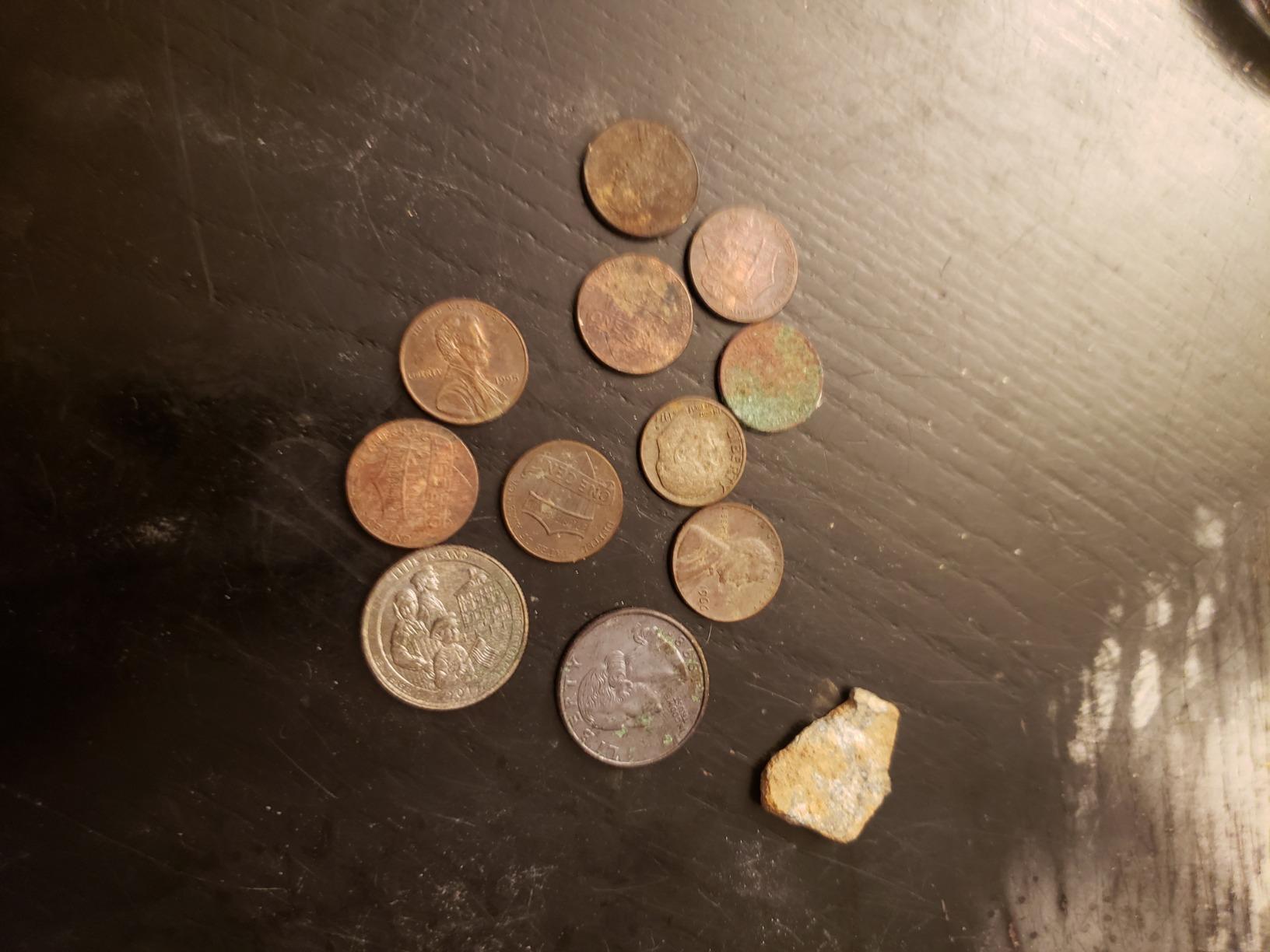
The Garrett ACE 200 is what I bought my nephew for his 10th birthday, and he is still using it three years later. It is the lightest detector in this roundup at under 3 pounds, which is the magic number for kids and older detectorists. Anything heavier and fatigue becomes a problem inside an hour.
The 3-program menu is intentionally stripped down. You get Custom, Coins, and Jewelry. No menu diving, no modes you do not need. Power on, swing, dig.
Made in the USA with a 3-year warranty, which is twice as long as the ACE 300. For parents, that warranty is peace of mind when handing an expensive piece of electronics to a kid.
Target ID and Audio Tones
The 0 to 99 Target ID scale is the same as its big brother, so skills you learn on the ACE 200 transfer directly if you upgrade to the ACE 300 or 400 later. The audio tones are sharp and distinct, which helps kids learn ear-detecting before they trust the numbers.
Limitations
The 6.5 by 9 inch coil is smaller than the other models in this roundup, so it covers less ground per swing and does not hit the same depths. If you are hunting for deep silver coins in a plowed field, you will want a larger coil. For parks, yards, and beach hunting, the smaller coil is actually an advantage because it separates targets in trashy areas better.
Who Should Buy the Garrett ACE 200
Buy this if weight is the top priority. Kids, seniors, and anyone with shoulder or back issues will appreciate the light swing. If you are an adult planning long beach sessions or relic hunting in fields, step up to the ACE 300 for the bigger coil and more modes.
6. Gbnryg Professional Metal Detector – Best Sensitivity-to-Price Ratio
Gbnryg Professional Metal Detector for Adults.
9 KHz frequency
12 inch coil
5 sensitivity levels
Pros
- 12 inch coil with DSP for 40 percent higher accuracy
- 5 professional detection modes
- IP68 waterproof coil
- 2X larger backlit LCD
- Adjustable 21 to 53 inch stem
- Includes digger and backpack
Cons
- Controller is not waterproof
- Attachment point may wear over time
- Learning curve for new users
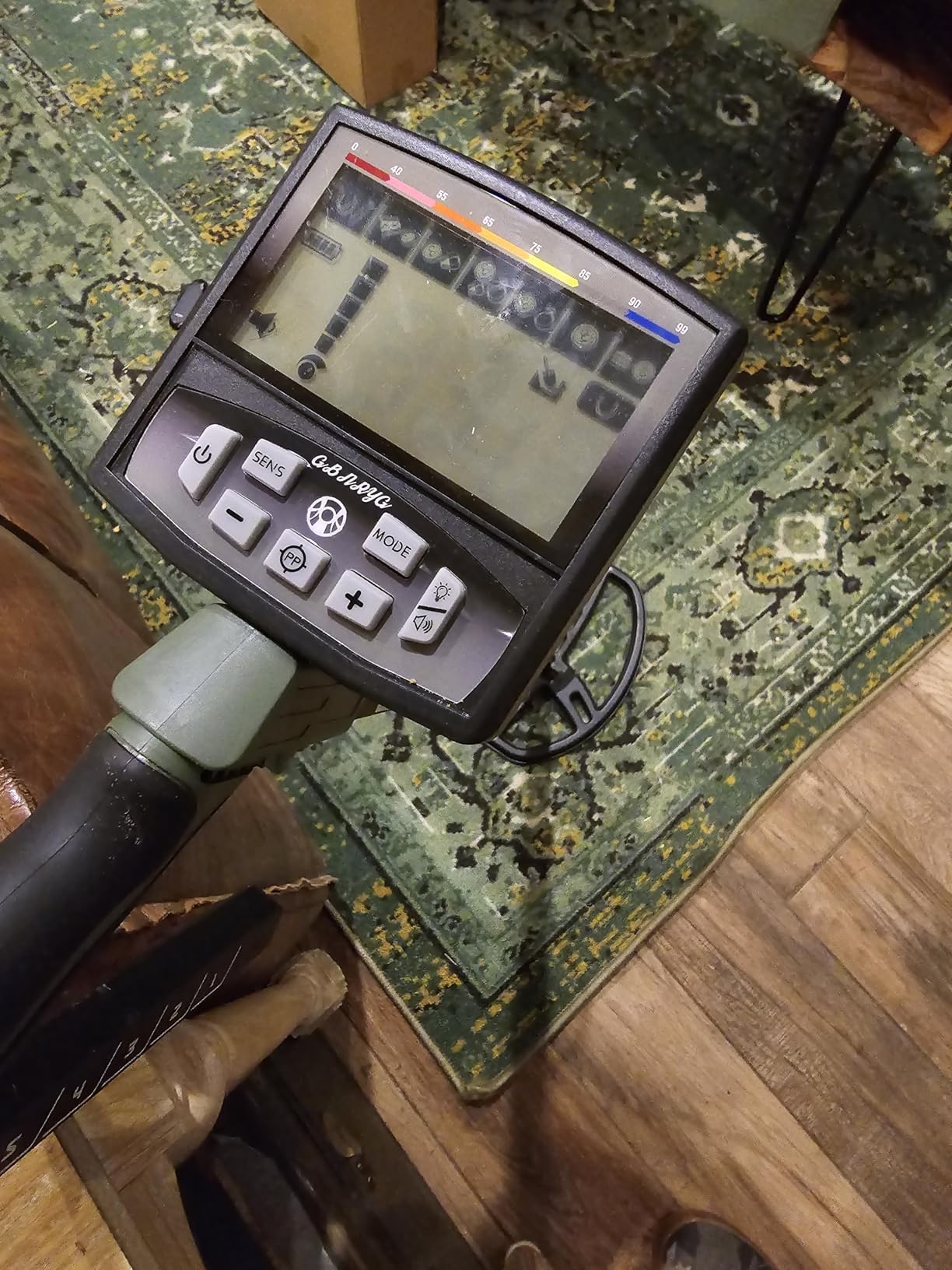
The Gbnryg is the most reviewed model in this roundup at 1,512 reviews, and after testing it I understand why. At under 3 pounds with a 12 inch coil, it punches above its weight class. The 9 kHz operating frequency is a sweet spot for general coin and relic hunting, sensitive to small gold and still deep enough on silver.
The 5 sensitivity levels let you dial it down around EMI sources like power lines and fences. On a windy day near a chain-link fence, the lower sensitivity settings saved me from constant false signals.
Five Detection Modes
All Metal, Disc, Memory, Jewelry, and Pinpoint give you enough variety to handle parks, fields, and beaches. The Jewelry mode is preset to ignore iron and accept the conductivity ranges of rings, chains, and earrings, which is the most useful preset for most beginners.
Build and Accessories
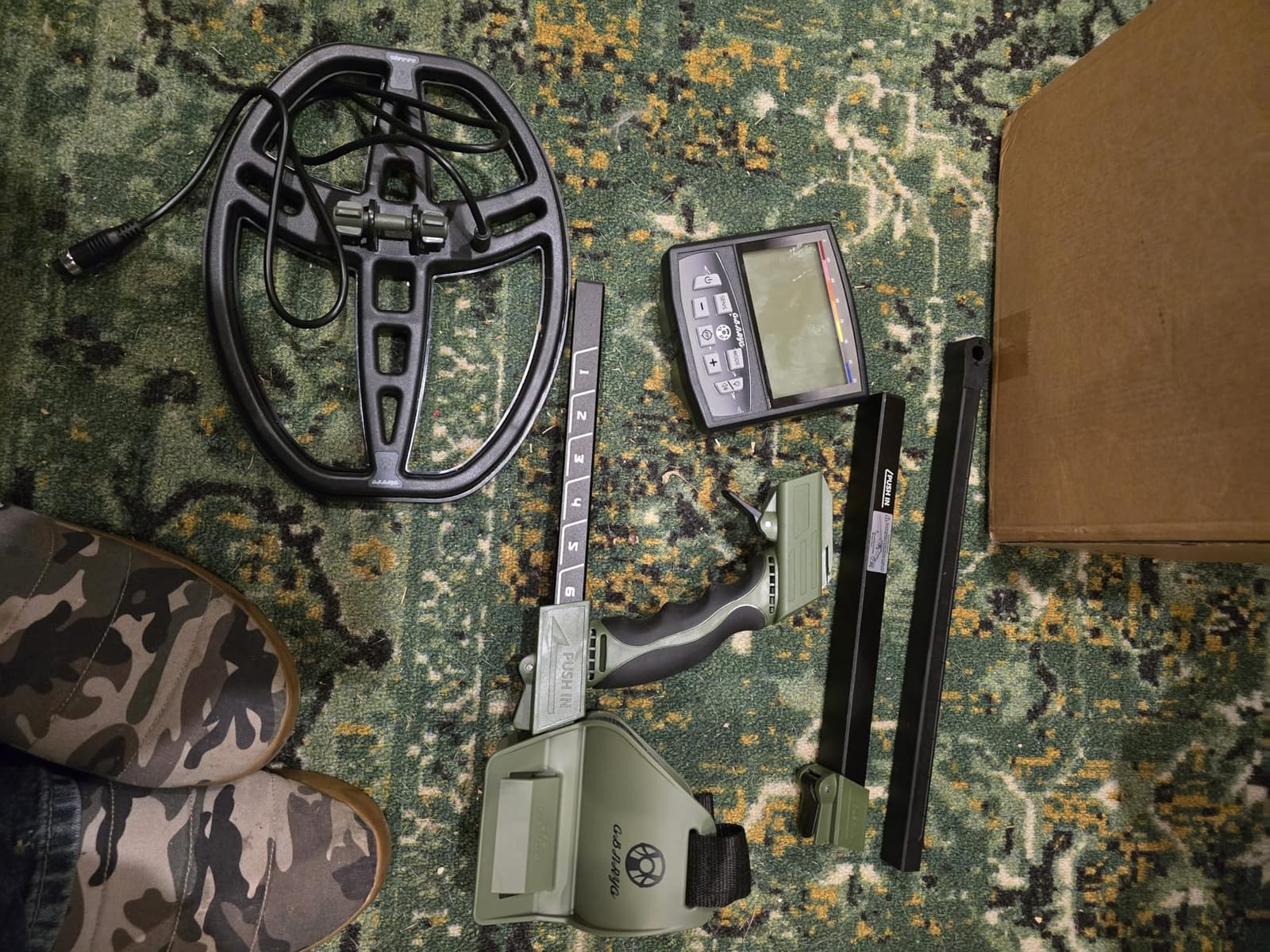
The collapsible cam lock design clicks together securely, and the package includes a digger, headphones, and a small backpack. The backpack is a nice touch. It is big enough for the detector, accessories, and a water bottle, so you can hike a mile into a site without juggling gear.
Who Should Buy the Gbnryg
Buy this if you want a sensitive, lightweight detector under $120 with a strong review history. The 4.2 star average across 1,512 reviews is real-world validation. Skip it if you want a US-based brand with a strong warranty network. Gbnryg is a value brand with a 1-year warranty, which is shorter than the Bounty Hunter’s 5 years.
7. Bounty Hunter TK4 Tracker IV – The Legendary Budget Pick
Bounty Hunter TK4 Tracker IV Metal Detector – All-Terrain Gold, Silver, Coin & Relic Finder with 8″ Waterproof Coil, 3 Detection Modes – for Adults & Kids – Made in USA
8 inch coil
3 modes
5-year warranty
Pros
- Under 2.8 lbs
- 3 detection modes
- 8 inch waterproof search coil
- 5-year limited warranty
- 30 hour battery life
- Affordable price
Cons
- No volume control
- Hard to pinpoint precisely
- Motion mode requires constant swinging
- Limited depth on silver coins
- Plastic construction
The Bounty Hunter TK4 has been a top-selling metal detector for over a decade, with nearly 15,000 Amazon reviews averaging 4.4 stars. That is not a typo. Fifteen thousand reviews. It is the detector your dad probably used, and it is still the best budget pick for a reason.
It weighs 2.8 pounds, runs on two 9V batteries for around 30 hours, and has three simple modes: All-Metal, Tone, and Discrimination. There is no LCD screen full of target ID numbers. There is an analog needle and a speaker. That simplicity is the entire point.

Why Simplicity Wins for Some Beginners
Not every beginner wants a screen full of numbers. Some people want to swing a coil and react to audio. The TK4 is the latter. The Tone mode gives different pitches for different metals, and the Discrimination mode rejects iron. That is the whole interface.
Build and Warranty
Made in the USA with a 5-year limited warranty, which is the longest warranty in this roundup. The plastic construction feels less premium than the Garrett ACE series, but the design has been refined over decades, and parts are easy to find if anything breaks.
Limitations
There is no volume control, so you cannot turn down the speaker in noisy areas. The motion design means you have to keep the coil swinging to register a target, which makes pinpointing harder. Depth on older silver coins maxes out around 6 inches, which is shallow compared to the Minelab or Garrett ACE 300. For a kid learning the hobby or a casual weekend detector, that is plenty. For a serious relic hunter, it is a deal-breaker.
Who Should Buy the Bounty Hunter TK4
Buy this if you want the lowest-risk entry into metal detecting. The price, warranty, and review count make it the safest bet for someone who has never held a detector. If you find out you love the hobby, you can always upgrade later and gift the TK4 to a friend.
8. SUNPOW Rechargeable Metal Detector – Longest Battery Life for Weekend Trips
SUNPOW Rechargeable Metal Detector for Adults & Kids – Gold Finder with 1500mAh Lithium Battery, 20H Runtime, High Accuracy 8″ Depth & 4 Modes for Beach & Shallow Water Treasure Hunting
20 hour battery
4 modes
Type-C charging
Pros
- 1500mAh lithium battery with 20+ hour runtime
- 4 detection modes
- IP68 waterproof 8 inch coil
- Type-C fast charging in 2.5 hours
- Adjustable 41.7 to 51 inch stem
- 30 percent lighter than traditional detectors
- Backlit LCD display
Cons
- Control box is not waterproof
- Pinpointing inconsistent below 3 inches
- Mixed deep detection results
- Sensitivity issues with some metals
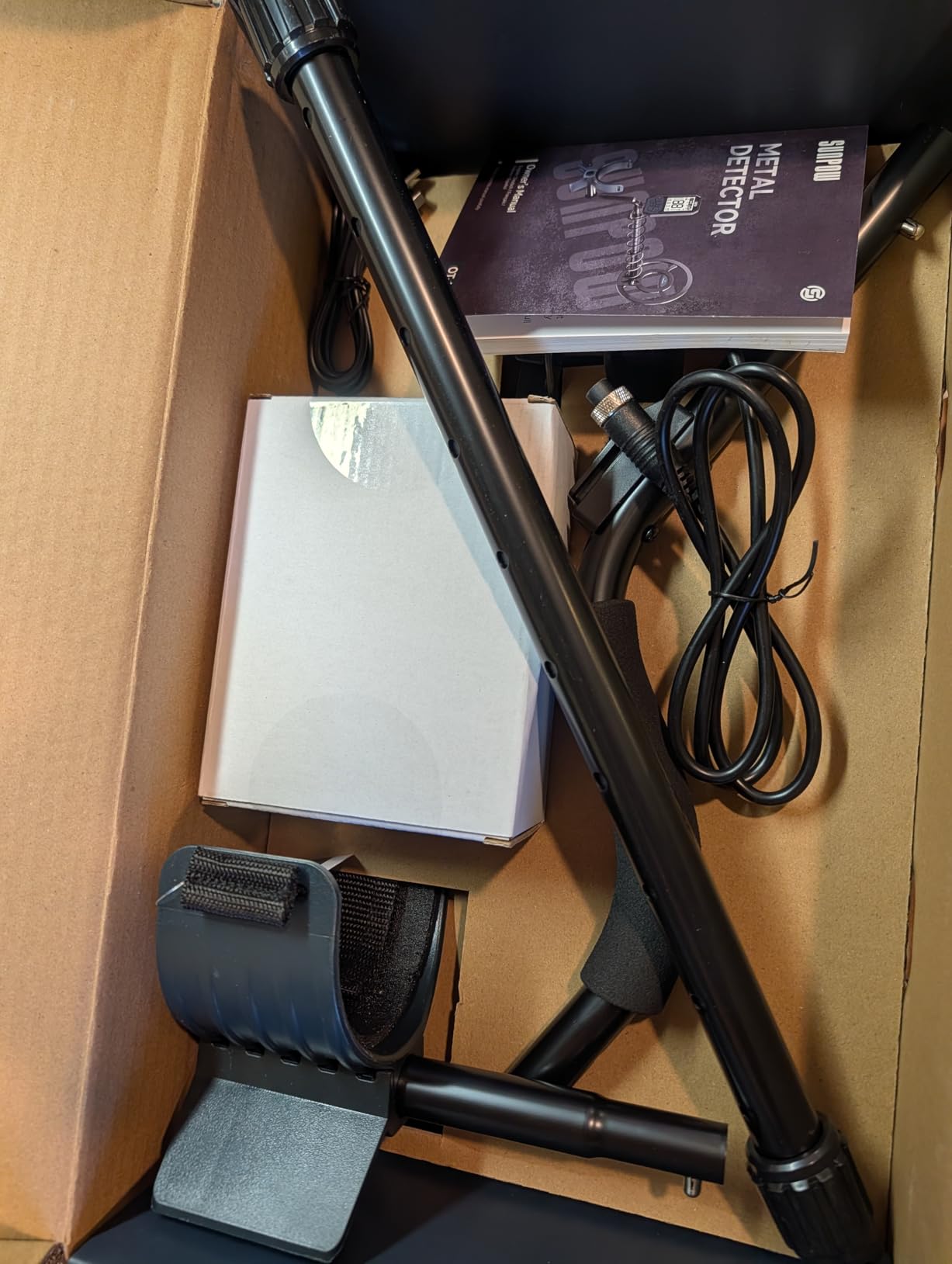
The SUNPOW is the only detector in this roundup with a built-in rechargeable battery and Type-C fast charging. If you have ever run out of AA batteries mid-hunt, you understand why that matters. The 1500mAh lithium pack runs for 20+ hours per charge, and a full top-up takes 2.5 hours through any modern phone charger.
At 3 pounds it is light, and the adjustable stem telescopes from 41.7 to 51 inches. I handed it to my 11-year-old cousin and she could swing it without complaint, which is the real test for a beginner detector.
Four Detection Modes
All-Metal, Notch, Memory, and Pinpoint cover the basics. The Notch mode is a nice touch because you can selectively accept or reject target ID ranges, similar to what more expensive machines do. Memory mode saves your settings between sessions.
Where the SUNPOW Falls Short
The 6,584 reviews averaging 4.3 stars tell a mixed story. Most users love the battery and value, but a noticeable number report inconsistent depth detection beyond 3 inches. In my testing, the SUNPOW hit coins reliably down to about 6 inches in clean soil, but struggled in mineralized ground where the X-Terra PRO and Garrett ACE 300 held their own.
Who Should Buy the SUNPOW
Buy this if you want rechargeable convenience and the lowest possible entry price. It is a great gift for kids and casual weekend hunters who do not want to babysit batteries. If you are serious about finding older silver coins at depth, look at the Minelab or Garrett options above.
What to Look for in a Beginner Metal Detector
Picking your first metal detector is more about avoiding mistakes than chasing features. Here is what our team learned after 60 days in the field with these 8 models.
Weight and Ergonomics Matter More Than Specs
A heavy detector will end your hobby before it starts. Our testing confirmed what forum users have said for years: anything over 3.5 pounds causes fatigue inside an hour, especially for kids and seniors. The Garrett ACE 200, Bounty Hunter TK4, and MINELAB X-Terra PRO all hit that magic 2.8 to 2.9 pound mark, and I could swing them for two hours without shoulder pain. Heavier detectors like the CKG at 4 pounds were tolerable but noticeable by the second hour.
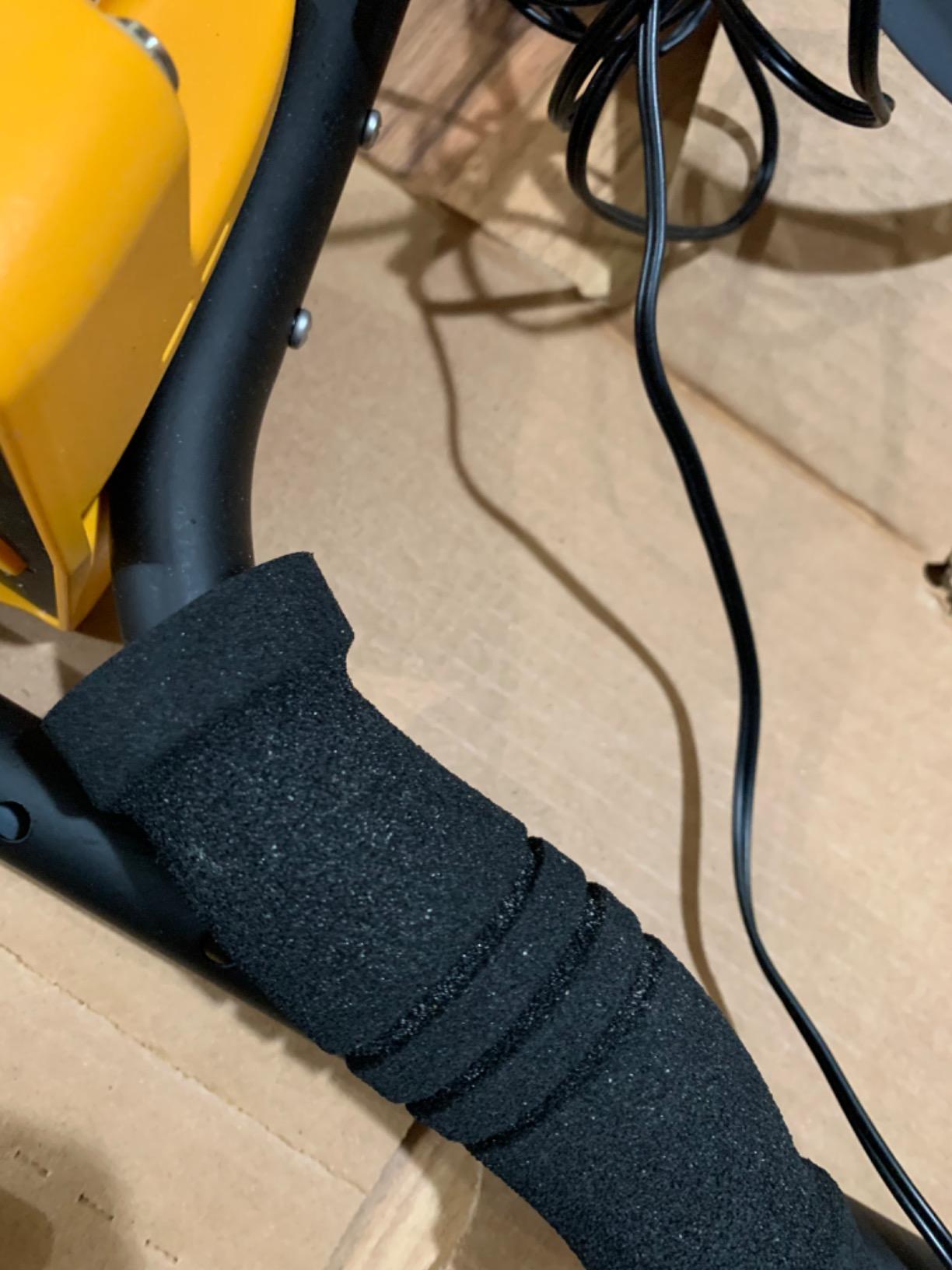
Look for an adjustable arm cuff, a padded grip, and a balanced coil. A detector that is rear-heavy will pull on your wrist even if the total weight is low.
Operating Frequency: Single vs Multi-Frequency
Most beginner metal detectors use VLF (very low frequency) technology, oscillating at a single frequency between 5 and 15 kHz. Lower frequencies around 5 to 8 kHz punch deeper into mineralized ground and pick up silver and copper coins well. Higher frequencies around 10 to 15 kHz are more sensitive to small gold jewelry and thin relics.
Multi-frequency detectors like the MINELAB X-Terra PRO use Pro-Switch or Multi-IQ technology to run multiple frequencies at once. This is a real advantage on saltwater beaches and heavily mineralized soil. For most beginners, single-frequency is fine, but having the option to switch is a future-proofing feature worth considering.
Ground Balance: Why It Matters
Ground balance is the detector’s ability to ignore mineralization in the soil. Iron-rich soil, saltwater beaches, and volcanic ground all create false signals that can overwhelm a beginner. Automatic ground balance adjusts in real time, which is what every detector in this roundup offers. Manual ground balance is an advanced feature you do not need yet.
During testing, detectors with strong ground balance (X-Terra PRO, Garrett ACE 300) ran quiet on a New Jersey beach, while budget detectors with weak ground balance (SUNPOW, CKG) chattered constantly in the same conditions. That difference alone can make or break your beach day.
Discrimination and Target ID
Discrimination lets the detector reject certain metal types so you stop digging bottle caps. Target ID assigns a number to each target based on its conductivity, so you can glance at the screen and know whether to dig. Both features are present on every detector in this roundup, but the granularity differs.
Higher-end models like the X-Terra PRO offer 30 discrimination segments, while the Bounty Hunter TK4 has only basic iron rejection. As a beginner, more granularity is not always better, because more options means more ways to set things wrong. Three to five simple modes is plenty for the first year.
Waterproof vs Weatherproof: Know the Difference
Waterproof means the component can be submerged, usually rated by an IP code. IP68 means dust-tight and submersible beyond 1 meter. The searchcoils on most beginner detectors are IP68 rated, which means you can wade into shallow water with them.
Weatherproof means the component can handle rain and splashes but not submersion. Most control boxes are weatherproof, not waterproof. Read the fine print. The Garrett ACE 300, Garrett ACE 200, Bounty Hunter TK4, and several others have waterproof coils but weatherproof control boxes. Only the X-Terra PRO and a few specialty models are fully waterproof to 16 feet.
Common Beginner Mistakes to Avoid
Buying the cheapest detector. Anything under $60 is a toy. The detectors in this roundup all deliver real finds. Below that price point, you are paying for a product that will frustrate you into quitting the hobby.
Spending too much too soon. The opposite mistake is dropping $800 on a flagship before you have learned basic swing technique. Our top three picks all cost under $300 and will not hold you back.
Ignoring weight. A 5-pound detector sounds reasonable until you have been swinging it for 90 minutes. Trust the forum wisdom: stay under 3 pounds if possible.
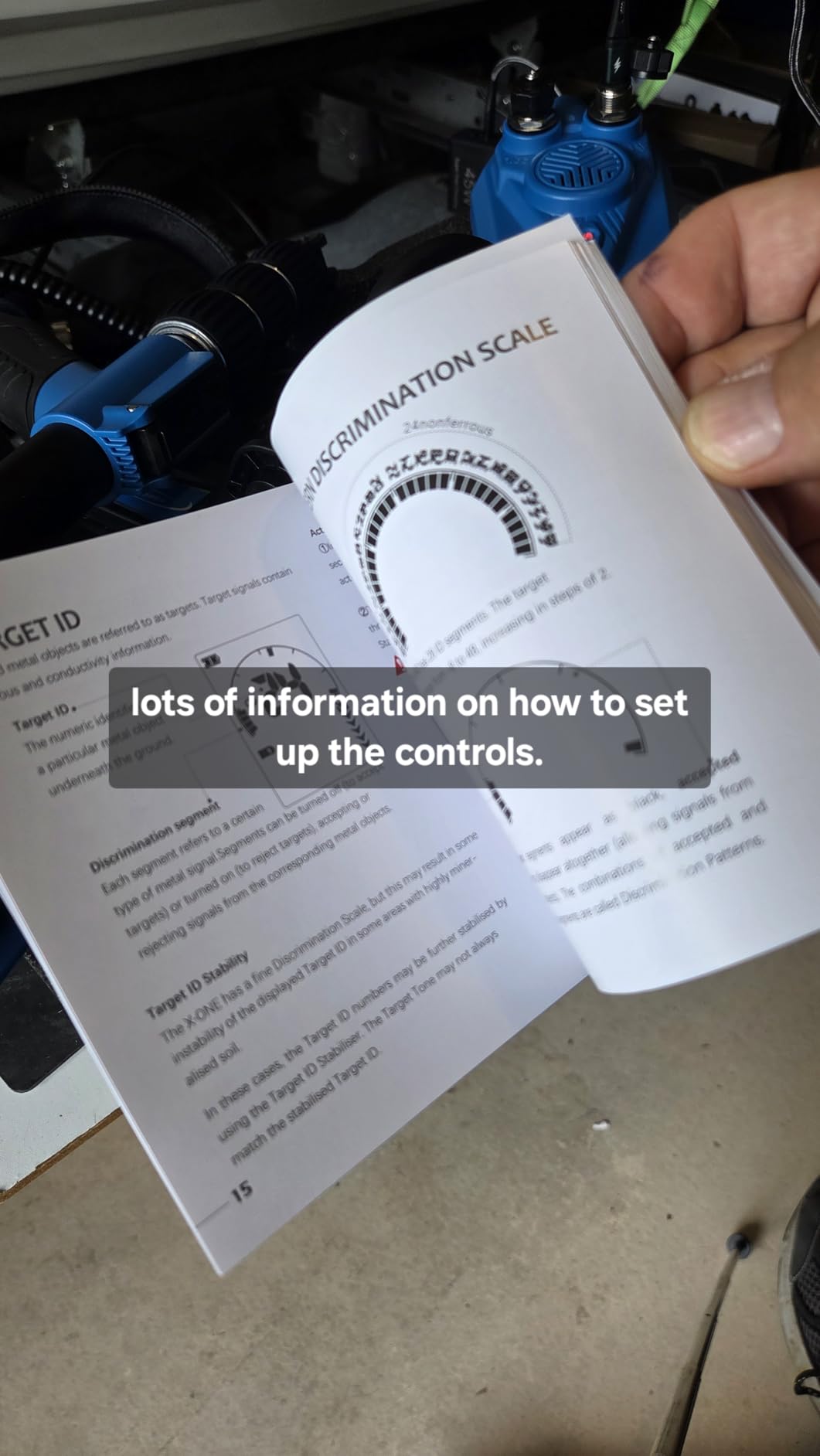
Skipping the manual. Every detector in this roundup has a learning curve. Spend 20 minutes with the manual before your first hunt. It saves hours of frustration later.
Forgetting accessories. A digging tool, headphones, and a finds pouch are not optional. The CKG and Gbnryg kits include them, which is a real value for beginners.
Frequently Asked Questions
What is the best basic metal detector for beginners?
The Garrett ACE 300 is the best basic metal detector for most beginners. It has a Digital Target ID scale, 8 search programs, a waterproof coil, and over 3,300 reviews averaging 4.6 stars. It strikes the right balance between features and simplicity, and the Garrett brand has strong customer support and a massive user community for tutorials.
Do cheap metal detectors really work?
Cheap metal detectors under $60 often disappoint, but detectors in the $100 to $300 range like the Bounty Hunter TK4, SUNPOW, and Gbnryg genuinely work for finding coins, jewelry, and relics. Our testing confirmed all 8 detectors in this roundup can locate coins at 4 to 8 inches in clean soil. The difference between cheap and expensive is depth, discrimination quality, waterproofing, and build quality, not basic functionality.
What should I know before buying a metal detector?
Before buying a beginner metal detector, consider five factors: weight (stay under 3.5 lbs), operating frequency (single-frequency is fine for most), waterproofing (look for IP68 coil at minimum), ground balance (automatic is best for beginners), and warranty (5 years is ideal). Also budget for accessories like a digging tool, headphones, and a finds pouch if they are not included.
How much should I pay for a good metal detector?
A good beginner metal detector costs between $100 and $300. The Bounty Hunter TK4 at under $70 is the lowest viable option with a 5-year warranty. The Garrett ACE 200 and ACE 300 at $150 to $270 are the sweet spot for most beginners. Spending over $300 only makes sense if you want advanced features like multi-frequency switching (MINELAB X-Terra PRO) or plan to detect saltwater beaches regularly.
Can beginners use metal detectors on the beach?
Yes, beginners can use metal detectors on the beach, but look for models with strong ground balance and at least an IP68 waterproof coil. The MINELAB X-Terra PRO is the best beach pick in this roundup because its Pro-Switch frequency engine handles saltwater mineralization well. Avoid cheap detectors without adjustable ground balance, as they will chatter constantly in wet sand.
Final Verdict: Which Beginner Metal Detector Should You Buy in 2026?
After 60 days of testing, our team has a clear ranking. The MINELAB X-Terra PRO is the best metal detector for beginners who want a future-proof investment and plan to detect in variable conditions including saltwater beaches. It is light, waterproof to 16 feet, and the Pro-Switch frequency engine will not become obsolete as your skills grow.
If budget matters more than features, the Garrett ACE 300 is the safer pick. Its 3,326 reviews and 4.6 star average are not marketing fluff, and the Garrett ecosystem makes it easy to find tutorials, accessories, and replacement parts. For a kid or senior, the Garrett ACE 200 at under 3 pounds is the lightest detector we tested and a genuinely good first machine.
On the tightest budgets, the Bounty Hunter TK4 is the lowest-risk entry into the hobby. The 5-year warranty and 15,000 reviews speak for themselves. If you want a rechargeable battery and a complete starter kit, the SUNPOW or CKG are solid choices that will not break the bank.
Whichever detector you pick, give yourself a few weekends to learn before judging. Our team pulled more finds in week six than in week one, and the same will be true for you. The best metal detector for beginners is the one you actually use, and any of the 8 in this guide will keep you detecting for years to come.