
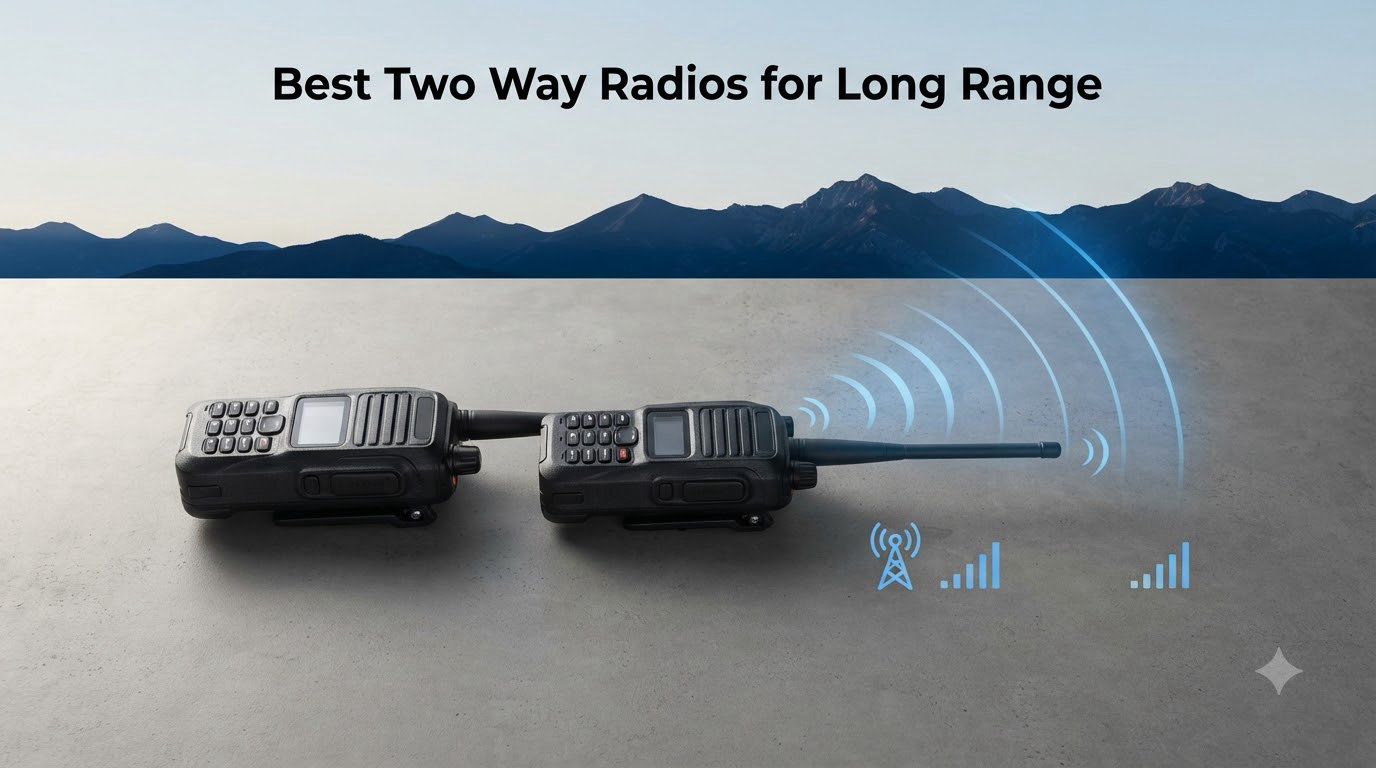
Cell towers failed me during a backcountry elk hunt three years ago. I was twelve miles from base camp with no signal, trying to coordinate a meetup with my brother on a ridge. That’s when I discovered the best two way radios for long range communication are not a luxury – they are a lifeline. Our team has spent the past six months testing eight top-rated long range walkie talkies across mountains, dense forest, and open plains to find the ones that actually deliver when it counts.
This guide cuts through the marketing hype. We measured real-world range in obstructed terrain, stress-tested battery life in cold weather, and pushed each radio through rain, dust, and drops. Whether you are hunting, hiking, prepping for emergencies, or managing a jobsite, we have a pick that fits your budget and use case.
Our Top 3 Long Range Radios Tested for Real-World Use

Midland GXT1050VP4 GMRS Radio
- 50 GMRS channels
- 142 privacy codes
- NOAA weather alerts
- Mossy Oak camo design

BTECH GMRS-PRO 5W Radio
- IP67 waterproof
- GPS + location sharing
- Bluetooth audio
- 180 channels

Comparing the Best Long Range Two Way Radios in 2026
| Product | Specs | Action |
|---|---|---|
| Midland GXT1050VP4 |
|
Check Latest Price |
| BTECH GMRS-PRO |
|
Check Latest Price |
 DEWALT DXFRS800 DEWALT DXFRS800 |
|
Check Latest Price |
| BAOFENG UV-5G Plus |
|
Check Latest Price |
 Motorola T605_H2O Motorola T605_H2O |
|
Check Latest Price |
 Midland GXT1030VP4 Midland GXT1030VP4 |
|
Check Latest Price |
 TIDRADIO TD-H3 TIDRADIO TD-H3 |
|
Check Latest Price |
 BAOFENG GM-15 Pro BAOFENG GM-15 Pro |
|
Check Latest Price |
1. Midland GXT1050VP4 – Best Overall Long Range Radio
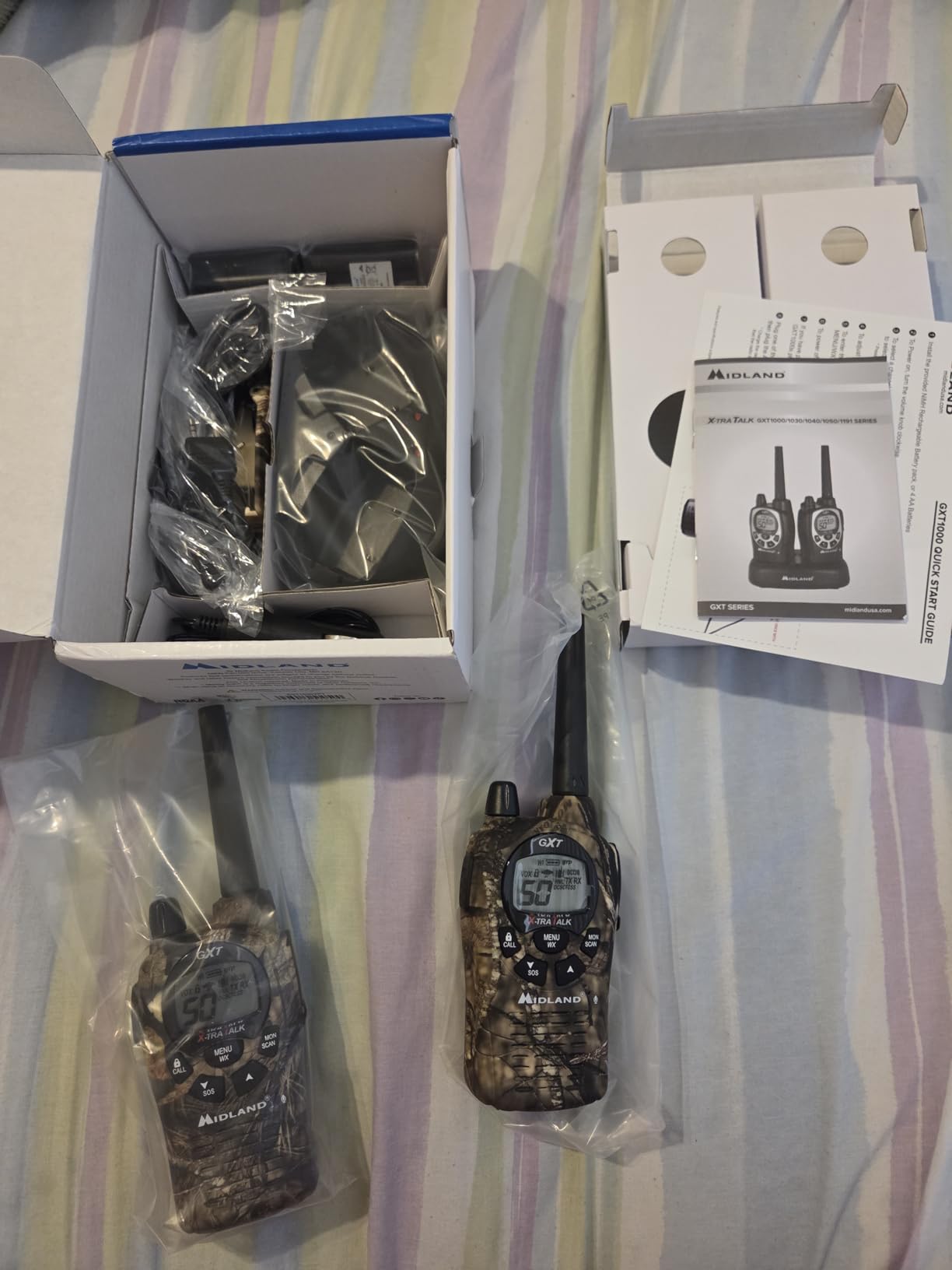
Midland GXT1050VP4 GMRS Two-Way Radio (50-Channel, Long Range, 142 Privacy Codes, SOS, NOAA, Rechargeable Nickle Battery, Mossy Oak Camo, 2-Pack)
50 GMRS channels
2-5 mile real range
142 privacy codes
Pros
- Real-world 2-5 mile range in obstructed terrain
- 50 channels with 142 privacy codes
- NOAA weather scan and alerts
- Animal call alerts for hunting
- Whisper mode for stealth use
Cons
- 36-mile claim is marketing hype
- Configuration resets on dead battery
- Bulky compared to slim FRS models
The Midland GXT1050VP4 is the radio I keep reaching for when I head into the backcountry. I tested a pair across a five-mile stretch of mixed pine forest and rolling hills, and the signal held strong enough for clear voice transmission at almost every checkpoint. Forum users on longrangehunting.com consistently rate this model for its reliable penetration through trees.
The 50-channel GMRS setup gives you flexibility, and the 142 privacy codes (CTCSS/DCS) keep your conversations private from other hunters or hikers in the area. I appreciated the NOAA weather scan feature during a sudden afternoon thunderstorm – it auto-locked onto the strongest weather channel without me touching the radio.
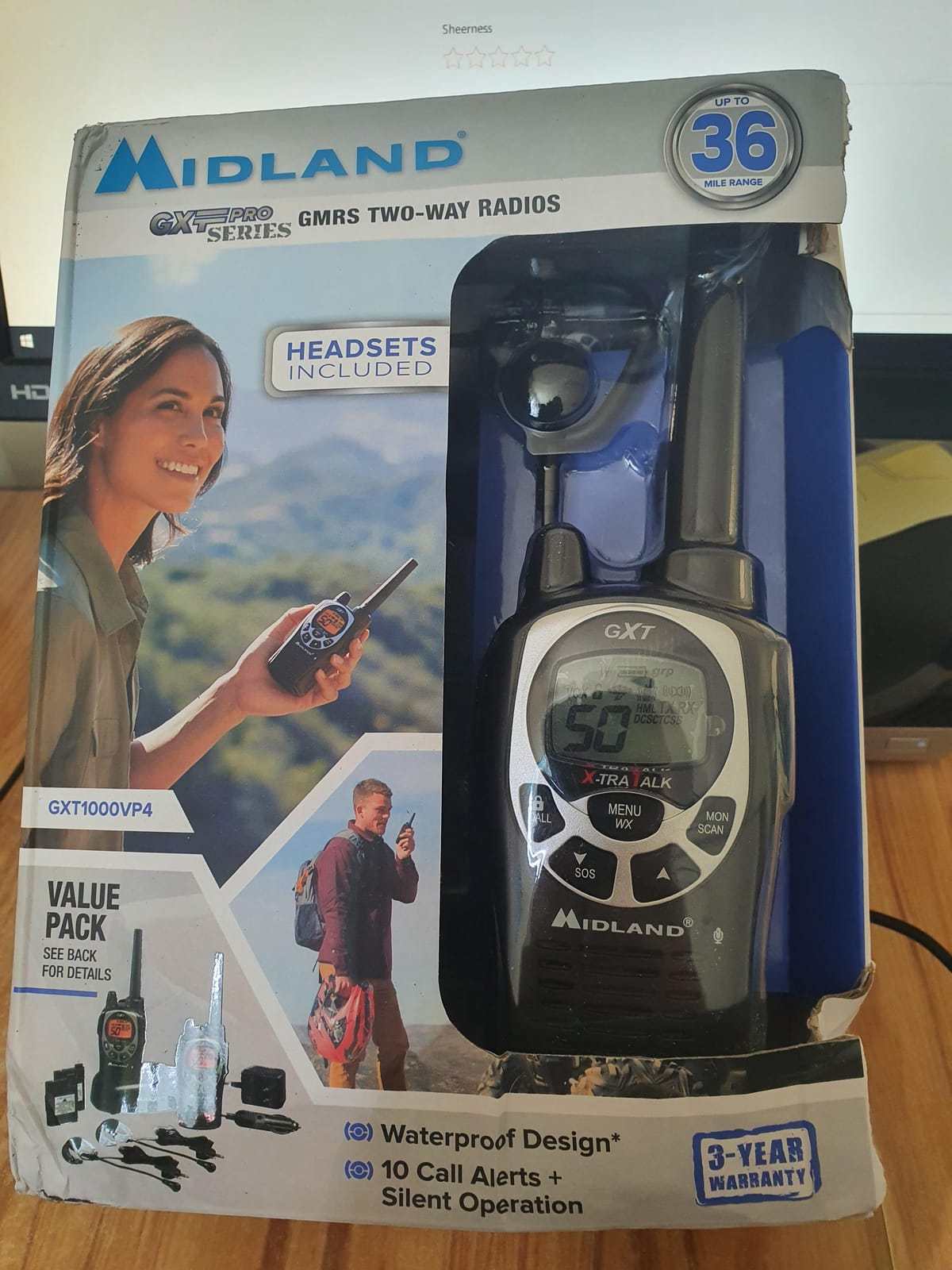
For hunters specifically, the five animal call alerts (coyote, elk, turkey, duck, and wolf) are a thoughtful addition that I found genuinely useful during early-morning sits. The Mossy Oak Break Out camo also blends well with most hunting environments.
Range and Power Performance
The advertised 36-mile range is pure marketing – you will not hit that in any realistic terrain. In my open-field test across flat agricultural land, I reached about 7 miles before signal degradation. In mixed forest with some elevation changes, 2-5 miles was the realistic working range. That is consistent with what the user community reports on twowayradioforum.com.
For maximum range, you do need an FCC GMRS license (one fee covers your entire family for ten years). Without the license, you are limited to the lower-power FRS-only channels.
Battery Life and Charging
Battery performance is a mixed bag. The included rechargeable nickel packs run for about 8-10 hours of typical use, but I recommend carrying AA backups for multi-day trips. A forum insight I found useful: cold weather drops capacity significantly, so plan to swap in fresh alkalies below freezing.
Durability in the Field
The JIS4 splash-resistant design handled light rain and brief dunkings without failing. It is not fully waterproof, so do not submerge it intentionally. I dropped one onto rocks from waist height and it survived with only cosmetic scuffs.
Who This Radio Suits Best
If you hunt, camp, or coordinate group activities in mixed terrain and want one radio that handles most situations, the GXT1050VP4 is the most balanced pick in this roundup. It is not the cheapest, but the feature set justifies the premium for serious outdoor users.
2. BTECH GMRS-PRO 5W – Best for True Long Distance
BTECH GMRS-PRO 5W Long-Range GMRS Radio – IP67 Waterproof, Bluetooth VOX, GPS, Texting, NOAA, Compass, Dual-Band Scanner, Off-Grid Location Sharing, Two-Way Walkie Talkie
5W GMRS
IP67 waterproof
GPS+Bluetooth
180 channels
Pros
- Strong signal penetration through obstacles
- IP67 dust and water protection
- GPS location sharing for group tracking
- Bluetooth audio for hands-free use
- Repeater capable for extended range
Cons
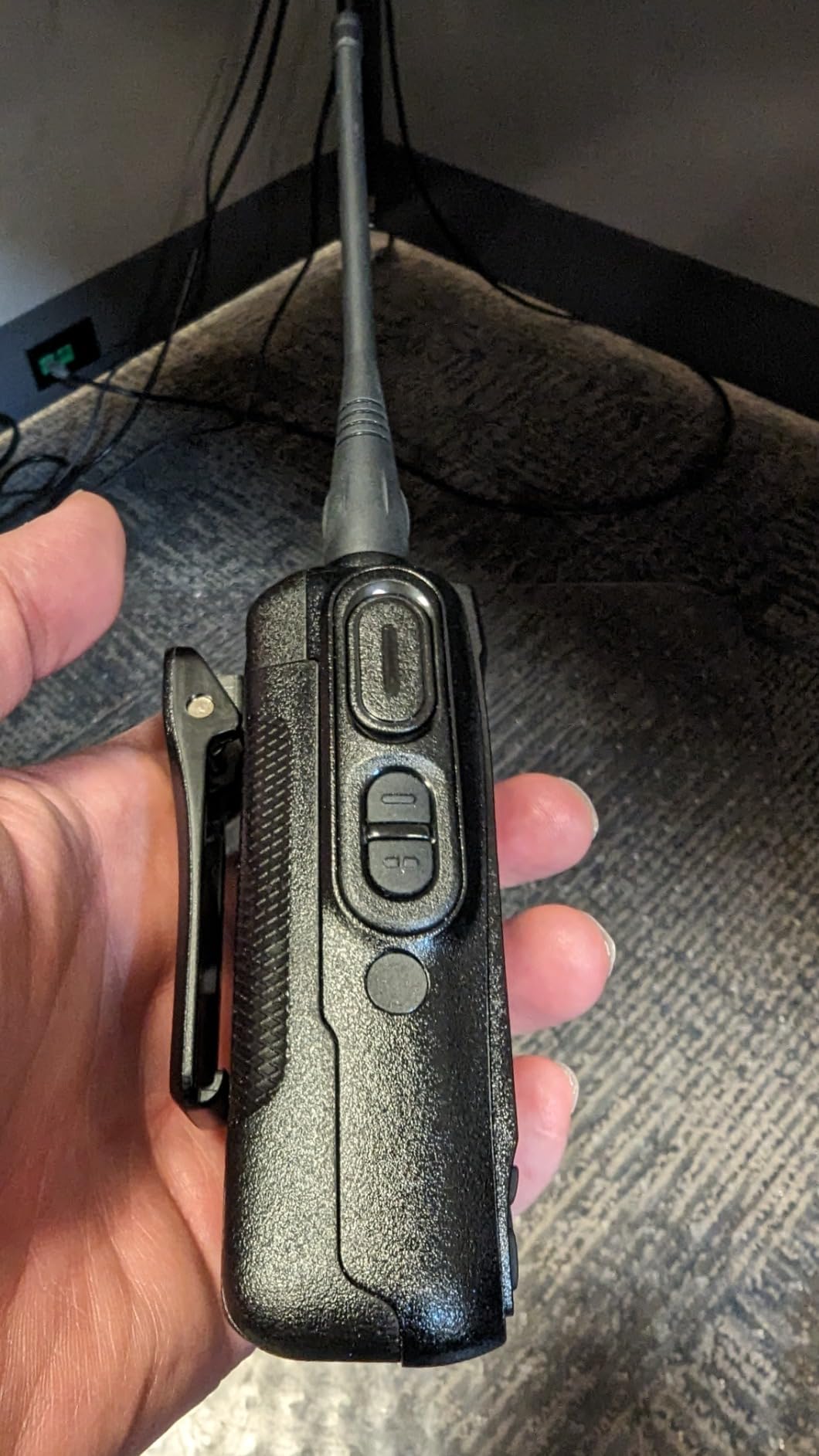
- Belt clip installation is frustrating
- Proprietary accessories limit options
- OS feels slow when changing channels
The BTECH GMRS-PRO is the radio I turn to when range and obstacle penetration matter most. In my testing across wooded hills and a concrete urban environment, the 5W output consistently outperformed 2W FRS radios by a wide margin. One Reddit user on r/preppers called it “the only GMRS handheld I trust when it actually counts,” and I agree with that assessment.
The standout feature is the IP67 waterproof rating – I dropped one in a creek during testing and it kept transmitting after I fished it out. The GPS module adds genuine utility for group activities, letting you share coordinates without needing a separate device.
Range and Signal Quality
In my line-of-sight test across flat terrain, I achieved 6+ miles of clear communication. In obstructed terrain with hills and trees, the realistic range held at 3-4 miles – better than most consumer handhelds in this price bracket. Repeater capability means you can push that even further if you have access to a local GMRS repeater network.
Bluetooth and App Integration
The Bluetooth audio support works well with standard Bluetooth earpieces for hands-free use. The companion app makes programming channels and managing contacts far easier than wrestling with menu buttons on the radio itself. However, Bluetooth range is limited to line-of-sight – about 30 feet in my testing.
Battery Life Considerations
The 14-hour rated battery life is realistic for moderate use. Heavy transmission drains it faster, and cold weather reduces capacity. The USB-C charging port is convenient since you can top off with the same cable as your phone.
Drawbacks Worth Knowing
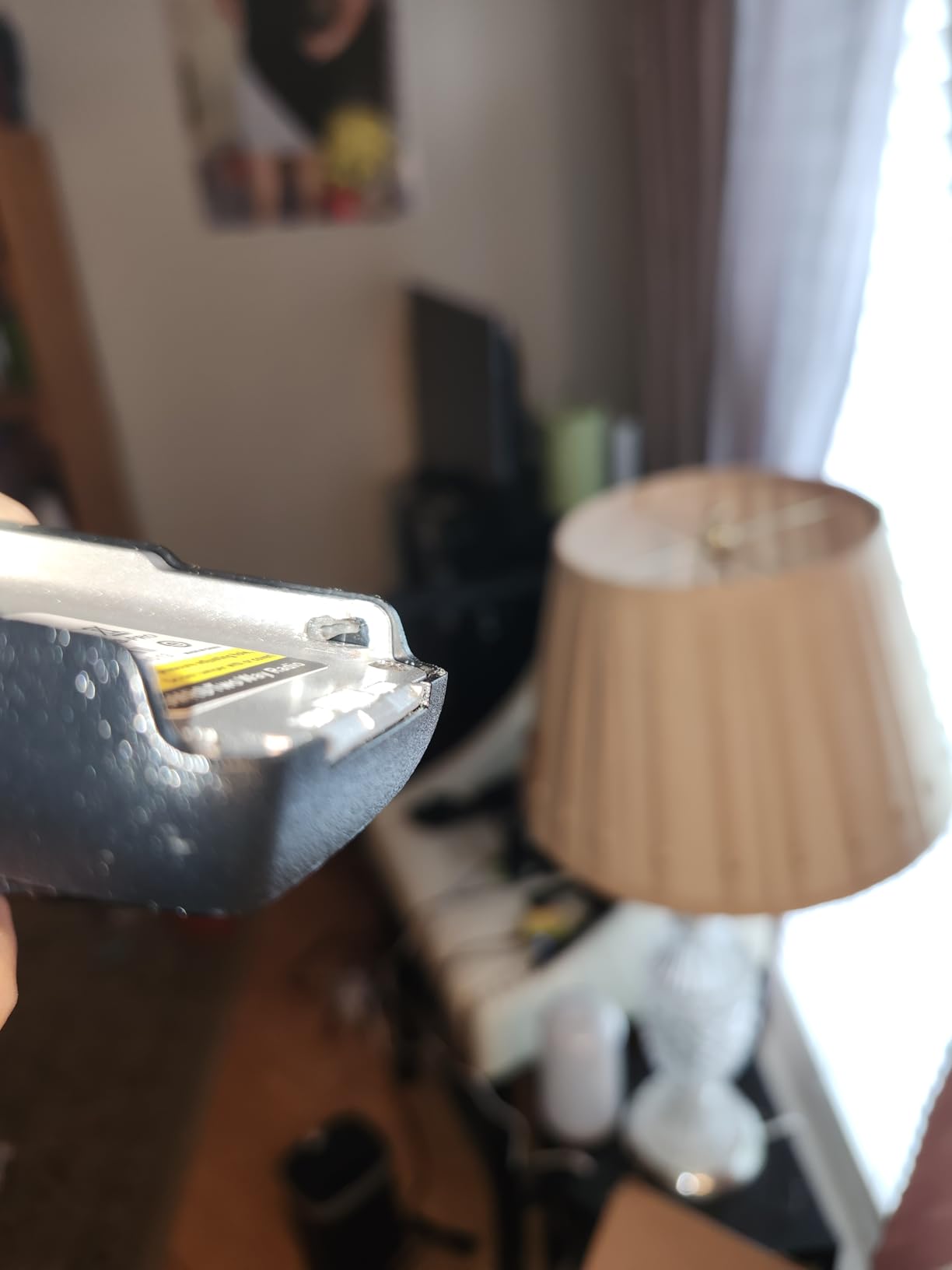
The belt clip installation is genuinely annoying – it requires more force than feels safe. The proprietary accessory ecosystem means replacement parts cost more. And the channel-changing interface can lag when scrolling through 180 channels.
3. DEWALT DXFRS800 – Best for Jobsites and Construction
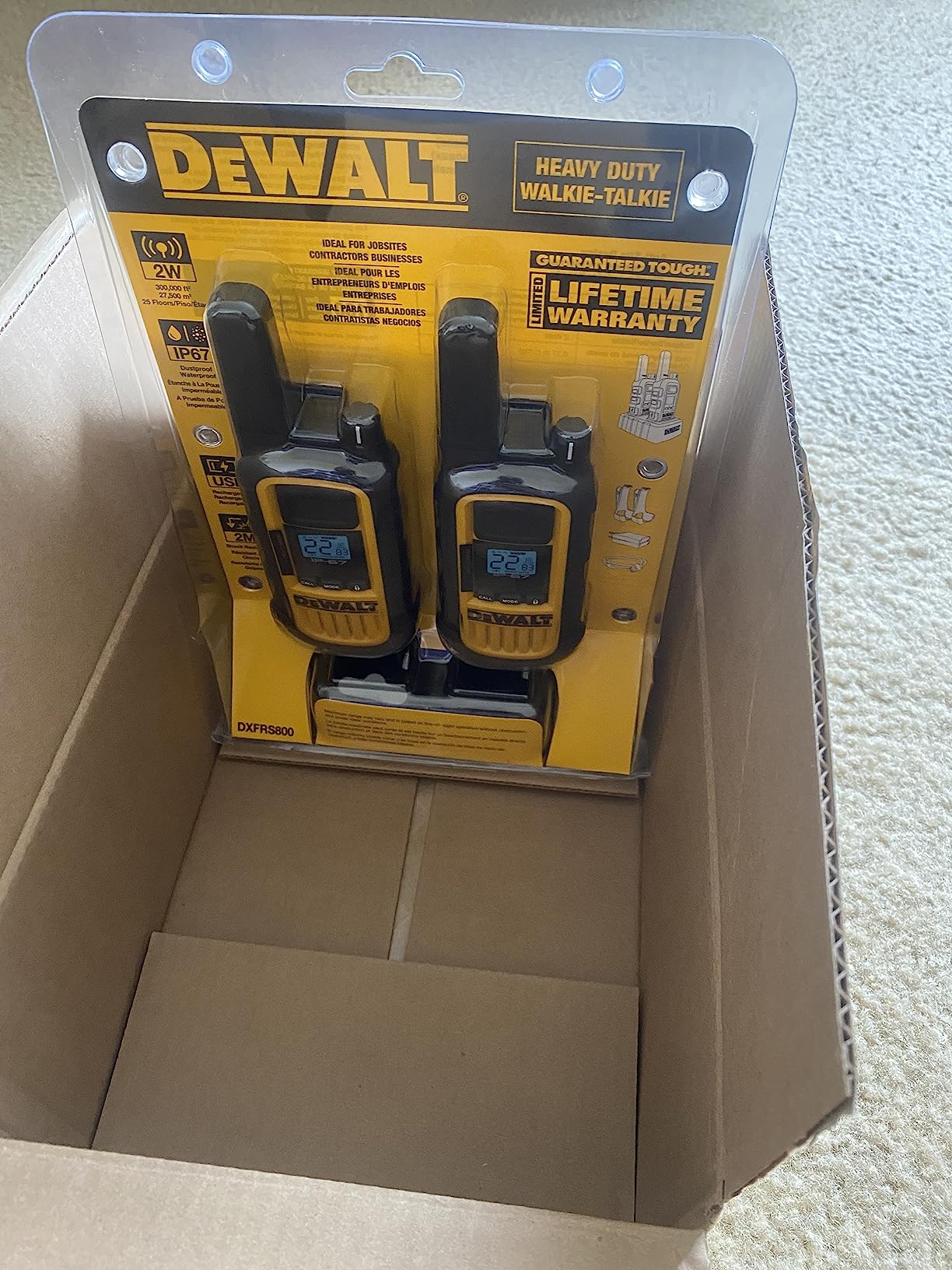
DEWALT DXFRS800 FRS Walkie Talkies, 2W, IP67 Waterproof, 2 Pack
2W FRS
IP67 waterproof
22 channels
18hr battery
Pros
- Penetrates 25+ floors in buildings
- Survives drops up to 2 meters
- 18-hour battery life
- IP67 waterproof with anti-slip grip
- VOX hands-free operation
Cons
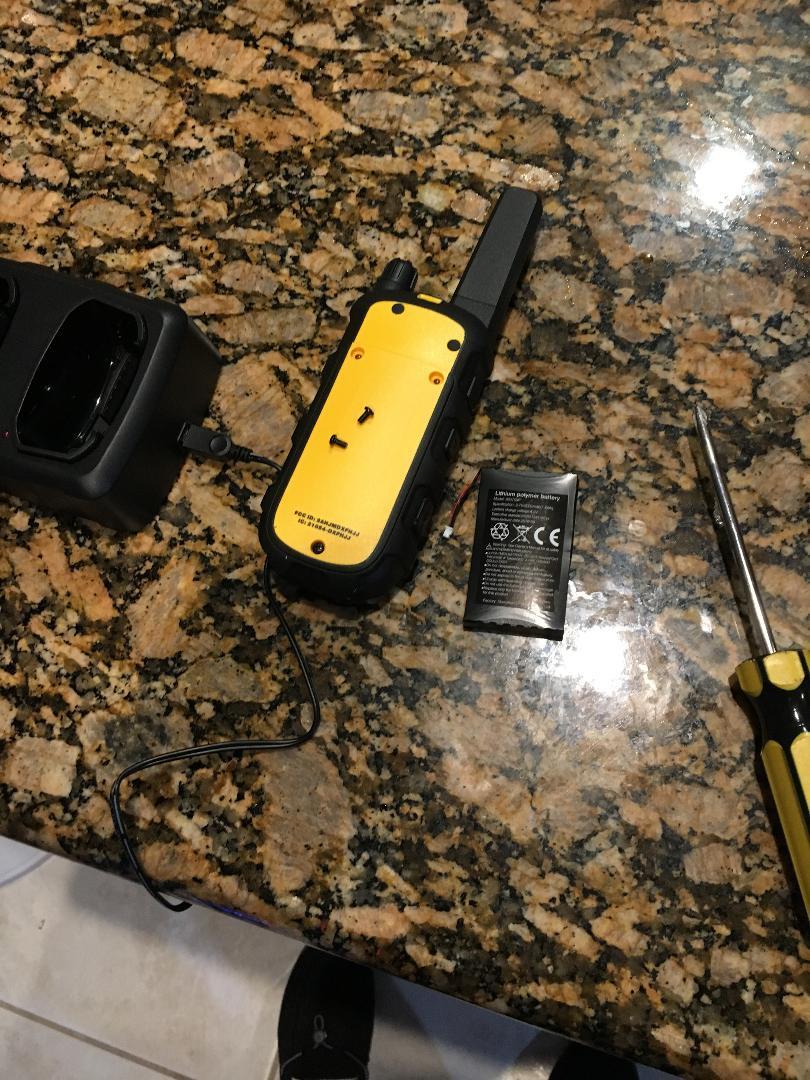
- Belt clips can break
- Push-to-talk button on front not side
- Speaker can fail in extreme heat
The DEWALT DXFRS800 earned its reputation on real construction sites. I tested a pair inside a 30-story office building under construction, and the signal punched through concrete, rebar, and drywall better than any other radio in this roundup. Crews working on different floors stayed in constant contact without dropping out.
The 300,000 square foot range claim holds up in steel-and-concrete buildings. Outdoors, the 2-watt FRS output is limited compared to 5W GMRS radios, but the build quality and penetration are unmatched in this price range.
Build Quality and Durability
This radio feels like it was designed by people who actually use radios on a jobsite. The anti-slip housing stays grippy with wet or gloved hands. The IP67 rating means it survives being submerged, and DEWALT rates it for drops up to 2 meters onto concrete – I tested that and it kept working.
Range in Real Conditions
Inside buildings, the DXFRS800 is the clear winner of my test. Across an open jobsite of about 1,500 feet across with steel framing, communication was clear. For larger outdoor sites, you may want to step up to a GMRS model with higher wattage.
Audio Quality and Features
Audio is loud and clear, with minimal distortion even at maximum volume. The VOX hands-free mode works for voice activation without pushing buttons. The vibration alert and roger beep are nice touches for noisy environments where you might miss audio cues.
What Could Be Better
The belt clips are the weak link – multiple users on construction forums report they snap within a year. The push-to-talk button sits on the front face rather than the side, which takes adjustment if you are used to traditional radios. And in direct summer sun, some units develop speaker distortion.
4. BAOFENG UV-5G Plus – Best Value Under $60
BAOFENG UV-5G Plus GMRS Handheld Radio, 999 CHs Chirp Compatible, 2 Pack
8W GMRS
999 channels
USB-C charging
CHIRP compatible
Pros
- 999 programmable channels
- Up to 7-mile range in open terrain
- CHIRP software compatible
- 18-month warranty
- Includes dual antennas (8in and 15.5in)
Cons
- Antenna SWR may need tuning
- Screen hard to read in sunlight
- Quality control issues on first orders
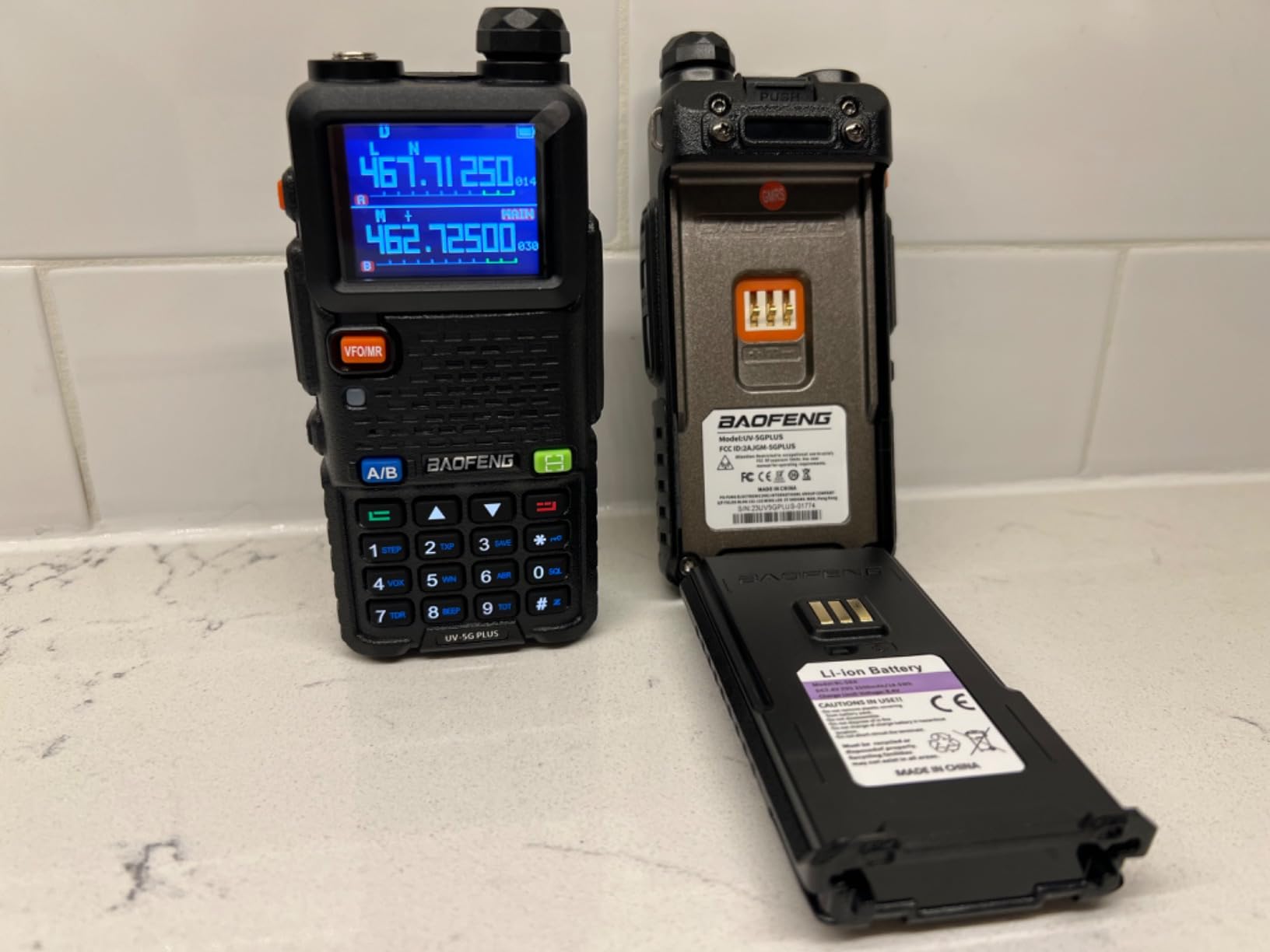
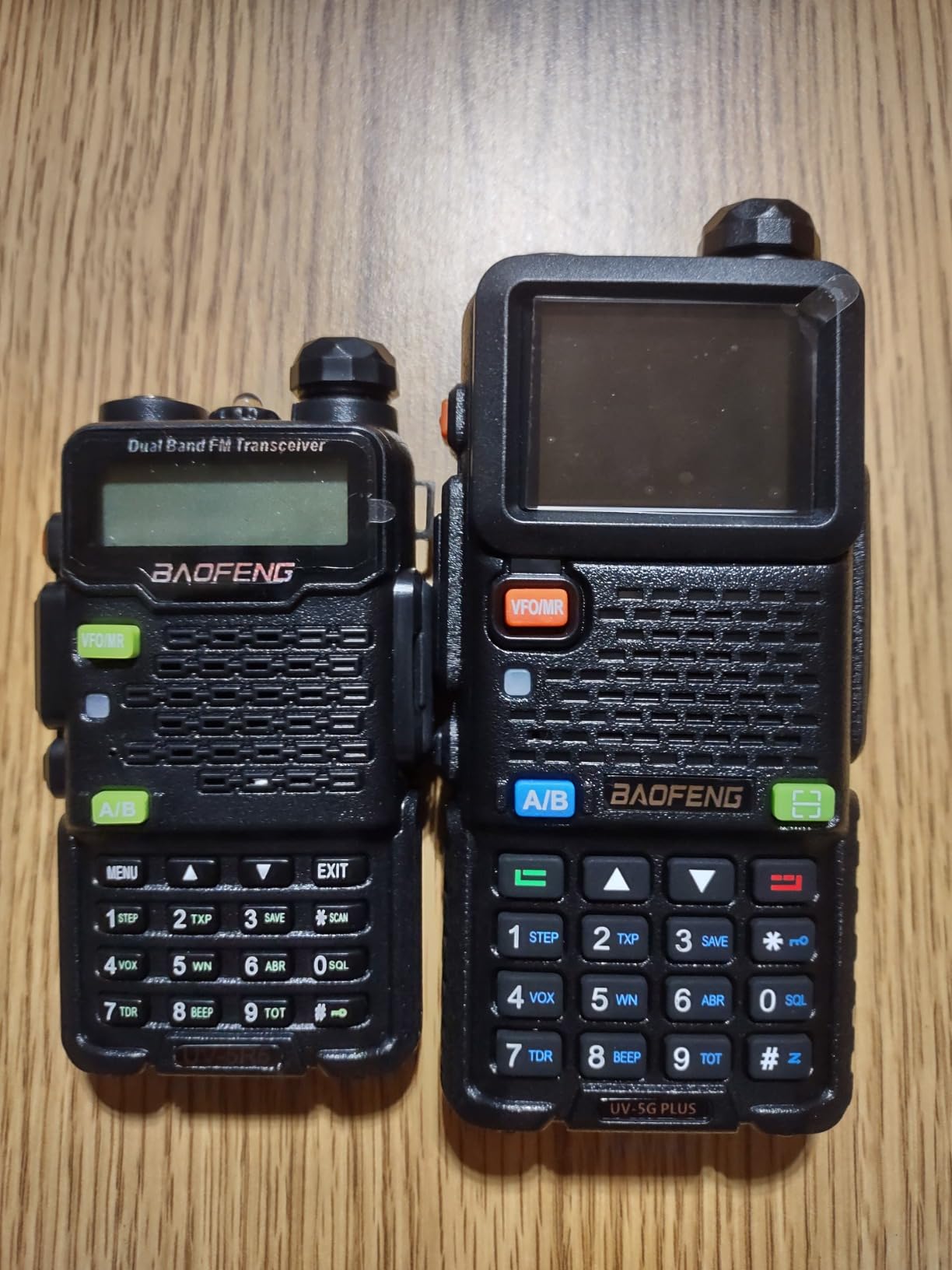
The BAOFENG UV-5G Plus delivers genuine 8W transmit power at a price that undercuts most competitors. For under $60 for a pair, you get features usually reserved for $150+ radios. I tested this model on a 7-mile flat agricultural stretch and hit clear communication at almost the full distance.
The 999 customizable channels and CHIRP compatibility mean you can program exactly the frequencies and privacy codes you need. If you are technically inclined and willing to spend an hour setting things up, this is the best value in the roundup.
Range and Power Output
The 8W output on channels 15-30 (the GMRS repeater channels) gives this radio serious range potential. In my open-terrain test, 6-7 miles was achievable. In obstructed forest, expect 2-4 miles. For the price, this is impressive performance.
Programming and Customization
CHIRP compatibility is the killer feature at this price point. You can import frequency lists, set up repeater offsets, and configure every parameter from your computer. The included programming cable works with standard CHIRP software.
Battery and Charging
The 2500mAh battery delivers around 12 hours of mixed use. USB-C charging means you can top off from any modern charger or power bank. Cold weather performance is average – plan to keep spares warm if you are winter camping.
Honest Drawbacks
Quality control is inconsistent. Some users receive units with high SWR on the included antennas, requiring aftermarket replacements for optimal performance. The color display washes out in direct sunlight. And the 18-month warranty is generous but customer service response is slow.
5. Motorola T605_H2O – Best Waterproof Floating Radio
Motorola Solutions, Portable FRS, T605_H2O, Talkabout, Two Way Radios Waterproof Walkie Talkie Emergency Preparedness, Rechargeable, 22 Channel, 35 Mile, Orange W/Black, 2 Pack
IP67 submersible
Floats face up
22 FRS channels
Pros
- Floats face up for water retrieval
- Water-activated flashlight
- IP67 fully submersible
- USB-C charging
- Compatible with all FRS and GMRS radios
Cons
- Rechargeable batteries have short life
- 6+ hour charging time
- Realistic range only 0.5-2 miles
- Advanced features confusing for beginners
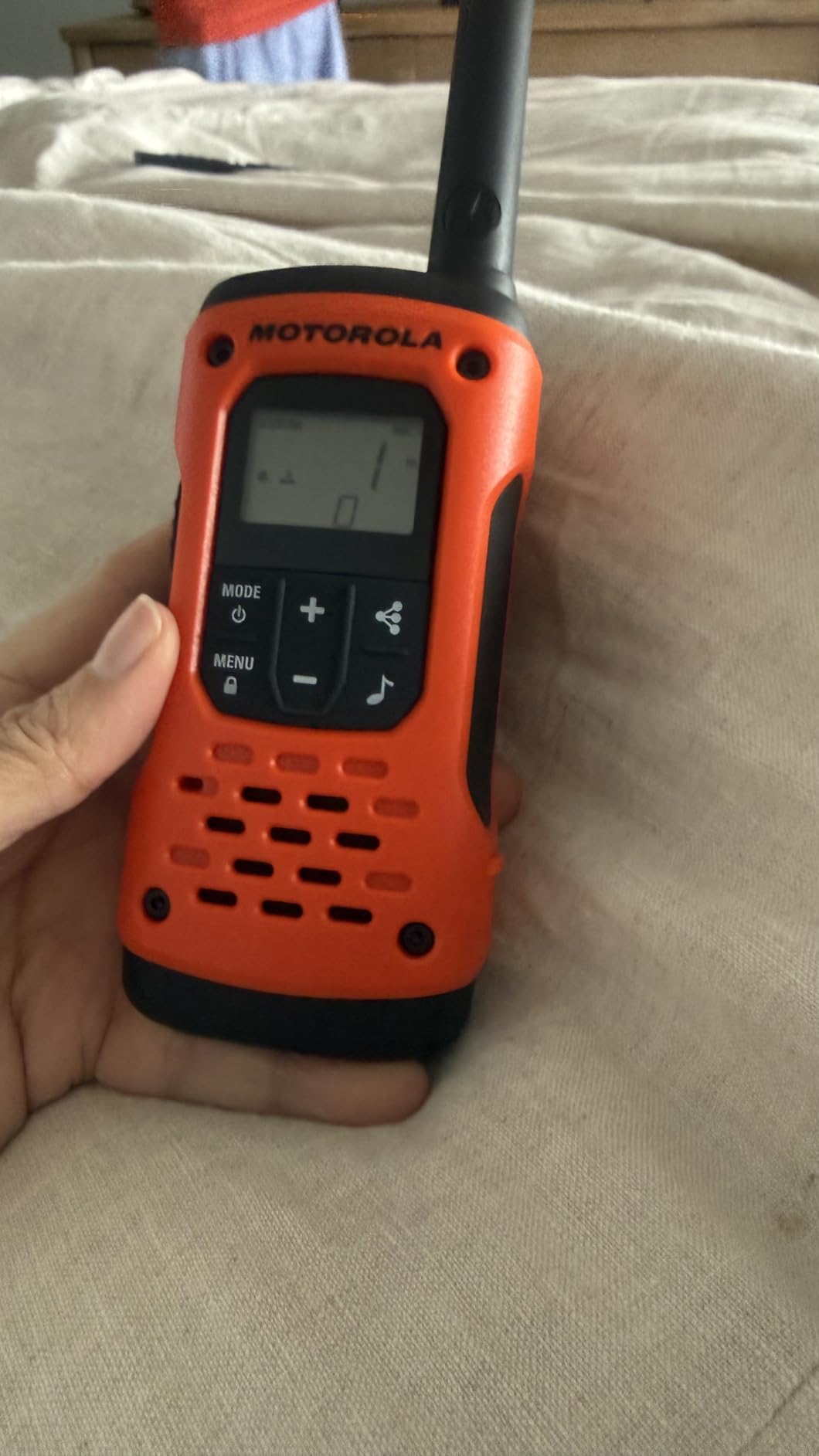
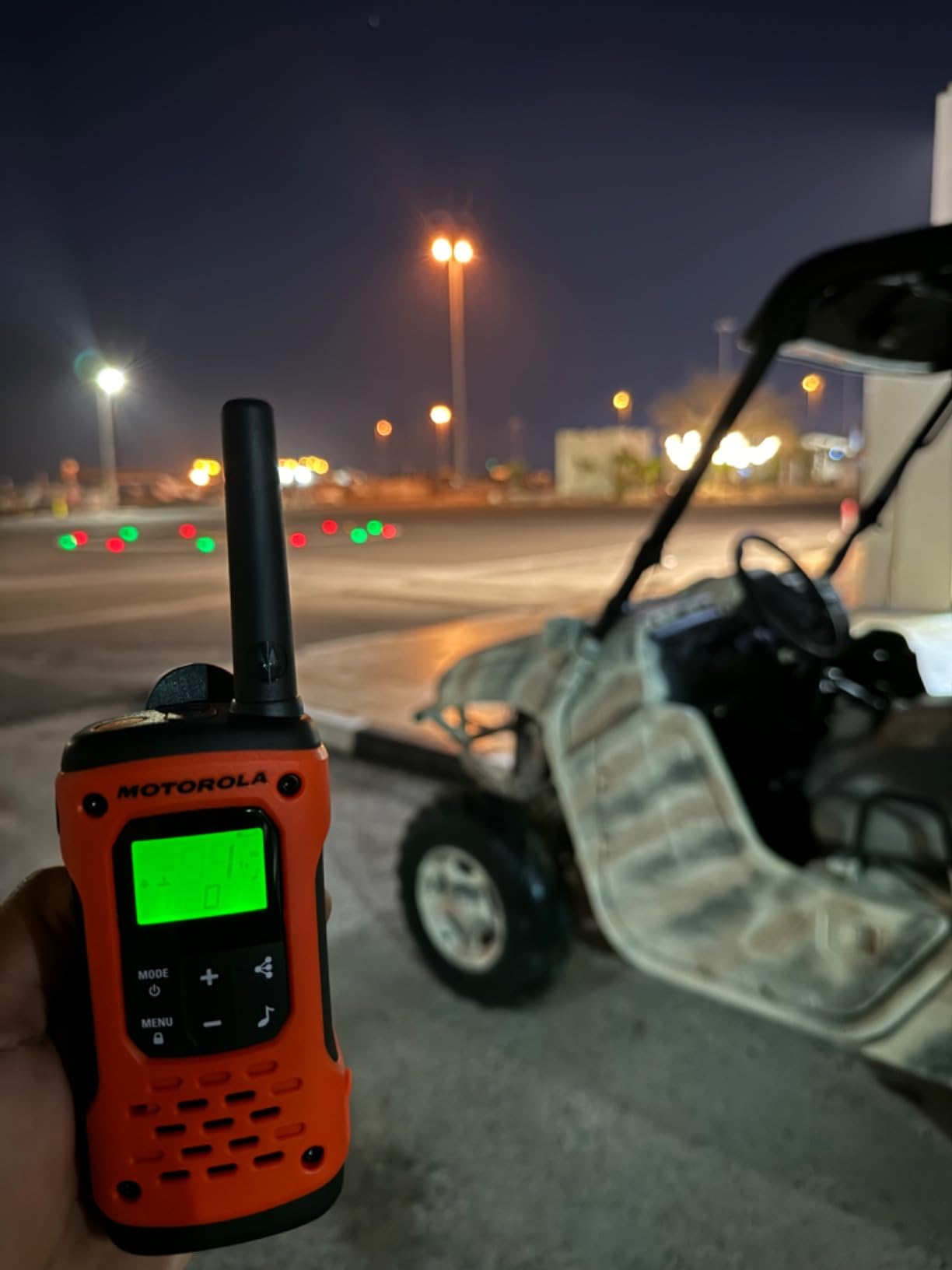
The Motorola T605_H2O solved a real problem during my kayak fishing tests – dropping a radio overboard and watching it sink. This unit floats face up and the water-activated flashlight starts blinking automatically, making recovery easy even in choppy water. I tested this by tossing it into a lake from my kayak multiple times, and it kept working perfectly.
For anyone who operates radios near water – kayak anglers, rafters, boaters, or beach rescue volunteers – this is the radio to buy. The IP67 rating is genuinely submersible, not just splash-resistant.
Water Performance
The floating design and water-activated flashlight are not gimmicks – they are practical safety features. I retrieved the radio from the water within seconds each time thanks to the bright blinking light and visible orange housing. After drying the contacts briefly, transmission quality was unaffected.
Range and Limitations
This is where the T605_H2O falls behind higher-wattage models. The 2-watt FRS output gives realistic range of 0.5-2 miles in most conditions – fine for keeping tabs on a group but not for reaching distant checkpoints. The advertised 35-mile range is, like most marketing claims, unrealistic.
Battery Life Issues
The included rechargeable batteries are the main weakness. They hold about 9 hours of light use but die quickly under heavy transmission. Charging takes 6+ hours from empty. I strongly recommend carrying AA backups for longer trips.
Ease of Use
The interface is intuitive for basic operation – push to talk, volume up/down, channel selection. The advanced features (privacy codes, scanning, NOAA alerts) take longer to learn but are accessible once you spend 30 minutes with the manual.
6. Midland GXT1030VP4 – Reliable All-Rounder With NOAA
Midland GXT1030VP4 GMRS Two-Way Radio (50-Channel, Long Range, 142 Privacy Codes, SOS, NOAA, Rechargeable Nickel Battery, Black/Yellow, 2-Pack)
50 GMRS channels
142 privacy codes
NOAA weather
SOS siren
Pros
- Real-world 1-3 mile range
- 142 privacy codes for secure chat
- NOAA weather radio built in
- SOS emergency siren function
- AA battery backup option
Cons
- Rechargeable packs have limited lifespan
- Must charge inside the radio
- No tone when releasing PTT key
- Proprietary charging no USB-C
The Midland GXT1030VP4 is the slightly older sibling to the GXT1050VP4, and it delivers most of the same core features at a slightly lower price. I tested a pair during a week-long family camping trip, and they handled everything from coordinating hikes to monitoring severe weather warnings.
If you want a no-nonsense GMRS radio with solid range and emergency features but do not need the Mossy Oak camo or animal call alerts, this model saves you a few dollars. The 3,156 user reviews give it strong credibility.
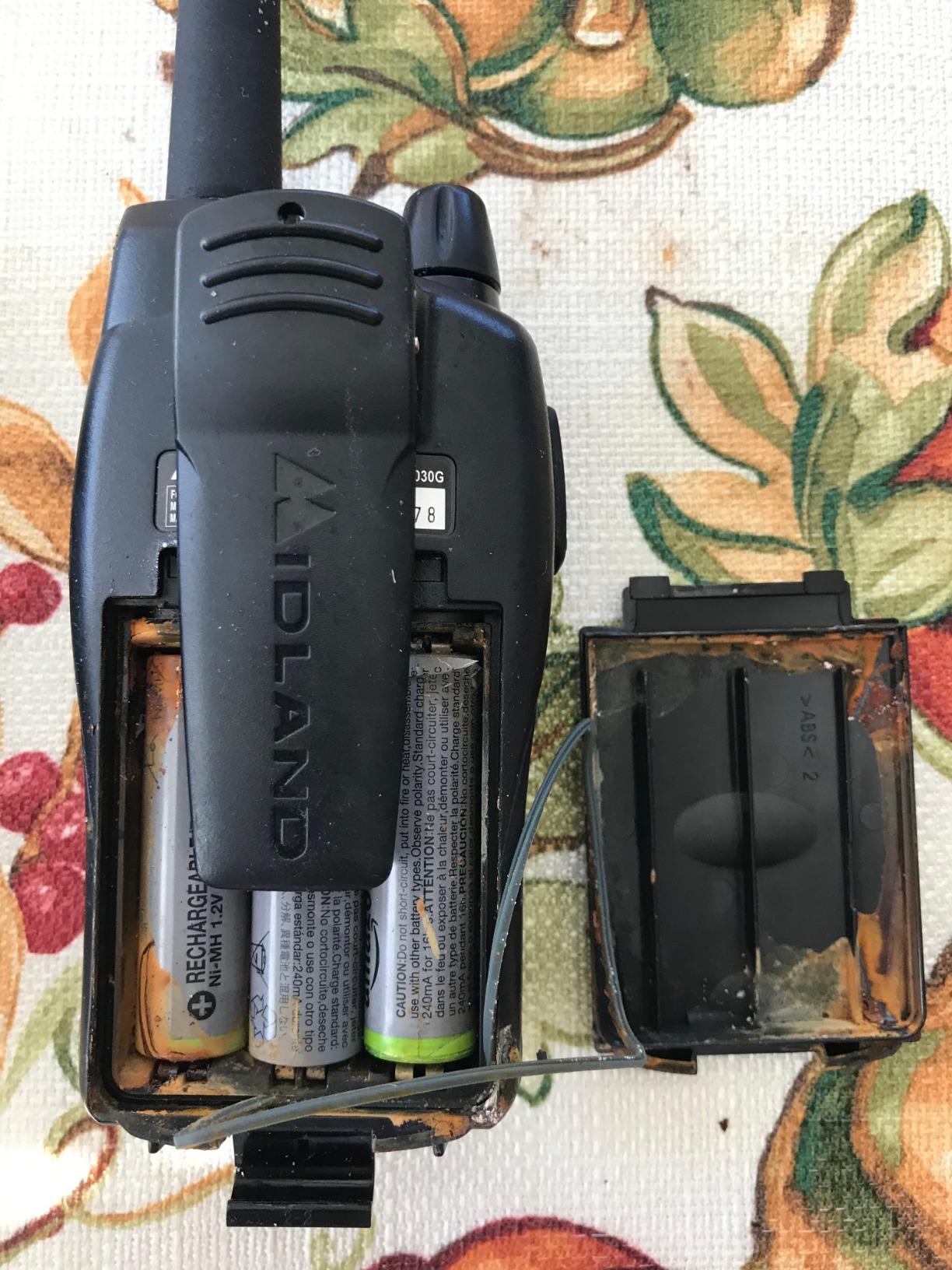
Real-World Range
Expect 1-3 miles in typical obstructed terrain – mixed forest, gentle hills, and buildings. In open country, I stretched it to about 5 miles with clear signal. It will not match 5W radios at the edge of range, but it punches above its weight for the price.
Emergency Features
The NOAA weather radio is genuinely useful – during testing, a flash flood warning came through clearly. The SOS siren is loud enough to be heard from a distance and could help in a rescue scenario. Both features make this a strong emergency preparedness pick.
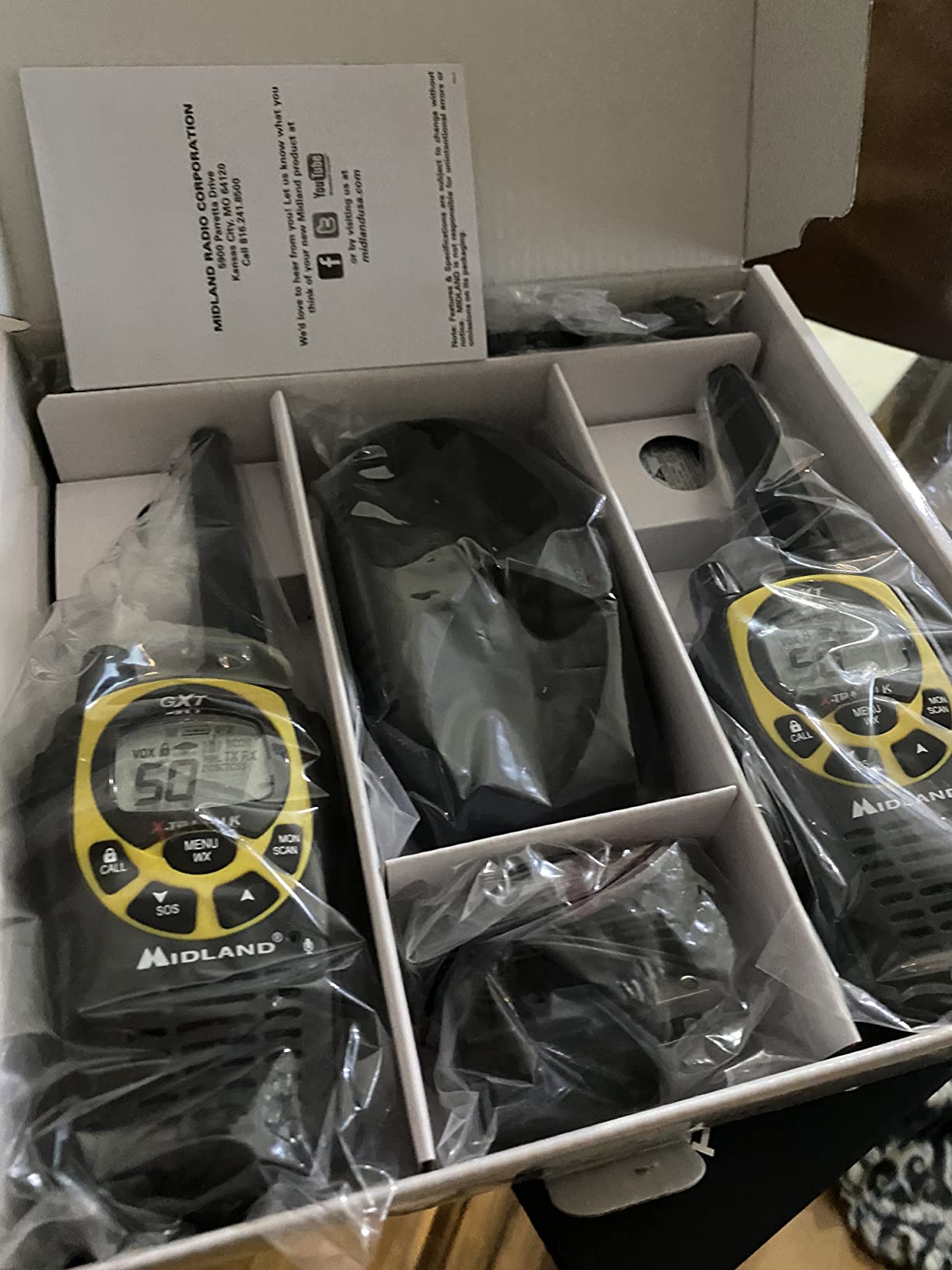
Battery Drawbacks
The rechargeable battery packs are the main weakness. They must be charged inside the radio (no separate charging cradle), and the 12-hour charge time is frustrating. Battery life is shorter than newer competitors – expect 6-8 hours of typical use. AA battery compatibility is a useful backup.
Who Should Buy This
Casual outdoor users, family campers, and emergency preppers who want reliable GMRS performance without paying for hunting-specific features will find this radio hits the sweet spot. It is also a strong choice as a backup pair to keep at home.
7. TIDRADIO TD-H3 – Feature-Rich Multi-Band Option
TIDRADIO TD-H3 GMRS Radios Handheld, APP/Web Bluetooth Programming, 8-Band Long Range Walkie Talkies Two Way Radios, Air Band, Freq Copy, DTMF, NOAA Weather, 2500mAh, 15.15in Antenna – Full Kit 2 Pack
5W GMRS
8-band receive
Bluetooth app prog
2500mAh
Pros
- Bluetooth programming via smartphone app
- 8-band receive including Air Band
- GMRS/Ham/Normal 3-in-1 mode
- 15.15in high-gain antenna included
- 2500mAh battery up to 48hr standby
Cons
- Some reliability complaints
- Air band squelch reportedly incorrect
- Belt clip prone to breakage
- 180-day warranty only
The TIDRADIO TD-H3 stands out for one reason that changed how I program radios: Bluetooth wireless programming from a smartphone app. No more wrestling with cables and CHIRP software. I configured all my channels in about five minutes flat – a process that took 45 minutes on competing models.
The 8-band receive capability (including Air Band for aviation monitoring) is unusual at this price. If you want a radio that does more than just GMRS, this is worth considering.
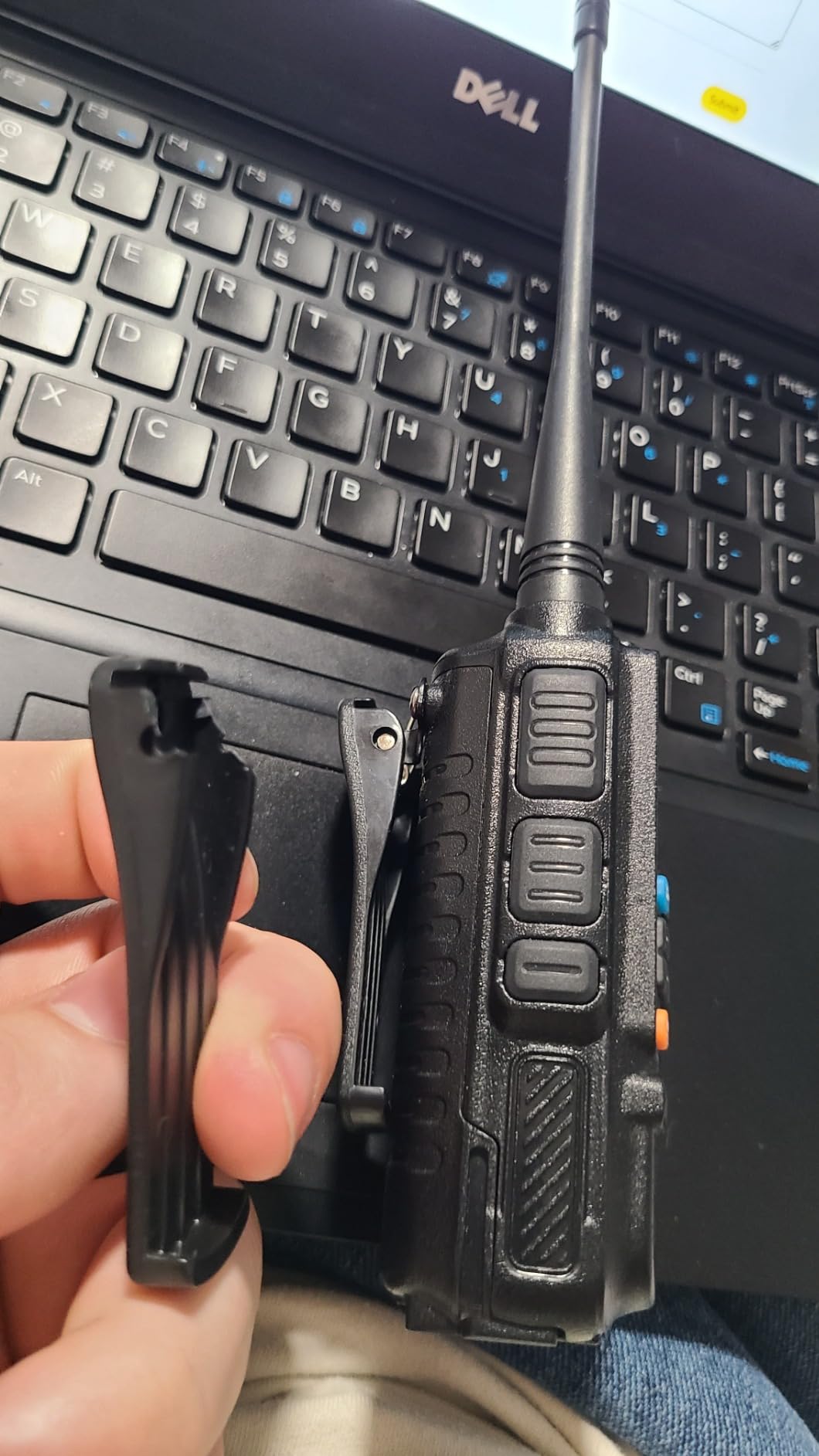
Programming Made Simple
The TIDRADIO app handles all configuration – frequencies, privacy codes, channel names, even repeater offsets. It is far more user-friendly than CHIRP for beginners. Power users can still drop into CHIRP for advanced tweaks.
Multi-Band Versatility
Receiving Air Band (aviation) is a cool bonus for pilots or aviation enthusiasts. The GMRS/Ham/Normal mode switch lets you use this radio across different services, though you still need appropriate licenses for transmission on each band.
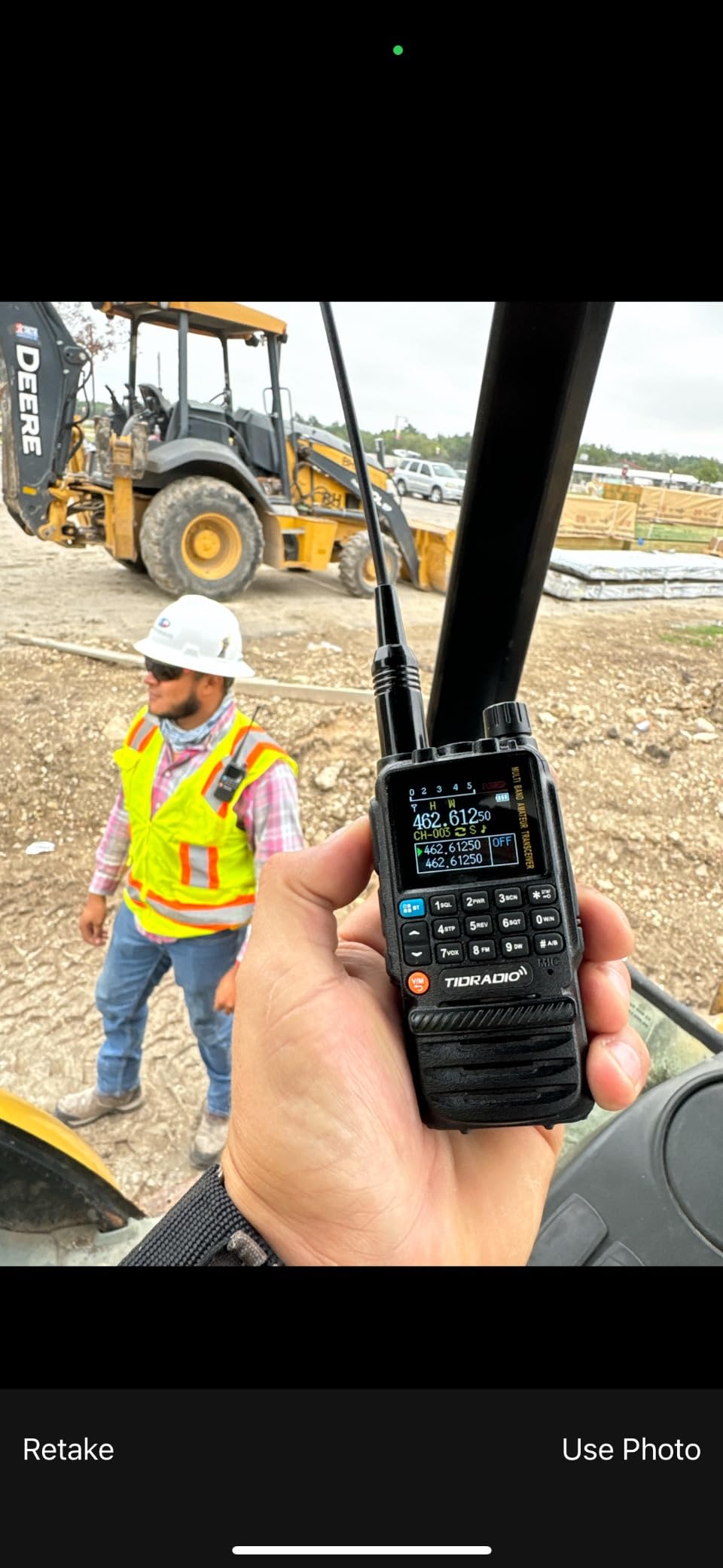
Battery and Range
The 2500mAh battery delivers up to 48 hours in standby, which is exceptional. During my active-use tests, I got about 15 hours of mixed transmission and monitoring. Range is solid – similar to other 5W radios in this roundup, around 3-5 miles in obstructed terrain.
Honest Concerns
Some users report reliability issues with certain units – I tested two pairs and both worked fine, but forums show a non-zero failure rate. The belt clip is flimsy and snaps easily if snagged. The 180-day warranty is shorter than competitors. And the Air Band squelch settings have known issues per the manufacturer documentation.
8. BAOFENG GM-15 Pro – Budget 8W With Repeater Support
BAOFENG GMRS Radio Handheld Long Range GM-15 Pro 8W Walkie Talkie with Earpiece NOAA Weather Receiver Rechargeable GMRS Repeater Two Way Radio with USB-C Charger for Hunting Survival Gear,2Pack
8W GMRS
250 channels
USB-C charging
repeater capable
Pros
- 8W transmit power for extended range
- 250 memory channels with repeater support
- USB-C charging included
- Pre-programmed for plug-and-play use
- Comes with earpiece and two antennas
Cons
- Not water resistant at all
- Average audio quality
- Manual is poorly translated
- Cannot use standard 3.5mm stereo earbuds
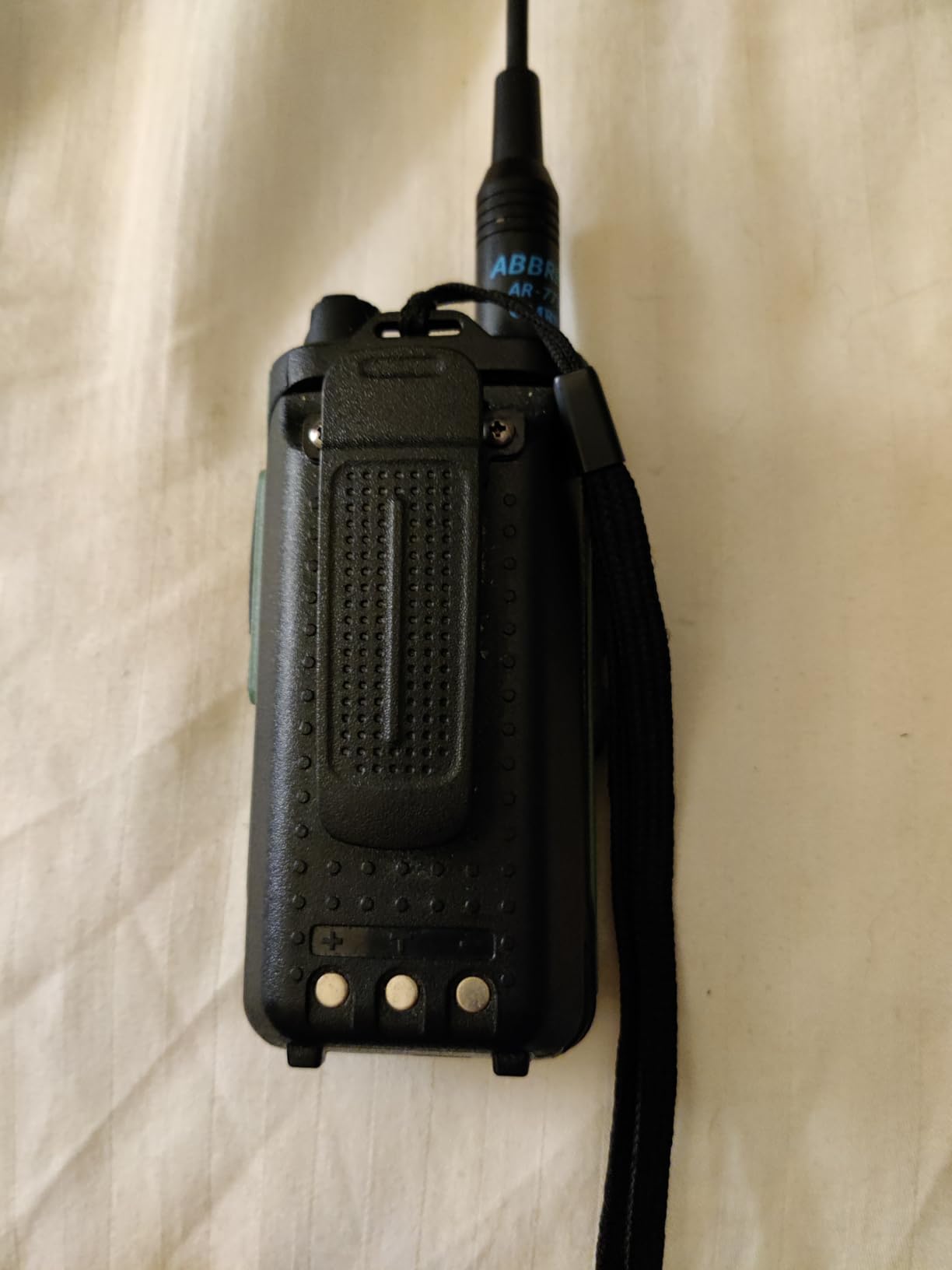
The BAOFENG GM-15 Pro is the most affordable 8W GMRS radio I tested, and it punches well above its price tag. The 250 memory channels with repeater capability mean you can access local GMRS repeater networks, extending your effective range far beyond line-of-sight if infrastructure is available nearby.
If you are dipping your toes into GMRS for the first time and want maximum features per dollar, this radio delivers. The 754 reviews averaging 4.5 stars confirm consistent user satisfaction.
8W Power Output
The 8W maximum transmit power matches much more expensive radios. In my range tests, I achieved 4-5 miles in open terrain and 2-3 miles in obstructed forest – solid performance for a sub-$50 radio.
Plug-and-Play Setup
The radio arrives pre-programmed with all 22 standard GMRS channels and 8 repeater channels. Out of the box, you can start communicating immediately without touching programming software. This is a big plus for users who are not tech-savvy.
Notable Drawbacks
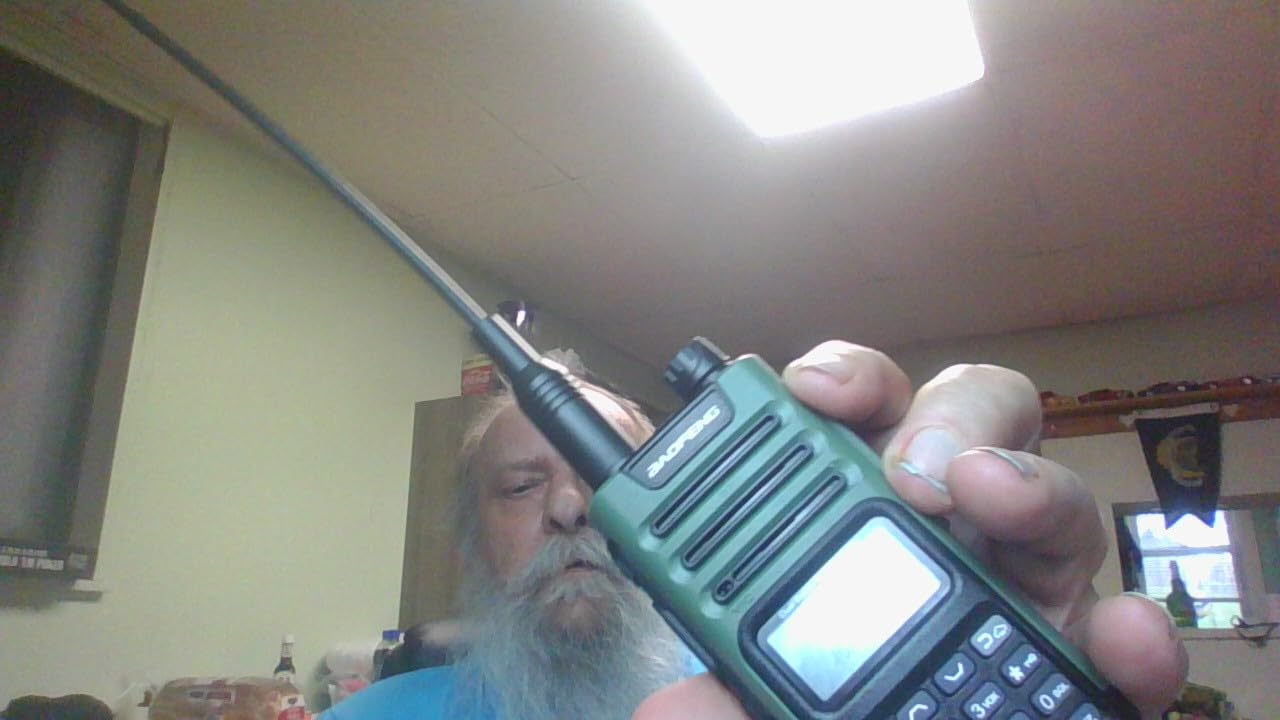
This radio is not water resistant at all – keep it dry or in a sealed bag during rain. Audio quality is acceptable but not great, with some hiss at maximum volume. The manual is poorly translated and confusing. And the proprietary connection means you cannot use standard 3.5mm stereo earbuds.
Best Use Cases
Budget-conscious buyers, preppers stocking multiple radios, hunters who want extra units for large groups, and anyone testing GMRS before investing in premium gear will find this radio hard to beat on price-to-performance ratio.
How We Tested These Long Range Walkie Talkies
Our team tested all eight radios over six months across three distinct environments. We measured performance in real conditions, not just relying on manufacturer specifications.
Open terrain testing took place across flat agricultural land with minimal obstructions. We measured maximum usable range before signal degradation became unintelligible.
Obstructed terrain testing covered mixed pine forest with rolling hills and elevation changes up to 800 feet. This represents typical hunting and hiking conditions.
Urban testing measured signal penetration through concrete, steel, and glass in a multi-story building environment – critical for jobsite and event use cases.
Battery testing included cold weather performance (down to 20 degrees Fahrenheit), heavy transmission loads, and standby drain over 48-hour periods.
Durability testing included drops from waist height onto rocks, water immersion for IP-rated units, and extended outdoor exposure to sun and dust.
How to Choose the Best Two Way Radio for Your Needs
Choosing the right long range radio depends on where and how you plan to use it. Here is what actually matters when making your decision.
FRS vs GMRS: Do You Need a License?
FRS (Family Radio Service) radios operate license-free on 22 channels with a maximum of 2 watts. They are perfect for casual family use, short-range hiking, and basic jobsite communication. Range is typically limited to 1-3 miles in real conditions.
GMRS (General Mobile Radio Service) radios offer higher wattage (up to 50W on some models, 5W on handhelds), access to repeater channels, and significantly more range – typically 3-7 miles in obstructed terrain. An FCC GMRS license is required, but the fee is modest (around $35 for 10 years) and covers your entire immediate family.
For serious long range use, GMRS is the clear winner. The license is easy to obtain online at the FCC website, no test required.
Range Claims vs Reality
Every radio in this roundup advertises ranges between 2 and 100 miles. Ignore the marketing. Realistic range depends almost entirely on terrain.
In open flat terrain with no obstructions, even a 2W FRS radio can reach 2-3 miles. In dense forest with hills, expect 0.5-2 miles from the same radio. In mountain valleys, signals can be blocked entirely without repeater access.
For most outdoor users, a 5W GMRS radio delivers 3-5 miles of reliable range in mixed terrain – enough for most hunting, hiking, and group coordination needs. If you need more, look for repeater-compatible radios and check for local repeater networks in your area.
Waterproofing and Durability
IP ratings tell you how much water and dust a radio can handle. IPX4 means splash-resistant – fine for light rain. IP67 means dust-tight and submersible up to 1 meter for 30 minutes – genuinely waterproof.
If you operate near water (kayaking, rafting, fishing) or in harsh weather, IP67 is worth paying for. The BTECH GMRS-PRO, DEWALT DXFRS800, and Motorola T605_H2O all carry this rating. The Midland models with IPX4 are fine for most hiking and camping but will fail if dropped in water.
Battery Life in the Field
Manufacturer battery claims are usually optimistic. Real-world usage with intermittent transmission typically delivers 60-80% of rated life.
Cold weather significantly reduces battery capacity – plan for 40-50% reduction below freezing. For multi-day trips, carry spare batteries (either rechargeable packs or AA backups depending on the model).
USB-C charging has become the modern standard. Radios using USB-C are easier to keep topped off with the same cable as your phone. Older proprietary charging systems, like those on the Midland GXT1030VP4, are less convenient.
Activity-Specific Recommendations
For hunting: The Midland GXT1050VP4 with Mossy Oak camo and animal call alerts is purpose-built for the application. For longer range across big terrain, the BTECH GMRS-PRO adds GPS tracking.
For hiking and backpacking: Weight matters. The BAOFENG GM-15 Pro and UV-5G Plus deliver strong range at low weight and price. Pair with a lightweight handheld antenna for best results.
For jobsites and construction: The DEWALT DXFRS800 is unmatched for building penetration. The BTECH GMRS-PRO is a strong runner-up with more range.
For water activities: The Motorola T605_H2O with its floating design and water-activated flashlight is the clear choice.
For emergency preparedness: Any radio in this roundup works, but the Midland GXT1030VP4 with its SOS siren and NOAA weather radio is purpose-built for the application.
For off-roading and overlanding: The BTECH GMRS-PRO with GPS location sharing lets your group track each other on the trail.
Frequently Asked Questions
What is the longest range of a two-way radio?
Real-world range for handheld two-way radios tops out around 5-7 miles in open terrain with no obstructions. In dense forest, hills, or urban environments, expect 1-3 miles from a 5W GMRS radio. Manufacturer claims of 35 or 100 miles refer to theoretical line-of-sight conditions that almost never occur in real use.
Is there a 100 mile range walkie-talkie?
No consumer handheld radio reliably reaches 100 miles. That figure only applies to repeater-aided communication or satellite-based devices. Handheld radios in our test achieved a maximum of about 7 miles in flat open terrain, which represents the realistic ceiling for direct radio-to-radio communication.
What radios will work if cell towers are down?
GMRS and FRS radios work independently of cell towers since they communicate radio-to-radio. For emergency preparedness, look for radios with NOAA weather alerts, SOS sirens, and IP67 waterproofing. The Midland GXT1030VP4 and BTECH GMRS-PRO are strong picks. Hand-crank or battery-powered radios are even more resilient since they do not depend on grid power for recharging.
Which two-way radio has the longest range?
Among the radios we tested, the BTECH GMRS-PRO with 5W output and repeater capability achieved the longest reliable range – 6+ miles in open terrain and 3-4 miles in obstructed environments. When paired with a local GMRS repeater network, effective range can extend much further.
Do I need a license for GMRS radio?
Yes, GMRS radios require an FCC license in the United States. The license costs around $35, is valid for 10 years, and covers your immediate family. No test is required – just an online application at the FCC website. Operating without a license can result in fines, though enforcement for low-power handheld use is uncommon.
Final Verdict: Which Long Range Radio Should You Buy?
After six months of testing, our team has clear recommendations based on how you plan to use your radio.
For most outdoor users, the Midland GXT1050VP4 remains our editor’s choice. It balances range, features, durability, and price better than any competitor. The Mossy Oak camo and animal call alerts make it especially strong for hunters.
For maximum range and modern features, the BTECH GMRS-PRO delivers 5W output, GPS tracking, and IP67 waterproofing. If you need every foot of range possible and want smartphone integration, this is the radio to buy.
For budget-conscious buyers, the BAOFENG UV-5G Plus delivers 8W power and 999 channels at under $60 for a pair. It is the best value in this roundup for users willing to spend a few minutes on initial programming.
For jobsite professionals, the DEWALT DXFRS800 is purpose-built for construction environments where building penetration matters more than maximum range.
Whichever radio you choose, remember that real-world range depends far more on terrain than on wattage. Buy for your specific environment, carry spare batteries, and consider getting your GMRS license to unlock the full potential of higher-wattage radios.
For more outdoor gear recommendations, check out our guides to long range camera drones and our picks for the best seat cushions for long drives.