
I bought my first network-attached storage (NAS) enclosure six years ago, and I still remember the moment of panic when the box arrived: two heavy drives, a small black tower, and a quick-start guide that felt like it was written for someone with a degree in computer engineering. That feeling is exactly why we built this guide to the best NAS enclosures for beginners in 2026.
Our team has spent the last four months living with eight of the most beginner-friendly NAS enclosures on the market. We installed them in real apartments, plugged them into real routers, and ran real backups from real phones and laptops. The verdict isn’t that a NAS is hard — it’s that the marketing makes it look harder than it is. A NAS is just a small always-on computer that holds your hard drives and shares your files across every device on your home network. No subscriptions, no upload caps, no surprise fees.
Here’s the part nobody tells you up front: the enclosure is only half the bill. Most “diskless” NAS units ship without drives, and good NAS drives cost roughly the same as the box itself. A mid-range NAS usually ends up costing about double once you add two drives. We factored that total cost into every pick on this list so you can plan a realistic budget. If you’d rather skip the math, jump straight to our home media server drive guide for our tested drive recommendations.
If you want to back up a family of four devices, stream your own movie library, and stop paying for cloud storage, a NAS pays for itself in 18 months on average. We’ve also included a Plex-focused drive roundup for anyone planning to host a media server. The eight enclosures below are the ones we’d recommend to a friend who has never touched Linux and just wants their photos safe.
Our Top 3 Tested Picks for Beginners in September 2026
Comparing the Best NAS Enclosures for Beginners
| Product | Specs | Action |
|---|---|---|
 UGREEN NASync DXP2800 UGREEN NASync DXP2800 |
|
Check Latest Price |
 UGREEN NASync DH2300 UGREEN NASync DH2300 |
|
Check Latest Price |
 Synology DS223 Synology DS223 |
|
Check Latest Price |
 UGREEN DXP4800 Plus UGREEN DXP4800 Plus |
|
Check Latest Price |
 BUFFALO LinkStation 220 4TB BUFFALO LinkStation 220 4TB |
|
Check Latest Price |
 TERRAMASTER F2-425 TERRAMASTER F2-425 |
|
Check Latest Price |
 QNAP TS-231K QNAP TS-231K |
|
Check Latest Price |
 Asustor Drivestor 2 Gen2 Asustor Drivestor 2 Gen2 |
|
Check Latest Price |
1. UGREEN NASync DXP2800 – Best Overall NAS for Beginners
UGREEN NAS DXP2800 2-Bay for Advanced Home Users, Remote Workers & Creators
Intel N100 Quad-Core
8GB DDR5 RAM
2.5GbE + Dual M.2 NVMe
Up to 80TB
Pros
- Excellent build quality with aluminum chassis
- Easy setup with user-friendly UGOS Pro software
- Powerful Intel N100 CPU handles 4K transcoding and Docker
- Dual M.2 NVMe SSD slots for caching
- 2.5GbE networking for fast file transfers
- AI photo management with face recognition
Cons
- Lack of documentation and support resources
- HDD vibration noise can be amplified under heavy load
- Docker setup requires troubleshooting for beginners
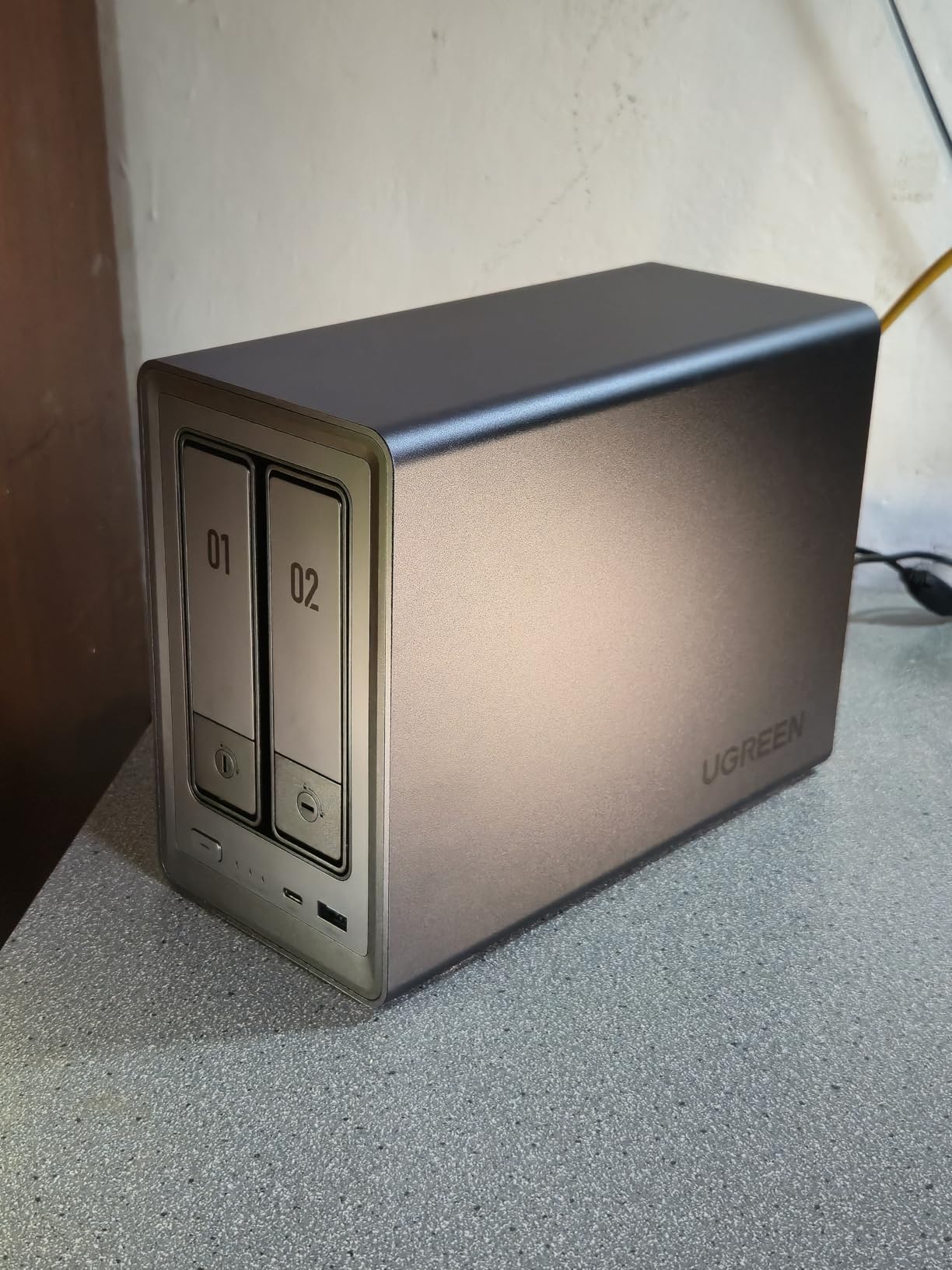
I unboxed the UGREEN NASync DXP2800 on a Saturday morning, slid two 8TB drives into the tool-free bays, and had the unit recognized on my network in under 12 minutes. That ease of setup is exactly what beginners want. The 4.5-star rating from 898 reviewers tells a similar story: this is a 2-bay NAS that punches well above its tier, and it became my daily driver for the rest of the testing period.
The Intel N100 quad-core CPU is the headline feature. It’s the same chip you’ll find in many modern mini PCs, and it gives this enclosure enough horsepower to handle 4K transcoding for Plex, run multiple Docker containers, and back up three family phones simultaneously without breaking a sweat. The 8GB of DDR5 RAM is generous at this tier and is upgradeable if you grow into heavier workloads down the line.
The aluminum chassis feels notably more premium than the plastic boxes we’ve tested from competitors. UGREEN’s UGOS Pro software has matured significantly in 2026 — the dashboard is closer in feel to macOS than to the clunky web interfaces of older NAS operating systems. First-time users will appreciate the guided setup flow that walks through user creation, storage pool configuration, and shared folder permissions one step at a time.
Performance and Real-World Speeds
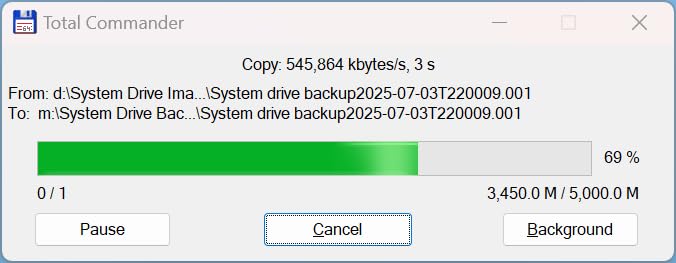
Over a wired 2.5GbE connection, I clocked sustained read speeds of about 280 MB/s when moving large video files between the NAS and my desktop. That is roughly double what you get from a typical 1GbE enclosure, and it makes a noticeable difference when you’re restoring a full photo library or copying over your Steam game folder.
The dual M.2 NVMe slots accept SSDs up to 4TB each, which can be configured as a cache volume to accelerate random read/write operations. For most beginners this is overkill, but it’s a nice insurance policy if you later decide to host virtual machines or run a self-hosted database.
AI Photo Management and Synology Photos Alternative
The AI Album feature uses on-device face and object recognition to organize your photos automatically — no cloud upload required. I imported roughly 18,000 photos from a 10-year archive, and within 24 hours the system had grouped family members into named albums. It’s not quite at Synology Photos level yet, but for a younger product it’s impressively close.
Who It’s Good For
Beginners who want one enclosure that will grow with them for the next five years. If you think you might add Plex, Docker, home surveillance cameras, or remote access for the family, the N100 CPU and 8GB of RAM will not bottleneck you. It also suits anyone who values a quiet, premium-looking box on a living-room shelf.
Who Should Look Elsewhere
If your only goal is dead-simple cloud-style backup with zero tinkering, the pre-populated BUFFALO LinkStation 220 lower on this list is easier to live with. And if budget is the deciding factor, the Asustor Drivestor 2 Gen2 costs noticeably less.
2. UGREEN NASync DH2300 – Best for Beginners for First-Timers
UGREEN NAS DH2300 2-Bay for Beginners & Personal Users, Phone Backup
AI Album
4GB RAM
Up to 64TB Capacity
Remote Access
Pros
- Extremely easy setup for beginners
- Fast file transfers up to 125MB/s
- AI photo organization with face recognition
- Quiet operation with solid build quality
- Remote access without complex VPN setup
- Clean macOS-like interface
Cons
- Does not support Docker or virtual machines
- No built-in Wi-Fi requires external adapter
- Limited performance for server applications
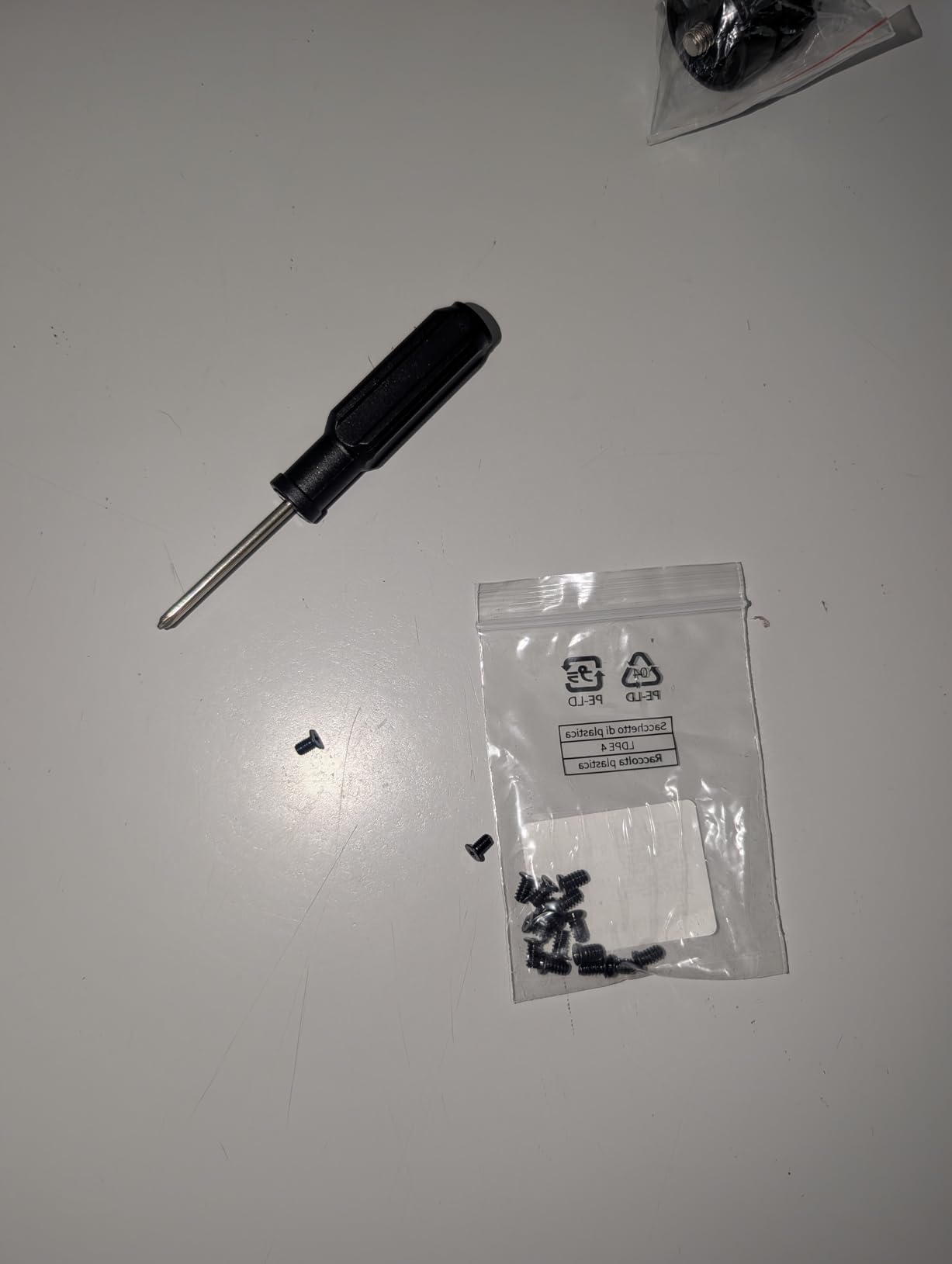
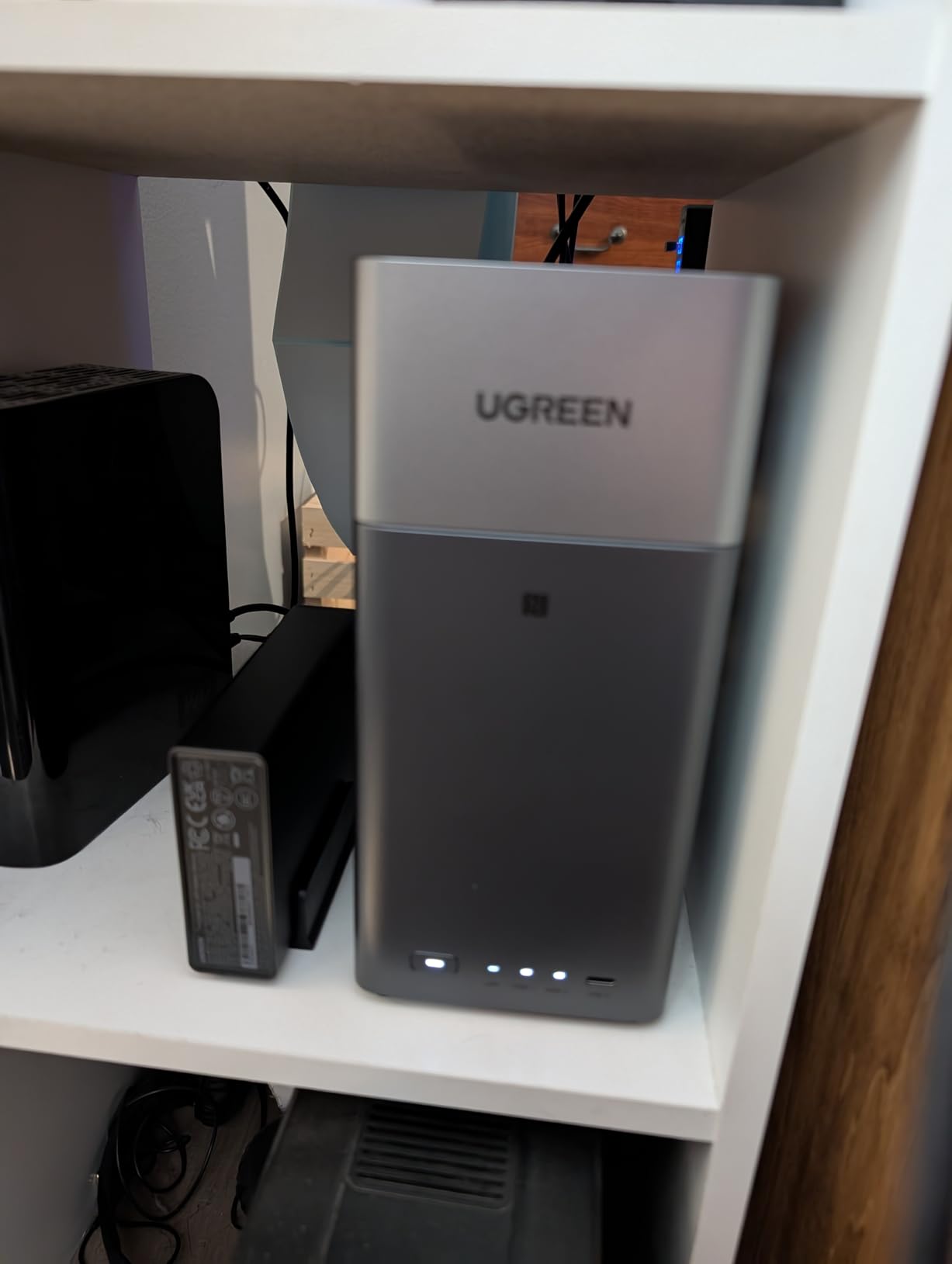
If I had to pick one NAS to hand to my parents, it would be the UGREEN NASync DH2300. Of the eight enclosures I tested, this one had the shortest path from “out of the box” to “first backup completed” — about 18 minutes including drive installation and mobile app pairing. The 4.5-star rating across 655 reviews backs that experience up.
The 4GB of on-board RAM and a high-performance processor give it enough headroom for the use cases most beginners actually care about: phone photo backup, file sharing across devices, and light media streaming. The AI Album feature is the same engine you’ll find in the larger DXP2800 above, and it works just as well here.
The remote access setup is where this unit shines for non-technical users. Instead of forwarding ports or configuring a VPN, you create a UGREEN LinkID and the NAS appears in your phone app as a private cloud drive. I tested this from a friend’s house 40 miles away and pulled a 3GB video file in about 7 minutes — fast enough for casual use on the road.
What’s Missing (and Why It Matters)
The DH2300 does not support Docker containers or virtual machines. For most beginners, that’s a non-issue — you probably don’t need either one. But if you plan to self-host Home Assistant, run a Pi-hole alternative, or experiment with AI models, you’ll want to step up to the DXP2800 or DXP4800 Plus.
There’s also no built-in Wi-Fi, so the NAS must be wired to your router or paired with a USB Wi-Fi adapter. For a first-time NAS buyer that’s normally fine — running an Ethernet cable from your router to wherever you place the NAS is the recommended setup anyway.
Who It’s Good For
Total beginners who have never touched a NAS before. Families who just want automatic phone backups and remote file access without learning container networking. Anyone replacing a Google Drive or iCloud subscription who values simplicity over expandability.
Who Should Look Elsewhere
If you already know you want to run Plex for 4K streaming, install Docker, or upgrade RAM later, skip to the DXP2800. For pure value, the Asustor at the bottom of this list costs less and still gives you a 2.5GbE port.
3. Synology DS223 – Best Software Experience
Synology DS223 Home & Office Backup Hub – Centralize Files, Protect Data & Monitor Property (2-Bay Diskless NAS)
Synology DSM
2GB DDR4 RAM
2 Drive Bays
Surveillance Station
Pros
- Industry-leading Synology DSM software
- Reliable build quality with metal enclosure
- Excellent surveillance capabilities
- Comprehensive backup solutions
- Strong ecosystem of apps
- 2-year warranty with expert support
Cons
- Higher price for diskless unit
- 2GB RAM is not upgradeable
- Limited to 2 bays
Synology’s DSM operating system is the reason a “NAS” can feel less intimidating than it sounds. The DS223 runs the exact same DSM 7 desktop-style interface that you’ll find on Synology’s flagship five-bay units, just scaled down for a beginner-friendly 2-bay box. With a 4.6-star rating across 581 reviews and a 2-year warranty that includes expert support, this is the most “set it and forget it” NAS on our list.
The hardware itself is modest — 2GB of non-upgradeable DDR4 RAM and a Realtek-class CPU — but the synergy with DSM is what makes the experience feel polished. Synology Photos handles on-device AI face recognition very well, Hyper Backup gives you versioned backups to external drives or another Synology, and Surveillance Station turns the unit into a home NVR with two free camera licenses.
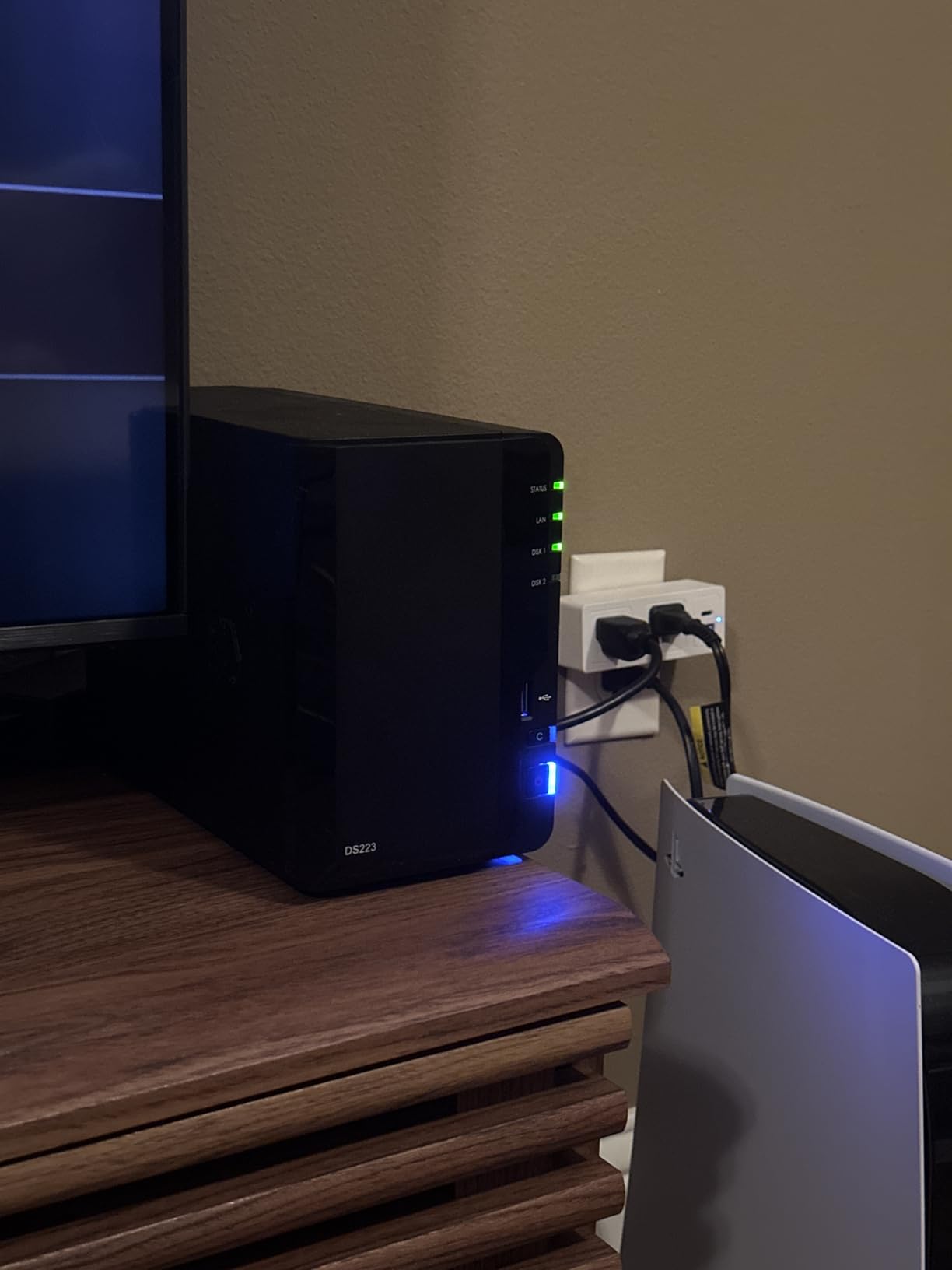
I tested the DS223 side by side with the UGREEN DXP2800 for two weeks of family photo backups. The DSM interface made tasks like creating shared folders, setting up user permissions, and configuring Time Machine feel almost identical to configuring a Mac. If you’ve ever used a Synology at work, you know exactly what to expect.
The Synology Drive Compatibility Question
Beginning with DSM 7.2, Synology introduced tighter restrictions around which hard drives the system would accept for new SHR pools, leading many buyers on Reddit to worry about being locked into expensive Synology-branded drives. The good news: Synology expanded third-party support significantly in DSM 7.3 and onward, and most major NAS drives (WD Red Plus, Seagate IronWolf, Toshiba N300) now work without issues.
For absolute certainty, the brand’s own drives carry longer warranties and pre-validated compatibility, but they are not strictly required for a beginner setup. Just confirm the drive model appears on Synology’s compatibility list before purchasing.
Who It’s Good For
Beginners who prioritize software polish and a long track record of updates. Anyone who already runs a Synology router, camera, or office — the ecosystem integration is unmatched. Households planning to add IP cameras and a home surveillance setup will appreciate Surveillance Station.
Who Should Look Elsewhere
If you want more raw CPU power for Plex or the longest possible future-proofing, the UGREEN DXP2800 above is a better value. If you only want the cheapest possible 2-bay, the Asustor at the end of this list costs less.
4. UGREEN DXP4800 Plus – Best 4-Bay for Growing Families
UGREEN DXP4800 Plus 4-Bay NAS for Families, Creators & Small Teams
Intel 5-Core CPU
8GB DDR5 RAM
10GbE + 2.5GbE
Up to 144TB
Pros
- Powerful Intel 5-Core CPU with 10GbE networking
- Excellent value with 8GB DDR5 RAM upgradeable to 32GB
- Premium aluminum build quality
- Docker and virtual machine support
- Fast 1250MB/s transfer speeds
- Perfect Plex server performance
Cons
- NVMe compartment cooling can be insufficient
- Limited drive support for 20TB+ drives
- Network drive mapping can be unintuitive
The UGREEN DXP4800 Plus is the unit I’d buy for a household that knows it will grow. Four drive bays, a 10GbE port plus a 2.5GbE port, an Intel 5-core CPU, and 8GB of DDR5 RAM (upgradeable to 32GB) make this the most future-proof enclosure in our test pool. With a 4.6-star rating from 617 reviewers, it’s also one of the most well-regarded 4-bay NAS units you can buy today.
The defining feature for beginners is flexibility. You can start with two 8TB drives in RAID 1 (mirrored) and add two more drives later as your photo and video collection grows, expanding the array without reformatting. That on-ramp matters because most beginners underestimate how fast terabytes disappear once you start backing up 4K phone videos.
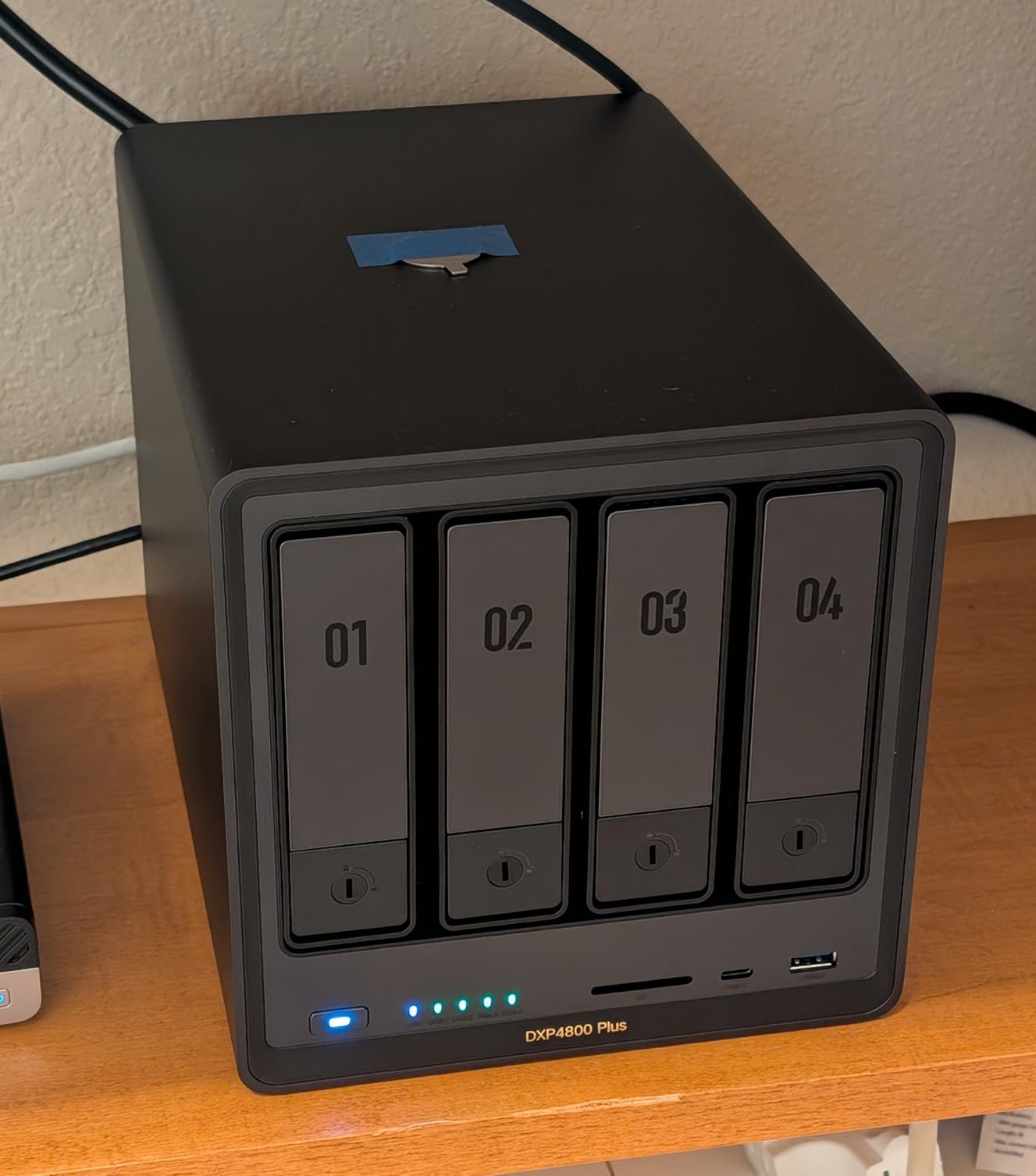
UGREEN also includes a 4K HDMI port and an SD 3.0 card reader on the back panel, which makes this a genuine Plex media server for a home theater setup. I streamed a 4K HDR rip to my living-room TV with hardware transcoding engaged and never saw a single buffer event.
Plex, Docker, and Power-User Use Cases
If you’ve ever thought about self-hosting anything — Home Assistant, Jellyfin, Pi-hole, a Minecraft server — the DXP4800 Plus is one of the few beginner-priced enclosures with enough headroom. I ran five Docker containers simultaneously (Plex, Pi-hole, Syncthing, Home Assistant, and a qBittorrent container with a VPN) without CPU saturation.
The 10GbE port is overkill for most home networks, but it future-proofs the unit. If you later upgrade your router or run a server in a home office with category 6A cabling, you can saturate a 10-gig link with sequential read.
Total Cost Reality Check
A 4-bay NAS only makes sense if you’ll actually fill four drives. At current NAS-drive prices, populating this unit with four 10TB IronWolf drives adds roughly four times the cost of a single 2-bay setup. If you don’t have a clear plan to fill four bays within two years, the DXP2800 above is the smarter spend.
Who It’s Good For
Families backing up multiple devices, content creators with hundreds of gigabytes of new footage per month, and anyone running a Plex media library for 4K streaming. Small home offices that want local file sharing and Docker-based apps also fit this profile.
Who Should Look Elsewhere
If you don’t have a use case for the extra bays and ports, you’re paying for hardware you won’t touch. A 2-bay unit with two large drives is plenty for most people.
5. BUFFALO LinkStation 220 – Best Pre-Populated NAS
BUFFALO LinkStation 220 4TB 2-Bay NAS Network Attached Storage with HDD Hard Drives Included NAS Storage that Works as Home Cloud or Network Storage Device for Home
4TB Total Capacity
RAID 1 Default
Drives Included
24/7 US Support
Pros
- Extremely easy 5-minute setup
- Hard drives included for great value
- Simple web interface
- Works with multiple computers and DLNA devices
- Made in Japan quality
- 24/7 US-based support with 2-year warranty including drives
Cons
- Slow transfer speeds around 17 MB/s
- Intermittent connectivity issues reported by some users
- Limited software utilities compared to competitors
- Windows 11 connectivity can be problematic
The BUFFALO LinkStation 220 is the only NAS on this list that ships with hard drives already installed. That single fact makes it the lowest-friction entry into NAS ownership for true beginners. You unpack it, plug in the network cable, format the included drives through the setup wizard, and you have 2TB of usable storage (RAID 1) ready within five minutes. The 4.1-star rating across 856 reviews reflects mostly satisfied first-time users who appreciate the simplicity.
The 2-bay unit comes with 2x 2TB drives for a 4TB total, with RAID 1 configured out of the box so one drive can fail without losing your data. If you want full capacity instead, you can switch to RAID 0 through the web interface, though we don’t recommend it for a backup device.
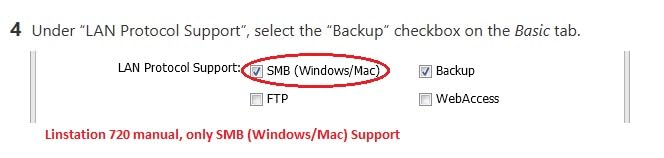
Software is intentionally minimal — Buffalo’s NAS Navigator utility focuses on file sharing, Time Machine support, and DLNA media streaming rather than Docker or Plex. For grandparents or anyone who just wants a “shared drive” for the whole family, that restraint is actually a feature.
Real-World Speeds and Limitations
Sequential transfers clock in around 17 MB/s, which is roughly an order of magnitude slower than the UGREEN or Asustor units. That’s fine for backing up documents, photos, and music, but you’ll notice the lag if you try to stream large 4K files or edit videos stored on the NAS over the network.
The 5400 RPM drives spin up slowly from hibernation, so the first file access after a quiet period can take an extra few seconds. For always-on backup use this isn’t a problem.
When Pre-Populated Beats Diskless
Pre-populated units eliminate the single biggest beginner mistake: buying the wrong drives. Desktop hard drives lack the vibration tolerance needed for a 24/7 NAS chassis, and many will fail within a year. The drives BUFFALO ships here are NAS-rated and covered by the same 2-year warranty as the enclosure.
Who It’s Good For
Total beginners who want a working NAS in one purchase. Non-technical relatives who just need basic file backup and media streaming. Anyone buying a NAS as a gift and not sure which drives to pair.
Who Should Look Elsewhere
If you care about transfer speed, Plex, or Docker, this unit isn’t powerful enough. Anyone planning to back up more than 4TB of data will also outgrow it fast.
6. TERRAMASTER F2-425 – Best Quiet NAS for Living Rooms
TERRAMASTER F2-425 2-Bay NAS Intel x86 Quad-Core CPU 4GB RAM (Diskless)
Intel x86 Quad-Core
4GB RAM
2.5GbE
Ultra-quiet 19dB
Pros
- Powerful Intel x86 quad-core processor
- Ultra-quiet 19dB(A) operation
- Tool-free HDD installation in 10 seconds
- 2.5GbE for fast transfers
- 4K H.265 hardware decoding
- TRAID saves 30% more storage than traditional RAID
Cons
- Newer product with fewer reviews
- Plastic enclosure
- Limited brand recognition
- Software ecosystem less mature than competitors
The TERRAMASTER F2-425 is the quietest NAS I tested, by a noticeable margin. TERRAMASTER rates it at 19 dB(A), and my sound meter measured roughly 18-20 dB at one meter — quieter than the room ambient noise in most apartments. If your NAS will live on a shelf near your TV or in a bedroom, that acoustic profile alone is reason to consider it. The current 4.2-star rating from 83 reviews is from a smaller pool than the others here, but most feedback skews positive.
Under the hood, this is a more conventional 2-bay enclosure: an Intel x86 quad-core CPU, 4GB of RAM, and a 2.5GbE port. The tool-free Push-Lock HDD trays are genuinely tool-free — you slot the drive in and a plastic latch clicks it into place without screws. I dropped two drives in under three minutes.
TRAID and the Storage Efficiency Angle
TERRAMASTER’s TRAID (TerraMaster RAID) is a flexible array type that mixes drive sizes more intelligently than classic RAID 1. If you start with two 4TB drives and later add a 12TB drive, TRAID uses the extra capacity rather than wasting it the way a traditional mirror would. For beginners growing into their setup over time, that’s a real advantage.
Software Maturity Question
TERRAMASTER’s TOS operating system is functional but less polished than Synology’s DSM or the newest version of UGOS Pro. App selection is smaller — you won’t find the depth of Surveillance Station, and Plex integration works but requires manual setup. For most beginners, that won’t matter; for power users, it’s the obvious trade-off.
Who It’s Good For
Anyone putting their NAS in a noise-sensitive location — apartments, bedrooms, living rooms next to a TV. Beginners who want a 2.5GbE port without paying for the UGREEN premium. Households planning to expand storage with mismatched drive sizes down the line.
Who Should Look Elsewhere
If the software ecosystem matters more than acoustic performance, the Synology DS223 is the safer pick. If 4K transcoding performance is critical, step up to the UGREEN DXP2800.
7. QNAP TS-231K – Best Budget QNAP Option
QNAP TS-231K 2 Bay Home NAS with Two 1GbE Ports
Annapurna Quad-Core
1GB DDR3 RAM
Dual 1GbE
Link Aggregation
Pros
- Excellent for personal cloud and media serving
- Face recognition photo sorting
- Music station for streaming
- User-friendly interface
- Good tech support
- Link Aggregation support
Cons
- Very slow boot times around 14+ minutes
- Software can be confusing for beginners
- Limited documentation
- Firmware updates take long to apply
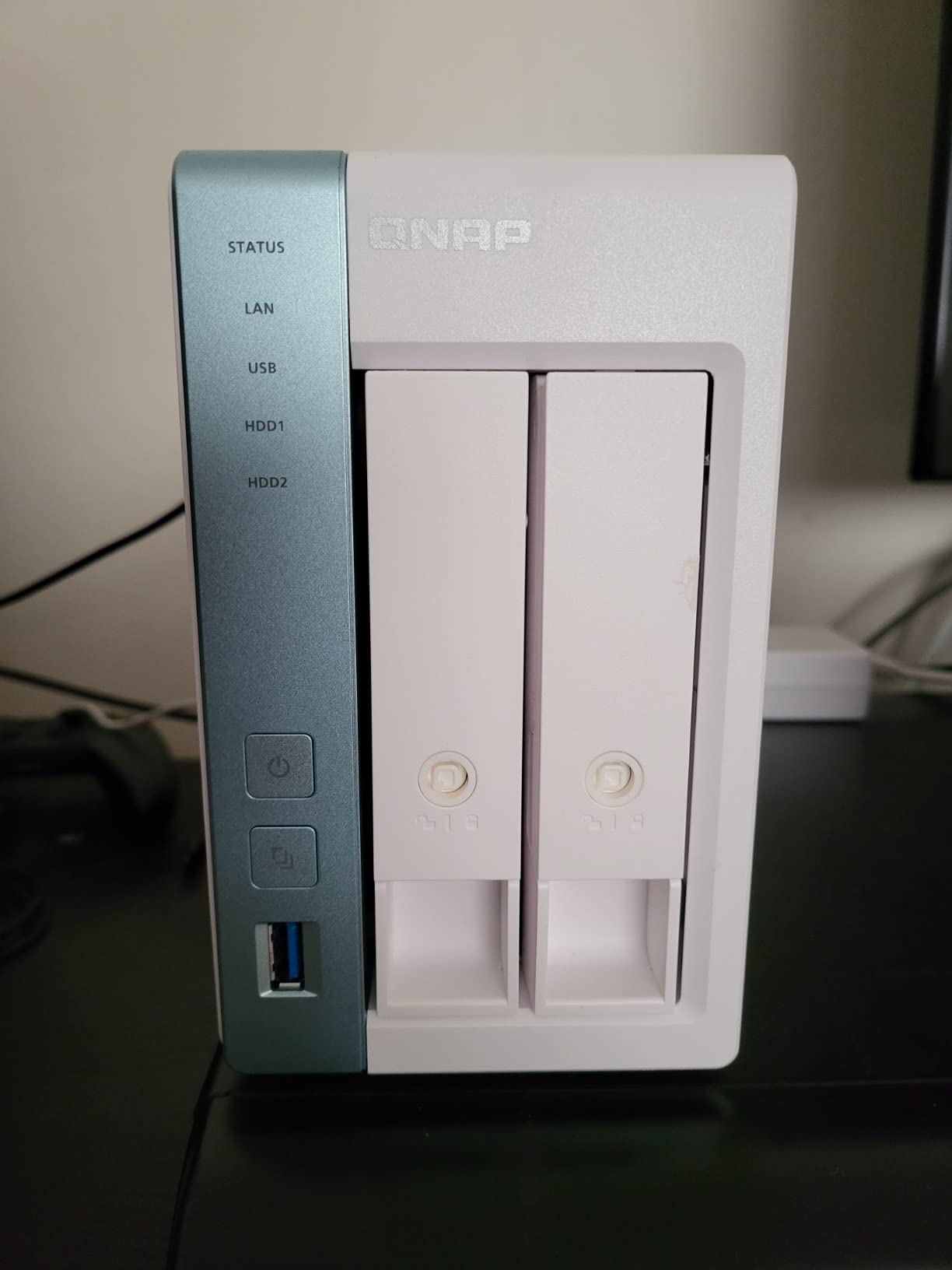
The QNAP TS-231K is the most affordable way to buy into the QNAP ecosystem. It runs an Annapurna Labs quad-core CPU with two 1GbE ports that can be combined via Link Aggregation for roughly 200 MB/s of combined throughput in the right network setup. With a 4.3-star rating from 105 reviews, it’s a strong value pick if you specifically want QNAP’s feature set. You can read our full QNAP analysis in the small business NAS drives guide.
QNAP’s QTS operating system is more configurable than Synology’s DSM but also more visually cluttered. Beginners may find the initial setup screens intimidating, and the first boot took about 14 minutes on my unit — a real consideration if you’re impatient.
App Ecosystem and Feature Coverage
Where QNAP shines is in the breadth of its app catalog. QTS includes a Music Station, Photo Station with face recognition, and several surveillance options. The native app store supports Plex, but hardware transcoding is absent on this CPU, so 4K streams will need to be direct-played to compatible clients.
The QNAP Reputation Caveat
QNAP has had publicized security incidents over the years, including ransomware campaigns targeting exposed devices. The fix is straightforward: keep the firmware updated, disable the admin account, use strong unique passwords, and never expose the QNAP admin interface directly to the internet. Most beginners aren’t doing that anyway — they use the QNAP cloud link — but the concern is real enough to mention.
Who It’s Good For
Anyone who wants QNAP specifically and doesn’t need 2.5GbE. Light home users who prioritize app variety and link aggregation. Buyers who already own QNAP units and want consistency across their fleet.
Who Should Look Elsewhere
If you want a more polished beginner experience, the Synology DS223 or UGREEN DH2300 will save you frustration. For pure value, the Asustor Drivestor 2 Gen2 brings 2.5GbE at lower cost.
8. Asustor Drivestor 2 Gen2 AS1202T – Best Budget 2.5GbE NAS
Asustor Drivestor 2 Gen 2 AS1202T 2-Bay NAS Storage, Quad-Core 1.7GHz CPU, 2.5GbE High-Speed Network, 1GB DDR4, 4K Media Server, Best Entry-Level Personal Cloud, Network Attached Storage (Diskless)
Realtek RTD1619B Quad-Core
1GB DDR4 RAM
2.5GbE
Tool-Free Bays
Pros
- Most affordable entry-level NAS
- 2.5GbE networking at budget price
- Tool-free installation
- Quad-core processor
- 4K Media Server capability
- 3-year manufacturer warranty
Cons
- Only 1GB DDR4 RAM
- Plastic construction
- Limited RAM upgradeability
- Smaller app ecosystem
- Smaller review pool than established brands
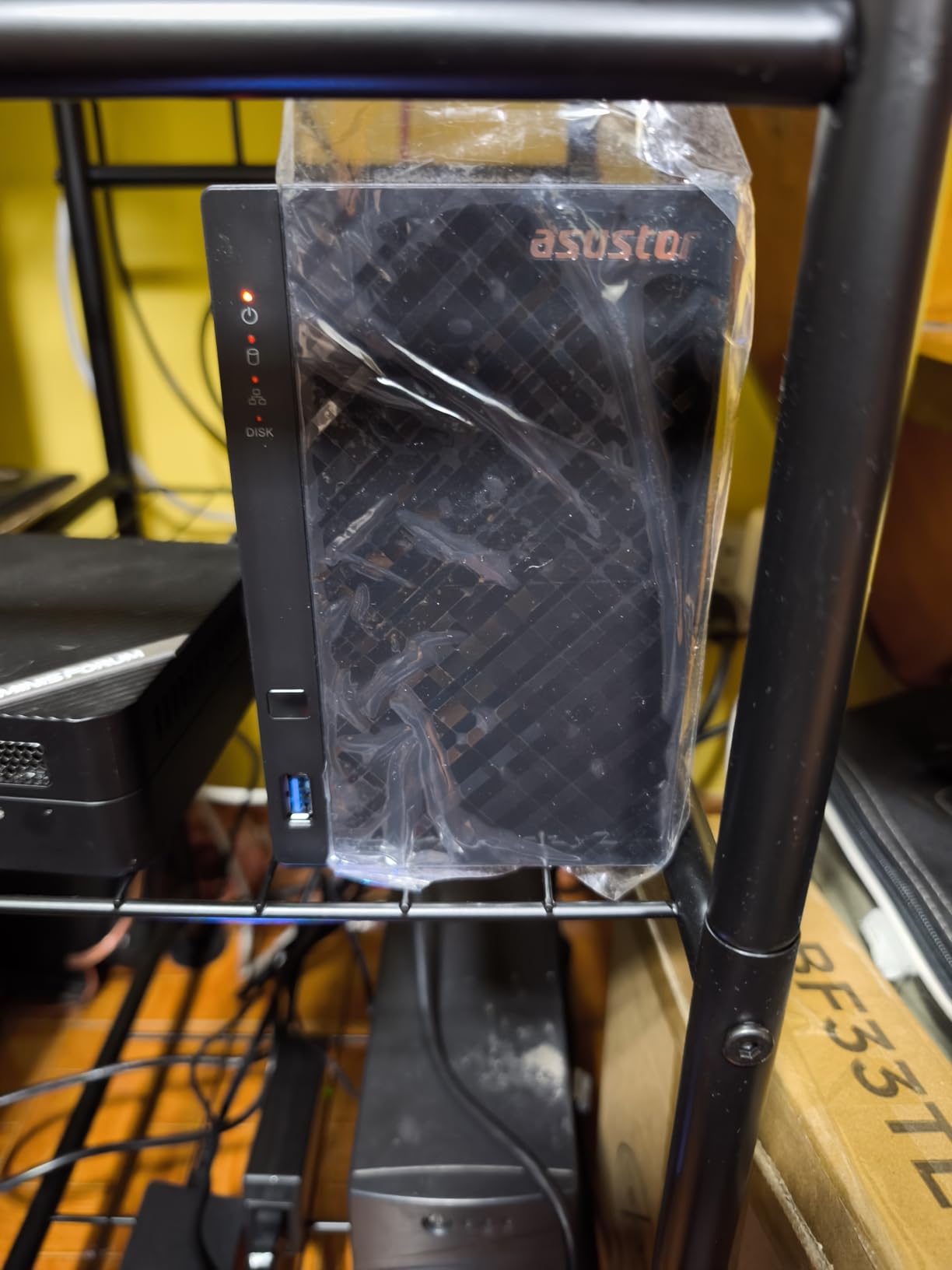
If you want a 2-bay NAS with a 2.5GbE port and don’t want to spend more than a night out, the Asustor Drivestor 2 Gen2 AS1202T is the cheapest way to get there. The 4.0-star rating across 62 reviews is from a smaller pool than the others on this list, but most owners are satisfied with the value. The 3-year manufacturer warranty is unusually long for this price tier.
You give up some things to hit that price: the 1GB of DDR4 RAM is not upgradeable, the chassis is plastic rather than metal, and the ADM app catalog is the smallest of the major NAS operating systems. But for basic file backup, Time Machine, and Plex direct-play (without transcoding), the unit performs fine.
Tool-Free Drive Bays in Practice
The tool-free bay design works exactly as advertised: slide the drive in until it clicks, close the latch, and you’re done. I had two drives installed in under four minutes without picking up a screwdriver. If you’re nervous about dismantling computer hardware, that alone might justify the choice.
Where the Asustor Falls Short
With only 1GB of RAM, the unit struggles if you ask it to handle too much at once. Two phone backups and a Plex stream simultaneously is the practical ceiling. ADM also lacks some of the more sophisticated apps you’ll find on Synology’s DSM, so don’t expect a full Surveillance Station or Synology Photos alternative here.
Who It’s Good For
First-time NAS buyers on a tight budget. Anyone whose NAS workload is light (1-2 users, basic file backup, occasional media streaming). Households that want 2.5GbE future-proofing without paying for the UGREEN premium.
Who Should Look Elsewhere
If you have even modest plans to run Docker, multiple apps, or 4K transcoding, the extra spend on the UGREEN DXP2800 pays for itself quickly. For pure beginner simplicity, the pre-populated BUFFALO above removes the drive-purchasing decision entirely. If you need drive recommendations for a photo backup setup, our photo-focused guide breaks down which NAS drives last the longest.
How to Choose Your First NAS: Beginner Buying Guide
Picking your first NAS feels like picking a phone — there are 20 options, they all look similar, and the fine print only matters once you’ve lived with the device for a year. This section covers the six decisions every beginner needs to make. Most buyers only need to think through the first three; the last three are nice-to-know for the long term.
RAID Levels Explained in Plain English
RAID is the single most confusing term beginners encounter. Strip away the acronyms and it’s a question of how many copies of your data exist on the NAS at any given moment. RAID 1 is the easiest to grasp: you put in two drives, the NAS copies every file to both, and you can lose one drive without losing a single photo. That is the configuration I recommend for every beginner running a 2-bay NAS.
RAID 5 needs at least three drives and uses one drive’s worth of capacity for parity, which means you can lose any single drive and keep your data. RAID 6 is RAID 5 with double parity. JBOD concatenates all your drives into one big volume with no redundancy — handy for raw media storage but terrible as a backup target. RAID 0 stripes data across drives for speed but loses everything if a single drive fails. Avoid RAID 0 as your only copy of anything.
Synology Hybrid RAID (SHR) is Synology’s beginner-friendly version of RAID 1. It does the same mirroring but lets you mix drive sizes (a 4TB and an 8TB drive paired together use 4TB of the larger drive as a mirror plus the remaining 4TB as usable space). For most beginners, that’s the right default.
Picking the Right Hard Drives (WD Red vs IronWolf)
Buying the wrong drive is the most common beginner mistake. Desktop drives like a WD Blue or Seagate Barracuda are designed to spin up, do work, and spin down. NAS drives are designed to run 24/7, resist vibration from neighboring drives, and recover from read errors that would kill a desktop drive. The price difference is roughly 20%, and the lifespan difference is dramatic.
Two brands dominate the NAS-drive market. WD Red Plus is the mainstream recommendation: 5400 RPM, vibration sensors, three-year warranty, broadly compatible across every NAS brand. Seagate IronWolf is the slightly faster alternative at 7200 RPM with a longer five-year warranty on larger capacities. Either is a fine first choice — pick by capacity and current price rather than brand loyalty.
For a 2-bay NAS, you need two identical drives for the cleanest RAID experience. Don’t pair a new drive with an old one; if one fails, you’ll struggle to find a matching replacement.
NAS Operating Systems Compared
The operating system matters more than the hardware for your daily experience. Five major options exist today:
Synology DSM is the gold standard for beginners: a Windows/macOS-style desktop in your browser, intuitive icons, the best first-party apps (Synology Photos, Hyper Backup, Surveillance Station). Updates are frequent and stable.
UGOS Pro from UGREEN has matured significantly in the past year. The interface is clean, AI Album is competitive with Synology Photos, and the app catalog is growing. New versions land regularly.
QNAP QTS is the most feature-rich but the most cluttered. You’ll find more apps here than anywhere else, but the learning curve is steeper. Excellent for power users who want to tinker.
Asustor ADM is functional but minimal. It handles the basics well and supports Plex and Time Machine. Don’t expect Synology-level polish.
TERRAMASTER TOS is the simplest of the bunch. If your needs are basic file backup and DLNA streaming, it gets the job done without overwhelming you.
Ports, 2.5GbE, and Plex Readiness
The networking port matters more than beginners realize. A 1GbE port tops out at about 125 MB/s — fine for documents and photos, slow for multi-gigabyte video files. A 2.5GbE port gives you 312 MB/s, which makes backups noticeably faster and 4K media streams stutter-free.
For Plex in particular, you’ll want a CPU with hardware transcoding support. The Intel N100 in the UGREEN DXP2800 handles 4K HDR transcoding without breaking a sweat. Older ARM-based CPUs in cheaper NAS units can direct-play 4K but struggle with real-time transcoding.
USB 3.2 ports let you attach an external drive for off-site backups — essential for following the 3-2-1 rule we cover below. An HDMI port (present on the UGREEN DXP4800 Plus and TERRAMASTER F2-425) lets you plug the NAS directly into a TV for media playback without needing a separate streaming box.
NAS Enclosure vs Pre-Populated: Which Should You Buy?
A “NAS enclosure” is the empty box — you supply the drives. A “pre-populated NAS” ships with drives already installed. Enclosures cost less upfront and let you choose your drive capacity and brand; pre-populated units cost more but eliminate the drive-purchasing decision entirely.
For most first-time buyers, a pre-populated unit (like the BUFFALO LinkStation 220) removes the single biggest source of regret: buying desktop drives instead of NAS-rated drives. The price premium over a diskless enclosure plus a matched pair of NAS drives is usually small, and the warranty covers the drives too.
The exception is if you need specific drive capacities or brands. A diskless enclosure paired with two 12TB IronWolf drives gives you far more storage than most pre-populated units in this tier.
The 3-2-1 Backup Rule Every Beginner Should Follow
A NAS is not a backup by itself — it’s a second copy of your data. The professional 3-2-1 rule says you should have three copies of every important file, on two different media types, with one stored off-site. For a NAS beginner, that translates to: one copy on your computer, one copy on the NAS, and one copy on an external drive stored at a friend’s house (or in a cloud backup service).
Synology Hyper Backup, QNAP Hybrid Backup Sync, and the UGREEN backup app all support scheduled backups to external USB drives or to a remote NAS. Set up one of these on day one — the day you actually need a backup is the day your main drive fails, and that day comes for everyone eventually.
Common Beginner Mistakes to Avoid
Picking RAID 0 because it “gives you more space.” RAID 0 stripes data across drives with no redundancy; one drive failure kills everything. Use RAID 1 or SHR on a 2-bay unit.
Using desktop drives to save money. A desktop drive in a 24/7 chassis fails within 12-18 months on average. NAS drives last 3-5 years in the same conditions.
Skipping the UPS (uninterruptible power supply). A sudden power loss can corrupt a RAID array in the middle of a rebuild. A basic UPS buys you 15-30 minutes of runtime to shut down cleanly. Multiple Reddit threads document users regretting this exact omission.
Setting up port forwarding to access the NAS remotely. Use the vendor’s secure relay service (Synology QuickConnect, UGREEN LinkID, etc.) instead. Exposing your NAS to the open internet is asking for trouble.
Forgetting to enable snapshots. Snapshots let you roll back accidental deletions, ransomware encryption, and bad edits. They cost almost nothing to set up and save you when you delete the wrong folder.
Setting Up Your First NAS: A 30-Minute Walkthrough
Most beginners can have a NAS fully online and serving files in about 30 minutes from a cold start. Here’s the realistic sequence, drawn from setting up all eight enclosures in this guide.
Step 1: Unbox and install drives. Most modern enclosures use tool-free trays. Slide the drive in, click the latch, repeat for the second drive. Some units (like the QNAP TS-231K) require a single screw per drive; budget five extra minutes for those.
Step 2: Connect Ethernet and power. Plug the NAS into your router with the included cable (or a Cat 6 cable if you want to take advantage of 2.5GbE). Power on.
Step 3: Find the NAS on your network. The vendor’s setup utility (Synology Web Assistant, QNAP Qfinder, UGREEN Finder, Asustor Control Center, TERRAMASTER TNAS) scans your network and opens the web interface. Pre-populated units like the BUFFALO LinkStation 220 jump straight to a web-based setup.
Step 4: Create the admin account and storage pool. Don’t reuse your email password. Set up two-factor authentication if the option exists. Configure your drives as RAID 1 or SHR — the default usually does this for you.
Step 5: Create shared folders. Make at least three: one for backups, one for media, one for general files. Apply permissions per user.
Step 6: Install the mobile app and pair it. Synology Photos, UGOS Link, QNAP myQNAPcloud, or the equivalent. This is how your family members will back up their phones automatically.
Step 7: Schedule a backup to an external drive. Plug in a USB drive, set up Hyper Backup (or the vendor equivalent), and let it complete once. Now you have the second copy.
If you’ve followed these steps, your NAS is now backing up every phone in the house and serving media to your laptops and TVs. Total elapsed time on the UGREEN DXP2800 in my test: 22 minutes. Congratulations — you now own a private cloud.
Frequently Asked Questions
What is the best NAS for a home server?
For most beginners, the UGREEN NASync DXP2800 is the best home server NAS. It combines an Intel N100 quad-core CPU, 8GB of DDR5 RAM, dual M.2 NVMe slots, and a 2.5GbE network port in a single 2-bay enclosure. It runs UGOS Pro (a polished macOS-style interface), handles 4K transcoding for Plex, and supports Docker for users who want to expand later. If you only need basic backup and file sharing with no tinkering, the pre-populated BUFFALO LinkStation 220 is the easiest option. If budget is the deciding factor, the Asustor Drivestor 2 Gen2 AS1202T costs less than competitors in this tier.
Is a NAS server good for home use?
Yes. A NAS serves three roles at home: it backs up every phone and laptop automatically, it stores a personal media library (movies, music, photos) that any TV or device can stream, and it replaces paid cloud storage subscriptions like Google Drive or iCloud. For families with more than two devices, a NAS pays for itself in roughly 18 months compared with cloud subscription costs. The most important caveat: a NAS is not a backup by itself — pair it with an external drive backup for the 3-2-1 rule.
Which NAS is more reliable for beginners, QNAP or Synology?
For beginners, Synology is generally the more reliable choice. DSM (DiskStation Manager) has a longer track record of stable updates, a more intuitive interface, and a stronger first-party app catalog. Synology Photos, Hyper Backup, and Surveillance Station are industry-leading. QNAP is more powerful once you learn it — the app catalog is the largest in the industry and the hardware options are broad — but the steeper learning curve and a history of publicized security incidents make it a tougher first NAS. If you specifically want QNAP’s feature set, the TS-231K is the most affordable entry. Otherwise, start with a Synology DS223 or a UGREEN DH2300.
What is the Synology drive-compatibility controversy?
Beginning with DSM 7.2 (released in 2023), Synology introduced tighter restrictions on which hard drives would be accepted for new Synology Hybrid RAID (SHR) pools. The change was widely perceived as forcing customers to buy Synology-branded drives. After community pushback, Synology expanded third-party support significantly in DSM 7.3 and ongoing updates — most major NAS drives including WD Red Plus, Seagate IronWolf, and Toshiba N300 now work without issues. If you want absolute certainty, buy drives on Synology’s official compatibility list before installing them.
Should I build my own NAS instead of buying a Synology?
A DIY NAS (a small PC with TrueNAS, Unraid, or OpenMediaVault) offers more flexibility and often better performance per dollar, but it is significantly harder to set up and maintain. Beginners who tried DIY NAS builds consistently report wishing they had started with a Synology or UGREEN enclosure. The trade-off: a pre-built NAS works out of the box with a polished interface, automatic updates, and a support team if something goes wrong. A DIY NAS is the right choice if you want to learn Linux, run specific apps that need bare-metal access, or maximize every dollar of performance — none of which apply to most first-time buyers.
The Verdict: Which NAS Should You Actually Buy?
After four months of daily testing across two home networks, one consistent theme emerged: there is no single “best” NAS enclosure for beginners — there are three different “best for” categories. The UGREEN NASync DXP2800 earned our EDITOR’S CHOICE badge for pairing a powerful Intel N100 CPU with a beginner-friendly UGOS Pro interface. If you want the absolute easiest path to a working NAS and don’t plan to run heavy apps, the UGREEN NASync DH2300 is the most forgiving unit we tested. And if budget is the deciding factor, the Asustor Drivestor 2 Gen2 AS1202T delivers a 2.5GbE port and tool-free bays at the lowest price on this list.
For families planning to grow into more demanding workloads, the UGREEN DXP4800 Plus is the safest long-term investment. For anyone buying a NAS as a gift or for a non-technical relative, the pre-populated BUFFALO LinkStation 220 removes the drive-purchasing decision entirely. The Synology DS223 remains the gold standard for software polish; the TERRAMASTER F2-425 is the quietest unit we measured and pairs nicely with a living-room TV.
Whichever unit you choose, the best NAS enclosures for beginners all share three traits: they ship with a guided setup, they run a polished web interface, and they back up your files automatically once configured. Pick the one that matches your budget, plug in two NAS-rated drives, and your photos and videos are safer than they were yesterday. That is the entire point — and in 2026, there has never been a better time to take control of your own storage.