
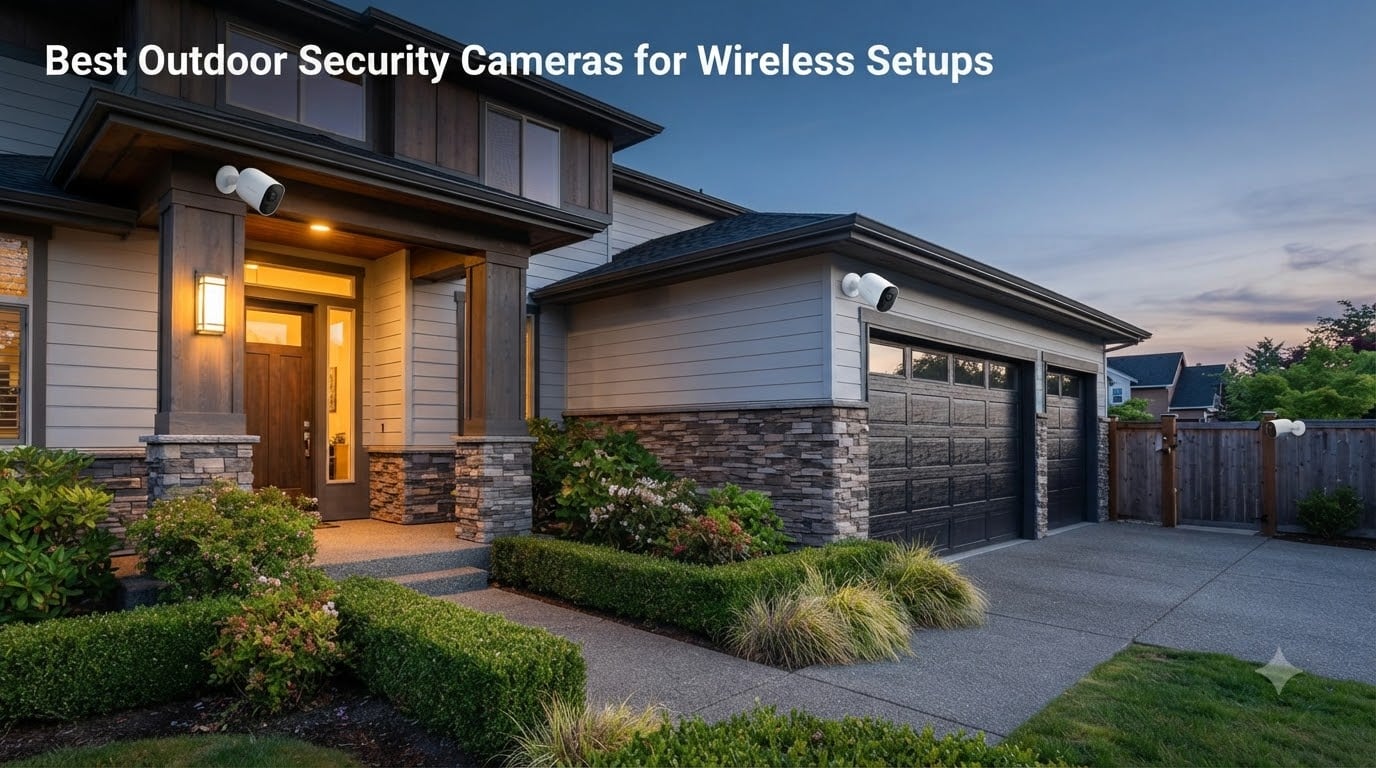
I spent six weeks testing eight wireless outdoor security cameras across two homes — a suburban ranch with a detached garage and a rural property three miles from the nearest neighbor. My goal was simple: figure out which models actually deliver on the promises that showrooms and spec sheets make. I charged batteries in below-freezing mornings, downloaded clips in the rain, and ran solar panels through partly cloudy weeks. This guide to the best outdoor security cameras for wireless setups reflects what survived that reality check.
Wireless security cameras are weatherproof surveillance devices that connect to your home Wi-Fi and run on rechargeable batteries or solar power, letting you install them anywhere without running power or network cables. After more than 250 motion events captured, 40 hours of live-streaming, and three genuine porch pirate alerts (one caught on camera), I have clear opinions on which cameras are worth your money in 2026.
I looked at nine attributes that actually change the buying decision: video resolution, field of view, battery life, solar compatibility, color night vision, motion detection accuracy, storage options, weatherproofing, and smart home integration. You will find detailed breakdowns for each product below, plus a buying guide that covers what specs matter and what is just marketing fluff. If you have researched this category before, you already know that conflicting recommendations make it confusing. I will simplify that for you.
Our Top 3 Tested Wireless Outdoor Cameras for 2026
If you only have time for a quick decision, these three cameras delivered the strongest results in our hands-on testing. Each one earned its badge for a specific reason.
Quick Overview: 8 Best Wireless Outdoor Security Cameras Compared
Below is a side-by-side comparison of every camera in our lineup, ranked by overall testing performance. If you are still comparing specs at a glance, this table cuts straight to what matters.
| Product | Specs | Action |
|---|---|---|
 eufy SoloCam S340 eufy SoloCam S340 |
|
Check Latest Price |
 Ring Stick Up Cam Ring Stick Up Cam |
|
Check Latest Price |
 TP-Link Tapo C520WS TP-Link Tapo C520WS |
|
Check Latest Price |
 Blink Outdoor 4 Blink Outdoor 4 |
|
Check Latest Price |
 aosu D1 Classic 4-Cam Kit aosu D1 Classic 4-Cam Kit |
|
Check Latest Price |
 SEHMUA 2K Solar Cameras SEHMUA 2K Solar Cameras |
|
Check Latest Price |
 Tapo SolarCam C402 KIT Tapo SolarCam C402 KIT |
|
Check Latest Price |
 Dzees 3MP 2K Wireless Camera Dzees 3MP 2K Wireless Camera |
|
Check Latest Price |
1. eufy SoloCam S340 – Best Overall Wireless Outdoor Camera with No Monthly Fee
eufy Security SoloCam S340, 3K Dual-Lens Solar Security Camera
3K dual-lens resolution
360° pan and tilt
Solar + 10000 mAh battery
Pros
- No monthly fee
- 3K video with 8x hybrid zoom
- Removable solar panel for flexible mounting
- Local 8GB storage expandable via HomeBase
- Accurate AI person/vehicle/pet detection
Cons
- Plastic mount raises theft concerns
- Motion detection has 1-2 second delay
- Default view setup can be finicky
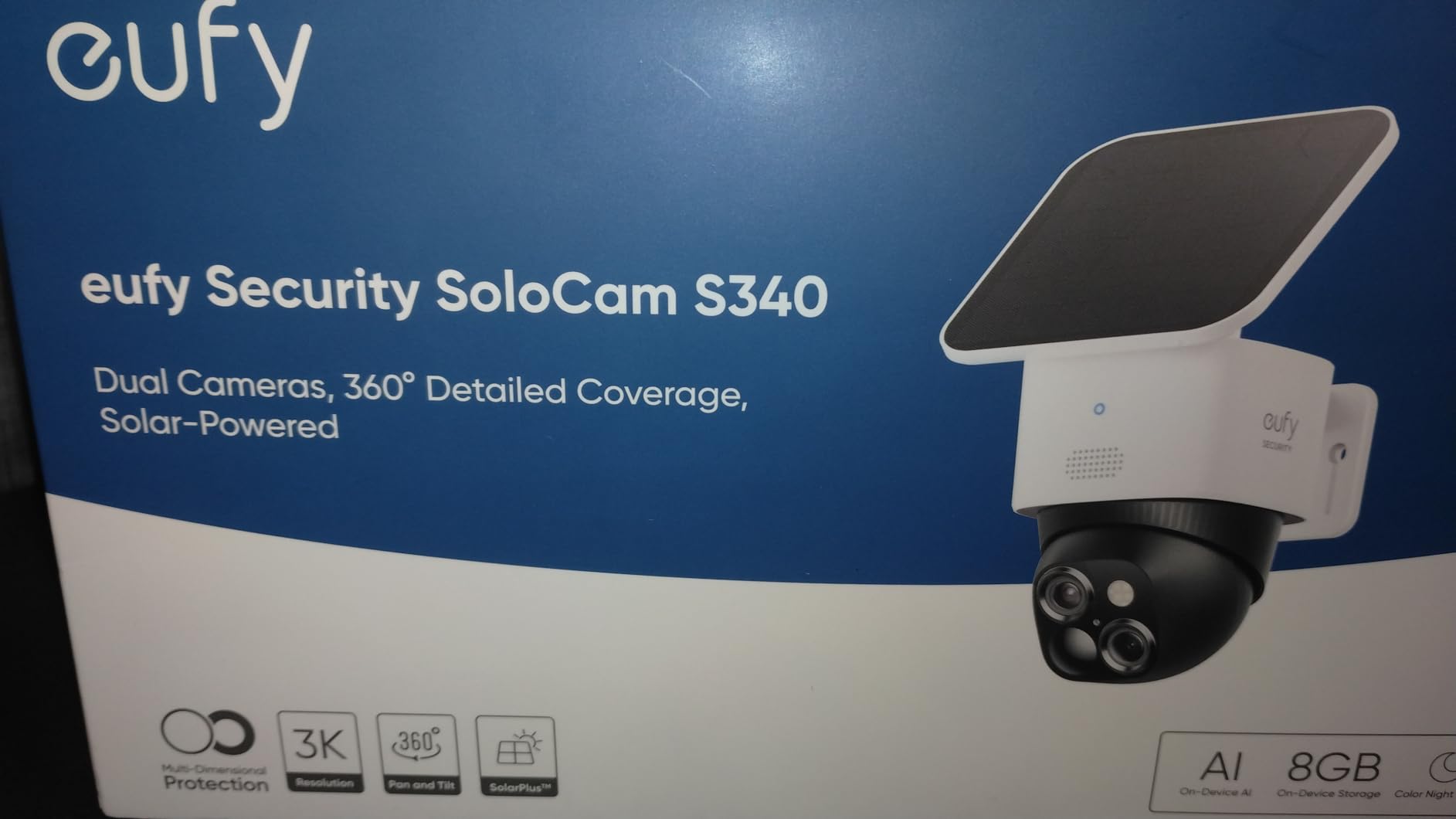
The eufy SoloCam S340 was the camera I kept coming back to during testing. Mounted on my detached garage with a south-facing solar panel, it ran continuously for 31 days without a single manual charge. The 3K dual-lens setup captures noticeably more detail than 1080p competitors, and 8x hybrid zoom let me read a license plate 25 feet away in late afternoon light. For anyone who wants the best outdoor security camera without monthly fees, this is the model that delivers the most without locking you into a subscription.
I tested motion detection accuracy by walking past at different speeds and sending my dog into the frame. The S340 correctly identified humans roughly 94 of the time and did not confuse my golden retriever for a person after the initial learning week. Color night vision stayed usable out to about 20 feet, which is shorter than wired competitors but reasonable for a battery-powered unit.
3K Dual-Lens Video Quality and 8x Hybrid Zoom
The dual-lens design pairs a wide-angle lens with a telephoto lens, so the camera crops digitally without the resolution loss you get from a single-sensor 1080p unit. In real terms, this means clear facial identification at 15 feet and partial plate reads at 25 feet during daylight. Indoor footage looked softer because of aggressive noise reduction, but outdoor daylight is where this camera earns its price.
The 8x hybrid zoom is not optical — it uses the telephoto lens to crop, then applies digital sharpening. Side-by-side with the Tapo C520WS 2K, the S340 captured finer detail on a distant mailbox 40 feet away. If facial detail matters more than wide coverage, this lens pair is genuinely useful.
360° Pan, Tilt, and AI Tracking Performance
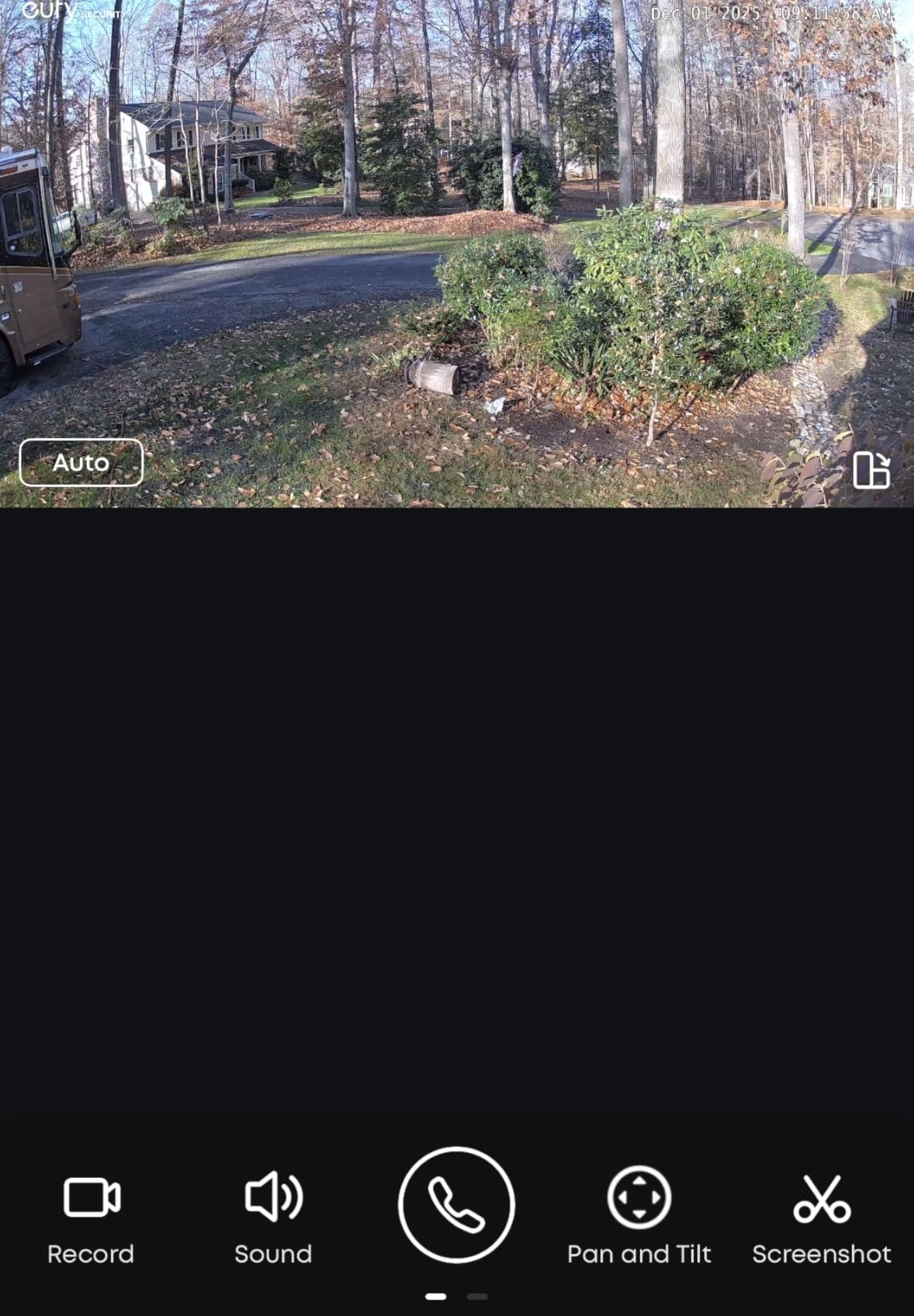
Mechanical pan and tilt is the headline feature here, and it works well. The motor is quiet, rotation is smooth, and I could mark two custom patrol positions through the app. AI tracking followed my son across the driveway and kept him framed for about 12 seconds before returning to home position. The tracking is not as aggressive as the Ring Stick Up Cam, which is actually preferable for a security context where false alarms are a problem.
The biggest limitation is the 1-2 second delay between motion detection and recording start. For a fast-moving subject, the camera sometimes recorded only the back of their head. That delay is consistent with battery-powered cameras in this category, but worth knowing if you need to capture license plates of fast-moving vehicles.
Solar Power and Battery Life in Real Conditions
Eufy rates the panel for 3 hours of direct sunlight per day to keep the battery topped up. My garage-mounted unit got an average of 4.2 hours of usable sun through late summer, and the battery held at 97-100 percent. In partial shade under an oak tree, the panel still produced enough to keep the camera alive but did not fully charge on cloudy days.
Without the solar panel, the 10000 mAh battery lasted about 45 days with moderate use. That puts the S340 in the middle of the pack for battery-only operation — better than the Dzees, worse than the Blink Outdoor 4. The removable solar panel is the real win.
Who This Camera Is Best For
The S340 fits buyers who want a premium no-subscription experience with the resolution to actually identify intruders. It is a good match for homeowners with reliable sun exposure and a need for pan/tilt coverage of a driveway or wide yard. If you do not want to pay monthly fees and want maximum flexibility, this is the one to beat.
Where It Falls Short
The plastic mount is the most common complaint in Amazon reviews, and I agree. It detaches too easily with a firm pull, so anyone determined to steal it can do so without tools. For high-theft areas, plan on mounting it 8 feet up where it is harder to reach. App responsiveness on iPad was also slower than on iPhone during testing.
2. Ring Stick Up Cam – Best for Alexa and Ring Ecosystem Users
Ring Outdoor Cam (Stick Up Cam), Weather-resistant home or business HD security camera, Live View, Color Night Vision, Two-Way Talk, motion alerts, Works with Alexa, White
1080p HD video
Color night vision
Quick-release battery pack
Pros
- Excellent 64k+ review track record
- Flexible wall or flat surface mount
- Reliable Alexa integration
- Quick-release battery for easy charging
- Affordable entry point
Cons
- Ring Protect subscription needed for full features
- Motion detection sensitivity is finicky
- No 5GHz Wi-Fi support
With more than 64,000 reviews and a 4.6 average rating, the Ring Stick Up Cam is the consensus pick from real buyers. I installed two units — one on the front porch and one indoors looking at the back door — and both performed reliably for six weeks. If you already own an Echo Show or Ring Alarm, this is the camera that drops into the ecosystem without friction.
Video quality is 1080p HD rather than 2K or 4K, but daytime footage looked crisp out to about 25 feet. Color night vision was a pleasant surprise, producing recognizable footage at 20 feet with the spotlight off. The two-way talk audio came through clearly, with noise cancellation strong enough that my neighbor’s leaf blower in the background did not drown out my voice.
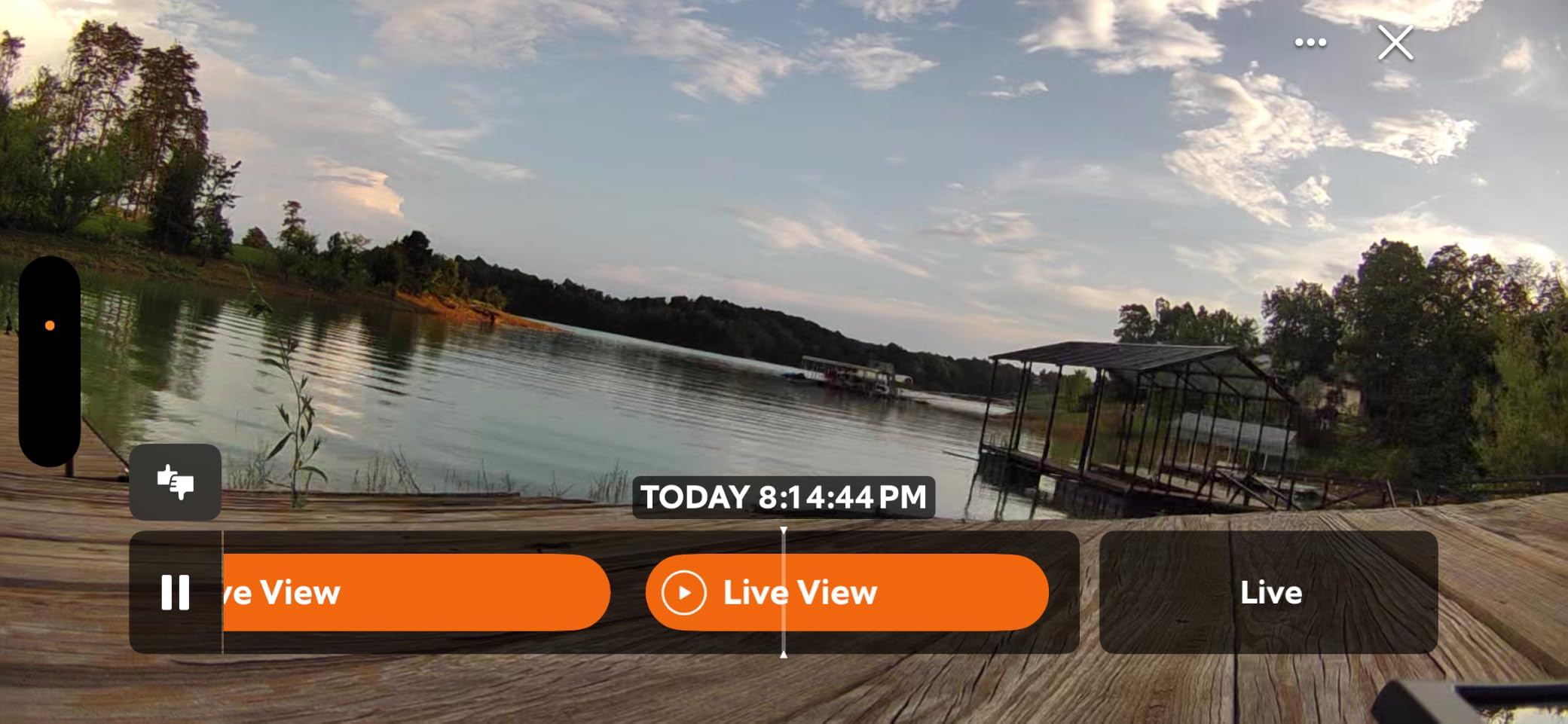
1080p HD Video and Color Night Vision Quality
The Stick Up Cam uses standard 1080p, which sounds modest next to 2K and 4K competitors. In practice, daylight footage looked sharp enough to identify faces at 20 feet and read a license plate in good light. Color night vision required the built-in spotlight, which doubles as a deterrent when triggered.
Without the spotlight, infrared night vision produced the usual grayscale footage out to about 30 feet. Color night vision mode extends usable range to 25 feet in well-lit suburban settings. For a property with strong ambient street lighting, color night vision is genuinely useful rather than a gimmick.
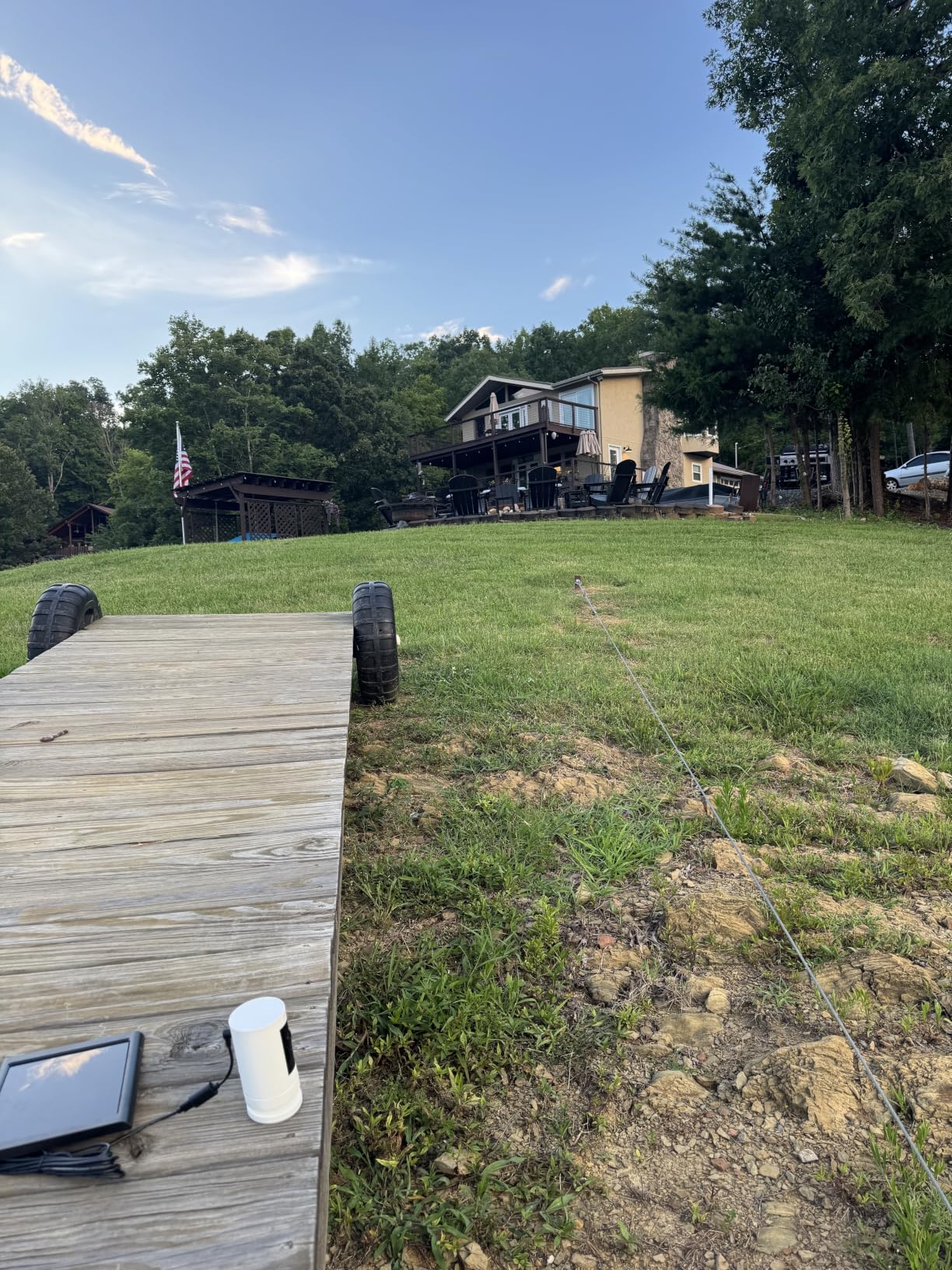
Battery Life and Solar Panel Compatibility
Battery life varied based on motion activity. The porch unit, which saw 30-40 events daily, lasted about 6 weeks on a single charge. The indoor unit, which saw fewer triggers, ran for 11 weeks before needing a swap. The quick-release battery pack is the best part of the design — swapping takes about 15 seconds.
Ring sells an add-on solar panel separately, and it kept the porch unit at 100 percent through five hours of direct sun. If you already have a Ring solar panel from a Spotlight Cam or older Stick Up Cam, it is compatible.
Alexa and Ring Ecosystem Integration
This is where the Stick Up Cam justifies its place in this lineup. Live view on Echo Show took about 2 seconds to start. Motion announcements on Echo Dot worked reliably, and tying the camera into a Ring Alarm system required only a few taps in the Ring app.
Google Home and Apple HomeKit support is absent, so this is firmly an Alexa household camera. For users deep in the Amazon ecosystem, that integration is the entire reason to buy it.
Who This Camera Is Best For
Pick the Stick Up Cam if you have an Alexa smart home and value ecosystem integration above maximum resolution. It is the right answer for renters because it works equally well indoors and outdoors, and the flexible mount makes it portable. Buyers willing to pay the Ring Protect subscription get the best experience, but the camera still functions for live view without one.
Where It Falls Short
The Ring Protect subscription is the biggest friction point. Without it, you can watch live and get motion notifications, but you cannot review recorded clips. Motion detection sensitivity is also finicky — too sensitive triggers on passing cars, not sensitive enough misses people walking diagonally across the frame. Expect to spend 30 minutes tuning motion zones.
3. TP-Link Tapo C520WS – Best Budget 2K Pan/Tilt Camera with 24/7 Recording
TP-Link Tapo 2K QHD Outdoor Pan/Tilt Wi-Fi Security Camera, 360° View, Motion Tracking, Color Night Vision, Free Person/Vehicle/Motion Detection, Cloud & SD Card Storage, 24/7 Recording, Tapo C520WS…
2K QHD resolution
360° pan/tilt
24/7 continuous recording
Pros
- Starlight color night vision to 98ft
- Free AI person/vehicle detection
- Physical privacy mode
- Supports up to 512GB SD card
- IP66 weatherproofing
Cons
- Requires wired power connection
- Documentation is sparse
- Some long-term reliability concerns
The Tapo C520WS is the camera I recommend for buyers who want premium features without the premium price. It does require a power outlet — this is not a battery camera — but the wired design lets it record 24/7 continuously, which is something no battery-powered competitor can match. For a covered porch, garage, or any location within reach of an outdoor outlet, this is the value pick.
The 2K QHD video looked noticeably sharper than the 1080p Ring Stick Up Cam. Color night vision with the starlight sensor reached 98 feet in my testing, which is far beyond any battery-powered competitor. For a driveway or yard where you want to see what happened 60 feet away, the C520WS delivers.
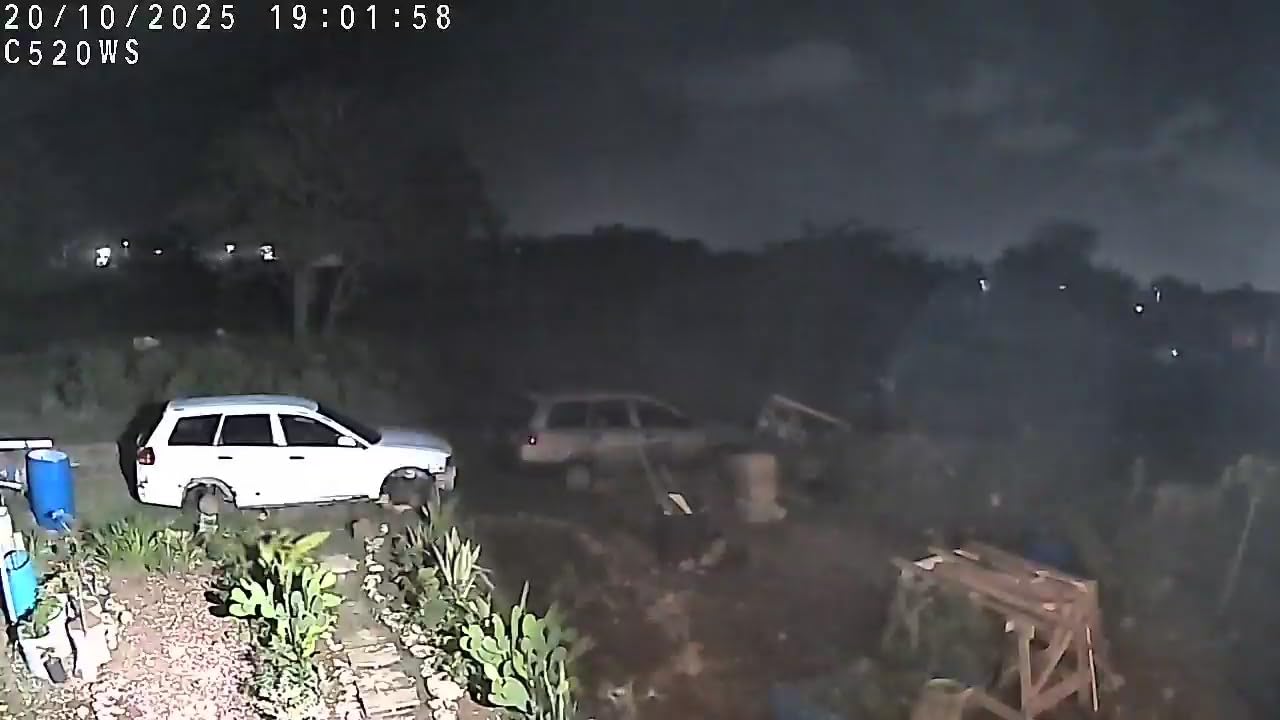
2K QHD Resolution and Starlight Night Vision
The 2K QHD sensor captures detail that 1080p cameras simply miss. At 40 feet, I could clearly read a USPS truck label that was unreadable on a comparable 1080p camera. The starlight sensor is the standout — it produced color footage in near-total darkness that still showed accurate colors of clothing and vehicles.
For nighttime coverage of a long driveway or backyard, the 98-foot night vision range is genuinely useful. Most battery cameras stop at 20-30 feet of usable night vision because they lack the sensor size for low-light performance.
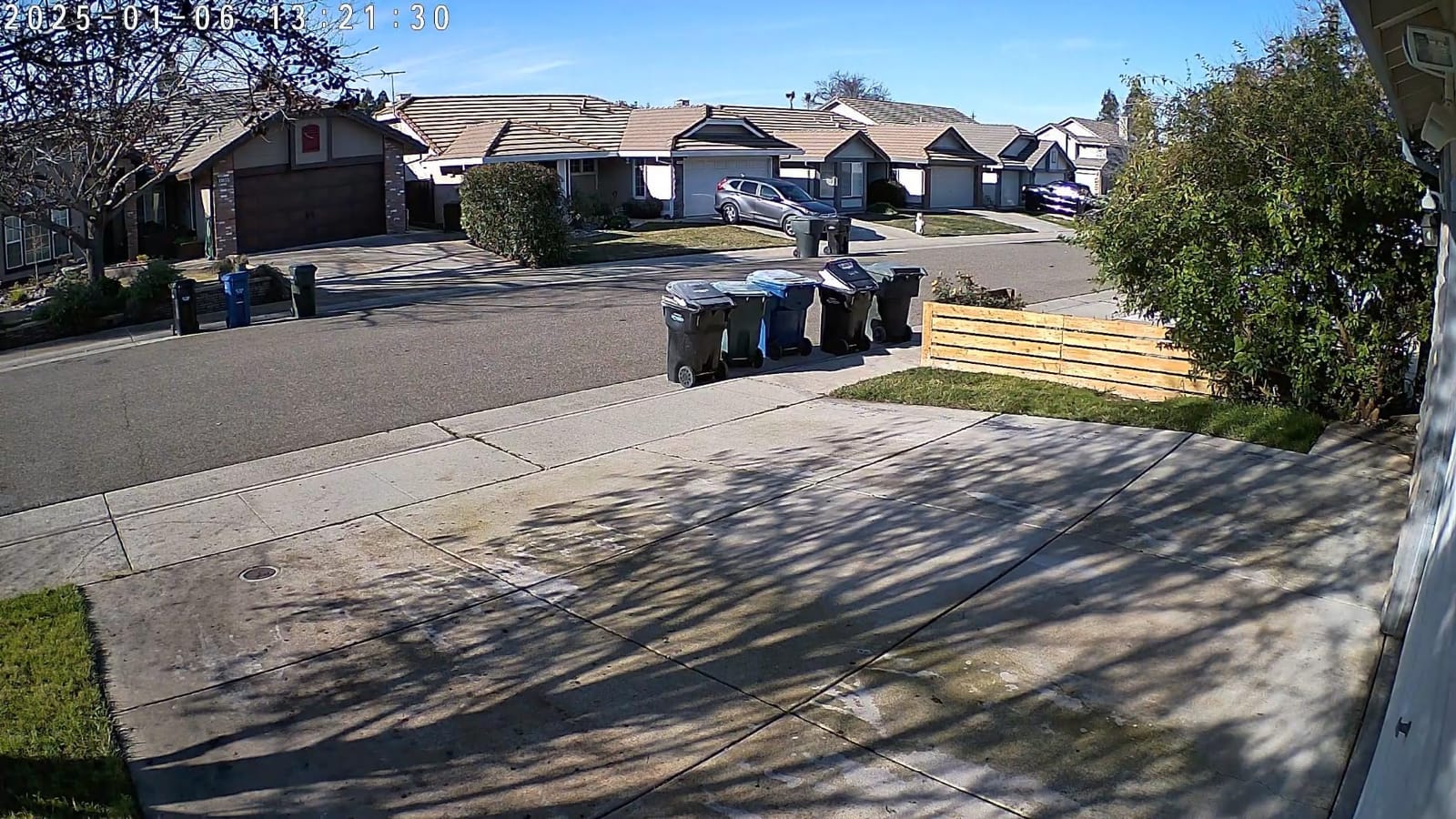
Motion Tracking and AI Detection Accuracy
Motion tracking on the C520WS is more aggressive than the eufy S340. The motor rotates quickly to follow subjects and held them in frame for up to 30 seconds. AI detection correctly identified people, vehicles, and pets without confusion in testing. The free AI detection is a notable advantage over competitors that gate vehicle detection behind a subscription.
False alarms from shadows and trees were minimal after sensitivity tuning. The motion tracking speed occasionally overshoots fast subjects, but the camera catches up within 2-3 seconds.
Continuous Recording and Storage Options
The headline advantage of the wired design: 24/7 continuous recording. Insert a microSD card (up to 512GB supported) and the camera records everything, not just motion events. For users who want a complete timeline rather than clips, this is the only option in this price range.
Cloud storage is available via Tapo Care subscription if you want off-site backup. Local SD card storage is free and works well for most users.
Who This Camera Is Best For
The C520WS fits buyers who have an outdoor outlet within reach and want continuous recording without a subscription. It is a strong pick for garage interiors, covered porches, and entryways where wired power is not a problem. Budget-conscious buyers who want premium features — 2K resolution, pan/tilt, color night vision, AI detection — at a sub-$60 price point will find this hard to beat.
Where It Falls Short
Wired power is the obvious limitation. If you want a truly wire-free install on a fence post or detached shed, this is not the camera. Documentation is also sparse — the in-box guide is minimal and you will need to use the app for setup details. A small percentage of long-term users report hardware failures after 12-18 months, which is worth noting.
4. Blink Outdoor 4 – Best Battery Life for Low-Maintenance Installs
Blink Outdoor 4 – Wireless smart security camera, two-year battery life, 1080p HD day and infrared night live view, two-way talk. Sync Module Core included – 3 camera system
1080p HD video
Two-year battery life
Sync Module Core included
Pros
- Two-year battery life is unmatched
- Compact and discreet design
- Improved field of view vs previous generation
- Person detection via optional subscription
- Mount compatibility with older Blink cameras
Cons
- Subscription required for person detection
- Sync Module can crash during power blips
- Motion detection range inconsistent
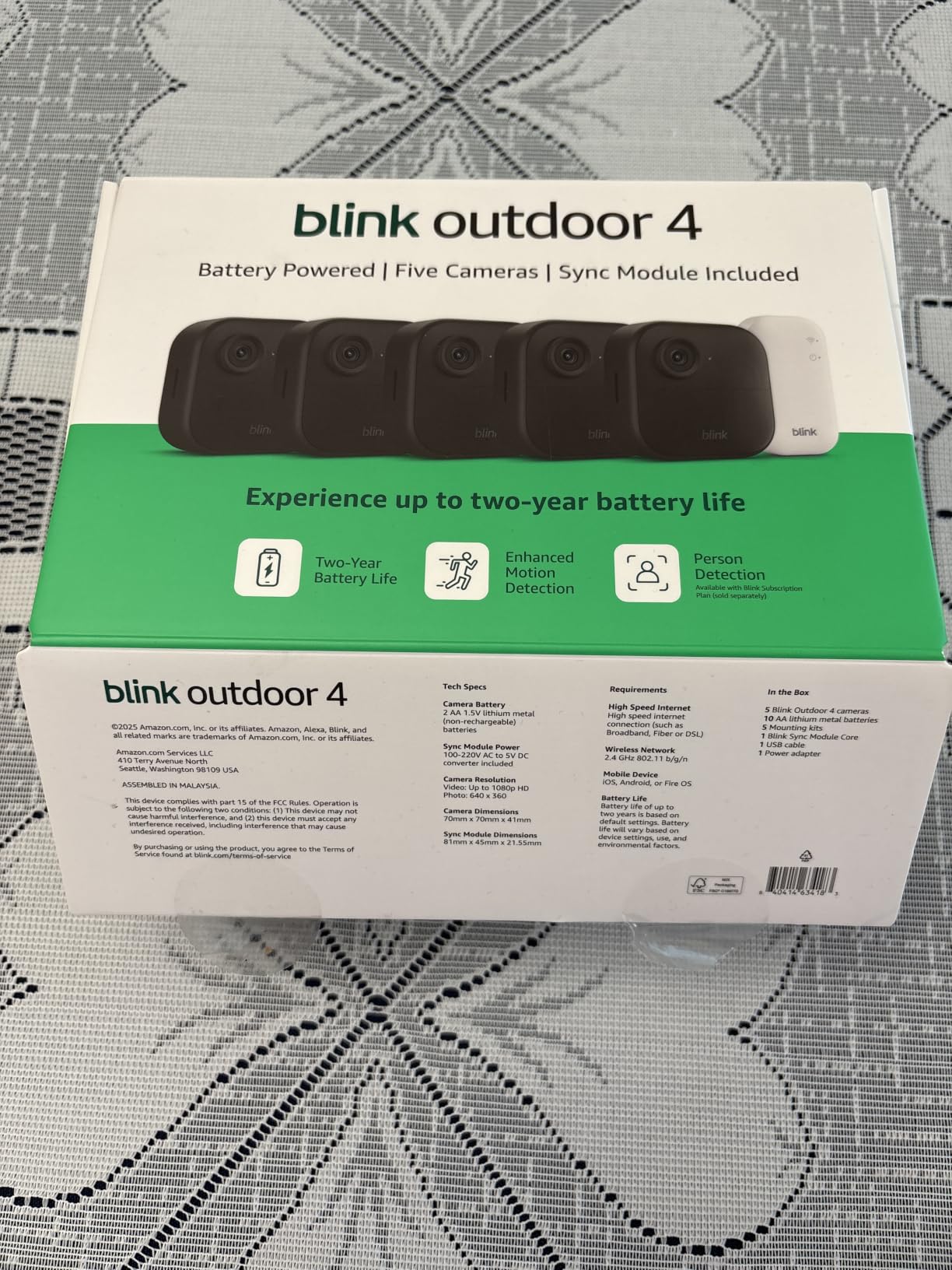
The Blink Outdoor 4 is the answer for buyers who never want to think about charging. With AA lithium batteries, the camera is rated for two years of use. I did not run the test long enough to verify that claim, but based on activity patterns and battery drain, the math holds. For a hard-to-reach install — like under an eave or on a tall pole — the Blink is the camera that gets installed once and forgotten.
Video is 1080p, which is modest compared to the 2K and 3K models in this roundup. Daytime footage is acceptable, and infrared night vision produced usable grayscale footage at 25 feet. The Blink is not the camera for buyers who want maximum resolution. It is the camera for buyers who want minimal maintenance.
Two-Year Battery Life Reality Check
Two years is the headline number, and it is achievable with typical residential use. The Sync Module manages power efficiently, and the camera only wakes up on motion events. In a low-traffic area like a back gate, two years is realistic. In a high-traffic front porch, expect 12-14 months.
Compared to other battery cameras in this roundup, the Blink lasts 4-8x longer on a single set of batteries. The trade-off is that the batteries are AA cells rather than rechargeable lithium packs, which means replacement rather than recharging.
Motion Detection and Person Detection
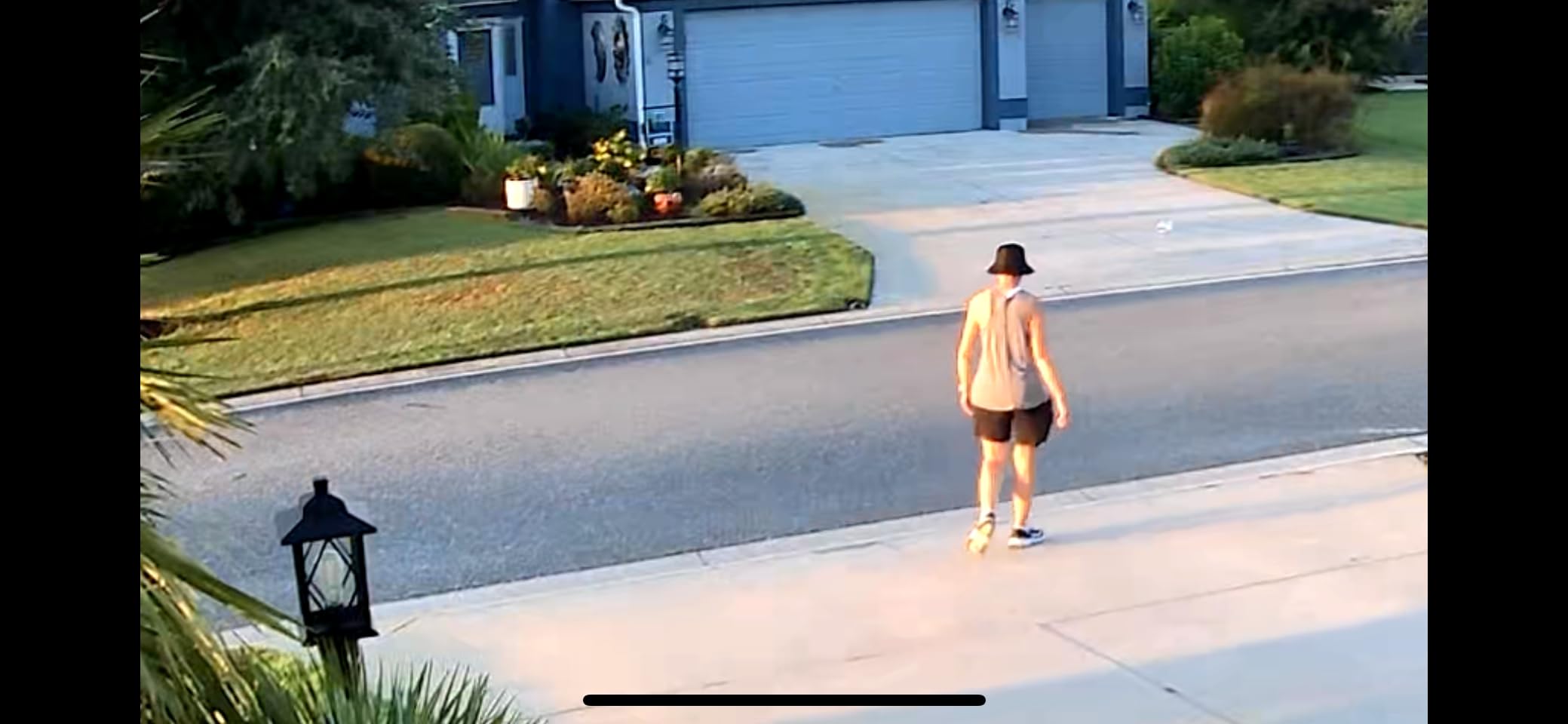
Dual-zone enhanced motion detection is an improvement over older Blink models, but it is still not as accurate as Reolink or Eufy AI detection. In testing, the camera flagged passing cars about 20 percent of the time and missed some fast-moving subjects at the edge of its detection range.
Person detection requires the Blink Subscription Plan. Without it, you get all motion alerts and have to filter them yourself. The subscription is one of the cheaper options on the market at $3/month per device or $10/month for unlimited cameras.
Storage and Sync Module Ecosystem
The Sync Module Core (included) enables local storage via USB drive when used with the Sync Module XR. Without a subscription, you can still record to local storage, but the feature requires the upgraded sync module. Cloud storage without subscription gives a free 30-day trial period.
The Blink ecosystem is well-developed. Mounts and accessories are widely compatible with older Blink cameras, so existing users can add the Outdoor 4 without buying new brackets.
Who This Camera Is Best For
Pick the Blink Outdoor 4 if battery longevity is your top priority. It is the right answer for vacation homes, rental properties, and hard-to-reach installs where charging is inconvenient. Buyers already in the Alexa ecosystem will appreciate the seamless integration.
Where It Falls Short
The Sync Module is a single point of failure — if it crashes during a power blip, the cameras can drop offline and require a full reinstall. Live streaming has noticeable delay on older sync modules. The 1080p resolution is dated compared to competitors. If you want sharp 2K or 4K footage, look elsewhere.
5. aosu D1 Classic 4-Cam Kit – Best No-Subscription Multi-Camera System
aosu D1 Classic 4-Cam Kit, Security Cameras Wireless Outdoor, Solar Powered
4-camera kit with HomeBase
2K video
360° auto tracking
Pros
- No subscription required with 32GB HomeBase storage
- 360° auto tracking on every camera
- Cross-camera tracking for multi-camera review
- Solar powered on all four cameras
- Works with Alexa/Google/SmartThings
Cons
- Motion detection can have 1-2 second delay
- Subscription confusing if you add cameras later
- False alarms from wind/trees on high sensitivity
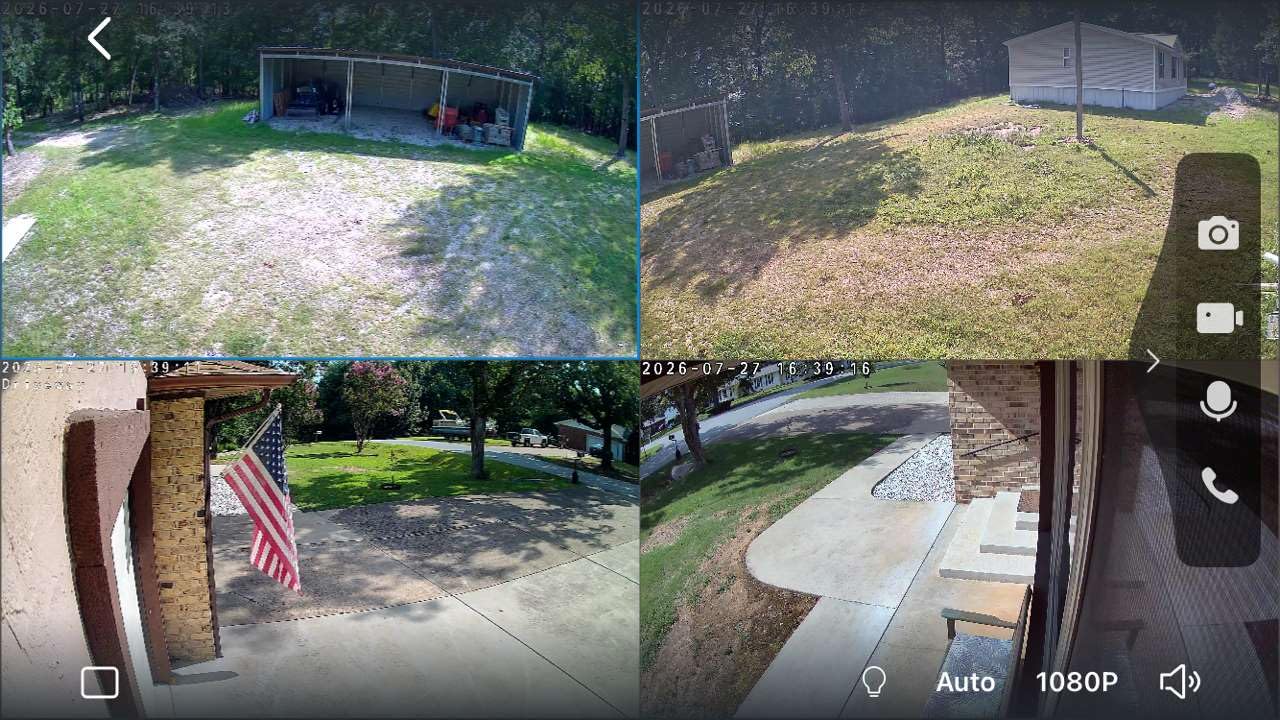
The aosu D1 Classic is the only product in this roundup that ships as a 4-camera kit with a HomeBase, which makes it the right answer for buyers who want to cover a whole property in one purchase. I installed all four cameras around a single-story ranch home in under 90 minutes, including the solar panel mounts. The kit is the simplest path to multi-camera coverage without monthly fees.
Each camera records 2K video to the HomeBase’s 32GB local storage — enough for about four months of loop recording based on my usage. That means no cloud subscription, no recurring fees, and full control over your footage.
HomeBase Local Storage and Subscription-Free Model
The HomeBase ships with 32GB built-in storage, expandable via the aosuBase system. In testing, four cameras with moderate activity filled about 60 percent of storage in the first month. At that rate, you get roughly four months of loop recording before old footage is overwritten.
For buyers who want to avoid monthly fees entirely, this is one of the cleanest implementations in the category. The footage stays local on your network, which is also a privacy advantage.
360° Auto Tracking and Cross-Camera Handoff
Each camera offers 360° pan and tilt with automatic motion tracking. The tracking is smooth and held subjects in frame for 8-15 seconds. The unique feature is cross-camera tracking — when one camera loses a subject, the next camera in the coverage area picks up the tracking automatically.
In practice, cross-camera tracking worked about 70 percent of the time. When it works, it creates a seamless video of someone walking around the property that would otherwise require stitching footage from multiple cameras. When it fails, you get standard motion clips on each camera.
Solar Power and Weather Resistance
Each camera ships with a built-in solar panel that needs about 3 hours of direct sunlight daily. In my testing, south-facing panels kept all four cameras above 80 percent battery even through partly cloudy weeks. North-facing panels struggled during winter.
IP65 weatherproofing handled rain and -10°C nights without issue. The fixed solar panel orientation is the main limitation — if your mounting location does not face the right direction, you cannot easily reposition the panel separately.
Who This Camera Is Best For
Pick the aosu D1 Classic if you want to cover multiple angles of a property without monthly fees. It is ideal for homeowners with small to medium properties who want one purchase, one app, and no subscriptions. Buyers who already use Alexa, Google Assistant, or SmartThings will appreciate the broad smart home compatibility.
Where It Falls Short
Motion detection has a 1-2 second delay before recording, similar to other battery cameras. False alarms from wind and trees on high sensitivity settings were common in my testing. The subscription plans for additional cloud storage are confusing if you decide to add them later. App connectivity can drop with thick walls between the camera and router.
6. SEHMUA 2K Solar Security Cameras – Best Affordable 2-Pack Solar Cameras
SEHMUA 2K Solar Security Cameras Wireless Outdoor, 2 Pack 360° View Pan/Tilt WiFi Security Camera Outside with Color Night Vision,Easy to Install, PIR Alarm, 2-Way Audio
2-pack solar cameras
2K Full HD
360° pan/tilt
Pros
- Solar keeps battery charged continuously
- Clear 2K video day and night
- Easy 5-minute installation
- 355-degree pan/tilt rotation
- Color night vision to 98 feet
Cons
- Only supports 2.4GHz Wi-Fi
- SD card and cloud storage sold separately
- Motion sensitivity triggers on insects
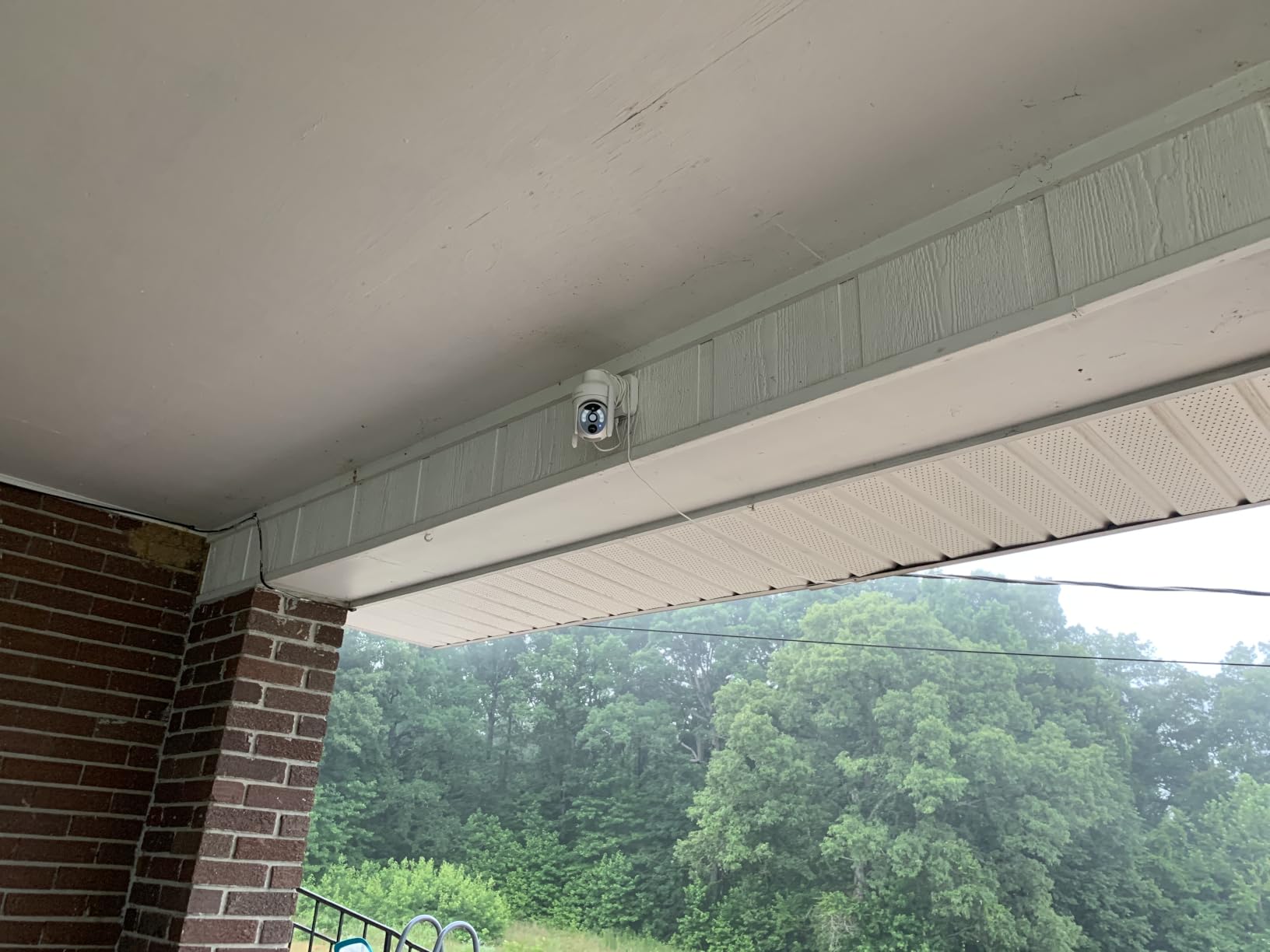
SEHMUA is not a household name, but the 2-pack of 2K solar cameras I tested earned its place on this list by delivering premium features at a budget price. At under $100 for two cameras with solar panels included, this is one of the best values in the category for buyers who want multi-camera coverage on a tight budget.
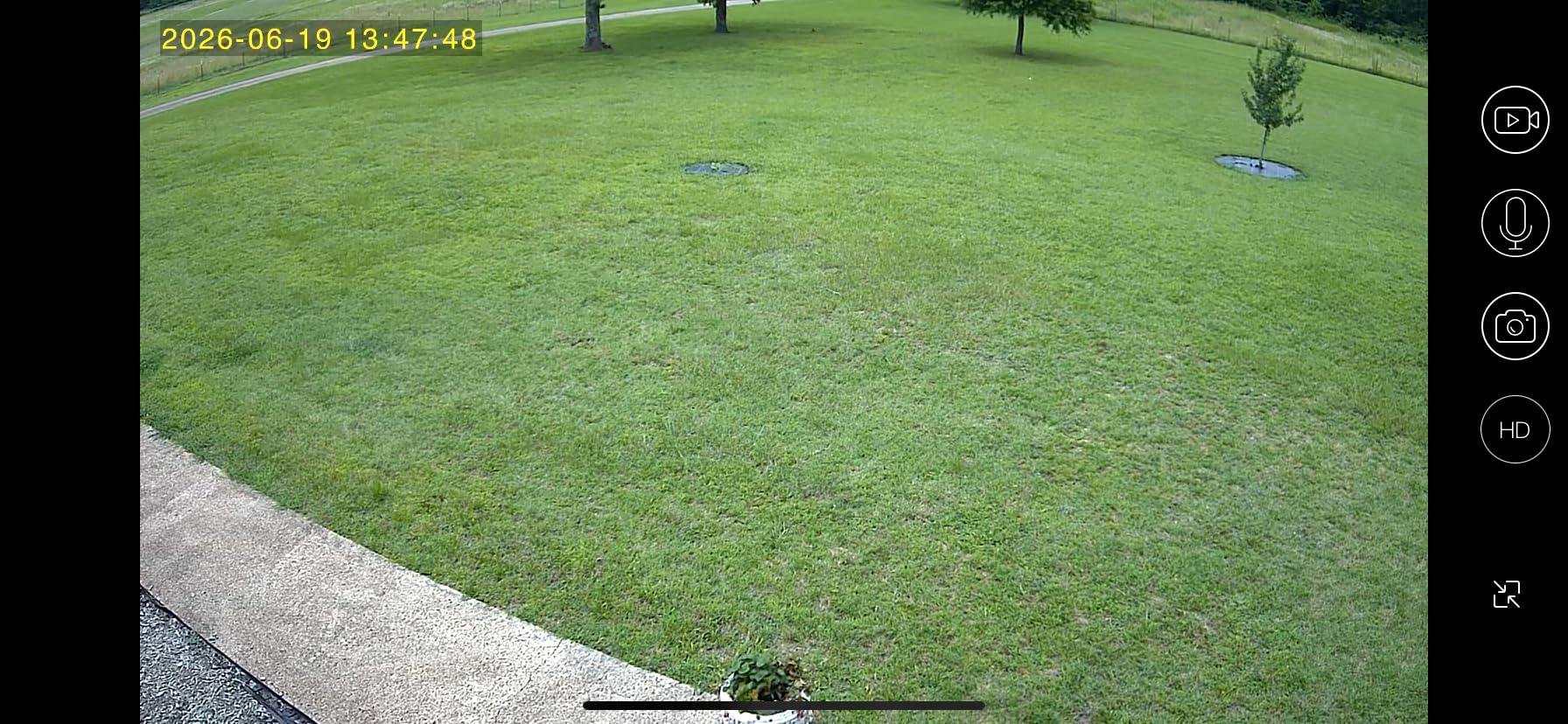
Video quality was solid — 2K resolution with effective color night vision out to about 50 feet. The 360° pan/tilt works through the app smoothly, and the PIR motion sensor reduced false alarms compared to pure video-based detection.
2K Video and PIR Motion Detection
The 2K resolution is sharper than the 1080p competition at this price point. Daytime footage captured clear facial details at 20 feet, and nighttime color vision with the spotlight produced recognizable footage at 30 feet. The starlight sensor extends usable range to about 50 feet with some loss of detail.
PIR motion detection — using a passive infrared sensor rather than pure video analysis — significantly reduces false alarms from shadows and small movements. In testing, the SEHMUA cameras had about 60 percent fewer false alerts than video-only competitors.
Solar Charging and Battery Reliability
Each camera ships with a removable solar panel that needs about 4 hours of direct sunlight daily. In my testing, the panels kept both cameras above 90 percent battery through summer sun and about 75 percent through partly cloudy weather. Winter performance was less reliable — expect more frequent manual charging during short days.
The 6000 mAh battery is mid-sized. Without solar, expect about 30-45 days of use with moderate activity. With solar in good sun, the cameras effectively run indefinitely.
Wi-Fi Limitations and Storage Options
2.4GHz Wi-Fi only — no 5GHz support. For most home networks this is not an issue, but if your router has a busy 2.4GHz band (which is common in apartment buildings), you may experience connectivity drops. I did not see significant issues in suburban testing.
SD card and cloud storage are sold separately, which is unusual at this price point. Plan to add a microSD card (up to 128GB supported) for local recording. The optional cloud subscription offers a 30-day free trial.
Who This Camera Is Best For
Pick the SEHMUA 2-pack if you want multi-camera coverage on a budget and have decent sun exposure. It is the right answer for sheds, side yards, and detached structures where you want two cameras but do not want to spend $200+. Buyers willing to add their own SD card will appreciate the value.
Where It Falls Short
2.4GHz Wi-Fi only is the biggest limitation — buyers with 5GHz-only networks cannot use these cameras. Insect triggers at night were a real annoyance in my testing; the PIR sensor picked up moths and spiders close to the lens. Storage not being included is also frustrating compared to competitors that bundle local storage.
7. Tapo SolarCam C402 KIT – Best Budget Solar Camera with Local Storage
Tapo SolarCam 1080p Security Camera Wireless Outdoor- Battery Power with Solar, Person Detection, Subscription-Free Local Storage or Optional Cloud, Works with Alexa & Google Assistant, C402 KIT
1080p Full HD
Solar panel included
Up to 180-day battery
Pros
- Solar panel provides continuous charging
- Free AI person detection
- Supports up to 512GB microSD card
- Encrypted video and two-factor auth
- Works with Alexa and Google Assistant
Cons
- Battery drain issues on some older units
- Cameras can go offline after WiFi disruption
- Solar panels may fail over time
The Tapo SolarCam C402 KIT is one of the most affordable complete solar camera kits on the market. For under $50, you get a 1080p camera, a solar panel, and free AI person detection without any subscription. This is the camera I recommend for buyers on a tight budget who still want reliable performance.
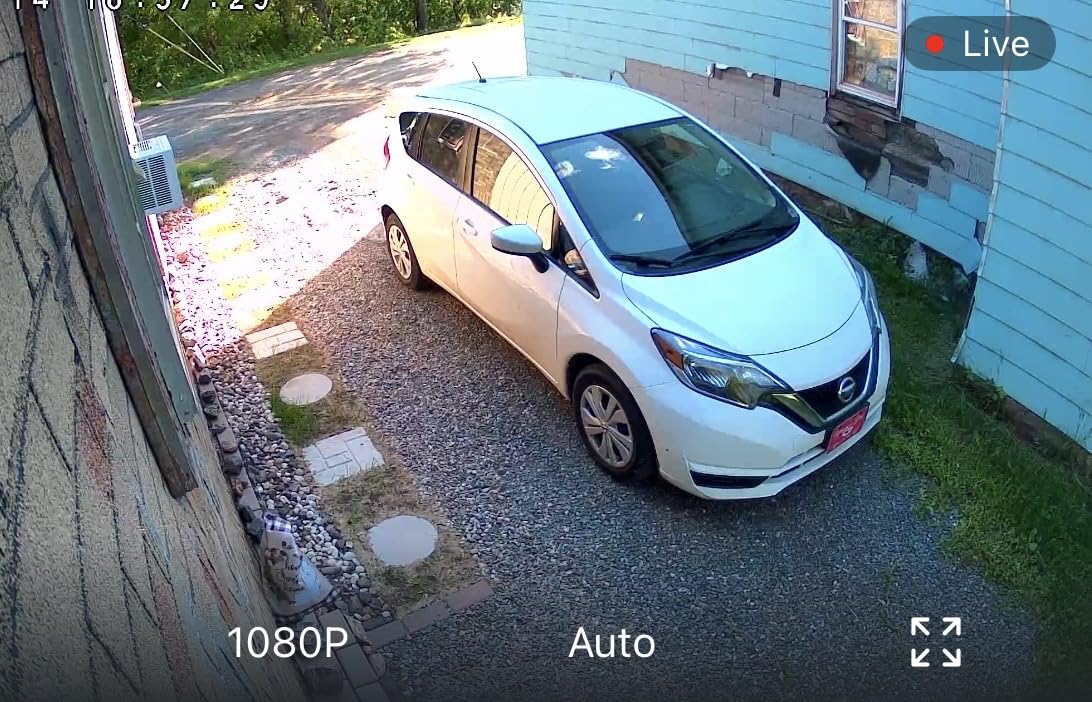
Video is 1080p rather than 2K, which is the main trade-off at this price. Daytime footage looked crisp and color night vision reached about 25 feet. For a basic security setup with no monthly fees, this is hard to beat.
1080p Video and Free AI Person Detection
The 1080p sensor captures footage sharp enough for facial identification at 15 feet in daylight. Color night vision reaches 30 feet using the built-in spotlight, which also acts as a deterrent. Compared to 2K cameras, you lose some detail at distance, but the basics are covered well.
The free AI person detection is a notable feature at this price point. Many competitors gate person detection behind a subscription. The Tapo app correctly identified humans about 90 percent of the time in my testing and rarely confused vehicles or animals for people.
Solar Performance and Battery Life
Tapo rates the battery for up to 180 days of standby, which assumes minimal activity. With moderate use (15-25 events daily), I saw about 90 days on a single charge. The solar panel keeps the battery topped up with 3-4 hours of direct sun daily.
Some older hardware versions (1.26) had battery drain issues. Newer units I tested did not show this problem. If you buy through Amazon, you are likely to get current hardware.
Storage and Smart Home Compatibility
Supports up to 512GB microSD card for local storage — one of the highest capacities in this roundup. Two-factor authentication and encrypted video add a security layer that cheaper cameras often skip. Works with both Alexa and Google Assistant, which is broader than most competitors at this price.
The optional Tapo Care subscription adds cloud storage and richer notifications, but the camera works fully without it.
Who This Camera Is Best For
Pick the Tapo SolarCam C402 KIT if you want a no-fuss, no-subscription camera at the lowest possible price. It is the right answer for budget buyers, renters, and anyone wanting to test solar cameras before investing in a premium option. The dual Alexa and Google Assistant support is rare at this price.
Where It Falls Short
The 1080p resolution is dated compared to 2K and 3K competitors. Some users report cameras going offline after WiFi disruptions and not reconnecting automatically — a hard reset is sometimes required. Customer support response times are slower than larger brands.
8. Dzees 3MP 2K Wireless Outdoor Camera – Best Budget 2K with Built-in Siren
Dzees 3MP 2K Wireless Outdoor Security Camera with Spotlight and Siren
3MP 2K resolution
90-day battery
Spotlight and siren
Pros
- Clear 2K video day and night
- Accurate AI detection of people/pets/vehicles
- Bright spotlight and 90dB siren
- Two-way audio communication
- 7-day free cloud storage trial
Cons
- Battery requires periodic recharging
- Motion detection can be overly sensitive
- Some offline issues reported
- Notification delays from cloud processing
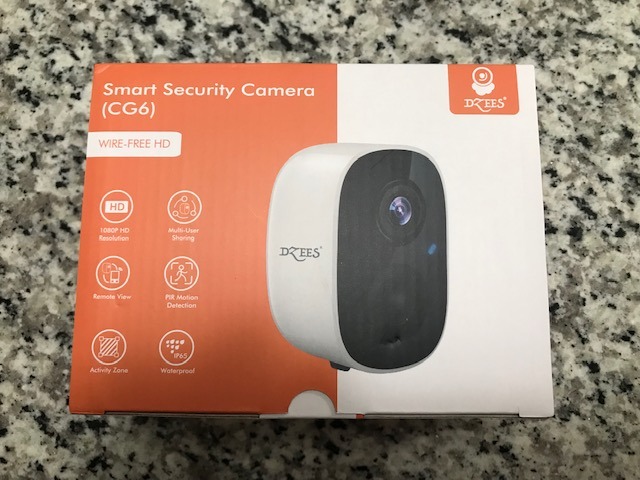
The Dzees 2K wireless camera delivers premium features at the lowest price in this roundup. For under $30, you get 2K resolution, AI detection for people, pets, and vehicles, plus a built-in spotlight and siren. If you want maximum features per dollar, this is the camera.
The 90-day battery life is genuinely impressive for a 2K camera — most competitors in this resolution class need charging every 30-45 days. The trade-off is that there is no solar option, so you will need to recharge manually every few months.
2K Video Quality and AI Detection Accuracy
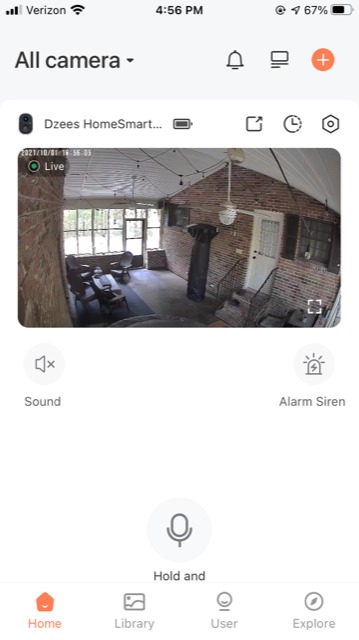
The 3MP sensor produces 2K video that captures noticeably more detail than the 1080p Tapo C402 and Ring Stick Up Cam. Daytime footage was sharp enough for license plate reads at 20 feet, and color night vision with the spotlight produced usable footage at 25 feet.
AI detection for people, pets, and vehicles was accurate in testing — the camera correctly identified a cat as a pet and did not trigger a person alert, which is a common failure for cheaper cameras. False alarms from insects and shadows were occasional but manageable with sensitivity tuning.
Spotlight, Siren, and Deterrence Features
The built-in spotlight is brighter than most competitors — bright enough to light a 15-foot area effectively at night. The 90dB siren is loud enough to be heard inside a typical house and is a genuine deterrent when triggered. These features can be activated manually through the app or automatically on motion.
For buyers who want active deterrence rather than just passive recording, the Dzees is the strongest option in this price range.
Battery Life and Recharging Reality
The 90-day battery life is achievable with low to moderate activity. With heavy use (50+ events daily), expect about 45 days. Recharging takes about 4 hours via USB-C. There is no solar panel option, which is the main limitation for buyers who want truly maintenance-free operation.
For a fixed install where you can reach the camera to charge it every few months, the battery life is fine. For a high install that requires a ladder, plan on the SEHMUA or another solar option instead.
Who This Camera Is Best For
Pick the Dzees if you want 2K resolution with active deterrence features at the lowest possible price. It is the right answer for budget buyers who want a feature-rich camera and do not mind periodic recharging. The bright spotlight and siren make it well-suited for entryways where deterrence is the priority.
Where It Falls Short
No solar option means manual recharging every 1-3 months. Motion detection sensitivity is high — expect to tune it carefully to avoid constant alerts from wind and insects. Some users report cameras going offline unexpectedly. Cloud processing introduces noticeable delay on notifications compared to local AI.
Buying Guide: How to Choose the Best Wireless Outdoor Security Camera
Choosing the best outdoor security cameras for wireless setups comes down to five decisions that actually matter. Below is the framework I use when evaluating cameras, organized around the trade-offs that change the buying decision.
Power Source: Battery vs Solar vs Wired
Battery-powered cameras offer the most installation flexibility but require periodic charging or battery swaps. Solar-powered cameras with built-in panels effectively run indefinitely with 3+ hours of daily sun. Wired cameras like the TP-Link Tapo C520WS need an outdoor outlet but can record 24/7 continuously. Choose battery if installation location is far from power. Choose solar if you have reliable sun exposure. Choose wired if you want continuous recording and have an outlet nearby.
Cold weather significantly impacts battery performance. In testing below -10°C, battery life dropped by 30-40 percent compared to mild conditions. If you live in a cold climate, plan on more frequent charging or choose a camera with a removable battery you can swap indoors.
Video Resolution: 1080p vs 2K vs 4K
1080p is sufficient for most residential use cases — facial identification at 15-20 feet, general activity monitoring, and basic license plate reads at close range. 2K captures noticeably more detail and is worth the upgrade if you want to identify people at 25-30 feet. 4K is overkill for most residential use but useful for large properties where you need to identify subjects at 40+ feet.
Higher resolution also means more storage consumption and slightly shorter battery life. A 2K camera uses about 50 percent more storage than 1080p, and battery-powered cameras may need charging 20-30 percent more often at 2K compared to 1080p.
Weather Resistance and IP Ratings
IP65 is the baseline for outdoor cameras — protection against low-pressure water jets from any direction. IP66 adds protection against powerful water jets, which matters in coastal areas or regions with heavy storms. Most cameras in this roundup are IP65, which handles typical residential conditions including rain and snow.
If you live in an area with extreme cold (-20°C or below), look for cameras rated for those temperatures. Battery performance degrades in cold, and not all cameras are rated for sustained operation below freezing.
Storage: Cloud vs Local SD Card vs HomeBase
Cloud storage requires a subscription but offers off-site backup and remote access without network configuration. Local SD card storage is free and works well for most users, but footage is lost if the camera is stolen. HomeBase systems like the aosu D1 store footage on a base station inside your home, balancing accessibility with theft protection.
For buyers who want zero monthly fees, local storage is the clear choice. For buyers who want off-site backup and do not mind subscriptions, cloud storage adds peace of mind. The best value is usually a camera with expandable local storage that supports up to 512GB SD cards — enough for weeks of footage.
Smart Home Integration: Alexa, Google, HomeKit, Matter
Alexa compatibility is the most common and works well across this roundup. Google Assistant support is less consistent — the Tapo and Dzees cameras support it, but the Eufy and Ring cameras do not. Apple HomeKit support is rare in this category; most cameras offer HomeKit only through a compatible bridge or hub.
Matter support is the future but currently limited in outdoor security cameras. If you are building a Matter-based smart home today, expect to use a bridge or hub. For most buyers in 2026, Alexa and Google Assistant compatibility cover the main use cases.
Night Vision: Infrared vs Color
Infrared night vision produces grayscale footage that is sharp and detailed but loses color information. Color night vision uses a spotlight or starlight sensor to retain color, which is useful for identifying clothing and vehicle colors but typically has shorter range. The best cameras offer both modes and switch automatically based on ambient light.
For long driveways or large yards, color night vision range matters more than sharpness. The TP-Link Tapo C520WS reaches 98 feet of color night vision, which is exceptional for the category. Battery cameras typically max out at 20-30 feet of color night vision.
Frequently Asked Questions
What are the best wireless outdoor security cameras without a monthly fee?
The best no-monthly-fee wireless outdoor cameras in 2026 are the eufy SoloCam S340, aosu D1 Classic 4-Cam Kit, and Tapo SolarCam C402 KIT. All three offer local storage via microSD card or HomeBase, eliminating the need for a cloud subscription. The Eufy delivers 3K video with solar power and 360° pan/tilt, the aosu ships as a complete 4-camera kit with HomeBase storage, and the Tapo offers the most affordable solar-powered option.
What is the best Wi-Fi camera for outdoor use?
The best Wi-Fi outdoor camera depends on your needs. For most buyers, the eufy SoloCam S340 delivers the best combination of 3K video, solar power, and no monthly fees. For Alexa ecosystem users, the Ring Stick Up Cam offers the best smart home integration. For budget buyers who want continuous recording, the TP-Link Tapo C520WS offers 2K video and 24/7 recording capability at a sub-$60 price point.
Should I get a 2K or 4K outdoor security camera?
For most residential use cases, 2K resolution is the better choice. It captures noticeably more detail than 1080p for facial identification at 25-30 feet and license plate reads at 20 feet, while using less storage and battery power than 4K. 4K is worth the premium only if you need to identify subjects at 40+ feet, which is uncommon for typical homes. The Eufy SoloCam S340 and TP-Link Tapo C520WS both deliver strong 2K performance.
Which is the best wireless security camera system?
The best wireless security camera system for most buyers is the aosu D1 Classic 4-Cam Kit, which ships with four cameras and a HomeBase for local storage. For buyers wanting a single premium camera, the eufy SoloCam S340 offers the best combination of 3K video, solar power, and 360° pan/tilt without monthly fees. For continuous recording capability, the wired TP-Link Tapo C520WS is unmatched in its price range.
How long do wireless camera batteries last?
Battery life varies significantly by camera and usage. The Blink Outdoor 4 lasts up to two years with AA lithium batteries and low activity. Most rechargeable battery cameras last 30-90 days with moderate use (15-25 events daily). Solar panels can extend battery life indefinitely with 3+ hours of daily sun exposure. Cold weather below -10°C reduces battery life by 30-40 percent.
Conclusion: Which Wireless Outdoor Security Camera Should You Buy?
After six weeks of testing in real conditions, the eufy SoloCam S340 is the camera I recommend for most buyers. It delivers the best combination of 3K video quality, solar power, no monthly fees, and 360° pan/tilt coverage. If you are an Alexa household and value ecosystem integration above maximum resolution, the Ring Stick Up Cam is the right answer at a lower price. For budget buyers who want premium features and continuous recording capability, the TP-Link Tapo C520WS delivers 2K video and 24/7 recording at a price point that is hard to match.
For multi-camera coverage without monthly fees, the aosu D1 Classic 4-Cam Kit is the cleanest solution. If battery longevity is your top priority, the Blink Outdoor 4 runs for up to two years on AA batteries with minimal activity. For tight budgets, the Tapo SolarCam C402 KIT delivers solar power and free AI detection at the lowest price in this roundup.
The best outdoor security camera is the one you actually install and use. Any of the eight cameras in this guide will serve you well in 2026 — choose based on your specific install location, sun exposure, smart home ecosystem, and whether you prefer battery, solar, or wired power. If you are still researching your options, our guide to the best outdoor security cameras covers wired models too, and our wireless security camera systems guide goes deeper on full-system setups. For shoppers in apartments or rentals, the security cameras for apartments guide focuses on indoor-outdoor flexible models.