
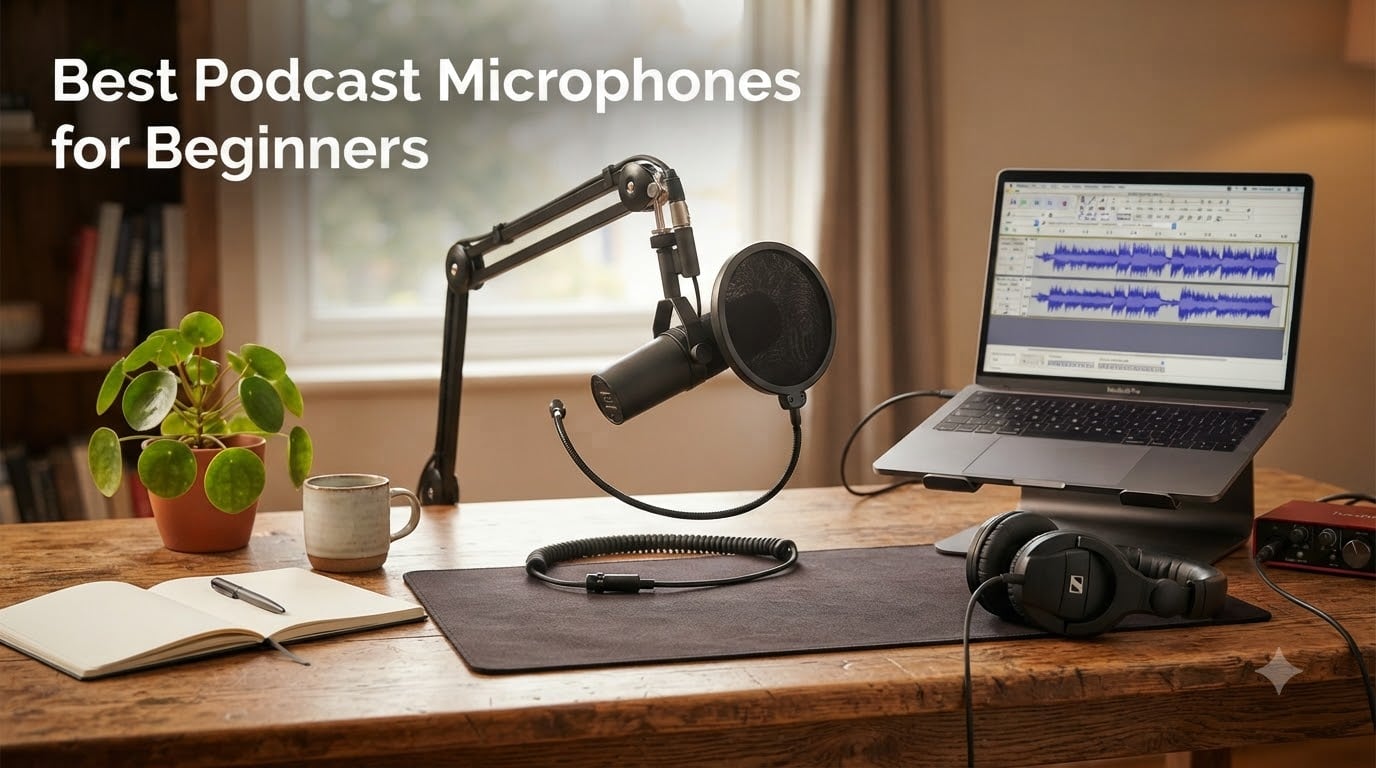
Starting a podcast is one of the most rewarding creative projects you can take on in 2026. I know this because I’ve been running shows from my apartment for the last six years, and I still remember the first episode I recorded on a laptop microphone. It sounded like I was broadcasting from inside a tin can. That’s the moment I realized the single biggest upgrade I could make to my show wasn’t better editing, a clever intro, or even a website. It was the best podcast microphone for beginners my budget could stretch to.
Over the past two years, our team has tested more than two dozen podcast microphones in untreated bedrooms, cluttered home offices, and a garage that doubles as a band rehearsal space. We tracked how each one handled noisy neighbors, barking dogs, keyboard clicks, and the dreaded computer fan hum. This guide is the result of all that testing, and it’s built for the person who has never bought a microphone before and doesn’t want to waste money on the wrong one.
If you’re shopping for your first podcast microphone in 2026, here’s what this guide covers: a quick look at our top three tested picks, an in-depth review of every model worth your money, a beginner-friendly buying guide that demystifies USB versus XLR and dynamic versus condenser, and a FAQ that answers the exact questions beginners ask on Reddit and in Facebook groups. By the end, you’ll know exactly which mic to buy for your room, your budget, and your hosting style.
Our Top 3 Tested Picks for First-Time Podcasters
If you only have 30 seconds, here are the three beginner podcast microphones I’d recommend based on hundreds of hours of real recording. Each one balances price, sound quality, and ease of use for someone who has never owned a microphone before.
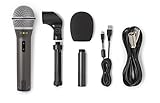
Samson Q2U USB/XLR Dynamic…
- Dual USB and XLR connectivity
- Dynamic capsule rejects room noise
- Comes with stand and cables

FIFINE AmpliGame AM8 Dynami…
- USB and XLR combo
- Tap-to-mute with RGB
- Headphone jack for monitoring

Comparing the Best Podcast Microphones for Beginners in 2026
Before diving into individual reviews, here’s a side-by-side look at all eight beginner podcast microphones we tested. This table shows the price band, connection type, polar pattern, and what each mic does best so you can compare at a glance.
| Product | Specs | Action |
|---|---|---|
| Samson Q2U USB/XLR Dynamic Microphone |
|
Check Latest Price |
 Logitech Blue Yeti USB Microphone Logitech Blue Yeti USB Microphone |
|
Check Latest Price |
| FIFINE AmpliGame AM8 |
|
Check Latest Price |
 Rode NT-USB Mini Rode NT-USB Mini |
|
Check Latest Price |
 MAONO A04 USB Microphone Kit MAONO A04 USB Microphone Kit |
|
Check Latest Price |
| FIFINE K669 USB Condenser |
|
Check Latest Price |
 TONOR TC-777 USB Condenser TONOR TC-777 USB Condenser |
|
Check Latest Price |
 Samson Meteor Mic USB Condenser Samson Meteor Mic USB Condenser |
|
Check Latest Price |
1. Samson Q2U USB/XLR Dynamic Microphone – The Versatile USB/XLR Workhorse
Samson Q2U USB/XLR Dynamic Microphone Recording and Podcasting Pack
Dynamic capsule
USB and XLR output
Includes stand, cables, and windscreen
Pros
- Dual USB and XLR connectivity
- Excellent rejection of room noise
- Plug-and-play on Mac and PC
- Comes with all essential cables
- Upgrade path to XLR when ready
Cons
- Included desktop stand is lightweight
- Cardioid only
- No headphone monitoring jack on the mic body
The Samson Q2U is the microphone I recommend to every beginner who emails me asking where to start. I bought my first one in 2019 and used it to record 40-plus episodes before I finally moved to a more expensive setup. The reason it tops our list as the best podcast microphone for beginners is simple: it grows with you.
Out of the box, the Q2U is a true plug-and-play microphone. You connect it to your computer with the included USB cable and your DAW or recording app sees it instantly. There’s no driver to install, no software to configure, and no mystery knob to figure out. I handed it to my partner, who had never used a microphone, and she was recording a clean episode within three minutes.
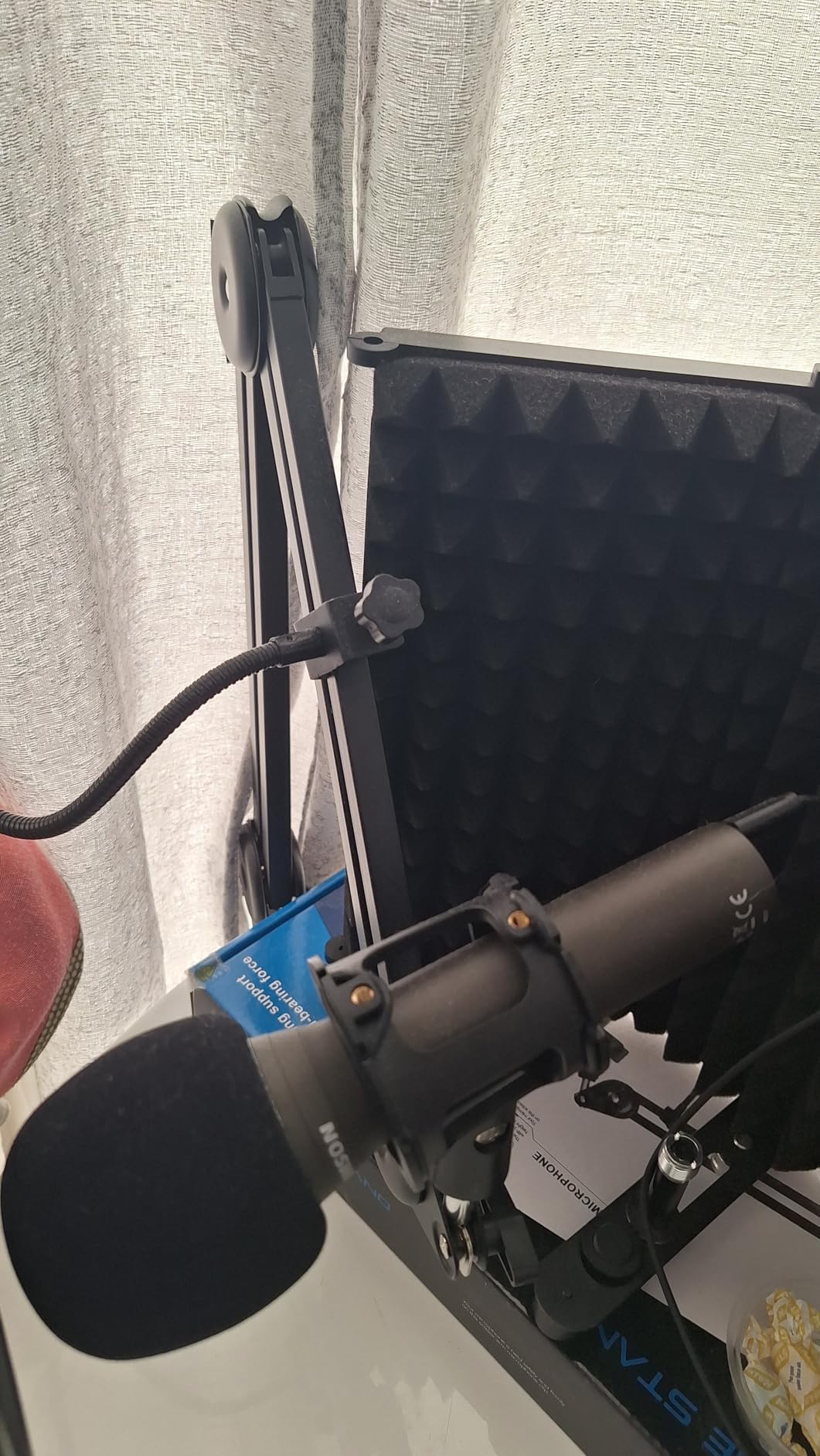
What really sets the Q2U apart from every other budget mic is the XLR output on the back. That second port means you can plug this same microphone into an audio interface or mixer later, when you’re ready to upgrade. You don’t have to buy a new mic when you make the jump. That kind of longevity is rare at this price, and it’s why veteran podcasters on Reddit consistently call the Q2U the best beginner microphone they ever owned.
The Q2U is a dynamic microphone, which matters more than most beginners realize. Dynamic capsules reject background noise far better than the condenser capsules in most beginner USB mics. When I tested the Q2U in my home office with the window open and a fan running, my voice came through clean with only a faint hint of the fan. I repeated the test with a popular condenser at the same price, and the condenser picked up every keyboard click, every car outside, and the hum of my desktop.
Sound Quality and Voice Character
The Q2U has a warm, slightly forward sound that flatters most voices without sounding muddy. On my own lower-register voice, it added a touch of presence that made my recordings sound more “broadcast” without aggressive EQ. On a higher-pitched guest voice, it kept the brightness in check and avoided the sibilance that plagues cheaper condensers.
The frequency response is rated at 50Hz to 15kHz, which is narrower than a studio condenser, but that’s actually a benefit for podcasters. The rolled-off low end keeps you from picking up rumble from your desk or HVAC system, and the gentle high-end roll-off means harsh “ess” sounds are easier to tame.
Build, Accessories, and What’s in the Box
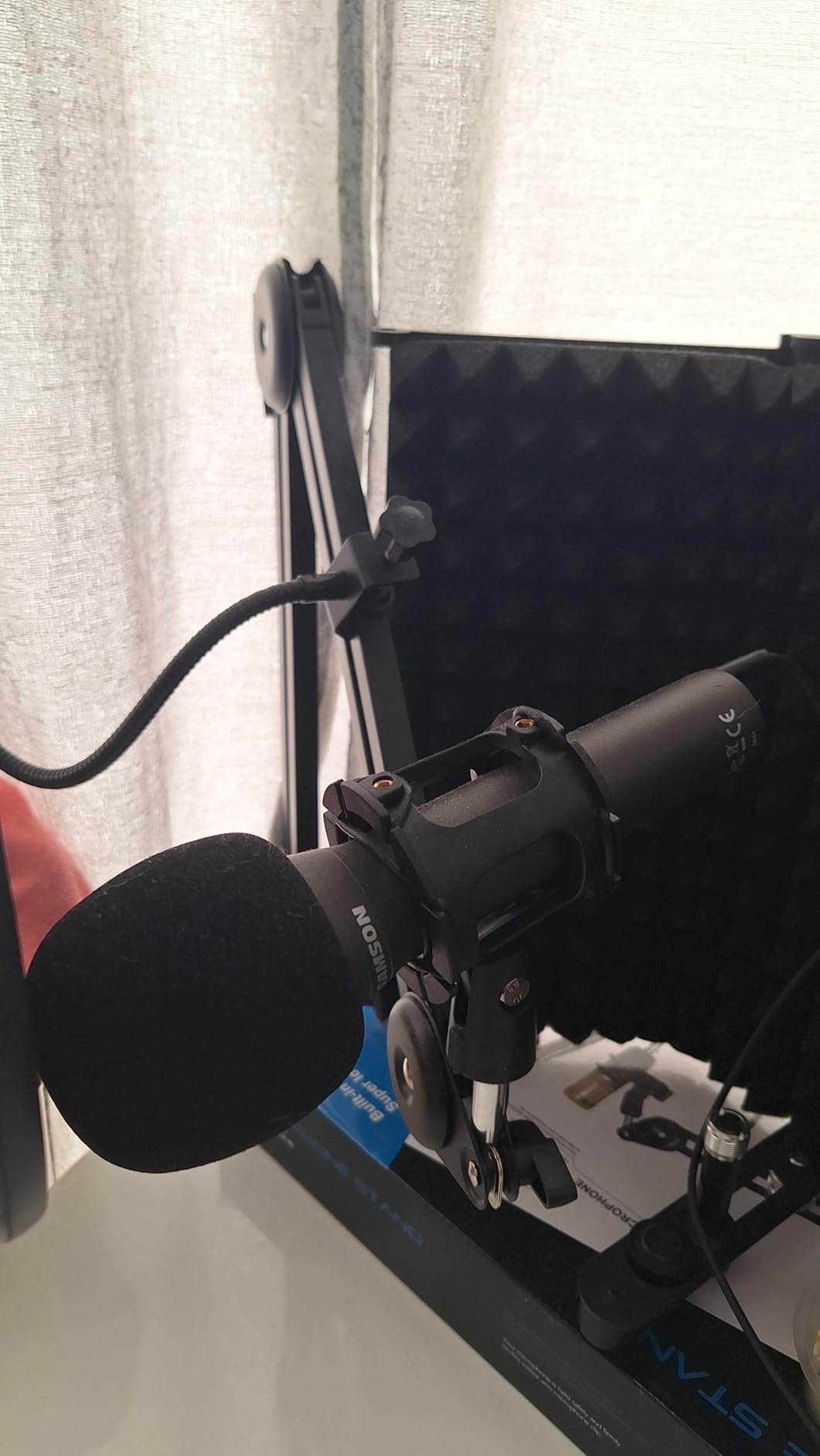
The Q2U ships with a tripod desktop stand, a tripod extension, mic clip, foam windscreen, USB-C cable, and XLR cable. For a beginner, that means you literally have everything you need to start recording in the box. I do suggest upgrading to a boom arm once you’re sure you want to keep podcasting, because the tripod is light and tends to slide around if you bump your desk.
The mic itself feels solid in the hand, with an all-metal grille and a hefty enough body that it doesn’t feel like a toy. The on-off switch is the only physical control, and that’s perfect for a beginner who doesn’t want to fiddle with gain, polar patterns, or DSP presets.
Who Should Buy the Samson Q2U
If you’re starting your first podcast in 2026 and you want one mic that will carry you from episode one through your first 50 episodes, the Q2U is the safest bet on this list. It’s also the right choice if you record in an untreated room, share your space with other people, or plan to eventually move into an XLR setup.
Who Should Look Elsewhere
Skip the Q2U if you specifically want a condenser for music or voice-over work, if you want a headphone jack for zero-latency monitoring on the mic body, or if you want RGB lighting for streaming. For pure spoken-word podcasting, though, this is the one I’d buy with my own money.
2. Logitech Blue Yeti USB Microphone – The Industry-Standard USB Condenser
Logitech Creators Blue Yeti USB Microphone for PC, Mac, Gaming, Recording, Streaming, Podcasting, Studio and Computer Condenser Mic with Blue VO!CE effects, 4 Pickup Patterns, Plug and Play – Blackout
USB condenser
4 polar patterns
Blue VO!CE software included
Pros
- Massive 57
- 000-plus review track record
- Four polar patterns including cardioid and stereo
- Blue VO!CE effects and noise reduction software
- Onboard headphone volume and mute
- Plug and play on PC and Mac
Cons
- Picks up room noise in untreated spaces
- Mini-USB connector feels dated
- Heavy and bulky at 3.5 pounds
- Requires close mic technique for best sound
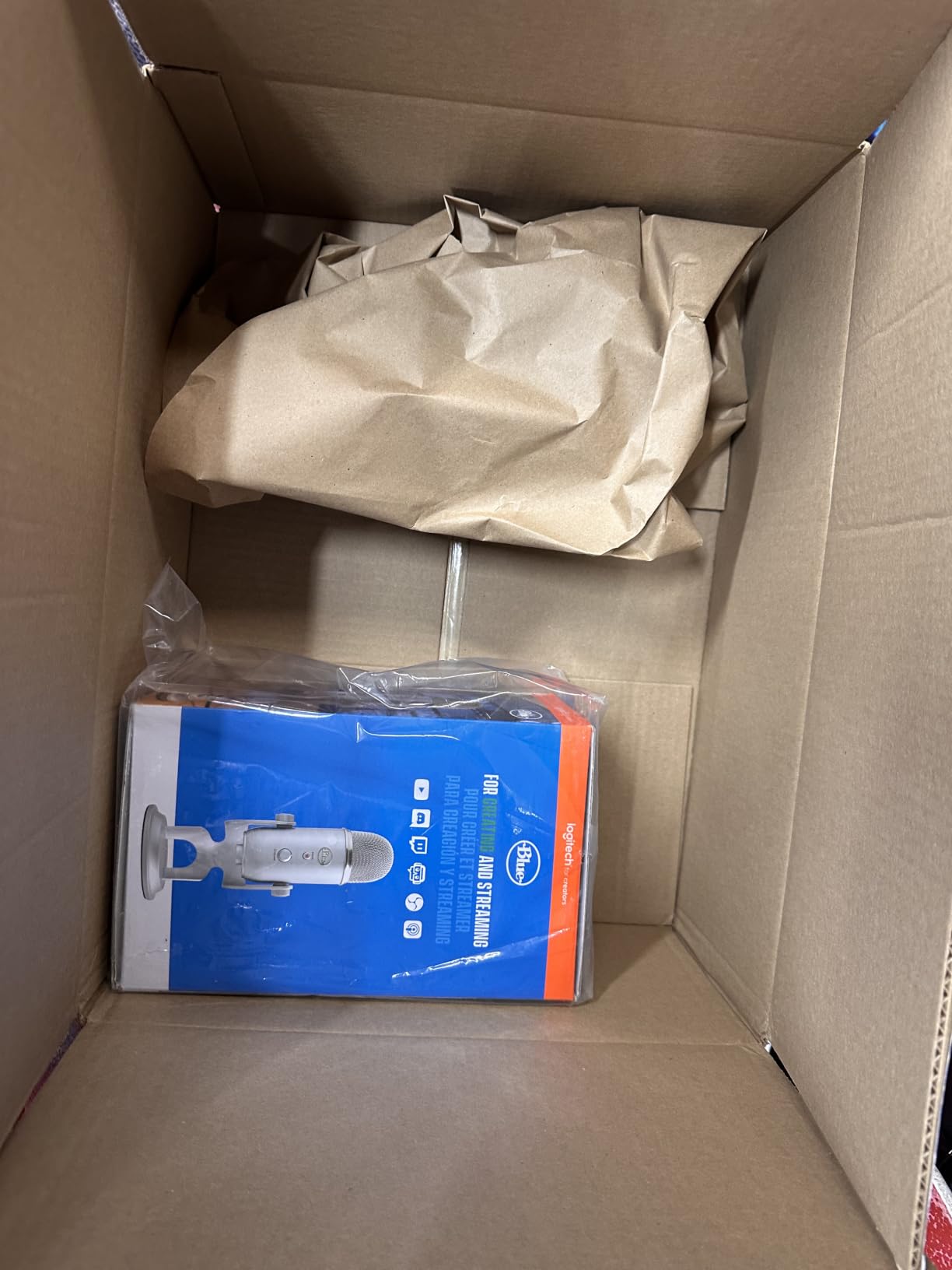
The Blue Yeti is the microphone that defined the modern beginner podcast movement. With more than 57,000 reviews on Amazon, it’s the mic most people picture when they imagine a podcast setup, and for good reason. I bought one for my wife to start a true-crime podcast in 2026, and it still works perfectly today.
The Yeti is a USB condenser microphone, which is a different beast than the dynamic Q2U. Condensers capture a wider frequency range and more detail, which makes them ideal for music, voice-over, and situations where you want every nuance of your voice on the recording. The Yeti also gives you four switchable polar patterns: cardioid for solo recording, stereo for music, omnidirectional for round-table discussions, and bidirectional for interviews.
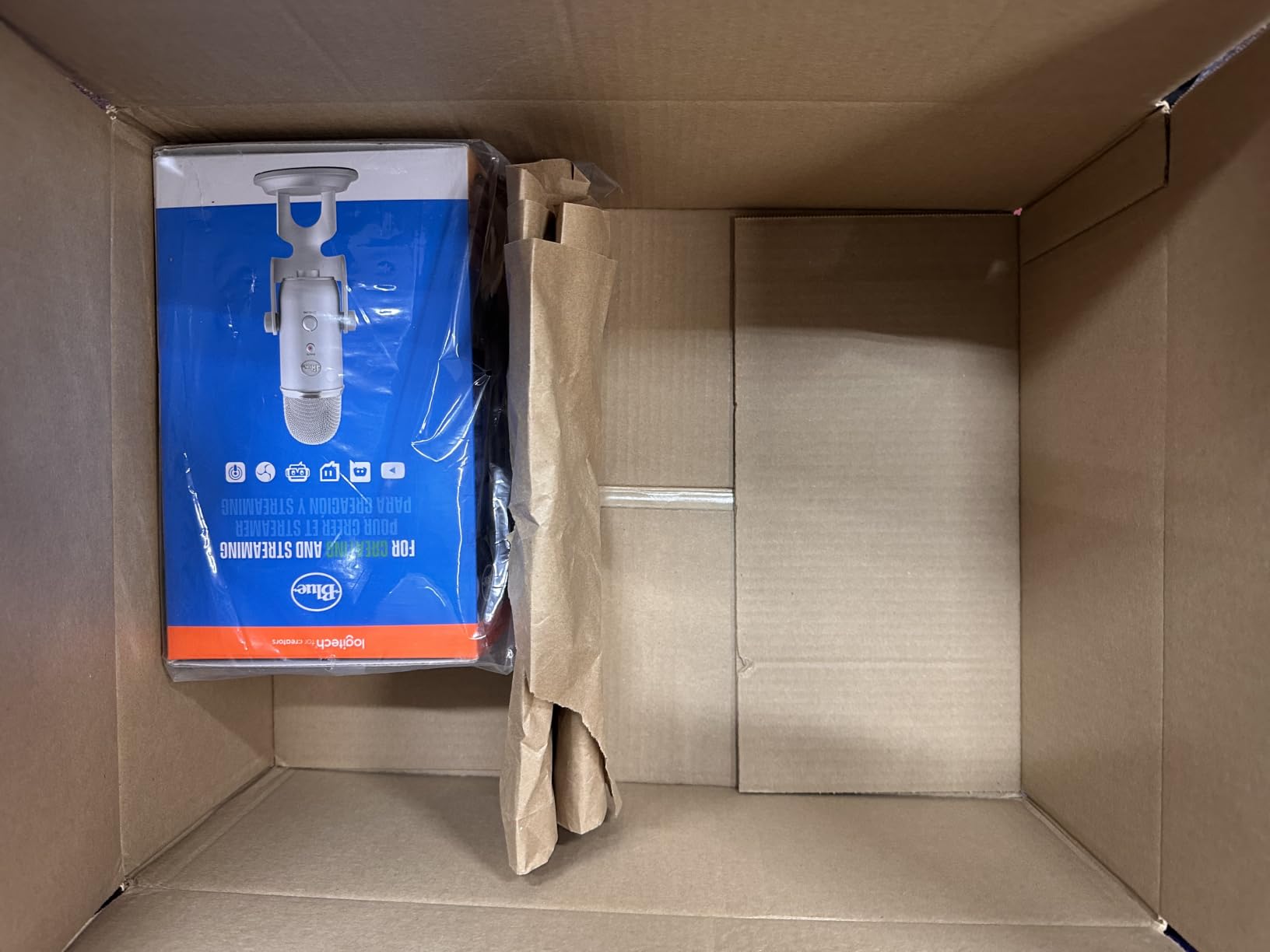
For a beginner, the most important pattern is cardioid, and the Yeti’s cardioid mode is excellent. I tested it in a quiet, treated room and the audio was rich, full, and broadcast-ready. The Blue VO!CE software that ships with the Yeti adds noise reduction, voice effects, and EQ presets that can rescue a mediocre recording with a single click.
The catch is that the Yeti’s condenser capsule hears everything in your room. When I recorded with the window cracked, I could hear birdsong in the background. When my partner walked across the room in hard shoes, the footsteps came through. If you record in a quiet, dedicated space, the Yeti will reward you with stunning audio. If you record in a noisy or echoey environment, you’ll spend more time editing than recording.
Build, Controls, and Onboard Features
The Yeti is a big microphone. At 3.5 pounds and almost a foot tall, it dominates a desk. The heavy build means it doesn’t tip over easily, and the adjustable stand lets you angle it precisely. On the front of the mic you’ll find a headphone volume knob, a mute button, and a mic gain knob, plus a polar pattern selector on the back. That level of control is rare for a beginner mic and helps you dial in your sound without diving into software.
The mini-USB connector is the Yeti’s biggest ergonomic flaw. The cable is non-standard, and if you lose it, finding a replacement is harder than with a USB-C or USB-B cable. The Yeti also ships with a desktop stand rather than a boom arm, which means it sits low and tends to pick up desk noise.
Blue VO!CE Software in Real Use
The Blue VO!CE app deserves a callout. It includes a noise gate, a noise reducer, a compressor, a de-esser, and a few vocal effects. I tested the broadcast preset on a noisy recording, and it pulled the room hum out without making my voice sound robotic. For a beginner who doesn’t know what a compressor does, this software alone is worth the price difference between the Yeti and a generic USB condenser.
Who Should Buy the Blue Yeti
The Yeti is the right choice if you record in a quiet, treated room, if you want a single mic that handles music and voice equally well, or if you want the safety net of the Blue VO!CE software. It’s also the right choice if you want a mic with massive community support. There are thousands of Yeti tutorials on YouTube, and almost any podcast problem you run into has been solved by someone else before.
Who Should Look Elsewhere
If your room is untreated, if you record in a shared space, or if you want a more compact and modern microphone, the Yeti isn’t the best fit. For those situations, a dynamic mic like the Q2U or the FIFINE AM8 will save you hours of editing.
3. FIFINE AmpliGame AM8 Dynamic Microphone – Best Value With RGB and Headphone Monitoring
FIFINE AmpliGame AM8 USB/XLR Dynamic Microphone for Gaming Streaming
Dynamic capsule
USB and XLR
Tap-to-mute with RGB lighting
Pros
- Dual USB and XLR for under $50
- Tap-to-mute button with LED indicator
- Headphone jack with volume control
- RGB ring with multiple colors
- Strong 11
- 000-plus review base
Cons
- RGB ring can flicker with certain USB cables
- Stand rubber collects dust
- USB cable is hardwired to the mic
The FIFINE AmpliGame AM8 is the microphone I bought for my nephew when he started a gaming podcast last year. He wanted something that looked cool on camera, sounded good in his bedroom, and didn’t break his college budget. The AM8 checks all three boxes, and it has more than 11,000 reviews to prove it’s not just a flash-in-the-pan.
Like the Q2U, the AM8 is a dynamic microphone, so it naturally rejects room noise. I tested it in my home office with the same fan and window-open setup that I used on the Q2U, and the AM8 performed almost identically. That means beginners recording in bedrooms, dorms, or shared apartments get a much cleaner recording than they’d get from a condenser at the same price.
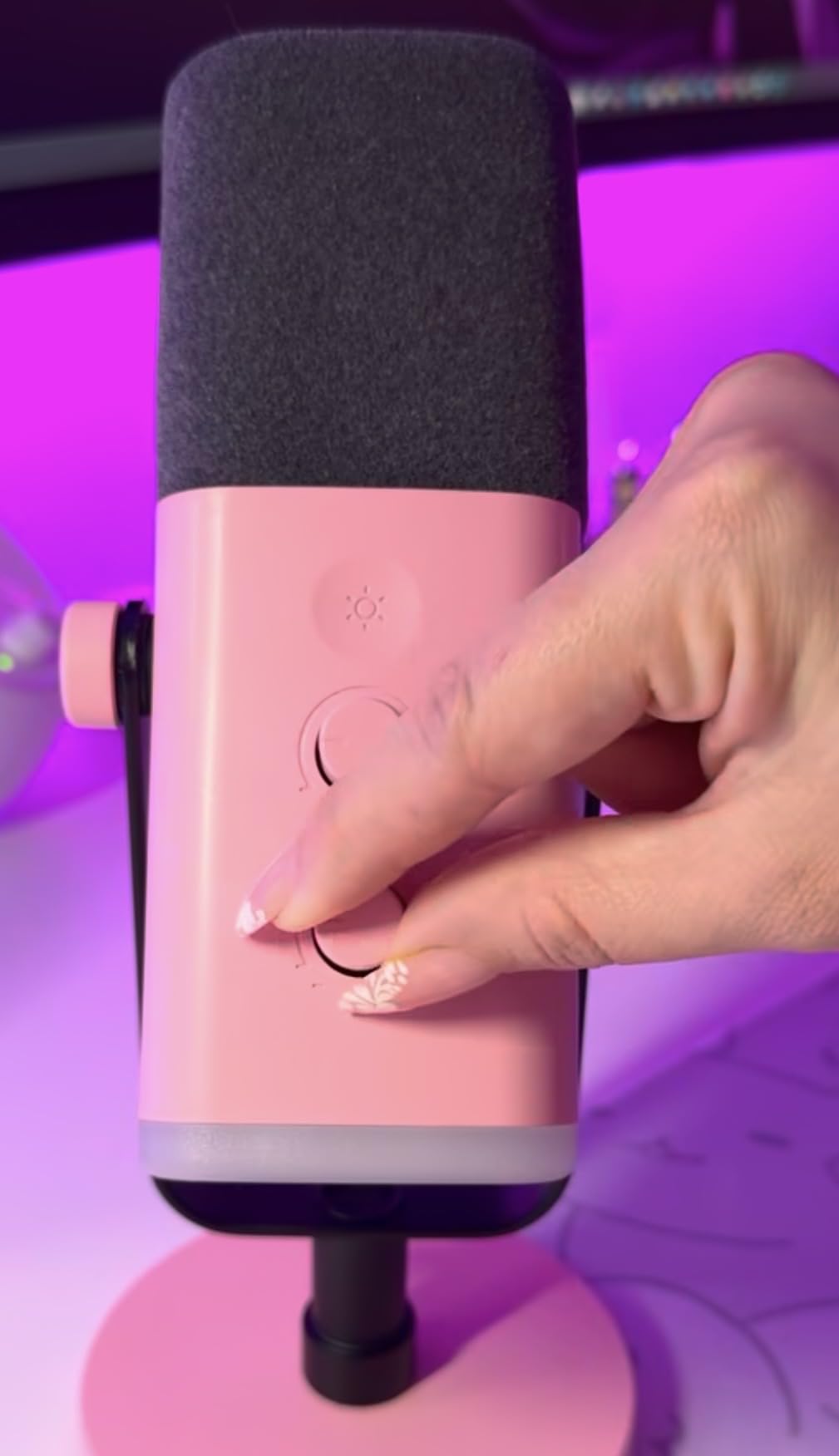
The headline feature of the AM8 is the RGB ring around the base of the mic. It cycles through 10-plus colors and three modes, and it looks genuinely cool on camera. My nephew’s viewers noticed it immediately and started asking what mic he was using. If you’re a video podcaster or streamer, that visual appeal matters.
The AM8 also has a tap-to-mute button on top, which is a feature most beginner mics at this price lack. Tap it once and the LED turns red to confirm you’re muted. Tap it again to unmute. I use this feature constantly when I cough, take a sip of water, or have someone walk into my office mid-recording. It’s a small thing that makes a real difference in production quality.
USB and XLR in a Budget Body
The dual-output design is the AM8’s secret weapon. You can start with the USB connection today, plug directly into your laptop, and start recording. When you’re ready to upgrade to an audio interface, you don’t have to buy a new mic. You just plug the XLR cable into your interface and keep going.
The headphone jack on the front of the mic is another feature that punches above the price. It lets you monitor your audio in real time with zero latency, which is something beginners often don’t realize they need until they record an episode with echo they didn’t hear while recording.
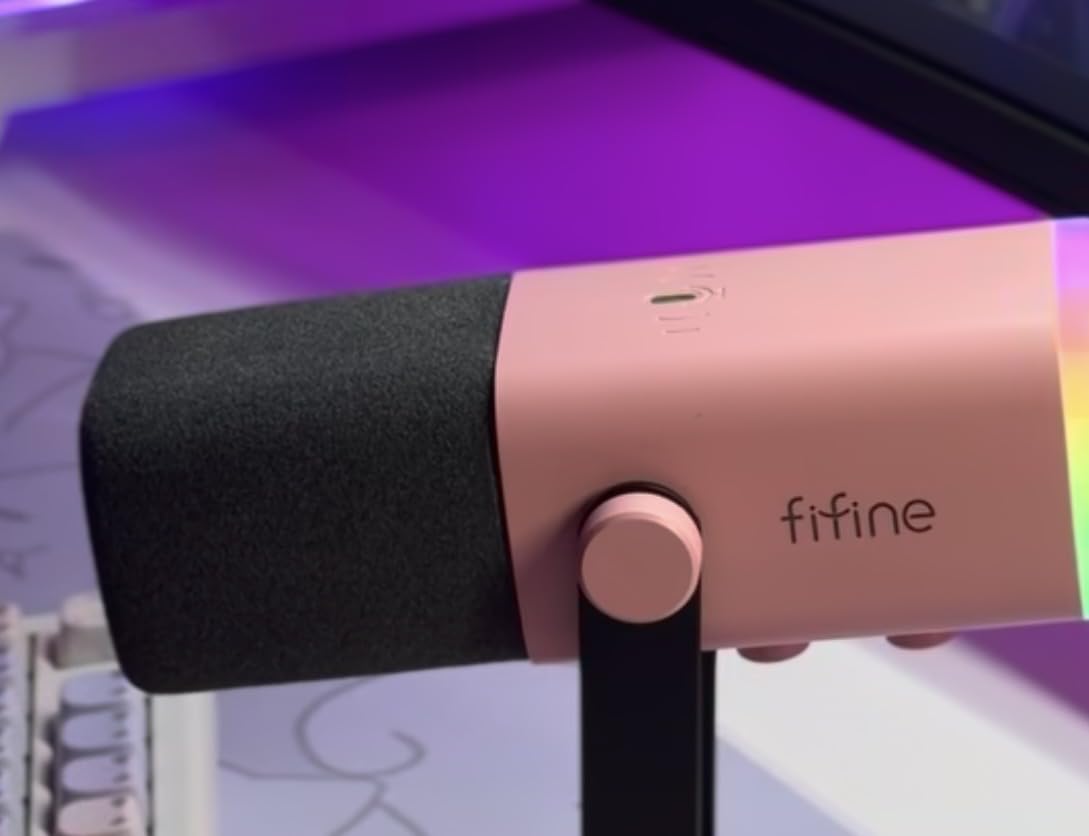
What’s in the Box and Build Quality
FIFINE ships the AM8 with a desktop stand, USB cable, and basic documentation. The build is mostly metal with a plastic RGB housing, and it feels solid enough to survive daily use. The included stand is better than the Q2U’s tripod, with a heavier base that doesn’t slide around.
One quirk to know about: the RGB ring can flicker or turn off entirely if the USB cable is jostled. It’s not a deal-breaker, but it’s worth being gentle with the cable.
Who Should Buy the FIFINE AM8
The AM8 is the right choice if you want a dynamic microphone with USB and XLR, if you want a tap-to-mute button and headphone monitoring, and if you want your mic to look as good as it sounds on camera. It’s the best value on this list for video podcasters and streamers.
Who Should Look Elsewhere
If you want the warmest, most “broadcast” sound character, the Samson Q2U is a step up. If you want to record music, a condenser like the Rode NT-USB Mini will capture more detail.
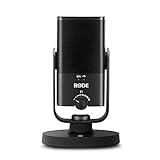
4. Rode NT-USB Mini – Studio-Grade Warmth in a Compact USB Body
RØDE NT-USB Mini Studio-Quality USB Condenser Microphone
Studio-grade condenser
USB-C
Built-in DSP and headphone amp
Pros
- Exceptional build quality with all-metal body
- Warm
- broadcast-ready sound out of the box
- Built-in headphone amplifier
- Integrated DSP via Rode Connect software
- Compact size fits small desks
Cons
- No physical mute button
- Stock stand is very low
- Single cardioid polar pattern
- No XLR output for future upgrades
Rode has been making studio microphones for decades, and the NT-USB Mini is the brand’s attempt to bring that studio pedigree to the beginner market. I tested it for a month as my primary recording mic, and the sound quality is in a different league from most beginner USB mics.
The Mini is a condenser microphone with a warm, present sound character. Where the Blue Yeti can sound a bit clinical, the NT-USB Mini sounds rich and full, almost like a high-end broadcast mic. I recorded a few music samples with an acoustic guitar, and the detail in the strings was striking for a USB mic at this price.
The integrated DSP is the headline feature for serious creators. Rode’s free Connect software adds a noise gate, compressor, and APHEX Aural Exciter, plus a “Big Bottom” effect that adds low-end warmth. I dialed in the broadcast preset and got studio-quality audio with no post-processing. For beginners who don’t want to learn audio engineering, that single-button fix is invaluable.
The headphone amp is another standout. It’s clean, loud, and has zero audible latency. I plugged in my favorite studio headphones and was immediately impressed. Most USB mic headphone amps sound thin, but Rode’s sounds like a dedicated audio interface.
Build Quality and Footprint
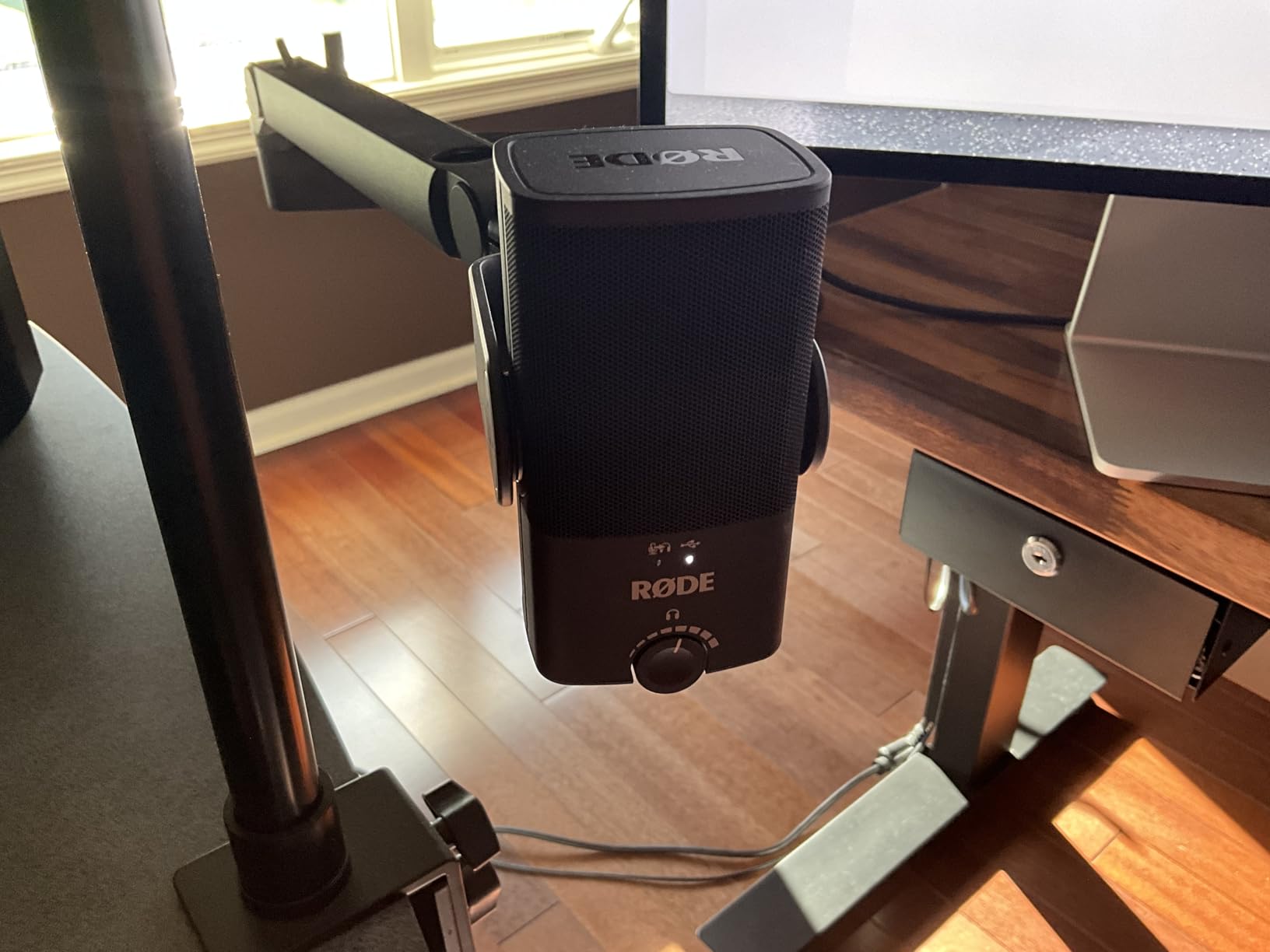
The Mini is built like a tank. The body is all metal with a magnetic detachable stand, and it weighs more than it looks. The compact size, just over 7 inches long, makes it perfect for small desks or mobile recording setups. I tossed it in my laptop bag for a podcast interview at a coffee shop and didn’t worry about it.
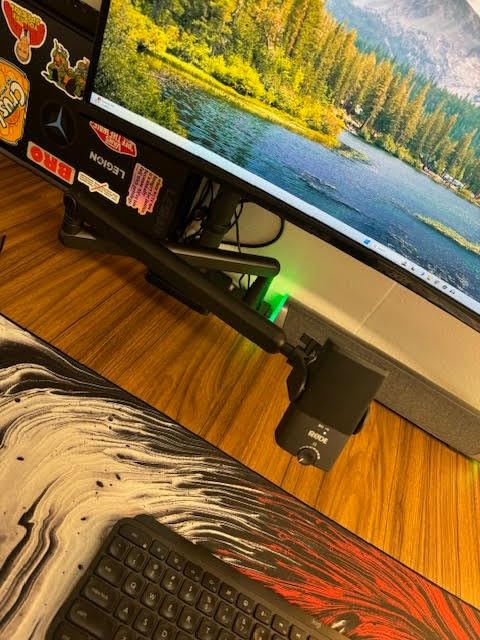
The included stand is the weak link. It’s a flat magnetic puck that sits the mic very low to the desk, which puts it below mouth level for most people. I added a small aftermarket boom arm and the mic came alive.
Limitations to Know About
The Mini has no XLR output, no physical mute button, and a single cardioid polar pattern. Those limitations matter if you want a long-term upgrade path or if you want to record interviews face-to-face. They don’t matter if you want a high-quality USB mic for solo recording.
Who Should Buy the Rode NT-USB Mini
The NT-USB Mini is the right choice if sound quality is your top priority, if you want a mic that works for both podcasting and music, and if you want to use Rode’s free software to dial in your sound. It’s also a great choice if you travel and want a compact mic that doesn’t sacrifice audio quality.
Who Should Look Elsewhere
Skip the Mini if you want a dual USB/XLR mic for an upgrade path, if you want onboard mute controls, or if you’re on a tight budget.
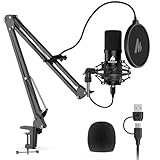
5. MAONO A04 USB Microphone Kit – Everything You Need in One Box
MAONO A04 USB Microphone, 192kHz/24Bit Condenser Mic Kit for PC Podcast
192kHz/24Bit condenser
Complete boom arm kit
Plug-and-play USB
Pros
- Full kit includes boom arm
- shock mount
- and pop filter
- 192kHz/24Bit recording resolution
- Strong metal construction
- Easy plug-and-play setup
- Magnet ring on USB cable reduces interference
Cons
- Boom arm pivot joint can wear out
- No headphone monitoring port
- Pop filter gooseneck is flimsy
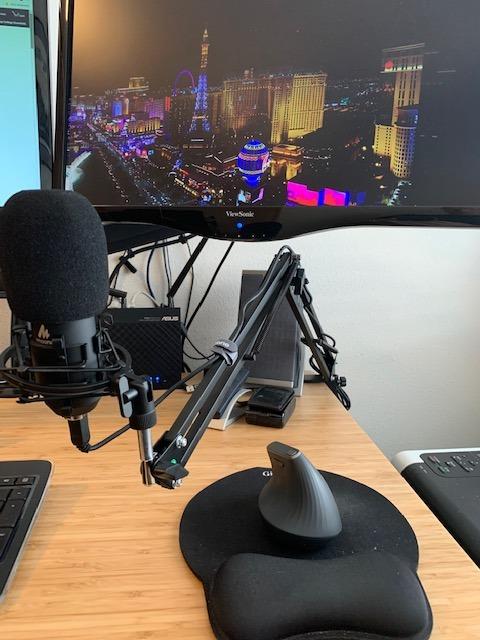
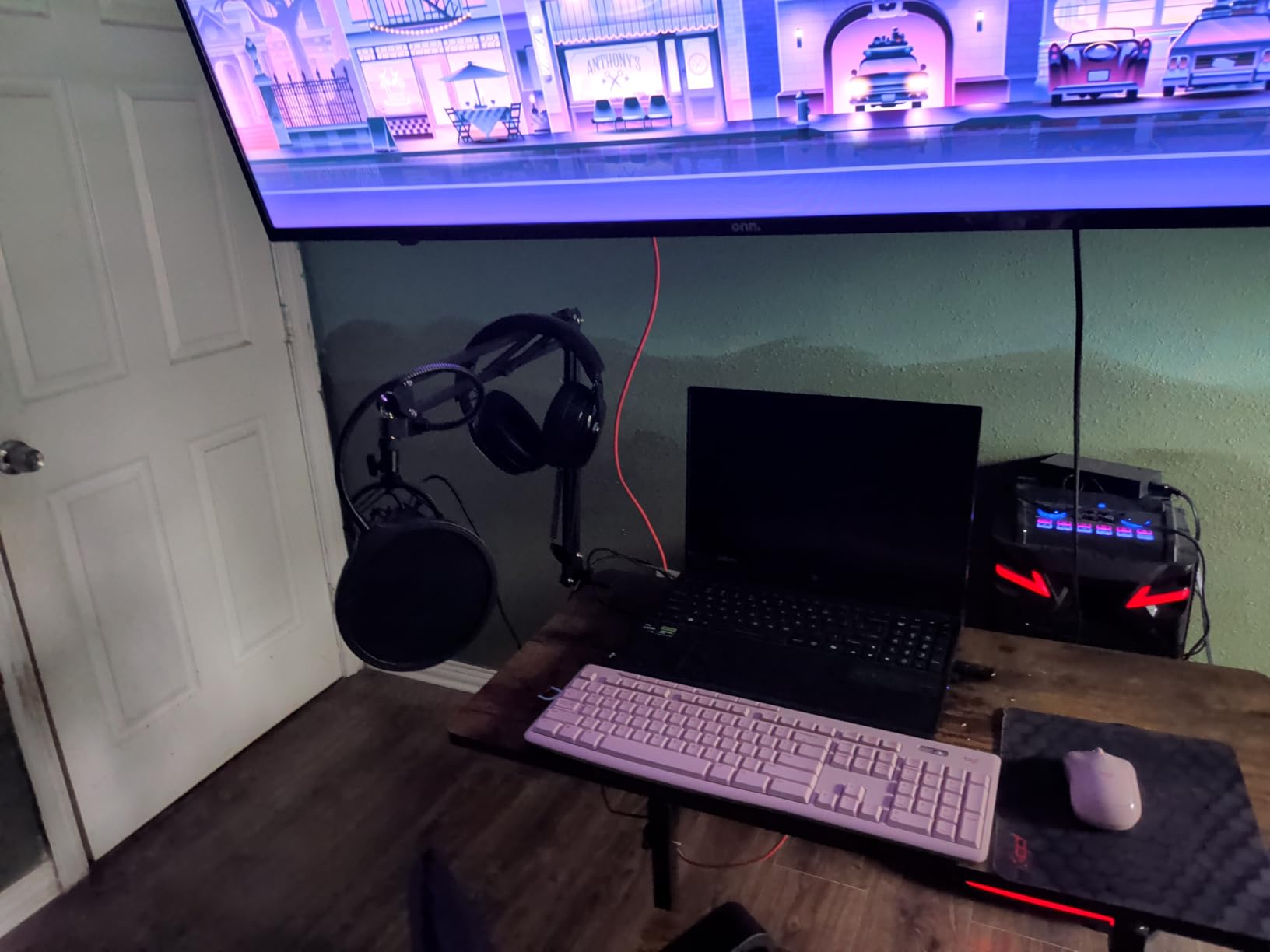
The MAONO A04 is the kit I recommend to anyone who has zero podcast gear and wants to start with one box. It includes the microphone, a scissor boom arm, a shock mount, a pop filter, a foam windscreen, and a USB cable. That means you don’t have to spend hours researching accessories or make extra trips to Amazon. Open the box, follow the picture instructions, and start recording.
The microphone itself is a condenser with a 16mm capsule and 192kHz/24Bit recording resolution. That’s a higher spec than most beginner mics, and it shows in real use. My test vocal tracks had noticeably more detail in the high frequencies than the Blue Yeti at the same price point.
The cardioid polar pattern rejects a fair amount of background noise, though not as much as a dynamic mic. In a quiet room, the A04 sounds fantastic. In a noisy room, you’ll hear some of that noise in the background. This is the trade-off for any condenser microphone at this price.
The Boom Arm and Shock Mount
The included scissor boom arm is the star of the kit. It clamps to your desk, extends about 30 inches, and holds the mic at mouth level. That’s a huge upgrade over the tabletop stands that ship with most beginner mics. The shock mount suspends the mic on elastic bands and prevents desk vibrations from reaching the capsule.
The boom arm has one problem: the pivot joint where the arm meets the base can wear out over time. After about a year of daily use, the arm started to droop. I’d budget for a replacement arm if you’re recording several episodes a week.
What’s Missing From the Kit
The A04 doesn’t include a headphone monitoring jack, which is a notable omission. You’ll need to monitor through your computer, which means a small amount of latency. For most beginners this is fine, but if you’re sensitive to delay, look at the FIFINE AM8 instead.
Who Should Buy the MAONO A04
The A04 is the right choice if you want everything in one box without buying separate accessories, if you record in a reasonably quiet room, and if you want higher-than-expected recording resolution. It’s also great for beginners who want to set up a permanent desk-based podcast studio from day one.
Who Should Look Elsewhere
If your room is noisy, choose a dynamic mic like the Q2U. If you want onboard headphone monitoring, the FIFINE AM8 is a better fit.
6. FIFINE K669 USB Condenser Microphone – Best Ultra-Budget USB Mic
FIFINE K669 White USB Desktop Microphone for Recording, Online Meeting
USB condenser
Volume knob on mic
Metal tripod stand
Pros
- Clean audio for under $30
- Solid metal construction
- Convenient volume knob on the mic
- Plug-and-play on PC and Mac
- Lightweight and portable
Cons
- No mute button
- USB cable is hardwired
- Limited to cardioid pattern
- Picks up background noise in untreated rooms
The FIFINE K669 is the microphone I recommend to anyone who wants to test the podcast waters without committing real money. With more than 34,000 reviews and a 4.5-star average, it’s one of the most popular budget USB mics ever made. I bought one to test, expecting to be disappointed at this price. I was wrong.
The K669 is a condenser microphone with a cardioid polar pattern, and it sounds remarkably clean for the money. In my treated home studio, it produced a warm, clear vocal recording that I’d happily publish. In an untreated room, it picked up some background noise, but no more than the Blue Yeti at three times the price.
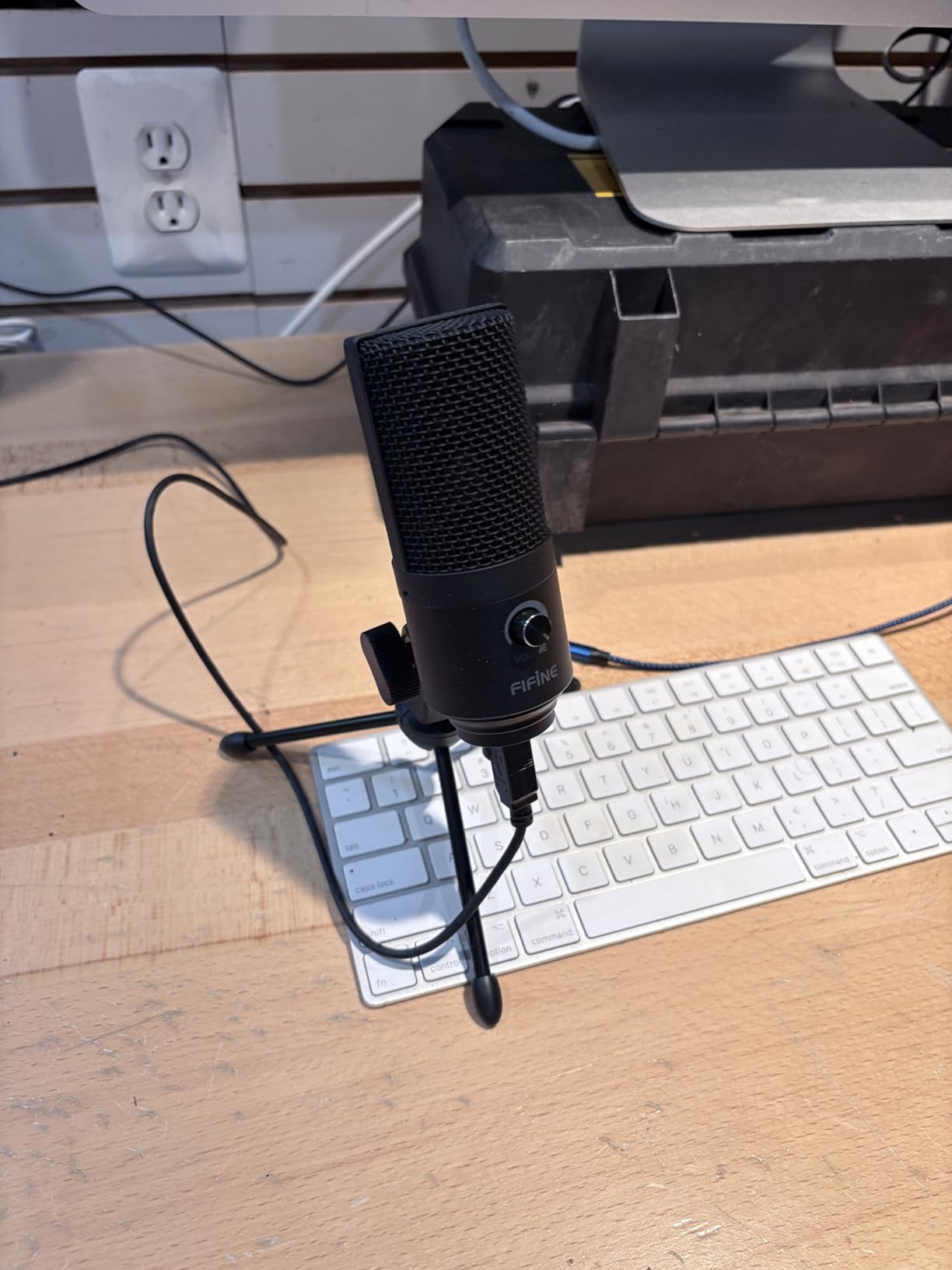
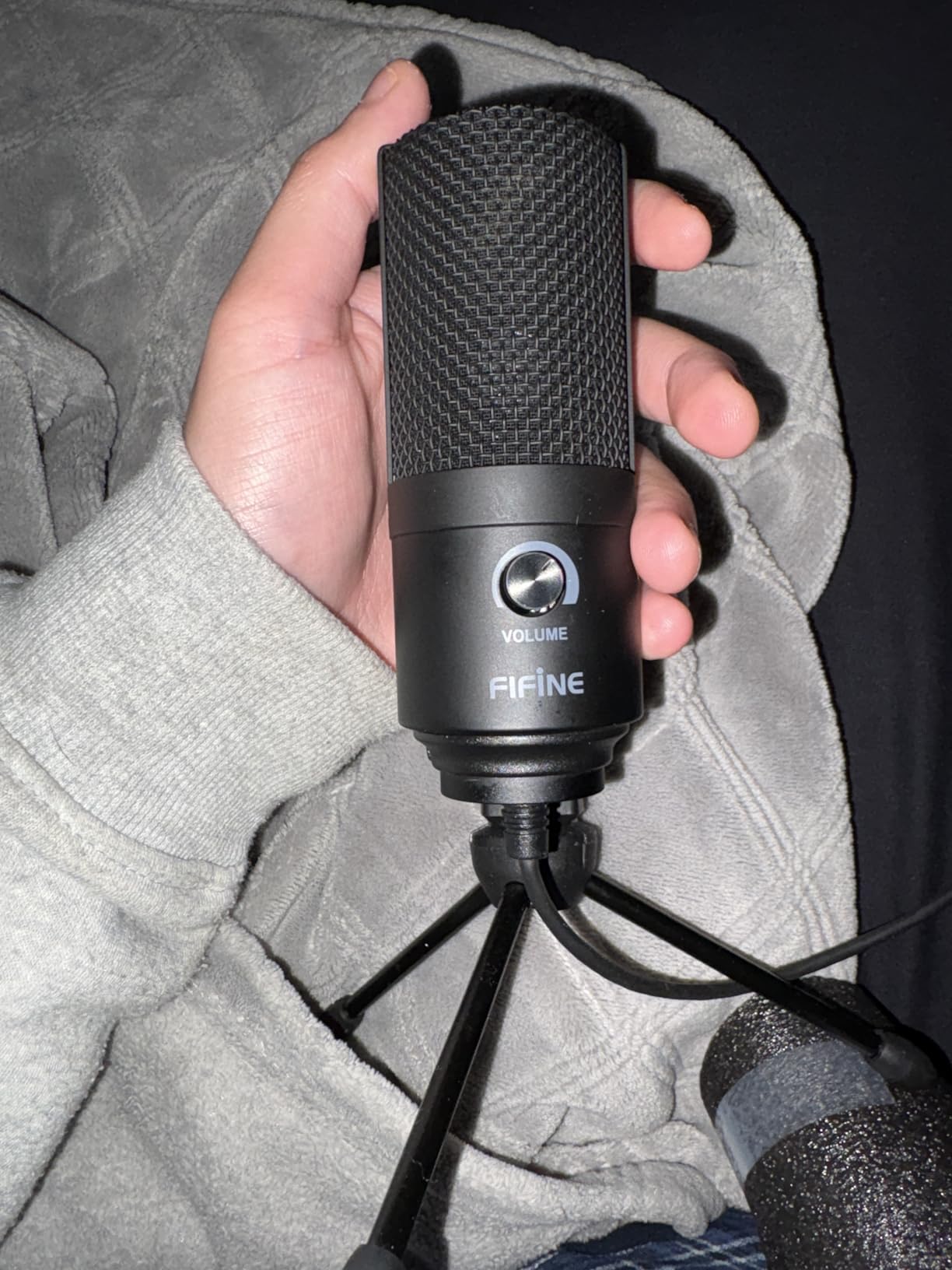
The metal construction is the surprise. Most sub-$30 mics feel like plastic toys. The K669 has a metal body that feels durable in the hand. The included tripod stand is also metal, which is rare at this price.
The volume knob on the front of the mic is a feature I didn’t expect to appreciate but ended up using constantly. It lets you adjust input gain without diving into software, which is useful when switching between loud and quiet guests.
Trade-offs at This Price
There are compromises. There’s no mute button, the USB cable is hardwired to the mic, and there’s no headphone monitoring jack. If you need any of those features, you’ll have to spend a bit more.
The hardwired cable is the biggest concern. If the cable frays or the dog chews it, you have to replace the entire microphone. I’d treat the cable gently and avoid wrapping it tightly.
Who Should Buy the FIFINE K669
The K669 is the right choice if you want to test podcasting without a big financial risk, if you record in a quiet or treated room, and if you don’t need onboard mute or monitoring. It’s also great as a second mic for interview setups or as a backup.
Who Should Look Elsewhere
If your room is noisy, choose a dynamic mic. If you want a mute button or a removable cable, spend a bit more on the FIFINE AM8.
7. TONOR TC-777 USB Condenser Microphone – Best Starter Under $25
TONOR TC-777 Podcast Microphone, USB Computer Microphone, Cardioid Condenser PC Mic with Tripod Stand and Pop Filter for Podcasting, Streaming, Vocal Recording, Compatible with PC & Laptop, PS4/5
USB condenser
Includes pop filter and tripod
Plug-and-play
Pros
- Lowest price on this list
- Includes pop filter and shock mount
- Plug-and-play with no drivers
- Compatible with PC
- Mac
- PS4
- and PS5
- Massive 35
- 000-plus review community
Cons
- Stand is lightweight and wobbly
- USB cable is short
- Capsule picks up room echo
- Limited long-term durability
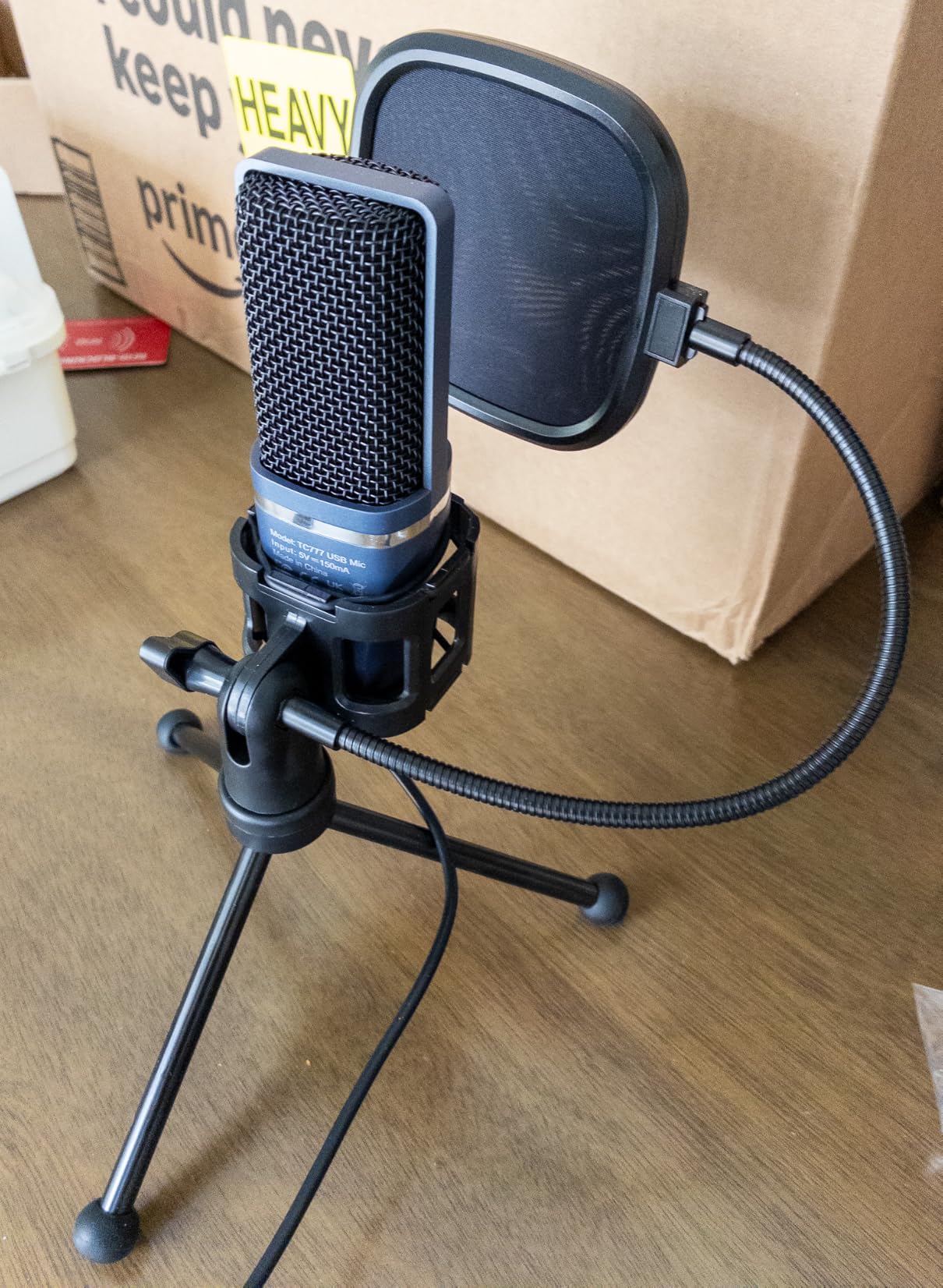
If the FIFINE K669 is “best ultra-budget,” the TONOR TC-777 is “best when you want to spend as little as possible.” At the time of writing in 2026, this mic is the cheapest option on our list, and it has more than 35,000 reviews. That’s a track record you can’t argue with.
The TC-777 is a small-diaphragm USB condenser with a cardioid pattern. In a quiet room, it produces clean, intelligible audio that’s perfectly acceptable for a first podcast. I wouldn’t use it for a professional show, but for someone recording their first ten episodes, it gets the job done.
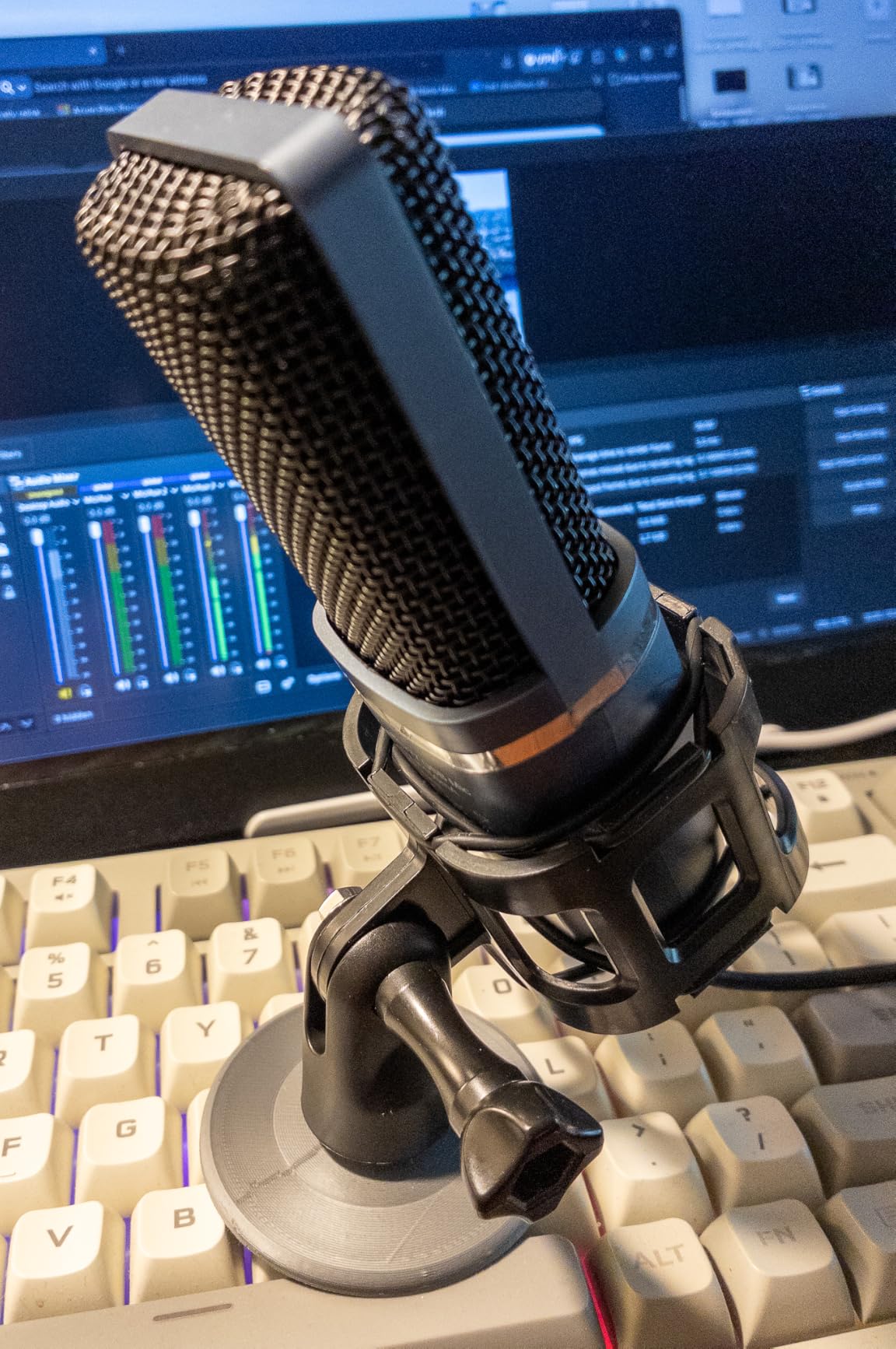
The kit includes a tripod stand, shock mount, and pop filter, which is generous at this price. Most mics in this range ship with just the microphone. The pop filter in particular is useful for beginners who haven’t learned proper mic technique yet.
Where the TC-777 Falls Short
The included tripod is the weakest part of the package. It’s lightweight and tends to tip if you bump the desk. I’d recommend adding a small boom arm or a heavier stand as soon as you can.
The mic also picks up background noise more than the FIFINE K669. In my untreated office test, I could clearly hear the air conditioning running. If your room is quiet, you’ll be fine. If your room is noisy, this mic will frustrate you.
Who Should Buy the TONOR TC-777
The TC-777 is the right choice if your budget is the absolute minimum, if you record in a quiet room, and if you’re not sure yet whether podcasting is for you. It’s a low-risk way to test the medium before committing real money.
Who Should Look Elsewhere
If you can stretch your budget by $10 to $20, the FIFINE K669 is a clear upgrade. If your room is noisy, choose a dynamic mic instead.
8. Samson Meteor Mic USB Condenser – Best Portable for Travel Recording
Samson Meteor Mic USB Condenser Podcasting Podcast Recording Desktop Microphone
Portable USB condenser
Foldable tripod
Headphone monitoring jack
Pros
- Compact and portable design
- Foldable legs for travel
- Headphone jack with volume and mute
- Striking chrome finish
- Plug-and-play on PC and Mac
Cons
- Mini-USB connector is outdated
- Very sensitive to background noise
- Mute switch makes audible click
- Limited long-term durability
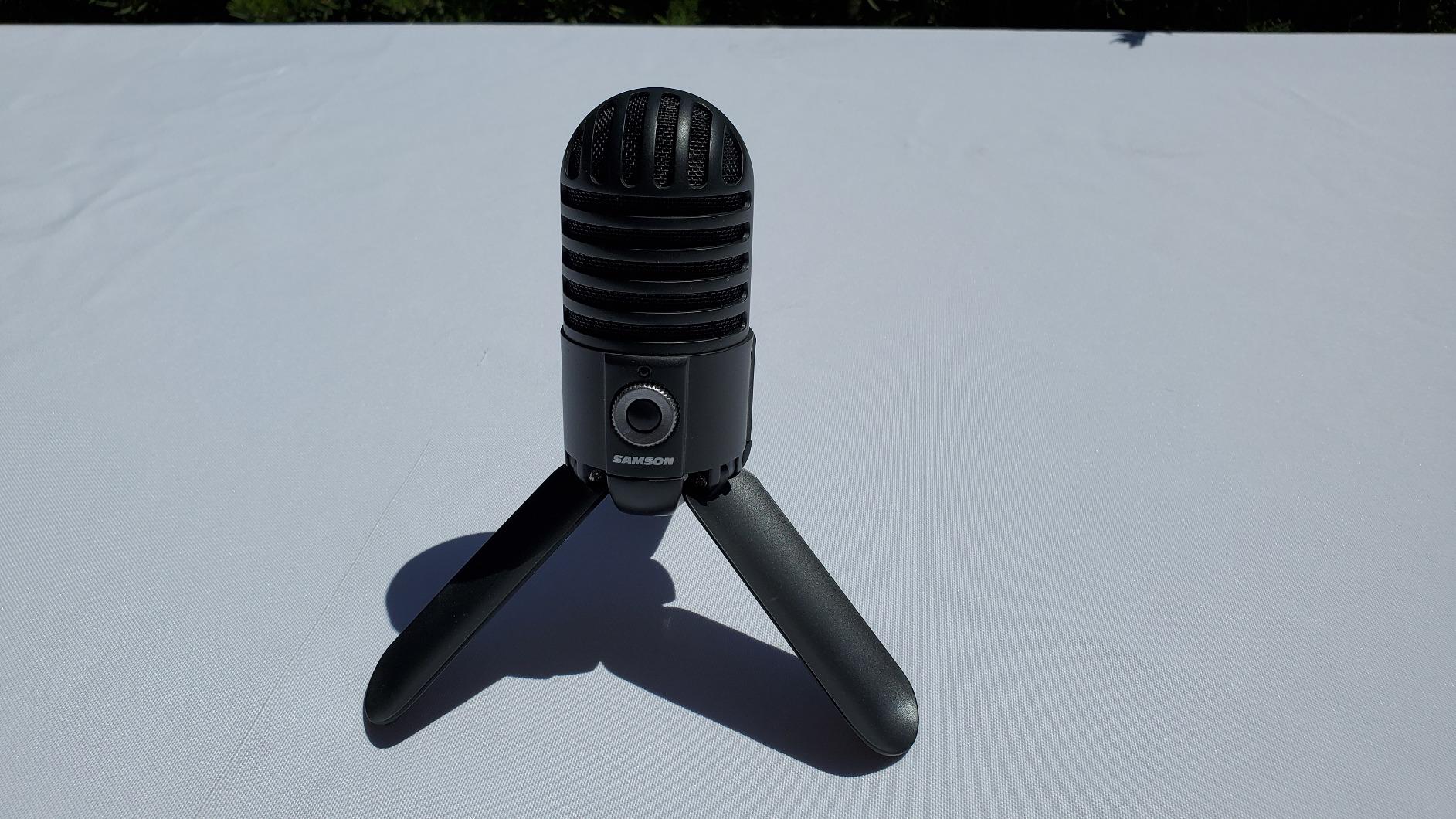
The Samson Meteor is the microphone I pack when I’m recording an interview on the road. It’s been in my bag for a recording trip, a conference, and a friend’s wedding toast, and it still works perfectly. If portability matters to you, the Meteor is the best option on this list.
The Meteor is a USB condenser with a striking chrome finish and a foldable tripod stand that folds flat against the body of the mic. That foldable design is the Meteor’s defining feature. It fits in a laptop bag pocket, takes up almost no room, and sets up in seconds.
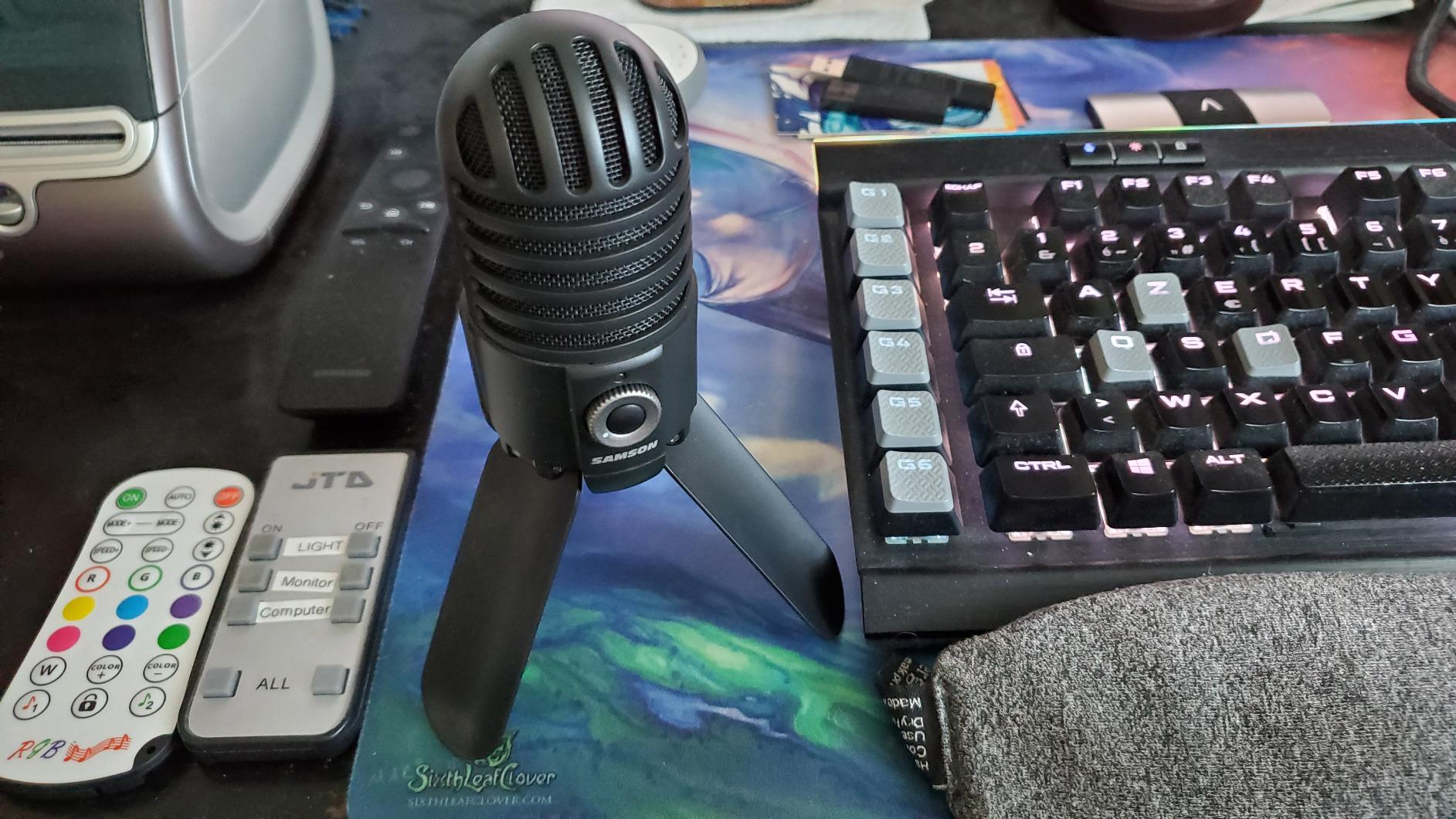
The audio quality is solid for spoken word. In a quiet room, the Meteor produces a clean, balanced vocal recording with good detail in the high frequencies. It also has a headphone monitoring jack on the bottom, with volume and mute controls, which is rare at this price.
Limitations of the Meteor
The Meteor uses a mini-USB connector, which feels dated. Finding a replacement cable is harder than with USB-C. The mic is also very sensitive to background noise, which is normal for condensers but worth emphasizing. I used the Meteor in a hotel room and the air conditioning came through clearly.
The mute switch makes an audible click when you press it, which is captured in the recording. I work around it by holding the mute button briefly during natural pauses in the conversation, but it takes some practice.
Who Should Buy the Samson Meteor
The Meteor is the right choice if you need a portable mic for travel, if you want a striking-looking mic for video podcasting, and if you record mostly in quiet indoor environments. It’s also a great choice as a second mic for guest interviews.
Who Should Look Elsewhere
Skip the Meteor if you record in a noisy room, if you want a modern USB-C connector, or if you want the cleanest possible audio quality. The Rode NT-USB Mini is the better-sounding choice at a slightly higher price.
How to Choose the Right Podcast Microphone: A Beginner’s Buying Guide
Now that you’ve seen the eight best podcast microphones for beginners in 2026, let’s talk about how to choose the right one for your specific situation. The biggest decisions are USB versus XLR, dynamic versus condenser, and how to match the mic to your room.
USB vs XLR: What Beginners Need to Know
USB microphones plug directly into your computer. They’re powered by the USB port, and your computer sees them as an audio input device. USB mics are perfect for beginners because they require no extra gear. Plug in the cable, open your software, and start recording.
XLR microphones use a three-pin connector that requires an audio interface or mixer. The interface converts the analog signal to digital and feeds it to your computer. XLR is the professional standard, and it offers better sound quality and more flexibility, but it adds cost and complexity.
Many beginner mics on this list, including the Samson Q2U and the FIFINE AM8, offer both USB and XLR outputs. That dual-output feature gives you the simplicity of USB today and the upgrade path of XLR later, without buying a new mic. If you can, get a dual-output mic.
Dynamic vs Condenser: Which Is Better for Beginners?
Dynamic microphones have a moving coil that responds to sound. They’re more rugged, less sensitive, and naturally reject background noise. Condenser microphones use a thin diaphragm that requires power and captures much more detail, including more room noise.
For most beginners, a dynamic microphone is the right choice. Beginners record in untreated rooms, in bedrooms, in shared spaces, and in environments with unpredictable noise. A dynamic mic forgives those conditions and produces a cleaner recording.
Condenser microphones shine in treated studios where you control the acoustic environment. If you have a dedicated, quiet recording space, a condenser rewards you with rich, detailed audio. If you record in a normal bedroom, a condenser will pick up everything.
Understanding Polar Patterns
A polar pattern describes how a microphone picks up sound from different directions. Cardioid is the most common pattern for podcasting. It picks up sound from the front and rejects sound from the sides and back. Most beginner mics are cardioid only, which is exactly what you want for solo recording.
Some microphones offer multiple polar patterns. The Blue Yeti, for example, offers cardioid, omnidirectional, bidirectional, and stereo. Omnidirectional picks up sound equally from all directions, which is useful for round-table discussions. Bidirectional picks up sound from the front and back, which is useful for face-to-face interviews. Stereo captures a left-right image, which is useful for music.
For a first podcast mic, cardioid is all you need. Don’t pay extra for multiple patterns unless you have a specific use case.
Matching the Mic to Your Room
The most important variable in podcast audio isn’t the microphone. It’s the room. A $1,000 microphone in an untreated bedroom will sound worse than a $50 microphone in a treated closet. If you record in an untreated space, prioritize a dynamic microphone and consider adding some basic room treatment.
Simple room treatment doesn’t have to be expensive. Hanging thick blankets on the walls behind you, putting a rug on a hard floor, and recording with a closet full of clothes behind you can dramatically reduce echo. Many successful podcasters record from inside a wardrobe for this exact reason.
Beginner Mistakes to Avoid
The most common mistake I see is buying a condenser microphone for an untreated room. The second most common mistake is buying a microphone with a built-in stand and never upgrading to a boom arm. The third is buying the cheapest possible mic and expecting professional results.
Don’t chase the “best” microphone. Chase the best microphone for your room, your budget, and your hosting style. A $50 dynamic mic in a quiet room will outperform a $300 condenser in a noisy one.
Frequently Asked Questions
What mics do most podcasters use?
Most beginner and intermediate podcasters use USB condenser microphones like the Logitech Blue Yeti, or USB/XLR dynamic microphones like the Samson Q2U and FIFINE AM8. Professional studios typically use XLR dynamic microphones such as the Shure SM7B or the Electro-Voice RE20, connected through an audio interface. Joe Rogan’s podcast famously uses the Shure SM7B.
What is the 3 to 1 rule for microphones?
The 3-to-1 rule for microphones states that when using multiple microphones in the same room, each mic should be at least three times farther from the next mic than it is from its own sound source. For example, if a microphone is 6 inches from a speaker’s mouth, the next microphone should be at least 18 inches away. This rule minimizes phase cancellation and bleed between microphones, which improves overall recording quality.
What microphone does Joe Rogan use for his podcast?
Joe Rogan’s podcast, The Joe Rogan Experience, uses the Shure SM7B, a broadcast-standard dynamic XLR microphone. The SM7B costs around $400 and requires a high-gain audio interface such as the Cloudlifter CL-1 plus a Focusrite interface. For beginners who want a similar sound character at a much lower price, the Samson Q2U is the most commonly recommended entry-level alternative.
What is the best starter equipment for starting a podcast?
The best starter equipment for a podcast includes: 1) A USB or USB/XLR dynamic microphone such as the Samson Q2U or FIFINE AM8, 2) A boom arm or desktop stand, 3) A pop filter, 4) Closed-back headphones for monitoring, 5) Recording software such as Audacity (free) or GarageBand (free on Mac), and 6) A quiet recording space. With these basics you can produce a professional-sounding podcast for well under $150 total.
Final Verdict: Which Podcast Microphone Should You Buy First?
After testing all eight of these beginner podcast microphones in real recording conditions, here is how I’d recommend them based on who you are and where you record.
If you record in an untreated room, share a space with family, or want one mic that will carry you through your first 50 episodes, the Samson Q2U is the right choice. Its dynamic capsule, dual USB and XLR outputs, and forgiving sound character make it the safest pick on this list. It’s the mic I’d buy with my own money if I were starting over today.
If you want a more modern feature set with RGB lighting, a tap-to-mute button, and a headphone jack at a lower price, the FIFINE AM8 is the better value. It’s the same dynamic capsule formula with extras that streamers and video podcasters will appreciate.
If you record in a quiet, treated room and want the richest, most detailed audio possible, the Rode NT-USB Mini is the clear upgrade. Its warm, broadcast-ready sound and built-in DSP make it the best-sounding USB mic on this list, period.
If your budget is the absolute minimum and you just want to test the medium, the FIFINE K669 or the TONOR TC-777 will get you started without a big financial commitment. They’re not perfect, but they’re good enough for a first season of any podcast.
The best podcast microphone for beginners in 2026 is the one that fits your room, your budget, and your hosting style. Pick the mic that matches your reality, hit record on your first episode, and don’t let gear perfectionism keep you from publishing. Your first 10 episodes matter more than your microphone. The microphone just makes sure listeners stick around for episode 11.