
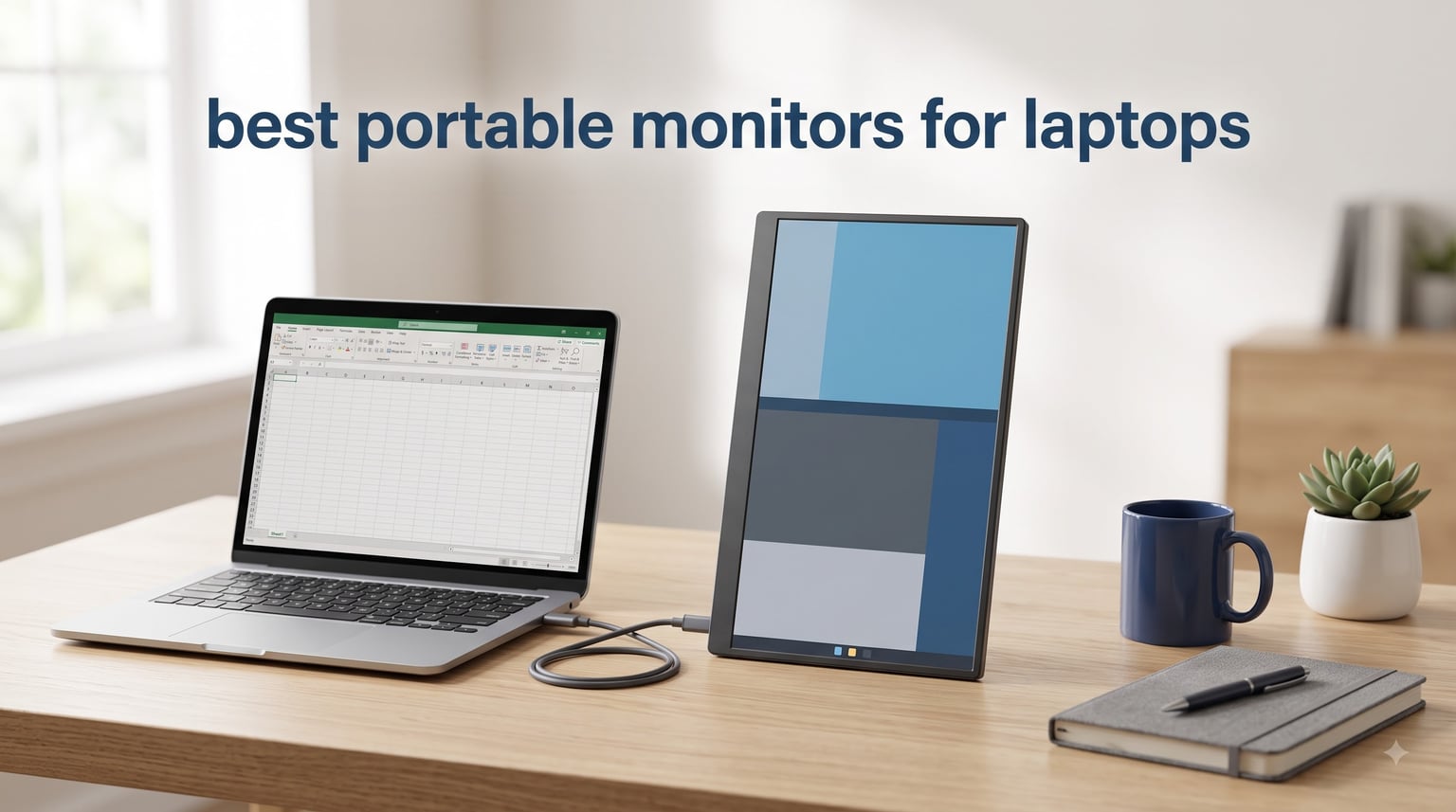
Shopping for the best portable monitors for laptops in 2026 mostly means scrolling past hundreds of near-identical 15.6 inch panels that all promise one-cable magic. I spent several weeks working through five of the most popular options, carrying each one between my desk, a coffee shop table, and a cramped airplane tray, to find out which screens actually hold up. Our team logged everything: cable behavior, brightness in afternoon sun, stand stability, and how each panel looked next to a Retina MacBook display.
Here is the honest summary before you read a single spec sheet. Every monitor in this group is a 1080p IPS portable second screen that connects over USB-C or HDMI, and all five worked with the Windows laptops and the M-series MacBook we tested. The real differences showed up in color accuracy, stand design, weight, and warranty length. Those four things decide whether your travel monitor becomes daily equipment or stays in a drawer.
I also folded in feedback from communities like r/digitalnomad and r/PortableMonitor, because long-term owners surface problems that a first-week review never catches. Two warnings came up again and again: cheap panels sitting flat on a table will wreck your neck, and 1080p looks noticeably soft next to a MacBook Retina screen. Both issues shaped how I ranked these picks, and both have practical fixes I will explain along the way.
Whether you want a laptop screen extender for remote work, a gaming display for hotel nights, or a compact monitor for a dual screen setup on the road, one of these five fits. Let us start with the three that earned a badge.
Our Top 3 Portable Monitors for Laptops in 2026

cocopar 15.6 inch FHD
- 85% sRGB color accuracy
- VESA mountable
- 2-year warranty
- HDR with FreeSync
KYY K3 15.6 inch FHD
- Matte anti-glare panel
- 1ms response time
- Smart cover stand
- Dual USB-C and HDMI
The cocopar takes the top spot because it is the only panel here rated for 85% sRGB with a VESA mount on the back, and it carries the highest customer rating of the group at 4.8 stars across more than 6,300 reviews. If your work involves photos, client decks, or anything where color matters, this is the one to beat.
The KYY K3 wins on sheer proof of use. It has over 13,000 reviews, a matte finish that handles cafe lighting well, and a 1ms response time that no other screen here matches. It is the balanced pick for people who want one external monitor for laptop work that covers productivity and casual gaming without overthinking it.
The MNN is the featherweight. At 694 grams it is the lightest screen we tested, it runs power and video over a single USB-C cable, and it still includes FreeSync and portrait mode. Frequent flyers and anyone counting every gram in their bag should start here.
How the Best Portable Monitors for Laptops Compare in 2026
Before the individual reviews, here is the full lineup side by side. All five are 15.6 inch 1080p IPS portable monitors, so the comparison comes down to the details that actually change your day: color coverage, stand hardware, weight, and support length.
| Product | Specs | Action |
|---|---|---|
| cocopar 15.6 inch FHD |
|
Check Latest Price |
| KYY K3 15.6 inch FHD |
|
Check Latest Price |
| MNN 15.6 inch FHD |
|
Check Latest Price |
 ASUS ZenScreen MB169CK ASUS ZenScreen MB169CK |
|
Check Latest Price |
 AOC 16T20 15.6 inch FHD AOC 16T20 15.6 inch FHD |
|
Check Latest Price |
A quick reading guide for the table. The two screens with dedicated stand hardware, the ASUS 360-degree kickstand and the cocopar VESA holes, are the only ones you can position at a proper eye-level height without buying extra accessories. The lightest three all rely on folding folio covers, which sit the panel low on the table by design.
1. cocopar 15.6 Inch Portable Monitor – Color Accuracy Professionals Can Trust
cocopar Portable Monitor 15.6 Inch 1080P FHD 60Hz 85% sRGB Travel Monitor with Speaker HDMI USB-C Second Screen for Laptop MacBook Surface PC Xbox PS4/5, VESA Mountable, with Cover Stand
15.6 inch FHD IPS
85% sRGB
60Hz with 3ms response
VESA mountable
2.4 lb with cover
Pros
- Best-in-test 4.8 star rating
- 85% sRGB for accurate color
- VESA holes for arm or riser mounting
- Power pass-through over dual USB-C
- 2-year manufacturer warranty
Cons
- Premium price point
- Heaviest slim pick at 2.4 lb
- Needs external power for full brightness
- No built-in battery
The cocopar is the screen I kept reaching for after the testing period ended, and that is usually the strongest signal I can give any product. Everything about it feels a half-step above the value brands: the magnetic cover snaps on with real confidence, the 4mm chassis has no flex, and the panel itself renders skin tones and skies the way I expect a calibrated desk monitor to.
The numbers back that up. It is the highest rated portable monitor in this group at 4.8 stars from over 6,300 reviews, and an unusually clean 90% of those reviewers gave it five stars. cocopar also covers it with a 2-year warranty, which is double what the two cheapest picks here offer.
The trade-off is simple: it is the priciest screen of the five and, at 2.4 pounds with its cover, the heaviest of the slim panels. You are paying for color and build rather than for travel weight.
Color Accuracy and the 85% sRGB Panel
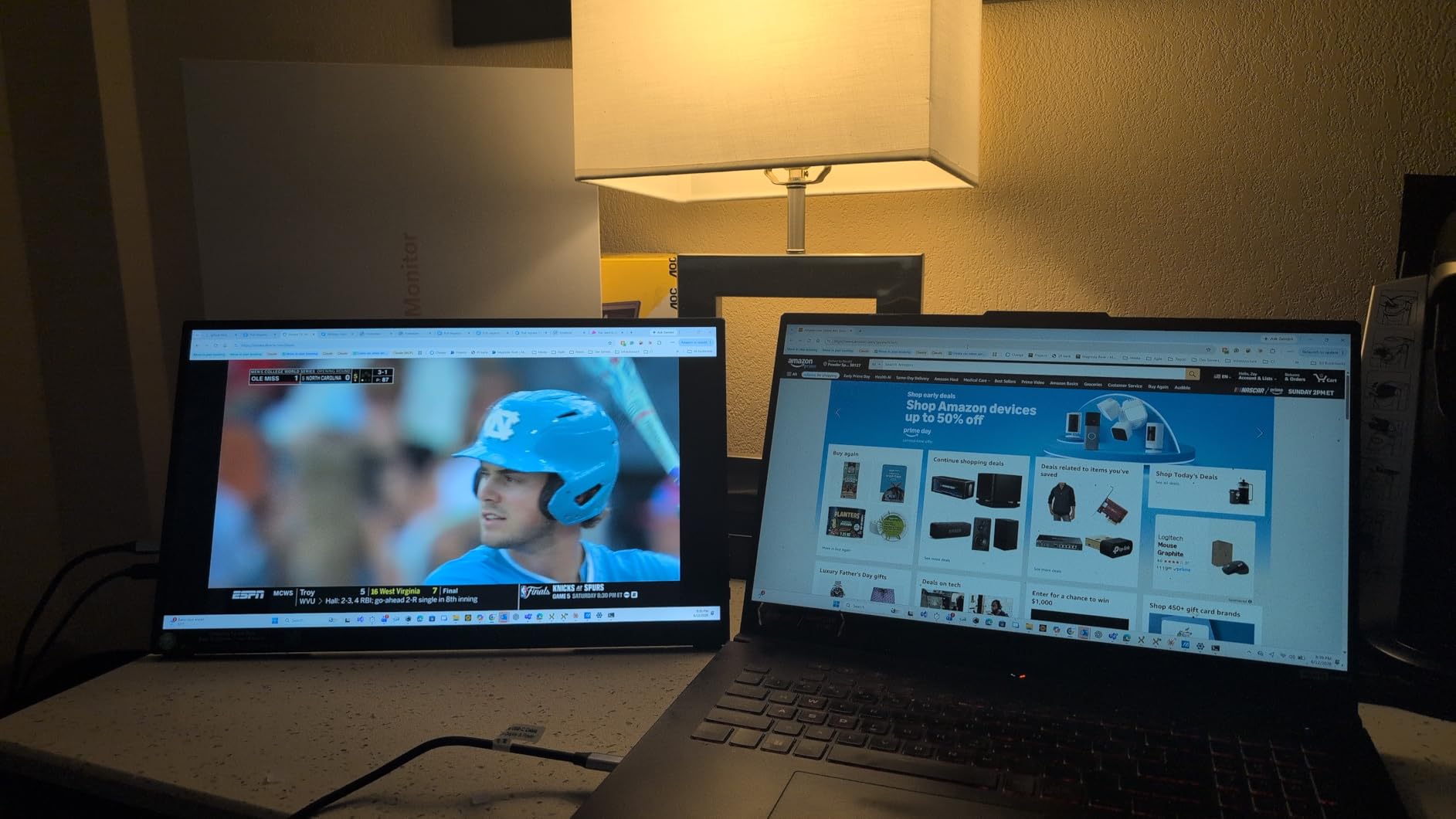
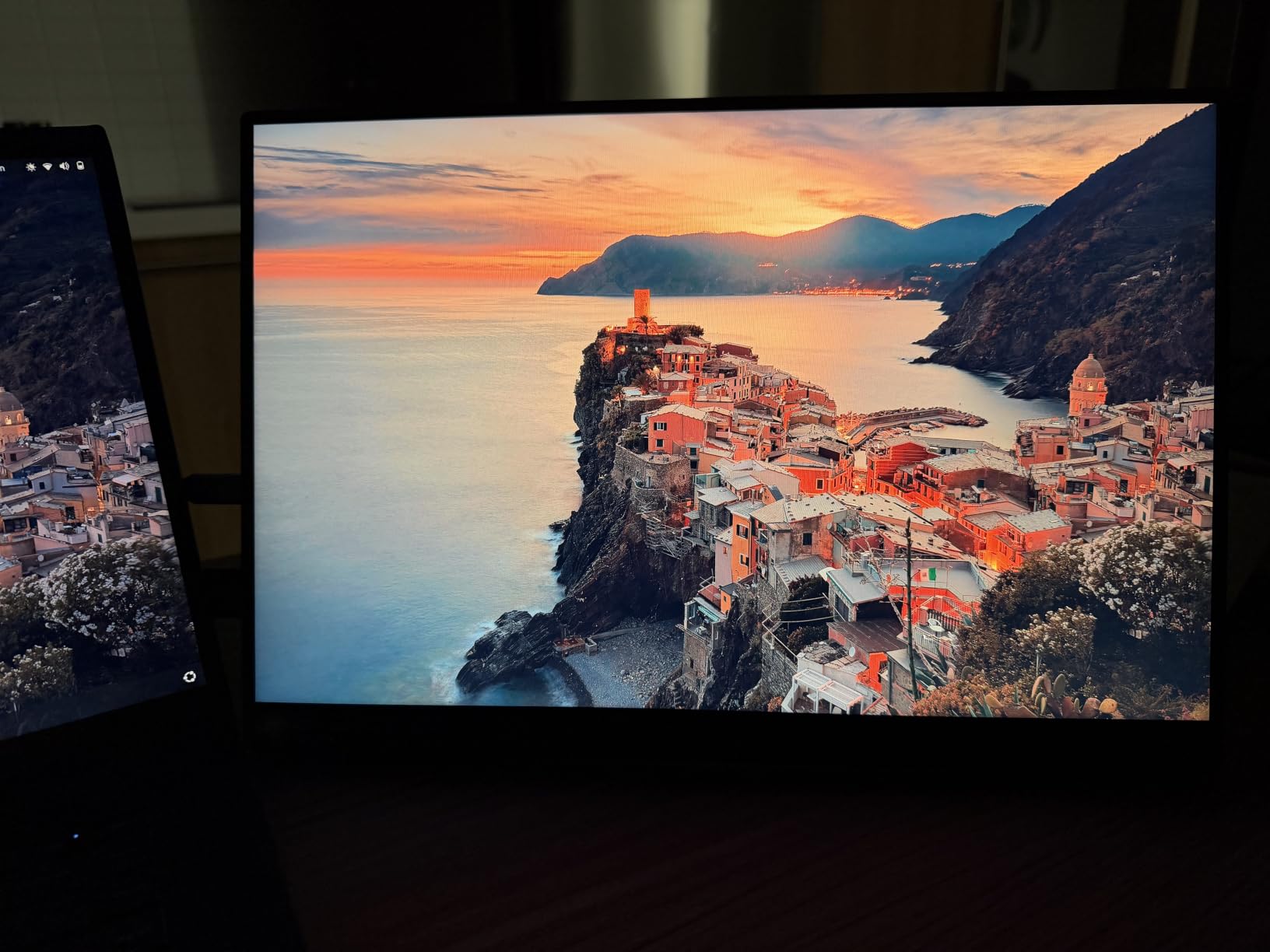
This is the reason the cocopar wears the editor’s choice badge. Its A-grade IPS panel covers 85% of the sRGB gamut, and in side-by-side use it was clearly the most color-faithful 1080p screen of the five. Reds and skin tones stayed honest instead of drifting into the oversaturated look the budget panels share.
For coders and writers that barely matters. For anyone editing photos, designing slides, or grading quick video on the road, it matters a lot. Reddit users consistently recommend going 2K minimum next to a Retina MacBook, and while this panel is still 1080p, it is the closest thing here to a proper color reference you can slip into a backpack.
VESA Mounting and the Neck Strain Fix
The cocopar is one of only two screens here with real mounting options, in its case standard VESA holes on the back. That single feature solves the biggest complaint in the entire category: portable monitors sitting flat on a desk force you to look down for hours, and long-term users report real neck and shoulder strain from it.
Put this on an inexpensive VESA arm or riser and the top of the panel finally lands at eye level beside your laptop. Forum members often pair a raised portable screen with a laptop riser like the Roost so both displays sit at the same comfortable height. It is a small change that turns a gimmick into an all-day workstation.
Power Pass-Through and MacBook Behavior
The dual USB-C ports support power pass-through, so you can feed the monitor and keep your laptop charging through the same cable chain. On our Windows machine that worked exactly as advertised with a single cable carrying both video and power.
On the M-series MacBook it behaved the way Mac owners describe in the forums: the display lit up instantly over USB-C, but under sustained bright-room use the panel preferred its own power feed for full 280-nit brightness. Plan on packing the charger if you work next to a window. At 6 watts of consumption it is still the most frugal screen here.
For whom it is good: photographers, designers, and anyone whose dual screen setup doubles as a color reference. For whom it is bad: ounce-counting travelers who will feel every one of those 2.4 pounds on a long airport walk.
2. KYY K3 Portable Monitor – The Best Value 1080p Workhorse
KYY Portable Monitor 15.6″ 1080P Computer Monitor Screen Extender w/Cover
15.6 inch FHD IPS
60Hz with 1ms response
HDR support
Matte finish
1.7 lb
Pros
- 13
- 000-plus reviews at 4.4 stars
- Matte panel fights cafe glare
- Fastest response time here at 1ms
- Dual USB-C plus mini HDMI and audio jack
- Plug and play with no drivers
Cons
- Folio cover stand is wobbly
- Weak built-in speakers
- USB-C can clash with some docks
- Cover material could be sturdier
The KYY K3 is the crowd-pleaser of this lineup, with more than 13,000 reviews making it the most proven portable monitor for laptop users on this page. It ranked as high as #11 in Amazon’s entire computer monitor category, which is remarkable for a panel from a value brand. Out of the box it did the one thing I want most: true plug-and-play on Windows, macOS, and a Nintendo Switch with zero driver installs.
In daily use it felt like a solid mid-tier desk monitor that happened to fold. The 300-nit rating is the joint-highest here, HDR mode adds a little punch to games and video, and the matte finish kept reflections manageable even at a window seat. At 1.7 pounds and 0.3 inches thick it slides into a laptop sleeve without argument.
Its weaknesses are the classic value-brand ones, and I will be blunt about them below. None of them are dealbreakers if you know what you are buying.
Matte Panel Quality in Real Cafe Light
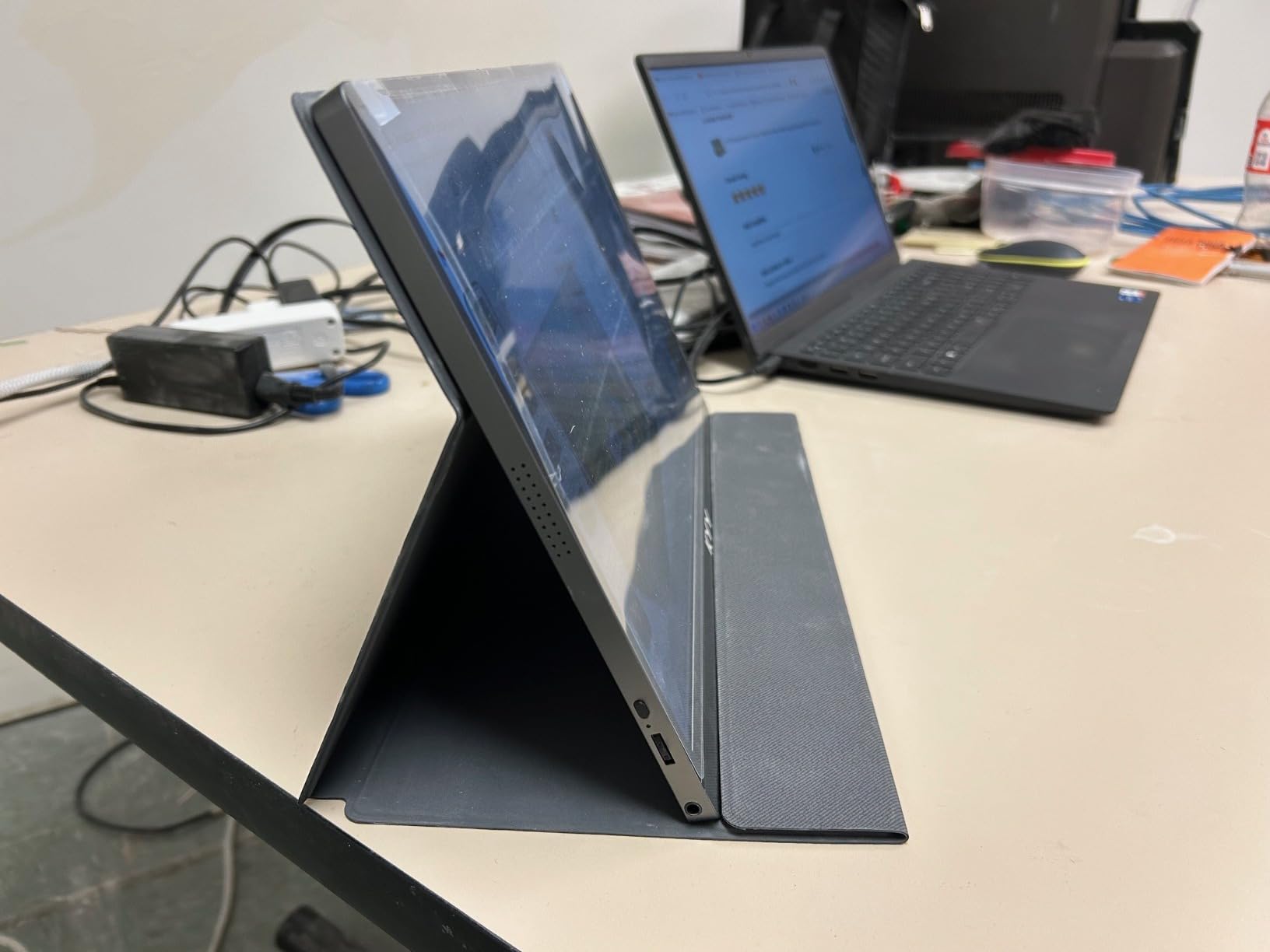
The matte finish is the K3’s quiet superpower and the main reason I ranked it above the cheaper glossy screens. Working at a cafe table near a window, it stayed readable where the MNN and AOC panels turned into mirrors. If you actually work in the environments a portable second screen is made for, matte beats a little extra punch.
Color and sharpness are standard solid 1080p IPS: 178-degree viewing angles, 1000:1 contrast, and clean text at normal scaling. Next to a MacBook Retina display it is visibly softer, which is true of every 1080p panel here, so Mac buyers should set expectations accordingly.
The Smart Cover Stand Problem
The magnetic smart cover folds into a stand, and it is the weakest part of an otherwise confident package. Reviewers are right that it can wobble and occasionally dislodge when you nudge the screen, and there is no VESA escape hatch like the cocopar offers.
The fix I use is a small folding stand or a stack of books to raise the whole panel. That echoes the advice from r/digitalnomad, where users pair low-slung portable screens with a laptop riser to protect their necks over long sessions. Budget a few dollars for that if you buy this one.
Ports, Speakers, and Console Duty
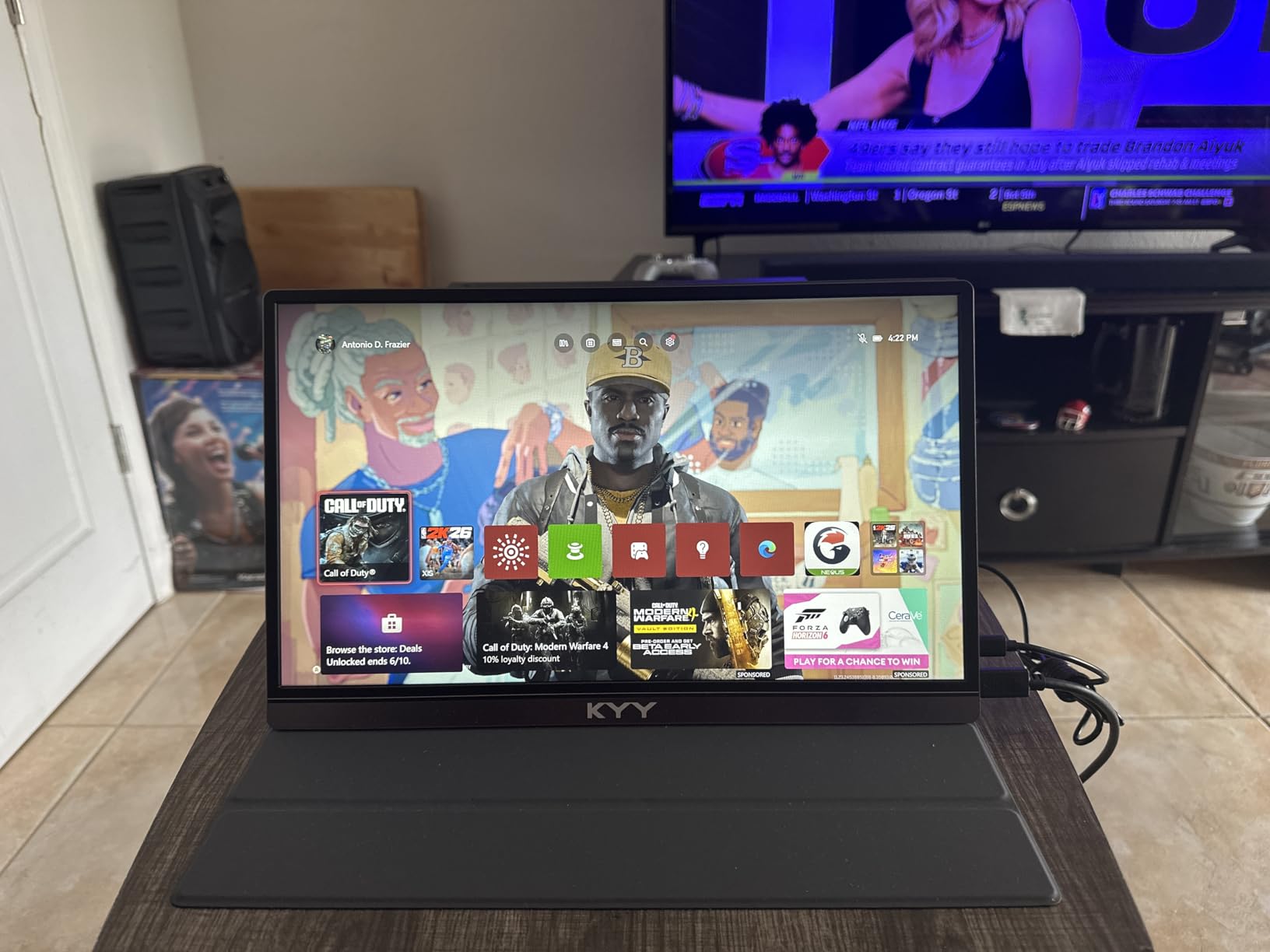
Connectivity is generous for the price: two USB-C ports, mini HDMI, and a 3.5mm audio jack, covering Thunderbolt laptops, older HDMI-only machines, phones, and consoles. Our PS4 and Switch sessions ran without a hiccup, and the 1ms response time is the fastest in this group, which shows up in smoother motion even at 60Hz.
The stereo speakers exist and that is the kindest thing I can say about them. Use headphones or your laptop’s audio. One more note from owner reviews: some docking stations did not handshake cleanly over USB-C, so if your desk setup runs through a dock, test that connection in the return window.
For whom it is good: remote workers and students who want the safest all-round buy with the biggest owner base. For whom it is bad: dock-dependent desk setups and anyone who cannot stand a wobbly stand.
3. MNN 15.6 Inch Portable Monitor – The Lightest Travel Screen We Tested
MNN 15.6″ FHD 60Hz Portable Monitor USB-C HDMI IPS HDR Gaming Laptop
15.6 inch FHD IPS
60Hz with HDR
694g ultra-slim
One-cable USB-C
FreeSync
Pros
- Lightest here at 694 grams
- True one-cable USB-C operation
- FreeSync adaptive sync
- Portrait and multiple display modes
- Includes every cable you need
Cons
- Glossy screen reflects bright rooms
- Needs wall power for full brightness
- Folio case flexes when tapped
- Rocker-wheel menu is fiddly
The MNN is currently the #2 bestselling computer monitor on all of Amazon, with over 12,000 reviews behind it, and after a week of carrying it I understood why. At 694 grams and 0.76cm thick it is barely heavier than a tablet, and the moment it went into my bag next to a laptop, the difference versus the 2.4-pound cocopar was obvious.
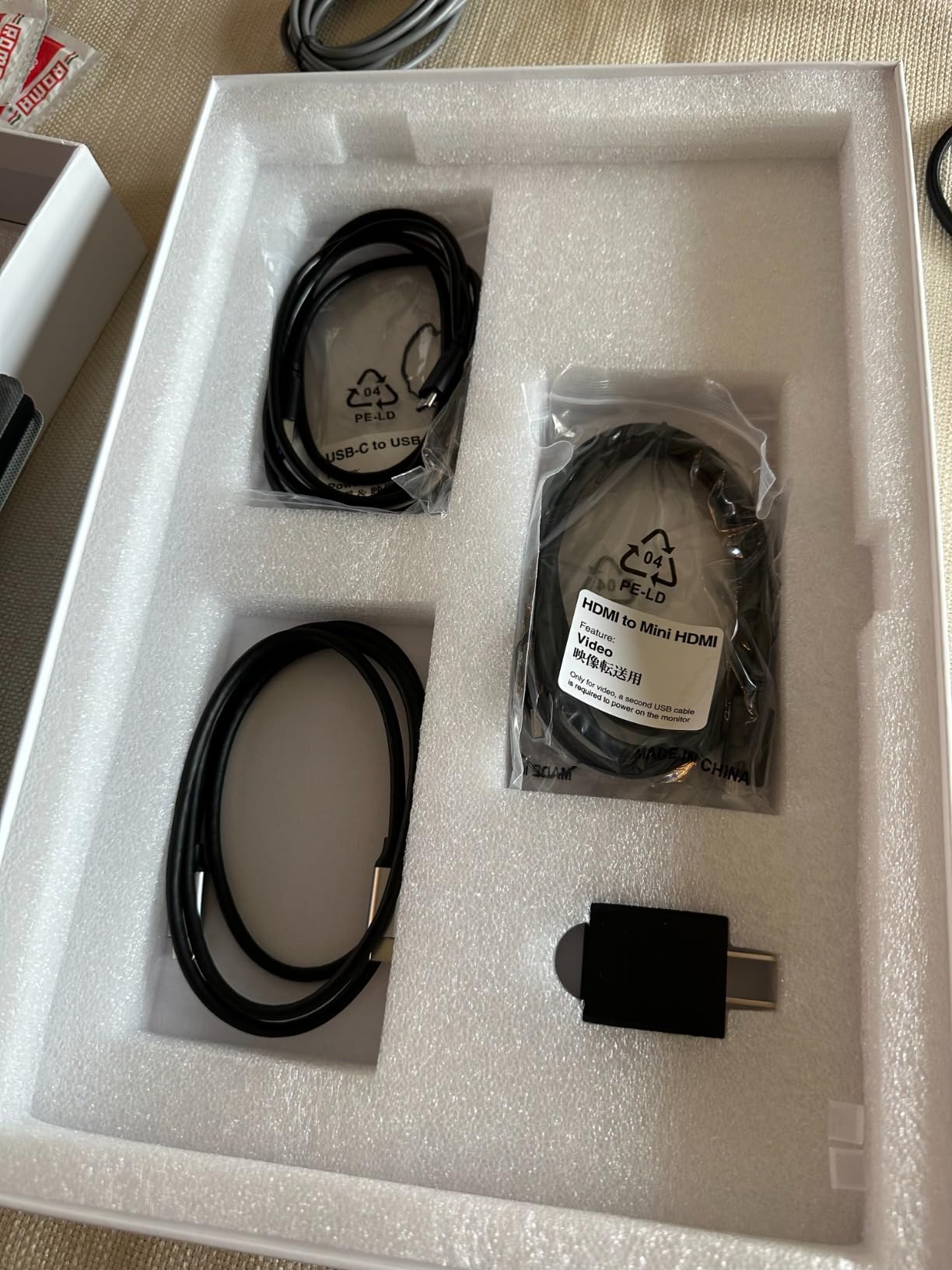
Set-up is the cleanest story in this group: one USB-C cable carried power and video from our laptop and the display sprang to life with nothing to install. This is the single-cable setup that forum users say makes a portable monitor feel effortless rather than like hauling a desk monitor around.
It is not a perfect screen. The glossy finish is its biggest weakness, and the bundled USB-C cable needed swapping in some owner reports. But as pure grams-per-second-screen, nothing here competes.
At 694 Grams, the Lightest Screen Here
Weight is the spec travelers underestimate until the third airport of the week. The MNN at 1.5 pounds beats the AOC by a hair, the KYY by a quarter pound, and the ASUS by well over two pounds. On a carry-on-only trip, that is the difference between bringing a second screen and leaving it home.
Its 14.48 by 8.85 inch footprint also fits an economy tray table with room left for a laptop, which is the practical test almost no review covers. I used it on a flight with the laptop on the tray and the MNN propped upright against the seatback pocket, and the arrangement genuinely worked for reading documents.
One-Cable USB-C Setup and Its Limits
Single-cable USB-C is the MNN’s core promise and it delivered on every modern laptop we tried, including the MacBook. This matches what owners report: one cable for power and video, no drivers, no dongles.
The limit is brightness. On bus power the panel runs respectably, but for its full 300-nit output in a bright room it wants its own power feed, and the included cable quality is inconsistent enough that a spare USB-C cable is cheap insurance. This mirrors the M-series MacBook quirk owners describe, where sustained peak brightness is more reliable with dedicated power.
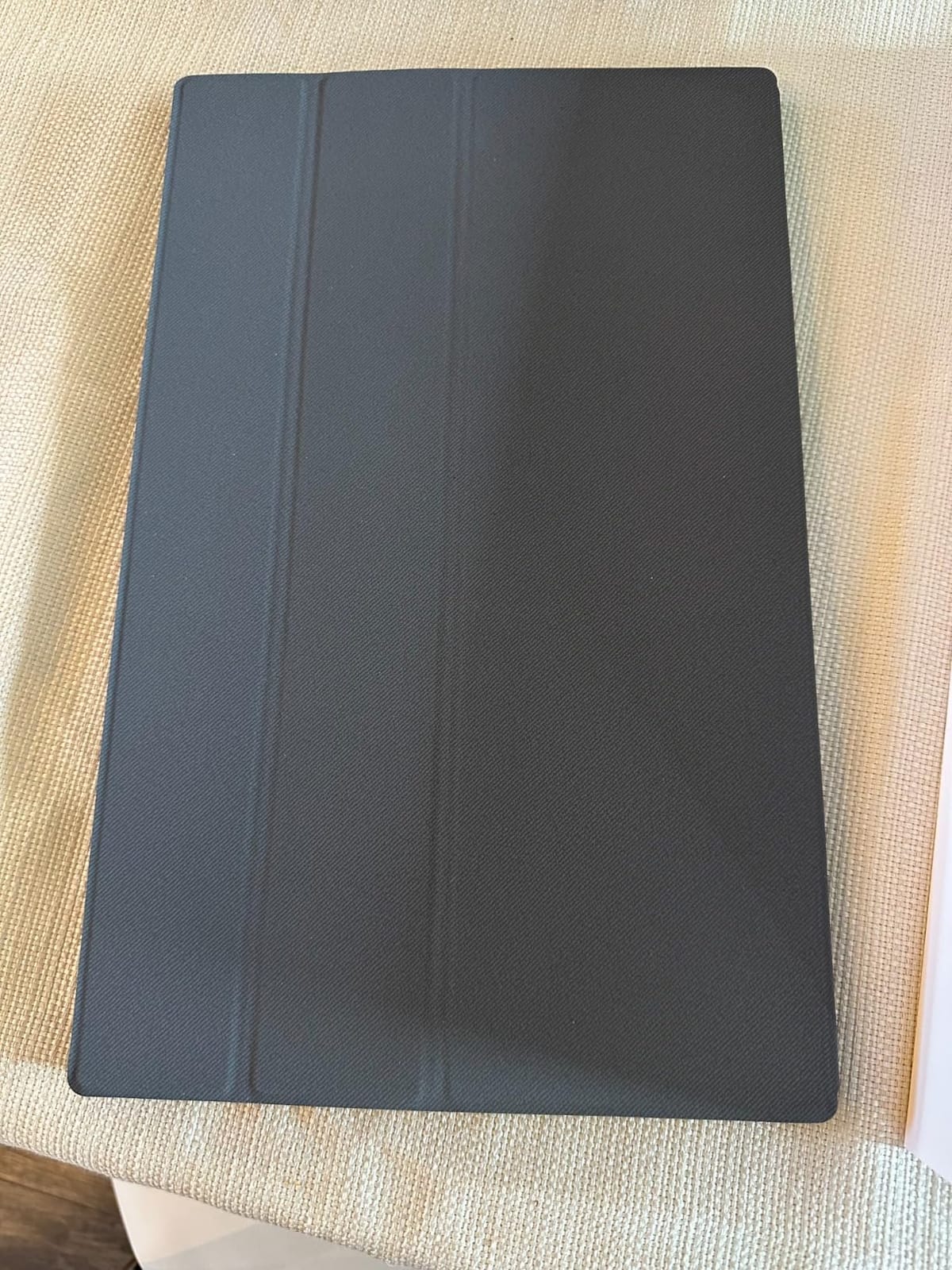
Display Modes, Portrait Work, and FreeSync
The MNN supports Copy, Extend, Second Screen, and Portrait modes, and portrait turned out to be more useful than I expected. A vertical 15.6 inch panel is a genuinely good place to keep a chat window, a code file, or a long document beside a laptop screen.
FreeSync keeps gameplay smooth when you hook it to a console or a gaming laptop, and HDR mode gives casual games and streaming a small but visible lift. The on-screen menu controlled by a rear rocker wheel is the one ergonomic miss, and you will notice it the first time you hunt for the input switch.
For whom it is good: frequent flyers, digital nomads, and anyone buying their first laptop screen extender on a budget. For whom it is bad: bright-window office workers and anyone who tweaks settings often.
4. ASUS ZenScreen MB169CK – Anti-Glare Comfort for Bright Rooms
ASUS ZenScreen MB169CK 15.6 Inch 1080p Portable Monitor
15.6 inch FHD IPS
Anti-glare matte
300 nits
100% sRGB
360-degree kickstand
3.8 lb
Pros
- Best glare control of the five
- Best-in-test 2000:1 contrast
- 100% sRGB color coverage
- True 360-degree kickstand
- 3-year warranty with advanced replacement
Cons
- Heaviest here at 3.8 pounds
- No built-in speakers at all
- Screw-on kickstand is detachable
- No VESA holes without an adapter
The ASUS ZenScreen MB169CK is what happens when an established monitor maker builds a travel display instead of a value brand chasing a price point. The panel is lovely: 300 nits, full 100% sRGB coverage, and a 2000:1 contrast ratio that is double every other screen on this page, so dark scenes and photo shadows keep their detail.
The anti-glare IPS coating is the real headline, though. It made this the most comfortable screen to use next to a window of the three matte panels here, and it is the pick I would hand anyone whose desk faces daylight. Add a 3-year warranty with advanced replacement and even a bundled 3-month Adobe Creative Cloud subscription, and the premium intent is obvious.
The cost of all that quality is weight. At 3.8 pounds this is by far the heaviest monitor in the test, which is a genuine problem for a category built on portability.
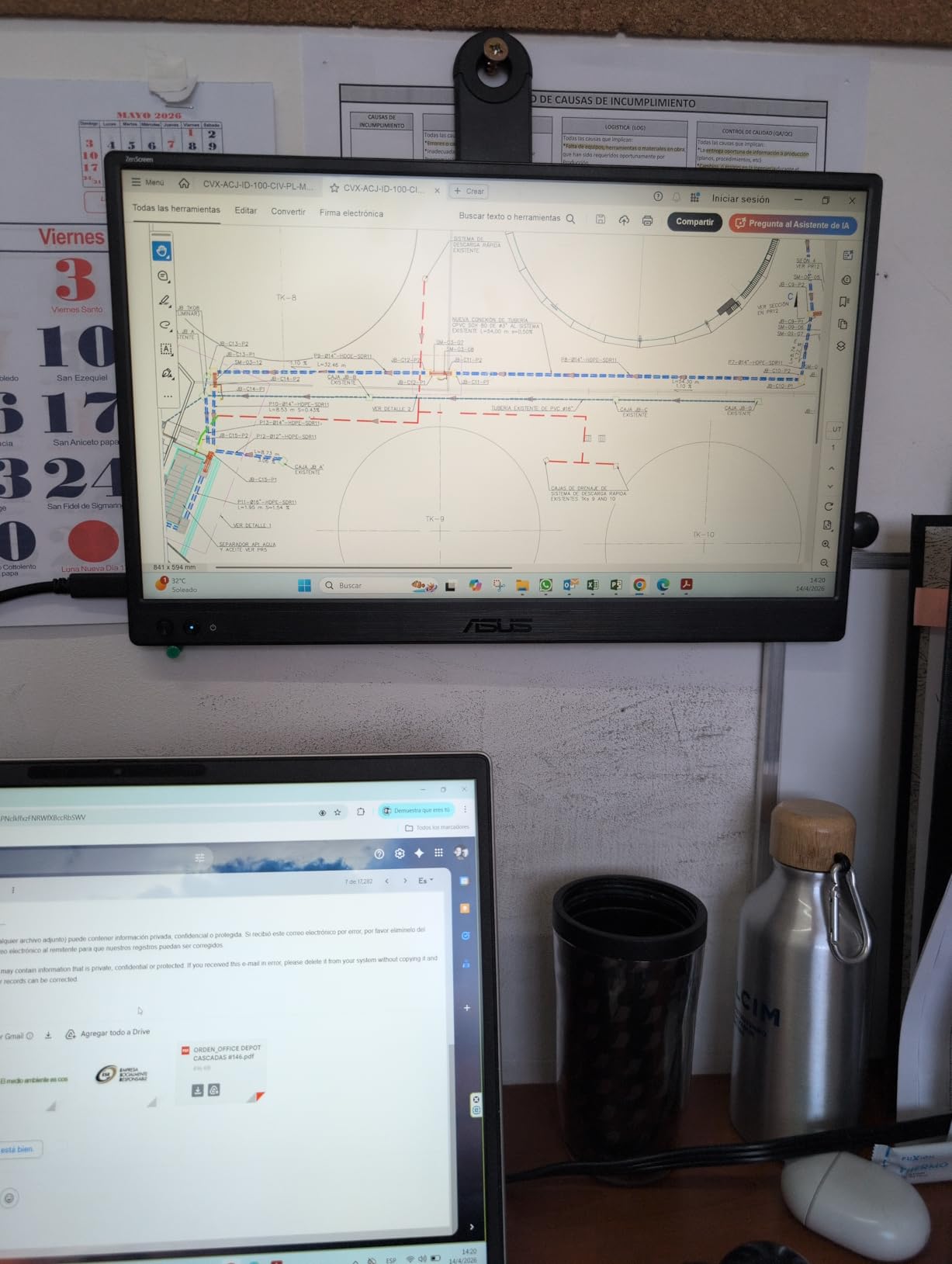
Anti-Glare Coating for Bright Rooms
Glare is the most common complaint in the forums after neck strain, and the MB169CK handles it better than anything else here. The matte treatment kills window reflections without the grainy sparkle that cheap coatings add, and text stayed crisp at every angle we tested across its 178-degree viewing range.
Combined with 300 nits and that 2000:1 contrast, the panel reads as effortlessly good. This is the screen I would pick for photo editing or long writing sessions in unpredictable lighting, and the 100% sRGB coverage makes it a legitimate budget alternative to a calibrated desktop display.
The 360-Degree Kickstand and Tripod Socket
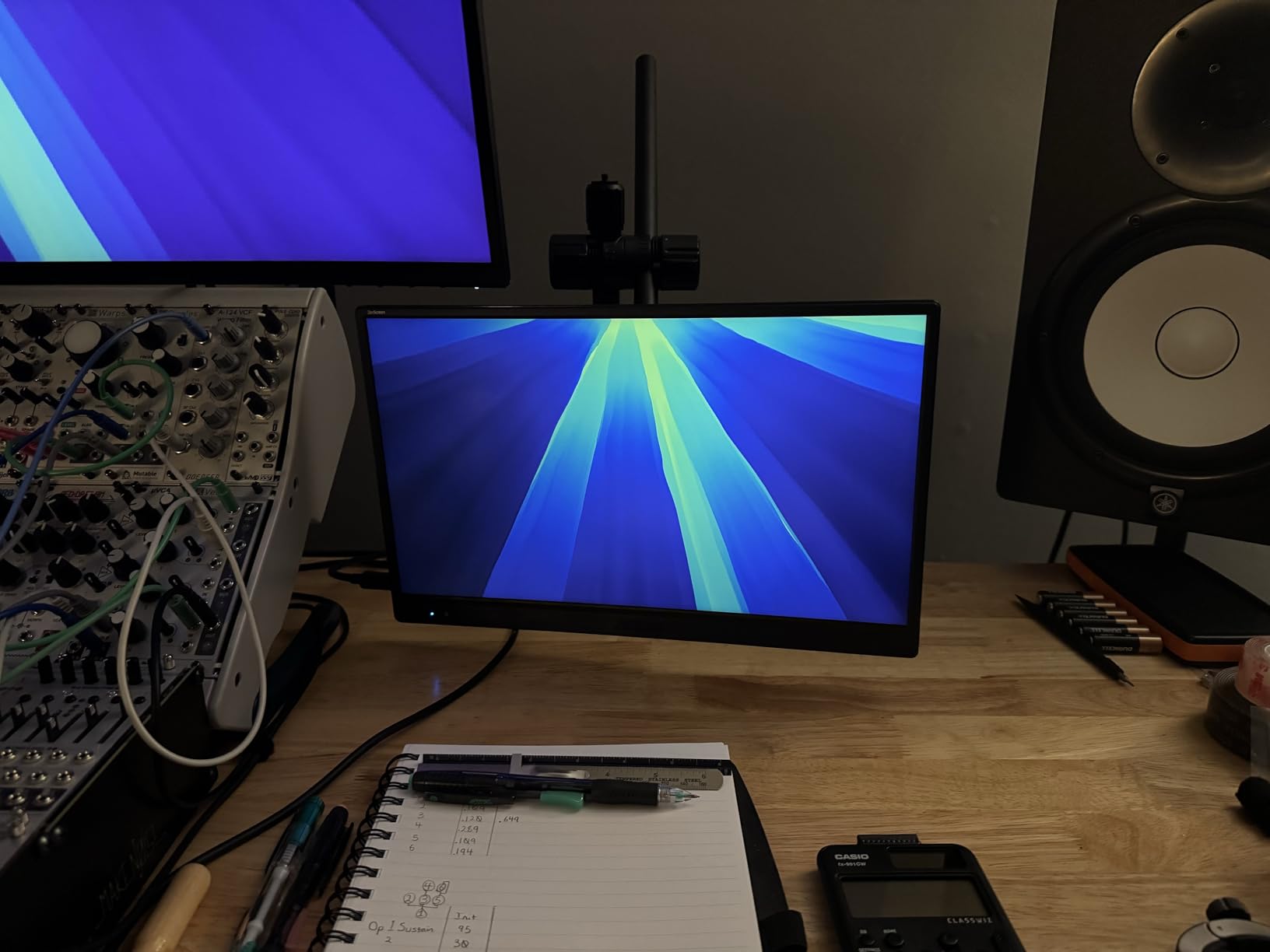
Instead of a folio cover, ASUS uses a screw-on kickstand that wraps 360 degrees around the back, plus a standard tripod socket in the stand. That means horizontal, portrait, or presentation height adjustments without any folding origami, and it is far more stable than the wobbly folio stands on the cheaper picks.
The tripod socket is the sleeper feature. Mounted on a small tripod, the screen finally sits at eye level, which is the single best fix for the neck-strain problem portable monitor owners keep reporting. Note the stand is detachable by design, which some travelers find annoying because it can be left behind on a desk.
100% sRGB, Warranty, and the Adobe Perk
Full sRGB coverage puts the ASUS alongside the cocopar as the two color-serious picks here, and its superior contrast gives it an edge for photo and video work. Flicker-free and low blue light modes round out the eye-care story for all-day use.
Support is where ASUS separates from every value brand in this article: a 3-year warranty with advanced replacement, meaning a replacement ships before you return the faulty unit. With 325 reviews at 4.2 stars the sample is smaller than the others, but the underlying brand support infrastructure is the deepest here.
For whom it is good: creatives and professionals who want the best panel and the longest warranty. For whom it is bad: ultralight travelers, since 3.8 pounds is a real commitment, and anyone who needs built-in speakers.
5. AOC 16T20 Portable Monitor – Brand-Backed Simplicity With a Long Warranty
AOC 16″ Portable Monitor FHD 60Hz USB-C IPS Ultra Slim Smart Cover 16T20
15.6 inch FHD IPS
60Hz refresh
Dual USB-C
Mini HDMI
Smart cover stand
1.54 lb
Pros
- Trusted AOC monitor brand
- 4.5 stars from early owners
- Dual USB-C plus mini HDMI
- 3-year manufacturer warranty
- Frameless lightweight design
Cons
- Only 680 reviews so far
- Slow 20ms response time
- Glossy finish reflects bright rooms
- Speakers are basic
The AOC 16T20 is the quiet overachiever of the group. It carries the second-highest rating here at 4.5 stars, and while its 680 reviews are a fraction of the KYY’s army, that score is consistent with what AOC owners expect from a company that has built monitors for decades. It is the pick for people who would rather not gamble on an unfamiliar brand.
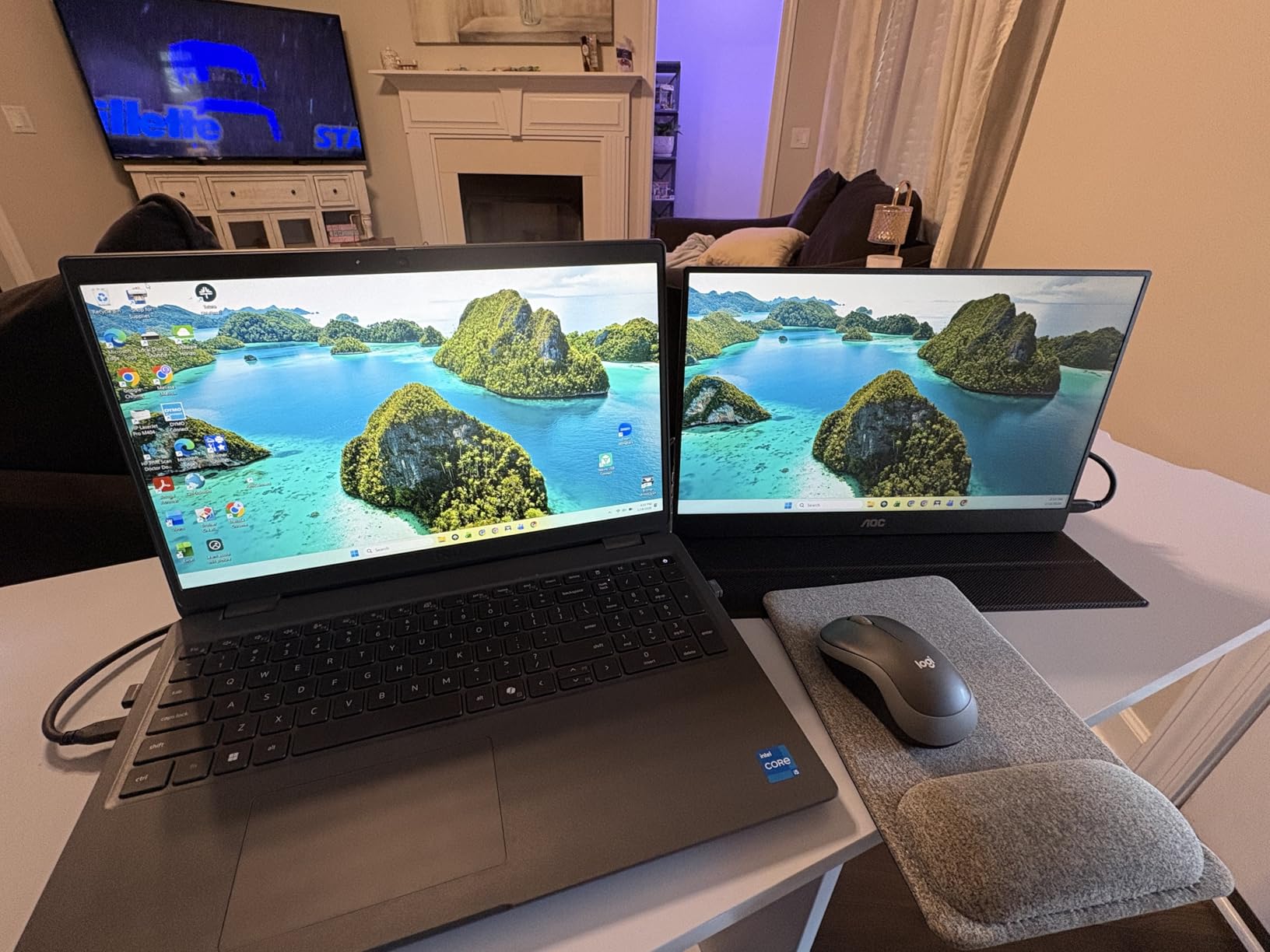
In practice it is a straightforward, tidy package: a frameless 15.6 inch 1080p IPS panel, dual USB-C ports, mini HDMI, a smart cover, and built-in speakers. Nothing about it is flashy, and nothing about it frustrated me either, which is more than I can say for some pricier gadgets.
At 1.54 pounds it is nearly as travel-friendly as the MNN, and the 3-year warranty doubles down on the reliability story. The two honest caveats are its slow 20ms response time and a glossy finish that fights you in direct light.
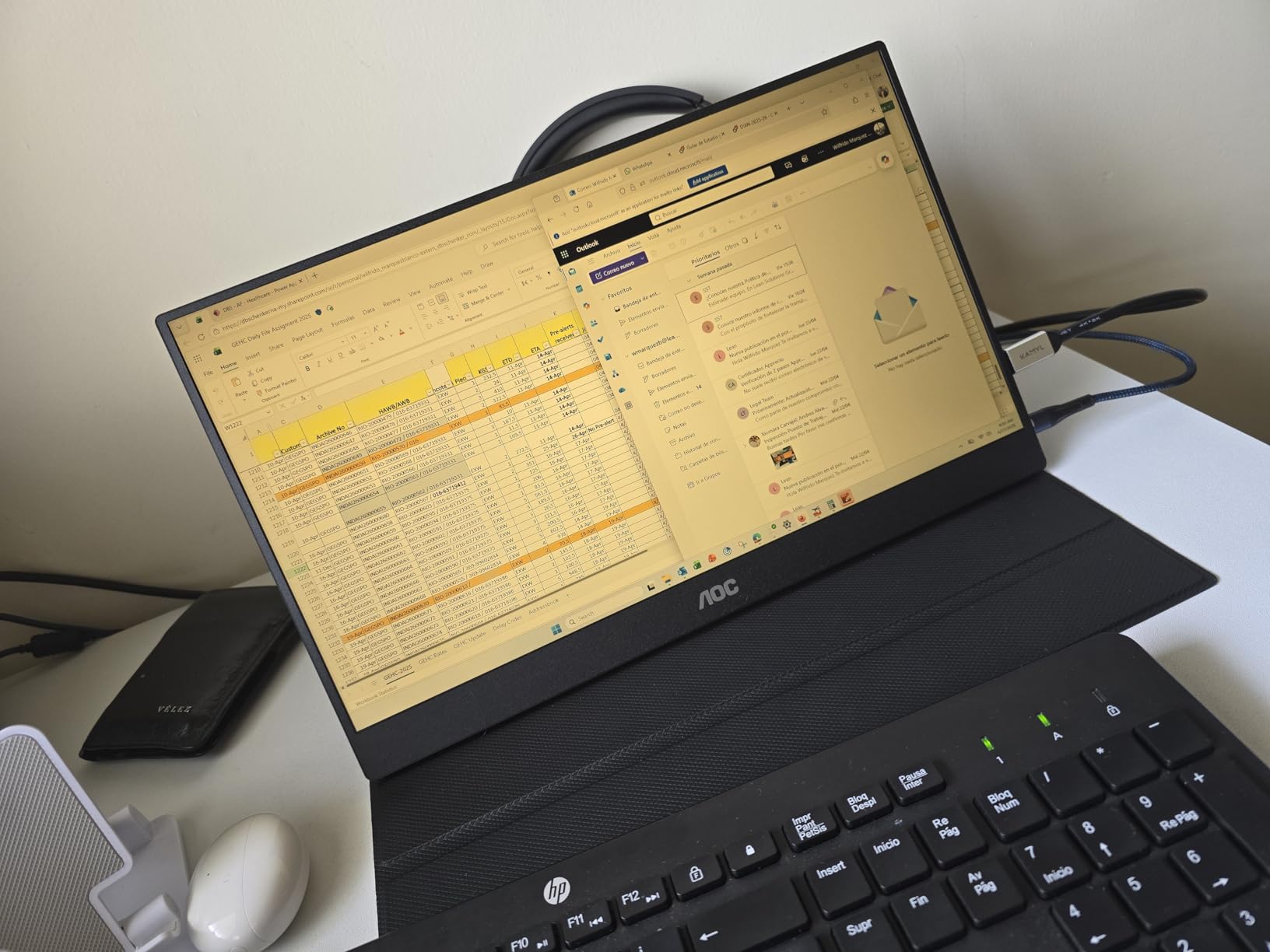
Dual USB-C and Mini HDMI Flexibility
Two USB-C ports plus mini HDMI gives the 16T20 the same connectivity spread as the category leaders, and it is a rare budget-friendly screen that plays well with laptops, desktops, phones, tablets, and consoles from the same bag. Our plug-and-play test on Windows and macOS was flawless.
Using both USB-C ports, you can power the screen from one while the second handles video on machines that split the duties, which is a handy fallback for older laptops that cannot deliver both over a single cable. The smart cover protects the panel in transit and folds into a stand, with the same low-height limitation as every folio design.
Console Gaming and the 20ms Trade-Off
AOC lists PS5, Xbox, and Switch compatibility, and casual console sessions on our Switch looked great on the frameless panel. For slower games, racing, and platformers, the 16T20 is a perfectly pleasant portable gaming display.
The 20ms response time is the slowest in this comparison, though, and it shows as slight blur in fast motion. If competitive shooters are the plan, the KYY with its 1ms response is the better laptop companion. For everything else, the gap is hard to notice in normal play.
Three-Year Warranty and Brand Support
The 3-year warranty ties ASUS for the longest coverage here and triples what the value brands offer. When a 15.6 inch screen lives in a backpack next to keys and chargers, that coverage is not abstract: it is the difference between a fried port being a warranty claim or a total loss.
That support net is why I would recommend this to a less technical friend or a parent setting up a work-from-anywhere kit. The 77% five-star rate among current owners suggests the early quality is holding up, and AOC’s service network is the safety net the smaller brands cannot match.
For whom it is good: buyers who prioritize brand accountability and warranty length over raw specs. For whom it is bad: fast-twitch gamers and bright-room users who need a matte coating.
How to Choose the Best Portable Monitor for Your Laptop
Every screen above will display your laptop’s output. The right one depends on where you work, what your laptop can output, and how much weight you are willing to carry. These are the five decisions that actually matter, based on what we measured and what long-term owners report.
Resolution Reality Check: 1080p Versus 2K Next to a Retina Display
All five monitors here are 1920×1080, and on Windows laptops that is a perfectly crisp experience at 15.6 inches. On a MacBook the calculus changes, because macOS rendering next to a Retina panel makes a 1080p portable screen look visibly soft. This is the single most common complaint from Mac owners on Reddit.
If you own a Retina MacBook and text sharpness matters to you, either accept the difference for secondary tasks like chat and email, or move up to a 1440p or 4K portable monitor outside this value-focused group. For Windows and standard displays, 1080p at this size remains the sweet spot for battery life and price.
USB-C, DisplayPort Alt Mode, and the MacBook Power Question
The clean setup every traveler wants is one USB-C cable carrying video through DisplayPort Alt Mode while also powering the screen. All five monitors support this, and all five lit up instantly on our M-series MacBook without drivers. Confirm your laptop’s USB-C ports support DisplayPort Alt Mode, because a data-only port will power the screen but show nothing.
The power question is where M-series Macs get picky. Peak brightness on several of these panels is more reliable when the monitor gets its own power feed rather than drawing from the laptop, and some docking stations refuse to handshake with budget panels at all. If your desk runs through a dock, test the monitor on it within the return window.
Weight, Thickness, and Airplane Tray Table Fit
Weights here range from the MNN’s 694 grams to the ASUS at 3.8 pounds, and that spread is the difference between forgetting the screen is in your bag and actively resenting it. For frequent flyers, stay under about 2 pounds, which keeps the MNN, AOC, and KYY in play and rules the ASUS out.
For airplane use, a 15.6 inch panel fits an economy tray only in specific arrangements: laptop flat on the tray with the monitor propped portrait against the seatback, or the monitor on the tray with the laptop on your lap. A folio-cover screen is easier to angle in tight space than a kickstand model, which is one point in favor of the lighter picks.
Stand Design and the Neck Strain Problem
This is the warning I most want you to take from months of forum reading. A portable monitor standing on a folio cover sits roughly at table height, far below your natural line of sight. Users who work that way for hours report genuine neck and shoulder strain, and the communities that love these screens are emphatic about the fix.
Raise the display. The cocopar’s VESA holes accept an arm or riser, the ASUS tripod socket accepts a compact tripod, and the folio models can sit on a folding stand. Pair whichever you choose with a laptop riser so both screens sit level, and take micro-breaks. Ignoring this turns a productivity tool into a physiotherapy bill.
Warranty, Brand Support, and Long-Term Reliability
Coverage spans from 1 year on the KYY to 3 years on the ASUS and AOC, with the cocopar at 2 years. Given how these screens live in bags and get plugged in daily, the warranty gap matters more here than in most categories. The two established brands also bring real service networks and consistent firmware behavior.
Review volume tells a similar story. The KYY and MNN carry over 12,000 reviews each, which is strong evidence of long-term satisfaction at scale, while the ASUS and AOC trade smaller samples for stronger brand backing. Weigh whichever risk profile lets you sleep better.
Frequently Asked Questions
What is the best portable monitor for a laptop?
The u003cstrongu003ecocopar 15.6 inchu003c/strongu003e is the best portable monitor for most laptops, with 85% sRGB color accuracy, VESA mounting, and a 4.8-star rating from over 6,300 owners. The u003cstrongu003eKYY K3u003c/strongu003e is the best value pick, and the u003cstrongu003eMNNu003c/strongu003e is the lightest for travel.
Are portable monitors good for laptops?
u003cstrongu003eYes.u003c/strongu003e A portable monitor turns one laptop screen into a dual screen setup anywhere, and most run from a single USB-C cable. Owners on Reddit widely report they cannot go back to a single display after a week of use, provided you raise the screen to eye level to avoid neck strain.
Can you use a portable monitor with any laptop?
You can use one with u003cstrongu003eany laptop that has USB-C with DisplayPort Alt Mode or a full-size or mini HDMI outputu003c/strongu003e. All five monitors here worked with Windows laptops and M-series MacBooks over a single USB-C cable. Older laptops may need the included HDMI cable plus separate USB power.
Do portable monitors need external power?
u003cstrongu003eUsually no.u003c/strongu003e Most portable monitors draw power and video over one USB-C cable from the laptop. You get more reliable peak brightness with a separate power feed, and HDMI connections always require a USB power source, since HDMI carries no power.
How do I connect a portable monitor to my laptop?
Plug the included u003cstrongu003eUSB-C cableu003c/strongu003e from the monitor to a USB-C port on your laptop that supports DisplayPort Alt Mode, and the display works instantly with no drivers. If your laptop lacks USB-C video, use the u003cstrongu003emini HDMI cableu003c/strongu003e for picture and a USB cable for power.
Final Verdict: The Best Portable Monitors for Laptops in 2026
After weeks of side-by-side use, here is how I would choose among the best portable monitors for laptops in 2026. If color accuracy and a proper mounting option matter most, get the cocopar, because 85% sRGB plus VESA makes it the professional’s pick. If you want the safest all-rounder with the biggest owner base, the KYY K3 and its matte 1ms panel is the value champion.
Counting grams? The MNN at 694 grams with one-cable USB-C is the travel winner. If your priority is the best panel and longest support, the ASUS ZenScreen MB169CK with its anti-glare coating, 2000:1 contrast, and 3-year warranty justifies its weight. And if brand accountability on a lean budget is the goal, the AOC 16T20 delivers a trusted name and 3-year coverage at a lighter weight.
Whichever screen you pick, do two things: raise it to eye level, and keep a spare USB-C cable in the bag. Handle those and a portable second screen stops being a gadget and becomes the part of your setup you refuse to travel without. Check the latest prices on our top picks above and pick the one that matches how you actually work.